Released: June 1993 Developer: SEGA Also Available For: Game Gear
A Brief Background: Back in the nineties, licensed videogames hadn’t quite earned the reputation that they have these days. Anyone who had played one of the many videogame adaptations of Disney movies and properties, particularly on SEGA’s Mega Drive or the Super Nintendo, would generally be in for a good time and treated to big, colourful, well-animated graphics and tight, fun gameplay. One of the most prolific of Disney’s characters to be licensed out to videogames was their enduring mascot, Mickey Mouse. A couple of years afterCastle of Illusion Starring Mickey Mouse (SEGA AM7, 1990) and World of Illusion Starring Mickey Mouse and Donald Duck (ibid, 1992) released for Mega Drive, a similar (though, apparently, unrelated) title was released for SEGA’s 8-bit consoles, the Master System and the Game Gear handheld.
The Review: Land of Illusion is a pretty standard 2D, sidescrolling action/platformer in very much the same vein as previous Disney titles released around that time. Players take control of the affable Mickey Mouse and journey through fourteen stages, dispatching enemies using Mickey’s rump, sliding down slopes, or by throwing objects at them. Mickey controls at a steady, grounded pace; he doesn’t slip and slide around, making precision platforming a much easier task than other platformers of the time. He begins the game with two stars in his Power Gauge, meaning he can take two hits before he must try again from either the beginning of the stage or from the last checkpoint he passed. Players can refill Mickey’s health by smashing blocks and other objects to uncover cake; if you search hard enough, you’ll also find a bonus star in each stage, which will add another star to Mickey’s Power Gauge and thus allow him to take more hits. Mickey can also collect coins, which will add to his score tally; defeating enemies and bosses also adds to this tally and he’ll earn an extra try for every 10,000 points. Mickey must sometimes take to water to navigate through a stage; in these areas, players will have to watch Mickey’s air meter, as he’ll lose a life if it runs out. There’s a few simple push-and-pull-based puzzles that Mickey must also solve by opening blocked areas or turning environments upside down and, occasionally, he’ll need to find a key in order to progress.
Stomp on enemies with Mickey’s butt or chuck a rock at them.
Players must also complete each stage within a time limit (as was the style at the time) but, as Mickey progresses through the game’s story and stages, he frees some familiar-looking faces and is gifted various items that aid his quest; the Magic Flute allows players to replay any stage they’ve previously completed (which can be essential for tracking down other items and extra energy you’ve missed), a Shrinking Potion (which allows Mickey to fit through small tunnels, doors, and spaces), a Rope to climb certain walls, Cloud Shoes to walk on clouds, and a Magic Bean to grow a beanstalk and reach the Phantom’s castle. As mentioned, you can increase Mickey’s health with cake and collect stars to increase Mickey’s Power Gauge but that’s about it. There’s no invincibility, speed ups, or special abilities here. Instead, you can grab Mickey Ears or hit 10,000 points for an extra try and will use the game’s mandatory times to progress further. However, while you can shrink through gaps with the Shrinking Potion, your attacks are useless and being able to jump on clouds doesn’t really help at all except when climbing the magic beanstalk. Otherwise, there’s nothing extra here; the game has one ending, no unlockable or extra characters, and the only incentive to play it again is to beat your last high score.
Though simple, stages are bright and colourful.
While nowhere near its 16-bit counterparts in terms of graphics or sound quality, Land of Illusion is still quite a charming little 8-bit title. The Master System was never known for having particularly exciting backgrounds or environments, so all of the artistic effort seems to have gone into making the sprites (particularly Mickey) as bright, colourful, and animated as possible. You’ll travel to some pretty standard areas in Land of Illusion (a forest, a desert, a couple of castles…) but each one is distinct in its design and features slightly different gameplay mechanics. You might have to let a tornado of leaves carry Mickey over spikes to safety, for example, or have to outrun a wall of spikes or cross poisonous water or lava. The Master System renders these environments simply enough but it’s surprising how vivid and engaging they are for such an under-powered console. Similarly, the game obviously doesn’t match the bright, poppy tunes or sound quality of its bigger brother but the soundtrack nevertheless does a serviceable job; there’s some catchy little tunes, all of which are perfectly in keeping with Mickey’s cute-and-cuddly aesthetic. Enemies here are as generic as they come; you’ll butt-bounce off the likes of spiders, wasps, snakes, and floating skulls. Some present more of a challenge than others, however, shielding themselves from harm, reforming after being hit, or being invulnerable to Mickey’s butt-bounce.
Wait for an opening and then hit him with your butt!
You’ll battle some big bosses while playing Land of Illusion but none will really pose much of a challenge (…I really struggled with the giant crab, though, thanks to how slow Mickey moves underwater). You’ll dodge their attacks, maybe toss one of a limited number of blocks at their head, or wait for an opportunity to bounce off their heads with Mickey’s butt. The final boss, the Phantom, is slightly more complex as you must first traverse his booby-trapped castle and then dodge his energy balls (just crouch right in front of him) and jump over his whirlwind attack before he’ll pause long enough for you to smack him. He’ll mix it up by jumping to the ceiling, forcing you to throw blocks at him, but it’s over within seconds, especially if you’ve completely powered up Mickey’s Power Gauge.
The Summary: While a mere shadow if its 16-bit counterparts, Land of Illusion does a decent job at entertaining; there’s no bottomless pits or cheap deaths, plenty of opportunities to explore, and some charming graphics and tunes on offer. Gameplay is about as simple as it gets, which is to be expected given the Master System’s simple two button setup; as mentioned, you might have to backtrack to previous levels to get items to progress further if you missed them, and you will find a challenge in the game’s final level but, with infinite continues as standard and a leisurely pace to its gameplay, Land of Illusion is a fun enough little jaunt to keep you distracted for a couple of hours.
My Rating:
⭐⭐⭐
Rating: 3 out of 5.
Pretty Good
Did you ever play Land of Illusion? What were your favourite, or most frustrating, Disney videogames from back in the day? Would you like to see a HD compilation of Mickey’s 16- and 8-bit titles? Go ahead and take to the comments to share your thoughts and memories.
Released: October 2019 Developer: Playtonic Games Also Available For: Nintendo Switch, PC, and PlayStation 4
The Background: After Rare was purchased by Microsoft in 2002, anticipation was high for the company to continue their track record of releasing extremely polished, high-quality titles as they had during their tenure with Nintendo. Chief amongst the Rare properties most fans were looking forward to revisiting was the Banjo-Kazooie (1998 to 2008) series, which was an extremely well-made 3D action/platformer collectathon for the Nintendo 64 with a quirky sense of humour and memorable, likeable characters. Unfortunately, Rare were disappointingly underused by Microsoft and, while their famous bird-and-bear duo did return, it was in a highly altered form that let down most gamers. Eventually, key members of Rare left the company and formed Playtonic Games, an independent games studio that would allow them to make the types of games they wanted to which, coincidentally enough, meant going back to the Banjo-Kazooie formula with a spiritual successor to that series, Yooka-Laylee(ibid, 2017).
Impossible Lair is inspired more by Donkey Kong Country than Banjo-Kazooie.
While the first game received mostly mixed reviews, I really enjoyed this welcome return to the quirky 3D action/platformers of old and revisiting the Banjo-Kazooie gameplay style of large, interconnected worlds with many peculiar characters and things to collect and discover. The game did well enough, however, and Playtonic’s new characters were popular enough to warrant the production of sequel, in which Playtonic Games decided to veer away from the Banjo-Kazooie style of gameplay and instead draw inspiration from the 2.5D sidescrolling platformers of their 16-Bit days, specifically the Donkey Kong Country (1994 to 2005) series. This was surprising to me, considering the series was meant to be a throwback to the Banjo-Kazooie formula, but I was happy enough with the first game and charmed enough by its oddball world and characters to give this slightly-revised sequel a fair shake of the stick.
The Plot: After being defeated by Yooka and Laylee in the previous game, Capital B has returned to cause havoc; this time, he has enslaved the Royal Stingdom using the Hive Mind, captured Queen Phoebee’s Royal Beettalion, and locked himself inside the titular Impossible Lair. In order to overcome the Lair’s enemies and obstacles and defeat Capital B, Yooka and Laylee must travel to numerous new worlds and free the Royal Battalion, all while restoring peace and order to the Royal Stingdom.
Gameplay: Yooka-Laylee and the Impossible Lair is, primarily, a 2.5D action/platformer in the style of the Donkey Kong Country series; players control Yooka, a laid-back chameleon, and Laylee, a wise-cracking bat, simultaneously to explore the large overworld, traverse the game’s numerous stages, and battle the assortment of quirky enemies found within.
Many of the duo’s abilities return from the first game.
Many of Yooka and Laylee’s abilities from the previous game return here; the duo can run, jump, and roll along in a ball like a certain blue hedgehog. Yooka can use his tongue to grab at certain objects to spit fruit or bombs at enemies or switches or open new pathways and secret areas and the duo can flutter and twirl in the air to extend the reach of their jumps or perform a powerful downward stomp to defeat enemies or drop down to lower levels. Unfortunately, the duo are missing some of their more useful abilities from the last game; you can only spit out projectiles when you find one in a level, and you can no longer turn invisible, walk while in water, or form a protective shield. While the game does provide alternative means to do some of these moves, there is no way to use Laylee to glide, fly, or have Yooka use his tail for a high jump. Instead, you’re tasked with chaining together high-speed rushes with well-timed jumps to gain extra height and cover large distances, which is fine but I can’t help but feel it’s a missed opportunity to not have the duo flying at some point in some way.
Get hit and you’ll lose Laylee, leaving you vulnerable until you find a bell to call her back.
Also missing from the first game is a health and power bar; you no longer need to consume butterflies to restore your health or wait for a meter to fill up before you can perform one of the duo’s special moves. Instead, when you get hit by an enemy or obstacle, Laylee will fly erratically around the screen for several seconds like Baby Mario in Super Mario World 2: Yoshi’s Island (Nintendo EAD, 1995). If you can’t retrieve her in time, she will fly away and you’ll be left with just Yooka and missing the few moves the game provided you with; take another hit and you’ll die and be returned to your last checkpoint, with Laylee restored to you. You can, however, find special bells you can ring that will return Laylee to your side and use certain Tonics to extend the length of time you have to retrieve Laylee but, honestly, of all the things to be inspired by! Luckily, Laylee doesn’t whine and cry in an annoying screech like Baby Mario but it can be extremely harrowing and dangerous to retrieve Laylee but, if you don’t you might miss certain collectables and secret areas.
Collect the T.W.I.T. coins to lower Trowzer’s Paywalls.
To explore the game’s forty stages, you’ll have to navigate an expansive overworld; while nothing compared to the one from the first game, it’s still surprisingly expansive, with many areas connected to others through secret pathways or blocked off by one of Trowzer’s Paywalls. As you explore the game’s stages, you can find five T.W.I.T. coins in each; it is highly recommended that you go out of your way to obtain as many of these as you can as you’ll need to use them to lower Trowzer’s Paywalls and reach new areas and to obtain an Achievement. Each stage is accessed through a magical book, as in the last game, but rather than expanding upon a stage with the Quills you find in the game’s stages, you use these Quills to purchase Tonics and gain new abilities or game-changing buffs (or de-buffs) or to pay for a hint to locate hidden Tonics on the overworld. You can manipulate and alter the overworld, however, by completing a mini game set by a Pagie found in each area; doing this allows you to find new areas (and more hidden Tonics) and open up new paths to link the overworld together.
Completing side quests adds an alternative mode to each stage.
Some of Yooka-Laylee’s other recognisable characters also make a return but in severely reduced roles; they generally hang around the overworld, offering hints or asking you to complete a series of small tasks that will access a stage’s alternative mode. These tasks this many involve freezing Nimbo the Cloud, pushing a shopping trolley off a lighthouse, causing a boiler to cough up ash, or activating a fan. Each task is slightly different and changes the stages in different ways; the stage may be flipped upside down or on its side, for example, or underwater, frozen, or filled with acid or lava. This means each stage has two sections to it for a total of ten T.W.I.T. coins per chapter and altering a stage can turn even the game’s easiest levels into challenging test of your patience and endurance.
Track down the Ghost Quills for extra Quills, coins, and items.
Each stage also sees the return of the five Ghost Writer Quills; each one flies around the immediate area in a different way, leaving regular Quills in their wake, and generally explode in a shower of Quills once you collect all their Quills or chase them down. Others, however, leave behind a T.W.I.T. coin, a piece of fruit or a bomb to aid your progress, or a key that can access a new area of the stage and lead you to another T.W.I.T. coin. You never know what the Ghost Quills are going to yield as a prize so it’s worth trying to hunt them down and collect their Quills whenever you find them. Every time you clear a stage, you rescue a member of the Beettalion, which is crucial to increasing your chances at completing the Impossible Lair. Unlike the last game (and most games, for that matter), you can challenge the game’s final stage, the titular Impossible Lair, whenever you like but, if you have few or even no Beettalions to aid you, you won’t last very long as the Lair isn’t called “Impossible” for fun. Some stages also contain hidden exits that deposit you in different areas of the overworld and lead you to one of the six secret members of the Beettalion and it is highly recommended that you don’t attempt the Impossible Lair without all forty-eight members of the Beettalion to form a protective shield around you.
Graphics and Sound: Yooka-Laylee and the Impossible Lair is just as gorgeous as its predecessor, perhaps even more so thanks to its extra polish and shine. The world and the characters that inhabit it are bright, colourful, and cheery; playing the game is like playing a cartoon and all the characters are full of life and charm. Thanks to the game’s shifted perspective to 2.5D, the character animations rely far more on pantomime than fully-animated 3D models, meaning the game’s simple animations are far less egregious. Thankfully, the game still uses the charming gibberish of the Banjo-Kazooie series; whenever characters talk, they babble and jabber away like loons and I absolutely love it. Just a few sounds is all it takes to infuse these characters with personality and you always know who is talking and when thanks to these simple, but effectively, sound effects.
The game looks and sounds fantastic, at least.
The music is just as delightful and affective as ever as well; thanks to the likes of the great Grant Kirkhope, the game’s overworld, stages, and areas are infused with a fairytale-like quality and, no matter how frustrating and difficult some sections might be, you’ll always have a catchy, appealing little tune to hum along to and settle your nerves.
Enemies and Bosses: Yooka and Laylee’s world is mostly populated by mean-spirited little goblins called Meanyions; you’ll come up against blue versions that simple wander back and forth, red ones that you can only defeat by jumping on them, yellow ones that jump when you jump, and green ones that hover around in a jetpack or with propellers on their heads (which protect them from your jump attack). There are also fatter, blob-like Boundalong Meanyions who bounce you backwards (usually to your death), the spider-like Webwhacks that can only be avoided thanks to their spiked behinds, cannons that blast projectiles or homing missiles at you, and laser-spewing spheres. Generally, though, you’ll find most the most danger and frustration coming from the many death traps in the game’s stages; giant instant-death boulders, laser beams, and saw blades chase you, spikes, icicles, saw blades, and other spiked surfaces can either cause you to take damage or instantly die, acid and lava pits are abundant and, of course, there are the numerous bottomless pits scattered across the stages. A lot of the game’s challenge comes from using the duo’s skills and carefully bouncing from one enemy to another to clear these gaps; make a mistake and you’ll pay, usually with your life.
Getting through the Impossible Lair is easier said than done…!
The game only features one boss battle and it’s against Capital B within the Impossible Lair. You might think that this means the game is lacking in challenge but you’d be wrong; not only do you have to first get through the game’s stages to unlock enough (or all) of the Beettalions to allow you to get through the Lair’s many enemies and death traps, you then have to face Capital B in four separate, increasingly difficult encounters. This wouldn’t be so bad but, to reach each of these battles, you first have to survive the Impossible Lair…which more than lives up to its name. Every type of enemy, trap, obstacle, and gameplay mechanic you’ve encountered and bested in each of the game’s stages is incorporated into the Lair; every time you take a hit or fall to your death, you lose one of the Beettalion and there’s no way to get them back. You can return to the Lair from the start of each battle with Capital B but this only really helps if you reached that fight with a decent amount of bees left and can defeat that phase of the boss battle without incurring much damage so you have the best chance of getting through the next stage of the Lair.
Capital B can be tough but getting to him is even tougher!
Thankfully, actually fighting Capital B is much easier than in the last game; he has very clear and predictable attack patterns but it’s very easy to mess up and take a hit in these fights thanks to the lack of a high jump and the surprisingly large hit box of both the titular duo and the boss itself. Add to that the fact that he Impossible Lair is more frustrating than challenging and you have a significant portion of the game that is more of a chore to get through than being fun and charming like the rest of the game. If you really want to torture yourself, you can take on the Lair’s alternative mode, where you must try and make it through without any of the Beettalion to protect and save you…and if you can do that then good luck to you; you’re a better person than me.
Power-Ups and Bonuses: Like the Banjo-Kazooie games of old, and its predecessor, Yooka-Laylee and the Impossible Lair is a bit of a collectathon; each stage is filled with Quills to collect, T.W.I.T. coins to find, and hidden areas that generally contain one, or both, of these items. Clear a stage and you rescue a member of the Beettalion and can use the Quills and coins you’ve earned to unlock new skills and areas of the game. The Tonics from the last game return here; Tonics are scattered across the overworld and, while some are in plain sight, others are hidden and you’ll have to pay sign posts for hints on how to find them. Either way, simply finding a Tonic isn’t enough to use it; you have to pay for it with the Quills you’ve collected, meaning you’ll have to revisit some of the game’s easier stages again and again to farm for Quills to unlock every Tonic.
Different Tonics have different effects, buffs, and de-buffs.
At first, you can only use three Tonics at a time but, eventually, you earn the ability to have a fourth Tonic slot (either temporarily or permanently, if you find every single T.W.I.T. coin in the game. You have to be careful, though, as some of the more useful Tonics (like increasing the amount of checkpoints, letting you hold on to your T.W.I.T. coins after you die, or having special attacks that destroy all onscreen enemies) reduces your Quill count at the end of a stage. So, to get more Quills, you have to use the more obtrusive Tonics (which turn the stage upside down or mess up the controls, for example) but, no matter how you play the game and which Tonics you use, they’re completely redundant in the Impossible Lair as you can’t use any of them…which really makes you question why you put all that effort into finding and unlocking all of them in the first place.
Additional Features: Yooka-Laylee and the Impossible Lair is full of Achievements to earn; you get one for saving certain amount of bees and finding certain secrets but also for finding all the T.W.I.T. coins and, of course, there’s one for beating the Impossible Lair without any bees…so I won’t be getting that one any time soon.The Tonics can help to spice up the game and add some replayability to the stages; you can alter the art style and colour scheme to resemble the Nintendo 64 or the Game Boy, slow down time, and alter other elements to increase (or decrease) your chances to somewhat customise the difficulty of the stages. There is also some downloadable content on offer for the game but it mostly boils down to more Tonics at this point rather than adding new game modes or levels to extend the game’s story and playtime.
The Summary: I really like the Yooka-Laylee series; I feel it’s a great spiritual successor to the Banjo-Kazooie and Donkey Kong Country series at a time when Microsoft seems perfectly happy to let the bear-and-bird disappear into obscurity. Both games have their flaws, of course; being independently created, largely crowdfunded videogames will do that so some compromises are expected but none of that changes the fact that this series is keeping alive a gameplay style that seems to be dying out these days. Unfortunately, for everything that is good about this game, it is let down by the titular Impossible Lair. I have no problem with testing my skills and being faced with a challenge but the Impossible Lair is such a kick in the ass that it sucks all the fun and enjoyment out of the game’s biggest selling point. This almost makes all of the previous stages and achievements you’ve accomplished redundant; you can’t use any of the Tonics, you can’t collect or replenish the bees once you take a hit, and it’s so easy to slip up and drain all of your bees that, generally, it’s easier to simply quit out and try again than reach Capital B without enough of the Beettalion to make it worth pushing forward. It’s not that the game isn’t fun and there aren’t things to like about it; the graphics and music and controls are, generally, top notch and the game is full of the quirky charm the Banjo-Kazooie series was famous for. But the Impossible Lair lives up to its name maybe too much; I feel the developers were maybe being a bit too clever in piling on the difficulty and precision platforming for this stage and it makes the game more of a chore to get through in its final stages rather than being a fun experience from start to finish.
My Rating:
⭐⭐⭐
Rating: 3 out of 5.
Pretty Good
What did you think of Yooka-Laylee and the Impossible Lair? Are you a fan of these characters and their games? Did you have any problems with the Impossible Lair or were you able to beat it without too much difficulty? Which of Rare’s platformers was your favourite back in the day? Would you like to see Banjo and Kazooie get another shot, perhaps even alongside Yooka and Laylee? Whatever you think about the Yooka-Laylee games, feel free to leave a comment below.
Released: 1992 Developer: Virgin Games USA Also Available For: Amiga, Game Gear, and Master System
The Background: You…you’ve heard of McDonald’s, right? The highly commercialised fast food chain founded in 1940 that, despite having the best milkshakes around, is (in my opinion) subpar to Burger King. Oh, sure, the Happy Meals are fun (especially back in my day, when they had far better toys and treats) but Burger King does this fantastic cheese and bacon burger that has the crispiest bacon, the gooiest cheese, and their meat actually tastes like it’s real meat and not some mass produced, watered down piece of off cuts. Anyway, McDonald’s was such a powerhouse back in the day that they ended up being behind a handful of videogames, including the unsubtly titled M.C. Kids (Various, 1992), a shameless rip-off of Super Mario Bros. 3 (Nintendo EAD, 1990), introduced gamers to the titular “M.C. Kids” themselves, Mick and Mack, who had to travel around a magical McDonaldland collecting the restaurant’s iconic Golden Arches and helping out their now long-retired mascot, Ronald McDonald. Although released in the same year, the M.C. Kids saw a dramatic redesign in Global Gladiators, a pseudo-sequel that I actually first played on the Amiga and which carried a heavy emphasis on recycling and environmental responsibility. Both characters slimmed down, stuffed chewing gum into their mouths, armed themselves with Super Soakers goo-shooters, and, since “attitude” and being “cool” was all the range for platformers after the release of Sonic the Hedgehog(Sonic Team, 1991), were reinterpreted as hip pre-teens who cared for nothing more than comic books, McDonald’s, and…protecting the environment. Because, yeah, sure, me and my friends were all about environmental awareness…especially when we ate at McDonald’s…
The Plot: One day, while reading a Global Gladiators comic book in McDonald’s, Mick and Mack are magically transported into the comic’s pages by Ronald McDonald. Armed with goo-shooters, they journey across four worlds fighting against pollution and to protect the environment, all while collecting McDonald’s arches.
Gameplay: Global Gladiators is a 2D, sidescrolling action/platformer with strong run-and-gun elements. From the “Options” menu, you can select one of three difficulties and also choose to play as either Mick or Mack. Functionally, they are exactly the same, but palette swapped (Mack is the Caucasian kid…), so it really doesn’t matter which one you pick; the game is only made for one player as well, which is really weird considering even Michael Jackson’s Moonwalker (SEGA, 1990) had a turn-based two player mode…and that only had one playable character!
Global Gladiators has two speeds: clunky and slow and uncontrollably fast!
Anyway, despite being young kids in the prime of their lives (and probably hyped up on McDonald’s food), Mick and Mack seem to have some difficulty in deciding whether they want to be fast, loose, and slippery or slow, heavy, and clunky. They start off at a painfully slow walk that soon turns to a trot and, eventually, a full-on sprint the longer you hold the direction; the faster you go, the more momentum you carry when you jump and the more likely it is that you’re going to crash head-on into an enemy. Luckily, the game’s jump is very useful; your character leaps quite high and you can control their direction in mid-air, but the game’s fast-paced, shoot-‘em-up action is mired in the fact that the titular Gladiators either plod clumsily forward and slip off of platforms or go rocketing away straight into a bottomless pit or a bed of spikes.
Blast enemies with goo but watch out for that recoil…
Each character wields a goo-shooter, which sprays some unidentified substance that generally eliminates enemies in one hit. The goo travels in a slight arc and you can only shoot in the direction you’re facing, meaning you’ll have to jump and shoot to hit higher enemies and duck and shoot to hit lower enemies. Considering the screen immediately scrolls down when you duck, this can make it difficult to properly aim at your target but, for the most part, the goo is quite a useful tool in your limited arsenal…provided you’re not standing too close to an edge. When you fire the goo-shooter, your character is knocked ever so slightly backwards thanks to the weapon’s…recoil, I guess?…which can be enough to nudge you into a pool of water or toxic waste, and to your death. If you shoot whilst running, this same recoil will stunt your momentum, which can be useful for avoiding damage but, more often than not, simply killed my momentum when I actually wanted to sprint ahead.
The more Golden Arches you collect, the more bonus points you can score at the stage’s end.
As you battle your way through the game’s handful of levels, you’ll collect different coloured Golden Arches; if you’re thinking that you need to collect a certain number of these to beat the game’s worlds, well, you’re in luck because you don’t. You are free to jump, sprint, and blast your way to each world’s goal (literally Ronald waving a flag) without collecting any Golden Arches, but you’ll miss out on the points they provide and the bonuses you get from collecting them at the end of the stage. If you collect seventy-five Golden Arches, you get to take on a Bonus Stage (which you can also practise from the game’s “Options”), which sees you avoiding anvils and recycling materials for bonus points.
Grab a Continue Arrow or a Heart to increase your odds.
Global Gladiators only has four worlds but, like Sonic, each world has three stages, each of which is surprisingly big. There are many paths to take in each world; the higher path is usually fraught with more enemies while the lower path has pits and other instant-death traps (spikes, water, toxic waste, and bottomless pits). Continue Arrows are dotted around each world’s map, allowing you to respawn further into the stage when you die and, even better, you won’t lose the Golden Arches and points you’ve collected and the enemies you’ve destroyed stay dead; no respawning enemies here! Mick and Mack have a health meter at the bottom of the screen, which is represented as an arrow (conveniently, this arrow is also pointing right, which is the direction the goal is located). If you run into an enemy, they’ll be destroyed (which is good) but you’ll take damage (which is bad); most enemies spit or throw projectiles at you, meaning you’ll have to work around the game’s clunky controls to avoid being hit, and some stage hazards can result in instant death. Luckily, though, you can pick up a Heart to replenish your health and, like the Continue Arrows, these aren’t exactly plentiful but also aren’t exactly rare, either.
You’ll need those 1-Ups thanks to the abundance of instant-death hazards.
As with seemingly every single videogame of the time, you’re also working against a clock; when the timer reaches zero, you lose a life, but you can extend your time by picking up a Clock and, if you’re really lucky, you can grab a 1-Up or earn an extra life by accumilating a high enough score. You can also find Continue Coins that will allow you to continue playing after all of your lives are exhausted, which is easily done considering the amount of enemies and hazards packed into the game’s worlds. Mick and Mack travel to three worlds in Global Gladiators: Slime World, Mystical Forest, Toxi-Town, and Arctic World. Each is themed around some kind of environmental message; the first, obviously, deals with pollution and the cleaning up of toxic waste, the second is deforestation, the third is centred around industrialisation and industrial pollution (kind of ironic given that McDonald’s restaurants wouldn’t be the powerhouse they are without industry…), and the fourth is, I guess, commenting on global warming? Honestly, it kind of falls apart the further you get away from Slime World, where you’ll battle slimy monsters and even destroy polluting machines; you might think these machines are crucial to clearing the world’s stages but they’re not and similar mechanisms don’t seem to appear in other worlds and, by the end, it just seems like you’re blasting generic enemies with your goo while hankering for a second-rate cheeseburger.
Graphics and Sound: Global Gladiators is a visual treat; the game immediately blasts you right in the face with bright, colourful, well-animated graphics and sprites when you teleport into Slime World. While the game’s other stages aren’t quite as visually appealing in their presentation, Slime World does a great job setting the tone for this game; stages are dense, packed with colours, and different layers that can make other worlds, like Toxi-Town, a bit difficult to navigate as, not only can you take multiple paths, your way is often obstructed by foreground elements. Stages do change it up by changing season or colour palette as you progress, and there are often hidden paths or invisible blocks to jump across to reach more Golden Arches, Clocks, Hearts, or 1-Ups, which encourages exploration and experimentation.
The game is bright and colourful, if a bit cluttered at times.
Sprites are large and full of life; Mick and Mack both incessantly chew on gum when left idle and sprint and hop around with a fluidity that makes it feel as though you’re playing a cartoon or comic book. The game’s enemies are equally large and well-animated but often blend in with their surrounding; Slime World, for example, is largely covered in green slime that is the same colour as the stage’s enemies and many of Mystical Forest’s stationary creatures tend to merge with their backgrounds.
When a character describes themselves as “Awesome”, you know they’re awesome!
As soon as you shove in the cartridge, Global Gladiators blasts your ears with a loud, rap-inspired main theme that also doubles as a stage theme by the time you reach Arctic World. Luckily, the other worlds have themes that fit their aesthetic rather than being a distorted mess of synthesised sound bites and “hip” music. As you collect points and bonuses, your character will also spew out exclamations such as “Awesome!” and “Cool!” just to remind you that these environmentalists are radical and have attitude. Remember how Sonic just was cool and hip without having to literally shout about it (in the videogames, at least)? That is how you know a character is cool, not yelling it out while sporting a knock-off Super Soaker and saving the environment on behalf of McDonald’s.
Enemies and Bosses: Each of Global Gladiators’ worlds is filled with enemies unique to their theme; there’s no recurring enemies here, which is nice, and each world has slightly different obstacles to overcome. In Slime World, for example, most of the enemies are globs of toxic waste that spit projectiles at you but, in Arctic World, you’ll contend with more aerial enemies and be navigating more platforms rather than dodging projectiles. However, Global Gladiators loses some of the distinctiveness of its enemy design once you get to Mystical Forest. From then on, you’re battling the likes of sentient axes, man-eating plants, living fireballs, and (of course) bats. Luckily, these appear alongside such weird creatures as garbage-throwing anthropomorphic trashcans, log-throwing beavers, and sliding polar bears.
Global Gladiators features a grand total of…one boss…
What isn’t so great, however, is the fact that Global Gladiators features a grand total of one boss. Yep, four worlds, with three stages each, and you’ll only battle a boss at the end of Arctic World…and it’s two angry faces set into blocks of ice, one on the left-side of the screen and one on the right. Each only attacks you when it’s on screen, and even then all they do is spit bats at you or cause icicles to fall from the ceiling. The most difficult part of this boss is not falling into the instant-death spikes and actually hitting their weak spot, which is their just in-reach eyes; you also have to defeat each face in turn and you’ll know when you’ve done it because the game abruptly ends and wraps up its paper-thin story.
Power-Ups and Bonuses: Disappointingly, Global Gladiators doesn’t feature any power-ups at all. There’s no speed up, no invincibility, no way to improve your goo-shooter, and no smart bomb to clear out all onscreen enemies. Honestly, I find this very surprising considering when it was released but, when you’re playing Global Gladiators, the best you’ll get are extra lives, extra points, extra time, and the chance to play the Bonus Stage if you collect enough Golden Arches…where you can earn more points and extra lives.
Additional Features: There aren’t any. Oh, sure, you could play through the game as Mack instead of Mick, or take on one of the other difficulty settings but there’s very little incentive to do this beyond attaining a better high score and, I guess, bragging rights. You can input a few button combinations from the pause menu to gain one extra life or skip the stage you’re on, but I wasn’t able to access the supposed cheat menu so I can’t say if there’s more to be gained from blasting through Global Gladiators with cheats enabled.
The Summary: Global Gladiators is quite a cumbersome little title; the controls are very stiff and awkward but, once you get used to them and the way the game handles its momentum and physics, it’s a lot of fun. The game is gorgeous to look at, well animated, full of life and vigour, and has a very catchy and upbeat soundtrack but it can’t be denied that therearebetter colourful run-and-gun platformers from that time available. It’s easily the best of the McDonald’s-branded videogames, though, thanks to its more action-orientated approach; perhaps if it were longer, had more bosses, and allowed (at least) a turn-based two-player mode it would have been better but, as it is, it’s a decent enough way to waste an hour or two and nothing more.
My Rating:
⭐⭐
Rating: 2 out of 5.
Could Be Better
Did you ever play Global Gladiators? Which of the two titular characters was your favourite? Where do you rate it in the surprisingly long history of McDonald’s videogames? When you visit McDonald’s, what do you tend to order? Do you also prefer Burger King? What is your favourite Mega Drive title? No matter what, drop a comment below.
Released: August 1996 Developer: Probe Entertainment Also Available For: PC and SEGA Saturn
The Background: In 1996, we would be some eleven years or so away from a fourth entry in the action-packed Die Hard (Various, 1988 to 2013) film series. The third movie, Die Hard with a Vengeance (McTiernan, 1995) had just dropped the previous year so the only way fans of John McClane (Bruce Willis) were going to get more Die Hard action was to turn to videogames. Developed by Probe Entertainment, Die Hard Trilogy utilised three distinct, different gameplay styles to recreate a slightly altered version of the first three (and, at the time, only) movies in the increasingly over-the-top franchise.
The Plot: Terrorists take over the Nakatomi Plaza and McClane must work his way up the tower, freeing hostages along the way; another group of terrorists then take control of Dulles Airport and McClane must once again save the day; finally, McClane must race through New York City defusing bombs placed at key points by, you guessed it, a terrorist.
Gameplay: Die Hard Trilogy plays differently depending on which of the game’s scenarios you tackle; each of the three movies has a different gameplay style and, thus, a different perspective and different gameplay mechanics, camera perspectives, and controls. When playing through the events of Die Hard(ibid, 1988), players guide McClane through the Nakatomi Plaza from a third-person perspective in an arcade-style action shooter. Being a third-person shooter, the player can run, jump, dodge, and shoot at terrorists all while using the directional pad (D-pad) and a version of the “tank controls” made (in)famous by the PlayStation and such titles as Resident Evil (Capcom, 1996).
Try not to shoot the hostages as you play…
This means that you can’t use the analogue sticks to control McClane, making for a clunky, awkward gameplay style where McClane will walk straight backwards when reversing and, due to the game’s more restrictive gameplay style, doesn’t really have to do much in the way of aiming: you simply point McClane in the general direction of your target, shoot, and will probably blow them away. McClane starts Die Hard with no shoes (as in the movie, though this doesn’t factor into the game) and his trusty Beretta, though he can acquire other weapons (such as a shotgun and machine gun) from weapons crates or downed terrorists. His health is measured by a police badge; when taking damage, the badge will deplete and, if completely depleted, McClane will die and the game will be over.
Race to the exit before the bomb goes off!
McClane journeys through nineteen maze-like levels of the Nakatomi Plaza (though it feels never-ending), shooting terrorists and rescuing hostages on each floor. Once a set number of terrorists have been shot, some more will spawn in from the elevators but, once they’re all cleared out, McClane is given about thirty seconds to reach an exit before the Plaza is destroyed.
Speed the hostages away to safety.
You’ll also travel up to the rooftop for a bonus level where a whole slew of hostages will try to escape via helicopter; you’ll have to take out the terrorists scattered around here and, again, race for the exit before the bomb goes off to score some bonus points. This last minute time limit is probably the most frustrating part of the Die Hard section of the game; well, that and trying to navigate through the labyrinthine floors of the Plaza using the game’s rubbish mini map. Sure, you can zoom in and out but, when you’re trying to race to the exit, it’s almost useless at pinpointing exactly where you’re supposed to go.
Terrorists have overtaken Dulles Airport and only McClane can stop them!
The game shifts to a first-person, on-rails shooter to retell the events of Die Hard 2: Die Harder (Harlin, 1990), similar to the likes of Time Crisis (Namco, 1995). Using the D-pad, you’ll manoeuvre a crosshair around a variety of maps, ranging from the car park and foyer of Dulles Airport, to the maze-like underground passage beneath the airport, to the runway and even into the skies above the airport to blast away at terrorists with reckless abandon. McClane must, again, blast the seemingly endless supply of terrorists away while avoiding and rescuing numerous hostages. You can also blast crates and other parts of the environment to pick up health and other temporary weapons and toss grenades at the bad guys again but will only find reprieve from injury when the camera decides to place him slightly behind some scenery.
You’ll blast through all the film’s locations.
You also get to storm the church and race through the snowy landscapes on a jet-ski, as in the movie, and the on-rails gameplay mechanic is actually a lot better in its execution that the third-person style of Die Hard. Sure, it’s never easy moving a crosshair with a D-pad but the polygonal graphics are a lot less obtrusive and, even better, there’s no sudden or enforced time limit rushing you to an exit. You simply blast away at terrorists before they hit you, reload, and continue until they’re all dead.
There’s not much variety in Die Hard with a Vengeance.
For Die Hard with a Vengeance, the game switches to a race against the clock throughout the streets and subways of New York City as McClane and Zeus Carver (sadly not voiced by Samuel L. Jackson) race to reach a series of bombs placed in various locations by Simon Gruber (Jeremy Irons). There’s no shooting to do here; you simply accelerate as fast as possible, making hard turns with the L or R triggers, and using limited boosts and jumps to increase your speed. The mini map returns but, this time, it’s more like a compass and is actually useful here; even if, for some reason, you can’t follow the compass points, Zeus will yell instructions to tell you when to make turns or that time is running out. Yes, the time limit returns but, this time, it’s a constantly ticking down clock on the lower left of the screen; you can pick up time bonuses as you race through the streets but the time you have to reach each bomb is tight, to say the least.
The controls could use some polish.
As you plough your way through the streets, you’ll have to dodge other cars and traffic and civilians; as you’re racing across Central Park (in an amusing interpretation of a similar scene in the movie), you’ll also have to worry about the massive body of water in the middle of the map, which will sink your car. After every stage, you’ll race against a truck in the subway tunnels to reach a bomb; if you fail to reach the bomb in any of the stages, it will explode and obliterate the entire city (so…I guess they’re all nuclear bombs, then?) It took me a little while to get to grips with the controls of Die Hard with a Vengeance; the PlayStation seems pushed to its limits here as it’s easy to bash against the sides of buildings or get caught in between the environment, where you’ll jitter away in a glitchy mess until you finally break free. Yet, once you get the timing of your hard turns right, this was fun, frenetic action even without any gunplay.
Graphics and Sound: Die Hard is rendered in full janky-ass 3D polygons, the trademark style of 3D games around this time. As you explore the Nakatomi Plaza, objects will “pop up” out of thin air or turn see-through if you get to close to them and, rather than use a thick, obscuring fog to mask this effect, the game opts for pitch blackness, especially on the rooftop stages.
McClane is, at least, recognisable in Die Hard.
As a polygonal recreation of Willis’ character, however, McClane doesn’t look half bad; he looks exactly like Willis does in the film (though, obviously, a bit blocky), which is more than can be said for the game’s non-playable characters, who are just generic blocky figures to be shot or rescued.
The more open levels work a lot better.
Taking McClane out of the narrow hallways of the Nakatomi Plaza actually seems to improve the game’s presentation and stability; in both Die Hard 2 and Die Hard with a Vengeance, the more open environments reduce the annoying pop-up of obstacles and walls. I find this odd, as it seems like bigger environments would only exacerbate this issue but, apparently, it’s the opposite.
The environments and graphics can still be a bit janky.
It’s not all good news, though; when Die Hard 2 switches to night-time levels or the underground passageways, the distorted, jerky effects come back in full force. Similarly, while you can switch between different camera perspectives so you can drive from the inside of McClane’s car, and the game’s version of New York City is rendered in surprising stability in Die Hard with a Vengeance, the buildings jerk and move as you race through the streets and it’s easier than it should be to get clipped into the environment. Unfortunately, my copy of the game kept skipping or bugging out when playing music but, from what I heard, there’s a pretty decent, techno/rocking beat to every level. There’s also some fairly decent and amusing voice acting, particularly from the Willis sound-alike who provides McClane’s constant quips. Sure, these (like all the game’s dialogue) are limited and repetitive (and there’s “Yippee ki-yay” but no expletives) but the game does a decent job of recreating McClane’s snarky wisecracks.
Enemies and Bosses: In Die Hard, McClane guns down countless numbers of terrorists; if these are the same guys from the movie then Hans Gruber (Alan Rickman) really got to recruiting for the videogame because there are a lot of henchmen to wade through here. One thing I did like was how, sometimes, hostages will turn out to be enemies in disguise and pull a gun out on McClane, similar to Gruber.
This as close as Hans gets to appearing in Die Hard…
Speaking of Hans…well, he doesn’t really appear. Occasionally, in some levels, you’ll encounter a “Boss” who is slightly different coloured enemy, maybe with more health and a better weapon, who’ll grant an extra life upon being killed. There is one in the game’s last level, but it doesn’t look like Gruber and there’s nothing to say it actually is so that’s a bit of a downer.
Bosses aren’t really a thing in Die Hard 2.
This trend continues in Die Hard 2, where you’ll get to blast “Head Honchos” but won’t actually tackle Colonel Stuart (William Sadler) head-on. Instead, you’ll have to settle for McClane inexplicably circling Stuart’s aircraft in the game’s finale, which you’ll blast away at until it’s nothing more than a flaming mass of wreckage. Die Hard with a Vengeance, however, bucks this trend; in most levels, you’ll end up chasing after a “Bomb Car”, which will explode and destroy everything if you don’t destroy it first. These are the equivalent of the game’s boss battles until you reach the final stage of the game but, unlike the other two games, Simon Gruber will taunt McClane as he completes (or fails) each of his missions, making him a near-constant presence.
Finally, a familiar face!
Gruber also makes an appearance in the game’s final stage, in which McClane must chase after Gruber’s helicopter and use launch points to literally use his car as a weapon to take Gruber down. There’s something incredibly amusing about McClane solving every problem, from city-destroying bombs to helicopters, by simply ploughing into it head-first with a car!
Power-Ups and Bonuses: In Die Hard, you’ll rack up a score as you shoot terrorists and rescue hostage; this, along with killing a Boss, will grant McClane an extra life. You can also replenish McClane’s health with medical packs and acquire new weapons as you play, but these all have limited ammo so you’ll eventually revert back to McClane’s basic Beretta.
Grab a grenade and blow those buggers away!
Also, I dunno if it’s just me, but I couldn’t figure out how to switch between McClane’s different weapons; grabbing a new one automatically switches to it and you switch back to the Beretta once it’s spent. You can, however, also acquire secondary weapons (like grenades and smoke bombs), which you can switch between and which are vital to dispatching large groups of enemies.
The third game is lacking in power-ups compared to the first two.
In Die Hard 2, enemies and destroyed crates will yield additional weapons; as in Die Hard, these have limited ammunition but you can still pick up a machine gun, shotgun, explosive shotgun, and even a rocket launcher to blow terrorists away. In Die Hard with a Vengeance, however, the only power-up you can pick up are the boosts. These will blow your car into the air and give you a short burst of speed but aren’t as effective as I would expect from a boost. You can also pick up additional points and time and hit launch points to fly dramatically through the air at certain key points.
Additional Features: Well, I hate to say it, but there’s nothing. When you play Die Hard Trilogy, you play for a high score; it’s a very arcade experience in that way, right down to how you enter your name on the high score screen.
There’s some weird-ass cheats available in this game…
There are, however, a whole slew of cheats you can enter to each of the three games that will affect or spice up your gaming experience; these range from the usual stuff like infinite ammo and invincibility to odd stuff, like plants that scream when they’re shot and a fat mode.
The Summary: Your enjoyment of Die Hard Trilogy is somewhat dependent upon how well you get on with each of the games, and gameplay mechanics, available within it; Die Hard is a pretty uninspiring third-person action shooter but Die Hard 2 is a surprisingly well-realised on-rails shooter and Die Hard with a Vengeance is an enjoyable racer. However, while each game as positives and negatives, there have definitely been better games of each type, even on the PlayStation, but I appreciate that, back then, developers were very restricted by the limitations of the technology of the time. In the end, there’s quite a bit on offer in Die Hard Trilogy as an arcade-like experience; going into it, I expected each of the movies to be a short, maybe five to ten level game, but they just kept going on and on. This would be good but there’s not much to come back to beyond getting to gun down hundreds of terrorists whilst spewing the snarky witticisms of John McClane but there are far better options if you want to do things like that…like just watching Die Hard.
My Rating:
⭐⭐
Rating: 2 out of 5.
Could Be Better
Did you play Die Hard Trilogy back in the day, or still play it now? What do you think of it? Has it held up over time or is it just a bad example of the limitations of early-PlayStation titles? What’s your favourite Die Hard movie? Drop a comment below and share your thoughts on Die Hard.
Released: September 2019 Originally Released: February 1999 Developer: Square Enix Original Developer: Square Also Available For: Nintendo Switch, PC, PlayStation, PlayStation 3, PlayStation 4. PlayStation Portable, and PlayStation Vita
The Background: So, everyone knows about Final Fantasy VII (Square, 1997); it’s one of the definitive role-playing games (RPGs) and one of, if not the, most popular titles in he Final Fantasy series, selling over twelve million copies worldwide and making its way onto many “top ten” lists over the years. But what about the inevitable sequel? Where does Final Fantasy VIII land in the grand scheme of things? Developed during the localisation of its predecessor, Final Fantasy VIII marked the first time that the Japanese and American teams collaborated on a Final Fantasy title. Like pretty much every single numbered Final Fantasy title, Final Fantasy VIII wasn’t a sequel to Final Fantasy VII but, rather, an entirely new title, set in a new world, with new characters and events taking place, which may have been jarring for those whose only experience with the franchise was Final Fantasy VII. I first played Final Fantasy VIII on the PlayStation 3, immediately after finishing Final Fantasy VII on the same system, and found it to be a dramatic step up in terms of graphics, gameplay mechanics, and features. Where Final Fantasy VII felt like Square where just dipping their toes into the world of 3D and polygonal graphics, Final Fantasy VIII featured far more detailed character models, environments, and graphics overall, resembling titles like Resident Evil 2 (Capcom, 19998) and Parasite Eve (Square, 1999). It also helps that I really like the design and characterisation of the game’s protagonist, the stoic loner Squall Leonhart, and enjoy the game’s more science-fiction-inspired aesthetic. Yet, Final Fantasy VIII is often the subjectofcriticism, whether due to the dramatic visual and gameplay alterations I takes or simply because of how influential Final Fantasy VII was, but is this a fair assessment of the game or is there more on offer in this under-rated classic?
The Plot: When the time-travelling sorceress Ultimecia plots to possess the gorgeous Rinoa Heartilly in a quest to “compress time, Squall Leonhart must team up with his fellow SeeD graduates and reconcile his fractured memories and feelings for Rinoa, all while butting heads with his rival, Seifer Almasy.
Gameplay: Essentially, Final Fantasy VIII plays very similar to its predecessor and other Final Fantasy titles from this time, being a turn-based RPG with a large overworld populated by innumerable non-playable characters (NPCs) and littered with a varied of monsters to battle to gain experience points (EXP). Players take on the role of Squall, who one of only two party members you can rename this time around, and journey across the world map battling enemies, recruiting Guardian Forces (GFs) to his cause, and engaging in a number of side quests and mini games as he goes. When you’re not in one of the game’s towns, many of which incorporate a lot of futuristic technology, you’re travelling across the world map and every other step puts you at risk of being sucked into a random battle encounter. Like Final Fantasy VII, Final Fantasy VIII uses an Active-Time Battle (ATB) system that, unless switched off in the menu, means you’ll take damage from your foes while you select your move. If you choose to attack, you’ll run forwards and deliver a blow, whittling your opponents health points (HP) down until they are defeated and earning you some EXP, items, and Gil (the in-game currency).
Draw magic from enemies and either stock it for later or cast it right away.
One of the most controversial aspects of Final Fantasy VIII is the way it complex way it handles magic and Summons; the only way to learn new magic and to restore your magic points (MP) outside of resting at an inn or with items is to use the games “Draw” system. Selecting “Draw” (or visiting a “Draw” point) will have your character literally draw magic and MP from their foe and you’ll be given the choice to either cast that magic or stock it for later use. This effectively means that you can never run out of MP as you can keep sucking it out of your enemies, meaning that you’re never running around looking for an inn or shop to buy Ethers and Elixirs to restore your MP. Personally, I love this system because it eliminates this stress; you can have different characters “Draw” and specialise in different magic, effectively allowing you to customise your party as you see fit. Final Fantasy VIII calls its Summons “Guardian Forces” (or “GFs”); you can use “Draw” to acquire new GFs but, for the most part, you’ll have to battle and defeat GFs in order to recruit them and Squall’s first mission is to do just that with Final Fantasy mainstay, Ifrit. Once you have a GF, you have to “Junction” it to a character; this allows you to summon the GF in battle to deal powerful attacks, buff your character’s stats, and gives you access to other magic and benefits.
Use the “Junction” mechanic to increase your stats and abilities in battle.
Effectively, this system is very similar to the Materia system used in Final Fantasy VII; each GF allows you to increase your character’s stats and inflict or resist certain status effects and they even level-up, unlocking new attacks, attributes, and increasing in power, just like Materia. This is pretty much a mandatory mechanic in Final Fantasy VIII since can’t even use your magic or even items without Junctioning a GF as these are commands you can only assign once a GF has been Junctioned to a character. Furthermore, if you want to gain buffs to your stats (like increased HP, strength, speed, or whatever), you need to win battles to earn AP so that your GFs can learn these techniques; similarly, if you want to gain HP whilst walking, reduce (or eliminate) random battles, or even haggle with the game’s various shops to receive a discount, you’ll need that AP. Some of these techniques take less AP than others but, to access the best abilities, you’ll need to earn a lot of AP and, once you have them, you’ll be switching on the fly between different commands depending on what you’re doing. Now, don’t get me wrong, all these gameplay mechanics are very confusing; it doesn’t help that, for the first hour or so of the game, you’re constantly lectured about each new mechanic, how to use it, what it means, and the best way to get the most out of the “Junction” system. In comparison, it seemed like information abut Materia and levelling up and Summons was spread out much more effectively in Final Fantasy VII but, despite that, it’s not that difficult to wrap your head around the “Junction” system…as long as you think of it as being an altered form of Materia and the “Draw” mechanic means you never have to worry about running out of MP, so don’t stress over nothing.
Unleash your Limit Break to deal massive damage.
The “Limit Break” system returns, albeit in a slightly altered form; rather than triggering as your party takes damage and a meter builds up, you potentially gain access to your Limit Break when your character’s health drops low enough, making it more of a last-ditch desperation attack. Whereas the Limit Breaks in Final Fantasy VII were largely automatic, here you can choose to interact with the Limit Breaks if you wish; for example, pressing R1 at the right time as Squall attacks with his “Renzokuken” Limit Break delivers additional damage and you’ll be required to press different button combinations to perform different attacks when performing Zell Dincht’s “Duel” Limit Break. You can perform additional, more powerful blows and flourishes when performing a Limit Break by equipping different weapons, reading documents, or acquiring certain items. Interestingly, Final Fantasy VIII features a unique twist on the random battle formula in that the enemies you encounter dynamically increase in strength and difficulty as your party levels-up. in addition, you’ll also level-up every time you time you acquire 1000 EXP points, meaning that you can, effectively become massively overpowered in the early portions of the game with very little effort at all. I prefer to play the game as I play every Final Fantasy and RPG, however, progressing the plot and grinding levels in-between towns and around new areas, meaning I never experienced any advantages or issues with this system.
A few awkward, button-mashing mini games appear during the course of the game’s story.
You can use magic or items to heal your characters or remove status effects; you also have to heal your GFs as they can also take damage from enemies. Once again, you can only save on the overworld or at specific save points; if you die, you get a game over and have to reload your last save file, so it’s recommended that you save often and heal up at inns whenever you can. You’ll also be tasked with completing a series of awkward mini games; I don’t know what it is about the 3D Final Fantasy titles and having these odd button-mashing sequences shoe-horned in but they can be pretty annoying simply because of how vague the game is about how you’re actually supposed to complete these mini games. Rather than purchasing new weapons, Final Fantasy VIII features a crafting system, of sorts; as you explore the world, you’ll find copies of Weapons Monthly magazine, which contains blueprints that detail the items and gear you’ll need to craft stronger weapons for each character. In order to obtain each character’s most powerful weapon, you’ll need to travel all over the world battling specific monsters and enemies to acquire these items; you can use your GFs abilities to steal these items or increase the odds of them appearing and, once you have them, you can visit a weapon shop to get your upgrade. It’s worth noting, however, that you don’t actually need to read the Weapons Monthly magazines to acquire these upgrades and, with the right amount of patience and a lot of grinding, you can actually acquire Squall’s ultimate weapon, the Lion Heart, on the game’s first disc.
Squall and Rinoa’s relationship forms the core of the game’s story.
As in every Final Fantasy game, narrative and characterisation are the driving force of the game’s complex story. While every main character has an arc of some kind and their own unique characteristics, at its core, Final Fantasy VIII is a love story first and foremost and a battle against a malignant time-travelling sorceress second and it is therefore Squall who undergoes to most dramatic changes as the plot unfolds. Beginning as a stoic loner, he learns to not only emote and open himself up more, but the bulk of the game’s main theme is centred around his growing affection for Rinoa and his acceptance of his love for her and the friendships he has formed. Unfortunately, though, the other playable characters don’t get quite the same focus; none of them have sub-plots or explicit character arcs and, thanks to the game’s emphasis on more realistic character models, the six main playable characters lack a lot of the same aesthetic appeal as those seen in Final Fantasy VII; Squall has a bad-ass look and Zell resembles an anime character but, even though characters like Quistis Trepe have recognisable traits (she struggles with her failure as a teacher), they don’t make an impact in the same way as the likes of Barret Wallace or Vincent Valentine and I struggled to settle on my preferred team. I ended up going with Squall, Irvine, and Rinoa but there were aspects about this line-up that continued to irk me; Irvine’s Limit Break, for example, requires you to buy or craft ammo and Rinoa’s “Angel Wing” Limit Break is useful but only if your swap around her magic and can deal with losing control of her once you select it. Final Fantasy VIII expands upon its world, characters, and narrative by including an entire sub-plot with three additional, playable characters. At various points throughout the game, your party will mysteriously fall asleep and assume to roles of Laguna Loire, Kiros Seagill, and Ward Zabac. These older, more seasoned characters are a battle-tested team and contrast with Squall and his relatively young and untested group. Through their side story, which takes place about seventeen years in the past, we learn about a lot of the events that factor into Squall’s characterisation and the way this world works.
Laguna’s side story fleshes out the game’s world and lore.
The SeeDs are mercenaries trained to perform a wide variety of jobs but, first and foremost, their goal is to assassinate sorceresses before they can become too powerful; this is directly related to the main plot of the game, as the dark sorceress Ultimecia projects her consciousness and manipulates events….completely unaware that she is actually creating her own undoing. Laguna’s side plot serves to further drive the game’s main themes of love and loss; though initially dismissive of Laguna for his foibles and the concept of friendship and relying on others, Squall comes to realise that he is part of a team and a family and progresses from only expressing himself trough his inner monologue to actually opening up to his friends and team mates. Unlike Final Fantasy VII, which gave each of its characters a clear arc and developed them as the story progressed, Final Fantasy VIII pretty much hedges all of its bets on you relating to, and growing to love, Squall, Rinoa, and their relationship and, if you don’t really connect with these characters or their love story, you might struggle to connect with Final Fantasy VIII. Additionally, Final Fantasy VIII is a very complex experience, even for a Final Fantasy title; it’s a slow, atmospheric experience; you can’t skip the cutscenes but, thankfully, you can fast travel in the towns and around the map this time. Luckily, though, the game’s map is a dramatic improvement on Final Fantasy VII’s; areas are actually named and highlighted, making it much easier to know where you have to go…assuming that you paid attention to the dialogue boxes and cutscenes. If you didn’t, you’ll probably have to consult a guide or risk wandering around in circles desperately trying to figure out who to talk to or where to go. As always, I recommend consulting a guide if you need to, over-levelling your party, saving as often as possible, and doing everything you can to simplify the game’s complex mechanics as best you can. It seems daunting but it is possible and, once you have your party set up as you like, all you have to worry about it surviving battles and bosses rather than trying to wrap your head around the intricacies of the “Junction” system.
Graphics and Sound: There’s no denying that Final Fantasy VIII is a massive step up on it predecessor both in terms of its in-game graphics and cutscenes; rather than replicating Final Fantasy VII’s chibi, anime-style aesthetic, Final Fantasy VIII renders its characters as realistically as possible and the character models remain on model instead of there being several wildly different character models across the overworld, battle screens, and cutscenes.
In-game cutscenes, models, and backgrounds are vastly improved.
This means that Final Fantasy VIII more closely resembles other 3D, polygonal videogames of the time, like the two Resident Evil (Capcom, 1996) sequels rather than a mish-mash of pre-redendered backgrounds and chubby 3D polygons. While I actually really liked Final Fantasy VII’s artistic style and blend of anime cute and bio-organic sci-fi, and it is annoying that Squall pulls his gunblade out of thin air in cutscenes, Final Fantasy VIII is a clear graphical improvement over its predecessor in every way. You’ll travel to many diverse environments, from caves to towns to ornately-decorated castles and sprawling towns, all of which are an impressive blend of natural landscape, a marriage of steampunk and 1950s technology and aesthetics, and elaborate, futuristic sci-fit. Even the battle screen is cleaner, forgoing the traditional battle dialogue box and incorporating more dynamic camera angles and detailed backgrounds and the Xbox One remaster only emphasises this further by applying a crisp, fresh coat of paint to the original.
CG cutscenes have dramatically increased in number and quality.
Final Fantasy VIII also features a lot more CG cutscenes and, honestly, every one of these is leaps and bounds beyond its predecessor; the action and camera and character movements is slick and fluid and, while they’re still obviously not on par with today’s graphics and cutscenes, they’re far beyond the limited and stilted cutscenes seen in Final Fantasy VII. Final Fantasy VIII also improves on the placement and use of dialogue boxes for in-game cutscenes; dialogue boxes are now much smaller and clearer and appear in various places around the screen like speech bubbles rather and being a large box that obstructs a sizeable portion of the screen. Final Fantasy VII also includes more of long-time Final Fantasy composer Nobuo Uematsu’s greatest work; while none of the game’s tracks are as iconic as “One-Wing Angel”, Final Fantasy VIII still features some fantastic tracks such as “The Man with the Machine Gun”, “The Extreme”, and the awesome “Maybe I’m A Lion”. The game forgoes traditional character themes in favour of its influential main theme ballad, “Eyes On Me”, a pop song performed by Chinese singer Faye Wong that perfectly encapsulates the game’s main themes of love and loss; “Eyes On Me” was so influential that it not only sold over 400,000 copies but it was also the first piece of videogame music to ever win “Song of the Year” at the Japan Gold Disc Awards.
Enemies and Bosses: As you explore the world of Final Fantasy VIII and resolve Squall’s complex social issues, you’ll take part in a whole bunch of random battles against enemies of all shapes and sizes. Your party will often butt heads with the military force of Galbadia, who are under the influence of Ultimecia’s magic; these battles are generally pretty easy, even when the Galbadian’s attack with magic or in larger groups, and only really become a challenge once you come up against their mechs and robots. Final Fantasy VIII is, of course, absolutely infested with monsters. These range from the dinosaur-like T-Rexaur (one of the most difficult enemies you’ll battle against in the game’s early moments), gigantic dragons, demonic shadows, poison-spewing, man-eating plants, monstrous turtles, weird-ass, floaty face…things, and even these horrific alien creatures who have overrun the game’s Airship and will continually regenerate if you don’t destroy them in coloured pairs. The majority of these monsters fall to the planet in a constant cycle based on the correct alignment of the Moon and even originate from the surface of the Moon; later in the game, you get to see this in motion which, as far as I know, is the first time a Final Fantasy game directly explained where all these weird and wacky monsters actually come from.
GFs act as the majority of the game’s boss encounters.
It took me a little while to realise that Final Fantasy VIII seems to be lacking in boss battles; most of the time, you’ll fight against a GF as a boss (or mini boss), which doesn’t really feel like a boss battle as it’s more like proving you’re worthy enough to use the GFs power. By that logic, Ifrit acts as the game’s first boss and, as you progress, you’ll come across other GFs in various areas; most of the time, like with Cerberus, you can choose not to engage with these GFs but, if you do, you’ll have to go out of your way to “Draw” the GF from a later, more challenging boss in Ultimecia’s Castle.
You’ll battle Seifer, Fujin, and Rajin a few times during the game’s story.
When you’re not fighting GFs, you’ll battle against Galbadia’s finest giant robots; the first one you face, the spider-like X-ATM092, can’t actually be defeated and, instead, must be damaged enough so you can make your escape and then either avoided or disabled long enough for you to run. Other times, you’ll butt heads with the main character’s rivals, Seifer and his buddies, Fujin and Raijin. Although Seifer eventually upgrades to becoming a penultimate mini boss as he is manipulated to act as Ultimecia’s “Knight”, you never battle all three at once, which is a bit of a missed opportunity but, essentially, they’re very similar to the battles against the Turks from Final Fantasy VII.
Ultimecia’s Castle is full of powerful superbosses.
Once you reach Ultimecia’s Castle, you’ll be stripped of your abilities and forced to take on the enemies within without your GFs and magic…that is until you defeat one of her eight superbosses. Fittingly, these creatures represent the game’s toughest challenge yet (although the Ruby Dragon can be a pain in the ass thanks to its high HP and “Breath” attack) but, by this point, you should be well levelled-up and full at ease with the game’s various mechanics and controls. Nevertheless, each of these superbosses has a unique design, character traits, and requires specific strategies; Sphinxaur takes on a second form after enough damage is done, the Red Giant can absorb a huge amount of punishment (and spouts a crazed response every time he’s attacked), and Trauma can only be spawned after solving a puzzle and is protected by smaller machines, for example.
Tiamat and Omega Weapon offer perhaps the game’s greatest challenge.
Easily the most challenging bosses in Ultimecia’s castle are Tiamat and Omega Weapon, both of which are optional battles (though Omega Weapon involves splitting into two teams, ringing a bell, and running to a specific point to trigger the battle). Like many of the superbosses in Ultimecia’s Castle, you can “Draw” GFs from these bosses if you missed them earlier in the game but you’ll be more concerned with setting up your party to endue their powerful attacks. Both of which can deal massive damage, absorb elemental attacks, and have huge amounts of HP but it is Omega Weapon that offers the greatest challenge. With HP in the millions and capable of casting both “Death” and ending your party with “Light Pillar” (which deals 9999 damage and thus results in a one-hit KO), Omega Weapon offers such a tough challenge that, upon defeat, you’ll earn a special “Proof of Omega” award so you can prove to your friends that you got past this absolute tank of a superboss.
As a SeeD, it’s your duty to destroy sorceresses.
In addition, you’ll have to face-off with a few sorceresses during a playthrough of Final Fantasy VIII; being as she prefers to possess and manipulate sorceresses from the far future, Ultimecia doesn’t actually physically appear until right at the final parts of the game meaning that, before you confront her in her ominous castle, you’ll mostly be battling the current-day sorceress, Edea, who has been possessed by Ultimecia. As her chosen “knight”, you’ll usually have to dispose of Seifer before you can properly get your hands on Edea, which can make these battles a bit tougher. Later, when the malevolent sorceress Adel literally falls from the sky, she/he/it is leeching off of Rinoa so you have to be sure to target only Adel and not use attacks that hit more than one target or else you’ll risk injuring or killing Rinoa and losing the battle.
Griever’s ability to blast away your magic and GFs is a serious threat.
Once you finally fight your way through Ultimecia’s Castle and unlock all of your abilities, your party falls victim to Ultimecia’s “Time Compression” ability and ends up stranded in the far future, where Ultimecia rules unopposed. This final battle has multiple stages, each with their own concerns; initially, you battle Ultimecia one-on-one but she randomly decides which of your three party members she wants to battle against and, during the battle, will erratically KO or remove one of your party from the battle screen. This means that, if you don’t revive your strongest party members, you could be stuck facing Ultimecia with characters you’ve chosen to ignore up until this point. Once she is defeated, Ultimecia summons the most powerful GF in the Final Fantasy VIII world, Griever, a monstrous lion-like creature inspired by Squall’s lion iconography. Griever’s threat mainly comes from its ability to completely drain your MP, blast away entire stocks of your magic, and one-shot your GFs with “Lethal Strike”. However, once defeated, Ultimecia “Junctions” herself to Griever and the two form a monstrous combined form that can do everything both previous bosses could, meaning the longer the battle lasts, the more likely it is you’re going to lose your magic stocks, GFs, or party members and also deal massive damage through your defences with “Great Attractor”.
Ultimecia’s final form shows her on the cusp of immortality!
Once you manage to defeat this monstrosity, Ultimecia will ascend to her God-like final form; rather than the resplendent grandeur of Safer∙Sephiroth. Ultimecia’s final form is a grotesque eyesore that is halfway between human, monster, and eldritch horror. In this form, she can again destroy your magic stocks, remove any positive buffs you cast on your party, one-shot your GFs, reduce your HP to one point, and cast “Apocalypse” on the party for up to 8000 points of damage. Destroying different halves of Ultimecia’s body results in her using different spells and attacks but, once she starts narrating, it means she’s all out of HP and all you have to do is keep attacking her until the battle ends and Ultimecia is finally defeated. When I first fought Ultimecia when playing Final Fantasy VIII on the PlayStation 3, I found this battle to be particularly difficult; unlike Sephiroth’s final forms, which increase in difficulty depending on your level, characters, and tactics, Ultimecia can completely ruin any strategy you have by wiping away your most powerful party members or dispelling your magic. It’s hard to revive characters if Griever wipes out your stock of “Life” and your GFs won’t be much use if Ultimecia kills them in one move, meaning you’re constantly having to think on your feet and adapt to the battle; add to that the multiple forms that you must face one after the other and you’re left with a far more challenging final boss than in the previous game.
Power-Ups and Bonuses: Just like in the Xbox One port of Final Fantasy VII, the remastered version of Final Fantasy VIII allows you to alter the game’s mechanics and difficult by pressing in the analogue sticks: press them both in and you’ll turn off the random battles, press in the left stick and you’ll increase the game’s speed by three times, while the right stick powers up your party, giving them constant access to their Limit Breaks and effectively granting them infinite HP and MP. As I only found out about these latter two options right at the end of Final Fantasy VII, I decided to activate them right from the start for the sequel, dramatically speeding up my playtime. It’s worth noting that, even with these activated, your party is still susceptible to status effects (confusion, poison, etc) and can still be killed by the likes of Omega and Ultima Weapon but, still, activating these boosters basically means you never have to worry about wasting Gil in inns or expending MP healing during battle and makes reaching level 100 an absolute breeze. Not only that, if you switch the battle style to “Wait”, you can end up completely obliterating every enemy and superboss you face by spamming your character’s Limit Breaks and ensuring that they never even get the chance to land a single hit!
A few roaming GFs may randomly appear to aid you in battle.
While you’ll gain access to most of the game’s GFs by Drawing them from certain bosses or battling them head-on in specific areas, some are only accessible by using certain items. Additionally, you can complete a side quest (made difficult thanks to the presence of the deadly Tonberry enemies) to battle Odin; upon defeat, Odin will randomly appear during any of your battles and deliver a one-shot KO to your opposition, which can be an extremely useful feature. That is until Odin tries this against Seifer and is cut cleanly in two; luckily, Gilgamesh fills very much the same role but his attacks cause a random amount of damage to your enemies, meaning he’s often more of a hindrance. Similarly, you can acquire the Phoenix Pinion after a side quest which, upon use, calls forth the Phoenix GF, which will randomly arrive to resurrect your entire party if you’re lucky.
There’s a few means of transportation on offer in Final Fantasy VIII.
As usual, you are afforded a few vehicles and means to explore Final Fantasy VIII’s expansive world; if you manage to call forth a Chocobo in one of the game’s many Chocobo forests, you can ride one of the birds across the land but you’ll lose it as soon as you dismount. In a change of pace, you can hire out a car to traverse the map but this costs you Gil and the car’s can run out of fuel. You even get to control the Balamb Garden itself for a while as it conveniently has a mobile form that allows it to float across the sea and land when you’re able to come ashore at a beach front. Eventually, you’ll gain control of the Airship, the Ragnarok, which allows you to travel pretty much anywhere but, as good and diverse as all these options are, the game’s camera when on the overworld is needlessly obtrusive and I struggled to find an angle that actually allowed me to properly see where I was going and enough of my surroundings.
Additional Features: Whereas a great deal of your time and energy was devoted to the capturing, breeding, and racing of Chocobos in Final Fantasy VII, Final Fantasy VIII instead features the card game Triple Triad as its primary mini game. While you can acquire and ride Chocobos to reach new areas and speed up your traversal across the world map, Triple Triad is a feature in pretty much every town of the game and involves most of the game’s NPCs. The game takes place on a 3x3x3 grid, with each player having at least five cards; ten cards are played, each with a different number and element associated with it, and the goal is to capture all of the opponent’s cards. At least, that’s how I understand it; I’m not very good at card games at the best of times and rushing through the dense, seemingly never-ending tutorial, so I never really had much interest in Triple Triad.
Triple Triad is everywhere but I couldn’t really get on with it.
You can acquire new cards after defeating enemies or using the GF Quezacotl’s “Card” ability to turn certain enemies into cards but, outside of acquiring every card and a few Achievements, I never saw any real need to get too involved in Triple Triad and played through Final Fantasy VIII perfectly fine without playing more than one game (though, if you want to earn every Achievement, you’ll have to play at least one game and complete a whole side quest involving challenging NPCs to a game of cards so…good luck with that). While it’s not a requirement to play Triple Triad to access the best weapons and items, it is one of two time-consuming options available to you; the other is to battle specific enemies in the hopes that they drop the item you require or use Quezacotl’s “Card” ability to transform the monster into a card and then use the “Card Mod” ability to transform the card into that item. This can be a bit of a hassle as these enemies are rare, meaning you’ll have to wade through a great deal of random battles to track them down and, to use the “Card” ability, you need to deal enough damage to the monster first, which can be difficult when you’re at a higher level. Once you acquire the Ragnarok, travel across the overworld is much easier than before, allowing you to better access some difficult-to-reach areas of the map and acquire more GFs. The Airship is also the only way to access the unmarked Island Closest to Heaven and Island Closest to Hell, which are teeming with tough enemies and hidden “Draw” points to help you level-up and gain more AP, and the Deep Sea Research Center. Here, you’ll have to walk slowly towards a pulsating piece of machinery to avoid being thrown into random battles and then you’ll be forced to battle two Ruby Dragons back-to-back before you can take on Bahamut.
Explore the Deep Sea Research Center and you’ll eventually battle another superboss!
After defeating Bahamut (which is easier said than done), you’ll be acquire it as a GF and, when you leave and return, you can access a new area of the Deep Sea Research Center. After diverting power to open a series of doors, you can then travel down several floors filled with the game’s most powerful enemies on your way to confronting the game’s option superboss, Ultima Weapon. You can “Draw” the GF Eden from Ultima Weapon, as well as the powerful “Ultima” magic, but you’ll have to endure the same problems as when fighting Omega Weapon (meaning your party can be decimated in one hit it you aren’t properly prepared for the battle). As you travel around, winning battles, completing quests, and taking steps, you’ll be awarded with a SeeD salary. To increase your SeeD rank and, thus, your salary, you can enter the “Tutorial” menu and take a written test. There are thirty tests, each with ten questions and, every time you complete a test, you’ll gain a rank and earn more Gil to spend on items and upgrades. Luckily, you don’t need to worry about actually knowing the answers as you can just consult an online guide and cheese it, ensuring that you earn the associated Achievement and the maximum amount of Gil. Speaking of Achievements, there’s quite a few on offer here and they’re pretty easy to achieve. You get an Achievement every time to acquire a new GF, ensuring you’ll get the majority of the Achievements even without a guide, one for finishing the game, and one for completing certain side quests. These can be trickier to unlock considering how complex and time-consuming the side quests can be (such as the PuPu side quest that sees you tracking down UFOs and aliens) but they’re generally far easier than the ones seen in Final Fantasy VII. Like in Final Fantasy VII, though, I did encounter some issues in getting the Achievements to pop or my Xbox One to acknowledge that I had completed the Achievement; the only advice I can really give if this happens to make sure you save beforehand and try it again, perhaps after logging out or performing a hard restart on your machine.
The Summary: For me, trying to pick between Final Fantasy VII and Final Fantasy VIII is like trying to pick between The Legend of Zelda: Ocarina of Time (Nintendo EAD, 1998) and The Legend of Zelda: Majora’s Mask (ibid, 2000); in fact, this analogy is strikingly fitting as one is generally universally revered and the other is usually divisive, at the very least. However, I really don’t feel like the game deserves the hate or disdain it often unfairly attracts; the “Junction” system is functionally no different to the Materia system, the “Draw” mechanic means you never have to worry about running out of MP and are free to customise your party as you see fit, and the game as a really slick presentation. Seriously, it blows my mind how much of an improvement Final Fantasy VIII is compared to Final Fantasy VII in terms of graphics and you have to believe that, if Final Fantasy VII had been rendered in the same style as its sequel, no one would have anything bad to say about Final Fantasy VII ever again.
The Remaster only highlights Final Fantasy VIII‘s aesthetic quality.
It’s not just the aesthetics that make Final Fantasy VIII an enjoyable experience in and of itself; the game’s pacing is far better than its predecessor meaning that, while you miss out on truly fleshing out and exploring each party member like in Final Fantasy VII, it’s far easier to stay on track and focused on the game’s core narrative. Plus, Final Fantasy VIII doubles down on Squall’s characterisation and development to have him evolve from a stoic, closed-off loner to a confident, inspiring leader. Not only that, the game puts full focus on his love story with Rinoa, making their relationship the central focus of the game and crucial to squall’s development as a character. Is it perfect? Well…no, but (and here’s a controversial statement) no game is; even Final Fantasy VII had some issues! Newcomers may struggle to come to grips with the game’s new mechanics thanks to the influx of obtrusive tutorials and the unintuitive menus and gameplay mechanics, the overworld camera is disappointingly janky, and game goes way overboard with its random encounters (seriously, these happen almost every other step!) but there’s still a lot to like about this game. Once you simplify the “Junction” system and get your party setup how you want, it’s simple to concentrate on “Drawing” magic, winning battles, and levelling-up your party and their GFs; the map is easy to navigate thanks to the much-appreciated fast travel system and areas being clearly marked; the game’s system of increasing enemy levels as your own level increases means you’re always able to earn the EXP and AP you need to grow stronger; and the game’s story is very engaging. Beyond the exploration and development of Squall and Rinoa’s relationship, we’ve got a story that not only transcends time and space and leads you to battling a truly mental multi-form final boss but also questioning concepts such as life, death, love, and loss, making for a truly enjoyable and unique experience.
My Rating:
⭐⭐⭐⭐⭐
Rating: 5 out of 5.
Fantastic
And breathe! So, what did you think about Final Fantasy VIII? Did you struggle with the Junction, Draw, and GF system or, like me, do you find it to not bad as bad as people make it out to be? Where does Final Fantasy VIII rank in your hierarchy or Final Fantasy titles? Who was in your party in Final Fantasy VIII and how did you set up your GFs? Did you like the more science-fiction-orientated approach that the game took or do think that the series strayed too far from the traditional fantasy-inspired aesthetics of the franchise? Do you subscribe to the theory that Squall died at the end of disc one? Did you use the boosters implemented into this Remaster or did you go it old school? Whatever your thoughts on Final Fantasy VIII, and the Final Fantasy series, drop a comment below.
Released: February 2014 Developer: Double Helix Games and Capcom Osaka Studio Also Available For: PC, PlayStation 3, PlayStation 4, and Xbox 360
The Background: Capcom’s fast-paced, slash-‘em-up Strider(Capcom, 1989) first debuted as an arcade game; notable for its frenetic hack-and-slash action, the series saw numerous ports and sequels released to home consoles throughout the years, with main protagonist Strider Hiryu often cropping up in other Capcom titles. Thanks to Strider’s popularity, Capcom decided to produce a reboot of the series back in 2014. Rather than being a linear experience, this Strider expanded on the length of the game through “Metroidvania” elements such as backtracking and upgrades to Strider’s abilities. I’ve known about Strider Hiryu for a long time, primarily due to his inclusion in Marvel vs. Capcom 2: New Age of Heroes (Capcom/Backbone Entertainment, 2000), and this version of Strider caught my eye back in the day on the PlayStation 3 thanks to its futuristic, neon aesthetic and frenzied action but it’s only recently that I actually got around to playing the title.
The Plot: Ostensibly a remake and reimagining of the original arcade game, its ports, and its sequels, top assassin Strider Hiryu is sent to Kazakh City to assassinate Grandmaster Meio, who has established a dictatorial rule over the city and its inhabitants with his robots and cyborg operatives.
Gameplay: Strider is a 2.5D action/platformer with minor role-playing elements. Players control Strider Hiryu, a visually stunning character who dashes at high speeds through a dystopian city, leaping across rooftops, sliding through air ducts, and attacking Grandmaster Meio’s robotic minions with his plasma sword, Cypher. As Strider barges ahead at full speed, he can slash away at his foes with quick swipes of the Cypher; he can also charge an attack to break through enemy shields and, in time, gains the ability to throw kunai blades at his enemies and activate switches from a distance. Strider also uses these blades to clamber up walls and across ceilings and can acquire additional technology (known as “Options) to reach previously-inaccessible areas of the game. This means that, as you acquire new abilities and upgrade Strider’s arsenal, you’ll have to do a fair amount of backtracking not just to fulfil new objectives but also to find the game’s many hidden power-ups, unlockables, and upgrades to Strider’s health, energy, and weapons.
Strider slashes enemies apart with his plasma sword.
However, the amount of backtracking is actually quite limited if you just want to finish the game’s primary story mode; you’re mainly tasked with using Strider’s new abilities to take the long way round to your next objective, after which you’ll be able to take a shorter route back to the next objective. Wash, rinse, repeat. As Strider dispatches his enemies, he powers up the meter for his Cypher blade and the abilities offered by the “Option” power-ups. There are numerous checkpoints and save points scattered throughout the game’s large and inter-connected map, which is broken down into different areas and environments, but Strider can also replenish his health by breaking capsules that are generously scattered in each area.
The “Options” allow Strider to perform more powerful attacks.
It pays to use the game’s simple-but-effective mini map to explore a bit, though, to find upgrades to Strider’s health bar as, while the common foot soldiers you encounter are dispatched easily enough, you’ll soon come up against more troublesome enemies, mechs, robots, bosses, and hazards that will drain your health to nothing in no time flat. By the time you storm Grandmaster Meio’s citadel, you’ll be required to make full use of all of Strider’s abilities to overcome the enemies and environments you come across. This often requires you to cycle through the different Cypher plasmas with a press of the directional pad in order to combat certain enemies and get past certain obstacles. While, at its core, the game is extremely fun, fast-paced hack-and-slash action, there’s quite a bit of platforming involved; luckily, you’ll soon upgrade to a double jump and a mid-air dash which makes these much easier but, while I found falling to my death a common occurrence (generally thanks to being blasted out of the air), there’s nothing too taxing or unfair here thanks to Strider’s superhuman flexibility and the range of options available to him.
Graphics and Sound: Strider is a bit of an oxymoron; it’s a visually stunning and appealing videogame thanks to its largely anime-inspired, Blade Runner (Scott, 1982) aesthetic; the game’s dystopian city is rugged, lived in, and interspersed with neon lights and dynamic lightning choices that often bathe environments in darkness broken only by flashing lights. Yet, at the same time, the majority of the areas you visit are largely uninspired; the majority of the game is spent exploring and traversing Kazakh City, which means a lot of rooftops and street-level action which, while impressive, gets old pretty quickly. The game moves at a fast pace, though, so you’ll soon be making your way through seemingly endless, nearly identical high-tech corridors and buildings, then fighting through the semi-steampunk sewers and industrial areas of the city, before the game finally breaks up the monotony of its environments with an all-too-brief section that takes place in the skies above the city.
While Strider looks great, most of his enemies are quite bland.
Similarly, while Strider looks absolutely fantastic and moves and animates like greased lightning, most of the enemies he encounters are a massively uninspiring lot. Once the bigger mechs and robots start becoming more commonplace, things get a bit more interesting but fighting these enemies can be a chore as you’ll have to cycle through all of Strider’s different abilities and weapons to take them down. I was likewise unimpressed with the game’s soundtrack; Strider mostly uses ambiant sound and subdued melodies when you’re playing the game and these are often drowned out by the sound effects of Strider’s attacks, so I can’t say the soundtrack really left much of an impression on me. The game features a few cutscenes to relate its story and, while they’re not especially impressive in the way they’re animated, the voice acting is fantastically over the top and cheesy, which really works with the game’s tech-noir aesthetic.
Enemies and Bosses: Strider will cut his way through a whole slew of Grandmaster Meio’s cyborg minions in his quest to liberate Kazakh City. Most of these will be dispatched in just a few swings of Strider’s Cypher blade but, eventually, even these will become more troublesome as you progress further through the city. All too soon, enemies start holding up shields to block your attacks, take pot shots at you with sniper rifles, and bust out the heavier machinery (such as explosive bolts that stick to you and energy staffs). Some of the more annoying enemies include ones that incessantly teleport across the area and ones that can freeze Strider in energy-draining blocks of ice. Strider will also dismantle a wide variety of robots and mechs as he explores Kazakh City; some simply float about and shoot at you, others are turrets attached to walls and ceilings, but the more troublesome robots are the larger variants that cause massive damage to Strider and take a lot of his skills to put down.
Yeah, a mechanical gorilla. Perfectly normal.
You’ll also come up against a decent variety of bosses in this game; you’ll battle Ouroboros, a large mechanical dragon, a couple of times (the first sees Strider running across the machine’s back amidst high winds, electrical blasts, and a slew of enemies, while the second sees Strider confined to some city ruins and contending with the Ouroboros’ ice attacks), Mecha Pon (a gigantic mechanical gorilla) in one of the game’s penultimate battles, and take part in series of faster-paced battles against the Wind Sisters. Just as you’ll be tested against gauntlets of enemies later in the game, so to will you eventually have to engage all of the Wind Sisters at once but, by that point, your abilities should be more than up to the challenge.
The final boss is an eldritch nightmare…and in space…
At the end of the game, Strider faces off with Grandmaster Meio in a two-stage final boss battle. The first is a relatively run of the mill affair against the Grandmaster as he teleports around the arena firing energy bolts and lighting at you but, once he is defeated, you’ll be transported into the upper atmosphere to battler Meio’s true final form, Meio Prime, a gigantic Biblical monstrosity that would make Sephiroth blush in its pretentiousness. Yet, for all its bluster, Meio Prime is easily dispatched provided you can avoid its flailing tentacles and dodge its electrical bolts, which are easily its more annoying and hard-hitting attacks.
Power-Ups and Bonuses: As mentioned, Strider can upgrade his Cypher Blade after defeating certain bosses. He begins the game with the standard red plasma, which allows him to hack-and-slash his enemies, but this is eventually upgraded to deal a downward blow, reflect blaster bolts, set enemies on fire, encase them in ice, or toss out homing blades, each time giving the plasma a new hue (blue, yellow, and purple). Strider can also charged his kunai with these different plasma types of the Cypher blade to also set enemies ablaze or freeze them on the spot. The “Options” Strider gains not only allow him to reach new areas of the game but also allow him to perform more powerful techniques in battle; performing these drains Strider’s power meter but, as this automatically replenishes with time and when you defeat enemies, it’s not often you have to worry about running out of energy (and this bar can be increased when you find hidden upgrades). The most useful of these techniques is easily Option C, which sees a robotic hawk deal massive damage to enemies and was super useful for whittling down the health bar of troublesome bosses. As you explore your environment, you’ll find further upgrade pods to increase Strider’s health and energy bars, throw more kunai, unlock additional costumes for Strider, and unlock concept art and levels for the game’s “Challenge” mode. These aren’t too difficult to stumble across but the game’s map will let you know if there are any in the immediate vicinity; the one downside, however, is that if you fail to find them all before you enter Meio’s citadel, you will have to start a new save file from the beginning to find them as you’re unable to replay a completed save file.
Additional Features: Strider has three difficulty levels to choose from and, if you want to unlock all of the game’s Achievements, you’ll have to take on and best the game’s highest difficulty. Speaking of Achievements, there are a handful of relatively easy ones to unlock here; mostly, these are unmissable but there are a few that require a bit more effort from you (such as defeating twenty consecutive enemies without being hit, or twenty enemies with Strider’s Panther ability). In addition, the game features two “Challenge” modes: “Beacon Run”, which sees Strider racing to checkpoints as quickly as possible, and “Survival”, in which Strider must survive against wave-upon-wave of enemies. As you pick up secret items in the game, you’ll unlock these modes and additional maps for each mode and, upon successful completion, you can upload your score and time to the online leaderboards.
The Summary: Strider is simple, fast-paced fun; Strider controls like a dream and the game’s hack-and-slash combat is smooth as silk. The environments and common enemies may be bland but the game is still, visually, very appealing; Strider’s world feels very lived in and layered rather than just being a typical, desolate dystopian future and, while he’s not especially layered in terms of his personality, at least Strider looks and plays very well. Unfortunately, there’s not a lot here to come back to; the game feels long when you’re playing it, mainly due to the fact that you’re largely navigating a bustling, multi-layered city, but it’s hard to get a sense of progression when a lot of the areas look the same. Even with some of Strider’s later time-saving abilities, it definitely feels as though the developers chose to artificially extend the game’s playtime by having you run from one area to the next and always take the longest route to your next objective. Additionally, while some boss battles are grandiose, others are not; some are frustratingly annoying, while others are over in an instant. The lack of consistency drags the game down a bit and not being able to replay a completed save to find everything you missed was a real annoyance for me but, despite some of its flaws, it was a fun, entertaining sprint to play through and I could see myself revisiting Strider in the near future to find everything I missed the first time through.
My Rating:
⭐⭐⭐
Rating: 3 out of 5.
Pretty Good
Did you ever play this version of Strider? What did you think of the game’s unique aesthetic and attempt to reboot the Strider franchise? What is your favourite Strider videogame, or appearance of Strider Hiryu? Whatever you think about Strider, feel free to drop a comment below.
Released: May 1994 Developer: Virgin Games USA Also Available For: Game Gear, Master System, Super Nintendo Entertainment System, and Game Boy
The Background: One of the greatest things about comic books published in the nineties was that the sky was, seemingly, the limit for plots, crossovers, and all kinds of stories to be told. Thanks to Dark Horse Comics snapping up the rights to some of the biggest science-fiction/horror franchises of the time, we got to see not only the likes of Aliens vs. Predator but also the cybernetic clash you always wanted to see in a movie but never got, RoboCop Versus The Terminator(Miller, et al, 1992). Given that the comic was written some time before Frank Miller flushed his reputation down the toilet with The Dark Knight Strikes Back (2001 to 2002), the RoboCop Versus The Terminator was relatively well-written, action-packed fun. The general premise was that RoboCop’s artificial intelligence (A.I.) formed the basis of the world-killing Skynet, which sent Terminators back through time to protect him and ensure its survival. Cue a time-line hopping, reality-bending story that sees RoboCop reduced to his digital consciousness, construct a fully robotic body, and travel back in time to destroy Skynet once and for all. It’s a pretty mental comic but, like Aliens vs. Predator, a fantastic concept that, apparently, had enough legs to warrant a videogame released on a number of consoles. I had owned and played the Master System version for years but, once I set my literal come corner up in my cabin, I knew that I had to track down the superior Mega Drive version.
The Plot: Unwittingly responsible for the creation of Skynet, RoboCop must battle from the streets of Detroit, to the offices of Cyberdyne, to a war-ravaged future eradicating the Terminator threat and freeing hostages as he goes to ensure a future free from Skynet’s influence.
Gameplay: Like the majority of videogames based on the RoboCop (Various, 1987 to present) and Terminator (Various, 1984 to present) movies, RoboCop Versus The Terminator is a side-scrolling action shooter with light platforming elements. Unlike the Alien vs. Predator (Capcom, 1994) arcade game, this is a strictly one-player experience that sees the player control RoboCop, who must blast his way through about ten levels taking out the likes of regular street thugs and Terminator alike. As much as I love RoboCop, he’s always a terrible character to control and play as; even in the excellent RoboCop (Data East, 1987) arcade game he was a slow, plodding hunk of metal and it’s more of the same here. RoboCop lumbers his way through levels at a steady pace, hopping half-heartedly to platforms (and, amusingly, monkeying his way across lines and pipes) and struggling to dodge incoming fire. While this is obviously a realistic way to portray RoboCop (who, despite being a massive efficient combat shooter, has never been the most versatile of sci-fi cyborgs), it does mean you can’t just plough ahead guns blazing.
RoboCop has a real weight to him.
Instead, it’s best to hang back and keep an eye on enemy projectiles, ducking and hopping out of the way as best you can considering RoboCop’s massive hit box. Thankfully, many of the game’s environments are destructible and will yield all kinds of goodies, from baby food that will restore Robo’s health to extra lives and weapons. There are also loads of secret rooms to be found that hold similar rewards, encouraging exploration. RoboCop is armed with his trademark Auto-9 handgun and can fire in multiple directions; this alone is more than enough to take out most of the enemies he’ll come up against but, if you get up close to enemies, you can also punch them, and you can acquire bigger, better weapons as you make your way through the game’s levels. You can switch between these with a button press but, once your health is drained and you lose a life, you’ll lose one of your weapons until you return to the default Auto-9. the good news is that RoboCop can take a fair amount of damage and will return to action right on the spot where he fell, but the bad news is that it doesn’t take much to drain Robo’s health and there are a few occasions where environmental hazards (like vats of toxic waste or flaming pits) will instantly kill RoboCop.
Rescue hostages to refill health and score points.
While RoboCop is generally given simple objectives (like cleaning up the streets or destroying the Terminator threat), some levels will see him having to rescue a number of hostages. Upon being rescued, a portion of Robo’s health will be restored, which is helpful; also helpful is that it doesn’t appear to be a requirement to clearing the level to rescue these hostages; when you see them, you can touch them to rescue them but I never reached the end of a level and was told I’d failed or was forced to go back and save any hostages I’d missed, so it’s more about gaining health and points than a level-clearing obligation. Yes, like pretty much every videogame ever made, there’s a nice little score tally at the bottom of the screen that’ll increase as you take out enemies, rescue hostages, and collect items. Earn enough points and you’ll gain an extra life, which you’ll need as the game ramps up in difficulty as you progress from the thug-infested streets of Detroit to the robot-infested headquarters of the killer A.I. known as Skynet. It’s around this point that you’ll struggle a bit with RoboCop’s controls, hit box, and clunkiness; Terminators of all shapes and sizes (from the traditional T-800s, to the robotic endoskeletons, to spider-like drones and wall-and-ceiling-mounted cannons) will unleash a hailstorm of projectiles your way and you’ll need all of your best weapons and skills to make it through the game’s bullet sponge of a final boss.
Graphics and Sound: Coming off of the Master System version (which, honestly, isn’t too and compared to some Master System ports), RoboCop Versus The Terminator boasts some gorgeous in-game graphics. RoboCop and his various enemies are big, fantastically-detailed sprites; while this does mean they have large hit boxes, it makes for some impressive, arcade-quality graphics.
Come for the cyborgs, stay for the gore!
One of the most enjoyable things about RoboCop Versus The Terminator is the copious amounts of gore it contains; when you blast away thugs, they explode in a bloody mess and it’s absolutely glorious. You’ll miss these effects once the Terminators begin to take precedence as the game’s primary enemies but, even then, you’ll see the T-800’s skin degenerate until only the endoskeleton is left, which is a nice addition. Alongside a few choice sound bites from the first RoboCop movie, the game features a techno-inspired soundtrack with a lot of beats and rocking bass; there’s some odd choices, like a sultry voice blurting out “Terminator!” every ten seconds or so but, while the game doesn’t feature either of the iconic themes from the two franchises, its techno-inspired beats seem heavily inspired by both.
Enemies and Bosses: RoboCop will initially face little resistance from the street thugs of Detroit; they’ll shoot at him, sometimes from behind windows, and get in his way but they’re small fry and easily dispatched with a single shot.
The T-800’s façade can be destroyed, revealing the robotic endoskeleton.
At the end of the second level, though, RoboCop comes face-to-face with a T-800 Terminator modelled closely on Arnold Schwarzenegger’s appearance from the end of the first film and the majority of the second. As a boss, this guy obviously takes more hits, degenerating from a fully clothed and skinned appearance to the iconic Terminator endoskeleton as the battle progresses. After this, similar Terminators will begin to appear as regular enemies; the Arnold models will take around three hits to put down (one to blast away the façade and two to destroy the endoskeleton) while the endoskeletons will take around two. Smaller Terminator drones also show up to spew projectiles at you as you journey deeper into the future and Skynet, but you’ll also encounter red Terminators, which are endoskeletons that take even more hits to put down.
You’ll also battle some classic RoboCop enemies, thoughSkynet is a giant floating skull…
You’ll also battle some iconic RoboCop bosses, such as ED-209 and (rather inexplicably) RoboCop 2 (or “RoboCain”), each of which are guarding the facilities and offices or RoboCop’s megalomaniacal creators, Omni Consumer Products (OCP). Once RoboCop travels to the war-torn future, he’ll battle bosses such as Terminator-controlled gatling guns, super-powered endoskeletons, and Skynet itself. Skynet is represented as a giant floating endoskeleton head that tosses small drones and projectiles at you while endoskeletons march in from either the left or the right side of the screen. This final battle is, honestly, a little underwhelming (though, honestly, most of the game’s bosses are after the first few and you’ve finished with RoboCain and Ed-209); you’ll have your work cut out for you to dodge all of the projectiles it throws at you and to unload enough bullets to finally do it in but I can’t help but feel the game missed out by not including a T-1000 battle or a final boss more reminiscent of the giant liquid metal T-1000000 spider from T2-3D: Battle Across Time (Cameron, Bruno, and Winston, 1996).
Power-Ups and Bonuses: As mentioned, there are a variety of power-ups RoboCop can collect as he explores (and destroys) each level; baby food will replenish his health, little RoboCop heads will grant an extra life, and shields will grant RoboCop a generous period of invincibility. Most notably, though, RoboCop can acquire a variety of bigger, better guns which will dramatically increase his odds of survival; we’ve got everything from a traditional three-way spread to a grenade launcher, to homing missiles and a laser pistol. You can also grab one of ED-209’s arm cannons from a rapid fire burst, which is a pretty great little bonus; you can grab one of these during the boss battle with ED-209 but they do crop up in secret rooms and other areas of the game, too,
Additional Features: There are three difficulty settings to pick from, each one carries a different set of lives, continues, and affects the amount of damage RoboCop can take. If you play on the hardest setting, enemies will be much more aggressive and the arrows that show you the way to go will also be missing. Aside from that, the only real incentive to replay again is to find all the secret rooms. As with all great old school games like this, there are a variety of cheats you can input that will grant you a whole bunch of lives and let you pick from all the available weapons. Unfortunately, though, you can only play as RoboCop; the narrative is geared in a way where Robo is the hero and the Terminators are the enemy but it might have been nice to see a mode where you play as a reprogrammed T-800.
The Summary: RoboCop Versus The Terminator is a blast to play; while RoboCop is a clunky and cumbersome videogame protagonist at the best of times, you really get the sense that you’re playing as RoboCop and his quick-firing weapon and variety of additional armaments more than makes up for his heavy, stilted control. It also helps that there’s not many cheap deaths here; projectiles can come at you quickly but each enemy has a specific pattern that you can learn and exploit and, given the generous amount of health and power-ups on offer, there are instances when it’s okay to plough ahead guns blazing. Some levels can be a bit of a maze but, other than that, it’s worth it for the gore and the joy of seeing RoboCop punch a Terminator right in the face.
My Rating:
⭐⭐⭐
Rating: 3 out of 5.
Pretty Good
What did you think of RoboCop Versus The Terminator? What is your favourite RoboCop or Terminator videogame? What did you think of Frank Miller’s comic book? Do you think we missed out on seeing these two sci-fi icons clash on the big screen? Whatever you think, feel free to leave a comment below.
Released: June 2019 Developer: ArtOkay Also Available For: PlayStation 4, PC, and Nintendo Switch
The Background: Developed by Koji Igarashi, famous for his role in producing the Castlevania (Konami/Various, 1986 to present), Bloodstained was funded by Igarashi through Kickstarter with the intention to make a spiritual successor to his popular gothic/horror series, specifically Castlevania: Symphony of the Night(Konami Computer Entertainment Tokyo, 1997). After raising over $5 million, Igarashi also developed an 8-bit style companion game, Bloodstained: Curse of the Moon (Inti Creates, 2018), which was more a spiritual successor to another popular Castlevania title, Castlevania III: Dracula’s Curse (Konami, 1989). While my experience and exposure to Castlevania is a bit limited, I had a good time with both Symphony of the Night and Curse of the Moon; both games required a lot of skill and patience to master their mechanics and, once Ritual of the Night was available on Xbox Game Pass, I decided to give it a whirl.
The Plot: Back in the 18th century, the Alchemy Guild began summoning demons by forcibly infusing humans with demonic crystals to create Shardbinders. One such Shardbinder, Gebel, has begun summoning demons to destroy England and it’s up to another Shardbinder, Miriam, to confront him and put a stop to his efforts.
Gameplay: Ritual of the Night plays pretty much exactly like Symphony of the Night in that it is a 2.5D action/adventure game in which the player guides Miriam through a number of gothic, Victorian locations making copious use of backtracking, exploration, and item management to uncover new areas, confront new enemies, and upgrade her weapons and equipment.
Miriam can attack with a variety of weapons.
When you start the game, Miriam is capable of dodging enemy attacks with a backstep, jumping, attacking with a slide kick, and dispatching monsters with her sword. As you progress, you can expand upon these moves and also acquire and equip other weapons, like a pistol and, of course, the classic Castlevania whip. Miriam is also capable of using magic to move objects and attack enemies; her magic meter slowly replenishes over time but can be refilled faster by smashing candle sticks and similar background item as you explore the massive, maze-like castle and collecting magic orbs. When you destroy enemies, you may also absorb a magic Shard, which will allow you to assign a new ability to Miriam, allowing her to make use of Familiars, throw axes or spears, teleport short distances, or increase her stats.
Use magic books and boss Shards to obtain new abilities.
These Shards make up an essential component to Ritual of the Night’s gameplay as you will need to acquire certain abilities in order to progress further through the castle; they will enable you to backtrack to previous areas and access new locations, overcome certain environmental hazards, and increase your ability to dispatch enemies and bosses. However, you can only equip four different types of Shards at a time; luckily, you cans witch these on the fly by assigning shortcuts but you’ll still find yourself jumping back and forth between menus to equip the right Shard. Miriam will level up as she destroys enemies and gains experience points but, while she is tough, she will die if she takes too much damage. You won’t find any chicken or meat in the walls of this castle, unfortunately; instead, you replenish health by drinking Potions, eating certain foods, or using various Shards.
Save or warp around the map using special rooms.
The game also uses exactly the same save and fast travel system as Symphony of the Night in that you’ll find save rooms (which will fully replenish your health and magic) and mirrors (which allow you to fast travel across the map) dotted throughout the game; but this system is maybe something I could have seen dropped as it creates a massive amount of undue tension when you’re in desperate need of a save room, with no Potions, and die at a critical part and have to replay a difficult section all over again. Also coming over from Symphony of the Night, and Castlevania in general, is the ability to smash through walls to reach new areas or pick up items that increase Miriam’s health or magic bar. You can also chat to non-playable characters in a nearby village; they will sell you goods and wears, ask you to perform tasks (generally just destroying certain monsters) for additional items, and, of course, give you access to the game’s crafting system. You can craft better items, increase the power and ability of your Shards, cook up new foods to increase your stats, or dismantle weapons for extra gear. On the whole, Ritual of the Night controls extremely well; Miriam can’t dash forwards or dodge through enemy attacks (or, at least, I was never able to get her to) but she can utilise special moves with each of her weapons to parry or counterattack enemies. There are a lot of options available for players to change Miriam’s look, upgrade her abilities, and equip gear and weapons and these are all reflected in Miriam’s appearance. In addition, while there are some platforming elements involved, Ritual of the Night is more about exploration but if you wander too far too fast you may jump right into an environment you aren’t ready for and be set upon by enemies you’re too weak to properly battle, which can result in some frustrating deaths. The only way to properly navigate through the game is to master Miriam’s abilities, equip the best gear, and learn the best ways of taking out monsters and crossing the game’s various environments.
Graphics and Sound: Ritual of the Night closely apes the graphical presentation of Symphony of the Night but expands upon it greatly; the game has a number of environments, each one packed with details and impressive effects in the background. Miriam will scale a massive spiralling tower, wade through underground passageways, battle through both a hellish landscape and a frozen tomb, and trudge through a desert as well as explore a dilapidated ship, among other areas. Each section of the game has new enemies and obstacles to overcome, new secret areas to find, and can be connected to other areas through the warp mirrors or hidden passageways.
The game doesn’t completely avoid cliché dialogue.
Miriam and other characters and enemies are rendered using smooth 2.5D graphics; the game’s cutscenes use a mixture of static images and text with voice acting to fully-animated movies, though these are used sparingly. Voice acting is suitable enough; all the characters have an English accent or an exotic twang to their speech and do a serviceable job; there’s nothing quite as over the top as in Symphony of the Night, but Igarashi, thankfully, doesn’t completely shy away from the corny dialogue that made Symphony of the Night so enjoyable. As for music, there are a lot of tunes here that will be more than familiar with Castlevania/Symphony of the Night fans; there’s also some remixed and upgraded versions of tunes from Curse of the Moon, which was an inspired move considering how fitting and catchy those tracks were. Each one conveys the ominous presence of the area you’re in and brings yet more life to this gothic, nightmarish world.
Enemies and Bosses: Miriam will battle a myriad of enemies more than familiar with any Castlevania fan: we’ve got everything from globby monsters, floating heads, possessed portraits, shrieking spirits, deadly toads, annoying bats, and fire-breathing dragons! Enemies increase in number and danger as you progress through the castle; go from beheading monsters with relative ease to dodging over bigger, armour-plated knights with spiked shields, drill-like swords, or familiar-looking shovels as well as giant werewolves, magic-spewing demons, and skeletal dragons.
There’s some massive bosses here!
The game not only beautifully renders its environments but produces some impressive bosses; you’ll battle titanic beasts such as a two-headed dragon that covers the entire background, a spider-like creature comprised of stained glass, and a giant, demonic mermaid creature. These massive bosses will test your endurance but they’re nothing compared to the more spritely, human-like bosses you’ll encounter; you’ll duel with a blood-spewing vampire, go sword-to-sword with the rogue swordsman Zangetsu, and battle against sorcerers in encounters that will test you reaction times, skill, and patience as you dodge their attacks, learn their patterns, and unleash your most powerful attacks to attain victory.
The two-stage final bosses was a pain in the ass.
The game’s final boss combines both of these elements, pitting you against a demented sorceress who leaps about he screen attacking with her whip-like hair and various elemental magic attacks. Once you finally overcome her, she’ll spawn in a screen-covered, three-headed demon and launch a variety of energy and elemental attacks at you while you leap and dodge around the screen desperately trying to attack her and whittle down her insane health bar.
Power-Ups and Bonuses: While you’ll upgrade your stats when you level up, as you explore your environment, you may uncover goblets that will increase your health bar, potions that increase your magic bar, and special pistols that increase how many bullets your guns can carry and fire. You’ll also obtain items and weapons from downed enemies and bosses and from a variety of chests hidden throughout the castle; when you equip a weapon or gear, it will have positive and negative effects on Miriam’s stats. You might increase her attack power, for example, but lose your resistance to fire damage, so you will have to use trial and error and a combination of gear to keep her stats in optimal condition. You can also check out magic books from a shady librarian, which will increase your stats further but the game’s main source of empowering Miriam come from the Shards you will obtain from enemies and bosses. These will eventually allow Miriam to move obstacles out of the way, use a double jump, teleport through narrow gaps or walls, and to breathe and manoeuvre underwater in order to reach new areas.
Additional Features: The game has three different endings, two of which are considered bad endings. To reach the game’s true ending, you’ll have to backtrack to old areas, visit new areas, and battle through the game’s toughest enemies to acquire the items and weapons necessary to confront the true final boss of the game. Whichever ending you get, you’ll gain access to a Boss Rush mode to test you skills against each of the game’s bosses in turn. If you pursue the game’s true, good ending, you’ll eventually find hidden keys to battle three optional bosses and visit an 8-bit area for some classic Castlevania action. Obtaining the game’s true, good ending open up a Sound Test and allows you to play through again on New Game+, where you keep all your weapons and upgrades. If you’re a sadist and in need of an additional challenge, you can try the game in “Nightmare” mode to face much tougher enemies; there’s also a few codes you can enter when naming your game file to access different accessories, weapons, and amusing gameplay modes (like big head mode). To keep you playing and give you an incentive to playthrough the game again, the developers have been planning some free downloadable content that will not only allow access to other game modes and Zangetsu as a playable character, but it doesn’t seem to be available just yet. As you might expect, there are also a fair amount of Achievements available here, ranging from defeating certain bosses and completing a number of side missions, to completing the game’s extensive map and finishing the game on higher difficulties.
The Summary: Bloodstained: Ritual of the Night is an absolutely gorgeous game; for a Kickstarter-funded project, the controls and graphics and features available are impressive, to say the least, and ambitious. This is, in every way, a spiritual successor to Castlevania: Symphony of the Night, offering as much of the same challenge and reward as that game while also birthing an entirely new franchise and offering an entirely new experience for Castlevania fans. I imagine die hard Castlevania fans will get even more enjoyment out of this title but I’d argue that you don’t have to have played those games to enjoy this one, though it would probably help to be somewhat familiar with the concept or else you’ll struggle with the game’s massive amounts of backtracking. There are some aspects that I found frustrating; the save system, for one, the sharp spike in difficulty in certain areas, and the two-stage final boss but, honestly, there is nothing here that cannot be overcome without investing the time to master Miriam’s abilities, find better weapons and gear to increase her stats, and just learning how to overcome the challenges ahead of you.
My Rating:
⭐⭐⭐⭐
Rating: 4 out of 5.
Great Stuff
What did you think of Bloodstained: Ritual of the Night? Have you played Castlevania: Symphony of the Night before? What is your favourite Castlevania, or Castlevania-inspired videogame? Leave a comment below and share your thoughts.
Released: March 2019 Originally Released: January 1997 Developer: Square Enix Original Developer: Square Also Available For: Mobile, Nintendo Switch, PC, PlayStation, PlayStation 3, and PlayStation 4
The Background: It’s hard to talk about Sony’s PlayStation without talking about Final Fantasy VII. Traditionally released on Nintendo’s 8-bit and 16-bit titles prior to Square’s move to the PlayStation, Final Fantasy VII was released at a time when every recognisable videogame franchise worth a damn was making the jump from 2D to 3D. For many, Final Fantasy VII was not only their first Final Fantasy videogame but also their first experience of a role-playing game (RPG). Lauded upon release, the game went on to not only win numerous awards but also to sell over ten million copies on the PlayStation alone. So influential was Final Fantasy VII that it inspired a whole host of additional spin-off media from Square Enix, including the fantastic computer-generated movie Final Fantasy VII: Advent Children(Nomura, 2005) and the under-rated RPG/action shooter Dirge of Cerberus: Final Fantasy VII (Square Enix/Monolith Soft, 2006). Ironically, my experiences of Final Fantasy VII were quite limited at the time; I was knee-deep in my Nintendo 64 phase and still playing Mega Drive titles when it released, so I’m pretty sure it passed me by completely at the time. I had dabbled in a few previous Final Fantasy titles, however, thanks to emulators but I didn’t really become aware of the series until Final Fantasy VIII(Square, 1999) and even watched Final Fantasy VII: Advent Children before I first played Final Fantasy VII on PlayStation 3. However, with Xbox One owners like myself unable to play the recently-released Final Fantasy VII Remake(Square Enix, 2020) thanks to Sony’s current stranglehold on that title, I was fortunate enough to be gifted the Xbox One port of the PlayStation original which, thanks to the coronavirus lockdown, I was able to play through quite recently.
The Plot: The Shinra Electric Power Company harvests Mako energy, draining the Lifestream of the Planet, and making life miserable for the lower classes. Cloud Strife, a former member of Shinra’s military branch, SOLDIER, reluctantly joins forces with the eco-terrorist group AVALANCHE to oppose Shinra, only to end up defending the world when legendary SOLDIER Sephiroth enacts a mad plot to absorb the Lifestream and become a God.
Gameplay: Final Fantasy VII is a traditional, turn-based RPG that emphasises exploration, strategic combat, item and party management, and has a heavy prominence placed on its complex and dense narrative. Players primarily take control of Cloud and form a party of up to three members (each of whom you can re-name, if you want) to engage in random battles across the game’s extensive overworld and many dungeons and locales, encountering a variety of non-playable characters (NPCs), enemies, obstacles, and mini games along the way. Players navigate numerous fantastically varied, pre-rendered environments in their quest; as you explore, you’ll find chests to open, items to pick up, buildings to enter, and innumerable numbers of NPCs to talk to. It’s through conversations with NPCs and your party members that you’ll learn more about Final Fantasy VII’s world, its dense lore, and the different cultures and societies that dwell within it. As a Final Fantasy title, you’ll easily sink over eighty hours of playtime into Final Fantasy VII, most of it watching cutscenes and engaging with the complex narrative. The rest of the time, you’ll most likely be battling and levelling up. As you explore the overworld, you’ll walk over fields, through forests, explore caves, dungeons, high-tech facilities, and even journey to the centre of the Planet itself. When not in a town, every step you take puts you at risk of entering into a random battle against a number of enemies; when a random battle occurs, you can try to run if you wish but, if you turn and fight, you’ll be presented with a number of options. Each character has strengths and weaknesses; some have higher hit points (HP) or magic points (MP); some can take more damage, or deal out more attack power, or are faster or slower. Having a diverse party is the first step towards winning battles, which take place using the game’s Active Time Battle (ATB) system. When a battle begins, the enemy and the player’s party exchange moves until the battle is ended in a constant cycle; take too long selecting your next move and you’ll leave yourself open to an attack.
Unleash your Limit Break to deal massive damage.
You can, however, alter this system in the game’s “Config” menu, which allows you to both increase the speed of in-game battles and reduce them to a more manageable, turn-based structure. Either way, when battling, you can choose to defend yourself to reduce incoming damage, select which enemy to target, or use an item to heal a character or otherwise turn the tide in your favourite. When battling, once the “Time” meter is full, you can choose how to engage the enemy. If you choose to attack, your character will rush forwards and deliver an attack to deal damage. When hit with an opposing attack, your party’s “Limit” meter will fill; once full, you can perform a powerful Limit Break, which will deal greater damage to your opponents and sometimes provide beneficial aids to your party. When using magic, keep in mind that some enemies will have their HP restored if you use elemental magic against them. Characters use magic when you assign them Materia, which is a kind of crystallised form of Mako energy; Materia allows characters to heal or revive each other, erect protective barriers, cast elemental spells (Fire, Thunder, etc), poison foes, turn them to frogs, and a whole slew of other benefits.
Summon powerful beasts to aid you in battle.
The most powerful and useful Materia you can acquire allows you to call upon the powers of a Summon to aid you in battle; these bestial creatures can deliver heavy damage to bosses and groups of enemies and even resurrect your fallen comrades, but Summons drain a lot of your MP to use and some of them can only be used once per battle unless you link their Materia to another Materia to allow consecutive use or added effects upon their summoning. If all of your party is defeated in battle, the game is over and you must reload from your last save point; if you win, though, you’ll earn experience points (EXP). When you earn enough EXP, your characters will level up, increasing their stats and learning new, more powerful Limit Breaks. You also earn Ability Points (AP), which allow your Materia to level up as well and allow access to more powerful spells (Cure 2, Quake 3, etc); sometimes you’ll get items from victories as well and, of course, you’ll earn Gil.
There are numerous mini games to distract you.
Gil is the currency of Final Fantasy VII; with this, you can purchase items and weapons and pay to restore your HP and MP at the various inns located in the game’s many towns and cities. Each character can be equipped a weapon, an arm band, and an accessory; these have slots that allow them to use Materia, protect them from certain attacks (or types of attack), and raise their stats. To obtain the most powerful weapons and Materia, you’ll have to not only battle some of the game’s toughest enemies and bosses but you’ll also have to complete a number of mini games and side quests. As you explore Final Fantasy VII, you’ll come across numerous side quests, mini games, and distractions from your main quest; there’s a side quest where Cloud most pose as a girl, for example, or a section where you must chase weird creatures through an ancient, maze-like city, defend a mountain from invading forces, snowboard down a mountain, and explore the depths of the ocean in a submarine. Visit the Gold Saucer and you’ll be provided with a wealth of mini games for you to waste your time on while the Planet looms moments from destruction. You can visit the arcade and throw basketballs into hoops, replay the somewhat-clunky motorcycle pursuit (wherein Cloud makes a dramatic escape, swiping at pursuers with his hefty Buster Sword), take on progressively difficult enemies one after another in the Battle Square in hopes of purchasing rare items and upgrades, or take a member of your party on a date.
Capture, race, and breed Chocobos.
Additionally, if you choose to acquire the game’s two extra characters, you’ll get sucked into their side stories and side quests, one of which sees you first forced to do battle without your Materia and, later, battle progressively-difficult enemies in a pagoda, while the other involves a tough boss battle and a lot of dialogue. After Sephiroth summons Meteor and the Planet edges closer and closer to destruction, you’ll travel the world without Cloud to acquire the Huge Materia; getting this involves a lot of mini games, like button mashing in perfect harmony to speed up and slow down a train, chasing down and destroying an enemy submarine, or strategically placing troops to defend a giant condor egg. One of the game’s biggest side quests involves the capturing, breeding, and racing of Chocobos. These ostrich-like creatures can be found on the overworld when you have a Chocobo Lure Materia equipped and walk over their tracks but, unless your powerful enough to one-shot the enemies they are often accompanied by, you’ll need to shell out for some “greens” to distract them. Once you’ve caught a Chocobo, you can ride them around the overworld but, eventually, you’ll get the chance to buy up to six stables to keep your Chocobos in. You can then feed them to raise their stats and attributes and race them at the Gold Saucer; even when you allow the computer to race for you, though, this can be a time-consuming task as, to breed better, different-coloured Chocobos, you’ll need to win a lot of races and take part in a few battle sin the interim, all to breed the ultimate Chocobo, a Gold Chocobo, which can run over land, sea, and mountains to reach the game’s most powerful Materia. None of this is especially difficult but it is very time-consuming and I can’t say I was happy to have to do it all over again after doing it on the PlayStation 3 but, now that I’ve gotten a Gold Chocobo, I can rest easy in the knowledge that I won’t have to do that again.
You’re asked to perform a lot of different actions to advance the game’s plot.
Final Fantasy VII loves to throw a curveball at the player; just as you think you’ve mastered the game’s ATB system, you’ll be asked to press buttons at the right moment to perform a march or provide CPR. These little distractions and varieties in the gameplay can be fun when they’re optional but many of them are required to advance the plot, as well as netting you more EXP, more Gil, better items and Materia, and even a couple of extra party members. At times, they can feel like unnecessary padding as it seems like every time the team visits a town, you spend an hour or so running around doing some kind of arbitrary task that seems contradictory to the game’s otherwise ominous plot. Later in the game, such button-mashing sections are crucial to the game’s plot and failing them can cost you an Achievement or two or cause you to either miss certain rewards and Materia or have to earn them some other way through another side quest or at a high Gil cost. Similarly, just when it seems like you’ve gotten a grip on the game’s quirky nature, the entire complexion changes when Sephiroth murders Aerith, forever removing her from your party and as a playable character, summons Meteor to destroy the Planet, and the kaiju-like WEAPON emerge from the ground and go on a rampage. After this point, Cloud leaves the party for a time and you’re forced to fly around in the Airship with different party members collecting the Huge Materia all while a massive glowing sphere hover sin the sky. Even the overworld theme changes at this point, becoming more ominous; different WEAPON wander around the map and must be battled and Cloud is forced to confront the truth about himself and his path before rallying the team to confront Sephiroth.
Each character has a story arc, a backstory, and nuance to them.
Characterisation is a large part of Final Fantasy VII’s narrative; each party member has a unique backstory and their own personality quirks and, as you progress, you’ll learn more about them and what makes them tick. Characters are surprisingly layered as well; Cloud has a reputation for being an edgy loner but he has some amusing moments, like when he’s forced to act in a play with Aerith (or Aeris, whatever you prefer) Gainsborough, or the way he shrugs dumbfounded whenever talking to Yuffie Kisaragi or Cait Sith. Barret Wallace, too, has a lot of layers to his character; he’s a passionate eco-warrior with a quick temper but also a doting father and carries a dark secret that the game forces him to confront, and this is true of each of the characters, in a way. Final Fantasy VII’s ability to flesh out each of its characters really increases your emotional investment in the game’s plot; even Sephiroth, who kills without a thought and is more than happy to crack the Planet open on a whim, is a tragic figure affected by the machinations of Shinra. Which characters you engage the most with will undoubtedly affect how you arrange and organise your party, though the narrative is structured in such a way that you are forced to have each member of the team in your party at least once (with the obvious exception of the optional characters).
The game’s map isn’t very clear, making navigation tricky at times.
With all that said, Final Fantasy VII can be a stressful experience; like all Final Fantasy titles at that point, Final Fantasy VII is quite a slow, measured experience. Cutscenes can’t be skipped, meaning if you die after a lengthy section of dialogue you have to sit through it all over again; random battles can take place every couple of steps, which can be frustrating when you’re low on HP and/or MP (you can turn them off by pushing in the analogue sticks but then you won’t gain EXP or AP), and there’s no fast travel system. This last is especially annoying thanks to the game’s map; while it’s useful, it’s not very clear. Towns and areas of interest are marked by small dots rather than names and, if you want to travel there, you’ll have to do so manually; I have to say that, once the Highwind upgrades to rocket boosters, it would have been nice to implement a fast travel mechanic. Similarly, as was the tradition at the time, you can only save the game at designated save spots or on the overworld, meaning that if you haven’t saved for a while and make a massive mistake, you’re in for a lot of backtracking. As a result, it’s wise to save often and consult one of the many comprehensive guides to be sure that you haven’t missed anything and are fully prepared for what’s ahead. I favour over-levelling my party so that I don’t have to worry too much about healing during a battle but, even then, you’ll encounter bosses and enemies that decimate your party in just a few hits.
Graphics and Sound: As the franchise’s first foray into 3D, and being an early PlayStation title, Final Fantasy VII favours pre-rendered backgrounds, sprite work, and polygonal graphics, resulting in a game that, it could be argued, has a contradictory tone. On the one hand, you have these dank, desolate, steampunk-like industrial backgrounds or an apocalyptic calamity hanging overhead but, on the other, you have these super cute, chibi-style character models.
No matter the environment, you can always spot your character.
While Square went on to perfect the graphical presentation of the series in subsequent sequels, I actually really like the blocky, polygonal character models. Not only are they full of charm, appeal, and character, they are more than capable of conveying the character’s emotions (whether that is anger, stress, sadness, or confusion). Plus, it helps them to stand out against the game’s myriad of different environments; whether you’re stuck in a sandstorm, infiltrating a Mako Reactor, or exploring an ominous cave, you’ll always be able to spot Cloud and his cohorts.
The cutscenes often mix the in-game models with higher quality CG elements.
Add to that the fact that the game has some impressive CG cutscenes and, quite often, segues seamlessly from the standard in-game environment to a CG cutscene, incorporating the block characters alongside these striking cinematics. You’ll also be treated to quite a few higher quality CG cutscenes that render the characters in a more visually appealing manner; from the game’s breathtaking introduction, to the awakening of WEAPON, to the tour around the Gold Saucer, Final Fantasy VII is always a visual treat thanks to its distinct visual style. Without question, Final Fantasy VII features some of the best work from long-time series composer Nobuo Uematsu; this game features probably my favourite rendition of the traditional Final Fantasy theme and victory fanfare as well as the super catchy song that plays at the Gold Saucer (I could seriously listen to that all day, every day, and never get sick of it) and what has to be not only the best boss battle theme but also the greatest Final Fantasy theme of all time, “One-Winged Angel”. Even without that, though, that game’s orchestral soundtrack is extremely catchy and diverse, being epic and sombre when required and infusing each area with even more life and character.
Enemies and Bosses: Final Fantasy VII’s world is filled with all manner of strange creatures; we’ve got weird little cacti, giant snakes, dragons, frogs, sentient masks, ghosts, bugs, horrible little lantern-carrying, hooded amphibians who are more than happy to shiv you to death, biomechanical monstrosities, toxic flytraps, laser-shooting fungi, and even sentient houses! Every new area has new enemies to contend with and I swear they get as incomprehensible as the game’s plot at times. All of these weird, obscure creatures exist side-by-side with more human-looking foes; you’ll battle a slew of Shinra flunkies, mechanical creations, and their covert arm, the Turks. Each battle requires slightly different strategies; even though I prefer to simply plough ahead, dealing as much damage as possible, even I will concede that it’s sometimes better to battle smart and use an enemy’s weakness against them. When you fight Reno and Rude of the Turks, for example, Rude won’t attack Tifa Lockheart because, as a smart man, he is infatuated with her; therefore, it can make battles against them much easier to have her in your party. Other times, it may be best to equip items and accessories that nullify status ailments or absorb elemental attacks, keeping your party safe and healed when they’re being attacked.
Mechs and robots are plentiful in Final Fantasy VII.
You’ll also come up against some powerful mechs, often piloted or commanded by high-ranking Shinra officials. These mechanical monstrosities often have multiple parts to them, some which exclusively deal certain types of damage or cast certain spells. By the time you confront Shinra’s toughest mechs, you’ll most likely be well versed in casting Big Guard, Regen, and the likes of Comet and Ultima, which can vastly improve your odds in these battles as Final Fantasy VII’s biggest and baddest bosses often end up being a test of your endurance thanks to their high HP.
Battle the monstrous WEAPON to save lives and earn rewards.
You’ll also battle some truly monstrous bosses as you progress through the game’s story; some of these are simply creatures that you have disturbed in your travels or unleashed upon you by Shinra but you’ll also have to do battle the Planet’s defenders, the gigantic WEAPON. The story directs you to oppose Diamond WEAPON as it marches against Midgar but, to battle Ultimate WEAPON, you need to chase it down on the world map and survive a number of encounters with it, causing it to flee until you’re finally able to keep it in one place. The effort is worth it to acquire Cloud’s most powerful weapon, though.
Whatever form it takes, Jenova means bad news for your party.
And then there’s the extraterrestrial calamity known as Jenova, whose cells are responsible for Sephiroth’s uncanny power and resulting madness. You’ll battle this creature in various different forms over the course of the game; mostly, it’ll be this mass of alien tentacles and amorphous lumps but you’ll also battled a mutated form of Shinra scientist Professor Hojo after he infuses himself with Jenova’s cells. Whatever its form, Jenova is a formidable foe that often requires you to attack its different, regenerating parts in specific ways. This comes to a head when you make it through the Northern Cave and to the planet’s core, where you’ll battle Jenova∙SYNTHESIS; how you battle this boss, and which characters you have, will determine the strength of the subsequent boss, Bizarro-Sephiroth. This chrysalis-like shell can have HP in the 180-thousands and is often battled with two or three parties at once, making for an extremely challenging ordeal, especially as it heals itself quite regularly.
Safer∙Sephiroth’s ultimate attack destroys the solar system!
Once you best it, though, you’ll finally go one-on-one with Sephiroth, who by this point has used the Lifestream to transform into the God-like Safer∙Sephiroth, a multi-winged eyesore whose ultimate attack literally destroys the entire solar system! If you’ve over-levelled, acquired the ultimate weapons for your team, unlocked the most powerful Limit Breaks, and acquired the strongest Summons, this boss isn’t too much of a challenge though. When I battled Safer∙Sephiroth in this playthrough, I cast Regen and Wall so that my party’s health would constantly regenerate and incoming attack and magic damage would be reduced, cast DeBarrier on Safer∙Sephiroth to allow my attacks to hit at full force, and put him down with one use of Knights of the Round. In actuality, Safer∙Sephiroth’s health and difficulty increases depending on the average level of your party and how you fought the bosses immediately prior to him, so you may have more difficult against him depending on the choices you make, but, generally speaking, I had more trouble with Ultimecia’s final form in Final Fantasy VIII. As if to reward you for all your hard work and the trials you have endured, Final Fantasy VII presents you with one final confrontation with Sephiroth. Thankfully, though, this is a battle you absolutely cannot lose and is more of a scripted event. Here, Cloud and Sephiroth go face-to-face within the Lifestream itself and, with a simple press of a button, you unleash Cloud’s ultimate Limit Break, the always-cool Omnislash, finally defeating Sephiroth once and for all with both ease and grace,
Power-Ups and Bonuses: The only way to truly master Final Fantasy VII is to grind, grind, and grind some more. Winning battles gains that all-important EXP and AP, both of which are required to strengthen your characters and their magic. Some characters won’t even learn their best Limit Breaks unless you defeat a certain amount of enemies with them, all-but-forcing you to use characters like Aerith and Cait Sith if you want to fully power them up and unlock all of the game’s Achievements. The same is true for Materia; levelling it up not only allows access to more powerful magic, it also duplicates the Materia for others to use and leads you towards acquiring the all-powerful Master Materia, items which are essential to taking on the game’s optional bosses. In nearly every town or city you visit, there will be a weapons shop; here, you can purchase new weapons, arm bands, and accessories for your characters. These can be pricey, though, necessitating a lot of grinding or exploration for extra Gil and it’s worth noting that, while you might get a significant buff by buying a new weapon, you can just as easily find a more powerful one in a chest shortly after spending your hard-earned Gil. To acquire a character’s ultimate weapon, you may be required to complete a side quest or specific task; to get Vincent’s, for example, you first need to acquire him by completing a side quest, then either get a hold of the submarine or breed a coloured Chocobo to access a hidden cave behind a waterfall, then read some dialogue, and then you need to win ten random battles before returning to the cave to acquire the Death Penalty…but, to get Cid Highwind’s, you simply talk to the right NPC three times in a row. Sure, this is quite late into the game and you have to first travel to and from space but it’s a lot simpler.
The game’s map, and modes of transport, open progressively, getting bigger and better as you go.
As mentioned, your Gold Chocobo will allow you to travel anywhere and acquire the most powerful Summon, Knights of the Round, but they’re not the only way to traverse Final Fantasy VII’s extensive overworld. You’ll acquire in a buggy, a little sea-based aeroplane, a submarine, and, eventually, upgrade to the comfort of Cid’s Airship, the Highwind; given how much of your time is spent travelling on foot, you’ll really appreciate the convenience of the Highwind allowing you to heal for free and travel at high speeds. Furthermore, there are two optional characters you can acquire at various points throughout the game; the hyperactive ninja Yuffie will randomly ambush you in forests and only joins you after you defeat her and then pick specific dialogue options, while the stern and stoic Vincent is locked away in a Shinra mansion and can only be acquired by battling a particularly challenging mini boss. There are some benefits to taking the time to get these characters though; not only do you get an Achievement for each, but having Yuffie in your party later on allows you to acquire the Leviathan Materia and Vincent is one of the more useful characters thanks to his powerful Limit Breaks (he also looks awesome).
You’ll need to be at the top of your game to battle these two.
As if that wasn’t enough, there are also two optional superbosses: Emerald WEAPON at the bottom of the sea and Ruby WEAPON in a sandy region. To fight Emerald WEAPON, you need a special Materia to eliminate the time limit imposed by being underwater and, to fight Ruby WEAPON, you have to be out of your mind! Seriously, these two are no joke; Ruby WEAPON can blast one of your party out of the battle entirely and both deal massive damage while sporting tank-like HP. In all my attempts at battling them the only one I came close to dealing any real damage to was Emerald WEAPON and even then it wiped the floor with me. To best these two, you absolutely have to have top-tier party members, Materia, and Limit Breaks along with a lot of luck and a well-thought-out strategy. Defeat Emerald WEAPON, and you’ll not only earn a whole bunch of EXP, AP, and Gil, you’ll also get the Earth Harp, which you can take a seemingly-innocuous NPC in the town of Kalm to earn three Master Materia: Master Summon, Master Command, and Master Magic. Not only does this net you an Achievement, it means that you have full access to every Summon, spell, and command in the game, which can not only massively overpower your party but also free up your weapon and armour’s Materia slots to add further buffs. If you visit this NPC prior to fighting Emerald WEAPON, you can trade him another item to earn the Underwater Materia, which can make the battle against Emerald WEAPON a bit easier by eliminating the threat of your party drowning. Defeat Ruby WEAPON, and you’ll get the Desert Rose, which Kalm’s generous NPC will trade you a Gold Chocobo for (though, in my experience, it’s far easier to breed your own Gold Chocobo).
Additional Features: As you might expect, Final Fantasy VII comes with a bunch of Achievements, most of which are tied to some of the game’s more difficult and time-consuming mechanics. There’s one for reaching Level 99, for example, one for acquiring the maximum amount of Gil, one for mastering every Limit Break, one for having Cloud’s drag disguise being more appealing than Aerith or the delectable Tifa, and one each for defeating Emerald and Ruby WEAPON. It’s worth noting that some of the game’s weapons, accessories, and Achievements are dependant on you doing certain actions at various points in the game; you won’t be able to get the “See the Light” Achievement if Aerith is dead, for example, and you’ll have manipulate events early on if you want to take Barret on a date at the Gold Saucer. Similarly, if you don’t properly explore Nibelheim during a flashback, you can’t get Tifa’s last Limit Break. Another thing to note that this game sometimes struggles to register your Achievements; I had to beat the game three times and remove and re-upload my Xbox profile just to get the “A Feat of Meteoric Proportions” and “Wheel of Fortune” Achievements to register and there was a significant delay in the “The Slash to End All Slashes” and “Roundtable Destruction” Achievements popping, too. Apparently, this is a common issue with this game so I’d recommend saving frequently and making sure you have a strong and stable connection to Xbox Live.
Activate these boosters to cheese the game in no time at all!
If you’re finding the game difficult and struggling against these superbosses, the Xbox One version of Final Fantasy VII includes a feature that absolute breaks the game in half. I only found out about this feature after defeating Safer∙Sephiroth but it would have really helped to speed up my play time if I’d known about it beforehand. So, if you press in the left and right analogue sticks, two icons appear on the left-hand side of the screen: a fist and a “X3”. The fist grants you super-regenerating HP and MP and fills your “Limit” meter so fast that your Limit Breaks are constantly available; while can still be defeated with this activated, it’s massively unlikely and allows you to absolutely tank any enemies you encounter. This is made even more advantageous when you pair it with the “X3” booster which, as you might guess, speeds the game up to three times its usual speed. It was only by having both of these activated that I finally bested Emerald and Ruby WEAPON but, had I known they were an option, I would have used them the entire time as they’re absolutely game-breaking and would have really sped up all that Chocobo breeding!
The Summary: Final Fantasy VII is, by no stretch of the imagination, a masterpiece. It is an exhaustive, massively engaging experience filled with action, humour, despair, and hope. While the plot can get side-tracked delving into each character’s backstory, every event is specifically designed to flesh out the lore and characters. It doesn’t take long before you’re hooked on the distinct and charming visual style and the deeply nuanced characters and world-ending plot. Despite a few of the more annoying trappings of the series, the game is pretty much perfect from start to finish; it does a decent job of easing you into its mechanics and eccentricities (unlike Final Fantasy VIII which, as much as I love it, loves to dump information, training, and exposition onto you within the first half an hour) to the point that, after a while, you don’t even realise you’ve gotten the hang of the game’s core gameplay. The mini games and button-mashing sequences don’t last long and you’re often not penalised if you fail them, however if you play smart and save often (making liberal use of the save slots available), you can always better prepare yourself for whatever lies ahead. If you’ve never played an RPG before though, and prefer much more action-orientated titles, than I obviously wouldn’t recommend Final Fantasy VII. When I first played the PlayStation 3 version, I had the official Brady Games guide with me. This time around, I went on memory and instinct for the first chunk and was surprised at how well I did without at guide and how accessible the game can be. Sure, there are moments where you’ll have no idea where to go or what to do but that’s because you probably weren’t paying attention to the dialogue in the cutscenes. However, once I realised I had missed Tifa’s Limit Break (and after Meteor was cast), I went back to a guide to make sure I didn’t miss anything that would improve my chances in the endgame; a guide is also pretty much mandatory to breed a Gold Chocobo, as well. However, if you’re playing the Xbox One version, you can absolute cheese it with the boosters activated, making it more than accessible for casual or first-time players. If you take the time to play at a more appropriate speed, you’ll be required to invest a lot of your time, effort, concentration, and commitment but it’s well worth it. Even characters I don’t really use, like Red XIII and Cait Sith, have layers and nuances to their characters and I found their input to be useful even when the game forces me to deviate from my part of Cloud, Barret, and Vincent. Once you allow yourself to become engrossed in this deep, detailed world with is rich lore of genocide and strife, you’ll find a story rife with themes of alienation, persecution, and betrayal; a story that teaches us to value the life we have now and work with the planet, rather than against it. At the same time, you’ll battle some kick-ass monsters and go toe-to-toe with a literal God…and that’s always cool
My Rating:
⭐⭐⭐⭐⭐
Rating: 5 out of 5.
Fantastic
Phew, so…Final Fantasy VII, eh? What did you think of this much-lauded title? Where does it rank in your list of Final Fantasy games, or RPGs? Who was in your party when you played the game? Did you have a favourite section, Summon, or character? Did you know that you could cheese this version of the game of do you prefer to play at the original pace? Is the knowledge of Aerith’s news to you and are you now enraged because I spoiled a game over twenty years old? Have you been playing the recent remake and, if so, how does it hold up compared to the original? Did you enjoy the other Final Fantasy VII games and media released over the years? Whatever you think, whatever your thoughts, feel free to talk about them in the comments below.
Released: October 2018 Developer: Capcom Also Available For: PlayStation 4, Nintendo Switch, and PC
The Background: Mega Man (or Rockman if you’re in Japan or one of “those” types of fans) is one of Capcom’s longest-running franchises. First debuting in 1987, the Blue Bomber has been blasting robots and navigating some of videogame’s trickiest platforms for decades now. In celebration of Mega Man’s 30th anniversary, Mega Man 11 saw the titular robot-blasting hero move away from the 8-bit-style throwbacks that Capcom had been releasing and back into a 2.5D environment for yet another round against the evil Dr. Wily. This one was a real challenge for me as, growing up as a SEGA kid, I didn’t experience a Mega Man title for quite some time and, while I have played a few of them and given them a fair shot, I’ve never actually played one from start to finish as I struggle with the series’ trademark difficulty spike.
The Plot: The evil Doctor Albert Wily uses his Double Gear technology to empower eight Robot Masters and usurp his old rival, the kindly Doctor Thomas Light. Ever the hero. Mega Man volunteers to use this technology against Dr. Wily to put an end to his plans for world domination.
Gameplay: Just like the classic Mega Man titles, Mega Man 11 is a sidescrolling action/platformer that puts players in control of the titular Blue Bomber. Mega Man must jump, slide, and blast his way through eight different stages to take on Dr. Wily’s eight Robo Masters, opposed by Wily’s other robots and a series of tricky platforming sections and traps.
Blast your enemies with the Mega Buster.
Mega Man can blast enemies with his Mega Buster, which can be charged up to unleash a more powerful blast. As you explore each area, and destroy enemies, you’ll pick up a number of items that will help you on your journey. Yellow capsules will refill your health (and you’ll definitely need these), blue ones will refill Mega Man’s power meter, Bolts can be accumulated to purchase upgrades and buffs from Dr. Light’s lab, and Gears will power-up Mega Man’s Gear gauge.
The Double Gear system increases Mega Man’s speed or power.
When full, you can press either the R or the L trigger to activate either the Speed Gear or the Power Gear. This is Mega Man 11’s newest gimmick as one will slow down time and enemies to allow you to attack enemies and bosses or navigate difficult areas a bit easier and the other will increase the damage output by Mega Man’s Mega Buster. In addition to this, as always, once Mega Man defeats a Robot Master, he gains their abilities for use in the remainder of the game. This is, once again, a crucial element to succeeding at Mega Man 11 as, if you take on a Robot Master without the necessary ability, the battle will be that much more difficult. Instead, while you can take on the game’s stages in any order, it’s recommended that you tackle them in a specific way so that you can whittle away at your opponent’s health that much easier. Mega Man can also call upon his robotic canine companion, Rush, to reach higher areas or fly across gaps; while this is useful, it can leave you open to attack and at risk of falling to your death.
You’ll want to avoid the spikes as they cause instant death.
And this will mostly likely happen a lot. In keeping with the franchise’s tradition, Mega Man 11 is a tough game; there are different difficulty settings to pick from (that restrict how many lives you have, among other things) but, even on the easiest setting, it’s no cakewalk. Mega Man stutters when taking damage, which can be the difference between making a jump or slipping off a ledge, feels very weighty when he jumps 9which can make precision platforming difficult), and has such an aversion to spikes that he will explode the moment he even brushes past one.
Purchase upgrades and buffs in Dr. Light’s lab.
All of this means that you will need to farm those Bolts and make liberal use of the shop in Dr. Light’s lab. Here, you can buy Tanks to fully refill your health or energy (or both, which can be essential to outlasting some Robot Masters), extra lives, and other items to assist in your adventure. These all carry a weighty price, however, meaning that you’ll have to be able to play through at least one stage in order to farm enough Bolts to help your continued journey.
Mega Man 11 is no walk in the park.
In the end, Mega Man 11 was exactly the same frustrating experience as every other Mega Man I’ve ever played; Mega Man is quite slow, feels like he has bricks in his boots, and will seemingly take any excuse to fall down a bottomless pit or run face-first into enemies and obstacles. Maybe it’s me; I will be the first to admit that I suck at Mega Man games but, despite how difficult and frustrating the game can be (even with some generous autosave points), it’s still a lot of fun to play thanks to the tight gameplay, gorgeous graphics, and catchy tunes.
Graphics and Sound: Unlike most Mega Man titles, Mega Man 11 is a 2.5D adventure with 3D polygonal characters and 2D environments. The game reminds me of the Mega Man X (Capcom, 1993 to 2001) series in terms of its presentation, but the characters and graphics are more based on the classic, chibi-aesthetic of the 8-bit Mega Man, meaning everything looks very polished and highly detailed but also cutesy and cuddly.
Mega Man 11 mixes chibi-cute with an anime-cool.
Mega Man 11 also features numerous tunes, music, and sound effects that will be recognisable to any Mega Man fan; containing remixes and updated version of classic Mega Man tunes, the music and the charming graphical style make even the game’s most frustrating platforming sections enjoyable as you can’t help but marvel at how great the game looks and sounds as Mega Man is exploding into a hundred pieces.
Enemies and Bosses: Mega Man 11 features a number of returning Mega Man enemies, such as the hard-hat-wearing Met and the shield-wielding Sniper Joe. Almost all of these can be dispatched with a few well-placed shots from the Mega Buster, but you may need to charge it up or switch to one of Mega Man’s other abilities to make shorter work of them.
Some enemies affect the environment.
Some enemies can adversely affect their environment; Lamper will light dark areas of Torch Man’s stage but also drops fireballs on you so you’re probably better off dodging its attacks so you can actually see where you’re going. Pipetto will spew chemicals that turn water into acid and the Mash Burner and Fire Server can cause damage to Mega Man after being defeated. Other enemies, like Mawaru C and the Tank Oven, shield themselves from Mega Man’s attacks and will require a precise shot or another ability to break through their defences.
Mini bosses can pack quite a punch.
When travelling through the game’s eight stages, Mega Man must contend with a mid-boss that can be just as tricky as Wily’s Robot Masters. You’ll battle against a spinning, spiked totem that will split into pieces, a fire-spewing turkey, and the ridiculous Frog Balloon (which is pretty much exactly what it sounds like). As with other enemies, and the Robot Masters, you’ll have to make use of Mega Man’s Gear abilities and the weapons you acquire from defeating the Masters to overcome these mid-bosses but, on your first playthrough, they can be quite the challenge and annoyance.
Each Robot Master has a specific weakness.
Then we have the Robot Masters. Mega Man 11 features eight all-new Robot Masters (though their themes and powers are vaguely similar to those of past Mega Man titles) and the key to overcoming them comes from using the right abilities against the right boss. However, when you first start the game, you’ll only have Mega Man’s Mega Buster and Gear abilities, meaning it can be a bit difficult to whittle their health down, especially if you take on Block Man, as I did. Once you defeat one boss though, this pretty much determines which stage you’ll take on next; for example, one I finally defeated Block Man, I then took on Acid Man, who is weak to the Block Dropper, then Impact Man, and so on.
The classic Yellow Devil returns to plague gamers everywhere.
Once you figure out which boss is weak to which weapon, defeating the Robot Masters isn’t that difficult; getting to them, however, is where the game’s real challenge lies. Once you defeat all eight, you’ll storm Wily’s fortress, where you’ll get to face all eight one after another and also take on the classic Mega Man mini boss, the Yellow Devil. This guy splits himself up into sections to bash Mega Man about and attacks with massive lasers and mini versions of himself, but was actually easier for me to defeat than Block Man!
Dr. Wily is no pushover but isn’t as tough as other bosses.
Similarly, Dr. Wily himself was actually much easier to defeat than some of his Robot Masters; Wily’s final machine has two forms, both of which are weak to the Acid Barrier and the Chain Blast. By this point, I knew to carry some Tanks with me to refill Mega Man’s health and energy and utilised the Power Gear to make short work of the mad scientist. Nevertheless, each of the game’s bosses are massive and multi-staged and present a significant challenge and encourages players to learn their weaknesses and the best ways of utilising Mega Man’s various abilities.
Power-Ups and Bonuses: As mentioned, you can pick up capsules to increase your health, energy, and lives as you play. You can also pick up Tanks in stages to use for later but, generally, you’ll be boosting Mega Man’s abilities by defeating Robot Masters or spending Bolts at Dr. Light’s lab. These abilities can also help you navigate stages as well as increase your chances at defeating enemies; Tundra Man’s ice whirlwind can freeze an oncoming wall of lava in Torch Man’s stage and the Acid Barrier allows Mega Man to safely move through acid pools.
Equip your items in the menu screen.
In Dr. Light’s lab, you can also purchase items that greatly improve your chances at clearing the game’s stages, such as boots that keep you from slipping on ice (pretty much mandatory for Tundra Man’s stage), or items that automatically charge up your weapons. You can also purchase a few one-time use items that will protect you from the instant death of spikes, have Beat recover you when you fall down a hole, or turn onscreen enemies into energy.
Additional Features: In addition to the main game and its various difficulty settings, Mega Man 11 also features time trials, a challenge mode, character galleries, and online leaderboards. In these modes, you’ll take on the game’s stages under a time limit or with the intention of meeting certain conditions; while you will have access to Mega Man’s other abilities, you won’t get any of the buffs or bonuses you can purchase from Dr. Light’s lab and you’ll have to do it all on one life, so this is mainly recommended for players who are actually good at Mega Man games (so…not me, then).
There are a number of extra modes to keep you busy.
There’s also a boss rush, where you’ll take on the Robot Masters and bosses one after the other, and whole bunch of Achievements to get; most of these are tied to conditions outside of the time trials and challenges. Some can only be get on your first playthrough as well, which is annoying, but you’ll pick up a fair few just on a casual playthrough. Otherwise, there’s no additional characters to play as or unlock here and it seems like we missed out on an additional skin for Mega Man as well, meaning you’ll mainly come back to the game to beat the higher difficulty settings.
The Summary: Mega Man 11 is a challenging experience…unless you are able to plan ahead and utilise all of the abilities the game affords you. If you blunder into a stage without thinking about it, or without the right weapon or extra Tanks, you’ll probably struggle with some of the tricky platforming, bottomless pits, and enemy placements to say nothing of battling the Robot Masters). Unfortunately, this was largely how I approached the game: head on and guns blazing. Once I understood how to use the Gear system and the best way to tackle each stage and Robot Master, the game became much easier. I still had to tackle it one stage at a time, rather than continuously playing, but this made it an enjoyable enough experience. Any time you fail or die, it’s because your skills aren’t up to the task so the only way to succeed is to get better and push a little further. There’s plenty of incentive to do that but, honestly, I feel like hardcore Mega Man gamers will get far more out of this one than novices like me.
My Rating:
⭐⭐⭐
Rating: 3 out of 5.
Pretty Good
What were your thoughts on Mega Man 11? Do you find the series to be a challenge or have you managed to master the Blue Bomber? What is your favourite Mega Man game? Let me know your thoughts and opinions in the comments.


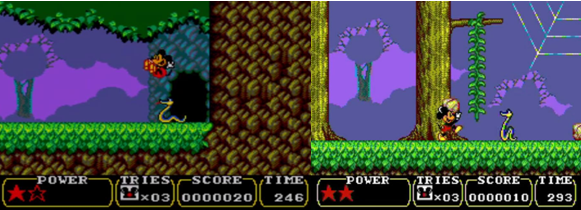
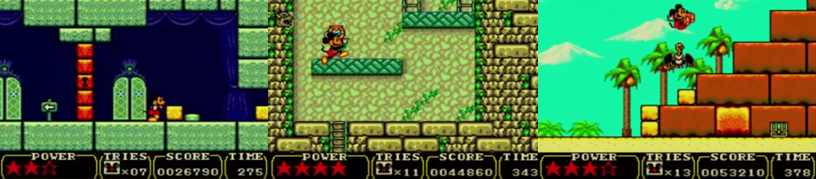
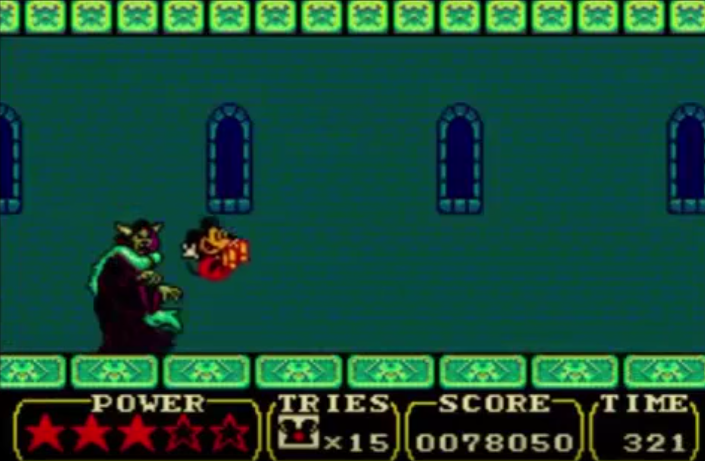
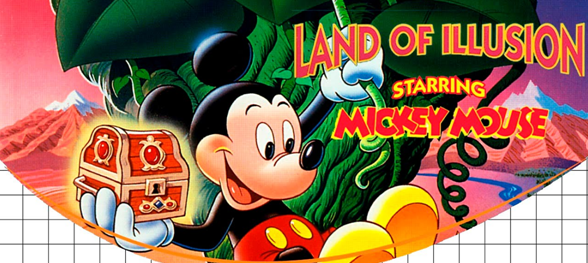





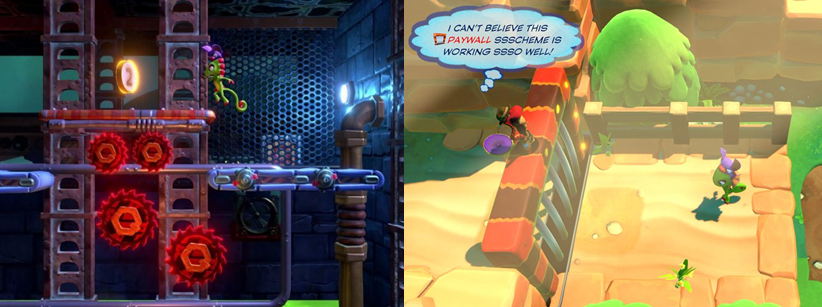
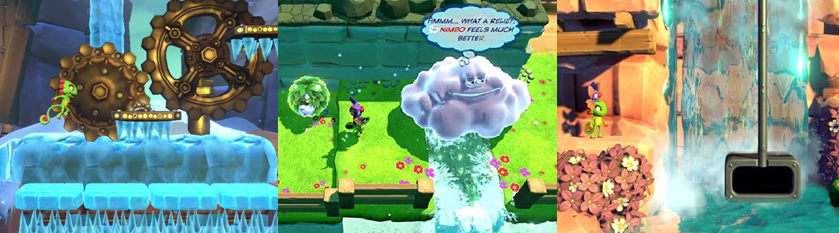


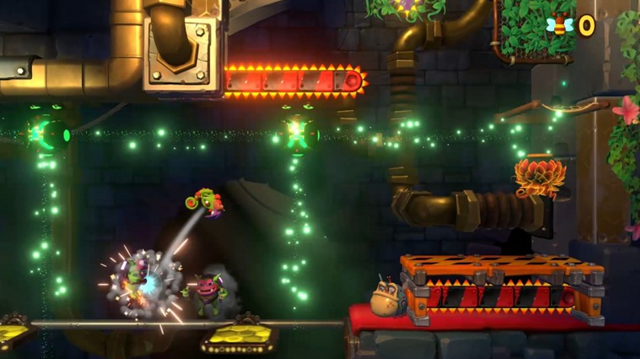

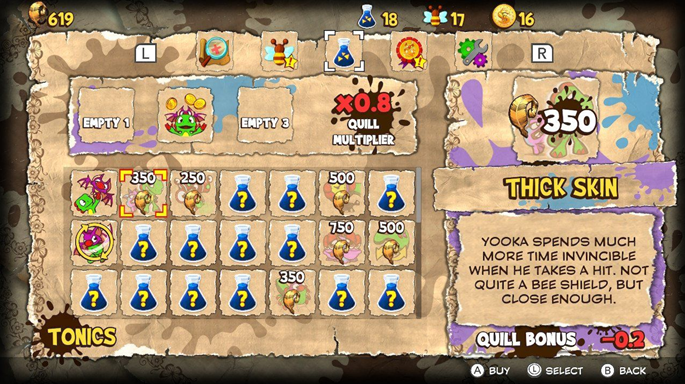
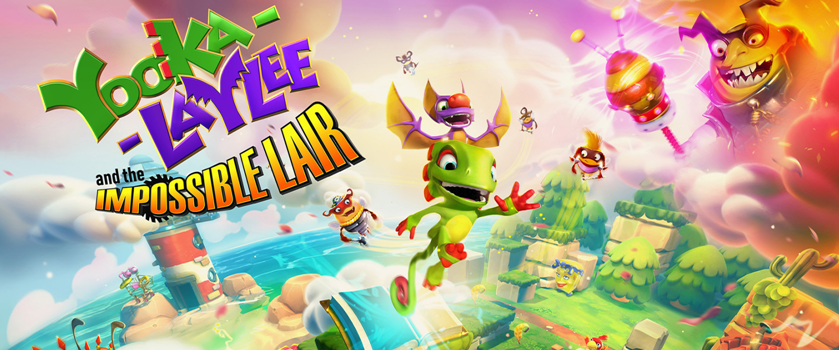


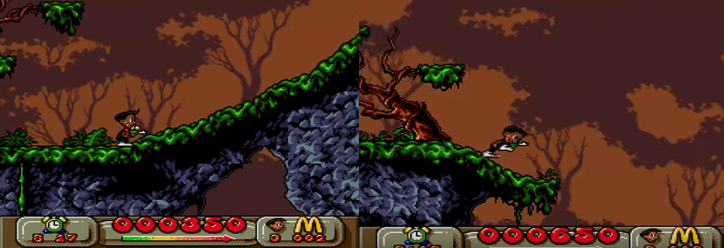


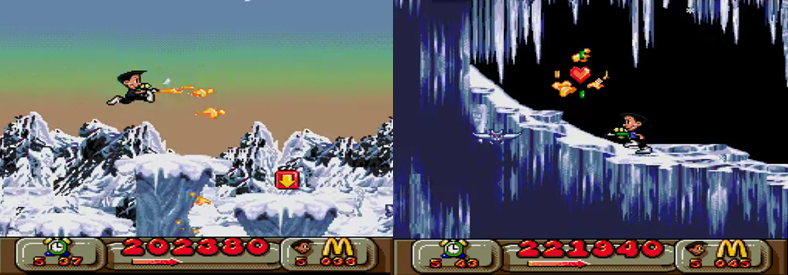
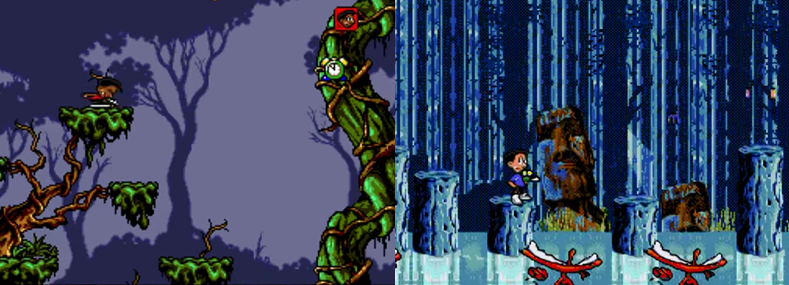
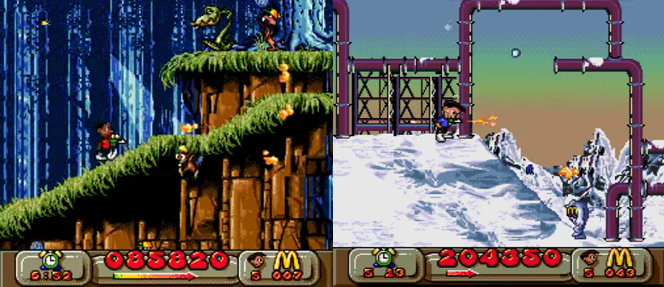
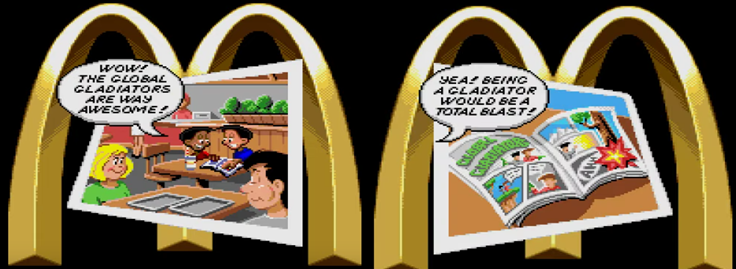
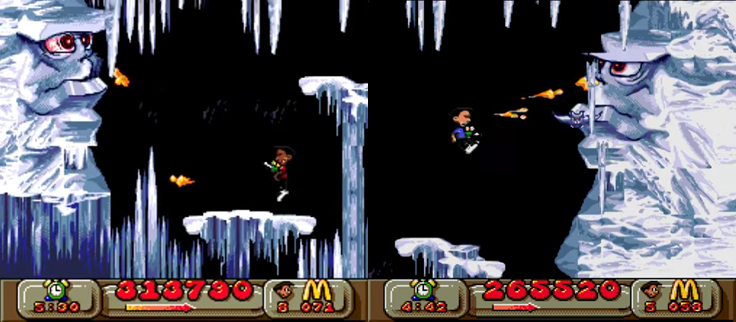


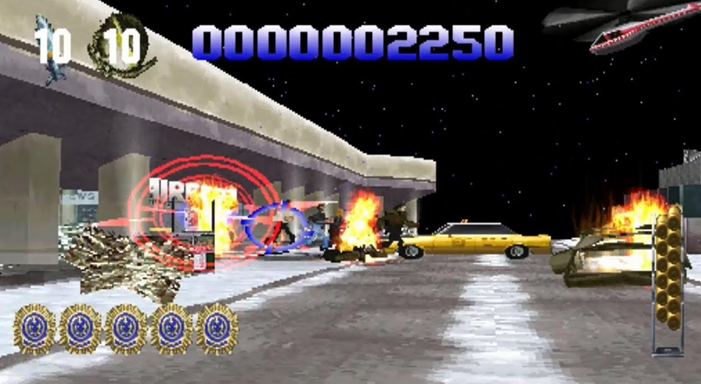
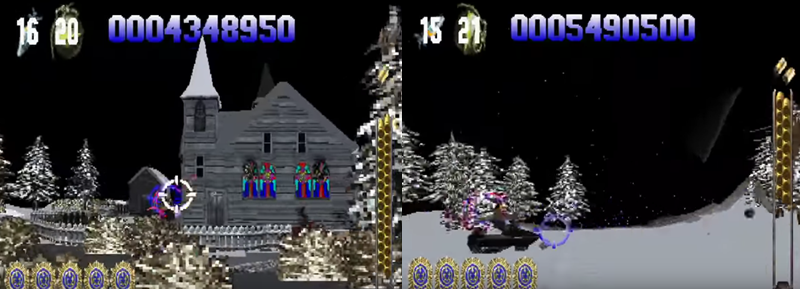
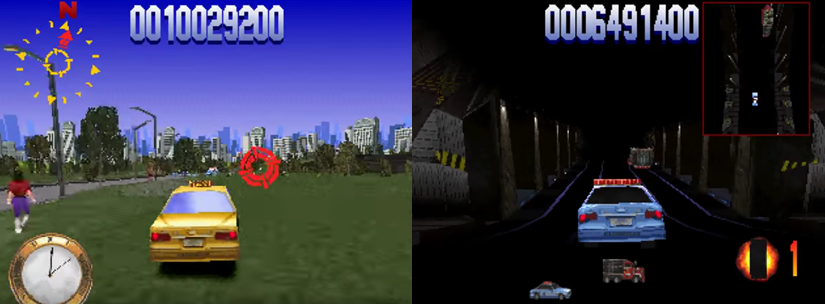
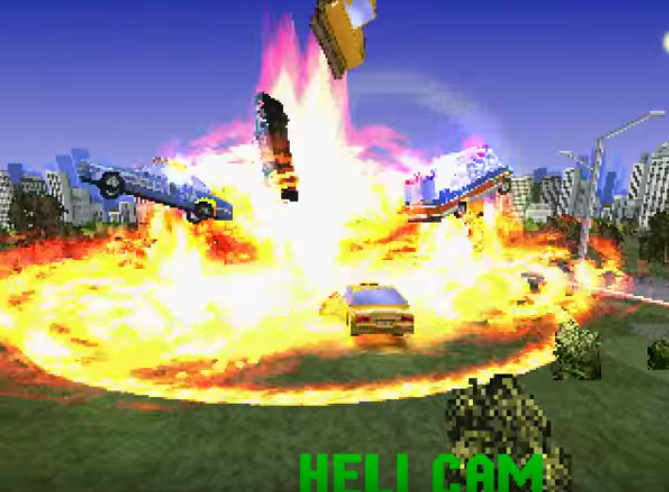


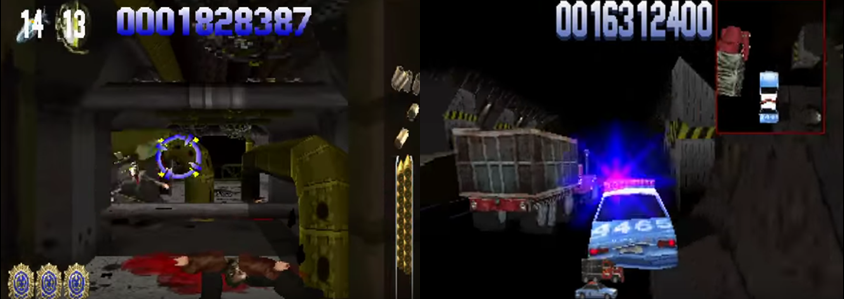




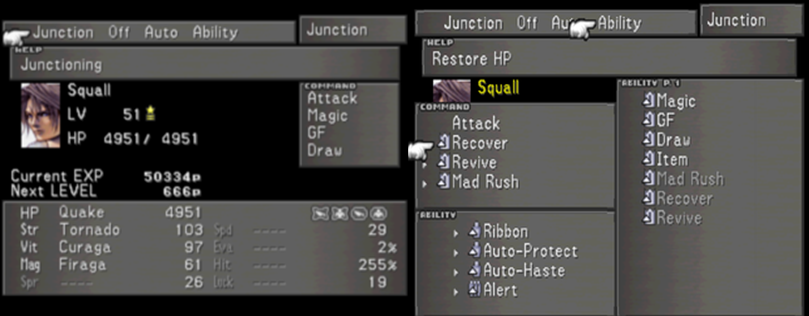
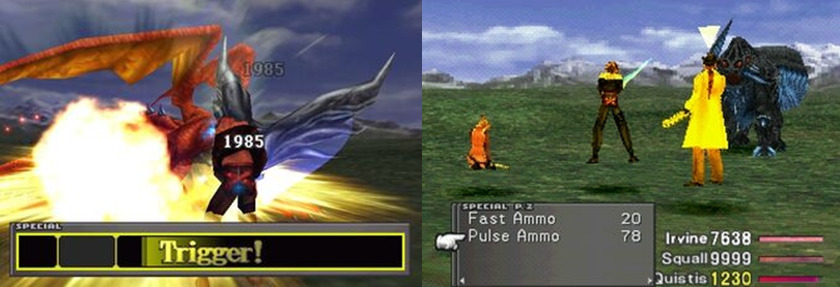


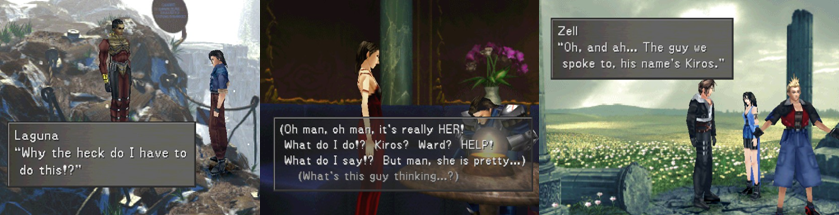


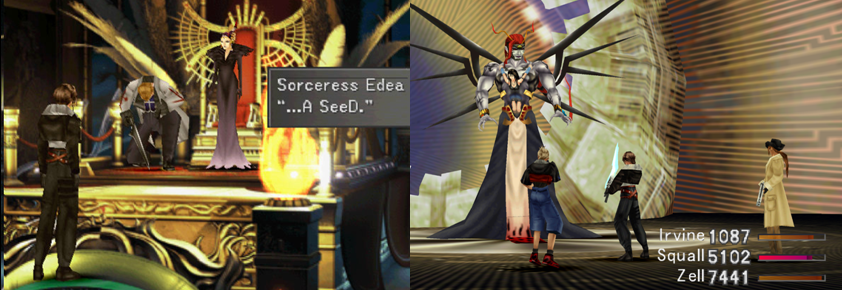


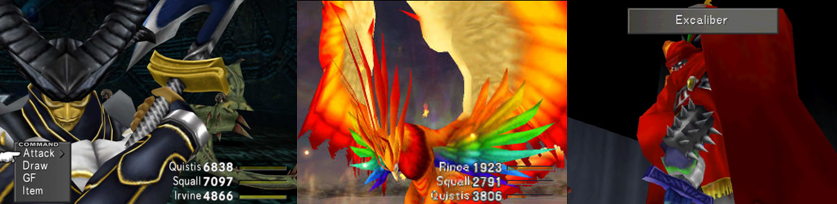

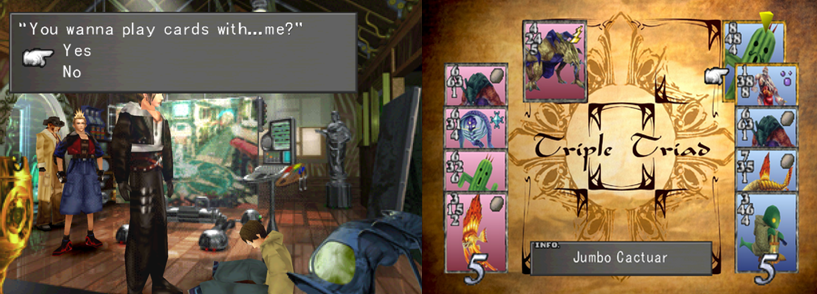


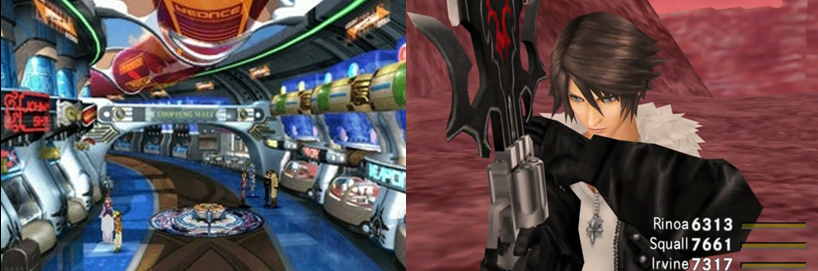
















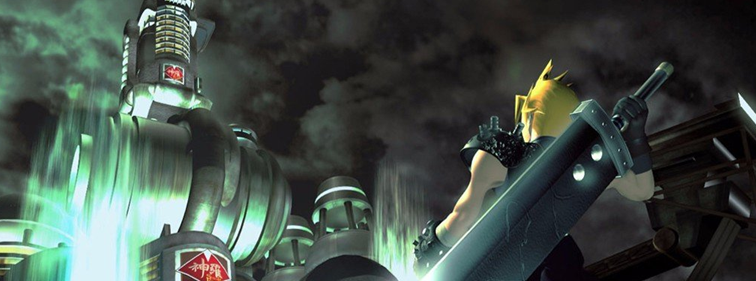







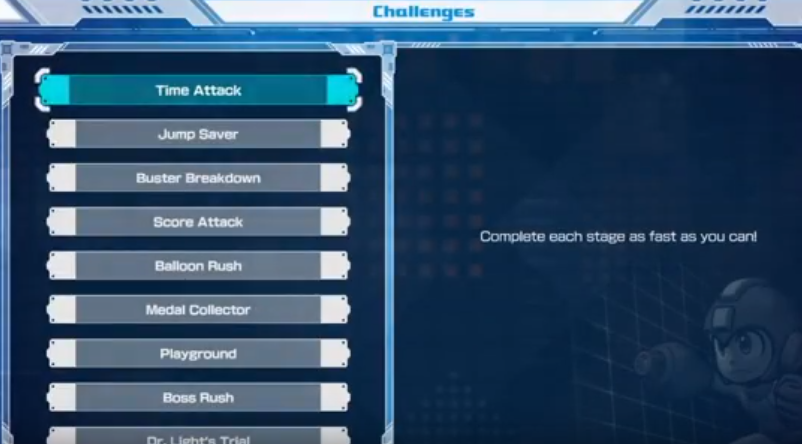


You must be logged in to post a comment.