Released: 2010 Developer: Treyarch Also Available For: Nintendo DS, Nintendo Wii, PC, PlayStation 3
The Background: It’s the final week of “CoD Month” here on my site. So far, I’ve played all three titles in the Call of Duty: Modern Warfare Trilogy (Infinity Ward/Sledgehammer Games, 2016), Call of Duty 3(Treyarch, 2006), and Call of Duty: World at War(ibid, 2008) and I’ve been less than impressed with what I’ve seen so far. For the longest time, I’ve never been much of a fan of the Call of Duty titles (Various, 2003 to present), mainly because I don’t really get on with first-person shooters (FPS) at the best of times. The perspective can be difficult to judge, enemies shoot at you from nowhere, and I just find them (especially military shooters) quite generic and uniform and, so far, the Call of Duty games I’ve played haven’t done much to change my views. World at War was probably the one I enjoyed the most and, it turned out, spawned a spin-off series for the Call of Duty franchise that continued with this title. Black Ops was another title that happened to come with the Xbox 360 I bought a while back and I’ve heard a lot of positive things about this title, especially, among all the Call of Duty games. So, one last time, I sat down to plough through one more Call of Duty game simply for the Achievements and to see if my personal bias could be swayed.
The Plot: Sixteen years after the events of World at War, the United States and the Soviet Union are locked in a “Cold War” that moved warfare away from the trenches and towards more clandestine operations. Black Ops revolves around the discovery of “Nova-6”, a deadly chemical weapon that is in the hands of several Russian sleeper agents placed across the globe, and the race against time to locate, isolate, and destroy it before it can kill millions.
Gameplay: Call of Duty: Black Ops is a first-person shooter that sees you in the role of SAD/SOG operative Captain Alex Mason; unlike the other Call of Duty games I’ve played so far, you primarily control Mason throughout the game’s campaign but, at various times, you’ll also play as CIA paramilitary operations officer Jason Hudson. Also in a change from the previous Call of Duty titles I’ve played, Black Ops’ protagonists are actually vocal, talking during gameplay and in cutscenes, which is a nice change of pace.
Call of Duty‘s control scheme was pretty standard by this point.
When it comes to the controls, you know the story by this point and nothing is really different here: you reload with X, jump with A (still as useless as ever unless you’re vaulting over walls), switch weapons with Y, and sprint for a bit by holding in the left analogue stick. Grenades and other explosives are tossed with the Left and Right Buttons, you aim and shoot with the Left and Right Triggers, respectively, and can shoot wildly from the hop or try to be a bit more accurate but pulling on the Left Trigger to aim down your sights. Pressing B allows you to assume one of three stances: standing, crouching, or prone, each of which alters your aim and ability to be stealthy or open to enemy fire.
There’s no regenerating your haz-mat suit so stay out of gunfire!
Health still automatically replenishes when you avoid enemy fire, and you still get a generous amount of checkpoints to help you reload when you’re inevitably blown up by a random grenade but Black Ops mixes things up a bit by having a few missions where your health “bar” doesn’t really mean shit: the first is when you pilot vehicles (such as the Mi-24 Hind attack helicopter and an attack boat) and the vehicle’s damage doesn’t auto-repair and the second is when you (as Hudson) must walk through a cloud of Nova-6 in a haz-mat suit. As you take damage, the suit cracks and doesn’t auto-heal so you’re at risk of being exposed to the deadly nerve agent if you linger too long or rely on the traditional auto-heal mechanics, which is actually a nice touch and harkens back to FPS games of old where auto-healing wasn’t a thing.
Mason’s plight is a central part of the game’s narrative.
A helpful mini map is located at the top left of your heads-up display (HUD); this shows your location, the location of your allies, enemies, and the direction of your objective. Maybe I’m just used to them by this point but I actually found this mini map quite useful as it actually gives you a far better idea of the layout of your current area and where you need to go. As always, the game isn’t all just mindless shooting; in fact, story plays a major role in Black Ops. Having a vocal protagonist really helps with this and Mason is right in the middle of the Russian’s plot to gas their Capitalist enemies as he was captured and brainwashed by the Soviets; the narrative is framed by several cutscenes wherein Mason is interrogated by US personnel regarding his actions and the action frequently cuts away to more of these scenes. Sadly, these cutscenes can’t always be skipped; sometimes, you’re able to skip them by holding the A button but you’ll have to sit through a fair few which is annoying on repeated playthroughs.
Black Ops also sees you piloting helicopters and driving attack boats.
Also breaking up the action are a variety of other gameplay sections; there’s the vehicle-based ones I mentioned above which are basically similar to the tank- and helicopter-based missions of previous games but actually much more enjoyable. When controlling the Hind, you both pilot the craft and shoot with a machine gun and missiles; while it’s quite difficult to manoeuvre and get a good bead on targets (especially other helicopters), it’s still quite fun to be up in the air and have a greater field of view. The boat mission is pretty much exactly the same as a tank-based mission from World at War except you’re on a boat, in the water, and it’s night-time in the jungle; the boat is still a bit slippery and awkward to control but it’s fun just wrecking shit up with its armaments.
Guide your ground team from the air and then infiltrate with stealth.
One mission also sees you inside of an SR-71A aircraft; from here, you’ll use a thermal radar to direct your ground forces and then switch down to them to clear out the opposition. Once the mission switches to the ground proper, you’ll have to rappel down to a facility and utilise the same stealth tactics seen in the previous games to progress further. Stealth also plays a big part in another mission where you must first avoid an overhead helicopter, silently dispatch of two guards, and then infiltrate a Soviet missile based while wearing their uniforms. As dark and grave as World at War was, Black Ops is even more so. The game opens with Mason escaping from a desolate Soviet prison where he reconnects with Viktor Reznov from the previous game; Reznov’s edict is literally burned into Mason’s mind as he finds himself compelled to assassinate a number of Axis scientists throughout the game’s narrative. Oh, and did I mention that you end up going to Vietnam? Well…you do. Similar to how the Japanese elements made the last game more brutal and affecting, seeing the Viet-Cong charge blindly into gunfire and try to slice your throat out is legitimately jarring, almost as much as them capturing Mason and his comrades and forcing them to play Russian Roulette!
Graphics and Sound: Building upon the level of detail seen in World at War, Black Ops is probably the darkest, grittiest, and most detailed of the series thus far (at least, of the ones that I’ve played). Character models continue to be the weakest aspect but it’s easily forgiven when you realise how detailed and elaborate many of the game’s locations are: the Vorkuta Gulag isn’t just a desolate, rust-filled prison; it’s a desolate, rust-filled prison in the middle of a snow-swept landscape that is perfect for a high-speed motorcycle escape to a train. Khe Sanh, and Vietnam in general, is rendered with a horrifically affecting realism that really captures the humid and horrific conditions of that particular conflict and stands in start contrast to the dark urban landscapes you run through in Kowloon City.
The game’s attention to detail and voice cast is just as good as ever.
Voice work is even more important than ever to Black Ops because it actually features a speaking protagonist; Sam Worthington (remember when he was a thing?) takes centre stage as the tortured and haunted Mason, Gary Oldman returns as the revolutionary Reznov, and even Ed fuckin’ Harris shows up to voice Hudson. I also took much greater note of the music in this Call of Duty title; there’s a foreboding, heavy feel to the tunes of this game alongside the traditional stirring military melodies and, in true Apocalypse Now (Coppola, 1979) fashion, the troops stationed in Vietnam like to blast the Rolling Stones’ “Sympathy for the Devil” at full volume in their base camp and when blowing enemy encampments to smithereens.
Enemies and Bosses: Like World at War, Call of Duty: Black Ops has far more enemy variety than in the previous titles. Rather than simply gunning down Nazis, you’ll mostly be clashing with Soviets, Vietnamese, and even British Commandos. As always, these enemies are formidable thanks to their flagrant use of cover, melee, and explosives to whittle your health to nothing in no time at all.
Storm the Rusalka to end the threat of Nova-6.
While bosses aren’t really a thing in Black Ops, when flying the Hind, you’ll come up against a couple of enemy attack choppers that must be destroyed before you can progress and, when in your attack boat, you’ll specifically have to trade shots with another boat to complete the mission. When joining the assault on the Rusalka, you’ll have to provide cover fire from your attack chopper and also bring down another enemy Hind, before eventually confronting and killing Nikita Dragovich, one of the key minds behind Nova-6, in a quick-time event.
Power-Ups and Bonuses: As with other games in the series, Black Ops is going for realism over the more flamboyant aspects of other FPS titles so the closest thing you’ll get to upgrades is when you are able to call in air strikes, take control of armoured vehicles, or happen across an armoury.
Blow enemies into flaming chunks or cut them down with duel pistols.
Despite this, and the setting of the game, Black Ops has some pretty nifty weapons on hand for you to use; though you’re still limited to only having two at a time, some of the stand-outs for me were the Franchi SPAS-12, a pump-action shotgun that can also fire incendiary rounds, the Python (a high impact .357 Magnum), and the Beretta Model 682, all of which are great for close-quarters dismemberment. You can also grab a crossbow (that can also fire explosive arrows) and a couple of nifty grenade and rocket launchers, like the “China Lake” and the M72 LAW, and even duel-wield pistols and smaller submachine guns at various points.
Additional Features: As with the other Call of Duty titles, you can choose to play on a number of different difficulty settings and earn a fair amount of Achievements. These are generally earned after clearing missions in the main solo campaign but also pop with when find all of the Intel hidden throughout the game, complete certain missions with certain weapons, kill a certain amount of enemies in certain ways, or slaughter some poor, innocent test monkeys as quickly as possible. Multiplayer returns in Black Ops but, this time, you’re able to set-up a multiplayer match against computer-controlled opponents, meaning I was actually able to experience a Call of Duty free-for-all deathmatch for the first time. When in this mode, you can select or create a class where you customise your weapon loadouts, perks, and other aesthetics, which is a nice touch, and you can tweak the level of difficulty of your computer-controlled foes but I was absolutely owned by the computer even on the easiest setting and found it was little more than a standard deathmatch.
The “Zombies” modes continue to be a lot of fun.
Returning from World at War is the “Zombies” sub-game wherein you must try to survive for as long as possible against endless waves of zombies in a variety of maps; one of these has you playing as John F. Kennedy, Richard Nixon, Robert McNamara, and Fidel Castro in a fantastic piece of ridiculousness that is massively at odds with Call of Duty’s more serious tone…and I love it! The more zombies you kill, the more points you earn to spend on fortifying your defences, unlocking new areas, or accessing better weapons but the best part about the “Zombies” mode in this game is the inclusion of Dead Ops Arcade, a top-down arcade title that plays very similar to Smash TV (Williams, 1990) and Dead Nation (Housemarque/Climax Studios, 2010) and was honestly the most fun I’ve had playing a Call of Duty title.
The Summary: Call of Duty: Black Ops was far more enjoyable for me than any of the Modern Warfare titles and a fine follow-up to World at War but I still find myself largely unimpressed. If anything, it’s annoying that it took this long for the series to feature a speaking protagonist right from the get-go but, while the game is better for it, I didn’t find Mason particularly compelling; you can see the big twist in his narrative coming a mile away (thanks in no small part to the constant cutscenes that jerk you abruptly from the gameplay to slap you in the face with the twist before it’s revealed), it’s outrageous to me that he was allowed back into active service after the big reveal, and the idea of chemical attacks or sleeper agents isn’t exactly new by any stretch of the imagination. Still, by taking everything that worked in the Modern Warfare games and in World at War and applying them in a more intimate story with greater stakes, Black Ops actually worked for me on a level the other Call of Duty titles didn’t. It helped a lot that areas were far more recognisable, varied, and interesting, that the locations were unique and engaging, and that the developers included Dead Ops Arcade and so many recognisable political figures happily blowing holes in zombies.
My Rating:
⭐⭐⭐
Rating: 3 out of 5.
Pretty Good
What did you think of Call of Duty: World at War? Where does it rank for you compared to the other Call of Duty titles? Do you think I have committed the ultimate sacrilege by besmirching the good name of the Call of Duty franchise or do you agree that the series is somewhat over-rated and stagnated? Whatever you think, please do leave a comment below and come back for more content and reviews in the near future.
Released: 20 August 2020 Developers: Dlala Studios and Rare Also Available For: PC and Xbox One X
The Background: Make no mistake about it, the Teenage Mutant Ninja Turtles (TMNT) were hot shit back in the day; though the TMNT first began life as a ridiculous, dark, and gritty comic book, they shot to fame and into the cultural consciousness with the 1987 cartoon series and a line of action figures and the franchise was the hottest kids commodity at that time. That success also, inevitably, brought a slew of knock-offs and imitators, many of which, like the Battletoads, were reasonably popular in their own right. Conceived of as a direct response to the TMNT, the Battletoads (Rash, Zitz, and Pimple) were space-faring adventurers who made their debut in the appropriately-titled Battletoads (Rare, 1991), a sidescrolling beat-‘em-up that is notorious for being one of the hardest titles in the Nintendo Entertainment System (NES) library. Battletoads was fairly well received and a number of follow-ups were produced, including a pretty kick-ass arcade title in 1994, but the franchise quietly died off and remained dormant until Microsoft surprised everyone at the 2018 E3 with the announcement of an all-new entry in the beloved series. Perhaps bolstered by thereception of Rare Replay (ibid, 2015), Rare chose to revive their franchise as an Xbox One and PC exclusive, one not hampered by hardware restrictions, and effectively reintroduced the Battletoads to a whole new generation of gamers.
The Plot: After being awoken from a fantasy simulation after twenty-six years, the Battletoads are dismayed to find that they are no longer intergalactic heroes. Seeking to reclaim their former glory, they set out to defeat their long-time nemesis, the Dark Queen, but end up joining forces with her to confront a greater threat, the evil alien race known as “Topians”.
Gameplay: Like its predecessors, Battletoads is a 2D, sidescrolling beat-‘em-up in which up to three players can battle across numerous stages spread between four chapters (referred to as “Acts”). When you begin a new game, you can select from three different difficulty levels (“Tadpole” being the “Easy” mode, “Toad” normal, and “Battletoad” being the hardest). Once you’ve selected a difficulty, you’re locked in to it and will need to create a new, separate save file to play on one of the other modes but you can switch between these save files easily enough by pressing X on the main menu.
Each of the Battletoads handles a little differently, with different strengths and weaknesses.
There are three characters to pick from (Zitz, Rash, and Pimple) and, while each of the titular Battletoads controls the same, you’ll find that each one has their own strengths and weaknesses: Rash is the all-rounder, with decent speed and attack power; Zitz is the weakest but also the fastest, able to string combos together much quicker; and Pimple is the slowest but also the most powerful of the three. Unlike in the previous games, you can freely switch between any of the Battletoads on the fly by pressing left, up, or right on the directional-pad (D-pad) to “tag in”, allowing you to mix and match your attack strategies on the fly. While there is no life system, this effectively gives you (in single player mode, at least) three lives since, if a Battletoad is defeated, you automatically switch to one of the other two and, after a short time, any toad that has been knocked out will regenerate a portion of their health and allow you to tag them back in. This adds another level of strategy to the game as you might want to favour Zitz for the majority of a stage and save Pimple for the boss battles but it’s important to not hog all the health-restoring flies for any one Battletoad as it could leave you at a disadvantage later down the line. Fortunately, the game is extremely generous with checkpoints, which refill and resurrect your team to full health, meaning you can easily jump right back into the action and you are even given the option of skipping ahead if you continuously die.
The Battletoads assume a variety of wild animations and forms when performing their attacks.
Being a sidescrolling beat-‘em-up, combat is obviously at the forefront of Battletoads’ gameplay; each character can unleash a quick combination of strikes with repeated presses of the X button, launch enemies into the air with Y, and charge up a powerful “Morph Attack” (which sees them transform into a variety of outlandish and amusing forms) by holding down the B button. You can also jump with A (revolutionary, I know), hold or press RT to run or evade, respectively, and hold down LT in conjunction with other button presses for different effects (press A and you’ll spit gum to render enemies immobile for a few seconds and press Y to pull enemies, flies, and collectables closer with your tongue). You can also wriggle the right analogue stick to perform a taunt, though I never discovered the point of this move beyond grandstanding.
Gameplay isn’t all punching as you’ll have to do some tricky platforming and puzzle solving, too.
While the majority of the game involves simple, arcade-style fighting, the monotony is broken up in a variety of ways; you can use LT and B to latch on to special hooks and battle in the background and foreground, for instance, and you’ll be required to press switches to open doors or raise and lower lifts at various points. You’ll also have to drag crates around to reach higher levels and use these techniques in lieu of your fighting abilities to solve various puzzles. In the game’s third Act, the Battletoads split up and Pimple is left to perform some rudimentary platforming, dodging spikes and other hazards, and climbing a mountain by pressing switches in the right order to clear a path. Similarly, when controlling the Dark Queen, you’re asked to run as quickly as possible through an all-too-familiar maze-like stage using her dash and unique ability to float to get past the many spiked hazards in your way rather than fighting.
This was easily the hardest and most frustrating part of the game for me.
You’ll also have to complete a couple of different mini games to open up electronic doors either by completing an electronic circuit or hacking your way. The first is relatively simple, involving the rotation of wires to allow a current to travel from one point to another but it gets a little trickier as you progress by introducing dead ends and different directions. The second is quite a unique little mini game that sees you moving an 8-bit Battletoads icon across a horizontal grid while avoiding moving red hazards; this can be tricky when playing with others as one touch of these hazards will reset the grid for all players but, if you struggle and fail enough times, the game gives you the option to automatically hack the door. Other times, you’ll have to complete a number of quirky quick-time events (QTEs), the most prominent of which is an eccentric version of rock/paper/scissors, but you’ll also be completing menial tasks such as massages, sending e-mails, and signing autographs with rotations of the analogue sticks and repeated button presses. Later, you’ll need to use these skills as Pimple to fight off besmirched cult members and be sure to keep your wits about you after defeating the game’s final boss as you’ll need to perform a few QTEs before the battle is officially over. Some of the mini games, however, aren’t as much fun or easy to understand; at one point you have to complete three in a row with hardly any time to register what you actually have to do but by far the worst and most frustrating part of the game was when you have to reboot the systems of your space ship. The mini game displays a number of symbols, each one relating to a different mini game, and you have a very short space of time to find the game you need and complete it, all with the most vague of onscreen prompts to direct you. The worst part is that this section just keeps going and going, is very unforgiving, and it can be really difficult to see where you’re supposed to be looking as the mini games are all quite small by the end.
Gameplay has a surprising amount of variety and just the right amount of challenge.
Finally, gameplay is mixed up further by the return of the Turbo Tunnel, panic-inducing chase sequences, and some overhead shooting stages. Thankfully, the Turbo Tunnel is nowhere near as harrowing as in the NES game; for one thing, your view is from behind, which makes it much easier to see oncoming hazards. Each hit or mistake costs you a Battletoad but checkpoints are generous and, while it goes on for some time, it’s actually more exhilarating than frustrating. The Turbo Tunnel returns at the end of the game but, while it is harder, it’s a much shorter section; the spirit of the old tunnel is evoked in the sledging sequence, though, which has you holding X, Y, or B to grind along different platforms and that can be very difficult when you’re also required to jump with A. One of the most harrowing sequences from the NES game, the rat race, is recreated when you, as the Dark Queen, have to outrun falling stomach acid but, thanks to her dash and barge attacks and, again, many generous checkpoints, it’s nowhere near as impossible or demanding as the original game. Finally, the space shooting sections, while also a lot of fun, see the screen literally fill with enemy ships and projectiles to become one of the most elaborate “bullet hell” shooters I’ve ever played and these stages do tend to drag on a bit and are probably the most “unfair” of the game’s stages at times.
Graphics and Sound: Battletoads is a fantastic throwback to a simpler time in gaming; like Streets of Rage 4(Dotemu/Lizardcube/Guard Crush Games, 2020), the game favours brought, vibrant graphics and backgrounds and a rockin’ soundtrack that includes remixes of classic Battletoads tracks. Unlike that game, however, Battletoads is far more over the top and cartoony; the toads themselves are full of life and wacky antics and these is best seen through their zany attacks that see them growing comically enlarged feet, fists, or transforming into sharks, bulls, jackhammers, and even whipping out a Battletoads (Rare, 1994) arcade cabinet to damage enemies.
Stages and graphics are colourful, wacky, and wonderfully enlivened by a cartoony aesthetic.
Stages are varied and have a lot of depth, with some fun things to see in the background; you’ll travel through futuristic neon streets, a disused carnival, and wacky alien landscapes. Sadly, though, there is no “moving elevator” stage and there aren’t many chances to interact with your environment; there are no barrels to smash, no weapons to acquire, and your interactions are generally limited to activating switches or spitting bubblegum at various targets. Still, the simplicity of the interactivity in no way renders the environments lifeless or boring as they’re packed full of little details and things to see and distract you.
It’s a good job the story is so full of mapcap fun as it’s a surprisingly big part of the game.
Battletoads is very big on story and features a number of cutscenes and lots of voice acting; the titular heroes are pretty funny, being out of touch superheroes obsessed with becoming relevant in a world that has passed them by, and everyone has distinct and amusing personalities, from the exasperated Dark Queen to the flamboyant Tobians, Uto and Pia. While I enjoyed these cutscenes, which reminded me a lot of Rick and Morty (2013 to present) and were full of Rare’s signature, quirkysenseofhumour, it was a bit annoying that you aren’t always given the option of skipping them on subsequent playthroughs.
Enemies and Bosses: As you make your way through the game’s stages, you’ll come up against a host of weird enemies; many of them, like the different coloured anthropomorphic rats, Topian cops, and disgruntled lumberjacks, are mostly disposable cannon fodder for you to go to town on. Some of their variants, though, will block your attacks with a guard or shield that can only be broken with your charged Morph attack, and will also toss projectiles your way. When in the space shooting sections, you’ll come up against a number of different ships, some which fill the screen with projectiles of all kinds that will truly test your reaction skills and patience. Other enemies can be a bit more troublesome: Kernel will charge up an electrical attack that electrifies nearby water and can cause massive damage; Fewcharge will unleash a laser beam that covers a large portion of the screen; and be sure to dash out of the way of Brucey when its about to charge at you. As you progress, you end up having to face multiple variations of these enemies at once, which can be very difficult and requires a lot of strategy and awareness on your part as your health will be drained quite quickly if you’re not careful.
Porkshank is a big, tough first boss but easily defeated once you master his simple attack patterns.
It’s a good job Battletoads has so much enemy variant and challenge involved in its combat since it’s surprisingly light on boss battles. The first boss you face, Porkshank, is a gigantic pig whom you fight three times in the first stage. The first encounter requires you to evade his combo of attacks, the second sees him try to charge at you head-first, and the third sees him split into two and do both attacks at the same time. While he can absorb a great deal of damage, as long as you dodge out of the way and charge up a Morph attack or quickly switch to Pimple, it’s pretty simple to get past him without any real trouble. The enormous Guardian boss requires a little more strategy on your past; the entire arena continuously fills with Blinkeys, pink eyes (hah!) that try to distract you from dragging the Summoner Eye out of its protective field. Each time you damage the Summoner Eye, the Guardian tries to crush you with its massive fists and then you have to smack a piece of debris into the gargantuan creature; the cycle then repeats twice more but with more Summoner Eyes to attack and more fists to damage.
Axeley is definitely one of the game’s more frustrating and troublesome bosses.
One of the game’s most difficult and frustrating bosses is Axeley, a crazed lumberjack who fills the arena with bombs that are very difficult to avoid before leaping into the arena and causing shockwaves with each impact. When his giant axe gets stuck, you can attack with extreme prejudice but, for his next two phases, he starts rolling logs at you that are extremely hard to jump over, tossing in more bombs, and performing far more jumping attacks to keep you constantly on guard while you wait for your brief window to attack. I would recommend using Zitz for the most part and keeping track of Axeley’s movements so you can switch to Pimple and get the most out of that brief window of opportunity.
Once you get past Dirtbag’s slew of projectiles, you’ll have to avoid the Dark Queen’s “helpful” tornados.
Dirtbag can also be quite the tricky encounter; like with Porkshanks, you’ll encounter him in a couple of different confrontations in the space shooting sections but the difference is that Dirtbag likes to attack with a variety of projectiles that you have to squeeze between and relentlessly fire at his ship while using your shield and evade to escape from harm. What makes this difficult is that you’ll most likely get to this boss with very little health left because of the gauntlet of enemies you have to blast through first and it seems like only parts of Dirtbag’s ship are vulnerable. Although you don’t actually fight against the Dark Queen this time around, she does actually help you in a penultimate battle before the final boss; her version of help, however, involves conjuring tornados that are just as likely to hurt or kill you as they are to toss enemies from the stage so be sure to stay away from them wherever possible.
Uto and Pia might be flamboyant but they’re no joke when you finally have to battle them!
The game’s final bosses are the Topians, Uto and Pia, essentially two intergalactic beings who stole the Dark Queen’s power and are practically Gods. When you fight them, they will take it in turns to launch attacks such as spherical projectiles that bounce across the arena and protect them and a giant laser beam that’s particularly difficult to avoid, turn invisible and intangible, and come crashing down onto the stage, all of which cause massive damage. Once they’re injured enough, they’ll team up for real for their final phase but, luckily, only one of their health bars needs to be whittled down. Still, I recommend taking advantage of the invincibility option that becomes available after a few deaths or when you’re close to failure.
Power-Ups and Bonuses: I mentioned this earlier but, strangely, there are no power-ups or weapons to pick up in Battletoads; while you can’t grab barrels (…or enemies) to throw around and there’s no score-increasing items, you do accrue a high score as you progress. Each fight that isn’t a boss battle receives a grade; the better your combo and the less hits you take, the higher your score becomes and, at the end of every stage, you receive a grade based on your performance and will earn an extra collectable if you manage to get at least an A ranking for every fight in each stage. When in the shooting stages, the scoring system continues but you can actually pick up power-ups that improve your ships weaponry for a limited time, turning it into a spread shot, a high-powered laser, or bolts of magenta energy to cause massive damage against your relentless enemies.
Additional Features: Battletoads has sixty-one Achievements for you to earn; many of these are tied to the game’s story and can’t be missed but you’ll also get ones for defeating a number of enemies, breaking through their block attacks, finding collectables, or using your various toad abilities. Others are a little more obscure or challenging, like entering a button code in the credits, finding every collectable, or finishing the game on the highest difficulty. Of course, you can also play Battletoads with up to two friends; in co-op mode, you can revive your team mates when they’re defeated and you can go head-to-head to get the highest score but there’s not really anything on offer once you finish the game. You can play as a couple of different characters in the game’s story but they aren’t added to the roster for replays, there’s no one-on-one fighting mode, and no boss rush or skins to unlock, which is a shame since it would have been a good way to put the points you earn to good use to unlock classic 8- and 16-bit skins. You can, however, unlock a special Battletoads themed ship for Sea of Thieves (ibid, 2018) once you complete all of Act 1…so there’s that, I guess.
The Summary: I was somewhat apprehensive going into Battletoads; I’ve played the original NES game on Rare Replay and couldn’t get past the Goddamn Clinger-Winger stage but I did have a lot of fun with the arcade version of the game. Thankfully, this version of Battletoads is much, much easier than its NES counterpart; I was worried Rare were going to pull a troll move on us and make a ridiculous frustrating throwback to that era of nigh-impossible videogames but, instead, they delivered an extremely enjoyable beat-‘em-up with just the right level of challenge and variety to keep things interesting. I was genuinely surprised at how much Battletoads had to offer; calling it a simple beat-‘em-up is probably doing the game a disservice and this may go a long way to explaining why many of the clichés and traditions of beat-‘em-ups are missing. It’s more like a combat-heavy action/platformer and it never lets any one mechanic last long enough to become monotonous or repetitive. While a lot of these gameplay mechanics might have been annoying and frustrating at times (that damn system reboot sequence, for example), once you’ve gotten past them you can focus on a different section that more than makes up for those challenging moments. Perhaps best of all, it makes the Turbo Tunnel actually doable and I never ran into a truly game-breaking roadblock; it’s a shame that there’s not more to it in terms on unlockables and stuff but I can forgive that for the more enjoyable aspects of the game.
My Rating:
⭐⭐⭐⭐
Rating: 4 out of 5.
Great Stuff
How did you find Battletoads? Which of the three Battletoads was your preferred character? What did you think to the game’s mechanics and presentation and how did you find it as a revival of the franchise? Are you a fan of the franchise and, if so, which game is your favourite? Did you find the original game as difficult as its reputation or were you able to clear it without any real difficulty? Which of the TMNT knock-offs was your favourite and would like to see more revivals of old franchises? Whatever your thoughts on Battletoads, or memories of the franchise, feel free to leave them in the comments below.
Released: 2008 Developer: Treyarch Also Available For: Nintendo Wii, PC, PlayStation 3
The Background: At this point, I have played four Call of Duty (Various, 2003 to present) titles and I have to say that, so far, I am less than impressed with any of them, and the series in general. Before I played Call of Duty: Modern Warfare Trilogy (Infinity Ward/Sledgehammer Games, 2016), I had little to no interest in Activision’s long-running franchise (that kicked off its first spin-off with this title) primarily because I don’t really like military-style shooters and my love for first-person games died out shortly after Perfect Dark (Rare, 2000). Admittedly, a lot of this is due to my personal bias against being shot in the back or by enemies I can’t see, struggling with the perspective and the controls, and generally just finding first-person shooters (FPS) difficult to navigate at the best of times. However, when I bought my Xbox 360, it came with a couple of Call of Duty titles, one of which was this one and, since I’m doing “CoD Month” on my blog for January and I would hate to waste the G associated with the game, I sat down and rushed through it mainly to see if my bias against the series was justified and to obtain a few extra Achievements.
The Plot: Despite Call of Duty 4: Modern Warfare (Treyarch, 2007) bringing the series into the then-modern day, World at War returns the plot to World War Two, specifically focusing on the Pacific and Eastern Front skirmishes between the Allied Forces of the United States and Europe against the Axis Powers of Japan, the Soviet Union, and Nazi Germany.
Gameplay: Call of Duty: World at War is a first-person shooter that casts you in the role of Private/ Private First Class C. Miller of the United States Marine Corps’ 1st Marine Division, Private Dimitri Petrenko, and Petty Officer Locke. While each character’s narrative sees them fulfilling different objectives in different parts of the world (or at different parts of the same location), each controls exactly the same and just like the characters in Call of Duty 4: Modern Warfare. The A button lets you jump and vault over walls, Y switches weapons, X reloads, and pressing in on the left analogue stick sees you break out into a finite sprint.
The controls are exactly as established in the Modern Warfare trilogy.
Pressing the B button allows you to either crouch, go prone, or stand to avoid or engage with enemy gunfire while pressing in the right analogue stick allows you to melee kill enemy soldiers. You can toss a variety of grenades and other explosives with the Left and Right Buttons and aim and shoot with the Left and Right Triggers, respectively. Again, you can either shoot somewhat wildly from the hip or snap to the nearest target and aim down the sights of your gun by pulling on the Left Trigger and, similar to Call of Duty 3(Treyarch, 2006) this can be problematic as you’re aiming without the assistance of modern technology such as laser sighting. As is largely the standard for FPS titles, your health will automatically recover once you avoid damage for a few seconds; the more damage you incur, the longer it will take to replenish. There are a number of checkpoints in the game for when you do inevitably die, though, and there’s plenty of cover for you to duck behind but you have to keep your wits about you as your enemies won’t hesitate to throw a grenade at you or come charging at you head-first with their bayonet drawn.
The action is broken up by some intense missions involving assassination and dog-fighting.
A helpful radar/mini map combination sits in the bottom left of your heads-up display (HUD); this shows you the location of your allies, enemies, and a star marking your objective. Should you forget your objectives, you can bring them up at any time by pausing the game, which you may have to do from time to time as the game can be both painfully linear and frustratingly unclear at times; if you miss a vague order from one of your team mates, you may find yourself shredded to pieces or blow up before you even know what it is you’re supposed to be doing or where you’re meant to be aiming or directing your air strike. Gameplay is broken up a bit through the use of vehicle sections: as Miller, you’ll call in air strikes and jump on a small tank-like vehicle and use remote-controlled rocket strikes to destroy enemy tanks; Petrenko meets up with Sergeant Viktor Reznov in Stalingrad (who promptly wastes a lot of your time lecturing you about the finer arts of sniping and the evils of General Heinrich Amsel) and is tasked with performing a tricky assassination; and Locke later pilots a PBY Catalina flying boat to shoot down Japanese planes and ships.
World at War is probably the darkest of the Call of Duty‘s I’ve played.
Overall, the game is far more intense and gritty than the other titles I’ve played; for one thing, the Japanese troops you encounter are far more sadistic and aggressive than those of previous titles, leaping up from hidden bunkers, charging at you head-first, and even detonating themselves and your own dead comrades. Similar to the controversial airport mission in Call of Duty: Modern Warfare 2 (ibid, 2009), you’ll also accompany Reznov to Berlin and murder a whole bunch of injured and surrendering German soldiers, which is a bit disturbing. A similar event occurs at Shuri Castle, where Japanese troops appear to surrender and instead assassinate one of your team mates with grenades!
Graphics and Sound: Call of Duty: World at War is the best of both worlds in this regards as it takes the classic World War Two setting of the original games and applies the modern coat of paint the series had received in Call of Duty 4; this means, again, that locations are recreated with a fantastic level of detail and, thanks to the fact that we travel to more exotic locations (Makin Island, Peleliu, Okinawa, and the Reichstag among others), actually make this game far more visually interesting than its predecessors.
Gore is plentiful in World at War.
While character models are still the weakest part of the game, they’re largely garbed in elaborate camouflage outfits or rugged guerrilla outfits that, again, help them to stand out compared to their more uniformed Nazi counterparts but also against their environments. Also, unlike previous games in the series thus far, enemies can be dismembered by your shots; arms and legs will blow off, chests will be blown apart, and large pools of blood accompany the many dead bodies you’ll leave in your wake. Again, though, locations, weapons, and vehicles still have the same high level of attention to detail I’ve come to associate with these games that really emphasises how desolate and horrific the Second World War was.
Gary Oldman reassumes his famous Russian accent to bring Reznov to life.
Call of Duty: World at World really brings the big guns to its vocal performances thanks to the inclusion of Gary Oldman as Reznov and Kiefer Sutherland as Corporal Roebuck. Of all the Call of Duty titles I’ve played so far, I had the least amount of issues with World at War’s dialogue; it wasn’t fully of overly macho “Hoo-rah!” or military slang like the Modern Warfare games but also wasn’t repetitive and annoying like in Call of Duty 3, though it still sticks to the stirring military tunes that pepper these games.
Enemies and Bosses: Call of Duty: World at War has far more variety in the types of enemies you’ll encounter than the other Call of Duty games I’ve played in that you’ll battle both Japanese troops and Nazis this time around. Generally, the enemies you come up against are just as wily as ever; hiding behind cover, tossing grenades at you, and bashing you with their weapons whenever you get close but the Japanese troops are on another level entirely. The Japanese are aggressive, suicidal maniacs who burst out from hidden bunkers in the fields, clamber up and snipe at you from trees, charge at you head-first screaming “Banzai!” and trying to skewer you, or simply blow themselves up to kill you and your comrades. They also don’t hesitate to rush at you in waves upon waves, clambering over their fallen brethren to get to you, and force you into a quick-time event whenever they try and grapple with you.
The game’s final mission sees you storming the Reichstag.
As always, you won’t really come up against boss battles in the traditional sense. You’ll need to make use of air strikes and heavier weaponry to take out tanks and enemy placements and protect some naval ships from kamikaze pilots, which is about as deep as that gets, and the game’s final mission sees you (as Petrenko) storming the Reichstag in a bid to liberate it from Nazi control. This was easily one of the most frustrating and tiresome missions in the game as you have to disable some anti-tank guns, wipe out the ground forces who pop up out of nowhere, have the high ground, and throw grenades at you, and then try to not get crushed by a falling column or roasted alive by a flamethrower-wielding Nazi.
Power-Ups and Bonuses: Call of Duty has always placed a greater emphasis on realism compared to other FPS games and, as a result, your power-ups are largely limited to the lovingly-recreated weaponry and vehicles made available to you. As always, you’re limited to holding only two weapons at a time, some more suitable than others. Given the setting of the game, you’ll often find yourself running through and clearing out trenches, so you might need to Trench Gun or the shotgun to make bloody corpses of your opposition. The Panzerschreck is perfect for taking out tanks and enemy aircraft and you can make use of Molotov Cocktails and flamethrowers to roast your enemies alive if you’re feeling particularly sadistic.
Jump in the tank and wreck some Nazi shit!
You also get to jump into a flame tank and use its cannon to blast Nazi bunkers, tanks, and towers while roasting soldiers with its flamethrower and pilot a PBY-5A Catalina aircraft to shoot down Japanese fighters. One thing I did like about this mission was that you had to constantly switch from the front, back, and side turrets as the mission progressed and you really got a sense of the claustrophobic space in this small aircraft but actually shooting at and hitting your targets (especially the planes) as a tall order thanks to the game’s less-than-helpful aiming reticule.
Additional Features: Call of Duty: World at War features a number of different difficulty settings for you to play on, each one affecting the challenge in different ways, in addition to a number of Achievements. The majority of these can’t be missed as they’re tied to story progression but others will have you performing more specific tasks, like air bombing a certain number of enemies, burning soldiers out of trees, or completing a sniper assassination with a handgun. If you explore your environment well enough, you’ll also find Death Cards attached to makeshift graves; find all of these and you’ll get another Achievement and special gameplay options for the game’s co-operative mode. As with its predecessors, World at War features a multiplayer component that I wasn’t able to fully explore since I don’t have Xbox Gold. It also features a co-operative mode, however, that allows two players to player through the main campaign at the same time, which is a nice touch and I wonder why this wasn’t incorporated until the fifth game in the series. Brand new to the series, though, is the game’s “Nazi Zombies” mode in which up to four players are forced to survive against endless waves of Nazi zombies in a variety of maps. The more zombies you kill, the more points you earn to spend on fortifying your defences, unlocking new areas, or accessing better weapons. While an interesting mode to include, I can’t say that it hooked me too much as you have to play and grind quite a bit to get the most out of it but it’s a nice breath of fresh air after the game’s more sombre main campaign and I wonder how I would feel about an entire Call of Duty game in this vein.
The Summary: Of all the Call of Duty games I’ve played so far, World at War is probably the best but that’s still not really saying much. The game makes use of all the improvements brought to the series in Call of Duty 4 and applies them to a truly horrific time in the Second World War, offering a greater visual variety to the locations and enemies you’ll encounter. The inclusion of a couch co-op mode and the zombie survival game is a nice touch and I felt this did a much better job at presenting an appealing, intuitive, and coherent military shooter than Call of Duty 3 but, at the same time, it’s still not very innovative. There’s an “x factor” that is just missing for me, mainly because of how bland even this game’s more exotic locations appear. The zombie mode had more promise as it was skewing towards the ridiculous; I get that Call of Duty is a far more serious FPS title, though, but, for me, it’s just not as much fun as other FPS games.
My Rating:
⭐⭐
Rating: 2 out of 5.
Could Be Better
What did you think of Call of Duty: World at War? Where does it rank for you compared to the other Call of Duty titles? Do you think I have committed the ultimate sacrilege by besmirching the good name of the Call of Duty franchise or do you agree that the series is somewhat over-rated and stagnated? Whatever you think, please do leave a comment below and come back next Wednesday for the last Call of Duty review of “CoD Month”.
Released: 12 December 2017 Originally Released: 20 April 2006 Developer: Capcom/HexaDrive Original Developer: Clover Studio Also Available For: Nintendo Switch, PC, PlayStation 3, PlayStation 4 (HD) and Nintendo Wii, PlayStation 2 (Original)
The Background: Originally released for the Nintendo Wii and PlayStation 2 back in 2006, Ōkami was the result of many combined ideas from the staff at Clover Studio. However, it was Hideki Kamiya, best know for developing Resident Evil(Capcom, 1996), who pushed for the game to focus on nature before the gameplay was eventually refined and the game’s unique visual presentation settled upon. Though sales were considered to be somewhat poor and resulted in the closure of Clover Studios, Ōkami won (and was nominated for) several awards and enjoyed widespreadcriticalacclaim, with critics praising the game’s length, use of the Wii’s motion controls, and attention to detail. However, many of these same reviews also pointed out some flaws in the game’s lengthy dialogue scenes and getting the game to register control inputs. Regardless, a HD remaster was later released, which received equally high praise and is generally considered to be the definitive version of the title.
The Plot: One hundred years ago, in the land of Nippon, the feared white wolf Shiranui and renowned swordsman Nagi fought and sealed the eight-headed demon Orochi, giving their lives in the process. When Orochi returns, the sun goddess Amaterasu takes Shiranui’s form and, alongside a lewd, fairy-like artist named Issun, travels far and wide to rid the land of Orochi’s curse and the darkness that threatens to devour Nippon and all its inhabitants.
Gameplay: Ōkami is a narrative-heavy, semi-open-world action/adventure game; while it does have some elements of role-playing games (RPGs), the action and gameplay mechanics are very much like the Legend of Zelda series (Various, 1986 to present), with much of the game’s central concept being very similar to the wolf-based gameplay seen in The Legend of Zelda: Twilight Princess (Nintendo EAD, 2006). I’m obviously not the first to make that comparison but it still rings true, though the difference here is that you play as a wolf from start to finish whereas Link would transform to and from a wolf throughout Twilight Princess, which remained primarily a classic 3D Zelda title that focused on swordplay and other mechanics rather than solely on the wolf.
Amaterasu acts very much like a wolf, often for comedic effect.
In Ōkami, you are (eventually…) put in control of the white wolf Amaterasu who, for all her intelligence and sentience, looks, acts, animates, and controls very close to how a wolf or dog would, generally for comedic effect. This means that she can not only run along on all four paws, leaving a trail of blossoming flowers in her wake as her speed increases, but will also whimper, howl, and curl up into a ball when left idle. Amaterasu’s main form of attack is to tackle enemies head on with a press of the X button (which also functions as a ground and mid-air dash), bark with the B button (which doesn’t really seem to do anything but spook non-playable characters (NPCs)), jump (and wall jump) with A (and automatically jump over small objects as she runs at them, like Link in his 3D adventures, though Amaterasu doesn’t have to worry about taking fall damage), and dig up treasures and other objects with the Y button.
Amaterasu has a bit of trouble swimming but is perfectly happy to bite NPCs…
Amaterasu can also perform a doggy paddle when in water but will, eventually, run out of stamina and be dropped back on the last piece of dry land she stood on, though you can eventually earn techniques and abilities to make traversing water far easier. You can also bite with the Y button, which allows you to pick up objects (such as keys or other key items) to unlock doors or complete side quests; you can also bite NPCs or other animals for a laugh, if you like.
Issun acts as your guide and seeks to learn the thirteen brush techniques alongside you.
Amaterasu is not alone in her quest; she’s joined by the lewd travelling artist and swordsman Issun. Issun functions a lot like Navi from The Legend of Zelda: Ocarina of Time(ibid, 1998) in that he will constantly interrupt your progress and gameplay to spout dialogue and exposition and occasionally point you in the right direction or towards objects of interest but differs not only through his womanising ways and blunt sense of humour but also by actually aiding you in combat somewhat. Amaterasu is in possession of the “Celestial Brush”, an enchanted paint brush that allows players to solve puzzles, gain new combat techniques, and attack enemies by holding down the RB button and drawing with X.
Battles take place within a magically-enclosed arena and mostly boil down to button mashing.
As you explore the various different overworlds of Nippon, you’ll encounter floating, ominous Demon Scrolls; though these can, largely, be easily avoided, they will chase after you if you get to close and, upon touching you, lock you into a magically-enclosed arena to battle a number of enemies. When fighting in these arenas, your controls change slightly; now, you can attack with one of two different equippable weapons (or “Divine Instruments) which allow you to strike, defend, or unleash a ranged or combination attack with a variety of Reflectors, Rosaries, and Glaives and deal either massive damage or a finishing blow with the Celestial Brush (easier said than done thanks to the game’s odd idea of perspective). If you don’t feel like battling, you can attack the mystical barrier to open a hole to allow you to escape, avoid the Demon Scrolls, or slash at them with you Celestial Brush to make it easier to get around them. However, I’d advise battling every enemy at every opportunity as it’s a great way to earn rewards since you’re evaluated after each battle and earn additional Yen for finishing fights quickly and without taking damage.
Stay out of Cursed Zones and dispel them by destroying Devil Gates.
There’s no escaping from boss battles or Devil Gates, though, and, when you enter new areas, you’ll find they’ve been cursed with a life-sapping black fog that can only be cleared by destroying a number of Devil Gates dotted around the area. Passing into one of these Devil Gates forces you to battle a number of enemies that are, generally, a little tougher than the average minions but defeating them is still pretty easy thanks to the breadth of the game’s simple, but effective, combat and victory will restore the land to its natural beauty and allow you to hunt for goodies.
Earn Praise to increase Amaterasu’s health, ink pots, Astral Pouch, and purse.
As a God, Amaterasu can earn Praise by performing a number of tasks and side quests; these range from using the Celestial Brush to blossom and bloom withered trees, freeing areas from the cursed fog, feeding the myriad of wild animals you’ll encounter, helping out NPCs, and defeating bosses. Praise can then be used to upgrade Amaterasu’s maximum health, ink pots (using the Celestial Brush consumes ink, which automatically regenerates over time), Astral Pouch (when filled with the various food you can find throughout Nippon, this allows Amaterasu to resurrect from death if defeated), and her purse. As you upgrade each, the amount of Praise needed to upgrade further will increase so it’s recommended that you do anything and everything you can to gain even a small amount of praise. Honestly, though, the game isn’t really that difficult so you might not need all of these upgrades to succeed; I never died once in my playthrough and never seemed to be in danger of reaching the limit of my purse so I’m not entirely sure why you need to increase its capacity.
Purchase items, weapons, and equip Holy Artefacts to gain additional abilities and power-ups.
Like many RPGs and adventure games, Ōkami, sadly, doesn’t feature an autosave feature; instead, you must manually save at various Origin Mirrors (which also fully restore your health and ink) scattered across Nippon or after clearing the game’s dungeon (be sure to make at least one extra save file in case you get stuck or blunder into the game’s final dungeon with unfinished business still to do as you won’t be able to get back to the overworld otherwise). As you defeat enemies, break pots, dig up treasure chests, and generally play the game, you can collect various items to help you in your quest; ink pots will refill your ink, Solar Energy refills a portion of your health, food fills up your Astral Pouch, various treasures can be sold, items aid you in battle (different sizes of bones for health, Inkfinity tags to grant temporary infinite ink, buffs for your attack and defence and so forth), and Yen to purchase new weapons, items, and to pay to learn new techniques from the Onigiri-Sensei. You can also find Demon Fangs, which can be traded for Holy Artefacts; you can equip up to three of these to walk on water, safely cross lava, keep Demon Scrolls away, or attract collectables, among other things. Stray Beads can also be collected to earn both an Achievement and an extremely powerful Holy Artefact that basically makes you unstoppable. It’s one of those games where there’s a lot to see, do, and collect and many different ways to upgrade your abilities without the traditional use of experience points as you can also find and purchase Gold Dust to strengthen your Divine Instruments.
I struggled a bit with the camera, which made drawing vines far more difficult than necessary.
While you are given full 360-degree camera control, you may find that the camera is still less than helpful at some points as it can stutter, get stuck behind objects, and automatically snaps back to its default position every time you leave or enter an area or finish a cutscene, which is annoying as I much prefer the more zoomed out perspective. You can also hold LB to enter a first-person perspective to get a better view of your surroundings and both Amaterasu and the environment will turn transparent to help you spot platforms, areas, or Konohana Blossoms but, often, I found it awkward to actually direct Amaterasu and her brush, especially in certain boss battles and situations.
The brush techniques are simple to do but the game often struggles to register the correct input.
This is because it’s never entirely clear where your drawing will appear on the screen: sometimes, you’ll draw a straight line to slash open a rock and just bloom some flowers on the ground; other times, you’ll try to bloom a tree only to cause the sun to rise or a wind to pick up. This is because the thirteen different Celestial Brush techniques you acquire are all extremely simple in execution (generally one or more lines or a swirl of ink) but the game sometimes seems to get confused about wheat you’re doing, meaning you can waste ink performing the game’s more costly techniques or be needlessly frustrated by something as simple as drawing a line from point A to point B thanks to the dodgy camera and perspective.
I noticed a bit of pop-up and slowdown at times.
Perhaps as a hold over from its time as a Wii and PlayStation 2 game, Ōkami features a fair amount of pop-up; Demon Scrolls, pots, boulders, and certain other landmarks will fade in and out of existence as you explore and I, personally, encountered a lot of annoying slowdown upon loading up my save file or when battling large groups of enemies. There are some benefits to this, though; Demon Scrolls don’t respawn until you leave the area you are in, for one thing, but pots do so it’s pretty easy to stock up on health, ink, and Yen as long as you can be bothered to keep breaking these items open.
There’s a lot to see and do in Ōkami so you’ll always be kept busy, at least.
Ōkami is a pretty exhausting experience, to be honest; I was expecting maybe a ten to twelve hour game but my final playthrough clocked in at more like fifty hours. There is a lot to see and do and a fair amount of backtracking required once you learn new techniques, as well as many side quests and distractions to keep you busy. The game features numerous towns spread across a wide, open field, with new areas (such as a swamp, bustling city, beach front, and frozen region) being equally large and full of things to do, as well as ten dungeons that vary in length and difficulty. Many of these dungeons revolve around a specific gimmick (the vine or wind technique, for example) and might be as simple as collecting a key from one area to unlock a door, learning a new technique, and then battling a boss to manipulating the game’s day/night cycle to raise or lower water levels.
Objectives and puzzles are generally simple but can be a bit vague at times.
Thankfully, the game has an extensive menu on offer that allows you to view, use, and equip items, review your objectives, read up on enemies and bosses you’ve faced, and keep track of any pending quests. The downside, however, is that many of these objectives and side quests, like the game’s puzzles, can be annoyingly vague at times; the map, while helpful, doesn’t display the names of everywhere you’ve visited (this only happens when you’re fast travelling, which is annoying) and Issun is more likely to berate you for taking too long to figure stuff out than help you actually solve puzzles, which range from pushing spheres either down a simple, narrow corridor or through a treacherous bit of quicksand and onto weighted switches (which can be tricky as Amaterasu doesn’t have opposable thumbs!), desperately trying to attach vines to a log (against a time limit) as it speeds through a raging stream, gathering ingredients or acquiring a mask to sneak past enemies, draining water, activating lifts, blasting open walls with cannons to reach new areas, or using your various brush techniques to cross chasms or navigate the dungeon.
Graphics and Sound: Similar to The Legend of Zelda: The Wind Waker (ibid, 2002), Ōkami is presented in a gorgeous cel-shaded style that causes everything, from NPCs to environmental objects to Amaterasu, to pop out at you. Unlike that game, though, where everything kind of blended together to resemble a cartoon, Ōkamidraws its inspiration more from the Ukiyo-e style of Japanese watercolour and wood carving art. Indeed, the game is heavily (and unapologetically) steeped in both Japanese cultural, mythology, and folklore; the result is a game with a distinct visual, artistic, and narrative identity and, while the Zelda comparisons are many, I found myself more reminded of Mystical Ninja Starring Goemon (Konami Computer Entertainment Osaka, 1997), a similarly bonkers action/adventure title full of weirdly hilarious and crude humour, eccentricities, and heavily influenced Japanese cultural and folklore.
Ōkami has many beautiful locations, each distinct from each other.
Functionally, there’s not much here you haven’t seen before, particularly if you’ve played any of the 3D Zelda titles; Amaterasu travels to little towns and across wide, open plains, visiting dank dungeons, sunken ships, bustling cities, frozen wastelands, and even shrinking down to meet the pixie-like Poncles. Thanks to the game’s unique visual presentation, though, every area feels like a fresh and distinct take on clichés such as the water- or wind-based temples. The miniature village of Ponc’tan stood out for me quite a bit as it was a surreal, magical little mushroom kingdom that was a far cry from the ostentatious reality of Sei’an City or the quiet simplicity of Sasa Sanctuary.
The cel-shaded graphics really add to the game’s character and help it stand out.
Each place you visit has something new to see and a distinct flavour to it; the aforementioned Sasa Sanctuary is populated exclusively by the Sparrow Clan, for example, while frozen village of Wep’keer is home to the shape-shifting Oina tribe. Even the lands that surround these areas are teeming with life and NPCs, from merchants and blacksmiths to deities and talking dogs, moles who want to play hide and seek, the lethargic Susano, a bear who is particularly fond of balancing on spheres, the unfriendly and demonic Mr and Mrs Cutter, and Yoichi, who professes to Nippon’s greatest archer. Each of these NPCs, and others, needs Amaterasu’s help in some way and is given a little introduction so you know who they are and brought to life through the game’s unique visual style and a number of quirky characteristics.
Cutscenes are a mixture of in-game graphics and motion comic cinematics.
Being an action/adventure game in the spiritual style of a 3D Zelda title, Ōkami features an abundance of cutscenes and dialogue; thankfully, you can skip these, though you’ll miss out on a lot of the game’s lore and information vital to your progression if you do. These cutscenes are rendered using both the in-game graphics and, at times, a kind of motion comic presentation where the narrator explains what’s going on as images are drawn onto a scroll. When characters do speak in the game, it’s largely through a combination of text boxes, pantomime, and a Banjo-Kazooie-like (Rare, 1998) gibberish, which I find endlessly charming, though it can be laborious having to constantly press A to advance the text. Worst of all is that, all-too-often, NPCs will waffle on and then finish talking, only for the game to indicate (though the presence of a green triangle over the NPC’s head) that the NPC has more to say; because of this, I’d advise pressing B rather than A so you don’t have to worry about accidentally jumping rather than continuing the conversation.
The game mixes charming gibberish with a suitably Japanese soundtrack and aesthetic.
In keeping with its heavily Japanese presentation, Ōkami also features a soundtrack that is distinctly Japanese; inspired by classical Japanese works, the game features a blending of traditional and modern Japanese musical sensibilities to create a suitably whimsical and magical sense of awe and scope to the game’s proceedings. However, while it’s functional enough and serves to bring life to the various areas and situations you find yourself in, I can’t say that it was particularly catchy or memorable.
Enemies and Bosses: In keeping with the game’s off the wall visual style and influence from Japanese folklore and mythology, Ōkami is populated by a wide variety of demonic creatures and weird and wacky monsters for you to fight. While their appearances may change as you progress, and their attacks and ability to absorb damage may become more aggressive and formidable, respectively, you are pretty much taught the fundamentals of how to handle the majority of the game’s enemies in the first few hours of gameplay.
Battling the different Imps will teach you the basics of tackling the majority of Ōkami’s enemies.
The first types of enemies you’ll encounter are the Imps, which can either be Green, Red, Blue, Yellow, or Black; each one is slightly different, with the Blue Imps gliding in the air and needing to be slashed down, the Yellow Imps burrowing underground, and the Black Imps attack using the skulls of their victims. When you later encounter the Guardians, Namahage and Clay Army, you’ll find that these enemies are, essentially, stronger variants of the Imps and the same tactics can be used to defeat them regardless of how much tougher these later enemies are.
The game’s tougher enemies will require a more strategic approach on your part.
That’s not to say that the game doesn’t feature some pretty tough enemies; flying enemies like the Crow Tengu and Dead Fish can be troublesome since they like to block your attacks, the Wheel enemies require you to use your elemental brush techniques to make them vulnerable to attack (which can be difficult if you’re low on ink), and many of the larger enemies, such as the Ogres, are completely resistant to your attacks until you knock off their giant stone masks. Similarly, the Bud Ogre and Igloo Turtle will require your elemental brush techniques to get through their defences and, often (especially later in the game), you’ll be tasked with fighting a number of different types of enemies all at once, which requires a surprising amount of strategy at times.
Get used to battling these bastard giant spiders!
As you enter new areas and explore Nippon and the game’s dungeons, you’ll encounter new enemies and many of the bigger/tougher ones could be classed as sub-bosses. Each of Ōkami’s dungeons is, of course, capped off by a boss battle, each of which is unique in its execution. The first boss of the game, the Spider Queen, is actually one of the most annoying and frustrating bosses you’ll encounter as the only way to damage her is to use the vine technique to attach three vines from nearby Konohana Blossoms to the hooks on her butt. This will fell her and cause her abdomen to open up like a flower, allowing you a short window of time to attack the eye-like globs that act as her sole weak point. You better get used to this piece of shit battle, though, since you’ll fight three Bandit Spiders in the game’s hidden Devil Gate Trials and the Spider Queen as part of the Ark of Yamato’s boss rush.
You’ll need to snuff out the Crimson Helm’s flames to deal actual damage.
In comparison, the Crimson Helm is a veritable walk in the park, especially later when you have even more elemental powers at your disposal. This minotaur-like oaf charges at you wielding giant swords and covered in armour but you can lure him into crashing into pillars and attack him to break his armour off, and then use the wind technique to put out his flames and deal actual damage. Since you don’t need to worry about fighting the damn camera to expose the Crimson Helm’s weak point, this boss battle is actually enjoyable.
Stun Orochi with Sake to destroy its bell and leave its heads vulnerable.
After reaching the Moon Cave, you’ll battle the resurrected Orochi, the eight-headed dragon that has cursed the land and is the subject of such terror and legend. Though large and imposing, Orochi is pretty simple to put down as long as you’re patient and clever about it; to start with, Orochi is invulnerable thanks to his golden armour so you have to use Amaterasu’s water-bending technique to direct some Sake-infused water into three of Orochi’s heads until it collapses, which allows you to attack a bell on its back. Once you whittle the bell’s health down, Orochi will be vulnerable and you must contend with the different elemental and physical attacks of each head, stunning them with the same Sake-tainted water and destroying each in turn. Though tedious, it’s stupidly easy to avoid Orochi’s attacks, so the battle’s difficulty comes from having the patience to destroy Orochi’s heads and the skill and timing to complete an annoying quick-time event (QTE) that follows the main fight, which sees Susano deliver the final blow to Orochi.
True Orochi is supposed to be Orochi’s peak form but it’s defeated just as easily as before.
This isn’t, however, where the game ends; nor is it the last time you fight Orochi. When you briefly take a trip to a hundred years in the past, you’ll battle “True” Orochi, which is supposed to be Orochi at the peak of his powers…but it’s exactly the same as the previous battle, with the same level of difficulty and the same tactics, with the only difference being that the legendary warrior Nagi delivers the killing blow. You’ll also have to defeat Orochi one last time in the Ark of Yamato’s boss rush but you don’t have to complete the QTE that time, which is great since the game has a bit of trouble recognising that you’ve cut Orochi’s heads during these sequences.
Blight’s speed is easily neutralisedto leave it vulnerable to your charged attacks.
After besting Orochi, the game’s bigger, far more expansive second half begins. The first boss of this next stage of the game is Blight, a possessed sword and suit of armour that is quite possibly the easiest boss in the game. Thanks to Amaterasu’s time-slowing “Veil of Mist” technique, you can slow Blight to a crawl for a few seconds, allowing you to dodge its attacks and attack it until its weak point, the possessed blade Goldnail, which can be easily dispatched using charged Glaive attacks.
Some bosses can drain your ink or both block and counter your attacks.
When you explore the sunken ship and the waters around Ryoshima Coast, you’ll encounter the gigantic Water Dragon, which cannot be defeated and must be fled from and then entered to retrieve a key item. While inside of the Water Dragon, you’ll battle the Tube Foxes and an evil form of one of your allies, Rao; the Tube Foxes exhibit a decent amount of agility and can drain your ink, which can be bothersome, while you’ll need to reflect Evil Rao’s daggers back at her and attack when she’s vulnerable on the ground. Neither are particularly difficult though Evil Rao reappears in one of the game’s more frustrating Devil Gate Trials where you have to not only fight multiple versions of Evil Rao but also the similarly-sword-wielding Wakka.
You’ll need to direct lightning to Ninetails’ sword and destroy its spirits to deefat it.
The final boss of the game’s second portion is Ninetails, a large, nine-tailed kitsune who can only be harmed by directing lightning to its sword; this splits Ninetails into nine ghostly humanoids who attack Amaterasu incessantly. As you weather their attacks and destroy them, you’ll reduce Ninetails’ tails; do this enough times and Ninetails will be reduced to a normal, one-tailed fox and be vulnerable to your attacks but it’s still best to deliver massive damage with Amaterasu’s Thunderstrike technique. Though big and able to copy many of Amaterasu’s, and even cancel out any brush techniques you use, the hardest thing about this boss is dealing with all of the spirits that Ninetails splits into since they don’t flinch after being attacked.
Amaterasu battles Nechku and Lechku alongside other wolf allies.
When you reach the conclusion of the Waku Shrine, the game’s final (and biggest) dungeon, you’ll battle the giant mechanical owl Nechku; this fight is relatively simple since Shiranui, Amaterasu’s past self who is significantly more powerful, does the majority of the leg work for you. After defeating Nechku, you travel deeper into the dungeon and battle it again, this time as Amaterasu and alongside another of her friendly rivals, the shape-changing Oki, and Nechku is joined by its twin, Lechku. In this case, you need to use your Celestial Brush to interact with one of the many different items the two whip out in order to stun them and then grab Oki and fire him like an arrow to deal greater damage. Having two bosses to contend with makes this one of the more challenging boss battles but it’s still far from difficult, especially since you can slow things down with the Veil of Mists, and neither Nechku or Lechku appear in the Ark of Yamato’s boss rush.
Yami’s design is a bit underwhelming after all the mental shit we’ve seen up to this point…
Speaking of which, be sure to save before you board the Ark of Yamato as you won’t be able to return once you enter. Inside, you’ll have to battle the Spider Queen, the Crimson Helm, Blight, Ninetails, and Orochi again one after the other (though you can rest up and save between each battle) in order to confront the game’s true final boss, Yami. Yami (which is just a giant, glowing sphere, which is a bit underwhelming after everything you’ve seen and fought up to that point) strips you of all of your abilities and you must attack it, dealing with its five different forms to regain your abilities. In its first form, it tries to smash you with either a hammer of its spherical body, causing holes to form in the floor of the arena (if you fall down them, you respawn in the arena but take damage) and attacking it restores your Rejuvenation, Power Slash, and Greensporout techniques, which allow you to crack open the sphere at deal actual damage to Yami’s core.
Yami has multiple forms and attacks, each of which require your restored brush techniques.
Yami’s second form sees it engulf itself in fire and split into platforms, launching flaming parts of itself at you and forcing you to do some tricky platforming or jumping to damage the core and restore your Cherry Bomb, Waterspout, and Crescent techniques. Its third form sees it launch fireballs and freezing ice blocks at you and forces you to attack a slot machine to conjure these attacks, missiles, and even health and ink pots. Its fourth form sees Yami sprout legs and tentacles, which whip at you and form into swords for you to use Thunderstrike on, and is the toughest of Yami’s base forms since it takes a little more to expose the core, which can absorb quite a lot of damage.
Yami’s final form doesn’t hold back but it’s still not much of a challenge for your many abilities.
For its final form, Yami sprouts a claw hand to protect its core, which constantly shields itself from your brush techniques. The only way to damage this final form is to use Sunrise to dispel the darkness in the arena, reflect missiles back at it, and attack the core when it busts out its massive laser. You can also deal damage by attacking Yami’s hand, which is easy enough to dodge, and its spherical shell to, eventually, stun it and expose the core to your more powerful attacks. This was the first time in the entire game I actually bothered to use items to increase my attack power as Yami can take quite a beating but, otherwise, this boss is tedious and long-winded but far from difficult.
Power-Ups and Bonuses: Amaterasu has many options available to her to power-up her attacks and abilities; as mentioned, Gold Dust can increase the power of each of the Divine Instruments, which you can acquire after beating bosses, from weapons shops, or in treasure chests hidden throughout Nippon. You can also find and buy various Steel Fist Sake or Steel Soul Sake to increase your attack and defence, respectively.
The Onigiri-Sensei will teach you all kinds of new attacks, like shitting to annoy your enemies…
As you explore, you’ll be able to pay an extortionate amount of money to the Onigiri-Sensei to upgrade and learn new attacks and techniques. This allows you to add additional attacks and build greater combos, dodge (and counter attack after a dodge), double jump, increase your attack power by equipping two of the same type of Divine Instrument and, of course, piss or shit in the middle of battle to insult enemies and force them to drop Demon Fangs!
Use your elemental brush techniques to solve puzzles and damage enemies.
One of the main objectives Amaterasu has, beyond restoring peace to Nippon, is the awakening of the thirteen Celestrial Brush Gods and re-learning their brush techniques. Most of these are elemental based, allowing you to conjure and manipulate fire, water, and wind, while others are tied to nature, allowing you to blossom withered trees. You can use the different brush techniques to open doors, repair broken bridges, cause platforms and paths to appear, and to attack enemies, with certain enemies being vulnerable to certain elements.
Slow down time, conjure bombs, and then spend a whole bunch of Yen upgrading your techniques.
You can also use these techniques to slow down time, blow open cracked walls and floors with bombs, scale walls using cat statues, and freeze objects. You can perform multiple brush attacks at once but not in the same moment; so, if you want to do a Power Slash, draw a Cherry Bomb, and direct lightning to an enemy, you need to press and hold RB and draw with X in three separate instances rather than in one. By tossing an exorbitant amount of Yen into three Divine Springs, you can upgrade some of these abilities to make them stronger or allow you to draw more objects on screen at once.
Additional Features: Ōkami has fifty-one Achievements for you to earn, the majority of which are worth a mere 10G each, even some of the more time-consuming and long-winded ones, and are directly tied to story-based events so they can’t be missed. Technically, the only ones you can potentially miss are the “No Furball on the Menu” Achievement (which requires you to quickly draw yourself a lily pad and then use an Inkfinity Stone to relentlessly conjure wind to quickly carry you safely to shore before the Water Dragon can eat you) and the “From Imps to Demons” Achievement since the Fire Doom Mirror can only be fought during one mission in the game. The others can be achieved with enough patience by earning loads of Praise and Yen to max out all of your abilities and attacks and making sure that you defeat every enemy you see and don’t die (which is pretty easy to do).
Hunt down monsters and compete in races to earn Praise and Achievements.
As you might imagine, there are a whole host of side quests to keep you busy as you play, with many of them resulting in you earning Praise, Yen, and an Achievement. One has four NPCs ask you to hunt down and destroy certain monsters, which is easy enough to do (simply interact with every Demon Scroll in the surrounding area and they’ll eventually crop up), while another has you winning races against three different opponents (well, I see “win” but you only really need to win one of these races; the others just require you to catch up to your opponent and tackle them in three separate, increasingly-difficult challenges).
I can’t say that I was a fan of either of these mini games…
There are also a few mini games to eat up your play time; one has you tackling moles for rewards and is optional but the other two, the digging and fishing mini games, are required to complete to progress the story and to earn all of the game’s Achievements. I struggled a bit with the fishing mini games at first since the game didn’t seem to want to register my brush strokes but then I must have either gotten better or the game decided to play along and let me draw the line and slash the fish without much issue. The digging mini games are a lot of trial and error that have you digging, bashing, slashing, and exploding rocks against a time limit while an NPC follows along, walking into spikes and needing to be guided to a specific point to unearth a treasure.
The Kusa 5 are, apparently, even tougher than Orochi and must be fought in waves.
There are also a couple of optional boss battles, of sorts; as part of the story, you have to find and recruit the five Canine Warriors and, after finishing Oni Island, you can return to the Gale Shrine to battle these five dogs once more. Known as the Kusa 5, you must fight them in both groups and waves. As in the initial battles against the dogs, they like to dash, jump, and tackle you, dig holes to bury you and hurt you with the dirt, and leave explosive turds to damage you. In this battle, they are said to be more powerful than Orochi and, while that’s certainly true, they’re actually slightly less bothersome to fight since they can be damaged without jumping through a bunch of hoops and you can always use the Veil of Mist technique for an advantage.
You won’t last long in the Devil Gate Trials if you come unprepared.
You can also learn a more powerful dig move to unearth three secret Devil Gate Trials; at first, these chasms are guarded by three Bandit Spiders but, when you return, you’ll have to pass through ten Devil Gates in succession, defeating wave upon wave of the game’s toughest and most annoying enemies. If you leave the area at any point, you’ll have to start all over again, so it’s best to stock up on items and equip the Wood Mat (which restores your health, at the cost of some Yen, when you leave Amaterasu idle) to heal up between gates. This, and the Kusa 5, are easily the most challenging parts of the game but challenging in a way that is tedious and annoying rather than necessarily difficult as, as long as you spam the Veil of Mist and equip the right Divine Instruments, you should be able to best each trial with the skills you’ve mastered.
Upon completion, you’ll unlock a gallery and some skins to use in New Game+.
After you defeat Yami and complete the game, you receive both a final evaluation and a number of awards, unlocking a gallery and such from the main menu and some skins to utilise in the game’s “New Game+” mode. When you play New Game+, you retain all of the progress you made in your first playthrough except for the brush techniques, some weapons, and a few Holy Artefacts and other items. This means that it’s pretty easy to finish upgrading any of Amaterasu’s abilities you missed the first time around and to make short work of the game’s earlier enemies but I’d recommend creating a save point before you enter the Ark of Yamato so you don’t have to play through the entirety of the game from the start to finish your Bestiary or treasure tome.
The Summary: Ōkami is certainly a beautiful game to look at and play through and I can see why many praise its visual presentation and narrative; it’s a long, sprawling adventure that sees you exploring a unique and quirky fictional land, meeting and battling all kinds of characters and monsters, and certainly stands out against other games of its type. However, as lovely as it is to look at and as fun as it can be to play, I was often frustrated by a lot of little annoyances; the day/night cycle, for one thing, the camera’s jerkiness and clumsiness (especially in boss battles), for another, and the game’s unreliable nature when it comes to registering brush strokes. The platforming and jumping aspects can also be needlessly annoying and, at times, the hints and directions you get are far too vague. While this opens the game up to exploration and experimentation, it can be annoying to be stuck in a room or area with no idea of how to proceed and the map is less than helpful in this regard. Still, overall, it’s a solid title with some intense and engaging boss battles, a rich and intriguing lore, and plenty of side quests and distractions to constantly keep you busy.
My Rating:
⭐⭐⭐
Rating: 3 out of 5.
Pretty Good
Have you ever played Ōkami? If so, did you play the original version or, like me, have you only experienced the HD version of the game? If you’ve played both, how do you find the HD version holds up compared to the original? What did you think to Ōkami’s unique world, characters, and lore? Did you find the game to be a bit too long and convoluted and the brush and camera to be less than reliable or were you engrossed in the game’s complex story and pleased with the game’s controls and mechanics? Which of the game’s areas, dungeons, bosses, and/or characters was your favourite and why? Would you like to see more from Ōkami or do you feel its best that it was one and done and how would you compare the game to others in its genre, like the Zelda series? Whatever your thoughts on Ōkami, feel free to leave a comment below.
Released: 2006 Developer: Treyarch Also Available For: Nintendo Wii, PlayStation 2, PlayStation 3, Xbox
The Background: I know what you’re thinking: Why am I playing Call of Duty 3 when I haven’t played the first two? Well, it’s firstly because, to my great shame, I have to admit that I am not really a fan of the Call of Duty franchise (Various, 2003 to present), which has endured through multiple releases, spin-offs, and other related media over the years and collectively sold over 250 million copies. This is mainly due to two things: I’m not much for military-style shooters and my love for first-person games died out shortly after the release of Perfect Dark (Rare, 2000). A lot of this is due to my personal distaste for being shot in the back or by enemies I can’t see, struggling with the perspective and the controls, and generally just finding first-person shooters (FPS) difficult to navigate at the best of times. Also, a while ago I was gifted a copy of Call of Duty 3: Gold Edition for Xbox 360 and, having recently burned through the Call of Duty: Modern Warfare Trilogy (Infinity Ward/Sledgehammer Games, 2016) set that came with my console (and since it is “CoD Month” here on my site), I figured I’d pop the disc in and give it a go if only to see if my bias against the series was justified and to obtain a bunch of Achievements.
The Plot: Like the first two Call of Duty titles, Call of Duty 3 takes place during World War Two, specifically in 1944 and featuring missions relating to the Battle of Normandy that have you taking control of various silent protagonists that make up the Allied Forces of the United States, Britain, Canada, and Poland.
Gameplay: Call of Duty 3 is a first-person shooter whose narrative is split between four different silent protagonists: Private Nichols of the American 29th Infantry Division, Sergeant James Doyle of the British Special Air Service (S.A.S.), Private Cole of the 4th Canadian (Armored) Division, and Corporal “Bohater” Wojciech of the Polish 1st Armored Division. While their mission objectives, weaponry, and resources differ, each character basically controls in the same way: you jump with the A button (an action that is largely useless), view distant targets through your binoculars by holding in the left analogue stick, switch weapons with Y, and reload with X.
The lack of a run option really hurts the pacing of the game.
By pressing B, players can either crouch, go prone, or stand upright and each of these stances will affect your speed, aim, and level of stealth. When standing upright, for example, you’re more likely to be hit by incoming gunfire so it’s best to crouch behind cover or go prone to be largely undetectable to the Nazis. Unlike in subsequent Call of Duty titles, there’s no option to dash here, which is a major drawback when trying to navigate through heavy gunfire or keep up with your squad, so I’m glad that the developers fixed this in the game’s sequel. Pressing in the right analogue stick allows you to melee enemies and you can toss grenades or smoke bombs with either the Left and Right Buttons, respectively. Aiming and shooting is performed the Left and Right Triggers and you can choose to either shoot from the hip or aim down the sights of your gun with the Left Trigger. Given that the game’s setting and weapons are far more antiquated than those in later Call of Duty titles, this can be problematic as you don’t have the aid of a laser sight and the in-game reticule is largely useless, meaning that it can be difficult to get a good shot at your target, especially when they’re effectively camouflaged by the drab environments.
Be sure to find some cover to avoid Nazi gunfire.
As is largely the genre standard these days, you can recover your health by ducking behind cover and avoiding damage for a few seconds; you have to be mindful of your surroundings, though, as enemies are known to lob grenades at you and pop up out of nowhere to riddle you with bullets. The game also has an annoying tendency to endlessly spawn enemies into its environments until you reach specific points or objectives, so my usual tactic of clearing an area from a safe distance was largely ineffectual in this particular game. To help you head in the right direction, a compass sits in the bottom left of your heads-up display (HUD); this displays your allies, any enemies in the area, and a star marking your objective. Sadly, though, there’s no mini map and the compass doesn’t really take into account floors or layers, meaning it’s easy to get a bit lost and confused about how to progress (here’s a hint: try using your melee attack to break wood panels). Also, your objectives are only really accessible by pressing Select and they can often be a little too vague at times.
The tank missions are quite fun…the jeep missions are not.
Gameplay is broken up a bit through the use of driving and tank sections; as Doyle, you’ll have to drive your team mates around in a jeep, avoiding Nazi soldiers, barricades, and tanks as you smash through gates and across fields and, as Bohater, you’ll get to control a tank, blasting at other tanks and soldiers. While the tank sections are fun, the jeep driving sections are not; the game defaults to a first-person view (which you can thankfully change by pressing in the right analogue stuck), the controls are both loose and slippery and clunky and stiff at the same time, and the compass is more of a hindrance than a help, especially in the mission where you drive around rescuing Maquis fighters. While stealth is an option in the game, it’s nowhere near as prominent as it would become in later Call of Duty titles. At the same time, the game features more quick-time events (QTEs) as Nazis will sometimes leap out at you and you’ll be forced to mash the shoulder buttons and then press a button to fend them off. The game is also a lot tougher than its successors, featuring far fewer checkpoints and much more durable enemies; these Nazis take a lot of bullets to put down, even on the game’s easier settings, making tasks such as holding out against their vast and infinitely-spawning forces a tall order in later sections of the game.
Graphics and Sound: Despite rendering many of its locations with an impressive level of detail, Call of Duty 3 definitely shows its age even compared to its immediate follow-up. Character models are off, resembling action figures more than human beings, and the overall presentation of the game’s menus and various screens is bland and leaves a lot to be desired. A lot of this is exacerbated though the game’s use of in-game cutscenes, all of which are completely unskippable, which, while good for character and plot development, really don’t do the in-game graphics any favours. I found a couple of amusing glitches at times, too, that betray the age of the game, such as Nazis running through mid-air, spazzing out half-in-and-out of walls, and blinking in and out of existence. Luckily, though, when playing the game proper, locations, weapons, and vehicles all still look pretty impressive. There’s a definite attention to detail in all of the environments and the way the weapons look and feel to really recreate the feeling of war-torn Europe during the height of the Nazi regime.
Unskippable cutscenes are the order to the day here.
I’m even far more understanding of the long reload times for certain weapons as it adds to the aesthetic of the period the game is recreating, though it’s still way too easy to get turned around or lost and overwhelmed by the ceaseless German troops that swarm every area. Call of Duty 3 mostly makes use of period-fitting music and rousing military tunes to really set the tone for the game’s setting. Much of this is rendered mute during gameplay, however, when all you will hear is gunfire, explosions, and the inane dialogue of your team mates. There’s not a lot of variety here, sadly, as you’ll hear the same shouts of “Move, move, move!” and “Germans in the open!” and “Outta here!” over and over again, to say nothing of the constant repeated yells from your Nazi foes. During cutscenes, it doesn’t get much better, with the Nazis constantly being referred to as “Jerry” (I get this was a popular slang term for them but having every single character refer to them in this way every single time got old really fast) and a great deal of xenophobia and paranoia on display from your team mates. While this is, again, probably very true to the way things were during World War Two, and it does serve as a character arc for one of your team mates, it’s more annoying than anything and I would have loved to have to option to skip these cutscenes.
Enemies and Bosses: When you play Call of Duty 3, you’re playing to cut down Nazi scum left, right, and center with no remorse or hesitation. There are literally no other enemies to encounter here, no other members of the Axis Powers to go up against; it’s just hate-filled Nazis from start to finish. Most of these are little more than cannon fodder to your superior weaponry and skills but their sheer numbers and nigh-unstoppable movement can still cut you to ribbons in seconds. This is aided by their ability to hide behind cover, jump out at you without warning, toss a Stielhandgranate at you, or bash at you with the butt of their rifles.
Nazis just keep coming in nigh-unstoppable waves until you hit certain points.
Ordinarily, I like to clear areas of all enemies to make for easier progression but Call of Duty 3 doesn’t always let you do that as Nazis continually spawn in until you reach certain parts of the map; at the same time, though, if you spot a Nazi sniper or manning a machine gun, it’s best to take those guys out quickly or you won’t last long. Call of Duty 3 doesn’t feature bosses in the traditional sense; perhaps the closest thing the game has to an actual boss is when you (as Bohater) have to awkwardly navigate your tank through a small village while exchanging shells with Richter, a Nazi tank ace known as the “Black Baron”. The rest of the time, you’ll be holding out against superior numbers, desperately trying to survive, plant explosives, or call in an air strike to fend off the Nazi invasion.
Power-Ups and Bonuses: Due to Call of Duty placing a greater emphasis on realism compared to other FPS titles, there aren’t really any power-ups or bonuses to be found in Call of Duty 3 beyond the large array of weaponry made available to you. You’ll be wielding all kinds of World War Two-style guns and rifles, many of which I found burn through their ammo quite quickly and have small capacities, meaning you’ll be liberating fallen Nazis of their hardware as-and-when required. You can only hold two weapons at a time, though, and it seems a lot of the opposition’s munitions are inferior to yours, so it becomes a question of strategy: do you grab a German rifle and risk being caught in a long reload cycle or do you stick with your American-made hardware and hope you have enough ammo? While there are vehicles to make use of, you’re relegated purely to driving duties when inside the jeep, which is a real shame as I much prefer shooting than driving. Luckily, Bohater and his tank are on hand to make up for that but, unfortunately, the game’s controls and environments are largely too clunky and awkward to really enjoy either experience.
Additional Features: Call of Duty 3 features a number of different difficulty levels that increase, or decrease, the game’s challenge and, of course, a bunch of Achievements. You’ll get a fair few of these simply by playing through the game’s main single-player campaign but others require you to fulfil certain tasks, such as throwing five grenades back at your enemies, driving off a ramp while in your jeep, avoiding damage, or using only German weapons. Given that is an FPS title, Call of Duty 3 also includes a multiplayer component but, unfortunately, it’s only available to those with Xbox Gold so I wasn’t able to see if it’s still active. From what I can gather, though, it sounds like the standard player vs. player death match you can find in any other FPS title, though it seems like an odd decision to not include a split-screen multiplayer mode that you can play offline as well. If you have the Gold Edition of the game, it also comes with five free extra maps for this mode and a bonus DVD with making of features and interviews, if you like that sort of thing.
The Summary: I’ll admit, it’s hard for me to get excited or interested in a Call of Duty title; they’re just not that interesting to me and all I wanted to do was burn through and grab the Achievements and call it a day but…man, Call of Duty 3 is not very good at all. It’s so weird how the very next game in the series is leaps and bounds above this one in terms of presentation, options, and accessibility. Obviously, you have to cut it some slack as it’s quite an old game now but, still…I found nothing in Call of Duty 3 that improved my view on the franchise and was more frustrated than anything thanks to the unskippable cutscenes, dodgy vehicle controls, near-useless compass/map system, constantly respawning enemies and graphical glitches, and the sheer mind-numbing repetitiveness of the game’s dialogue and gameplay and I can’t say I’m interested in seeing what the previous two titles were like after slogging through this mess.
My Rating:
⭐
Rating: 1 out of 5.
Terrible
What did you think of Call of Duty 3? Where does it stand in your ranking of the Call of Duty titles? Do you think I have committed the ultimate sacrilege by besmirching the good name of the Call of Duty franchise or do you agree that the series is somewhat over-rated and stagnated? Whatever you think, drop a comment below and be sure to check back next week for another Call of Duty review.
Released: 16 March 2014 Originally Released: 22 January 2008 Developer: Criterion Games Also Available For: PC, PlayStation 3, Xbox 360 (Original Version); Nintendo Switch, PC, PlayStation 4 (Remaster)
The Background: The Burnout franchise is a series of racing games developed by Criterion Games that began with the appropriately-titled Burnout (ibid, 2001) and is best known for its fast-paced, arcade style racing and its innovative crash mechanics and physics. Now, traditionally, I’m not really one for racing games; it’s not really my thing and I tend to stay away from anything that isn’t a mascot racer. In 2011, though, you may remember that millions of PlayStation Network accounts were compromised; as a means of compensation, players were offered a number of free games, one of which was Burnout Paradise, a title I ended up enjoying so much that I bought a physical copy some time later.
Unlike is predecessors, Burnout Paradise was more of an open world racing game.
Unlike the other games in the Burnout series, Burnout Paradise is an open world game designed around exploration, online play, and racing without predefined tracks. Though the developers had to work hard to justify these new elements with the game’s sceptical publisher, Electronic Arts, Burnout Paradise was met with a generally positive response from critics and was supported by lots of downloadable content (DLC) that included additional cars, gameplay modes, and a whole new island to explore. The vast majority of this content was included in the Remastered version of the game, which also included support for higher-resolution monitors and ran at sixty frames a second. Considering how much fun I had with the original version of the game, I was delighted when a friend of mine gifted me the Remastered version so I could get back to racing through the streets, taking down cars with reckless abandon, and bopping along to the game’s awesome soundtrack.
The Plot: Welcome to Paradise City, a large, urban environment where racing is the aim of the game. With guidance from DJ Atomika, you are shown the basics of how to race in Paradise City with the ultimate aim to upgrade your driving licence and earn a whole collection of top quality motors.
Gameplay: Burnout Paradise: Remastered is an open world racing game in which you drive around the fictional Paradise City taking part in a series of races and other challenges to upgrade your driving license, unlock some cool cars, and be the most respected driver in the entire city. There isn’t really a “story” to speak of or a character to play as; all of the cars are empty, the streets are completely devoid of pedestrians, and while the motorbikes do have a rider, they disappear if you get into one of the game’s signature wreck sequences. As a result, the vehicles take centre stage and the only character the game really has is DK Atomika, a radio DJ who acts as your guide and talks you through the basics of the game’s controls, objectives, and offers advice as you’re driving around.
Build up your Boost meter to blast ahead in a burst of nitrous!
There are a variety of vehicles on offer in Burnout Paradise: Remastered, each with their own unique statistics and abilities, though all control largely similar: you press and hold in the Right Trigger to accelerate, use the Left Trigger to brake and reverse, glance behind you with the Left Bumper and switch camera positions with the Y button, and press X to use your emergency brake (or “E brake”) to perform drifts and power slides and such. As you drive, you’ll also build up a Boost meter in the bottom left of the screen; once it’s full, you can initiate a nitrous boost with the X button to blast ahead and dramatically increase your speed and odds in races. The type of car you have determines how long your Boost meter is and how effective it is; while “Speed” orientated cars have the smallest meter that drains once you press and hold A, heavier vehicles allowing for a three-tiered Boost meter, and “Stunt” orientated cars build their meter by performing special tricks and jumps.
Take part in a number of events, my favourite of which involve smashing up other cars!
Choosing the right type of vehicle is the key to completing all of the game’s various racing challenges (known as “Events”); you may have to sacrifice speed for strength to survive “Marked Man” challenges but heavier cars won’t serve you too well in the longer races. In Burnout Paradise: Remastered, you can pull up and stop at multiple sets of traffic lights throughout the city and initiate an Event by pressing LT and RT together and there are multiple types of Events on offer. Each vehicle has their own unique Burning Route, a timed event that awards you an alternative version of the vehicle you use (with Burning and Midnight Rides substituting for the bikes); Marked Man has you race to a specific point on the map while a number of cars try to take you down; a Race is simply that: you start at one point and race to another, generally against more opponents and across a longer, more difficult distance as the game progresses; Road Rage has you perform a set number of takedowns within a time limit; and Stunt Run has you performing power slides, jumps, and a variety of other tricks to build up a required amount of points.
Use the mini map and landmarks to help navigate the city as fast as possible.
There are a couple of other Events on offer as well, such as Road Rules, Time Road Rules, and Showtime Road Rules, which see you setting speed and damage runs within a time limit for the benefit of the online leaderboards. You can use the directional pad (D-pad) to restart an Event if you mess up or are about to lose and the D-pad also accesses a separate menu for online functionality. Navigating Paradise City is pretty simple thanks to the mini map in the bottom right of the screen, which clearly shows the main road through the city and the many twisting, turning side roads and country lanes; it also highlights your opponents and nearby points of interest, like the Auto Repair shops that repair your car when it has taken damage and the Junk Yards where you can switch vehicles. If you need a better view, you can access a larger, more detailed map from the pause screen and filter it to show these landmarks, and others, which are added to your map as you pass by them while driving. Sadly, though, there’s no way to set a route to follow and no fast travel features but there are plenty of recognisable landmarks (such as the airfield, the football stadium, and the country club) and, as you’re racing towards a destination, street signs appear at the top of the screen and blink left or right so you always know when to turn…just be prepared to apply a little E-brake for tight corners.
Smash your car up to your heart’s content but don’t be surprised if it affects your racing performance.
Of course, the biggest selling point of the game, and the franchise, are the elaborate crashes; as you’re driving along at high speeds, you’ll have to dodge other vehicles and obstacles such as walls and bollards. If you clip or crash head-first into these, you’ll be treated to a stunning visual of your vehicle crumpling like paper or flipping over and over. If the crash is only minor, you might get lucky enough to simply drive away from it but, if it’s more serious, your car will get wrecked and you’ll need to visit an Auto Repair to fix it up. There is no game over, though, so you don’t need to worry about the game ending because of damage but if you get too smashed up you won’t last long in Events so it’s best to either repair the damage or switch to a tougher vehicle.
Graphics and Sound: As a racing title, the main thing Burnout Paradise: Remastered needs to worry about is performing consistently well at high speeds and rendering its large, multifaceted city. Thankfully, the game excels at both as I experienced no slowdown at all even when racing against multiple opponents and the city flies past at breakneck speed, never glitching or suffering from pop up or loads times, which are effectively masked by the city’s vast size and various areas. The only times I found the game slowed down was when you were in the Junk Yard, especially when you visit after unlocking a number of new vehicles, as each one has to load in and there’s no way to skip past these sequences.
Each vehicle has its own strengths, weakness, and capabilities that affect your driving experience.
Burnout Paradise: Remastered features a wide variety of cars, bikes, and other vehicles, all of which are based heavily on real-world vehicles but changed for legal purposes. You’ll get to drive sports cars, muscle cars, racing cars, jeeps, coupes, and even massively impractical piston engines on wheels. There are also a selection of motorcycles on offer, cop cars and other emergency vehicles, vehicles based on iconic cars from television shows and movies, and even miniature toy cars. I’m no really a “car guy” but I was impressed by the game’s wide selection and the detail on offer; each vehicle controls a little differently and even crashes a little differently so you can mix and match and experiment to see what’s best for you in any given situation. It’s not easy to do this, though, since you have to travel to a Junk Yard to switch cars, which can take a while if you’re stuck in the mountains, but the majority of the cars can also be customised with paint jobs in the Junk Yard are by driving through a Paint Shop.
The game performs really well; it’s super fast and smooth and has lots of detail packed in.
Paradise City itself is the game’s most impressive feature; it’s a massive city, with lots to do and see, and it’s just fun to simply drive around aimlessly listening to some tunes and looking for things to smash through. Numerous tracks will play from the in-game radio; these can be skipped using RB and customised from the main menu and include classic music, original tracks from the previous Burnout games, and some kick-ass tunes from the likes of Sense Fail, Alice in Chains, Twisted Sister, and, of course, the game’s title track: “Paradise City” by Guns N’ Roses. The game also features a day/night cycle that you can customise the length of from the pause menu, which is a neat feature, and there are numerous landmarks to see all over the place. You’ll also stumble across fun little side areas to mess around in, such as a number of parking lots for big jumps, a quarry pit, and a railroad track and the game’s size and scope is further expanded with a visit across the bridge to Big Surf Island, where a host of additional challenges await.
Enemies and Bosses: As it’s a racing game, there’s no real “enemies” in the traditional sense; one of the main things you’ll need to worry about as you race around the city are the many hazards that can wreck your car, from small stuff like walls and bollards to major things like oncoming traffic or rocky cliffs. When racing in Events, your main enemy will, of course, be the other racers; these start off pretty simple, with one or two cars putting up a little bit of competition, but as your license upgrades you’ll find the opponents start taking multiple different routes to the end goal and are much tougher to beat. One thing that is helpful, though, is that you can take the other drivers down to give yourself an edge in a race; they’ll return to the fray but it can be enough to buy you some time to pull ahead.
Be sure to take down other drivers and pick a tough vehicle to keep from being wrecked.
You’ll face far more aggressive opposition in Marked Man and Road Rage Events; in the former, black cars will try to ram you off the road and wreck your car and, in the latter, you’ll be doing this to a certain number of vehicles. Again, at first, this isn’t so hard; you can race up behind and alongside the cars to shove them into oncoming traffic, walls, and other opponents to build up a multiplier bonus which is always fun but, as the game progresses, the opponents get faster and much more aggressive so it’s worth switching to a car with more strength and durability than a flimsy sports car.
Shut down cars racing around the city to add them to your collection.
Similarly, there are no “bosses” as such but, as you win Events and upgrade your licence, new vehicles will appear throughout Paradise City. When these race past you, you have to chase after them and take them down in order to add that vehicle to your Junk Yard. Again, chasing down cars and smashing them up makes for some of the most entertaining aspects of the game but it’s a bit random when they’ll appear and fly past you and, as the map doesn’t highlight them, you’ll have to keep your eyes open when there’s a few out in the wild.
Power-Ups and Bonuses: There’s only really one power-up available to you in the game and that’s the aforementioned Boost function. The Boost meter is built up by performing takedowns, stunts, and racing along, and really is the most valuable tool in your arsenal as it allows you to quickly catch up to cars to take them down or blast past them to the finish line. The downside, though, comes when you drive a vehicle that blows through its Boost meter in one go and the boost you receive can make certain cars careen out of control and into incredible crashes.
Repair your car or refill your Boost mid-race to gain a significant advantage.
Otherwise, your power-ups are tied towards the type of vehicle you use; faster cars with a decent Boost meter are good for most of the game’s Events but can cause you to be easily smashed up. As a result, it’s best to keep an eye out for the Auto Repair Shops to repair any damage and refill your boost at other drive-throughs, both of which are super handy mid-race to give you an edge.
Smash through billboards and gates and tackle Super Jumps to earn Achievements.
As you explore Paradise City, you’ll find numerous gates and giant billboards to crash through; if you spot these, make sure you crash into them at every opportunity as you’ll learn a handy shortcut and take one step towards earning the game’s numerous Achievements. In addition, scattered throughout the city are a number of jumps and Super Jumps, many of which will have you crashing through one of the 120 billboards and are guaranteed to be found atop the parking lots. You’ll want to reverse up a bit, though, and get a good run up and time your boost to really fly through the Super Jumps and make sure you stick the landing or you might fail the jump.
Additional Features: As mentioned above, the game features a number of Achievements; fifty-six, in fact. From what I can tell from my memory of the PlayStation 3 version’s Trophies, these are actually a little different than those seen in the original game and include such things as upgrading your licence, landing a certain number of Super Jumps, getting a takedown multiplier, winning Events, and so forth. You can easily burn through a whole bunch in just an hour or so of play but you’ll need to hunt high and low to find all the billboards and gates to smash through.
Take on a variety of online modes or drive the famous Delorean in hover mode!
Thanks to being the most complete version of the game, Burnout Paradise: Remastered includes all of the DLC from the original game; this means you can jump in a variety of police cars (each of which comes with a siren you can toggle on and off) to race around in. These cop cars are also used in the game’s online mode as a “Capture the Flag” style game where four players, as the cops, must chase four others as the robbers. You can also challenge online players to ranked and unranked races, Freeburn Challenges, and variations of the usual in-game Events, as well as have your best times and scores uploaded to the online leaderboards. Toy versions of certain cars are also freely available as are the “Legendary Cars”, which offer vehicles based on the Knight Industries Three Thousand (K.I.T.T.), ECTO-1, and the DeLorean time machine, amongst others. I found myself drawn towards these simply for their speed and iconography and the fact that you can put the DeLorean into hover mode!
Hop on over to Big Surf Island to take on a whole new bunch of challenges.
Finally, there’s Big Surf Island, a massive extra area to explore that is accessed via a bridge. Big Surf Island is smaller than Paradise City but pretty big in its own right and is home to a whole new load of billboards, gates, and jumps (here called “Mega Jumps”) as well as new cars (most of which you’ll have access to from the start) and Events that see you having to race to specific checkpoints across the island. One thing to keep in mind about Big Surf Island, though, is that nothing you do there contributes to upgrading your driving licence; instead, the points go towards building up your “Big Surf Island License”, which is levelled up to 100% by completing everything the island has to offer.
The Summary: Now, I’m not really a fan of cars or racing, much less racing games; all of my car knowledge comes from Top Gear (specifically from 2002 to 2015) and my experience with racing games is limited to a few arcade titles and kart/mascot racers. Yet, I really enjoyed Burnout Paradise and, as such, found this Remastered version just as enjoyable, if not more so thanks to the inclusion of all of the DLC right off the bat so you have everything the game has to offer available to you. If you enjoy racing, the game has you covered. Stunts and such? It’s not for me but it’s in there. Maybe you’re more like me and you prefer the high speed crashes and taking down other cars by shoving them into the path of an oncoming bus without mercy. If so, this is the game for you. Simple to play, with loads to do and see, and fun to just drive around aimlessly, Burnout Paradise: Remastered is a great game to just throw on for an hour or so and unwind after a stressful day, taking part in some super fast races, ridiculous crashes, and listening to some great tunes while you do it.
My Rating:
⭐⭐⭐⭐⭐
Rating: 5 out of 5.
Fantastic
Are you a fan of Burnout Paradise and the Burnout franchise? If so, which game is your favourite and what is it about the games that you like? Did you pick up this Remastered version of the game; if so, how do you think it compares to the original? What is your favourite racing game franchise? Whatever your thoughts, drop a comment below and let me know.
Released: 2016 Originally Released: 2007; 2009; 2011 Developer: Infinity Ward/Sledgehammer Games Also Available For: Nintendo Wii, PC, PlayStation 3, PlayStation 4, Xbox One
The Background: This may shock and surprise and annoy a lot of people but…I do not care for the Call of Duty franchise (Various, 2003 to present). Activision’s long-running first-person shooter (FPS) series has seen many releases, spin-offs, and other related media over the years and has, collectively, sold over 250 million copies. Yet…it’s not really for me. As a general rule, I’m not much of a fan of FPS games and my love for them died out around about the same time as the release of Perfect Dark (Rare, 2000). This is simply a personal bias for me; I sometimes struggle with the maze-like nature of FPS games, the restrictive view (I can never seem to see anything and don’t like being attacked from behind), and how many FPS games make the controls needlessly complicated and convoluted. However, when I bought my Xbox 360, it came with a few Call of Duty titles, most prominently the Modern Warfare Trilogy. Therefore, January is going to be “CoD Month” and I’ll be spending the next few Wednesdays going through the Call of Duty games I played to see if my bias against the series was justified and to obtain a bunch of sweet, sweet, Achievements.
The Plot: In a change for Call of Duty’s traditional World War Two settings, the Modern Warfare trilogy takes place between 2011 and 2016 and is initially centred around a civil war in Russia which eventually (through a series of complex betrayals and double-turns) escalates into a full-on world war between the United States and Russia.
Gameplay: The Modern Warfare titles are first-person shooters that primarily place players in the role of either British Special Air Service (S.A.S.) Captain (originally Segerent) John “Soap” MacTavish and Captain John Price. While these two are the primary characters of the trilogy, you’ll also take on other roles (such as Sergeant Gary “Roach” Sanderson and Private First Class Joseph Allen in Modern Warfare 2 and Staff Sergeant Derek “Frost” Westbrook and ex-Spetsnaz operative Yuri in Modern Warfare 3). No matter who you’re playing as, the controls and heads-up display (HUD) are exactly the same and very little changes between each title in terms of your abilities and controls.
The stance you adopt affects your visibility and aiming.
By pressing B, players can assume one of three stances: standing, crouching, and “prone” (where they lie down on the floor), each of which affects your speed, aim, and level of stealth. Standing up makes you an open target, for example, but going prone can render you almost completely undetectable. You can jump with the A button but there’s very little call for this; you don’t have to do that much jumping and this is mainly used in specific areas to vault over low walls and other areas of cover. Holding in the left analogue stick will see you break into a run (you can’t do this indefinitely, though, and there’s no stamina meter to let you know how long you have between sprints so you’ll just have to guess) while pressing in the right analogue stick allows you to melee attack enemies. You can also reload with X, toss grenades or flashbangs with either the Left and Right Buttons, respectively, switch between your weapons with the Y button (you can only hold two at a time but you can hold X to pick up new weapons as-and-when you come across them), and aim and shoot your primary weapon with the Left and Right Triggers. Shooting comes in two forms: down the sights and from the hip and, by tapping the Left Trigger, you’ll automatically snap on to the nearest enemy in a form of auto-aiming.
Be sure to watch out for incoming grenades when reloading.
Generally speaking, the game encourages you to switch weapons rather than reloading as this is faster but, in my experience, this results in you having two weapons that are low on ammo and need reloading rather than just one and considering how long and complex the reloading animations can be (I swear there’s one rifle that takes a good twenty seconds to reload) so either tactic has its pros and cons. One thing that is helpful is the ability to grab and throw enemy grenades back at them; you’ll need to be quick, though, as grenades have a horrible and annoying tendency to simply explode and kill you in one hit if you’re not fast enough. As in a lot of FPS games, you can recover your health by avoiding damage for a few seconds; while you can do this by taking cover, you need to be careful as the Modern Warfare games utilise a bullet penetration system where certain bullets and munitions are capable of penetrating certain surfaces (dry wall, concrete, etc) plus vehicles have a habit of catching fire and exploding when you’re too close to them. Luckily, each game is peppered with checkpoints so you can return to the fight quite quickly after being randomly shot in the middle of whatever you were doing.
It’s not all ground-based shooting; you’ll also get into some nifty military vehicles.
A mini map sits in the HUD to help show enemy placements and works in conjunction with a small compass that directs you towards your next objective; this system is refined and far more intuitive and user-friendly in the second and third games but you’ll never really have to worry about getting lost despite how grey and brown and uniform a lot of the game’s locations are as each title is very linear in its layout and objectives. Gameplay is further broken up throughout the trilogy by allowing you to pilot and drive a variety of military vehicles; you’ll be driving trucks, tanks, boats, snow-skis, and helicopters. When high in the sky, you’ll switch between different thermal visions and have access to machine guns, bombs, and other explosive rounds to provide air support but, in a lot of cases, these are mainly prolonged gameplay sections that abruptly end in a disorientating in-game cutscene for your character. And make no mistake, the Modern Warfare games love to pull this trick on you. If you’re running through a warzone, you can guarantee that you’ll be falling through a crumbling floor or floored by a sense-jarring explosion, and if you’re driving or flying you’re most likely going to get derailed by a sudden explosion.
You’ll also be asked to take part in some questionable missions.
Gameplay is further broken up by tasking you with some specific missions: in Call of Duty 4: Modern Warfare, for example, you’ll have to man a Barrett M82 sniper rifle and take into account wind resistance (indicated by a fluttering flag) and the “Coriolis effect” in order to get a good shot on your target. In Modern Warfare 2, you can choose to take part in a highly controversial mission that sees you going undercover and taking part in a mass shooting at a Russian airport and Modern Warfare 3 sees you manning both a mortar cannon and a small remote control tank to clear out opposing forces. Each game also features stealth missions, generally when working with Captain Price, that see you having to sneak past guards to take them out silently with your melee attacks or sniper rifles. Sometimes, you’ll also be planting explosives or sabotaging controls panels and such and, though tense and annoying at times, these can be some of the best sections in the game as you’re not inundated with enemies you can hardly see. You’ll also have to take part in a handful of quick-time events (QTEs), generally at the conclusion of each game that sees you grievously hurt or otherwise incapacitated and forced to struggle through the sluggish controls and skewed vision to take a shot at an enemy or rapidly tap a button at the right time to win.
Graphics and Sound: Generally speaking, the three Modern Warfare titles still all hold up pretty well despite the fact that a lot of their loading times are hidden behind doors and gates you cannot open or pass without someone else breaking them open for you. Locations are varied and take place across the globe, placing you in desolate, uninspiring environments such as the desert but also crumbling cities under a massive assault, on the steps of the White House while it’s under siege, and in the frozen Siberian wastes. You’ll also navigate through claustrophobic submarines, the streets and underground of London, and even a diamond mine. The trilogy does a great job of recreating iconic landmarks, making seeing the White House in flames or the Eiffel Tower collapsing quite a powerful spectacle, but a lot of their environments are still very bland and generic. Luckily for me, the trilogy is very linear but it can still be difficult to spot enemies when they seem to blend into their surroundings and I found myself firing on my own team mates more often than I’d like to admit as a result.
Weapons and locations are all rendered with a high attention to detail.
The game’s various weapons and vehicles are all extremely realistic and detailed as well, almost to a fault because, as mentioned, reloading some weapons can take a significant amount of time which, while realistic, can be annoying when you’re under heavy fire. Unlike some FPS games, the character models don’t suffer either and actually look quite decent rather than appearing as little more than action figures; it helps that the majority of the game’s story is told using the in-game engine and voiceovers rather than using full-on CGI cutscenes so there’s a lot less of the weird juxtaposition between in-game graphics and pre-rendered graphics. Each game is punctuated by fittingly rousing military music but, for the most part, I found the trilogy’s soundtracks quite underwhelming and mostly supplanted by the in-game sounds of the dead, dying, and maimed. The trilogy features some strong vocal performances (helped by actors such as Troy Baker, Keith David, Lance Henriksen, William Fichtner, Idris Elba, and Timothy Olyphant) but it’s difficult for me to really praise it all that much as it’s absolutely swamped with military slang and expressions that, again, I’m sure are extremely realistic and accurate but end up grating after a while.
Enemies and Bosses: Primarily, you’ll be blowing holes through innumerable Russian soldiers and various terrorist forces who, while amounting to little more than cannon fodder to your superior weaponry and skills, can still kill you in an instant thanks to their commendable artificial intelligence. Enemies will dash behind cover, shoot over walls, move to flank you, and won’t hesitate to one-shot you with a melee attack of their own or a well-thrown grenade. When entering new areas, it’s best to take cover and scope out the area, picking enemies off from a distance as you’ll also come up against snipers and enemies who are packing rocket launchers. These, like a lot of the enemies you’ll encounter, like to take positions high above you and, while they mostly go down after one or two shots, have a nasty tendency to take pot shots at you while downed, recover and riddle you with bullets from behind, or even explode in your face if you’re not careful.
Tanks and helicopters will test your abilities.
You won’t really come up against boss battles in the traditional sense but you will have to contend with more formidable enemy weaponry, such as tanks and Mi-24 Hind helicopters. Usually, you’re equipped with a rocket launcher or similar weapon to take these down but, other times, you’ll engage them in a similar vehicle of your own and be tasked with clearing the area for your ground-based team mates.
Each game ends in a glorified quick-time event.
At the end of each game, you’ll end up in a confrontation with the game’s principal antagonist; in Call of Duty 4, it’s Victor Zakhaev, in Modern Warfare 2, it’s renegade turncoat Lieutenant General Shepherd, and in Modern Warfare 3 it’s Vladimir Makarov. No matter how good your skills are at moving, evading, and shooting, these final battles amount to little more than an interactive cutscene as your character is incapacitated and you simply limp towards a gun to make the kill shot or hit the right buttons at the right time to put them down once and for all.
Power-Ups and Bonuses: Given that the Modern Warfare trilogy is going more for realism over anything else, there’s not really much on offer here besides a bevy of weaponry and military-grade hardware to aid in your mission (such as night vision goggles). You’ll get access to a variety of handguns, shotguns, rifles, heavy weapons like rocket launchers and the like and even riot shields but you can only ever carry two weapons at any one time.
You have plenty of modern toys and weapons at your disposal.
While ammo is quite plentiful, it might be wise to switch to another weapon when one becomes available (personally, I quite like a good sniper rifle as it helps to thin out enemies from a safe distance) and some of them are more useful than others; the M200 Intervention rifle comes equipped with a heartbeat sensor, for example, which looks and functions exactly like the motion sensor from Aliens (Cameron, 1987) and is very helpful for detecting nearby enemies, while the FGM-148 Javelin is perfect for taking out tanks and choppers (if a little unwieldy due to its size) and you can even duel wield some weapons.
Additional Features: Each game comes with a bunch of Achievements for you to earn; many of these are story based, which is helpful, but others will require you to beat the game on higher difficulty settings or perform certain tasks in certain missions. Some even carry over from game to game, such as the “Purple Heart” Achievement, stealthily offing enemies, finding all the Intel hidden through the missions, or killing multiple enemies with one bullet or explosion, while others are slightly more specific to each game. Either way, they’re a great excuse to replay prior missions and increase your Gamer Score but a lot of them are also tied to the trilogy’s multiplayer element. As with any FPS title worth its salt, the Call of Duty series is well-renowned for its multiplayer component. Unfortunately, my Xbox Gold isn’t active right now so I couldn’t really get the most out of this initially but, luckily, Modern Warfare 2 and 3 feature a “Spec Ops” multiplier mode that allows for split-screen, couch co-op and a variety of solo options that see you surviving against waves of increasingly-difficult enemies or performing certain missions across a variety of the game’s maps. As you play these modes, you earn in-game currency to buy better weapons and upgrades, earn points to upgrade your ranking, and also unlock new maps, modes, and missions.
The Summary: I went into the Call of Duty: Modern Warfare Trilogy with low expectations; I simply wanted to blast through and earn as many Achievements as I could and then put the game away forever and, largely, I succeeded in that goal. While I found some elements of each game enjoyable (the stealth and vehicle-based missions, for examples), I mostly found myself complete underwhelmed with each game’s mechanics, plot, and presentation. Don’t get me wrong; I see the appeal, especially for those who enjoy FPS games (and, specifically, military FPS titles) but, for me, none of the titles are really that innovative or do much to stand out from the many similar FPS titles out there. The games get bigger and more involved as they progress, adding more vehicles and more open locations, but add very little beyond a few bells and whistles. In the end, I find myself wondering why the series is held in such regard when it looks and plays almost exactly like any other FPS title but at least the Achievements were easy enough to get.
My Rating:
⭐⭐
Rating: 2 out of 5.
Could Be Better
What did you think of the Call of Duty: Modern Warfare trilogy? Which of the three is your favourite and where do they stand in your ranking of the Call of Duty titles? Do you think I have committed the ultimate sacrilege by besmirching the good name of the Call of Duty franchise or do you agree that the series is somewhat over-rated and stagnated? Whatever you think, feel free to leave a comment below and check back in next Wednesday for another Call of Duty review.
Released: May 2010 Developer: Climax Studios Also Available For: PC, PlayStation 3, Xbox One
The Background: Mate, how absolutely brilliant was Rocket Knight Adventures(Konami, 1993) back in the day? Back when cute, anthropomorphicmascots were all the rage, Sparkster (the titular “Rocket Knight”) really stood out thanks to some absolutely gorgeous graphics, kick-ass music, and fast-paced, rocket-based combat. I used to play that game so much as a kid but never actually managed to finish it (maybe one day); the game did well enough to receive two sequels, one for the Mega Drive and one for the Super Nintendo, but Konami’s long-forgotten and short-lived little franchise went dormant for far too long after these releases. Then, out of nowhere, a revival of the franchise was thankfully put into production thanks to producer Tomm Hulett. A 2,5D, digital-only title, I first played Rocket Knight on the PlayStation 3 but I didn’t hesitate to snap it up once it went on sale on Xbox One so I could get into it again. It’s not an especially long or difficult game but, as one of my favourite franchises that has been sadly lost to the mists of time, I could never not jump at the opportunity to charge up Sparkster’s signature rocket pack once more.
The Plot: Fifteen years after bringing peace to the Kingdom of Zephyrus, Sparkster has been living a quiet life as a family possum. His peaceful life is shattered when the Wolf Army suddenly invades the Kingdom; heeding the call to adventure, Sparkster dons his trademark armour and rocket pack and returns to the fight to defend his home once more.
Gameplay: Rocket Knight is a 2.5D action/platformer in which players take control of Sparkster, a “rocket knight” who seeks to defend his land from invasion. All of Sparkster’s moves and abilities from his debut game return here, meaning he is armed with a large sword for some basic close-quarters action and which is also capable of blasting enemies from a distance as well. Sparkster’s unique selling point was his rocket pack; by holding the B button and pointing Sparkster in a direction, players can blast ahead, mowing down enemies and ricocheting off walls to reach higher areas. Sparkster can also drill through certain breakable elements by tapping B again and briefly hover with a tap of the A button to aid with tricky platforming sections. However, Sparkster’s rocket pack isn’t finite in most stages; you’ll have to keep an eye on the energy bar in the top-left of the screen as you won’t be able to blast away if it’s empty. Luckily, this bar refills quite quickly, meaning you never have to wait too long to burst into action and Sparkster can also blow his energy reserves on a cartwheel-like attack that is super handy for bouncing dynamite back at enemies. Sparkster can also clamber across vines and bars with his tail; sliding down these will allow you to jump higher and further and you can also attack enemies by whirling around in a rocket-powered swing. Stages are generally a simply case of moving Sparkster from point A to point B, with a smattering of enemies and platforming segments to contend with, but every so often you’ll be thrust into a sidescrolling auto-flying stage where you can fly indefinitely.
Blast through enemies with Sparkster’s trademark rocket pack and sword.
In these stages, enemies, obstacles, and mines will try to slow your progress but you can blast at them with Sparkster’s energy shot. You can also hold X to charge up your shot and unleash a screen-clearing beam of energy that is perfect to taking out tricky enemies. Eventually, stages introduce more complex elements, such as when Sparkster finds his rocket pack affected by extreme cold. Your rocket fuel won’t regenerate in these stages unless you pick up a fuel icon or find a burning torch to defrost Sparkster. Other stages have you dodging and ducking fireballs, blasting from airship to airship while massive cannons try to knock you from the sky, hitting switches to open doors or lower energy fields, jumping from precarious moving platforms or navigating short, simple mazes to progress further, or outrunning a massive explosion. Rocket Knight is not an especially long or complex game but it’s simple, easy to play fun that challenges you by increasing the difficulty of its enemies and stage hazards over time. Fortunately, checkpoints are plentiful throughout the game’s stages; Sparkster can replenish his health by collecting hearts, which are sporadically found throughout each stage, and earn extra lives by collecting 1-ups and earning enough points. Points are accumulated by collecting blue and red gems, finding power-ups, and building a combo by defeating enemies in quick succession. Each time you clear a stage, you’ll earn additional points for how fast you completed a stage, encouraging speedrunning and a degree of exploration as you hunt down hidden gems.
Graphics and Sound: Rocket Knight is not an especially ground-breaking game in terms of its graphics but it has a simple, adorable charm; favouring a 2.5D aesthetic over the gorgeous sprite art of its original games, the game resembles a cel-shaded cartoon more than anything. Characters pop out from the background and are lively enough (though Sparkster could be a little more animated when left idle), appearing big and chunky and almost anime-like in their appearance.
Colourful cel-shaded graphics and pantomime-like cutscenes add to the charm.
The game’s simple plot is told through pantomime-like cutscenes, as in the original game, with a brief synopsis greeting the player as each stage loads. These cutscenes are amusing and quaint, getting the point of the game’s uncomplicated narrative across easily enough and are thankfully not bogged down by copious amounts of voice acting (they are also entirely skippable if you prefer to just jump right into the action). The game’s music is just as good; Rocket Knight wisely opens with a remix of the memorable and catchy “Stage 1” music from the first game (still one of the greatest videogame tracks of all time, in my opinion) and takes its cue from there, punctuating each stage with plucky tunes that could maybe have a bit more oomph behind them but are nevertheless enjoyable.
Enemies and Bosses: For the first portion of the game, Sparkster will have to contend with the Wolf Army; these are generally little more than cannon fodder, running head-first into your sword and attacks and easily dispatched of. Soon, they start tossing dynamite at your head (though these are easily knocked back with a swipe of your sword) or clinging from walls and ceilings to toss throwing stars at you. They’ll also pop out of the background or try to overwhelm you with sheer numbers, attack with bazookas, or drop bombs on you but are, for the most part, pretty easy to deal with. However, after taking out Ulfgar the Merciless, the King and leader of the Wolf Army, Sparkster is betrayed by former-enemy-turned-ally General Sweinhart and must contend with a renewed invasion from Sweinhart’s Pig Empire. These swines are far more dangerous enemies, taking multiple hits to defeat and blasting at Sparkster with energy pistols, hiding behind shields, erecting electrical force fields, and piloting intimidating mechs to try and squash Sparkster flat. Since Rocket Knight is only a short game (it’ll probably take about an hour to finish on the “Normal” difficulty), you only have to contend with three bosses and two sub-bosses. The sub-boss battles are a one-on-one duel against Axel Gear, Sparkster’s hated rival; Axel has many of Sparkster’s abilities, including his energy beam and rocket pack-based attacks, but also circles the screen leaving damaging clouds in his wake and tosses grenades Sparkster’s way at any opportunity. These are some of the most fun bouts in the game, though, as it’s thrilling to go against Sparkster’s dark opposite; however, they can be frustrating when playing on “Hard” mode.
Sparkster’s rival, Axel Gear, and general Sweinhart’s gigantic minions offer a significant challenge.
The first true boss you’ll encounter is a giant mechanical forest shredder that tries to stamp, swipe, skewer, and explode you at every opportunity. The boss’s weak spot is the big, red metal “mask” on its head and you can choose to either rocket yourself into this or try to reflect the dynamite it tosses your way back at it but you’ll have to dodge its rockets and giant, scenery-destroying buzz saws as the fight progresses. Ulfgar the Merciless is a slightly less straight-forward opponent; impervious to your attacks, you must instead bait Ulfgar into charging head-first into blocks, knock dynamite back at him, or destroy the platforms he is standing on to damage him all while dodging his charging and melee attacks and the debris he causes to come crashing down from the ceiling. The final boss is a battle against General Sweinhart himself and is also, fittingly, the toughest and most frustrating battle of the game. Sweinhart hides inside a titanic mech shaped in his image for most of the battle, randomly trying to squash you (or cause bottomless spits to emerge) or fry you alive with his laser eyes. When comes close, you must quickly attack on his metal nostrils; take too long and he’ll spawn an enemy or three into the arena, which causes more headaches. Land three hits and the mech goes down, spitting Sweinhart out. Here’s where it gets really tricky; you have to dodge Sweinhart’s laser and bombs all while trying not to touch the electrified parts of his downed mech and using Sparkster’s rocket pack to knock Sweinhart from the sky in such a way that he gets fried instead. If you’re quick about this, you can significantly knock a lot of Sweinhart’s health off but it’s so fiddly and tricky to dodge his attacks and get him to land in the right place that you’ll have to contend with his giant mech at least two times in a standard battle. To make things worse, the game is really stingy with health in this battle; when fighting the other bosses, a couple of health power-ups are available in the arena but, here, it seems completely random when one will drop from the mech’s nostrils, making this far more frustrating than it needs to be at times.
Power-Ups and Bonuses: In keeping with the first game, there’s not much on offer to help boost Sparkster’s performance throughout Rocket Knight; gems will add to your score to help you towards earning extra lives, 1-ups are occasionally found in stages, and certain stages will see you get an instant refill of your rocket fuel but that’s about it. There’s no invincibility or speed up, no shields or damage increasers, and no upgrades to get or worry about; it’s just you, your sword, your rocket pack, and your wits.
Additional Features: As you might expect, Rocket Knight comes with a handful of Achievements for you to earn; sadly, there’s not very many and they’re not especially varied in their content. However, while clearing every stage and beating the game on “Normal” might be easy enough to get, others, like beating every stage below the par time or finishing the game on “Hard” mode, can be a mite trickier. You can select “Hard” mode at any time; however, staying in “Hard” mode is easier said than done. The only way to stop the game from automatically dropping the difficulty back to “Normal” is to land a special attack on each of the game’s bosses (such as damaging the forest shredder with dynamite or causing Axel to fly into his own bombs). Once you manage it, though, you unlock two additional skins: one that lets you play as Axel Gear (which is awesome) and the other is Gold Sparkster, which is also an even more challenging gameplay mode. You can input the famous Konami code on the title screen to unlock these at your leisure but I don’t think that allows you to earn the Achievements associated with them.
The Summary: Rocket Knight is an extremely enjoyable, if all-too-brief, return to form for one of Konami’s more forgotten franchises. Fast paced and simple to play, there’s not much here to really test your skills or have you pulling your hair out as even the game’s trickier moments are fun to play through thanks to the appealing aesthetics of the game’s graphics and soundtrack. The controls are tight and responsive, stages are short bursts of action and enjoyment, and the gameplay is simple yet easy to get to grips with. It would have been nice to see the three original games included as unlockables or bonus content but maybe one day Konami will remember Sparkster and give all four of his titles a bit of a spruce up for a new generation.
My Rating:
⭐⭐⭐
Rating: 3 out of 5.
Pretty Good
What did you think of Rocket Knight? Were you happy to see Sparkster randomly return from obscurity or did you have issues with the game’s length and presentation? Did you ever play Rocket Knight Adventures on the Mega Drive or either of its sequels? If so, what did you think of them and would you like to see more games in the franchise? Either way, whatever your thoughts on Rocket Knight, leave a comment below.
Released: April 2020 Developer: Dotemu/Lizardcube/Guard Crush Games Also Available For: Nintendo Switch, PC, PlayStation 4
The Background: Back in the good old days of the mid-nineties, one of the most prominent genres in arcades was the sidescrolling beat-‘em-up. Simple, mind-numbing arcade action, these titles demanded little more from players than to hold right and mash buttons to take down waves of generic enemies and eat away at your hard-earned pocket money. Beat-‘em-ups were also quite prominent on home consoles; however, while these were mostly ports of arcade titles such as Final Fight(Capcom, 1989) or licensed titles such as Alien vs Predator(Jorudan, 1993) and Teenage Mutant Ninja Turtles IV: Turtles in Time(Konami, 1992), SEGA developed their own exclusive series of beat-‘em-up titles for their consoles and it was called Bare KnuckleStreets of Rage(SEGA, 1991 to 1994). The Streets of Rage trilogy was, functionally, a rip-off of the Final Fight series; players controlled a group of ex-cops and street wise vigilantes who patrolled the mean streets and defeated the many various henchmen of the Syndicate and its figurehead, Mr. X. The brainchild of Noriyoshi Ohba and Yuzo Koshiro, the Streets of Rage trilogy has subsequently been ported and re-released to other consoles through compilations and digital only services but has been largely absent from SEGA’s library for the better part of twenty-five years! The game’s characters didn’t even appear in SEGA’s crossover racing titles, for God’s sake! Streets of Rage 4 changed that, however. Developed by the same team who resurrected Wonder Boy from the depths of obscurity, the game boasts nearly a thousand different frames of animation for each of its characters, all of whom have been redesigned to resemble a comic book come to life. The return of Streets of Rage was a highly anticipated event for me, largely thanks to my love for the series, genre, and SEGA properties in general; for too long, SEGA have allowed their original properties to stagnate in obscurity and I can only hope that the overly positive reception of Streets of Rage 4 prompts them to dust off some of their other franchises and bring them back into prominence.
The Plot: Ten years after defeating Mr. X and his criminal Syndicate in Streets of Rage 3 (SEGA, 1994), Wood Oak City falls under the control Mr. X’s children, the Y Twins, who use hypnotic sound waves to brainwash its citizens and only one team of ex-cop vigilantes are tough enough to stop their nefarious plans!
Gameplay: Streets of Rage 4 is a sidescrolling beat-‘em-up that controls almost exactly as its predecessors; when taking on the game’s story campaign, you have four characters to select and unlock more as you progress through the story and earn Lifetime Points. Initially, your choices are limited to series staples Axel Stone and Blaze Fielding and newcomers Cherry Hunter and Floyd Iraia, Essentially, each character controls the same: X executes a fast attack that becomes a mini combo the more you mash it, Y unleashes a special attack at the cost of some health (though you can replenish your health by attacking enemies after unleashing this attack), A jumps (and you can jump attack), and you can attack enemies who try to flank you from behind by tapping the shoulder buttons. Get close to an enemy and you’ll grab them, which allows you to deal a grapple attack for massive damage or toss them at enemies as a ranged attack, which is always super satisfying. You can also pick up weapons, health, and other items with B and press Y and B together to unleash a screen-clearing special move if you have enough Stars.
Different characters have different stats and special moves that affect gameplay.
However, your character choice does affect gameplay quite a bit; Axel, for example, is an all-rounder but Blaze is much faster in her attacks and Floyd is the slower, more powerful of the four main characters. One thing you’ll immediately notice, and probably by annoyed by, is the lack of a dash function for a lot of the characters; the ability to dash is reserved for the likes of Cherry and the returning Adam Hunter, but every character can perform a rushing attack by tapping forwards twice and then hitting X. As you attack enemies, you’ll begin a combo chain; the longer you can maintain your combo without being hit, the higher your score will be. Thanks to the ability to attack enemies from behind, maintaining a good combo has never been easier (though I still find myself relying on the old jump attack approach) and raking up a high score is imperative to earning all of the game’s Achievements, receiving the higher ranks, and unlocking additional characters as your points are accumulated over time specifically to this end.
Keep attacking enemies to rack up an awesome combo and earn more points.
Streets of Rage 4 has multiple difficulty settings to choose from; if you pick “Easy”, you’ll start with more lives and enemies will be much less aggressive but, when you select harder difficulties, you’ll have less lives and have to contend with tougher enemies. As you make your way through the game’s missions, you can break open various crates or destroy objects in the environment to uncover food and cash; food replenishes your health and cash adds to your score. When you reach 10,000 points, you’ll earn an extra life but, if you lose all of your lives, you can retry the stage with some Assists, which grant you additional lives and Stars, to help you clear difficult stages.
Graphics and Sound: Streets of Rage 4 is rendered with a fantastic comic book-like aesthetic; characters are large and full of life, sporting lots of little animations that add to their charm and personality. The game contains twelve stages, each one either lovingly recreated from the original games or heavily inspired by the first three games and other common beat-‘em-up tropes (yes, there is an elevator stage here; two, in fact!) You’ll begin on the mean streets of Wood Oak City and progress through a prison, the sewers, a pier, a biker bar, a dojo, and even battle on the roof of a train and in an airplane all before you reach Y Island, the game’s final stage, which naturally contains an elaborate castle.
Stages are filled with character, cameos, and variety.
Stages are full of little details, elements, cameos, and intractable elements; you can break open doors, smash apart parts of the environment, and toss enemies into damaging hazards in almost every single one of the game’s stages and each stage is generally broken up into distinct areas to help keep things interesting. The Skytrain stage is the exception to this as you spend the entirety of the stage on top of the titular train, battling waves of enemies and jumping over obstacles as they speed at you.
The game’s story is told through comic book-like cutscenes.
The game’s story is told through simple, partially animated comic book panels; there’s no voice acting to worry about here and all of the game’s cutscenes can be skipped but they are brief and appealing enough to sit through when you do feel like taking in the game’s simple, but effective, story. The game’s soundtrack, composed by Olivier Deriviere and other notable composers is suitably fitting, featuring a mixture of rock and techno, among others, to give each stage a rhythm and a theme. Even better, the game features the option to switch to a retro soundtrack that features music and sound effects from the first two Streets of Rage games, which is perfect when playing as the unlockable 16-bit style characters.
Enemies and Bosses: As a mindless beat-‘em-up, Streets of Rage 4 features a number of enemies that get progressively harder as you advance through the game’s stages; enemies are recycled throughout the game, taking on different colour palettes and slightly tweaked attacks as you can, but are generally assorted enough to keep things interesting. You start off taking out generic, denim-clad street thugs like Galsia (who sometimes charge at you with knives and stabbing weapons) and Y. Signal (who sometimes charge at you with a slide tackle) but soon encounter Donovan (a skinhead who has an annoying tendency to uppercut you out of the air), Raven (a Muay Thai martial artists who leaps at you with knees and kicks), and the lackadaisical Francis (who always has his hands in his pockets but flies at you with whirlwind-like kicks) and their many rainbow-coloured variants. You’ll also take on charging biker girls, emo chicks who lob grenades, toxic sludge, and other items at you, and more rotund enemies like Big Ben who breathe fire or belly flop on to you. Some of the game’s more annoying enemies include Goro (not, not that Goro), a martial artist who can reduce your health to nothing by parrying your attacks and bashing you across the screen, suit-wearing bodyguard types who shoot at you with pistols, the whip-wielding girls, and the Goddamn cops! Cops can actually assist you in stages as they’ll attack your enemies, which is helpful, but they have a tendency to grab you so others can hit you and one particular variant loves to rush you and hit you with a taser which is extremely aggravating. You’ll also fight with riot cops who must have their energy shields broken before you can actually damage them, which can be tricky as you can’t rack up a combo of attacks at they can easily swat you away with their batons.
These boss variants can affect a wide area with their attacks.
The game’s bosses are just as varied and interesting and each one has multiple attacks, phases, and issues to watch out for; like some enemies, bosses often have several invincibility frames and nigh-unavoidable rushing attacks and combos so it’s best to keep your distance, bring a weapon if you can, and make good, strategic use of any health items. The first boss you’ll encounter, Diva, isn’t too difficult as long as you get away when she’s charging her primary attack as it has a lot of range. Later on, you’ll have to fight two similarly-themed variants of Diva at the same time, which can be extremely annoying and difficult as, unlike other enemies and bosses, they don’t appear to be susceptible to their partner’s attacks. In this battle, I found it best to eliminate the flame-wielding Riha first as her attacks do more immediate damage.
The Commissioner doesn’t get any easier when he shows up as a support boss later on!
Stage two really ramps up the difficulty though as not only does it introduce those damnable taser-wielding cops, it also has you battling the Police Commissioner himself. The Commissioner dashes across the screen and charges up a brutal combo and grab attack that can deal heavy damage and he’s just as annoying when he is brought in as support for another of the game’s bosses, Estel, in the Skytrain stage. You’ll battle Estel twice throughout the course of the game and she’s no pushover either as she attacks with bicycle-like kicks, calls in air support, and tosses grenades at you; the key is to attack and then jump away to avoid her attacks and throw her grenades right back at her and try to avoid the Commissioner in the Skytrain fight as the stage will be complete as soon as Estel goes down.
Shiva and Max also make welcome returns.
You’ll also battle Shiva, a boss from the original games, who likes to teleport around the stage and conjure shadow versions of himself, a particularly annoying martial artist at the biker bar, and even a brainwashed version of series protagonist Max Thunder. This latter battle can be particularly gruelling thanks to Max’s invincibility frames, dangerous wrestling moves, and the fact that he doesn’t really get stunned by your attacks. DJ K-Washi can also be a trying boss battle as you must not only avoid his many and varied projectiles and goons but also break through his protective shield before you can whittle down his health bar.
After besting the Y Twins individually, and together, you’ll have to contend with their giant mech!
The game’s primary antagonists, the Y Twins, are fought multiple times; you’ll face Mr. Y in the Airplane stage (where he attacks with an Uzi (similar to his father), a bazooka, and grenades) and Ms. Y (who attacks with a rapier-like sword) on Y Island. Of the two individual fights, Mr. Y is easily the more troublesome thanks to his ranged attacks but, once you defeat Ms. Y, you’ll then have to face both bosses at the same time. Once you whittle one of them down to about half of their health bar, they’ll leap into a massive spider-like mech and try to crush you while their sibling continues to press the attack. In this final battle, I find it easier to take out Mr. Y first as his bullets are much harder to avoid; take him down to half health and then attack the mech as and when you can but be sure to also attack the remaining Y twin as, if you deplete the health of the sibling in the mech to nothing, the remaining twin will jump in the mech so it’s much easier to take the remaining sibling out of the equation so you can concentrate on disposing of the mech.
Power-Ups and Bonuses: The only real power-up you can find in Streets of Rage 4 is the odd Star hidden throughout the game’s stages; otherwise, you’ll mostly be picking up cash for points, health, or a number of weapons throughout the course of the game. These weapons are finite, meaning they will break or disappear after a few hits, but are great for wiping out groups of enemies or throwing as a ranged attack. These weapons range from things such as knives and baseball bats to sledgehammers, swords, and even a razor-sharp boomerang. Often, enemies will be wielding these weapons and can pick them up to use them against you, as well, but you can catch weapons that are thrown at you with a well-timed press of the B button and using an enemy’s weapons against them is imperative to surviving against some of the game’s tougher enemies. Additionally, there are various intractable parts of the environment that you can use to your advantage; you can attack a massive wrecking ball to take out enemies, cause barrels to explode, and toss enemies down pits or cause them to walk into toxic fumes or exposed electrical wires. As helpful as all of these elements are, however, these environmental hazards can also damage you as well so it’s best to keep your distance.
Additional Features: Streets of Rage 4 features a number of Achievements for you to earn; you’ll get these for clearing the Story mode as each of the available characters, completing modes on different difficulty settings, and for performing certain actions (such as killing three enemies with one explosive barrel or causing a chandelier to kill an enemy). When you first play Streets of Rage 4, your gameplay options are surprisingly limited; you can only choose to play Story or Battle mode and must unlock the Stage Select and Boss Rush mode by clearing the Arcade mode once. I actually like this; so often these days, games come with everything either automatically available or hidden behind downloadable content so it’s nice to actually unlock modes and characters through good, old-fashioned gameplay. Earn enough points across each of the game’s modes and you’ll unlock 16-bit versions of the game’s characters who look and play exactly as they did in the original videogames (sadly, Roo is not playable this time around, though). There are also a lot of options available to you in Streets of Rage 4, ranging from the usual (difficulty selection, brightness and volume customisation and the like) and the unique as you can customise how health-restoring food appears onscreen and switch to the retro soundtrack if you wish. If you explore your environments well enough (or, more specifically, attack arcade machines with a taser), you’ll also find some hidden levels ripped straight from the original Streets of Rage trilogy that pit you against a classic boss character from the first three games and net you some bonus points. If you bought the physical version of the game, as I did, you also get a nifty little artbook and a keyring, which is a nice touch, and Streets of Rage 4 can also be played with friends; the game allows couch co-op for up to four players but online play is limited to just two. However, you need to keep a safe distance when playing with a friend in co-op as you can damage each other in true old school beat-‘em-up fashion, necessitating the need to pick to an area or section of the screen and stick to it.
The Summary: Streets of Rage 4 is a fantastic love letter to everything that was so great about sidescrolling beat-‘em-ups. The genre has sadly fallen out of favour in recent years and I really don’t know why; it’s simple, fast-paced, arcade-style fun that is easy to pick up and play and waste a few fun-filled hours on. Arguably, Streets of Rage has never looked or played better; the game’s cartoony aesthetic, multiple nods and cameos and call-backs to the original games, and myriad of features make the game extremely accessible and fun to play. Some of the enemies and bosses can be annoying and cheap at times but, once you play through the game a few times, it’s easy to see their patterns and avoid their attacks. Hopefully, the release of Streets of Rage 4 will inspire SEGA to outsource some of their other franchises so we can see the same love, care, and attention afforded to this once long-dead series applied to other dormant SEGA franchises.
My Rating:
⭐⭐⭐⭐⭐
Rating: 5 out of 5.
Fantastic
What are your thoughts on Streets of Rage 4? Do you feel it lives up to the legacy of its predecessors and old school, arcade-style, sidescrolling beat-‘em-ups? Which Streets of Rage game or character is your favourite? What SEGA property would you like to see get brought back in glorious HD on modern consoles? Whatever you think about Streets of Rage 4, or the series in general, drop a comment below.
Released: March 2013 Developer: People Can Fly/Epic Games Poland Also Available For: Xbox One (Backwards Compatible)
The Background: Gears of War (Epic Games/Various, 2006 to 2019) is a third-person, over-the-shoulder science-fiction military shooter exclusive to PC and the Xbox series of consoles. Originally conceived as more of a traditional first-person shooter in enclosed arenas, the series has seen numerous sequels, spin-offs, comic books, and action figures since the release of the first game and the franchise is easily one of the most successful on the Xbox. My exposure to the series is somewhat limited; though aware of it for some time, I didn’t actually play a game in the series until I was gifted Gears of War: Ultimate Edition (Epic Games, 2015) and I found it to be extremely enjoyably thanks to it’s over-the-top, overly macho characters and plot, all clearly heavily inspired by films such as Aliens (Cameron, 1987) and Starship Troopers (Verhoeven, 1997). Since then, the franchise has been on the fringes of my mind but somewhat intimidating and impenetrable due to the myriad of sequels. Gears of War: Judgment, however, was a prequel to the first game and, as a result, worked as a not only tentative baby step into this wild and frantic bug shooter.
The Plot: Some time before the events of Gears of War, Lieutenant Damon Baird’s Kilo Squad, all soldiers battling the marauding Locust Horde on behalf of the Coalition of Ordered Governments (COG), are placed on trial for disobeying orders, with the majority of the game’s story taking place in the form of flashbacks as each COG tells their part of the story that led to them facing a summary execution.
Gameplay: Gears of War: Judgment is a third-person sci-fi/military shooter; the camera is firmly placed over the shoulder of your character and there is a heavy emphasis on gore, fast-paced shooting and taking cover from incoming damage, as well as some (very) light puzzle solving. Through the course of the game’s story, you’ll play as each of Baird’s Kilo Squad: Augustus Cole, Sofia Hendrick, Garron Paduk, and Baird himself. Each has different personalities (though they’re all mostly infused with the same ultra-macho mindset and physicality as series protagonist Marcus Fenix) but all play exactly the same as each other (in the main story campaign, at least).
Gear up for a bug hunt!
If you’ve played the first Gears of War, you should be immediately familiar with Judgment’s presentation and controls. You can aim and toss a variety of grenades with the Left Trigger and bumper, blow holes in the monstrous Grubs with the Right Trigger and reload with X. When reloading, you’ll see a little white mark on a bar on your heads-up display (HUD); press the Right Button at the right time, and you’ll reload almost instantaneously. If you miss the window, though, your gun will jam and leave you vulnerable to attack.
Don’t hesitate to execute your fallen foes!
When enemies are downed, you can choose to finish them off or use them as a shield to stave off incoming fire. Additionally, you can also melee attack enemies with B; if you have the Lancer, you can press and hold B to activate the gun’s chainsaw attachment and slice your enemies in two in fantastically gruesome fashion. Similarly, the Retro Lancer comes equipped with a bayonet-like blade that allows you to charge at Grubs and skewer them by holding B. You can also run, while ducking, by holding A; while this greatly improves your movement speed, it is a bit unwieldy and you’ll find yourself running head-first into walls and other obstacles when using this function.
Take cover to avoid gunfire and pick off your foes.
Just pressing A allows you to perform a somersault (a manoeuvre that you would think is basically impossible given the heavy armour the COG wear) to dive ahead or away from danger. Pressing A near walls and other fortifications will see you immediately snap to cover; this will keep you safe from gunfire and allow you to shoot out from cover or jump from cover to cover to advance further. As with a lot of shooters, a number of generous checkpoints are scattered throughout each mission and you will automatically regenerate health if you escape from danger for a few seconds. If you’re injured too gravely, you’ll fall to the floor and be forced to crawl away from danger, mashing A to call for help. You can similarly revive your fallen comrades by pressing X when they’re nearby, which is strongly recommended as your fellow COG are instrumental not only to reviving you, but also culling the influx of Grubs and other monstrous aliens.
Ammo and new weapons are plentiful and often within easy reach.
As you explore the various war-torn environments that make up the Gears world, you’ll find a number of weapons, ammo, ammo crates, and other collectables to aid your mission. Again, like most shooters these days, you can only hold two guns at once; sometimes, you can grab a bigger, vastly more powerful weapon that won’t see you automatically drop your current weapon, which is helpful but these larger weapons are often extremely unwieldy and have very limited ammo. You can also carry a number of grenades; these are great not just for blowing Grubs into bloody chunks but also for closing emergence holes and stopping new enemies from entering the area. Each chapter of the story is divided into a series of small missions that generally involve getting from point A to point B, navigating through dishevelled urban environments, or defending either a robot or an area from waves of enemies. As you progress, killing enemies, reviving your team mates, and staying healthy, you’ll acquire Stars to level-up your gamer profile, earning Ribbons, Achievements, and a variety of unlockables for the game’s multiplayer mode.
Quite often, you’ll be tasked with fortifying and defending an area against waves of Grubs.
At the beginning of each mission, you’ll find a massive glowing red Gears logo on a wall; pressing X on these will give you the option of tackling the mission with a number of handicaps to earn more Stars. These handicaps vary from reaching your objective under a strict time limit, fighting with either no ammo or certain weapons, having your vision obscured, more enemies being present, or your health no longer regenerating, among others, and are a nice way to add a little more challenge to each mission. Gameplay doesn’t really amount to much more than taking cover, blasting at aliens, and ploughing ahead (unless, of course, you choose one of the aforementioned optional handicaps). However, you earn more Achievements and in-game rewards if you manage to kill enemies with certain weapons, get headshots, blow shit up, or interact with your environment by completing the game’s few, very simple puzzles. These literally boil down to pressing X on a highlighted area of the environment to turn a valve or set a charge and, maybe, pressing A as well. When defending an area, you’ll be tasked with setting up automated turrets or laying explosive trip wires and you’ll also have to defend your robot from being attacked but there are no vehicles or other gameplay styles to break up the action: it’s simply an unapologetic, super macho bug hunt from start to finish.
Graphics and Sound: Gears of War: Judgment doesn’t exactly move the needle when it comes to its graphics or environments; once again, we have many war-torn, urban environments that are mostly grey or brown, with scattered fire, entrails, and damage all over them. It seems that shooters can’t quite get out of the slump of falling back on these generic colour schemes and locations; every area, whether inside or outside, is deceptively enclosed to localise your firefight to that one area until the danger has passed. This might be in the streets, on a military campus, or on the rooftops over the half-destroyed city but, in either case, you’ll find the same barricades and fortifications to take cover behind.
Surprisingly, the game’s only female isn’t a hyper-sexualised character.
Luckily, Judgment makes up for this by continuing the over-the-top character designs made famous in the first game; every character is bulging with muscles and testosterone the likes of which made famous by movies like Predator (McTiernan, 1987) and clad in a massive segmented suit of armour that looks completely ridiculous and impractical but it all adds to the elaborate character of the game, and the series in general. This time, the COG are joined by a female soldier, Cadet Hendrick, who, while still hyper-sexualised, is actually surprisingly well-covered for a female character in such a blatantly overly masculine videogame. I mean, she’s the only female in the game (and she of course has a questionable sexual history) and she doesn’t really factor into the plot too much beyond being young and naïve but it’s something, if nothing else.
There’s little graphical downgrade between the in-game and cutscene graphics.
The majority of the game’s story is told through cutscenes, of course, wherein the characters all growl and snarl at each other with an amusing level of camaraderie; the cutscenes still hold up really well, being nearly indistinguishable from the in-game graphics, and the in-game dialogue between the soldiers helps to direct your attention and further flesh out the characters. Mostly, though, the game is swamped in either silence, the sounds of gunfire and growling beasts and men alike, or sporadic bursts of suitably military-inspired tunes.
Enemies and Bosses: The COG have a tall order ahead of them as they clash with the seemingly inexhaustible Locust Horde, an army of monstrous aliens of all shapes and sizes who attack using the environment to their advantage and using intelligent swarming and flanking tactics. Locusts fire from behind cover, dash behind pillars and barricades, and clamber out of emergence holes hungry for human flesh but they’re also bolstered by larger, more durable enemies and smaller, bug-like enemies that explode in your face.
Even regular enemies can absorb quite a bit of damage before finally going down.
You’ll have to contend with snipers, Grubs who fire mortars at you incessantly, floating squid-like aliens affixed with machine guns, zombie-like humans, blade-wielding Grubs, massive armour-plated hulks who wield maces and giant protective shields, and even gaunt Kantus enemies who will replenish the Locust’s health and ranks and explode in a suffocating toxic cloud upon defeat. Even the regular, run-of-the-mill Wretches can be quite tough to put down as enemies can absorb a lot of bullets and even then many of them will crawl around on the floor, leaving themselves wide open to a bloody evisceration, but the bigger, tougher enemies will require you to manoeuvre around them to their exposed behinds or simply toss a grenade at them to blast them to pieces.
The game’s bigger, more monstrous enemies act as sub-bosses, of a sort.
Technically speaking, Judgment only features one true boss battle, which forms the basis for the game’s final mission. However, as you progress through the campaign, you’ll battle some larger, far tougher enemies who basically function as mini bosses. These include the crab-like Corpsers (which burrow out of the ground and shield themselves with their claws), Ragers (which are regular Grubs that suddenly transform into rampaging, bloodthirsty monsters rather than dying), the Bloodmounts (massive monsters the Locust Horde ride into battle), and the giant, spider/octopus-like Reavers that fly around the air shooting missiles at you and then come crashing to the ground to try and stamp you to death.
You’ll face General Karn at the game’s finale.
The only actual boss battle takes place in the game’s final mission and sees you battle against the Locust Horde’s General, Karn, who attacks from atop a gargantuan semi-cybernetic spider called the Shibboleth. This battle takes place in a large open area with plenty of massive blocks to take cover behind and ammo to grab and can be made harder to selecting the option handicap, which sees a swarm of Elite Grubs help defend their General. The hardest thing about this boss battle is that Karn doesn’t have a health bar so the only way to you that you’re damaging him is when the HUD says he’s been wounded and you can only damage him when your aiming reticule is red. Otherwise, Karn is a large and lumbering target; as long as you take cover and stay out of the way of his charge attack and missiles (and revive your team mates as needed), he isn’t too tough to put down.
Power-Ups and Bonuses: Despite the game’s over-the-top premise and presentation, there are no power-ups to be found in Gears of War: Judgment. You won’t get any steroids to make you faster, no invincibility power-ups, and there’s no beer to chug to send you into a blood rage. Instead, you have to make do with the game’s wide and impressive array of weaponry; the standard weapon is, as always, the Lancer, which is great for ranged and close quarters combat and, of course, has a fuckin’ chainsaw attached to it, making it the best go-to weapon of the game once again.
Snipe from afar or simply blow the Grubs into bloody chunks!
You’ll also get a few pistols, which can be useful in a pinch, some shotgun variants (which are fantastic for blowing chunks into Grubs when they get in your face), and a couple of different sniper rifle-type weapons. Some Grubs carry heavier weaponry, such as the Boomshot (which is, essentially a shotgun-like grenade launcher), giant Buster Sword-like blades, and one particular weapon that burrows under the ground towards its target and explodes in impact. You’ll also get to use some of the COG’s heavier weaponry; automated turrets, mortars, shielded heavy rifles, and massive hand-held weaponry like the Mulcher and the One-Shot, which are so big and heavy that you fire from a crouched position. They also massively slow you down and have limited ammo, forcing you to pick between mobility and power. You can also set up explosive traps, fire a bouncing grenade, roast Grubs alive with the Scorcher (or “flamethrower”), and defend yourself using a Boomshield.
Additional Features: Gears of War: Judgment has a fair few Achievements tied to it; most of these are tied to story progression and levelling-up your in-game profile but you’ll also earn them by unlocking certain Ribbons and playing the game’s multiplayer component.
There are many options available in Judgment‘s multiplayer.
Judgment’s multiplayer comes in numerous forms; you can play the main story campaign in co-op, take part in local and offline deathmatches and the like, and even compete in similar matches against computer-controller ‘bots. Alongside the standard multiplayer matches you might expect, you can also play “OverRun” and “Free-For-All”, with OverRun seeing you play as the COG and/or the Locust Horde in pursuit of gaining ground and raking up kills. You can also purchase some downloadable content that adds further multiplayer maps and modes to the game, if you like that sort of thing. As you play the campaign, you’ll find the game keeps track of various statistics (enemies killed, times downed, number of executions performed, etc) and compares them to those of your friends, which is a neat feature. You’ll also find a number of COG Tags scattered throughout each mission; whenever you spot a dark, blood-red Gears logo, a COG Tag will be nearby and you’ll need to find all of them to get 100% of the game’s Achievements. Additionally, once you complete the main campaign, you’ll unlock a bonus story, “Aftermath”, which appears to take place after Gears of War 3 (Epic Games, 2011), which sees Kilo Squad reunited and attempting to prepare for a bigger Locust assault.
The Summary: I feel like I came into Gears of War when the series was already deeply entrenched in its lore and nearly impenetrable as a result. While I enjoy the characters and presentation and the gameplay, the idea of playing every single one of the titles is a little daunting to me as there is a lot of content to digest but, after playing first Gears of War: Ultimate Edition and now Gears of War: Judgment, I have to admit that I am tempted to try out more from the Gears franchise. Crucial to this is that fact that, while the game can be challenging, it’s nowhere near as frustrating or aggravating as a lot of similar shooters. Thanks to the game’s optional handicaps, Judgment is only ever as difficult as you choose it to be, meaning you can play as casually or as hardcore as you like. The characters and premise are also massively over-the-top and really appeal to the nineties kid in me, recalling the ultra-macho sci-fi/horror franchises that shaped my childhood and being unapologetically mindless and masculine in its execution. I didn’t see much in Judgment to really make it stand out from the first game or that was especially innovative but there was enough here to appeal to a casual fan of the series such as myself and to inspire me to revisit the title at a later point to try and tidy up a few more of those Achievements.
My Rating:
⭐⭐⭐
Rating: 3 out of 5.
Pretty Good
What did you think of Gears of War: Judgment? Where do you rank it amongst the other Gears of War titles? Which Gears of War videogame or character is your favourite? Whatever you think about Gears of War, drop a comment below.


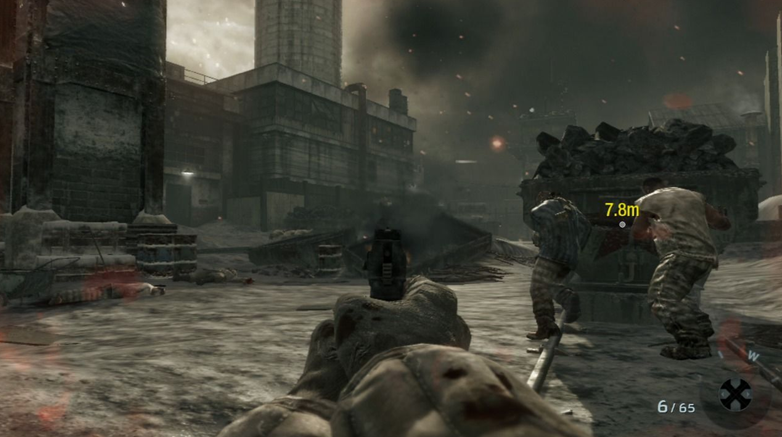


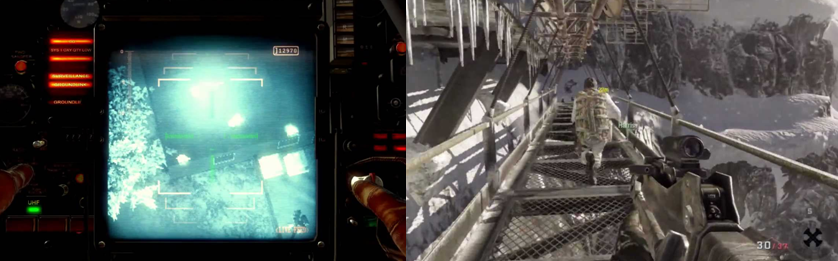
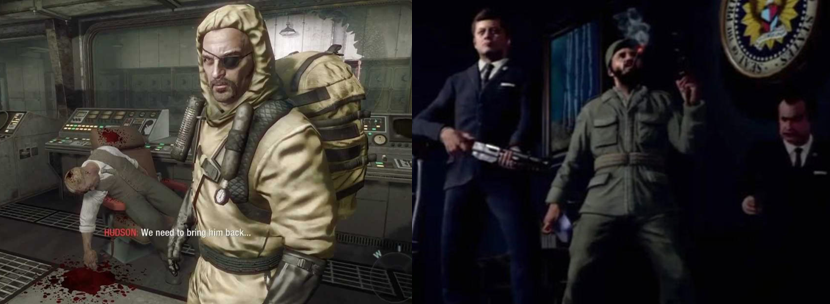


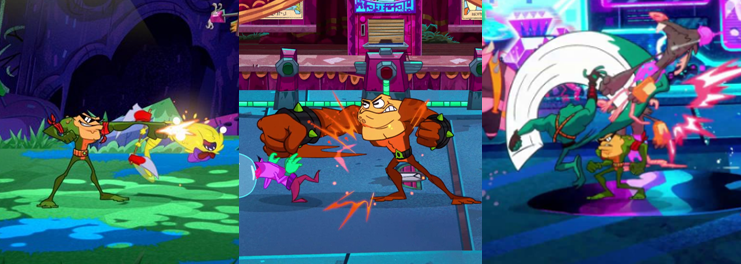


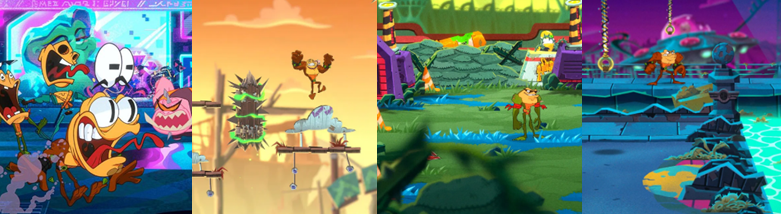
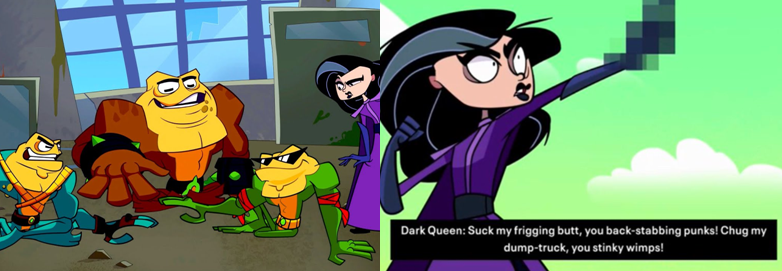
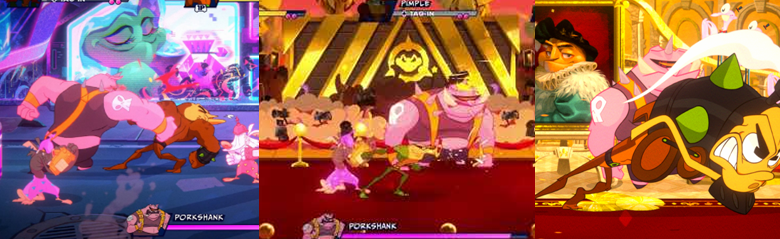
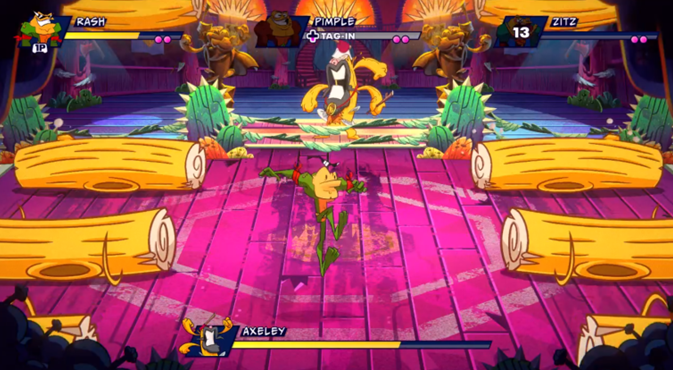
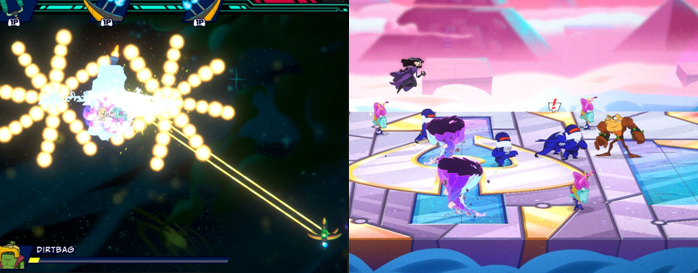
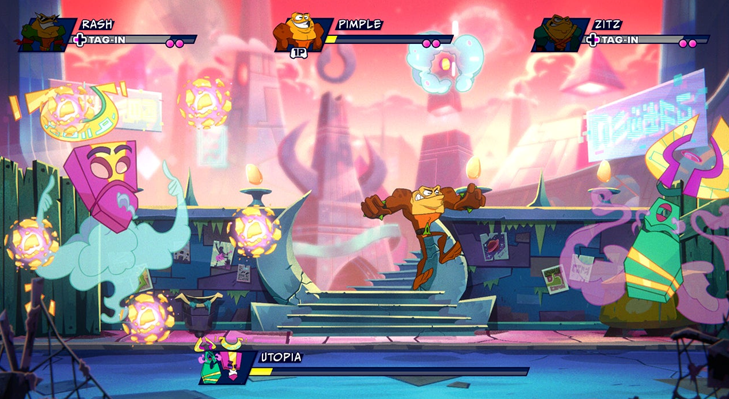


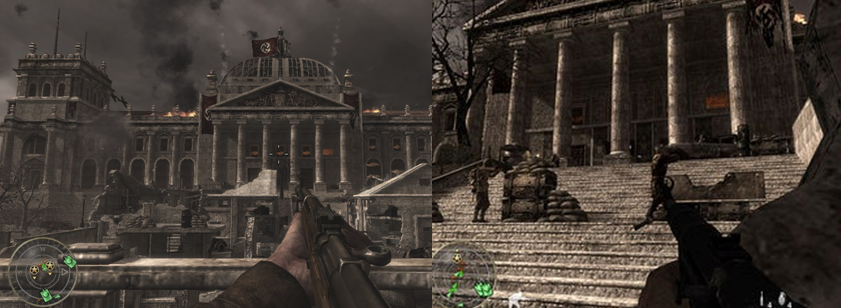
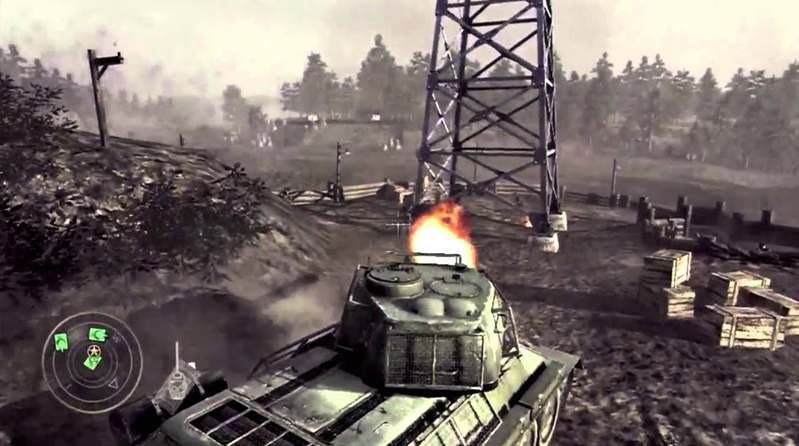





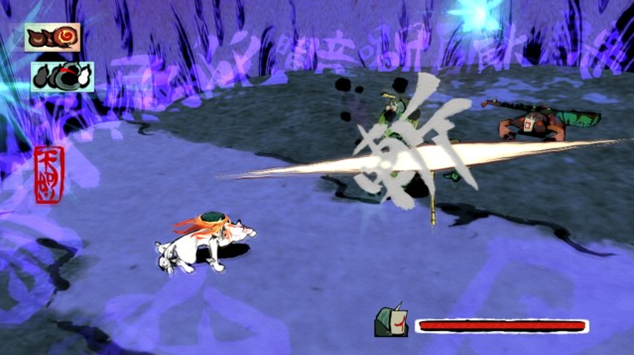


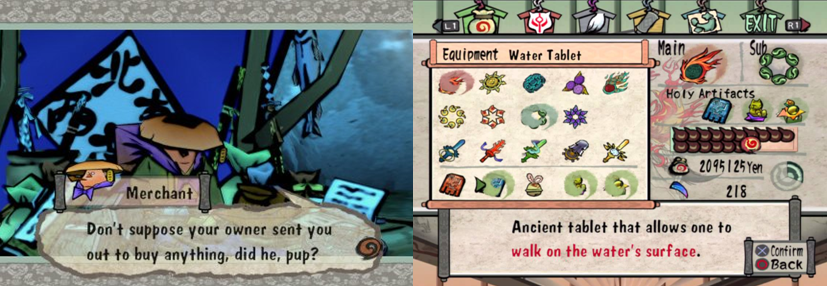


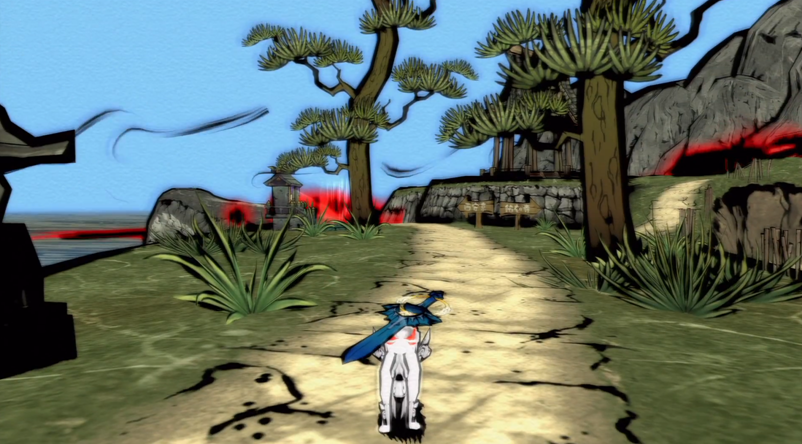
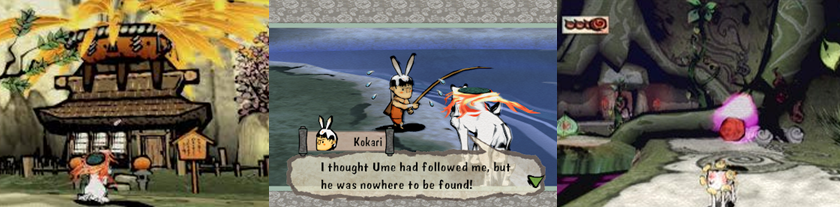


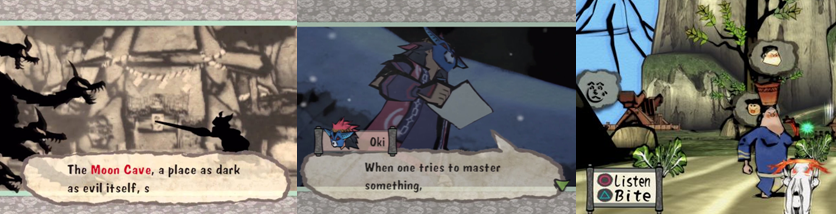


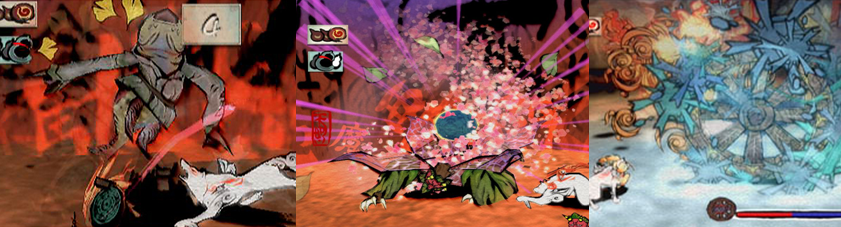


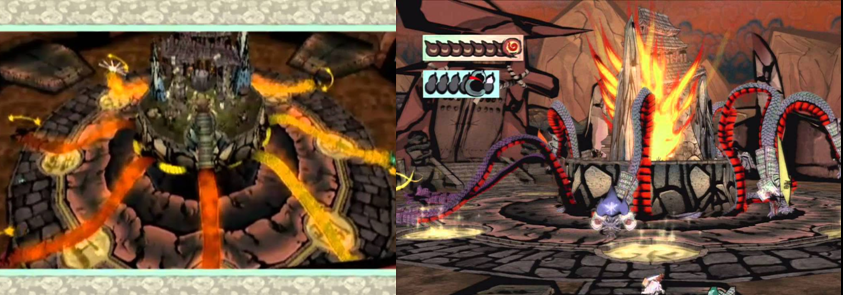


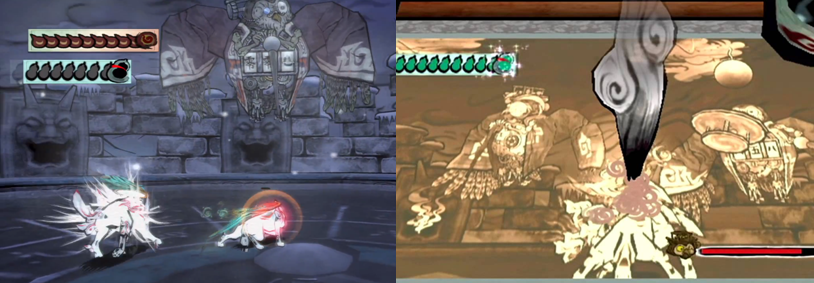

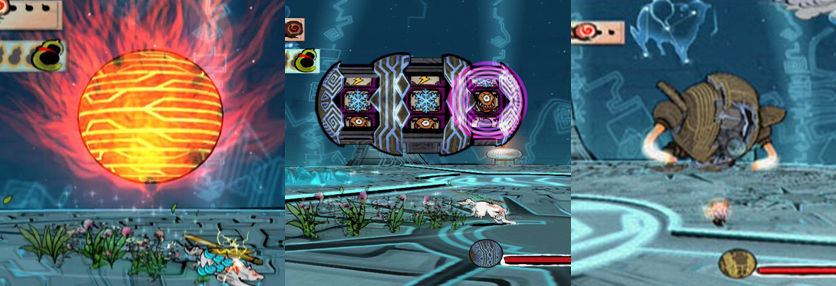

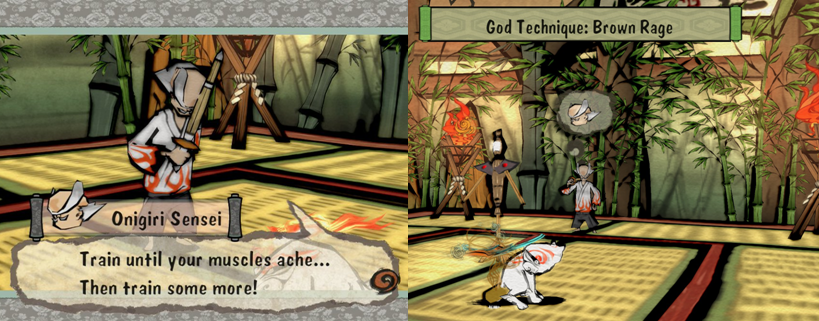




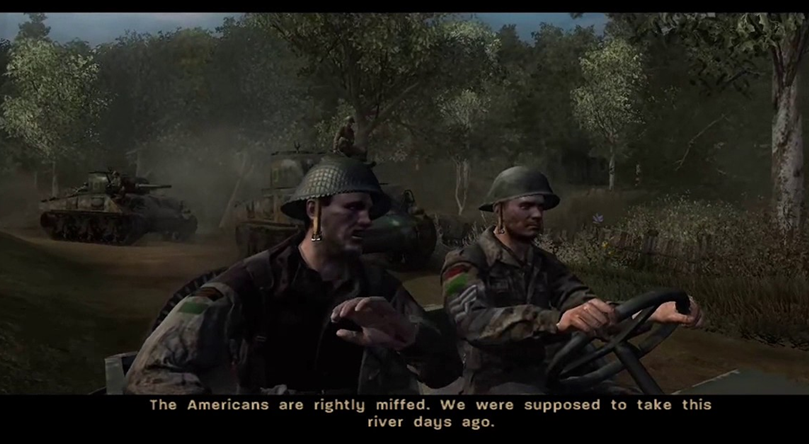
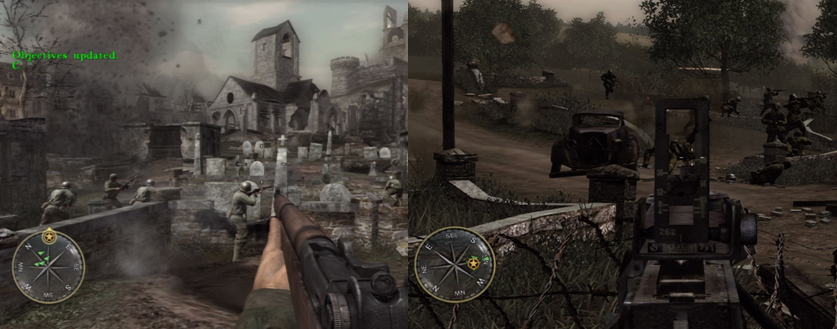



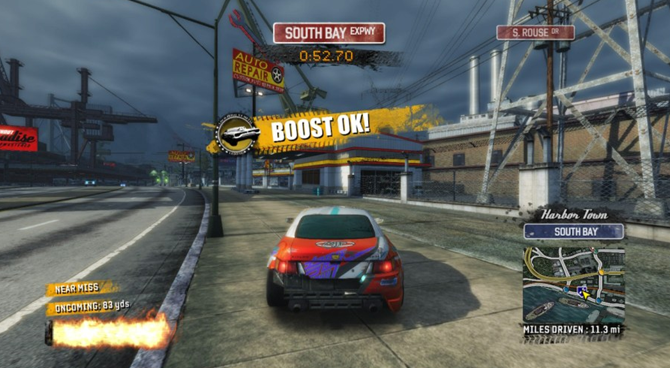



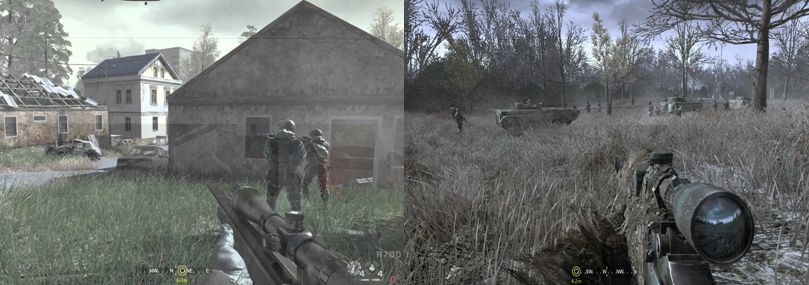

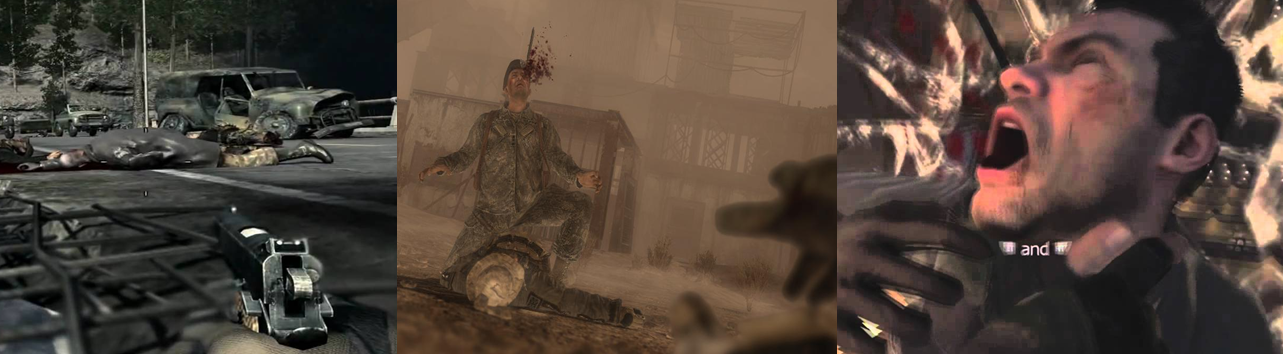
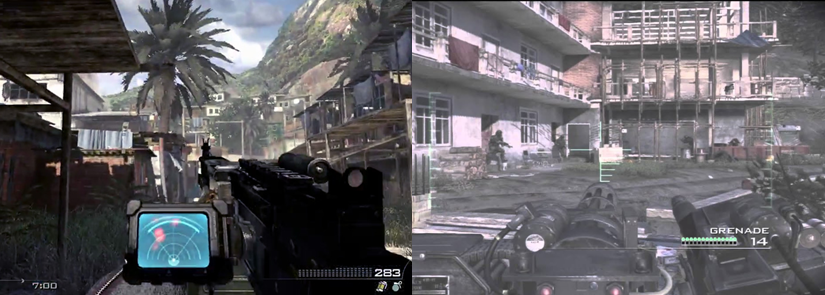




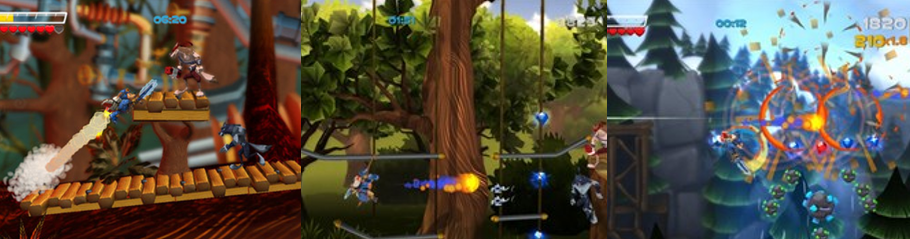
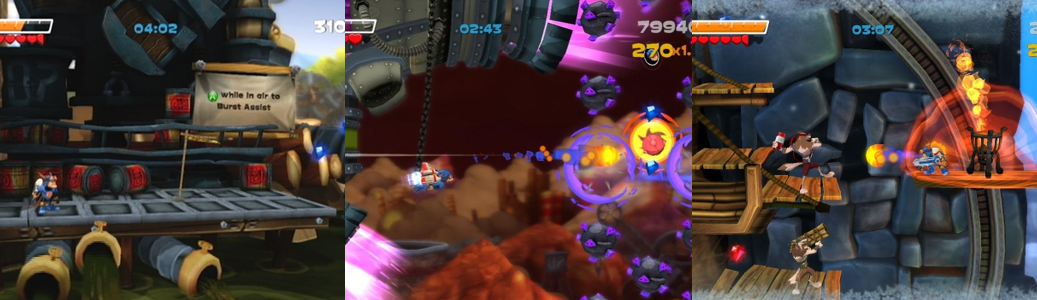
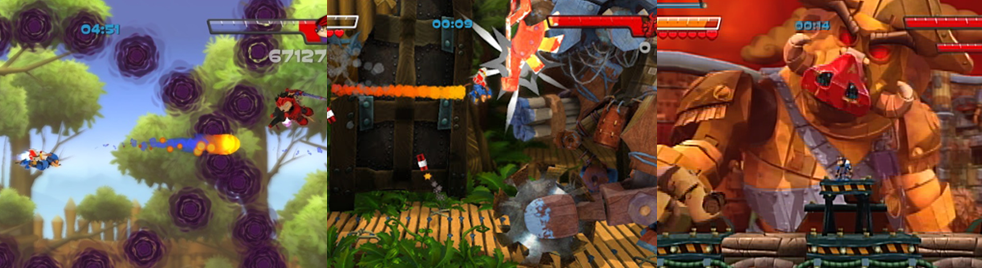



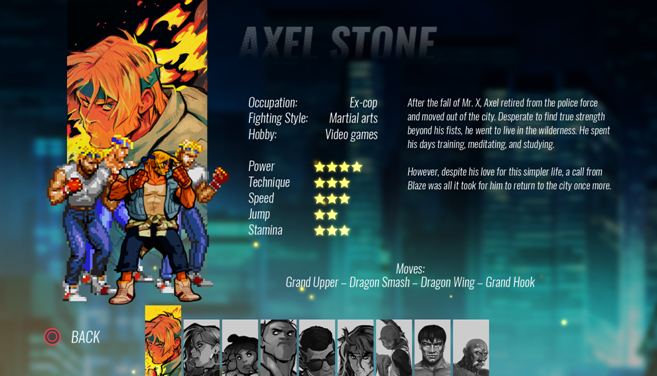
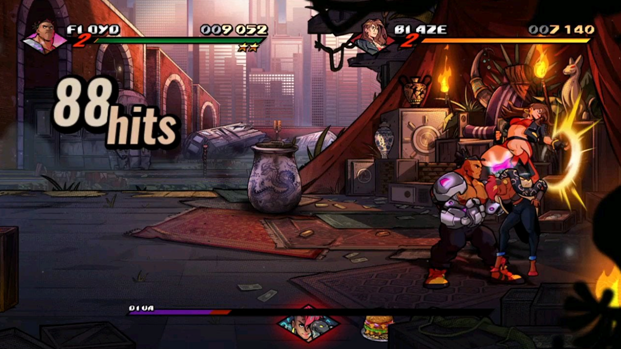


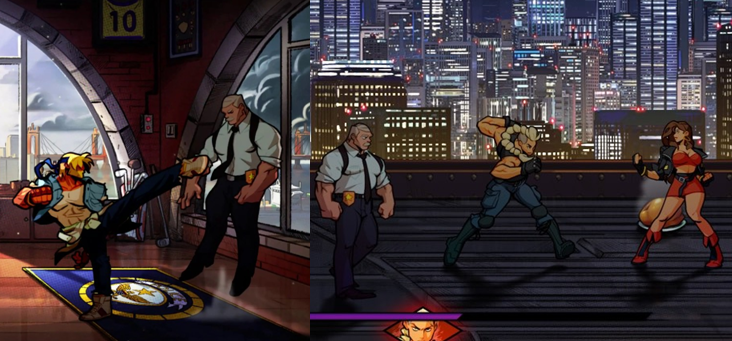


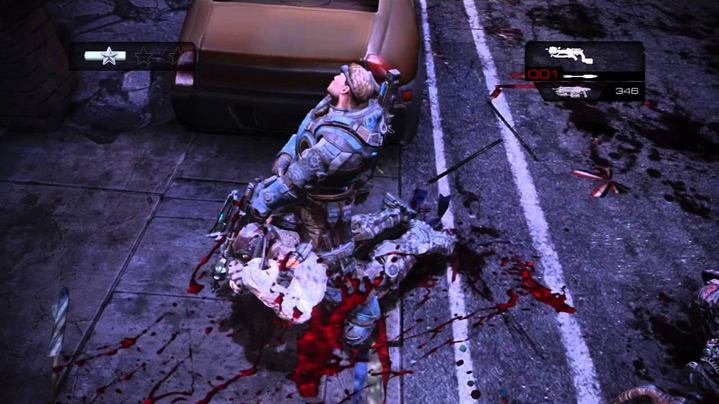







You must be logged in to post a comment.