Movie Night [Day of the Dead]: Shaun of the Dead


The Day of the Dead (or Dia de los Muertos) is a traditional Latin American holiday on which, every November 1st, the lives of deceased loved ones are celebrated with food, drink, parties, and a great deal of masquerade involving the calacas and calaveras (skeletons and skulls). For me, this seems like the perfect excuse to look back on the long-running and ever-changing zombie genre that was largely popularised by director George A. Romero, which I devoted a great deal of my PhD thesis towards and which has often been used as a parallel to various aspects of society and culture.  


Released: 25 October 2004
Director: Edgar Wright
Distributor: Universal Pictures
Budget: $6.1 million
Stars: Simon Pegg, Nick Frost, Kate Ashfield, Lucy Davis, Dylan Moran, Penelope Wilton, and Bill Nighy

The Plot:
Perennial loser Shaun (Pegg) is easily swayed from adult responsibilities by his oafish best friend, Ed (Frost). After Liz (Ashfield) ends their relationship, he resolves to win her back but awakens to find Crouch End under siege from a sudden zombie outbreak!

The Background:
Zombies have had a long and varied history in cinema. Originally, films like White Zombie (Halperin, 1932) depicted them more as voodoo slaves but director George A. Romero (who famously avoided the term “zombie”) popularised them as shambling, flesh-hungry corpses in Night of the Living Dead (Romero, 1968). This inspired an entire sub-genre of horror, particular in the sequel, Dawn of the Dead (ibid, 1978), widely regarded as one of the best and most influential zombie films ever made. Specifically, Romero and Dawn of the Dead were a key influence on long-time friends and collaborators Edgar Wright and Simon Pegg putting together this “rom-zom-com” after filming a precursor to the film as a gag for their sit-com Spaced (1999 to 2001). Wright believed so strongly in the project that he turned down further television work as he shopped the concept around before Working Title Films agreed to finance it and production could begin. Both were also huge fans of the Resident Evil videogames (Capcom/Various, 1996 to present) and liked the idea of setting a zombie outbreak in London, where people lack the heavy ordinance typically seen in American films, and focusing on two layabouts who are the last to know about the outbreak. The cast included not just long-time friends Pegg and Frost but many popular British comedians, the filmmakers were inundated with volunteers to fill in as extra zombies, and the film was littered with pop culture references and nods to prominent zombie and horror films. Shaun of the Dead’s $30 million worldwide gross made it a big hit upon release and this was reflected in the unanimous praise that accompanied the film. The film was heralded as an instant classic and its success ensured that Wright, Pegg, and Frost would reunite for other collaborations in the loosely-connected “Three Flavours Cornetto” trilogy.

The Review:
I was a bit late to the Spaced party; I didn’t watch the series until some time after seeing Shaun of the Dead, and I don’t think I saw that until a former friend of mine recommended it to me. One watch and I was instantly hooked and have been a fan of Pegg, Frost, and Wright ever since. The trio (and even two-group combinations of the group) have such a knack for crafting funny, believable, and incredibly relatable characters and stories even when things step into the fantastical and chaotic. As a Brit myself, I appreciate how they take the quaint, ordinary everyday mundanity of life in this little country of ours and satirise it, comment upon it and use it to show just how preposterous our nation can be at times. My love for zombie films may have dwindled over the years (watching and researching them non-stop for an entire year will do that to you) but I know which ones I like and count amongst the best, and Shaun of the Dead is definitely in the top-tier because of how wonderfully it utilises the shambling ghouls as figures of both horror and ridicule.

Shaun is at a crossroads in life where he’s not ready for adulthood, making for the unlikeliest of heroes.

As the title suggests, Shaun of the Dead is the story of Shaun, a twenty-nine-year-old manchild who lives in London and works in an electronics shop. Directionless and largely lethargic, he has fallen into an easy routine involving work, play, and simply hanging out at his local pub, the Winchester Tavern. As something of a manchild myself, I find Shaun’s attitude and predicament largely relatable. He has little to no job satisfaction, is still clinging to his more youthful days as a university student, and is generally just surviving his way through a humdrum existence. However, Shaun recognises that he is at an impasse even before Liz breaks up with him. He wants to do better and to do right by her, but is also fiercely loyal to Ed and can’t quite give up the carefree oaf’s influence on his life. Consequently, Shaun is a man who others see as having great potential but who lets himself get held back by excuses and by his friend. He only resolves to turn his life around after Liz is forced to break up with him, and he only comes to showcase his potential as an unlikely hero after he realises that London is in the middle of a zombie apocalypse. Even then, Shaun is largely making it all up as he goes along; his primary motivation is to get Liz and his mum, Barbara (Wilton), to safety. However, while he has lofty and noble intentions, he does make a bit of a balls-up of it along the way.

Though Liz breaks up with Shaun, she supports his plan to get everyone to safety and believes in him.

After Shaun fails to live up to his promise of trying to do better by her, and having finally had enough of his lackadaisical attitude, Liz is forced to break up with him to avoid being dragged into a sad, pointless existence where she wastes away at the Winchester rather than being out there and living life to the fullest. She doesn’t do this lightly; it’s clear that she’s very in love with Shaun and has a great deal of patience for, and belief in, him but she can only take so much of the same old routine day in and day out, night after night. Even after they’ve broken up, Liz still has a lot of faith in Shaun. She goes along with his plan to get everyone to safety, defends him from criticism regarding his plan (because, after all, at least he has a plan and is trying to do something helpful and proactive), and is generally very loving and supportive while also being level-headed, pragmatic, and calm even as flesh-eating zombies shuffle through the streets. Liz believes in Shaun’s potential to be and do better; all she wants is for him to grow up a little, sort his life out, and take charge of his own destiny rather than settling for a tedious existence that is beneath him. Shaun is thus fully aware that she’s the best and most positive influence of his life and continually puts himself in very real danger in order to win her back and keep her safe.

Perpetual manchild Ed is blamed for holding Shaun back but always has his back no matter what.

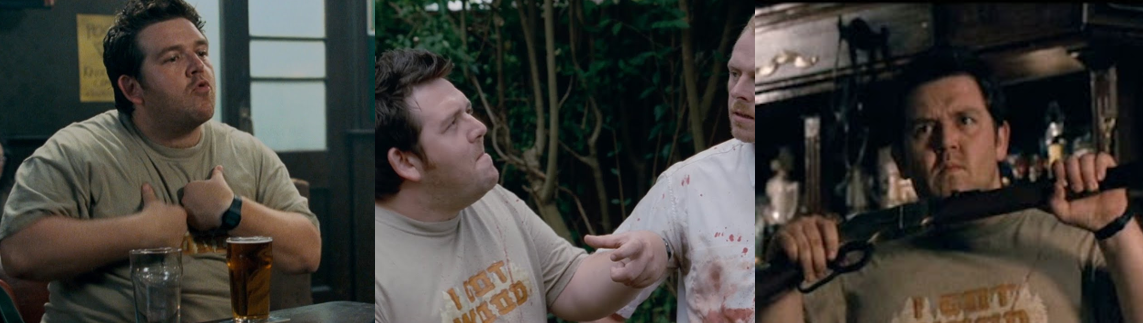
If Shaun is a manchild, then Ed is literally a child trapped in a man’s body. The quintessential slob, Ed is a jobless mooch who spends his days playing videogames, smoking fags and drinking beer, and selling a bit of weed on the side. He’s the definition of a moocher, living rent free at Shaun’s place and constantly encourages him to just “chill out” and waste their evenings at the Winchester. While others despair of Ed’s vulgar, unruly behaviour and demeanour, Shaun is fiercely loyal to his childhood friend and enjoys his company. He doesn’t see Ed as a drain or as holding him back, and simply enjoy having his best friend around because he’s fun to be around. In Ed’s defence, he does remind Shaun that he has to go to work and so can’t play videogames all morning, arranges for a lock-in so the two of them can have a few drinks and he can cheer Shaun up with his unique style of humour and crudeness after Liz dumps Shaun, and follows his friend’s lead without question when the zombie apocalypse hits. It’s Ed’s idea to head to the safety and familiarity of the Winchester, a plan that others (even Shaun) initially scoff at but actually has a lot of theoretical logic behind it (the pub has food and drink to sustain them and the windows, entrances, and exits could have been barricaded and boarded up to give them a decent chance at survival if the group was a little more competent). However, these flashes of unique brilliance are offset by Ed’s lack of urgency about everything. Ed sees the entire escapade as an adventure, one that gives him the chance to drive a Jaguar at high speeds and spend the day in the pub, which eventually aggravates even Shaun but the friendship and love between the two remains steadfast. The result is one of the most entertaining, and poignant, aspects of the entire film since they’re both incredibly devoted (and besotted) with each other.

Neither Pete or David much approve of Shaun and Ed’s antics, while Dianne’s mainly a mediator.

Contrasting Ed’s cheerful and apathetic attitude is Pete (Peter Serafinowicz), Shaun and Ed’s more responsible and strict roommate. Like Liz, Pete sees that Ed is a drain not just on Shaun but both of their lives (he doesn’t work, doesn’t tidy the house, and is generally slobbish and selfish) but, unlike Liz, Pete is far more direct in his dislike of Ed and his approach to get Shaun to grow up and take control of his life. Pete’s harsh, but he’s absolutely right, and his outburst is the final kick up the ass Shaun needs to resolve to turn things around, but Pete sadly falls victim to the zombie outbreak before this comes to fruition. Shaun faces similar criticism from Liz’s friend and roommate, David (Moran), who is dating Liz’s other friend and roommate, Dianne (Davis). Despite this, it’s pretty clear that David has feelings for Liz and he remains highly critical of both Shaun and Ed. While Shaun doesn’t agree with Pete’s assessment of Ed’s character, he acts a mediator between the two, but the same can’t be said of his relationship with David. The two have a mutual dislike of each other, which only exacerbates as David constantly berates and criticises Shaun’s plan for survival. This all comes to a head when Barbara reveals she’s been bitten and turns, leading to David almost killing Shaun with a rifle. Dianne is much calmer and more patient of the entire situation, but it’s clear that she’s on the verge of completely losing it at any moment. She proves herself adaptable and integral by putting her acting training to good use so they can comically stumble through the zombie hoards, and eventually snaps when David’s abrasive attitude reaches boiling point.

Everyday life is so dull, especially in Britain, that we’re already mindless zombies.

One of the fantastic things about Shaun of the Dead is how it depicts zombies. Zombies technically exist before the flesh-eaters even start walking the Earth as the opening credits show how Londoners are trapped in a lethargic cycle of sleepwalking their way through menial jobs and boring routines, and even Shaun resembles a shuffling ghoul when he drags himself out of bed in the morning. Nowhere is the depiction of the monotony of everyday life more prominent than in the parallel sequences that follow Shaun from his house and to the corner shop. Shaun is so blinded to what’s going on around him, and takes his life for granted so much, that he doesn’t even notice that things are wildly amiss the second time around. To him, it’s just another day in Crouch End, and he barely notices that the living dead are increasing around him until a blood-soaked ghoul wanders into his back garden. If you’ve seen a Romero film before, the zombies of Shaun of the Dead will be instantly recognisable to you. They’re the classic depiction of the living dead, being walking, bloodied corpses who attack the living on sight, ripping and tearing at their flesh until they’re satisfied and then turning their victims into shambling ghouls soon after. Though slow, they’re incredibly durable and dangerous in large groups, easily overwhelm their victims and can only being put down for good following heavy trauma or destruction of their heads. This proves difficult for the film’s protagonists as firearms aren’t easy to come by in the United Kingdom, meaning that Shaun largely relies on a cricket bat and other improvised weapons (such as vinyl records) before being stunned to find the rifle behind the bar is actually functional (though he’s naturally a “rubbish” shot).

The Nitty-Gritty:
Considering Shaun’s background as a DJ and his former youth spent in clubs and raving, it’s very fitting that Shaun of the Dead makes great use of music. The Specials’ “Ghost Town”, the Blue Wrath’s “I, Monster”, and Kerkraft 400’s “Zombie Nation” are all used to great effect as background music over scenes of life before the zombie outbreak, which only further emphasises the theme of ordinary, everyday life and media consumption turning us into zombies even before the outbreak sweeps the nation. Of course, the most memorable use of music is the fantastic use of Queen’s “Don’t Stop Me Now” when Shaun, Ed, and Liz attack the zombified owner, John (Steve Emerson), which perfectly parallels one of the most upbeat songs every performed with a scene of extreme, if ludicrous, violence.

Sight gags, repetition, and clever use of camera and editing all add to the film’s humour.

One of the most impressive, entertaining, and memorable aspects of Shaun of the Dead (and Edgar Wright films in general) is the unique and unexpected use of camera movements and jump cuts for comedic effect. Wright makes even mundane tasks like peeing and getting dressed for work appear exciting and humorous by filming them like action sequences and utilises a fun snap-cut to instantly turn night to day as Shaun passes out in the kitchen. Wright and Pegg’s writing is absolutely top-notch; the characters fun and relatable, while being vulnerable and desperately trying to adapt to the horrific events happening around them as best they can. The comedy is often based on repetition, references, and foreshadowing; Shaun’s plan to kill Philip and get to the Winchester, Ed’s suggestion to get drunk basically describes the events of the zombie outbreak the next day, and his videogame antics come back into play when defending the Winchester. Pete screams at Ed to “Go and live in the shed!”, which ends up happening in the epilogue, the tracking shot of Shaun’s morning perfectly captures how ignorant he is to the events happening around him, and when he flicks through  the TV channels, all the different sound bites perfectly describe what’s going on in a fun little moment.

Gore is used sparingly, but to great effect and heavily influenced by the likes of George Romero.

Fittingly, the film also contains a number of references and call-backs to popular zombie films. There’s a couple of nods towards Sam Raimi’s Evil Dead films (Raimi, 1981 to 1992) with Shaun referring to an “Ash” who is under the weather and his gasp of “Join us” when he first sees the zombified Pete. Fittingly, it’s Romero who has the most impact on the film; as in Romero’s movies, no definitive explanation is given for the zombie outbreak (the radio hints at a space probe crash, the newspaper headlines offer many different explanations, and the news reports that reports of “rage infected monkeys” are greatly exaggerated). As is often the case, finding the cause for the outbreak is largely inconsequential to actually surviving the chaos. The characters also discourage the use of a “ridiculous” term like zombies, a word never actually used in Romero’s films, and Ed directly quotes Night of the Living Dead with his declaration of “We’re coming to get you Barbara!” Perhaps the most striking and memorable homage to Romero is in David’s gruesome and gory death as he is literally torn to pieces by zombies in exactly the same way as Captain Henry Rhodes (Joseph Pilato) in Day of the Dead (Romero, 1985). Indeed, the film’s use of gore owes a lot to Romero and other “splatter horror” zombie films of the seventies and eighties. The film uses gore and blood sparingly but to great effect, delivering disturbingly mutilated zombies and such fun and disgusting moments as blood spurting from characters’ wounds, a zombie girl sickeningly pulling up after being impaled in Shaun’s garden, and Dianne leaping into the zombie hoard while brandishing her boyfriend’s severed limb!

Shaun is heartbroken when the outbreak forces him to kill his mother and even his stern stepdad.

As great as all of this gore is, a central aspect of the film, and Shaun’s character, is his strained relationship with his stepdad, Philip (Nighy), a stern and harsh patriarchal figure who Shaun resents for his condescending and disapproving attitude. Philip is the very embodiment of an overbearing authority figure and has long been a thorn in Shaun’s side as nothing he ever does, or has done, has ever been good enough for his would-be father figure. This is the exact opposite of his loving relationship with his mother, an eccentric and doting woman who just wants everyone to get along and doesn’t want to cause a fuss. This ranges from little things like being more concerned about making sandwiches for Shaun when he comes to rescue her, to hiding the bite she received from the others so as not to worry her beloved son. Having suffered two pretty horrific bites during their escape, Philip ultimately succumbs to his wounds and dies but, before turning, finally buries the hatchet with his step-son in a truly emotional scene. Philip admits that he also saw great potential in Shaun and did the best he could to push him to achieve that, but struggled as Shaun was already a pre-teen when they first met but, with his father-figure dying in his arms, Shaun finally puts his issues with his stepdad to rest. However, he’s absolutely heartbroken to find that his mum has also been bitten and leaps to her defence when David moves to execute her before she can turn. This causes the tensions between the two, and the entire group, to finally boil over and not only makes a traumatic moment even worse for Shaun but spells disaster for their makeshift fortification.

Shaun and Liz are the sole survivors but the country quickly recovers from the zombie outbreak.

Although Shaun bravely attempts to lead the zombie hoard away to cover his friends’ escape into the Winchester, they eventually find their way back to the pub, and the group fails to properly check and secure their stronghold for any resident evils. Thanks to David recklessly breaking a window so they can get inside rather than wait for Shaun to lead them to the back entrance, the zombies inevitably lay siege to the pub. After being bitten by Pete and other zombies, Ed is left bleeding out and doomed while Shaun and Liz find themselves trapped in the pub’s basement. After briefly considering killing themselves, they realise that they can make an escape using the keg lift, but Ed volunteers to stay behind rather than slow them down. In another of the film’s more poignant and moving moments, Shaun and Ed bid a heartfelt and tearful goodbye to each other and Shaun and Liz prepare to fight their way to safety on the infested streets…only to be suddenly saved at the last minute by the British military, led to them by Shaun’s friend and far more capable survivor, Yvonne (Jessica Stevenson). In this regard, the film veers away from the traditionally bleak endings of Romero’s films to give the couple a definitive and happy ending. In the aftermath, the film perfectly encapsulates how the UK recovered from “Z-Day” by turning the whole thing into a media circus: zombies appear on talk shows and gameshows, they are easily domesticated for menial work, and the entire event is largely glossed over as “just one of those things”. Crucially, Liz and Shaun find a happy medium where they go-exist as a slightly more adventurous (Shaun now takes two sugars in his tea!) couple while still having a regular routine. In many ways, Liz takes Ed’s place as Shaun’s best friend and most prominent influence, but she’s also fully supportive of him still spending time with his old friend, who is chained up in the shed so that the two can still enjoy videogames.

The Summary:
I tend to avoid reviewing comedies. I find trying to explain why something is funny a bit difficult at times since comedy is subjective and maybe not everyone will appreciate or fully understand some of the gags a film or why others find them so amusing. However, it’s an absolute pleasure to revisit Shaun of the Dead and to talk about it in detail as it’s legitimately one of my favourite horror, comedy, and zombie films of all time. Being a Brit, I totally relate to the depiction of our society and just how boring and dull everyday life can be, and having worked in retail for eleven years I can attest that it is one of the most soul-destroying jobs out there where you’re often encouraged to be little ore than mindless automatons…or zombies. I also fully relate to Shaun’s plight; he’s at that difficult crossroads where he’s not ready to become a fully-fledged adult, and it’s easy to fall back on hold habits and creature comforts at that time of life. I can totally buy the idea that he wants to do better but just isn’t sure how and is quite awkward in his attempts to do so because it’s such a big step for him. Toss in some entertaining and innovative camera movements and shots, jump cuts, and a fantastic use of music, and you’re already in line for a pretty entertaining romantic comedy but the addition of gory, voracious zombies only adds to the film’s appeal. It’s a true love letter to zombie maestro George Romero, but made all the more ridiculous and enjoyable because it’s set in London, of all places, and the characters are all so incredulous to the chaos happening around them. Consequently, there’s loads here for horror and zombie fans to enjoy but the film is peppered with surprisingly emotional moments as well, not to mention the perfectly executed comedy and character beats and the hilarious use of foreshadowing and repetition throughout that ensures every gag gets a fun payoff and characters are seen as both competent and incompetent when it comes to adapting to the sudden zombie apocalypse. Overall, this is a thoroughly enjoyable movie from start to finish and may still be the best of Wright, Pegg, and Frost’s “trilogy” of movies for just how expertly it juggles all of its different tones, characters, and themes, and I honestly couldn’t recommend it more to both die-hard fans and newcomers to the genre.

My Rating:

Rating: 5 out of 5.

Fantastic

Are you a fan of Shaun of the Dead? Did you enjoy the references and call-backs to other zombie films in the movie, especially the works of George Romero? Were you able to relate to the characters and, if so, which was your favourite and why? Are you a fan of Wright, Pegg, and Frost and their unique style of filmmaking and comedy? What do you think caused the zombie outbreak and how do you think you would react in such a scenario? What is your favourite zombie film and what do you think of the genre in general? How are you celebrating the Day of the Dead today? Whatever your thoughts on Shaun of the Dead, and zombie films in general, feel free to either sign up and leave a comment below.

Movie Night [Day of the Dead]: Dawn of the Dead (2004): The Director’s Cut


The Day of the Dead (or Dia de los Muertos) is a traditional Latin American holiday on which, every November 1st, the lives of deceased loved ones are celebrated with food, drink, parties, and a great deal of masquerade involving the calacas and calaveras (skeletons and skulls). For me, this seems like the perfect excuse to look back on the long-running and ever-changing zombie genre that was largely popularised by director George A. Romero, which I devoted a great deal of my PhD thesis towards and which has often been used as a parallel to various aspects of society and culture.  


Released: 25 October 2004
Originally Released: 19 March 2004
Director:
Zack Snyder
Distributor:
Universal Pictures
Budget:
$26 million
Stars:
Sarah Polley, Jake Weber, Ving Rhames, Mekhi Phifer, Ty Burrell, Lindy Booth, and Michael Kelly

The Plot:
When the world inexplicably descends into chaos and bloodshed following a sudden zombie outbreak, a handful of survivors are driven into the local shopping mall.

The Background:
Ever since White Zombie (Halperin, 1932), zombies have long been a staple of horror cinema but their status as reanimated corpses who incessantly feed on the flesh of the living was popularised by director George A. Romero (despite Romero’s films avoiding the term “zombie”) in Night of the Living Dead (Romero, 1968). Not only did Night of the Living Dead inspire a vast sub-genre of horror works, the first of its five sequels, Dawn of the Dead (ibid, 1978), is largely considered one of the best and most influential zombie films of all time. Plans for a remake of Romero’s classic allegory for consumerism began with producer Eric Newman, who acquired the rights to the film and aimed to reimagine it for a younger, modern audience. The remake was written by James Gunn and marked Zack Snyder’s directorial debut, and separated itself from the original by increasing the speed and ferocity of its flesh-eating ghouls. While many often decry remakes, many of the most popular and iconic films are remakes and Dawn of the Dead proved to be a commercial success by grossing over $100 million at the box office. Though some regarded the film unfavourably upon release, an extended director’s cut was released on DVD later that same year and the remake earned some notable cult success and is often regarded as being just as good as the original.

The Review:
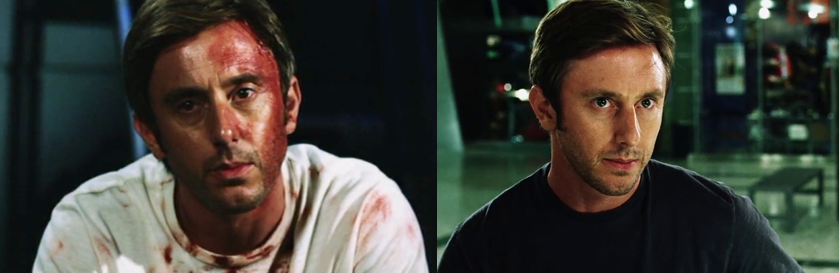
Like any good, self-respecting zombie film, Dawn of the Dead offers the merest glimpse of life before the outbreak before everything mysteriously and hideously goes to hell. Ana Clark (Polley) is an underappreciated and overworked nurse who, fatigued by her long hours, is more concerned with going home to her husband, Louis (Louis Ferreira), and her nice, normal suburban life than worrying about bite victims being admitted to the intensive care unit and emergency news bulletins.

Ana wakes up to find her normal, everyday suburban life has descended into violence and chaos.

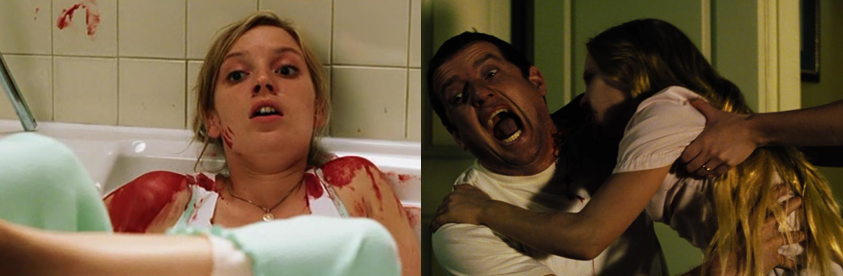
As a result, when she awakens the next day, Ana is horrified to find that a local neighbourhood girl, Vivian (Hannah Lochner) has become a rabid, animalistic cannibal; she viciously attacks Louis, taking a chunk out of his neck and, though Ana tries to stop the geyser of blood, she’s unable to get through to the hospital and Louis chokes to death on his own blood…only to immediately return to life and attack her! Distraught and running on pure adrenaline, Ana is able to scramble her way out of the house…only to find her peaceful little neighbourhood has descended into violence and anarchy; fires rage all over the area, car crashes, explosions, and wrecks are everywhere, and the equally desperate and terrified victims of these animalistic zombies pose just as much of a threat as the undead.

Rhames delivers a solid performance as the surprisingly complex Kenneth.

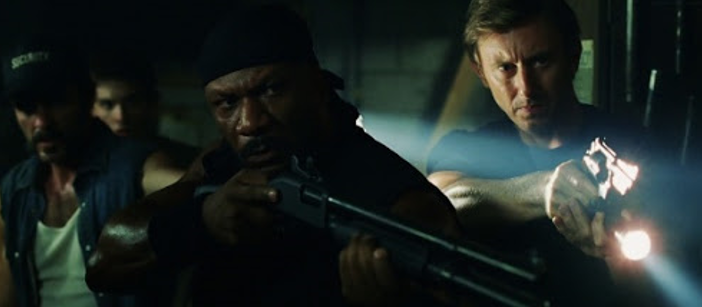
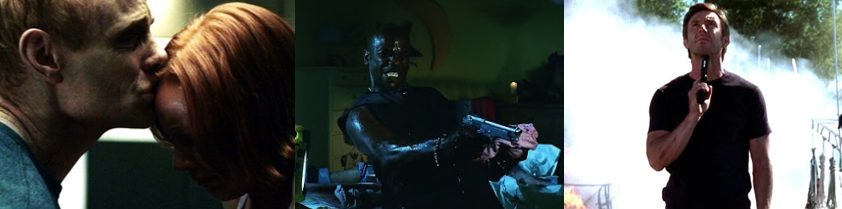
Stunned by a car crash and overwhelmed by shock and fear, Ana is little more than a zombie herself when she comes across the shotgun-toting Kenneth Hall (Rhames); a big, sombre man who is just looking to reunite with his brother. Although he joins up with the main group of survivors, Michael (Weber), Andre (Phifer), and his pregnant wife, Luda (Inna Korobkina), and accompanies them to the nearby mall (which offers a modicum of protection from the rabid undead and a whole host of creature comforts to sustain them), he initially wishes only to check on his brother but quickly realises that no one is coming to help them and that they must work together to survive. Of all the characters in the film, Kenneth is easily my favourite; an intimidating figure with a no-nonsense attitude and a deep, gravelly voice, Rhames is great in the role and is much more than mere muscle as his character has a real depth of emotion and a significant arc where he comes to view his fellow survivors as his surrogate family.

Michael plays peacemaker and offers logical, practical solutions to keep everyone safe.

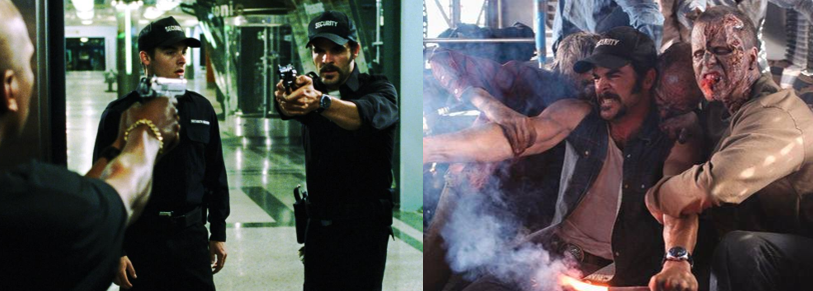
However, the mall is currently claimed as sanctuary by three security guards – C.J. (Kelly), Bart (Michael Barry), and Terry (Kevin Zegers) – who aggressive oppose the taking in of additional bodies and a reluctant, frosty truce is force between the two groups Michael, a former television salesman, attempts to keep the peace and bring some kind of organisation to the group; he’s not looking to give orders or be a leader but merely comes up with logical suggestions for the others, which are generally adhered to for their practicality. Kenneth, at first, stoically rebukes him and he’s able to appeal to C.J.’s ego and sway him into helping them by coming up with good ideas and attributing them to him, thus positioning him as a paper leader. Constantly adaptable and something of a father figure, Michael becomes close with Ana but their attempts at romance are hampered by the greater problems facing the group. Though lacking in formal training and physical stature, Michael is pretty handy in a tight spot and, thanks to his will to survive and adaptability, is able to kill his fair share of zombies when the moment calls for it and is the first to actively stand up to C.J. during a tense confrontation on the roof.

C.J. goes from a stubborn antagonist to a pivotal ally willing to risk his life to get others to safety.

C.J. is, initially, the film’s secondary antagonist after the zombies; ruled by his fear of the undead and paranoia, he stubbornly holds on to his fragile authority and begrudgingly assists the other survivors on the understanding that they will leave the mall as soon as possible, even locking them up to keep them from stealing stuff. While Bart has a perverse fascination with the undead and follows C.J.’s orders to the letter, Terry is far more reluctant but, while C.J. is a hard-ass when the others first encounter him, he eventually becomes a trusted and valuable ally, covering their escape, putting himself at risk to save others, and even sacrificing himself so that the others can escape. While an obnoxious and detestable character when he’s first introduced, C.J. became another favourite of mine through his redemptive arc; after being decked my Michael and humbled by being locked up with Bart, his attitude shifts noticeably and he becomes a pivotal ally in the film’s chaotic third act. Soon, the group is joined by a number of other survivors: Andy (Bruce Bohne) is trapped on the roof of his gun shop across the road and slowly starving to death and communicates with the main protagonists using writing, leading to a brief bit of entertainment amidst the chaos where he plays chess with Kenneth and they shoot zombies who resemble celebrities. A truckload of other survivors upset C.J. when they crash into the mall, which brings a diverse quasi-society to the mall and, with the zombies kept at bay, the survivors begin to bond, with Terry and Nicole (Booth) sparking up a mutual attraction and Steve Markus (Burrell) acting as a tertiary antagonist with his pessimistic and cynical attitude. The others are little more than shellshocked cannon fodder who exist to share stories of their lives before the world fell apart, stories of their experiences of the outbreak, and fall victim to zombie bites and attacks.

The Nitty-Gritty:
As in Romero’s original films, there is no explanation given for the zombie outbreak and the word “zombie” is never used; newscasters and governmental and scientific minds are baffled by the sudden outbreak and the closest we get to an explanation for the horrific events that unfold is from a televangelist (Ken Foree in a welcome cameo) who believes that “when there is no more room in Hell, the dead shall walk the Earth”. Like most zombie films, the cause and prevention of the outbreak takes a backseat as the survivors concentrate mainly on just that: survival.

Zombies are fast, aggressive, and dangerous monsters driven purely by instinct and hunger.

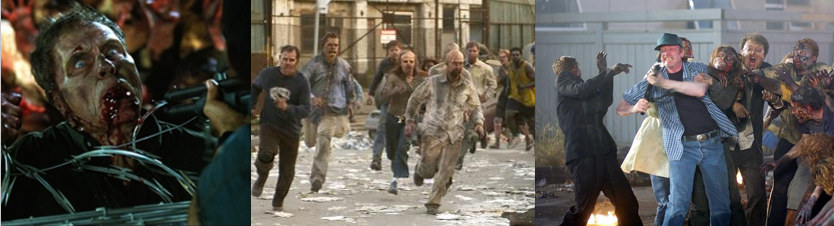
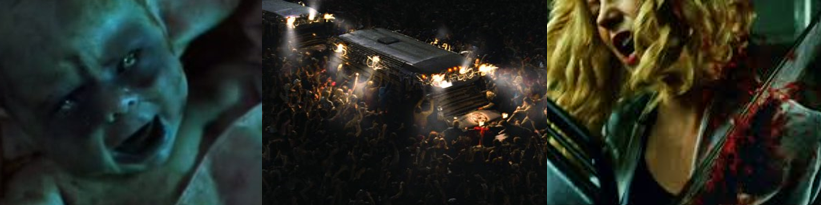
Like the Infected in 28 Days Later (Boyle, 2002), the undead in Dawn of the Dead are fast-moving, aggressive, and animalistic creatures; although the source of the outbreak is unknown, the virus is transmitted through bites: a single bite will kill the victim and then almost immediately reanimate them into a near-mindless cannibals. The only way to stop the zombies is to shoot them in or otherwise destroy their head; anything less results in them relentlessly pursuing their prey or becoming what is known as a “Twitcher” (where they simply thrash around in manic spasms). The zombies work purely on instinct, seeking out warm, fresh meat and guided by vestiges of memory to places they frequented in life, such as the mall, though they show no signs of intelligence or problem solving and simply throw themselves ceaselessly at their victims until they succeed or fall down. Even a single zombie poses a significant threat thanks to their incredible speed, strength, and ferocity but they are even more dangerous in large groups, where they resemble little more than a sea of blood-stained, mangled corpses bent on feasting on living flesh.

The threat of a zombie’s bite is the source of much tragedy and suffering for the few survivors.

The inevitability of death from a zombie bite is a source of great tension and tragedy in the film; when Ana first theorises on the bite being the source of the infection, Michael pragmatically decides that it is best for any amongst them who have been bitten to be immediately executed, which brings him into brief conflict with Ana. Ultimately, he chooses not to kill Frank (Matt Frewer) in cold blood and instead allows him to die peacefully and be put out of his undead misery by Kenneth. Similarly, the revelation and horror of the bite’s potency drives Andre into a deep denial; he starts to brush off offers for help from Ana and the others and his obsessive desire to keep Luda safe, even when she’s succumbed to her infection, leads to his death when he desperately tries to keep his little monster baby from harm. While the original film was largely an allegory for consumerism and greed and held a mirror up to a society that was already a form of brainwashed zombies thanks to advertising and excess, the remake is more concerned with the survivors indulging in excess once they establish a delicate, makeshift society.

The remake is more action-packed and gruesome than the original but no less allegorical.

Tensions, paranoia, and fear are high because of the gruesome events unfolding around them but, with C.J. and Bart locked up and isolated from the group, the remaining survivors quickly bond and share their life stories and experiences. Eventually, C.J. becomes a part of the group when Bart is attacked and helps them to fortify a couple of buses to take them away from the mall when they realise that it’s just a matter of time before more of the zombies breach their defences. This is, primarily, where Dawn of the Dead separates itself from the original (for the better, in my opinion): it’s much more action-packed, the pace is much faster, and the gore is far more ghastly (Bart, for example, is attacked by a zombie that’s missing its legs and scrambles along an overhead pipe!) Nowhere is this seen more in their desperate escape from the mall in their spruced-up vehicles, which, for all their efforts, are nearly toppled over by the zombie hoards and one is easily overturned by the presence of a single zombie. Tension definitely ramps up when the group leaves the safety of the mall as, exposed out in the open, they are constantly at risk even when no zombies are around and, in the film’s last frantic minutes, they lose more of their group in their escape than they arguably would have if they had stayed put and tried to fortify the mall.

The Summary:
I’ve watched a lot of zombie films in my time; I’ve seen all of George A. Romero’s movies and researched the genre, and the concept, extensively for my PhD. However, as much as I respect and admire his influence on the genre, I can’t say that I’m really that big a fan of his films; yet, while I feel that they haven’t really aged all that well, the allegorical messages and subliminal horror of his zombie films remains as relevant as ever (if not more so given the state of the world these days), it’s just let down a bit by the pacing. As a result, I am a big fan of the Dawn of the Dead remake; it’s grittier, much more action-packed, and the effects are far more convincing and horrific. While zombie purists may decry the faster, more aggressive zombies, I actually much prefer it since it makes for a much more frightening and formidable creature; plus, they do shamble and shuffle along when converging on the mall and only explode in a burst of speed and ferocity when flesh is nearby. Best of all, the film retains Romero’s trademark bleak undertones not just in Andre’s macabre fate but also the conclusion of the film, which sees characters both beloved and obnoxious giving their lives so that the few that remain can survive only for them to meet what appears to be a horrific end during the end credits.

My Rating:

Rating: 4 out of 5.

Great Stuff

Are you a fan of Zack Snyder’s Dawn of the Dead? How do you think it compares to the original and other zombie movies? Do you like fast-moving, aggressive zombies or do you prefer the traditional, shambling, more allegorical depiction of the undead? What do you think caused the zombie outbreak and how do you think you would react in such a scenario? Which of the characters was your favourite and which death affected you the most, if any? What is your favourite zombie film and what do you think of the genre in general? How are you celebrating the Day of the Dead today? Whatever your thoughts on Dawn of the Dead, and zombie films in general, feel free to leave a comment down below.

10 FTW: Surprisingly Good Horror Remakes

We’ve heard it all a thousand times by now: “when will Hollywood stop with the remakes!?”, “Why can’t Hollywood come up with new ideas!?”, “Remakes suxxorz1!!” Honestly, while some films should never be re-made and some remakes do baffle the mind, remakes aren’t the plague of cinema that a lot of people like to think they are. In fact, some are pretty damn good.

If you’re one of those bleeding heart Twitter people, though, who just like to decry remakes in general, maybe you should take a moment to consider this small list of horror remakes that are not only surprisingly good but, in some cases, actually surpass their originals:

Halloween
10 Halloween (Zombie, 2007)

We’re kicking things off with quite the controversial choice here. I’ll argue until the end of time that John Carpenter’s Halloween (Carpenter, 1978) is the forefather of all modern horror, particularly the slasher genre. It’s a subtle, atmospheric piece with a fantastic, mysterious antagonist and the truly frightening prospect that random unspeakable acts of horror can happen in a suburban environment. Rob Zombie’s take, however, is a loud, frenetic, uncomfortably gruesome take on the property. Michael Myers (Daeg Faerch/Tyler Mane) is an incredibly disturbed young boy from a violent and abusive family who becomes a remorseless, emotionless, unstoppable tank of a killing machine. Zombie delves right into his own take on Michael’s backstory, presenting in grotesque detail the exact events that turn Michael into a nigh-supernatural killer.

In many ways, the initial focus of the film acts as a kind of prequel to the events of Carpenter’s original, as the remainder of the film’s runtime is devoted to recreating Michael’s killing spree in Haddonfield, with the primary difference being that nearly the entirety of the film is told from Michael’s perspective. Sure, Malcolm McDowell, great as he is, cannot hope to compete with the fantastic Donald Pleasence but the film is bolstered by the incredibly cute Scout Taylor-Compton (who is arguably more attractive and relatable to modern audiences than Jamie Lee Curtis) and even appearances by Brad Dourif and Danielle Harris (and what an appearance hers is!) While it’s unlikely to be as iconic or influential as Carpenter’s benchmark film, for those who find the original and its sequels dated and slow, Rob Zombie’s remake is a much-needed kick up the ass that, for better or worse, dragged Halloween kicking and screaming out of obscurity.

Poltergeist
9 Poltergeist (Kenan, 2015)

I know, right? How could Hollywood ever even entertain the idea of remaking Tobe Hooper/Steven Spielberg’s 1982 horror classic? Well, they did, and don’t be mistaken; it’s not actually that bad. While it lacks probably my favourite scene from the original, where corpses rise from the Freeman’s unfinished swimming pool, the remake is just as terrifying and engaging as the original, with the added bonus of having a modern-day make-over that is far more accessible than the now-dated original. Don’t get me wrong, the original is still a classic, but Sam Rockwell and Kennedi Clements put in some great performances, easily on par with those of Craig T. Nelson and the late JoBeth Williams. Did Poltergeist necessarily need a remake? Probably not, and the fact that numerous haunted house stories since the original have all pulled from or mirrored Hooper’s seminal horror classic probably didn’t help to differentiate Kenan’s new take on the property, but I feel it’s a largely misrepresented film that is nowhere near as bad as some people think.

It
8 It (Muschietti, 2017)

Although I spoke about this film quite recently, it is deserving enough to make this list. Watching Tommy Lee Wallace’s 1990 miniseries, great as it is and as amazing as Tim Curry’s performance in that is, you can’t help but think that Stephen King’s novel deserved to be told without the restraints of a television miniseries. Focusing exclusively on the child side of King’s story, and bringing the events forward to the 1980s rather than the 1950s, Muschietti adheres closely to King’s text while still putting his own spin on events. Bill Skarsgård’s take on Pennywise is suitably unsettingly and otherworldly; what he lacks in Curry’s charisma he more than makes up for by being genuinely creepy and a fearsome menace. Muschietti also focuses on the friendship and troubles of his child protagonists incredibly well, anchoring them to the film’s central narrative and allowing King’s themes of childhood and loss of innocence to play out beautifully. With a lengthy runtime and concluding on a fantastic tease for a second chapter, this new version of It, while not without its issues (primarily regarding screen time for the many characters), did not disappoint in realising the gruesome potential that the miniseries could only hint at.

7 Dawn of the Dead (Snyder, 2004)

Released at the peak of Hollywood’s new-found fondness for zombie films in the early-to-mid-2000s, largely spearheaded by 28 Days Later (Boyle, 2002) and the God-awful Resident Evil (Anderson, 2002) and its decent-enough sequel, Resident Evil: Apocalypse (ibid, 2004), Zack Snyder’s remake of George A. Romero’s massively-influential 1978 film of the same name takes the general themes and premise of its source material and ramps them up with some incredible action, grotesque gore effects, and a much-needed modern day gloss. While zombie purists may lament the inclusion of the fast-moving, animalistic undead introduced in 28 Days Later, Snyder’s rapid editing and penchant for style over substance make the creatures more vicious and scary than in Romero’s original film. With some great supporting performances by the likes of Ving Rhames and Michael Kelly (and even a brief cameo by Ken Foree, repeating his iconic line from the original film), Snyder’s Dawn of the Dead is a non-stop masterpiece of zombie cinema that never slows down to the snail’s pace that Romero’s introspective original prefers to adopt.

Texas Chainsaw Massacre
6 The Texas Chainsaw Massacre (Nispel, 2003)

One of the primary reasons I was inspired to make this list, The Texas Chain Saw Massacre (Hooper, 1974) was a film that desperately needed this remake! Seriously, the original might have been shocking and gruesome at the time but, since then, it has not aged well; it’s a slow, dull piece of cinema that drags on way too long, with questionable acting and a lifeless soundtrack. The only redeeming quality comes from the maniacal Sawyer family, and even they are a hooting, loud bunch of camp. Produced by Michael Bay’s Platinum Dunes, which would go on to be responsible for a variety of horror remakes, The Texas Chainsaw Massacre is much better than it had any right to be. With an uncomfortable gradient, shocking soundtrack, and even some decent performances by Jessica Biel and Eric Balfour, Nispel’s remake downplays the cannibalistic nature of the franchise in favour of grotesque torture-porn levels of horror.

While the film reintroduces Leatherface (Andrew Bryniarski), one of horror’s most iconic figures, and even suggests a tragic backstory for the character, Nispel’s Chainsaw brought us one of the most despicable and significant horror icons in years in the form of Sherriff Hoyt (masterfully embodied by the great R. Lee Ermey). Hoyt, a tobacco-chewing, foul-mouthed sadist, drives the plot of this remake, raises its quality to another level, and his popularity was arguably responsible for the equally-enjoyable prequel, The Texas Chain saw Massacre: The Beginning (Liebesman, 2006). On a side note, though, am I the only one shocked that, including remakes and reimaginings, the Chainsaw franchise is made up of eight separate movies? Crazy!

The Blob
5 The Blob (Russell, 1988)

Now we’re getting somewhere! Irvin Yeaworth’s original 1958 film, starring Steve McQueen, was a campy piece of B-movie mush that has come to resemble a comedy more than a science-fiction piece. Channelling the likes of David Cronenberg and John Carpenter, Chuck Russell’s reimagining, however, takes the story of the bulbous alien lifeform to far more grotesque levels. Incorporating some incredibly disgusting practical effects, the population of a small town is literally dissolved by the titular amoeba. Although some of the composite shots are obviously dated by today’s standards, an entirely CGI rendition of the Blob would probably have aged incredibly poorly by now. Instead, The Blob retains a level of camp in its premise but, with its gruesome effects and no-nonsense attitude, is a great example of how effective and impactful practical effects can be.

Friday the 13th
4 Friday the 13th (Nispel, 2009)

We’re back with Marcus Nispel and Platinum Dunes for this masterfully well-crafted remake of not only the original 1980 classic but, also, the first three sequels. Similar to Halloween, for those who find the original movies to be dated and cut-and-pasted, by-the-numbers slasher films with very little to differentiate them from each other until Friday the 13th Part V: A New Beginning (Steinmann, 1985) then this is the film for you! In fact, I often encourage newcomers to the franchise to watch this film and then jump straight to Jason Lives! Friday the 13th Part VI (McLoughlin, 1986); not because the continuity would tie together but, by doing that, you watch one kick-ass film with loads of gratuitous mid-2000s sex (which is far more graphic, enjoyable, and realistic than sex scenes from the 1980s) and horror imagery that sums up the first four entries of the franchise incredibly well and then you can delve into the enjoyable nonsense of zombie Jason Voorhees.

Beginning with the brutal decapitation of Mrs. Voorhees (Nana Visitor) and detailing how Jason (Caleb Guss/Derek Mears) witnessed her murder and grew up alone in the wooded forests of Camp Crystal Lake, as well as detailing Jason’s transformation from the lesser-known burlap sack look to the now-iconic hockey mask, Friday the 13th is filled with some incredibly gruesome kills as Jason uses bear traps, snares, and other tricks to entrap and kill hapless teenagers all over the shop. Add to that some strong performances by Danielle Panabaker, Aaron Yoo, and Jared Padalecki and you have an intense, non-stop horror film that, like Jason, comes at you a mile a minute. Honestly, the only bad thing I have to say about this film is that, despite making $92.7 million on a budget of $19 million, we never saw a sequel; even Rob Zombie’s Halloween got a shitty sequel!

The Thing
3 John Carpenter’s The Thing (Carpenter, 1982) and The Thing (Heijningen Jr, 2011)

Here’s some more controversy for you: I actually liked Matthijs van Heijningen Jr’s version of The Thing. It starred Mary Elizabeth Winstead, who I absolutely adore, and, while marketed as a remake, was actually, ingeniously, a prequel to John Carpenter’s 1982 horror/sci-fi classic. Based exclusively on a brief scene from Carpenter’s film, van Heijningen Jr’s The Thing details how a Norwegian research team unearth an extraterrestrial craft and unwittingly awaken a shape-changing, parasitic alien lifeform and concludes with the survivors attempting to hunt down and eliminate the creature’s final form, which leads directly into the beginning of Carpenter’s The Thing.

Drawing loosely from both Christian Nyby’s 1952 B-movie classic The Thing From Another World! and the story that inspired it, Who Goes There? (Campbell, 1938), John Carpenter’s The Thing is one of the quintessential examples of the effectiveness of practical special effects to the horror genre. Kurt Russell and Keith David lead the charge when their small Antarctic outpost is slowly assimilated by the titular alien creature, leaving the survivors to descend into distrust and anarchy as they struggle to fight off the ever-growing menace both outside and within their number. Carpenter’s film features some truly incredibly moments of practical effects wizardry, from a torso sprouting razor sharp teeth, to a severed head growing spider-like appendages and a dog literally splitting in two as tentacles blast out from its head; yet, while its similarly-impressive practical effects were tampered with in post-production, I never felt like Heijningen Jr’s The Thing was sub-par to Carpenter’s film. Instead, it works amazing well as a companion piece, allowing one to binge-watch both movies side-by-side and be suitably entertained.

2 Evil Dead (Alvarez, 2013)

Similar to The Texas Chain Saw Massacre, Sam Raimi’s landmark 1981 horror film The Evil Dead was in desperate need of a remake. Sure, the stop-motion, puppetry, and practical effects were great considering the limited time and budget Raimi had available to him but, over time, neither they nor the acting have aged incredibly well. In fact, for me, Evil Dead II: Dead by Dawn (Raimi, 1987), which retells the events of the original in its opening moments, already surpassed Raimi’s original film by leaps and bounds: Ash (epitomised by Bruce Campbell) is a far more capable, well-rounded character, the effects are much better, and the film adopts a quirky style of black comedy that was sorely missing in the original. Fast forward to 2013 and, rather than attempt to emulate Raimi’s black comedy style, Fede Alvarez approaches his remake with an intense seriousness.

The horror is brutal and horrendous to look at; there’s no laughing deer heads here. Instead, characters saw their arms off, are attacked by nail guns, get beaten by crowbars, and are forced to tear their arms off at the elbow in gruesome fashion. The plot is largely the same, with a group of largely likeable characters accidentally awakening an ancient evil, but the stakes are much higher; here, the evil seeks to take on a physical form and bring about the apocalypse whereas in Raimi’s original film it simply wanted to claim the souls of those trapped in the cabin. While it lacks a character as iconic as Ash, Evil Dead makes up for it with some truly difficult to watch moments that are both sickening and perversely entertaining; even Raimi’s controversial tree rape scene is included and utilised in a far more effective and plot-relevant way and that alone is reason enough to place this film over the original, in my view.

The Fly
1 The Fly (Cronenberg, 1986)

This is it, the quintessential argument that not all remakes are bad and that they can, in some cases, vastly surpass their originals. While Kurt Neumann’s 1958 film of the same name may be closer to the original story and is still a pretty decent piece of 1950s science-fiction, despite its now campy tone, Cronenberg took the idea of a man teleporting himself with a fly and took it to whole new levels. Before, the man bore the head and arm of the fly as a result of the accident and slowly deteriorated into madness; here, though, thanks largely to an absolutely stellar performance by the always-amazing Jeff Goldblum, Cronenberg details the physical and mental degradation of his main character, Seth Brundle, in painstakingly brutal detail. Brundle, a brilliant scientist, initially embraces his newfound physical attributes before realising that he has been stricken by an infection on a cellular level not unlike AIDS or cancer. Soon, his body deteriorates at an alarming rate, with top-notch special effects being employed to make Goldblum practically unrecognisable through heavy make-up and full-body prosthetics.

As he alienates those around him, Brundle’s mind also begins to depreciate; initially desperate to reverse the effects, he soon comes to believe that he was never a man to begin with and prepares a gruesome legacy for himself whereby he will merge his crippled body with that of his lover (a strong, heartwrenching performance by Geena Davis) and his unborn child. In the process, he not only dissolves his rival’s hand and foot with corrosive fly vomit but literally bursts out of the remains of his decrepit human skin to emerge as a grotesque fly-like creature, before finally, tragically, forcing his lover to end his torment. The Fly transcends boundaries; it is a horrific tale of science gone wrong, a body horror with terrifying consequences but, at its heart, it is also an extremely tragic love story. Cronenberg did what many fail to do with their remakes; he took the original concept and not only put his own spin on it but also transformed it into something entirely separate from the source material and yet vastly superior to it in many ways.

Arguably, remakes like A Nightmare on Elm Street (Bayer, 2010) (which attempted to put a unique spin on the franchise and ended up becoming a carbon-copy retelling of Wes Craven’s seminal 1984 original), Total Recall (Wiseman, 2012), RoboCop (Padilha, 2014) could really learn a thing or two from The Fly, and many of the remakes on this list. If you’re going to remake a movie, don’t just retread the same material as before; go back to the source, back to the text, and either produce a more faithful adaptation or extrapolate the core themes and general premise and produce a great movie, rather than a simple, insulting cash-grab.