

Released: 13 April 2012
Director: Drew Goddard
Distributor: Lionsgate
Budget: $30 million
Stars: Kristen Connolly, Chris Hemsworth, Anna Hutchison, Fran Kranz, Jesse Williams, Richard Jenkins, and Bradley Whitford
The Plot:
Five college students retreat to a remote forest cabin for a well-deserved break and find themselves stalked by a family of backwoods zombies. However, all is not as it seems as the group find themselves manipulated by technicians in an underground facility who are attempting to appease ancient, slumber deities with human sacrifices.
The Background:
The Cabin in the Woods was the result of an intense two-day writing session between noted filmmaker Joss Whedon and Drew Goddard, who had previously worked together on Whedon’s television projects. The film came from Whedon’s desire to revitalise the horror genre with a love letter to all of horror’s most enduring clichés. While much of the movie was shot in Vancouver, the film necessitated a great deal of designs and hands to bring to life the many and varied monsters and special effects for the film’s finale; these were handled by AFX Studios, who had nearly a thousand people turning in hundreds of creature designs for the film’s climax. When the initial studio suffered financial difficulties, the film was delayed until Lionsgate stepped in to save it, and it eventually released to positive reviews and came to be regarded as an instant cult classic despite barely clearing $66 million at the box office.
The Review:
If there’s one overused cliché in horror, it’s got to be the “cabin in the woods” formula of a bunch of twenty-somethings teenagers heading out into some desolate woods in the middle of nowhere to stay in a rotting cabin and be terrorised by zombies or ghosts. Don’t get me wrong, I’m a big fan of the Evil Dead franchise (Various, 1981 to present) and the concept has birthed some great horror films, but I always found the cliché to be really odd. Maybe it’s a “me” thing; I grew up in a village here in the UK and prefer my holidays or breaks to be somewhere hot, like the beach, or to at least be near to a city or civilisation. Buggering off to a shitty cabin with no real mod-cons seems like one of the worst getaways I can imagine, so I always find it odd how characters in these films are so gung-ho about going there. It must be a “thing” when you live in a massive city like those in the US; you just wanna reconnect with nature and get drunk without the cops kicking your door in. All this is to say that, on paper, The Cabin in the Woods sets itself up as being little more than a continuation of this tried-and-tested cliché; indeed, that ends up being the entire point and our main characters are even forced to assume traditional stock horror roles like “The Virgin” and “The Athlete” thanks to the machinations of those controlling the horrors in and around the cabin.
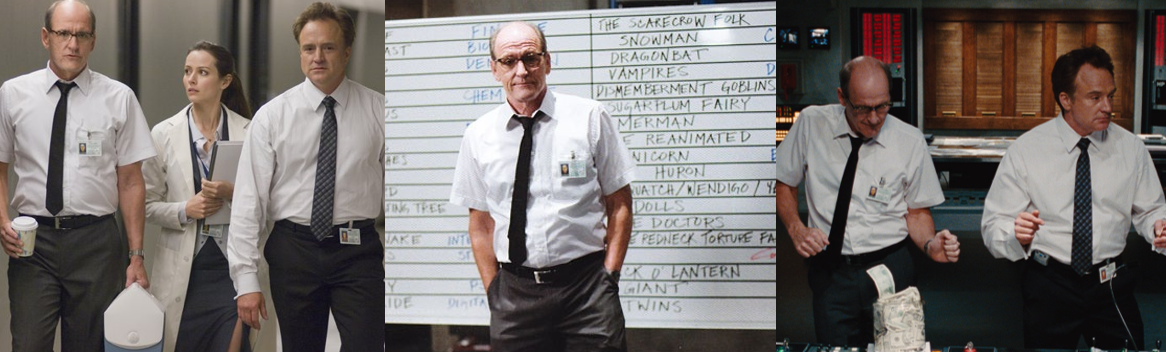
Of course, this is all part of a carefully constructed scenario orchestrated by the mysterious “Facility” located on the grounds near the cabin. All throughout the film, the story cuts to technicians Gary Sitterson (Jenkins) and Steve Hadley (Whitford), two long-term employees of the Facility who have been manipulating youngsters and sacrificing them to appease the slumbering, malevolent “Ancient Ones” so often that they’ve become completely desensitised to the lives that are frequently lost in their bizarre ritual. This is true of all employees of the Facility, save for newcomer Daniel Truman (Brian J. White), a security officer who is not only stunned by how routinely the technicians go about manipulating and killing their victims but disgusted to find they place bets on the monsters the kids unwittingly conjure to pursue them and who dies first, though technician Wendy Lin (Amy Acker) explains it’s their way of “letting off steam” to cope with the horror of their everyday lives. Presumably a government-sanctioned operation, the Facility is just one of many all over the world; the US branch has the second-best track record of success, while the Japanese is the most efficient at appeasing the Ancient Ones, though it’s suggested on numerous occasions that the rituals often fail and come down the US and Japanese branches, hinting that this isn’t exactly a fool proof or even competent system. This is only further reinforced by numerous barely noticed and easily ignored missteps throughout the film; the likes of Sitterson and Hadley have become so complacent and numbed to the routine of it all that they don’t treat serious flags like a failure to communicate changes or electrical glitches or the ineffectiveness of their drugs as an issue until its too late. Indeed, the Facility noticeably shakes numerous times to indicate the Ancient Ones’ displeasure but this is mistaken as them being satisfied by the kills, with Sitterson and Hadley and the others often prematurely celebrating the sacrifice of their victims without confirming an actual kill since they’re more concerned with perving on the girls, making fun of their “Harbinger”, Mordecai (Tim de Zarn), and hastily celebrating their victory with tequila.
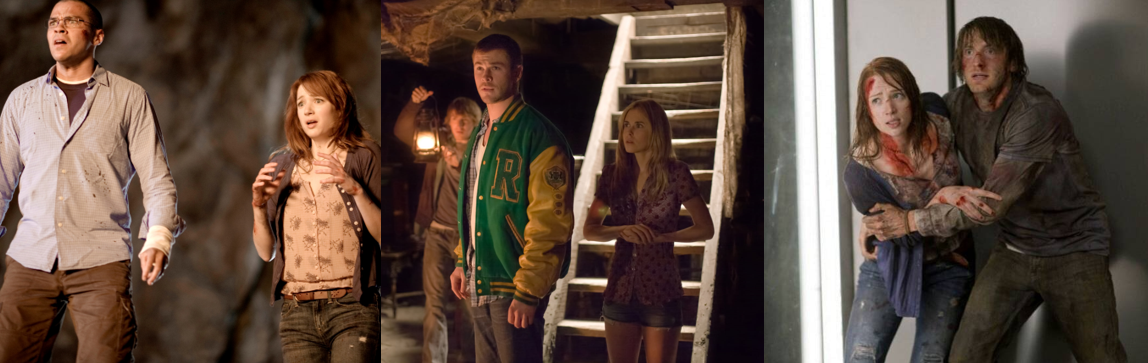
Our group of unsuspecting victims are four college friends, with Dana Polk (Connolly) being our main protagonist and ultimate “Final Girl”. Although she’s pigeon-holed by the Facility as “The Virgin”, Dana’s actually more suited to the “Whore” role that they force upon her friend, Jules Louden (Hutchison), since Dana just got out of an illicit affair with a college professor, walks around in her undies, and is more than willing to partake of alcohol and pot. Jules, a pre-medical student who has recently unwittingly dyed her hair blonde using the Facility’s products to make her more promiscuous, is the girlfriend of sociology major Curt Vaughan (Hemsworth), a well-read and responsible young man who also happens to be on the college football team, so he’s designed “The Athlete” by the Facility despite his friend, Holden McCrea (Williams), being more suitable since he’s much more about the game. A newcomer to the group, Holden is manipulated into taking on more scholarly attributes to fit the Facility’s tropes but is there in the hopes that he and Dana will connect so she can move on. While there’s an obvious attraction (both can’t resist the temptation to make use of the two-way mirror between their rooms) and they become closer as the film (and the horrors) progress, Dana is still dealing with the abrupt end of her affair and there’s a third wheel in their would-be romance. Namely, Marty Mikalski (Kranz), a pot-head and conspiracy theorist who spouts observational philosophy that sounds ridiculous but actually makes him the first to notice that something isn’t quite right at the cabin. He’s probably the most amusing and memorable of the group since he’s not just baked out of his mind; he stands up for Jules when gas attendant Mordecai insults her and questions Facility-influenced decisions that split the group up or having them poking around with things they should leave well alone.
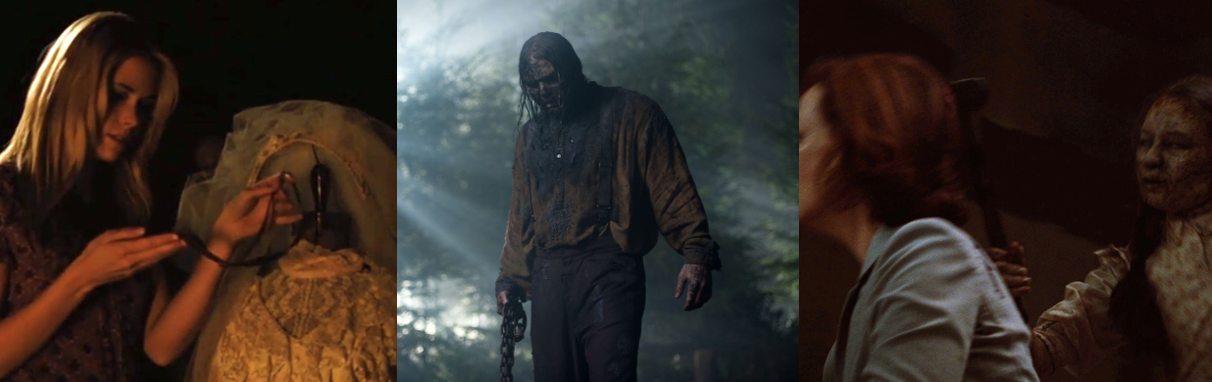
Thanks to the Facility’s influence, our protagonists are easily re-routed from their intended destination by the organisation’s agents, such as Mordecai (who takes his job as the local doomsayer a little too seriously), and unable to escape thanks to both a rockfall sealing the only exit and a massive, semi-translucent electrical barrier trapping them in the area. The cabin (and, indeed, the entire grounds) is full of surveillance devices that allow the Facility to monitor their every move and manipulate them more effectively; pheromones, drugs, and other intoxicating influences subtly alter their personalities into their intended roles, increase their libido, and hinder their rational thinking (with Marty proving somewhat immune to this thanks to his special batch of pot). This pushes them to investigate the cabin basement, which is a treasure trove of bizarre objects and cursed memorabilia, each of which is tied to a specific monster held in an elaborate series of holding cells within the Facility. Where these monsters came from or how they were ensnared by the Facility is left intentionally vague (they’re said to be remnants of the “Old World” and the things that inspired our nightmares), but they’re evoked through such staples as medallions, musical boxes, obscure puzzles, and mirrors. However, it’s the diary of Anna Patience Buckner (Jodelle Ferland) that wins out; when Dana reads the diary aloud (encouraged by all except Marty), the zombified Patience and her family (Mathew (Dan Payne) and Father Buckner (Dan Shea)) rise from the grounds and attack the protagonists with trowels and hatchets. With a 100% clearance rate, the Buckners also represent the Facility’s last hope at appeasing the Ancient Ones when all their sister facilities meet with failure, even the much-lauded Japanese site.
The Nitty-Gritty:
The Cabin in the Woods is an extremely clever and interesting spin on the horror genre; laced with metatextual context and humour, the film is as much a commentary on the genre as it is a subversion and love letter to the tropes associated with it. Sitterson and Hadley stress that, while they may rig the “game”, the victims ultimately choose their own destiny: they could ignore Mordecai’s warnings, but they continue on; they don’t have to go down to the cellar, but are compelled to do so; and they have no idea that they’ll be conjuring a monster until it’s too late because free will is all part of the “system”. Similarly, the Ancient Ones are cleverly positioned as an allegory for film audiences and horror fans, who constantly want more of the same and expect clichés like drunken, horny teens swimming in the lake or getting it on in misty woods in the dead of night. Thanks to the Facility, Curt starts acting like a jock alpha male, Holden starts wearing nerdy glasses, and Jules becomes a promiscuous slut; Marty’s warnings go unheeded since he’s off his nut and they all end up to out of it to properly defend themselves, much to the delight of the Facility staff, who watch with gaping mouths as the group first becomes hornier and then suffers at the hands of the Buckners, though this redneck zombie torture family proves to be far less effectual than they would like.
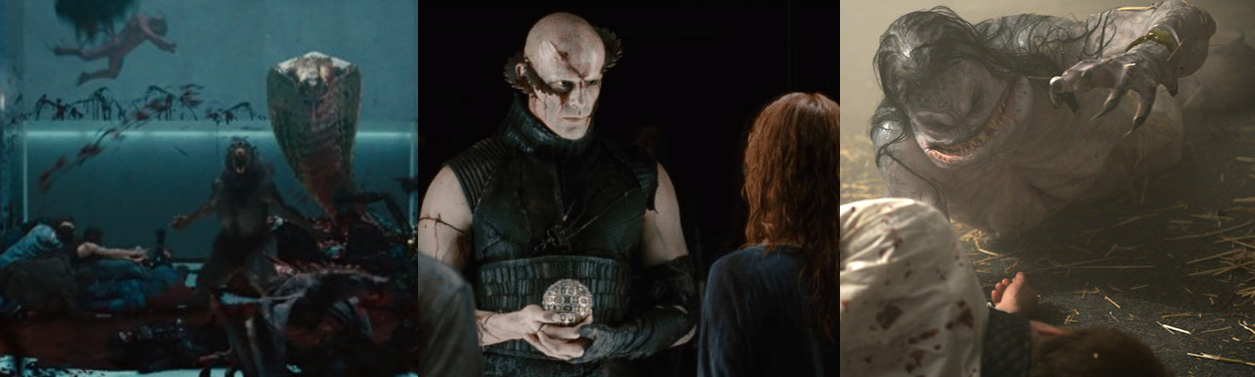
As undead killers, the Buckners are unrelenting, zombie-like monsters; armed when jagged, rusty saws and hatchets, they attack Curt and Jules, beheading the latter and offering the first humble blood sacrifice to the Ancient Ones. The true intentions of the cabin and the Facility are hinted throughout from the early going; not only is imagery of ritualistic killings prevalent in the opening credits, but the cabin itself is filled with macabre pictures and stuffed animals representing hunting and sacrifice. There’s a lot to spot on the monitors in the Facility as other subjects are met with failure around the world, with the most prominent being the Japanese school girls imprison an onryō (Naomi Dane) in a frog, but the true extent of the monsters on show is delivered in spectacularly bloody fashion during the finale after Dana hits a convenient big red button that unleashes all the monsters so they can run rampant throughout the Facility. There’s so much to see here that you’ll probably spot something new on each watch: there’s giant snakes and bats and other insects, reptiles and animals; a killer clown (Terry Notary), a stoic hell monster with buzz saws imbedded in its face (Greg Zach), a family of masked psychopaths, rabid dogs, vampires, witches, werewolves, mutants, eldritch abominations, and even a unicorn! Many of these are based on popular horror movie monsters and all of them are extremely aggressive and tear the Facility’s staff apart without mercy. While all the staff bet on which monsters they want to see appear, Hadley is obsessed with having a merman (Richard Cetrone) take the win, only to suffer an extremely ironic and violent death when a merman waddles over and devours him, spewing his blood from the blow-hole like vent on its back!
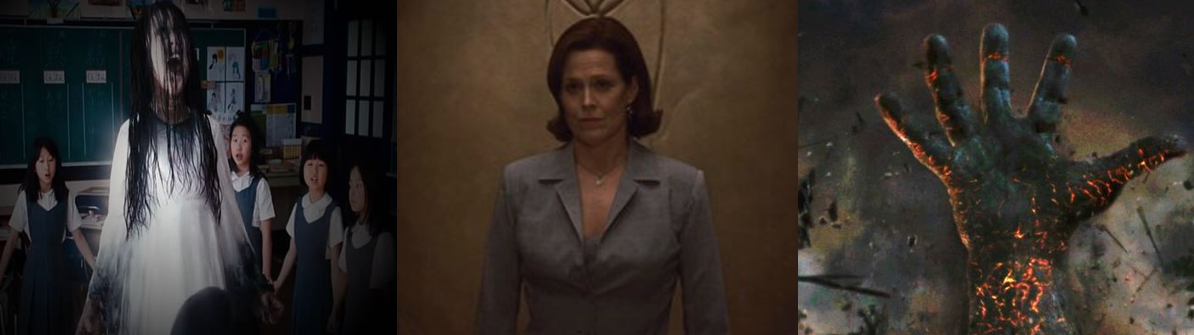
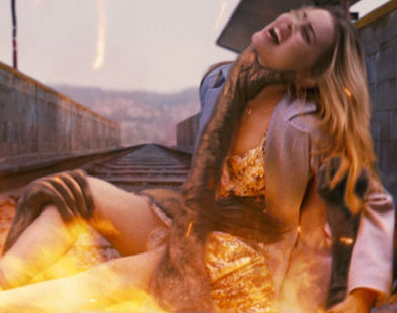
This mass purging of the monsters comes after Dana and Marty avoid the Buckners, despite appearing to die on more than one occasion, thus unintentionally convincing the Facility that they’ve succeeded. After repeated failed escape attempts result in the spectacularly abrupt and explosive death of Curt (who arrogantly tries to jump a ravine on his motorcycle and collides with the forcefield as a result) and Holden is skewered through the throat, Dana and Morty stumble upon the Facility and realise they’ve been manipulate the entire time. Although they take their revenge by unleashing the monsters, they’re ultimately confronted by the Director (Sigourney Weaver), who explains the whole purpose behind the ritual sacrifice and demands that Dana kill Marty to spare the world the apocalypse the Ancient Ones’ awakening would bring. It’s easily one of the best gags in the film that the victory over the monsters is actually a bad thing as it brings humanity one step closer to oblivion so, while you’re rooting for these characters to survive (as per the “system”), it’s actually better if they fail so that the Ancient Ones will be appeased. Ultimately, while Dana seems to contemplate compliance, she is injured by a werewolf (Richard Cetrone) before she can go through with it; after the Director is killed by Patience, the two friends reconcile and decide that humanity isn’t worth saving after all. At the start of the film, Marty haphazardly shares his belief that society deserves to crumble in order to escape the control, pressure, and influence of outside sources; this is revisited in the end, when he and Dana are the last ones left alive and have no way of stopping the inevitable apocalypse, so they simply share a joint and watch as it happens.
The Summary:
At first glance, The Cabin in the Woods is every cursed cabin, zombie horror film you’ve ever seen; the characters fall into their intended roles simply enough and it’s not long before the drinks are flowing, tongue spit is being exchanged, and blood is splattering everywhere as the kids are whittled down and attacked in classic slasher fashion. However, it’s actually one of the cleverest subversions and deconstructions of the genre I’ve ever seen; similar to parody movies and self-aware, meta-heavy horror films like the Scream franchise (Various, 1996 to present), the film offers wry commentary on the clichés of horror, the expectations of those watching, and suggests that all horror is purposely manufactured to appease the masses (which, of course, it is). Featuring some fun performances and some really impressive practical effects, The Cabin in the Woods is bolstered by the sharp dialogue and gags and the absolute bloodbath that features in the darkly bleak ending. It’s easily one of the most unique and entertaining twists on the genre I’ve ever seen; I love the idea that our darkest imaginations and fictional nightmares are born from these eldritch horrors and how it expands upon the concept of rooting for the killer so prevalent slasher films so there’s a mixture of relief and resentment towards Dana and Marty for surviving. Above all else, the film is worth a watch for the blood-soaked finale and the absolutely pitch-black final shot, which offers the briefest glimpse of the Ancient Ones and the end of all humanity. Fans of horror will be well placated with all the allusions, references, and gore on offer here but I think this one’s worth a watch from even casual horror fans, and especially sceptics, for the way it analyses and subverts the genre.
My Rating:
Great Stuff
Are you a fan of The Cabin in the Woods? Which of the main characters was your favourite and what did you think to the staff at the Facility? Which of the monsters would you have put your money on? Did you enjoy seeing the monsters let loose at the end? Which was your favourite and what did you think to the Buckners? Did you enjoy the self-aware horror and commentary in the film? Would you like to see some kind of follow-up exploring what happened after the Ancient Ones rose? You can leave your thoughts on The Cabin in the Woods in the comments below or comment on my social media, and be sure to check back for more horror content!







 Dr. K's Waiting Room
You must be logged in to post a comment.