Back Issues [Brightest Month]: Green Lantern #59


Although February 2014 was dubbed “Green Lantern Day” (because, by the American calendar, the date read as “2814”, the sector of space assigned to Earth in DC Comics), the significance of this date has passed as the years have changed. Instead, as perhaps the most popular iteration of the character, Hal Jordan, first appeared in October of 1959, I’ve been dedicating every Sunday of October to the Green Lantern Corps!


Story Title: “Earth’s Other Green Lantern!”
Published: March 1968
Writer: John Broome
Artist: Gil Kane

The Background:
Martin Nodell and Bill Finger’s original version of the Green Lantern, Alan Scott, was a magically empowered railroad engineer rather than a space-faring peacekeeper. However, following the successfully reinvention of the Flash in 1956, John Broome and artist Gil Kane changed the Green Lantern mythos forever with the introduction of test pilot Harold “Hal” Jordan, widely regarded as the greatest Green Lantern of all time, in 1959. Nearly ten years later, Groome and Kane revealed that Hal was just one of the potential candidates for Abin Sur’s power ring, the other being volatile Guy Gardner, who first debuted in this issue. Not only was Guy relegated to backup status, he soon found himself gravely injured and briefly trapped in the Phantom Zone. Then, he was replaced by another and developed brain damage, becoming even more hostile and egotistical, especially regarding his status as a Green Lantern. Guy is perhaps best known for his time on Justice League International, where he often clashed with his teammates, as much as his unstable temperament, which saw him kicked out of the Green Lantern Corps and wielding Thaal Sinestro’s yellow power ring. Guy’s backstory was significantly altered in the early-1990s, revealing him to be of Vuldarian heritage, before he returned to the Green Lantern Corps as one of Earth’s many emerald defenders. Whether wielding a green, yellow, or red power ring, though, Guy has maintained a vocal fanbase, despite his flaws. Though allegedly cut from the universally derived live-action film, Guy’s appeared, in some form or another, in various DC adaptations and is due to be portrayed by Nathan Fillion in James Gunn’s reimagined DC Universe movies. 

The Review:
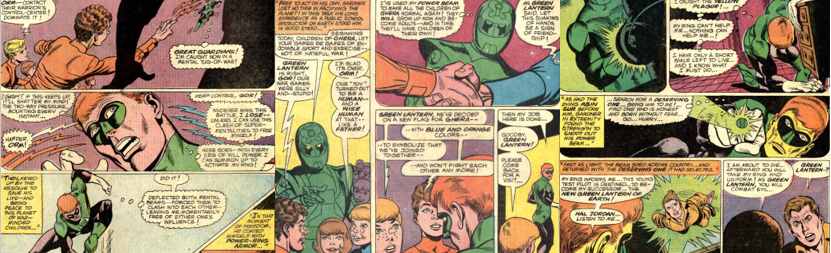
Our story opens with Hal Jordan on Oa, the headquarters of the Green Lantern Corps and home to the enigmatic Guardians of the Universe, for an intensive two-day training course. Yes, it seems even intergalactic space cops have to endure team meetings sometimes, folks! However, rather than learning trust exercises, Hal is shown a gigantic, Jack Kirby-esque telescope that displays current events all across the universe and even keeps a record of a person’s life after they die as a “mental post-mortem”. Hal jumps at the chance to see the last thoughts of his predecessor, Abin Sur, and to learn why he, of all the millions of people on Earth, was chosen to become his successor. As in Hal’s origin story, Abin is fatally injured in a crash and tasks his power battery to find a worthy inheritor of his power ring, but there’s a twist: the battery claims that there are two equally strong candidates! One is, of course, fearless test pilot Hal Jordan and the other is the hitherto-unknown Guy Gardner, a schoolteacher who lost out on becoming Green Lantern simply because Hal was closer. After reliving Abin’s dying soliloquy over the next few panels, Hal is left astonished to learn that there was another potential candidate. Luckily, the Guardians’ incredible machine can also show Hal potential alternative timelines and, at his request, program it to show what would’ve happened if Guy had been selected instead. 

In another life, Guy became Green Lantern and embarked on a very similar superhero career.

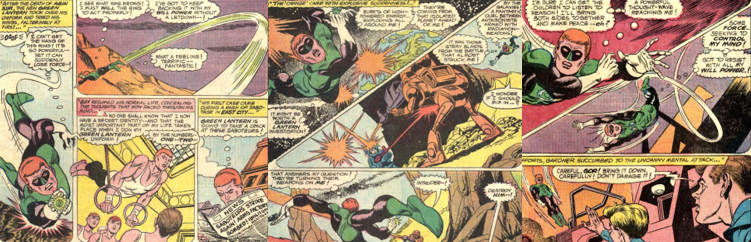
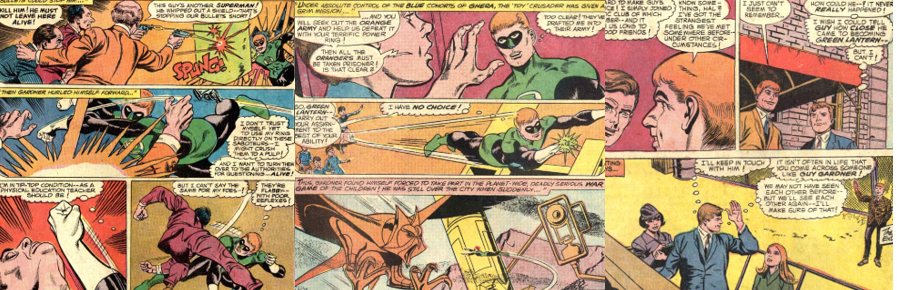
In this version of events, gym instructor Guy is whisked away by the green energy and readily accepts the ring. However, since he’s not subjected to the same monologue as Hal, it takes Guy a hot minute to figure out how to use the ring, though he’s no less committed to using its power to battle injustice as Green Lantern. Like Hal, Guy’s first mission was confronting a group of saboteurs. Unlike Hal, who phased through walls and bullets and was dazed by a yellow lamp, Guy crashes through walls and erects an energy shield to block their bullets, hesitating to directly use his ring against them in case he “[crushes] them to a pulp”. Instead, Guy relies on his physical superiority to beat them into submission. Victorious, he also embarked on a fantastical superhero career, tackling colourful supervillains and even defeating renegade Green Lantern Thaal Sinestro. This victory saw Guy finally summoned to Oa and learning the true extent of his powers and responsibilities, but it’s in his return journey home that the biggest deviations occur between Hal and Guy’s lives. Guy was distracted by a series of intergalactic explosions that saw him detour to the planet Ghera to interject in a duel between two alien robots. Their conflict quickly turns against him, though he easily bested the two droids and learned that the planet is populated solely by human children. The robots explain that the Gheran parents created them before being wiped out by a mysterious yellow plague. This same virus kept the children from growing and, in their boredom, they programmed the robots to engage in war games for their amusement, meaning the planet is constantly in a state of conflict between the orange side and the blue side. Amazed, Guy vows to show the children that they’re walking a dark path, confident that he can teach them the benefits of peace, only to suddenly find himself completely paralysed when the children of the blue side not only sense his presence but take control of his body with their mental powers (a feature the robots conveniently neglected to mention earlier).  

Guy eventually breaks free and brokers peace, only to succumb to a fatal disease.

Thinking Guy is an advanced automaton and using their incredible psychic powers to learn his name (but, strangely, not his true purpose), they send him against their enemies. Completely under their sway, Guy has no choice but to obey and is forced to defend them against a mechanical bird the orange’s send to attack the blue’s city. Next, he’s set against the orange’s fish-like submarine, resisting its lightning attacks and scuppering it with a giant green energy hand. Impressed by his abilities, the blue’s send him to wage an all-out attack on the orange’s city. However, after besting their defences, he finds himself caught in a mental tug of war as both sides try to control his mind and body with their mental powers. Desperate to save himself, Guy summons all his willpower to break free and conjure a suit of armour to protect him from further mental attacks. This form is also enough to convince both sides to agree to a parlay; a simple suggestion for “enjoyable sport and exercise” is enough to convince the children to stop their conflict. However, it’s not just Guy’s words that sway the children; he uses his ring to subtly influence them, making them “normal” and unifying them in peace. Pleased, Guy leaves to recharge his ring (uttering an amended version of the classic Green Lantern oath), only to suddenly fall violently ill. Having contracted the yellow plague while on Ghera, Guy quickly finds himself facing certain death and wills his power ring to search out a replacement. The ring brings Hal to him and, just as in the main timeline, the stunned test pilot is gifted the power ring and the Green Lantern mantle, though he “makes up” his own oath since Guy never got to teach him it. Amazed by these visions, Hal returns to Earth to meet Guy in his civilian guise. He joins the same athletic club Guy attends and quickly becomes fast friends with him, eager to keep an eye on him out of respect for his candidacy for the mighty Green Lantern Corps. 

The Summary:
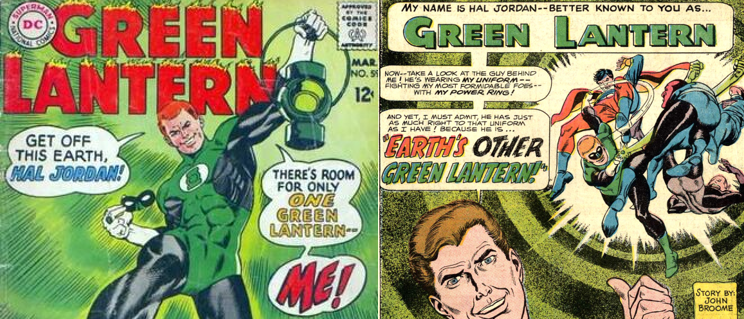
“Earth’s Other Green Lantern!” is one of those classic misleading comic books as the cover advertises the promise of a physical confrontation between Hal and Guy, one that sees the upstart Gardner usurp Hal to become Earth’s only Green Lantern. In truth, this never happens, nor is Guy’s personality anything like the cover depicts. Ironically, the cover paints Guy as an egotistical hothead, which would become his defining personality trait, but the actual story shows him to be as bland and generically heroic as Hal. Indeed, much of the narrative is geared towards showing how similar the two are, which I feel is a massive missed opportunity. Hal is excited by the idea that he wasn’t the only one considered as Abin Sur’s replacement, but Hal and Guy’s superhero careers are functionally identical save for Guy having less initial instruction on the ring and his side quest to Ghera. I have no idea if Hal went to this planet and encountered the strange psychic children, but Guy’s time there isn’t massively significant except that it sees him prematurely killed and handing the mantle to Hal, meaning this alternative timeline really isn’t all that interesting. Now, if Guy had been his later cocky, overconfident self, utilising more direct or brutal methods, maybe things would’ve been more interesting. There are hints that Guy approaches his duties slightly differently, such as being more creative with his energy constructs and being more physically capable than Hal, but there’s not enough deviations between the two to really make me care. 

The differences between Hal and Guy are sparse, and the story’s a fantasy anyway!

The story tries to say that things took a dramatic turn on Ghera but…they don’t, really, except that it sees Guy killed. It seems like it’s going in a different direction, maybe having the kids turn Guy rogue or expanding on him using his power ring to influence their behaviour and having him be reprimanded for that, but that doesn’t happen either. The Ghera sub-plot is actually quite dull. I enjoyed the Jack Kirby influences on the art and visuals of the planet, but the random mental powers came out of nowhere and their control over Guy seemed more like an excuse to show off his control of the power ring than anything else. Indeed, the whole escapade makes Guy seem secondary to Hal since it took him a while to summon the willpower to shake off their influence, and then he just ends their long-running thirst for war with a few words and subtle influences. I’ll admit that I wasn’t expecting Guy to die at the end, though I probably should’ve considering the nature of the yellow plague. Again, it might’ve been more interesting if the virus had been affecting him throughout the story, adding an extra dimension to his plight, but…again, no. In the end, this read like another of those crazy imaginary stories DC liked to publish in the Golden Age where nothing really matters because it’s all a dream or some elaborate fantasy. Sure, it led to Hal seeking Guy out by the end but even that is a bit weird. There’s no suggestion here that he befriends him in case he needs a backup, it’s more out of curiosity and respect, so I can’t help but feel like the whole issue can be skipped as it’s ultimately meaningless in the short term (and even in the long term, as Guy’s personality was eventually completely different). 

My Rating:

Rating: 2 out of 5.

Could Be Better

What did you think to Guy Gardner’s debut story? Were you shocked to learn that Abin Sur had two choices to pick from? What did you think to Guy’s characterisation here and were you disappointed by how bland he was? Would you have liked to see more differences between the two and more from the concept? Where does Guy rank in your Green Lantern hierarchy, and what are some of your favourite stories of his? There’s a comments section below, so share your thoughts there and go check out my other Green Lantern content!  

Back Issues: Ghost Rider #1-3

Writer: Howard Mackie – Artist: Javier Saltares

Story Title: “Life’s Blood”
Published:
13 March 1990 (cover-date: July 1990)

Story Title: “Do Be Afraid of the Dark”
Published:
10 April 1990 (cover-date: June 1990)

Story Title: “Deathwatch”
Published:
8 May 1990 (cover-date: July 1990)

The Background: 
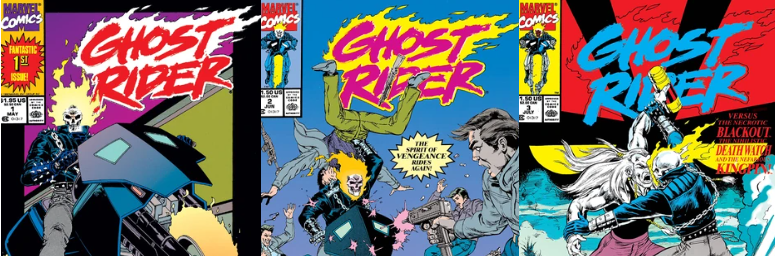
In 1967, Dick Ayers, Gary Friedrich, and Roy Thomas introduced Marvel Comics readers to Western gunslinger Carter Slade/Ghost Rider, who later became known as the Phantom Rider in the wake of his more popular successor, Johnny Blaze. Initially planned to be a villain, Friedrich lobbied to do more with the character, with artist Mike Ploog asserting that he provided Ghost Rider’s trademark look and the legendary Stan Lee dreaming up his civilian name. After ridding himself of the Ghost Rider curse and the demon who caused it, Zarathos, Blaze and his flame-headed alter ego vanished from Marvel Comics for the better part of seven years. However, the Spirit of Vengeance rose again in this story, which introduced a new host for the demon in teenager Danny Ketch, who would later be revealed to be Blaze’s half-brother. During his tenure as the Ghost Rider, Ketch teamed up with both his half-brother and other supernatural or bloodthirsty Marvel anti-heroes, being a prominent member of the Midnight Suns and even temporarily giving his life to stop Zarathos and vampire queen Lilith from conquering the world with their demonic army. While it’s Blaze who is generally depicted as the go-to Ghost Rider whenever the Spirit of Vengeance appears in other media, many of the character’s most recognisable traits come from his successor. Ketch had a sleeker, more streamlined Hellcycle, employed the Penance Stare, and sported a more fearsome, spiked attire, all of which would later be adopted by Blaze when he resumed the mantle. Still, Ketch has appeared in various Marvel cartoons throughout the nineties, though a planned videogame was cancelled and his sole live-action appearance as of this writing is as a child in the poorly received Ghost Rider: Spirit of Vengeance (Neveldine and Taylor, 2011). 

The Review:
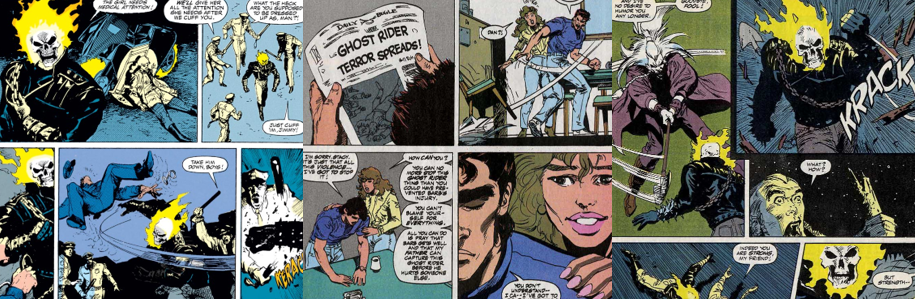
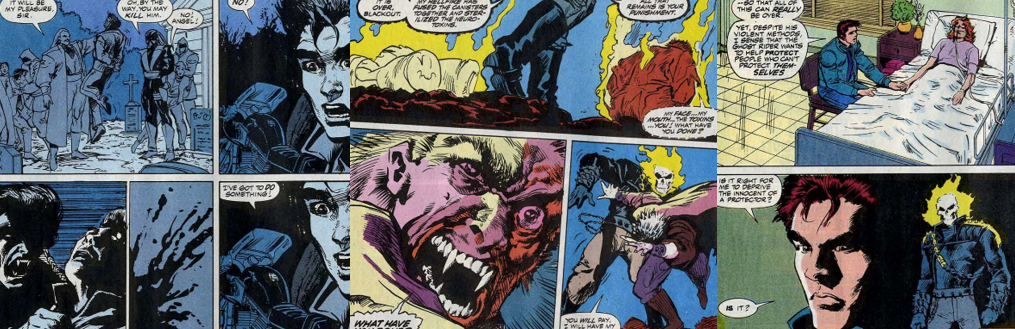
Our story begins in Cypress Hills Cemetery, where bickering siblings Danny and Barbara Ketch have come to scope out Harry Houdini’s gravesite…on Halloween Eve, no less…so Barb can take pictures of alleged psychics trying to commune with him. Anxious Danny, not so quick to dismiss the cemetery’s morbid reputation, is spooked when a bunch of kids (the so-called Cypress Hill Jokers) in Halloween masks give them a fright and try to steal Barb’s camera. She sends them packing with a swift kick and forces Danny to investigate sounds of a gunshot and a scream. Peering into Gallagher’s junkyard, they see some of Wilson Fisk/The Kingpin’s goons threatening the mysterious Deathwatch after the masked man shot dead one of their couriers. When the mobsters are executed by the killer’s crossbow-wielding hoodlums, Barb lets out a scream, landing her with an arrow through the chest. While one of the kids, Paulie Stratton, swipes the case Deathwatch killed for, Danny desperately props the bleeding Barb against an abandoned motorcycle; touching it with his bloodstained hands, he undergoes a sudden and dramatic transformation into the Ghost Rider! His body possessed by the Spirit of Vengeance, Danny’s personality gives way to that of the Ghost Rider’s, who takes out the hooded foes using his demonic chains and his signature Penance Stare, which forces his victim to “suffer the pain” they inflicted on others. Paulie slips away as the cops arrive; they fail to apprehend the Ghost Rider, humbled and manhandled when his bitchin’ new Hellcycle blasts him up a wall to safety. Under the light of dawn, Danny regains his senses and his self, eventually collapsing before his terrified mother and Police Captain Arthur Dolan. When he comes to, Danny learns that Barb is stable, but stuck in a coma, and is devastated at having let her down.

The new Ghost Rider on the block is quickly tormented by failure, bad press, and brutes.

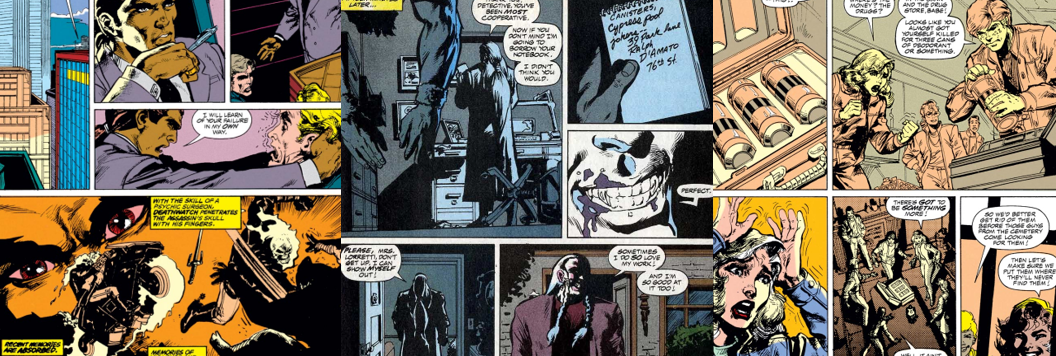
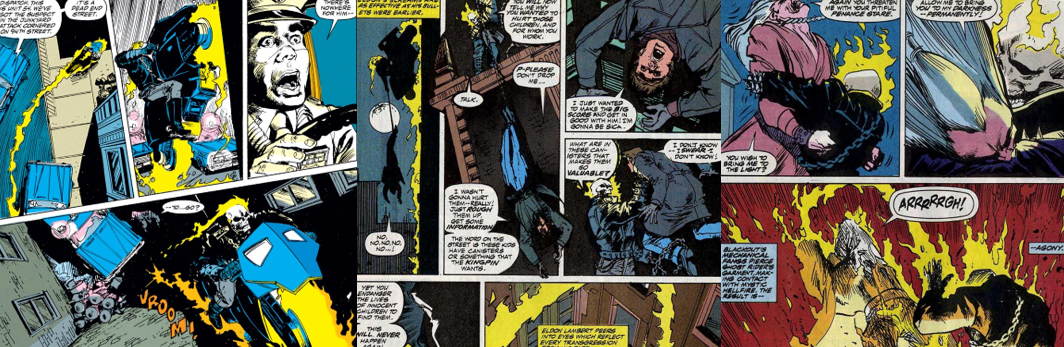
Feeling responsible, Danny tests to see if his demonic experience was real or some fantastical dream and soon finds himself possessed by the Ghost Rider again when the resulting turf war between Deathwatch and the Kingpin leaves Paulie’s friend Raphie critically injured. Luckily, the Ghost Rider arrives in time to intervene, easily shrugging off bullets and even a bazooka, retaliating with lethal force and spiriting Ralphie to safety. However, Danny is stunned to find Captain Dolan has pinned everything on the Ghost Rider, a monstrous force that renders Danny a passenger and leaves him tormented at having failed his sister. Regardless, the Ghost Rider continues to defend innocent lives, specifically the Cypress Hill Jokers, who are constantly threatened by both sets of mobsters. Though still using lethal and violent force, the Ghost Rider is sure to interrogate one of the Kingpin’s goons, subjecting him to the Penance Stare but getting no closer to learning what’s in the briefcase the two crime lords are so willing to kill for. His newfound life already taking its toll on him physically and mentally, Danny is as horrified by Captain Dolan’s smear campaign as he is by the terrifying allure of the Ghost Rider. Elsewhere, the sadistic Blackout enters the fray, murdering a cop and his family to learn where the Cypress Hill Jokers hang out and offering to tie up loose ends for Deathwatch, who’s more than pleased by the brute’s cruel methods. Despite a sensitivity to light, Blackout can freely move through shadows, easily slipping into Ralphie’s home, killing his parents, and attempting to defenestrate him in search of the canisters. Once again, the Ghost Rider is on hand to save the boy, and a brief fight ensues between the two superpowers. While Blackout’s attacks are useless against the Ghost Rider’s power, he demonstrates an uncanny deftness and swiftly flees using the shadows, eager to match blows with the Spirit of Vengeance in another time and place.

Though he triumphs as the Ghost Rider, Danny remains conflicted about his violent alter ego.

Strangely unable to recall exactly where she and the Cypress Hill Jokers stashed the briefcase, Paulie is of little help to the cops and even less help when Deathwatch, Blackout, and their goons storm the station, kill everyone, and kidnap her. In response, Captain Dolan steps up the guard around the comatose Barb, leading to Danny returning to the cemetery to try and help. There, he finds Deathwatch and Blackout in the process of murdering Paulie’s friends to try and find the final canister, which contains a mutated biotoxin Deathwatch plans to unleash upon the city. Angered by Deathwatch’s insolence and aptitude, the Kingpin orders his aide, Oswald Silkworth/The Arranger, to intervene and the bureaucrat successfully convinces Deathwatch to hand over the cannisters by surrounding the duo with dozens of armed men. Unfortunately, Blackout isn’t so willing to comply and violently lashes out, taking the cannisters for himself, ordering his men to attack everyone (even Deathwatch), and salivating at the prospect of blanketing the world in a cold, dark nuclear winter. However, the Ghost Rider enters the fray, taking out Blackout’s goons and tackling him before he can open a canister. Though still able to use the Ghost Rider’s strength against him and resist the Penance Stare, Blackout is burned by the demon’s flames, horrifically scarring him and twisting his already warped mind. The next day, the Kingpin muses over his heroic deeds and vows to watch Deathwatch closely. As for Danny, he returns to Barb’s side, still torn between giving up the cursed motorcycle and his dark alter ego and continuing his dual life as a violent (but effective) protector of the innocent.

The Summary:
Although my reading experience with the Ghost Rider is limited, Danny Ketch’s time in the role is the one I’m most drawn to. As a typical 1990s comic anti-hero, Danny ticks all the boxes: he’s a reluctant hero, tormented by his violent powers, rides a bad-ass motorcycle, and transforms into a cackling, flame-skulled demon who shreds baddies with chains! Just in terms of the art and the storytelling, Danny’s debut blows Johnny Blaze’s out of the water; but then, the 1990s was a different time. Interestingly, Danny’s debut issues aren’t as over the top and fantastical as you might first expect; the story is firmly grounded, save for the supernatural elements, quick to return time and again to Danny’s turmoil over his sister. In bringing Danny to life, the creators have drawn from multiple other heroes to set the tone: Danny’s as unsure of himself as Peter Parker/Spider-Man, as ruthless in his superheroics as Frank Castle/The Punisher, and is faced with violent gang wars headed by the Kingpin, much like Matt Murdock/Daredevil. Indeed, the story closely echoes the tone and atmosphere of Frank Miller’s time with the Man Without Fear and definitely veers more towards a grounded, gritty aesthetic than fantastical, supernatural adventures. The city police only reinforce this by adopting a “shoot first, ask questions later” mentality towards the Ghost Rider, one exacerbated by catching him in the middle of breaking a man’s neck. Captain Dolan’s J. Jonah Jameson levels of persecution against who he sees as a dangerous individual also see the entire force’s efforts focused on the Ghost Rider rather than the turf war between the two crime lords.

Deathwatch and Blackout make for an enigmatic and sadistic bad guy duo.

Deathwatch makes for an interesting, enigmatic, and mysterious individual. Unlike the Kingpin, he hides behind a literal mask and employs hooded assassins not unlike the ninjas of the Hand. He also exhibits supernatural abilities, forcefully reading his victim’s mind with a touch, and isn’t afraid to get his hands dirty. While the Kingpin prefers to operate from the shadows as an elusive puppet master, Deathwatch readily joins Blackout and his men in terrorising the Cypress Hill Jokers, though he slips away when the Ghost Rider shows up. How Deathwatch obtained his powers and what his true origin is remains as much of a mystery as Blackout’s backstory, but I assume these villains were further fleshed out in subsequent issues. Blackout makes quite the first impression, threatening a child and murdering his family with relish, and appears quite happy to kill others, even children, to get his hands on the bioweapon. No mere mindless brute, Blackout is eloquent, savvy, and well trained in martial arts, to the point he can use an opponent’s momentum and strength against them and therefore knock even the overpowered Ghost Rider off his feet. He also possesses seemingly supernatural powers, moving through shadows and showcasing a near-superhuman durability…until he tries to mess with the Ghost Rider’s flames. Deathwatch and the Kingpin’s underlings are no less lethal, happily shooting and stabbing kids to threaten their victims, and engaging in all-out firefights in the middle of the street. The Kingpin’s goons even break out heavy-duty ordinance like bazookas, while Deathwatch’s are happy to destroy an entire junkyard to ensure they take care of any witnesses. The Cypress Hill Jokers, in comparison, are less than small fry; they’re just kids trying to be tough who get in way over their heads when they steal Deathwatch’s briefcase. Paulie largely exists to repeat this plot and look dumb when she can’t remember where they stashed the third canister, resulting in her friends being badly hurt or killed. Still, protecting her and the other Jokers becomes the Ghost Rider’s short-term mission as, despite their assumed petty crimes and rebellious ways, they remain “innocent”.

The new Ghost Rider reinvigorates the character with a visual bang.

As for the Ghost Rider himself…well, he steals the show. Sporting what I would argue is his definitive look, the Ghost Rider bursts to life whenever Danny touches the cursed motorcycle (which, I assume, is Johnny Blaze’s) and immediately seeks to avenge the innocent with brutal and efficient force. Commanding sprawling chains and easily flipping police cars, the Ghost Rider is a physics-defying, unstoppable force of Hell-born justice; immune to bullets, blunt weapons, and most attacks, it takes a lot to even get him off his feet let alone injure him. In fact, his only weakness appears to be daylight and Danny’s troubled conscience since barricades, walls, and near-superhuman foes barely slow him down. These issues finally helped shed a little light on the nature of this transformation. Danny’s personality takes a back seat when the Ghost Rider takes over, leaving him in a dark place both alluring and terrifying. He appears to have little to no control over the Ghost Rider, even struggling to resist making the change at one point, while retaining full knowledge of his actions as the Spirit of Vengeance. Yet, for all the Ghost Rider’s power, he cannot help Barb and his abilities are used to punish, not heal. His demonic visage terrifies most people, making it difficult for him to earn the trust of the innocent and get the injured to safety, but he perseveres, even though his lethal methods see him branded a menace and a killer. The Ghost Rider’s primary personality is spouting his sacred mission and he will allow nothing, and no one, to keep him from defending the innocent and punishing the wicked, making him an extremely dangerous and driven anti-hero. The conflict within Danny is palpable; he can see the potential for good in the Ghost Rider but is worried about hurting others or losing himself to the darkness. This dichotomy makes me interested to read more, to learn what happens to him and Barb, and to find out more about Deathwatch and Blackout. Thus, I really enjoyed these three issues, especially as it injected a bit of the macabre and supernatural into the gritty, urban warzone Marvel calls New York.

My Rating:

Rating: 4 out of 5.

Great Stuff

What did you think to Danny Ketch’s debut as the Ghost Rider? Is this the look you most associate with the character? What did you think to Deathwatch and Blackout, especially their ruthless natures? Did you like the more grounded depiction of the fantastical elements? What are some of your favourite Danny Ketch stories or moments? Whatever your thoughts on Ghost Rider, share them below and be sure to check out my other Ghost Rider content.

Back Issues [Brightest Month]: Showcase #22


Although February 2014 was dubbed “Green Lantern Day” (because, by the American calendar, the date read as “2814”, the sector of space assigned to Earth in DC Comics), the significance of this date has passed as the years have changed. Instead, as perhaps the most popular iteration of the character, Hal Jordan, first appeared in October of 1959, I’m choosing to dedicate every Sunday of October to the Green Lantern Corps!


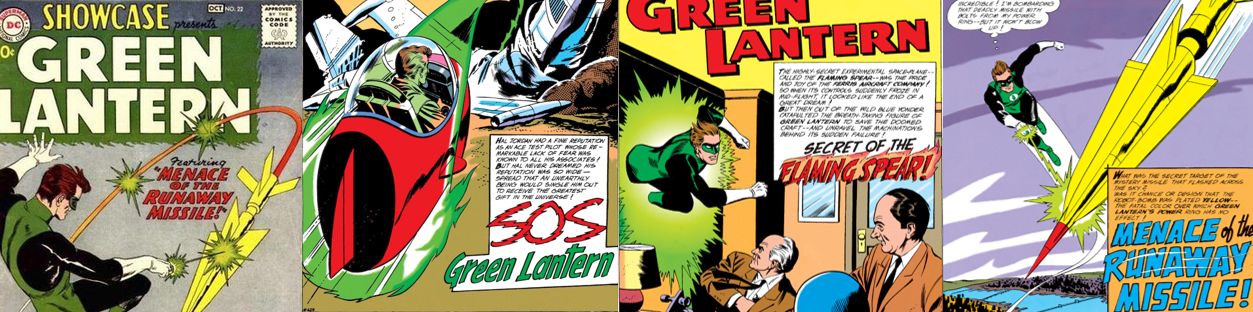
Story Titles: “S.O.S. Green Lantern”, “Secret of the Flaming Spear”, and “Menace of the Runaway Missile”
Published: October 1959
Writer: John Broome
Artist: Gil Kane

The Background:
In July 1940, Martin Nodell and Bill Finger introduced readers of All-American Comics to Alan Scott, the very first Green Lantern. Far from an intergalactic lawman, Alan was a magically empowered railroad engineer who became a regular fixture of the title and DC Comics’ first super team, the Justice Society of America (JSA). However, after Gardner Fox, Harry Lampert, and Julius Schwartz successfully reinvented the Flash in 1956, a new green-hued superhero began operating under the codename Green Lantern in 1956. Re-envisioned as fighter pilot Harold “Hal” Jordan, the Green Lantern concept was drastically reimagined to incorporate a science-fiction slant, and Hal later became he de facto Green Lantern after the universe-shattering Crisis on Infinite Earths (Wolfman, et al, 1985 to 1986) saw Alan Scott and his teammates briefly banished from DC continuity. A hotshot pilot with an eye for the ladies, Hal fully represented the Green Lantern Corps. He opposed tyranny in all its forms, even making an enemy of his tyrannical mentor, Thaal Sinestro, helped found the Justice League of America, and even formed an unlikely partnership with liberal spokesman Oliver Queen/Green Arrow. Widely regarded as the greatest Green Lantern of all time, Hal isn’t without his flaws; his despair at seeing his hometown obliterated by Hank Henshaw/Cyborg-Superman, saw him infested by the malevolent entity Parallax and briefly become a genocidal madman before being redeemed and retaking his place as the premier Green Lantern. This reputation means that Hal is popularly the go-to character whenever Green Lantern appears outside of comics. He’s appeared in numerous videogames and cartoons, even if just to characterise other Green Lanterns, and was the main character of the much maligned live-action adaptation

The Review:
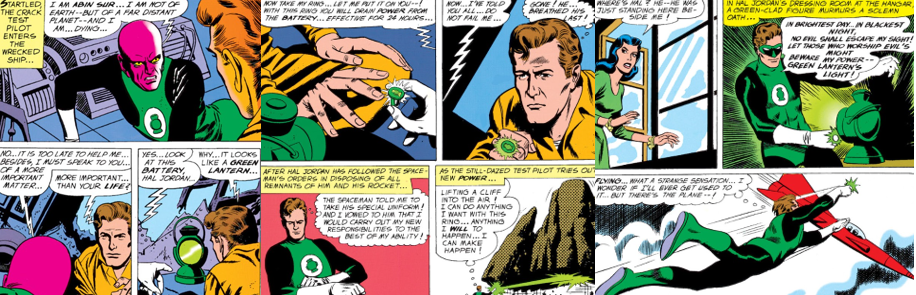
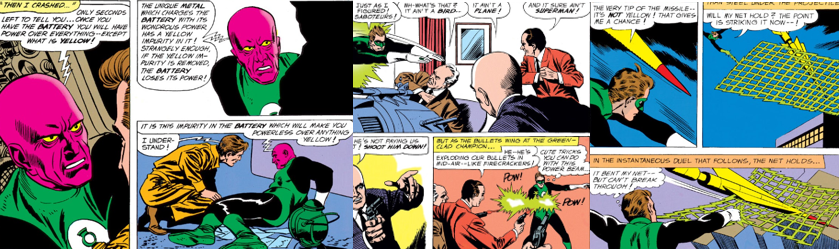
If there’s one thing Hal Jordan is known for in his role as the greatest Green Lantern, it’s his ability to overcome great fear and this is emphasised on the first page of his first-ever story, when we’re introduced to “ace test pilot” Jordan who has a reputation for his “remarkable lack of fear”. It’s this quality that fatally wounded Green Lantern Abin Sur seeks after his spacecraft crash-lands in “Southwest U.S.A.”. Summoning the remains of his strength, the dying alien wills his Battery of Power – the titular green lantern – to seek out a worthy successor, one who is without fear, and sends an emerald-hued energy beam across the globe in search of the perfect candidate. Over at the Ferris Aircraft Company, hotshot test pilot Hal Jordan is tinkering with a “flightless trainer” (presumably some kind of simulator to train space pilots) when he and the craft and bathed in a green glow and, to his astonishment, blasted away at high speed to Abin’s crash site. There, Hal is momentarily stunned to behold the purple-skinned alien, who telepathically welcomes him and begs that he listen to his instructions for the green lantern, which is a weapon against injustice utilised by space-patrolmen across the galaxy. Although Hal is eager to help Abin and save his life, the alien waves off his concerns, accepting the inevitability of his death, and confirms that the lantern chose a worthy successor. 

Hotshot test pilot Hal Jordan is bequeathed a dying alien’s ring and becomes Green Lantern.

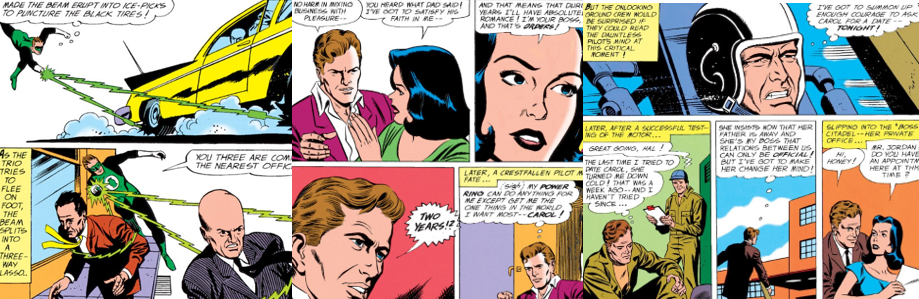
Abin then uses what little time he has left to share how his ship was unexpectedly battered by Earth’s radiation bands and he was momentarily blinded and left powerless by the flashing yellow lights. He goes on to relate that, for all the green lantern’s great power, it contains an “impurity” that renders it useless against anything tinted yellow, and that the power ring that channels the green lantern’s awesome might must be charged every twenty-four hours. Abin then hands Hal his ring, begs him to carry on the good fight, and promptly dies, much to Hal’s sorrow. On Abin’s instruction, Hal takes the alien’s slick, form-fitting uniform, tests the ring’s power by wiling a nearby cliff into the air, and vows to oppose evil in all its forms as Green Lantern. The issue’s next story, “Secret of the Flaming Spear”, introduces us to Carol Ferris, daughter of Carl Ferris, and Hal’s boss. Although she doesn’t approve of Hal’s tardiness, she’s more than wiling to go on a date with him, but their intimacy is cut short when pilot Frank Nichols suddenly calls in an S.O.S. when the controls of his experimental plane, the titular Flaming Spear, seize up on him. Feeling partially responsible since Frank’s only up there due to him being unavailable, and realising he has the power to intervene, Hal ditches Carol and utters a sacred oath before the green lantern: “In brightest day, in blackest night, no evil shall escape my sight. Let those who worship evil’s might beware my power… Green Lantern’s light!” Fully empowered, Hal takes to the skies as Green Lantern through sheer fore of will (noting how strange it is to fly without a plane) and easily guides Frank to safety using a burst of energy from his power ring. 

For all his power, Green Lantern can’t affect anything yellow or influence Carol’s heart.

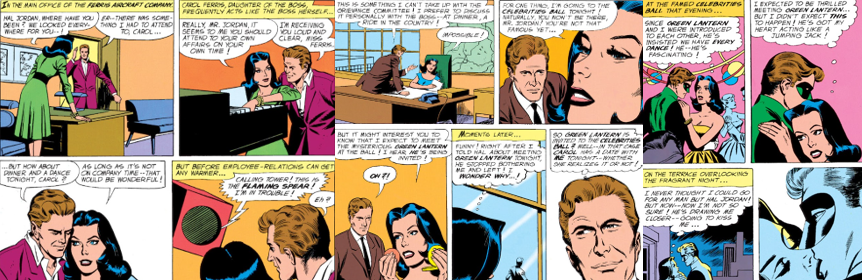
However, on closer inspection of the Flaming Spear, Green Lantern realises that the incident was no accident. Radiation caused the controls to freeze, so Green Lantern uses his ring to follow the lingering radiation to its source, a group of saboteurs holed up in a house not far off. Like his predecessor, Green Lantern phases through the wall of their hideout and confronts them, intercepting their bullets in mid-air but being briefly knocked out when the lead saboteur tosses a yellow lamp at his face. His pride hurt more than his body, Green Lantern recovers and chases after them, only to find they’re making a getaway in a yellow car. Although Green Lantern can’t affect the car directly, he does burst the tyres by conjuring hard-light ice picks with his power ring, wrangling the saboteurs with energy lassos so they can be apprehended by the authorities. When Hal returns to Ferris Aircraft, he finds Carl and Carol delighted at Green Lantern’s actions and that Carl is planning to take a two year leave of absence to go travelling, during which time he officially names Carol as his worthy successor. Carol takes the promotion very seriously, immediately shutting down any romantic involvement with Hal and leaving him to ponder the quandary that his ring can perform any miracle…except win the heart of his love interest. This irony continues in the final story, “Menace of the Runaway Missile”, where Hal wows his colleagues with his fearless testing of a rocket-sled. While Hal has the bravery to endure the intense speed and g-force of the sled, he struggles to find the courage to ask Carol out, especially after she knocked him back. He decides the best way to win her over is to invade her personal space, call her “Honey”, and be overly pushy in asking her out to dinner. Carol maintains her cold demeanour, however, and not only rejects him but also states she has a more pressing appointment at the charity ball, an event with an exclusive guest list that doesn’t include a nobody like Hal. 

Green Lantern captures a wayward scientist, but both his personas end up in Carol’s bad books,

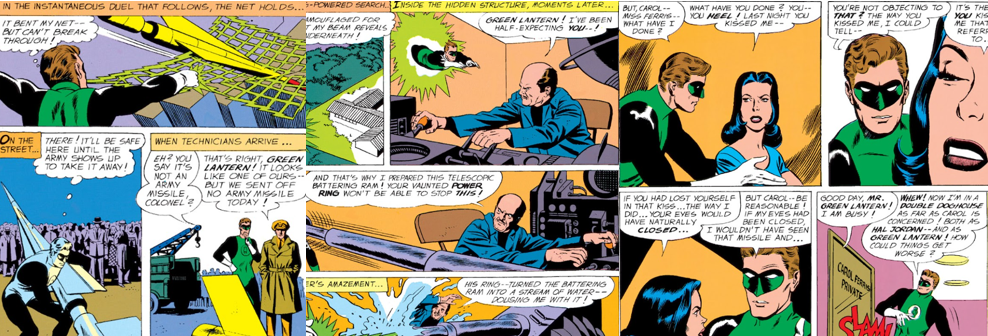
However, Carol lets slip that the mysterious Green Lantern is invited to the ball, so Hal decides that Carol is going to go on a date with him whether she’s aware of it or not. He attends the ball as Green Lantern and spends the whole night dancing with Carol, much to her excitement. Ironically, Carol’s thoughts reveal that she did harbour feelings for Hal and thought they would end up together, but the masked enigma has got her heart skipping a beat and, when Green Lantern leans in for a kiss, she responds eagerly, completely smitten. Unfortunately, at that exact moment, a yellow-hued missile comes baring down on Coast City, catching Green Lantern’s eye and forcing him to abandon Carol mid-kiss, much to her outrage. Upon inspecting the titular runaway missile, Green Lantern discovers it’s armed with an atomic warhead, but he’s unable to stop it because his ring is powerless against yellow. Conveniently, however, the missile’s tip is red, so Green Lantern constructs an elaborate net to catch the missile, which an Army Colonel informs him is not U.S. Army property nor does it contain the deadly payload Hal suspected. The two deduce that the missile’s true target was a hydrogen facility, so Green Lantern questions local aircraft spotters to find the source of the attack, an elaborate facility concealed by a forest. Phasing inside, Green Lantern confronts the man responsible, the maniacal Doctor Parris, who’s amazed when the Ring-slinger turns his high-powered battering ram into water and collars him without breaking a sweat. A lengthy interrogation from the Colonel reveals that Dr. Parris allowed ambition to overpower his reason. Desperate to harness the secret of “H-Power” first, he sought to eliminate his competition, only to now be faced with a lengthy jail sentence. Green Lantern’s victory is short lived, however, as Carol spurns him for not “losing himself” to their kiss, accusing him of not being as into the moment as she was, meaning both Hal’s identities are left in the doghouse by the issue’s end! 

The Summary:
Showcase #22 doesn’t waste any time when it comes to telling Hal’s origin. Alan Scott’s origin story was longer than Hal’s, the bulk of which is taken up by exposition from Abin Sur as he delivers a soliloquy about the green lantern, its limitations, and his expectations for his successor. Unlike later revisions of Hal’s origin, there is no lengthy montage of Hal training with the Green Lantern Corps to be found here. Indeed, there’s barely a mention of the peacekeeping space cops to be found here, and Hal’s place in the grand scheme of the universe is largely cast aside the moment Abin Sur dies as Hal commits to defend Earth from evil, rather than the universe. It’s interesting, then, that John Broome and Gil Kane chose to so radically alter the nature of the Green Lantern for this revision. They lean more towards the science-fiction aspects of the character, but don’t commit to it, meaning we get no space-faring action here and everything is very grounded, which is a shame as I think one of these stories could’ve explored that. Thus, it’s fitting that I compared Hal to Alan in their shared methods of entering buildings with their phasing ability as Showcase #22 is essentially a retelling of Alan’s origin but expanded upon and tweaked here and there. Rather than the Green Flame informing Alan of his abilities, it’s Abin Sur telepathically giving Hal a crash course on the lantern; both channel the lantern’s power through a ring, the lantern comes from space, and the power is fuelled by both willpower and a twenty-four-hour charge limit. Hal also tests the ring’s abilities in similar ways, flying and phasing at will, but expands upon this by conjuring hard-light constructs, immediately demonstrating his greater degree of creativity compared to Alan, though Hal also has an equally arbitrary and ridiculous weakness. At least Showcase #22 makes a partial effort to explain the yellow impurity as an inherent flaw in the power battery. This would, of course, be elaborated upon to a dramatic degree decades later, but it’s just as illogical a weakness as Alan’s vulnerability to wood and leads to absurd scenarios where this all-powerful space cop is felled by a lamp or powerless against anything remotely yellow, which I guess is supposed to say something about the infallibility of even great cosmic power and the ingenuity of the Green Lanterns, but it just looks a bit silly, especially here. 

Hal’s relationship with Carol is uncomfortable and detrimental to both characters.

Although Showcase #22 doesn’t include any supervillains, or even Hal’s mentor-turned-villain Sinestro, and little in the way of a physical challenge for Hal, it does introduce many elements that became synonymous with the character. Chief among these are his reputation for being fearless, his vaulted skill as a test pilot and the arrogance and unreliability that comes with this, and his love interest, Carol Ferris. An independent and strong-willed woman, Carol doesn’t make life easy for Hal. She makes him work for her affections, expecting better from him at work and as a man, but immediately puts an end to any inappropriate flirtations once she’s promoted. Hal’s pursuit of Carol seems a bit undercooked here; his interest in her seems purely based on her looks and appeal as an authority figure since he never mentions anything he likes about her personality. Carol seems equally shallow in her reluctant attraction towards him, basically being interested purely because there’s no one better around, especially at work. Just as I was beginning to admire Carol’s no-nonsense attitude, she does a complete turnaround into full lovelorn Lois Lane the moment she’s face-to-face with Green Lantern. Excited by the masked man’s mystery, she melts into his arms and gives in to the allure, only to turn on him because his eyes weren’t closed during their kiss! The romance between the two, and the shaky attempt at a love triangle, feels tacked on and cheap. I definitely think it would’ve been better if Hal simply admired Carol for her strong will, feistiness, and no-nonsense attitude, with him only developing feelings for her during the ball and Carol’s inner monologue revealing that she secretly does want Hal, but is torn between her duty to her father and her heart, and is feeling conflicted since Green Lantern is so enigmatic. 

There’s a surprising lack of space action here and Hal’s a bit of a creep.

As I mentioned, it’s a bit of a shame that Showcase #22 doesn’t do more with its revised concept for Green Lantern. The origin is different, now firmly rooted in space and including aliens, the costume is way better (even with the useless domino mask), and we of course get the iconic Green Lantern oath and more creativity with the ring’s abilities, but it all feels a bit wasted as the stories are stuck on Earth. Hal isn’t facing anything more challenging than saboteurs and jealous scientists, who only cause him troubles because they just happen to utilise yellow in their schemes. If the lamp, car, and missile had been any other colour, Green Lantern would’ve neutralised these threats even faster, meaning the yellow impurity is simply a contrivance that honestly makes Hal look like an idiot as much as it showcases his adaptability. Hal definitely has to think a little outside the box on two occasions to stop the saboteurs getting away and halt the runaway missile, but apprehending Dr. Parris is a cakewalk for him since there’s no yellow involved, meaning Hal’s greatest obstacles in these stories come from his civilian life and his pursuit of Carol. This could be an intriguing aspect, showing that this all-powerful superhero is powerless in matters of the heart, were it not for how down-right creepy Hal acts towards Carol in “Menace of the Runaway Missile”. He’s a pushy, insistent, misogynist who won’t take “no” for an answer, and even plots to mislead Carol into going on a date with him by wooing her as Green Lantern. The worst part is that this works, completely ruining Carol’s formally forth-right character and turning her into another Lois Lane, and really doesn’t make Hal a very appealing protagonist as he’s just so brash and arrogant whenever he puts the “moves” on Carol. I was very surprised by this, and it did spoil the remainder of the issue, which features some bright, colourful art and makes Green Lantern immediately more visually interesting than his predecessor. I’ve never been a fan of Hal Jordan, though, and his debut issue didn’t do much to change that, casting him as a fearless flyboy whose questionable pursuit of Carol clashes with his righteous battle against evil, which was as disappointing to see as the lack of space-based action. 

My Rating:

Rating: 2 out of 5.

Could Be Better

Have you ever read Hal Jordan’s debut issue? What did you think to the revisions made to the Green Lantern mythos? Were you surprised by how pushy Hal was towards Carol? Would you have liked to see at least one of these stories be set in space? What are some of your favourite Hal Jordan stories and where does he rank for you in the Green Lantern hierarchy? How are you celebrating Green Lantern this month? Whatever you think about Hal Jordan, and the Green Lantern Corps, leave them down below  and be sure to check out my other Green Lantern content. 

Back Issues: Detective Comics #475/476

Writer: Steve Englehart – Artist: Marshall Rogers 

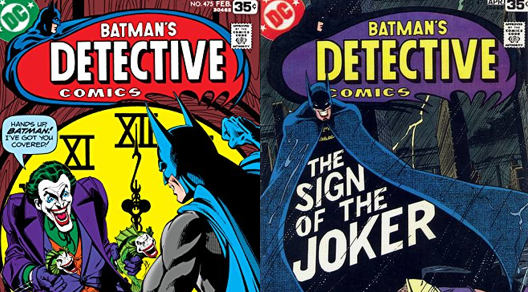
Story Title: “The Laughing Fish!”
Published: February 1978 

Story Title: “Sign of the Joker!”
Published: April 1978 

The Background:
After achieving success with Clark Kent/Superman, National Comics Publications tasked Bob Kane with creating a masked crimefighter to add to their superhero portfolio and, thanks to Bill Finger, the “Bat-Man” went on to become a mainstream cultural icon. Over the decades, the Batman has gone toe-to-toe some of comics’ most recognisable supervillains, though his greatest nemesis is unquestionably the self-styled Clown Prince of Crime, the Joker. Bob Kane, Bill Finger, and Jerry Robinson all claimed to have created the Harlequin of Hate, but it’s widely agreed that the Joker’s trademark visage was heavily influenced by The Man Who Laughs (Leni, 1928). A last-second decision from then-editor Whitney Ellsworth saw the Joker survive his first encounter with the Batman, though the character faded from the spotlight under the direction of editor Julius SchwartzDennis O’Neil and Neal Adams reinvigorated the Joker in the 1970s and 1980s with stories such as this classic two-parter that is such a pivotal Joker story that it was adapted for the hugely popular Batman: The Animated Series (1992 to 1995). The stories played a huge part not just in giving the Joker back his edge, but in reviving the character to terrorise Gotham City for years to come as the Batman’s number one antagonist. 

The Review:
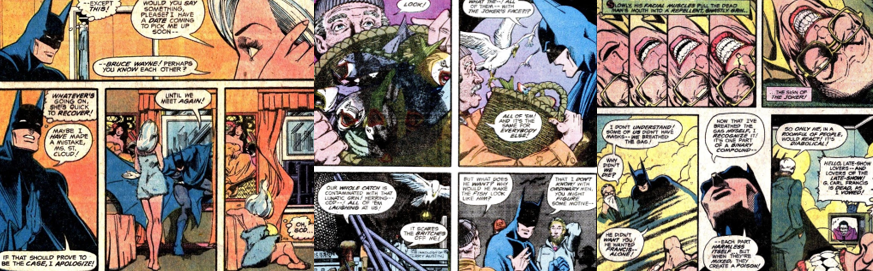
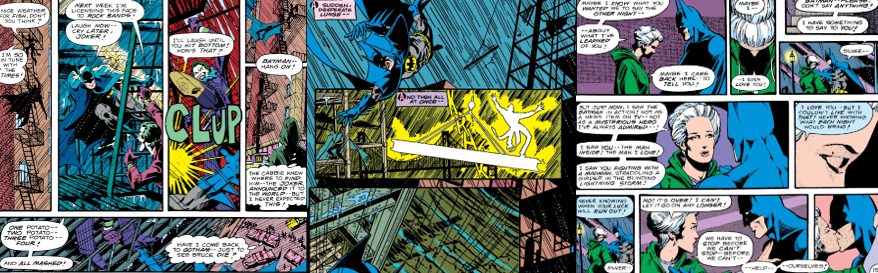
This classic two-part Batman story begins, appropriately enough, in the murky dead of night with the Batman prowling across the rooftops of Gotham City, preparing for the greatest confrontation of his vigilante career. At this point in time, billionaire philanthropist Bruce Wayne had been dated wealthy socialite Silver St. Cloud, a gorgeous platinum-haired woman who quickly captured Bruce’s heart. They became so close that Bruce suspected that Silver had figured out his dual identity, so he swings by her apartment in the guise of the Dark Knight to confirm his suspicions. Although Bruce is convinced that Silver is aware of the truth, she denies that she has anything to confess to the Batman and her demeanour convinces him that there’s a shred of doubt in his assumptions. Realising that it’d be foolish of him to simply unmask in front of her if there’s even a one percent chance he’s wrong, the Batman bids her goodnight and leaves, only for Silver’s resolve to falter once he’s gone. Wracked by her knowledge of Bruce’s dual life, Silver makes the difficult decision to take a hiatus from both men, and Gotham City, to get her head straight. The Batman is still mulling over his complicated love life and the dichotomy between his two identities when he’s aroused by local fishermen, who frantically show him that all the fish they’ve caught have been horrifically mutilated to carry the Joker’s signature smile, perplexing both them and the Dark Knight. 

Batman’s personal issues are compounded by the Joker’s latest insane threat.

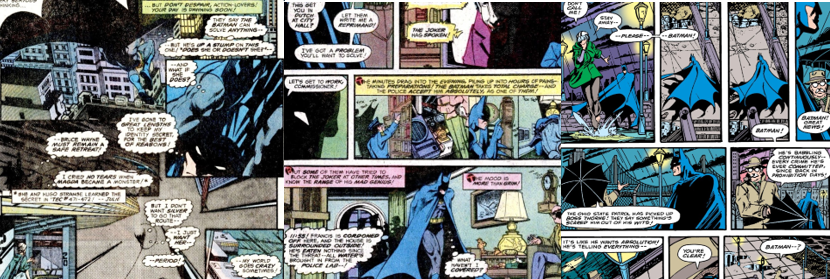
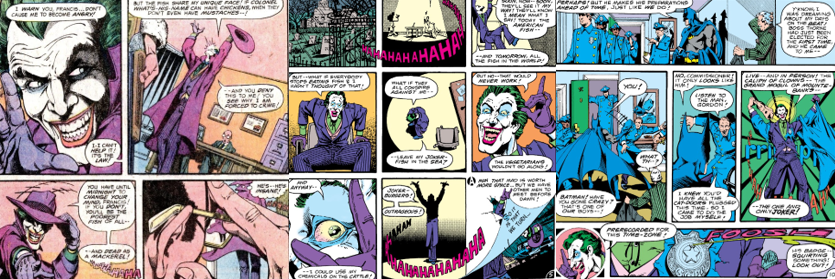
The phenomenon isn’t limited to Gotham City; over the next few days, reports of “laughing fish” come in from all across the country, shocking the nation. However, it’s G. Carl Francis who gets the biggest shock when the Joker himself, and his goons, storm into his office and demand that he helps to copyright the laughing fish so that the Joker can profit from every one sold. Unfortunately, Francis is duty-bound to inform the Clown Prince of Crime that fish can’t be copyrighted as they’re a natural resource, angering the Joker and causing him to threaten Francis to find a loophole before midnight or face his wrath. The Joker then pays a visit to crime boss Rupert Thorn, who’s already on edge after being seemingly haunted by the ghost of Professor Hugo Strange, whom he murdered tree issues prior. Since Thorn was one of many villains who tried to purchase the knowledge of Batman’s identity from Strange, the Joker warns him to stop trying to expose his rival’s identity as the Joker is eager to match his wits against the Dark Knight and believes unmasking him would rob his game of all its fun. With Thorn left slipping into insanity, Commissioner James “Jim” Gordon calls in the Batman to help with the threat against Francis’s life. After the Joker makes a televised promise to murder Francis, Batman meticulously checks the apartment and places him under lockdown, though he remains frustrated by the Joker’s madcap nature and unpredictable insanity. Still, the Batman acts swiftly when a mysterious gas suddenly floods the apartment. Be fixes a breathing apparatus to Francis’s face, but to no avail; Francis collapses, dead, his face twisted into the hideous smile of the Joker. Although Jim is confused since the gas didn’t harm anyone else, the Batman correctly surmises that the Joker must’ve secretly poisoned Francis at their meeting so the gas would have a lethal effect. 

The Joker outwits Batman, as Silver and Thorn struggle with their literal (and figurative) ghosts.

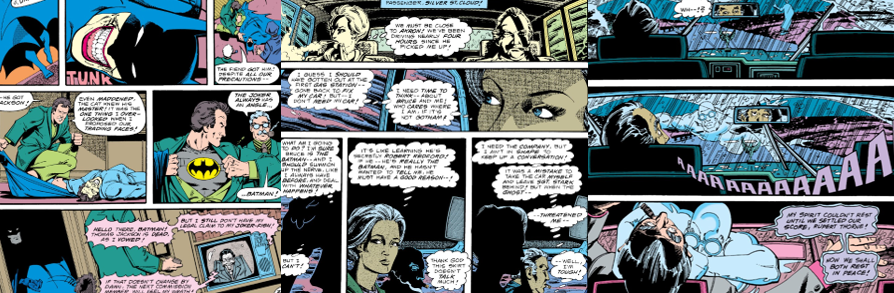
The Joker boasts of his victory through another pirate broadcast and vows to kill another bureaucrat if his legal claim on the fish isn’t approved by 3am, and the issue ends with the Batman aggravated and Silver skipping town courtesy of Rupert Thorn. The story continues in the next issue, with Batman, Jim, and Officer O’Hara keeping a vigil on the Joker’s next target, Thomas Jackson, lamenting that state laws prohibit them from simply executing the Joker since he’s clinically insane. Despite their best efforts, Jackson’s cat wanders in with a Joker fish in his mouth, which drives him to bite and instantly kill the Batman, leaving him with the pale grin of the Joker! However, Batman had actually switched places with Jackson using a clever disguise, but the cat recognised and attacked his master regardless. After the Joker mocks them through his broadcast, the frustrated Batman flees into the stormy night, momentarily spying Strange’s ghost and stumbling upon a vapor analysis meter. The story briefly jumps over to the Joker’s lair, where he somewhat breaks the fourth wall to chuckle at his wit and having bamboozled his foe, and even plots expanding his food-related antics to other products. Another detour delves into Silver’s troubled mind; she’s overwhelmed by her knowledge, unwilling to destroy the mystery of the Batman but pining for her lost love, while Thorn wrestles with the stress caused by his visions. When the radio mentions Batman, the two get into a heated debate about his presence and Thorn angrily ejects Silver from the car, leaving her by the side of the road. While she quickly finds another ride, Thorn is terrified when Strange’s ghost flies at him from the night and seemingly throttles him to death! 

Batman’s victory is tainted by ambiguity and personal heartache for the Dark Knight,

At dawn, the Batman and Jim prepare for the Joker’s next attack, but Jim is horrified when the vapour analyser drives Batman to suddenly attack one of his officers, who’s quickly revealed to be the Joker in disguise! Though rumbled, the Joker keeps the Dark Knight at bay with an acid-spitting flower and makes a hasty retreat using the fire escape. Arriving in town via a cab, Silver pulls up just in time to witness the Batman in action as he ventures into the rainswept night to apprehend his foe, surprisingly caught off-guard by an errant kick and almost tumbling to the street below. While the Joker gleefully taunts his rival, the Batman ponders his own mental instability since he’s the only one crazy enough to chase after the grinning madman, and their chase takes them to the city rooftops. The two come face-to-face atop a construction site, where the Batman is forced to take a desperate plunge to avoid getting a face full of acid, and the Joker is hit by lightning while laughing on a hanging girder. The Batman watches the Joker plunge into the raging river below and frantically checks for any sign of his foe, but it appears the Joker has finally perished. Batman is then stunned when Silver approaches him, confessing not only her love for him but also that that same love caused her great pain when she watched him in battle and realised that he could die at any moment. Unable to shoulder the loss of the man she loves, or expose his true identity, she tearfully begs him to leave her alone and runs off into the night, leaving him stoic and heartbroken. Even Jim’s news that Thorn was picked up, terrified out of his mind and spilling the beans on all his criminal activities, brings Batman little comfort and he simply swings off as a new dawn rises, his victory bittersweet and emotional. 

The Summary:
These two stories are representative of the kind of Batman stories I grew up with. I had a handful of Batman annuals as a kid, which contained assorted stories from the 1970s and 1980s and featured names like Steve Englehart and Denny O’Neil prominently. Consequently, I have a real fondness for the gritty, dark, neo-pulp art style on show here. Gotham City is seeped in gothic darkness and flooded by incessant rain, making it grimy and claustrophobic and uncomfortable to behold, and characters are rendered with a stark realism. Although I’m not the biggest fan of Batman’s blue-and-grey ensemble, he cuts an intimidating figure here and it’s fun seeing him operate so openly with Jim and others. He’s still regarded as a bit of an urban myth, but also respected as an informed mind and necessary evil to help combat threats such as the Joker. His presence in Gotham City is the subject of much debate at this time. Thanks to Thorn’s influence, the people and council have started to question the Batman’s necessity and his impact on the city, aspects which come to be reflected in Silver’s conflict regarding her knowledge of his identity. Though these stories are all I really know of her, I like Silver and it’s not often Batman gets a love interest who knows of his dual life. I enjoyed the emotional conflict between them both, where they both knew the other knew but didn’t dare say it aloud for what it would entail, and it brings a real humanity to Batman when she has to reluctantly end their relationship to spare herself greater pain and perpetuate his myth. 

Batman’s detective skills and limits are tested by the Joker and his complicated love life.

One aspect I really like about this time in Batman history is how much his detective skills are emphasised. Jim calls the Batman in as an advisor and immediately sets to work meticulously safeguarded each victim’s apartment, checking every inch for possible threats and desperately trying to prepare for every eventuality. Although his thoughts are shown to be completely focused on the task at hand, I think it’s pretty clear his frustration with the Joker’s antics is exacerbated by his personal issues with Silver. The Batman laments time and again that the Joker is nigh-impossible to predict as he just does whatever he wants for seemingly no reason, meaning Batman’s preparation and planning are meaningless as the Joker outwits him each time. Even swapping places with Jackson doesn’t help the Batman, and it’s only by utilising the analyser left for him by Strange’s ghost (or some other unknown ally) that Batman exposes the Joker’s disguise before he kills his last victim. The battle between the Batman and the Joker is depicted as a war of attrition, a game of one-upmanship, rather than a physical confrontation (at least, until the end). Like in his first appearance, the Joker hijacks television broadcasts to make threats and taunt his foe, and employs disguises and subterfuge to bamboozle even the World’s Greatest Detective. One thing I especially enjoyed here was that Bruce Wayne doesn’t appear in these stories. His personal life is of great concern to Batman, but he stays in costume throughout both issues, emphasising his unwavering focus on protecting the Joker’s victims and apprehending him. Another interesting aspect is, like in his first appearance, the Joker surprisingly holds his own against Batman thanks to being a slippery devil and surprising him with his acid flower, wild kicks, and daredevil nature. 

A fantastic return to form for the Joker that emphasises his insanity and menace.

Indeed, this is a fantastic return to form for the Joker after years of being a buffoonish clown or being absent from DC Comics. Drawn as what I would define as the quintessential depiction of the character (tall, gangly, in a purple suit, coat, and fedora, and sporting an elongated jaw), the Joker is a cackling maniac whose newest plot is to spread fear and profit from his laughing fish. His scheme is ludicrous in its simplicity; he’s tainted the water supply with his Joker toxin, killing the fish, poisoning their meat, and leaving them with his signature cheshire grin, all with the intention of profiting from their sale! Obviously, these demands are preposterous but the Joker won’t take no for an answer and mercilessly targets and kills the bureaucrats he believes are denying him his intellectual rights. As mentioned, the story takes hefty influence from the Joker’s first appearance and is, in many ways, an expansion and remake of that first story. The Joker is an elusive, diabolical, and maniacal figure who tests the Batman’s mind as much as his resolve. However, the Joker is also prideful and overzealous. He enjoys toying with Batman so much that he threatens Thorn to stop trying to unmask the vigilante and arrives, in person and in disguise, to finish the job by the end, a decision that proves to be his downfall. However, there’s a clear suggestion that the Joker doesn’t care; he doesn’t care about winning, losing, living, dying, or being locked up. He simply enjoys jousting with Batman and takes glee in their conflict, and the death and terror he spreads, fully aware that the Batman’s moral code keeps him from cross that line. In the end, these are two essential Joker stories; they highlight his outrageous nature, his chilling menace, and his versatility as one of the Batman’s most enduring foes. It’s also a great showcase for the Dark Knight; not only of his detective skills and standing amongst his peers but also the complicated dichotomy of his dual identity. In a nutshell, I’d say this two-parter is a must-read Batman tale, as is most of this run since this really was a great time in the Batman’s publication history. 

My Rating:

Rating: 4 out of 5.

Great Stuff

What did you think to the Joker’s plot to profit off his laughing fish? Did you enjoy this era of Batman’s history? Are you a fan of more cerebral challenges for the Dark Knight or do you prefer it when he’s beating villains up? What did you think to the subplots involving Silver St. Cloud and Rupert Thorn? Do you consider these two stories essential reading for any Batman and Joker fans? What are some other Joker stories you enjoy? Whatever your thoughts, leave a comment below or and be sure to check out my other Batman and Joker content across the site. 
Back Issues: Vampire Tales #8/9

Story Title: “Beware the Legions”
Published:
1 October 1974 (cover date: December 1974)
Writer:
Don McGregor
Artist:
Mike Vosburg

Story Title: “Bloodmoon”
Published:
3 December 1974 (cover date: February 1975)
Writers:
Marv Wolfman and Chris Claremont
Artist:
Tony DeZuniga

The Background:
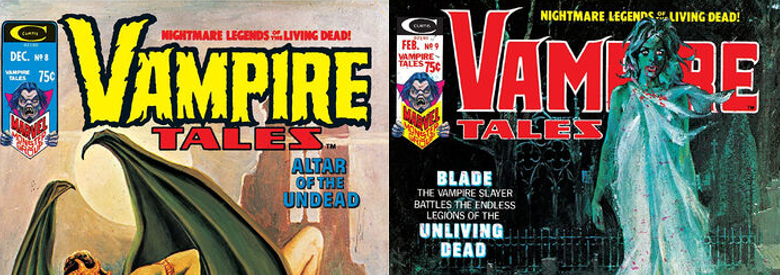
Eric Brooks/Blade, the creation of Marv Wolfman and Gene Colan, was inspired by the 1970’s “Blaxploitation” and came about once comic creators were allowed to publish stories involving vampires and other supernatural creatures. Marvel Comics took advantage with their Tomb of Dracula series, where vampire hunter Blade would battle the titular Count and other supernatural creatures. Heavily inspired by the classic Hammer Horror films, it took some time for The Tomb of Dracula to find its feet as different writers and artists came and went, before Wolfman and Colan turned things around. Originally depicted as a jive talking, mortal vampire hunter, elements of Blade’s origin and motivation were first revealed in these two issues. However, Blade was basically a bit-player in Marvel Comics, despite his association with groups like the Nightstalkers and the Midnight Sons. Regardless, New World Pictures purchased the character rights in 1992, and the subsequent success and popularity of Blade (Norrington, 1998) transformed the character into a stoic, bad-ass Dhampir and saw him become an integral part of Marvel’s supernatural and horror stories.

The Review:
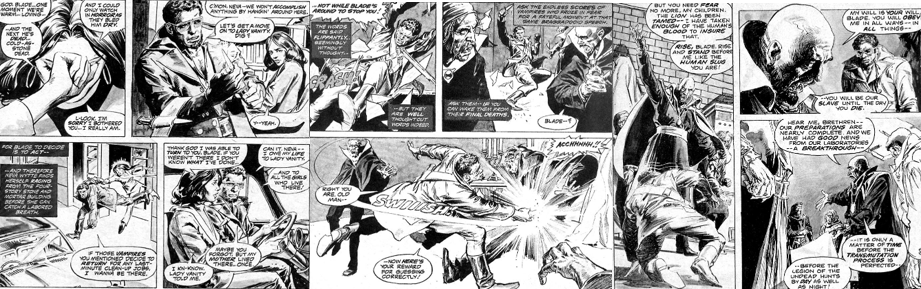
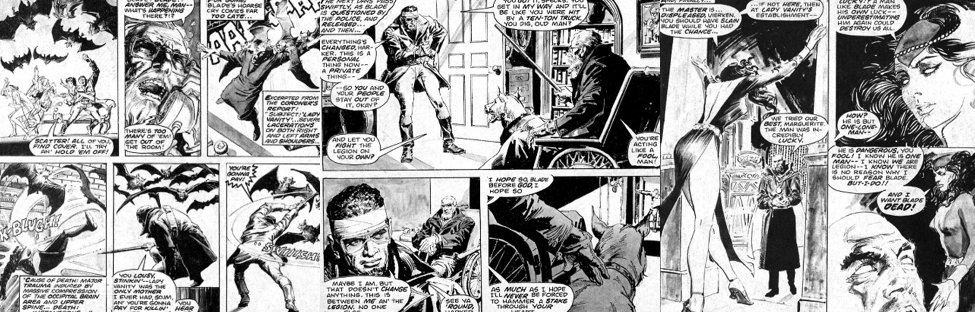
This gothic, black-and-white tale kicks off down a squalid London side-street, a back-alley slum for the poor and destitute suddenly brought to macabre life as “Billy-Blue’s” lifeless body is tossed through a window, drained of his blood, with “Beware the Legions” carved into his chest. His body is stumbled upon by courtesan Meva Whytte, leaving her distraught and vowing to avenge herself against “The Legion”. Next, we find exotic dancer Safron Caulder heading back to her dressing room when she’s suddenly grabbed by an unseen assailant, who turns out to be smooth-talking Blade. Since they’re lovers, she’s perfectly happy to be grabbed, smothered by a kiss, and get a playful smack to the ass by the jive Blade, though he’s far too jetlagged for much else. Blade heads to his hotel for a relaxing shower but is interrupted by Neva, who breaks down in tears and blames herself for not running away with Billy-Blue when she had the chance. Since Blade owes his life to Lady Vanity, the head of Neva’s vampire stalking organisation, he doesn’t hesitate to comfort Neva and get involved in the situation. On the drive, Blade relates how Lady Vanity saved and delivered him, how his mother was butchered by a mysterious vampire posing as a doctor, and how Lady Vanity raised him, teaching him everything he knows. Since then, Blade has devoted his life not just to hunting down vampires but also searching for the one who killed his mother, and that extends to defending Lady Vanity’s promiscuous cohorts from the judgemental comments of the local coppers.

When Blade’s allies are threatened, he leaps into action, despite being outnumbered.

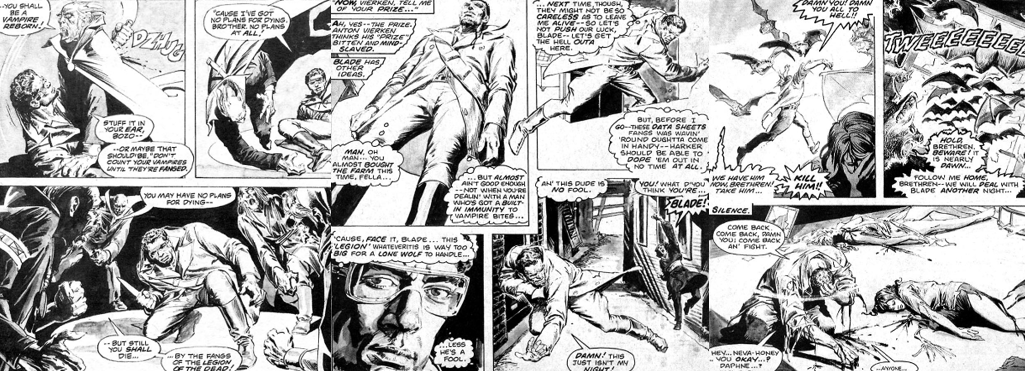
One of Lady Vanity’s girls, Tamsin Ling, relates that Billy-Blue came knocking for Neva, like usual, but he was anxious, shaking, desperate for them to leave that very night. Then, a strange man arrived, one reeking of rotting fish and appearing little more than a gaunt skeleton. He commanded Ling to direct him to Billy-Blue and she was forced to obey by the power of his mesmerising gaze, leading to him being jumped and slaughtered by a bunch of bloodsuckers. Blade spends the next three nights preparing and sharpening his stakes, then visits Billy-Blue at the city morgue. The corpse awakens, sporting vampiric fangs, and Blade forces him to reveal where the vampire coven hangs out before regretfully cutting his throat, severing his head, stuffing it with garlic, and burning the remains. His thorough work accomplished, Blade heads to the address Billy-Blue gave and crashes in, stake at the ready, killing the vampires with a near-superhuman deftness. Though one pins him down and threatens to force him into joining their Legion, Blade easily stakes him through the back and tackles the remaining hoard with the same moxie, only to be subdued by the sadistic Lord Anton Vierken. However, while Vierken bites Blade’s neck, he refuses to kill him, instead revelling in his bite having made the vampire hunter little more than a mindless zombie. Blade is therefore helpless as Vierken boasts of their plot to use science to walk freely in the daylight and conquer the humans, even the accursed Van Helsings, enslaving them as livestock, slaves, and entertainment. Vierken’s speech is interrupted by a summons from his mistress, Marguerite D’Alescio, a sultry vampire queen who acts as a mediator between the Legion and their true master, Count Dracula.

Blade’s hatred of vampires only intensifies after Vierken kills his closest allies.

Speaking through Marguerite, Dracula orders Vierken to remain focused on eliminating threats to their species rather than getting distracted by his science projects. The irony is, of course, that Dracula’s distraction allows Blade to slip away, and with crucial data as well, since he has “a built-in immunity to vampire bites” that meant he was simply playing along this whole time. Through sheer tenacity and experience, Blade eliminates the one vampire who tries to stop him and returns to Lady Vanity for some backup, realising the even he can’t take on the entire Legion alone. While they tend to him, Blade calls up Quincy Harker to lend his aid and check out the information he stole from the Legion, but the call is interrupted when a swarm of vampires come crashing in as bats. They target Lady Vanity, biting her and cracking her skull against a wall, enraging Blade, who makes creative use of the nearby fireplace to take out the murderous vampire bats and avenge the only mother he’s ever known. However, the vampires also kill Ling and Neva, spilling their life’s blood across the floor, and flee before the breaking dawn, leaving Blade distraught and incensed at having witnessed his closest allies so brutally murdered before his eyes. A few days later, the crippled Quincy arrives, only to chastise Blade for being so caught up in his need for revenge that he refuses any further help. Marguerite (and, by extension, Dracula) is furious at Vierken for failing to kill Blade. Despite Blade being just one man (though an incredibly lucky one), Vierken is stunned to learn that Dracula fears the hot-headed vampire killer. Despite the  superior strength and numbers of the vampires, Marguerite orders that Blade’s death be Vierken’s top priority from now on…or his life will be forfeit, and the story ends with the two seemingly on a collision course.

The Summary:
Ooh, baby! The jive is funky in this one! While the Blaxploitation aspects of Blade’s early appearances are problematic, at best, they certainly do add a lot to Blade’s characterisation. This, as much as Blade’s English heritage, adds a distinctive “voice” to the character you don’t see with many, if any, other Marvel heroes from this time. It’s not exactly politically correct, but it sure makes Blade a jivin’, silver tongued bad ass. He’s alluring even to a coven of promiscuous ladies of the night, cocksure, and full of bravado, happily dropping into a gaggle of vampires without hesitation. His cavalier attitude towards his mission is juxtaposed with an incredible efficiency. The narration is almost poetic in describing how his movements are fast, sure, and precise, painting him as a character his overconfident, vicious foes often underestimate. At the same time, Blade’s hatred of vampires is a very personal one; he wants to make them all pay for one vampire killing his mother. More broadly, he has been searching for the one responsible for her death and come up short but is happy to settle for any other bloodsucker that crosses his path. This vendetta only gets more personal by the end of this two-part arc as Vierken and his hoard kill the closest thing Blade had to a mother, Lady Vanity, his lover, and a close friend of his. This enrages the already hot-headed Blade so much that he refuses even old ally Quincy Harker’s aid (despite calling him for exactly that reason) and he’s determined to make the Legion of the Damned pay for their senseless slaughter of his closest allies.

His depiction might be dated, but Blade sure brings a lot of personality to his vampire slaying.

Vampires are presented as demonic, voracious creatures. They’re eloquent enough, showcasing an awareness of impending danger (daylight, fire, and such) but seem overcome by an insatiable bloodlust. They’re also depicted as overconfident; sporting supernatural powers, they’re used to easily swarming and manhandling their prey. Blade, however, has twenty-eight years of training and experience under his belt and is purposely armed specifically to kill the undead. Therefore, he easily catches them unawares, staking them through the heart and even taking the time to properly dispose of Billy-Blue’s body when simply staking him would’ve been sufficient (say what you will about Blade, but he’s thorough!) Lord Vierken appears to be an anomaly among his kind; despite sporting a traditional, decrepit look, he turns to science to improve his race. He’s been so focused on perfecting his daylight research that Count Dracula himself is starting to question his focus, especially as his Legion seems happy to indulge and draw attention to themselves by leaving carved up bodies for the police to find. Vierken’s followers are onboard with his project, but far more comfortable sinking their teeth into human prey or attacking as a swarm of bats. There’s not much to note about Marguerite D’Alescio; indeed, the story doesn’t explicitly state that Dracula is talking through her. Sometimes (especially at the end), it’s not clear which character is meant to be talking. However, she appears to be revered as Dracula’s emissary and shares his goal of wanting Blade dead, simply because he’s a very dangerous man the other vampires constantly fatally underestimate. In the end, this was an interesting glimpse into Blade’s backstory, the scope of his operation, and his reputation amongst the vampire nation. The black-and-white style captures that atmosphere of classic Hammer horrors and allows for some surprisingly bloody action, though it did seem to end anti-climatically and to primarily exist to establish an ongoing vampire threat.

My Rating:

Rating: 3 out of 5.

Pretty Good

What did you think to this glimpse into Blade’s backstory and world? Did the Blaxploitation aspects of the character bother you? Were you surprised by the violence on show her? What are some of your favourite Blade stories? No matter what you think, share your thoughts below and be sure to check out my other Blade content.

Back Issues [Brightest Month]: All-American Comics #16


Although February 2014 was dubbed “Green Lantern Day” (because, by the American calendar, the date read as “2814”, the sector of space assigned to Earth in DC Comics), the significance of this date has passed as the years have changed. Instead, as perhaps the most popular iteration of the character, Hal Jordan, first appeared in October of 1959, I’m choosing to dedicate every Sunday of October to the Green Lantern Corps!


Story Title: “The Origin of Green Lantern” (or simply “The Green Lantern”)
Published: July 1940
Writer: Bill Finger
Artist: Martin Nodell

The Background:
The peacekeepers of the galaxy, the Green Lantern Corps, are popularly known as a space-faring force comprised of various creatures and aliens from across the cosmos, but this depiction of the Emerald Warriors has only been around since 1959. Originally, there was only one colourful superhero known as Green Lantern, Alan Scott. The brainchild of artist Martin Nodell, the Green Lantern was inspired by Richard Wagner’s Der Ring des Nibelungen (The Ring of the Nibelung), the sight of a trainman’s green railway lantern, and elements of Greek mythology. After his pitch for a superhero who wielded a magical ring was approved by DC Comics publisher Max Gaines, Nodell set to work crafting Alan Scott’s first story and soon brought in the legendary (and often forgotten) Bill Finger to help with the project, cementing a partnership that lasted for seven years. After his debut in this issue of All-American Comics, Alan Scott became a regular fixture of both the publication and DC’s first super team, the Justice Society of America (JSA). It’s this association with the JSA that I best know Alan for. As chairman of the group, he fought numerous intergalactic and Lovecraftian threats, gained a degree of eternal youth thanks to various magical enhancements and time dilations, and mentored a new generation of heroes, including his wayward son. Even after he was supplanted by his more sci-fi-orientated successors, Alan Scott remained a prominent figure in DC Comics, gaining additional relevance when he came out as gay in 2020, retroactively establishing him as DC’s first-ever gay superhero. Outside of the comics, however, Alan hasn’t been quite as significant. He missed out on appearing in Justice League (2001 to 2004) and has been largely absent or relegated to brief cameos in other cartoons and live-action shows, potentially due to Warner Bros. often blocking Green Lantern appearances after the critical mauling of Green Lantern (Campbell, 2011). 

The Review:
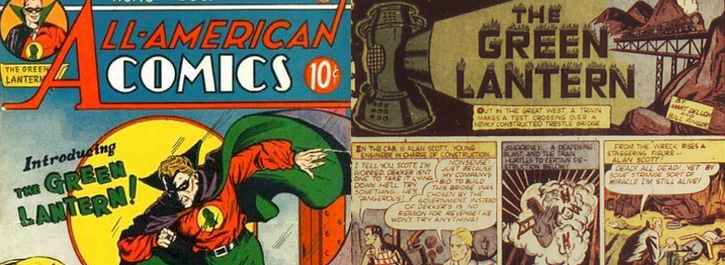
The story opens “out in the Great West”, where s train is making a test crossing over a new-constructed trestle bridge. Alan Scott, the young engineer who spearheaded the bridge’s construction, is in the cab with a colleague to oversee the test run, which seems to be asking for trouble, in my opinion. Indeed, Alan’s colleague is anxious that Alan’s rival, Alert Dekker, might try to sabotage the operation since Alan’s “company” outbid Dekker’s and cost him a big, fat government contract. Although Alan is confident that Dekker wouldn’t try anything, his optimism is immediately proven wrong as the bridge explodes beneath them, sending the train, its carriages, and all aboard crashing into a ravine. By “some strange miracle”, Alan is the sole survivor, merely being shaken up and coming over all queasy as he holds onto a mysterious green lantern. Suddenly, the artifact bursts to life, emitting an “eerie green light” and, even more incredibly, speaking to him! The lantern tells a tale that begins back in ancient China, where a village’s evening prayers were suddenly interrupted by the arrival of a huge meteor. The meteor cracked open before impact, depositing a pool of flaming emerald liquid before their amazed eyes. This Green Flame spoke to them and delivered a fairly ominous prophecy: “Three times shall I flame green! First – to bring death! Second – to bring life, and third – to bring power!” The villagers were in awe, believing the Green Flame had come from the “Evil One”, a subject about which Chang, the lamp maker, knew a great deal thanks to his studies of the “Old Book”, which had raised some suspicions about his intentions. 

After surviving a train crash, Alan Scott is gifted incredible power by a green lantern.

Chang used the Green Flame to forge a lamp, which the paranoid villagers believed will anger their Gods and bring them only suffering, so they barged in, burned Chang’s books, and attacked him, causing the lamp to burst to life and punish them all, bringing death as it foretold. Over the years, the strange lamp passed between many hands, bringing destruction to the bad and luck and fortune to the good, eventually appearing in the rubbish bin of an insane asylum. The staff decide to give the lamp to Billings, a harmless Chinese patient of theirs known for forging lanterns, and it’s Billings who transfigures the lamp into its more familiar lantern shape. In return, the lantern awakens once more an brings “life” by curing Billings of his insanity, allowing him to leave the asylum as a sane, free man. And, from there, the green lantern eventually made its way onto Alan Scott’s train and into his hand (how isn’t detailed here) to fulfil the final stage of its prophecy, bringing power to the dazed engineer. The lantern tasks Alan with using this great power to seek out and oppose evil, to be a light against the darkness, and that he will retain this power as long as he has “faith in [himself]” for “will power is the flame of the Green Lantern”. After seeking clarification, Alan is instructed to craft a ring for himself from the lantern’s metal so he can always carry its power with him, though he must touch the ring to the lantern every twenty-four hours to recharge it (because…ugh…I guess faith and will power isn’t all that powers the magic?) After gathering his wits, Alan initially believes the whole experience to have been some mad dream but, when he grabs the lantern and feels its power, he knows that it was all true and, angered at the sight of his dead colleagues and Dekker’s amoral actions, he vows to make his rival pay for his murderous ways. To that end, Alan does as the Green Flame instructed and makes himself a ring; but, when he puts it on, he realises that his murderous lust for revenge is wrong and that he must find a more virtuous way to fight Dekker. 

Alan’s magical powers see him confront his rival and begin a career as the Green Lantern.

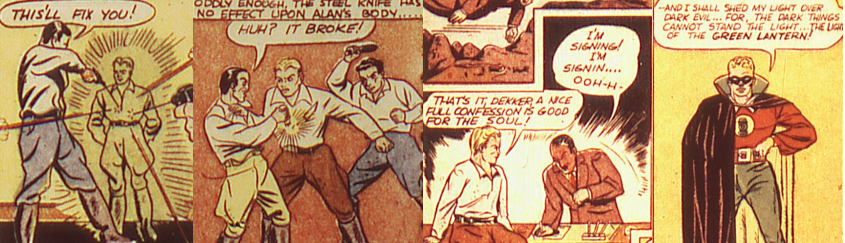
Alan then spends a few panels testing out his newfound powers; he wishes to fly to Dekker’s house and the ring allows it to be so. His desire to “[go] through the fourth dimension” allows him to easily pass through the walls of Dekker’s place and appear before the callous businessman and his mooks in a puff of green smoke and light. Appearing as a “wraithlike figure”, Alan seems to be a ghost to the astonished goons, but Dekker assumes it’s simply a trick and orders them to shoot the young engineer. Although the bullets just pass through Alan’s body and a knife simply breaks against his chest, a wooden club to the temple surprisingly brings Alan down, so he assumes that wood is his vulnerability. He also notes that he doesn’t possess superhuman strength (though, presumably, he could will himself to if he actually bothered…), but thankfully he’s skilled enough to overpower Dekker’s minions and scare them off. Fearing for his safety, Dekker attempts to barter, offering Alan money and his friendship, so Alan toys with his rival by flying him through the sky and threatening to drop him to his death to force a confession. Terrified, Dekker admits that he caused the explosion and promises to cover the payments and sign a confession. However, right after he does this, the stress of it all causes him o suffer a fatal heart attack. Mourning the waste of life, Alan retires to his unseen “sanctum” and pledges himself to fighting against evil in all its forms, realising that he needs a “bizarre” costume that will ensure evildoers never forget him once they encounter him. To that end, he fashions one of the gaudiest red and green numbers in all of comicdom and vows to “shed [his] light over dark evil” as the Green Lantern. 

The Summary:
I don’t always have the greatest track record when it comes to Golden Age superhero stories; they’re often messy, rushed, and incredibly simplistic, echoing the pulp sensibilities that were so popular at the time. Thus, a degree of leeway must always be shown towards such stories, which are products of their time and restricted by the artistic style and expectations of the period. Having said that, I actually didn’t mind “The Origin of Green Lantern”. We don’t learn a great deal about Alan Scott beyond his profession, optimism, and thirst for justice, making him a bit of a blank slate in many ways, but there’s enough here to make him relatively intriguing. I liked that he was naïve enough to think Dekker would simply take losing out on the contract like a man, and his shock at seeing how far his rival will go to secure that government grant. It was very relatable that Alan’s first thought was to kill Dekker, though it’s not entirely clear why he has a sudden change of heart and opts to force a confession rather than kill his enemy. Alan doesn’t do anything particularly creative once he acquires the green ring, learning as he goes and testing the limits of his power with a whimsical theatricality that shows he’s getting a kick out of spooking Dekker’s men and shrugging off their attacks. Still, his stance towards injustice proves that the Green Flame chose wisely in bestowing him with its seemingly limitless power and thus leaves the door open for future stories to explore Alan’s abilities in more depth. It also allows enough wriggle room for the writers to pull whatever powers or limitations they can think of out of their asses. 

The mysterious green lantern has an ominous aura and some strange limitations.

While Dekker is simply a gangster posing as a businessman, Alan doesn’t don his awful costume until the final panel, and it’s not really clear how Alan survives the crash (though I assume it’s because he was holding onto the green lantern), the titular emerald lamp is the true enigma of the story. A miracle from the stars, the Green Flame is a seemingly menacing sentient element that promise to bring, death, life, and power, apparently at random and not just once since it changes the fortunes of numerous people during a time jump. Those who witness the Green Flame are filled with awe and dread, immediately believing it to be the work of some vague “Evil One” and lashing out in fear, meaning the prediction of “death” becomes a self-fulfilling prophecy. The Green Flame also seemingly supernaturally inspires individuals to forge it into new forms, such as a lamp, lantern, and a ring, so it can pass between new hands over the years. I’ve always found the idea of a magically empowered lantern to be one of the most random concepts in comics. Surely just the magic ring is more sensible, after all, and a superhero taking the name “Green Lantern” not only feels redundant but also announces his source of power to his enemies, not unlike his later JSA colleague, Rex Tyler/Hourman. The Green Flame is also quite vague in its limitations here. It’s said that willpower will allow Alan to wield great power, but he also needs to have a piece of the lantern on him at all times and recharge his ring every twenty-four hours. He’s then strangely injured by wood, of all things, a vulnerability that seems particularly dangerous when you stop and think about it. Still, the ring allows him to fly, pass through walls, and deflect all other attacks, and I have to assume that Alan is still too new to the superhero life to think about increasing his strength or trying anything fancy like creating hard-light constructs and such. In the end, this was a mostly inoffensive tale. It definitely could’ve been better in many ways, but I think it established its bizarre premise just enough to give us a colourful new superhero with a strong sense of justice. The story is worth a read just to see how the sprawling Green Lantern mythos started with one young train engineer and an ominous lantern from the stars. 

My Rating:

Rating: 3 out of 5.

Pretty Good

Have you ever read Alan Scott’s debut story? What did you think to it and how do you think it compares to other superhero origins from the Golden Age? Were you surprised that Alan Scott’s origins are so different from other Green Lanterns? Would you have liked to see more of the Green Flame’s time influencing others? What are some of your favourite Alan Scott stories and where does he rank for you in the Green Lantern hierarchy? How are you celebrating Green Lantern this month? Whatever your thoughts on Alan Scott, and the Green Lantern Corps, leave them down below orand be sure to check out my other Green Lantern content. 

Back Issues: Doom

Story Title: Untitled (or, perhaps, simply “Doom” or “Kneed Deep on the Dead!”
Published: May 1996
Writers: Steve Behling and Michael Stewart
Artist: Tom Grindberg

The Background:
First-person shooters (FPS) existed before Doom (id Software, 1996) but, thanks to having been ported to every console and format available, the genre was basically defined by Doom, which inspired a craze of copycats and popularised online “Deathmatches”. The brainchild of id co-founder and lead programmer John Carmack, Doom’s deathmatches were so popular that it caused servers to crash and it was installed on more computers than Windows 95! Doom’s success inspired both controversy and sequels, but also some ancillary media. Of course, there was the critically-mauled live-action adaptation, but there was also a one-shot comic book created a part of a 1996 giveaway. An obscure piece of merchandise that was as gory and over-the-top as its source material, Doom was a true collector’s item for fans of the game that fetches a high price for those unlucky enough to have missed out winning a copy.

The Review:
The Doom one-shot comic book doesn’t waste any time getting to the advertised “scenes of graphic violence”, beginning with the unnamed Union Aerospace Corporation (UAC) marine (henceforth referred to as the “Doomguy”) in the midst of a Berserker rage. Doomguy’s bloodlust is so overpowering that even his inner monologue reads like a man half-addled by insanity. Enraged and empowered, he believes himself to be invincible, untouchable, and effortlessly rips a roomful of Imps, zombies, and other assorted demons to shreds with his bare hands. Driven to a gibbering madness, the Doomguy screams at his felled foes, clutching a severed spinal cord, and eagerly kicks a door down in search of his next victim. Despite coming face-to-face with a mammoth Cyberdemon, the Doomguy launches into a full-frontal attack, determined to “rip and tear” the horned demon’s guts out, only for his punch to have no effect. The Berserker rage quickly leaves him, returning his thoughts and speech bubbles to normal and turning him to more rational ideas, such as fleeing for his life in such of “a gun […] a big gun”. Running head-first into a roomful of gun-packing zombies, the Doomguy grabs a convenient nearby chainsaw and gets to slicing, severing their heads with one swipe and taking a double-barrelled shotgun for himself. Faced with a pitch-black room and fresh out of torches (or “flashlights”), the Doomguy fires off a few shots to light his way before finding a light switch and revealing his errant shots have blown holes in a fresh crop of demonic nasties. Poking around in their corpses, the Doomguy is elated to upgrade his arsenal to a hefty chaingun, which he readily turns on an Imp that catches him from behind with a burst of flame.

Despite his maniac rage, the Doomguy desperately seeks a big gun to destroy the demons.

Suitably emboldened, the Doomguy guns down more Imps and zombies, daring any and all challengers to try their luck against him. Even when he’s tackled to a sewer full of radioactive ooze by a slobbering Pinky, the Doomguy is ceaseless in his slaughter, tearing through the bullish demon with round after round and leaving it little more than two dripping halves. Covered in radioactive goop, the Doomguy takes a moment to decry humanity’s inability to safely dispose of such dangerous materials and our predication for poisoning future generations with our reckless ways….then notices his gun’s out of ammo and realises the environment is the least of his concerns. Taking a convenient teleporter, the Doomguy materialises right in front of a couple of Cacodemons. Luckily, a plasma rifle is lying right there, allowing him to fry the grinning spheres and flee into a storage room full of barrels of toxic waste. When he’s blindsided by an invisible Spectre, the Doomguy lights up the barrels, blowing the demon to pieces, before finally spotting his goal: the Big Fucking Gun (BFG). All that stands in his way is a slaughter of bloodthirsty demons currently engaging in in-fighting. However, the Doomguy simply shrugs his way through the fracas and tearfully claims his prize, strolling over to the Cybderdemon and taking it out with one shot from the massive cannon. Having proven his superiority over the demonic masses, the Doomguy stands victorious and prepares to head to Earth and take out the rest of the invading creatures, his resolve boosted by the knowledge that “righteous” power in the hands of a “strong man with the biggest, baddest gun in the world” can restore order to chaos.

The Summary:
Doom is a very brief and shallow reading experience. In many respects, it’s the perfect adaptation of the source material, which honestly had the simplest plot you could ask for. Rather than wasting time establishing the setting, the plot, or even delving into the Doomoguy’s life before things literally went to Hell, Doom just drops us right into the middle of the action and barely lets up across its scant page count. Driven into an insane bloodlust by the Berserker rage, the Doomguy’s thought and comments dwell on nothing other than his physical superiority and his lust for demon blood. How did he get in this state? What does the Berserker power-up look like in this context? Who knows…and who cares? All that matters is that the Doomguy is powerful enough to render skin and muscle from bone…until the power fades and leaves him desperately seeking the biggest gun he can find. Though his thoughts are no longer clouded by the Berserker rage, the Doomguy is no less crazed. When he’s not stealing other hero’s catchphrases, he’s flip-flopping between childishly simple comments and strangely eloquent mediations on the nature of humanity, the struggle of good against evil, and our destructive nature, especially regarding our environment. These polarising character changes paint the Doomguy as either out of his mind or suffering from a personality disorder and there’s little compassion or nuance to the Doomguy beyond these conflicting moments. He offers no explanation of what’s happened or how, doesn’t seem to care that his fellow marines are either being slaughtered or have been turned into zombies. He is simply a ravenous, crazed lunatic giving a taste of what the first two Doom games have to offer players.

A brief, bloody story that offers a tease of the mayhem available to players.

In this regard, Doom works quite effectively. You get a sense of what one of the most iconic power-ups does to a player, see the chainsaw and double-barrelled shotgun in action, and witness the Doomguy retrieving bigger, better guns from corpses or the environment. The battle for the BFG is a simple affair for the Doomguy, one that effectively brings the story and any further conflict to a close due to the gun’s awesome power (here sadly represented as merely a streak of energy that shreds holes in the Cyberdemon). Similarly, Doom showcases some of the game’s most common and memorable enemies and even gives hints on how to defeat them. The Doomguy is surprised by an Imp, which pops up out of nowhere and tosses a fireball just like in the games. A Pinky tackles him out the blue and he expresses brief concerns about the dangers of toxic waste, two things that can sap your health in seconds in the game. A Spectre also blind-sides him and the Doomguy demonstrates the effectiveness of using explosive barrels as an assist and, most notably, he showcases the intelligence of fleeing from an unwinnable fight until you have a more powerful weapon. In fact, the only gameplay mechanics Doom doesn’t delve into are the collection of keys and maze-like structure of the games, but the bare basics of the Doom experience are on offer, however briefly. While I didn’t really care for the Doomguy’s characterisation (an omniscient narrator talking us through things would have been better than the traditionally mute avatar gnashing his insanity all over the pages), the depiction of blood and gore satiate my needs as a Doom fan. It’s not an especially deep or complex story, but Doom does an effective job of advertising the first two videogames, though you’re not missing much if you’ve never flicked through its obscure pages.

My Rating:

Rating: 2 out of 5.

Could Be Better

Were you lucky enough to snag a copy of Doom? What did you think to the Doomguy’s characterisation? Did you enjoy the gore and monster selection on offer? Do you prefer it when the Doomguy is mute? Would you like to see more Doom comics be published? Whatever your thoughts on Doom, drop a comment below and go seek out my other Doom reviews.

Back Issues [Venom Day]: The Amazing Spider-Man #346/347


To celebrate the release of Venom: Let There Be Carnage (Serkis, 2021), Sony Pictures declared September 27 “Venom Day”, a fitting date to shine the spotlight on one of my favourite anti-heroes, who made their first full debut in May 1988 and have gone on to become one of Marvel’s most iconic characters.


Writer: David Michelinie – Artist: Erik Larsen

Story Title: “Elliptical Pursuit”
Published: 12 February 1991 (cover-date: April 1991)

Story Title: “The Boneyard Hop!”
Published: 12 March 1991 (cover-date: May 1991)

The Background:
Back in 1982, Jim Shooter, then editor-in-chief for Marvel Comics, purchased Randy Schueller’s illustration of Peter Parker/Spider-Man in a slick black outfit for a cool $200. It was writer Tom DeFalco and artist Ron Frenz who made the costume a living organism and Spidey’s new duds appeared without explanation in The Amazing Spider-Man #252, with it later revealed that he picked up the suit in Marvel Super Heroes Secret Wars #8. Over the next year or so, Spidey revelled in the costume’s unique ability to form both clothing and organic webbing but was horrified when Doctor Reed Richards/Mister Fantastic revealed it was a living symbiote. Spidey summarily rid himself of the symbiote using a cacophony of church bells and switched to a cloth version, before eventually returning to his classic outfit. A mysterious assailant attacked and stalking Peter throughout 1988 it was revealed that the symbiote had bonded with disgruntled reporter Eddie Brock. Spider-Man’s dark doppelgänger was an immediate favourite of mine and many readers, eventually jumping to different hosts, with his sadistic, even more dangerous offspring, Cletus Kasady/Carnage, being teased in these issues.

The Review:
Although Venom’s second big appearance occurred in a two-part story in issues 346 and 346 of The Amazing Spider-Man, similar to their original first appearance, the character featured in a cameo in issue 345. Since it’s actually a pretty big cameo, I’ll quickly cover it before delving into the main story. “Gun from the Heart!” (Michelinie, et al, 1991) sees Spider-Man on the trail of noble, but misguided and violent, vigilante Elias Wirtham/Cardiac, with the added bonus of being promised $5000 by Silvija Sablinova/Silver Sable for apprehending him. The main reason this issue is important is two-fold: first, it shows Eddie Brock escaping from Ryker’s Island when his symbiote comes to bond with him once more. Second, it introduces readers to Brock’s cellmate, demented serial killer Cletus Kasady, who is unknowingly bonded with a small drop of the symbiote and would go on to become the sadistic Carnage. While Spider-Man fails to apprehend Cardiac in the main plot, the issue ends with Venom being reborn and swearing to avenge themselves against the wall-crawler. This perfectly sets us up for “Elliptical Pursuit”, which immediately re-establishes Venom’s warped moral code when they chastise fellow former reporter Sly Fenster for selling confidential files on the downlow before expressing regret when their webbing accidentally suffocates the corrupt reporter. The story then jumps over to Grand Central Station, where Peter’s wife, Mary-Jane Watson-Parker/M. J., is unimpressed at being spirited away to her sister’s. Having heard about Brock’s escape and the symbiote’s breakout from the Baxter Building, and fearing for M. J.’s safety, Peter convinces her to leave lest Venom targets the bombshell redhead like last time.

Venom returns with a vengeance, constantly blindsiding Spidey with their superior strength.

Despite knowing M. J’s safe, Peter’s thoughts dwell on Venom’s threat. Unwilling to put any of his allies in danger, even his former lover and part-time vigilante Felicia Hardy/The Black Cat, Peter resolves to face Venom alone, reasoning that it’s his responsibility since he technically created the creature and their hatred of him. He’s so lost in thought that he forgets that Venom doesn’t trigger his spider-sense and is caught off-guard when Brock accosts him at a coffee shop. Brock calmly convinces Peter to take a walk, expositing how his “other” survived an earlier confrontation with the cancer-inducing Styx and happy to settle their business down a back alley. However, they’re jumped by a mugger, who’s summarily dispatched (non-lethally this time) by Brock, though Peter uses the distraction to flee to a hotel for the night. A seemingly random phone call from Professor Evan Swann inspires Peter to swing on over to Empire State University and check out their cryogenics lab, hoping to find a weapon that can neutralise Venom similar to how extreme heat and sound defeated them before. Once again forgetting his reliance on his spider-sense, Spider-Man is blindsided mid-swing by Venom, who gleefully lays in a beating on the web-slinger. Experience and agility allow Spidey to create some distance, though Venom easily closes it by hurling a girder. With Venom distracted keeping innocent lives safe when their fight causes damage to the Bronx Zoo, Spider-Man goes on the offensive, giving Venom a taste of their own medicine and angering the unstable symbiotic pairing. However, Venom regains the advantage by using their uncanny ability to assume other forms, tricking Spider-Man into entering the cryogenic chamber, where the extreme cold forces the troubled superhero to blackout and be left at Venom’s mercy.

Overpowered, Spidey outwits his foe by faking his death.

In the next issue, Spider-Man slowly dethaws and awakens on a sweltering beach, confused to find himself trapped on a deserted island with (and courtesy of) his most lethal foe. Not willing to allow for any distractions or let innocent bystanders get in the way of their combat, Venom proposes a fight to the death to settle their grudge and relishes chasing his foe through the dense foliage. Though terrified by the creature’s threat, Peter desperately forces himself to adapt to and out-think his foe but is again blindsided by a clever sneak attack when Venom renders themselves invisible and attacks from a stream, nearly drowning Spidey before he fights his way free using a nearby tree branch. Venom’s abilities constantly give them the edge even when Spidey calls upon the Eagle Scout training his former bully-turned friend Eugene “Flash” Thompson tried to teach him and lay traps for his foe. Venom’s ability to blend into their surroundings forces Spidey to rely on his speed and agility instead. Even when Venom is caught in Spidey’s snare trap, the creature easily overpowers him but, when Venom hurls a truck at his hated enemy, he unwittingly causes Spidey to stumble upon an abandoned mine full of gas. After using the mine to escape Venom, Spidey tries to swim to a boat on the horizon, only to end up tangled in Venom’s living webbing. Tackling his way out of the situation with a desperate lunge, Peter stumbles upon some macabre shallow graves and finally realises that their conflict will only end with his death. Spidey thus lures Venom into the jungle with a flaming torch and goads them into hurling another truck, this time resulting in a spectacular explosion that leaves Spider-Man nothing but a shredded skeleton. Overjoyed at having finally defeated their foe, Venom resolves to live out the rest of their existence in peace on the island, blissfully unaware that they’ve been fooled by an obvious trick. Having dressed a skeleton in his costume, Peter faked his death and swam out another passing boat, breathing a sigh of relief knowing that Venom’s menace has forever been put to bed.

The Summary:
After a dramatic and horrifying first appearance, it was pretty exciting to see Venom return, more unhinged and psychotic than ever. What I love about Eddie Brock is that he’s convinced himself that everyone, especially Spider-Man, is to blame for his lot in life. He takes no personal responsibility for the actions that led to his downfall and has convinced himself that he’s on a righteous, God-given mission to protect the innocent and destroy Spider-Man. This twisted ethical code means he’s vehemently against the killing of innocents and will even be distracted from his vendetta to protect them, but also leads to him both knowingly and unknowingly using lethal force to get what he wants. Similarly, he’s not above threatening Peter’s loved ones, which is exactly why Peter sends M. J. away and refuses Felicia’s help since he doesn’t want to be distracted by protecting them or burdened by putting them in danger. Indeed, Peter acknowledges that others have aided him against Venom before and he’s now put himself in greater danger by going solo. This is exacerbated by just how dependent Spidey is on his spider-sense; normally, he can swing around mulling over his personal dramas and always rely on his spider-sense to warn him of danger. But Venom doesn’t trigger it, so they constantly gets the jump on Spider-Man, almost to the point of parody in just these two issues as Peter seemingly never learns to adapt to this, forgets about it, or cannot find a way to compensate for the loss of his spider-sense.

A brutal conflict ultimately results in Venom finding solace in believing they’ve killed their enemy.

Since Venom is bigger, stronger, and completely out of their mind, Spider-Man is forced to stay on the move and rely on his experience and agility. Time and again, this puts him on the back foot; even when he does reach the university labs, he’s easily fooled by Venom’s camouflage ability and rendered unconscious. I loved the island setting for their final confrontation, which essentially put them on even ground since there were no innocents to worry about or tall structures to swing from, but Venom had the advantage because of their familiarity with the island and their unique abilities. Luckily for Spidey, Venom likes to toy with their prey and relishes the chase, giving Peter multiple opportunities to think up plans to subdue and ultimately trick his psychotic foe. Essentially, these two issues are a prolonged chase and fight sequence; Erik Larsen is one of the quintessential Venom artists, closely emulating Todd McFarlane’s style and giving Venom their gruesome teeth and tongue, so the action is always kinetic and visually striking. It’s not enough to tide over the story, though; the sub-plots regarding Felica and M. J.’s worries about Peter, his beloved Aunt May’s romantic life, and the loose thread regarding Cardiac help break up the pace but distract from the main appeal of the stories. It would’ve been nice to see Venom do more to torment Peter, especially in the first issue. They work great as a creepy stalker and that aspect is only briefly touched upon before the two are trading blows between the city skyscrapers. Similarly, the island battle quickly becomes repetitive as Spidey goes on the run, gets blindsided, and goes on the run…only to be blindsided again. These issues seem to have been produced to put Venom’s threat to bed; they’ are content and happy believing they’ve killed Spider-Man. Michelinie even leaves a tease that a version of the symbiote will live on through Kasady, making me wonder if this was supposed to Venom’s last appearance. As is, it’s a decent enough sequel to Venom’s first appearance, most notable for being the first appearance of Kasady, that indirectly leads to one of Spider-Man’s most violent and tedious crossover events later down the line.

My Rating:

Rating: 3 out of 5.

Pretty Good

What did you think to Venom’s big return? Did you ever think Cletus Kasady would become one of Spider-Man’s most notorious rogues? What did you think to Venom’s characterisation as a self-righteous psychopath? Did you find the conflict tedious in Venom’s repeated blindsiding of Spidey? What is your favourite Venom story and how are you celebrating Venom’s dramatic debut? Whatever your thoughts on Venom, share them down below and be sure to check out my other Venom and Spider-Man content.

Back Issues [Bat-Month]: Detective Comics #66/68


In the decades since his first dramatic appearance in the pages of Detective Comics, Bruce Wayne/Batman has become a mainstream, worldwide, pop culture icon. The brainchild of writer Bob Kane, Batman was brought to life by artist Bill Finger and has been a popular staple of DC Comics and countless movies, videogames, and cartoons over the years. “Batman Day” falls on 21 September this year and I figured this was a perfect excuse to spend every Saturday celebrating comic’s grim and broody vigilante.


Writer: Bill Finger – Artist: Bob Kane

Story Title: “The Crimes of Two-Face”
Published: August 1942

Story Title: “The Man Who Led a Double Life”
Published: October 1942

The Background:
Following the huge success of Clark Kent/Superman, National Comics Publications had Bob Kane create another masked crimefighter to add to their repertoire. Thanks to the long-suppressed influence of artist Bill Finger, the “Bat-Man” soon became not only one of DC Comics’ most popular characters but also a mainstream cultural icon. In the years that followed, the Batman battled numerous costumed supervillains, but perhaps none are more tragic then former district attorney-turned-criminal Harvey Dent/Two-Face. Originally debuting in this two-part story as Harvey “Apollo” Kent, Two-Face was heavily inspired by the 1925 adaptation of The Phantom of the Opera (Leroux, 1909) and the 1931 adaptation of Strange Case of Dr Jekyll and Mr Hyde (Stevenson, 1886), both tales of a tortured soul, often gruesomely depicted or disfigured, who struggled with the duality of good and evil. Subsequent Two-Face stories have offered further insight into his tragic and abusive childhood, as well as further emphasising his complex relationship with Bruce Wayne, and the character is often a rival or litmus test for Batman’s different Robins. Widely regarded as one of Batman’s best villains, Two-Face has appeared as a prominent foe outside of the comics, from his renowned appearances in the acclaimed Batman: The Animated Series (1992 to 1999), Tommy Lee Jones’s bombastic portrayal in Batman Forever (Schumacher, 1995), and Aaron Eckhart’s understated turn in The Dark Knight (Nolan, 2008).

The Review:
This two-part story begins by introducing us to Harvey Kent, the dashing and famous district attorney beloved by the press and nicknamed “Apollo” for his courageous stance against organised crime, such as mob boss Sal “Boss” Moroni. Kent is the lead prosecutor in the case against Moroni and wastes no time in calling the Batman to take the stand as a key witness in Moroni’s trial. Amazingly, the testimony of a masked vigilante is seen as perfectly acceptable and admissible as evidence. Batman relates how Moroni shot “Bookie” Benson while escaping from a fight and Kent produces his most damning piece of evidence: Moroni’s lucky, two-headed silver dollar with his fingerprints on it! Moroni’s so incensed by Kent’s bravado that he tosses a vial of acid right at the district attorney! Although Batman intercepts the throw, Kent is hit with a concentrated splash of vitriol on one side of his face, leaving him wrapped in bandages for an entire month. When the time comes to reveal the extent of the damage, Kent is horrified to find that the left side of his face is “scarred and hideous”. He’s even more despondent to find that his only hope, a “European specialist” Batman knows of, is currently imprisoned in a Nazi concentration camp. The Batman simply peaces out after that, advising Kent to face his fiancée, Gilda, sooner rather than later, but Kent is distraught to find his gruesome visage frightens not only children, but also his beloved Gilda. Seeing the fear in her eyes, he flies into a rage, defacing a sculpture of his former chiselled features and terrifying her almost as much as his monstrous scarring.

After being hideously scarred, Two-Face embarks on a bizarre crime spree across the city.

Tormented, driven to the brink of madness, Kent ponders this dichotomy of his explicit duality. He focuses his rage on Moroni’s silver dollar, defacing one side of it and lashing out at the cruelty of fate. Deciding that all life hinges on the flip of a coin, Kent projects his duality onto the now-scarred dollar. He resolves to decide his immediate future on a coin toss, promising to wait for Batman’s specialist to be freed if the unmarked side comes up or embark on a criminal career if the scarred side comes up. Of course, the scarred side wins and Kent rebrands himself “Two-Face”, adopting a suit to match his split face and putting his knowledge as district attorney to use in his crimes. Since everything he does is decided by this bizarre coin, one day he and his goons might rob a bank for illicit gain, but the next day he might donate his stolen money to charity! This causes public opinion of him to be fittingly divided, with some branding him a thief and a murderer and others a philanthropist and saviour. Even his goons are confused by Two-Face’s unpredictable nature, but they’re excited when the bad side wins and they undertake an elaborate scheme to rob the Brown Bond Company messenger that sees them hijack a double decker bus to rob the bondsman. As luck would have it, Batman and Robin happen to spot the mugging taking place and swoop in to intervene. Apparently well aware that Kent is Two-Face, Batman tries to talk him out of his life of crime but is stunned when his former friend pulls a gun on him and orders his men to toss him off the roof of the bus!

When Batman confronts Two-Face, the tragic villain is left clueless when his coin fails him.

Although this doesn’t come to pass thanks to Robin accidentally causing the thug driving the bus to be killed, Batman is incapacitated in the fracas and the Dynamic Duo are left to die on the out of control vehicle, though Robin manages to get to the handbrake in time. Back at his thematically appropriate lair (one side is clean and pristine and the other is a shambles), Two-Face chastises himself for his actions. Believing that he’s killed his good friend, Two-Face almost regains his sanity before lashing out at the mirror and murdering his other goon after blaming him for causing the shambles on the bus. Two-Face then steps his game up by targeting the double-feature movie house, since he’s now committed to basing his crimes on the number two, but remains unaware that Batman and Robin survived the bus crash. Upon investigating the dead body of Two-Face’s goon, the Dynamic Duo happen to find a map stuck to the sole of his shoe by a piece of gum! This leads them to the Bijou Theatre, Two-Face’s next target, where Two-Face takes over the projection booth and demands that the audience hand over their loot. While Robin takes out the goons in the projection booth, Batman swoops onto the stage for a brief fight with Two-Face while his pre-recorded message looms and rants in the background. Somehow (it’s really not too clear), Two-Face slips away, but the Batman easily tracks him back to his lair by simply…y’know, following him after Two-Face made the error of driving down a one-way street and attracting police attention. Refusing to go down without a fight, Two-Face again threatens to shoot Batman, but the Dark Knight pleads with him to come along quietly. Batman promises to testify on his behalf to argue temporary insanity and to do everything he can to see Kent gets a light sentence until that specialist can fix his face, but Two-Face is unable to make a decision without flipping his beloved coin. Unfortunately for the tragic villain, cruel fate strikes again and the coin ends up standing on edge, leaving Two-Face conflicted and incapable of deciding whether he should give up his life of crime or kill Batman and continue down his dark path.

Two-Face slips away, continues his unique crimes, and even bests Batman in a fight.

The story continued, fittingly two issues later, in “The Man Who Led a Double Life”, which picks up right where the first story ended and sees Two-Face pocketing his coin, resolving to let fate decide what he does with his life. Unfortunately, a trigger-happy cop bursts in and guns down Two-Face, believing he’s about to shoot Batman, but the bullet strikes the coin in Two-Face’s breast pocket, allowing him to survive and make a hasty retreat by leaping out of the window! Since the bullet hit the scarred side of the coin, Two-Face believes this is fate’s way of telling him to commit himself to his criminal career. His first act is to rob the doubles tennis match (during the daytime, since the coin landed good side up) and donate the cash to charity. Next, he and his goons kidnap matchstick mogul Henry Logan, whose entire home is apparently made out of matchsticks, but Batman and Robin are stunned to find it was actually the cantankerous tycoon’s double who was taken since Kent knew about Logan’s doppelganger from his time as district attorney. Batman and Robin are disgusted by Logan’s indifference towards his double’s fate and his selfishness, but the reclusive hobbyist agrees to pay Two-Face’s $200,000 ransom. However, when Logan and his wife arrive at the disused barn to make the transfer, Two-Face is enraged to find he’s been tricked and that it’s Batman and Robin in disguise! Batman and Robin easily overpower Two-Face and his mooks. Although one of the goons buries Robin under a pile of hay, Batman continues hammering Two-Face after the scarred villain tries escaping on a motorcycle. Laughably, Batman is felled when Two-Face tosses his coin at his forehead; however, Batman is spared since Two-Face “[is] not a killer yet” (despite it being said that he was in the first story) and still has some compassion for his former friend.

Two-Face’s attempt to return to his wife, and succeed at crime, are thwarted by the Batman.

When Batman and Robin return the double to Logan, they find the tycoon to be as grating as ever, so Robin teaches him a lesson by dropping a lit match into his shoe, something the Batman simply laughs about despite the fact that the house place could’ve gone up in flames! Anyway, after spotting a loved-up couple in the street, Two-Face decides to pay a visit to his lost love, Gilda. Gilda is elated when the fully restored Harvey Kent surprises her at home, but he ensures she doesn’t get too close to his face. Over a candlelit dinner, he promises to come back to her and forgo his criminal ways if she waits for him, but is incensed when her happiness turns to horror after the heat from the candles melts the wax make-up covering his hideous scars. Gilda is driven to tears by the revelation that Kent has completely lost himself to wickedness and insanity, but Two-Face flies into a rage when Batman bursts in since he assumes she was colluding with the Dark Knight. Once again, Two-Face escapes through a window and he avenges his misfortune on the mask and make-up factory that cost him his love. Two-Face and his goons beat up the proprietors and torch the place, leaving the mask-maker destitute and his son swearing revenge. The story then leads us to believe that, despite Dick’s warnings, Bruce uses make-up to infiltrate Two-Face’s gang as “Getaway” George when the coin flips in his favour. Two-Face’s next target is the double-header baseball game between the city’s fire and police departments, in which honorary police officers Batman and Robin are publicly seen participating. Two-Face brazenly steals the $50,000 takings and even takes the mayor hostage at gunpoint after Robin beats up his minions. When Two-Face gets back to his lair and finds the cops waiting, he assumes that “Getaway” is Batman in disguise and is stunned when the real Dark Knight barges in to deliver a swift uppercut. It turns out that “Getaway” was the mask-maker’s son working in cahoots with Batman, and Two-Face bitterly comments on the irony of being double-crossed by one of his own gang in the end.

The Summary:
Two-Face’s links to Jekyll and Hyde aren’t simply thematic, they’re explicit. Hell, the first dialogue box on the opening page of “The Crimes of Two-Face” not only refers to Two-Face as “a twentieth-century Jekyll-Hyde” but even shows the disfigured criminal reading a copy of the book! I may be committing a literary sin here, but I haven’t actually read that book so I can only speak to the widely regarded themes of duality and man vs. monster that are at work in the text, but “The Crimes of Two-Face” definitely goes out of its way to draw parallels between Kent’s fate and that classic piece of gothic literature. They are, however, really only skin deep. Sure, we only see Kent for a few panels before he’s hideously scarred, but there’s no indication in either story that he was anything but a model citizen and champion of justice. More than once, he and Batman refer to each other as old friends and Two-Face is noticeably conflicted about the Dark Knight, more so than his criminal career, it seems. Indeed, it’s quite jarring when Kent just suddenly decides he has only two options: wait to be fixed or turn to crime, but it’s pretty well conveyed that his ghastly condition has caused him to snap. Batman refers to him suffering from temporary insanity, the text boxes allude to his rage, and Gilda’s reaction to his outburst all point towards this, but it’s still quite the sudden turn from model civil servant to notorious bank robber. One thing I did enjoy was that the reveal of Two-Face’s horrific visage is kept hidden to start with, so we only see it when he reluctantly reveals himself to Gilda, which builds a sense of anticipation about what he looks like. It’s a shame that he’s depicted with a literal line running down the middle of his face, but I can forgive that given the simplistic art of the time.

Despite Two-Face’s obvious gimmick, there’s little detective work involved in stopping him.

We’re well into Batman’s time as a much brighter, kid-friendly character here. He’s appearing in broad daylight, working alongside the police, and even taking to the witness stand and playing baseball, for God’s sake! Now fully deputised members of the police department, Batman and Robin are seen as assets rather than vigilantes and are specifically brought in by Police Commissioner James “Jim” Gordon to help with the Henry Logan kidnapping case. More importantly, the Batman had a close working relationship with Harvey Kent that sees him repeatedly appeal to his better half in “The Crimes of Two-Face”. Sadly, we never get to actually see the extent of their friendship. It’s simply said and inferred by their dialogue, and neither story explores Bruce’s reaction to his friend’s condition or delves into how conflicted he feels about Two-Face. Instead, Batman tries to out-think the tragic villain, occasionally begs him to listen to reason, and settles for socking him in the jaw when he refuses to come quietly. By the end, Batman views Two-Face as just another colourful supervillain and there’s no indication that he wants to try to help or rehabilitate his former friend; he just wants him locked up. As a villain, Two-Face is both visually interesting, surprisingly tragic, unpredictably volatile, and incredibly restrictive. Since he dictates his actions on a coin flip, his crimes can either be horribly violent or unnervingly charitable, casting him almost as an anti-villain since he’ll help those in need with ill-gotten gains and even kill his own men if they violate his rules. This makes the coin his most obvious Achilles’ heel, but it’s at least tied to his dual and conflicting nature. His obsession with the number two is far more of a crutch and I’m surprised that more wasn’t made of it. Once again, Batman and Robin do very little detective work here (they happen upon that map and Batman simply guesses that Kent would return to Gilda) so there’s no depictions of them trying to figure out Two-Face’s next scheme or running around the city looking for obscure references to the number two. It’s simply them reacting whenever Two-Face strikes or stumbling upon a lead.

Two-Face is a tragic and visually interesting character even in his more basic debut story.

Still, while Two-Face’s complex nature, volatile personality, and relationship with Batman is only touched upon or inferred in “The Crimes of Two-Face” and “The Man Who Led a Double Life”, both stories were surprisingly fun and unique tales. It’s not often that Batman’s villains had such a tragic twist to them back then and the references to Two-Face using his knowledge as district attorney for evil only add to the cruel twist of fate dealt to this once handsome and honourable man. I enjoyed Two-Face’s lamentations, which were suitably Phantom-esque, and his whole gimmick, including the split suit and lair. Despite seeing it as a handicap, I’ve always liked the double-headed coin aspect of the character and I enjoyed how quickly he became fixated on the coin’s decisions and how he was rendered panic-stricken and impotent when the coin landed on its side. I think “The Man Who Led a Double Life” would’ve been served better if it had begun with a babbling and broken Two-Face being taken into custody and seeing doctors try to salvage his mind and face until he inevitably returned to his evil ways, but that was kind of toyed with when he desperately resorted to a wax facsimile to reconnect with Gilda. Overall, the two tales didn’t exactly blow my socks off and there are definitely better Two-Face origin stories and tragic tales out there, but they were entertaining enough. Two-Face is an elaborate criminal with a unique, if narratively exhausting, gimmick and has (and continues to have) a tragic appeal to him that’s prominently introduced here, even with the lacklustre depiction of Kent’s time before his scarring.

My Rating:

Rating: 4 out of 5.

Great Stuff

Have you ever read the two-part debut of Two-Face? If so, what did you think to it, which of the two was your favourite, and where would you rank Two-Face in Batman’s villain hierarchy? Would you have liked to see more backstory given to Harvey Kent? What did you think to his coin, obsession with the number two, and the depiction of his volatile duality? Did you enjoy Batman’s time as a brighter, friendlier character or do you prefer the brooding, grim Dark Knight? What are some of your favourite Two-Face stories and which interpretation of Two-Face is your favourite? Whatever your thoughts on Two-Face, share them below or on my social media, and be sure to check out my other Batman content!

Back Issues [Bat-Month]: “The Joker” (Batman #1)


In the decades since his first dramatic appearance in the pages of Detective Comics, Bruce Wayne/Batman has become a mainstream, worldwide, pop culture icon. The brainchild of writer Bob Kane, Batman was brought to life by artist Bill Finger and has been a popular staple of DC Comics and countless movies, videogames, and cartoons over the years. “Batman Day” falls on 21 September this year and I figured this was a perfect excuse to spend every Saturday celebrating comic’s grim and broody vigilante.


Story Title: Technically untitled, but commonly known as “The Joker”
Published: March 1940
Writer: Bill Finger
Artist: Bob Kane

The Background:
After seeing success with Clark Kent/Superman, National Comics Publications charged Bob Kane with creating another masked crimefighter to add to their portfolio and, thanks to the long-suppressed influence of artist Bill Finger, the “Bat-Man” soon became both a popular DC Comics character and a mainstream cultural icon. Over the years that followed, the Batman has matched wits against some of the most recognisable supervillains in all of comics, but unquestionable his greatest nemesis has always been the self-styled Clown Prince of Crime, the Joker. Bob Kane, Bill Finger, and Jerry Robinson all laid claim to creating the Harlequin of Hate, but what is widely known is that the character’s iconic, gruesome smile and clown-like visage was heavily influenced by Gwynplaine (Conrad Veidt) from The Man Who Laughs (Leni, 1928). It was a last-second decision by then-editor Whitney Ellsworth that saw the Joker survive his initial encounter with the Batman and, though the character was used less under the eye of editor Julius Schwartz, he rose to prominence thanks to the efforts of Dennis O’Neil and Neal Adams during the 1970s and 1980s. Since then, the Joker has become easily Batman’s most notorious and mainstream foe. In addition to terrorising Gotham City with laughing gas, the famously elusive and mysterious Joker crippled Barbara Gordon/Batgirl for many years, murdered both Jason Todd/Robin and Commissioner James Gordon’s second wife, had his face removed for a time, and has fought Batman to the death on numerous occasions, repeatedly returning to plague the Dark Knight, his allies, and Gotham City despite appearing to die more than once. The Joker has also been a prominent villain in Batman media outside the comics, often used as a primary antagonist in Batman videogames and brought to life with gleeful relish by many actors, such as Cesar Romero (who famously refused to shave his iconic moustache to portray the character), Jack Nicholson, and Mark Hamill (for many, the quintessential actor to tackle the role). The Joker has been the subject of numerous psychological and introspective debates and his popularity and infamy are such that he’s had his own self-titled comic, been a playable character in DC-related fighting games, and even appeared in standalone movies, with the first making over $1 billion at the box office!

The Review:
Our story wastes no time in introducing us not just to the Joker’s gruesome, grinning visage but also his menacing ways. A quintessential 1940s home is startled when the Joker’s cackling threats interrupt their nightly radio broadcast to issue an ominous threat against millionaire Henry Claridge, whom the Joker promises to kill and rob of his famed family diamond at midnight that night! Although some members of the public laugh it off as a gag akin to Orson Welles’ infamous War of the Worlds prank from 1938, the radio station is swamped with concerned calls and Henry Claridge is understandably panicked. His fears are allayed when the city police arrive and promise to watch over him, and his diamond, overnight and Claridge is overjoyed when his grandfather clock strikes twelve and he’s still alive. However, he suddenly convulses in agony and collapses dead to the ground with a ghastly rictus grin on his lifeless face – “the sign of death from the Joker!” As if that wasn’t bad enough, the cops are stunned when they inspect the Claridge diamond and find that it’s been replaced with an elaborate forgery and the Joker’s calling card, a literal joker-faced playing card, has been left behind to taunt them.

The Joker baffles the police by killing his victims and leaving them with a gruesome grinning visage.

Luckily for us readers, the Joker is quite a loquacious fellow. When the story switches to his ornate lair to focus on the hate-filled harlequin, he openly explains how he delivered on his threat and outwitted the police: he simply injected Claridge with a slow-acting poison as he slept so that he would die at exactly twelve midnight. He also swiped and replaced the diamond while he was at it, and is immensely proud of his cunning, which has riled up Dick Grayson since he’s astounded by the Joker’s repeated acts of violence. However, his mentor, billionaire Bruce Wayne, believes that it’s not quite time for them to intervene as the crimefighting duo, Batman and Robin. Because of this, the Joker makes good on another threat. This time, he promises to kill Jay Wilde at ten o’clock and steal his ruby and his victim again collapses in pain, dropping dead with a smile, after being shot by a poisoned dart when the Joker easily hid amongst the cops in one of Wilde’s suits of armour. Luckily for the cops assigned to watch him, the Joker chooses simply to “paralyse” them with a gas; he then liberates his victim of his ruby and gleefully slips away. The city-wide manhunt for the Joker is met with embarrassing failure, but his actions have also riled up the city’s mobsters. Angry and envious that the Joker has been beating them to the punch, surly Brute Nelson vows to teach him a lesson and has his boys spread the word that he thinks the Joker is a “yeller rat”. Since those are fightin’ words during this time, the Joker bursts into Nelson’s home to confront him and is impressed to find that the mobster has lured him into a trap. Luckily for him, the Batman saw the mob’s interest in the Joker as enough of a reason to finally step in so he’s also in Nelson’s home and manages to get the drop on his goons despite his characteristic lack of stealth.

The Batman recovers from an initial failure to put an end to the Joker’s killing spree.

The Joker uses this distraction to his advantage, gunning the arrogant Nelson down in cold blood and making a quick getaway in his car. The Batman easily follows and leaps onto the speeding vehicle. However, when the two are launched from the car as it flies off a bridge, the Batman is surprisingly outmatched by the Joker, who socks him with a haymaker and delivers a kick that sends the Dark Knight plummeting to the water below. The Joker then takes a much more direct approach to target Judge Drake, the man who once sent him to prison. He disguises himself as the police chief (who he again chooses to simply subdue rather than kill) to get close to the judge and inject him with his gruesome poison. Although his disguise means the Joker gets away without suspicion, Robin takes his orders to “follow anyone that comes out of the judge’s house” literally and finds himself at the Joker’s hideout, where he’s summarily knocked out by the grinning maniac. The Batman, also staking out the judge’s house, uses his “infra-red lamp” to follow Robin’s trail and arrives just in time to save Robin from also being poisoned. Although the Batman overpowers the Joker, the Harlequin of Hate is knocked into a table of chemicals and a fire suddenly breaks out. Thanks to immunising himself from his poisons, the Joker sprays the Batman with a paralysing gas and leaves him to perish in the flames. However, the Batman simply recovers at superhuman speed and rescues Robin, who points him in the direction of the Joker’s next target: Otto Drexel and Cleopatra’s necklace. The Dynamic Duo arrive just as the Joker’s breaking into Drexel’s penthouse. The Joker’s driven to frustration by the Batman’s bulletproof vest and tries to make a death-defying getaway to a nearby construction site, only to be foiled by Robin and sent plunging to his doom. However, the Batman catches him and delivers a knockout blow, finally ending the Joker’s killing spree and seeing him behind bars…where he’s seen already plotting his escape!

The Summary:
I really enjoy seeing how “The Joker” influenced future live-action iterations of the titular villain. He’s shown broadcasting his threats over the radio, which is similar to how both Jack Nicholson and Heath Ledger’s portrayals would issue threats over the television. I believe Mark Hamill’s Joker used a similar system on more than one occasion, and the Joker would return to this method in future stories. The Joker’s entire persona here is one that is wholly unique to him and really helps him to stand out not just against the darker Batman but other comic book villains of this era. Not only does he have chalk-white make-up on and an unnerving lipstick grin, he’s decked out in the bizarre purple suit and hat that gives an unsettling air of menace to him. He’s also seen to be extremely cunning; he issues his threats as a method of intimidation and appears to be almost omniscient in the way he carries out his evil deeds, poisoning his victims ahead of time of hiding in plain sight to strike. Indeed, the Joker’s crimes have the police suitably baffled and even Batman, famously known as the “World’s Greatest Detective”, isn’t seen investigating or even trying to understand how the Joker pulls off his elaborate crimes. Beyond Bruce commenting that the Joker must use “some sort of drug” to give his victims their ghastly smiles, it’s up to the titular madman to explain his methods in an extended soliloquy, which actually goes a long way to show not just his theatricality but also how he’s got the guile and wits enough to bamboozle everyone.

The Joker is seen as a cunning and ruthless foe with a bizarre and terrifying gimmick.

At the same time, the Joker isn’t above simply gunning a man down; a prideful man, he rises to Brute Nelson’s bait and targets not just the wealthy for their priceless possessions but also those who have wronged him in the past, like Judge Drake. Constantly portrayed as being one step ahead of everyone, the Joker always has a plan B, whether that’s disguising himself as the police chief, speeding off in his car, or boldly leaping to a construction site to evade the Batman. He’s also seen to be quite capable in a brawl; when they first tussle, the Joker gets the better of the Batman, who we’d seen overpowering multiple armed men on the previous page. One quirk of the tale I found amusing was Bruce’s hesitancy to get involved until “the time is ripe”, which indirectly causes the deaths of at least three men. This is probably because the Batman’s relationship with the city’s police isn’t yet as co-operative as we know it today, but I found it interesting that he didn’t get involved sooner, especially considering the baffling nature of the Joker’s methods. Batman is surprisingly light on gadgets here, too; he has his infra-red lamp and a bulletproof vest but that’s about it, so he’s far more reliant on his wits and incredible recuperative and physical powers. This actually puts him and the Joker on relatively equal ground, but Robin gives the Batman the edge. Sure, the Boy Wonder ends up captured and is nearly killed, but he’s enthusiastic to get after the Joker where Batman is more impassive and even almost kills the Clown Prince of Crime when he sends him plummeting from the construction site. As is to be expected of this era, the artwork is quite questionable; everything has a very sketchy, “pulp” feel to it that works in the context of the time, even if I find it a bit rudimentary. However, the Joker certainly makes a visual impression; we don’t get any backstory to him beyond him having once gone to prison and being full of hate, which adds to his allure, and I’d say this set a pretty good standard for future Joker stories to build upon his character and his complex rivalry with the Batman.
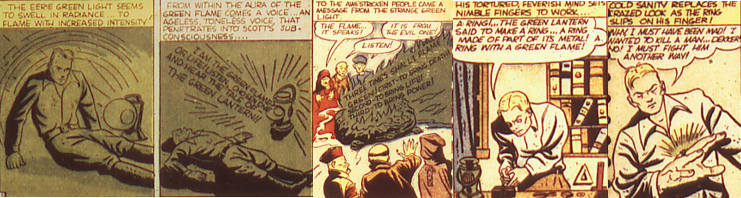
My Rating:

Rating: 3 out of 5.

Pretty Good

Have you ever read “The Joker”? What did you think to the Joker’s debut story and the way he performed his kills? Were you surprised it took the Batman so long to get involved in the case? What are some of your favourite Joker stories? Which interpretation of the Joker, whether animated, pixelated, or live-action, is your favourite? Whatever you think about the Joker, share your thoughts below or leave comment on my social media, and be sure to check out my other Batman content across the site!