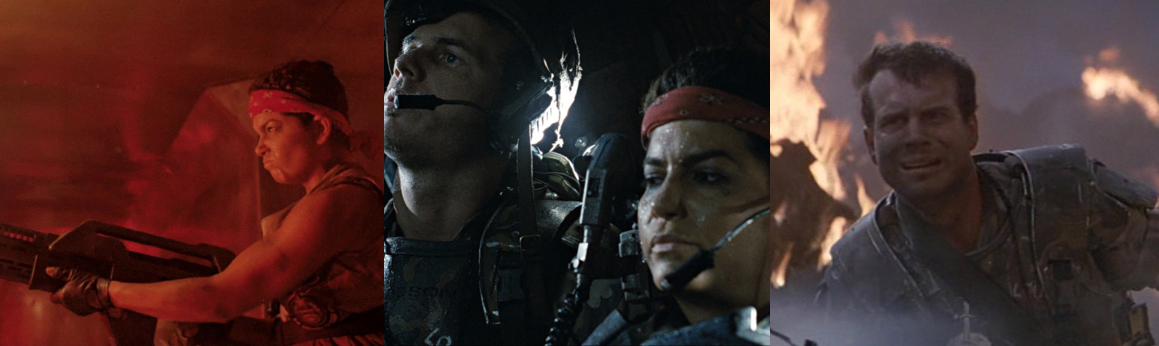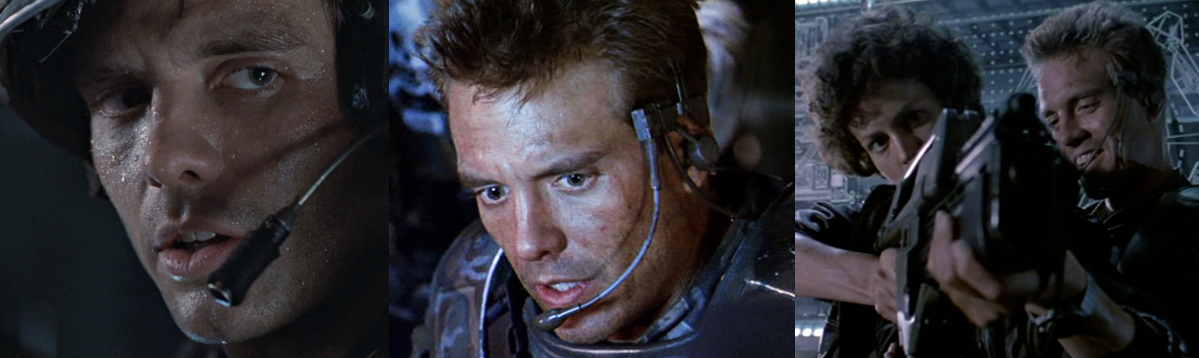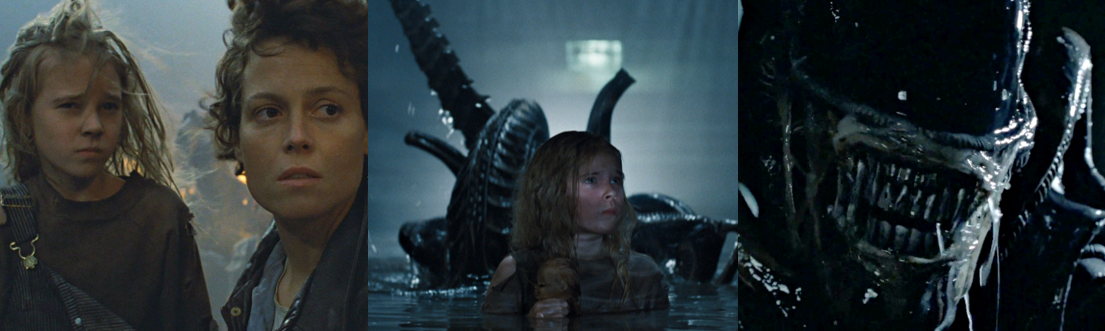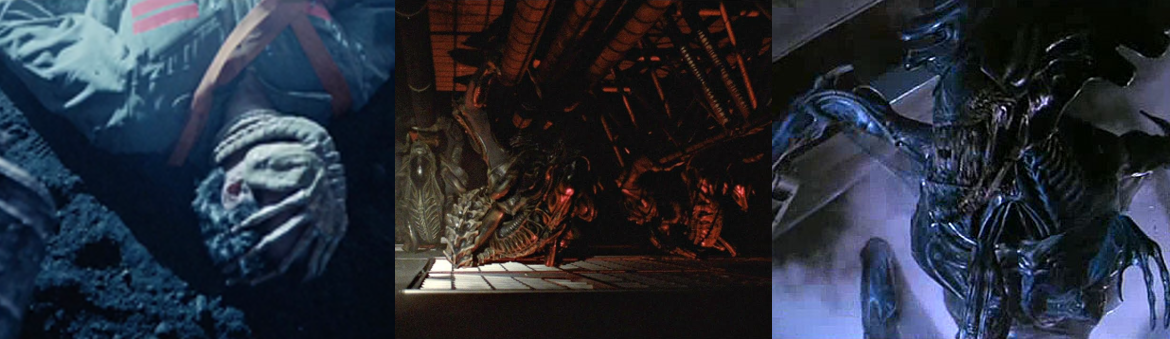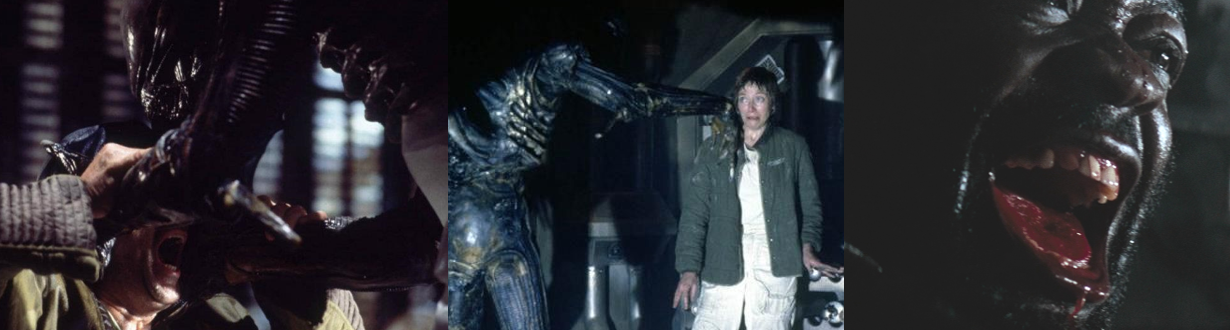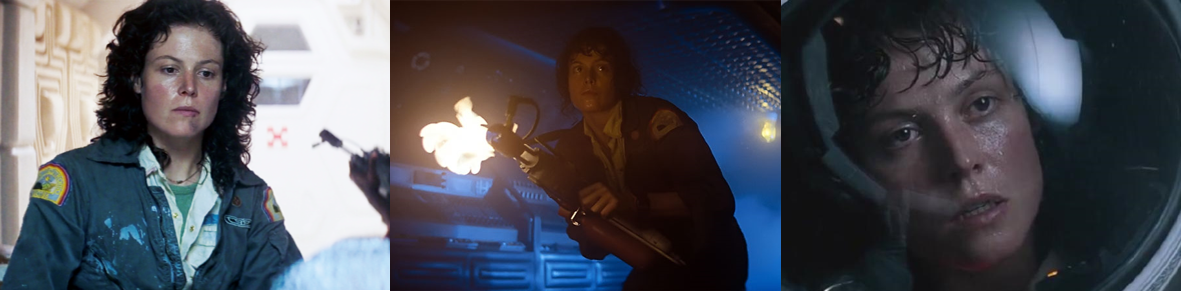
Movie Night [Alien Day]: Alien Resurrection: Special Edition


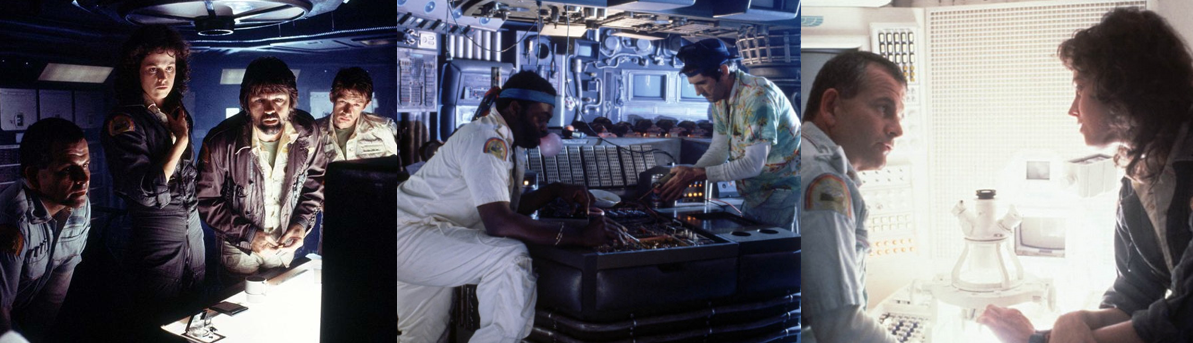
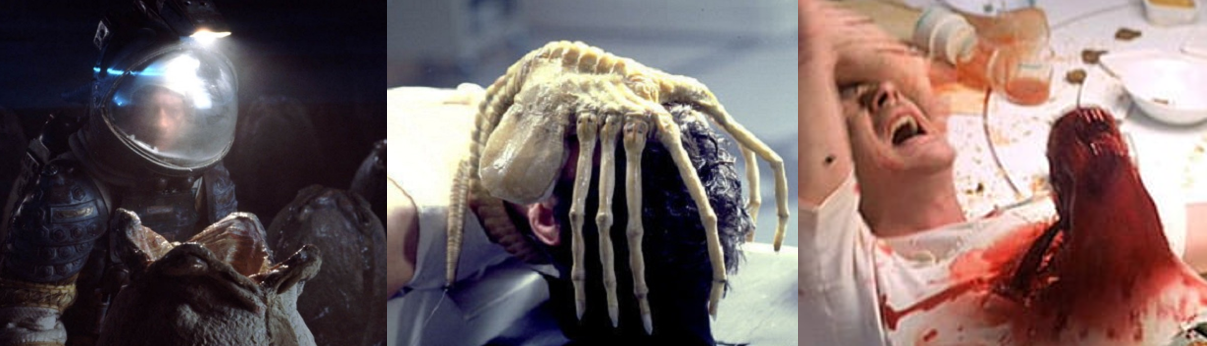
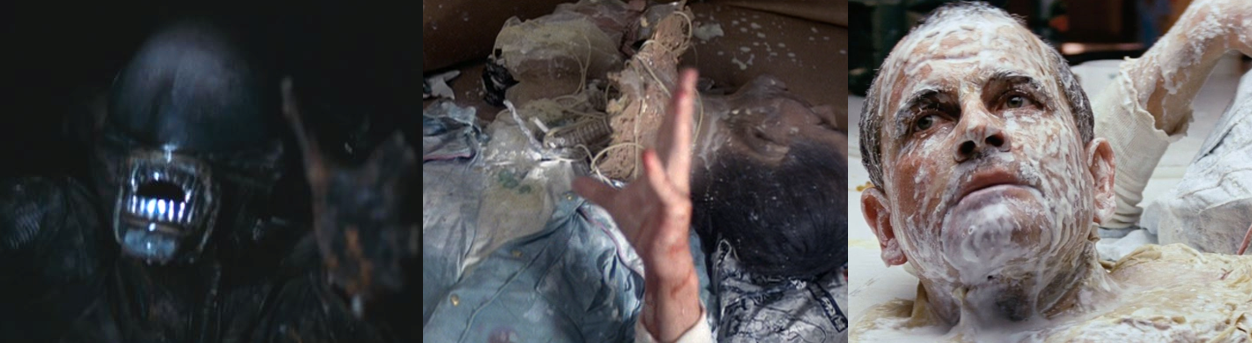
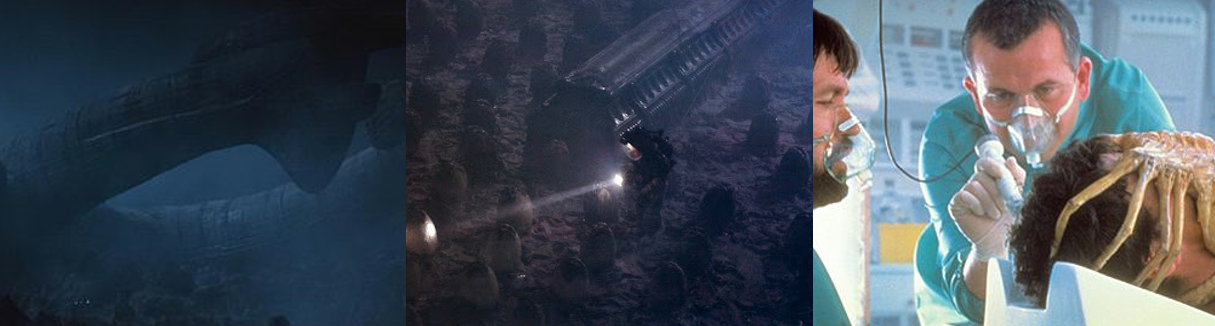
Audiences were first introduced to the horrific, biomechanical Xenomorphs in the classic science-fiction horror film Alien (Scott, 1979), in which an unsuspecting cargo crew investigates a beacon on the barren world of LV-426. Thus, the 26th of April is widely celebrated as “Alien Day”, a day to celebrate one of the greatest sci-fi/horror franchises ever created.


Special Edition

Released: 2 December 2003
Originally Released: 26 November 1997
Director: Jean-Pierre Jeunet
Distributor: 20th Century Fox
Budget: $70 million
Stars: Sigourney Weaver, Winona Ryder, Tom Woodruff Jr., Ron Perlman, J. E. Freeman, and Michael Wincott

The Plot:
200 years after dying in battle with the Xenomorphs, Lieutenant Ellen Ripley (Weaver) is resurrected as an Alien/human hybrid, “Ripley 8”. Her memories fragmented, she teams with a rag-team crew of pirates to battle a renewed Xenomorph threat, one born of her own blood.

The Background:
In 1979, Dan O’Bannon and Ronald Shusett’s concept of “Jaws (Spielberg, 1975) in space” came to horrific life with Ridley Scott’s Alien, a surprising commercial success now regarded as one of the greatest movies ever made. Despite being a financial success, we wouldn’t see a sequel for seven years. Director James Cameron, Aliens (ibid, 1986) endured a difficult shoot to produce perhaps the most influential entry in the franchise. The studio’s desire to capitalise with a third film led to an extremely troubled production; though Alien³ (Fincher, 1992) was a modest hit, it was met with mixed reviews and even those involved disowned the film. Not long after, 20th Century Fox hired Joss Whedon to pen a script treatment for a fourth film, though many of his ideas didn’t make it to the final draft. Despite having advocated for Ripley’s death, Sigourney Weaver was impressed with Whedon’s work and signed on, eager to dissuade the studio from producing a crossover with the Predator films (Various, 1987;1990) and receiving a co-producer credit. Although names like Danny Boyle, Peter Jackson, and Bryan Singer were considered to direct, the producers were impressed with Jean-Pierre Jeunet’s visual style and offered him the film, requiring the use of an interpreter. Amalgamated Dynamics Incorporated returned to produce the film’s effects, which retained the practical animatronics and suits of the previous films, and saw the design of a horrific human/Xenomorph hybrid, the “Newborn” that was originally depicted with both male and female genitals! Of course, perhaps the most notable trivia from the film’s production was Sigourney Weaver landing an over-the-shoulder basketball shot on the first try, much to astonishment of her co-stars. With a box office of just over $161 million, Alien Resurrection wasn’t the hit 20th Century Fox were hoping for. Reviews were largely mixed, with many praising Weaver’s performance and the visual presentation while criticising the bleak aesthetic and repetitive elements. Whedon was unhappy with how much the film differed from his script but Jeunet was aggressively proud of the finished product and collaborated with the studio to produce this alternative version in 2003. Not only was Alien Resurrection accompanied by tie-in comics, novels, and a videogame, it was also far from the last entry in the celebrated sci-fi franchise, though it is often noted as one of the strangest entries.

The Review:
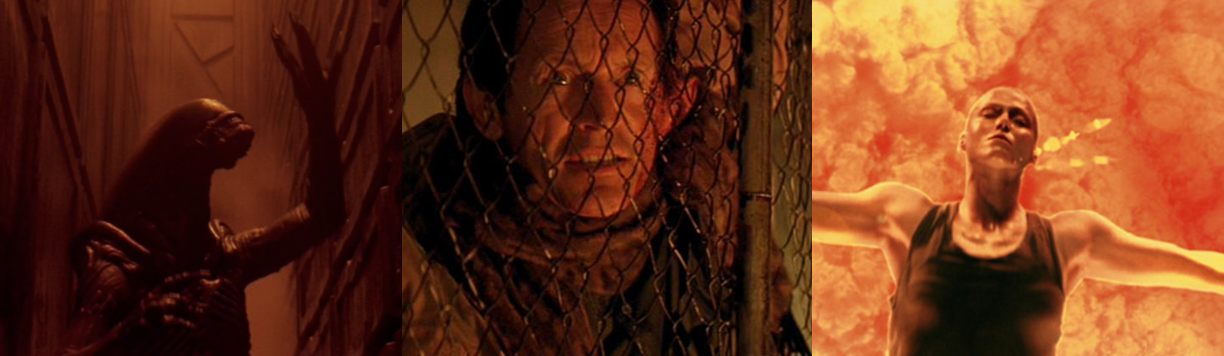
Every time Ripley wakes up after encountering the Xenomorphs, her situation worsens. First, she woke up to find she lost fifty-seven years and her daughter, then she wakes up to find her surrogate family dead and herself impregnated with an Alien Queen, and, here, she wakes up to find herself an Alien/human hybrid some two-hundred-years after her death! Some things have, obviously changed in that massively ludicrous amount of time: Weyland-Yutani is gone, having been bought by Walmart, and Ripley 8 is instead faced with the morally dubious scientists and soldiers of the United Systems Military (USM). Thanks to blood samples taken from “Fury 16”, scientists like Doctor Jonathan Gediman (Brad Dourif) and Doctor Mason Wren (Freeman) successfully cloned not only Ripley, but the Alien Queen gestating inside her. While General Martin Perez (Dan Hedaya), the military commander of the USM Auriga who’s supervising these clandestine experiments, is suspicious of Ripley 8, angered at her having even fragmented memories of her past encounters with the Aliens, he nevertheless allows Dr. Gediman and Dr. Wren to keep the clone alive to study her unique physiology. Having been grown to maturity in a laboratory, Ripley 8 often adopts a child-like, instinctive demeanour; she struggles to recognise eating implements, is tormented by disjointed recollections of a little girl who she lost in a previous life, and blasé regarding her handlers since she considers it inevitable that they’ll die if they try to teach the Xenomorphs “tricks”. While Ripley 8 shares many similarities with the original and has access to some of her memories, she’s often confused by her conflicting emotions, instincts, and these memories. She’s fully aware that she’s not the original and that she isn’t quite human, and yet still identifies as Ripley for convenience and is out to serve her own interests, only tagging along with Frank Elgyn’s (Wincott) band of pirates because they amuse her and serve her sense of preservation.
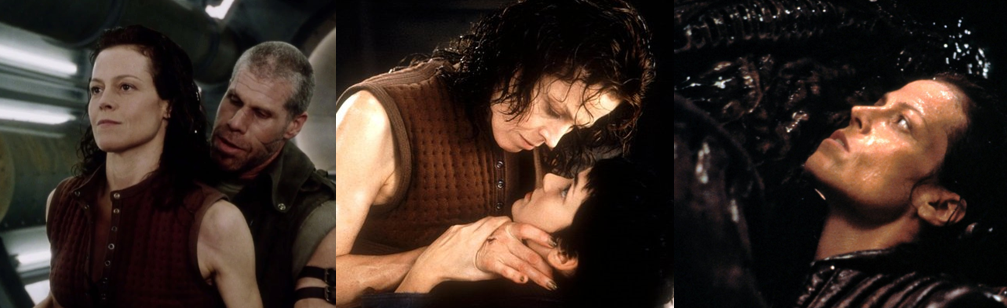
Ripley 8 struggles with her sense of identity thanks to her fragmented memories and human/Alien DNA.

Unlike her predecessor, Ripley 8 is a superhuman individual. While she appears as human as anyone else, save for a mysterious shine to her eyes and black fingernails, she shares much of the Alien’s DNA, giving her mildly caustic blood, heightened senses (she can sense the Auriga moving even when it’s in stealth mode), and superhuman strength. This not only makes her a formidable basketball player but also means she easily shrugs off a weight to the face, manhandles the ape-like Ron Johner (Perlman), and can hold her breath for an extended period. Described as “something of a predator”, Ripley 8 is far more animalistic than her organic counterpart; she smells, hears, and feels things that bypass even the synthetic Annalee Call (Ryder). Specifically, Ripley 8 can sense the movements of her kin, especially the Alien Queen. Ripley 8 feels when the Queen is in distress, knows when the Xenomorphs are near, and even willingly embraces them at one point. Perhaps thanks to her more animal nature, Ripley 8 takes Ripley’s disgust and disapproval of “The Company” to the next level and is largely dismissive of all humans, especially the likes of Dr. Wren, who thinks nothing of implanting unwilling humans with Alien embryos. Ripley 8 genuinely doesn’t seem to care if her handlers live or die and enjoys toying with Elgyn’s crew, joining them simply because it increases her chances of safely escaping the Auriga before it crashes into Earth and even willingly killing her Alien brethren when they get “in [her] way” if it means she can survive. We see this trait echoed in the Aliens when two of them attack and kill a third to escape from Dr. Gediman’s captivity and Ripley 8 isn’t immune to the Xenomorph’s attack, despite sharing their DNA, as they pursue her through the flooded kitchens and a Facehugger even attaches itself to her at one point. Ripley 8’s senses are so accelerated that she even senses the turmoil of her failed clones, descending into a near hysterical outburst as she mercy kills the failed experiments. Oddly, despite her justified anger, she refuses to kill Dr. Wren for his part in their suffering and also misses that Call is an android, something I feel the now-superhuman Ripley would’ve been the first to pick up on.
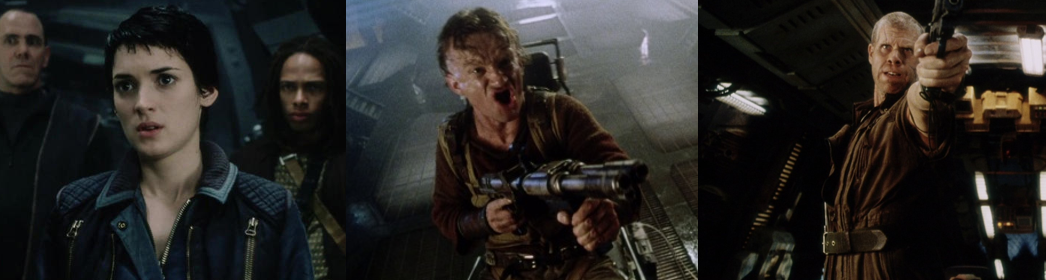
The Betty‘s crew is a mismatched band of pirates who must unite against a common threat.

Call is a newcomer to Elgyn’s crew, one largely treated as a child or a sex object despite her incredible mechanical skill. Her closest friend on the Betty is wheelchair-bound mechanic Dom Vriess (Dominique Pinon), who defends her when she incurs Johner’s wrath and stays by her side even after her true nature is revealed. Unbeknownst to Elgyn and the others, Call is an advanced android who escaped a mass recall and infiltrated their ranks specifically to get aboard the Auriga after learning of Dr. Wren’s experiments. Her self-appointed mission is to destroy the renewed Xenomorph threat and, as such, she’s largely distrustful of Ripley 8, and understandably so since the clone’s true allegiance is kept firmly in the grey throughout the film. Call clashes with Johner, who’s more akin to a mercenary; a surly caveman who’s quick to anger, Johner seems to respect Gary Christie (Gary Dourdan) over their shared love of firearms and booze. After being humbled by Ripley 8, Johner comes to begrudgingly respect her and even be attracted to her, appearing genuinely happy to see her alive at the end of the movie. Indeed, though he angrily lashes out about their increasingly worsening situation and initially appears to have little love for his crewmates, especially Vriess, Johner eventually lightens towards them all, even shellshocked Larry Purvis (Leland Orser), whom Johner is originally ready to mercy kill before agreeing to freeze him to save his life. Despite oozing charisma with his distinct, gravelly voice, there’s not a lot for Michael Wincott to do here. He pervs over Call, has previous history with General Perez, and enjoys a close sexual relationship with Sabra Hillard (Kim Flowers), but is mainly there to add to the body count. An unscrupulous pirate who deals only in cash, Elgyn thinks nothing of hijacking a ship of unknowing passengers to deliver to General Perez and Dr. Wren and is only interested in what can serve him the most.
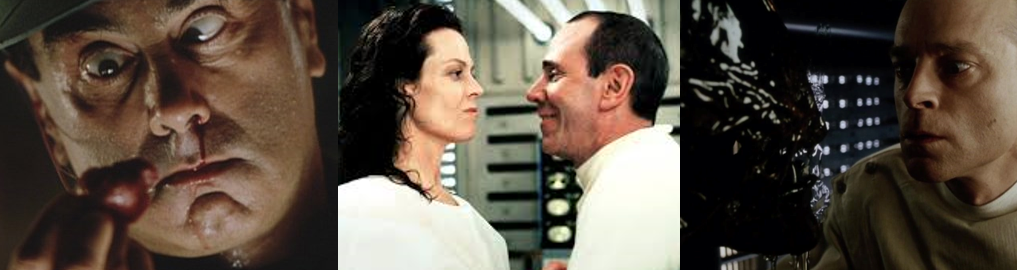
The Auriga‘s amoral staff are more monstrous than the Aliens and pay for their actions.

While the Betty’s crew may have questionable morals, it’s a thin line that separates their unscrupulous actions from those of General Perez and Dr. Wren. With their entire operation apparently being unsanctioned, the two are free to use any means necessary to recreate the Xenomorphs…as long as they’re not exposed. Thus, General Perez agrees to let the Betty’s crew stay as long as they don’t cause trouble, meaning Dr. Wren immediately orders their execution when he discovers Call is a “terrorist” who knows too much about what’s happening on the Auriga. While Dr. Wren and Dr. Gediman are united in their desire to breed and weaponise the Xenomorphs, Dr. Gediman showcases an uncomfortable sexual fascination in the creatures and, even when cocooned in the Queen’s nest, fawns over the monstrous “Newborn” (Tom Woodruff Jr.) Dr. Wren’s goal is to tame the creatures and sell them as military assets, a motivation Ripley 8’s all-too-familiar with and therefore scoffs at considering how aggressive the species is. Arrogant, dismissive, and impassive, Dr. Wren doesn’t care who he has to sacrifice to achieve his goals and embodies the worst of humanity, betraying the survivors and attempting to escape the Auriga once they’ve gotten him to a safe point. Confident in his command over the station’s artificial intelligence, Father (Steven Gilborn), and his authority over the likes of Private Vincent DiStephano (Raymond Cruz), Dr. Wren begrudgingly aids the crew as long as it benefits him and doesn’t hesitate to hold Call hostage for safe passage, eventually falling afoul of poetic justice when Purvis brutally murders him with the Facehugger Dr. Wren implanted within him. General Perez isn’t exactly innocent in all this, either, since he’s in command of the Auriga and its experiments. He’s happy to put the Betty crew up as long as they behave but is clearly motivated by the same desire for power and notoriety for successfully weaponizing the Xenomorphs. When the Aliens escape captivity, however, General Perez immediately orders an evacuation to leave the Auriga to its fate, even granting his troops a merciful death when a Xenomorph slips into the escape pod. Naturally, though, he meets a fittingly awful end when a Xenomorph takes a bite out of the back of his head, ensuring that all those who dared play God are summarily punished for their transgressions.
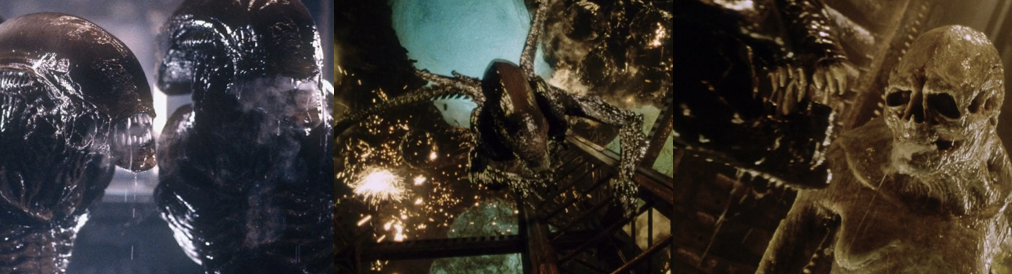
We learn a bit more about the Aliens’ intelligence and meet a new, grotesque variant sure to terrify.

Although I never got the suggestion that Ripley’s sacrifice spelled the extinction of the Xenomorph species, the creatures are apparently so rare that the USM was forced to spend 200 years working on cloning and genetic engineering to get their hands on the creatures. And not just regular drones: they have a fully grown Alien Queen in captivity, thanks to Ripley 8. This wasn’t an easy process, resulting in seven grotesque Alien/human failures over the many decades, but finally gave birth to Ripley 8, a seemingly perfect blend of the two species. The Queen was their ultimate goal, however, and they wasted no time in forcing her to produce eggs and then sticking Purvis and the other poor saps Elgyn and his crew kidnapped before these eggs so they could be implanted with Chestbursters and birth a handful of new Xenomorphs. The Aliens are more monstrous and disgusting than ever, constantly dropping with goo, roaring, and skulking about in the darkest parts of the Auriga. Thanks to Dr. Gediman’s experiments, we get the best look at their intelligence so far, revealing they quickly learn not just to avoid danger but also to find unique solutions to captivity. While the Aliens still capture prey to be brought to their Queen, they also engage in wholesale slaughter, killing many of General Perez’s men and even Elgyn when he inexplicably wanders off. Although the Alien Queen is initially said to have pumped out eggs as before, Ripley’s DNA sees her adopt a far less efficient human reproductive system, birthing the monstrous Newborn that’s the inverse of Ripley. Grotesque, feral, and aggressive in its childlike demeanour, the Newborn is the perfect example of how Alien Resurrection takes what was once essential a sci-fi slasher film and turns it into a full-blown monster movie. The Aliens are also more unsettling than ever, often depicted in a sexual or desirable light, with Ripley 8 often feeling more kinship towards them than humans since the Aliens act only on animalistic instinct rather than being purposely immoral towards their own kind.

The Nitty-Gritty:
I feel like Alien Resurrection often gets a bad rap, potentially because it is very weird at times, and I’ve often had issues with this reputation as it’s much more in line with the action-packed nature of Aliens than the bleak, depressing tone of Alien3. Perhaps one explanation for this bad rap is that it is more akin to a monster movie and lacks the nuance seen in its predecessors, often being very explicit in its depiction of corrupt, amoral humans versus the purely instinctual Aliens and the sexualised nature of the Xenomorphs, especially in the way Dr. Gediman and Ripley 8 act when around them. One thing I will say, though, is that Alien Resurrection isn’t as clever as its predecessors. I never understood the logic behind wasting 200 years cloning Ripley just to get the Queen out of her rather than searching out other Xenomorph hives. There’s nothing to say the USM weren’t doing this as well, but they also don’t mention it and I’m baffled why they didn’t try to search the remains of LV-426 or the Sulaco. Furthermore, characters repeatedly make insanely stupid decisions, even by slasher movie standards: I don’t get why Elgyn wandered off like that or why Christie felt it necessary to cut himself free during the daring ladder climb when he had plenty of choices to save himself. It’s weird that Ripley 8 didn’t detect that Call was an android and that the Auriga’s security staff were so lax about checking the pirates for concealed weapons. All these elements have to happen, of course, for the film to take place and to give us “cool” scenes like Johner hanging upside down from a ladder and somehow missing Vriess and Christie with his painfully cartoonish bullets. This Special Edition version offers a few extended scenes, such as a bizarre opening sequence that I guess showcases man’s arrogance at the top of the food change, more emotional scenes where Ripley 8 is haunted by fragmented memories of Rebecca “Newt” Jorden (Carrie Henn), restructures and extends some scenes, and delivers a vastly different ending that implies some or all of the Earth has become an apocalyptic wasteland.
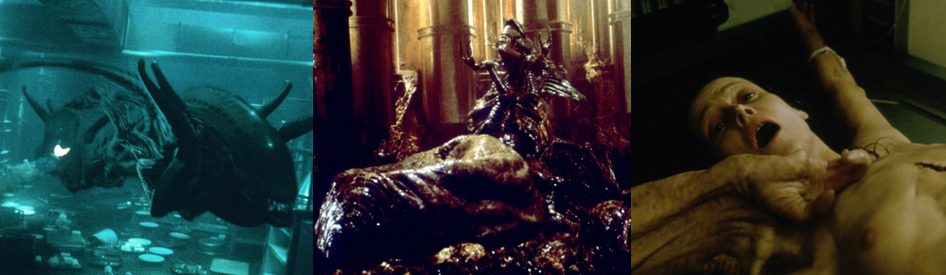
The Aliens and body horror work best when brought to life using disturbing practical effects.

Still, Alien resurrection retains the grimy, “lived-in” sci-fi aesthetic I love and most commonly associate with the franchise. Despite being a fully-funded USM facility, the Auriga seems to be on life support half the time, with the lighting system being secondary to the high-tech labs. A great gag, for me, was the malfunctioning doors that require both an access code and a breathalyser to open and General Perez’s little laser-powered whiskey machine, both examples of redundant technology given the context. The Aliens are a hybrid of the one seen in the first movie, sporting the same overly phallic domed head, and the drones of the sequel, attacking with their claws, tails, and little mouths but also being brought to life through CGI for the first time. While these effects often look cartoonish, they’re thankfully fleeting, and the film relies on Tom Woodruff Jr. in a suit for 90% of its Alien effects. We do get to see them swimming with an almost shark-like grace, spitting acid, and clambering up a ladder, though they mostly stick to the floor grates and lurking in the shadows. Elgyn and his crew sneak some fun weapons onto the Auriga, with Christie sporting two disposable wrist pistols, Johner hiding his gun in a thermos, and Vreiss cobbling together a shotgun from his wheelchair. Private DiStephano is also armed, though as you’d expect their weapons often do more harm than good, splattering them with the Alien’s acid (though, helpfully and oddly, not causing explosive decompression). Alien Resurrection is pretty horrific at times; the eggs ripple like never before, blood and viscera splatter against walls, and we get a brutal scene of Purvis shoving Dr. Wren’s head against his chest so the Chestburster can kill him! There are so many blood squibs and blood splatter that it’s like Paul Verhoeven directed the film! It’s both amazing and laughable at times, and the body horror displayed by Ripley’s failed clones and the disturbing Newborn are unsettling, to say the least. Alien Resurrection also sticks with traditional model shots, though I have to say the compositing effect isn’t as convincing as I’d expect for 1997. I don’t know if the filmmakers were consciously trying to replicate the B-movie-level sci-fi of the 1970s but it’s disappointingly at odds with the grotesque and impressive Alien suits and the grimy ship interiors.
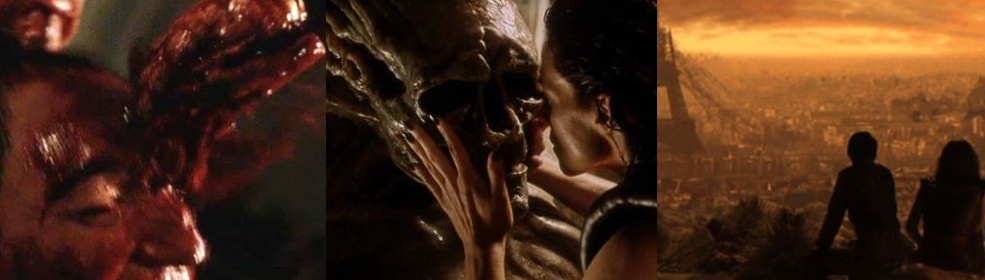
An incredibly gory finale sees Ripley 8’s human side prevail and her finally return home.

So, after Christie and the others adamantly reject Call’s suggestion to blow up the Auriga to destroy the Xenomorph outbreak and group bring Purvis along to try and help him at a later date, the miss-matched survivors find their numbers dwindling after a disastrous swim through the flooded kitchens. With Call revealed to be an android, the group take control of Father to clear a path to the Betty, where Purvis dies, taking Dr. Wren with him. Unfortunately, Ripley 8 is abducted by a Xenomorph along the way and witnesses the birth of the Newborn, which brutally rejects the Alien Queen in favour of Ripley 8 who, though both captivated and horrified by its appearance, slips away as it’s munching on Dr. Gediman. Just as the Betty safely detaches from the Auriga and Ripley 8 makes a dramatic leap to safety, the Newborn follows, tearing Private DiStephano’s head off and toying with Call. When Ripley 8 goes to assist, she comforts the grotesque abomination rather than fighting it. Realising it just wants its mother’s affection, Ripley 8 embraces her “child” and surreptitiously uses her acidic blood to put a hole in one of the portholes in the Betty’s cargo bay. The decompression sees the squealing, disturbingly human monster sucked inside out into space and, in a moment that emphasises Ripley 8’s unsettling kinship to the creatures that have hounded her life, its “mother” can only tearfully watch on as the monster is pulverised in suitably visceral fashion. Since their pilots are dead and neither Vriess or Johner have any idea how to pilot the Betty, Ripley 8 takes the controls and guides the ship to a safe, if troubled landing while the Auriga collides with the Earth in a spectacular (and presumably devastating) explosion. In the theatrical version, Ripley 8 and the others celebrate and reflect from orbit, admiring the beauty of the world and wondering what’s next for them. In this Special Edition, they land in what appears the be the remains of Paris and again ruminate on their future, with Ripley 8 stating that she’s “a stranger” there. Both endings are surprisingly impactful in different ways; I love the idea that it took about 300 years and coming back from the dead for Ripley to finally make it back home, only for Earth to be as much of a “shithole” as Johner claims it to be. I also appreciated how quickly the Newborn established its dominance and the conflict Ripley 8 felt towards it. There’s a real sense that she’s torn between her two sides when faced with the abomination, with her humanity winning out only by the narrowest of margins.

The Summary:
My relationship with Alien Resurrection is pretty much the opposite of my opinion on Alien3. While I grew to appreciate Alien3’s bleak tone, I slowly came to see that Alien Resurrection is more of a loud monster movie than the nuance sci-fi horror I expect from this franchise. Yet, despite that, I still find a lot to enjoy from it and feel it’s unfairly judged at times. Ignoring the time, effort, and massive inconvenience of cloning Ripley rather than seeking out other Xenomorphs, bringing Ripley back as a clone was a decent way to return Sigourney Weaver to the franchise and I think the film does a good job of examining her new perspective on humanity and the Aliens. Barely aware of her former life and working on instincts inherited from both species, Ripley 8 is a thoroughly tragic and fascinating character who’s literally torn between two worlds. Humanity isn’t that different from the Xenomorphs at times and Alien Resurrection’s supporting cast goes a long way to reinforce that, surrounding Ripley 8 with disreputable, amoral characters who are technically worse than the Xenomorphs since the Aliens are basically mindless, ravenous animals. I did enjoy Alien Resurrection’s cast, though; there are some fun character actors here who do as much as they can with their limited screen time. I would’ve liked to see more from Michael Wincott and still think Christie could’ve lasted longer, and to this day keep forgetting about Private DiStephano until his head’s being torn off, but I quite liked Johner’s character arc, which parallels the distrustful Ripley 8 in a lot of ways. I’m still amazed that Winona Ryder’s even in this as it’s such an odd fit for her, but she captured the innocence, shame, and determination of her character well. I also enjoyed the deeper exploration of the Aliens and the complex depiction of the grotesque Newborn. Essentially a dark opposite of Ripley 8, the creature is even more horrifying to look at than Ripley’s failed clones and the disturbing nature of Ripley 8’s almost maternal relationship with it makes Alien Resurrection very unsettling. The franchise has always dabbled in sexual horror and gore, but Alien Resurrection takes it to the next level, throwing some fast-paced, loud action at the viewer and largely abandoning subtext, but that makes it a very enjoyable popcorn flick that I always enjoy revisiting since it’s probably my least watched of the original four movies.

My Rating:

Rating: 4 out of 5.

Great Stuff

Are you a fan of Alien Resurrection? Which version of the film do you prefer and how do you think it compares to the other entries in the franchise? Were you a fan of Ripley being resurrected as an Alien/human hybrid? What did you think to the amoral pirates and scientists? Which of her supporting cast was your favourite? Were you disgusted by the Newborn and what did you think to Ripley 8’s relationship with it? Which of the Alien movies is your favourite and why, and how are you celebrating Alien Day this year? Whatever your thoughts, feel free to leave them below, support me on Ko-Fi, and check out my other Alien reviews.


Movie Night [Alien Day]: Alien³: The Assembly Cut


Audiences were first introduced to the horrific, biomechanical Xenomorphs in the classic science-fiction horror film Alien (Scott, 1979), in which an unsuspecting cargo crew investigates a beacon on the barren world of LV-426. Thus, the 26th of April is widely celebrated as “Alien Day”, a day to celebrate one of the greatest sci-fi/horror franchises ever created.


The Assembly Cut

Released: 2 December 2003
Originally Released: 22 May 1992
Director: David Fincher
Distributor: 20th Century Fox
Budget: $50 to 60 million
Stars: Sigourney Weaver, Tom Woodruff Jr., Charles S. Dutton, Charles Dance, Ralph Brown, Danny Webb, and Lance Henriksen

The Plot:
After facing her fears and escaping a planet full of hostile aliens, Lieutenant Ellen Ripley (Weaver) finds herself marooned on Fiorina “Fury” 161, a prison colony inhabited solely by violent male inmates who have found God. Ripley’s heartbreak at the loss of her adopted family soon turns to a desperate battle of survival when a bipedal Xenomorph (Woodruff Jr.) forces Ripley into a final confrontation.

The Background:
In 1979, Dan O’Bannon and Ronald Shusett’s “Jaws (Spielberg, 1975) in space” concept was given life by director Ridley Scott as Alien, an unexpected commercial success that is now widely regarded as one of the greatest movies of all time. Although the film was a financial success, it took seven years for a sequel to emerge; helmed by James Cameron, Aliens (ibid, 1986) weathered a troubled shoot to become an even greater critical and commercial success and perhaps the most influential entry in the franchise. Naturally, the studio was eager to capitalise with a third film but the franchise producers were so eager to avoid being repetitive that Alien³ became one of the most troubled productions in cinema history. They were so eager that the studio released a misleading teaser that implied Alien³ would be set on Earth, despite being unable to settle on a script. Ideas involved another action-orientated adventure and a planet made entirely of wood and home to a group of monks. Star Sigourney Weaver also had her own ideas about the direction and execution of the film, which was eventually helmed by up-and-coming director David Fincher, who came onboard without a script and had his vision continuously undermined by the studio. Since Stan Winston wasn’t available, the film’s visual effects were handled by Tom Woodruff Jr.’s Amalgamated Dynamics; per Fincher’s instructions, the Xenomorph was redesigned into a bipedal creature brought to life using a traditional suit and a rod puppet that was optically composited into the film. Considering how chaotic production was, it’s amazing that Alien³ performed as well as it did; it made just shy of $170 million at the box office but was met with mixed reviews. Many franchise names, and even the director, disowned the film, though this Assembly Cut has been regarded more favourably and it has since gained a cult following. Despite her best attempts, Alien³ wouldn’t be the end for Weaver or the franchise as sequels and spin-offs inevitably followed and Alien³ was also accompanied by a few videogame tie-ins and later dramatically re-envisioned in a comic book series that explored the unproduced screenplay ideas.

The Review:
It was certainly a tough task to follow-up the claustrophobic, atmospheric horror of Alien; switching things up into an action-oriented approach was a fantastic idea, and Aliens was still able to retain the same gritty, gory horror while delivering a surprisingly cathartic experience for the unlucky Ripley. As if waking up to find that she’s missed out on fifty-seven years of her life wasn’t bad enough, Ripley also awoke to find that her daughter had died in the interim and the desolate planet LV-426 had been terraformed into the perfect breeding ground for the nightmarish Xenomorphs. It’s often difficult for me to pick a favourite between Alien and Aliens, though I tend to favour the latter as I find I can just put Aliens on anytime and be easily satisfied whereas I think Alien demands a little more of your attention. I can certainly understand the divisive nature of Alien³; in many ways, the franchise could’ve comfortably ended at Aliens for some time, or spun off to include a different set of characters, and I remember not really being the biggest fan of the third entry when I was a kid. It was slow, dull, a bit boring, and difficult to look at and lacked the punch of the second film, but I’ll admit that my opinion of Alien³ has changed as I’ve gotten older, to the point where I now consider it to be an under-rated entry in the franchise.

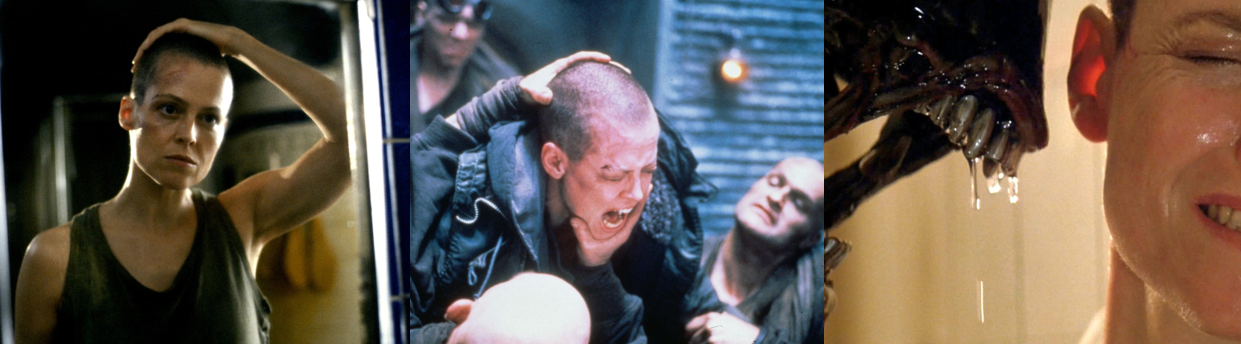
Having lost everything, Ripley faces a prison full of violent men and another Alien menace!

Alien³ opens shortly after the end of Aliens, with Ripley and her adopted family safe and sound in cryosleep. Well…not quite “safe” as it turns out that, somehow, a Facehugger or two slipped aboard the Sulaco (presumably the Xenomorph Queen found the time to lay a couple of eggs before being blown out of that airlock…) and…also somehow…their acidic blood caused an electrical fire. To safeguard the sleeping crew, the ship’s computer ejected them, but the escape pod doesn’t exactly have the smoothest ride and crash lands so badly that all but Ripley are killed on impact. In keeping with her never-ending nightmare, Ripley thus awakens to find herself alone once again; her substitute daughter, Rebecca “Newt” Jorden (Danielle Edmond) drowns in her cryotube, Corporal Dwayne Hicks (Michael Biehn) is torn apart on impact, and the already heavily damaged android Bishop (Henriksen) is left little more than scrap metal. Shaken, injured, and sick from the sudden awakening, Ripley is absolutely devastated by these losses, but also deeply concerned when she spots an unmistakable acid burn in the escape pod. To the annoyance of the prison warden, Superintendent Harold Andrews (Brian Glover), and the curiosity of resident disgraced former surgeon Jonathan Clemens (Dance), Ripley insists on performing an autopsy to determine the cause of Newt’s death and tossing the bodies into the furnace to ensure her fears of Xenomorph infection are allayed. From there, Ripley’s left to pick up the pieces of her fractured life; she shaves her head to avoid lice and finds herself as the only woman in a facility inhabited entirely by unstable, God-fearing inmates. Thankfully, her battles against the Xenomorph have hardened Ripley to the point where she wanders the prison without fear and is more than capable of holding her own; having lost everything she loves, there’s also a sense that Ripley has all-but given up on caring for her own safety, but when her fears are realised and a new Xenomorph stalks the dark, dank corridors, she immediately reassumes her role as the driving force behind ending its threat.

The prison staff are next to useless, meaning Ripley must rely on volatile inmates for aid.

Once she learns of the Xenomorph’s presence, Ripley is frustrated to find little to no help from the facility’s staff; Andrews, already aggravated by her presence, angrily dismisses her claims of an alien’s existence and his right-hand man, the intellectually stunted Francis Aaron (Brown), lacks the authority, confidence, and intelligence to properly handle the threat once Andrews is killed in spectacular fashion. As the inmates are far outside normal jurisdiction and left to their own devices, without the distractions and temptation of a woman, Ripley naturally turns a few heads; Leonard Dillon (Dutton), the deeply religious figurehead of the inmates, is offended by the upset Ripley threatens within their carefully-maintained ecosystem, and yet doesn’t hesitate to defend her when some of his “brothers” attempt to attack and rape her despite him openly admitting to be a “murderer and rapist of women”. Left there to rot, the inmates turned to religion and have been anxiously awaiting salvation and judgement from their God; they take their religion very seriously, though Andrews maintains that they are still dangerous despite the fragile peace that exists there. Clemens is an exception among the inmates; formally a surgeon, he was incarcerated after becoming addicted to morphine and causing the deaths of several patients. When the others decided to stay, he also remained, believing he still had a penance to pay and having grown attached to the facility and its reprobates. He’s ordered by Andrews to keep an eye on Ripley and is constantly frustrated at her stubborn refusal to divulge the truth about the Xenomorph; while she may not trust him with her history, Ripley trusts his medical expertise and grows close enough to him to forego any messing about and share a bed with him, though he unfortunately falls victim to the Xenomorph the next morning and before he can learn the truth about her.

With her surrogate family dead, Ripley’s new allies are interchangeable, dangerous inmates.

Although we never learn the exact nature of many of their crimes, Fury 161 is said to be home to some truly reprehensible inmates. Unfortunately, due to poor lighting and them all having shaved heads and wearing similar attire, it can be difficult to tell the characters apart, especially once they start frantically blundering around in the prison’s dark corridors to lure the Xenomorph into a series of traps. One inmate who stands out, particularly in this version of the film, is Walter Golic (Paul McGann), a half-crazed mass-murderer who becomes obsessed with the Alien after encountering it in the tunnels. Believing it to be a divine dragon that speaks God’s will to him, Golic is driven to murder his fellow inmates in order to release the Xenomorph after they risk their lives to trap it, only to be unsurprisingly killed by the creature for his efforts. Another prominent inmate is Robert Morse (Webb), a selfish and cynical individual best known for his explosive reaction to Andrews’ death and for suddenly becoming a main character right at the end of the film when, with Dillon having become dinner for the Alien, he’s the only one left to help Ripley dispatch of the Xenomorph. While the inmates may be largely interchangeable and forgettable, their greasy, oily, disgusting appearances, leering glances, and volatile nature create a foreboding atmosphere, especially for Ripley, who can barely trust the few tentative allies she has let alone a bunch of desperate, unpredictable criminals. Thankfully, the remains of a friendly face are about to offer Ripley some answers and solace; she manages to get Bishop back online long enough to learn of the Alien’s presence on the Sulaco and that Weyland-Yutani are well aware of the creature, though this reunion is bittersweet as she forced to literally pull the plug to put her friend out of his misery.

It’s a shame the rod puppet looks so terrible as the Alien actually holds up quite well otherwise.

As Fury 161 is so rundown and the planet’s surface is so dangerous, there’s no hope of escape and little chance of survival since the facility is full of dark, maze-like corridors, rusted ventilation systems, and lacks any weaponry for the inmates to use, meaning Ripley has to fight just to mount any kind of offense against the Alien. Unlike its predecessors, this Xenomorph is smaller and more bipedal since it’s born from a dog (or ox, in this version of the film). It scuttles across walls and ceilings, spits acid, and attacks from the shadows like a wraith, lending credibility to it as a divine beast there to judge the convicts. Since the computer and surveillance systems are shot, Ripley has no way to track the creature; her experience with the species means she can take a wild guess at where it can be found and allows her to direct the terrified and ill-equipped inmates in luring the creature into a trap using torches, but their efforts to permanently entrap or dispose of it are constantly thwarted by either their fundamental lack of resources or the foolishness of inmates like Golic. This time around, however, Ripley is functionally immune to the Xenomorph threat since it turns out she was the one who was impregnated with a Chestburster while in cryosleep; and not just any Chestburster, but a Queen Chestburster, meaning the Alien refuses to attack her and largely ignores her. Unfortunately, this is nothing less than a living nightmare for Ripley; having fought the Xenomorphs for as long as she can remember, she’s now doomed to give birth to their next matriarch and is so rocked by this revelation that she practically begs Dillon to kill her to spare her the agony of the Alien’s birth. Despite the atrocities he’s no doubt perpetrated in the past, Dillion is a survivalist by nature and spares Ripley to utilise her expertise and immunity to increase their chances against the Xenomorph, though he promises to grant her a quick painless death once the “dragon” has been destroyed.

The Nitty-Gritty:
If there’s a word to describe Alien³ it’s definitely “bleak”. Three of the four characters we became invested with throughout Aliens are unceremoniously killed off right at the start, Ripley’s left bald and in constant danger, and the environment is so depressing and visually ugly that it’s easy to be put off by Alien³. It’s certainly a severe right-turn after the bombastic action/horror of the last film and the lived-in claustrophobia of the first, but that doesn’t mean it’s bad. I actually like that every time Ripley wakes up, she’s lost a little bit more and gotten further from home and is forced to adapt to a new situation to combat the never-ending nightmare of the Xenomorphs. This time, she’s clearly exhausted from the entire ordeal; she’s numb to conventional threats like tumultuous weather and dangerous inmates and seemingly ready to lay down and die even before she learns of the parasite she’s carrying. Although she only just adopted the role of a bad-ass warrior and mastered the art of handling the standard-issue Pulse Rifle, Ripley is frustrated by the lack of resources on Fury 161, which are barely capable of producing fire let alone offering them any kind of hope against the ravenous creature. Even worse, Ripley’s attempts to keep Weyland-Yutani from coming to the facility and finally getting their hands on a live Xenomorph are met with failure when Aaron refuses to warn them off in hopes of finally escaping the drudgery of his duties.

The Assembly Cut places added emphasis on the film’s bleak, dreary, claustrophobic atmosphere.

Fury 161’s desolate and worn-down appearance really lends a sense of desperation to the film; it’s technically not that different from the enclosed corridors and oppressive locations in the last two films, but I can understand how it might lack the same visual variety since so much of it has this rusty, industrial look that makes trying to tell one corridor from the other as difficult as figuring out the differences between the inmates. This version of Alien³ differs in a few ways from the theatrical version, mainly in the depiction of the Xenomorph’s birth, an extended sequences where the inmates manage to briefly capture it before Golic goes nuts, and a slightly revised ending, but the bulk of the content remains the same as what was shown in the cinema. For me, this is the superior version of the film as it feels meatier and hits a bit harder thanks to the extra scenes. Unfortunately, neither version of Alien³ can make up for the God-awful special effects used to bring the Alien to life; a lot of the time, it’s the traditional man in a suit but, more often than not, it’s an awful digital composite of a rod puppet shot against a blue screen. As a result, the Alien often seems to be poorly-dated CGI and sticks out like a sore thumb; its lighting is all wrong and it just looks far too cartoony to be scary and these effects really downgrade the film’s overall appeal. Thankfully, the filmmakers utilised a fisheye lens for many shots seen from the Xenomorph’s perspective so we’re spared this effect, but I find a first-person shot to be a pretty cheap compromise. It’s a shame, as there are some impressive effects on offer here; Bishop is brought to life using a highly detailed animatronic, there’s a particularly devastating explosion effect that thins out many of the inmates, and the Alien suit looks great, especially when it comes face-to-face with Sigourney Weaver, it’s just a shame that all these positives are undermined by some awful optical effects.

After killing the Alien, Ripley sacrifices herself to keep the creature out of the Company’s hands...

As sick as she was after recovering from the crash, Ripley’s condition only worsens as she pushes herself harder throughout the film; while the Xenomorph refuses to harm her, the Chestburster causes her constant pain and fatigue, and even her tentative immunity puts her at risk when the Alien is backed into a corner. With Weyland-Yutani breaching the prison with a containment team to take ownership of Ripley, the embryo inside her, and the ravenous Xenomorph, Ripley, Dillon, and Morse frantically lure the creature into the moulding facility so they can drown it in molten hot lead. Thanks to Dillon’s sacrifice, this plan actually works; the creature is drenched in lead and, after being exposed to water from the overhead sprinklers, explodes from thermal shock, finally ending its threat. Unfortunately, there’s no time for celebration as an exhausted Ripley is suddenly confronted by “Bishop II” (also Henriksen), who claims to be the designer of the Bishop android and attempts to talk Ripley into willingly surrendering to Weyland-Yutani in the hopes of safely extracting the Chestburster from her and the promise of a normal life. However, Ripley isn’t so easily swayed; convinced that the new Bishop is also an android and that the Company doesn’t have her best interests at heart, she rejects his offer and has Morse position her over the prison furnace. Although Bishop II appears to be human, Ripley isn’t convinced, even when Aaron is gunned down after finally finding his backbone, and willing submits herself to the fire. Unfortunately, this version of the film omits the Chestburster’s appearance and Ripley embracing it as she’s consumed by the flames but the emotional impact of the moment remains as poignant as ever. In her last moments Ripley chooses defiance and to meet her end on her own terms, denying the Company their goal and taking her hated enemy to the grave with her…for about two-hundred years, at least.

The Summary:
I completely understand the hate and vitriol aimed at Alien³; those who were hoping to see Ripley, Newt, Hicks, and Bishop working as a surrogate family against a new Alien threat, or being left alone to live a relatively happy life offscreen, would be understandably disappointed with this bleak, depressing tale of grief, loss, and desperation. As a kid, I also struggled with Alien³; it lacked the action-packed machismo and bombastic punch of the second film and the nerve-wracking horror of the first and was an ugly, desolate, mean-spirited piece of cinema that seemed to be going out of its way to twist the knife into long-time franchise fans. However, my opinion has changed over the years, especially after learning about how much trouble went on behind the scenes, and now I rate Alien³ quite highly. It’s still beneath the first two, and probably at the bottom end of the original four films, but I’ve come to really appreciate the grim tone and sense of despair that permeates this moody little slice of sci-fi horror. There are few characters to root for, some terrible special effects, and there’s a definite sense of confusion regarding the tone and direction of the piece, but it’s surprising how well Alien³ holds up despite all of this. This may very well by Sigourney Weaver’s best, most emotional performance as the tormented Ripley and served as an unexpected, definitive end for (this version of) the character. I really enjoy the new dynamic between her and the Alien, and seeing her being completely unfazed by other more mundane threats, as well as some of the more colourful, if reprehensible, supporting characters. I definitely think Alien³ is with re-evaluating, especially this far superior Assembly Cut of the movie; it might not be on par with its predecessors, but there’s definitely a lot to like here if you take it for what it is and consider it the final, dark chapter in Ripley’s long nightmare.

My Rating:

Rating: 3 out of 5.

Pretty Good

Are you a fan of Alien³? Which version of the film do you think is better and how do you think it holds up against the other entries in the franchise? Were you annoyed that Newt and Hicks were unceremoniously killed off? What did you think to the vile all-male population of Fury 161; were you able to tell the inmates apart? Did you enjoy the bleak tone and Ripley’s final battle against the Xenomorph? What did you think to the effects and the tone of the movie? Were you a fan of Ripley’s final sacrifice? Which of the Alien movies is your favourite and why, and how are you celebrating Alien Day this year? Whatever your thoughts, feel free to leave them below or drop a comment on my social media.

Movie Night [Alien Day]: Aliens: Special Edition


Audiences were first introduced to the horrific, biomechanical Xenomorphs in this classic science-fiction horror film in which an unsuspecting cargo crew investigates a beacon on the barren world of LV-426 and, as a result, the 26th of April is widely celebrated as “Alien Day”, a day to celebrate one of the greatest sci-fi/horror franchises ever created.


Released: 1 June 1991
Originally Released: 18 July 1986
Director: James Cameron
Distributor:
20th Century Fox
Budget:
$18.5 million
Stars:
Sigourney Weaver, Michael Biehn, Paul Reiser, Carrie Henn, Bill Paxton, Jenette Goldstein, William Hope, and Lance Henriksen

The Plot:
Having survived an attack by a vicious alien creature (Bolaji Badejo), Lieutenant Ellen Ripley (Weaver) is awakened from stasis only to find fifty-seven years have passed her pay, and the desolate world where her doomed crewmates discovered the Xenomorph has been terraformed and colonised by the shady Weyland-Yutani Corporation. However, when the colony stumbles across the derelict alien craft and its gruesome cargo, Ripley is forced to join a crack team of Colonial Marines and confront her worst nightmares by returning to the planet to face the alien menace once more.

The Background:
In 1979, writers Dan O’Bannon and Ronald Shusett’s concept ofJaws (Spielberg, 1975) in space” was brought to life by director John Carpenter as Alien; the idea of “truckers in space” was injected with the unsettling visuals of Swiss artist H. R. Giger, and the film became a surprise commercial success. Though it was met with mixed reviews at the time, Alien is now widely regarded as one of the greatest movies of all time, and the film’s financial success meant that the studio was eager to produce a sequel, but it would take seven years for the follow-up to come to fruition due to financial concerns and the viability of replicating Alien’s success. After settling a questionable lawsuit, production finally began to pick up steam when James Cameron, hot off the success of The Terminator (ibid, 1984), pitched a potential treatment for the sequel; although others warned him off trying to follow in Carpenter’s footsteps, Cameron pushed onwards and convinced the studio to invest in his idea for a bigger, more action-packed sequel. Though initially reluctant to return to her role as Ripley, star Weaver had to be convinced the sequel wasn’t simply a cheap cash-grab and negotiated an unprecedented $1 million salary to join the production; she was initially set to star alongside James Remar, but was paired up with Cameron’s Terminator star Michael Biehn after Remar was arrested for drug possession. The seventy-five day shoot was made stressful for Cameron as many of the crew were dismissive of him due to his lack of directorial experience; however, he stayed the course and used his familiarity with smaller special-effects studios to secure the services of the legendary Stan Winston. Giger was reportedly unhappy to be left out of the production, but Winston was able to convincingly create the illusion that hoards of Xenomorphs were onscreen despite only twelve practical suits being made, and film’s most impressive effect, the Xenomorph Queen, was realised through a combination of visual effects, puppetry, and complex animatronics. Although the exact figures vary, Aliens proved to be even more successful than its predecessor; it made between $131 and 183 million at the box office, far exceeding Alien’s financial return, and was also received far more favourably upon release. Critics praised the set-pieces and presentation, its intensity and horror, and it was generally regarded as being the most shockingly intense film in years. Thanks to its action scenes, themes of motherhood and the atrocities of war, Aliens has stood the test of time; regarded as one of the greatest films ever made, Aliens forever influenced the cultural and multimedia impact of the franchise, with many of its characters, designs, locations, and themes being evoked in Alien comic books, videogames, and spin-off for decades to come.

The Review:
Aliens is another of those classic sci-fi/horror films that I grew up watching, and one of a number of sequels that are arguably better than the original; certainly, I struggle sometimes with which of the two I prefer. Aliens, for me, is definitely more watchable in a casual sense; I feel I have to get into a certain mind frame to watch Alien, one where it can’t just mindlessly be on in the background or else I don’t get to experience the full immersion. With Aliens, I could honestly put it on whenever and wherever and know that I’ll be in for a good time regardless of how much attention I pay, but just as Alien wasn’t merely some shlock horror film with a big space monster, so too is Aliens so much more than just a mindless action film. There are some impressively complex themes at work in this movie and it definitely established many of the lore and tropes that would become so synonymous with, and endlessly emulated throughout, the franchise and its subsequent crossovers.

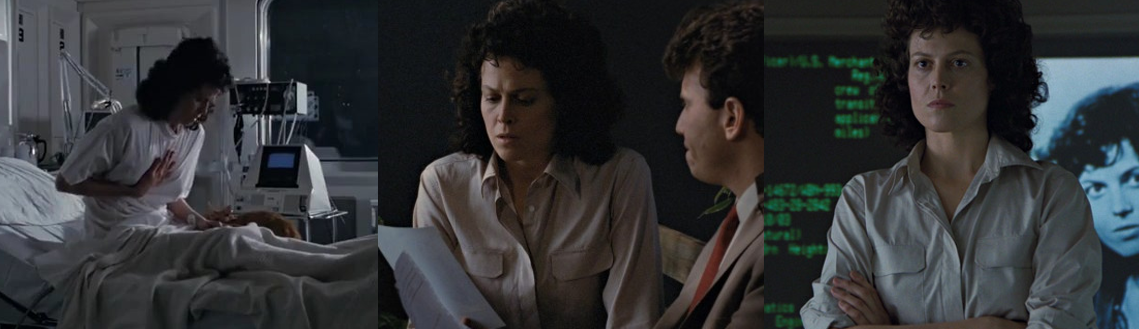
A traumatised Ripley awakens to find herself 57 years out of the loop.

Aliens begins seemingly right where the first film left off, with Ripley and Jones the Cat (Boris) drifting through space in the Nostromo’s shuttle craft, safely dreaming away in hypersleep. When the shuttle is breached by a deep space salvage crew and the two are revived on a Weyland-Yutani space station in Earth orbit, Ripley is at first confused by the station’s presence and then shocked to learn from Weyland-Yutani representative Carter Burke (Reiser) that fifty-seven years have passed! However, that’s the least of her troubles as she suddenly starts convulsing from a pain in her chest; she writhes and begs the doctors to kill her and is horrified to see a Chestburster emerging from her body! Luckily, for her, this is just the first of many recurring nightmares for her; her experiences with the Xenomorph have left her severely traumatised, to the point where sleep is impossible without such nightmares plaguing her. As distressing as her memories are, however, they’re nothing compared to the heartbreak she feels at learning that her daughter (Elizabeth Inglis) has died during her absence or the betrayal she feels when a Weyland-Yutani committee, led by Van Leuwen (Paul Maxwell), grill her on the destruction of the Nostromo. They force her to retell a truncated version of the events of Alien over and over, forcing her to relive her traumatic experiences and explode in a rage when they continue to imply that she sabotaged and destroy her ship and her crew “for reasons unknown”. They discount her description of the Xenomorph and account of events due to lack of physical evidence and suspend her pilot’s license, but she’s more concerned about the fact that LV-426 is no longer an inhospitable world thanks to the efforts of terraformers.

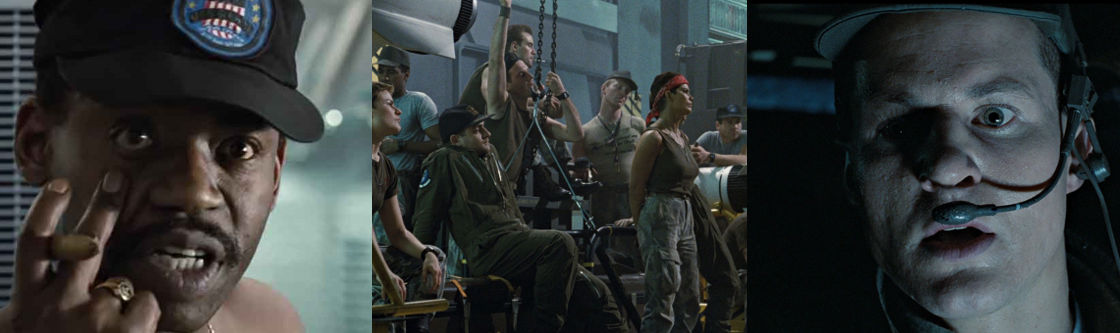
While Apone’s marines might be gung-ho for the action, they’re as in over their heads as Gorman.

While the review board doesn’t believe that the Xenomorphs exist since they haven’t discovered any evidence of such a creature on LV-426 or any of the three-hundred-plus worlds mankind has surveyed, Ripley knows better and, wouldn’t you know it, a group of colonists stumble upon the crashed Engineer ship while out on a scouting mission and, before long, Burke is knocking on Ripley’s door with Lieutenant Scott Gorman (Hope). Understandably, Ripley is a boiling pot of emotions when they ask her to accompany a troop of Colonial Marines to investigate LV-426; not only does she feel betrayed by Burke and the Company for framing her as a patsy, she is so traumatised by her experiences with the Xenomorph that she has absolutely no desire to face her fears and believes that she wouldn’t be any use even in an advisory role. However, after suffering another of her nightmares, she begrudgingly agrees to make the trip but only after Burke swears that the purpose isn’t to capture or study the creatures, but to annihilate them. This introduces her to rowdy Sergeant Apone’s (Al Matthews) ragtag group of soldiers: privates Hudson (Paxton), Vasquez (Goldstein), Drake (Mark Rolston), Frost (Ricco Ross), Spunkmeyer (Daniel Kash), Crowe (Tip Tipping), and Wierzbowski (Trevor Steedman); and corporals Dwayne Hicks (Biehn), Dietrich (Cynthia Dale Scott), and Ferro (Colette Hiller). Although many of his troops are loudmouthed cynics or rowdy meatheads, Apone runs a tight ship and doesn’t stand for any nonsense; a proud man who is fully committed to the corps, he demands nothing but absolute focus from his team and for them to follow orders, even ones that don’t make sense to them. The marines are heavily armed and well experienced in a number of combat drops and scenarios, which mean they’re less than impressed with Gorman’s comparative lack of field experience and Ripley’s refusal to sit with “the rest of [the] grunts” in the canteen. However, while they exhibit a lack of distrust and respect for the Company and its representatives, they are a well-oiled team out in the field, sharing a level of trust and banter than brings levity without compromising their integrity.

Vasquez and Hudson standout from the pack with their memorable temperaments and characteristics.

Obviously, many of these marines are just there to add to the body count once the Xenomorphs start literally emerging from the walls and shadows but, of all the marines, there are three obvious standouts: Vasquez, Hudson, and Hicks. Vasquez is a tough-as-nails soldier who shows nothing but contempt towards Ripley and the orders to holster their weapons to avoid rupturing the colony with their gunfire. Her and Drake have a very close partnership and she is devastated when he is killed during the first skirmish with the aliens. Blaming his death directly on Gorman, she lashes out at the injured lieutenant and remains a hot-headed, explosive member of the survivors; ultimately, she’s forced to rely on Gorman to avoid being impregnated by the aliens, which sadly means them taking their own lives to be spared this fate. While all of the marines provide a measure of comic relief with their biting wit and overly macho behaviour, Hudson takes this to the extreme and beyond; he’s so confidant in his abilities and the superior firepower of his team that he’s aloof and arrogant as a result. Of the all, he’s the one who is most vocal of their bad-assery and the first to succumb to despair when they’re wiped out after being ambushed by the Xenomorphs. With limited resources and manpower and no hope of backup, Hudson’s bravado and resolve don’t just crack, they cave in to hopelessness and Ripley is forced to order him to compartmentalise his issues and get his shit together to help fortify their defences and strengthen their campaign against the aliens. Ultimately, his trigger-happy countenance and desire to strike back against his enemy lead to his downfall, as he’s pulled to his death during a particularly harrowing firefight, but the late, great Pill Paxton definitely stole the show with his performance here.

No mere grunt, Hicks is smart enough to keep his head, take charge, and utilise Ripley’s expertise.

And then, of course, there’s the calm and composed Corporal Hicks played by the massively under-rated Michael Biehn. Unlike many of his peers, Hicks is a level-headed and respectful soldier; he follows his orders without talking back to his superiors, is prepared enough to be carrying a non-explosive shotgun for “close encounters”, and, while he clearly has no love for corporate interference or figureheads like Burke, he is smart enough to know when to keep his mouth shut. With Apone lost during the initial encounter with the aliens, Hicks assumes command of the mission and, having witnessed first-hand that Ripley’s tall tales of biomechanical monsters with acid for blood make this more than the standard “bug hunt”, is fully prepared to take her expertise onboard and make preparations to destroy Hadley’s Hope despite Burke’s protests. There’s a bit of a romantic subplot between Ripley and Hicks, one that grows out of this mutual respect and admiration for each other’s ability, intelligence, and resolve; they never really get beyond the flirting stage, and their flirting is done while Hicks teaches Ripley how to handle the marines’ standard-issue Pulse Rifle, but the ease at which he steps into a position of command and supports her really helps to make his leadership qualities shine. Although clearly terrified and feeling the pressure of the situation, Hicks never gives in to despair or allows himself to become unfocused from the primary objective of survival and escape; when he’s injured by the aliens’ acid, he’s forced to take a backseat and cannot help Ripley in the film’s finale beyond ensuring that the dropship is waiting for her when she gets back, meaning that he never oversteps his boundaries to take away from Ripley’s agency as the primary protagonist and is, instead, and incredibly dependable soldier.

While Burke’s true nature is soon revealed, Bishop proves to be a trustworthy ally to the end.

Ripley’s relationship with science officer Bishop (Henriksen) is far more antagonistic; immediately revealed to be an “artificial human”, Ripley meets Bishop with a distrust that steps right into hostility based on her experience with a similar android in the first film. Throughout the movie, Ripley either ignores or irritably brushes Bishop off, convinced that he’s either a tool of the Company or a risk to herself and others just like Ash (Ian Holm), but Bishop remains nothing but polite and courteous throughout the entire movie. Having said that, though, he does seem to be as enamoured by the Facehugger and the Xenomorph species as his predecessor, and there are several moments where his intentions are cast into doubt, not least when Ripley finds the dropship missing at the finale and assumes the Bishop has left her to die. In the end, though, Bishop proves to be a trustworthy and reliable ally and earns Ripley’s respect by coming through in the end, which is more than can be said or Burke. It’s not long into the mission to Hadley’s Hope that Burke’s true nature as a corporate pen pusher comes to light; despite his assurances that they’re there to eradicate the Xenomorphs, he’s soon arguing against destroying the colony and trying to sell the survivors on the greater financial and military glory offered by the species. He even goes so far as to try and impregnate Ripley and Rebecca Jorden/Newt (Henn) with a Facehugger in order to get a specimen safely through quarantine and back to Earth, and is only spared being executed by the marines for his betrayal by an alien attack, which sees him get his just desserts.

Ripley connects with Newt, and soon takes a proactive role in fighting the alien threat to protect her.

Speaking of Newt, this resourceful and adorable little girl captures Ripley’s attention, heart, and respect for having not only witnessed the alien’s infestation first-hand but having the wherewithal to use the colony vents to stay safe and undetected. Initially a traumatised, almost animalistic girl traumatised by the horrors she’s seen, Newt proves a valuable resource to the remaining marines thanks to her knowledge of Hadley’s Hope, and Ripley does everything she possibly can to give her a sense of security and normalcy. When Newt is abducted by an alien warrior, Ripley immediately takes up arms to venture into the Xenomorph nest to rescue her before she can be impregnated, and through her finds a sense of redemption and hope thanks to the surrogate family they form alongside Hicks. As for the Xenomorphs themselves, Aliens greatly expands upon their nature, society, and screen time. It still takes about an hour for the first of many Xenomorph drones to appear onscreen, which builds a sense of dread and anticipation, and their appearances are always accompanied by ominous shadows or flashing lights to help keep them horrific creatures. Having overrun Hadley’s Hope, the aliens have not only impregnated and killed many of the colonists but also overtaken the environment with a biomechanical infestation that hides their numbers and allows them to strike undetected. Lacking the smooth, phallic skull of the original creature, and these creatures have a rigid, fearsome headpiece and are seen to be far more aggressive thanks to their superior numbers. The aliens scramble across walls and ceilings, hide in the shadows, and exhibit a great deal of intelligence by literally throwing themselves against the marines’ turrets to exhaust their ammo and getting the drop on the marines by using the vents and narrow passageways to get about. Of course, the most memorable and iconic addition to their species is the presence of a massive Xenomorph Queen; this horrific, disgusting matriarch is revealed to be the source of the eggs seen in the Engineer ship and fundamentally alters the Xenomorph’s nature from a self-sustaining biomechanical lifeform to something more akin to ants.

The Nitty-Gritty:
Although Aliens is a very different movie compared to its predecessor, director James Cameron does a masterful job of maintaining a lot of the same horror elements and atmosphere through his incredibly detailed sets, fantastic use of lighting and shadows, and James Horner’s orchestral score. Both melancholy and rallying, depending on the situation, the score really goes a long way to bolstering both the tension felt when the marines are investigating the aftermath of Hadley’s Hope’s last stand against the aliens and when they’re engaging with their violent enemy with all guns blazing. Additionally, this is the film where the aliens gain their signature death squeal which, like the camaraderie between the marines, would become a staple of the franchise and its spin-offs. The marines are clearly a tight-knit group and have been through a lot together, which means they’re not ashamed to bust each other’s balls or through some shade at each other. Even Apone gets in on the action and has a very close, ground-level relationship with his troops; he easily assumes a position of command when required, and is clearly well respected by his marines, but is also clearly seen to be one of them as he sits and eats with them and is just as incredulous to Gorman’s nonsensical orders and inexperience. Many of the marines echo the anti-authority sentiment of some of the Nostromo’s crewmen; Gorman has little combat experience and is left completely overwhelmed when the aliens first attack as it goes against his by-the-book preparations, and the marines are only too happy to go against the Company’s orders (and Burke’s insistences) in order to better ensure their own survival rather than worrying about financial gain.

The additional scenes work in tandem with the practical effects to expand on the aliens’ nature.

Even now, coming up to forty years later, Aliens continues to impress thanks to its impressive sets and practical special effects; a number of tried-and-tested camera and filmmaking techniques and tricks are used to give Hadley’s Hope and the colony a sense of scale beyond what they were actually capable of. Model shots, composite shots, miniatures, and incredibly detailed practical suits are the order of the day here and help give the impression that there are hundreds of aliens scuttling through the colony at once. This is masterfully done during the first skirmish with the aliens, which is a frantic and terrifying experience told mostly through the marines’ head cameras and quick, violent cuts to the marines being picked off one by one by aliens or taken out by their own gunfire. Far more animalistic than their bipedal predecessor, the Xenomorphs are now scrambling, skeletal, hive-like creatures that seek only to cocoon and impregnate others to increase their numbers and to protect their queen. One of the biggest additional scenes added back into the film shows us life on Hadley’s Hope before the aliens infest the colony; here, we get to meet a few new characters, such as colony administrator Al Simpson (Mac McDonald) and Newt’s family, mother Anne (Holly de Jong), father Russ (Jay Benedict), and brother Timmy (Christopher Henn). While there’s a case to be made that the addition of these scenes escalates the timeline of the film somewhat (it’s not entirely clear how long passes between the alien ship being discovered and Ripley being drafted into the marines, but it seems like mere hours), I think it’s great to actually see the colonists alive and well and working away completely oblivious to the danger not far from their little outpost. This also gives Cameron the perfect excuse to recreate the Engineer ship from the first movie, and evoke the feeling of dread its crescent shape inspires in the knowing audience; furthermore, we see that Newt’s family were the ones who not only discovered the ship but also brought the infestation to Hadley’s Hope after her father was attacked by a Facehugger. Perhaps most damning of all is the explicit implication that Simpson was ordered to send the Jorden’s out there by the Company, presumably after hearing Ripley’s testimony during her emotional debriefing, thus framing the subsequent alien infestation as less of an inevitability due to the creatures being on the planet and more of a calculated plot by the Company to breed viable subjects for their bio-weapons division.

Everyone underestimates the aliens but Ripley, who knows only too well of the danger they pose.

Rather than focusing on themes of isolation, dread, and mounting horror, Aliens is the story of one traumatised woman facing her nightmares head on and a disregarded threat proving to be a formidable force. I read somewhere once (I forget exactly where) that someone thought it was amusing and ironic that so many Aliens videogames choose to place players in the role of a Colonial Marine considering that they’re kind of depicted as overconfident, unprepared buffoons who are almost completely wiped out by a superior, far more aggressive force. Some have noted that Aliens is an allegory for the  Vietnam War, where a heavily armed and superior force was caught off-guard by a technically inferior native army, and the depiction of the marines definitely lends itself to this reading; all of them, to one degree or extreme, are absolutely confident to the point of arrogance that they have the skills, resources, and firepower to overcome any foe based on their training and previous success in the field. Most of them don’t take Ripley’s account of the alien seriously, which is their first mistake, but they’re left virtually defenceless (or, you could say, impotent) when they’re forced to turn in their grenades and explosive rounds, which means they’re easy prey for the aliens. There’s an argument to be made that Aliens reduced the Xenomorph threat somewhat; it went from being the “perfect organism” that “can’t” be killed to a swarm of insectile-like monsters that can be blasted apart with sustained gunfire, but I’d argue that their threat has never been greater than in this film! Yes, the marines have the weapons to gun down countless numbers of the Xenomorphs, but those weapons are finite, for a start, and continuously shown to do more harm than good thanks to the aliens’ acid blood. In the end, while Ripley may have more weapons and options available to her this time around, the sheer number and aggressiveness of the Xenomorphs makes them a force to be reckoned with and all the bravado and macho bullshit in the world means nothing when one of those ugly bastards is baring down to strike. As before, Ripley is extremely adaptable once backed into a corner; she ends up one of the few survivors thanks to her knowledge and level-headedness despite clearly being traumatised, and all the machoism in the world is nothing compared to her inner strength.

In the end, Ripley faces hear fears, saves her “daughter”, and puts her nightmares to rest…for now…

One of the most crucial scenes added to the Special Edition is the revelation that Ripley was a mother this whole time, which adds new layers to her connection with Newt; in the theatrical cut, this is famed as simply a maternal instinct kicking in and it works incredibly well just in that reading but, here, it’s so much more than that. It might have simply been easier for the effects team (and spared Weaver’s modesty) to have her nightmare Chestburster come from her abdomen but it actually ties into these themes of motherhood very well in this context. Ripley’s transformation into a bad-ass action hero is her most basic character arc in the film; faced with the slaughter of the marines and Gorman’s inability to act, Ripley has no choice but to take charge and be proactive and her expertise and survival instinct make her a valuable voice of authority once the survivors are forced to build fortifications against the aliens. Alongside this, she builds a surrogate family with Hicks and Newt, and these arcs converge for the finale; for much of the film, the survivors are concerned with holding out long enough for rescue to arrive but, when Newt is abducted, Ripley’s forced to strap together a flamethrower and a Pulse Rifle to delve into the Alien’s nest and rescue her. This turns Ripley’s final journey into the depths of LV-426 not just into a quest to retrieve her surrogate daughter from the monstrous creatures that have ruined her life, but also into a story of redemption; although she couldn’t have predicted that she’d be stuck in space for nearly sixty years thanks to a biomechanical alpha predator, Ripley is wracked with guilt over having missed out on Amanda’s entire life and determined to atone for this by rescuing Newt. Thus, she comes face-to-face not just with the ultimate manifestation of her trauma and horror but also her thematic parallel: the incredibly impressive and grotesque Xenomorph Queen. Like Ripley, the queen is incredibly protective of her young and seems to understand the threat Ripley poses to her eggs, but she explodes into a rage when Ripley turns her weapons on the eggs, gunning down drones and blasting open the revolting egg sack in a trigger happy fury that would make John Rambo (Sylvester Stallone) proud. With the colony on the verge of exploding, Ripley is picked up by Bishop at literally the last second but, just like in the first film, the threat isn’t quite over yet. The queen stows onboard the dropship and makes a dramatic reappearance to rip Bishop in two and hunt down Newt, forcing Ripley to take the controls of a power loader and engage with her foe in one-on-one combat. This is a cathartic moment for Ripley, who was so crippled by her experiences that she had no intention to ever return to LV-426 and is forced to tackle her nightmares head first to overpower and force the queen into an airlock and blast her out into space to finally put her bad dreams to rest…or so it would seem

The Summary:
For me, Aliens is a similar quandary to the first two Terminator films (Cameron, 1984; 1991) in that it’s hard for me to pick which I prefer out of this one and the first one; both are very different films, with the first focusing more on atmospheric dread and mounting horror and the second being far more action-orientated, but they’re both magnificent sci-fi/horror masterpieces in their own right. If you were to put a gun to my head, though, and make me choose, I would pick Aliens every time; I think Aliens is probably my favourite in the entire franchise as well, even though I have a love of love for many of the films and remain a big fan of the franchise to this day despite the most recent efforts. The action-orientated approach definitely helps with that, especially when I first watched it as a kid; it really helped me to overcome the terror I felt watching the original film to see the Xenomorphs being blasted to shreds and in a more vulnerable light, but the film never positions them as an inferior force and they remain an aggressive and horrifying threat through their sheer tenacity, ferocity, and surprising intelligence. As I got older and more experienced, and turned my focus towards academic studies, my love and appreciate for Aliens only grew; now, the themes of motherhood and family and a technically superior force being overwhelmed because of their ill-preparedness and arrogance make the film just as engaging and impactful as its incredible practical effects. More me, Aliens is a quintessential example of just how powerful and realistic animatronics and suits can be to a film and the techniques on display here have more than stood the test of time to make it just as impressive now as it was back then. Moreover, Aliens forever changed the lore and focus of the franchise; not only would Lance Henricksen be forever associated with the franchise but from this point on, subsequent films, spin-offs, and media would continuously return to the idea of a group of well-armed marines combatting the aliens or utilise the Xenomorph Queen as the final threat and I think, even now, Aliens is probably the main reason why the franchise has had such a long life since it was able to capture a wider audience with its greater focus on action horror.

My Rating:

Rating: 5 out of 5.

Fantastic

Are you a fan of Aliens? What did you think to the additional scenes added to the Special Edition? Which of the marines was your favourite and why? What did you think to the addition of the Xenomorph Queen to the lore? Were you a fan of Ripley’s story arc here, her transformation into an action hero and surrogate mother? What did you think to the greater malevolence placed upon the Company? Which of the Alien movies is your favourite and why, and how are you celebrating Alien Day this year? Whatever your thoughts, feel free to sign up and leave them below or drop a comment on my social media. Stay frosty!

Movie Night [Alien Day]: Alien: The Director’s Cut


Audiences were first introduced to the horrific, biomechanical Xenomorphs in this classic science-fiction horror film in which an unsuspecting cargo crew investigates a beacon on the barren world of LV-426 and, as a result, the 26th of April is widely celebrated as “Alien Day”, a day to celebrate one of the greatest sci-fi/horror franchises ever created.


Released: 31 October 2003
Originally Released: 25 May 1979
Director: Ridley Scott
Distributor:
20th Century Fox
Budget:
$11 million
Stars:
Sigourney Weaver, Tom Skerritt, Ian Holm, Veronica Cartwright, Yaphett Kotto, Harry Dean Stanton, John Hurt, and Bolaji Badejo

The Plot:
When the crew of deep space haulage vehicle the Nostromo are awoken from stasis to investigate a possible distress signal, they find themselves terrorised by a biomechanical lifeform (Badejo) that gestates inside a human host and emerges as the perfect killing machine!

The Background:
Alien was the brainchild of writer Dan O’Bannon who, after working with director John Carpenter on the sci-fi/comedy Dark Star (Carpenter, 1974), desired to craft a more realistic and far more terrifying sci-fi horror that would be set entirely in space. O’Bannon’s work on Dark Star impressed fellow writer Ronald Shusett and the two collaborated on the project, which was initially titled Memory, then Starbeast, before Shusett suggested the simple and evocative title of Alien. Pitching the concept as “Jaws (Spielberg, 1975) in space”, the duo were inspired by the surreal and nightmarish work of Swiss artist H. R. Giger, who was later brought onboard to help design the Xenomorph’s various life cycles and the unsettling architecture of the alien spacecraft. Thanks to the success of Star Wars (Lucas, 1977), sci-fi was now a hot commodity in Hollywood and, eager to capitalise on that, 20th Century Fox greenlit the project and brought up-and-coming director Ridley Scott onboard (and even doubled the budget based on his storyboards alone). O’Bannon and Shusett left the genders of the film’s characters intentionally vague and malleable and Scott sought to expand upon the “lived-in” nature of Star Wars by presenting the crew as “truckers in space”. He often filmed the cast’s rehearsals and pushed them to develop both a natural chemistry and a believable animosity towards each other to make their interactions more authentic, which ended up augmenting one of the film’s most gruesome scenes. Upon release, Alien was a commercial success; it made over $11 million at the box office but received somewhat mixed reviews at the time. Since then, of course, the film has not only inspired an entire series and sub-series of sequels and spin-offs but is widely regarded as one of the greatest movies of all time. In 2003, to commemorate the film’s release on DVD, Scott returned to the film, restoring previously excised scenes and digitally remastering it for this Director’s Cut version of Alien that is, for me, the quintessential version of this classic sci-fi horror.

The Review:
Alien begins with the crew of the Nostromo being pulled out of stasis when their ship’s computer, Mother (Helen Horton), picks up a potential distress signal from a nearby planet, LV-426. Almost immediately, over something as simple as a meal, we’re introduced to the complex dynamic of the Nostromo’s crew, which is made up of a group of egos and conflicting personalities who are just about able to work together to keep things ticking along. We don’t really learn a huge amount about each of them beyond a few disparate pieces of dialogue but, through their individual and combined interactions, it’s immediately and abundantly clear that they’ve worked together for some time, certainly long enough for some friction to have developed between certain crewmembers. Captain Dallas (Skerritt) has very little actual authority on the ship; a jaded veteran of many long-haul trips, he begrudgingly goes along with any and all orders from the mysterious and shady “Company” even when they go against their standard protocol and what their ship is technically capable of.

From the banter and class-based tensions, it’s clear that this crew is very familiar with each other.

While navigation officer Lambert (Cartwright) is sceptical of their new orders, Brett (Stanton) and Parker (Kotto), the Nostromo’s engineers, are concerned with more practical considerations; namely, compensation for their efforts. Feeling undervalued and underappreciated compared to the other members of the crew (especially as they are largely responsible for keeping the ship running), they attempt to weasel their way out of landing on LV-426 and it falls not to Dallas but to the Nostromo’s science officer, Ash (Holm), to point out that they (and the entire crew) are contractually obligated to investigate any distress calls and the potential of extraterrestrial life or forfeit their entire earnings. This does little to improve their already dour mood and brings them into further conflict with Lieutenant Ellen Ripley (Weaver), a by-the-numbers officer who likes to do things by the book. She also butts heads with Ash, who not only keeps her from following Dallas, Lambert, and Kane to the derelict alien spacecraft after she determines the distress call to be a warning but also breaks quarantine procedures by allowing the away team back onto the ship even though Kane (Hurt) has an unidentified alien parasite attached to his face.

Kane brings an unexpected, and unwelcome, visitor back from the derelict spacecraft.

This “Facehugger” attacks Kane when he discovers a cargo hold, of sorts, on the derelict craft that is full of ominous-looking eggs. Allowing his curiosity to get the better of him, Kane is left in a comatose state and the crew are left unable to help him since the Facehugger threatens to choke him to death or dissolve the Nostromo with its acidic blood. Dallas is left practically impotent in his helplessness, Ash becomes consumed with researching and investigating the parasite’s capabilities, and Lambert is left enraged that Ripley was willing to sacrifice them just to maintain protocol. The tension amongst the crew is momentarily alleviated, however, when the Facehugger simply falls off and dies and Kane seemingly makes a full recovery, only for him to unexpectedly and viciously explode at the dinner table when a ferocious little “Chestburster” forces its way out of his body, killing him in the process and fleeing into the darkest recesses of the ship.

As if a seven-foot alien killer wasn’t bad enough, Ash turns out to be a Goddamn robot!

Despite the shock and terror of this sudden development, the crew scrambles to track down the Chestburster and are horrified to find that the creature has quickly gestated into a seven-foot alien killing machine! With no reliable means of tracking the Xenomorph, and being picked off one at a time, the crew struggles to unite against this common foe; tensions between Parker and Ripley escalate and things only become more complicated when Ash is revealed to be a life-like android placed on the ship by the Company to ensure the Xenomorph’s recovery. This revelation goes a long way to explaining Ash’s odd behaviour throughout the film; he willingly breaks protocol at every opportunity, which Ripley finds aggravating and suspicious since he is supposed to be the science officer, and seems morbidly obsessed with the alien life form in its various stages of life. When the Company’s true motivations are revealed, Ash drops all sense of subterfuge and attempts to kill Ripley; the ensuing melee reveals his true nature in a startlingly shocking scene that leaves him beheaded at Parker’s hands! He’s reactivated just long enough to deliver an ominous threat regarding the alien’s capabilities and to gleefully reveal that their lives are expandable compared to the alien’s acquisition, leaving the remaining survivors with no other choice than to try and evade the Xenomorph in order to set the Nostromo to self-destruct while they escape in the shuttle.

Some impressive practical effects and camera work add to the film’s timeless aura.

Undeniably, one aspect of Alien that remains intact and impressive to this day are the practical effects; model shots and miniatures do a wonderful job of conveying the weight and scale of the ships and space, and a fantastic use of lighting (particularly shadows), smoke, and flashgun lights help to increase the dread and allure of the titular alien. These are only further bolstered by the intricately-designed, heavily claustrophobic sets; clearly evoking a 2001: A Space Odyssey (Kubrick, 1969) aesthetic mixed with Star Wars’ more gritty set design, Alien definitely feels like a lived-in future where technology is as vaguely anachronistic and unreliable as it is advanced while also effectively coming across as a monster or slasher film in space thanks to the ship’s darker, grottier areas. Easily the most impressive set of the film, though, is the derelict spacecraft where Kane discovers the alien eggs; a combination of miniatures, model shots, and even children create a sense of awesome scale that is made only more foreboding by Giger’s disturbing set design and the presence of the half-fossilised “Space Jockey”.

The Nitty-Gritty:
One thing to note about Alien is that it was made at a very different time in cinema, a time when sci-fi and horror was a much more atmospheric affair and involved a lot of slow, ominous shots and tense, foreboding music all designed to build a sense of dread in the viewer. This is best evidenced in the movie’s overly long and slow-paced opening, which includes a full cast and credits and a deliberate tour of the Nostromo to help familiarise us with the ship’s aesthetic, narrow corridors, and the lived-in nature of the film’s sci-fi. Consequently, the film requires a certain mindset; rather than bombarding you with action, viscera, and loud explosions, it’s much more of a methodical exploration of the slow dissection of an already tumultuous group stuck at the mercy of a vicious creature.

Much of the Xenomorph’s origins and biology is left intentionally vague.

The whole first act of the film is specifically designed to introduce us to the idea of the unknown, the dangerous and terrifying prospect of what may be lurking in the furthest reaches of deep space. It’s made abundantly clear by Parker and Brett that the Nostromo is not built, or properly equipped, to be investigating strange signals, much less landing on alien worlds, which proves to be true when the shuttle suffers severe damage simply by landing on LV-426. Of course, their concerns are either ignored or outright overruled simply by Company protocol, which dictates that “all other priorities are rescinded” when compared to the Xenomorph. At this point, the Xenomorph itself is a mystery al its own; the derelict spacecraft is beyond any sense of human understanding, to say nothing of the gigantic skeleton of the Space Jockey that serves as an ominous warning to deter the crew. Where did the eggs come from? What purpose did they serve? How did the Space Jockey get infected with a Chestburster? These are all questions the film purposely leaves unanswered and which only add to the sense of mystery and terror as the alien’s true origins and purpose are unknown and, ultimately, inconsequential since, once its aboard the Nostromo, all that matters is trying to survive rather than working out who created it and why.

The Alien’s phallic design makes it as disturbing as it is terrifying.

The Xenomorph’s design, however, is no accident; consciously designed to evoke uncomfortable feelings of visceral terror, each stage of the creature’s life cycle resembles genitalia in some way and its threat is as sexual as it is physical. The Director’s Cut is notable for included a previously excised scene in which Dallas is revealed to not have been killed by the Xenomorph but, instead, is being transformed into one of the same eggs Kane discovered on the crashed ship. This would have suggested a complete, self-sustaining life cycle and only added to the mystery and horror of the alien; obviously, the sequel abandoned this in favour of an egg-laying Queen but I still feel like this concept works in the overall context as the extended Alien canon showed that the Xenomorphs were capable of undergoing further, life-sustaining transformations. Still, the Facehugger effectively rapes Kane, pouncing on him and impregnating him against his will and causing a phallic, carnivorous parasite to puncture its way from his chest. Even when fully grown, the Xenomorph remains disturbingly phallic in its design and the way it approaches and kills its prey; from its long, phallic head and tail to its dangerous retractable inner mouth, the creature stalks, overwhelms, and consumes its victims with a disturbingly serene grace that is punctuated by a sudden and brutal aggression.

The crew are undone by their own character flaws as much as the viscous alien threat.

In the Xenomorph, the crew are faced with the threat of the unknown in physical form; thanks to the network of air ducts, the abundance of shadows, and its sheer tremendous ferocity, the crew are effectively powerless against its will. It’s not even as though they can rely on any futuristic technology to assist them as the Nostromo has very little in the way of armaments; all they’re left with is a crude motion tracker and the one piece of technology they do have (Ash) ultimately proves to be just as dangerous as the Xenomorph itself. Thanks to the class-based tensions that already existed at the start of the film (particularly between Parker and Ripley) and the sheer terror of the situation (primarily embodied in Lambert), the survivors are unable to properly get their shit together fight the creature. The Xenomorph itself remains mostly hidden in shadows and tantalisingly kept off-screen for large portions of the film to only increase its shock value and horror when it does appear; appearing as little more than a living shadow of talons and teeth, when it is seen, it is an incredibly impressive piece of practical work that remains as terrifying now as it was back then.

Thanks to keeping her shit together, Ripley ultimately triumphs over her androgynous stalker.

What make Ripley such an effective protagonist is the way in which she embodies all of the traits of the different crew members and balances them out so that no one emotion or personality overwhelms her. She starts the film very much a semi-stuck-up stickler for the rules (though it must be said that she was right all along and Ash never should be broken the quarantine procedure); like Dallas, she is used to simply following orders but, while he boldly chooses to lead team to the crashed ship and venture into the ducts in some foolhardy attempt at heroics, she opts to follow protocols designed to keep them alive. Kane’s sense of curiosity is also present in Ripley, but it’s tempered with a caution that she is level-headed enough to keep from spilling over into aggression like Parker. As we see in the sequel, the entire experience scars her enough to leave her disillusioned with the Company, similar to Brett and, while Lambert is basically reduced to a quivering wreck when faced with the Xenomorph, Ripley (despite clearly being terrified out of her mind) is able to hold herself together enough (and be adaptable enough) to find ways to stave off and, ultimately, kill the creature. Consequently, Ripley encompasses the traits of each member in the perfect storm of survival, turning her into an independent and forthright heroine. Adaptable and desperate, she is not only able to naturally assume command of her more emotionally unstable crewmates but also temper her fear with a determination that makes her as relentless as the alien, meaning that she is fully capable of holding her own against the Xenomorph’s vaguely androgynous horror despite being more reactive than her more proactive characterisation in the sequels.

The Summary:
Alien is a thrilling and exhausting experience; thanks to a masterful, deliberate pace, the film masterfully builds a sense of dread and tension through some long, lingering shots and a fantastic use of lighting and ominous, understated music. The characters are all fantastically realised; speaking over each other and full of conflicting egos and personalities, there’s a sense of familiarity and tension that really helps to make the entire film believable and the characters immediately relatable even though we don’t learn a whole hell of a lot about them. Similar to the alien, what we learn of the characters is told throughout the film and the way they act, and interact, with each other and the escalating horror they find themselves facing. The vast expanse of the unknown is given tangible, disturbing form in the Xenomorph, which attacks and brutalises its prey through means as uncomfortable as they are ferocious and, in many ways, the entire film is an allegory of the dangers of the unknown and sexual assault. At its core, the film is about a group of working-class Joes forced into a nightmarish situation and their ability (or inability, in many cases) to adapt and react to this threat determines who lives and dies. Ripley, as the only one capable and adaptable enough to balance emotions and characteristics that otherwise overwhelm her crewmates, is left the sole survivor but the cost of her victory is high as it is only through the sacrifice of everything and everyone she knows that she is able to triumph. In many ways, Alien was incredibly ahead of its time; it’s easy to almost forget that it’s a science-fiction film since, fundamentally, Alien is a twist on the classic slasher or haunted house formula and technology plays a very small role in battling the Xenomorph. Thanks to the efforts of Ridley Scott, and his cast and crew, one of the most terrifying monsters in all of cinema was effectively realised and while subsequent sequels somewhat diminished the Xenomorph’s ominous threat and menace, that doesn’t take away from this more terrifying and deliberately-paced first film in the series, which has stood the test of time and remains, despite some outdated onscreen technology, a timeless classic.

My Rating:

Rating: 5 out of 5.

Fantastic

Are you a fan of Alien? What did you think to the additional scenes added to the Director’s Cut? Which member of the crew was your favourite and why? What did you think was the backstory of the Xenomorph and the Space Jockey at the time? Did you guess that Ash was an android? Did you expect Ripley to end up as the sole survivor and, if not, who did you think would make it out alive? Which of the Alien movies is your favourite and why and how are you celebrating Alien Day this year? Whatever your thoughts, stay frosty and drop a comment below!

Game Corner [Alien Day]: Aliens: Colonial Marines: Limited Edition (Xbox 360)


Audiences were first introduced to the horrific, biomechanical Xenomorphs in the classic science-fiction horror film Alien (Scott, 1979), a tense and suspense-filled monster film that kick-started an entire franchise. In that film, and much of the subsequent Alien media, an unsuspecting cargo crew investigates a beacon on the barren world of LV-426 and, as a result, the 26th of April is widely celebrated as “Alien Day”, a day to celebrate one of the greatest sci-fi/horror franchises ever created.


Released: 12 February 2013
Developer: Gearbox Software
Also Available For: PC and PlayStation 3

The Background:
Hooo boy, where to start with this one? So, if you’ve played games, follow games news, or watch online reviews or videos about games the chances are that, at some point, you’ve come across people talking about Aliens: Colonial Marines, a first-person shooter (FPS) that was heavily pushed as being the official, direct sequel to Aliens. Though originally conceived of by Gearbox Software, multiple development studios worked on the game between 2007 and its eventual release in 2013 since Gearbox was busy dividing their attentions between multiple other titles at the same time. This, perhaps inevitably, led to some disagreements regarding the design and direction of the game. Further compounding matters was the fact that Gearbox were dissatisfied with TimeGate Studio’s work on the PlayStation 3 version and, having already delayed the game significantly by this point, were forced to work against a strict deadline to finish the game for its intended release date. Interestingly, Aliens: Colonial Marines actually sold really well upon its release (perhaps because of the strength of the Aliens franchise) but was the subject of widespread scathing criticism; critics were unimpressed with the graphics, bugs and glitches, poor textures and lighting effects, and its lack of continuity to the Alien franchise. While there were some who praised the game’s aesthetics and features, others criticised the intelligence of the game’s enemies, which had been corrupted and neutered thanks to a simple typing error in the game’s code. For my part, I’d heard all the horror stories surrounding this game and was still intrigued; being a big Aliens fan, and considering the game is dirt cheap and easy to come by, I figured it couldn’t really be as bad as I was being told, especially since I’d heard similar stories about Aliens vs. Predator (Rebellion Developments, 2010) and found that to be nowhere near as bad as I had been led to believe. Not perfect, for sure, but then again I’m not the biggest fan of FPS games so my expectations are quite low by default.

The Plot:
Seventeen weeks after the events of Aliens, the Sephora receives a distress call from the Sulaco, which has inexplicably returned to orbit around LV-426. Corporal Christopher Winter is amongst the Colonial Marines sent to investigate the ship, discovering that it (and the planet below) is infested with Xenomorphs that have wiped out an entire regiment of Marines and that the malicious Weyland-Yutani corporation have once again secretly been plotting to acquire the creatures for their bio-weapons division.

Gameplay:
Aliens: Colonial Marines is, like many titles in the franchise, a first-person shooter that is, for the most part, very similar to the Marine portions seen in Aliens vs. Predator and other FPS games. In a refreshing change of pace, you play as a character who isn’t silent for a change; Winter, like many of his fellow Marines, may look and sound like your typical overly-macho jarhead but it’s nice to actually have an FPS protagonist who isn’t as silent as a graveyard and can actually, properly interact with the game’s other characters.

Blast those Xeno bugs to mush with your FPS skills.

As you might expect, all the typical FPS clichés are present and accounted for: you can carry two weapons at a time, changing between them with the Y button, in addition to a limited number of explosives (frag grenades, firebombs, and claymores, specifically) and a pistol with unlimited ammo, both of which can be accessed by pressing right or left on the directional paid (D-pad). You can jump with A (though, thankfully, there isn’t really much in the way of platforming sections), crouch with B (doing so behind boxes or other parts of the environment to avoid incoming fire), sprint for a short burst by pressing in the left analogue stick, and execute a melee attack (generally bashing enemies with the butt of your weapon) by pressing in the right analogue stick. If Xenomorphs or Facehuggers pin you down, you’ll have to mash X to fight them off and may be reduced to your pistol for a few moments as you struggle to your feet; you can also shoot at explosive canisters to take out multiple enemies at once, which is always handy.

Don’t use the weapon wheel in the middle of combat or you might end up skewered!

Holding down the Y button will bring up the game’s weapon wheel; from here, you can equip different weapons as you collect or unlock them, which is useful but this weapon wheel doesn’t pause the game so, if you need to switch out our Assault Rifle for the Pulse Rifle in the middle of a skirmish, the chances are that you’re going to get injured or killed so it’s best to switch your weapons in safe areas. Most weapons have a secondary fire function as well, ranging from an explosive short or flame burst to a paralysing effect to your shots, and you can toggle your torch (or “flashlight” for you Americans) by pressing down on the D-pad. You’ll want this flashlight activated at all times since Aliens: Colonial Marines is a very dark game and you’ll need all the light you can get in some areas. I knew about this ahead of time and also cranked up the in-game brightness but, honestly, I actually didn’t mind the game’s darker areas and moments as they are all highly reminiscent of the source material and really added to the game’s fidelity to the movies and the sense of mounting dread and tension since you can never really tell what’s lurking around the next corner. Thankfully, you can whip out the franchise’s iconic motion tracker by pressing LB and a mini tracker will beep and appear onscreen when enemies are near. Neither are massively accurate and you can’t shoot and use the main tracker at the same time but it’s a welcome addition and better than nothing since the tracker also points you in the direction of your objective and notable characters/objects.

Gameplay occassionally slows down to have you defending barricades or using stealth.

The game features a relatively simple heads-up display (HUD) which tracks your armour, health, ammo, and experience points (EXP). Each time you kill an enemy or find a collectable, you’ll gain EXP and can spend these points on a variety of upgrades for each of your weapons. Your health is measured in three sections and will automatically refill in each section; however, should you lose a section of health, the only way to refill it is to grab one of the Med-Packs scattered across the game’s locations. Ammo, new weapons, and armour are relatively plentiful, often found stashed in the game’s quieter rooms or dropped by human enemies. The game also features some pretty generous checkpoints and, upon reloading a save, you’ll be gifted with full armour and health, which is always appreciated. The bulk of Colonial Marines’ gameplay is centred around exploring familiar environments from the first two movies, blasting a variety of Xenomorphs and human enemies as they rush at you, and some very basic missions. You’ll be cutting open sealed doors with your blowtorch, interacting with switches and consoles, finding flight recorders, taking out Weyland-Yutani scientists before they can activate alarms and set off poisonous gas, rescuing other Marines and personnel, and generally trying to survive and get to the bottom of Weyland-Yutani’s questionable schemes. Despite the game’s dark areas and the repetitiveness of many of the corridors and locations you find yourself in, the game is quite linear so you won’t find yourself getting lost that often but you can always refresh yourself on your current objectives by pressing the ‘Back’ button and just follow nearby non-playable characters (NPCs) if you get a bit stuck.

Set up and disable sentry guns to help tip the odds in your favour.

Occasionally, you’ll be charged with defending an NPC or holding out against wave upon wave of Xenomorphs as your fellow Marines attempt to cut through doors, signal for help, or start up the iconic Aliens dropship. These sections can be rather tense and frustrating since, while NPCs are helpful and will shoot at enemies (and make for great bait), they aren’t the most reliable computer-controlled allies I’ve ever had and it can be tricky to get a good shot at the agile and stealthy Xenomorphs. Often, you’ll also be tasked with grabbing and setting up an auto-turret in these situations, which can be extremely helpful, but you’ll also have to watch out for these turrets as Weyland-Yutani mercenaries have set them up to fire on you, requiring a bit of subterfuge as you take the long way around to disable the sentry guns. Aliens: Colonial Marines’ main campaign is divided into missions; as you complete each mission, you’ll be awarded with more EXP and given the option to continue or back out, allowing you to play in brief bursts if you desire. The game’s action is further broken up by a handful of instances where you must climb into the iconic Powerloader to open up a blast door and battle a particularly frustrating boss and, of course, numerous interruptions to the flow of the gameplay. These generally take the form of platforms collapsing beneath you, parts of the environment randomly exploding, or the risk of explosive decompression; in each instance, you’ll be forced to wait for the game to return control to you and then continue on though, thankfully, there are no disorientating moments where your senses are thrown off by concussive explosions.

I encountered few, if any, glitches in the A.I. of the bog standard enemies…

Overall, the game isn’t especially difficult; there are four difficulty options available and I finished a playthrough on “Soldier” (or “Normal” for us normal people) in about eight hours. As you might expect, the game lags a little thanks to its long loads times; many of these are unsubtly masked by long, drawn out periods of dialogue between characters or doors that need cutting open but you’ll also notice it whenever you die and reload a checkpoint. Considering all the horror stories I heard about the game’s buggy A.I., I found the enemies to be quite relentless and formidable; I never had any instance where enemies harmlessly ran against walls, got stuck against the environment, or passed right by me that weren’t intentional and I actually found myself dying quite a bit when the Xenomorphs attacked as a group (oddly, I found I accrued more deaths on the game’s easy mode…), though there were instances where the game’s dodgy coding could be exploited to my benefit.

Graphics and Sound:
Aliens: Colonial Marines’ attention to detail is impressive, to be honest; every area looks and feels exactly as it did in Aliens or has been modelled to closely mimic James Cameron’s lived-in aesthetic. As you explore the Sulaco, you’ll find acid burns, claw marks, blood stains, and smashed lighting and other objects all over the place, which really adds to the immersion and the tension. You can even spot the lower half of Bishop (Lance Henriksen) in the Sulaco’s landing bay, alongside numerous Xenomorph husks, bloodied corpses, and dead Facehuggers. However, I will admit that I noticed some poorly-rendered textures, odd graphical hiccups, and that some of the voices would get cut off or be muted during dialogue.

The attention to detail is top notch but Hadley’s Hope is looking a little too intact…

In many ways, this attention to detail actually backfires somewhat as you progress through the game; as ridiculous as it is to conveniently be exploring the Sulaco, I can just about forgive it thanks to the very basic explanation the game provides. What I can’t quite forgive, though, is the fact that, after crash-landing on LV-426, you end up exploring Hadley’s Hope, the colony that was not only the primary setting for Aliens but was also completely obliterated by a nuclear explosion at the end of that film. Here, though, the colony is in exactly the same shape as it was at the start of Aliens; it looks exactly the same as it did when the Marines explored it in the movie, all the consoles work (to an extent) and all the movie’s locations are intact and recreated. You even come across Hudson’s (Bill Paxton) corpse, the medical bay, the area where the Marines set up their turrets, and explore the sewers, all of which show no signs of being vaporised as they surely would have been. This is great in terms of recreating the familiar locations of the movie but not so great when you stop and consider that the colony should have been reduced to a smouldering, highly radioactive crater. You also get to explore the derelict Engineer ship from Alien; similar to Alien Trilogy (Probe Entertainment, 1996), the ship has been quarantined by Weyland-Yutani and they have been investigating it, putting up floodlights and scaffolding and what-not in an attempt to harvest the Xenomorph eggs. This means, of course, that you also get to visit the massive egg chamber and the decaying remains of the Space Jockey from that film, which is always a delight, and I could have sworn that I spied the floating mapping device the protagonists used in Prometheus (Scott, 2012). Although all of the Marines resemble little more than action figures, the Xenomorphs come off looking much better; I always find it odd how games of this generation can render alien monstrosities so well but struggle with human likenesses.

Humans might look like garbage but the aliens look really good, at least.

While the game’s environments are dark, moody, and atmospheric, this all adds to the immersion and the tension since Xenomorphs can pop out from grates or smash through windows and doors at a moment’s notice, which really helps to keep you on your toes. Even the sewer section is made more exhilarating by the dank aesthetic, the presence of numerous, dried out Xenomorph husks, and the fact that you are stripped of all your weapons and must stealthy make your way through to avoid detection. Like many FPS titles, the majority of the game’s cutscenes are rendered using in-game graphics and without deviating from the first-person perspective, meaning full-motion cinematic cutscenes are few and far between. In terms of sound design, though, Aliens: Colonial Marines knocks it out of the park since everything is ripped straight out of Aliens; that means the familiar beep of the motion tracker, the recognisable bursts of the Pulse Rifle, the high-pitched squeals and growls of the Xenomorphs, and even the sounds of the computers and environment are all present and accounted for. Additionally, not only does Lance Henriksen return as Bishop but the developers somehow convinced Michael Biehn to return as Corporal Dwayne Hicks which, while welcome, makes absolutely no sense even in the game and seems to be based purely on the fact that the third movie is so unfairly hated.

Enemies and Bosses:
You’ll never believe this but the most common enemy you’ll encounter in Aliens: Colonial Marines are the Xenomorphs! The regular drones are modelled after those seen in Cameron’s film, sporting ridged skulls and clambering all over walls and ceilings. These guys will pop out from vents, grates, and even from behind doors, slashing and clawing at you, leaping at you, and trying to pin you down to take a bite out of you. Thankfully, though, like in Aliens, these bugs are easily dispatched (and will often blow into chunks) with a few shots and are most dangerous when attacking in groups or from the shadows; while they do bleed acid blood and melt away upon defeat, this doesn’t seem to damage you (or, if it does, I didn’t really notice).

You’ll come up against a few new types of Xenomorph in this game.

There are also a couple of Xenomorph variants to contend with as well, such as the Lurker Xenomorph, which is more akin to the one seen in Alien; this smooth-skulled bastard creeps around and attacks from the darkness before darting out of sight, making it a particularly bothersome enemy. You’ll also come across a number of eggs scattered throughout the game’s environments; you should shoot these on sight with your pistol and be aware of Facehuggers in the immediate area, which are small and particularly difficult to get a good shot at. In the sewers, you’ll encounter the Boiler variants; these are heavily-degraded husks whose senses have been dulled by radiation poisoning and remain completely still until they hear movement. You must sneak past them, stand completely still if they hobble near you, and then activate a series of switches to lure them towards noises, whereupon they explode in a shower of acid. You’ll also have to contend with the Spitter Xenomorphs, which spit acid at you from a distance to whittle down your armour and health, and combinations of each Xenomorph type at various points. You’ll also have to contend with some human opposition as Weyland-Yutani send in a bunch of heavily-armed mercenaries to take you out and secure their investment. These assholes dart around, use cover, and fire at you with the same weapons available to you, packing Pulse Rifles, shotguns, tossing grenades, and even wielding Smart Guns and heavier armour. Thankfully, they go down just as easily as the Xenomorphs and any nearby aliens will also attack these humans, which is helpful, but the mercenaries are a constant source of frustration as they tend to blast you with a shotgun from behind when you least expect it.

The Raven makes for a persistant and frustrating boss.

Aliens: Colonial Marines only features four boss encounters (each of these uses the term loosely since you aren’t given the luxury of a health bar to check your progress) but each one is a little different and frustrating in its own way. The first boss you’ll have to contend with is the Raven, a large, Praetorian-like alien that appears to have burst out of Hudson’s chest. This thing is all-but-invincible and must be evaded and ran from when you first encounter it as you don’t have any of your weapons. Eventually, after darting through the sewers, dodging its wild swipes from floor grates, and racing across the barren wasteland of LV-426 while numerous drones try to cut you to ribbons, you make a final stand against it in the iconic Powerloader for, perhaps, one of the worst and most annoying boss fights ever. The Powerloader is slow and clunky and it’s never made entirely clear what you have to do or if your hits are even landing, not to mention the fact that your turning circle is abysmal and Xenomorphs swarm at you to whittle your health down. In the end, the best thing to do is concentrate on the Raven, whacking it with your left claw repeatedly and try to get it to glitch against the environment in a corner; land a few hits and then try using your right claw to choke it until, eventually (seemingly randomly), a cutscene will play out where Winter breaks the fucking thing in two.

Work your way past the APC’s heavy artillery in order to take it out of commission.

The next boss sees you taking on an Armoured Personnel Carrier (APC) that is manned, and protected, by Weyland-Yutani mercenaries. Like the Raven, this thing is completely bulletproof and will cut you in half, or blow you to pieces, in seconds with not only its heavy weaponry but also the firepower of the minions which protect it. I found this section particularly trying since you’re exposed in the open a lot, despite the abundance of cover (bullets and explosions can be seen to penetrate much of the cover anyway) and it’s really easy to get caught in a crossfire. It’s best to find a good vantage point, drive the APC back by shooting the nearby fuel tanks, and pick off the mercenaries (particularly the flamethrower and RPG-wielding assholes) to clear the way to the crane controls and crush the APC once and for all.

Luckily, you can use a game bug to make the Crusher far less threatening.

The third boss is the Crusher Xenomorph, a gigantic bull-like variant with a huge, armour-plated head that charges at everything head-first and will crush you under its elephantine feet. As if that wasn’t bad enough, swarms of Xenomorphs fill the area to distract you, making it hard to get a good shot at the Crusher but, luckily, you can again glitch the boss to make things a bit easier. When you enter the area where the boss spawns, head to the barricade on the left and hop on the crates and then on top of the barricade. The Crusher will stand completely still by the APC and no Xenomorphs will spawn in, allowing you to fire at it with your explosive shots and either significantly wound it or kill it outright to make the fight ten times easier.

It all ends with a game of hide and seek with the Alien Queen.

Finally, as you might expect, you must face off with a Xenomorph Queen. This gigantic bitch is completely bulletproof and you won’t be able to deal any damage to her at all; instead, you must use the conveniently-placed environment to hide and avoid her claws, tail, and sight, working your way around the hanger and towards a series of switches. You must then activate each switch to prime a cargo launcher, rushing back to cover and grabbing the respawning armour if she hits you and trying to not get sucked out into the atmosphere at the same time. Once the cargo launcher is fully primed, simply stand behind it and wait for her to get in front of it and activate it and that’s it. Of all the parts of the game, and the many battles I’ve had against Xenomorph Queens, this was by far the easiest and is simply a question of patience.

Power-Ups and Bonuses:
Naturally, as both a FPS title and an Aliens game, you can acquire numerous weapons and items to increase your odds against the Xenomorph hordes. When you spot a weapon, ammo, or item, though, it’s not enough to just walk over to it; you actually have to press X to pick them up so make sure you do this or you could enter the next fire fight shorthanded! Winter begins the game with a handy stock of frag grenades, the iconic Pulse Rifle, a service pistol, and a shotgun for close-quarters combat. You can also acquire a number of other weapons as well though, including the Assault Rifle and Submachine Gun, the sniper rifle-like Battle Rifle, and the tactical shotgun. Each one comes with different ammo capacities, firepower, and accessories to purchase and equip with your EXP. These include increasing your ammo capacity, adding laser sights, or underbarrel grenade launchers and flamethrowers. It’s a good idea to swap out for a different weapon when you find a quiet moment in order to preserve your more powerful weapons, though this can result in your shots being a bit less effective and a bit more haphazard depending on which weapon you select.

Grab the Smart Gun and dice those Xenos up with auto aiming and auto tracking!

You can also find three super weapons scattered throughout the campaign, generally right before a story-based objective; these include the Smart Gun (which automatically targets and tracks nearby enemies), the Incinerator Unit (a flamethrower perfect for setting alight groups of enemies), and the RPG Launcher to take out anti-aircraft guns. When you grab each of these weapons, you’ll still keep your existing weapons but won’t be able to use them unless you drop your current weapon; none of them can be reloaded either so choose your shots wisely. Finally, you can also pick up six Legendary Weapons throughout the campaign; once you find them, they are all added to your inventory for regular use (with two exceptions) and, while you can’t modify or upgrade them and they take their own unique ammo type, they generally tend to be a bit more powerful than the standard weapons. You’ll find such memorable weapons as Hicks’ shotgun, Scott Gorman’s (William Hope) pistol, Hudson’s Pulse Rifle, and Jenette Vasquez’s (Jenette Goldstein) Smart Gun; finding all six will net you a cheeky Achievement but, luckily, they’re all pretty much sitting out in the open so it’s not hard to miss them.

Additional Features:
Speaking of which, Aliens: Colonial Marines includes sixty Achievements, fifty of which in the main game and ten more made available through downloadable content (DLC). The majority of these are tied to story progression and the game’s multi-player but you’ll also net them for finding various goodies in the campaign (including a number of dog tags and audio files, the six Legendary Weapons, the head of Rebecca “Newt” Jordan’s (Carrie Henn) doll Casey, and even a stash of Xenomorph eggs painted up like literal Easter Eggs), completing missions under various time limits and restrictions, and for beating the game’s higher difficulty settings.

Pick up the game’s DLC for more multiplayer maps and a whole new solo campaign.

As alluded to above, Aliens: Colonial Marines features a multiplayer component; one allows for two players to play through the main campaign in co-op, which is achieved through a split screen, and the other is a typical deathmatch mode that, for some reason, cannot be played locally. Here, you can customise your Marine and Xenomorph’s appearance (unlocking additional attire, weapons, and attacks through successful play) and take part in various team-based missions across a variety of the game’s maps. Additionally, there’s a pretty decent amount of DLC available as well, including additional map packs for the multiplayer mode and an entirely new single player campaign, “Stasis Interrupted”, which explores the fourteen week gap between the end of Aliens and the start of Colonial Marines. This campaign sees you controlling a new Marine character, features a bunch of additional Achievements, and even has the player journeying to Fiorina “Fury” 161 in a desperate attempt to rescue Ellen Ripley (Sigourney Weaver). Finally, if you own the “Limited Edition” of the game as I (and, I’m sure, many) do, you’ll gain access to a number of classic characters and weapons from the Alien franchise, and some additional customisation options, to use in the multiplayer mode.

The Summary:
Once again, it turns out that all of the horror stories and negativity I’d heard about a game is nowhere  near the truth; sure, Aliens: Colonial Marines is by no means a perfect game but it’s far from the unplayable wreck I was led to believe it was. Instead, it’s a pretty by the numbers FPS title, offering little new or innovative from the genre, but elevated above much of its competition by a fantastic use of the Alien license. The game’s attention to detail is staggering and this very well may be the best one-to-one adaptation of Aliens ever; everything from the sounds, the weapons, and the environments is all ripped straight from Aliens and the game goes out of its way to recreate the look and feel of the film through the use of atmospheric lighting and almost slavish fidelity. It’s just a shame, then, that the developers didn’t think a little harder about the game’s narrative aspects in relation to its source material; as a midquel between the second and third movies, the game makes little sense, favouring fidelity and fan service over a coherent and consistent plot, which honestly drags the game down more than the minor graphical and A.I. bugs (of which I saw very little in the game’s basic enemies).

My Rating:

Rating: 2 out of 5.

Could Be Better

What did you think about Aliens: Colonial Marines? Did you find it to be a broken mess of the game like so many others or did you, like me, find it to be a perfectly serviceable FPS title? What did you think to the game’s story and the way it brought Hicks back? Did you encounter any odd glitches or game-breaking moments? If so, what were they and how often did they crop up? Which of the Alien movies or videogames is your favourite and why and how are you celebrating Alien Day this year? Whatever your thoughts, stay frosty and drop a comment below!