Back Issues [Wolvie Wednesday]: Wolverine #1-4


When readers were first introduced to the character of James Howlett, better known by the names “Logan” and “Wolverine”, it was in the pages of The Incredible Hulk. From his first full debut in issue 181 all the way back in November 1974 to him officially joining the X-Men in 1975, the character has become one of Marvel Comics’ most recognisable and enduring superheroes, regularly featuring in solo and team comics, cartoons, movies, videogames, and countless other merchandise.

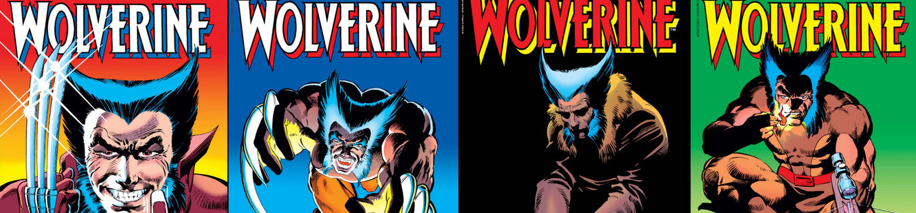
Writer: Chris Claremont – Artist: Frank Miller

Story Title: “I’m Wolverine!”
Published: 1 June 1982 (cover-dated September 1982)

Story Title: “Debts and Obligations”
Published: 29 June 1982 (cover-dated October 1982)

Story Title: “Loss”
Published: 3 August 1982 (cover-dated November 1982)

Story Title: “Honor”
Published: 31 August 1982 (cover-dated December 1982)

The Background:
In 1974, Roy Thomas, editor-in-chief at Marvel Comics, tasked writer Len Wein with creating the first Canadian superhero; a short, feisty adventurer named “Wolverine” who would be as scrappy and fearsome as his namesake. Though the legendary John Romita Sr came up with the original concept art for Wolverine and his now-iconic retractable claws, it was artist Herb Trimbe who put the finishing touches to the character’s design. In what would become a staple for Wolverine for decades, Wolverine’s past and true identity was initially quite the mystery; yet, despite claims that Wolverine was originally conceived to be a mutated wolverine cub, Wein insisted this was false and that Wolverine was always intended to be a Mutant. These days, Wolverine is established as one of Marvel’s most popular characters thanks not only to him joining the X-Men a year after his debut but also the success of his first solo miniseries courtesy of X-Men scribe Chris Claremont and legendary comic book artist Frank Miller. Largely regarded as one of Marvel’s best miniseries, Claremont and Miller’s work helped to define many of Wolverine’s now recognisable character traits, from his time in Japan, his knack for brutality, and his iconic no-nonsense attitude. The popularity of the miniseries led to an ongoing solo book from 1988 but it’s not hyperbole to say that Wolverine probably wouldn’t be as big of a star as he is today without this influential four-issue series, which would come to inform the character’s later adaptations into films, cartoons, and videogames.

The Review:
Wolverine’s first solo outing begins within him freeclimbing his way through the Rocky Mountains, back in his home soil in Canada, on “business”; as he explains in his blunt and characteristically glib dialogue boxes, he’s “the best there is at what [he] does. But what [he] does isn’t very nice”, which may very well be the first instance of him saying this iconic catchphrase. He’s there to track, hunt, and kill a ferocious grizzly bear that’s been slaughtering locals as they venture onto the mountain; thanks to his heightened senses, Adamantium laced skeleton, and innate ability to tackle even a berserker grizzly bear head-on, Wolverine easily challenges, dismembers, and kills the beast with a minimum of fuss but he’s not happy about it. Not only does he recognise that the bear is simply being true to his nature, but he also spots an illegal poison-barbed arrow in the dead beast’s back, evidence of a hunter landing a hit on the bear but not sticking around to finish it off and thus driving it into a frenzy. With seven men, three women, and five kids dead as a result, Wolverine tracks the foolish hunter to a bar some fifty-seven miles away and confronts him; riled up, the hunter picks a fight, much to Wolverine’s pleasure. Though we don’t see what Wolverine does to the man, he assures the reader that he let the hunter live…and that the bear put up a better fight. He makes sure the hunter pays for his actions in a court of law and prepares to head home to the X-Men when he spots a pile of letters on his doorstep; they’ve all been returned, unopened, from an old flame of his: Mariko Yashida, the daughter of one of the oldest and most respected families in Japan. Although the Japanese embassy tells him that Mariko was called back to Japan, her home line hangs up on him, so Wolverine takes the next flight to Japan and meets up with an old contact of his, Asano Kimura, who informs him that Mariko’s long-lost father recently returned and reclaimed his position at the head of the Yashida clan and family, thus forcing Mariko to marry.
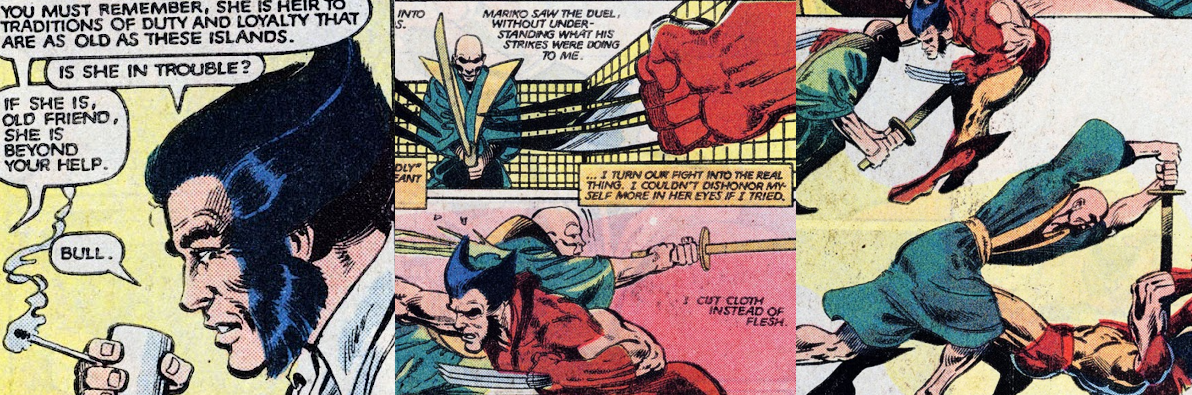
Wolverine dishonours himself trying to fight for his love’s freedom.

Despite the fact that Mariko was obligated by ages-old traditions of duty and honour, and Asano warning Wolverine off, Logan lets his anger and emotions overrule his common sense, dons his brown and yellow outfit, and forces his way into the Yashida ancestral stronghold and confront Mariko even though Asano may be legally obligated to hunt him down as a result. After easily bypassing Yashida’s near-feral guard dogs, Wolverine scales the main tower and conveniently comes across Mariko standing beneath a gigantic, ostentatious Buddha statue; Mariko tries to brush him off, citing the same explanations of duty and honour, and even accuses him of shaming her, but he’s enraged to find her face bruised. However, Mariko calms his rage and even admits that she loves him, but is bound to the will of her father, who promised her hand to another to pay a debt. When Mariko’s abusive husband, Noburu-Hideki, interrupts, Wolverine is ready to gut him on the spot, but allows Mariko to talk him out of it, only to be briefly rendered unconscious by a barrage of poisoned shuriken. Thanks to his superhuman healing factor, Wolverine recovers and is confronted by Mariko’s father, Lord Shingen, who brands him a gaijin (a derogatory term for an outsider) and chastises his arrogance. Deeming the X-Man unworthy, Lord Shingen challenges Logan to fight for Mariko’s affection with wooden swords (bokken, here referred to as “Bokan”). Although Lord Shingen is an old man, Logan is still feeling the effects of his poisoning and is out of practice with a sword; Lord Shingen also specifically targets nerve clusters and pressure points to cause maximum pain and rile him up to the point where he abandons his toy weapon and attacks with his claws, dishonouring himself before his beloved. Despite now having a lethal edge, Wolverine never gets the chance to land a mortal or killing blow; Lord Shingen’s skill half-cripples him and leaves him abandoned, beaten and humiliated, on the bustling streets of Tokyo.
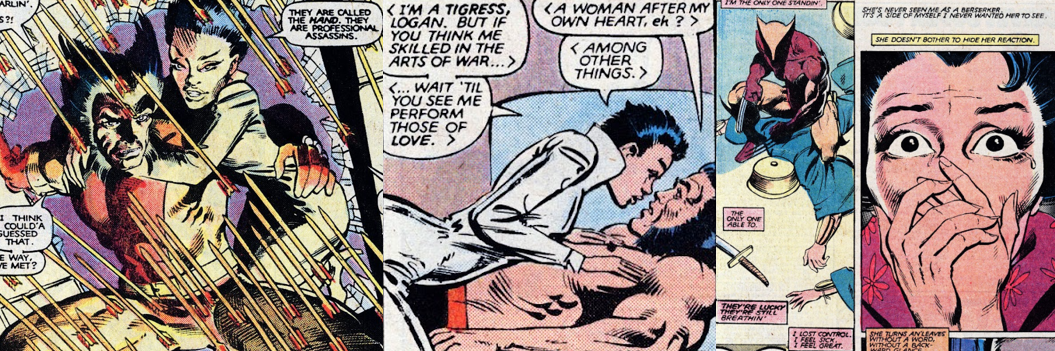
Yukio manipulates Wolverine to drive him from Mariko and into her bed.

Naturally, Logan’s immediately set upon by punks and soon drawn into an all-out ambush with the highly skilled ninjas known as the Hand by the mysterious Yukio. The Hand have the superior numbers, and even wound Yukio, but Wolverine’s Mutant abilities and enhanced bones give him the edge and he leaves them all dead. Yukio is astounded by his regenerative abilities, which she would use to destroy the Hand, a supposedly peerless ninja clan commanded by a ruthless and powerful crime lord. Due to their shared killer instinct, things quickly get heated between them, but Wolverine can’t shake the image of Mariko and walks away, much to Yukio’s despair. An interlude sees her storm into Lord Shingen’s office, revealing he hired her to win Wolverine’s trust and lure him into a two-pronged attack that will see both Logan and Lord Shingen’s rival, Katsuyori, dead at Yukio’s hand. Although Wolverine notices Yukio’s changed demeanour, a half-veiled version of the truth is enough to convince him to accompany her in confronting Katsuyori at a theatre performance. Although Logan hesitates when he sees Mariko in the crowd, he leaps into action when the actors try to assassinate the Yashidas. While Wolverine cuts his way through the ninjas, driven berserk by their attack, Yukio takes out Katsuyori with a car bomb and is delighted when Mariko expresses shock and even fear at witnessing Wolverine’s bloodthirsty berserker rage. In the aftermath, Wolverine takes solace in alcohol, Yukio’s affections, and in a random brawl, but rebukes Asano’s pleas to assist in combating the recently united Japanese underworld. After narrowly avoiding being splattered by a bullet train simply so Yukio can get a sadistic thrill, Wolverine passes out and is tormented by dreams of his lost love. While he sleeps, Yukio is accosted by the Hand, who demand she redeem herself by cutting out Logan’s heart, but she opts to fight them off instead; however, when she tries to rouse him, she’s enraged when he speaks Mariko’s name and leaves him to his stupor, cursing her foolishness for believing he could ever love anyone but Mariko.

After a bloody conflict, Logan finds himself victorious and betrothed to his beloved Mariko.

By the time Logan returns to their apartment, he’s dismayed to find Asano dead at Yukio’s hand. Finally, realising Yukio’s deception, he chases her across the rooftops of neon-drenched Tokyo and prepares to eviscerate her, regardless of their kinship, but is suddenly ensnared by roped arrows fired by the Hand. Angered at ignoring his instincts, Wolverine makes short work of the ninjas but Yukio slips away in the chaos. Determined to prove that he’s a man, rather than some mindless beast, Wolverine systematically disrupts Lord Shingen’s operation, angering the crime lord and forcing him into a rematch. After being captured, Yukio is given the chance to kill Lord Shingen in a desperate attempt to win back Wolverine’s affection after killing Asano, but she’s hopelessly outmatched compared by Lord Shingen’s strength, speed, and skill. Ultimately, she partially redeems herself when she frees Mariko from Noburu-Hideki’s abuse; unable to forgive her for Asano’s death, or repay her for saving Mariko, Wolverine simply allows her to leave so he can face Lord Shingen one-on-one. This time, Lord Shingen grabs a Muramasa katana to see if Logan is truly worthy and they engage in blood combat largely bereft of dialogue or sound effects. Although Wolverine gets impaled on Lord Shingen’s sword, this allows him to close the gap between them and end the crime lord’s life by stabbing him through the face and head with his claws (something kept off-panel but clearly implied by the artwork). Mariko is stunned by the sight; duty and honour, the two driving forces behind her entire life and unwanted marriage, dictate that she avenge her father’s death yet, despite being able to stop her and kill her even with his wounds, Wolverine chooses to do nothing. However, Mariko delivers a soliloquy about how her father’s actions brought shame to the Yashida clan; she bequeaths the sword to Wolverine and dubs him worthy not just of the blade but of the clan and her heart. Wolverine’s dialogue reveals that Marko fully planned to kill her father herself, and then commit ritualistic suicide, had Logan not emerged the victor, and the two recuperate in the mountains before sending a most unexpected invitation to their wedding to the X-Men!

The Summary:
I’m reasonably familiar with Frank Miller; I’ve read his work on Batman, Daredevil, RoboCop, and some of his original work, like 300 and Sin City and, as a rule, I’m not always his biggest fan. His writing is repetitive and atrocious most of the time, often to the point of self-parody, and his art can be ridiculously simplistic and childish in a lot of his work. Thankfully, that isn’t the case here; not only is he kept away from the script but his art is coherent and impressive, while still making great use of shadows, silhouettes, and panel positioning in a way that makes some of his later work look amateurish in comparison. The result is a very different presentation and atmosphere to the story, one decidedly at odds with the more colourful X-Men and deeply entrenched in the gritty, grounded, and realistic. The only ludicrous things happening in this miniseries are Wolverine’s status as a Mutant and the sheer number of Hand ninjas; no other Mutants appear, save for a brief cameo by the X-Men, and Wolverine opts to wear his darker, more serious costume rather than his bright yellow and blue X-Men outfit. The dialogue and writing are also far more mature than in your regular X-Men comic to take a deeper dive into Wolverine’s brutal nature, and that means getting a sense of his self-loathing, his acceptance of his animalistic side, and that he’s a well-travelled, highly experienced fighter and killer with a chequered past that we’re only just scraping the surface of.

Logan’s tumultuous love life is a primary element of this four-issue solo run.

This is explicit in the depiction of Wolverine’s relationship to Lady Mariko; while we don’t really get much sense of how they first met and their previous relationship here, it’s clear that Logan cares deeply for her (he describes her as the woman he loves on more than one occasion, to the point where he not only flies all the way to Japan to check on her but willingly dishonours himself by interjecting himself into her current situation. For her part, Mariko obviously loves Logan as well but it’s clear she’s torn; tradition, honour, and duty mean she must do as her father commands, even if it means enduring a loveless and abusive relationship, yet she also chastises Wolverine for his tardiness and for trying to force her out of her duties when he should know that she cannot disobey her father without bringing disgrace and shame upon her family. Submissive and unable to defy her father, Mariko even shuns Wolverine and his efforts to help, and is shocked by his berserker rage since, apparently, she’s never seen that side of him, hinting that she may not know him as completely as she claims. Yukio, on the other hand, is like Logan’s mirror opposite; like him, she’s a killer at heart, highly skilled, and delights in showcasing her skills through combat and death-defying situations. In this way, they’re naturally attracted to each other and make for a well-oiled unit yet, despite the passionate spark between them, Wolverine longs for the pure, innocent love he feels towards Mariko. As ever, Wolverine is torn between his animal instincts and his desire to rise above them and Mariko represents a chance for him to lay down his arms, so to speak, and have a normal life away from bloodshed and combat, and he’ll fight and kill whoever he has to just to see her happy, whether it’s with him or not.

The miniseries is a violent deep-dive into Wolverine’s complex character.

This is startlingly brought to life throughout the miniseries; it’s not often that Marvel Comics were so explicitly violent back then but there’s a fair amount of blood, death, and injury throughout Wolverine’s first solo run. Even better, this is still at a time when Wolverine wasn’t some nigh-invincible force; it’s stated repeatedly that his Mutant abilities and Adamantium skeleton mean he can endure a great deal of punishment and heal from virtually any wound, yet he’s still slowed by injury, poison, and is hurt or knocked out from attacks. Lord Shingen bests him with an ease that, these days, would never be heard of and even random mooks draw blood by piercing him with arrows or blasting him in the nose. Wolverine is almost constantly receiving deep cuts and injuries throughout the mini, which keeps things grounded and levels the playing field for his opponents. More often than not, he gives as good as he gets and leaves an incalculable number of bodies in his wake, but it takes a toll and he still needs to recover rather than his body instantly sewing itself back together so he can tank through his fights. Similarly, he’s susceptible to alcohol, stumbling about and even passing out from over drinking, and significantly weakened by Yukio’s poisons, which leave him as vulnerable to Lord Shingen’s precise and measured attacks as his heartache over Mariko. Still, his keen senses and abilities (both superhuman and artificial) make him a fearsome and formidable individual; the driving force here is the question of worthiness. Wolverine knows that he can never truly be worthy of Mariko since he’s both a killer and a gaijin, yet he fights for her regardless; he eschews tradition and respect to ensure her safety and happiness and is even willing to dishonour himself in her eyes even it means she can be free. Ultimately, she chooses to see the best in him and offer a glimpse of the happiness that’s long eluded him, and it’s easy to see why this four-issue run is so well-regarded as so much of Wolverine’s character, his motivation and the dichotomy of his personality, were established here to portray him as a fiercely loyal and driven individual, but one surrounded by death and tragedy and his own feral nature, all of which he must constantly battle to overcome to be the lesser of two evils.

My Rating:

Rating: 4 out of 5.

Great Stuff

What are your thoughts on Wolverine’s first solo run? Did you enjoy seeing him battling ninjas in Japan? What did you think to Wolverine’s depiction and characterisation here? Were you surprised at how vulnerable he was and the greater insight into his personality? What did you think to Mariko and Yukio and which of the two do you think is a better fit for Wolverine? Were you a fan of Claremont and Miller’s work with the character? How are you celebrating Wolverine’s debut this month? Whatever you think about this four-issue run, or Wolverine in general, leave a comment below or on my social media.

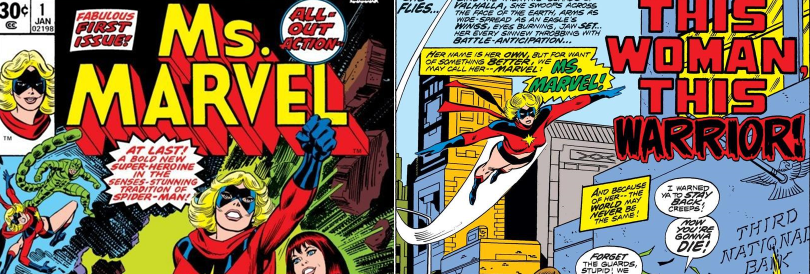
Back Issues: Ms. Marvel #1 (1976)

Story Title: “This Woman, This Warrior!”
Published: 5 October 1976 (cover-dated January 1977)
Writer: Gerry Conway
Artist: John Buscema

The Background:
In 1953, DC Comics sued Fawcett Comics for breach of copyright over a claim that their superpowered champion, Billy Batson/Captain Marvel, was too similar to Clark Kent/Superman, and Fawcett ceased publishing Captain Marvel comics. The trademark to the name “Captain Marvel” subsequently lapsed and, fittingly, Marvel Comics snapped it up for themselves in 1967 and began putting out regular Captain Marvel titles to retain the copyright. Originally debuting as a superpowered Kree warrior named Mar-Vell, Captain Marvel was created by Stan Lee and Gene Colan and would swap place with perennial sidekick Rock Jones using the cosmic “Nega-bands”. Mar-Vells stories werent much of a priority at Marvel, however, and, when sales flagged, Jim Starlin famously penned one of the more impactful (and surprisingly permanent) comic book deaths by having the character die from cancer in 1982. To maintain their copyright, Marvel had Mar-Vells legacy live on through a number of successors; one of whom, Carol Danvers, was a supporting character in Mar-Vells life before gaining her own superpowers. It would be over four decades before Carol assumed the mantle of Captain Marvel, however; instead, she spent a chunk of her superhero career known as Ms. Marvel, during which time she joined the Avengers and was involved in a pretty disgusting sexual assault story amongst other storylines. Widely considered to be one of Marvels top-tier female superheroes, Carol has since cemented her legacy by being portrayed as the de facto Captain Marvel in cartoons, videogames, and the unstoppable juggernaut that is the Marvel Cinematic Universe.

The Review:
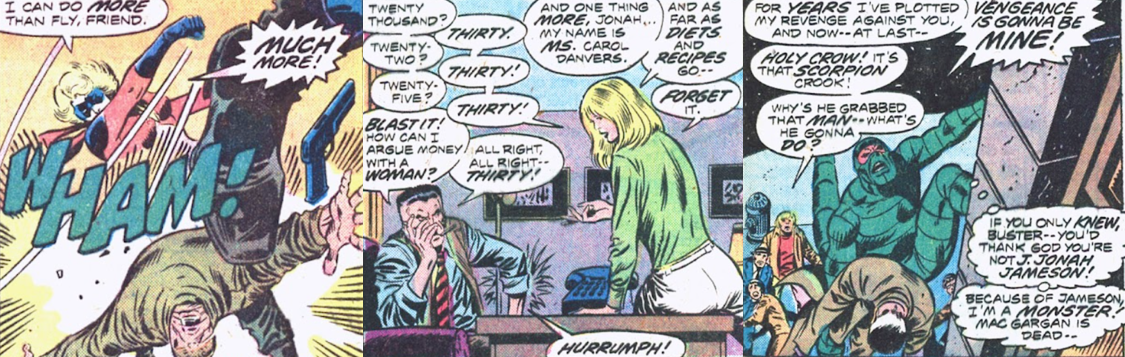
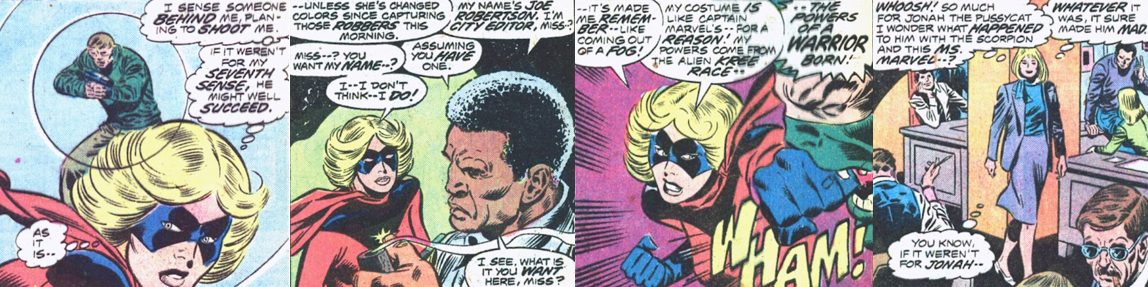
Ms. Marvel swoops into action right from the word “Go!” in her “Fabulous First Issue!”, coming onto the scene of a particularly violent bank robbery occurring in broad daylight. The thieves, who are all wearing stockings over their heads, dismiss Ms. Marvel as merely “Some dame in a costume!” but soon realise she’s so much more than that; not only can she fly with ease and grace but she’s more than capable of punching out one of the crooks and making mincemeat of their getaway car by lifting it over her head and smashing it to the ground. The remaining thief tries to get the drop on her, but Ms. Marvel’s handy-dandy “seventh sense” warns her of the danger and allows her to knock the mook out with a huge haymaker. However, thieves weren’t acting alone; instead, they were muscle for the unstable superpowered villain Mac Gargan/The Scorpion, who easily takes care of the bank’s one inept guard with his formidable tail and sneaks out the back with his loot. Although the gaggle of bystanders are initially awestruck by Ms. Marvel, they soon showcase their fickle and cynical nature and, when the cops arrive to arrest the crooks, they immediately try to run in Ms. Marvel as well, though she’s easily able to evade them by taking to the air. The story then jumps over to the offices of the Daily Bugle, where cantankerous editor J. Jonah Jameson catches wind of Ms. Marvel and hits upon the idea of writing an expose on her for a new female-orientated magazine he’s creatively titled Woman.

Ms. Marvel and Carol Danvers immediately assert themselves, while Scorpion seeks to avenge himself.

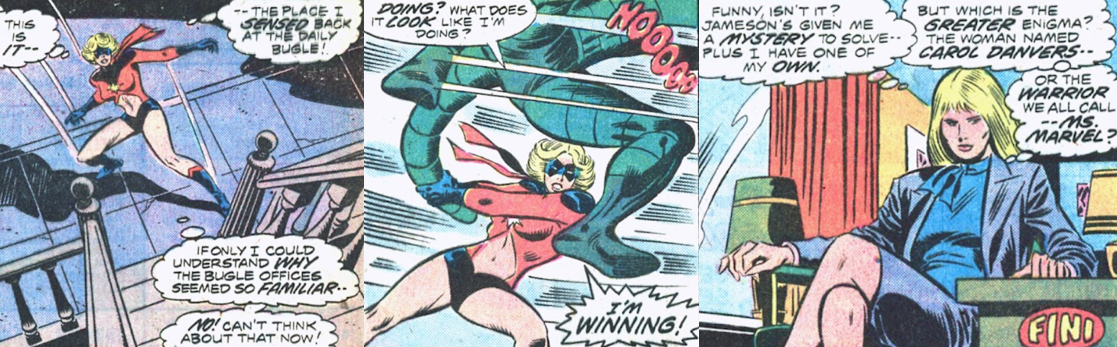
He pitches the idea to Carol Danvers, though his motives are geared more towards degrading women with articles about diets and fashion and continuing his slander of superheroes with stories on New York City’s latest colourful crimefighter. Carol agrees and forcefully negotiates a weekly pay cheque of $30,000 (which seems high for a weekly salary so I assume this is actually her annual earnings); she also refuses to go along with his plan for the magazine, thereby showing more backbone than long-suffering photographer Peter Parker/Spider-Man ever would. Speaking of which, Peter just happens to be passing by with his girlfriend, Mary Jane Watson/M. J., who’s a fan of Carol’s work and stops to bend her ear. Carol takes M. J. back to her apartment, but she suffers a bout of nausea shortly after stating that she left behind her job as a security consultant at Cape Kennedy after failing to capture Captain Marvel. Meanwhile, the Scorpion makes it across town to the hidden, booby-trapped laboratory of his latest client, Professor Kerwin Korman, a former armourer for villainous groups like Hydra, who hands Gargan the keys to his lab and all its technology in return for the cash he stole. The Scorpion goes and knocks Jameson out cold in the middle of the day as part of his lifelong mission to avenge himself against his former employer since it was Jameson who trapped Gargan in his elaborate scorpion-themed armour. Although alerted to Jameson’s kidnapping by her seventh sense (which apparently extends to some form of clairvoyance), Ms. Marvel is too late to save him, so she flies over to the Daily Bugle to focus her vaguely-defined mental powers. Although the police and staff interrupt her, she gets a mental image of where the Scorpion has taken Jameson but is left rattled by the familiarity of the newspaper offices and when asked for her name.

Ms. Marvel is victorious, but both she and Carol remain unaware of their dual life.

Ms. Marvel heads over to the brownstone she saw in her mind’s eye, where the Scorpion begins lowering Jameson into a vat of acid as recompense for ruining his life. Pushing aside her concerns and her unprovoked belief that she’s a Kree warrior, Ms. Marvel overcomes Korman’s high-tech defensive systems. Facing certain death, Jameson momentarily sets aside his anti-superhero bias to beg for his life, and the ensuring brawl with the Scorpion triggers Ms. Marvel’s memories of Captain Marvel and the Kree race. The Scorpion refuses to believe Ms. Marvel’s claims and angrily lashes out, believing that she’s trying to intimidate him with a false alien lineage and durability, but her powers cannot be denied. In the melee, she not only easily manhandles the villain but also exposits how she’s suffering from amnesia and blackouts and cannot explain her past, powers, or origin, though she exhibits the strength necessary to hurl the Scorpion into his own acid and send him fleeing. Relieved at making the connection between her powers and costume to Captain Marvel, Ms. Marvel amusingly refuses to free the grouchy Jameson and takes the name Ms. Marvel for herself. Slighted, Jameson orders Carol to write a slanderous exposé on the costumed avenger; she agrees, but slyly, and heads to her fancy new office to mull over the situation. There, she ponders the blackout spells she’s been having, the significance of the name Ms. Marvel, and the mystery that is her own life, showing absolutely no knowledge of the fact that they are one and the same.

The Summary:
I was a little hesitant going into “This Woman, This Warrior!”; if there’s one thing that irks me about reviewing comic books from back in this era, it’s the characterisation and treatment of women, who are generally seen as lovelorn bimbos or dismissed as being insignificant compared to their masculine overlords. Thankfully, the story primarily has such sexist attitudes strictly restricted to derogatory remarks from anti-social crooks and the always condescending blowhard J. Jonah Jameson. Still, while his views of women may be way off the mark, at least he has the foresight to even publish a female-centric magazine and hire a woman to edit the publication, especially as he could easily just do the job himself and print whatever drivel he wanted. The aim of this story is clearly to establish that Ms. Marvel isn’t some air-headed dame; she exhibits flight, super strength, and a weird sixth sense-like ability that means she easily overpowers a regular man and tanks even the Scorpion’s best shots, so there’s no question that she’s to be taken lightly. Even more importantly, both she and her alter ego are portrayed as strong, independent, and successful women; Carol has a nice apartment, is backed by an impressive reputation, and not only negotiates an amazing salary for herself but is awarded a swanky office to go with her position.

The story went in a different direction that has you wondering what’s going on with Carol…

The only weakness either character shows is the nagging concerns about their blackouts and memory loss. Indeed, I wasn’t expecting that the story would portray the two as being unaware of their dual identity or background, which created a bit of intrigue even though the story makes it pretty obvious that the two are one and the same. I imagine anyone who had been keeping up with Captain Marvel’s adventures would find it odd that Carol had undergone such a personality shift, but also that they’d be able to piece together that her references to the Kree, her powers, and her costume clearly have been inherited from or at least have something to do with Mar-Vell. It’s the distraction of her amnesia and confusion regarding Mar-Vell that allow the Scorpion to briefly get the upper hand in their fight, thereby forcing Ms. Marvel to get her shit together to win the day. It would’ve been so easy to just have Spider-Man come swinging in to save her but, instead, we get a pretty decent moment of affirmation and self-realisation as Ms. Marvel is empowered by her legacy and uses that conviction to overpower the Scorpion. The Scorpion is generally a bit of a low-level threat but he has enough personality, presence, and backstory to work well here; he’s always trying to get back at Jameson and previous stories have showcased that he’s quite physically formidable and this familiarity makes it all the more impressive when Ms. Marvel beats him. in the end, “This Woman, This Warrior!” was an interesting story; clearly the truth behind what happened to Carol and gave her the powers and memories of Captain Marvel is revealed in a later story but there was enough here to keep me engaged and I gained a deeper insight and appreciation for the live-action adaptations of the character by reading this story.

My Rating:

Rating: 3 out of 5.

Pretty Good

What did you think to Ms. Marvel’s debut story? Did you read it when it was first published and, if so, what was your reaction to Carol’s newfound abilities? What did you think to Ms. Marvel’s portrayal and powers? Did her defeat of the Scorpion impress you or would you have preferred to see her tangle with a different foe? Which Captain Marvel is your favourite and what are some of your favourite Captain Marvel stories? Whatever your thoughts on Captain Marvel, go ahead and share them below or leave a comment on my social media and be sure to check out my other Captain Marvel content!

Wrestling Recap: Benoit vs. Sabu / Scorpio (November to Remember ’94)

The Date: 5 November 1994
The Venue: ECW Arena; Philadelphia, Pennsylvania
The Commentary: Joey Styles
The Referee: Freddie Gilbert
The Stakes: ECW Death Match between rivals / impromptu singles match

The Build-Up:
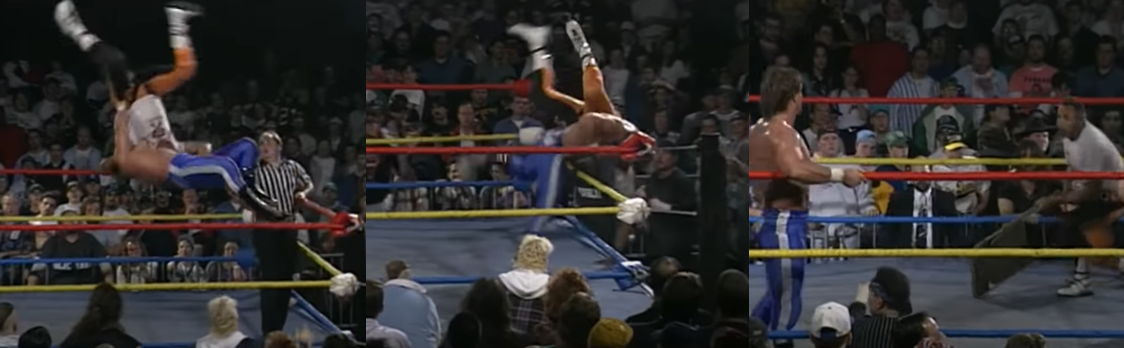
Back when the then-World Wrestling Federation (WWF) and World Championship Wrestling (WCW) were going head-to-head in a heated ratings war, Extreme Championship Wrestling (ECW) found a way to stand out from the “Big Boys” with their extreme brand of sports entertainment. Originally known as Eastern Championship Wrestling, ECW was re-branded by one of wrestling’s greatest minds, managers, and promoters, Paul Heyman, and came to be known for its violent and controversial matches and content, which was instrumental in inspiring the WWF’s “Attitude Era”. ECW also offered a stage for some of wrestling’s most talented technicians and luchadores and allowed future wrestling stars and Hall of Famers to hone their characters and craft. By 1994, ECW had developed a cult following with the rabid Philadelphia crowd at the ECW Arena, though they were still a few years away from airing their first pay-per-view, Barely Legal; instead, ECW hosted supercard events such as this one from the ECW Arena. Although November to Remember 1994 featured “The Franchise” Shane Douglas defending his ECW World Heavyweight Championship against Ron Simmons, the main event went to their “Homicidal, Suicidal, Genocidal, Death–Defying Maniac”, Sabu, and former Pegasus Kid, Chris Benoit, after they previously battling to a count out on an episode of ECW Hardcore TV earlier in October. Aside from the greater controversy surrounding any Benoit match, which I’ll touch upon later, this match also gained infamy after a botched suplex saw Sabu suffer a broken neck, earning Benoit the nickname “The Crippler” and Sabu a reputation was one of wrestling’s toughest competitors.

The Match:
Although I’ve never had much history with ECW beyond what I’ve seen from their competitors in other promotions, I’m always interested to take a look back at what they were up to while the big guns duked it out over ratings and haemorrhaged money trying to put their competition out of business. Some of my favourite wrestlers got their start in ECW and, arguably, peaked while in the Land of the Extreme, and one of my favourite wrestlers when I started getting into the sport was Chris Benoit. He wasn’t the biggest guy or the most charismatic, but he was scarily intense in the ring and had a sadistic edge that made him seem so dangerous at the time. I, like many, fully bought him as an under-rated and under-appreciated talent and was pleased as anything by his ascension to the main event, but of course it’s extremely difficult to separate the man’s work from his horrendous final hours so it can be a bit tough to rewatch his matches. Still, this is one of his most notorious bouts so I wanted to get into it to get an understanding of how Benoit built an aura around his character following this match, and it’s very surreal to see him so young, and sporting a mullet!

A botched suplex broke Sabu’s neck and caused a brawl to break out to distract the audience.

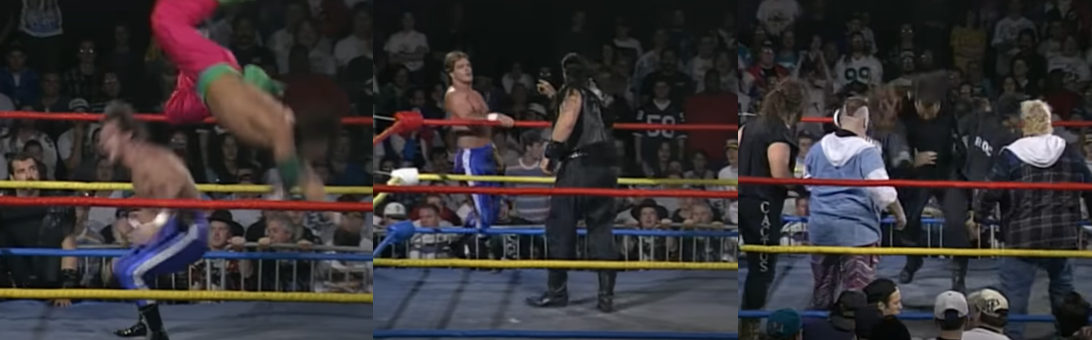
Benoit was very anxious to get things underway at the beginning of the match; luckily for him, Sabu didn’t waste any time and went right at him, a decision that proved disastrous as Sabu ended up feeling the brunt of Benoit’s attack. A knee to the gut and a suplex over the ropes dropped Sabu, who was still recovering from three broken ribs, and then the match took a sudden and unexpected turn. Benoit hooked Sabu up into a kind of T-Bone Suplex and launched him into the air, but Sabu rotated awkwardly and came crashing down right on his neck! Sabu was able to roll out of the ring but it was pretty clear that he was badly hurt from the move as the referee and Paul Heyman frantically checked on him. Benoit played to the crowd and tried to keep the show going as best he could, something helped by Sabu’s cohort, 911, challenging him so Sabu could get medical attention. Benoit refused 911’s challenge since he didn’t sign a contract to fight him but eventually jumped him from behind to get some cheap shots in. 911 planted him with a chokeslam, however, and got the three count…though the bell didn’t ring so I’m not sure how official it was…The ECW Tag Team Champions, Public Enemy, then rushed the big man with baseball bats to keep him away from Benoit, then the rest of the ECW locker room rushed the ring for a massive brawl to take the attention away from the clearly injured Sabu.

Benoit and Scorpio battled to a no contest to try and salvage to show.

Eventually, Joey Styles declared that Benoit was the winner of the match by default since Sabu was unable to continue. Benoit then mocked Sabu on the mic, earning the ire of 2 Cold Scorpio and resulting in an impromptu match between the two. Benoit took Scorpio down with a clothesline and hit a huge powerbomb for a two count; a snap suplex followed but Benoit was floored after Scorpio ducked under a chop and hit a crescent kick. This was enough for Benoit, who took a powder to allow his Public Enemy buddies to jump Scorpio, only for them to be taken down by Scorpio’s martial arts skills. As the ECW locker room surrounded the ring, Benoit took control once again with a back elbow and a beautiful superplex for a near fall. Frustrated, Benoit sat Scorpio back on the top rope and tried for an avalanche back suplex only for Scorpio to counter it into a pinning predicament for a two count. The double-underhook suplex also earned Scorpio a two count, as did a really clumsy looking and potentially dangerous victory roll from the top rope (that was almost like a reverse Frankensteiner, of sorts). Shrugging off a side kick, Benoit took the action to the outside and smashed Scorpio’s face off the steel steps; Benoit then launched Scorpio into the metal guard rail and hopped into the ring but the match ended on a double count out regardless. Pissed off, Scorpio rushed Benoit with a steel chair and chased him from the ring before talking shit about him on the mic to end the show. Obviously, if you wanted to see Benoit fight Sabu then you’re going to be disappointed, but I think they did a decent job making the most of a bad situation. The crowd didn’t seem annoyed at what happened; if anything, they were cheering Benoit on as he took on Scorpio and they seemed to enjoy the brawl, but this was a bit of a mess thanks to that horrendous botch and just goes to show that anything can happen in a wrestling ring.

The Aftermath:
Sabu’s refusal to break character and speak English almost exacerbated his injury when he was taken to hospital following the botch. He managed to recover, however, and was back in ECW by 1995 for a very public firing when he chose to accept a booking for New Japan Pro-Wrestling (NJPW) over defending the ECW Tag Team Championships in a match that would’ve seen him share the ring with Chris Benoit again. Since Sabu no-showed the match, he never wrestled Benoit again as the Crippler jumped back to WCW. This wouldn’t be the last time Sabu broke his neck, however; he broke it again in December 1998 during a match against Taz and came to be known for similar disastrous injuries and speaking out against World Wrestling Entertainment (WWE). Benoit would, of course, eventually make his way to the WWF and achieve his World Championship dreams only to forever tarnish his legacy by murdering his wife, son, and taking his own life in one of wrestling’s worst tragedies.

My Rating:

Rating: 1 out of 5.

Terrible

Were you shocked by what happened at November to Remember 1994? Who were you hoping would win the match before the injury happened? Were you satisfied by the impromptu contest between Chris Benoit and 2 Cold Scorpio? What is the worst botch you’ve ever seen in a wrestling match? Were you a fan of Sabu? What are your thoughts on Benoit and his tarnished legacy? Did you watch ECW back in the day and, if so, who were some of your favourite wrestlers and what were some of your favourite matches and moments? Would you like to see the November to Remember event brought back? Whatever your thoughts, feel free to leave them below or drop a comment on my social media.

Movie Night [Godzilla Day]: Ghidrah, the Three-Headed Monster


Toho’s famous atomic beast, and easily the most recognisable kaiju in the entire world, Gojira first emerged to wreck the city of Tokyo on this day all the way back in 1954 and, in 2016, the day was subsequently declared “Godzilla Day”.


Released: 20 December 1964
Director: Ishirō Honda
Distributor: Toho
Budget: Unknown
Stars: Haruo Nakajima, Yosuke Natsuki, Shoichi Hirose, Akiko Wakabayashi, Masanori Shinohara, and Takashi Shimura

The Plot:
An alien prophetess (Wakabayashi) predicts catastrophic attacks from Godzilla (Nakajima) and Rodan (Shinohara), leading to Mothra intervening to defend humanity. However, when the hydra-like space dragon King Ghidorah (Hirose) appears, the warring kaiju must set aside their differences to battle this devastating new foe.

The Background:
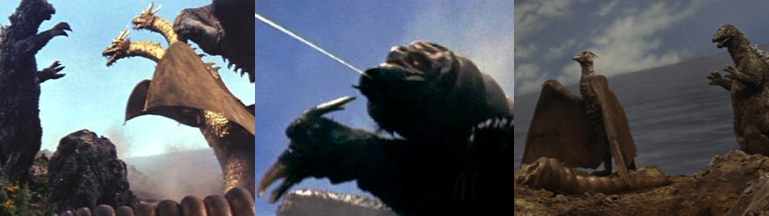
6th August 1946. The height of the Second World War. The Americans dropped two nuclear weapons on Hiroshima and Nagaski, killing tens of thousands of people and forcing the Japanese Imperial Army to surrender. The radioactive fallout saw thousands more dying, and post-war Japan was gripped with nuclear fear, a fear that birthed Gojira, the living embodiment of nuclear destruction. However, soon after this debut in Godzilla (Honda, 1954), the King of the Monsters turned from Japan’s destroyer to its reluctant saviour, defending the country from other kaiju attacks as a matter of principal. Following the commercial success of Godzilla’s last two movies, Ghidrah, the Three-Headed Monster was rushed into release; it included the return and redesign of fellow kaiju Rodan after a nearly ten-year absence, a recycled Mothra animatronic with marginal changes, and Toho’s most complex kaiju yet, the three-headed dragon King Ghidorah. Arguably Godzilla’s greatest nemesis, King Ghidorah was conceived by Godzilla creator Tomoyuki Tanaka and inspired by the Lernaean Hydra and the Orochi of Japanese folklore, and its debut feature was so successful that it reappeared in Toho’s next giant-monster film the following year.

The Review:
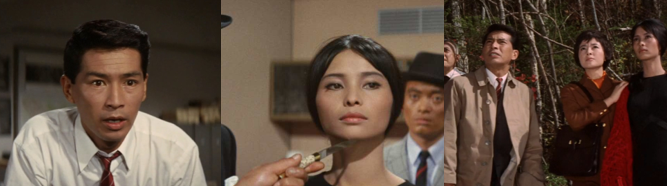
Our story opens with reporter Naoko Shindo (Yuriko Hoshi) visiting a communications centre that’s trying to contact extraterrestrials. Headed by their resident expert (Someshô Matsumoto), they truly believe that “flying saucer people” are out there, and wary of non-believers, so much that Naoko’s scepticism is blamed for their failure to communicate with the aliens. For a group of presumed scientists and academics, they’re oddly fanatical about this; since the world is experiencing an unseasonable heat wave, they’re concerned that a catastrophe is looming and believe the saucer people are their only chance of salvation and find Naoko’s ditzy disinterest to be insultingly narrow-minded…even though she’s simply there to do a job and desires proof. You know, the kind of evidence scientists strive to gather. A small meteor shower interrupts their meeting and draws Naoko’s friend, Professor Murai (Hiroshi Koizumi), and his team to investigate. They discover a large cocoon-like meteor that randomly emits magnetic waves and leaves them baffled. Naoko’s brother, Detective Shindo (Natsuki), likes to tease Naoko about her friendship with Murai; although grown adults, they still bicker like children, and she doesn’t appreciate his remarks or him getting in the way of her career. Shindo is stunned when he’s assigned to protect the visiting Princess Salno of Selgina (Wakabayashi), who’s facing assassination from her ruthless uncle (Shin Ôtomo), who desires her throne. Shindo is even more stunned when Salno appears to be killed when her plane explodes and she crops up as a doomsaying Prophetess who claims to be from Mars and warns that the world faces impending doom unless humanity changes their ways and takes better care of the environment, much to the jeers and doubts of the public.

Shindo and his sister are caught up with a mysterious woman who claims to be from Mars!

Assuming that Salno faked her death to escape her uncle’s assassin (Hisaya Ito), Shindo volunteers to bring her into protective custody, causing a brief conflict when he finds Naoko shielding her in hopes of getting an exclusive story. Drawn from her plane before the explosion by a disembodied alien presence that possesses her, psychiatrist Doctor Tsukamoto (Shimura) later reveals that the Prophetess is just one of a displaced, highly advanced alien race that fled to Earth and assimilate themselves into humanity, losing many of their fantastic abilities in the process, when the Red Planet was decimated by Ghidrah. One of the deadpan Prophetess’ remaining abilities is the ability to predict pending disasters that are repeatedly mocked and ignored; she warns people away from Mount Aso, where the prehistoric kaiju Rodan emerges from the volcano, and advises the fairy-like Shobijin (Emi and Yumi Itō) not to sail home to the benevolent Mothra on Infant Island, which they heed and are thus spared a violent death from Godzilla’s atomic breath. Despite the looming kaiju threat, the assassin and his cohorts continually hound the Prophetess, determined to kill her as per their orders, in a bizarre side-plot that honestly distracts from what we’re all here to see (but I guess it makes a change from following a soldier or a reporter as these films often do). Even with the three kaiju battling in the foreground, the assassin tries to complete his mission and yet somehow misses the easiest kill shot in the world! Although Shindo rushes to her aid and a brief firefight ensues, the assassin is ultimately crushed under falling rocks from the kaiju battle. In all the chaos, Shindo is wounded from a bullet and the Prophetess takes a grazing shot to the head and a nasty fall that conveniently sees the alien presence driven from her body…

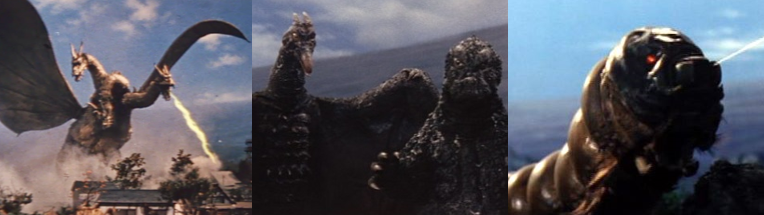
Mothra is asked to unite rivals Godzilla and Rodan when Ghidrah goes on a rampage.

By this film, kaiju are well established; despite them slumbering for great lengths of time and occasionally defending humanity, they’re generally regarded as unpredictable and dangerous. One of the most popular and benign is Mothra, who’s such a celebrity that his fairy companions appear on television to reveal that one of the Mothra larvae has died since the previous film and that the remaining larvae is worshipped as a God. Sadly, for a film that boasts four kaiju, it takes ages to see them onscreen, and over forty minutes for Godzilla to show up! Even worse, although Godzilla’s clearly enraged at Rodan’s presence and they awkwardly exchange blows, the film initially focuses on dull political debate and fades to black right as things are getting interesting. The meteor eventually yields the most visually striking aspect of the film, and Godzilla’s greatest nemesis, the titular Ghidrah, a three-headed dragon covered in golden scales. With the Japanese military refusing to employ atomic weapons, they turn to the Shobijin to plead for Mothra’s help. Unfortunately, the fairies admit that Mothra alone isn’t strong enough to battle Ghidrah and the only hope for victory is for the larvae to convince Godzilla and Rodan to team up against the demonic dragon. It takes some time for Ghidrah to cross paths with its foes; until then, the focus is on Godzilla and Rodan, who battle furiously with neither one having a clear advantage (Rodan’s fight allows it to keep Godzilla off-balance and even pick him up and dump him on some power lines, but Godzilla’s functionally indestructible and simply grows more enraged the longer the fight rages on). Their pig-headedness means Ghidrah causes havoc unopposed by either the kaiju or the miliary; indeed, the military don’t even mobilise their tanks or planes to engage Ghidrah and, instead, the ineffectual government places all their faith in Mothra and his desperate plan to join forces with Godzilla and Rodan.

The Nitty-Gritty:
You may have noticed a few inconsistences in my review; these are due to me watching the English dub, which has the Prophetess and her people originate from Mars rather than Venus, pronounces and spells Ghidorah’s name differently and drops its regal title, and changes the traditionally female Mothra to a male. While some purists may argue that the original Japanese audio and English titles are superior (and they’re often right), I usually always go with the dubbed version just to make things easier and because of the often-hilarious line delivery. The film contains an environmental message that echoes sci-fi classic The Day the Earth Stood Still (Wise, 1951); decades before global warming was the hot buzz word, Ghidrah, the Three-Headed Monster warns about such disastrous concerns as climate change and global warming. The Prophetess foretells that humanity is doomed if they don’t change their ways, but this message falls a little flat as her warnings are not actually about mankind directly and instead refer to the monstrous kaiju that threaten their world. While technically these creatures (with the exception of Ghidrah) could be said to be man-made, given they were mutated by radiation and such, they’re usually always more depicted as a force of nature. Godzilla, especially, is usually always the embodiment of nature’s wrath and man’s hubris taking destructive revenge upon the world, so it’s a little weird to say “you’re dooming yourselves” when actually you mean “a big-ass alien monster’s gonna wreck shit”.

The film is definitely ambitious with its suit effects, though maybe a little too ambitious at times.

Although it takes forever for Godzilla to finally make an appearance, he’s as impressive as ever; while the suit is bulky and incapable of blinking, it’s always a joy to see Godzilla trampling model buildings as people flee in terror. Emerging from its cocoon in a shower of sparks and animated lights, Ghidrah makes for an intimidating foe with its three screeching heads and chaotic lighting blasts; like Rodan, Ghidrah devastates everything in its path with a supersonic crash and, like Godzilla, it emits destructive energy beams, but in the form of wild and crackling lightning. Unfortunately, it does look incredibly ungainly with its bulbous body and lack of arms; while its three dragon-like heads go some way too make up for this handicap, biting and attacking with malicious intent, they also look a bit dodgy flopping and flailing all over the place and I really do think Ghidrah would be even more threatening if it had arms and talons to grab and attack with and just make its body look a little less comical. Unlike their counterparts, Rodan and Mothra are far less versatile and clunky; Rodan may still be a man in a suit but his flying scenes are realised through obvious wires and a powerful wind machine, while Mothra is purely a partially animatronic creature that bumbles about the place spitting silly string because, maddeningly, the filmmakers decided to keep Mothra in his larvae form rather than utilise the more visually interesting (if equally restrictive) moth form. Rodan’s flying scenes are, admittedly, pretty ridiculous; I admire the filmmakers for trying to inject some variety with their kaiju designs and have always had a soft spot for Rodan, but it’s laughable seeing the static model being strung along on wires (alongside a jet engine sound effect) and bashing into Godzilla. Godzilla still uses his atomic breath rather than a destructive beam of energy, meaning both are noticeably weaker than I’d usually expect from the King of the Monsters; Rodan can take the breath at point-blank range and even comically disorientates Godzilla by pecking him repeatedly in the head!

Eventually the three kaiju come together to scare Ghidrah off with ridiculous ease.

Honestly, the fight between Godzilla and Rodan is pretty ridiculous thanks to the filmmakers just being a little too ambitious; Rodan flies about, pecks at Godzilla and its tail, and pushes the Big G back with powerful wind blasts, and Godzilla mostly flails his little arms, whacks Rodan with his tail in a glorified slap fest, and sends rocks flying at his foe that fail to hit with any convincing impact. The two even play dead man’s volley with the boulders, which is presented as two Apex Predators looking to prove their might, and they’re only subdued when Mothra tangles them up in silly string to plead for their co-operation. The Shobijin are on hand to translate; despite their differences, Godzilla and Rodan agree that they have nothing to gain from helping humans and have no interest in getting involved and would rather fight each other. However, the two quickly change their minds when they see Mothra bravely taking on Ghidrah alone and be easily overwhelmed by its lightning bolts. Not that Godzilla or Rodan initially fare much better; Godzilla gets blasted into a bridge and engulfed in raging flames and Rodan injures itself more than its monstrous foe when it knocks Ghidrah out of the air. With Rodan forced to take cover from Ghidrah’s lightning, Godzilla literally drags Mothra back into the fray and goes back to his tried-and-true strategy of chucking and kicking rocks and gets blasted in the crotch for his troubles! Eventually, Godzilla, Rodan, and Mothra come together as best as they (and their cumbersome suits) allow to overwhelm Ghidrah; Godzilla wrestles with it, absorbing the brunt of its attacks, while Mothra nips at its tail and engulfs it with String Shot while being carried on Rodan’s back. Somehow, this is enough to force the hydra to flee, bringing the battle to an anti-climatic end. In the aftermath, Princess Salno exhibits no memories of her time as a Martian beyond a lingering gratitude for Shindo and Mothra heads back to Infant Island with the Shobijin, bidding a fond farewell to his new allies, who have set aside their grievances.

The Summary:
Geez, I may apologise for Godzilla movies a lot and cut them some slack, but this was a pretty awful movie to sit through! The tone is all over the place, emphasising the importance of respecting the world and avoiding global disaster on one hand and then having slapstick kaiju violence the next. While Ghidrah may look intimidating and is depicted as a crazed, destructive alien beast, it’s defeated with a pathetic amount of ease; the film makes a big deal about how Mothra isn’t strong enough to defeat the creature, yet all Godzilla does is hold it still and all Rodan does is carry Mothra so he can string it up! The bulk of the monster madness is focused on Godzilla and Rodan, which would be fine if the fights weren’t so laughably bad! This is only Godzilla’s fifth movie so I understand that all the kinks weren’t figured out yet, and I get that there’s only so much you can do with puppets and suitmation, but maybe the filmmakers should’ve set their goals a little lower and simply focused on Godzilla battling with Mothra and left Rodan out of this since it really didn’t do much against Ghidrah that couldn’t have been accomplished without it. The film also spends way too much time focusing on this batshit crazy Martian presence, or whatever, when it should’ve been focused on the mystery of the glowing meteor. I would’ve skipped the Prophetess and incorporated her environmental message into Shindo, rewritten him to be a scientist investigating the meteor, and had Naoko cover the emergence of the kaiju. Again, I get that we need to follow human characters, but they dominate the film’s runtime and just aren’t very interesting, especially compared to what should’ve been an epic assembling of four bad-ass kaiju with the fate of the Earth at stake. Instead, I never felt like humanity was threatened by Ghidrah and the kaiju action was severely lacking due to the imitations of the suits, meaning Ghidrah’s big debut film ended up being a dull and ultimately forgettable experience for me.

My Rating:

Rating: 2 out of 5.

Could Be Better

What did you think to King Ghidorah’s debut film? Were you also disappointed by the bonkers human sub-plot, or did you enjoy the alien narrative? What did you think to the build up to King Ghidorah’s appearance and powers? Did you also find the kaiju battles lacking? Which incarnation of King Ghidorah is your favourite? What is your favourite Godzilla movie and why? How are you celebrating Godzilla Day this year? Whatever your thoughts on Godzilla and King Ghidorah, feel free to leave a comment below and be sure to check out my other Godzilla and kaiju reviews across the site!

Featured Publications

Bloody Hell: An Anthology of UK Indie Horror
This collection of 27 horror shorts from some of the United Kingdom’s best indie authors incudes my Scottish-set chiller, “Hungry is th’ Bodach”.

Click Here to Buy on Amazon

Curbside Curses
This collection of 22 short horror stories, centred on a cursed yard sale, incudes my wrestling-themed piece, “A New Gimmick”.

Click Here to Buy on Amazon

Doors of Darkness
This collection of 27 short horror stories incudes my quirky creature-feature, “Mounds”.

– Visit the Website – Click Here to Buy on Amazon

Unveiling Nightmares
My short horror story, “Date Night”, appeared in the first issue of Crystal Baynam’s Unveiling Nightmares magazine and in her first Horror Anthology publication.

Visit the Website – Click Here to Buy on Amazon

Tales from Deranged Minds
This collection of four short horror stories incudes my Halloween-themed companion piece to Stitchface, “Funhouse”.

Click Here to Buy on Amazon

Flash Horror Fiction Contest
A couple of my short horror pieces appeared on Patrick McNulty’s website,

– Father’s Clock – Roach Cabinet – Where the Hooved-One Treads

Shepherd
I have written a couple of articles for this bookish website,

– Horror Recommendations – Favourite Reads of 2023


Movie Night [Day of the Dead]: Night of the Living Dead (1968)


The Day of the Dead (or Dia de los Muertos) is a traditional Latin American holiday on which, every November 1st, the lives of deceased loved ones are celebrated with food, drink, parties, and a great deal of masquerade involving the calacas and calaveras (skeletons and skulls). For me, this seems like the perfect excuse to look back on the long-running and ever-changing zombie genre that was largely popularised by director George A. Romero, which I devoted a great deal of my PhD thesis towards and which has often been used as a parallel to various aspects of society and culture.  


Released: 1 October 1968
Director: George A. Romero
Distributor: Continental Distributing
Budget: $114,000 to 125,000
Stars: Duane Jones, Judith O’Dea, Karl Hardman, Marilyn Eastman, and Kyra Schon

The Plot:
When the recently deceased suddenly return to life, traumatised Barbra (O’Dea) takes shelter in a farmhouse alongside pragmatic Ben (Jones) and antagonistic Harry Cooper (Hardman). With tensions rising and the walking dead closing in, the group struggles to survive, co-exist, and make sense of this strange phenomenon.

The Background:
Ever since the 1930s, zombies have appeared in movies in one form or another, either as mindless slaves, voracious cannibals, or in their most famous form: the shambling undead. After growing bored with directing television commercials, George A. Romero and his friends, John Russo and Russell Steiner, decided to capitalise on growing trends for more bizarre content and produce a horror movie. Initially conceived of as a horror comedy about adolescent aliens, it was Russo who decided the creatures being flesh-eating reanimated corpses, which Romero infused with heavy inspiration from the macabre revolutionary themes of I Am Legend (Matheson, 1954) and its first screen adaptation, The Last Man on Earth (Salkow and Ragona, 1964). Although the role of Ben was written as a Caucasian, Duane Jones impressed Romero in his audition and the script was revised based on his input; his casting and portrayal inspired numerous racial readings and made the film surprisingly progressive for the time. The low-budget impacted the options available to the filmmakers; chocolate syrup, entrails from butcher shops, and simple make-up effects brought the gore and ghouls to gruesome life and, while simplistic by today’s standards, proved shocking and outrageous at the time. Despite the controversy it caused, Night of the Living Dead was a massive hit with its box office gross of over $30 million; although critics dismissed it at the time, Night of the Living Dead has since been regarded as a horror classic, one of the best of its era, and it was preserved in the National Film Registry in 1999. The film was not only followed by subsequent sequels (both official and unofficial) and (thanks to an agreement between Romero and Russo) a similarly-named adjacent series) that expanded and refined the zombie concept, but heavily influenced the portrayal of zombies for decades. Remade in 1990 to recoup some profit after legal issues saw the original become public domain, Night of the Living Dead is also the most remade film in history.

The Review:
When I decided to spend a year of my PhD discussing the original Resident Evil movies (Various, 2002 to 2016), I found myself deeply entrenched in the rich and lengthy lore of zombie cinema, tracking their origins as voodoo slaves in White Zombie (Halperin, 1932), their vampire-like depiction in I Am Legend and the first of its many adaptations, The Last Man on Earth, and, of course, charting the history of Romero’s genre-defining depiction of the living dead. I found that zombies are one of the most enduring horror creatures not just in cinema, but in mainstream media; they’ve been as persistent as they appear in movies, changing from shambling ghouls to rage-filled savages, and continue to be popular inclusions in horror media thanks to how versatile they are. Honestly, though, this kind of research and in-depth exposure to zombie cinema kind of ruined my appreciation for zombie movies; many are low-budget, derivative affairs or simply repeat the same lessons established by Romero decades ago, meaning it can be hard to find quality zombie movies. Although well renowned as the grandfather of this sub-genre of horror, Romero’s first effort in bringing zombies to un-life is fraught with issues, ranging from the obvious low budget and stilted performances to inconsistences in the portrayal and behaviour of the titular living dead as these aspects wouldn’t be refined until the far more visually and philosophically interesting (but, blasphemously, still quite tedious, in my opinion) sequel. I also feel compelled to specify here that I’m looking at the black and white original rather than the many different re-releases or the bastardised colour version, simply to give my thoughts on Romero’s original vision as depicted so controversially decades ago.

Unlike Ben, who takes charge as a resourceful leader, Barbra is little more than a traumatised mouse.

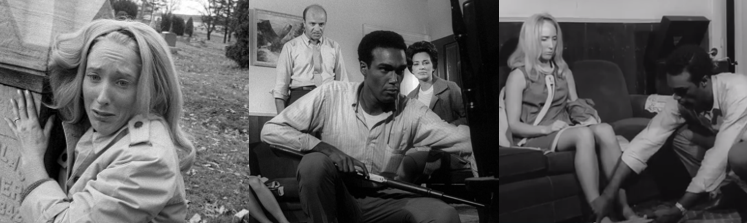
We open with Barbra and her brother, Johnny (Russell Streiner), reaching the end of a regular 200-mile round trip to place a wreath on their father’s grave at the behest of their mother. Johnny, exasperated at regularly having to waste his days commemorating a man he barely even remembers, just wants to get back home and stop throwing away good money for sentiment. While Barbra is happy to make the trip and thinks fondly of her father, Johnny has no time for lingering and amuses himself by teasing Barbra since she’s still scared by cemeteries. Indeed, Barbra’s previous resolve in chastising Johnny’s attitude falters when he starts bullying her, but they’re both horrified when a strange, shambling man (Bill Hinzman) suddenly attacks them. Although Johnny bravely (if awkwardly) tries to fight the man off, he ends up bashed into a gravestone, leaving Barbra fleeing in terror. After…somehow…crashing her car, Barbra is forced to take refuge in a nearby farmhouse; though she arms herself with a knife, she’s unable to call for help due to mysterious interference on the line but, luckily, Ben shows up and immediately takes charge. If you’re hoping for a strong, capable female lead then you’re out of luck, Barbra is so crippled by fear that’s practically catatonic, sleepwalking through the rest of the film and completely giving into despair while Ben is forthright and bravely tackles the ghouls with a tyre iron. Although he’s just as scared as her, his thoughts are on practical matters such as food, lights, and arming himself with a rifle; Barbra’s distressed state aggravates him, but he keeps his cool and puts her to work helping to secure the house against further attacks to await rescue. Eloquent, intelligent, and charismatic, Ben hides his fear and confusion behind productive tasks and narrating his observations and the horrors he’s seen aloud, something he’s forced to do since Barbra too shocked to be much conversation. When Barbra descends into hysteria, so desperate to save Johnny that she almost runs out into further danger, Ben’s forced to physically subdue her to keep her calm, allowing him to finish fortifying the house and glean insight into the crisis from a radio broadcast.

Tensions rise between the survivors, who are faced with a clash of ego and the undead.

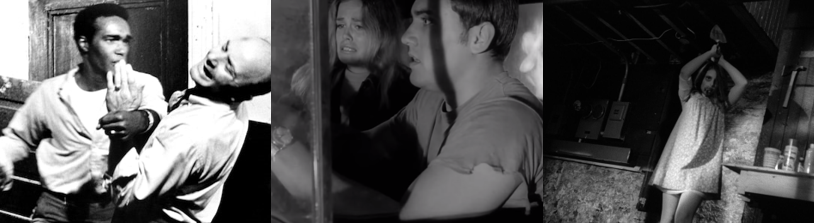
Considering it takes Ben some time (presumably a couple of hours) to finish fortifying the house, it comes as a surprise to both them and the audience when other survivors emerge from the cellar. Naturally, Ben is incensed to learn that Harry, his wife and daughter, Helen (Eastman) and Karen (Schon), and lovers Tom (Keith Wayne) and Judy (Judith Ridley), chose to hide rather than investigate the screaming and commotion. Ben’s natural instinct is to help people, no matter the danger, whereas Harry reasoned it wasn’t worth risking their lives and their safety helping others. Having witnessed the strength and tenacity of the ghouls, Harry is adamant that they’re all safer in the cellar, regardless of the fortifications, and both make valid arguments since the cellar allows them to better fend off attacks, but the house gives them a fighting chance and more escape routes. Tom does his best to play peacekeeper, but Harry stubbornly refuses to listen to reason, primarily due to fear, his shame at feeling said fear, and a deep-seated need to protect his family. Although the ghouls briefly breaking through the windows seems to prove Harry’s point, he’s aggrieved when Ben refuses to share any of the upstairs food or resources; it seems Harry wants it both ways, but Ben firmly draws a line and delivers a stern ultimatum: “You can be the boss down there. I’m boss up here”, enraging the overprotective and stubborn father. Taking his chances upstairs, Tom has the anxious and caring Judy join them while Harry barricades himself and his family downstairs out of a pig-headed fixation on being “right”. Weary of his bullish ways, Helen echoes Ben’s remarks about Harry’s shortsightedness, which cuts them and their sick daughter off from information and potential rescue. Like Tom, she emphasises co-operation and compromise, allowing them to trade places with Judy to learn more about the crisis, though he continues to rile Ben up with his antagonistic and cynical attitude. Helen is encouraged by news of rescue centres nearby and Ben devises a plan to hold off the ghouls with flaming torches so they can refuel his truck and get medical help for Karen, but the plan goes horribly awry, resulting in Tom and Judy’s fiery deaths, and Ben unloads his rage onto Harry when he refuses to let him back into the house, leading to the two tussling for the rifle.

Night established and popularised many of the characteristics of zombie media.
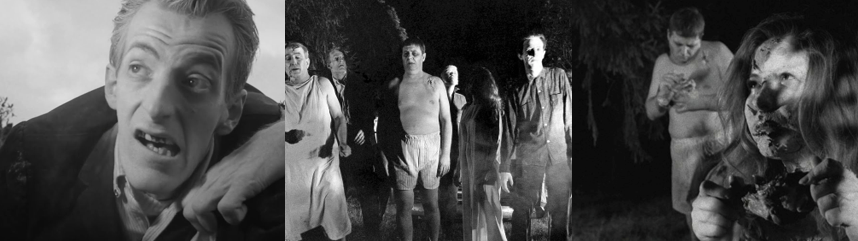
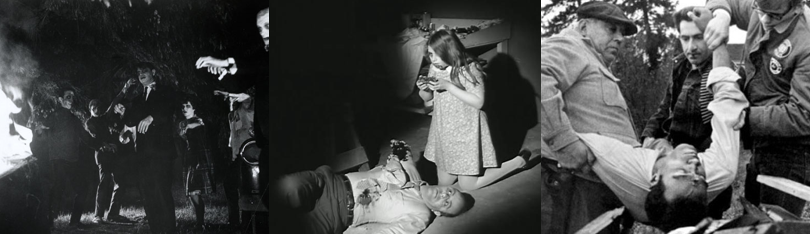
In their first appearance, Romero’s living dead are noticeably different to what we’d see in his sequels and subsequent zombie media. The first thing to note, of course, is that the living dead are never referred to as “zombies”; this term would be as fastidiously avoided and mocked as Romero’s opinions on running zombie variants, meaning the living dead have more in common with Matheson’s interpretation of vampires than the brain-devouring zombie of mainstream imagination. Consequently, the living dead are referred to as anything but zombies; described as “ghouls”, “things”, “them”, and “assassins”, the living dead are also noticeably less gruesome than in later movies, potentially because the zombie outbreak is so recent and the undead so freshly turned. Similarly, Romero avoids explaining the sudden return of the living dead; a news report speculates radiation from an exploding space probe, but divine will is also implied (Johnny mocks Barbra’s prayer and admits to no longer attending church, and is the first to die). The zombie outbreak is treated as a sudden and confusing attack, almost like an epidemic; at first, characters ignore or mock the signs but they’re soon relying on radio broadcasts for scant information and how to combat the voracious ghouls. Night of the Living Dead establishes the basic rules of the undead: for whatever reason, the recently-deceased return in a near-mindless state, driven only by the need to consume human flesh. Rather than infecting people, their bites simply expedite the deaths of their victims; because of radiation from the Venus prove, anyone who dies will then reanimate with a taste for murder and cannibalism. Though slow and shambling and driven back by fire, the ghouls are incredibly persistent and dangerous in large groups; they can only be permanently put down with a blow to the head, destroying their brain, or removing the head entirely, and people are encouraged to forgo proper funeral procedures and immolate the corpses as soon as possible. Unlike most iterations of zombies, however, the ghouls are decidedly less monstrous here; many are more like entranced slaves or crazed maniacs, meaning they can use tools or rocks where brute strength fails and young Karen even uses a trowel to stab her mother to death rather than going for the jugular as you might expect.
The Nitty-Gritty:
There’s a certain classic charm to revisiting the old black and white horrors of yesteryear; everything has a distinctly old-timey and almost gothic atmosphere, which is only extenuated by the greyscale visuals. Yes, it does make some of the night-time action difficult to make out and it’s not for everyone, but I always appreciate this era of cinema as it evokes feelings of nostalgia and appreciation for these filmmakers, who did the best they could on a limited budget and with the technology of the time and, in many cases, pioneered filmmaking effects that we still see in cinema to this day. Even in this first tentative outing for the living dead, Romero positions the ghouls as social commentary; their mindless, savage, almost primal nature explicitly reflects the dichotomy between the survivors, particularly Ben and Harry, who constantly butt heads. There’s a startling message related to this through the simple depiction of the ghouls co-existing and even working together, despite being incapable of communication, to problem solve and better devour their prey; in contrast, the survivors are equally unable to communicate due to fear, tension, and ego and absolutely incapable of working together for these same reasons. It’s these emotional responses that see other survivors uniting against their monstrous foes as a paranoid, trigger-happy mob that’s as inhuman as the ghouls they target, creating a thematic parallel that begs the question who the real monsters are, us or “them”? Naturally, you can read into this even further thanks to Ben being a Black man; though the most level-headed and practical, he’s met with suspicion (even from Barbra, initially) and hostility, which opens itself up to racial prejudice due to his skin colour and Harry’s overly aggressive demeanour, and the ghouls are also framed as being this unknowable threat not unlike  foreign invader that “normal” folk struggle to understand and fight back against with extreme prejudice.

Despite surviving the horrifying night, Ben is callously shot dead as humanity blindly fights back.

Although Johnny’s death is disappointingly lame and bloodless, the suddenness and brutality of is where the true horror lies; still, Night of the Living Dead contains a fair amount of gore, including a partially mangled (presumably eaten) corpse in the farmhouse, some rudimentary decomposition effects, a surprising amount of flaming bodes, and sickening scenes of ghouls feasting on Tom and Judy’s entrails and chargrilled flesh. Still, Night of the Living Dead focuses more on tension and both internal and external threats. Although Harry covers their exit with Molotov cocktails, he takes advantage of the situation to claim dominion over the entire house. Unsurprisingly, given they’ve been measuring dicks the entire time, Ben fights him for control of the only gun, resulting in Harry being fatally shot due to his hubris. Having succumbed to her injuries, Karen reanimates and feasts on her father’s body before stabbing her mother to death. As she and the other ghouls close in, Barbra finally snaps out of her stupor, only to be dragged into the writhing masses by Johnny, and this irony is quickly followed by Ben, the sole survivor, being forced to take refuge in the cellar when his barricades fail. After putting down the reanimated Harry (which seems as much out of spite as it for survival) and Helen, Ben waits it out and survives the night; since the ghouls go down pretty easily when you have the right weapons, the danger seems to be mostly contained by the authorities and gun-toting locals, who pick the living dead off with ease. When they come to dispatch the ghouls near the farmhouse, Ben emerges from the cellar, attracted to the gunfire, but his caution proves his undoing; since he’s skulking around in the darkness, he’s mistaken for a ghoul and promptly executed on the spot. As the credits play, his body (and those of all the characters, ghouls and human alike) is dispassionately dumped onto a bonfire and burned in one of the bleakest endings in all of horror cinema.

The Summary:
There’s a reason Night of the Living Dead is considered a horror classic and the forefather of zombie media. A low-budget affair that made the most of its resources, the film is a bleak mediation on humanity; simple ideas such as co-operating, coming together in a crisis, and working together to overcome an aggressive foe are present and resonate even to this day, where we’re more likely to turn against each other than set aside our differences. Although not as explicit as in his later movies, the ghouls are clearly utilised as an allegory for these matters, and various others; the fear and inevitability of death, the danger of the unknown, the savage nature of man are all valid readings of Night of the Living Dead.  It’s also incredibly progressive in terms of Black representation; Ben is a keen, intelligent, and proactive survivor haunted by what he’s seen but determined to help others and make a fighting stand until rescue comes. While he can be as abrasive as Harry, his stubborn demeanour comes from a place of logic and reason and he’s constantly trying to increase their chances of survival, only to be met with pig-headed resistance. Harry might be an asshole, but you can see where he’s coming from; he’s scared and wants to protect his family, even if it means sacrificing others. Sadly, Helen (and women in general) don’t fare quite as well; portrayed as meek and generally useless, women just kind of get in the way or are oppressed and bossed about rather than contributing anything meaningful, though this does allow discussions about gender equality and machismo. Night of the Living Dead also established many of the “rules” for zombie cinema; although its ghouls aren’t as monstrous as later zombies and are more like entranced slaves, there’s a mystery and a danger to them when they gather in large numbers against vulnerable victims. However, it’s true that the film hasn’t aged very well; the performances and some themes are questionable, and there have been better zombie movies made since (by Romero himself, no less) that both overshadow this one and expose its flaws, though it remains recommended viewing for any fans of the genre, for sure,
My Rating:

Rating: 3 out of 5.

Pretty Good

Do you consider Night of the Living Dead a classic of the genre? Were you surprised to see a Black man take such a proactive role? What did you think to the tension and rivalry between Ben and Harry? How did you interpret the ghouls and what did you think to their characterisation here? What do you think caused the zombie outbreak and how do you think you would react in such a scenario? What is your favourite zombie film and what do you think of the genre in general? How are you celebrating the Day of the Dead today? Whatever your thoughts on Night of the Living Dead, and zombie films in general, feel free to leave a comment below or leave your thoughts on my social media, and check out my other zombie content across the site.