
Released: 30 August 1996
Director: Tim Pope
Distributor: Miramax Films
Budget: $13 million (estimated)
Stars: Vincent Pérez, Mia Kirshner, Richard Brooks, Thuy Trang, Iggy Pop, Thomas Jane, and Eric Acosta
The Plot:
Mechanic Ashe Corven (Pérez) and his young son, Danny (Acosta), are brutally murdered by zealot Judah Earl (Brooks) and his thugs. After being resurrected by a mysterious and supernatural crow, Ashe is guided by the aloof Sarah Mohr (Kirshner) and assumes the guise of a tragic clown to avenge his loss using his newfound superhuman abilities.
The Background:
Beginning as a comic book published by Caliber Comics in 1989, The Crow was the brainchild of James O’Barr. The main character, named simply “Eric”, was modelled after prominent rock musicians and brutally slayed those who killed him and his fiancée as a reaction to the pain and loss O’Barr felt after losing his own fiancée. The Crow became an underground success and, since dark comic book narratives were becoming popular in Hollywood, transitioned into a critically and commercially successful film adaptation despite the accidentally on-set death of star Brandon Lee. While The Crow (Proyas, 1994) is regarded by many as a cult hit, the same accolades can’t be said about its sequel, which came as a direct response to the financial success of the first film. Initially, director Tim Pope and writer David S. Goyer planned to take the sequel in a different direction to avoid copying or emulating the original movie. They pitched having Sarah become a female Crow (a concept later explored in the comic books) or setting the story in the 19th century before ultimately settling on another tale of urban vengeance. It was the producers, however, who most directly engineered the film to be more of a carbon copy of the first, dramatically cutting down Pope’s original 160-minute cut into a jumbled mess of muddy visuals and confusing plot points. Despite the popularity of the first film, The Crow: City of Angels failed to recapture the magic of its predecessor; it barely grossed over $25 million at the box office and has been met with scathing criticism for its awful execution, lacklustre lead actor, and woeful narrative and pacing. Despite this, Miramax continued producing Crow movies and spin-offs, and some have even argued that The Crow: City of Angels is an under-rated entry in the franchise. Spoiler alert: I am not one of them but, as The Crow is one of my favourite movies and tonight is “Devil’s Night”, I figured this would be a good opportunity to look back on this shambles of a film and see how it holds up.
The Review:
I’ve been a huge fan of The Crow ever since I was a kid and randomly stumbled upon it on one of our many VHS tapes; it took me a little while to be equally impressed with the bleak and harrowing comic book, but the film had a huge impact on me at a time when I was really getting into dark and gritty comic book comics, stories, and anti-heroes. While the story didn’t really lend itself to a sequel since everything was wrapped up nicely in the film and it seemed very self-contained, the concept leaves plenty of wriggle room for other avatars to be resurrected and seek justice (or revenge, depending on your perspective) for the wrongs they suffered in death. It’s not as if it should really be all that difficult, either; there was plenty of material in James O’Barr’s comic that hadn’t been used in the first film, or was left on the cutting room floor, that could’ve been worked into a new movie, or a reboot. In this regard, I’m okay with new actors taking on the iconic role as the Crow’s very nature allows legacy characters, and I can understand the studio wanting to try and emulate the look, feel, and narrative of the first film, and there’s even some interesting new wrinkles in the lore and concept of The Crow: City of Angels, but the final product and overall execution is lacking in almost every regard beyond the soundtrack and the general moodiness of the film. The first and biggest problem is the lead himself; while I had the faintest idea of who Brandon Lee was prior to The Crow thanks to a vague familiarity (at the time) with the legendary Bruce Lee, I have no idea who Vincent Pérez is and, frankly, still don’t. I have no idea why he, of all people, was cast in such an iconic role; it’d be hard for any actor to fill Lee’s shoes, especially after the tragedy he suffered during filming, but Pérez is incapable of matching Lee’s tortured, charismatic performance and comes across as a pale imitation in his attempts to channel the same mixture of grief, anger, and morose conviction of his predecessor.
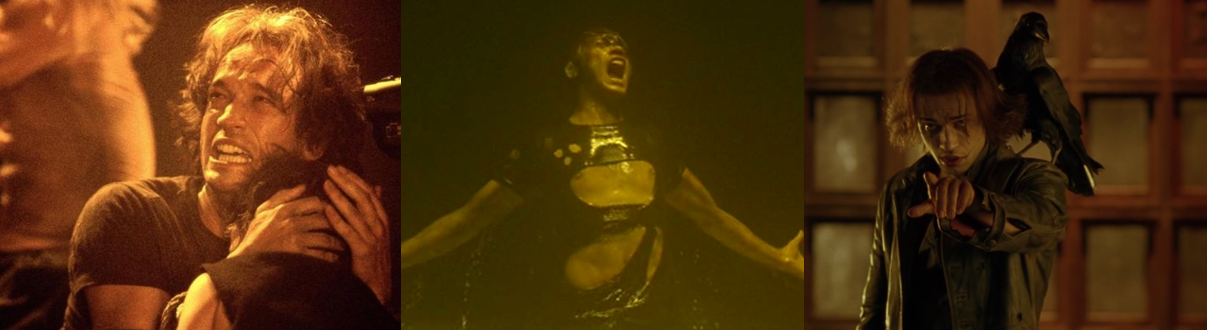
Ashe is quite a different character to Eric Draven; rather than being a loved-up rockstar, he’s a mechanic and a single father living in Los Angeles, here rendered as a bleak, gritty, crime-infested hellhole swamped with drugs and rampant violence thanks to the fanatical Judah Earl. Though there are few places free from Judah’s influence; Ashe lived a simple, quiet life near the pier with his beloved son, Danny, but the two were brutally tortured and executed by Judah’s maniacal followers, primarily Kali (Trang) and “Curve” (Pop), after accidentally witnessing them murdering another drug dealer. Some time later (in the first film it was a year; here, we don’t really know, but it can’t be that long as Ashe’s garage/home is largely untouched since his death), the mysterious and semi-supernatural crow brings Ashe back from his watery grave to seek vengeance but, whereas the crow guided Eric and assisted in his similar quest, Ashe is primarily aided by Sarah Mohr (Kirshner), who is all grown up from the last film and working as a melancholic tattoo artist. While Eric rose in a state of confusion, he became committed to his cause after the crow helped him relive his traumatic death; Ashe similarly reawakens confused and disorientated, but is overwhelmed by his situation, as related by Sarah, and reacts with denial and hostility before reluctantly accepting that he’s now an undead spirit of vengeance after being bombarded with memories. Sarah uses Danny’s paints to make Ashe into an imitation of her former friend (even his make-up is a poor facsimile of Eric’s, however, with the white barely visible in the film’s poor lighting and the black only going around his lips rather than covering them) and he throws on a bad-ass trench coat, hops on an equally bad-ass motorcycle, and heads into the misty and filth-ridden streets to track down his killers. Thanks to the crow, Ashe is led to “Spider Monkey” (Vincent Castellanos), where he showcases his dramatic flair, performing sleight of hand and card tricks while toying with his prey, while also exhibiting just how corny and bad Pérez’s acting and line delivery is. This becomes a common theme, with his weird screaming, cackling countenance, odd appropriation of the “One for sorrow” nursery rhyme to now include crows, and desperate attempts to appear menacing only serving to make him appear unhinged. Whereas Eric somewhat revelled in the virtual invincibility and superhuman abilities afforded to him, Ashe wallows in the constant cycle of pain and healing his body goes through when he’s hurt (which, to be fair, is somewhat similar to the comic book Eric) and fluctuates between being violently, maniacally unbalanced when facing his killers, and miserable and brooding when with Sarah or contemplating his newfound afterlife.
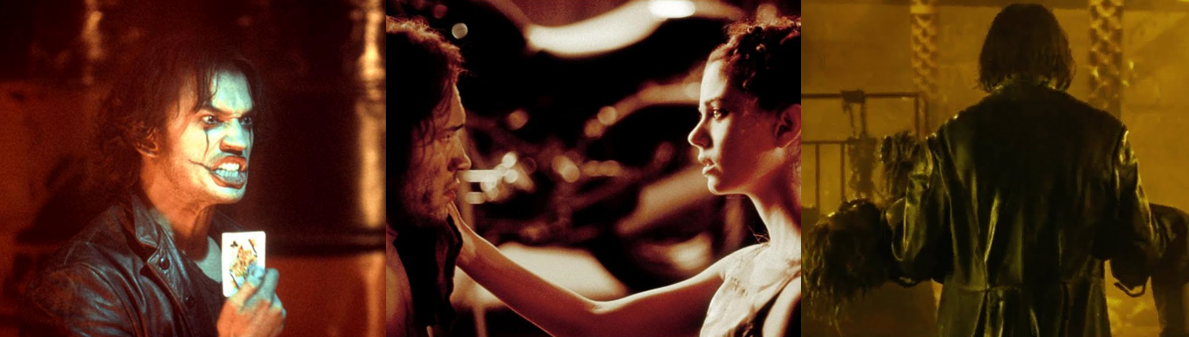
While this is reminiscent of his predecessor, Ashe comes off as far gloomier and sullener than Eric, and it’s not like he makes up for it with any decent fight scenes. The few he does have are brief, poorly shot, and completely one-sided in his favour until the end, and we’re even denied decent shoot outs this time around as Ashe largely forgoes firearms (except for when hunting Curve), though he does evoke the crow imagery by stuffing a paper crow into “Nemo’s” (Thomas Jane) mouth, forming Kali’s blood into a crow upon her death, and leaving Curve surrounded by a crow outline of petals. Naturally, Ashe isn’t just out to avenge his death, but is primarily driven to avenge the brutal murder of his son; this causes him the most pain, as Danny was just an innocent, wide-eyed kid (a stupid one, but an innocent one nonetheless) and reliving his murder causes grief and rage to wrack Ashe’s body and, in many ways, makes his plight far worse than Eric’s but this tragedy really belongs in a better movie (or in the hands of a better actor). He goes out of his way to retrieve Danny’s corpse and give him a proper burial and is even visited by Danny’s spirt when he starts to lose his way. This wrinkle is added because, for whatever reason, Ashe develops a strong attraction to Sarah; surprising, as the two have very little chemistry and, while she seems fascinated to see another reborn by the crow and is sympathetic to him, I never got any romantic feelings from her. A snappy, somewhat feisty goth girl who partially narrates the film and has a familial bond with her boss, Noah (Ian Dury), Sarah’s influence over Ashe becomes so strong that he considers staying behind with her. This is juxtaposed by the Day of the Dead festival that’s being celebrated in the city, and through a conversation with a priest (Reynaldo Duran), who tells Ashe that wandering souls can get lost, believing themselves to be alive, and need guidance to achieve eternal rest. Honestly, the idea of a Crow wandering the Earth with no memory of how or why they got there is a fascinating one, and one I believe was strongly emphasised in the original cut of the film, where Ashe decides to stay behind rather than join his son, and Sarah, in death.
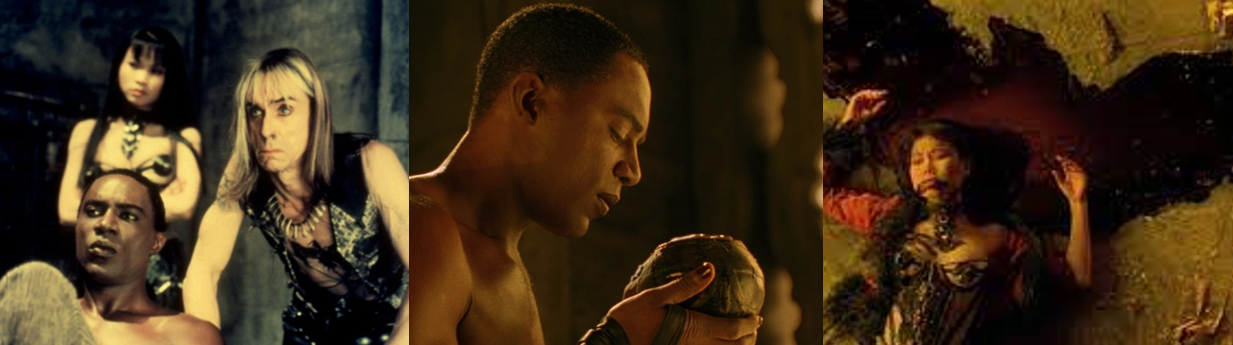
Of course, this plot is barely notable in the finished film and is used more as motivation to keep Ashe fighting and help him overcome the loss of his powers, courtesy of Judah Earl. I hate to keep making comparisons, but Judah Earl is no Top Dollar (Michael Wincott); he exudes a decent menace and is a reprehensible and zealous figure in his own right, but Richard Brooks’ performance is all over the place as well, ranging from stoic and gravelly to over the top theatre as he proudly proclaims: “I’m your shadow, Ashe! […] I’ve tasted the blood of the crow and taken your power!” Like Top Dollar, Judah Earl is surrounded by a gaggle of cackling, shit-kicking underlings, none of which have any of the personality (however one-note and despicable) of Top Dollar’s and most of whom are constantly out of their minds on Judah’s tainted crack to be little ore than a knock-off combination of Skank (Angel David) and Funboy (Michael Massee). The most notable exceptions, beyond Nemo’s eccentricities, are Kali and Curve. Kali is a sadistic bitch who takes great pleasure in mocking and killing Danny; she also exhibits some martial arts prowess, giving Ashe his first real physical competition, and is one of three characters who I actually enjoyed seeing offed due to her aggravating nature. The other was Curve, played with manic abandon by rock icon Iggy Pop; I’m no fan of Iggy Pop’s music, or his acting, however, and Curve comes across as completely off his rocker, constantly raging about a tattoo Sarah gave him and assaulting the senses with his weird line delivery and atrocious acting (his “Do you think I’m afrai-i-id?” spiel is probably the worst performance I’ve ever seen). While Top Dollar seemed to have his hands in everything and was more about anarchy, Judah’s deal is drugs; he swamps the city with the stuff and has little concern over how badly his merchandise affects people. Once a product of the streets, Judah has taken to spending his time in his penthouse surrounded by the macabre and supernatural, and conveniently has a blind seer on hand Sybil (Tracey Ellis) to fill him (and us) in on the nature of the crow and how harming or killing it can hurt Ashe and render him mortal. Judah Earl takes this one step further, however, and drinks the crow’s blood to become “The Shadow”, a dark version of Ashe who gains all of his supernatural abilities for their final climatic showdown in the streets.
The Nitty-Gritty:
It’s so interesting and weird to think about the Crow franchise; the premise is incredibly simple and shouldn’t really be that hard to make a gritty, gothic, somewhat low budget film that’s a mixture of action, horror, and romance. It turns out, however, that The Crow was lightning in a bottle; not only did everything about its presentation work exceptionally well, but its reputation was bolstered by Brandon Lee’s tragic death, which has elevated the film above whatever shortcomings it might have to make it a monument to a young actor cut down in his prime. In that regard, you could argue that it didn’t make sense to follow it up, especially so soon after, but to do so with this knock-off, poor quality effort is a real insult to both Lee and O’Barr and comes across as a poor man’s attempt to recapture the magic. While the soundtrack is still pretty strong thanks to Graeme Revell’s haunting score (even if it is basically the same as last time) and some notable names, like White Zombie and Deftones, contributing to the film, the quality of acting takes a dramatic nosedive. Rather than a strong assortment of character actors and charismatic performers, The Crow: City of Angels features a bunch of one-dimensional, underdeveloped scumbags or aggravating performances from people who never should’ve been cast in the first place or actors who had yet to really hit their stride in their art.
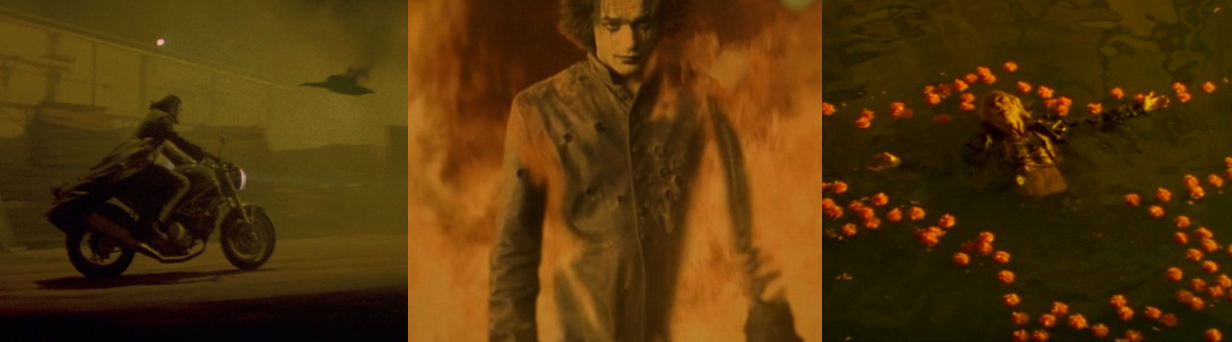
Easily the worst aspect of The Crow: City of Angels, though, is the presentation; this was legitimately the first film I’ve ever watched where I’ve criticised the direction and cinematography, and the look and feel of this film is a far cry from the harsh, rugged streets seen in the first film, which was almost a noir thriller in its aesthetic. The sequel swamps every scene in this grimy, mustard-yellow glare; mist and smoke covers everything, making the city appear to be either a poorly-constructed miniature or obscuring sets and real-world locations, and everything looks cheap and rushed, as though the filmmakers were trying to cover their inadequacies with this ugly, choking fog. Honestly, it looks like a homemade movie filmed on a soundstage or in a back garden, it’s that bad and, while the city occasionally seems like one of the worst places you can ever imagine, with its seedy underworld, sex clubs, and bars and such, everything just seems more fake and staged compared to the first movie, and this carries through to the action scenes. Sure, Ashe looks awesome cutting through the fog on his motorcycle, but he gets none of the rooftop-running action of Eric and doesn’t really acquit himself well in fight scenes. More often than not, Ashe simply slaps around and scuffles with his victim rather than threatening them with Poe or mutilating his body to intimidate his opponents, and the only physical challenge he’s presented with comes from Kali, whom he easily dashes out a window thanks to his invulnerability. Otherwise, Ashe’s mission of vengeance is an absolute mess of murky visuals, jerky camera moments, and awful acting; Pérez desperately tries to come off as intimidating when confronting Spider-Monkey but it’s a poor effort made worse by some dodgy CGI effects, and seeing him mock Nemo with a pouting countenance is more disturbing than menacing. Even Ashe’s big fight scene with Kali is ultimately disappointing, being a plodding affair with slow, awkward movements, erratic editing, and some weird contorted body language from Pérez, and his rundown of Curve ends up being a pitiable chase and confrontation thanks to such memorable lines as “Fuck you, bird dick!” and the down-right ugly visual presentation of the film.
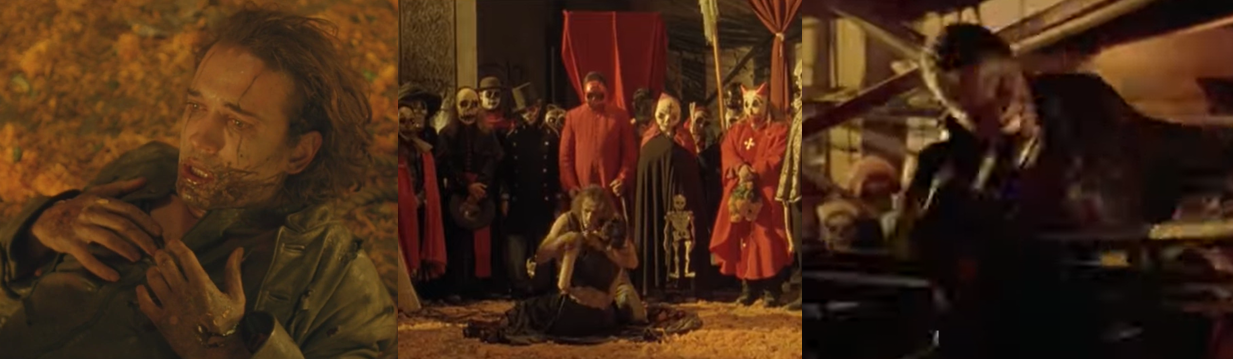
Fittingly, Ashe’s greatest physical challenge comes in the film’s conclusion; desiring to take the Crow’s power for his own, Judah Earl takes Sarah hostage and, after capturing the crow with a ridiculous amount of ease, has her witness a bizarre ritual where he kills the bird, inflicting Ashe with stigmata for a very on the nose Christ allusion and causing him to plummet from Judah’s high-rise dwelling and be rendered vulnerable. This fulfils Judah’s life-long fascination with death; his stoic demeanour and callous nature isn’t just to try and paint him as a malicious threat, but is because he’s completely numb to the concept of death since he has already experienced, and survived it, before. Having “liked what he saw” in his brief time in Hell, the only pleasure Judah has been able to take since is in the suffering of others, and the power of the crow allows him to indulge this to the fullest extent…however, while much of this is inferred and implied throughout the film, it really only becomes explicit when you know that, apparently, the original script went into greater detail about Judah’s near-death experience as a child. Regardless, thus empowered, Judah (or “The Shadow”, or whatever-the-fuck he’s supposed to be) easily manhandles Ashe, who’s completely helpless against Judah’s superior strength. The cruel zealot takes a sadistic pleasure in stringing Ashe up and lashing him before a raucous crowd but, when he goes to finish him off, Sarah intervenes and takes a knife to the stomach (without him even trying), dying in Ashe’s arms. Spurred on by Danny, who eagerly awaits his return, and enraged at Sarah’s death, Ashe skewers Judah on a piece of scaffold and…somehow…calls up a murder of (presumably) supernatural crows to tear the cruel kingpin into a mess of dodgy CGI. Again, quite how Ashe does this considering he has no powers at this point isn’t explained, nor is it really made clear exactly what the hell’s happening; it’s just another of the many drawbacks to huge chunks of the story being excised from the film, and this is only further reinforced in the rushed and vague ending, which suggests Ashe actually did stay behind rather than what the film is actually going for (which is that he rode off into the fog to be with Danny and, most likely, Sarah).
The Summary:
What happened to Brandon Lee on the set of The Crow was a tragedy. What happened to James O’Barr as a hopeful teenager was a tragedy. The Crow: City of Angels is a tragedy. The whole film is just an ugly, distorted, incoherent mess from start to finish; oh sure, there’s flashes of a somewhat decent sequel here, but everything that’s good about it is based on what worked in the first film and is a mere copy (a shadow, if you will) of it. Rather than taking the formula of its predecessor and expanding upon it, offering more action and bloodshed and more visually interesting fights and kills, The Crow: City of Angels ends up looking like a direct-to-video rush job that completely squanders not only its own premise, but everything that the first movie did so well. The idea of a father returning to enact revenge on those that killed his son is palpable, as is the concept of a crow avatar falling in love with a living female and resisting returning to the grave; hell, even the idea of a sadistic thug stealing the powers of the crow has some merit, but the execution of all of these ideas is ruined by muddy visuals, piss-poor performances, and an absolutely butchered narrative pacing. There’s some cool visuals of the Crow on his motorcycle and dramatically stalking and toying his prey or brooding in the dark, but Vincent Pérez is absolutely terrible here; he does the more melancholic aspects quite well, but his madcap buffoonery, grating accent, and stilted line delivery leave him a charisma-less void, especially compared to his predecessor. Iggy Pop desperately tries to hog every scene but he’s in way over his head here, and I doubt a better script or direction could’ve helped his tone-deaf performance, and Richard Brooks fails to exude any type of menace, even when he’s trying his hardest, thanks to his random descents into mania. Overall, it’s baffling to me that the studio managed to butcher a sequel to The Crow so badly; when its aping the first film, there’s some appeal here, but no one in their right mind would ever choose to watch this over the first movie and it does nothing but leech off of The Crow’s cult appeal in the laziest and most insulting ways possible, leaving us with a patchwork imitation of its predecessor that deserves nothing but scorn and derision.
My Rating:
Terrible
Am I being too harsh on The Crow: City of Angels? Do you think the film had any chance of living up to the popularity and reputation of its predecessor? What did you think to Vincent Pérez’s performance and Ashe as the new Crow? Did you buy his romance with Sarah, or enjoy his flair for the theatrical? What did you think to Judah Earl and his crew? Did you enjoy the murky, foggy presentation of the film or was it also a struggle to endure? Which of The Crow’s sequels was your favourite, if any, and would you like to see the character return in some form or another in the future? How are you celebrating Devil’s Night tonight? Whatever you think about The Crow: City of Angels, join the discussion below or leave a comment on my social media.

 Dr. K's Waiting Room
Very well written review, Dr. K! There were several points you brought up that I agree and disagree with. One of those disagreed points is Vincent’s performance. In my opinion, Vincent doesn’t seem to be trying to mirror Brandon’s performance or how Eric was portrayed. Instead, he’s attempting to make the character of Ashe his own, as well as providing a distinct acting performance. This makes sense with what you said in the background section of your review; how Tim and David desired to tell a different story in the sequel. However, I understand your confusion over Vincent’s casting in ‘The Crow: City of Angels’. Before watching this movie, I had seen other films Vincent had starred in. Though I do acknowledge that two of these films, ‘Queen of the Damned’ and ‘Swept from the Sea’ were released after ‘The Crow: City of Angel’. Meanwhile, 1990’s ‘Cyrano de Bergerac’ was a French film. I also reviewed ‘The Crow: City of Angels’, so if you’re interested, I’ll provide the link to my review in the comment section.
LikeLike
I liked that he did magic tricks, and his whole look, but I don’t think I’d be impressed by him even if the film hadn’t been butchered. His whole delivery was just off for me and made it an arduous watch, but I’m glad you enjoy what he did.
LikeLiked by 1 person