Lee Hall, author of Consistent Creative Content, the Order of the Following series, and others
1. First, introduce yourself a bit. What is your name (or pen name) and where are you from?
Allow me to introduce myself. My name is Lee Hall and I am an independently published author from the UK. Indie publishing to me means that I have self-funded my own books from scratch all the way to publication.
2.Next, tell us a bit about your most recent work. Is this your first published book? What is it about and what genre would you classify it as?
My most recent release and seventh book, Consistent Creative Content, is a non-fiction guide for indie authors and bloggers. This part-memoir part-guide lays out my journey as an author and blogger which is full of advice and experiences. Basically stuff I have learned over many years from selling books to social media and blogging success.
3. Tell us a bit about your main character; what are they like, how did they come about, and what are some of their strengths and weaknesses?
Left out because the book is non-fiction.
4. What was your hardest scene to write in this (or any) book?
Probably biggest challenge with this book was collating and presenting the analytical book sales and promotion figures in a way that would be helpful to readers. Over many years I have run several promotional campaigns for my books and while some of the statistics are kept on a spreadsheet, I wanted to present them in more detail. Social media following and amount of book reviews at the time are major factors in selling and they were a challenge to track, but I managed it, somehow. Sometimes it isn’t just about the book being advertised but everything else around it like those numbers.
5.Did you go the traditional route when publishing your book or did you choose to self-publish?
All of my works are self-published or indie published – I consider these the same.
6. What would you say is the most difficult part of your writing journey and what advice would you give to other writers?
Hands down most difficult part of my writing journey is the selling and marketing after a book is released. To be able to sell a book consistently over time from zero is a huge undertaking that many authors never give themselves enough credit for doing. A few sales to me is progress and enough to tell me an author is going in the right direction. My advice: Pick a few social media platforms and dive in, it might appear that you are shouting into the void for a long time but eventually if you keep going and figure it out, someone will shout back from that void. Being consistent in all of your endeavours as an author will eventually work in your favour, perhaps reading a few self-help books might help also. I can think of one…
7. Do you want each book to stand on its own, or are you trying to build a body of work with connections between each book?
My backlist of books have titles that are both standalone and part of a wider series which are then stand alone in their own right – it sounds complicated and for much of the part it is but basically I set out early on to produce as much content in different genres as possible. So the books which are part of my Order of the Following series are occult thrillers with vampires, monsters and witches while I also have a paranormal romance and super hero comedy that are standalone – a real spread of genre and length to maximise readership.
8. What are some of your favourite authors and books and what inspired you to become a writer in the first place?
Probably my all-time favourite author would be Michael Crichton. Most will know him as the writer of Jurassic Park but my first Crichton experience came from Timeline, a book I found while working my first job as an airplane cleaner. After consuming that book within days, I filled my shelves with his works which then inspired me to write.
9. What would you say has been the best way to market your books?
Without a doubt the best way to market my books I have found is to have more books available. Taking inspiration from my own experience after finding Timeline, which I enjoyed, that motivated me to find more books by Crichton. If a reader has a good connection with a book, many of them will at least want to know if that author has any more available. Of course, this is a long term strategy but all good things take time. Along with an ever present social media effort, eventually this worked to sell books for me.
10.Are there any tropes, clichés, or writing styles that you dislike and, if so, what are they and why?
Tropes and clichés are something I sometimes enjoy as a guilty pleasure. They are that for a reason because most of the time they work for me. I haven’t found a writing style yet that I’ve not enjoyed in some capacity although I only tend to pick up books I know I’ll probably enjoy.
11. Do you read reviews of your book and, if so, how do you handle negative feedback?
At the very beginning of my journey I would hang off every review I’d received but eventually I began to care more about the quantity of ratings as opposed to the finer detail. If the review is from someone I know then I might embrace it more. Negative feedback is probably one of the only certainties when it comes to publishing and I’m content knowing that not everyone will enjoy my stuff. After a few 1 star ratings and a few 5 stars, you kind of just go with the flow eventually. Above all, a rating is proof of readership.
12. What are some of your quirks as a writer? Do you like to plot everything out or do you prefer to just “wing it” and see where the story takes you? Do you listen to music when writing and, if so, what do you listen to?
Most of my story ideas spend some time in my own imagination before being written. If the idea sticks around long enough then I’ll be compelled to try and funnel that into a bigger story which will then hopefully grow. By then I’ll at least know the finish and a few major plot points but the rest, that’s where I find the enjoyment of going wherever the story takes me. I prefer to draft in silence but at the final editing stages I’ll throw on some music, Bon Jovi and Guns N’ Roses feature a lot during editing sessions.
13. What is the best advice you’ve ever had when it comes to writing and what advice would you give to new writers?
The best advice I have received is to find your niche. If you can specialise in something only you can do as an author then you’ll have no trouble in finding readers and creating a brand.
Advice I can give to new writers is to dive in and work hard. You can only get better at writing by writing and spending time figuring out how to write. Reading helps also, that’s probably why you’re writing in the first place. Selling is a huge step after writing and to do that you need to earn the trust of people first and foremost.
14. What’s next for you? Are you currently working on any new books or stories?
After recently releasing my seventh book I am now looking towards querying a book project to agents while continuing to support fellow authors by reading and reviewing their work. You can catch me most days over on Twitter trying to be witty and hopefully supportive to others.
15. Finally, feel free to plug your social media, website, and links to Amazon, GoodReads, and other relevant sites below, and detail any current offers available for your book/s:
Thank you for the opportunity to talk about writing.
Released: 3 July 1996 Director: Roland Emmerich Distributor: 20th Century Fox Budget: $75 million Stars: Will Smith, Bill Pullman, Jeff Goldblum, Judd Hirsch, Margaret Colin, and Randy Quaid
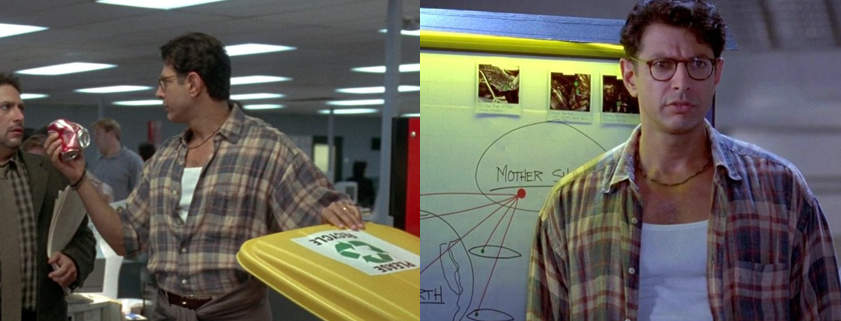
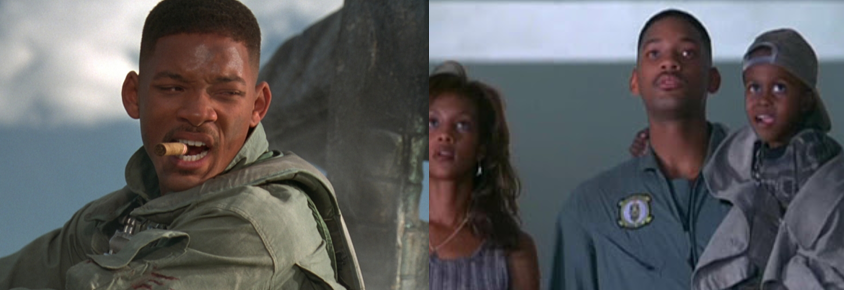
The Plot: When a series of flying saucers suddenly appear over and attack every major city across the world, United States President Thomas Whitmore (Pullman) is forced to mount a desperate counterattack alongside a rag-tag resistance, including ungainly MIT-educated satellite engineer David Levison (Goldblum) and gung-ho Marine F/A-18 pilot and aspiring astronaut Captain Steven Hiller (Smith).
The Background: It’s easy to forget now but, back in the late-nineties, the writer/producer/director team of Roland Emmerich and Dean Devlin were a hot commodity in Hollywood, especially after the box office success of Stargate (ibid, 1994); in fact, it was during the promotion of Stargate that the two came up with the concept for Independence Day, an alien invasion movie that they intended to be based more around a large-scale, co-ordinated attack rather than subterfuge. Featuring cutting edge special effects to render the aliens’ devastating attack upon numerous iconic American landmarks, Independence Day (confusingly saddled with the subtitle ID4) was the highest-grossing film of 1996 and made nearly $820 million at the box office. Although receiving some criticisms, the film was generally well-received, won numerous awards, and kicked off a resurgence in blockbuster disaster movies, which quickly became the trademark of Emmerich and Devlin, before finally getting a long-awaited sequel some twenty years later.
The Review: If there’s one thing Independence Day does really well, especially for its first half or so, it’s build up a great deal of tension regarding the alien invaders; we get a sense of the size of the alien mothership right away when it passes by the Moon and causes ripples on the surface. Almost immediately, the alien signal is picked up by the Search for Extra-terrestrial Intelligence (S.E.T.I.) and the American military begins to mobilise (more like scramble) to figure out what, exactly, is about to enter Earth’s orbit. Though the alien mothership, and the subsequent city-sized saucers, are somewhat simplistic and cliché in their “flying saucer” design, there’s a foreboding, ominous nature to their construction and you can tell, even before they start blasting away at major American landmarks and cities, that these E.T.’s are not here to make peace.
Despite his critics, Whitmore galvanises the nation, and the world, against the alien threat.
Naturally, the U.S. President is the figurehead for trying to calm the nation and sort out first a plan of communication and then, later, a plan of attack. At the start of the film, Whitmore is facing political backlash since he’s been forced to make a lot of compromises since being elected to office; with many in even his cabinet believing him to be a weak and ineffectual leader, Whitmore is eager to keep the peace and to not set off an interstellar war but finds himself caught completely off-guard when the aliens unleash their devastating attack. It’s an interesting leading role for Pullman, one that sees him having to juggle a myriad of conflicting emotions as Whitmore struggles to find a way to please everyone and hold together himself, his family, and the nation in the threat of global annihilation. It also, of course, results in one of the most iconic rousing speeches in all of cinema as Whitmore inspires the last remnants of humanity to strike back against their aggressors in a last-ditch attempt at survival.
David, a committed environmentalist, becomes the unwitting saviour of humanity.
Compounding matters is the personal animosity between him and David; some time prior to the film, David punched Whitmore after suspecting him of having an affair with his then-wife, Constance “Connie” Spano (Colin). David, who is something of a technological prodigy, is able to decode the alien signal and determine that they are planning a co-ordinated attack but, while he is able to ensure that Whitmore, the Joint Chiefs, and Connie are evacuated safely, his warnings come too late to actually stop the initial attack. David, despite being little more than a cable repair man, is constantly portrayed as the smartest person in the room; a committed environmentalist, David is driven to help others and to save the world despite his emotional attachment to Connie and his frosty relationship with Whitmore and, although he’s not a member of the Presidential cabinet, he quickly becomes an instrumental figure in figuring out how to outsmart and outgun the invaders.
Will Smith brings his charisma and sass to the film, which cemented him as a a leading man.
When the aliens arrive, the U.S. military is, understandably, put on high alert; as a direct result, Hiller finds his leave cancelled and he begrudgingly returns to his regiment; in many ways, the aliens’ arrival means big things for Hiller, who wishes to become an astronaut but had his application rejected, potentially because of his relationship with stripper Jasmine Dubrow (Vivica A. Fox). Hiller enthusiastically joins the first counterattack against the aliens and is left the sole survivor from the campaign, which is doomed to fail thanks to the aliens’ superior technology and firepower. It’s important to remember that, at this point, Smith was still largely known for being the goofball Will from The Fresh Prince of Bel-Air (1990 to 1996) but Independence Day really helped to cement him as a charismatic leading man, especially in action vehicles such as this film. Though much of his gung-ho character is ripped from the likes of Top Gun (Scott, 1986), Smith brings a magnetism and down-to-earth likability to the role and his sass is, as always, especially on point to deliver some of the more entertaining, and quotable, moments of the film.
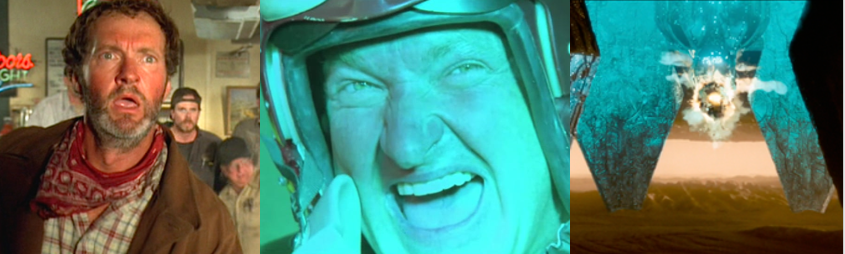
Russell, a dishevelled drunkard, turns out to be an unlikely hero.
While there are a number of female characters including in Independence Day, they are all largely there to simply support, and worry for, the men in their lives; even Jasmine, who is briefly seen as being a proactive and adaptable character, is quickly side-lined once the men of the film put aside their issues to formulate a viable counterattack. Compounding this is the fact that Independence Day is also bolstered by several additional characters, chief among them is Russell Casse (Quaid), a drunkard who claims to have been abducted by aliens some years prior. Russell, and his trailer park family, represent the normal, everyday people in a film largely made up of governmental, military, or other specialists but their story is perhaps the least compelling of all the characters in the film since, while it has a redemptive arc to it, they lack the magnetism and presence of the likes of Goldblum and Smith.
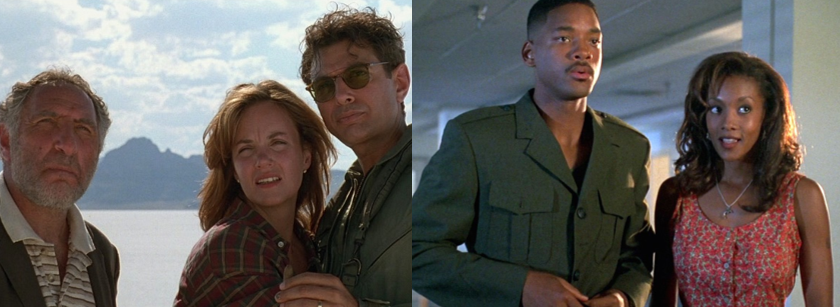
Despite how many characters the film has, there’s not a whole hell of a lot for the women to do.
Other supporting characters include General William Grey (Robert Loggia), Whitmore’s chief supporter after Connie, Secretary of Defence Albert Nimzicki (James Rebhorn), the cliché pushy politician who continually clashes with Whitmore and the others and advocates first for an immediate military response to the invaders and for the deployment of nuclear weapons, and Julius Levinson (Hirsch), David’s overbearing and pragmatic father and one of the standout supporting characters for his characteristic Jewish twang, the entertaining banter between him and David, and the brief injection of uncompromising faith he brings to the proceedings amidst all the chaos and technobabble. One of the more emotional sub-plots in the film involves the tragic death of Whitmore’s wife, Marilyn Whitmore (Mary McDonnell), which is one of the few named character deaths that is actually acknowledged and has a lasting impact since the film is full of mass death and destruction and the focus is generally more on soldiering through the tragedy rather than dwelling upon it.
The Nitty-Gritty: Naturally, an important part of Independence Day is patriotism and duty; although other countries are briefly mentioned and even seen much later in the film, it is the U.S. who lead the fight against the aliens and the closest it gets to being any kind of diverse or multinational effort is the inclusion of a couple of Jewish and Mexican characters. Instead, the focus is solely on America and how they deal with the crisis; we only see American cities being attacked and other countries appear to be both clueless and leaderless until David is able to present a viable counterattack option and the U.S. rallies the remnants of humanity across the world into action.
Independence Day set the standard for disaster movies going forward.
Still, if you’re not American or much of a patriot, like me, there’s one main appealing factor to Independence Day that, even now, continues to impress and that is the depiction of wide scale destruction and devastation. As if having gigantic, city-sized spaceships wasn’t bad enough, the invaders also have impenetrable energy shields, massive Death Star-like cannons mounted beneath their crafts that can obliterate entire city blocks in a single blast, and a seemingly endless supply of smaller attack ships that are faster, heavily armed, and also sport their own energy shields. Thanks to a combination of miniatures, cutting edge CGI, and some clever camera tricks, Independence Day delivers some of the most devastating scenes of widespread destruction ever put to cinema, especially at the time; even now, the shot of the White House being blown to smithereens is an effective and iconic effect that every subsequent disaster movie since has attempted to out-do or replicate in some way.
The aliens are a frighteningly aggressive and highly advanced invading force.
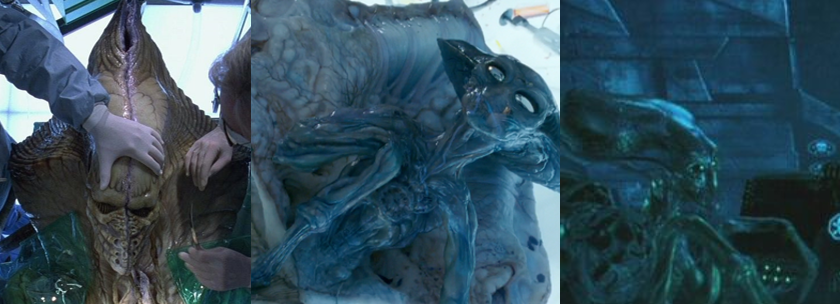
Additionally, Independence Day features one of the most unique alien designs in all of cinema; far from the stereotypical “Grey Aliens”, these invaders are large, biomechanical warriors intent solely on conquering the world through brute force. For most of the film, the aliens’ appearance is, smartly, left a mystery; when they are first seen, they are a horrific mess of tentacles and sport a gruesome, skull-like visage. After the story moves to Area 51, we learn more about the alien’s physiology from Doctor Brackish Okun (Brent Spiner in a memorable, scenery-chewing role) and that they are, actually, just as vulnerable and fragile as we are but are heavily protected by their advanced technology. The aliens also exhibit incredible physical strength, durability, and a degree of psychic ability since they can speak through Okun and project images of their intended plans for the Earth into Whitmore’s head.
Their plan might be totally bonkers but the chemistry between these two is undeniably compelling.
So great is the alien threat that they are able to decimate a large majority of the United States (and, presumably, the world) in just a couple of days, reducing humanity to a rag-tag group of survivors with few resources and even fewer chances of survival. Thankfully, the survivors cobble together one of the most ridiculous and convenient plans in all of cinema history when Hiller volunteers to pilot a crashed alien spacecraft (the one from Roswell, of course!) up to the alien mothership so that David can upload a computer virus (using an Apple PowerBook, naturally!) to momentarily disable the otherwise-impenetrable alien shields. Even now, it’s absolutely bonkers and shifts the film from a desperate scramble for survival and into a massive military counterattack but it works purely because Smith and Goldblum have undeniable chemistry together; in fact, their characters are so enjoyable that it’s a shame they weren’t paired up sooner (though, having said that, it almost feels like the two should have given their lives to destroy the mothership as the film suggests purely because their scene in this moment is so poignant and it would have greatly added to the emotional impact of the finale).
The Summary: Independence Day was a massive deal back in the day; the teasers and trailers alone were enough to hype it as the must-see blockbuster event of the year, to say nothing of the toys and various other merchandise made to promote the film. For my generation, especially, there had never really been a film like it; The War of the Worlds (Haskin, 1953) was a bit before our time and disaster movies had pretty much died out by the end of the seventies. Than, all at once, both of these genres came together in an exhilarating way; bolstered by charismatic performances by the likes of Will Smith and Jeff Goldblum (always a personal favourite of mine), Independence Day may seem quite dated and trivial now but it was the real deal at the time and has easily become one of the most influential and memorable alien invasion movies in all of cinema thanks to it kick-starting a resurgence in disaster and alien invasion movies. Obviously, it’s a preposterous, almost nonsensical movie at times that asks for some pretty big leaps in logic and is far more about spectacle than substance but it’s still an impressive and entertaining film in its own right and easily the best production from the Emmerich/Devlin team even today.
My Rating:
⭐⭐⭐⭐
Rating: 4 out of 5.
Great Stuff
What are your thoughts on Independence Day? Did you get caught up in the hype back in the day? Did you enjoy the mindless destruction and overly patriotic undertones or were you, perhaps, put off by the cliché characters and more questionable plot holes? What did you think to the performances of the lead actors and the depiction of wide-scale destruction? What are your thoughts on the aliens, their design and technology, and the way the film handled the invasion? What are your plans for Independence Day today? Whatever your thoughts, feel free to leave a comment down below.
Released: 28 October 2014 Developer: Insomniac Games Also Available For: PC and Xbox Series S/X
The Background: Sunset Overdrive was developed by Insomniac Games, who were best known at the time for their work on the Ratchet & Clank series (ibid/Various, 2002 to present); seeking to expand their portfolio, the developers drew inspiration from videogames like Jet Set Radio (Smilebit, 2000) to create an unusually vibrant titlethat would be thebiggest game they had ever worked on at the time. Sunset Overdrive aimed to encourage players to be more aggressive in the way they played by emphasising momentum and featured a unique punk rock aesthetic to its post-apocalyptic world. Upon release, Sunset Overdrive’s tone and unique comedy was highly praised; reviews also praised the gameplay and the fun of exploring its zany world, andart style, though its multiplayerand more repetitive mechanics were criticised. Still, Sunset Overdrive was thesecond-best selling game in the United Kingdom upon release and the game was expanded upon with a range of downloadable content (DLC)that added new weapons, costumes, and story-based content to the game, all of which are included in this “Deluxe Edition” of the game.
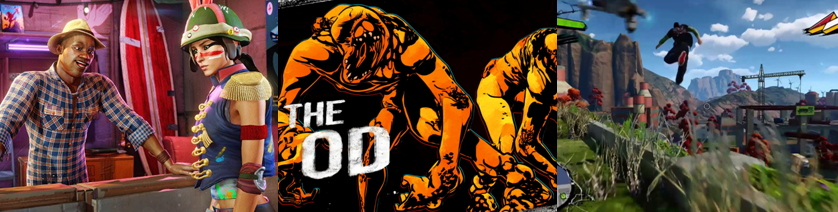
The Plot: In the year 2027, megaconglomerate FizzCo hosts a massive pre-release party in Sunset City for its new energy drink, OverCharge Delirium XT; however, as they rushed through the testing phase, the drink transforms people into violent, boil-covered mutants known as “Overcharge Drinkers” (or “OD”) and it is up to the player character to join the remnants of society in fighting back against the OD and bring down FizzCo.
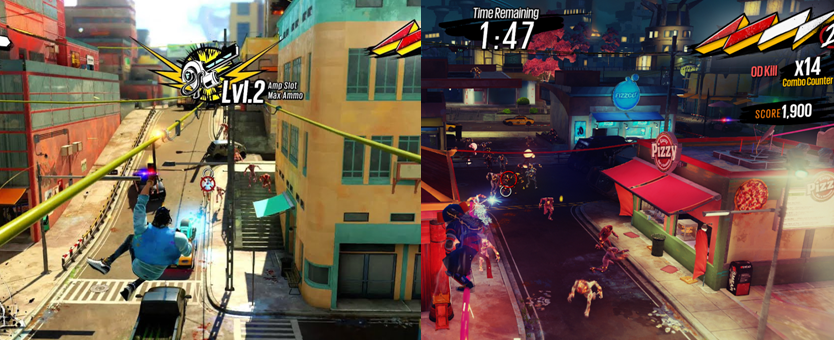
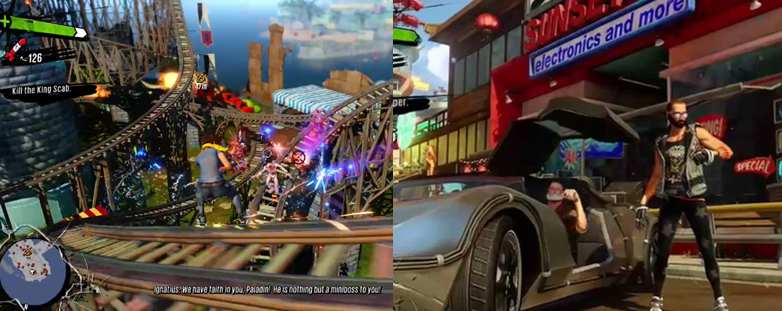
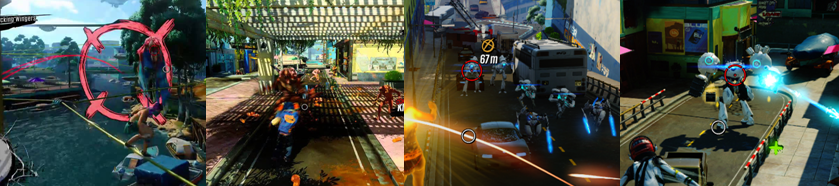
Gameplay: Sunset Overdrive is a third-person, open world action shooter with a heavy emphasise on parkour-style traversal; your avatar (named only as “Player” in the in-game subtitles) can grind, swing, bounce, and wall run all over Sunset City, easily chaining together different moves along with melee and projectile attacks to build up the “Style Meter” and amass greater kill combos.
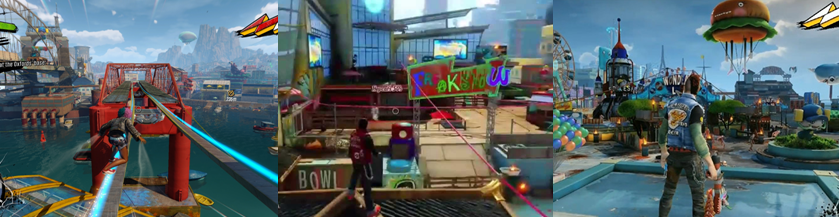
Grind, bounce, and wall run your way across a bright and colourful city.
The Player’s skill set is relatively diverse and tailored towards these mechanics; X allows you to perform a dodge roll and grind on wires, rails, roof edges, and almost everything across the city following a jump. A, as always, jumps; pressing it right as you land on certain surfaces (such as cars, solar panels, and nets) will allow you to bounce higher and you can double tap A to vault over lower walls. You’ll also eventually learn to perform an air boost with the Right Bumper and, at certain times, you can press Y to interact with the environment to open doors, pick up mission items, or grab explosive barrels and you can also swing your crowbar with B to melee attack (which can also be performing while grinding).
Combat is fun but chaotic and seemingly never-ending at times.
As essential as all of these traversal options are, though, a large chunk of the game is made up of weapons-based combat; you press (and/or hold) the Right Trigger to fire, use the Left Trigger to strafe, and can bring up your weapon wheel by holding down the Left Bumper. Similarly, you’ll be able to select from a series of traps using the directional pad but, while the game does slow down to a crawl when the weapon wheels are open, there is a risk of you being attacked when selecting weapons and, while you can hold multiple weapons at once, it can be a bit tricky to select the weapon you want as the selection wheel feels a bit slippery at times. Weapons come in all sorts of bizarre shapes and sizes, with some being more effective against certain enemies (those that shoot out fire are more effective against OD, for example, while shock-based weapons are better for dispatching FizzCo’s robots), but ammo can often be in short supply. While you never have to reload and you’ll find more ammo by smashing crates and killing enemies, I often found that I burned through a lot of my ammo very quickly even after upgrading their ammo capacity, which means it’s best to switch between weapons as often as possible.
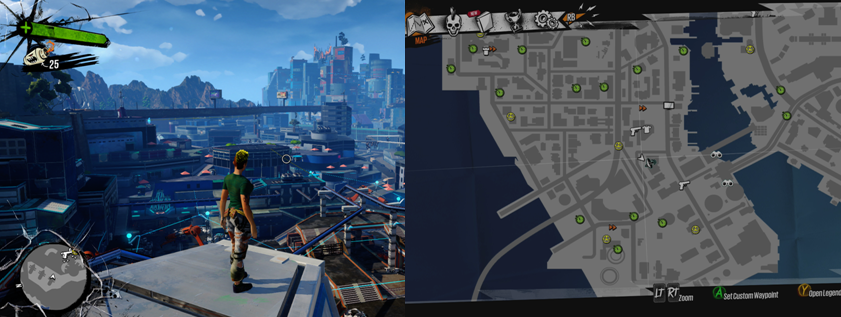
Sunset Overdrive‘s map system is cluttered but extremely detailed and helpful.
Sunset Overdrive is a pretty massive game; a mini map on the heads-up display always keeps you on track towards your objective and points out any enemies, friendlies, and pick-ups and secrets in the area. The game’s main map is accessed from the pause menu and, right from the beginning, is packed full of things to see, do, and pick-up. The game’s map system and large, diverse city reminds me of Grand Theft Auto V(Rockstar North, 2013) and has many of the same options; you can toggle between different objectives and views, set custom waypoints, and purchase special maps to highlight even more secrets. Despite how big the game world is and the sheer amount of stuff that you can find and collect in any given area, I never found myself getting lost or turned around as both the mini map and main map (and in-game dialogue) constantly keep you pointed in the right direction. You can also fast travel to certain points on the map, which is always appreciated especially in a game this big but I found it was actually better to travel manually as I could veer off to grab collectibles along the way.
It’s easy to get beaten down by your many enemies but the pop-culutre references make respawning fun.
What does get a bit manic, however, are the sheer amount of enemies you’ll have to contend with. OD are literally everywhere in Sunset City, crawling out of sewers, dumpsters, and clambering around rooftops and alleyways and their numbers only increase as the game progresses. The game barely ever lets up on the onslaught and, even after clearing the immediate area of enemies, more will soon spawn in if you linger too long. This means that you need to constantly be on the move; it’s not really recommended to battle enemies at ground level, where your movement options are more limited, meaning you’ll be grinding and hopping between different traversal points and constantly switching directions on the fly, which can make aiming and seeing where your shots are going a bit difficult. In this regard, the game reminds me of Infamous (Sucker Punch Productions, 2009) in its emphasis on movement-based combat, though the shooting mechanics are noticeably more refined and useful here; the more you move and mix up your attacks, the more your Style Meter will grow to activate any amplifiers (“Amps”) you have attached to your character. The Player, however, can be a bit fragile; you’ll need to pick up Green Crosses to replenish your health, which can be whittled away extremely quickly, and certain weapons and upgrades will increase your health and durability, but dying is pretty easy in Sunset Overdrive. Thankfully, after dying, you’ll simply respawn (through a number of amusing pop-culture references) near to where you fell and be able to carry on with what you were doing but, other times (generally when in the middle of a side quest) you’ll have to restart your current mission from the beginning, which can be a bit inconsistent and annoying.
There are a number of challanges available to you to earn cash and bonuses.
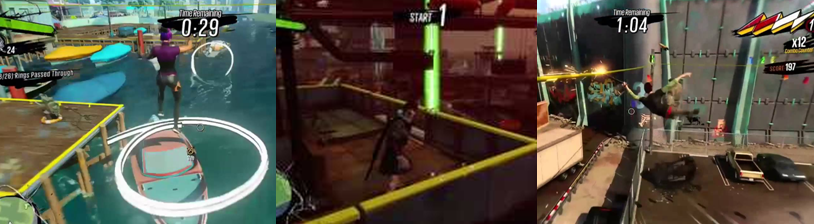
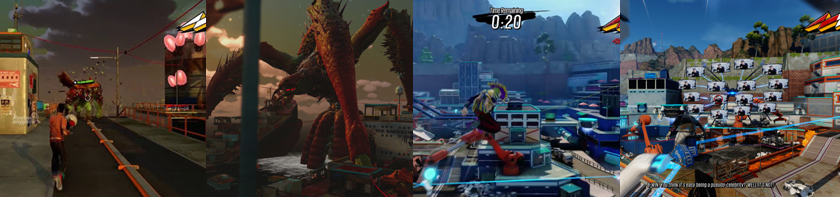
Gameplay is given a bit of variety from a number of non-playable characters (NPCs), all of whom are part of different factions and have a bunch of side quests for you to complete. These generally involve “busy work” such as clearing out OD, human Scabs, and/or FizzCo ‘bots, smashing certain machines or objects, collecting things, or dashing across the city completing errands. You’ll also find a number of challenges across the city which task you with racing through rings using your grinding, bouncing, and wall running skills, collecting points, battling swarms of enemies, smashing stuff up, or planting bombs. All of these have a time limit attached to them and will net you additional rewards based on your ranking (Bronze, Silver, or Gold), which can range from cash, Overcharge, and additional clothing items and it’s pretty easy to get sidetracked during your many missions to complete these tasks as you go.
Take to the skies in glider challanges and defend Overcharge against swarms of OD.
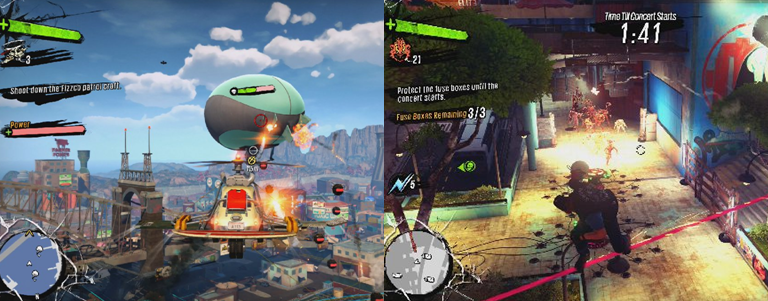
All of these missions and side quests are highlighted on your map and can be replayed at any time from the main menu, allowing you to try for more points and rewards. You’ll also get to pilot a glider at various points both in the game’s story and in challenges; this is a pretty simple affair that sees you flying over air currents to keep your ship powered up, performing barrel rolls to avoid enemy fire, and blasting at enemies and targets with homing rockets. Sadly, while these sections are fun, there’s no way to call a glider to you at any time to help traverse the city and these sections are a bit limited in their scope. You can also perform a dash over bodies of water by pressing X and the Player is, thankfully, fully capable of swimming, which is always a plus. Easily the most prominent additional mechanic you’ll take part in, however, are the handful of times when you’re tasked with laying traps and holding out against waves of OD while cooking up additional Amps in Overcharge canisters. These sections can be tricky thanks to the sheer amount of enemies that you’ll face but placing a variety of traps at various points around the fort and staying on the move will increase your chances of survival and, even when you have to defend multiple targets across more complicated forts, these aren’t massively challenging and can be quite exhilarating. Barricades help keep enemies at bay and you’ll be awarded additional energy to lay more traps as the sections progress, which is helpful, and, while it can get very chaotic as more vicious and varied enemies spawn in, the rewards are worth the effort.
Graphics and Sound: Sunset Overdrive utilises exaggerated, comic book style, semi-cel shaded graphics to bring its characters and world to life. While the city is mostly semi-realistic, characters are larger than life and this really helps to sell the game’s zany narrative. You avatar can be completely customised, allowing you to pick between two different male and female body types and buy and equip a range of clothing items to make them unique to you. Options for hair, faces, and body types may be a bit limited but there are a lot of wacky outfits to choose from and these are easily unlocked or purchased using in-game currency, meaning you can constantly switch up your appearance.
Sunset City is huge and vibrant and packed full of things to collect and enemies to slaughter.
Sunset City is absolutely gigantic; cordoned off from the rest of the world by a convenient (and literal) invisible wall, the city is custom-built to take advantage of your traversal mechanics, meaning there are a lot of wires, lampposts, and walls to grind, swing, and run across. The city is full of different areas (such as Little Tokyo, high-rise apartments, bridges, a water treatment plant, a fairground, and shopping districts), all of which are crawling with seemingly-endless waves of enemies and full of things to collect. The downside, though, is that the game isn’t really built for vertical traversal; this means that if you fall or are knocked to ground level, it can be frustrating and difficult to work your way back up and out of the way because the Player is geared more towards horizontal movement.
The game’s exaggerated aesthetic really adds to its appeal, despite the odd glitch here and there.
The game’s story is absolutely bonkers and full of pop-culture references to movies and fourth wall breaking moments. It’s honestly one of the more unique and entertaining stories I’ve ever played through and really helps ease the frustration at the game’s more annoying moments; characters are all over the top and the humour is crude and self-referential, which is always fun, though you’re not always able to skip through cutscenes or certain moments and, while the soundtrack is suitably rocking and enjoyable, I did notice the music and sound effects cutting out abruptly at certain points. This was most noticeable when I was playing through the “Dawn of the Rise of the Fallen Machine” DLC, however, where the subtitles suddenly turned off and all music and most sound effects suddenly cut out completely and didn’t return until I quit and reloaded the game.
Enemies and Bosses: The primary enemy of Sunset Overdrive are the OD, disgusting mutant humans who swarm all over the city and attack in large groups. Though easily dispatched, their sheer numbers, ferocity, and tenacity can be overwhelming as they’ll attack in hordes and rush at you, clawing and swiping and easily whittling your health down unless you stay on the move. You’ll also have to contend with different OD variants, such as “Poppers” (who charge at you and explode in a kamikaze attack), “Herkers” (larger OD who throw rocks and objects at you), “Gunkers” (who hop about from above and shoot gunk at you), and “Spawners” (who will continuously spawn more OD unless you put them down).
Human Scabs and deadly robots will also take pot shots at you and cause you serious headaches.
You’ll also have to contend with human enemies, the Scabs, who shoot at you and use cover-based mechanics to pick you off. Thanks to the sheer number of their projectiles, these can be incredibly annoying enemies and are easily able to overwhelm you. Similarly, FizzCo’s many different robots and mechs will also attack you throughout the story, even setting up little fortifications and turrets to cause you extra headaches. As the story progresses, you’ll battle groups of all of these enemies at once and, while they also attack each other, it can get a bit manic trying to take them all out as you have to constantly stay on the move and switch to different weapons to be at your most effective.
Bigger and more aggressive enemies will soon become the norm as the story progresses.
Still, these chaotic battles and the steady increase of different enemy variants aren’t to be sniffed at as traditional boss battles are few and far between in Sunset Overdrive. Rather than take on bigger, nastier bosses progressively to finish up a mission, you’ll encounter larger, more powerful enemies or new enemy variants as you perform missions or defend your forts. These include the “Wingers” (large, bat-like OD who fly around shooting fireballs at you), “Muggers” (bestial OD who leap about the place and aggressively pounce on you to attack with their claws), Blade Bots (who rush at you with electric swords), and Tank Bots (a heavily-armoured mech that bombards you with lasers, mines, and leaps about using hover jets). As you progress, you’ll have to battle swarms of regular enemies bolstered by these bigger forces or even two or more of them at once, which can be a real challenge at times, especially if you’re low on (or out of) the most appropriate ammunition.
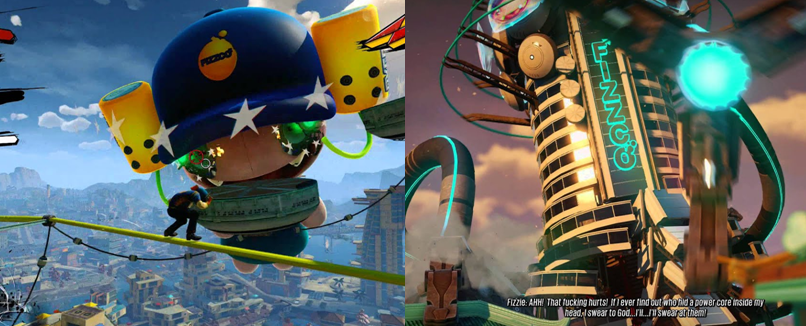
Fizzie is the game’s most persistent, and pretty much only, boss.
That’s not to say there are no boss battles at all, though; You’ll frantically blast at the King Scab on a rollercoaster before derailing him with a massive dinosaur mask at one point and also battle a gigantic version of Fizzie, FizzCo’s annoying and enthusiastic mascot, twice during the game’s story. The first time you battle him, he’s a massive blimp and floats around blasting at you with his eye lasers and spitting out annoying explosive balloons. You must grind around high up in the air and bounce on pads to stun him, and then unload at his exposed weak point, but the battle becomes tougher as it progresses, with Fizzie shooting rockets at you at directly targeting your rails as you frantically try to keep from falling (which, thankfully, doesn’t deplete your health or result in failure) to blast his weak spot. Fizzie’s artificial intelligence also takes control of the FizzCo building for the game’s finale; before you can even reach this point, though, you must eradicate the FizzCo ‘bots alongside all of your colourful allies and then, when the fight begins, you’re given three minutes and thirty seconds to race across the city, avoiding devastating sky beams, and grind up the building’s tentacles while avoiding electrified currents, bouncing from pads, and trying not to be knocked away as you frantically blast at the building’s power core. You have to do this three times and each time the timer resets but Fizzie is a bit further away, a bit more heavily defended, and more aggressive in his attacks and defence strategies.
Power-Ups and Bonuses: There are a wide range of weapons on offer in Sunset Overdrive, each one unique and kind of crude in its design and often cobbled together by the most random of items. You can melee attack with a crowbar but will eventually be able to purchase a baseball bat with your cash and, as part of the story, will be tasked with forging a massive sword to chop enemies up but you can also toss or attack barrels to destroy groups of enemies and you’ll also purchase and acquire a number of different guns.
The game’s weapons are absolutely bonkers and fun to swap between (when you can manage the weapon wheel).
These range from amusing variants on standard weaponry from shooter games, such as pistols, shotguns, machine guns, and grenade launchers; one of the most reliable weapons is the first one you get, the Flaming Compensator, which is great for turning OD to ash. The High Fidelity and Nothin’ But the Hits weapons fire vinyl records at high speed and are great for crowd control, while the Shield Buddy is a must-have for blowing enemies away and protecting you in a temporary energy shield and the Dirty Harry is great for dealing heavy damage to bigger enemies. You can also grab explosive weapons like the One-Handed Dragon, TnTeddy, and Multi-Lock Rocket Launcher to dish out heavy damage, lure enemies into a frenzy with the Captain Ahab or Rager, freeze them in place, or slowly deal damage over time with some of FizzoCo’s own weapons.
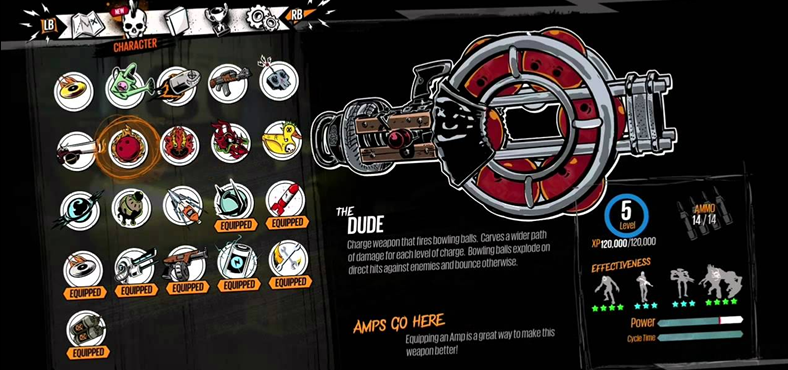
Amps and Overdrives provide a range of benefits to your weapons and skills.
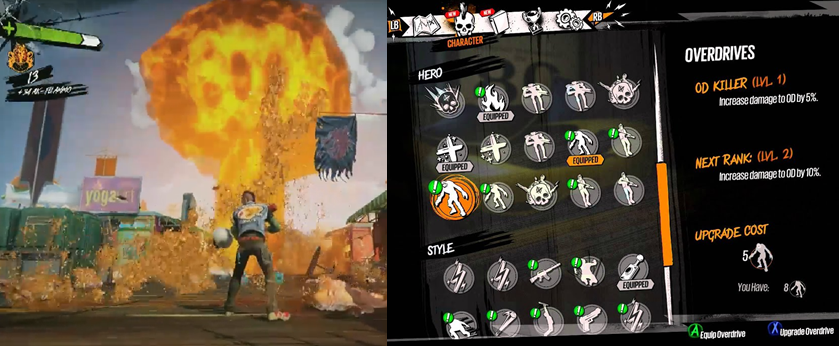
As you use each weapon, it’ll gain experience points (XP) and level up to a capped level of five. This not only increases its damage output and effectiveness but also allows you to equip Amps to the weapon for additional effects; Amps can be unlocked and bought at forts and have a range of benefits, from cosmetic stuff like having enemies explode in a burst of flowers, to perks for the Player (causing enemies to drop additional health, money, Overcharge, or increasing the XP rate), and (my personal favourite) additional attacks (rockets, a small nuclear bomb, shock or fire damage, and many others) that can really help level the playing field when faced with swarms of enemies. Performing different tricks, moves, and killing certain enemies will also earn you Badges; Badges can then be cashed in from the main menu to buy Overdrives to equip to the Player. These will increase your health, ammo capacity, and allow you to deal (and take) more damage from certain enemies. You can also increase the damage output of your weapons, the effectiveness of your traversal mechanics and melee attacks, and many other little buffs that all add up to assist you during gameplay. There are also a number of different traps you can buy to place when defending your forts; some of these automatically activate but others require you to jump onto them (which you’ll get some practice with in certain missions) and you can purchase new Amps, weapons, and traps using Overcharge and by collecting the multitude of different collectibles and junk scattered all over the city.
Additional Features: There are sixty-four Achievements to earn in Sunset Overdrive, with the bulk of these popping when you complete various story-based missions. Many others are tied to combat and pop when you kill a certain number of OD, or when killing enemies in certain ways (grinding and bouncing, for example), spend a certain amount of money, upgrade your weapons, and equip Amps and Overdrives. By far the most time-consuming Achievements are those that involve completing certain side missions or collecting the game’s many different items and junk; scattered all throughout the city are Fizzie balloons, neon signs, toilet paper, and smelly sneakers for you to collect to purchase new Amps and you’ll need to find every single one of these (as well as deface FizzCo signs, smash their vending machines, eavesdrop on conversations, and view city landmarks) to nab every Achievement.
There are numerous collectibles and side missions and even an online multiplayer component.
Each faction you encounter in the game has a number of side quests for you to complete; these include scouring the city for comic books, roasting pigeons, finding parts, rescuing or finding their allies, clearing out enemies, operating cranes, or smashing cars to cause a ruckus and it’s worth your while taking the time to complete as many (or all) of these side quests as it’ll net you more money and items. There’s honestly so much to do at any one time that it can be a little overwhelming but it definitely keeps the game from getting boring and you can easily begin or replay any mission at any time. Once you finish the game, your objectives automatically switch to any remaining side quests, which is really handy, and the game even comes with an online component (“Chaos Squad”) which you can activate at any time from convenient booths scattered across the city. While I wasn’t able to experience this, it is apparently an eight player co-operative mode that involves defending forts and completing missions and has a number of Achievements tied to it.
The two DLC campaigns add a significant amount of content to the game.
The game’s Achievements are further bolstered up to eighty-eight thanks to the game’s two story-based DLC missions, which introduce slight enemy variants, feature forty UFOS to collect, and bestow you with new weapons and items. In “Mystery of the Mooil Rig”, you’ll venture out to an oil rig, where you’ll have to battle oil-based OD and Scab workers while igniting oil to call for help. You’ll also have to make use of the game’s harpoon mechanic to bring a boat in safely, destroy egg clusters infecting the rig, and contend with the massive Cthulhu-like DL Sea Monster; to battle this monstrous creature, you must destroy its tentacles and then have your ally launch you into its gaping jaw so you can mash B to hurt it from the inside. The second story-based DLC, “Dawn of the Rise of the Fallen Machine”, is much trickier and more frustrating; this has you venture beyond the invisible wall and into the FizzCo robot factory, where you must find diaries to assemble a new weapon, impersonate a robot to access kill codes, and frantically roll around in an energy ball destroying certain ‘bots within a strict time limit. This culminates in a boss battle against B-WIN, the host of Sunset TV, who blasts at you with lasers and energy beams from behind multiple screens that protect his core. For this fight, you’ll need to make stringent use of cover and stay on the move to manoeuvre behind him to deal greater damage to his core before luring him over a pit of molten metal to finally finish him off.
The Summary: I wasn’t sure what to expect from Sunset Overdrive; I’d heard of the game and that it was this fun, chaotic, action romp and it certainly delivered in that regard. There is so much to see and do in the game and, unlike some open world experiences, it never feels dull or repetitive because of the constant swarms of enemies and things to detour off and collect and side missions to complete. The game’s traversal mechanics can take a bit of getting used to but, before long, it’s pretty simple to chain together grinds and jumps with your shooting and to become more efficient at dispatching massive hoards of enemies with your various weapons, Amps, and Overdrives. While there are some frustrating elements to the game, such as how manic the action can be (the game literally never gives you a moment to pause and catch your breath) and how inconsistent and vague some of the mission objectives can be (made all the more annoying since the game largely holds your hand otherwise), the humour and over-the-top presentation is a massive stand out for me; also the gore and crude nature of the game, as well as its self-referential and pop-culture moments, made it a fun and exhilarating experience overall.
My Rating:
⭐⭐⭐⭐
Rating: 4 out of 5.
Great Stuff
Are you a fan of Sunset Overdrive; if so, what did you think to it? Did you like the game’s over-the-top presentation and zany mechanics? What did you think to the parkour-style traversal system and the game’s many diverse weapons? Were you also a little overwhelmed by how many enemies attack at any one time and the sheer amount to do and collect or did you enjoy the experience of tracking down every last collectible? What did you think to the game’s story and selection of missions and bosses? Which faction or side mission was your favourite? Did you purchase the DLC and, if so, were you satisfied with the additional content or did you want more from the game? Would you like to see a sequel some time? Whatever you think about Sunset Overdrive, leave a comment down below.













 Dr. K's Waiting Room
You must be logged in to post a comment.