
January celebrates two notable dates in science-fiction history: “National Science Fiction Day” on January 2 to coincide with the birth of world renowned sci-fi writer Isaac Asimov, and 12 January being when Arthur C. Clarke’s HAL 9000 was created. Accordingly, I dedicate January to celebrating sci-fi in all its forms.

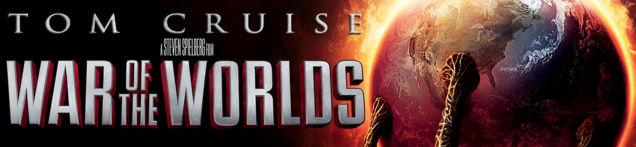
Released: 29 June 2005
Director: Steven Spielberg
Distributor: Paramount Pictures
Budget: $132 million
Box Office: $603.9 million
Rotten Tomatoes Scores: 76% / 42%
Quick Facts:
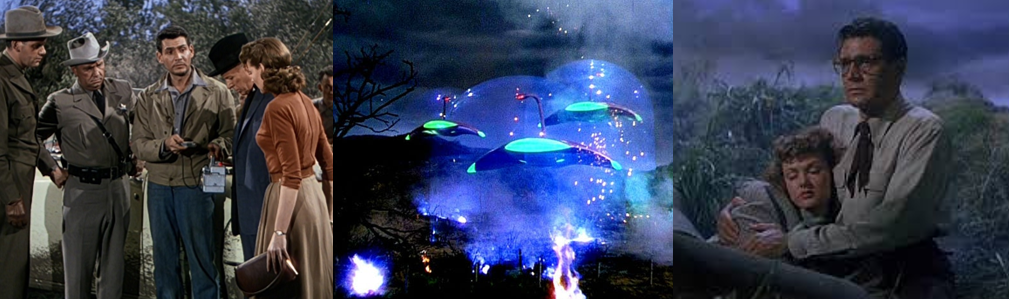
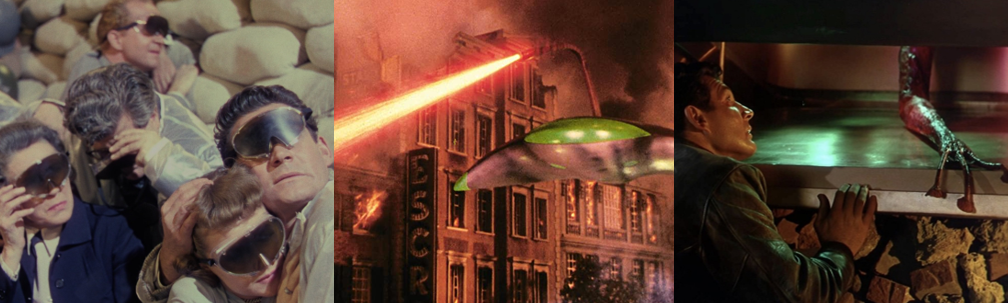
Byron Haskin’s award-winning 1953 adaptation of sci-fi classic The War of the Worlds (Wells, 1898) led to a television show and inspired similarly-themed alien invasion movies, knock-offs, and a widely celebrated musical adaptation from Jeff Wayne. This big-budget, modern-day reinterpretation reunited director Steven Spielberg with star Tom Cruise and drew visual and narrative inspiration from 9/11. Industrial Light & Magic designed the sleek alien walkers to be both intimidating and horrific to fulfil the filmmakers’ wish to emphasis the futility and devastation of war.
The Review:
Like the 1953 film, this big-budget adaptation of The War of the Worlds is set not in Victorian England, but in then-modern day America, beginning in Brooklyn, New York and following deadbeat dad and longshoreman Ray Ferrier (Tom Cruise) as he desperately tries to get his kids to the presumed safety of Boston, Massachusetts when aliens suddenly attack. Ray starts the film as a bit of an asshole. Though he’s said to be a hard worker as a crane operator down at the docks, Ray’s not in the business of working more hours than he has to, citing union rules about overtime (and, honestly, rightfully so), and is therefore seen to be arrogant and condescending. Ray’s a keen mechanic, filling his house with car parts and booming through the streets in his prized 1966 Shelby Mustang, and neglecting to fill his refrigerator and cupboards since he favours takeaways. Ray’s so self-absorbed that he completely forgets when he’s due to meet his kids at his house, though his pregnant ex-wife, Mary Ann (Miranda Otto), is well past arguing about his tardiness and irresponsibility. Instead, she glares at him and makes snap criticisms, all with the general idea of urging him to do better by moody teenager Robbie (Justin Chatwin) and inquisitive youngster Rachel (Dakota Fanning). Although Rachel is begrudgingly polite to her dad, Robbie has no interest, preferring to ignore him, call him “Ray”, criticise his lack of parenting skills, and generally give him a hard time. Ironically, Robbie emulates his father’s dress sense more than he realises and is just as irresponsible, stealing his car and dragging his feet on his homework and rejecting Ray’s questionable attempts to bond with a sneering angst. Rachel is surprisingly mature for her age, ordering healthy foods and giving Ray pointers, only for him to balk at both since he clearly doesn’t like deviating from his junk food or receiving criticism for his parenting.
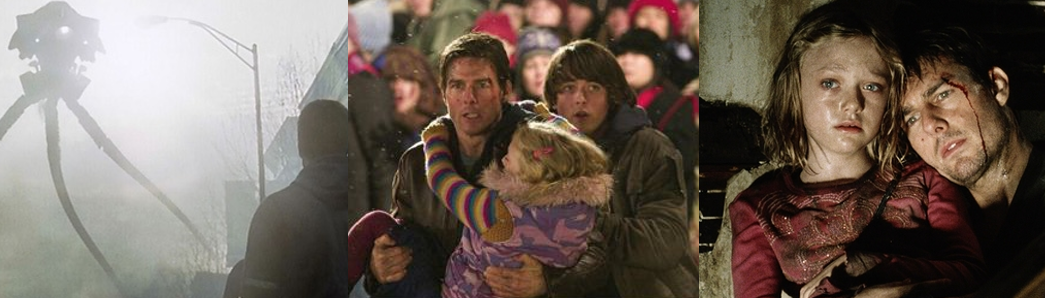
Luckily for Ray, he’s given the perfect opportunity to step up when a mysterious storm looms overhead and lightning repeatedly strikes the ground, setting off an electromagnetic pulse and fries all vehicles and electronics and terrifies Rachel. Curious, Ray wanders outside and is amazed when a gigantic alien machine bursts from the street with an ominous honk. The towering Tripod immediately sets to work vaporising the terrifying crowd, reducing them to dust and tattered clothes, and Ray races home covered in an ash-like substance that was once his neighbours, too shellshocked to properly explain what happened and desperately urging his kids to flee before the Tripod reaches their block. Despite Robbie demanding answers and Rachel suffering a panic attack, Ray loads his kids into the one working vehicle (thanks to a solenoid change) and races away as the Tripod decimates the area, barely able to describe what happened to his terrified kids. Ray’s struggling to hold together when they get to Mary Ann’s home in nearby New Jersey, desperately trying to keep his kids calm and wrap his head around the death and destruction he’s witnessed and succeeding only in scaring or alienating them further. Ray’s stress only increases when a Boeing 747 partially crashes into the house, littering the street with burning wreckage and bodies that Ray desperately shields Rachel from and angering Robbie so much that he becomes obsessed with fighting against the invaders. Ray’s very much against this not just because the Tripods are so massive, intimidating, and dangerous, but also because a newswoman (Camillia Sanes) reveals that aliens travelled through the lightning bolts to pilot the walkers, meaning humanity is facing a violent extermination from an extraterrestrial force. Refusing to risk their lives by joining the military effort, Ray frantically focuses on getting his kids to Boston, partially because he’s underequipped for the crisis but also because he knows the kids are better off with Mary Ann. Along the way, the car is literally ripped apart by an angry mob desperate to get to safety, forcing Ray to pull out his pistol to drag Robbie and Rachel out of their path as the mob fights over the vehicle.
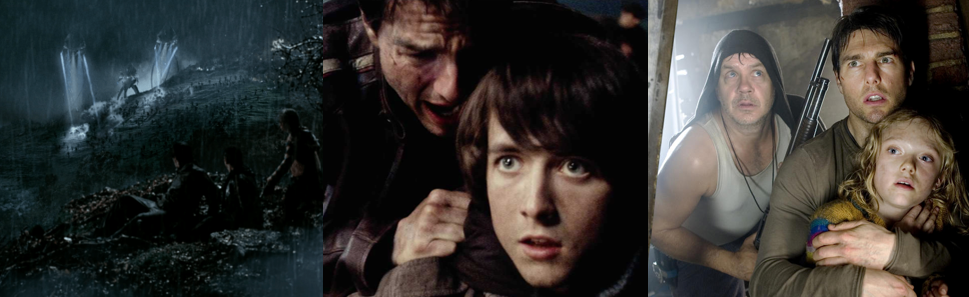
A momentary respite at the Hudson River quickly turns into another fight for survival when the Tripods arrive, capsizing the ferry and abducting many survivors. Ray and his kids are caught up in the military’s desperate counterattack and witness how unstoppable the Tripods really are as they shrug off damage with energy shields and vaporise tanks and troops alike. Ray sees this as a futile effort, seeing only death when the Tripods appear, and frantically argues with Robbie when he insists on witnessing and aiding the fight. In an emotionally charged moment, Ray’s resolve falters and his reluctantly lets Robbie go to forge his own path, hoping that they’ll be reunited in Boston when it’s all over. Still rattled from this, Ray gratefully accepts shelter in Harlan Ogilvy’s (Tim Robbins) basement, struggling to reassure and calm Rachel following her brother’s absence and quickly realising that Harlen is a danger to them. When the aliens carve up the grounds outside, spreading their disturbing red weed by harvesting their human captives, Harlen grows more unstable, ready to fight back when a probe and pilots investigate his house. Ultimately, Ray’s forced to have Rachel distract herself with a lullaby as he kills Harlan offscreen in a way we never see but which understandably unsettles him, both of them being severely traumatised by everything they’ve witnessed but doing whatever they can to survive. While I’m no fan of Tom Cruise, this is one of the few movies he’s in that I can tolerate and admit that he does a decent job. He makes for a great and very believable jackass father and has the stature to pull off an “Everyman” figure, one whose first instinct is to run rather than oppose such an overwhelming force. Like the book’s narrator, Ray bumps into many characters, learning more about the aliens as he goes and witnessing how devastating their attack is each time, which only compels him to keep moving. Like the book, the focus is squarely on our main characters and their attempts to survive rather than the fight the invaders, which only makes the aliens more ominous and dangerous.
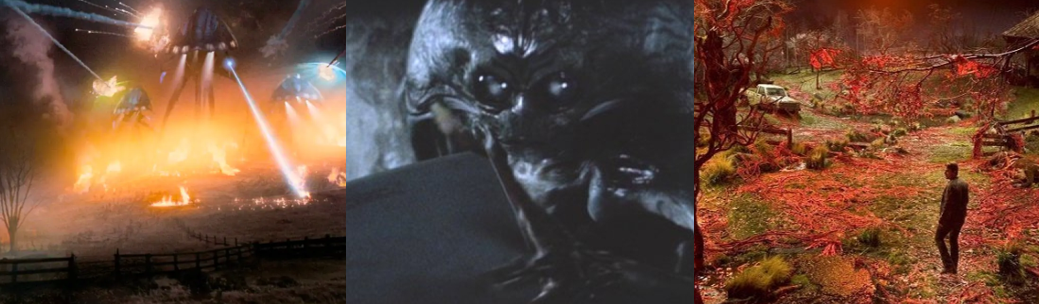
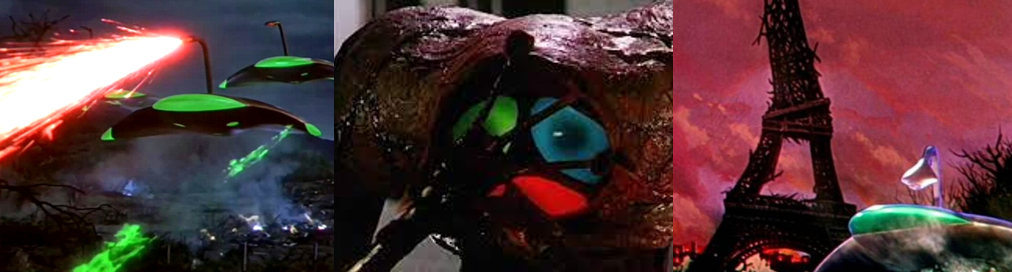
Thanks to advancements in technology, H.G. Wells’ iconic Tripods were finally brought to life in all their terrifying glory, booming a trumpet call of war that echoes the long-running musical and appearing more horrifying than ever as Spielberg uses them as an allegory for the 9/11 attacks. Spielberg fully commits to the iconography of the Tripods, forgoing the other alien tech to focus on the massive, highly advanced war machines that vaporise everything in their path, crush buildings with their advance, and scoop up victims with their tentacles. Despite its different setting, War of the Worlds is far closer to the book than the previous adaptation, with the Tripods upturning a ferry and seeding the land with red weed from their victims to terraform the Earth. However, Spielberg alters the origin of the aliens, which apparently prepared for their invasion by burying their machine thousands of years ago and are never said to be from Mars. The aliens also look very different to the book and the first film, being strange, gangly creatures with three legs and little evidence of advanced intelligence beyond their unstoppable war machines. While the narrator (Morgan Freeman) repeats that the aliens were motivated to attack by envy, desiring Earth’s rich natural resources, they’re seen to be largely ignorant of our society, culture, and technology despite having observed us for generations. Their strategy is simply to overwhelm with superior numbers and force, littering cities with destruction and ash, leaving bodies floating in rivers and toppling entire cities within hours. I was impressed by the special effects used to bring the Tripods to life and they’re framed as especially intimidating against the rainy night sky, though I would’ve preferred to see the machines be simply armoured rather than having energy shields and for the aliens to look a bit more unique rather than appearing as cousins to the invaders from Independence Day (Emmerich, 1996).
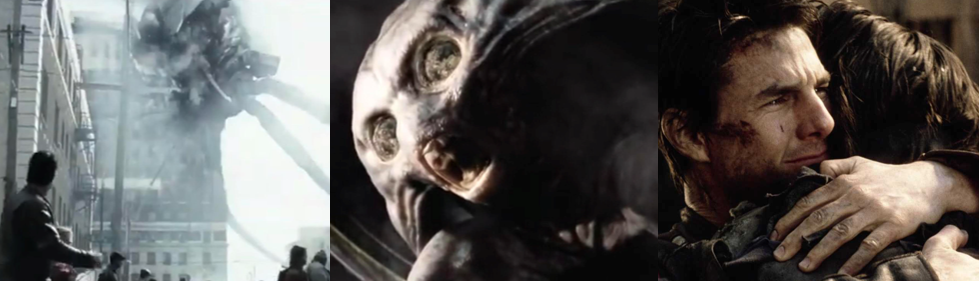
Having lost Robbie and living somewhere between denial and desperation, Ray wishes only to take shelter until the aliens leave but is driven to extreme measures when the paranoid Harlen endangers him and Rachel with his crazed obsessions. Despite this, the alien probe spots him and Rachel in the dilapidated house, forcing a terrifying Rachel to flee into the night and be abducted by one of the towering machines. Determined to keep Rachel safe, Ray grabs a grenade belt from a nearby military vehicle and voluntarily gets himself abducted to save her, revealing the grotesque bio-organic nature of the walkers as he’s sucked inside to make more red weed and instead feeds it the explosives. Exhausted and barely coherent, Ray and Rachel shuffle alongside a gaggle of other survivors into Boston, which has conveniently been largely spared much damage. Ushered on by the military, Ray’s amazed to find the Tripods have collapsed in the street. When another comes stumbling by, Ray and the others take shelter in an underpass but his keen eye spots that a flock of birds are nesting on the walker’s cockpit. Though struggled against the cacophony of the Tripod’s trumpet, Ray alerts the nearby soldiers, who quickly take up offensive positions and blast the Tripod with a barrage of rocket launchers. Damaged, the machine finally goes down and ejects one of its pilots, which quickly withers and chokes to death much like the decaying red weed. As ever, the narrator explains that the aliens were undone by the microbes we’ve become immune to over countless generations, Incredibly, Ray then carries Rachel to Mary Ann’s childhood home, which is unbelievably untouched by the devastation. Amazingly, not only are Mary Ann and her family alive, but Robbie’s somehow there too, allowing Ray to embrace his rebellious son and complete his character arc into a caring and determined father. While this makes for a sombre and emotional ending, I still think it would’ve been better to leave Robbie’s fate ambiguous (perhaps have Ray immediately leave to go looking for him?) if only to really sell how devastating this alien attack was for our main characters.
Final Thoughts:
While I’m a big fan of the original book, I have to say I’ve never been much of a fan of this big-budget adaptation. A lot of that is due to my personal dislike for Tom Cruise, who I just find annoying and underwhelming, and how disappointed I was that it wasn’t set in Victorian England to really hammer home how insignificant we are against the invaders. I also disliked changing their origin so they arrive on lightning bolts and pilot machines buried thousands of years ago. Simply having the Tripods and their pilots arrive on a meteor storm would’ve been far better for me, as would implying they came from Mars at least in a throwaway line. However, I must begrudgingly admit that War of the Worlds is far closer to the source material than the 1953 film, including mor side characters and events from the book since we’re following a regular guy rather than the military. I liked this aspect and how ill-equipped Ray is at dealing with this crisis since he can’t parent properly, so he’s completely out of his depth and survives only through sheer luck. I really liked Ray’s relationship with Rachel and Dakota Fanning’s work as a mature yet terrified little girl forced to rely on an unreliable father. Robbie was a pain in the ass who stupidly thought he could make a difference in an unwinnable fight. A commendable belief, for sure, but I would’ve preferred to see him die, be injured, or have his fate left ambiguous for his efforts. The Tripods are fantastically realised here, constantly lurking in the background and devastating everything in their path and depicted as a nigh-unstoppable force that only Mother Nature can topple. The snake-like probe and the weird alien designs weren’t as impressive, unfortunately, though it was chilling seeing the tattered clothes, wreckage, and bodies they leave behind, especially considering how the visuals echoed 9/11. Overall, I find this to be quite mediocre but it’s probably the best War of the Worlds adaptation I’ve ever seen…I just wish it’d starred someone else in the lead role.
My Rating:
Pretty Good
Did you enjoy this big-budget version of The War of the Worlds? Do you agree that Tom Cruise drags the film down or did you enjoy his performance? Were you a fan of how the film changed the aliens’ origins and their physical depiction? What did you think to the Tripods and the film as an allegory for 9/11? Would you have wanted to fight the invaders or would you flee? Which adaptation of The War of the Worlds is your favourite and how are you celebrating sci-fi this month? Leave a comment below with your input, check out my other sci-fi reviews, and donate to my Ko-Fi to suggest other War of the Worlds media for the site


 Dr. K's Waiting Room
You must be logged in to post a comment.