Game Corner [Spidey Month]: Spider-Man 2 (PlayStation 2)


Easily Marvel Comics’ most recognisable and popular superhero, unsuspecting teenage nerd Peter Parker was first bitten by a radioactive spider and learned the true meaning of power and responsibility in Amazing Fantasy #15, which was first published in August 1962. Since then, the Amazing Spider-Man has featured in numerous cartoons, live-action movies, videogames, action figures, and countless comic book titles and, in celebration of his debut and his very own day of celebration, I’ve been dedicating every Saturday of August to talk about everyone’s favourite web-head!


Released: 28 June 2004
Developer: Treyarch
Also Available For: Game Boy Advance, GameCube, Mac-OS X, N-Gage, Nintendo DS, PC, PlayStation Portable, and Xbox

The Background:
Back in the day, it seemed like every single cinema release was accompanied by a videogame adaptation, whether they warranted it or not. Naturally, considering his popularity, Spider-Man has a long and varied history with videogame adaptations across numerous platforms, and developers Treyarch began development of a tie-in to Spider-Man 2 (Raimi, 2004) soon after the success of the first movie. No strangers to the wall-crawler, Treyarch sought to dramatically improve upon their previous efforts by incorporating a large populated recreation of New York City, expanding on the film’s story, and placing a heavy emphasis on Spider-Man’s web-slinging. The new system, which utilised ray casting to automatically map infinite points where players could attach webs to swing from, was developed by designer Jamie Fristrom and has long been the subject of praise amongst fans of the videogame, and the character. Indeed, Spider-Man 2 has been met with a surprising amount of positivity for a videogame tie-in; while some of the more repetitive aspects were criticised, reviews praised the combat and controls, seamless open world and mission variety, presentation, and even the minigames. Even in the face of its bigger, more graphically impressive successors, Spider-Man 2 is often lauded as one of the character’s greatest videogame outings; the praise for this game is so great that I was actually a little intimidated to try it out for this review, which is my first time actually playing it.

The Plot:
Two years after the events of the first game, Peter Parker is struggling with his personal life and his responsibilities as the superhero Spider-Man. Unable to ignore the threat posed by criminals and supervillains alike, Peter’s social life begins to suffer, but his powers are put to the ultimate test when renowned scientist Doctor Otto Octavius becomes a four-limbed madman and threatens the entire city!

Gameplay:
In a change of pace from its predecessor, and basically every Spider-Man title released up until that point, Spider-Man 2 is an open-world adventure in which you’re given free reign to use all of Spider-Man’s amazing abilities throughout one of the largest and most faithful digital recreations of New York City ever seen at that time. Unlike the previous game, which was basically a reskinned version of Neversoft’s fun but limited 2000 adaptation of the web-slinger, Spider-Man is hardly ever trapped in an enclosed environment and thus a primary focus of Spider-Man 2 is on swinging around the city, stopping random crimes and helping non-playable characters (NPCs) with various issues. Thankfully, Spider-Man is more than equipped to handle everything the game has to throw at him, and the controls and combat options have been revised to accommodate this new focus. Spider-Man can attack enemies or interact with objects and NPCs with the Square button; successive presses in conjunction with directional inputs and the Triangle and Circle button will see him pull off combos, often involving webbing and tossing his enemies, and you’ll awkwardly home in on the nearest enemy when in air combat as well. You can stick to walls by pressing Circle, which is also used to evade incoming attacks and bullets whenever Spider-Man’s spider sense goes off (as indicated by his glowing head); this also fills up your “Spider Reflexes” meter and allows you to execute a counter attack but I found evading (and the combat in general) to be a little clunky and haphazard at times, especially as even New York’s most common thugs can take quite a beating and even block against your attacks. Triangle shoots a web; holding the button will temporarily tie enemies up, pressing up and Triangle fires a ball of impact webbing, and you can even use your webs to disarm foes, though it’s next to useless against most bosses and mechanical enemies. Spider-Man jumps with X; pressing it twice performs a double jump and you can hold the button to charge a big jump and executing a jump at the apex of a web sling is crucial to covering vast distances when swinging about. Holding down L2 sees Spidey spring or get a boost to his swing, Triangle (and in conjunction with Circle) will allow you to pick up injured NPCs or grapple thugs, and you can press down to lock-on to nearby targets.
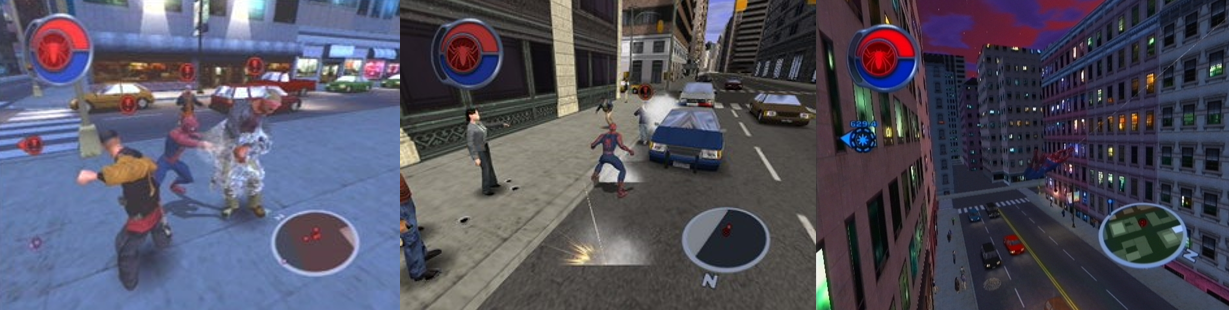
Combat is much improved but the highlight of the game was the ground-breaking web-slinging.

Once the aforementioned meter has a bit of blue in it, you can press L1 to activate your Spider Reflexes, which effectively functions as a form of bullet time, slowing down the action until the meter depletes or you press L1 again and allowing you to better dodge and attack enemies. The meat and potatoes of the game, though, is in the web-slinging; the game offers two options for this, “Easy Swinging” and “Normal Swinging”, with the latter requiring more input from the player to direct Spider-Man’s swings. Either way, R2 sees you throwing a web and swinging through the city but, unlike in every other Spider-Man game before this, you can only web-sling when there are buildings or suitable purchase holds nearby. This means you’ll see Spider-Man veer to the left or right as he shoots webs at the nearest building and allows for the most realistic and innovative web-slinging ever seen. Spider-Man can also eventually web-zip by pressing L2 and R2 together to quickly cover flat distances and you can easily speed through the skyscrapers by attaching to buildings and gaining extra height with your jumps, though you can’t clamber up your web as you swing as in other games, which can make chasing through the city a bit frustrating at times. Equally annoying are the number of dead ends and the various heights of the city’s buildings, which can interrupt your flow; thankfully, the onscreen mini map is a great help for getting around and spotting crimes in progress, side missions, and directing you towards your next story-based objective. You can review these at any time from the pause menu and expand the map out by pressing ‘Select’; this displays the current time and all landmarks and places of note, but sadly doesn’t include the option to place waypoints so you still have to manually read the map and follow the onscreen indicators to get to objectives. Spider-Man 2 is split into chapters, beginning with a simple and in-depth tutorial where Bruce Campbell’s disembodied and snarky voice teaches you the fundamentals of gameplay. To progress through the story, you need to complete story-based objectives; generally, this amounts to following the compass to a certain place in the city to advance the story or confront a boss, but you’ll also need to earn “Hero Points” and acquire new abilities from the various shops dotted across the city.
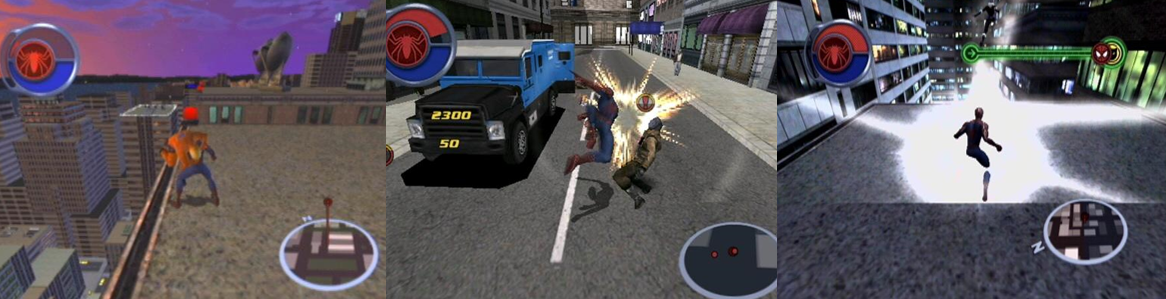
There’s always someone in peril, or a crime to stop, or a race to be had.

Hero Points are earned from stopping crimes, rescuing civilians, completing time trial races, and other similar distractions; it’s a bit annoying that the game effectively grinds to a halt while you work to obtain the required Hero Points, but you get a fair amount for each side quest you complete and it’s not as if you’re short on things to do. It seems someone’s being mugged or needs help every thirty seconds, and you’ll often stop a burglary only for a child to lose their balloon across the street or an armoured car be attacked a block over. Sometimes, you’ll help an NPC only to be jumped by a gang of thugs in a sneak attack; other times, criminals will hijack vehicles to make a quick getaway and you’ll need to chase them down and land on top of the car, which can be tricky unless you lock-on to it. Once on the roof, you need to pound away with Square and dodge their bullets with Circle until they’re forced out for a fistfight and, as the story progresses, you’ll find burglars and shoot outs often culminating in one of these chase sequences. You’ll also run into Felicia Hardy/Black Cat numerous times throughout the story; each time you do you need to chase after her as she leaps and grapnels around the city, which can be aggravating as she makes erratic turns and it’s difficult to stay on the rooftops. Similarly, you’ll need to chase after Dr. Octopus when he makes an escape in a helicopter and can take on timed challenges where you must race through rings, and the game’s pretty unforgiving, slapping you with failure if you even remotely fall behind or stay too far. More often than not, you’ll face a timer as you race to story-based locations, with the final race to Dr. Ock’s lair being the tightest of them all, or be asked to deliver pizzas and swing over to specific points on the map or skyscrapers to automatically take pictures, or will have to quickly crawl up buildings to rescue civilians in danger or falling, or quickly take injured civilians to the hospital. There’s quite a lot to do in this regard, and it’s fun to pop over to the Daily Bugle and change to Peter Parker in the men’s toilets, but the variety of these side missions soon wears thin as you repeat the same cycle of requests over and over but with more enemies or a tighter time limit.

Graphics and Sound:  
It’s obvious that a lot more time and effort went into Spider-Man 2 compared to its predecessor; most videogame tie-ins suffer from a rushed development schedule, and this is often reflected in their length, variety, and presentation but Spider-Man 2 does pretty well in all three regards. Spider-Man’s character model is much improved compared to the last game, with far more animations when he’s web-slinging and battering crooks on the streets; Spidey even runs along buildings when he swings close, can perform a variety of mid-air tricks with well-timed jumps, and NPCs will even automatically dodge out his way and throw insults at him when he runs or swings through the streets. Sadly, the enemy models and NPCs don’t fare nearly as well; you’ll see the same polygonal faces and voices repeated over and over, but it’s hard to begrudge this as this was symptomatic of the games of this era. What I can’t defend, however, is the soundtrack and voice acting; once again, the game opts for a soundalike to Danny Elfman’s iconic Spider-Man score that just doesn’t work as well and suffers from awkward looping or disappears entirely for no reason. Only a handful of the movie’s actors returned to voice their polygonal counterparts as well; while Alfred Molina continues to shine as Dr. Octopus, both Tobey Maguire and Kirsten Dunst sound bored to death recording their lines, though I did enjoy that Spider-Man throws quips and monologues to himself as you play. When the character models are used for in-game cutscenes, the game also falls apart under close scrutiny, though the higher quality cinematics fare much better, despite the rubbery appearance of the models, and I liked how the film’s events were recreated but also altered and expanded upon here, even if sub-plots like Peter losing his powers were dropped.

It’s lucky for the ropey cutscenes and voices that the digital recreation of New York is so good.

Naturally, the game’s biggest selling point is the sprawling and bustling recreation of New York; all the landmarks you associate with the city are present and accounted for, alongside recreations of locations from the films such as Peter’s apartment, the Daily Bugle building, Dr. Octopus’s pier lair, and the pizza parlour (though relocated and redesigned here). Not only can you web-sling across the city without any noticeable slowdown or load times, the game also includes a day and night cycle and the story is geared towards pushing you to visiting new areas, such as Roosevelt Island, the Statue of Liberty (accessible only by hitching a ride on a helicopter or using Mysterio’s UFO-like drones), Central Park, and Oscorp. 90% of the game takes place outside amidst the city skyscrapers; traffic and pedestrians mingle around down below, crime is rampant, and the enemies you encounter even change as the story progresses. While you can only enter a handful of buildings, those that you can offer some rewards, such as interacting with the Daily Bugle staff for tasks or purchasing upgrades. The handful of other times you’re forced into a warehouse or an open-air stadium, it’s for a close-quarters boss battle or to take on one of Mysterio’s challenges, meaning the only interior of any real note is Mysterio’s madcap “funhouse” that sees you venturing into a hall of mirrors and through upside-down environments. The thrill of swinging through New York is definitely palpable but I’d be lying if it doesn’t lose its appeal pretty soon; with no options for fast travel and only one real collectible on offer, there’s not really much to see beyond the digital recreation of the city or to do beyond stopping the same crimes over and over.

Enemies and Bosses:
As you swing about the city in your colourful underoos, a gaggle of the dregs of society will inevitably crawl out of the woodwork to cause trouble in the streets. New York is rife with purse snatchers, bank robbers, and armed gangs who love to rob armoured cars and get into shoot-outs with the cops or hijack passing cars and you’ll get to beat the ever-loving piss out of them all multiple times. Most enemies you encounter will simply try to bash your head in, but others have crowbars and bats or can guard against your attacks, requiring you to execute a counter after dodging their attacks. The worst are those armed with guns as Spider-Man doesn’t do too well when riddled with bullets, so it’s best to either disarm them, web them up, or try to take them out early, which can be easier said than done when you’re literally surrounded by enemies on all sides. Eventually, New York will also be attacked by Mysterio’s robotic drones, which fly about the place and blast at you with lasers; these can be tricky to hit as mid-air combat is actually less refined than in the previous game in many ways, though that weird homing function comes in handy here. Herman Schutlz/The Shocker’s goons also end up terrorising the citizens as well, firing high velocity blasts to send you flying, and all of the game’s enemies except the robots can take quite a beating before they go down. You’ll also have to contend with three mech-wearing goons in one particular mission that sees Spidey and Black Cat gate-crash an auction. This mission is one of the game’s toughest, on paper, due to the sheer number of bullets, enemies, and explosions happening all around you but an easy way to get past it is to simply swing about back and forth overhead; eventually, the mechs will take each other and most of the other enemies out, leaving you to pick up the scraps.
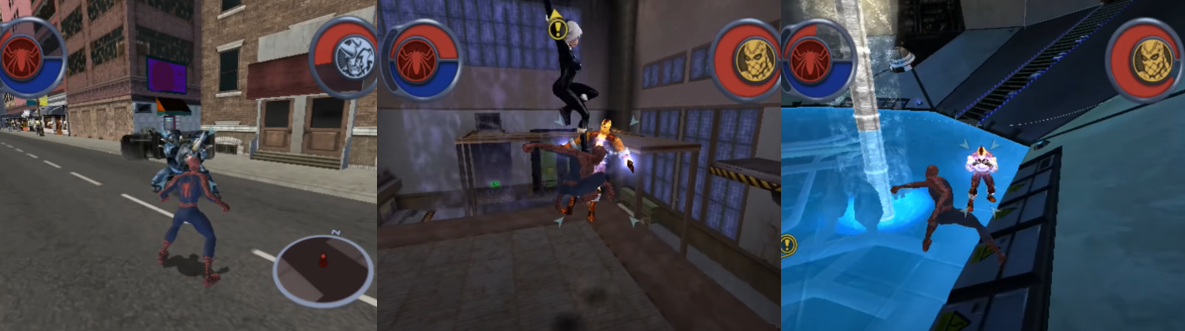
After tangling with the Rhino, Black Cat lends a hand in two annoying battles with the Shocker.

Disappointingly, though, Spider-Man 2 only contains four actual bosses, but you’ll face some of them more than once, at least. The first one you battle is Aleksei Sytsevich/The Rhino as he’s in the middle of a bit of thievery; the Rhino is too powerful to take on head-first so you need to rapidly tap Circle to avoid his swings or dodge his charge, both of which will leave him dizzy and vulnerable to a good pummelling. Instead of fighting Black Cat, you’ll chase her across the city (so many times that it got legitimately annoying for me) to encounters with the Shocker, who you’ll battle twice alongside Black Cat. The first fight takes place inside a warehouse and sees the Shocker blasting himself about the place, constantly staying on the move and making himself a difficult and annoying target. When you do get close to him, you only have time to rattle off a quick combo before you need to get the hell away from him to avoid his huge concussive blast, which sends you flying. The Shocker’s blasts are also used to keep you at bay, he shrugs off your webbing, and is joined by some goons in this fight, which quickly becomes laborious because of the hit and run tactics. Sadly, you’re forced to repeat these in the second encounter, which takes place in an even smaller, enclosed arena where the Shocker is protected by a shield. You need to head up top, dodging his blasts when your spider sense goes off, and activate whatever console is opposite from the one Black Cat is at to lower his shield. These weird blasts of water (or energy, I couldn’t tell) form platforms in the middle of the arena, giving the Shocker the high ground, but the same strategy as before is needed to whittle his health down. Eventually, Black Cat will shut his shield down for good, meaning you’re on the home stretch, but she doesn’t really seem to actively do damage to him when she’s attacking him.
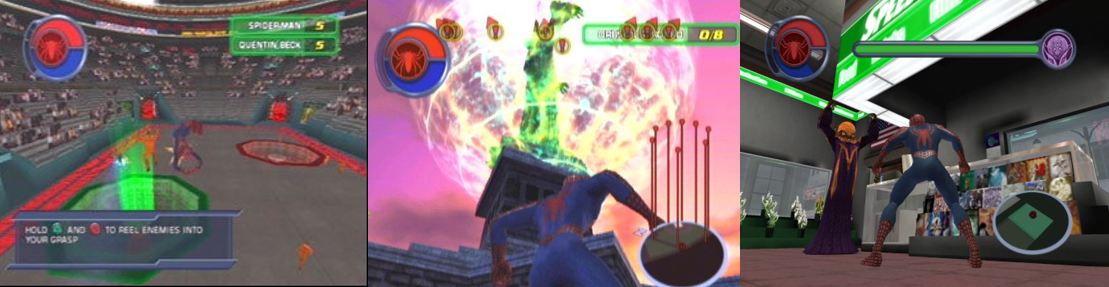
Mysterio’s “tests” prove to be frustrating test of your patience.

Easily the game’s more persistent enemy is Mysterio; when you first face him as plain old Quentin Beck, he challenges you to a series of “games” in an effort to prove Spidey’s a fraud, which involves you grabbing and tossing goons into green highlighted pits faster than him in a game of human basketball and then clambering about on elevated, moving, and twisting platforms trying not to get hit by his laser cannon. The second time, he swarms New York with his UFO-like drones and takes hostages at a theatre; this was an annoying section as you have to fend off his drones, watch out for a flaming floor, and battle a brief time limit to rescue everyone there but it’s nothing compared to when he encases the Statue of Liberty in an elaborate mechanical construction to resemble an alien attack. I was tearing my hair out at the finnicky controls as I webbed my way over the Lady Liberty and fell countless times into the water to be washed ashore and have to start all over, and near enough lost my rag when tasked with destroying the eight orbs surrounding Mysterio’s machine to expose the “brain”. Eventually, I was somehow able to gain enough height to get up there and take them all out and then get up to where the brain is before the orbs could respawn and dispel the illusion, but it was a pain in my ass, for sure. Afterwards, you track Mysterio to his apartment and hidden funhouse lair, where you have to fend off a swarm of twisted Spider-Man clones to find a hidden exit in his hall of mirrors and shut down his hologram. Finally, Mysterio shows up in the flesh later in the game to rob a deli; this was actually really amusing as the game loads in this ridiculously long and layered health bar and makes it seem like it’s going to be this long and epic showdown but all you have to do is punch him once and Mysterio folds like a paper plane.
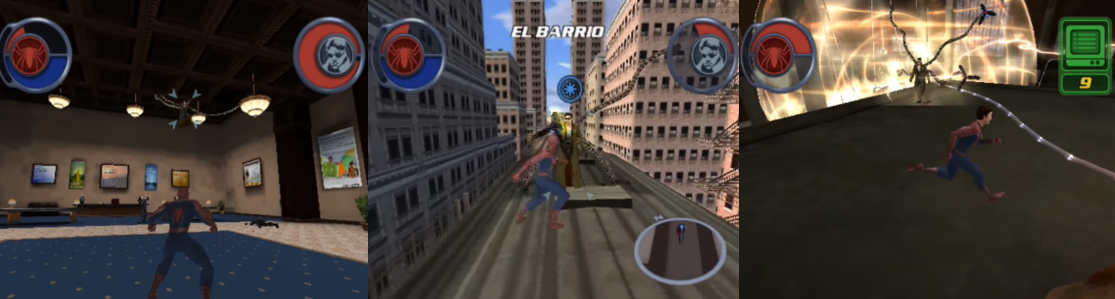
Thanks to his thrashing limbs and raging machine, Doc Ock proves an aggravating and formidable foe.

Finally, there’s the main man himself, Dr. Octopus, who you encounter four times throughout the game. The first encounter is during the mishap with his fusion experiment and is one of the most frustrating parts of this or any other game; the reactor is going crazy, sending out intermittent energy bolts that you must dodge the second your spider sense goes off as these pulsating waves of energy that not only do massive damage (three hits is usually enough to kill you) but send you flying across the screen! Through a combination of luck, timing, and the patience of a saint, you need to dodge past all this shit and hit four consoles to power the machine down, but this almost had me rage-quitting right then and there. Next, you’ll fight Dr. Octopus and his grenade launching goons at the bank, which establishes the strategy you’ll need to best him in all encounters; you need to dodge his tentacles and then quickly fire a web to pin each one down and leave him vulnerable to attack, but this is very hard to do and he’s easily able to grab you, slam you about, toss you around, and beat you to death in just a few hits. After chasing his helicopter and rescuing Aunt May from the train tracks, you’ll battle Doc Ock on the roof of a train just like in the film…eventually, because first you need to battle the game’s controls and camera to actually get on the damn train! Here, it’s more of the same and actually a little easier than the last encounter except for the fact that Doc Ock can toss you off the train if he grabs you. Finally, it’s the worst of both worlds at his pier lair as Doc Ock relentlessly chases you, protected by a shield generated from his rampaging machine and able to spam-beat you to death in the blink of an eye if you don’t constantly keep moving, dodging, and webbing him up. You need to deactivate nine consoles scattered about the lair, with one high above and one down below near the instant-death water, all while avoiding the electrical bolts, the thankfully less damaging but no less annoying energy waves, and Doc Ock himself. Once you finally take care of that, you’ll go one-on-one with him again where you’ll need to be super fast on the dodge and webs to stop his relentless thrashing tentacles and avoid being tossed into the aforementioned water, but once you land a good few combos he finally goes down for good.

Power-Ups and Bonuses:
In the spirit of the movie upon which it is based, Spider-Man has an infinite supply of webbing in Spider-Man 2 so you never need to worry about collecting extra web cartridges, though the game does lack some of the fancier web-based moves potentially as a result of this. Every time you defeat a wave of enemies in side missions, they’ll drop some health to fully restore your health bar, but these won’t be present in boss encounters, which can make them all the more frustrating. Additionally, while there are “secrets” to be found around the city, they simply grant a few more Hero Points so there’s no pick-ups to boost Spidey’s abilities. Instead, you’ll gain new buffs, tricks, combos, and such by spending Hero Points in the many shops scattered around the city; these increase the speed of your swing, add fancy moves to your jumps, and add a little more flourish to your combos but I found little use for most of them and got along pretty well just mashing Square and peppering in the odd Circle and Triangle here and there.

Additional Features:
As mentioned, there are many secrets dotted around the city; these are pretty hard to find, and I only stumbled upon three or four by chance but they do allow access to a couple of new moves. There are also some races and timed challenges you can take on for more points, and which probably count towards you achieving the list of “Awards” offered by the game (though most of these are story-based). Although there are some options available to you to change the game’s display, sound, and control scheme, there are no difficulty settings here, no costumes to unlock (though you do get to play as Peter and unmasked Spidey in the story), and no additional characters or modes to unlock or play as even using cheats. The best on offer here is a code to award you a bunch of Hero Points and upgrades, making this a significant step down not just from the last game but Neversoft’s previous efforts with their many additional costumes and modes. However, after you clear the game, you’re dropped back into a free roaming mode and are free to stop crimes until the end of time across the city; you can also purchase access to the Battle Arena where you can not only battle the game’s bosses in endurance fights but also face off with a secret additional boss, Calypso Ezili/Calypso, though I’ll leave it up to you to decide if this is actually worth your time.

The Summary:
All I’ve heard since 2004 is how great Spider-Man 2 is; it either tops or is included in so many “best of” lists for videogame tie-ins and superhero videogames that I knew I had to get it once I started building my PlayStation 2 library, even though I am primarily against videogame tie-ins unless I’m trying to increase my Gamer Score. The difference between this and the last game, and other Spider-Man games before it, is immediate and reinforced throughout; the sheer size of New York City and the number of crimes to stop is very impressive for the time and never before has a videogame so perfectly captured the rush of being Marvel’s famous web-slinger. The drama and crime even interrupts the story on numerous occasions, really throwing you into Spidey’s troubled shoes, and the web-swinging mechanics definitely live up to all the hype. The versatility and accessibility of swinging through the city was unparalleled at the time and perfectly recreates the speed and exhilaration of the web-slinging seen in Sam Raimi’s films. Sadly, the combat doesn’t really live up to this, being clunky and oddly unbalanced at times even when you manage to land a dodge and a counter. Naturally, character models and cutscenes haven’t aged too well, but I can forgive that; what I can’t forgive is how empty, repetitive, and frustrating parts of the game can feel. It’s great having all of New York to explore, but there’s not a lot to see and you’ll be stopping the same crimes over and over, which can get very old very quickly. I would’ve liked to see comic book covers and other collectibles scattered about to unlock costumes and concept art, but there’s none of that here, meaning there’s little incentive to explore. The few bosses there are can also be annoying; I got so sick of chasing after Black Cat, being tossed about like a ragdoll by the Shocker and Dr. Octopus’s bloody machine, and being mullered by bullets, to say nothing of that God-awful encounter with Mysterio at the Statue of Liberty. The game was also a lot shorter than I was expecting, with the gameplay padded out by the story forcing you to acquire Hero Points to load in the next chase, battle, or cutscene, and I found myself just feeling relieved when the game was over. Overall, I can certainly see why the game was so beloved at the time and is so highly regarded; it still holds up pretty well, despite some obvious flaws, and was the most immersive Spider-Man game at the time, but it’s obviously been overshadowed by better, more polished Spidey title sin the years since.

My Rating:

Rating: 3 out of 5.

Pretty Good

Have you ever played this beloved tie-in game? What did you think to the open-world gameplay and web-slinging mechanics back in the day? Do you think Spider-Man 2 still holds up today or were you also frustrated by some of its more tedious features? What did you think to the battles against Mysterio, the chases against Black Cat, and the encounters with the Shocker? Were you disappointed by the lack of unlockables and additional gameplay options? Which Spider-Man videogame or movie adaptation is your favourite? Head down below to share your thoughts and memories of Spider-Man 2.

Movie Night: Spider-Man: No Way Home

Released: 17 December 2021
Director: Jon Watts
Distributor: Sony Pictures Releasing
Budget: $200 million
Stars: Tom Holland, Zendaya, Jacob Batalon, Willem Dafoe, Alfred Molina, Jamie Foxx, and Benedict Cumberbatch

The Plot:
After having his secret identity publicly outed, Peter Parker/Spider-Man (Holland) finds himself branded a murderer and requests Doctor Stephen Strange (Cumberbatch) cast a spell to make everyone forget his identity. However, when the spell is corrupted, reality is fractured and Peter is beset by foes from across the multiverse seeking to avenge themselves against Spider-Man, no matter what world he’s from!

The Background:
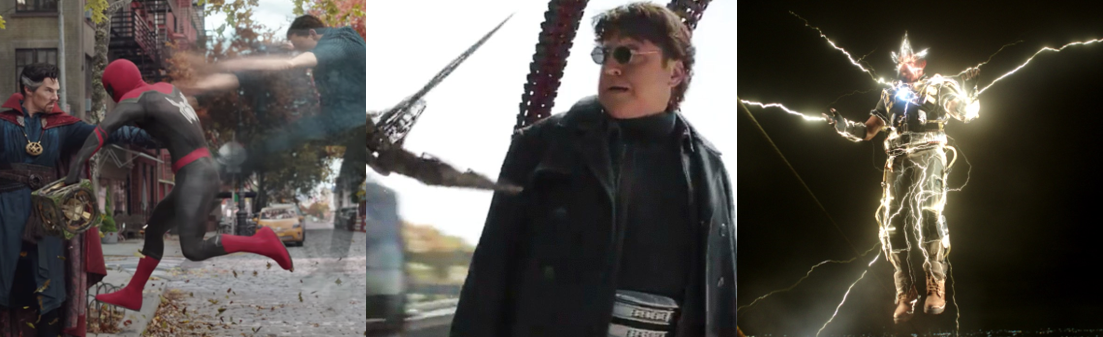
Following the massive success of the original Spider-Man trilogy (Raimi, 2000 to 2007) and the largely mediocre reception of the poorly-timed reboot films, Marvel Studios were finally able to achieve the impossible when they reached an agreement to include a new version of the iconic web-slinger in their interconnected Marvel Cinematic Universe (MCU). Tom Holland took on the role of a young, fresh-faced take on the character and debuted in spectacular fashion in Captain America: Civil War (Russo and Russo, 2016) before spinning off (no pun intended) into the incredibly successful Spider-Man: Homecoming (Watts, 2017). Spider-Man: Far From Home’s (ibid, 2019) impressive $1.132 million box office proved that the MCU could sustain the success it had amassed even after the cataclysmic events of Avengers: Endgame (Russo and Russo, 2019) but development of a third outing for the character was initially stalled when financial disputes threatened to see the character once again pulled from Marvel’s control. After these issues were resolved, and following a delay due to the Covid-19 pandemic, production finally got underway in late-2020 and, almost immediately, rumours began circulating regarding the possible return of actors from the previous Spider-Man franchises. These were only exacerbated when Benedict Cumberbatch was confirmed to reprise his role as Dr. Strange, a character who was already scheduled to have his own multiversal adventure, and when the long-awaited trailer was finally released following a leak, confirming that Alfred Molina would be returning as Doctor Otto Octavius/Doctor Octopus thanks to digital de-aging. Finally, after months of speculation and wild fan rumours, the film’s final trailers confirmed that this story would tackle Spider-Man’s varied cinematic multiverse and the film received an official release date. Thanks to bringing together elements from across Spider-Man’s cinematic legacy, Spider-Man: No Way Home was met by unanimous praise; critics lauded the performances and heart of the film, in addition to atmosphere and chemistry between the actors, and the film made a mammoth $1.916 billion at the box office.

The Review:
I feel it’s only fair to emphasise here that I simply cannot find the language to talk about this film without using spoilers. If the title and various warnings aren’t enough for you, then this text should be: here be spoilers, and I’m not planning on holding back as I feel the movie deserves to be discussed in detail and the only way to do that is to talk about spoilers. Also, I was initially torn when it came to this film; the build up to it saw some really toxic opinions and members of the fandom rear their ugly heads, and the marketing has been a bit all over the place. Sony showed a surprising amount of restraint with their trailers, and maybe held them off a little too long, but it definitely built up a great deal of hype and intrigue surrounding it and it felt good to be excited and curious about a movie for a change. Having said that, though…be better, people, come on. If you have a favourite Spider-Man, that’s great, but don’t rag on people for having a different opinion. Spider-Man is really lucky as he has had so many adaptations and so much representation, so many live-action portrayals, and all of them have been extremely accurate to the source material and exciting outings in their own right, so maybe just be thankful that the web-head gets so much love and is so popular rather than being ungrateful or attacking others for their opinions?

Jameson’s smear campaign spells personal trouble for Spider-Man and his friends.

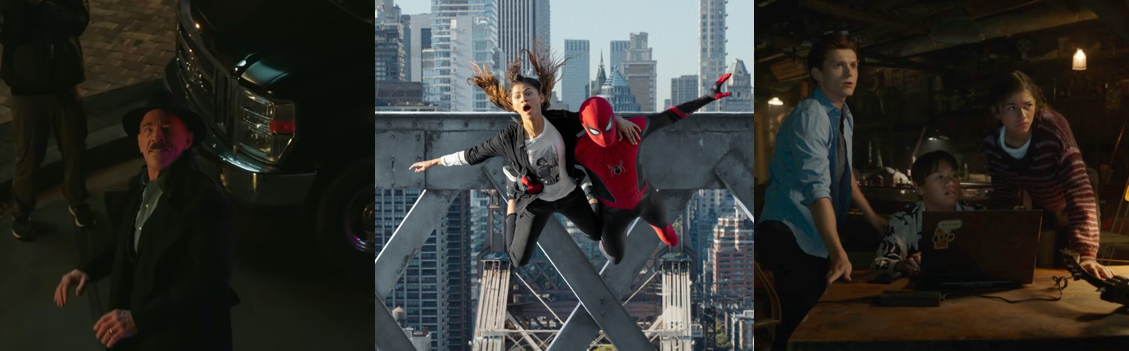
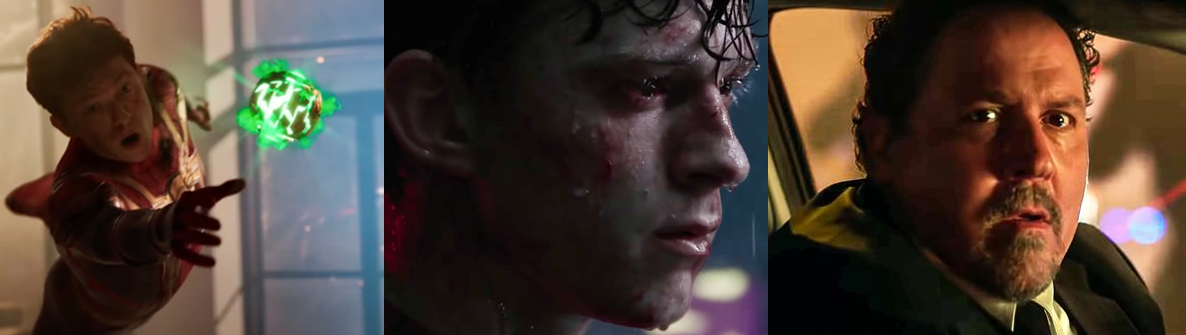
Spider-Man: No Way Home picks up immediately where Spider-Man: Far From Home left off, with blustering, loud-mouthing online personality J. Jonah Jameson (J. K. Simmons) gleefully broadcasting edited footage sent to him by Quentin Beck/Mysterio (Jake Gyllenhaal) that not only implicates Peter as a murderer but also outs his secret identity to the entire world. Naturally, this sends New York City into a bit of an uproar and, pretty much immediately, both Spider-Man and his new girlfriend Michelle Jones-Watson/M. J. (Zendaya) are swamped by a mob that is split between worshipping and condemning Spider-Man, paparazzi looking to get a sound bite, and cops seeking to question Peter’s involvement in Beck’s death. Despite his best efforts to escape the chaos, and to break the news to his beloved Aunt May (Marisa Tomei) and his begrudging friend and handler, Harold “Happy” Hogan (Jon Favreau), Peter and his friends and family are soon apprehended by the Department of Damage Control (DODC), which has now extended its scope into being a federal agency responsible for such matters. Although M. J. and May remain tight-lipped on the matter, Peter’s bungling but loyal friend Ned Leeds (Batalon) and Peter himself don’t exactly help his case, and Peter is left overwhelmed by the barrage of accusations and the public’s awareness of his true identity. Any legal ramifications concerning these matters are quickly swept under the table, however; although Happy and May recently ended their fling (much to Happy’s dismay), the Parkers are given sanctuary at Happy’s secure apartment and an especially good blind lawyer is able to ensure that the charges against Peter are dropped. However, public opinion remains divided; since the world considers Mysterio a hero, many people condemn Spider-Man (which isn’t helped by Jameson’s continuing smear campaign against Peter) and Peter is treated with both awe, fear, and adulation by his fellow pupils. Thankfully, he has M. J. and Ned there to support him through it; despite the revelation uprooting their lives and thrusting them into the spotlight as well, they remain his loyal and understanding companions, which is always sweet to see. While Peter appreciates this, and could probably have adjusted to the major changes in his life with their support, his guilt and shame are magnified when neither her, Ned, or M. J. are able to successfully get into college.

Peter turns to Dr. Strange for help, but muddles the spell and causes reality to fracture as a result.

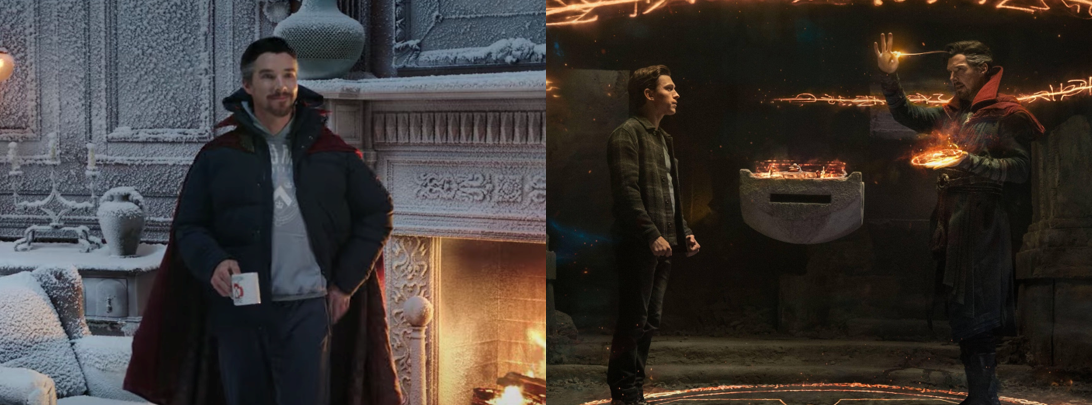
Because of the media storm and controversy surrounding Peter, no college wants to risk being associated with any of them, and Peter is guilt-ridden at having cost his loved ones the chance of realising their dreams. Yet, even though this has happened, M. J. and Ned still take it on the chin and remain optimistic (or, at least, put on a brave face, in M. J.’s case) and neither of them blame Peter for this, but it does little to alleviate his guilt. Desperate for a solution, Peter seeks out the council of Dr. Strange (who, it is amusingly revealed, is no longer the Sorcerer Supreme thanks to being snapped away for five years; Wong (Benedict Wong) has assumed the position instead, which could potentially be explored to greater humourous effect in Strange’s upcoming movie). Although Wong cautions against it, Dr. Strange offers to cast a complicated and dangerous spell that will erase the knowledge of Peter’s secret identity from everyone in the world; however, Peter starts to panic mid-way through the spell and requests that May, M. J., Ned, and Happy be exempt from the erasure, which causes Strange to lose control of the spell and contain it within a jewel least it wreak havoc upon the world…and the multiverse. The relationship between Dr. Strange and Peter is notably different to what we saw between Peter and Tony Stark/Iron Man (Robert Downey, Jr); Strange isn’t a mentor to Peter, he’s more like a work associate, and he’s willing to help the kid out because of his efforts at restoring half the population, but he’s easily frustrated by Peter’s naivety and ignorance, especially when it comes to the world of magic, and angered that Peter risked tampering with the fabric of reality before properly exploring all of the real-world options available to him or learning to adapt to the changes in his life.

Molina makes a triumphant return as the crazed Doc Ock, who’s intrigued by the MCU.

Determined to make up for this, Peter tracks down a college professor to plead M. J. and Ned’s case, only to suddenly be attacked by a face very familiar to us but completely alien to him as Dr. Octopus attacks the Queensboro Bridge in a confused rage, ranting at Peter and demanding to know what happened to his “machine”. Though confused by the villain’s sudden appearance, Spider-Man holds his own in impressive fashion thanks to the advanced technology and gadgets built into his Iron Spider costume, saving lives while fending off Doc Ock’s mechanical arms; his genius mind addled by the corrupting influence of his mechanical tentacles, Doc Ock is intrigued by the Iron Spider’s nanotechnology but startled to find a very different face behind the mask. His confusion soon turns to manic frustration when Peter is able to use the suit’s nanotech to take control of Doc Ock’s arms and render him helpless, and Octavius’s rage is only incensed further when he suddenly finds himself a prisoner in a dark catacomb beneath Dr. Strange’s Sanctum Sanctorum. Although dismissive of the idea of magic and vehemently rejecting the idea that he needs help or to be fixed, Doc Ock is intrigued to see the evidence of a multiverse surrounding him; not only has he met the MCU version of Peter and M. J., but he shares his prison with Doctor Curt Connors/The Lizard (Rhys Ifans), a monstrous creature Dr. Strange was able to subdue offscreen and who is very clearly from another reality. Ock’s curiosity is only piqued further when he and Peter catch a fleeting glimpse of another Spider-foe Octavius knows all-too-well, Doctor Norman Osbourn/The Green Goblin (Dafoe), before being imprisoned.

Peter finds a number of monstrous, and maniacal, villains have crossed over into the MCU.

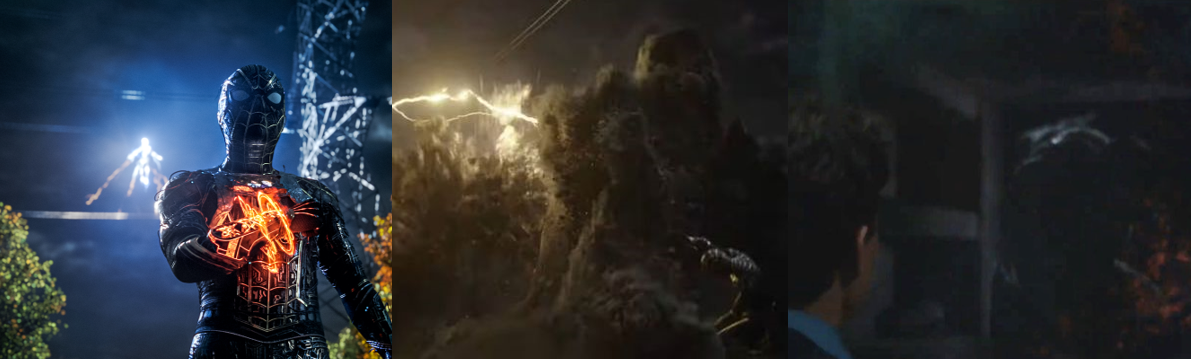
Angered at the incursions that have slipped into their world because of Peter’s ignorance, Dr. Strange demands that he and his friends “Scooby-Doo this shit!” and round up the visitors so they can be sent home; he grants Peter a magically-charged gadget that allows him to shoot a web that instantly teleports the villains to the prison, and Peter is forced to turn his suit inside-out after it gets ruined by paint thrown by a mob. Although he initially heads out to track down the Green Goblin, Peter instead finds Max Dillon/Electro (Foxx), who draws power from electricity lines to regain his physical form and alter the nature of his powers. Disorientated at having being violently ripped from his reality, Electro lashes out in anger, and Peter is only saved by the timely intervention of Flint Marko/The Sandman (Thomas Hayden Church), who helps Peter subdue and capture Electro. However, upon realising that he’s trapped on another world, the Sandman also grows antagonistic and winds up confined as a result, and Peter learns from each of them the nature of their personalities, their worlds, and their fates: Green Goblin, Doc Ock, and Electro are all fated to die in battle with Spider-Man, and returning them home would seal that fate, and that’s something Peter cannot, in good conscience, allow.

The Green Goblin quickly re-establishes himself as Peter’s greatest threat.

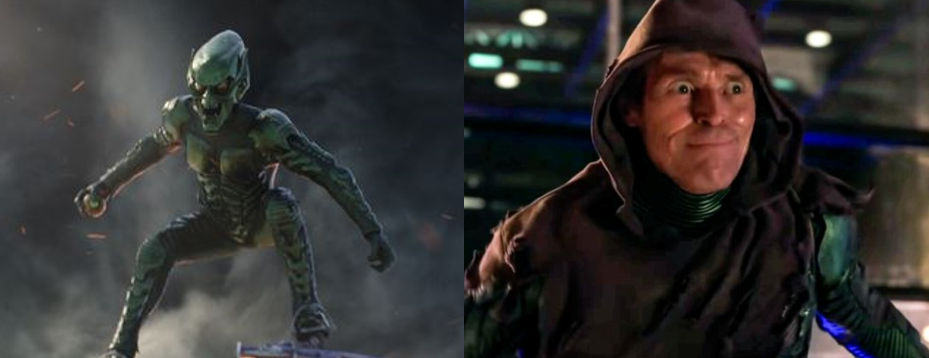
This brings him into conflict with Dr. Strange, who is determined to activate the jewel and send the visitors back home regardless since he’s weighing the fate and stability of the entire multiverse rather than the lives of a few villains. When Peter tries to take the jewel from him, a bit of a scuffle ensues in which we see Peter is able to control his body even while forced into his astral force thanks to this spider-sense, and his knowledge of geometry also allows him to figure out the mirror dimensions, web up Strange, and leave him stranded there while he works to cure the villains. While he has good intentions, and his friends and family support his efforts, and he is even able to convince the villains to trust him to help keep them alive, Peter underestimates the depths of Norman’s psychosis. Rendered a meek, bewildered scientist who is lost and in pain, Norman willingly works alongside Peter to help fix Doc Ock, returning the tentacled menace to his more good-natured self, but Norman’s dark half, the Green Goblin, soon resurfaces to throw Peter’s entire plan out the window. I got a real kick out of seeing Norman and Otto being familiar with each other, and the Lizard and Electro also having a familiarity with each other, it really helped to flesh out their respective worlds and deliver exposition regarding the characters to those who might not be familiar with them. While it’s disappointing that the Sandman was rendered entirely in his sand form for 90% of the movie, and the Lizard was basically a non-factor (there’s even a moment where he is simply confined to a van and forgotten about until the film’s big climax needs to happen), both Doc Ock and the Green Goblin play significant roles in the story. The Goblin wraps the remains of his God-awful suit in a tatter cloak and Dafoe’s demented facial expressions get to shine trough as he operates entirely unmasked throughout the film; he’s also far more vicious and deadly than ever before, cackling in Peter’s face and taunting him at every turn. While all of these returning actors slipped back into their roles perfectly (and even got a chance at redemption, in Electro’s case), Dafoe steals the show ones again as a maniacal and vicious villain who simply wants to cause Peter pain, no matter which Peter it is!

The Nitty-Gritty :
When I first heard that Tom Holland’s third solo movie was going to delve into the multiverse, I have to admit that I was disappointed and annoyed; I enjoyed Spider-Man: Into the Spider-Verse (Persichetti, Ramsey, and Rothman, 2018) but even with that film I questioned the logic of confusing matters with multidimensional shenanigans. The MCU definitely seems to be gearing towards exploring the multiverse, but I expected this to be confined to Dr. Strange’s solo films and worried that bringing in faces from the Sam Raimi and Marc Webb films would just be pandering and confusing. Not only that, but I’m of the firm belief that every role can be recast: Dafoe, Simmons, and Molina were all fantastic in their previous iterations but who’s to say that another actor wouldn’t be just as good, if not better? I expected this third Spider-Man movie would be the perfect excuse to finally bring the Sinister Six to life using the villains already established in the MCU: Adrian Toomes/The Vulture (Michael Keaton), Herman Schultz/The Shocker (Bokeem Woodbine), Mac Gargan/The Scorpion (Michael Mando), and even Mysterio (he was the master of illusions, after all) could all have returned and joined forces with two new villains (ideally an all-new Doc Ock) to collect a bounty on Spider-Man. Hell, I was more excited at the prospect of Charlie Cox returning as Matt Murdock/Daredevil or Spider-Man being forced to go on the run and teaming up with the Netflix Defenders than complicating things with multiverse hijinks, and I still maintain that it makes zero sense to have Eddie Brock/Venom (Tom Hardy) exist in a separate universe when it would have been far simpler to have him be based in San Francisco but still exist in the MCU (like how other MCU heroes and movies take place in different cities but those characters don’t have to be transported through time and space to interact).

Spider-Man butts heads with Dr. Strange regarding how to deal with the villains.

And yet….man, was it a thrill to see Alfred Molina return in the role! Bringing back these iconic actors in their most famous villain roles might be unapologetic fan service but it was fan service executed almost to perfection. I say “almost” as we were one villain short from an iteration of the Sinister Six; Eddie doesn’t show up into the mid-credits scene and he is teleported back where he came from without having any impact on the movie (though he does leave a part of himself behind…) and there was no secret sixth villain added to the roster. However, that’s not to say that the five villains we did get were disappointing…far from it! Since the MCU is different to where he came from, Electro is able to not only reconstitute his body, but also alters his powers; the addition of an Arc Reactor only pushes his powers even further, allowing him to resemble his traditional comic book appearance far closer than in his original iteration. The Sandman may be in sand form for the majority of the film, but he remains an emotionally conflicted character; at first, he helps Peter, and even tries to talk sense into some of the villains, but the idea of being kept from his home world and his daughter pushes him against the web-slinger out of pure self-preservation. This motivation is the driving force behind many of the villains, as they have either accepted their monstrous new powers or have no wish to be sent away to die. In the case of Doc Ock and the Lizard, this is due to technology or mutation clouding their judgement; when Peter repairs the inhibitor chip on Ock’s neck, he becomes much more agreeable and even helps Peter to hold off the villains in the finale, and when the Lizard ingests the cure and returns to his human form, he returns to his more docile personality.

Peter is devastated by loss and pushed to the edge by the Green Goblin.

The same is also true of the Green Goblin, however Norman’s psychosis is far more manipulative, calculating, and violent. He has no desire to return home to meet his end and absolutely brutalises Peter to keep him from trying to cure him; the Goblin quickly re-establishes himself as Peter’s most dangerous and notorious foe not only by swaying the other villains into turning on Peter, but delivering a massive beatdown on him that leaves him helpless to keep his Aunt May from harm. Although Peter manages to shield May from the Goblin’s pumpkin bomb, the glider blindsides her and leaves her with a fatal wound, and she tragically dies in his arms, leaving him heartbroken and with her final words of encouragement ringing in his ears: “With great power, there must also come great responsibility.” May’s death devastates Peter, and drives him into a quest for revenge against the Goblin; no longer merely satisfied to cure or help the villains, he wishes nothing less than the Goblin’s death at his hands, and it’s a true moment of despair for the young Avenger. No Way Home really puts Peter through the wringer, pushing his morals and optimistic outlook to breaking point, and really burdens him with the guilt of having indirectly caused his mother-figure’s death by trying to help the villains rather than allowing them to return home and potentially die as fated.

Spider-Man gets some unexpected help to fend off the combined threat of these multiversal villains.

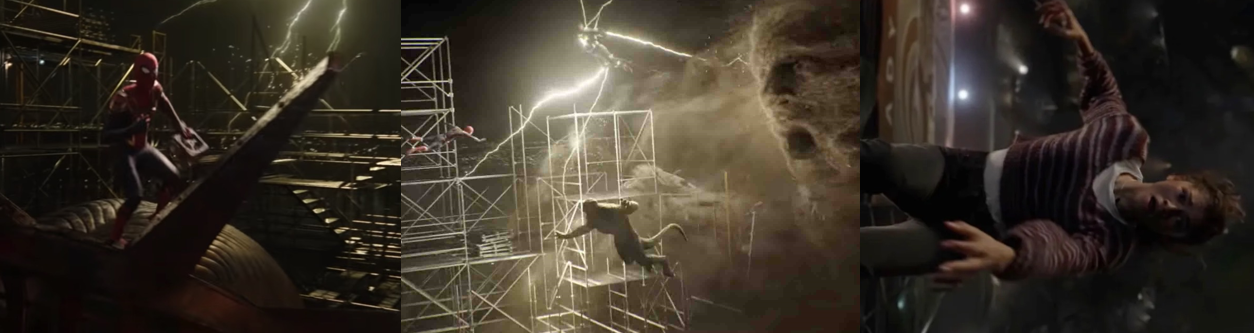
Desperate to find Peter and give their support, M. J. and Ned mess about with one of Dr. Strange’s sling-rings and discover the presence of two more familiar faces who slipped through the dimensional barriers and are determined to help and let me tell you…I have never seen a cinema explode into rapturous applause before but my screening blew the roof off when Andrew Garfield and Tobey Maguire made their long-awaited, and long-rumoured, return to their famous roles. Both arrived due to Strange’s spell and have been trying to track down MCU-Peter, and both have arrived from later in their careers, finally giving us a coda to their stories: Webb-Peter reveals that he struggled to cope after failing to save Gwen Stacy (Emma Stone), and almost lost himself to his rage at one point, and that he has thrown himself into his duties as Spider-Man to cope. Raimi-Peter is noticeably older, but still in good shape, and, though haunted by his failures and losses, maintains that he and M. J. (Kirsten Dunst) found a way to carry on). The scenes with the three Peters are an obvious highlight and they share some fantastic line sand banter together; Webb-Peter is elated to have found “brothers” and they work together to synthesise cures for the villains based on their previous experiences and scientific acumen. They also share stories of their adventures and powers, with Webb-Peter and MCU-Peter both being astounded (and a little disturbed) by Raimi-Peter’s organic webbing, Raimi-Peter extending a much-needed pep talk to Webb-Peter, and both Webb- and Raimi-Peter being impressed by MCU-Peter’s space adventures. Seeing them work together, offering MCU-Peter support and understanding, is fantastic as Webb-Peter delivers an emotional soliloquy about his failures (and gets to make amends for it by catching M. J. in a truly emotional moment) and Raimi-Peter relates the messages passed on to him by his beloved Uncle Ben (Cliff Robertson), and MCU-Peter is even able to help them get past being solo heroes and work together using his experiences of teamwork as an Avenger.

The multiversal breach rages out of control, leading to Peter making a selfless sacrifice…

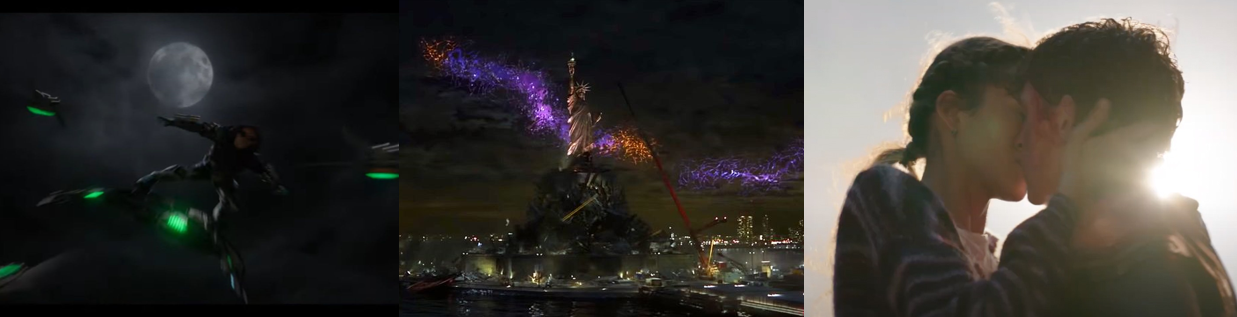
With three Spider-Man working together, the Lizard, the Sandman, and Electro are all subdued and returned to their human forms, presumably alleviating them of their madness and violent tendencies, in a mind-blowing final confrontation around the Statue of Liberty (which is being refurbished to hold Captain America’s shield aloft). Despite the best efforts of his alternative counterparts, though, MCU-Peter is driven into a rage and attacks the Green Goblin mercilessly and even prepares to deliver a fatal blow with his own glider, only for Raimi-Peter to intervene (and get stabbed in the back for his efforts). Ultimately, MCU-Peter delivers a cure, rather than a kill, to his newest foe and Norman is left an emotional and remorseful wreck, though this pales in comparison to the threat unleashed by one of his pumpkin bombs as Strange’s spell is blown free and miscellaneous, vaguely-defined villains and intruders from all across the multiverse threaten to converge on the MCU. Dr. Strange struggles to contain the spell and, determined to make amends for his previous mistake, MCU-Peter decides to make the ultimate sacrifice and has Strange cast a new spell that will make everyone, everywhere, forget all about Peter Parker. He thanks his counterparts for their help and bids an emotional farewell to M. J. and Ned, promising to find them and rekindle their friendship/relationship after the spell is cast, but hesitates upon seeing how happy and better off M. J. and Ned are without him in their lives. Ultimately, Peter chooses to leave them be and fashions a new, 100% comic accurate costume for himself using his counterparts’ suits as inspiration and finally gets his big, triumphant final swing as he begins a new life safe in the knowledge that no one knows his true identity any more…and that he’s not alone in the vast, dangerous multiverse.

The Summary:
After viewing that first trailer and seeing Doc Ock show up once again, my mind was pretty much blown when it came to this movie. It raised so many questions, many of them being concerns that Tom’s third solo outing would get overwhelmed or bogged down by multiverse shenanigans and blatant fan service. Subsequent trailers helped shed a bit more light on the film, and I began to calm down a bit and predict that these returning characters wouldn’t be as integral to the narrative as many were making out. This turned out to be true, to a degree; the villains are definitely a big part of the film, but Spider-Man: No Way Home still does a fantastic job of focusing on Peter, his relationships, his growth, and his identity crisis. Could we have seen a grittier, more grounded film that dealt with him being on the run and learning to adapt to his tumultuous new public life? For sure, yes, and I would also argue that many of these villains could have been recast and reimagined as MCU characters and it would have worked just as well, but again there is such a thrill to be had at seeing these actors return to their iconic roles and, in many cases, reinvigorate their characters with the benefit of hindsight. I loved that Peter’s focus was on others the entire time; his selflessness is a driving force of his character, and every decision he makes is to try and benefit either his friends or family or to save lives. This is motivated by his guilt, of course, as they would only be in danger because of him, and he remains a flawed character trying to make amends for his mistakes, which is the quintessential essence of Spider-Man for me. More than any other Spider-Man, MCU-Peter tries to help even the most villainous characters rather than condemn them to death, it was truly heart-breaking to see him o devastated by Aunt May’s death that he was willing to cross that line. Of course, the undisputable highlight is seeing Tom Holland share the screen with Tobey Maguire and Andrew Garfield; while it’s painfully obvious that all three actors weren’t on set or in the studio at the same time for every shot (whether due to Covid or scheduling), it’s still a blast to see them interacting, hearing those iconic themes, and seeing them in action. Once I accepted that No Way Home was going to be a multiverse adventure, my hope was that the film would go all-out to deliver on its potential…and I’m happy to say that it went above and beyond! Action-packed, emotional, and amusing throughout, Spider-Man: No Way Home may very well be in the top-tier of Spider-Man adventures and I am very excited to see where Peter’s journey takes him now that his status quo has been so dramatically changed.

My Rating:

Rating: 5 out of 5.

Fantastic

Have you seen Spider-Man: No Way Home? Were you excited at the idea of iconic Spider-Man villains making their return or do you think that the multiverse stuff should stay in the Dr. Strange movies? What did you think to the way the film handled the public’s knowledge of Spider-Man’s identity and would you have preferred to see this explored a little more in-depth? Which of the returning villains was your favourite, and how excited were you to see Tobey Maguire and Andrew Garfield return (and Charlie Cox finally be incorporated into the movies)? Were you disappointed that we came so close to the Sinister Six and that Venom didn’t have a role in the film? Where do you see the MCU-Spider-Man’s story going from here? Whatever your thoughts on Spider-Man: No Way Home, leave a comment below.