
Talking Movies: V/H/S/2

Talking Movies

Released: 12 July 2013
Directors: Simon Barrett, Adam Wingard, Eduardo Sánchez and Gregg Hale, Timo Tjahjanto and Gareth Huw Evans, and Jason Eisener
Distributor:
Lionsgate
Budget: Unknown
Stars:
Lawrence Michael Levine, L.C. Holt, Adam Wingard, Hannah Hughes, Jay Saunders, Oka Antara, Fachri Albar, Hannah Al Rashid, Rylan Logan, and Samantha Gracie

The Plot:
Two private investigators are hired to look into the disappearance of a boy and find his home deserted except for a stack of VHS tapes, each of which contain a gruesome horror story in the form of found footage depicting a man recieving an ocular implant that allows him to see ghosts, a keen biker who is turned into a flesh-hungry zombie, a film crew investigating a bizarre cult, and a violent alien abduction.

The Background:
In 2012, Bloody Disgusting founder and film producer Brad Miska reached out to the directors and creative minds he had met through his website to create V/H/S (Wingard, et al, 2012), a horror anthology that was positively received at the 2012 Sundance Film Festival, received mixed reviews upon release, and managed to gross $1.9 million. A sequel (originally titled S-VHS) was rushed into production in 2012 and featured an abundance of new directors and creators joining a handful of returnees from the first film. Like its predecessor, V/H/S/2 first debuted at the Sundance Film Festival before being widely released on video-on-demand and at a limited number of cinemas. The film’s $805,574 gross meant it made significantly less than the first film but, in comparison, reviews were far more positive and a poorly-received third entry followed in 2014.

The Reviews:
As with the first film, because V/H/S/2 is an anthology film made up of a framing narrative and several short horror stories, I’m changing up my usual review format to talk about each segment individually before sharing my thoughts on the overall film.

Two private investigators discover a disturbed young man’s collection of gruesome videotapes.

As in the first film, V/H/S/2 features a framing narrative that allows for the film’s short stories to be told; “Tape 49” (Barrett) follows Larry (Levine) and Ayesha (Kelsy Abbott), two unscrupulous private investigators who are hired by a concerned mother to check on her son, Kyle (Holt), who has been missing for a few days. When they arrive at the college kid’s house, they find it to be deserted; stacks of VHS tapes are piled up everywhere and Kyle’s laptop has been left recording a video. Kyle’s video log shows him discussing his obsession with the tapes and, while Larry searches the rest of the house, Ayesha checks out some of the tapes. After each short, the film cuts back to Ayesha, who comes to be physically affected by what she has watched (which, according to Kyle, must be viewed in a certain order to have the greatest effect) and is unaware that she is being stalked. Eventually, Larry comes in the room to find Ayesha has killed herself with a bullet to the head but she returns to attack him as a zombie after he watches the final film. Though he’s able to fight her off, Larry ends up being strangled to death by Kyle, who attempted to kill himself on camera to make his own tape and ended up blowing his entire lower jaw off in the process! Regardless, he delivers a thumbs up, indicating that he succeeded in his goal.

Herman’s ocular implant allows him to see and be tormented by vengeful spirits.

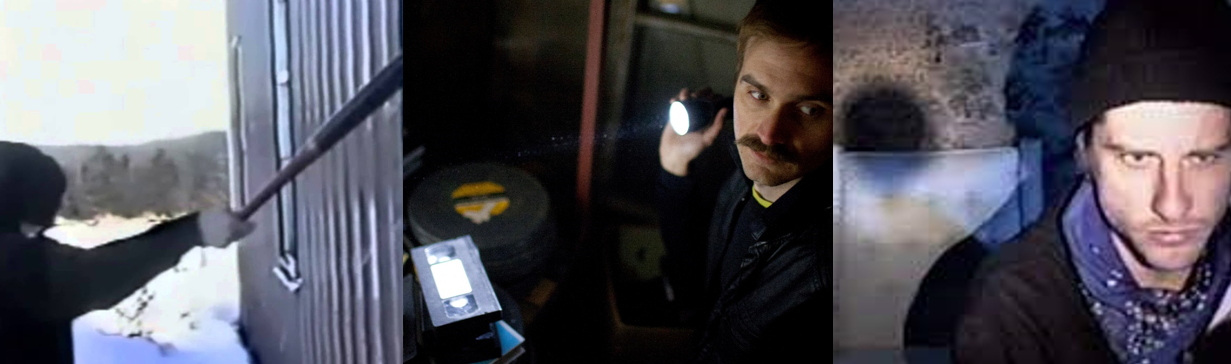
The first short story is “Phase I Clinical Trials” (Wingard), which puts a unique spin on the first-person, found footage concept by telling its story through an ocular implant inserted into Herman’s (ibid) head to replace his eye. Though disturbed to find that his every moment will be recorded throughout the trial period, Herman has little choice but to accept the restrictions that come from the implant, which Doctor Fleischer (John T. Woods) explains may also be accompanied by some “glitches”. After arriving home, Herman is spooked to find his game controller moved while he goes to make some tea, the kettle knocked from the stove when he leaves the kitchen, an invisible figure laying in his bed, and a bloodied phantom (Brian Udovich) who gives him a fright. The bloody man is joined by an unsettling child (Corrie Lynn Fitzpatrick) and the two terrify Herman, banging on his bathroom door and forcing him to sleep in the bathtub out of fear. The next day, he finds his house has been ransacked by the ghouls and is visited by Clarissa (Hughes), who received a similar implant to restore her hearing and, like Herman, has been tormented by ghosts ever since. Clarissa believes that removing the implants would simply take away their ability to perceive them and that the spirits grow stronger the more they are interacted with. Although she tries to use sex to take his attention away from the disturbing spirit of her uncle (John Karyus), who it’s implied assaulted her in the past, she’s dragged into his pool and, despite his best efforts to save her, is drowned by a particularly malevolent, invisible entity. Desperate to make the ghosts go away, Herman uses a razor to slice out his implant, however this only leaves him blind to their presence and allows them to easily overwhelm him and choke him to death with the same device.

Mike’s ride through the woods ends with him becoming a mindless zombie.

“A Ride in the Park” (Sánchez and Hale) follows keen cyclist Mike Sullivan (Saunders), who affixes a camera to his helmet and his handlebars before going for a morning cycle through the woods. Almost immediately, however, he runs across a hysterical girl (Bette Cassatt) who begs him to help her boyfriend; seeing that the poor bloke has been set upon by shambling, flesh-hungry zombies, Mike tries to escape with the girl but she pounces on him and tears a chunk out of his neck. Bleeding profusely, Mike staggers through the woods and begins vomiting the same black blood as the girl before collapsing and choking to death. When another couple of cyclists come across him, Mike reanimates and attacks the man (Dave Coyne), ripping open his cheek and then taking a bite out of his female companion (Wendy Donigian), who also becomes a zombie and joins Mike in devouring her former lover. When the male cyclist also reanimates, the three stumble through the woods and attack a child’s birthday party, biting many of the terrified guests and creating more zombies in the process. In a tragic and horrifying twist, Mike is momentarily subdued when he catches sight of his reflection and regains some small semblance of his humanity when he accidentally pocket dials his girlfriend, Amy (Devon Brookshire). Distraught at the monster he has become, Mike uses the last of his senses to shoot himself in the head with a discarded shotgun.

A film crew become witnesses, and victims, of a cult’s efforts to summon a demon through ritual sacrifice.

Easily my favourite of the film’s stories is “Safe Haven” (Tjahjanto and Evans), which depicts a film crew – comprised of interviewer Malik (Antara), his fiancée and producer Lena (Rashid), his best friend Adam (Albar), and cameraman Joni (Andrew Suleiman), all of whom are wired with hidden cameras and microphones – investigating a mysterious cult known as Paradise Gates, who are very secretive and mistrustful of outsiders. Lena is able to convince the cult’s leader, known only as “Father” (Epy Kusnandar), to permit them entrance to his compound so that they can produce a fair and accurate report that challenges the slander and rumours surrounding the cult. Once inside, they find bizarre symbols and effigies adorning the walls and that the cult worships Father and his teachings of immortality and providence; several children are present on the grounds, all of whom are heavily indoctrinated in Father’s teachings, and it’s heavily implied that the girls have been subjected to their leader’s sexual appetites. While Malik interviews Father, who vehemently defends his religion and his actions while condemning wider society for their ignorance, Lena reveals to Adam that he’s the father of her unborn child right before Father issues a command over the intercom that incites widespread suicides throughout the compound. In the chaos, Adam discovers a woman in the compound’s basement who has been strapped to an operating table and had her womb carved out, Father cuts Joni’s throat with a Stanley Knife for interrupting him, and Malik is executed on Father’s followers. Lena finds herself abducted by woman in surgical attire and, when Adam goes to rescue her, he’s rocked by an explosion, is disturbed to see a man crawling across the ceiling, and watches as the bloodstained Father explodes in a shower of gore. As demonic chanting and an air raid siren fill the air, Adam finds Lena being restrained by wailing, possessed nurses but can only watch as a grotesque horned demon not unlike Baphomet forces its way from her stomach! Fleeing in terror, Adam fights his way past the reanimated cultists and races away in his car; however, the demon pursues him and forces him off the road, spilling him out of the vehicle and driving him to maniacal insanity as it utters a single, gruesome word: “Papa”.

A group of kids and their doggy are violently attacked by monstrous grey aliens!

The film ends with another strong tale, “Slumber Part Alien Abduction” (Eisener), in which brothers Gary (Logan) and Randy (Cohen King) attach a miniature camera to their Yorkshire Terrier, Tank (Riley Eisener), to film their fun and games at their lakeside house. The boys delight in tormenting their older sister, Jen (Gracie), and her friends while their parents are away and are so caught up in their adolescent antics that they fail to notice a grey alien lurking beneath the lake and an ominous, deafening noise when they play a prank on Jen and her boyfriend, Zack (Jeremie Saunders), as they’re trying to have sex. Similarly, they also fail to pay much attention to a mysterious light show out over the lake but their tomfoolery is soon violently interrupted by the blaring noise, the power cutting out, and the presence of disturbing grey aliens outside their house. The monstrous beings grab the group, seal them in their sleeping bags, and try to drown them in the lake, with only Gary, Randy, Jen, and Tank surviving. Fleeing towards the strobing red and blue lights, they realise all too late that they’re running towards a trap rather than police assistance and both Jen and Randy are violently taken when Tank inadvertently attracts the aliens. Although Gary tries to flee with Tank up a ladder in the barn, they are ensnared by the aliens’ tractor beam and, in a distressing finale, Tank plummets to the ground and lies whimpering and dying as his family are abducted into the unknown.

The Nitty-Gritty:
The first thing you’ll notice about V/H/S/2 is the upgrade in camera quality; while there is still an abundance of nausea-inducing shaky cam, the quality of the picture and sound is much improved over the original. Next, there is a far more unique use of the camera perspective compared to the first film, which only really did something different with one of its stories; the ocular implant (which continues to show us the disturbing imagery even after Larry’s removed it), Mike’s helmet camera, using a film crew, and placing a small camera on a dog all allow for far more natural shots as I find the biggest issue with found footage films to be the believability that someone would hang onto a video camera during moments of chaos. The shorts also seem a bit longer this time and far more visceral and terrifying, and it’s pretty clear there the budget was slightly higher than in the last film (even if I wasn’t able to find out what the film’s budget actually was).

The film makes even better use of its format to provide unique and horrifying twists on familiar tropes.

As much as I enjoyed the original film, I found that I was more engaged and unsettled by each short story on offer in V/H/S/2. Additionally, the film brings a few unique ideas to tried-and-tested clichés through its found footage presentation; I’ve never seen a zombie film framed from the infected’s perspective quite like this, for example, and it’s deeply disturbing to see Mike succumb to his bite and return to unlife, feasting on the flesh of the living, and witness first-hand the degradation of his humanity into ravenous hunger and the tragic spark of his personality that drives him to end his monstrous existence. Even shorts that present recurring ideas in horror and science-fiction are given an unnerving slant thanks to the direction and presentation of the stories; “Phase I Clinical Trials” isn’t the first time the “haunted implant” story has been told but the presentation of the spirits as vengeful, malevolent phantoms really adds an extra punch to the story and we’ve all seen alien abduction films before but rarely are grey aliens depicted so monstrously. Roaring, clutching, and clawing at their prey, and constantly accompanied by blinding lights and ear-splitting sounds, the greys are at their most horrific and seeing them mercilessly abduct the children and cause the painful and heart-wrenching death of their dog is particularly unnerving.

The film’s scares and presentation definitely benefit from an increased budget.

As I mentioned, though, my favourite piece of the film is “Safe Haven”. This one may put off many viewers since not only is much of it told through the use of subtitles but it touches upon uncomfortable themes of suicide, maniacal cults, and Satanic imagery. Still, the short is easily the most bloody and visceral of V/H/S/2 and its predecessor; while the goat-headed, winged demon is easily the short’s most impressive and ambitious effect, “Safe Haven” also includes zombies, heads and faces being blown off, a man being blown to pieces, and women being torn apart from the inside out. For fans of blood and gore, “Safe Haven” is a definite standout but, for me, it’s the unsettling imagery of the demon itself and the implications of the story that cause this piece to have the most impact. “Phase I Clinical Trials” and “Slumber Part Alien Abduction” are equally impactful but in different ways; making copious use of jump scares, loud noises, and lingering shots of disturbing monstrosities, these two definitely make an impression, meaning that “Tape 49” and “A Ride in the Park” are left as the film’s weakest entries (and even those are bolstered by a unique camera perspective and visceral gore).

The Summary:
Although I feel like I prefer V/H/S/2 overall compared to its predecessor, it’s difficult for me to favour one over the other as there are short stories in the first film that I enjoy quite a lot. Generally, I prefer to watch the two as a double feature, thereby experiencing the best that each has to offer, but it’s hard to deny that the presentation and visuals are much more appealing and improved in this sequel. Everything feels much more focused and less rough around the edges, with some interesting, fun, and unique takes on the massively overdone found footage genre. Not only that, but each of the stories on offer are genuinely disturbing; even those that draw from tried and tested horror clichés are given a distinctive slant to deliver an unsettling and memorable anthology experience. Honestly, V/H/S/2 is worth it for “Safe Haven” alone but there’s plenty for horror fans of all kinds to enjoy on offer here. Again, it’s not really a film focused on characters and is more geared towards unnerving audiences, and the abundance of gore, terrifying ghouls, monstrous aliens, and ravenous zombies definitely succeeds in that regard in my opinion. I’ve heard negative things about the subsequent films in the series but I have a real soft spot for these first two, especially the second film, and I definitely recommend them to fans of independent, gory, disturbing horror films who are looking for something both a little familiar and a little different.

My Rating:

Rating: 4 out of 5.

Great Stuff

Are you a fan of V/H/S/2? What did you think of it, especially compared to the original, and which of the short stories was your favourite? What did you think to the way the short stories put a unique slant on familiar themes? What did you think to the ways the film made use of their found footage genre and the obvious increase in budget? Would you like to see more anthology films and which anthology show is your favourite? What horror films are you watching this month in preparation for Halloween? Whatever you think about V/H/S/2, feel free to leave a comment below or on my social media and pop back next Monday for one last anthology film before Halloween!

Talking Movies: V/H/S

Talking Movies

Released: 5 October 2012
Directors: Adam Wingard, David Bruckner, Ti West, Glenn McQuaid, Joe Swanberg, and Radio Silence
Distributor:
Lionsgate
Budget: $15 million
Stars:
Kentucker Audley, Calvin Reeder, Hannah Fierman, Drew Sawyer, Joe Swanberg, Sophia Takal, Norma C. Quinones, Bryce Burke, Helen Rogers, Daniel Kaufman, Tyler Gillett, and Nicole Erb

The Plot:
A gang of criminals is paid to ransack and old man’s (Frank Stack) house and finds a stack of VHS tapes, each one containing a gruesome horror story in the form of found footage. These depict a group of friends looking to make an amateur porn video and crossing paths with a demonic succubus, a couple on a road trip who encounter a strange girl, a group of friends lured into the woods to confront a supernatural entity, a university student who experiences paranormal activity in her flat, and four friends who run afoul of a cult performing an exorcism.

The Background:
Since I grew up watching The Outer Limits (1995 to 2002) and am a big fan of movies like Creepshow (Romero, 1982) and Tales from the Darkside: The Movie (Harrison, 1990), I have quite a soft spot for anthology films, especially those involving science-fiction and horror. V/H/S was the brainchild of Brad Miska, the creator of Bloody Disgusting, who reached out to the directors and creative minds he had met through his website about contributing to a horror anthology. Capitalising on the success of the found footage genre, the creators were given complete reign to submit whatever proposals they have for the project. V/H/S premiered at the 2012 Sundance Film Festival, where it was positively received, and even got a limited theatrical release. Generally, V/H/S received mixed reviews; while some praised the film’s consistently high quality, others took issue with the concept’s execution, though its $1.9 million gross was enough to finance two sequels, a spin-off, and an eventual reboot of sorts.

The Reviews:
Like Tales from the Darkside: The Movie, V/H/S is an anthology film made up of a framing narrative and several short horror stories so it only makes sense to review each one individually before talking about the overall film, which means that this review will be structured a little differently from my usual ones.

A gang of miscreants are stalked by a zombie while they view macabre videotapes.

“Tape 56” (Wingard) is probably the weakest of all the short stories included in V/H/S but there’s a reason for that; it’s merely the frame narrative that follows a gang of criminals as they record themselves doing stupid shit around the city while dressed like “gangsters”. They drive around at high speeds, accost a couple and forcibly pull a girl’s top up, smash windows and damage and deface property, try to make amateur sex tapes, and generally act like a bunch of complete douchebags. They get a bit more than they bargained for, however, when Gary (Bruckner) says they can get huge score but simply breaking into an old man’s house and stealing a VHS tape, only to find a dead body in the house and stacks upon stacks of the defunct media cassettes. While the others search the house looking for the objective, Brad (Adam Wingard) stays behind and watches the short films that make up the rest of the film; between each story, the film cuts back to Brad to see his reaction and, as the film progresses, Brad mysteriously disappears, leaving Rox (Audley) to take over the viewing. Although the thugs eventually decide to simply take all of the tapes, the old man’s corpse disappears from the background and the shit-kicking assholes are left to be are torn apart by the zombified homeowner.

Three friends are horrified to find they’ve brought a ravenous succubus back to their hotel room!

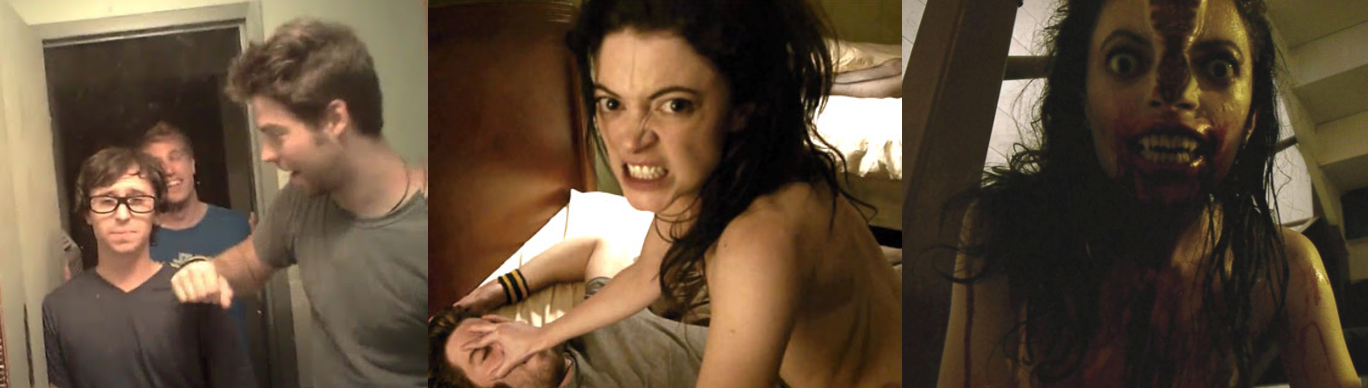
“Amateur Night” (Bruckner) is easily the stand-out short of the film since it went on to inspire a spin-off movie; however, while I do consider it to be a great opening story for the movie, I wouldn’t necessarily say that it was the best of them. Shane (Mike Donlan), Patrick (Joe Sykes), and Clint (Sawyer) are three friends who have rented a hotel room and plan to hit the nightclubs and brings girls back there to film a porno using special video glasses worn by Clint. While Clint is unsure about the deception, his two loudmouth frat-boy friends are insistent on going through with the plan and waste no time in hitting up Lisa (Jas Sams) and successfully convincing her to go back to their hotel room while Clint catches the attention of shy Lily (Fierman), a timid, mousy girl who approaches him and says that she “likes [him]”. The four head back to the hotel room, with the three fiends completely rat-assed; Lisa is so out of it that she passes out soon after they get back and, though she continues trying to awkwardly seduce Clint, Lily soon finds herself the target of Shane and Patrick. Hurt and disgusted that his friends would take advantage of a girl he was interested in, Clint locks himself in the bathroom so he doesn’t have to watch and record the threesome but his shock at Lily’s cat-like demeanour and her clawed feet soon turns to terror when Patrick bursts in with a huge chunk taken out of his hand and Lily suddenly sprouts fangs and rips Shane to shreds! When Patrick tires to fight her, she shrugs off the attack and pounces on him with superhuman ferocity, drinking his blood and ripping off his genitals! Terrified, Clint flees into the stairwell, where he trips and falls and breaks his wrist; the blood-soaked succubus, her face split down the middle, approaches Clint and is so distraught at his fear of her that she unleashes a diabolical roar and transforms into a demonic winged creature and carries him off into the night to an unknown fate.

A couple are toyed with by a mysterious masked stalker while on a road trip.

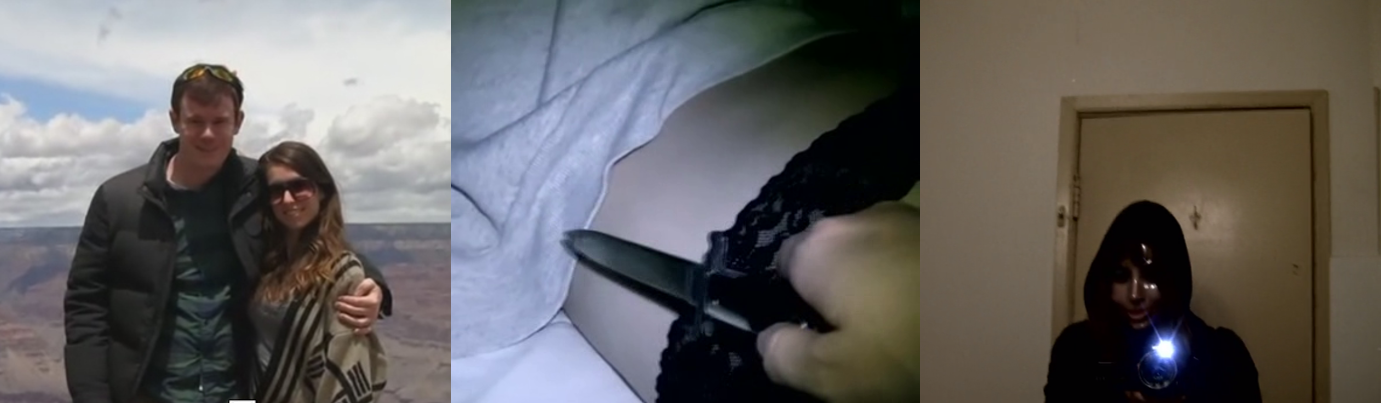
“Second Honeymoon” (West) is probably the creepiest of all the short films if only because it seems like a plausible scenario that could happen in reality. Sam (Swanberg) and Stephanie (Takal) are a young married couple on a road trip to Arizona for their honeymoon; Stephanie is documenting the trip on her camera, which features such exciting stuff as getting “gas”, spotting bullet-riddled car husks, petting donkeys, and staying is dirty hotel rooms thanks to Sam not reserving better lodgings. When they visit a Wild West-themed resort, Stephanie is told by an animatronic that she’ll soon be reunited with a loved one, but Sam is disheartened when she later asks him not to record them doing sexual stuff in the hotel room. While trying to put him off, they are interrupted when a strange young girl (Kate Lyn Sheil) knocks on their door and asks them for a ride in the morning. Creeped out by the incident (and the girl, whom Sam found weirdly intimidating), Sam chooses to worry about it in the morning; while they’re sleeping, however, a masked stranger enters the room without them noticing, caresses Stephanie with a switchblade, steals $100 from Sam’s wallet, and washes his toothbrush in the toilet bowl in an incredibly unsettling scene. The next day, after brushing his teeth with the soiled toothbrush (!), the girl is nowhere to be seen and the couple get into an argument when Sam accuses Stephanie of taking the money; Sam insinuates that it’s not the first time she’s done something like that but, though this creates some tension, they are still able to enjoy themselves when they visit the Grand Canyon. Back at the hotel room, Sam suggests stopping off in Las Vegas the next day but, unfortunately for him, he never gets that far as he’s stabbed through the neck with the switchblade and chokes on his own blood when the stranger returns to the room that night. The short then ends with a shot of Stephanie making out with the stranger, revealed to be the young girl from the previous night, and then continuing on her journey with her lover.

Wendy lures her friends to the woods to bring out a supernatural killer.

In “Tuesday the 17th” (McQuaid), Wendy (Quinones) takes her new friends Joey Brenner (Drew Moerlein), Samantha (Jeannine Yoder), and Spider (Jason Yachanin) on her annual trip to a lake in a nearby secluded forest. Each of her friends are confused by Wendy’s traditional excursion out to the woodlands, and the fact that she has told each one a different story to get them up there. As they explore the woods, the camera sporadically glitches out and images of mutilated corpses are flashed onto the screen, which are made all the more disturbing by Wendy’s increasingly unsettling behaviour; she becomes stoic and morose, sullenly regards areas where the images appear, and promises Joey that they’re all going to die. As they relax with some weed by the lake, Wendy tells them that she experienced a series of gruesome murders there a few years ago and the culprit was never caught; though they laugh it off as a joke, Samantha is soon killed when a supernatural entity (Burke) that resembles a screen glitch kills her with a knife to the back of the head and then stabs Spider repeatedly in the forehead. After Joey turns down Wendy’s advances, she callously reveals that she lured them all there as bait for the entity, who slices Joey’s throat and relentlessly pursues Wendy through the woods. Determined to trap, kill, and identify the killer, Wendy lures it into a bear trap but the camera cannot register it as anything other than a glitched series of tracking errors; the entity escapes Wendy’s death traps, beats and eviscerates her, and as she lies quivering she too begins to glitch out.

Emily finds herself unwittingly manipulated by James into being an alien incubator.

“The Sick Thing That Happened to Emily When She Was Younger” (Swanberg) mixes things up a bit by being framed entirely as a video chat between Emily (Rogers) and her boyfriend James (Kaufman), who is training to be a doctor. Initially, she’s mainly concerned about a strange bump on her arm but her troubles escalate after she moves into her new apartment and begins experiencing strange noises and disturbances. James is sceptical and believes that she was merely dreaming but, when she calls him in the dead of night, he sees a child-like entity rush in and slam the door shut. Although he dismisses this in the morning, Emily shares how she had a similar haunting experienced as a child that left her needing surgery and complains that the pain in her arm is worsening. The next night, James watches and guides as Emily tries to confront the entity, which appears as a small, neon green creature and the experiences only distress her more when she learns from her landlord that no children have ever lived in the building and no one has ever died in there either. James is distressed to find Emily digging at the lump on her arm with a meat fork similar to how she permanently scarred herself cutting into her leg as a child and promises to check it out in person as soon as possible. Ashamed and increasingly horrified, Emily agrees to stop and wash it off and then asks James to be her eyes while she tries to communicate with the ghosts, but when she’s knocked unconscious by the children he rushes into the room and slices open her torso to extract an alien embryo! Revealed to have been working with the aliens and harming Emily for years in order to incubate their alien/human hybrids, James promises to stand by Emily even after she’s been diagnosed as schizoaffective but is also shown to be having similar manipulative talks with another female incubator (Liz Harvey).

Four friends save a girl from a cult but find themselves beset by all manner of restless spirits.

Finally, “10/31/98” (Radio Silence) follows friends Tyler (Gillett), Chad (Chad Villella), Matt (Matt Bettinelli-Olpin), and Paul (Paul Natonek) as they head to a Halloween party at a friend’s house while dressed in ridiculous costumes. Unbeknownst to them, they end up at the wrong house but simply believe that they’re the first ones to arrive; after sneaking inside, they soon experience paranormal events (such as flickering lights, ghostly reflections, and hands reaching out of the walls to grab them) but foolishly believe that it’s all part of the experience and that the party has been themed around a haunted house. When they head up into the attic in search of the party, though, they find a girl (Erb) suspended from the rafters and at the mercy of a group of men performing an exorcism by chanting “Cast him down”. The friends join in, believing that it’s all part of the fun, and anger the cult’s leader (John Walcutt) in the process; the interruption causes the cult members to be brutally manhandled by an unseen force and, though the friends initially flee, Tyler convinces them to go back to help the girl. After freeing the girl from her bonds, they are beset by all manner of terrifying phenomena as ghostly arms try to grab them, objects are tossed around at them, handprints appear on the walls, and the very house itself closes up in an attempt to trap them. While they manage to escape through the basement as the demonic poltergeists rampage through the house, their car suddenly stops across a set of train tracks and the girl teleports out into the road, walking away surrounded by crows as a train races towards the car and its trapped inhabitants.

The Nitty-Gritty:
If you’re not really a fan of found footage films then V/H/S probably isn’t going to be the movie for you; the entire film is shot using handheld, low quality cameras, meaning that there’s a lot of shaky camera movements, wild sweeping panning, film jumps and visual glitches, and scratchy, low quality sound permeating the whole movie. Additionally, this isn’t really a film where you learn a great deal about the characters; each short has a few minutes to show a snapshot of its characters lives and set up the scenario they’ve been placed in, so it’s not really an in-depth character study or with any goal other than to disturb and unsettle its audience.

V/H/S uses the found footage genre to put an intense twist on well-known horror tropes.

In this regard, V/H/S/ largely succeeds; each of the shorts is distinct enough so that there’s something here for even the most hardened horror fans. From a bloodthirsty succubus to a glitchy phantasm and demonic poltergeists, there’s plenty of variety on offer in V/H/S and even if you don’t like one or more of the stories there’s probably going to be at least one that leaves you a little intrigued. Personally, I enjoy elements from all of the stories; I like seeing the asshole gang in the framing story get beheaded and picked off by the old man, the design of the succubus is downright disturbing and it’s easy to see how the concept was expanded upon into its own movie, and the glitch ghost is a terrifying concept that puts a unique spin on the cliché “haunted woods” setting. The idea of a wife conspiring against their husband is a palpable horror, as is that of aliens taking the form of disquieting child ghosts, and coercing a human into helping them breed disgusting hybrids is as disturbing as it is sickening for James’ wilful manipulation of the girls he influences. Similarly, while “10/31/98” is probably the most cliché of all the shorts, it’s a suitably tense and discomforting end to the film.

One of the most memorable parts of the film is how bleak and brutal its stories are.

Indeed, one of the things I really enjoy about V/H/S is how spectacularly bleak it is; basically every character dies and each short ends with the suggestion that a greater evil, be it supernatural or extraterrestrial, exists to threaten humanity in some way. “Tape 56” has startling implications in that it suggests that all of these events happened in this fictional world and I enjoy how each short leaves a lot of questions and loose ends for audience interpretation; like, who was that girl and what was the deal with her relationship with Samantha? Where did the glitch ghost come from and how did Wendy escape from it? How long have those aliens been implanting their hybrids into unassuming young women? For me, it’s all very imaginative and leads to some fun speculation; additionally, the entire film is like a series of short, sharp nightmares that set up a simple premise with realistic characters and then goes out of its way to be as unsettling and disturbing as possible. In this regard, the shaky camera really helps escalate the tension and the horror, as does the low camera quality; everything feels as it would if we were experiencing it first-hand and not being able to properly make out things being seen or heard onscreen just makes things more chaotic and horrific.

The Summary:
V/H/S is quite the bold experiment; by roping in a bunch of amateur filmmakers can giving them free reign to craft short, sharp snippets of horror, Brad Miska delivered quite the macabre collection that would be a treat for any horror fan. Sure, found footage films and shaky cam filming is an overdone cliché in this day and age as it seemed like everyone was doing it at one point, and it can be a nauseating and confusing filmmaking method but, in certain situations, it’s appropriate, especially when it’s done well. For my money, V/H/S uses the technique to great effect; anthology films aren’t too common these days, potentially because it can be difficult crafting the individual stories and for audiences to properly connect with the ever-changing narratives, but I find them endlessly entertaining. The short horror stories on show here provide just enough to unsettle, terrify, and inspire personal interpretation and imagination regarding each scenario and the greater world on show, and I found even the film’s rougher edges to be all part of its charm so I definitely feel like V/H/S has been unfairly overlooked in the pantheon of independent horror.

My Rating:

Rating: 3 out of 5.

Pretty Good

Have you ever seen V/H/S? What did you think of it and which of the short stories was your favourite? How did you interpret the worlds presented in the short stories and which of them would you have liked to see expanded upon? Are you a fan of anthology narratives? If so, would you like to see more and which anthology show is your favourite? What horror films are you watching this month in preparation for Halloween? Whatever you think about V/H/S, feel free to leave a comment by signing up or visiting my social media and pop back next Monday for my review of the sequel!

Talking Movies: What If…? Thanos and the Masters of Evil

Talking Movies

In Avengers: Infinity War (Russo and Russo, 2018) the Mad Titan, Thanos (Josh Brolin), finally made a significant appearance in the Marvel Cinematic Universe (MCU). When the idea of a two-film saga based on the Infinity Gauntlet comic book (Starlin, et al, 1991) was first announced, I, like many others, had many theories about what was going to happen, who was going to live and die, and how everything was )going to go down. For example, before Thor: Ragnarok (Waititi, 2017), I was certain that Thanos’ big entrance was going to immediately establish his threat by hanging him storm into Asgard kill Odin Allfather (Anthony Hopkins), and claim the Tesseract (and, obviously, the Space Stone it help). After all, how better to establish this big bad villain than by having him kill a God?

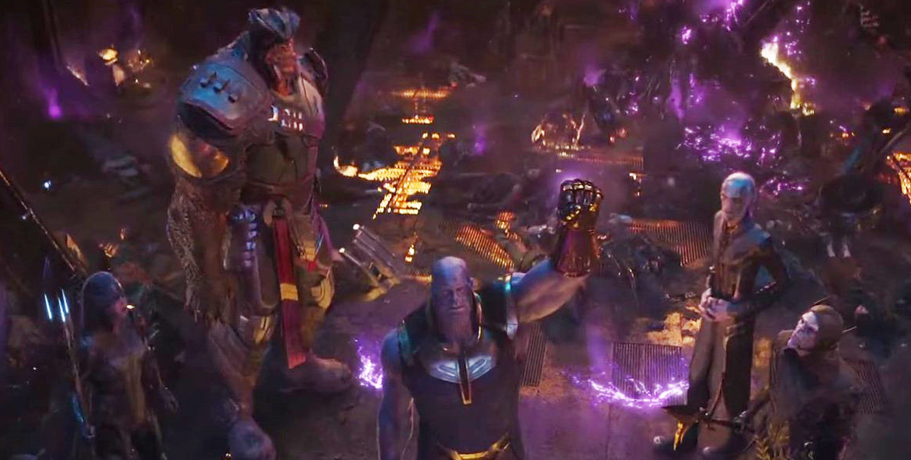
Thanos’ Black Order made their MCU debut in Avengers: Infinity War.

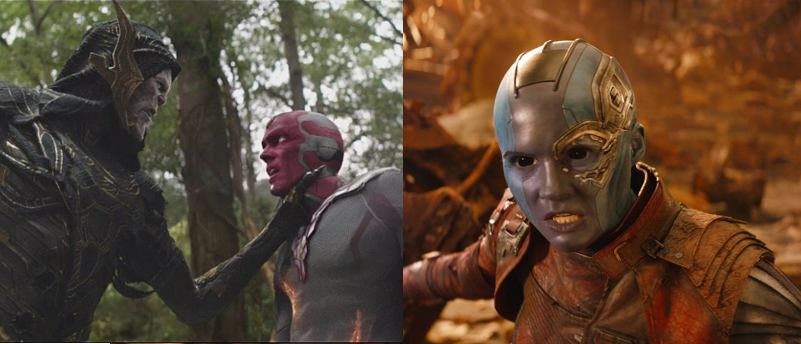
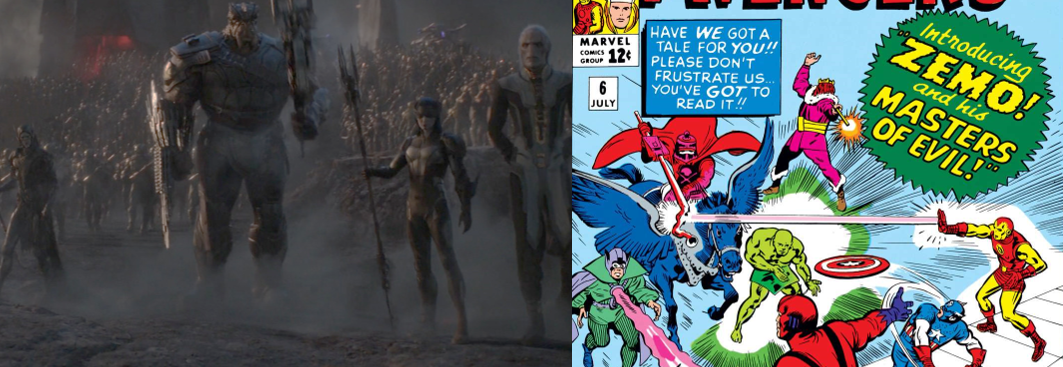
Instead, of course, Thanos wrecked Thor Odinson’s (Chris Hemsworth) ship and slaughtered half of the Asgardians onboard. Still an impressive feat, to be sure, but one that focused more on Thanos’ grandeur and pretentious philosophy rather than his actual physical strength thanks to the bulk of the work being undertaken by his underlings, the “Children of Thanos”. Headed by Ebony Maw (Tom Vaughan-Lawlor), Cull Obsidian (Terry Notary), Proxima Midnight (Carrie Coon/Monique Ganderton), and Corvus Glaive (Michael James Shaw), the Children of Thanos didn’t actually appear in The Infinity Gauntlet and are, instead, relatively recent additions to Thanos’ ranks who first appeared (as the “Black Order”) in Infinity (Hickman, et al, 2013). In the film, we don’t really learn much about these guys at all except that they enforce Thanos’ will with unquestioning loyalty and that he trusts them to help him gather the remaining Infinity Stones and, while they certainly look visually interesting, they’re mostly disposable bad guys for the Avengers to fight in place of Thanos.

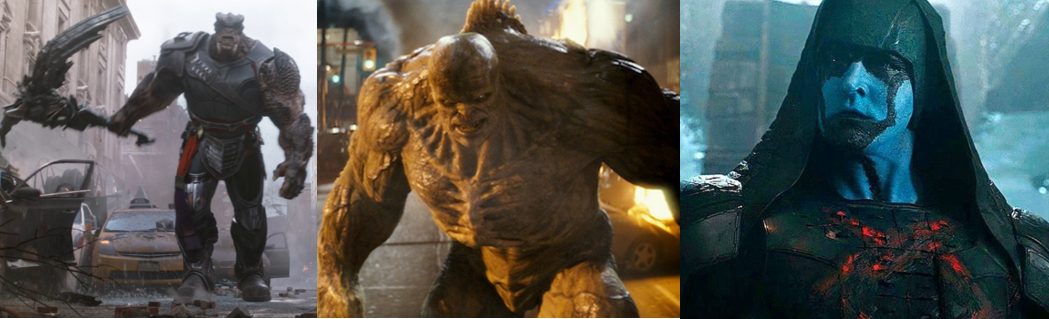
While Abomination is a good choice, I definitely think Ronan could’ve taken Cull’s place.

Now, I’ve never read Infinity; I have no emotional attachment to the Black Order or any of the characters and, as a result, they were merely nothing more than henchman to me and I only really recall one of them being referred to be name (“I take it the Maw is dead?”) While I enjoyed their inclusion in the film, I can’t help but feel like they could have been dropped and supplanted with some other, more recognisable MCU villains had some other films and events happened just a little differently. For example, take Cull Obsidian; he’s Thanos’ muscle who basically does nothing and is largely inconsequential. What if, instead of killing Ronan the Accuser (Lee Pace) in Guardians of the Galaxy (Gunn, 2014), Ronan had been soundly defeated and humbled and, having seen the extent of Thanos’ power (he did destroy Xandar (offscreen), which was what Ronan wanted, after all, and would be enough to bring Ronan to heel, I would wager), he pledged himself fully to Thanos’ cause to get revenge against the Guardians of the Galaxy? I’m not massively familiar with Ronan but it seems to me like it was a bit of a miss-step to kill him off when he could have fulfilled a role in Thanos’ little gang at the very least, if not remain as a recurring antagonist for the Guardians. Another potential replacement for Corvus would be Emil Blonsky/Abomination (Tim Roth) who, at the time, had been conspicuous by his absence from the MCU. However, arguably, it wouldn’t make as much sense for Thanos to recruit the Abomination as he’s not exactly floating around in the depths of space for him to encounter.

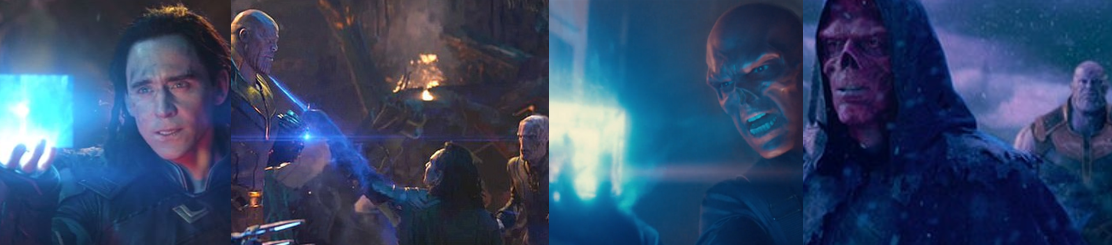
What if Loki or the Red Skull had aligned themselves with Thanos in place of Ebony Maw…?

Intrigue was equally high in the build-up to The Avengers/Avengers Assemble (Whedon, 2012); I was hoping to see a version of the Masters of Evil, with Loki Laufeyson (Tom Hiddleston) joining forces with Johann Schmidt/The Red Skull (Hugo Weaving) – who was clearly transported away from Earth by the Bifrost at the end of Captain America: The First Avenger (Johnston, 2011 – and either the Abomination or Doctor Samuel Sterns/The Leader (Tim Blake Nelson) once they got to Earth. While I was happy with the first Avengers team-up we got, I do feel this was another missed opportunity that we never saw this anti-Avengers team-up. Consequently, I feel like we could have swapped out Ebony Maw for either of these characters; in The Infinity Gauntly, Thanos was advised by Mephisto, a role many expected Loki to play in Infinity War given his mischievous and devious nature. Naturally, of course, you could argue that this wouldn’t really fit with Loki’s character arc by that point but remember how he feigned loyalty to Thanos and then tried to stab him in the neck? Well, imagine that but throughout a large portion of the movie. Loki pledges fealty, willingly hand shim the Tesseract, and spends the remainder of the film waiting for the perfect moment to strike and then he’s killed for his efforts. Obviously, the Red Skull finally showed up in Avengers: Endgame (Russo and Russo, 2019) in a slightly different role as the Stonekeeper (Ross Marquand), but again…what if the Red Skull had replaced Ebony Maw? How much more interesting and impactful would it have been to see the Red Skull empowered by Thanos and making a triumphant return as Thanos’ chief torturer? Sure, if his death was the same then you could argue that he would’ve been “wasted” or been killed off too easily but I still feel like this would have been a better use of the character than as the keeper of the Soul Stone (a role that could’ve been filled by character’s envisioning the Stonekeeper as someone close to them, perhaps?)

With some tweaks, nebula could have taken Corvus’ role as Thanos’ chief assassin.

Corvus Glaive is a trickier one to “replace” in this hypothetical alternate world, however I have one  suggestion: Nebula (Karen Gillan). Now, similar to Loki joining Thanos, this would require quite a few changes to Nebula’s character arc; in Guardians of the Galaxy Vol. 2 (Gunn, 2017), she finally buried the hatchet with her “sister”, Gamora (Zoey Saldana) and it was great seeing her grow as a character, put aside her hatred, and learn how to work alongside the Guardians and the Avengers. In The Infinity Gauntlet, Nebula spends most of her time as a mindless zombie thanks to Thanos’ wrath but plays a vital role in his downfall by stealing the Gauntlet for herself (and promptly being driven mad by its power). By tweaking her character arc, or having it so that Thanos either intimidates or reprograms her into subservice, you could replace Corvus with a more prominent and recognisable character and still find ways to weave her existing arc into the story. Like, what if, after Guardians of the Galaxy Vol 2, Nebula is forced into Thanos to serve him (maybe he threatens to kill Gamora/the Guardians or promises to “repair” her once he’s assemble the Gauntlet) in Corvus’ place; she could still have been ripped apart and tortured to force Gamora into revealing the Soul Stone’s location and would have even more motivation to turn against her “father” since he would have lied to and manipulated her once again.

If Hela wasn’t going to take Death’s place, she could’ve replaced Proxima Midnight.

Another character who I, like many, expected to play a prominent role in Infinity War was Hela Odindottir (Cate Blanchett), a character who a lot of people expected would take the role of Lady Death as the object of Thanos’ affections. Of course, this didn’t turn out to be true as Hela was killed in Thor: Ragnarok and Thanos’ motivations were changed from worshipping Death to wanting to bring a sense of balance to the galaxy. Still, how awesome would it have been if Hela had taken Proxima Midnight’s place in the Dark Order? If killing the Allfather didn’t show you that Thanos was a bad-ass, bringing the Goddess of Death to heel totally would have and could have made for a much more memorable female villain for the finale in Wakanda. Again, there’s the question of her being killed off but what better way to help showcase Wanda Maximoff’s (Elizabeth Olsen) sheer power than by having her shred a Goddess to pieces? Or you could rewrite her death to maybe come at the hands of her brother, Thor, and his new weapon, Stormbreaker, to sell the awesomeness of the weapon.

As cool as the Black Order were, would a version of the Masters of Evil have been better…?

Ultimately, I was more than happy with Avengers: Infinity War, Endgame, and the MCU’s portrayal of Thanos overall. His underlings were find cannon fodder for the film and helped to serve as extensions of the Mad Titan’s will but I do feel it would have been even more awesome to see these more recognisable villains swayed to Thanos’ cause so that we could see them interact with their rivals, and other heroes, in new and interesting ways. Sure, many have cropped up again since then and the potential of a Masters of Evil in the MCU is still there, I just think that maybe these huge movies could have been made even bigger if things had been slightly changed to accommodate these more familiar characters. Do you agree or disagree? Maybe you’re a big fan of the Black Order from the comics? Perhaps you’d have like to see a different route taken? Do you even want to see the Masters of Evil in the MCU? Either way, feel free to sound off in the comments below.

Movie Night: Rambo: First Blood Part II

Released: 22 May 1985
Director: George P. Cosmatos
Distributor: TriStar Pictures
Budget: $25.5 million
Stars: Sylvester Stallone, Charles Napier, Julia Nickson, Steven Berkoff, and Richard Crenna

The Plot:
Three years after the events of the first film, in Hope, Washington, former United States Army Green Beret John J. Rambo (Stallone) is released from a federal prison by his old commander, Colonel Sam Trautman (Crenna). Rambo is assigned the task of confirming reports of U.S. prisoners of war (P.O.W.s) in Vietnam in exchange for a pardon but is quickly forced to once again rely on his extensive combat training after being betrayed by corrupt governmental bureaucratic Marshall Murdock (Napier).

The Background:
After the spectacular box office performance of First Blood (Kotcheff, 1982), a sequel was all-but-inevitable. Initial ideas for the sequel revolved around partnering Rambo up with a sidekick, rumoured to have been played by John Travolta, and legendary movie director James Cameron even came on board to write the film’s script. However, while Cameron was able to capture the more action-orientated focus of the sequel, which plastered Rambo’s name front and centre, Stallone once again stepped in to handle to more meaningful, political subtext of the film. Similar to the first film, Rambo: First Blood Part II was met with mixed reviews; critics were unimpressed with the film’s violence and excess, its lack of poignant commentary and subtlety compared to the first film, and for being a step back for portrayals of foreign threats. And, yet, Rambo: First Blood Part II absolutely smashed it at the box office, making over $300 million (thus making it the most profitable of all the Rambo movies) and propelling the character into mainstream pop culture the very definition of a “breakout sequel”.

The Review:
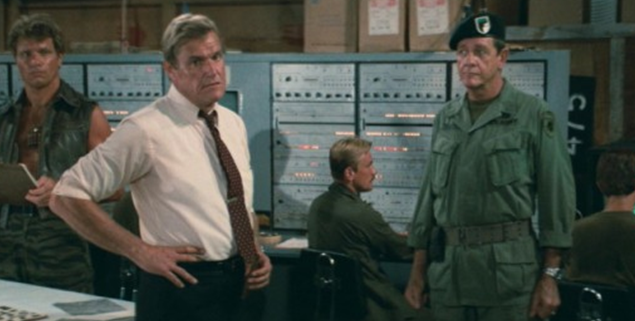
When we re-join Rambo in Rambo: First Blood Part II, he’s toiling away breaking rocks in a prison labour camp; having accepted his lot, and his punishment, he feels safe and secure inside of the prison. However, when Trautman offers him a highly dangerous reconnaissance mission with the potential promise of a Presidential pardon, he accepts the proposal in the hopes of actually being able to “win this time”. In Thailand, he meets with Murdock, who summarises Rambo’s storied and decorated career and even sympathises with him since he’s a former soldier himself; Murdock debriefs on the specifics of the mission, which is to go into Vietnam, completely alone, to find evidence of P.O.W.s.

Murdock turns out to be a corrupt bureaucrat who cares nothing for those stuck in ‘Nam.

Rambo is ordered not to engage the enemy as a follow-up strike team will handle the extraction and is afforded a great deal of equipment and technological backup…all of which is rendered completely mute when he’s forced to separate himself from all of his equipment to avoid being torn apart during his drop into the jungle. Although Murdock comments on Rambo’s stoic demeanour, Trautman continues to have the utmost faith in Rambo even though Rambo remains unconvinced that Vietnam has changed since he was last there and spots a flaw in Murdock’s backstory. Ultimately, Rambo’s suspicions about Murdock are quickly shown to be true as he’s incredulous to the ill-advised Vietnam war, is determined to pull out after the thirty-six-hour mission time is up, and sabotages Trautman’s attempt to rescue Rambo. A corrupt bureaucrat, Murdock merely wished to sweep all the rumours of P.O.W.s under the rug with a convenient patsy and is perhaps the most significant threat due to his betrayal that leaves Rambo at the mercy of the film’s more sadistic villains.

Rambo is betrayed and left captive at the combined forces of the Soviets and the Vietnamese.

It turns out that the Vietnamese forces, led by Captain Vinh (William Ghent) and Lieutenant Tay (George Kee Cheung), are in league with the Soviets, led by Lieutenant Colonel Sergei T. Podovsky (Berkoff) and his right-hand man, the stoic and barbaric Sergeant Yushin (Voyo Goric). When Rambo is captured during his botched extraction, he finds himself at Podovsky’s mercy and once again enduring unspeakable trauma. However, fuelled by his anger at Murdock’s betrayal, Rambo is able to not only endure this torture but also escape from his captors in dramatic fashion before waging a veritable one-man war against the combined forces of the Vietnamese and the Soviets.

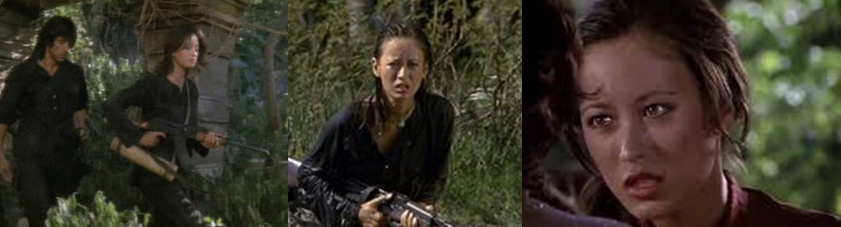
Through Co, Rambo’s humanity is explored in greater depth…but it’s not to last.

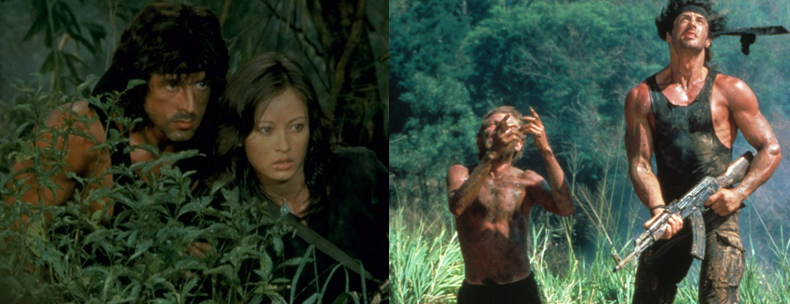
Since he had to ditch his equipment during the drop, Rambo is immediately left with little more than hits wits and his trademark hunting knife to see him through. This time around, however, he’s joined on the ground by Co Bao (Nickson), a Vietnamese freedom fighter who arranges safe passage for him up the river. While Trautman continues to talk up Rambo’s unparalleled skills and fortitude, interactions between Rambo and Co explore his humanity and mentality; weary of conflict and the world, the world nevertheless only makes sense to Rambo out in the field and he begrudgingly prefers to be back in the fray if only to be able to recognise his enemy. Although Co fights for similar reasons as Rambo (out of duty and loyalty), she is far more idealistic and naïve than he but still a very capable warrior in her own right and even saves Rambo after he is captured by Podovsky.

Rambo’s skills are made all the more impressive through his adaptability and deadliness.

In First Blood, we saw how adaptable and capable Rambo was and his ability to survive in the wild and subdue his opponents through non-lethal methods; this time around, these aspects are downplayed greatly but are still evident in decidedly different ways. Rambo favours a bow and arrow, for example, in order to make less noise and adopts a sneaky, stealthy approach to his rescue effort and fighting skills to pick off the Vietnamese and Podovsky’s men. However, given that he’s now in the midst of a war zone, all pretence is dropped and we get to see just how skilled of a soldier he is; Rambo shoots arrows through guys’ heads, blasts them to bloody chunks with a shotgun, and brutally stabs them to death with his big ol’ knife, proving to be every bit the remorseless and fierce killer Trautman sold him as in the first movie.

The Nitty-Gritty:
Right from the start, Rambo: First Blood Part II is a very different film to First Blood; there’s very little time wasted in the early going and Rambo is dropped into Vietnam within the first fifteen minutes. However, despite being a much more action-orientated film, Rambo: First Blood Part II’s pace is largely similar to that of the first film and, while the body count is much higher, the action escalates over time and continues to primarily focus on Rambo’s guerrilla tactics rather than just being a nonstop, action-packed extravaganza.

The first chance he gets, Rambo disregards his mission to save the P.O.W.s.

This isn’t entirely surprising and is telegraphed during Rambo’s meeting with Murdock; Rambo is appalled at his orders not to attempt a rescue and, whether due to his own previous experiences as a P.O.W. or because of his suspicions about Murdock, he immediately disregards the reconnaissance mission to rescue one of the P.O.W.s, Banks (Andy Wood), and it’s pretty obvious the Rambo always planned on rescuing the P.O.W.s just as much as he relished the idea of getting a measure of revenge against the Vietnamese forces.

Rambo unleashes all of his pent-up aggression to wage a one-man war against his enemies.

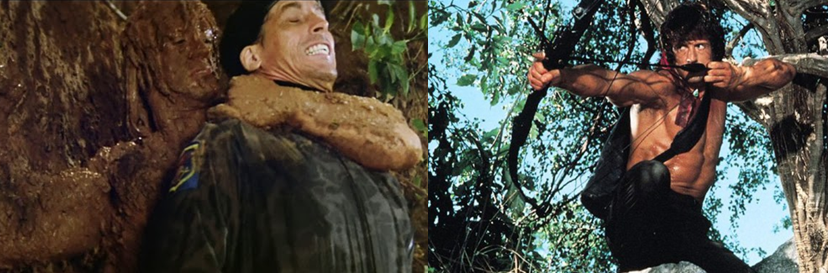
Rambo’s mission is much more personal this time around thanks, firstly to him being betrayed by his own government and, secondly to Tay’s killing of Co right as the two began to explore their mutual attraction. Already fuelled by his traumatic experiences in the Vietnam War, these betrayals and losses and being surrounded by enemies on all sides only drive Rambo to fight harder and more aggressively. He cakes himself in mud, fires explosive arrows at enemy encampments from afar (and makes Tay pay for his actions with a similar arrow), and eventually commandeers a Soviet attack helicopter (after a particularly brutal fight with the indomitable Yushin) to rain unrelenting fire down upon his enemies.

Rambo makes an emphatic statement for all soldiers and P.O.W.s by threatening Murdock.

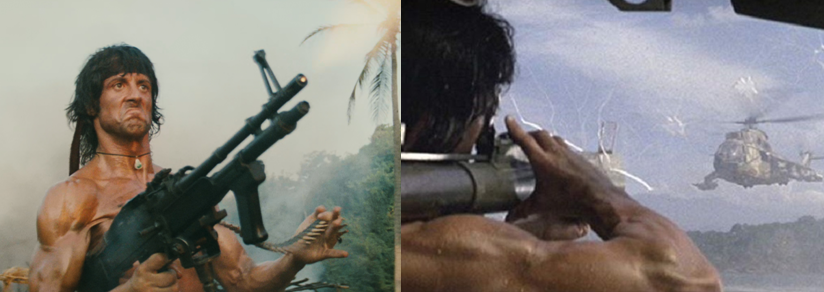
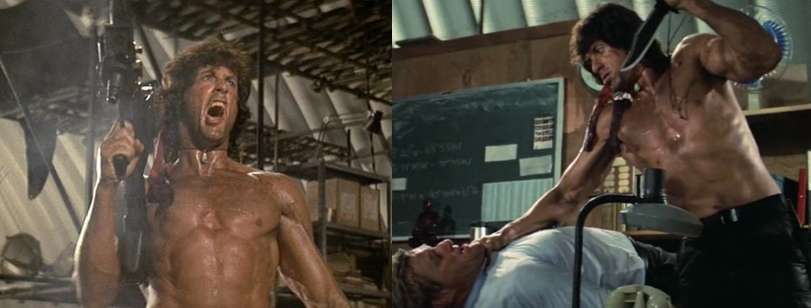
In the end, Rambo: First Blood Part II delivers an exciting and explosive finale as Podovsky and Rambo engage in a helicopter chase and firefight; Rambo, again displaying how smart and cagey he is, feigns defeat and death to fool Podovsky into hovering in range of a fatal rocket strike and he’s able to carry all the remaining P.O.W.s to safety, leaving Vietnam little more than a smouldering mess. Returning to the base, Rambo then confronts Murdock, destroying his office in an iconic hail of gunfire and demanding that he find and rescue the remaining P.O.W.s held in Vietnam before delivering a sobering monologue and walking off the an uncertain future.

The Summary:
At its heart, Rambo: First Blood Part II is the ultimate redemption story, especially for Rambo; in the first film, he was haunted by his memories and experiences in Vietnam and was on the razor’s edge of sanity and humanity. Now, far more jaded and disillusioned, he’s given the chance at serving once again and helping to rescue fellow soldiers from the same situation and, in the process, dropped right back into the meatgrinder. However, as dangerous and cunning as Rambo was on home soil, he’s (as Trautman says) right at home in the thick of it all and, thanks to his incredible skills and volatile nature, is able to extract a measure of revenge for all the atrocities he suffered in Vietnam. While the body count is higher and the action is bigger, the film retains the same visceral, bleak undertones as the first and delves a little deeper into Rambo’s psyche to explore his vulnerability a little bit more. A patriot at heart, he’s perfectly willing to put his life on the line for his country and his fellow man but all he wants in return is a little respect and gratitude. It’s not a massive part of the film’s plot but this is clearly a story about a man confronting his demons and, while Rambo might lament conflict and be tired of all the killing and chaos, he’s still a savage and wily soldier when pushed into action and this is emphasised even more here since he’s actually in a war zone so he doesn’t have to worry about pulling his punches. In the end, it’s maybe lacking a little of the nuance of the first film but I’d say it’s just as good, if not better in some ways because of the brutality and more explosive nature of the action.

My Rating:

Rating: 4 out of 5.

Great Stuff

What did you think to Rambo: First Blood Part II? How do you feel it holds up today, especially compared to the first film and the sequels? Were you disappointed that some of the nuance of the first film was lost in favour of a far higher body count or do you think the sequel compliments the first in providing Rambo the chance at confronting his demons? What did you think to the brief romantic sub-plot and to seeing Rambo’s skills in the field? Which Rambo film is your favourite? Whatever your thoughts, leave a comment below and be sure to check out my review of the third film.

Movie Night [Multiverse Madness]: Justice League: Crisis on Two Earths


In September 1961, DC Comics published “Flash of Two Worlds” (Fox, et al), a landmark story that brought together the Golden Age Jay Garrick and the Silver Age Barry Allen. In the process, DC Comics created the multiverse, an infinite number of parallel universes that allowed all stories and characters to exist and I’ve been celebrating this ground-breaking concept every Sunday of this month!


Released: 23 February 2010
Director: Sam Liu and Lauren Montgomery
Distributor: Warner Home Video
Budget: Unknown
Stars: William Baldwin, Mark Harmon, Gina Torres, James Woods, Brian Bloom, and Chris Noth

The Plot:
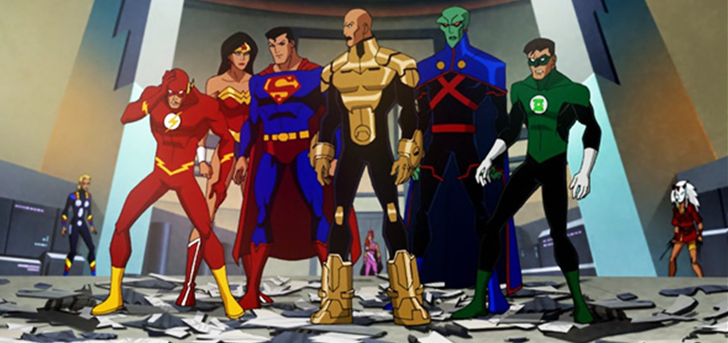
In an alternate version of Earth, the Crime Syndicate (evil doppelgängers to the Justice League) rule with an iron fist. When the Lex Luthor (Noth) of this parallel world travels across the dimensions, the Justice League find themselves battling against their dark mirrors to decide the fate of all worlds.

The Background:
Following the much-lauded Batman: The Animated Series (1992 to 1999) and the conclusion of Batman Beyond (1999 to 2001), co-creator Bruce Timm spearheaded easily the biggest and most ambitious DC animated show of that era, Justice League (2001 to 2004), and then out did himself with the exhaustive roster of Justice League Unlimited (2004 to 2006). Both cartoons were incredibly well-received and helped contribute to the continued success and popularity of the DC Animated Universe. Originally, Timm intended to produce an animated feature named Justice League: Worlds Collide to bridge the gap between Justice League and Justice League Unlimited that would draw inspiration from the seminal story “Crisis on Earth-Three!” (Fox, et al, 1964). However, these plans were scrapped by Warner Brothers, who were in the middle of producing a series of direct-to-video animated films with no ties to any existing continuity, and the script was consequently rewritten to avoid directly referencing either show. Despite this, Justice League: Crisis on Two Earths shared a very similar style to Timm’s earlier works and, considering the first issue of the ground-breaking Crisis on Infinite Earths (Wolfman, et al, 1986) was first publish in this month back in 1986 I figured this would be as good a time as any to look back at this often overlooked animated feature.

The Review:
The multiverse is quite a daunting and confusing concept, to be honest; even I, a self-confessed comic book enthusiast, struggle with the notion at times and I feel it only really works in comics, where readers are used to the idea after a few decades of dimensional-hopping antics, and television (especially cartoons), since long-running series’ just have more time to introduce and explore the concept. In that regard, Crisis of Two Earths eases viewers into the idea of parallel worlds by primarily focusing on the idea of two alternative worlds and also its opening sequence, in which we see our beloved heroes radically changed, monstrous even, and killing a heroic version of the Joker, the Jester (James Patrick Stuart), and being opposed by a far more virtuous incarnation of Lex Luthor. We then switch over to our Earth, where a more recognisable version of the Justice League are finishing up the construction of their Watchtower space station and their teleportation device; right away, we’re introduced to two concepts that form the basis of the film: the Flash (Josh Keaton) is the comic relief and Batman (Baldwin) is a bit of a grouch. Flash is full of the quips and amusing pop culture references but Batman is a stubborn pragmatist; even when clearly outmatched by Superwoman’s (Torres) power, he preserves through a broken rib and is able to subdue her with anaesthetic gas, proving his capability despite his lack of super powers.

An alternative Lex Luthor recruits the Justice League to help liberate his world.

When the alternative Luthor arrives, he is immediately apprehended and brought to the attention of the League; Superman (Harmon) confirms that the duplicate isn’t their Lex and the Luthor brings the League up to speed with the issue of the Crime Syndicate of his Earth. On this alternate world, Luthor was the leader of the Justice League but the Syndicate has rendered their world a virtual dictatorship thanks to their power and maliciousness, held in check only by the threat of a nuclear retaliation. Superman, naturally, doesn’t trust Luthor but J’onn (Jonathan Adams) confirms that the alternative refuge is telling the truth. The League debate the merits, logistics, and morals of assisting Luthor’s world and, though Green Lantern (Nolan North) is opposed to it, it is Batman who is most against the mission since they struggle to maintain order on their world. Regardless, the majority agree to assist.

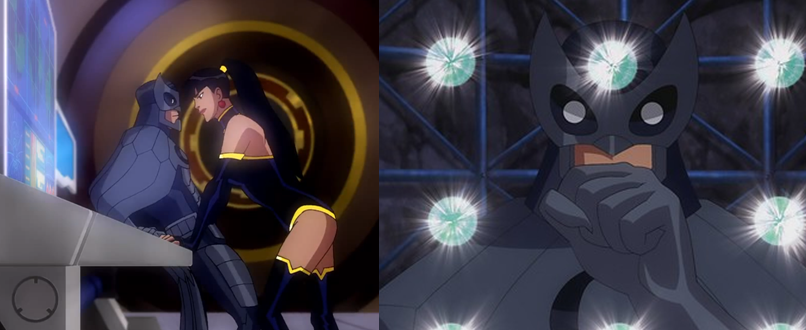
Owlman and Superwoman exercise the Syndicate’s diabolical will with relish.

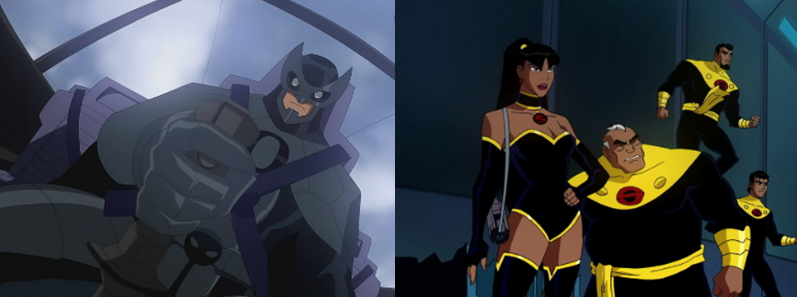
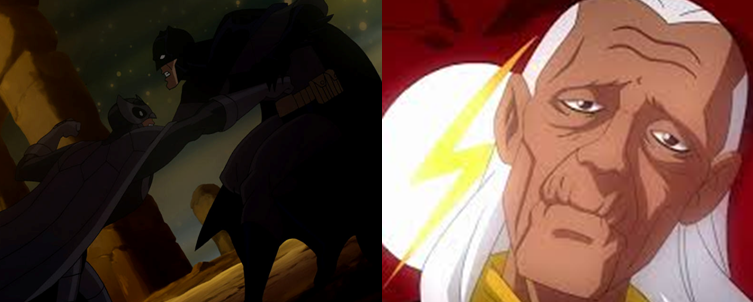
The Crime Syndicate, specifically Owlman (Woods), are interrupted in their search for the “Quantum Trigger” by the arrival of the Justice League and a fight breaks out. This gives the film a chance to showcase a variety of evil versions of classic heroes, “Made Men”, such as Black Lightning, Vixen, and Elongated Man. Though the League are able to get the upper hand, Luthor forces them to retreat to avoid facing even more of the Syndicate’s Made Men and, in the process, they end up in a battle with the Captain Super family (evil versions of the Shazam/Captain Marvel family). This takes the battle from inside to the cloudy skies of this parallel world as Wonder Woman (Vanessa Marshall) is able to commandeer Owlman’s ship and use its cloaking device to escape the fray. The Crime Syndicate are revealed to run their organisation like a super-powered crime family, with Ultraman (Bloom, using a bit of a stereotypical Italian mobster accent) acting as the head of the “family”, who have thousands of lieutenants working beneath them (the aforementioned Made Men) and dividing their territories between them. Thanks to their power, they are able to bribe and forcible coerce the world’s government and other officials into bowing to their every whim but Owlman takes this to the next level by constructing the Quantum Eigenstate Device (Q.E.D.), a bomb that will give them the ability to hold the entire world hostage. While the public largely wishes to simply acquiesce to the Syndicate’s demands to maintain some kind of peace, their dictatorship is openly challenged by Rose Wilson (Freddi Rogers), daughter of Slade Wilson (Brice Davison), who is the President of the United States in this world.

Owlman has plans of his own to destroy all life on every Earth.

Unlike the League, which is a largely unified team ruled by democracy, the Syndicate is a fragile alliance of egos and greed; Ultraman rules through sheer power and intimidation but Owlman and Superwoman conspire behind his back. Owlman plans to use the Q.E.D. to destroy all life without mercy or conscious since the discovery of an infinite number of parallel worlds has shattered his grasp on reality. Believing that no decision he, or anyone, makes has any meaning since whatever they accomplish means nothing elsewhere in the multiverse, he plans to find “Earth-Prime” in order to use the Q.E.D. to annihilate all life everywhere, which Superman, a self-confessed murdering psychopath, finds to be one hell of a turn on. Although Luthor recruits the League to help, he insists on taking on and defeating Ultraman himself since “if it’s going to mean anything after [the League] is gone, it has to be [Luthor]”. Luthor is able to match blows with Ultraman thanks to his armoured suit and having acquired a piece of Blue Kryptonite, the only substance that can hurt and weaken Ultraman. Because of this, Luthor is able to defeat and humiliate Ultraman in public and have him arrested for his crimes; however, as gallant as his actions are, he is chewed out by the President for risking further retaliations from the remaining members of the Syndicate and Ultraman is allowed to go free in a desperate attempt to keep a shaky truce with the Syndicate.

The Nitty-Gritty:
Many of the film’s action sequences, though exciting, are, understandably, all too lacking in context; thanks to the wildly different designs of the parallel worlds Made Men, it’s not always easy to tell who is cameoing when and most of them don’t have any speaking lines, making them little more than disposable grunts who exist simply to showcase the stranglehold the Syndicate have on their world and give the League someone to beat up without fighting the same handful of Syndicate members all the time. Because of the large roster and many different characters running around the film, there’s obviously not enough time for everyone to really get much to do; Green Lantern, for example, is a bit of a non-factor and, while J’onn does get an interesting side plot revolving a romantic attraction to Rose, the majority of the League exist simply to battle with the evil doppelgängers. This is exacerbated when Batman calls in heroes from his world to help fend off Superwoman and the Super family, resulting in yet more cameos and characters taking up the film’s run time; don’t get me wrong, it’s great to see so many heroes onscreen at once and all these villainous versions of normally heroic characters but I also feel like the focus should have been more on the League/Syndicate members since those are the only fights that really mean anything.

As you might expect, the film (eventually) degenerates into an all-out brawl.

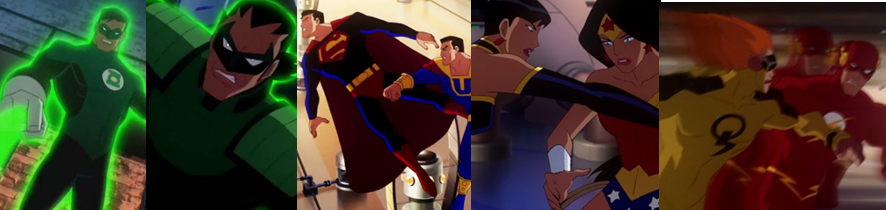
Thankfully, the film does eventually focus up once Rose provides the League with the location of the Syndicate’s headquarters (spoilers: it’s on the Moon) and the two teams engage in an all-out brawl with their doppelgängers. Green Lantern’s evil counterpart, Power Ring (North), is about as useless as heroic double; Superman, for all her strength and aggression, lacks the finesse and combat acumen of Wonder Woman; and Ultraman’s sadistic focus on destruction means he not only destroys much of the environment but is easily outwitted by Superman. Of course, the battle between the Flash and Johnny Quick (Stuart) comes down to a test of their super speed but, amidst all the mindless brawling, Owlman is able to escape with the Q.E.D. to enact his insane plan to destroy all realities. Faced with the threat of mutually assured destruction, the League and the Syndicate form a shaky truce simply to save their own hides.

Batman ultimately sacrifices Johnny Quick and kills his counterpart to save the multiverse.

A side plot throughout the film is that the Flash believes Batman doesn’t like or respect him and the idea that Batman is this irritable, obstinate loner. However, when they need someone to power the Quantum Trigger, Batman has Johnny Quick take the Flash’s place as the conduit to spare his teammate’s life since he knows that the effort will kill the speedster. While this is a great way to show that Batman does truly care for the Flash and his teammates, it’s a little out of character since he knew that the effort would kill Johnny so he willingly sacrificed a life to confront Owlman and then, rather hypocritically, lectured his counterpart about his willingness to kill untold numbers of people with the Q.E.D. Somewhat unsurprisingly, given that Batman is generally the focus of all of DC’s animated endeavours, the film culminates in a battle of ideologies and skill between him and Owlman, with the depths of his doppelgänger’s psychosis revealed so completely that Batman has no choice but to doom Owlman to destruction on a desolate, barren alternate world, saving the multiverse in the process but at the cost of Johnny’s life.

The Summery:
Justice League: Crisis on Two Earths is a pretty decent little animated film; it’s full of action and lots of big, explosive, and visually interesting fights but the main draw of the film, for me, is the philosophical and ideological differences between the Justice League and the Crime Syndicate, specifically between Batman and Owlman, this dichotomy is given the most focus throughout the film, which is probably the right choice but it does mean that we don’t really get to see just how different the Syndicate are to their heroic counterparts beyond them being super-powered mobsters and psychopaths. If you watched any of the Justice League and Justice League Unlimited episodes based around the Justice Lords, it’s arguable that you could say the film’s concept is somewhat redundant and has already been explored but I think there’s enough here to separate the film from those episodes, mostly thanks to the abundance of cameos and the iconography of the Crime Syndicate. While the film doesn’t complete align with those cartoons, I think you can easily suspend disbelief to see it as a bridge between Justice League and Justice League Unlimited since it ends with the League preparing for a massive recruitment drive but it also works pretty well as a standalone animated feature…as long as you’re already somewhat familiar with DC’s characters and some of their more complex concepts.

My Rating:

Rating: 3 out of 5.

Pretty Good

Have you ever seen Justice League: Crisis on Two Earths; if so, what did you think to it and where would you rank it against the other DC animated movies? Which character was your favourite and what did you think to the film’s voice cast? Which evil doppelgänger would have liked to see more of and what do you think about the concept of the Crime Syndicate and the DC multiverse? Did you ever watch the Justice League cartoons and, if so, what were some of your favourite characters and moments? How are you celebrating the publication of Crisis on Infinite Earths this month? Whatever your thoughts on DC’s animated ventures, the multiverse, and the Justice League, feel free to leave a comment below.

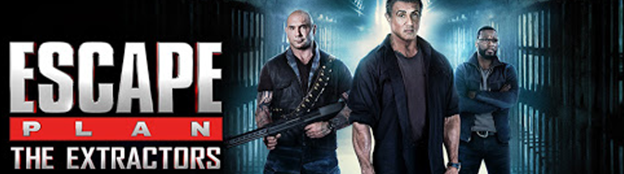
Talking Movies: Escape Plan 3

Talking Movies

Released: 2 July 2019
Director: John Herzfeld
Distributor: Lionsgate/Universal Pictures
Budget: $70.6 million
Stars: Sylvester Stallone, Dave Bautista, Max Zhang, Harry Shum Jr, Devon Sawa, and Curtis “50 Cent” Jackson

The Plot:
Ray Breslin’s (Stallone) past comes back to haunt him when Lester Clark Jr (Sawa), the son of his former business associate, abducts a number of people, including his girlfriend, and holds them hostage within the “Devil’s Station”, a sadistic supermax prison, leading Ray and his friend, Trent DeRosa (Bautista), to concoct a desperate rescue attempt.

The Background:
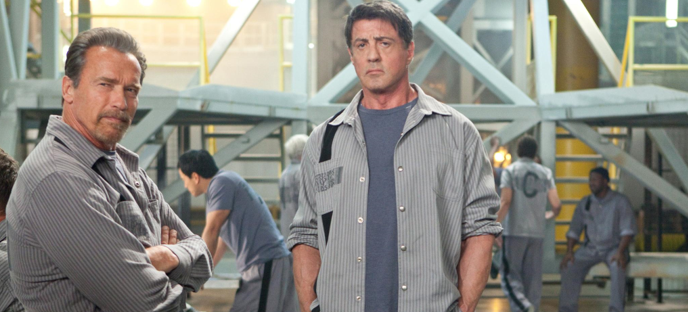
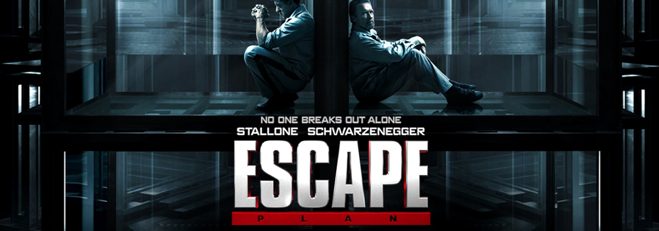
Escape Plan 2 (Miller, 2018) may have been a critical and commercial failure but, during filming, Stallone announced a third entry in the franchise that had started as as a decent excuse to bring him together with his action rival, Arnold Schwarzenegger, and had descended into a mediocre and disappointing straight-to-DVD franchise. Also titled Escape Plan: The Extractors, the third film dropped many of the new cast members from its predecessor and received a very limited theatrical release outside of the United States. Because of this limited release, Escape Plan 3 outperformed its predecessor, making just over $30 million at the box office but falling quite far from the almost $140 million of the first film. It did, at least, receive noticeably more positive reviews than the second film.

The Review:
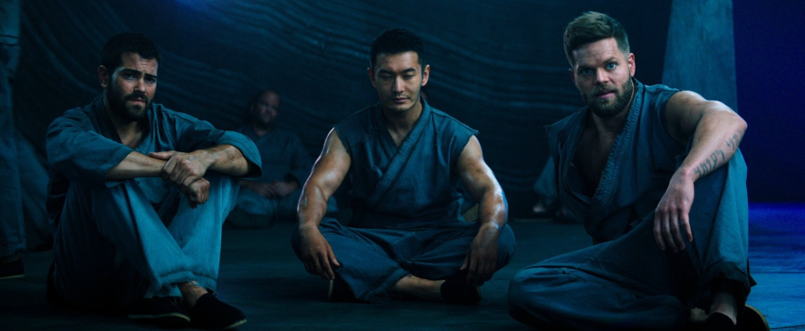
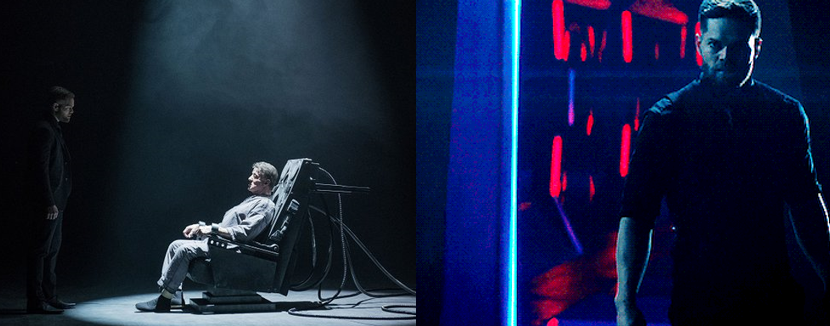
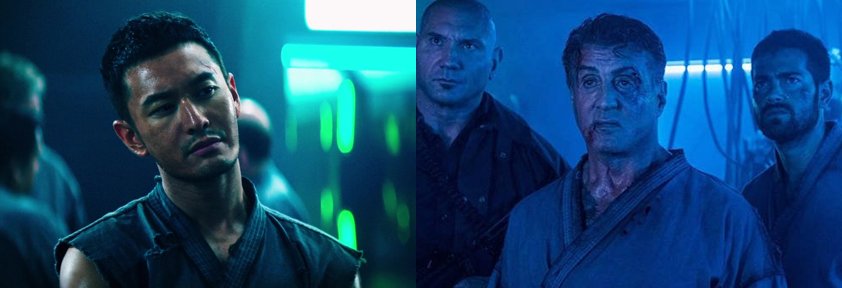
The first thing to note about Escape Plan 3 is that, despite the sequel spending most of its runtime focusing on Breslin’s protégé’s Shu Ren (Huang Xiaoming) and Lucas Graves (Jesse Metcalfe), neither of these characters make an appearance in the third film, which instead introduces even more new characters. This time around, Daya Zhang (Malese Jow), daughter of Wu Zhang (Russell Wong), is kidnapped by Lester Clark Jr as part of an elaborate revenge plot against Ray. Wu Zhang is the head of Zhang Innovations, the company responsible for the construction of the Tomb; you’d think that this would be the catalyst for bring Ray into the fold considering he swore to track down those responsible for such prisons at the end of the last film but, instead, he is only drawn into the plot when Daya’s bodyguard, Bao Yung (Shum, Jr), delivers him Lester’s video threat.

Lester seeks to avenge his father and nab a hefty ransom in the process.

Lester Clark Jr is, of course, the son of Lester Clark (Vincent D’Onofrio), Ray’s former partner who betrayed him and had him locked up in the Tomb; his plan for revenge involves taking a bunch of hostages, including Daya and Ray’s girlfriend, Abigail Ross (Jaime King), hostage inside another supermax prison, the “Devil’s Station”, and demanding a $700 million random. A ruthless, callous mercenary, Lester surrounds himself with imposing goons (including one of my favourite actors and stunt men, the great Daniel Bernhardt) but is perfectly happy to execute his hostages, including Abigail, to make his point and to make his revenge all the sweeter.

Ray assembles a team for his rescue mission and to settle the score with Lester.

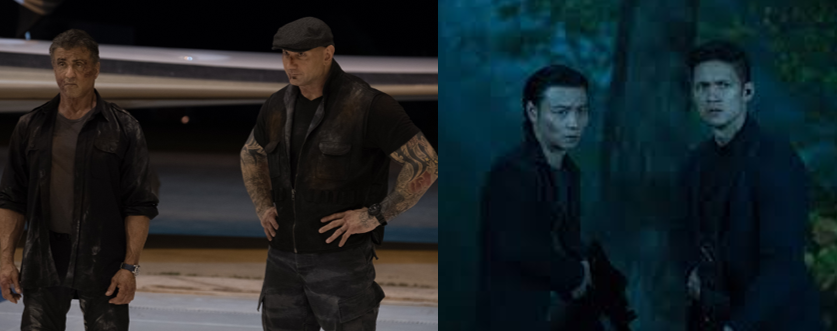
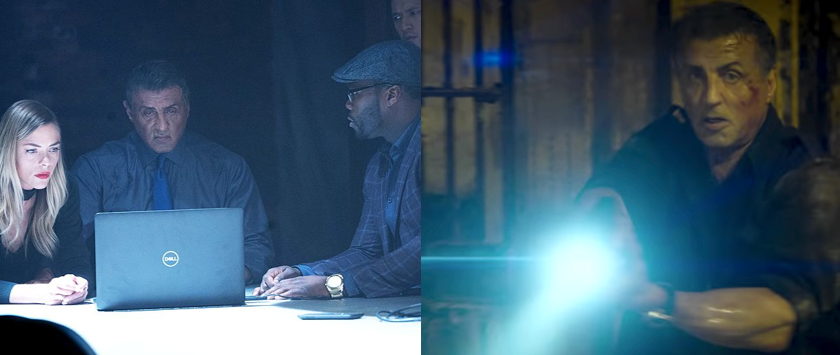
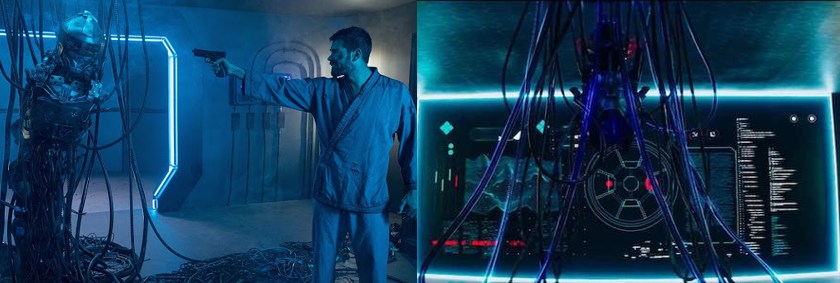
All this amounts to a far more personal story this time around for Ray and for his new associates, who get a lead on Lester’s location from DeRosa; in the last film, this took DeRosa about a day and he had to go bust a few heads to get the information Ray needed but, this time, DeRosa simply guesses that Lester’s at the Devil’s Station and that’s it, they’re off without any fuss or muss. Lester alone would be enough to make things personal for Ray but, when Abigail is kidnapped and, later, killed, Ray launches into a vendetta alongside DeRosa, Shen Lo (Zhang), Daya’s former bodyguard and lover, and Yung. It’s personal for these latter two as well; Shen because of his feelings from Daya and Yung because he feels (and is constantly told) that he failed Daya by not being able to keep her safe. Unlike the Tomb and especially unlike Hades, the Devil’s Station is much more of a traditional prison; located in Latvia, the facility is a rundown, desolate hellhole designed to be an intimidating and demoralising maze. There’s no fancy high-tech hazards this time around, they’re not adrift in the sea, and there’s no complex system to hack into; instead, it’s just good, old fashioned iron bars, ruthless inmates, and the foreboding presence of Lester and his callous minions.

The Nitty-Gritty:
Thankfully, Escape Plan 3 is much more coherent than its predecessor; with my senses no longer bombarded by erratic shaky cam and frantic editing, the film (and, more importantly, the action scenes) is much easier on the eyes and the pace is much improved as a result. It also helps considerably that the film isn’t bathed in constant near darkness, with many scenes within the Devil’s Station taking on a disconcerting yellow hue.

Despite having a team, this doesn’t really factor into the infiltration plan.

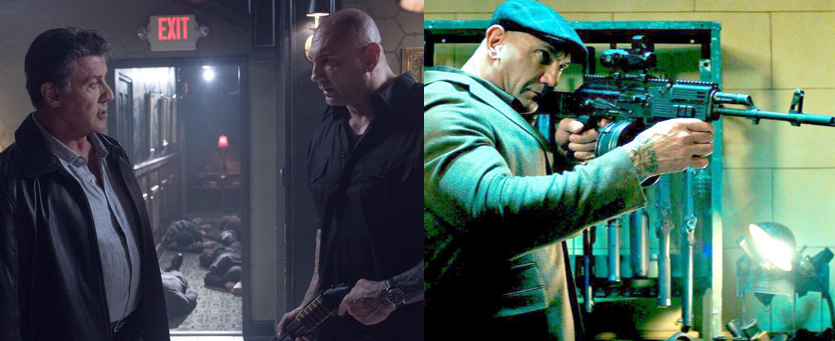
Unlike the last two films, which understandably involved breaking out of prisons, Escape Plan 3 is much more of a rescue movie; Ray and his team have to break into the Devil’s Station to rescue the hostages and confront Lester, meaning the film automatically stands out from its predecessors by putting Ray and his abilities in a much different situation. This necessitates the need for a team, meaning a much bigger role for Bautista this time around; if you’re a fan of 50 Cent and got excited when you saw his character, Hush, on the poster and the actor’s name share top billing then you’re in for a disappointment, though, as, while Hush does contribute more to the film and the team this time around, he’s still relegated to tech support. To be fair, though, the actual “team” aspect of the film isn’t as emphasised as you might expect either as they quickly split up to infiltrate the facility and Breslin largely disappears for a noticeable chunk of the movie.

The fight between Ray and Lester is a brutal, gritty affair, at least.

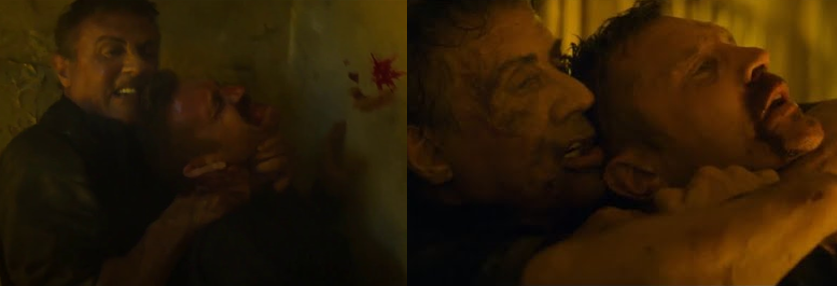
Unfortunately, given the low-tech approach of the Devil’s Station, the actual infiltration involves a lot of wandering around in poorly-lit sewer tunnels; thankfully, what the film lacks in visual presentation, it more than makes up for with some brutal action and kills. Driven to unbridled rage by Abigail’s death, Breslin’s normally composed demeanour cracks, leading to a vicious showdown with Lester. Devon Sawa, who I only really know for his role in Final Destination (Wong, 2000) and for appearing in the music video for Eminem’s “Stan”, actually makes for a fairly decent antagonist; a damaged and violent individual, Lester’s blind devotion to revenge against Breslin and those whom he feel used and betrayed his father makes for a volatile and unhinged villain. This isn’t some slick, corporate asshole in a suit; this is a ruthless mercenary who isn’t afraid to get his hands dirty or to twist the knife in any way he can and his inevitable contribution with Breslin is easily the highlight of the film. Rather than some slick, overly choreographed affair, this fight is a brutal, hard-hitting brawl that brings Breslin back into the fray with a bang and allows him to extract a measure of revenge.

The Summary:
Escape Plan 3 is a definite improvement over the second film and it’s telling that the film goes out of its way to connect more with the first movie than reference the second. Still, as gritty and visceral as the film can be, and as interesting as it is to see a more personal story being told with Breslin and to place him in a different situation (breaking in instead of out), Escape Plan 3 still can’t compare with the first movie. It’s not even about Arnold Schwarzenegger at this point (though his continued absence from the franchise is a bitter pill to swallow), it’s just that the sequels can barely pull together a coherent and engaging film. While Stallone’s role is noticeably bigger this time around, he’s still more of a supporting character; Bautista is similarly criminally underutilised, meaning Escape Plan 3 ends up being about a bunch of new characters who aren’t anywhere near as interesting to look at or follow. If more of the actors from the second film had returned then, maybe, it would have allowed for a bit more investment in their fates but, still, Escape Plan 3 fails to really be anything more than a mediocre action/thriller that is noticeably better than the second…but that’s not exactly a high bar to clear.

My Rating:

Rating: 2 out of 5.

Could Be Better

What did you think to Escape Plan 3? Did you find it more enjoyable than the second film or did you, perhaps, think it was just as bad, if not worse? What do you think to the trilogy overall? Do you think the films would have been better if Schwarzenegger had returned or would they still have failed to impress upon you? What do you think to Bautista as an actor and do you think he is deserving of bigger, more varied roles? No matter what you think, feel free to leave a comment below and be sure to check back in for more Stallone content later in the year!

Talking Movies: Escape Plan 2

Talking Movies

Released: 29 June 2018
Director: Steven C. Miller
Distributor: Lionsgate Home Entertainment
Budget: $20 million
Stars: Sylvester Stallone, Huang Xiaoming, Dave Bautista, Jesse Metcalfe, Wes Chatham, and Titus Welliver

The Plot:
Ray Breslin (Stallone) has expanded his operation, taking on Shu Ren (Xiaoming) and Lucas “Luke” Graves (Metcalfe) as protégés. However, when Shu is kidnapped and imprisoned in a high-tech prison named “Hades”, Luke, Ray, and Ray’s associate, Trent DeRosa (Bautista), must find a way to infiltrate the most dangerous prison in the world to rescue him.

The Background:
After the financial success of Escape Plan (Håfström, 2013), which finally brought action legends Sylvester Stallone and Arnold Schwarzenegger together in a meaningful way, a sequel was announced in 2016. Perhaps due to the fact that the first film recouped most of its box office success from the Chinese market, Escape Plan 2 (also known as Escape Plan 2: Hades) featured a more international cast and even received a limited theatrical release in China. Rather than bring these two stars back together for a bigger, better sequel, Escape Plan was released straight to DVD outside of China, Schwarzenegger was entirely absent, and even Stallone was reduced to more of a supporting role. Unsurprisingly, Escape Plan 2 was therefore a box office bomb, making a little over $17 million at the box office and receiving scathing reviews and Stallone regarded it as the “most horribly produced film [he had] ever had the misfortune to be in”.

The Review:
Escape Plan 2 begins in Chechnya where Lucas, Shu Ren, and another of Breslin’s protégés, Jaspar Kimbral (Chatham), are attempting to free hostages; as an opening action sequence to show off our new protagonists, this is a bit of a frantic mess thanks to some shaky editing and low lighting. Regardless, it’s immediately obvious that Lucas is the blunt instrument of the group, Shu is the slick martial artist, and Kimbral is the weak link in the team since, thanks to his blind trust in his “algorithm”, his attempt to go off mission results in the death of a hostage. Unimpressed, Breslin fires Kimbral since he can’t trust him and believes that his algorithm is flawed and that Kimbral is letting his personal rivalry with Shu cloud his judgement in the field.

Shu must use all of Breslin’s teachings and tactics to figure out an escape plan of his own.

About a year later, while protecting his cousin, Yusheng Ma (Chen Tang), Shu is suddenly attacked and wakes up imprisoned in a super high-tech supermax prison known as “Hades”, which has (somehow) been built out of the remnants of the Tomb from the first film. Inside Hades, prisoners are regularly pitted against each other in brutal fights that result in rewards for the winners and punishment for the losers, or those who refuse to fight. Gregor Faust (Welliver), the “Zookeeper” of Hades, reveals that Shu and Yusheng are free to go the moment Yusheng hands over his communications patents. He also bumps into Kimbral and the three form a reluctant team as Shu falls back on Breslin’s training to formulate an escape plan; similar to Breslin in the last film, this involves learning the intricacies of Hades’ layout, staying mentally and physically fit, and manipulating any resource he can to his advantage which, naturally, leads to many a fight with fellow inmates and to him befriending others, such as Akala (Tyron Woodley), from whom he learns about Hades’ routines.

Hades is a largely automated and ridiculously futuristic facility.

Unlike the Tomb, Hades is a fully automated, high-tech prison; prisoners are kept in futuristic cells and restrained by forcefields and paralysing jolts of electricity. In place of guards, Hades favours robots (even the prisoner doctor is a robot!) but, thanks to Breslin’s training, Shu is able to ascertain a rough idea of the layout of the facility from the few areas he can see and even those he can’t. This allows him to figure out that the prison is constantly rotating, shifting, and moving without the inmates noticing and, thanks to manipulating the fight/reward system, learn the exact layout of the prison from a cult-like group of stoic hackers.

Ray turns to DeRosa for help but, sadly, Bautista’s role is very minimal.

Meanwhile, outside of Hades, Breslin and his team work to track down Shu and the location of Hades; this ends up with Lucas also being captured and sent to Hades and Ray meeting up with an old acquaintance, Trent DeRosa, who, despite his size and intimidating nature, is an eloquent and surprisingly intelligent individual. A man of taste and deliberation, DeRosa brings intellect and aptitude as much as his physical capabilities but, sadly, his role is largely minimal; Bautista can be a magnetic presence when he appears in films and I respect the guy’s range but I can’t imagine that being in this dreg of a film really did much to elevate his profile.

The Nitty-Gritty:
If there’s one thing Escape Plan 2 has going for it, it’s some pretty decent, hard-hitting action; thanks to an influx of Chinese actors, fights are generally fast-paced, impactful, and full of impressive flips, kicks, and wire work. There’s a slickness to the action this time around that makes fights more heavily choreographed and elaborate than before but still brutal and gritty, just in a noticeably different, more frenetic way. Since the story jumps in and out of Hades to tell its two concurrent plots, we also get a bit more gunplay and a few more car chases this time around but the problem is that everything is shot so cheaply and so shakily and Hades is so poorly lit that it’s incredibly difficult to really follow what’s happening as the camera keeps dashing and darting all over the place, zooming in and out of focus and never stopping to really let the action breathe.

Kimbral is motivated purely by revenge and money, which isn’t very interesting for a villain.

Of course, the big twist of the film is that Kimbral is actually the prison warden and that the entire point of Hades was to one-up Shu and stick it to Ray by building a prison completely immune to his teachings and philosophy. Once this twist is revealed, Kimbral immediately throws on his suit and becomes a slick, arrogant, corporate antagonist who revels in lording his superiority of his former teammates and is motivated by nothing more than good, old-fashioned revenge (and money, of course). Sadly, what brings Escape Plan 2 down (and I mean way down) is the focus not on Breslin or even DeRosa but on his two protégés, who are far less dynamic and charismatic than either actor and no other addition to the cast could ever even hope to match Schwarzenegger’s star power or the appeal of seeing him onscreen with Stallone.

Sadly, neither of Breslin’s protégés are that interesting or dynamic protagonists.

Stallone is relegated to a mere supporting role; his teachings live on through Shu but, as capable and smart as Shu is, Xiaoming is no Stallone and it’s very strange to me that the script chooses not to capitalises on Stallone’s presence. The film could easily have been restructured to have Ray be the one locked up in Hades at the mercy of Shu (rather than Kimbral) and teaming up with DeRosa on the inside to battle against a host of young Chinese newcomers. Instead, Ray enters Hades far too late for me to really care about what’s going on; even when he’s inside the prison, he’s largely absent from the film. You’d think the action and intensity would ramp up almost immediately as the disgruntled student (Kimbral) jumped at the chance to make the master (Breslin) pay but, instead, Ray is able to freely communicate with Hush (Curtis “50 Cent” Jackson) to shut down Hade’s automated systems and to unite the inmates in a desperate escape attempt with very little in the way of opposition. Kimbral’s whole thing is being an arrogant upstart, a slighted child, rather than an imposing or formidable threat to our heroes; the Zoopkeeper makes a valiant effort to try and make up for this and even though Breslin and Kimbral do inexplicably end up settling their difference in a fist fight, both antagonists are easily dispatched with little effort on Ray or Shu’s part.

The Summary:
I haven’t really looked into it to check for sure but I’m pretty sure that Escape Plan 2 is the first time a Stallone movie has ever gone straight to DVD; considering the first movie had the weight and star power of two of Hollywood’s biggest action stars, it blew my mind to see the sequel have a smaller budget, significantly less star power, and be relegated to a home media release. However, it’s easy to see why the film went straight to DVD as it’s pretty much a mess from start to finish; poor cinematography, messy editing, and an overly elaborate and unrealistic setting means that all the choreography in the world cannot keep Escape Plan 2 from being anything more than a disappointing waste of time and talent. This could have been a nice little sub franchise of fun action films involving Stallone and Schwarzenegger getting into some entertaining hijinks but, instead, we got a mediocre action film that even Jean-Claude Van Damme would have thought twice about signing up to.

My Rating:

Rating: 1 out of 5.

Terrible

So…what did you think to Escape Plan 2? How did to compare to the original for you? Were you a fan of the new blood featured in the film or do you agree that Stallone and Bautista should have had bigger roles? Were you surprised that the film went straight to DVD and can you think of any other big budget films that dropped off a cliff in the same way? What’s your favourite prison break movie? Whatever your thoughts, leave a comment below and check back in next Friday for my review of the third film in the franchise.

Talking Movies: Escape Plan

Talking Movies

Released: 18 October 2013
Director: Mikael Håfström
Distributor: Summit Entertainment
Budget: $54 to 70 million
Stars: Sylvester Stallone, Arnold Schwarzenegger, Jim Caviezel, Vinnie Jones, and Vincent D’Onofrio

The Plot:
Ray Breslin (Stallone) is the world’s foremost authority on escaping supermax prisons; however, when he’s double-crossed and thrown into the most impenetrable prison ever, the Tomb, he must team up with fellow inmate Emil Rottmayer (Schwarzenegger) in order to escape the supposedly inescapable facility.

The Background:
Throughout the eighties and the nineties, Sylvester Stallone and Arnold Schwarzenegger had something of an intense professional rivalry going on; with both best known for their action movie roles, the two musclebound actors frequently clashed over body counts, box office receipts, and caused each other to make some significant career blunders before finally coming together to launch Planet Hollywood and collaborate on the Expendables trilogy (Various, 2010 to 2014). Originally a spec script that was rumoured to be a vehicle for fellow actor star Bruce Willis, Escape Plan brought these two heavy-hitters together in a significant collaboration for the first time which, most likely, contributed to the film’s impressive box office gross of just shy of $140 million. Critical reception may have been mixed but that didn’t stop the production of two direct-to-DVD sequels that I’ll also be covering over the next two Fridays.

The Review:
To help sell the concept of the film, and Ray’s abilities as a master escape artist, Escape Plan begins, appropriately enough, with Ray in a prison and concocting an elaborate and multifaceted escape plan; immediately his nigh-impossible adaptability, psychological, and physical aptitude is emphasised for all to see as Ray goes to great lengths to ingratiate himself into prison society and learn the strengths, weaknesses, and routines of the system, its guards, and its inmates. Ray is able to exploit even the smallest flaws thanks to his keen eye, attention to detail, and commitment to his craft; he’s a master psychologist and an extremely intelligent and attentive individual, which is a nice change of pace for Stallone, who is often unfairly typecast as a bit of a meathead.

Thanks to Ray’s skills, his team has developed a reputation for being the best at what they do.

Of course, Ray is physically capable of holding his own as well, and he needs to be considering most of his plans to learn a prison’s systems or affect his escape involve getting into fights with other inmates and guards or a great deal of physical exertion on his part. When the chance arises to test the Tomb’s facilities, Ray’s team is immediately sceptical given the shady nature of the entire operation; Ray, however, cannot pass up the chance at a new challenge for his abilities and agrees to go against all of his usual safeguards to take on the job. Ray’s team is comprised of his partner and friend Lester Clark (D’Onofrio), his point-man Hush (Curtis “50 Cent” Jackson), and Abigail Ross (Amy Ryan), each of whom exhibit a sense of pride and confidence in their reputation and abilities to escape from even the most secure prison facilities thanks to Ray’s unparalleled reputation. Although they, in different ways, assist with Ray’s escape attempts, Ray’s breakouts are largely a result of his own unique set of skills and abilities rather than solely relying on outside help.

Rottmayer has an unusual fascination with Ray, leading to a reluctant team up between the two.

Once he realises that he’s been setup, Ray immediately puts his expertise to use in plotting out an intricate escape plan; at first, he is determined to follow through with this in his usual style, relying on little more than his skills and wits to find a way out but, very quickly, he’s forced to adapt to the Tomb’s complex structure and into forging a shaky alliance with the overly friendly Rottmayer. Seeing Schwarzenegger and Stallone finally sharing some significant screen time together is a blast and, unlike their awkward exchanges in The Expendables 2 (West, 2012), the two have some amusing and engaging rapport going on. Schwarzenegger, in particular, seems to be having a blast as Rottmayer, exuding a variety of different, uncharacteristic emotions and humour while still engaging in some brutal and gritty fight scenes.

Drake acts as the muscle for the malicious and sadistic Warden Hobbes.

The Tomb is overseen by Warden Hobbes (Caviezel), a malicious and sadistic individual who is unimpressed and personally insulted by Ray’s reputation; alongside his equally sadistic and aggressive head guard, Drake (Jones), Hobbes enforces a strict and brutal code throughout the Tomb that severely punishes and tortures any inmate who fails to fall in line or dares to defy his authority. Hobbes is a slick and conceited villain, mixing up the standard “guy-in-a-suit” cliché with a cruel mean streak and a stoic implacability towards his actions, Drake, in comparison, thoroughly enjoys trouncing the inmates and treating them like animals.

The Nitty-Gritty:
Of course, the big twist of Escape Plan is that the entire thing is a setup by Lester to eliminate Ray and that the Tomb is actually a complex floating prison; once Hobbes becomes aware of Ray’s true identity, he begins a systematic plan of torture and cruelty towards Ray in an effort to break his spirit and uncover the information he requires about the elusive Victor X. Mannheim. While it appears as though Hobbes is successful in physically and mentally breaking Ray, his determination remains steadfast thanks to his stubbirn nature and unlikely support from Rottmayer.

Of course these two action icons come to blows during the film.

Naturally, one of the highlights and main appealing factors of Escape Plan is the rare opportunity to see two of the biggest action stars in the world interact with each other. Ray and Rottmayer have an amusing and entertaining love/hate relationship where they join forces out of necessity and trade humorous barbs (“You hit like a vegetarian!” is a notable standout for me) as well as punches on numerous occasions not out of any malicious intent but as part of Ray’s elaborate plan to learn the layout and specifics of the Tomb. Rottmayer’s initial amiable attitude towards Ray and eventual, reluctant agreement to numerous stints in the tortuous solitary cubes is all motivated by the fact that he is secretly Mannheim and behind Ray’s hiring. Still, this is an uncharacteristically subdued role for Arnold, who emits a quiet confidence and warmth while also being pragmatic, witty, and physically imposing when required.

Ray’s elaborate escape plan requires the assistance of some unlikely allies.

The reluctant friendship between the two extends even further to other inmates of the Tomb, including the initially antagonist Javed (Faran Tahir); Javed, who is a long-time rival of Rottmayer and his gang, clashes with both on numerous occasions but, ultimately is turned into another ally when Ray is able to cobble together enough of a practical escape plan but requires considerable assistance to bring this into effect. This also includes appealing to the better nature of the jaded Doctor Kyrie (Sam Neill) in order to acquire all the knowledge and tools he needs to escape.

While neither are at their peak, the film is a decent collaboration for these two action stars.

Of course, being an action/thriller starring two of the biggest action stars in the world and Vinnie Jones, Escape Plan has its fair share of action and fight scenes; it’s not as loud and bombastic as many of the two’s previous efforts, instead emphasising a more gritty and brutal kind of violence, but it nevertheless gives its musclebound stars a chance to show off what made them so famous in the first place. The staged fight between Ray and Rottmayer is a particular highlight of mine as is the inevitable showdown between Ray and Drake, which is a particularly violent and hard-hitting confrontation that ends with Drake taking one hell of a fall down some stairs and to his well-deserved death. Hobbes, of course, doesn’t offer much in the way of a physical threat but he has some pretty tight and formidable security and makes an impression with his cold, conceited attitude; he also isn’t afraid to get his hands dirty, which directly leads to his explosive end as the two make their dramatic escape.

The Summary:
Escape Plan may not be the greatest film of Stallone and Schwarzenegger’s career, and arguably came about twenty years too late to really capitalise on the two’s star power, but it’s far from the worst, too, and still has a great deal of appeal thanks to the unique and rare opportunity to see the two stars collaborating. It’s a relatively run of the mill concept that I’m sure has been done a few times before but elevated through their star power, the intensity of Caviezel, and the rapport between Stallone and Schwarzenegger. Fans of either man, and action/thrillers in general, should find a lot to like in Escape Plan and I’d say it’s well worth your time as it’s a great way to spend a lazy afternoon.

My Rating:

Rating: 4 out of 5.

Great Stuff

What are your thoughts on Escape Plan? Which were you a fan of back in the day, Stallone or Schwarzenegger, or were you a fan of both? Would you have liked to see the two team up during their prime or were you satisfied with the product we got? Would you like to see the two join forces again in the future? Are you a fan of prison escape films; if so, feel free to recommend them down in the comments, along with any other opinions you have. Also, be sure to check back in next week for my review of the sequel.

Talking Movies: The Equalizer 2

Released: 20 July 2018
Director: Antoine Fuqua
Distributor: Sony Pictures Releasing
Budget: $62 to 79 million
Stars: Denzel Washington, Pedro Pascal, Ashton Sanders, Melissa Leo, Jonathan Scarfe, and Bill Pullman

The Plot:
Robert McCall (Washington) has been operating as “The Equalizer” for some time, righting wrongs and offering his unique services to those in need while still living a relatively quiet, unassuming life. However, when his friend and former colleague is killed, McCall soon finds himself putting his methodical abilities to use against former teammates of his turned rogue mercenaries.

The Background:
Having begun life as a late-eighties American crime drama starring starred British actor Edward Woodward, the idea for a live-action reinterpretation of The Equalizer was first kicked around in 2010 but didn’t really come to fruition until star Denzel Washington and director Antoine Fuqua came onboard in 2011. Though not quite as intense or exciting as films of a similar nature, like Taken (Morel, 2008) and John Wick (Stahelski, 2014), The Equalizer was a decent enough box office success, making over $190 million worldwide against its $73 million budget, and production of a sequel began some seven months after the first film’s release. Notably, The Equalizer 2 was the first time Washington had ever starred in a sequel to one of his movies, however the film earned around about the same as its predecessor at the box office and received somewhat mixed reviews for essentially only offering more of the same content as the first film rather than anything new or substantial.

The Review:
While the original TV show was a bit before my time, I actually quite enjoyed the first Equalizer movie; it wasn’t quite as intense or engaging as Taken or John Wick but it was a pretty decent, more cerebral and methodical tale of an aged, former government operative reluctantly putting his long-retired skills to good use and taken on a bunch of Russian mobsters. However, while that film ended with McCall advertising his services as “The Equalizer”, the second film takes a bit of a left turn in that, rather than following McCall as he rights wrongs and fights injustice for those who contact him, we’re back to a slower, systematic film that is more a character study than anything else.

McCall is just as methodical and practical as ever.

As before, the star of the show is, obviously Denzel Washington; though Denzel now has hair for 95% of the film (which actually makes him look younger and less distinct as McCall), he still retains that same quiet, sombre, haunting feeling about him while exuding a general good-naturedness to all around him. Now supplementing his income as a Lyft driver, which allows him to meet and learn about a wide variety of people, McCall is just as disciplined as before and all of his little quirks and OCD-like routines return (he still carries his own tea bag, utensils, and tackles both cleaning apples and repainting a wall of graffiti with the same meticulous focus).

McCall’s combat skills are virtually unmatched throughout the film.

Denzel has a natural, likeable charisma about him; he doesn’t just resort to violence for the sake of it and always offers his target the chance to walk away and/or do the right thing. However, his uncanny ability to “read” people, to notice things others wouldn’t, and to absorb information about those around him and his environment allows him to not only take out rooms full of armed men in seconds with quick, precise strikes, but also to know what people are thinking/feeling or have gone through with a minimum of input and to predict how each situation will go, allowing him to still be a nearly robotic, efficient combatant that can easily overwhelm gis opponents, breaking arms and dislocating limbs without breaking a sweat and not even being short of breath afterwards.

McCall goes to extreme lengths to dissuade Miles from the wrong path.

Given that McCall is in a new location with a new life, we have to not only become reacquainted with him but are also introduced to a handful of new characters; chief amongst them is Miles Whittaker (Sanders), an aspiring artist who is tempted into a life of easy money, crime, and violence. McCall acts as a positive influence on Miles, encouraging him to stick with his studies and follow his passion for art but is eventually forced to violently confront a bunch of gangsters on their home turf to convince Miles not to get caught up in that life. McCall strikes with a precise fury, busting in on the gang with two guns, and goes to extreme lengths (forcing a gun into Miles’s hand and daring him to shoot him and then holding him at gunpoint and getting uncharacteristically emotional about the gang life, guns, and violence that Miles seems to find so attractive) to deter Miles from that life.

Susan and Brian are two of the last links to McCall’s mysterious former life.

However, there are some returning characters to the film, namely McCall’s former colleagues Susan (Leo) and Brian Plummer (Pullman); these two, particularly Susan, are the only ones that are aware of his double life and with whom he can open up to about his dead wife and former life. His interactions with both allows us to see, more explicitly, McCall’s more human and vulnerable side and learn a little bit more about who he used to be. Susan regularly feeds him information and resources to help keep him busy but encourages him to return home, the suggestion being that he is hiding from confronting his loss in this new city and new vigilante-style life, and her sudden and violent death clearly affects McCall’s characteristically stoic and disciplined demeanour.

McCall’s former partner, Dave, turns out to be the film’s underwhelming antagonist.

Putting his unique set of skills to use to quickly identify the two responsible for Susan’s murder, McCall reaches out to another of his former colleagues, Dave York (Pascal). York initially appears to be a close friend and former partner of McCall’s but it doesn’t take long for McCall to piece together that York has betrayed everything he stood for and, alongside their entire former team, has become little more than a mercenary. This sets York up as the film’s primary antagonist quite late into the film as, before this revelation, it appears as though Resnik (Scarfe) is to be the main antagonist. While you might think that York would be a formidable opponent for McCall, given that they (and their team) are cut from the same cloth, he fails to properly match up to enforcer Teddy Rensen (Marton Csokas) from the last film, being less of a physical or formidable threat despite escalating the personal nature of the film’s final act.

The Nitty-Gritty:
Rather than go for a “bigger, better” approach for the sequel, The Equalizer 2 is more of the same meticulously paced, cerebral character study as the first film rather than being a much more action-packed and fast-paced affair. Indeed, I expected to see McCall taking on various cases, especially in the film’s early going, but his alias of “The Equalizer” is never used or referred to, even in passing, and, instead, McCall simply acts when he observes injustice in the lives of those around him; he wrecks a bunch of wealthy shit-heads for abusing a young intern out of the kindness of his heart and for her sake rather than any kind of payment or recognition and rescues the young daughter of his preferred bookstore owner’s just because he can and it is the right thing to do.

McCall’s interactions with those around him reveal more about his motivations.

Of course, more time spent with McCall means we learn a little bit more about who he is and why he does what he does. Once again, this is delivered in snippets, hinting at his former life and what motivates him to help others: whilst cleaning up the gang graffiti on his building, McCall intimates that it is because no one else will and plenty of people are happy to complain or let someone else take care of problems but no one ever does, so he does it. Similarly, as if the personal stakes McCall has in this film aren’t enough, during his tense confrontation with York, McCall admits that he deserves to die “many times over” for the sins he has committed in the past, showing that he is equally motivated by atonement as much as anything else.

McCall’s so good he can win fights whilst driving at high speeds!

We also get to see a bit more of McCall’s wide array of skills; his unique observational abilities and insight also allow him to correctly recreate the murders Resnik perpetrated to get a sense of how he thinks and operates, all of which not only help McCall piece together more details on the murders. Additionally, his combat proficiency is at such a level that he’s even able to emerge the victor (relatively unscathed) in a fight with an armed man while he (McCall) is driving a car!

Despite having the upper hand on numerous occassions, York is constantly outwitted by McCall.

As an antagonist, York (sadly always referred to as “Dave” throughout the film, which isn’t that intimidating of a name for your main bad guy) falls a little short; his motivations are essentially the same as Alec Trevelyan’s (Sean Bean) in that he killed for his country and blindly followed orders only to be screwed over by the system and his superiors and cast aside, and that the entirety of their unit has gone rogue in the same way as a result. McCall, however, is less than impressed or intimidated and simply vows to kill each of them to avenge Susan and for betraying her/him/everything they once stood for and is easily able to get Brian to safety, guide Miles to a hidden panic room in his (McCall’s) apartment, and to evade York’s attempts to take him out.

Superior numbers and armed opponents are of little consequence to McCall.

Even when York takes Miles as a hostage and baits him into a final confrontation at his seaside hometown (which Susan eludes McCall has been actively avoiding returning to due to the lingering history he has there and which is also under siege from a hurricane, with the tumultuous storm both representing the animal within McCall and contrasting with his stoic implacability), McCall uses his superior knowledge of the town and stealth tactics to pick them off one by one through a series of deadly traps and efficiently brutal kills, similar to how he picked off Rensen’s men at the conclusion of the first film but on a decidedly larger, more dramatically elaborate scale thanks to the raging storm that covers the town.

Even with every advantage, and putting up a good fight, York is no match for McCall.

Despite York’s superior numbers and weaponry (McCall heads to the town unarmed and only utilises the weapons he acquires or liberates from his surroundings/targets), and him and his goons taking up defensive positions and assuming a tactical advantage through their numbers and placement (with York himself taking the high ground and a sniper position to cover the entire downtown area), McCall easily picks them all off with methodical precision. Accordingly, the film culminates in a showdown between McCall and York; York has Miles bound and gagged in the boot of his car and threatens him to draw McCall out of hiding. McCall, however, is too smart for that and, despite York having the high ground, engages him in a fist fight. Thanks to a lucky cut from a knife, and being the main antagonist, York puts up the only fight McCall has to deal with throughout the film, landing a few hits on McCall, but it’s over almost as soon as it starts and ends with McCall the victor thanks to his brutal efficiency, McCall again assuming that stoic blank slate of cold, unemotional precision

The Summary:
Rather than going in all guns blazing, bigger and better than before, or even following McCall as he solves various problems for a number of different people and gets tangled up in a bigger issue as a result, the film emulates the pace of the original as we follow McCall’s generally quiet life and the people he interacts with, absorbing ourselves in his world, and the action comes in short, sharp waves, escalating over time to the finale similar to the first film. Since McCall is in a whole new place with a new life, we need to become reacquainted with him rather than just picking up where we left off. However, the action/pacing doesn’t exactly kick up a notch after Susan’s death, like you might expect; instead, a methodical pace is retained and things gestate and build, which is great for becoming absorbed in McCall’s world/mindset and does keep the film from just becoming another big, loud action movie, but it is a tad surprising as you would expect things to speed up a bit once McCall is directly affected. Things do, however, pick up a bit once McCall makes things equally personal and targets his former team mates; we’ve seen what he’ll do for complete strangers so this gives us a chance to see just how far he will go, how focused he can be, when someone close to him is caught in the crossfire. The result is the same dogged determination and meticulous approach but with a tinge more aggression, a shade more brutality, and a touch of the raw, animalistic emotion that clearly boils beneath McCall’s surface and that he channels to be such an efficient operative. It can’t be denied, though, that it’s largely more of the same as we saw in the first film, if not somewhat more subdued, making it no better or worse than the original but just as appealing in its execution thanks to Washington’s stoic performance and the fast, brutal, calculated fight scenes.

My Rating:

Rating: 3 out of 5.

Pretty Good

What did you think of The Equalizer 2? How do you feel it compares to the first film and the original television series? Would you like to see more films in the series? How do you feel this film holds up to others of its kind? Which film did the “retired hitman called into action” concept better? No matter what you think about The Equalizer 2, and similar films in this sub-genre, go ahead and leave a comment below.

Talking Movies: The Equalizer

Released: 26 September 2014
Director: Antoine Fuqua
Distributor: Sony Pictures Releasing
Budget: $73 million
Stars: Denzel Washington, Marton Csokas, David Harbour, Johnny Skourtis, and Chloë Grace Moretz

The Plot:
Robert McCall (Washington) is a simple man of routine, an unassuming widower living a quiet life in Boston, who is unwittingly drawn back into his mysterious and violent past when Alina (Moretz), a teenage prostitute he has befriended, is attacked. Before long, McCall’s peaceful life is turned upside down when Alina’s handlers, bankrolled by the Russian mafia, send sadistic enforcer Teddy Rensen (Csokas) to find who is responsible for the gang-land style murders McCall has orchestrated.

The Background:
The Equalizer began life as an American crime drama that aired between 1985 and 1989; the series starred British actor Edward Woodward as Robert McCall, a former covert operations officer who offered his unique services as a troubleshooter, protector, or an investigator. The series ran for eighty-eight episodes back in the eighties but development of a cinematic retelling didn’t come about until 2010, when Russell Crowe was originally attached to star in the title role. By the end of 2011, however, Denzel Washington had replaced Crowe and director Antoine Fuqua came onboard for this dramatic reimagining of the former spy turned problem solver. Though somewhat sub-par compared to films of a similar nature, such as Taken (Morel, 2008) and John Wick (Stahelski, 2014), both of which portrayed retired, aging specialists brought back into action, The Equalizer was a pretty decent box office success, making over $190 million worldwide against its $73 million budget and Washington played against type by starring in a sequel in 2018.

The Review:
I should stress going into this review that I never watched the original Equalizer television series; I was just a baby when it first aired and I don’t recall it ever being on TV when I was growing up so my first exposure to the concept was with this big screen reimagining. However, I have long been a fan of action movies and have a particular fondness for the sub-genre films like Taken have inspired that sees older actors taking on roles of retired hitmen or government operatives brought back into action. It’s a bit of a hit and miss sub-genre, to be honest, but mostly these sort of films land pretty well with me and, while not quite as good as some of its counterparts, The Equalizer does more than enough to impress in this regard.

McCall befriends Alina, a young prostitute who is violently abused by her handlers.

As The Equalizer is the story or Robert McCall, the film revolves around (and is largely carried by) a haunting, subdued performance by Denzel Washington; a man of strict habit and routine, McCall is a friendly, hardworking widower who works in a garden centre. Though his past is a mystery to his co-workers (and, largely, to us, the audience), it has little bearing on his demeanour; he’s always willing to help others (he’s actively spotting and offering advice to his friend and co-worker, Ralph (Skourtis) to help him lose weight for a security guard job) and is a wise, sympathetic listener. However, McCall is clearly haunted by his past, in particular the loss of his wife; unable to sleep, he often sits and reads quietly in a 24/7 diner, meticulously bringing his own tea bag and utensils as he makes his way through book after book. It’s there that he meets Alina, who works under the name Teri, whom he encourages to eat healthier and to pursue her dreams of being a singer. After Alina is roughed up by her handlers, though, McCall attempts to buy her freedom and, despite his better judgement and the promise he made to his wife, is sucked back into his old violent ways.

McCall becomes a cold, calculating, methodical killer when in the zone.

When he makes the decision to dish out vigilante justice, McCall transforms into a cold, calculatingly efficient combatant; his heartbeat slows and he seems to absorb everything about his surroundings and targets, visualising exactly how he will dispatch them and estimating the time it will take him to do so. While age has clearly made him slower at this, he’s still formidable and skilled enough to overwhelm entire rooms full of younger, armed individuals without breaking a sweat or even breathing heavily. The way Washington transforms his demeanour into an unblinking, unflinching, cold-hearted machine is mesmerising; he almost becomes robotic in his movements, with a nearly precognitive awareness of his surroundings thanks to his ability to “read” a room and the intentions of others.

McCall is always one step ahead of his opponents.

Of course, he’s not just about physical punishment; thanks to his scrupulous attention to detail, foresight, and over-preparedness (and his clear signs of obsessive-compulsive disorder), McCall is able to plan accordingly to stay one step ahead of his foes (renting a back-up apartment, for example, using his mysterious resources to get information and laying traps in the film’s finale). An intelligent, shrewd individual, he exudes a quiet self-confidence that never borders on arrogance and always offers his enemies the option to walk away before letting himself loose.

Rensen gives McCall a run for his money but is ultimately ruled by his emotions.

Opposing McCall is a Russian enforcer who has the potential to be every bit his intellectual and physical equal but finds himself outmatched every turn by the aged operative; adorned in intimidating tattoos and driven by an intense sadistic streak, Rensen is an equally cold, self-confident individual with a vindictive mean streak. Despite his assertions to the contrary, however, he is ruled by his emotions and ego far more than McCall, which lead to him losing his cool and growing increasingly frustrated at the inability of himself and his underlings to track down and end McCall.

The Nitty-Gritty:
Much of The Equalizer’s pace and early going is, smartly, devoted to setting up McCall’s rather normal, perhaps even mundane lifestyle; we walk through his daily routine, see the many little habits he performs on an almost ritualistic basis, and are introduced to him as a kind-hearted, easy-going individual. Obviously, there is more to him though; Washington’s eyes and demeanour tell more of a story about his mysterious, violent, and painful past than words ever could, meaning that much of The Equalizer is an exercise in subtlety and establishing a mood rather than non-stop action.

Despite his age, McCall easily overwhelms even armed opponents.

When McCall does take action, though, the complexion of the movie shifts dramatically; suddenly, McCall transforms before our eyes into this merciless, unstoppable killer who dispatches even armed foes with ease and grace. It isn’t until quite late into the film that McCall comes up against an opponent who offers him a physical challenge but, even when shot or stabbed or injured, McCall is smart and savvy enough of a veteran to know how to patch himself up and he never once loses his cool.

When in the zone, McCall is an unflinching, almost robotic, nigh-unstoppable killer.

In fact, the opposite is overwhelmingly true; when his eyes widen and his heartbeat slows, McCall becomes this blank slate of efficiency, never blinking or flinching or, seemingly, breathing as he effortlessly takes command of every situation even when he is injured since he has scrupulously taken into account every possible outcome for each scenario. In the finale, he puts his knowledge of the layout of his workplace to good use to set up some gruesome traps and thin out Rensen’s numbers before finally confronting the Russian hitman with nothing more than a nail gun.

The action escalates over time as McCall indluges his violent ways more and more.

The action of the film this escalates over time, getting bigger and more brazen the more McCall indulges in his long-retired skill set; when he takes out Alina’s handlers, he unwittingly throws a wrench into the Russian mafia’s Boston operation. Before long, he’s confronting corrupt cops in the mafia’s pocket, disrupting their entire money-laundering operation, blowing up much of their merchandise, and eventually travelling to Moscow to take out their big cheese, Vladimir Pushkin (Vladimir Kulich). It’s not exactly a non-stop thrill ride but it is an extremely intense experience; fight scenes are gritty, visceral, and methodical and, while McCall is largely unmatched, he’s still vulnerable enough to be hurt at times and clearly conflicted by his actions.

The Summary:
The Equalizer is as intense and methodical as its titular character; largely a character-driven piece that leaves us with more questions than answers regarding McCall’s mysterious past, it’s an engaging piece of vigilante cinema whose action escalates the more McCall rediscovers his penchant for violence. It’s not quite on the level of Taken or John Wick, to be fair and, from what I can gather, is quite a departure from the original television series but there’s plenty here to keep you engaged and invested and seeing Washington literally transform into this efficient, precise killer is always a blast.

My Rating:

Rating: 3 out of 5.

Pretty Good

What did you think of The Equalizer? Did you watch the television series back and the day and, if so, how do you feel the film holds up compared to it? What did you think to Denzel Washington’s performance? How do you feel this film holds up to others of its kind? Which film did the “retired hitman called into action” concept better? Whatever your thoughts, feel free to leave a comment below.