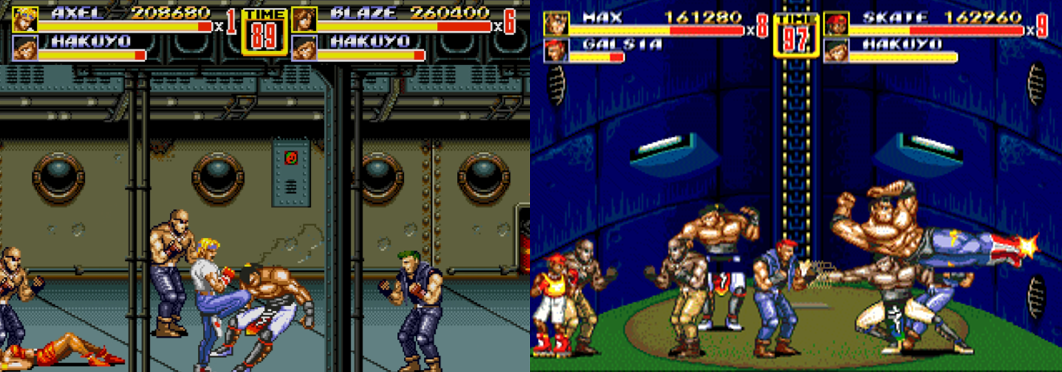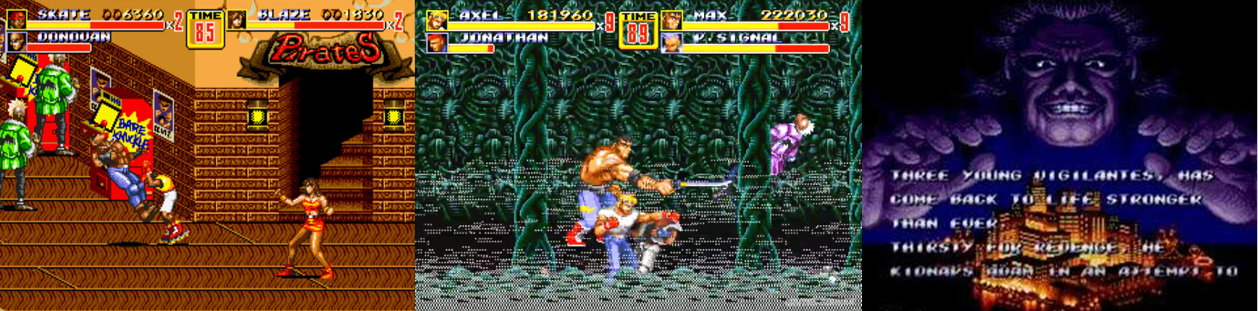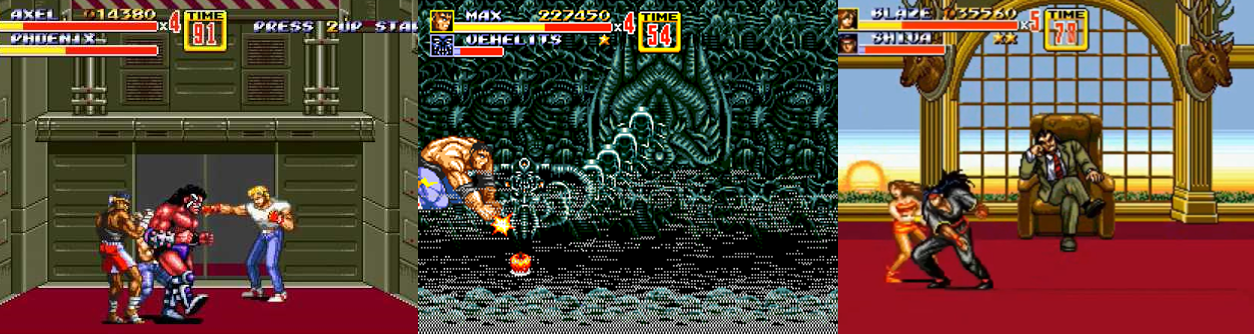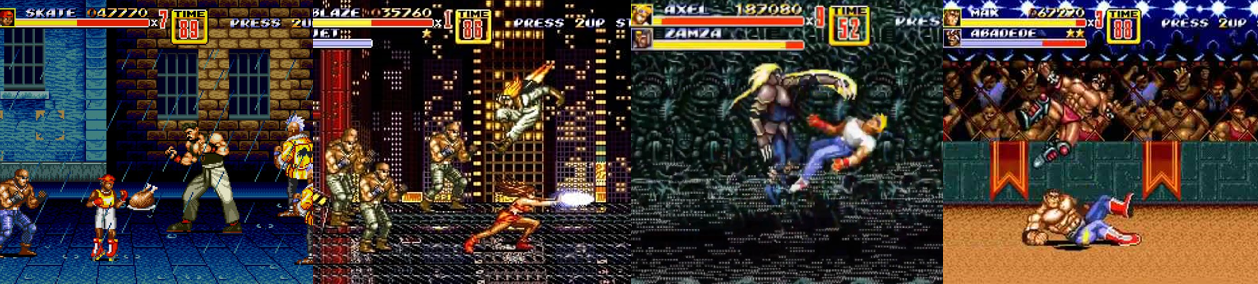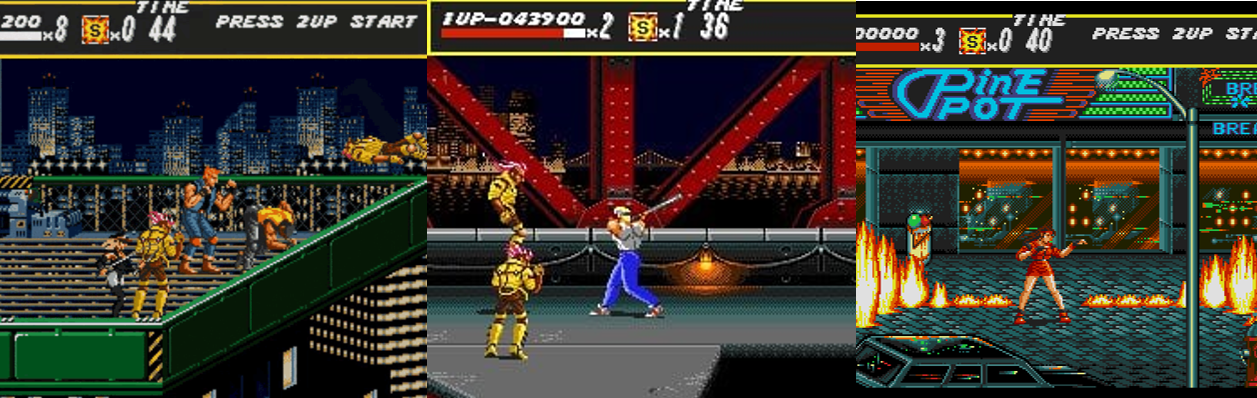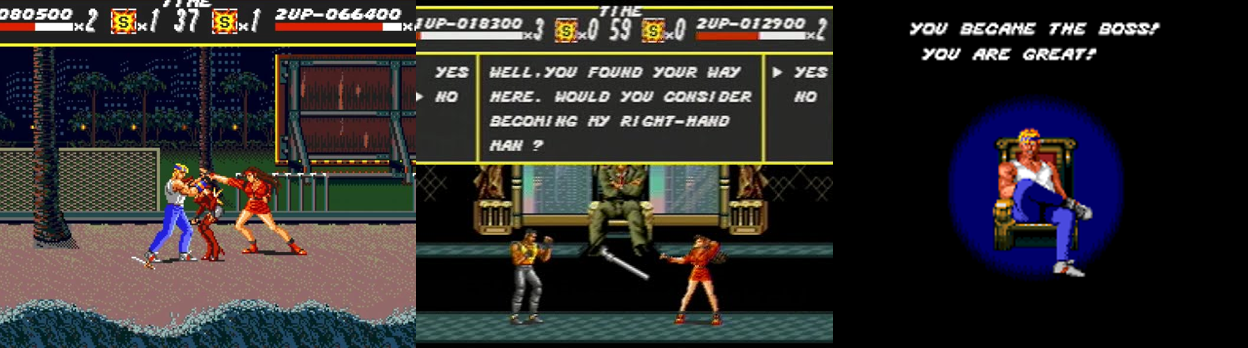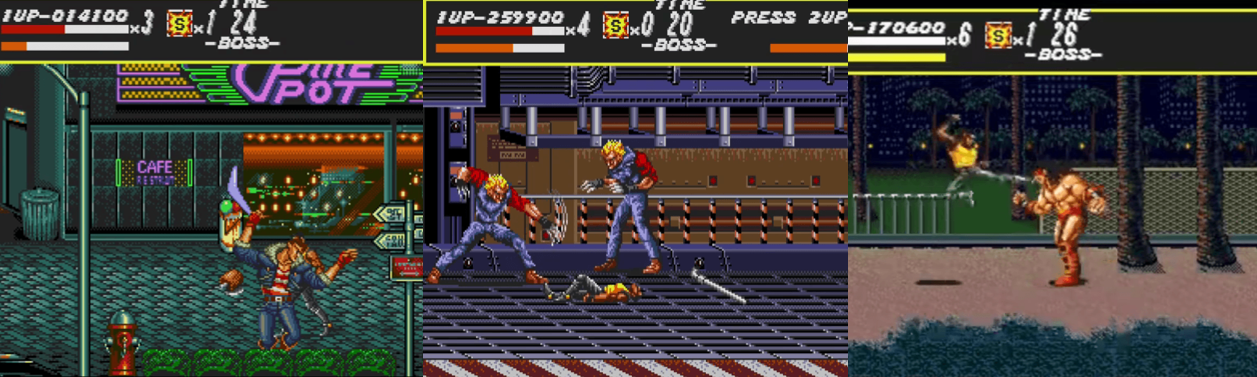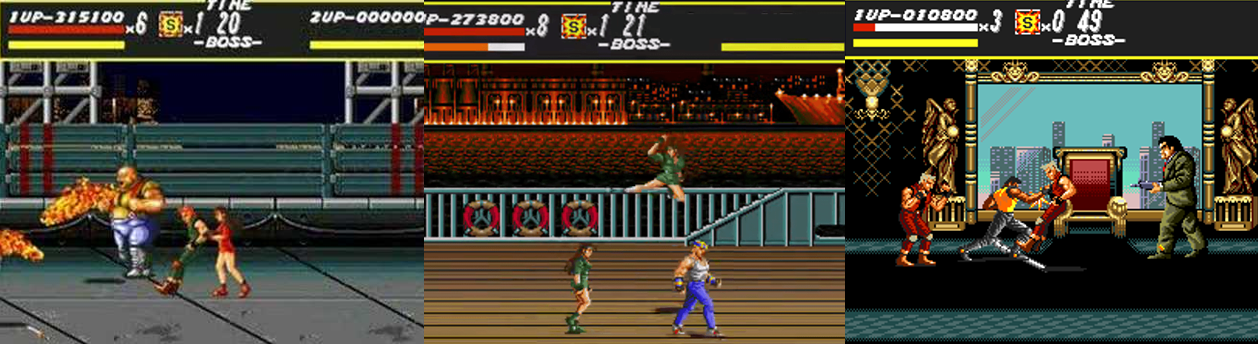
Game Corner: Streets of Rage 3 (Xbox 360)

Released: 30 May 2012
Originally Released: 17 March 1994
Developer: M2
Original Developers: Ancient and SEGA
Also Available For: GameCube, Mega Drive, Nintendo Wii, PC, PlayStation 2, PlayStation 3, PlayStation 4, PlayStation 5, SEGA Mega Drive Mini 2, Steam, Xbox One, Xbox Series S/X

The Background:
Since sidescrolling beat-‘em-ups were popular in both arcades and home consoles back in the day thanks to the likes of Double Dragon (Technōs Japan, 1987) and Final Fight (Capcom, 1989), Noriyoshi Ohba and his small team of developers were smart to create the Bare Knuckle Streets of Rage series (SEGA, 1991 to 1994), which was initially exclusive to SEGA’s home consoles. Streets of Rage (ibid, 1991) was incredibly popular and highly praised, and the sequel was even more lauded for its many graphical and gameplay improvements. A bigger, even more improved third entry soon followed; originally, Streets of Rage 3 included motorcycle stages, which can still be played through hacking, and the game featured far more regional differences than its predecessors, including a reworked plot, recoloured sprites, less provocative enemy sprites, and the entire removal of a potentially offensive miniboss. Despite these alterations, Streets of Rage 3 was as highly praised as its predecessors; while the graphics and gameplay were seen as the best in the series so far, reviews did criticise the soundtrack, difficulty, and the stale nature of the franchise despite the new features. While we wouldn’t see another game for nearly thirty years, Streets of Rage 3 was re-released and ported to other consoles over the years before it, and its predecessors, were brought to the Xbox 360 as part of the SEGA Vintage Collection, with this version including modern quality of life perks like save files, a replay feature, and other bonus content.

The Plot:
Following his two previous defeats, Mr. X establishes the RoboCy Corporation and begins creating robots to replace important city officials and then has his criminal syndicate place bombs all over Wood Oak City! Eager to get revenge against Mr. X for turning him into a cyborg, Doctor Gilbert Zan contacts former police officers Axel Stone and Blaze Fielding and their young ally, Eddie “Skate” Hunter, and joins them in bringing down the syndicate once and for all!

Gameplay:
In keeping with the style of the series so far, Streets of Rage 3 is a sidescrolling 2D beat-‘em-up that lets players pick from one (or two, if you’re playing with a friend) of four playable characters and hit the mean streets of Wood Oak City one more time to take out a whole new batch of thugs across seven levels (referred to in-game as “Stages”). Just like last time, the game supports two-player co-op and a friend can jump in at any time, but there are now only three difficulty settings to pick from (“Easy”, “Normal”, and “Hard”). Not only that, but you won’t get to experience the full game if you play on “Easy” as the game will end at Stage 5 in this mode, meaning you need to play on at least “Normal” to have a shot at completing the whole game and even then this mode is notable harder than in the Japanese release. You can still manually set your stock of lives from the “Options” menu, however, and switch to another character after exhausting all of your lives and continues (of which you have three on “Normal”). Unlike the last two games, Streets of Rage 3 drops the time limit (with the exception of Stage 6 and the final boss), and the game is bigger and more fluid than ever. The control scheme, while fundamentally the same, has been expanded to include six-button control options, and is once again fully customisable in both the in-game menu and SEGA Vintage Collection settings. By default, A launches a combination of punches and kicks (and this can be set to rapid fire mode so you can simply hold down the button to pummel enemies), B lets you jump to hit one of three jumping attacks, and X unleashes one of two special moves to clear away groups of enemies at the cost of some health.
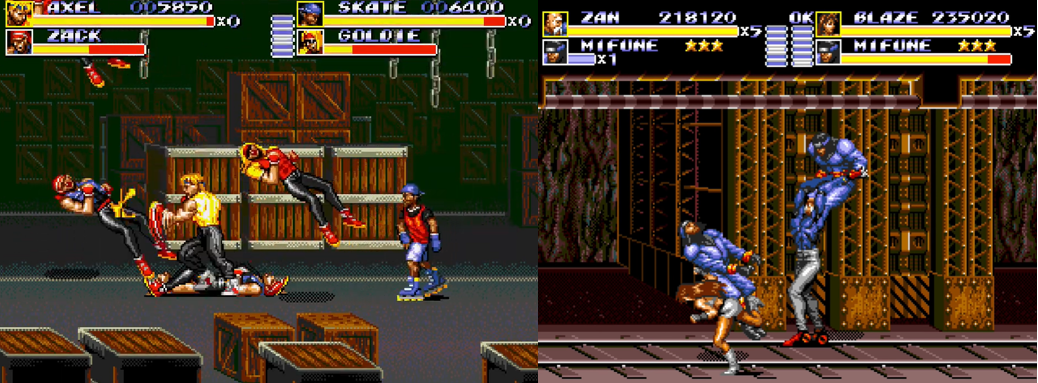
Characters are faster and more versatile than ever thanks to increased range of movement and combat options.

You can still perform a rear attack with A and B together (or assigning this to X, like I did) for better crowd control. You can also assign an “X Attack” (which appears to be a single, powerful attack from your combo) and you can still grab, pummel, toss, and slam enemies when you get close to them (and they can still do this to you, and can even perform co-op attacks and steal health items!) Streets of Rage 3 shakes up the roster once more; although Adam Hunter is still unplayable, he does make appearances in the game’s cutscenes, and lumbering oaf Max Thunder has been replaced by the cybernetic Zan. Axel, Blaze, Zan, and Skate continue to share the same basic attacks and controls and each again boast different skills according to five attributes (Power, Technique, Speed, Jump, and Reach). You can also see their height and weight listed in the character select screen, though I don’t think this really affects how the characters play; the other attributes certainly do, though, with Axel again being more of an all-rounder, Skate being the smallest, weakest, and fastest, and Zan having the best reach and able to zoom around on his rocket shoes but at the cost of having a shit jump and turning weapons into projectile attacks. As in the last game, each character is further separated by their different special attacks; Axel can still perform his flaming “Bare Knuckle” uppercut and spinning flaming fist, but Zan can electrocute enemies on contact and you can quickly pummel enemies with Blaze and Skate’s faster (but weaker) attacks. This time around, though, the game features a rechargeable meter; when full, your special attacks will be at their most powerful and won’t cost you any energy, and you’ll also gain a star under your life bar after accumulating high enough scores that will further power-up your special attacks. Every character can now not only dash ahead and perform a running attack (which also benefits from the star power-ups) but they can also vertically dodge out of the way with double taps of up or down, which is extremely handy when dealing with large groups of enemies.

Gameplay is given some much-needed, if frustrating, variety thanks to some timed sections.

If you’ve played either of the previous games (or any sidescrolling beat-‘em-up) then you’ll be acutely aware that your primary goal is to travel from the left side of the screen to the right dispatching enemies and smashing crates and such for objects and power-ups. Like the last game, each Stage is made up of multiple screens and areas, with transitions taking place to show characters smashing through doors or the time of day changing, and you’ll still be able to earn extra lives by adding to your score tally (with bonus points continuing to be awarded at the end of each Stage). Stages don’t seem as long as the last game, however, though each screen is longer, if that makes sense? You seem to spend more time in less screens, basically, and the game seems a little tougher this time around; I only found one 1-Up pick-up in my entire “Normal” mode playthrough and the sheer amount and variety of enemies onscreen can get a little frustrating. Enemies continue to be “shy” and linger offscreen, while also dropping down from the sky, emerging from the shadows, leaping from storage containers, hopping in from speedboats, and popping out from behind bushes to attack you, and it’s much easier to get surrounded by goons this time around. Not only that, but Streets of Rage 3 features the return of stage hazards; bottomless pits make a return in Stage 3 (though, thankfully, they’re not an instant-kill trap this time), barrels drop down from above, wind pushes you back, rising (and horizontal) platforms and elevator sections see you trapped with wave-upon-wave of enemies or tossing them to their doom, conveyor belts make movement and combat sluggish in Stage 7, and you’ll even have to dodge snare traps and laser turrets (though these can damage enemies, too). There’s actually a bit of gameplay variety thrown in here, too; not only do some Stages see you going to the left for a change, but you’ll need to smash through cinder blocks while fending off a digger machine in Stage 3, dodge hazards that fly at you along underground railroad tracks in Stage 4, and face a time limit in Stage 6. This is easily the most complex Stage in the game; you have fifty in-game seconds to clear out enemies, using an elevator to visit different floors, and destroy two control consoles before a lethal gas is emitted. If you take too long, the gas will not only whittle down your health, but cause the death of the captive police chief, Ivan Petrov, which will change the game’s ending accordingly.

Graphics and Sound:
I have to say that, while I enjoyed some of the tracks featured in Streets of Rage 3, the soundtrack is probably the weakest in the trilogy; Stages are punctuated by a thumping, techno beat that is just as likely to be catchy as it is a mess of garbled noise. The links to The Revenge of Shinobi (SEGA, 1989) continue to be found within the game, as well; while the cutscenes finally feature a unique font for the game, Revenge of Shinobi font, sound effects, and melodies are still found throughout (though, at this point, they’re probably more associated with this series of games so I can forgive it). The game’s presentation is better than ever; sprites are larger and more detailed (with Axel, Blaze, and Skate sporting new colour palettes) and enemies are more varied; while skin-heads, dominatrixes, and denim-clad goons still dog your progress, a whole bunch of new enemies are featured, each sporting a name and a health bar. Some even boast a life count of their own, which generally gives you a better indication of how tough the enemy is and how many tiers their health meter has, and weapons also sport their own health meters now and will break after consecutive use.
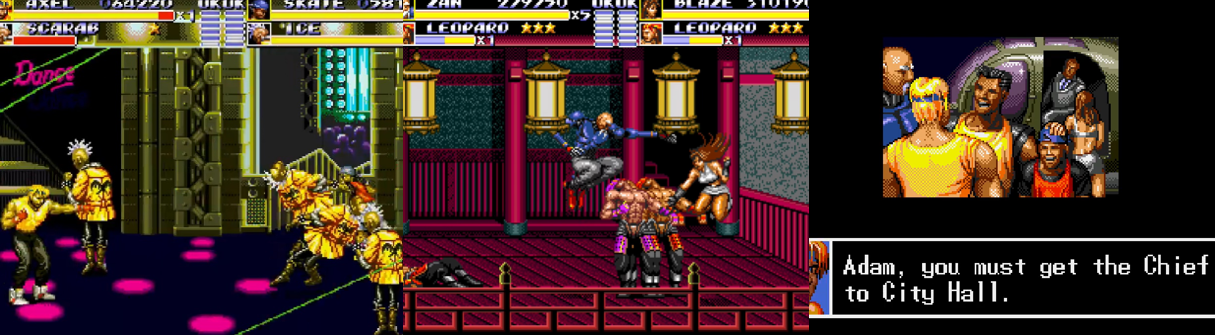
While the music’s a bit of a mess, the visual presentation and variety is the best in the trilogy.

The environments are the biggest, most varied, and most detailed in the series yet, however. Little touches like chains shaking when you slam enemies to the ground, day turning to dusk, cats peeking out from bins, and wind blowing lanterns and rubbish about really help to make every Stage feel alive. There’s always a lot to catch your eye on the screen, from bushes rustling to indicate the arrival of a hidden enemy, to a bustling nightclub awash in strobe lights and dancing enemies, to glasses tumbling from bars, an aquarium in the background of the Stage 2 boss fight, and even an elaborate Japanese temple in Stage 5. Stage 5 also features a recreation of the final stage of the last game, once again having you fend off enemies in a rising elevator to Mr. X’s throne room, only this time it’s at night and the fight is notably different from the last two Mr. X boss battles and the big man himself is later revealed to be a brain in a jar within an underground laboratory! Everything is so much more detailed and varied this time around, which makes for an experience that finally captures the arcade-style aesthetic the series was going for with the first game, and this is even more evident in the heavier emphasis on story. Not only is there an introductory and ending cutscene, but cutscenes will also take place during and after certain Stages, with dialogue boxes appearing onscreen and different endings being shown depending on how you beat the final Stages of the game.

Enemies and Bosses:
Although long-time players of the series will be more than familiar with the vast majority of the enemies encountered in Streets of Rage 3, palette swapped variants are much more commonplace and they appear alongside some new additions to Mr. X’s syndicate. Denim-clam thugs, yellow-jacketed punks, skinheads, dominatrixes, bikers, and ninjas all make a return to charge at you with knives, slide at your shins, uppercut you out of the air, crack their whips at you, charge at you on their bikes, and flip about tossing throwing stars at you. Newcomers to the series are “Goldie” (a street thug not unlike Axel who can guard against your attacks), “Soozie” (a punk girl similar to Blaze who can pummel you with slaps and leaps at you with flying kicks), and “Zack” (a bandana-wearing goon who likes to grab you from behind). Rotund firebreathers and belly floppers like Ben Ben also make a comeback (and once again cause you damage when you try to slam them), but you’ll also contend with gun-packing Assassin Agents, jetpack-wearing Rockets, martial arts experts like Tiger, and even robotic, frog-like enemies who hop about, dash at you, fire projectiles at you, or explode and send shrapnel across the screen.
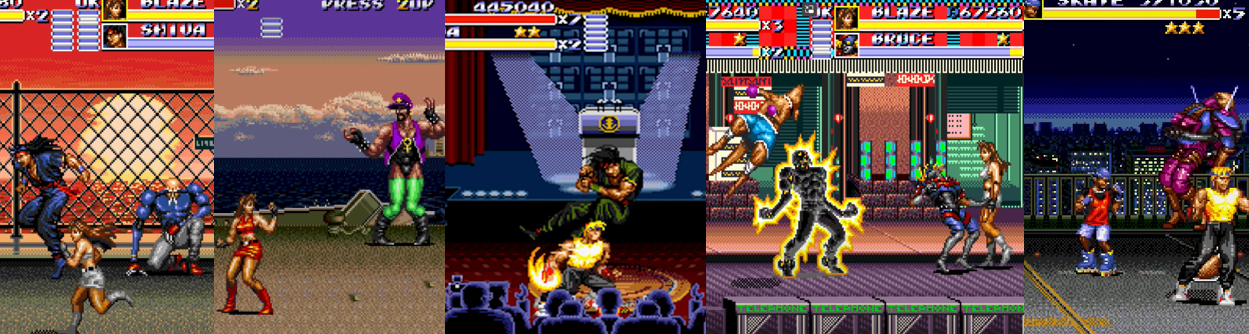
Shiva’s importance depends on which difficulty and region you’re in, though you’ll see a lot of recycled bosses.

Streets of Rage 3 dramatically reduces the amount of sub-bosses you’ll have to face compared to the last game, with only two cropping up this time around; instead, certain regular enemies will receive a palette swap and an extended life bar to act as tougher mid-Stage enemies. Bosses will rarely be accompanied by an endless slew of thugs as well, which is definitely a plus, but three of them are recycled from Streets of Rage II and you’ll notice this right away when you reach the end of Stage 1 and face off with Shiva. Downgraded from a penultimate boss to the first boss of the game, Shiva isn’t quite as difficult as in the last game but still poses a challenge as he’s got a nasty leaping kick that can catch you off-guard after you knock him down. You won’t actually face Shiva in the Japanese version of the game, though; instead, you fight Ash, a stereotypically gay character who slaps you around, dances about, and can slam you to the ground. Both Shiva and Ash can be unlocked as playable characters after defeating them and holding B until the next Stage starts, but only Shiva actually makes a reappearance in the worst ending of the game where he serves as the final boss and is given a significant power boost alongside a new attire. Similarly, you can unlock the boxing kangaroo Roo if you take out his abusive handler, Bruce, in the sub-boss fight of Stage 2, after which you’ll battle the female tag team of Mona and Lisa once more who again prove to be slippery and annoying opponents as they continuously backflip away from your attacks and leap at you with kicks. Another returning boss is Jet, though he’s given a new look; he’s accompanied by Rockets, all of whom share his ability to swoop down at you and grab and slam you, but only Jet can blast you with flames from his thrusters. While you can land combo attacks on these guys, and grab and slam them, it’s still difficult to judge which plane they are on thanks to them constantly hovering about.
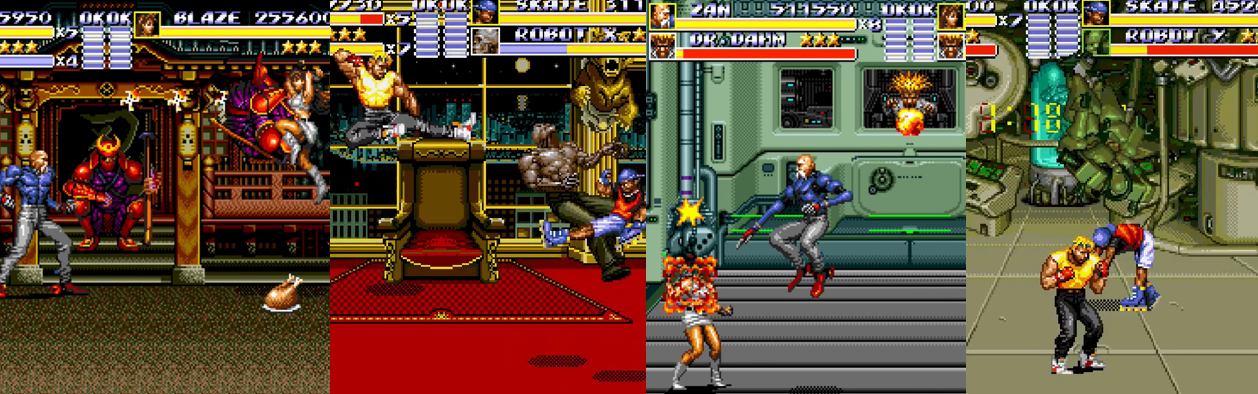
There are some tough bosses to contend with so it helps to play with a friend to dish out the damage.

New bosses do appear in Streets of Rage 3, however. At the end of Stage 3, you’ll battle an exact copy of Axel; this duplicate has all of Axel’s abilities and special attacks, but changes colour and bursts into flames as you land hits and is eventually revealed to be a robot imposter upon defeat. One of the hardest bosses is Yamato, an armour-clad samurai who is actually three bosses in one. Each samurai will take it in turns to attack you, slashing across the screen with their katana, duplicating themselves, and performing a diagonal dash attack that can be hard to dodge. When you finally confront Mr. X, the game initially frames the confrontation as being exactly like in the last game but, after dispatching his goons, he’s also revealed to be a robot duplicate. Robot X dashes across the screen on rocket boots, fires at you from a wrist-mounted gun, and even shoots homing missiles at you! You’ll then encounter weaker versions of this boss as regular enemies in Stage 7, which also sees a unique boss battle as you’re placed on a vertical conveyer belt that constantly forces you towards an electrical barrier while Dr. Dahm tries to crush and electrocute you with his mechanical claw arm. While it can be tricky to land hits on this, and time your attacks to avoid being shocked, it’s nothing compared to the final encounter with Mr. X, in which his disembodied brain controls the heavily-armoured Robot Y. This hulking foe is made all the more threatening by its maniac attack patterns; it spins around the place, barely fazed by your attacks, and sports a four-tiered life bar and missiles. Not only can it shrug off your attacks and deliver big damage with its basic strikes, the bastard can even grab you out of the air and deliver a huge slam that can easily drain half your life bar. You’re also given just three in-game minutes to defeat it and get the game’s best ending, making for easily the most challenging boss battle not just in this game but in the entire trilogy.

Power-Ups and Bonuses:
As ever, you’ll find a whole bunch of destructible objects in the game’s Stages for you to smash to uncover apples and roast dinners to restore your health, bags of cash and gold bars to add to your high score, and weapons to use against your enemies. Weapons are a little more diverse this time around, but also notably different; not only do they each have a life bar of their own, as stated, but some are single-use only. Knives, for example, are now thrown by default, as are grenades, though you can throw every weapon with the press of a button. You can grab kunai blades, wooden planks, lead pipes, baseball bats, and swords to attack your enemies, but be warned as enemies can also acquire (and throw) these weapons, and even steal your health items if you’re not fast enough!

Additional Features:
There are four Achievements to earn in Streets of Rage 3, and two additional Achievements as part of playing all three games in the SEGA Vintage Collection. The four specific to this game require you to defeat the robot Axel as Axel, free Roo, save the Chief as Zan, and max out your special attack by acquiring three stars. As in the other two games, each of these (with the exception of the latter) are achieved by playing alone and there are no Achievements for playing alongside a friend, or finishing the game as each character, which remains a disappointment. Streets of Rage 3 has a number of endings that are dictated by your progress in the last two Stages and which difficulty you play; you won’t get Achievements for seeing all of these endings, though, and are required to just beat the game (and the other two) to earn 100G. The “Duel” mode from Streets of Rage II returns; now called “Battle”, this mode lets two players to go head-to-head as one of the four playable characters in a one-on-one fight (but, again, there are no Achievements tied to this). This version of the game comes with the same customisation options as the others, so you can set wallpapers, scan lines, and smoothing, listen to the soundtrack on the jukebox, switch between the Japanese, European, and North American versions of the game, save replays, and use save states to make things easier on yourself. Alongside the usual local and online co-op returns, you can still set a high score on the leaderboard and take on the “Trial” mode, which has you battling towards a high score on different difficulty stages against a time limit or extracting the Chief as fast as possible, with the lives you lose adding to your timer.

The Summary:
The question permeating all these reviews of the Streets of Rage games is: Which is better? Streets of Rage or Final Fight? While the first game fell quite short of matching its arcade counterpart, Streets of Rage II was much closer, and Streets of Rage 3 is right up there with some of the best arcade beat-‘em-ups. Everything about the game is bigger and better than the last two, expanding upon the gameplay and presentation to offer the best Streets of Rage experience yet. Reintegrating elements from the first game, such as stage hazards, and expanding upon the gameplay by removing the time limit but offering some variety in tense sequences that see you fending off a digger or desperately fighting to save the Chief really add to the overall experience and make things less monotonous. On the flip side, and what keeps Streets of Rage 3 from earning my coveted fifth star, the music isn’t as good as in the previous games and the difficulty spike is very noticeably, making for some frustrating moments as enemies have bigger health bars and the time offered to you to complete tasks is so tight that it’s easy to fail and be left with one of the bad endings. The gameplay mechanics have never been better, however; the additional of the power gauge for specials, new control options, and impressively detailed sprite work and backgrounds make the game slick to control and endlessly visually interesting, but the recycled boss battles are a shame, especially considering how much detail was packed into every Stage. Overall, I’d say Streets of Rage 3 is easily the best of the original trilogy, and would recommend it as the go-to title to play and own; bigger, better, with more variety, some fun bonus characters, and different endings to work towards, the only thing holding it back from five stars are a few minor missteps that can make it a little too challenging an experience.

My Rating:

Rating: 4 out of 5.

Great Stuff

Did you enjoy Streets of Rage 3? How do you think it compares to the original, its sequels, and other beat-‘em-ups? Did you enjoy Zan’s inclusion or did you stick to a character you were more comfortable with? What did you think to the energy gauge and the recycled bosses from the last games? Have you ever gotten the game’s best ending? Which beat-‘em-up game or franchise is your favourite and why and what is it you enjoy about the genre? To share your memories of Streets of Rage 3, leave a reply below or comment on my social media and be sure to check out my reviews of another classic beat-‘em-up titles.

Game Corner: Streets of Rage II (Xbox 360)

Released: 30 May 2012
Originally Released: 20 December 1992
Developer: M2
Original Developers: Ancient, H.I.C, MNM Software, SEGA, and Shout! Designworks
Also Available For: Arcade, Dreamcast, GameCube, Game Gear, Master System, Mega Drive, Mobile, Nintendo 3DS, Nintendo Switch, Nintendo Wii, PC, PlayStation 2, PlayStation 3, PlayStation 4, PlayStation 5, Xbox One, Xbox Series S/X

The Background:
Sidescrolling beat-‘em-ups were a popular genre in both arcades and home consoles back in the mid-nineties thanks to games like Double Dragon (Technōs Japan, 1987), Final Fight (Capcom, 1989), and Teenage Mutant Ninja Turtles IV: Turtles in Time (Konami, 1992). Noriyoshi Ohba and his small team of developers drew inspiration from this genre to create the first Bare Knuckle Streets of Rage (SEGA, 1991) title, which initially released exclusively on SEGA’s home consoles. Given that Streets of Rage was incredibly popular and highly praised, a sequel was released only a year later; to incorporate new features and improvements over the original release, the developers improved the Mega Drive’s cartridge specifications to allow for larger, more detailed sprites and increased enemy swarms. Ayano Koshiro designed and coded the new characters, their moves, and tweaked the gameplay experience to make things faster, more dynamic, and more capable of competing against Capcom’s brawlers on Nintendo’s consoles. All this work paid off as Streets of Rage II was one of the top five best-selling Mega Drive games upon release and was met with widespread critical acclaim; reviews praised the improvements and combat, Yuzo Koshiro’s soundtrack, and the gameplay in general was universally celebrated. After being re-released and ported numerous times over the years, all three Streets of Rage games came to the Xbox 360 as part of the SEGA Vintage Collection, with this version including additional modern quality of life elements such as save files, a replay feature, and bonus content.

The Plot:
One year after saving Wood Oak City from Mr. X’s crime syndicate, former police officers Axel Stone and Blaze Fielding join forces with professional wrestler Max Thunder and Eddie “Skate” Hunter, the younger brother of their comrade, Adam Hunter, when Mr. X makes a sudden return and kidnaps Adam!

Gameplay:
Like its predecessor, Streets of Rage II is a 2D, sidescrolling beat-‘em-up in which players pick from one of four playable characters and return to the mean streets of Wood Oak City to clear out a new batch of thugs across eight levels (now referred to as “Stages”). As before, you can choose to tackle this either alone or alongside a second player, who can jump in at any time, and can again pick from four difficulty settings (ranging from “Easy” to “Hardest”). This time around, you can manually set the amount of lives you have from the “Options” menu and, after losing all of your lives and continues (of which you have three on “Normal”), you can enter your initials on the high score board and then switch to a different character to continue playing as if you want. Each Stage is played against a generous time limit that is extended by clearing enemies from the screen, or if you lose a life. Compared to the last game, Streets of Rage II is much bigger, faster, and more responsive, with additional animations, combos, attack options and unique gameplay mechanics both shared and exclusive to the four playable characters. Once again, you have a simple three button control system that can be fully customised both in the in-game menu and using the SEGA Vintage Collection settings to allow for a rapid fire attack option. By default, A sees you attack with either a punch or a kick, B lets you jump to land one of two jumping attacks, and X lets you pull off one of two special moves to clear away groups of enemies at the cost of some health. You can switch up these buttons as you like in the main menu, and you can now pull off a rear attack by either pressing A and B together or by assigning this attack to another button (I used X) and pull off either a dash or a forward lunge attack by double tapping the directional pad and pressing attack. When you get up close to enemies, you’ll also grab them, allowing you to either pummel them, toss them behind you (and into other enemies), or slam them to the ground for big damage. Anything you can do, your enemies can do too, however, so you’ll need to make sure to avoid them grabbing and throwing you, overwhelming you from all sides, or sliding or charging at you. Although Axel, Blaze, Max, and Skate all share the same basic attacks and controls, each now has five different attributes that changes the way they play as they have more or less focus on Power, Technique, Speed, Jump, and Stamina. This means that Skate is the fastest but weakest character and Max is the most powerful but the slowest, and this extends to their attack options. For example, Axel can perform his “Grand Upper” to somewhat dash ahead, Blaze unleashes a short range fireball and Skate literally dashes ahead in a diving cannonball attack while Max does a limited shoulder charge and slide attack, so you really feel a difference when playing as each character as you trade off speed and jump height for attack power or defence.

The four playable characters all control a little differently and have unique special attacks.

Special attacks are much more varied this time around as well; rather than every character simply calling in backup, each one has a different health-sapping move to deal big damage to multiple enemies. One is performed by a simple press of the special attack button and the other is performed in conjunction with a directional input and, since they drain your health, you won’t have to worry about picking up specific power-ups to replenish them, though your health bar does drains down to the point where you can’t pull them off. This introduces a new layer of strategy to combat as you now must weigh the risk and reward of the abilities of your chosen character while also factoring in whether it’s better to lose a little health pulling off a special or risk losing more health by holding back and getting pummelled by enemies. As ever in these types of games, your goal is to travel from the left side of the screen and to the right and wade through enemies; however, this time around the screen occasionally scrolls diagonally downwards and upwards. Stages are also much longer and generally comprised of at least three areas, meaning when you reach the final part you’ll usually battle a sub-boss and then enter a building or a new area to take on more enemies, making each Stage (and, consequently, the game) much longer. Taking out enemies and grabbing pick-ups still awards you points, and you’re once again awarded bonus points at the end of each Stage depending on how much time and life you have left, which will eventually award you with an extra life. By default, each character is pretty durable, though some are tougher than others, and I found that raking up extra lives was much easier this time around. More enemies, and more varied combinations of enemies, fill each screen at any one time but the game feels less cheap than the last one and the new combat animations and mechanics make crowd control a lot easier. It also helps that onscreen hazards are now at a minimum; there are no death pits to fall down, no crushing weights or flames to worry about. While some enemies will toss grenades at you from the background, pop up from sewer holes, or leap in from offscreen, the only real onscreen hazard you come across are some conveyor belts. Enemies remain shy and like to linger just offscreen, which can be annoying when you’re trying to progress further, and some destructible objects do tend to explode, but these can also damage enemies as well, which is very helpful. Streets of Rage II also has not one, not two, but three elevator sections, none of which allow you to toss your foes off the side, and when you view your high scores you’ll be able to see stats like which Stage you got to and how many K.O.s you scored (which I assume is enemies beaten but it could also be the amount of lives you lost).

Graphics and Sound:
Streets of Rage II continues the tradition of the series by filling every Stage with a catchy, thumping soundtrack that really helps to make the monotonous gameplay fun since you’re just humming away as you go to town on waves of enemies. You still get a congratulatory melody after finishing a Stage, boss themes, and scream, grunt, and groan; it’s always obvious when you’ve grabbed an item or earned an extra life thanks to an audible jingle but, while many of the sounds and music are more elaborate and impressive than the first game, many are still recycled from The Revenge of Shinobi (SEGA, 1989). The overall presentation is much improved, however; the heads-up display is now no longer confined to an ugly black box at the top of the screen, meaning the locations are bigger and much more detailed; enemies now have (ridiculous) names and life bars of varying lengths (with sub-bosses and bosses having two- or three-tiered life bars), and there’s generally a lot more life in the sprites and environments.

The game is bigger and far more visually interesting than before, with an equally kick-ass soundtrack.

The sprites are much bigger and more detailed than before; their idle animations still generally amount to just breathing heavily and waiting for the next punch-up, but Skate glides along on his rollerblades in a very slick way and everything just has a little more polish this time around, which is only bolstered by a few new animation frames when grabbing and beating on enemies or performing your character’s combos. The story is once again told through text but the font is much clearer and longer, still images are used to recap the ending of Streets of Rage and show the ending sequence for this game, and Stages are way more varied than before thanks to going on longer. You’ll see lampposts and chain link fences in the foreground, cars and different views of the city in the background, fog and rain effects, smash your way through a bar and an arcade (where enemies are playing Bare Knuckle machines), explore a pier and fairground (where enemies sleep on bunches, a rollercoaster can be seen, and you end up in something ripped from the mind of H. R. Giger and a pirate ship), and battle your way into the SEGA Stadium where the green becomes a descending elevator section, You’ll cross a bridge held up by huge girders, traverse conveyer belts in a factory, battle through the foyer of Mr. X’s newest elaborate skyscraper, and even end up in a gladiator pit and in the back of a moving van where enemies and audiences cheer on your foes as they try to beat the life out of you. It’s all much bigger and more visually impressive, even though many of the Stages are reminiscent of the last game; little touches like fighting along the beach from the other perspective than in Streets of Rage (so now the sea is behind you) and progressing from the interior of a rocking ship up to the deck really show how the game is taking everything that worked in the first and improving upon it for a deeper, more visually engaging and exciting gameplay experience.

Enemies and Bosses:
While you’ll recognise the vast majority of the enemies you’ll encounter throughout Streets of Rage II from the last game, they now have names and life bars and palette swapped versions of them crop up right from the first Stage, which helps to make them seem more varied than they actually are. The denim-clad thugs and yellow-jacketed punks return, still charging at you with knives, sliding at your shins, or trying to throw you across the screen but they’re now joined by bald bastards who uppercut you out of the air at the worst possible moments. While the whip-cracking dominatrixes return, the martial artists have been replaced by Muay Thai kickboxers and ninjas who can guard against your attacks, flip about the place, and toss throwing stars your way, respectively. Bikers make their first appearance here, charging and leaping at you on their motorcycles, though you can kick them off and take them out with their own exploding bikes; their grenades will also damage other enemies, and you’ll now drop whatever weapon you’re carrying when you grapple with an enemy (and ninjas can even catch ones you throw at them!)

Sub-bosses and bosses return as regular enemies, except for the Vehelits and formidable Shiva.

As Stages are now longer, you’ll now have to contend with a number of sub-bosses as well as end of Stage bosses. As before, all of these reappear in later Stages as recoloured and renamed regular enemies, though slightly weaker and with some variations. The first sub-boss is Jack, a large punk with a flaming Mohawk and garbed in a ripped denim shirt and jeans. This guy’s packing knives, which he’ll stab or throw at you, but you can also pick them up and use them against him and any other enemies coming for you, which is handy when he reappears in his recoloured forms. Dominatrixes like Elektra often attack in pairs and are given extra attack range with their whips, which can also be electrified, but I found them pretty easy to take out before they could do any real damage. Hakuyo and his variants are muscular martial artists who literally drop in with flying kicks and jump attacks, while Big Ben is a returning, rotund enemy from the last game who will plod around trying to set you alight with his fire breath or try and crush you with a big belly flop (but, this time, you are able to throw and slam him without being hurt). One of the more unique sub-bosses is Vehelits, an animatronic alien head that pans across the screen to send you flying and is one of only three enemies you’ll fight just the one time in the entire game, which is fine as all the other sub-bosses and bosses crop up again in the later Stages. After running an enemy gauntlet, you’ll once again confront Mr. X; this time, rather than offer you the chance to join him, he orders his personal bodyguard, martial artist Shiva, to soften you up. Shiva is the closest you’ll get to a boss who is as versatile as you; he attacks with flying and sliding kicks, guarding against your attacks, and flying at you with flaming cartwheel kicks. While he cuts an intimidating figure, he’s actually not as hard as some of the game’s other sub-bosses, however.

While the first two bosses aren’t too difficult, things get tricky once Zamza and Abadede appear.

After fighting through the bar and into a rainswept alley, you’ll take on Barbon, the musclebound proprietor of the establishment you just wrecked who (alongside a bevvy of regular goons) throws spinning kicks, tosses you across the screen, guards against your attacks, and kicks you out of mid-air. When he reappears later, he’s actually one of the easier enemies, especially compared to Stage 2’s boss, Jet. This jetpack-wearing asshole constantly hovers overheard, swooping down or across the screen or grabbing you and sending you crashing to the ground. It can be a little tricky to land a hit on him, much less a combo, as it’s not always easy to judge what “level” of the background he’s on, which can make him a hell of an annoyance when he reappears as a regular enemy. Still, he’s a walk in the park compared to Zamza; this Blanka-like asshole attacks with clawed talons, spinning and jumping all over the place and flying at you with a cannonball attack, swiping you out of the air with a twirling uppercut, or delivering a massive German Suplex up close. His appearance on Stage 8 as “Nail” was a particular headache for me, and actually harder than the last bosses of the game since he’s so hard to keep track of and land decent hits on. In the gladiator pit, you’ll have a rematch with hulking wrestler Abadede; this Ultimate Warrior rip-off has expanded his repertoire to include an uppercut, a lariat strike, a flying body splash, a muscle flex that can send you flying, a big back suplex, and will even strike you with a wrench when he grabs you.

While the final boss is basically the same as before, there’s some interesting (if annoying) battles prior to this.

After fighting your way onto the deck of Stage 5’s ship, you’ll go toe-to-toe with the bulbous Rocky Bear; this guy’s also no joke as he hops about on his tiptoes, pummelling you with punches when he grabs you and easily cancelling your combos with a lunging fist, or comes flying at you with a butt stomp! He’s also accompanied by “Balloon”, a Big Ben variant, and he can be a real pain in the ass as you have to try your luck with a leaping kick, break free of his grab with your special, and dodge out of the way to do some real damage with a combo. Things get a little lazy at the end of Stage 6, however, as you have to fight a variant of Zamza and Jet (known as “Souther” and Stealth”) rather than a unique boss battle, though Stage 7 makes up for this with the tag team combo of robots Particle and Molecule. These cycloptic automatons jump about the place to avoid your attacks, swing their retractable mace-like appendages at you, and even fire projectiles from their eyes but they’re not especially difficult to deal with even when they immediately appear as regular enemies at the start of Stage 8. After dispatching Shiva, you’ll finally face off against Mr. X; unfortunately, this is basically exactly the same as in the last game as Mr. X wanders about trying to brain you with the butt of his rifle (which, to be fair, lands as a combination of hits this time) and haphazardly spraying bullets across the screen. Goons will file in to distract you, but they can also be hurt by Mr. X’s bullets, and as long as you focus on attacking him you’ll come out on top easily enough. I’m actually surprised the developers didn’t have an alternative version of Shiva (or Shiva himself) attack you in this final bout as it’s a pretty simple final fight, and the game is actually much fairer (on “Normal”, at least) than the last one, so it’s not inconceivable that you could get through this without too much difficulty, which is surprising considering how tough and cheap Zamza can be.

Power-Ups and Bonuses:
There are still plenty of destructible objects scattered around the various Stages for you to smash to uncover goodies; apples and roast dinners will restore some or all of your health, the occasional 1-up will grant you an extra life, and bags of cash and gold bars to add to your high score. This is also the main way (outside of disarming enemies) that you’ll acquire a melee weapon; interestingly, there’s only one new weapon in the game (the kunai blade dropped by the ninjas) and some (like the glass bottles) are actually missing. On the plus side, every character swings the metal pipe differently and weapons can be throw at the press of a button to become projectiles but, if you get hit and drop them enough, they still eventually disappear and you may also struggle to attack if you’re standing over a weapon as your character will try to pick it up instead of defending themselves. Since your special move is tired to your health bar, there’s no item to pick up to replenish your stock; you can perform each character’s unique special move as long as you have enough health, and there’s actually a reason to play as different characters this time since they control a little differently and have unique special attacks.

Additional Features:
There are two Achievements on offer in Streets of Rage II, and three additional Achievements as part of playing all three games in the SEGA Vintage Collection. The two specific to this game require you to defeat Zamza on Stage 3 as Skate and Abadede on Stage 4; there are no Achievements for playing with a friend, or for finishing the game as each character, which is a bit disappointing. Unlike the first game, Streets of Rage II only has one ending, further reducing the replay incentive somewhat, but it does come with a new game mode. “Duel” allows two players to go head-to-head as one of the four playable characters in a one-on-one fight; you can select a Stage to battle on, and whether or not special moves are active, but again there are no Achievements tied to this extra mode and no other characters to play as. This version of the game comes with the same customisation options as the last game, allowing you to set wallpapers, scan lines, and smoothing, listen to the soundtrack on the jukebox, switch between the Japanese, European, and North American versions of the game (which again amount only to cosmetic differences), save replays, and make use of save states to the game to make it dramatically easier. Local and online co-op also return, as do leaderboards and the “Trial” mode, which has you battling towards a high score on four different difficulty stages against a time limit or going against Zamza’s “Horror House Challenge”.

The Summary:
I concluded my review of Streets of Rage by saying that I would probably pick Final Fight over it since, while it was a great game and a good attempt at an arcade-style beat-‘em-up, it didn’t quite match up to the level of Final Fight. With Streets of Rage II, the call is much harder to make; with larger, more detailed and visually appealing graphics, new characters with unique ways of controlling and special moves, and longer and more diverse Stages, Streets of Rage II is clearly bigger and better than its predecessor in every way. The core gameplay remains the same, but everything is faster, slicker, and meatier than before; there’s so much more to see and combat is way more fun and the cheapness of the original’s difficulty curve has been toned down quite a bit. While you can argue that this makes Streets of Rage II easier, I’m okay with that; when it comes to arcade beat-‘em-ups, I want a simple pick-up-and-play experience that can be challenging but not unfair or frustrating, and Streets of Rage II was a great time from start to finish. It was a shame to see some weapons missing, some Stage themes repeated from the last game, and that there weren’t more Achievements added to this version of the game, but there’s no denying that Streets of Rage II is vastly superior to the first game in every way. It almost feels like the first game was a proof of concept for the engine and the mechanics as Streets of Rage II just refined everything into an experience that’s far closer to what one would expect from an arcade title, so I would definitely choose to pick this one over the first one and happily compare it to Final Fight in terms of quality and enjoyment.

My Rating:

Rating: 4 out of 5.

Great Stuff

What did you think to Streets of Rage II? How do you think it compares to the original, its sequels, and other beat-‘em-ups? Which of the four characters was your go-to and were you a fan of the new ones introduced here? What did you think to the longer Stages and additional sub-bosses? Have you ever beaten this game on the hardest difficulty setting? Which beat-‘em-up game or franchise is your favourite and why and what is it you enjoy about the genre? To share your memories of Streets of Rage II, sign up to leave a reply below or comment on my social media and be sure to check out my other reviews of the series!

Game Corner: Streets of Rage (Xbox 360)

Released: 30 May 2012
Originally Released: 2 August 1991
Developer: M2
Original Developer: SEGA
Also Available For: Arcade, GameCube, Game Gear, Master System, Mega Drive, Mobile, Nintendo 3DS, Nintendo Wii, PC, PlayStation 2, PlayStation 3, PlayStation 4, PlayStation 5, Sega CD, Xbox One, Xbox Series S/X

The Background:
Back in the mid-nineties, sidescrolling beat-‘em-ups were a popular fixture in arcades, and demanded little more than players hold right and mash buttons to take down waves of generic enemies and continually part with their hard-earned pocket money. Beat-‘em-ups were also prominent on home consoles thanks to the ports of Final Fight (Capcom, 1989) and Teenage Mutant Ninja Turtles IV: Turtles in Time (Konami, 1992), so it made sense for SEGA to develop the beat-‘em-up series, Bare Knuckle Streets of Rage (SEGA, 1991 to 1994). Essentially a rip-off of the Final Fight series, Streets of Rage was the brainchild of Noriyoshi Ohba and Hiroshi Momota and stood out from others in its genre by foregoing the arcades entirely. Having previously helmed The Revenge of Shinobi (SEGA, 1989), Ohba drew from Double Dragon (Technōs Japan, 1987) and Starsky & Hutch (1975 to 1979) to compete with the likes of Final Fight and he and his nine other developers managed to pull the first title in the series together in just six months. Streets of Rage was incredibly popular upon release; critics praised the colourful graphics, two-player gameplay, and range of attacks offered to players and Yozo Koshiro’s soundtrack was equally lauded. Having been re-released in various compilations over the years, Streets of Rage and its sequels made it to the Xbox 360 as part of the SEGA Vintage Collection, with this version including additional modern quality of life elements such as save files, a replay feature, and bonus content.

The Plot:
The once a peaceful and prosperous Wood Oak City has fallen into the hands of a crime syndicate led by the mysterious Mr. X. The Syndicate has absorbed the city’s government and even has the police department in their pocket, causing crime and violence to run rampant. Police officers Adam Hunter, Axel Stone, and Blaze Fielding decide to take matters into their own hands and take to the streets as vigilantes to put a stop to the Syndicate.

Gameplay:
Streets of Rage is a 2D, sidescrolling beat-‘em-up in which players pick from one of three playable characters and battle swarms of thugs on the mean streets of Wood Oak City across eight stages (referred to as “Rounds”). You can do this either alone or alongside a second player, and the game has four difficulty settings ranging from “Easy” to “Hardest” which dictates the amount of lives and continues you have and the aggressiveness of the game’s enemies. Each Round carries a time limit that can only be extended by clearing the current wave of enemies from the screen; if you fail to do this, you’ll get a time over and lose a life, but will respawn on the same screen with the time replenished. While the game has a slow, almost plodding pace and movement can be equally sluggish, you’re given a surprising range of attack options considering you only really need to press one button to attack. By default, A throws a punch, B lets you jump, and X calls in police backup to fire a screen-clearing missile from their squad car. You can switch up these buttons to your heart’s desire in the main menu, and even activate a rapid fire option so you simply hold down your chosen attack button to make mincemeat of enemies, but the only way you can move and attack at the same time is to pull off a flying kick. There are no dash or dash attack options here but, open getting close to enemies, you can stun them with a nifty combo, grab and pummel them, hop around behind them to pull off a slam or German Suplex, and toss them across the screen and into other enemies, down holes, or send them crashing through destructible objects. Enemies can also grab and throw you, however you can fend off their buddies when they’re holding you still and eventually throw them off if you hit the buttons fast enough.

While each character controls the same, they have different attributes to make their gameplay unique.

While Adam, Axel, and Blaze all essentially play the same, each has different attributes that changes the way they play; Adam is slower, for example, while Axel has a shorter jump and Blaze has a weaker attack but is much faster and dramatically speeds up the pace of the game, so it definitely changes the way you play depending on which character you pick. With the exception of two Rounds, your only goal is to travel from the left side of the screen and to the right, taking out larger and more varied groups of enemies as you progress. Defeating enemies and snagging pick-ups will award you points; you’ll also earn bonus points at the end of each Round depending on how much time and life you have left, and you’ll gain an extra life once you reach a certain increment in your score. While you’re quite durable, it’s easy to get overwhelmed and lose a life; if you do, you’ll respawn right where you died with your specials and time replenished and even send all onscreen foes flying as a bonus, but you can’t afford to get too cocky as it’s pretty easy to burn through lives, especially on later Rounds and bosses, and then have to rely on your small stock of continues. Streets of Rage’s challenge definitely increases the further you progress; enemies become more aggressive and numerous but are also quite shy and linger just offscreen to really run down the timer. You’ll also have to deal with instant-death holes, conveyor belts, and crashing hazards, though these can all be used against your enemies as well. As is the tradition in any sidescrolling beat-’em-up worth its salt, you’ll also have to contend with a vertical elevator stage in which a small platform will rise up the outside of a skyscraper and wave upon wave of enemies will shuffle in from different floors or drop from above, though you can easily make short work of them by tossing them over the side.

Graphics and Sound:
Streets of Rage features a very catchy, thumping beat of a soundtrack that really helps to make the monotony of its beat-‘em-up gameplay more appealing. Boss battles at accompanied by an ominous theme song and a congratulatory little melody plays upon completion of a Round. Characters will scream, grunt, and groan as they attack, are hurt, or die and you always know when you’ve picked up an item or earned an extra life or special thanks to an audible jingle. If you’ve played The Revenge of Shinobi before, however, you may recognise that the game’s font, heads-up display, and many of the sound effects are ripped from that game, which I always felt cheapened Streets of Rage a bit since no other Mega Drive game I’d played at the time did this unless it was a sequel or part of a franchise.

While many sounds are recycled, the game has a thumpin’ soundtrack and some impressive visuals.

Sprite work is pretty impressive here; the three protagonists and their enemies are a little small, but you can adjust the screen size in the options to make them a bit bigger (though this does pixelate them) and, when left alone, they have very minor idle animations to give them some personality. While the main story narrative is told only through text, the ending features some nice detailed sprite panels showing the trio emerging victorious, and you’re even presented with a dialogue box in the final Round of the game. Where the game really shines, though, are its locations; from the streets to the beach, a factory, and Mr. X’s penthouse suite, the environments are all very detailed and full of little things to see and graphical effects, such as enemies emerging behind shutter doors, rain, windswept rubbish, statues, and the looming lights of the city at various distances in the background. Foreground elements such as lampposts, cars, and the raging sea pop out at you, and you even end up on a boat at one point that rocks up and down from the current.

Enemies and Bosses:
Unlike other beat-‘em-ups of the time, enemies don’t display their names or individual life bars when attacked; life bars are reserved only for the game’s bosses, but it won’t take more than a few hits to take out the low-level scum you encounter in the first few stages. These are made up of denim-clad thugs who sometimes wield knives, yellow-jacketed punks who grab and throw you, and karate-kick throwing martial artists who hop about the place. Very quickly, you’ll encounter more aggressive, palette-swapped versions of these enemies who carry other melee weapons, can deal more damage, and seem to recover faster after being knocked down. You’ll also come across whip-cracking dominatrixes, jugglers who dance around the screen using fire-bombs and axes as makeshift shields and projectiles (that you can, thankfully, hit with your attacks) and even buffet carts that come hurtling at you from off-screen.

Large, hard-hitting bosses await at the end of the Rounds and even reappear as regular enemies.

Seven Rounds means seven bosses to contend with but you won’t be facing any of them just once as all of them will reappear as regular enemies in later Rounds, though without life bars. The first you’ll encounter is Antonio, a large man wearing denim and carrying a razor-sharp boomerang; Antonio will linger just off-screen, circle around the area, and either toss his boomerang your way or deliver a hefty kick when up close but is undeniably the easiest of the bosses despite being the first formidable enemy of the game. The second boss, Souther, is much more difficult and starts a trend of the bosses being accompanied by a gaggle of thugs to distract and annoy you. Souther sports two sets of metal claws for hands and drifts around the screen swiping at you or unleashing a fast-paced barrage of slashes that can easily tear through your life bar, so it’s best to try and stay on the move and anticipate where he’ll be so you can pummel him with your grapple attacks. The hulking Abadede awaits you at the end of Round 3; this Ultimate Warrior rip-off lumbers in from off screen with a charge or devastating uppercut but, despite his size and strength, can easily be taken down by quickly hitting jumping kicks rather than trying to match fists with him.

Bosses are soon accompanied by a swarm of thugs to really put a crimp in your day.

At the end of Round 4’s bridge, you’ll have your first encounter with Bongo, a rotund fire-breathing man who homes in on you to try and set you ablaze. While it can be difficult to avoid his flaming breath, you also need to avoid trying to throw or suplex this guy as, in a fantastic piece of attention to detail, you’ll end up taking damage and being crushed from his hefty weight. After battling through the boat and fending off recoloured versions of Abadede, you’ll have to fight two bosses at once: Mona and Lisa, easily the laziest bosses in the game as they appear to simply be palette swaps of Blaze. These gals are also extremely slippery devils as they’ll flip all over the place, try and throw kicks at your head, and send you flying with judo throws, so it can be really tricky just trying to land a hit on them in the first place. Two Southers await you at the end of Round 6 and, while you won’t face any bosses in Round 7, you do have to endure a gauntlet of enemies on the elevator and all of the previous bosses hounding you throughout Round 8. Round 8 concludes with a showdown with Mr. X; beforehand, he’ll offer you the chance to join his cause. If you answer “Yes” in two-player mode but your friend answers “No”, you’ll have to battle each other to determine who gets to take him on. The battle against Mr. X is fraught with a never-ending slew of thugs; the big boss himself wanders back and forth, spraying bullets across the screen and trying to brain you with the butt of his rifle, but actually isn’t too tricky to take out (on “Normal” mode, at least) despite Round 8 not allowing you to use specials.

Power-Ups and Bonuses:
Be sure to smash everything you see in each Round, from phone booths to tyre stacks and wooden crates, as these will yield apples or roast dinners that will restore some or all of your health. Very occasionally, you’ll find a 1-up or an extra special hidden in these too, or a bag of cash and gold bars to add to your high score and edge you closer to an extra life. These destructible elements, and enemies, can also hold a variety of melee weapons, from knives to pipes and baseball bats, to stun grenades, all of which can help turn the tide in your favour by adding extra range to your attacks and hitting multiple enemies at once. You can throw knives and the grenades, limiting their usefulness, but weapons won’t break upon use; if you get hit and drop them enough times, however, they will eventually disappear from the screen and, if you miss anything, you can’t go back and get it so just grab it when you see it or it’s safe to do so (which can be easier said than done, especially if a couple of weapons or pick-ups are staked next to each other). Finally, although there are three characters to select, each with their own attacks and gameplay variants, there’s only one special move which, while useful, is a little disappointing.

Additional Features:
There are four Achievements to earn in Streets of Rage, and two additional Achievements as part of playing all three games in the SEGA Vintage Collection. While two of these require separate playthroughs as Adam and Blaze alone, there are unfortunately no Achievements for playing as each character or alongside a friend, and the other two amount to simply tossing an enemy and recovering from a throw, which is a bit disappointing consider the game as multiple endings and opportunities for fun Achievements, such as crushing an enemy with a stage hazard or tossing a certain number to their deaths. This version of the game also comes with a variety of display options that allow you to set wallpapers, scan lines, and smoothing in addition to customising the controls to your liking. There’s also a jukebox that lets you listen to the game’s rockin’ beats, the ability to switch between the Japanese, European, and North American versions of the game (which seem to amount to cosmetic differences and little else, certainly no extra Achievements), and adds save states and replays to the game to make it dramatically easier. Probably the most significant additional feature is the “Trial” mode, which tasks you with achieving a high score on four different difficulty stages against a time limit or lasting out against enemies on the elevator Round (though, again, there are no Achievements to be gained from this). Finally, you can play with a friend locally and online, and the game includes at least two endings, one where you defeat Mr. X without question and a bad ending where you usurp him and become the new crime boss.

The Summary:
I do enjoy me a good sidescrolling beat-‘em-up and there’s a lot to like in Streets of Rage. Without a doubt the game, and the series, is one of the Mega Drive’s most prominent titles, and yet the series is often forgotten about these days and SEGA have been uncharacteristically reserved about churning out sequels and spin-offs or even featuring Streets of Rage characters in their other titles. If I had to pick between Streets of Rage and Final Fight, however, I’d pick the latter; for a console-exclusive beat-‘em-up the game does really well, but the sprites aren’t as big and detailed and the gameplay isn’t as fluid as an arcade title. The lack of a dash function and unique specials for each character are issues as well, as is the troublesome difficulty curve, though many of the game’s more tedious aspects were obviously refined in the sequels. As a first entry, it’s pretty basic and recycling music and sound effects from The Revenge of Shinobi doesn’t really help the game stand out too much but it’s certainly not an unplayable piece of trash. This version of the game greatly improves the original experience with save states and other bonus options, though it’s disappointing that more Achievements weren’t incorporated into it to add to the replay value. Overall, this is a pretty fun little beat-‘em-up with a surprising amount of attacks, some funky music, and some decent sprite work on offer though it can’t be denied that Streets of Rage was effortlessly eclipsed by its sequel/s.

My Rating:

Rating: 3 out of 5.

Pretty Good

Are you a fan of the original Streets of Rage? How do you think it compares to the sequels and other beat-‘em-ups? Which of the three characters was your go-to and which of the sequels was your favourite? Did you enjoy the additional features added to this version of the game and would you like to see more from the series in the future? Which beat-‘em-up game or franchise is your favourite and why and what is it you enjoy about the genre? To share your thoughts on Streets of Rage, sign up to leave a reply below or comment on my social media and be sure to check out my other retrogame reviews!

Mini Game Corner: Streets of Rage 4: Mr. X Nightmare (Xbox One)

Released: 14 July 2021
Developer: Dotemu/Lizardcube/Guard Crush Games
Also Available For: Nintendo Switch, PC, PlayStation 4

A Brief Background:
After an absence of almost twenty-five years, the Streets of Rage series (SEGA, 1991 to 1994) finally made a long-awaited comeback in 2020. As a massive fan of the series, and sidescrolling beat-‘em-ups in general, I was very surprised, and excited, to see Streets of Rage make a reappearance; Streets of Rage 4 sold extremely well and was received generally positively but even I could never had guessed that it would do well enough to gain any kind of downloadable content (DLC). Yet, surprisingly, that’s exactly what we got as some additional character, gameplay modes, and difficulty settings were made available for the game and a physical Anniversary Edition was even released (for PlayStation 4 and Nintendo Switch only but still…)

The Review
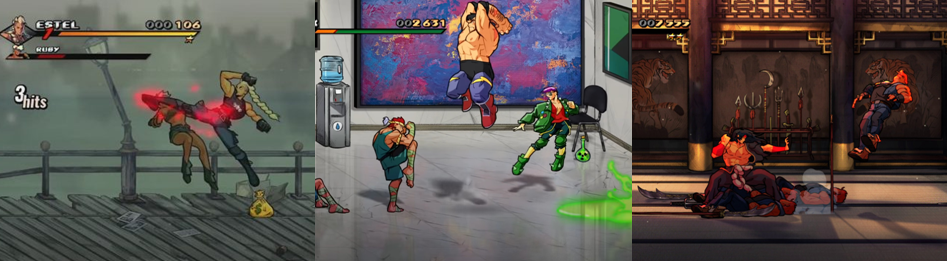
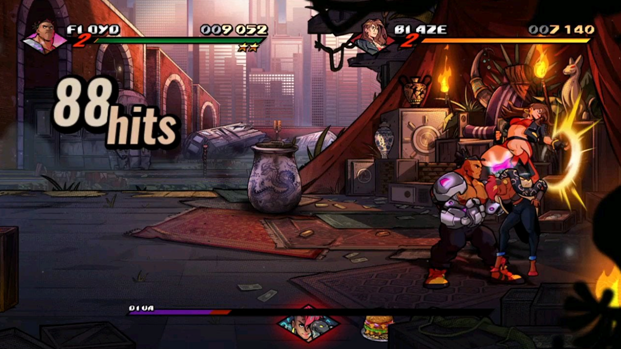
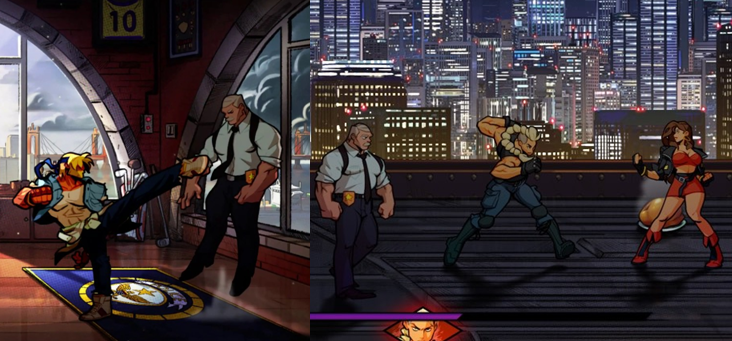
Streets of Rage 4: Mr. X Nightmare adds some additional features to the original game, which was a sidescrolling beat-‘em-up that saw you attacking enemies with X, busting out a life-draining special attack with Y, jumping with A, and clearing out large groups of enemies with a screen-clearing special move if you have enough Stars in your quest to clean up the streets of Wood Oak City. The first thing you’ll notice when playing Mr. X Nightmare is the addition of three playable boss characters: Estel Aguirre, Max Thunder, and Shiva. Two of these (Max and Shiva) were previously playable but only in their 16-bit variants and all three are ripped straight from their boss battles in the base game. When playing as each of them through the story mode, however, none of these characters have any real impact on the narrative; the cutscenes don’t change or acknowledge them and the only thing that’s different is that when you fight the character’ boss variants, the boss’s taken on a neon, shadowy colour scheme.

Mr. X Nightmare adds Estel, Max, and Shiva as playable characters.

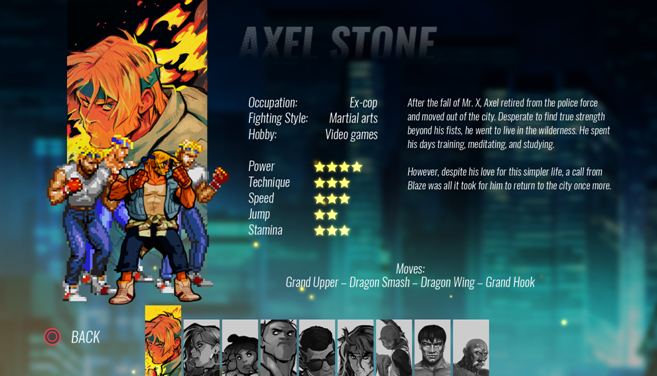
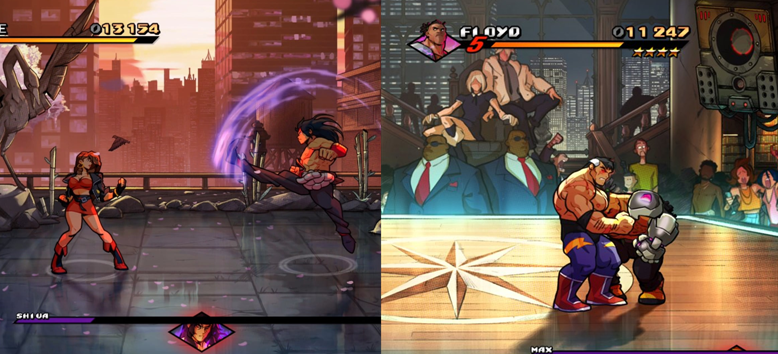
Like the game’s other playable characters, each of these new characters plays slightly different. Of the three, only Shiva can dash towards enemies, for example, but unlike the other two, Shiva cannot pick up weapons (instead, he dramatically flips them up and kicks them at enemies). Estel and Shiva also attack much faster than Max, utilising kicks and fast combos where Max uses slower, more powerful wrestling moves and grapples. Each of them also has Y-based special attacks that will slightly drain their health unless they attack enemies soon after; these seen Estel toss grenades and pounce on opponents with a beatdown, Max charge or slam down on enemies, and Shiva teleport across the screen or out of the air. Each of them also has their own special moves that are executed by pressing Y and B when you have at least one Star. Estel’s is very similar to her boss’s special and sees her call in a bombardment of rockets; Max unleashes a big axe-handle smash and also sees enemies by struck by lightning, and Shiva blasts enemies away with a purple, wing-like aura. The best thing about playing as these new characters is how over-powered a lot of their attacks are; Max, for example, has a super useful Power Slide attack that is easily spammed while Shiva can perform a nifty mid-air kicking combo for decent damage.

Play as Roo and/or test your skills in the new ‘Survival’ mode!

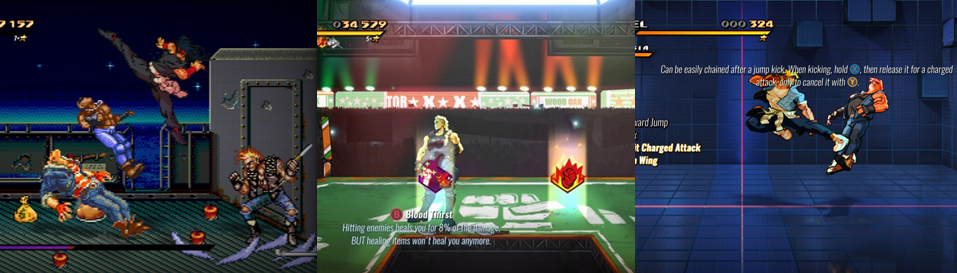
It’s been a while since I played Streets of Rage 4 so I may be forgetting some things but Mr. X Nightmare appears to add a few new weapons into the game’s stages (such as a golf club, an umbrella, and a branch) and the ability to select different colour palettes for every character. The DLC also adds a new difficulty to the game, Mania+, if you fancy taking on an additional challenge and, best of all, the inclusion of a hidden fighter. By highlighting ‘Story on the main menu screen and  pressing up and X and then pressing Start, you’ll get to play as a 16-bit version of Roo the boxing kangaroo, which is pretty cool but it’s a bit of a shame that Roo doesn’t have an alternative skin to match his cameo from the base game. Another addition appears to be that whenever you fight on the hidden, or new, 16-bit stages, every character, even the new ones and altered ones, is rendered as a classic 16-bit sprite. While there isn’t any new story-based content to the game, Mr. X Nightmare does add a new ‘Survival’ mode. Here, you pick a character and play through a series of simulations in a variety of brand new arenas, including new 16-bit levels, and fighting increasingly-difficult waves of enemies. Enemies and destructible boxes will spawn into each area, giving you access to health-restoring good, Stars, and weapons, which you’ll need as you only get one life to play through this mode; when you clear each level, you can pick from one of two perks that stack up and carry over to each level. These can up your attack or defence, add an additional jump, add elemental effects to your strikes or weapon attacks, spawn in Stars, award you more powerful weapons, spawn in an ally, or dramatically increase your attack power and the cost of your durability, among other effects.

The addition of more 16-bit stages, random buffs, and a Training mode add replayability to the game.

The levels and enemies get tougher and tougher as you go but you can make use of environmental hazards to damage enemies; meteors will fall from the sky, lasers and flames will spew up in some levels, wind will blow you about, electrified walls and crushers can harm you and your enemies, and you’ll be able to toss them over edges and such. While you’ll earn Stars instead of lives in this mode, it also includes a whole bunch of new weapons to use and, as you clear levels, you’ll unlock enemies to battle in the new Training mode (essentially a traditional one-on-one fighter), concept art and artwork, and also additional alternative modes for each playable character to customise them to your specifications. Even better, the DLC adds not only some new music tracks but also eight new Achievements to earn that are specifically tied to you completing the story mode as the three new characters, performing Roo’s special move and spawning in clowns, and mastering the new Survival mode, all of which is a great incentive to return to the game.

The Summary:
I was super happy with how Streets of Rage 4 turned out; it was everything I could have asked for from a sidescrolling beat-‘em-up and had a decent amount of features and replayability to it. it could be a little unforgiving at times but it was a blast to play through and I was very surprised and excited to hear that the game would be expanded upon with some DLC. The addition of new characters was very welcome, though it is a little disappointing that they don’t factor into the story more; like, maybe they could have played through slightly altered versions of the stages and fought against the existing protagonists rather than shadow versions of themselves. The addition of new Achievements was very much appreciated and the ‘Survival’ mode is pretty great, though, and sees you battling against every character and boss from not only this game but also the others in the series. Again, it can be tough but playing alongside a friend should make it quite the entertaining time and, overall, I’d say it’s well worth picking this DLC up to add a few more hours onto an already enjoyable title.

My Rating:

Rating: 4 out of 5.

Great Stuff

Did you pick up the Mr. X Nightmare DLC? If so, what did you think to it? Which of the new playable characters was your favourite? Did you manage to unlock Roo? How far did you get in ‘Survival’ mode? What is your favourite piece of DLC for a videogame? Whatever you think about Streets of Rage 4 drop a comment below.

Game Corner: Streets of Rage 4 (Xbox One)

GameCorner
SOR4Logo

Released: April 2020
Developer: Dotemu/Lizardcube/Guard Crush Games
Also Available For: Nintendo Switch, PC, PlayStation 4

The Background:
Back in the good old days of the mid-nineties, one of the most prominent genres in arcades was the sidescrolling beat-‘em-up. Simple, mind-numbing arcade action, these titles demanded little more from players than to hold right and mash buttons to take down waves of generic enemies and eat away at your hard-earned pocket money. Beat-‘em-ups were also quite prominent on home consoles; however, while these were mostly ports of arcade titles such as Final Fight (Capcom, 1989) or licensed titles such as Alien vs Predator (Jorudan, 1993) and Teenage Mutant Ninja Turtles IV: Turtles in Time (Konami, 1992), SEGA developed their own exclusive series of beat-‘em-up titles for their consoles and it was called Bare Knuckle Streets of Rage (SEGA, 1991 to 1994). The Streets of Rage trilogy was, functionally, a rip-off of the Final Fight series; players controlled a group of ex-cops and street wise vigilantes who patrolled the mean streets and defeated the many various henchmen of the Syndicate and its figurehead, Mr. X. The brainchild of Noriyoshi Ohba and Yuzo Koshiro, the Streets of Rage trilogy has subsequently been ported and re-released to other consoles through compilations and digital only services but has been largely absent from SEGA’s library for the better part of twenty-five years! The game’s characters didn’t even appear in SEGA’s crossover racing titles, for God’s sake! Streets of Rage 4 changed that, however. Developed by the same team who resurrected Wonder Boy from the depths of obscurity, the game boasts nearly a thousand different frames of animation for each of its characters, all of whom have been redesigned to resemble a comic book come to life. The return of Streets of Rage was a highly anticipated event for me, largely thanks to my love for the series, genre, and SEGA properties in general; for too long, SEGA have allowed their original properties to stagnate in obscurity and I can only hope that the overly positive reception of Streets of Rage 4 prompts them to dust off some of their other franchises and bring them back into prominence.

The Plot:
Ten years after defeating Mr. X and his criminal Syndicate in Streets of Rage 3 (SEGA, 1994), Wood Oak City falls under the control Mr. X’s children, the Y Twins, who use hypnotic sound waves to brainwash its citizens and only one team of ex-cop vigilantes are tough enough to stop their nefarious plans!

Gameplay:
Streets of Rage 4 is a sidescrolling beat-‘em-up that controls almost exactly as its predecessors; when taking on the game’s story campaign, you have four characters to select and unlock more as you progress through the story and earn Lifetime Points. Initially, your choices are limited to series staples Axel Stone and Blaze Fielding and newcomers Cherry Hunter and Floyd Iraia, Essentially, each character controls the same: X executes a fast attack that becomes a mini combo the more you mash it, Y unleashes a special attack at the cost of some health (though you can replenish your health by attacking enemies after unleashing this attack), A jumps (and you can jump attack), and you can attack enemies who try to flank you from behind by tapping the shoulder buttons. Get close to an enemy and you’ll grab them, which allows you to deal a grapple attack for massive damage or toss them at enemies as a ranged attack, which is always super satisfying. You can also pick up weapons, health, and other items with B and press Y and B together to unleash a screen-clearing special move if you have enough Stars.

SOR4Stats
Different characters have different stats and special moves that affect gameplay.

However, your character choice does affect gameplay quite a bit; Axel, for example, is an all-rounder but Blaze is much faster in her attacks and Floyd is the slower, more powerful of the four main characters. One thing you’ll immediately notice, and probably by annoyed by, is the lack of a dash function for a lot of the characters; the ability to dash is reserved for the likes of Cherry and the returning Adam Hunter, but every character can perform a rushing attack by tapping forwards twice and then hitting X. As you attack enemies, you’ll begin a combo chain; the longer you can maintain your combo without being hit, the higher your score will be. Thanks to the ability to attack enemies from behind, maintaining a good combo has never been easier (though I still find myself relying on the old jump attack approach) and raking up a high score is imperative to earning all of the game’s Achievements, receiving the higher ranks, and unlocking additional characters as your points are accumulated over time specifically to this end.

SOR4Combo
Keep attacking enemies to rack up an awesome combo and earn more points.

Streets of Rage 4 has multiple difficulty settings to choose from; if you pick “Easy”, you’ll start with more lives and enemies will be much less aggressive but, when you select harder difficulties, you’ll have less lives and have to contend with tougher enemies. As you make your way through the game’s missions, you can break open various crates or destroy objects in the environment to uncover food and cash; food replenishes your health and cash adds to your score. When you reach 10,000 points, you’ll earn an extra life but, if you lose all of your lives, you can retry the stage with some Assists, which grant you additional lives and Stars, to help you clear difficult stages.

Graphics and Sound:
Streets of Rage 4 is rendered with a fantastic comic book-like aesthetic; characters are large and full of life, sporting lots of little animations that add to their charm and personality. The game contains twelve stages, each one either lovingly recreated from the original games or heavily inspired by the first three games and other common beat-‘em-up tropes (yes, there is an elevator stage here; two, in fact!) You’ll begin on the mean streets of Wood Oak City and progress through a prison, the sewers, a pier, a biker bar, a dojo, and even battle on the roof of a train and in an airplane all before you reach Y Island, the game’s final stage, which naturally contains an elaborate castle.

SOR4Details
Stages are filled with character, cameos, and variety.

Stages are full of little details, elements, cameos, and intractable elements; you can break open doors, smash apart parts of the environment, and toss enemies into damaging hazards in almost every single one of the game’s stages and each stage is generally broken up into distinct areas to help keep things interesting. The Skytrain stage is the exception to this as you spend the entirety of the stage on top of the titular train, battling waves of enemies and jumping over obstacles as they speed at you.

SOR4Graphics
The game’s story is told through comic book-like cutscenes.

The game’s story is told through simple, partially animated comic book panels; there’s no voice acting to worry about here and all of the game’s cutscenes can be skipped but they are brief and appealing enough to sit through when you do feel like taking in the game’s simple, but effective, story. The game’s soundtrack, composed by Olivier Deriviere and other notable composers is suitably fitting, featuring a mixture of rock and techno, among others, to give each stage a rhythm and a theme. Even better, the game features the option to switch to a retro soundtrack that features music and sound effects from the first two Streets of Rage games, which is perfect when playing as the unlockable 16-bit style characters.

Enemies and Bosses:
As a mindless beat-‘em-up, Streets of Rage 4 features a number of enemies that get progressively harder as you advance through the game’s stages; enemies are recycled throughout the game, taking on different colour palettes and slightly tweaked attacks as you can, but are generally assorted enough to keep things interesting. You start off taking out generic, denim-clad street thugs like Galsia (who sometimes charge at you with knives and stabbing weapons) and Y. Signal (who sometimes charge at you with a slide tackle) but soon encounter Donovan (a skinhead who has an annoying tendency to uppercut you out of the air), Raven (a Muay Thai martial artists who leaps at you with knees and kicks), and the lackadaisical Francis (who always has his hands in his pockets but flies at you with whirlwind-like kicks) and their many rainbow-coloured variants. You’ll also take on charging biker girls, emo chicks who lob grenades, toxic sludge, and other items at you, and more rotund enemies like Big Ben who breathe fire or belly flop on to you. Some of the game’s more annoying enemies include Goro (not, not that Goro), a martial artist who can reduce your health to nothing by parrying your attacks and bashing you across the screen, suit-wearing bodyguard types who shoot at you with pistols, the whip-wielding girls, and the Goddamn cops! Cops can actually assist you in stages as they’ll attack your enemies, which is helpful, but they have a tendency to grab you so others can hit you and one particular variant loves to rush you and hit you with a taser which is extremely aggravating. You’ll also fight with riot cops who must have their energy shields broken before you can actually damage them, which can be tricky as you can’t rack up a combo of attacks at they can easily swat you away with their batons.

SOR4Bosses
These boss variants can affect a wide area with their attacks.

The game’s bosses are just as varied and interesting and each one has multiple attacks, phases, and issues to watch out for; like some enemies, bosses often have several invincibility frames and nigh-unavoidable rushing attacks and combos so it’s best to keep your distance, bring a weapon if you can, and make good, strategic use of any health items. The first boss you’ll encounter, Diva, isn’t too difficult as long as you get away when she’s charging her primary attack as it has a lot of range. Later on, you’ll have to fight two similarly-themed variants of Diva at the same time, which can be extremely annoying and difficult as, unlike other enemies and bosses, they don’t appear to be susceptible to their partner’s attacks. In this battle, I found it best to eliminate the flame-wielding Riha first as her attacks do more immediate damage.

SOR4Commish
The Commissioner doesn’t get any easier when he shows up as a support boss later on!

Stage two really ramps up the difficulty though as not only does it introduce those damnable taser-wielding cops, it also has you battling the Police Commissioner himself. The Commissioner dashes across the screen and charges up a brutal combo and grab attack that can deal heavy damage and he’s just as annoying when he is brought in as support for another of the game’s bosses, Estel, in the Skytrain stage. You’ll battle Estel twice throughout the course of the game and she’s no pushover either as she attacks with bicycle-like kicks, calls in air support, and tosses grenades at you; the key is to attack and then jump away to avoid her attacks and throw her grenades right back at her and try to avoid the Commissioner in the Skytrain fight as the stage will be complete as soon as Estel goes down.

SOR4Bosses2
Shiva and Max also make welcome returns.

You’ll also battle Shiva, a boss from the original games, who likes to teleport around the stage and conjure shadow versions of himself, a particularly annoying martial artist at the biker bar, and even a brainwashed version of series protagonist Max Thunder. This latter battle can be particularly gruelling thanks to Max’s invincibility frames, dangerous wrestling moves, and the fact that he doesn’t really get stunned by your attacks. DJ K-Washi can also be a trying boss battle as you must not only avoid his many and varied projectiles and goons but also break through his protective shield before you can whittle down his health bar.

SOR4YTwins
After besting the Y Twins individually, and together, you’ll have to contend with their giant mech!

The game’s primary antagonists, the Y Twins, are fought multiple times; you’ll face Mr. Y in the Airplane stage (where he attacks with an Uzi (similar to his father), a bazooka, and grenades) and Ms. Y (who attacks with a rapier-like sword) on Y Island. Of the two individual fights, Mr. Y is easily the more troublesome thanks to his ranged attacks but, once you defeat Ms. Y, you’ll then have to face both bosses at the same time. Once you whittle one of them down to about half of their health bar, they’ll leap into a massive spider-like mech and try to crush you while their sibling continues to press the attack. In this final battle, I find it easier to take out Mr. Y first as his bullets are much harder to avoid; take him down to half health and then attack the mech as and when you can but be sure to also attack the remaining Y twin as, if you deplete the health of the sibling in the mech to nothing, the remaining twin will jump in the mech so it’s much easier to take the remaining sibling out of the equation so you can concentrate on disposing of the mech.

Power-Ups and Bonuses:
The only real power-up you can find in Streets of Rage 4 is the odd Star hidden throughout the game’s stages; otherwise, you’ll mostly be picking up cash for points, health, or a number of weapons throughout the course of the game. These weapons are finite, meaning they will break or disappear after a few hits, but are great for wiping out groups of enemies or throwing as a ranged attack. These weapons range from things such as knives and baseball bats to sledgehammers, swords, and even a razor-sharp boomerang. Often, enemies will be wielding these weapons and can pick them up to use them against you, as well, but you can catch weapons that are thrown at you with a well-timed press of the B button and using an enemy’s weapons against them is imperative to surviving against some of the game’s tougher enemies. Additionally, there are various intractable parts of the environment that you can use to your advantage; you can attack a massive wrecking ball to take out enemies, cause barrels to explode, and toss enemies down pits or cause them to walk into toxic fumes or exposed electrical wires. As helpful as all of these elements are, however, these environmental hazards can also damage you as well so it’s best to keep your distance.

Additional Features:
Streets of Rage 4 features a number of Achievements for you to earn; you’ll get these for clearing the Story mode as each of the available characters, completing modes on different difficulty settings, and for performing certain actions (such as killing three enemies with one explosive barrel or causing a chandelier to kill an enemy). When you first play Streets of Rage 4, your gameplay options are surprisingly limited; you can only choose to play Story or Battle mode and must unlock the Stage Select and Boss Rush mode by clearing the Arcade mode once. I actually like this; so often these days, games come with everything either automatically available or hidden behind downloadable content so it’s nice to actually unlock modes and characters through good, old-fashioned gameplay. Earn enough points across each of the game’s modes and you’ll unlock 16-bit versions of the game’s characters who look and play exactly as they did in the original videogames (sadly, Roo is not playable this time around, though). There are also a lot of options available to you in Streets of Rage 4, ranging from the usual (difficulty selection, brightness and volume customisation and the like) and the unique as you can customise how health-restoring food appears onscreen and switch to the retro soundtrack if you wish. If you explore your environments well enough (or, more specifically, attack arcade machines with a taser), you’ll also find some hidden levels ripped straight from the original Streets of Rage trilogy that pit you against a classic boss character from the first three games and net you some bonus points. If you bought the physical version of the game, as I did, you also get a nifty little artbook and a keyring, which is a nice touch, and Streets of Rage 4 can also be played with friends; the game allows couch co-op for up to four players but online play is limited to just two. However, you need to keep a safe distance when playing with a friend in co-op as you can damage each other in true old school beat-‘em-up fashion, necessitating the need to pick to an area or section of the screen and stick to it.

SOR4Banner

The Summary:
Streets of Rage 4 is a fantastic love letter to everything that was so great about sidescrolling beat-‘em-ups. The genre has sadly fallen out of favour in recent years and I really don’t know why; it’s simple, fast-paced, arcade-style fun that is easy to pick up and play and waste a few fun-filled hours on. Arguably, Streets of Rage has never looked or played better; the game’s cartoony aesthetic, multiple nods and cameos and call-backs to the original games, and myriad of features make the game extremely accessible and fun to play. Some of the enemies and bosses can be annoying and cheap at times but, once you play through the game a few times, it’s easy to see their patterns and avoid their attacks. Hopefully, the release of Streets of Rage 4 will inspire SEGA to outsource some of their other franchises so we can see the same love, care, and attention afforded to this once long-dead series applied to other dormant SEGA franchises.

My Rating:

Rating: 5 out of 5.

Fantastic

What are your thoughts on Streets of Rage 4? Do you feel it lives up to the legacy of its predecessors and old school, arcade-style, sidescrolling beat-‘em-ups? Which Streets of Rage game or character is your favourite? What SEGA property would you like to see get brought back in glorious HD on modern consoles? Whatever you think about Streets of Rage 4, or the series in general, drop a comment below.