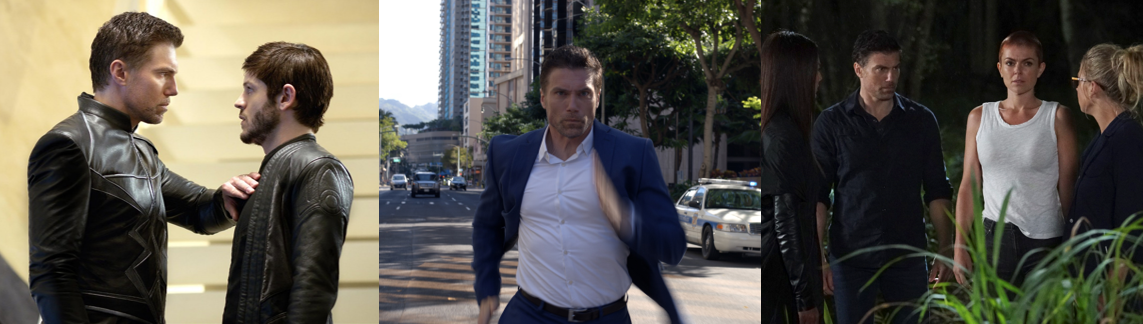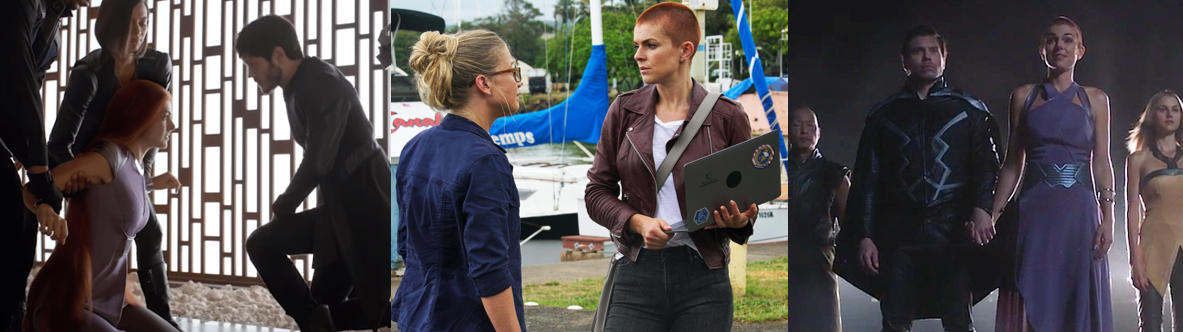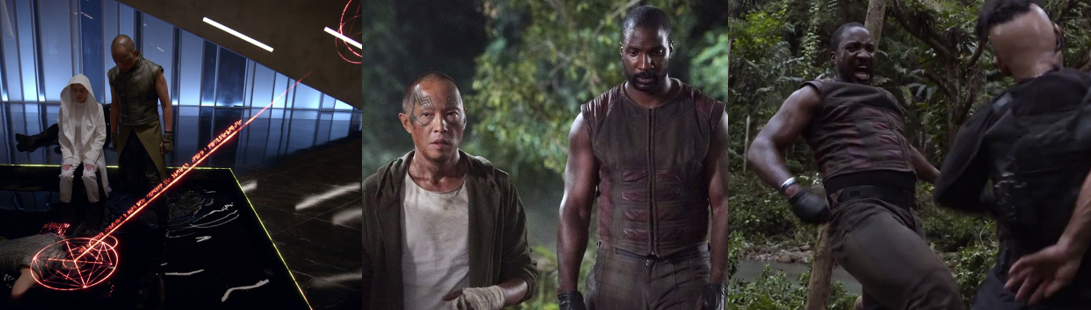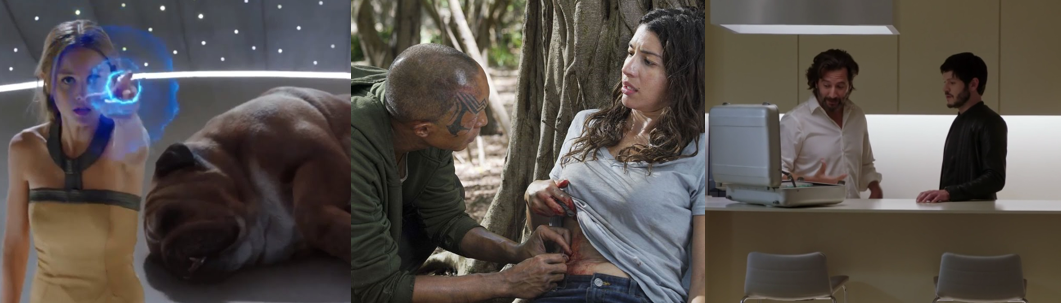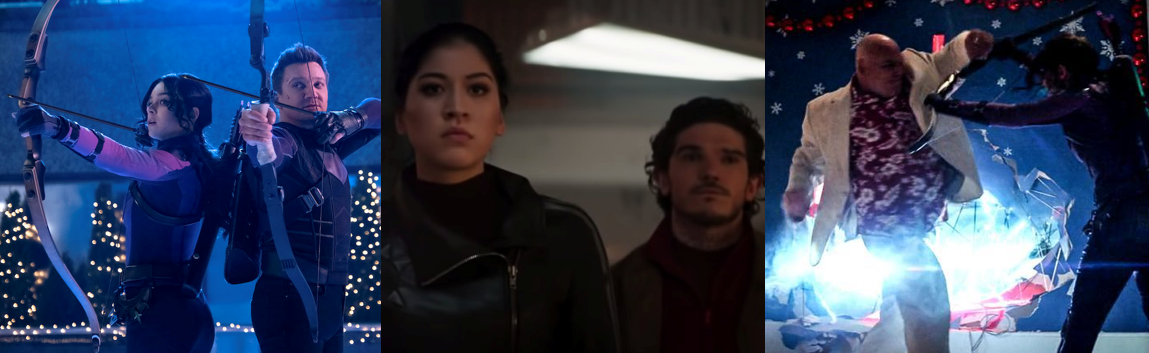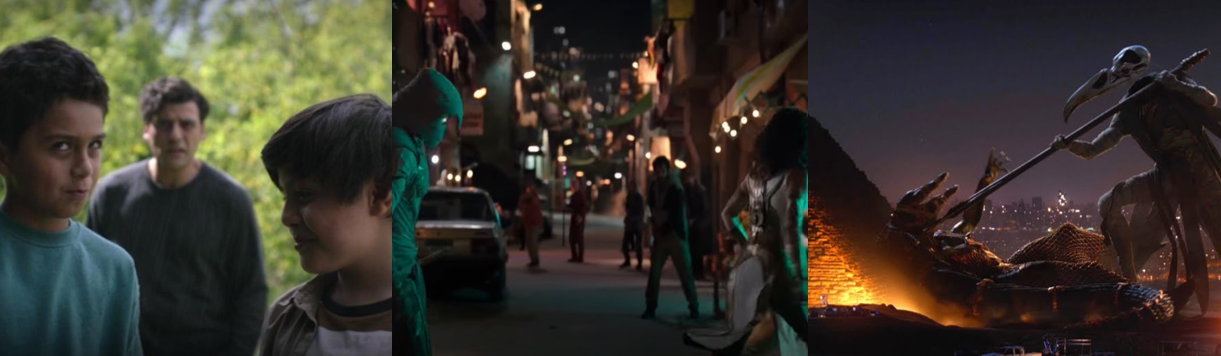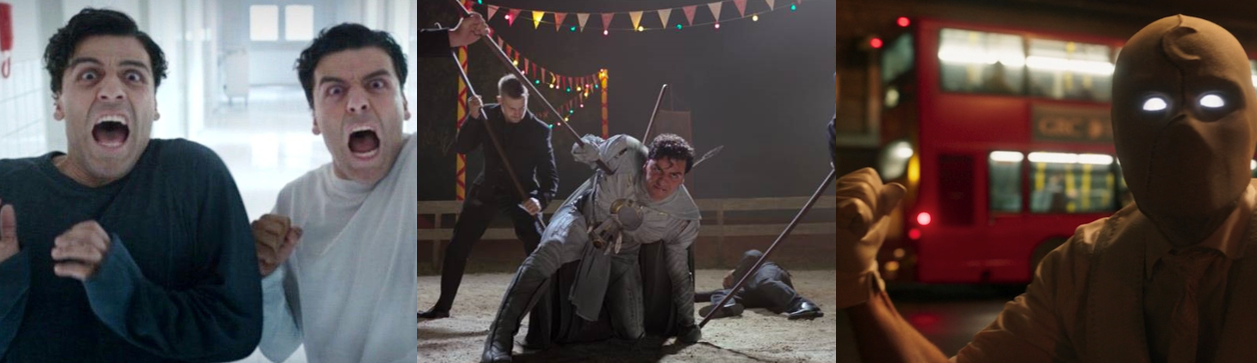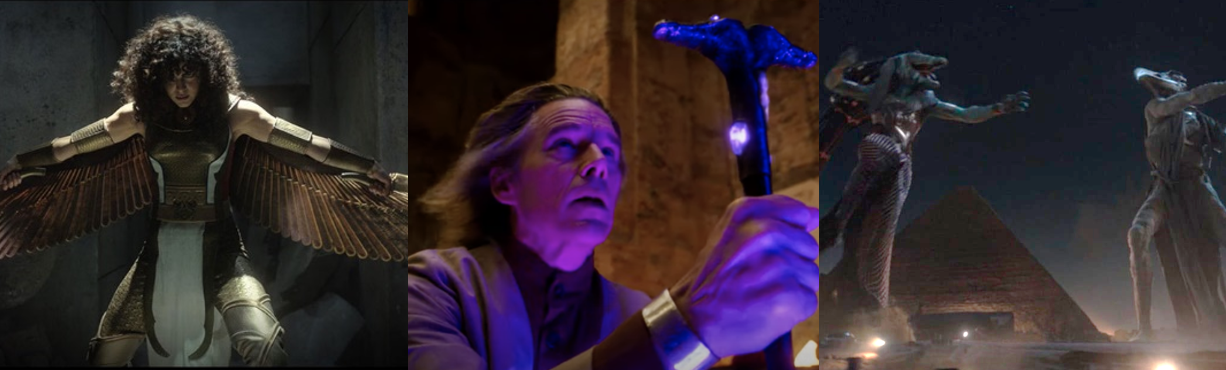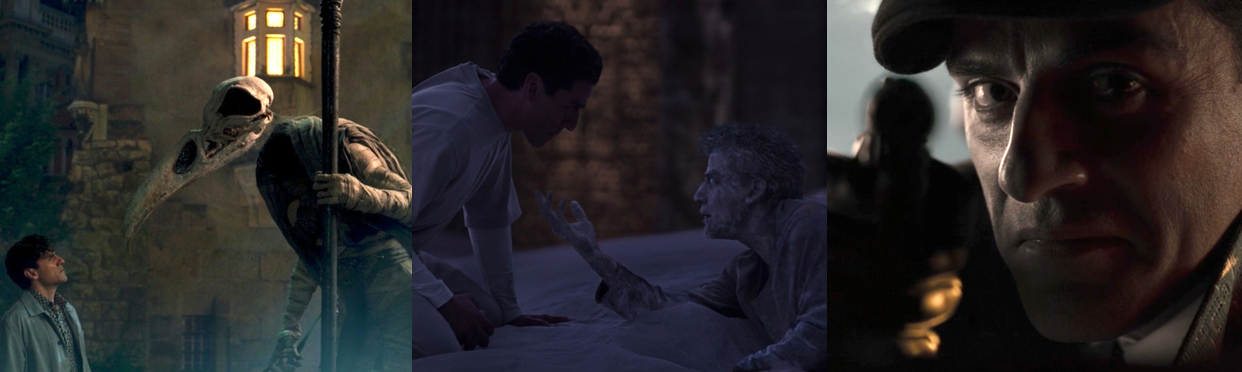

Screen Time: Secret Invasion

Air Date: 21 June 2023 to 29 July 2023
Director: Ali Selim
Network: Disney+
Stars: Samuel L. Jackson, Ben Mendelsohn, Kingsley Ben-Adir, Don Cheadle, Emilia Clarke, Olivia Colman, and Cobie Smulders

The Background:
January 1962 saw legendary duo Stan Lee and Jack Kirby introduce the Skrulls to Marvel Comics readers. This race of warmongering shape-shifters have long hounded Marvel’s heroes but are perhaps best known not just for their long-standing conflict against the Kree but also the divisive Secret Invasion story arc (Bendis, et al, 2008 to 2009), an eight-issue story accompanied by multiple tie-ins and spin-offs that detailed a lengthy and aggressive infiltration of Earth’s mightiest heroes, Following their live-action debut in Captain Marvel (Boden, 2019), the Skrulls have appeared sporadically throughout the Marvel Cinematic Universe (MCU) but took centre stage in this series, which MCU head honcho Kevin Feige claimed would impact future MCU productions. The series was also produced as a means to explore the potential of Nick Fury (Jackson), a character mainly utilised in a supporting or administrative role, and evoke the atmosphere of classic Cold War/espionage thrillers (rather than load the narratives with superpowered imposters) by playing into the paranoia and distrust of the original storyline. Although Secret Invasion received heavy backlash for utilising AI for its opening title sequence, the series was praised for its darker, more mature direction; the tension and drama evoked through the narrative was equally praised, as was Jackson’s performance, though some found Secret Invasion to be a dull and tedious affair.

The Plot:
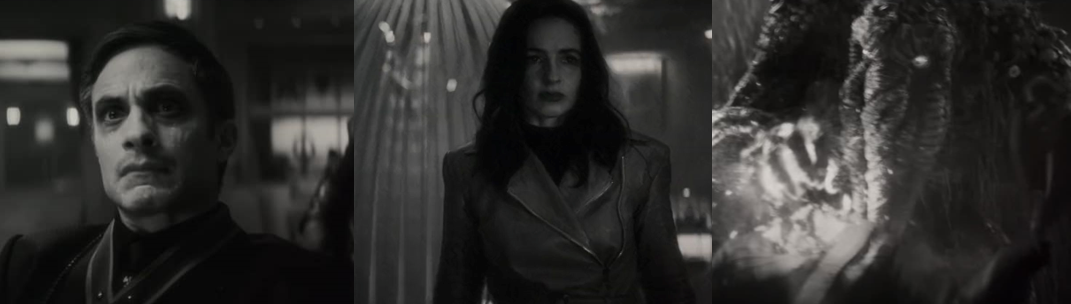
Nick Fury, former director of the Strategic Homeland Intervention, Enforcement, and Logistics Division (S.H.I.E.L.D.) returns to Earth to investigate and intercept a faction of shape-shifting Skrulls who have infiltrated all aspects of human life and society.

The Review:
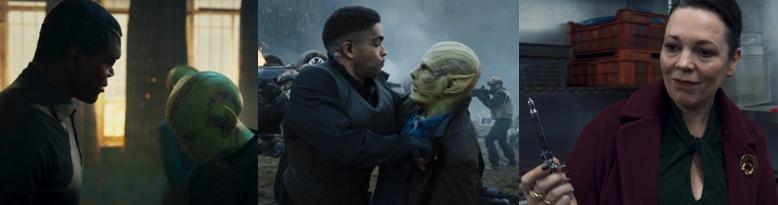
Secret Invasion is a six-part miniseries that takes its title from the action-packed Marvel event of the same name. In many ways, the plot of this series is what I originally envisioned would permeate the MCU when Captain Marvel’s first trailer dropped. Before the movie recast the Skrulls as sympathetic refugees, I imagined we’d see an extended plot concerning their infiltration of human society throughout Marvel’s movies, however that didn’t actually happen. On the one hand, I was glad of this as plots like that annoy me for how cliché they are but, on the other hand, it’s resulted in this miniseries that takes that basic concept and significantly downplays its scope to deliver what’s actually more of a character inspection of Nick Fury than a significant shake-up of the MCU status quo. At first, though, it seems like this isn’t the case; the opening sequence of the series sees recurring MCU side character Everett Ross (Martin Freeman) pursued and killed by Talos (Mendelsohn), revealing him to have been a Skrull in disguise, and this same episode ends with frequent Avenger ally Maria Hill (Smulders) dead and Fury himself publicly blamed for her murder thanks to the actions of Skrull revolutionary Gravik (Ben-Adir). However, although Colonel James “Rhodey” Rhodes/War Machine (Cheadle) co-stars, now working as an advisor to the United States President Ritson (Dermot Mulroney), he’s the only Avenger-level inclusion in Secret Invasion, which reframes the paranoia and subterfuge of the source material into less of a colourful classic of bombastic superheroes and more of a political thriller in the same vein as Captain America: The Winter Solder (Russo and Russo, 2014) and The Falcon and the Winter Soldier (Skogland, 2021). In fact, this last comparison is startlingly apt as much of Gravik’s plot to wipe out humanity and the motivations of his Skrull loyalists is reminiscent of Karli Morgenthau (Erin Kellyman) and her Flag Smashers; the show even has a similar visual style and focus on grounded and practical explosions, again keeping things gritty and intriguing but perhaps at the cost of being a visually engaging, unique, or exciting narrative.
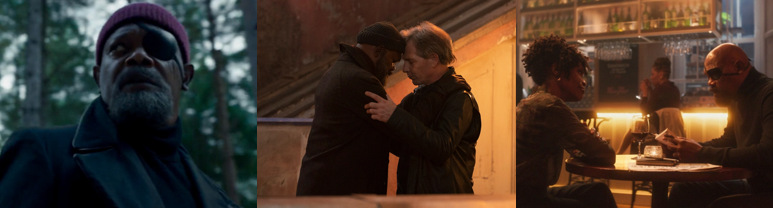
Nick Fury takes centre stage, showcasing a more nuance and vulnerable side to his character.

Fury returns to Earth after being absent for some time; he’s spent what’s said to be years out in deep space aboard the S.A.B.E.R. space station, working with Skrulls to establish an outer space defence network for the Earth. However, what he’s really been doing is hiding; ever since returning from the Blip, Fury is noted to have changed. His age is constantly brought up, and even he admits that the years he spent gone have caused him to lose more than a step or two; his appearance is dishevelled for most of the series, meaning it’s a thematic celebration when he visits one of his many gravesites and retrieves his iconic eye patch and coat, and much of the series focuses on exploring Fury in a way we’ve never seen before. Far from the influential spy of spies, Fury is recontextualised as a simple agent who got lucky; Talos tears into Fury, telling him that he owes his entire career to the information and assistance offered to him by the many Skrulls who agreed to act as his eyes and ears in return for a safe haven and we get to see a far more nuanced and vulnerable side to Fury. Specifically, flashbacks and de-aging effects show him in his younger days, forging an alliance with Talos and the Skrulls and even falling in love with the Skrull Varra (Charlayne Woodard), who takes the form and life of Priscilla and eventually marries him. Feeling a deep sense of obligation and respect towards the Skrulls, Fury promised to find them a new home in return for acting as his personal spy network, but was unable to deliver on this promise, infuriating Gravik and many of his followers, and therefore Fury has a personal stake in outing the Skrull infiltration since he’s largely responsible for their antagonism towards humans. Fury and Talos were united in their belief that the Skrulls would be accepted by humanity if they were willing to compromise; if they defended the Earth and kept their true selves hidden, they would be safe and able to thrive, but many came to resent having to hide themselves and joined Gravik in scheming to wipe out humankind. While Fury’s main concern is safeguarding the world, he maintains the belief that Skrulls and humans can co-exist throughout the series and constantly pleads with Gravik to end his vendetta despite how personal he makes their conflict. Ultimately, it’s a much deeper characterisation of Fury; we see him more relaxed, less authoritative, incredibly vulnerable, and relying on a handful of trusted allies to curb Gravik’s threat before it’s too late, while exploring how utterly broken he was following the Blip and his inability to prevent such a disaster.
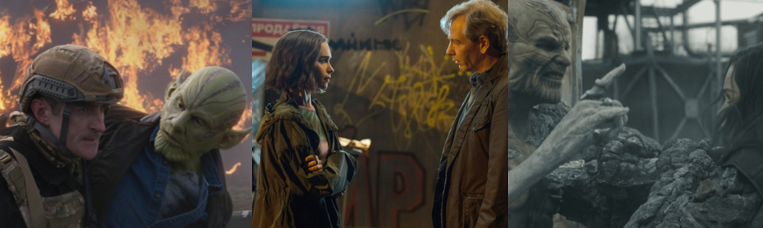
Talos sacrifices everything to campaign for human/Skrull relations, which inspires G’iah.

One of the best aspects of Secret Invasion is the relationship between Talos and Fury; since their first adventure, the two became close friends and were united in their love of humanity and the belief that the Skrulls need to work together with humans to be accepted and safe. Unfortunately, there’s a bit of resentment between them in Fury’s absence; Talos is frustrated that Fury refuses to open up to him about his near-death experience and feels slighted that Fury would use his people to his own ends, but they maintain a begrudging mutual respect since they both know they need each other to oppose Gravik. Talos is grieving the loss of his wife, Soren (Sharon Blynn), at Gravik’s hands, his ousting from the Skrull council in favour of Gravik’s more fanatical ways, and the fracturing of his relationship with his daughter, G’iah (Clarke), who’s signed up to Gravik’s cause both to spite her father and because she resents having to hide away. Talos’s motivations in stopping Gravik are thus as multifaceted as Fury’s; his personal vendetta against Gravik sees him explode in a violent and uncharacteristic rage on more than one occasion and he’s left heartbroken and frustrated when G’iah continues to give him the cold shoulder even after she learns the truth about Gravik and his plan and decides to work against him from the inside. Talos is convinced that the Skrulls will be accepted by humanity if they prove themselves through heroic deeds, so much so that he teams up with Fury to defend President Ritson from Gravik’s attack and ends up fatally wounded as a result. Although the series initially makes it a bit unclear, this sees Talos killed before he can reconcile with G’iah and leaves Fury devastated; on the plus side, G’iah connects with Priscilla, who performs a traditional (if sadly intimate) funeral for her father and his death is enough to push G’iah into fully standing against Gravik, if only to get revenge. Spirited and forthright, G’iah is also young, brash, and quite bratty; she joins with Gravik mainly out of spite and continues to subscribe to the belief that the Skrulls deserve their own home rather than to hide amongst people who hate and fear them. However, the sheer magnitude of Gravik’s plot is enough to shake her faith in his deals, especially as he becomes more unstable; to that end, she’s forced to expose herself to Gravik’s “Super-Skrull” machine to grant herself additional superpowers to both survive his reprisals and confront him in the final.
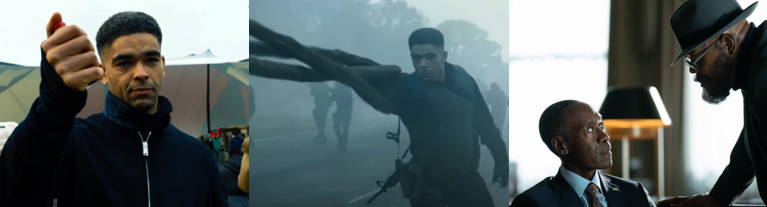
Gravik feels slighted by Fury and, alongside his followers, is determined to destroy humanity.

Though also young and headstrong, Gravik is equally passionate and violent in his beliefs; recruited into Fury and Talos’s cause from a young age, Gravik initially carried out his orders without hesitation, killing in the name of Fury and his people in the firm belief that Fury would find them a home. However, as the years passed, the guilt and the blood on his hands mounted up, and Fury became increasingly absent, meaning bitterness and resentment took root in Gravik and turned him against all humans, but especially Fury, whom he sees as the embodiment of humankind and against whom much of his aggression is targeted. Gravik goes to great lengths to mess with Fury, having his followers impersonate people close to Fury and even assuming his form to frame him for Hill’s murder, all to show the world that this legendary figure is a fallible, untrustworthy, broken-down old man. As much as he desires power, granted to him by both the Skrull Council and Doctor Rosa Dalton’s (Katie Finneran) work in constructing his Super-Skrull machine, Gravik wishes to break Fury’s spirit, have him witness both his greatest failure and the death of his people, and then kill him for going back on his word. To facilitate this, Gravik has placed his followers in key roles within the world’s superpowers and is stoking the flames of conflict between the United States and Russia from a glorified refugee camp dubbed “New Skrullos” and sitting in a deeply irradiated area of Russia, where his people are safe from reprisals and live simple lives as farmers or take more active roles as soldiers. However, Gravik’s desire for revenge sees him place the settlement right in the line of fire and willing to sacrifice (or out-right execute) his own people to achieve victory, something many of his followers are unable to speak out against thanks to his ruthlessness and being imbued with various superpowers from his experiments. Undeniably, Gravik’s chief agent in encouraging President Ritson to strike back against Russia is Rhodey, who’s revealed to be a Skrull in disguise; an arrogant, pompous sellout, Rhodey continually dismisses Fury’s claims of a Skrull invasion and takes great pleasure in both firing him and labelling him a criminal and constantly gets in Ritson’s ear about the Russian/Skrull threat against the United States, bringing the world on the brink of annihilation simply through choice words and evidence supplied by Gravik himself. Naturally, this doesn’t end well for Rhodes; like many of the rebellious Skrulls loyal to Gravik’s cause, he’s ultimately killed to prevent this catastrophe, but Gravik’s followers are more than willing to give up their lives if it means dying as their true selves rather than pretending to be something they’re not.
The Summary:
Oddly, Secret Invasion’s episodes get shorter as the series progresses, starting at around an hour and going as short as just over half an hour, indicating to me that there wasn’t as much story as other Marvel shows. Episode two was the longest at nearly an hour, while most episodes (including the finale) were less than forty minutes. Indeed, I wonder if this could’ve been a two-hour streaming film or cut down to four episodes if some of the padding, like Priscilla, was omitted. Priscilla definitely adds new layers to Fury’s character; there was never a hint that he was married or had much of a personal life before, but here we get to see his secluded home, his loving and equal relationship with Priscilla, and see him as more of a man, all masks cast aside. Naturally, their relationship isn’t perfect; Priscilla also notes a change in Fury and has even been somewhat swayed to Gravik’s cause in her husband’s absence, ultimately causing their relationship to fall apart until they reconcile in the finale. Again, this allows for a looser, less uptight characterisation for Fury but it somewhat bogs down the series; I wonder if expanding on his relationship with Hill might’ve been a better option, or perhaps spending more time developing his past with MI6 agent Sonia Falsworth (Coleman), an unnervingly polite and yet surprisingly devious ally of his who is happy to blatantly torture and murder Skrulls to get information on Gravik’s plot. Even saying that makes me wonder what the point of Falsworth really was when the show could’ve easily slotted Valentina Allegra de Fontaine (Julia Louis-Dreyfus) into this role to explore her vaguely defined relationship with Fury and offer to help G’iah in the finale for her own unscrupulous ends.
Themes of trust, race, and political intrigue are rife in this gritty, if small-scale, thriller.

Still, I did enjoy Fury’s characterisation here; his interactions with Talos, in particular, Priscilla, G’iah, and even Gravik show a man who’s been worn down by secrets, conflict, and bigotry and is striving to find a way for humanity to co-exist with extraterrestrial beings in a mutually beneficial way, even if it means compromises on both sides. He openly plays the race card when talking with Rhodey in an attempt to convince him to believe him, reinstate him, and take the Skrull threat seriously only to be met with hostility, and likens the Skrull’s displacement to the same persecution his people went through in the past (and even today). This adds an extra layer onto his motivations for helping the Skrulls as he feels a kinship to them, but he couldn’t help but use their unique shape-shifting powers to his benefit to ensure global security. As Talos mentions, this makes Fury quite the hypocrite since he had no problem exploiting the Skrulls for a “good” reason, making him thematically similar to Gravik, who exploits them for a “bad” reason. Rather than have the Skrull campaign against the Earth be religiously motivated and their people impersonate key superhero figures, Gravik and his followers are entrenched within the world’s governments and want to destroy humanity to claim the Earth for themselves. With a million displaced Skrulls hiding on Earth, many have every right to fear for their lives and to resent having to hide themselves, which sees those loyal to Gravik branding Talos as weak and a traitor, sentiments largely echoed by G’iah until she reluctantly comes to see how extreme Gravik’s plot has become. While Secret Invasion is built around the fundamental question of trust, there are very few Skrull reveals that surprised me or made me care; I think everyone assumed Rhodey would be a Skrull, though I wasn’t expecting Ross to be one until he showed up in the first episode, and everyone else who’s shown to be a Skrull is a new character for the show to avoid messing up the status quo, which is predictably restored in the finale when the real Rhodey and Ross are rescued by G’iah since the Skrulls conveniently need to keep their hosts alive to better maintain their façade and leech off their memories, experiences, and personalities.

Ultimately, Gravik’s plan is foiled but the Skrull presence is perceived as a nationwide threat.

On the one hand, I do like that Secret Invasion opted for a more grounded, gritty thriller story; it would be unrealistic to expect some of the MCU’s biggest names to appear and be revealed as Skrulls and the intimate nature of the narrative helps to make things more personal and raw. Car chases, explosions, and fire fights feel more visceral and real as, mostly, the series has two feet firmly on the ground if you ignore the sparing use of shape-shifting aliens. When the Skrulls do utilise their powers, or more fantastical elements like Extremis or that holographic-mask technology are employed, it’s treated as a big deal since, for the most part, we’re just following two old blokes trying to coerce or beat information out of people. However, a lot of this is done away with in the last episode; by then, G’iah has already gained additional powers from Gravik’s machine and Gravik himself uses the “Harvest” to gain the powers of all the Avengers and multiple of superpowered and alien entities to become a Super-Skrull. This means the ending comes down to a big ol’ fist fight between G’iah and Gravik and Fury and Falsworth exposing Rhodey’s true nature to the baffled and horrified President Ritson. One is an overly elaborate CGI punch-up that ends in anti-climactic fashion and the other is tense showdown that ends with the Rhodey-Skull dead because of his own hubris and President Ritson so rattled by the Skrull invasion that he openly declares war against all Skrulls, leading to a brief montage of trigger-happy bigots gunning down suspected Skrulls whether they’re innocent or not. This leads Fury and Priscilla (who reassumes her Skrull name and form) to return to S.A.B.E.R. to negotiate a peace treaty with the Kree and Falsworth offering G’iah the resources to fight back against Ritson’s campaign, essentially ending the series where it started with Fury off-world, Skrulls in hiding, and tensions high within the world’s governments. Sadly though, as much as I liked the peek into Fury’s private life and seeing him take centre stage, Secret Invasion felt like a mixed bag to me. Although Gravik’s plot is to kickstart World War Three, the stakes never felt very high and it was difficult to care when characters died as they were either expendable, had outlived their usefulness (Hill), were revealed to still be alive (Ross and Rhodey), or their deaths were strangely rushed to the point where I’m sure they’ll be revealed to be fake later (Talos). The relationship and banter between Fury and Talos was great, I enjoyed Gravik’s impassioned speeches and maniacal bent, and it’ll be interesting to see where Super-Skrull G’iah factors into the MCU going forward but this felt like a series you could easily skip over without missing anything and I’ll be surprised if it actually has any lasting impact on the MCU since it goes to such lengths to restore the status quo by the end.

My Rating:

Rating: 2 out of 5.

Could Be Better

What did you think to Secret Invasion? How do you think it compares to the source material and Marvel’s other Disney+ shows? What did you think to the deeper dive into Nick Fury’s characterisation and personal life? Did you enjoy his relationship with Talos and kinship with the Skrulls? What did you think to Talos and G’iah’s resentment towards him? Were you impressed with Gravik and his plan or did you find it a bit too derivative? What did you think to what few Skrull reveals we got, and would you have preferred to see this narrative stretched out throughout the MCU rather than rushed in a miniseries? Whatever you think about Secret Invasion, feel free to drop a comment below or share your thoughts on my social media pages and don’t forget to check out my other MCU reviews across the site!

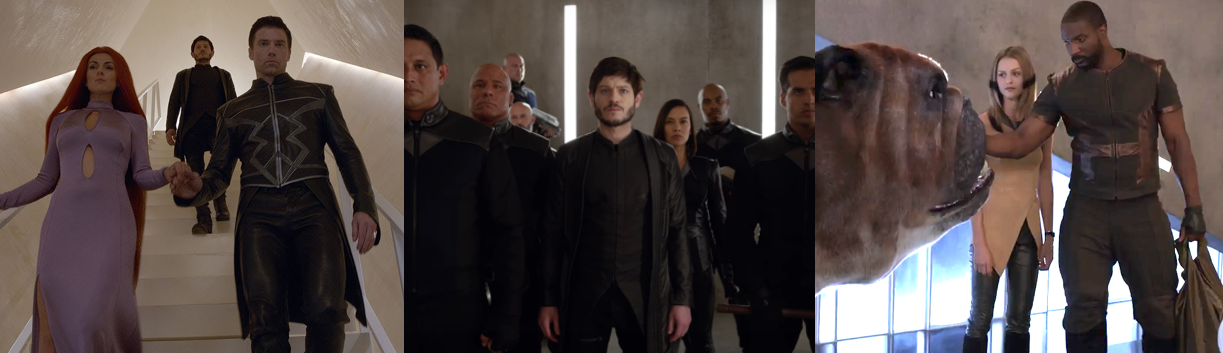
Screen Time: Inhumans

Air Date: 29 September 2017 to 10 November 2017
UK Network: Sky One
Original Network: ABC
Stars: Anson Mount, Serinda Swan, Iwan Rheon, Isabelle Cornish, Ken Leung, Eme Ikwuakor, and Ellen Woglom

The Background:
In 1965, the legendary duo of Stan Lee and Jack Kirby expanded upon their earlier work with the X-Men with an entire race of superpowered beings, the Inhumans, initially antagonists to Marvel’s First Family, the Fantastic Four. Brought about as a result of of Kree experimentation with “Terrigen Mist”, the incredible and often monstrous Inhumans have been at the forefront of some of Marvel’s most contentious storylines but gained a new level of infamy when the publishers unsuccessfully and bizarrely tried to have them replace the far more popular and mainstream X-Men. Development of a live-action Inhumans adaptation can be traced back to 2011 and Marvel Cinematic Universe (MCU) mastermind Kevin Feige initially planned for the team to feature in a big-screen movie that would expand the scope of the MCU in new directions. The first seeds of this were planted in the spin-off television show, Agents of S.H.I.E.L.D. (2013 to 2020) but, while the planned movie was soon removed from Marvel’s line-up, Feige remained hopeful that the property would come to life in some form or another. This eventually came to pass in shape of an eight-episode series headed by showrunner Scott Buck, who immediately set about stripping the Inhumans of many of their more recognisable traits and making unpopular decisions regarding the tone and direction of the show. With the first two episodes airing in cinemas courtesy of IMAX, Inhumans sought to tell a more grounded family drama but was notable for both being the first television show to include an entirely CGI character and altering the character’s costumes into something far more sterile and ruining the presentation and characterisation of Inhuman Queen, Medusa (Swan). The $3.5 million IMAX gross of the debut episodes was considered a failure, but this was nothing compared to the critical mauling the series received from reviews; critics slammed the show’s execution, its lack of exciting action, and its overall presentation, though Anson Mount’s performance as Blackagar Boltagon/Black Bolt was generally praised. The failure of the show led to plans for a second season being scrapped and the Inhumans quietly disappeared from the MCU until fairly recently, and rumours of a reboot for the concept continue to circulate online.

The Plot:
Having fled persecution on Earth, a group of Inhumans founded the secret settlement of Attilan on the Moon under the rule of the Inhuman Royal Family. Jealous and slighted at having never developed the same fantastic powers as his peers, Maximus (Rheon) leads an uprising that sees the Inhuman leader, Blackagar Boltagon/Black Bolt (Mount), and his Royal Family trapped on Earth and desperately fighting to return to Attilan to put a stop to Maximus’s power-hungry schemes.

The Review:
Inhumans came out at a weird time in Marvel history; at this time, Marvel Comics made a conscious effort to downplay the X-Men and the Fantastic Four, splitting up and neutering both groups to try and scupper 20th Century Fox’s film franchises to force a deal where those characters could appear in the MCU. The Inhumans thus became very prominent in Marvel Comics, a decision that was met with considerable backlash not because the characters are bad, per se, but more because they were trying to replace two of Marvel’s most popular and iconic teams and they weren’t as compelling as either. I was confused by this decision, but then I’ve never been a die-hard fan of the Inhumans; for me, they’ve cropped up in numerous Fantastic Four comics and that’s about it. I’ve not read much, if any, of their adventures but I was intrigued at the announcement that they’d be getting a movie, and the attempt to incorporate the Inhumans into the MCU in Agents of S.H.I.E.L.D., something subtly alluded to in Inhumans as many, even random humans, are aware of the Inhumans thanks to their recent appearances after the water supply was contaminated by Terrigen Mist. Accordingly, Inhumans are actively hunted by some when they appear, mainly out of fear but also to cut them open and understand their strange powers. This perceived fear and distrust of Inhumans is made explicit right from the first scene of the show, in which a recently transformed girl (Nicola Peltz) is chased by armed soldiers and unceremoniously killed as she flees. Inhuman fishman Triton (Mike Moh) arrives to offer her safety and sanctuary in Attilan, only to fail to save her and be presumed dead, and his death is a major inciting incident in the narrative of the show.

A stoic ruler who must contain his destructive powers, Black Bolt learns to view his relationships differently.

Triton was sent to Earth on the orders of his king, the stoic and perpetually silent Black Bolt, specifically to help Earth-born Inhumans as they are remnants of those left behind after their society fled to the Moon. In a show full of questionable performances and decisions, Anson Mount is one of the highlights; while he only wears a vaguely comic-accurate costume on a couple of occasions (including a crappy little leather-like crown), he conveys a great deal of emotion and character despite being rendered silent due to the destructive nature of his voice. Black Bolt is widely believed, and continuously stated, to be the most powerful and dangerous of all the Inhumans; even the feared living weapon Mordis (Bridger Zadina) pales in comparison as the slightest whisper from Black Bolt could destroy all of Attilan. Consequently, Black Bolt is a man of intense focus; as a child, young Black Bolt (Lofton Shaw) had no interest in being king, much to the chagrin of his morally dubious parents, King Agon (Michael Buie) and Queen Rynda Boltagon (Tanya Clarke). Black Bolt was overcome with grief and feared by his people after accidentally vaporising his parents and it was only the affection of young Medusalith Amaquelin-Boltagon/Medusa (Victoria Isabella Piemonte) that gave him the motivation to master his powers within a specifically constructed chamber. Bonded in their mutual grief, as Medusa had also lost her parents, the two eventually married and became much revered rulers of Attilan, with Black Bolt gaining a reputation for safeguarding his people through a strict policy of secrecy to shield them from Earthly eyes. Due to the nature of his powers, Black Bolt communicates through stern looks, body language, a version of sign language, and relies on the adult Medusa (Swan) as an interpreter. The series is strangely reliant on this, and other characters translating Black Bolt’s “words”; I would’ve liked to see subtitles being used to avoid this as it can be a bit awkward when characters repeat what he’s signed back to him just for our benefit. Black Bolt’s sign language is also entirely unique; few others can understand his “words”, so he’s shit out of luck when his eventual arrival in downtown Honolulu causes a stir and leads to his imprisonment. Despite the fact that he could easily escape prison at any time with his voice, Black Bolt largely co-operates with his incarceration, a fact made even stranger given how quick he was to lash out when the cops tried to subdue him. Black Bolt is an Inhuman of many layers; he secretly colluded to fake Triton’s death in order to force Maximus’s hand and is openly criticised by Locus (Sumire Matsubara) for perpetuating Attilan’s caste system, which sees those with useful, beautiful powers living in luxury and everyone else being forced to toil in the Terrigen mines.

Though rude and utterly unlikeable, Medusa eventually campaigns for positive change for the Inhumans.

Indeed, despite her loyalty to Black Bolt and her love of Attilan, Medusa eventually comes to speak out against the system. When we first meet her, Medusa is the alluring right-hand woman of the king who is traumatised when Maximus kicks off his coup d’état by shaving her hair and forcing her and the rest of the royal family to flee to Oahu. Though a strong and forthright woman who’s more than capable of defending herself, Medusa’s authority is openly criticised by Maximus, with whom she has a tumultuous relationship. We’re told on many occasions that the two used to be close friends, to the point where Medusa unsuccessfully attempts to talk him into halting Attilan’s destruction in the finale, though we’re never given much insight into their past so it almost feels like it was shoe-horned in since Black Bolt can’t speak. Similarly, surprisingly little time is spent dwelling on Medusa’s relationship with her younger sister, Princess Crystal Amaquelin (Cornish); there’s a brief flashback showing Medusa comforting young Crystal (Leila Bootsma) and that Medusa’s always had responsibilities and someone to care about, and she’s later unexpectedly cool with Crystal’s friendship with young farmer Dave (Chad Buchanan). However, Medusa’s screen time is largely spent debating and contrasting with enthusiastic Louise Fisher (Woglom), a scientist from the Callisto Aerospace Control Center who teams up with Medusa after tracking the Inhumans’ arrival. While all of the Inhumans are strangely baffled by Earth, Medusa initially cares only about reuniting with Black Bolt and making Maximus pay; this leads to her having little regard for Earth customs and sees her demanding money from an ATM machine simply because of her royal status in much the same way as Black Bolt simply strolled out of a clothing shop without paying. Though used for comedic effect, this makes her seem stupid and rude; it doesn’t make sense for any of them to be this confused since we saw the Inhumans monitoring Earth, yet she just openly steals from people and is overly rude and aggressive towards Louise. Medusa forces Louise to co-operate by holding a gun on her, is constantly ungrateful and impatient and even ditches Louise once she manages to pinpoint Black Bolt’s location. They have many heated discussions about Attilan’s caste system, a system Medusa’s own parents spoke out against and were killed for trying to change; she thus initially finds idealism to be overrated but comes to be changed through her time with Louise and Locus’s eventual death, which sees her going from wanting Maximus dead to literally begging Black Bolt to set a better example. Upon learning of Black Bolt’s deception and his secret war bunker, Medusa chastises him for keeping her in the dark; her time on Earth makes her realise that she wants to have a greater say in Attilan society as his equal, not just his interpreter, though it’ll take more than a brief bit of despair over her shaved locks and her awkward attempts to learn humility to make me sympathise with such an unlikeable character.

With Karnak’s powers on the fritz, Gorgon’s more blundering nature comes in handy.

While Black Bolt blunders his way around and Medusa begrudgingly finds herself relying on Louise for help, their cousins, Karnak Mander-Azur (Leung) and Gorgon Pentragon (Ikwuakor), end up mixed up in their own side adventures. While we rarely see Black Bolt’s power and Medusa’s is forcibly stripped from her, Karnak’s unique ability to “see the flaw” in anything and predict outcomes so accurately that it’s almost as if he can see the future is a central point of his narrative as this character who always sees what’s coming takes an unforeseen tumble and hits his head, throwing his powers out of whack and making him doubt himself and his usefulness. Conversely, Gorgon is the meat-headed captain of the royal guard; his childish nature and preference to go charging head-first into any situation are a constant aggravation to Karnak and see him almost drown upon arriving on Earth and forced not only to rely on a group of surfers – including Holo (Ty Quiamboa), Makani (Kala Alexander), and Pablo (Albert Ueligitone) – for aid but also learn the value of foresight and planning, two things he normally relies on Karnak for. While this alliance is short-lived as Gorgon doesn’t want to be responsible for the deaths of his newfound friends, Karnak is irrevocably changed by his unreliable powers and the influence of Jen (Jamie Gray Hyder), a kindly Earth woman who treats his wounds and teaches him to relax. The kindest of the three cannabis farmers who initially take Karnak hostage, Jen finds Karnak alluring; she’s captivated by his tattoos and stories of Gorgon and the Moon and their relationship quickly develops into a romance. Her influence has a profound effect on him, changing him from being dismissive of sexual encounters to being appreciative of them and infusing his cold, analytical nature with a sense of compassion. While this astounds his fellow Inhumans, it also leads Karnak to making uncharacteristically rash decisions; when Gorgon is killed defending the group, Karnak openly defies Black Bolt and Medus (and strict Attilan law) to put his friend through a second Terrigenesis, a purely selfish act reunite him with his aggravating cousin and which results in Gorgon being restored to life but sporadically overcome with a mindless rage.

Crystal, like the other Inhumans, is changed by her time on Earth and encounters with humans both good and bad.

Although Crystal is the youngest of the Inhumans and rarely uses her elemental powers, she serves an important use as she’s able to have her gigantic pet dog Lockjaw instantly teleport people around. There’s a brief subplot where she’s held hostage by Maximus, who subtly threatens Lockjaw and her family unless she agrees to spread his influence across Attilan, but she easily fools him and flees to Oahu with Lockjaw to reunite with Medusa, only to end up falling in with Dave after he accidentally injures Lockjaw with his quad bike. Interestingly, when with Dave, Crystal takes on characteristics of a sheltered and spoiled princess, one who’s used to getting her way and has never been touched by a human; their relationship fulfils a dual role of teaching her not to be so uptight and showcasing that not all humans are as dangerous as she has been taught. Naturally, because they’re both young and attractive, they also end up smooching and Crystal ends the series wishing to live a normal life with this bland, if kind-hearted, young man, a decision Medusa is happy to support since she too comes to regard humans more favourably. In fact, the Inhumans find a surprising number of allies on Oahu; Gorgon just happens to fall in with a bunch of former soldiers who are not only aware of Inhumans but willingly put their lives on the line to aid him, but the standout is obviously Louise. Having lived her whole life dreaming of visiting the Moon so she can scatter her father’s ashes there, she’s captivated by Medusa and the Inhuman race but quickly comes to question their caste system and treatment of their enemies. Of course, not every human is so willing to aid them; Reno (Michael Trotter) is immediately suspicious of Karnak and tries to kill him out of jealousy, a crusade picked up by Tua (Mark Medeiros) after he murders Reno for his disloyalty. Then there’s Doctor Evan Declan (Henry Ian Cusick), a scientist conducting extensive Inhuman research on Maximus’s payroll, though he’s unaware of the truth behind his benefactor. Dr. Declan is a curious character; he aids Black Bolt, facilitating his escape from prison alongside fellow Inhuman Sammy (Olo Alailima) and agrees to help him in exchange for some blood tests. While he’s clearly been experimenting on Inhumans, he doesn’t make any aggressive moves towards them and is instead fascinated by the different physiology; his research is vital to Maximus, who plots to use it to undergo Terrigenesis for a second time and gift himself powers, and Dr. Declan seems happy to help both sides simply out of sheer scientific curiosity, which results in him being killed during Gorgon’s rampage.

Maximus has a forked tongue but leaves the dirty work to his loyal flunkies.

Though he’s firmly pigeon-holed as the antagonist of the series, Maximus is actually something of a revolutionary; carrying a lifetime of resentment towards his brother and father, Maximus is unique among the Inhumans in that Terrigenesis rendered him a mere human and he was only spared a lifetime in the mines because of his royal blood. Maximus openly and routinely criticises Black Bolt’s decisions; he fully believes that the humans will inevitably one day discover them and destroy them once they do and challenges the caste system, earning himself a small but vocal following of Inhumans wishing to rise above their allotted stations. Sporting a silver tongue and prone to elaborate monologues, Maximus seeks to twist every situation in his favour, against the ruling class, or into a veiled threat; he subtly suggests that the royal family have caused death and chaos and fled, assumes the throne in their absence, and sets about abolishing the caste system and conscripting the miners into becoming soldiers to hunt down and kill his family. While he’s no fighter, having failed to learn even basic self-defence from Gorgon, Maximus is an accomplished manipulator and politician; however, his doubters are everywhere, not just because he’s a lowly human but also because he threatens to change Inhuman society in ways that would be disruptive to the genetic council. Because of the threats, disloyalty, and political minefield of his coup, Maximus frequently manipulates Bronaja (Ari Dalbert) into sharing his prophetic visions of the future; while these can be vague, they’re enough for him to intercept a rebellion, kill insurgents and betrayers, and stay one step ahead on most occasions. When he needs more direct action, Maximus employs the services of Auran (Sonya Balmores), a cold-hearted assassin capable of regenerating, to first kill and then capture his family so that he can make better use of Dr. Declan’s research. Although fiercely loyal to Maximus, Auran comes to realise her mortality and turn away from his cause as the series progresses and is at constant odds with Mordis, an Inhuman who emits destructive energy blasts from his face. Mordis’s snarky attitude and rivalry with Auran actually lends the series some much-needed appeal and he’s a surprisingly interesting character; like Black Bolt, he has vast destructive potential, but he was simply locked up and forgotten about because he wasn’t of royal blood and would rather dramatically kill himself than be locked up again. Although Maximus states is plot is based around changing Attilan’s archaic society and allowing them to begin a new life on Earth, by force if necessary, it’s really just a cover for his selfish desire for the throne and to become Inhuman; this obsession not only saw him manipulate young Black Bolt into killing their parents but also endangers the entire city. Ultimately, though he proved to be an unstable and unfit ruler, Maximus does see his dream achieved; the Inhumans migrate to Earth to start over as equals, but Maximus doesn’t get to be a part of this as he’s sealed away in a bunker by his brother and left to rule over the remnants of Attilan alone on the Moon.

The Summary:  
I will say that one thing Inhumans has going for it is its Earth setting; setting the series in and around Hawaii offers a unique visual setting unlike anything seen in the MCU at the time but, in many ways, I think it might’ve been better to just set the show on Earth, with the Inhumans scattered around the globe, and do flashbacks showing their time in Attilan and have the finale take place there because, for a hidden, technologically advanced city on the Moon, Attilan is a massive disappointment. Attilan lacks the grandiose architecture and fantastical visuals of Asgard or Wakanda; everything is made of cold, grey stone, resulting in a lacklustre and cheap presentation akin to old sci-fi television serials. While this may have been a conscious choice, or dictated by the budget, it comes across as lifeless and uninspiring compared to Jack Kirby’s original artwork. I may not always be the biggest fan of his complex and colourful machinery and environments, but a least they popped on the page and impressed; nothing about Attilan impresses and it screams low budget, minimalist, and low quality, three things the MCU was and still is definitely not known for. This extends to the Terrigen Mist ceremony (which, like Attilan, is disappointingly barebones and small-scale), Callisto’s dull warehouse interiors, and the stark emptiness of Attilan’s unimpressive throne room, dining room, courtyard, and bunker. While Maximus notes that the city is small and crammed with too many people, even the streets resemble a backlot or claustrophobic set rather than a thriving cityscape and there’s little appealing or alien about Attilan. Similarly, the costume design and effects are more miss than hit; while Medusa’s hair and wig aren’t great (especially when animated) and her purple dress does her no favours, Black Bolt’s attire looks pretty good, if a bit of a half-hearted attempt to reproduce his comic book outfit. Though Karnak has simple facial tattoos, Triton has some decent enough prosthetics going on, but Gorgon’s hooves mysteriously appear and disappear with no explanation and Crystal barely showcases any of her powers. Lockjaw looks pretty good, considering he’s a massive slobbering bulldog; yes, he obviously looks quite cartoonish, and the teleport effect isn’t great, but I think that’s to be expected of such a ludicrous character and CGI effect.

Sadly, the visuals, effects, and costumes all fail to impress and just come across as cheap.

The show’s action sequences also fail to impress; thanks to the Inhumans spending most of the show scattered across Hawaii and unable to use their powers for one reason or another, we’re denied any grandiose or mind blowing spectacles and are left to rely on car chases, simple fistfights, and shootouts more often than not. Black Bolt, Medusa, and Karnark showcase a blunt efficiency in their movements, easily overpowering and besting multiple armed foes either with their hands or their hair, but these pale in comparison to action sequences seen in the likes of Agents of S.H.I.E.L.D., which is really saying something. Much of the heavy lifting is performed, fittingly, by Gorgon and Auran; Gorgon favours a ground-trembling foot stomp and tossing foes around with his brute strength, which is in stark contrast to Auran’s swifter, more precise fighting style and I enjoyed seeing them clash but these fights were always in boring environments and over far too quickly. Karnak’s action scenes are the most visually interesting and have so much potential; we see him engaging with foes in hypothetical scenarios and learning the most efficient way of dispatching his enemies, but his powers are on the fritz for the entire show, so we rarely get to see this or are simply treated to him being knocked out from behind. The show makes a big deal about the destructive nature of Black Bolt’s voice but we never really get to see this in action; there’s a ludicrous scene of him accidentally atomising his parents, he sends a police car flying which is strangely treating like a huge deal in a world where literal Gods walk amongst us, and he ultimately buries Maximus with a simple whisper but his powers are never showcased to the fullest extent, meaning all that build up was for nothing. Mordis offers some consolation for this, frequently blasting away with his energy beams, but we’re even denied the spectacle of a huge explosion during his and Gorgon’s death scene and, similarly, whatever potential there was in Medusa’s hair or Crystal’s elemental powers is undone simply because the plot and budget demand it, meaning these superhuman characters are more likely to hold people at gunpoint, something hardly befitting their colourful nature.

The focus on human/Inhuman relations and the budget sadly overshadows the family drama.

There’s a general theme of the Inhumans being out of their element and learning new things about themselves and humanity, but it really doesn’t make much sense; we literally see the Inhumans observing Earth and yet, when they arrive, they have no concept of money, our society, no respect for our laws, and little understanding of humans beyond them being dangerous. This results in Black Bolt looking like a complete moron when he wanders about the city and is spirited from place to place; he’s silent and alien in nature but he’s not an idiot and it’s really jarring to see him, Medusa, and Crystal suddenly act like entitled assholes when that wasn’t the case on Attilan. We never even got much of a sense that they were anything but beloved and respected monarchs; we see them freely walking among the people and going out of their way to safeguard the city, and it’s only later that we’re told about the caste system and how awful Attilan can be for those with less desirable or attractive gifts. Since he’s been genetically transformed into a lowly human and his only gift is his forked tongue and unquenchable pursuit of power and adoration, Maximus seeks to change this system, to give the lower caste a chance to shine and take what they want by force. However, perhaps again due to the budget, we see very little of this and most of Maximus’s time is spent trying to win over the genetic council before he just kills them all, being overly reliant on Bronaja’s sketchy visions, and flip-flopping on whether he wants his family dead or alive. Despite being a silent role, Mount does a good job here, but I feel like he’s not in it as much as he could be; instead, Medusa seems to have a larger role and she’s a pretty awful character, and Crystal’s performance is probably the weakest of all involved. Karnak had some interesting development but it’s robbed of a lot of its potential as we never get to see his powers (or any of their powers) showcased in a visually interesting way; we’re just told stuff about them and then they’re forced to adapt to their new situation. Maximus was clearly the standout in terms of intrigue and acting; however, while there’s a central conflict between Black Bolt and Maximus, this really should have been given more focus. While Iwan Rheon is certainly giving it his all and is almost Shakespearian in his performance, Thor Odinson (Chris Hemsworth) and Loki Laufeyson (Tom Hiddleston) they are not. They should be akin to these two, but the production and budget just doesn’t allow it, and they share very little screen time together so we’re mainly informed of their animosity and relationship through other characters, flashbacks, and their individual moments.

Whatever potential the show had was undone by a lacklustre presentation and low budget.

This is a problem faced by the entire show. The Inhumans is a concept that has the potential to be as visually interesting and grandiose as the X-Men, Thor, and the Eternals; Attilan should have been as memorable and impactful as Asgard or Wakanda but, instead, it’s just a series of dull sets. Nothing in Attilan is interesting to look at; they have fancy communicator devices but they don’t incorporate visuals or holograms so they’re useless whenever anyone calls Black Bolt, which is weird as we clearly see the do have this technology. They’re protected by an invisible shield and yet idiots like Gorgon go out and steal flags and smash rovers; they can teleport anywhere they like but only if Lockjaw is at full strength or living wall Eldrac (Moses Goods) feels like cooperating. They’re supposed to be this advanced civilisation, yet the Terrigensis chambers look like shit and they’re more likely to use guns than their powers, and their society is more primitive and backwards than ours since it’s based completely around having impressive and wonderful powers; anything else and you’re in the mines, meaning Maximus is completely right in his pursuit and our “heroes” look pretty awful. Thankfully, Maximus is an unlikeable asshole in all the right ways, so I never found myself rooting for him; but then I wasn’t rooting for the royal family, either. Instead, I was just bored. Inhumans should have been a movie, there’s no question about that; afforded a bigger budget and a two-hour runtime, we could have had something at least more pleasing to look at, if not actually enjoyable. As is, though, it comes across as being cheaper and more half-hearted than an episode of Agents of S.H.I.E.L.D.; arguably, the Inhumans were realised far better there and maybe Inhumans would’ve worked better if some its plots and characters had been woven into Agents of S.H.I.E.L.D. and then spun-off into a ninety-minute feature or something. Instead, what we’re left with is what basically amounts to a contractual obligation; there’s some good performances here, and I’m glad Anson Mount revisited his role later (even if he was still treated like a joke), but it’s hard to care about Inhumans when even Marvel Studios clearly didn’t give a crap about it. There’s a reason this is buried away on Disney+ and was never released on home media and you’re better off just skipping this one and watching Eternals (Zhao, 2021) instead, which really is saying a lot.

My Rating:

Rating: 2 out of 5.

Could Be Better

What did you think to Inhumans? Do you agree that it’s one of the most disappointing ventures in the MCU or did you actually enjoy it? What did you think to Anson Mount and Iwan Rheon’s performances? Were you disappointed by the poor visuals, costumes, and action sequences? What did you think to the themes of the Inhumans finding humility and the depiction of their society? Are you a fan of the characters and, if so, what did you think to the show as an adaptation? How did you react to Marvel’s attempts to increase the exposure of the Inhumans at the time? Would you like to see the Inhumans return to the MCU or do you think it’s better to just ignore them? Whatever your thoughts, drop a comment below or let me know on my social media.

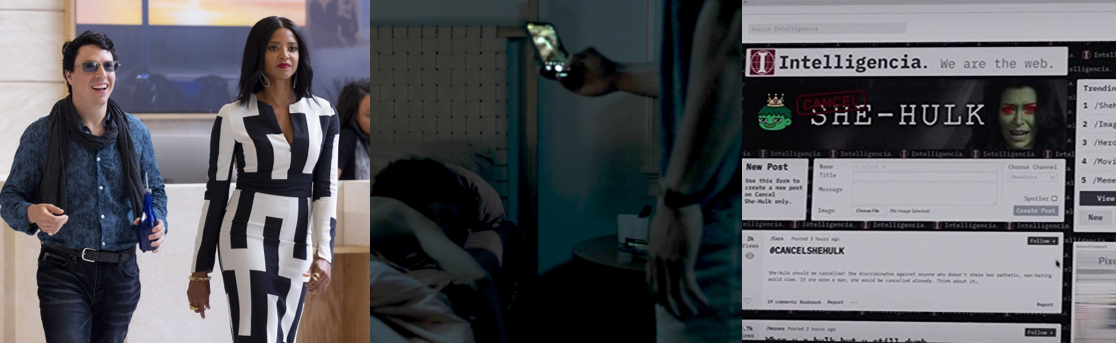
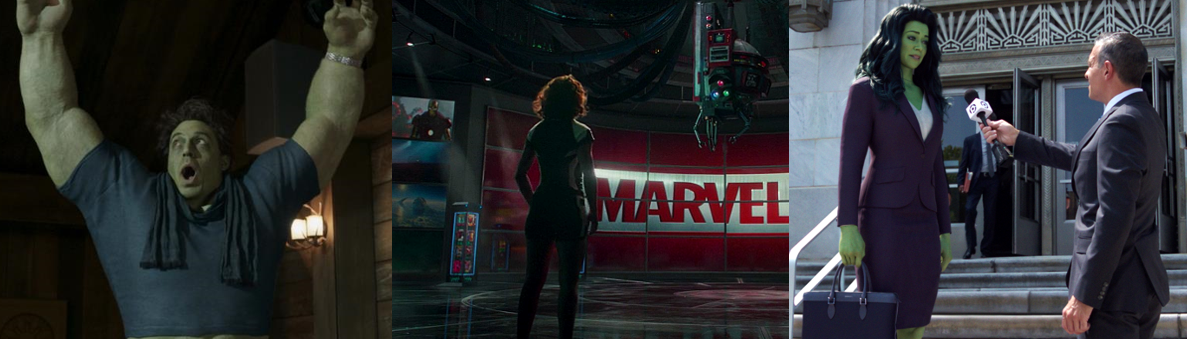
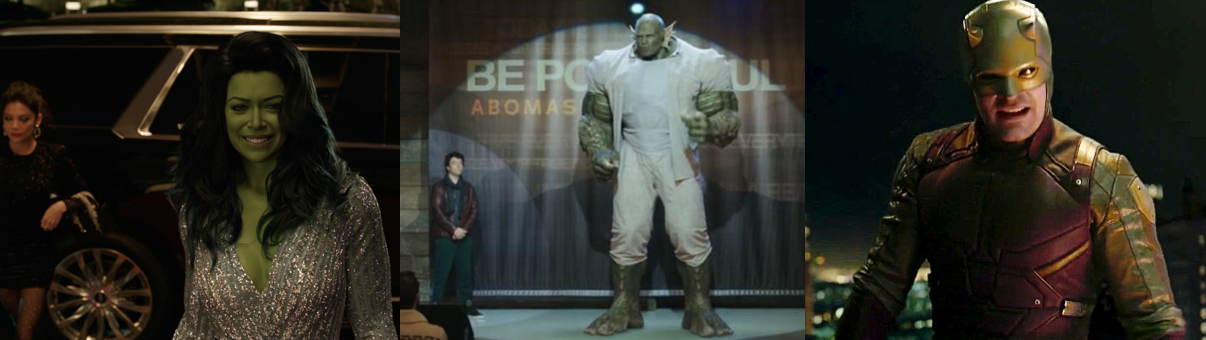
Screen Time [HulkaMAYnia]: She-Hulk: Attorney at Law


Since his explosive debut in May 1962, Stan Lee and Jack Kirby’s gamma-irradiated Jade Giant has been one of their most recognisable and successful characters thanks, in large part, to the Incredible Hulk television show (1977 to 1982) catapulting the Hulk into a mainstream, pop culture icon. The Hulk has been no slouch in the comics either, being a founding member of the Avengers and undergoing numerous changes that have made him one of their most versatile and enduring characters, so what better way to celebrate all things Big Green than by dedicating every Sunday in May to the Green Goliath?


Air Date: 17 August 2022 to 12 October 2022
Network: Disney+
Stars: Tatiana Maslany, Todd Phelps, Jameela Jamil, Josh Segarra, Ginger Gonzaga, Tim Roth, and Mark Ruffalo

The Background:
Following the incredible success of the Incredible Hulk television show, Marvel had Stan Lee create a female counterpart to the Green Goliath to beat Incredible Hulk producer Kenneth Johnson to the punch. A powerful feminist icon for Marvel who has been a member of the Avengers and the Fantastic Four, She-Hulk shared the spotlight with her cousin in the Incredible Hulk cartoon from the nineties and very nearly got her own live-action movie back then, too; Brigitte Nielsen was even cast to bring the character to life at the time. Decades later, Marvel Studios announced that She-Hulk would be joining the Marvel Cinematic Universe (MCU) with a nine-episode series streaming exclusively on Disney+, with Kat Coiro placed as the guiding hand behind the series and Tatiana Maslany cast in the dual role. She-Hulk’s visual effects were the work of multiple effects studios and initially caused some premature backlash, and the show promised not only to feature Mark Ruffalo as Doctor Bruce Banner/The Hulk in a mentor role but also the long-awaited return of Tim Roth as Emil Blonsky/The Abomination. After being delayed due to COVID-19, She-Hulk: Attorney at Law released to largely positive reviews; critics praised the performances and interpersonal slant towards a legal drama, and the comedic aspects were particularly lauded. Others, however, were not so impressed; some criticised the pacing, the CGI effects were a massive point of contention, and the show was slandered by online trolls throughout its run. Regardless, She-Hulk was also praised as an empowering series for female viewers that tackled the subject toxic masculinity and was highly regarded if only for returning a beloved, seemingly forgotten MCU character to the franchise. Finally, unlike other Disney+ MCU shows, Kevin Feige stated that She-Hulk had the potential to not only gain additional seasons but to also cross over into the MCU’s big-budget feature films.

The Plot:
After a car crash sees her blood contaminated with the Gamma-irradiated blood of her cousin, Bruce Banner, lawyer Jennifer Walters (Maslany) finds herself able to transform into a superpowered hulk. As she tries to adapt to her new situation, she tackles a series of unique superhero court cases and finds herself targeted by a slanderous online smear campaign.

The Review:
She-Hulk: Attorney at Law begins in medias res; Jen is already capable of becoming She-Hulk, her best friend and paralegal Nikki Ramos (Gonzaga) is aware of her abilities, and she immediately showcases her additional ability to address the audience to catch us up with her origin story. Jen was on a road trip with Bruce and the two of them were involved in a car crash caused by the sudden appearance of a Sakaaran spacecraft. While rescuing Bruce from the wreckage, some of his blood drips into her wound, instantly transforming her into a savage hulk in the first of many call-backs to the pilot episode of The Incredible Hulk. Disoriented and dishevelled, she’s unquestionably supported and fixed up by a gaggle of helpful women at a bar but is triggered by a group of pushy guys before being tackled by the Hulk and brought to his secluded island laboratory for testing and training. Jen is distraught at the idea of being handicapped by such a life-destroying condition and immediately annoyed and critical of the Hulk’s attempts to mentor her; this ends up going both ways, however, as the Hulk’s lifelong syllabus on controlling his rage is rendered mute by Jen’s natural ability to retain her personality and intelligence in her Hulk form since she’s so used to managing her emotions, both in public and at work, to avoid lashing out at every creep or being branded as inferior because of her gender, which allows her to willingly transform at will because, essentially, she’s always angry.

Jen’s transformation into a Hulk causes some major changes to her personal and professional life.

This presents the unique dichotomy of She-Hulk; while the Hulk strived for years to master his abilities and to reconcile his two warring halves, Jen immediately has full control of not only her strength but also her transformations; though she’s physically smaller and less savage than the Hulk, she showcases all of his abilities with the added benefit of greater physical control. However, despite the Hulk’s best efforts, Jen has no desire to abandon her life and her career to be a superhero; after a brawl, he reluctantly agrees to let her live her own life, but things quickly become complicated for the superpowered lawyer when, during a session in court, she’s forced to reveal her dual identity in front of the world when “superpowered influencer” Mary Macpherran/Titania (Jamil) literally crashes in and threatens lives. It takes Jen some time to embrace her superhero identity; she regularly distances herself from the She-Hulk name and constantly downplays the appeal and benefits of being a superhero, and her condition comes to negatively affect her when she’s fired and unable to find work at a conventional law firm. Holden Holliway (Steve Coulter) throws her a lifeline by offering her the chance to join a superhero law division at Goodman, Lieber, Kurtzberg & Holliway (GLK&H); though initially annoyed that she’s been hired to represent clients as She-Hulk and as more of a publicity stunt than for her legal skills, she’s won over by her new office and just being back at work. Unfortunately for Jen, her troubles only escalate; the press constantly hound her, reporting rumours as facts and often belittling her because of her gender, and she’s even forced to set aside her personal bias in order to represent Emil Blonsky/The Abomination (Roth) at his parole hearing. This all comes to a head when Titania releases a rage of beauty products using the She-Hulk name and sues her for misuse of the copyright, which ties into a central theme of the series, which revolves around Jen learning to embrace both sides of her personality, the meek and somewhat awkward Jen and the sexually confident and alluring She-Hulk; throughout the show, she takes great strides in reconciling both in the court room by embracing her moniker and even later donning a form-fitting superhero outfit to directly assist others.

Jen’s struggles at romance are compounded by an online group that targets and slanders She-Hulk.

This character growth is full of little stumbles, however. Not only is she faced with an overbearing family who clearly care for her but can’t help but interfere and put her down, her love life is a bit of a shambles. Even after she reluctantly changes her online dating profile to a She-Hulk one, Jen is forced to endure a series of disastrous dates with self-obsessed, disrespectful, and down-right creepy men who either disregard her entirely or care only about comparing her to her more famous cousin, such as the uncomfortably obsessed Todd Phelps (Jon Bass), who later forms an entire online movement, Intelligencia, designed to hate on She-Hulk. Because of this, and Jen’s low self-esteem and desire for attention, it doesn’t take much for Arthur (Michel Curiel) to make an impression; he seems genuinely interested in her and actually engages her in conversation, however he has no interest in Jen and thus isn’t interested in pursuing a serious relationship with her. While attending the wedding of her high school friend, Lulu (Patti Harrison), Jen is surprised to make a connection with the charming Josh Miller (Trevor Salter), especially as she’s forced to stay in her human form so as not to steal Lulu’s spotlight. Josh appears to be the opposite of Arthur; he’s only interested in Jen and never really asks about She-Hulk and they actually take the time to date rather than jumping into bed right away. Unfortunately, after they do sleep together, he ghosts her, driving her to distraction; while she finds a measure of closure and self-respect thanks to some unlikely advice from Blonsky and the gaggle of misfit, rehabilitated supervillains at his retreat, she’s driven into an uncontrollable fury when Josh leaks her personal information, including photos and videos of her, to Intelligencia, resulting in her briefly losing the support of the public and being imprisoned.

Of all the guest stars to feature, Daredevil undeniably steals the show with his long-awaited return.

Thankfully, it’s not all bad news for Jen in the romance department. While he initially rubs her the wrong way by proving to be a competent lawyer, blind, flirtatiously charming Matt Murdock (Charlie Cox) proves to be a suitable confidante and partner after not only encouraging Jen to help others with her powers when the law fails them but also being unmasked as the superpowered vigilante Daredevil. Together, they’re able to rescue a mutual acquaintance, eccentric superhero fashion guru Luke Jacobson (Griffin Matthews), from wannabe superhero-turned-supervillain Eugene Patilio/Leap-Frog (Brandon Stanley) and, in the process, She-Hulk learns a little bit about what it means to be a superhero. The chemistry between them boils over following their fight and the series ends with the suggestion that they’re going to be a regular thing going forward since he joins her and her family for a meal. Although he steals the show in every scene, Daredevil isn’t the only guest star to feature in She-Hulk: Attorney at Law; Wong (Benedict Wong) shows up a few times, first to help with Blonsky’s appeal and then to ask for She-Hulk’s aid in barring disgraced sorcerer Donny Blaze (Rhys Coiro) from threatening the fabric of reality with his reckless magic. Similarly, the Hulk also plays an important role in the first episode; initially appearing as Bruce Banner thanks to a convenient inhibitor, he assumes his “Smart Hulk” form and puts Jen’s abilities to the test. He’s frustrated by her not taking his lessons seriously and tries to emphasise the burden and responsibility of being a Hulk, but ultimately trusts her to live her life her own way and disappears into space for his own side story, one that we’re not privy to but see the results of in the finale when he returns from Sakarr with his son, Skaar (Wil Deusner). We even get a couple of celebrity cameos as David Otunga and rapper Megan Thee Stallion feature in the series but the show’s breakout original character is clearly the brazen Madisynn King (Patty Guggenheim), a career party animal who makes a shady deal with a demonic goat and ends up forming an unlikely bond with Wong over their shared love of television.

While spending a lot of time in court, She-Hulk also explores her duality and self-esteem.

At its core, She-Hulk: Attorney at Law is a superhero comedy with a fair amount of courtroom drama serving as the focal point or backdrop of each episode. Whether it’s Jen trying to find a job in her field, Nikki and their co-workers Augustus “Pug” Pugliese (Segarra) and Mallory Book (Renée Elise Goldsberry) working cases involving shapeshifting elves or immortal cuckolds, rogue sorcerers or bumbling heroes, superhero law is naturally a large focus of the show. Conjecture, hearsay, trademarks, and faulty manufacturing are all elements that need to be addressed in a court of law, just like in normal life, but the superhero slant definitely makes these aspects more entertaining to watch. She-Hulk is often representing or even defending individuals who have wronged her in the past; she puts her neck on the line to vouch for the rehabilitated Blonsky, is called to speak to misogynistic Dennis Bukowski’s (Drew Matthews) stupidity, and is even forced to parade her former dates in order to prove that she identifies as She-Hulk. That’s not to say that the show is without any action scenes; Jen may prefer to use her legal skills more than her fists to resolve conflicts but she gets into a number of scraps throughout the show, often for comedic effect. Her first fight with Titania, for example, is over in a single punch and Jen forgets herself for a moment when she’s jumped by Wrecking Crew – Dirk Garthwaite/The Wrecker (Nick Gomez), Eliot Franklin/Thunderball (Justin Eaton), Henry Camp/Bulldozer (Tennison Barry), and Brian Calusky/Piledriver (Kyle Murillo) – when they try to steal her blood using Asgardian-powered construction tools, before easily dispatching them as She-Hulk. She-Hulk is specifically recruited by Wong to fend off the goblin demons Donny unwittingly summons, and she throws down with Titania again at Lulu’s wedding, much to the delight of the guests, but she chooses to leave the violence to Daredevil when confronting Leap-Frog and instead offers him legal counsel. Indeed, She-Hulk largely subverts a lot of the usual expectations when it comes to action sequences; she openly criticises Daredevil’s reliance on stealth and denies him another fight in a hallway and even finds herself really opening up to Blonsky and the oddball guests at his retreat since they can relate to her identity crisis.

Jen’s so annoyed at the derivative nature of her narrative that she forces the show to change tack for the finale.

She-Hulk’s true enemy here isn’t the monstrous Abomination, who’s now repentant and committed to offering emotional support and spiritual guidance, or even Titania, who’s strength makes her almost as formidable a foe as her spiteful nature. Instead, She-Hulk’s greatest foe throughout the series is toxic masculinity. We get our first taste of this moments into the first episode when Dennis undermines Jen’s abilities and suggests he’s a more capable lawyer than her; he continues to talk down to her even when addressing She-Hulk and, later, refuses to have her or Mallory represent him as he’d rather have a man. A shallow, arrogant little man, he refers to women as “hot chick” and “it” but it’s this delusional nature which ends up winning him the case against catfisher Runa (Peg O’Keef). Although a small-time annoyance, Dennis is just one example of the persecution Jen faces, both as herself and as She-Hulk; when the Wrecking Crew confront her, they accuse her of flaunting herself when she’s simply living her life and the press are constantly using derogatory terms to label her. Very few males treat her as an equal or with the respect she deserves, allowing the likes of Pug, Murdock, and even Blonsky to stand out as they actually engage with her and don’t condescend her or try to undermine her intelligence and abilities. Male chauvinism isn’t limited to just She-Hulk either; Craig Hollis/Mr. Immortal (David Pasquesi) lands himself in hot water after abandoning his many marriages by faking his death, leading to him not only earning Mallory and Nikki’s ire but also being forced to agree to a fair settlement tailored for each of his slighted partners. No male is more troublesome to She-Hulk’s stature than Todd, however; using the online alias “HulkKing”, Todd forms Intelligencia specifically to slander her and create a following of likeminded assholes to steal a sample of her blood so they can take the power they feel she doesn’t deserve. Still, luckily for Todd and his vile followers, Jen herself takes issue with the redundant nature of their plot and literally demands that the show try something a little more original, tailoring the ending into something a little less derivative and seeing that the HulkKing and his cohorts are exposed for the toxic, petty-minded jerks they are.

The Summary:  
There’s a real nasty environment that’s brewed online in the last few years where any product that even dares to try something new or feature a strong female lead, or include any kind of diversity, is immediately labelled as “woke”. Personally, I have no idea what this is supposed to mean and find it extremely degrading as it’s just some catch-all term mindless, anonymous idiots use to slander anything they don’t like. She-Hulk: Attorney at Law deals very heavily in this topic; although she largely ignores her online haters (primarily because she knows they wouldn’t dare say anything to her face), Jen is constantly besmirched and belittled both subtly and explicitly throughout the show. It’s small wonder, then, that she goes on a rampage, one eerily reminiscent of Carrie (De Palma, 1976), when Intelligencia publicly slut shame her at an award ceremony. This ceremony is perhaps the best example of the struggles Jen faces in her career; multiple women are named Female Lawyer of the Year and they’re paraded on stage like it’s a Miss Universe pageant, and Jen even foreshadows this when she quite rightly rants to her cousin about how difficult it is for a women to succeed as she’s slandered the moment she shows any weakness.

She-Hulk’s CGI is admittedly dodgy but other characters fare much better in this regard.

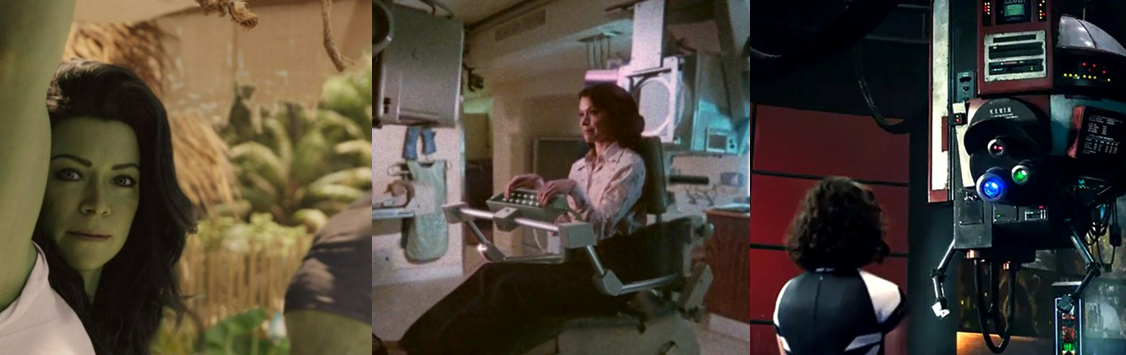
But I know what you want to hear me really talk about: the special effects. First of all, the Hulk looks fantastic; his CGI model is on point, which is to be expected as they pretty much perfected the look in Avengers: Endgame (Russo and Russo, 2019), but still surprising for a television show, especially as a Hulk-centric show seems to me to be one of the more costly MCU projects. Similarly, the Abomination looks really good; I’m really digging his more comic-accurate redesign and even enjoyed seeing him as this rational pacifist rather than some mindless monster, though I will admit that his face was a little off and his transformation was a little too “clean”. She-Hulk suffers from this a bit as well; she simply grows larger or smaller, her custom-made clothes expanding to accommodate her, so we’re largely beyond the days of dramatic transformation sequences for these characters. As for She-Hulk…she mostly looks perfectly fine, but it does vary wildly. Given that she’s not as monstrous as the Hulk, I do wonder if it might’ve been better to use her on-set stand-ins, Maliah Arrayah and Devon Lewis, to actually portray the character and enhance her with CGI, imposing Maslany’s face onto the larger doubles as a modern take on the 1970’s show (something the show does actually do when it lovingly recreates The Incredible Hulk’s iconic opening sequence). I think the things that bother me the most is her hair, which looks like a bad wig most of the time, and her eyes and face, which are a little lifeless and blank at times. It definitely works but it does stick out quite a bit and I can see why people would be distracted by it; low lighting definitely aids the presentation, but I admire how often Jen is seen in broad daylight as She-Hulk. Thankfully, Daredevil is here to again make up for some of these effects; now garbed in a yellow and red number, this is a fantastic return to form for the character, who seems much more jovial and far less bleak than in his Netflix show, allowing him to kick ass and be intimidating but also be a fun and attractive prospect for Jen. Hell, I even enjoyed the Leap-Frog suit and the inclusion of small-time, ridiculous villains like William Taurens/Man-Bull (Nathan Hurd), Alejandro Montoya/El Águila (Joseph Castillo-Midyett), Saracen (Terrence Clowe), and Alexander Gentry/Porcupine (Jordan Aaron Ford). I always enjoy it when live-action adaptations turn to the more obscure and ludicrous characters, and they really worked in the context of this show and played a surprisingly poignant part in shaping Jen’s acceptance of herself and her duality.

She-Hulk’s ability to break the fourth wall results in a unique metatextual humour.

Of course, one major aspect that separates She-Hulk from most comic book characters is her ability to break the fourth wall, which is present right from the start and, while characters occasionally react to this, it’s mostly just played for laughs and ignored. Jen habitually addresses the camera, generally asking us not to judge her, addressing the abundance of cameos throughout the show, and questioning the plot at certain points. This metatextual approach extends to the title sequence, which changes a number of times to reflect what’s happening (such as Jen being out of work, Titania’s lawsuit, and Jen being barred from transforming into She-Hulk). The aforementioned recreation of the 1970’s intro was my favourite instance of this but all this metatextual commentary comes to a head in the finale; after being forced to wear an inhibitor after her rampage, Jen is at her lowest point when Todd transforms into a Hulk-like creature and even Titania and the Hulk show up at the last minute in a chaotic attempt to have all her separate storylines converge. She’s so unsatisfied with the conclusion that she literally escapes to the Marvel Studios: Assembled (Baruh, 2021) documentary to confront She-Hulk’s staff, who are amusingly non-plussed at a fictional character gate-crashing their meeting and direct her to “Kevin”, who turns out not to be MCU executive producer Kevin Feige but an artificial intelligence which makes all of the decisions about the MCU. Somewhat reminiscent of the divisive finale to The Matrix Reloaded (Wachowskis, 2003), Knowledge Enhanced Visual Interconnectivity Nexus/K.E.V.I.N. (Brian T. Delaney) continues the metatextual narrative by asking that she transform back into Jen as she’s “very expensive” and the visual effects team has “moved on to another project” and explaining that it uses advanced algorithms to create “near perfect” products, the quality of which is left up to the internet. Using her legal skills, Jen’s able to argue for more originality in her show, criticising Todd’s plot and the entire finale and demanding that she get the ending she deserves rather than what’s expected. She then goes on to address many of the issues people have with the MCU and even asks about the X-Men before being denied such a boon in the future and left to enjoy her happy ending.

A fun show with some great humour, action, and an empowering message that nicely expands the MCU.

I honestly didn’t expect to enjoy She-Hulk: Attorney at Law as much as I did; like a lot of people, I was mainly watching it to witness the glorious official integration of Daredevil into the MCU but the whole show was really good from start to finish. At nine episodes, it’s longer than usual for a Marvel Disney+ show and there’s an argument that a couple of the episodes could’ve been trimmed down or had their plot points combined into other episodes, but I have no complaints about the length or the content. It was a great introduction to this fresh new Hulk character, one who’s fully capable of defending herself and having a successful career and yet as conflicted and full of doubts as anyone else. Jen’s ability to break the fourth wall helps her to stand out even more and enabled the show to have a fun, carefree vibe while still holding up a mirror to the online trolls and toxic masculinity that is so prevalent in this day and age. While they were only minor roles, I also enjoyed Jen’s supporting cast; her doting, if annoying, family, Nikki’s endless enthusiasm, and Pug’s awkwardness at being forced to integrate with Intelligencia all made for some compelling and entertaining side characters. The courtroom drama was also very enjoyable; I liked seeing She-Hulk coming up with legal loopholes, even if it meant embarrassing herself, to win cases and I’d like to see the second season spend a little more time in the courtroom with some of Marvel’s more colourful and obscure characters. Alterations to the Abomination and the continuation of the Hulk’s mini arc also landed well with me; it was great to see Blonsky back, and cast in a sympathetic light and elevated into something more than just a brutish solider/supervillain and I was left really intrigued to see what’s next for the Hulk family. Yes, She-Hulk’s special effects can be wonky but I fully expect to see this addressed in another season; they work and can be impressive but you will have to get over it to fully enjoy the show. Also, if you’re one of these “woke” crusaders it’s probably better you watch something else as She-Hulk: Attorney at Law is very much geared towards sending a positive message about rising above hate and valuing people based on their ability and merits rather than belittling them because a small-minded minority think of themselves as somehow “superior”.

My Rating:

Rating: 4 out of 5.

Great Stuff

What did you think about She-Hulk: Attorney at Law? Did the CGI used to bring She-Hulk to life put you off? What did you think to her ability to break the fourth wall? Were you a fan of the legal drama and comedy aspects? What did you think to the Abomination’s character growth and the reintroduction of Daredevil? Did you enjoy the attack on toxic masculinity or was it too “woke” for you? Where would you like to see the character go in the future and are there any She-Hulk storylines or characters you’d like to see included in future seasons? Whatever you think about the show, or She-Hulk in general, leave a comment below or on my social media and be sure to check out my other Hulk content!

Screen Time [Sci-Fanuary]: The Outer Limits (1995): “Quality of Mercy” (S1: E13)


January sees the celebration of two notable dates in science-fiction history, with January 2 christened “National Science Fiction Day” to coincide with the birth date of the world renowned sci-fi writer Isaac Asimov, and HAL 9000, the sophisticated artificial intelligence of Arthur C. Clarke’s seminal 2001: A Space Odyssey (1968), being created on 12 January. Accordingly, I’ve been dedicated every Sunday of January to celebrating sci-fi in all its forms.


Season One, Episode 13:
“Quality of Mercy”

Air Date: 16 June 1995
Director: Brad Turner
US Network: Showtime
UK Network: BBC 2
Stars: Robert Patrick, Nicole de Boer, and Mark McCracken

The Background:
The Twilight Zone (1959 to 1964; 1985 to 1989) wasn’t on when I was a kid; growing up, I only had the then-four channels of terrestrial television available to me so my sci-fi/horror anthology series of choice was The Outer Limits (1995 to 2002). A revival of the original 1960s show, The Outer Limits was an award-winning anthology series originally broadcast here in the United Kingdom on BBC 2; every week, a new tale would unfold, usually revolving around aliens, artificial intelligence, or other sci-fi, horror, or fantastical stories, though there were also a number of recurring themes, characters, and even semi-sequential stories to be found in the show’s long history. Considering my nostalgia and affection for the series, it’s great to see others also have a fondness for the show, and I’m always happy to revisit it when I get the opportunity.

The Plot:
Mankind is fighting a losing battle against an aggressive alien race; at the height of the conflict, Major John Skokes (Patrick) is captured and imprisoned alongside a young cadet, Bree Tristan (de Boer). While Stokes is determined to escape and return to the fight, his defiance is rattled when he discovers that the alien jailers have begun experimenting with grafting samples of their own skin onto Bree in an effort to make her one of them!

The Review:
“Quality of Mercy” begins with Major John Skokes being forcibly dragged and manhandled into a prison cell on an alien world but a physically superior, war-like race of aliens who have been locked in a one-sided battle against Earth’s United Nations Defense Forces (UNDF) for some time. An abrasive, proud, and stubborn military man, John’s first instinct in all things is to fight back, even when he’s clearly outmatched by his alien captors. This instinct extends not just to his defiance at being thrown into a cell, right when he’s at the peak of the war no less, but also to his determination to find a way out of the cell and to his initial militant attitude towards his cell-mate, the timid and terrified Bree Tristan. While John is a combat veteran who has fought on the front lines of the war for so long that he hasn’t actually been back to Earth in years, Brie is a cadet (second class) from Europa base who has only ever flown and fought in training missions. Captured during the “second Europa raid”, Brie estimates that she has been imprisoned and tortured for about three months and has been by herself for some time after her commander, Hartley, a much older and physically impaired man, died some time ago. She’s been kept there, in the dark and alone, ever since; forced to scavenge for food by chasing after the odd little rubbery parasites her captors toss to her and having lost all track of time and hope, Brie’s state of mind is only further fractured by the horrific experiments the aliens have been conducting on her as they have been routinely grafting their skin and DNA onto her body into an effort to physically transform her into one of them!

While John is determined to escape back to the fight, Brie is overcome by the futility of it all.

While Brie is off getting tortured, John busies himself exploring every inch of their cell, which is home to a pool of acid-like liquid and a curious red vegetation that seems more than a little inspired by the works of H. G. Wells. Although the diamond-hard walls cannot be breached, John is able to climb them to a barred ventilation shaft in the ceiling, through which he can hear the screams and desperate cries of Brie (and other humans) being tortured. After fashioning a cutting tool from a shard of the rock, John sets to work using all of his strength and free time trying to cut through the bars in the ceiling; although Brie is wracked by pain and despair at her condition, John offers her hope not only in his discovery but in giving her physical comfort. Having been caught up in the conflict, Brie has lived without love and passion or the touch of another, and derives much solace and comfort from even John’s hesitant attempts to console her. While Brie desperately tries to cling on the love and believes it’s what separates humanity from their enemy, John has been consumed by hatred; he is so resolute in his determination to escape that he’s even willing to go down fighting, if need be, but considers this a worst-case scenario. Feeling sympathy for her plight and virginity, having been so caught up in conflict that he has lost touch with the simple pleasures of life, John takes his sexual urges towards Brie and uses them as more motivation to cut through the bars, and pays the price for his stubbornness when his leg is shredded by a ravenous little creature in the vent and his hand is cut off at the wrist when he foolishly tries to keep Brie from being harmed further.

Brie is distraught as she loses more and more of her humanity and identity to the aliens’ experiments.

John’s determination stems from a deep-rooted need to get back into the fight because the future of humanity depends upon it; he was excited to deal a decisive blow against the enemy for the first time and to prove that they could be bested, and is angered at being captured right when he’s needed the most. John’s mindset contrasts heavily with Brie’s and both characters provide not only different perspectives on the conflict but to the world-building of this episode; John apparently embodies the single-minded, militaristic focus of those in the thick of the fight, while Brie seems very much against the war. Since John has been fighting pretty much non-stop for the last four years, he hasn’t seen what’s become of the Earth; Brie has however, and horror stories of a world turned into a police state, churning out munitions and training soldiers in a constant cycle to feed the war effort. John, however, remains adamant that humanity will come out of the war stronger than ever; he believes that the conflict will unite humankind, ending their petty squabbles and political and racial differences, to come together as one unified race. Forced into service by a standardised test and lacking John’s passion for the fight, Brie is ashamed to admit that she caved under torture and spilled everything she knew to spare herself further pain (though, as a mere cadet and a trainer, neither she nor Hartley had no information of real value) and she doesn’t share John’s fighting attitude or confidence that their enemy can be defeated. Of course, her will is only further sapped by the continual experiments and violations she suffers at the hands of their captors; the alien skin grafts cause her incredible physical pain and cannot be forcibly removed, despite John’s best efforts. Brie is taken away again and again, changing a little more each time, and her sense of identity and humanity degrade a little more each time she returns. At first, the graft is simply a leathery, reptilian wound on her arm but, soon, her entire back is converted into a sickening alien flesh and part of her face is lost to the aliens’ appalling visage.

John’s determination sees him gravely injured, but his resolve is shattered by Brie’s devastating revelation.

With Brie’s transformations becoming more and more severe, and John’s injuries effectively crippling any minor chance they had at escape, the two begin to realise that their options have become severely limited. With a heavy heart, John admits that he can’t fulfil his promise; earlier, Brie talked about how she and Hartley had planned to commit suicide but he was too weak to go through with it and she was too scared, and sadly John is unable to bring himself to put her out of his misery due to how attached to her he has become. Still, Brie is grateful that John was able to give her a brief, shining moment of hope for herself and for humanity and, with the end in sight, John tries one last time to comfort her with the knowledge that, although it may be the end for them, humanity will live on. John reveals that the UNDF has been feigning defeat and have held back a massive armada of their strongest fighters on the far side of the Sun, which were due to launch a devastating attack on the alien home world thirty days before John was captured. He fully believes that this desperate military strike will be a turning point in the war, and enough to strike a crippling blow against the enemy even though the two of them won’t live to see it, but he is left screaming in despair when Brie drops a bombshell of her own. When the alien jailer (McCracken) returns once more, Brie willingly goes to it and reveals that she was being changed back into one of them, thus exposing herself as a sleeper agent who has manipulated John into revealing humanity’s greatest military secret and assumedly dooming the human race to destruction.

The Summary:
“Quality of Mercy” is one of a handful (something like six to eight) episodes of The Outer Limits that really stuck with me, both as a kid when I first watched it and now, later in life. I remember enjoying this episode so much, being so influenced by it, that I plagiarised it for a short story assignment at secondary school! Although the episode is pretty much confined to one rather uninspiring location (an alien prison cell that looks to have taken a leaf out of Star Trek’s (1966 to 1969) playbook) and only really feature three character’s, its themes of human determination, and naivety, beautifully summed up as always by the narrator (or “Control Voice”; Kevin Conway): “Men of war have long known that warriors must often abandon those verities they defend. Peace, human kindness, love…for they hold no meaning to the enemy. And so, to win, do we become what we despise…and despise what we become? In the darkest of hours…in the greatest of battles…we must never forget who, or what, we are.“

The aliens are mysterious, physically imposing, and sadistic war-like race who have humanity endangered.

Although they’re not given a name, we are told quite a few things about the alien force that has imprisoned our main characters. They are a war-like race with little compassion and, though they can apparently understand human language and speak it through a machine, they have no understanding of concepts like “mercy”; they treat their prisoners like rats to be observed, forcibly experimented on, and dissected to learn more about their ways and their enemy. They seem oddly curious about human beings; they left Commander Hartley’s body in the cell with Brie for some time as if expecting her to do something with it (and John suspects that they eat their dead) and were fascinated by the differences between male and female bodies and sexual organs. Brie recounts with disgust and dismay how they forced her to strip down and violated her with probes and instruments, and of course she is horrified at the continued alterations being made to her body by their experiments. The aliens are depicted as huge, armoured creatures that tower over and physically dominate their captors, despite John’s best efforts to fight them back and, though we don’t see their forces in this episode, we do here many a horror story from John about how the alien’s ships have decimated humanity’s forces and proved to be a high-unconquerable enemy. And yet, despite Brie trying to encourage John to partake of the limited sustenance the aliens provide and talk him out of the futility of trying to escape or discover some weakness in their captors, John’s resolve remains absolute and steadfast His immediate focus is on learning the layout of their cell, figuring out how observed they are, and gathering as much information as he possibly can about where they are and what options are available to him, and he continually shouts defiance to his captors, taunting them with the revelation that he personally destroyed on of their capital ships and remaining adamant that they aren’t as indestructible as they immediately seem.

John’s desperation to give Brie hope may very well have doomed humanity to total destruction.

In the end, “Quality of Mercy” is a harrowing tale of desperation, deceit, and determination; John and Brie couldn’t be two more different, contrasting characters and they react to their hopeless situation in wildly different ways that both define and alter their characters and add to the intriguing lore of this world. Set in a future where humanity has been locked in an interstellar war for so long that Earth’s entire society has changed to become entirely focused on producing weapons, soldiers, and ships for the conflict and hatred for their aggressive, uncompromising alien enemy has become the norm, over-riding compassion, love, and the simple pleasures of life. John embodies this perfectly, being a good soldier who is frothing at the mouth to get back out there and fight, whether it means his death or not, and is defiant right up until the moment where he realises that the only way out is suicide. Of course, the most memorable moment of this episode is the shocking twist ending; this blew my mind as a kid, and I really think the episode does a great job of building up to this reveal as Brie is so timid and frightened and clinging to her humanity with everything she has and is positioned as an innocent victim of horrendous torture. The slow degradation of her body is juxtaposed with her failing hope for the future of humanity, and every action John takes is geared towards restoring that hope and finding a way out, and a way to fight! Ultimately, however, he is just another pawn manipulated by a superior alien force; the final shot of him screaming in hopeless defiance is extremely powerful and has stuck with me for decades. I’ve always enjoyed the bleak twist endings that closed out many episodes of The Outer Limits, and “Quality of Mercy” is easily one of the best for that thanks to how strong the two lead’s performances are and how well the episode uses every bit of its limited budget and run time.

My Rating:

Rating: 5 out of 5.

Fantastic

Have you ever seen “Quality of Mercy” or the 1995 revival of The Outer Limits? If so, what did you think to it and what were some of your favourite episodes? Did you see the twist coming or were you as shocked as I was when I first saw this episode? What are some other stories of alien transformation and conflict that you enjoy? Whatever your thoughts, feel free to sign up and leave a comment below or leave a reply on my social media, and be sure to check back in next week for the conclusion of Sci-Fi Sunday.

Screen Time: The Guardians of the Galaxy Holiday Special

Air Date: 25 November 2022
Director:
James Gunn
Network:
Disney+
Stars: Chris Pratt, Dave Bautista, Vin Diesel, Bradley Cooper, Pom Klementieff, Sean Gunn, and Kevin Bacon

The Background:
Although one of Marvel’s more obscure properties, and having undergone many alterations over the years, the Guardians of the Galaxy proved to be a massive financial success when they made their live-action debut in the Marvel Cinematic Universe (MCU). With the property deemed to have strong franchise potential and integral to the MCU, a sequel was inevitably produced and went on to surpass the box office of the first film despite criticisms regarding its pace and tone. Although director James Gunn had plans for a third film, the team’s future was briefly thrown into doubt when Disney and Gunn parted ways after learning of some controversial tweets and comments he made in the past. After addressing and apologising for his comments, and following an outpouring of support from fans and stars alike, Gunn returned to Disney/Marvel and developed of the third film started up once more. Gunn and his stars also signed on to produce this holiday special for Disney+, which he planned to serve as an epilogue for Phase Four of the MCU after having worked on the concept for some years. Following delays due to COVID-19, the special finally released on Disney+ in December 2022 and was met with positive reviews; critics praised the heartfelt homage to Christmas specials of old and the light-hearted comedy on offer, though some questioned the motivation behind the special and the inclusion of Kevin Bacon despite Gunn stating that it would set up some key events for the team’s third movie.

The Plot:
With Peter Quill/Star-Lord (Pratt) still reeling from the death of Gamora (Zoe Saldaña) and the presence of her alternative self from a separate timeline, Mantis (Klementieff) and Drax the Destroyer (Bautista) head to Earth to bring Peter the greatest Christmas gift they can think of: his childhood icon, Kevin Bacon!

The Review:
The special opens with Kraglin Obfonteri (Gunn) shedding some light on young Peter’s (Luke Klein) childhood amongst the Ravagers to Mantis, Drax, and Nebula (Karen Gillan). As a boy, Peter was still very sentimental towards Earth (largely referred to as “Terra” out in the depths of space) and tried to teach Yondu Udonta (Michael Rooker) about its ways and traditions. Yondu, however, wasn’t just unimpressed at the idea of Christmas; he was enraged by it and forever ruined the festivities with his volatile temper. While Mantis is heart-broken at the story, Drax, in his usual boisterous fashion, finds Peter’s traumatic upbringing incredibly amusing, something even Nebula admonishes him for. The special does answer a lingering question I had about Taneleer Tivan/The Collector (Benicio del Toro), last seen as an illusion cast by the Mad Titan, Thanos (Josh Brolin), and presumed dead but he’s apparently still alive since he sold the entirety of Knowhere to the Guardians between movies. Because of this, the team has been too busy fixing the place up and restoring some kind of order and has been unable to indulge in festivities or even search for the elusive, alternative Gamora. Feeling a sense of obligation towards Peter, who’s revealed to be her half-brother since they’re both children of Ego the Living Planet (Kurt Russell), Mantis is spurred to give Peter the Christmas he missed out on as a child. Confiding in Drax, the only one who knows her secret, Mantis is elated when the muscled-bound buffoon suggests bringing Peter’s childhood hero to him as the ultimate Christmas gift and head to Earth to kidnap Kevin Bacon! Although their arrival initially causes a stir due to Drax forgetting to activate the ship’s cloaking device, the two easily blend in amidst the glitz, excess, and cosplayers of Hollywood, unwittingly earning themselves a decent wad of cash in the process as enthusiastic tourists clamour for selfies with their pair.

To cheer Peter up, Mantis and Drax head to Earth to kidnap Kevin Bacon!

After blowing all their dough on shots and revels, Mantis uses her empathic abilities to obtain a map to Kevin Bacon’s house, where the EE spokesman is relaxing in his spacious Hollywood home and awaiting the return of his family. Although he politely sends the two away when they come calling, they’re easily able to barge into his house and a frantic chase throughout Bacon’s abode ensues, with Mantis hopping from wall to wall like her namesake and things escalating when Bacon desperately asks the local cops for help, which thankfully ends without any bloodshed. This sequence also showcases Mantis’s fighting skill as she easily takes down the armed cops and renders them unconscious with her powers, showing that she’s more than just the team’s emotional, compassionate conscious. These same powers are used to quell Bacon’s fears and, at the lightest touch and softest suggestion, he become enthusiastic about accompanying the two and helping them deck their ship out with Christmas decorations. However, once he’s heading out into the big black and sharing stories of his career, Bacon unknowingly lets slip that he’s simply an actor rather than some world-renowned superhero, much to the disgust of Mantis and Drax, so Mantis coerces Bacon into believing he truly is a hero so as not to ruin Peter’s Christmas once more. Bacon then believes himself to be a World War Two soldier, adopting a…well, “Australian” accent would be generous…then briefly pretending to be Bruce Wayne/Batman before Mantis demands that he be himself but not “suck”. Thankfully, Bacon is just happy to be out in space and takes it all in his stride, and Peter is astounded to find that all of Knowhere has been decorated with Christmas lights, songs, decorations, and even a snow blower. Though touched by their efforts, Peter’s joy turns to horror when he discovers that his friends have kidnapped his childhood hero, regardless of how excited Kevin Bacon is to be there to celebrate Christmas with them. After demanding that Bacon be returned to normal, the actor’s enthusiasm turns to terror; however, after learning of how influential his career was to Peter’s life, Bacon has a change of heart and decides to stick around and help out.

The Summary:  
Naturally, given the title and when it released, Christmas is a central theme of The Guardians of the Galaxy Holiday Special; it’s bookended by the God-awful “Fairytale of New York” song by The Pogues, the traditional Marvel Studios logo is overlaid by soft snow fall and Christmas lights, and the special opens with an animated flashback showing young Peter’s failed attempts to explain the sentiment behind Christmas to Yondu. He’s not the only one in the depths of space who struggles with the concept; Bzermikitokolok (Rhett Miller) and his band (The Old 97’s) to interpret the season through song recast Santa Claus as a superpowered master burglar who shoots missiles and has a flamethrower, much to Peter’s dismay. Drax and Mantis are equally dumbfounded by Earth’s traditions but soon enjoy the taste of Earth liquor, the excitement of a bar, and delight in the festive decorations littered across Kevin Bacon’s lawn. Those who delight in the action-packed adventures of the Guardians may be disappointed to learn that the Holiday Special is much more of a character-driven pieces; Groot (Diesel) is little more than a cameo (and looks a lot like a man in a suit, an effect I approve of) and the special primarily follows Drax and Mantis, which is pretty delightful as these two don’t always get much to do and it’s cute to see them bicker and Mantis ultimately gifting him with an inflatable elf he had grown fond of on their journey. Also, the special shows that the team is now aided in their efforts by Cosmo the Spacedog (Maria Bakalova), a sentient dog that developed psionic powers after being shot into space by the Soviet Union and who has a strained relationship with Rocket Raccoon (Cooper), though she responds much better to doggy treats than criticism.

Ultimately Kevin Bacon brings the spirit of Christmas to Peter and the other Guardians.

Although Kevin Bacon is terrified by Mantis and Drax, and rightfully so, fearing at first an invasion of his home, then an attempt on his life by overly enthusiastic cosplayers, and finally overwhelmed by being surrounded by strange alien lifeforms, his excitement at being out in the galaxy comes through thanks to Mantis’s spell. Despite his fear, however, he is touched by Kraglin’s story of how much his movie roles impacted Peter’s life and he decides to stick around Knowhere for a bit, singing a song and helping to teach them about the true meaning of Christmas. While Bacon’s explains the virtues of family and goodwill so associated with the season, Peter encourages the others to open their gifts: Groot is delighted by his Game Boy and even Nebula gets into the spirit by gifting Rocket James Buchanan “Bucky” Barnes’ (Sebastian Stan) prosthetic arm! Thus, Kevin Bacon parts with the team on friendly terms, and even promises to be back for Easter, having brightened Peter’s life considerably with his generosity. Equally moved by the team’s effort, Peter reveals to Mantis that Yondu quickly came around to the spirit of Christmas after being amused by Peter’s gift (the first of many small toys for his control panel( and that he even gifted Peter his trademark blasters in return. Mantis’s revelation, however, trumps even that present and Peter is thrilled to learn that he has a sister, ending the special on a sweet note about family and goodwill and all that heart-warming Christmas spirit.

My Rating:

Rating: 3 out of 5.

Pretty Good

Did you enjoy The Guardians of the Galaxy Holiday Special? What did you think to the focus on Drax and Mantis and their efforts to cheer Peter up with a most unusual present? Did you enjoy Kevin Bacon’s role as a clueless, well-meaning celebrity? Would you have liked to see a little more action in it or were you happy with the traditional Christmas message it delivered? Where do you see the team going in the future? What’s your favourite Christmas special? Whatever your thoughts, feel free to share them below or on my social media.

Screen Time [Christmas Countdown]: Hawkeye

Air Date: 24 November 2021 to 22 December 2021
Network: Disney+
Stars: Jeremy Renner, Hailee Steinfeld, Tony Dalton, Alaqua Cox, Vera Farmiga, and Florence Pugh

The Background:
In one of their more blatant borrowings from their competitor, Stan Lee and Don Heck debuted Clint Barton/Hawkeye in the pages of Tales of Suspense all the way back in 1964. Originally introduced as a foil for Tony Stark/Iron Man, Hawkeye eventually became a member of the Avengers, was involved in some of Marvel’s most prominent storylines, and has even become a symbol of representation for the deaf community in recent years. Jeremy Renner helped the D-list archer become a household name after he was cast in the Marvel Cinematic Universe (MCU) but was very much restricted to a supporting role compared to his other, more compelling peers. Marvel Studios sought to change this with the launch of Disney+, and Hawkeye was one of the first characters slated to have his own show exclusive to the streaming platform, which executive producer Trinh Tran aimed to explore his backstory, his time as Ronin prior to Avengers: Endgame (Russo and Russo, 2019), and introduce his protégé, Kate Bishop (Steinfeld), to the MCU. Accordingly, the show was heavily influenced by Matt Fraction’s comic book run, in which these elements (and Hawkeye’s deafness) were prominent features. The show aimed to delve deeper into Barton’s mindset and how the Snap had affected him, while also formally incorporating elements from Marvel’s Netflix shows into the MCU proper, and further lay the groundwork for a potential Young Avengers project. Despite issues caused by COVID-19, the six-episode series was highly praised when it debuted on Disney+; critics enjoyed the banter between the two archers, the seasonal setting, and the chance to spend more time with Barton, while also praising the grounded action sequences. While there has been no talk of a second series, a spin-off for deaf antagonist-cum-anti-hero Maya Lopez (Cox) was put into production for a 2023 release.

The Plot:
Former Avenger Clint Barton just wants to get back to his family for Christmas but his life is thrown into disarray when he crosses paths with would-be superhero Kate Bishop and is thrust into the middle of a conspiracy from his past that threatens to derail far more than the festive spirit.

The Review:
I mentioned in my review of his debut appearance that I’m not overly familiar with the character of Hawkeye; I’ve definitely read more stories of his DC Comics counterpart and Hawkeye generally just pops up in any stories I read that feature the Avengers or other Marvel Comics characters. As a result, while I’m familiar with Matt Fraction’s work with the character, I’m by no means a die-hard Hawkeye fan. I’ve always been a bit dismissive of him; this isn’t because he doesn’t have any superpowers, I’ve just never really been motivated to seek out his stories. However, having said that, I am a fan of Jeremy Renner’s portrayal of the character in the MCU; Hawkeye got a bit shafted in first Avengers movie, but has since become the heart (or, at least, moral compass) of the team. He’s shown himself to be a devoted family man, something none of his peers can boast of, a surrogate father and mentor and to have real emotional depth to his character, going on a killing spree as the vigilante Ronin after Thanos (Josh Brolin) wiped out half the universe (including Clint’s wife and kids, who eventually returned, of course) and being visibly broken after his best friend and partner, Natasha Romanoff/Black Widow (Scarlett Johansson), sacrificed herself to help undo Thanos’s actions. I think it’s cool that Hawkeye got the chance to spread his wings in a series devoted to him, but I do think Marvel Studios missed the chance to do a sort of spy/thriller set in the past that showed how Clint and Natasha first met and joined the Strategic Homeland Intervention, Enforcement, and Logistics Division (S.H.I.E.L.D.), which would also have shed new light on S.H.I.E.L.D. director Nick Fury (Samuel L. Jackson), but I suppose that still isn’t completely off the table and this is a good compromise as I can’t say for sure if a Hawkeye solo movie would land too well.

Burdened by grief, Clint is forced to protect Kate from the ghosts of his violent past.

When we catch up with Clint, he’s still carrying the grief and guilt over Natasha’s death; he’s unimpressed, to say the least, and somewhat insulted by Rogers: The Musical’s glorification of the Avengers and their strife and haunted by Natasha’s sacrifice. He’s also now shown to be partially deaf and wearing a hearing aid (which he turns off to spare himself Rogers’ cheesy songs and later, to tune out Kate’s incessant babbling) and is irked that the musical includes superheroes who weren’t even in the battle. And that’s not even mentioning the “Thanos Was Right” graffiti he spots in the men’s room; here’s a guy who lost everything, put his life on the line countless times, and lost his best friend to bring back untold billions of lost souls and his reward is seeing his exploits turned into a cringe-worthy stage show (Marvel Universe Live! had better action, costumes, and production value) and anonymous accusations that all that pain and loss was not only for nothing, but unappreciated by a certain few. He’s also shown to be uncomfortable with the hero worship some show him, dismissive and annoyed by fans, and cares little for his “branding”; in “Hide and Seek” (Thomas, 2021), Kate voices her concerns that he’s too “low key” to sell and thus has been denied his proper share of the limelight and a big part of their emerging partnership is her emphasising that Clint needs to open himself up more so he can inspire people the same way he did her. “Partners, Am I Right?” (Bert and Bertie, 2021) shows his counterargument to this; Clint has always seen himself as a weapon, rather than a hero or a role model, and he’s too traumatised and too weary from his losses and years of fighting to want to be in the public eye. Indeed, he begins the show simply wishing to spend a happy, if cringe-filled, Christmas with his kids – supportive daughter Lila (Ava Russo) and his sons, veritable blank slate Cooper (Ben Sakamoto) and young Nathanial (Cade Woodward). He’s stunned when he sees a report of his former murderous vigilante persona, Ronin, on the news and immediately sends his kids back home to their mother, Laura (Linda Cardellini); haunted by the deaths he caused while in the guise, Clint makes it his mission to track down whoever’s in the getup to protect them from reprisals and is aghast to find Kate under the mask. Concerned for her welfare, Clint’s paternal instincts kick in and he takes her to safety; dismissive of her because of her age and claim to be “the world’s greatest archer”, despite her obvious talent with a bow, Clint wants only to dispose of the Ronin suit, tie up his loose ends with the Tracksuit Mafia, and get back to his family for Christmas; he has no interest in a partnership or teaching Kate anything at first, but they slowly bond throughout the events of the show despite his crotchety nature.
Kate is overjoyed to be joining forces with her idol and applying her skills to superheroics.

While the show bares the name of Clint’s alter ego and his strife and character are at the forefront of the narrative, Hawkeye is, primarily, the Kate Bishop show. The series begins with a flashback showing young Kate (Clara Stack), already a keen archer, being inspired by Hawkeye’s bravery and heroism during the Chitauri attack on New York City, which left Kate’s father, Derek (Brian d’Arcy James), dead and saw her and her mother, Eleanor (Farmiga), saved by one of Hawkeye’s arrows. Vowing to protect herself, her mother, and others in the same way as her hero, Kate grew up studying fencing, archery, and martial arts; the first episode’s opening credits are essentially an animated montage showcasing Kate’s tenacity and will to succeed but, while she’s certainly gifted with a bow and in a fight, she’s young, inexperienced in the field, and has no real idea of how to best use her skills. This comes up constantly throughout the show as she’s forced to think on her feet, react to dangers with either fast thinking or her martial arts skill, and use her surroundings to her advantage, all of which shows her to be highly adaptable, but in over her head. However, she has good intentions; she puts herself on the line to rescue a one-eyed stray dog, Lucky (Jolt), and manages to scramble through most fights through luck, perseverance, and the element of surprise. Kate briefly adopts the Ronin identity when she becomes suspicious of her mother’s new fiancé, the swashbuckling, charismatic Jack Duquesne (Dalton), and becomes caught up in a murder mystery after finding Jack’s uncle, Armand Duquesne III (Simon Callow), dead from a sword wound. Since the Tracksuit Mafia have a grudge against Ronin, and Kate’s not exactly a pro at covering her tracks, she quickly finds herself a target and is blown away when her hero, Hawkeye, rescues her. She’s disheartened to learn that he plans to part ways with her as soon as the suit is destroyed and when he shows reluctance to teach her anything, but she remains persistent; when Clint allows himself to be captured by the Tracksuits to try and warn them off her, she uses her mother’s security company to track him and literally comes crashing in to rescue him. Though aggravated by Kate’s recklessness, inexperience, and methods when it comes to dealing with criminal scumbags (she’s just as likely to offer them relationship advice as she is a beatdown), Clint genuinely wants to keep her safe and thus severs their fledgling partnership when Yelena Belova (Pugh) becomes involved. Though devastated at failing to live up to her promise and the example of her hero and his fellow Avengers, a candid discussion with Yelena only fuels Kate’s desire to be a part of that life and she openly defies him, her mother, and her naysayers to aid her hero and show that she’s more than capable of living up to the mantle of Hawkeye.

Family is at the heart of Hawkeye and drives much of the plot and its characters.

Family is a key component of Hawkeye; Clint is torn between cleaning up the mess from his blood-soaked past and spending Christmas with his family; having already lost so much time with them during his days as a S.H.I.E.L.D. agent (essentially a glorified assassin) and Avenger, to say nothing of the five years he spent indulging his violent whims as Ronin, Clint just wants to have a quiet, peaceful life with his wife and kids and is constantly heartbroken at the prospect of breaking his promise to be home for the holidays. Refreshingly, his relationship with his kids is as strong as his marriage; his kids are generally understanding, sympathetic, and supportive of him, as is Laura, who never gives him a hard time or yells at him for prioritising his mission over his family. It’s not like Clint needs the guilt trip, either, as he carries the burden of potentially letting his family down throughout the show and nowhere is this evidenced better than during his heart-breaking phone call with Nate where, thanks to having lost his hearing aid, he’s forced to rely on Kate to act as an interpreter. As a former S.H.I.E.L.D. agent herself, Laura understands Clint’s mission; his desperate desire to not only get rid of the Ronin suit but also recover a mysterious watch with ties to her past is only further fuelled by repeated references to the “big guy”, a dangerous individual who makes even the ridiculous Tracksuit Mafia more of a threat. Although he has no interest in taking on a partner after losing Natasha, Clint comes to see Kate as an equal and almost a surrogate daughter, and even builds his own network of allies after being forced to endure the theatricality of a group of live-action roleplaying gamers (LARPer) to retrieve the Ronin suit from firefighter Grills (Clayton English). Family is incredibly important to Kate, too; she’s more than a little perturbed to find Eleanor is engaged to someone else and, despite Jack’s efforts to be understanding and friendly, she is cold and aloof towards him. This turns to suspicion when she discovers a link between him and the Tracksuit Mafia; however, Eleanor refuses to listen to Kate’s claims and is horrified when she forces him into a fencing duel, accusing her of lashing out due to being at a crossroads in her life and still grieving over the loss of her father. Still, Kate is torn between being genuinely pleased with her mother’s newfound happiness and her vow to keep her safe; it brings her no pleasure to deliver evidence of Jack’s presumed misgivings, but she’s devastated to learn that he’s merely a patsy and that Eleanor has been orchestrating events to pay off a debt her husband owed to the “big guy”, none other than the kingpin of crime himself, Wilson Fisk (Vincent D’Onofrio).

Backed by her goons, and against Fisk’s wishes, Maya is determined to avenge herself on Ronin.

The show’s themes of family are also exemplified in Maya Lopez, the head of the Tracksuit Mafia, whom Fisk regards as a daughter and one of his greatest assets. Deaf since birth, Maya communicates only through sign language (with helpful subtitles often appearing for our benefit) and violence thanks to being raised by her doting father, William Lopez (Zahn McClarnon), to be a keen fighter, thinker, and to closely observe and anticipate the movements and intentions of others using her other senses. Maya is thus a brutal and highly skilled fighter despite her lack of hearing and artificial foot; she was devested when Ronin murdered her father, the original head of the Tracksuit Mafia, and vowed to hunt him down and kill him, a vendetta that causes her close friend and second-in-command, Kazimierz “Kazi” Kazimierczak (Fra Free), to grow concerned not just for her welfare but for attracting undue attention to their organisation and angering the Kingpin. Distrustful and filled with rage, Maya has her goons target Kate as she’s their only lead to Ronin and refuses to listen to Clint’s claims that the vigilante is dead or Kazi’s attempts to reason with her; Clint goes so far as to ask Kazi to convince Maya to veer from her path as it can only lead to her destruction. Although Clint has the edge in terms of experience and adaptability, Maya proves the more agile and skilled of the two with her kicks and flips; still, Clint is able to subdue her and threatens to kill her if she continues to target his friends and family. Using a mixture of words and sign language, he attempts to relate to her since they’re both essentially living weapons but she only relents when she’s faced with the irrefutable proof that it was Fisk who ordered her father to be killed. As if Maya wasn’t bad enough, she has a whole gaggle of tracksuit-wearing goons at her disposal; the Tracksuit Mafia are a quirky bunch who all wear matching clothes and repeatedly end their sentences with “Bro”. The Tracksuits exhibit an amusing and interesting amount of personality; while they all dress and somewhat sound, look, and act alike, they’re not just mindless minions. They mock Clint and Kate, subjecting them to nonstop Christmas tunes while tied to kiddie rides, enjoy RUN DMC’s “Christmas in Hollies”, are fond of their lairs and offended when people question them and their methods, and are seen as both ruthless and clumsy, which ties into the themes of vulnerability and flawed characters.

Yelena is determined to kill Clint, while Fisk seeks to consolidate his stranglehold on New York.

Family is also a driving motivation behind Yelena’s vendetta; a flashback shows that, after the end of Black Widow (Shortland, 2021), Yelena was snapped away while freeing her fellow “sisters” from their programming. From her perspective, she instantly returned, finding her surroundings changed and life having moved on five years in the literal blink of an eye. Disorientated, her first thought was to find Natasha and she was devastated to learn that she was not only dead, but that Clint was responsible. I get that she’s blinded by rage and grief, but she’s very quick to judge Clint based on his bloody past considering how shady her own past is. Still, despite wishing to kill Clint, Yelena goes out of her way to warn Kate off him using her own signature (and awkward) brand of persuasion and even respects Kate’s ability and tenacity (it’s clear that she’s holding back during their encounters), but cannot condone her admiration of the man she believes killed her sister. Her final confrontation with Clint sheds some light on her motivations; refusing to fight, Clint relates a version of what happened to Natasha and takes a massive beating as Yelena works her grief out on him, blaming him for not fighting or trying harder and he’s only able to get through to her by sharing the secret whistle and knowledge he has of her from Natasha. It seems she’s jealous of the time Clint got to have with her and for not being there to try and stop her, and she finally realises that they both loved her and that she’s been consumed by anguish and gives up her vendetta (though their relationship remains noticeably frosty). And then there’s Fisk, making his official debut in the MCU and, presumably, tying the events of the Marvel Netflix shows closer to this shared universe; forced into a business arrangement with Fisk to pay off Derek’s debt, Eleanor angers the Kingpin when she not only tries to back out of their arrangement to keep Kate from knowing the truth but also tries to blackmail him. Garbed in his trademark white suit, Fisk exudes the same menace and authority as he did in Daredevil (2015 to 2018) with even the subtlest movements and it’s honestly fantastic to see him brought in as such a threat. He’s dangerous enough to put the wind up Clint and is known for reacting to insults with ruthless aggression; his threat is so tangible that Clint finally recognises Kate as his partner and vows not to leave until he’s been dealt with. Having trained and raised her as his own, Fisk admires Maya and demonstrates a respect and love for her but remains a natural manipulator and has a rage seemingly boiling under his skin. The audacity of Eleanor and Maya’s actions, and the reappearance of Ronin, enrages and insults him, leading to him personally attacking Eleanor after his plot to have Kazi assassinate her backfires. Here, we see his incredibly physical strength; he easily rips off a car door, shrugs off and breaks Kate’s arrows, and even survives being hit by a car and caught in an explosion when Kate’s forced to rely on her trick arrows to counter Fisk’s near-superhuman strength. Although wounded, the Kingpin manages to flee, only to be confronted by Maya; his attempts to reason with her apparently fall on deaf ears (…no pun intended) and result in his death at her hands, though we don’t actually see the shot or him die so I’m confident he’ll resurface at some point.

The Summary:  
Hawkeye stands out from much of the MCU by taking place during the Christmas season, which is a prominent theme throughout the series and lights, decorations, snow, and Christmas songs are everywhere. Even the first episode’s opening credits, styled after the art of David Aja, are sprinkled with Christmassy bells and tunes, and Clint’s primary goal is to get home to his family for the holidays. Although Kate constantly digs at him for refusing to open up to others and share his feelings, he’s only like this about the superhero life and his past; he relishes Christmas with his family, watching movies and wearing terrible jumpers and such, and a lot of his closed off nature is as much from his resentment at missing out on family time as it is the ghosts of his past. These ghosts are prominent elements throughout the show; although Clint is one of the more low-key Avengers, he has his fans and a reputation as a hero, which makes him extremely uncomfortable as he doesn’t want or ask for any thanks or special treatment but it proves useful in getting them information and co-operation from the LARPers and even winning the trust of Eleanor and Jack. However, this comes with a price; when Kate comes over with pizza and Christmas decorations, he accidentally lets slip a story about Natasha and, struggling with his grief, is barely able to tell Kate a version of his decision not to assassinate her and gets emotional reminiscing about her and the loss of his family during the Blip. This particular ghost resurfaces when Kate is tossed over a rooftop by Yelena; this time, Clint chooses to lower his would-be-partner to safety, and he makes a special trip to a plaque in the Avengers’ honour to bare his soul to his fallen friend when he makes the difficult decision to briefly return to the Ronin persona. Clint’s past is a driving reason behind Yelena’s distrust and hatred towards him; she questions why everyone has forgiven him for his murderous actions and Kate’s loyalty to someone she barely knows, especially after she deduces that he was the violent Ronin.

Archery, brutal hand-to-hand combat, and fun trick arrows make for some intense action scenes.

While Hawkeye’s emphasis is very much more on being an intriguing thriller full of character moments, there’s a fair amount of action peppered throughout to keep things visually interesting and engaging. Though just a man, Clint is extremely adept in a fight; he and Kate are similar in that they’re both adaptable and have to fight tooth and nail since they lack superpowers, though their accuracy with a bow borders on the superhuman at times. Clint is easily able to break or slip free of his bonds (amusingly leaving Kate clueless as to how he managed this), makes a habit of taking in and assessing his surroundings and potential threats, and is able to make seemingly impossible shots often without even looking. Both he and Kate can engage with multiple opponents at any one time, though Clint has the edge in experience even though the loss of his hearing aid can leave him disorientated. Their fighting and archery skills are at the heart of many of the show’s action sequences; there’s a recurring subplot regarding the retrieval and creation of Clint’s trick arrows, which allow him to blow up, ensnare, electrocute, disable, and even enlarge and shrink targets. Probably one of the best action sequences is in “Echoes” (Bert and Bertie, 2021) where Clint and Kate struggle to communicate when he’s rendered functionally deaf and must fight off Maya, Kazi, and the Tracksuits in a high-speed pursuit in a sequence taken almost beat for beat from Matt Fraction’s comic run. Yelena also contributes to some intense and thematically interesting fight scenes; her clashes with Kate are more like amusing scuffles between sisters since she’s not actually trying to hurt or kill the young archer, but her fight with Clint is as brutal and emotionally charged as Maya’s battles with the former Avenger since both are hellbent on avenging themselves on their opponent.

The show goes to great lengths to show the wear and tear this life has on its all-too-human characters.

This ties into one of the most intriguing aspects of Hawkeye; the depiction of emotional and physical vulnerability. As stated, and demonstrated, Clint isn’t superhuman and nowhere is this more evident than in this show, which routinely shows him applying frozen foods and ice packs to his many aches, pains, and bruises. Indeed, Kate is disappointed when her first lesson from her hero isn’t how to do anything exciting but how to dress and treat her wounds, and Clint repeatedly relates how living the superhero life has caused him a great deal of losses. Not only has he seen friends and colleagues perish, but he’s lost out on time with his family, is dealing with the burden of age and wear and tear, and a lifetime of explosive, high-octane action and dangerous situations have cost him his hearing. Kate, however, remains undeterred; she’s determined to learn from his example of being a regular person standing up to impossible situations and continuously tries to change his image and make him see that he’s an admirable hero since, while he has made his fair share of mistakes, his bravery and refusal to abandon her to her fate prove that’s not just some cold-blooded killer. Although she’s been raised in luxury and Clint sees her as somewhat spoiled, Kate has fought and grafted her whole life; she threw herself into her training specifically to live up to Hawkeye’s example and starts the series cut off from her mother’s money after damaging the college bell tower, meaning she has to break into the family home and her mother’s files to dig up any dirt on Jack. Vulnerability also comes into play with Maya; like Clint, she’s essentially a living weapon but one not yet slowed by age and injury. Rather than be a victim of her handicaps, Maya has learned to embrace them and use them to her advantage, proving to be an aggressive and driven adversary, but she’s just as vulnerable as Clint and Kate. Kazi is on hand to tend to her wounds but takes no pleasure in seeing her hurt, or on such a self-destructive path. It’s clear there’s more to their relationship than just being colleagues; she’s devastated when Kazi chooses his loyalty to the Kingpin and their criminal lifestyle over her and, just as she refused to give up her vendetta against Robin so too does he refuse to walk away and be with her, leading to a fight between the two that leaves him dead at her hand, much to her heartbreak.

An intense and engaging series that bodes well for the MCU’s street-level projects.

Overall, I was very impressed with Hawkeye. In this day and age, with where the MCU is now with all these cosmic, multiversal adventures, I can understand why some people might be disappointed to see things coming back down to Earth, literally and figuratively, for a more grounded series but, personally, I really enjoy that we can be galivanting around at the edge of perceiving reality one minute and then tackling street-level crime the next. Hawkeye is definitely the kind of character you want for a series like this and I’m really glad that Marvel Studios haven’t neglected to put some serious focus on their street-level superheroes; there’s so many stories to tell with guys like Hawkeye and villains like the Kingpin and it really helps to show how this world is alive and breathing both out in the universe and at home. While I’ve never been a massive Hawkeye fan, it was fascinating seeing a very human (if still very skilled), flawed hero grumbling and snarking his way through another jaunt into that life. The relationship between Clint and Kate was fantastic, with her being more optimistic and unorthodox in her methods and a quick study once Clint chose to actually share his knowledge, making her a fun addition to the MCU and, presumably the Young Avengers. The icing on the cake was including the Kingpin and I really hope we see more from him in Maya’s spin-off and future shows, but Hawkeye really impressed me with its deconstruction of what it means to be a superhero in the MCU and the toll that life can take on someone who just wants to leave the violence behind. And I haven’t even mentioned the glorious slice of cheese that was Rogers: The Musical and have only touched upon some of the intense action and exchanges seen in the film, all of which carry so much more gravitas as we see these characters hurt, dealing with the fallout from their fights and physical trauma, and struggling to cope with the burden of their past or living up to their expectations, whether self-imposed or otherwise.

My Rating:

Rating: 4 out of 5.

Great Stuff

Did you enjoy Hawkeye? What did you think to the themes of grief, vulnerability, and family explored in the series? Did you enjoy the exploration of Clint, the insight into his background, and the relationship between him and Kate? What did you think to Kate and are you excited to see her return as Hawkeye going forward? Were you surprised to see the Kingpin make his return/debut and how would you like to see him used in the MCU in the future? What did you think to Maya and Yelena and their vendettas against Clint? Whatever you think about Hawkeye, drop your thoughts below or leave a comment on my social media.

Screen Time [Gazpacho Soup Day]: Red Dwarf (Series One)


In the episode “Me2” (Bye, 1988) of the classic British science-fiction comedy show Red Dwarf (1988 to 2020), it is revealed the Arnold Rimmer’s (Chris Barrie) last words were “Gazpacho soup!” and that he made a point to celebrate November 25th as “Gazpacho Soup Day” after a particularly traumatising visit to the Captain’s Table. While this is the perfect date to celebrate the long-running cult series, it clashed with another celebration this year so I’m a day late, but better late than never…


Series One

Air Date: 15 February 1988 to 21 March 1988
Director: Ed Bye
Original Network: BBC2
Stars: Chris Barrie, Craig Charles, Danny John-Jules, Norman Lovett, C. P. Grogan, and Mac McDonald

The Background:
In the mid-1980s, creative duo Rob Grant and Doug Naylor created a sci-fi comedy show for BBC Radio 4, Dave Hollins: Space Cadet; this, along with influences from sci-fi classics like Dark Star (John Carpenter, 1974) and The Hitchhiker’s Guide to the Galaxy (Adams, 1978; Bell, 1981), served as the basis for what would become Red Dwarf. Putting character and comedy before genre, their concept of a comedy set in space featuring dysfunctional characters in an extraordinary setting was initially a hard sell due to its sci-fi trappings. Originally, Alfred Molina was cast in the role of Second Technician Arnold J. Rimmer but, when he dropped out due to difficulties with the character and concept, impressionist Chris Barrie (who’d previously worked with Grant and Naylor) stepped into the role. Liverpudlian “punk poet” Craig Charles was cast as Third Technician Dave Lister and, despite being an hour late to his appointment, singer and dancer Danny John-Jules was cast as “The Cat”, with the actors tackling their roles as being larger-than-life caricatures of themselves. Sardonic stand-up comedian Norman Lovett was cast the the ship’s neutronic computer, Holly, and gained a bit of a reputation, insisting on appearing on camera rather than merely a voice over and refusing to work unless his confiscated football was returned to him. Against all the odds and despite a tight budget, Red Dwarf finally made it to TV screens; however, while five million viewers tuned in to watch “The End” (Bye, 1988), those numbers dropped over the course of the series. Nevertheless, audience feedback was so strong that the BBC commissioned a second series, where the show really hit its stride and became a cult hit. About ten years later, Grant and Naylor revisited the first three seasons and enhanced them with additional digital effects, replacing many model shots and even excising some lines and jokes, which resulted in these Remastered episodes being largely criticised. Still, following this first series, Red Dwarf proved consistently popular even as the duo experimented with more outlandish concepts. After they parted ways and Red Dwarf disappearing altogether, the show returned with a three-episode special, which led to a questionable revival that focused on the far more jaded principal cast members.

The Plot:
When the crew of deep space mining ship Red Dwarf are all killed following a radiation leak, the ship drifts aimless in space for three million years. When the background radiation dies down the ship’s computer, Holly, releases slovenly technician Dave Lister from his incarceration in suspended animation and he’s left alone in the endless void with only the hologramatic recreation of his overbearing superior and bunk mate, Arnold Rimmer, and a creature who evolved from the ship’s cat for company.

The Review:
I grew up watching Red Dwarf, but perhaps not in the way you’d expect. My dad was a big fan of the series and had taped each episode as they aired so we could easily just go to the shelf and shove in a VHS tape to watch it whenever we wanted, but our collection originally started from series two (Bye, 1988). In fact, I’m pretty sure that we were up to series four (ibid/Paul Jackson, 1991) or five (Various, 1992) before I had even seen the first series. This was because, back in the early nineties, re-runs didn’t really work the way they do now; we didn’t have catch-up TV or streaming services, VHS tapes were extortionately expensive and often only contained two or three episodes, and there weren’t any channels like Gold or Dave that constantly showed repeats. I remember being stupidly excited when the first series was announced to be returning to BBC2 in anticipation of the latest series, only to find that the first series was very different to what I have experienced so far, even from the technically similar second series. Of all the classic series’ of Red Dwarf, series one is easily my least favourite and, even now, I rarely choose to watch it over the second or third (Bye, 1989); while I can understand that the show was establishing itself and finding its footing, many of the episodes drag and aren’t very visually interesting to look at. You can tell from the live audience’s reactions that this sentiment was shared as many of the jokes fall a bit flat and the audience seems confused about the premise. This wouldn’t be an issue in the next series and wouldn’t reoccur until Grant and Naylor stopped working together and the show took a noticeable nosedive, but it’s unmistakable here and does somewhat stunt my enjoyment of the first series despite there being a few standout moments and episodes.

The show’s premise is surprisingly dark, with the human race extinct except for one slob.

The show begins with the titular mining vessel fully crewed and out in the depths of space. According to Officer Frank Todhunter (Robert Bathurst), the ship houses 169 crew members, from dosgbody technicians like Rimmer and Lister to officers and the ship’s captain, Frank Hollister (McDonald). The dynamic between Lister and Rimmer is established in the very first sequence of the first episode; Lister, a lowly Third Technician, is a lifelong slacker and career slob who is endlessly bored by their mundane duties, which include unclogging food dispensing machines. To amuse himself, Lister likes to wind Rimmer up with singing, humming, and other annoying habits, which has earned him no less than 247 complaints from his superior and bunk-mate. Truth be told, Rimmer is equally as unsatisfied with his job, which isn’t assigned to the ship’s service robots (known as “Skutters”) simply because the machines have a better union. However, Rimmer, believes wholeheartedly in the importance of their essential routine maintenance in keeping the ship and her crew safe on their long journey and is a stickler for the rules and professionalism even though it’s earned him a reputation as a “Smeghead”. This is the primary reason why Lister is so insubordinate towards Rimmer; he can’t stand Rimmer’s stuck up, kiss-ass attitude and would much prefer he got the rod out of his ass, but Rimmer is determined to impress and advance his career to get the respect he feels he deserves. Although Rimmer believes Lister is content to simply slob around with no ambition, Lister actually has a few dreams; his first love is music and he’s an enthusiastic (if terrible) guitar player; he also plans to buy a farm on Fiji where he can breed horses and own a sheep and a cow. He believes he’ll achieve this goal since he saves money by not buying deodorant, socks, and soap and because the prices on Fiji are ridiculously low thanks to a volcanic eruption leaving most of the land three feet below sea level. While Rimmer mocks this plan, Lister is determined to make it work, ideally, with Navigation Officer Kristine Kochanski (Grogan) by his side. Unlike in later series’, Kochanski is Lister’s dream girl who he has been working on plucking up the courage to ask out rather than a former flame who he longed to get back with, and he always makes sure to flirt with her during his many trips to the captain’s office.

Lister’s slovenly ways grate on Rimmer and conflicts with his status as the Cat’s “God”.

While Lister’s insubordinate attitude sees him getting numerous write-ups and reprimands, it’s his housing of an illegal animal that ends up with him being sentenced to the stasis booth for breaking the ship’s quarantine procedures. Refusing to give up his pregnant cat, Frankenstein, Lister is released to find that the entire crew has been wiped out by a radiation leak thanks to Rimmer’s sloppy work. Unlike in the novelisations, where Lister falls into a deep and self-destructive depression following the revelation that everyone he knows (literally everyone) is dead, Lister takes this news surprisingly well; he’s gutted that Kochanski’s dead and that his plan will never come to fruition but still coherent enough to crack jokes about overdue library books. “Balance of Power” (Bye, 1988) offers a glimpse into Lister’s despair as he sits alone in the bar, remembering the fun times with his friends; before the accident, Lister was surrounded by the equally slovenly Petersen (Mark Williams), Chen (Paul Bradley), and Selby (David Gillespie) and the three of them delighted in mocking Rimmer whenever possible, drinking, smoking, and slacking off together at every opportunity. He feels their loss deeply, but is largely ruled by his regret at never making a move on Kochanski, and his pining for her is a recurring theme throughout the series as he tries, and fails, to convince Rimmer to allow him to spend some time with her hologram. Unlike Rimmer, who believes wholeheartedly in the existence of aliens, Lister is of the belief that humanity is alone in the vast universe, but jumps at the chance to pull a prank on Rimmer when he mistakenly believes a garbage pod contains the remains of the fictional “Quagaar” race. Lister does suffer a crisis of conscience, however, when he learns that, during this three million year sleep, the cats evolved into a humanoid species, Felix sapiens, that worshipped him as a God, “Cloister the Stupid”, who would lead them to the promised land of “Fuchal”. The extent of this thread is explored in “Waiting for God” (Bye, 1988), where Lister learns from smell reading the Cat’s books and bible that the cats engaged in violent wars over differing interpretations of Lister’s dreams of opening a hot dog and doughnut diner on Fiji. Lister is distraught at having been “misquoted” but gains a modicum of catharsis when he’s able to pose as his holy self and help bring some peace to a blind, disillusioned, and dying elderly an elderly cat priest (Noel Coleman).

The neurotic Rimmer’s insistence on barking orders often leads to his humiliation.

A huge part of the series is the love/hate relationship between Lister and Rimmer, with both despising the other’s annoying habits and accusing them of holding them back. While Lister doesn’t really care all that much what people think of him, Rimmer is obsessed by it, constantly trying to impress his superiors and pass his engineer’s exam, only to be met with a series of embarrassing failures, including writing “I am a fish” four-hundred times. So desperate is Rimmer to pass his exams and become an officer that he often resorts to cheating (either using illegal “learning drugs” or writing the answers on his arms and legs as an “aid to memory”), but it’s also stated that his tendency to self-sabotage is just as to blame for his failures as his lack of capability as he wastes weeks creating revision schedules rather than actually revising. Lister is constantly frustrated by Rimmer’s neurotic ways and insistence on following rules and procedures, but Holly explains that he brought Rimmer back as a hologram rather than one of Lister’s friends since he was statistically the best person to keep him sane. Rimmer’s newfound intangibility and sudden death only adds to his neuroses; the first thing he does upon seeing Lister is blame him for choosing the save Frankenstein and thus not being able to help replace the drive plate, before whining that any dreams he had of advancing his career or having a sex life have been forever lost thanks to him now being dead. Rimmer finds solace in maintaining his officious and aggravating personality; he goes out of his way to insult and bring down Lister for being a lazy slob, and throws his weight around as the ship’s highest ranking officer to order Holly to perform menial tasks for him and give him access to the crew’s confidential files, which always results in Rimmer being embarrassed in some way. Interestingly, while Rimmer is later personified by his abject cowardice, he actually tries to attack the Cat when they’re properly introduced and shows so co-dependency on his slovenly bunk mate; he’s distraught at the idea of being turned off when Lister plans to go back into stasis and constantly denies Lister access to Kochanski’s hologram disc simply out of fear of whatever little life he has left being snuffed out completely.

The vain and self-obsessed Cat is more concerned with his appearance than helping others.

Rimmer also has little time or patience for the Cat, a suave, sharply-dressed, hyperactive humanoid with a propensity for dancing, traversing the ship via the air ducts, stopping to admire himself, and claiming everything he sees as his. Though he exhibits knowledge of his species’ reverence for Cloister/Lister, he’s not really a true believer and is more interested in sex, food, and looking good and disparagingly refers to Lister as a “monkey”. His curiosity often causes problems for Rimmer, who has restricted Lister’s access to his vices (mostly cigarettes and booze) to try and coerce him into co-operating with menial tasks; Rimmer’s horrified when the Cat finds Lister’s cigarettes and claims them for himself since they’re so shiny and manages to convince him to return the fags in exchange for being taught how to use the vending machines. This backfires on Rimmer and the Cat, however; not only does the Cat betray him, costing him some leverage in trying to talk Lister out of taking the chef’s exam and thus becoming his superior officer, the Cat gorges himself on fish and ends up suffers from stomach pains. The Cat is largely used as a comedic break; he wanders the corridors “investigating” and looking for food and showing off his “shiny thing”, a yo-yo that fascinates and excites him in its simplicity, much to Rimmer’s disgust and irritation. In “Confidence and Paranoia” (Bye, 1988), the Cat momentarily expresses concern when he spies Lister’s unconscious body but quickly moves on, more concerned with finding something to have sex with and then showing no interest in helping when Rimmer tries begging him for assistance since he’s more focused on playing with his Chicken Marengo. Later, when Lister recovers, the Cat does try to cheer him up with “presents” but ends up stealing his pillow and blanket and trying to take a nap, and even seems genuinely hurt when Rimmer snaps at him. The Cat plays a large role in the series, however, despite his comparative lack on screen time; not only is Lister deeply shaken by his influence over the Cat’s society, he’s determined to keep the Cat from losing a tooth in “Future Echoes” (Bye, 1988) in order to prevent his own inevitable and violent death. Though he’s unsuccessful, and the Cat is largely incredulous to the drama between Lister and Rimmer throughout the series, the Cat does end up socialising with Lister on a few occasions and has some fun moments, such as becoming paranoid about the presence of a dog, taking a crap in Rimmer’s boots, and roller-skating around with a megaphone and large bouquet of flowers trying to court any lady cats.

Driven senile from isolation, Holly is more capable of pulling pranks than running the ship.

Finally, there’s the ship’s computer, Holly, who boasts that he has an IQ of six-thousand (“the same IQ as six-thousand PE teachers”). Before the accident, Holly was merely a glorified announcement system, but three million years of isolation have driven him “a bit peculiar” and resulted in him dropping any formalities and indulging in decidedly un-computer-like conduct. Despite his high IQ, Holly has quite a few limitations; he can only sustain one hologram at a time, he can’t observe or communicate with anyone or anything in the cargo hold, and he’s frequently forgetful, meaning that he’s initially overwhelmed when he has to figure out the precise calculations needed to navigate the ship when it exceeds the speed of light following three million years of constant acceleration. To properly marshal his efforts, he even sets up an answering machine to keep people from bothering him, and he’s ill equipped to handle the lightspeed trip, which overwhelms him once it occurs (as he puts it, “me bottle’s gone!”) Rimmer also makes constant menial demands of him, demanding haircuts and answers to problems happening on the ship without consideration for Holly’s feelings or duties. As a result, Holly enjoys pulling pranks on Rimmer almost as much as Lister does, messing about with his hair and image file to give him Peterson’s arm and keeping the truth of the garbage pod from him for “a laugh”. Holly’s propensity for jokes and pulling pranks also extends to Lister, however; he later tries to stave off his boredom in “Me2” with an early April Fool’s joke where he claims that Norweb have dispatched fighters to claim debts owed by Lister. He also constantly interrupts Lister’s attempts to enjoy a heart-breaking film in “Confidence and Paranoia” when he finds himself at a loose end after reading every book ever written. Frustrated at the constant interruptions, Lister agrees to erase Holly’s knowledge of Agatha Christie in lieu of the computer’s inability to create a lifelike replica of a woman, only to be exasperated when Holly has no idea of what’s happened!

The Summary:  
One of the first things to note about series one of Red Dwarf is how long and boring the opening title sequence is; sadly, it wouldn’t be until the third series that things would get a bit more interesting and exciting in this regard, and every episode opens with a slow, dramatic, even ominous series of shots showcasing the vastness of the titular mining vessel against the endless black of outer space. It’s not particularly thrilling or engaging, and the presentation (like much of the series’ music) veers oddly towards the ominous rather than the comical. Thankfully, every episode after the first also begins with Holly providing either a bit of context to life onboard the ship, catching people up with the show’s general premise, and dropping a few jokes here and there, almost as a warm-up act to the remainder of the episode. The series also lacks a real appealing visual identity; every corridor looks the same, drab grey (there’s even a joke about this in “Me2” when Rimmer insists on repainting the walls from ocean grey to military grey) and boring grey labels cover all the food and drink throughout the series as well. Even the cigarette packets are unappealing to look at, as are the crew’s uniforms, though this does help Lister, the Cat, and the show’s other colourful guest stars to pop out a bit more with their wild attire. The show’s technology and sci-fi elements are primarily introduced in the first episode and recur in easy to digest ways throughout the series; robotic Skutters glide about the place performing menial tasks (they later showcase some amusing personality quirks, like begging Lister not to leave them with Rimmer, enjoying a movie, and flipping Rimmer off behind his back) and the ship is outfitted with dispensing machines that frequently malfunction. The stasis booth is the focus of the first couple of episodes and essentially functions as a brig for insubordinate crew members, but also allows Lister to survive the radiation leak, but the most prominent technology is Holly’s ability to “resurrect” dead crew members as holograms. We’re introduced to the concept through Flight Coordinator George McIntyre (Robert McCulley) but much of Rimmer’s neurotic behaviour boils down to him being recreated almost perfectly except for the large H on his forehead and the fact that he cannot lift or touch anything and is, essentially, a digital ghost.

The conflict between Lister and Rimmer is at the forefront of the series.

Perhaps more so than any other series of Red Dwarf, series one hinges on the chaotic relationship between Lister and Rimmer. The two cannot stand each other and are constantly finding ways to either put the other down or wind each other up and, while every episode explores their relationship in some way, “Balance of Power” (Bye, 1988) goes all-in with showing just how frustrated Lister is by Rimmer’s oppressive and borderline insane hang-ups. Rimmer despairs of Lister’s hygiene, his taste in music, his lack of ambition, and his slobby nature but is also paranoid about losing his fragile existence in favour of Kochanski. To that end, Rimmer arranges to hide the hologram discs from Lister and refuses to entertain even a short switch off, so Lister resolves to force him to listen to him by passing his chef’s exam. This shakes Rimmer, not just because he believes a chef is a “white-hatted ponce” rather than a real officer, but also because of the very real fear that Lister could actually succeed, especially given that Lister showcases flashes of intelligence and capability throughout the show and he actually tries to revise rather than making excuses like Rimmer. When his attempts at reasoning with Lister fail, he assumes Kochanski’s form and tries to talk Lister out of his efforts; however, while initially crushed by her rejection, Lister quickly sees through Rimmer’s charade, exposing him with ease. Their issues finally come to a head in the final two episodes; interestingly, Rimmer shows genuine concern when Lister’s pneumonia causes physical manifestations of Lister’s Confidence (Craig Ferguson) and Paranoia (Lee Cornes) to appear. In a flash of uncharacteristic concern, and despite how similar Paranoia is to him, Rimmer sees them as dangerous and symptomatic of Lister’s illness since, as long as they exist, Lister can’t recover. Rimmer even tries to distract Paranoia so a Skutter can sneak up on him to sedate him but is unsuccessful, but his concerns are largely out of his selfish desire not to be left alone with just Holly and the Cat for company. In the end, he’s proven to be right, and then gets the last laugh by swapping Kochanski’s disc with his own, creating two Rimmers. At first, both Rimmers and Lister are happy to be rid of each other; Lister delights in being free from Rimmer’s rules and irritations and the Rimmers deck their quarters out with everything they need to motivate (procrastinate) and succeed (self-aggrandise), much to Lister’s amusement.

The series eventually delves deeply into Rimmer’s issues and introduces some fun technology.

However, conflict soon grows between the Rimmers; one is noticeably more driven, more focused, and more demanding than the other and they eventually verbally attack each other and descend into childish squabbling. Lister is able to use this to his advantage, however, to learn the secret of Rimmer’s last words (“Gazpacho soup”). When Rimmer 1 shows up for his erasure in his finest attire and showing off his long service medals, he relates how he embarrassed himself at the Captain’s Table by sending back a bowl of gazpacho soup since he didn’t know it was meant to be served cold. Haunted by the experience, he blamed his ignorance for his subsequent lack of confidence and stunted career, raging at the injustice of such a simple mistake costing him his aspirations. When Lister wipes the other Rimmer, the series seems to end with them finally reaching a level of mutual respect…only for Lister to make a “soup-er” pun to keep their relationship decidedly antagonistic. Gags such as this are commonplace throughout the series, which primarily focuses its dialogue and jokes on grounded, relatable subjects rather than resorting to incomprehensible space jargon. This does happen a few times, however, and mostly lands quite well, but it’s just as amusing seeing Lister accidentally put shaving cream under his armpits, the crew’s interactions with the chirpy Talky the Toaster (John Lenahan), and making topical references about the French and Germans. Probably the best episode of this series is “Future Echoes” for its hilarious use of double takes and time dilations that see Lister have one-sided, out of synch conversations with Rimmer, frantically trying to prevent his death, and him and Rimmer puzzled at how they manage to get two babies on the ship without a woman.

The potential is definitely there but the show would quickly exceed the efforts of its first series.

Primarily, the show is focused on the four main characters; some fun personalities appear in the first episode before being reduced to ashy powder and the memories of them haunt both Lister and Rimmer alike throughout the series. The crew are joined by a couple of additional cast members in the form of Lister’s Confidence (a loud, outspoken, encouraging, and enthusiastic individual who compliments everything about Lister, however slovenly and unappealing) and Paranoia (a twisted little man who criticises everything about Lister and seeks to question him, bring him down, and attack every decision he makes). Frustrated by Rimmer’s overbearing nature, Lister jumps at the chance to spend time with Confidence, who’s won over by his musical “talent” and is so admiring of his “King” that he even keeps Lister’s discarded cigarette butts. Although Lister is a little uncomfortable by Confidence’s blinkered belief in him, he’s inspired by him to search for the hidden personality discs so he can finally be reunited with Kochanski. Lister’s resolve falters when Confidence reveals that he not only destroyed the medical unit but also killed Paranoia to keep them together and he’s distraught when Confidence takes his helmet off in the vacuum of space to bolster his confidence and instantly explodes as a result. Even despite some of its genuinely amusing moments and the pull of nostalgia, I still have to admit that series one is one of my least favourite of the show’s many seasons; everything’s a bit dull and lacking in visual variety and the characters and concepts would be fleshed out far better in even the following series. Even watching the Remastered version of the series doesn’t help as some of the CGI shots, additions, and changes made actually throw off the original jokes. In the end, there’s a lot of potential here; the dynamic between Lister and Rimmer is at the forefront and helps to carry series one to some funny moments, usually at Rimmer’s expense or at Lister’s slovenly ways, but the show definitely found its footing in later series and improved upon the foundations laid down by this first enjoyable, if somewhat awkward, season.

My Rating:

Rating: 2 out of 5.

Could Be Better

What did you think to series one of Red Dwarf? Were you a fan of the show and the concept when it first aired? Did the jokes and gags work for you? What did you think to the chaotic relationship between Lister and Rimmer? Were you a fan of the Cat and his surprisingly dark history? Which episode of series one was your favourite? When did you first discover Red Dwarf and which character, season, and ship is your favourite and why? Would you like to see more seasons and specials, maybe one that finally closes the book on the Red Dwarf story, or do you think it’s best to leave it be for now? How are you celebrating Gazpacho Soup Day today? No matter what you think, feel free to leave a comment about Red Dwarf down in the comments.

Screen Time [Doctor Who Day]: The Three Doctors


On this day, the 23rd of November, in 1963, the longest-running and most successful science-fiction television series ever, Doctor Who, first aired on BBC One in the United Kingdom. Since then, the rogue Time Lord has gone through numerous incarnations, travelled throughout the entirety of the past, present, and the future, and is widely celebrated as one of the most iconic and recognisable mainstream cultural icons in the world.


Season Ten, Serial One:
“The Three Doctors”

Air Date: 30 December 1972 to 20 January 1973
UK Network: BBC One
Stars: Jon Pertwee, Patrick Troughton, Stephen Thorne, Katy Manning, Nicholas Courtney, and William Hartnell

The Background:
In 1963, the Head of Drama at the BBC, Sydney Newman, commissioned a show to fill a gap in the BBC’s schedule that would appeal to both children and adults alike. After writer Cecil Webber created a brief outline for Dr. Who, a collaborative effort saw the concept refined into the debut episode, An Unearthly Child (Hussein, 1963), and Doctor Who captivated audiences with the following episode, which introduced the long-running and iconic antagonists, the Daleks. Doctor Who attracted strong ratings during its first season but, by 1996, star William Hartnell’s health was becoming an increasing concern, so story editor Gerry Davis came up with a genius idea to allow the actor to step away from the role while continuing the show. Davis conjured the idea of “regeneration”, a process all Time Lords would undergo when mortally injured or at the end of their lives and which would allow them to take on a new face and altered persona up to thirteen times. Patrick Troughton took over the role, eventually becoming one of the most beloved incarnations of the Doctor despite a great number of his episodes being lost. Fearing being typecast, and fatigued by the gruelling shooting schedule, Troughton left the role three years later and my first, favourite Doctor, John Pertwee, was brought on for the show’s big debut in full-colour and became one of the character’s most popular incarnations. In 1972, to celebrate the tenth anniversary of the series, Barry Letts and script editor Terrance Dicks decided to bring together the three actors responsible for the show’s success in the first of many multi-Doctor crossovers. Sadly, Hartnell’s poor health kept him from participating as heavily as was originally intended, but the four-episode serial drew strong ratings and decent reviews, despite some criticisms of the script and characterisation of the main villain.

The Plot:
Omega (Thorne), the solar engineer responsible for the Time Lords’ ability to travel in time, seeks revenge on the Time Lords after they left for dead in a universe made of antimatter. Desperate for aid, the Time Lords bend their laws to recruit three incarnations of the Doctor (Pertwee, Troughton, and Hartnell) for aid when Omega drains their civilisation’s power and threatens their destruction.

The Review:
I’ve always enjoyed the spectacle of multi-Doctor stories; Doctor Who is one of the few television shows or science-fiction properties where you can easily have an in-built excuse to have previous actors meeting up and going on a little adventure together, and something about seeing the past incarnations of the Doctor interact has always been appealing to me. I think a lot of it stems from the fact that Doctor Who wasn’t on television when I was a kid; they didn’t even air reruns of the show, so watching it was extremely difficult, but I grew up reading the novelisations by Terrance Dicks and had always tried to consume as much of the early days of the show as I could (within reason; a lot of it is unavailable of hasn’t aged too well). The top of my list, alongside the various Dalek adventures, were the multi-Doctor stories, and I’d always had a particular fascination for The Three Doctors (Mayne, 1972 to 1973). This is probably because it was the first of such crossovers but, either way, these types of stories have always been a favourite of mine, even if they’re not always actually that good.

With the Doctor, and Gallifrey, under siege, the Time Lords bring the Second Doctor in to help.

The Three Doctors is a four-part adventure set during John Pertwee’s tenure as the Third Doctor; after being captured and tried by the Time Lords at the conclusion of his second incarnation (and, apparently, as a cost saving measure) the Doctor was forced to regenerate into his third incarnation and left stranded on Earth, where he worked as a scientific advisor alongside the United Nations Intelligence Taskforce (UNIT) and continually tried, in vain, to repair his disabled time machine, the Time And Relative Dimension In Space (TARDIS). Accordingly, The Three Doctors begins in much the same way as many of the Doctor’s adventures during this time (and beyond): on Earth. While investigating cosmic rays, Doctor Tyler (Rex Robinson) comes across a series of unexplained, faster-than-light signals that leave him, and especially UNIT’s commanding officer, Brigadier Lethbridge-Stewart (Courtney), stumped. Intrigued by the signal, which appears to defy all known laws of physics, the Doctor takes Jo Grant (Manning) with him to investigate, unaware that the mysterious signal is causing those that tune into it to be abducted by a flash of light and bringing with it a strange, amorphous blob. This bizarre piece of camera trickery is intent on abducting the Doctor (with the others being taken purely by chance) but, rather than go out searching for the creature, the Doctor insists that they simply stay put and wait for it to find them, which results in a number of UNIT solders being killed when a number of aggressive, seemingly indestructible gelatinous aliens storm the UNIT base. Taking refuge in the TARDIS, but unable to flee, the Doctor begrudgingly sends a call for help to the Time Lords, who find themselves equally under siege from an energy-draining beam emitted from the void of a black hole. Although they cannot spare the energy and manpower (such as it is) to directly assist the Doctor, the Time Lord President (Roy Purcell) violates the First Law of Time by having the Second Doctor materialise in the Third Doctor’s TARDIS to help.

The First Doctor gets his successors on track, and they’re shocked to find Omega behind it all!

Unimpressed with his successor’s redesign of the TARDIS, the two Doctors immediately struggle to get along; both claim to be the real deal, both want to take charge of the situation, and both believe that they are more than up to the task without the other. Even after bringing the Second Doctor up to date with the situation via an awkward telepathic conference, the two Doctors continue to bicker, primarily because the Second Doctor continually gets distracted by his recorder and interfering with the TARDIS. In order to ensure that the two are more effectively able to pool their resources, the President bends time and space ever further by drafting the First Doctor to keep them in order. Though unable to physically materialise due to the Time Lord’s failing power, the First Doctor advises from the TARDIS viewscreen and is unimpressed with both of his replacements, whom he views as “a dandy and a clown”, and their inability to co-operate, but still able to identify the blob as a “time breach” that is intended for crossing through time and space. Much to the shock of Sergeant Benton (John Levene), who stays behind as the Second Doctor’s makeshift assistant, the Third Doctor allows himself to be taken by the time breach, but accidentally takes Jo with him. The two materialise in an antimatter universe full of the objects and people taken by the blob, and the same alien creatures attacking UNIT, where they reunite with Dr. Tyler, who agrees on the impossibility of their situation, all while being completely unaware that they’re being monitored by a mysterious, armoured individual who commands the blob-like creatures. Despite Dr. Tyler’s insistence they should try to escape and his scepticism regarding the antimatter universe, the Third Doctor’s wish to meet their host is granted and he is awestruck to come face-to-face with the legendary Time Lord, Omega. An enigmatic former scientist trapped in a regal armour, Omega is determined to avenge himself on his fellow Time Lords, whom he feels abandoned him to the antimatter universe after discovering the secret of time travel.

Omega overwhelms the Third Doctor but is enraged to find he can never leave his prison.

On the advice of the First Doctor, the Second Doctor disables the TARDIS’s forcefield and allows the entirety of UNIT headquarters to be transported to the antimatter universe, much to the Brigadier’s chagrin, and the Second Doctor and Sgt. Benton are captured and brought to Omega almost immediately. Omega is as angered at the Second Doctor’s attempts to deceive him as he is by the Third Doctor’s insistence that Omega is revered and honoured as a hero, by both himself and the other Time Lords. Omega cannot let go of his hatred and affront at his brethren and, apparently having been driven half-mad by his exile, desires to become a God. With completely mastery over his antimatter universe, Omega is freely able to conjure objects out of thin air and reveals that he survived his dangerous and deadly excursion into the black hole through sheer force of will. However, when the two Doctors stand opposed to Omega’s destructive intentions, the exiled Time Lord engages the Third Doctor in a telepathic battle against the “dark side of [his] mind” in an awkward slow-motion fight sequence that sees even the Doctor’s Venusian aikido overwhelmed. The timely intervention of the Second Doctor spares the Third Doctor’s life and convinces both of Omega’s unconquerable power; as powerful as Omega is, however, he requires the Doctor’s assistance to be free of his antimatter prison since he is forever bound to that world (the moment he tries to will himself to escape, he will ensure his destruction, and he only continues to exist because of his world). Wishing for the Doctor to take his place and allow him to escape, Omega has the two remove his mask, which they will require to keep the antimatter universe intact. However, Omega is enraged to discover that he has become a being of pure will, with no physical form, and is therefore unable to ever be free from his prison.

The two Doctors defeat Omega and the Third Doctor’s exile to Earth is finally lifted as thanks.

Pushed to the edge of his sanity, Omega resolves to destroy everything in a fit of rage, driving the Doctors and their companions back into the TARDIS, where the First Doctor leads another telepathic conference that directs them towards the TARDIS’s forcefield generator, which they hope to use to bargain for their freedom, and with it the very key to defeating Omega. All throughout the serial, the Second Doctor has been banging on about his recorder, having lost it early into the story; it turns out that it fell into the forcefield generator, and as a result was not converted from matter to antimatter. Initially, the Doctors planned to offer to use the forcefield generator to free Omega, but by this point the insane Time Lord has become content to live out his exile alongside his fellow Time Lords and thus spare their universe and friends from his reprisals. Infuriated at the Doctors’ attempts to placate him with “trinkets”, Omega casts the forcefield generator aside, thereby destroying himself and his antimatter universe when the unconverted recorder falls to the floor. The two Doctors are returned to Earth triumphant, though the Third Doctor laments that he/they couldn’t offer Omega any freedom other than death and the Second Doctor bemoans the loss of his recorder. After bidding farewell to the First Doctor, and an amicable parting between the Third and Second Doctors, Third Doctor is elated to find that the Time Lords have restored his knowledge of how to travel through time and space, and provided the TARDIS with a new dematerialisation circuit, thus ending his exile on Earth and restoring his freedom at long last.

The Summary:
When watching early Doctor Who episodes, it’s best to do so without a massively critical mindset. If you go into it expecting groundbreaking special effects and production design then you’re obviously going to be a little disappointed, and The Three Doctors is no different. The weird, blob-like entity that captures the Doctor is pretty laughable now, being a mere trick of light spliced into every scene its in, and is surpassed only by Omega’s odd gel creatures that shamble all over the place looking ridiculous. Omega’s antimatter throne room is pretty impressive though, and certainly far more visually interesting than the Time Lords’ control centre, and I won’t begrudge the serial for being hampered by the budget and technology of the time. Furthermore, I’ve always been impressed and amused by the ingenuity and adaptability of early Doctor Who; back then, with little money and some spray-painted Styrofoam, the showrunners would have the Doctor visit all kinds of strange, alien worlds or creature ridiculous alien lifeforms but, these days, it seems like the Doctor is constantly anchored to Earth. To be fair, the Third Doctor was similarly handicapped, but just one episode of modern Doctor Who probably has more money behind it than the entire first series of the Third Doctor’s adventures so you’d think that the showrunners could have him/her stray away from London every once in a while.

In addition to featuring some classic characters, the serial introduces a bombastic villain.

What makes the serial work, and what has always made Doctor Who work, is the fantastic use of characters, such as the Brigadier, whose stiff-upperlipedness always lends itself to some amusing moments as he would be frequently bamboozled by the Doctor’s technobabble and the increasingly bizarre events happening around him, and finding the return of (from his point of view) the first Doctor only perplexes him further. This serial also marks the first time that the Brigadier enters the TARDIS, which is an interesting statistic, and much of the comedy comes from his frustration with the Second Doctor’s easily distracted nature and inability to understand all of the complex time travel mumbo-jumbo happening around him. In comparison, Sgt. Benton is far more adaptable and willing to take the Second Doctor’s lead, though his trigger-happy nature clashes with the Doctor’s more pacifistic approach to matters. Although she’s not a scientist, Jo is probably one of the Doctor’s more capable assistants from around this time; she makes up for her lack of scientific knowledge with a boundless enthusiasm, does a good job of translating the Doctor’s technobabble, and catches on to the serial’s bizarre events far quicker than the Brigadier. In an interesting twist, the Time Lords find themselves in an unusual position where they have no choice but to break their own laws; though their energy is being drained and their civilisation and very way of life is threatened, the Chancellor (Clyde Pollitt) vehemently objects to the President’s actions, despite there apparently being no other option available to them. Although the Doctor has no love for the Time Lords or their stringent rules, he’s directly opposed to Omega’s plot to eradicate Gallifrey since the Doctor is all about the preservation of life. Those who are only familiar with modern-day Doctor Who may be surprised to see other Time Lords in this serial, particularly a Time Lord antagonist who isn’t the Master (Various), and I would love for the show to bring back some of the other antagonistic Time Lords as it really does help flesh out the universe beyond it always being the Doctor and the Master over and over again. Omega makes for a bombastic and intriguing villain composed entirely of antimatter and fuelled only by rage; he resents being left in exile and is so consumed by his lust for power and vengeance that he refuses to listen to the Third Doctor’s pleads that he (as in Omega) hasn’t been forgotten and brings about his own end simply because his rage and solitude have left him unable to control his emotions.

The squabbling Doctors must learn from their predecessor and work together to defeat Omega.

Of course, like all multi-Doctor stories, the main appeal of The Three Doctors is seeing the Doctor interact with his other incarnations. While it’s disappointing that the First Doctor was unable to take a more active role in the serial, making this more like The Two-and-a-Half Doctors, it’s interesting seeing his characterisation here; although the oldest actor of the three, the First Doctor is technically the youngest and least experienced of the Doctor’s incarnations, something which comes up in subsequent stories, so it’s somewhat amusing that he’s the more mature and rational of the three. While the Second and Third Doctors constantly bicker and get on each other’s nerves, the First Doctor remains impassive and logical, deducing solutions and offering insight that his successors have missed due to their more flamboyant natures. The Second Doctor is annoyed when the Brigadier describes him as the Third Doctor’s “assistant” and the Third Doctor finds the presence of his predecessor an unnecessary and dangerous event, at best, and an insult at worst. It is only when they and their companions are captured by Omega that the two Doctors finally set aside their grievances and agree to work together and, encouraged by Jo, are able to manipulate Omega’s antimatter universe in their favour. It’s great seeing the how different, and yet similar, all three incarnations of the Doctor are; each are extremely intelligent, proud, and stubborn Time Lords with their own aristocratic flair, and the more mischievous nature of the Second Doctor riles up not only his successor but both the Brigadier and Omega as well. While the Third Doctor is much more in control of his emotions, he frequently lets his predecessor’s playful ways get under his skin, and only the wise council of the First Doctor can help keep the three focused on the greater task at hand.

My Rating:

Rating: 3 out of 5.

Pretty Good

What did you think to The Three Doctors? Are you a fan of multi-Doctor adventures or do you find that they’re confusing and lacklustre affairs? Which of the first three Doctors was your favourite and what did you think to their interactions with each other? Were you disappointed that William Hartnell was unable to properly participate in the adventure, and what did you think to Omega? Would you like to see Omega and other antagonistic Time Lords return to the series or do you prefer the Doctor to be from a near-extinct race? How are you celebrating Doctor Who Day today? Let me know your thoughts on Doctor Who and its first multi-Doctor adventure down in the comments by signing up, or leave a reply on my social media.

Screen Time: Werewolf by Night

Air Date: 7 October 2022
Director: Michael Giacchino
Network: Disney+
Stars: Gael García Bernal, Laura Donnelly, Harriet Sansom Harris, Kirk R. Thatcher, and Carey Jones/Jeffery Ford

The Background:
Back in February 1972, Roy Thomas, Jeanie Thomas, Gerry Conway, and Mike Ploog (under the direction of the legendary Stan Lee) introduced readers to Jack Russell/Werewolf by Night in the pages of Marvel Spotlight. After a ridiculous ban kept Marvel from publishing stories about werewolves and other supernatural creatures, the writers were finally free to explore these elements, and Werewolf by Night, soon graduated to his own self-titled series later that same year. Coming from a long line of lycanthropes and sharing a complex history with Count Dracula and the cursed Darkhold, Jack Russell became a feral beast under the light of a full moon and was repeatedly targeted by a nefarious cabal known as the Committee, who also introduced the emotionally damaged vigilante Marc Spector/Moon Knight to Marvel’s readers. Despite being one of Marvel’s more obscure characters, Werewolf by Night was pegged for a big-screen adaptation back in 2001; after numerous drafts and delays, Crystal Sky Pictures seemed ready to begin shooting when the project simply vanished from their slate. Hopes for the Werewolf lived again, however, when Kevin Smith was denied use of the character for a 2019 project, and the character was officially announced to be a part of the Marvel Cinematic Universe’s fourth phase in a one-hour, horror-themed special for Disney+. Director Michael Giacchino drew specific inspiration from the classic monster movies of the 1930s and 1940s and promised that the special would include some of Marvel’s most famous monster characters, such as Doctor Ted Sallis/Man-Thing. Upon its release, Werewolf by Night was met with largely positive reviews; critics praised the aesthetic and brisk pace, and the homage to classic Hammer Horror films, while also noting that the characters and certain visuals were somewhat disappointing.

The Plot:
A group of monster hunters gather at Bloodstone Manor following the death of their leader and engage in a mysterious and deadly competition for a powerful relic, which will bring them face to face with a dangerous monster.

The Review:
I might not know much, if anything, about Werewolf by Night but I’m more than familiar with the Hammer Horrors of yesteryear, classic black-and-white terrors that laid the foundation for popular depictions of screen monsters such as Count Dracula, Frankenstein’s Monster, and Larry Talbot/The Wolf Man. I’m actually more a fan of the 1930 Hammer Horrors than the later renaissance spearheaded by the likes of Christopher Lee; there’s just something about the gothic aesthetic surrounding the likes of Bela Lugosi and Lon Chaney Jr. that I find endearing and appealing in its simplicity. Plus, those classic horrors are super brisk; you could probably watch all of them, or a good three or four, in just a few hours and that’s perfect for when you just want a short, sharp fix of horror rather than sitting through a two-hour feature film. Similarly, as someone who struggles to binge-watch even six-episode shows for these reviews, I couldn’t be happier that Werewolf by Night opts to simply be a short special presentation, clocking in at a little under an hour. I miss when Marvel used to produce one-shots to fill in gaps between movies and definitely think they would benefit from producing more one- or two-hour specials to flesh out some of their more obscure characters. Similar to how the old Hammer Horrors would open with some text or a voice over, so too does Werewolf by Night begin with an opening narration touching upon the malevolent monsters lurking in the darkness and those who hunt and kill them, with none being more prominent than the legendary Bloodstone family, whose patriarch has slaughtered monsters across the generations with the supernatural relic known as…well…the Bloodstone.

Jack and Elsa reach an agreement to allow him to free the Man-Thing and her to claim the Bloodstone.

Following the death of Ulysses Bloodstone (Richard Dixon), the Bloodstone is in need of a new master, a process determined by inviting monster hunters from all over the world to take part in a ritualistic hunt to establish who is worthy of this powerful relic. Ulysses is survived by his widow, Verusa Bloodstone (Harris) and his estranged daughter, Elsa (Donnelly); Verusa is Elsa’s stepmother and is greatly disappointed by Elsa’s lack of interest in continuing the family tradition. Once thought to be capable of surpassing Ulysses’s abilities, Elsa instead abandoned her duties and her training but is nonetheless determined to take the Bloodstone for herself. Verusa acts as the hostess for the gathering of hunters, with over two-hundred confirmed kills shared between the death-dealers. Jovan (Thatcher) is easily the most bombastic of the group, making an impression through his impressive beard and facial scars, though only Jack Russell (Bernal) can claim over a hundred kills just for himself. With the exception of Elsa, all present see their crusade as a righteous one, a mission of mercy for the cursed and their victims, though there’s a definite flavour of cult-like sensibilities to their hunt. The hunt itself takes place on the grounds of Bloodstone Manor, a dark forest that leads to an Maurits Cornelis Escher-like labyrinth guarded by members of the Time Variance Authority (TVA), which probably explains why the layout and logic of the labyrinth makes little sense. Sporting tribalistic make-up to honour his ancestors, Jack is randomly selected to head out into the woods ahead of the others and his life is deemed to be as fair game as the monster, and any of the other hunters. Despite his impressive reputation as a monster killer, it turns out that Jack isn’t there to hunt their quarry, the swamp creature we know as the Man-Thing (Jones/Ford), but is actually there to rescue him and even refers to him by his real name, Ted. Thus, Jack wants no part of the hunt and even suggests to Elsa that they forget they saw each other, Jovan is driven into a frenzy by his desire to earn the Bloodstone, attacking Elsa with his axe and being surprised and unarmed by her martial arts skill. She then uses Jovan’s axe to more literally disarm Liorn (Leonardo Nam) and kill him with his own wrist-mounted crossbow, proving that she hasn’t been neglecting her training in her time away from Bloodstone Manor.

Verusa triggers Jack’s transformation into the titular Werewolf and seals her fate.

Although the Man-Thing is incapable of communicating beyond a few grunts and creaks, Jack is fully capable of understanding him and promises to relieve him of the Bloodstone, which hurts and weakens him, and blast their way out of there and to freedom. Although Azarel (Eugenie Bondurant) isn’t quite so altruistic, her attack does lead to Jack and Elsa finding some common ground and agreeing to help each other in return for her getting the Bloodstone and him getting the Man-Thing to safety. Although sceptical about Jack’s motives and his relationship to Man-Thing, Elsa is duly convinced that the creature is only a threat when provoked or senses a threat when he calms down after she reluctantly refers to him by his real name and takes Jack’s advice to treat him like an old friend rather than a monster. After some pratfalling with the explosives, Jack succeeds in freeing his friend but, when he tries to pick up the Bloodstone, it rejects him because he’s also hiding a monster within himself. Naturally, Verusa is disgusted by Jack’s charade and has him locked up with Elsa for her part in freeing the Man-Thing; although embittered that Jack kept his secret from her, Jack assures Elsa that he has “systems” in place to manage his monstrous side and that he works hard to keep that part of himself from hurting others. Unfortunately for him, Verusa doesn’t need to wait for the next full moon to witness Jack’s transformation as she possesses the Bloodstone; fearing what he’s capable of, he desperately tries to remember Elsa’s scent and begs for a merciful death, but Verusa forces him to undergo a startling transformation into a ravenous werewolf with her family relic. Naturally, the Werewolf goes on an animalistic rampage, savaging and tearing his way through anyone he deems a threat, but even his supernaturally-enhanced strength is nothing compared to the debilitating power of the Bloodstone, necessitating Elsa’s intervention to keep him from being killed. Retrieving the Bloodstone, Elsa is spared an evisceration after showing compassion for the Werewolf and Verusa meets a gruesome end when the Man-Thing gets his hands on her.

The Summary:  
Werewolf by Night establishes itself as a very different kind of Marvel production right from the start; not only is the entire feature in black-and-white like the old Hammer Horror films, but the Marvel Studios logo and main theme have been altered to evoke the gothic horror aesthetic of those classic horror films, all the way down to flashes of lightning over the logo, a suitably Hammer-esque orchestral score, and even film grain to give it that weathered, 1930s feel. Everything about the special screams Hammer Horror, right down to the gothic Bloodstone Manor and its hieroglyphics depicting the generations of monster hunting to the stuffed monster heads adorning the walls and the presence of the Bloodstone family crypt. In fact, the only time colour is even used in the special is when the Bloodstone itself is on screen, with the gem shining with a piercing blood-red light and breathing colour into the film after Elsa claims it in the finale. Sadly, the visual presentation doesn’t extend to the cast of characters; it takes about thirty minutes to learn Jack’s name and none of the characters introduce themselves so it was pretty difficult to tell who was who. None of the hunters except Jovan really stood out and we never really get a sense of who they are or their backgrounds; even Elsa and Jack’s origins are left frustratingly vague and Verusa came across as a cackling pantomime villainess that, while suitable for the Hammer vibe of the special, didn’t exactly make her any more nuanced than wanting to destroy all monsters simply because they are monsters.

Both Man-Thing and the Werewolf end up being startlingly brought to life.

On the flip side, I have to say that it’s great to see a character as obscure and visually interesting as the Man-Thing finally make it into the MCU after years of subtle allusions and references. Although an entirely CGI creature rather than being a marriage of digital and practical effects like in the 2005 film, the Man-Thing certainly impresses when onscreen. While the Man-Thing is supernaturally powerful and capable of melting a man’s head with one giant claw-like hand, he also showcases a childish demeanour; the creature is in pain and frightened by his current situation and desperate to get to safety, there’s a definite sense of victory when Jack and Elsa are able to work together to free the lumbering swamp monster from his pain and bondage. Even better, we get to see the Man-Thing in full colour and even handing Jack a cup of coffee after he recovers from his transformation, showing that the creature isn’t just some mindless beast and has not just a measure of intelligence but also a sense of humour. Interestingly, Werewolf by Night bucks a trend of many werewolf tales by not drawing upon the classic An American Werewolf in London (Landis, 1981) for its transformation sequence; instead, Jack’s transformation is largely relegated to a CGI light show and silhouette, which adds an air of mystery to the Werewolf, for sure, but half the fun of a werewolf feature is the gruesome body horror of the transformation. The Werewolf’s look, in the few instances where he is shown, is a nice throwback to The Wolf Man (Waggner, 1941); a furry, voracious humanoid wolf, the Werewolf makes short work of Verusa’s TVA guards, mangling, mauling, and manhandling them as Elsa takes out the last two hunts, all while framed by flashing lights and with a generous helping of gore splattering across the screen.

While I enjoyed the Hammer Horror homage, I don’t feel the special lived up to its potential.

Ultimately, I’m somewhat torn; I enjoyed the visual presentation of the special, which is unlike anything else we’ve seen in the MCU and a fantastic throwback to the classic 1930s Hammer Horror films, but the characterisations are severely lacking. Obviously, it’s only an hour-long special so there’s only so much you can cram in there, and there’s something to be said for keeping an air of mystery around Jack and the Bloodstone family. However, it’s hard to care about the other hunters when none of them are ever named onscreen and they’re simply there to be cannon fodder for Elsa and the Man-Thing; even the appearance of TVA agents is a real head-scratcher and is never explained, nor do we learn anything about the Man-Thing’s backstory even as a throwaway line. The effects are pretty decent, but we don’t get to see the titular Werewolf until the last twenty minutes or so and even then he’s kept in shadow and framed in a way that keeps him monstrous to enhance his threat. I enjoyed seeing the Man-Thing in action, but I guess I was just expecting more monster action from this monster-centric special. I can understand wanting to showcase Jack as a human being trying to suppress his monstrous alter ego and I enjoyed that he goes out of his way to help monsters rather than hunt and kill them, but I didn’t find him a particularly compelling character. Similarly, there was some nuance to Elsa and potential in her conflict with her stepmother and her father’s legacy, but it just wasn’t expanded upon sufficiently enough for me. She’s just another bad-ass female fighter who distances herself from her family’s actions, but it’s not really explained why and all we’re really told is that Verusa and Ulysses recently Elsa for not living up to her potential (yet we see she’s the most capable fighter of all the hunters). In the end, I applaud the attempt at something new, visually and stylistically, and the introduction of monsters to the MCU, but, as presented, Werewolf by Night could easily be skipped or ignored at this point and I’d be surprised to see it directly referenced in later MCU projects.

My Rating:

Rating: 2 out of 5.

Could Be Better

What did you think to Werewolf by Night? Were you disappointed by the lack of insight and characterisation in the hunters? What did you think to Man-Thing, his visuals and his portrayal? Would you have liked to see more monsters featured in the special? What did you think to the Werewolf, his transformation and his bloody rampage? Did you enjoy the references to classic Hammer Horror films? Would you like to see more from these characters, and are there any specific Werewolf by Night and Man-Thing stories you’d like to see adapted into the MCU? Whatever your thoughts Werewolf by Night, leave them below or drop a comment on my social media.

Screen Time: Moon Knight

Air Date: 30 March 2022 to 4 May 2022
Network: Disney+
Stars: Oscar Isaac, Ethan Hawke, May Calamawy, Gaspard Ulliel, and Karim El-Hakim and F. Murray Abraham

The Background:
In May 1975, Doug Moench, Don Perlin, and Al Milgrom’s silver-clad mercenary, Mark Spector/Moon Knight, debuted in the pages of Werewolf by Night. The character, who was inspired by 1930s pulp heroes like Lamont Cranston/The Shadow, evolved into one of Marvel’s more complex and bizarre characters thanks to his Dissociative Identity Disorder (DID), which went a long way to quash unfair comparisons between him and Bruce Wayne/Batman. Although easily one of Marvel’s more obscure superheroes, Moon Knight featured in a number of Marvel videogames and cartoons; a live-action appearance was also hinted at in Blade: The Series (2006) and development of a Moon Knight television series has done the rounds at Marvel Studios since 2008. Things finally got underway in 2019, when the series was greenlit for streaming on Disney+, with Marvel bringing in writers and directors to develop the series with a focus on the character’s Egyptian history and mythology. Marvel Studios head honcho Kevin Feige specifically saw Moon Knight as a means to push the boundaries of the Marvel Cinematic Universe (MCU) by offering a darker product than their usual output and through exploring the character’s DID. Oscar Isaac landed the title role and emphasised that the show would explore aspects of the Jewish faith alongside delving into the character’s complex multiple personalities, while Marvel scored another coup by getting Ethan Hawke onboard as the main antagonist (and without showing him a script). Meghan Kasperlik designed the eponymous vigilante’s costume, incorporating a functionality and an otherworldliness that would be in keeping with the show’s supernatural slant, alongside the more formal “Mr. Knight” suit. After some delays due to COVID-19, Moon Knight released in weekly instalments on Disney+ and was met with extremely positive reviews; critics praised the visuals and subversion of expectations offered by the series, and the bizarre nature of the show was particularly lauded, though some did question the execution and Moon Knight’s lack of screen time. Although Oscar Isaac didn’t initially sign on for future appearances, Kevin Feige stated that Moon Knight would eventually cross over into other MCU properties, and he and many of those involved were open to returning in the future.

The Plot:
Mild-mannered gift-shop employee Steven Grant (Isaacs) is plagued with blackouts and memories of another life thanks to suffering from DID. When one of his personalities, mercenary Marc Spector, bubbles to the surface, he learns that he’s actually Moon Knight, the cloaked avatar of the Egyptian moon god Khonshu (El-Hakim and Abraham), and Steven is drawn into zealot Arthur Harrow’s (Hawke) plot to “heal the world” through the malicious power of the Egyptian goddess Ammit.

The Review:
Moon Knight is a character I know next to nothing about beyond some sporadic appearances in Marvel videogames, and a general understanding of him, so his appeal, for me, has always been a very visual one. There’s something about his silver, hooded outfit and crescent moon gadgets that really speaks to me and I’ve always wanted to read more his stories but haven’t yet found an appropriate place to start. I’m a big fan of Oscar Isaac, Egyptian mythology, and the psychology and visual spectacle exploring a character like Moon Knight offers, however. I was hoping that Moon Knight would help to establish a contingent of street-level vigilantes in the MCU, ones whose concerns weren’t with sky beams and alien invasions, and delivering something a little more gritty and violent compared to the generally family-friendly MCU formula. When we’re first introduced to Steven Grant, he’s a simple gift shop clerk at the British Museum and having a great deal of trouble with his sleeping habits; suffering from insomnia and blackouts, he chains himself to his bed and rigs precautionary measures throughout his flat to track when he’s gone walkabout and stays up late playing with a Rubik’s Cube and reading up on the Ennead, a group of nine Egyptian Gods due to have a special exhibition at the museum. Steven’s tardiness and constant attempts to put his knowledge of and respect for Egyptian lore to better use as a tour guide earns him the ire of his boss, Donna (Lucy Thackeray), and he comes across as a bit awkward and frustrated with his lot in life. He wants more from life, and aspires to be more and put his knowledge to good use, but people frequently get his name wrong and he’s constantly shot down by Donna and held back by that quirky British politeness that keeps us from complaining. Steven’s only confidantes are his one-finned fish, Gus, and a mute, motionless living statue, Crawley (Shaun Scott), to whom he can freely vent about his issues and anxieties; however, he does leave regular messages for his beloved mother and has a crush on his co-worker (and actual tour guide), Dylan (Saffron Hocking). Although he has no memory of arranging a date with her, he’s excited at the prospect and consequently left absolutely devastated when his frequent blackouts cause him to miss entire days, thus ruining his chances with her.

Steven’s mundane life is thrown into chaos when he finds his body houses another, more violent personality.

It’s said that Steven’s blackouts have caused him to find himself in odd situations with no memory of how he got there, and he often treats many of the things he witnesses as nightmares, but his perception of reality is shattered when he finds himself being chased by armed men in the Austrian Alps! There, he not only discovers a strange golden scarab and encounters the measured and fanatical Arthur Harrow for the first time, but the mysterious, disembodied voice of Khonshu chastises him, calling him an “idiot” and a “parasite” and demanding that he “surrender the body to Marc”. Steven’s nightmare literally comes to life, however, when Harrow proves to be real and shows up at the museum looking to retrieve the scarab, which is actually a compass that can lead him to the tomb of Ammit, an Egyptian Goddess whom he serves and whose power he uses to judge whether souls are (or will ever be) capable of good or evil deeds. Recognising Steven as a “mercenary” who stole the scarab from his sect, Harrow is a former servant of Khonshu’s who became disillusioned with the moon god’s reactionary methods and has pledged himself to Ammit, who sees and knows all and judges people fairly according to their character, which he believes could’ve prevented some of the world’s most disastrous tragedies and wicked tyrants from rising to power if she hadn’t been betrayed and imprisoned by the Ennead. Like Steven, Harrow also hears a “maddening, relentless” voice in his head but he’s a far more emotionally composed and subdued individual, speaking with confidence and conviction and fully at ease with himself and his life’s mission. When he tries to judge Steven, the scales remain out of balance due to there being “chaos in [him]”; this chaos is Marc Spector, an alternate personality who inhabits Steven’s body and takes control of it whenever he’s in danger. This leads to a number of jarring and amusing jump cuts that show Steven having an episode and then waking up to find himself in the middle of a high-speed car chase or surrounded by dead bodies, but it’s not until Harrow’s jackal-like minion comes after him that Steven is forced to acknowledge that the voice in his head and his independent reflection are actually real and allow Marc to take control.

While Steven struggles to use the suit, Marc utilises it to be a brutal and efficient agent for Khonshu.

While Steven is somewhat awkward, a little sarcastic, very honest, and polite and speaks with the facsimile of a British accent, Mark speaks with an American accent and is a far more confident and self-assured individual. A disgraced and dishonoured soldier who turned to working as a mercenary, Marc is a dangerous and formidable fighter who carries a great deal of guilt on his shoulders; the avatar of Khonshu, Marc is charged with protecting the vulnerable and delivering Khonshu’s “justice” to the wicked, but this is contingent on Steven not interfering and Khonshu regularly admonishes Marc for not being able to keep Steven under wraps. Believing that he’s suffering from paranoid delusions and fully prepared to seek medical advice about his condition, Steven is confused and intrigued when Marc’s wife, archaeologist and adventurer Layla El-Faouly (Calamawy), tracks him down to finalise their divorce. After months of trying to get a hold of him and believing him to be dead, Layla initially believes that Marc is indulging in a deep cover story and is frustrated by his odd accent and behaviour, so she is understandably distraught to find that he not only doesn’t remember their life or adventures together, but also that Marc never confided in her about his condition. For his part, Marc has desperately been trying to keep both Steven and Layla safe; he’s distanced himself from his wife to keep her out of Khonshu’s grasp, since he’s always on the lookout for a new avatar, and the moon god effectively manipulates Marc into prolonging his service by threatening to take Layla if he doesn’t prevent Harrow from awakening Ammit. Marc is given the power to accomplish this through Khonshu’s “armour”, a wrapping of magical bandages that he can summon at will to become the titular Moon Knight. Armed with crescent moon weapons and capable of gliding on his matching cape, Moon Knight exhibits superhuman strength, agility, and durability, easily beating Harrow’s jackal to death and overwhelming a number of armed foes. The suit grants him accelerated healing and effectively makes him unkillable, allowing him to survive being shot at and impaled, but he’s not resistant to pain and loses his power when Khonshu is imprisoned in a small stone ushabti by the Ennead. Marc is well versed in the suit’s capabilities and has amassed quite the body count carrying out Khonshu’s will, but Steven is far more awkward; when he’s attacked by another jackal, Steven summons a literal three-piece suit and matching mask, much to Marc’s disappointment, and uses two far less lethal batons as Mr. Knight. However, just being granted superhuman abilities doesn’t make Steven a competent fighter and, when innocent bystanders are put at risk or the situation gets out of hand, Steven allows Marc to take control as Moon Knight so he can glide through sky, flinging himself across rooftops, and impale such monstrous creatures in suitably dramatic fashion.

Egyptian folklore plays a huge role in the series, with its Gods and myths playing an important part.

Steven greatly disapproves of the bloodshed, however, and constantly interferes whenever Marc or Moon Knight are close to killing; when chasing down leads in Cairo, Marc is frustrated by these constant blackouts, which see Steven trying to get them out of the country before Marc can hurt or kill anyone, but both of them are confused when the bodies continue to pile up without their knowledge and they’re left without a lead when Harrow’s men demonstrate their commitment through suicide. Thus, they’re forced to turn to the Ennead for help and Khonshu summons a meeting of their avatars within the Pyramid of Giza by manipulating the sky; this is a problem, however, as the Gods disapprove of Khonshu’s theatrical and volatile nature as it threatens to expose them to the world. While Khonshu claims to be “real justice” since he punishes those who’ve done “real harm”, Harrow believes that Khonshu is a fickle and unstable liar who preys on those with a strong moral conscious, and it’s true that none of the Gods have much respect for him. In attempting to warn of Harrow’s intentions, Khonshu condemns himself to the Gods’ avatars – their leader, Selim (Khalid Abdalla), avatar of Osiris; Yatzil (Díana Bermudez), avatar of Hathor; and the avatars of Horus (Declan Hannigan), Tefnut (Hayley Konadu), and Isis (Nagisa Morimoto) – by accusing them of abandoning humanity. This enraged outburst is all the ammunition Harrow needs to manipulate the Gods into imprisoning Khonshu, thereby stripping Marc and Steven of their superhuman abilities, by branding the moon god a paranoid, jealous, unhinged outcast who’s so off the deep end that he acts through a psychologically unstable avatar. Although she’s powerless to prevent Khonshu’s imprisonment, Yatzil gives Marc a lead on Ammit’s tomb out of respect for her previous relationship with Khonshu and, thanks to Layla’s connection, they’re able to locate a sarcophagus in the possession of conceited, condescending self-styled philanthropist Anton Mogart (Ulliel). While Harrow pursues them and ultimately destroys the sarcophagus in a demonstration of power, Steven uses his knowledge of Egyptian scripture and hieroglyphics to help piece together the location of Ammit’s tomb, proving his usefulness despite not being as physically useful as his alter or Layla in a fight. Along the way, Steven becomes excited at the prospect of an adventure and exploring an actual Egyptian tomb and a strange love triangle eventually develops between Steven, Layla, and Marc as Layla warms to Steven because of his honesty and morals and they share both a kiss and a tender moment when she reminisces about the adventures of her father, Abdallah El-Faouly (Usama Soliman).

Harrow’s machinations see Steven questioning reality and discovering uncomfortable truths about his past.

In contrast to Steven, who’s ungainly and full of self-doubt, and the mercenary Marc, Harrow is a well-spoken, composed, and enigmatic religious zealot and cult leader who willingly subjects himself to daily pain by filling his shoes with glass. His cane not only carries the likeness of Ammit but also contains a fraction of her power; with it, he’s able to determine whether a person is or ever will be good or evil, with the impure instantly dropping dead on the spot. Such is his allure and silver tongue that he’s easily able to manipulate regular mortals and Gods alike with just a few words and has swayed many to his cause; enough, in fact, to have established an idyllic society free from fear, crime, and selfishness where he is heralded as a savour, father figure, and leader. There, food is free, information and experience are openly shared, and everyone strives to better themselves…and all he asks is utter servitude to Ammit’s unbiased judgement. Having also spent time as Khonshu’s “Fist of Vengeance”, Harrow sympathises with Steven’s plight and encourages him to resist the moon god’s demands, but Steven finds the idea of pre-judgement disturbing and is disgusted when Harrow likens Ammit’s genocidal methods, which includes the murder of innocent children, to the severing of a diseased limb. Harrow’s cane grants him unique insight into Steven’s mind and this eventually impacts his relationship with Layla; although he tries to avoid discussing his bloody past and downplay Harrow’s poisonous words, he’s ultimately forced to admit that he was there when her father died. However, Marc was trying to save him and, for his insubordination, was also left fatally wounded by his former commanding officer, Bushman, and forced to accept Khonshu’s bargain in order to survive. This, however, is merely scratching the surface of Marc’s emotional damage; after being shot and killed by Harrow, Marc finds himself in his interpretation of the Duat (the Egyptian afterlife and just one of many “intersectional panes” that await us after death; since the Duat is impossible to comprehend, Marc interprets it as a psychiatric hospital in a reflection of his fractured mind. There, Marc and Steven exist as separate beings under the care of their therapist, Doctor Harrow, who tries to convince them that they’ve simply created an elaborate fantasy for themselves based on their love of adventure film Tomb Buster and to cope with a childhood trauma. Initially, Marc is more inclined to believe that he’s crazy and simply imagining everything rather than accept that an anthropomorphic hippo, Taweret (Antonia Salib), is guiding them to the afterlife, but is forced to face the truth when he sees the vast sands of the Duat for himself. Marc’s relief that he’s dead rather than insane quickly turns to desperation when the adorable Taweret urges the two to reconcile their unbalanced heart before they read Aaru, the Field of Reeds, as they won’t be able to find eternal paradise otherwise. Despite Marc’s best efforts to convince Steven not to dig into his fractured memories and to simply take control of Taweret’s boat for themselves, Steven is distraught to learn that he’s simply an alternate personality Marc constructed as a child to shield himself from the emotional and physical abuse of his mother, Wendy (Fernanda Andrade).

After reconciling his fractured psyche, Moon Knight and Khonshu take the fight to Harrow and Ammit.

Wendy was left devastated when Marc’s younger brother, Randall (Claudio Fabian Contreras), accidentally drowned to death while play-acting Tomb Buster alongside young Marc (Carlos Sanchez). She not only spitefully blamed Marc for it, punishing and condemning him, but constantly shunned him and took every opportunity to make him suffer despite the best efforts of his father, Elias (Rey Lucas). Terrified of Wendy’s reprehensible outbursts, Marc created the alternate identity of Steven Grant (Tomb Buster’s Indiana Jones-type hero) to give himself a normal, happy life to retreat to rather than suffer his mother’s abuse. Initially, Steven is overwhelmed by the truth (and the revelation that his mother has been both dead for some time and wasn’t the doting woman he believed she was) but his anger turns to sympathy after witnessing first-hand the immense guilt and abuse Marc had to suffer. He’s even more disturbed when he witnesses Khonshu’s manipulation of Marc; appearing before him when he was on the brink of suicide, Khonshu offered to make him into an instrument of vengeance and encouraged his self-deprecating view of himself as nothing more than a killer, an event that Steven interprets as the moon god simply taking advantage of Marc when he was at his most vulnerable. Finally having found common ground, Marc is so devastated when Steven is dragged from the boat by hostile spirits and turned to sand that he rejects the peace and tranquillity of the Field of Reeds to reunite with his “brother” in the Duat and return to life through the Gates of Osiris (and the intervention of Tawerert). Thanks to Layla freeing Khonshu from his prison, Moon Knight is restored to full health and power, with Marc and Steven sharing the body equally, rapidly switching personalities and between Moon Knight and Mr. Knight as a united force, allowing them to broker a new deal with the moon god. After Harrow kills the Ennead, frees Ammit, and has his followers conduct mass judgement, Khonshu battles his fellow God in a kaiju-like brawl across Cairo while Moon Knight tackles Harrow. He’s not alone in this endeavour, however; since it takes multiple avatars to seal Ammit, Layla reluctantly agree to temporarily become Taweret’s avatar, the Scarlet Scarab, gaining her own armour and wing-like blades to help fight Harrow. In the end, though, Harrow is summarily defeated following another of Steven’s blackouts and Moon Knight ultimately rejects Khonshu’s urging to kill Harrow and Ammit. However, while it seems as though Marc and Steven have finally found a peaceful co-existence and been freed from their service to the moon god, a mid-credits sequence shows that there was a third, far more violent personality all along when Khonshu has this psychopathic alter, Jake Lockley, execute the Ammit-possessed-Harrow.

The Summary:  
Moon Knight is definitely a different flavour for the MCU; while there’s many of the traditional elements we’ve come to expect, especially in the high-stakes, CGI-infused finale and Harrow’s abilities basically boiling down to shooting electrical bolts, the depiction of duality and conflict and suffering in its main character really helps it to stand out. These days, we’re used to the MCU dipping its toe into Norse mythology and cosmic deities so exploring the Egyptian side of things really added a unique slant to the show. Steven treats Egyptian culture with a great deal of respect and is dismayed that the once grandiose society has been reduced to trinkets, toys, and sweets; he showcases an intricate knowledge of Egyptian folklore and traditions, particularly when it comes to their burial techniques and beliefs of the afterlife, and Cairo and its pyramids and society take the spotlight from the third episode, lending themselves to some stunning visuals and parkour chases. I really enjoyed how the show went balls-in with the depiction of Egyptian Gods and lore as well; Khonshu is this terrifying, robed figure with a bird’s skull for a head, we’ve got anthropomorphic alligators and hippos, and eight of their most prominent holy figures were represented in the Ennead. The depiction of the Duat was incredibly striking as well; Black Panther (Coogler, 2018) delved into the afterlife through the Celestial Pane and Moon Knight runs with this concept, postulating that all religions and afterlifes not only exist but that they are also connected and that there is some kind of serenity (and judgement) awaiting us in death. This set the stage for the show’s biggest revelations but also delivered its most harrowing scene; seeing Steven find his inner strength and then turn to sand was absolutely heart-breaking and it was very rewarding (if incredibly easy) when Marc decided to go back for him rather than be at peace.

Oscar Isaac shines throughout Moon Knight, effortlessly switching between his personas on the fly.

Make no mistake about it, Moon Knight is the Oscar Isaac show. Just as Split (Shyamalan, 2016) showcased James McAvoy’s incredible range and versatility as an actor, so too does Moon Knight allow Isaac to show exactly what he’s capable of. Everything from his accents, his body language, and his little physical quirks helps to differentiate his personalities, to the point where Steven is horrified when he sees himself on security camera footage and can tell, simply through the way he’s carrying himself and the look on his face, that it’s not “him”. Mirrors play an important role throughout the film; reflective surfaces are plentiful, especially when Stephen is suffering from hallucinations, and he and Marc communicate through them. It’s absolutely captivating watching Steven have an emotional breakdown while Marc is pleading for control of the body, and Marc also exhibits his own unhinged side when he’s in control. Since he’s more composed and aware of their condition and what’s going on, his priority is always to shield Steven (and Layla) to protect them, even if it means pushing them away, lashing out, or fighting for control. The banter and interplay between Steven and Marc is a real highlight and an absolute testament to Isaac’s acting ability; the two bicker and squabble like brothers over the body, tactics, and even girls, with Marc threatening to throw them off a cliff and then forcing Steven to punch himself right in the nose for kissing Layla! This kind of physical comedy was also showcased in the first episode, where Steven was physically unable to hand the scarab over to Harrow and was jerked around like a puppet before blacking out so Marc could take control of the situation. As fantastic as Isaac as at switching between his personalities, you really get a sense of camaraderie and affection for the two when they’re split into separate beings in the Duat. Watching them endure Dr. Harrow’s manipulations while going on a painful and emotional journey of self-discovery was a harrowing experience and learning just how vindictive and abusing Marc’s mother was really drove home how damaged he was by the whole experience. It’s thus extremely cathartic when they come together for the finale, effortlessly sharing the body and their knowledge and experience to be a more effective whole, even though the hints to their more destructive third personality were peppered throughout the show and hint towards a greater conflict in the future.

Both Layla and Harrow prove extremely competent and the kaiju-like finale really stands out.

Moon Knight was also a visual highlight as well and I really liked how his costume was interpreted as a magical construct of bandages and that it granted him superhuman abilities; while different from the comics, Mr. Knight persona also looked brilliant and Isaac’s quirky movements and snarky behaviour in this guise helped to make it a real treat when it showed up. Unfortunately, both incarnations of Moon Knight are used quite sparingly; thanks to Steven and Marc’s blackouts, we rarely get to see much onscreen violence and are generally left with the chaotic aftermath, which I actually found to be quite an amusing and unique narrative device. It really helped to build the mystique around Moon Knight and this was reflected in the few fight scenes of his we did get where the character is so ruthless and nigh-unstoppable that it’s difficult to believe he’s at risk so limiting his appearances helped make him more special, like he was Steven’s “big gun” to bust out and solve a situation. Plus, there’s a decent amount of action on offer; we’ve got car chases, parkour, and some pretty violent scenes as bad guys are squashed and sliced up or people simply drop dead from Harrow’s power. Layla proves herself extremely competent in a combat situation, gunning down and taking out Harrow’s men and undead Egyptian priests and even trying to assassinate Harrow before she agrees to become the Scarlet Scarab. These abilities make her an even more effective combatant and she and Moon Knight are clearly positioned as equals for the finale, where Harrows proves incredibly formidable, though he’s presumably overwhelmed by the brutality of Jake Lockely. Furthermore, we get a big kaiju fight between Khonshu and Ammit; it can be presumed that the general public doesn’t actually see this since Khonshu and Harrow’s jackals were invisible to those not “touched” by the Gods, but if you told me back when Robert Downey Jr was bombing about in a suit of armour that we’d eventually see two Egyptian deities fighting in Cairo then I would’ve called you a liar! Still, as great as these bursts of action, suspense, and the occasional bit of horror are (particularly whenever Khonshu is on screen), the interpersonal drama is the heart of this story; Steven is a deeply troubled man, one who’s been allowed to live a normal, mundane life thanks to Marc shouldering all the pain and regret, and seeing his unsatisfied but still chirpy demeanour falter when he discovers the truth was pretty tragic. Yet, his moral resolve holds true; while he lashes out at Marc for lying to him, he quickly comforts his “brother” and is always pushing for them to do the right thing, whether it’s apologising for his violent actions with that trademark British politeness, begging Mark/Moon Knight not to kill, or out-right trying to remove them from violent situations when he’s in control.

The harrowing series ends with the suggestion that Khonshu is still in control of Marc through his third alter.

While it was a bit disappointing that we didn’t get to see more of Moon Knight or his fight scenes and it was admittedly a little cliché reveal that Steven wasn’t the true personality, there was an awful lot to like here. I found Marc’s justification for sparing Harrow to be a little odd considering the body count he’s amassed in Khonshu’s name (the souls of whom literally return to haunt and attack him in the Duat); I have to agree with the moon god that Harrow and Ammit’s threat was too great to let him live while other, less dangerous criminals were killed but I understand the sentiment. Not only did it tie into Marc’s now far more productive outlook on life and refusal to blindly obey all of Khonshu’s commands, it also led nicely into showing just how deep the moon god’s deceptions and machinations grow with Jake’s reveal at the end. All throughout, I was captivated by Isaac’s deeply emotional and incredibly impressive performance; watching him jump from an awkward, confused milksop to a focused and grim mercenary was fascinated and he was perfectly supported by a beautiful and adventurous co-star and juxtaposed by a disturbing and intense villain. Harrow is the best type of bad guy, one who truly believes that he’s doing the right thing in his intention to end suffering and selfishness by weeding out impurities and evil, and he’s so committed to Ammit that he’s more than ready to accept her judgement when she decrees that his soul is also unbalanced and tainted from his actions. Having formally been pledged to Khonshu, he knows full well what the moon god is capable of but, while he condemns Khonshu’s temperament and deceptive nature, he is grateful for being set on his path towards what he perceives as the greater good and often regretful of the lives that have been sacrificed to achieve that. Composed, measured, and a true manipulator, Harrow doesn’t necessarily need to pose a physical threat to be dangerous since he has Ammit’s power, a slew of disciples, and his principles behind him and yet he’s still able to fend off Moon Knight and the Scarlet Scarab in the finale. Supporting characters like Khonshu and Taweret also help to make Moon Knight incredibly enjoyable; I loved how Khonshu was this disgraced outcast, how dead set he was on his particular brand of justice no matter the cost to his reputation or the psyches of his avatars, and he was perfectly paralleled by the delightful Taweret and the scathing condemnation of the Ennead. For telling an incredibly moving and complex story of duality and guilt, delivering one of the MCU’s most visually impressive and brutally efficient superheroes, and delving into Egypt’s colourful folklore, Moon Knight definitely made an impression on me and I really hope that we see Marc, Steven, Jake, Layla, and Khonshu show up again for another round to see what other dark secrets and surprises are lurking in Steven’s fractured mind.

My Rating:

Rating: 5 out of 5.

Fantastic

Did you enjoy Moon Knight? What did you think to Oscar Isaac’s performance and the depiction of his multiple personalities? Which of the two personalities was your favourite and did you guess early on that Jake Lockley would be involved? What did you think to the Ennead, Khonshu, and the other aspects of Egyptian folklore? Were you impressed by Harrow’s threat or did you find him to be a bit underwhelming? What did you think to Moon Knight and Mr. Knight, their suits and abilities, and Layla’s transformation into the Scarlet Scarab? Would you like to see more from these characters, and are there any specific Moon Knight stories and villains you’d like to see in the future? Whatever your thoughts on Moon Knight, leave them below and donate to my Ko-Fi.