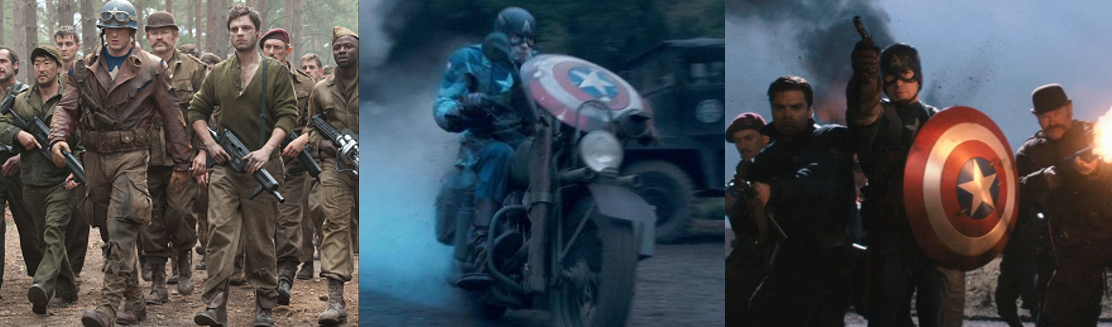
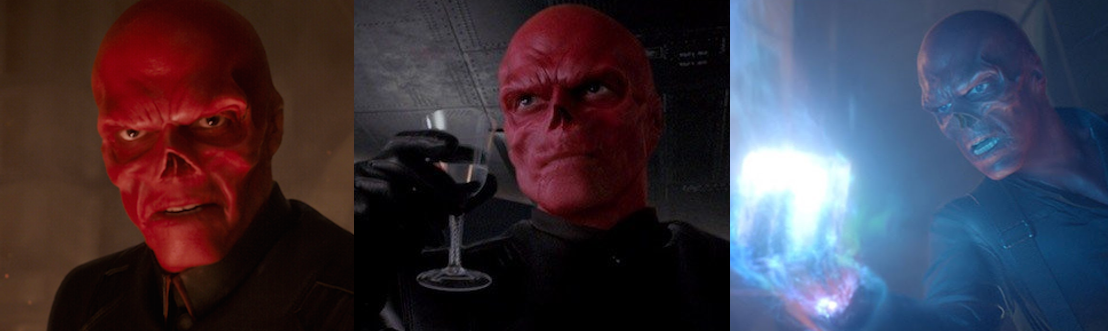
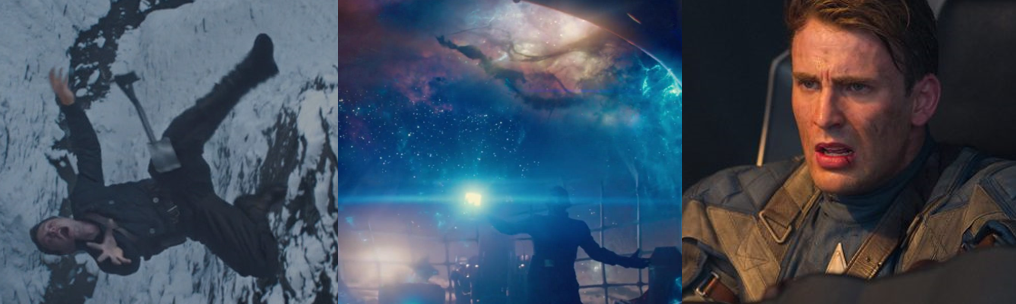
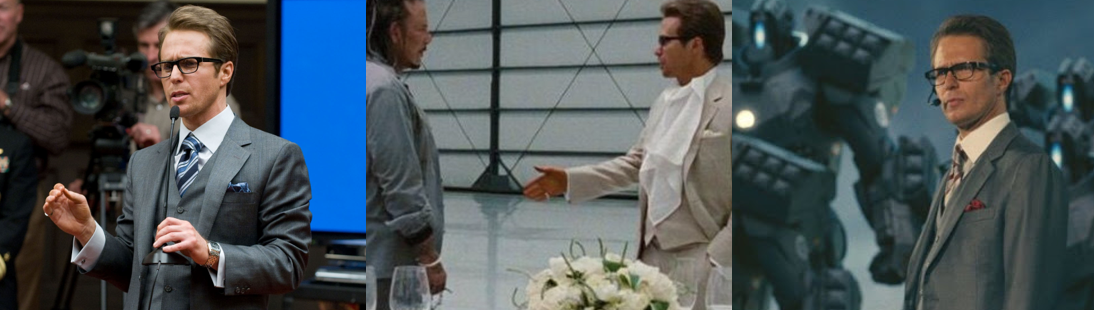
Movie Night: Captain America: The Winter Soldier

Released: 4 April 2014
Director: Anthony and Joe Russo
Distributor: Walt Disney Studios Motion Pictures
Budget: $170 to 177 million
Stars: Chris Evans, Sebastian Stan, Scarlett Johansson, Anthony Mackie, Cobie Smulders, Frank Grillo, Emily VanCamp, Samuel L. Jackson, and Robert Redford

The Plot:
Having helping to save the world from an alien invasion, Steve Rogers/Captain America (Evans) works alongside Nick Fury (Jackson), director of Strategic Homeland Intervention, Enforcement and Logistics Division (S.H.I.E.L.D.), and Natasha Romanoff/Black Widow (Johansson). Steve’s efforts to acclimatise to the modern world are fraught with doubt concerning a potential conspiracy within S.H.I.E.L.D. and only further exacerbated when he continually runs afoul of a mysterious assassin codenamed the “Winter Soldier”.

The Background:
Honestly, of all of the Phase One films in the Marvel Cinematic Universe (MCU), I was the least excited for Captain America: The First Avenger (Johnston, 2011). However, while a little run of the mill in some ways, the film proved to be a massive box office success; like many critics, I was impressed with the film, especially in hindsight without the anticipation of Marvel’s first team-up movie clouding my judgement, and Marvel entered Phase Two with the intention of not only refining everything that worked so well in Phase One but also shaking things up considerably for the MCU and laying the groundwork for bigger stories going forward. In many ways, Captain America: The Winter Soldier was central to this edict; ostensibly inspired by Ed Brubaker’s seminal comic book story, the filmmakers chose to ground the story in the then-present day and craft a spy thriller very much in the style of a 1970s political thriller that would have wide-reaching ramifications across the MCU. Captain America: The Winter Soldier was a massive hit; it made nearly $715 million at the box office and was the fifth-highest-grossing film of 2014. Reviews were unanimously positive, with critics praising the character development and suspense and geo-political relevance, and the film is held in high regard as one of the best (if not the best) films of the entire MCU.

The Review:
Two years have passed since Avengers Assemble (Whedon, 2012) and, despite being thrown in the deep end at the end of The First Avenger and during the chaotic events of that film, Steve has largely adjusted to modern life. This is primarily because he has been focusing on S.H.I.E.L.D. missions alongside their counter-terrorism team, Special Tactical Reserve for International Key Emergencies (S.T.R.I.K.E.), led by Brock Rumlow (Grillo), a fact Romanoff chastises him about. Although Steve has been researching the events he missed out on while under ice and has compiled a handy-dandy list of pop culture to catch up on, he maintains that he is “too busy” to think about dating or anything other than the next mission, and yet is growing increasingly perturbed by Fury’s secrecy and the questionable nature of many of his missions.
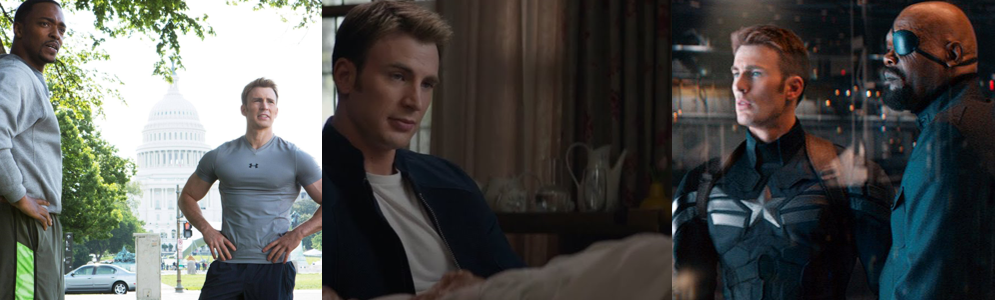
Steve’s black and white view of things clashes with the morally grey way of the modern world.

Carrying a great deal of loss, survivor’s guilt, and sorrow for the years, friends, and loved ones he has lost, Steve strives to maintain his composure; he is compelled to continue following orders and serving his country out of a sense of duty and to trust S.H.I.E.L.D. since his former flame, Peggy Carter (Hayley Atwell), helped found the organisation. Steve struggles a bit to form new friendships and relationships, though he does take the advice of his colleagues to heart and tries, somewhat awkwardly, to ask out his neighbour, Sharon Carter (VanCamp). His difficulties in this aspect are only exacerbated by Fury’s cagey demeanour and when Sharon turns out to be S.H.I.E.L.D. Agent 13; struck by a series of devastating revelations that turn friend into foe and unable who to trust, The Winter Soldier is as much a film about Steve coming to terms with the grimy and chaotic nature of the modern world as it is about shaking the world of the MCU to its very core.
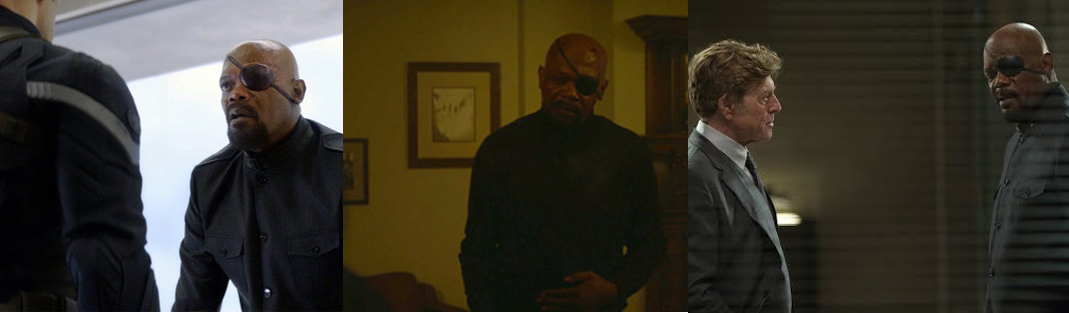
Thanks to his increased screen time, Fury’s character is fleshed out considerably.

Steve’s more old-school sensibilities and dislike for secrecy causes some friction between him and Fury; Fury, however, remains the consummate spy’s spy and is fully prepared to compartmentalise information from even super soldiers like Steve. Thanks to Fury’s extended screen time, we learn much more about his character, backstory, and motivation than in his previous bit-parts and cameos; Fury’s plan to launch a series of Helicarriers to monitor and eliminate potential threats as part of “Project: Insight” insults and angers Cap, who sees it as oppression rather than freedom. Cap’s discomfort with secrecy, Fury’s motives, and recent events are shown to have some basis when, unable to decrypt the data S.T.R.I.K.E. retrieved from Batroc, Fury requests that Secretary of Internal Security Alexander Pierce (Redford) delays the project until a proper investigation can be undertaken. The data is suddenly and violently stolen by a mysterious and aggressive assassin known as the Winter Soldier, who attacks Fury while in transit and then appears to kill the S.H.I.E.L.D. director. When Cap refuses to share the encrypted file with Pierce, he is branded a fugitive and hounded by the very people he once fought alongside and considered allies. With Romanoff’s help, Steve decrypts the data and is led to a S.H.I.E.L.D. bunker where the electronically preserved consciousness of his old foe Arnim Zola (Toby Jones) reveals, to Steve’s horror, that Hydra are not only alive and well but have infiltrated S.H.I.E.L.D. and much of the world’s government, including members of the World Security Council and Senator Stern (Garry Shandling), and that Pierce is planning to use Project: Insight to eliminate potential threats to their power before they can become a problem.

Pierce’s instrument is Bucky, who’s been brainwashed into a ruthless assassin.

Much like previous casting in the MCU, Robert Redford was quite the coup for Marvel Studios and his enigmatic presence lends an authority and credibility to the film that is in stark contrast to the idea that superhero films are just big, dumb action flicks. Pierce’s primary agent is the titular Winter Soldier, a menacing and almost robotic assassin who attacks with precision, efficiency, and has a cybernetic left arm. Superhumanly fast and incredibly strong, the Winter Soldier is easily able to catch and fling back Steve’s shield and unbelievably adept with guns and, especially, knives. Romanoff is familiar with the assassin, having heard of him as something of a bogeyman during her time as a Russian agent, but Steve is absolutely stunned to discover that the assassin is his old friend, James Buchanan “Bucky” Barnes (Stan), who survived his seemingly fatal plunge in The First Avenger. Recovered by Hydra agents and subjected to a version of the same super soldier serum that augmented Cap, Bucky was routinely brainwashed into becoming a ruthless assassin; kept in cryogenic stasis and unleashed whenever Hydra required a target to be eliminated, Bucky’s sense of identity is all but lost thanks to decades of mindwipes and manipulation. For the first time since he became the Winter Soldier, Bucky begins to question himself and his mission; intrigued by Steve’s knowledge of him, he is curious to find out more but no less dangerous as his conditioning dictates that the mission must always come first at the expense of all other distractions.

Though surrounded by betrayal, Steve is supported by allies both old and new.

While Steve’s oldest friend may have been turned into a merciless enemy, Cap gains a new ally in United States Air Force pararescueman Sam Wilson (Mackie); though fully trained in advanced aerial combat and utilising a specialised rocket-and-wing pack as the Falcon, Sam is primarily focused on helping veterans to reacclimatise to society after serving overseas. As a result, he forms an immediate friendship with Steve based on their mutual military experience and losses; with few friends and confidantes to talk to, Steve finds a kindred spirit in Sam and he helps Cap to focus on moving on with his life as best as he possibly can. When Pierce brands Cap a traitor and orders all agents (both those loyal to S.H.IE.LD. and those oblivious to Hydra’s infiltration) to hunt him down, Sam is one of the few who stands by Steve and suits up as the Falcon to join him in his desperate assault against the Helicarriers in the film’s finale. Black Widow also gets a great deal more time to shine here than in her previous appearances; ostensibly placed as Cap’s partner in S.T.R.I.K.E. missions, she is a pragmatic, straightforward, and very modern character in contrast to Cap’s more dated sensibilities. Indeed, while he struggles to adjust to the morally grey nature of the modern world, Romanoff has lived in a morally grey area for her entire life and sees (and approaches) situations very differently to Steve. Her secretive nature conflicts with Steve’s more honest ways just as much as Fury’s but, when push comes to shove, she prioritises her friendship and partnership with Steve over all other concerns. Still a kick-ass, impossibly alluring character, Romanoff actively tries to encourage Steve to socialise more and explore his potential in the modern world, seems legitimately heartbroken when Fury is killed, and works alongside Cap to uncover the mystery of the Winter Soldier and the depth to Hydra’s infiltration of S.H.I.E.L.D. personnel.

The Nitty-Gritty:
Captain America: The Winter Soldier is an impressively intriguing and complex political thriller masquerading as an action-packed superhero film; for those who say all the MCU films look and feel the same, I would recommend taking another look at The Winter Soldier, which is far more gritty and serious than the average superhero film, to say nothing of its MCU cousins. Filled with as much intrigue as it is action, the film challenges our perception of the MCU by turning friends into foes and making us question the motives of everyone we’ve grown accustomed to by this point. Accordingly, the primary goal of The Winter Soldier is to take everything that has been established about he MCU and tear it down; S.H.I.E.L.D., especially, once this seemingly benevolent governmental arm that provided the Avengers with every resource they could ask for, is shattered into fragments by the reveal that Hydra has infiltrated it since the end of the Second World War. At the time (and, if I’m being honest, even now), I somewhat disagreed with stripping S.H.I.E.L.D. away from the Avengers as it felt like we hadn’t really had a chance to really explore what it was all about or see them operate at the peak of their power but it definitely put the MCU on the path towards the fracturing of its premier super-team and the extremely effective unification of every costumed hero against a cosmic threat. Zola reveals that, over the years, Hydra has been destroying individuals and governments (primarily using the Winter Solder) to weaken society and the will of humankind.
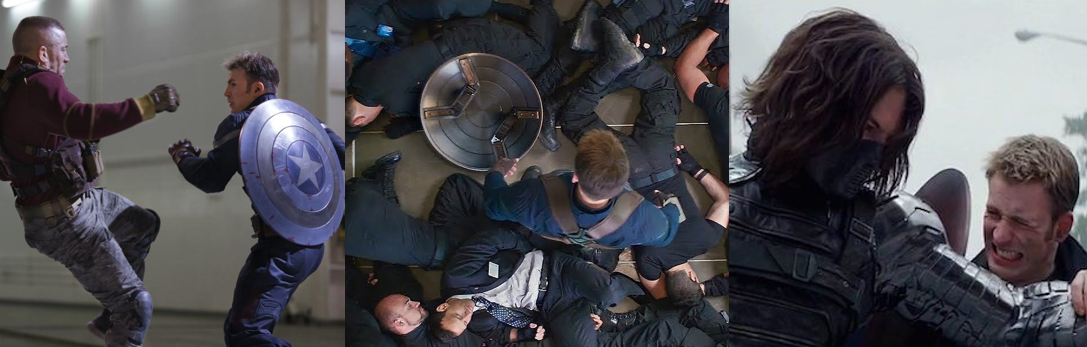
The Winter Soldiers considerably ups Cap’s fighting scenes and skills.

The culmination of this is an algorithm, developed by Zola, which is capable of identifying those who could become threats to Hydra’s power and eliminating them; this list includes names such as Howard Stark (Dominic Cooper), Doctor Bruce Banner (Mark Ruffalo), and the yet-to-be-introduced Doctor Stephen Strange (Benedict Cumberbatch). As much as I enjoyed The First Avenger, its action scenes weren’t really too much to shout about; the film gave a general overview of Cap’s superhuman abilities but he didn’t have too many chances to really show what he was capable of. The Winter Soldier changes all of that; Cap freely dives out of aircraft without a parachute, is fully capable of taking on entire groups or armed (and unarmed) men in both large and confined spaces, and he uses his indestructible Vibranium shield to fantastically brutal effect as an offensive weapon. Cap’s almost single-handed takedown of Georges Batroc (Georges St-Pierre) and his terrorists is only the top of the iceberg when it comes to how hard-hitting and impressive the film’s action and fight scenes are, with Cap’s extraordinary scuffle with Rumlow and other undercover Hydra agents in the lift and his multiple fist-fights with the titular Winter Soldier being a notable highlight.
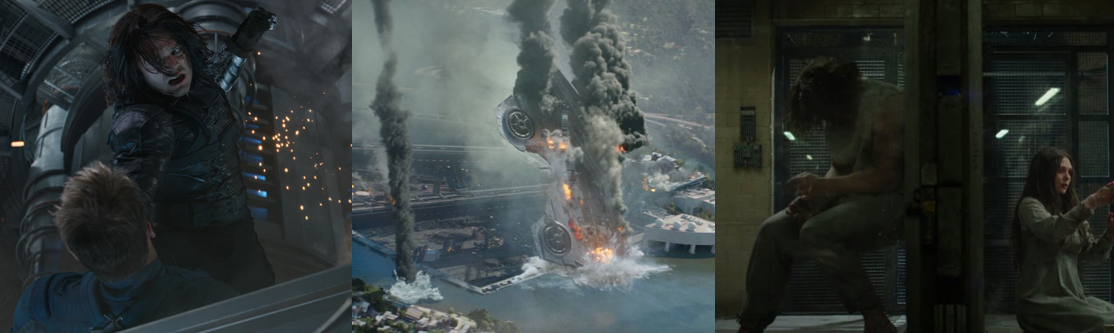
The film ends with S.H.I.E.L.D. destroyed and the MCU heading for major changes.

The Winter Soldier culminates in a two-pronged attack against Hydra, which is positioning S.H.I.E.L.D.’s own technology to rain fire upon major American cities. When Fury reveals that he faked his death, he is able to get Black Widow close enough to Pierce to take him out of play and broadcast all of Hydra (and S.HI.E.L.D.’s) secrets to the world to effectively neuter whatever secrets and leverage the organisation may have. At the same time, the Falcon and Cap attack the Helicarriers; while Falcon fights with Rumlow, Cap switches the control chips so that the Helicarriers attack each other rather than their intended targets and, in the process, is forced into a final, brutal fist-fight with the Winter Soldier. As the Helicarrier collapses around them Steve refuses to fight his former best friend and tries to reach him; although he takes a savage beating, his words apparently strike enough of a chord in Bucky for him to rescue Steve from drowning and he disappears, alone and free for the first time in over seventy years. While Easter Eggs and references to the larger and ever-growing MCU are actually far less prominent in The Winter Soldier than in its Phase One counterparts, the film ends with Steve and Sam starting a new mission to track Bucky down, Fury adopting a pretty half-assed new look in a new-S.H.I.E.L.D.-less world, and a tantalising tease for the next big Avengers crossover.

The Summary:
For me, and for many, Captain America: The Winter Soldier is kind of where the MCU “got serious”; the films before it had always dealt with some pretty serious issues but generally approached them or balanced them out with some spectacular action or moments of entertaining levity. Here, though, the focus is definitively on being more of a political spy thriller full of intrigue, mystery, and suspense as much as action. That’s not to say that it’s dull, boring, or too serious for its own good; in fact, The Winter Soldier perfectly balances its action with its gritter aspects in a way that other superhero films can only dream of. The result is easily one of the best MCU, and superhero, films ever made and a vast improvement over the first film…and that’s keeping in mind that I am a big fan of The First Avenger! But The Winter Soldier fully sold me on Cap as a character, fleshing out his morals and motivations and challenging his perception of the world and his allies by turning them all upside down. Better yet, the film introduces one of my favourite MCU characters, the Winter Soldier, who is played to perfection by Sebastian Stan and is a wonderfully realised tortured reflection of the morally just Captain America. The decision to tear S.H.I.E.L.D. down and reveal that Hydra had secretly been operating behind the scenes for decades was a bold one and one that was definitely part of a well-crafted long game for the MCU and it all stated here with this exceptionally well-crafted thriller of a film.

My Rating:

Rating: 5 out of 5.

Fantastic

What are your thoughts on Captain America: The Winter Soldier? What did you think about the way the film, and the MCU, handled Cap’s return to the world after being frozen in time? Did you truly believe that Fury had died in the film? What did you think to Bucky’s reintroduction as the Winter Soldier and the debut of the Falcon? Were you a fan of the changes the film made to the MCU and the destruction of S.H.I.E.L.D.? Where does this film rank against the other Captain America movies and the larger MCU? How are you celebrating Captain America this month? Whatever your thoughts, drop a comment below and be sure to pop back for more Captain America content throughout July.

Movie Night: Captain America: The First Avenger

Released: 22 July 2011
Director: Joe Johnston
Distributor: Paramount Pictures
Budget: $140 to 216.7 million
Stars: Chris Evans, Hugo Weaving, Hayley Atwell, Sebastian Stan, Dominic Cooper, Tommy Lee Jones, and Stanley Tucci

The Plot:
Steve Rogers (Evans) is desperate to enlist in the United States Army and combat the Axis Forces but is repeatedly rejected because of his frail body. Intrigued, Doctor Abraham Erskine (Tucci) transforms Steve into a veritable superhuman. With World War Two in full swing, Johann Schmidt/The Red Skull (Weaving), acquires the mysterious Tesseract and Steve engages in a crusade to bring down his Hydra forces as Captain America.

The Background:
Captain America: The First Avenger was the fifth film in the Marvel Cinematic Universe (MCU) but a big-screen adaptation of Marvel Comic’s patriotic super soldier was actually in development as far back as the year 2000. After settling an ugly lawsuit regarding the character, and bolstered by the early success of the MCU, producer Kevin Feige soldiered on (no pun intended) with his plan to introduce some of Marvel’s classic characters in solo films before bringing them together for a big team up and chose to focus on setting the stage for Cap’s “man out of time” story arc in the wider MCU. After signing director Joe Johnston, production began in earnest in 2010; after some hesitation, Chris Evans (who had previously starred as Johnny Storm/The Human Torch in separate, unconnected Marvel adaptations) joined the film in the title role and cutting edge digital effects were used to portray him as a weak and frail man prior to showcasing his impressive physique. Perhaps because audience anticipation for the upcoming Avengers movie was reaching its peak, Captain America: The First Avenger was a resounding box office success; the film made over $370 million in worldwide gross and was met with widespread critical acclaim, though some noted that it was maybe playing things a little too safe, which I agreed with at the time. Nevertheless, the film’s success led directly into the aforementioned Avengers movie and galvanised Captain America as an icon for an entirely new audience, one who would go on to become a major part of the MCU as it continued to unfold in subsequent years.

The Review:
Captain America: The First Avenger is bookended by scenes set in the then-modern day; the opening sequence depicts a team of scientists (and a few representatives from the Strategic Homeland Intervention, Enforcement and Logistics Division (S.H.I.E.L.D.)) discovering a futuristic aircraft buried in the Arctic that houses the frozen body of Steve Rogers. From there, the film jumps back to 1942, at the tail-end (and height) of the Second World War; Nazi Germany is aggressively spreading death and destruction across most of Europe and the Allied Powers (mainly the United Kingdom and the United States of America, especially in Hollywood) are frantically trying to push them back. As a result, the U.S. continues to ask for volunteers to join her ranks to fight for the ideals of freedom and equality. None embody these beliefs more than young Steve Rogers, a frightfully malnourished man whose family were killed as a result of the War and who has been repeatedly denied his time in service of his country due to his many physical ailments.

Steve is a frail, sickly young man whose heart and determination are unmatched.

Frustrated at his inability to “do his part”, Steve upholds his ideals on the home front; even when he is clearly physically mismatched against bullies and braggarts, Steve continues to get up and fight back in an effort to prove himself (and to vent his frustrations). While his friend, Sergeant James Buchanan “Bucky” Barnes (Stan) is often on hand to help him out, both physically and with the ladies, Steve desperately wishes to contribute to the war effort despite him being basically infirm and more than a little unlucky in love. His latest effort to lie his way into active service catches the attention of Dr. Erskine, who is inspired by Steve’s moxie and his lofty idealism. Dr. Erskine sees Steve as the perfect candidate to undergo the super soldier procedure not because he is a good soldier, but because he is a good man and Steve, who has no desire to kill anyone and simply wishes to stand up to bullies, jumps at the chance to be a part of “Project: Rebirth” and the Strategic Scientific Reserve (S.S.R.). While Colonel Chester Phillips (Jones) is less than impressed with Dr. Erskine’s selection above the other far more physically capable recruits in his regiment, Dr. Erskine remains resolute in his choice and Steve’s adaptability and never-say-die mentality catches the admiration of British agent Peggy Carter (Atwell). As part of their unit, Steve is put through the paces of basic training and demonstrates his bravery on numerous occasions but the one that stands out the most is when he willingly throws himself upon what is believed to be a live grenade to shield his fellow soldiers.

Cap soon finds himself leading the charge in co-ordinated strikes against Hydra facilities.

The super soldier serum is more than just a simple shot in the arm or a light show; in conjunction with technology provided by Howard Stark (Cooper), Erskine subjects Steve to a series of deep injections and a bombardment of “Vita Rays” that augment his physical stature and abilities far beyond those of a normal man. Now tall, muscular, and sporting a rapid metabolism, Steve is made a veritable superhuman but at the cost of Dr. Erskine’s life as Hydra agents strike following the procedure and cause the super soldier serum to be lost. Angered at being denied an army of super soldiers, Philips decides not to utilise Steve’s amplified abilities and he is, instead, reduced to touring the nation as the colourful “Captain America” to promote war bonds rather than fighting alongside the other troops. When Bucky and his unit are declared missing in action in Berlin, Steve disobeys Philips’ direct orders and goes in alone to rescue them; in the process, he meets his Nazi counterpart and learns of Hydra’s plan to attack major American cities with his Tesseract-powered weapons. Alongside Bucky and his unit, the “Howling Commandos”, Steve is officially drafted into the US army as Captain America and given an amazing suit of red, white, and blue and a circular shield made of the supposedly-indestructible “Vibranium” and sets out to put a stop to the Red Skull’s goals of world conquest. In the process, Steve earns not only the respect of his peers and fellow soldiers but also (after some awkward miscommunication) the love of Carter; however, his crusade against Hydra soon becomes as much of a personal vendetta as a mission to safeguard the world and Steve is soon forced not only into a desperate battle against the Red Skull but also into making the ultimate sacrifice for the greater good.

The Red Skull, and Weaving in general, is one of the film’s biggest highlights.

While the super soldier procedure is a success with Steve, Dr. Erskine’s earlier efforts were just as successful but on the opposite end of the spectrum. Johann Schmidt is an extremely charismatic and learned man; with a fascination and deep knowledge of legends and mythology, he seeks the ultimate tangible power in the form of the Tesseract. To acquire this magical object, he ransacks the small town of Tønsberg using both the imposing force of Hydra and his enigmatic personality. As charming as he is ruthless, Schmidt doesn’t hesitate to kill innocents in his pursuit of power and, having obtained the Tesseract, his goal expands considerably; thanks to the near-limitless power of the cosmic cube, Schmidt and his right-hand man, Doctor Arnim Zola (Toby Jones), is able to develop incredibly advanced weaponry almost overnight and, very quickly, he sets his sights on conquering the world not in the name of his Fuhrer but in the name of Hydra and the Red Skull! Subjected to an incomplete version of the super soldier process, Schmidt has gained incredible superhuman abilities and found his intellect and brutality augmented a thousand-fold but at the cost of his physical appearance. Now sporting a blood red visage beneath a life-like human mask, the Red Skull is a horrific and formidable adversary even without the Tesseract but, once he begins experimenting with its powers, he comes almost unstoppable. Thanks to Weaving’s unparalleled screen charisma and some absolutely top-notch practical effects, the Red Skull is brought to gruesome life; as great as many of the film’s effects, period-appropriate technology and attention to detail, and even Cap’s costume are, the Red Skull’s appearance and portrayal are a constant highlight for me every time I watch Captain America: The First Avenger and I never fail to feel like we were robbed of subsequent appearances by the villain.

The Nitty-Gritty:
When I first saw Captain America: The First Avenger, I was extremely eager to get the film out of the way as it was the final step towards the long-awaited Avengers film; as a result, while I enjoyed it at the time, I wasn’t exactly blown away by it. However, in the years since, I have come to appreciate what an impressive piece of superhero cinema it is. Setting the vast majority of its run-time in the 1940s was a brilliant way to separate it from other MCU movies and to devote the proper time to establishing the ideals and morals of Captain America, a character who could easily be seen as hokey and cheesy in modern times. Additionally, like I mentioned in my review of Iron Man (Favreau, 2008), one of the things that really helped the MCU (and other superhero movies of this time) out was the quality of its casting. Although the film doesn’t ask much of Tommy Lee Jones other than to be every gruff and jaded military commander you’ve ever seen, he steals every scene he’s in; Hayley Atwell is both gorgeous and impressive as Agent Carter (a woman living in a man’s world who is striving to prove herself as much as Steve is); and even the smallest roles are bolstered by some well-placed humour and appealing character actors.

The film’s action and aesthetic are bolstered by Chris Evans’ appealing performance.

Considering how grounded and gritty the film is compared to the other MCU films from that era, Captain America: The First Avenger is no slouch in the action and effects department; while some of the special effects are a little iffy compared to other MCU films as the film came out around the time when it was in-vogue to cater to the 3D market, the costume and set design is incredibly impressive. All of the Hydra forces and weaponry are ripped right out of the comic books, the quaint 1940s technology is given a suitably futuristic flair thanks to the efforts of both Stark and Hydra, and once Cap launches his campaign against the Red Skull the film really ramps up. Thanks to his superhuman metabolism, Cap is virtually inexhaustible and a formidable opponent despite his lack of training and experience compared to his fellow soldiers; crucially, he’s also still a man and capable of being injured, which helps as much as his uncompromising commitment to justice and fairness to make him extremely easy to root for. Much of this is down to Evans’ likeable charisma; he portrays Steve as a shy, quirky man just trying to do the right thing even after he balloons out into a muscular physique and it’s impossible to not be won over by his idealism and rugged good looks.

After losing Bucky, Cap defeats the Red Skull and makes the ultimate sacrifice.

This goes a long way to empathising with Steve after he is left devastated when Bucky falls to his apparent death during his team’s successful mission to capture Zola; although anyone who is familiar with the characters and comics knew that Bucky was destined to return later in life, this is still a powerful scene and motivation for Cap’s renewed efforts to strike back against Hydra using information given to the S.S.R. by the seemingly remorseful Zola. This leads to a physical confrontation between Cap and the Red Skull on a Hydra aircraft carrying devastating weapons of mass destruction. Though physically even, the fight remains a brutal slugfest between the two that sees the Tesseract damaged; when he touches the cube, Schmidt is seemingly vaporised by an intense blast of rainbow energy and Steve is left with no choice but to pilot the craft to a suicide dive into the frozen wasteland. Of course, the film ends with Steve awakening in then-modern times and finding the world has moved on over the last seventy years; though despondent at having missed his chance with Peggy, Steve is immediately approached by Nick Fury (Samuel L. Jackson), director of S.H.I.E.L.D., with a new mission to defend the world from an approaching danger. One aspect that I’ve always enjoyed about the film is the incredible attention to detail to its setting and the wider MCU; not only do we get the prerequisite cameo from Stan Lee but Cap dons a fabric version of his costume that is a direct one-to-one interpretation of his comic book counterpart (and still somehow looks better than the suit in the 1990 movie). The film also includes a brief cameo from Jim Hammond/The Human Torch and iconic Howling Commandos such Timothy “Dum Dum” Dugan (Neal McDonough). Additionally, when we’re first introduced to Zola, he’s framed in a magnifying glass to resemble the android body of his comic book counterpart, Hydra’s Tesseract weapons emit the same distinctive whine as Tony Stark/Iron Man’s (Robert Downey Jr.) Repulsor Rays, and Schmidt makes frequent references to Norse mythology.

The Summary:
Honestly, of all the colourful superheroes in Marvel Comics, I’ve never had much of an affinity for Captain America. This may have something to do with the fact that I am British and not really much of a patriot but, in my experience, he generally falls into the unenviable role of the staunch, righteous leader rather than being an especially interesting or engaging character. My indifference towards the character was changed by this film, and Cap’s portrayal in the MCU in general, though. As I mentioned, on first viewing, I didn’t think much to it; it was just another by-the-numbers superhero origin story that was a necessary step on the road to the Avengers movie and, while I enjoyed it, it didn’t exactly blow me away beyond some impressive special (and practical) effects and performances. Very quickly into the MCU’s second phase of movies, though, I came to appreciate just how entertaining this film is; all too often, many people complain about the MCU being too derivative and indistinguishable but I generally believe to be nonsense as the first phase of films alone dabbles in science-fiction, fantasy, and this period piece that all mesh as part of a greater whole thanks to the film’s having a focused goal in mind. Captain America: The First Avenger is, perhaps, one of the under-rated gems of the MCU that quickly became eclipsed by its bigger, better sequel but make no mistake about it, this is one hell of an entertaining watch that is full of action, heart, and some fantastic performances from the likes of Chris Evans and, especially, Hugo Weaving.

My Rating:

Rating: 4 out of 5.

Great Stuff

What did you think to Captain America: The First Avenger? Were you a fan upon first viewing or, like me, did you come to appreciate it more over time? What did you think to the film’s presentation and special effects, especially the Red Skull and Captain America’s suit? Were you also disappointed that we never got a rematch between Cap and Schmidt? Where does this film rank against the other Captain America movies and the larger MCU? How are you celebrating Captain America this month? Whatever your thoughts, drop a comment below and be sure to pop back for more Captain America content throughout July.

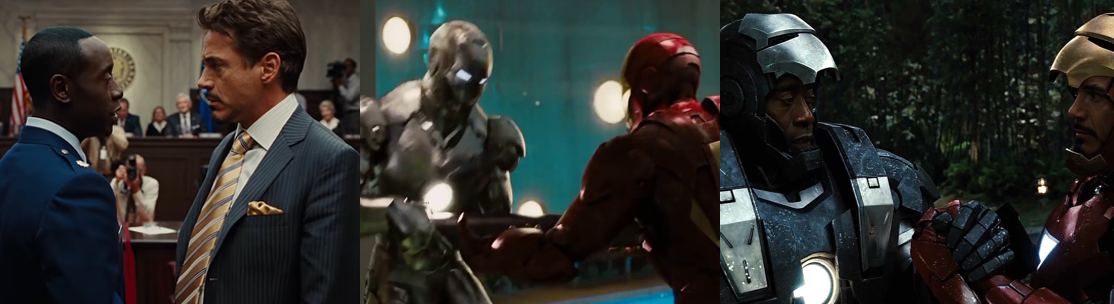
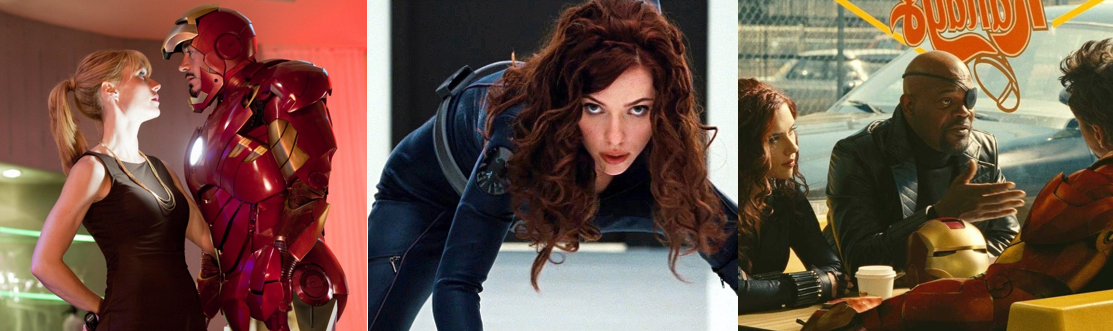
Movie Night: Iron Man 2

Released: 7 May 2010
Director: Jon Favreau
Distributor:
Paramount Pictures
Budget:
$170 to 200 million
Stars:
Robert Downey Jr., Mickey Rourke, Sam Rockwell, Don Cheadle, Gwyneth Paltrow, Scarlett Johansson, and Samuel L. Jackson

The Plot:
After publicly outing himself as Iron Man, Tony Stark (Downey Jr.) arrogantly refuses to hand his technology over to the United States government. Suffering from palladium poisoning, Stark is also targeted by Ivan Vanko (Rourke) who, bankrolled by Stark’s rival Justin Hammer (Rockwell), builds his own Arc Reactor to pursue a vendetta against Stark’s family.
The Background:
Although the production of Iron Man (Favreau, 2008) and the casting of troubled actor Robert Downey Jr. was a huge risk for fledgling studio Marvel Studios, it ultimately paid off dividends. Development of a sequel began immediately after the first film’s release; actor/director Jon Favreau always envisioned the film as the first in a trilogy and chose to skip over some of the source material’s more fantastical elements and draw inspiration from the iconic “Demon in a Bottle” arc (Michelinie, et al, 1979). A big focus of Iron Man 2 was on setting up the larger Marvel Cinematic Universe (MCU), which caused some friction between Favreau and the film’s producers; compounding matters was the recasting of Terrence Howard with Don Cheadle and the cutting of many of Rourke’s scenes. This came to be reflected in the film’s critical response but, despite this, Iron Man 2 was still incredibly successful and made over $620 million at the box office.

The Review:
Iron Man 2 sees Tony Stark more renowned than ever; his admission to being the superhero Iron Man has made him even more of a beloved celebrity and he relishes in the unparalleled freedom his technology has provided to him. Stark uses his increased celebrity status to help bring more eyes to his Stark Expo, which was originally dreamed up by his father, Howard (John Slattery), as a place for the world’s greatest scientific minds too pool their resources.

Tony’s characteristic bravado masks his debilitating sickness.

Stark, however, faces pressure from the United States government, particularly Senator Stern (Garry Shandling), to hand over his Iron Man technology so that it can be taken out of Stark’s irresponsible hands. Though Stark easily shoots down Stern’s demands and retains the same egotistical arrogance that was such a big part of his public life in Iron Man, it’s immediately clear that this is all an elaborate façade. Not only is Stark still struggling with unresolved issues with his father and living up to Howard’s vast legacy, he’s also being slowly poisoned by the Arc Reactor imbedded in his chest, which is flooding his bloodstream with palladium. Burning through his Arc Reactors faster and faster every day, and running out of options, Stark grows more and more impulsive and reckless; while this starts off rather innocently, with him promoting Virginia “Pepper” Potts (Paltrow) to CEO of Star Industries, he soon makes a very public display of himself when he gets drunk while wearing his armour.

Ivan is adept at Arc Reactor tech and has a personal vendetta against the Stark family.
Stark’s primary physical threat in the film is Ivan Vanko, a variation of the comic book Anton Vanko (who was known as both Whiplash and Crimson Dynamo), a hardened Russian technician whose father, Anton (Yevgeni Lazarev), worked with Stark’s father on the Arc Reactor that powers Stark’s heart and armour. Having watched his father die penniless and forgotten, Ivan vows revenge against Stark for stealing all of the credit to the technology and, in scenes that directly parallel Stark’s forging of his Mark I armour, builds his own Arc Reactor and a limited exoskeleton. While Stark primarily fights using projectiles and Repulsor Rays, Ivan favours Repulsor-charged whips that can cut through steel and concrete. Though shown to be just as ingenious and versatile as Stark when it comes to building armours and weapons, Ivan is so focused on humbling Stark in front of the world and driven to near madness by his vendetta that, initially, he forgoes protecting himself (especially his head) and, while he strikes a very public and aggressive first blow against Stark, his campaign is quickly cut short by Stark’s superior technology.
Hammer is so determined to out-do Stark that he forms an alliance with Ivan.

Ivan finds an ally, however, in Stark’s business rival, Justin Hammer. Hammer, who is constantly one step behind Stark in every way, is another mirror of Stark; he’s just as condescending and self-righteous as Stark and enjoys the limelight as much as his rival but is perfectly willing to take any advantage and underhanded tactic he can to get a leg up on Stark. To this end, he liberates Ivan from imprisonment and puts him to work constructing an army of mechanical drones, with which he hopes to make Iron Man obsolete. However, Ivan has little interest in Hammer’s ambitions or money; as long as he has his beloved cockatoo and the resources to destroy Stark, Ivan is prepared to cause as much death and destruction as he possible can to enact his revenge.

Rhodey has a new face, a shiny suit of armour of his own, and a far bigger role this time around.

As before, Stark isn’t alone in his fights against these enemies; however, James “Rhodey” Rhodes (Cheadle), now promoted to a Lieutenant Colonel, identifies that there is a potential threat in third parties attempting to replicate Stark’s technology and, though he stands by Stark and wishes to officially involve Iron Man in the existing military structure, he is forced to oppose his friend when Stark begins to succumb to both his palladium poisoning and one-too-many cocktails. Personally, the switch to Cheadle was nothing but a benefit from my point of view; he’s far better suited to the role and much more believable as a straight-laced military man while still sharing a fun brotherly chemistry with Stark and he has come to own the role in a way that Terrance Howard could only dream of. While it is a bit odd that Rhodey would deem himself more worthy to wear the armour than Stark, and how adept he is at wearing it despite the fact that it seems like he’s never worn it before, he emerges the victor from their scuffle and commandeers the Mark II armour for himself. Bringing it under the jurisdiction of the American government, and being outfitted with Hammer’s technology, Rhodey takes on the identity of War Machine and is fully prepared to lead Ivan’s automated drones into battle for the good ol’ U. S. of A only to find that he has been outfitted with useless weapons and susceptible to Ivan’s control.

Allies old and new assist Stark as S.H.I.E.L.D. continues to monitor his activities.

Though driven to exasperation by Stark’s continued antics and eccentricities, Pepper takes her role as CEO very seriously and begins to make real headway in turning Stark Industries around. Facing the cold reality that he could die, the budding romance between her and Stark blossoms over the course of the film despite Stark’s eye being caught by Natalie Rushman (Johansson). Initially appearing to be little more than a notary and Pepper’s very capable assistant, Rushman turns out to be Natasha Romanoff/Black Widow, sent by Strategic Homeland Intervention, Enforcement and Logistics Division (S.H.I.E.L.D.) director Nick Fury (Jackson) to assess Stark’s for the Avenger Initiative. This leads to some kick-ass fight scenes where Romanoff’s acrobatic versatility is on full display and serves as an alluring introduction to this mysterious character and also ties into the greater MCU by having Fury be so invested in Stark’s suitability.

The Nitty-Gritty:
Like any good sequel worth its time, Iron Man 2 is bigger (and, in many ways, better) than the first film. Without having to spend copious amounts of its runtime establishing Stark’s character and journey towards becoming Iron Man, the film can jump right into the action and picks up about a year after the end of the last movie. While many lamented how much world-building and sequel/spin-off bait was put into the film, I loved it and didn’t feel like the inclusion of Black Widow and Fury or Agent Coulson’s (Clark Gregg) allusions to other superheroic events got in the way of the story at all. If anything, they helped build my anticipation for seeing more from the MCU and the then-upcoming Avengers crossover and I’ve always considered Iron Man 2 to be a far stronger sequel than the third film in the series. As in the last film, Tony’s journey and growth as a character is a central aspect of the film; clearly still haunted by his experiences in the cave and desperate to hide how critical his condition has become, Stark is, seemingly, more reckless and egocentric than ever. However, this is all merely a front to hide his fear at his impending demise and to cover up the insecurities instilled in him by his father’s harsh upbringing.

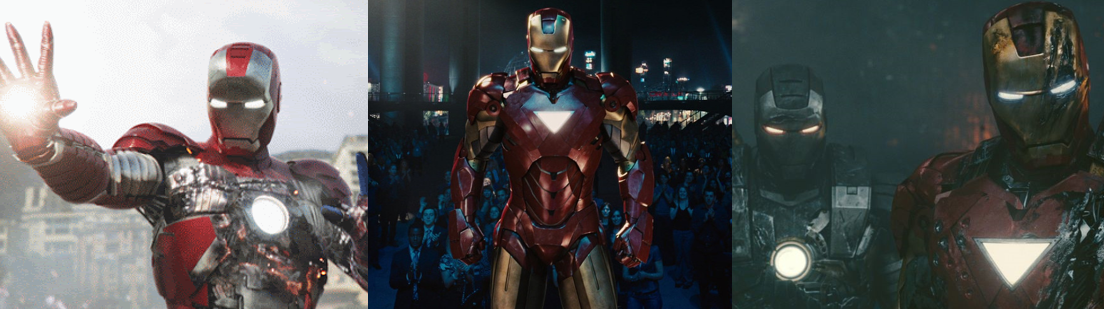
Iron Man 2 features some of my favourite armours, with the Silver Centurion being a personal highlight.

In the end, though, thanks to Fury, Star sees that Howard did have his best interests at heart in his own way. Indeed, thanks to Howard’s designs for the Stark Expo, Stark discovers the key to his survival and is able (quite ridiculously, I’ll admit) to cure himself by creating a “new element”, which ends the threat of palladium poisoning. In service of outdoing its predecessor as much as possible, Iron Man 2 features a new array of armours and toys for Stark to use; my favourite of these is the Silver Centurion armour, which Stark dons via a suitcase just like in the 1990s cartoon I used to enjoy on a regular basis. While the red and gold armour is very similar to the one from the first film, there are subtle changes and improvements and the special effects are just as good at rendering Iron Man’s actions as before. Add to that an absolutely fantastic adaptation of War Machine, one of my all-time favourite armours from the comics, and Iron Man 2 does a fantastic job of stepping things up a few notches and laying the foundation for the big MCU crossovers that would follow.

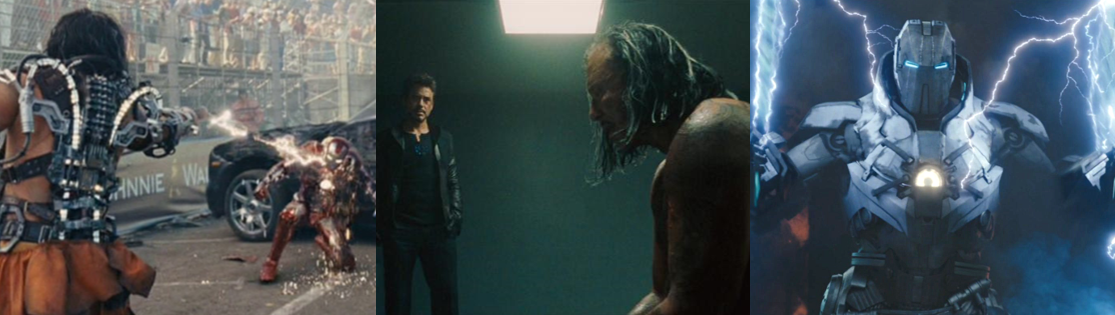
Ivan’s conviction, rage, and genius make him a formidable opponent and dark mirror of Stark.

In comparison, Ivan Vanko’s armour is, initially, much more improvised and yet he’s no less capable than his rival. Ivan’s exoskeleton is more than capable of withstanding a head-on car crash and Iron Man’s blasts and his electrified whips are surprisingly effective at damaging Stark’s armour and draining his power. Thanks to Hammer’s resources, Ivan is able to construct a far more menacing and formidable suit of armour for himself for the finale; while this does, admittedly, greatly resemble the finale of the first film, which pitted Stark against a hulking grey counterpart, Ivan stands out just enough thanks to being backed up by Hammer’s drones and still incorporating those same whipping tentacles into the design. Mickey Rourke is an actor who has always been a bit before my time but this film was released right around the time of his big comeback and I have to say he regularly smashed every role he had around this time. His performance here is muted and subdued but threatening; he can say more with a glare and a grunt than many actors can with pages of dialogue and he makes an immediate visual impression with all his tattoos and imposing physique. Hammer, by comparison, is Stark’s business and intellectual opposite and, while Rockwell is no Jeff Bridges and Hammer is visually nothing like his comic book counterpart, Rockwell plays the role of a seedy mirror of Stark to perfection (which is only fitting given that he was considered for the role of Stark in Iron Man). However, Hammer’s ambition to crush and overtake Stark in business and his enthusiasm for Ivan’s genius quickly lead him to getting in over his head and he ends up watching helplessly as his drones are hijacked by Ivan and I am greatly anticipating the character’s eventual return to the wider MCU since he ends the film in jail rather than dead. Speaking of endings, Iron Man 2 concludes with Tony in a much better place, physically and mentally, thanks to having solved his palladium poisoning and officially hooking up with Pepper, but is deemed unfit to be a part of the Avengers due to his many personality defects. Instead, Fury positions Stark as a liaison to help build the team, which is looking in good stead when Coulson leaves to investigate a mysterious hammer in New Mexico.

The Summary:
I often see a lot of people online, especially on my social medias, bad-mouthing Iron Man 2 and, even now, I really don’t understand why; the first film was fantastic, almost lightning in a bottle, but the sequel is a pretty damn decent follow-up. Sure, you can argue that it’s awfully convenient that Fury just dropped the key to Stark’s survival into his lap but I just saw this as world-building and setting the stage for a greater purpose. None of it takes away from Stark’s growth as a character, or his character arc in this film which, we now know, was all part of a much bigger and longer arc of redemption. Facing a different but no less challenging odds and delivering a taste of the extent to Stark’s imagination when it comes to his armours, Iron Man 2 is an intense story of Stark facing the ghosts of his past and setting himself on the path to a greater future while also effectively sowing the seeds for the rest of MCU’s first phase of movies in an entertaining and action-packed spectacle that I feel deserves more credit than it gets.

My Rating:

Rating: 4 out of 5.

Great Stuff

What are your thoughts on Iron Man 2? Do you think it deserves the hate it gets or, like me, were you a fan of how it built upon the themes and action of the first film? What did you think to the sub-plot of Tony being slowly poisoned and the solution to that problem? Did you enjoy the introduction of Black Widow and the hints towards the larger MCU? What did you think to the film’s villains, specifically Rourke and Rockwell’s performances, and Rhodey’s promotion to War Machine? Which of the film’s armours was your favourite and why? What are some of your favourite Iron Man characters or stories? Where does Iron Man rank in your hierarchy of comic book characters? Are you doing anything to commemorate Iron Man’s debut appearance and, if so, what is it? Feel free to drop a comment down below and be sure to check back in next week for the final part of Iron Man Month!

Movie Night: Iron Man

Released: 2 May 2008
Director: Jon Favreau
Distributor:
Paramount Pictures
Budget:
$140 million
Stars:
Robert Downey Jr., Jeff Bridges, Terrence Howard, Gwyneth Paltrow, and Shaun Toub

The Plot:
Billionaire industrialist and arms manufacturer Anthony “Tony” Stark (Downey Jr.) finds himself humbled after his own weaponry leaves him near death. Captured and forced to make weapons for the terrorist group the Ten Rings, Stark instead constructs a suit of armour and, upon escaping, resolves to put his genius intellect and resources to good use as Iron Man.

The Background:
The development of a live-action Iron Man movie can be traced back to 1990, with stars Nicholas Cage and Tom Cruise both once attached to the titular superhero, but the various scripts and film rights languished in development hell for nearly fifteen years with nothing to show for it. Once the film rights reverted to Marvel, the publisher created Marvel Studios and, encouraged by their success at licensing their more popular characters, began developing movies based on their remaining properties. The first of these was Iron Man; the film’s armours were created by legendary special effects maestro Stan Winston and actor/director Jon Favreau was drafted to direct the film and immediately saw the story as being one of redemption and reinvention. Nowhere was this emphasised more than in the casting of Robert Downey Jr. in the title role; Downey, whose career and life had been in a downward spiral, shot to superstardom after being cast and almost immediately became the linchpin of the Marvel Cinematic Universe (MCU) that Iron Man kicked off. Against all expectations, Iron Man was an unprecedented success; it made nearly $590 million at the box office and received rave reviews. Its success led not only to a two sequels but also a slew of other MCU movies and easily the most successful series of superhero movies in modern times as the MCU dominated cinemas over the next ten years and beyond.

The Review:
Iron Man opens in the war-torn deserts of Afghanistan to the tunes of “Back in Black” by AC/DC; here, we find billionaire industrialist, investor, and consummate playboy Tony Stark sharing some bants with some American soldiers. Stark’s jovial, boastful mood is rudely interrupted when the convey is suddenly attacked, all of his detail killed, and he is caught in the blast from one of his own Stark Industries missiles while trying to message for help. Tony finds himself injured and held hostage by Raza (Faran Tahir), the leader of the terrorist organisation known as the “Ten Rings”, and, from here, we flash back in time some thirty-six hours for a quick recap on Tony’s life. Heralded as a genius, philanthropist, and American patriot, Stark was orphaned as a teenager and, at age twenty-one, took the reigns of his father’s company.

Focused on his new mission, Stark works to perfect his armour and right his wrongs.

Stark is touted as an acclaimed keeper of the peace though his advanced and innovative weapons technology but, for all his genius, he is aloof and bored with such trivialities as receiving awards or really stopping to think about the moral implications of his actions and would much rather be playing craps at Caesar’s Palace and picking up random woman, even reporters who brand him the “Merchant of Death”. Tony is an impulsive and easily distracted individual who simply does rather than thinking since he is so smart that he is often a few steps ahead of everyone else and prefers to be tinkering with his vast collection of cars and in his personal workshop in his grandiose house rather than remembering things like birthdays and keeping his appointments, all while putting himself, his father, and his company on a pedestal for the world-changing technologies his weapons manufacturing has produced and funded.

Stark’s nearest and dearest react to his impulsive attitude in different ways.

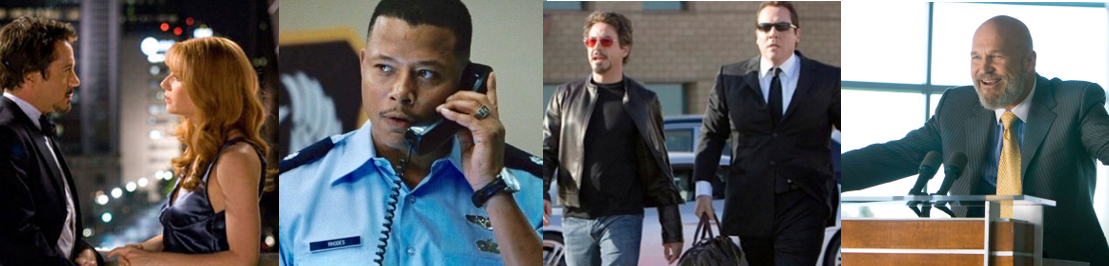
Tony’s lackadaisical, self-centred attitude may win over the general public and be a hit with the women but it grates against his closest friends, such as his chauffeur, Howard “Happy” Hogan (Favreau), Obadiah Stane (Bridges), and Colonel James “Rhodey” Rhodes (Howard), who are left to make excuses in his stead. None are left with more trash to clean up, however, than Stark’s personal assistant, Virginia “Pepper” Potts (Paltrow), who constantly finds herself having to chase after him for decisions, signatures, and directions relating to Stark Industries. Each of these characters deals with Tony’s childish ways differently; Happy is happy to indulge Stark’s whims and play along on the sly, Rhodey chews Stark out for disrespecting himself (and Rhodey) with his attitude, Pepper is exasperated by his ways but endures them out of loyalty and a mutual attraction between the two, and Stane is seemingly perfectly happy for Tony to do as he wishes since his brilliant mind helps keep him, and the company, extremely profitable. The attack in Afghanistan forces Stark to witness first-hand the consequences of his actions; trapped in a dingy cave and kept alive by a car battery and some cables, Stark is about as far from his faithful artificial intelligence, Just A Rather Very Intelligent System (J.A.R.V.I.S; Paul Bettany), as he can possibly get.

With limited resources, Stark builds his first suit of armour to fight his way to freedom.

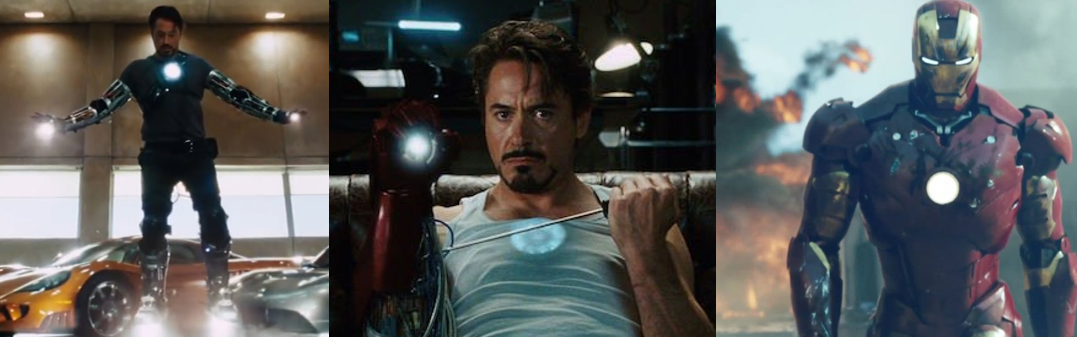
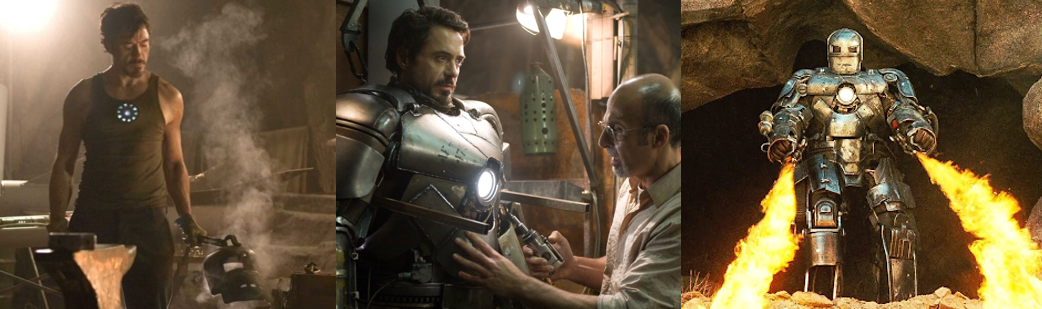
His cellmate, Ho Yinsen (Toub), brings him up to speed with his predicament; shrapnel from the missile is lodged dangerously close to Stark’s heart and only the electromagnet imbedded in his chest is keeping him alive. The Ten Rings demand that Stark construct for them an arsenal of his famed “Jericho Missile” and he is subjected to constant torture when he refuses. Horrified to see the terrorists are wielding his weaponry, Stark resolves instead to build a miniature version of his famed “Arc Reactor”, a clean energy device that will more effectively stave off death and plot their escape. What follows is an incredible sequence where, torn away from his luxuries and faced with the cold reality that he has been causing death and destruction across the world, Stark sets to work constructing a powerful exoskeletal suit of armour to fight his way out of the terrorist camp. This is a fantastic scene that shows Stark’s adaptability and ingenuity and that he is a formidable foe even without the benefits of modern technology; with a few scraps, his unmatched intellect, and some old-fashioned welding techniques, Stark is able to fool his captors long enough to complete the suit, a clunky, grey monstrosity with just enough power to fight past the guards and blast away to safety. Sadly, Yinsen sacrifices himself to cover Stark when the suit is powering up; with his dying breath, he begs Stark not to waste his life and, humbled by his experiences and Yisnen’s sacrifice, Stark takes his revenge on his captors and resolves to end all weapons manufacturing once he is recovered by Rhodey.

Stane turns on Stark in order to steal his Arc Reactor and armour technology for himself.

Haunted by his experiences in Afghanistan, Stark is angered at his weapons and technology being misused by terrorists and, after a few trials and working out some kinks, finally perfects his armour design into a sleek red-and-gold suit that rockets through the sky, fires missiles and Repulsor Rays, and is fully connected to all available networks and communication devices thanks to J.A.R.V.I.S. Stark wastes no time in attacking Ten Rings sites, freeing those subjugated to their terrorism with extreme prejudice and, in the process, attracts the attention not just from the U.S. military but also Agent Coulson (Clark Gregg) of the mysterious Strategic Homeland Intervention, Enforcement, and Logistics Division (S.H.I.E.L.D.), who wishes very much to “debrief” Stark on the particulars of his escape and extra-curricular activities. Although having shifted his focus onto a more honourable goal Stark remains as arrogant and obnoxious as ever after becoming the “Iron Man”; both Pepper and Rhodey despair at him when they discover what he’s been up to and believe that he is self-destructing but the truth is that his experiences have finally given him something worth living and working for. His actions, however, have far-reaching consequences; Stark is devastated to discover that Stane ordered the hit on him as the two were depicted as being firm friends up until that point. When Stane then steals Stark’s Iron Man technology and garbs himself in a bigger, more menacing exosuit as the Iron Monger, the stage is set for an epic showdown full of personal animosity between the two armoured men.

The Nitty-Gritty:
Even now, Iron Man remains almost timeless in its presentation; thanks to a fantastically old-school method of blending live-action suits with high-quality CGI, the film holds up incredibly well and is just as good now as it was the first time I saw it in cinemas. A rocking soundtrack full of classic heavy metal tracks and a rousing, industrial theme only serve to punctuate the special effects and the whole film seems to have been made with the actors given free reign to ad-lib their dialogue as interactions and banter are all incredibly natural and amusing. Indeed, Stark’s sudden declaration of “I am Iron Man” was an ad-lib and, with that one line, largely dictated the course for the MCU, which generally treats it superheroes like celebrities rather than falling back on the “secret identity” cliché. While I am perfectly happy to see secret identities in superhero films, it was massively refreshing to see a comic book movie buck that trend and made Iron Man even more memorable in the long run.

I was shocked to see Bridges as part of the cast and he steals every scene he’s in!

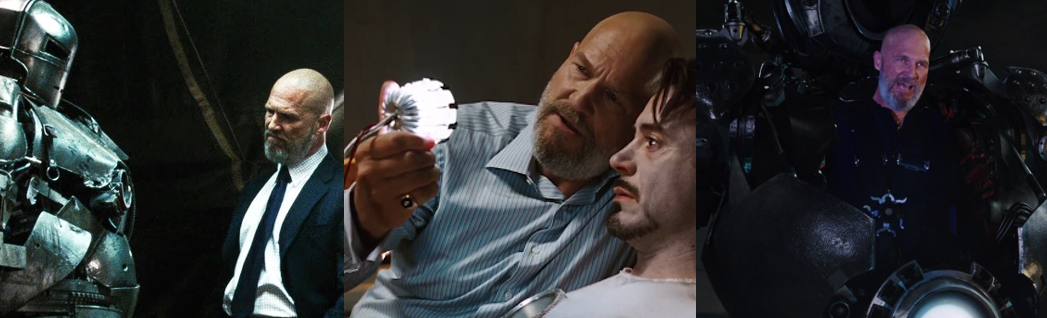
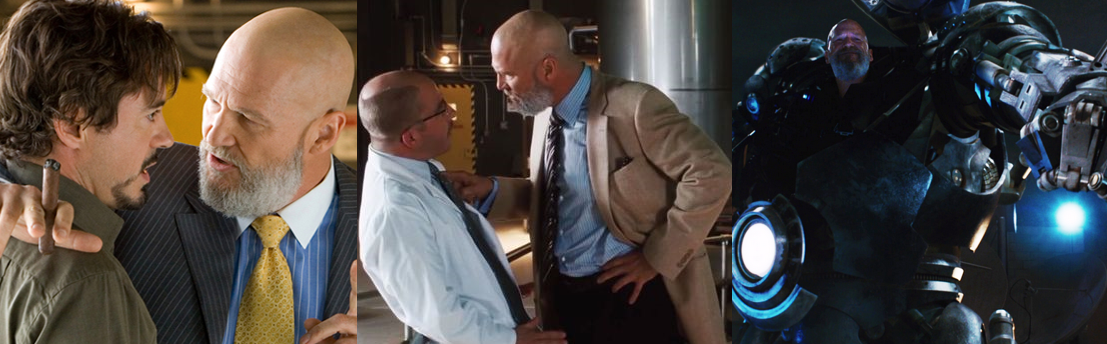
One thing that makes Iron Man stand out is the quality of the actors; both Iron Man and Batman Begins (Nolan, 2005) changed the game, as far as I am concerned, by featuring high-quality actors like Morgan Freeman and Michael Caine. I remember being incredibly surprised that Jeff Bridges was a part of this film; almost unrecognisable as Obadiah Stane, Bridges is a charismatic, bombastic father-figure who both nurtures and tries to temper Stark’s genius and impulsive nature. His delivery and magnetism steal every scene he’s in and, yes, it’s probably a littler derivative that Stark’s first adversary was basically a dark mirror of himself but Bridges is such a gem that it’s effortlessly entertaining even if it is at the expense of Iron Man’s more famous foes. Stane constantly exudes an odd sense of menace even before he’s incapacitating people with his little ear gadget; when one of his technicians is unable to miniaturise the Arc Reactor technology, Stane simply disables Stark and rips it right from his chest in order to power his own massive suit. Upon donning the Iron Monger armour, Stane immediately becomes obsessed with its power and as drunk on the feeling of freedom and empowerment as Stark is on his own self-adulation (and alcohol, half the time), which ultimately becomes his downfall as he becomes irrationally fixated on taking his frustrations out on a weakened Iron Man. Seeing Stane suited up in the massive Iron Monger armour was pretty fantastic and it serves a stub-plot of the film, and the entire MCU, of Stark confronting his past and overcoming it and his unresolved issues with his father.

Thanks to a combination of practical and special effects, the armours look incredible.

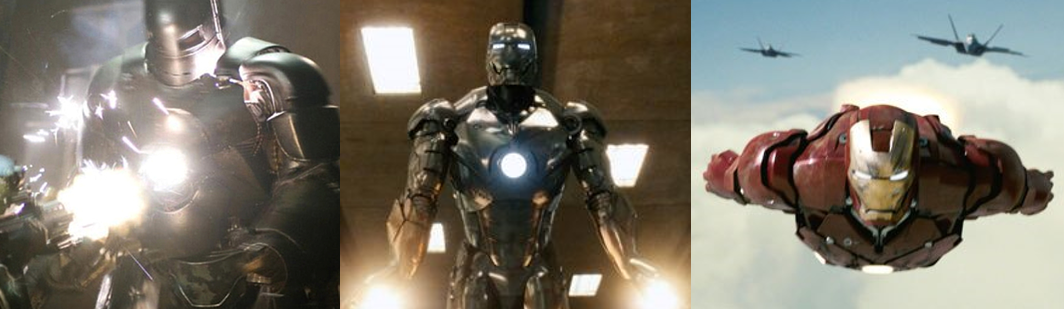
All of this leads me to the biggest draw of the film: the suits themselves. Even now, it is absolutely bad-ass to see the original Mark I clunker of a suit in action which is made all the more visually impressive by just how much of it was actually a practical suit of armour. Stark follows this up with the all-silver Mark II suit, which he wears to test out the limits and capabilities of his Arc Reactor technology (and, in the process, discovers the suit’s tendency to ice up when breaching the upper atmosphere). The final red-and-gold suit is as close to a live-action Iron Man armour you could ask for and looks like one of Adi Granov’s illustrations has literally sprung to life. Iron Man even solves the problem faced by a lot of masked superheroes by switched to a view from inside of the Iron Man helmet so that we can still see Stark’s face and stay emotionally connected to the character even when he’s in full armour and Iron Man is made all the more interesting since we see Stark building, testing, and perfecting the armour and because he constantly remains adaptable and flawed throughout the film. Finally, there are the hints towards a much larger world. I remember watching Iron Man for the first time and never twigging that Coulson worked for S.H.I.E.L.D. since the acronym isn’t used until right at the end of the film and feeling like an idiot when they finally dropped the organisation’s name. Look closely in the background of one scene and you’ll see that Stark has Captain America’s shield in his workshop, Rhodey very nearly jumps into the Mark II suit for himself at one point, and the film ends not just with Stark’s impulsive declaration that he is Iron Man but also a visit from Nick Fury (Samuel L. Jackson), director of S.H.I.E.L.D. Again, I remember hearing rumours of this cameo back in the day and specifically waiting for the credits to finish to see if it was true and being absolutely blown away by the implications of the “Avenger Initiative” but I could never imagine what Iron Man would set in motion for superhero cinema (and cinema in general).

The Summary:
My experiences of Iron Man were extremely limited when the film first came out; I enjoyed watching his cartoons and saw him pop up in a few comics from time to time but, for me, he was definitely a low-tier Marvel superhero and I think it’s fair to say that’s true for a lot of people and the general audience at the time. Iron Man, however, changed all of that; more than that, it changed the superhero genre forever and brought some big names, big money, and big audiences to see these films in a way that no one could have predicted and which certainly hasn’t been replicated since. Even without the larger MCU to help bolster it, Iron Man is a hugely enjoyable science-fiction/superhero romp full of charismatic actors, impressive performances, amusing banter and dialogue, and top-notch special effects. Iron Man may have been a massive gamble for Marvel Studios, and may have been eclipsed by other, bigger films in the MCU, but it’s not to be underestimated. Even at the time, I remember sensing that I was witnessing something very special, something very different from other superhero films, and I’m happy to say that neither time nor repeated viewing has diminished Iron Man’s appeal in any way.

My Rating:

Rating: 5 out of 5.

Fantastic

What do you think about Iron Man? How did you find it as a story and as an origin for ol’ shellhead? Do you think it still holds up to this day? What did you think to the cast and the performances in the film? Were you a fan of the film’s special effects and soundtrack? What did you think to the use of Obadiah Stane as the film’s villain? What was your reaction when Nick Fury walked out of the shadows and when Stark admitted to his dual identity? What are some of your favourite Iron Man characters or stories? Where does Iron Man rank in your hierarchy of comic book characters? Are you doing anything to commemorate Iron Man’s debut appearance and, if so, what is it? Either way, I’d love to hear your thoughts on Iron Man so leave a comment below.

Movie Night: Spider-Man: Far From Home

SpideyFarLogo

Released: July 2019
Director: Jon Watts
Distributor: Sony Pictures Releasing
Budget: $160 million
Stars: Tom Holland, Jake Gyllenhaal, Zendaya, Jacob Batalon, Samuel L. Jackson, and Jon Favreau

The Plot:
Following Avengers: Endgame (Russo Brothers, 2019), Peter Parker/Spider-Man (Holland) is struggling with the death of his friend, mentor, and father-figure, Iron Man/Tony Stark (Robert Downey, Jnr). However, he is once again forced to choose between living his life as a normal high school student and saving the world when he is recruited by Nick Fury (Jackson) to battle monstrous elemental creatures alongside the charismatic Quentin Beck/Mysterio (Gyllenhaal).

The Background:
Spider-Man: Homecoming (Watts, 2017) fleshed out Spider-Man’s role in the Marvel Cinematic Universe as a quirky, inexperienced-but-enthusiastic young superhero who longed to be an Avenger but, eventually, learned to keep his feet on the ground as a friendly neighbourhood Spider-Man. However, after his excursion into outer space and his efforts in standing against Thanos (Josh Bolin), it’s safe to say that a lot of things have changed for Spider-Man. As the first MCU movie post-Endgame, Far From Home serves not only as the final movie in Marvel’s third phase of movies but also the first step in an uncertain future for the MCU, where, seemingly, anything can happen.

The Review:
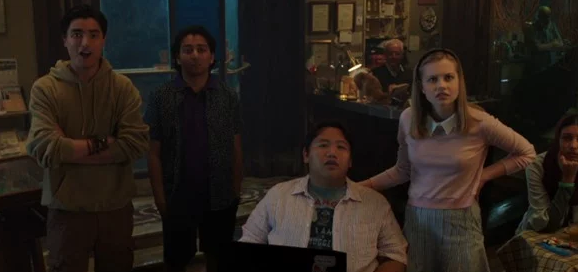
Spider-Man: Far From Home is, once again, a high school comedy first with a high-octane superhero film threaded through it; as a result, the film’s primary focus is on comedy and awkward moments, particularly involving Peter and his attempts to express his feelings for MJ (Zedanya) and his ongoing friendship with Ned Leeds (Batalon). While it could be argued that the MCU’s increasing focus on comedy undermines some of the more dramatic moments in their bigger, more cosmic-focused movies, it’s perfectly at home in a Spider-Man film as the character has always been about his snarky sense of humour.

SpideyFarKids.PNG
At its core, Far From Home is a high school comedy first.

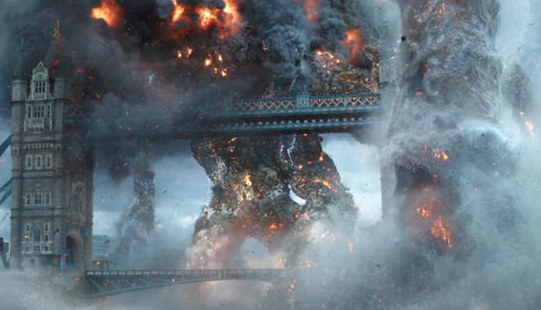
That’s not to say that Far From Home doesn’t have its fair share of impressive action sequences, though. As in Homecoming, Marvel have taken one of Spidey’s lesser foes and not only cast a spectacular actor in the role but also improved the character by leaps and bounds by casting him as a potential replacement for Iron Man. Mysterio, who is decked out in a fantastically realised version of the character’s classic costume, is at the heart of the film’s action sequences as he goes toe-to-toe with the gigantic Elementals, creatures made of earth, wind, fire, and water that threaten to destroy entire cities. Additionally, Beck acts as a mentor and confidante to Peter, offering advice and understanding at a time when he is struggling with his identity and responsibility.

SpideyFarElementals.PNG
The Elementals threaten to destroy entire cities!

Seeking a brief hiatus from his duties as Spider-Man and the pressure of living up to Iron Man’s legacy, Peter jumps at the chance to go on a trip to Europe with his class. However, soon after landing, he is approached by Nick Fury and reluctantly recruited to help battle the Elementals. This brings the MCU Spidey much closer to his classic comic book portrayal as he is now forced to constantly choose between his desires and dreams and living a normal life and using his powers to do good while also struggling with the idea that he cannot live up to Stark’s expectations.

The Nitty-Gritty:
The moment I saw that Mysterio was the villain in this movie, I knew that he would turn out to be the bad guy; I mean, we all did, right? Beck claims to be from a parallel world, confirming a multiverse in the MCU, and appears to be a charismatic, confident, and well-honed superhero in his own right. Beck ticks every box for Fury and, especially, Peter, who is struggling to assume the role of Iron Man, and Peter is only too happy to hand over control of Stark’s A.I. to Beck…only for Beck to reveal his true nature as a complete and utter fraud.

SpideyFarStark.PNG
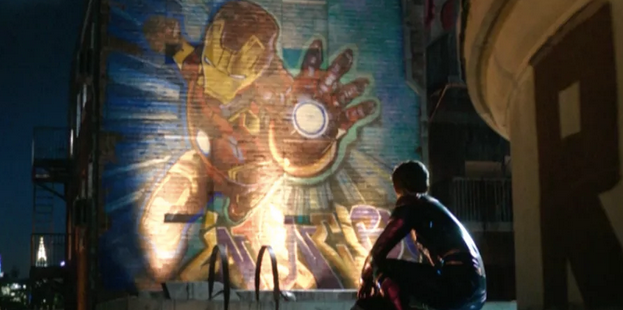
Peter is still reeling from Stark’s death.

A former Stark employee, Beck created the virtual reality technology we previously saw Stark showcase in Captain America: Civil War (Russo Brothers, 2016) and grew embittered when he was fired by Stark. Feeling used and undervalued, he teamed up with other resentful Stark employees to use drones and virtual reality tech to create a superhero so universally loved that he would not only become an Avenger but also get his hands on Stark’s limitless technology.

SpideyFarMysterio.PNG
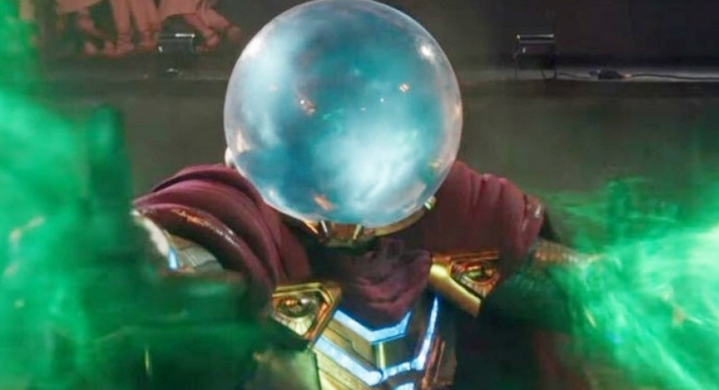
Only the MCU could take something as lame as this and make it awesome.

As I said, I knew this twist would come but even I was starting to get fooled by the character, so great is Gyllenhaal’s performance; Beck not only defends and befriends Peter, he seems to have all the motivation and experience necessary to be a trusted and reliable hero. Once the turn is revealed, though, the character’s darker side starts to come through wonderfully, making for some fantastically nightmarish fight scenes. This is where the idea to use a lame villain like Mysterio is totally justified as the best part about using Mysterio is the potentially limitless visuals his illusion-tech offers, and Far From Home definitely delivered on that front. So far, I am really happy with the portrayal of Spider-Man’s villains in the MCU; if they can make his lesser villains this interesting and dangerous, imagine what they will do with his heavy-hitters!

SpideyFarPeterBeck.PNG
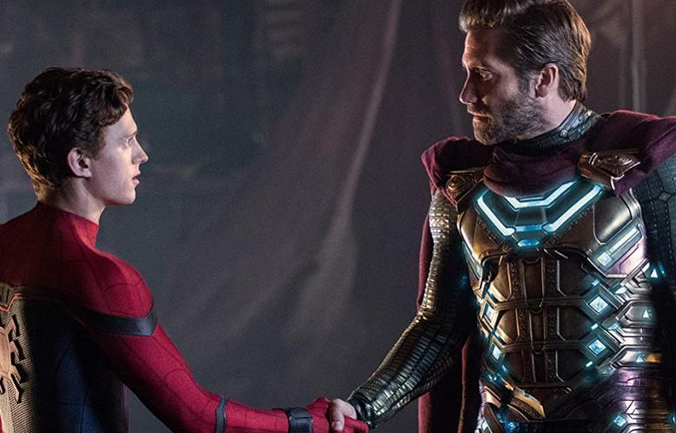
Who will be the next Iron Man…?

As per the trailer, it is revealed that MJ has figured out that Peter is Spider-Man; MJ is featured pretty strongly before this but actually has something to do and plays a small role in the finale once she reveals this knowledge. This also culminates in Peter and MJ officially hooking up, though the film’s first post credits scene may put some strain on that relationship going forward. So, with his illusions revealed and Spider-Man wading through an army of drones, Mysterio takes a stray bullet and dies, self-righteous to the end. Fury has accepted Spider-Man and given him props, Peter is finally with MJ, and everything seems to be tied up in a nice little bow…and then J.K. Simmons returns as J. Jonah Jameson to reveal that Beck used doctored footage to frame Spider-Man for his death and the drone attacks and to reveal Peter’s true identity to the world! It was amazing to see Simmons back in the role, though I am curious to see another actor’s take on Jameson, but the revelation of Spidey’s identity will no doubt cause him some serious issues in future Spider-Man movies.

The Summary:
Spider-Man: Far From Home
is a rollercoaster ride of action, comedy, and heart as Peter struggles with his relationships, the expectations placed upon him, and some potentially world-ending situations. Gyllenhaal shines as Beck and raises Mysterio’s profile wonderfully, providing a perfect substitute for Iron Man in Spidey’s life, and the dialogue, action scenes, and tone of the film are an exhilarating ride that takes everything that was good in Spider-Man: Homecoming and dials it up to eleven while still laying some interesting foundations for the future of the MCU.

My Rating:

Rating: 4 out of 5.

Great Stuff

Movie Night: Avengers: Endgame

Released: April 2019
Director: Anthony Russo and Joe Russo
Distributor: Walt Disney Studios Motion Pictures
Budget: $356 million
Stars: Robert Downey Jr., Chris Evans, Mark Ruffalo, Chris Hemsworth, Scarlett Johansson, Jeremy Renner, Don Cheadle, Paul Rudd, Karen Gillan, Bradley Cooper, and Josh Brolin

The Plot:
Three weeks after the Mad Titan, Thanos (Brolin), acquired the six Infinity Stones and snapped his fingers, the Avengers are desperate to set the world right after watching their friends (and half the universe’s population) disintegrate from reality. When Tony Stark/Iron Man (Downey Jr.) and Nebula (Gillan) return to Earth and Scott Lang/Ant-Man (Rudd) returns from the Quantum Realm, the Avengers pull together every resource available to bring Thanos to justice.

The Background:
After decades of superhero films existing in self-contained bubbles, Iron Man (Favreau, 2008) set the stage for the incredible success of Avengers Assemble/The Avengers (Whedon, 2012) and the MCU becoming an unstoppable multimedia juggernaut. The MCU’s flagship characters then reunited in Avengers: Age of Ultron (ibid, 2015), which received mixed reviews despite being a box office success. Marvel embarked on their most ambitious venture yet, a two-part Avengers film heavily inspired by from the classic Infinity Gauntlet (Starlin, et al, 1991) story arc. Avengers: Infinity War (Russo and Russo, 2018) was an astronomical financial success, critically and commercially, and filming of the follow-up began immediately. With the title initially kept under wraps, a multitude of complex CGI shots and visuals from numerous effects studios were employed for this the biggest and most emotionally MCU movie yet. Rumours ran rampant about the production, which was kept tightly under wraps, even down to the marketing campaign. This paid off gang busters when Avengers: Endgame released and briefly became the highest-grossing movie of all time with a worldwide box office gross of just shy of $2.800 billion! Like its predecessor, Avengers: Endgame was met with universal acclaim; critics lauded the emotional journey of the film, the performances and character arcs, and the climatic conclusion to the first ten years of the MCU. The release of Avengers: Endgame heralded a new direction for the MCU, one that dealt with the fallout of the film and expanded the MCU into new directions with new characters, though some have questioned whether the MCU can ever match the hype and success of this period.

The Review:
Avengers: Infinity War was certainly a hell of an experience. Even I wasn’t sure if it would actually go through with Thanos snapping his fingers, and the emotional fallout from that bleak, dramatic ending had everyone reeling and speculation running rampant about how this would be resolved. I was under the impression that this would come through an exploration of Doctor Stephen Strange’s (Benedict Cumberbatch) willingness to give up the Time Stone. I was expecting we’d see him lead a team of heroes trapped within the Soul Dimension (an aspect that isn’t explored or even raised here) in tandem with the heroes spared by the Snap (or “Blip” as it would later be termed). When the first rumours of time travel appeared, speculation only increased as fans scrambled to explain why this would be necessary, but Endgame establishes early on that Thanos’s second act after achieving his goal was to destroy the Infinity Stones to ensure his victory. Ultimately, I was quite satisfied with the narrative Endgame provided. I always thought that it was fitting that the original six Avengers were spared erasure to help bring things full circle, but I’m still surprised that the film not only jumped ahead five years to show a world devastated by change and loss but that the MCU chose not to undo this. It probably would’ve cleared up a lot of issues and constant explanations and references to the Blip if Endgame had seen Doctor Bruce Banner/The Hulk (Ruffalo) use the Infinity Gauntlet to wind time back, restored the lives lost but also keeping the lives gained in the process. Or if Tony had perhaps willingly sacrificed his young daughter, Morgan (Lexi Rabe), for the sake of the entire universe. But I think it definitely indicated a massive change in the status quo of the MCU…even if things got back to normally pretty quickly, all things considered.

Haunted by defeat, Tony’s priorities shift towards safeguarding his daughter by any means necessary.

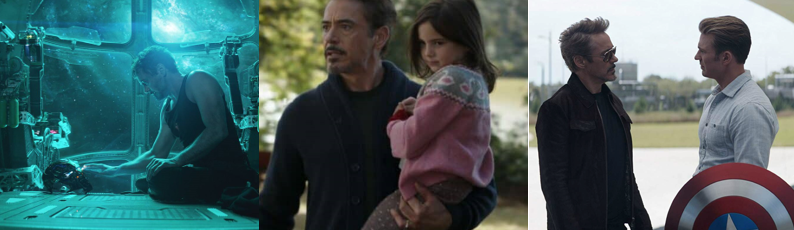
Endgame immediately explores the devastating fallout of the Avengers’ defeat and foreshadows its dramatic and emotional finale by finding Tony drift in space alongside Nebula. Although she’s still stoic and aggressive, it’s clear Nebula is deeply affected by the loss of her sister, Gamora (Zoe Saldaña), and her reluctant adopted family, the Guardians of the Galaxy. While Nebula naturally bottles these feelings up, Tony sees his end coming. Realistic and ready to die after being worn down by his survivor’s guilt and desperate need to defend the Earth at all costs, he records a farewell message to Virginia “Pepper” Potts (Gwyneth Paltrow) and prepares to meet his end….only for them to be rescued and returned to Earth by Captain Carol Danvers/Captain Marvel (Brie Larson). However, returning to Earth brings little solace for Tony; deeply traumatised at witnessing his protégé, Peter Parker/Spider-Man (Tom Holland), disintegrate before his eyes (to say nothing of his other teammates and the crushing weight of defeat), Tony lashes out at former ally Captain Steve Rogers/Captain America (Evans) and refuses to join the expedition to confront Thanos, having lost the will to fight. Not that it would’ve made much difference given that Thanos guarantees his actions cannot be undone, but Tony instead chooses to focus on his family. In the five year gap, he has a daughter and settles down with Pepper, his priorities shifting from the lives of everyone else to the lives of his family. Thus, when Cap, Scott, and Natasha Romanoff/Black Widow (Johansson) come calling looking for Tony’s scientific input on their bonkers “time heist” idea, Tony initially scoffs at the suggestion, though he has let go of his animosity towards Steve in the interim. Still, ever the scientist, Tony can’t help but be intrigued and, upon running a few simulations based on Scott’s Quantum Realm data, quickly devises a means to navigate the dimensional vortex and effectively allow travel through time and space. Realising that they now have a very real shot at regaining the Infinity Stones and undoing Thanos’s devastating actions, Tony agrees to re-form the Avengers and don his iconic armour once more but on the very specific proviso that Morgan’s safety and existence is ensured. It’s a dramatic culmination of Tony’s character arc; he went from a selfish, womanising arms manufacturer to a snarky, egotistical superhero, to risking losing everything to safeguard the Earth from otherworldly threats, to literally sacrificing himself to not only bring back those lost, but ensure his daughter grows up in a world that hasn’t been crippled by loss.

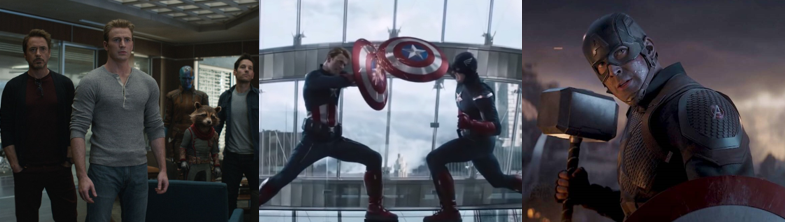
Cap’s fighting spirit galvanises the team and sees him standing against incredible odds.

While Tony falls into despair and then devotes himself to his family to cope with the tragedy, Cap is initially adamant to make Thanos pay for his actions. When Carol and Rocket Racoon (Cooper) pinpoint Thanos’s location, Cap’s first thought is, appropriately, to avenge their losses. Unfortunately, Cap’s forced to face a heavy reality: there’s no way to undo what’s happened so, instead, he devotes himself to offering counselling and trying to help everyday folk pick up the pieces of their lives. With most of the world’s governments apparently gone, Natasha and the remnants of the Avengers apparently still fight to maintain order across the world, but there’s a clear sense that they’re just desperately holding on to what little they have left. However, Scott offers them hope through a clunky form of time travel. Despite outlandish science being outside his wheelhouse, Cap eagerly reassembles the Avengers and galvanises them to travel back to key moments in their past to reacquire the Infinity Stones and set things right. Steve teams with Tony, Scott, and Banner and revisits the battle for New York. Although Banner convinces the Ancient One (Tilda Swinton) to lend them the Time Stone, they’re unable to secure the Space Stone when Loki Laufeyson (Tom Hiddleston) steals it, forcing Cap and Tony to pay a further visit to 1970 to restock on Pym Particles and reacquire the Space Stone. Here, not only does Tony finally reconcile with his father, Howard Stark (John Slattery), in an amusing and poignant way, but Cap finally lays eyes on his old flame, Peggy Carter (Hayley Atwell) for the first time in a hundred years. Cap is devastated when the team returns to find Natasha was lost in the pursuit of the Soul Stone, but continues to soldier on with the plan, focusing solely on the restoration of the world. Despite this being far from a traditional fight, Cap stands against nature – and time – itself, betting everything on the slim chance that they can succeed. Although clearly burdened by defeat, he continues fighting and encourages everyone around him to do the same no matter how bleak the odds. This is, of course, explicitly demonstrated in the climactic finale. When the younger Thanos violently attacks the Avengers and lays waste to his allies, Cap grits his teeth and stands tall in in the face of what appears to be an inevitable end and his faith is rewarded not only in the dramatic arrival of his much-needed backup and proving himself worthy to wield Mjölnir, but in finally walking away from the fight and have a life of his own.

Hulk is smart now, while Thor has succumbed to self-despair and desperately seeks redemption.

Two characters fundamentally altered between Infinity War and Endgame are the Hulk and Thor Odinson (Hemsworth). While I do agree that it’s a shame we never get to see Banner and the Hulk finally reconcile their differences and come together as one united entity (a “Smart Hulk”, if you will) and I definitely would’ve preferred to see this in the finale of Infinity War as originally intended (though tweaked with the united Banner/Hulk being portrayed as grey), I’m satisfied with the explanation we got and both film are already so stuffed with characters and plots that it could have bogged things down. Now a far calmer and intelligent being, the Hulk sees his brutish ways as “gratuitous” and instead puts his mind to work trying to figure out time travel in Tony’s absence. He’s primarily here as exposition and a bit of comedy relief but I liked how everyone just accepted his new normal, that he proved pivotal in reversing the Blip by being the only one strong and capable enough to handle the destructive power of the Infinity Stones (retroactively suggesting that the Hulk was fated to exist for that very reason), and he’s a key factor in convincing Thor to rejoin the Avengers. No one shoulders the burden of failure more than Thor; this once proud and arrogant warrior is reduced to a depressed, out of shape, drunken king of New Asgard all because he failed to land a killing blow on Thanos. Even decapitating Thanos brings him little catharsis as it changes nothing, and Thor clearly struggles with both survivor’s guilt and costing the lives of untold billions. He sees the time heist at a shot at redemption, a personal mission to prove that he’s still worthy of being the Mighty Thor, but is largely seen as a hinderance since he’s so wracked by grief and guilt that he struggles to keep his emotions in check. It’s only after a pep talk from his beloved mother, Frigga (Rene Russo), and the knowledge that he can still wield Mjölnir, that bolsters his self-worth, though Thor is so desperate to undo his mistake that he practically begs to bring everyone back with Tony’s gauntlet, despite the fact that the effort would probably kill him. Ultimately, Thor’s redemption comes in the most fitting way: on the battlefield. I liked how Thor doesn’t snap back to being a super-buff warrior in the finale; I think it was important to show that he was still carrying the burden of his failures even as he cut down foes with both Mjölnir and Stormbreaker, and there’s a definite sense that he rediscovers himself in battle with Thanos and through the loyal support of his friends and allies.

Each of the Avengers has an emotional and personal stake in the desperate time heist.

Although they either didn’t get too much to do or missed out entirely on the events of Infinity War, Endgame allows fellow Avengers Natasha, Ant-Man, Clint Barton/Hawkeye (Renner), and Colonel James “Rhodey” Rhodes/War Machine (Cheadle) play key roles in the time heist. Indeed, without Scott (and that one-in-a-billion rat), the Avengers would never have reacquired the Infinity Stones since it was only his knowledge and insight into the Quantum Realm that allowed Tony to crack time travel. Scott continues to be in awe of working alongside his idols, but even his chirpy demeanour is tested by the Blip. He arrives in a world where millions have perished and his daughter, Cassie (Emma Fuhrmann), is now a teenager but he remains as optimistic as ever about their chances of success, even if you can tell that he’s clinging to hope as desperately as the others. The same can’t be said of Hawkeye; after witnessing his wife and children disintegrate before his eyes, Barton spends the next five years going on a killing spree, murdering crime bosses and those he deems unworthy of being spared with a cold-blooded precision as “Ronin”. Although he’s clearly scarred by his losses, his loyalty to Natasha sees him join the time heist in a last-ditch effort to restore the world, but his character has been given an obvious edge. Now sporting a frankly ridiculous mohawk and an array of tattoos, Hawkeye is more than willing to sacrifice his life for the Soul Stone when directed by the enigmatic Johann Schmidt/The Red Skull/The Stonekeeper (Ross Marquand). What follows is a test of the two’s loyalty and friendship and a desperate and emotional battle to save the other while restoring countless lives. The two literally fight to give up their lives for the Soul Stone, willing to die for their friends and family, but ultimately Barton is left carrying the burden of Natasha’s selfless sacrifice and finding a way to live with his dark deeds. Rhodey finds himself teamed up with Nebula; as reliant upon his armour as she is on her cybernetics, the two find some surprising common ground and working with the Avengers definitely helps to soften both her and Rocket and make them more open to co-operation. Their jaunt to retrieve the Power Stone from Peter Quill/Star-Lord (Chris Pratt) has dire consequences, however, when a past version of Thanos is alerted to their presence. This not only sees Nebula face off against her less morally inclined past self and brings a past version of Gamora into the main timeline, but sees Thanos renew his campaign for the Infinity Stones using knowledge of the future!

Despite being killed, Thanos comes across time to plague the heroes once again.

Indeed, Endgame is largely unique among MCU films in that the battle is already lost at the start and the heroes are mostly fighting against intangible foes: grief, loss, guilt, and time being chief among them. While Carol leads them in confronting Thanos at the start, he’s no longer a threat and doesn’t even try to fight them. Injured from his actions and content with his victory, he simply mocks their attempts at revenge and meets his end victorious. While in New York, Cap, Scott, Banner, and Tony are mainly tasked with avoiding their past selves in true Back to the Future Part II (Zemeckis, 1989) fashion, though Cap does have a brief scuffle with his past self that sees even him exasperated by his can-do attitude. The Stonekeeper could be classified as a threat but he’s simply a messenger for the Soul Stone; the real threat comes from having to sacrifice a loved one to acquire the Stone, similar to the Ancient One’s warnings that the Avengers must return the Infinity Stones or risk the destruction and collapse of other, alternate timelines. However, when that past version of Thanos learns of his fate and orders the evil version of Nebula to travel to the future, the Avengers’ compound decimated by Thanos’s ship, Sanctuary II, the return of his monstrous army and his “children”, the Black Order, and Thanos himself back on Earth with victory within his grasp. I’ve seen it suggested that there’s less emotional catharsis in seeing the Avengers battle this version of Thanos since he technically isn’t the one who wronged them, but I don’t think this really matters all that much. There’s little difference between the two Titans except one died knowing he had achieved his goal and the other was determined to expedite his goal after learning of his victory. Perhaps because of this foresight, Thanos is far more aggressive and less honourable than his counterpart. Rather than offering to spare those he respects or aiming to wipe out half of life so that people can learn to appreciate what they have, Thanos now aims to completely rewrite history in his image. To that end, this Thanos takes to the battlefield in a way his counterpart avoided. Garbed in gleaming armour and wielding a massive double-bladed sword, Thanos is positioned as the ultimate threat, regardless of which timeline he’s from, since the Avengers know full well how destructive he is. Indeed, Thanos’ threat truly shines in the finale, where he not only goes toe-to-toe with Cap, Iron Man, and Thor but also shows his wiles and raw strength by matching blows with Captain Marvel, fuelled the entire time by his obsession for victory and unrivalled power.

The Nitty-Gritty:
As mentioned, grief, loss, and time are key themes in Avengers: Endgame. While the film doesn’t linger or go into massive amounts of depth exploring how the Blip has affected the world, it effectively conveys the desolation and loss through some eerily silent aerial shots, Cassie’s overgrown and dishevelled neighbourhood, the monument erected to those lost, and through the way each character deals with their failure. At the time, it definitely shook things up to jump ahead to a world left in ruins by Thanos, and even though even I will admit that the potential of this was largely undone and sadly played for laughs in subsequent films, it really works in the context of this movie to hammer home just how devastated everyone is, which in turn drives their mission to defy the laws of physics and set things right. Endgame makes sure to lay the rules for time travel out as plainly as possible. Thanks to Scott and Tony, characters can navigate the Quantum Realm and travel to the past using Pym Particles, but anything they do in the past will not change the present because time isn’t a straight line, but a multiverse of different pathways. Yet, removing the Infinity Stones will cause the collapse of those branches, meaning the Avengers have a moral obligation to return them when they’re done. Like most time travel stories, it’s not perfect and has some holes in it but I think it works to sell the idea that you can’t just go back in time and kill Thanos to set things right. Banner very emphatically explains that time just doesn’t work that way and it’s a great way to place importance of the “main” timeline and add some additional tension to the heist since they risk other timelines while saving theirs.

Endgame explores new levels of these characters and then goes all-out with an action-packed finale.

In many ways, Endgame is a far more grounded, subdued character study compared to Infinity War. Thus, bombastic, action-packed scenes give way to exploring the emotional fallout from the Blip and how each character has been changed by their defeat. That isn’t to say that action and big CGI sequences aren’t here, though; it’s just more a fight for redemption and against those intangibles I mentioned than against a singular foe, for the most part. You would never know it but the Avengers’ time suits are all entirely CGI; their stark white and uniformity unites the team in a way we haven’t seen before and allows them to safely navigate the chaotic Quantum Realm and avoid being physically altered by the timestream like Scott is during Banner’s test run. While in the past, the team revisit the Battle of New York, now expanded to show that the Ancient One and the Sanctum Santorum were also fending off the Chitari and what happened after the Avengers defeated Loki, where Cap uses his knowledge of Hydra’s infiltration of the Strategic Homeland Intervention, Enforcement and Logistics Division (S.H.I.E.L.D.) to his advantage. This, and their later trip to 1970, allows for some fun cameos from Alexander Pierce (Robert Redford), Brock Rumlow (Frank Grillo), and even a de-aged Doctor Henry “Hank” Pym/Ant-Man (Michael Douglas), complete with retro helmet. The rest of the time heist is spent revisiting key moments from previous MCU films, recreating and reframing certain events from a new perspective, before the massive climactic battle at the end. One thing I enjoyed about the time heists, and the film in general, was seeing characters like Rocket and Nebula interact with the Avengers and become part of the team. In the spirit of pooling all available resources, Natasha directs a joint effort of every remaining superhero to try and maintain order, but her focus is squarely on the Earth. The rest of the universe is dealt with by Captain Marvel, who sadly misses out on joining the time heist but more than makes up for it with her dramatic entrance during the finale. Since she’s the most powerful hero in MCU, she easily wipes out Sanctuary II and ploughs through the aliens before going one-on-one with the Mad Titan himself. Although a bit arrogant in her abilities, Carol more than backs this up with her incredible power. Indeed, it’s shown that she probably could’ve wrestled the Infinity Gauntlet from Thanos had he not had the wherewithal to use the Stone’s individual powers to fend her off, meaning that even Captain Marvel’s might required the support of her teammates to wrestle the gauntlet from the Mad Titan.

Cap’s resolve is bolstered by the emotional and dramatic return of his restored allies.

The remnants of the Avengers come together with a simple goal: to retrieve the Infinity Stones from the past, insert them into a nanotech gauntlet, and undo the Snap with a snap of their fingers. Although Thor pleads to perform this, the Hulk is the only one capable of surviving the act, and the film really sells the reveal of his success as a strange anti-climatic event…at first. Cap, Iron Man, and Thor are too busy fighting for their lives against Thanos and his army to focus on much else. Each one has a personal and emotional stake in the battle and each one falls to Thanos’s power, regardless of how hard they fight. Thor, especially, leaps head-first into the bout and ends up at the mercy of Thanos, desperately calling to Mjölnir…only for the hammer to fly into Cap’s waiting hand! Seeing Cap wield Mjölnir and attack Thanos with renewed vigour drew a rare cheer from the audience when I saw Endgame and is easily one of the most memorable moments in the entire MCU, but it’s quickly followed by one of the most emotional. Left as the last man standing and ready to go down fighting, Cap is suddenly stopped when he hears his friend, Sam Wilson/The Falcon (Anthony Mackie) in his ear. Relief and emotion sweep through Cap as he beholds a series of magic portals. Through them step his allies, friends, and teammates old and new, restored and ready to fight. It’s a sweeping, cinematic, incredibly powerful sequence jam-packed with cameos, from the Ravagers to Howard the Duck (Seth Green), and little moments, like Scott reuniting with Hope van Dyne/The Wasp (Evangeline Lilly), Wanda Maximoff (Elizabeth Olsen) angrily confronting and nearly killing Thanos, Star-Lord’s ill-fated reunion with Gamora, Tony unashamedly embracing Spider-Man, and a fun scene where the various female heroes of the MCU come together to clear a path for Captain Marvel. This climatic battle is an absolute wet dream for any Marvel fan. It’s the literal culmination of a ten-year journey for the MCU and I always spot different things each time I watch it, but the entire battle is made even sweeter by Cap finally uttering that rallying war cry: “Avengers Assemble!” While I would argue that we definitely should’ve heard this before this moment, this doesn’t take away from how powerful that moment was or just how amazing it was (and still is) to hear it and see all the MCU’s heroes battling alongside each other.

Tony’s sacrifice defeats Thanos and clears the path for a new generation of heroes.

Despite all these heroes, and Captain Marvel’s last second save, Thanos proves true to his word; no matter what’s thrown at him, he seizes the gauntlet and appears to be truly “inevitable”. However, just as he’s about to snap his fingers again, Iron Man leaps in for one last attack and steals the Stones away from Thanos! His body wracked with cosmic energy, struggling to contain the immense power, Stark utters his famous line once more – “I am Iron Man!” – and obliterates Thanos’s army with a snap of his fingers. Thanos, startled to see his army disintegrate around him, can only watch on and slump down with quiet defeat, accepting his end as nobly as possible. Sadly, this victory is bittersweet as the effort fries Tony’s body and mind and leaves him a babbling, near-lifeless wreck. Peter, Rhodey, and Pepper gather around him to say their goodbyes and Pepper tearfully gives him permission to finally rest, and death finally catches up to Tony amidst his friends and family. While I would’ve loved to see the scene where his comrades all take a knee kept in the film, the emotional weight of Tony’s sombre funeral delivers as strong a message. Everyone that was close to him gathers in quiet gratitude and respect to honour his sacrifice and take comfort in each other, and it’s a hell of a way to close the book on the character that kickstarted the emotional rollercoaster that is the MCU. Of course, it doesn’t end there; as the heroes go their separate ways and prepare for their next steps, Cap steps back into the Quantum Realm to make good on Banner’s promise to return the Infinity Stones. After sharing a heartfelt farewell to his old friend, James Buchanan “Bucky” Barnes/The Winter Soldier (Sebastian Stan), it initially seems like Steve has gotten lost in the timestream. However, Bucky and Sam spot a old man (Evans/ Patrick Gorman) sitting nearby who’s revealed to be Cap, age finally having caught up with him, who chose to take a leaf out of Tony’s book and settle down with Peggy. He gifts his shield and Captain America identity to Sam and reflects happily on his life, finally at peace with the world. While there’s a lot of debate and disagreement about the specifics of this, I really don’t care. Whether Cap lived in an alternate time or the main timeline, it makes no difference and the entire point was to finally give him some peace and happiness, which I think is conveyed beautifully, and to pass the torch to a new generation of heroes.

The Summary:
It’s amazing to think how massive Avengers Assemble was and how incredibly the MCU built upon it with Avengers: Infinity War. It’s so rare to see a film franchise have such longevity and build such intrigue for its next entry, but the buzz surrounding Avengers: Endgame was so real that I was practically frothing at the mouth to see how the story would be wrapped up. Rather than going bigger and more explosive, Avengers: Endgame focuses on the original six Avengers and the remnants of their group and explores new depths to their characters. Each is affected by their defeat in different ways and embodies that failure in ways that make them so much more vulnerable and relatable. I loved how they all came together, united in grief and in their determination to put things right, “whatever it takes”, and how the time heist gave us fresh new interactions between them. Sure, time travel is a bit of a cliché solution and some of its aspects are a bit wonky under close supervision, but I’m okay with that as the purpose was to celebrate what came before and sow the seeds for the MCU’s future, which was set to be very different based on the new status quo established here. Honestly, Avengers: Endgame is worth a watch for the emotional and action-packed finale alone. Even now, it never fails to give me goosebumps and bring a tear to my eye since it’s such a fantastic culmination of everything that came before and a satisfying, if bittersweet, end to these beloved characters. Avengers: Endgame could have easily collapsed under its own narrative, the weight of expectation, and the high standards set by its predecessor and the MCU in general. Instead, with a poignant heart at its core, riveting action, and some genuinely moving moments amidst its big action set pieces, Avengers: Endgame is a fantastic endnote for the first ten/eleven years of Marvel movies.

My Rating:

Rating: 5 out of 5.

Fantastic

What did you think to Avengers: Endgame? Were you satisfied with how it wrapped up the ending of Infinity War or would you have liked to see it take a different direction? What did you think to the five-year time jump and the way this was handled in subsequent films? Did you like the depiction of time travel here? What was your reaction when those portals opened, when Cap picked up Mjölnir, and to Tony’s dramatic death? Have you been happy with the MCU film we’ve seen since Endgame or do you think it peaked here? What are some of your favourite Avengers stories, characters, and villains? Whatever your thoughts about Avengers: Endgame, and the Avengers in general, leave a comment below or on my social media and be sure to check out my other Marvel content across the site.

Movie Night: Captain Marvel

Released: 8 March 2019
Director: Anna Boden and Ryan Fleck
Distributor: Walt Disney Studios Motion Pictures
Budget: $152 to 175 million
Stars: Brie Larson, Samuel L. Jackson, Ben Mendelsohn, Jude Law, Lashana Lynch, and Annette Bening

The Plot:
It’s the mid-nineties in the MCU and, across the galaxy, Kree super soldier Vers (Larson) is embroiled in a war against the shape-shifting Skrulls. When the Skrull campaign brings Vers to Earth, she encounters a young Nick Fury (Jackson) and embarks on a journey to recover a mysterious light-speed craft that also reveals the truth about her past as an Air Force pilot.

The Background:
Thanks to a 1953 lawsuit over Fawcett Comics’ superpowered champion, Billy Batson/Captain Marvel, Marvel Comics acquired the trademark to the name “Captain Marvel” in 1967. Originally a superpowered Kree warrior, Stan Lee and Gene Colan’s often-underused Mar-Vell famously died from cancer in 1982 and was followed by a number of successors, with easily the most prominent being Carol Danvers, who become a top-tier female superhero. Although development of a Carol Danvers-led Captain Marvel script can be traced back to 2013, and she very nearly made it into Avengers: Age of Ultron (Whedon, 2015), the critical and commercial success of Wonder Woman (Jenkins, 2017) undoubtedly influenced Kevin Feiges desire to produce a strong, female-led superhero film for the MCU. After a number of challenges regarding her powers, delays, and potential meddling from some less-than-progressive executives, Brie Larson was joined by directors Anna Boden and Ryan Fleck and the film finally got underway. The script made alterations to the character to avoid comparisons to the Green Lantern Corps and present a different type of origin story. Since Carol was pushed as the MCUs most powerful character, and we live in a disappointingly intolerant world, Larson faced an undue and sickening amount of backlash, though all involved were determined to present Carol as someone who draws strength from her femininity. With Samuel L. Jackson also cast, complex de-aging techniques were used to render him twenty-five years younger in place of a body double, and the film was dedicated to the legendary Stan Lee, who died during production. Despite the best efforts of misguided haters to scupper the film, Captain Marvels $1.128 billion made it a big hit at the box office; reviews also largely praised the film, particularly Larsons performance and the blend of nuance, action, and emotion in the narrative. Captain Marvel went on to make an impression in Avengers: Endgame (Russo and Russo, 2019) and cameoed in adjacent spin-off series Ms. Marvel (Various, 2022) before returning to screens in a sequel.

The Review:
Captain Marvel is another of Marvel’s colourful characters who I know very little about; Mar-Vell was long dead by the time I started reading comics and I believe the mantle was in the hands of Monica Rambeau when I got into the medium. Still, I was somewhat aware of Mar-Vell and his time sharing a body with perennial sidekick Rick Jones, and I knew of Carol Danvers as she was occasionally mentioned as being in a coma (or something similar) following an encounter with the X-Man Anna Marie/Rogue, but I wasn’t very familiar with the character prior to the announcement of Captain Marvel. This wasn’t much of a problem for me as I was interested to see a powerful female hero introduced in her own solo movie and I had expected that the film would set the stage for bigger things in the MCU since we were right on the cusp of Avengers: Infinity War (Russo and Russo, 2018) at the time and Marvel’s then-recent acquisition of 20th Century Fox had my imagination running wild over the possibilities of introducing the shape-shifting Skrulls to the MCU. I can fully understand the argument that Natasha Romanoff/Black Widow (Scarlett Johansson) should’ve led the first female-orientated superhero film in the MCU given that she was already an established Avenger by 2019; hell, I would’ve liked to see a film centred around her, Clint Barton/Hawkeye (Jeremy Renner), Nick Fury, and Agent Phil Coulson (Clark Gregg) that explored into their pasts and the formation of the Strategic Homeland Intervention, Enforcement, and Logistics Division (S.H.I.E.L.D.), especially after the events of Captain America: The Winter Soldier (Russo and Russo, 2014). Sadly, it took some time for Black Widow to get her own solo film, but I didn’t mind Captain Marvel beating her to that accolade as she was framed as being a game-changer in the MCU hierarchy and it made some narrative sense given how the MCU was pushing towards cosmic adventures in Phase Two and Three.

Having devoted her life to the Kree cause, Vers is stunned to discover her origins as an Air Force pilot.

Captain Marvel starts with Carol out in the galaxy with no memory of her true identity and already a formidable superpowered warrior. Believing herself to be a Kree soldier named “Vers”, she sees herself as a peacekeeping hero in an increasingly chaotic universe and wouldn’t question her past if she didn’t possess a broken dog tag that gave her her name or dream of a life she doesn’t remember. This uncertainty about her true past and nature makes her powers dangerous and unpredictable; under the tutelage of Yon-Rogg (Law) of Starforce, she is pushed to overcome her weaknesses and be a stoic, unflinching soldier. Vers and Yon-Rogg have a mutual respect for one another and enjoy regular sparring sessions, but he’s riled by her cavalier attitude; she would rather make flippant remarks and wind him up than learn to control her strange energy-based powers, a formidable ability she believes was bestowed upon her by the Kree but one that Yon-Rogg feels she is overly reliant on and which she’s told can be removed from her at any time. Despite the volatile nature of her powers, her impulsive nature, and her offhand attitude towards authority, Vers is a key member of Starforce; led by Yon-Rogg and commanded by the Supreme Intelligence (Bening) – the artificial intelligence that governs Kree society – the team is comprised of sniper Minn-Erva (Gemma Chan), marksman Att-Lass (Algenis Pérez Soto), powerhouse Bron-Char (Rune Temte), and swordsman Korath (Djimon Hounsou). While Ronan the Accuser (Lee Pace) is seen as more of a blunt instrument, bombing targets from afar with his mighty fleet, Starforce goes in at ground level for high-risk infiltration missions. Vers’ dedication to her team and the Kree is without question until she’s captured by Skrull soldiers and subjected to their mind probe, which provides glimpses of an entire life on Earth in which Carol fought to earn her rightful place in the sky as an Air Force pilot. Although initially believing that the Skrulls have implanted false memories into her head, she’s nonetheless left stranded on Earth after escaping their ship and forced to join forces with a young Nick Fury to locate an experimental light-speed engine and its creator, Doctor Wendy Lawson (Bening), a recurring figure in Vers’ dreams, before the Skrulls. Along the way, Vers is stunned to discover that her dreams are memories of her former life on Earth, one that was suppressed by the Kree, and is devastated to learn that the dogma she’s devoted her life to has all been based on a lie.

It’s great seeing Fury take his first steps towards defending the Earth, despite his goofiness.

It’s great to see Coulson back in the MCU; while I appreciated that his death was a significant emotional trigger to galvanise the Avengers, I always felt like he’d been offed too soon, but equally disliked that his death was undone in Agents of S.H.I.E.L.D. (2013 to 2020), even if that show is now considered non-canon. Coulson doesn’t have a huge role here; he’s simply a fledgling S.H.I.E.L.D. agent still earning Fury’s trust and is mostly relegated to comedy relief, but it was nice to see him and get a sense of how he entered Fury’s inner circle. When the Skrulls attempt to order S.H.I.E.L.D. agents to take in Fury dead or alive for colluding with Vers, Coulson immediately senses something isn’t right and chooses loyalty over orders, something which no doubt Fury kept in mind in the years since. It’s even better to delve into Fury’s past; rather than being the all-knowing director of S.H.I.E.L.D., Fury is an active field agent whose perception of the world is upended by Vers, who confirms the presence of alien life (and antagonists) and thus sets Fury on the path to preparing Earth’s defences. A pragmatic and proactive individual, Fury is careful about who he trusts but stands against injustice in all forms; naturally, he’s dismissive of Vers’ claims of an alien invasion since he’s never encountered aliens or superheroes before but he dedicates himself to assisting the Skrull refugees once the truth is uncovered. This mission takes him not only across the country but into space, giving Fury a crash-course in advanced technology and introducing him to the vast and dangerous cosmic threats out in the galaxy through artifacts like the Tesseract. However, as great as it is to see a younger, far less jaded Nick Fury in action, he’s a bit too much of a goof at times. I’m happy for him to go ga-ga over a cute kitty cat, for example, but randomly singing, laughing, and joking seems contrary to his character and I can only assume that he saw some serious shit between this movie and The Avengers/Avengers Assemble (Whedon, 2012). Also, yes, I was a little disappointed that Fury lost his eye from an errant scratch from Goose (Reggie, Archie, Rizzo, and Gonzo), this weird cat-alien “Flerken” that swallows objects whole using tentacles, rather than this injury either being left a mystery or attributed to something a little less comedic.

Although framed as the villains, the Skrulls are simply trying to escape the oppression of the Kree.

Thanks to the Kree, Vers (and the audience) believes that the shape-shifting Skrulls are the film’s antagonists; depicted as terrorists who can assume the form of anyone they see, they can only mimic ( or “sim”) the most recent memories of their hosts, raising Fury’s suspicions about S.H.I.E.L.D. director R. Keller (Mendelsohn). Their invasive probing of Vers details they plan to acquire Dr. Lawson’s light-speed drive to aid in their warring ways, but it turns out that Talos (ibid) and his wife, Soren (Sharon Blynn), are actually refugees who were being aided by Dr. Lawson (actually renegade Kree scientist Mar-Vell), who wished to spirit them to safety after the destruction of their home world at the hands of her race. As Keller, Talos adopts a very strait-laced and bureaucratic demeanour but, in his true Skrull form, he’s much more laidback and speaks with an Australian twang that makes him an affable personality. There’s a tragedy to Talos, who simply wants to be reunited with his people and escape the conflict, and he’s depicted as a simple man driven to extremes in order to free his people, though the blood on his hands is nothing compared to the oppressive nature of the Kree. After being subjected to the Skrull mind probe and finding herself stranded on Earth, Vers’ dreams manifest in real life as her memories bubble to the surface and, seeing a link between her dreams and Project: Pegasus, Vers and Fury head to Louisiana to meet with Captain Maria Rambeau (Lynch), the last person who saw Dr. Lawson alive. Vers is stunned when Maria and her young daughter, Monica (Akira Akbar), recognise her as their old friend, Captain Carol Danvers, an Air Force pilot presumed dead six years ago. Despite being shocked at her wingman’s return, Maria and Monica fill in some of the gaps in Carol’s memory, revealing she was a test pilot for Dr. Lawson, a woman she greatly admired (hence why the Carol sees her when she communes with the Supreme Intelligence). Carol’s entire life philosophy turns on its head when Talos and Soren play black box audio of her plane being shot down, revealing she was charged by Dr. Lawson to carry on her work and ended up being supercharged when she tried to keep the energy core out of Yon-Rogg’s hands. Although robbed of his prize, he chose to take the amnesiac Carol as compensation and indoctrinate her into the Kree way of life in order to manipulate her powers to expand their ruthless campaign against the Skrulls.

The Nitty-Gritty:
Captain Marvel balances a few different genres really well; it starts as a space-epic and, whenever cosmic elements arise, very closely echoes the look and feel of the Guardians of the Galaxy films (Gunn, 2014 to 2023); when Vers crash-lands on Earth and teams up with Fury, it becomes a road trip, buddy-cop take on Thor (Branagh, 2011) as Vers is a super powerful fish-out-of-water. Also, this is a nostalgia trip back to an era very close to my heart, the good old nineties; as such, period accurate fashion, arcade machines, and many references to the Grunge music scene are commonplace. These elements are sometimes a bit in your face (Vers crashes into a Blockbuster, walks around in a Nine Inch Nails t-shirt, and struggles to navigate the thankfully long forgotten realm of dial-up internet) but, generally, they act simply as a backdrop and framing device. Using the nineties is a nice change of pace as well, since all the nostalgia seems to revolve around the eighties these days, and explores a previously unknown time in the wider MCU. For the most part, all these elements come together really well; despite all the negativity I read about Larson and her being a stoic, unemotional robot in the trailers, Vers is actually a very emotive and charming character who makes jokes and quips at the expense of her teammates (and to the frustration of Yon-Rogg) and has a very dry sense of humour most of the time. Larson also expresses Carol’s conflicting emotions about her past and the revelations she uncovers really well, turning sadness and guilt into focused anger. Honestly, I shouldn’t even have to be commenting on this, as trailers are just that…trailers, they show only glimpses of a movie and the characters so to judge Larson completely on the trailers is laughable, especially considering there are plenty of trailers in the MCU that show characters just frowning or being stoic and serious.

The manipulations of the Kree turn Carol from their greatest asset into a formidable threat.

Although I enjoyed seeing the return of Korath and Ronan, their characters don’t get much screen time and I do feel like the film missed a trick by not swapping Bron-Char out for Ronan to expand his character and his prejudices more. I’m not massively upset about this as the focus is on Carol rather than Starforce, but again it feels like they could’ve just had Vers, Yon-Rogg, and Korath be an elite three-person team and had more time to develop their characters instead of pushing four of them to the side. On the plus side, I was very surprised by how well the Skrulls came off, especially as their characterisation is very different from the source material; although they can still shape-shift and are clearly capable of defending themselves, the Skrulls are recast as oppressed and clearly innocent parties in the Kree/Skrull war. Although this initially seemed to lessen the Skrull threat in the MCU, we’ve since seen that antagonistic Skrulls do exist so, while my prediction that they would be an ongoing threat throughout Phase Four wasn’t quite on the money, they’re still portrayed as a surprisingly nuanced race. I’m no Jude Law fan but he did pretty well in this role; he played the smarmy, self-assured leader of Starforce very well and I enjoyed the playful chemistry between him and Vers, which borders on respect, attraction, and frustration due to her impulsive nature and his more pragmatic sensibilities. Carol’s relationship with Fury is somewhat similar; she enjoys toying with him and boasting of the Kree’s reputation as “noble warrior heroes” but he’s so intrigued by aliens that he willingly joins her in her investigation into Project: Pegasus despite the constant injury to his left eye. Similarly, Vers chooses to rescue Fury when the Skrulls target him despite Yon-Rogg’s orders, thus establishing a trust between the two that sees her return to Earth to answer his emergency call and her first concern being his welfare.

Whether on Earth or in space, the film is bolstered by some impressive action and effects.

Although much of the action takes place on Earth, Captain Marvel is full of impressive visual and practical effects; Starforce (and Captain Marvel) reap the benefits of this through some fantastic costume design, which translates Captain Marvel’s outfit to the big screen in immaculate detail and even includes some nods to her other colour schemes when she decides to abandon her Kree colours. Although the Flerken’s effects are a little dodgy, the perfect balance between practical and visual effects bring the Skrulls to life and transform the actors into distinctly different characters, and the progression of de-aging technology is frankly astounding even now (even if Jackson’s age is betrayed during his more active moments). Between the road trip and detective work, there are some pretty solid action sequences; thanks to Goose’s true nature as a weird Lovecraftian alien-monster and Maria’s piloting skills, Carol’s allies are able to contribute to the finale, which sees Fury acknowledge Talos as a friend and ally and Maria take on Minn-Erva in an awesome dogfight sequence that takes more than a little inspiration from Independence Day (Emmerich, 1996). The opening sequence on the foggy world of Torfa shows how ruthless Starforce are when engaging the Skrulls and perfectly establishes the latter’s ability to mimic the appearances of others, and we even get to see just how capable and tenacious Vers is when she resists the Skrull mind probe and fights them off even with her hands and feet bound. Indeed, it should be no surprise that the titular heroine benefits the most from the action sequences; not only does Carol done a fantastically comic accurate suit but she’s capable of some amazing feats with her cosmic powers, which allow her to fire energy blasts, fly, and make her superhumanly durable. Her tenacity for chasing down her enemies is one of her most defining characteristics; highly suspicious of all since she’s been conditioned to believe the Skrulls are her mortal enemy, she has no compunction about attacking old women in broad daylight, leading to a fun action sequence on a train. Even before Carol obtained her unparalleled cosmic powers, she was a skilled enough pilot to engage with a Kree starship but, once she unlocks her true power, Carol makes short work of her former teammates with her concussive energy blasts and cuts through Ronan’s entire armada like it was nothing, effectively establishing her as one of the most powerful superhuman forces in the MCU.

After discovering her true potential, Carol goes full Super Saiyan and vows to protect the galaxy.

After having her memory jogged by the black box recording, Carol leads Talos to the cloaked ship in Earth orbit and it’s discovered that the energy core that allowed Mar-Vell to create her light-speed energy is none other than the Tesseract. More importantly, Talos is finally reunited with his wife and child but their lives, and those of the other Skrull refugees, are immediately threatened by Yon-Rogg and Carol’s former Starforce teammates. Thanks to an inhibitor chip suppressing her cosmic powers, Carol’s forced into a confrontation with the Supreme Intelligence where the xenophobic brutality of the Kree is exposed for her to witness, and to fight against. The Supreme Intelligence’s attempts to break Carol’s spirit only galvanises her when she realises that every time she ever got knocked down, she got back up for more, and this fighting spirit spurs her to reclaim her human name, break her bonds, destroy her inhibitor chip, and finally realise the full extent of her powers, which sees her adopt a golden hue almost akin to a Super Saiyan. Having witnessed the awesome extent of Carol’s true power, Yon-Rogg attempts to goad her into battling him on equal ground but, in a fantastic subversion of expectations, she simply knocks his ass down and refuses to rise to the bait. Finally reconciling her past with her present, Carol ships Yon-Rogg back to the Kree home world and vows not only to end their warring ways but also to find the Skrulls a new home away from further conflict. Before heading out into the galaxy, Carol bids farewell to Maria and Monica and hands Fury the modified pager device seen at the end of Avengers: Infinity War, for use “in emergencies only”. His eye opened to impending cosmic threats, Fury begins outlining defensive measures for the world, dubbing it the “Avenger Initiative” after Carol’s call-sign, which brings the MCU full circle and emphasises Carol’s influence in the wider MCU. As for post-credits scenes, the first is a mid-credits scene in which Carol drops in on the survivors from Avengers: Infinity War and the second is a relatively lacklustre sequence in which Goose coughs up the Tesseract on Fury’s desk.

The Summary:
There was a lot of toxic backlash surrounding Captain Marvel when it first released; I’m not entirely sure what the perception of Brie Larson and her performance is now as it’s been a while since we’ve seen her in the MCU, but I was pleasantly surprised with how her solo film turned out. As a mixture of the first Guardians of the Galaxy and Thor, Captain Marvel separated itself not just by introducing a strong, new female hero into the MCU but in its nineties setting and shedding new light on Fury and Coulson’s early S.H.I.E.L.D. days. I thought Brie Larson was great; she played Vers as an arrogant and proud warrior and contrasted this wonderfully with Carol’s more conflicted but no less determined humanity and I enjoyed her interactions with her supporting cast, which showed her to be a very nuanced character fully capable of cracking jokes, smiling, and applying herself in a fight. Obviously, Captain Marvel is framed primarily as a female-led film with a feminist agenda about females being powerful and independent but it wasn’t as in your face as some haters would have you believe; Vers is mostly portrayed as an equal among men, especially on Earth, and is only ever seen as less due to her inability to control her powers and emotions. This is primarily beaten into her by Yon-Rogg, a character who isn’t exactly a bastion of emotion and righteousness, and gives her an oppressive male force to rally against but it’s telling that the Supreme Intelligence takes the form of a strong, manipulative, and ruthless woman, with both attempting to force Carol into bending to their will by trying to degrade and control her. I enjoyed that Captain Marvel framed itself fun buddy-cop movie with science-fiction influences and action sequences but also that it told a relatable story of a strong-willed female overcoming the odds and standing up against injustice, whether it’s against her or a race of shape-changing refugees or pits her against one of the galaxy’s most formidable armadas and I really hope Marvel double-down on Carol’s importance to the hierarchy of the MCU, especially on the cosmic side of things.

My Rating:

Rating: 4 out of 5.

Great Stuff

Did you enjoy Captain Marvel? What did you think to Brie Larson’s performance and Carol’s characterisation in the film? Were you surprised that the Skrulls were changed to be a less antagonistic threat? Did you see Yon-Rogg’s heel turn coming? What did you think to Carol’s power level and seeing her go full Super Saiyan at the end? Would you have liked to see a little more from Ronan and Starforce? Were you disappointed by the way Fury lost his eye and what did you think to the film’s de-aging effects? To share your thoughts on Captain Marvel, whatever they may be, drop them below or leave a comment on my social media and be sure to check out my other Captain Marvel content.