This review has been supported by Chiara Cooper.
If you’d like to support the site, you can do so at my Ko-Fi page.


Released: 2 June 2023
Director: Joaquim Dos Santos, Kemp Powers, and Justin K. Thompson
Distributor: Sony Pictures Releasing
Budget: $100 million
Stars: Shameik Moore, Hailee Steinfeld, Oscar Isaac, Jason Schwartzman, Jake Johnson, Daniel Kaluuya, and Brian Tyree Henry
The Plot:
Miles Morales/Spider-Man (Moore) is at a crossroads in life when his multi-dimensional friend and crush Gwen Stacy/Spider-Woman (Steinfeld) re-appears, now part of a sprawling society of Spider-People led by Miguel O’Hara/Spider-Man 2099 (Isaac). However, Miles is forced to pick between his world and his family when Doctor Jonathan Ohnn/The Spot (Schwartzman) threatens both, bringing him into conflict with the Spider-Society.
The Background:
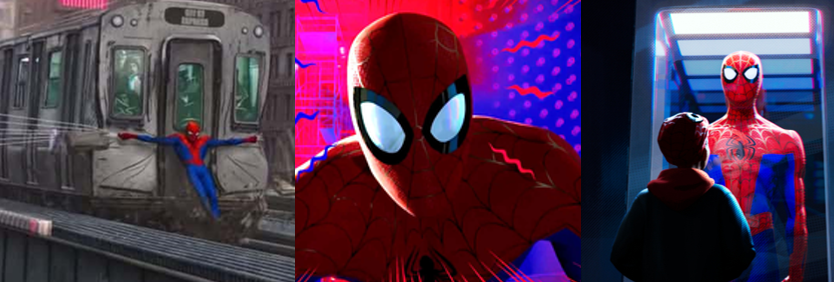
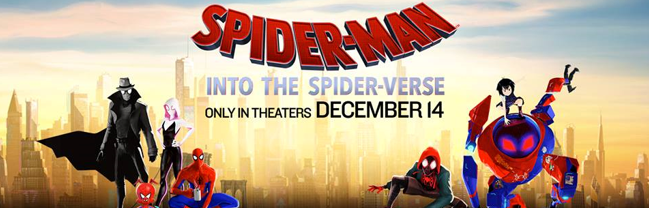
Back in 2011, writer Brian Michael Bendis made the bold decision to kill off Peter Parker/Spider-Man in the pages of Ultimate Spider-Man (2000 to 2011) and replace him with a younger character, Miles Morales, an African American youth of Puerto Rican descent. Though this caused much controversy at the time. Miles quickly became a popular character and branched out into cartoons, videogames, and even the mainstream Marvel continuity (“Earth-616”). After the poor reception of The Amazing Spider-Man 2 (Webb, 2014) saw Spider-Man incorporated into the Marvel Cinematic Universe (MCU), Sony pushed forward with Spider-Man-adacent films separate from the MCU, including the visually spectacular Spider-Man: Into the Spider-Verse (Persichetti, Ramsey, and Rothman, 2018), a Miles-centric story that became a critical and commercial success. Production of a sequel began immedately after the release of the first film and the plan was always to expand upon the multiverse concept in the sequel, which would necessitate splitting the sequel into two parts. The film greatly built upon the concept of multiple Spider-People, writers Phil Lord and Christopher Miller were encouraged by infamous Spider-Man producer Avi Arad to include the Spot as an antagonist, and different art and animation styles were painstakingly incorporated to make each character unique. After being delayed due to the COVID-19 pandemic, Spider-Man: Across the Spider-Verse opened to a massive $563.1 million worldwide gross and universal praise; critics loved the visuals and action-packed adventure and the road seems clear for subsequent sequels and spin-offs.
The Review:
It’s probably not too surprising to say that I really enjoyed Spider-Man: Into the Spider-Verse. While I don’t always agree or like that a street level superhero like Spider-Man is so often at the epicentre of massive multiversal stories, it was a breath of fresh air as both a superhero and animated film. The visual storytelling on offer was nothing short of spectacular and I think it went a long way to cementing in the minds of the mainstream audience that there is more than one Spider-Man out there. That groundwork is taken to the nth dimension in the highly anticipated sequel, which picks up with Miles just over a year after the last movie and finds him a little older, a lot more confident with his spider powers and unique abilities (such as his electrical “venom sting” and camouflage ability), and generally pretty beloved by the citizens of New York City. He has a working relationship with his father, soon-to-be Captain Jefferson Morales (Henry), who remains ignorant of his son’s dual identity, and has made a name for himself as the heroic friendly neighbourhood Spider-Man. Unfortunately, as is often the case for Spider-Man, this success doesn’t translate to every aspect of his life; despite his high grades, his absence from school has been noted and he’s under pressure to take his first tentative steps into adulthood, something made all the more difficult for him not just because of his responsibilities as Spider-Man but his guilt about lying to his parents about his extracurricular activities and the smothering he receives from his doting mother, Rio Morales (Luna Lauren Vélez), who struggles as much as Jefferson with how quickly Miles is growing and the fear of losing him to the wider world.
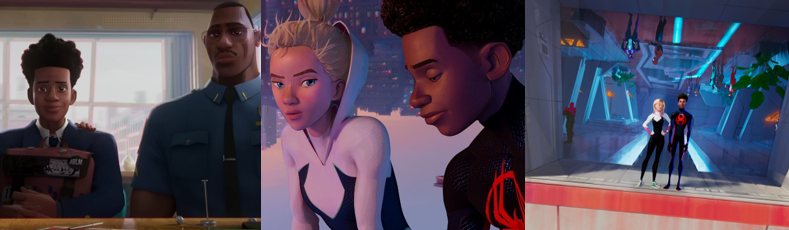
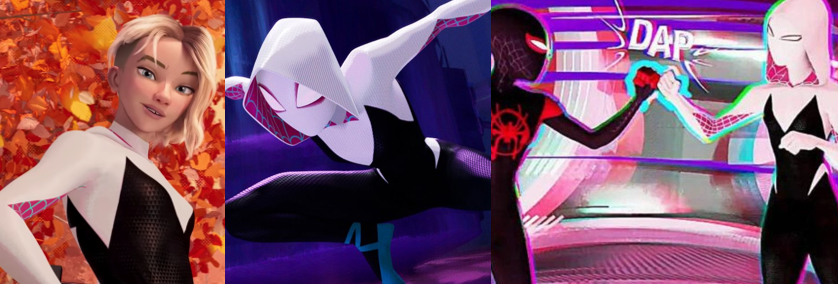
Because of this, Miles feels very alone; while his roommate (and only friend), Ganke Lee (Peter Sohn) knows his secret identity, he’s mainly just a cameo and refuses to be Miles’ “guy in the chair” and, since Miles doesn’t dare reveal himself to his parents, he’s left pining for Gwen and internalising a lot of his issues, particularly his grief for his beloved uncle, Aaron Davis/The Prowler (Mahershala Ali),. His only true freedoms come from his artwork and his web-slinging; Spider-Man offers Miles a freedom unlike anything else and allows his confident, snarky attitude to rise to the forefront, but this ends up biting him the ass when he treats newly turned supervillain the Spot like an afterthought, causing the former physicist to exponentially increase his power to avenge himself on Spider-Man. Miles initially thinks very little to the Spot, especially when Gwen suddenly reappears in his life; the film’s opening delves much deeper into Gwen’s own tragic backstory, which saw her isolate herself from others after the death of her best friend, Peter Parker (Jack Quaid), after he’d transformed himself into a lizard-man. Since her father, Captain George Stacy (Shea Whigham) blames Spider-Woman for Peter’s death, Gwen is similarly unable to properly open up to her dad and, when he first meets Spider-Man 2099 and the enigmatic Jessica Drew/Spider-Woman (Issa Rae), she’s granted an opportunity to leave her world behind rather than face her pain. Although it’s fairly clear that Gwen has missed Miles as much as he has her, she remains guarded; her duties to the Spider-Society dictate that she has to keep her distance from Miles, but she can’t help reconnecting with him since he’s the only friend she has in the entire multiverse, despite all the new allies she’s made. Her affection for him drives her to hide the Spider-Society’s true purpose from him since he’s destined to rise through horrible tragedy, yet she can’t help but admire his enthusiasm and desire to do the right thing, saving everyone whenever possible, even in the face of overwhelming odds.

This is just one of many reasons why Miles follows Gwen through an interdimensional portal to Earth-50101, where they encounter the free-spirited and confident Pavitr Prabhakar/Spider-Man India (Karan Soni). Joined by Gwen’s fellow Spider-Society member, the anarchist and anti-authoritarian Hobart “Hobie” Brown/Spider-Punk (Kaluuya), the four team up to tackle the Spot once more after he escapes, realises the vast potential of his organic dimensional portals, and seeks to add to his power by absorbing energy from particle accelerators across the multiverse. While the Spot might be a deranged, deluded villain who struggles with his often-unpredictable powers, his confidence and mania grow alongside his powers, transforming him into a nightmarish creature capable of ripping entire timelines to shreds. A strange bond links him to Miles, allowing the young Spider-Man to see glimpses of the future and act accordingly; however, this is the catalyst that brings him under the scrutiny of Spider-Man 2099 since Miles interfered with a “canon event”, a life-altering moment in Pavitr’s destiny that was fated to make him a greater hero. The consequence of altering this sees Pavitr’s world threatened by a raging black hole, something Spider-Man 2099 has witnessed happen first-hand after he innocently replaced a version of himself and was forced to watch his surrogate family and timelines vaporise before his eyes as a result. Thanks to his connection to the Spot, Miles realises that his father’s death is set to be his canon event and his natural instinct is to save him, only to be imprisoned and threatened by Spider-Man 2099 and the majority of the Spider-Society since they cannot allow one life to threaten the delicate tapestry of the titular Spider-Verse. A stoic, aggressive, and driven individual, Spider-Man 2099 is absolutely relentless in his pursuit of Miles; he has no compunction about ordering the entire Spider-Society to pursue him when he escapes and tries to break him, mentally and physically, rather than allow him to risk his entire world. His ruthless pursuit casts Spider-Man 2099 as much of a villain as the Spot; though he maintains that he’s doing what’s necessary to keep the multiverse stable, his actions have caused great personal tragedy for countless Spider-People, though many of his followers (including Miles’ mentor, Peter B. Parker (Johnson), and Gwen) are strangely onboard with Miguel’s methods since it’s deemed necessary to birth greater heroes.
The Nitty-Gritty:
This questionable morality is as much at the heart of Spider-Man: Across the Spider-Verse as its ruminations of life, responsibility, and adulthood. The film is surprisingly complex in its portrayal of Miles’ relationship to his parents; both feel they’re losing him since he’s becoming a young adult and are frustrated by his obvious lies, and Miles equally is torn between wanting to share himself with them and the fear that they won’t understand. Gwen witnessed this rejection first-hand when her father initially reacted in horror at finding out Spider-Woman was his daughter and was inspired by Miles to return to her father and reconcile with him since she’s tired of running from her path and feeling alone and is struggling with her actions since joining the Spider-Society. Both Miles and Gwen feel alone and like they have no one to confide in, but only Miles feels ostracised from everyone; his friends, family, and even the wider Spider-Verse since Gwen is cagey about their recruitment specifics, and he seems to be the only Spider-Man not part of the team. This is because he hasn’t had his canon event yet, but the film’s a little iffy on that: here, it seems to be the death of a police captain that spurs the Spider-People on, yet Miles lashes out at the various Spider-People for letting down the teachings of their uncles and both Miles and Gwen already suffered tragic losses that you’d think would be catalyst enough for their growth as heroes. I do think that the reveal of the Spider-Society’s true purpose should’ve been handled differently as it’s weird to me that so many Peter Parkers were willing to let even one person die, no matter the stakes, and I wonder if it would’ve been better to reveal that Spider-Man 2099 had been deceiving all of them.
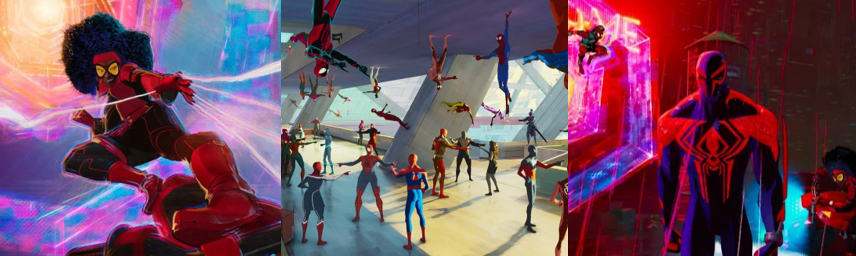
As intense and thought-provoking as the character interactions and themes of the movie are, Spider-Man: Across the Spider-Verse excels in its visuals. The film takes the unique frame rate and cartoonish, comic book-stylings of the first movie and ups the ante to make every Spider-Person feel unique. Gwen’s world is rendered very differently from Miles’s, being mostly pastels and having an almost brushstroke effect; Spider-Punk animates jerkily, like a living piece of Sex Pistols artwork, and the attention to detail in the animation, background details, and little things like thought boxes and sound effects popping up onscreen really add to the exhilarating, pop art appeal of the film. There are some gorgeous shots here, too, such as when Miles and Gwen sit upside down and gaze upon the inverted city, rain and night effects are used for fantastic dramatic detail, and I especially enjoyed how 2099 was brought to life as a sprawling, high-tech utopia above ground and a dark, depressing, neon-spawned underbelly below. This translates into the web-slinging, which is easily the best we’ve ever seen from a Spider-Man movie since the action is only limited to the animator’s imagination. All the Spider-People web-sling and fight differently, with the pregnant Jessica Drew doing her best Akira (Otomo, 1988) on her motorcycle and spewing webs from her fingertips, Spider-Punk leaping into battle with a guitar, and Pavitr incorporating a little wooden accessory into his webbing. For me, the standout in this regard was Spider-Man 2099; as morally reprehensible and ruthless as he appears, his fighting style and web-slinging are a force to be reckoned with. Utilising energy webs and sporting both talons, fangs, and bladed appendages alongside his bad-ass suit, Spider-Man 2099 is more feral than the other Spider-People and carves a swath of destruction in his pursuit of and attack upon Miles. Although clearly outmatched, Miles manages to elude and survive even Spider-Man 2099 thanks to being an “anomaly”; the spider that bit him wasn’t even from his Earth, making him unpredictable (and, for Miguel, potentially dangerous) and accounting for his ability to fend off multiple, more experienced Spider-People and exercise a moral integrity that’s sadly abandoned many of his counterparts.

This all comes to a head when Miles frantically uses Spider-Man 2099’s elaborate, spider-based machine to return home, desperate to save his father’s life and keep his world from being consumed by the Spot’s wrath, only to find that he’s been deposited on the wrong Earth. This is quite the twist for both Miles and Gwen, who followed him to try and help, and doubly so since Miles actually found the courage to reveal his dual identity to his mother, only to be stunned to find that his uncle is alive and well in this world, which lacks a Spider-Man since its spider bit him instead. Here, Miles finds himself strung up and held at the mercy of his uncle and his Earth-42 counterpart (Jharrel Jerome), a bad kid who has taken up the mantle of the Prowler. With Spider-Man 2099 and his lieutenants scouring the multiverse to find Miles and keep him from saving his father’s life, Gwen reconciles with her father and recruits her own band of Spider-People to help Miles and end the film on a massive and exhilarating cliff-hanger. I can’t say that I saw this twist ending coming at all; the film is so enjoyable to watch that I would’ve happily sat through another hour of it, and things were really ramping up at the end so it’s exciting to imagine where the next part will go and seeing Miles reunite with his friends from the first movie. The entire film is stuffed with cameos from Spider-People from all across the multiverse, including live-action cameos from the likes of Andrew Garfield and Donald Glover (as an alternative version of the Prowler), persistent voice cameos from J.K. Simmons as J. Jonah Jameson (proving beyond a shadow of a doubt that J.K. just is Jonah in every dimension), and references to both past and current versions of Spider-Man (the recent multiverse shenanigans of the Marvel Cinematic Universe are mentioned at one point). It never feels glorified or out of place, to be fair, and it’s fun spotting and following some of these background Spider-People, though again I do find it odd that so many subscribe to Spider-Man 2099’s logic. There was a point where Miguel is seen injecting himself with something, and Miles points out how he’s more like a vampire than a spider, so I wonder if this’ll factor into the next film, perhaps revealing that Miguel is actually his brother, Gabriel, or someone like Morlun. There’s also the threat of the Spot to wrap up, too; I liked how he was driven to prove himself, just like Mils, but went to destructive extremes and I’m sure that’ll result in a spectacular final showdown involving more than a few Spider-People!

The Summary:
I was blown away by Spider-Man: Across the Spider-Verse. I expected it to be a visual treat but it overdelivered in this regard; I loved how all the Spider-People looked and felt very different, even if just in small ways, to really emphasise that all these different versions are just as valid and “real” as the other. You could spend hours going through every frame looking for cameos and little details, like frames of animation and visual quirks, and still not catalogue everything on offer here; at times it’s almost underwhelming, but it results in easily the best visually impressive Spider-Man action we’ve ever seen in cinema. At then, alongside all that, there’s a really heartfelt and relatable story of a kid trying to find his place in the world, somewhere to belong, and mature into adulthood. I really felt for both Miles and Gwen here and enjoyed how they had such a strong connection together, and it was harrowing seeing him being excluded from even her world because of things he wasn’t yet experienced enough to understand. I loved how Spider-Man 2099 was so tortured by his mistakes that he’s hell-bent on ensuring that no other worlds die because of a Spider-Person’s selfishness; it made his motivations very understandable and contributed to his manic aggression, but also made for a compelling antagonistic character. The Spot may be a joke, but he becomes a force to be reckoned with throughout the movie and I’m excited to see how he’ll be brought down and the further clash of webs and ideals between the various Spider-People. While I took issue with so many Peters and Peter proxies signing up to Miguel’s harsh philosophy, it doesn’t take away from how stunning this movie is as a piece of art. Spider-Man: Across the Spider-Verse has raised the bar not just for Spider-Man movies, but for the animation genre itself and, while I would still like to step away from multiverse shenanigans in Spider-Man movies, it’s hard to deny how incredible impressive and well-executed this film is.
My Rating:
Fantastic
Did you enjoy Spider-Man: Across the Spider-Verse? What did you think of the different animation styles of the various Spider-People? Which of the alternative Spider-Man was your favourite? What did you think to Miles’ struggles? Do you agree with Spider-Man 2099 or do you think that the other Spider-People are betraying the core concepts of their characters? What other Spider-People would you like to see in the next film? Whatever your opinions on Across the Spider-Verse, go ahead and drop them in the comments and be sure to check out my other Spider-Man content across the site!










 Dr. K's Waiting Room
You must be logged in to post a comment.