Game Corner [Sci-Fanuary]: Metroid Dread (Nintendo Switch)


January celebrates two notable dates in science-fiction history, “National Science Fiction Day” on January 2 and Arthur C. Clarke’s HAL 9000’s birthday on January 12. Accordingly, I’m dedicating January to celebrating sci-fi with an event I call “Sci-Fanuary”.


Released: 8 October 2021
Developer: MercurySteam / Nintendo EPD

The Background:
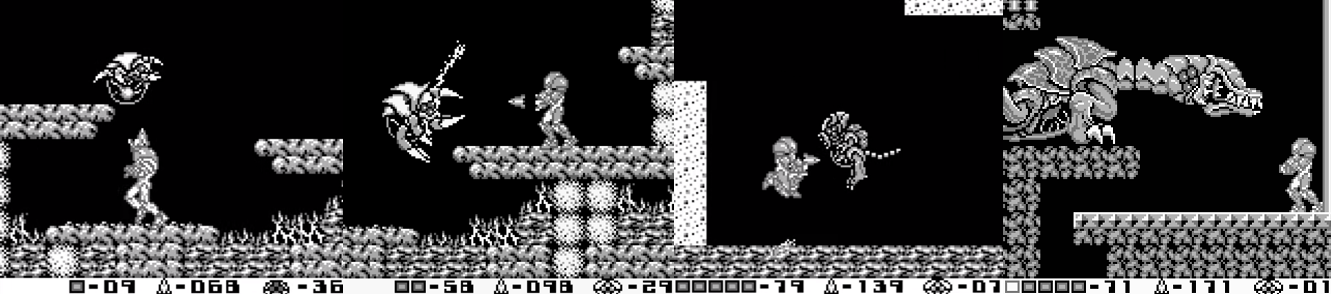
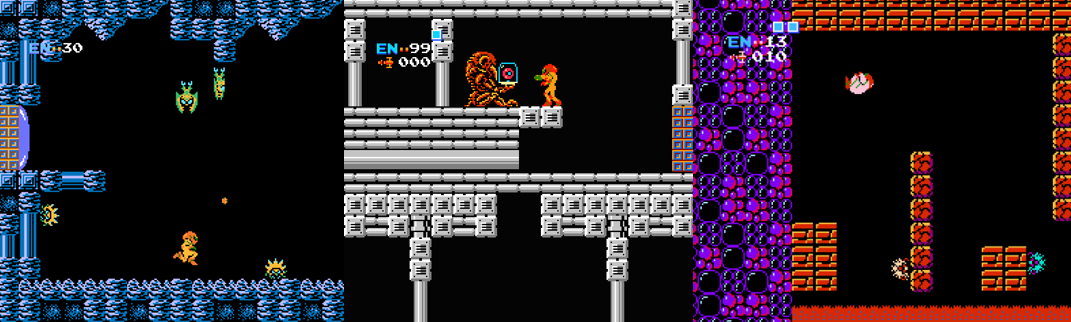
Despite popularising the “Metroidvania” subgenre and the hefty praise heaped upon the franchise, it’s fair to say that the Metroid series (Various, 1986 to present) is one of Nintendo’s under-rated properties. The original release is known as one of the greatest games ever made, to say nothing of the universal acclaim shown to its 16-bit sequel and successful jump to 3D first-person shooting. After suffering a blow with the poor reception of Metroid: Other M (Team Ninja/Nintendo SPD, 2010) and Metroid Prime: Federation Force (Next Level Games, 2016), Metroid bounced back with Metroid: Samus Returns (MercurySteam/Nintendo EPD, 2017), a remake of the divisive Metroid II: Return of Samus (Nintendo R&D1, 1991) that was successful enough to see MercurySteam develop a new Metroid title. Conceived as a sequel to Metroid Fusion (Nintendo R&D1, 2002) and initially developed for the Nintendo DS, producer Yoshio Sakamoto wanted to place further emphasis on stealth gameplay but the project remained dormant for several years when initial prototypes failed to meet his standards. After much speculation, the project was eventually revived for the Nintendo Switch, largely thanks to MercurySteam’s work on Samus Returns. Returning to the series’ roots with a 2.5D perspective and forcing players to swiftly and silently avoid mechanical pursuers, Metroid Dread aimed to live up to its title by marrying the traditional exploration and combat mechanics of the series with a constant sense of dread. The result was a warmly received title that was praised for its return to form, vast exploration options, and challenging gameplay and bosses.  

The Plot:
The Galactic Federation dispatches versatile Extraplanetary Multiform Mobile Identifiers (E.M.M.I.) robots to investigate the X Parasites. However, when the E.M.M.I. go haywire, Samus is deployed, uncovering a sinister plot by rogue Chozo to exploit the Metroids. 

Gameplay and Power-Ups:
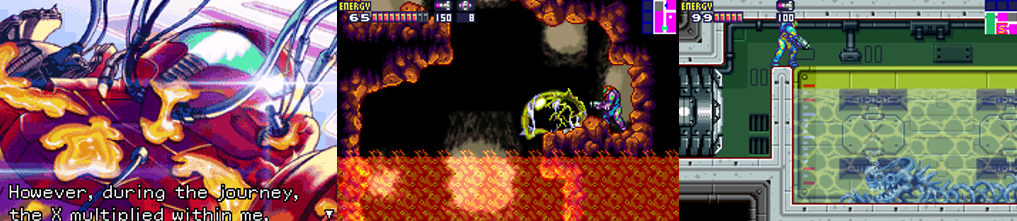
Metroid Dread is a 2.5D action/adventure game very much in the style of Super Metroid (Nintendo R&D/Intelligent Systems, 1994) in which players once again assume the role of famed bounty hunter Samus Aran, fresh off Metroid Fusion, and navigate the many corridors, caves, and laboratories of the creatively named planet ZDR, picking up new items and upgrades and returning to previous areas to obtain even more items or progress further. As ever, Samus comes equipped with her arm blaster, which you fire with Y. Later upgrades allow you to charge up a more powerful shot by holding the button, and you can also switch to Samus’s missiles with the R trigger, holding it to fire and using the L trigger to freely aim with a laser sight. B allows you to jump; holding it lets you jump higher while the Space Jump and the Screw Attack allow infinite jumping and a spinning attack. Samus can slide under narrow gaps or past certain enemies with ZL, transform into her Morph Ball with the same button when standing still (or tilt the left stick down when crouching) and gains the ability to jump, place various bombs, and cling to certain surfaces while in this form with the Spider Magnet ability. Samus’s weapon and suit upgrades are managed from the + menu, where you view an expanded map, which is unlocked at various map stations (though the onscreen mini map is extremely useful). The + menu also allows you to view your mission log and place helpful markers on the map. You can enter a separate menu with – to alter in-game settings such as the rumble feature, use any compatible Amiibos, load previous checkpoints, or quit to the main menu.

All Samus’s old and new abilities are nothing against the E.M.M.I, who require a special cannon.

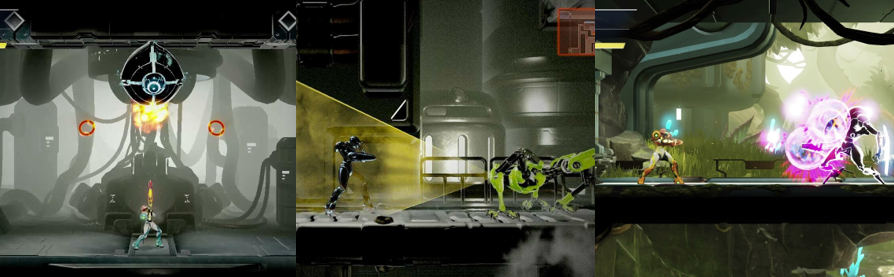
All of Samus’s signature abilities make a return in Metroid Dread. They’re once again waiting at various Chozo Statues and will open up the game in various ways, such as allowing free movement when underwater and resisting extreme heat or cold. You’ll grab the Charge Beam for a stronger charged shot, the Wide Beam to fire three simultaneous shots to open certain doors, the Diffusion and Plasma Beam to fire through the environment and destroy tougher, metallic enemies, and the Grapple Beam to swing or hang from certain blocks and platforms and shunt blocks out of the way. Samus can also utilise various missiles, freezing enemies with the Ice Missile and targeting multiple enemies or weak spots at once with the Storm Missile. Unlike her beam shots, these use up ammo so you’ll need to defeat enemies to refill your stock or find upgrades to increase your maximum capacity. Samus’s newest weapon is the Omega Cannon, a situational, finite upgrade acquired by defeating various eye-like Central Units. This temporarily allows you to hold L and Y to fire a concentrated beam that eventually melts metallic shielding and hold L and R to charge the Omega Blaster, which you must then fire with Y to dispatch the aggravating E.M.M.I. robots encountered throughout ZDR. In multiple instances, Samus will enter an E.M.M.I. Zone and must stealthily avoid the clambering, relentlessly E.M.M.I. Until she gets the temporary Omega Cannon, her only hope of avoiding detection is the Phantom Cloak (which consumes Aeion energy to allow temporary invisibility by pressing in the right-stick) and the new Parry function. When E.M.M.I. or other enemies attack, there is a brief flash that’s your indication to tap X. This will Parry the attack, stunning the enemy and allowing you to one-shot them for additional resources, stun them, or deliver massive damage. It’s absolutely essential that you master this technique as some enemies are a chore to fight without it, though the timing required to stun the E.M.M.I. is so tight that you may never get it right. Samus can also find upgrades that allow her to run at super-fast speed, shift past sensors and across gaps (again at the cost of Aeion energy), scan her environment to uncover hidden blocks, and even obliterate enemies and obstacles in the final escape sequence of the game.

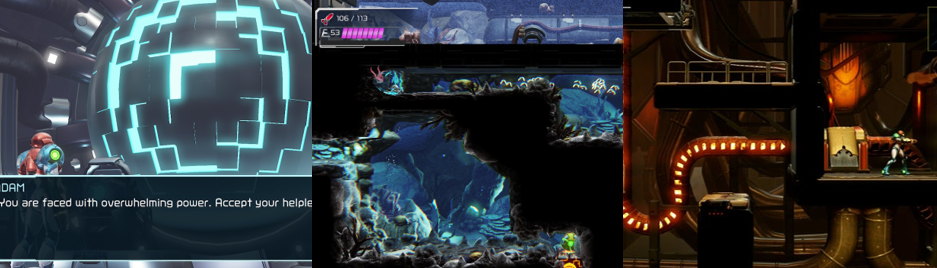
ADAM’s advice will direct you to the next area or terminal that needs activating.

As ever, you’ll grab ammo and health orbs from defeated enemies, who respawn when you leave the screen, and can find upgrades the increase your maximum health, missile, and Power Bomb capacity. You won’t find and upgrades for the Aeion meter as it automatically refills over time, but you can still find ammo and health restoration points all over ZDR, as well as interfaces where you are given hints and objectives by the initially condescending ADAM. This also allows you to manually save your game and a waypoint marker will appear on your map, with teleporters, elevators and other transports allowing for a degree of fast travel. However, you will be revisiting several areas of ZDR over and over again, particularly the elaborate halls of Ferenia, a once thriving Chozo temple. As you obtain new abilities, previously impassable ways open up. You can squeeze through gaps and blast around small tunnels with the Morph Ball, clamber up or cling to blue surfaces with the Grapple Beam, and blow up or run through blocks, and better navigate underwater. For such a large and interconnected map, Metroid Dread is surprisingly linear; areas are often impassable due to flaming obstacles or debris, forcing you to go a certain way, though you can acquire abilities and upgrades out of order if you’re persistent enough. Large areas are a death sentence without the temperature resistant suit upgrades, many areas are seeped in darkness and require you to power up generators, awakening enemies and hazards, and you’ll redirect thermal flows to reach new areas more than once. Other times, you’ll blast several targets to open doors, push or drag them out of the way entirely, or use temporary platforms or your Phase Shift ability to bypass gaps or breakable blocks. Typically, though, the game has a very clear structure that it rarely deviates from. You enter a new area, restore power or redirect thermal flow, maybe blow open a glass corridor or dodge flaming or buzzsaw hazards, and endure a gruelling E.M.M.I. Zone until you destroy the E.M.M.I. and gain a new ability to repeat this process in another area.

Presentation:
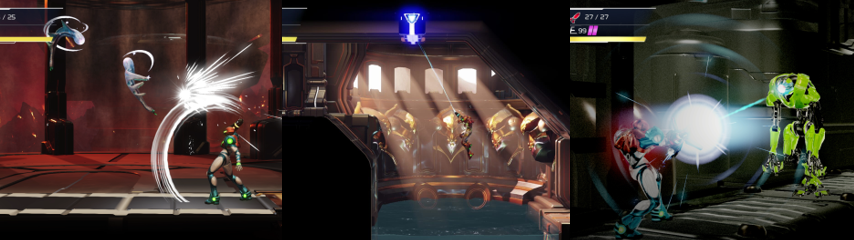
Overall, Metroid Dread looks really good. The whole game has a dark, foreboding feel to it that’s reflected in its ominous soundtrack and the various environments, which are either dank or in disrepair or swarming with monstrous enemies. Samus herself looks both familiar and different; she’s had a bit of a glow up and doesn’t come to resemble her usual orange and red colour scheme for some time. Her suit changes colour and reflects the environment around her as you progress, which was a great way to add to the ambiance and visually show her becoming more powerful and capable. Though largely silent, taking in ADAM’s patronising tone and the exposition spouted by the likes of Raven Beak and Quiet Robe, she does utter a line at one point (though in the Chozo language) and screams in agony when defeated, her suit exploding and revealing her form-fitting costume beneath. Although the game doesn’t make a great first impression with its surprisingly plain title screen, motion comic-like opening, and long loading times, the pre-rendered cutscenes showcase Samus’s capabilities and wary nature through her body language and action-focused mentality. Each E.M.M.I. is introduced through a suitably ominous cutscene that showcases its different abilities, such as increased shielding or speed or climbing ability, and everything becomes very tense when you’re trapped in an E.M.M.I. Zone, desperately trying to escape to the nearest exit before it inevitably skewers you with its spiked appendage.

While the game looks and sounds great, it’s rare that areas make much of a visual impression.

While character and enemy models are very impressive and detailed, I wasn’t massively impressed with the variety in the game’s environments. Sure, there are some nice touches here and there, like rain and water raging outside Burenia, Chozo Soldiers scampering about in the background, various wildlife (from insects to writhing tentacles to disgusting slug-like barriers obstructing doors), and areas changing as they crumble and collapse around you, but there are often far too many dark, samey corridors and areas for my liking. While you’ll venture into dripping caves, explore flooded laboratories, wade through lava, and frantically flee from extreme cold, many areas are just the same dark, futuristic locations repeated over and over. You’ll quickly see a pattern of having to traverse these foreboding areas, repute with sparking power lines and small jump scares, and restoring power to them or redirecting thermal energy to access new areas, with little separating one area from the next. Similarly, the E.M.M.I. Zones are all largely indistinguishable, being very cold and grey and military in their appearance, with only more complicated layouts changing things up. Maybe there’s some water, or more E.M.M.I. probes, or you need to slide and destroy blocks a bit more, but the general look of each E.M.M.I. Zone doesn’t change much, which is odd considering the E.M.M.I. have different colour schemes. Thankfully, Ferenia and the Itorash are on hand to mix things up a bit. These ornate, gold-themed Chozo environments are filled with large Chozo statues, banners, windows, and a sense of grandeur that are in stark contrast to ZDR’s other more bland environments, though again you revisit Ferenia so often that each screen starts to become indistinguishable. I think it would’ve helped a lot to give each area a more prominent theme. Like, have a dark, dishevelled lab but just on one section of the map, lump the frozen and water sections together, combine the caves with the lava/red-hot sections, and maybe do a little bit more to make things feel more varied than they actually were.

Enemies and Bosses:
ZDR is crawling with bug-like enemies for you to Parry away and blast with your arm cannon. Many are small and simple cannon fodder, like the slug-like Plys, amorphous blobs, squid-like creatures, spider-like Yampas, swarming eels, and various burrowing insectoids that chase you in narrow tunnels and fly out of the dark. While these are easily bested with your basic attacks, larger enemies (like the crab-like Muzbys and rock-encrusted Obsydomithons) require your Parry to stun and defeat. As you progress, robotic enemies become more prominent; large tetrapot robots blast at you with a powerful eye beam, the spherical Autclast causes flames to burst across the ground, and E.M.M.I. probes either float in place or explode when you get close, dealing damage and giving away your location. When exploring Ghavoran, you’ll encounter the whale-like Hecathon that slowly floats overhead, draining your health with its wide energy beam; a similar enemy awaits in Burenia, but even basic enemies become a formidable threat when Raven Beak unleashes the X Parasites. These gelatinous blobs infect any onscreen enemies, turning them into gooey zombies that absorb a great deal of shots and utilise additional attacks. While you can defeat them in much the same way as before, you must absorb the X Parasite that’s released to refill your health and/or ammo or else it’ll simply attach to another enemy or cause another foe to spawn, which can be quite a headache. Interestingly, though, neither the titular Metroids or the traditional Space Pirates appear as enemies in Metroid Dread.

Fights between the Central Cores, E.M.M.I.’s, and Chozo Soldiers quickly become laborious.

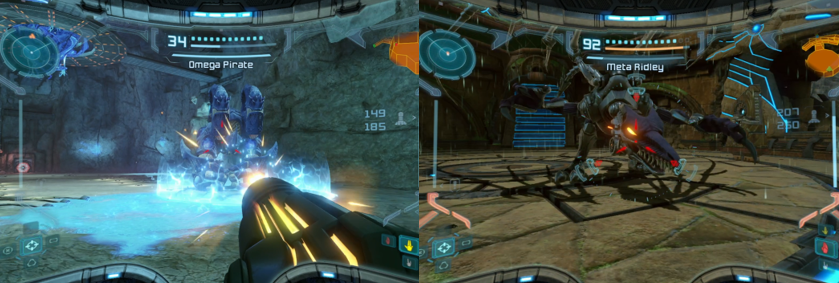
Easily the most persistent foes in Metroid Dread are the E.M.M.I. robots. There are six of these bastards to contend with, with each encounter being more difficult that the last. Similar to the SA-X from Metroid Fusion, Samus can only avoid the E.M.M.I. upon first entering an E.M.M.I. Zone since her weapons are useless against it. If it catches her, you can try and Parry its instant-kill attacks but the timing is so tight that I rarely managed to succeed. Instead, you must flee through the E.M.M.I. Zone until you find the Central Core. These eye-like mechanical spheres float overhead while numerous projectiles fly at you from the walls and ceilings. You must blast the Central Core with missiles and your charged shot to destroy it and temporarily gain the Omega Cannon, but even then it’s not so easy to put the E.M.M.I. down. Not only does the Omega Cannon take time to charge, the E.M.M.I. are ridiculously fast and often shielded, meaning you need to get some distance and use the Omega Spread before you can even fire your kill shot. E.M.M.I. are soon joined by probes that give away your location, scamper across walls and ceilings, squeeze through gaps, and can even freeze or outright kill you with their spotlight. The Phantom Cloak helps you avoid detection, but keep an eye on your Aeion meter and avoid touching the robots as it’ll instantly give you away. Over time, they become more aware of your presence, and you have less room to charge your shot, though it’s always a relief to blast them in the head and put them down for good. As if the dread caused by these persistent assholes isn’t bad enough, you’ll also be forced to battle numerous Chozo Soldiers, both mechanical and organic and sometimes faced with two at a time! These nimble, heavily armed and armoured warriors leap about the screen taking shots at you and charge with a lance, hiding behind a shield and crashing to the ground from above. Luckily, you can Parry their attacks if your timing’s right and use the Storm Missiles to deal a lot of damage very quickly, but you’ll have to watch out for a massive mouth laser and a wide goo attack when they become infected by the X Parasite and increase in their aggression.

Monstrous bosses require all of your skills to get around and dish out damage.

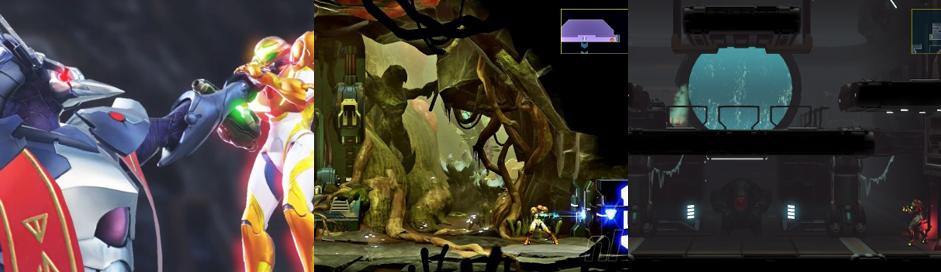
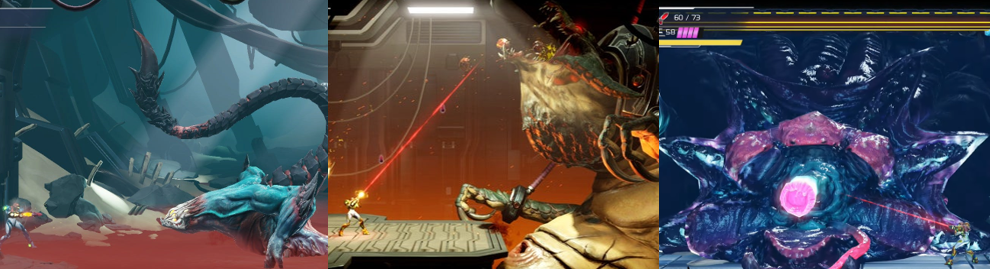
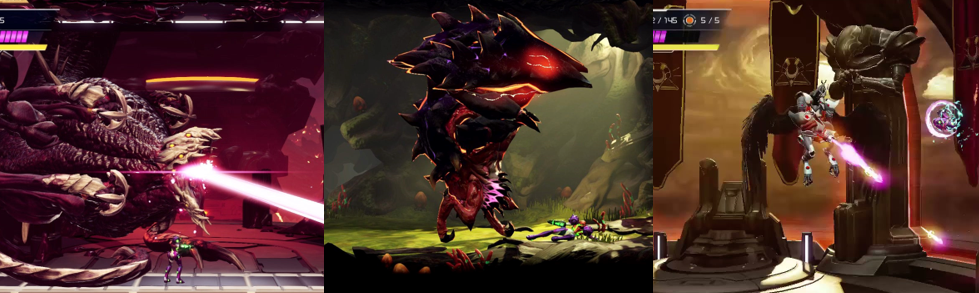
Other, more monstrous bosses also await on ZDR. Corpius (a horrendous mixture of a lizard and a scorpion) lashes with its tail, requiring you to jump or slide under it and pepper its ugly face with missiles or a charged shot. Corpius also boasts an acid spit and the ability to turn invisible, though a shining weak spot remains for you to target, and you must cling to the walls to avoid its acid belch. When it reappears, you have a small window to Parry its attacks and deal massive damage, provided you remember to keep hammering R during the Parry sequence, which is true for all subsequent boss battles. Metroid Dread also includes a rematch with the gargantuan Kraid. At first, he’s chained up and can only swipe at you or rain claws from above (which you can shoot for resources). Blast his head, avoiding his fireballs, and the battle descends to a lower level, where you must rain fire on Kraid’s bulging belly button, which spews purple blobs and splash damage. After enough hits, you must scramble up the temporary platforms to the magnetic strip above to hit his head, which is easier said that done given how much crap is on the screen (though you can make quick work of him if you grabbed the Morph Ball out of sequence). While in Burenia, you’ll battle the tentacled mollusc Drogyga. This takes place entirely underwater and sees you blasting Drogyga’s orbs and tentacles until a button lights up. You must quickly blast it to lower the water, then use the overhead grapple point to reach another and drain the water entirely, leaving Drogyga briefly vulnerable. You must repeat this multiple times and be quick to avoid its massive tentacle counterattack or Parry its attacks for additional damage, which is good practise for the more aggressive and versatile Escue. This enlarged, X-empowered winged beetle shields itself with an electrical field and lunges at you with an attack that can be tough to dodge. Escue also fires destructible orbs that either home in on you or cause massive splash damage, and even keeps up its attack when you whittle it down with missiles and charged shots, reducing itself to a hardened shell of X that spits out smaller parasites and must be bombarded with Ice Missiles.

As they become bigger, more aggressive, and tougher, bosses will test your mettle to the limit!

While exploring Cataris, you’ll’ve noticed the corpse of a massive, mutated spider-like creature in the background. You’ll fight one of these, Experiment No. Z-57, to defrost the region, with the battle taking place in multiple phases. At first, Experiment No. Z-57 lingers in the background, firing a massive mouth laser that briefly irradiates the floor and taking a massive swipe at you. The Space Jump and Storm Missiles are essential here, as is a successful Parry when Experiment No. Z-57 comes into the forefront to take a shot at you. Parrying initiates the second phase where you blast its limbs to keep it from charging a powerful shot, then frantically Space Jump to avoid screen-filling plasma waves and a double-sided claw swipe, before initiating another Parry sequence that should finish it off. Similar to Escue, Golzuna is an enlarged, X-empowered variant of a typical enemy, the Muzby, now completely invulnerable thanks to its rock-like hide save for a single weak spot on its rear. Due to its bulk, Golzuna is slow and difficult to jump over; it charges at you and fills the screen with explosive pink orbs, restricting your movements. Staying on the move is the key to this battle, which eventually reduces Golzuna to a hardened shell that, like with Escue, is destroyed with Ice Missiles. After several encounters, you’ll eventually confront the maniacal Chozo, Raven Beak, aboard the Itorash in a true test of your skills. In the first phase, Raven Beak is shielded by a golden aura and completely invulnerable. He’ll launch a devastating three-hit melee attack, bathe the arena in a health-sapping red beam, and spawn giant orbs that can be destroyed for resources, but take multiple shots to pop. When he stands at the far end, you must Parry his rush to deal damage; similarly, when he taunts, get in close and immediately Parry his attacks to move to the next phase. Here, Raven Beak is much faster and there is no health or ammo to help you. He spawns wings, darts at you (easily slid under), fires a big charged shot (easily dodged), or spews a stream of shots that you must desperately Space Jump to avoid in a circle motion, all while bombarding him with Storm Missiles. The final phase is much like the first, but Raven Beak sports faster, more powerful attacks and a barrage of energy waves. Again, you must hit your Parries and unload all your missiles and charged shots at least three times to win. With no checkpoints between phases and very little health and ammo, this is a gruelling final bout even with maximum health and ammo capacity.

Additional Features:
While you require all of Samus’s weapon and suit upgrades to clear the game, many of the health and ammo-increasing power-ups can be missed. These are marked on your map and it’s highly recommended that you seek them out as you’ll need that extra ammo and health in the later stages, and Samus tends to take quite a bit of damage even with expanded health. If you look at your save file, you’ll see a percentage completion counter for the number of items you’ve found. Your map indicates where items can be found in each area and finding 100% in all areas unlocks art to view in the game’s ‘Gallery’ mode. As is usually the case for a Metroid title, you’ll see different endings and unlock different artwork depending on how fast you beat the game and on which difficulty. At the start, you can pick between “Rookie” and “Normal” mode, and you’ll unlock “Hard” mode after your first playthrough on “Normal”. This is selectable when beginning a new game, though your original save file can be returned to at any time, allowing you to seek out items you’ve missed. You can also unlock and play through a “Boss Rush” mode and grant yourself health and ammo refills using Amiibos. However, there are no other costumes to unlock, data files to scan, or hidden collectibles to find beyond the health and ammo upgrades.

The Summary:
I was excited to get stuck into Metroid Dread. After largely enjoying four of the classic Metroid titles and being impressed by the detailed, moody 2.5D aesthetic, I was eager to get to grips with this more traditional Metroid adventure. Graphically, the game impresses; I may not have liked how samey many environments were or the repetitive gameplay loop, but the depth to each screen and the attention to detail in the ominous lighting, foreboding atmosphere, and detailed character models was very impressive. The controls are tight and responsive; I wasn’t a big fan of the aiming system at times, and the Parry mechanic became laborious as enemies became faster and more aggressive, but Samus has never controlled better, overall, than here, in my experience. I even enjoyed how comparatively linear the game was. I rarely felt like I was lost and enjoyed exploring, even if I potentially played out of sequence at times. Sadly, though, I did not enjoy the E.M.M.I. encounters, which quickly became a frustrating chore, with little variation except it getting harder to line up your shot. I also didn’t like how the E.M.M.I. basically killed you the moment they grabbed you. I liked the tension (the “dread”, if you will) at times, but I wonder if these sections might’ve been better if restricted to certain areas. Like, maybe you travel to Cataris and avoid an E.M.M.I. the entire time. Or if the encounters had been more varied and less restrictive, like maybe an E.M.M.I. stalks you throughout Ghavoran, causing cave-ins and changing the environment as you go. Similarly, the Central Core battles were all basically the same, which is a shame considering how varied the other bosses were. I think merging the E.M.M.I. and the X-Parasite concept might’ve worked better; maybe E.M.M.I. nanobots infect enemies instead of the X, just to mix things up. It’s hard not to be a little disappointed by the gameplay loop in Metroid Dread. It’s fun the first few times but there’s only so many times you can restore power, flee from and destroy an E.M.M.I., then fight a boss before it starts to feel repetitive.

My Rating:

Rating: 3 out of 5.

Pretty Good

What did you think to Metroid Dread? Did you enjoy the E.M.M.I. encounters or did they start to become annoying for you as well? What did you think to the Parry mechanic and the more linear nature of the game? Which of the bosses and upgrades was your favourite? Did you ever get 100% completion? Which of the Metroid games is your favourite? Whatever your thoughts, feel free to leave a comment below and be sure to check out my other Metroid content across the site.

Mini Game Corner [Sci-Fanuary]: Metroid: Zero Mission (Nintendo Switch)


January celebrates two notable dates in science-fiction history, “National Science Fiction Day” on January 2 and Arthur C. Clarke’s HAL 9000’s birthday on January 12. Accordingly, I’m dedicating January to celebrating sci-fi in an event I call “Sci-Fanuary”.


Released: 19 June 2024
Originally Released: 9 February 2004
Developer: Nintendo R&D1
Also Available For: Game Boy Advance (Original); Nintendo 3DS, and Nintendo Wii (Virtual Console)

A Brief Background:
Metroid (Nintendo R&D1/Intelligent Systems, 1986) owes its creation to Nintendo’s success with their industry-saving Nintendo Entertainment System (NES), producer Gunpei Yokoi and directors Satoru Okada and Masao Yamamoto collaborated on the title, and Alien (Scott, 1979). Alongside Castlevania (Konami, 1986), the game birthed a videogame subgenre dubbed “Metroidvania” and Metroid was praised for its challenging gameplay. Since being recognised as one of the greatest games ever made, Metroid spawned numerous sequels and spin-offs and was ported to many subsequent Nintendo consoles. Nintendo (and Metroid) veteran Yoshio Sakamoto oversaw the development of this Game Boy Advance remake, which came about when someone working on Metroid Fusion (Nintendo R&D1, 2002) suggested porting Super Metroid (Nintendo R&D1/Intelligent Systems, 1994) to the console. The developers fittingly sought to return to the franchise’s roots, while still adding new elements to make the game feel fresh and modern. Principally, this involved placing greater emphasis on the story, allowing players to pick between difficulty settings, providing Samus with a new form-fitting suit, and adding an epilogue to the story. Reviews for the enhanced remake were largely positive; its content and features and refined controls were praised, though many complained of its short length and that newcomers would get more from it. Still, Zero Mission was said to be one of the best Game Boy Advance titles and it finally found a life outside of its system once Nintendo made it available through their online consoles.

The Review:
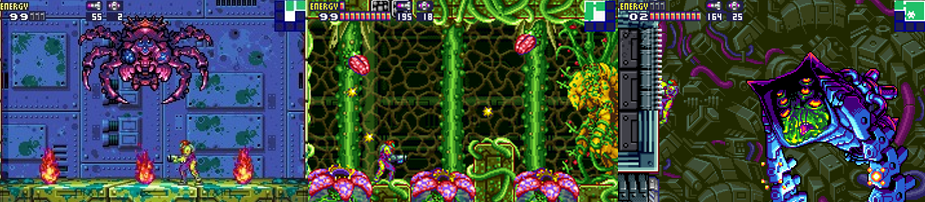
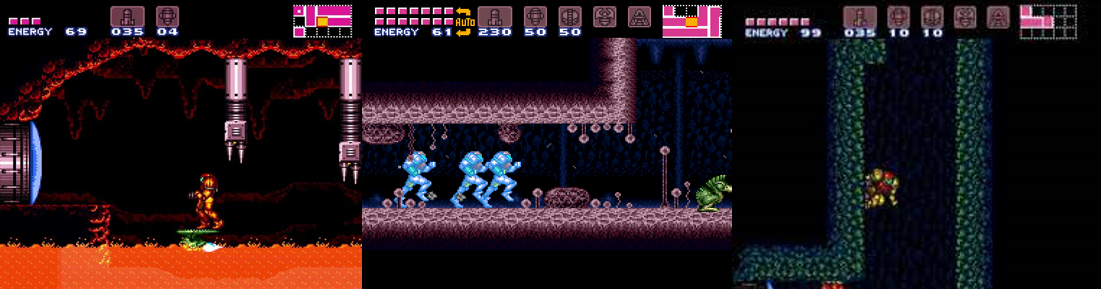
Metroid: Zero Mission is a Game Boy Advance remake of the original game, following essentially the same narrative structure (bounty hunter Samus Aran explores Zebes, conquering monstrous bosses to confront Mother Brain, leader of the Space Pirates) and offering the same power-ups, but with a decidedly 16-bit glow up that basically reimagines the original game as though it were a 16-bit title. Consequently, the game looks, sounds, and plays almost exactly like Super Metroid and Metroid Fusion, enhancing Samus’s abilities with moves like the Speed Boost, Spineshark, and ledge grab and allowing her to better dispatch her enemies with an expanded move set, one ripped entirely from those aforementioned games. You fire her trademark blaster arm with B or X (eventually acquiring power-ups that allow you to charge a shot, temporarily freeze enemies, and fire through enemies and obstacles), jump with A (again upgrading this to the iconic Screw Attack and Hi Jump Boots), hold the Left trigger to stand in place and aim in multiple directions, and quickly acquire the Morph Ball to squeeze through tunnels. As you’d expect, you can acquire upgrades that let Samus jump and lay bombs in this form and upgrade her suit to reduce the damage she takes or resist extreme heat and acid pools. Zero Mission adds not only a mini map to the main screen but a large, detailed map for each area of Zebes, expanded whenever you find a Map Room and easily allowing you to see where you need to go (thanks to Chozo Statues highlighting your next objective) and any hidden secrets to find or bosses to confront. Pausing the game lets you review this map, see Samus’s currently available weapons and upgrades, and enter sleep mode. From the main menu, you can select up to three save slots (manually saving in various save rooms) and choose to play on either “Easy” or “Normal” mode.

Alongside the 16-bit glow up, Samus sports some returning and new abilities.

Thanks to the graphical upgrade, Zero Mission is almost completely indistinguishable from the original Metroid and aesthetically has much more in common with Super Metroid and Metroid Fusion as a result. The basic layout is still there (go left at the start of the game and you’ll still find the Morph Ball, for example), with you still ploughing through hallways, dropping down vertical shafts, and riding elevators to explore Brinstar, Norfair, Kraid’s Lair, Ridley’s Lair, and Tourian, but each area is far more visually interesting compared to its 8-bit predecessor. Lava and acid bubbles beneath you, platforms crumble, enemies constantly spawn, and you’ll be backtracking and finding alternate routes as your abilities expand, as always, all while traversing various rocky, mechanical, and ominous environments. Backgrounds are given far more depth and detail, rain effects sweep across the terrain, volcanic caverns smoulder, and enemies are far more detailed (and much bigger) this time around. The game’s story is also given an upgrade with partially animated sequences, Samus’s inner monologue, and in-game graphics providing suitably dramatic cutscenes. The soundtrack has also been upgraded, featuring 16-bit versions of Metroid’s tracks and various remixes that work in tandem with the graphical improvements to again allow the game to stand side-by-side with its 16-bit counterparts. Areas also have new gimmicks, such as the Morph Ball Launcher (which blasts you to new areas), overhead zip liners, and power generators and Chozo Statues that require your Morph Ball and recharge your health and missiles. The Speed Boost is incorporated to break through walls and reach new areas, some doors are barred by grotesque eyes, you’ll occasionally have to unleash small bugs to clear out vine blockages, dead bodies, discarded carcasses, and creeping vegetation are commonplace. Indeed, the entire world seems much bigger and more alive and dangerous than ever thanks to the updated visuals and ominous soundtrack.

New bosses and Super Metroid inclusions basically make this an entirely new game.

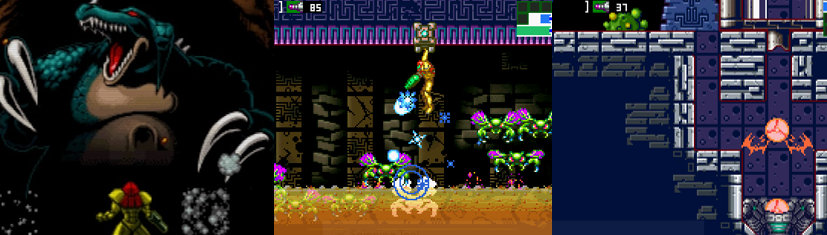
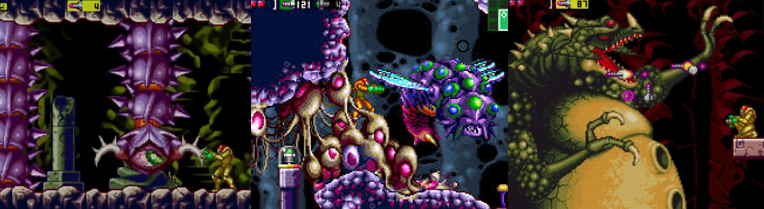
Those familiar with Metroid may also be surprised to find a few new enemies here: the hopping Barisutes act almost as mini bosses with their tough armour plated hides, larva-like Kiru Giru fill narrow tunnels and must be baited in to attack their underside with bombs (or shot from below), and Space Pirates shrug off even your strongest missiles. These appear alongside improved versions of the original enemies and Samus will have to hunt down, freeze, and explode every energy-draining Metroid in Tourian if she hopes to escape. Zero Mission also boasts five new bosses in the main portion of the game: two of these are gigantic, spiked, worm-like creatures that burst through the environment or up through acid, lunging at Samus and firing spores or spikes. The first, the Deorem, uses its spiked body to box you in and must be shot in its eye when it appears. The second, the Mua, lunges from an acid pit, giving you a small window to target its pulsating weak spot. Norfair itself later attacks by ensnaring a Kiru Giru in vines and unleashing spores. You must freeze the Rippers in the arena to hop to and attack the vines to send the enslaved creature crashing down. This monster lands in Ridley’s Lair, sheds its skin, and mutates into a grotesque wasp, the Imago, that flies around its nest, charging about and firing spikes from its stinger. You must use yourself as bait and then pelt the stinger with missiles to finally end it. Metroid’s classic bosses also appear in their respective areas, but they’re now reimagined duplicates of Super Metroid. Kraid is a gigantic, bulbous beast you must shoot in the head and mouth while hopping to temporary platforms, while Ridley flies about breathing fire, striking with his spiked tail, and trying to get his claws on you. Samus still braves a nightmare of projectiles and lava hazards when confronting Mother Brain, whose glass case must be shattered with missiles before you can attack her single eye, but her eye blast and the knockback from the swarming projectiles makes this a tricky affair.

A tense stealth section and all-new bosses await in the extended finale.

After making a desperate escape from Zebes, Samus’s ship is attacked and crash lands in the all-new Chozodia sector. Robbed of her armour and abilities, Samus has only her form-fitting Zero Suit and a crappy pistol on hand, meaning players must sneak past Space Pirates, laser traps, and spotlights, desperately running to safety when they inevitably trigger the alarm and only being able to briefly stun enemies. This is quite a tense and frustrating section; when you’re spotted, an alarm sounds, all doors lock, and Space Pirates chase you relentlessly. You can hide behind pillars or in dark corners, but it can be tough to find these when you’re in a panic and the Space Pirates sometime crawl through alternate paths or blast through destructible blocks to find you. Eventually, Samus makes it to the main bridges and the Chozo Ruins, where her mettle is tested by a holographic, lighting-casting projection. Make sure you don’t attack when the mirror of Samus is in the sphere as you’ll take damage. Instead, target the central sphere when images appear and you’ll regain all your abilities, and more. Previously, you’ll have explored different Chozo Ruins and acquired “unknown items” that were incompatible with your suit; these are enabled here. This allows you to plough through Space Pirates with ease with the Plasma Beam, continuously jump with finnicky Space Jump, and freely move through liquid with the Gravity Suit. You’ll also acquire the Power Bombs here and it’s advisable to backtrack to use these new abilities to uncover previously hidden expansions to your health and ammo. When you’re ready, you challenge Mecha Ridley which, though intimidating and powerful, is actually a pretty anti-climactic final boss. You can simply jump over its claw swipes, fireballs, and lasers and pummel the glowing core on its chest to defeat it with much less trouble than its biological counterpart. Samus then has five minutes to make it to an escape shuttle to finish the game, and players are of course treated to different ending images depending on how fast they made it to the end and how many power-ups they acquired. Completing the game also unlocks an additional gallery mode and, impressively, a fully playable port of the original Metroid.

The Summary:
Given I much prefer Samus’s 16-bit adventures to her original game, I was pleasantly surprised by Metroid: Zero Mission. The game is similar enough, but different, featuring a far more visually appealing graphical style that perfectly matches its 16-bit counterparts and updates the original game to be comparable to its successors. If anything, I feel like more could’ve been changed; the Chozodia was a fun addition, but it was more of an unexpectedly epilogue that served as padding. Perhaps if each area featured stealth sections where Samus was reduced to her Zero Suit as part of a Chozo test it might’ve helped with the game’s pacing. The new bosses could’ve been fought at the end of these sections, with the “unknown item” power-ups being rewarded and allowing Samus to get progressively more powerful, as usual. It was a tense and surprising inclusion, though, one that fundamentally changed how you play. I just wonder if more could’ve been done with it, perhaps allowing players to try the whole game with the Zero Suit? The other changes were very welcome (except for the Spineshark; I’ll never enjoy that ability), especially to the returning bosses. Sure, seasoned Metroid players will have a distinct advantage but recreating the Super Metroid battles made these bosses far more intimidating and epic. It’s a shame Samus didn’t get any new abilities beyond the standard Super Metroid ones, which again I feel could’ve been addressed by emphasising the Zero Suit more, but Zero Mission does a fantastic job of bringing the original Metroid up to par with its successors. As if that isn’t enough, you unlock the original game, so anyone who doesn’t like the changes can just play the original game after!

My Rating:

Rating: 3 out of 5.

Pretty Good

Have you ever played Metroid: Zero Mission? How do you think it compares to the original game? Did you like the graphical upgrade and the changes to the bosses? What did you think to the Chozodia section, and do you agree the pacing was a little off? Did you ever get the best ending and play through the original Metroid? Which Metroid game is your favourite? Whatever your thoughts, feel free to leave a comment below and be sure to check out my other Metroid reviews.

Game Corner [Sci-Fanuary]: Metroid Fusion (Nintendo Switch)


January celebrates two notable dates in science-fiction history, “National Science Fiction Day” on January 2 and Arthur C. Clarke’s HAL 9000’s birthday on January 12. Accordingly, I’m dedicating January to celebrating sci-fi with an event I call “Sci-Fanuary”.


Released: 8 March 2023
Originally Released: 18 November 2002
Developer: Nintendo R&D1
Also Available For: Game Boy Advance (Original); Nintendo 3DS, and Nintendo Wii (Virtual Console)

The Background:
Nintendo introduced gamers to Samus Aran in August 1986. Her debut title was celebrated for its challenging gameplay, is now regarded as one of the greatest games ever, and helped popularise the action/explorationMetroidvania” subgenre. Nintendo followed Metroid with the Game Boy-exclusive Metroid II: Return of Samus (Nintendo R&D1, 1994), a contentious and divisive title whose narrative nevertheless directly influenced Samus’s jump to Nintendo’s ground-breaking 16-bit console. After two years in development, Super Metroid (Nintendo R&D1/Intelligent Systems, 1994) was universally praised for its impressive visuals and tight gameplay, becoming a must-have title for any Super Nintendo owner. Despite this, it would take over ten years for Samus to receive another solo title, with the first footage of “Metroid IV” being shown at the 2001 E3 convention. The team behind Super Metroid returned for Metroid Fusion, introducing a mission-based structure to the gameplay to guide players towards objectives rather than them having to figure things out blindly as before. The developers also took the opportunity to revamp Samus’s appearance and the way she replenished her health and missiles, as well as simplify the controls compared to Super Metroid. Like Super Metroid, Metroid Fusion received critical acclaim; the gameplay, graphics, and mechanics were praised, though many were disappointed by its short length. While Metroid ventured into the 3D arena after Fusion, a sequel came less than ten years later, and the game eventually became available outside the Game Boy Advance (albeit digitally) as Nintendo branched out into virtual consoles.

The Plot:
While exploring planet SR388, bounty hunter Samus Aran is attacked by the parasitic “X” organisms. Though saved by a Metroid-based vaccine, Samus is physically altered. Despite this, she investigates a Biologic Space Laboratories (BSL) space station overrun by the X, now led by “SA-X”, an X parasite mimicking Samus at full power!

Gameplay and Power-Ups:
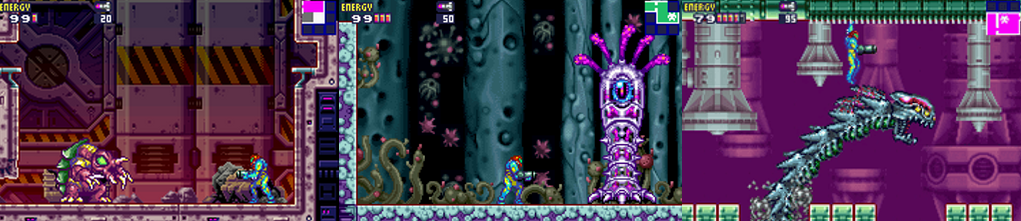
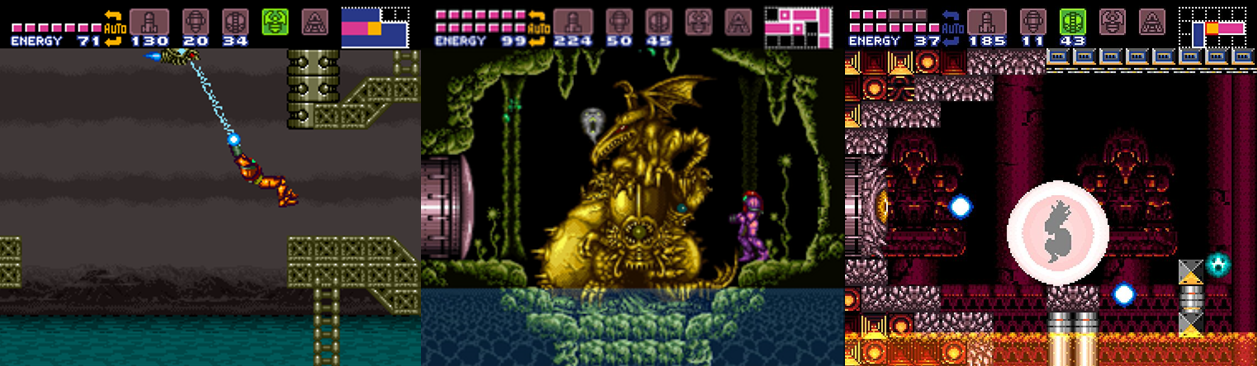
Metroid Fusion is a 2D, action-orientated exploration title that takes a lot of inspiration from Super Metroid. As in that game, you (as Samus Aran) will be exploring a vast space station home to numerous elevators and hidden tunnels to various high-tech laboratories, caverns, flooded and lava-filled areas, and other regions, all infested by the X parasite. This time around, Samus’s abilities are restricted by her superiors, represented by a station computer that gives the player objectives, points you in the right direction, and offers advice about how to tackle each area. In this regard, Metroid Fusion is the most linear Metroid game so far; the station computer warns you of nearby hazards, says what weapon or upgrade you need to overcome them, and highlights your objective on the game’s map screen. That’s not to say you won’t be backtracking and searching high and low for secret passages and hidden power-ups, but it definitely helps to have an in-game system guiding you along. This, in conjunction with the helpful mini map and the larger full map (accessed with the + button), means it’s easier than ever to navigate the station’s different environments, at least at the start of the game. The + menu also allows you to review Samus’s current suit, abilities, and weapons, refresh yourself on your current objective, and enter sleep mode if you ever need a break. As always, Samus can only save at designated Save Stations (though you can make liberal use of the Switch’s save state and rewind feature to compensate for this) and she can replenish her health, and missile and bomb ammo, at various Recharge Stations. Defeated enemies will also replenish these, but things are a little different this time around. When defeated, enemies release an X parasite that must be collected to refill your health or ammo. If you linger too long, it’ll spawn another enemy, or a tougher variant, adding a level of anxiety that was missing from the previous games.

All of Samus’s abilities return, though she’s strangely light on new tricks.

Samus’s abilities are limited at the start of the game, narratively explained by her being fragile following her encounter with the X. To begin with, you can fire her trademark arm cannon with B or Y, holding the button to charge it and aiming in all directions. A allows her to jump, and she’ll jump higher the longer you hold the button, and you can enable precision aiming while holding down the Left trigger. As you explore the game’s locations and defeat bosses, you’ll gradually regain all her signature abilities. Samus will gain missile upgrades that deal additional damage, open different doors, and even freeze enemies, eventually allowing you to charge up a wider shot by holding the R trigger. She can also morph into a spherical ball to pass through vents and narrow tunnels, eventually dropping bombs and hopping to higher tunnels. Her arm cannon can be upgraded to increase her rate of fire and pass through enemies and walls, shredding enemies who normally take multiple shots to defeat. Her jumping ability can also be enhanced, allowing her to jump higher and continuously and adding her signature “Screw Attack”, though abilities like the Space Jump can be difficult to master due to the finnicky timing required to sustain her jumps. This is equally true of Samus’s aggravating wall jump, which is just as frustrating as in Super Metroid, though thankfully I found it wasn’t necessary to clear the game. Samus’s suit can also be upgraded to withstand extreme temperatures, allowing her to enter frozen areas, freely move through water, and even endure lava. While Samus’s suit will change with each upgrade, she doesn’t showcase anything new her with two exceptions: Samus can grab ledges, making platforming and entering tunnels much easier, and absorbs the different coloured X parasites to refill health and ammo. However, her maximum health, missile, and bomb count can still be expanded by searching around. While you’re told how to use all these abilities and the map even highlights when there’s something in each area, you’ll get no direction on how to use her wall jump or her “Shinespark” ability. The Speed Boster lets Samus crash through certain blocks, but you can press down when she’s at full speed to store that energy and then direct her to smash through higher blocks, which I found extremely aggravating and difficult. I still don’t know why simply jumping while running and pressing A at a wall isn’t enough to pull off these manoeuvres.

Activate consoles, clear areas of hazards, and stay far away from the SA-X!

The level layout of Metroid Fusion again owes a lot to Super Metroid, with long vertical shafts, bio-organic areas, and ominous facilities being the order of the day. Puzzles are generally solved using Samus’s abilities; you can uncover destructible blocks by blasting the environment or laying a Power Bomb, though sometimes you need to find an alternative route to access them. Lifts, doors and tunnels will take you to new areas, with the game’s bosses often wrecking the environment and forcing you to take a longer path around blockades or hazards. Samus will be constantly searching for Data Rooms, Navigation Rooms, security consoles, and the like to discover her objective, restore power to an area, or unlock coloured doors. Sometimes, these will remove obstacles such as water or encroaching darkness from an area, though her suit upgrades often circumvent these. Sometimes, you’ll need to drop Power Bombs to break open tubes; often, you’ll be climbing ladders or clinging to overhead rails; occasionally you have to race against a timer to solve overloads or escape areas; and you can again freeze enemies to make temporary platforms. Enemies respawn after you leave a screen, as ever, but the unique X parasites revive corpses or spawn new enemies while you’re on the screen. Some doors are barricaded by disgusting, energy-shooting eye growths that need to be destroyed, some blocks and platforms crumble under your feet, and some areas are veritable mazes that have their pathways hidden within the foreground. Easily the biggest edition to the game is the nigh-unstoppable SA-X, a twisted doppelgänger of Samus that occasionally stalks the corridors or wrecks the background. When the SA-X appears, take the computer’s advice and stay out of sight or run as it can drain your health in seconds with its advanced abilities. On the few occasions when you’re chased by the SA-X, you can use your Ice Missiles to (very) briefly freeze it, adding a great deal of tension to the game in these instances.

Presentation:
Visually, the game also owes a lot to Super Metroid and its Aliens (Cameron, 1986) inspirations. The BSL space station is ominously empty, often devoid of music, and home to a huge docking bay (where Samus’s ship is parked), a series of large ventilation shafts, and elevators that take you to the station’s other areas. As you progress, you’ll return here a few times and explore new areas, such as the Sub-Zero Containment area that houses Ridley’s frozen husk, a teeming Habitation Deck (where Samus frees the friendly Dachoras and Etecoons from confinement), and the sprawling Reactor Silo, with Samus exploring each to tackle various issues with the space station. There are six “Sectors” to explore, all accessed by a main elevator system (though you can take alternative paths when this system fails or is inaccessible) and each with new areas to uncover as you expand Samus’s repertoire. You won’t explore these in numerical order, and you’ll also have to backtrack to them both as part of the story and to find all of Samus’s upgrades and power-ups. Sector 1 is a cavernous area, featuring rocky platforms spotted with vegetation, not unlike SR388, where Samus initially has to find and destroy atmospheric stabilisers to dispel the mist filling the area. Later, she ventures into mechanical hallways similar to Tourian, discovers Metroid husks in lava-filled caves, and battles Neo-Ripley in a large, cargo hold-like room. Sector 2 is like a Mayan temple, full of ancient ruins completely overtaken by foliage. Plants, vines, and flowers swarm the environment, creating a jungle-like feel and masking pathways, and these are married with a coral reef-like subsection. Sector 3 is both a sweltering laboratory and an arid desert, featuring a desolate, muddy aesthetic and a baking boiler room that threatens to destroy the entire station.

The surprisingly chatty Samus visits some interesting, if familiar, locations.

Sector 4 is basically an aquarium; it features a blue theme, lots of water, exposed power nodes that’ll sap your health, and beautifully detailed underwater sections full of anemones and a tranquil water effect. Sector 5 is a frozen laboratory filled with glass panels in the background and that’s eventually wrecked when an X-infused creature, the Nightmare, escapes captivity. Sector 6 is another cavern, but this time dank and dark, save for areas sporting vivid mushrooms. It’s also home to a restricted laboratory; Samus needs a beam upgrade to enter, where she’ll find various Metroids held captive. These are then unleashed when the SA-X arrives and blasts the environment, forcing Samus to make a desperate escape up a shaft while avoiding the panicked jellyfish. The SA-X and other bosses are prone to affecting the game’s environments; they’ll crash through walls, block off doors, and seal off some areas, forcing you to either escape, find alternative paths, or battle them in enclosed areas. Metroid Fusion focuses on story more than any previous game, featuring lovely cutscenes at the start and at various points throughout the story that showcase the SA-X’s power and Samus’s reaction to the events happening around her. This is further reinforced through various cutaways that detail Samus’s inner thoughts as she thinks of her former commander and ponders her newfound physiology. The game’s soundtrack is a further extension of Super Metroid; remixes of classic Metroid themes are featured, as are ambient sounds and suitably ominous tracks, but nothing really stood out to me as particularly new or memorable. Everything looks and sounds and plays really well, but the game owes so much to Super Metroid that it almost feels like a remake at times. I would’ve liked to see more variety in the locations and more effort put into the soundtrack, rather than playing it so safe.

Enemies and Bosses:
The BSL space station and its six Sectors and various areas are teeming with all kinds of alien lifeforms that are all hostile to some degree thanks to the X. The theme here is bugs and vegetation, as every enemy is some kind of insect or mollusc or plant-life turned monstrous, with only a few exceptions. We’ve got scuttling bug-like Gemmers, slug-like Choots that spring up from the ground and lazily float down, crab-like Dessgeegas that jump at you sideways, weird coloured balls floating around pumping out toxic gas, the Xenomorph-like Genesis creatures pouncing from above and below, and the armoured Gerubus crabs that need missiles to be dispatched. Piranha-like fish, tiny snails, and even zombified corpses are all infected by the X and, occasionally, stronger versions will be spawned upon defeat or you’ll need to defeat enemies a certain way to open up doors. Some enemies will be more than familiar to players of Super Metroid: the crustacean-like Evirs swim about firing projectiles from their tails, worm-like Funes snap at you from walls, and the Space Pirates even make an appearance. Kind of. The Zebesians are functionally the same, clambering up walls, firing shots from their claws, and even resisting your shots unless you charge up a beam or blast them from behind with missiles. Each defeated enemy releases an X parasite that must be collected, but you’ll also encounter blue X parasites that damage you until you upgrade your suit. Metroids also make a brief appearance, though they’re more of an annoyance than a threat as they simply knock you back rather than causing damage.

The X parasites assume some monstrous forms to keep you from your full arsenal.

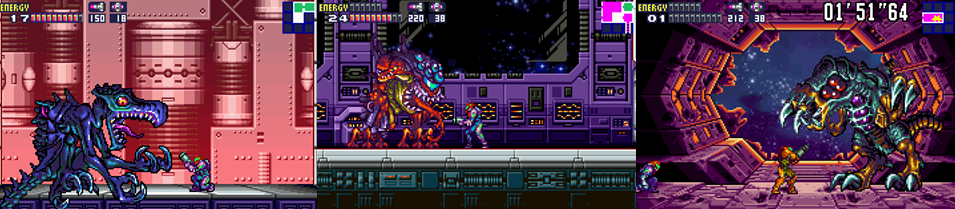
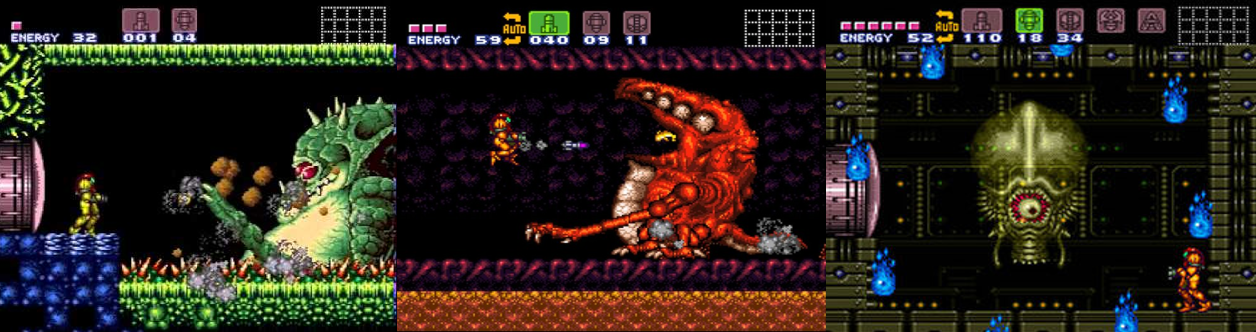
There are twelve bosses to battle in Metroid Fusion, though one is encountered twice. Many of the bosses will not only be familiar to Super Metroid players but are simply super-powered X parasites. Defeating them reveals their true form, the eye-like Core X, which floats around firing lasers or protecting itself with spikes or electricity. Defeating this restores your health and ammo and bestows a new ability, but their inclusion essentially means every boss fight is a two-stage affair. The first you encounter, the Arachnus X, is an armadillo-like creature that stomps around, rolls at you, slashes with its pinchers, or unleashes an energy wave attack. Luckily, there are small tunnels you can retreat into to avoid these, though you’ll need to be wary of its widespread fireball attack, and it’s only vulnerable from the front and to your missiles. Next, you’ll battle the weird, plant-like Zazabi X, a strange jellyfish-like tentacle that hops around and tries to squash you. While it’s overhead, you can shoot up to bombard it with missiles but be sure to move as it saps your energy if it envelops you. Serris X presents quite the challenge. This serpentine beast bursts from the ground and circles the screen, taking up a lot of real estate and getting faster the more damage you deal to its head. You’ll then have your first encounter with the Security Robot B.O.X., a crab-like walker that charges you and spits bombs that spew fire plumes. Luckily, there’s a rail overhead you can grab to fire missiles into its opening from above, which eventually causes it to flee. When you battle it again later, these overhead rails are essential to avoid the electrified water in the arena, and it now sports a missile barrage in its arsenal!

Gigantic, disgusting bosses will test you patience and skill.

Since you get a lot of experience battling Core X’s, targeting their eyes and dodging them as they float about, the Barrier Core X doesn’t pose much of a problem beyond being bigger, surrounded by smaller variants, and retreating to the water. The giant spider, Gedo X, is much more formidable; if this thing gets you in its mandibles, you’re in for a bad time! Luckily, you can retreat to the corners of the cargo bay in your Morph Ball to leave it bouncing around aimlessly. Gedo X also spits a spew of fireballs you’ll need to avoid and eventually starts dropping garbage on you, so you’ll need to dodge this as well as you frantically target its head with Super Missiles. Plant Core X reminded me of the Mother Brain battles from the first two games. This tangled mess of vines and thorns has infested a Chozo Statue and is protected by spore-spitting flowers and carnivorous plants. Pieces of the boss fall off and become hazards as you pepper it with Super Missiles and, while the spores eventually stop, the creature rears to life and blasts you with Plasma Beams! Like SA-X, Nightmare X’s threat is foreshadowed as soon as you venture into Sector 5 and see its shadow flying about it. Later, it wrecks the area and you’re forced to confront it, where it’s revealed to be this gigantic, bio-mechanical…thing that takes up most of the screen! Nightmare X hovers around erratically, fires a barrage of lasers from its arm/wing/things, and is only vulnerable to Super Missiles and the Charge Beam, and only in its mewling face. You must lure it to one side of the room and clamber up the ladders to attack it, marvelling as its face bleeds and degenerates as it takes damage, but your missiles will be useless when it engages it gravity-warping abilities so make sure to switch to the Charge Beam.

Some familiar faces, a formidable doppelgänger, and a ghastly Metroid beast await in the finale.

After a tense, manic escape from the Restricted Zone that sees you blast the SA-X into space, you’ll come face-to-face with an X masquerading as Samus’s archenemy, Ridley. Another gigantic sprite, Ridley flies about the place and charges at you, testing your reaction time and agility. It also breathes fire and tries to grab you. While this drains your energy, you can pummel it with Super Missiles to deal big damage, though it’s also recommended to use the Charge Beam. Eventually, the shrieking creature crumbles and you defeat one more Core X before finally facing SA-X. This X is a perfect copy of Samus in her classic suit and with all her abilities; it pops up throughout the game searching for you or chasing you down, decimating you with its Screw Attack and Ice Beam. You can finally settle the score in this fight but the SA-X is fast and powerful and you can only damage it with a fully charged Plasma Beam. Your Ice Missiles briefly freeze it but the window of opportunity is very small so be ready to Screw Attack to safety. After enough hits, it mutates into a monstrous form, one much easier as it simply tries to crush you, but it surprisingly saves you in the final fight when it sacrifices itself to empower you in the battle against the Omega Metroid. This gargantuan, insectile, alien monstrosity rips through the docking bay and is fought against a time limit. Initially, it’s invulnerable, but the SA-X’s Ice Beam lets you to damage it. However, you need to hit hard and fast and escape to safety. If its slashes land, you’ll be stun locked and killed in seconds or waste valuable time, so rush in, blast its head, and quickly retreat to end it. With the timer ticking down and the Omega Metroid’s huge hit box, this can be a frustrating test of patience and sadly lacks much strategy beyond shooting and retreating.

Additional Features:
Scattered all around the space station and its Sectors are numerous power-ups that will increase your maximum health and the number of missiles and Power Bombs you can carry. These are invaluable as the game progresses and tougher enemies and specialised hidden blocks become more prominent. You’ll gain all of Samus’s weapon and suit upgrades by defeating bosses, Core Xs, or from the odd Chozo Statue, so you don’t have to worry about missing anything. Maps are automatically provided when you interact with the Navigation Room or activate consoles as well, and as ever you can utilise the Nintendo Switch’s save state and rewind feature to drastically reduce the game’s difficulty. You get three save slots with Metroid Fusion and each one tracks your completion percentage, which is tied to how many power-ups you’ve found as well as how quickly you’ve played through the game. These factors also impact the ending you get upon finishing the game, with five on offer in the North American and European versions and eleven in the Japanese version, ranging from seeing Samus pose in her suit to showing off her form-fitting blue suit. If this is incentive enough for you to challenge the game again and finish it faster, then by all means go ahead, but there is nothing else on offer here, which is a bit of a shame as it would’ve been nice to see an SA-X skin or Samus’s blue suit form unlocked.

The Summary:
Although I’ve played a few Metroid games now, I still feel unaccustomed to the franchise. Nostalgia and a longing for Super Nintendo games means Super Metroid is probably my favourite of the series, so I was naturally very pleased with Metroid Fusion. As mentioned, the game has so much in common with Super Metroid that it’s basically a remake, with Samus’s abilities copied wholesale alongside many familiar locations and bosses. I didn’t expect the call-backs to Metroid II though, that was pretty neat, and I enjoyed seeing the game’s environments change as you explore the space station. There’s always something happening, be it an overload or a power drain or an escaped monster, and it’s a fun reason to backtrack and try out Samus’s new abilities. Pitting you against a ticking clock was a great way to break up the action, and adding an element of danger to defeating enemies with the X parasites was a neat touch, too. I also enjoyed the threat of the SA-X; this formidable double increases the tension and causes nothing but trouble throughout your adventure. Unfortunately, I don’t think it was utilised enough. There were some areas where the SA-X was entirely absent, and I think running from it, sneaking around it, or engaging with it multiple times would’ve helped the game stand out more from Super Metroid. Like, one of Samus’s power-ups could’ve been left lying in the open and be stolen by the SA-X and maybe you have to sneak around to retrieve it. Or you’d see it in the background or something. I would’ve liked to see more done to each area, too, to properly embrace each theme. All of them share similar high-tech features, just with different colours, which was a bit disappointing. Still, I imagine this was a great Metroid experience upon release as Super Metroid wasn’t available on the go like it is now and it still holds up really well as a companion piece to Super Metroid that does just enough to make it unique.

My Rating:

Rating: 4 out of 5.

Great Stuff

Did you enjoy Metroid Fusion? Did you like how similar it was to Super Metroid or would you have liked to see it stand out a bit more? What did you think to the SA-X and do you think more could have been done with the concept? Which of the areas was your favourite? Did you ever achieve 100% completion and Samus’s true form? Which Metroid game is your favourite? Whatever your thoughts, feel free to leave a comment below, and be sure to check out my other Metroid reviews across the site.

Game Corner [Sci-Fanuary]: Metroid Prime Remastered (Nintendo Switch)


January sees the celebration of two notable dates in science-fiction history, with January 2 christened “National Science Fiction Day” to coincide with the birth date of the world renowned sci-fi writer Isaac Asimov, and HAL 9000, the sophisticated artificial intelligence of Arthur C. Clarke’s seminal 2001: A Space Odyssey (1968), being created on 12 January.


Released: 8 February 2023
Originally Released: 18 November 2002
Developer: Retro Studios, Iron Galaxy Studios, et al
Original Developer: Retro Studios
Also Available For: GameCube, Nintendo Wii, Nintendo Wii U

The Background:
In August 1986, Nintendo introduced gamers to Samus Aran, the kick-ass bounty hunter protagonist of their Metroid series (Various, 1986 to present). Praised for its challenging gameplay and eventually lauded as one of the greatest games ever, Metroid helped popularise the “Metroidvania” sub-genre. Following the largely divisive Game Boy-exclusive sequel, Metroid made a universally acclaimed comeback on Nintendo’s ground-breaking 16-bit console and then strangely disappeared for over ten years save for being represented in the Super Smash Bros. franchise (Various, 1999 to present) despite rumours of a Nintendo 64 title. In 2000, legendary videogame producer Shigeru Miyamoto visited Retro Studios and, impressed by their first-person shooter engine, tasked them with creating a new Metroid title for the GameCube, which Retro Studios developer John Whitmore believed was due to Miyamoto not caring if the game succeeded or not. Still, the developers threw themselves into the task, working up to 100 hours a week to transition the Metroid formula to a 3D shooter as Miyamoto desired. The developers aimed to make exploration fun, putting more emphasis on challenging boss battles so as not to deter players from wanting to explore, though time constraints saw certain series staples cut from the title. Upon release, Metroid Prime became one of the best-selling GameCube games and was universally praised for its detailed environments, engaging atmosphere, and complex level design. It was followed by two equally successful sequels, making a highly regarded trilogy that breathed new life into the long-dormant franchise, but was stuck on obsolete hardware for over twenty years before this highly praised and successful remastered version was released for the Nintendo Switch in 2023.

The Plot:
After intercepting a distress call, bounty hunter Samus Aran is attacked by Meta Ridley and crash-lands on Tallon IV, whose Chozo inhabitants have been eradicated by an infestation of Phazon, a substance that Ridley’s Space Pirates seek to control to breed more powerful and aggressive Metroids.

Gameplay:
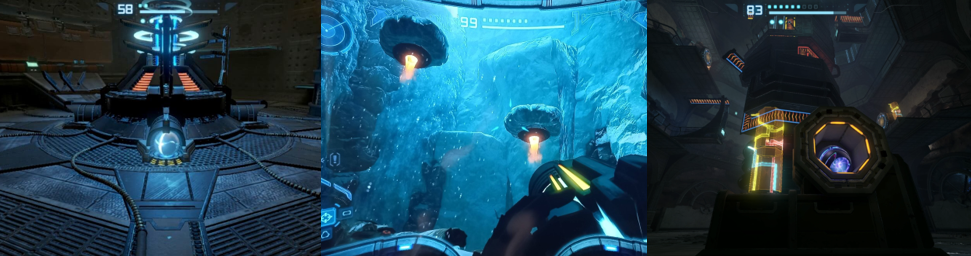
Metroid Prime Remastered is a first-person shooter in which players take on a far more intimate role as the famous bounty hunter, Samus Aran, and explore the various futuristic hallways, Phazon mines, frigid cliffs, and lava-hot caves of Tallon IV. Essentially a 3D, first-person remake of Super Metroid, including many of the same mechanics and elements of that classic 2D adventure, Metroid Prime Remastered emphasises exploration and backtracking as much as varied, frantic gun combat and will have you jumping, rolling, and scanning high and low for new upgrades and ways to progress.The game offers a variety of settings to fine-tune and tailor your experience, from removing Samus’s helmet display, to customising the heads-up display, to choosing different control styles to recreate the original Wii experience, if that’s your jam. Like Super Metroid, Samus begins the game with her full arsenal and abilities, but these are lost after Meta Ridley’s attack, and you’ll have to reacquire them (and more) on your journey. However, you still have your trusty arm cannon, which lets you lock onto enemies with ZR and blast them with A or ZR (charging up a shot for additional damage). Samus can also jump with B or the L trigger, eventually learning a double jump technique, or squeeze through tight gaps by turning into a ball with Y, switching the camera to a third-person perspective in the process. While in your Morph Ball form, you can also hop, drop bombs, and eventually attach yourself to magnetised rails with the Spider Ball upgrade.

Samus’s various beams and visors are crucial to battling and navigating through Tallon IV.

Samus can also upgrade her arm cannon to fire various additional blasts, missiles, and streams of elemental energy; these are required to open certain doors, destroy certain objects, and defeat certain enemies, all of which are usually colour-coded so you know which weapon to switch to using the X button in conjunction with the directional pad (D-pad). Samus can fire regular missiles and, eventually, unleash a barrage of Super Missiles in addition to a flamethrower, freezing stream, and a burst of electrical energy, all of which require missile ammo to utilise. Thankfully, defeated enemies and destroyed crates will drop orbs to replenish your health and ammo for these weapons, both of which can also be upgraded to increase your maximum health and ammo capacity. Samus also has a high-tech visor that allows her to scan her enemies and the environment, adding them to her Log Book (essentially unlocking character models and other goodies in the ‘Extras’ menu) to help you combat enemies or traverse the environment. Later, Samus acquires upgrades to her visor that allow her to see in infrared and utilise an x-ray vision, exposing hidden platforms and heat signatures to find new paths. You can switch between these with the D-pad, a system I found rather cumbersome as there was a noticeable delay when switching visions and I often accidentally changed my vision when I was trying to change my weapon, temporarily disorientating and blinding me. Samus’s abilities only increase as you explore, adding a grapple beam to her arsenal that allows you to swing across gaps with ZL when prompted, drop more powerful bombs to open new passageways, and freely move when underwater or survive the intense heat put out by the Magmoor Caverns and Phazon Mines.

You’ll need the Morph Ball and the intricate 3D map to properly explore your enviroment.

Samus’s helmet also comes equipped with a radar to highlight nearby threats and a 3D mini map, which you can expand by finding various Map Stations in each area. This allows you to view and rotate the complete 3D map from the + pause screen, where you can also read up on your weapons, abilities, and review your in-game progress. The map can also be a bit cumbersome to navigate; there’s no onscreen compass pointing you to your next objective, no way to set waypoints, and no fast travel system, so you’ll need to constantly pause and review the map to find your way to where you need to go. Tallon IV has many lifts to its various locations, some of which need activating with your visor and others which require upgrades to access, all of which are easily identifiable on the map even if finding the exact route can be difficult. Unfortunately, despite being a modern version of the game, Metroid Prime Remastered still utilises an archaic manual save system; you’ll only be able to save at specific Save Sections, which will also restore your health, so you’ll have to proceed with caution lest you die and have to reload from a save point some ways back. Finally, missile charging stations will fully replenish your missile ammunition and you’ll get regular updates on planetary disturbances that point you towards where you’re supposed to go next. Naturally, as a Metroid title, Metroid Prime Remastered involves a great deal of backtracking; you’ll revisit the same areas many times over, with new sections opening up the more you upgrade Samus’s abilities and new, tougher enemies popping up in previous sections. This means you’ll quickly become accustomed to Tallon IV’s various areas, but also means slogging through the same pitch-black, underwater, or aggravating maze-like sections multiple times thanks to a lack of a fast travel system.

Exploration, platforming, and puzzle solving are as important as the gun combat.

Initially, Metroid Prime Remastered has two difficulty settings (“Casual” and “Normal”) with a third “Hard” mode unlocked after your first playthrough on either setting, but the game gets progressively difficult as you play. In addition to the tougher enemies spawning in across the planet, you’ll contend with a variety of hazards, from acid pits, flame bursts, auto turrets, and radioactive Phazon. The more abilities you possess, the more options become available to you to solve puzzles and open new areas; this can mean charging up Morph Ball spinners, destroying coloured lights or defeating all enemies in an area to unlock doors, hacking laser cannons or blowing up obstructions with your more powerful bombs, hopping and dropping to magnetic rails, activating switches and lifts, and taking claustrophobic tunnels in your Morph Ball form. In these 2.5D sections, you’ll need to drop bombs to destroy obstructions or hop to higher platforms, use the boost ability to awkwardly gain enough momentum to fling yourself higher, or dodge pistons and temporary surfaces. Samus will also explore murky underwater areas, hop to a variety of platforms (some of which must be created by blasting stalactites or large, rock-like enemies), melting ice, and charging up electrical nodes to power up doors. Although you’re free to explore at your leisure, your way will inevitably be barred if you don’t have the right equipment, which can be frustrating; it’s doubly difficult remembering these areas when you do have the right equipment, especially as areas can change between visits, seeping them in darkness, flooding them, or spawning in tougher enemies. Compounding matters is the fact that enemies respawn each time you leave and enter an area or save, the need to switch between your visor and weapons quickly to take out groups of enemies, and annoying puzzles that have you blasting runic symbols, activating Morph Ball ports, and rotating magnetic paths to progress.

Graphics and Sound:
Graphically, Metroid Prime Remastered is very impressive; I’ve never played the Metroid Prime games before and am always a bit wary of first-person shooters, but the game looks amazing, including some striking atmospheric effects to add to the immersion. Samus’s visor mists up, rain splatters against it, her reflection appears when lightning flashes, and you’ll hear here grunt in pain whenever she takes damage. Although many of the environments can become stale, especially those set in futuristic labs or comprised of metallic hallways and rooms, Tallon IV is a very diverse alien world, including rainswept ruins, dark caverns, frigid cliffs, and volcanic caves. Each area is connected to each other by a series of lifts, meaning you’ll have to pass through the Chozo Ruins to reach the Magmoor Caverns to access the Phendrana Drifts and explore a submerged ship to reach the fungus-infested Phazon Mines. Environmental hazards are rife in each area, as are the relics of the Chozo civilisation, with statues and runes left behind to guide you as much as the literal ghosts of the past appear to test you. As you upgrade your abilities, you’ll be able to access new areas of each environment, traversing tunnels, platforms, and Space Pirate facilities built into each. Here, you’ll find computer stations and biological experiments housed in glass chambers that will break free to attack you.

The game looks incredible, with some diverse environments and impressive graphical touches.

Although you rarely see Samus in full form, she appears sporadically as you play and in cutscenes; here, she’s entirely mute, dictating her intentions through her body language and leaving the bulk of the game’s story to be told through the optional narration and various texts you scan and log throughout the game. It’s a bit of a shame as Samus looks great; she’s sleek, powerful, and sexy and her suit noticeably changes as you acquire upgrades, but you will see her adopting various poses as you switch weapons or stay stationary. Enemies also exude a lot of menace and personality, particularly Meta Ridley and the squealing, annoying Metroids that fly at your face and drain your energy. Still, the very nature of the first-person perspective means the graphical emphasis is on the environments, which all do a fantastic job of recreating and updating similar elemental and runic areas from Super Metroid. You’ll be hopping across crumbling, frozen buildings, decaying walkways, and traversing pitch-black, luminous caverns with your thermal vision, to say nothing of exploring the dank depths and accessing new (or secret) paths by utilising your abilities in unique ways. Metroid Prime Remastered also features an immersive soundtrack; not only are some classic Metroid tracks included and updated to keep the adrenaline up when enemies and bosses appear, but the game also makes great use of silence and ambient sounds to build tenson or establish a sense of calm following a frantic gunfight.

Enemies and Bosses:
Tallon IV is home to several insectile enemies that will chip away at your energy or exist primarily to annoy you or be farmed for health and ammo; wasp-like bugs, swarms of insects, plant-like enemies, and literal balls of plasma are commonplace, with even some of the smaller enemies being impervious to your standard cannon and requiring upgrades to finally take them out. Some, like the Reaper Vines, are virtually indestructible and simply disappear for a bit before whipping back out at you; others, like the Stone Toads, exited solely to aggravate you as you struggle to build enough momentum to reach higher levels. Some enemies, like the Baby Sheegoths, Jelzaps, and Plated Beetles are heavily armoured and can only be damaged from behind or when they expose their weak spots; others, like the various burrowing insects and the dragon-like Magmoor, burst up from the ground, ice, or lava to attack you. As you progress, you’ll encounter several different Space Pirates (known as “Troopers”); these slash at you up close or fire at you from a distance and come in different colours, rendering them weak to your different cannons but also allowing them to appear invisible, cling to ceilings and walls, and afford them greater mobility in the air and underwater thanks to their jetpacks. By far the worst and most annoying regular enemies are the Chozo Ghosts (which do become easier once you gain additional visors, but the reduced visibility meant I often just ran past them) and the various Metroids. These jelly-like bastards attach themselves to you to drain your energy, can multiply when damaged, and even take on coloured forms to force you to switch weapons and appear in more aggressive octopus-like variants. They can also absorb a great deal of damage, meaning it’s often easier just to try and avoid them and rush to the exit.

The game’s monstrous bosses require a bit of strategy to bring them down.

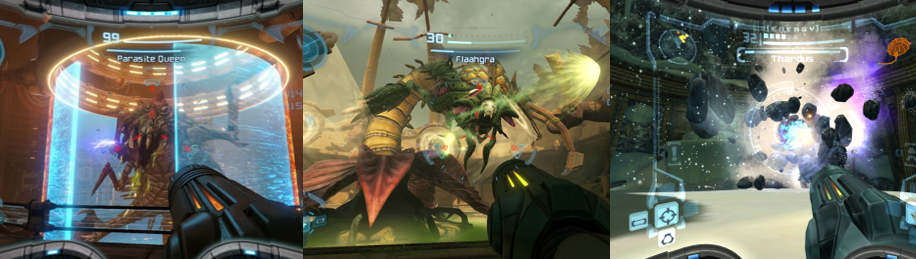
Samus will have to overcome some monstrous alien enemies to rid Tallon IV of the Space Pirates’ influence, only one of which I recognise from the previous games, that being recurring antagonist Ridley. The game begins with Samus exploring the Space Pirate frigate Orpheon and encountering the Parasite Queen, a massive insectile creature shielded behind a rotating energy barrier. The Parasite Queen swipes its scythe-like claws and spits acid at you and forces you to stay on the move and fire between the gaps in the barrier, and then you’re given seven minutes to flee before the Orpheon explodes. After navigating the intense heat and acid pits of the Magmoor Caverns, Samus is confronted by Flaahgra, a horrific amalgamation of snake, bug, and plant that pollutes the water supply and spews acid at you. To damage Flaahgra, you need to blast up to four nearby dishes with your Charge Beam to stun it, giving you just enough time to roll up the narrow tunnel and drop a bomb at its base and set it ablaze until it finally dies. You’ll also get to put your thermal vision (and your patience) to the test against Thardus, a rock monster that guards the Spider Ball upgrade; the only way to damage Thardus is to locate the glowing weak spots with your thermal vision and unload with Super Missiles, a task compounded by its shockwave attack, the rocks it throws at you, it rolling into a nigh-impenetrable ball, and the weak spots constantly moving and disappearing. The Ice Ruins of Phendrana Drifts are home not just to the annoying Chozo Ghosts but also the gigantic Adult Sheegoth, both of which become semi-regular enemies but the latter of which proves particularly problematic since your regular beam attacks will simply be absorbed by the ice crystals on its back and turned into electrical shockwaves. Luckily Super Missiles and your flammable Plasma Beam can turn the tide, and you can simply ignore the later ones that appear.

Unlike the Elite Troopers, Meta Ridley represents the game’s toughest challenge yet.

As Samus explores the laboratories and facilities hidden on Tallon IV, she will also be attacked by larger, more aggressive Space Pirates. The Phazon Elite is a Space Pirate empowered by Phazon and, like the Elite and Omega Pirates, wields a massive energy cannon on its shoulder. All three of these can absorb your Charge Beams and unleash a shockwave attack, but sporadically prove vulnerable to your Super Missiles; the Omega Pirate variant also sports a cloaking ability, plasma cannons, and limited regenerative capabilities, but all three are surprisingly easy to take down thanks to you being able to target their cannons with your thermal vision. In comparison, their leader, Meta Ridley, is quite the foe; after collecting twelve Chozo Artifacts, you’ll engage in an intense battle with Ridley that sees him flying overheard and far out of range, raining fireballs and breathing fire at you and charging at you to deal massive damage. You can take cover behind the stone columns, but Meta Ridley’s ranged and melee attacks will destroy these, and the only way to damage him is to fire Super Missiles right before he unleashes his flame breath. A huge hurdle here is your ammo; if you run out of missiles, your primary charge beams will only chip away at Meta Ridley’s health bar, so it definitely pays to upgrade your energy and maximum ammo.

Metroid Prime is an aggressive, tricky final boss who will have you constantly on edge.

This is also true of the game’s final boss, the titular Metroid Prime. Before you can even reach this spider-like grotesque, you’ll have to endure an aggravating obstacle course through lava and caustic Phazon, dodging Metroids and hopping to platforms and magnetic rails with only one save station right at the start of the endurance round. Metroid Prime is fought in two phases; in the first, it is protected by a hard outer shell that sporadically cycles between different colours, meaning you’ll have to quickly switch your weapons to deal damage. Again, your charged beams won’t do much so you’ll be relying on your Super Missiles and more powerful attacks like the Wavebuster and Flamethrower but, luckily, Metroid Prime’s projectiles can be destroyed to replenish these (and, occasionally, your health). Metroid Prime is a hell of a challenge, drawing you in with a tractor beam, raining explosive plasma, firing a sustained, powerful laser, spitting toxic balls, and scuttling at you, meaning your only way to avoid damage is to use the clunky dodge move and Morph Ball. After battling it down several layers to the planet’s core, it’s outer shell will shatter for the second phase, exposing Metroid Prime’s luminous, Lovecraftian, octopus-like true form. In this state, it charges up a shockwave attack that can be tricky to jump over and spawns various Metroids to distract you. It also cycles through different stages of invisibility depending on which visor you have, meaning you need to frantically change your vision mode to find it, though it’ll remain completely immune to your attacks until it starts leaking Phazon. You can temporarily use these pools to enter “Hyper Mode”, allowing you to finally deal some damage, but you’ll need to repeat this process a few times to finally end it, which can be an aggravating task thanks to the Metroids, the great range of attacks, and the clunkiness of switching between your vision modes.

Power-Ups and Bonuses:
As mentioned, Samus can replenish her health and ammo by destroying enemies and finding Save and Mission Stations; her maximum health and ammo can also be enhanced with various hidden upgrades so it pays to explore, cycle through your vision modes, and blast open columns and rocks to see what you can find. Samus starts out with a regular arm cannon that’s serviceable enough but soon gains the Wave, Ice, and (eventually) the Plasma Cannon; these fire bursts of electrical, ice, and fire energy that are crucial for solving later puzzles, opening doors, and defeating enemies but I found it annoying switching between them using a button combination. Similarly, Samus’s visor can be tricky to cycle between, though it does allow you to navigate pitch-black areas and locate hidden platforms and such. Samus’s Morph Ball also gets upgraded to allow her to drop bombs, boost along, and drop limited Power Bombs for greater damage; her grapple beam lets her swing across gaps; and her various suit upgrades allow her to withstand intense heat (though not lava) and no longer be damaged by Phazon deposits, changing her appearance and giving her greater range of movement. As you explore, it pays to scan everything in sight to expand upon the game’s lore and learn secrets, and you’ll even uncover optional upgrades like the Wavebuster and Flamethrower this way. Sadly, there’s no way to pilot or utilises Samus’s ship, but it does fully replenish your health and ammo so it’s worth returning to when you get the chance.

Additional Features:
Tallon IV is a sprawling, interconnected landscape with many secrets to find; many of these increase your maximum health and ammo or award you with upgrades to your arsenal, while others hide Chozo Artifacts. There are twelve to find and you’ll need to locate them all to reach the final section of the game, which is a bit annoying as it unnecessarily pads the game out and basically forces you to use a guide since the hints given are quite obtuse. Finally, you’re encouraged to scan everything in sight; the more you scan, the more lore you unlock, and the more extras are accessible from the main menu, including music tracks, concept art, and character models for both the original and Remastered version of the game. Beating the game on any difficulty setting unlocks “Hard” mode; it’s recommended that you make a copy of your save file ahead of venturing into the final area, though, as trying to start a new game on “Hard” mode will erase your existing save file. Finally, you’re awarded with a different ending, and a different view of Samus in her suit, depending on how fast you beat the game and how close to 100% completion you are when you defeat Metroid Prime.

The Summary:
I was very anxious heading into Metroid Prime Remastered; I always am when tackling an FPS as I don’t like being shot in the back, and especially when taking on a Metroidvania title, but I’d heard nothing but good things about the game (and the entire trilogy) so it was exciting to play this enhanced version on the Nintendo Switch. Technically speaking, Metroid Prime Remastered delivered; the game is beautiful, the locations detailed and varied, ever-changing and interactive, and I had fun blasting enemies, exploring, and upgrading Samus’s suit and abilities. The bosses, especially, were a highlight, being big and monstrous and asking more of you than simply blasting away, and it was amazing seeing how well the developers took the gameplay and mechanics of Super Metroid and translated it into a 3D first-person shooter. Unfortunately, I quickly grew annoyed with the backtracking; the locations might be amazing, but it gets aggravating having to revisit them time and again and being forced to rely on a guide. A fast travel system allowing you to teleport between Save Stations would’ve been greatly appreciated here as it was very frustrating playing long sections of the game or ploughing through lava to reach a save point. I was also annoyed by the vision and weapon selection system, which proved unintuitive and clunky at times, making the colour-coded combat a chore in the endgame sections. It was equally irritating having to scan everything around you to unlock extras, a gameplay mechanic that cropped up all-too-often around this era, and first-person platforming will always be the bane of my life. Still, there’s a lot to enjoy here; I managed a good 70% of the game before I required a guide and had a lot of fun blasting enemies and exploring, but there’s definite room for improvement here; thankfully, I enjoyed enough of Metroid Prime Remastered to be motivated to try out the sequels and see how the gameplay was refined, if at all.

My Rating:

Rating: 3 out of 5.

Pretty Good

What did you think to the remaster of Metroid Prime? Did you enjoy the technical enhancements on offer? Were you impressed by the franchise’s transition to 3D or were you also annoyed by some of the mechanics on offer here? Which of the bosses and upgrades was your favourite? Did you ever hit 100% completion on the game? Which of the Metroid Prime games is your favourite? Whatever your thoughts, feel free to leave a comment below or on my social media, and be sure to check out my other Metroid content across the site.

Game Corner [Sci-Fanuary]: Super Metroid (Nintendo Switch)


January sees the celebration of two notable dates in science-fiction history, with January 2 christened “National Science Fiction Day” to coincide with the birth date of the world renowned sci-fi writer Isaac Asimov, and HAL 9000, the sophisticated artificial intelligence of Arthur C. Clarke’s seminal 2001: A Space Odyssey (1968), being created on 12 January.


Released: 5 September 2019
Originally Released: 19 March 1994
Developer: Nintendo
Original Developer: Nintendo R&D1 Intelligent Systems
Also Available For: Nintendo 3DS, Nintendo Wii, Nintendo Wii U, Super Nintendo Entertainment System (SNES)

The Background:
In August 1986, Nintendo fans were introduced to Samus Aran, the bad-ass bounty hunter protagonist of the Metroid series (Various, 1986 to present). Well-received upon release for its challenging gameplay and now heralded as one of the greatest games ever made, Metroid helped popularise an entire sub-genre of gaming; “Metroidvania” titles became known for being action-orientated games that emphasised exploration and the acquisition of power-ups to progress. Metroid was followed by the Game Boy-exclusive Metroid II: Return of Samus (Nintendo R&D1, 1991), which was both my first experience of the franchise and a largely divisive title that nonetheless directly influenced, at least narratively, the franchise’s jump to Nintendo’s ground-breaking 16-bit console. Producer Gunpei Yokoi and much of the original team returned for Super Metroid, which took two years to develop and took advantage of the SNES’s greater processing power to allow Samus to fire in all directions and explore a far larger, interconnected environment with a detailed map system. This also allowed the team to pull off more diverse visual effects, including more cinematic cutscenes that allowed them to pay greater homage to the Alien franchise (Various, 1979 to present), alongside a team of young, hungry developers. The result was a game met with universal critical acclaim; despite disappointing sales in the United States due to a poorly-timed release, Super Metroid was lauded for its impressive visuals, tight gameplay, and balancing combat with exploration and a steep challenge. A quintessential title in any SNES library, Super Metroid was accompanied by a Nintendo Power comic and ported to numerous consoles, including the Nintendo Switch Online service soon after it launched, allowing new generations of gamers (and myself) to experience it for the first time.

The Plot:
After a Metroid larva is stolen from the Ceres space colony by the monstrous Ridley, bounty hunter Samus Aran returns to the planet Zebes to retrieve the sample and exterminate Ridley and his Space Pirates once and for all!

Gameplay:
Super Metroid is a 2D action-adventure game in which the player once again assumes the role of Samus Aran, a highly capable bounty hunter, and sets off on a quest full of jumping, running, and backtracking (oh, so much backtracking) in order to eradicate the Space Pirates. Essentially, it’s a remake of Metroid in very much the same way Super Castlevania IV (Konami, 1991) is a remake of Castlevania (ibid, 1986); it takes many of the same mechanics, locations, and bosses of the first game and gives them a whole new, super sexy 16-bit makeover. Right away, the player can select between English and Japanese text and has access to three save files (though the Nintendo Switch’s save states and rewind functions negate a lot of this); the player can also customise the game’s controls and choose to turn Samus’s new “Moonwalk” ability (where she effortlessly slides backwards while shooting forwards) on or off. By default, Samus shoots her currently-equipped shot with X, jumps with A (the button can be held for a longer and higher jump), dashes ahead by holding B, and can switch weapons with the ‘Select’ button. Items can be cancelled with Y (though I found no use for this) and Samus can aim diagonally up and down using the L and R triggers. I found the default controls a little clunky so I swapped the jump to B, the shot to Y, and the dash to A, and even then I sometimes still got a little confused about whether I was shooting or jumping and found it annoying that there wasn’t an easier way to cycle between Samus’s different ammo.

Explore and upgrade Samus’s arsenal and skills to reach new areas.

Samus is gifted with infinite ammo for her basic arm cannon; the player can hold down the fire button for a rapid shot, but this later gets swapped out for a charged attack. However, the player can further customise Samus from the pause menu; here, you can equip and unequip the various weapon and armour power-ups Samus obtains, though I preferred to keep them equipped at all times. Unlike the previous games, a small, grid-based map appears onscreen at all times which makes exploration so much easier this time around. Using the pause menu, you can view the full map and better figure out your route, though you’ll need to access map terminals to unlock each location’s map. Pressing down on the control stick or directional buttons will see Samus curl up into a Morph Ball when she acquires the relevant power-up; this allows her to squeeze through small gaps and access areas that aren’t readily apparently. It’s worth shooting, placing bombs, and jumping to find hidden areas and alternative routes, too; the game gets very big and complicated very quickly so any shortcuts or additional resources are always a welcome bonus. Planet Zebes is a veritable maze of doors that must be shot open; they’re colour-coded so you always know which weapon to switch to, but you’ll also be asked to perform a fair amount of horizontal and vertical jumping. While Samus’s later techniques help with this, her wall jumping ability is absolutely nerfed; rather than simply jumping at a wall and hitting jump again, you need to awkwardly hold back and press jump with frame-perfect timing to actually execute the move, which can be needlessly frustrating at times.

Although Samus controls well, her wall jumping and vertical abilities can be frustrating.

Similarly, Samus later acquires the Space Jump power-up; with perfect timing, this allows her to infinitely jump, cross wider gaps and reach higher areas, but the timing required is just too finnicky and random at times (it would’ve been so much easier to just keep hitting jump for a sustained effect). To make matters worse, enemies again respawn when you leave the screen; sometimes, smaller enemies will constantly spawn in certain screens, allowing you to “farm” health and ammo. You’ll also sometimes need to hop into the hands of a Chozo Statue while in your Morph Ball form to clear the path and you’ll find numerous helpful areas where you can catch your breath; save rooms, restore points to refill your health and ammo, and Chozo Statues gifting either new gear or upgrades to your existing equipment, total health, and total ammo. It’s well worth hunting these down as you’ll need your more powerful weapons to defeat the game’s bosses and more formidable enemies; both drop health and ammo when defeated but things are much easier if your maximum level is increased. Although well-equipped, Samus struggles against hazards like water, lava, acid and spike pits; suit upgrades allow her to negate some of these, and her Grapple Beam allows her to swing over hazards but, again, the timing required can be difficult to master. Super Metroid starts out fairly linear but you very quickly become restricted in where you can go, necessitating the acquisition of new power-ups; the more you obtain, the more you’ll need to remember cervices, destructible walls, and unreachable areas. You’ll be constantly backtracking, searching for new paths to the main four bosses, which may mean you’re over or under-equipped for certain encounters. Thankfully, the game is usually quite helpful and won’t leave you trapped in a room because you don’t have the High Jump Boots, but it can be a pain trying to figure out where you need to go and what you need to do.

Graphics and Sound:  
As a SEGA kid, I’ve long been envious of Super Metroid; for me, it’s one of the premier SNES titles and its visual appeal is a huge part of that. In fact, I admit that I was more excited to experience the game than I was to play it because of the difficulty involved in the constant exploration and the frustration of having to use a guide to find my way. Obviously, the game is a quantum leap ahead of its predecessors; Samus had never looked more colourful and lively before (and wouldn’t for many years aftwards), despite lacking much in the way of idle animations. She moves with a fluid grace that is both clunky when it needs to be and slick when she’s showing off her new abilities, spinning and curling and Moonwalking about as she blasts apart Space Pirates. The game’s story is told through text and simple to understand, cinematic cutscenes that utilise both the in-game graphics and a sprinkling of “Mode 7” for extra flair, with much of the ambiance and visual style influenced by the classic sci-fi action/horror Aliens (Cameron, 1986). Space colony Ceres and some levels of Zebes featured dead bodies scattered about, flickering lights at times, and rising bodies of water of varying danger, while the surface is rocked by a constant storm of acid rain not unlike the surface of LV-426.

The game is visually stunning, with a fantastic soundtrack and a strong aesthetic appeal.

While the game’s action is confined to Zebes, Super Metroid isn’t short on visual variety; this is used somewhat sparingly, and to great effect, so the rocky vegetation of Brinstar contrasts nicely with the sunken depths of Maridia and the lava-infested Norfair despite each location sharing similar layouts. Generally, Samus travels left to right from room to room but you’ll also be met by long vertical corridors and have to blast through the environment to progress. It’s not always clear which weapons or abilities you need to progress but there are some visual hints; blasting blocks or walls can reveal the symbol of certain weapons or arrows, indicating how to blow them open or to use your dash, or helpful little gremlins or dangerous digging machines can open new paths. Samus will discover a derelict ship that is plunged into darkness and lifeless until she restores the power; she can also break open glass tubes to further explore the depths of Maridia, blast and pass through certain blocks to drop into hidden areas, and even sink into sand to find new rooms. While there’s not always a lot happening onscreen, this allows each area to stand out all the more and the game to perform consistently, and each location expands and changes with your increased abilities, allowing you to make jumps you couldn’t before to navigate past hazards more effectively. The game also sounds fantastic; there’s a beautiful balance between silence, ominous ambient sounds, creepy tunes, and bolder, more blood-pumping music. Super Metroid ramps up the tension and adrenaline with its boss themes, especially when fighting Ridley and Draygon (who both sport Anguirus’ signature cry). Finally, the game is quite graphic at times; there’s the aforementioned dead bodies, Samus explodes in a similar fashion to Mega Man when killed, and Crocomire’s flesh melts from its bones upon being forced into a lava pit!

Enemies and Bosses:
Samus must blast her way through a slew of alien baddies to win the day, with many of them being variations of the standard, mantis-like Space Pirates. These insectoid aliens clamber on walls, march along the floor, and even hop overhead, firing jagged projectiles and often shielding themselves from your attacks with their claws, necessitating a weapon upgrade or a more convoluted attack pattern. Smaller enemies also pepper the game’s environments, ranging from wasp-like Zebbos, crab-like Scisers, and bat-like Skree, all of which are easy prey for you to farm some resources. Rippers can be temporarily frozen to act as platforms, Kilhunters will buzz about on their insectile wings, spiked Geemers slither about on small platforms, clunky Workrobots stamp about shrugging off your beams, and Evirs emerge from acid to fire projectiles at you. Enemies like the Beetoms and Metroids are a real headache as they can shrug off your regular shot and will latch onto you to drain your health, while Namihes and Funes spit fireballs from walls and guys like the Alcoon and Oum tend to burst out of nowhere for a surprise attack!

Samus faces some mammoth, formidable bosses, including long-standing nemesis Ridley.

As if that wasn’t bad enough, there are eleven bosses to battle here, with a couple being very similar battles fought in different circumstances. You’ll encounter Samus’s archenemy, Ridley, early on; confined to an enclosed arena, Ridley will swoop at you, spit fireballs, and swipe with his Xenomorph Queen-like tail, but you don’t actually need to defeat him here, just survive until he flies off with the Metroid larva. Ridley, returns, far more formidable, as the penultimate boss; this time, you’re confined to a small platform with health-sapping lava underneath and Ridley hides high above, swooping in to grab and squeeze the life out of you. He also breathes fire and becomes extremely aggressive as the fight goes on, though he is vulnerable to all of your weapons, with the charged Plasma Beam and Super Missiles being the most effective, but he’s certainly no pushover even with all your upgrades. Similarly, you’ll battle two malevolent Torizo Statues, one just after acquiring the Morph Bomb and one later on. You’ll need to make use of the Morph Ball in the first encounter to dodge its projectiles; both stomp about to smash into you and swipe with their claws, but the golden one will sidestep missiles and catch and toss your own Super Missiles back at you and was, honestly, one of the toughest bosses in the game for me! Another early boss encounter is against the Spore Spawn, a gigantic, genetically-engineered plant that bobs about, launching itself at Samus and causing small spores to rain across the screen. These can be blasted for ammo and health, which you’ll need as this alien plant can only be defeated by shooting its central core, which only opens up for a brief window. Defeating it earns Samus the Super Missile power-up and sees the environment wither and decay.

The game’s bosses are monstrous and require a bit of strategy on your part to best.

The first major boss of the game is against Kraid, now much bigger and even more imposing than before (though a smaller version is again encountered beforehand). Now taking up a good chunk of the screen, with the bottom littered with spikes, Kraid lunges at you, spits rocks, and causes boulders to rain from above. Kraid’s only weak spot is his eyes and, when you’ve dished out enough damage, he raises up and you need to make use of small platforms to avoid his projectiles and fire at his head whenever he roars. In the lava-soaked depths of Norfair, you’ll battle the all-but-invincible Crocomire; immune to all of your attacks, you need to force Crocomire   into a lava pit before it skewers you on a wall of spikes! Watch for its projectiles and its skeletal remains, which will burst through said wall in a last gasp attack! Whilst exploring the wrecked ship, you’ll be attacked by ghost-like aliens and eventually face off against their master, Phantoon, a giant, squid-like alien wraith that hovers around the room dropping blue flames, though you can dispense them with your shot to grab some resources. This guy also disappears and reappears about the arena and can only be damaged by shooting at its single, ugly eye, though neither it nor the worm-like Botwoon should cause you too much trouble if you keep your beam charged and have plenty of missiles on hand.

After besting her minions, Samus must do battle with the fearsome Mother Brain!

The same can’t be said of Draygon, which acts as something of a teaser for the later Ridley fight. Draygon will swoop down and grab you, slamming you against the wall if you’re not careful, requiring a unique strategy beyond just dodging and shooting. If you let it grab you, you can shoot your Grapple Beam at an electrified wall panel; you’ll take damage, but you’ll also toast Draygon in the process, leaving her insectoid children to mourn her corpse. I wouldn’t underestimate the Silver Space Pirates, either; this duo is fought in Ridley’s lair and are only vulnerable when they flash gold, making them an exercise in frustration as they flip and slice and kick to whittle you down. Once you’ve defeated the main bosses, you’ll be able to access Tourian, a metallic landscape where Metroids wander freely. Here, you’ll encounter the titular Super Metroid, which proves invulnerable and will drain your health to almost nothing before fleeing. Eventually, you’ll battle Mother Brain once more; like before, this massive brain sits in a jar and is protected by laser walls, a constant spread of projectiles, and a lava floor. Once you shatter her protective casing, she rears up into this monstrous bipedal monstrosity that stomps about in a claustrophobic area, spitting explosive breath and blasting you with laser beams from her eyes! When you deal enough damage, she’ll decimate you with an unavoidable rainbow laser; luckily the Super Metroid comes to your aid, sacrificing itself to restore your health and gift the Hyper Beam, which cuts down Mother Brain. Once she’s defeated, the whole planet crumbles around you and you have three minutes to escape to the surface, whereupon you’ll be granted a special image of Samus depending on how well you played.

Power-Ups and Bonuses:
Samus starts with ninety-nine units of energy and her regular arm cannon but it’s not long before you’re increasing her exploration abilities with the Morph Ball and upping her arsenal with the missile and Super Missile, which both deal far greater damage than her regular shot, and increasing her maximum energy with the fourteen Energy Tanks. You can also find four Reserve Tanks to have some health restored after death, can use the X-Ray Scope to search for these, and hidden paths, in the environment, and grab the Speed Booster to run through walls and enemies alike and the Grapple Beam to latch on to overhead blocks and certain walls (if you can get to grips with the controls). In addition to finding numerous energy recharge stations, you can also fully refill your ammo at similar stations, usually located near a save room, and you’ll find loads of power-ups to increase your maximum ammo for each bomb. Samus can also upgrade her suit to allow her to freely move underwater, increase her defence, and allow her to resist certain types of lava, all of which is essentially for exploring the entirety of Zebes, Samus’s main cannon can also be upgraded to allow her to charge a more powerful attack that’s great for inflicting big damage against bosses, temporarily freezes enemies to create extra platforms, and allows her to fire three beams at once that go through walls and enemies alike. You’ll also acquire the ability to drop balls when morphed (clearing obstructions in tighter spaces and boosting you over small ledges), a screen clearing Power Bomb, and the Spring Ball that lets you jump while morphed. The High Jump boots increase your jump height, the aforementioned Space Jump allows you to clunkily continuously jump, and the Screw Attack adds an electrical crackle to your jump spin to damage enemies.

Additional Features:
Upon finishing Super Metroid, you’re given a percentage showing how many of the game’s secrets you found. You can freely load up your save file to backtrack and hunt down anything you missed if you like, but the game’s endings are based on how much time you took not how much you found. You’ll only get to see Samus in her skin-tight under garments if you beat the game in under three hours; playing between three and ten will see her remove her helmet, and playing for more than ten hours sees her preserve her modesty behind her suit and you settling for a thumbs-up. In the final escape sequence, you apparently have the option of saving the trapped Dachoras and Etecoons, though I didn’t notice them in my playthrough and it appears to add nothing to the ending but personal pride. This version of the game naturally allows you to create a save state at any time and make use of the Nintendo Switch’s rewind function, which is perfect for the game’s many aggravating sections, and you can also take advantage of a special save state version of the game that lets you skip right to the end with all of Samus’s upgrades.

The Summary:
Of all the Metroid games I’ve played, I’ve played Super Metroid the most but I never managed to finish it before this playthrough. The game is absolutely gorgeous, with a visual appeal that’s matched by its soundtrack and massive, action-packed bosses and the appeal of its main character. However, the large-scale nature of the game and the copious backtracking were always intimidating for me as I really didn’t want to have to keep referring to a guide; luckily, I was able to get through Super Metroid without too much help in this regard, but it can be frustrating when you seem to have exhausted all your options only to have missed a destructible block tucked away. While Super Metroid is impressively put together, with some fantastic detail, variety, and challenge on offer, playing the game from start to finish has made me see flaws in the game’s controls; wall jumping is absolutely atrocious and techniques like the Space Jump are needlessly finicky, ruining a lot of the platforming sections and making me wonder how anyone ever managed to succeed at the game without the aid of save states. The bosses are equally challenging, even when Samus is fully armed and powered up, making for a tough but ultimately very rewarding gameplay experience. Had these control issues been tweaked to be simple button presses, it would’ve been a perfect five out of five but Super Metroid is still one of the quintessential SNES titles and is well worth investing your time and patience.

My Rating:

Rating: 4 out of 5.

Great Stuff

Did you enjoy Super Metroid? Would you agree that it’s one of the titles that defined the SNES era of gaming? Did you struggle with the controls at all and what did you think to the large, inter-connected game world? Which of the bosses and upgrades was your favourite? What did you think to the graphical upgrade and the level of detail on offer? Which Metroid game is your favourite? Whatever your thoughts, feel free to leave a comment below or on my social media, and be sure to check out my other sci-fi content across the site.

Game Corner [Sci-Fanuary]: Metroid II: Return of Samus (Nintendo Switch)


January sees the celebration of two notable dates in science-fiction history, with January 2 christened “National Science Fiction Day” to coincide with the birth date of the world renowned sci-fi writer Isaac Asimov, and HAL 9000, the sophisticated artificial intelligence of Arthur C. Clarke’s seminal 2001: A Space Odyssey (1968), being created on 12 January.


Released: February 2023
Originally Released: November 1991
Developer: Nintendo
Original Developer: Nintendo R&D1 Intelligent Systems
Also Available For: Game Boy, Nintendo 3DS, Nintendo Wii, Nintendo Wii U

The Background:
Brain-blasting bounty hunter Samus Aran shocked the gaming world when she was revealed to be a woman in the challenging Nintendo classic, Metroid (Nintendo R&D1 Intelligent Systems, 1986). Although highly praised and crucial to the popularisation of the “Metroidvania” sub-genre, Metroid’s sequel came not on the Nintendo Entertainment System (NES) like Nintendo’s other franchise characters, but on their revolutionary (and incredibly popular) handheld system, the Game Boy. Many of Metroid’s developers returned for the sequel, which separated itself from other Game Boy titles with graphics comparable to its 8-bit counterparts and expanding upon Samus’s abilities and narrative in ways that would influence future games. Not only was Metroid II my first experience of the franchise, but it also included a unique palette for when played on the Game Boy Color, though it largely divided critics upon release. Reviews praised the quality of life improvements and expansion upon the gameplay of its predecessor, while also criticising the music and limitations of the Game Boy hardware. Yet, Metroid II endured; a fangame remake was scuppered by Nintendo prior to them remaking the game for the Nintendo 3DS in 2017, with Metroid: Samus Returns (MercurySteam, Nintendo EPD) being largely well received. The original version of the game also found a home on Nintendo’s online services, including this Nintendo Switch Online version, to help keep this cult classic alive for new gamers.

The Plot:
Following her encounter with the Metroids, bounty hunter Samus Aran is sent to the Metroid home world, SR388, to destroy the entire species.

Gameplay:
Metroid II: Return of Samus is a run-and-gun adventure game with an emphasis on exploring the various alien landscapes of SR388, upgrading Samus’s suit and abilities, and hunting down forty Metroid variants to curb the malicious species. Players once again assume the role of the intergalactic bounty hunter Samus Aran, who sports the same abilities from the first game and more, most notably the ability to shoot upwards and while crouching, simple additions that make blasting aliens and destructible blocks so much easier. You’re given three save files to play with, which can be switched to or deleted from the main menu, though there are no options to reconfigure any game settings, like the controls or difficulty. However, since it was originally a Game Boy title, you’ll only make use of two buttons during gameplay: A lets you jump (and you can hold it to jump a little higher) and B lets you shoot (and you can hold it to continually fire at foes). Samus will compress into a spherical Morph Ball if you press down on the directional pad twice, and you can switch from her infinite gun arm to her finite supply of missiles by pressing the – button. The + button pauses the game, but you again won’t find a map screen, here, meaning exploration is still a chore, despite Metroid II being a slightly more forgiving and straightforward title.

Run, shoot, and roll your way through a confusing alien world hunting Metroids.

Unlike in the last game, players can make use of save stations to save their progress and sporadic refill pods for their health and ammunition, reducing how often you’ll blast away at enemies to farm for resources. As before, enemies will respawn whenever you enter an area, though this time around to you must alter the environment, clearing lava and other hazards so you can progress further. Puzzle solving isn’t really a thing in Metroid II; the closest you get are blasting certain doors with your missiles to open them and navigating deep chasms, some of which are somewhat maze-like and have hidden holes that drop you to lower levels, though you’ll sometimes have to use Samus’s Bomb power-up to blast away boulders. This game debuts the Spider Ball, which allows Samus to slowly crawl up walls and ceilings, and you’ll be using this a lot to scale cliffs and ruins, especially as the game progresses. However, your primary objective is to hunt down the forty Metroid variants hidden around SR388; you can keep track of how many remain using the game’s limited heads-up display, but you won’t be given any hints or direction about where to find them beyond hitting dead ends until you’ve acquired new power-ups. Occasionally, Samus will dive into water or must traverse sticky goop; spikes and lava pits are commonplace, as are destructible elements like weeds and sandstone, and you’ll also have to navigate a pitch-black area later in the game that’s incredibly frustrating as there’s no way to light your path. Mostly, though, you’ll be exploring long corridors, deep shafts, and crawling up walls and through narrow tunnels, blasting enemies and hoping the path leads to an upgrade or another Metroid.

Graphics and Sound:
Releasing a couple of years after the debut of the Game Boy, Metroid II is quite a bland looking game, especially as far as the backgrounds are concerned. Backgrounds are largely completely blank, either white, black, or that weird green colour the Game Boy favoured, with very little in the way of foreground details, for the most part. Some areas are the exception to this rule, of course, with an abundance of overgrown stone ruins, rocky caves, and biomechanical areas peppered throughout the game so you know when you’ve transitioned from what could loosely be called the overworld to an area of some significance. Many areas contain lethal lava, dank water, or gloopy muck that restricts your movements but are largely indistinguishable from each other; sometimes the rocks look more like peanuts, sometimes they’re metallic, and sometimes they’re almost like bubbles, but the game becomes disappointingly and confusingly uniform very quickly. Caverns, ruins, and mechanical trappings signpost areas containing Metroids and power-ups, but it’s easy to think you’ve accidentally backtracked as SR388 isn’t exactly divided into elemental sections. Having the overworld be rocky and the main sections be distinctly water-, metal-, botanical-, or lava-themed would’ve helped to distinguish them but, as is, there’s only a handful of areas that impress when it comes to their aesthetics. While this is commonplace on the Game Boy, it’s not as if there weren’t games that were able to do a little more with the hardware, so it’s pretty disappointing here, especially as the game lacks a map.

As impressive as many of the sprites are, the backgrounds, locations, and music suffer.

On the plus side, Samus looks great, far better than she did on the NES and showcasing a surprising level of detail. While she doesn’t have any idle poses, her suit changes to reflect her upgrades and she has more poses to assume thanks to her expanded moveset. In addition to her iconic ship sat in the opening section, you’ll always know when a Metroid is nearby by the presence of a hatched Metroid egg, there are a couple of cutscenes showing the Metroids evolving into new, more powerful forms, the Chozo Statues are nice and big (with one even being destroyed), and there are usually some fun hidden paths to take towards goodies. Sadly, the music isn’t all that impressive, aiming for claustrophobic and ominous but being limited by the Game Boy hardware. However, the biggest disappointment for me was the complete lack of any story; there’s no story text, the title screen is incredibly bland, there’s no introductory cutscene, and the game just…ends, albeit with an impressive large sprite of Samus running alongside the credits that changes depending on how fast you beat the game.

Enemies and Bosses:
In addition to the indigenous Metroid population, SR388 is home to a whole host of alien lifeforms, from bug-like creatures to robotic forces and defences that I have assume were left behind by the Space Pirates. All of these will respawn after you exit an area and, while most can be defeated in one or two shots, others will be almost invulnerable until you acquire new power-ups or continually spawn and chase after you to bash you into spikes or lava. We’ve got floating slug-like enemies, laser turrets, hopping toad-like creatures, tiny bugs that drop from ceilings, weird flying proboscis-type things that drop you towards hazards, bat-like drones, and slug-like fish that slither around platforms. Speaking of which, the bone-armoured Motos resist your blaster and can only be taken out from behind or with the Screw Attack (though they often drop larger health orbs); they’re often found alongside Ramulken, who are similarly armoured but jump about the place, though most enemies can simply be blasted or outright avoided, especially if you’re close to a health point. The only boss-type enemy you’ll encounter that isn’t a Metroid variant is the armadillo-like Arachnus, which disguises itself as a Chozo Sphere and not only spits projectiles at you but completely resists your attacks when rolled up. However, it’s vulnerable to your bombs, so you can lay a bunch of those to take it out and pry the Spring Ball from its remains.

You’ll need plenty of missiles (and patience) to snuff out the various monstrous Metroids.

As in many Metroid games, the titular, jellyfish-like aliens will appear near the end of the game, latching onto you and draining your health and only being vulnerable when frozen by the Ice Beam and peppered with missiles. The forty other Metroids you battle in several mini boss encounters are evolved Metroids that take on an insectile, ant- or wasp-like form that allows them to fly. The most common of these are the “Alpha” variant, which are largely harmless and simply float about the place, meaning the “Gamma” variant is quite the sharp difficulty curve with its more monstrous appearance and lightning bolt appendages. They’re a joy compared to the “Zeta” Metroids, though, which frustratingly badger you from behind, spit fireballs, and can only be damaged when blasted in the face with missiles. Similarly, while the “Omega” Metroids are far slower, they spit electrical sparks that produce splash damage and float about the place, making them a difficult target despite their size. Each of these may also be fought in enclosed arenas, above spikes or lava, within sandstone, or in areas with small platforms or blocks to make avoiding damage even more troublesome. Once you’ve destroyed thirty-nine of them, nine more regular Metroids need to be dispatched before you face off with their monstrous, dragon-like queen. While technically a simple battle, requiring only that you use the Screw Attack to escape damage and blast the queen with missiles (you can even Morph Ball to safety to refill your health and ammo using a convenient tunnel), this is a laborious and dull fight thanks to the restricted area, the aggressiveness of the queen, and the fact that you need to hit her with 100 missiles! Apparently, there’s a way to Morph Ball into her mouth and lay a bunch of bombs in her, but I couldn’t manage that so it was a lot of tedious evading, blasting (missing), and rewinding when I took too much damage.

Power-Ups and Bonuses:
As ever, enemies will drop health orbs and missiles to refuel you but, this time around, you can also find larger, dedicated, and inexhaustible refuel stations to top these up in a pinch, and they’re not always hidden away either. Similarly, you can find Energy and Missile Tanks to expand your health bar and maximum ammo (though these are often hidden away or at the end of winding tunnels). As is often (if not always) the case, Samus mysteriously loses all the upgrades she got in the last game and needs to reacquire them from Chozo Statues hidden throughout SR388. You can upgrade her arm cannon to the Wave Beam (which increases accuracy), the Ice Beam (which temporarily freezes enemies), the Spazer Laser Beam (which fires a triple shot), and the Plasma Beam (the most powerful, which passes through objects and enemies), and will even get the chance to switch back to them at one point (with the Ice Beam being required for the final section). Samus’s jump can be extended with the High Jump Boots before allowing her to reach higher, further areas (through carefully timed taps of A) with the Space Jump, before becoming an offensive move with the iconic Screw Attack. Her Morph Ball can also be upgraded to drop bombs, bounce, and cling to walls, which, while slow, is basically a requirement in some areas.

Additional Features:
Sadly, there’s not much to Metroid II. Like I said, there are Energy and Missile Tanks to find that you could conceivably miss but that’s about it. The only reason you’d replay the game beyond enjoying wandering around a confusing handheld landscape is to try and beat the game in under three hours so you’ll be treated to seeing Samus in a bikini; otherwise, there are no bonus or extra features to speak of here. As ever, you can make liberal use of the Nintendo Switch’s rewind and save state features to make the game a lot easier, though it’s still a challenge at times.

The Summary:
I’m glad I finally played through Metroid II: Return of Samus; when I was a kid, I had the original cartridge for my Game Boy, but I remember getting stuck fairly soon into the game. Low and behold, I hit the same dead end here and quickly became reliant upon an online guide, which is not my preferred way of playing any game. Sadly, it’s basically required here as there’s no map system, which is weird as I definitely think a rudimentary map could’ve been inserted whenever you pause the game. Ultimately, this was a tough one for me; I liked how much the gameplay mechanics of the original were improved, even if only in basic ways, but I don’t think this kind of game works on the Game Boy; Metroid is all about exploration and backtracking and, while Metroid II is a bit more linear than others in the series, it still requires more than the Game Boy is capable of delivering. Yes, the sprite work looks good, but every area is too constricted and repetitive to stand out like they would on even the NES and it gets a bit boring facing the same batch of Metroids over and over again. There is a lot to like here, with some fun encounters and areas and the thrill of upgrading Samus’s suit and abilities, but I think Metroid II was trying to be a little too ambitious for the Game Boy. I’m tempted to see what the Nintendo 3DS remake is like to compare it but, sadly, it’s ridiculously expensive to get hold off so I’m left with this paradoxically technically impressive and technically limited entry in the series that felt too much like a chore to play through for mee to properly enjoy.

My Rating:

Rating: 2 out of 5.

Could Be Better

Are you a fan of Metroid II: Return of Samus? Did you own it on the Game Boy and, if so, how did you cope without a guide or the rewind features? Were you impressed with Samus’s new abilities and combat options? What did you think to the more linear mission and Metroid-hunting gameplay? If you’ve played the Nintendo 3DS remake, how does it compare to the original? Which Metroid game is your favourite? Whatever your thoughts, feel free to leave a comment below or on my social media, and be sure to check out my other Metroid reviews.

Game Corner [Sci-Fanuary]: Metroid (Nintendo Switch)


January sees the celebration of two notable dates in science-fiction history, with January 2 christened “National Science Fiction Day” to coincide with the birth date of the world renowned sci-fi writer Isaac Asimov, and HAL 9000, the sophisticated artificial intelligence of Arthur C. Clarke’s seminal 2001: A Space Odyssey (1968), being created on 12 January.


Released: 14 November 2018
Originally Released: 6 August 1986
Developer: Nintendo
Original Developer: Nintendo R&D1 Intelligent Systems
Also Available For: GameBoy Advance, GameCube, Nintendo Entertainment System (NES), Nintendo Wii, Nintendo Wii U

The Background:
It’s probably fair to say that, compared to Nintendo’s other heavy-hitters like Super Mario and The Legend of Zelda (Various, 1986 to present), the Metroid franchise (Various, 1986 to present) is maybe one of the company’s more under-rated properties. I actually have had very little experience with the series outside of the Super Smash Bros. series (Various, 1999 to 2018) and brief experiences with Metroid II: Return of Samus (Nintendo R&D1, 1991) and Super Metroid (Nintendo R&D1 Intelligent Systems, 1994), though this is mainly due to growing up as a SEGA guy. Metroid came about after Nintendo had seen success with their early titles for their industry-saving console, the NES. Producer Gunpei Yokoi and directors Satoru Okada and Masao Yamamoto collaborated on the title, which was heavily influenced by Alien (Scott, 1979). The developers sought to create an action-orientated game in which power-ups would be not only permanent, but necessary to completion, and with a strong emphasis on non-linear exploration. Metroid ended up being so successful in this regard that it, and Castlevania (Konami, 1986), spawned an entire videogame subgenre dubbed “Metroidvania”. Metroid was well-received upon release; reviews praised its challenging gameplay and it has since been recognised as one of the greatest games ever made. Metroid would spawn a number of sequels and spin-offs, and was ported to many subsequent Nintendo consoles either as an unlockable bonus or as a full-blown remake. Considering how popular and influential the series, and this first game, have become over the years, it’s no surprise that Metroid was included in the Nintendo Switch Online service soon after it launched, which also allowed me the chance to play it for the first time.

The Plot:
Bounty hunter Samus Aran journeys to the planet Zebes to retrieve the parasitic Metroid organisms from the malicious Space Pirates, who plan to replicate the Metroids by exposing them to beta rays and then use them as biological weapons in their mad plot for galactic conquest.

Gameplay:
Metroid is a 2D, sidescrolling, action/platformer with a strong emphasis on run-and-gun action, horizontal and vertical jumps, backtracking, and exploration. Players take on the role of Samus Aran, an armoured bounty hunter with a blaster for an arm, and must explore the planet Zebes, which is comprised of five relatively distinct areas all joined together in a huge game map. Samus begins the game able to shoot directly ahead or above and to jump, and you’ll quickly find that ground-based enemies are beyond your ability to destroy in the early going as Samus can’t shoot downwards or defeat enemies by jumping on them. You’ll also, literally, run face-first into a wall if you give into your gamer’s instinct and head to the right; instead, you should go left from the starting area, where you’ll find your first Chozo Statue and your first power-up, the Morph Ball, which lets you curl up into a ball by pressing down and thus slip into small tunnels and areas. From there, the sheer scope of your mission quickly becomes very daunting; not only do enemies respawn when you leave the immediate area (not the immediate screen, as you can scroll to the left and then go back to the right and your enemies will be back) but you’re missing the most crucial aspect a game like this needs: an onscreen map. I have absolutely no idea how gamers managed to play Metroid without this simple convenience, and have heard that they either drew their own maps or consulted magazines at the time just to get an idea of where the hell you’re meant to go. Since you acquire different upgrades along the way that help you access new areas, and a lot of the areas look very similar save for some different colours and flourishes, you’ll need a good memory and a lot of experimentation to figure out where you’re going and what you’re doing.

Explore a large, interconnected map finding upgrades to reach new areas.

Thankfully, you can at least hold down B or X for a rapid fire function and hold A to jump a little higher, and Samus is relatively durable; her health is measured in numerical units, and her default weapon has unlimited ammo, but you will have to deal with some difficult jumps (made all the more frustrating by some horrendous enemy placement and movements) and knockback damage that can send you dropping into lava or spikes, where your health will whittle away to nothing in no time at all. Metroid gives you just one chance to finish the game; if (well, when, really) you die, the game is over and you’re given a ludicrously long password to continue but, thankfully, the Nintendo Switch version allows for both save states and a rewind function if (again…when) you make a mistake. Health and ammo is dropped by enemies and there are numerous points where you can simply stand there, blasting at constantly respawning enemies to farm health or missiles, but take care as enemies can pounce from behind and more spawn in the moment you pick up your item. Your primary goal in Metroid is to find and defeat two bosses to create a bridge that leads to the final area, Tourian, to confront Mother Brain but, to reach these bosses, you’ll need to find new upgrades to open doors or reach new areas with a higher jump, temporary platforms, or dropping down through destructible blocks. Although areas start out pretty simple, it’s not long before you need to blast at stone blocks to create pathways and platforms (though you need to be careful as the blocks will damage you if you’re standing there when they spawn back in), hopping over tiny rocky platforms floating over lava, and dodging past tougher enemies. Luckily, there are no instant death hazards here, but you can easily get trapped in a dangerous position where enemies and hazards drain your health, or you’re left with such little health that you’ll die soon after anyway. All of this means that Metroid is a pretty touch experience, even with the quality of life features offered by the Nintendo Switch; it doesn’t take much for a simple mistake to lead to disaster, enemies can take quite a few hits before being dispatched, and it’s ridiculously easy to get turned around and completely lost. Luckily, there’s no time limit to worry about, and the game is much more enjoyable with a detailed map to help you out.

Graphics and Sound:
Given that it’s an 8-bit title, Metroid is quite the pixelated adventure; Samus, especially, stands out against all of the game’s dark backgrounds thanks to her orange armour but, as you might expect, doesn’t really have many frames of imagination. She ambles along at a decent pace, even able to shoot and run at the same time, but you’ll notice that the game suffers from severe slowdown when too many enemies or items are onscreen at the same time. Each area of Zebes is accompanied by a funky little tune, with the now-recognisable Metroid theme being the catchiest of them, but you won’t encounter any context or story-related text until the final moments of the game, meaning you’ll need the instruction manual to have any idea of what the hell’s going on.

While areas can be distinctive, there are many screens and sections that are confusingly similar.

Planet Zebes is split into five areas: Brinstar, Kraid’s Lair, Norfair, Ridley’s Lair, and Tourian, with each one connected by stone or mechanical tunnels and lifts that you can descend and ascend. Each area has a different colour scheme to help differentiate them a little (blue, green, grey, purple, etc) but they’re also very similar and feature nearly identical tunnels and screens in each area, meaning that it’s very easy to lose track of where you are. Some areas feature cloud platforms, stone columns, lava, bubble or monstrous platforms and ceilings, while others are long vertical shafts you need to make your way up. These long shafts can be safer spaces where you can restock on your supplies, but you’ll also need to make use of your Bomb to blow up blocks and descend downwards to give your Morph Ball a little boost to enter into seemingly impassable walls. While lava pits are best avoided, some are actually fake and lead to new areas; other times, you’ll need to navigate through tubes, avoiding or blowing up enemies and hoping you don’t end up being boiled alive. Little touches like moss, different types of stones or foreground elements, and minor visuals help to make some screens a little more distinct but it’s very easy to get confused as some screens are literally identical but at different points on the map and you’ll no doubt be driven made by the constant beeping when your health is low.

Enemies and Bosses:
Planet Zebes is host to all manner of alien baddies who will hop, swoop, and fly right at you without a second’s hesitation. While some of the smaller, weaker enemies can be destroyed in one shot, others take multiple shots and even the simplest of enemies can cause a major problem as they respawn constantly from all angles and it’s easy to get hit by one (and knocked into lava…) Spiked Zoomers are the easiest and most frequent enemy, though you’ll probably be farming pick-ups from Zebs quite often as well. Skree drop from the ceiling and will explode if you don’t destroy them quickly, Wavers, Rios, Multivolas, and Sidehoppers bounce around the screen erratically, Dragons spit fireballs at you in an arc from lava, and Rippers travel back and forth and make for useful temporary platforms oney you acquire the Ice Beam. In Tourian, you’ll encounter the titular Metroids, bug-like parasites that float around and home in on you to suck your energy away and which can only be destroyed with your limited supply of missiles.

After besting Ridley and Kraid, you’ll face your toughest challenge yet in Mother Brain’s defenses.

Considering the size of its map, Metroid only features three bosses; I assume you can theoretically tackle Kraid and Ridley in whatever order you like (assuming you take the right paths using a guide) but I fought Ridley first. This stubby little purple dragon hops up and down in the middle of the arena shooting projectiles at you. These also form a kind of protective shield that will block your shots, but can be destroyed with your weapons. Ridley doesn’t really need to do much else as he can absorb a huge amount of punishment before finally exploding, and the same can also be said about Kraid. Kraid is a little more formidable; he meanders back and forth across a platform surrounded by acid and constantly fires missiles and throws bladed projectiles at you, all of which you must dodge and shoot through in order to land the necessary multiple hits on the bulbous monster. There’s also a fake version of Kraid hiding in his lair, which will respawn upon defeat, and only by destroying the real Kraid can you complete the bridge and enter the game’s toughest and most unfair area by far. Mother Brain is a stationary brain inside a glass jar but is protected by an intricate and unrelenting arsenal of wall-mounted lasers, bubble-like projectiles, and barriers which you must blast through with your missiles. As if that isn’t bad enough, you’re given precarious platforms to stand on to shoot at her and must battle over a lava pit, constantly dodging and being pummelled by projectiles as you desperately try to fire your missiles at her through the narrowest of openings. Once she’s defeated, you’re then given about 999 in-game seconds to navigate up one final shaft and get to safety before the whole place explodes, making for a heart-poundingly tense and massively frustrating finale to an already challenging game.

Power-Ups and Bonuses:
Samus will find a wide variety of useful, permanent power-ups to gradually make her journey a little easier. It’s well worth taking the time to explore (or use a map…) to seek these out as you can increase her health by finding Energy Tanks (which will add another block of 99 health units to your total) and increase her maximum supply of missiles up to 255 with Missile Tanks. Since you need missiles to open doors and deal the maximum amount of damage to enemies, and will find yourself absolutely crucified in Tourian without these, these are both well worth seeking out. As mentioned, you’ll need the Morph Ball to progress past the first few screens, and soon acquire the Bomb to use in this form to destroy ground-based enemies or propel Samus into tunnels. The Long Beam will extend the range of Samus’s default weapon, which can also be upgraded to the Ice Beam (which, naturally, freezes enemies and turns them into temporary platforms but be warned as a subsequent shot will unfreeze them) and, eventually, the Wave Beam (which increases the firing range of your main attack). Samus can also find the High Jump Boots to extend her vertical jump, the Screw Attack to damage enemies with a spinning jump attack, and the Varia Suit to reduce the amount of damage she takes from enemies and hazards.

Additional Features:
As mentioned, the Nintendo Switch version allows for up to three save states and includes a rewind feature, both of which are incredibly useful for when you land in a sticky situation or want to take a break. If you fancy jumping ahead, you can also play an “SP” version of the game that bestows you with all the available equipment and upgrades and drops you right outside of the battle with Ridley. Unlike many videogames of its era, Metroid doesn’t feature a high score system but it does include multiple endings; the faster you finish the game, the more of Samus’s true form will be revealed in the ending. Additionally, after finishing the game, you’ll automatically start over in a new game with all of your power-ups (though without the additional Energy and Missile Tanks you acquired) or even garbed in a skin-tight outfit rather than armour.

The Summary:
I may not have ever properly played a Metroid game before, but I was fully aware of the franchise and its emphasis on backtracking and exploration. Consequently, I was a little intimidated to play through Metroid, especially as my limited experience with the series had left me struggling to find my way around. Although it is a real problem that Metroid doesn’t feature any kind of map (which is weird, as The Legend of Zelda (Nintendo R&D4, 1986) released earlier that same year and featured a rudimentary map system), it’s nothing you can’t solve with a quick Google search, meaning your only remaining hurdle is the challenge offered by the gameplay. While the controls are tight enough, Samus is a bit slippery and floaty at times, and her inability to fire in all directions makes things problematic, but nowhere near as annoying as the respawning, erratic enemies and tricky platforming sections. The various upgrades definitely help with this, and once you have a bit more health and a more powerful main attack and have gotten used to the repeating rooms and enemies, the game becomes a lot of fun. It’s definitely rough around the edges, though; when playing retro games on modern consoles, I always try to imagine how gamers coped back in the day and, in the case of Metroid, I can only assume they got through it with a great deal of patience and trial and error. Still, this was a decent experience and I’m glad that I finally played through it; it’s maybe a little too challenging and confusing at times for just a casual playthrough, though, so I’m interested to see if I find the later releases more appealing with their improved graphics and controls.

My Rating:

Rating: 3 out of 5.

Pretty Good

Have you ever played Metroid? If so, what did you think to it and how do you think it holds up today, both against its subsequent titles and other games from that era? Did you struggle to navigate the inter-connected game map? Which of the bosses and upgrades was your favorite? Have you ever finished the game without using modern enhancements, and what’s the best ending you’ve achieved? Which Metroid game is your favourite? Whatever your thoughts, feel free to leave a comment below or leave a reply on my social media, and be sure to check out my other Metroid reviews.