
January celebrates two notable dates in science-fiction history, “National Science Fiction Day” on January 2 and Arthur C. Clarke’s HAL 9000’s birthday on January 12. Accordingly, I’m dedicating January to celebrating sci-fi in an event I call “Sci-Fanuary”.


Released: 7 June 2024
Originally Released: 26 July 1991
Developer: Minakuchi Engineering
Also Available For: Game Boy, Nintendo 3DS, Nintendo Wii, Nintendo Wii U
A Brief Background:
Mega Man (Capcom, 1987) represented Capcom’s bid to make their big debut in the growing home console market. Known as “Rockman” in Japan, Mega Man was a big hit despite its excessive difficulty and, by 1991, the Blue Bomber had (eventually) become a Nintendo staple with a handful of sequels. While Capcom were busy working on Mega Man 4 (1994) for the Nintendo Entertainment System (NES), they outsourced the development of Mega Man’s Game Boy debut to Minakuchi Engineering, though long-time series artist and producer Keiji Inafune contributed by designing the newest Robot Master, Enker. Though limited by the Game Boy hardware, Mega Man: Dr. Wily’s Revenge was highly regarded at the time. Reviews praised its faithful recreation of the NES gameplay, though its difficulty and recycling of previous elements was criticised. Although a compilation of Mega Man’s subsequent Game Boy adventures was cancelled, the Blue Bomber had a healthy career on the Game Boy and his handheld adventures were later ported to Nintendo’s online shops and services.
The Review:
Mega Man: Dr. Wily’s Revenge is a 2D, sidescrolling action/platformer in which players control the fighting robot Mega Man and run-and-gun their way across four initial stages, each themed around a returning Robot Master from Mega Man. Being a Game Boy title, the controls are as simple as you would expect: you control Mega Man with the directional pad, jump with A, and fire his currently equipped weapon with either X or B. You can pause the game and select a Special Weapon using the + button, though the Special Weapons Mega Man obtains drain an energy meter, which must be refilled by collecting Weapon Energy pods that are either dropped by the constantly respawning enemies or found in each stage. You can also find the odd 1-Up for an extra life and refills for your health bar, both of which are sorely needed as Dr. Wily’s Revenge is one challenging game. While Mega Man can take a fair few hits, hit boxes are large thanks to the Game Boy’s small screen and the surprisingly big sprites. Mega Man also gets knocked back when hit and you’ll constantly have to watch for insta-kill hazards like spikes, lava, and bottomless pits. Thankfully, the password system introduced in Mega Man 3 (Capcom, 1990) appears here and you can abuse the Nintendo Switch’s save state and rewind feature to your heart’s content, though it’s sometimes easier to lose a life and respawn from a checkpoint with full health than risk battling a boss with critically low health.
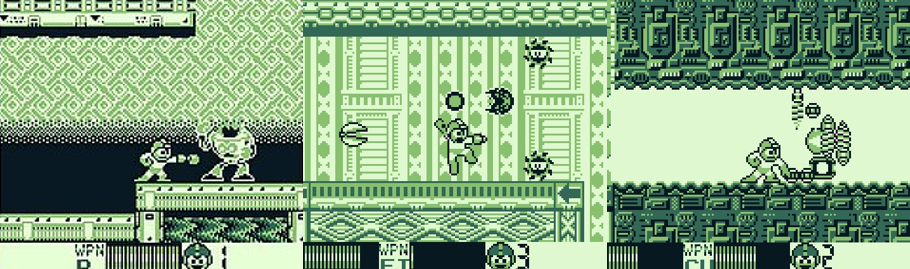
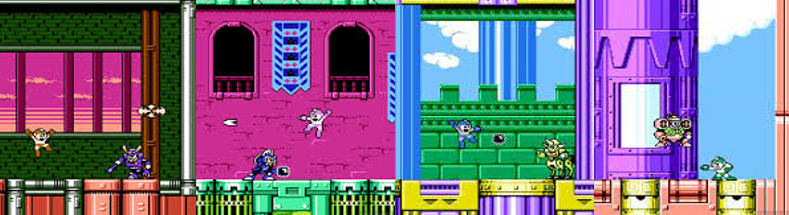
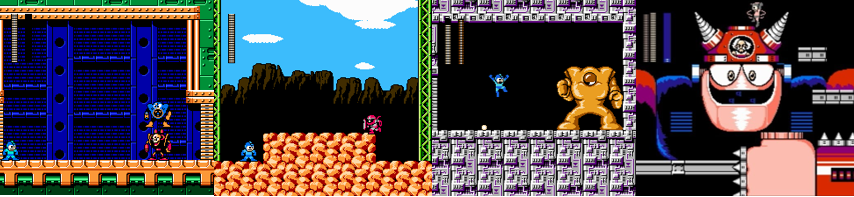
If you’ve played the original Mega Man, you’ll be very familiar with the Special Weapons on offer here. You’ll get the Thunder Beam, Ice Slasher, Fire Storm, and Rolling Cutter from the four primary Robot Masters, with the Thunder Beam firing horizontally and vertically, Ice Slasher firing frigid arrows that temporarily freeze enemies, Fire Storm blasting a fireball and creating a brief shield, and the Rolling Cutter tossing a boomerang-like projectile. You can challenge the four Robot Masters in any order but, as each has a specific weakness, it’s better to go after them with the right Special Weapon on hand as you’re stuck in a claustrophobic arena and dodging their attacks is incredibly difficult thanks to those big hit boxes. Once you’ve gotten the fourth Special Weapon, you’ll also get the “Carry” weapon, which creates a temporary floating platform and is key to reach out of the way areas or crossing spike beds or bottomless pits. When battling through Dr. Wily’s fortress, you’ll encounter four Robot Masters lifted from Mega Man 2 (Capcom, 1988) and gain four additional Special Weapons that again function exactly the same as before. The Time Stopper freezes all enemies until your meter drains and leaves you unable to attack, the Quick Boomerang tosses a few small boomerangs in quick succession, the Bubble Lead fires slow but powerful bubbles, and the Atomic Fire shoots flaming spheres that you can charge by holding X or B. Finally, defeating Enker earns you the Mirror Buster, which reflects projectiles if and when you can get the timing right. There is no slide ability here, no Rush, and very few opportunities to use your weapons in stages beyond using the Atomic Fire to destroy optional blocks in Dr. Wily’s stages.
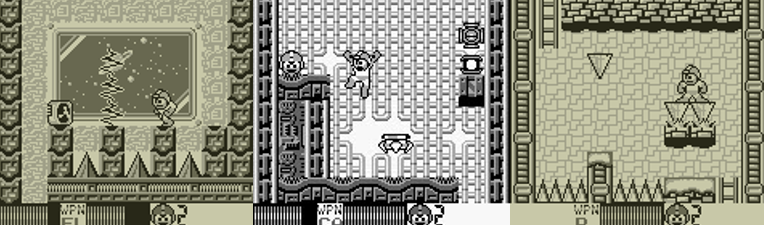
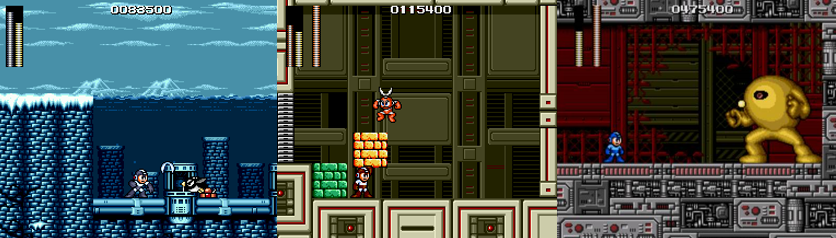
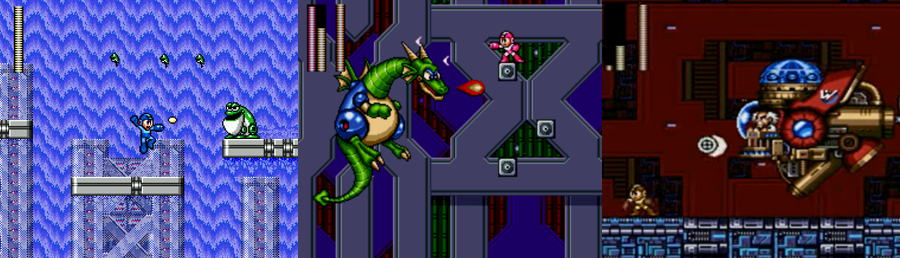
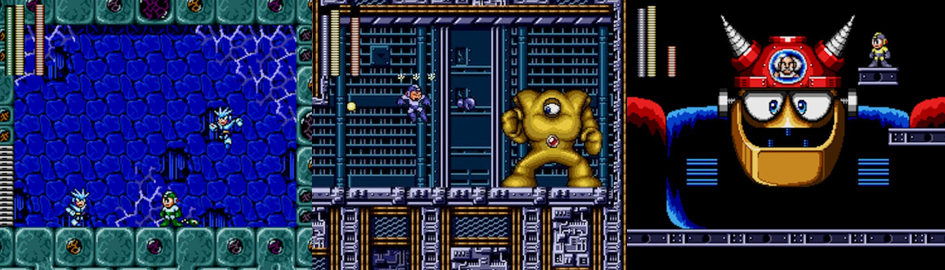
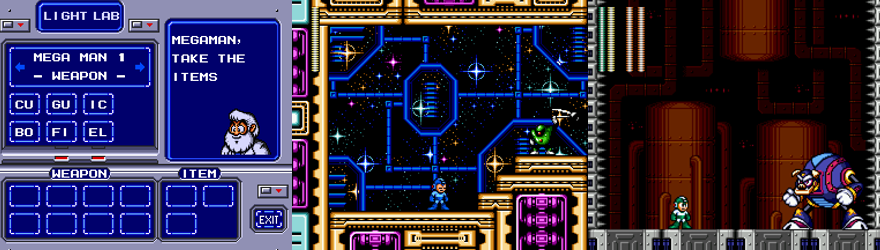
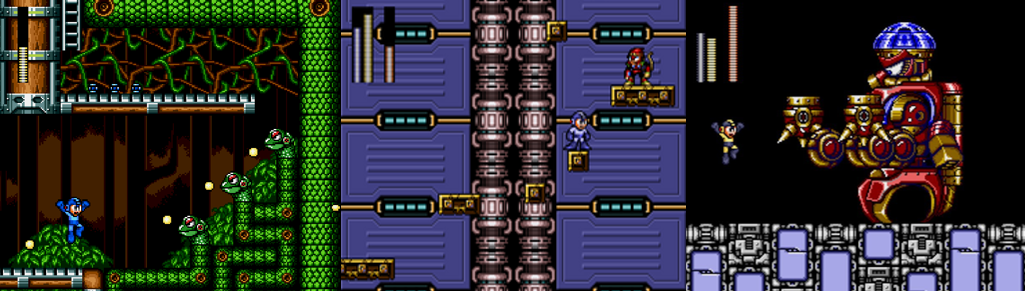
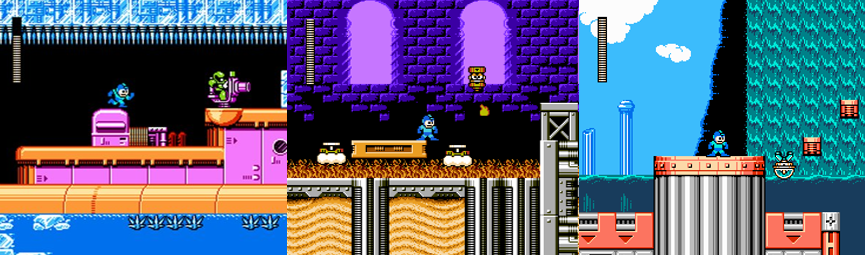
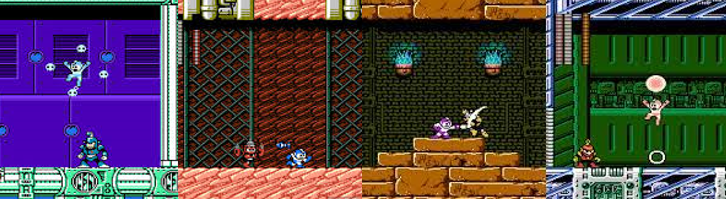
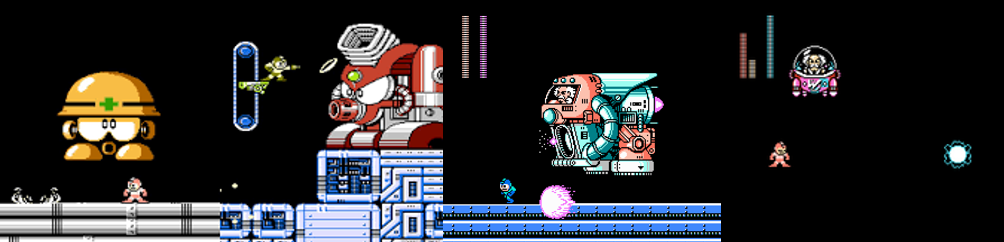
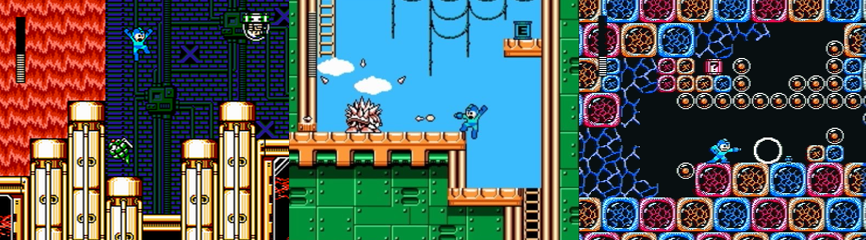
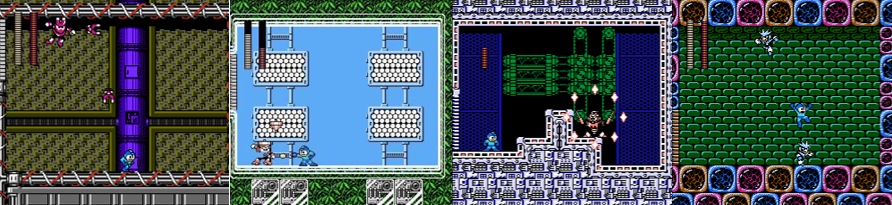
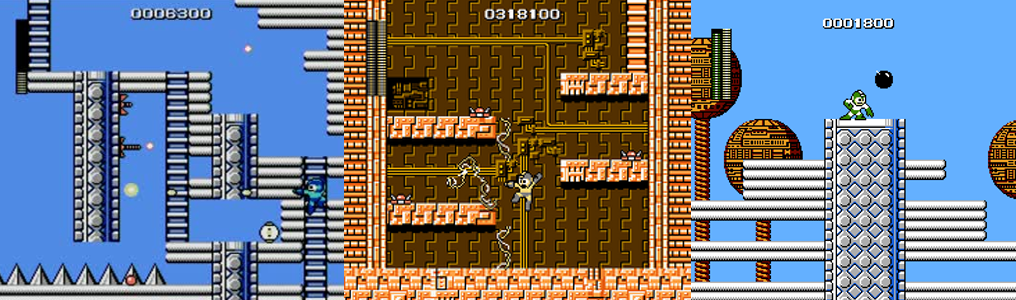
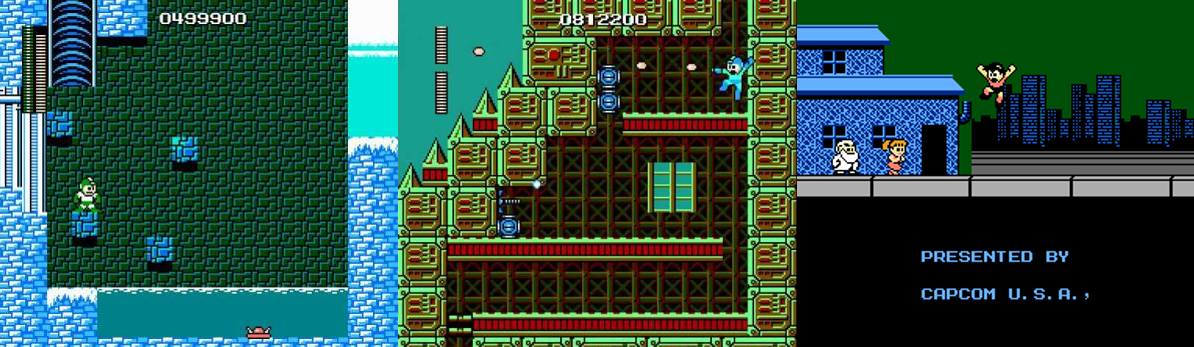
Despite being a Game Boy title and thus devoid of any colour, Dr. Wily’s Revenge surprised me in how detailed it is. There’s no intro or story to speak of, but the title screen is surprisingly vivid and all the sprites are big and cartoonish. Mega Man even blinks when left idle and the backgrounds are surprisingly not just plain voids, with you scrambling around on rooftops against a backdrop of clouds at times. You’ll clamber up ladders (sadly lacking transparency), hop to moving or temporary platforms, and dodge hazards such as blowing fans, electrical currents, plumes of fire, and the ever-annoying spikes. Each stage gives a sense of a theme, with Elec Man’s stage kind of being like a power plant, Ice Man’s being covered in snow that slows your movements and ice that sends you skidding to your doom, Fire Man’s stage featuring wooden ladders and rivers of flashing lava, and Cut Man’s stage being packed with girders and little buzzsaw enemies. Enemy variety is a little lacking; Metall and Sniper Joe are here, alongside little propeller enemies, loads of lame +-shaped robots, sentient scissor blades, and little birds that drop eggs full of smaller minions. Larger enemies like the Big Eyes and Hotheads act like mini bosses, slowing the action to a crawl and causing the sprites to flicker and the engine to struggle to render everything onscreen, and you must blast the Lightning Lords to ride their cloud mounts through the skies of Elec Man’s stage. Enemies respawn and can be “farmed” for goodies, but some (looking at you, Big Eye) are difficult to defeat without expending your Special Weapon energy. You’ll want to be fully powered up when you tackle the Robot Masters as, again, the game slows to a crawl once they start jumping or flying about and firing their projectiles, and the hit boxes are so big that it’s almost impossible to defeat them without taking at least a little damage, even with the right Special Weapon equipped.
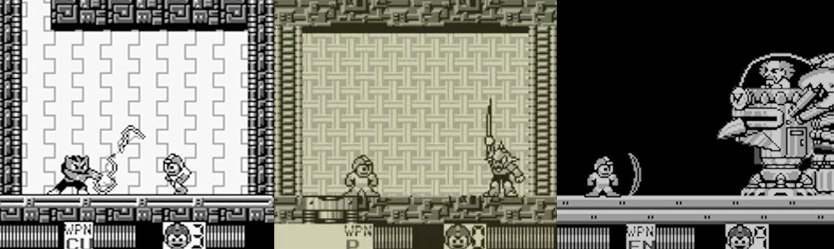
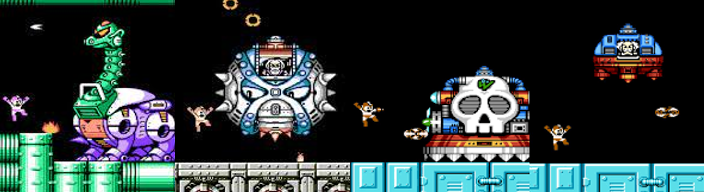
Visually, the game does a decent job of recreating its NES counterparts. Sure, stages aren’t as colourful or varied and Mega Man’s sprite doesn’t change when he has Special Weapons equipped, but the same vertical shafts are here, many of the same gimmicks and mechanics are present, and the music holds up just as well as Mega Man 2’s. Larger sprite art is used to show Mega Man’s arsenal being upgraded, in-game graphics recreate Dr. Wily’s escape to his fortress and his humiliating defeat, and we still get a fun roll call during the credits. Naturally, beating the four stages isn’t enough and you’ll need to fight your way through Dr. Wily’s fortress, a mish-mash of every enemy, hazard, and gimmick seen before, including ice blocks that melt when you stand on them, flame bursts across the ground, and tricky platforming sessions (though now against the fun background of a space station!) Some of these hazards are used in tandem, such as fans pushing you back as you hop to platforms over a spike pit, or electrical bursts appearing in spiked shafts, or forcing you into shoot-outs with Sniper Joe on precarious platforms. After besting Enker (who can absorb and redirect your shots but its otherwise pretty easy to beat; literally just keep shooting and dodging), you’ll take on Dr. Wily’s newest death machine. This large, bird-like mech is completely stationary but initially spits buzzsaws that you must jump over or run under to attack with the Fire Storm. The second phase is much harder as Dr. Wily fires a semi-homing claw appendage and super-fast high and low projectiles. You need to find the space to avoid taking damage and use frame-perfect timing to reflect his shots with the Mirror Buster to win the day here, which can be very frustrating since everything is so hard to avoid given the restricted screen space.

The Summary:
I was surprised by Mega Man: Dr. Wily’s Revenge. Given the restrictions and limited hardware of the Game Boy, I didn’t expect the game to look or sound as good as it did. The sprites and environments are nice and chunky and detailed, technically surpassing the first two NES titles in many ways, and the game does a great job of recreating the gameplay and gimmicks of its home console cousins. Mega Man controls exactly as I’d expect and the gameplay loop is the same, but distilled into a portable package. Yet, I give the game props for having you face different Robot Masters in the endgame rather than simply repeating the previous four boss battles. Unfortunately, the limitations do hold this game back. Screens are largely empty, with only a handful of sprites and hazards seen at any one time, because the Game Boy just cannot render it all. This leads to some of the worst slow down and screen tearing I’ve ever seen as sprites fade out of existence and the game struggles to chug along. I can somewhat forgive the recycling of elements from Mega Man and Mega Man 2 and commend the developers for recontextualising them in a new adventure but, at the same time, why not just port the first two games since you’re not doing anything really new with the concept? The game is also atrociously difficult, and not just because the hit boxes are so large. I have no idea how anyone beat this back in the day without rewind and save states because it was pretty tough to beat even with those features. Unfair and needlessly difficult at times thanks to the hardware limitations, Dr. Wily’s Revenge is a fair crack at offering a portable Mega Man adventure but ultimately has too much working against it to be as enjoyable as I’d like.
My Rating:
Could Be Better
Was Mega Man: Dr. Wily’s Revenge in your Game Boy library back in the day or did you first play it on Nintendo Switch? Which order did you tackle the game’s Robot Masters? Were you disappointed that the bosses and Special Weapons were recycled from the NES games? What did you think to the difficulty of the game? Which portable Mega Man game is your favourite? How are you celebrating all things science-fiction this month? Whatever your thoughts and memories of Mega Man, feel free to leave them below and go check out my other Mega Man reviews!






























 Dr. K's Waiting Room
You must be logged in to post a comment.