Story Title: “And Men Shall Call Him… Warlock!” Published: April 1972 Writer: Roy Thomas Artist: Gil Kane
The Background: It’s generally accepted that Marvel Comics head honcho Martin Goodman tasked then-editor Stan Lee with creating a superhero team in response to DC Comics’ Justice League of America. Lee used this opportunity to create stories and characters that appealed to him and drafted a synopsis of the dysfunctional Fantastic Four for the legendary Jack Kirby to work on, creating the “Marvel Method” of writer/artist collaboration in the process. Although Kirby disputed this story, the duo are credited as co-creators of Marvel’s First Family, whose comic books went on to introduce characters and concepts that would become integral to Marvel Comics. One such character was the mysterious cosmic entity initially known only as “Him”; also created by Lee and Kirby, He first appeared in Fantastic Four #66 and 67 as an artificial being created by a malevolent group known as the Enclave, who were bent on world domination. After rebelling against his creators and being rechristening “Adam Warlock” by Herbert Wyndham/The High Evolutionary, an arrogant supervillain scientist known for creating bizarre animal/human hybrids, Warlock was imbued with the power of the Soul Gem and headed out into the universe to find his true self. Though a relatively unknown Marvel creation, Adam Warlock was at the forefront of one of the publisher’s biggest stories, The Infinity Gauntlet (Starlin, et al, 1991), fought against his own dark half given physical form, and was often positioned as an allegorical Messiah against the backdrop of cosmic discord. Adam Warlock has featured in minor roles outside of the comics, appearing as a supporting character in Marvel videogames and cartoons, and was name-dropped at the end of Guardians of the Galaxy Vol. 2(Gunn, 2017) as a future threat for the titular Guardians before making his live-action debut in Guardians of the Galaxy Vol. 3(Gunn, 2023), portrayed by Will Poulter.
The Review: Since Marvel Premiere #1, in true Marvel fashion, features a lengthy recap of Adam Warlock’s origin, I didn’t think it was necessary to do an in-depth review of His first true appearance in Marvel Comics but, for those who are curious, He came about after Ben Grimm/The Thing’s blind girlfriend, Alicia Masters, was abducted by the Enclave and taken to their unreasonably complicated, beehive-like lair. There, she learned that the Enclave’s highly advanced scientists desired to create a perfect race of human beings, with “Him” being the first; however, He proved so unstable and powerful that they were forced to contain Him and unable to look upon Him due to his blinding light. They wanted Alicia to sculpt a likeness of Him and she braved His destructive power to reach and appeal to Him, completely unaware that the Enclave wished to use His power to conquer the Earth. Initially encased within a rock-like cocoon, He burst free and enacted a brutal revenge upon his creators, sparing Alicia but exhibiting a cold disinterest in the destruction of the beehive laboratory that birthed Him as He fled to the stars until the world was ready for His power.
Prior to creating his own world, the High Evolutionary finds and forms a bond with Him out in space.
“And Men Shall Call Him… Warlock!” opens in the vastness of space to find the High Evolutionary’s massive asteroid space station drifting through our galaxy; aboard, the High Evolutionary himself muses on the long and difficult journey he has taken in the quest to produce his half-human, half-animal “New-Men”. His highly advanced technology saw him transform an ordinary wolf into a man-sized beast that was savage enough to battle Thor Odinson in combat; the failure of this project exposed the High Evolutionary to the threat his creations pose to his former homeworld, so he transported the Man-Beast and a contingent of “evil” New-Men to a faraway world, where they only further regressed, forcing him to turn to Doctor Bruce Banner/The Hulk to quell their aggression. In the fracas, the High Evolutionary was mortally wounded, forcing him to abandon his armour and subject himself to an experimental process that saw him ascend to the pinnacle of human evolution. Immortal and God-like, he merged with the greater cosmos but was driven to the brink of madness from isolation, thus returning to his armour to fulfil some mysterious purpose. His ruminations are interrupted by Sir Raam, the most loyal of his Knights of Wundagore, who alerts him of His mysterious cocoon floating in space; curious, the High Evolutionary has it brought onboard his planetoid so he can investigate further. Unfettered by His visage, the High Evolutionary is instead captivated by His unblemished perfection and urges the divine man to share his story. After fleeing Earth, He also came into conflict with Thor before retreating to the stars to await the day when He could exist in a universe free from hatred and oppression. Impressed, the High Evolutionary agrees to expediate His journey through the stars but He is intrigued by the immortal’s “Project Alpha”, an ambitious plan to create a mirror version of Earth whose evolution he can directly influence.
With his world tainted, the High Evolutionary reluctantly agrees to send Him to tack down the Man-Beast.
The two agree that humanity is too volatile and too quick to descend into misery and bloodshed, so the High Evolutionary creates a Counter-Earth as a haven for his own creations. Although the process places an intense strain on the High Evolutionary, he pushes through his discomfort to bombard a rock sample with “rays” and accelerate the formation of this new world, one safely hidden from ours by being placed on the opposite side of the Sun and, within the space of a few panels, has created a prehistoric world whose development he’s able to speed up beyond the limits of creation, evolution, and even the divine. This Counter-Earth is thus ripe for the coming of the High Evolutionary’s superior race of men, one purged of their killer instinct, but the effort of creating it is so intense that it causes the High Evolutionary to pass out from exhaustion. This is the moment that the Man-Beast and his followers, who had been observing their creator, choose to strike, gunning down Sir Raam and perverting this new world, introducing violence and aggression and causing the Counter-Earth to descend into generations of war at the simple twist of a dial. The High Evolutionary recovers and surprises the Man-Beast with his newfound superior physical strength; however, a ”bestial mind-blast” and the sheer numbers and savagery of his rebellious creations threaten to overwhelm the would-be deity and, seeing this, He decides to break free from his cocoon to intervene. Emerging garbed in a “resplendent […] armour and ornaments” created by his cocoon, He causes the beasts to flee in terror to the Counter-Earth. Dismayed by the Man-Beast’s actions, the High Evolutionary sees no other choice but to destroy his new world but He beseeches him to spare the world. Retracting his condemnation of humanity and wishing to nurture their better nature, He requests to be sent to the Counter-Earth to track down the Man-Beast. Touched by His words, the High Evolutionary reluctantly agrees; he gifts Him with a mysterious jewel to protect Him from the Man-Beast’s snares and transports Him to the surface of the fledgling world with a heavy heart and bestowing upon Him that which He has never had: a name, “Warlock”.
The Summary: Previously, I only really knew Adam Warlock from The Infinity Gauntlet; I’ve literally never read another story with Him in in all my years of reading comics, so He’s always been a very elusive and mysterious figure for me. It’s actually refreshing that He’s not been wheeled out every time there’s a big cosmic event as it makes Him more alluring and significant, at least to me, so I was intrigued to see some of His background in this story. There was clearly a conscious effort to build a sense of mystery and divine beauty to this character, who is touted over and over as the pinnacle of human scientific acumen and seen as the next step in our evolution, a golden creation so astounding that to look upon Him is to suffer greatly. Yet, He is a deeply sensitive man-god; capable of sensing the intentions of men and fully capable of judging them accordingly, He has no interest in mindless combat and wishes only to isolate Himself until the time is right for Him to walk amongst men. Despite having battled the likes of Thor, He hasn’t ever encountered anyone worthy of his presence until He’s discovered by the High Evolutionary, a mind with whom He can relate to so strongly that He openly shares His assessment of our tumultuous species and His chaotic origins.
Him and the High Evolutionary share many of the same views about our volatile society.
I’m equally unfamiliar with the High Evolutionary, a highly advanced individual who I’ve always seen as a combination of Doctor Victor Von Doom/Doctor Doom and Dr. Moreau from H. G. Wells’ titular 1896 science-fiction story. The parallels are pretty explicit, given both characters like to create monstrous human/animal hybrids but the High Evolutionary isn’t just some sadistic mad scientist. Disillusioned with humanity and our warring wars, he seeks to “improve” upon our aggressive nature and faults not by destroying humankind but by creating his own world and actively directing the course of the counter-humanity’s evolution. However, comic books generally cast anyone who seeks to create life through scientific or magical means, effectively defying the natural order, as a villainous character and, to be sure, the High Evolutionary’s methods are highly questionable, yet he expresses genuine regret over the savagery of the Man-Beast. His plot isn’t to create a race of superpowered or animalistic abominations to dominate the world, or to wage war against the Earth from his asteroid laboratory; he simply wishes to create a utopia on the other side of the Sun to manipulate humanity to be the very best of themselves. In Him, the High Evolutionary sees his dreams take physical form; just seeing His visage is enough to captivate the High Evolutionary, who refers to Him as the son he never had on more than once occasion.
Having championed humanity’s potential for good, He gains a name and a purpose for the first time.
The two share a unique bond, agreeing that humankind is far too quick to resort to warfare than strive towards peace and prosperity, and both are impressed by each other’s abilities. However, He recognises humanity’s inherent potential for “goodness” and, thanks to his divine nature, is perhaps the only one capable of staying the High Evolutionary’s hand when he prepares to destroy the Counter-Earth he created with such ease. The High Evolutionary expresses regret in His decision to be a champion on Counter-Earth but respects Him enough to allow Him the chance to try; he doesn’t rate His chances for success but prepares Him as best as he is able, even bestowing Him with His first true name. Thus, the stage is set for the newly-christened Warlock to be not a destroyer or an impassive observer but an active participant in the formation of this Counter-Earth’s development. Those who read comics looking for some cosmic action and to see what Warlock is truly capable of may be left disappointed; as is often the case, much of the story is taken up with recaps of each character’s backgrounds but, at its core, it’s a rumination on the nature of humanity and the conflict these powerful, God-like beings feel in regards to our volatile ways. Warlock and the High Evolutionary share some engaging and introspective exchanges, there’s an interesting dialogue on offer here concerning their morally grey and ambiguous natures, and I think the story does a decent job of leaving you wanting to know where Warlock’s story goes from here on out and how he goes from desiring to inspire Counter-Earth’s residents to almost literally playing cosmic chess with Marvel’s greatest heroes and characters in The Infinity Gauntlet.
My Rating:
⭐⭐⭐
Rating: 3 out of 5.
Pretty Good
What did you think to the return and naming on the God-like “Him”? Were you intrigued by Adam Warlock’s presence and eager to know more about Him or did you find Him a rather bland character? What do you think to the High Evolutionary, his opinions on humanity, and his plan to create his own Earth? Did you read Adam Warlock’s subsequent stories and, if so, what are some of your favourite moments of His? What did you think to this MCU debut? Whatever you think about Adam Warlock and Marvel’s cosmic shenanigans, please share your thoughts below or leave a comment on my social media.
Since his explosive debut in May 1962, Stan Lee and Jack Kirby’s gamma-irradiated Jade Giant has been one of their most recognisable and successful characters thanks, in large part, to the Incredible Hulk television show (1977 to 1982) catapulting the Hulk into a mainstream, pop culture icon. The Hulk has been no slouch in the comics either, being a founding member of the Avengers and undergoing numerous changes that have made him one of their most versatile and enduring characters, so what better way to celebrate all things Big Green than by dedicating every Sunday in May to the Green Goliath?
Writer: Stan Lee – Artist: Bill Everett
Story Title: “The Abomination!” Published: 10 January 1967 (cover-dated April 1967)
Story Title: “Whosoever Harms the Hulk…!” Published: 14 February 1967 (cover-dated May 1967)
The Background: Created by Marvel legends Stan Lee and Jack Kirby, Doctor Robert Bruce Banner’s monstrous alter ego, the Incredible Hulk, was inspired by the story of a hysterical mother using superhuman strength to rescue her child and classic screen monsters Frankenstein’s Monster and Doctor Jekyll and Mister Hyde. Initially debuting as a stone-grey figure, the character soon gained his trademark green hue and became a fixture of Marvel Comics thanks to expansions of his lore and character and the popularity of the live-action television series. Stan Lee also had a hand in creating some of the Hulk’s most memorable enemies; having birthed the Hulk’s intellectual superior, Samuel Sterns/The Leader, alongside Steve Ditko about three years prior, Lee and artist Gil Kane introduced Marvel readers to one of the Hulk’s most persistent physical rivals, Emil Blonsky/The Abomination, in this two-part tale. Lee came up with monster’s unique name and reportedly instructed Kane to make the Abomination bigger and stronger than the Hulk to make for some fun conflicts. Over the years, the Abomination has been through almost as many changes as his lifelong rival, being a savage brute, a schemer, and a figure of redemption. His impact on the Hulk’s life has been so influential that he’s featured in numerous Marvel cartoons; although he made his live-action debut in the unfairly overlookedThe Incredible Hulk(Leterrier, 2008), it would be some thirteen years before he would return to the Marvel Cinematic Universe.
The Review: Our story begins with the Green Goliath embarking on an unstoppable rampage thanks to the manipulations of a cosmic being I’m personally unfamiliar with but who calls himself “The Stranger”; believing that humanity is a blight that needs to be eradicated, the Stranger has set the Hulk to work wiping the planet clean of humankind’s influence, and the Hulk is only too happy to give in to his anger. Already harbouring a resentment and animosity towards the “puny humans” who hate and fear him, the Hulk wrecks a suspension bridge and prepares to lay waste to a missile base when he’s suddenly hit with an intense pain in his head that not only causes him to fall, but also triggers his transformation back into cursed Gamma scientist Bruce Banner. This has the knock-on effect of severing the Stranger’s mind control, but Banner is terrified at the prospect of the Hulk resurfacing and continuing the Stranger’s work and resolve to destroy the Hulk (and himself, if necessary) once and for all using the “Gamma Ray Machine” he created and which just so happens to be at the very base he’s found himself at.
While Banner broods and Ross blusters, a foreignagent undergoes an incredible transformation!
Nearby, the cantankerous General Thaddeus “Thunderbolt” Ross is determined to root out the man behind a recent assassination attempt on his daughter (and Banner’s flame), Betty Ross; also Major Glen Talbot assures Ross that it’s just a matter of time before the foreign agent is discovered, Ross explodes in anger and demands that they find the perpetrator before they can endanger the missile, giving his men orders to shoot to kill if necessary. Betty is distraught that there’s been no word from Banner for some days and fears for his life as long as he shares a body with the Hulk; she’s so devastated at the idea of losing him that she pays no mind to Talbot’s attempts to insert himself in Banner’s place. Meanwhile, in Banner’s lab, Ross’s spy (whom we know as Emil Blonsky but who isn’t named in this story), is snooping around in the guise of a soldier and trying to snap pictures of Banner’s vaulted Gamma Ray Machine. Although Banner returns at that very same moment, intending to use the machine on himself, he’s spotted and arrested by military police and the smug Talbot, who refuses to listen to his pleas. Amused by the turn of events, Blonsky comes out of hiding and investigates the machine, activating it out of sheer curiosity and bathing himself in an intense dose of Gamma radiation. The result is his instantaneous transformation into a hulking, green-skinned, lizard-like monstrosity; thanks to stepping out of the Gamma rays early, this Abomination is able to retain his intellect and revels in his newfound super strength, which he believes will make him “master of the world–of the whole universe!!” and promptly destroys the machine so that none will challenge his invincibility.
The Hulk is overwhelmed by the superior strength and intellect of his newest foe.
The Abomination’s subsequent rampage through the base catches the eye of the imprisoned Banner, who willingly transforms into the Hulk as only his alter ego has a chance of opposing this new Gamma monster. Ripping open his cell, the Hulk leaps into the fray but quickly finds that the Abomination is not only smarter thanks to not being a mindless brute, but also more powerful as he was conveniently subjected to a more powerful dose of Gamma radiation. Consequently, Ross, Talbot, and Betty can only watch on in horror as the Abomination asserts his dominance and brutally beats the Hulk into unconsciousness, clearly establishing himself as a formidable threat, and that Blonsky is oddly concerned that he wouldn’t survive the military’s counterattack so he kidnaps Betty and flees from the base. Driven to desperation by the events he’s witnessed, Ross has no choice but to order his physicians to try and save the Hulk’s life; while the surgeon is initially baffled by the half-dead creature’s physiology, perennial sidekick Rick Jones bursts into the facility to suggest using Gamma electrodes to revive the beast and, in panels that owe more than a debt to Frankenstein (Whale, 1931), the Hulk lives again! Believing the soldiers are trying to contain him, the Hulk refuses to listen to reason and even swats Rick aside, vehemently denying his tearful pleas for help, until the mention of Betty’s name causes him to calm down and revert back to Bruce Banner.
Although Banner devises a workable plan, the monster’s rematch is abruptly interrupted.
Cutting through Ross’s bluster and inconsolable babble and prejudice, Banner comes up with a plan to lure the Abomination back to them, rather than confront his great power directly, and reconfigure his “Infinite Weapon” to nullify Blonsky’s strength with “Infra-Gamma Beams”. Begrudgingly, Ross orders his technicians and soldiers to follow Banner’s every command as they race to perform the necessary adjustments, and the Abomination willingly returns to the site, drawn by the allure of the Gamma radiation, though everyone, even Rick, is unsure as to how Banner plans to oppose such a fearsome monstrosity. The Abomination bursts into the laboratory, setting down Betty and preparing to finish off Banner, but is surprised when the machine causes him incredible pain and saps his mighty strength. It’s at this key moment that Banner uncontrollable turns into the Hulk and the two Gamma Giants set about having a rematch. Although they bash each other through walls and promise to really go at each other, the Stranger chooses this moment to return to the story; watching from “a thousand galaxies away”, he begins to consider that humanity might not be beyond all hope if a brute such as the Hulk can be so valorous and chooses to take the Abomination for his own needs. He also completely removes the influence he had over the Hulk’s mind but, while he’s met with congratulations and a semblance of gratitude from even General Ross, the Hulk chooses to head back out into the world alone once more.
The Summary: The Abomination’s debut is much more the type of Hulk story I’m used to; by this point, Bruce Banner’s dual identity is well known and his adventures follow a very simple formula of him wandering around the country, desperately trying to avoid conflict, all while the Hulk threatens anyone and everyone around him and lashes out at those he deems to be a threat. Unfortunately, I didn’t think much to Gil Kane’s artwork, especially on the Abomination and the Hulk’s face, both of which look to little too simplistic and goofy for my tastes. I did enjoy the twist of the normally unreasonably antagonistic General Ross absolutely snapping when the Abomination kidnaps Betty; he’s so traumatised by this that he’s forced to not only rely on the Hulk and Banner for help, but even revive the Green Goliath and order his men to follow Banner’s every instruction. It’s an interesting twist on his usually staunchly anti-Hulk/Banner mindset, kind of like whenever J. Jonah Jameson is forced to eat crow, though I was interested to see that Major Talbot was actually arguing in favour of Ross’s hated enemy on more than one occasion. Similarly, I liked that Banner got to do a little more than just wallow in despair and self-pity; he puts his genius mind to work creating a trap to lure in the Abomination and sap his strength, though it was a little too contrived that all of Banner’s machinery and work just happened to be at this military base. The Hulk is pretty much exactly as he’s always presented, with the added wrinkle that he’s suffering from the influence of the Stranger; this doesn’t really seem to change his character all that much, however, as it’s hardly an uncommon occurrence to see the Hulk going on an all-out rampage for the smallest of reasons.
The Abomination’s strength is so great that it takes brains, not brawn, to challenge him.
This is potentially the first time that the Hulk has ever faced a foe as physically imposing as him, however; he fought Groot (no, not that one) a few years earlier but as far as I can tell most of his more monstrous foes made their first appearances after this story. Consequently, the Abomination makes quite the impact; not only does he retain his intelligence, allowing him to out-think the Hulk, but he’s portrayed as being significantly more powerful, knocking the Hulk out and beating him almost to the point of death in their first encounter. However, the praise kind of stops there; the explanations behind Blonsky’s retained intelligence and greater strength and paper thin and it’s really weird that he would choose to flee after besting the Hulk as he would surely have even less reason to fear the military’s weapons than the Green Goliath. The Abomination’s greater intelligence also doesn’t really translate into any kind of impressive strategy either; immediately drunk on his newfound power, Blonsky sets his goals as lofty as conquering the entire universe, than smashes the place up a bit, and then resorts to kidnapping Betty. He doesn’t even use her as a means to give the Hulk pause to attack and abandons her the moment he arrives back at the base, but worst of all is the fact that this Stranger’s intervention cuts short his rematch with the Hulk simply to keep the Abomination’s threat unchallenged. Overall, this wasn’t a bad two-part story but it definitely wasted its potential; there was so much that could’ve been done with the duality of these monsters, the twist of Ross having to rely on his enemy, and seeing the Hulk and the Abomination tera up the base of the countryside but the story instead plays it very safe and simply hands the Hulk a decisive loss and has his newest (and presumable most powerful) villain left out in the world (well, cosmos) to no doubt hound him again at some point.
My Rating:
⭐⭐⭐
Rating: 3 out of 5.
Pretty Good
Did you enjoy the Abomination’s debut? Did you read it when it was first published and, if so, how did you think the Abomination compared to other Hulk villains? What did you think to the idea that the Abomination was not only smarter but stronger than the Hulk? Would you have liked to see a proper rematch between the two in the second part? What are some of your favourite fights or moments between the Hulk and the Abomination? Who is your favourite Hulk villain? Whatever you thoughts on the Abomination (and the Hulk), feel free to share them below or leave a comment on my social media and be sure to check in again next Sunday for more Hulk action!
In 1995, Marvel Comics created “National Superhero Day” and, in the process, provided comics and superhero fans the world over with a great excuse to celebrate their favourite characters and publications.
Released: 24 October 2006 Developer: Raven Software Also Available For: Game Boy Advance, Nintendo Wii, PC, PlayStation 2, PlayStation 3, PlayStation 4, PlayStation Portable (PSP), Xbox 360, Xbox One
The Background: Perhaps few videogame publishers are as synonymous with Marvel Comics than Activision; the publisher has been spearheading adaptations of some of Marvel’s most popular properties since the year 2000. They weren’t all smash hits, of course, but some of their titles have been praised as among the best for characters like Peter Parker/Spider-Man and Marvel’s resident Mutant team, the X-Men. In 2004, the publisher teamed with developers Raven Software and saw big success with X-Men Legends, a team-based brawler that incorporated role-playing elements and simultaneous co-op gameplay. Following similar success with the sequel, Activision’s partnership with Raven Software expanded to incorporate much of the rest of Marvel’s line-up with this title, which was built on Vicarious Visions’ Alchemy engine. The game also greatly benefitted from utilising the Havok physics engine; in addition to including many of Marvel’s most popular characters alongside those added as downloadable content (DLC), Nintendo staples Link and Samus Aran were initially planned to be Wii-exclusive characters before being nixed. Marvel: Ultimate Alliance received generally favourable reviews; critics praised the game’s presentation and for improving and expanding upon its predecessors, and the game was successful enough to warrant an equally-successful sequel three years later and (eventually) a Nintendo Switch-exclusive third entry that received mixed reviews. Sadly, despite a remastered version being developed for PC, PlayStation 4, and Xbox One in 2016, Marvel: Ultimate Alliance is currently delisted from digital storefronts and quite difficult to come back for an affordable price as a result.
The Plot: When Doctor Victor Von Doom and his Masters of Evil launch an attack against the Strategic Hazard Intervention Espionage Logistics Directorate (S.H.I.E.L.D.), Colonel Nick Fury sends out a distress call to all available superheroes for assistance. Steve Rogers/Captain America, Spider-Man, Thor Odinson, and Logan/Wolverine respond to the call and must soon join forces with a myriad of other Marvel heroes in order to put a stop to Dr. Doom after he attains incredible cosmic powers from Odin Allfather.
Gameplay: Marvel: Ultimate Alliance is a top-down, team-based brawer peppered with some very light puzzle solving, opportunities for exploration, and role-playing mechanics. Players can (eventually) assemble a team of four from around thirty available superheroes and journey across a number of recognisable Marvel locations battling against the nigh-on endless minions of the Masters of Evil. Up to four players can play at once, though a single player is able to battle on alone, using the Left Trigger and directional pad (D-pad) to direct their computer-controlled team mates or switching to another superhero by pressing a corresponding direction on the D-pad. Players are given two primary attack options: A for a quick attack and B for a stronger attack, which can be charged up, and alternating between these commands will allow you to string together a few simple combos that will stun, trip, or blast your foe into the air, which can be essential to breaking through some enemy’s guards. X is the “action” button, allowing you to open doors, activate consoles, turn levers, or grab enemies to pummel, throw, or relieve them of their weapons, and Y allows you to swim and jump (you can also double jump, web-sling, or fly by double pressing and holding the button, respectively). Players can block incoming attacks by holding the Left Bumper or tap it to dodge out of the way entirely and each character has their own special abilities, which are accessed by holding the Right Trigger and selecting either A, B, X, or Y. Special powers can only be used if you have another energy, which is represented by glowing blue orbs dropped by enemies or uncovered from smashing crates or opening chests, and allow you to fire energy beams, toss projectiles, entrap enemies (by freezing or webbing them up, among other options), boost you (and your team mate’s) defense, attack, and other attributes, and cause status effects to your enemies like stunning, burning, or electrocuting them. While many of the effects are largely shared amongst the roster, each character pulls them off in their own unique way; Tony Stark/Iron Man’s Repulsor blasts are different from Mark Spector/Moon Knight’s projectiles, even though both can ricochet around the environment, and each character has a variety of special powers that you can power-up and assign to the face buttons from the “Hero Management” menu.
Assemble a team of four superheroes and battle the endless forces of the Masters of Evil.
Each character also has a big, character-specific attack that can be performed when your energy gauge is completely full and you press Y while holding RT this will see them unleash a huge, screen-clearing attack specific to them and each character will perform these in succession if their energy gauge is full. You’ll also earn additional bonuses if certain characters pull off their special moves at the same time, and this also happens if your team is formed of characters who have a history together, like the X-Men or the Fantastic Four. The game’s story mode is comprised of five “Acts”, which drop your team in a variety of locations that should be familiar to Marvel Comics fans. After clearing the first mission, which has you retaking a S.H.I.E.L.D. Helicarrier from Dr. Doom’s forces, you’ll be dropped into one of five hub areas where you can interact with Nick Fury, Natasha Romanoff/Black Widow, and other non-playable characters (NPCs) to learn more about your current or next mission, gain insight into the heroes and villains, and be given side quests to perform. In the hub area, and scattered throughout each location, are S.H.I.E.L.D. Access Points where you can save or load your game, change up and upgrade your team, or revive fallen teammates. Just as blue energy orbs can be acquired during gameplay, so too can red health orbs, but some environmental hazards or bottomless pits will see you or your teammates taken out of action. It can take about three minutes for your fallen ally to be ready for revival, but they can only be brought back into the fight from one of these save points. As you defeat enemies, you’ll earn experience points (XP) and level-up once you’ve gained enough XP, which will improve both your individual and team stats and unlock additional special moves for you to utilise. From the Hero Management screen, you can switch your character entirely, change their costume (which affords different abilities), equip gear to boost their stats, and name and improve the competence of your team to increase your odds when in a fight.
The tedious combat is broken up by some simple puzzles, QTEs, or short bites of variety.
Gameplay in Marvel: Ultimate Alliance quickly grows quite repetitive; you can charge through most missions by repeating the same combos and special moves over and over, and opportunities for exploration are quite limited as areas generally only give the illusion of being large and multi-pathed. Combat doesn’t get much deeper than tripping, stunning, or blasting enemies, or avoiding using physical or energy-based attacks, and it’s surprisingly easy to get turned around in areas even with the presence of a mini map as one dark, grey corridor looks the same as the last. Puzzles aren’t much of a head-scratcher here; you’ll generally fight your way to a console or power generator that needs to be activated or destroyed, though sometimes you’ll need to activate two switches at once with the either of a partner, and you’ll sometimes have to perform these tasks against a time limit. You’ll need to push or pull heavy objects onto pressure pads, redirect sunlight to free Balder Odinson, defend Dum Dum Dugen in a glorified escort mission, perform character-specific motions to activate statues, or complete quick-time events (QTEs) to open doors or take out larger, otherwise-invulnerable bosses. You’ll jump behind the controls of an anti-aircraft cannon, be joined by NPCs like Major Christopher Summers/Corsair, and have to rescue characters like Doctor Bruce Banner and Prince Namor McKenzie/The Sub-Mariner, though some of these are optional side quests. These optional missions appear during the main campaign and often having you searching for items for a specific character, or destroying certain targets along the way, and sometimes you’re faced with an impossible choice between two options which will fundamentally alter the multiple endings. Gameplay really gets interesting, though, when you end up in Murderworld, a twisted funfair featuring bumper cars, a giant pinball set, a hedge maze, and even an old-school Atari-style mini game that sees you awkwardly swinging from ropes and collecting Golden Tickets to rescue Doctor Jean Grey/Phoenix from Arcade’s clutches.
Graphics and Sound: Marvel: Ultimate Alliance is largely an impressive looking title, despite how old it is now, thanks to the zoomed out, almost isometric camera perspective. This means that the in-game character models, while hardly the most detailed, pop out nicely against the various backgrounds and I liked how they all had their own unique flourishes, like Spider-Man being able to web enemies up when he grabs them and Norrin Radd/The Silver Surfer floating around on his cosmic surfboard. Unlike some similar team-based brawlers, this really helps it to feel as though each character plays a little differently since they don’t just share the same animations and have a little individuality to them; you’ll need a stronger character to move certain objects, for example, and it’s much easier to explore the environment with a character who can fly. While your customised team won’t appear in the pre-rendered cutscenes, they do all have a lot of unique dialogue during the game, and when talking to or fighting against other characters; dialogue trees exist so you can ask a number of questions to NPCs or pick different options, which either helps you answer trivia questions, kicks off a side mission, or has you picking to team up with or save a different character, and villains like “Lester”/Bullseye or Quinten Beck/Mysterio. Unfortunately, the music isn’t really on par with the voice acting; it’s all very generic superhero-y or militaristic themes, and the in-game tracks often awkwardly loop, which is very jarring; the music’s also very loud, so you might want to adjust the sound settings in the options.
While the cutscenes aren’t great, the in-game graphics are decent enough and there’s a lot of dialogue variety.
The pre-rendered cutscenes also often let the game down a bit; they haven’t aged too well, and have a very rubbery and surreal quality to them (though they are pretty epic, especially when the Masters of Evil are discussion their evil lot and when Galactus and Uatu/The Watcher enter the story) that I’d criticise more if I could actually see them but the cutscenes are very dark and the only way to brighten them is by changing your television’s settings. The game’s environments often don’t fare much better, either; while it’s fun visiting places like the Sanctum Sanctorum and Valhalla in the hub worlds, the actual mission locations quickly become confusing and boring. While there’s a lot to destroy and see in each area, and even some hidden paths to uncover, rooms, corridors, and sections all start to blend together and the levels themselves can outstay their welcome at times, which only makes the monotonous combat more glaring. That’s not to say that there aren’t some visually interesting locations, though; you’ll swim through the depths of Atlantis, travel to Hell itself, battle across the length of the Bifrost Bridge and through the frozen wastes of Niffleheim, and infiltrate the gothic, regal stone walls of Castle Doom. Easily the most impressive area you’ll visit, though, is the Skrull home world, which is currently under attack by Galactus. The World-Devourer is seen lumbering around in the background between the futuristic skyscrapers and even pursues your across the walkways in an exciting (if frustrating) sequence, though the gameplay and visual variety offered by Valhalla is equally fun as you can visit the Warrior’s Hall (where NPCs are enjoying revels) and hop across Viking ships amidst a cosmic backdrop.
Enemies and Bosses: Since a gaggle of Marvel’s most notorious villains has joined forces in Marvel: Ultimate Alliance, you can expect to come up against a bevy of disposable goons during your adventure. It doesn’t take long for you to basically have seen everything the game has to offer in this regard, but each location does at least change up the appearance, dialogue, and some of the attacks of the enemies you face; you’ll battle Ultron’s minions, Loki Laufeyson’s trolls, and soldiers from the Shi’ar Empire and the depths of Atlantis, all of whom can be defeated using your standard combos or special powers. You can set your team mates to follow, attack, or defend formations, but I always like to choose an aggressive approach to overwhelm the hoards of enemies that can flood each area. Some of these carry weapons, either melee armaments like axes, spears, and swords which you can appropriate, or laser rifles for long-range attacks; others shield themselves and need to be attacked from behind or stunned. Some, like the imp-like demons from Mephisto’s Realm, leap onto you and drain your health, while others fly above taking pot-shots at you, and some are resistant to physical or energy attacks or need to be tripping, stunning, or blasted into the air. Some are larger, dealing and taking more damage, while others regenerate their health (or their allies), sap your health or energy, or boost the attack of other foes, so it’s best to take those guys out first.
A whole host of Marvel villains stand in your way, though most can just be beaten into submission.
The Masters of Evil have assembled quite the smorgasbord of allies; you’ll do battle with almost every single villain from Marvel Comics throughout the course of the game, sometimes more than once, as various underlings dog your progress throughout each mission. Often, you’ll battle at least two of these sub-bosses at a time; sometimes they flee after an initial encounter and need to be fought again, other times they’re powered up to be more formidable, and in other cases they’re able to heal or shield each other from your attacks by working together. However, defeating the likes of Mac Gargan/The Scorpion, Bullseye, James Buchanan “Bucky” Barnes/The Winter Soldier, Chen Lu/Radioactive Man, Valentin Shatalov/Crimson Dynamo, Aleksei Sytsevich/The Rhino, Herman Schultz/The Shocker, Doctor Curt Connors/The Lizard, Hussar and Neutron, Paibok, and even the corrupted superheroes you eventually fight really don’t require much more than you constantly attacking them with combos and special powers. Indeed, while it’s impressive that so many villains appear in the game, very few actually offer much in the way of a challenge beyond being a little tougher than the regular enemies you encounter, with even the likes of notorious villains like Ultron and Titannus proving quite disappointing encounters as, while they keep you at bay with laser blasts or destroy everything in a rampage, respectively, both can be similarly put down without any complicated strategies. Many of these villains are fought in teams, however, and they can also reappear in the simulator missions you unlock by finding discs, allowing you to battle them with different characters and in different situations, but as long as you string together your usual combos and unleash your best special attacks they go down pretty easily, even when bolstered by disposable minions.
Some of the best sub-bosses require a bit more strategy and forethought to put them down.
Other villains, however, do bring a little bit more to the table: Mysterio uses illusions to throw you off and, while Paul Pierre Duval/Grey Gargoyle can disable you by turning you to stone, Baron Carl Mordo, Kl’rt/Super Skrull, and the Mandarin disable you with elemental attacks to encase you in ice or send you flying with a blast of wind. The Mandarin also ends up being a particularly annoying boss as you need to lure his spider-like robots into teleporting to his safe spot to destroy his endless supply of Ultimos and actually bring him down for good. Mental/Mobile/Mechanized Organism Designed Only for Killing/M.O.D.O.K. challenges you to a trivia quiz to get closer to him, then brings in waves of Advanced Idea Mechanics (A.I.M.) minions to annoy you in addition to firing lasers and shockwaves at you. When battling Byrrah Thakorr-So and Krang, you also need to destroy sonic emitters to progress the mission, while Attuma and Todd Arliss/Tiger Shark can be difficult to hit as they’re swimming all over the place, making for a more aggravating encounter. Dragon Man randomly drops in as a tough obstacle to bypass since he’s capable of dishing out some formidable damage, while Blackheart employs multiple versions of himself to attack you and you’ll need to take on all three members of the Wrecking Crew at once (though they fall pretty easily if you’re wielding an axe or other weapon). Amora the Enchantress can allure you and your teammates into not attacking her, and will heal her brutish ally, Skurge the Executioner, Ulik and Kurse can only be defeated by attacking one with melee attacks and the other with energy attacks, and you’ll need to lower the shields protecting the likes of Kallark/Gladiator, B’nee and C’cil/Warstar, and Cal’syee Neramani-Summers/Deathbird (who flies around the arena tantalisingly out of reach and swooping down to grab you otherwise).
The bigger, more formidable bosses offer a bit more variety and spectacle.
Luckily, the game claws back a bit of challenge and intrigue by its large and engaging end of Act boss battles. After fending off Dr. Doom’s attack on the Helicarrier, you’ll battle Fing Fang Foom on the main deck; this gigantic alien dragon blasts fireballs at you from the air, covers the ground with shockwaves when it lands, and can only be brought down by firing anti-aircraft cannons at it and making good use of your ranged attacks. After making it past his robots and death traps, you’ll battle Arcade’s massive mech in a circus tent, which you need to fire yourself at using cannons and succeed at QTEs in order to have it damage itself in frustration. The eldritch Kracken is one of the ore frustating bosses as you can’t damage it directly and must lure it into attacking the nearby columns so you can complete a QTE sequence, but it seems completely random when it’ll actually smash into these columns, meaning the fight drags a bit. Fittingly, Mephisto awaits you in the depths of Hell; this demonic villain spews hellfire at you, protects himself from attacks with a shield, and can even screw up your controls with his powers, though you can disarm him and use his Hellsword to damage him. You’ll have to take extra care when Mephisto compels Kurt Wagner/Nightcrawler or Jean Grey to attack you, however, and will lose that character forever when they sacrifice themselves to stop Mephisto. At first, Loki isn’t really too much of a threat; sure, he’s got lightning attacks that stun you and is assisted by his Frost Giant minions, but he goes down pretty easily. However, it’s all a ruse as he then poses s Nick Fury to have you activate the indestructible Destroyer, which you must flee from while desperately searching for the ice-shielded Loki; once you find him, simply attack him until his shield breaks and the fight is ended. Galactus, however, is a threat far too big for you to tackle head-on; instead, you must desperately flee from him (destroying his drills if you have time) and then avoid his massive fists to activate three consoles and blast at him as the Silver Surfer in a QTE sequence. Finally, you must take on Dr. Doom himself; however, despite stealing Odin’s power to become a literal God, the mad doctor really isn’t too difficult to defeat even with the corrupted Fantastic Four acting as his personal guard. Simply destroy the four generators powering his shield, chase him down as he dashes and teleports across his throne room, mashing buttons when he grabs you, and pummel him as you would any other enemy or boss and, eventually, he’ll be defeated without too much problem regardless of his electrical attacks or shockwaves.
Power-Ups and Bonuses: As mentioned, you can refill your energy and health by collecting blue and red orbs, which are dropped by enemies or found by destroying crates or opening chests. While some hazards can whittle your health down pretty quickly, or kill you immediately, health is pretty easy to come back, and you can also grab weapons to dish out greater damage to enemies (in fact, this is highly recommended as weapon attacks easily cut down even the most intimidating Super Soldiers and Doombots). You will also acquire S.H.I.E.L.D. Credits from enemies and the environment, which can be spent on upgrades to your character’s powers, costume-specific abilities, and upgrading your team’s stats; you cans et these to auto-upgrade, but they increase in cost each time you boost them so you can burn through Credits pretty quickly. Defeating the game’s many sub-bosses and bosses will also yield special gear that you can assign to each character; this will boost your attack, XP, or gauges, resist or inflict elemental damage, and offer numerous other perks but you can only equip one item to each character and your inventory has limits, meaning you’ll need to sell some to make way for new pick-ups as you come across them. Finally, as mentioned, you’ll get boosts to your stats and performance for forming teams of related characters, and performing special moves with certain characters, so it can be beneficial to experiment with different combinations and search around the environments for chests for more loot.
Additional Features: There are forty-six Achievements on offer in Marvel: Ultimate Alliance, with the majority of them popping after clearing each Act and defeating bosses. Other Achievements include tossing enemies to their deaths, performing a certain number of finishing moves, defeating a certain number of enemies, unlocking every character and costume, and finishing the game on Hard mode, among others. Since the only difficulty-based Achievement you get is finishing on Hard, you may as well play through on Easy unless you’re going for that Achievement, and you’ll also get Achievements for finishing missions with another human-controlled character and upgrade every character’s special moves. Throughout each level, you’ll find a number of collectibles scattered about; art books unlock artwork to view, action figures allow you to unlock T’Challa/Black Panther and Matt Murdock/Daredevil as playable characters (and you can play a claw mini game in Murderworld to unlock Eric Brooks/Blade as well), and you can unlock Nick Fury by finishing the game once and the Silver Surfer by earning at least a Bronze medal in the game’s bonus simulator missions. These are unlocked by finding S.H.I.E.L.D. Simulator discs and recreate key moments and battles from each character’s history in a series of tough challenges. You can also take on five sets of trivia questions in each hub world for additional XP and Achievements, replay and revisit any Act, hub, and mission once you’ve finished the game, view movies and other unlocks in the gallery, and go head-to-head with your friends batting for points in an “Arcade” mode. By defeating numerous enemies with each character, you’ll eventually unlock up to four different costumes for each one, with these offering slightly different abilities that you can upgrade. Unfortunately, you can no longer purchase the two additional DLC packs, which added eight new characters to the roster in addition to twelve extra Achievements, none of which can be accessed on home consoles any more, which is a shame as I wanted to have Eddie Brock/Venom on my team and had to settle for symbiote Spider-Man.
The Summary: I’d played Marvel: Ultimate Alliance before on the PlayStation 3 and, while I’d enjoyed it, I remember being put off by the lack of Trophies to earn and the fact that the DLC was only available on the Xbox 360 version. When I finally bought an Xbox 360, this game was on my buy list and, coincidentally, was a bit more expensive than I’d like and the DLC was still unobtainable, unless I wanted to shell out ridiculous amounts for an imported version. When I finally got it again, I enjoyed getting back into it; the game is very action-packed and chock full of playable characters, cameos, and villains to fight, but there’s really not a great deal to the combat, graphics, or the story. It’s fine and enjoyable enough, but things get repetitive very quickly and you’ve basically seen everything the game has to offer (apart from a few bells and whistles) after the first Act. You’ll beat on the same generic goons with the same tedious combos over and over, solving simplistic puzzles and spending your Coins on upgrades, but very rarely will you actually find much t set this apart from other, similar brawlers. The character selection and variety is great, and I like how they feel distinctive despite basically all being the same, and I enjoyed how some stages were more visually interesting than others, allowing you to swim or venture onto the hull of a space craft. While the sub-bosses weren’t up to much, the bigger bosses offered a bit more challenge and entertainment, but it feels a bit like the developers maybe crammed a little too much into the game without trying to make each villain a unique encounter. Overall, it’s a decent enough team-based brawler that’s probably more fun with a couple of friends to play with; there’s some decent replay value on offer with the different endings you can get based on your decisions and the extra missions and unlocks to find, but it does feel a little lacking in presentation and overall content to really score much higher.
My Rating:
⭐⭐⭐
Rating: 3 out of 5.
Pretty Good
Have you ever played Marvel: Ultimate Alliance? If so, what did you think to it and who made it into your team? What did you think to the combat, character selection, and the overall gameplay? Were you disappointed that the boss battles were mostly just a tedious slog? Which of the characters, villains, and locations was your favourite? What endings did you get and did you ever unlock all of the costumes and characters? Did you ever play as the DLC characters? Where would you rate this game against its sequels and other similar games? How are you celebrating National Superhero Day today? Whatever your thoughts, sign up to leave a comment below or leave a comment on my social media, and be sure to stick around for more superhero and comic book content throughout the year.
In April 1985, the first issue of the ground-breaking Crisis on Infinite Earths(Wolfman, et al, 1986) released and saw the temporary destruction of the “Multiverse”. To celebrate this momentous event, I’m discussing multiversal crossovers all throughout April in an event I dubbed “Crossover Crisis”.
Story Title: “Disordered Minds” Published: September 1995 Writer: J.M. DeMatteis Artist: Mark Bagley
The Review: Our story begins with Peter Parker wrestling with the guilt and shame of being partially responsible for the death of his beloved Uncle Ben. In a nightmarish revisitation of the fateful night when Dennis Carradine broke into the Parker home and gunned down Ben, Peter (as Spider-Man) is on hand to strike with a furious vengeance, viewing the gunman as some maniacal monster who simply laughs at his murderous actions so hard that he eventually turns into the Joker! Peter awakens in horror, eased through the aftermath of this oft-recurring nightmare by his beautiful and busty wife, Mary Jane Watson-Parker. As ever in times of emotional crisis, Peter takes to web-slinging to help clear his head and ventures out into the night reaffirming his commitment to using his powers responsibility in order to live up to the examples set by his doting aunt and uncle. Coincidentally enough, that very same night, Bruce Wayne is also reliving the night that his parents died, gunned down in an alley in a senseless act of violence. Similar to Peter, Bruce’s dream sees him (as Batman) leaping into action, hatred for the inhumane monster boiling in his veins, and awakens to find himself, as ever, alone in his vast mansion with only his heartache and faithful butler and father-figure, Alfred Pennyworth. However, while he appreciates Alfred’s concern and loyalty, he heads out into the night as Batman without a word, determined to ensure that none should suffer as he did from random acts of violence. With our characters and their motivations firmly established, the story jumps over to the Ravencroft Institute, where Spider-Man is accompanying Doctor Ashley Kafka for a visit to the imprisoned Cletus Kasady/Carnage, who’s being held in a specially-constructed cell that keeps his violent symbiote at bay presumably using heat. The purpose of this is similar to the opening panels as Kasady simply taunts Dr. Kafka with a summary of his abusive and disturbing childhood, some of which may be true and some of which may just be another aspect of his twisted personality since Kasady is obsessed with murder, mayhem, and (quite fittingly) carnage.
Batman is less than thrilled when Spidey swings in to helpafter Carnage breaks free.
Carnage surprises both of them by breaking out of his cage, claiming himself to be a “walking impossibility” beyond logic and reason, but luckily Spider-Man and a security force led by Colonel John Jameson are on hand to subdue the serial killer with their fists and microwave guns, respectively, though newcomer Cassandra Briar proposes a far more permanent (if radical) solution to Kasady’s frequent maniacal outbursts. Utilising a “bio-technic cure” for Kasady’s insanity, Briar has a computer chip installed in his cerebral cortex, which promises to render him for more docile and stable, though Dr. Kafka likens it to the equivalent of a modern-day lobotomy and Spidey remains doubtful that it’ll stick since he’s more than familiar with Kasady’s volatile nature. Similarly, over in Gotham City, Batman puts a stop to the Joker’s latest scheme to infect millions of people with a deadly virus transmitted through bats and returns the Harlequin of Hate to Arkham Asylum (though he’s disgusted when the Joker lands a bite on him during their scuffle). There, Briar proudly shows off how meek and timid Kasady has become from her controversial treatment and uses this success as all the justification she needs to implant a similar chip into the Joker’s head, thus becoming a media sensation for rendering two of the country’s most violent and sadistic supervillains “as harmless as a puppy”. Determined to ride these successes to a wider rollout of her “miracle cure” and receive Presidential approval to eradicate psychopaths everywhere, Briar receives the shock of her life when the Carnage symbiote suddenly bursts out of Kasady’s body after shorting out her chip, taking both her and the terrified and submissive Joker hostage. Thankfully, the Batman is on hand (having disguised himself as a guard) to confront the demented killer, but his usual tactic of goading a villain into discarding their hostages in favour of him fails to work since Carnage has no interest in prioritising Batman over anyone else. Luckily, Spider-Man makes a surprise appearance to whisk Briar out of the maniac’s clawed grip and the two masked heroes take the fight to Carnage, despite Batman’s assertion that he doesn’t need the help.
While the villains’ alliance is short-lived, Batman is soon recruiting Spidey’s help in dealing with Carnage.
Regardless, the two briefly knock Carnage off balance, but he’s able to slip away by firing shards of his symbiote at the nearby cops and strangling the others with his bloody tendrils, creating an effective distraction to cover his escape. Naturally, Batman is less than thrilled to see Spider-Man encroaching on his turf, both out of a desire to keep the web-slinger from getting hurt due to his unfamiliarity with the city’s unique dangers and because he doesn’t need or want his help or him getting in the way, though Spidey naturally ignores this warning. In comparison, Carnage admits to an admiration for the Joker’s “homicidal genius [and] shameless depravity” and uses a small fragment of his suit to short out the chip and return the Clown Prince of Crime to what asses for normal. Although initially confused, frustrated, and angered at the Joker’s babbling and insolence, Carnage quickly gleefully rejoices in the Joker’s commitment to the absurd meaningless of anarchy. However, their partnership is short-lived. When the Joker takes Carnage to his secret, fairground-themed hideout to retrieve the remainder of his virus, joyfully expositing his plan to douse hundreds of Joker-themed jack-in-the-boxes with the toxin and distribute them to kids, Carnage is disgusted since it would take too long for the bodies to start piling up and he delights in getting his hands bloody from up-close-and-personal slaughter. The two come to blows over their differing methods and mentalities, with the Joker easily slipping away through a hidden trapdoor and even attempting to kill Carnage by blowing up his lair. In contrast after Batman contemplates Carnage’s unique brand of madness and sadistic nature in the Batcave and Spider-Man sees first-hand how different things are in Gotham when nobody bats an eyelid when a random civilian is screaming bloody murder in the streets, our heroes finally come together when Batman not only picks Spider-Man up in the Batmobile but even apologises for giving him the brush off.
Though pushed to their limits, Batman and Spider-Man are ultimately victoriousand part as allies.
Though he has no time for Spider-Man’s quips and jokes, Batman recognises that he has unique insight into Carnage, and the two are able to track him to the wreckage of the Joker’s lair, where they find what appears to be his dead body but is, in fact, a decoy Carnage set up to trick the Joker. Delighted to have the Batman in his coils instead, Carnage plans to publicly execute Batman on top of Gotham Towers and, while comparing Carnage to Death itself, which passed him by back in Crime Alley, Batman orders Spider-Man to stop Carnage despite the threat to his life. However, it’s the Joker who actually intervenes in the tense showdown; claiming ownership over the Batman and determined to drop his virus on the four of them, killing all of them and everyone else in the city simply to spite Carnage, Kasady’s briefest flicker of fear is all the opening Batman needs to break free from his grip and leap into action. Spider-Man easily webs up the threat and, despite it taking the combined might of Spider-Man and Eddie Brock/Venom and many others in the past, the Batman is easily able to pummel Carnage into unconsciousness since, for all his powers and bloodlust, he’s simply another sloppy punk and a “scared little boy”. With Carnage subdued, Spider-Man chases down the Joker with an uncharacteristic rage; easily manhandling the Clown Prince of Crime, Spider-Man is barely able to stop himself from killing the Joker since he’s too great a threat, too dedicated to violence and chaos, to be left alive. While his better nature prevails and he ultimately spares the Joker, Spidey does deliver a knock-out punch to the cackling villain, finally bringing the story’s combined threat to an end. As if seeing Spider-Man pushed to the point of killing wasn’t surprising enough, Spidey is unusually quiet in his final confrontation with the Batman; weary from the night’s events, the two choose not to ruin the moment with words and instead part ways with a hearty handshake having found a common ground and a mutual respect through their conduct and escapades.
The Summary: “Disordered Minds” is an interesting approach to take for an intercompany crossover. You might think with characters as wildly different as Spider-Man and Batman that the focus would be on their different methods; if Dick Grayson/Nightwing is an athletic chatterbox and the various Robins are brightly-coloured distractions to throw criminals off from Batman’s darker, more measured approach, then Spider-Man should drive the Dark Knight absolutely batty (heh!) with his constant chatter, quips, and annoying tendencies. Instead, there’s actually not much in the way of banter between the two; Spider-Man mouths off a little in the Batmobile, but that’s about it and the rest of their interactions basically boil down to Batman telling Spidey to fuck off and Spider-Man sticking around because of his innate sense of responsibility. This is a bit of a shame as I would’ve liked to see their contrasting personalities and methods more on show beyond “Gotham’s not what you’re used to sod off!” and “Boy, you’re grim” but the story does have to two united in their shared grief. Both carry a tremendous amount of survivor’s guilt, though for different reasons; Bruce was too young to do anything about his parents’ murder whereas Peter chose not to use his powers responsibly, so both are on the same path towards safeguarding others to ease their guilt and pain but have very different outlooks on the world. This comes up multiple times, with Spider-Man raging against the chaos and violence around him and Batman lashing out at “Death” and determined to rally against it however he can.
While the writing is a bit dodgy and there’s some wasted potential, the art work in phenomenal.
The art is where the story really shines; Mark Bagley is one of the top Spider-Man artists and, thanks to his work on the character and his various run-ins with symbiotes before, has more than proven himself capable of delivering a dynamic and visually exciting Spider-Man and menacing and dangerous Carnage. His Batman and Joker fare really well too, naturally, and the art is absolutely stunning all throughout even if the writing fails it somewhat. We spend no less than eleven pages recapping the origins of Spider-Man, Batman, and Carnage, which is probably great for newcomers but somewhat unnecessary for long-term readers when, normally, a simple text box sums it all up nicely. Thankfully, all of this is rendered in an interesting way through the use of nightmares and Carnage’s dramatic escape from custody, but the writing stumbles a bit mid-way through, too, since Cassandra Briar basically disappears after being rescued despite so much time being spent on her computer chip cure. I feel like a simple story about Kasady or the Joker being transferred across the country might’ve been a much simpler and faster way to get things moving since the chip is easily destroyed by Carnage and doesn’t factor into the plot beyond being a contrived way to get him and the Joker to cross paths. There’s also not a huge amount of interaction between Batman and Spider-Man; they don’t physically fight (which is unusual at the best of times but even more so for a crossover like this), join forces pretty quickly after Batman stops being irrationally stubborn, and it doesn’t really take much at all for them to defeat the villainous duo despite Carnage being so powerful that Spider-Man alone usually struggles to defeat him. there’s a promise of a twisted partnership between Carnage and the Joker but it’s almost immediately squandered simply because Carnage gets impatient, which is in keeping with his character but basically means the villains don’t actually do anything besides compliment each other, scuffle a bit, and then get taken out by the heroes. All in all, this was relatively entertaining and interesting first meeting between my two favourite comic book heroes but it didn’t quite deliver on its potential, despite the fantastic art work and some fun moments.
My Rating:
⭐⭐⭐
Rating: 3 out of 5.
Pretty Good
Have you ever read Spider-Man and Batman? If so, what did you think to it? Do you own a copy of the original comic or do you remember reading it when it was first published? Were you surprised that there wasn’t more time spent on contrasting the different methods and personalities of the two heroes? What did you think to the brief team-up between the Joker and Carnage the ease that they were defeated? Would you like to see DC and Marvel collaborate again in the future and, if so, what stories would you like to see? Whatever your thoughts onSpider-Man and Batman, and comic book crossovers of this kind, share them below and check out my other Crossover Crisis events!
Blind lawyer Matt Murdock first made his debut in Daredevil #1 in April of 1964 and was co-created by writer/editor Stan Lee and artist Bill Everett, with input from the legendary Jack Kirby. While perhaps not as mainstream as characters like Peter Parker/Spider-Man, Daredevil has become one of Marvel Comics’ greatest creations and has featured in a number of ancillary media and merchandise, included a questionably-received big-screen adaptation in 2003 and a critically-successful Netflix series. Still, he’s one of my favourite Marvel characters so today is a great excuse to pay homage to the “Devil of Hell’s Kitchen”.
Story Title: “Last Hand” Published: 29 December 1981 (cover-dated April 1982) Writer: Frank Miller Artists: Frank Miller and Klaus Janson
The Background: The 1960s were a golden age for Marvel Comics as Stan Lee teamed with legendary names like Steve Ditko and Jack Kirby to create some of comicdoms most iconic superheroes. Stan Lee and artist Bill Everett created their most challenging hero yet when Matt Murdock/Daredevil debuted on 1 April 1964, and the Man Without Fear would go on to be one of Marvel’s most popular and enduring characters thanks, in no small part, to the efforts of writer/artist Frank Miller. The then up-and-coming Miller joined the book in 1979 with issue 159 and soon took over writing duties as well as pencils; responsible not just for the creation of Elektra Natchios but penning some of Daredevil’s most influential stories. Easily one of his most memorable stories was told in this special, double-sized issue in which he made the shocking decision to kill off Elektra at the hands of Marv Wolfman and John Romita Sr’s Bullseye. Although Elektra would be resurrected (and killed again) in later years, this doesn’t change the impact of her first death and Miller’s storyline was so pivotal to Daredevil’s character that this storyline was adapted in both the live-action film and the Netflix series.
The Review: “Last Hand” opens with Benjamin Pondexter, the assassin known as Bullseye, stewing in a prison sell on Ryker’s Island and fantasising about blowing Daredevil’s brains out; after being humiliated by the Man Without Fear time and again, Bullseye is no longer satisfied with a clean, simple kill and desires to make him suffer, to break him, to hear him scream in agony. Bullseye’s hatred is palpable and made only worse by the fact that Daredevil could have left him to die in a subway but actually saved his life, demeaning him even further in his own eyes and those of his fellow inmates. While training his body in anticipation for his eventually rematch with Daredevil, Bullseye is crippled by one of his agonising headaches; although the brain tumour he once suffered with has been fixed, he suffers from debilitating migraines and is dependent upon pills to stave off the pain, which is just one more thing he blames ol’ hornhead for. During one of his few moments of reprieve out in the yard, the shackled Bullseye has a tense confrontation with Frank Castle/The Punisher, who is currently locked up as well, who delights in taunting Bullseye with the knowledge that Wilson Fisk/The Kingpin has replaced him with a new assassin-for-hire.
Bullseye, driven by hatred for Daredevil, escapes from Ryker’s after learning he’s been replaced by Elektra!
Enraged by this, and driven to have his revenge against Daredevil, he accepts an effort to appear as a guest on Good Evening, New York; however, when he feigns a headache, he temporarily blinds an armed police officer by spitting the pill in his face and causes the cop to shoot his shackles with an errant shot, thus freeing him from his shackles. Bullseye wastes no time grabbing the downed officer’s gun, gunning down his guards, and taking host Thomas Snyde as a hostage. Bullseye shoots his way out into the yard and, incredibly, is able to throw off a sniper and commander their helicopter using little more than a pistol and a microphone cord! Although he’s eager to track down Daredevil and get his revenge, Bullseye first heads over the Eric Slaughter’s hideout for a lead on the assassin who replaced him; there, he learns that the old man’s freelance organisation is preferable to Bullseye’s more erratic and dangerous ways, and promptly beats the crap out of two of Slaughter’s men. Impressed, the old man willingly gives information the name he requires: former ninja Elektra, who has been instructed to assassinate Matt Murdock’s best friend, Franklin “Foggy” Nelson. Bullseye’s reputation is such that Slaughter fears him almost as much as, if not more than, the Kingpin and lends him the services of his men. They put together a file on Murdock and Nelson for Bullseye and he is amused to the point of hysterics at the similarities between Murdock’s pictures and Daredevil, finding the idea of a blind superhero to be hilarious.
Bullseye and Elektra’s brutal fight ends with her skewered on her own sai!
Bullseye begins following Murdock, watching him perform in court and being sickened by his good nature and humanitarianism; he literally slaps a bug on Nelson’s back so he can listen in on them and slices a taxi cab driver’s throat in order to obtain some wheels to follow Foggy’s cab. Quite conveniently, Foggy’s cab has been commandeered as well: by Elektra! Foggy just about pisses his pants when Elektra pulls over and prepares to execute him with her sai, but he saves himself when he realises that he recognises her as a girl Matt hooked up with when they were back in college. Although she falters in her duty because of her memories of her whirlwind romance with Matt, Elektra’s senses are attuned enough to hear Bullseye approach her with a pistol and she instantly springs into action: she disarms him with a leaping kick and catches him off-guard with her speed, strength, and skill. Their fight spills into a parking lot, and Bullseye uses his knowledge of ninja training to turn the tide against Elektra, matching her blow for blow but ultimately gaining the definitive upper hand when he tosses one of his razor sharp playing cards at Elektra’s throat, cutting her open and leaving her completely helpless as he grabs her and stabs her in the stomach with one of her own sais! Mortally wounded and bleeding out, Elektra staggers through the crowded streets to Matt’s flat, where she dies in his arms. Bullseye can’t help but be present when Matt and Foggy are called in to identify Elektra’s body and learn her cause of death; he heard Foggy mention that Elektra used to be “Matt’s girl” and is curious when Matt seems to stiffen up upon hearing his voice, as though he recognises him, and proves beyond a shadow of a doubt that his suspicion that Matt is secretly Daredevil is true by throwing a scalpel at Murdock’s head only for the blind lawyer to block it with his walking stick.
Bullseye ends up crippled but no less determined to one day further torment his foe.
Armed with this knowledge, Bullseye brings this revelation to the Kingpin, supporting his hypothesis with medical evidence, but Fisk finds the very idea of a blind man being Daredevil preposterous. He does, however, assign Bullseye the task of killing Daredevil and bringing him his body, so the assassin heads to Murdock’s apartment to finally have his revenge…only to be blindsided by Daredevil! Unbeknownst to Bullseye, Matt has set up a decoy of himself, which is enough to throw off Bullseye’s confidence in his hypothesis, but he’s no less eager to get into it with his hated rival. Bullseye lures Daredevil to the rooftop and adds a psychological edge to their fight by wielding Elektra’s sais; their brutal clash sees them plummet through a skylight, battle across an elevated train track, and finally come to blows on a precarious wire over the city street. Since he doesn’t have Daredevil’s superhuman balance, Bullseye slips and falls and is enraged when his foe catches him; determined not to suffer another humiliation at Daredevil’s hands, Bullseye prepares to stab his enemy with a sai but, surprisingly, Daredevil drops the assassin to the street below with the intention of ending his murderous ways. However, given that Bullseye has narrated the entire issue, you may have guessed that the fall doesn’t actually kill Bullseye; although even the Kingpin believes him to be dead, Bullseye lies fully bandage in a hotel room with a shattered spine and unable to move his limbs. However, he takes solace in having hurt Daredevil, both by killing Elektra and breaking his friend Matt Murdock’s heart, and in his hatred. Though he cannot move or speak, his hatred is as strong as ever, if not stronger, and he vows to find his way back and continue hurt Daredevil until he’s finally dead.
The Summary: “Last Hand” is certainly a unique Daredevil tale for a few reasons: first and foremost, it’s told entirely from Bullseye’s perspective. Right from the first panel, we’re let in on the twisted, hate-filled internal monologue of one of Daredevil’s most notorious foes and he’s portrayed as a sick, remorseless, calculating villain throughout. Taking a perverse pleasure in toying with and killing his victims, Bullseye is dangerous and lethal with even the most harmless of everyday objects; while his hatred towards Daredevil is great, this never clouds his judgement or ability; instead, he’s surprisingly observant and conniving, able to deduce that Matt and Daredevil are one and the same to the point where he absolutely nails everything about the Man Without Fear’s origin to the smallest detail, only to be met with scorn from the Kingpin and successfully duped into disregarding his theory thanks to Matt’s trick. Interestingly, though, Bullseye’s crippling headaches don’t factor into the story at all once he’s out of Ryker’s; you’d think that maybe this is what would cause his downfall in the end, but this plot point is completely forgotten once he’s garbed in his familiar outfit and back on the streets, as though finally returning to action cured his debilitating pains.
This is Bullseye’s story, and he not only changes Matt’s life forever but almost figures out his dual identity!
Another way this story stands out is just how little Daredevil actually appears in it; when we do seem him, it’s either through Bullseye’s memories or as a quick flash over to Murdock’s daily routine as a parallel to Bullseye’s time in prison. Thanks to Bullseye’s constant narration, Daredevil is seen as a stoic and grim vigilante, a far cy from his wise-cracking debut, one who is as focused and formidable at fighting as Bullseye. When we do see Matt and Foggy, they’re painted as “saps”; the kind of do-gooders who sicken Bullseye and he only takes an interest in them because they can lead him to his replacement and when he suspects that Matt is Daredevil. We learn very little explicit information about how Elektra’s death impacts Matt; since we are never privy to Matt’s thoughts beyond the few words he says in the story, the entirety of his emotions is told through the artwork. This is strikingly effective, as entire fight sequences and panels pass without any text, and Matt’s morose pain and rage are expertly conveyed in his no-nonsense approach to engaging with Bullseye. It’s also quite interesting seeing the Kingpin outright dismiss the idea of blind Matt Murdock being Daredevil; in time, Fisk would learn that this was actually true and set in motion an aggressive campaign to physically and mentally destroy his foe, but it’s amusing to see just how close he (and Bullseye) came to the truth only for it to be sacked off as being patently ridiculous. Sadly, we don’t really get much insight into Elektra here; like Daredevil, she’s a person of few words, and all of her emotion and turmoil is told through her facial expressions and her fight sequences, which paint her not just as a conflicted and formidable individual but, ultimately, as a victim of Bullseye’s sadistic lusts.
Bullseye pushes Matt to the limit, and sets him on motion towards a dark and destruction path.
Finally, the issue stands out by having a major character being so brutally killed off. There’s a case to be made that Elektra, a trained ninja assassin from birth, should have been able to best Bullseye in their fight but I think the story does a decent job of putting them on equal ground thanks to the emotional blow of suddenly being reminded of Matt and Bullseye’s trick cards. The panel of Bullseye skewering Elektra will forever be iconic, no matter how many times she returns from the dead, and seeing he stumble across town to be with Matt in her final moments was truly heart-breaking. It’s clear from Matt’s stoic expressions that he’s in great pain at her loss, and seeing him launch into an all-out assault when Bullseye brandishes his former lover’s weapons conveys just how personal this fight is for Daredevil. Indeed, it drives him to critically injuring Bullseye; Daredevil’s promise that Bullseye’ll “kill no one – ever again!” could be taken two ways, I believe: either Matt intended for the fall to kill the assassin, or he aimed to cripple him as the final panels show him to be. Either way, it’s a pretty dark place for Daredevil to go and shows just how sour and morally questionable his life as Daredevil can be at times. Overall, this is definitely a pivotal story in Daredevil’s long history and well worth a read for fans of the character, or those who want to explore him further, but maybe it suffers a little from not seeing things form Matt’s perspective; obviously, subsequent issues would delve into this in great detail but it might have been interesting to switch back and forth between Bullseye and Daredevil’s inner thoughts just to get a sense of what’s going though Daredevil’s mind.
My Rating:
⭐⭐⭐
Rating: 3 out of 5.
Pretty Good
Have you ever read “Last Hand”? Were you a fan of Elektra and, if so, what did you think to her death in this issue? What did you think of the story being told entirely from Bullseye’s perspective? Did you enjoy the fights in the story or do you think Elektra was given the shaft? Would have liked to see Daredevil’s thoughts in more detail? What do you think of Daredevil as a character and which storyline of his do you think is the best, or the worst? How are you celebrating Daredevil’s debut this year? Whatever you think about Daredevil, sign up to drop your thoughts below or leave a comment on my social media.
In February 1991, readers of The New Mutants were introduced to Wade W. Wilson, AKA the wise-cracking, fourth-wall-breaking Merc With a Mouth himself, Deadpool. Rob Liefeld and Fabian Nicieza’s sword-swinging immortal went on to become one of Marvel’s most popular anti-heroes thanks to his metatextual humour, violent nature, and massively successfullive-actionfilms. It’s perhaps no surprise that Sideshow rechristened April 1st as “Deadpool Day” to give fans of the chimichanga-chomping mercenary an excuse to celebrate all things Deadpool.
Writer: Fabian Nicieza – Artist: Joe Madureira
Story Title: “Ducks in a Row!” Published: 15 June 1993 (cover-dated August 1993)
Story Title: “Rabbit Season, Duck Season” Published: 20 July 1993 (cover-dated September 1993)
Story Title: “…And Quacks Like a Duck…” Published: 17 August 1993 (cover-dated October 1993)
Story Title: “Duck Soup” Published: 21 September 1993 (cover-dated November 1993)
The Background: By the 1980s, the X-Men had established themselves as one of Marvel Comics’ most successful features, prompting then-chief editor Jim Shooter to commission a series of X-Men spin-off titles, resulting in Chris Claremont and Bob McLeod’s New Mutants. The Mutant youngsters eventually fell under the command of the time travelling Mutant Nathan Summers/Cable, who reformed them into X-Force, and famously came up against Fabian Nicieza and Rob Liefeld’s Deadpool in The New Mutants #98 (ibid, 1991). The self-styled “Merc With a Mouth” was heavily inspired by the likes of James Howlett/Logan/Wolverine and Peter Parker/Spider-Man with more than a few similarities to DC Comics’ Slade Wilson/Deathstroke the Terminator and was initially introduced in an antagonistic role with ties to time-travelling villain Mister Tolliver. Deadpool proved popular enough to make guest appearances in other Marvel Comics before receiving this four-issue miniseries that was a precursor to his ongoing solo title and the greater popularity he achieved once he became self-aware and began breaking the fourth wall. Naturally, this eventually evolved into appearances in Marvel/X-Men-related videogames, a cameo appearance in the beloved X-Men animated series (1992 to 1997), and his live-action debut in the much-malignedX-Men Origins: Wolverine(Hood, 2009), though it was his self-titled spin-off films that truly catapulted him to mainstream success.
The Review: Deadpool’s first solo series begins in Sarajevo, Yugoslavia two years into an ongoing conflict that has made it a breeding ground for international black marketeers and mercenaries, including a heavily-armed group who have been given the unenviable task of searching out and eliminating Deadpool. Unfortunately for them, the Merc With a Mouth catches them completely off-guard, easily dispatching them while mocking them for being less effectual than G. I. Joe’s or Ken dolls. Despairing of the quality of mercs he’s encountered ever since Tolliver died, Deadpool is offended when his friend and contact, Jack Hammer/Weasel, pulls a gun on him. still, Deadpool is so scatter-brained that he quickly moves on from the misunderstanding to first complain that his suit’s teleportation function is “on the fritz” and the fact that he (and anyone who ever worked for Tolliver) now has a target on their back. Weasel tries to suggest that they (or, at least, Deadpool) should try and get their hands on Tolliver’s estate and weapons, but Deadpool’s more focused on getting intel on Vanessa Carlysle/Copycat, a shape-shifting Mutant and former flame of his who he’s looking to kill off, when they’re suddenly interrupted by one of the most nineties-looking characters I’ve ever seen (which is saying something considering Deadpool’s attire), Garrison Kane/Weapon X, a cybernetic mercenary who was both part of the same Weapon X program as Deadpool and a member of Cable’s Six Pack when he was working for Tolliver.
Deadpool is hounded by mercenaries and former allies who all want him dead.
Kane also wants to know where Vanessa is and attacks, easily shielding himself from Deadpool’s blade and bullets with his versatile cybernetic enhancements. Shrugging off Wade’s jokes and insults, Kane mocks him for betraying his mercenary code and allowing so any of his former enemies and allies to live, but it’s only when Weasel points out that neither of the two beefed-up idiots knows where Vanessa is and they’ve simply being fighting over nothing and as a result of their stupidity and machismo. Admitting to acting without thinking, Kane tries to leave, determined to make an offer to Vanessa before she’s killed (since she’s one of the prime targets in the whole will fiasco), and drops the bombshell that another of Wade’s former adversaries, Gregory Terraerton/Slayback, is not only still alive but is actively gunning for Deadpool, the man who left him for dead way back when. As if on cue, the cybernetic killer breaks into the headquarters of Department X (the government agency behind the Weapon X program) to steal Wade and Kane’s files in order to settle the score and, as if that wasn’t bad enough, the story also jumps over to New Delhi, India, where Wolverine knock-off Nyko Halfghanaghan guns down mercenaries looking for Tolliver’s will (his dead brother, Pico, was Tolliver’s right-hand man so they assume he must know something about it) before delivering a work order to Jacob Gavin Jr./Courier calling for Deadpool’s execution for his part in Pico’s death. Finally, there’s a third plot thread at work here as Cain Marko/The Juggernaut bursts into a genetic research facility outside of Angoulême, France in search of his friend, Thomas Cassidy/Black Tom Cassidy (a common occurrence during this time as the two had formed a strong friendship). Louis Banque, the director of the facility, manages to calm Juggernaut down enough to take him to Black Tom, who’s been enhanced through further mutations that allow him to form weapons, reshape his body into an organic wood substance, and focus and intensify his bioblasts through that same “wood gunk”. This storyline converges with Deadpool’s when issue two drops Wade into Cairo, Egypt where he executes another group of mercs to acquire a briefcase containing a disc that holds information on Tolliver’s will (if that sounds like some kind of mental scavenger hunt, it actually is as per Tolliver’s design, with the ultimate prize being “the most powerful weapon on the face of the planet!”) Anyway, just as Deadpool gets the case, Juggernaut and Black Tom show up, wreck the building he’s standing on, and then blast Deadpool in the back of the head to steal the case from him.
Deadpool is outraged when Commcast “violates” his mind while searching for Tolliver’s will.
Meanwhile, another former member of Weapon X, Bernard Hoyster/Sluggo, drops in on Vanessa’s mother in search for her and ends up garrotted around the neck by the blue-toned shape-shifter, who’s looking to avenge the death of her friend, Tina Valentino, at Sluggo’s hands. Vanessa settles for stealing Sluggo’s car and leaving him to be arrested after learning that she’s become a target in the search for the will and vows to head to Sarajevo to acquire it, and Tolliver’s fortune, for herself. However, when Courier procures the services of Garabed Bashur/Commcast and the Executive Elite, he offers not money, but Tolliver’s disc and thus a head start in the scavenger hunt. Unaware of this, Deadpool heads to Cairo International Airport using Weasel’s intel and a fight ensures between him and Juggernaut and Black Tom (in civilian guises) that sees Marko hand over the briefcase to save Tom from being sucked out of the plane, only for Wade to trick him and send both plummeting to the ground below while he returns to Sarajevo for issue three. There, he gets into it with Amie Zamborano/Makeshift and Anastasia Summit/Rive of the Executive Elite; disgusted by Deadpool’s sexist jeers, the two pin him to a wall and fry him into unconsciousness with a massive burst of electricity. This makes him easy pickings for Commcast to haul back to the Edsel and subject him to the torture of his “synaptic neural scanner”, a fancy high-tech headband that allows Commcast to scan the thoughts and memories of his victims. Though Deadpool attempts to resist, this sheds some light on his past with Vanessa, depicting them as lovers back before he was mutilated by the Weapon X program, and shows how Kane tried to emphasise the benefits of cybernetic prosthetics when Wade was diagnosed with terminal cancer. After revealing that there are actually two discs that act as a guide towards Tolliver’s will, Commcast rips off Deadpool’s mask, revealing his gruesome visage to everyone but the reader, distracting them enough for Weasel to make a dramatic entrance and break Deadpool free. Incensed at Commcast poking around in his head (which he unironically sees as a “violation” despite his mercenary ways), Deadpool goes on a rampage, destroying his facility and killing Makeshift and Rive (but it’s Weasel who delivers the fatal headshot to Commcast). Weasel then examines the two discs and learns of a monastery in Nepal, which he theorises is the location of Tolliver’s will, and of an “ambient-energy dampening” genetic monstrosity known as “Unit: Zero” that he assumes is guarding it.
After Slayback is atomised, Deadpool proves he’s more than just a killer…and makes out with Tolliver’s treasure!
Thanks to her shape-changing and mild mind control abilities, Vanessa is also able to learn of this monastery through alternative means but, when she makes the climb to the building, she’s surprised by Slayback and effectively taken hostage. Although Deadpool insists on heading in alone, Weasel makes the four-storey rope climb to offer his assistance in the arc’s final issue, and Kane also manages to make his way there so that all the loose ends can be nicely tied up. Thanks to Weasel, Deadpool discovers a locked vault packed full of weapons, gadgets, and other gizmos set aside by Tolliver, which leads to another scuffle with Kane when he comes looking to claim Tolliver’s secret, all-powerful weapon for himself. Although Deadpool is all mouth when it comes to Kane, he’s thrown into a panic when Slyback makes it a three-way dance since he didn’t just see Slayback die, he saw him reduced to little more than a bloody goop! Thanks to his cybernetic enhancements and burning desire to avenge himself, Slayback easily overwhelms Deadpool but, as he moves to deliver a fatal blow (despite this being impossible against Wade thanks to his superhuman healing factor…), Vanessa sacrifices herself to save her former love. During all of this kerfuffle, weasel realises that a seemingly innocuous mannequin is actually the Zero unit (or “Adam Unit-Zero”, to be precise) and Tolliver’s ultimate weapon, an energy-absorbing synthezoid built to eliminate all weapons of war. Consequently, it identifies Slayback as such and reduces him to cinders, atomising him in a blinding flash of light. While it settles for similarly destroying Weasel’s armaments and evaluates that Kane has a “strong inclination towards socially beneficial behaviour” [sic] despite his capability for lethal force, it classifies Deadpool as a weapon of war and moves to nullify him accordingly. However, in keeping with his reputation as the “Merc With a Mouth”, Deadpool is able to stall the machine by rationalising that he’s not just capable of killing but healing too. He then demonstrates this by having Vanessa touch his horrifically scarred body to absorb his healing factor and thus heal her mortal wounds, confusing Adam and causing it to teleport away to conduce further analysis. Although she’s grateful, and touched that he still loves her, Vanessa turns him down since she loves another and tearfully begs him to move past his cancer, his past, Tolliver, and even himself so he can find something worth fighting for again. Though heartbroken, Wade consoles himself with the knowledge (as amusingly expositing by Weasel) that he showed he can be more than just a brutal killing machine, and by swiping some of Tolliver’s gold for himself so the mission wasn’t a complete loss.
The Summary: In many ways, The Circle Chase suffers from a lot of the problems I often have with X-Men stories, particularly those from the team’s heyday in the nineties; stories were often crammed full of characters, lore, and interweaving plot threads that made single issues and even ongoing story arcs difficult for me to pick up and read since it was hard to keep track of everything going on. We’ve got Deadpool, Vanessa, the Juggernaut and Black Tom, Weasel, Garrison Kane, Slayback, Commcast, the Executive Elite, the complex search for Tolliver’s will and numerous references to him and his minions…it’s quite a bit to take in all at once. Thankfully, the art is pretty good; while much of the action takes place at night or in darkened interiors, all of the characters are very colourful and stand out thanks to that nineties excess of bulging muscles, ridiculously excessive guns and technology, and hyper sexualisation of female characters and bodies that was so rampant during this time.
Deadpool’s chatter mouth andquestionable past are a highlight of the miniseries.
The writing is also really good, particularly in terms of dialogue and in characterisation Deadpool. Wade more than lives up to his loquacious reputation here and is constantly spouting nonsense, pop culture references, and getting distracted with tangents in the heat of battle. He taunts his opponents to the point of frustration, which is always amusing, and offers relentless amusing commentary throughout the miniseries. Deadpool’s skills are at their peak here and he’s easily able to take out the many run of the mill mercenaries he comes up against; the more prominent mercs from the Executive Elite manage to subdue him (mainly to advance the story, put some spotlight on Commcast, and subject Deadpool to his mind reading device so we can learn a little more about him) but even this is just a temporary setback and he immediately enacts a bloody revenge upon being freed by Weasel. Interestingly, the final issue delves a little into Wade’s complex mindset; while he hides behind his near-psychotic persona and smart mouth, he’s actually a very tortured individual, one suffering from hideous scars as a result of his healing factor constantly staving off the cancer that threatened his life. Wade is also rattled into an uncharacteristic panic by Slayback’s survival and appearance and a prominent plot point being Wade’s rejection of the notion that he actually enjoys killing and is a mindless sadist like Slayback. This is ultimately proven to be true in the finale, where he uses his healing factor to restore Vanessa and reject the notion that he’s nothing more than a weapon of wear, which allows him to neuter Adam-Zero’s threat which along with his heartbreak over having lost Vanessa’s love, goes a long way to injecting some humanity into this otherwise volatile and unstable mercenary. While The Circle Chase may be bulging with colourful characters, Mutants, and cybernetic antagonists, the core villains are actually surprisingly interesting. It seems as though everyone in the story has a connection to Deadpool, mostly through either Weapon X or the Six Pack (or both), and almost everyone has an axe to grind against him (even Weasel, the closest thing he has to an ally, is constantly exasperated by Wade’s instability and childish nature).
There’s quite a bit going on, but the characterisations and art work make it an entertaining read.
Having said that, the Executive Elite are basically a throwaway distraction that exist mostly to pad the story out with a bit more action, intrigue, and exposition, but Commcast almost makes an impression as a kind of dark mirror of Professor Charles Xavier by using his technology to violate Deadpool’s memories and he even has an “X-Men” team of his own in Makeshift and Rive. Garrison Kane is even more of a wild card than Deadpool himself; he’s something of a reluctant ally but doesn’t hesitate to throw down against his former teammate simply because he acts “like an idiot” when it comes to Wade due to their history together. With his glowing eye and bionic arms and armaments, he’s kind of like a poor man’s Cable, which is fitting given their history together, and ends the story on slightly better terms with Wade than they began due to their shared concern for Vanessa. Vanessa is also a significant factor in the miniseries, primarily as one of the main targets for Tolliver’s will and as Deadpool’s lost love, though she doesn’t get a huge amount of agency; she is able to string up Sluggo and find her way to the monastery without the discs but, once there, she’s held hostage by Slayback and then nonsensically throws herself in front of Deadpool despite him being able to heal from any wound. As for Slayback…I’ve never heard of this guy, but I actually really enjoyed him! His zombie-like appearance and malleable cybernetics (which give him an extensive reach and even a drill appendage) make him a fearsome foe and he’s written with this biting, British wit that adds a lot of character to him. the parallels between him and Deadpool kind of come out of nowhere in the last chapter but I liked that his appearance rattled wade so much that it put him on the back foot, and it was interesting seeing wade think (well, “talk”, really) his way out of being atomised by Adam-Zero like Slayback was. Overall, I really enjoyed this miniseries; it was a little bloated at times but bat-shit-crazy in all the ways I enjoy about a character like Deadpool. While Wade isn’t being as self-referential or meta as he is now known for, all the foundation for the characterisation is here and the miniseries went a long way to justifying his later mainstream success.
My Rating:
⭐⭐⭐⭐⭐
Rating: 5 out of 5.
Fantastic
Have you ever read The Circle Chase? If so, what did you think of the story and the Deadpool’s first solo foray? Did you enjoy the bloated cast of colourful characters and their ties to Deadpool’s past or was it all a bit too crowded for you? What did you think to Deadpool’s characterisation here, the glimpses into his past and motivations, and his snarky with? Were you a fan of Slayback, Vanessa, and the likes of Garrison Kane or is there another of Deadpool’s villains you prefer? What are some of your favourite Deadpool stories and moments and how are you celebrating Deadpool Day today? Whatever your thoughts on Deadpool, feel free to sign up and share them below or drop a comment on my social media.
Anthony “Tony” Stark/Iron Man first lived, walked, and conquered in the pages of Tales of Suspense #39, published in March 1963 and brought to life by Marvel mastermind Stan Lee, Larry Lieber, and Don Heck. Since then, ol’ shellhead has gone through numerous different armours, served on Marvel’s premier super team, the Avengers, struggled with alcoholism, swapped places with his teenaged younger self, fought against and imprisoned his fellow heroes, featured in numerous videogames and cartoons, and shot into mainstream superstardom thanks to am iconic, career-defining portrayal by Robert Downey Jr.
Story Title: “Alone Against A.I.M.!” Published: May 1968 Writers: Archie Goodwin Artist: Gene Colon
The Background: Long before Robert Downey Jr. uttered that unforgettable line, “I am Iron Man”, Stan Lee’s original Iron Man was to take a concept his readers would hate (a rich military industrialist), throw in a little Howard Hughes and personal tragedy, and make him a character to root for. Mounting deadlines saw Lee’s younger brother, Larry Lieber team with legendary Jack Kirby for the character’s debut in the pages of Tales of Suspense as an anti-communist. After Tales of Suspense was rebranded as a Captain America title in 1968, Iron Man was upgraded to his own solo series, The Invincible Iron Man, which has run pretty much uninterrupted from 1968 all the way up to the present day and has been home to some of the character’s most memorable and influential storylines.
The Review: Oddly for the first issue of ol’ shellhead’s solo magazine, “Alone Against A.I.M.!” is actually the continuation of a story that began in the pages of Iron Man and Sub-Mariner and finds the Armoured Avenger being captured by a “vortex suction beam” courtesy of Advanced Idea Mechanics (A.I.M.) after rescuing Supreme Headquarters, International Espionage and Law-Enforcement Division (S.H.I.E.L.D.) agent Jasper Sitwell. The story takes place out in the vastness of the ocean, with Sitwell onboard a ship controlled by the Maggia crime syndicate hat is scuppered by A.I.M. Sitwell desperately attempts to maintain calm and get out into the open to summon help with his pocket communicator; despite briefly losing his glasses in the fracas, the eloquent agent is able to rescue one of Tony Stark’s admirers, Whitney Frost, and get the two picked up but a hovercraft commanded by none other than Colonel Nick Fury himself. Frost sells herself as a forthright socialite who deceives men with her charm and looks, but she’s actually looking to steal the secrets of Stark Industries and reclaim herself as the “Big M” of the Maggia.
Mordius has A.I.M. capture Iron Man so he can duplicate his armour.
This is merely a side-plot to the main story, however, which sees the bee-suit-wearing A.I.M. grunts entrap Iron Man in a magnetically sealed chamber on the orders of Mordius. Iron Mans fight with Mark Scarlotti/Whiplash in the previous story has drained his Repulsor Rays and the chamber is too tough for him to expend the energy trying to batter through, but he doesn’t have too long to worry about any kind of escape plan as A.I.M. promptly render him unconscious with a knockout gas and transport his helpless form to Mordius’s castle out on a small island off the New England coast. The A.I.M. minions are absolutely devoted to their master’s cause and the sanctity of A.I.M.s…well, aims, but Mordius himself is quite the abusive blowhard: garbed in a blue helmet and white outfit, he doesn’t tolerate tardiness, claims A.I.M.’s greater glory is his for the taking, and makes aggressive demands of his underlings without gratitude or concern for their welfare, but they’re only to happy to bow to his every whim and place the unconscious Avenger in the “X-Ray Photo-Chamber”. Mordius’s goal is less about the main within the armour and more with uncovering the secrets of the technology that powers Iron Man’s superhuman feats and is so confident in his machine that he removes his protective headgear, thus shedding the usual anonymity afforded to A.I.M.’s representatives, which also serves the dual purpose of clearly setting him above and beyond the usual A.I.M. grunts. Mordius delivers a lengthy soliloquy on the advanced capabilities of his machine, which scans and analyses every inch of the Iron Man armour and produces near-perfect replicas that he wastes no time in outfitting to three of his underlings.
Despite Iron Man’s efforts, it’s Mordius’s hubris that destroys A.I.M.’s ambitions.
However, Iron Man proves to not be as subdued as Mordius believed thanks to the oxygen supply contained in his armour; he breaks out of the chamber, destroying the irreplaceable “Vario-Mold Matrix” that allowed Mordius to copy his armour, but Mordius’s copies wildly malfunction when they try to use the Repulsor Ray technology and jet boots, causing only further damage to the A.I.M. master’s laboratory. Incensed at the development and convinced that Iron Man somehow sabotaged the process, Mordius both opens fire and commands his minions to stop messing around with the armour’s ordinance and attack Iron Man directly. Thankfully for the Armoured Avenger, the numbers advantage of his enemies means little; his armour’s “refractory casing” distorted the x-ray enough to produce inferior replicas and the fake Iron Men are nowhere near as skilled in utilising the armour’s full potential, easily allowing him to outfight them. Now determined to obliterate his hated enemy, Mordius fires a massive rocket cannon at the armoured group, no longer caring a lick for the fates of his loyal followers. However, Iron Man is able to avoid this lethal blast and sabotages the generator room; in response, Mordius unwittingly seals his fate and the fate of his fellow A.I.M. soldiers as he causes a massive power overload when he cranks up the auxiliary power. Thus, Iron Man is able to fly to safety while seemingly the entire castle explodes behind him, presumably taking all inside it in its wake and leaving shellhead to ponder that Mordius’s inability to consider himself anything less than perfect ultimately lead to his demise.
The Summary: Well…this was certainly a whole lot of nothing. Just about the only thing “Alone Against A.I.M.!” has going for it is Gene Colon’s stunning artwork and Johnny Craig’s vibrant colouring, which really bring Iron Man to life. I think beginning Iron Man’s first solo series with the conclusion to a previous story was a pretty poor decision; it seems to me like starting a two-story arc and ending the first issue on a cliffhanger would have been far more effective but, instead, we get this forgettable tale where Iron Man feigns being unconscious for the majority of the narrative and we’re left wasting time with the weirdly articulate Sitwell and Mordius, two characters who simply love finding the most dramatic and overblown way to fill up panels with pointless dialogue. Since he’s a far greater part of the story, Mordius obviously carries a lot of the blame for this; he monologues at length about his amazing machine, gloats nonstop about his assumed victory, and seems to be this hyper-intelligent, super-smart tyrant but descends into an enraged madman to moment his plans go awry.
The art, and the bungling Iron Man copies, are the best part of this forgettable story.
I guess the best part of the issue is seeing how flawed Mordus’s Iron Man copies are; their Repulsor Rays hit everything but Iron Man, they fly head-first into the ceiling, and they’re unable to overpowered the Armoured Avenger despite apparently having been briefed on how to utilise the armour. Rather than coming across as a threat, though, they seem little more than bungling fools for Iron Man to toss about, mock at every turn, and are nonchalantly blasted to smithereens by Mordius’s own weapon! Iron Man is then able to destroy the entire castle with minimal effort, and without even meaning too! Half of the demise of Mordius is told off-panel and through an anti-climatic explosion, Iron Man barely even gives a shit that he just killed God-knows how many people, and I’m left wondering just what the hell the point of this issue was. I wouldn’t mind but “Alone Against A.I.M.!” isn’t the only story in the issue as the rest of the pages are taken up with a truncated version of Iron Man’s origin that was completely unnecessary and I can’t help but wonder if those couple of extra pages could’ve been better served adding to this story to maybe flesh out Iron Man’s escape a bit more. Instead, he just…conveniently slips away and then just flies out of their completely unopposed with Mordius dooms himself with his hubris.
My Rating:
⭐
Rating: 1 out of 5.
Terrible
Have you ever read “Alone Against A.I.M.!”? Were you also disappointed by its story and pacing? What did you think of Mordius and what some of your favourite A.I.M. moments? What are some of your favourite Iron Man characters or stories? Where does Iron Man rank in your hierarchy of comic book characters? Are you doing anything to commemorate Iron Man’s debut appearance and, if so, what is it? Either way, I’d love to hear your thoughts on Iron Man so sign up to drop them below or leave a comment on my social media.
Story Title: “To Steal an Ant-Man!” Published: 23 January 1979 (cover-dated April 1979)
Story Title: “The Price of a Heart!” Published: 27 March 1979 (cover-dated June 1979)
The Background: After debuting in the pages of Tales to Astonish #27, the legendary Stan Lee brought Hank Pym back eight issues later under the guise of Ant-Man, a size-changing superhero who would become the focal point of the book, help found Marvel’s premiere superhero team, the Avengers, and gain infamy for his mental and emotional stability. Pym rapidly switched costumed identities, created the murderous Ultron, and was notoriously abusive towards his wife, all of which meant that Pym often walked away from his most iconic persona, which allowed other characters to take on the Ant-Man role. While some were even worse than Pym, this can’t be said of his first successor, Scott Lang; created by David Michelinie, Bob Layton and John Byrne, Lang was something completely different from Pym, a reformed criminal who made a brief appearance in Avengers #181 before debuting as the new Ant-Man in this two-issue arc. Although Lang wouldn’t graduate to his own self-titled solo series until 2015, he made frequent appearances in Marvel Comics; depicted as a single father trying to do right by his daughter (who would go on to become a member of the Young Avengers as Stature), Lang would join the Avengers and a new version of the Fantastic Four, the FF, and be a part of numerous big-time Marvel events. Lang has also appeared outside of the comics in various Marvel cartoons, and was always slated to be featured in a live-action Ant-Man movie; while Ant-Man didn’t make it to the MCU’s first big crossover movie, he received his own critically and commercially successful film in 2015, with veteran actor Michael Douglas portraying the volatile Hank Pym and universally beloved Paul Rudd taking on the Ant-Man identity as his successor, Scott Lang.
The Review: “To Steal an Ant-Man!” opens with a dramatic one-page spread courtesy of the brilliant John Byrne. In it, we find Ant-Man battling past armed guards working for Cross Technological Enterprises (CTE) in a bid to save his daughter, which is stated to cost the life of a patient in critical condition on Doctor Erica Sondheim’s operating table. Through Ant-Man’s dialogue and thought balloons, we’re told that this is a different man in the classic Ant-Man costume, one still getting to grips with being a superhero and the shrinking ability of his suit. This leads to some fun action panels where Ant-Man shrinks out of harm’s way and gets washed out of the room by an extendable faucet. Saved from drowning by his cybernetic helmet, Ant-Man grits his teeth and initiates a flashback to catch us up to speed with who he is and what’s going on and rekindle his motivation. This is, of course, Scott Lang who, months earlier, was released from prison after being a model prisoner; a genius with electronics, Lang ended up turning to burglary as it was “easier than fixing old Motorolas” but, having languished in Ryker’s Island, is determined to go straight and make the most of the warden’s generosity in setting him up at Stark International. His primary motivation to turn his life around is his young daughter, Cassie, who absolutely adores him, and he’s supported by his sister, Ruth. Despite her partner, Carl, less than thrilled at Lang’s duplicitous past, Scott throws himself into his new role designing advanced security systems for Anthony “Tony” Stark and enjoying his newfound freedom, but his happiness is soon shattered when Cassie falls ill due to her aorta having spontaneously grown inward and blocking her blood flow.
Desperate to help his sick daughter, Lang becomes the new Ant-Man and is subdued by the hulking Darren Cross.
As her condition weakens and the medical bills pile up, Lang grows desperate and becomes tempted to return to his old ways before being referred to Dr. Sondheim, whose research into laser focused surgery could save Cassie’s life. However, when he goes to visit Dr. Sondheim, he finds her practise being shut down and the doctor herself being spirited away by goons from CTE. With no options left, Lang opts to break into a nearby lavish manor house in the hopes of stealing money to hire the muscle needed to break Dr. Sondheim out of CTE. Luckily for Lang, he happened to break into the heavily fortified home of Dr. Hank Pym but doesn’t make the connection until he finds his Ant-Man suit sealed away in a high-tech chamber. Seeing the suit and its gadgets as the key to his recent problems, Lang steals the suit, slips into it, and uses the knowledge he gleaned from reading Scientific American to utilise the cybernetic helmet (because its just that easy and of course Pym would allow all his secrets to be published so readily…) and summon a gaggle of ants. Though initially startled at being shrunk down to the size of an ant, Lang revels in the technology and the ants’ willingness to help and sets out to infiltrate CTE. Thanks to retaining his full-size strength, the new Ant-Man is easily able to hop through an air vent but doesn’t quite trust his ability to float down on the rising air so he hops on an ant and follows the vent towards an operating room, easily taking out a guard with his comparatively enhanced strength. Enlarging to full size, he bursts into the theatre to bring us up to speed, taking out the last of the guards and begging Dr. Sondheim to help his daughter. Unfortunately, it turns out that she was operating on Darren Cross, chairman and namesake of CTE, who’s a surprisingly eloquent mammoth man-mountain! The story continues in the next issue, which sees Cross delivering a beat down to Ant-Man; even though Lang can shrink to microscopic size, direct flying ants to distract Cross, and has a degree of superhuman strength while small, Cross exhibits superhuman strength far beyond Lang’s and vastly superior senses (referred to as “hyper vision”) which easily allow him to knock Ant-Man unconscious. After stripping Lang of his gas canisters and breaking his helmet, Cross locks him in a cell rather than killing him (since “murder is so pedestrian!”) and, once he’s awakened, regales him with his origin story.
Once the ill-fated Cross is defeated, Lang’s daughter is cured and he receives Pym’s blessing.
After spending fifty years amassing incredible wealth and becoming a successful businessman, Cross’s dream of making CTE the greatest industrial power on Earth was interrupted when his heart began to fail on him. Rather than retire for the sake of his health, Cross naturally paid to have a “living nuclear […[ pacemaker” created and grafted directly onto his cells. Not only did this save his life, it also vastly augmented his heart, gifting him with enhanced senses and strength and a rapid healing factor but, eventually, resulting in his monstrous appearance. Although he enjoyed the benefits of this procedure, the strain soon once again threatened his life, so he had Dr. Sondheim kidnapped to perform a diabolical heart transplant to keep him alive. Now that he has a bona fide superhero in his clutches, Cross plans to take Ant-Man’s heart in place of the unwitting homeless people his men captured for the procedure. Luckily, Lang kept spare antennae in his boot and uses them to summon some ants to help retrieve his belt so he can punch out some guards and escape from his cell. Reinvigorated and armed with knowledge of Cross’s abilities, Ant-Man fares far better in his second bout against the man-mountain, but the fight easily goes in Lang’s favour thanks to time finally running out for Cross. The strain of exerting himself against Ant-Man accelerates his heart condition and he drops dead a few panels into the fight, but to Dr. Sondheim’s dismay as she took a vow to save lives, not end them. Thankfully, Ant-Man has a solution to the doctor’s upset and she’s successfully able to cure Cassie’s life-threatening condition. Although Lang is sure that the ants will grass him up to Pym and that he’s sure to return to prison for stealing the suit, Pym (in his God-awful Yellowjacket persona) shows up to offer Lang his blessing and Lang gratefully accepts, ready to begin a new life as the all-new Ant-Man!
The Summary: After suffering through two issues from Ant-Man’s early days in the swingin’ sixties, reading a later Ant-Man adventure is a real breath of fresh air. Not only is the artwork far better, with much bigger and more detailed characters thanks to the great John Byrne, but the sense of scale is far better and the more bizarre aspects are much more realistic and futuristic rather than being basic or outlandish. Even better, the characterisations and dialogue are much improved in this new decade; Scott Lang is a far more relatable and interesting than what I’ve seen of Pym so far. He’s well aware of his flaws and is just trying to do right, is a little self-deprecating but absolutely devoted to his beloved daughter, and is determined to turn his life around even before he acquires the Ant-Man suit. Although it’s a shame that there isn’t more time spent showing him acclimatising to his new abilities, I can forgive this since the story needs to move ahead and Lang is said to be pretty smart and to have some knowledge of Ant-Man’s abilities, and he earns extra points by taking his relationship with the ants to the next level by nick-naming them (“Emma” the flying ant being the most prominent example here).
Lang ends up being a far more interesting and relatable Ant-Man than his predecessor.
Even the no-name guards get some personality, spouting some quirky dialogue and holding a grudge against Lang for taking them out earlier in the arc. Although we don’t learn too much about Cassie, it really is refreshing to see a superhero actually have a daughter; so often, writers and creators refuse to give characters such responsibilities so it really helps make this new Ant-Man unique even if he’s using the same costume and powers as his predecessor. While Darren Cross may look like another hulking monster, he’s given a surprising amount of nuance through his extensive vocabulary and strategic, conniving mind. Retaining his intelligence and exhibiting a measured personality, Cross isn’t depicted as being inherently evil (there’s nothing to suggest he was doing anything underhanded before his physical transformation) but turns towards increasingly wicked methods as his desperation and condition worsens. A successful man who isn’t ready for his career or life to end, Cross simply wanted to continue working and to stave off death; after his nucle-organic pacemaker afforded him superhuman abilities, he of course relished in those powers, but he’s still portrayed as a desperate man trying to stay alive. In the end, this was a great introduction to probably my favourite iteration of Ant-Man; Scott Lang is far more stable, far more relatable, and far more interesting than his volatile counterpart and his debut in the role was far more entertaining than Pym’s. Admittedly, this has a lot to do with the era in which this story was written but good writing and good characters speak for themselves and this two-issue arc did more to make me interested in Ant-Man than anything I’ve seen of Pym so far.
My Rating:
⭐⭐⭐⭐
Rating: 4 out of 5.
Great Stuff
What did you think to Scott Lang’s debut as Ant-Man? Did you find him and his plight with his sick daughter relatable or do you prefer Hank Pym’s turn on the character? What did you think to Darren Cross and his monstrous condition? What are some of your favourite Scott Lang stories and moments, and who is your favourite Ant-Man? Sign up to leave your thoughts on Scott Lang’s time as Ant-Man below, or drop a comment on my social media, and be sure to check back next Friday for more Ant-Man content!
Released: 25 March 2014 Director: Kenichi Shimizu Distributor: Sony Pictures Home Entertainment Budget: Unknown Stars: Jennifer Carpenter, Brian Bloom, Grant George, JB Blanc, Eric Bauza, and John Eric Bentley
The Plot: After interfering with a top secret mission, Frank Castle/The Punisher (Bloom) is apprehended by Strategic Hazard Intervention Espionage Logistics Directorate (S.H.I.E.L.D.) agent and Avenger Natasha Romanoff/Black Widow(Carpenter) and the two are ordered by director Nick Fury (Bentley) to stop the terrorist organisation known as Leviathan selling stolen S.H.I.E.L.D. technology.
The Background: After his impressive debut in the pages of The Amazing Spider-Man #129, the Punisher quickly became one of Marvel’s most popular anti-heroes thanks to his tragic backstory and unwavering commitment to the eradication of crime. His popularity has led to the character appearing in a number of multimedia projects outside of the comics, including videogames and both live-action and animated portrayals. Between 2010 and 2011, Marvel Entertainment teamed up with Japanese animation studio Madhouse to produce four anime projects, known as Marvel Anime, to little success. Avengers Confidential: Black Widow & Punisher was the follow-up to those projects; released mid-way through “Phase Two” of the massively successful Marvel Cinematic Universe (MCU), the anime drew a mixedreception despite making over $1 million in domestic home video sales.
The Review: The movie opens to find the Punisher monitoring a rise in criminal and gang activities, as well as newspaper reports on himself, from his apartment (which, as is tradition, doubles as his armoury) while Black Widow expresses frustration at the Punisher’s mounting reputation as a vigilante. The opening credits play over a very quick montage of stills and images that give a quick recap of each character’s background and origin, showing Frank’s time as a family man and the deaths of his family in a mob hit and Natasha’s time training as a spy and assassin and association with S.H.I.E.L.D.
The Punisher and Black Widow appear to be physical equals but their fights are constantly interrupted.
The Punisher makes short, brutal work of some black-market weapons dealers, filling them with bullet holes and easily taking them apart by himself (despite them having more weapons and the numbers advantage) until only one man, Cain (Hebert) is left. Though disturbed at the high-tech weaponry Cain was selling, his efforts to torture more information out of the perp are interrupted by the arrival of Black Widow. Unimpressed with Fury’s operation and Widow’s criticism of his methods, a fight between the two ensues; though the Punisher demonstrates greater physical ability and immediately goes for his pistols, Widow is easily able to match him blow for blow with her superior acrobatic skill until Fury (modelled after his Ultimate and MCU counterpart) and his soldiers interrupt and Frank is subdued by one of Widow’s tranquiliser darts. However, during all the commotion, Cain manages to slip away unnoticed.
Fury manages to coerce Frank into teaming with Black Widow to infiltrate a Leviathan base.
Aboard the S.H.I.E.L.D. Helicarrier, Fury attempts to reconnect with Frank, whom he has a shared history with, and to impress upon him that his methods, while effective, are disrupting the bigger picture since he has started to interrupt S.H.I.E.L.D.’s procedures. Frank, however, is disgusted at the potential lives Fury’s methods have cost and it’s very quickly established that he and S.H.I.E.L.D., while working towards the same goal, are diametrically opposite. Still, Fury is able to inform Frank that the terrorist organisation Leviathan is selling stolen S.H.I.E.L.D. technology and the two are able to reach an agreement since the Punisher sees that the only reason he has been brought into custody is so that he can be unleashed upon Leviathan. Teamed with Black Widow, the Punisher shares the information Cain gave him and, begrudgingly, the two head to a Leviathan base in the frozen wastes of Slovenia; Widow exposits some background on Leviathan, who have grown into a sophisticated and deadly terrorist organisation that, it is soon revealed, has begun to experiment in created super soldiers and bioweapons. Thanks to their unique skills and training, the two are easily able to infiltrate the base and dispatch of the handful of guards with lethal effectiveness, but the Punisher immediately goes off script as soon as he spots Cain and another fight between the two breaks out.
Amadeus accidentally sends the Punisher on a rampage with Leviathan’s mind control technology.
This time, however, it’s much briefer and Frank simply storms out and leaves Widow to blindly follow Fury’s orders. Although he captures Cain, his efforts to torture him for more information are once again thwarted when Cain blinds him with a flash of light and slips away once more. Continuing on mission alone, Black Widow subdues the Leviathan scientists non-lethally before being attacked by her former lover, and ex-S.H.I.E.L.D. agent, Elihas Starr (George), who faked his death and has joined Leviathan. Angered at his betrayal, Widow is no match for Elihas, who easily avoids, counters, and matches her frantic attacks while expositing that he chose to develop super soldiers for Leviathan to prove himself worthy of being Natasha’s equal and partner. Elihas attempts to convince Widow into joining him in Leviathan but, though heartbroken at his betrayal, she vehemently rejects him and fights him with renewed vigour and purpose; the Punisher aids her and destroys the facility and the two bring Cain’s cell phone to S.H.I.E.L.D.’s resident kid super genius, Amadeus Cho (Bauza). Though slovenly, excitable, and a teenager pervert, Amadeus is able to decrypt the phone but inadvertently sets the flash function off once again, which puts the Punisher into a bloodthirsty trance that sees him killing numerous S.H.I.E.L.D. agents before he is brought back to his senses. However, while Widow advocates for the Punisher’s state of mind, he is shaken at his actions and willingly submits himself to S.H.I.E.L.D. incarceration after killing innocent men.
United by a common goal, the Punisher and Black Widow eventually form a mutual respect.
Natasha is left feeling further betrayed when Fury reveals that he not only knew about Elihas but was also fully aware that leviathan possessed mind control technology and that he had stolen the Avengers’ blood in order to create his super soldiers. This is, of course, perfectly in keeping with portrayals of Fury as the ultimate spy whose “secrets have secrets” but his willingness to sacrifice both her and the Punisher spurs Black Widow into defying Fury’s orders and convince the Punisher to help her bring down Elihas and Leviathan. This takes the two to an underworld auction in Mandripoor where Elihas’ super soldiers are being sold off to a number of Marvel’s notorious supervillains and, ultimately, forces the two to pool their resources as a more effective team rather than being at odds with each other. In the end, though the two have opposing methods and beliefs, they are able to find some common ground and build a mutual respect for each other’s methods that culminate sin Widow willingly letting Frank return to his never-ending, one man war on crime rather than arrest him as per Fury’s orders.
The Nitty-Gritty: Of course, every anime lives and dies by the quality of its animation and Avengers Confidential is a pretty slick and smoothly animated feature. Blood and gore fly in the air with a beautiful grace and characters move with either grace and poise or a heavy, weighty physicality when not standing around like statues. Amadeus is probably the most over the top character in terms of his animation, which plays into his quirky and impulsive personality, and the film does a decent job of emphasising the differences between its two main characters through their movements and physicality as much as their personalities.
While the Punisher is a blunt, brutal instrument, Black Widow is sleek and efficient.
The Punisher is cold, blunt force while Black Widow is slick efficiency; the Punisher seems disconnected from humanity and focused only on solving problems in the most direct way possibly, while Widow (and Fury) are concerned with the bigger picture and a strategic approach to secured the safety of millions. The Punisher’s presence turns a lot of heads around S.H.I.E.L.D., who view him with a mixture of awe and fear, and he earns this reputation thanks to his vicious efficiency; when under the influence of Leviathan’s mind control, he resembles little more than an emotionless killing machine. In comparison, Widow is effortlessly smooth and sexy in her movements, moving like liquid and with a serene grace that allows her to easily incapacitate even larger foes. Initially, Elihas is positioned as the primary antagonist of the feature and, thanks to his rushed connection to Black Widow, ensures that Natasha has a more personal stake in the film’s events beyond simply doing her duty to safeguard the world from Leviathan’s technology. Elihas exposed himself to his own super soldier serum, augmenting his strength and abilities in an effort to prove himself worthy of Widow’s love; though he believe that she loved him in the past, he was spurred by her always choosing missions with the Avengers and her life as a superhero over him and resolved to find a way to truly be her equal. Elihas truly believes that S.H.I.E.L.D. is actually oppressing people rather than saving them and that war and conflict are inevitable; as a result, he is perfectly fine with escalating and even starting wars with Leviathan’s technology and resources and sees his super soldiers as the next logic step towards consolidating their influence on the world.
Both the Avengers and Orion show up too late to do much of anything.
Although the Avengers get top billing in the film’s title and feature prominently on the DVD artwork, they don’t actually play a big role in the film and only show up right at the end. Despite having defied Fury’s orders, Black Widow and the Punisher’s mission to stop Leviathan is provided much-needed support when Tony Stark/Iron Man (Matthew Mercer), Doctor Bruce Banner/The Hulk (Fred Tatasciore), Thor Odinson (Unknown), Clint Barton/Hawkeye (Mercer), James Rhodes/War Machine (Unknown), and Carol Danvers/Captain Marvel (ibid) all arrive to help fight off Leviathan’s super soldiers. This leads to some high-octane action but never really overshadows the more grounded and gritty storyline featuring the two leads, who remain at the forefront of the narrative thanks to Natasha’s arc with Elihas and the Punisher’s vendetta against Cain. This is made even more explicit with how unimpressed the Punisher is by Stark’s bravado and the Avengers’ powers and abilities; he’s there with a mission to fulfil and merely tolerates their presence rather than jumping at the chance to join forces with Earth’s Mightiest Heroes. The true head honcho of Leviathan is the mysterious Orion (Blanc), a semi-cybernetic, cloaked madman who doesn’t even physically appear until the last moments of the film. However, despite Orion’s influence and power, we learn basically nothing about him and he is ultimately unable to hold sway over Elihas; during his climatic and emotionally charged showdown with Black Widow, Elihas finally comes to his senses and realises that the love they two of them shared is still there. This proves to be his undoing, however, as he sacrifices himself to save Natasha’s life after Orion shoots at her and dies in her arms. The film does a decent, if rushed job, of trying to place some emotional significance on Elihas’s character and sacrifice but I find myself oddly apathetic since I have no idea who he is; all of their backstory is conveyed through flashbacks and is told to us. We never get to see them as a proper couple or in action together, which I feel hurts the emotional core of their story; he an extra five or ten minutes been included at the start of the film to show their relationship before his downfall, this might have gone a long way to addressing that issue.
The Summary: Avengers Confidential: Black Widow & Punisher is a really weird production, to be honest; the animation is great and it has that slick, silky smooth quality that you expect from an anime and some brutal, bloody fight scenes but I’m not really sure what the purpose of it is. As far as I can tell, it’s not supposed to tie into any other Marvel production, which makes characters such as Elihas, Orion, and Leviathan very underdeveloped and inconsequential since I have no real personal stake in their story or motivations, and they exist solely to give the title characters someone to fight against and force an emotional conflict for Black Widow. I feel like Punisher is a strong enough character to have carried the anime by himself but, while it is interesting to juxtapose his more extreme measures with the likes of the Avengers and S.H.I.E.L.D., this doesn’t really work when partnering him with Black Widow. Sure, her methods and motivations are different enough but she’s still a spy, a former assassin, with plenty of “red in her ledger” so I can only imagine that she’s partnered with the Punisher to give the anime some sex appeal. In the end, it’s a short and decent enough story; it doesn’t really add anything new to the Punisher or show you anything you can’t see in other Marvel animations or productions but it manages to be just entertaining and action-packed enough to stay afloat despite its mediocre plot and characterisations.
My Rating:
⭐⭐
Rating: 2 out of 5.
Could Be Better
Have you ever seen Avengers Confidential: Black Widow & Punisher; if so, what did you think to it and how do you think it holds up against Marvel’s other anime and animated depictions of these characters? What did you think to the concept of teaming these two up and the animation style? Do you think it would have been better to see a solo Punisher feature or to emphasise the more popular Avengers more or were you happy with the story it told? Do you know who Elihas Starr is and, if so, can you tell me why I should care? What is your favourite Punisher story, character, and adaptation (whether it be a movie or videogame)? How are you celebrating the Punisher’s debut this month? Whatever your thoughts on Avengers Confidential: Black Widow & Punisher, and the Punisher in general, drop a comment down below.
Story Title: “The Creature from Kosmos!” Published: 5 March 1963 (cover-dated June 1963) Writers: Stan Lee and H. E. Huntley Artist: Jack Kirby
The Background: After featuring in the pages of Tales to Astonish #27, the legendary Stan Lee thought it would be fun to revisit the incredible shrinking man, Hank Pym, and recontextualise him as a size-changing superhero eight issues later. Ant-Man soon became the focal point of the Tales to Astonish publication and eventually help to found Marvel’s premiere superhero team, the Avengers, but he wasn’t alone in these endeavors. Created by Lee and H. E. Huntley, Janet van Dyne/The Wasp was only the second of Marvel’s female superheroes; fuelled by a need to avenge her father and a successful fashion designer in her own right (reflected in her many wardrobe changes), Janet became enamoured by Hank Pym (and seemingly every male hero in the Marvel universe) and, after years of will-they-won’t-they and petty spats, the two finally married in 1969. Life as a superhero and with Pym wasn’t easy for Janet; frequently depicted as some scatter-brained bimbo, Janet was forced to watch on helplessly as Pym rapidly switched between identities and created the deadly sentient murder machine Ultron, and was also infamously depicted as suffering physical abuse at Pym’s hands. Still, Janet made a bit of a mark in her own right over the years; she was the leader of the Avengers for a time, was believed dead for a short period, and an alternative version of her gave birth to a daughter, Hope, a supervillain known as the Red Queen. Although the character was unable to appear in the MCU’s first big crossover movie, the Wasp has featured in cameo roles in Marvel videogames and has shown up alongside Ant-Man in Marvel’s animated efforts; a brief cameo in Ant-Man(Reed, 2015) established that Pym (Michael Douglas) was devastated by her loss but he was overjoyed to be reunited with her in the sequel, where she was brought to life by veteran actor Michelle Pfeiffer.
The Review: “The Creature from Kosmos!” (or: “Ant-Man and the wasp! Vs. The Creature from Kosmos!”) begins innocently enough in Dr. Hank Pym’s laboratory. By this point, Pym has fully embraced his role as Ant-Man; he’s got a snazzy form-fitting costume, has his Pym Particles (now in the form of gas pellets) built into his belt, and can control ants using a special cybernetic helmet that transmits “electronic-wave commands” to the insects. It’s not made clear exactly what Ant-Man is up to in the lab, and the first few panels seem to be there simply to give us some fun small-scale visuals to open the story. Whatever he was up to, Pym quickly grows to full size and broods over his lost love, Maria; I wasn’t aware of this until now, but Pym was previously married to a Hungarian immigrant and, when returning to Hungary for their honeymoon, Maria was abducted and killed to send a message to “those who attempt to escape from behind the Iron Curtain!” Grief-stricken and enraged, Pym took to the streets in a desperate bid to find those responsible and make them pay, only to end up in jail on the verge of a complete mental and physical breakdown. Filled with a burning desire to stamp out injustice, Pym threw himself into his work and the story retroactively states that his entire reasoning behind his shrinking serum and becoming Ant-Man was to make up for being unable to save Maria all those years ago. However, for all his scientific genius and passion, Pym despairs at how many times he’s cheated death and longs for a partner, someone to carry on his legacy should he fall in battle, and forgoes food and sleep working to equip this partner with the means to do so by studying the biology of wasps.
After losing his wife, Pym finds a kindred spirit (of sorts) in society girl Janet, who’s also suffered a loss.
Pym’s research is interrupted by the arrival of Doctor Vernon van Dyne, a fellow scientist who comes asking for Pym’s help with a Gamma ray beam he hopes to use to detect signs of life on other worlds. Pym, however, is not interested in the project since it’s a little outside of his field of expertise, and van Dyne leaves amicably enough, but Pym is left rattled by the startling resemble of van Dyne’s young daughter, Janet, to his lost Maria. Janet also feels an attraction towards Pym but dismisses him as another scientific bore and longs to connect with a more adventurous type of man. Van Dyne returns to his laboratory to try and boost his ray through his own method, but is stunned when an unspeakable, horrifying, malleable alien lifeform that is so monstrous to behold that van Dyne can scarcely lay his eyes on it. speaking through telepathy, the creature exposits that it is an outlaw from the planet Kosmos who was ostracised for trying to enslave its race. Having escaped along the path of van Dyne’s ray, the creature atomises the hapless scientist, leaving only smouldering remains for the heartbroken Janet, who had popped out for some revelry, to find. With no one else to turn to, Janet calls Pym for help but his dismisses her story as the ravings of a “bored society [playgirl]” and only springs into action as Ant-Man after news of van Dyne’s death reaches him from his network of ants across the city. Ant-Man catapults himself across the city using a pistol-like device that effectively allows him to travel vast distances much like Doctor Bruce Banner/The Hulk’s superhuman leaping, his landing safely cushioned by a gaggle of ants he commands to catch him. Rather than grow to full size to talk with Janet, Ant-Man remains shrunk down while he investigates van Dyne’s body and his wrecked machine, quickly coming to the conclusion (despite such things not being in his wheelhouse) that an alien lifeform was behind the grisly murder. Ant-Man is struck by Janet’s vow to avenge her father’s death, which has changed her demeanour (or, at least, his perception of her) from a “bored, flighty shell” to one of determination that only further reminds him of his beloved wife. After instructing Janet to call the federal Bureau of Investigation (F.B.I.), Ant-Man finds that his insectile companions are afraid of the alien since it secretes a mist containing traces of “formic acid” and is thus, apparently, analogous to an ant. Nevertheless, Ant-Man commands his ants to seek out the monstrous beast responsible for van Dyne’s death and returns to his laboratory to greet Janet in his civilian identity (since he told her to go to Pym after calling the F.B.I.).
Pym recruits Janet to help him defeat a horrifying alien, despite her inappropriate feelings towards him.
When Janet reaffirms that she is determined to hunt down her father’s killer, and to dedicate her life to the pursuit of all criminals, Pym is convinced that he’s finally found the partner he has longed for and reveals his duel identity to her, forcing her to swear to stand by him in the pursuit of justice as the Wasp. Pym radically implants synthetic cells below Janet’s skin tissue that all her to shrink to the size of a wasp and grow tiny wings and antennae to communicate with insects and furnishes her with a belt full of his special gas and a ridiculous costume to wear into battle. Janet is then forced to endure atrial by fire as the ants report that the alien has been running amok through the city and is currently advancing towards the George Washington Bridge. Janet is so overjoyed by Pym’s generosity and the thrill of her new abilities that she blurts out a confession of love! Thankfully, I’m not the only that finds this incredibly shallow and inappropriate as Pym quickly rebukes her since she’s so much younger than him and he has no desire to fall in love again, but his thought balloons betray his harsh statements and Janet sees his rejection as a challenge to prove herself worthy of him. With the ants too afraid to directly oppose the creature, and the military’s full might useless against it, the Wasp throws herself at the alien in a bid to avenge her father and win Ant-Man’s affection, only to be captivated by the alien’s pheromones. After rescuing (and reprimanding) his headstrong new partner, Ant-Man stumbles upon a way to defeat the alien and rushes them back to his lab, where he whips up a chemical antidote to the monster’s formic acid, which he loads into the shells of a 12-gaugeshotgun (!) to fire at the creature. With the alien rampaging through Wall Street, Ant-Man and the Wasp scurry on over with their weapon and give the creature both barrels, dispelling it and ending its threat once and for all. Both are so overjoyed at the result that they embrace and, while Ant-Man insists that such displays of emotion aren’t “proper”, the Wasp can’t help but see that he’s blushing beneath his helmet. The story ends with Pym elated to finally have a partner to fight crime alongside, and with Janet secretly vowing to make Pym realise that they’re meant to be and to fight by his side until they’re together as a loving couple.
The Summary: Gee…well…where to start…? So, it was great to see a more familiar version of Ant-Man this time around. By this point, he’s firmly established himself as a costumed adventurer; he’s got the snazzy outfit, the fancy gadgets, and even a contact in the F.B.I. whom he liaises with. Ant-Man’s relationship with the ants is also far more amicable now thanks to his special helmet, which instantly translates his thoughts into commands for the ants and their “language” into English so he can easily get a lead on crimes and have a near-limitless communication network all across New York City. While his superhero career might be on the up, however, Hank Pym is given far more emotional depth through the tragic loss of his first great love and his desire to have a protégé to carry on his legacy. Heartbroken by Maria’s death, Pym his not interest in losing anyone ever again and is thus resistant to falling in love again; his only concern is opposing the forces of evil and stamping out criminal scum using his fantastic abilities and he simply wants a partner who will take up that mission should he fall in the line of duty.
I can’t decide which is worse, Pym and Janet’s unhealthy relationship of the forgettable alien villain.
He’s thus completely knocked for a loop when Janet enters his life and he’s instantly torn between her striking physical resemblance to Maria and her youth and perceived shortcomings. It’s only after the violent death of her father than Pym starts to see Janet differently; van Dyne’s death changes her, hardens her edge, and motivates her to not only avenge him but hunt down criminals everywhere much like Maria’s death motivated Pym, which makes it seem like they’re kindred spirits but actually is the beginning of a very toxic and unhealthy partnership. Pym is only interested in giving Janet the means to have her revenge when he sees her suffer a tragic loss; literally nothing else except her determination and likeness to Maria qualifies her to be his partner, yet he kits her out anyway and then admonishes her for flying head-first into battle without considering the consequences. Even worse, his need for a partner is so strong that he continues to let her tag along even after she randomly blurts out that she’s in love with him (despite dismissing him earlier) and continues to sweep her affections (and his own obvious attraction for her) under the rug in the hopes that they can focus on the greater good. It’s all very rushed, is what I’m getting at, and their relationship is off to a pretty bad start as Janet is only sticking around for the thrill of her new abilities and in the desperate hope to force Pym to admit her loves her, rather than actually following through on her promise to prove herself to him. The unnamed alien monster is thus pushed way to the background and sticks out like a sore thumb; it’s interesting that even the ants fear it and that it has all these vague, fear-inducing powers and appearances, but it doesn’t take much to dispatch it and I can’t help but feel like a more grounded threat, like gangsters or something, would’ve been better for the story. It seems like the alien’s simply there to “astonish” readers and be this visually alluring monster for the cover art and splash page as it seems completely out of place and overly fantastical for a story that’s trying to be this drama of love, loss, and legacy and ends up being this weird melting pot of manipulation and denial.
My Rating:
⭐⭐
Rating: 2 out of 5.
Could Be Better
What did you think to the Wasp’s debut story? Did knowing Hank Pym suffered such a tragic loss change your perception of his character? What did you think to his motivations in recruiting Janet van Dyne and her characterisation in this story? Do you agree that the strange alien monster was out of place here or did it make the story more appealing for you? What are some of your favourite Wasp stories and moment? Sign up to leave your thoughts on Ant-Man and the Wasp below, or drop a comment on my social media, and be sure to check back next Friday for more Ant-Man content!
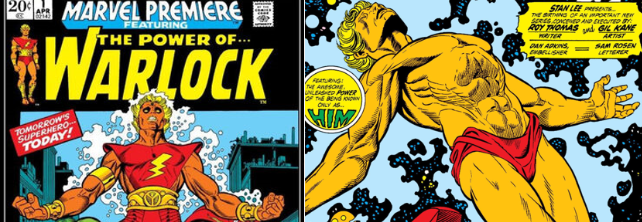


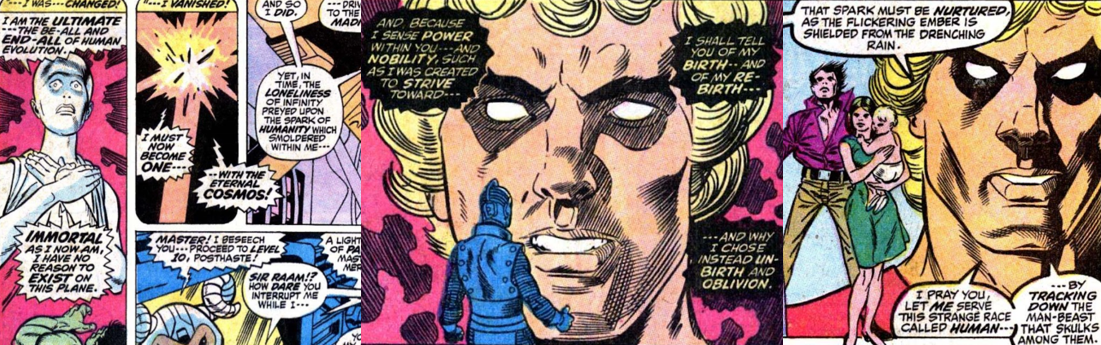
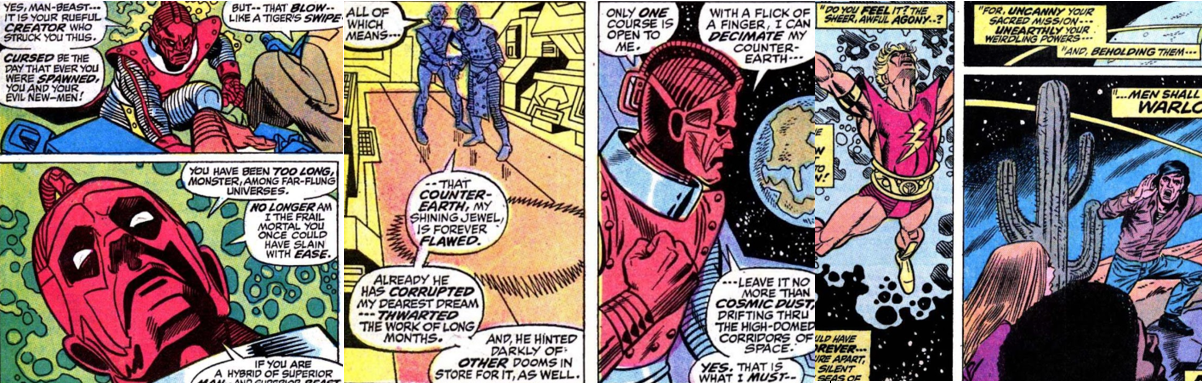


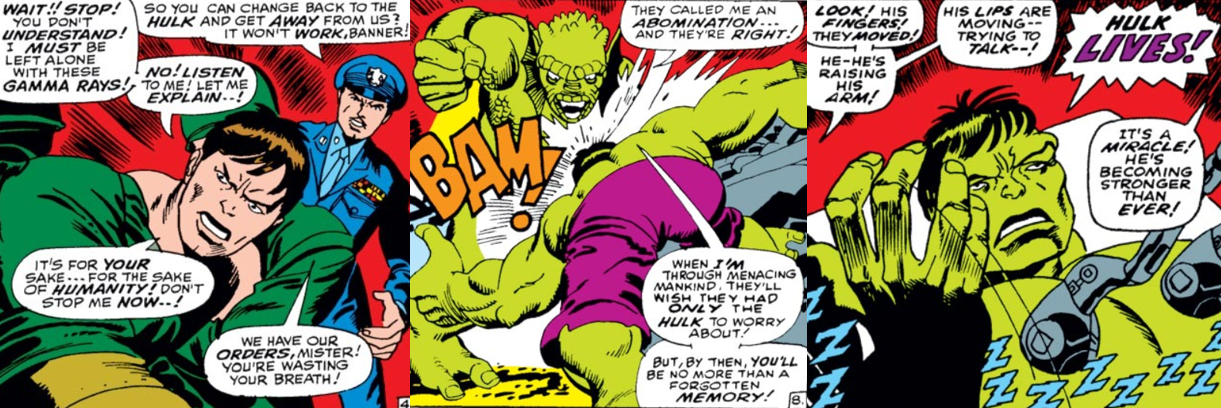
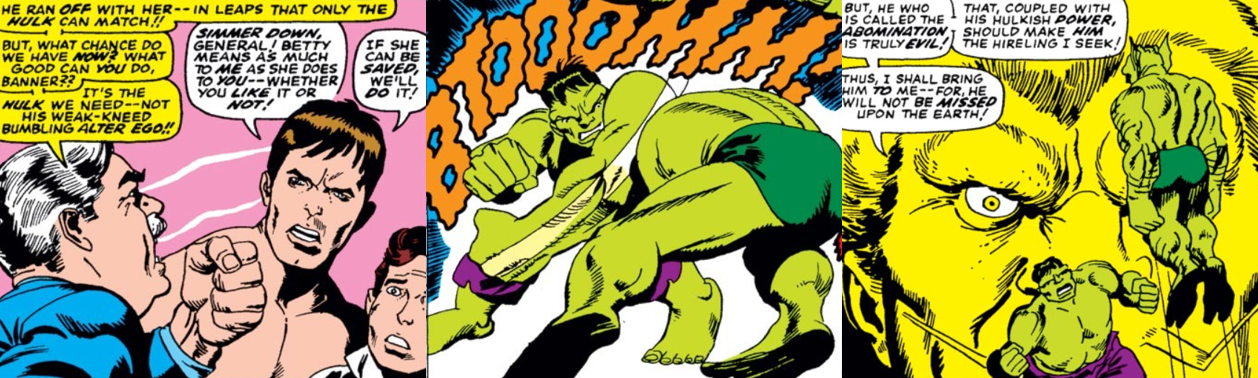




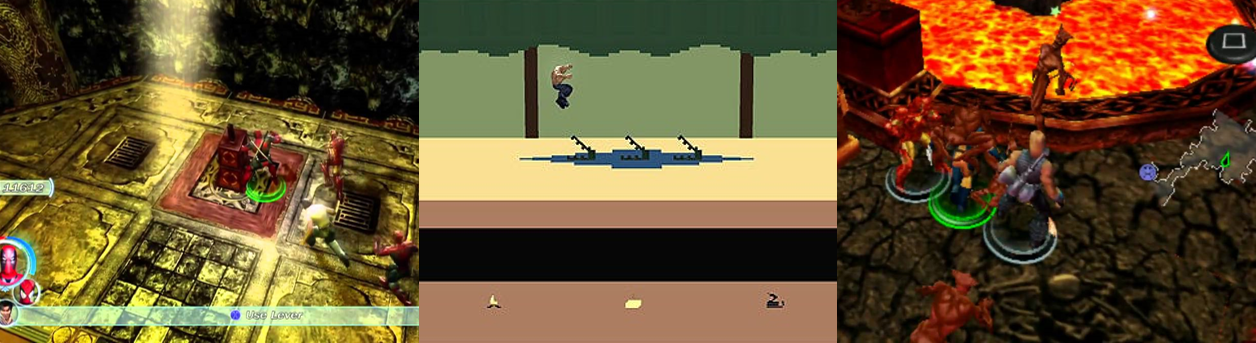
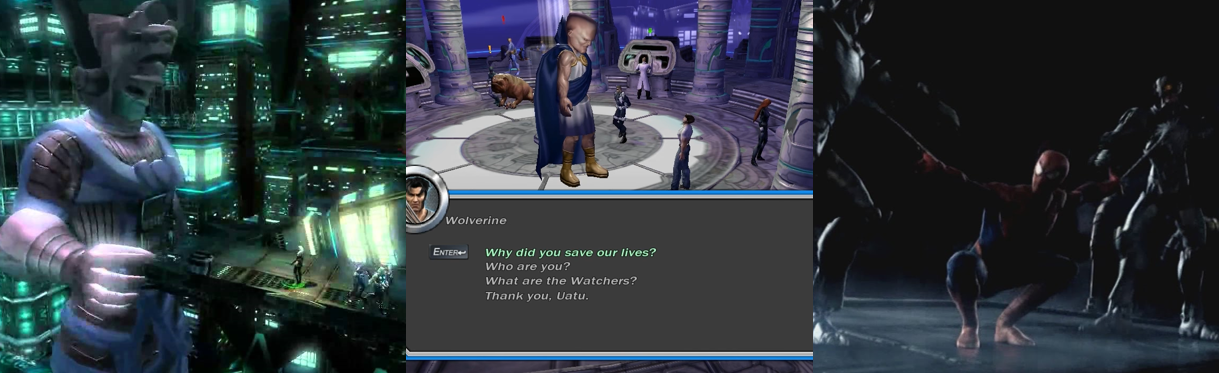


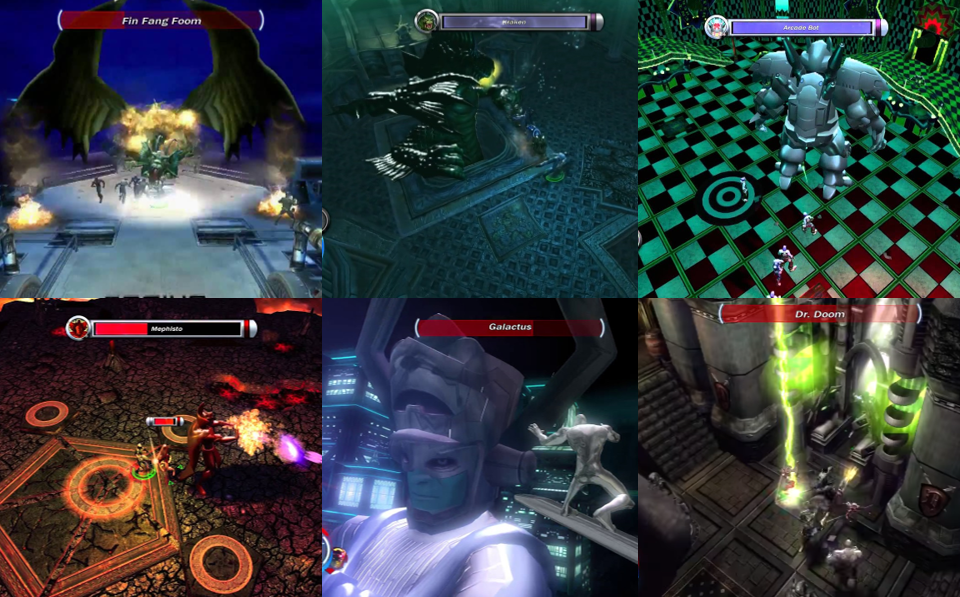


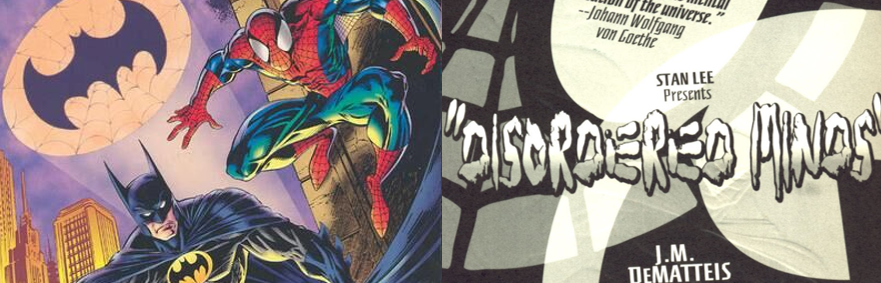
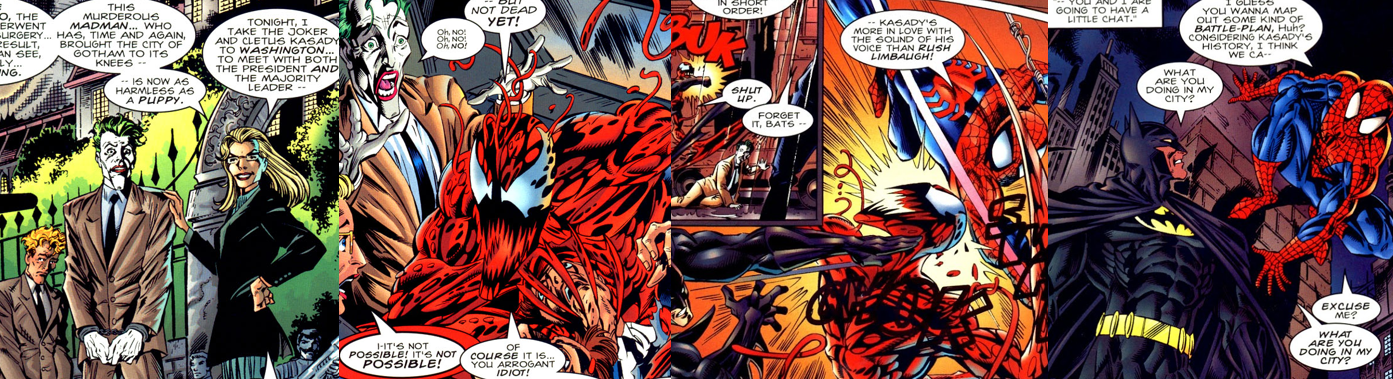


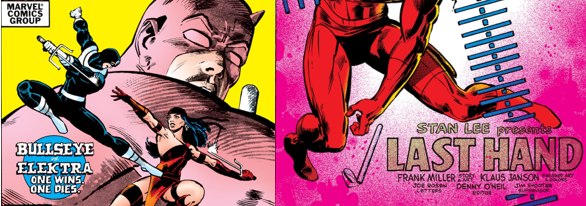
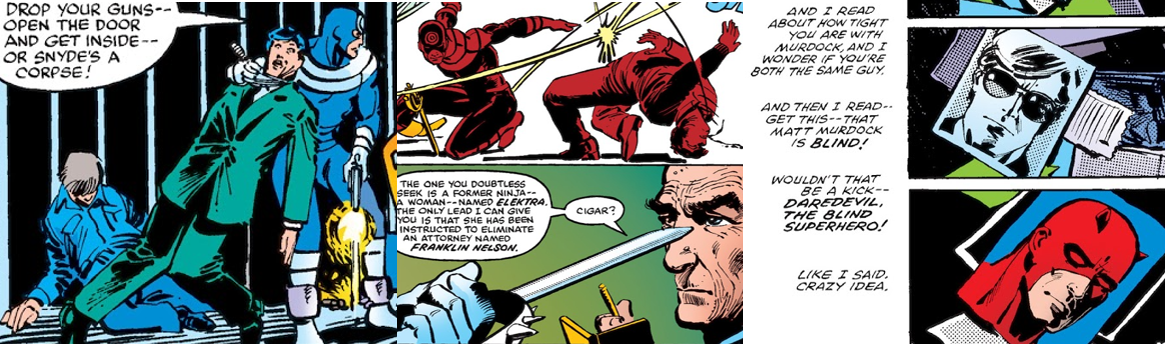
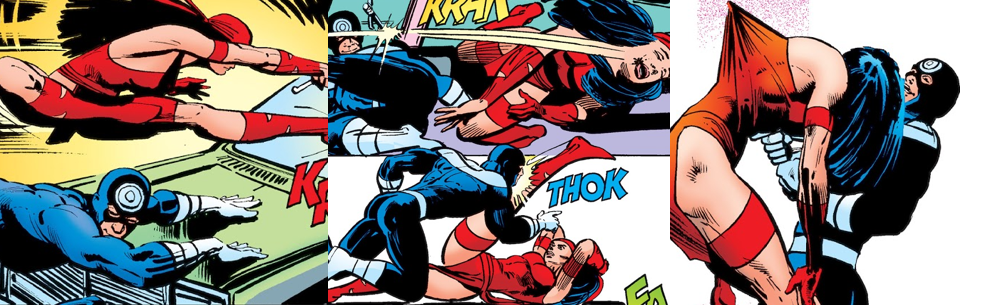
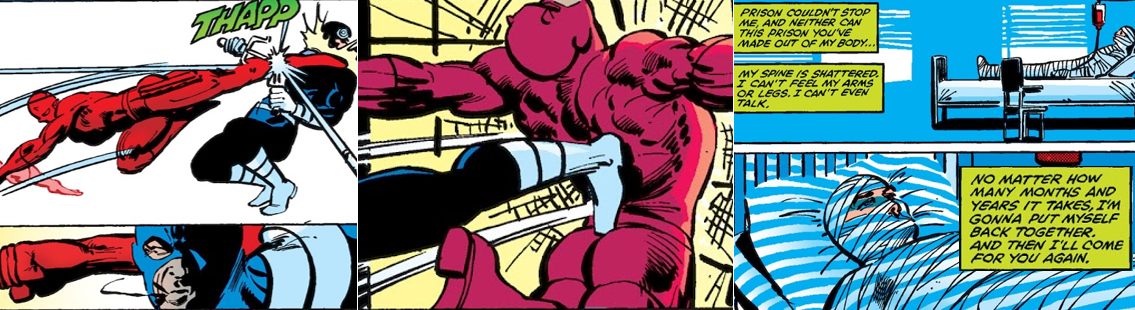
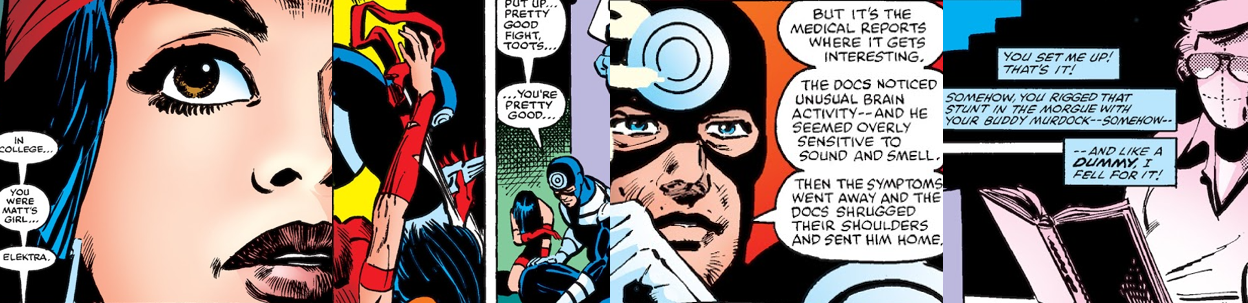
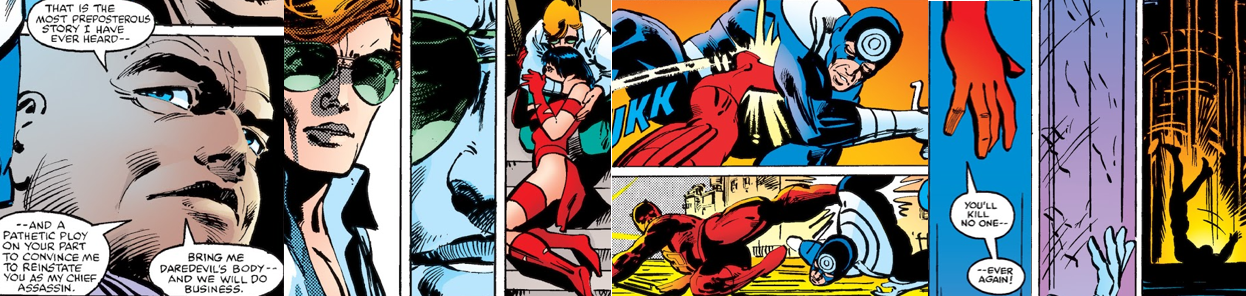

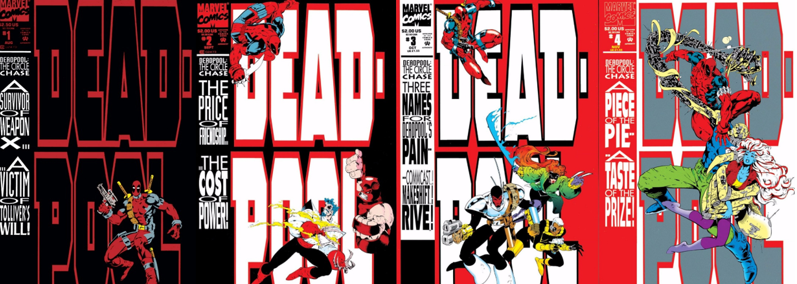

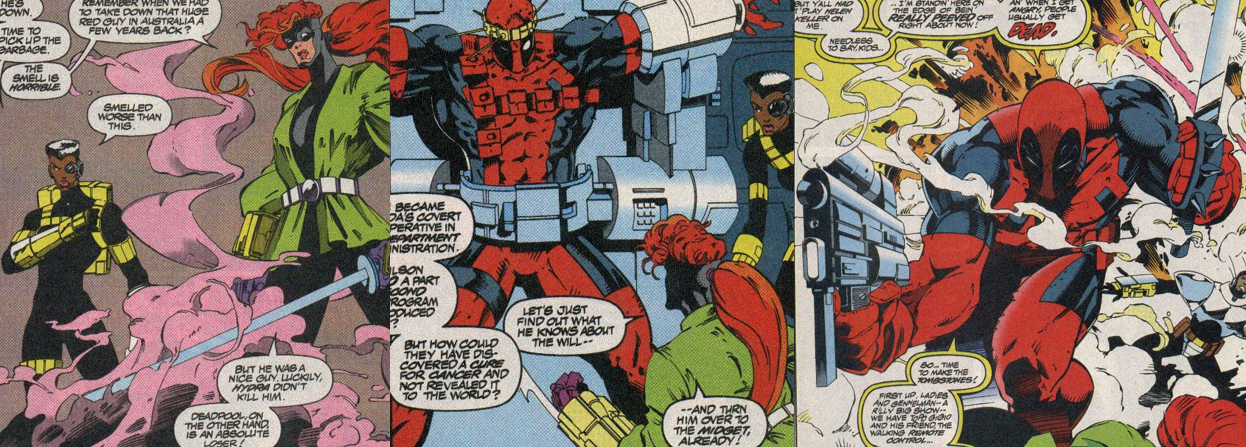

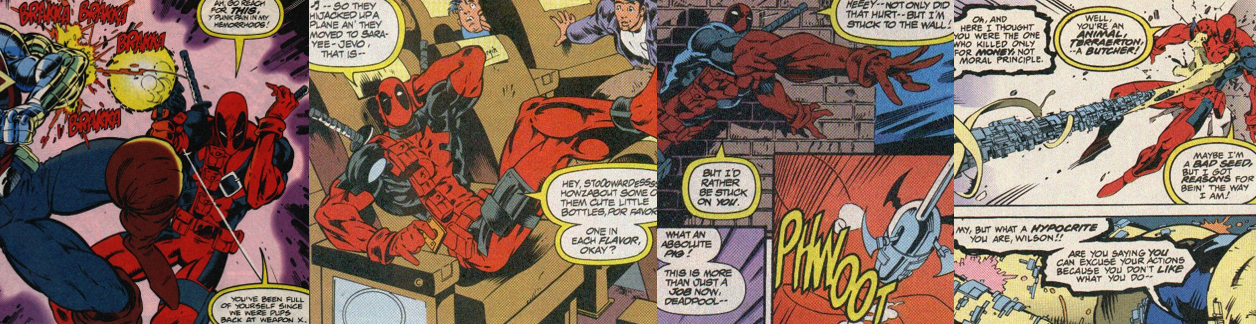
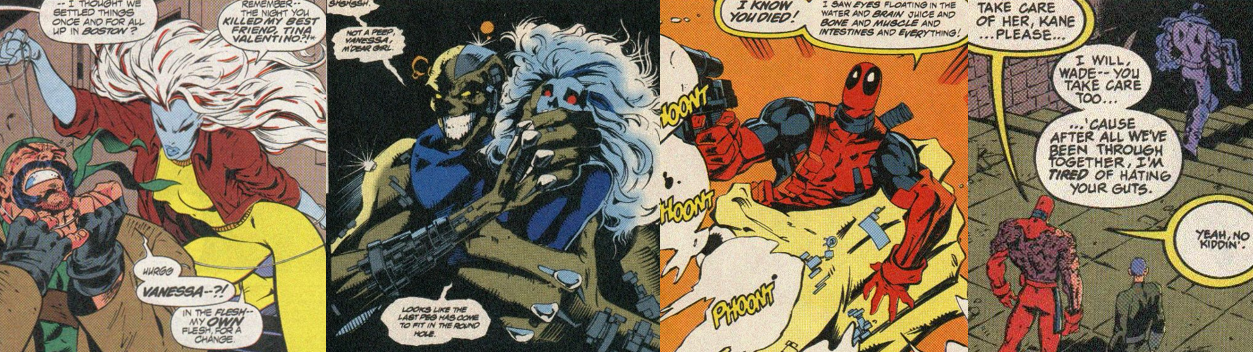


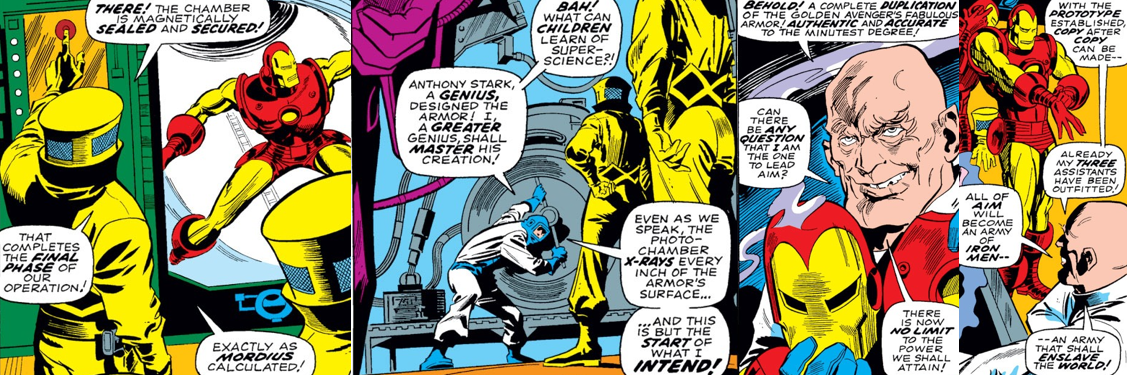
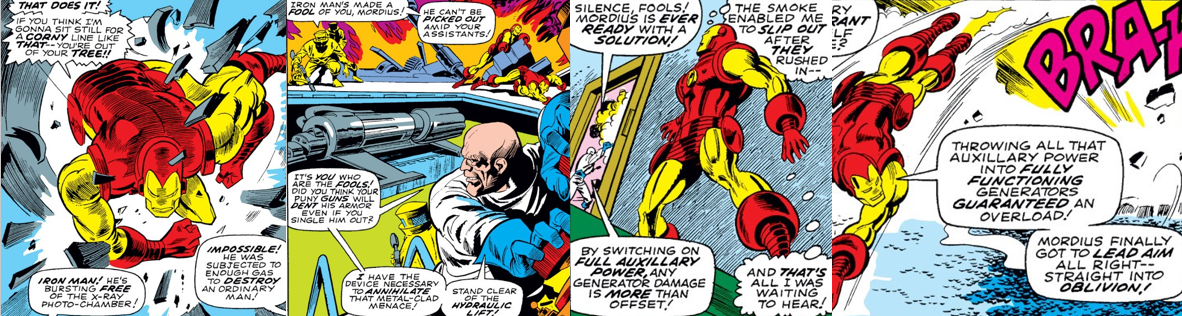
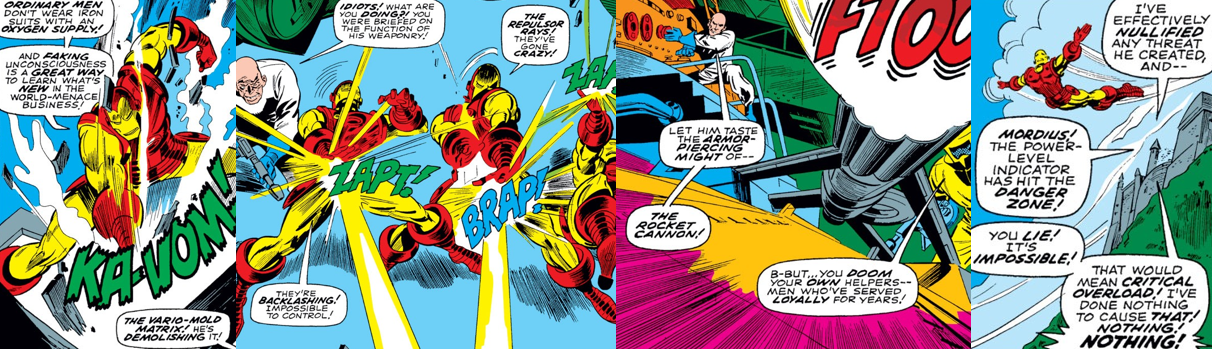





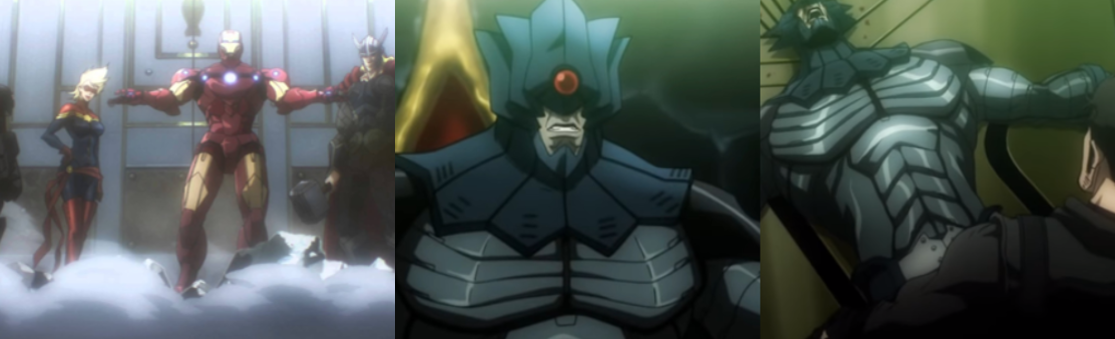


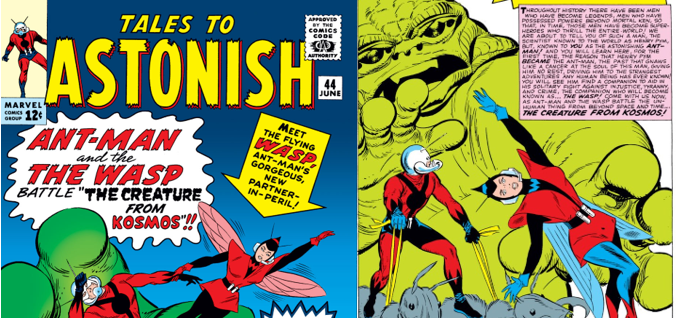
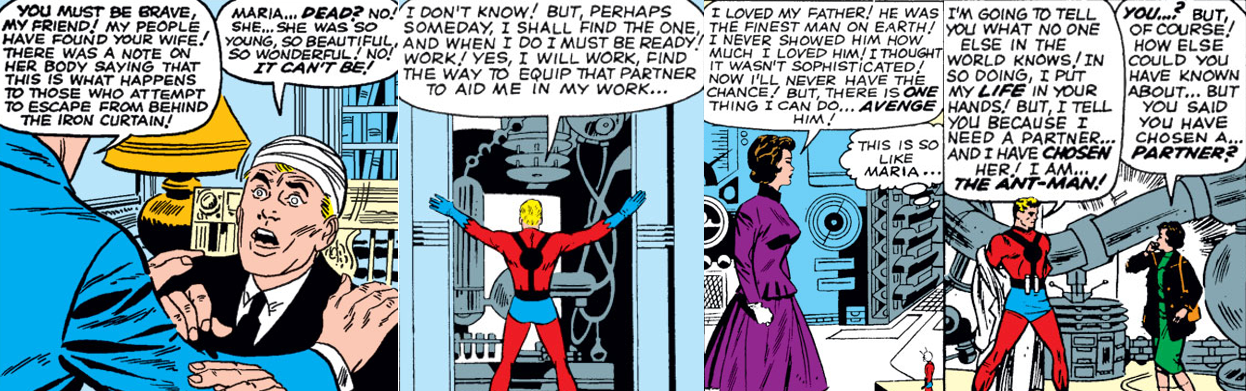
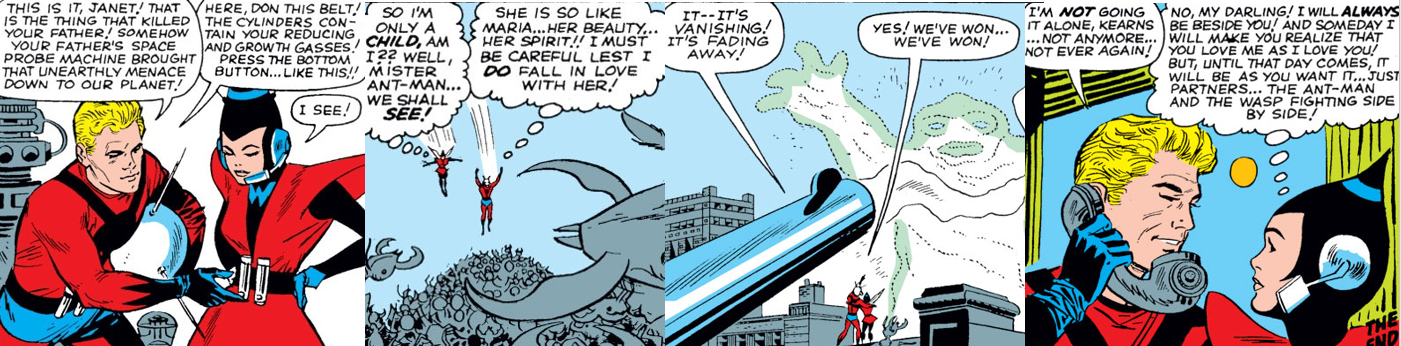


You must be logged in to post a comment.