Back Issues [Stark Sunday]: Tales of Suspense #50


Anthony “Tony” Stark/Iron Man first lived, walked, and conquered in Tales of Suspense #39, published in March 1963 and brought to life by Marvel mastermind Stan Lee, Larry Lieber, and Don Heck. Since then, ol’ shellhead has gone through numerous different armours and shot into mainstream superstardom thanks to an iconic, career-defining portrayal by Robert Downey Jr.  


Story Title: “The Hands of the Mandarin!”
Published: 12 November 1963 (cover-dated: February 1964)
Writers: Stan Lee
Artist: Don Heck

The Background:
Back in 1963, Stan Lee decided to think up a character his readers would hate (a billionaire military industrialist), throw in some Howard Hughes and personal tragedy, and make him someone they could root for. Mounting deadlines kept Lee from writing Iron Man’s debut, so he turned to younger brother Larry Lieber, artist Don Heck, and the legendary Jack Kirby to bring the character to life. These days, Iron Man is a mainstream superhero, one who’s squared off with many colourful villains but perhaps none are more intrinsically linked to the character than the Mandarin. Created by Stan Lee and Don Heck, the supervillain was specifically designed to evoke the Doctor Fu Manchu stereotype of a mysterious and powerful Oriental menace with a maniacal list for world conquest. The Mandarin has dogged Iron Man ever since, pitting his magical ten rings against Stark’s technology time and again and even forming his own version of Marvel’s premier superhero team, the Avengers. I best know the Mandarin from his depiction in the 1990’s Iron Man cartoon (1994 to 1996), where he was brought to life with relish by Ed Gilbert and Robert Ito, but he’s consistently appeared as a boss in various Marvel videogames. However, the Mandarin’s culturally insensitive appearance and racially problematic depiction have caused some controversy. These issues saw him excised from Iron Man (Favreau, 2008) during the scriptwriting stage and his subsequent appearances have been divisive at times. Still, the Mandarin is largely regarded as Iron Man’s archenemy and one of his most complex and persistent foes.

The Review:
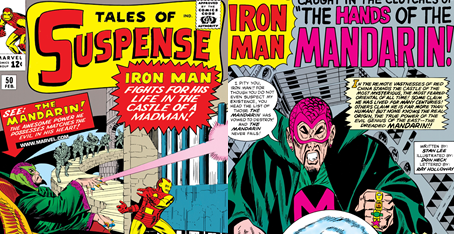
The debut of Iron Man’s greatest foe takes place in the “remote vastness of Red China”, where the legend of the mysterious sorcerer known only as “The Mandarin” has plagued the lands for years. Some say he’s immortal, others say he’s far more than human, but all fear this elusive and powerful figure. While the Mandarin is merely a legend in the Western World, the “most feared Oriental of all” is very real in his native land and lords over his underlings from his vast and technologically superior castle. The story opens with the Mandarin outraged by the arrival of military officers, “emissaries of the red Government”, stopping by unannounced. Though tempted to simply smite them on the spot for their insolence, the Mandarin decides to hear them out first and, with a mere gesture of his finger, makes his “all-seeing crystal globe” vanish and lowers the castle drawbridge so they can enter. The trio, led by General Ho Lee, are terrified of the Mandarin’s power and fear death for disturbing his hallowed grounds but have no choice but to seek an audience with him lest they be slain by their “communist overloads”. Awestruck by the Mandarin’s unbelievable power, which brings parts of the castle to life, they’re brought before the sorcerer and implore him to share his atomic knowledge with the government so that China can “menace the world with nuclear destruction”. Luckily for us, such a request angers and insults the Mandarin. He categorically refuses to share his secrets with the government since he has his own sights set on world domination. And, luckily for the military men, they’re given sixty seconds to flee and somehow escape with their lives.
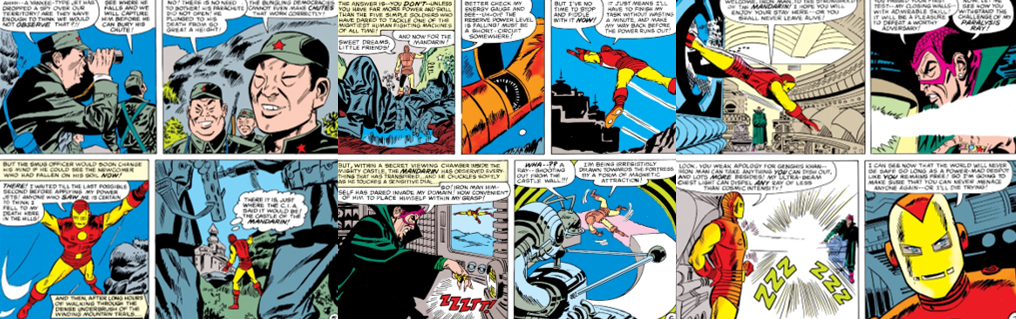
Iron Man ventures into Red China to confront the feared and mysterious Mandarin.

Across the ocean, the United States military is also concerned about the Mandarin’s threat and, to that end, they enlist Iron Man to gain further intel on the mysterious dictator, who’s said to be the single greatest power in China. Iron Man’s only too willing to help, but first he must sort a few things out in his civilian identity as Tony Stark. So, he heads over to one of his weapons factories and slips out his armour and begs off an employee’s dinner he was scheduled to attend as the guest of honour. When he names his chauffeur, Harold “Happy” Hogan, as his replacement, Stark unwittingly insults one of his employees, Bill, who’s disgusted that his boss doesn’t have time for “poor stooges” like him. When his irritation gets the better of him, Bill is laid out with a left hook from Happy, who steps in to defend Stark’s honour, only to be chastised by Tony for acting so recklessly. None of that is as important as their bullish attitude leaving Stark’s secretary, Virginia “Pepper” Potts, feeling disregarded and she scolds both men for being do wrapped up in their antics that they fail to notice her new hairdo…because God forbid Marvel’s women should be written as anything but shallow and selfish characters! Anyway, a few hours later, Iron Man is dropped off on the border of Red China for what his Army cohorts believe amounts to a suicide mission. Correctly assuming that he’d be spotted by the Chinese, Iron Man ensures he slips into their nation by waiting until the last second to power up his transistor jets, fooling the painfully stereotypical soldiers into thinking the bungling democrats “cannot even make chutes [work] correctly”. Though Iron Man’s subterfuge doesn’t last long, the Mandarin’s guards are no match for his “transistor-powered muscles and jet-swift speed”. However, his reserve power levels drop dramatically due to a short circuit, meaning he must finish up quickly before he’s completely drained. Unfortunately for ol’ shellhead, he’s spotted by the Mandarin and forcibly dragged into his castle via a magnetic ray beam.

Iron Man’s forced to use his wits to counter the Mandarin’s rings and take out the madman.

Inside, Iron Man acts swiftly to avoid being crushed by the Mandarin’s wall trap and confronts the main man himself, easily shrugging off the Mandarin’s paralysis ray with his “ultra-beam chest light”. Though tricked by the Mandarin’s illusionary effects, Iron Man pits his technology against his foe’s ten mysterious rings, with the two blasting each other with high-frequency waves and proving evenly matched. Iron Man has no way to counter the near-deafening blast of sound the Mandarin hits him with, however, or the paralyzer ray the Mandarin shoots from one of his other rings, leaving the armour-clad Avenger little more than a statue. Iron Man impresses his foe by recovering faster than he’s ever seen, but the Mandarin’s resources seem limitless. With a gesture, he electrifies the walls to trap his prey and demonstrates his superhuman strength by splintering an iron bar with his incredible karate skills. The Mandarin then puts these skills to the test by throwing hands at his foe, who desperately dodges each strike and feels his power fading by the second, realising that the Mandarin tampered with his armour. To avoid being beaten to death, Iron Man frantically consults his “built-in slide-rule calculator” to calculate the trajectory of the Mandarin’s blow, which is actually a clever ruse to buy the Avenger the time to block the attack so effectively that the pain causes the Mandarin to black out. With no time or power to dismantle the Mandarin’s operation, Iron Man flees to his escape plane and makes the employee function after all, unknowingly scuppering Happy’s hopes to get in with Pepper and Pepper’s hopes to get closer to her boss. And what of the Mandarin? Well, he’s left seething in his castle with a bandaged hand plotting his next scheme.

The Summary:
So, the first thing I’m going to say is: man, do I hate this characterisation of Pepper. She isn’t just pining for Tony; she’s positively obsessed with him! She stands there, prancing around with her new hairdo and dress trying to catch his eye and, when he dares to focus on business and employee welfare, she yells at him for ignoring her! Then, she calls Happy and practically orders him to take her to the employee dinner just to make Stark jealous, relishing the compliments and adulation she receives from others and completely oblivious that Happy is in love with her. When Tony shows up at the end, she’s left fuming when a throwaway comment by Happy implies she and him are together. Of all the poorly aged characterisations of females from this era, I think Pepper comes off the worst. She’s only in the story for a few panels and comes across as an obsessive, manipulative, selfish bitch who badly needs some comeuppance. Thankfully, this is merely a small part of the story and shows just how hectic Stark’s social and business life is, especially compared to his superhero peers since he has so many more responsibilities as a businessman and employer. Indeed, when faced with his impending death at the Mandarin’s hands, Stark’s first thoughts (beyond his own end) are that Happy and Pepper won’t receive their Christmas bonuses if he’s killed! Iron Man is also a proud patriot; he eagerly accepts the assignment to enter Red China and investigate the Mandarin, even though his presence there is technically an act of war. Iron Man seems excited about confronting the dreaded Mandarin and boasts of his adaptability and technology during their fight, matching the Mandarin’s mysterious power and escaping his deadly traps while still being forced to think on his feet since his armour is low on power. In this regard, “The Hands of the Mandarin!” is a pretty good story for showcasing Stark’s tenacity. He has fancy armour and near-magical gadgets, yes, but he’s still human and must rely on his wits and cunning at times, which comes to the forefront when faced with the Mandarin’s awesome power.
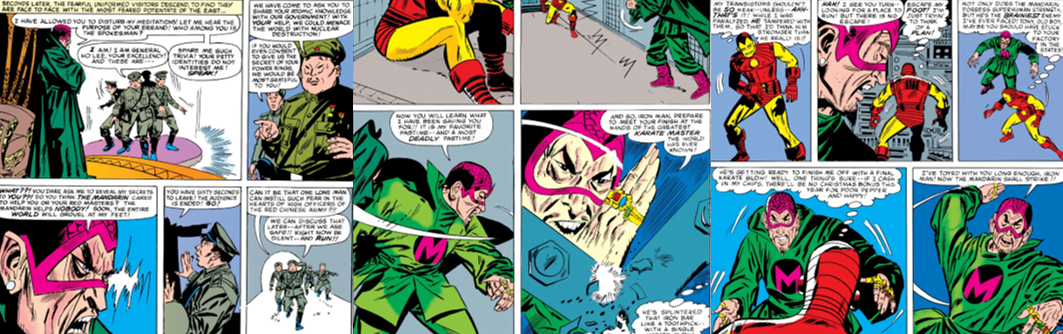
Culturally insensitive and lumbered with a bad outfit, the Mandarin is surprisingly lacklustre here.

The Mandarin possesses ten mysterious rings, each said to contain a different power. We don’t see the full extent of this here, or learn of their origin, but they’re enough to keep Iron Man at bay if not out-right subdue him. The Mandarin can emit high-frequency waves, control his castle’s mechanisms, and paralyse his foe with a gesture, but we don’t see him commanding elements or anything truly impressive. As if his ten rings weren’t powerful enough, the Mandarin’s castle is one giant trap; he can electrify walls, control stone slabs, and has death traps aplenty scattered throughout. This is cool and all, but I feel like anyone can have a castle fortress; I would’ve liked to see these traps supplanted with more focus on the Mandarin’s rings. Like, instead of having Iron Man faced with crushing walls, have the Mandarin control the stones of his castle with his ring. Instead of electrifying the walls with a lever, have his ring send out lightning bolts or something. The rings are the Mandarin’s gimmick and tie into the whole technology vs. magic aspect that’s at the core of their conflict, but that’s not really emphasised here. We never learn the origins of the rings, so for all we know they’re technological in some way, and the Mandarin isn’t depicted as a sorcerer, despite his appearance. Speaking of which, the Mandarin is a…controversial figure, for sure. Exuding Fu Manchu vibes, he’s a stereotypical “Red Menace” type with his little goatee and painfully slanted eyes and clawed hands. His appearance is close to that of a demon at times but hampered by his bland outfit. Consisting of heavy green robes sporting a big, stupid violet “M” and a gaudy matching mask, the Mandarin’s appearance completely negates the very real threat he poses, which is a shame as the story goes to great lengths to build him up as this fearsome foe and then lumbers him with a truly awful outfit. We learn nothing of the Mandarin except that he’s greatly feared, quick to anger, proud, and boasts incredible, unknowable power. He has desires for world domination, sure, but doesn’t appear to have done anything towards that except amass power, yet Iron Man immediately recognises that he’s this formidable enemy to the free world. I dunno, I guess I just expected a bit more from this since the Mandarin is the quintessential Iron Man villain in my eyes, but he just came across as another madman in a castle and a “villain of the month” figure here, which was disappointing.

My Rating:

Rating: 2 out of 5.

Could Be Better

What did you think to the Mandarin’s first appearance? Would you have liked to see more of his rings and their various powers? Do you consider the Mandarin to be culturally and racially offensive? What did you think to Pepper’s characterisation and he manipulation of Happy? What are some of your favourite Iron Man vs. Mandarin stories? Where does Iron Man rank in your hierarchy of comic book characters? Are you doing anything to commemorate Iron Man’s debut appearance and, if so, what is it? Either way, I’d love to hear your thoughts on Iron Man so leave a comment below.

Movie Night: Iron Man 3

Released: 3 May 2013
Director: Shane Black
Distributor:
Walt Disney Studios Motion Pictures
Budget:
$200 million
Stars:
Robert Downey Jr., Guy Pearce, Gwyneth Paltrow, Don Cheadle, Rebecca Hall, Ty Simpkins, and Ben Kingsley

The Plot:
Suffering anxiety attacks following The Avengers/Avengers Assemble (Whedon, 2012), Tony Stark/Iron Man (Downey Jr.) has created a slew of new armours. While smooth-talking entrepreneur Aldrich Killian (Pearce) woos Stark’s love interest, Virginia “Pepper” Potts (Paltrow), with his “Extremis” technology, Stark is incensed when his friend Harold “Happy” Hogan (Jon Favreau) is left critically injured by a sadistic terrorist known only as the Mandarin (Kingsley). After declaring war on the Mandarin, Stark is left without his vaulted technology and with only his wits and genius intellect to uncover the terrorist’s connection to Extremis.

The Background:
Although both Iron Man (Favreau, 2008) and Iron Man 2 (ibid, 2010) were both incredibly profitable, the future Of the Marvel Cinematic Universe (MCU) was secured after the unprecedented success of their first team-up movie. Moving into Phase Three, the MCU faced some corporate issues that led to Walt Disney Studios purchasing the distribution rights to the films from Paramount Pictures before production of a third Iron Man movie began. Although actor/director Jon Favreau remained attached as a producer and actor, he opted not to return to the director’s chair and star Robert Downey Jr. reached out to Shane Black to take the reigns. Drawing inspiration from Warren Ellis’ “Extremis” arc (2005 to 2006), Iron Man 3 (curiously titled “Iron Man Three” in the credits) sought to strip Stark of his resources and be more of a Tom Clancy-style thriller than a traditional superhero film. Although the film drew some controversy for dramatically altering Rebecca Hall’s role and prominence and including a very ill-advised (in my opinion) twist, Iron Man 3 was ridiculously successful and made over $1.200 billion at the box office. Critically, the film’s reviews vary; some praised the tonal shift towards comedy and more grounded action while others took issue with these same aspects.

The Review:
Unlike its predecessors, and the majority of films in the MCU, Iron Man 3 is bookended by Tony Stark narrating the seemingly-insignificant events from his past that led to his latest struggle in the film. While this makes for an amusing post-credits scene where it’s revealed that he’s been boring Doctor Bruce Banner (Mark Ruffalo) to sleep with the events of the movie, his voice over is only really used at the start and the end of the film so it seems a bit pointless to me. Add to that the fact that this post-credits scene is telling us that Tony’s battle against the Mandarin is boring an uninteresting, and this kind of sets a precedent for what to expect from Iron Man 3. As part of the film’s aim to harken back to the themes and atmosphere of the first movie, Iron Man 3 begins at a New Year’s Eve Party in 1993. Here we are reminded of just how selfish, self-centred, and vindictive Stark can be as he’s too busy drinking, partying, and flirting with Maya Hansen (Hall) than giving the likes of Ho Yinsen (Shaun Toub) or the awkward and ungainly Aldrich Killian the time of day. In this flashback scene, Killian is depicted as a bespectacled, awkward cripple and a goof in an employment of one of the worst tropes of superhero movies. However, thankfully, we’re spared watching him undergo a physical and mental transformation and degradation over the course of the movie and his inelegant manner is limited purely to this brief sequence and a subsequent flashback later in the film. This trope is also primarily used to show that he overcame his limitations and Stark’s dismissal of his idea for a collaborative think-tank of the country’s top minds and to further emphasise that Stark’s ignorance and egotism leads to him effectively creating his own villains later in life for not being more considerate to others.

Suffering from PTSD and insomnia, Stark neglects Pepper and focuses on building more armours.

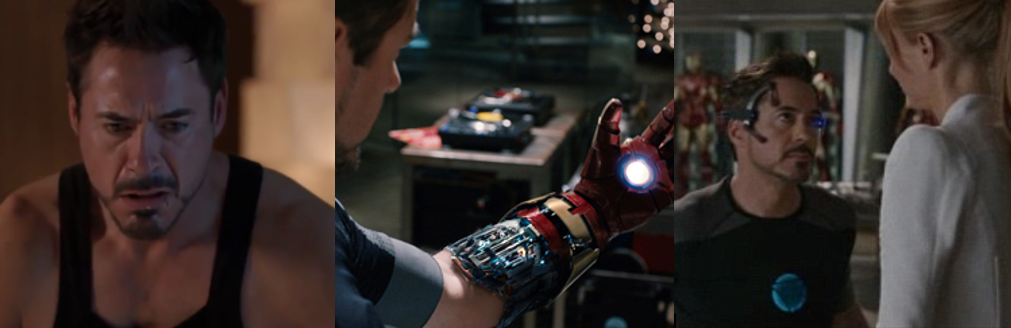
When we catch up with Stark in the then-present day, he’s fully committed to his relationship with Pepper and seemingly in a much more stable place in terms of his personality (though he retains his trademark snark and sardonic nature) but he’s haunted by his near-death experience in Avengers Assemble. Suffering from frequent nightmares and flashbacks to the wide, unknown dangers that lie beyond our world, Stark is stricken by harrowing panic attacks any time the subject of New York comes up and has spent more and more time finding comfort in his Iron Man armour and tinkering down in his workshop. Constantly distracted, highly strung, and fatigued, his relationship with Pepper suffers a bit as a result of the fact that, rather than open up to her, he prefers to make more and more Iron Man variants and work on perfecting his Mark XLII armour, which is capable of separating into self-propelling parts that respond to his commands via micro-repeater chips. Despite having gained new allies in his fellow Avengers, Stark feels more alone than ever; not wanting to worry Pepper, he keeps her at arm’s length and works around the clock to ensure her safety. Happy is busy with his new position as head of security at Stark Enterprises (a job he takes very seriously) and, though Colonel James “Rhodey” Rhodes (Cheadle) unsuccessfully tries to ask about Stark’s mental health, his loyalty to the military necessitates keeping independent costumed heroes like Iron Man out of the loop.

Rhodey features prominently as the government-sponsored superhero Iron Patriot.

Indeed, in an extension of Rhodes’ sub-plot in Iron Man 2, President Ellis (William Sadler) has officially commissioned Rhodes to ditch the War Machine moniker and don the garishly patriotic red, white, and blue armour of the “Iron Patriot” and act as governmentally-sanctioned superhero to help allay fears following the Chitauri invasion. Since Stark is preoccupied with his mounting anxiety issues, Pepper is left feeling unappreciated and shunned. Though she stays loyal to Stark, despite his eccentricities, she is more than a little impressed when Killian shows up at Stark Enterprises having transformed into a physically gorgeous, confidant businessman. After Stark’s dismissal of him back in the nineties, Killian resolved to make Advanced Idea Mechanics (A.I.M.) incredibly successful and profitable and, through A.I.M..s research, was able to not only cure his own degenerative physical condition but potentially offer a cure for those suffering from all kinds of mental and physical ailments in the development of Extremis. However, while Killian’s presentation and charisma are impressive, Pepper ultimately turns down a proposed business venture between Stark Enterprises and A.I..M. out of fears about the potential weaponisation of the Extremis technology. Pepper is right to turn down this proposal as, very quickly, it is shown that a number of ex-soldiers have been exposed to Extremis and become living weapons as a result. The virus, cultivated from Maya’s research, promises to spontaneously heal wounds and even regrow limbs as well as curing mental and physical deficiencies and granted a degree of superhuman strength and dexterity to its subjects.

When Stark antagonises the Mandarin, he’s left without his tech and reliant upon a child.

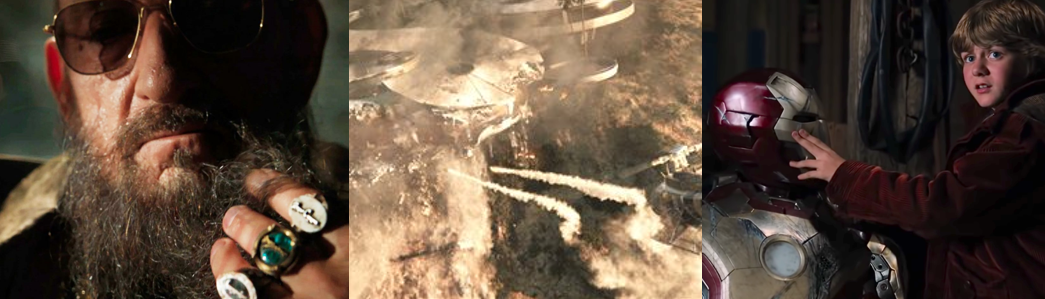
However, Extremis is, as the name implies, extremely volatile and many of those exposed to it burn out and explode as veritable suicide bombers. When Happy is critically injured in one of these attacks, Stark is incensed and openly challenges the one responsible for these, and many other devastating terrorist attacks, the terrorist known as the Mandarin. The Mandarin, who flashes up the symbol of the Ten Rings and frequently issues ominous threats by hijacking the airwaves, directly threatens President Ellis and proudly takes credit for the deaths of innocents in his unrelenting attacks against the United States. However, despite Rhodey cutting Stark out of the Mandarin investigation, Stark publicly (and recklessly) calls out the Mandarin after Happy is put in the hospital; the result is an all-out attack that devastates his home, burying his armours and technology, and leaves Stark stranded in Tennessee cut off from Just A Rather Very Intelligent System (J.A.R.V.I.S.; Paul Bettany) and with his Mark XLII armour powerless. Stripped of his resources and technology, Stark is forced to team up with young Harley Keener (Simpkins), who helps Stark link the Extremist terrorist attacks, and the Mandarin, back to Killian.

The Nitty-Gritty:
Given that it’s written and directed by Shane Black, Iron Man 3 takes place around the Christmas season; while Christmas doesn’t really factor into the overall plot in any tangible way beyond a few trees, decorations, and Tennessee being covered in a frigid snow, it does help the film to stand out against other MCU movies, and superhero films in general, as there aren’t very many that take place in the festive season. Thankfully, despite some of the flaws in the direction of the film and the decisions the filmmakers make regarding certain characters, the change in directors doesn’t diminish the perfect blend of snark and humour at work in Iron Man 3. Indeed, Stark’s interactions with the likes of Rhodey, Happy, and Harley are one of the film’s highlights and it’s great to see that he’s still a droll prick when he needs to be despite being a “piping hot mess”.

While it’s great for his character growth, Stark spends a lot of the film without his armour.

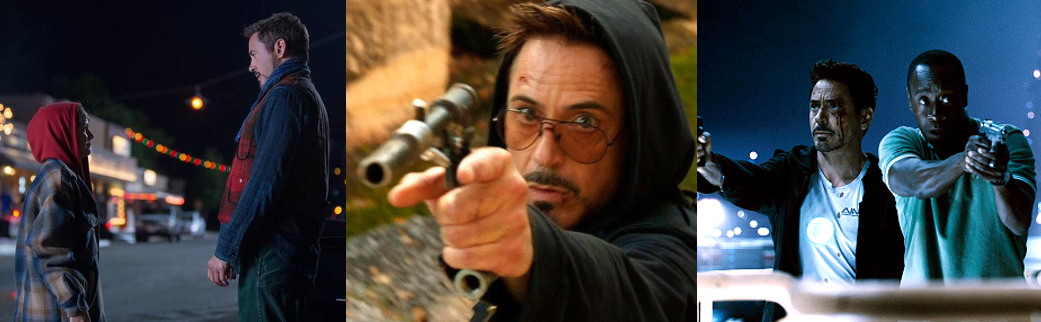
Indeed, the film adds further layers to Stark’s complex personality by adding post-traumatic stress to his laundry list of character defects; traumatised to the point where he suffers from insomnia and a deep-seated urge to build and create armours for every conceivable scenario, the last thing Stark needs is to be left without his tools and technology and yet that’s exactly where he finds himself. Stark’s efforts in Tennessee effectively return him to the cave where he must rely on his innovative genius to survive; when he tracks the Mandarin to Miami, he infiltrates the terrorist’s base with little more than some cobbled-together armaments that ape his usual Arc Reactor-powered arsenal. Teamed with a similarly suit-less Rhodey (whose henchman, Eric Savin (James Badge Dale), appropriates the Iron Patriot suit to kidnap President Ellis), Stark becomes much more of a resourceful spy than a colourful superhero and he spends a great deal of the film (arguably too much, in my opinion) outside of the armour rather than in it.

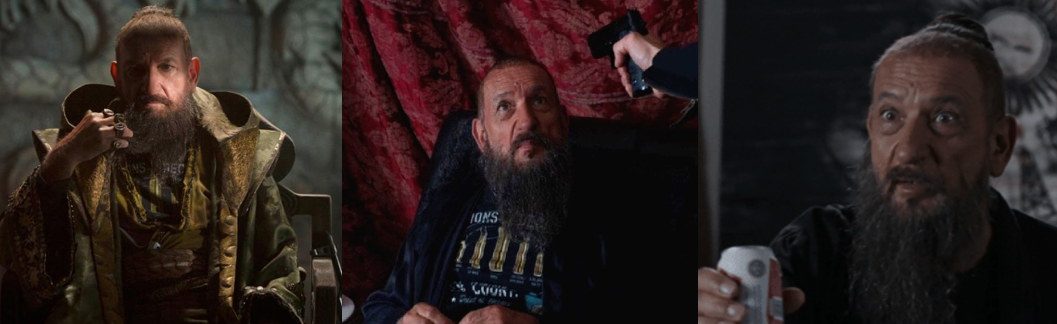
The Mandarin stupidly turns out to be a drunken buffoon merely acting the part.

When he confronts the Mandarin, Stark is confused and enraged to find that he’s little more than a drunken, substance-dependent eccentric English actor named Trevor Slattery. Trevor willing reveals that he was contracted by Killian to pose as a credible terrorist threat in order to kill the President and replace him with Vice President Rodriguez (Miguel Ferrer), a puppet leader who will do exactly as Killian dictates. This twist on the traditional Fu Manchu sorcerer figure who I grew up seeing as Iron Man’s archenemy is undeniably amusing but, in retrospect, was a pretty awful idea; you had Ben Kingsley, Ben Kingsley, who absolutely crushed it when portraying the Mandarin and you turned him into an alcoholic buffoon. Indeed, the MCU producers backtracked on this depiction of the Mandarin pretty quickly and eventually brought the true Mandarin into the fold but even then the character was significantly altered from the source material. Sadly, though, this came out long after Stark’s emotional death so we were robbed of seeing him go toe-to-toe with his most iconic nemesis, which remains a bitter pill for me to swallow.

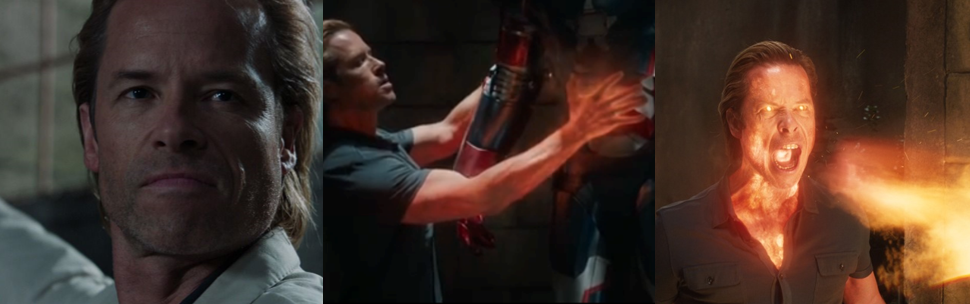
Killian is positioned as the main villain and claims to be the true Mandarin…

As has been publicly explored, Maya’s involvement in the plot as a tertiary antagonist is similarly swept under the rug; rather than be a significant threat to Stark, she merely ends up being a pawn of Killian’s who is gunned down the moment she has a crisis of conscience. Consequently, it’s Killian himself who acts as the film’s primary villain; a malicious, ruthless, and cunning adversary, Killian is yet another dark mirror of Stark (at least in terms of his business acumen) who subjects numerous desperate souls to his Extremis process despite knowing full well that it could kill them. He even forcibly infects Pepper with the virus, though this ultimately proves to be his downfall when she conveniently proves to be far more stable than most of his usual subjects. Killian ultimately takes on the Mandarin moniker for himself, showcasing superhuman strength, unparalleled regenerative abilities, and even the ability to breathe fire (making him like a composite of the comic’s Killian, Mandarin, and Fing Fang Foom).

The army of armours shows up way too late and are almost immediately destroyed, which is a shame.

While there is a noticeable lack of Iron Man action in Iron Man 3, the film does make up for it with a particularly exciting sequence where Stark has to rescue a bunch of the President’s personnel when Air Force One is destroyed, which is quite the innovative and unique rescue scene. Still, one of the primary selling points of any Iron Man movie, especially for me, are the various different armours Stark constructs for himself and Iron Man 3 culminates in a veritable smorgasbord of suits for our viewing pleasure. Sadly, though, while many of these were a significant aspect of the film’s marketing, they only appear onscreen for the briefest of moments in the finale, where Stark has J.A.R.V.I.S. remote pilot every single one of his suits to assist in the battle against Killian. Even his apparently revolutionary Mark XLII armour is pretty underwhelming as it constantly breaks, shatters, and loses power, making it probably the most ineffectual of all of his armours. Once Pepper kills Killian off, Stark immediately orders every single one of his suits to self-destruct and then just fixes not only Pepper’s condition but also his own, removing the shrapnel from his chest and apparently retiring from the superhero life. This, however, would simply be the start of another sub-plot and character arc for Stark throughout the remainder of the MCU which specifically dealt with his inability to walk away from Iron Man, the Avengers, and the thrill of being a superhero.

The Summary:
It’s not that Iron Man Three (I still don’t get why it’s credited like that…) is a bad film. For much of its runtime, it’s actually pretty entertaining and dark thanks to the intense and menacing nature of Kingsley’s portrayal of the Mandarin. Even seeing Stark genuinely affected by his experience in Avengers Assemble was intriguing to watch and showed that the character was clearly growing and learning and influenced by the ever-escalating nature of the MCU, to say nothing of further solidifying Rhodey’s growth as his own legitimate armoured superhero. I didn’t even mind, conceptually speaking, the idea of Stark being robbed of his resources and having to improvise as it went a long way to showing just how adaptable, intelligent, and increasingly neurotic the character is becoming about safeguarding his friends, family, and the greater good. However, the execution is flawed in a lot of ways; the film “feels” just as big and exciting as the previous Iron Man movies but any and all of its positives are immediately soured by that God-awful Mandarin twist. Imagine if a Batman movie gave us the most perfect casting and interpretation of the Joker and then threw a curveball by revealing that he was a simple janitor playing dress-up; people would go crazy and, while I understand that the Mandarin comes with many cultural issues, the fact that the MCU eventually managed to translate a more faithful version of him to film years down the line makes me wish that they had stuck with the casting and the magic they had in Kingsley’s casting and given us (and by “us” I mean “me”) the long-awaited showdown between Iron Man and his greatest foe. Instead, we’re left with a decent enough film but one that gambles, and loses, its credibility on a nonsensical decision and one of the weaker films in the MCU line-up, in my opinion.

My Rating:

Rating: 2 out of 5.

Could Be Better

What did you think to Iron Man 3? Can you explain to me why the credits spell the number three out because I honestly don’t get it? What did you think to the aspect of Stark suffering from anxiety attacks? Did you like that he was forced to innovate and work without his armour or were you annoyed at how little Iron Man action there was in the film? What did you think to the twist regarding the Mandarin? Did you enjoy it or, like me, were you annoyed by it? Which of Stark’s new armours was your favourite and would have liked to see more of and what did you think to the introduction of the Iron Patriot suit? What are some of your favourite Iron Man characters or stories? Where does Iron Man rank in your hierarchy of comic book characters? Are you doing anything to commemorate Iron Man’s debut appearance and, if so, what is it? Feel free to drop a comment down below and thanks for being a part of Iron Man Month!

Movie Night: The Invincible Iron Man

Released: 23 January 2007
Director: Patrick Archibald, Jay Oliva, and Frank Paur
Distributor:
Lionsgate
Budget:
Unknown
Stars:
Marc Worden, Gwendolyne Yeo, Fred Tatasciore, Rodney Saulsberry, and Elisa Gabrielli

The Plot:
When cocky industrialist Anthony “Tony” Stark’s (Worden) efforts to raise an ancient Chinese temple leads him to be seriously wounded and captured by enemy forces, he builds a mechanised suit of armour to escape and ends up embroiled in an ancient prophecy regarding a supernatural despot known as “The Mandarin” (Tatasciore).

The Background:
Before the Marvel Cinematic Universe (MCU) took cinemas by storm, Marvel had some notable success in the field of animation. While the X-Men animated series (1992 to 1997) remains one of their most celebrated efforts, other Marvel properties came to be adapted into cartoons, including ol’ shellhead himself, Iron Man. I used to watch the Iron Man cartoon (1994 to 1996) as a kid and, for the most part, this was my primary window into the character as I was more into Peter Parker/Spider-Man at the time. In 2004, perhaps as preparation for their upcoming series of live-action adaptations, Marvel entered into an agreement with Lions Gate Entertainment to produce ten direct-to-video animated features. The success of the Ultimate Avengers (Richardson, et al, 2006) features led to a solo feature for Iron Man and, while this film made notably less than its predecessors and was met with mixed reviews, this did little to deter Marvel from producing more animated features or their live-action efforts.

The Review:
The Invincible Iron Man is an interesting twist on the Iron Man formula that many may be accustomed to in that it’s perfectly happy to mix the supernatural and mystical with the character’s more technological aspects. While these elements have often been intertwined in the comics and led to many a story pitting science against magic, I have to say that I was a bit surprised to find the film having such an oriental flavour right from the get-go and intertwining Iron Man’s origin in with that of the mystical and prophecy regarding an “Iron Knight” opposing the entity known as the Mandarin.

Tony’s brazen attitude is a serious point of contention amongst his friends and family.

In China, James “Rhodey” Rhodes (Saulsberry) is overseeing the work on unearthing an ancient city. As if superstitions weren’t bad enough, the work is threatened by potential geological issues, and Tony Stark constantly letting Rhodey down in regards to supplies and resources for the project. Even worse is the constant threat of a terrorist group known as the Jade Dragons, who attack the site with bazookas. Frustrated, Rhodey tries to force Tony into action; Tony is aghast at the idea of sending munitions to help defend the site since he doesn’t want any bloodshed but, despite promising to fly out to support him, Tony finds himself more distracted by a gorgeous redhead. Tony’s cavalier attitude and arrogance aggravates his Board of Directors, who disagree with his excavation of the temple and have grown tired of his egotism and the secrecy regarding his scientific endeavours and even his father, Howard (John McCook), reluctantly agrees to cut Tony’s funding and influence off.

Tony is critically injured but kept alive to undo the raising of the Mandarin’s resting place.

At the site, a bombardment of sonic vibrations expand “liquid steel” to safely raise the entire lost city up to ground level. The Jade Dragons’ leader, Wong Chu (James Sie), adamantly opposes this and vows to kill anyone who gets in their way; though Li Mei (Yeo) openly defies this order, the attack is successful and Rhodey is taken prisoner, which is finally the kick up the ass Tony needs to get over there and get involved. However, this is all part of the plan for the Jade Dragons to ambush Tony’s convoy and, in the attack, he is not only also captured but critically injured as well. This presents another interesting twist on Iron Man’s origin where Tony is held captive alongside Rhodey as well as Ho Yin (Unknown/Unclear), and also that his entire capture was by a group of extremists trying to return the Mandarin’s tomb to the ground.

Tony’s armour comes in handy in battling the supernatural Elementals.

Unlike traditional depictions of the character, The Invincible Iron Man’s Mandarin is a purely mystical and supernatural entity of myth and magic; he is protected by the four Demon Elementals, which take the form of armoured, Samurai warriors. Thanks to Ho Yin and Rhodey’s background as an army medic, Tony’s life is saved by a crude iron lung, of sorts. After Ho Yin informs them of the legend of the Mandarin and is executed by Wong Chu, they construct an elaborate suit of armour to stop the Elementals, who are causing destruction all over the world in search of the ten rings that will resurrect the Mandarin.

The Nitty-Gritty:
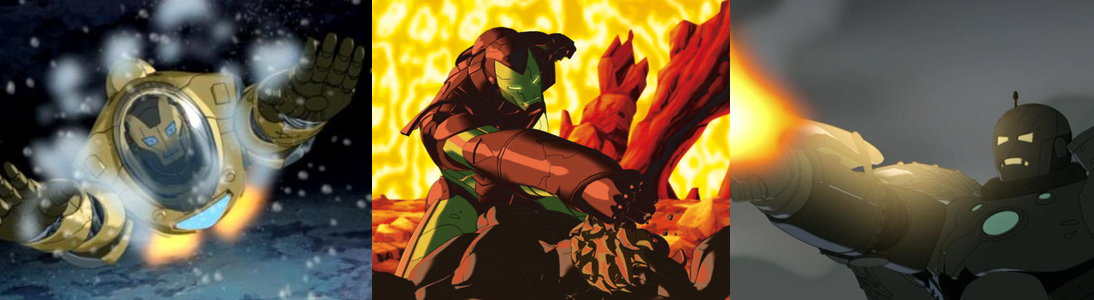
If there’s one thing holding The Invincible Iron Man back, it’s the quality of the animation; while it’s okay, for the most part, and has a bit of a pseudo-anime flavour going on, it’s all very rigid and basic and a bit blurry around the edges. Similar to the Iron Man cartoon of the nineties, it also features an abundance of CGI animation, particularly in the depiction of the Demon Elementals, which lends them an otherworldly quality and helps realise them as creatures of magic. Rhodey is initially incensed to find out that Tony has secretly been constructing various armours behind his back; believing that Tony has betrayed his anti-weapons ideals, his concerns are set aside as all of those armours come in handy not only for tracking down the Mandarin’s rings but battling the Elementals. The CGI work on the armours is good, if maybe a little too “fluid” at times, and there are a decent array on show here, from the bulky grey armour to the submarine suit and the familiar red-and-gold armour that’s become Iron Man’s standard.

The armours look pretty good and are quite varied but aren’t featured that much.

Unlike other depictions of Iron Man, the actual construction and capabilities of the armours is of little consequence here; we don’t really learn anything about the Arc Reactor technology or the Repulsor blasts and there’s no allegorical scenes of Tony building the armour. They simply exist because he built them prior to the film, which is good on the one hand as it lets the film get to the fights a lot faster but also a little disappointing as seeing the construction and evolution of the armours is always a fun aspect of the character. Still, thanks to the Mandarin’s rings being hidden all over the world, Iron Man’s battles against the Demon Elements get to take place in such animated locations as the bottom of the ocean and inside a raging volcano. While the CGI in these fights can be a little jerky and wonky at times, they’re decent enough, for the most part, and add some visual variety to the proceedings (a fact helped by the inclusion of actual dragons for Iron Man to fight!) There’s also a couple of competing sub-plots at work in the film, including a bit of corporate intrigue surrounding Stark Industries and Howard’s insistence on directing the company (and Tony’s genius) towards weaponry. This leads to him running afoul of Strategic Hazard Intervention Espionage Logistics Directorate (S.H.I.E.L.D.) Agent Drake (John DeMita), who is potentially a prototype for Agent Coulson (Clark Gregg), and him and Rhodey finding themselves fugitives. It is also the cause of a great deal of animosity between Tony and his father as Howard is indirectly responsible for Tony and Rhodey’s capture and Ho Yin’s death since it was he (as in Howard) who supplied weapons to the site and thus armed the Jade Dragons.

Li Mei ends up being used as a pawn in the Mandarin’s resurrection.

While there isn’t a great deal for Virginia “Pepper” Potts (Gabrielli) to do other than offer dry witticisms and cover Tony’s escape and actions in her own way, Li Mei is a pivotal part of a crucial sub-plot in the film; initially depicted as a reluctant follower of Wong Chu, she is burdened by having been born a woman and thus judged as being insufficient to opposing the Mandarin in a strictly patriarchal society. There’s a bit of a brief romantic angle teased between her and Tony but, rather than being reduced to a mere prize for Tony to earn or a damsel to save, Li Mei strikes back against her oppressor when she shoots Wong Chu dead to help Tony and Rhodey escape and even travels to America to help Tony track down the last of the rings. Li Mei’s story turns out to be one of deception as, after Iron Man retrieves all of the rings, she claims them for herself and reveals that she tried to keep him away since she is destined to be the vessel for the Mandarin’s resurrection. Although despondent at her fate, and Tony’s decision to stand by her and thus fulfil the prophecy of the Iron Knight battling the Mandarin to the death, she nevertheless willingly allows the Mandarin’s malevolent spirit to posses her body for the finale. Thus, in another twist on the traditional depiction of the Mandarin as a Fu Manchu-type, the sorcerer is instead rendered as an ethereal force that inhabits and surrounds Li Mei’s naked body and wields incredible elemental powers. Ultimately, though, Iron Man is able to dispel the Mandarin not through brute force or technology but by appealing to Li Mei’s humanity, though she dies in the process. Having learned the value of responsibility and self-sacrifice, Tony returns to America makes amends with his father by buying a controlling interest in Stark Industries and giving ownership to Howard (who immediately fires the entire Board).

The Summary:
The Invincible Iron Man is a decent enough animated feature; it’s not exactly the most action-packed cartoon I’ve ever seen but there’s some interesting twists on the classic Iron Man formula that make it an entertaining watch, at times. The decision to tie Iron Man’s origin in with the Mandarin is a fascinating one; the two have always had a violent and storied history and represented the dichotomy of technology versus the supernatural and, to me, the Mandarin has always been Iron Man’s greatest foe. It’s disappointing, then, that the Mandarin doesn’t really show up until the final few minutes of the feature and in a greatly altered form; while the Demon Elementals fill the void on his behalf, a lot of the film seems like needless filler. The Invincible Iron Man seems to primarily function as a prequel to the Ultimate Avengers animated movie and, in that regard, it does help shed a little light on the character but there’s not really much Iron Man action for my liking and Marvel definitely did a better job representing the character in the nineties cartoon and the subsequent live-action films.

My Rating:

Rating: 2 out of 5.

Could Be Better

What did you think to The Invincible Iron Man? How do you think it compares to the other Iron Man cartoons, Marvel’s other animated efforts, and the character’s live-action movies? Did you like the twists presented in the film, specifically regarding Iron Man’s origin and the depiction of the Mandarin? Would you have liked to see more animated films in this style or were you never a fan of Marvel’s feature-length cartoons? Whatever your thoughts on The Invincible Iron Man, leave a comment below and check in next Monday for more Iron Man content.

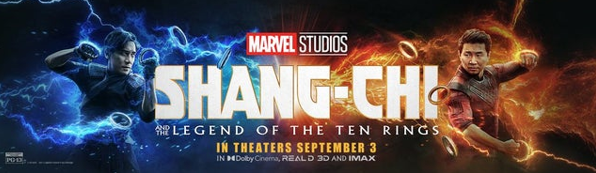
Movie Night: Shang-Chi and the Legend of the Ten Rings

Released: 3 September 2021
Director: Destin Daniel Cretton
Distributor:
Walt Disney Studios Motion Pictures
Budget: $150 million
Stars:
Simu Liu, Awkwafina, Meng’er Zhang, Florian Munteanu, and Tony Leung

The Plot:
Desiring a normal life away from his father, Xu Wenwu (Leung), who has led the terrorist organisation known as the “Ten Rings” for a thousand years thanks to his mysterious alien rings, Shang-Chi (Liu), a master kung fu, flees to San Francisco. However, his normal, everyday life is shattered when he is forced to confront his father, who has become obsessed with locating a lost mythical land.

The Background:
Shang-Chi was created by Steve Englehart Jim Starlin and debuted in December 1973 to capitalise on the popularity of kung fu (and, specifically, the late Bruce Lee) during that time. Despite being a staple of Marvel Comics ever since, and me being a die-hard comic book reader and collector, I can’t really say that I have any experience of Shang-Chi at all beyond a few passing mentions and I am much more familiar with Danny Rand/Iron Fist, so I was surprised not only when a movie was announced but also to learn that the concept was kicked around in the 1980s and that an adaptation very nearly saw the light of day in 2004. Seeking to introduce new characters for the fourth phase of the Marvel Cinematic Universe (MCU), MCU producer Kevin Feige saw Shang-Chi as a way to not only do the Mandarin justice but to also expand the scope of the MCU into Asian territories and a whole new genre. Following delays due to the COVID-19 pandemic, Shang-Chi and the Legend of the Ten Rings finally released to overwhelmingly positive reviews; critics praised the film’s martial arts and characters and regarded the film as a breath of fresh air for the MCU and the film managed to defy the pandemic by grossing almost $169 million at the box office.

The Review:
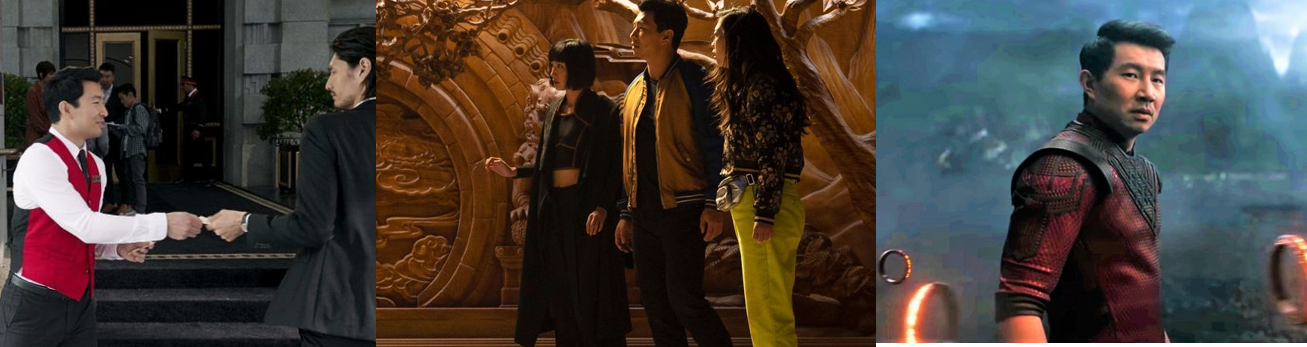
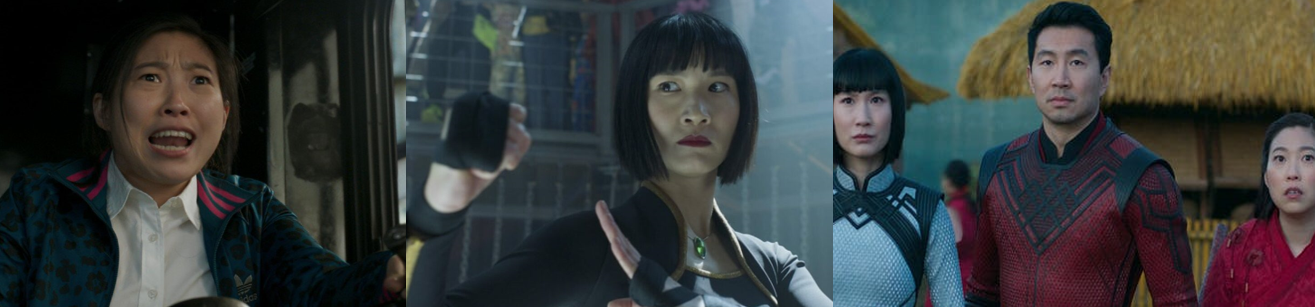
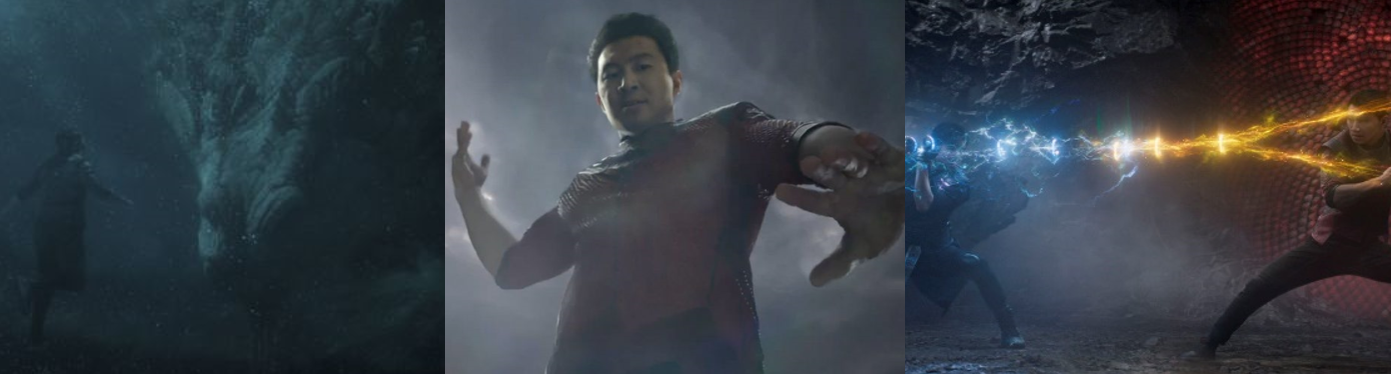
The movie opens with a quick recap of the titular legend of the Ten Rings, which actually doubles as two legends in one; basically, Xu Wenwu found the mysterious and powerful, potentially alien, rings about a thousand years ago and they granted him immortality, everlasting youth, and the power to conquer and reign. Like all men with power, though, he craved even more and, upon learning of the lost land of Ta Lo, ventured there to learn the powers of the Gods. While Trevor Slattery (Ben Kingsley) was a complete mockery of everything the Mandarin stands for, Wenwu isn’t exactly a one-to-one interpretation of the fictional warlord either; rather than controlling different elemental powers and such, the ten rings function more as a kind of magnetic inexhaustible energy field that Wenwu manipulates like whips or uses to fire concussive bolts, propel himself through the air, or form shield. I can understand why (the actual ten rings are probably a little too close to the powers of the Infinity Stones, maybe), though, and it definitely makes for some unique action and fight scenes involving the character.

This new version of the Mandarin end sup as one of the MCU’s most complex and sympathetic villains.

Crucially, however, Wenwu is a surprisingly complex and sympathetic character; in the comics, the Mandarin is generally always this power-hungry dictator who slaughters and destroys simply to feed his lust for power but Wenwu actually gave up his evil ways after meeting, being bested by, and subsequently falling in love with Ying Li (Fala Chen). Together, they sired two children and it was only after Ying Li died that Wenwu returned to the rings, rebuilt his criminal empire, and returned to amassing a formidable armed of well-trained assassins and terrorists. Having studied Ta Lo for years, Wenwu has become somewhat consumed by grief and guilt; he supplants the blame for Ying Li’s death into the people of Ta Lo and, later, even Shang-Chi himself and his entire motivation is based on the belief that storming Ta Lo and opening the “Dark Gate” they protect will return his love to him. Indeed, for the majority of the film, Wenwu is a well-spoken, intelligent, and even kind-hearted character; he’s stern and tough, and seen to be ruthless and uncompromising, and definitely has a dark past soaked in blood but it’s undeniable that he cares for his children, and his lost love, even if the allure of the ten rings is often more provocative for him.

When his father comes looking for him, Shang-Chi is forced to confront his past.

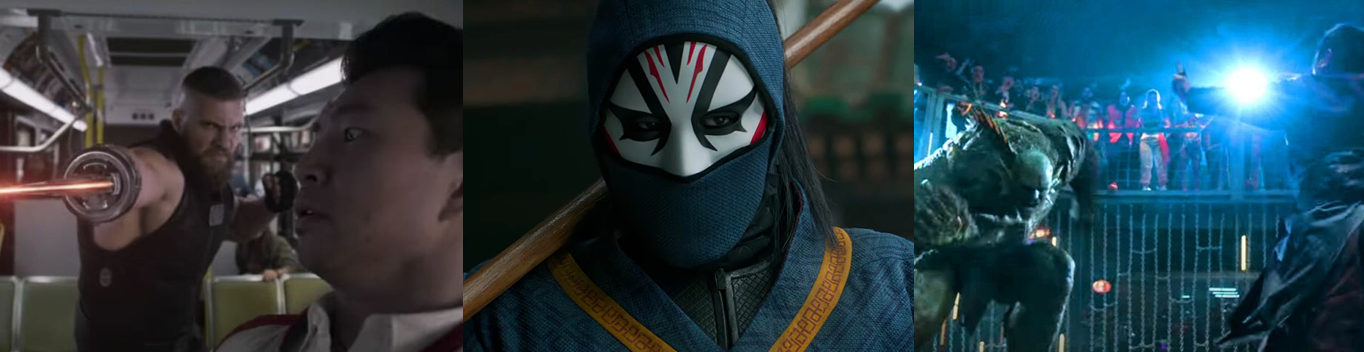
As for Shang-Chi, after his mother died he was trained to be an assassin, like all of the men under Wenwu’s command; a highly adept and dangerous fighter, he was given his first assignment at fourteen and used it as an opportunity to escape from his father’s organisation. Fleeing to America and changing his name to “Sean”, Shang-Chi was content to hide from his true self and his true power and eke out a meagre living as a valet attendant alongside his oldest and closest friend, Katy (Awkwafina). However, when Wenwu’s goons come for him (specifically the jade pendant the wears around his neck, a gift from his late mother), Shang leaps into action to defend himself and Katy using his incredible (and largely unmatched) martial arts skill. Realising this his sister is in equal danger, he travels to Macau (with Katy in tow) and is forced to face his past in the process; ashamed of his upbringing, the heinous acts he has committed in his father’s name, and his inability to save his mother, Shang is reluctant to face his inner demons but nonetheless adamantly opposes his father’s plot to burn Ta Lo to the ground and is convinced that Wenwu has gone mad with grief and needs to be stopped.

Katy provides the comic relief while Shang-Chi tries to repair his relationship with Xialing.

Katy largely fills two very crucial roles in the film: she’s both the audience surrogate and the comic relief, two roles she fulfils beautifully. Her rapport and banter with Shang is genuinely affectionate and entertaining and she is often getting into amusing situations that he has to rescue her from since she’s not really a fighter. Her enthusiasm and kind nature more than make up for this, though; even after learning about Shang’s true name and past, she sticks by him and her faith in him is never shaken. In fact, it’s only bolstered when she sees how good a fighter he is and when they reach Ta Lo, she is eager to help out in the ensuing battle in her own way and ends up not only being a vital part of the finale but also a highlight of the film. Shang’s sister, Xu Xialing (Zhang), more than makes up for Katy’s lack of fighting prowess; a grim and independent young woman, she and Shang were close as children but she grew to resent him after he left and never returned for her, and after spending a lifetime being shunned by her father and denied the same fighting training her brother received. Nonetheless, she has self-taught herself to be as formidable a fighter as he, especially with a roped kunai, and the reforging of their relationship as brother and sister is a key subplot of the film. Though they join forces fairly quickly after reuniting and agree that their father has gone mad, it’s only through truly working together to oppose Wenwu that their tension and lingering issues come to be resolved.

Some formidable, if underdeveloped, goons oppose our heroes alongside some fun cameos.

Of course, the odds are fairly stacked against are three heroes; Wenwu sends his two top enforcers, Razor Fist (Munteanu) and Death Dealer (Andy Le), to acquire Shang and Xialing’s pendants, alongside dozens of nameless, faceless, disposable members of the Ten Rings. While Death Dealer is little more than an unnamed mute with a cool look and some swift moves, there’s discord between him and Shang since Death Dealer was so instrumental in Shang’s harsh and brutal training as a child. We get a touch more personality for Razor Fist, a hulking brute of a man with a blade for an arm who follows his orders relentlessly but is still smart enough to know when to withdraw or refocus his goals for his own survival. Rather than being depicted as strictly a terrorist organisation, the Ten Rings is painted as a global, adaptable organisation that can topple governments and change the course of history through many and varied means. The film even has Wenwu comment on the unfortunate situation with Slattery and philosophise on the power and meaning being names and reputations, though I honestly could have done without revisiting this lingering plot point as I wasn’t impressed with the way Iron Man 3 (Black, 2013) handled the character. Of course, there are a few familiar faces from the MCU to be found here as well; both Wong (Benedict Wong) and Emil Blonsky/The Abomination (Tim Roth) appear in the film for what basically amounts to a brief cameo in Xialing’s underground fight club where Wong tricks Abomination into knocking himself out as part of a scam to fun his magical teachings.

The Nitty-Gritty:
Shang-Chi and the Legend of the Ten Rings is an extremely visual film that is heavily seeped in Chinese lore and mythology; aesthetically, it stands out beautifully from other films in the MCU, especially in the fight choreography and the largely oriental setting of the film once the characters move away from san Francisco. Even then, fights and shots are framed in a way that is visually engaging and entertaining, with the camera being fluid and flowing as smoothly as Shang-Chi’s fast and elegant movements. Macau provides an alluring neon background for Xialing’s fight club while Wenwu’s compound embodies his centuries of age and experience. Of course, it is Ta Lo that really makes the film stand out; an alternate dimension of mythological wonders come to life, Ta Lo is a land untouched by the ravages and wars of man and heavily reliant upon the old ways of combat and the benefits of magical armaments. The closest MCU parallels I can draw are to Black Panther (Coogler, 2018) and Doctor Strange (Derrickson, 2016) for the way it mixes traditional oriental folklore and magic with advanced technology, at times, and the use of both to create a whole new corner of the MCU, one rich in notions such as chi and lost lands of wonders that potential hold more dangers for this interconnected world.

Fittingly, the varied and impressive fights steal the show.

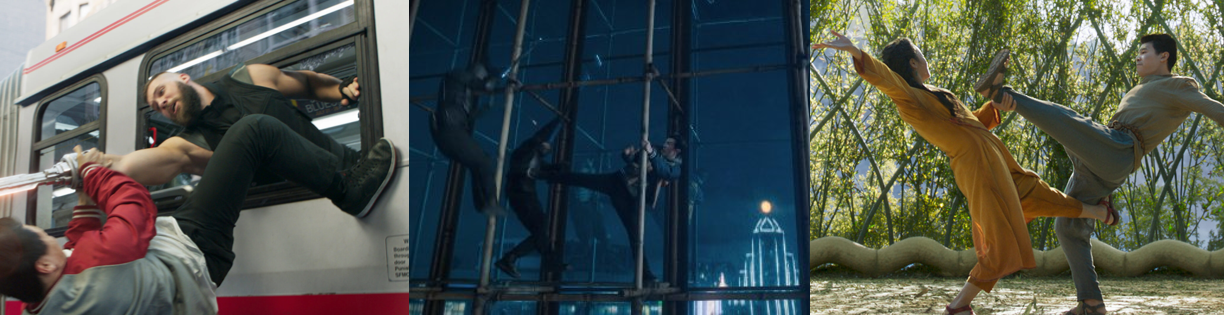
And then there are the fight scenes. Honestly, we haven’t seen fight scenes like this in the MCU at all, and they’re very rarely in cinema these days as well. Fights are fast-paced, kinetic, and full of energy, motion, emotion, and variety. Shang-Chi is every bit a living weapon, easily able to defend himself against numerous armed and unarmed foes even in close quarters like on a double-length bus or on a narrow scaffold while also being so away of his surroundings that has able to keep Katy safe from harm at the same time. At first, he is completely unmatched; even the hulking Razor Fist can’t hold to tough him so expert are his martial arts skills, but Xialing is able to defeat him in their cage fight thanks to Shang-Chi holding back against her and her having trained to be his equal. In Ta Lo, Shang-Chi learns additional martial arts skills, ones more focused on chi and serenity than anger and brute force, in order to stand toe-to-toe with his father, who is an accomplished fighter even without his magical ten rings. Thanks to a fluid camera and some truly incredible shots, Shang-Chi’s fights are a masterpiece of visual cinema that all seem to flow as one continuous shot and really highlight how talented the character (and the actors) are in their craft.

The film culminates in a massive battle against demonic creatures and between father and son.

Similar to Black Panther, the film concludes with a dual sequence depicting Xialing and Katy battling alongside the residents of Ta Lo to defend it from the Ten Rings and Shang-Chi confronting his father in a series of escalating fist fights. The stakes become incredibly high as Wenwu fanatically pound son the Dark Gate, convinced that it will return Ying Li to him, only to unleash a swarm of demonic creatures that suck the souls from their victims! While Ta Lo and the Ten Rings are forced to fight together to fend off these winded demons, Shang-Chi desperately tries to talk sense into his father and to stop him from destroying the gate entirely. Thanks to Wenwu’s ten rings and his mad obsession, to say nothing of his centuries of experience and knowledge, to say that the would-be Mandarin is a formidable foe is more than an understatement. Shang-Chi, however, finds the strength to persevere and continue to battle against his father, even turning the power of the rings against him at one point and summoning one hell of a game-changing ally to aid in the fight, as he finally accepts his destiny and true self. While a lot of MCU films can have somewhat disappointing conclusions as the heroes battle a dark mirror of themselves Shang-Chi chooses an intense and emotionally charged finale that pits father against son. While the influx of gigantic CGI creatures can detract from this narrative, it doesn’t change how spectacular a debut and finale this is for the titular character, who makes an impactful first appearance in the MCU that appears as though it’ll have lasting ramifications for this shared universe of films.

The Summary:
Considering I absolutely nothing about Shang-Chi and was only really aware of three characters in this film (one of which being another vastly different interpretation of the Mandarin), I really enjoyed Shang-Chi and the Legend of the Ten Rings. The final battle was maybe a little overblown and dragged a bit and there were a few instances where we told things rather than being showed them but, overall, it was a very entertaining film. It feels like forever since I’ve seen a big budget kung fu film at the cinema and Shang-Chi definitely delivered on that front, showcasing easily the most fluid, complex, and impressive fight scene sin the MCU and shining a long-overdue spotlight on a hitherto unseen corner of Marvel’s interconnected world. Simu Liu is instantly likeable as the well-meaning, but flawed, main character, Awkwafina stole the show with her loveable and amusing escapades, and Tony Leung brought a depth and emotional complexity that I wasn’t expecting from one of Marvel’s most fearsome villains. With top-notch special effects, jaw-dropping fight scenes, and a focus on Chinese mythology and folklore, Shang-Chi has opened a door into even more spectacular territory for the MCU and I’m excited to see where the character and his world go next as Phase Four continues on.

My Rating:

Rating: 4 out of 5.

Great Stuff

Have you seen Shang-Chi and the Legend of the Ten Rings? If so, what did you think to it? Are you a fan of the title character? What are some of your favourite Shang-Chi stories and moments from the comics? Which of the film’s fantastical creatures and cameos was your favourite? What did you think to this new interpretation of the Mandarin and the way the character’s been handled in the MCU? What’s your favourite kung fu movie? Whatever your thoughts, sign up and leave a comment or let me know on my social media.