Back Issues [HulkaMAYnia]: Tales to Astonish #61-66


Since his explosive debut in May 1962, Stan Lee and Jack Kirby’s gamma-irradiated Jade Giant has been one of their most recognisable and successful characters thanks, in large part, to the Incredible Hulk television show (1977 to 1982) catapulting the Hulk into a mainstream, pop culture icon. So what better way to celebrate all things Hulk than by dedicating a day in May to the Green Goliath?


Writer: Stan Lee – Artist: Steve Ditko

Story Title: “Captured At Last!”
Published: 4 August 1964 (cover-dated: November 1964) 

Story Title: “Enter… the Chameleon!”
Published: 1 September 1964 (cover-dated: December 1964) 

Story Title: “A Titan Rides the Train!”
Published: 1 October 1964 (cover-dated: January 1965) 

Story Title: “The Horde of Humanoids!”
Published: 3 November 1964 (cover-dated: February 1965) 

Story Title: “On the Rampage Against the Reds!”
Published: 3 December 1964 (cover-dated: March 1965) 

Story Title: “The Power of Doctor Banner!”
Published: 5 January 1965 (cover-dated: April 1965) 

The Background:
The brainchild of legendary Marvel duo Stan Lee and Jack Kirby, Doctor Robert Bruce Banner’s monstrous alter ego, the Incredible Hulk, was inspired by a story of a hysterical mother summoning superhuman strength to rescue her child and classic screen monsters Frankenstein’s Monster and Doctor Jekyll and Mister Hyde. Initially depicted as a stone-grey figure, the Hulk soon became a mainstay of Marvel Comics thanks to developments to his lore and the popularity of the live-action television series. Stan Lee also contributed to the creation of some of the Hulk’s iconic enemies, with Samuel Sterns/The Leader perhaps being his most notable adversary. Co-created by Steve Ditko, the Leader first appeared in the pages of Marvel’s science-fiction anthology series Tales to Astonish and was as smart as the Hulk was strong, matching the Jade Giant’s brawn with his genius intellect. Allied with Intelligencia, a group consisting of the greatest criminal minds on Earth, the Leader has long dogged the Hulk, either seeking to destroy him, harness his power, or manipulate him. Despite being a prominent foe in Marvel videogames and the Hulk’s animated ventures, it would take nearly twenty years for the Leader to finally appear in live-action when Marvel Studios finally paid off introducing Sterns (Tim Blake Nelson) in 2008.

The Review:
The saga of the Leader’s first appearance is a sprawling, multi-layered one that technically begins in Tales to Astonish #61, where Banner is desperately trying to destroy a robot he built to withstand atomic explosions, one usurped by a dirty Commie spy. I mainly mention this issue for two reasons: the first is that it was the first appearance of Banner and the Hulk’s long-time enemy and rival, Major Glen Talbot. Talbot shares General Thaddeus “Thunderbolt” Ross’s suspicions about Banner and has come directly from the Pentagon to investigate the scientist, immediately making him a kindred spirit to Ross. The General even approves of Talbot putting the moves on his daughter, Betty, if only to “take her mind off that milksop Banner”. The second reason I bring up issue #61 is because, while fighting the robot and defending the military base, the strangely loquacious and heroic Hulk throws himself in the path of a missile and is knocked unconscious, allowing Talbot to string him up in heavy iron chains and cart him back to base. And this is where we find the hulk in issue #62, helpless and restrained before a gloating General Ross and desperate to break free before his dual identity is discovered. This issue also reveals that the spy who stole Banner’s mech suit was sent by the mysterious Leader, a helmeted scientist working around the clock on perfecting his latest humanoid creation. To discover the fate of his spy, the Leader contacts Dmitri Smerdyakov/The Chameleon, who gladly takes on the relatively simple job and flies out there, unaware that he’s sitting next to the Hulk’s young ally, Rock Jones, who’s heading in the same direction to help his friend. Despite Rick’s best efforts to reach the Hulk before everyone learns his identity, he’s caught by Talbot and booted off the base. The Chameleon, meanwhile, easily slips into the facility and uses what’s assumed to be his photographic memory to construct an elaborate mask and return to the base in the guise of General Ross!
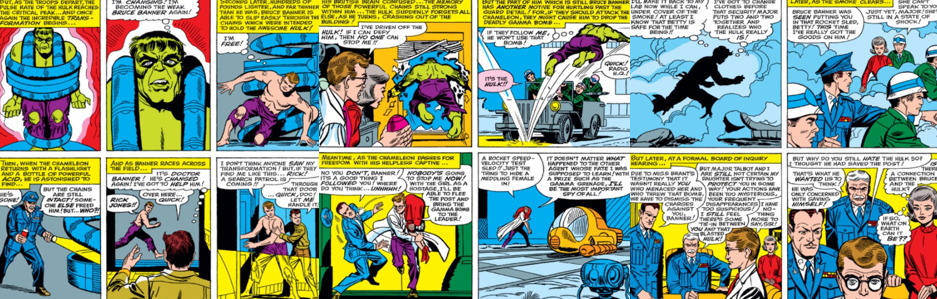
The Chameleon’s antics cast further suspicion over Banner’s loyalties.

The Chameleon approaches the captive Hulk and offers to set him free if he obeys his orders, but the Hulk obviously refuses to aid his hated enemy. When the Chameleon ushers away the guards to talk more privately, the change occurs behind his back, allowing Banner to easily escape to safety with Rick’s help. Although Rick feels guilty about deserting Banner to partner with Captain Steve Rogers/Captain America, Banner allays his guilt, saying he fears he cannot control the Hulk’s anger and would hate to hurt the boy, or anyone else. Banner then returns to General Ross and Talbot, receiving a chewing out for his disappearing act and brushing off Talbot’s threats about exposing him as a Red Agent. On his way back to his lab, Banner is blindsided by the Chameleon, who knocks him out and assumes his identity. The Chameleon discovers Banner’s Gamma Bomb project but is immediately rumbled by Betty, who intuits that he’s an imposter. Desperate to save his love, Banner transforms into the Hulk but is forced to flee when the Chameleon threatens to set off his Gamma Bomb since even the Hulk realises the danger of such a weapon. The Chameleon then lays out Talbot and escapes with Betty, only to be literally derailed by the Hulk. With the military forces closing in, the Hulk has no choice but to throw himself upon the Gamma Bomb, shielding innocents from the blast and reverting back to Banner from the effort. Although the Chameleon escapes, Banner is cleared of any formal charges thanks to Betty’s testimony, but General Ross, Talbot, and even Betty suspect that Banner is hiding something and he remains under close observation. Unbeknownst to all, the Leader is lurking in the background, left with no choice but to personally intervene since the Hulk’s strength has bested his two agents. Luckily for him, his mighty Humanoid is ready to go but, as he basks in its perfection, the Leader’s thoughts wander to his origins, which strangely mirror those of the Hulk.
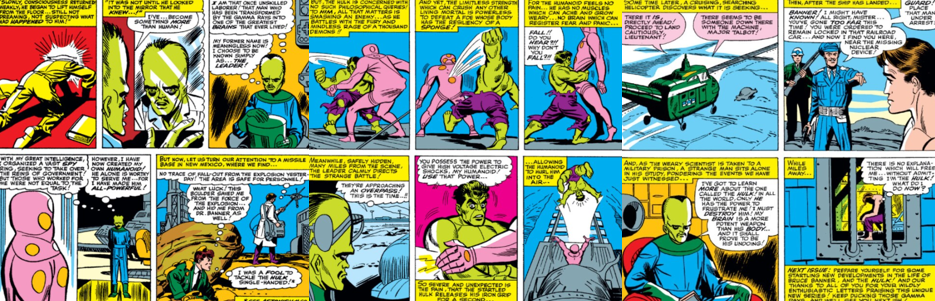
The Leader’s unbeatable Humanoid proves more than a match for the Incredible Hulk!

Less than a year ago, the man we now know was Samuel Sterns was merely an ordinary labourer. However, like Banner, he was caught in a Gamma explosion and exposed to “one of the strongest forces known to man”. While recuperating, the uneducated labourer uncharacteristically consumed knowledge and books. One day, while studying like a man possessed, he collapsed in a feverish fit and awoke to find himself permanently transformed into a green-skinned, giant-headed despot. Dubbing himself “The Leader”, he forsook his previous life and immediately put together a spy network to slowly seize power from the world’s governments. However, he is now putting all his faith in his all-powerful Humanoid to succeed where they failed. Thanks to a specially designed (and rather fetching) headpiece, the Humanoid obeys the Leader’s mental commands without hesitation, exhibiting incredible strength and versatility as it easily bends an iron bar and pilots a helicopter. Back at the missile base, General Ross orders Talbot to oversee the transport of Banner’s latest weapon, unaware that the disguised Chameleon is still lurking amongst them or that the Humanoid is following overhead before the pink-hued android is descending upon them. The stress of the attack and Talbot’s constant bullying causes Banner to change into the Hulk, who immediately pounces upon the Humanoid. Interestingly, this is the Leader’s first time seeing or even learning of the Hulk and he’s intrigued to find another Gamma-born creation, and to test the limits of the Hulk’s brutish strength against his boosted intellect. Thus, he commands the Humanoid to battle the Hulk, altering its density so it can withstand the Jade Giant’s mighty blows and easily flinging him into the air! Realising their fierce battle could endanger others, the Hulk forces the two to topple to the tracks. He then rushes back to keep Banner’s weapon from going off and unwittingly ends up caged once again when Talbot decides Banner is a saboteur.
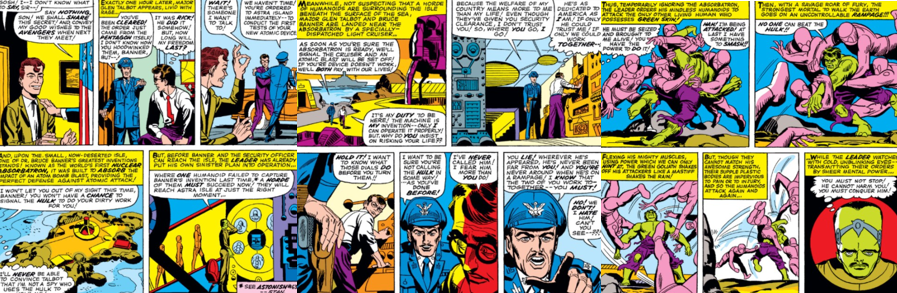
Although Rick frees Banner, Talbot remains aggressively suspicious of him.

Despite Banner’s protests, Talbot and General Ross believe they have all the evidence they need to put Banner on trial for treason, a prospect Talbot gleefully embraces since he hopes to woo Betty in Banner’s absence. Thus, Banner is spirited to Washington, D.C. and put in a bind since he can’t prove his innocence without revealed that he’s secretly the Hulk. Luckily for him, Rick shows up and uses his “top-priority Avengers I.D.” to plead on his friend’s behalf to the decidedly Richard Nixon-esque President. Rick’s plan works and the President releases Banner, much to Talbot’s chagrin, to continue working on his new atomic device on a deserted isle. Convinced that Banner’s up to something, Talbot refuses to let him out of his sight and even threatens to shoot him unless he describes, in detail, everything he’s doing. Banner both laments that they can’t find some common ground and gets pushed to breaking point when Talbot insists that he’s working with the Hulk in some manner. Even worse, Banner’s out of his special pills and forced to flee so Talbot doesn’t see him change into the Hulk. Luckily for Talbot, the cement-lined bunker holds the Hulk at bay and the Chameleon leaked the location of the isle to the Leader, who commands a horde of his Humanoids to dogpile the Hulk, desperate to capture him for study. The Humanoid army aggravates the Hulk since they refuse to fall and his strongest blows have no effect; even flinging a boulder at them simply sees it deflected back at him! With the military closing in and the Hulk’s strength fading, the Humanoids press their attack, wearing the Green Goliath down with their relentless assault. Luckily for him, the trigger happy (grenade happy?) troops cause the Hulk and his assailants to fall into the sea, where a startled Banner avoids drowning only to be captured by a passing Soviet submarine! When Talbot hears this, he naturally assumes it proves his suspicions, while the Leader decides to try and kidnap Banner, convinced that he may hold the key to bringing the Hulk on side.
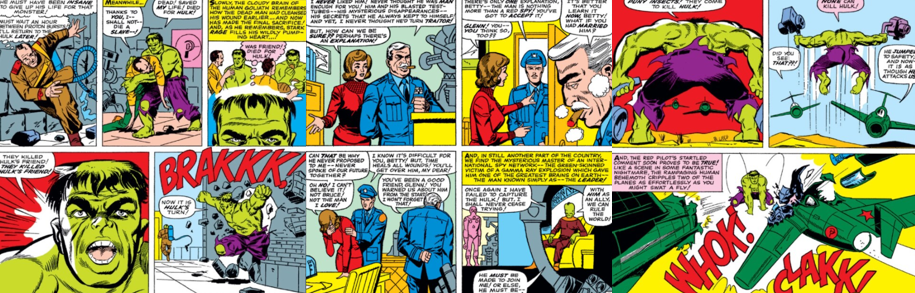
With Banner branded a defector, the enraged Hulk trashes the Soviet facility to escape.

Banner is brought to an unspecified European country and presented to the commander of a Soviet weapons research centre, who refuses to feed him unless he joins the other braindead, starved scientists forced to create new and more destructive weapons. Caged in a tiny stone cell, Banner realises his only hope is to trigger his transformation and, soon enough, the rampaging Hulk is let loose once more. Despite the Russki’s powerful vaporiser weapon, the Hulk easily tears through the facility, wrecking it with his powerful leaps and thunderous claps. While the soldiers flee, a rebellious slave tends to the Hulk’s wounds, praising and feeding him while the Green Goliath snubs him. Determined to strike back, the commandant arms himself with a “proton gun”, only for the Hulk’s new ally to take the shot, glad to die a free man. Though the Hulk was annoyed by the scientist, the death of someone who was actually friendly towards him drives the Hulk into a berserker rage. Thus, he tears the facility apart in search of the commandant, only to overexert himself and collapse into unconsciousness as Banner. Back in the good ol’ US-of-A, Talbot volunteers to go behind the Iron Curtain to reclaim Banner and make him pay for his defection. Naturally, he and General Ross are quick to slander Banner and, overwhelmed by her grief, even Betty struggles to believe Banner’s innocence. Frustrated by Banner’s disappearance, the Leader contacts the Chameleon once more and learns that his targets are somewhere in Russia. The Leader contacts his unsuspecting Soviet ally to verify this and then decides to simply observe, confident that Banner and the Hulk will escape and return to the US, rather than waste his efforts heading out to Russia. The Leader’s assumptions appear correct as the issue ends with Banner coming to, remembering everything that’s happened to him in recent issues, and going on another rampage as the Hulk before storming off across Europe madder than ever.

The Summary:
This is an interesting time in the Hulk’s history. While Banner transforms due to stress or anger, the Hulk isn’t a completely mindless brute. Not unlike his first appearance, the Hulk is capable of intelligent and coherent thought and speech. He’s blunt and childish at times, but a far cry from his more savage “Hulk smash!!” years. The Hulk showcases complex thought and awareness, especially when fighting his foes, and has the wherewithal to understand where he is, who’s around him, and potential threats. Thus, the Hulk is surprisingly explicitly heroic in these issues; he engages with enemies to keep them from harming others, throws himself upon Gamma-infused weapons, and derails a train to keep people from behind harmed lest Banner’s weapon go off. I generally associate the Hulk from this period as a misunderstood creature who wanted to be left alone and only fought because he was provoked; he had no interest in anything or anyone unless they were nice or antagonistic towards him. Thus, it’s interesting to see him launch himself at missiles to spare even the soldiers who attack him on sight. The Hulk’s also surprisingly weak here; even the narration boxes talk about how he’s just “flesh and bone” and can be killed just like a regular man. He gets injured by the vaporiser ray in issue #66, though shrugs off the significance of this, but is more prone to overexerting himself and reverting to Banner. As lucid as the Hulk is, he still hates his alter ego. To the Hulk, Banner is another enemy, one he cannot see or touch, and he’s constantly striving to stay in his green-hued form rather than turn back into “puny Banner”. The same is true for Banner, who takes tranquiliser pills to help control his transformations and fears the Hulk losing control and hurting someone, especially his loved ones like Betty and Rick.
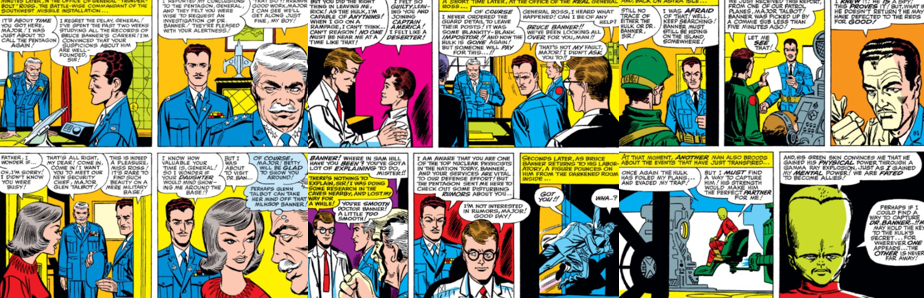
Fear and paranoia are at an all-time high thanks to tensions between the US and Soviet Union.

A focal point of these issues is Cold War paranoia. General Ross and suave newcomer Major Talbot are deeply suspicious of Banner because he keeps disappearing and acting all cagy. In Ross’s case, his suspicions are rooted in an intense dislike of Banner and disapproval of his relationship with his daughter. He cannot see what she sees in such a “milksop” and constantly badgers her, raving about Banner’s guilt every chance he can get, to strong-arm her into sharing his perspective. Talbot’s dislike of Banner is equally biased since he also has eyes for Betty, which Ross naturally approves of since Talbot’s a man’s man. Talbot loves his country first and foremost, however, and is determined to defend her from any threat, foreign or domestic. He keeps a close eye on Banner and immediately puts together any evidence he can find, however slim, to brand him a traitor. While Rick manages to get Banner cleared, Talbot remains aggressively suspicious and relishes the chance to get his claws into Betty once they receive irrefutable proof that Banner has “defected” to the Reds. The paranoia and fear surrounding the Soviets is the perfect backdrop for the deceptive Chameleon to enter the fray. By assuming various guises, including Ross and Banner, the Chameleon stirs the pot and raises tensions on the missile base. Although Betty’s word is enough to take the heat off Banner, the Chameleon’s constantly lurking amongst the crowd, hearing everything and stumbling upon useful titbits to feed back to the Leader, thereby showing that Ross and Talbot are right to be suspicious. However, their suspicions are misplaced and this costs them dearly, especially when the Hulk goes on a rampage! Surprising no one, the Soviets are depicted as wicked and cruel, starving their workforce and forcing kidnapped scientists to work themselves to death for their cause. However, the US military isn’t exactly squeaky-clean either. Both militaries treat Banner like shit and throw their weight around like stubborn, prideful bulls and it’s as satisfying to see the Hulk rip apart General Ross’s base as it is his decimation of the Soviet’s weapons factory.
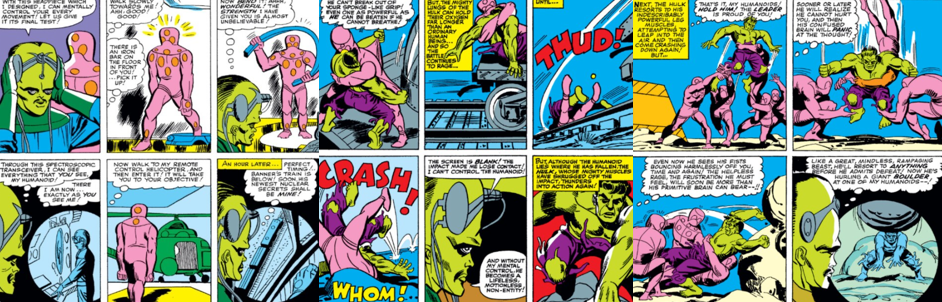
The Leader’s mutated brain and all-powerful Humanoid position him as a perfect foil to the Hulk.

And then there’s the main man himself, the Leader. An enigmatic and mysterious individual, we learn about his humble origins but never learn his true name (indeed, he disregards it as meaningless once he takes on his new moniker), yet the Leader is positioned as a thematic double of the Hulk. Like Banner, Sterns was caught in a Gamma blast and somehow survived and, like Banner, he was forever transformed by that mysterious radiation. However, the Leader cannot revert back to human form like Banner; his affliction is permanent and makes him an inhuman figure. The Leader was also gifted with superhuman intelligence, the Gamma radiation increasing his mental capacity to that of a super genius and giving him intellect high enough to create his own intricate spy network. The Leader presumably has agents all across the globe; he definitely has ties to the Reds, who mistakenly believe he is working for them, and agents on US soil. His most prominent point man in this story is the Chameleon, who perfectly aligns with the Leader’s more covert methods. Locked away in a hidden laboratory, the Leader prefers to stay under the radar and have his patsies do the dirty work while he perfects his Humanoid. The Humanoids are mindless automatons directly controlled by the Leader, with no thought or personality of their own. They can become intangible, hyper flexible, and super dense, making them nigh-unstoppable even against the Hulk’s mighty blows. Despite how powerful his Humanoids are, the Leader becomes obsessed with first capturing and studying the Hulk and then trying to woo him to his cause, believing the match of superhuman brain and brawn would make them unstoppable. Thus, while the two never meet in these issues, the Leader’s perfectly positioned as an anonymous puppet master, one whose intellect is depicted as being as much of a threat to the Hulk as his Humanoids. It’s a great introduction to one of the Hulk’s most persistent villains. The Leader may have aspirations for world domination but, here, he’s very low-key and happy to bide his time and even avoid getting involved, confident that an opportunity to strike will present itself and all will go according to his elaborate plan.

Rating: 4 out of 5.

Great Stuff

Did you enjoy the Leader’s debut? Did you read it when it was first published and, if so, how did you think the Leader compared to other Hulk villains? What did you think to the idea that the Leader was gifted superhuman intellect rather than strength? How did you feel about Major Talbot and the suspicions regarding Banner? What are some of your favourite fights or moments between the Hulk and the Leader? Who is your favourite Hulk villain? Whatever you thoughts on the Leader (and the Hulk), feel free to share them below and be sure to check out my other Hulk content!

Movie Night: Captain America: Brave New World

Released: 14 February 2025
Director: Julius Onah
Distributor: Walt Disney Studios Motion Pictures
Budget: $180 million
Stars: Anthony Mackie, Harrison Ford, Danny Ramirez, Shira Haas, Giancarlo Esposito, and Tim Blake Nelson

The Plot:
Now shouldering the mantle of Captain America, Sam Wilson (Mackie) navigates a political minefield after an assassination attempt against President Thaddeus “Thunderbolt” Ross (Ford) threatens to spark world war!

The Background:
After some initial resistance, the United States finally joined the War against the “Axis powers” of Germany, Japan, and Italy in 1939. With patriotism running high in America, Joe Simon and the legendary Jack Kirby created Captain Steve Rogers/Captain America and his kid sidekick, James Buchanan Barnes/Bucky to encourage readers to support the war effort. Cap saw a resurgence when he joined the Avengers and has long found a home outside the comics, featuring in cartoons, serials, a botched big-screen debut, and three critically lauded entries in the Marvel Cinematic Universe (MCU). After Steve Rogers (and actor Chris Evans) retired from the role, MCU head honcho Kevin Feige sought to expand the MCU with Disney+ shows, with one pitch being a “buddy comedy” series focused on the dysfunctional friendship between Sam Wilson and James Buchanan “Bucky” Barnes/The Winter Soldier (Sebastian Stan). Echoing the comic books, where Sam took up the Cap mantle, The Falcon and the Winter Soldier (Skogland, 2021) was universally praised for its depiction of racism and the dynamic between the two leads. This success directly led to the production of a fourth Captain America movie, initially titled New World Order, that sought to be a more grounded political thriller. This was soon offset by the casting of Harrison Ford, who replaced the late William Hurt and was thrust into the spotlight when the film’s marketing heavily relied upon his transformation into the Red Hulk as much as commenting on real-world politics. Reshoots saw the plot shuffled round and some characters be excised, with Giancarlo Esposito given additional screentime as a trade off and placing more emphasis on the conspiracy sub-plot. Captain America: Brave New World grossed over $370 million worldwide, but was met with somewhat negative reviews that criticised the political narrative, especially in the face of real-world events. The narrative and characterisations were also called into question, with critics being divided over the visual effects, though Mackie remained hopeful for future solo ventures for the character.

The Review:
Captain America: Brave New World depicts the United States as a country in turmoil. Following the many strange, destructive, and harrowing events of the previous MCU films, the nation is more divided and afraid than ever. Thus, former “Hulk Hunter” and decorated military General Thaddeus Ross completes his evolution from Senator to President of the United States after running a successful campaign based on one, unlikely word: together. Though Ross captures the majority vote with his promises to unite Americans and repair the relationship between the American government and the country’s various costumed defenders, some still question Ross’s newfound appreciation for the Avengers and his push for unity considering his historically short fuse and previous aggression in upholding the Sokovia Accords. None are more aware of Ross’s shortcomings than Sam Wilson, the former Falcon who now operates independent of the government (yet still in a military capacity) as Captain America. Sam’s wariness of Ross’s promises is echoed by aged veteran Isaiah Bradley (Carl Lumbly), the prototype super soldier who spent thirty years locked away and being experimented on and who is reluctant for Sam to work with the government. However, Ross is eager to build bridges not just with Sam, but the entire world, especially as scientists from across the globe have discovered a rare and particularly versatile mineral (dubbed “Adamantium”) on “Celestial Island”, the remains of a titanic Celestial that tried to emerge from the Earth. The staggering potential of Adamantium is enough to have Ross set aside personal grudges and encourage the world’s governments to co-ordinate their mining efforts. He makes significant headway with this after Captain America and his enthusiastic, hacker partner, First Lieutenant Joaquin Torres/The Falcon (Ramirez), recover a stolen sample of Adamantium from Seth Voelker/Sidewinder (Esposito), an expert marksman and enigmatic leader of the Serpent Society, a group of mercenaries working for the mysterious “Buyer” to upset the political climate.

Amidst a political minefield, Sam discovers a plot to discredit the President and spark worldwide conflict.

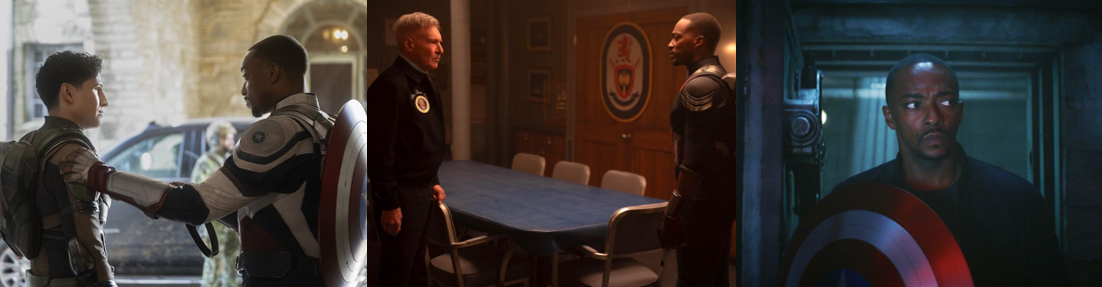
Celebrated for their heroics, Sam and Joaquin are invited to attend Ross’s special presentation on Adamantium at the White House and, eager to coax the distrustful Isaiah out of his shell, Sam invites him along. However, during Ross’s speech, Isaiah and a handful of other attendees suddenly open fire on the President, with Isaiah appearing little more than a confused old man after Sam talks him into custody. Angered by these events, Ross rescinds his offer for Sam to rebuild the Avengers and orders him not to investigate, instead handing the task to his personal security advisor, former Black Widow Ruth Bat-Seraph (Haas). Naturally, Sam disobeys this order and works with Joaquin to review security footage of the attack, learning that Isaiah and the others were compelled through a form of mind control. Sam’s investigation sees him cross paths with and apprehend Sidewinder, whose phone leads him and Joaquin to a military black site, where they find Gamma-mutated biologist Doctor Samuel Sterns (Nelson) has been held captive for over a decade. Gifted an upgraded suit by the Wakandan people, Sam is more than capable as Captain America thanks to his Vibranium wings protecting him, absorbing the impact of any attack and redirecting it as kinetic blasts. Sam has the same skills he showcased as the Falcon (skills he’s extremely protective of as he hesitates to share them with Joaquin) but has vastly improved his skill with a shield. Unlike Steve Rogers, however, Sam doesn’t have the benefit of the super soldier serum, though his suit helps dull any injuries he does receive and a pep talk from Bucky allays Sam’s doubts about his abilities after Joaquin is injured defusing a conflict between American and Japanese forces. In a nice change of pace, Sam is seemingly universally accepted in his new role; the military respect and admire him, jeopardising their careers to aid him after Ross demands he and Joaquin be apprehended. Sam’s also as charismatic and confident as Steve, easily befriending those around him and championing world peace and cooler heads over violence. Far from a naïve optimist, Sam plays his cards close to his chest and gives Ross the benefit of the doubt, but becomes determined to investigate the complex deception at work after Isaiah is imprisoned and faces the death penalty.

Sterns manipulates events to brainwash assassins and push Ross to breaking point!

Obviously, it’s a shame that William Hurt never got to complete his story as Thunderbolt Ross but, if you’re going to recast an actor, who better than Harrison Ford to pick up the slack? Shaving his trademark moustache and campaigning on a platform of unity, Ross is desperate to convince the world that he’s a changed man. However, while he’s convinced the majority of Americans, Sam and the others remain skeptical and his estranged daughter, Doctor Betty Ross (Liv Tyler) refuses to take his calls. Eager to void conflict, Ross is adamant about pushing forward a treaty to share the Adamantium, but soon finds his temper tested after he’s shot at and accused of shady dealings by the equally sceptical Japanese prime minister, Ozaki (Takehiro Hira). Although Ross genuinely wants Sam onboard and the rebuild the Avengers to atone for his previous aggressive ways, he burns bridges with Sam over Isaiah and quickly mobilises the Navy to secure Celestial Island, his stress only compounded by Sterns’ influence and his reliance on mysterious pills. It turns out the Sam’s right to be suspicious of Ross as he worsened Sterns’ condition and used his superhuman intellect to manipulate his way to the White House, then incurred the hyper-intelligent doctor’s wrath by refusing to free him. This sees Sterns concoct an elaborate plan to discredit Ross using mind control triggers, which easily turns the President’s secret service into his unwitting soldiers and sees him escape custody. Sterns’ scheme also extends to hiring Sidewinder and kick-starting the plot, which tips the world to the brink of war and sees Sam and Joaquin desperately rushing to calm tenses between the world’s superpowers once they uncover this plot. Determined to keep his dealings with Sterns from leaking, Ross surreptitiously tries to tie up loose ends, unwittingly turning the petite Ruth’s loyalties towards Sam after she discovers evidence that Isaiah and the others weren’t in control of their actions. Though Ross was saved from certain death from a heart condition thanks to Sterns’ research, he’s been unknowingly digesting Gamma-laced pills for years, which make him quick to anger and susceptible to Sterns’ mind control, resulting in Ross transforming into a crimson-hued Hulk before a terrified press conference and forcing Sam to test his mettle in the most dangerous way possible.

The Nitty-Gritty:
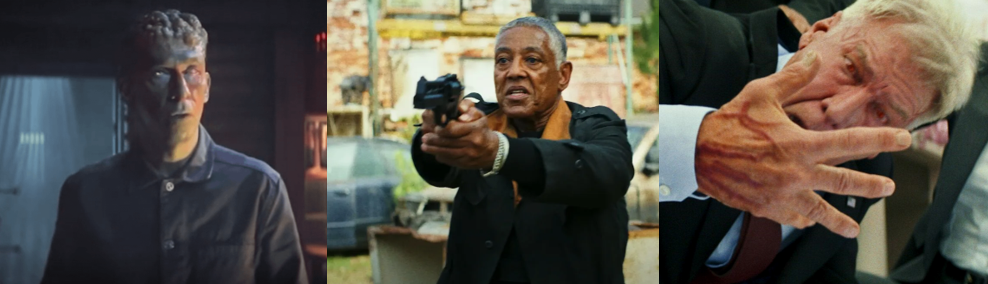
Captain America: Brave New World certainly gives itself a lot of balls to juggle. It finally addresses what happened to that gigantic Celestial and lays an interesting foundation for the MCU’s version of the X-Men, finally ties up the loose end of Samuel Sterns, presenting him as an embittered puppet master looking to publicly disgrace President Ross, teases Bucky’s new life as a Congressman, and continues Sam’s evolution as Captain America. Thanks to Sam having worked through many of his doubts and insecurities in The Falcon and the Winter Soldier, Sam has fully embraced his new role here, only questioning his ability after Joaquin gets hurt. Even then, Bucky offers him some advice that gets him back on track and, while I think it’d be totally believable that a man as good as Sam could handle the super soldier serum, Sam’s perfectly capable without it thanks to his skill as the Falcon. In fact, Sam may be a little too good as he shrugs off wounds and performs nigh-superhuman feats during fights, though the film makes an effort to show him visibly exhausted from the effort. His status as a “normal” man doing the right thing contributes to the respect he earns from his peers; even Ross has a begrudging respect for Sam, even if it’s strained as the film progresses. I’m glad that Brave New World didn’t waste time questioning Sam’s ability or showing undue negativity towards him. Instead, he kicks ass as Captain America and showcases his stubborn determination as he works to clear his friend’s name, even if it goes against what the President thinks or wants. It was a shame, however, that Giancarlo Esposito was essentially wasted here. He gets a couple of action scenes and steals the show with his usual silky-smooth cool, and is presumably being set up for more later down the line, but his role got a lot of hype prior to the film so I couldn’t help but be disappointed by how small his role was in the end.

Despite some predictable elements, the film was an action-packed political thriller.

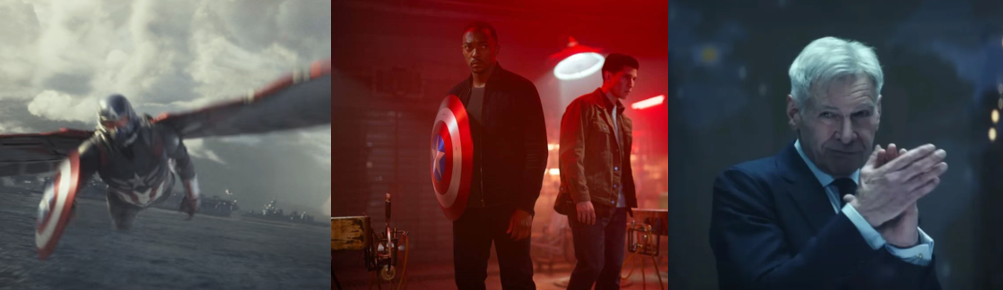
Instead, most of the film’s marketing was focused on the Red Hulk and his fight against Captain America. On the one hand, I understand this as you want to capture people’s attention and get people in the cinema to see how Sam can stand against such a creature, but it was a touch misleading since the Red Hulk doesn’t appear until the finale. Instead, most of the film is an action thriller following Sam and Joaquin as they work to uncover who’s behind Isaiah’s mind control. There’s nothing wrong with this and it makes for a decent adventure, but it’s pretty obvious that Isaiah and the others were triggered by lights and music, something we’ve seen in the MCU before (and which Sam even notes), so it’s weird that Ross was so quick to condemn Isaiah. Of course, a significant sub-plot regarding the President is his trustworthiness and it’s clear he’s hiding a lot, leading to an emotional showdown between him and Sam where Ross reveals how close he came to death and how poorly he treated Sterns. Once Sam confronts Sterns and he escapes, it’s pretty clear what’s gone down, but the key parties (Sam and Ross) remain clueless. There’s even a moment where Sterns callously murders Sam’s ally, Dennis Dunphy (William Mark McCullough), to keep him from revealing the truth of Ross’s pills to Sam…only for Sterns to relate that information to Sam shortly afterwards. While some have picked about Brave New World’s CGI and reshoots, I had a great time with the action sequences. Sam looks amazing in his new suit, which is a vast improvement over his last one, and is a whirling dervish as Captain America, cutting through the air, blasting along with his jetpack, slicing up foes with his wings, and tossing his shield in ways that would make his predecessor proud. Sam’s Wakandan enhancements make up for his lack of superhuman strength, though Sam remains vulnerable, sporting wounds and exhaustion, and yet being strong enough to turn to his allies for help and to take the high road during conflicts. Joaquin made for a fun counterpart to Sam; he’s equally talented as the Falcon and a tech whiz, but overly enthusiastic and too eager to prove himself to his hero at times. They work well together on equal terms and I enjoyed their high-speed action sequences, with Sam even proving his worth without the suit and emphasising disarming and subduing his foes rather than blindly blundering in.

Cap ultimately overcomes the odds and brings a measure of peace to the misguided President.

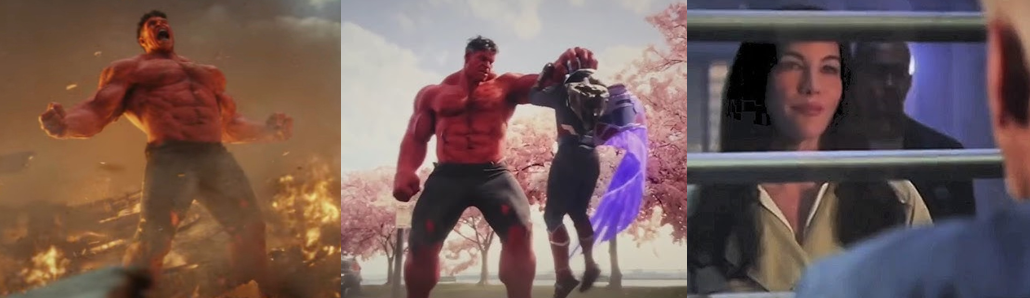
With Ruth on-side and Sam and Joaquin having discovered Sterns is mind controlling targets with light and sound triggers, Cap and Falcon barely quell a conflict between the US and Japan. Though Joaquin is severely wounded when defending Celestial Island, Sterns’ plot is ultimately scuppered and Ross’s treaty regains traction, leading Sterns with no choice but to surrender himself, arrogantly believing that Ross’s true nature cannot be suppressed. Indeed, when addressing the press outside the White House, Sterns’ pills and the stress of the whole situation (and the Sterns’ testimony to the media) see Ross lose control of his emotions. Thus, he painfully and forcibly transforms into the Red Hulk, a mindless and enraged giant who immediately goes on a rampage. Despite being hopelessly outmatched, Captain America flies into battle with the Red Hulk, barely protected by his Vibranium wings and destroying most of the White House. Remembering Ross’s wish to take his daughter to the city’s cherry blossom trees, Captain America has Ruth get the crowd to safety and leads the Red Hulk to the garden, only for the creature’s rage to boil out of control. Badly hurt and with his suit damaged, Captain America charges his remaining wing with the Red Hulk’s unbridled strength and delivers a concussive blast that momentarily puts the beast down. When the Red Hulk returns for more, Sam takes a major gamble and appeals to Ross’s humanity, finally calming the troubled President down and ending the threat. Realising the extent of his actions, Ross relinquishes his post and allows himself to be incarcerated at the Raft, where he finally reconciles with Betty. Ross and Sam part with a mutual respect and Sam’s delighted to see Joaquin on the road to recovery, especially as he’s decided to rebuild the Avengers after all, though Sam’s left rattled when the imprisoned Sterns mocks him and delivers a vague, suitably ominous warning about future threats from other worlds…

The Summary:
Captain America: Brave New World faced an uphill battle, for many reasons. Despite Sam being Captain America in the comics for years, the idea of someone else taking up the mantle is always going to irk some, especially a very vocal and toxic minority of bigots. However, Anthony Mackie takes to the role admirably, exuding a cool confidence that sees him command the screen and throw the shield with admirable gusto. I loved how Sam was presented as a friend to all, talking to people in their native language, saluting the military, and sticking to his guns, even if it means going against the President of the United States. He’s a natural leader and an efficient fighter, even without the super soldier serum, and attacks the conspiracy at work with a stubborn determinism that showcases the strength of will and loyalty that make him the right choice to be Captain America. Harrison Ford was equally captivating in the film. It’s awful that William Hurt died before he could see this arc through, but Ford really threw himself into the whole MCU circus and brought his all to this role, being gruff, commanding, and pained as the script dictated. I definitely felt like Ross was genuinely trying to make amends for his past, but he had too many skeletons in the closet, had made too many enemies, and ultimately was faced with forces beyond his control, leading to his Hulk-out. The Red Hulk looked fantastic, exuding rage and danger and delivering by far the best and most impressive CGI rendition of a Hulk yet. While it was misleading to base so much of the marketing around the character, I can see why they did it and the sequence absolutely delivered, more than making up for the wasting of Giancarlo Esposito. I was also thrilled to see Tim Blake Nelson return and deliver a suitably hammy, menacing version of the Leader, finally paying off one of the MCU’s most notorious plot threads. While the plot felt a little predictable and bare bones at times, the action and performances and nice balance of drama and comedy made up for it and resulted in a solid first solo effort for the new Captain America, who I hope to see have a prominent role as an aspirational leader in the MCU for years to come.

My Rating:

Rating: 4 out of 5.

Great Stuff

Did you enjoy Captain America: Brave New World? What did you think Anthony Mackie’s first big-screen solo outing as the character and Sam’s status as a more human version of the Avenger? Did you enjoy Harrison Ford’s performance and Ross’s attempts to turn over a new leaf? Were you satisfied with the way the film tied up loose ends regarding Sterns and the Celestial? Do you think it was misleading to put so much focus on the Red Hulk or did you enjoy his eventual appearance? Where do you want to see Captain America go next in the MCU? Whatever you think about Captain America: Brave New World, or Captain America in general, drop a comment down below, support me on Ko-Fi, and go check out my other Captain America content.