Game Corner [00-Heaven]: GoldenEye 007: Reloaded (Xbox 360)


To celebrate the release of Dr. No (Young, 1962), the first of the James Bond movies (Various, 1962 to present), October 5th is known as “Global James Bond Day”. This year, I’ve been spending every Saturday commemorating cinema’s longest-running franchise, and one up of the most recognised and popular movie icons.


Released: 1 November 2011
Originally Released: 2 November 2010
Developer: Eurocom
Also Available For: Nintendo DS, Nintendo Wii (Original Release); PlayStation 3 (Reloaded)

The Background:
Like many gamers back in the day, much of my social gaming was spent playing GoldenEye 007 (Rare, 1997), a best-selling title for the Nintendo 64 that began development as a simple rail-shooter before bucking the trend of videogame tie-ins by being universally praised as one of the greatest first-person shooters (FPS) and multiplayer experiences. Unfortunately, Rare lost the James Bond license and fans had to make do with spiritual successors like Perfect Dark (Rare, 2000), and other Bond titles, and blatant attempts to cash-in on GoldenEye 007’s popularity, like the shameless and mediocre GoldenEye: Rogue Agent (EA Los Angeles, 2004). In 2006 and 2008, both Nintendo and Microsoft expressed interest in releasing a port of the game on the Virtual Console and Xbox Live Arcade platforms but rights issues led to Activision charging Eurocom with developing a reimagining of the classic shooter for the Nintendo Wii. Built around the same gameplay and mechanics as 007: Quantum of Solace (Treyarch/Various, 2008), this new GoldenEye 007 saw Daniel Craig reprise his Bond role and many reviewers comparing it to the Call of Duty franchise (Infinity Ward/Various, 2003 to present). Despite some positive reviews GoldenEye 007 was mostly met with a mixed response that painted it as a lacklustre title. This didn’t stop Activision from releasing this high-definition port of the game to PlayStation 3 and Xbox 360 a year later, though critics remained as unimpressed as before. Thankfully, after numerous leaks, the original GoldenEye 007 was finally released on the Nintendo Switch and Xbox One so that a new generation of players could experience it and this middling reimagining was left mostly forgotten.

The Plot:
Renowned super spy James Bond/007 in drawn into a globe-trotting adventure as he races to stop a rogue 00 agent Alec Trevelyan (now a terrorist known as “Janus”) from causing a global financial meltdown with a satellite weapon known as “GoldenEye”.

Gameplay:
GoldenEye 007: Reloaded is a first-person shooter in which players assume the role of James Bond, now sporting Daniel Craig’s likeness and voice rather than Pierce Brosnan’s, and journey through reimagined maps and locations that are loosely based on the original videogame and movie. There’s a reason why GoldenEye 007: Reloaded has been referred to as “Bond of Duty”; if you’ve played any of the Call of Duty games, the controls, mechanics, and overall “feel” of the game will be very familiar to you, for better or worse. The game is therefore very much a modern reimagining of the classic Nintendo 64 FPS rather than a true, high-definition remake of the original game. This is first reflected in the game’s control scheme, which a helpful MI6 tutorial walks you through. Bond can climb and vault over downed objects (desks, trees, rocks, and the like), crouch with B to sneak up on enemies undetected for a stealth take down with the right analogue stick, manually reload his current weapon by pressing X and activate certain consoles or pick up new weapons by holding X, and switch weapons with Y. Holding the Left Trigger lets you aim down the sights of Bond’s gun and tapping it enables a helpful auto lock-on to the nearest target, if enabled. The Right Trigger is used to fire, and Bond can throw primary and secondary grenades and similar explosives with the Right and Left Bumpers, respectively. Finally, you can briefly sprint by holding down the left analogue stick, melee attack enemies up close by pressing in the right analogue stick, and apply a number of gadgets (such as a silencer or night vision goggles) with the directional pad (D-pad).
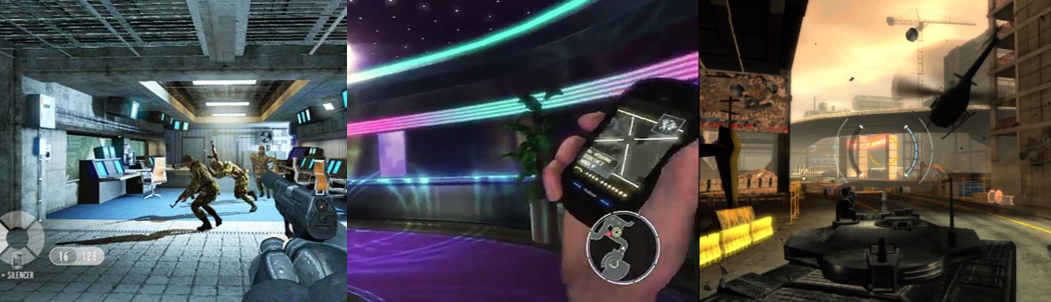
Use stealth, Bond’s phone, or go all-out in a tank in this mediocre shooter.

Your main gadget throughout the game isn’t a fancy watch or bizarre invention of Q and is, instead, disappointingly, your phone. Gameplay is invariably interrupted by phone calls from M and Bill Tanner that update your objectives or add some nuance to this re-told story, and you’ll be using your phone to scan partygoers to find your contact, investigate the environment to find and photograph objects of interest (like weapons caches and such), make recordings, activate remote explosives, and hack into terminals and drone guns. It’s a bit of a shame that so many of the game’s objectives require the use of the phone as it’s not that interesting to use and completely halts the action, though it’s relatively versatile and it can be fun to hack drone guns and gun down large groups of goons. Bond can also crawl through vents as a shortcut and to get behind groups of enemies, shoot fire extinguishers, explosive panels and barrels, and other parts of the environment to take down groups, and utilise his stealth and subdue skills to keep enemies from calling in reinforcements. Sometimes, you’ll be asked to press the right stick rather than hold X to open doors. This causes a “breach” that slows down time so you can dispatch armed foes and rescue hostages, like those on the frigate and Bond’s ally, Natalya Simonova. You’ll also be taking out security cameras to keep reinforcements at bay, activating surface-to-air missile launchers to take out choppers, acquiring and planting explosive charges, and even ploughing through the streets of Russia in a heavily armed tank! This chase mission is far more involved this time around, with Bond firing a chain gun, the main cannon, and even a homing shot, though the controls can be a bit clunky, and you can’t dawdle too long or you’ll lose General Arkady Grigorovich Ourumov. Another prominent feature in the game are quick-time event (QTE) sections. These pop up when Bond needs to pull apart doors by mashing LT and RT together, in first-person cutscenes where you need to activate explosives, and during bosses battles against turncoat Trevelyan and his right-hand assassin, Xenia Onatopp.
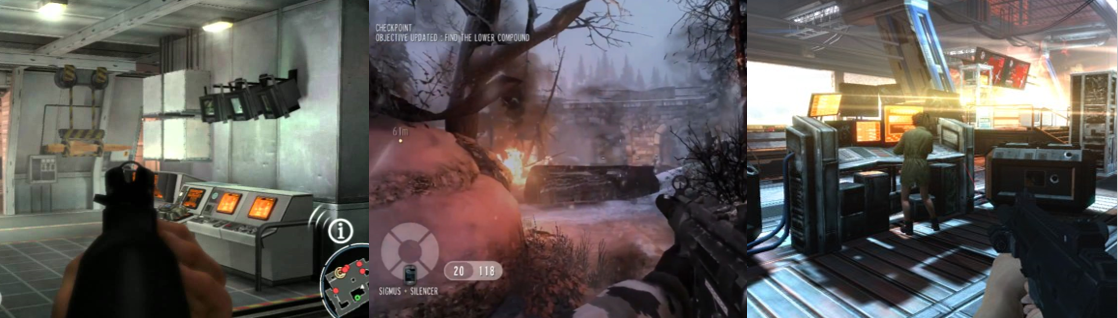
The locations are large but the objectives and requirements are sadly lacking.

QTEs rear their ugly heads at the worst possible moments, such as when Bond is racing after a plane down an airstrip. You need to fend off the pursuing troops and then leap to the plane with LT and RT, with failure returning you to the last checkpoint. Speaking of which, checkpoints are relatively generous here, allowing you to reload if you get spotted or are caught in a crossfire. GoldenEye 007: Reloaded has four difficulty settings (“Operative”, “Agent”, “007”, and “007 Classic”), with the enemy AI and objectives increasing for each setting. If you’re playing on “007 Classic”, you’ll be relying on body armour to replenish your health similar to the original game; otherwise, Bond will automatically regenerate health while taking cover, just like in the Call of Duty games. You’ll need to do this quite often, or at least be stealthy and smart about how you play, as Bond is surprisingly weak here. Enemy fire (and, especially, explosives) will end your mission in a split second and you always need to be aware of snipers and even sheer drops off cliffs! Thankfully, an onscreen radar highlights nearby enemies, allowing you to better anticipate their movements. This also points you in the direction of your main objective, with a phone icon altering you to any additional objectives in the nearby area. Unfortunately, Bond is far more limited here than in the original game. You can only hold two additional weapons alongside your standard issue pistol for three in total, though you can retrieve dropped weapons if you wish and the game is pretty good about providing you with helpful or necessary weapons (like sniper rifles or rocket launchers) in key areas. While the game is far more linear than the original version, you have a few options available to you (taking vents, lifts, and vaulting through windows, for example) to explore. You’ll need to pull apart rocks to progress, race through burning environments, fend of guards as they rappel through windows, and yes even defend Natalia as she sabotages the GoldenEye satellite. I actually found this a lot easier this time around (on “Agent” difficulty, at least). It didn’t seem like Natalia could be killed and it was much easier to target enemies, despite having to rush about between different consoles.

Graphics and Sound:  
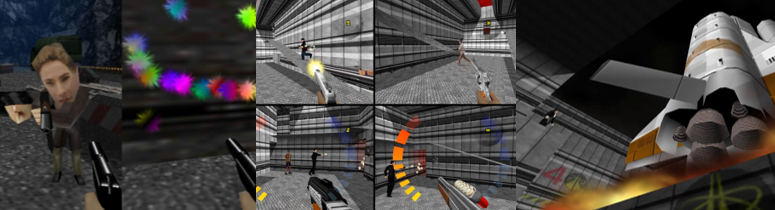
Technically speaking, GoldenEye 007: Reloaded looks and plays perfectly fine. Many of the environments recreate and update the familiar stages of the original game, including the same sweeping camera cuts and décor choices. These are most prominent in the “Dam”, “Facility”, and “Archives” stages, which take the original map, apply updated textures and mechanics to them, and greatly expand upon them. “Dam” now takes place at night and in the pouring rain, for example. Bond and 006 commandeer an enemy truck to progress further towards their objective, there’s a helicopter pad, and the entire area is transformed from a relatively short and simple experience into a more nuanced opening stage. However, many of the returning stages are so different that they’re basically unrecognisable. It’s as though the developers were told the general concept of GoldenEye 007 and given free rein to imagine that however they like. “Frigate”, for example, is now comprised of a lengthy section where Bond must fight his way on to the ship. There are barely any hostages to rescue this time and you’re mainly disabling the ship’s systems to plant a tracker on the EMP-hardened helicopter as it takes off. Similarly, the “Surface” and “Bunker” levels are now far more detailed and basically entirely new stages. Bond must take cover within the wreckage of wooden huts and make his way through the burning wreckage of the Severnaya facility, and the “Depot” and “Train” stages are entirely reimagined, with the “Train” section being just a short run through a few wrecked carriages and a lacklustre escape where you need to shoot open a panel rather than use Bond’s watch.
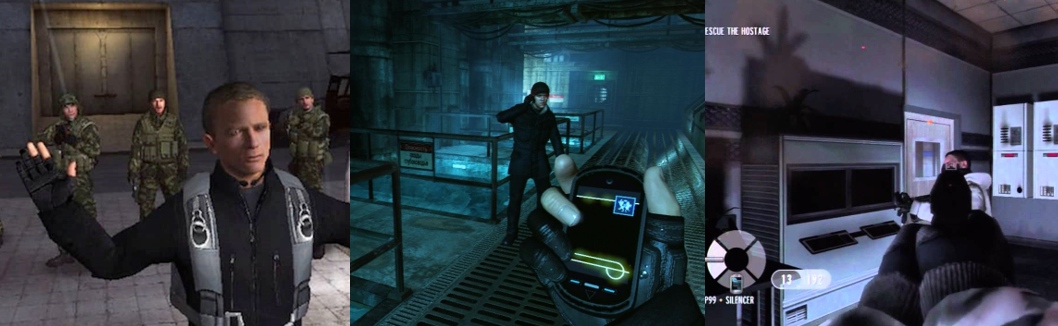
Mostly, the game looks dark, bleak, and terrible and doesn’t do much with the Bond license.

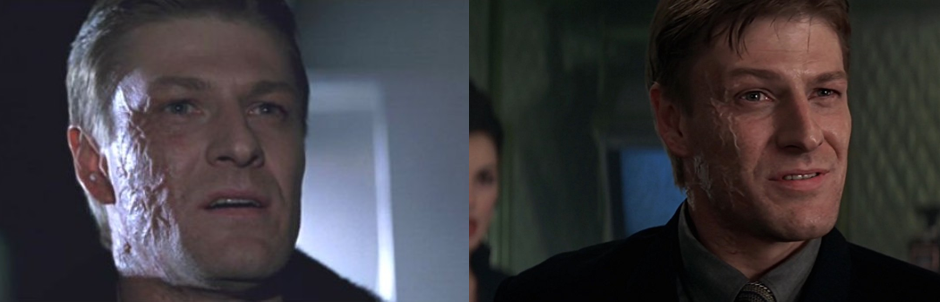
Technically, I don’t really mind this. It makes sense that stages are expanded and changed using the new engine and mechanics, but any nostalgia you might feel creeping through the vents of “Facility” or stealthily taking out Janus goons in “Statue” is completely lost when you realise just how different and unrecognisable these environments are. “Statue” is a great example as the stage now takes place in a memorial park and museum. The confusing, maze-like layout is replaced with a dark and dreary covert mission past giant statues and stone trappings, using the sewers and silent takedowns to dispatch Janus’s men. The game also omits entire stages, like “Silo” and “Control”, replacing them with a nightclub stage full of raving partygoers where Bond meets a heavily altered version of Valentin Zukovsky. In fact, every character has had their likenesses completely remodelled with the exception of M, who’s still played by Judi Dench. Obviously Bond is Daniel Craig and that’s fine but the guy they got for Trevelyan is no Sean Bean and doesn’t even sport any facial scars to go with his Janus moniker! It’s almost a blessing, then, that much of the game’s story is conveyed through voice over and cheap MI6 briefings where all we see is digital information rather than character models. However, I think I preferred the text dossiers from the original game as at least that wasn’t doing the Nintendo 64’s graphical abilities a disservice like here. This translates to certain aspects of the gameplay, too. I noticed a few instances of graphical pop-ups and texture warping in the “Jungle” and “Surface” stages, enemies and gunfire often clipped through solid walls, and the game can get so dark and chaotic that it’s easy to get confused and frustratingly picked off before you even have a chance to react. One aspect I did like was that  “Dam” transitioned into an all-new title sequence, with Nicole Scherzinger performing an okay cover version of “GoldenEye” to give the game a cinematic flair that’s sadly missing in its otherwise muted, clinical, and bleak presentation. This is reflected in Craig’s delivery, which is decidedly lackadaisical, and juxtaposed by the vibrant “Jungle” stage and the high-tech “Cradle” finale, where blasts of blinding light cause gantries to collapse under your feet and goons to riddle you with bullets in the confusion.

Enemies and Bosses:
An endless supply of goons, guards, and soldiers will be patrolling every location in the game. If you follow them while crouched, you’ll get to listen in on some fun banter and discussions between them that might have you feeling a little remorse when you execute them with a headshot and you can see enemies going through certain motions, like patrolling back and forth, resting against barriers and walls, attaching charges to walls, and ransacking the environment. This opens a few options to you, such as sneaking up to subdue them, silently nailing a headshot, or going in all guns blazing, though the latter action is not always recommended as it’ll alert all nearby guards and cause tougher goons to come swarming in until the enemies are dealt with. Enemies are generally armed with an array of machine guns, but some also pack rocket launchers, take the high ground with sniper rifles, and you’ll have a fair few grenades lobbed at your head if you camp out in one area. Enemies can take cover (overturning tables and dramatically sliding behind walls) to fire at you, and have their hats shot off. They also busy themselves at computer terminals, vending machines, and in toilets but their gunfire is just as likely to ignite fuel tanks to cause explosive damage as yours so be sure to mind your surroundings at all times. Bosses aren’t really a thing in GoldenEye 007: Reloaded. Most stages end when you’ve completed your objectives, entered a facility, and either evaded capture or been captured. Sometimes you’ll need to hold off against waves of enemies as you wait for a lift to arrive. Other times, you’ll be switching to night vision to take out goons in darkened tunnels
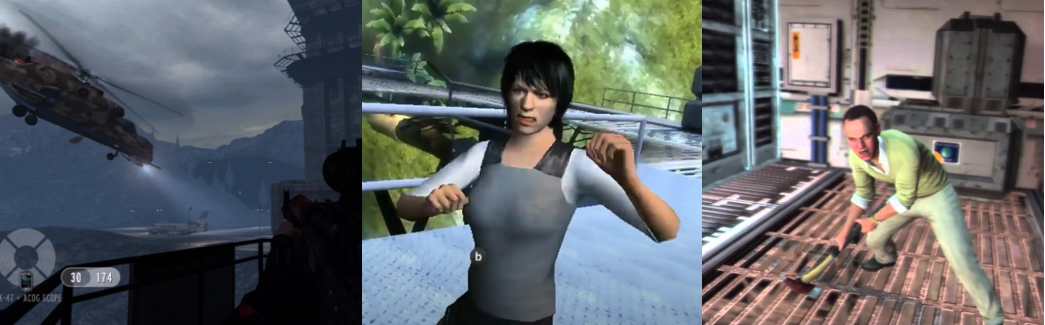
Sadly, the game’s few boss encounters boil down to pressing the right buttons at the right time.

You will also be tasked with finding efficient ways of dispatching rooms or areas full of guards without raising too much of an alarm, and others you’ll be contending with helicopter attacks. This is fine when you’re in your tank but, when on foot, you’ll need to dodge between cover and activate a surface-to-air missile to down the chopper, with the one in “Jungle” unloading a missile barrage that limits your options in this regard. When in the tank, you’ll come up against a fighter jet near the end of the stage that takes a few more hits from your cannon to down, alongside loads of RPG-wielding soldiers, choppers, and trucks in the road but this is closest you get to battling Ourumov as he’s simply executed in a cutscene by Xenia. Xenia is fought as a boss, but this time it’s purely a QTE. Simply tap the buttons as they appear onscreen and Bond will dodge and parry her wild kicks until the sequence ends with her death. As in the original game, GoldenEye 007: Reloaded culminates in a showdown with traitor Alec Trevelyan, revealed as the terrorist Janus, in his antenna control facility. After overcoming the aggravation of getting past the dangerous gantry area, you’ll have another QTE-ladened fight with Trevelyan where the hardest thing about it is realising you need to mash LT and RT together rather than one after to other to avoid having your face burned off. After this, you’ll face one of the game’s toughest and most annoying challenges: a shootout with Trevelyan where he’s protected by a bulletproof vest and calls in goons and even a chopper to help him out. After failing multiple times, I realised that the best option is to shoot him with your unsilenced pistol (which oddly does more damage) and then head outside to the far left. The chopper won’t move around the building to fire at you so you can simply fend off the goons and shoot at Trevelyan until he runs off. Then you simply need to win one final QTE sequence that culminates in a fatal shot to the treasonous agent, and you’ll have achieved a final, if unremarkably hollow, victory.

Power-Ups and Bonuses:
Since you’ll only be picking up body armour on the “007 Classic” difficulty, the closest thing you’ll find to power-ups here are the various guns and gadgets you’ll find throughout your adventure. Bond can use a silencer to muffle his shots and remain undetected and can use night vision goggles in areas with low lighting to take out enemies (thought they don’t seem nearly as handicapped by the darkness), and of course use his trusty phone to hack drone guns. Otherwise, you’ll grab a fair amount of different guns, though barely any of them resemble their counterparts from the original game. You’ve got Bond’s regular pistol but there are other hand guns on offer, including one with a nifty aiming laser and one that fires in bursts. You can snipe from afar with sniper rifles (and some machine guns also make use of a scope or targeting attachment) or blow enemies away using a rocket launcher or a grenade launcher feature to one rifle, and blast goons in the face with powerful magnums and shotguns. My favourite weapon was the Masterson M557, a kind of high-powered, rapid rife shotgun! Classic Bond weapons like the one-hit kill Golden Gun and Moonraker laser also appear in the game’s multiplayer alongside grenades, though I never encountered either of these in the single player campaign. Honestly, I was a little disappointed by the weapon selection. You’ll come across locked crates and cabinets that can be smashed or shot open to grab new weapons, but they all seemed to be variations of machine guns and submachine guns, so I struggled a bit to tell them apart or favour one over the other, generally relying on whatever had the most ammo in the immediate area.

Additional Features:
There are fifty Achievements up for grabs in GoldenEye 007: Reloaded, four of which are awarded for completing every objective on every mission for each of the game’s difficulty levels (though these do stack up, so you can snag multiple in one playthrough). Many of the game’s stages contain the opportunity to earn an additional Achievement, such as getting forty kills with the Wolfe .44 magnum in “Nightclub” and twenty kills with hacked drone guns in “Jungle”, or require you to finish missions quickly or without reinforcements being called in. Five Janus emblems are hidden in every stage, and you’ll get Achievements for destroying one, twenty, and fifty of them, as well as for finishing any mission without taking damage of any “007 Classic” mission without any body armour. Outside of the main story, you can also take part in “MI6 Ops” missions for extra Achievements. These charge you with revisiting locations from the main game and eliminating enemies as quickly as possible, using stealth tactics, or defending three consoles and you’ll earn star rankings based on how well you perform. A good chunk of the game’s Achievements are also tied to the game’s multiplayer component. This can be played on- and offline and sees you again selecting from a roster of characters (including classic characters like Jaws and Oddjob) that you can now select different weapon and gadget loadouts. There are ten different maps to choose from and a variety of familiar game modifiers, such as melee only, team conflict, and a race for the Golden Gun. There are also some new modes here, too, such as “Escalation” (where killstreaks grant you better weapons), “Bomb Defuse” (like a “Capture the Flag” mode except you need to retrieve and defuse a bomb), and “Detonator Agent” (where you’re carrying a bomb and can either pass it to someone else or rack up a greater kill streak). While you don’t unlock fun cheat codes through gameplay like before, you can input some off websites to unlock some extra features for the multiplayer component, though not for the main campaign, which is limited to simply replaying missions on higher difficulties.

The Summary:
I played GoldenEye 007: Reloaded years ago on the PlayStation 3, around the same time as I played through the equally lacklustre Quantum of Solace game, and remember it being a largely uninspired FPS experience. Like many who bought the game, I was excited at the prospect and compelled by nostalgia to pick it up and it’s that same nostalgia that drove me to re-acquire it for my Xbox 360 library. Sadly, time and my experience with the Call of Duty franchise hasn’t made this game any better. While a lot of it visually resembles the original GoldenEye 007, so much has been changed and awkwardly shoe-horned into this samey, uninspired game engine that it may as well be an entirely different game. Indeed, I do wonder if it might’ve been better to tweak the concept a little to simply be a distant homage to GoldenEye 007 rather than an actual, explicit remake but that wouldn’t be anywhere near as interesting or profitable, would it? The gameplay is okay, but even on the “Agent” difficulty things can get very frustrating, boring, and repetitive very quickly. I found myself burning through weapons since they’re all so interchangeable, getting annoyed with how linear and obtuse the stages could be, and being unimpressed by the cutscenes, story, and voice acting. The QTEs were also annoying as they felt very out of place against the shooting gameplay. I disliked how much waiting and faffing around with the phone was involved, and the stealth mechanics were poorly implemented. When the game recalls and provides an updated twist on the original, it’s okay, but the rest of the time it’s just another painfully generic shooter where all you have to do is hide behind a wall until your health regenerates and then push a little further forward. It’s a shame as it could’ve been so much more, but GoldenEye 007: Reloaded was probably doomed from the moment it even thought about trying to cash-in on the original’s success and ends up offering nothing new for either Bond or FPS fans.

My Rating:

Rating: 2 out of 5.

Could Be Better

Have you ever played GoldenEye 007: Reloaded? If so, did you like it? Do you think it lived up to the standards of the original game? How do you think it holds up compared to other Bond games of this era? What did you think to the recreations and changes featured in the game? Were you annoyed by the QTEs and overreliance on the phone gimmick too? How did you find the game’s multiplayer and additional modes? What’s your favourite James Bond game that isn’t GoldenEye 007? Whatever you think about GoldenEye 007, please share your thoughts in the comments  and be sure to check out my other James Bond content across the site!

Game Corner [00-Heaven]: GoldenEye 007 (Xbox Series X)


To celebrate the release of Dr. No (Young, 1962), the first of the James Bond movies (Various, 1962 to present), October 5th is known as “Global James Bond Day”. This year, I’ve been spending every Saturday commemorating cinema’s longest-running franchise, and one of the most recognised and popular movie icons.


Released: 27 January 2023
Originally Released: 23 August 1997
Developer: Rare
Also Available For: Nintendo 64, Nintendo Switch, Xbox One, Xbox Series X

The Background:
It was tough to get any better than a game of four-player GoldenEye 007 back in the day. The endlessly accessible and enjoyable first-person shooter (FPS) was a staple at many a sleepover in my youth and was directly responsible for making me the James Bond fan I am today. Popularised by Sean Connery’s immortal portrayal, Ian Fleming’s super spy was in a bit of a drought in the late-nineties thanks to legal issues and Timothy Dalton resigning from the role. The iconic British institution came back with a bang, however, with Pierce Brosnan’s critical and commercial debut, which was followed by a tie-in game for the Nintendo 64 some two years later. Developed by British studio Rare under the direction of Martin Hollis, the game was originally conceived of as a 2D platformer for the Super Nintendo Entertainment System and as a rail-shooter before the developers got to grips with the Nintendo 64 hardware. After a year of development, David Doak joined the team and implemented stealth mechanics using a radius test. Successive gunfire would attract nearby enemies and players were encouraged to spy on enemy characters using the game’s two-way mirrors. Six months before the release date, programmer Steve Ellies added the now iconic multiplayer mode, though the likeness of former Bonds and the names of certain weapons were changed for legal reasons. The developers also toned down the violence to appease Nintendo’s concerns and included a number of unlockable cheats. In a world where videogame tie-ins are notorious for being rushed, bugged, and unfulfilling affairs, GoldenEye 007 proved the exception. Not only was it one of the best-selling Nintendo 64 games but the game was met with unanimous (and continuous) praise for its gameplay, mission-based mechanics, and multiplayer. Although Rare soon lost the James Bond license, GoldenEye 007’s legacy continued to be felt not just with its spiritual sequel, Perfect Dark (Rare, 2000), and in other FPS titles, but throughout subsequent James Bond tie-in games. There were rumours and clamouring for a re-release for decades, though rights issues always saw these stall. In 2010, Eurocom released a reimagining of the title to mixed reviews but hopes were raised when leaks of an Xbox One version appeared online. On the eve of the game’s 25th anniversary, these rumours were officially announced to be true when it released exclusively on the Xbox One and Nintendo Switch series of consoles and featuring a number of enhancements. So beloved is the original game that this enhanced version of GoldenEye 007 was equally lauded, especially for its nostalgia factor, though some were disappointed that the Xbox version didn’t include online multiplayer.

The Plot:
Renowned super spy James Bond/007 in drawn into a globe-trotting adventure as he races to stop a rogue 00 agent Alec Trevelyan (now a terrorist known as “Janus”) from causing a global financial meltdown with a satellite weapon known as “GoldenEye”.

Gameplay:
GoldenEye 007 is a first-person shooter in which players are placed into the shoes of world-renowned super spy James Bond and charged with completing various objectives across eighteen stages (referred to as “Missions”) taken from the movie of the same name, and two bonus Missions that loosely adapt elements and events from classic Bond films Live and Let Die (Hamilton, 1973), The Man with the Golden Gun (ibid, 1974), The Spy Who Loved Me (Gilbert, 1977), and Moonraker (ibid, 1979). Unlike FPS classis like Doom (id Software, 1993) and rail-shooters like Time Crisis (Namco, 1995), GoldenEye 007 offers a range of movement and control options, making Bond a far more versatile and capable FPS character compared to some of his counterparts. This new version of the game improves things even more thanks to modern controllers having two control sticks, but there are a range controls available and players can even customise them if they wish. The default controls see you firing Bond’s current weapon with the Right Trigger, activating consoles, opening doors, and disabling alarms and such with A, crouching to avoid incoming fire or enter vents with B, and aiming with the Left Trigger. You can also press Y and the Left and Right Bumpers to cycle through your available weapons, or manually select them by pausing the game, which brings up Bond’s fancy gadget watch. This also allows you to read up on your mission objectives, gives you the option of switching to different control schemes (each named after a different Bond Girl and with one even allowing an awkward two-player mode where only player moves while another one shoots), select gadgets like a key decoder or Bond’s laser watch, and quit the current Mission. On the original Nintendo 64 version, strafing was accomplished with the C-buttons and allowed you to rapidly dart across environments at higher speeds. Here, you can use the left analogue stick to accomplish this same task, and you’ll also find that your aim benefits from a slight auto-aim function.

Take on the role of 007, gun down enemies, and complete various objectives.

Unlike in modern FPS games, Bond is surprisingly vulnerable and will not regenerate health when taking cover from enemy fire. In fact, most things you take cover behind will explode in your face, so it’s better to keep moving and make use of the game’s controls to peek around corners or use silenced weapons or Bond’s handy karate chop to knock enemies unconscious without raising alarm. When taking damage, Bond will react accordingly, which can throw off your aim and see you being bounced about in a crossfire. Explosions are usually an instant death sentence as well so be sure to avoid grenades, rockets, and exploding crates whenever possible. While you can’t replenish Bond’s health, you can pick up body armour strewn across the environment to add an extra bit of protection, but there are no checkpoints in GoldenEye 007 so once you see that blood filling the screen or the “Mission Failed” notification, you’ll have to start over from the beginning. The game offers three difficulty settings (“Agent”, “Secret Agent”, and “00 Agent”), with a fourth being unlocked that allows you to customise various difficulty options, and the difficulty setting you play on directly impacts the behaviour of the game’s enemies, the bonuses you unlock, and the mission objectives you’re given. For example, when playing on “Agent”, you’re generally only given a couple of mission objectives. “Runway” on this mode simply asks you to acquire a key and escape in a plane, but higher difficulties have you destroying anti-aircraft guns first. Later Missions can become extremely complex and difficult because of this. Each Mission is preceded by a number of dossiers in which M, Q, and Miss Moneypenny will explain the specifics of each objective, often with pictures, so you have to be mindful about going in all-guns blazing as you don’t want to accidentally destroy a vital piece of machinery or gun down an ally. Because of this, many 00 Agent Missions require better use of stealth, such as attacking with short bursts of fire or while unarmed, enemies will be noticeably more formidable, and you’ll need to explore more of the environment and have less access to body armour, dramatically increasing the challenge.

Each Mission and difficulty setting offers unique objectives and mechanics.

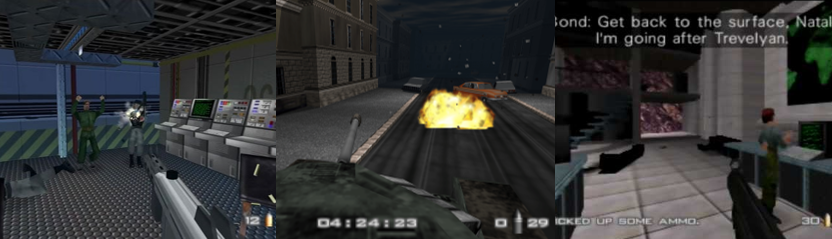
Mission objectives are quite varied, but also shared across the game;. You’ll be deactivating alarms and consoles (sometimes by interacting with them, other times by blowing them up), acquiring keys, key cards, and documents, and meeting with allies like Doctor Doak, Valentin Zukovsky, and Dimitri Mishkin. Environments are often littered with cameras and alarm systems that will attract enemies to your location or even lock you out of rooms if you’re not quick to disable them, and enemies can sometimes be holding hostages who you’ll need to free without killing the innocent. This can be easier said than done, especially on missions that require you to protect, escort, or work alongside Natalya Simonova. All of the game’s non-playable characters (NPCs) tend to run in front of your bullets but Natalia is the worst, running around in a mad panic amidst a gunfight or leaving herself an open target while messing about with computers. Things quickly become quite obtuse and tricky as you’re tasked with destroying weapons caches, calling for back-up (without destroying the radio equipment), re-aligning an antenna cradle, and wandering around a statue park to meet with the mysterious Janus. Many mission objectives require the acquisition and use of Bond’s gadgets, such as using his laser watch to cut through grates, attracting keys with his magnet, planting tracking devices, and photographing objects, sometimes while racing against a time limit. Gameplay is somewhat broken up in the two instances where you can hop into an armoured tank, with it being mandatory to barrel through the streets of Saint Petersburg in said tank while trying not to run down too many innocent civilians. If you fail even one objective, the entire Mission is a bust, but you can continue playing if you want. This can be a good way to get an idea of the layout of the environment and find other mission objectives for your next playthrough to get a faster completion time, something that’s necessary to unlock all of the game’s cheat options. In addition to your time, your accuracy, shots fired, and kills are all tracked after a Mission is completed, meaning you can always try and improve your approach to a Mission.

Graphics and Sound:  
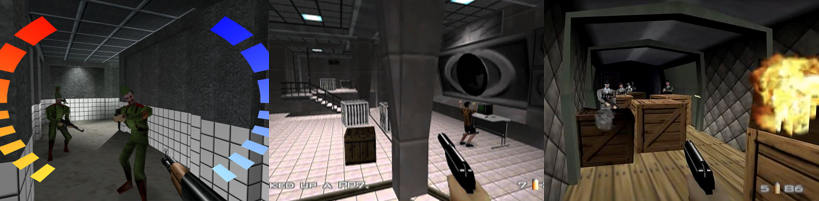
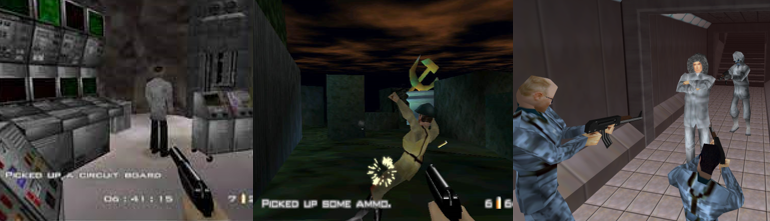
Even back on the Nintendo 64, GoldenEye 007 did a pretty good job of recreating scenes and characters from the movie. Sure, the character models are blocky and their faces hideous and many environments are a little too bland, polygonal, and swamped with fog, but they managed to capture the essence of the film really well, expanding upon minor elements and areas, especially in the first few Missions, and making them fully-fledged locations. The only issue I had was that the developers included two versions of Surface and Bunker. I would have preferred to see a Casino and Paris stage used instead to add a bit more variety to the early game, but at least there are differences between the two stages to both differentiate them and showcase the passage of time. There are even entirely new environments that weren’t seen in the film, like Silo, Depot, Caverns, and stages based on small parts of the film (like Dam, Runway, Frigate, and Train) are expanded on with additional mission objectives and aesthetic quirks. Of course, the most memorable location remains Facility, which lovingly recreates and expands upon the opening scenes of the film and remains the quintessential map for multiplayer skirmishes. My least favourite stages were always Statue, Jungle, and Cradle as they’re quite difficult to navigate and full of dense fog and hazards, to say nothing of the tougher enemies dwelling within.

While the graphics are dated, nostalgia means the game retains its visual appeal.

Every Mission begins with a bit of an overview of the location before the camera pans around and into Bond’s head, literally placing you in the role of the world’s most famous spy. Cutscenes, in the traditional sense, are few and far between and limited to these opening camera pans and a little animation of Bond looking all cool as he exits the stage, with the majority of the game’s story being relayed through the mission dossiers and onscreen dialogue. There are occasions where you can continue on and this dialogue will still play out, but if you try and rush Janus in Statue or don’t heed his advice to holster your weapon then you’ll fail the Mission. There are some graphical limitations to GoldenEye 007 that definitely date it, as well. There’s no reloading animation (guns simply disappear and reappear with a reloading sound effect), enemies have repetitive animation cycles (though they do kneel down, roll, cross their arms when dual-wielding, and react when shot in the ass), and there can be a bit of slowdown when too many explosions fill the screen. Still, little details like bullet holes, splashes of blood on clothing, and screams of pain help to keep things very immersive. Additionally, the soundtrack is incredible; composed by Rare stalwarts Graeme Norgate, Grant Kirkhope, and Robin Beanland, the soundtrack is both recognisably Bondian and unique, harkening back to Éric Serra’s movie score and the Bond themes made so famous by John Barry.

Enemies and Bosses:
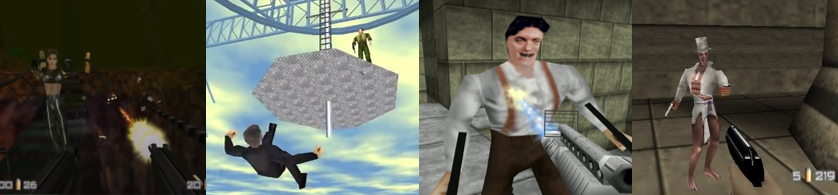
Bond’s mission is impeded by the finest polygonal soldiers and grunts money can buy. While there’s not much to differentiate them in terms of animation, the game’s enemies all don different attire depending on the Mission (sporting parkas in Surface, camo gear in Jungle, and tactical outfits in Caverns) and wield various weapons. Many carry the KF7 Soviet or Klobb, two notoriously inaccurate weapons; others bust out the DD44 Dostovei or dual-wield the ZMG (9mm). The challenge posed by the game’s enemies directly relates to the difficulty setting you’re playing on and the Mission you’re playing. Enemies are pretty clueless in Dam but wander around the Caverns carrying super-powerful US AR33 Assault Rifles and blast at you with Moonraker lasers in Aztec. Janus’s special forces, and some guards aroused by alarms, will also carry shotguns or toss grenades, and you’ll also have to keep an eye out for high-impact turret placements that can shred your life meter in seconds. Enemies are quite vulnerable, even on “Secret Agent”, dropping after a few good torso shots or a headshot, but sometimes their guns can block your bullets and the sheer number of enemy bodies can make it difficult to land decent shots, in which case it’s best to target explosive parts of the environment to send them flying.

In addition to the movie’s baddies, you’ll encounter some classic Bond villains here,

Although boss battles aren’t commonplace in GoldenEye 007, there are a few instances where you’re tasked with killing one of Janus’s henchpeople in a firefight. The first of these you’ll encounter is Colonel Arkady Grigorovich Ourumov, who cannot (easily) be killed in the first few encounters. Ourumov fires at you from a distance in Silo, you pursue him in Streets, and then you finally gun him down at the end of Train, just like in the movie. Shooting Xenia Onatopp in Train will buy you some much-needed extra time with the floor grate, but she puts up a far greater fight when you confront her in Jungle. She’s armed with both a super-powerful RC-P90 and a grenade launcher and can be difficult to hit thanks to the fog, the explosions from her grenades, and her armour-piercing shots. Your best bet is to hang back, firing from a distance, or get up nice and close and fill her face with AR33 fire. This method of staying back serves you well in the final Mission of the main game, Cradle, where you go head-to-head with rogue MI6 agent Alec Trevelyan/Janus. In this Mission, you must realign the antennae, fending off Janus’s elite guard and the sentry guns set up about the place, blasting at Trevelyan as he fires his AR33 and tosses grenades to cover his escape. Trevelyan can absorb a great deal of damage but, once you’ve hurt him enough, he’ll dash to a specific area of the map and drop down to a small platform, just like in the film’s finale, where you’re given precious seconds to reorientate yourself and deliver the final blow. When you unlock the bonus missions, Aztec and Egyptian, you’ll face off with classic Bond villains Jaws and Baron Samedi. The former carries two AR33s and is a veritable bullet sponge, though he’s a big target and shots to the face are recommended. The latter mysteriously resurrects and wields a different weapon each time as you search through the pyramid for Francisco Scaramanga’s fabled Golden Gun, which can kill any enemy, including the supernatural Samedi, in one hit.

Power-Ups and Bonuses:
Naturally, there’s quite a bit you can find throughout each Mission to aid your progress. Body armour allows you to take a few more hits and effectively acts as a secondary health bar and you can pick up any weapons dropped by downed enemies. Green crates can often be found which contain new weapons or ammo, and you’ll also be able to swipe keys and key cards from guards and NPCs alike to acquire mission-specific items or additional toys. Bond can karate chop enemies without expending ammo, but this leaves him extremely vulnerable so it’s best to use this from behind. Similarly, the sniper rifle butt can be used to hit and defeat enemies when up close. He’s also afforded numerous weapons, including his iconic Walther PPK (known as the PP7), which also comes with a silenced variant, and his trusty watch, which cuts through grates and enemies alike with its laser. Bond can also dual-wield for additional damage (and ammo expenditure) and you can even have him hold two different weapons if you’re quick at cycling through them. A variety of machine guns are on offer, from the near-useless Klobb to the simplicity of the D5K Deutsche and the burst fire of the RCP-90. You can also grab high-explosive weapons, such as grenades, grenade and rocket launchers, and three types of mines (remote-activated, proximity triggered, and timed), but be sure to avoid the blast zone. Throwing and hunting knives can also be used for a more personal touch, but I like the power and accuracy offered by the two shotguns and the Couger Magnum. The game’s best weapon is the one-shot Golden Gun and the faster variants unlocked through cheats, but you can also make use of the tanks cannon to blast at soldiers and anti-aircraft guns and zap enemies with lasers when you acquire the Moonraker laser.

Additional Features:
There are fifty-five Achievements on offer in GoldenEye 007, with twenty being awarded simply for clearing each of the game’s Missions on any difficulty setting. You’ll get three separate Achievements for finishing the entire game on each of the three difficulty settings, and 10G each time you finish a Mission in a specific time frame on a specific difficulty and unlock a cheat option. Yes, blasting through Missions as quickly as possible on each of the difficulties will unlock a wide variety of cheats, from invincibility, invisibility, all guns, infinite ammo, and even options for a hilarious “big-head mode” and to speed up or slow down the in-game action. Achievements are also earned by playing the game’s multiplayer mode. Although the Xbox version doesn’t allow for online multiplayer, you and your friends can still get together in person to battle head-to-head, or in teams, across a variety of repurposed maps.

The game’s replay value is bolstered by fun cheats, a banging multiplayer, and various unlockables.

You can battle simply for points, set limits on how many lives and time you have to play, set weapons to be one-hit kill, battle for control over the mythical Golden Gun, and play a capture the flag scenario, with each option named after a classic Bond film. All of the game’s characters, major and minor, are available to pick from alongside two classic Bond villains, Oddjob and Mayday, with the former (and Jaws) offering different challenges based on their height. Completing the game on Secret Agent and 00 Agent will also unlock two bonus Missions: Aztec and Egyptian. In Aztec, you’re placed in a fantastic recreation of Hugo Drax’s missile command centre from Moonraker and must confront Jaws, escape a rocket’s test fire, and then sabotage the Drax shuttle before it takes off. In Egyptian, you’re tasked with navigating a maze-like pyramid in search of the Golden Gun and hounded by Baron Samedi, who returns three times to cause you trouble but the biggest challenge here is remembering the sequence to reach the aforementioned Golden Gun as you’ll be cut down by sentry guns if you step on the wrong tiles. Some additional weapons can also be used when utilising the All Guns cheat, which can make it fun to revisit previous Missions, and you can even tweak the enemy behaviour, strength, and awareness when you unlock 007 Mode to make the game even easier or harder depending on your preference.

The Summary:
Obviously, nostalgia is a huge part of GoldenEye 007’s appeal. Graphically, the game hasn’t aged very well, and it’s definitely been superseded by other Bond games and FPS titles in terms of presentation, gameplay mechanics, and content but there’s something very appealing to GoldenEye 007’s simplicity. It’s nice to be placed in a surprisingly large number of polygonal environments and simply head to a goal, with additional objectives adding relay value and challenge to the game, meaning GoldenEye 007 can be surprisingly complex that more you play on higher difficulties. The game is full of fun little Easter Eggs as well, from character animations and dialogue to oddities placed in each environment, and I enjoyed how NPCs on one difficulty suddenly become vital objectives in the next. There’s a lot to do here as the game challenges you to play on harder difficulties and find the fastest, most efficient way of beating its Missions to unlock everything. There’s also a nice variety of weapons that can all be held at once, meaning you can easily mix and match your gameplay style on the fly, and a fun assortment of objectives that often encourage stealthier gameplay but give you the tools to engage in a manic firefight. The multiplayer is as enjoyable as ever, too; I’m not fussed about the lack of online functionality as I don’t play online and it’s great to be able to jump in and mess about like in the old days. After decades of GoldenEye 007 being restricted to an old console, it’s simply astounding to see it made available once again. It’d be great if more licensed games got the same treatment but I’m happy to say that GoldenEye 007 is just as much of a blast to play through now as it was all those years ago.

My Rating:

Rating: 4 out of 5.

Great Stuff

Was GoldenEye 007 a favourite of your youth? What did you think to this re-release and were you surprised when it was finally announced? How do you think the game holds up today? Did you ever finish it on 00 Agent and unlock everything? Which Mission, weapon, or location was your favourite? Do you have fond memories of playing the multiplayer? What’s your favourite James Bond videogame? I’d love to know your thoughts and memories of GoldenEye 007 so please leave them in the comments and go check out my other Bond reviews.

Movie Night [Global James Bond Day]: GoldenEye


To celebrate the release of Dr. No (Young, 1962), the first film in the long-running series of James Bond movies (Various, 1962 to present), October 5th is officially recognised as “Global James Bond Day”. Today, this franchise stands as the longest-running franchise ever and the character is one of the most recognised and popular movie icons of all time.


Released: 17 November 1995
Director: Martin Campbell
Distributor: MGM/UA Distribution Co. and United International Pictures
Budget: $60 million
Stars: Pierce Brosnan, Sean Bean, Izabella Scorupco, Famke Janssen, Alan Cumming, and Judi Dench

The Plot:
In the midst of an administrative shake-up at MI6, renowned super spy James Bond/007 (Brosnan) in drawn into a confrontation with a rogue 00 agent who plans to use a satellite weapon known as “GoldenEye” to cause a global financial meltdown.

The Background:
James Bond, Agent 007 of MI6, was created by writer Ian Fleming in 1953 and was heavily based upon his time and experiences as a navy intelligence officer. Following a very strange, comedic adaptation of his works, James Bond was popularised by Sean Connery’s immortal and iconic portrayal of the character, which kick-started an unparalleled cinematic franchise. However, in the late-eighties/early-nineties, the franchise had stalled somewhat. Plans for a third picture for then-current Bond Timothy Dalton fell through thanks to legal issues and, by the time production of the seventeenth Bond film was ready to begin, Dalton had resigned from the role since he couldn’t commit to multiple films. Of course, every generation has their James Bond and, as a result, Pierce Brosnan was finally cast in the role and became the Bond for my generation. The character, and the film’s story (the first not adapted or inspired by from an existing Fleming text), was also updated to then-modern times and largely disregarded the previous films long before franchise reboots were really a well-known trope of cinema. With a worldwide gross of over $350 million, GoldenEye was a phenomenal box office success and effectively revitalised what had been a dormant franchise. GoldenEye was also a a critical hit and impressed with its contemporary sensibilities. Of course, while the film is still fondly remembered, it had a lasting impact thanks to the Nintendo 64 videogame adaptation, GoldenEye 007 (Rare, 1997), which is largely regarded as one of the best videogame adaptations, if not one of the greatest videogames, of all time.

The Review:
Unlike a lot of Bond movies, GoldenEye’s cold open actually plays into the films larger plot. The movie begins nine years ago with Bond and his partner and friend, Alec Trevelyan/006 (Bean), infiltrating a facility in Russia. This establishes, first and foremost, their unique relationship, which is base don a lot of witty banter and sayings, and Bond’s hatred of Colonel Arkady Grigorovich Ourumov (Gottfried John) after Ourumov executes 006 in cold blood. It’s a thrilling opening sequence, shot in such a way as to slowly acclimatise us to this new Bond (we only see Brosnan’s face after he has infiltrated the facility, building up tension to the reveal of the new actor) and to show that he’s just as bold, witty, and adaptable as ever as he’s able to commandeer a motorcycle and a plane and even pull himself out of what is obviously a deadly free fall.

Bond’s methods and attitude may be seen as antiquated but they’re no less effective.

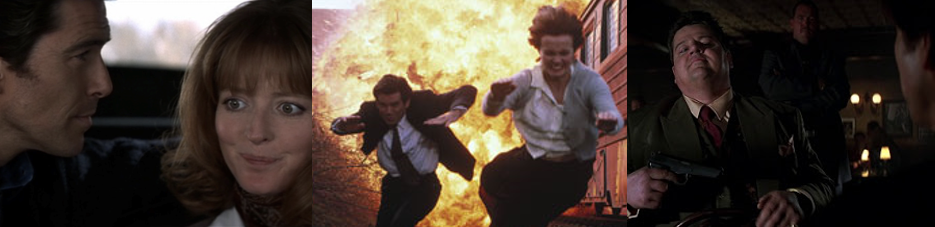
When we pick up with Bond nine years later, MI6 is in the midst of an administrative shake-up. The new M (Dench) is a woman and is generally perceived by Bond and some of his co-workers (specifically Bill Tanner (Michael Kitchen), M’s chief of staff) to be unfit for the job due to her predication for statistical analysis rather than Bond’s more traditional, proactive methods of action. Their relationship is frosty, at best, and openly explored in a candid discussion between the two in which M confronts Bond over his judgements and isn’t afraid to tell him exactly what she thinks of him. To M, Bond is a “relic of the Cold War” whose methods are out-dated and borderline dangerous in the modern age of espionage. However, by airing their grievances to each other, they develop a mutual respect and admiration in which Bond appreciates M’s candour and M puts her trust in Bond to do what he does best and investigate the GoldenEye satellite. Indeed, Bond’s methods are a significant plot point in the film. H seduces the girl sent to psychologically evaluate him due to his lack of interest in MI6 protocol and his tendency to shoot first, ask questions later, and bulldoze into any situation, wrecking vehicles in the process, is frequently chastised by Natalya Simonova (Scorupco). Indeed, even for KPG figureheads like Valentin Zukovsky (Robbie Coltrane) criticise Bond for continuing to live in the past and work for MI6. Yet, as you might expect, Bond’s unique approach to his work, despite him continually being a “sexist, misogynist dinosaur” gets results and, despite his critics, he is capable of subterfuge and investigatory techniques as well, as seen in his investigation into the Tiger Helicopter and Xenia Onatopp’s (Janssen) links to the Janus Syndicate, all of which are based on his instincts but turn out to be valid lines of enquiry.

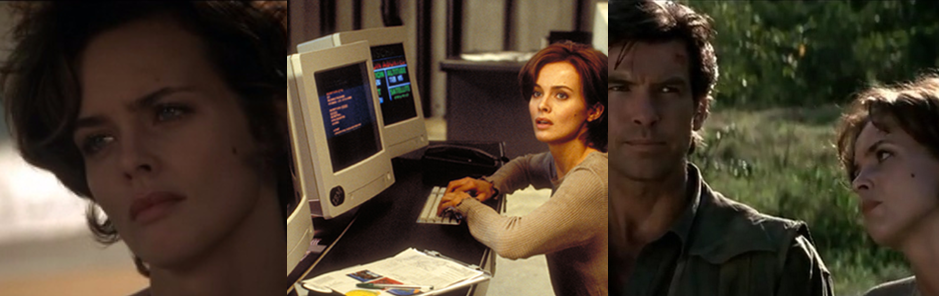
While not a typical Bond Girl, Natalya shines through her intelligence and headstrong nature.

During Bond’s investigation of the devastation at Severnaya, he inevitably crosses path with Natalya, a programmer from the Severnaya facility who witnessed Ourumov and Xenia killing all of her co-workers, firing the weapon, and stealing the GoldenEye firing key for the remaining satellite. Unlike a lot of Bond Girls, Natalya is just a regular and, comparatively, unremarkable young woman. She’s basically a civilian, one who is scared out of her wits during the attack and continuously disgusted with the killing. She also questions Bond’s motives and his cold, clinical approach to his work and, as a result, provides a brief glimpse into his more vulnerable, human side. However, while she is somewhat lacking in fortitude and is held hostage a bit too often for my liking, Natalya is an extremely capable and intelligent Bond Girl: she is headstrong, ordering Bond about at various points and forcing him to take her along on his mission. Her technical ability is directly responsible for tracking the location of Janus; and, thanks to her experience with the satellite, she’s able to reprogram and reposition it even despite the snide remarks regarding her ability by her former colleague, the lewd and reprehensible Grishenko (Cumming).

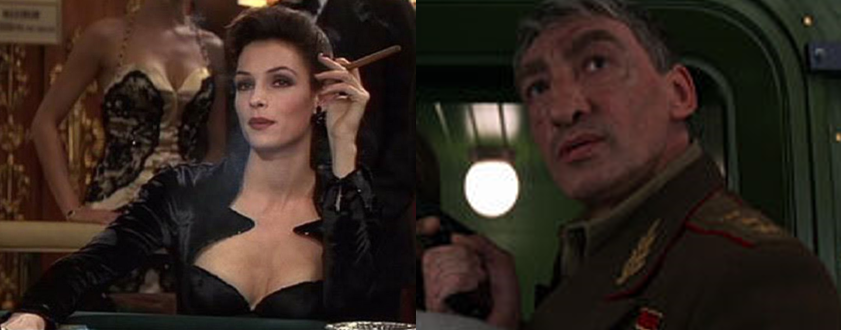
Xenia and Ourumov represent the Janus Syndicate and are sadistic killers.

Of course, Natalya isn’t the only Bond Girl in the film. Xenia is quite a unique femme fatal for Bond; shrewd, alluring, and intelligent, she’s no mere henchwoman and is, instead, a highly sexually charged and dangerous adversary capable of seducing men into bed and crushing their ribs with her powerful thighs. She’s also a sadist who revels in the thrill of killing, literally getting off on it at various points throughout the film, and is more than a match for Bond as an intellectual and physical opponent. The Janus Syndicate is rounded out by Ourumov himself; a traitor to his own country, Ourumov aspires of being the next “iron man of Russia” and is an abrasive, egotistical man. However, while he seems slightly unhinged at the best of times and is a pivotal antagonist in many ways, Ourumov is reduced to little more than a henchman for Janus who uses his military rank and position to acquire the GoldenEye access codes.  

Bond’s former friend and partner turns out to be a traitor looking for vengeance for his people.

As for the headman of the Janus Syndicate, the film goes out of its way to paint the arms dealer and terrorist as a mysterious and enigmatic figure who hasn’t been seen and about whom very little is known except for the fact that he’s a “Lienz Cossack”. Of course, it turns out to be Alec Trevelyan, who faked his death but has been left horribly scarred on one side of his face after being caught in the explosion at the facility. After witnessing the cruel treatment of his people and the deaths of his family after the British betrayed them following the Second World War, Alec has been scheming for years to take revenge for this betrayal, beginning with infiltrating MI6 and culminating in a plan to destroy the British economy. Of course, Bond isn’t exactly without a degree of support during his mission. As always, Q (Desmond Llewelyn) is on hand to talk Bond through his new gadgets (nothing massively fancy; a belt that fires a high tension wire and an exploding pen, though Q Branch is full of fun little gags and mishaps in the background) and share some banter with him. Rather than being supported out in the field by long-standing Bond ally Felix Leiter (Various), Brosnan’s Bond is aided by Jack Wade (Joe Don Baker), who is a far more jaded and pragmatic CIA operative, and is able to convince Valentin to lead him to Janus by “[appealing to] his wallet”.

The Nitty-Gritty:
If there’s a downside to GoldenEye, especially for long-time James Bond fans, it’s probably the lack of any real car-based shenanigans. Bond never gets to use any of the gadgets and gizmos Q briefs him on in his fancy new BMW and, aside from the opening car chase against Xenia, there’s no real traditional car chases or car-based action. I don’t really mind this, though, to be honest as I’m not really a car guy and my enjoyment of a film isn’t predicate don the presence of a car chase.

Bond’s mission is a lot more grounded than usual but no less global in its scope.

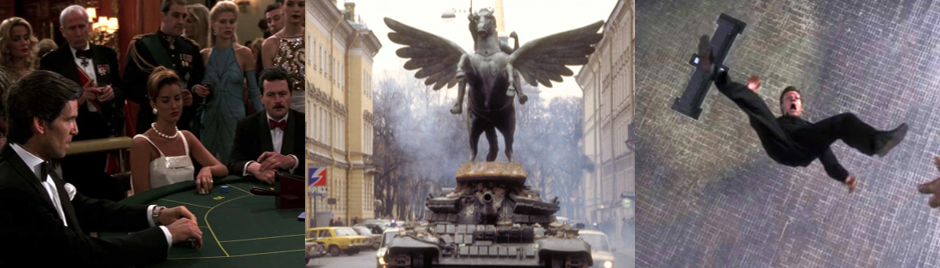
Plus, GoldenEye more than makes up for it was Bond’s exhilarating and highly amusing jaunt through St. Petersburg in a tank! Following a thrilling escape from the archives, Bond is forced to commandeer a Russian T-54/T-55 tank to pursue Ourumov (who has taken Natalya hostage) through the streets of St. Petersberg. It’s very much a “Bond Moment” but, like much of the film, isn’t quite as over the top as some of Roger Moore’s antics (though I’m fairly certain one man can’t drive a tank in the way that Bond does) and culminates in Bond successfully bringing Janus’ armoured train base to a halt with a single shell. In true Bond tradition, GoldenEye’s plot takes Bond all over the world; Bond’s mission takes him to Monte Carlo, Russia, and Cuba, with all three destinations being starkly contrasted to each other (he spends the majority of his time in Monte Carlo in a casino, St. Petersberg is portrayed as a cold (if architecturally beautiful) country still recovering from the Cold War, and Cuba is a lush, luminous jungle). Similarly, GoldenEye is full of practical stunts and effects, from model shots used during the destruction of the Severnaya base and the raising of Janus’s antenna cradle to actual tanks, trains, and other vehicles all being involved in explosive sequences that lend a real credibility and gravitas to Bond’s otherwise extravagant actions. In fact, the only effects scenes that are a bit questionable are Bond’s dive into the plane at the start of the film and the shot of Boris’s flash-frozen form when he meets his fitting end.

Xenia’s aggression, physicality, and thighs of steel make her a formidable opponent for Bond.

Action is paced out wonderfully, though, with plenty of shoot-outs and a fights taking place to spice things up and Bond even escaping from an impossible death trap within a helicopter. While I still don’t get why that random deckhand attacked Bond on the frigate, the towel gag afterwards always makes me laugh, and the many confrontations between Bond and Xenia are a particular highlight. Thanks to his misogynistic nature, Bond has no compunction about fighting a woman, though Xenia’s physicality and aggression is enough to put him on the back foot; in the end, he’s able to bring her to a fitting end by causing her to be crushed to death against a tree.

Janus was probably Bond’s most personal villain yet due to his close relationship with 007.

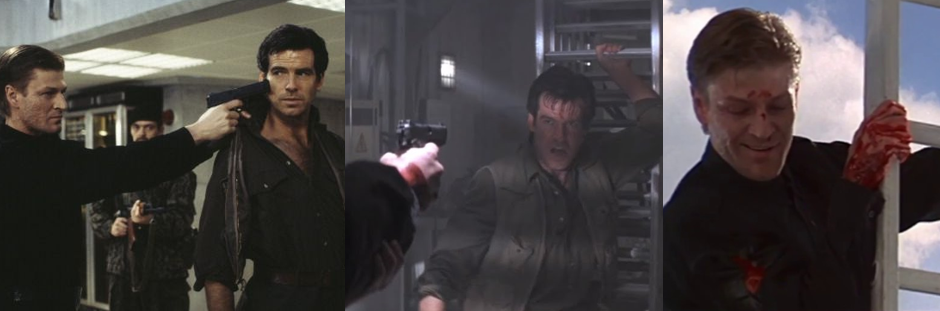
Though Bond drops a characteristically witty quip regarding this, and many of the other events in the film, GoldenEye is one of the more personal missions for Bond. Taking his name from the two-faced Roman God, and having worked alongside 007 for years, Janus is a cold, calculating, and deeply personal villain for Bond. Thanks to his background as a Lienz Cossack, Janus has a propensity for deception, betrayal, and lies and it’s clear that Bond is deeply affected by Alec’s treachery even as he tries to compartmentalise his feelings on the matter. Alec is, effectively, Bond’s dark reflection and he knows exactly how to hurt him, which buttons to press, and how to counteract his methods, immediately taking his watch, defusing his mines, and fully aware that Bond’s Achilles’ Heel is his affection for women. All of this culminates in a fittingly brutal and visceral final fight between the two as they match each other blow for blow and shot to shot (Alec even taunts Bond with the claim that he (as in Alec) was “always better”) during their climatic chase/fight across the antenna cradle. Ever since he revealed his identity to Bond, Janus continually questions Bond’s unwavering loyalty to the mission and his country rather than his friend and, in the end, Bond emphatically drops his old comrade-in-arms to his death not for England but out of personal vindication for himself.

The Summary:
GoldenEye was the first Bond film I ever watched all the way through and that is solely because of my enjoyment of the videogame adaptation. I had been aware of Bond before GoldenEye but never been that interested in the franchise but GoldenEye changed all that with its slick, stylish, and entertaining presentation and story. Brosnan was the Bond of my generation and, even now, I consider him to be one of the best; charming, sophisticated, and extremely witty, his Bond was like an amalgamation of all of his predecessors as he had the same charisma and wit as Moore but could also be gritty and rugged like Connery and Dalton (…he was also a man, like George Lazenby). The subtext of Bond being an antiquated resource whose time has long since passed is interesting and is used to juxtapose Bond’s unique, somewhat blunt approach to his work against more modern, technologically orientated times. Sadly, this plot point didn’t really appear in Brosnan’s subsequent Bond films but it did crop up again in later Daniel Craig movies and is an intriguing inclusion since it shows that, while all the technology and resources of the modern age are useful, nothing beats the good, old-fashioned, hands-on approach. GoldenEye excels through its polished presentation, memorable theme song and score, and some tremendous performances all around; Sean bean makes for an equally charismatic and vicious antagonist, one far more personal than the majority of Bond’s previous villains, who serves as a dark reflection of Bond since he was his friend, partner, and is fully aware of all of MI6’s training and protocols to make him more than a match for 007. Action and stunts are far more subdued this time around, which helps to ground the film and reintroduce Bond as a more serious and realistic character and franchise while still being over-the-top and fun throughout. Endlessly quotable and entertaining from start to finish, GoldenEye remains one of my favourite Bond films (possibly my absolutely favourite) and was a fantastic return to prominence for the character and the franchise.

My Rating:

Rating: 5 out of 5.

Fantastic

Are you a fan of GoldenEye? Where does it rank against the other James Bond films for you? What did you think to Pierce Brosnan’s debut and portrayal of the character? Did you like the casting of Judi Dench as M and the subtext regarding Bond’s outdated ways and attitudes? What did you think to Sean Bean’s inclusion as the villain and his inevitable death? Did you ever play the videogame and, if so, how do you think it works as an adaptation of the film? Which Bond actor, film, story, villain, or moment is your favourite? How are you celebrating Global James Bond Day today? Whatever you think about GoldenEye, or James Bond in general, feel free to leave a comment down below.