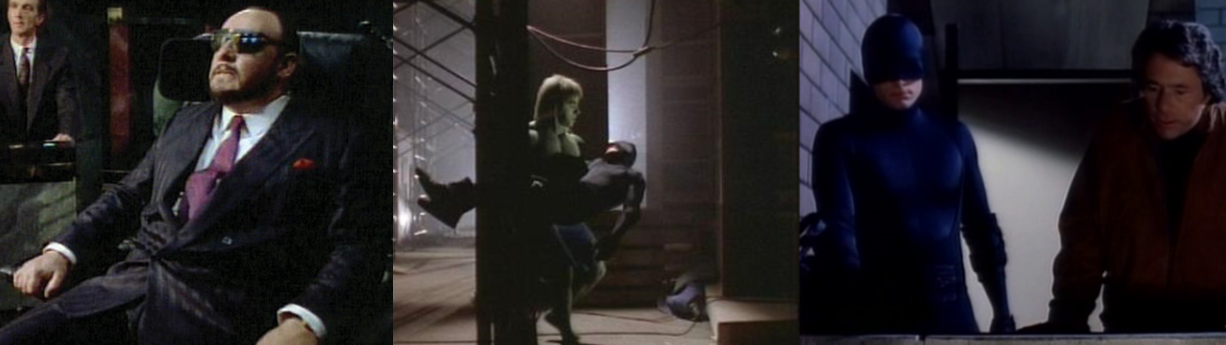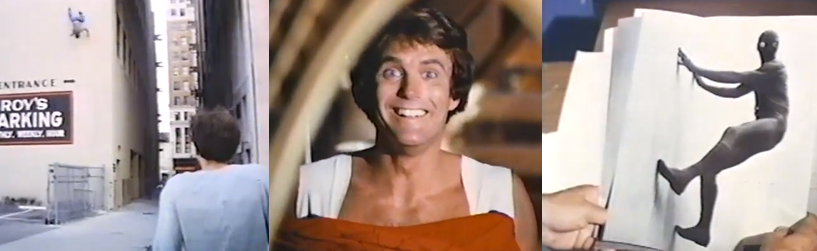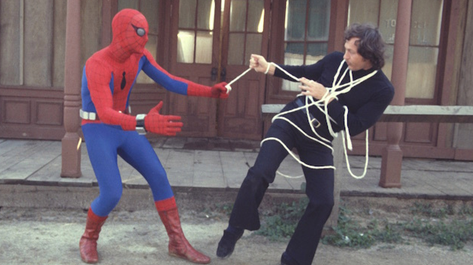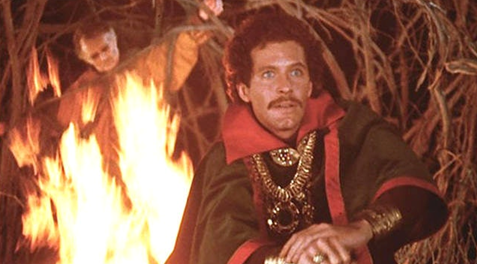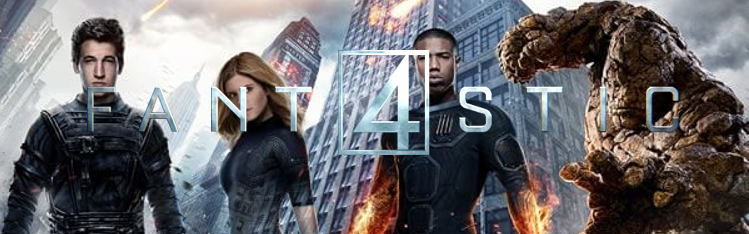
Movie Night [F4iday]: The Fantastic Four


In November of 1961, readers of Marvel Comics readers witnessed four intrepid explorers be forever changed by mysterious cosmic rays. On that day, they became known as the Fantastic Four, Marvel’s “First Family” of superheroes, and went on to be the first of many colourful superheroes for Marvel Comics as well as feature in numerous cartoons, videogames, and live-action movies. This year, I’m dedicating every Friday in November to commemorating the debut of Marvel’s most famous dysfunctional family.

Released: Never (initially scheduled for 19 January 1994)
Director: Oley Sassone
Distributor:
New Horizons Pictures
Budget: $1 million
Stars:
Alex Hyde-White, Rebecca Staab, Jay Underwood, Michael Bailey Smith/Carl Ciarfalio, and Joseph Culp

The Plot:
While in college, genius scientist Reed Richards (Hyde-White) experiments on a passing comet but a mishap results in the apparent death of his friend, Victor Von Doom (Culp). Years later, Reed recruits Benjamin Grimm (Smith), Susan Storm (Staab), and her hot-shot younger brother Johnny (Underwood) to continue the experiment, only to be bombarded with cosmic rays and gain extraordinary abilities they must then put to the test when Victor returns bent on revenge as the maniacal Doctor Doom.

The Background:
Although the process behind the creation of the Fantastic Four is a little more confusing the most other comic book heroes (they were either the result of Marvel Comics head honcho Martin Goodman tasking Stan Lee to create a team of superheroes to rival DC Comics’ Justice League of America or Jack Kirby came up with the concept himself, basing them on his Challengers of the Unknown), both Stan Lee and Jack Kirby undoubtedly created Marvel’s First Family. Unlike other superhero teams, the Fantastic Four aimed to be more relatable by leaning towards a family dynamic that caused them to bicker with each other as much as their enemies no matter how wacky their adventures got. Although I didn’t care much for their debut issue, the Fantastic Four have been a consistent staple of Marvel Comics ever since their introduction and have featured prominently in cartoons, but it was German producer Bernd Eichinger who first set in motion plans for a live-action adaptation. Although Eichinger was able to acquire the rights for a “not enormous” amount since Marvel’s lawyers practically gave away the license, budget problems hit the production almost immediately. Desperate, he turned to notorious low-budget producer Roger Corman, who arranged a pitiful $1 million for the film. Within less than a month, the film was cast, shot, and completed, resulting in a number of rushed and subpar special effects but also a legitimately impressive practical suit for the Thing. However, as soon as the film was finished, Marvel executive Avi Arad shut the production down, paid back the money spent, and confiscated the film’s negatives to avoid the brand being diluted and cheapened by the film’s release. Although Eichinger would go on to eventually produce live-action versions of the comic book characters that actually saw the light of day, the closest that The Fantastic Four has come to being released is through bootlegs and a documentary detailing the strange events surrounding the film. Those that have seen the film generally report it being pretty terrible, though others enjoy film’s the B-movie appeal and even consider it a surprisingly faithful attempt at an adaptation considering the budget and effects of the time.

The Review:
I’m gonna kick this off with a quick disclaimer that should probably be obvious, but I think it’s worth saying: the video quality of this film sucks, quite frankly. Because it never got an official release, we never even got a VHS release of the film let alone a 8K, HD Blu-ray digital transfer so I don’t exactly have much choice but to pull pictures from very low quality bootleg versions of the film. Secondly, there’s no official way of seeing this; it can be watched online for free on many streaming and video platforms but I’m not going to include any links to that. I honestly would love to see the film be dusted off and officially released some day; I find it just astounding that it’s never happened, especially as we’ve seen official releases of other, equally awful Marvel movies from the nineties but, until that happens, this is the best version that I could find to view so we’re all just gonna have to deal with it.
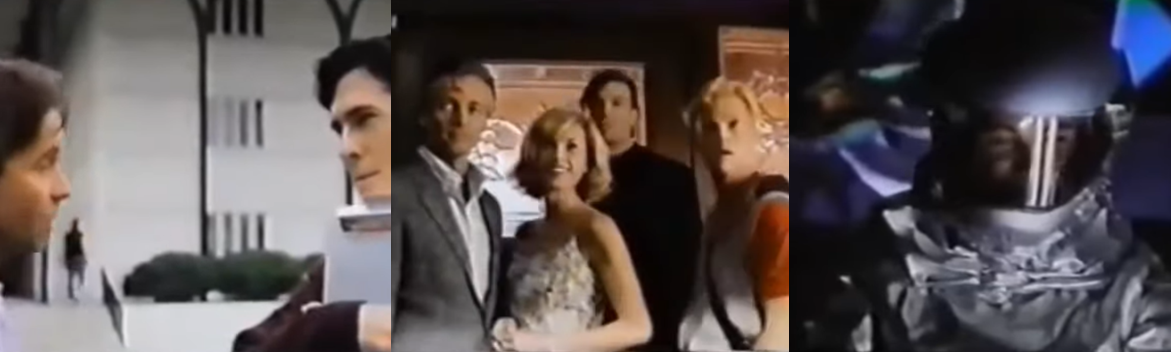
After his initial experiment results in Victor’s death, Reed assembles a rag-tag crew for a space mission.

The film begins with Reed Richards, Ben Grimm, and Victor Von Doom as college students, where they learn of an incoming comet, dubbed “Colossus”, that promises to unlock the mysteries of faster-than-light travel. Reed and Victor have spent the last four years been working on a machine to run experiments on this comet, though Reed is concerned that Victor’s calculations fail to consider velocity variations that could jeopardise the entire project. Although Reed insists on running a simulation to ensure everything goes safely, Victor pushes the experiment forward due to the limited window they have to observe Colossus, and his arrogance and recklessness cause their machine to overload and strike Victor with bolts of electricity that, despite Ben’s best efforts, apparently leave Victor dead. By the time Colossus rolls around ten years later, Reed has finalised the construction of an experimental spacecraft that Ben is all-too eager to pilot. Reed first met Sue (Mercedes McNab) and Johnny (Phillip Van Dyke) when they were children at the boarding house he stayed at in college; even though she was little more than a pre-teen, Sue had a major crush on Reed, which makes it frankly a little disturbing that they develop a mutual attraction when they reunite some ten years later when she’s all grown up. However, the oddities don’t end there as Ben makes the decision to draft the grown-up Sue and Johnny to fill out the crew of Reed’s spacecraft despite the fact that the Storms are not trained, qualified, or in any way suitable to undertake such a mission (Hell, I’d argue that Reed isn’t qualified to go into space based on what we’ve seen so far). Even Reed points out what a daft decision this is but Ben insists on bringing them along simply because of their familiarity with the project, and Reed’s doubts are apparently immediately quashed as soon as he sees how grown-up Sue has become, and the group are subsequently dubbed the Fantastic Four by the Storm’s matriarch, May (Annie Gagen). Reed feels a tremendous amount of guilt over Victor’s death and wishes to see their research come to fruition to honour his friend’s memory, which is all the motivation the others need to sign on to the mission.
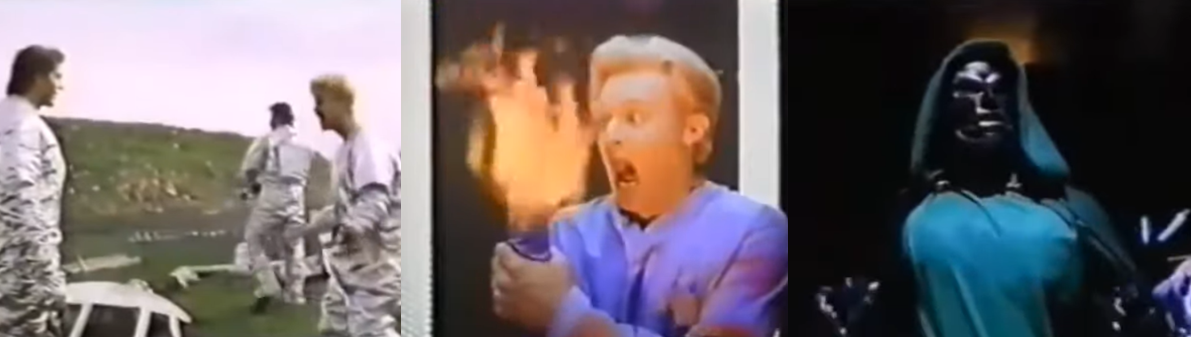
The four gain fantastic powers and catch the attention of the bombastic Dr. Doom.

However, disaster strikes when the four are on the mission and, though they survive, they are forever changed by strange and powerful cosmic rays; these changes are gradual and reveal themselves shortly after the four inexplicably survive their shuttle crashing back to Earth and are rendered in the most underwhelming and preposterous way imaginable. Johnny discovers his flame power by sneezing, Sue is initially entirely invisible, and Reed find that he can stretch a bit when he saves her from impaling herself on a piece of the space shuttle. For some reason, Ben’s more gruesome and noticeable mutation doesn’t occur until later that evening, and of course sees him transformed into a rock-like creature. While Reed is insistent that he can find a scientific explanation for their predicament, and both Sue and Johnny react in fear and disbelief at their newfound powers, poor Ben is left distraught by his monstrous appearance. The four are taken into military custody and, in scenes that I guess could be best described as “amusing”, quickly learn control over their abilities (in this iteration, Johnny literally activates his flame by saying “Flame on!” rather than this simply being his catchphrase), and quickly realise that they’re being detained by an unknown party posing as the military. Of course, this turns out to be Victor, who it turns out, actually survived his ordeal, albeit with horrific burns. After being spirited to safety back to Latveria by his fellow countrymen and donning ceremonial armour, Dr. Doom spents the next ten years establishing himself as Latveria’s ruling despot and sets his sights on acquiring the diamond that is so crucial to Reed’s experiments, which he plans to use to power a laser cannon capable of destroying New York City. For much of the film, Dr. Doom remains elusive, ominous, and cloaked in shadow, and primarily operates through two Latverian henchmen, and he watches with glee as the four are left to die in space after his inaction sees their mission compromised. Although initially angered to find that they have survived, he arranges for his men to capture the group under the guise of he military in order to learn more about their powers, and theorises that the cosmic energy of Colossus could bestow similar superhuman abilities to himself.
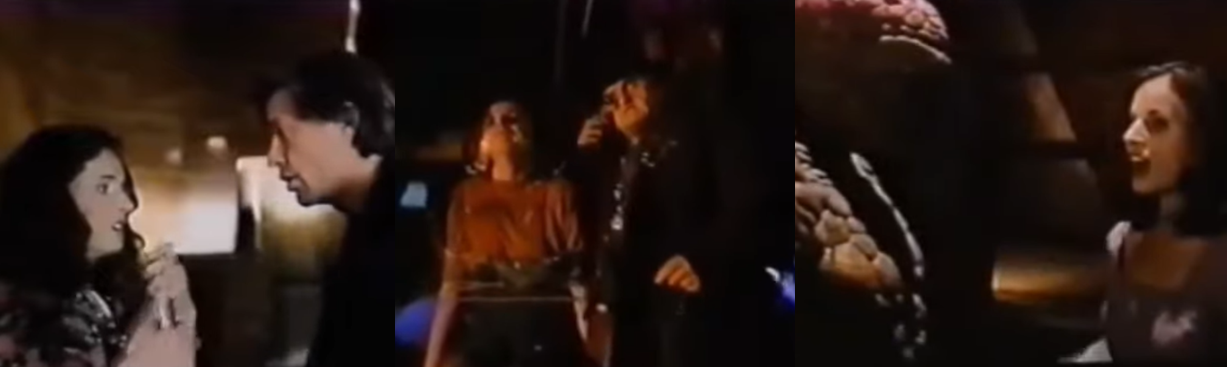
The Jeweler takes a shine to Alicia, but she only has eyes for Ben no matter his appearance.

While you’d think that Dr. Doom would be enough of a threat for the Fantastic Four, the film also includes an additional villain, the Jeweler (Ian Trigger), a troll-like man who lives in the sewers and underground tunnels of the city and steals the gem to gift to blind artist Alicia Masters (Kat Green) in a desperate bid to win her over. Ben had (literally) bumped into Alicia before his ill-fated space excursion and became immediately infatuated, and comes across her again after she has been kidnapped by the bizarre, Leprechaun-like creature and Ben has fallen among the Jeweler’s kind after being left despondent by his new rocky disposition. The Jeweler actually proves pivotal to the film’s plot since he steals Reed’s diamond and replaces it with a fake, which is influential in causing the group being bombarded by cosmic rays and gaining their powers, but honestly could have easily been dropped from the film entirely as Dr. Doom could have been the one to swap out the diamond and more time could have then been devoted to building a more natural a poignant romance between Alicia and the Thing rather than them suddenly declaring their love for each other and wasting time on a nonsensical twist where Ben reverts to his human form for absolutely no reason at all.

The Nitty-Gritty:
It’s hard to really tell what The Fantastic Four is going for in terms of its tone; Reed is the straight man, mostly serious and taking the scientific route, which makes perfect sense and is generally conveyed quite well, but the remainder of the film has this odd, camp tone that makes it more cartoony than even the group’s animated endeavours. If I had to make a comparison to another art form, I would say the closest parallel is a pantomime; nowhere is this more evident than in Dr. Doom’s bombastic and over the top line delivery. Joseph Culp massively exaggerates every movement, no matter how small, and seems to be basing his portrayal of the character more on Dark Helmet (Ric Moranis) than Darth Vader (David Prose/James Earl Jones), resulting in a maniacal and overstated performance that would be out of place even on a stage.
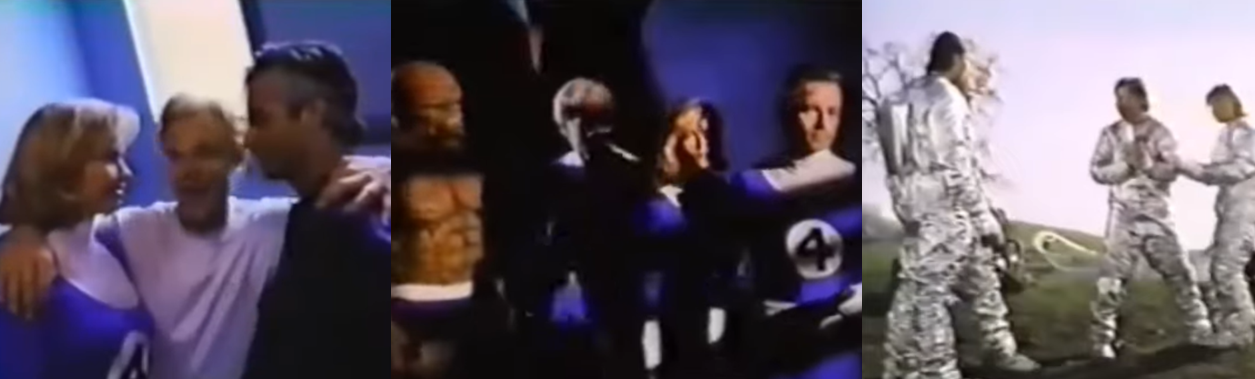
While the team’s costumes are incredibly accurate, their personalities are a bit hit and miss.

Although Reed postulates a link between their powers and their personality quirks (Reed’s always stretching himself too thin, Sue gets shy around him, Johnny (apparently) as a fiery temperament, and Ben’s always favoured brute strength over his mind), and Reed and Ben are generally pretty close approximations of their comic book characters, Sue and Johnny leave a lot to be desired. Sue’s personality seems to be based more on her earlier, less progressive characterisation; she’s infatuated with Reed and a bit bossy towards Johnny, but is far from the capable and independent matriarch of the group that I prefer to see. Similarly, while Johnny is a bit temperamental and impulsive, he’s world’s away from the arrogant little brat of the comic books and has virtually none of the usual banter you’d expect with Ben and the others, coming across more like a shadow of his egotistical and conceited comic book counterpart. However, considering the extremely low budget of the film, it’s impressive that the filmmakers went out of their way to faithfully recreate the blue-and-white spandex costumes from the comics; however, in the context of the film, it really doesn’t make all that much sense for them to even wear the outfits. It’s not like they’re modified versions of their spacesuits or anything; Sue simply designs them their costumes so that they can live up to their “Fantastic Four” moniker and put their powers to use as superheroes.
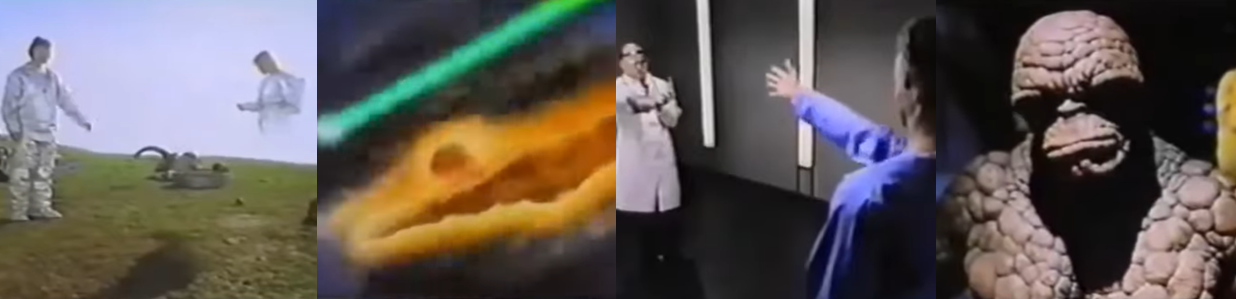
With the exception of the Thing, all of the film’s special effects are atrociously low budget.

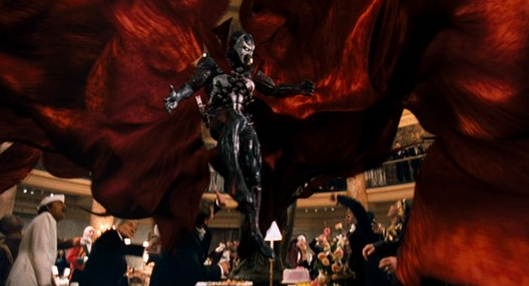
It’s a shame, then, that the special effects are so hokey; even the bolts of lightning that strike Victor are cartoonish and amateurish, and the film makes heavy use of stock footage and interior shots to mask the shuttle’s launch (and doesn’t even show its return to Earth, to say nothing of the ridiculous and obscure lightshow used to simulate the cosmic storm and the cheap-ass edits employed to save money on filming actual fight scenes). Sue’s invisibility is realised using age-old camera tricks that were pioneered in The Invisible Man (Whale, 1933) and, apparently, the filmmakers were incapable of improving up in the forty-odd-years since that film’s release, Reed’s elasticity is ludicrously rendered using floppy and awkward appendages and poorly-concealed camera trickery, and Johnny’s flame powers are generally brought to life using obvious animation techniques. While this does eventually result in an ambitious fully animated rendition of the Human Torch, it also has the effect of turning the film into a 1930s cartoon for the finale, and it’s astounding to me that the filmmakers were able to do such a great job on the Thing’s suit and yet make such a hack job of the Human Torch. Brought to life through an impressive practical suit and animatronic head, the Thing genuinely looks of the same quality as the efforts of Jim Henson and his studio around the same time and, sure, he might look a little rubbery and awkward at times, but it’s clearly the best and most impressive aspect of this mess of a film. Unfortunately, the same really can’t be said for Dr. Doom; while I can’t fault the accuracy and fidelity of Doom’s armour and overall appearance, he appears more plasticky and clunky than metallic and menacing.
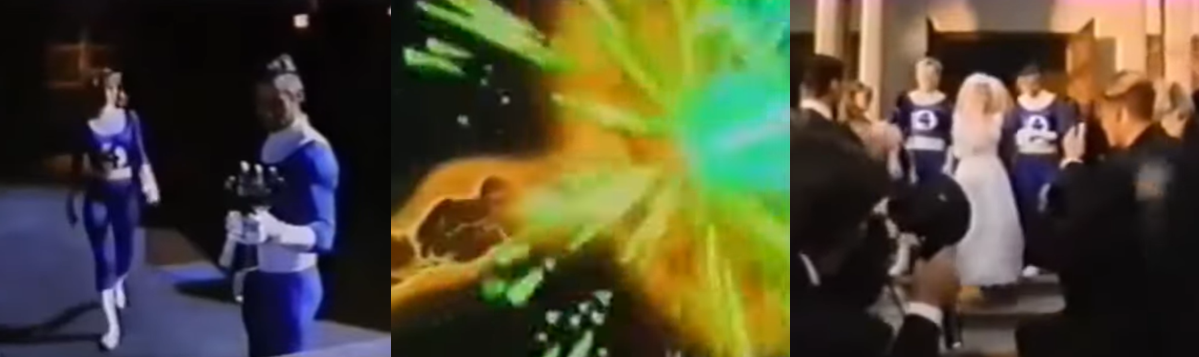
After defeating Dr. Doom and saving New York, Reed and Sue marry so this mess can finally end.

Although Ben sees himself as a grotesque freak of nature, he quickly overcomes his self-loathing after Alicia declares her love for him and he rejoins the team just in time for them to take the hastily-introduced Fantasi-Car back to Dr. Doom’s castle to put a stop to his plot. When Reed found the time to build this vehicle is beyond me, and seeing it struggle to life as an obvious model effect that would make Gerry Anderson blush is almost as absurd as the clumsy fight between the Thing and Dr. Doom in the finale. After the four throw every cheap, Halloween-store effect in the book at Dr. Doom’s disposable forces, and with the Human Torch out matching cartoon blasts with Dr. Doom’s laser in space (because he can totally breathe in space, apparently…), Reed confronts his old friend and goads him into a final confrontation. However, this is far from the epic showdown you might expect; rather than being a technologically gifted sorcerer, Dr. Doom is just an egomaniac in a suit of plastic armour, so he has none of the magical abilities and weaponry that make him such a formidable foe. Plus, Reed easily overpowers him with Dr. Doom’s greatest and most persistent weakness…really obvious, weak-ass stretchy punches to the face. This results in Dr. Doom taking a tumble over the castle wall and, despite Reed’s best efforts, falling to his apparent death, only for his severed gauntlet to inexplicably come to life to hilariously sow the seeds for a sequel! In the aftermath of the team’s victory, the Fantastic Four become celebrities, and Reed and Sue consummate their inappropriate and unsettling romance by hastening into marriage and driving off to a happy ending with Reed’s ludicrous stretchy arm waving goodbye to their guests to finally bring this car crash to an end.
The Summary:
I mean, what can you say about The Fantastic Four? I like to think I’m generally quite positive and forgiving in my reviews and always try to look for something constructive to say, but it’s not that easy with this mess of a film. I guess you could say that it was an ambitious project given how miniscule the budget was; the Fantastic Four is, by its very nature, a difficult property to bring to life in live-action even in modern times and needs a sizeable budget to do it justice, and $1 million was never going to cut it. You know it’s bad when The Punisher (Goldblatt, 1989) had more money behind it than Marvel’s premier superhero team, and it definitely shows in the presentation, direction, and acting displayed here. The whole film feels cheap and hokey, with the filmmakers apparently leaning into the campier aspects of the source material and having everyone act either too subdued or massively over the top, making for quite an inconsistent watch. Obviously, the special effects are a constant source of derision and ridicule, and rightfully so. However, it is impressive that they were able to cobble together such a remarkable Thing suit and produce comic accurate looks for the team and their main adversary….it’s just a shame that the rest of the effects can’t live up to these “standards” (and I use the word very loosely). Honestly, I don’t think that a bigger budget would have really helped this film all that much as the actors and script are incredible lacklustre; Dr. Doom is often a megalomaniacal and over the top villain, of course, and the Thing is probably the best and most accurate interpretation of his comic book counterpart, but everything feels so dumbed down and the line deliveries are so foolish that it’s not hard to see why this film got canned. Having said that, though, I still feel an official release is long overdue as they could make some money off a home media release rather than nothing at all by leaving it to gather dust. But, there again, maybe that’s for the best.

My Rating:

Rating: 1 out of 5.

Terrible

Have you ever watched this unreleased film? Would you like to see this film get an official release some day? What did you think to the Thing’s practical suit and the other special effects in the film? Did you also find the Reed/Sue romance a little unsettling in this version of the story? What did you think to Dr. Doom’s portrayal and appearance? What are some of your favourite stories involving the team? How are you celebrating the debut of Marvel’s First Family this month? Whatever you think about the Fantastic Four, leave a comment down below.

Movie Night [Multiverse Madness]: Doctor Strange in the Multiverse of Madness


In September 1961, DC Comics published “Flash of Two Worlds” (Fox, et al), a landmark story that brought together two generations of the Flash: the Golden Age Jay Garrick and the Silver Age Barry Allen thanks to the concept of the multiverse, an infinite number of parallel universes that allowed any and all stories and characters to co-exist and interact. Marvel Comics would also adopt this concept and, to celebrate the release of this very film, I’ve been both celebrating the Master of the Mystic Arts and exploring the Marvel Cinematic Universe’s (MCU) equivalent of the multiverse every Sunday of May.


Released: 6 May 2022
Director: Sam Raimi
Distributor:
Walt Disney Studios Motion Pictures
Budget: $200 million
Stars:
Benedict Cumberbatch, Elizabeth Olsen, Xochitl Gomez, Rachel McAdams, Benedict Wong, and Chiwetel Ejiofor,

The Plot:
Following a number of reality-altered events, Doctor Stephen Strange (Cumberbatch) is unexpectedly thrown into a fight not just for his life, but for the fate of the entire multiverse when a girl with the power to traverse alternate dimensions is threatened by a corrupted force seeking to take her power for her own.

The Background:
Steve Ditko and Stan Lee’s bizarre creation, Dr. Strange, has undoubtedly become one of Marvel’s most pivotal figureheads since his unimpressive debut and has had a storied history with adaptation. After an ill-fated live-action film in the seventies, a number of animated ventures, and a long period of Development Hell, Marvel’s Master of the Mystic Arts finally made his big-screen debut as part of the MCU to both universal praise and incredible financial success. Development of a sequel began in 2016, with director Scott Derrickson eager to incorporate the villain Nightmare and really delve into Dr. Strange’s weirder aspects. MCU producer and figurehead Kevin Feige saw Dr. Strange as the linchpin on the MCU’s fourth phase, which would expand upon the multiversal aspects of their successful franchise, while Derrickson initially aimed to introduce more horror elements to the sequel. This caused some creative differences between the two parties, and led to Derrickson stepping down and Sam Raimi being brought in as the director and injecting his own blend of horror to the script after delays due to the COVID-19 pandemic. After attempting to introduce the character in previous MCU projects, Feige finally found an avenue to bring in America Chavez, and the script was rewritten to both play to Raimi’s strengths as a director and to further expand on Wanda Maximoff’s (Olsen) character growth from WandaVision (Shakman, 2021). Seeking to infuse a horror vibe to the MCU and explore the consequences of dabbling in black magic and the multiverse, the film also ended up including a number of cameo appearances from iconic actors and fan casted characters to tease towards even bigger things for the MCU. Despite the film not seeing a release in LGTBQ+-intolerant countries, Doctor Strange in the Multiverse of Madness amassed a worldwide gross of $955.8 million and was met by widely positive reviews; critics praised its harrowing tale of grief and desperation, the unique horror slant, and the visual spectacle on offer, though some found it to be a bit formulaic and bloated at times.

The Review:
Right off the bat I have to say that I’m not actually the biggest fan of comic book movies delving into the multiverse concept. It’s a strange opinion to have given I regularly celebrate the trope and have enjoyed a lot of multiversal stories in comics, but I’m having a lot of difficulty reconciling that audiences aren’t more confused by it all. I’m a lifetime comic book fan and even I struggle with it a bit and, as much as I enjoyed Spider-Man: No Way Home (Webb, 2021) and Alfred Molina’s portrayal of Doctor Otto Octavius/Doctor Octopus, I can’t help but wonder if bringing that version of that villain back cost us seeing a new actor’s take on the character. I give Marvel a lot of leeway, though; after ten-plus years of building up their cinematic universe, exploring science, the cosmos, time and space, I think they’re in a far better position to start exploring beyond the confines of their singular reality. It’s not like, say, the DC Extended Universe, which jumped into alternate versions, timelines, and multiverse shenanigans just a few years after their first movie, to the point where they’re already having to rejig their timeline to try and make sense of it all. I feel Marvel’s execution so far has been very respectful and very exciting for us die-hard fans of the comics and movies, and also suspect that this phase of bringing back popular actors in their iconic superhero roles may soon pass as we head towards whatever the culmination of Phase Four really is.

With the world still reeling from the Blip, Dr. Strange is thrust into the chaotic multiverse.

Still, if you’re going to explore the multiverse, what better character than the Master of the Mystic Arts himself? When the movie begins, Dr. Strange is still guarding the Sanctum Sanctorum in New York City but, thanks to being dusted during the Blip, is also still no longer the Sorcerer Supreme, with those duties now being fulfilled by Wong (Wong). Their relationship isn’t one of master and servant, but more one of bickering peers; there’s a recurring gag that Dr. Strange refuses to bow to Wong since he’s still a bit annoyed at having lost his lofty position but, despite this, he remains a dedicated and powerful spellcaster since Wong’s duties are more focused on training sorcerers at Kamar-Taj. Dr. Strange is, however, facing a bit of a personal crisis; his dedication to his newfound lifestyle, and having been gone for five years, means that he’s missed out on the girl. Doctor Christine Palmer (McAdams) has not only met someone else, but is getting married to him, and he’s plagued by doubts concerning his decision to surrender the Time Stone to the Mad Titan, Thanos (Josh Brolin), which saved the lives of billions but also disrupted the lives of countless others, including his former colleague, Doctor Nicodemus West (Michael Stuhlbarg), who questions Dr. Strange’s actions. Strange remains justified, however, as he acted out of the greater good, having viewed millions of potential timelines, but these doubts over his character and motivation continue to surface throughout the film when he learns from America Chavez (Gomez) that his alternative selves have been so focused on the big picture that they’ve been driven to unspeakable acts, such as attempting to take America’s power for his own and even being corrupted by the forbidden magical tome, the Darkhold. Since she’s being pursued by forces far beyond her power, and is unable to control her dimension-hopping abilities, America has little choice but to trust Dr. Strange to protect her, but both her and the alternate versions of Christine have reservations about Strange’s character after seeing the lengths his other selves have gone to to keep the vast multiverse safe.

Devastated at losing her kids, Wanda covets America’s power and wages war as the Scarlet Witch.

America is quite the anomaly; in an infinite number of alternate realities, it appears as though there’s only one of her, since she hasn’t encountered a counterpart in all of her random travels throughout the multiverse and she doesn’t dream (the film posits that dreams are a window into the lives of our alternate selves, which is an intriguing concept). Desperate, afraid, and alone, America is carrying a great deal of guilt after her chaotic powers accidentally sucked her mothers to an unknown fate when she was a child. America’s ability to conjure a massive, star-shaped portal to anywhere in the multiverse is triggered by fear and panic, meaning she has little control over her abilities but they offer a wealth of possibilities to more powerful and experienced forces who could absorb her power for their own ends. Dr. Strange first meets America when she’s being pursued by an unspeakable eldritch abomination, which he and Wong recognise to be a creature of witchcraft rather than sorcery, so he seeks out console from Wanda Maximoff/Scarlet Witch, hoping to recruit the former Avenger to help protect America. However, Wanda has been so consumed with grief after losing her magically-conjured sons, Billy (Julian Hilliard) and Tommy (Jett Klyne) from the conclusion of WandaVision that she’s turned to the Darkhold to find ways of being reunited with them in an alternate reality. The Darkhold’s dark magic, coupled with the destructive potential of the Scarlet Witch, have driven Wanda into a maniacal obsession with obtaining America’s powers and, when Dr. Strange refuses to hand the girl over peacefully and condemn her to death at the Scarlet Witch’s hands, Wanda launches a brutal all-out assault against Kamar-Taj and, after they’re stranded in the multiverse, to force Wong to take her to the forbidden land of Mount Wundagore, where the Darkhold was transcribed, to both locate them and find the power to “dream walk” into the body of her alternate self to relentlessly pursue them, slaughtering anyone and everyone who gets in her way.

The alternate Mordo brings Dr. Strange before the Illuminati, but Wanda mercilessly slaughters them all.

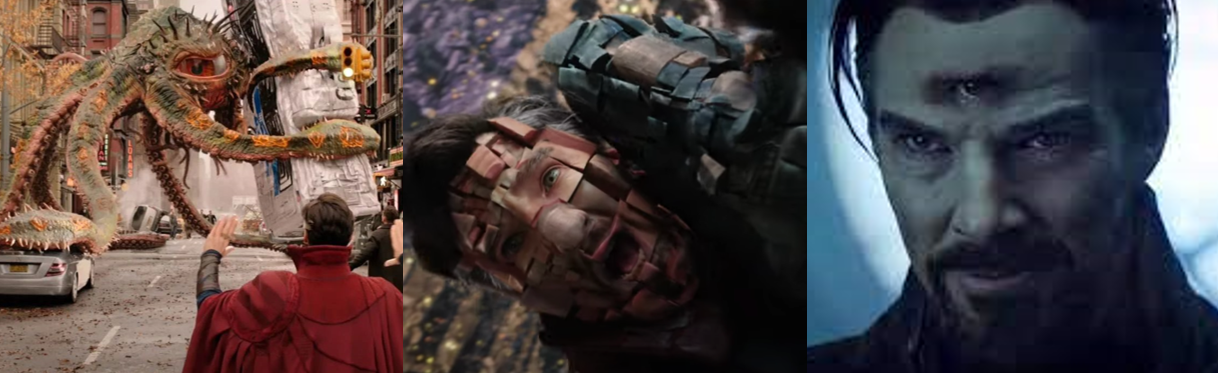
Since America can’t control or direct her powers, Dr. Strange immediately out his alternative self for help, only to find that he heroically died saving the universe from Thanos and that his former mentor, Baron Karl Mordo (Ejiofor), has taken his place as the Sorcerer Supreme. For those who were hoping for a resolution to Mordo’s vow to hunt down and eliminate sorcerers at the end of Doctor Strange (Derrickson, 2016), you’ll be disappointed to learn that “prime” Mordo (i.e. the one from what the MCU calls “Earth-616”) isn’t actually in this film and his counterpart is a far less antagonistic character…or so it seems. Initially, Mordo is welcoming and courteous but, all too soon, Dr. Strange and America find themselves drugged, fitted with power-dampening restraints, and placed in holding cells under the observation of the alternative Christine to determine whether 6161-Strange is as much of a threat as his counterpart. This leads to Mordo bringing Dr. Strange before the judgement of the “Illuminati”, a panel of superpowered beings who stood against Thanos and executed their version of Dr. Strange after he became corrupted by the Darkhold. Comprised of Mordo, Captain Peggy Carter/Captain Carter (Hayley Atwell), Captain Maria Rambeau/Captain Marvel (Lashana Lynch), Blackagar Boltagon/Black Bolt (Anson Mount), Professor Charles Xavier (Sir Patrick Stewart), and Doctor Reed Richards/Mister Fantastic (John Krasinski), the Illuminati underestimate Wanda’s devastating power in favour of focusing on Strange’s potential threat, which ultimately results in all of them being mercilessly slaughtered by the raging Scarlet Witch when she puppets her alternative self right into their chamber. Wanda easily negates Black Bolt’s destructive voice, turning it back on himself so he blows a hole in his head, slices Captain Carter in two with her own shield, crushes Captain Marvel to death, reduces Mr. Fantastic to spaghetti, and snaps Xavier’s neck in a harrowing sequence that’s just one of many allusions to director Sam Raimi’s past as a horror director. Thought assisted by Christine and led towards the Book of Vishanti, which promises the power to oppose Wanda’s black magic, this tome is destroyed, America is captured, and Dr. Strange is forced to turn to another corrupted version of himself, and ultimately the Darkhold, to find the means to keep Wanda from killing America, regardless of the toll such dark magic threatens to extract on his soul.

The Nitty-Gritty:
Loneliness, grief, and desperation are core themes in Doctor Strange in the Multiverse of Madness; Dr. Strange maintains that he’s perfectly happy being the Master of the Mystic Arts and with his newfound purpose in life, but it’s clear that he still has feelings for Christine and regrets losing his chance to be with her. All throughout the film, he’s disturbed (but not surprised) to learn that his alternate selves all fumbled their chance at happiness, though the ramifications of this were far more destructive for his counterparts; similar to Strange Supreme from What If…? (Andrews, 2021), Strange’s corrupted doppelgänger was turned towards dark magic after losing Christine and his focus on trying to scour the multiverse for a world where they could be happy directly led to his universe being torn asunder by an “incursion” event, the very thing the Illuminati feared both their Dr. Strange and 616-Strange would cause if he wasn’t put down ahead of time. America’s fear of her powers and of trusting others is directly tied to that traumatic incident in her childhood where she literally swept her parents away in an accidental outburst, and her reluctance to trust Dr. Strange is based entirely on his alternative self turning on her to keep her powers out of Wanda’s hands, so her character arc isn’t just about learning that the ability to control her powers has been within her all along but also about finding a place to belong in the infinite worlds of the multiverse. Finally, Wanda is so desperate to be reunited with her children that she not only allows the Darkhold to corrupt her vast powers but also attacks friend and foe alike, embracing her destiny as the destructive Scarlet Witch and fully prepared to sacrifice America’s life (and the life of her doppelgänger) to be with her children once more.

The multiverse and all its monstrous potential is vividly brought to life in this visual spectacle.

Doctor Strange in the Multiverse of Madness takes the rules of magic and the snippet of the multiverse we saw in Doctor Strange and Spider-Man: No Way Home and absolutely runs with it; in the years since his debut movie, Dr. Strange’s power and command over magic has vastly increased, meaning he’s able to do far more than just conjure protective shields or glowing whips. Now, he can summon magical buzz saws, demonic hands, animated musical notes and use them as projectiles, and perform all manner of miraculous and visually entertaining feats. Naturally, this makes him an incredibly over-powered character, but the film goes to great lengths to put him in jeopardy by placing even greater, often more monstrous, threats in his path; when Gargantos attacks America, it takes both Dr. Strange and Wong to put it down, which is a feat in and of itself, but even they and their magical cohorts of Kamar-Taj are no match for the full fury of the Scarlet Witch, who leaves an untold number of charred corpses and ashen remains in her wake as she pursues America. When America transports herself and Dr. Strange through the multiverse, the film really starts to come alive; they are blasted through an animated universe, the Quantum realm, the Dark Dimension, a universe where they’re turned into paint, and one where they’re literally pulled apart into tiny pieces. Eventually dumped in the M. C. Escher-esque void between universes and a desolate universe where a devastating incursion has caused reality and physics to fold in on itself, Dr. Strange’s brief and violent tour of the multiverse sees him travelling to strange worlds where society and history are slightly different, characters are noticeably changed, and even possessing the lifeless body of one of his counterparts in order to oppose Wanda. I can certainly see why Wanda’s turn to the dark side probably rattled a few people; I definitely didn’t expect that to happen (or, at least, I thought maybe the reveal that she was behind it all would happen mid-way through or near the end) and I was doubled surprised by just how many references were made to WandaVision since the MCU has notoriously ignored its TV projects in the past. WandaVision was a startling examination of the destructive power of grief, and I think the idea that someone can just get past the sort of trauma Wanda has been through without lasting repercussions is a bit unlikely, and the film definitely paints her as someone in a great deal of pain and corrupted by the Darkhold’s influence. While seeing her match Dr. Strange blow for blow was a great way to showcase her power, having her tear through the Illuminati was an even greater example of her potential threat to the multiverse.

Dr. Strange is forced to use dark magic to combat the threat Wanda poses to the multiverse.

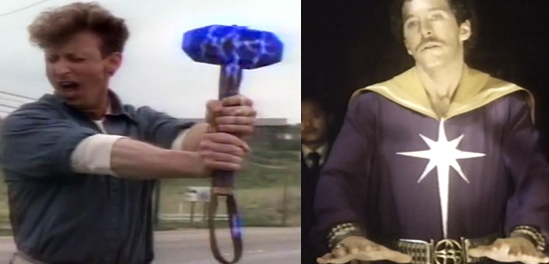
While it’s clear that many of the Illuminati’s actors weren’t all on set at the same time, it was fun seeing Patrick Stewart back in his iconic role (and accompanied by the nineties cartoon theme, no less) one last time, and to see long-time fan casting John Krasinski portray Mr. Fantastic, but it was Anson Mount returning as Black Bolt which really surprised me as I never thought we’d see the Inhumans referenced or included after their disastrous show. Again, you could argue that these characters were “wasted” but I saw them as fun little bits of fan service for long-time fans; I said up top that I get annoyed at other actors not having a crack in these roles, though, so I am still holding out hope that we see a new actor portray Xavier if and when the X-Men are properly introduced to the MCU. Dr. Strange doesn’t come to this decision lightly; all throughout the film, his goal has been to claim the Book of Vishanti to acquire the power to stop the Scarlet Witch but, when it’s destroyed, he’s left with no choice but to turn to the Darkhold possessed by his corrupt alternate self. Transformed into a three-eyed, monstrous version of himself, this alternate Strange has become as consumed by the Darkhold as Wanda and, after his defeat, the lingering question of how the book will affect 616-Strange hangs in the air for the finale. Thankfully, the alternate Christine is on hand to act as his moral compass, encouraging him to utilise the power of the dark spirits seeking to punish him for desecrating his other self’s body, which is enough for him to save Wong from Wanda’s rock monsters and free America before her power (and life) can be consumed. Finally harnessing her incredible powers, America first lashes out at Wanda and then, when she realises she’s no match for the Scarlet Witch, grants the corrupted Avenger her wish and transports her to her boys, who are naturally terrified of this malevolent version of their loving mother. Devastated at seeing them cower in fear of her, Wanda abandons her crusade and, to atone for her heinous actions, willingly brings Mount Wundagore down around her, presumably killing herself in the process (but we never see a body, so I wouldn’t be surprised if she doesn’t pop up again in some way, shape, or form). in the aftermath, Wong beings repairing Kamar-Taj and training his students (with America among their number, the implications of which could make her one of the MCU’s most powerful characters ever) and Dr. Strange finds a peace with himself after finally admitting to the alternate Christine that he loves her. However, his jovial mood is immediately shattered when he’s crippled by whispering voices and the emergence of a third eye on his forehead like his corrupted counterpart as a result of the Darkhold’s influence, but even this is instantly swept under the rug when, in a mid-credits sequence, a mysterious woman (apparently Clea (Charlize Theron)) demand she help her repair an incursion in the Dark Dimension…
The Summary:
After seeing Doctor Strange in the Multiverse of Madness, I have to commend Marvel for their marketing strategy; while the trailers hinted at Wanda’s turn to the dark side, nothing was made explicit and even the official blurb was little more than a vague statement about the film, so I was very surprised to see her transform into this malevolent, vindictive witch of incredible power. Wanda’s pain and grief are very real and believable, and I was also surprised that the film didn’t shy away from assuming the audience was familiar with WandaVision as a part of her character arc, and seeing her become this malicious force of darkness definitely raises the stakes for the MCU and means that anything can happen to these characters, no matter how heroic they may be. Dr. Strange also had an intriguing arc in the film; torn between his regrets and his duties, he fully commits to protecting America at all costs, no matter the sacrifice and the lingering question over whether he will also succumb to the darkness helps add a fascinating edge to the character as his concerns must be on a far wider scale at all times, necessitating tough choices and questionable actions. The exploration of the multiverse was great; I definitely think the film has established a short-hand for the concept and that future iterations of it will simply be taken for granted going forward, and I did enjoy seeing some new and old faces appear in cameo roles as the Illuminati, which again hints towards some exciting things in the MCU’s future. The film does suffer a little from some pacing and repetitive issues, however; obviously it can’t be all action all the time, but it does slow down to explain its concepts one time too many, and I found the framing of Dr. Strange’s meeting with the Illuminti jarring as it just highlighted that many of the actors weren’t actually there. Leaving Mordo’s vendetta unresolved was also a bit of a disappointment for me, as was the mid- and post-credits sequences, but I’m interested to see these plot threads resolved in a future film and had a blast with the film’s bizarre visuals and bat-shit-crazy moments. Bolstered by some great horror-themed shots and full of fan service and surreal imagery, the film, Doctor Strange in the Multiverse of Madness was an entertaining thrill-ride and absolutely galvanised Dr. Strange as one of the cornerstones of the MCU and, I hope, has opened the door for new versions of some of Marvel’s most popular characters to join this ever-expanding cinematic universe.

My Rating:

Rating: 4 out of 5.

Great Stuff

What did you think to Doctor Strange in the Multiverse of Madness? Are you a fan of the muliverse concept or do you find it a bit too complex? What did you think to Dr. Strange’s character arc and the potential of him turning bad? Were you a fan of America Chavez or do you think she’s a bit too overpowered? What did you think to Wanda’s turn to the dark side and were you disappointed that Mordo was pushed to the side? Which member of the Illuminati surprised you the most and what did you think to their inclusion? Were you a fan of the film’s horror elements? Whatever your thoughts on Doctor Strange in the Multiverse of Madness, sign up to leave your thoughts below or leave a comment on my social media, and thanks for sticking around for Multiverse Madness!

Back Issues [F4iday]: The Fantastic Four #1


In November 1961, Marvel Comics readers witnessed four intrepid explorers be forever changed by mysterious cosmic rays. Marvel’s “First Family” of superheroes were the first of many colourful superheroes for Marvel Comics and are more than deserving of some attention today.


Story Title: The Fantastic Four!
Published: November 1961
Writer: Stan Lee
Artist: Jack Kirby

The Background:
The story of the creation of the Fantastic Four is a little…contested, to say the least. The popular notion is that Marvel Comics big cheese, Martin Goodman, wanted then-editor Stan Lee to create a team of superheroes in response to DC Comics’ Justice League of America. Creatively unsatisfied with the comics industry, Lee sought to use the opportunity to create stories and characters that were appealing to him and drafted a quick synopsis of his idea for a dysfunctional family of superheroes for the legendary Jack Kirby to provide the artwork for, thus creating the “Marvel Method” of writer/artist collaboration. Kirby, however, disputed this story and claimed to have come up with the idea, which was extremely similar to a similar concept he had developed for DC, the Challengers of the Unknown. Regardless, the two are credited as co-creators of Marvel’s First Family, a team that, even today, is unique in that it is comprised of a family dynamic that, for all their intelligence and abilities, is just as likely to come to blows with each other as with their enemies. This dynamic allowed the team (comprised of Doctor Reed Richards/Mister Fantastic, Susan Storm/The Invisible Girl, and her brother Johnny, the Human Torch (not to be confused with he android of the same name from the 1940s/1950s), and Ben Grimm/The Thing) to juxtapose their wacky adventures with a very real and relatable humanity. The team also stood out from other superheroes of that era since they didn’t hide their identities behind masks or from the public, were revered with a celebrity status, and didn’t even acquire their iconic outfits until the third issue of their series, which went on to introduce characters and concepts that would forever alter Marvel Comics in the decades that followed.

The Review:
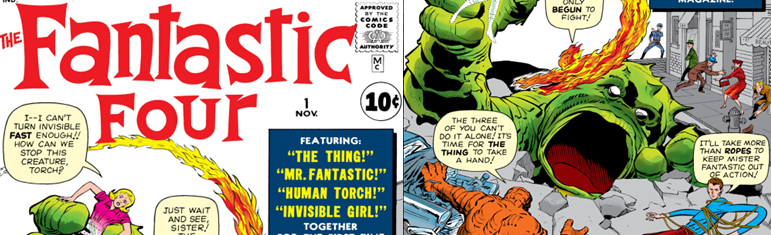
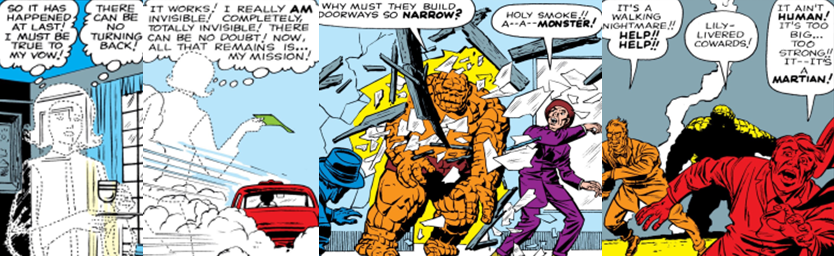
“The Fantastic Four!” beings in medias res with a dramatic flare shot into the skies of Central City (courtesy of a mysterious, shadowy figure, the leader of the Fantastic Four) call out for the titular team. Upon seeing the signal, Susan Storm responds immediately by turning herself invisible and preparing to introduce the world to the Invisible Girl, shocking pedestrians and a taxi driver with her transparent nature.

Sue and Ben cause some disruption in answering Reed’s summons…

Elewhere in the city, a large, bulky man in a trenchcoat is attempting, unsuccessfully, to shop for clothing that will fit his broad dimensions. When the store attendant reacts to the signal for the Fantastic Four, the man discards his restrictive clothing, revealing himself to be a monstrous, rock-like man-monster! His appearance causing panic and fear, the creature escapes from police gunfire by ripping a manhole out of the street and fleeing through the sewers beneath the city, being mistaken for a Martian in the process. Finally, a young man named Johnny is busy getting his beloved car fixed up when, upon seeing the signal, he suddenly bursts into flames and blasts off into the sky in response! The presence of an unknown object flying through the city results in the Mayor alerting the National Guard and fighter jets being called into action. Despite the flaming Johnny’s pleas for the planes to pull back, he inadvertently reduces the jets to slag with his intense heat and is left at the mercy of a nuclear missile!

Despite Ben’s objections, the team easily get to their rocket and blast off into space.

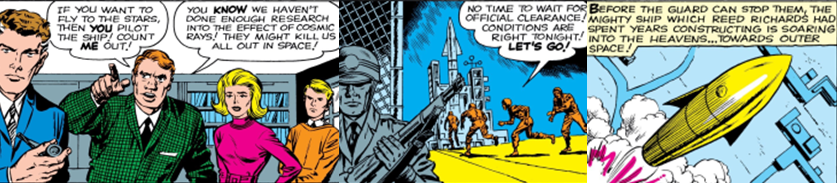
Luckily, a fourth individual steps in to dispose of the missile before it can explode and kill Johnny (…and the entire city); he then rescues Johnny who, exhausted from the physical exertion, has lost his flame and in free fall. This fourth individual is able to accomplish all of this by use of super stretchy, elastic limbs and is, of course, Reed, the very same man who summoned these fantastic individuals in the first place. With the team united, the comic then flashes back to tell us who these people are and how they can do the extraordinary things we see. It seems their leader, Reed, was once a scientist working for the government and researching “cosmic rays” and planned to fly a ship into space to further his studies. His friend and colleague, Ben, initially refuses to pilot the ship since he believes that Reed hasn’t properly prepared for the potentially fatal effects of the cosmic rays but Sue (Reed’s fiancée) convinces him (more like manipulates him) into joining the expedition after believing him to be a coward who would allow “the Commies” to beat them to the task. Although it’s made somewhat obvious that Reed is the brains behind the research and Ben is the pilot, it’s not entirely clear why they bring Sue and her brother along; Sue simply insists on coming since she’s betrothed to Reed and Johnny, similarly, insists on going simply because his sister is. The race to beat the Commies is apparently so close that the group cannot wait any longer, or for official clearance; they simply race to the launch site, sneak past the one guard, and are able to take off completely under their own power.

The cosmic rays cause the team to undergo startling physical changes.

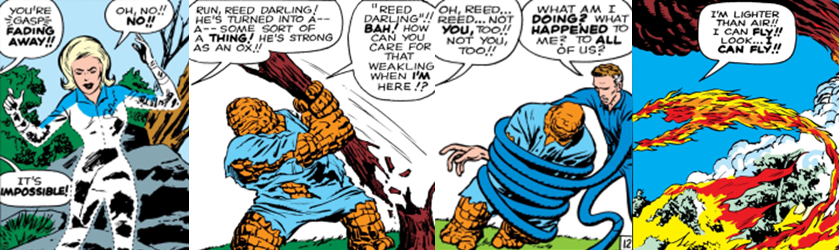
Though the ship performs perfectly, Ben’s worst fears are quickly realised when the ship is bombarded by cosmic rays that easily penetrate the ship’s shielding. Initially, there is no physical pain as the rays are “simply” comically charged radioactive rays of light but, all too soon, the four begin to feel the full transformative effects of the radiation. Despite being debilitated by the pain and physical mutations they are undergoing, the team’s ship is able to return safely to Earth thanks to its automatic pilot. Upon emerging from the ship, the team are shaken…but alive, with Sue lamenting the loss of Reed’s years of research and Ben still bitter at Reed not taking the proper precautions and endangering them all. While Ben’s fears become reality as Sue suddenly, briefly fades from sight, they are realised all too horribly when he transforms into a super strong, rock skinned…thing! Furious with Reed’s attitude, the Thing rips up a tree and tries to make him pay for his actions but Reed shocks everyone by abruptly displaying his powers of elasticity, which easily allows him to avoid Ben’s wild swings and ties him up in a mess of rubbery limbs. Panicked at the events unfolding before his eyes, Johnny unexpectedly bursts into flame but, unlike the others, he is elated to find this not only doesn’t harm him but gives him the ability to fly through the air.

The Fantastic Four are quickly separated after arriving on the mythical Monster Isle.

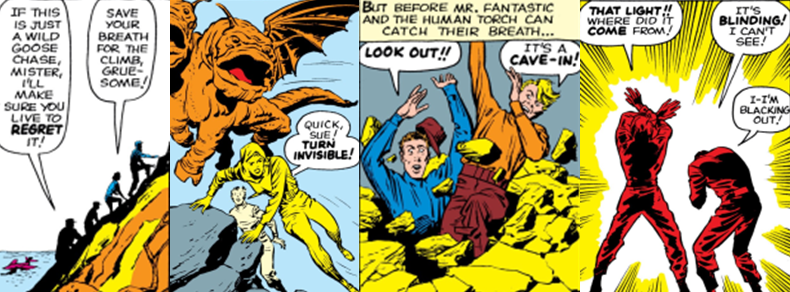
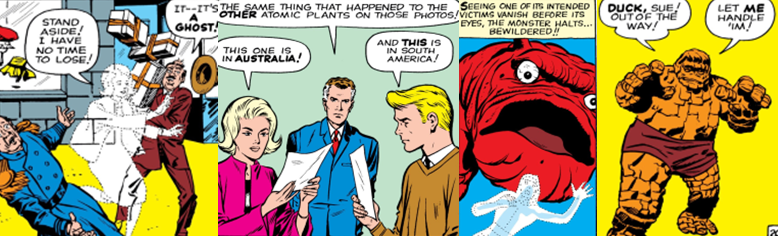
Taking stock of their predicament, Reed begins to make a speech about how the four must use their newfound powers fort he benefit of mankind but Ben, despite his grouchy demeanour, cuts him off and voices that conclusion as though it is the most natural recourse for powers such as theirs. The four then put their hands in, giving themselves their colorful code-names and dubbing themselves the Fantastic Four. The story returns to present day in the next part, “The Fantastic Four Meet the Mole Man!” where Reed reveals that he called the team together because of a series of gigantic holes that have swallowed up atomic plants across the world. At that very moment, Reed’s fancy radar machine picks up another cave-in happening right at that moment over in French Africa. The cause of the destruction is revealed to be a gigantic subterranean beast not too dissimilar to the Creature from the Black Lagoon, which might seem incredible but it’s nothing compared to the fact that Reed pin-points the source of the events to a land known as “Monster Isle” that, despite Ben’s claims of the island being a myth, they immediately fly to as though it’s a well-known tourist destination! Monster Isle, as you might be able to guess, is home to a wide variety of enormous monsters that, despite the powers and versatility of the Fantastic Four, cause the team to become separated.

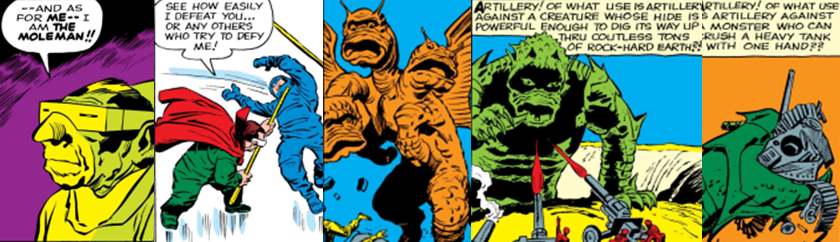
The Moleman explains his unremarkable origin.

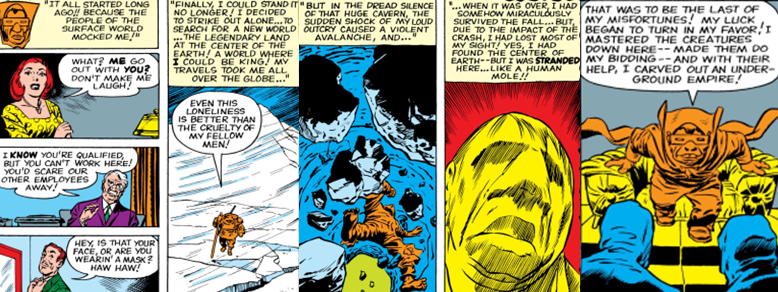
The third part of the story, “The Moleman’s Secret!” sees Ben and Sue, still trapped on the surface, come face to face with an huge rock-like creature; being a man of rock himself, the Thing steps in to defeat the creature with ridiculous ease thanks to his superhuman strength. Johnny and Reed, however, find themselves captives of the Moleman (or “Mole Man”, the story freely alternates between the two names/spellings), the master of Monster Isle, in his enigmatic abode beneath the island’s surface. Like any good supervillain worthy of his salt, the Moleman regales his captives with his origin story: it seems he was once a very odd looking hunchback of a man who was routinely mocked and turned away by society despite his qualifications because of his grotesque appearance. Bitter and dejected, he head out into the icy wilderness in search of solitude and found himself on the mythical Monster Isle; however, whilst exploring a cavern, he was…somehow…blinded by a terrible fall towards the center of the Earth but, despite this handicap, he…somehow…was able to not only tame the wild beasts that roamed the island but also build a magnificent empire for himself deep underground.

Ben and Sue arrive to rescue their team mates but are met by the Moleman’s massive creature!

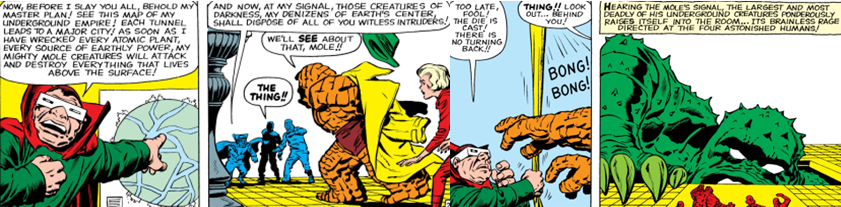
Thanks to the strange “adhesive suits” the Moleman has forced Reed and Johnny into, the villain, clearly driven to insanity, easily beasts them in combat and reveals his mad plot to destroy every atomic plant in the world and then rise up alongside his monsters to destroy the surface world! Though Ben and Sue arrive (and Johnny and Reed are able to get out of their suits by simply burning through them or…taking them off, raising the question as to what the bloody point of them was in the first place), they are too late to keep the Moleman from summoning the most deadly of his creatures, the same one that we saw attacking the power plant in French Africa earlier in the story. Interestingly, despite the elaborate cover art, the Fantastic Four don’t even try to fight this gargantuan creature; instead, Johnny simply distracts it so that Reed can capture the Moleman and the team simply escape through the caverns beneath the island. Even a horde of underground gargoyles aren’t able to impede their progress as Johnny simply causes a rockslide to keep them at bay and the Fantastic Four escape the island safely…but without the Moleman! Yes, in the confusion, Reed decided to leave the villain behind since they had effectively sealed off his empire and, as they escape, the entire island explodes, apparently trapping the Moleman and his beasts underground forever. And…that’s kind of it as the issue ends in a pretty anti-climatic fashion.

The Summary:
Wow…so, once again, another debut issue just kind of falls of a cliff right at the end. It pains me to say it as I have a real soft spot for the Fantastic Four but, outside of the team’s origin story and diverse powers, The Fantastic Four #1 is a pretty terrible comic. I thought it was quite unique to introduce the team individually and already possessing their powers and to flash back to their origin as it’s not often you see that in comics but the comic wastes so much time showing what the team can do that it rushes through other equally important things, such as what motivated them to go into space in the first place and, of course, the ending. These introductory sequences provide the absolute bare minimum of exposition into the character of each team member: Sue is first seen having tea with a “society friend” and is both polite towards others and support of her fiancée…perhaps blindly so. Ben has legitimate concerns regarding the trip ones that Reed fails to heed and Sue dismisses; the way she manipulates Ben into joining the expedition seems really out of character and, even worse, when Ben turns out to be right Reed doesn’t even offer an apology! Instead, he takes offense to Ben’s “insults and complaining”, as though Ben were simply mocking Reed and moaning about a long car journey! The poor bastard almost died and now he’s a rock monster but all Reed cares about is that Ben has been a grouch the entire time! Johnny is basically a shell of his former self; sure, we see he likes cars and enjoys the power and freedom of being the Human Torch but that’s pretty much all we know about him.

Sue may as well be invisible the entire time since she really contributes nothing to the team.

The story kind of makes up for this by having him be one of the two most useful members of the team (the other being the Thing, whose strength gets them out of a bind numerous times), which puts him in a little higher standing than Reed or Sue. Reed basically spends most of his time rescuing the others, which is fine, or making decisions for the team’s actions; I’m not entirely sure, or convinced, of what makes him qualified to be their leader since the last time he lead them anywhere he almost got them killed! Sadly, there’s no sense of grief or guilt on Reed’s part or of the genius intellect that would come to define his character; he’s simply the older, pipe smoking man so he’s the leader by default. Still, the so-called Mr. Fantastic still gets more to do than the Invisible Girl; although she is spared the condescending, sexist attitudes that were prevalent towards women in comics at that time (for this issue, at least), Sue is still basically useless. She uses her invisibility to get through some crowded streets simply to test them out and that’s pretty much it as they (and she) really don’t factor into the finale at all. I’m sure that the intention was to have her be the “heart” of the team but…she really isn’t. She’s supportive of Reed, yes, but if hadn’t have been then maybe they would have been spared their fate and, beyond that, she’s just kind of…there to say stuff now and then. The only plus side is that she doesn’t get captured and need to be rescued but, honestly, I think I would have preferred that!

The Moleman’s threat is severely diminished by his ridiculously flawed plan for world conquest.

The biggest let down, really, is that the cover promises a big battle between the team with the giant creature in the middle of the city but this never happens! The creature hardly appears and, when it does, they don’t even fight it; they just…get away as easily as you could like. What is the point of having a team of superpowered individuals if you’re not even going to show them using their abilities in battle? Sure, they do showcase a lot of the diverse nature of their abilities when on the surface of Monster Isle but we don’t really get to see them working together as a team, which is one of the Fantastic Four’s biggest unique aspects. Similarly, the Moleman is a pretty poor villain; his motivations are paper thin and the ease with which he and his monstrous creatures are defeated is pretty pathetic, with Reed not even bothering to keep the villain captive when they escape. He could have easily had his monsters rampage across the globe using those emergence holes but, instead, he chose to target atomic power plants rather than military bases or major cities because, as we all know, when you plan to conquer the world with a bunch of horrific monsters, it’s the power plants that are the greatest cause for concern!

My Rating:

Rating: 1 out of 5.

Terrible

Were you a fan of The Fantastic Four #1? Do you feel I have committed the ultimate sacrilege by being unimpressed with the team’s debut story or do you agree that the Fantastic Four greatly benefitted from the input of other writers and artists over the years? Which of the four team members is your favourite and why? What did you think to the Moleman and who is your favourite Fantastic Four villain? Who would you like to see form a new version of the Fantastic Four and what are some of your favourite stories involving the team? How are you celebrating the debut of Marvel’s First Family this month? Whatever you think about the Fantastic Four, go ahead and leave a comment down below and let me know your opinions.

Screen Time: That ’70s Marvel Cinematic Universe

Superheroes may dominate television screens these days, but it all started back in the seventies. Long before the Marvel Cinematic Universe (MCU) took cinemas by storm and drummed up enough cash to sink a small cruise liner, Marvel Comics had ventured into live-action adaptations of their comics books by licensing their properties to studios like CBS and Universal Television. This produced the iconic Incredible Hulk (1977 to 1982) television show that firmly entrenched the Green Goliath in the cultural consciousness and produced tropes that became synonymous with the character for years to come.

You wouldn’t like him when he’s angry…

However, The Incredible Hulk wasn’t the only live-action adaptation of a Marvel Comics property to be produced in the seventies; in fact, there were so many productions (or, at least, so many Marvel characters) around this time that a version of the MCU can be seen to have existed long before Iron Man (Favreau, 2008) graced cinema screens. So, today, I’m going to take a quick look back at some of these productions and have a chat about the MCU we very nearly saw come together back in the days of Pink Floyd, frayed jeans, and mullets…

70sMarvel

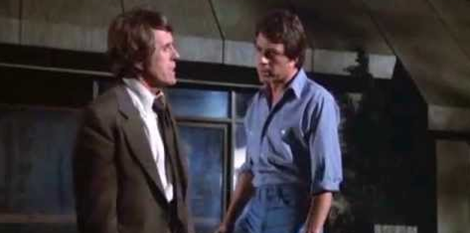
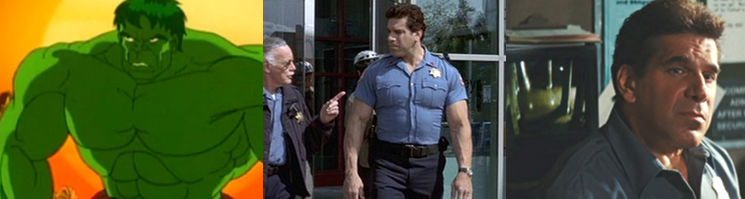
As I mentioned, The Incredible Hulk kicked all of this off; starring Bill Bixby as Dr. David Bruce Banner, the show depicted a scientist recklessly experimenting on himself with gamma radiation in a bid to unlock the hidden strength and potential of the human body. When he absorbs too much gamma radiation, moments of stress and anger cause him to transform into the green, bestial Hulk (Lou Ferrigno), a creature of limited intelligence, immense rage, and incredible strength.

70sMarvelMcGee
McGee relentlessly hounded Banner.

Believed dead at the Hulk’s hands, Banner is forced to wander around the country in search of a cure, helping those in need with both his intelligence and the strength of the Hulk when pushed too far, all while being relentlessly pursued by reporter Jack McGee (Jack Colvin). The show was famous for coining the phrase: “Don’t make me angry. You wouldn’t like me when I’m angry”, which has since become so synonymous with the character that it has appeared in most Hulk adaptations. Equally popular was both Bixby’s portrayal of Banner as a wandering nomad, desperate to cure himself of his alter ego and return to normal life, and Ferrigno’s portrayal of the Hulk (a role that Arnold Schwarzenegger auditioned for and that originally went to mammoth actor Richard Kiel).

70sMarvelFerrigno2
Ferrigno always had a place in Hulk adaptations.

Ferrigno has since become so associated with his role as the Hulk that he went on to not only voice the character in the animated Incredible Hulk (1996 to 1997) television series but also collaborated with Mark Ruffalo in voicing the Hulk in the MCU and cameoed in both Hulk (Lee, 2003) and The Incredible Hulk (Leterrier, 2008), a movie that was heavily influenced by the ‘70s television show. If there’s any downside to the show, and Ferrigno’s performance, it’s that they both popularised the notion that the Hulk is a feral, growling creature rather than a semi-to-impressively articulate individual. While Stan Lee himself may have signed off on this at the time (“I had the Hulk talking like this: “Hulk crush! Hulk get him!” […] that would have sounded so silly if he spoke that way in a television show” (Lee, quoted in Greenberg, 2014: 19 to 26)), I feel this was more a case of Lee signing off on anything for the licensing revenue. This portrayal even carried over into the MCU, where the Hulk was capable of rudimentary speech (one or two growling lines here and there) but did not properly articulate until Thor: Ragnarok (Waititi, 2017); to compare, Bradley Cooper was snarking up cinema screens as Rocket Raccoon in Guardians of the Galaxy (Gunn, 2014) before Hulk was allowed to properly talk.
The Incredible Hulk returned with a bang.

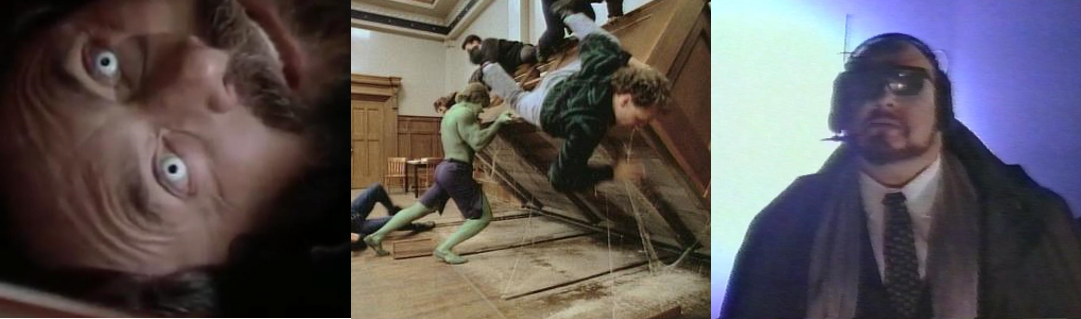
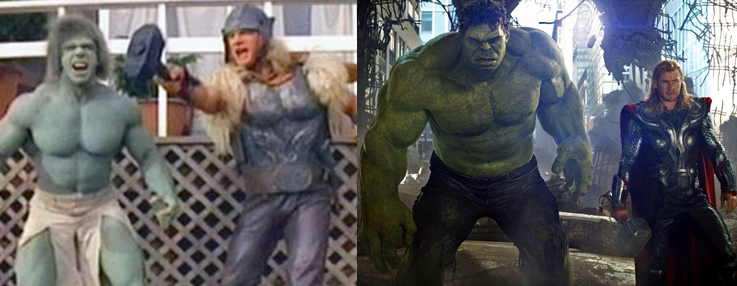
In any case, The Incredible Hulk ran for eighty episodes before finally coming to an end on 12 May 1982. Banner’s adventures, however, continued in the made-for-television film The Incredible Hulk Returns (Corea, 1988). While the TV show shied away from including any Marvel characters aside from Banner and the Hulk, much less his fellow Marvel cohorts, The Incredible Hulk Returns featured two of the most unlikely inclusions you could imagine given the show’s relatively rounded approach to its source material. After successfully suppressing the Hulk for two years, Banner’s idyllic life is turned upside down when an old student of his, Donald Blake (Steve Levitt), seeks him out. Right as Banner is on the cusp of finalising a potential cure in the Gamma Transponder machine, Blake reveals that he discovered an enchanted hammer in Norway that, upon his command, releases the mighty immortal warrior Thor (Eric Kramer) from Valhalla.

70sMarvelHulkThor
I honestly can’t tell the difference…

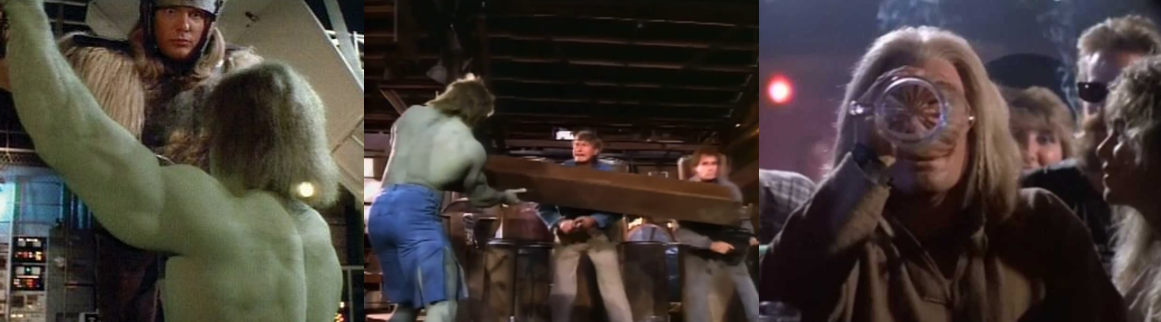
When Thor upsets Banner, he briefly battles with the Hulk and damages Banner’s the Gamma Transponder, but the two (three, I guess) are forced to work together to stop criminals from stealing Banner’s research and harming his life interest, Dr. Margaret Shaw (Lee Purcell). In the end, while Shaw is rescued, Banner is forced to destroy a vital component to the Gamma Transponder and, with the Hulk’s presence catching McGee’s attention, promptly returns to the road to seek out a new cure for himself. When I was a kid, I never got the chance to watch The Incredible Hulk, so one of my first exposures to it was with The Incredible Hulk Returns, which I found to be hugely enjoyable largely because of the thrill of seeing the Hulk in live-action and the banter between Blake and Thor. Rather than transforming into Thor, as in the comics, Blake instead brings Thor forth with the hammer and is charged with guiding him in life and in the fulfilment of a number of heroic deeds so he can take his place at Odin’s side in Valhalla. It’s absolutely mental, especially as a continuation of the TV show, but Kramer is so much fun as the loud-mouthy, arrogant, meat-headed Thor that you can’t help but smile when he’s onscreen, especially when he’s drinking and fighting in a bar or battling with (and alongside) the Hulk.

Banner forms a kinship with Daredevil.

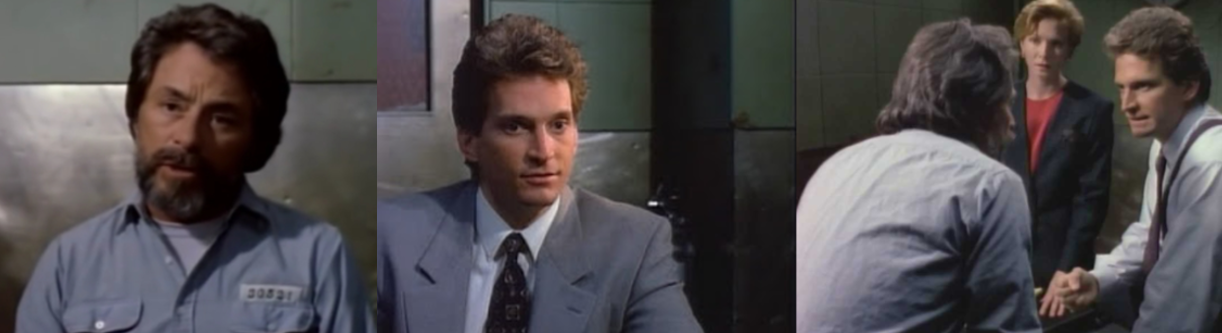
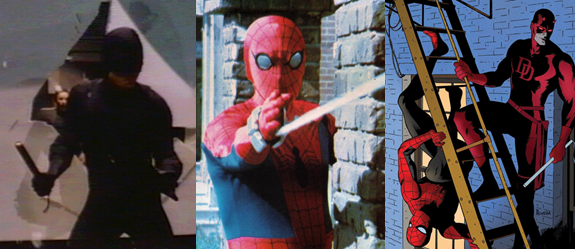
I said I never really watched the show but, in truth, my first ever exposure to the Bixby and Ferrigno team was the follow-up movie, The Trial of the Incredible Hulk (Bixby, 1989), in which Banner, now a desolate soul who’s lost all hope, wanders into a city and, after disrupting a mugging on an underground train, is wrongfully imprisoned. As luck would have it, his appointed attorney is none other than Matt Murdock (Rex Smith), a blind lawyer who also patrols the streets at night as the black-clad vigilante Daredevil. Murdock is pursuing evidence against Wilson Fisk (John Rhys-Davies), an entrepreneur whom Murdock (rightfully) believes is a dangerous crime boss. While Banner is content to stay safely locked up in jail, the idea of being put on trial causes him to Hulk out and, eventually, team up with Murdock/Daredevil in bringing Fisk to justice.

John Rhys-Davies was great as Fisk.

The Trial of the Incredible Hulk is notable for a couple of reasons; it features Stan Lee’s first-ever live-action cameo in a Marvel production, it heavily adapts elements of Frank Miller’s iconic run on the Daredevil comics, and the titular trial only actually takes place in a nightmare Banner has while imprisoned. Nevertheless, Rhys-Davies is exceptional as Fisk; he’s never referred to as the Kingpin onscreen but that doesn’t stop him being a cool, calculating puppet master of a villain; his eventual escape (in a God-damn rocket ship!) is a loose end that was never tied up as the final TV movie, The Death of the Incredible Hulk (Bixby, 1990), chose to bring an end to the Incredible Hulk series and did not feature any additional Marvel characters.

Hammond was a decent Peter Parker…and he had a great stunt double.

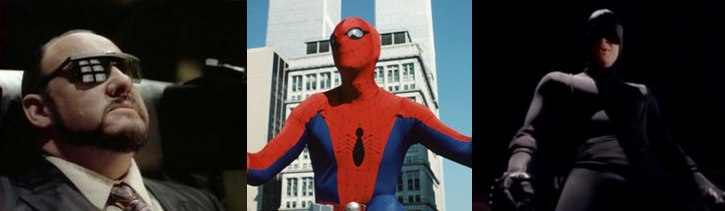
Hulk wasn’t the only one to get his own live-action TV show though; after the feature-length pilot, Spider-Man (Swackhamer, 1977), proved popular, Marvel’s web-head got his own thirteen episode series in the form of The Amazing Spider-Man (1977 to 1979). In addition, episodes of the show were edited (“cobbled”, is probably a better word) together into two made-for-television movies, Spider-Man Strikes Back (Statlof, 1978) and Spider-Man: The Dragon’s Challenge (ibid, 1981), both of which (along with the pilot) are the only exposure to this show I’ve had. The Amazing Spider-Man starred Nicholas Hammond as Peter Parker (with the show’s stunt co-ordinator, Fred Waugh, taking the role of Spider-Man, which was pretty obvious given their wildly contrasting size and builds) and, if you thought that this show took more from the source material than The Incredible Hulk then you’re going to be woefully disappointed.

70sMarvelSpiderFights
I mean…they did the best the could…

Jonah Jameson (played by both David White and Robert F. Simon) featured quite prominently but Robbie Robertson (Hilly Hicks) and Peter’s Aunt May (Jeff Donnell) only appeared in the pilot episode and, though Spidey tussled with hypnotists, terrorists, and gangs, he never once butted heads with any of his colourful rogues gallery. Spidey (and Parker) also initially ran afoul of Police Captain Barbera (played with gruff, loveable glee by Michael Pataki), but this character was sadly dropped for the show’s second season. The Amazing Spider-Man was an ambitious project, especially for the seventies; Spider-Man is a character who requires a lot of effects and stunt work to pull off correctly and is arguably far more dependent on modern computer effects than the likes of even the Hulk. As a result, while the show featured an incredibly faithful recreation of Spidey’s origin, costume, and web shooters and did its best to portray Spidey’s wall-crawling and web-slinging through wires, pulleys, and other camera tricks, the show always came across as being far more absurd than its Universal counterpart.

70sMarvelDrStrange
For whatever reason, Doctor Strange got a movie too.

There was more to come from Universal Television, however, as they also produced a Dr. Strange (DeGuere, 1978) made-for-television movie that featured Peter Hooten in the title role (I guess Tom Selleck was unavailable…) and Jessica Walter as Morgan Le Fay. This one’s especially obscure and many have probably never heard of or seen it; it actually got a DVD re-release in 2016, coincidentally around the same time as Doctor Strange (Derrickson, 2016) was released in cinemas. Interestingly, Stephen Strange is portrayed as a psychiatrist rather than a physician and stumbles into his destiny as the Sorcerer Supreme when Le Fay possesses one of his patients, Clea Lake (Eddie Benton). The movie also featured other recognisable faces from the source material, such as Wong (Clyde Kusatsu) and the Ancient One (Michael Ansara), which is already a bit of a leg up on the Hulk and Spider-Man outings. What scuppered Dr. Strange, though, was, again, the fact that it was produced at a time when special effects simply were not up to the task of doing the character justice. It also didn’t help that the film was criticised for being overly long and boring and lacking any real urgency. In all honesty, there really isn’t much to see here that’s worth you rushing out to watch except the novelty of seeing a C-list character like Strange get a live-action movie well before his time.

70sMarvelCapBikeKITT
Yeah, I don’t think K.I.T.T. had anything to worry about…

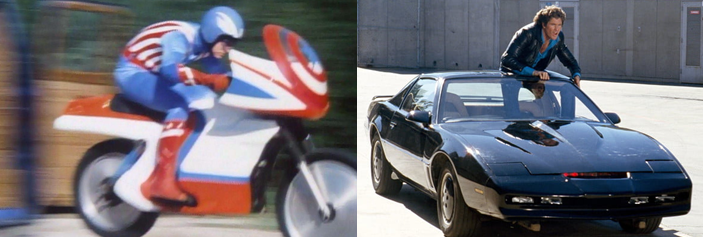
CBS also had one another Marvel character to offer the seventies; Captain America (Holcomb, 1979) brought the star-spangled Avenger to life on television screens and…dear Lord, is this a sight to behold! Reb Brown starred as Steve Rogers, a former marine-turned-artist living in the present day whose patriotic father was known as “Captain America”. After he’s nearly killed by an attempt on his life, he’s inexplicably chosen to be administered with the super-serum F.L.A.G. (Full Latent Ability Gain), which turns him into a superhuman. He then decks himself out in a horrendous version of the Captain America costume and takes to the streets on a modified super-cycle so massively over-the-top with gadgets and features than even K.I.T.T. would blush! Luckily, by the end and the sequel, Captain America II: Death Too Soon (Nagy, 1979), Rogers adopts a more faithful version of the costume and uses his abilities to oppose the plans of General Miguel (inexplicably played by Christopher Lee!), who desires to create a dangerous chemical. I’m actually far more familiar with the equally-lambasted Captain America (Pyun, 1990), which is still a guilt pleasure of mine. Nevertheless, both films were released on DVD and, while Dr. Strange was lost to the mists of time and obscurity, these films appear to have at least partially influenced the MCU as Cap (Chris Evans) does favour a motorcycle (but, to be fair, so did the comics Cap…).

70sMarvelDaredevilThor
I would’ve watched a show with either of these two in.

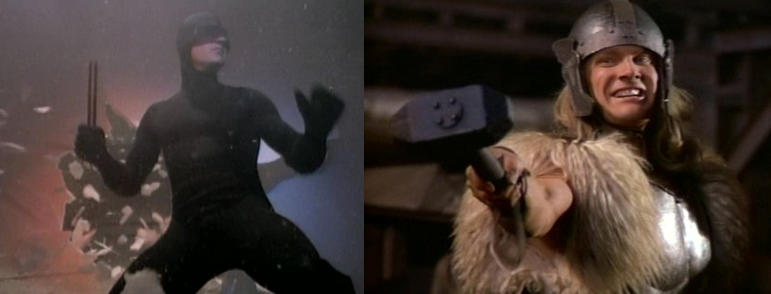
Both The Incredible Hulk Returns and The Trial of the Incredible Hulk introduced Thor and Daredevil with the intention of setting them up for spin-off shows of their own but, for a variety of reasons, this never came to be and that’s a bit of a shame. Smith is no Charlie Cox but, while his Murdock was quite dull and boring, he gave a pretty good turn as Daredevil and it would probably have been easier and far cheaper to produce a Daredevil TV show than a Hulk or even Thor one. Similarly, I love the portrayal of Thor in Trial; sure, he doesn’t look or act anything like his Marvel Comics counterpart, but it could have been pretty fun to see him tossing fools around, getting into bar fights, and learning lessons in humility on an episodic basis. One thing that is equally unfortunate about all this is that the inclusion of Thor and Daredevil really took a lot of the focus off of Banner and the Hulk; sure, in the show, he was often a supporting player in a bigger story and other character’s lives, but these movies devoted so much of their runtime to pushing and establishing their new characters that it’s easy to forget that Banner and Hulk are even in them. The Death of the Incredible Hulk rectified this, but at the cost of killing both characters off in what was, while emotional (as a child, anyway), probably the lamest way imaginable.

70sMarvelTeamUp
All these guys co-existed at about the same time…

Unfortunately, there hasn’t been much love shown to The Amazing Spider-Man over the years; it’s never been released on home media outside of a few VHS tapes and, while Hammond appears to have been the basis for Parker’s design in the Spider-Man (1994 to 1998) animated series, he’s never returned to the character or the franchise again, not even for a quick cameo or a voice role (though I’m hoping the sequel to Spider-Man: Into the Spider-Verse (Persichetti, Ramsey, and Rothman, 2018) will rectify that). Interestingly enough, there were apparently talks in 1984 to produce a movie that would see Spider-Man cross paths with Banner and the Hulk, with Spidey even donning the black costume during the film. There were, apparently, also talks of an additional made-for-television Hulk movie, The Revenge of the Incredible Hulk, which would have seen Banner (somehow) revived and forced to recreate the accident that turned him into the Hulk (or be reborn as the Hulk with Banner’s intellect, depending on what you read) but neither of these ideas ever came to fruition and were ultimately halted when Bixby sadly died in 1993.

70sMarvelMagic
Magic linked these shows together, however tenuously.

However, none of this changes the fact that, sometime around 1978 to 1979, there were all these Marvel characters running around on television screens at about the same time, all produced by two studios and, in some cases, airing on the same networks. What this effectively means, then, is that it’s easy to imagine an alternative world where negotiations never broke down and the shows and movies proved popular enough for Spider-Man to crossover with the Hulk and, by extension, interact with Thor and Daredevil. So, what if…? What if there were a threat so big, so far beyond petty street crooks and one-note villains that these heroes would be forced to band together? Dr. Strange was heavily steeping in magic and mysticism, which was already (however unfitting) be proven to be a part of The Incredible Hulk’s world; hell, even The Amazing Spider-Man dabbled in the paranormal at times.

70sMarvelFiskVigilantes
It’s easy to image these guys existing in the same place and time.

Perhaps the threat would involve Fisk waging a war against Daredevil and all costumed heroes? The city is never named in The Incredible Hulk Returns but it could easily be New York City, the same New York City that Spider-Man swings around in. Perhaps this would be a chance to do a supervillain team-up, of sorts, between Fisk and Le Fay or to introduce other classic Marvel villains, such as Loki and the Red Skull. I would have loved to have worked Nick Fury (David Hasselhoff) into this imaginary Marvel team-up but it’s difficult to do that seeing as Bixby died in 1993 and Nick Fury: Agent of S.H.I.E.L.D. (Hardy, 1998) didn’t release until 1998 but what if…? What if Bixby hadn’t suffered from cancer, or had beaten the disease and Banner had been resurrected in The Revenge of the Incredible Hulk? Perhaps we would have seen a version of the Professor Hulk or Grey Hulk personas, one that merged the brawn and the strength together, and Fury could have banded these heroes together to fight a common enemy.

70sMarvelSpideyDaredevil
Spidey and Daredevil often work well together.

Personally, though, I would have preferred to see Banner and Hulk as they were portrayed in the television series; Bixby would have been the veteran actor who held this team up together and I would have limited his Hulk outs to two or three occurrences. Have him be the team’s moral compass, the hesitant advisor who learns to reconcile with his enraged alter ego through working with the other heroes. Murdock, as the older of the two, could have also acted as a kind of mentor to Spider-Man as the two are often portrayed as friends in the comics and have a lot in common with their “everyman” approach to super heroism. While the effects would not have allowed us to properly see the two swing across the New York rooftops, I think they could have cobbled together enough to produce some semi-decent, maybe even slightly acrobatic, fight scenes between the two.

70sMarvelCapCompare
These guys are worlds apart.

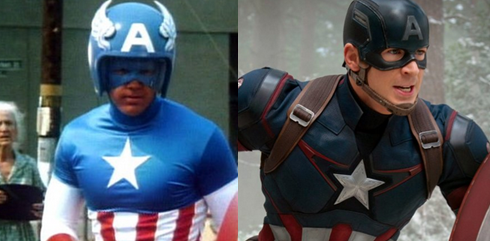
You’d obviously think that Captain America would be the natural leader of this group but, remember, this isn’t the war-tested superhero we all know and love and I am not proposing an Avengers movie; Brown’s Cap is more of a secret agent, an enhanced super soldier who hasn’t nearly a fraction of the combat experience that Cap is usually known for. Because of that, I’d imagine him as the public face of the group and (in the absence of S.H.I.E.LD.), a source of the group’s intelligence resources. Perhaps Cap prefers to work alone and he has to learn to work with a group, rather than tackling everything head-on.

Thor still had a lot to learn about humility.

Instead, I’d have Doctor Strange be the de facto leader of the team by virtue of his age and power as the Sorcerer Supreme. His arc, perhaps, would have revolved around him needing to shift his focus from the bigger picture to factoring in the smaller issues that his peers face on a daily basis, effectively making himself both a public figure of the superhero community and improving his interpersonal skills. And then there’s Thor (and Blake, of course); Thor would be the group’s hot-headed jock, the guy who runs in, hammer swinging, trying to fix every problem with brute strength. This team up would be the perfect opportunity to teach Thor proper humility, to accept that he must work alongside mortals and lead by example rather than being a blundering buffoon. While he learned some of this in The Incredible Hulk Returns, it was clear that there was more to tell with his story and, perhaps, this team up and his learning of humility would be the final heroic act that would earn him his place in Valhalla, allowing Blake to, however sorrowfully, begin his life anew.

70sMarvelConclusion

In the end, for as hokey and cringe-worthy as a lot of these seventies Marvel shows were, it does disappoint me that we never got, at least, to see Spider-Man, Hulk, and Banner crossover onscreen. There was a lot to like about each of these, from the impressively realised costumes to the heart-felt emotion, to even the woeful action scenes and I would honestly have loved to see all of these characters come together to battle a common enemy. What do you think about Marvel’s television show and movies from the seventies? Do you have fond memories of The Incredible Hulk? Do you also wish that The Amazing Spider-Man would get a release on DVD? Perhaps you hated the monotony and ridiculousness of these shows. Whatever your opinion, leave a comment below and get in touch.

10 FTW: Things I Hate About Movies

10FTW

So, when it comes to movies, I am surprisingly optimistic. This may be because I would never pay to see a movie if I wasn’t reasonably sure that I was going to enjoy it and because I stick to genres and franchises that I know I like, but I usually go into a film with certain expectations and, as long as those are met, I am generally satisfied. With that said, there are some things about movies that drive me mad…or, at least, annoy me. Tropes that I would like to see less or, if not phased out entirely, and I’m come up with ten of them to rant about right now.

10FTWGuardians
10 Lack of Opening Credits

I’m fairly certain I’m the only person who cares about these days, where everyone is all about cutting right to the action, and I do understand that but there’s something I find innately lazy and annoying about not even seeing the movie’s title appear onscreen at the start of a film. We have to sit through grandiose logo sequences for movie studios, some that last about three minutes and sometimes watching up to five in quick succession, but we can’t just plaster the movie’s title on the screen? I believe the earliest I was exposed to this was in RoboCop 2 (Kershner, 1990) but it’s become especially noticeably in the works of Marvel Studios. I’m not expecting entire cast credits, as these can be admittedly annoying to sit through (though you can just place them over the opening scene, as in Batman v Superman: Dawn of Justice (Snyder, 2016) or the Guardians of the Galaxy (Gunn, 2014 to 2023) films, but just throw the movie’s title up there and help me out a bit!

10FTWSpidey
9 Pointless Post-Credit Scenes

I am a sucker for post-credit scenes; Marvel Studios have popularised this to the point where it’s now expected that every movie has some kind of pre-, mid-, or post-credits scene. Unfortunately, a lot of them aren’t really worth sitting through ten minutes of credits for. Marvel have become especially lazy with this in recent years; no longer to their post-credit scenes set up further events or hints of things to come and, instead, they’re usually just throwaway gags or scenes purposely made to troll us (I’m looking at you, Spider-Man: Homecoming (Watts, 2017)!) These days, it seems like the pivotal, must-see scenes for Marvel movies now come before the credits rather than after them and the worst thing about a lot of these is that they are often used to hint at sequels that either never come or are fundamentally altered between movies; this is especially true of the DC Extended Universe but it also applies to the Dark Universe, which is seemingly dead in the water.

10FTWRaiders
8 Mismatching Title Fonts

Another thing that really bugs me is when movies use a specific title font for the posters, merchandise, and DVD covers but never actually use this font or logo in the film. Take Raiders of the Lost Ark (Spielberg, 1981), which has that awesome orange font for its logo but instead uses a simpler, less grandiose font in the film. What’s worse is that Spielberg used the Indiana Jones logo for Indiana Jones and the Temple of Doom (ibid, 1984) but reverted back to the much less exciting font for the subsequent Indy films. While Christopher Nolan’s Dark Knight trilogy (2005 to 2012) may not have had the most exciting title font ever, at least this was uniform across the film and merchandise. It seemed like Warner Brothers were employing this as the standard font for their DC movies…until Green Lantern (Campbell, 2011) ruined it by using the basic font on the posters and a far more exciting, comic-inspired font in the movie!

7 Prequel Sequels

You know what really gets my arse up? Numbers in movies are sequential; you have the first movie, then the second, then the third and so forth so, when movies use a number in their title, a 2 should mean it’s the second movie and, therefore, a continuation of the first. But, instead, movies like to slap a 2, 3, or even a 4 on there when, in actual fact, it’s a prequel! Tarzan 2 (Smith, 2005) and Insidious: Chapter 3 (Whannell, 2015) are perfect examples of this but, for a better example, take a look at the Scorpion King (2002 to 2018) franchises! The Scorpion King (Russell, 2002) is a spin-off of the Mummy (1999 to 2008) franchise, taking place before The MMovie Night: The Mummy (1999)ummy (Sommers, 1999). Its sequel, The Scorpion King 2: Rise of a Warrior, despite having a 2 in its title, is actually a prequel with the subsequent three sequels all being sequels to The Scorpion King, resulting in the following viewing order:

The Scorpion King 2: Rise of a Warrior
The Scorpion King
The Scorpion King 3: Battle for Redemption
(Reine, 2012)
The Scorpion King 4: Quest for Power (Elliot, 2015)
The Scorpion King: Book of Souls (Paul, 2018)
The Mummy
The Mummy Returns
(Sommers, 2001)
The Mummy: Tomb of the Dragon Emperor (Cohen, 2008)

6 Senseless CGI

I grew up in an age where special effects were constantly evolving, where complex camera techniques and detailed prosthetics were the order of the day. Consider the laborious effort that went into composting all of the matte paintings, models, and sets in Aliens (Cameron, 1986), a film that also employed fantastic suits, miniatures, and puppets that really made it seem as though there were hundreds of Xenomorphs out for Sigourney Weaver’s blood. Nowadays, filmmakers just CGI the hell out of it and be done with it and, while this can result in some breath-taking movies and action scenes, often it’s an egregious use of a tool that should be used to enhance films rather than overwhelm them. Let’s talk, again, about George Lucas, one of the pioneers of practical effects, who used puppets, models, and complex filming techniques to craft his original Star Wars trilogy (1977 to 1983). However, when it came time for him to produce the prequel trilogy (1999 to 2005), he used nothing but green screens, digitally adding almost every element of the films in after this actors stumbled through scenes with no frame of reference. Honestly, just because you can use CGI to create all the Clone Troopers doesn’t mean you should and, to me, it just seems unnecessarily lazy and an arrogant use of your time, budget, and resources.

5 Panic Stations

I’m probably the only person who will admit to liking the Marc Webb/Andrew Garfield Amazing Spider-Man films (2012; 2014). I loved the suit in The Amazing Spider-Man, the slightly different take on Peter Parker’s origin, and that it looked like Sony were finally going to be setting up the Sinister Six…and then The Amazing Spider-Man 2 happened. Despite making $700 million worldwide against a nearly $300 million budget, reception of the film was mixed and, rather than finish the series off with a finale, Sony finally decided to cooperate with Marvel Studios and opted to bring Spider-Man into the MCU. However, rather than integrate the MCU with the Amazing films (as had been previously suggested), Marvel Studios opted to complete recast the character, bringing in Tom Holland. Now, I like Holland as Peter/Spidey, but his introduction in Captain America: Civil War (Russo Brothers, 2016) came just two years after Garfield’s last appearance. Considering The Amazing Spider-Man rebooted the franchise only five years after Spider-Man 3 (Raimi, 2007), that is a lot of reboots and changes to Spider-Man in a very short amount of time. Halloween (Green, 2018), Hellboy (Marshall, 2019), and Terminator: Dark Fate (Miller, 2019) are also guilty of this, falling back on rebooting, retconning, or straight-up ignoring previous movies and returning “to their roots”. The DCEU has also suffered from Warner Brothers panicking to the reactions to their darker, gritty comic book movies, which caused Justice League (Snyder/Whedon, 2017) to suffer from rewrites and drastic changes.

10FTWWilhelm
4 The Wilhelm Scream

The Wilhelm Scream used to be cute, a fun little recurring gag in movies. Like the creator cameos (popularised in recent years by Stan Lee showing up in Marvel movies), this used to be a fun Easter Egg for knowing audiences. Now, though, I have come to really despise this over used sound effect. It has been done to death in the Star Wars and Indiana Jones films alone but seems to crop in every movie you see these days and I am just so sick of hearing it; it really takes me out of the experience and just makes me grimace every time it gets snuck in there.

3 Daft Movie Titles

Movie titles should be simple and striking; they should relate what’s going to happen and give the general gist of the movie. They should not be a chore to read or be indistinguishable from other film titles and, yet, we live in a world with films like The Mummy: Tomb of the Dragon Emperor, Batman v Superman: Dawn of Justice, Fantastic 4: Rise of the Silver Surfer (Story, 2005), and Rise of the Planet of the Apes (Wyatt, 2011). Here’s some alternative titles just for those movies: Tomb of the Mummy, Fantastic 4: Doomsday, Rise of the Apes. As for Batman v Superman, I don’t think it ever should have had a title at all; it literally should have just been the Batman and Superman logos on top of each other, with the film referred to as Batman/Superman. Let’s not forget such lazy titles as Solo: A Star Wars Story (Howard, 2018), The Wolverine (Mangold, 2013), and The Dark Knight Rises, all of which could have easily been called Smuggler’s Run, Wolverine: Ronin, and Knightfall. Don’t even get me started on all the movies we got with Rise of, Age of, and Dawn of in their titles not that long ago!

2 Repeating Past Mistakes

I’m looking at Spider-Man 3 for this one; by the time that movie came out, it was pretty well known that a lot of comic book fans weren’t too happy with the revelation that Jack Napier/the Joker (Jack Nicholson) was the man who gunned down Bruce Wayne’s (Michael Keaton) parents in Batman (Burton, 1989). Yet, Sam Raimi seemingly didn’t hesitate at all to do exactly the same thing when he fingered Flint Marko/Sandman (Thomas Hayden Church) as the gun man in his movie. And why? Just so there would be a “connection” between Peter Parker/Spider-Man (Tobey Maguire) and Sandman…despite the fact we already had a personal connection between Spidey and Harry Osborn/”New Goblin” (James Franco). It wasn’t the only mistake he made in that movie but it was one of the most baffling, especially considering all the controversy surrounding the Joker revelation. We saw a similar situation when Green Lantern decided that Parallax (Clancy Brown) would be much more effective as a big ol’, CGI mess of a space cloud, something that worked out just as well for Galactus in Rise of the Silver Surfer. Similarly, Justice League didn’t earn itself any favours by repeated the same “big fight against a CGI monstrosity” from both Batman v Superman and Suicide Squad (Ayer, 2016), which were its direct predecessors and the subject of a lot of online backlash.

1 Ignoring Continuity

I touched on this earlier but there’s nothing I hate more than a film series or sequels completely ignoring their established continuity. The X-Men (Various, 2000 to present) series is the worst offender of this, throwing continuity out of the window with every entry and thinking it’s cute to poke fun at it in their Deadpool (Various, 2016; 2018) spin-offs. The Terminator series (Various, 1984 to present) is also just as bad with this, mainly because the film rights keep being passed between different studios and bodies, but it seems like every new Terminator movie disregards chunks of, if not the entirety of, their previous entries, making for a disjointed franchise that’s difficult to care about, with Terminator: Dark Fate being a mish-mash of its predecessors rather than something fresh and new. I get that, sometimes, aspects of films or entire movies/sequels aren’t received too well but I would much rather the screenwriters tried to address and move on from any problems rather than simply ignoring them or waving them away. If you’re just going to ignore what’s come before, make a remake or reboot and start completely fresh; otherwise, try something a little lazy than just ignoring entire movies.

How about you? What tropes of movies and cinema do you dislike? Let me know in the comments, or if you think I’m full of shit.

Talking Movies: Marvel Studios’ Fantastic Four

Talking Movies
F4Logo

Those who actually read my articles may recall that, some time ago, I wrote a piece discussing some ideas for the inevitable integration of the X-Men into the Marvel Cinematic Universe since Disney reacquired the rights after their big purchase of 20th Century Fox. In all honesty, bringing in the X-Men is probably one of the hardest tasks faced by Marvel Studios given the popularity and mainstream awareness of the existing movie franchise. As detailed in my piece about films that desperately need a remake, I believe that it would be comparatively easier to bring in a new version of Marvel’s first family of superheroes, the Fantastic Four, and that this should be the main goal following the conclusion of Avengers: Endgame (Russo Brothers, 2019). The Fantastic Four are, obviously, no strangers to live-action adaptation; Roger Corman infamously co-produced, but never released, the extremely low-budget The Fantastic Four (Sassone, 1994) back in the nineties, Tim Story’s Fantastic 4 (2005) and Fantastic 4: Rise of the Silver Surfer (ibid, 2007) actually saw the light of day but came under a lot of criticism for some of the effects, tone, casting, and the handling of Galactus, while Josh Trank’s 2015 grim and gritty reboot, Fant4stic, was beset by studio interference, an oddly serious tone, and a dramatically altered interpretation of Doctor Doom (Toby Kebbell). Having seen each of these adaptations, I can say that each does have its fair share of problems but there are some positives to be found as well.

F4Movies
The Fantastic Four have certainly had their fair share of movies.

The Fantastic Four is probably the closest to the 1960s version of the characters; the Four are bathed in cosmic rays and obtain their superpowers, wear very comic-accurate costumes (to a fault, as they literally just look like Halloween costumes), and Doctor Doom’s (Joseph Culp) origin, abilities, and appearance are probably the closest to the comics out of all three adaptations. Also, while every other effect in the film was cringey to the point of embarrassment, Ben Grimm/The Thing (Michael Bailey Smith/Carl Ciarfalio) was phenomenally realised in a practical, semi-animatronic costume similar to those seen in Teenage Mutant Ninja Turtles (Barron, 1990). Fantastic 4, while suffering from the tired depiction of Victor von Doom (Julian McMahon) as a suit-wearing businessman and some questionable casting (Ioan Gruffudd isn’t bad as Reed Richards/Mr. Fantastic but also isn’t that great and Jessica Alba was woefully miscast as Susan Storm/Invisible Girl, a fact made all the more prevalent by the gratuitous shots of her in her underwear rather than emphasising her intelligence), was basically saved by Michael Chiklis and Chris Evans, whose chemistry as the Thing and the Johnny Storm/Human Torch, respectively, are well worth the price of admission. Rise of the Silver Surfer improved on the lacklustre finale of its predecessor and, while Galactus was little more than a formless space-cloud, at least the movie tried to do Galactus when it could have just as easily gone down a safer, more boring route. The Silver Surfer (Doug Jones/Laurence Fishburne) was also realised extremely effectively, looking great and being a powerful yet empathetic character; while tying his powers directly to his board did weaken him somewhat compared to his comic counterpart, it simplified matters considerably. Oh, also, the Fantasicar is in this and looks amazing!

F4Family

When the first trailers for Fant4stic hit, I was actually quite excited as it looked like it was going to be a more grounded, scientific, realistic interpretation and its trailers, look, and marketing reminded me a lot of Interstellar (Nolan, 2014). I also heard a lot of negative reviews surrounding the movie and went into it expecting this dull, boring, disjointed mess of a film but found myself surprisingly enjoying it. For one thing, the cast is much better; Kate Mara is a far better fit for Susan Storm (though the fact that she doesn’t actually go on the mission with the others is a problem), Miles Teller is also far more suitable, portraying Reed as a somewhat awkward but determined and enthusiastic young genius, and Michael B. Jordan was absolutely brilliant as Johnny Storm because of his natural charisma and totally proved that race shouldn’t always be a factor when casting these characters. On the flip side, Toby Kebbell is quite underwhelming as Doom and Jamie Bell really didn’t have the physical stature to properly fit the role of Ben Grimm, though I did like the CGI used to create the Thing. One of the things that separate the Fantastic Four from other superheroes is that they are a family; their strengths lie completely in their unity and, while each are powerful and talented separately, the idea has always been that the four of them together are a formidable unit. Tim Story’s movies emphasised the “dysfunctional family” dynamic of the team quite well; though miscast, as I said, Sue acts as the “mother” to the team, being the voice of reason and logic and intervening in arguments; Johnny and Ben are the bickering children who are just as likely to fight each other as other threats; and Reed is the level-headed, hyper-intelligent “father” of the group, though Gruffudd rarely exuded the charisma, confidence, or intelligence you might expect from such a character. This ended up being a theme in Fant4stic, with the team officially forming at the film’s climax and staying together out of a true sense of friendship that developed over months of working together after being introduced as strangers. Reed and Ben were close as kids but, once Reed becomes part of Franklin Storm’s (Reg E. Cathey) interdimensional project, he leaves Ben behind and forms a fast friendship with Johnny, which is an interesting twist as Johnny is generally treated as a kid brother by Reed.

F4Doom
Doom’s always been a bit…obsessed, to say the least…

Also at the heart of the team’s story is their complicated relationship with Doom; all three interpretations portray Doom as a former colleague and rival to Reed but only The Fantastic Four and Fant4stic delve into their friendship. Reed and Doom are supposed to be equally matched in their intelligence and separated only by Doom’s megalomaniacal ego and lust for power, which is generally realised in his live-action adaptations; The Fantastic Four’s Doom descends into one-note revenge and a desire to conquer the world while Fant4stic-Doom, similar to Fantastic 4­-Doom, revels in his newfound power and desire to use it to subjugate others and prove he is the better man than Reed. In the films, Doom’s motivations are generally further bolstered (or diluted, you might argue) by his attraction to Sue; Fantastic 4-Doom proposes to her and actively pursues her simply because she is unobtainable, making his motivations much less threatening. Even in Rise of the Silver Surfer there is a suggestion that he seeks to obtain the Surfer’s powers simply to displace Reed in Sue’s life. Personally, I don’t like this addition to Doom’s motivations; I think it’s enough to have Doom be this selfish, egotistical madman who desires power and more power and to prove that he is superior to Reed and, by extension, his extended family. With their acquisition of 20th Century Fox, Marvel Studios now has the opportunity to bring the Fantastic Four into the Marvel Cinematic Universe; with the Four come some of Marvel’s greatest characters and villains, including Doom, Silver Surfer, Namor, Annihilus, and Galactus and their significance in the greater Marvel universe cannot be understated, with Reed being an integral member of the Illuminati and the team being the force that drives away Galactus’ threat.

F4NegativeZone.PNG
Perhaps the Fantastic Four have been trapped in the Negative Zone for a while?

Unlike the X-Men, bringing in the Fantastic Four can be a relatively simple affair; one of the things I liked about Fant4stic was that the team travelled across dimensions, rather than into space, to acquire their powers. Either approach is fine to me because the main thing here is that the Four are explorers and scientists first and adventurers and superheroes second, so you could very easily have the Fantastic Four return from an excursion into the Negative Zone, either by design or having been trapped there by Doom. That way you can establish that the characters and the Baxter Building have existed in the MCU for some time but they have either been away or lost for some time, similar to how Carol Danvers/Captain Marvel (Brie Larson) was introduced to the MCU. There are, however, a few ways you could portray the team; Marvel Studios could take inspiration from Fant4stic and Ultimate Fantastic Four (Various, 2004 to 2009) and have the Four be in their mid-teens. Perhaps Reed is a genius savant and Doom is his former teacher, embittered by Reed’s intellect and youth, or maybe they were peers driven by a friendly rivalry that turned sour. It’s definitely a route to go down if you want longevity from the actors and characters and to maintain some of the youthful vigour Tom Holland brings to the MCU as Spider-Man.

F4Reed
Reed gives an opportunity to bring in another seasoned actor to the MCU.

However, I would actually go the alternate route, especially as I’m hoping for the majority of the X-Men to be teens at Xavier’s School for the Gifted as in X-Men: Evolution (2000 to 2003), and use this as an opportunity to bring some older actors into the roles and have a few more seasoned voices of authority to be peers with Doctor Strange (Benedict Cumberbatch) and Black Panther (Chadwick Boseman). This puts me in a bit of a bind, as I already had Pierce Brosnan eyed for Magneto, but he’d be equally great as Reed; in another time, I would have also said Bruce Campbell, but he maybe doesn’t have the acting gravitas I envision for Mr. Fantastic, though maybe Bradley Cooper would be a good fit (and it’d give him a chance to be seen onscreen in a Marvel movie) or even Nathan Fillion, if he isn’t going to appear as Simon Williams/Wonder Man any time soon.

F4StormGrimm
Definately need someone young and sexy for Torch and gruff but loveable for the Thing.

I previously suggested Zac Efron for Johnny Storm, which I think I’ll stick with; a young, cut, utterly handsome hot-head is just the sort of thing the Human Torch needs. He also needs to have good chemistry with the Thing, who I would hope to either be some Hulk-level top-quality CGI or a combination of a practical suit and CGI; I would also keep Ben as the Thing the entire time, meaning Marvel only need to bring in a quality actor to voice the role, like they did with Rocket Raccoon. I previously, somewhat jokingly, suggested Danny DeVito, mainly because of his accent, but maybe Brad Garrett or Dean Norris would be equally good fits.

F4DoomActors
Doom needs a deep, booming, theatrical voice and presence.

As for Sue, I’m at a bit of a loss; perhaps a Jessica Chastain, Amy Adams (if she’s really done with DC movies), or Emily Blunt, if Marvel could get her. I’m not too good at casting females, to be honest, but I definitely think Marvel would be better off looking for a Kate Mara than a Jessica Alba (someone like Felicity Jones, maybe) as Sue doesn’t need to be some drop-dead gorgeous bombshell; she should be smart and sophisticated and have good chemistry with Reed. Similarly, for Doom, you want an actor who won’t be a one-and-done as, unfortunately, Hugo Weaving was; Red Skull should be a much bigger presence in the MCU but Weaving’s comments and attitude seem to have prevented that, and Doom should definitely be a massive threat to the MCU, hopefully similar to Marvel’s version of Magneto. I would push to only see Doom unmasked in a flashback to his time as Reed’s peer, meaning you either need an actor willing to be behind the armour for the entire movie or cast a decent stunt man (bring in Doug Jones, maybe) and an ominous voice actor; off the top of my head, though, I would love to see Tony Todd play the role due to his menacing stature and haunting, raspy voice, though Peter Mensah or Sterling K. Brown would be just as fitting.

Pretty sure the Skrulls will be a big deal going forward.

I would also take quite a bit of inspiration from Captain Marvel (Boden, 2019), especially as that film is bringing the Skrulls to the MCU. At this point, I am hoping that the Skrulls play a significant role in the next phase of Marvel movies, with mid- and after-credit sequences and subsequent movies revealing that certain characters are actually Skrulls in disguise and that the shape-shifters have been secretly invading the Earth in the Four’s absence. Marvel’s Fantastic Four movie could initially take place some time after Captain Marvel, in the late-nineties, with the Four discovering the Skrull invasion or their home planet on an excursion and being left stranded there when their gateway/module explodes. Upon their return, the Four (who would perhaps assume Doom died in the explosion) would use their resources to prepare for the invasion, or fight back against it, only to find that Doom is alive and well and lording it up in Latveria, where his dimensional gateway (a combination of technology and magic) has been allowing the Skrulls to come to Earth over the intervening years. Doom would reveal that he discovered the Skrulls first and struck a bargain with them and that he sabotaged the Four’s gateway; when the Four confront him, they could battle the Super-Skrull (a nice thematic parallel as they essentially have to battle themselves and their own powers) and, upon defeating Doom, find that it was simply a sophisticated robotic decoy and that not only is Doom still out there, but countless Skrulls have infiltrated the human race. Admittedly, this is very thin and doesn’t really delve into how the Four get their powers; maybe they obtain them during their time in the Negative Zone or on the Skrull planet, perhaps even through Skrull experimentation? Either way, I definitely feel Marvel’s Fantastic Four should show that the Skrulls are still at large if only to set up towards a Secret Invasion (Bendis, et al, 2008 to 2009) style conclusion to the whole Skrull storyline in a New Avengers movie.

F4Namor
Namor could be a great role for an Asian actor.

Following this, and with the Four playing key roles in a New Avengers movie, a Fantastic Four sequel could juggle a few famous Fantastic Four plots; aside from the obvious return/revelation that Doom is still alive, perhaps Sue is pregnant and ultimately gives birth to Franklin Richards to actually get that Power Pack movie off the ground? Also, it would be a great opportunity to bring in Namor; given how successful Aquaman (Wan, 2018) was, though, I wouldn’t be averse to seeing Namor in the first of Marvel’s Fantastic Four films and end with the revelation of Doom’s existence/survival. Namor is quite the complex and layered anti-hero and would introduce a whole new world to the MCU while still tying in with the introduction of Mutants; I’d also use Namor as a chance to bring in an Asian actor for the role, like Donnie Yen or Lee Byung-hun. Anyway, the second Fantastic Four movie would also have a sub-plot whereby Reed is constantly monitoring or noticing a strange energy spike crossing the globe and the post-credits scene would show that this is, of course, the Silver Surfer. I’d then have the Silver Surfer appear in this fashion across every subsequent Marvel movie; perhaps, during the films, there would be news reports, headlines, clear spoken dialogue referring to craters appearing, ecological changes, power shortages, and sightings of a strange silvery alien. Definitely, though, I would take a page out of previous Marvel movies and have a few post-credits stingers showing the Surfer preparing various sites and, finally, summoning Galactus to Earth. This would culminate in what I’m going to title Avengers: Doomsday (perhaps New Avengers: Doomsday), a movie that would feature the Silver Surfer as the main antagonist for the first third, Doom for the second (after he drains the Surfer’s powers and uses them for his own ends, possibly in league with other villains), and Galactus for the last two thirds. If anyone can pull off a decent Galactus it’s going to be Marvel Studios, who made Thanos (Josh Brolin) one of their greatest threats and are generally really good at bringing their comic characters to life in a way that is believable and also faithful to the source material.

F4Galactus

Part of me feels like it would be a disservice to Galactus to resolve his threat in one movie, even one that involves most the MCU’s greatest heroes, especially as one of Marvel Studios’ more questionable decisions was to limit Ultron (James Spader) to one appearance. At the same time, though, I don’t really want to see a two part Avengers movie again as it would be too much of a repeat of what Marvel Studios did with Thanos so, instead, building Galactus (through the Silver Surfer) through multiple movies and the two Fantastic Four movies would allow for a much greater payoff in Avengers: Doomsday. Plus, Galactus doesn’t really have any minions for the heroes to fight so it’d be much more about how they are supposed to defeat this giant, God-like being that is sucking the Earth dry. All-in-all, the Fantastic Four would be a great addition to the Marvel Cinematic Universe and offer a lot of opportunities for new characters, new heroes and villains, new worlds and new technology, and to include some more seasoned, mature actors to bring a sense of maturity and authority to the MCU. Having Reed Richards (and Professor X if Marvel also bring in the X-Men) also allows for a potential, movie-spanning arc involving the Illuminati and opens even more doors for new stories to tell. The Fantastic Four also really deserve a good crack of the whip as all of their live-action adaptations have been lacking and I know that Marvel Studios would be able to present them in the proper way; plus, if it gives us a really good, menacing, sinister, and complex villain in Doctor Doom then all the better!

10 FTW: Films That Need Remakes

10FTW

It seems blasphemous to say it but, sometimes, films do deserve a modern remake. The stigma that remakes are “bad” or “unnecessary” is one that I have already contested before, as some of the best films in cinema history are actually remakes. However, whether because they haven’t aged too well, or sequels ruined the original concept or expanded upon it in ways that actually affect the original negatively, or there is the potential that some films could just be done better, I put it to you that there are some movies that totally are in need of a remake and here are just some of them.

10 X-Men

I’ve already discussed, at length, my ideas for the surely-inevitable X-Men reboot that will come once Marvel Studios decides to integrate Mutants into the Marvel Cinematic Universe but it needs repeating here: the X-Men franchise is a mess! 20th Century Fox could have rebooted the franchise with X-Men: First Class (Vaughn, 2011) but, instead, they chose to produce a sloppy mish-mash of sequel, reboot, and retcon because God forbid that they lose the revenue produced every time Hugh Jackman’s Wolverine pops his claws. Similarly, X-Men: Days of Future Past (Singer, 2014) could have straightened things out using time travel but that clearly was asking too much; the focus was on powering through with a nonsensical, confusing timeline, not on any sense of continuity or logic. Therefore, X-Men really needs to have the plug pulled and a whole new retelling to help bring some kind of order and logic to one of Marvel’s biggest and most profitable franchises.

9StreetFighter
9 Street Fighter

What’s that, you say? “Street Fighter already had a reboot; Street Fighter: The Legend of Chun-Li (Bartkowiak, 2009)!” Really? You’re happy for that atrocity to stand as your Street Fighter adaptation? Jeez, at least Street Fighter (de Souza, 1994) was fun; dumb, yes, but fun. The only things Legend of Chun-Li had going for it were higher production values, Robin Shou, and the use of chi; literally everything else was a slap in the face to any fan of the videogames or action movies in general. Now, you might also be wondering why I didn’t pick Mortal Kombat (Anderson, 1995) and the answer is simple: it is a fantastic film; fun, witty, with some great fight scenes and decent effects. Street Fighter, however, is still waiting for a halfway decent adaptation; go old-school with it, make it a gritty, Kickboxer (DiSalle and Worth, 1989)/Bloodsport (Arnold, 1988)-style action movie; maybe throw in some inspiration from Warrior (O’Connor, 2011). In today’s climate, where MMA and UFC are mainstream and popular, Street Fighter has the potential to be a pretty solid action film if handled correctly.

8TheMask
8 The Mask

Our first remake where my overriding advice is simple: “Go back to the source material!” Don’t get me wrong, I love The Mask (Russell, 1994); it’s a great vehicle for Jim Carrey’s talents and looks fantastic as a live-action cartoon but it’s not really a great adaptation of Mike Richardson’s original comic book. In the comics, “Big-Head” was a complete and utter psychopath and the titular Mask was anything but a force for wacky comedy. Therefore, rather than simply trying to ape Carrey’s performance, do a complete 1800 and make a super-stylised, hyper-violent action/horror movie. Honestly, given how successful Deadpool (Miller, 2016) and its sequel were, I am surprised that we haven’t heard rumblings of a new Mask movie as it’s basically the same premise but even more over the top, if you can believe that!

7Resident Evil
7 Resident Evil

Easily the most inevitable of all of these films given recent news that a director has already been picked, I once again would advise revisiting the source material this time around (or, you know, actually bother to look at the source material at all) as the movies churned out by Paul W. S. Anderson have little to no resemblance to Capcom’s survival-horror series. Seriously, stop trying to copy Aliens (Cameron, 1986) and concentrate on making a dark (literally and figuratively), tense, atmospheric movie where two characters have to survival against some gory, fucked up zombies and gristly, practically-created (CGI just for enhancement, please!) monsters. It’s a bad sign when Doom (Bartkowiak, 2005) is a better Resident Evil movie than any of the actual Resident Evil movies so, come on, bring back the splatter-gore zombies movies of old and make a real Resident Evil adaptation for once!

(Side note: I actually love Doom. Fight me).

6 The Crow

Here’s one that’s been in and out of development hell for decades now. We have come so close to getting a new Crow movie so many times, with names like Bradley Cooper and Jason Momoa both attached at one point, only to have it snatched away at the last second. Honestly, I am fine with this as The Crow (Proyas, 1994) remains one of the most haunting and beautiful movies (and adaptations) of all time. However, while I am in no hurry to see a remake, if we do ever get one I again urge those behind it to look a little closer at James O’Barr’s original 1989 comic book, if only to differentiate the new film from the original. Go for a moody, stylised, neo-noir piece, taking inspiration from Sin City (Miller and Rodriguez, 2005), and craft a dark, sombre film that has little to do with heroism and more to do with cold, uncompromising vengeance.

5LXG
5 The League of Extraordinary Gentlemen

Ah, yes, the film that notoriously caused Sean Connery to retire from Hollywood altogether. Again, I am actually a bit of a fan of The League of Extraordinary Gentlemen (Norrington, 2003); it’s not perfect but I liked seeing all these literary characters come together and the steampunk aesthetic of the movie. However, I would not be against Hollywood giving this one another go as it could definitely be done better. Keep the steampunk aesthetic but really emphasise the gritty, world-weary nature of these characters; you’re bringing together some of the most beloved, nuanced, and interesting fictional characters ever created so don’t belittle them with goofy antics. Go back to Alan Moore’s comic books, maybe take some inspiration from the second volume in which Moore has the League participate in the War of the Worlds (Wells, 1897) and for God’s sake do not promote the movie as “LXG”!

4 Fantastic Four

Another pick that is surely inevitable given Disney’s purchase of 20th Century Fox, I could go into a lot of detail about how the first family of Marvel Comics should be introduced into the Marvel Cinematic Universe (and hey, maybe I still will!) but, suffice it to say, the Fantastic Four really need a movie deserving of their longevity and popularity. There were things I liked about both of Tim Story’s movies, and even the much-maligned reboot by Josh Trank, but all three films failed to capture the essence of the Fantastic Four and really do them justice. This is a chance for Marvel Studios to make a film with actual responsible adults in it; bring in an older cast for Reed Richards and Susan Storm (Bruce Campbell is a great choice for Reed but may be a bit too old; I’d suggest Pierce Brosnan, if he isn’t used for Magneto), get a popular, utterly handsome guy in his mid-twenties-to-late-thirties for Johnny Storm (Zac Efron?), and use that patented Marvel CGI wizardry (preferably in conjunction with practical effects) to create a truly lifelike Thing (voiced by, I dunno, Danny DeVito?). Whatever they do, though, it is crucial (and I mean absolutely crucial) that they get Doctor Doom right (and I mean pitch perfect); Doom should be a premier villain in the MCU and they shouldn’t shy away from his mystical origins. Get someone who isn’t afraid to wear a mask the entire time and who has the presence and gravitas to pull off such an enigmatic role (again, I would go the older route, maybe try and bring in Arnold Vosloo?)

3Spawn
3 Spawn

Oh, Spawn, you’re so very nineties! A Spawn remake/reboot has also been kicking around for decades, with creator Todd McFarlane constantly banging on about how it’s being scripted, in production, coming soon, won’t feature Spawn much (which is insanity!), will be super dark, super scary, and loads of other talk but, until we see a poster, a trailer, and the film in cinemas it’s just that: talk. Spawn (Dippé, 1997) is not a great film; you could argue that it’s not even a good film. It’s rushed, sloppy, disjointed, and some of the effects have aged terribly. This is the reason we need a new movie, one that isn’t afraid to go dark, be super violent, and really do justice to the character and his original run. Take the effects work from Venom (Fleischer, 2018), go balls-deep with the violence and surreal nature of the concept, take notes from the excellent animated series, and bring in Denzel Washington to play the titular hellspawn and you could have a winning formula.

2 Hellraiser

Here’s another remake that’s been doing the rounds for a while. Despite all the talk and anticipation of a remake, however, it seems we’re doomed to getting ashcan sequels and direct-to-DVD releases that keep this franchise limping along on life support (would you believe that there are ten films in this series!?) Hellraiser makes the list because the original 1987 movie and its immediate sequels have not aged well; in fact, they have aged terribly. I applaud them for using practical effects and making the most of their obviously limited budget but it’s clear to see that this movie could be made so much better with modern filmmaking techniques. Indeed, one of the few good points of the later sequels is how much better the effects are and, done right, a Hellraiser remake could really surprise at the box office. So, I say to you: Go back to Hellraiser and Clive Barker’s original novel, look at the lore and legacy of the series, and put some time, effort, and money into making a truly nightmarish, surreal, and atmospheric horror movie. And if you’re not going to cast Doug Bradley as Pinhead, at least have him dub the lines or something.

1Highlander
1 Highlander

Oooh, boy, this film. Similar to Hellraiser, Highlander (Mulcahy, 1986) makes the list because it just doesn’t hold up; the effects are bad, the fight sequences are shit, and, thanks to all of the nonsense introduced in the sequels, the original movie is a laborious chore to sit through. Yet, the concept is a good one; the franchise clearly had some staying power as well, if the television series is anything to go by. However, we really need to look at the lore and iron out some specifics: what is the Prize? How many Immortals are there and will we address where they come from? What is the exact nature of the Quickening? Seriously, these concepts are so ill-defined in the original and bogged down with retcons and illogical additions in the sequels that I have no idea what’s going on. Either get a clear picture and make a decent fantasy film based on that or ignore some of the sequels and bring back Christopher Lambert in the mentor role; either way, you absolutely must cast Thomas Jane in the title role…and maybe Dave Bautista as the Kurrgan.