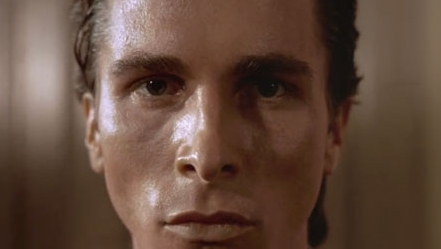
Movie Night: Event Horizon

Click here to listen to my guest spot on the Silver Screen Podcast discussing this film

Released: 15 August 1997
Director: Paul W. S. Anderson
Distributor: Paramount Pictures / United International Pictures
Budget: $60 million
Stars: Laurence Fishburne, Sam Neill, Joely Richardson, Richard T. Jones, Sean Pertwee, and Jason Isaacs

The Plot:
The experimental Event Horizon returns after a mysterious seven-year absence. However, when its designer, Doctor William Weir (Neill), and Captain S.J. Miller’s (Fishburne) crew investigate, they find the ship haunted by a presence from beyond our universe.  

The Background:
It’s not hyperbole to say that Mortal Kombat (Anderson, 1995) made Paul W.S. Anderson’s career. The film’s critical and commercial success saw him bombarded by offers; he turned them all down, even a Mortal Kombat sequel, to make an R-rated horror. Attracted to Philip Esiner’s pitch of a “haunted house in space”, Anderson and producer Jeremy Bolt worked to tweak the script to emphasise these elements and veer away from comparisons to Alien (Scott, 1979), though fans later considered the film a spiritual prequel to Warhammer 40,000 due to similarities between the two. Many effects were done practically, such as constructing moving sets to bring the ominous Gravity Drive to life and harnesses to simulate zero gravity, all on sets said to be oppressive and claustrophobic for the cast. A rushed shooting schedule and pressure from studio executives led to Anderson struggling to deliver a final edit. Test screenings later complained of the extreme gore and subsequent cuts led to the excised footage disappearing, despite fan outcry for a director’s cut. With a box office of just $42 million, Event Horizon was a commercial failure; reviews were equally negative, saved for some praise for the special effects and visuals. However, it has since been re-evaluated and considered a cult classic, inspiring the Dead Space franchise (Various, 2008 to 2023) and getting its due from contemporary reviews, to the point where additional films and even a television series have circled the rumour mill.

The Review:
In the world of Event Horizon, humanity has finally spread its reach beyond our home planet and started to colonise space. First, there was an outpost established on the Moon; then commercial mining began on Mars (where promiscuous women are said to frequent). Then, finally, mankind strived to expand further into the galaxy. To facilitate this, the United States Aerospace Command (U.S.A.C.) first built hyper-fast ion drives and stasis booths to protect their crew from the intense g-forces, then turned to Dr. Weir to develop a prototype for faster-than-light travel. As pilot W. F. Smith/Smitty (Pertwee) and Dr. Weir correctly point out, all the laws of science make light speed unobtainable but, luckily, Dr. Weir found a way around this small hurdle. He developed an elaborate spherical engine, the Gravity Drive, that used focused particles and other complicated pseudo-science to generate an artificial black hole, essentially “folding” space and time and allowing the Event Horizon to instantaneously travel across the galaxy. However, the Event Horizon vanished during its maiden voyage; dubbed the worst disaster in space history, its failure has weighed heavily on Dr. Weir, who focused all his time and attention into the project to the detriment of his marriage. He was so consumed with his work that he failed to notice the failing mental health of his wife, Claire (Holley Chant), until it was too late, and by then she’d already slit her wrists in their bathtub. Haunted by guilt and grief and suffering from constant nightmares of his loss, Dr. Weir is exuberant when the Event Horizon suddenly reappears in Neptune’s orbit transmitting a distress signal and seeks to investigate in hopes of salvaging his life’s work. The true fate of the Event Horizon hasn’t been made public; U.S.A.C. instead concocted a story about it being destroyed due to a power overload. Thus, the rag-tag crew Dr. Weir partners up with to investigate the ship are initially sceptical both of the mission and the Gravity Drive’s ability to tear a hole in the fabric of the universe.
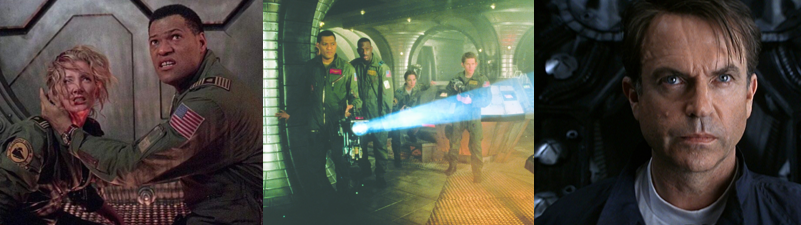
Miller and his crew are roped into a nightmare when Dr. Weir investigates his haunted ship.

Consequently, Dr. Weir is met with a cold reception when he joins the crew of the deep space salvage vessel the Lewis and Clarke. The crew, led by their “skipper”, Captain Miller, are already disgruntled at being recalled from a well-deserved leave and sent to the outer reaches of the galaxy, especially as the last rescue attempt that went that far never returned. They therefore react with hostility when Dr. Weir explains his research to them. Despite also harbouring a resentment towards Dr. Weir, Miller, a by-the-book commander who inspires respect amongst his tight-knit crew, nevertheless chews out some of his more unruly crewmen when they dismiss Dr. Weir’s explanations and is determined to see the mission through as quickly and efficiently as possible. Miller is close to each of his crew, with all of them regarding young engineer Ensign F.M. Justin (Jack Noseworthy) as a surrogate son (they dub him “Baby Bear” and he frequently refers to the ship’s medical technician, Peters (Kathleen Quinlan) as “Mama Bear”). Miller’s served with each of them for a long time and they have a natural rapport based on mutual respect. Miller allows Smitty to light up a cigarette for a job well done and isn’t above joining in with the banter between the crew, ribbing smooth-talking rescue technician T.F. Cooper (Jones) by questioning his contribution to the ship. Like Dr. Weir, however, Miller is carrying a secret pain. He’s wracked by guilt at having left behind a young bosun, Edmund Corrick (Noah Huntley), a decision that has haunted him ever since and driven him to be the efficient commander he is today, expecting nothing less than the highest standard from his crew. As his second-in-command, he expects a lot from communications officer Lieutenant M.L. Starck (Richardson). As their situation worsens, his demands for answers become more forceful, though Miller’s reluctant to entertain her theory that the Event Horizon brought back some lifeforce from wherever it’s been. As Miller is tormented by visions of Corrick and witnesses that suffering of his crew, he directs his grief and anger towards Dr. Weir and the two quickly clash since Dr. Weir comes to be mesmerised and possessed by the ship and Miller’s efforts to escape are constantly thwarted by forces beyond his comprehension. Eventually, Miller’s forced to see that Starck was right and that something has tainted the ship, especially as its influence drives his crew to hysteria and costs him his beloved Lewis and Clarke.
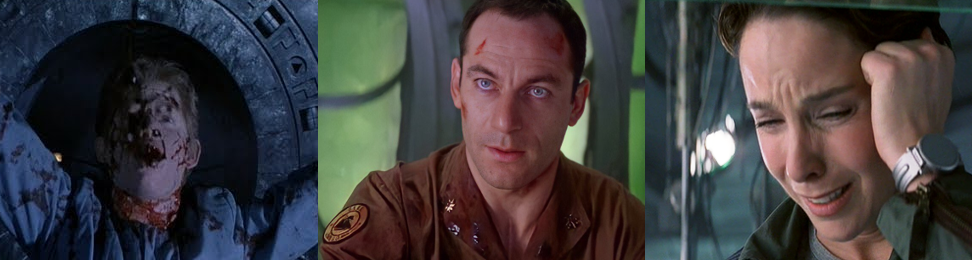
Things go from bad to worse as the ship’s evil influence tortures the crew with visions.

Upon first reaching the Event Horizon, the crew find it to be an ice-cold “tomb” devoid of all life signs (despite driving their scanners crazy) and filled with an ominous dread. When Justin investigates the Gravity Drive, the ship suddenly comes to life; the core (or “gateway”) opens and sucks him in and, though Cooper rescues him, Justin is left catatonic and the Lewis and Clarke is badly damaged. While Smitty works around the clock to repair the damage and the crew risk suffocation aboard the Event Horizon, Peters toils through the ship’s log and is dismayed to find Captain John Kilpack (Peter Marinker) and his crew were driven to a macabre insanity, slaughtering and mutilating ach other in a gore-drenched orgy, the remains of which are still plastered to the ship’s walls. Dr. Weir’s nightmares also come to him while he’s awake. He sees visions of Claire’s eyeless face and hears her voice whispering to him and is enthralled by the Gravity Drive, which slowly influences his decisions and turns him against the crew, dismissing their claims and concerns and causing Smitty to fly at him in a rage. Following a disturbing seizure in which he warns of the impending arrival of “The Dark”, the traumatised Justin is compelled to enter an airlock and kill himself to avoid going back there. To the horror of his crew, Justin is almost killed by decompression, though Miller gets him back in the ship and their resident doctor, the grim-faced D.J. (Isaacs), stabilises him. With Justin sedated in a stasis tank, D.J. is forced to reveal that Kilpack’s distress call, which consisted of Latin, was actually a warning to others to “save [themselves] from Hell”. Though neither Miller or D.J. are the religious type, it seems something evil has latched onto the ship and their situation only worsens when Dr. Weir sabotages their escape plan by blowing up the Lewis and Clarke with an emergency explosive, killing Smitty in the process and trapping the survivors on what is now clearly a very haunted ship.
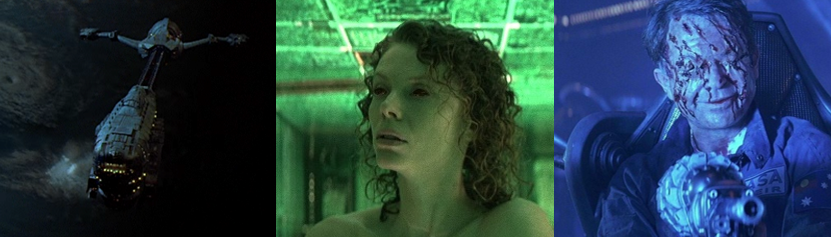
The ominous Event Horizon transforms Dr. Weir into its demonic agent.

The Event Horizon is the primary antagonist of the film. A needlessly ominous, gothic ship, it looms in space like a haunted cathedral and creates a foreboding presence with its dark, claustrophobic hallways, abundance of spikes and chilling silence, to say nothing of the remnants of Kilpack’s gory orgy the crew eventually find. From the moment the crew step onboard, the ship influences them; not only do Miller and Dr. Weir hear and see their worst fears but Peters is routinely tormented by visions of her infirm son, Denny (Barclay Wright). These are so traumatic that she refuses to work in the medical room, much less alone, and later drive her to a tragic and brutal death when she chases what she thinks is Denny around the Gravity Drive and takes a fatal fall in the process. Of course, the Event Horizon has the greatest influence on Dr. Weir, arguably getting inside his head before he even reaches his beloved ship. Once onboard, his visions intensify; he’s already very protective of the ship and comes up with quasi-logical explanations for the strange events happening, but the crew don’t buy it. Eventually, the ship forces him to relive Claire’s suicide and he’s driven completely off the deep end; he comes to see the ship as “home” and gouges out his eyes, leaving him a half-crazed, demonic figure who coldly destroys the Lewis and Clarke. Miller is deeply affected by Smitty’s death but this explosion also flings Cooper out into space; however, thinking fast, the jovial rescuer blows his air tank and jets back to the Event Horizon. However, he finds Dr. Weir determined to reactivate the Gravity Drive and return to whatever lies beyond. It’s not clear where, exactly the Event Horizon has been; even Dr. Weir doesn’t know where the Gravity Drive leads to. Kilpack dubs the space between dimensions as “Hell”, a name that sticks even for the scarified, possessed Dr. Weir. Rather than jumping from one point in space to another, the Event Horizon punched a hole in reality itself and ventured to “a dimension of pure chaos… pure evil”. While there, the ship was infected by the dimension’s influence and drove its crew mad, apparently gaining a level of sentience and satiating itself on taking their lives (and, presumably, their souls). Accordingly, it delights in torturing Miller and his crew with their worst fears and toying with its prey. It constantly creates roadblocks, forcing them aboard and then trapping them there, intent on dragging the survivors back to Hell to expose them to even more macabre sights and suffering.

The Nitty-Gritty:
Although Anderson may have sought to move away from being compared to Alien, the sci-fi/horror classic’s influence is greatly felt in Event Horizon. For one thing, this is a very gritty, “lived-in” sci-fi world. The controls and technology and aesthetic of the Lewis and Clarke, in particular, are very low-tech, full of buttons and exposed gears, and her crew are very much analogous to the Nostromo’s complement of “truckers in space”. These are working-class space farers, paid a minimum wage and doing the best they can with obsolete technology, and their down-and-dirty attitude makes them very relatable characters who are easy to root for. Miller can be a bit uptight, but he has a great rapport with his crew, even if he gives Starck a hard time more often than not. D.J. is their more sullen crew mate, bluntly introducing himself and even threatening Smitty with a scalpel when he rages at Dr. Weir for perverting the laws of physics. Smitty and Cooper are the most grounded of the crew; however, whereas Cooper is cheerful and fancies himself a ladies’ man, Smitty is more gruff and would rather leave as soon as possible. Honestly, I’m so glad Cooper survived as he’s a fantastic character. He calls Dr. Weir out on his bullshit, earning himself a dressing down from Miller, and brings some infectious levity through his ridiculous return to the ship, which always makes me grin. Peters was perhaps the least interesting for me but she’s given emotional depth through her clear love for her son, while Starck was just trying to be pragmatic and keep her cool. Smitty and Starck immediately sense the bad vibes from the Event Horizon, a ship bathed in a perpetual thunderstorm courtesy of Neptune and constantly seeped in ominous darkness. All too late, Miller turns on the ship, ready to escape and blow it to pieces, only to be scuppered by the cruel-hearted Dr. Weir and his crew picked off one at a time by the ship’s visions or Dr. Weir’s mad designs.
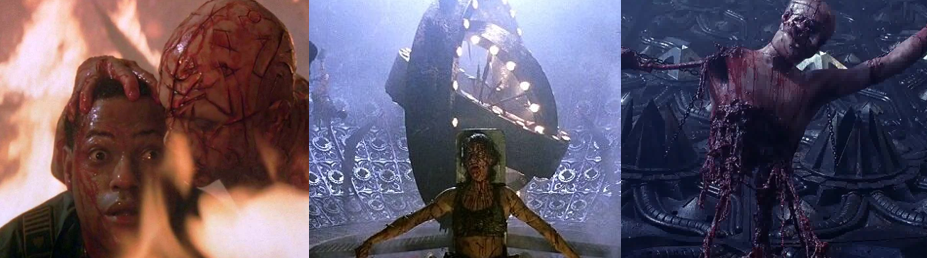
The macabre, gory imagery and effects are especially disturbing, even in brief flashes.

Describing Event Horizon as a haunted house in space is extremely apt, but it’d also be just as fitting to dub it “Hellraiser (Barker, 1987) in space”. In this latter regard, the film performs exceedingly well, offering a far more entertaining and disturbing experience than the actual Hellraiser in space we got. There’s a constant sense of dread as the crew wanders the ship’s dark and claustrophobic corridors. Flashes of lightning reveal disgusting gore on the walls and the frenetic ship logs offer but a taste of the horrors Kilpack and his crew endured while in Hell. The Event Horizon itself is a menacing construction; there’s no reason for it to be as long or intimidating as it is, and yet the Gravity Drive is protected by a “meatgrinder” corridor and full of spikes, creating an unsettling vibe even before the gateway opens. Obviously, there is some dated CGI and green screen effects, most notably in rendering the gateway and when the crew are wandering around the frigid, zero-g interior of the Event Horizon. However, the film makes up for this was some incredible set design (again, everything feels very Alien and suffocating in its aesthetic) and practical effects. Unfortunately, due to studio mangling, we’re denied seeing the full extent of Hell’s wrath and exactly what Dr. Weir does to D.J. but the horror of the unknown lands just as hard. When the scarified Dr. Weir assaults Miller in the finale, he forces Miller to see visions of his crew being raped, tortured, mutilated, and brutalised in Hell. Maggots, scenes of D.J. being strung up in a blood eagle, and flashes of Starck, Justin, and Cooper being flailed and impaled bombard Miller (and the audience) like a fever dream. It’s a disturbing cacophony of frenzied editing, but it works since it forces you to experience Miller’s visions as he’s being shown them. The makeup effects on Dr. Weir are particularly gruesome; first, he tears his eyes out and is left a mutilated, taunting villain obsessed with taking Miller and his crew to Hell. Then, after being blown out of the ship, he’s returned as a completely naked, demonic entity covered in weeping scars, completing his transformation into the personification of the ship’s evil.
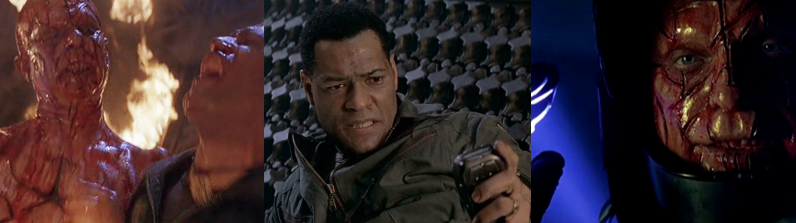
Though Miller sacrifices himself to stop Dr. Weir, the ending suggests the nightmare is far from over…

After working tirelessly to repair the Lewis and Clarke, Smitty is dismayed to learn that Dr. Weir has planted an explosive on the ship. Though he frantically searches for it, Smitty’s too late to deactivate it and is blown up with his beloved craft. Angered, Miller arms himself with a harpoon-like nail gun and prepares to make Dr. Weir pay for costing him his ship and his crew. Though he finds Starck alive, he’s left at the scarified Dr. Weir’s mercy, horrified to find the doctor has lost his mind and gouged his eyes out. Now completely consumed by the ship’s influence and determined to defend it at all costs, Dr. Weir activates the Gravity Drive, though he’s seemingly killed when he decompresses the bridge trying to kill Cooper. Miller gets Starck and Cooper to safety and concocts a plan to utilise the Event Horizon’s emergency lifeboat feature. As related by Dr. Weir earlier, the ship was designed to be split in half using explosives placed along its otherwise unreasonably long central corridor. After ordering Starck and Cooper to prepare the foredecks for their departer, leaving them to be assaulted by a very Shining (Kubrick, 1980) inspired torrent of blood, Miller is attacked by Corrick’s enflamed spirit and driven towards the Gravity Drive. There, he sees through the vision and is confronted by the now-demonic Dr. Weir. Subjected to horrifying visions and outmatched by the doctor’s augmented strength, Miller is left with no choice but to set off the explosives to deny Dr. Weir his full victory, sacrificing himself to the Hell dimension to save his crew. Many days later, the wreckage of the Event Horizon is discovered. However, the experience has left Starck traumatised and the film ends with the suggestion that the remains of the ship may be just as haunted as the half that was sucked back to Hell.

The Summary:
I discovered Event Horizon by accident. As a kid, I taped some other movie off the television and accidentally left the VHS running, recording the next movie, which just so happened to be this one. Despite not being into horror back then, I gave it a watch and was immediately enthralled and, to this day, Event Horizon is one of my all-time favourite, go-to horrors. I love the aesthetic of this movie, with its lived-in, gritty, clunky technology and the depiction of Miller and his crew as average Joes caught up in a nightmare they wanted no part of. Laurence Fishburne makes for a great, hard-assed leading man but he’s bolstered by some of Hollywood’s most underrated character actors. Sean Pertwee is always a delight and he’s great as the outspoken Smitty; Jason Isaacs brings a quiet intensity to D.J. who’s just barely keeping his shit together; but the standout was Richard T. Jones as Cooper. He’s just such an infectious and charismatic personality that steals every scene he’s in with his cocksure bravado and blunt honesty. Sam Neill also puts in a great performance as the haunted Dr. Weir; this is a man wracked with guilt who seems on the verge of suicide, and yet who sees the Event Horizon as a second chance. While he’s initially shocked and dismayed by the horrors and death that infest the ship, Dr. Weir is mesmerized by its influence and comes to protect and even love it, willing to butcher Miller’s crew to satisfy his creation’s macabre lust. The horror on offer here is palpable; the Event Horizon is a menacing presence throughout and looms over every scene, seemingly watching and infecting the characters’ every movement. It’s a shame we’ll never see the full extent of the gory visuals but the film works incredibly well despite that. The brief, frantic bombardment of torture and death are enough to hammer home how desolate and wicked Hell is and there’s still plenty of gore on offer. The fantastic use of disturbing practical effects, the unsettling depiction of Justin’s decompression, and Dr. Weir’s transformation into an eloquent and cruel demonic sadistic all make Event Horizon an unnerving and terrifying cult classic. With great performances, some incredible visuals and set design, and a truly frightening premise, Event Horizon will always be highly recommended by me and, if you haven’t seen it or want to see Hellraiser in space done right, now’s the time to change that!

My Rating:

Rating: 4 out of 5.

Great Stuff

Have you ever seen Event Horizon? Do you agree that it’s an under-rated cult horror classic? What did you think to the visuals, the gothic construction of the titular ship, and the foreboding atmosphere? Which member of the crew was your favourite? What did you think to Dr. Weir’s descent into demonic insanity and Miller’s selfless sacrifice? Would you like to see the excised footage full restored to this movie? I’m always happy to talk about Event Horizon so please leave your thoughts below and go check out my other horror content across the site!


10 FTW: Movies with Ambiguous Endings

You’ve paid your money and you’ve sat down in the cinema or in front of your television; you’ve got some snacks and a drink and you’re ready to suspend your disbelief for anywhere between ninety minutes to three hours with a good, old fashioned movie. The plot is intriguing, the characters relatable, the antagonist layered, and the film’s construction has sucked you right in. Then, out of the blue, the film ends in an ambiguous way, leaving questions swimming around in your head.

For me, a great movie with an ambiguous ending that either turns the entire events that preceded it upside down or allows me to interpret what has happened makes for an extremely enjoyable experience, not least because it means that you can re-watch the movie and interpret the ending and the plot in different ways each time. Some might disagree, obviously, but I’m not them so here are ten of the best moves with interpretative endings and some of my thoughts about them:

Blade Runner
10 Blade Runner (Scott, 1982)

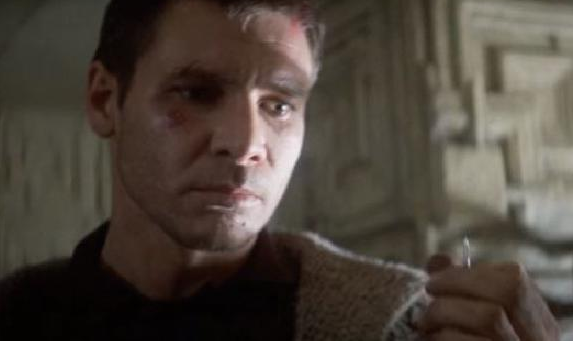
Kicking things off with one of the forefathers of the ambiguous ending, we’re really opening a can of worms with this one considering just how many different versions and endings exist for Blade Runner. Controversially, though, I’m not that big a fan of Blade Runner; as a film, it’s very slow and plodding, with long sections where seemingly nothing happens. This is married to some gorgeous sets and a realistic, lived-in feel to the future world we are presented with. Consequently, my Blade Runner experience begins and ends with Ridley Scott’s 2007 Final Cut version of the film, in which Rick Deckard (Harrison Ford) finds an origami unicorn on the floor of his apartment, strongly hinting (as Deckard had previously dreamt of a unicorn) that Deckard is a Replicant. Apparently, this is the philosophy that Scott subscribes to though I disagree as there isn’t really any real evidence in The Final Cut to support this beyond the ambiguity of the final scene. Supporting this further, the question about Deckard’s humanity was left unanswered in Blade Runner 2049 (Villeneuve, 2017), despite other versions of Blade Runner hinting more strongly that Deckard was actually a Replicant all along.

Shutter Island
9 Shutter Island (Scorsese, 2010)

Throughout Shutter Island, Edward “Teddy” Daniels (Leonardo DiCaprio) is forced to confront some personal demons as he uncovers the mysterious disappearance of a patient of the asylum housed on the titular island. As events begin to unravel, we learn that Teddy is, in fact, a patient of the asylum and he was allowed to play out an elaborate fantasy in an attempt to force him to confront the truth that he murdered his wife. Despite scepticism from Dr. John Cawley (Ben Kingsley), this unconventional method appears to have finally worked as Teddy finally admits his guilt. However, later on, he appears to have regressed to his fantasy world once more, leaving the hospital no choice but to have him lobotomised. As the orderlies come to take him away, he questions whether it is worse to live as a monster or die as a good man, casting doubt as to whether he has truly regressed or simply wishes to end his sane life on a high note; personally, I prefer the latter interpretation, as that line seems a deliberate inclusion to make us think that Teddy is merely feigning his regression to “die” as a hero.

The Thing
8 John Carpenter’s The Thing (Carpenter, 1982)

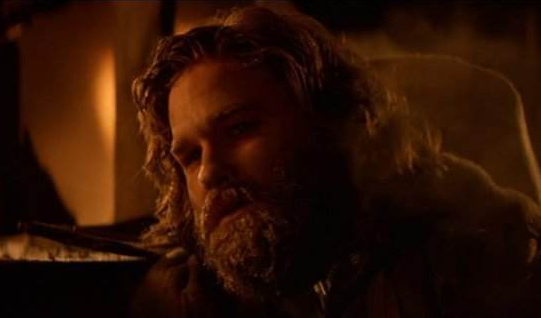
This is the second time that The Thing has made one of my top ten lists, and with good reason; not only is it a masterpiece of practical effect wizardry, it’s also an excellent tale of isolation and paranoia. After uncovering an alien spacecraft and unwittingly unthawing a gruesome, shape-changing parasitic lifeform, the residents of an Antarctic research outpost succumb to paranoia and fear as the titular Thing assimilates them one by one. In the end, with the Thing seemingly destroyed and the outpost up in flames, our hero – R.J. MacReady (Kurt Russell) – sits alone and exhausted by a dwindling fire when he is confronted by Childs (Keith David), his hot-headed rival who had mysteriously vanished right as the chaos started to really ramp up. Also exhausted, Childs sits with MacReady and they share the remnants of a bottle of scotch, both too tired to act on their suspicions that the other might be the Thing and succumbing to the knowledge that, once the fires burn out, it won’t matter soon anyway. Doubts about who is really human are raised when one observes that, unlike MacReady, Child’s breath does not show in the freezing weather but, in this case, I feel that both are actually human and the ending has a more morbid message: both men, whether human or alien, are paying the price for human nature and that, given the volatile relationship between the two characters, it’s likely they would find any excuse to try to kill each other but are simply too fatigued to continue their hostilities.

The Descent
7 The Descent (Marshall, 2005)

The Descent was a welcome surprise when I first saw it; despite some questionable acting from the lead females, the film quickly descends (hah!) into an atmospheric, claustrophobic nightmare when six cave-diving friends find themselves trapped in an unchartered cavern and being attacked by cannibalistic mutated humans. With fear and paranoia setting in, and beset by the vicious crawlers at every turn, the party is eventually whittled down to central protagonist Sarah Carter (Shauna Macdonald) who, after being knocked unconscious, awakens to find herself before an exit and frantically scrambles free, screaming with maniacal glee as she makes it to her car and speeds away. Overcome by the gruesome events that have taken her friends from her, she pulls over and breaks down in tears, only to find the screaming corpse of her headstrong friend Juno Kaplan (Natalie Mendoza) in the passenger seat. For American audiences, this jump-scare is where the film ends but, for us Brits, the scare causes Sarah to awaken to find herself still trapped in the cave with no exit in sight and her fire slowly burning away. With no escape, and the sounds of the ferocious crawlers echoing all around her, she finds solace in a hallucination of her dead daughter as the film fades to black. If you ignore The Descent: Part 2 (Harris, 2009), which reveals that Sarah did actually escape the cave in the end (and is inexplicably convinced to return to that nightmare), this ending is a massive downer and really reflective of the differences in American and British audiences; we Brits love us a good bleak ending laced with ambiguity, as the final haunting shot raises the possibility that all of the events that occurred were a hallucination of Sarah’s to justify her slaughtering all of her friends.

6 Event Horizon (Anderson, 1997)

Here’s a film that doesn’t get enough love, Event Horizon is a truly horrific science-fiction horror revolving around a spaceship that, having crossed through time and space, has returned as a semi-sentient haunted vessel that desires only to kill its inhabitants in increasingly gruesome ways and return to the hell dimension that it passed through. Event Horizon actually has two ambiguous endings: the first comes when Captain Miller (Laurence Fishburne) sacrifices himself to split the Event Horizon in two, allowing the remainder of his crew to be spared while he and the demonically possessed Dr. William Weir (Sam Neill in a commendably menacing role) be transported back to “Hell”. When I first watched Event Horizon, I assumed, based on Weir’s agonised “Noooo!” and the editing of this scene, that Miller had died in the ensuing explosion but, upon repeated viewing, you can clearly see the aft section of the craft disappear into a black hole, meaning that Weir was merely expressing his frustration at only taking one victim to “Hell” instead of the entire crew, making Miller’s sacrifice even more tragic as he now has to suffer unimaginable horrors. However, it doesn’t end there as the forward section of the ship is later recovered and Miller’s crew freed from stasis; upon awakening, and suffering from shock, Lieutenant Starck (Joely Richardson) looks upon her rescuer and sees only Weir’s scarred face grinning back at her. Descending into a screaming fit, and comforted by Cooper (Richard T. Jones), it appears as though Starck is simply severely traumatised by the horrific events she has barely survived but, as the film fades to black, the doors of the Event Horizon close by themselves, suggesting that the demonic force haunting the ship is still present.

Boy, was this film a surprise. Given the odd marketing campaign, you would be forgiven for going into The Grey believing it was simply about Liam Neeson fighting wolves but it is so much more than that. Haunted by the death of his wife, John Ottway (Neeson) is struggling with suicidal tendencies when the plane he is flying on crashes in the middle of the frozen Alasakan wilderness. With limited resources, tensions running high, and a pack of ravenous wolves stalking them at every turn, Ottway is forced to rely on his survival instincts and knowledge of wolves to lead the survivors in a seemingly hopeless search for safety. Inexplicably surviving what appears to be an unsurvivable plane crash potentially gave Ottway a concussion, however, as it is eventually revealed, once all of the other survivors have tragically perished due to injuries, the elements, or the increasingly emboldened wolves, that he has been heading directly towards the wolves’ den the entire time. Left alone and forced to confront the Alpha Male, Neeson straps broken bottles and other make-shift weaponry to his fists and prepares to fight to the death as the film abruptly cuts to black. A brief after credits scenes offers little in the way of closure, affording only a glimpse of what appears to be Ottway resting atop a slowly dying wolf, leaving the character’s ultimate fate entirely up to the interpretation of the viewer. I honestly understand the negative backlash this caused as the marketing made a big deal out of the showdown between Neeson and the Alpha, man against nature, and all that but, honestly, when I first saw it and Ottway was reciting his father’s beloved poem, burying the wallets of his fallen comrades, and preparing to fight to the death with a voracious wolf…man tears, every time. I always like to think that there was only ever going to be one outcome: Ottway put up a great fight but was ultimately killed by either the Alpha or one of the other wolves. Yet the short scene after the credits presents the slim possibility that Ottway survived the battle, if with serious injuries, allowing those who prefer a more positive ending to believe that he came out victorious and is merely exhausted from the conflict.

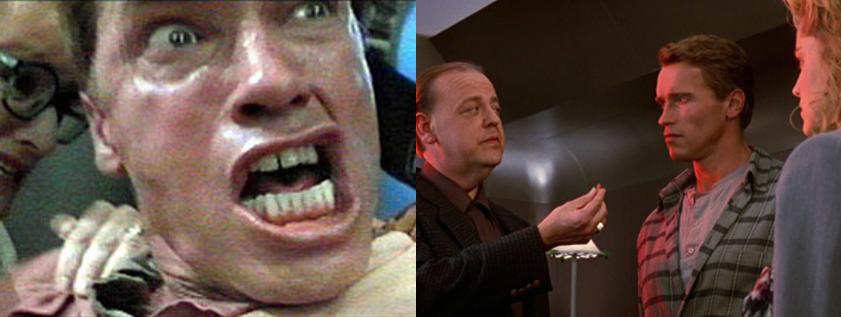
Can we stop for a second and recognise that Total Recall is still one of the greatest science-fiction movies ever created? Honestly, this movie has aged incredibly well; it’s use of practical effects, model shots, the rising action and over-the-top fight scenes, all married with two truly memorable villains and Arnold Schwarzenegger’s undeniable charisma make for one of the best action/sci-fi experience ever conceived. That it also presents an extremely and surprisingly complex and deep narrative only adds to its stature, in my mind. Douglas Quaid (Schwarzenegger) is obsessed with Mars, dreaming of it every night and is so desperate to visit the red planet that he pays a visit to Rekall Inc. to purchase a memory implant of having vacationed for two weeks as an undercover secret agent. Immediately however, there are complications; Quaid goes psychotic during the procedure and is suddenly attacked by friends and foes alike for no discernible reason. Eventually driven to Mars, he learns that he was once Hauser, a former employee of the villainous Vilo Cohaagen (the wonderful Ronny Cox) who volunteered to have his memory wiped so that Cohaagen and his sadistic enforcer, Richter (fantastically portrayed by Michael Ironside), could wipe out the rebellion opposing his authority on Mars.

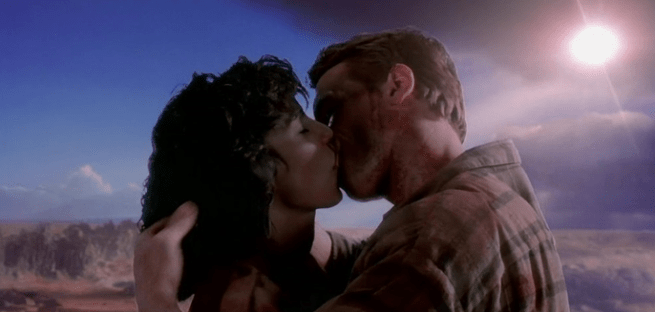
Rejecting his former life, Quaid opts instead to activate an alien device that provides Mars with a breathable atmosphere, freeing the populace from Cohaagen’s air tax and ending the film with a conspicuous white light as Quaid shares a kiss with his dream woman, Melina (Rachel Ticotin). I say conspicuous because, traditionally, films end on a fade to black and this is only one of many indications that the events we have witnessed are not entirely what they seem. At Rekall Inc., Quaid tailors the memory he will receive to the finest detail, describing Melina as his love interest, viewing pictures of places he later visits on Mars, and being told that the vacation will involve him overcoming an interplanetary conspiracy. Later, Dr. Edgemar (Roy Brocksmith) attempts to convince Quaid that everything he is witnessing is a free-form delusion that he has allowed himself to be trapped in and that, unless he chooses to wake up, he will end up lobotomised. Quaid rejects this when he notices that Edgemar is clearly sweating with fear and discomfort and, in doing so, commits himself to seeing his path towards being the saviour of Mars. Total Recall presents both possibilities simultaneously; the over-the-top action and increasingly coincidental set pieces lend a credibility to Edgemar’s claim that Quaid is trapped in a dream world but scenes where Quaid is entirely absent, such as during conversations between Cohaagen and Richter, suggest that the plot against Quiad is very real. In the end, the white out could simply be a sign of a new beginning for Mars or the brain cells in Quaid’s head dying from psychosis; sometimes I will watch the film and believe that Quaid is a former mercenary turned rebel leader and, others, I choose to believe that he has simply allowed himself to be lost to an extremely realistic dream.

The Wrestler
3 The Wrestler (Aronofsky, 2008)

After years in obscurity, Mickey Rourke began a bit of a comeback in the mid-to-late-2000s and perhaps no other role really showed how much he had matured and was ready to be taken seriously as an actor than that of Robin Ramzinski (AKA Randy “The Ram” Robinson). Ram, his best years as an athlete behind him, has fallen on hard times and really been through the wringer; he is estranged from his daughter (the delectable Evan Rachel Wood), in constant pain, works a menial job where he is the source of constant ridicule, and is forced to take bookings in venues barely a quarter of the size he was headlining in his prime. After he suffers a heart attack and is advised that he must never wrestle again, Ram takes the advice to heart and begins reconciling with his daughter and trying to make a future with his only confidante, an ageing stripper named Cassidy (Marisa Tomei). In the end, though, after a drink and drug filled bender causes his daughter to sever all ties with him, Ram returns to the one place he has only ever felt loved and valuable, the ring, knowing full well that it could be not only his last match but the last decision he ever makes. During a rematch against his greatest opponent, the Ayatollah (Ernest Miller), Ram begins to suffer chest pains and is in considerable visible pain. Despite the Ayatollah’s concerns and pleas to end the match quickly, Ram fights through the pain and disorientation to mount the top rope and leap into the air as the film cuts to black. Did Ram make the splash, win the match, and walk away victorious or did he crash in a dying heap on his fallen adversary? Honestly, considering the poor hand Ram has been dealt in his twilight years, I actually prefer the idea of him going out in a blaze of glory than living through another heart attack and having only a resentful daughter and a guilt-filled stripper to wake up to.

American Psycho
2 American Psycho (Harron, 2000)

Adapted from the book of the same name by Brett Easton Ellis, American Psycho is an incredibly enjoyable dark comedy revolving around Wall Street yuppie Patrick Bateman (Christian Bale) who, by day, enjoys the frivolities of greed, sex, and consumerism but, by night, stalks the streets for victims to kill. Fully acknowledging that his urge to kill is a deep-rooted psychological disorder over which he is slowly losing control, Bateman takes out his frustrations at being mistaken for other co-workers, his fiancée’s infidelity, and his peers having better positions, clientèle, and even business cards by murdering co-workers, vagrants, and prostitutes. Eventually, his urges become too much to contain and he embarks on a killing spree throughout the city night, shooting innocent bystanders left and right before finally calling his lawyer (Stephen Bogaert) and, through maniacal tears, listing his numerous transgressions in a frantic confession. However, the next morning, his lawyer fails to recognise Bateman, believing him to be a man named Davis and that the call was an elaborate prank, reasoning that Bateman is far too spineless to engage in such activity.

Bateman calmly states that he not only committed the crimes he confessed to but enjoyed them, only for his lawyer to brush him off. Returning to his seat, Bateman reasons that, despite his confession, he has learned nothing about himself or the world and that the hollow emptiness he feels inside has only grow larger as a result of his actions. However, it is left up to the audience to decide whether the increasingly elaborate events we have witnessed actually took place or if they were simply the deluded fantasies of a bored, morbid, and repressed individual (further exemplified by his secretary, Jean (Chloë Sevigny), finding Bateman’s journal filled with doodles depicting murder and rape). Prior to visiting his lawyer, Bateman attempts to clean up the apartment of one of his victims, only to find it in pristine condition and being sold by a realtor, who reacts to Bateman’s presence with a clear discomfort, if not fear, suggesting that the gruesome murder actually took place. For me, as a big fan of the film and the book (which provides few answers and raises more questions, if anything), I like to think that some of the murders took place but maybe not all of them; given that Bateman and his co-workers are completely interchangeable and the dark satire at work in the film, I think it’s entirely possible that Bateman is so incredibly repressed and striving for attention and to stand out that he has killed vagrants and prostitutes but, in doing so, has simply allowed his dark fantasies to conjure increasingly elaborate murders and scenarios to distract him from the fact that he is nothing more than a faceless corporate snob amidst a sea of faceless corporate snobs.

Inception
1 Inception (Nolan, 2010)

Perhaps one of cinema’s most unique and original ideas since The Matrix (The Wachowski Brothers, 1999), Inception presents a world in which thieves like Dom Cobb (Leonardo DiCaprio) can enter a person’s dreams and subconscious to extract information. Unable to return to his children due to his wife, Mal (Marion Cotillard), having framed him for her suicide, Dom is tasked with putting together a team and planting an idea in the head of the heir to a business empire in exchange for his criminal record being expunged. Inception takes full advantage of modern effects and technology to realise the infinite possibilities of the dream world, allowing reality to bend and warp in unique ways. As Dom and his crew are forced to dream within a dream, the film plays with perceptions of time as much as reality as Dom risks losing himself to the elaborate dream world he has created. Eventually, Dom confronts his demons and completes his mission, passing through customs without a hitch. All throughout the movie Dom has been haunted by not only his wife’s suicide but also the fact that he left in such a hurry that he was denied one final look at his children’s faces. Returning home, as Hans Zimmer’s powerful score builds to what appears to be a victorious crescendo, Dom, frantic to prove that his dreams have actually come true, conducts one final test, setting off a spinning top that will topple over if he is in the real world and spin indefinitely in the dream world. However, he never stays to see their result, as, finally, he sees his children and they not only turn to face him but run, overjoyed, into his arms. As he carries them out of frame and the score fades down, the shot lingers on Dom’s spinning top as it spins and spins and spins…faltering only slightly as the film cuts to black.

If The Grey brought out the man tears when I first watched it, Inception opened an absolute floodgate! I never thought that I would care so much about whether Leonardo DiCaprio got a happy ending but Nolan really sucked me into this world and had me so emotionally invested in all of his characters, especially DiCaprio’s Dom. The composition of this final shot, with the score and the sense of catharsis, never fails to be overwhelming; I was so happy to see him finally see his children’s faces and was on the edge of my seat waiting to see the top topple over and truly saddened that it didn’t because, in that first viewing, my knee-jerk reaction was that Dom had gotten lost in the deepest layers of his dream and had chosen fantasy over reality. However, the ambiguity of the ending allows one to view this film similar to Total Recall. You can watch it one time and believe that Dom emerges victorious or choose the depressing ending if you wish. Evidence can be found for both: it is said that one must had a totem unique to them but Dom carries and uses his dead wife’s spinning top as his totem.

It equally seems unlikely that Dom’s client would have the connections necessary to wipe his criminal record clean, and Dom is repeatedly told that he has to “wake up” and “face reality”, as though he has been trapped in a dream ever since he and Mal first experimented with deep dreaming. However, I felt so strongly for Dom and wanted so badly for him to see his kids and return home that it is hard to not believe that everything worked out for him…if not for that damn spinning top, endlessly spinning away, casting doubt over everything except for the fact that, in that moment, Dom does not care whether he is dreaming or awake; whatever the case, he has accepted this as reality without even a cursory look back.