In Back to the Future Part II (Zemeckis, 1989), Marty McFly (Michael J. Fox) travels to October 21, 2015, which is known as “Back to the Future Day” to celebrate the franchise and science.
Released: 1990 Developer: Image Works Also Available For: Amiga, Amstrad CPC, Atari ST, Commodore 64, MS-DOS, and ZX Spectrum
ABrief Background: Celebrated as one of the most beloved, iconic, successful, and influential film trilogies ever made, the Back to the Future trilogy sits in a rare category where each film is as good, if not better, than the last. As if reaping over $960 million in worldwide gross wasn’t enough, the trilogy expanded into comic books, cartoons, and videogames. Unfortunately, it would take decades for gamers to be treated to a halfwaydecent release (one that effectively functioned as a fourth film, no less) and, until then, players endured a slew of mediocre to sadly obscure to aggravating movie tie-ins. Accordingly, to capitalise on the critical and financial success of the unexpected and ground-breaking sequel, multiple adaptations of Back to the Future Part II made their way to home consoles, with this version being coming courtesy of the UK’s own Image Works. Unfortunately, their efforts were met with negativity and the game was seen as a poor adaptation of the movie, with reviews criticising the stunted gameplay and poor sprite work (though the music was largely praised).
The Review: Back to the Future Part II is a bit of an oddball title that’s a mixture of genres, though it’s primarily a 2D sidescroller. It’s a short game, consisting of only five stages (referred to as “Missions”), with no checkpoints, continues, or opportunities to gain extra lives that I could see. You start the game with at least three lives and a health bar; once you exhaust them all, the game ends and you must start over. I’ve had bad experiences with retro Back to the Future games after a dismal childhood playing Back to the Future Part III (Probe Software, 1991) on the Amiga but I needed Master System-exclusive titles to fill my library and took a risk with this one. Sadly, this didn’t pay off and I never managed to get past the first Mission or finish the last one. Luckily, Back to the Future Part II includes a handy level select code so I experienced everything the game had to offer in terms of level selection, and I feel that’s enough to warrant a full (if short) review rather than categorising it as a “did not finish”. The game honestly gets off to a great start, ambitiously recreating Alan Silvestri’s iconic score in chip tune glory and featuring it throughout as a highlight. The title screen recreates the movie logo and there’s even some surprisingly detailed sprite art and text giving a brief overview of the plot and acting as interludes between Missions. Leave the game running and you’ll see a demo mode play that tells you everything you need to know about the game as the tester clearly fails in the first Mission and quits using the same level select code!
Unfortunately, the game falls flat on its face after a decent first impression.
The plot is exactly the same as the movie, but more fleshed out in the instruction manual and very loosely translated into sidescrolling stages and mini games that offer a great deal of variety but aren’t executed very well. Back to the Future Part II falls apart in its first stage, where you (as Marty McFly) take to a hoverboard and trundle down an autoscroller stage in Hill Valley, 2015. Marty’s sprite (and all the game’s sprites) is woefully basic, with barely any animation to show him pushing himself along or punching. I get that the Master System is a weaker system, but I’ve seen it do far better than this ugly effort. In the first stage, you guide Marty along jumping over hazards (oil slicks, strangely deadly curbs, and guys popping out of manholes) and avoiding Griff Tannen’s gang, random pedestrians, the elderly Biff Tannen, and cars that race along. Your punch does little and helpful robots drop various power-ups that speed you up or replenish your health. However, it’s basically a one-hit kill affair that kicks you back to the title screen before you realise what’s happening. There’s a point system here but I’m not sure what it does; there’s no high score table and I died too quickly to see if you gain extra lives. After trying and failing multiple times to beat this section, I skipped ahead to Mission 2, which is really a glorified mini game. Advertised as a “logic puzzle”, it switches to a top-down perspective and has you selecting doors to guide Jennifer Parker out of her future self’s home. You have three minutes to do this and must avoid the McFly family who’re wandering around, but as far as I could tell it doesn’t matter if you succeed or fail, and you can simply progress on (or retry the Mission) after randomly selecting some doors.
Some impressive backgrounds and gameplay variety can’t save this clunky, frustrating mess.
Mission 3 sees you controlling Marty in the alternate 1985, you’re moving to the right and hopping over barrels and tyres and using the directional pad and button 1 to punch, kick, or throw stuff. This was very clunky and felt like wading through goo; your best bet is to press down and 1 to sweep the leg rather than relying on frisbees and rocks. Mission 3 did impress with its backgrounds, though. Jennifer’s house, Lyon Estates, and Stanford Strickland’s house are all ambitiously represented, and Strickland himself even appears to fill you with lead. You can simply jump over him and carry on, collecting random colourful sprites that refill your health or award points and seem to represent parts for the time machine or the Grey’s Sports Almanac. I managed to beat this stage but it was very anti-climactic as it abruptly ended when you reached a billboard (there’s no in-game rendition of the DeLorean here!) Mission 4 is another glorified mini game that gives you three minutes to rearrange a slide puzzle and complete the picture of Marty playing “Johnny B. Goode” alongside the Starlighters. I hate these games and couldn’t figure out how to finish the image, so I just settled for matching Marty’s head with his torso and waited out the timer. Mission 5, sadly, is a carbon copy of Mission 1 except Marty has a new sprite and the hazards are a little different. There are puddles on the ground, for example, banana peels, barriers, and cones, multiple Old Biff’s, and Young Biff barrelling about in his Ford Super De Luxe Convertible. I did progress far enough for the perspective to switch to an isometric slant, which was disorientating and made Marty’s punch even more useless, but I couldn’t retrieve the Almanac from Biff and was done after a few tries.
The Summary: It’s a wonder we ever got a good Back to the Future game at all with mess like this sullying the franchise. Back to the Future Part II is my favourite of the trilogy so it stings a little more seeing it so poorly brought to life on what I feel is one of retrogaming’s most under-appreciated consoles. Sadly, there’s not much to defend here as the game looks and plays terribly, bringing us sprites that’d make the Atari blush and delivering gameplay so clunky you’d swear your controller was on the fritz. The music is impressive, I’ll admit, as is the sprite art used in the interludes and such, but it’s not enough to save this mess of a game. It’s so bizarre as the Master System was more than capable of delivering solid, colourful platformers and it can’t’ve been that hard to just have Marty hop about collecting pages from the Almanac and racing along on his hoverboard. I appreciated the gameplay variety on offer but the main gameplay is barely a step up from the first movie’s notoriously bad outing on the Nintendo Entertainment System. Shamelessly designed to cash-in on a profitable franchise and have to wasting your pocket money on subsequent rentals, Back to the Future Part II is best avoided, no matter how big a fan of the franchise you are, for its ungainly and off-putting gameplay and presentation.
My Rating:
⭐
Rating: 1 out of 5.
Terrible
Did you ever play Back to the Future Part II on the Master System? If so, what did you think of it? Did you manage to beat the game without using the level select? What did you think of the different gameplay mechanics on offer? Which Back to the Future videogame is your favourite and why? How are you celebrating Back to the Future Day today? Whatever you think about Back to the Future, feel free to share your thoughts in the comments below.
In Back to the Future Part II (Zemeckis, 1989), Marty McFly (Michael J. Fox) travels to October 21, 2015, which is known as “Back to the Future Day” to celebrate the franchise and science.
Released: 25 May 1990 Director: Robert Zemeckis Distributor: Universal Pictures Budget: $40 million Stars: Michael J. Fox, Christopher Lloyd, Thomas F. Wilson, and Mary Steenburgen
The Plot: After witnessing his eccentric scientist friend, Doctor Emmett “Doc” Brown (Lloyd), forcibly transported to 1885 in his time-travelling DeLorean, high school student Marty McFly (Fox) travels to the Old West to save his friend from an untimely death, only to discover Doc endangering the timeline by falling for schoolteacher Clara Clayton (Steenburgen).
The Background: Back to the Future (Zemeckis, 1985) started as a passion project for long-time collaborators Bob Gale and Robert Zemeckis to recover from a few critical and commercial failures. After refining their script and securing Michael J. Fox for the lead, the duo succeeded in making the sleek and futuristic DeLorean an iconic cinema vehicle and a blockbuster commercial and critical success now recognised as one of the greatest science-fiction films of all time. As Zemeckis never planned for a sequel, the filmmakers faced script and cast issues but ultimately decided to film Part II (Zemeckis, 1989), also a critical, commercial, and influential release. It was apparently Fox who suggested setting Part III in the Old West, which involved constructing elaborate sets on location to depict the burgeoning Hill Valley. The film was not without its dangers: Thomas F. Wilson performed many of his own stunts and Fox almost died while filming the hanging scene! Industrial Light & Magic again worked on the film’s practical and visual effects, including an elaborate model train and track for the thrilling final sequence. With a box office of $245.1 million, it was the lowest-grossing movie in the franchise and yet is still highly regarded for bringing the trilogy to a satisfying close, the performances, and the new character dynamics introduced. With this film, Back to the Future is widely regarded as one of cinema’s best trilogies. While another film has been long rumoured, and the story has continued in comic books, videogames, and a short-lived cartoon, Zemeckis repeatedly stated that there would never be another entry as long as he’s alive.
The Review: When I was a kid watching the Back to the Future trilogy for the first time, there was a clear hierarchy of preference for me: the second one was the best because of all the fun future stuff, the third was the second best as it had more action than the first, and the first took the bottom spot as it was a little slower and had less visual appeal for me. This was somewhat begrudgingly as I’ve never been a big fan of Westerns; I find them visually dull and narratively repetitive, so it helps when Westerns have a sci-fi or horror bent to them. Over the years, I’ve come to regard Back to the Future III even higher because of the satisfying and emotional way it repeats, continues, and wraps up these characters and the entire franchise to make for one of the most consistently strong trilogies in all of cinema. The film begins by once again replaying the final moments of the first film, in which Doc helps a time-displaced Marty return to 1985 by redirecting a lightning bolt into the time machine. Elated at seeing one of his inventions finally working, and by the prospect of the future to come, Doc celebrates in the street and prepares to head home, eager to get started on his greatest invention, only to be shocked when Marty suddenly reappears before him! This is, of course, a slightly different, older, and more experienced version of Marty, one who’s just seen Doc’s future self blasted back to the Old West by an errant lightning bolt after having revisited 1955 to fix his mistakes from the last film, but the sudden shock is enough to cause Doc to faint in the street.
After a shaky start, Marty eventually embraces and adapts to the Old West era.
Marty takes Doc back to his house and desperately tries to explain the situation to him. I like this scene as it recalls the disbelief and confusion Doc showed towards Marty in the first film (Doc even sarcastically calls Marty “Future Boy!”) However, thanks to Future Doc sending Marty a letter corroborating these events, Past Doc’s adventure with Marty, and the fact that the film needs to get moving, this confusion doesn’t last too long and the two are soon working together like before to unearth the time machine from an abandoned mine at the cemetery. While there, both are horrified to discover Doc’s tombstone stating that he was shot dead by Buford “Mad Dog” Tannen (Wilson) just one week after writing the letter, meaning he never got to enjoy the retirement he’d always dreamed of in Old West. After reading up on Tannen and confirming that the tombstone is real since Doc’s family line didn’t arrive in the United States until long after 1885, Marty resolves to take the repaired time machine and rescue his friend. Thanks to Doc’s detailed schematics, Past Doc makes the necessary repairs and uses his knowledge of fourth dimensional science to get Marty on his way. This is a recurring aspect that Marty struggles with in the film; he has to put his faith in Doc (“You’re the doc, Doc”) that he knows what he’s talking about since he doesn’t understand spatial or quantum physics. What he does know, however, is Westerns. He’s not impressed with the clown-like getup Doc dresses him in and even more embarrassed when his ancestor, Seamus McFly (Fox), helps him avoid social faux pas by gifting him a hat, neither of which fit his idea of Western icon Clint Eastwood. Indeed, Marty even uses the actor’s name as a pseudonym but, rather than being seen as a bad-ass, he’s routinely mocked by the locals. It therefore makes it all the more cathartic for him when he not only adopts a poncho and outfit resembling Eastwood’s “Man with No Name” but also borrows the same “bulletproof vest” trick from A Fistful of Dollars (Leone, 1964) to best Tannen.
Although Marty’s often the uncharacteristic voice of reason, he still has to overcome his vices.
Marty’s friendship with Doc is at the forefront of Back to the Future Part III. Before, Marty relied on the eccentric scientist to advise him and the youngster was mainly cleaning up messes that he’d made. This is still true here but Marty’s whole motivation for defying Doc’s wish to stay in the past is entirely predicated on him wanting to save his friend’s life. However, thanks to an errant arrow, the time machine suffers a fuel leak and the two are stranded in the past similar to the first film. With no gas stations and horses proving ineffectual, the two scramble to find a viable way to get the DeLorean to eighty-eight miles per hour before Tannen makes good on his threat to shoot Doc dead. Doc takes the threat very seriously and, while he’s happy to live out his boyhood dream working as a blacksmith in the Old West, immediately recognises the danger. However, things are further complicated when they happen upon an out of control carriage and rescue schoolteacher Clara Clayton from a fatal fall. Despite being a man of science, logic, and reason, Doc is immediately smitten by Clara and re-evaluates his situation accordingly. This has the unique knock-on effect of briefly switching Marty and Doc’s roles (Marty becomes the voice of reason and Doc becomes the irrational, emotional one), which is further emphasised when Marty also runs afoul of Tannen. Like the first film, this sees their actions impact the future and the tombstone depict the death of “Clint Eastwood” by Tannen’s hands. This comes about because of Marty’s refusal to back down to a challenge and him getting triggered whenever anyone brands him a “chicken” (or “yellah”, in this case). Marty is so riled up by accusations of his cowardice (a holdover from his previous life where his father was a snivelling coward and Marty’s attempts to avoid the same stigma) that he readily agrees to a shoot-out with Tannen, confident that he and Doc will have returned to 1985 by then. However, he’s both horrified to learn he could be forced into a fatal dual and angry at Doc’s suggestion that his pride has negative consequences in his future, something we saw in the second film but which Marty remains unaware of. Thus, Marty’s character arc here is listening to his friend and ancestor over the jeers and opinions of others and realising that it’s better (and braver) to turn the other cheek rather than to step up to an unwinnable fight just to prove himself to a bunch of strangers and assholes.
Love, for better and worse, and allows Doc to discover new aspects of life and himself.
Doc also undergoes some significant character growth here. Having devoted his entire life and fortune to science, Doc’s dreams of seeing the progress of mankind and understanding the nature of existence have been tarnished by witnessing the dangers of time travel. Thus, his instructions and intentions are explicitly clear: he wants the time machine destroyed once they’ve returned to 1985. It’s because of this that he’s perfectly happy living out the rest of his life as a blacksmith in the Old West. He’s quickly established a reputation in the small settlement of Hill Valley and has clearly been enjoying cobbling together steam-powered apparatus and would’ve gladly stayed there if not for the threat against his life. He’s completely caught off-guard, then, when he falls for Clara; initially dismayed to learn that they altered history by saving her, he’s quickly smitten by their shared love for science, astrology, and Jules Verne. Although he scoffs at the idea of love at first sight, Doc can’t deny his feelings for Clara, and he’s fully prepared to stay in 1885 with her but is left heartbroken when she angrily rebuffs him after he’s convinced by Marty to tell her the bizarre truth. In despair, he turns to alcohol and rambling about the future to the locals. After being sobered up by Marty, Doc re-commits himself to their elaborate train heist, having deduced that the only possible way to get the DeLorean to eighty-eight miles per hour is to hijack a train, strap the time machine to it, and boost the train’s engine with controlled explosions. I enjoyed the new wrinkles to Doc’s character here; unlike Marty, he’s comfortable in the Old West and he’s definitely come out of his shell, standing up to Tannen and socialising with the locals. I liked seeing him discover there’s more to life than just science, and his friendship with Marty was explored in new ways through this altered dynamic that saw Marty being the voice of reason for a change.
Buford lives up to his nickname and is a cruel gunslinger who needs taking down a peg.
Once again, Marty and Doc are opposed by one of the Tannen family. This time, it’s Biff’s (Wilson) surely and uncivilised ancestor Buford, who is also accompanied by cackling underlings and has a reputation as a cruel gunslinger and thief. Tannen makes his entrance as all in his line, by confronting a McFly in a bar, and regularly flaunts the law (represented by Marshal James Strickland (James Tolkan)) by dragging Marty through the streets and threatening to hang him as well as sneaking a gun into the town festival. While there is a lawmaster in town, Buford thinks nothing of publicly threatening those who he feels have wronged him and challenging them to a dual. While Buford is as dumb as previous Tannens, easily confused by words and phrases (even those not from beyond his time period) and numbers, he’s a ruthless and callous individual. Although he may hate the nickname “Mad Dog”, it’s entirely appropriate given his drooling, snarling, brutish disposition and he’s little more than a growling thug in a Stetson. Tannen believes Doc owes him $80 after his horse threw a shoe and refuses to be placated by reason since he believes he’s been slighted. When Marty openly defies him at the festival, saving Doc’s life in the process, Tannen shifts his aggression towards the youngster and challenges him to a morning shoot-out, much to the chagrin of Seamus and Doc. Marty, however, is confident he won’t have to think about drawing a gun but that doesn’t end up being the case. Although they have the DeLorean ready and a plan to escape, Doc’s heartbreak causes them to be late and forces Marty to face Tannen in the streets. However, Marty wisely chooses to fight smarter, not harder, once again outwitting the bullish gunslinger and sending him crashing into a pile of manure.
The Nitty-Gritty: Back to the Future Part III continues the formula established by the last two film that time often repeats. This means we get a sweeping shot of Hill Valley and the clock tower (before still under construction), a McFly/Tannen confrontation in a bar, a chase through the streets, and ruminations on the dangers of messing with time travel. However, rather than being derivative, these are all re-framed in new and visually interesting ways. The Old West setting is an extreme reconfiguring of the 1955 setting of the first film, with Marty and Doc being hampered and severely limited by the technology and resources of the time, only things are way more dangerous now as everyone’s walking around with a gun on their hip and even things as simple as petroleum are impossible to come by. Like in the first film, time itself is a major antagonistic force here. Marty and Doc have less than a week to figure out how to get the DeLorean running and the photograph of the tombstone is a constant reminder of this ticking clock (though, strangely, they never once consider hopping on a train and leaving town for a bit. Considering Buford is later arrested for robbery, this might’ve actually worked!) This is only exacerbated when Buford grows restless for a gun fight and Doc falls into despair over Clara, which is naturally all in service of Marty again getting the better of a Tannen and a thrilling train heist for the finale.
While I enjoy the setting and the timeless effects, Clara’s character felt a bit weak to me.
Although it takes Marty a bit to adapt to the Old West, I’d argue both he and Doc acclimatise to 1885 much faster and better than either did to 2015. Both enjoy walking the streets in their era-appropriate getup, Doc revels in applying his scientific acumen in new ways as a blacksmith, and Marty definitely gets a kick out of parading around with a gun and calling himself Clint Eastwood. While Marty’s gunslinging was mocked in 2015, he impresses in 1885 and he still finds new ways to adapt to the times, such as tossing a Frisbee-branded pie plate and protecting himself with a furnace door. One of the reasons I dislike Westerns is because of how visually repetitive and boring they can be but that’s not the case here, largely because I’m so familiar with Hill Valley from the last two films and it’s fun seeing it reimagined as a dangerous and often disgusting smattering of wooden structures in a desert. While I prefer the fantastical technology of the future setting, I’ve grown to appreciate the simplicity of the Old West aesthetic and I liked seeing stuff like Marty’s Nikes and modern slang being completely lost on the locals. For me, Clara is a more prominent downside to the film. I never found her to be particularly interesting or charismatic and she seems oddly plain in a way that I find distracting. I like that she’s just an unassuming schoolteacher, a slightly insecure and mousy woman who is as uncertain about her newfound feelings as Doc, but I feel like she could’ve been given more to do. Mostly, she’s just kind of there and bolstered only by her convenient fascination with science and literature and she’s often in peril a little too much for my liking. I appreciate that she stands up to Buford, and her physicality in the finale as she rushes to reconcile with Doc, but I think it might have helped to see her at work in her profession or exhibiting a little more personality. On the plus side, this allows the new dynamic between Doc and Marty to shine brighter but I can’t help but feel like the romance between Doc and Clara is a little rushed and flat. The film tries to salvage this by stating that it’s unexplainable love at first sight and by Doc’s obvious inexperience with romance, but just a little more agency like she showed at the festival to make her seem like more of an equal would’ve gone a long way for me.
Although the DeLorean is destroyed, the future is left unwritten and hopefully for all.
As ever, Back to the Future Part III makes use of some fantastic practical and traditional effects and models shots. While the film isn’t as grandiose as the last one, the stunt and horse work on display is impressive and the costume design alone should be a selling point for any fan of Westerns. Marty cuts a resplendent, mature figure in his Clint Eastwood cosplay and it’s exhilarating seeing him and Doc frantically chase after the train on horseback. Once aboard, they clamber over the carriages and politely hijack the main engine, decoupling all the carts and attaching the DeLorean to the cow catcher. Thanks to some specially prepared explosives, Doc pushes the train’s speed and capabilities further than intended, but staggers the explosions so as not to destroy the train prematurely. However, Clara catches up with them, having heard of Doc’s distress over her and become convinced that he was telling the truth, and almost falls from the train in a bid to join them on their journey. Doc’s character growth comes full circle as he braves the trip back to get to her and Marty also puts aside his personal feelings to help save them by slipping them the hoverboard. His friends then glide to safety as the DeLorean finally hits eighty-eight and returns to 1985, the train crashing into a ravine thanks to a spectacular model shot. Fourth dimensional science sees Marty safely arrive in 1985 but his elation is short-lived as he has to quickly abandon the time machine and can only watch, with a mixture of despair and gratitude, as Doc’s wish comes true and the DeLorean is obliterated by an oncoming train. Marty immediately reconnects with his girlfriend, Jennifer Parker (Elizabeth Shue), not only finally telling her the truth but also altering his future when by refusing to race Douglas J. Needles (Flea). While mourning the loss of his friend, Marty is stunned when Doc suddenly arrives in a time travelling steam engine…alongside not only Clara but their young children, Jules (Todd Cameron Brown) and Verne (Dannel Evans). Although the film makes no attempt to explain how Doc built this contraption, this ridiculous oversight is secondary to the heartfelt farewell he and Marty bid to each other and Doc’s impassioned, enthusiastic speech about Marty and Jennifer being free to decide their own futures.
The Summary: Even now, it’s hard to name a film trilogy that’s as consistent and enjoyable as the Back to the Future films. Each one has strengths and unique, enjoyable aspects that help to keep the themes fresh and engaging, and the story arc for Doc and Marty across the three movies is beautifully realised here. I loved how Marty was now much more confident and surer of himself in his new setting and how he took on the more adult voice of reaso. Him realising that he doesn’t have to answer every challenge to prove himself was also nicely resolved here to show that he’s really learned from his adventures. Similarly, I enjoyed that Doc found something else to live for besides science and his work. Although disillusioned with time travel, he discovers love for the first time, its highs and lows, and is a better person for it, with him and Marty become more well-rounded characters by learning from each other. While I would’ve liked to see more from Clara, she was serviceable enough and I think Buford may be the best and most dangerous Tannen we’ve seen yet. He’s a dog of a bloke and it’s great to see him bested once again. Add to that the visuals, thrilling action, and emotional finale and you have a film that wraps up the franchise in such a perfect way that it really would be a shame to spoil it with a remake (although I would’ve loved to see a re-quel with an older Marty dealing with a rebellious son). While I still prefer the imaginative visuals and high stakes of the second film, Back to the Future Part III has become a firm favourite of mine for how well it uses its Old West setting and its thematic and emotional conclusion to one of the best sci-fi stories (and cinema trilogies) of all time.
My Rating:
⭐⭐⭐⭐
Rating: 4 out of 5.
Great Stuff
Are you a fan of Back to the Future Part III? How do you rate it compared to the other two films and which of the trilogy is your favourite? What did you think to the Old West setting and the pitfalls facing Doc and Marty? Were you a fan of the romance between Doc and Clara and the role reversal between Doc and Marty? Can you name a better cinematic trilogy? Where would you go if you had a time machine? How are you celebrating Back to the Future Day today? Whatever you think about Back to the FuturePart III, feel free to share your thoughts below.
In this sci-fi classic, Marty McFly (Michael J. Fox) travels to October 21, 2015, which is known as “Back to the Future Day” to celebrate the franchise and science.
Released: 22 November 1989 Director: Robert Zemeckis Distributor: Universal Pictures Budget: $40 million Stars: Michael J. Fox, Christopher Lloyd, Thomas F. Wilson, Lea Thompson, and Elisabeth Shue
The Plot: Moments after undoing a mistake he made in the past, high school student Marty McFly is whisked away to the futuristic 2015 in a time-travelling DeLorean built by his eccentric scientist friend Doctor Emmett “Doc” Brown (Lloyd). However, while in the future, Marty inadvertently creates an alternate, dystopian version on 1985 and must return to 1955 to set the timeline straight.
The Background: Back to the Future began life as a passion project for long-time collaborators Bob Gale and Robert Zemeckis, who were looking to bounce back after a few critical and commercial failures. And bounce back they did! After refining their script and securing their first choice for the lead, the duo not only made the sleek and futuristic DeLorean one of the most iconic vehicles in film history but also produced a massive commercial and critical success that is now recognised as one of the greatest science-fiction films ever made. Although Zemeckis never planned to make a sequel, a follow-up was all-but-inevitable given the first film’s success, which initially led to scripting problems as the director felt hampered by his decision to have Marty’s girlfriend, Jennifer Parker (now played by Elizabeth Shue), in the DeLorean with him and Doc. After settling on the basic plot, Zemeckis and Gale were then flabbergasted when star Crispin Glover demanded a pay rise to participate in the sequel, which directly led to his role being recast and greatly reduced. To save money on production costs and take full advantage of Fox’s extended break from Family Ties (1982 to 1989), the filmmakers made the then-usual decision to film Part II and Part III(Zemeckis, 1990) back-to-back, which put Zemeckis under a great deal of strain.
Though a box office success, Back to the Future wasn’t made with a sequel in mind.
In designing the look and technology of the then-far-off future of 2015, the duo chose to have some fun with the concept rather than produce another dystopian future, and many of their technological and sociological predictions for the future eerily came to be true. Industrial Light & Magic were behind the film’s groundbreaking practical and visual effects, which included digital compositing and motion control cameras to splice characters into events from the first film and even into the same scene, a purposely-bad holographic shark, all the slick futuristic conveniences, and refining the time travel effects. Although it fell a little short of its predecessor’s $388.8 million box office, Back to the Future Part II made just over $332 million and was widely praised for its humourous take on the future, time travel mechanics, and for its entertaining escapism. The film’s darker aspects, sidelining of Jennifer, and some make-up effects were criticised but, in the years since, Back to the Future Part II has rightly taken its place as both a cult hit and one of the best sequels ever made. Naturally, the third entry followed six months later and became the sixth-highest-grossing film of 1990, but Back to the Future Part II also lived on in the short-lived cartoon series, comic books, and videogames that followed and reused much of the technology and elements pioneered in this movie.
The Review: I’ve long held the belief that Back to the Future Part II is not only superior to its predecessor, but also the best film in the entire trilogy; as much as I enjoyed Back to the Future, and as pivotal as it was to my childhood, Back to the Future Part II held so much more appeal to me as a kid. It had flying cars!Hoverboards! All kinds of nifty, visually interesting futuristic gadgets and technology, and that immediately made it far more appealing that the first, which was stuck replicating the 1950s and thus not as imaginative for a wide-eyed sci-fi fan such as myself. Not only that, but the film explored alternative timelines, offering an easily accessible explanation of this concept and delving into a darker version of the town and characters we’ve followed over the course of the films. Finally, it revisited the events of the first film from a new perspective, splicing current-day Marty into scenes from the past in a way that was mind-blowing at the time, and featured one hell of a cliff-hanger ending that had me salivating for more back when we first taped the movie off the TV. It’s one of those rare sequels that’s everything appealing about its predecessor, but more; everything that worked is expanded upon, the stakes are higher, the characters given more nuance, and all the visuals and action are improved by the noticeably bigger budget, resulting in what is legitimately one of my favourite science-fiction films of all time.
Marty’s a little more seasonednow, but a flash of selfishness creates a dystopian alternate timeline.
The movie begins with a complete recreation of Back to the Future’s finale; Marty has returned to 1985 from his hijinks in 1955 to find his life and family changed for the better and is just about to take his big, shiny new truck for a spin with his girlfriend, Jennifer Parker (Shue), when Doc literally bursts into the scene and whisks them away to 2015 to solve some drama with their future kids. Having already experienced time travel in the first film, Marty is no stranger to the DeLorean’s capabilities but even he is shocked to find that the plutonium reactor that powers the Flux Capacitor has been replaced by “Mister Fusion”, a waste processing system, and that the car can fly thanks to the future tech enhancements. Marty’s first priority, however, is Jennifer’s safety; giddy at the prospect of seeing their future life together, which she fully believes will be perfect and happy, Jennifer naturally has many questions and Doc is forced to render her unconscious to avoid her learning too much about the future. Though trusting in his eccentric friend, Marty struggles to wrap his head around their mission since Doc is reluctant to reveal too much information to him, but takes the place of his future son, Marty Junior (Fox), to keep him being arrested after being set-up by the bullish Griff Tannen (Wilson). Despite a few hiccups along the way, Marty is successful, and therefore has the time to explore the futuristic Hill Valley; he purchases a copy of the Gray’s Sports Almanac with the intention of profiting from the sports statistics contained within and is admonished by Doc for his behaviour. Remorseful for betraying Doc’s quest for scientific curiosity and knowledge, Marty is left devastated when the almanac falls into the hands of the elderly Biff Tannen (Wilson) and, after his own trip though time, results in a nightmarish alternate timeline (1985b) where his beloved father, George (Jeffrey Weissman), is dead, his mother, Lorraine (Thompson), is married to Biff, and Doc has been labelled clinically insane.
Though aware of how fragile the timeline is, Doc can’t help but interfere to sort out Marty’s future life.
Thanks to us following the present version of Doc throughout the film rather than his younger 1955 counterpart, Doc is also somewhat expanded upon; still an enthusiastic and energetic mad scientist with a passion for discovery and scientific curiosity, Doc is nevertheless driven to intervene in his young friend’s future after seeing how Marty Jnr’s mistake destroys their already fractured family. Intimately aware of the dangers of messing with causality, Doc plans to intervene in the least destructive way possible and to both keep the future vague and stress how interfering with the timeline can lead to temporal paradoxes that could unravel the very fabric of reality. While Doc built the time machine with the express purpose of exploring the depths of human knowledge and evolution and as a means to answer the universal question of “Why?”, Future-Biff’s perversion of the DeLorean (and the timeline) leads Doc to conclude that time travel is far too dangerous and resolves to dismantle the time machine to never again risk the safety of reality. Unfortunately this revelation comes when the timeline has already been horribly altered; aghast to find that his 1985b counterpart has been committed and his laboratory has been ransacked, Doc fervently tries to convince Marty that the only way to fix 1985 is to travel to the past when the timeline was skewed, since travelling to the future would only show them the inevitable conclusion of 1985b. While back in 1955, Doc provides advice and support to Marty via a walkie-talkie but is unable to directly assist since Marty’s forced to infiltrate the Enchantment Under the Sea dance at the high school, but he proves a dab hand and swooping in with the DeLorean for a last-minute save and excels at emphasising, overemphasising, and reemphasising the importance of their mission to retrieve the almanac from Biff.
Thanks to perverting the timeline, Biff manages to make himself a wealthy, tyrannical kingpin.
Although Marty’s adventures in the past left Biff a meek and humble car cleaner, Hill Valley’s most notorious bully remains a thorn in his side throughout his film. Future-Biff might be half-crippled by arthritis, but he remains a lecherous, cantankerous antagonist who routinely mocks Future-Marty’s failings and weasels out of anything resembling hard work. Having witnessed the DeLorean flying away at the start of the film, Future-Biff is intrigued when he overhears Marty and Doc’s conversation about the almanac and follows them to steal the time machine while they’re dealing with Jennifer. Travelling back to 1955, Future-Biff takes Marty’s plan to profit from sports events and perverts it, handing the almanac to his sceptical younger self and thereby altering the future, transforming Hill Valley into a dangerous, crime-infested hell hole where Biff reigns supreme as a tyrannical tycoon. Having amassed a fortune and a reputation as the “Luckiest Man of Earth” thanks to the almanac, the Donald Trump-like Biff sets up a toxic waste reclamation business, polluting the town, and builds a luxurious casino/hotel, corrupting politicians and the police department so he can do anything, even murder George McFly, without repercussions. Having forced Lorraine to marry him, Biff traps her in an abusive relationship where he makes her augment her body, slaps her about, and threatens to cut off and condemn her children to jail if she doesn’t do as he says. Narrowly escaping Biff’s wrath, Marty does everything he can to get the almanac out of 1955-Biff’s hands but the bigger, far stronger, and far more vicious bully is easily able to overpower the spritely McFly at every turn, and is even wily enough to take his future self’s warnings to heart and keep the almanac on him and at all times, and violently fights to keep Marty from getting it, even going so far as to attempt to kill the teenager during the film’s. climatic car case.
The Nitty-Gritty: Back to the Future’s creators have mentioned more than once that they regretted having Jennifer along for the ride, and it’s pretty clear that they didn’t really know what to do with her, which is a bit of a shame. She could have acted as an audience surrogate for those who haven’t seen the first film but, while she spends big chunks of the film unconscious so Marty and Doc can have their futuristic adventure, she’s still quite important to the plot. After being discovered by some cops, they mistake her for her future self and take her to the McFly family home in 2015, where she’s stunned to see her future kids and dismayed to learn of Marty’s future troubles. This, however, is mainly for our benefit; Doc is aware of Marty’s future, but Marty doesn’t learn anything about it until mid-way through the next movie, meaning that Jennifer is mainly there to provide us a glimpse of just how depressing Marty’s current future is. Lorraine is similarly side-lined in the film; a central aspect of the first move, she’s turned from a rebellious teen and jaded mother to the victim of a cruel and controlling husband. Once again finding comfort in booze, Lorraine’s alternative self only has brief flashes of defiance; Biff’s physical and financial intimidation constantly keep her submissive, to the point where she defends him since he provides security for her children, and Marty cannot condone seeing her so mistreated and subservient. While I can fully understand the argument that the women get the short end of the stick, Lorraine did have a huge role in the first movie and the plot here is more concerned with following Marty and Doc’s desperate attempts to set the timeline right, which by its very definition means that we don’t need to spend extended periods of time with 1955-Lorraine and we’re told not to worry about Jennifer’s fate since their actions should ensure her safety, though I feel they both still serve an important role in motivating Marty to undo the damage he caused to the timeline.
Marty’s short temper costs him dearly, both in his current quest and in his possible future.
Marty’s character is greatly expanded upon here; before, he was a good-natured kid who was desperate to be a rock star and, while the same is true here, he’s also given a trigger point: whenever anyone accuses him of being “chicken”, he sees red and instantly rises to the challenge to prove he’s not a coward. This causes him to go off-script when impersonating his son, leading to a fist fight and a hoverboard chase across Hill Valley, and Jennifer is later distraught to learn that his future self ended up breaking his hand trying to prove himself to Douglas J. Needles (Flea) and consequently ended in a dead-end job and up a shell of his former self. Although he has two kids and is married to the love of his life, Future-Marty is a haggard man who’s lost his youthful zest; their house is a shambles and full of malfunctioning future tech and his kids aren’t particularly ambitious, and all because rising to the bait cost him his greatest passion (music) and caused a “chain reaction” that fundamentally altered his character. This trigger is also what screws up his elaborate and desperate attempts to retrieve the almanac from Biff in 1955; no matter how many times he tries to walk away, Marty is constantly compelled to confront anyone who accuses him of cowardice, no matter what’s at stake. This stems from his complicated relationship with George; as established in the last film, George was a career milksop who never stood up for himself and Marty was adamant to be the exact opposite, and that continues through to his character here, which makes sense since he hasn’t had a chance to acclimatise to the new life he made for himself after the last movie. Marty is thus understandably devastated to learn that his father was murdered in 1985b and his heartbreak is only exacerbated at seeing his mother reduced to a submissive tramp under the abusive thumb of the tyrannical Biff. Fiercely protective of his mother, Marty doesn’t hesitate to launch himself at Biff or to confront him directly over how he acquired the almanac in the first place, which gives him the hope and the lead he needs to undo the nightmarish alternate timeline he unwittingly created.
While 2015 isn’t quite the utopia it seems, it’s nothing compared to the hellscape of 1985b.
Although it probably seems quaint now, Back to the Future Part II offers a refreshing perspective on future society; rather than depicting 2015 Hill Valley as a dystopia, it’s actually pretty close to a utopia. The streets are clean, the air is clear, and people are serviced by many creature comforts and futuristic conveniences: there’s the flying cars, obviously, the automatons and holographic servers at fuel stations and diners, special glasses that easily allow one to view multiple television channels at once, pizzas that expand in the microwave to feed a family of six, video calls, and financial transactions and home entry is easily handled by a thumbprint. Of course, we see much of this in everyday life now, making Back to the Future Part II’s version of the future both startling similar and disappointingly separate from the modern world, but it’s not all sunshine and rainbows in the future. While the weather can be predicted down to the second, the skyways are hazardous and overpopulated with flying traffic and the once-affluent Hilldale is now a rundown place of squalor for “tramps, hobos, and zip-heads”. For those who enjoy a good dystopian tale, Back to the Future Part II has you covered; 1985b is a nightmarish town where crime, murder, and fear run rampant thanks to Biff’s reign of terror. Sirens wail, the chalk outlines of the dead line the filthy streets, the few decent people in town are forced to bolt their doors and defend themselves against Biff’s cronies and other undesirables, and the town is so overrun by bikers and punks that it’s barely recognisable. It’s thus a relief to return to the pristine world of 1955; in following Biff throughout the day, Marty sees new sides to his tormentor, indicating that his abhorrent behaviour is a result of his grandmother’s overbearing and abusive influence, while also getting to witness his father’s dramatic character moment (which he missed as he was locked in a car boot at the time). Though tempted to stand back and observe his big performance from the first film and witness his young parents express their love from his new perspective, Marty remains focused on retrieving the almanac; however, this is easier said than done as he has to go to elaborate means to avoid being spotted, but he proves to be nothing but adaptable in fulfilling this objective.
In addition to some brilliant visual effects, Back to the Part II ends with one of cinema’s best cliff-hangers.
This is accomplished through a fantastic use of cinematic techniques; Back to the Future Part II definitely upped the ante in terms of visual and practical effects, with the DeLorean regularly flying, hovering, and landing and the depiction of future technology like the holographic shark, the various hoverboards, and Marty’s snazzy future clothes but where it really impresses is the complex camera techniques to allow multiple characters, all played by the same actor, to seamlessly appear in the same scene. While some of these shots are more obvious than others, such as Future-Biff meeting 1955-Biff and Doc running across his 1955 counterpart thanks to a convenient obstruction separating the two composited shots, it’s still amazing to see Michael J. Fox portray his older self, his son, and his daughter around the dinner table in one unbroken shot. Similar methods are used to splice Present-Marty into footage old and new from 1955; he clambers on a gantry over the stage where his younger self is playing “Johnny B. Goode”, observes the dance (and, later, the final goodbye between Marty, George (Crispin Glover), and Lorraine), and takes out Biff’s cronies just as young Marty finishes his set. The film is certainly ambitious with its special effects and goes all-in with the hoverboard and flying car concept, first in the big chase across 2015 Hill Valley and in the finale, where Marty desperately tries to snag the almanac from Biff. Although he receives a few good punches to the face and is almost left a bloody smear on a tunnel wall, Marty ultimately succeeds and once again sends Biff ploughing into a manure truck. As Doc circles overhead, unable to land due to the lightning storm, Marty is elated to find that burning the almanac has changed the future for the better, but his joy is short-lived as the DeLorean is suddenly struck by lightning, apparently vaporising Doc. Thankfully, a letter immediately arrives from a mysterious Western Union employee (Joe Flaherty) that assure Marty (and the audience) that Doc is alive and well in the Old West, having been transported back to 1885 thanks to the screwy time circuits and the lightning bolt. Marty thus races to recruit the 1955 Doc in helping him rescue his friend and return to 1985, but the shock of seeing his young friend suddenly return after just sending him back to the future causes the younger Doc to faint, ending the film with one of cinema’s greatest cliff-hangers.
The Summary: As I mentioned, I absolutely love Back to the Future Part II; for me, it’s better than the original in every way, and it remains my favourite entry in the trilogy for its fun depiction of future society and the bleakness of its dystopian second half. The original is a classic in its own right, and hugely influential, and definitely laid the groundwork for bigger and better things, but I can’t help but find it far more pedestrian compared to its far grander sequel. And it’s not even just that Back to the Future Part II throws all these impressive practical effects and complex camera techniques at you; it expands upon Marty’s character, giving him an edge and a quick temper that make him more than just a wide-eyed kid trying to undo a fantastical mistake. The exploration of Marty’s future is a fascinating look at how young dreams can be crushed by bad decisions and the inevitability of time and the toll it takes on even the most enthusiastic and determined individuals, to say nothing of the horrendous hellscape that Hill Valley becomes due to Marty’s brief flirtation with selfishness. 1985b showcases how dangerous and disruptive time travel can be and it’s only by revisiting the last film that the protagonists can get things back on track. These moments make for some of the most entertaining and visually engaging scenes not just in this film, but the entire trilogy; as much as I love exploring the conveniences and advances of the future, watching a slightly older, slightly more experienced Marty desperately trying to retrieve the almanac while avoiding being spotted and overcoming every obstacle makes for some tense and exciting scenes that outdo anything seen in the first movie. In the end, Back to the Future Part II takes everything that worked in the first film and expands on it wonderfully; the themes, messages, and even the events of that movie are both elaborated on and tackled from a unique new perspective. The sheer visual spectacle alone makes it the clear favourite for me, but throw in a desperate race to undo a disastrous alternative timeline, some of the trilogy’s most impressive and ambitious effects sequences, and a tense climax and you’re left with one of the most enjoyable sci-fi romps ever put to screen.
My Rating:
⭐⭐⭐⭐⭐
Rating: 5 out of 5.
Fantastic
Are you a fan of Back to the Future Part II? How do you rate it compared to the other two films and which of the trilogy is your favourite? What did you think to the film’s depiction of the future and the advances made to the DeLorean? Did you enjoy the plot regarding the alternative 1985 and the way the movie revisited the events of the first film? If you had a time machine, what year would you travel to and why, and would you use it for financial gain? How are you celebrating Back to the Future Day today? Whatever you think about Back to the FuturePart II, feel free to share your thoughts below.
In Back to the Future Part II (Zemeckis, 1989), Marty McFly (Michael J. Fox) travels to October 21, 2015, which is known as “Back to the Future Day” to celebrate the franchise and science.
Released: 3 July 1985 Director: Robert Zemeckis Distributor: Universal Pictures Budget: $19 million Stars: Michael J. Fox, Christopher Lloyd, Lea Thompson, Crispin Glover, and Thomas F. Wilson
The Plot: High school student Marty McFly is accidentally sent back to 1955 in a time-travelling DeLorean built by his eccentric scientist friend Doctor Emmett “Doc” Brown (Lloyd). Trapped in the past, Marty inadvertently prevents his future parents’ meeting, which threatens his very existence, and is forced to reconcile the pair and somehow get back…to the future.
The Background: Back to the Future was the brainchild of long-time collaborators Bob Gale and Robert Zemeckis, who wanted to develop a film about time travel but were struggling for a satisfying narrative and were desperate for a successful project after a number of critical or commercial failures. After Gale was inspired by his mother’s conflicting memories of his high school years, the duo worked on numerous versions of the film’s script, which was rejected and criticised multiple times during development (and even after the film was greenlit). Michael J. Fox was the duo’s first choice for the lead role but, when the in-demand youngster’s schedule wouldn’t allow him to sign on, they initially settled for Eric Stoltz. Although several scenes were shot with Stoltz portraying Marty, the filmmakers were dissatisfied with his performance and unique approach to the role and he was eventually replaced, with full pay, by Fox when the young actor’s busy schedule allowed him to participate. Initially, the time machine was conceived of as a refrigerator but, after concerns that kids would endanger themselves by climbing inside of fridges, the concept was re-worked into an automobile; Gale reportedly turned down a $75,000 deal to use a Ford Mustang in favour of the sleek and futuristic DeLorean. Three of the cars were purchased for the production and, though they were notoriously unreliable, the time machine became one of the most iconic vehicles in film history and creator John DeLorean personally thanked Gale and Zemeckis for using his unique, if flawed, automobile. Back to the Future was a big success at the time and eventually went on to gross just under $390 million worldwide. While the film was met with extremely positive reviews at the time, it has gone on to be regarded as one of the greatest science-fiction films ever made; the film’s presentation, performances, and comedic take on sci-fi drew significant praise and the film not only inspired twosequels and an abundance of spin-offs and merchandise but has gone down as one of the most influential sci-fi films ever made.
The Review: Back to the Future is another of those formative, influential movies from my childhood; I was born in 1985, so I was watching this movie alongside the likes of Batman(Burton, 1989), Ghostbusters(Reitman, 1984), and The Terminator(Cameron, 1984) in the early-nineties and distinctly remember taping it when it aired on, I believe, BBC One. However, full disclosure, I was always more of a fan of the sequel; everything about it was bigger and better and I always found the first movie a little tame and mundane in comparison since I was far more interested in the exciting technology seen in the future and the plot of Marty revisiting the events of the first film. Over time, my appreciation for Back to the Future has definitely grown and I’ve come to regard it more favourably but it’s still the weakest of the three films for me, much like I see Star Wars: Episode IV: A New Hope(Lucas, 1977) the weakest of the original Star Wars trilogy.
Marty’s branded a slacker but just wants to make something of himself as a musician.
The movie follows the life of average high schooler and aspiring rock star Marty, who is a close friend and assistant of Doc’s. It’s never explained exactly how Marty and Doc met or became friends but there’s clearly a mutual respect and appreciation between the two; Doc depends on Marty to assist with his various science projects and ferry him equipment, while Marty gains the benefit of Doc’s inventions to help bolster his guitar playing. Though a good kid at heart, Marty suffers from all the usual foibles that befall a teenager: he’s easily distracted, a little clumsy, often loses track of time (he’s distraught to find out that he’s late for school, despite the fact that he’s wearing a watch and so should’ve known the time before arriving at Doc’s place), and is a little lazy at times. Because of this, he has earned a reputation with his principal, Gerald Strickland (James Tolkan), for being a “slacker” because he’d rather put his time and energy into hanging out with Doc, trying to steal a kiss from his girlfriend, Jennifer Parker (Claudia Wells), or practising his music. However, Marty’s lackadaisical attitude is clearly attributed to an uninspiring and discouraging family life; his father, George (Glover), is a meek and pathetic individual with few aspirations and his mother, Lorraine (Thompson), is a slovenly alcoholic. Neither set the bar particularly high for Marty or his siblings, who are equally unimpressive duds, and his father’s wishy-washy attitude is starting to negatively affect Marty’s perception of himself and his abilities, much to the boy’s dismay.
Doc’s an eccentric mad scientist who vows to help Marty return to his proper place and time.
Doc is the quintessential scatter-brained, well-meaning mad scientist; his home is little more than a giant garage filled with all kinds of gadgets and inventions of the Rube Goldberg variety that have been designed to automatically take care of menial chores such as turning on the television and feeding his dog, Einstein (Tiger), and a massive sound system for his young apprentice. Doc has been working pretty much around the clock for about thirty years on perfecting his time machine, which came to him in a moment of inspiration after falling off a toilet and hitting his head and envisioning the “flux capacitor” that makes time travel possible. Doc has not only sunk his entire family fortune and estate into the project, but has also acquired a consignment of plutonium from a group of Bolivian terrorists in order to power the machine; this sets in motion a chain reaction that kicks the film’s main plot off as the terrorists track down Doc, brutally riddle him with machine gun fire, and force Marty into the time machine and back to 1955. Luckily for Marty, the Doc of 1955 is every bit the same madcap scientist as the man he knew, except he lives in slightly better conditions and is frustrated by a string of unsuccessful and unremarkable scientific failures. At first, Doc is incredulous to Marty’s claims of being from the future, but his interest is piqued when Marty shares his knowledge of Doc’s life and past with him. Upon discovering the time machine and corroborating that it’s actually his invention, Doc is ecstatic to have finally invented something that works and instantly resolves to help Marty by any means necessary. Unfortunately, the flux capacitor can only work when fuelled by plutonium, a substance that’s not exactly easy to come by in 1985 and all-but-impossible to acquire in 1955. Thankfully, however, Doc is nothing if not adaptable and brilliant and suggests that a direct bolt of lightning could serve as a suitable substitute; thanks to Marty having advanced knowledge of an upcoming lightning storm, the two prepare to channel the lightning’s awesome power into the time machine, a plot that requires precise time and cobbled-together scientific equipment, but which is compromised by Marty jeopardising his very existence.
Marty is shocked by his father’s creative side and his mother’s promiscuity back in 1955.
This is, of course, a completely unintended side effect of Marty’s desperate escape; he had already witnessed the time machine proving to be a success, as it transported Einstein a few moments in time, and was preparing to wish Doc a farewell on his trip thirty years into the future, but the boy was so caught up in his fleeing from gunfire that he didn’t really think about exceeding eighty-eight miles per hour and what the consequences of this would be. Arriving in 1955, Marty is disorientated and in disbelief as he stumbles through downtown Hill Valley, and decides to turn to the only person who can possibly help him: Doc Brown. However, he runs into his father’s teenage self along the way; in 1955, George struggles with confrontations and is every bit the insecure and awkward character he was in 1985, only fuelled by teenage hormones and more interested in keeping his head down and writing science-fiction stories than pursuing girls or trying to stand out. Forgetting all about his mother’s whimsical story of how she met and fell in love with George as a teenager after her father (George DiCenzo) hit him with his car, Marty doesn’t even hesitate to push his would-be father out of harm’s way, thus taking the hit himself and altering his future. Marty thus finds himself being cared for by the young Lorraine, who instantly becomes infatuated with him. While George’s character is mostly the same, if not worse, between the two timelines, Lorraine’s is significantly different; in 1985, Lorraine has let herself go somewhat and is a jaded, cynical woman who disapproves of “girls chasing boys”, so Marty is shocked to find that she was such a horny, rebellious girl in her youth.
George has been bullied by Biff all his life but Marty teaches him the confidence to overcome his tormentor.
George’s lifelong tormentor is local bully and blowhard Biff Tannen (Wilson); in 1985, Biff works at the same miscellaneous company as George and uses his position as George’s supervisor and physical stature to intimidate George into lending him his car (which Biff totals while driving drunk and insists that George should compensate him for) and writing up his work reports. Biff’s personality is very much the same back in 1955, only he’s bolstered by being in the prime of his life and surrounded by a gang of cackling hyenas who eagerly follow his lead in tormenting the young McFly. An arrogant, loud-mouthed youth, Biff sees everyone as beneath him and revels in overpowering and intimidating “Buttheads” like George while lusting after Lorraine, whom he makes several uncomfortable and unappreciated advances towards. Obsessed with his car and determined to force Lorraine to accompany him to the “Enchantment Under the Sea” dance at their high school, Biff is a constant thorn in Marty’s side as his negative influence is largely responsible for George’s timid demeanour. Thus, in order to correct the timeline and ensure he’s not erased from existence, Marty has to bolster George’s self-confidence with his 1980’s sensibilities, and this inevitably means George having to summon the courage to not only approach Lorraine but also overcome Biff.
The Nitty-Gritty: One area where Back to the Future makes an immediate impact is in its sound design; while Alan Silvestri’s bombastic and iconic theme doesn’t kick in until the time machine is first introduced, it provides the necessary emotional and dynamic punch to accentuate scenes with the time machine and help create a sense of awe at the DeLorean’s capabilities and design. The film is bolstered by two absolutely fantastic tracks from Huey Lewis and the News, “The Power of Love” and “Back in Time” (which, thanks to being covered as the theme song for the short-lived cartoon series (1991 to 1992), has become synonymous with the franchise for me), which perfectly capture the rock ‘n roll lifestyle Marty leads. Marty is even the lead singer and guitarist for a high school rock band, the Pinheads, and (thanks to singer Mark Campbell) concludes the film with a banging rendition of Chuck Berry’s “Johnny B. Goode”, unknowing birthing the musical genre that he loves so much!
After shaking his disorientation, Marty uses his 1985 technology and knowledge to his advantage.
Back to the Future is a film all about parallels and repeating elements, which would be continue throughout the two sequels; we get a decent amount of backstory and a good look at Hill Valley of 1985, in which the central clock tower has been damaged following a lightning storm and farmland has been converted into a sprawling mall and housing estates. When Marty arrives in 1955, he is stunned to see how different the town is; cars and clothing styles are dramatically different and lacking in denim and “life preservers”, the clock tower chimes, and technology is far behind the convenience and excess that Marty has grown up with. While the disorientation means Marty struggles at first to acclimatise to the time period (he’s initially mistaken for an alien, Lorraine’s family is confused by his talk of “re-runs”, and even Doc is sceptical of the idea of Ronald Reagan becoming president), he eventually uses his future knowledge and technology to his benefit. As the DeLorean and his radiation suit are mistaken for a spacecraft and alien suit, Marty uses this to his advantage to scare the wits out of the imaginative and sci-fi mad George; posing as “Darth Vader, an extraterrestrial from the planet Vulcan”, Marty hooks some Eddie Van Halen up to George’s ears with his Walkman and threatens to “melt [his] brain” if he doesn’t as Lorraine out to the dance.
Marty is against the clock to keep himself from being erased from existence.
For many people, Back to the Future was one of the most influential sci-fi films in establishing a clear and simple portrayal of time travel; the rules of time travel in Back to the Future may be a little different than in the sequels, but it approaches the element in a way that’s easy to understand and makes for great dramatic tension. The film presents time as a straight line of causality; while the present is currently in progress, the past has happened but can be changed and the future has also happened and can be affected by events in the past and present. When Marty saves George’s life, he endangers his very existence because now he will never be born; rather than addressing the mind-bending implications of such a “Grandfather Paradox”, the film uses this device as a ticking clock for Marty rather than immediately blinking him out of existence the moment he alters the timeline. The more it seems like Lorraine and George won’t get together, the more his brother, sister, and even Marty himself are erased from his photograph of the three from the future; indeed, Marty himself begins to fade away at the dance and is only restored to full health and vitality, his future assured, when George finally kisses Lorraine on the dance floor.
Marty secures his future, gets back to 1985, and finds things have changed for the better.
Marty continually attempts to use his knowledge of Doc’s impending fate to save his friend’s life, but the scientist vehemently rejects wanting to know too much about his own future; concerned about the metaphysical impact this could have on reality and the timeline, Doc is focused only with helping Marty right what he put wrong and getting him back to the future, and is content to let fate play out as uninterrupted as possible. Against all odds and with time literally against him, Doc is able to set up an elaborate system of wires to channel the bolt of lighting into the flux capacitor and send Marty back to 1985; upon arrival, Marty desperately races across town to save Doc’s life and is stunned to find that his friend took his warnings to heart and came prepared with a bulletproof vest this time around. While Marty doesn’t notice subtle changes to the timeline (Twin Pines Mall has become Lone Pine Mall), he awakens to find his home life dramatically different compared to what he left behind: his parents are deeply in love, his father is a published science-fiction author, and his brother and sister are both successful and attractive. George and Lorraine show nothing but encouragement and love towards their kids and George’s knockout punch to Biff has reduced the once unruly bully to a meek car washer who ekes out a humble existence. Just as the film ignores the plot hole of why George and Lorraine don’t recognise Marty as the mysterious “Calvin Klein” who brought them together and changed their lives so much, it also glosses over the fact that Marty has interfered so heavily in the timeline that the alternate-1985 he returns to would probably have produced a similarly different version of himself who might not have socialised with Doc. However, I maintain that Doc’s knowledge of the future meant that he probably took a proactive role in meeting and befriending the teen and ensuring that things played out as close to the original timeline as possible.
The Summary: Although I admit to seeing the first Back to the Future as the weakest of the three films, it’s still an incredibly enjoyable experience; by focusing on the characters and infusing the script with a charming, bumbling comedy, the film expertly approaches the subject of time travel in a way that remains incredibly accessible and was massively influential on many subsequent time travel stories that followed. Sure, under close scientific scrutiny, the film’s depiction of time travel may go against what we understand of physics, but I don’t really think anyone watches Back to the Future, or any sci-fi film, expecting a lesson in quantum mechanics and, if you do, then you’re kind of missing the point. It’s a film made to entertain, and it certainly does that; it’s quaint focus on the 1950s allows it to be grounded in a way its bigger, better sequels aren’t as they veered more towards fantastical spectacle and, at its heart, it’s a story more about characters overcoming their insecurities and becoming the best versions of themselves. Marty initially despairs of his father’s weaknesses and wishes not only that he could be more assertive but also to avoid becoming him; when stranded in 1955, Marty has the opportunity to impart life lessons to his teenage father that help him to become a more confident and self-assured man in the future, thus changing all of their lives for the better and getting a better understanding of his parents and himself in the process. The relationship between Marty and Doc is equally pivotal to the film, and equal to the sci-fi elements surrounding the iconic DeLorean, and cemented the duo as one of the most amusing and memorable in all of cinema, and the film as one of the most exciting and poignant movies about a kid travelling back in time and being seduced by his teenage mother!
My Rating:
⭐⭐⭐⭐
Rating: 4 out of 5.
Great Stuff
Are you a fan of Back to the Future:? How do you rate it compared to the other two films and which of the trilogy is your favourite? What did you think to the film’s depiction of time travel and the use of a DeLorean as the time vehicle? Were you a fan of the relationship between Doc and Marty and what did you think to the plot of Marty having to unite his teenage parents? If you had a time machine, what year would you travel to and why? How are you celebrating Back to the Future Day today? Whatever you think about Back to the Future, feel free to share your thoughts down below or drop a comment on my social media.
In Back to the Future Part II (Zemeckis, 1989), Marty McFly (Michael J. Fox) travels to October 21, 2015, which is known as “Back to the Future Day” to celebrate the franchise and science.
Released: 13 October 2015 Originally Released: 29 September 2011 Developer: Telltale Games Also Available For: Mobile, Nintendo Wii, PC, PlayStation 3, PlayStation 4, Xbox 360
The Background: The Back to the Future trilogy is one of the most beloved, iconic, successful, and influential film trilogies, and science-fiction movies, of all time. Sitting in a rare category where each film is as good, if not better, than the last, the trilogy made over $960 million in worldwide gross and has seen numerous adaptations in comic books, cartoons, and other media. For years, talk and rumours of a sequel and reboot have, thankfully, been shot down by both co-writer Bob Gale and co-writer and director Robert Zemeckis. Despite this, a pretty decent animated series and a series of comic books could have been seen as the official continuation of the films until Telltale Games secured the license to create videogames based on some of Universal Pictures’ most successful film franchises. With Gale brought onboard as a story consultant and reworking several of Zemeckis’ original concepts for Part II, the game has been stated to being the closest to a fourth film fans can expect but also taking place in an alternative timeline in the Back to the Future multiverse. With Christopher Lloyd returning to voice his iconic character Doctor Emmet “Doc” Brown and even Michael J. Fox popping up in a cameo appearance, Back to the Future: The Game featured music ripped straight from the films and an extremely faithful recreation of the trilogy’s distinct visual aesthetic despite its cartoonish graphical style. The game was originally released in five individual, downloadable episodes before being collected in a physical edition and, a little later, re-released for the next generation of consoles with Thomas F. Wilson returning to lend his voice to this updated release. Though the game was eventually delisted after the closure of Telltale Games, it received generally positive reviews upon release and, despite some reservations about certain aspects and mechanics of the game, it was Telltale’s most successful title prior to the release of The Walking Dead: The Game (Telltale Games, 2012).
The Plot: Six months after the events of Back to the Future: Part III(Zemeckis, 1990), Doc Brown has gone missing and is presumed dead. However, when his DeLorean time machine randomly reappears in 1986, Marty McFly travels back to 1931 to find his old friend and bring him home only to run into Doc’s younger self, his own father as a youth, and inadvertently create a dystopian alternative timeline that the two must work together to repair to finally return back…to the future.
Gameplay: Back to the Future: The Game places you firmly in the role of Marty McFly, the young protégé of crackpot scientist “Doc” Emmet Brown. As Marty, you’ll explore various locations and time periods in the fictional town of Hill Valley, interacting with both new and familiar Back to the Future characters, solving rudimentary puzzles, and obtaining and using items to progress the plot further. Telltale Games were famous for creating digital adventures games, essentially interactive movies, rather than traditional action-orientated videogames. My experience with their titles has, so far, been limited to playing free episodes of some of their other titles and Back to the Future: The Game is the first time I’ve sat down and played one of their games from start to finish.
Player interactions seems more of an emphasis than in other Telltale Games.
Interestingly, Back to the Future: The Game plays very differently from the Telltale Titles I’ve played before; unlike titles like Batman: The Telltale Series (Telltale Games, 2016), Back to the Future features much more emphasis on exploration and player movement over quick-time events or altering the story through a variety of responses. Sadly, though, the game’s controls are quite stiff and clunky; Marty plods around like wading through thick sludge and, while you can hold B to “run”, you’ll never move much faster than a sluggish pace. Considering the game is a glorified point-and-click adventure rather than an action-packed game, this isn’t a massive issue except that the game’s dodgy camera and some awkward map layouts can make it more of a chore to control Marty than it needs to be and I found myself getting unnecessarily turned around or confused thanks to the camera’s positioning or stuck on parts of the environment.
Sadly, you can’t skip cutscenes, which can make repeated playthroughs tedious.
As the game was originally released in five separate chapters, this collected edition is similarly divided in such a way; from the main menu, you can select any chapter at any time and begin a new game as you wish but you’ll need to make liberal use of the game’s save function if you want to earn all of the game’s Achievements with a minimum of fuss as there’s no way to jump to different parts of each chapter. This also affects the game’s replayability as there’s no way of skipping cutscenes or quickly advancing through story elements, which can make subsequent playthroughs far more tedious than they need to be and make gameplay frustrating when you’ve made a mistake and have to sit through entire cutscenes or lines of dialogue with no way of skipping them.
It can be amusing to try out different dialogue options and items just for the hell of it.
As far as I can tell, unlike other Telltale Games, there’s no way to really “lose” when playing Back to the Future: The Game; even if you fail to figure out some puzzles or events, you won’t get a traditional game over screen and can simply continue until you get the right sequence or choose the right dialogue option. It can be amusing to select the wrong option and see how characters react or to try and use various items on other characters or parts of the map as Marty, or other characters, will generally have something funny to say or will chew you out for being stupid. The bulk of Back to the Future: The Game’s “action” is made up of character interactions and interacting with the various detailed environments you find yourself in. You can talk to and interact with pretty much everything, learning more about these familiar and new characters and the various timelines Marty ends up in, which can be fun and interesting. Generally, you’ll pick up subtle hints and tips by talking to certain characters but you can also enable or disable in-game hints and mission objects to give you a vague idea of where you need to go and what you need to do. Because of this, it can sometimes be a little difficult to figure out exactly what it is you need to do; you can take your time and explore multiple options at your leisure but, if you’re chasing Achievements, you might want to use a guide as there are a lot of missable Achievements in this game and it can be tiresome having to play through the majority of one of the game’s five chapters just to get to the part you need.
It can be awkward to target people and items with the game’s clunky controls.
Compounding the issue is that the game’s interface is quite clunky at times; you can access your inventory at any time with X. From here, you can examine items and place them into your hands to use on other characters or your environment but, oddly, items will automatically remove themselves from your hands after a few seconds, which gets very annoying as you might find an item you need to use has randomly vanished from your hands right as you need to use it. Similarly, it can be difficult to interact with characters and other elements thanks to the game’s clunky “targeting” system; as you wander around, points of interest will be automatically highlight so you can interact with them but your point of interest might suddenly switch as you get closer, meaning you talk to the wrong person at the wrong time. By holding down the R trigger, you can see every element in the immediate area highlighted and use the right analogue stick to select the one you want but I found this to be equally awkward and clunky and that it was generally easier to just position myself near where I needed to be and edge myself closer to my intended target.
Some of the game’s puzzles are needlessly obtuse and annoying.
Even without these issues, some of the game’s puzzles can be needlessly frustrating; most are a simple case of talking to the right people to learn what you need or where to go but others involve pressing panic switches at the right time, selecting items around your environment to distract other characters, or finding certain items to convince a character to help you. While most of them boil down to a simple case of trail and error, and some are quite fun (like getting into a play-off against Marty’s rival and recreating his iconic and elaborate guitar performance from the first film), others are extremely complex or annoying. In particular, you’ll be required to listen out for certain code words from Doc’s younger self to correctly make rocket fuel (which must be done flawlessly to earn an Achievement), tediously manipulate your environment to create an incriminating Mind Map, or rescue your younger father with as little disruption as possible.
Graphics and Sound: Like all Telltale Games, Back to the Future: The Game utilises a distinctly cartoony visual aesthetic that takes the general likeness of the franchise’s iconic characters and transforms them into amusing and charming caricatures of themselves. It’s a unique aesthetic, to be, sure and, while it does work for this style of game, characters can tend to look a little…off, at times, plodding and jerking around like marionettes and looking quite basic. I also noticed a few oddities and graphical glitches at times, such as items not breaking like you might realistically expect, background elements glitching out, or items and graphics randomly vanishing from cutscenes.
The graphics and aesthetic are decent if a bit bland at times.
The game’s environments can be quite bland, at times, but all the iconic locations you remember from the films are here: Marty’s house, Doc’s lab, and, of course, the iconic clock tower and town square. While the maps and environments aren’t especially large, they are varied in that you can enter different buildings in different chapters to learn more about different characters, and there’s generally a lot to do, see, and interact with despite how empty and lifeless some of the locations can be. It’s simple but largely very effective and, thanks to the game visiting new time periods (mainly 1931 and another alternative timeline), adds new wrinkles to the lore of the franchise.
The game’s soundtrack and voice acting elevate it and add to its appeal.
Honestly, my only real complaint with the game’s visual style is that Marty takes his appearance largely from the first movie; I don’t know why it is that so much Back to the Future merchandise only ever seems to recreate his attire from the first film rather than giving him a new look but it’s a little disappointing so I was glad to see him dress in period-appropriate clothing as the story progressed. Of course, what really makes Back to the Future: The Game an attractive prospect is the top-notch voice acting (A.J. Locascio does a great Michael J. Fox impression, Lloyd is fantastic as always as Doc (if noticeably aged in his gravelly delivery), and Fox himself even crops up in the game’s final chapter for a voice cameo) and the soundtrack, which is largely comprised of Alan Silvestri’s iconic score from the movies. It’s just a shame, then, that a lot of the game’s dialogue is muted or drowned out by the music or sound effects, meaning you may need to adjust the audio settings from the main menu.
Enemies and Bosses: Given the nature of the game, there aren’t traditional enemies or bosses as in other videogames; instead, as per the plot, you will be stopped or obstructed by numerous characters who require you to say the right thing, bring them certain items, or you to perform a certain action before they will help you or let you pass. As you might expect, you’ll run into Biff Tannen and his various ancestors and incarnations throughout the game’s story. His father, mobster Irving “Kid” Tannen is one of the game’s primary antagonists while you’re back in 1931. You’ll need to work with Marty’s father to get Kid arrested, lie to him about your credentials as a mobster, and set up an elaborate series of events to burn him out of a high-rise window as he shoots at you with a Thompson machine gun. After Marty and Doc inadvertently alter their future, you’ll also have a confrontation with Biff and his newly-acquired brothers, dodging swings from their baseball bats until you can get them all in position to be electrocuted.
Citizen Brown is an antagonistic version of Doc who plots to keep his timeline intact.
After altering the past in 1931, Marty crash-lands in an alternative version of his present in which Hill Valley is a veritable utopia thanks to a stringent police state lorded over by none of than a heavily altered version of Doc, known as “Citizen Brown”. While Marty is able to win Doc over and make him see that his dreams have been perverted by his new wife, Edna Strickland, this version of Doc later grows directly antagonistic when he has second thoughts about restoring Marty’s timeline. This leads Marty into directly opposing his friend and mentor to ensure that Doc’s younger self stays on the path towards science rather and societal correction.
Edna comes in many forms and is the game’s primary antagonist and all-around pain in the ass.
As a result, the game’s primary antagonist turns out to be Edna Strickland, a seemingly harmless character in the game’s first chapter who ends up manipulating Doc’s brilliance into brainwashing the “hooligans” of Hill Valley into being more law-abiding and docile civilians. So committed against sin and vice is Edna that it leads her to not only burn down the local speakeasy, setting in motion the events of the game’s plot, but also stealing the time machine and accidentally erasing Hill Valley from existence. When Doc and Marty travel back to 1876 to confront her, they must manipulate her fragile state of mind to learn the date and time of her arson to set things right, which ultimately leads to the player having to set up an elaborate trap involving sand bags and a chandelier to end her misguided plot.
Power-Ups and Bonuses: As an interactive movie, there aren’t really any power-ups in the traditional sense of the word to be found. Instead, as you interact with others and further the plot, you’ll acquire a variety of items to be used in specific situations. Some of these will need to be handed to Doc’s faithful dog, Einstein, to progress the story or set up distractions and events you need to move the plot along, others will need to be brought to specific characters to convince them to help you or otherwise alter their destinies.
Additional Features: There isn’t really much else to Back to the Future: The Game; as mentioned, there are a number of Achievements to acquire, with a lot of them being easily missed without a guide, which is probably where the bulk of your next playthrough will be concentrated. Don’t get me wrong, the game’s story (essentially a new take on the familiar story beats of the original trilogy) and the voice acting is entertaining enough to warrant another playthrough but, as you can’t really affect characters in the same way as in other Telltale Games, there isn’t as much incentive to try different dialogue options as in the studio’s other releases. The 30th Anniversary Edition of the game also comes with a behind the scenes video…that can no longer be viewed as the servers and Telltale’s website have long been shut down. I would have expected this edition of the game to come with, at least, a gallery of concept and development art but apparently this was too much to ask for and you simply get a questionably improved version of the base game.
The Summary: Your enjoyment of Back to the Future: The Game will most likely depend on how enjoyable you find glorified point-and-click adventures and your level of patience. It’s not an especially hard or lengthy title (each chapter takes maybe an hour or so, depending on how you get on with the game’s vague hints and fetch-quests), nor or is an especially attractive or complex game, but it’s a fun enough distraction for what it is, with far more required of the player than other Telltale Games I’ve played. What elevates the game is, of course, the voice acting and the level of fidelity it has to its source material. As a continuation of the trilogy’s storyline, the game works incredibly well, advancing each character’s story while still exploring new, unseen avenues into their pasts and characterisation. Like Ghostbusters: The Video Game(Terminal Reality/Red Fly Studio, 2009), Back to the Future: The Game is a worthy continuation of a beloved franchise that is let down only by some graphical and gameplay hiccups and, perhaps, the genre of game the films have been adapted into. Had the game, perhaps, mixed up some of its methodical pace and adventure aspects with a few more action-orientated sections (like actually driving the DeLorean or taking part in one of the iconic chase scenes) and had some actual branching pathways, it might have been even better but, as is, it’s an inoffensive and decent enough little game.
My Rating:
⭐⭐
Rating: 2 out of 5.
Could Be Better
Did you ever play Back to the Future: The Game? If so, what did you think of it? Did you find any oddities or get scuppered by the odd camera and control scheme? What did you think of its plot and attempts to continue the Back to the Future trilogy? Which Telltale Game, or Back to the Future film, is your favourite and why? How are you celebrating Back to the Future Day today? Whatever you think about Back to the Future, feel free to share your thoughts in the comments below.
I’m not really one for chasing plot holes and, honestly, I am not really one to nit-pick; usually, I can watch a film and be perfectly satisfied with it even if there are a few questions or plot conveniences being employed to tie everything together. Generally, though, after seeing a film for the first time or after multiple viewings, I’ll replay the movie in my head and, sometimes, this is where glaring plot holes will jump out at me that, once you’ve noticed them, are hard to ignore.
With that in mind, here are ten pretty massive plot holes in movies that are otherwise great (spoilers, and all that, but that seems obvious at this point):
10 Gladiator (Scott, 2000)
There’s actually a couple of plot holes that jumped out of me in Ridley Scott’s otherwise flawless Roman epic. The first is during the reunion between Maximus (Russell Crowe) and Lucilla (Connie Nielsen), in which Maximus mentions that he heard that Lucilla has a son and Lucilla says that Lucius (Spencer Treat Clark) is nearly eight. Now, we’re not told how long it’s been since Maximus and Lucilla last saw each other but, surely, Maximus must have known about Lucius before this reunion? Considering he hasn’t been home in “two years, two-hundred-and-sixty-four days, and this morning”, we can infer that he has only been at war for about three years; so, was he at home for the other five years with no word about his former flame? Seems unlikely. But, if you find that plot hole a bit too tenuous, how about the fact that Maximus is later taken out into the Germanian wilderness to be executed, fights himself free, and ends up wandering around in a half-dead daze only to somehow gallop his way back home, to Spain, on the strength of a prophetic dream? Thanks to the editing of this sequence, it seems as though he arrives shortly after the attack but this seems awfully convenient and unlikely to me.
I love this plot hole. So, The Terminator(ibid, 1984) establishes that the time-displacement machine only allows living human tissue to travel through time; the T-800 Terminator (Arnold Schwarzenegger) was able to make the trip because its metallic endoskeleton was covered by uncannily realistic flesh. Yet, in James Cameron’s all-action sequel, the T-1000 (Robert Patrick) is able to make the same journey despite being composed entirely of liquid metal! The best part is that, if you’re new to the franchise and you watch them in order, you can see that this plot hole is necessary to allow Terminator 2 to be structured as though the T-800 is still the emotionless, remorseless killer from the first film and Robert is the unassuming human soldier sent back to protect the future. Seriously, watch T2 again up to the showdown between Robert and Arnold with fresh eyes and you’ll see what I mean. I guess we have to assume that the T-1000 was coated in some kind of disposable flesh cocoon to allow for this.
You know what this is going to be: how the hell does Bruce Wayne (Christian Bale) return to Gotham City after being dumped in that pit by Bane (Tom Hardy)? I can almost forgive the plot convenience of the “clean slate” and Bruce’s absurd recovery time from his injuries (I have to assume that Bane injured Bruce severely but didn’t snap his spine as in the Knightfall comics arc) but, with Bane having Gotham under complete lockdown and Bruce left without any means of using what limited assets he has left, how did Bruce manage to get back into the city? Not only that but the editing makes it seem as though the flight to and from the pit is mere hours and that Bruce is gone for a matter of weeks rather than months. Seriously, “because he’s Batman!” is not an explanation for this and it was a curiously sloppy inclusion on Nolan’s part. I guess we just have to assume that Bruce knows of secret ways in and out of the city, perhaps through the same tunnels that lead to the Batcave?
This is one that didn’t hit me for a few hours after seeing the film, such was the impact of Wolverine’s (Hugh Jackman) final outing but, even considering the convoluted mess that is the timeline of the X-Men (Various, 2000 to present) films, how the hell does Logan know his real name? At numerous points in the film, the name James Howlett appears onscreen and is used by Logan in reference to himself but, even if you don’t consider X-Men Origins: Wolverine (Hood, 2009) to be canon, X-Men (Singer, 2000) sure as hell is supposed to be according to Logan’s narrative and I don’t recall him regaining his memories in that film, or any other movie for that matter. It’s such a minor blink-and-miss it thing but it really took me out of the movie as I ended up thinking and asking questions about things that were distracting me from Logan’s emotionally weighty narrative. I guess we just have to assume that, at some point between The Wolverine (Mangold, 2013) and Logan, Wolverine just happened to regain the memory of his long-forgotten real name. Or, maybe, all of his memories were restored as a result of X-Men: Days of Future Past(Singer, 2014), though thee is no indication of this in either film. Also, while we’re at it, how the hell did Future Wolverine regain his adamantium claws after The Wolverine? And how the hell is Professor Xavier (Patrick Stewart) still alive? I mean, I know the after credits of X-Men: The Last Stand(Ratner, 2006) showed that he had survived but how did he get his old body back? Gah! I cannot wait for Marvel Studios to reboot this franchise with some cohesion!
6 Spider-Man 3 (Raimi, 2007)
I know what you’re thinking: Spider-Man 3 is not a “great film” and maybe you’re right but it’s not actually that bad. Eddie Brock (Topher Grace) in the black suit (I’d love to call them Venom but they’re never called that in the film so…) was pretty awesome and the big climactic team-up between Peter (Tobey Maguire) and Harry (James Franco) was really exciting at the time, before cinematic superhero team-ups were the norm. With that said, though, poor attempts on Raimi’s part to properly include Venom in the film coupled with lazy editing mean that the Sandman (Thomas Haden Church) is able to just randomly ambush Eddie in mid-air, with Eddie briefly mentioning that he’s been “looking for” Sandman to propose a team-up rather than actually putting some effort into this meeting (or, you know, just writing Sandman out completely after his encounter with Symbiote Spider-Man and saving the scene of his survival for an after- or mid-credits scene).
5 Back to the Future (Zemeckis, 1985)
Here’s one that’s been argued to death: why don’t Marty’s (Michael J. Fox) parents recognise him as “Calvin Klein”, the mysterious boy so pivotal to them getting together as teenagers? The most common argument I’ve seen is that they do but choose not to acknowledge it, or that they simply do not remember events from nearly thirty years ago with perfect recall. Honestly, this is a pretty weak argument for me; if a handsome lad had helped me overcome my issues and get with a pretty girl back when I was in secondary school, I think I would notice if my son looked exactly like him! You can’t even say it’s because of the malleability of time travel as other characters, such as Biff (Thomas F. Wilson), can remember the past pretty well but nobody seems to put two-and-two together when it comes to Marty and “Calvin”.
So, there’s a pretty pivotal scene in one of the most underrated movies ever in which the Penguin (Danny DeVito) reveals that his Red Triangle Circus Gang is planning to “disassemble [Batman’s (Michael Keaton)] Batmobile and turn it into an H-bomb on wheels”. They are able to do this by following a rather detailed set of blueprints on the wall of the Penguin’s office. The question is: how the hell did he get a hold of those blueprints? According to the novelisation by Craig Shaw Gardner, the blueprints were obtained at considerable cost by Max Shreck (Christopher Walken) but that seems pretty improbable given that, later in the film, Bruce is repairing the Batmobile and appears to be self-reliant rather than commissioning outside sources to provide his tech. There appears to be no in-movie explanation as to how the Penguin got the blueprints, though, so I guess it’s just “one of those things”, like how his gang just conveniently find the Batmobile later on.
3 Fight Club (Fincher, 1999)
According to Tyler Durden (Brad Pitt), the first rule of Fight Club is that you do not talk about Fight Club and the second rule of Fight Club is you do not talk about Fight Club. However, the final rule is that, if it’s your first night at Fight Club, you have to fight. Anyone else seeing a bit of a contradiction here? If members are doubly banned from talking about Fight Club then how the hell can it ever be anyone’s “first night” at the club? After a while, every one of the original members should have had their first fight so that, in conjunction with the first two rules, would make the final rule obsolete pretty quickly, surely? Perhaps Tyler knew that the members would talk about the club (Bob (Meat Loaf) did later on, after all) and the rules were more an unstated understanding that members do not talk about the club to any authority figures but, still, to have a rule that directly contradicts the others seems pretty foolish for such a smart guy.
So, imagine this: you’re John Hammond (Richard Attenborough) and you have a theme park that contains the closest approximations of real-life dinosaurs in billions of years and you need the world’s foremost expert on Velociraptors, Dr. Alan Grant (Sam Neill), to come along and verify that the park is safe and the attractions are as good as they seem. Then, just as a baby ‘raptor hatches from an egg right before his eyes, your expert turns around and asks, “what species is this?” like some kind of air-headed novice! Now, sure, Grant seemed to take the discovery that dinosaurs were once again walking the Earth pretty hard, reacting with shock and awe and even having trouble breathing so maybe, maybe, he was simply still reeling from this revelation. Also, yes, while I’m sure Grant had seen the bones of a baby ‘raptor before, he’s obviously never held a live one and, finally, he probably knew (like we do now) that ‘raptors actually looked very different to how they are portrayed in Jurassic Park but still! I mean, come on, isn’t this like Ford unveiling their new motor at a Ford press conference and Jeremy Clarkson saying, “what make is this?”
1 Timecop (Richardson, 1994)
Can we stop for a moment to talk about how absolutely fantastic Timecop is? Seriously, it’s one of those films that doesn’t get talked about enough and is, perhaps, Jean-Claude Van Damme’s greatest film ever (for fellow perverts, there’s also one cracker of a sex scene in it!) I love this film and could, honestly, watch it every day but there’s just one tiny little thing that takes me right out of it. The first scene of the film is a little dick-measuring contest between George Spota (Scott Lawrence) and some government types in which George breaks the news that the good ol’ US-of-A has cracked time travel. He lays down the rules of the film (you can’t travel forward because the future hasn’t happened yet but you can travel back…raising the entirely separate question of how you get back to the present, which would be considered the future, from the past; I guess because that future has happened?) and convinces the government types that the Time Enforcement Commission must be formed to protect and police time from anyone who would seek to change history by altering the past. George even says that this has already happened and the question is…how, exactly? At that point, there was one time travel device, firmly under lock and key we can assume, so how the hell did someone manage to travel back to the past already? And, if they have done, how they hell did George even know about it when they had no means of monitoring or preventing this so, surely, the events that were altered world just be the current history (as happens later in the film)?
Later, it is revealed that there are two machines; the primary one and a prototype that Senator Aaron McComb (Ron Silver) uses to change time in his favour but this wasn’t true at the meeting at the start of the film so I have to agree with the young McComb when he asks why they don’t “just prevent time travel rather than spending stupendous amounts of money trying to police it”. Also…how come they travel to the past in that big rocket but it disappears when they get there and all they have to do is hit a return button, jump into a wormhole, and end up back in the present in the same rocket (that’s now facing the other way around)?

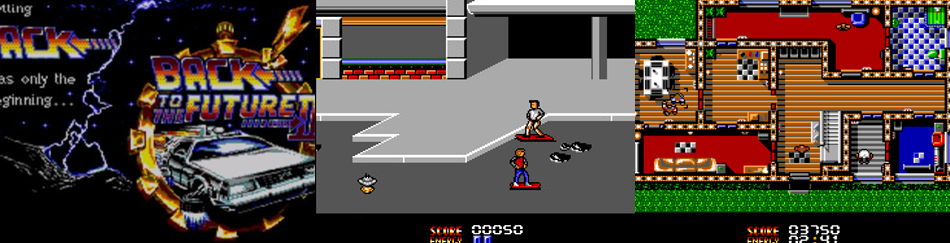
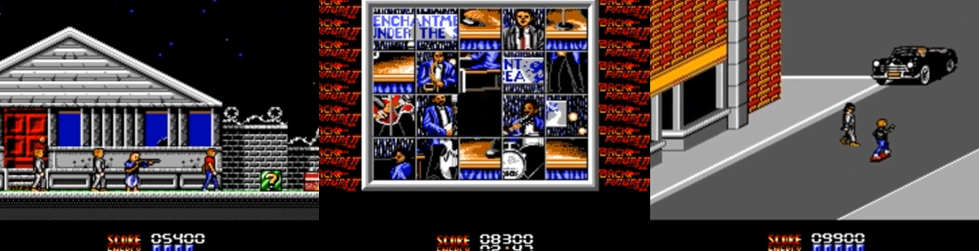


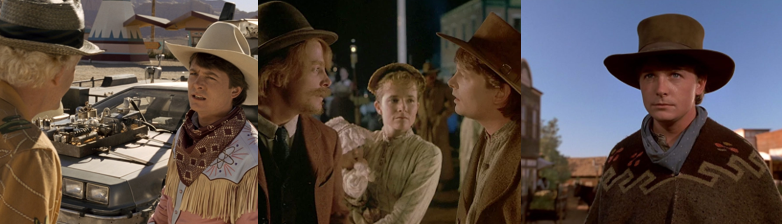
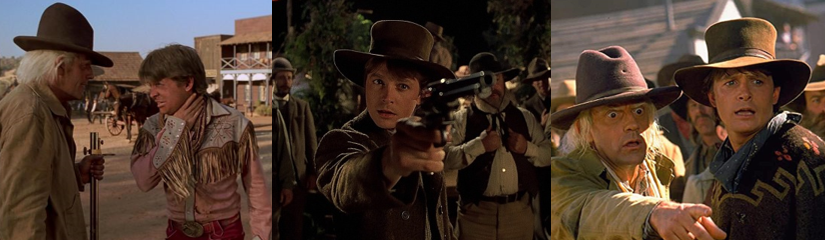
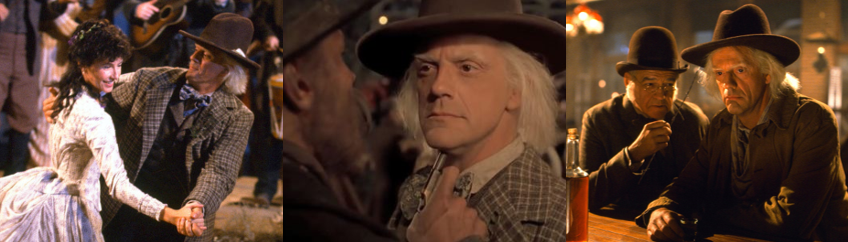
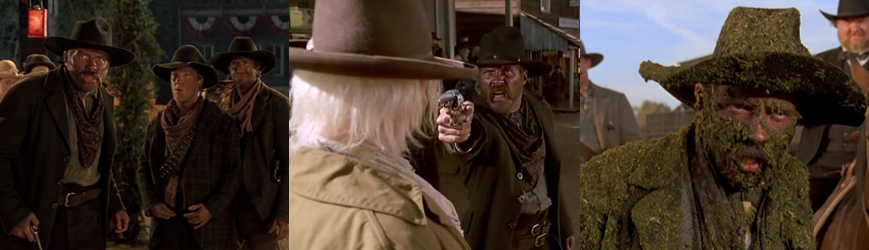
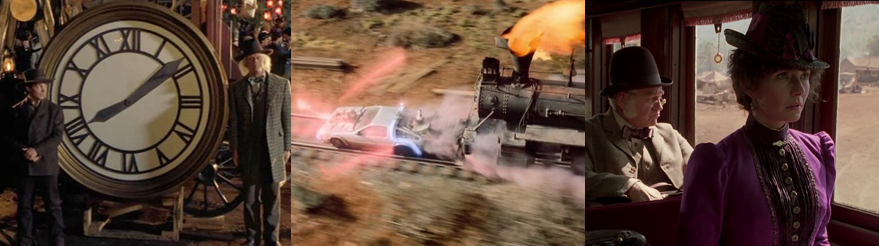
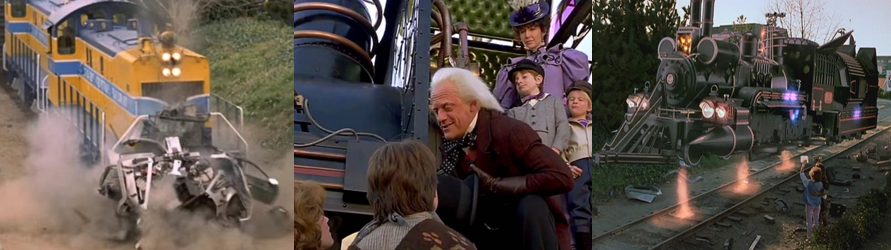

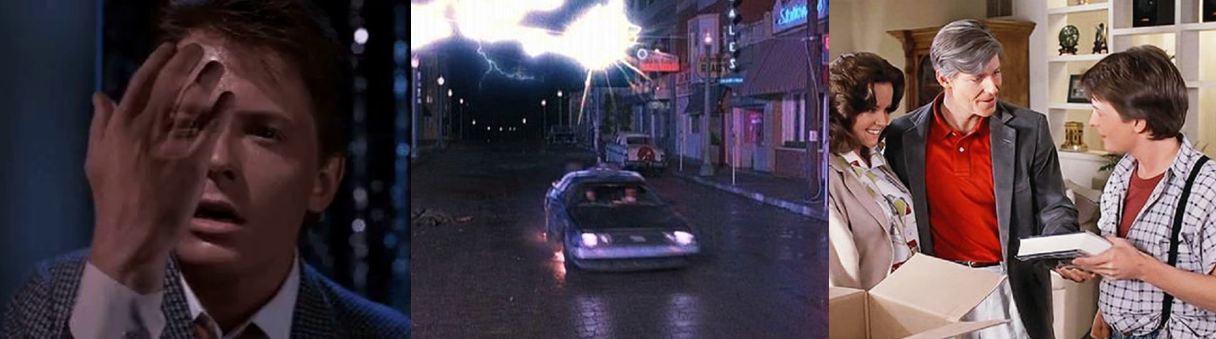
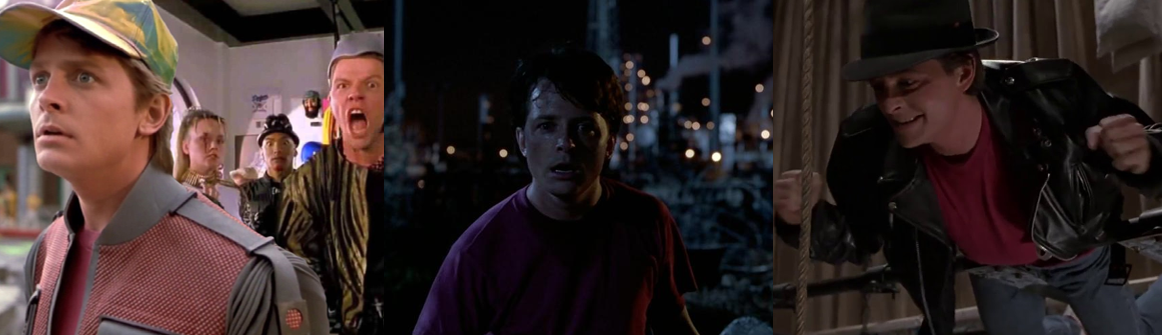
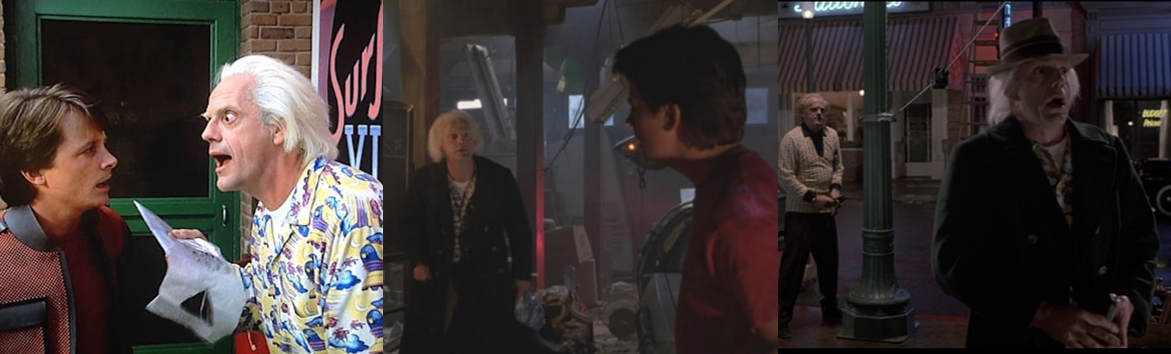
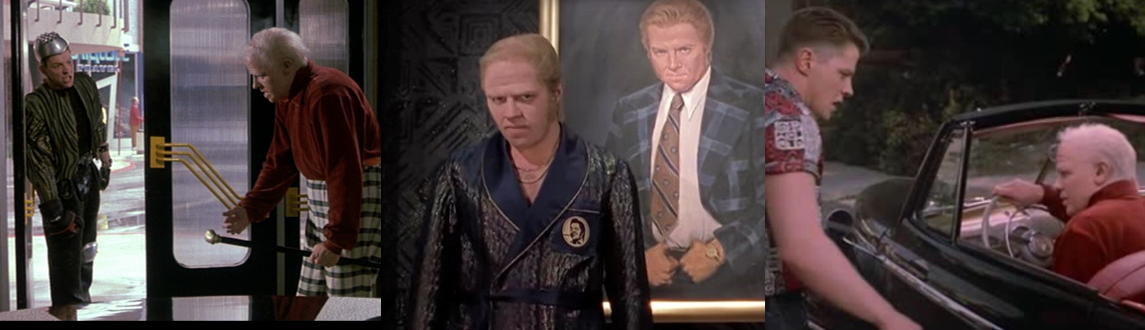
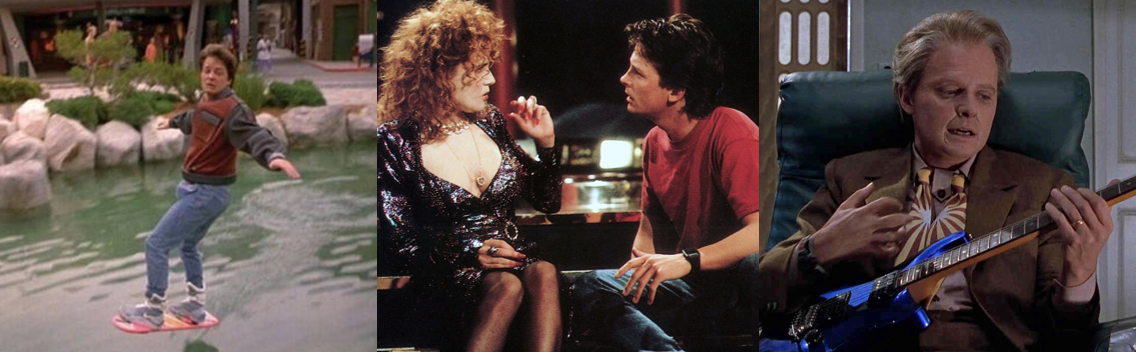
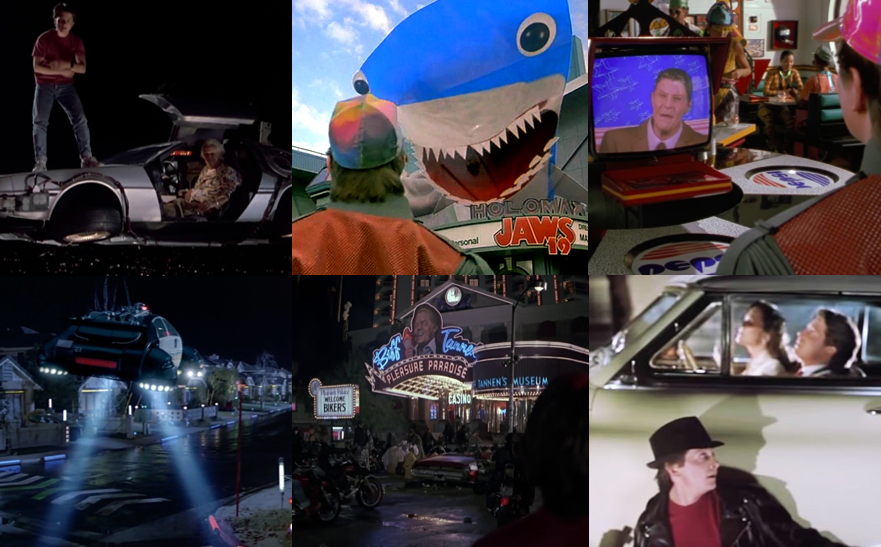
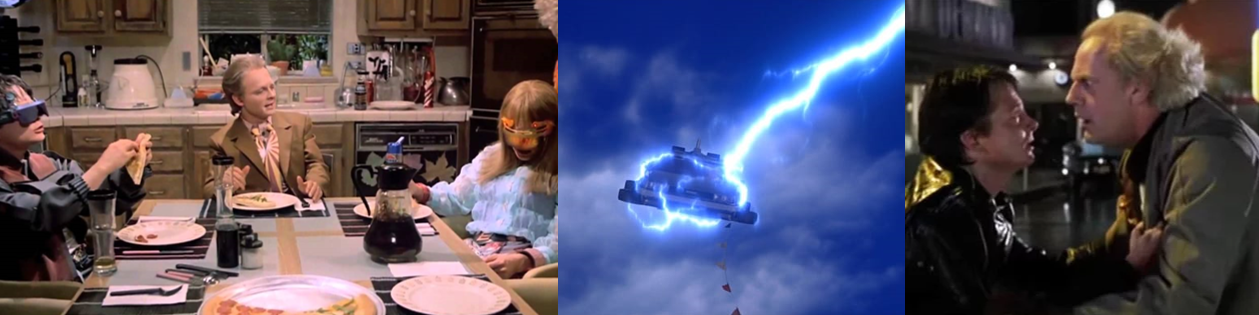

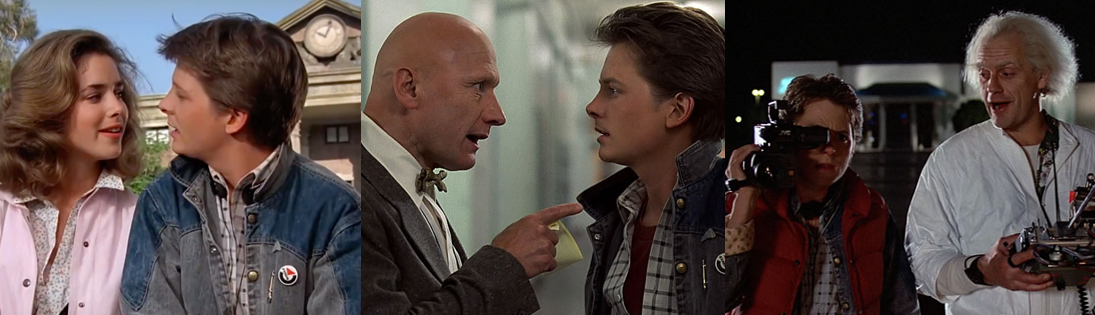
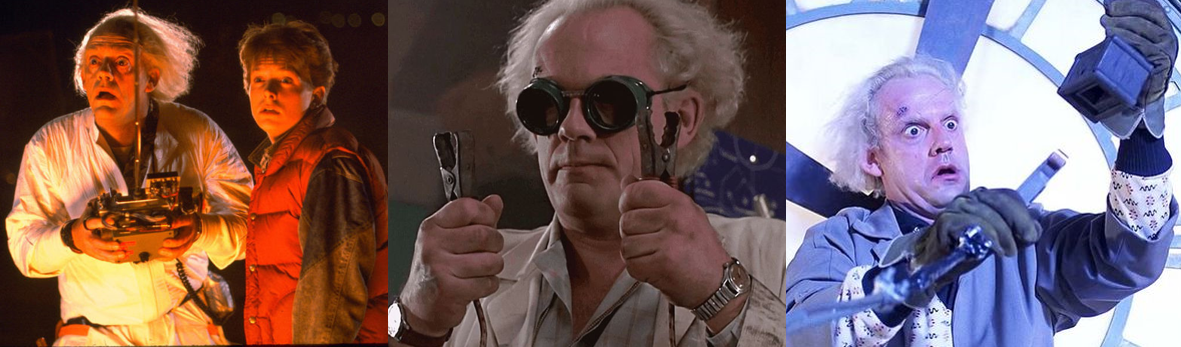
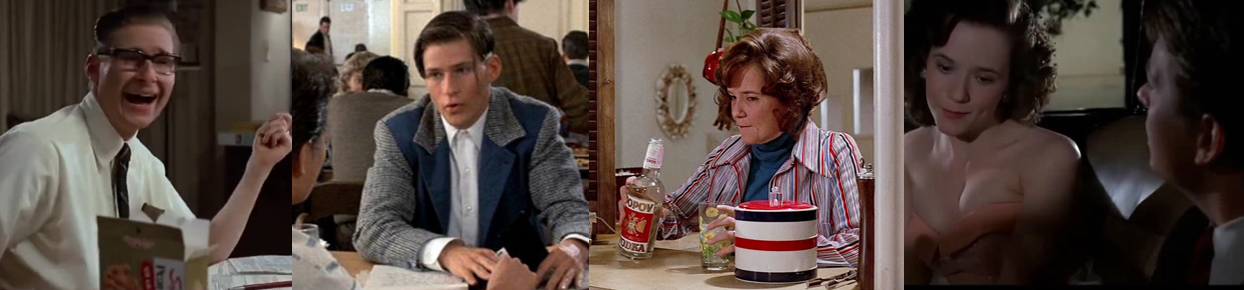
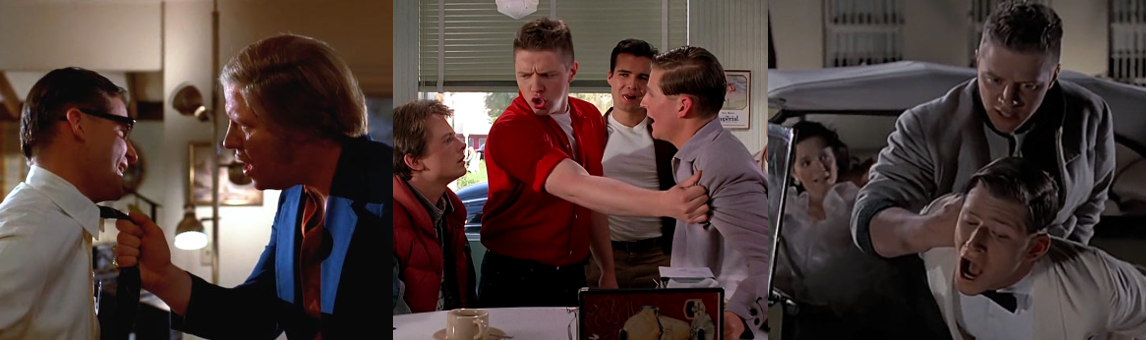
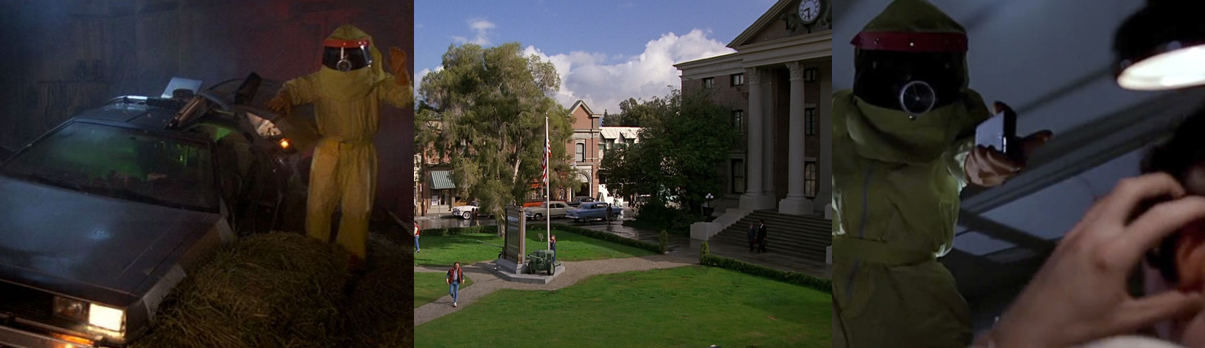
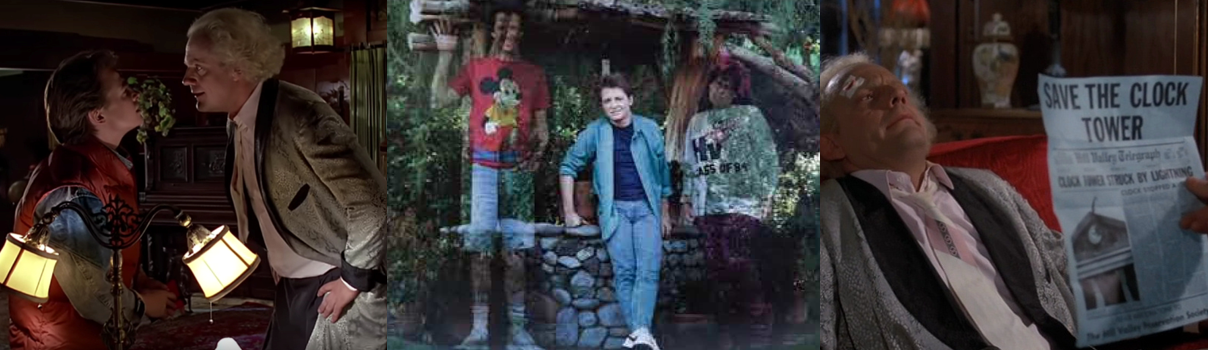


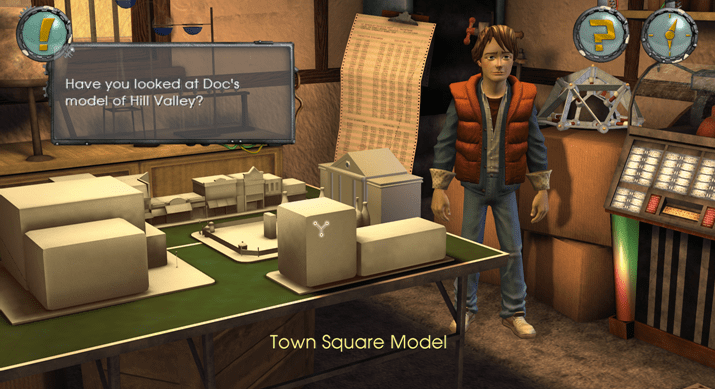
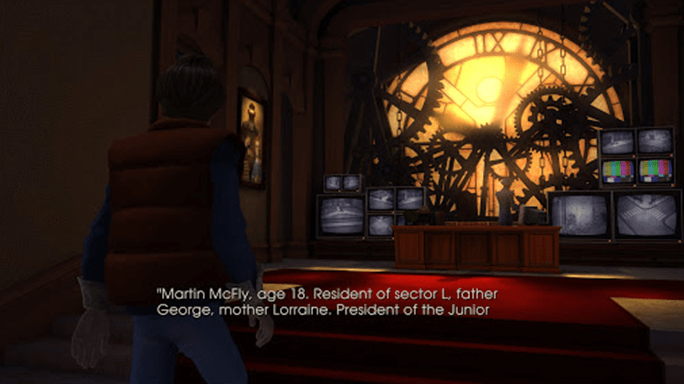
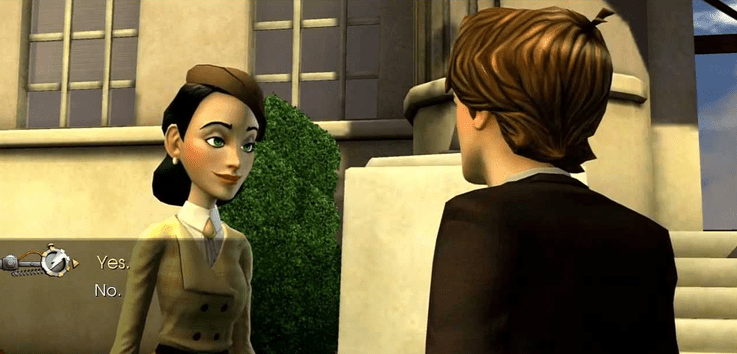
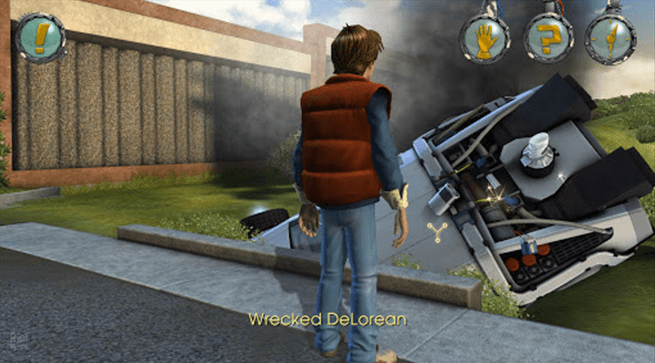
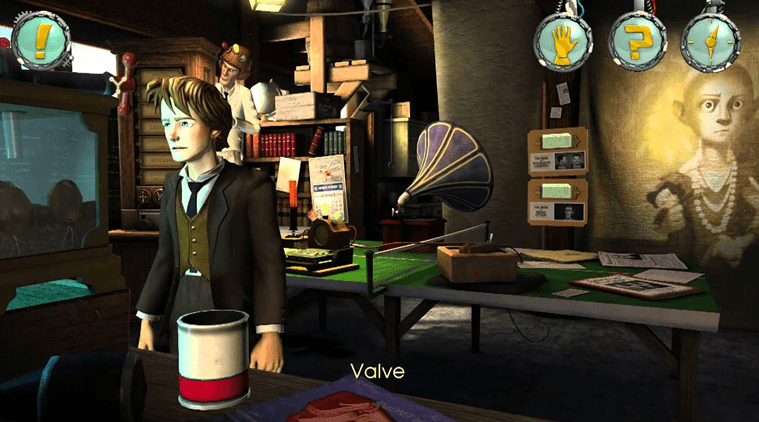
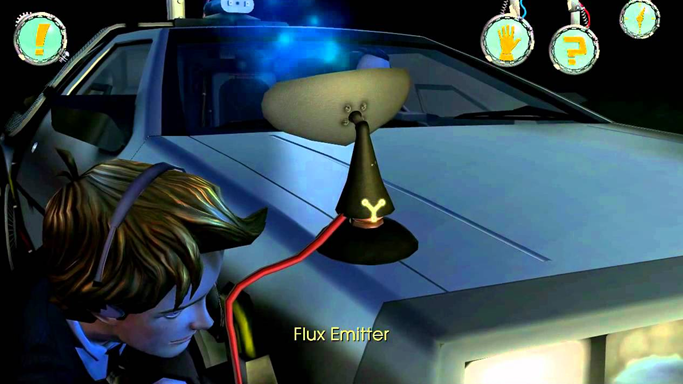
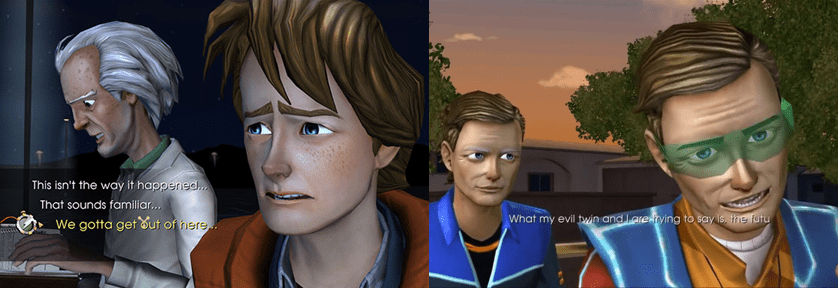
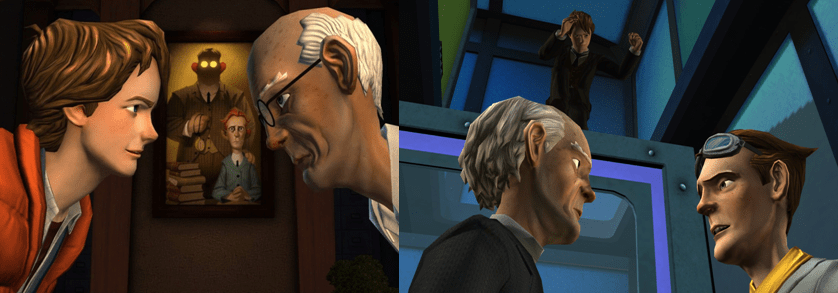
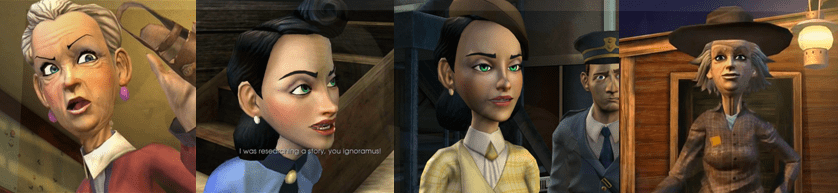
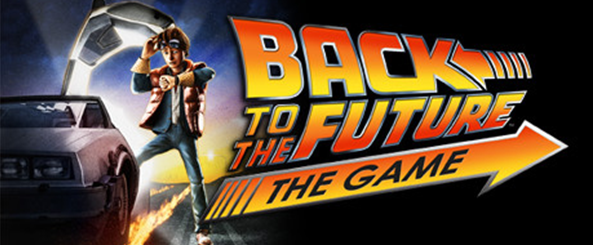






 Dr. K's Waiting Room
You must be logged in to post a comment.