To commemorate the culmination of their long-running and successful X-Men movies, 20th Century Fox declared May 13th as “X-Men Day” to celebrate Marvel’s iconic collection of ostracised superhumans.
Story Title: “The Brotherhood of Evil Mutants!” Published: 3 January 1964 (cover-dated: March 1964) Writer: Stan Lee Artist: Jack Kirby
The Background: By 1963, Marvel Comics were hitting their stride thanks to characters like the Fantastic Four, Tony Stark/Iron Man, and, of course, Peter Parker/Spider-Man. To further capitalise on this momentum, Stan Lee dreamed up the idea of “Mutants” to quickly explain away an influx of new costumed superbeings. Working with long-time collaborator Jack Kirby, Lee expanded this concept into the X-Men, misfit teenagers who were hated and feared for their powers, to tackle social issues like racism. Although The X-Men was cancelled with issue sixty-six and wouldn’t return to prominence until a 1975 revival, the X-Men are now an established cornerstone of Marvel Comics and have influenced generations with a much-lauded animated series and massively successful live-action movies. It was in the pages of The X-Men that readers met some of Marvel’s most memorable heroes and villains, most notably the evil counterparts to the superhero team, the Brotherhood of Evil Mutants. Created by Stan Lee and Jack Kirby, this oddball team of dark counterparts and ne’er-do-wells have dogged the Mutant team for decades, often serving as the henchman for the team’s most persistent villain, Erik Magnus Lehnsherr/Magneto, and changing their roster almost as often as the X-Men. Despite their corny name, the Brotherhood led to the introduction of such iconic characters as Raven Darkhölme/Mystique and future AvengersPietro and Wanda Maximoff. Outside of the comics, thee Brotherhood has prominently featured in numerous Marvel and X-Men videogames, usually as underlings and boss battles, were a regular fixture of the X-Men’s various animated adaptations, and served as largely underutilised henchmen in their live-action appearances to give the Mutant heroes someone to punch.
The Review: As was the style at the time, “The Brotherhood of Evil Mutants!” begins with Professor Charles Xavier/Professor X putting his Mutant students, the X-Men, through their paces in the Danger Room, a training area specifically designed to hone their unique superhuman abilities and improve their teamwork out in the field. In this instance, the other X-Men – leader Scott “Slim” Summers/Cyclops, Warren Worthington III/Angel, Bobby Drake/Iceman, and Jean Grey/Marvel Girl – are watching with anticipation as their friend and colleague, Henry “Hank” McCoy/The Beast, puts his uncanny agility to the test, dodging missiles, maces, and falling discs. His hopes of beating his best time are dashed, however, when a seemingly innocuous rope turns out to be nothing but paper, dunking him in water and teaching him a valuable lesson to think twice before acting, no matter his confidence. Next, young upstart Iceman takes up the challenge, eager to show off his ice slide ability and immediately paying for his grandstanding when metal weights and a red-hot cauldron threaten to melt his snowy form. Thinking fast, Iceman pole vaults to safety on a makeshift ice pole and even sends the Beast’s heavy weight back at him with an ice slide, only to be humbled by a blast of steam that melts his ice. To make matters worse, Angel then hangs Iceman from an overhead pole by his pants. This proves a suitable test of Marvel Girl’s telekinetic abilities as she easily lowers Bobby to the floor and impresses further by…taking the lid off a box…before Professor X and the other X-Men surprise her with a birthday cake.
While the X-Men practice, Magneto and the Brotherhood plot to wage war against humanity!
While the X-Men enjoy their sweet treat, another group of Mutants struggles to co-exist over their own table of food, primarily because of the uncouth manners of the diminutive Mortimer Toynbee/Toad. Pietro Maximoff/Quicksilver admonishes Toad’s obnoxious table manners, though he’s cooled from taking physical action by his alluring sister, Wanda/The Scarlet Witch. Jason Wyngarde/Mastermind isn’t so easily subdued, however, and uses his power to cast hypnotic illusions to turn Toad into the pig he eats like, disgusting the Scarlet Witch almost as much as Toad’s repulsive eating habits. The Scarlet Witch’s “spunk” amuses the leering Mastermind, who has aspirations to make her his bride, but he’s kept from driving Wanda mad with his powers by the timely, super-fast intervention of her brother. Their bickering begrudgingly cools when Toad mentions their mysterious leader, a man whose mere mention is powerful enough for them to cease their petty squabbles. The story shifts focus to the office of a large shipping line where Magneto, Master of Magnetism and hated enemy of both the X-Men and humanity, commandeers an ex-convoy freighter using his awesome control of all things metal and magnetic. He guides the ship to an uncharted island and meets with the group, to whom he is obviously their leader, and immediately reprimands Mastermind when Toad tells of his antagonistic ways. When Quicksilver defies Magneto and threatens to leave with his sister, he’s convinced to stay since they owe him a debt after he rescued them from the witch-hunters of their home village. Though Quicksilver isn’t sold on Magneto’s plans to conquer Homo sapiens, neither he or Wanda have love for humankind and agree to follow along for now.
When Magneto refuses to give up his crusade, the X-Men intervene and battle his Brotherhood.
As fate would have it, Angel happens to spot the freighter while out on patrol. Though he assumes it’s simply an unmanned ship, Professor X senses something unnerving about Angel’s tale. His worries prove to be accurate when the ship attacks the small nation of Santo Marco, which Charles immediately assumes to be the work of “The Evil Mutants”. After summoning the X-Men to his office, Professor X confronts Magneto on a “mental plane” (quite how Magneto can do this is beyond me) where each tries, and fails, to sway the other to their cause. However, when it becomes clear that Magneto will never give up his desire to destroy humankind, Professor X prepares his students to face their old enemy once more. As if Magneto’s freighter wasn’t bad enough, Mastermind uses his powers to force the people’s surrender by conjuring images of an invading army, a tactic Toad relishes but which causes the Scarlet Witch some concern. In time, Magneto establishes a real army, enforcing martial law throughout Santo Marco and punishing any dissension swiftly and harshly. Sensing the arrival of the X-Men, Magneto places his forces on high alert, though they’re easily toppled by the uncanny youngsters. Although Toad strikes a blow against the Beast, he’s forced to flee when Hank tosses rocks at him, causing Mastermind to step in and send the Beast plummeting by making him believe the castle walls have turned to glass. Elsewhere, despite the guard’s firepower and Quicksilver’s incredible speed, Angel knocks out the speedy Maximoff and suffers the wrath of his sister, who casts a “hex” that buries Angel under the ceiling and leaves him their prisoner.
Despite Quicksilver’s begrudging aid, the X-Men are devastated when Professor X is critically injured.
Cyclops takes the direct approach, confronting Magneto with his optic blasts and unintentionally causing a massive electrical feedback to blast through the castle when Quicksilver sends his aim awry. Luckily, Cyclops blasts the generator from the castle and frees Angel, but the effort causes him to black out, so Iceman revives him with some snow to the face. After a brief misunderstanding from the unnerved Marvel Girl, the X-Men regroup just in time to face a wall of boiling oil! Professor X then comes rolling through the flames, dispelling Mastermind’s illusion and confronting Magneto, unaware that he’s rigged two bombs – one a nuclear bomb, if you can believe it! – to destroy the castle, the nation, and his enemies. This act gives Quicksilver pause due to the massive and unnecessary waste of life it’ll cause. When the Beast refuses to heed Professor X’s warnings and dives head-first for the first door, Professor X ushes to shield him from the blast, somehow being left unconscious and dazed but otherwise in one piece (I guess he used his mental powers to shield himself?) With the X-Men in hot pursuit, Magneto activates the nuke and makes his getaway, but Quicksilver has a last second change of heart and deactivates the bomb, sparing the innocent lives but fleeing alongside his comrades. Although Cyclops is eager to pursue, he’s held back when the other X-Men discover that Professor X has been critically injured by the blast. Somehow, the explosion “deadened” his mental powers, robbing him of his “greatest weapon” and leaving him despondent, though Cyclops is no less determined to make him proud the next time Magneto and his cohorts strike.
The Summary: Well, this was a bit of a mixed bag for me. While the artwork and general storytelling has improved since I reviewed the first appearance of the X-Men, things are still very uneven and rushed at times. “The Brotherhood of Evil Mutants!” fails to make the best use of its pages by wasting so much time in the early going establishing the X-Men’s powers and personalities, something that could easily be cut down or reworked to be showcased in their battles against their evil counterparts. On the plus side, Professor X didn’t come across as such a dick this time, though he’s still a strict taskmaster. However, Marvel Girl was basically useless and did nothing in the fight against the Brotherhood. As for the other X-Men, I guess it’s the Beast who takes some of the spotlight here. He’s taught a lesson in the first few pages that, strangely, he doesn’t learn from, resulting in Professor X’s condition by the finale, which seems like the opposite of what you’d want from a character arc. Angel is a grandstanding, lewd douchebag who eventually gets humbled when he’s captured by the Scarlet Witch, at least. However, there are no consequences to Iceman’s childish antics except him getting caught off-guard here and there and Cyclops simply bursts in all eyes blazing with little effectiveness.
Despite the appeal of the new villains, the story features surprisingly little Mutant-on-Mutant action.
The so-called “Evil Mutants” are a bunch of backstabbing, squabbling egos who can barely get on the same page, openly detesting each other and only stomaching the alliance because of their hatred for humanity and fear of Magneto. Toad is the snivelling, loyal underling who’ll do anything to impress his master; Mastermind is the arrogant blowhard whose powers of illusion make him feel superior to his allies; and Quicksilver and the Scarlet Witch are semi-reluctant followers who join Magneto’s cause to repay a debt but are primarily loyal to each other rather than fully subscribing to his plot of mass genocide. On paper, the idea of pitting the X-Men against a group of morally corrupt evildoers is a good one but the execution feels lacking. The Brotherhood fight amongst themselves more than the X-Men, and I would’ve liked to see more time devoted to them matching their powers against each other. We caught glimpses of this, but we never got to see Marvel Girl pit her telekinesis against the Scarlet Witch’s Hex power, or Cyclops battle Mastermind, or even Professor X confront Magneto. As for the Master of Magnetism, he comes off as a fairly formidable threat, especially with the extra muscle behind him, yet chooses to limit his campaign to one tiny nation no one really cares about. His desire to eradicate anyone inferior to him, Mutants or otherwise, sees him belittle his allies, despite how reliant on them he is for his evil scheme, but again I think I would’ve liked more time spent portraying him as a dark mirror of Professor X rather than just a posturing despot. Ultimately, this was a decent enough read, with some fun Mutant-on-Mutant action at the end, but with a lot of flaws and holes that made it largely forgettable save for the tinges of grey to the Maximoffs, the strange and I guess impactful ending, and for being the first appearance of the Brotherhood.
My Rating:
⭐⭐
Rating: 2 out of 5.
Could Be Better
What did you think to the debut of the Brotherhood of Evil Mutants? Do you also find their name ridiculous and redundant? Which of the group was the most appealing to you and why? Do you agree that the story needed to do more with the concept or were you happy with the conflict depicted? What did you think to the sliver of compassion shown in the Maximoffs and which version of the Brotherhood is your favourite? Which stories involving the Brotherhood are your favourites and how are to celebrating X-Men Day today? Whatever your thoughts on the X-Men and the Brotherhood, drop them in the comments and go check out my other X-Men related content across the site.
Story Title: “Act 1: The Suit” Published: 19 July 2000 (cover-dated: September 2000)
Story Title: “Act 2: The Unicorn” Published: 16 August 2000 (cover-dated: October 2000)
Story Title: “Act 3: The Photograph” Published: 20 September 2000 (cover-dated: November 2000)
Story Title: “Act 4: The Conspiracy” Published: 18 October 2000 (cover-dated: December 2000)
Story Title: “Act 5: The Betrayal” Published: 15 November 2000 (cover-dated: January 2001)
Story Title: “The Truth” Published: 31 January 2001 (cover-dated: February 2001)
The Background: Debuting in 1938, Clark Kent/Kal-El/Superman wasn’t just an immediate hit with readers, he was also the first-ever costumed superhero, inspiring every single colourful crimefighter that came after him. Oddly, despite co-creating and bringing to life some of the industry’s most recognisable and beloved characters, Marvel Comics legend Stan Lee struggled to emulate the success of the Man of Steel. Over the years, many Marvel characters have been positioned as the company’s parallel to Superman, with none really making much of an impact. Robert “Bob” Reynolds/The Sentry, however, is perhaps the closest Marvel came to this endeavour. First conceived of by Paul Jenkins and Rick Veitch back in the late-1990s, the Sentry was pitched as an over-the-hill superhero struggling with addiction and was cleverly positioned as a “forgotten” hero from Marvel history. Easily one of Marvel’s most overpowered heroes, the Sentry was also a figurehead for mental illness thanks to his drug addiction and psychotic split personality, though this often led to him being seen an aggravating and inconsistent character. Despite some bad-ass moments and turning the tide in many conflicts due to his awesome power and unpredictable nature, Marvel’s insistence of reverting to the status quo meant the character has had more downs than ups over the years, to the point of fading from the spotlight. Indeed, as of this writing the Sentry has only ever appeared in supporting roles in Marvel videogames, with no animated appearances to his name, though the character did make the jump to the Marvel Cinematic Universe, courtesy of Lewis Pullman, in 2025.
The Review: We first meet Bob Reynolds when he’s awoken by a lightning storm that triggers memories of an aggressive alien menace known as “The Void”. After reassuring his wife, Lindy Lee-Reynolds, Bob retrieves a bottle of liquid and is haunted by scattered memories that emulate the art style of the legendary Jack Kirby. Through them, we learn that a young, naïve Bob stumbled upon the mysterious “Professor’s” secret serum and drank it, fashioning a golden costume and blue cape and fighting both crime and supervillains as “The Sentry”. As Bob struggles to reconcile these memories, torn between them being fanciful delusions made from a comic book and real-life recollections of his battles against the Void alongside the Avengers, he remembers dispelling the Void with “the power of a million exploding suns” and the shadowy villain’s vow to return one day. Plagued by self-doubt, Bob’s memories shift to a decidedly darker, more Frank Miller-esque style as the Professor runs down his strengths and weaknesses. The serum supercharged his molecules, causing each atom to be slightly out of shift with time, granting him a “hyperstate of consciousness” and rendering him functionally immortal thanks to the power of the Sun. His only weakness was that his powers were tied to the serum, though the Sentry ignored the Professor’s warnings of him becoming addicted to the drug in favour of saving the galaxy from the Void. Desperate to regain a more coherent sense of himself and to be “vigilant” once more, Bob swigs from the serum and is immediately wracked by pain and spasms. Visions of the Void see Bob branded a common junkie and lectured about the emptiness of life so, when Lindy discovers him delirious and with an empty botte nearby, she naturally assumes he’s fallen off the wagon. Refusing to see her lover destroy himself before her eyes, Lindy walks out, leaving Bob to fool himself into thinking he’s slipping back into his costume and answering “the Sentry Signal” when, in reality, he’s simply put on a jacket with a crude cape pegged to the back! Still, he can fly, at the very least, so he heads to New York City (vaguely remembering when the Void reduced Manhattan to a smouldering crater) and is confronted by Doctor Reed Richards/Mister Fantastic. Though Bob speaks to Mr. Fantastic as an old friend, Reed has no idea who he is, though the word “unicorn” triggers something in the curious adventurer.
Triggered by cloudy memories, Bob tries to reconnect with a world that’s forgotten his heroics.
While Bob remembers Lindy accepting his superhero life right before their wedding, Mr. Fantastic talks the incident over with his family, perturbed by the sudden appearance of a golden unicorn that Bob gifted to Reed, who was his best friend. Disturbed and curious, Reed discovers a VHS tape in the unicorn that contains a warning from himself about the Void, but the tape explodes before the Fantastic Four learn anything tangible. Meanwhile, Bob (who “becomes” the Sentry the more he recalls his fragmented past, with his rudimentary costume even being revitalised) visits Doctor Robert Bruce Banner/The Hulk. Unlike the others, the Hulk remembers “Golden Man” as his “best amigo”, though Bob is disturbed to find the Green Goliath hasn’t evolved past his savage, childlike demeanour. Bob shares his concerns regarding a conspiracy surrounding him and convinces the Hulk to stand by him when the Void returns. Bob then meets Peter Parker/Spider-Man, who doesn’t remember Bob, sees only a blank piece of paper when Bob shows him a photograph he once took of the Sentry, and brands Bob a “fruitcake”. However, as he goes to leave, Bob begs Spidey to investigate further. As the world is thrown into turmoil, Peter’s memory is jogged after he confirms that multiple publications have been excised from public record. Additionally, Doctor Stephen Strange confirms the Void’s threat to Reed and, though he refuses to elaborate, he does magically conjure a memory of the Fantastic Four and Dr. Strange erasing everyone’s memories of the Sentry and Reed forcing Dr. Strange to keep that information hidden. Bob has a psychic parlay with Professor Charles Xavier/Professor X, causing Professor X’s memories resurface, and the X-Men to be put on alert. Similarly, Anthony “Tony” Stark/Iron Man remembers the Sentry, leading Bob to fly into a tirade about how he inspired all the world’s superheroes and was simply forgotten. Bob remembers that the Avengers staged an intervention regarding his overreliance on the serum and the lingering threat of the Void, with all begrudgingly agreeing that the Sentry, despite his many good deeds, should disappear. Since Tony stood up for him, Bob begs him to get the others onboard before flying to a desolate area of the city, his impressive super suit finally reformed. He returns to his long-forgotten fortress, the Watchtower, while his scarred and disabled former sidekick, Billy Turner/Scout, awakens from a disturbing nightmare.
Despite fragmented memories of betrayal, the Sentry rallies to oppose the Void’s return.
Inside the Watchtower, the Sentry reunites with its Centrally Located Organic Computer/C.L.O.C. to investigate a subliminal message being transmitted around the world by a small, bug-like transmitter that’s powered by the same serum that gives the Sentry his incredible abilities. Thanks to a “self-modifying loop virus”, C.L.O.C. cannot directly aid the Sentry without being destroyed, so the Sentry disables the crude device himself. This leads to a brief and near imperceptible shift in the fabric of reality and, suddenly, kids discover their Sentry memorabilia, Billy finds his old costume, and people are filled first with relief at remembering their hero…and then horror as they also remember the Void. They also remember the Sentry dying in battle (at least, as far as the public were concerned), marking the end of a “Golden Age” of heroes. This event also sees the Sentry remembering Reed condemn him as a traitor and a criminal, claiming that Bob accepted bribes from the criminal underworld to fund his addictions and then mislead the public into thinking he was a hero while also profiting from his violent impulses. Angered at this betrayal and slander, the Sentry reconciles with a remorseful Lindy, only for her to be attacked and threatened by the Void. Gleefully, the Void spitefully monologues about his scheme to bathe the world in darkness and devour every living soul in the universe, saving his hated foe until last just to make him suffer. With that, the Void tosses Lindy aside and conjures an alarming and devastating hurricane out at sea that threatens the mainland. The Sentry makes a quick public address to announce his return, protest his innocence, and warn that the storm signals the return of the Void. After calling for a mass evacuation, the Sentry pleads with his superpowered cohorts to stand by his side once more against the threat on Liberty Island. Though he’s uncharacteristically afraid, the Hulk is the first to arrive out of gratitude for all the support the Sentry once showed him. Spider-Man, the X-Men, the Avengers, and all the city’s costumed protectors then arrive soon after, alongside Billy Turner. When Mr. Fantastic arrives, the Sentry berates him for his betrayal, though Reed’s still got some gaps in his memory and is adamant that he’d never betray his best friend like that.
A remorseful Bob is forced to sacrifice his reputation to keep the Sentry, and the Void, forgotten.
Faced with the Void’s pending arrival and the potential end of the world, the Sentry steels himself, with friends and foes at his back, for the assault. The Void attacks with “infinitendrils” that sap even the Sentry’s abilities and confidence. The trinkets the Sentry gifted to his allies barely keep them from succumbing to the Void’s influence and unnamed heroes and untold civilians die as the Void’s attack decimates the city. During the chaos. Dr. Strange prompts Reed to remember when the Void attacked Manhattan in the past, causing catastrophic damage and leaving a pile of slaughtered bodies in his wake, only for Susan Storm/The Invisible Woman to discover the Void and the Sentry were one and the same! In the face of the Void’s destructive power, which left a million people dead, and faced with a man they’d known and respected and could clearly see was suffering a psychotic episode that manifested in a separate personality, Reed and Bob came up with a plan. After Bob shared his concerns about himself and admitted to his addiction, the two constructed the hypnotic transmitters to ensure that no one, not even Bob, would remember the Sentry, thus keeping the Void at bay. Thus, at Bob’s insistence, the Sentry’s death was faked, his funeral staged, and his reputation tarnished to ensure that the people who loved and admired him so much would submit to the hypnosis. In the present, the physical and existential battle between the Sentry and the Void rages, breaking even the Hulk’s super-tough body, until Reed intervenes. Although the Void whispers poison in Bob’s ear, fuelling his confusion and anger, Reed triggers Bob’s memories, much to the Void’s anger. Desperate to live and to wreak havoc, the Void threatens to take full control of Bob’s body, so the Sentry rushes back to C.LO.C. alongside his allies. After a moment’s hesitation, the Sentry orders C.L.O.C to reactivate the transmitter and Bob gets a brief moment to reconcile with his best friend before their memories are wiped. In the aftermath, the devastation is blamed on a “temporal anomaly” and Bob returns to his mundane life with Lindy. However, when they stop for a bite and are served by Billy, a flash of a memory suggests the Sentry may not be completely forgotten…
The Summary: This was my first time reading the Sentry’s debut story arc and I was quite excited to get into it. I don’t know much about the Sentry, but I remember his debut being quite a big deal and have seen it being talked about, and seen him pop up in a few crossover events and such, so I was eager to get into this and see if it lived up to the hype. Unfortunately, I really don’t think it did and I was left a bit disappointed. For starters, it bugged me that the story wasn’t contained in a five or six-issue arc. Instead, we have five issues laying the foundation for the Sentry and the Void, a couple of team-up stories that take between #5 and The Sentry vs. The Void #1, and that standalone resolution to the arc. This was a story clearly written for trade collections, which is fine on paper as that’s my preferred way to read comics, but it’s pretty damn arrogant of Marvel Comics to assume that people are going to be this heavily invested in their brand-new superhero right off the bat. Luckily, the central concept has a lot of legs to it, and I did enjoy the story as a very different, more cerebral superhero tale. It’s always engaging and interesting when comic books are more than just big superhero fights or cosmic events, and the Sentry’s debut definitely delves more into the psychological thriller genre as Bob, Reed, and the reader try to piece together the truth about this strange and apparently forgotten character. The mystery of the Void was equally well done and I liked that he was perceived as a world (well, universe) ending threat and the sense of desperation behind him. The idea that someone or something was so dangerous to all life that even the Avengers and the Fantastic Four blurred their morals to erase the minds of everyone in the world is very powerful and still holds up now, even knowing the truth about the two.
The Sentry is a bit of a Gary Stu and changes long-running aspects of Marvel continuity.
I liked that Bob is presented as an out of shape everyman. He’s a nobody whose wife barely seems to tolerate him and who’s haunted by nightmares and faded memories that could just as easily be comic books he read as a kid. When something (it’s not clear what) triggers the revival of the Void, Bob’s ordinary life is turned upside down and his body undergoes a slow and dramatic change upon drinking the mysterious serum that makes him an all-powerful demigod. I’m not sure how this transforms his costume or why a simple potion can give him such incredible power, but Bob’s memories, personality, and sense of self worth return the more he indulges in the serum and the more he meets with his old allies. Even his physical appearance changes, returning him to the superman physique he enjoyed in his prime, and his trip down memory lane changes many preconceptions of existing Marvel heroes. The Sentry is said to be the “first” costumed superhero, the one who inspired all the others, and his deeds were almost incalculable. He tamed the Hulk, was best friends with Reed Richards, scored Peter Parker his first Pulitzer Prize, and saved the world countless times. Indeed, this debut story goes out of its way to really hammer home that the Sentry was the bastion of all that’s good in the world, that no one could compare to him, and that he was the example others lived by. He had an elaborate headquarters in the heart of New York City, a kid sidekick, and all kinds of gadgets, making him very much a child’s perfect amalgamation of what makes a good superhero. It’s a bit grating, to be honest, primarily because we don’t really get to see any of the Sentry’s past deeds. We simply hear people talk about them and how great he is, with little evidence to back it up since even Bob barely remembers fact from fiction. Equally, we never get to see any of the Sentry’s incredible and much-touted powers beyond a few brief glimpses. Sure, he can fly and take a hit, but I’m not sure what “the power of a million exploding suns” means or how it scales with, say, the Hulk or Thor Odinson.
A unique and engaging story, but one that didn’t live up to its full potential for me.
I really enjoyed the panels that reflected other artists and key eras in comic book history. They went a long way to keeping up the ruse that the Sentry was a long-forgotten hero from Marvel’s glory days, dusted off and reinserted into mainstream continuity. In fact, I’d go as far as to say that we should’ve gotten more of these. They could’ve helped flesh out Bob’s backstory and past exploits, his relationship with Billy, and maybe retroactively insert him into key moments in Marvel history. Instead, they’re just fun panels that don’t live up to their potential, which is a shame. While you could argue that the mystery surrounding the Void, how stubbornly cagy Dr. Strange was and how fragmented records were, hinted towards the final reveal as much as Bob’s obvious unstable mental state, I think it landed really well. There’s a degree of responsibility on the reader’s part to understand that things aren’t quite what they seem. When the heroes assemble to help repel the Void in the finale, they’re not necessarily standing with the Sentry against the oncoming storm. Instead, they’re observing him violently lashing out as the Void reasserts control. While I would’ve liked more panels devoted to the destruction, it’s painted as the greatest threat the world has ever seen and one that the heroes are unable to stop through conventional means. It’s only by appealing to the man they once knew that the heroes manage to contain the Void once more, convincing Bob to make the ultimate sacrifice one more time since his powers and mentality are too unstable to be trusted. It’s a very unusual and dramatic end to a superhero story and paints the Sentry as a very fragile and complex character, one who would continue to suffer from his mental health issues and addictions in subsequent appearances. Unfortunately, I do feel the execution was a bit lacking and the story didn’t quite live up to its full potential. This seems par for the course with the Sentry, who doesn’t seem all that relevant these days, which is also a shame as I really think there’s something here and that it’s a very unique way to introduce a new superhero and supervillain.
My Rating:
⭐⭐⭐
Rating: 3 out of 5.
Pretty Good
What did you think to the Sentry’s debut story, and the character in general? Were you surprised and excited by the unusual depiction of the character? Did you guess that the Sentry and the Void were the same person or was it a surprise for you? What did you think to the Sentry being retroactively inserted into Marvel continuity? Do you agree that the story fell a little flat in the end or were you intrigued to see more? What are some of your favourite moments involving the Sentry? Which of Marvel’s Superman knock-offs is your favourite? Whatever your thoughts on the Sentry, leave a comment below, support me on Ko-Fi, and check out my other Marvel content on the site.
May 4th is known the world over as Star Wars Day thanks to being one of the most fitting and amusing puns ever devised (“May the Fourth be with you” in place of the traditional “May the Force be with you”). The first and most popular of what can easily become a three day celebration of the influential science-fiction series, the day stands as the perfect excuse for Star Wars fans to celebrate the beloved franchise!
Published: 1 May 1996 to 2 October 1996 Writer: John Wagner Artist: Kilian Plunkett
The Background: Nowadays, Star Wars is a nigh-unstoppable multimedia juggernaut the includes not just live-action movies, but cartoons, toys, videogames, books, and comics. Following the completion of his Original Trilogy, George Lucas licensed the property to continue in a series of novels, later dubbed “Legends”. Later, in 1994, Lucasfilm’s publishing director Lucy Autrey Wilson met with Bantam editor Lou Aronica and author Steve Perry to discuss a Star Wars crossover multimedia event that would feature the all media and marketing of a film release without producing a movie, all to tie-in with the impending release of the 1997 Special Editions of the Original Trilogy. Shadows of the Empire would take place between Star Wars: Episode V: The Empire Strikes Back(Kershner, 1980) and Star Wars: Episode VI: Return of the Jedi (Marquand, 1983) and was comprised of Perry’s novel, a divisivevideogame, an extensive toy line, and this six-issue comic published by Dark Horse Comics. Excerpts from the comic featured in Nintendo Power magazine and two separate mini-comics accompanied the Micro Machines and Ertl toys. Reviews largely praised the comic, though it was noted to be just one part of a larger whole. Still, Perry returned to write a follow-up two years later and characters and elements featured, to different degrees, in Legends media and Star Wars videogames. Unfortunately, Shadows of the Empire was another casualty of Disney’s acquisition of the franchise as they de-canonised Legends media, though Lucasfilm president Kathleen Kennedy was stated that characters like Dash Rendar have come up when discussing additional Star Wars projects.
The Review: Like the movies, Shadows of the Empire begins with the traditional open text crawl that brings readers up to speed with the story so far. Set between The Empire Strikes Back and Return of the Jedi, the story begins with the Rebel Alliance still reeling after being forced from their Hoth base, young Jedi-in-training Luke Skywalker struggling with the knowledge that the evil Dark Lord of the Sith, Darth Vader, is his father, and Princess Leia Organa and the mighty Chewbacca grieving the loss of charismatic scoundrel Han Solo, who was frozen in carbonite and spirited away by bounty hunter Boba Fett. Whilst the Rebel fleet is traversing the vast void of space, they’re detected by the malevolent Galactic Empire) and, eager to get back into action, Luke moves to aid Wedge Antilles and Rogue Squadron against the threat. However, he is convinced by Leia and his service droids, C-3PO/Threepio and R2-D2/Artoo, to rest and become properly acclimatised to his new robotic hand. Wedge and his team engage the Strike Cruiser and its Twin Ion Engine (TIE) Fighters, outmanoeuvring the clunky craft and blasting the cruiser to smithereens. However, the victory makes General Crix Madine wary and leads to him altering the fleet’s course, delaying their arrival on the desert planet of Tatooine, a necessary precaution that Leia believes will buy Luke more time to heal, both physically and psychologically. Though she’s unaware of the revelations Luke learned, she can sense something’s amiss but gives Luke his space to work through whatever’s bothering him. Meanwhile, across the galaxy, Darth Vader is chastised by his master, Emperor Shev Palpatine, aboard his flagship, the Executor, for failing to turn Luke to the Dark Side. When Palpatine questions Vader’s motives, the Dark Lord affirms his allegiance to his master and vows to track down the wayward Jedi, though Palpatine brings the conversation to a close to attend to more pressing matters: namely, the construction of the Death Star II. Thus, Palpatine orders Vader to meet with Prince Xizor on Coruscant to arrange his services in delivering essential materials to the construction.
While Xizor conspires to gain favour with the Emperor, Fett tries to deliver his quarry.
Xizor’s ties to the Black Sun criminal organisation and distrustful nature make Vader wary, concerns Palpatine shoots down as foolhardy. Upon ending the communication, it’s revealed that Xizor is already in attendance with the Emperor. A regal, lizard-like figure, Xizor questions whether Vader’s emotions are clouded by his feelings for Luke but Palpatine assures Xizor of his minion’s loyalty and his commitment to the Death Star II’s construction. Following the meeting, Xizor orders his beautiful android aide, Guri, to arrange a separate meeting with crime lord Jabba the Hutt and contact bounty hunters to intercept Luke and gain further favour with the Emperor. Elsewhere, Boba Fett arrives at Tatooine with his quarry, the aforementioned frozen Solo, gloating that the once cocksure smuggler is now little more than a work of art to be displayed. After disposing of a homing beacon placed on his ship while he was on Cloud City, Fett detects and destroys a probe sent by his bounty hunter rival, the malicious robot IG-88. Although Fett’s ship, Slave-1, is badly damaged by IG-88’s sneak attack, the Mandalorian blows his rival out of the stars and limps his way to nearby Gall, reasoning that it’s too dangerous to land on Tatooine. Word of Fett’s detour reaches an enraged Darth Vader, who orders his unscrupulous agent, Wrenga Jixton/Jix, to integrate himself into Jabba’s cut-throat swoop bike gang and await Luke’s inevitable arrival on the desert world and capture him alive, on pain of death. Although we don’t see the meeting between Vader and Xizor, Xizor relates to Guri how he did everything that was expected of him short of kissing the Dark Lord’s boots to keep him placated and form a business relationship with the Empire. Xizor’s goal is the exact opposite of Vader’s; he wishes to kill Luke and make it seem like the Empire, if not Vader himself, is responsible to diminish the Emperor’s faith in his apprentice in favour of the crime lord.
As if Dash’s unreliability wasn’t bad enough. the Rebels are threatened by a bounty on Luke’s head.
Meanwhile, Lando Calrissian (co-piloting the Millennium Falcon alongside Chewbacca and still atoning for betraying Han) arrives at Gall alongside Rogue Squadron, where Luke is finally back at the controls of his X-Wing, having been tipped off about Fett’s detour. Since Gall is home to an Imperial enclave, Lando has enlisted the aide of mercenary Dash Rendar, who flies alongside them in his Falcon-esque Outrider and is very much a stand-in for Han, both visually and in terms of his cavalier attitude. While Leia is wary of trusting such a man, Lando vouches for him, mentioning Dash aided their escape from Hoth. While Luke, Wedge, and Rogue Squadron engage the Star Destroyer and its TIE Fighters, Dash leads the Falcon to the spaceport where Slave-1 is docked, only to abandon them since he was only paid to be a guide. As if that wasn’t bad enough, one of Rogue Squadron goes haywire and opens fire on Luke amidst a tough dogfight, though Luke’s connection with the Force allows him to disable his comrade. On the planet’s surface, Fett meets with fellow bounty hunters Bossk’wassak’Cradossk and Zuckuss, who bid for a share of Fett’s bounty, a request that leads to a good, old fashioned bar fight. This is merely a distraction, however, so that 4-Lom and his minions can break into Slave-1. When Fett’s alerted to this, he dispatches the bounty hunter and takes off while Rogue Squadron make a tactical retreat and the Falcon engages with the TIE Fighters defending the Gall spaceport. Unfortunately, the Falcon is damaged and forced to land, meaning Fett slips through their fingers once more. Reconvening on the planet, the Rebels learn that a technician was bribed to tamper with Rogue Six’s X-Wing, which Leia theorises is the work of Black Sun. Although Lando and Chewie advise against tangling with the criminal organisation, Leia insists they send someone in to prove that Xizor is out to assassinate Luke and arranges for Luke to hide with Artoo at Obi-Wan Kenobi’s old shack on Tatooine. His travel plans coincide with Jix’s successful infiltration of the swoop bike gang, which he accomplishes by challenging their leader, “Big Gizz” Gizman, to a race and impressing the backwoods biker with his cutthroat attitude and dirty tactics.
Though Luke’s helped by Dash, Fett must rely on his wiles to outsmart his bounty hunter rivals.
The gang is called to Jabba’s palace and begrudgingly accepts the new recruit after Big Gizz vouches for him. Jabba then orders the bikers to head to Kenobi’s shack and kill Luke and, though Jix questions this since he knows Vader wants Luke alive, Big Gizz isn’t fussed and leads his riders off to a big payday, unaware that Dash is listening in on their boastful ranting at the bar. At the shack, the bikers attack Luke just after he completes his new lightsaber. Though not expecting to test his new weapon so soon and so violently, Luke cuts down one of the bikers and steals his ride, leading to a merry chase through Beggar’s Canyon. Jix is forced to fake an error with his bike to keep Big Gizz from shooting Luke, breaking his leg and then bashing Gizman’s brains in following their crash. Though Luke impresses with his riding and lightsaber skills, the bikers are driven off when Dash unexpectedly arrives to help. The two then find a message from Koth Melan, head of the Bothan spy network, that speaks of the Empire’s secret project. With Leia on Rodia infiltrating Black Sun, Luke meets with Koth on Bothawui alongside Dash, who tags along to “earn [his] pay”. At the Imperial Palace on Coruscant, Vader objects to Palpatine’s plan to deliver the Death Star II’s computer to Bothawui via a lone, unguarded freighter; an objection summarily dismissed by his dark master and overheard by Xizor. Against Guri’s objections, Xizor orders that the freighter’s movements be provided to the Bothans to ensure that Black Sun benefits no matter which side wins the war. Meanwhile, Boba Fett is suddenly ambushed by his fellow bounty hunters while in an asteroid field thanks to 4-Lom repairing itself and signalling help. Though literally disarmed by a laser shot, 4-Lom disables Slave-1’s weapons before being executed, leaving Fett at the mercy of Bossk’s boarding party. Though Fett tries to weasel his way out by taking Zuckuss and the others hostage, Bossk demonstrates his ruthlessness by opening fire on Slave-1, confident that Solo’s carbonite block would survive the ship’s destruction. Thus, Fett surrenders but easily gives his one inexperienced guard the slip and rearms himself, offing the others and forcing Zuckuss to lull Bossk in. Fett then dumps the bodies on Bossk’s ship and sets off an explosion before blasting to hyperspace.
The alluring Xizor conspires to humiliate Vader and manipulate the Emperor.
While Jix and the other bikers are reprimanded by Jabba for their failure, Xizor discusses Luke’s threat with the Emperor, where it’s revealed that the plot to leak the Death Star II’s plans to the Rebels was conjured by Xizor in order to lead them into a trap. Unaware of this deception, Luke meets with the surviving Bothans, who are working to crack the Imperial’s code and discover their secret, only for their stronghold to be attacked by lizard-like bounty hunters under the command of Skahtul. Despite having great respect for the Jedi, Skahtul captures Luke and reveals that there are two bounties out on him, one that wants him dead and one alive, and they’re waiting to get the best deal before deciding what to do with him. Palpatine orders Vader retrieve Luke, reasoning his presence will only further convince the Rebels of the validity of the Bothan’s data, however Luke uses the Force to coerce his guard into releasing him. Luke quickly retrieves his lightsaber and uses it to cut down the bounty hunters when he’s discovered, only to be saved by Lando’s timely intervention thanks to a tipoff from Dash. While they escape in the Falcon, Leia assumes the identity of deceased bounty hunter Boussh and Chewie is dressed up as Snoova, courtesy of Guri, and meets with Xizor on Coruscant, where Leia finds herself strangely attracted to the enigmatic crime lord. While conversing over tea, Leia is enamoured by Xizor’s allure and ends up kissing him, only regaining her composure when Chewie intervenes. Once back in Xizor’s chamber, Leia keeps her distance and distracts herself with tea while Chewie manhandles his guards in an escape attempt, breaking Xizor’s spell by kneeing him in the crotch. Angered that his pheromones and sexual lusts have been thwarted, Xizor has Guri confine Leia to her room. While Fett makes his way back to Tatooine, Vader interrogates Luke’s captors. He’s impressed by Luke’s advancing skills with the Force and angered to learn that Black Sun wants Luke dead, realising that Xizor wishes to embarrass him by killing his son. Back on the Executor, Jix tells Vader that Xizor has implicated Vader in the death warrant, so Vader heads to Coruscant to bring his evidence to Palpatine.
Though Dash is lost, Leia is rescued, Vader obliterates Xizor, and Fett claims his reward.
Speaking of Coruscant, Lando, Luke, and Dash gingerly navigate the Falcon past the Imperial blockade surrounding the city planet and land on its surface, where they navigate the putrid sewers to reach Xizor’s palace. Although Chewie slips and alerts the guards, the group easily guns their way through. Xizor sends Guri to get Leia, leading to her being knocked out when the princess escapes, but seems largely nonplussed by the attack since it’s all part of his grand plan. Reuniting with Leia, Luke leads them to the rooftops, only to run head-first into an unwinnable blaster fight with Xizor and his men. Thus, Luke pulls out a thermal detonator and threatens to blow them all up unless they’re given safe passage. Though Xizor calls his bluff, Lando reveals the bomb has a five minute delay and dumps it in the garbage chute, forcing Xizor to flee. Everyone escapes just before the palace explodes and Xizor flees to his skyhook space station, ordering his ships to attack the Falcon. Luckily, Dash offers some firepower from the Outrider. All our stories converge as Rogue Squadron and the Rebel fleet engage with Xizor and the Empire as Vader converges on the skyhook, leading to a momentary alliance between the Rebels and the Empire in an impressive space battle. Enraged, Xizor threatens to tell on Vader to the Emperor but Vader risks his master’s reprimand and obliterates both Xizor’s fleet and his skyhook. Unfortunately, while the Falcon makes it through the skyhook’s debris, Dash isn’t so lucky and is unceremoniously killed off panel during the escape. In the aftermath, Jix is spared execution at Jabba’s hands when Fett finally arrives with Han, only to be ambushed by the bounty hunters. Jix slips away in the fracas and Fett fools his rivals with 4-Lom and Zuckuss, allowing him to deliver Jabba his prize and claim his reward. Finally, Vader arrives at Endor, where the Death Star II is in orbit, still determined to sway Luke to the Dark Side and overthrow Palpatine.
The Summary: I’ve wanted to read Shadows of the Empire for a long time, ever since I played the Nintendo 64 game (which it seemed everyone owned back in the day). It’s not easy to come by, with the Dark Horse omnibus being out of print and Marvel Comics sneaking their reprint into one of their Essential collections. To this day, I really enjoy the concept and am annoyed that we haven’t seen something, either a live-action or animated venture, that officially fills the gap between The Empire Strikes Back and Return of the Jedi. It’s important to note, however, that each piece of merchandise in the Shadows of the Empire experience tells a different part of the story. The videogame focused on Dash Rendar and his adventures, the novel is similar to the comic and touches on some of the same story beats but mostly focuses on Luke and Leia, and the comic places greater emphasis on Boba Fett. You really need to experience all three to get the complete story, which is a bit of a shame, and it does impact the narrative here. For example, Lando mentions that Dash was on Hoth, something we play through in the videogame but gets no further context here. Dash, especially, comes out of nowhere and dips in and out of the narrative with little characterisation beyond being a Han Solo knock-off. It’s a shame as he has an awesome ship, a cool look, and a mercenary attitude that’s very appealing. I liked the idea of Leia hiring him to be Luke’s bodyguard, but it barely factors into the plot here. I’d also wager Luke could’ve handled the swoop bikers without Dash and infiltrated Coruscant without his smuggling contacts (especially as they have Lando on side). Dash is also abruptly killed right at the end of the story, off panel no less, and Luke barely even acknowledges it. If you’ve played the game, you’ll know that Dash faked his death, but he’s just snuffed out here after barely getting a chance to do much and disappearing in the background of some panels. This really bothers me as I liked Dash in the book and the game and he was set up as one of the principal supporting characters of the Shadows of the Empire experiment so it’s kind of insulting to see him done away with so callously.
New characters aren’t as fleshed out as in the book but Fett gets a lot of the spotlight here.
That leaves us with our other new character, Prince Xizor. Xizor also gets way more backstory in the novel, which is the be expected; it delves into his background, his pheromones and abilities, and his true motivations for manipulating the Emperor and Vader. Most of that is still here but it’s very shallow and one-dimensional; he has a unique look and alluring presence but seems to be playing both sides simply for the fun of it. He tries to sow the seeds of doubt into Palpatine regarding Vader and seeks to humiliate the Dark Lord by killing Luke and framing him for it, thereby denying the Emperor a new apprentice, all with the vague idea that he and Black Sun will profit in the end. It’s a wonky plan, one immediately undone the moment Vader interrogates Xizor’s underlings, and Xizor’s vast criminal network and resources, as impressive as they are (in the book, anyway) are nothing compared to Vader’s raw power. Thus, we’re left following an unusually loquacious Boba Fett as he desperately tries to deliver Han Solo to Jabba the Hutt and is constantly attracting the wrath and jealousy of his fellow bounty hunters. Fett’s monologuing reveals his hatred of Solo and his keen guile; he’s seen to be resourceful and adaptable, surrendering, setting traps, and fooling his opponents to get out of scrapes and come out on top. It’s ancillary media like Shadows of the Empire that really fleshed Boba Fett out, I feel, and added to his surge of popularity at the time. In the films, he’s visually interesting but otherwise unimpressive, portrayed as a klutz and a cry-baby. But here, he’s regarding as “the best” of his kind and shown to be a wily and capable bounty hunter. Luke, Leia, Lando, Threepio, and Artoo are more like supporting characters here. There’s some rumination on Leia’s part regarding Luke’s demeanour but he doesn’t dwell much on Vader’s revelation and we don’t get much insight into how he’s feeling. You’ll need to read the book for that, which also covers the construction of his new lightsaber in far more detail. The comic briefly touches upon Xizor’s effect on Leia but it’s a brief sequence, though one that does show how fiery she can be in a fight, and the droids may as well be absent since they don’t do much of anything save for a comedic sequence at the end where they fly the Millennium Falcon.
The comic fills an essential gap in the lore, but suffers from being one piece of a larger story.
Visually, Shadows of the Empire is very appealing. I’ve found the art in the Dark Horse Star Wars comics to be a bit hit and miss but Kilian Plunkett captures the likenesses of the actors well. He really shines in his depictions of space battles and armoured characters like Boba Fett and Darth Vader, who are intricately detailed and get all the dynamic “hero shots”. The writing is…okay, except for Vader. I don’t feel John Wagner really captured the essence and awe of Vader, especially in his conversations with the Emperor. Palpatine fared much better in this regard, taunting and questioning his apprentice throughout, as did Fett, though I could’ve done with his soliloquys being rendered as thought bubbles. Shadows of the Empire is an essential story to Star Wars canon; it shows the lengths the Rebels went to try and retrieve Han, how Luke recovered from his duel with Vader, and fills in a few blanks in the narrative between The Empire Strikes Back and Return of the Jedi. This is why it irks me so much that it’s been disregarded as canon and hasn’t been replaced with something else or re-adapted into a new, similar story. I feel there’s a lot of potential to explore this period and that Shadows of the Empire should be re-canonised to fill that void, especially as this adventure with Xizor and Dash has a lot of intrigue behind it. It explores Vader’s conflicting feelings regarding Luke, his desire to reunite with his son and overthrow the Empire, and gives him a rival for the Emperor’s affections in Xizor. I like the cat and mouse game between Vader and Xizor, though it’s not as prominent in the comic, and Xizor manipulating different parties to target Luke. It’s nice to spend more time with Boba Fett and explore his motivations and abilities, and it’s fun touching upon little things like Luke making a new lightsaber and the Emperor’s leaking of the Death Star II plans. Unfortunately, the comic is very disjointed and suffers from the story being spread across different media. It’s decent enough but it’s merely an appetiser, or a small piece of a larger puzzle, meaning you need to read the book and/or play the videogame to get the whole story.
My Rating:
⭐⭐⭐
Rating: 3 out of 5.
Pretty Good
Did you enjoy Star Wars: Shadows of the Empire? Which of its media productions was your favourite? Were you a fan of Dash Rendar and Prince Xizor? What do you think to Darth Vader’s portrayal and his rivalry with Xizor? Were you happy to see Boba Fett get more time in the spotlight? Which Star Wars comic was your favourite? How are you celebrating Star Wars Day today? Whatever your thoughts and memories of Shadows of the Empire, feel free to leave a comment below and be sure to check out my other Star Wars content across the site.
Story Title: “Line in the Sand” Published: 16 October 1996 (cover-dated: December 1997)
Story Title: “Brakoow” Published: 20 November 1996 (cover-dated: January 1997)
The Background: The creation of Stan Lee and Jack Kirby, Doctor Robert Bruce Banner and his monstrous alter ego, the Incredible Hulk, was inspired by stories of incredible strength and classic screen monsters. While the Hulk’s publication history got off to a rocky start, he found his footing and a place in the mainstream lexicon thanks to a popularlive-action series, and soon he was facing all manner of monstrous foes and battling his complex inner demons. Easily one of the most influential figures in crafting the Hulk’s stories was Peter David, who not only redefined the relationship between Banner and the Hulk but also pitted him against a tyrannical future version of himself! Back in the mid-to-late nineties, Marvel Comics was in a bit of a state, both financially and in its publications after the horrific events of the long-running “Onslaught Saga”. This saw some of Marvel’s most popular characters presumed dead for a time and, to fill the void, Peter David created an all-new superhero team, the Thunderbolts, who debuted in these two issues. Initially presented as heroes of the typical nineties ilk, the Thunderbolts were later revealed to be the villainous Masters of Evil in disguise though, in a double twist, many would find redemption through their heroic actions. The Thunderbolts continued to operate as a heroic (or, at least, anti-heroic) team, battling the likes of the Skrulls, recasting them as the “Dark Avengers”, and even encountering Mephisto! The Thunderbolts have also appeared outside ethe comics, popping up in a few Marvel cartoons and videogames, and a heavily altered version of the team was even assembled for a live-action venture in the Marvel Cinematic Universe.
The Review: Those who are familiar with the Hulk’s time travelling jaunt into one of Marvel’s many possible, dystopian futures may recognise Janis Jones, granddaughter of perennial sidekick Rick Jones, accompanying the Hulk throughout this two-part story. After being aided by the Hulk in the past (well…the future…), Janis popped back in time to recruit the Hulk’s help a second time, only to find him regressed to a more savage and child-like personality. Unfortunately, Janis couldn’t use Doctor Victor Von Doom’s time portal, so she’s stuck in the past thanks to her grandad’s tech being unreliable. Even worse, the Hulk refuses to help her, though this doesn’t stop her hanging around in the hopes of changing his mind. Meanwhile, over at the Pentagon, Colonel Cary St. Lawrence butts heads with the government, who are once again preparing to track down and subdue the Hulk due to his unpredictable and aggressive personality, and she has to fight to be part of the team. As if her frustration and suspicion of some kind of cover up weren’t enough, Cary is accosted by Major William “Matt” Talbot, nephew of the Hulk’s long-time nemesis Major Glenn Talbot, who warns her to give up her crusade against the Hulk lest it destroy her as it did his uncle and General Thaddeus “Thunderbolt” Ross. After giving Talbot the cold shoulder, Cary returns home, only to find the shady Nathan Taylor/Paris of the Pantheon, a super-powered group descended from the legendary Agamemnon who have their own sights set on the Green Goliath. Though unimpressed, Cary watches as Paris shows her a video feed of his cohorts – Ajax, Atlanta, Cassiopeia/Cassie, Hector, and Jason – launch a surprise attack on the Hulk and Janis Jones.
After enduring the Pantheon’s latest attack, the Hulk is set upon by a new team of costumed do-gooders.
Though the Hulk easily tanks Cassie’s “stellar blasts”, Janis is stunned when Ajax shrugs off a blast from her rod. When a supersonic clap from the Hulk sends his teammates flying, the thick-headed Ajax rushes the creature, determined to prove himself the Hulk’s physical (if not intellectual) superior. Unfortunately, we and Cary are denied seeing the skirmish as the video feed suddenly cuts out. When it returns, Cary is shocked to see the Hulk has been taken down by three bullets right to the head courtesy of the sharpshooting Jason. Amazed, but no less unnerved by Paris’s demeanour, Cary rushes to inform the Pentagon. However, it’s quickly revealed that the Pantheon engineered a clever ruse by executing a mindless clone of the Hulk all to try and gain the brute’s allegiance once more. Just as Cary’s convincing the Pentagon that the Hulk’s been put down for good, the Jade Giant arrives right on their doorstep alongside Janis. The two deliver the military an ultimatum: attack the Hulk and he’ll counter-attack by trashing a major American city, all while making it clear that he was provoked by the United States government. After delivering their threat, the two are shot down over Arizona when the Hulk collides face-first with a missile! Stuck in freefall with a nasty end awaiting her, Janis is rescued by Abner Jenkins/Mach-1, an armour-clad soldier who believes she’s in danger from the Hulk. Janis quickly blasts him away, only for the Hulk to be approached by Mach-1’s cohorts – Erik Josten/Atlas, Karla Sofen/Meteorite, Melissa Gold/Songbird, and Norbert Ebersol/Techno, collectively known as the Thunderbolts – to whom the Green Goliath unexpectedly surrenders! Naturally cautious, the group takes no chances: Techno covers the Hulk with his massive back cannon and Songbird cages the Hulk inside a prison of pure sound waves. Disturbed by the Hulk’s strange behaviour, Meteorite asks for back-up, causing Mach-1 to abandon his fight with Janis and the time traveller to give chase.
When the Hulk uncharacteristically endangers lives, the Thunderbolts swoop in to save the day.
Mach-1 joins his comrades alongside their mysterious leader, Citizen V (later revealed to be Baron Helmut Zemo), a stars-and-stripes patriot who demands to know what the Hulk is up to. Gleefully, the Hulk reveals he was waiting for them all to gather in one place and easily dispels Songbird’s sound barrier with a clap of his hands. In retaliation, Mach-1 and Techno fire missiles and concussive blasts at the Emerald Giant, knocking the Hulk from the sky as he tries leaping to safety. Unnerved to find the blast not only hurt but caused him the bleed, the Hulk is saved by Janis from a two-pronged attack from Mach-1 and Meteorite. When the Hulk sees his friend assaulted by psionic daggers courtesy of Meteorite, he flies into a rage, easily overpowering the hyper muscular Atlas and tossing him at his teammates. Determined to keep the Hulk from hurting innocent people, the remaining Thunderbolts circle him and the Hulk has a brief flash of familiarity with Meteorite (he recognises her voice, but not her face, from past encounters with her supervillain persona, Moonstone). The Hulk then decides to put their conviction to the test and launches himself at a nearby dam, endangering the neighbouring town and forcing the Thunderbolts to abandon the conflict to save their lives. After Songbird plugs the hole, Citizen V orders Techno to help deescalate the damage and lectures Meteorite on getting her priorities straight since she’s fuming at being denied the chance to continue her vendetta against the Hulk. When questioning the Hulk’s motives, Janis’s shock at his inhuman actions turns to panic when he suddenly keels over in pain. For those wondering, the Hulk continued feeling incredible pain and a longing for power and respect, despite being stronger than ever, which drove him to revisit the site of his birth, ponder the Maestro’s skull, and to inexplicably take Duck Island hostage, christening it “Hulk Island”. Naturally, this leads to an alternative Hulk showing up to beat some sense into the Hulk, whose traumatic past has been exacerbated by recent encounters with the malevolent Onslaught, eventually leading the Hulk to isolate himself in a frigid wasteland.
The Summary: If you’re looking for a classic Hulk tale of an ostracised man-monster lashing out at those who hate and fear him, you’ve come to the wrong place. The Hulk is surprisingly morose in this two-part tale and stuck in a strange place, apparently due to the influence of Onslaught. This was a turbulent time in Marvel Comics because of that God-like supervillain, the psionic amalgamation of Erik “Magnus” Lehnsherr/Magneto and Professor Charles Xavier/Professor X. Many of Marvel’s heroes were killed or missing, trapped in a “pocket dimension”, and the being’s incredible power seems to have scarred the Hulk in more ways than one. Previously a more intelligent and stable combination of Banner and the Hulk, the Hulk is now lethargic, spiteful, and brooding, outright threatening to attack major cities and even endangering countless lives by breaching a dam! Despite wanting no part in Janis’s mission to save her future, the Hulk doesn’t seem to mind her tagging along with him, perhaps out of some vague recollection of their past encounter. Indeed, the events of “Future Imperfect” (David, et al, 1992) directly inform these issues, which act as a continuation of sorts. The Hulk doesn’t entirely remember that adventure, but his instincts tell him Janis is an ally and he later showcases some distant memory of the Maestro’s end. The next few issues show the Hulk uncharacteristically taking control of a town and forcing them to praise him as their harsh (but fair) saviour, something that’s very Maestro-esque, and the Hulk is crippled by bouts of pain and a desperate need to attain something more, something beyond solitude or conflict. This seems to make the Hulk more unpredictable than ever; even Cary is torn regarding him since he seemed to be an ally until recently. The Hulk’s return to a more mindless and aggressive persona upsets the Pentagon and turns the military against him once more, setting the stage for the bouts that pepper these issues and the Hulk’s decision to issue an ultimatum that’ll see him retaliate with deadly force if provoked!
After an unspectacular debut, the Thunderbolts became a nuanced and surprisingly enjoyable team.
These issues were honestly quite the learning curve for me. A fair bit of back reading is required to understand the Hulk’s beef with the Pantheon, who claim to want him dead but actually want to recruit him. It seems like the Hulk is tempted by the offer and that input from the Pantheon leads to him threatening the military, but they disappear after issue #448 and have no impact on the next few issues. Instead, they’re replaced by an all-new team: the Thunderbolts. On the surface, the Thunderbolts are largely indistinguishable from the Pantheon: there’s a super-strong muscleman, a psionic female, and a more intellectual mastermind on both teams, for example. The battles between the Hulk (and Janis) and both teams are also largely similar and lacklustre. While both the Pantheon and the Thunderbolts have the numbers and some power, it’s not enough to stand against the Hulk’s unbridled rage. Indeed, the Thunderbolts seem less cohesive as a team since they’re easily tossed into each other by the Hulk and seemingly incapable of making big, independent decisions without Citizen V’s presence. While the Pantheon’s motives may be shady and questionable, with Paris seemingly playing both sides, the Thunderbolts are presented as misguided but purely altruistic. They seem genuinely determined to put a stop to the Hulk’s rampages and save innocent lives and immediately leap into action when he breaks a dam and endangers civilians. Of course, this is all revealed to be a ruse later down the line, as it turns out that they’re notable supervillains posing as heroes in the Avengers’ absence, but none of that is a factor here. Sure, there’s an odd moment where the Hulk recognises Meteorite’s voice and Citizen V acts a bit suspicious, but there’s no reason to think these are anything other than the latest crop of poorly designed, mid-nineties superheroes trying to rub shoulders with more popular and iconic characters. Frankly, I expected more and was left disappointed by how brief the Thunderbolts’ appearance is. Judging by ads in subsequent issues, their appearance here was simply to sow the seeds of their ongoing title and begin a six-month storyline where they’re positioned as the newest heroes before being revealed to be the Masters of Evil in disguise.
My Rating:
⭐⭐
Rating: 2 out of 5.
Could Be Better
Were you impressed by the first appearance of the Thunderbolts? Did you think the team was a good substitute for the Avengers? What did you think of the Hulk’s unstable personality at this time? Did you also find the Pantheon and the Thunderbolts to be largely indistinguishable? What did you think of the later reveal of the team’s true identity? If you have any thoughts on the Thunderbolts, drop them below, support me on Ko-Fi, and be sure to check out my other Marvel content.
In 2013, DC Comics declared the 18th of April as “Superman Day” so fans of the Man of Steel could celebrate Clark Kent/Kal-El/Superman, the superpowered virtue of “Truth, Justice, and the American Way” who is widely regarded as the first ever costumed superhero.
Published: December 1992 to October 1993 Writers: Dan Jurgens, Jerry Ordway, Louise Simonson, and Roger Stern Artists: Brett Breeding, Dan Jurgens, Jackson Guice, Jon Bogdanove, and Tom Grummett
The Background: Jerry Siegel and Joe Shuster first met in 1932 while attending Glenville High School and, just one year later, dreamed up their first draft for a superman with “The Reign of the Super-Man”. About five years later, a revised version of this concept appeared in Action Comics #1 and the world met Superman for the first time. Not only was Superman an immediate hit, but he went on to become a cultural icon. After decades of increasingly over-the-top stories, DC Comics tasked John Byrne with reimaginingSuperman for modern audiences. Under Byrne’s direction, Superman was a more grounded character and his stories adhered to strict continuity guidelines. After Byrne left DC Comics over creative differences, Superman group editor Mike Carlin moderated frequent “Superman Summits” involving Byrne’s replacements. It was during these chaotic meetings that writer/artist Jerry Ordway would jokingly suggest killing the Man of Steel. With Superman’s sales taking a hit thanks to readers favouring more violent anti-heroes, the creatives planned to shake things up by having Superman reveal his identity to his long-time love, Lois Lane, and eventually marry her. However, these plans were postponed to coincide with a similar arc on Lois & Clark: The New Adventures of Superman (1993 to 1997) and thus the idea of “Doomsday for Superman” was developed. Writer Dan Jurgens came up with the concept of a monster tearing through Metropolis and a climactic fist fight between it and Superman, before sketching a design for the creature that was subsequently dubbed Doomsday. Although DC always planned to resurrect the character, Superman’s death was headline news and became a best-selling title, despite being criticised as a publicity stunt. Despite also dying in this story, Doomsday would return to dog Superman, evading the literal death of the universe and evolving into both an ally and an intelligent being, though he never returned to the prominence he had in this first arc. Doomsday and the “Death of Superman” concept also appeared outside the comics: there was a videogame adaptation, multiple animated ventures, and it was long considered for a live-action adaptation before being brought to life first on television (with disastrous results) and then on the big screen (to similar chagrin) before finally having more faithful live-action renditions on Krypton(2018 to 2019) and Superman & Lois (2021 to 2024).
The Review: Our story begins “somewhere else…” where, deep underground, in a reinforced prison, a mysterious monster repeatedly strikes its cage. Each blow sees the thing’s containment suit rupture little by little, revealing menacing bone appendages on its knuckles, and the metal wall crack and weaken until, eventually, the creature we now know as Doomsday bursts free! Oblivious to this impending threat, Superman’s far more concerned with tracking down the Underworlders, a group of misfits, monsters, and outcasts from the shady Project Cadmus who dwell deep beneath Metropolis. Led by the simple-minded but nigh-invulnerable Clawster (whose rocky design and bony appendages are eerily evocative of Doomsday’s final form), the Underworlders cut the city’s power in a bid to rise up and take the streets as their own. Luckily for Superman, young Keith White alerts him to the Underworlders’ plot and that they’ve taken Lois Lane hostage after she stumbled upon their lair. Though bolstered by technology stolen from War World, the Underworlders are no match for Superman, who easily fells Clawster with a grenade to the mouth, trashes their digging machine, and ends their plot. Thanks to Lois’s informant, Charlie Underwood, the plot is revealed and the uprisers are imprisoned to await trail by their more peace-loving people. However, while all this is going on, Doomsday runs amok across the countryside and causes chaos in Ohio…all with one hand tied behind his back! Thanks to Oberon monitoring the police band, Justice League International arrives to help with the rescue effort and, after learning the devastation was caused by a “monster man”, Ted Grant/The Blue Beetle rallies the JLI in pursuing the culprit. While Superman gives a candid interview of his life and allies, the JLI follow Doomsday’s trail of destruction. Though neither the mysterious Quintus Arce/Bloodwynd or the battle hungry Maxima’s psychic probes offer little information on the creature other than him being “hate–death and blood lust personified”, they soon come face-to-face with Doomsday when he wrecks the Bug with a tree trunk and starts tearing through a LexCorp oil refinery.
A monstrous creature tears across the countryside…and through the Justice League!
Never one to back down from a fight, Guy Gardner (who wasn’t a Green Lantern at this point but instead wielded Thaal Sinestro’s yellow ring) immediately attacks, only to be blindsided by the creature’s incredible speed and left damn near blinded when it pounds his face into the ground! Beatriz Da Costa/Fire’s intense heat blasts do little to halt Doomsday’s attack so Bloodwynd steps in. Summoning the “spirits of the dead” into a powerful blow, he’s stunned when Doomsday barely registers the punch and is then sent hurtling into the oil refinery (and an explosive end). The Blue Beetle rushes in to help his secretive ally, catching a glimpse of Bloodwynd’s true form before Doomsday strikes. With no superpowers and being little more than a child against the monster’s awesome strength, the Blue Beetle is manhandled by Doomsday and beaten into a coma. Enraged, Michael Carter/Booster Gold throws a “full-intensity blast” but barely has time to erect his force field before Doomsday sends him flying. Luckily, Superman intercepts him, having been alerted to the crisis by a stagehand. Unfortunately, though Maxima spirits the Blue Beetle away for medical attention, Superman’s too late to save Tora Olafsdotter/Ice from being tossed into the home of some innocent bystanders. Superman’s initially unimpressed by Doomsday, easily taking the creature’s first blow, but is astonished when the follow-up kick sends him flying harder than he’s ever been hit before. Realising Doomsday’s threat, Superman rallies and stands with the remaining Leaguers, who combine their individual powers in an intense barrage. Though completely encompassed by the onslaught, the effort drains Fire and Booster Gold’s physical and power reserves. Unfortunately, their efforts are wasted as Doomsday emerges unscathed save for his torn containment suit, revealing a scowling, gruesome visage that gleefully rushes the fatigued heroes. Booster Gold endures a horrific beating, then Doomsday easily tramples the others and causes another inferno before leaping away. Although Superman chases and temporarily subdues the creature underwater, he’s forced to help the injured Justice League rescue the innocent bystanders caught up in Doomsday’s rampage. With the JLI down, Superman resolves to pursue and stop Doomsday alone.
Despite Superman’s best efforts, Doomsday crashes into Metropolis and endangers his loved ones.
Despite the military’s best efforts, Doomsday continues his rampage. As Superman battles the creature, he’s stunned by Doomsday’s complete lack of empathy and troubled that the snarling brute seems to be growing stronger as the fight progresses. Although Lex Luthor II (Lex Luthor inhabiting a young, fit body and masquerading as his own son) forbids Matrix/Supergirl (a protoplasmic alien rather than the traditional Kara Zor-El) from assisting Superman out of fears for her safety, Maxima jumps in to help…only to cause more destruction and endanger additional lives. After Maxima is left concussed, Superman asks James “Jim” Harper/Guardian to tend to her and continues pursuing Doomsday, determined to put the monster down before he does any more damage. Doomsday carves a path of destruction across the countryside and eventually winds up tearing through a Lex-Mart store, where a television commercial for a Metropolis wrestling match catches his attention. Obsessed with “Mhh-trr-plss”, Doomsday prepares to head there and Superman flies into a desperate second wind, continuously amazed that his strongest blows barely faze the monster. With Lois and Jimmy Olson covering the battle, Superman accidentally hurls Doomsday into Habitat, a tree-city created by Project Cadmus. Resolving to fight smarter rather than harder since just hitting Doomsday hurts, Superman buries Doomsday beneath Habitat, only for him to burst free in a rage and resume his course towards Metropolis. Superman intercepts Doomsday and finally tries to fly him off-world, only for Doomsday to easily wriggle free and send Superman crashing into a construction site. As Jonathan and Martha Kent watch on horrified, Doomsday crashes into the Underworlder domain, inadvertently rescuing and then purposely slaughtering the prisoners, and causes a massive explosion to rock the city when his foot collides with a power line.
Superman battles valiantly and ultimately stops Doomsday at the cost of his own life.
Superman’s second attempt to fly Doomsday away ends with him skewered through the abdomen by one of Doomsday’s spines. Finally released to assist, Supergirl is immediately dispatched with a single punch that reduces her to protoplasmic goop and even Professor Emil Hamilton’s massive laser cannon barely fazes the beast. Still, these distractions give the injured Superman time to regroup; hoping that Doomsday is as fatigued as him, Superman redoubles his attack. Luthor’s paratroopers and even Metropolis’s finest try to aid the Man of Steel, bombarding the creature with laser blasts that seemingly have no affect. Battered, exhausted, and desperate, Superman’s constantly distracted by saving innocents so, after rescuing Lois and Jimmy, he bids an emotional farewell to his fiancée and flies at his adversary, determined to put Doomsday down by any means necessary. Despite fighting for most of the day and having journeyed across the country and endured horrendous punishment, Doomsday easily overpowers Superman, cutting and bruising him. Superman finally hurts the creature by targeting Doomsday’s bony protrusions before the fight devolves into a slugfest outside the Daily Planet. Each blow shatters windows as the two relentlessly pummel each other, neither backing down until, finally, they fly in for the killing blow. Superman and Doomsday strike simultaneously, the force of their final blows sending shockwaves across the country, and Doomsday finally falls, apparently dead. Too late to help, Bloodwynd and Ice can only watch in shock alongside the world and Superman’s nearest and dearest as the Man of Steel collapses. Lois cradles her beloved, unconcerned about hiding her grief, as Superman breathes his last and succumbs to his wounds. Lois is left wailing as Superman, his costume torn and tattered and bloody, lies still amidst the rubble of his titanic clash, leaving the onlookers and his friends and family stunned.
The Summary: “The Death of Superman” isn’t so much a story as it is a long, protracted beatdown of the Man of Steel. Amidst the fighting, the story takes a few detours to explore Superman’s opinion of his fellow heroes and his impact on the world. While most people find him an awe-inspiring figure and celebrate him as the world’s greatest hero, others are more dismissive. A teen eventually caught in Doomsday’s rampage is especially outspoken about the Man of Steel, preferring hot-headed Guy Gardner instead, only to be indebted to Superman when he puts his life on the line to protect his family. Guy, especially, is overly critical of Superman, blinded by pride and arrogance and attacking Doomsday head-on only to be mutilated and humbled. Doomsday’s threat is so great that even some of Superman’s more duplicitous and mysterious allies aid him with Dubbilex attempting to probe the beast for clues to his origin and the supercilious Maxima throwing herself into the bout to try and prove her worth. While the outside world sees Lex Luthor II as a benevolent figure, he’s the same conniving antagonist he’s always been. He doesn’t get involved until Superman and Doomsday are literally tearing through his city and, even then, his tech and even Supergirl’s bizarre powers are no match for the creature. Nowhere is this better showcased than in Doomsday’s utter decimation of the Justice League. Sure, the JLI was never the strongest incarnation and his demolition of them isn’t as powerful as if he were shredding the likes of Arthur Curry/Aquaman, Princess Diana Prince/Wonder Woman, and Wally West/The Flash, but it sends a startling message when Earth’s greatest heroes are beaten by one creature. However, the narrative is quite repetitive after a while. I lost count of how many times Superman and other characters muse over the creature’s strength, tenacity, and origins and, while the art is good, it’s inconsistent throughout. For example, Superman’s injuries vary between issues, with some issues ending with him bleeding and bruised and others ignoring those injuries before leaving him with different ones.
When Doomsday decimates everyone else, Superman resolves to put him down at any cost.
As a story about Superman’s will, “The Death of Superman” is quite powerful. Where the JLI and others fail due to being significantly underpowered, Superman fights on, battling Doomsday almost non-stop across the country. During their fight, Superman constantly stops to rescue bystanders and is always trying to keep Doomsday from populated areas. When he realises Doomsday’s heading to Metropolis, Superman desperately tries to keep him from reaching the city and, when this fails, he commits to ending the beast’s rampage. Sure, Superman rarely tries to get Doomsday off-world, but Doomsday is not only incredibly strong, but extremely agile and he easily escapes Superman’s grasp or leaves him gravely injured. At one point, Superman tosses Doomsday several miles away so it’s possible he could’ve launched Doomsday into space. However, Superman constantly notes that Doomsday never tires, seems to be growing stronger, and adapts to each situation. What works against Doomsday once won’t necessarily work a second time, something greatly expanded upon in subsequent appearances, so I think this is acceptable enough as an explanation for why Superman doesn’t just toss Doomsday into space. The conflict causes great distress for Lois and Jimmy, who are forced to watch and report as the man they love and admire is beaten to death before their eyes. While Lois eschews the usual restraint regarding her relationship with Superman to comfort and tend to him, the Kents are forced to watch, helpless, as their son is beaten to a pulp on live television. The impact of Superman’s deteriorating health is felt by every character and is palpable through the artwork. There’s a real sense of desperation as the fight reaches its climax and a shocking gut punch as the final blows are struck.
The mysterious Doomsday lives to kill and is little more than a mindless beast.
In many ways, it’s disappointing that Superman dies not at the hands of a traditional villain but in a slugfest with a monster. However, Doomsday is a visually intimidating and impressive monster. Initially garbed in an uninspiring containment suit, Doomsday’s true form – a snarling, grey-hued monstrosity – is revealed as he tears through his opponents and shrugs off their attacks. Doomsday never speaks; he simply barks laughter, grunts, and mumbles a bastardised growl of “Metropolis”. He’s noted to be “faster than Flash”, easily overturns trucks and rips apart bridges and buildings, and is not only inhumanly strong but absorbs tremendous punishment. Even the combined energy powers of the Justice League barely faze him, blows from mighty man-made trees barely slow him, and even hitting the brute causes Superman pain. Doomsday is malicious and bloodthirsty, slaughtering wildlife and innocents and beating the JLI with relish, and becomes fixated on both Metropolis and Superman. Throughout the story, psychics try to learn his origins and find only hatred and destruction. Doomsday is, essentially, a blank canvas; a mindless beast determined to destroy. Later stories fleshed out his origin (which is actually really interesting) but I can totally understand why adaptations made him a man-made doomsday machine or added to his lore as he’s primarily an invincible McGuffin shamelessly designed to shock the world by killing Superman. Superman realises far too late that Doomsday can be hurt by targeting his bony protrusions and he barely takes advantage of this, breaking one before going back to trading punches with the beast. This is a bit of a shame as it means the finale was always anti-climactic for me. We never see Doomsday tire, he rarely shows pain, he has no injuries and survives shots that look far more devastating than Superman’s final blow. This, as much as the tedious nature of their fight, means I’ve never held “The Death of Superman” to very high regard beyond it being notable for killing the Man of Steel and introducing a monstrous new villain for Superman, one who sadly never reached these same heights again because it’s difficult to top killing the world’s most powerful superhero.
My Rating:
⭐⭐⭐
Rating: 3 out of 5.
Pretty Good
What did you think to “The Death of Superman”? Were you disappointed that Superman wasn’t ended by one of his more iconic foes? What did you think to Doomsday, his design and characterisation (or lack thereof)? Were you disappointed that a more powerful version of the Justice League didn’t battle Doomsday? Do you think the story suffers from being little more than a prolonged slugfest? Did you enjoy Doomsday’s later appearances or do you think he peaked here? How are you celebrating Superman Day today? Whatever you think, feel free to share your opinions in the comments below and feel free to check out my other Superman content on the site.
Cover-dated April 1985, the first issue of this ground-breaking event precipitated the destruction of the “Multiverse” in favour of a unified DC canon. Though DC returned to this concept again and again, that doesn’t change how influential this massive crossover was and what better way to celebrate than with a “Crossover Crisis” of my own?
Published: 3 January 1985 (cover-dated: April 1985) to March 1986 (cover date) Writer: Marv Wolfman Artist: George Pérez
The Background: In Showcase #4 (1956), writer Robert Kanigher and artist Carmine Infantino debuted Barry Allen/The Flash, the successor to Jay Garrick, who was established as an alternative version of the Fastest Man Alive. This concept was taken to the next level when Barry and Jay met face-to-face, revealing an infinite number of parallel worlds. Regular crossovers between the likes the Justice Society of America and the Justice League of America soon followed, allowing alternative heroes and various stories to exist simultaneously. Over time, writers like Mark Wolfman became frustrated with this concept, which made keeping track of continuity difficult and it was hard for both writers and readers to connect with the stories. Wolfman initially pitched a reader guide to simplify the DC universe, which then evolved into a sprawling tale of multiversal destruction seen as a risky proposition as it meant erasing all continuity and starting from scratch to attract new readers. Such an event was unprecedented and DC spent two years laying the foundation for this Crisis, hiring researchers to document every character and event in their library and bringing in George Pérez to illustrate, with the artist excited at the idea of illustrating every DC character. Crisis on Infinite Earths became a bestseller for DC Comics and was heralded as a turning point for both the publisher and the industry. The fallout saw every DC character rebooted, with Clark Kent/Superman notably being reimagined as a more grounded character and Wally West taking over as the Flash, though Carter Hall/Hawkman was irrevocably damaged for years as DC struggled to reconcile certain elements of his character. Praised as the greatest comic book crossover in history, the event popularised massive, cosmic crossovers and DC revisited this concept numerous times in subsequent years. The event was even adapted into an ambitious and well receivedtelevision event and an impressive three-part animated feature.
The Review: Confused by the concept of the multiverse? Well, Crisis on Infinite Earths has you covered, to a degree, as it opens with (and features throughout) narration and exposition from the tragic Kell Mossa/Pariah. In the beginning, before there was light and life, there was only darkness. Then, from nowhere, came a single light that grew and expanded and finally exploded in “pain [and] relief” as the multiverse was born. The idea is infinite parallel realities all co-exist at once, separated by vibrational planes, though this is noted to not have been the intention when the light burst into being. The story the shifts to one such Earth where the hooded, weeping Pariah witnesses the destruction of not only that world, but the entire reality, at the hands of an all-encompassing white light. As entropy erases everything it touches, Pariah begs to be taken with it, sparing him his grim fate, only to be teleported away as the universe meets its destructive end. We then jump to Earth-3, home of the Crime Syndicate, an evil alternative version of the Justice League. There, Harold Jordan/Power Ring and Clark Kent/Ultraman desperately try to stop the cataclysmic natural disasters springing up across their world as the anti-matter wave approaches. While Thomas Wayne Jr./Owlman and Jonathan Allen/Johnny Quick lament their helplessness against such awesome power, the world’s only superhero, Alexander Luthor, watches helplessly as lifelong enemies like Diana/Superwoman are devoured by the anti-matter wave. With no way to save his world, Alexander rushes to be with his wife, Lois, and baby son, Alexander Luthor, Jr. In a parallel to Superman’s iconic origin, the baby is loaded into a specially prepared rocket and spirited away to Earth-1 as his world dies.
With all universes at risk of annihilation, the Monitor assembles a team of heroes and villains.
The mysterious Mar Novu/The Monitor observes this from his orbiting, spherical space station alongside Lyla Michaels/Harbinger, whom he sends to recruit Earth’s greatest heroes and villains to stop the pending Crisis. Harbinger recruits King Solovar from Gorilla City, Dawnstar from the 30th century Legion of Super-Heroes, Danette Reilly/Firebrand from Earth-2 1942, Ted Kord/The Blue Beetle from Earth-4, and Roger Hayden/Psycho-Pirate from present-day Earth-2. She returns Psycho-Pirate’s emotion manipulating Medusa Mask and coerces him into quelling Louise Lincoln/Killer Frost’s bloodlust and bringing both her and Ronnie Raymond and Professor Martin Stein/Firestorm to the cause. Though Harbinger is possessed by a Shadow Demon when recruiting Ahri’ahn/Arion the Sorcerer, he joins the other recruits, including Kal-L/Superman, John Stewart/Green Lantern, Neal Emerson/Doctor Polaris, Victor Stone/Cyborg, Simon Jones/Psimon, and Todd Rice/Obsidian. With tensions running high, the group are attacked by Shadow Demons, which seem impervious to physical, mental, and energy-based attacks. While the likes of the Blue Beetle can only run and Firestorm struggles with Killer Frost’s newfound affections, Obsidian and the arrogant Dr. Polaris put their shadow- and magnetism-based powers to good use. The Monitor halts the attack and introduces both himself and the threat to their universes. Weakened by the spread of anti-matter and facing suspicion from his assembled forces, the Monitor reveals that he’s judged them as the best hope of protecting five devices spread across the different eras that he hopes will halt the anti-matter wave. Meanwhile, reality is warped across the multiverse: in prehistoric times, Anthro the Cave-Boy is as astonished to spot a futuristic city amongst the wilds as Querl Dox/Brainiac-5 is to see mammoths stampeding through the 30th century. Half a galaxy away on Oa, the Guardians of the Universe prepare to summon their entire Green Lantern Corps to meet the threat, only for a mysterious voice to corrupt the Central Battery and trap them in a stasis beam. On Earth-1, Bruce Wayne/Batman is busy confronting the Joker during his latest crime spree and is astonished when an emaciated, confused Flash suddenly appears babbling about the end of the world and begging for help before disintegrating before the Dark Knight’s eyes!
As the Crisis worsens, the Monitors prepares Alexander and a new Dr. Light to face the threat.
On the post-apocalyptic Earth-AD, Kal-L, King Solovar, and Dawnstar meet Kamandi, the last boy on Earth, and discover the Monitor’s device, a towering, golden Cosmic Tuning Fork that’s immediately (though only briefly) attacked by Shadow Demons. Arion, Obsidian and the Psycho-Pirate watch over another tower in Atlantis, only for the Psycho-Pirate to be transported to a dark realm and coerced into turning against the Monitor just as Harbinger secretly conspires with that same dark force. Oblivious, the Monitor experiments on the rapidly aging Alexander Luthor, Jr., an impossible merger of matter and anti-matter who potentially holds the key to defeating the anti-matter spread, whom Harbinger’s dark master wants destroyed before he can threaten his schemes. Meanwhile, in the far future of Earth-1, the Flash races to keep his world from being torn apart from natural disasters but is forced to vibrate at super-speed to escape death. This same anti-matter energy arrives on present-day Earth-1, much to the horror of the Teen Titans, who desperately try to both halt the destructive wave and save lives alongside Batman and Superman. As Linda Lee/Kara Zor-El/Supergirl does the same, Barbara Gordon/Batgirl gives in to self-doubt, and John Constantine arrogantly believes it’ll all work out, Vril Dox/Brainiac coldly observes the events concludes that, if he’s to survive, he must team up with Lex Luthor. While defending a Cosmic Tuning Fork from both Nazi forces and Shadow Demons in 1942 Markovia, the Blue Beetle discovers the mysterious Scarab fused to his suit is lethal to the shadowy entities but is wounded before he can put this to good use and returned to his world by the Monitor to spare him. Back on Earth-AD, the skies turn red and King Solovar succumbs to his wounds while Cyborg, Firebrand, John Stewart, and Psimon team up with some local heroes (including Jonah Hex) in 1879 to defend another tower, only to be as overwhelmed by anti-matter as the far-flung future of the Legion of Super-Heroes. Elsewhere, the terrified heroes of Earth-6 blame Pariah for the looming threat, to no avail (though Pariah does save Tashana/Lady Quark to ease his suffering). While the unseen villain forcibly recruits the Red Tornado, the Monitor activates an “ion-based energy ray” to empower Doctor Kimiyo Hoshi, transforming her into the new Doctor Light and sending her to defend his tower on Earth-1.
Following the Monitor’s death, his champions are convinced to unite and save the remaining Earths.
When the heroes attack her, believing she and the tower caused the entropy, Superman quells the fighting, though things take a turn when the Shadow Demons combine into one gigantic, terrifying entity in each era. Even Princess Diana Prince/Wonder Woman’s hopes of recruiting her Amazonian sisters fail. When Pariah berates the Monitor for not doing more to intervene, he reveals just how weak he’s become and then nobly faces his end at Harbinger’s hands. Distraught, Pariah weeps as Earth-1 and Earth-2 are finally consumed; confused to find his strength hasn’t increased as a result, the dark villain delights in having the Psycho-Pirate torture the Flash. Depowered, Lyla is distressed by her actions but a pre-recorded message from the Monitor reveals that his death allowed his essence to empower his Cosmic Tuning Forks and create a “netherverse”, a pocket dimension to keep Earth-1 and Earth-2 safe. After giving the Monitor an appropriate burial, Lyla, Pariah, and the now teenage Alexander Luthor, Jr. gather both world’s champions on the Monitor’s satellite to merge all existing realities into one lest all worlds and realities be lost. Since there are some doubters, Alexander has them witness the Red Tornado be forcibly transformed into a being of pure, primal force, one easily subdued by sorcerers like Kent Nelson/Doctor Fate and Zatanna Zatara (though Ted Grant/Wildcat’s legs are shattered during the fracas). Thus, even the most sceptical agree to defend their worlds, only for the satellite to disintegrate courtesy of the event’s big bad, the Anti-Monitor! Fleeing to the emptiness of limbo, Alexander moves to save Earth-4, -S, and -X, only for Harbinger to subdue him and take his place. While Yolanda Montez continues Wildcat’s legacy on Earth-2, the Freedom Fighters and the Monitor’s agents come to blows on Earth-X when the Psycho-Pirate, his powers augmented by the demonic Anti-Monitor, stirs fear and hatred amongst them. Similarly, on Earth-1, Billy Batson/Captain Marvel and his siblings mindlessly attack Supergirl and Wonder Woman, though the fighting ends when Harbinger forces Earth-4, -S, and -X into the netherverse alongside Earth-1 and Earth-2, exhausting her incredible powers but dooming them to be slowly merged together.
After Lyla relates the Anti-Monitor’s origin, Supergirl sacrifices herself to try and destroy him.
Thus, Lyla, Pariah, and Alexander assemble Earth-1’s Superman, Earth-2’s (Kal-L), Captain Marvel, the Blue Beetle, Lady Quark, and Uncle Sam and reveal that, ten billion years ago, the Oan scientist Krona dared to seek the beginning of the universe, witnessing a giant hand clutching a star cluster. This caused a cosmic fracture, creating not just the multiverse, but an anti-matter universe and a counterpart to Oa, Qward. After banishing Kronoa, the Oans created peacekeeping forces like the defective Manhunters and the Green Lantern Corps but were fractured by a civil war, birthing the Controllers. Amidst the fighting, the Monitor and his evil, anti-matter counterpart came into being. The Anti-Matter conquered Qward and created the Shadow Demons to spread his influence throughout the anti-matter universe before waging war against the Monitor upon sensing his presence. Evenly matched, they were rendered unconscious for nine billion years before being awoken by the misguided Pariah, once a celebrated healer and scientist who also investigated the origin of the universe. Pariah’s world paid the price, and he was damned to live forever and watch all worlds die, though the Monitor also saw him as instrumental in saving all reality. Alexander uses his unique matter/anti-matter powers to create a dimensional tear to the anti-matter universe, which Pariah leads the heroes to the Anti-Monitor’s vast stone fortress. Enraged that the Psycho-Pirate is too drained to corrupt them, the Anti-Monitor has his stronghold attack, injuring the usually invulnerable Kal-L. Dr. Light and Superman discover the Anti-Monitor’s solar collector but are attacked before they can destroy it and halt the merger of the Earths. Hearing her cousin’s agony, Supergirl flies to Superman’s aid, brutally beating the villain in a rage and chastising his disdain for life, tearing through his protective armour. Furious, the Anti-Monitor prepares to explode with all his energy and, in a last-ditch effort to destroy him, his machine, and save everyone, Supergirl tackles him, destroying his machine but being fatally blasted. As the Anti-Monitor’s deteriorating, incorporeal form slinks away, Superman mourns his cousin’s death and vows to kill the Anti-Monitor. Kal-L calms his counterpart and they escape, and a memorial service is held on Earth-2, where Superman pays homage to Supergirl, vowing to remember her and fight in her name. Despite the loss, the five worlds are saved; similarly, the Green Lantern Corps free their masters and almighty Darkseid wisely cloaks Apokalips from the Anti-Monitor’s gaze. However, the Anti-Monitor reconstitutes himself on his ship, where the Flash is imprisoned, and prepares a counterattack from Qward.
Despite the Flash’s noble sacrifice, the Anti-Monitor gains God-like power from his anti-matter universe.
Though saved, the five worlds are still overlapping, causing anomalies and damage to each while the Anti-Monitor oversees the creation of the anti-matter cannon, which he plans to use to obliterate the worlds. Just as the Psycho-Pirate feels his powers return, the Flash escapes and angrily attacks the sadistic villain, forcing him to turn the Anti-Monitor’s slaves against their master as a distraction. Though stunned to find the anti-matter cannon is powered by concentrated anti-matter and realising that destroying it would kill him, the Flash bravely circles the weapon’s core to turn its destructive energy back on it. Staving off the agony with memories of his loved ones, the Flash runs fast enough to move back in time (explaining his earlier, sudden appearances). Though Barry successfully destroys the weapon, it costs him his life. Enraged, the Anti-Matter absorbs the anti-matter universe, literally sucking the life out of over a million worlds to feed his lust for power and vengeance, an act so awesome that it’s detected by both the Challengers of the Unknown and the embodiment of the Lord’s wrath, Jim Corrigan/The Spectre. In the face of multiversal destruction, the Guardians of the Universe offer Guy Gardner the chance to become a Green Lantern once again and, when all but one of them are all slaughtered by a sudden explosion, Guy vows to avenge them as their champion. The Brainiac/Luthor team then recruit dozens of villains to strike while the remaining Earths are weak and in disarray. As time runs amok on Earth-1 and Alexander, Lyla, and Pariah address the United Nations, the villains make their move, having conquered Earth-4, -S, and -X, encasing them within impenetrable barriers, and threatening to destroy the remaining worlds. Lyla and Jay recruit a reluctant Wally West/Kid Flash to breach the barrier with the cosmic treadmill, though neither Luthor or Brainiac care much about their losses since they still possess the power to destroy everything. However, the Spectre ends the hostilities by revealing that the Anti-Monitor still lives and plans to corrupt the flow of time and formation of life by travelling to the dawn of time.
The Spectre demands co-operation, resulting in a singular world being created.
With the villains back on side, Kal-L bids an emotional farewell to his wife, Lois Lane, to join the counterattack, alongside a surprising newcomer: the Superboy from Earth-Prime (a fictional approximation of the real world where he’s the only superhero). After a rousing speech from Uncle Sam, heroes and villains alike pool their technology and powers to travel to the dawn of time and confront the anxious Anti-Monitor. The Anti-Monitor reveals that he, not Pariah, was responsible for the destruction of Pariah’s world after he took advantage of Pariah’s experiments to rebuild his power, absolving the tragic figure of his sins. Now grown to immense proportions, the Anti-Monitor withstands the assault of those assembled (with guys like Batman offering only support), absorbing their life energy to add to his power and allowing his hand to be the one that shapes all reality, as witnessed by Kronoa. His grasp is intercepted by the Spectre and the combined magic of the unified sorcerers, reducing the battle to a literal arm wrestle between the Anti-Monitor and the Spectre. Thanks to their bickering, Luthor’s underlings fail to kill Kronoa before he can cause the creation of the multiverse and the Anti-Monitor, and all seems lost. However, following a blinding light and the literal shattering of all time and space, Kal-L awakens on present-day Earth to find he’s on the same world as his Earth-1 counterpart. Sharing the same fragmented memories, Superman explains that time seems to be healing (albeit wonkily) and that elements of multiple Earths have been merged into one. For example, everyone knows Supergirl died but not how, the Flash is presumed vanished, and Earth-2’s Keystone City and Jay Garrick now live on this Earth. Jay, Wally, and the Supermen use the cosmic treadmill to discover Earth-2 is missing. Realising that the multiverse no longer exists, Superman has to force his older counterpart to return rather than throw himself into the endless void in despair. With the cosmic treadmill irreparably damaged, Wally assembles everyone at Titans Tower, discovering guys like Captain Marvel, Superbody-Prime, Uncle Sam, and the Earth-2 Dick Grayson/Robin also exist on this world, where they’re all shocked to see Harbinger alive and powered back up. The refugees are despondent and horrified to learn their worlds, pasts, and many loved ones are gone thanks to “cosmic irony” as Harbinger explains that there is now one Earth with one coherent timeline that folds their disparate lives into its flow, sending Kal-L into a crazed distress at having lost his wife and home.
A final, all-out assault ends the Anti-Monitor and starts the universe anew, with some casualties.
After questioning the imprisoned Lex Luthor, Batman, Jason Todd/Robin, and Alexander confirm that, while some duplicates remain and some lives were restored, others weren’t and only those who present at the dawn of time remember the multiverse. Just as they’re processing this, the skies turn red and the world suddenly shifts to the anti-matter universe, where the titanic, disembodied Anti-Monitor still lives! Though incensed by their efforts, the Anti-Monitor congratulates them for handing him his first defeat in ten billion years and then decrees that they must all die. Wally’s shock at his mentor’s death is mirrored by the abject panic that sweeps the civilians following the Anti-Monitor’s threat, which doubles when the Shadow Demons kill Don Hall/Dove, Helena Wayne/Huntress, and Tula Marius/Aquagirl. While the sorcerers remove the Shadow Demons, Harbinger assembles one last effort to stop the Anti-Monitor on Qward. Though the Anti-Monitor is too large and powerful to be damaged, Harbinger has Dr. Light absorb the star feeding him power, weakening him enough for Alexander to breach the villain’s armour. With the threat seemingly ended by a combined energy blast, Alexander struggles to return Earth home and the Anti-Monitor absorbs his exiled Shadow Demons to rise again and vaporise Wonder Woman. Rather than see anyone else die, Kal-L tackles the Anti-Monitor, believing he’s got nothing to lose, and Alexander and Superboy-Prime are trapped with him. Though Darkseid, watching from Apokalips, strikes a fatal blow through Alexander’s eyes, the Anti-Monitor refuses to die, so Kal-L delivers a final strike that obliterates the tyrant. Faced with the pending destruction of the anti-matter universe, Kal-L and Superboy-Prime prepare to meet their end only for Alexander to teleport them, alongside Kal-L’s Lois, to a pocket dimension. In the aftermath, Wonder Woman returns to the clay that forms Themyscira, her Earth-2 counterpart is welcomed among the Gods, the dead heroes are memorialised, and Wally assumes the Flash mangle. Confined to Arkham Asylum, the Psycho-Pirate is dubbed a raving lunatic since he’s the only one who remembers the multiverse and the catastrophic events of the Crisis.
The Summary: Whew, there’s a lot happening in Crisis on Infinite Earths. There’s a reason I’ve put off reviewing it for so long, and why I rarely revisit it. It’s a very dense and complex story, full of exposition and cameos and faces both obscure and iconic. As a celebration of DC’s rich history and characters, it’s hard to find much better than Crisis on Infinite Earths, which stuffs just about every costumed character, hero or villain, into its dense twelve issues! My hat’s off to George Pérez; it must’ve been painstaking to sketch all these group shots, action sequences, montages, and dramatic events. Equal praise to Marv Wolfman as I can’t imagine how difficult it was to make sense of all these different worlds and come up with a cohesive way to explain, link, and destroy them all. In the end, the solution was simple: pure, destructive, unstoppable entropy. It’s fitting that the anti-matter wave is depicted as a blinding white light that erases everything it touches, for it symbolically represents a blank page or an artist’s eraser, indicating that these colourful and convoluted worlds are being literally wiped clean for a new status quo. Our guide through most of this is Pariah, a tragic figure doomed to watch each world die as penance for kick-starting the events that follow. Immortal but seemingly powerless to intervene, all he can do is shout desperate warnings and is powerless to rescue anyone and constantly met with aggression, suspicion, and accusations. He’s merely a pawn in a much larger game, however, much like Harbinger, who acts as an all-powerful emissary of the Monitor and deliver exposition in his stead. A conflicted individual burdened with the knowledge that she will betray and murder the man to whom she owes her life, Harbinger, nevertheless works to uphold the Monitor’s legacy and bring together heroes and villains alike to stand against his dark counterpart.
The Anti-Monitor’s power sends shockwaves through the multiverse and those who’ve witnessed it.
The dreaded inevitability of death is a focal point in Crisis on Infinite Earths. When the anti-matter wave hits, heroes and villains set aside their differences and use all their powers and resources to either stop it or save people from its destructive touch. Even the abhorrent Crime Syndicate find themselves fighting to save their world and Ultraman willingly enters the wave to die on his terms. Even before the wave arrives, the worlds are shaken to their core by natural disasters; volcanoes, tsunamis, and ominous, crackling red skies precipitate the disaster as much as Pariah. Perhaps no character is more synonymous with the coming destruction than the Flash; thanks to his super-speed, he ends up travelling through time, arriving before the likes of Batman and Wally as an omen of what’s to come and taking on an appearance that resembles Death itself. The Anti-Monitor echoes this in his design; though shrouded by his all-powerful armour, he sports a skull-like visage and dark, piercing eyes. Commanding demonic shadows, he’s very much the embodiment of Death and his lust for utter annihilation drives him to snuff out all life and light. Sadistic to the core, he employs the Psycho-Pirate to foster fear and hate, turning his would-be opponents against each other and causing countless more deaths. His ruthlessness seemingly knows no boundaries as he gleefully corrupts Harbinger, relishes the death of his counterpart, and nonchalantly obliterates his rebellious slaves without a second thought. His power and cruelty are so great that even the mighty Darkseid is driven to hide rather than confront him, striking when the villain is at his most vulnerable and largely avoiding the greater conflict. For all his God-like power, the Anti-Monitor still relies on technology; his merger and destruction of worlds can be halted or stopped by Cosmic Tuning Forks or destroying his solar collector. Indeed, it’s only after his massive, world-ending cannon is destroyed that the Anti-Monitor eschews all other methods and absorbs the entire lifeforce of the anti-matter universe into himself to literally take matters into his own hands.
The Supermen anchor the story, leading the assembled champions in battle and saving all reality.
There is no one central character in Crisis on Infinite Earths. Instead, it’s a team-up story through and through, meaning some of your favourites may be sidelined. In some respects, I don’t mind this; Batman outright admits how useless he is against the Anti-Monitor and it’s clear only beings of incredible power can stand against him. Yet, the Blue Beetle is said to be pivotal in opposing the villain, the Red Tornado is briefly said to be incredibly important, and Lex Luthor comes close to co-ruling five entire worlds and even leads the charge to assassinate Kronoa. The Earth-2 Superman, Kal-L, is often at the heart of the conflict, leading the others and inspiring confidence, as is his Earth-1 counterpart. It’s therefore more tragic seeing Superman’s grief-stricken reaction to his cousin’s death; holding Supergirl in his arms, the Man of Steel briefly forgets his morals and vows to kill the Anti-Monitor as recompense. This is but one of the unforgettable deaths featured in Crisis on Infinite Earths as the Flash sacrifices himself to deal a critical blow to the Anti-Monitor, making a martyr of himself for decades before DC made the bone-headed decision to revive him. There’s an odd dichotomy in Crisis on Infinite Earths; these alternative worlds and characters co-exist and are even folded into one by the end. Rather than wiping everything away and starting afresh by the conclusion, the story clunkily has the survivors forget key events and weaves characters like Captain Marvel and the Justice Society into a unified timeline. This works for me as I prefer a coherent narrative, but it essentially means Crisis on Infinite Earth takes place mid-way through the early years of the post-Crisis reboot and reimaginings like John Byrne’s Superman stories happen before and during this event, rather than after it.
Worlds lived, worlds died, and the DC Universe was never the same…for about twenty years…
These days, Crisis on Infinite Earths may be a lot for modern readers to take in. Many of its characters and concepts are either forgotten, wildly different, or have been done to death thanks to the multiple reality-altering events that followed (many specifically to address loose ends from this story). At the time, though, I’d wager many long-term DC readers appreciated the cameos and call-backs weaved into the story. I’m glad DC devoted twelve issues to the story and didn’t rush it, but it does get repetitive and convoluted as it drags on. The secondary threat of Brainiac and Luthor directing a team of villains to conquer the five worlds, for example, could probably be skipped or relegated to a tie-in comic. Similarly, the defending of the Cosmic Tuning Forks isn’t very interesting and doesn’t really add to the story since we barely see any action around this, the Shadow Demons are too powerful to be interesting, and it’s all negated by the Monitor’s death. In this respect, I think the event could’ve been cut down to eight or ten issues and still been just as effective, especially as many Earths and characters feature as quick cameos to be obliterated. The remaining five Earths are said to be the most important, which is a little disrespectful to those that perished by the Anti-Monitor’s hand and a bit of an insult to any fans of those worlds. I liked seeing new heroes rise during the chaos, like a new Dr. Light (who was an aggressive bitch throughout), Wildcat, and Guy being Green Lantern again, though it falls a little flat when you know the canon is going to be altered after this to return the status quo. I liked the Anti-Monitor’s design and his characterisation as a reprehensible being who craved only power and destruction, but it was hard to get a sense of his power and limitations. One minute he’s weakened by giant towers, then his armour is containing his energy, and then he’s being powered by a black sun despite having absorbed the lifeforce of his anti-matter universe. Still, the unification of heroes and villains to oppose him was fun to see, the sacrifices and determination were poignant, and the weaving together of a singular continuity, while flawed, was ambitious and visually engaging to behold.
My Rating:
⭐⭐⭐⭐
Rating: 4 out of 5.
Great Stuff
Have you ever read Crisis on Infinite Earths? What did you think of this unprecedented mash-up of DC’s various worlds and characters? Which parallel world was your favourite and were you upset to see destroyed? What did you think to the Anti-Monitor, his vast power and his stubborn refusal to die? Were you shocked to see Supergirl and the Flash die so dramatically? Do you agree that the story dragged on a bit by the end? Which of the subsequent Crisisevents was your favourite and what are some of your favourite cosmic events? Drop a comment below to share your thoughts about Crisis on Infinite Earths and feel free to check out my reviews of other notable crossovers.
Writers: Frank Miller and Roger McKenzie –Artist: Frank Miller
Story Title: “She’s Alive” Published: 26 January 1982 (cover-dated: May 1982)
Story Title: “Child’s Play” Published: 23 February 1982 (cover-dated: June 1982)
Story Title: “Good Guys Wear Red!” Published: 23 March 1982 (cover-dated: July 1982)
The Background: The 1960s were a golden age for Marvel Comics, when Stan Lee teamed with the likes of Steve Ditko and Jack Kirby to create some of their most recognisable superheroes. On 1 April 1964, Stan Lee and artist Bill Everett introduced their most challenging hero yet, Matt Murdock/Daredevil, who became a popular and enduring character thank to the efforts of writer/artist Frank Miller, who spearheaded some of Daredevil’s most memorable stories. It was during Miller’s run that Daredevil first crossed paths with Frank Castle/The Punisher, a Vietnam veteran-turned-mercenary vigilante who first appeared in Amazing Fantasy #15. Inspired byThe Executioner (Pendleton, et al, 1969 to present), designed by Gerry Conway, and named by Stan Lee, the Punisher was a natural foil for the more righteous and law abiding Daredevil. The two have clashed, begrudgingly teamed up, and debated their different philosophies numerous times in the years since they first met. Their memorable rivalry even made it to the silver screen when the two clashed on the streets and in the courtroom during Daredevil’s second season (Various, 2016).
The Review: Our story begins with Matt Murdock still reeling from the recent murder of his lover, Elektra Natchios, at the hands of the sadistic mercenary, Lester/Bullseye. Despite having cradled Elektra in his arms, felt her last heartbeat, heard her death rattle, and attended her funeral, Matt awakens from a nightmare convinced that she’s somehow still alive. Overwhelmed by guilt at having not done more to steer Elektra away from the ninja organisation, the Hand, and the dark path that led to her becoming an assassin, and sure that those same ninjas taught her a way to fake her death, Matt pulls on his costume and heads out into the snow swept night to get some answers. This takes him to a “grimy underworld saloon”, where Daredevil kicks the shit out of the patrons, easily dodging their blows and bullets, and accosts one of them into revealing that Wilson Fisk/The Kingpin is holding a summit of the city’s top mobsters at midnight. Sure that the Kingpin must be trying to sell Elektra’s services, Daredevil returns to his civilian identity and has his secretary, Rebecca “Becky” Blake, go through the coroner’s report on Elektra’s body. Despite the evidence stating quite clearly that Elektra suffered mortal wounds, Matt’s convinced that the body could’ve been swapped and is so blinded by his obsession with proving that his former lover is still alive that he gives his current love interest, Heather Glenn, the cold shoulder. Indeed, it’s only when his best friend and law partner, Franklin “Foggy” Nelson, chews him out that Matt begins to question his state of mind. Across the city, in Ryker’s Island penitentiary, Frank Castle is locked up alongside the city’s scumbags. When the Punisher puts Joe Carson/Injun Joe in the infirmary, a few of his boys accost him in the showers and, despite being outnumbered by the armed assailants, the Punisher easily overpowers and kills the three. Though indifferent to his actions, the Punisher is intrigued when an emissary of the “agency” offers to get him out of prison so he can covertly intercept a shipment of narcotics, and promptly escapes via helicopter.
Matt’s obsession over Elektra’s death is compounded when the Punisher goes on a killing spree.
Thus, the Punisher heads to Long Island and lays in wait for the shipment. Thanks to his trip wires, tear gas, and skill with a shotgun and assault rifle, the Punisher wipes out the goons, even gunning one down after he surrenders since “war [doesn’t] take prisoners”. However, the Punisher is distraught to learn his victim was merely a child; laying out the G-man, the Punisher vows to continue his war on crime, especially if evil is corrupting children. Daredevil easily dispatches the Kingpin’s goons and confronts the rotund crime boss regarding Elektra, confusing Fisk with his accusations and eventually leaving after the Kingpin calls his bluff, confirming that Matt hasn’t completely gone off the deep end just yet. Foggy’s concerns are only exacerbated when he’s awoken in the middle of the night to learn that Matt coerced a city judge into signing an exhumation order for Elektra’s body! By the time Foggy gets to the cemetery, Matt has already frantically, feverishly dug up Elektra’s grave, only to confirm with his very hands that his lover is, in fact, dead and causing him to break down in tears in his friend’s arms. Still reeling from this moment, Matt is horrified when a young schoolgirl suddenly freaks out in the middle of a Civics class he’s attending and, convinced that snakes are crawling over her skin, throws herself out the window! Switching to Daredevil, Matt races the girl’s broken body to the hospital, only for her to succumb to her injuries thanks to the “Angel Dust” in her system. Daredevil learns from the doctor that the girl is the latest in a long line of child victims of drugs, with phencyclidine being the most common and most dangerous as it causes many horrible side effects, including psychosis, and lingers in the system for years. Donning a simple disguise (over his costume, no less), Daredevil hits the streets to try and get a lead on Peter Grunter/Hogman, one of the lead pushers of the drug, only to be attacked by drugged-up kids. Although Daredevil pulls his punches, sympathetic to their plight, he’s stunned when the Punisher appears, murders one of them with a knife, and prepares to execute the others in cold blood.
While working to prove a boy’s innocence, Daredevil clashes with the hard-nosed Punisher.
Although Daredevil keeps the Punisher from carrying out the kill, and the Punisher expresses respect for ol’ hornhead, the two are stunned when another shooter guns down one of Daredevil’s attackers. While the Punisher is indifferent, Daredevil is aghast to discover the shooter is William “Billy” O’Koren, the brother of the girl who was driven to suicide. Matt pledges to represent Billy in court, sure that he’s innocent, a hunch he all-but confirms when he returns to the crime scene. The Punisher also suspects that a more competent sniper made the shot, despite a lack of tangible evidence. Daredevil gets some intel on the Punisher from Ben Urich (who’s aware of Matt’s dual identity), who warns him against going toe-to-toe with the Punisher since he’s a well-trained, cold-blooded killer. As luck (or fate) would have it, the Punisher just so happens to be beating up a junkie on a nearby rooftop, so Daredevil intervenes, disgusted by Castle’s brutal methods, which the Punisher defends as the only way to permanently deal with criminals. While Daredevil’s quick to fight, the Punisher suggests they team up to eliminate their common enemy and, when Daredevil adamantly refuses, he spares his foe a quick death by shooting Daredevil with a tranquilizer dart. Severely weakened from the shot, Daredevil’s powerless to stop the Punisher beating his victim so badly that he suffers a heart attack. Luckily, Daredevil’s quick bout of CPR sees the junkie cling to life and point him towards a restaurant, where Daredevil finds the elusive Hogman. When Hogman’s cohorts refuse to back him up, the drug peddler is apprehended by Daredevil and the Punisher’s victim recovers to testify in court, absolving Billy of any wrongdoing, though Matt’s stunned when his super senses reveal that Hogman is also innocent of murdering his partner.
A mistake by Daredevil sees him and the Punisher battling for a boy’s soul.
After winning Heather back with a marriage proposal, Matt volunteers to represent Hogman and prove his innocence. Sure that Matt can absolve him of the crime, the arrogant Hogman stuffs his face with pasta, unaware that the stoic Punisher has taken up a sniping position on a rooftop across the street. Luckily, Daredevil is on hand to keep his client safe but, when the Punisher’s shot buries him under a pile of bricks, Daredevil again fails to apprehend the murderous vigilante. Although Matt claims to have evidence to prove that Hogman is being used as a convenient patsy by the true culprit, Billy’s coach, Patrick Donahue, he doesn’t get solid confirmation until Donahue calls him to discuss the whole operation in private. The call costs Matt dearly as he ends up giving Heather the brush off and it leads to Matt being attacked by the rabid Donahue, who’s been driven to a crazed frenzy by his own drugs! Despite the coach’s augmented strength, Matt uses his agility to put him in a choke hold and subdue him, theorising that a third party juiced Donahue up. In court, Matt successfully absolves Hogman of his crime, only to learn afterwards that the scumbag is not only guilty, but gleefully causes his returning customers to overdose to amuse himself. When Daredevil confronts Hogman, threatening to beat him to a pulp, Matt realises he’s been played for a fool as Hogman’s pacemaker screwed up his radar sense. When Billy decides to take the law into his own hands, Daredevil races to intervene, only for the Punisher to show up and subdue Hogman with some well-placed shots. Daredevil stops him from delivering the killing shot and calls the Punisher’s bluff, fully aware that he’s purposely missing and would never knowing kill an innocent person. Although the Punisher again offers a truce, he’s stunned when Daredevil subdues him with a gunshot, leaving Matt free to appeal to Billy’s better nature. His pleas get through and Billy testifies against Hogman, leaving the drug baron facing serious jail time and Matt emphasising the importance of following the law to the impressionable pre-teen.
The Summary: I’ve talked about this before, but I’m really not a big fan of Frank Miller’s art. He’s nowhere near as bad here as he is in his efforts for DC Comics and his independent publications, but he really does draw some of the ugliest faces I’ve ever seen. His use of shadows and lighting are extraordinary, however, and he draws a very dynamic and intimidating Daredevil, something bolstered by the start darkness of night. In Miller’s hands, New York City and Hell’s Kitchen are a dark, ominous place that feels very dangerous. Violence stalks the streets, but this is taken to the next level here as Hogman sells drugs to kids, using Coach Donahue as a gofer and selling to kids at a Catholic school. Happy to cause overdoses and kill anyone who tries to speak out against him, even if they’re his partners, Hogman thinks nothing of abusing the law system and little children to come out on top. He’s practically giddy when Matt clears him of murder, only to immediately reveal that he’s “guilty as sin”, and Matt’s left humiliated since he was convinced of the villain’s innocence thanks to Hogman’s pacemaker. Matt’s a bit all over the place in these issues, reeling from Elektra’s murder and as desperate to prove that she’s alive as he is to defend Billy and keep the neighbourhood kids free from drugs. Grief hits Matt like a brick wall, causing him to descend into denial and desperation, only to be mocked by the likes of the Kingpin, push away those closest to him, and ultimately go to extreme lengths to prove his theory…only to find that Elektra is well and truly dead. This revelation seemingly snaps Matt from his malady as he’s back to normal in the very next issue and doesn’t mention Elektra again, instead turning his focus towards Hogman, the kids he abuses, and the Punisher.
Sadly, Daredevil and the Punisher don’t clash enough, physically or ideologically, for my tastes.
The Punisher pretty much steals the show here. Still portrayed as a ruthless vigilante killer, he’s largely indifferent to the world around him, as though sleepwalking through life and unconcerned about the machinations of those who would seek to release him onto the streets. Castle couldn’t care less about the scumbags he kills and only shows a shred of remorse when he’s forced to gun down a kid. Even then, rather than dwell on how his actions have cost a misguided youth their life, the Punisher refocuses his energy on taking out those responsible for putting the boy in that position in the first place. Interestingly, the Punisher has no desire to fight Daredevil; indeed, he not only purposely misses his shots but shows a great deal of respect for ol’ hornhead. The Punisher repeatedly offers to form a partnership with Daredevil, believing they’re kindred spirits who fight for the same thing against a common enemy, only to be rebuffed each time. While the Punisher is respectful towards Daredevil, Matt attacks Castle without hesitation, disgusted by his disregard for the law and the lives of his victims. It’s an interesting dichotomy since Matt, as a vigilante, is breaking the laws he so diligently serves in his civilian guise so it’s a touch hypocritical for him to lecture the Punisher on his vigilante ways. Of course, the real difference between the two is that the Punisher kills his victims whereas daredevil just beats them up and has them arrested so they can stand trial, a system the Punisher openly mocks for being flawed and broken. While Daredevil valiantly fights to defend all lives and everyone’s rights, even those of scumbags like Hogman, the Punisher takes a more direct approach, putting the two at natural odds. Unfortunately, this isn’t explored that well here; their fights are very brief, their different ideologies barely touched upon, and much of the potential of their first meeting is secondary to the main plot concerning Hogman. Therefore, these issues are important for being the first meeting between these two characters but there are far better clashes between the two out there, such as Garth Ennis’s iconic story from the early 2000s.
My Rating:
⭐⭐⭐⭐
Rating: 4 out of 5.
Great Stuff
What did you think to the first meeting of Daredevil and the Punisher? Do you agree that the story didn’t quite live up to its potential? What did you think to the differences between Daredevil and the Punisher, particularly in their methods? How impactful did you find the main plot concerning kids and drugs? What are some of your favourite Daredevil and Punisher moments and how are you celebrating the Man Without Fear this month? I’d love to know your thoughts so feel free to share them in the comments below, support me on Ko-Fi, and be sure to check out my other Daredevil and Punisher content.
In February 1991, readers of The New Mutants were introduced to Wade W. Wilson, the wise-cracking, fourth-wall-breaking Merc With a Mouth, Deadpool. Rob Liefeld and Fabian Nicieza’s sword-swinging immortal went on to become one of Marvel’s most popular anti-heroes thanks to his metatextual humour, violent nature, and massively successfullive-actionfilms. It’s perhaps no surprise that Sideshow rechristened April 1st as “Deadpool Day” to give fans of the chimichanga-chomping mercenary an excuse to celebrate all things Deadpool.
Writer: Mark Waid – Artists: Ian Churchill and Ken Lashley
Story Title: “If Looks Could Kill” Published: 14 June 1994 (cover-dated: August 1994)
Story Title: “Luck of the Irish” Published: 12 July 1994 (cover-dated: September 1994)
Story Title: “Deadpool Sandwich” Published: 9 August 1994 (cover-dated: October 1994)
Story Title: “Mano @ Mano” Published: 6 September 1994 (cover-dated: November 1994)
The Background: By the 1980s, the X-Men had been established as one of Marvel Comics’ most successful publications and then-chief editor Jim Shooter was encouraged enough by their success to commission a few spin-off titles, birthing Chris Claremont and Bob McLeod’s New Mutants. These Mutant youngsters soon fell under the tutelage of the time travelling Mutant Nathan Summers/Cable, formed X-Force, and famously clashed with Fabian Nicieza and Rob Liefeld’s Deadpool in The New Mutants #98 (ibid, 1991). Heavily inspired by James Howlett/Logan/Wolverine, Peter Parker/Spider-Man, and (most infamously) to DC Comics’ Slade Wilson/Deathstroke the Terminator, the self-styled “Merc With a Mouth” proved popular enough to receive this own four-issue miniseries in 1993. The series was a relative success, prompting Marvel to sign off on a second miniseries the following year, though writer Mark Waid later distanced himself from the character’s more violent nature. This was all a prelude to Deadpool graduating to an ongoing solo title and his greater popularity as a self-aware anti-hero, and his eventual appearances in Marvel/X-Men-related videogames, a cameo appearance in the beloved X-Men animated series (1992 to 1997), and the incredible success of his live-actionfeaturefilms decades later.
The Review: Deadpool’s second miniseries begins in a secret, heavily guarded facility where two thousand imprisoned inmates are forced to endure the agonised screaming of Thomas Cassidy/Black Tom as he sustains horrendous torture at the hands of Doctor Emrys Killebrew. Dr. Killebrew’s there to cure Black Tom of the “viral wooden growth” currently infecting his cellular structure, a procedure quickly interrupted by the explosive arrival of Cain Marko/The Juggernaut, Black Tom’s loyal (if thick-headed), brutish best friend. Though weak and in pain, Black Tom ensures the Juggernaut also grabs Dr. Killebrew and his files on cellular regeneration cases, namely one belonging to Wade Wilson. Weeks later, everyone’s favourite Merc with a Mouth is regaling patrons in a bar with stories of his recent tangle with Wolverine, removing his bandages and scarring off a girl with his tumour-riddled, scarified visage. As he downs beers, Wade shares a truncated version of his origin with the bartender, too busy dwelling on his situation and running his mouth to notice when a group of heavily armoured and well-armed mercenaries enter the bar. Though blasted by a bazooka, Wade easily recovers thanks to his advanced healing factor and opens fire, antagonising the mercs with his inane banter, though briefly slowed by a particularly gruesome close range shot to the gut. Too stubborn to go down, Deadpool continues to fight back; even being literally frozen doesn’t keep him down thanks to the unexpected arrival of Sean Cassidy/Banshee and his daughter, Theresa/Siryn, who catches Deadpool’s eye as much as their mention of Black Tom catches his attention. Since Black Tom is Banshee’s cousin, he has a vested interest in tracking him down and has been on his trail since his escape, though neither of the Irish Mutants know why their cousin targeted Deadpool. For Wade, it’s as simple as revenge since he’s tangled with Black Tom before, though all three are confused as to why Black Tom would order for Deadpool to be captured alive rather than simply ordering his assassination. On Siryn’s suggestion, Banshee reluctantly leaves to get some answers from Interpol and she chooses to stick close to Deadpool, sure that Black Tom’s goons will strike again, and immediately shuts down his lewd attempts to woo her.
Deadpool’s busted powers don’t stop him from making uncomfortable advances towards Siryn.
Still, as capable as Siryn is, it’s only thanks to Deadpool’s timely intervention and quick reflexes that she’s spared a sword in the back. Although Deadpool proves a master swordsman and eventually runs Black Tom’s merc through with his katana, it costs him a hand and he’s surprised to find the limb failing to instantly regenerate and himself blacking out from the pain. Siryn drags his unconscious ass to a safe spot and, when he comes to, Deadpool finally regenerates the hand but only after concentrating with all his might and enduring incredible pain. Deadpool’s concern about his slow healing factor is swept aside for further uncomfortable advances towards Siryn, who bluntly tells him that they’re partnership is simply one of convenience, and temporary. While waiting to meet with his old partner, Daniel “Danny” Peyer, Banshee recalls his time working for Interpol when Deadpool saved his ass at the cost of his career. Banshee asks Danny to help track down Black Tom and unwittingly gives Peyer the information he needs to settle his own score with Deadpool. Meanwhile, the severely suffering Black Tom is angered to see Theresa wrapped up in his business and orders his men not to engage without safely removing her from the line of fire first, causing himself incredible pain from getting so worked up. Black Tom’s affliction spreads further the more his adrenaline spikes, but Dr. Killebrew is sure that he can cure him if they capture Deadpool, a task the Juggernaut gladly takes up even though he hates to leave his sick friend undefended. Though Deadpool and Siryn take out another group of Black Tom’s men, Wade ends up being riddled with bullets when shielding Siryn and taking a nasty fall from a window. When the Juggernaut shows up, Siryn insists they make a stand in a knife factory and, though hesitant to tangle with Cain even if his healing factor was working, Deadpool showers the Juggernaut with blades in an unsuccessful attempt to stop him.
Complex relations see Deadpool reluctantly rally against Black Tom, who increases his powers!
Naturally, these simply bounce off the Juggernaut’s impenetrable hide and Deadpool ends up skewered by several blades before being saved by Siryn’s high-pitched sonic blast. Unfortunately, even molten metal doesn’t slow the Juggernaut and Deadpool’s issues are only compounded when he runs into Peyer and his men. Thinking fast, Deadpool lures the flaming-hot Juggernaut to the Interpol agents and causes them to flee, solving one problem but leaving Wade powerless to stop Cain. Though Deadpool shows no fear and keeps fighting and throwing barbs at his foe, he’s helpless against the Juggernaut’s strength. Thankfully, after a brief hesitation, Siryn saves Deadpool by bombarding the Juggernaut with her scream. Although they flee to safety, Deadpool chastises Siryn for hesitating and she reluctantly reveals that part of her still cares for Black Tom despite all the bad he’s done and that she considered letting the Juggernaut take Wade so Black Tom could be cured. This leads to a tender moment between the two where Siryn asks his real name and tries to see under his mask, only for Deadpool to scold her and Peyer to interrupt with a hail of gunfire. Although Wade gets Peyer bang to rights, he’s stopped from killing him by a convenient lack of ammo, getting himself shot a bunch of times as Peyer extracts a measure of revenge. Too stubborn to go down, Deadpool simply tanks each shot and sends Peyer plummeting off a rooftop with a punch, only for Banshee to swoop in and make the save. After chastising his former partner for acting so recklessly, Banshee offers Deadpool the chance to join him and Siryn in heading to Black Tom’s location (which he learned from Peyer’s files). Although Wade initially refuses to join them, he begrudgingly changes his mind seemingly to impress Siryn. Though enraged at the slow progress of his men, Black Tom is ecstatic when one of them returns with Deadpool’s severed hand, which Black Toom maniacally attaches to his own wrist after lopping off his hand!
Deadpool shows a surprising vulnerability and ultimately spares Black Tom for Siryn’s sake.
Deadpool, Banshee, and Siryn head to Bannerman Castle on the Hudson River and blast their way inside. Against Siryn’s advice, the three split up. While Banshee advises her to not get too attached to a ruthless mercenary like Deadpool, Wade stumbles upon Dr. Killebrew, the same man who turned Deadpool into an unkillable monster. Realising that Dr. Killebrew can fix his dodgy healing powers, Deadpool ignores the sounds of his friends battling Black Tom and the doctor’s snivelling begging and threatens Dr. Killebrew, only to be drawn back into the fight when Siryn crashes through the wall. Deadpool leaps into action and finds Banshee unconscious and Black Tom’s powers raging out of control. Incensed to see his hand grafted to the villain’s wrist, Deadpool desperately dodges Black Tom’s flaming energy blasts and the villain is driven mad from the pain caused from Deadpool’s cells regenerating his own. While taking cover, Deadpool is again accosted by Peyer but fools the vindictive agent into taking a blast to the face by tricking him into earning a promotion by apprehending Black Tom. Deadpool’s elation is cut short when he’s blindsided by the Juggernaut, whose massive fists accidentally tear off Wade’s mask, driving Deadpool into an insane frenzy as he desperately tries to recover his “face”. Siryn blasts the Juggernaut from the castle and retrieves the mask, finally getting a good look at Wade’s gruesome visage, though he’s stunned when she shows him kindness rather than fear. With Black Tom’s life equally threatened by the hand’s infestation, Deadpool renews his attack, breaking Tom’s arm and ready to end his foe… only to relent at the last minute and spare Black Tom for Siryn’s benefit. Deadpool then finally subdues the Juggernaut by holding Dr. Killebrew hostage and the doctor stabilises Black Tom’s condition, though Cain vows to break his friend out of whatever cell he ends up in. Wade parts ways with Siryn, with her inviting him to team up again some time, and then flees into the night with the terrified Dr. Killebrew, unaware that Peyer is still lurking in the background with a thirst for vengeance.
The Summary: Eh… this was a bit of a slog. Let’s talk positives first, though. I enjoyed the artwork. Ian Churchill and Ken Lashley seem to be of the same school as the likes of Mark Bagley, Rob Liefeld, Todd McFarlane, emphasizing big, bold, ridiculously proportioned characters who are twisted into various physics-defying poses. It’s all very dramatic and bombastic, making for some very kinetic action sequences and memorable “hero shots” of Deadpool leaping, slashing his swords, or whipping out his pistols. Siryn is, of course, heavily sexualized; her costume is suggestively torn by the end to expose her bra and breasts and she’s no doubt suffering a great deal of back ache from her unnatural poses. Luckily, she’s written really well and isn’t some airhead or an emotional wreck. I never knew Banshee even had a daughter until reading this, though, and the two are depicted very strangely. They come across more like siblings or even lovers than father and daughter, something not helped by the fact that they look around the same age. They could’ve avoided this by making Banshee appear older, with more lines on his face or greys in his hair, or depicted Siryn as more of a teenager, smaller and slender rather than fully developed woman. This would’ve had the knock-on effect of sparing her (and the reader) from Deadpool’s lewd advances. He’s not too full on, to be fair, but it’s enough to make her uncomfortable and shut his shit down. Though she’s supposedly a fairly stoic character, Siryn does grow to respect Wade. He risks his life (literally, considering his janky healing factor) to protect her and she admires both his fighting spirit and is sympathetic towards his gruesome appearance. By the end, she’s more than happy to team up with him again and a potential romance is even hinted at, showing that Deadpool should rely more on his actions than his words to impress those around him.
Deadpool’s weaker than usual, but no less tenacious, lewd, and dangerous.
This ties into a recurring theme in this miniseries concerning Deadpool’s self confidence and his monstrous lifestyle. When we first see him, he scares off patrons with his scarified visage and he reacts with hostility whenever Siryn tries to remove his mask, before descending into Walter Kovacs/Rorschach levels of madness when it’s finally removed. He expects Siryn to react with fear and disgust, but is amazed when she shows him pity. In recounting his origin, Deadpool talks bitterly about how his terminal cancer was cured at the cost of his humanity, and he turns that bitterness and anger towards the world (or, at least, his enemies), masking his pain with a mile-a-minute banter that regularly antagonizes friend and foe alike. I’m not sure why, but Deadpool’s healing factor is on the fritz in this miniseries. It leads to some dramatic tension as Deadpool’s strategy is to throw himself head-first into a fight, shrugging off mortal wounds and coming out on top, something that costs him his hand and leaves him struggling to heal from wounds. As far as I can tell, it’s not said why this is happening to him and it is a bit inconsistent: Deadpool’s momentarily stunned from a gunshot wound but shrugs off a plummet from a window. His reflexes and skills are also unaffected by this handicap, though it does place him in a more vulnerable position and allow him to open up to Siryn and, perhaps, rediscover aspects of his humanity. Deadpool’s reputation precedes him, to the point where Banshee is reluctant to team up with him and warns Siryn against getting too attached to him since Wade is known as a cold-blooded mercenary who’s just as likely to stab them in the back as help them. However, Deadpool is clearly taken by Siryn, either legitimately or from simple lust, and not only accompanies them to Bannerman Castle despite being wounded but even temporarily forgets his own selfish desire to be cured to help Siryn when she’s manhandled by Black Tom. Deadpool’s really off his rocker here, ranting about nonsense during pitched battles and mocking his foes to throw them off-balance, overwhelming even groups of armed soldiers with his katana and guns. Though he’s no match for the Juggernaut, that doesn’t stop him trying and standing up to the brute, though this miniseries emphasises quite explicitly that much of his inane banter is to mask the pain and anger he feels at being turned into a ghastly, inhuman freak.
Juggernaut may be powerful but the story’s main antagonists aren’t believable threats.
I think what lets this miniseries down is the main villain. I’m vaguely aware of Black Tom but he’s a bit of a nobody, with weak-ass powers that can’t compare to Deadpool’s skills. Luckily for him, he’s got the Juggernaut in his pocket but, even then, Cain is just a rampaging brute and fights against him aren’t that interesting. Nothing Deadpool and Siryn throw at the Juggernaut can stop him and they’d been ridiculously outmatched even if Deadpool’s healing factor was working. Without it, we’re denied even the simple pleasure of seeing the Juggernaut tear Deadpool limb from limb and instead rely on a cat-and-mouse game. This is fun enough and shows Wade’s adaptability and certainly paints Siryn as formidable since she holds her own against the Juggernaut, but I feel more could’ve been done with these bouts. Instead, the story spends more time focusing on Danny Peyer and his childish vendetta against Deadpool for costing him his career some years ago. Peyer is just a regular guy with a gun and some soldiers; he’s way out of his league and just grinds the story to a halt. I would’ve rather seen Banshee simply pulling Interpol’s file on Black Tom and then devoted the panels wasted on Peyer to showcasing more of the Deadpool/Juggernaut fight and exploring Wade’s condition, especially as a mirror of Black Tom’s. Like Deadpool, Black Tom suffers from an affliction that’s slowly and painfully killing him (or transforming him into a tree-man? I’m not sure). His agony and desperation see him lash out and devolve into near madness after grafting Wade’s severed hand to his own, increasing his powers and finally making him a true threat but, in the end, he’s subdued with ridiculous ease because, as I said, Black Tom is a nobody. In the end, this was an okay miniseries for the Merc with a Mouth; it showcased a few more layers to his character and developed him further into the near parody of a character we know today, but it’s really just nonsensical fights. Every conversation is interrupted by some goon or another, it’s not always clear what’s happening or why, and the threat is just so low level that it feels like Deadpool could’ve ended things in one or two issues if his healing factor wasn’t mysteriously broken.
My Rating:
⭐⭐⭐
Rating: 3 out of 5.
Pretty Good
Have you ever read Deadpool’s second solo foray? Did you enjoy the exaggerated artwork and the violent action? What did you think to Deadpool’s characterisation, the vulnerability he displayed and his busted healing factor? Were you a fan of Black Tom or do you agree that he’s a weak villain? What are some of your favourite Deadpool stories and moments and how are you celebrating Deadpool Day today? Whatever your thoughts on Deadpool, feel free to share them below and go check out my other Deadpool content.
Anthony “Tony” Stark/Iron Man first lived, walked, and conquered in Tales of Suspense #39, published in March 1963 and brought to life by Marvel mastermind Stan Lee, Larry Lieber, and Don Heck. Since then, ol’ shellhead has gone through numerous different armours and shot into mainstream superstardom thanks to an iconic, career-defining portrayal by Robert Downey Jr.
Story Title: “The Hands of the Mandarin!” Published: 12 November 1963 (cover-dated: February 1964) Writers: Stan Lee Artist: Don Heck
The Background: Back in 1963, Stan Lee decided to think up a character his readers would hate (a billionaire military industrialist), throw in some Howard Hughes and personal tragedy, and make him someone they could root for. Mounting deadlines kept Lee from writing Iron Man’s debut, so he turned to younger brother Larry Lieber, artist Don Heck, and the legendary Jack Kirby to bring the character to life. These days, Iron Man is a mainstream superhero, one who’s squared off with many colourful villains but perhaps none are more intrinsically linked to the character than the Mandarin. Created by Stan Lee and Don Heck, the supervillain was specifically designed to evoke the Doctor Fu Manchu stereotype of a mysterious and powerful Oriental menace with a maniacal list for world conquest. The Mandarin has dogged Iron Man ever since, pitting his magical ten rings against Stark’s technology time and again and even forming his own version of Marvel’s premier superhero team, the Avengers. I best know the Mandarin from his depiction in the 1990’s Iron Man cartoon (1994 to 1996), where he was brought to life with relish by Ed Gilbert and Robert Ito, but he’s consistently appeared as a boss in various Marvel videogames. However, the Mandarin’s culturally insensitive appearance and racially problematic depiction have caused some controversy. These issues saw him excised fromIron Man(Favreau, 2008) during the scriptwriting stage and his subsequentappearances have beendivisive at times. Still, the Mandarin is largelyregarded as Iron Man’s archenemy and one of his most complex and persistent foes.
The Review: The debut of Iron Man’s greatest foe takes place in the “remote vastness of Red China”, where the legend of the mysterious sorcerer known only as “The Mandarin” has plagued the lands for years. Some say he’s immortal, others say he’s far more than human, but all fear this elusive and powerful figure. While the Mandarin is merely a legend in the Western World, the “most feared Oriental of all” is very real in his native land and lords over his underlings from his vast and technologically superior castle. The story opens with the Mandarin outraged by the arrival of military officers, “emissaries of the red Government”, stopping by unannounced. Though tempted to simply smite them on the spot for their insolence, the Mandarin decides to hear them out first and, with a mere gesture of his finger, makes his “all-seeing crystal globe” vanish and lowers the castle drawbridge so they can enter. The trio, led by General Ho Lee, are terrified of the Mandarin’s power and fear death for disturbing his hallowed grounds but have no choice but to seek an audience with him lest they be slain by their “communist overloads”. Awestruck by the Mandarin’s unbelievable power, which brings parts of the castle to life, they’re brought before the sorcerer and implore him to share his atomic knowledge with the government so that China can “menace the world with nuclear destruction”. Luckily for us, such a request angers and insults the Mandarin. He categorically refuses to share his secrets with the government since he has his own sights set on world domination. And, luckily for the military men, they’re given sixty seconds to flee and somehow escape with their lives.
Iron Man ventures into Red China to confront the feared and mysterious Mandarin.
Across the ocean, the United States military is also concerned about the Mandarin’s threat and, to that end, they enlist Iron Man to gain further intel on the mysterious dictator, who’s said to be the single greatest power in China. Iron Man’s only too willing to help, but first he must sort a few things out in his civilian identity as Tony Stark. So, he heads over to one of his weapons factories and slips out his armour and begs off an employee’s dinner he was scheduled to attend as the guest of honour. When he names his chauffeur, Harold “Happy” Hogan, as his replacement, Stark unwittingly insults one of his employees, Bill, who’s disgusted that his boss doesn’t have time for “poor stooges” like him. When his irritation gets the better of him, Bill is laid out with a left hook from Happy, who steps in to defend Stark’s honour, only to be chastised by Tony for acting so recklessly. None of that is as important as their bullish attitude leaving Stark’s secretary, Virginia “Pepper” Potts, feeling disregarded and she scolds both men for being do wrapped up in their antics that they fail to notice her new hairdo…because God forbid Marvel’s women should be written as anything but shallow and selfish characters! Anyway, a few hours later, Iron Man is dropped off on the border of Red China for what his Army cohorts believe amounts to a suicide mission. Correctly assuming that he’d be spotted by the Chinese, Iron Man ensures he slips into their nation by waiting until the last second to power up his transistor jets, fooling the painfully stereotypical soldiers into thinking the bungling democrats “cannot even make chutes [work] correctly”. Though Iron Man’s subterfuge doesn’t last long, the Mandarin’s guards are no match for his “transistor-powered muscles and jet-swift speed”. However, his reserve power levels drop dramatically due to a short circuit, meaning he must finish up quickly before he’s completely drained. Unfortunately for ol’ shellhead, he’s spotted by the Mandarin and forcibly dragged into his castle via a magnetic ray beam.
Iron Man’s forced to use his wits to counter the Mandarin’s rings and take out the madman.
Inside, Iron Man acts swiftly to avoid being crushed by the Mandarin’s wall trap and confronts the main man himself, easily shrugging off the Mandarin’s paralysis ray with his “ultra-beam chest light”. Though tricked by the Mandarin’s illusionary effects, Iron Man pits his technology against his foe’s ten mysterious rings, with the two blasting each other with high-frequency waves and proving evenly matched. Iron Man has no way to counter the near-deafening blast of sound the Mandarin hits him with, however, or the paralyzer ray the Mandarin shoots from one of his other rings, leaving the armour-clad Avenger little more than a statue. Iron Man impresses his foe by recovering faster than he’s ever seen, but the Mandarin’s resources seem limitless. With a gesture, he electrifies the walls to trap his prey and demonstrates his superhuman strength by splintering an iron bar with his incredible karate skills. The Mandarin then puts these skills to the test by throwing hands at his foe, who desperately dodges each strike and feels his power fading by the second, realising that the Mandarin tampered with his armour. To avoid being beaten to death, Iron Man frantically consults his “built-in slide-rule calculator” to calculate the trajectory of the Mandarin’s blow, which is actually a clever ruse to buy the Avenger the time to block the attack so effectively that the pain causes the Mandarin to black out. With no time or power to dismantle the Mandarin’s operation, Iron Man flees to his escape plane and makes the employee function after all, unknowingly scuppering Happy’s hopes to get in with Pepper and Pepper’s hopes to get closer to her boss. And what of the Mandarin? Well, he’s left seething in his castle with a bandaged hand plotting his next scheme.
The Summary: So, the first thing I’m going to say is: man, do I hate this characterisation of Pepper. She isn’t just pining for Tony; she’s positively obsessed with him! She stands there, prancing around with her new hairdo and dress trying to catch his eye and, when he dares to focus on business and employee welfare, she yells at him for ignoring her! Then, she calls Happy and practically orders him to take her to the employee dinner just to make Stark jealous, relishing the compliments and adulation she receives from others and completely oblivious that Happy is in love with her. When Tony shows up at the end, she’s left fuming when a throwaway comment by Happy implies she and him are together. Of all the poorly aged characterisations of females from this era, I think Pepper comes off the worst. She’s only in the story for a few panels and comes across as an obsessive, manipulative, selfish bitch who badly needs some comeuppance. Thankfully, this is merely a small part of the story and shows just how hectic Stark’s social and business life is, especially compared to his superhero peers since he has so many more responsibilities as a businessman and employer. Indeed, when faced with his impending death at the Mandarin’s hands, Stark’s first thoughts (beyond his own end) are that Happy and Pepper won’t receive their Christmas bonuses if he’s killed! Iron Man is also a proud patriot; he eagerly accepts the assignment to enter Red China and investigate the Mandarin, even though his presence there is technically an act of war. Iron Man seems excited about confronting the dreaded Mandarin and boasts of his adaptability and technology during their fight, matching the Mandarin’s mysterious power and escaping his deadly traps while still being forced to think on his feet since his armour is low on power. In this regard, “The Hands of the Mandarin!” is a pretty good story for showcasing Stark’s tenacity. He has fancy armour and near-magical gadgets, yes, but he’s still human and must rely on his wits and cunning at times, which comes to the forefront when faced with the Mandarin’s awesome power.
Culturally insensitive and lumbered with a bad outfit, the Mandarin is surprisingly lacklustre here.
The Mandarin possesses ten mysterious rings, each said to contain a different power. We don’t see the full extent of this here, or learn of their origin, but they’re enough to keep Iron Man at bay if not out-right subdue him. The Mandarin can emit high-frequency waves, control his castle’s mechanisms, and paralyse his foe with a gesture, but we don’t see him commanding elements or anything truly impressive. As if his ten rings weren’t powerful enough, the Mandarin’s castle is one giant trap; he can electrify walls, control stone slabs, and has death traps aplenty scattered throughout. This is cool and all, but I feel like anyone can have a castle fortress; I would’ve liked to see these traps supplanted with more focus on the Mandarin’s rings. Like, instead of having Iron Man faced with crushing walls, have the Mandarin control the stones of his castle with his ring. Instead of electrifying the walls with a lever, have his ring send out lightning bolts or something. The rings are the Mandarin’s gimmick and tie into the whole technology vs. magic aspect that’s at the core of their conflict, but that’s not really emphasised here. We never learn the origins of the rings, so for all we know they’re technological in some way, and the Mandarin isn’t depicted as a sorcerer, despite his appearance. Speaking of which, the Mandarin is a…controversial figure, for sure. Exuding Fu Manchu vibes, he’s a stereotypical “Red Menace” type with his little goatee and painfully slanted eyes and clawed hands. His appearance is close to that of a demon at times but hampered by his bland outfit. Consisting of heavy green robes sporting a big, stupid violet “M” and a gaudy matching mask, the Mandarin’s appearance completely negates the very real threat he poses, which is a shame as the story goes to great lengths to build him up as this fearsome foe and then lumbers him with a truly awful outfit. We learn nothing of the Mandarin except that he’s greatly feared, quick to anger, proud, and boasts incredible, unknowable power. He has desires for world domination, sure, but doesn’t appear to have done anything towards that except amass power, yet Iron Man immediately recognises that he’s this formidable enemy to the free world. I dunno, I guess I just expected a bit more from this since the Mandarin is the quintessential Iron Man villain in my eyes, but he just came across as another madman in a castle and a “villain of the month” figure here, which was disappointing.
My Rating:
⭐⭐
Rating: 2 out of 5.
Could Be Better
What did you think to the Mandarin’s first appearance? Would you have liked to see more of his rings and their various powers? Do you consider the Mandarin to be culturally and racially offensive? What did you think to Pepper’s characterisation and he manipulation of Happy? What are some of your favourite Iron Man vs. Mandarin stories? Where does Iron Man rank in your hierarchy of comic book characters? Are you doing anything to commemorate Iron Man’s debut appearance and, if so, what is it? Either way, I’d love to hear your thoughts on Iron Man so leave a comment below.
Story Title: “The Tomorrow Soldier” (Part 1 to Conclusion) Published: 2 July 2014 (cover-dated: September 2014) to 1 October 2014 (cover-dated: December 2014) Writer: Rick Remender Artists: Carlos Pacheco and Stuart Immonen
The Background: By 1941, Nazi Germany had decimated Denmark and Norway and World War Two was fully underway and, after some initial resistance, the United States joined the War against the “Axis powers” of Germany, Japan, and Italy. Patriotism and national pride was high, especially in America, during those dark days, making it the perfect time for Joe Simon and the legendary Jack Kirby to debut Captain Steve Rogers/Captain America and his kid sidekick, James Buchanan Barnes/Bucky, to encourage support of the war effort. Once the War was over, superheroes saw a decline and Captain America’s solo publication was cancelled in 1954. However, Cap got a second chance when he joined the Avengers as a “man out of time”, battling iconic villains like Johann Shmidt/The Red Skull and even opposing his fellow superheroes during a “Civil War”. After surrendering to the authorities, Cap was seemingly killed and his troubled sidekick, better known as the Winter Soldier, took up the mantle until Steve’s inevitable resurrection. However, in 2014, cybernetic supervillain Arnim Zola’s machinations saw Cap drained of the super soldier serum and rapidly aged into an old man! Thus the battle was on the see who would become the new Star-Spangled Avenger, a battle eventually won by Cap’s long-time ally, Sam Wilson/The Falcon, to much undue controversy, Created by Stan Lee and Gene Colon in 1969, the Falcon was the first Black American superhero in mainstream comic books and was specifically created to challenge social perceptions. After a lengthy career as a bit-player in Marvel Comics, Sam made headlines with his promotion, a story arc that achieved mainstream recognition due to Anthony Mackie’s celebrated portrayal of the character in the Marvel Cinematic Universe.
The Review: Sam Wilson’s assumption of the Captain America mantle didn’t come easy, nor without drama. In the leadup to this story, Cap was kidnapped by Arnim Zola and spirited away to Dimension Z, where the mad scientist plotted to drain his super soldier serum to create a race of genetic super-beings! Cap broke free but was trapped in Dimension Z for ten years, during which time he raised Zola’s son, Ian, as his own. Though Cap eventually escaped with Jet Zola/Jet Black, Zola’s daughter, both Ian and Cap’s lover, Agent 13/Sharon Carter, were lost. Cap then spent some time working with Sam to mould Jet Black into a hero but, in a battle with former Strategic Homeland Intervention, Enforcement, and Logistics Division (S.H.I.E.L.D.) agent-turned-madman, Ran Shen/Iron Nail, Cap’s super soldier serum was neutralised and he quickly aged into frail, infirm old man! Our story picks up with Steve sequestered at Avengers Mansion, stewing over sensationalist news reports demanding accountability for Captain America and S.H.I.E.L.D.’s dangerous and destructive antics. Steve’s offered council by S.H.I.E.L.D. director maria Hill and the decidedly Samuel L. Jackson-esque Nick Fury Jr., who assure him that he saved countless lives taking down Iron Nail. Unfortunately, his shield has been left too radioactive to be returned to him and Steve’s aghast when he’s told S.H.I.E.L.D. won’t be destroying Gungnir, the weaponised, Transformer-like Helicarrier Iron Nail hijacked and threatened the United States with. Steve is so angered that he starts to wonder if the reports of corruption within the government and S.H.I.E.L.D. aren’t valid, though Fury simply explains that contingencies such as Gungnir are vital to protect innocent civilians and keep the public from being overly reliant on costumed heroes, especial as the Avengers’ roster has dwindled lately.
When Armin Zola’s mutates invade, the Avengers gain an unlikely ally in Steve’s adopted son!
Over on the upper west side, Sam Wilson wakes up to a hell of a hangover and to find he spent the night with Jet Black! Though he’s not exactly thrilled at having crossed that line, he seems won over by her affections, but their tender moment (and the awkwardness) is interrupted when Jet spots a commotion outside. It turns out that her father, Armin Zola, is so eager for revenge that he rips open a hole in the fabric of reality and his monstrous, “hyperevolved mutates” come pouring into Central Park, followed closely by a mysterious man garbed in a spiked battle suit. Zola quickly contacts the Red Skull to co-ordinate their newest efforts in overthrowing the decadent West, asserting himself as a menacing force in his own right and seemingly earning the Red Skull’s respect with his army of mutates. While Anthony “Tony” Stark/Iron Man and Doctor Robert Bruce Banner/The Incredible Hulk work to find some way of restoring Steve’s superhuman condition, they (along with Thor Odinson and Steve himself) are alerted to the crisis via the mansion’s monitors. Steve immediately recognises the threat as Zola; Stark is incredulous but quickly convinced of the danger when the armoured mutate comes crashing through the wall. Luckily, the Hulk is around to face the stranger (with Banner having more control over the Hulk at this point). Naturally, Iron Man adopts a snarky “shoot first, ask questions later” philosophy, leading to an explosive confrontation as he and Thor try to keep the masked intruder from reaching Steve. However, the masked man easily avoids their attacks and even gets the better of Thor, running rings around them, only to be astonished by Steve’s frail condition. This distraction allows the Hulk needs to strike; ironically, though the stranger deftly evades the Green Goliath, Steve easily subdues the masked man. However, Steve is stunned when the intruder unmasks to reveal himself as Ian Ziola, now Ian Rogers, Steve’s adopted son, who was regenerated from death by one of Zola’s “bio-mass [tanks]”.
Zola manipulates events to coerce his daughter, whom the Falcon rushes to defend.
Overjoyed to see Ian alive and that he’s come to help, Steve proudly introduces him to his fellow Avengers but distraught to learn that Ian’s been fighting Zola alone for the last ten years. Steve then gets a call from the Falcon, who relays the extent of Zola’s attack: thanks to the city’s birds, Sam has seen the monsters rapidly spread throughout New York City. Jet Black then reveals she knows a way into her father’s fortified tower that may help them to stop the invasion and calls upon the Avengers to go along with her father’s plan, which is to face him head-on, to provide a suitable distraction. The Avengers readily accept, taking the fight to the ravenous, near-mindless hoards alongside their new ally, and are initially unimpressed by Zola’s forces. However, they’re soon confronted by Zola’s “hyper-mutates”, warped, monstrous copies of the Avengers that call themselves the “Unvengers”! Meanwhile, Jet Black and the Falcon easily infiltrate Zola’s tower, affirming that her allegiances lie anywhere but with her crazed father and insisting on using her position as the madman’s daughter to throw off his mutate guards. The plan works and they advance through the tower, only to find Sharon held hostage in a pitiful cell! After learning about Sharon’s predicament from Sam, Steve immediately asks Ian to leave the fight to the Avengers and go rescue her; though Sharon warns that such an act was all foreseen by Zola. When Jet confronts her father in his control room, he all-but guarantees the Red Skull that he can win her over to their side, claiming everything she’s done – even her betrayal – was also all part of his manipulative will. The Falcon breaks up the tense family reunion, tackling Zola out the window and sending him crashing to the streets below. Zola recovers near-instantly, however, his patience with his “perfect child” wearing thin, but the Falcon immediately intercepts him in mid-air.
Though the Avengers turn on Jet, Sam survives to take up the Captain America mantle.
Raging at Zola for his ill treatment of Jet, the Falcon fights valiantly even as Zola smashes a bus onto the mis-matched hero. When Jet rushes to his aid and Zola sees how much she cares for the Falcon, Zola vows to murder him to rid her of such weaknesses all while hypocritically declaring his undying love for her! Thanks to Sharon, Steve warns the Falcon that Zola plans to blow up Avengers Tower, though Sam inadvertently kickstarts the detonation when he has Redwing remove Zola’s “telepathic broadcast doohickey”! When the Unvengers keep Iron Man from helping and Ian and Sharon are unable to disarm it, the Falcon bravely and selflessly grabs the bomb and flies high into the sky, bidding an emotional farewell to Steve and urging him and Sharon to enjoy their retirement with Ian before the bomb explodes in his arms. A horrified Steve thinks back to when he and Sam first met, the adversity he fought through, and how hard he worked to be a hero without any superpowers, fancy gadgets, or special serum as Iron Man sombrely retrieves the Falcon’s surprisingly intact body. Though Zola pleads with Jet Black to return to Dimension Z where she can be safe from the Red Skull’s looming threat, she angrily rebukes him. Sharon, Steve, and the Avengers gather in quiet mourning, only to be astonished when he comes to and reveals that Stark made him some Adamantium wings, which absorbed most of the blast! Though everyone’s overjoyed by this, Sharon blames Jet for Zola’s attack and accuses her of being a double agent. To Jet’s dismay, even Sam has his doubts and, when the Avengers try to restrain her to investigate, she angrily rushes to Zola’s tower, believing her father was right that her new allies couldn’t be trusted. One week later, seemingly every superhero around gathers at Avengers Mansion, where Steve announces his retirement from superheroics due to his condition (though he and Sharon plan to aid the Avengers with tactical support). He also reveals that Sam is the new Captain America and proudly hands him his shield, entrusting one of his oldest friends with his legacy, which Sam humbly accepts with a cry of “Avengers Assemble!”
The Summary: This was a difficult story to just jump into without context. A lot of modern comics are like that, with one series of mini arcs leading to the next, all of it part of a bigger picture. I get it and I accept it and I know there’s some onus on the reader to maybe get some background before diving in feet-first. However, since I’m mostly going on some background reading and what the “Previously…” recap is telling me, there were a few characters and events that I wasn’t very familiar with. Jet Black and Ian Rogers were two main examples; I knew Steve aged into an old man around this time, but I didn’t realise he took a son and a protégé as well. Consequently, Ian’s big reveal didn’t impact me as much as other, more invested readers but I think Rick Remender did a great job of conveying Steve’s shock and joy at seeing his son alive and well. I loved that Steve proudly introduced him to his surrogate family, the Avengers, and that Ian wasn’t some bitter, twisted soul looking to kill his adopted father. Instead, we got a young man who’s actually happy to see and fight alongside his father for a change, something very rare in comics. Ian meshes well with the Avengers, sporting a smart mouth and a capable agility despite his years of fighting against his maniacal father and living in a nightmarish alternate dimension. Similarly, I didn’t have much of a connection with Jet Black but I think the story did a good job of showing her as a character just trying to find her way. I liked her blossoming relationship with Sam (even if his reaction at waking up with her was a little odd) and that she willingly and selflessly opposes her father once he arrives. She does nothing except lash out against Zola, rebuking his offers and voicing her hatred of him even as he tries to win her over with his silver tongue. And, for all her efforts and hard work and personal turmoil, Jet is met with suspicion and accusations from even her own brother. Thus, she’s driven from her newfound allies and retreats back to Zola, devastated to learn that he was right and that she would never be accepted as one of them all because Sharon blew her lid and Sam barely even vouched for Jet’s trustworthiness.
For a story meant to be Sam’s crowning moment, he was strangely portrayed throughout.
Indeed, I hope subsequent issues delved into Sam’s feelings regarding this. He barely says anything when Sharon accuses Jet and gets only one panel where he seems conflicted or upset by what he sees as a betrayal. It’s a weird way to end the conflict, especially considering everyone was just mourning Sam’s loss and celebrating his survival. Sam’s selfless actions and his commitment to justice despite lacking any superpowers are the qualities that make him suitable to take up the Captain America mantle, yet this feels somewhat tarnished since he didn’t showcase any loyalty to Jet or any conviction in defending her. He stood there, stunned, and let everyone run their mouths, which doesn’t scream “Captain America” to me. In fact, this is a bit of an odd story to introduce Sam as Cap in general, really. For most of the issues, he’s not really doing anything except flying around and reporting intel to the Avengers. Sure, this is useful from a tactical standpoint but the mutates were swarming everywhere; I’m pretty sure the Avengers would’ve spotted them without him. The Falcon does take the fight directly to Zola, infiltrating his tower with Jet Black, and he does valiantly fight the cybernetic madman despite clearly being outmatched. During this fight, the Falcon also sticks up for Jet in a way he fails to do once the conflict is resolved and his fighting spirit is certainly commendable, but I feel like any hero would’ve fought just as hard in his stead. The Falcon making the sacrifice play is a great shorthand for the mentality needed to be Captain America but, again, it feels a touch hollow. Like, Iron Man was just about to take care of the bomb before he got interrupted and Sam probably wouldn’t have had to make that call if he hadn’t yanked out Zola’s broadcast device. It just felt a bit rushed and out of nowhere to me and I can’t help but wonder if maybe it would’ve been better to play things a little closer to the ground. Like, have Zola threaten to kill a group of civilians and have Sam shield them with his wings and seemingly be beaten to death, or something like that. Just something a little less random and a bit more in-line with his status as a more grounded, “human” superhero.
I liked that Steve passed on the mantle but the story felt oddly rushed at times.
On the plus side, Carlos Pacheco and Stuart Immonen do good artwork. I liked Iron Man’s darker armour and Ian’s totally nineties emo armour (I mistook him for Robbie Baldwin/Penance at first), though Jet Black felt a bit overdesigned. Similarly, while Sam’s Falcon outfit is a vast improvement over his debut costume, I can’t say I’m a big fan of his Falcon/Captain America hybrid suit. He reckons it’s “sexy” but it looks a bit of a mess to me, with miss-matching colours and a far too “busy” design. Maybe if his chest emblem was just the star, which was an extension of his weird-looking cowl, I’d like it more. I dunno, it just looks uncomfortable to wear and a pain in the ass to draw. I quite enjoyed the passing of the torch, though, in concept. I like seeing Steve rendering incapable of continuing as Captain America and retiring to a more sedentary life, though I do think Bucky is a better choice to take up the mantle. I get the idea that Captain America is a symbol of what a normal man can strive to be, but Steve was at least partially superhuman thanks to the super soldier serum. Then again, considering the Falcon survived having a bus dropped on his head, it’s safe to assume he’s more durably than Joe Public. I really like seeing all the other heroes immediately accept and endorse Sam; there was no question or objection, and he slipped into the role effortlessly. However, I feel he didn’t play a big enough role in this conflict. He fought Zola, sure, but to a standstill and didn’t defeat him; he just stopped his plan, and he lost his girl in the process. It’s a weirdly, tonally confused story for me and a strange way to usher in a new Captain America, though I was left curious to explore how Sam adapted to the role and the fallout from this adventure.
My Rating:
⭐⭐⭐
Rating: 3 out of 5.
Pretty Good
What did you think to Sam’s promotion to Captain America? Do you agree that this was a strange story to make that change or did you like the way it went down? What did you think to Sam’s suit, and do you like seeing him in the role? Were you disappointed that the Unvengers didn’t do more, and that Sam didn’t try harder to defend Jet Black? What are some of your favourite moments from Sam’s time as Captain America? Use the comment section below to share your thoughts and go read my other Marvel and Captain America content on the site.


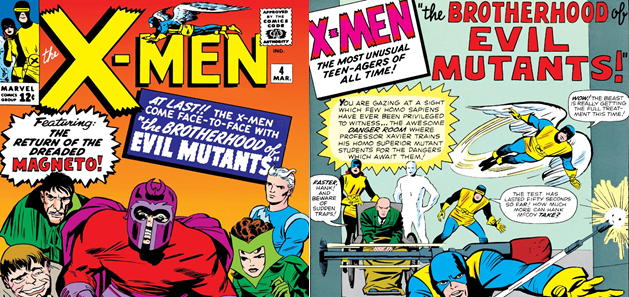
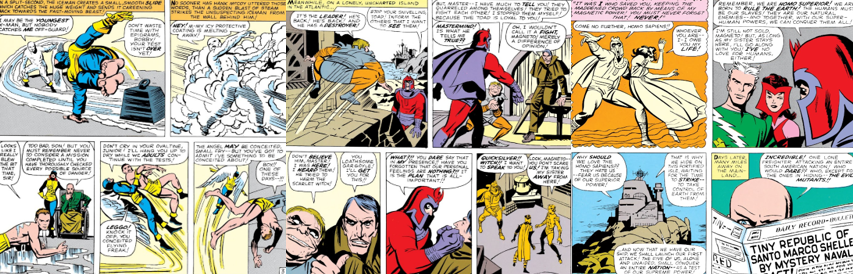
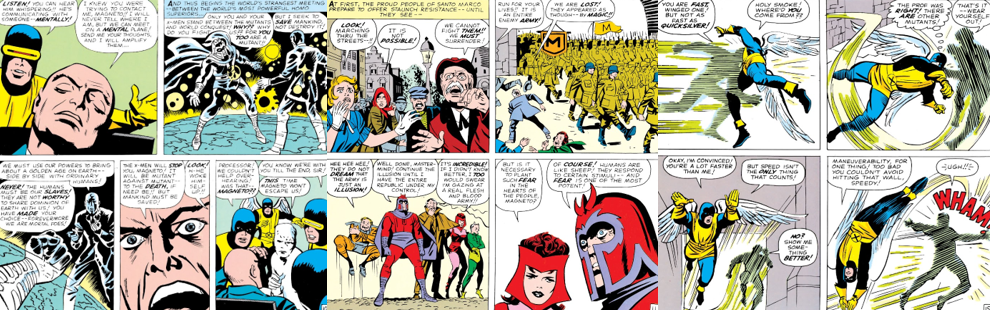
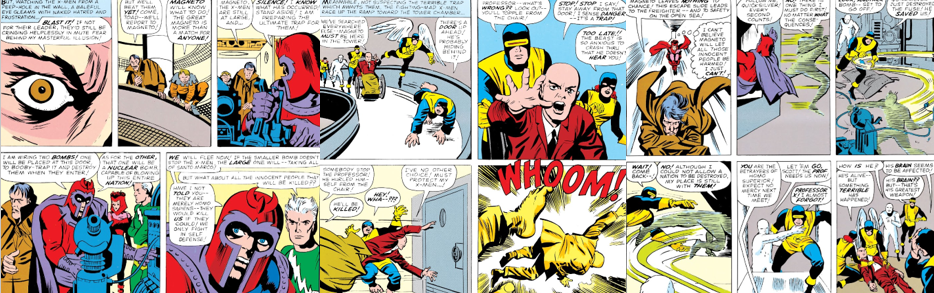
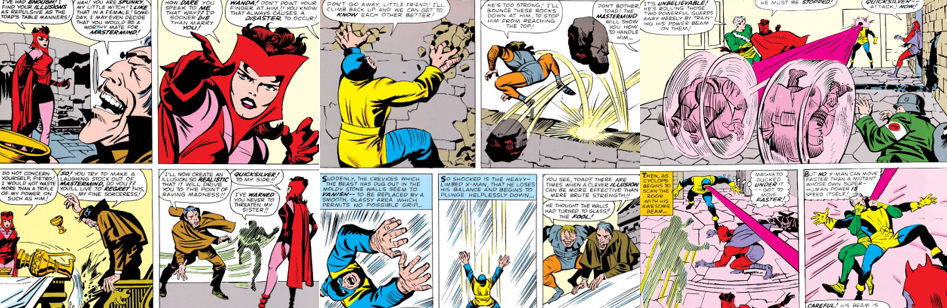


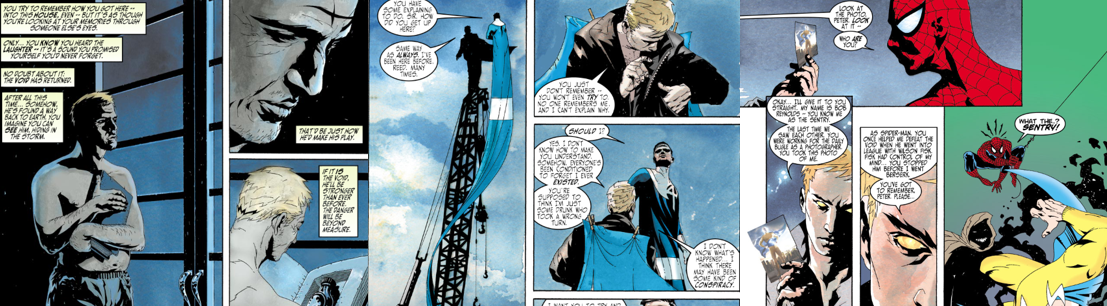
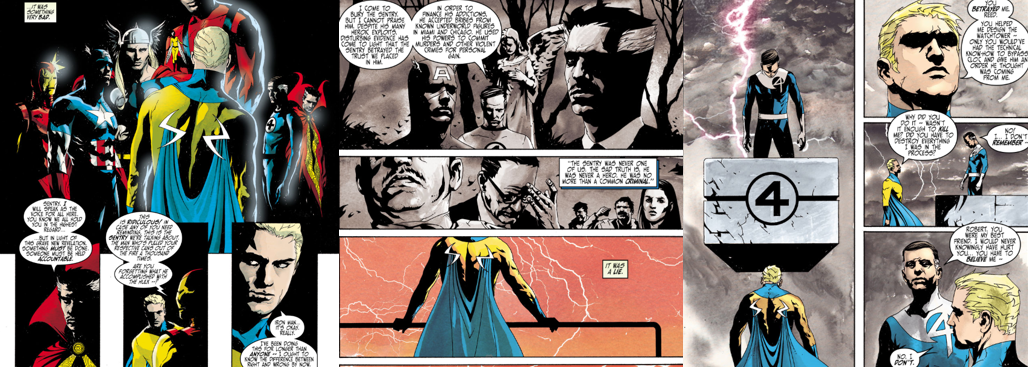
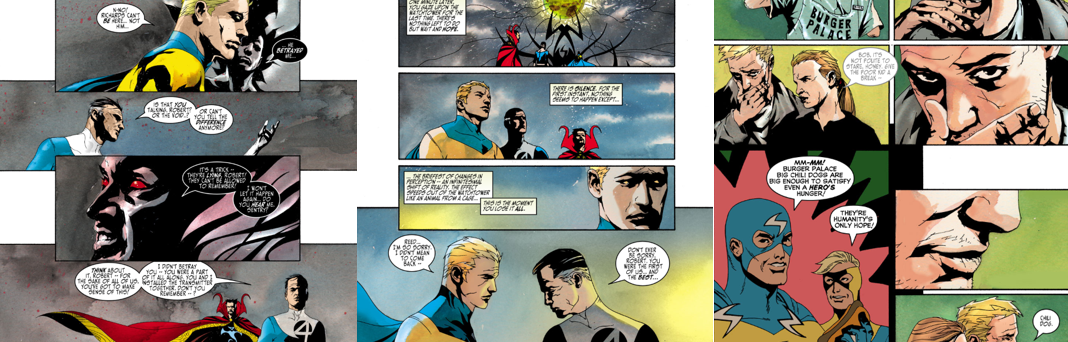
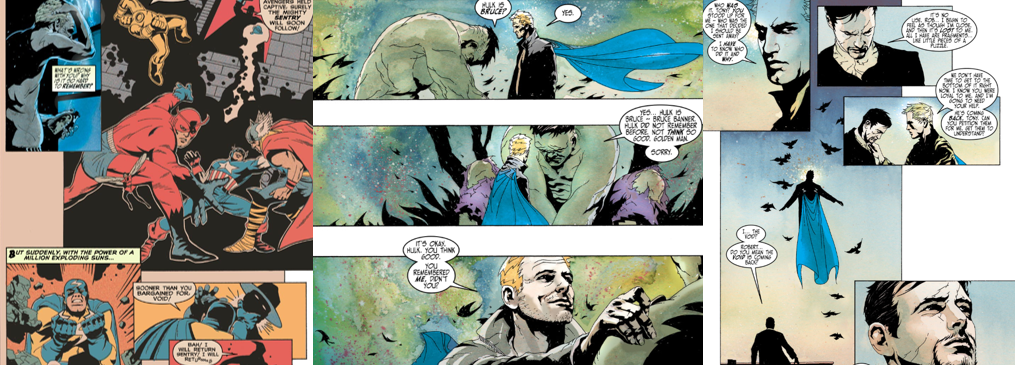
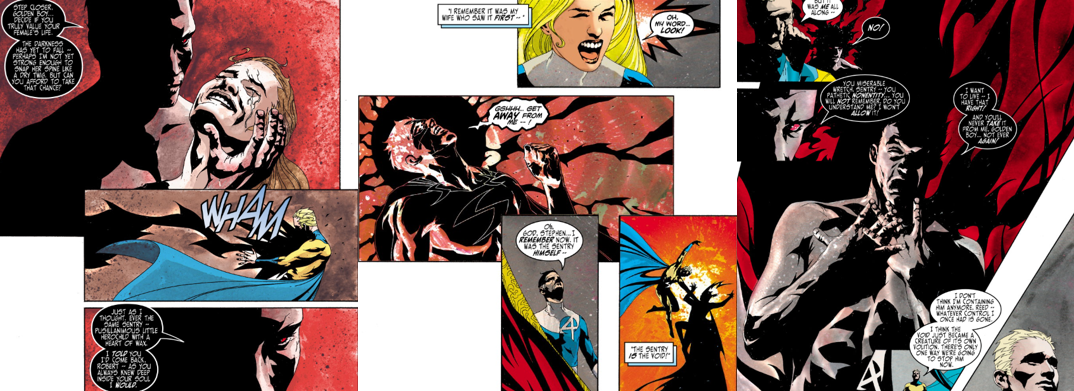




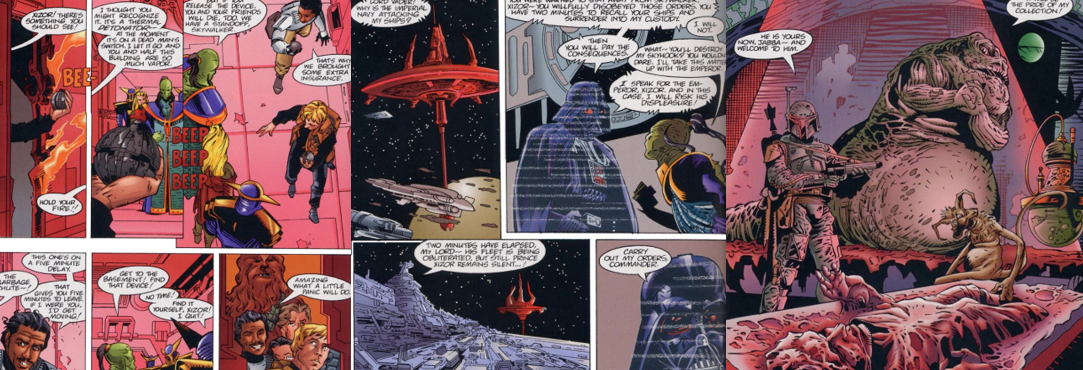

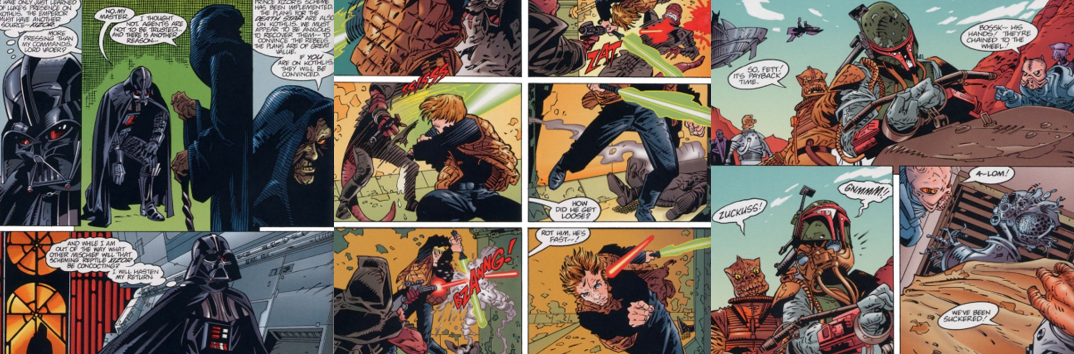

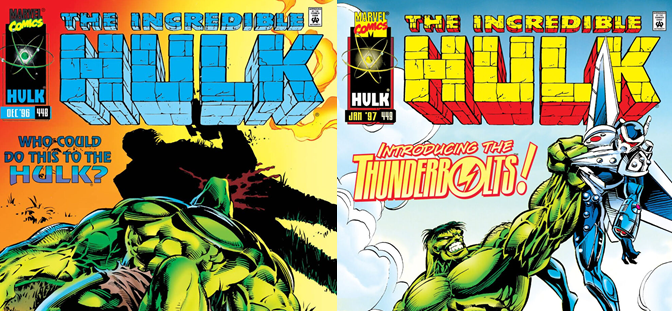
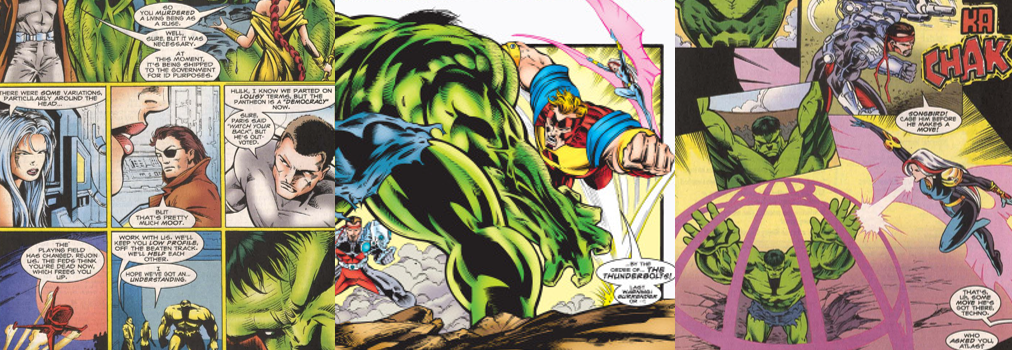
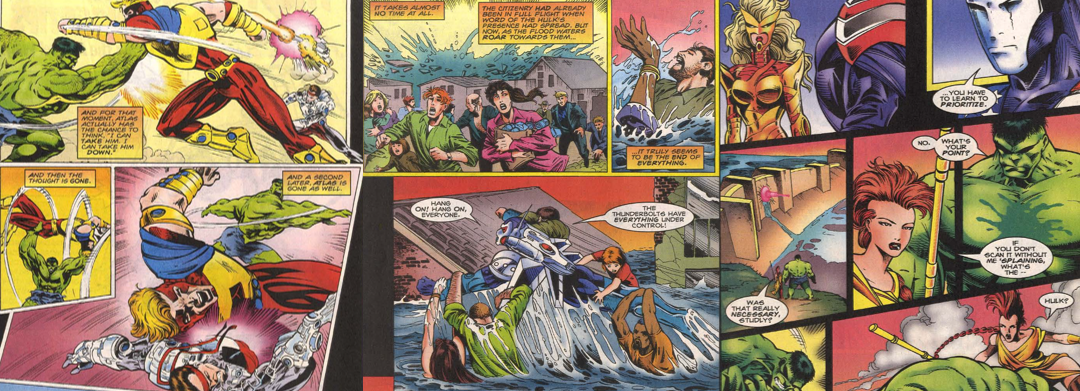
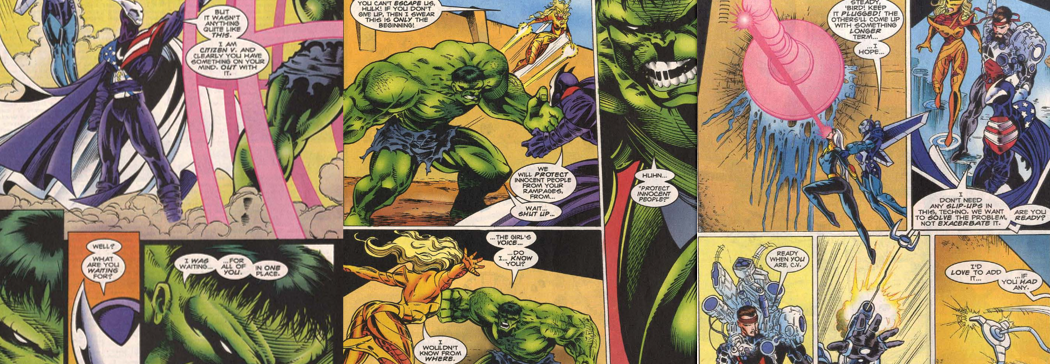


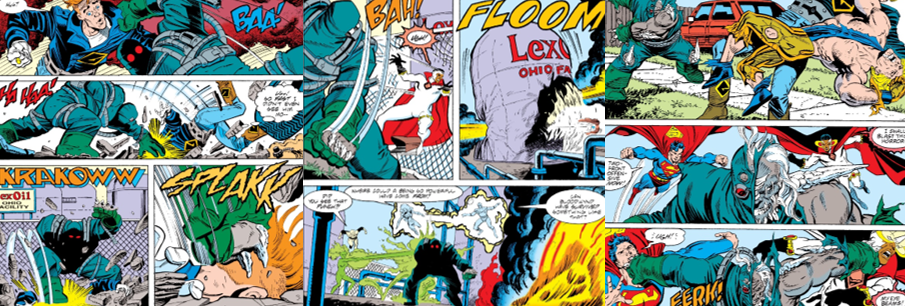
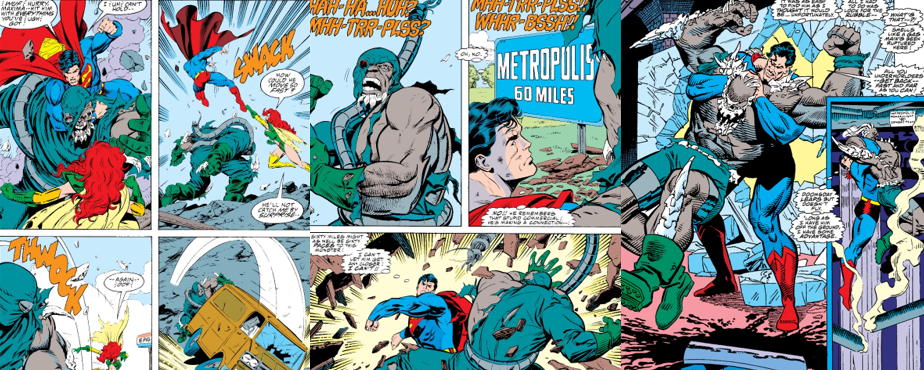
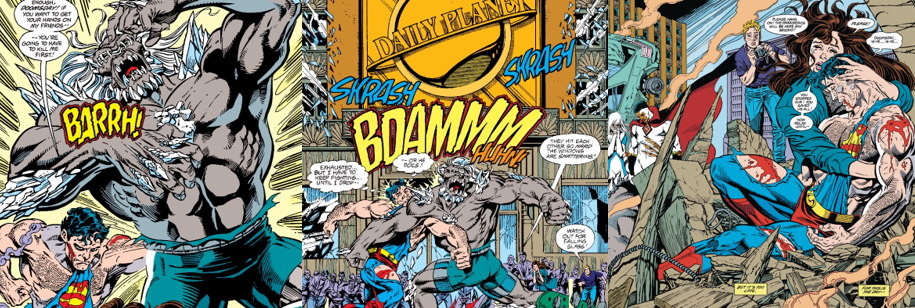
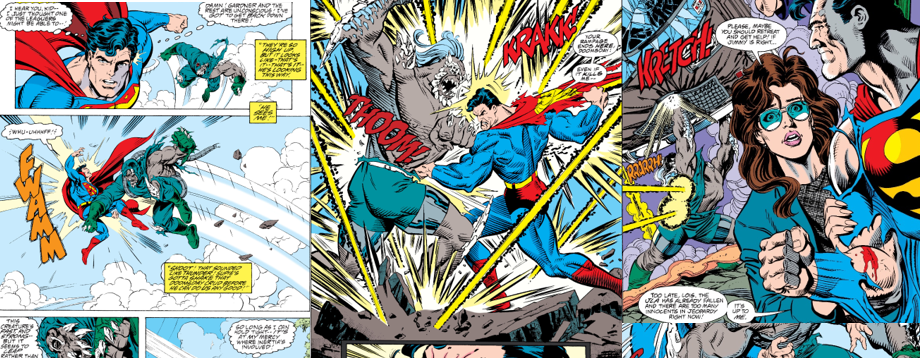
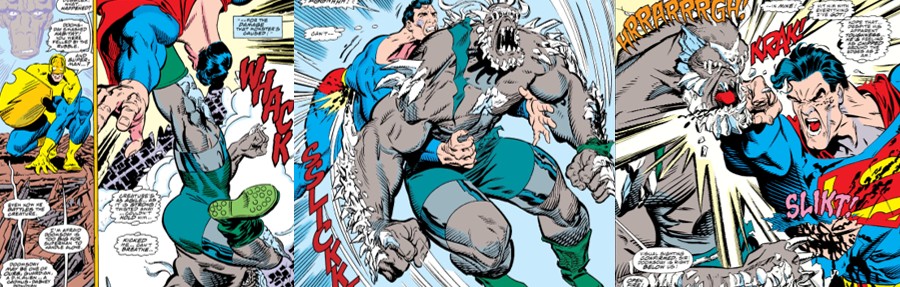



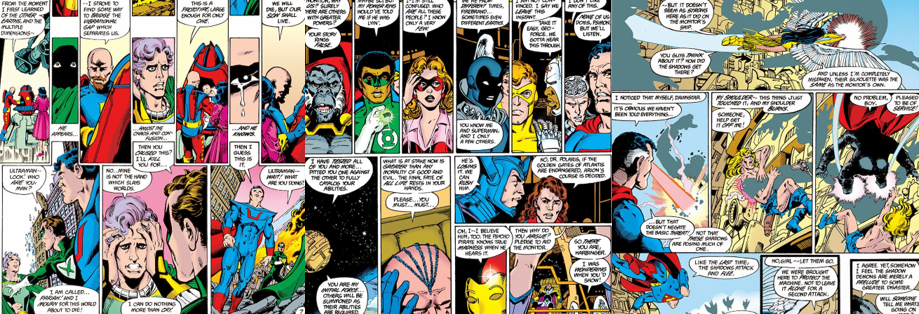
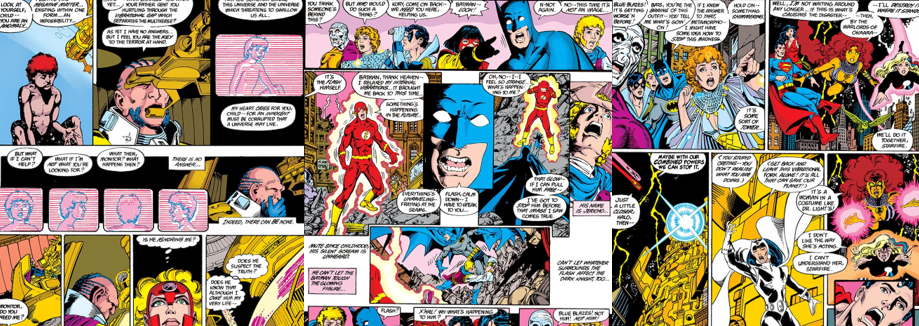
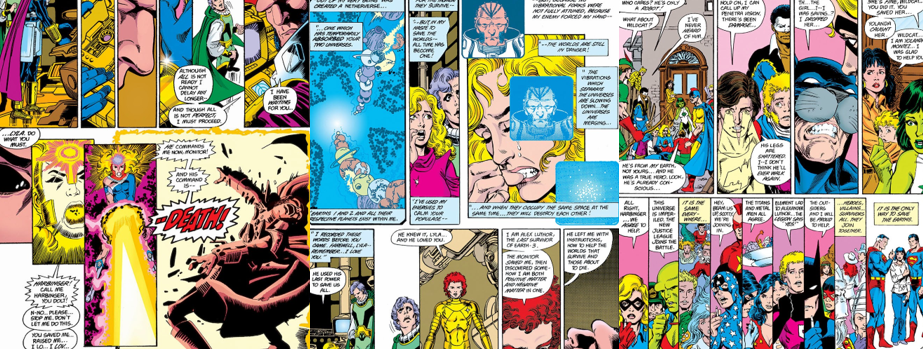
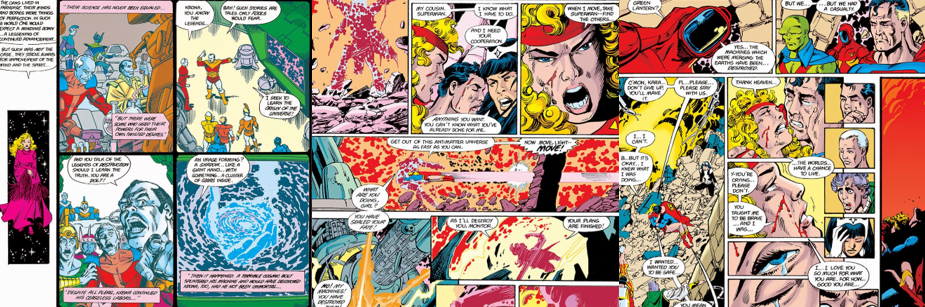
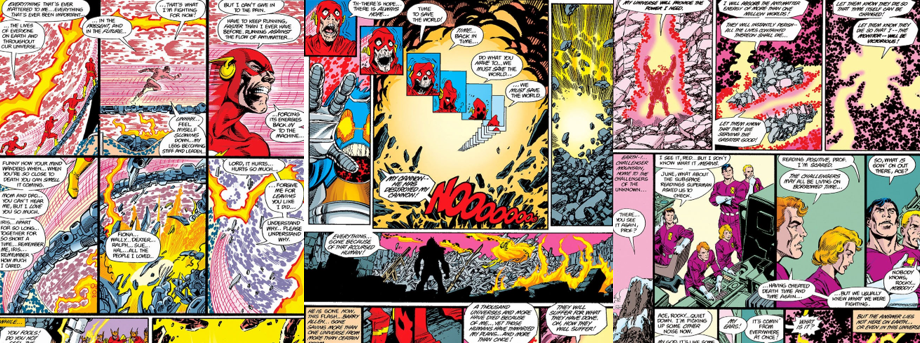
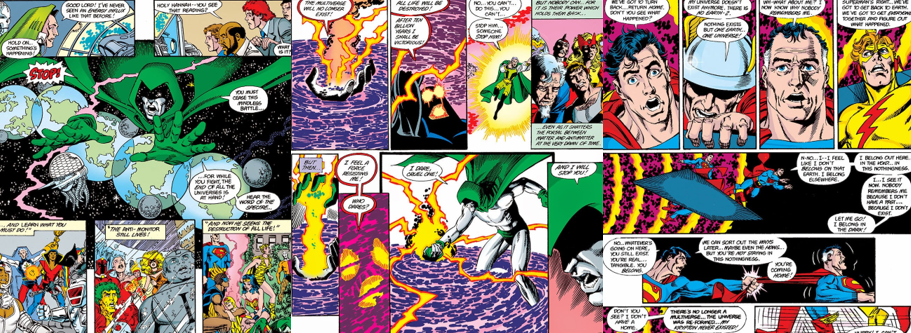
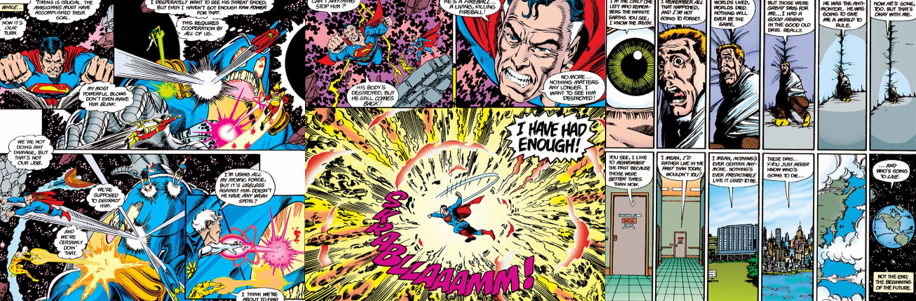
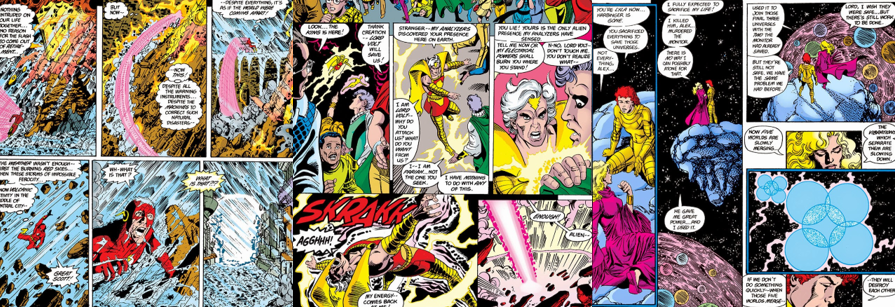
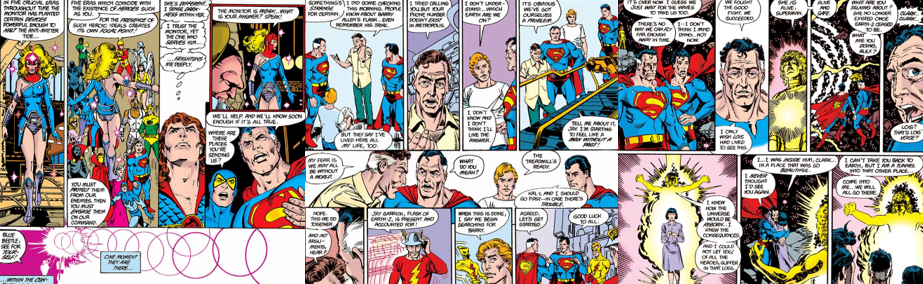
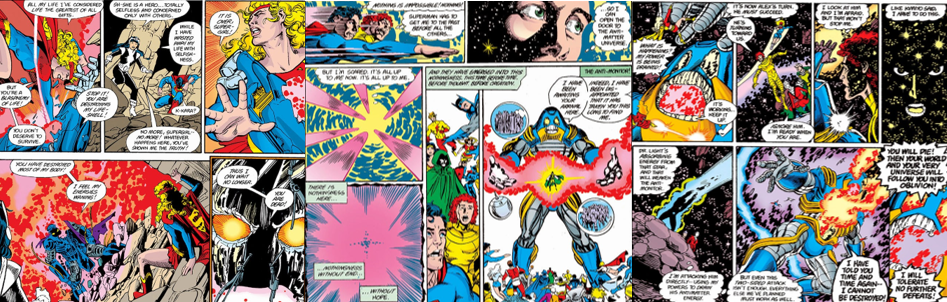

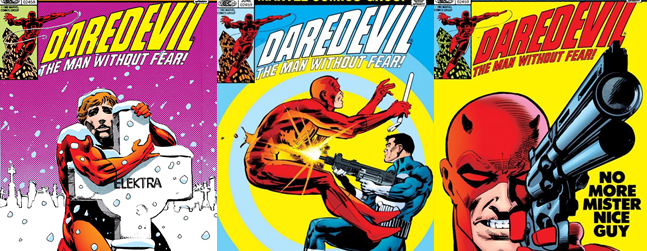
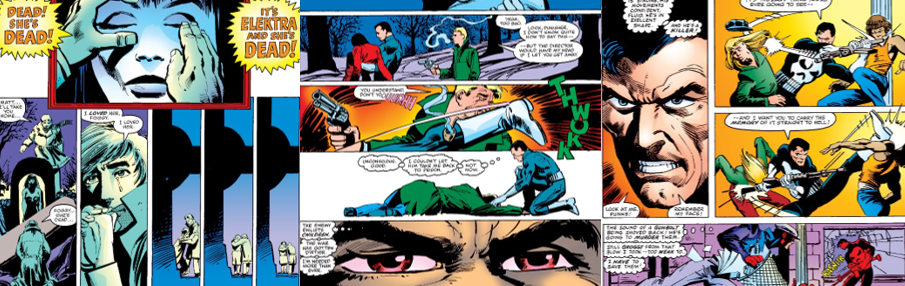

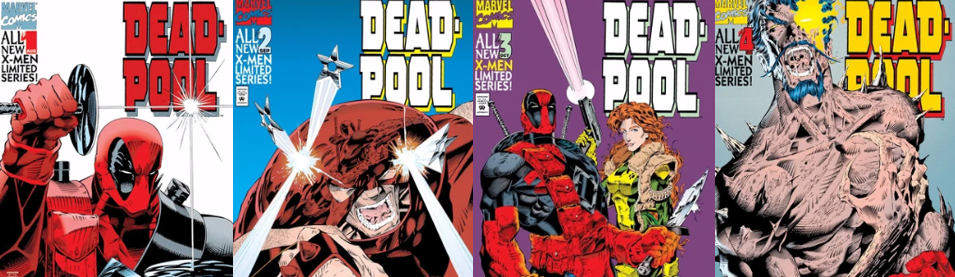
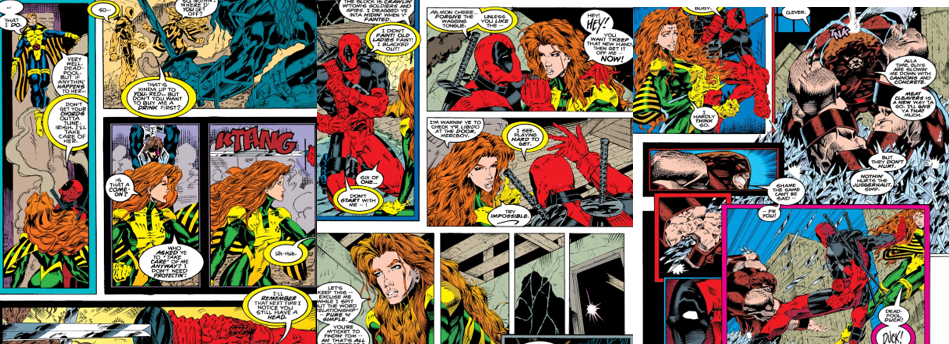
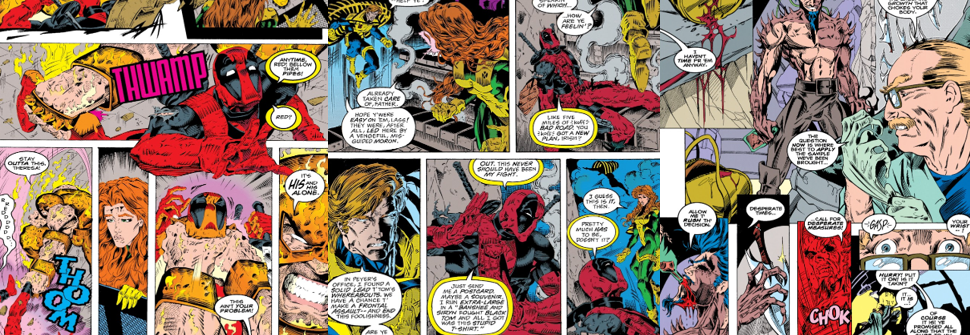
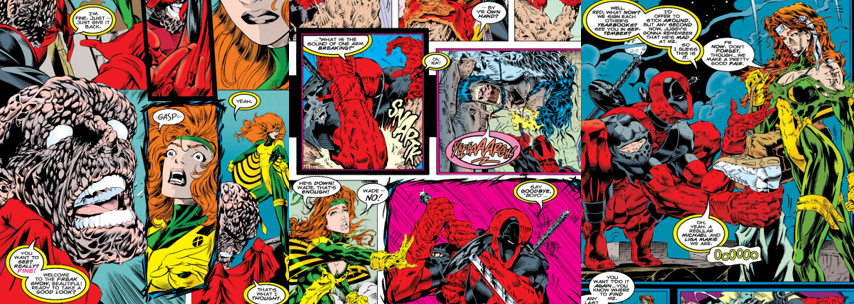






You must be logged in to post a comment.