10 FTW: Surprisingly Good Horror Remakes

We’ve heard it all a thousand times by now: “when will Hollywood stop with the remakes!?”, “Why can’t Hollywood come up with new ideas!?”, “Remakes suxxorz1!!” Honestly, while some films should never be re-made and some remakes do baffle the mind, remakes aren’t the plague of cinema that a lot of people like to think they are. In fact, some are pretty damn good.

If you’re one of those bleeding heart Twitter people, though, who just like to decry remakes in general, maybe you should take a moment to consider this small list of horror remakes that are not only surprisingly good but, in some cases, actually surpass their originals:

Halloween
10 Halloween (Zombie, 2007)

We’re kicking things off with quite the controversial choice here. I’ll argue until the end of time that John Carpenter’s Halloween (Carpenter, 1978) is the forefather of all modern horror, particularly the slasher genre. It’s a subtle, atmospheric piece with a fantastic, mysterious antagonist and the truly frightening prospect that random unspeakable acts of horror can happen in a suburban environment. Rob Zombie’s take, however, is a loud, frenetic, uncomfortably gruesome take on the property. Michael Myers (Daeg Faerch/Tyler Mane) is an incredibly disturbed young boy from a violent and abusive family who becomes a remorseless, emotionless, unstoppable tank of a killing machine. Zombie delves right into his own take on Michael’s backstory, presenting in grotesque detail the exact events that turn Michael into a nigh-supernatural killer.

In many ways, the initial focus of the film acts as a kind of prequel to the events of Carpenter’s original, as the remainder of the film’s runtime is devoted to recreating Michael’s killing spree in Haddonfield, with the primary difference being that nearly the entirety of the film is told from Michael’s perspective. Sure, Malcolm McDowell, great as he is, cannot hope to compete with the fantastic Donald Pleasence but the film is bolstered by the incredibly cute Scout Taylor-Compton (who is arguably more attractive and relatable to modern audiences than Jamie Lee Curtis) and even appearances by Brad Dourif and Danielle Harris (and what an appearance hers is!) While it’s unlikely to be as iconic or influential as Carpenter’s benchmark film, for those who find the original and its sequels dated and slow, Rob Zombie’s remake is a much-needed kick up the ass that, for better or worse, dragged Halloween kicking and screaming out of obscurity.

Poltergeist
9 Poltergeist (Kenan, 2015)

I know, right? How could Hollywood ever even entertain the idea of remaking Tobe Hooper/Steven Spielberg’s 1982 horror classic? Well, they did, and don’t be mistaken; it’s not actually that bad. While it lacks probably my favourite scene from the original, where corpses rise from the Freeman’s unfinished swimming pool, the remake is just as terrifying and engaging as the original, with the added bonus of having a modern-day make-over that is far more accessible than the now-dated original. Don’t get me wrong, the original is still a classic, but Sam Rockwell and Kennedi Clements put in some great performances, easily on par with those of Craig T. Nelson and the late JoBeth Williams. Did Poltergeist necessarily need a remake? Probably not, and the fact that numerous haunted house stories since the original have all pulled from or mirrored Hooper’s seminal horror classic probably didn’t help to differentiate Kenan’s new take on the property, but I feel it’s a largely misrepresented film that is nowhere near as bad as some people think.

It
8 It (Muschietti, 2017)

Although I spoke about this film quite recently, it is deserving enough to make this list. Watching Tommy Lee Wallace’s 1990 miniseries, great as it is and as amazing as Tim Curry’s performance in that is, you can’t help but think that Stephen King’s novel deserved to be told without the restraints of a television miniseries. Focusing exclusively on the child side of King’s story, and bringing the events forward to the 1980s rather than the 1950s, Muschietti adheres closely to King’s text while still putting his own spin on events. Bill Skarsgård’s take on Pennywise is suitably unsettingly and otherworldly; what he lacks in Curry’s charisma he more than makes up for by being genuinely creepy and a fearsome menace. Muschietti also focuses on the friendship and troubles of his child protagonists incredibly well, anchoring them to the film’s central narrative and allowing King’s themes of childhood and loss of innocence to play out beautifully. With a lengthy runtime and concluding on a fantastic tease for a second chapter, this new version of It, while not without its issues (primarily regarding screen time for the many characters), did not disappoint in realising the gruesome potential that the miniseries could only hint at.

7 Dawn of the Dead (Snyder, 2004)

Released at the peak of Hollywood’s new-found fondness for zombie films in the early-to-mid-2000s, largely spearheaded by 28 Days Later (Boyle, 2002) and the God-awful Resident Evil (Anderson, 2002) and its decent-enough sequel, Resident Evil: Apocalypse (ibid, 2004), Zack Snyder’s remake of George A. Romero’s massively-influential 1978 film of the same name takes the general themes and premise of its source material and ramps them up with some incredible action, grotesque gore effects, and a much-needed modern day gloss. While zombie purists may lament the inclusion of the fast-moving, animalistic undead introduced in 28 Days Later, Snyder’s rapid editing and penchant for style over substance make the creatures more vicious and scary than in Romero’s original film. With some great supporting performances by the likes of Ving Rhames and Michael Kelly (and even a brief cameo by Ken Foree, repeating his iconic line from the original film), Snyder’s Dawn of the Dead is a non-stop masterpiece of zombie cinema that never slows down to the snail’s pace that Romero’s introspective original prefers to adopt.

Texas Chainsaw Massacre
6 The Texas Chainsaw Massacre (Nispel, 2003)

One of the primary reasons I was inspired to make this list, The Texas Chain Saw Massacre (Hooper, 1974) was a film that desperately needed this remake! Seriously, the original might have been shocking and gruesome at the time but, since then, it has not aged well; it’s a slow, dull piece of cinema that drags on way too long, with questionable acting and a lifeless soundtrack. The only redeeming quality comes from the maniacal Sawyer family, and even they are a hooting, loud bunch of camp. Produced by Michael Bay’s Platinum Dunes, which would go on to be responsible for a variety of horror remakes, The Texas Chainsaw Massacre is much better than it had any right to be. With an uncomfortable gradient, shocking soundtrack, and even some decent performances by Jessica Biel and Eric Balfour, Nispel’s remake downplays the cannibalistic nature of the franchise in favour of grotesque torture-porn levels of horror.

While the film reintroduces Leatherface (Andrew Bryniarski), one of horror’s most iconic figures, and even suggests a tragic backstory for the character, Nispel’s Chainsaw brought us one of the most despicable and significant horror icons in years in the form of Sherriff Hoyt (masterfully embodied by the great R. Lee Ermey). Hoyt, a tobacco-chewing, foul-mouthed sadist, drives the plot of this remake, raises its quality to another level, and his popularity was arguably responsible for the equally-enjoyable prequel, The Texas Chain saw Massacre: The Beginning (Liebesman, 2006). On a side note, though, am I the only one shocked that, including remakes and reimaginings, the Chainsaw franchise is made up of eight separate movies? Crazy!
The Blob
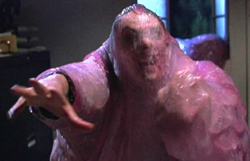
5 The Blob (Russell, 1988)

Now we’re getting somewhere! Irvin Yeaworth’s original 1958 film, starring Steve McQueen, was a campy piece of B-movie mush that has come to resemble a comedy more than a science-fiction piece. Channelling the likes of David Cronenberg and John Carpenter, Chuck Russell’s reimagining, however, takes the story of the bulbous alien lifeform to far more grotesque levels. Incorporating some incredibly disgusting practical effects, the population of a small town is literally dissolved by the titular amoeba. Although some of the composite shots are obviously dated by today’s standards, an entirely CGI rendition of the Blob would probably have aged incredibly poorly by now. Instead, The Blob retains a level of camp in its premise but, with its gruesome effects and no-nonsense attitude, is a great example of how effective and impactful practical effects can be.
Friday the 13th
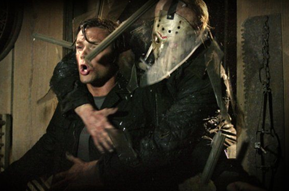
4 Friday the 13th (Nispel, 2009)

We’re back with Marcus Nispel and Platinum Dunes for this masterfully well-crafted remake of not only the original 1980 classic but, also, the first three sequels. Similar to Halloween, for those who find the original movies to be dated and cut-and-pasted, by-the-numbers slasher films with very little to differentiate them from each other until Friday the 13th Part V: A New Beginning (Steinmann, 1985) then this is the film for you! In fact, I often encourage newcomers to the franchise to watch this film and then jump straight to Jason Lives! Friday the 13th Part VI (McLoughlin, 1986); not because the continuity would tie together but, by doing that, you watch one kick-ass film with loads of gratuitous mid-2000s sex (which is far more graphic, enjoyable, and realistic than sex scenes from the 1980s) and horror imagery that sums up the first four entries of the franchise incredibly well and then you can delve into the enjoyable nonsense of zombie Jason Voorhees.

Beginning with the brutal decapitation of Mrs. Voorhees (Nana Visitor) and detailing how Jason (Caleb Guss/Derek Mears) witnessed her murder and grew up alone in the wooded forests of Camp Crystal Lake, as well as detailing Jason’s transformation from the lesser-known burlap sack look to the now-iconic hockey mask, Friday the 13th is filled with some incredibly gruesome kills as Jason uses bear traps, snares, and other tricks to entrap and kill hapless teenagers all over the shop. Add to that some strong performances by Danielle Panabaker, Aaron Yoo, and Jared Padalecki and you have an intense, non-stop horror film that, like Jason, comes at you a mile a minute. Honestly, the only bad thing I have to say about this film is that, despite making $92.7 million on a budget of $19 million, we never saw a sequel; even Rob Zombie’s Halloween got a shitty sequel!

The Thing
3 John Carpenter’s The Thing (Carpenter, 1982) and The Thing (Heijningen Jr, 2011)

Here’s some more controversy for you: I actually liked Matthijs van Heijningen Jr’s version of The Thing. It starred Mary Elizabeth Winstead, who I absolutely adore, and, while marketed as a remake, was actually, ingeniously, a prequel to John Carpenter’s 1982 horror/sci-fi classic. Based exclusively on a brief scene from Carpenter’s film, van Heijningen Jr’s The Thing details how a Norwegian research team unearth an extraterrestrial craft and unwittingly awaken a shape-changing, parasitic alien lifeform and concludes with the survivors attempting to hunt down and eliminate the creature’s final form, which leads directly into the beginning of Carpenter’s The Thing.

Drawing loosely from both Christian Nyby’s 1952 B-movie classic The Thing From Another World! and the story that inspired it, Who Goes There? (Campbell, 1938), John Carpenter’s The Thing is one of the quintessential examples of the effectiveness of practical special effects to the horror genre. Kurt Russell and Keith David lead the charge when their small Antarctic outpost is slowly assimilated by the titular alien creature, leaving the survivors to descend into distrust and anarchy as they struggle to fight off the ever-growing menace both outside and within their number. Carpenter’s film features some truly incredibly moments of practical effects wizardry, from a torso sprouting razor sharp teeth, to a severed head growing spider-like appendages and a dog literally splitting in two as tentacles blast out from its head; yet, while its similarly-impressive practical effects were tampered with in post-production, I never felt like Heijningen Jr’s The Thing was sub-par to Carpenter’s film. Instead, it works amazing well as a companion piece, allowing one to binge-watch both movies side-by-side and be suitably entertained.
2 Evil Dead (Alvarez, 2013)

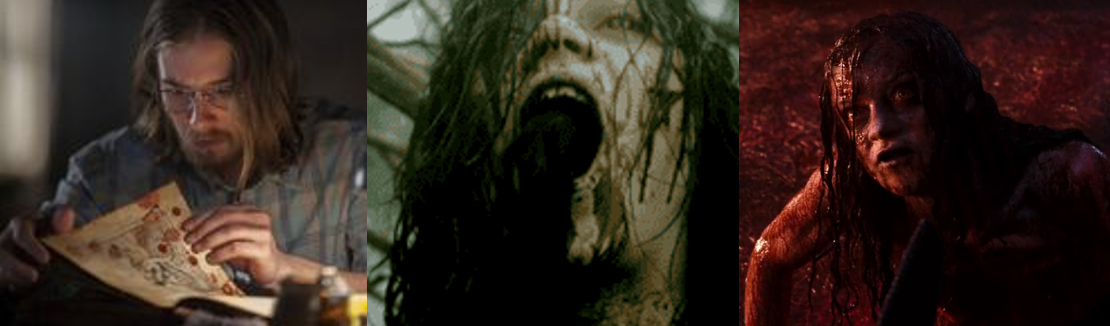
Similar to The Texas Chain Saw Massacre, Sam Raimi’s landmark 1981 horror film The Evil Dead was in desperate need of a remake. Sure, the stop-motion, puppetry, and practical effects were great considering the limited time and budget Raimi had available to him but, over time, neither they nor the acting have aged incredibly well. In fact, for me, Evil Dead II: Dead by Dawn (Raimi, 1987), which retells the events of the original in its opening moments, already surpassed Raimi’s original film by leaps and bounds: Ash (epitomised by Bruce Campbell) is a far more capable, well-rounded character, the effects are much better, and the film adopts a quirky style of black comedy that was sorely missing in the original. Fast forward to 2013 and, rather than attempt to emulate Raimi’s black comedy style, Fede Alvarez approaches his remake with an intense seriousness.

The horror is brutal and horrendous to look at; there’s no laughing deer heads here. Instead, characters saw their arms off, are attacked by nail guns, get beaten by crowbars, and are forced to tear their arms off at the elbow in gruesome fashion. The plot is largely the same, with a group of largely likeable characters accidentally awakening an ancient evil, but the stakes are much higher; here, the evil seeks to take on a physical form and bring about the apocalypse whereas in Raimi’s original film it simply wanted to claim the souls of those trapped in the cabin. While it lacks a character as iconic as Ash, Evil Dead makes up for it with some truly difficult to watch moments that are both sickening and perversely entertaining; even Raimi’s controversial tree rape scene is included and utilised in a far more effective and plot-relevant way and that alone is reason enough to place this film over the original, in my view.

The Fly
1 The Fly (Cronenberg, 1986)

This is it, the quintessential argument that not all remakes are bad and that they can, in some cases, vastly surpass their originals. While Kurt Neumann’s 1958 film of the same name may be closer to the original story and is still a pretty decent piece of 1950s science-fiction, despite its now campy tone, Cronenberg took the idea of a man teleporting himself with a fly and took it to whole new levels. Before, the man bore the head and arm of the fly as a result of the accident and slowly deteriorated into madness; here, though, thanks largely to an absolutely stellar performance by the always-amazing Jeff Goldblum, Cronenberg details the physical and mental degradation of his main character, Seth Brundle, in painstakingly brutal detail. Brundle, a brilliant scientist, initially embraces his newfound physical attributes before realising that he has been stricken by an infection on a cellular level not unlike AIDS or cancer. Soon, his body deteriorates at an alarming rate, with top-notch special effects being employed to make Goldblum practically unrecognisable through heavy make-up and full-body prosthetics.

As he alienates those around him, Brundle’s mind also begins to depreciate; initially desperate to reverse the effects, he soon comes to believe that he was never a man to begin with and prepares a gruesome legacy for himself whereby he will merge his crippled body with that of his lover (a strong, heartwrenching performance by Geena Davis) and his unborn child. In the process, he not only dissolves his rival’s hand and foot with corrosive fly vomit but literally bursts out of the remains of his decrepit human skin to emerge as a grotesque fly-like creature, before finally, tragically, forcing his lover to end his torment. The Fly transcends boundaries; it is a horrific tale of science gone wrong, a body horror with terrifying consequences but, at its heart, it is also an extremely tragic love story. Cronenberg did what many fail to do with their remakes; he took the original concept and not only put his own spin on it but also transformed it into something entirely separate from the source material and yet vastly superior to it in many ways.

Arguably, remakes like A Nightmare on Elm Street (Bayer, 2010) (which attempted to put a unique spin on the franchise and ended up becoming a carbon-copy retelling of Wes Craven’s seminal 1984 original), Total Recall (Wiseman, 2012), RoboCop (Padilha, 2014) could really learn a thing or two from The Fly, and many of the remakes on this list. If you’re going to remake a movie, don’t just retread the same material as before; go back to the source, back to the text, and either produce a more faithful adaptation or extrapolate the core themes and general premise and produce a great movie, rather than a simple, insulting cash-grab.

10 FTW: Spider-Man Costumes

With the reveal at San Diego Comic-Con that Tom Holland’s Spider-Man will be donning the Marvel Cinematic Universe equivalent of the Iron Spider costume in Avengers: Infinity War (Russo and Russo, 2018), there’s no better time for everyone and their mother to weigh in on their favourite Spider-Man costumes. So, with that in mind, here are my top ten Spider-Man costumes (I would have asked my mother for her choices too but I’m not sure she even knows Spider-Man had more than one costume).

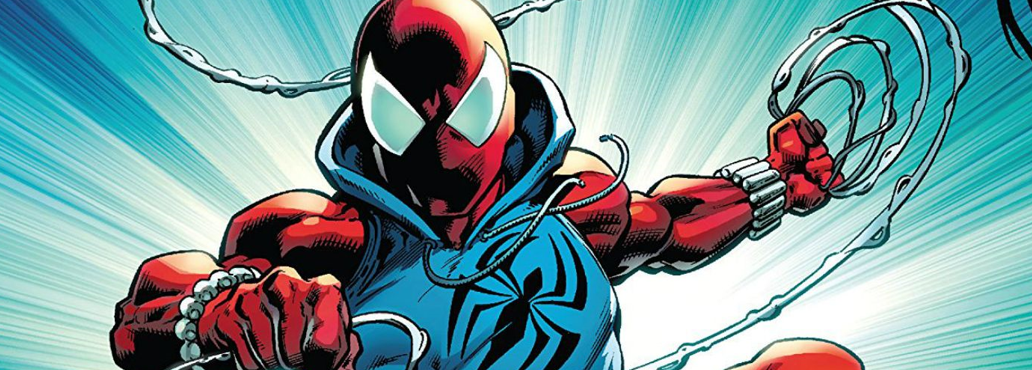
10 Scarlet Spider (Web of Spider-Man #118)

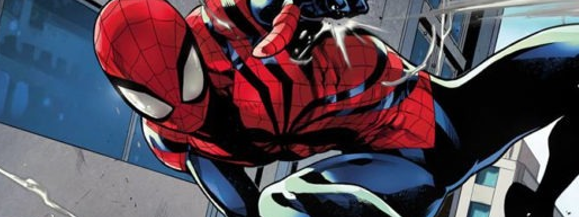
Kicking things off with a bit of a cheat as Peter Parker isn’t really famous for sporting these simple duds. Instead, his clone, Ben Reilly, took up the webs after five years as a wandering hermit and fought crime as the Scarlet Spider, favouring a torn hooded top and skin-tight red spandex that has become the go-to look for whenever cinematic or animated incarnations of Spider-Man need a prototype or homemade version of the classic costume.

9 The Amazing Bag Man (The Amazing Spider-Man #258)

Next up is a short lived gag outfit that Peter was forced to adopt after the Fantastic Four revealed that his nifty black costume was actually a living alien symbiote. Slipping into one of Johnny “Human Torch” Storm’s old costumes and placing a simple paper bag over his head, this outfit was only supposed to get Peter from the Baxter Building and back home without giving away his secret identity and yet nearly garnered more public appreciation than his red-and-blue outfit ever did.

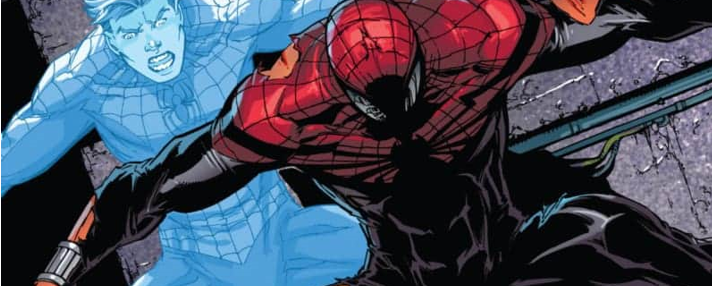
8 The Superior Spider-Man (The Superior Spider-Man #14)

We’re veering deep into comics territory here. Okay, so, Doctor Otto Octavius/Doctor Octopus managed to switch his mind with Peter’s and took over his life and identity, vowing to be a “superior” version of Spider-Man. Soon, he took on a ruthless attitude towards crime and switched to a far more aggressive and deadly version of Spidey’s classic duds. Ironically, Otto actually won over not only the city but also long-time Spider-Man hater J. Jonah Jameson during his tenure as a more ruthless incarnation of the web-slinger.

SpidermanUniverse
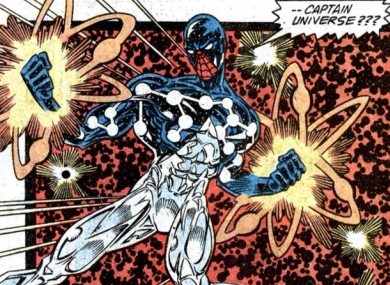
7 Captain Universe (Spectacular Spider-Man #158)

What’s better than a superior version of Spider-Man? A Spider-Man imbued with the cosmic powers of Captain Universe, of course! Gifted with the extra-dimensional Uni-Power, Spider-Man became a cosmic-level superhero, capable of emitting energy blasts and defending the entire universe….however, he lost all his abilities to destroy the Tri-Sentinel, which seems a bit of a waste to me (it’s not like he was facing Onslaught or anything!)

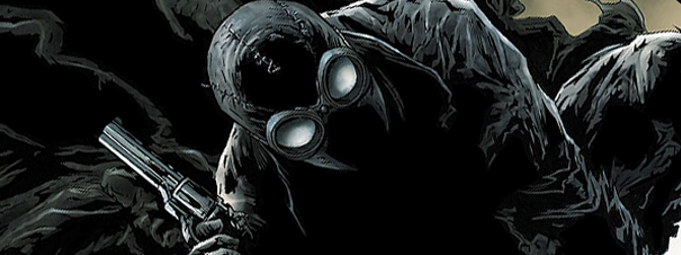
6 Spider-Man Noir (Spider-Man Noir #1)

Scaling things down for a second is the Spider-Man from the alternate reality known as Earth-90214, the “Noir-verse”. This Spider-Man, operating during the Great Depression of the 1920s and 1930s, takes on a classic noir detective appearance, sporting aviator goggles, a black trenchcoat, and wielding firearms.

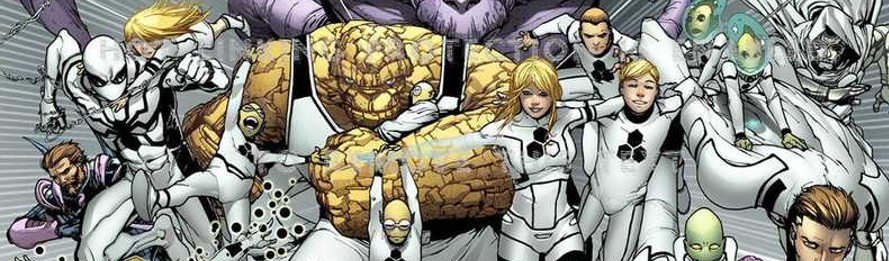
5 Future Foundation (FF #1)

Following the death of Johnny Storm/The Human Torch (well, it turned out that he didn’t really die but he appeared to be dead at the time and for a while), the Fantastic Four re-organised themselves as the Future Foundation and, as per Johnny’s request, Spider-Man finally joined the team. Though he initially rocked up sporting the classic Fantastic Four costume, he was later outfitted with this nifty white-and-black number that, despite closely resembling the appearance of Anti-Venom, was made up of unstable molecules which allowed it to stay nice and clean and also switch between a number of other appearances, including a black-and-white “stealth mode”.

4 The Iron Spider (The Amazing Spider-Man #529)

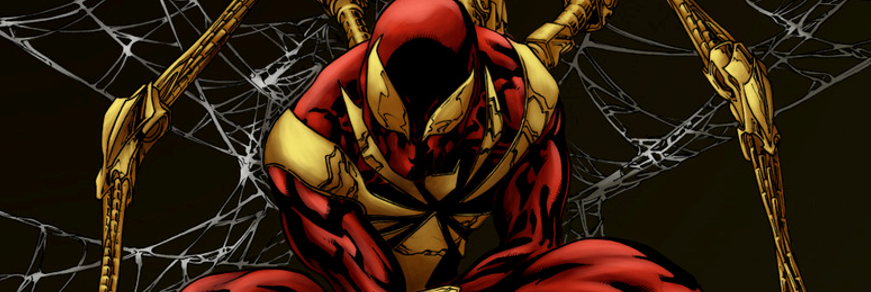
In the build up to Civil War (Millar, McNiven, et al, 2006-2007), Tony Stark/Iron Man became something of a mentor to Peter. As part of that, Stark built Peter a customised version of his Iron Man armour; this red-and-gold exoskeleton greatly amplified and added to Spider-Man’s already-impressive abilities: three mechanical spider-like arms could instantly sprout from his back, he could glide with ease throughout the city, and his lenses offered numerous sight-enhanced options, amongst others.

3 The Sensational Spider-Man (The Sensational Spider-Man #0)

Dipping back into one of Spider-Man’s more controversial periods, the seemingly never-ending Clone Saga, this is the awesome costume that Ben Reilly wore during his tenure as Spider-Man. Bold and striking, this version separates itself from the original by sporting a large spider motif in the middle and Reilly’s bulkier, more powerful web-shooters around the wrists. In the alternate reality known as Earth-982, Peter’s daughter May “Mayday” Parker also wore this outfit to fight crime as Spider-Girl.

2 Spider-Man 2099 (The Amazing Spider-Man #365)

In the possible future reality known as Earth-928, geneticist Miguel O’Hara alters his own DNA to bestow himself with spider-like abilities. Garbing himself in a mask and bodysuit he wore for the Day of the Dead festival, Miguel becomes an all-new version of Spider-Man. Miguel’s costume is comprised of Unstable Molecule fabric, which allows him some resistance to energy-based weapons and attacks and renders it practically indestructible, and anti-gravity technology allows Miguel to fly at will (just like a real spider!)

1 Symbiote Spider-Man (The Amazing Spider #252)

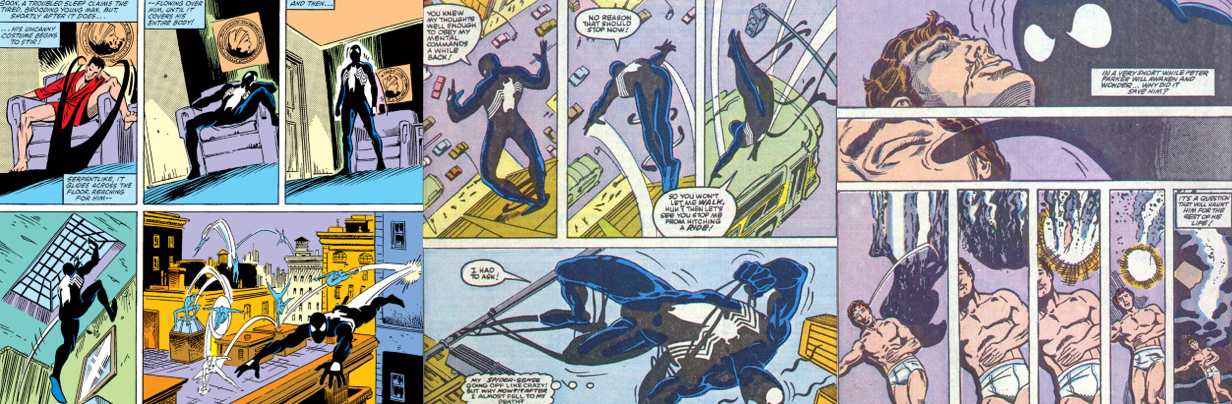
Finally, the inevitable and obvious choice for number one. We started simple with the Scarlet Spider costume and it’s only fitting to end just as simply; the black suit was a visually and striking departure from Spider-Man’s usual costume, which had changed very little since its debut up to this point. Closely resembling the costume of Julia “Spider-Woman” Carpenter, this costume was all-black and sported a brilliant white spider logo and piercing white eyes. However, as would later be revealed, the costume was anything but simple as it turned out to be an alien symbiote looking to permanently bond with Peter. After he rid himself of it, he would later be tormented and haunted by the suit for years to come when it bonded with Eddie Brock to become and maniacal Venom, proving that some of the most iconic villains can have the most obscure and unassuming of origins.

10 FTW: Horror Movies Where Evil Triumphs in the End

These days, it’s probably one of the most clichéd elements of the horror movie genre to have the antagonistic force terrorising the protagonists rise again by the end of the last act. Yet, this staple of the genre can have a dramatic impact on the viewer, sometimes altering entire events that preceded it, salvaging a mediocre film at the last second, or (more often than not) setting up a sequel or even an entire franchise.

With that in mind, here are ten of the most memorable moments in horror movies where evil ultimately proved triumphant:

10.png
10 Final Destination (Wong, 2000)

The definition of a mediocre horror picture, Final Destination follows a group of teens who evacuate a plane moments before it explodes in mid-flight, only to find themselves falling victim as death stalks them to rebalance the scales. Hardly a classic in terms of horror, the sequels eventually descended into near-slapstick parody in their efforts to set up increasing complex and contrived ways of killing the unfortunate protagonists. After deciphering “death’s plan” and escaping to Paris, Alex Browning (Devon Sawa) is saved from a gruesome fate by former bully-turned-friend Carter Horton (Kerr Smith). Just as the audience breathes a sigh of relief at seeing the protagonist pushed to safety, a massive neon sign comes hurtling towards Carter before the film changes to black and the credits run. While this ending became a hallmark of the franchise, in the first movie, the predictability that would befall the series had yet to be established and the ending was new, fresh, and somewhat unpredictable.

9
9 The Last Exorcism: Part II (Gass-Donnelly, 2013)

Unlike its predecessor, which adopted the “found footage” approach, this sequel utilised more straight-forward techniques. Though these failed to make it any better than the film that preceded it, The Last Exorcism: Part II turned the events of the first film on its head by having its antagonistic demon be in love with the main character, Nell Sweetzer (Ashley Bell). In a surprising turn of events, at the brink of death, Nell opts to take the hand of the malevolent force that has been stalking her and allow it to possess her. She then kills a bunch of people, burns a house down, and drives off into the night as trees and vehicles combust around her, signalling the beginning of the apocalypse on Earth.

8
8 Saw: The Final Chapter (Greutert, 2010)

Saw is a horror/thriller franchise where evil triumphant at the end of every movie since the first instalment; John “Jigsaw” Kramer’s (Tobin Bell) meticulous planning and attention to detail dictated that, even when his victims escaped alive from his death traps, they often did so only as part of his grander plan or fell victim to his successors. By the end of the seventh movie, Jigsaw’s goal to teach people to value their lives has been perverted and his successor, Detective Mark Hoffman (Costas Mandylor) as devolved into a serial killer looking to tie up the last of his loose ends and flee before he can be exposed. However, just as it looks as though he is about to get away with his murder spree, he is attacked and locked up in the disused bathroom from the first movie by none other than Doctor Lawrence Gordon (Cary Elwes). Flashbacks reveal that, after severing his foot and crawling to safety, Gordon also became one of Jigsaw’s helpers and that Jigsaw tasked him with protecting his estranged wife. With her dead at Hoffman’s hands, Gordon enacts Jigsaw’s final revenge and ensures that his legacy lives on.

7 Friday the 13th (Cunningham, 1980)

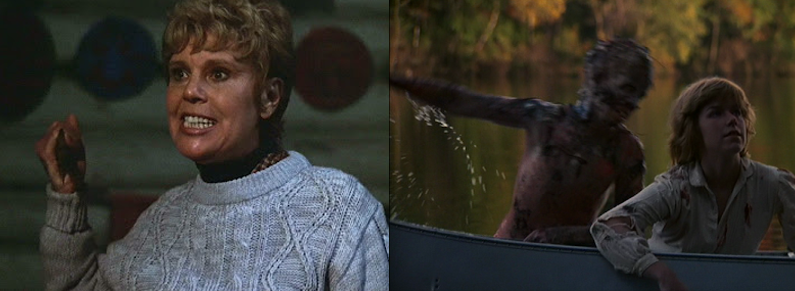
Although the first film, and many of its sequels, has not exactly aged too well, the original Friday the 13th inspired countless slasher knock-offs looking to capitalise on its success. In the first movie, Camp Crystal Lake is terrorised by an unknown killer who systematically kills off the counsellors looking to re-open the camp; it’s the uncanny practical effects and atmosphere that steal the show here more so than anything else, and its effective use of the unknown killer became a common motif in horror for years to come. After the killer, revealed to be Pamela Voorhees (Betsy Palmer) seeking revenge after her son drowned due to the negligence of the former counsellors, is finally dispatched by lone survivor Alice (Adrienne King), all seems calm and well. Alice collapses into a raft and drifts out onto Crystal Lake, only to suddenly be attacked by a rotting, disfigured boy (Ari Lehman) who emerges from the water and drags her under. Although the subsequent sequels made better use of Jason as an unstoppable, unkillable supernatural killer, without the original shot of Jason’s mangled form leaping from the lake we may never have had the opportunity to classify this as a cliché much less have had the multitude of sequels that followed.

6
6 Drag Me to Hell (Raimi, 2009)

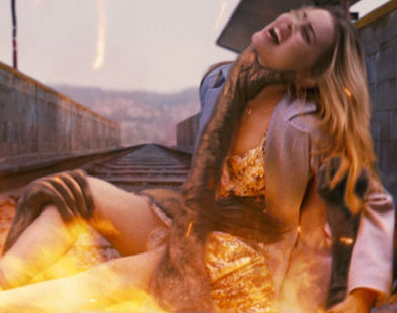
Sam Raimi returned to horror with a bang in 2009 with this surprisingly fun and gruesome tale of Christine Brown (Alison Lohman), a young, aspiring bank worker who finds herself placed under a gypsy curse whereby the demon Lamia will torment her for three days before taking her to Hell. What follows is a montage of terrifying imagery and events as Christine races against time and Raimi’s trademark semi-slapstick horror to salvage what’s left of her soul. After surviving these trials, Christine learns that she can pass her curse on to another and successfully passes it back onto the gypsy who placed it upon her. However, just as she is ready to celebrate her newfound life with her boyfriend, Professor Clayton Dalton (Justin Long), she realises that she made a mistake and that she is still carrying the curse upon her. Dalton can do nothing but watch in horror as Christine is set upon by demonic hands, which grasp at her from beneath the ground and pull her down into the hellish fiery pits.

Still, an eternity in Hell has got to be preferable than spending the rest of your life with Justin Long!

5
5 The Grudge (Shimizu, 2004)

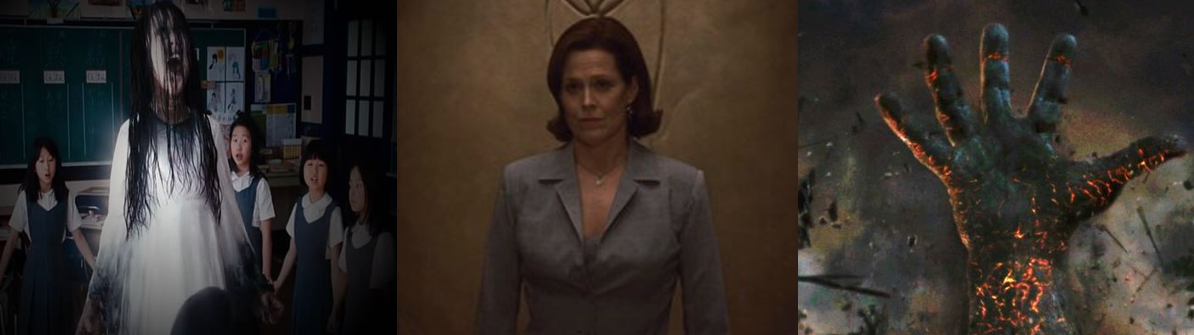
Now I’m sure this won’t win me any fans but I haven’t actually seen the original Japanese version of this film. Considering that the Americanised version is set in Japan, directed by the man behind the original Ju-on series, and includes numerous elements that are shot exactly as in their Japanese counterparts, though, I don’t really regret that. Plus, it’s a damn creepy, horrifying film in its own right. Although featuring a non-linear narrative, The Grudge primarily follows exchange student Karen Davis (Sarah Michelle Gellar), who finds herself haunted and tormented by a vengeful spirit that seeks to kill anyone who enters a cursed house. After her boyfriend goes to the house to look for her, Karen goes to rescue him, only to find him dead. Witnessing the violent events that led to the houses carrying its curse, Karen sets the houses ablaze but is prevented from escaping by Kayako Saeki (Takako Fuji), who contorts herself towards her, looking to claim her life too. However, Karen is rescued from the house and taken to a hospital where it appears as though she has miraculously survived the never-ending curse. There she learns not only that the fire was subdued and that the house is still intact but also that Kayako is right behind her, bringing the film to a dramatic close and proving that Japanese spirits just don’t know when to quit.

4 The Cabin in the Woods (Goddard, 2012)

I’m not going to lie: I consider this movie to be an absolute masterpiece. Not only does it subvert all expectations for a horror film, it’s also an extremely clever, incredibly enjoyable movie that pokes fun at the tropes of the genre and tells an incredibly original story. After a zombie family terrorises their friends and leaves them the sole survivors, Dana Polk (Kristen Connolly) and Marty Mikalski (Fran Kranz) stumble into a large underground facility where they discover that a covert organisation ritualistically sacrifices victims such as themselves to appease the malevolent Lovecraftian Ancient Ones. After defying the Director’s (Sigourney Weaver) urging that they complete the ritual through self-sacrifice and save humanity, they share one last joint as the facility is ripped apart by the awakening Ancient Ones as they emerge from beneath the Earth to doom humanity forever.

3 A Nightmare on Elm Street (Craven, 1984)

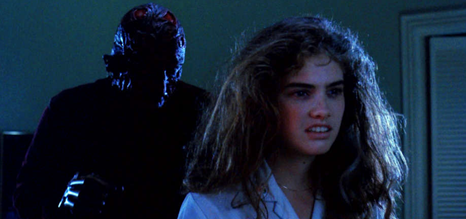
Wes Craven’s seminal horror film ensured that no ne was ever going to go to bed easily ever again as a group of teenagers are stalking in their dreams by a hideously burned killer sporting a glove adorned with razor blades. The idea that a vengeful spirit could cause you harm or even kill you simply through your dreams was a poignant, original, and terrifying idea and Craven created one of horrors most enduring, popular, and horrifying horror icons in Freddy Krueger (Robert Englund). As her friends are killed one by one, sole survivor Nancy Thompson (Heather Langenkamp) learns that she can pull things out of her dreams. Fortifying her house with booby traps, she manages to bring Freddy into the real world in an attempt to kill him. However, after Freddy kills her mother, Nancy realises that she is still asleep and, understanding that her fear has been making Freddy more powerful, she denounces him and her fear of him, apparently dissipating his spirit. Nancy awakens to a new day that is overly bright and cheerful where all of her friends are alive and her mother is no longer a chronic alcoholic. However, just as she begins to drive away into a literal happy ending, Nancy realises that the car sports Freddy’s trademark red-and-green colours and that she is trapped inside. She then watches on as Freddy bursts through the little window in her front door, grabs her mother, and violently pulls her through the opening. Although a somewhat confusing and odd ending, this shocker set up the idea that Freddy’s threat can never truly end no matter what tactics his victims use, something that the later sequels would drive into the ground.

2 John Carpenter’s Halloween (Carpenter, 1978)

Before Friday the 13th there was Halloween, without a doubt the grandfather of the slasher genre. John Carpenter’s atmospheric, tension-filled masterpiece brings horror to the suburban homestead as the cold-hearted Michael Myers (Nick Castle and Tony Moran) returns fifteen years after killing his sister to stalk and kill a group of babysitters. Having worked his way through the neighbourhood, Myers closes in on the last girl standing, Laurie Strode (Jamie Lee Curtis) with his psychiatrist, Doctor Sam Loomis (Donald Pleasence) in hot pursuit. After shrugging off a coat-hanger to the eye and a knife attack, Myers looks ready to claim his final victim only to be shot by Loomis. Stumbling backwards, he falls from the balcony to the ground below, lifeless and prone. However, when Loomis looks again, Michael has vanished into the night and he stares into the darkness with a look of horror on his face as he knows not only that Michael is still out there but also that a number of mediocre sequels and remakes are still to come.

1
1 The Omen (Donner, 1976)

Could it really have been any other film? Richard Donner’s horror classic takes the top spot simple because it depicted the birth and rise of the ultimate evil and then concluded with the threat that a little boy would grow up to bring humanity to its end. After his son dies during childbirth, US diplomat Robert Thorn (Gregory Peck) agrees to adopt another without telling his wife, only for the child – Damien (Harvey Spencer Stephens) – to actually be the son of the devil. Having uncovered the truth behind Damien’s blasphemous conception and his true destiny as the destructor of humanity, Thorn witnesses enough death and evidence to spirit Damien away to a church. Just as Thorn is about to drive seven sacred daggers into Damien before the alter of Christ, he is gunned down by policemen. At his father’s funeral, Damien smiles to the camera as he holds the hand of his newly adopted father – the President of the United States – leaving the audience with the knowledge that the Anti-Christ is perfectly positioned to usher in the end of humanity.