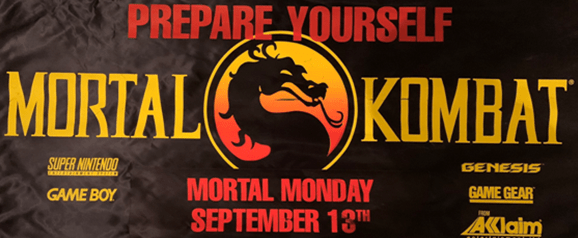
To celebrate the worldwide home console release of Mortal Kombat (Midway, 1992), 13 September 1993 was dubbed “Mortal Monday”. While I’m a day late this year, I always enjoy taking some time to celebrate this influential fighting series.


Director: Oley Sassone
Air Date: 3 October 1998 and 10 October 1998
UK Network: Channel 4
Original Network: The WB Network / Turner Network Television (TNT)
Stars: Paolo Montalban, Daniel Bernhardt, Kristanna Loken, Bruce Locke, Jeff Meek, Chris Casamassa, and Jennifer Renton
The Background:
During the nineties, competitive fighting games took arcades by storm thanks to the many versions of Street Fighter II: The World Warrior (Capcom, 1991). Seeking to compete with Capcom, developers Ed Boon and John Tobias took inspiration from movies like Enter the Dragon (Clouse, 1973), Big Trouble in Little China (Carpenter, 1986), and Bloodsport (Arnold, 1988) to create an ultra-violent tournament fighter that changed the genre with its simple fighting mechanics and ultra-violent content. Development of a live-action Mortal Kombat began with producer Lawrence Kasanoff, who envisioned the venture as a multimedia franchise. Unfortunately, while he and director Paul W.S. Anderson delivered a surprisingly profitable cult hit, Mortal Kombat’s (ibid, 1995) reputation was tarnished by its laughably bad box office bomb of a sequel. However, Mortal Kombat: Annihilation (Leonetti, 1997) wasn’t the end of Kasanoff’s endeavours as this criminally under-rated and short-lived prequel series aired between 3 October 1998 and 22 May 1999. Though its schedule was often sporadic, Mortal Kombat: Conquest eventually followed episodes of World Championship Wrestling’s WCW Monday Nitro, resulting in cameos by WCW wrestlers, though the show ended on a frustrating cliff-hanger apparently due to its budget. Still, the series developed a cult following and was a spotlight for actors like Daniel Bernhardt and Kristanna Loken, some actors and sequences from the movies returned for the series, and Mortal Kombat: Conquest seems to have been subtly referenced in the franchise’s modern iterations.
The Plot:
Centauries ago, after safeguarding Earthrealm in a life-or-death tournament called “Mortal Kombat”, Kung Lao (Montalban) seeks a normal life with his love, Geneviere “Jen” Reyland (Renton). However, when fate and scorned sorcerer Shang Tsung (Locke) intervene, Kung Lao must team with an exiled guard and a thief to prepare for the next tournament.
The Review:
“Warrior Eternal” is the two-part pilot of Mortal Kombat: Conquest a prequel to the first two live-action movies that I watched diligently as a kid. We can tell right away that it’s a prequel not just because it’s set “centuries ago, in a time of darkness and fury” but because it presents younger versions of iconic Mortal Kombat characters Shang Tsung and Shao Kahn (Meek), Emperor of the all-conquering Outworld, but also liberally uses footage from those movies for establishing shots. Footage of Outworld and the Temple of Light establish this is the same continuity and, while they’re generally just random shots or short clips, it’s kind of fun to see shots of the Temple of Light repurposed here. It’s also clear that this is a prequel since we’re following the Great Kung Lao, distant ancestor of Liu Kang (Robin Shou), as he prepares to decide the fate of Earthrealm in the latest Mortal Kombat tournament. A humble man who’s been trained since birth to become the greatest Shaolin warrior, Kung Lao is described as the “best” Earthrealm has to offer and his mentor, the Thunder God Rayden (Meek), even says that, physically, no fighter can match him, a claim tested here and throughout the series. Naturally, Kung Lao is as aware of the realms and Mortal Kombat, and the otherworldly dangers of Outworld, as his fellow monks. While the city of Zhu Zin is close to the Temple of Light and many of its people are respectful of their monks and warriors, and even aware of Mortal Kombat, just as many remain ignorant and mock Kung Lao’s beliefs. Baron Reyland (John Reilly) is the embodiment of this, believing Kung Lao isn’t worthy of his daughter since the monk doesn’t place value in material or financial matters, showcasing that Kung Lao may be a knowledgeable warrior and deeply spiritual character, but he’s somewhat out of place with the world he fights so valiantly to protect.
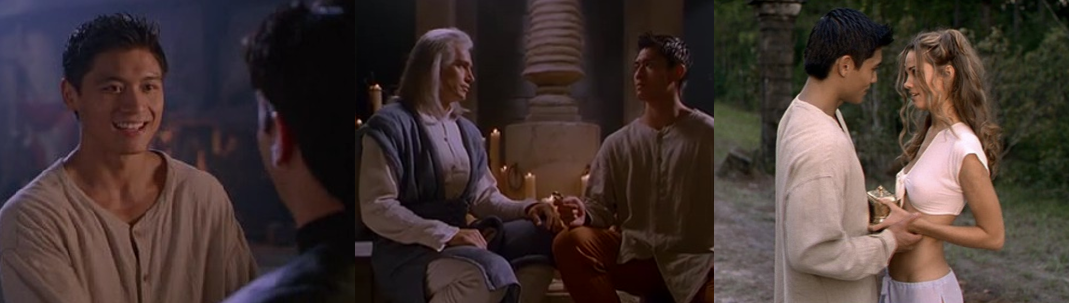
Unlike Outworld’s forces, Kung Lao has no supernatural power and is simply at the peak of physical and spiritual ability. While he still has a lot to learn, his commitment to protecting his loved ones and his sheer force of will see him resist even Shang Tsung’s soul-stealing magic and push him to overcome even insurmountable odds. Yet, Kung Lao is often conflicted, doubting himself and his abilities, and initially rejects Rayden’s demands that he prepares the next generation of fighters to compete in Mortal Kombat. Kung Lao is haunted by visions of a disastrous future where his people (and Earthrealm) are slaughtered and he’s pummelled by a barely distinguishable CGI mess (presumably Goro). Despite these visions, Kung Lao resists his destiny to be with Jen, who’s apparently drawn to his belief that all life as sacred (even monsters like Shang Tsung), making him the opposite of her father. Kung Lao shows respect even to Shao Kahn and makes a point to take a higher path, being humble in his victory and even sparing Shang Tsung even though it comes back to bite him. Kung Lao is friendly to all, having befriended the baron’s guards, Takeda (Casamassa) and Siro (Bernhardt), and even stepping in to spare Taja (Loken). While Siro is incredibly overprotective of Jen, Kung Lao pacifies him with compliments but is obviously blinded by his love when he praises her playful sparring. This also sees Kung Lao lie to her regarding his visions since he wishes to shield her from such things. Kung Lao’s outraged when Baron Reyland denies his wish to marry Jen and resolves to abscond with her, hopeful to flee his nightmarish visions and be truly happy. However, he makes peace with the baron in his final moments but is annoyed for dismissing Rayden’s advice, and sparing Shang Tsung, when Jen’s life is endangered. Kung Lao’s understandably devested when Jen dies but finds solace in knowing she’s gone to a better place and in dedicating himself to training new fighters alongside Siro and Taja, just as Rayden encouraged.
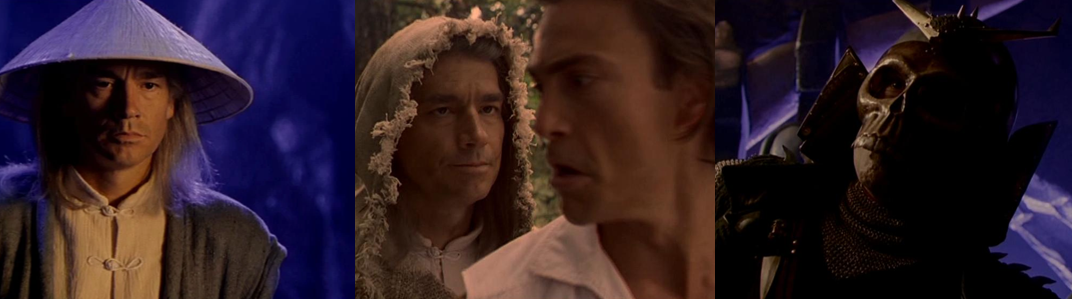
Like the movies, Rayden is presented as a mentor figure, while also giving a rundown on the Mortal Kombat tournament and the different realms that resembles the speeches his big-screen counterpart gave. Though he’s an aloof Thunder God with an odd sense of humour, Rayden directly oversaw Kung Lao’s training and gives him many pointers. However, Rayden is forbidden from directly interfering in mortal affairs, especially Mort Kombat, unless the unseen Elder God’s vaguely defined “rules” are broken, as the entire point is that mortals must defend their worlds. Often cryptic and mysterious, Rayden gives just enough hints, often pushing people where they need to be and surreptitiously manipulating them as required. Rayden sees things in very different terms to mortals, however, despite his clear love and affection for them. For him, it’s a simple choice of duty that Kung Lao accepts the responsibility of being Mortal Kombat champion and that the perks of being effectively immortal and serving the greater good outweigh fleeting love and friendships. Still, though exasperated with Kung Lao, Rayden understands his affection for Jen and helps point him find Scorpion by encouraging Kung Lao to figure out his visions. Jeff Meek pulls double duty as Shao Kahn, a menacing figure also handicapped by the Elder Gods’ rules since he cannot directly invade or attack Earthrealm without dire consequences. A master manipulator, shrewd warrior, and cunning strategist, Shao Kahn is constantly thinking up ways to bend or get around these rules, using hidden portals and third-party assassins and mercenaries and thus give Outworld the edge. Although not quite a petulant, childish figure like his movie counterpart, Shao Kahn is prone to fits of rage and mood swings that see him switch from morose and bored to spiteful and angered on a dime. Though he admires Shang Tsung’s ambition, Shao Kahn is a demanding, ruthless, and spiteful emperor, banishing Shang Tsung to the cobalt mines for his failure and deeply humiliated by Kung Lao’s victory.
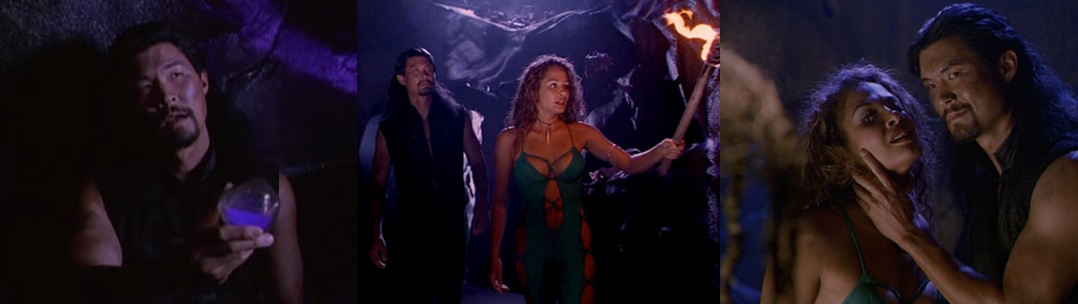
However, in these first two episodes, Shao Kahn is merely a puppet master as he sets in motion many of the events and standards the series will follow. Shang Tsung stars as Shao Kahn’s loyal servant and greatest warrior, with aspirations of ruling alongside his emperor. However, he loses favour when he’s humbled and humiliated by Kung Lao, who shows him mercy, perhaps the greatest dishonour Shang Tsung could face. Shang Tsung’s disgrace and lust for revenge runs deep as he preyed upon Kung Lao’s insecurities and used his decades of fighting experience to put the Shaolin warrior on the ropes, only to be publicly defeated for the first time in who knows how long. Despite knowing Shao Kahn better than perhaps anyone, Shang Tsung begs for death rather than endure the constant torture inflicted upon him following his failure. Shao Kahn cruelly grants a reprieve by banishing the sorcerer to the cobalt mines, though the sorcerer’s powers aren’t negated there like the other inmates. While there, Shang Tsung aligns with the scheming Vorpax (Tracy Douglas), who’s immediately enticed by Shang Tsung, seeing him as a chance to escape. Although Shang Tsung is immune to her charms, asserting dominance over her, he’s convinced to bring her under his heel to get his revenge. Shang Tsung believes he’ll regain Shao Kahn’s favour if he kills Kung Lao and steals his soul. He thus uses black magic to bargain with the soul trapped within a scorpion and have it infect Takada, casting Scorpion as the first of many minions to target the Mortal Kombat champion.
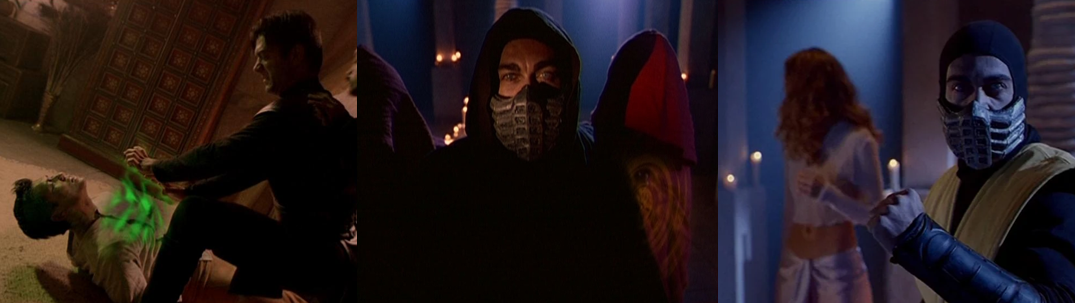
With Shao Kahn brooding in his palace and Shang Tsung confined to the cobalt mines, franchise favourite Scorpion acts as the primary antagonist here. Despite Mortal Kombat: Conquest set well before Hanzo Hasashi was born, it would’ve been folly not to include one of the most popular characters so the show dreams up a brand-new origin for Scorpion. To be fair, we never got any exposition about him in the films so it’s not really contradicting anything there. In this context, Scorpion was a deadly warrior confined to a real scorpion and stolen by Shao Kahn from a conquered realm. Thanks to Shang Tsung, Scorpion possesses Takada, one of the baron’s guards. While Takada was friendly with Kung Lao, he becomes a vindictive villain once consumed by Scorpion’s wicked demeanour. Mortal Kombat: Conquest gives Chris Casamassa a chance to flex his acting muscles alongside his physical ones, portraying Takada as a genial and loyal friend and Scorpion as a spiteful and cruel warrior. Sure, his line delivery is overly theatrical (“I’m going to kill you, Kung Lao” always makes me chuckle), but his fighting skills more than make up for it. Scorpion gains a new ability here to bring others under his sway, enchanting the Shaolin monks to give Siro and Taja someone to fight in the finale. Scorpion still has his snake-like spear-thing, which looks worse than ever and is easily dispatched by Kung Lao, though it’s okay as the Kung Lao/Scorpion fisticuffs are a highlight of these episodes. Scorpion even pulls off his teleport punch and creates ripples that impact the entire series – and Kung Lao’s life – by murdering Jen with a shitty looking fireball, returning to plague our heroes a few times despite inexplicably dropping into Hell (or the Netherrealm) upon defeat.
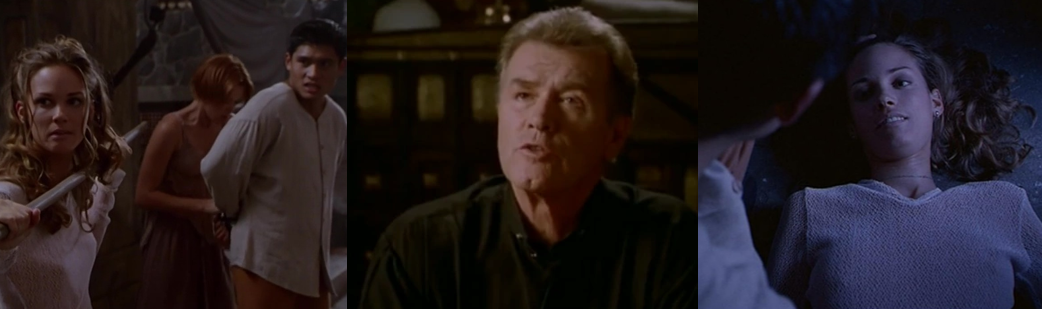
If there’s a weak link in Mortal Kombat: Conquest, it is and has always been Jennifer Renton’s atrocious acting. Sure, she’s pretty enough but her delivery is robotic and impassionate and it’s legitimately painful whenever she’s on screen. Jen is extremely familiar with her bodyguard, Siro and Jen jumps at the chance to elope with Kung Lao for true happiness, which at least emphasises that she’s not as materialistic as her father. Jen surprisingly gets physical when she works with Taja to free Kung Lao and holds her father at spear-point, heartbroken at him forcing her to choose between the two men she loves. Jen’s recklessness costs her in the end, though, when she tries to interfere in Kung Lao’s fight with Scorpion and gets herself killed, ultimately gifting him the trading post to use as his base for the series. The greedy, cantankerous Baron Reyland operates from this central hub for trade and business in Zhu Zin, and cares only for profit and the power associated with money, believing his little empire to be more important than matters of life and death for the entire realm. When Kung Lao asks for his blessing, Baron Reyland treats the conversation like a trade dispute, criticising Kung Lao’s lack of financial prospects, despite being “well aware” of Mortal Kombat and its stakes. Baron Reyland demands Kung Lao abandon his faith or be forever denied access to his “property” (Jen), even threatening to have him executed if he persists. Thus, already angered at Siro’s betrayal and Jen’s rebelliousness, the baron praises Takada in apprehending Kung Lao and seemingly relishes ordering his execution. Baron Reyland is affronted when Jen and Taja save Kung Lao, disgusted and amazed at his daughter’s betrayal, but is offended when Takada employs sorcery to subdue Kung Lao. This proves to be the baron’s undoing as he’s impaled during the scuffle, though he makes amends with Kung Lao as he dies so…all’s well that ends well, I guess?
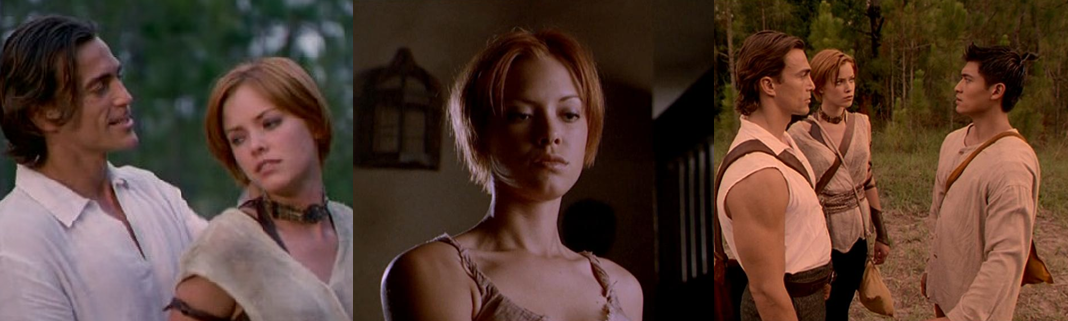
Finally, Kung Lao crosses paths with two characters who stick by him throughout the series: prideful and devoted bodyguard Siro and scrappy thief Taja. Siro is constantly at Jen’s side and, wishing only the best for her, allows her to leave with Kung Lao and humbly admits his betrayal to his master, taking his banishment despite the crippling blow to his pride and professional stature. An outspoken sceptic, Siro’s uncomfortable when visiting the Temple of Light with Jen and thus amazed when “Takada” leaps from the trading post without breaking his legs. Siro immediately gets off on the wrong foot with Taja when she and her cohorts attack him and Jen at the Temple of Light, with Siro easily besting the gorgeous thief and locking her up. However, Siro sets this aside following his encounter with Rayden and teams with Taja and Kung Lao to rescue Jen. Like Kung Lao, Siro is heartbroken at Jen’s death and despondent about his future before finding new meaning in aiding Kung Lao. Taja is equally cynical but more because of her harsh life stealing and fighting for survival. Defiant even when apprehended by Siro, Taja relies on her smart mouth when physically overpowered or shackled, visibly disgusted at being the baron’s slave and his advances towards her. When she learns of Kung Lao’s pending execution from an incognito Rayden, Taja’s compelled to intervene to ensure her own survival and out of gratitude for him sparing her life. Taja’s not afraid to fight dirty but pays her debts, quickly befriending Jen and showing regret at her harsh life and resorting to thievery, while also seeing it as the reality of her situation, confiding in Kung Lao that she dreams of the kind of luxuries Jen enjoys. Her insight into the baron’s dungeon serves Kung Lao well, as does her stealthier approach to situations as opposed to simply going in half-cocked. The experience changes Taja for the better, giving her an opportunity to do something useful with her life and, despite her doubts, she volunteers to aid Kung Lao in preparing for the next tournament.

The Summary:
I’ve always been a fan of Mortal Kombat: Conquest. It’s cheesy in just the right ways, with a lot of action and some fun reinterpretations of the videogame characters and their lore. Having said that, these aren’t the best episodes of the short-lived series. This makes sense in a way as they’re primarily designed to establish the characters, the show, and its format: Shao Kahn is a looming threat, Shang Tsung plunders the mine for new opportunities for revenge, and our three protagonists face constant battles both to gel as a team and define their destinies. This is all nicely laid out here but there are also some oddities. Kung Lao successfully defends Earthrealm and is charged with preparing for the next tournament, which isn’t for a “generation” (approximately twenty and thirty years). The Elder Gods decree that Kung Lao won’t age, but does that extend to his allies? I guess so, but I feel like the series might’ve benefited from taking place building to the next tournament. Kung Lao questions why Rayden can’t teach the new fighters and this is a great point as Rayden himself states that he’s guided Kung Lao’s training, and Kung Lao was trained to become as good as he is by the Order of Light, so all he really has to offer is first-hand insight into fighting Outworld’s forces, something I’m sure others could impart. Still, while Zhu Zin is obviously a set, it’s always bustling with extras thanks to being a market town and the restricted space is masqueraded (or, at least, justified) quite well. Also, although the violence of the videogames is again severely toned down, there’s still a fair bit of death and danger here. While this is largely embodied by Shang Tsung and Scorpion, who reduce people to ash or murder them with fireballs, Kung Lao’s not to be trifled with either as he’s not above killing when necessary.
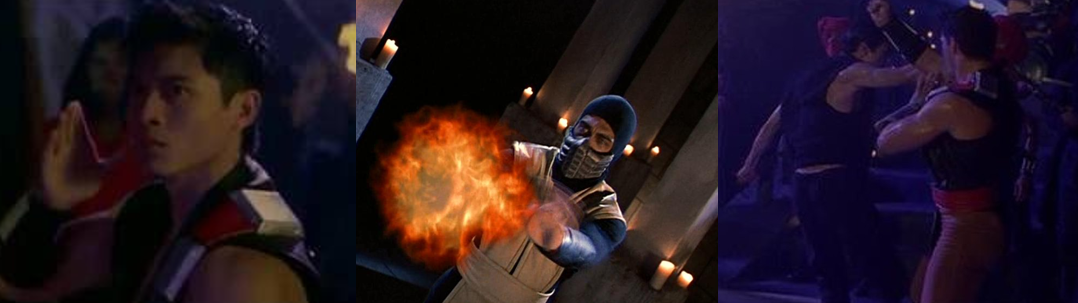
Regardless, Mortal Kombat: Conquest also evokes the movies with its intro sequence and the techno-beat soundtrack that punctuates each fight, and by including some interesting references the source material. Costume design remains as accurate to the videogames as in the first movie. Though it’s disappointing Kung Lao only dons his Mortal Kombat II (Midway, 1993) look for a brief scene and Rayden also ditches his iconic hat, I liked Rayden’s robes, Scorpion looks exactly as he did in the first movie, and Shang Tsung closely resembles his Mortal Kombat II appearance. It honestly doesn’t and wouldn’t make sense for Kung Lao to don that outfit anyway as that’s what his successor wore, but it would’ve been nice to mix up Kung Lao’s wardrobe by bringing it back, especially as they went to the trouble of making it. Shao Kahn veers towards cosplay at times, perhaps explaining why he only wears his helmet for one scene. He cuts an intimidating figure (even more so considering it’s Meek in a dual role) and I like the shattered skull mask he wears, but he can look a little goofy at times. Outworld is expanded to include Shao Kahn’s cold and empty throne room and the dingy cobalt mines, which rob anyone not from Earth of their supernatural powers. Jeff Meek shines as Rayden, channelling Christopher Lambert’s playful spirit of and marrying it with the demeanour of an exhausted teacher. While he admires human spirit and encourages free will, Rayden impresses the importance of preparing for the next tournament upon Kung Lao and, when he insists on defining his own destiny, Rayden assumes the guise of a beggar to manipulate Siro and Taja into helping Kung Lao escape from Baron Reyland. Rayden knows exactly how to manipulate Siro, questioning his integrity and insulting his pride to push him back to Zhu Zin to aid Kung Lao. Bruce Locke equally steals the show by channelling Cary-Hiroyuki Tagawa’s energy and menace to present Shang Tsung is a ruthless and vicious fighter who delights in stealing souls and is consumed with the need to avenge himself.
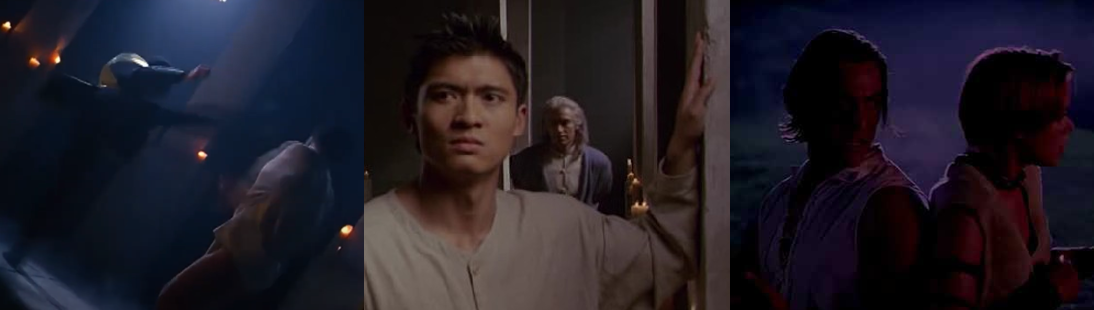
While the visual effects are often cartoonish, they’re clearly secondary to more traditional displays of martial arts and stunt work. Although the actors partake in each episode’s fights as much as possible, with Bruce Locke and Daniel Bernhardt putting in more of the work (thanks, largely to the latter’s unique stature and legitimate martial arts background), obvious stunt doubles are used for each fight, with Kristanna Loken noticeably being supplanted. While it’s jarring to edit close ups of the actors to sell the illusion, the fights are very well choreographed, with Christopher Leps, Marcus Young, J.J. Perry, and others bringing a grace and tactile believability to each. The battle between Kung Lao and Shang Tsung reflects the animosity between the two, with Shang Tsung growing increasingly frustrated and Kung Lao exuding the speed and precision that made him Earthrealm’s finest. Even when saddled with perhaps the fakest sword I’ve ever seen, Daniel Bernhardt shines, largely because you recognise that the actor is performing many of his stunts and fights. Siro isn’t as slick and graceful as Kung Lao but exudes physical power, having great reach with his kicks (his flying kick being particularly impressive), even if he is out of his depth against more otherworldly opponents. Though she lacks Kung Lao’s skill and Siro’s raw power, Taja is a scrappy fighter who uses underhanded tactics and is seemingly fearless. Kung Lao’s battles with Scorpion are an obvious highlight, with Casamassa bringing an aggression to Scorpion that paints him as a force to be reckoned with, even more so when tossing his snake-like appendage about (not a euphemism). It’s good that the action is so impressive as the drama between Kung Lao and Jen really drags these episodes down, largely because they lack chemistry and Renton’s awful performance. The sting of these scenes is eased by Meek’s theatrical performance as Shao Kahn, his dry sense of humour as Rayden, and a fun energy to the episodes. I got the sense everyone was having a good time and trying their best to start something, and the framework is definitely here, it would just take a few episodes to be as good as it could be.
My Rating:
Pretty Good
Were you a fan of Mortal Kombat: Conquest back in the day? If so, what did you think to these first two episodes? Do you think I was too harsh on Jennifer Renton or do you agree that she was terrible? Which of the three main characters was your favourite and did you enjoy their chemistry? Were you surprised that Jeff Meek played two roles? What did you think of Scorpion’s new origin? Would you like to see a revival of Mortal Kombat: Conquest, or a new TVG show? How are you celebrating Mortal Kombat today? Whatever you think about Mortal Kombat: Conquest, leave a comment below, go check out my other Mortal Kombat content, and sign up to my Ko-Fi to suggest other Mortal Kombat: Conquest episodes for me to cover.


This show was shockingly watchable for what it was
LikeLike
I’ve always really enjoyed it, and all the actors speak very highly of it
LikeLiked by 1 person