
Upon the release of Pokémon: Blue Version and Pokémon: Red Version (Game Freak, 1996), a new craze swept through playgrounds. An entire generation grew up with Pokémon, as clever marketing saw it become a massively lucrative and popular multimedia powerhouse. Accordingly, February 27th is recognised as “National Pokémon Day”, which I expanded to an entire month of Pokémon this February, which is even more fitting given that February 6th is the day that Mew gave birth to my favourite Pokémon, Mewtwo!


Released: 10 May 2019
Director: Rob Letterman
Distributor: Warner Bros. Pictures
Budget: $150 million
Stars: Justice Smith, Ryan Reynolds, Kathryn Newton, Bill Nighy, Suki Waterhouse, Ken Watanabe, and Rina Hoshino/Kotaro Watanabe
The Plot:
When his ace detective father goes missing, Tim Goodman (Smith) reluctantly teams up with his Pikachu partner (Reynolds) and aspiring report Lucy Stevens (Newton) to unravel the mystery.
The Background:
Pokémon is no stranger to the silver screen. The aptly-titled Pokémon: The First Movie: Mewtwo Strikes Back (Yuyama, 1998) was a box office success that kick-started a slew of feature films, though development of a live-action venture didn’t gain momentum until 2016. Rather than adapt the incredibly popular and long-running anime series, director Rob Letterman pitched a story inspired by the well-received Detective Pikachu spin-off (Creatures, 2016) to incorporate a talking version of the franchise’s beloved mascot. Ryan Reynolds won out over names like Danny DeVito and Dwayne Johnson to land the titular role, providing both the voice and motion-capture for Pikachu. The Pokémon were brought to life through a combined effort by multiple visual effects studios, who opted for a photo-realistic aesthetic that saw the effects team closely studying the videogames, anime, and previous 3D representations of the pocket monsters. With an impressive worldwide box office of just over $450 million, Pokémon: Detective Pikachu broke the curse often associated with videogame adaptations and was the most successful film of its kind for a time. The reviews were largely positive, praising the surprisingly emotional narrative, Reynolds’ wise-cracking performance, and fan service on offer. Though some criticised the pacing and effects work, a sequel was announced just before the film’s release; however, as of this writing, it’s still very much in the developmental phase.
The Review:
Pokémon: Detective Pikachu takes place in Ryme City, a bustling, neon-drenched metropolis billed as a utopia for humans and Pokémon alike to live and work together in harmony. The city was built by billionaire tycoon and Pokémon advocate Howard Clifford (Nighy), a disabled visionary who poured his heart and soul into protecting Pokémon and fostering positive relations between them and humans. Much of this is related to the audience during Tim’s train ride to the city and in a format not unlike the “Welcome to the World of Pokémon” introductions included in many of the animated features, and is a fun way to show how Ryme City sets itself apart from other regions and locations. There, Pokémon battling is banned and people are discouraged from having PokéBalls. The relationship between humans and Pokémon is supposed to be more symbiotic and mutually beneficial, though that doesn’t stop everyone Tim meets asking where his “partner Pokémon” is. We’ve seen similar cities to this in the videogames and anime; indeed, the idea of humans working alongside Pokémon has been present since the first games. However, it’s presentation in this decidedly Blade Runner (Scott, 1982) inspired environment is not just to stuff in a load of Pokémon cameos but also to acclimatise viewers to the idea that, in this world, Pokémon are real and integrated into society. Still, the world of Pokémon: Detective Pikachu should be instantly recognisable to series fans and the film thankfully doesn’t bog down its run time with heavy handed exposition into its mechanics. This may be somewhat alienating to newcomers but it’s pretty clear from the title and the presentation who this film is aimed at, and I appreciate that it embraces the concept and plays it straight. It also has some tenuous ties to both the anime and the videogames: Mewtwo is said to have “escaped form the Kanto region” twenty years ago and Pikachu tearfully sings the anime’s original infectious theme song at one point, meaning the film can easily be seen as an extension of one or the other (or both, if you like). Layman viewers are tossed a bone in the main character, Tim, who is noticeably distinct from every other character he meets in that he doesn’t have a Pokémon partner and seemingly has no interest in the creatures.
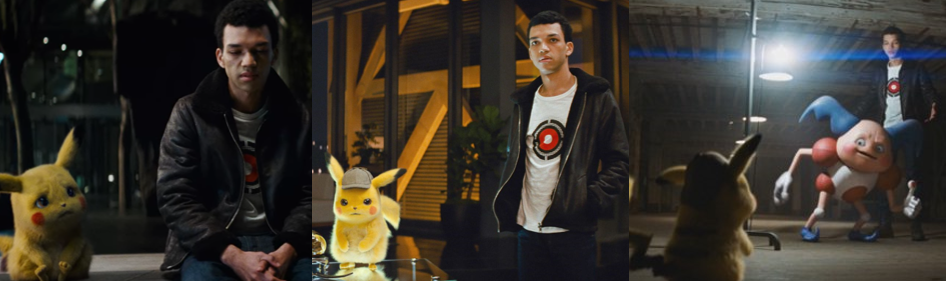
Again, this isn’t something new; the animated features often include characters either wary of or disinterested in Pokémon. Tim was an avid Pokémon fan as a kid; young Tim (Max Fincham) followed and participated in battles, collected the cards, and lived the Pokémon life. However, that all changed when his mother died; this drove a wedge between him and his father, who threw himself into work with the Ryme City Police Department, leaving Tim to be raised by his grandmother (Josette Simon) and grow up resenting both his father and the Pokémon he preferred to spend time with. Rather than growing up to be a Pokémon Trainer, Tim takes up a tedious job in insurance and has no interest in partnering with a Pokémon but ends up lumbered with his father’s cheeky Pikachu partner when he travels to Ryme City following his dad’s sudden death. Tim’s clearly shaken by his father’s demise and wrestling with conflicting emotions. He struggles to express himself when meeting with Harry’s friend, Lieutenant Hideo Yoshida (Watanabe), who relates that Harry always loved his son. This is little comfort to Tim, who’s clearly rattled at being denied the chance to get some closure and just wants to get home as quickly as possible. The deerstalker-garbed Pikachu completely upends that, however, since Tim can strangely understand the pint-sized detective. Tim initially reacts to this with shock and horror, believing he’s either going mad or has been adversely affected by a mysterious purple gas he discovers in Harry’s apartment. Even when he accepts that no one can understand Pikachu but him, Tim is reluctant to assist the Pokémon in figuring out what happened to his partner. Believing he lacks the same detective skills and expertise as his father, Tim repeatedly shuns Pikachu, who latches onto him out of desperation since he’s suffering from amnesia but feels it “in his jellies” that there’s more to Harry’s death than the media and the police want to admit. Pikachu’s insistence is infectious, and Tim reluctantly agrees to help with his investigation, aiding Pikachu by talking to humans for information while Pikachu interrogations Ryme City’s Pokémon. Though he’s uncomfortable carrying Pikachu on his shoulder and indulging his hairbrained theories, Tim proves a great asset when they question Harry’s informant, a Mr. Mime, leading to a hilarious moment where Tim threatens (through pantomime) to light the Pokémon on fire!
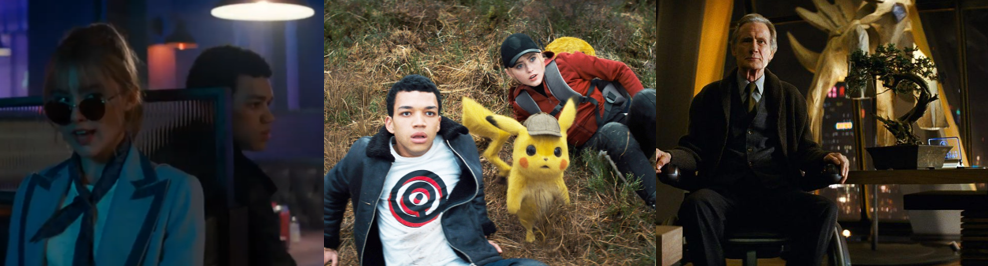
Tim also provides Pikachu with the strongest lead in their muddled case when he’s accosted by aspiring reporter Lucy Stevens and her Psyduck (Michael Haigney). Struggling as an unpaid intern repeatedly ignored and chastised by her peers, Lucy is desperate to break a big story and senses that something’s amiss about Harry’s death. This is primarily because she has acquired several vials of the purple gas Harry was investigating, a strange substance known as “R” that temporarily drives any Pokémon that inhale it into a blind rage. Though he claims otherwise, Tim is clearly smitten by Lucy (and, honestly, I don’t blame him) and, while he doesn’t tell her the truth about Pikachu, he does review her notes and work with her to figure out what’s going on. Pikachu tries to help Tim flirt with and grow closer to Lucy, but despairs when Tim proves to be awkward around her and lack game. However, Lucy doesn’t seem to mind and finds the troubled young man charming, even when he’s stumbling over his words or making a fool of himself. While Yoshida believes Harry perished in a car crash, Clifford’s advanced holographic technology shows the detective survived and that both Mewtwo and Pikachu were at the scene, compounding the mystery further by naming his resentful son, Roger (Chris Geere), as the one behind the R. Thanks to Lucy’s digging, Tim learns of an abandoned research facility where Mewtwo was held against its will and harvested to synthesise R, and all signs point to the genetically engineered Pokémon turning its wrath on its captors and, by extension, Harry, who was contracted to capture it. Though this is clearly the big break Lucy has been looking for, she never abandons Tim in favour of getting her scoop like some fictional journalists. Indeed, they remain united throughout the film, working together to help each other, though Lucy continues to run into obstacles when she desperately tries to warn Ryme City’s inhabitants about the R gas in the final act.
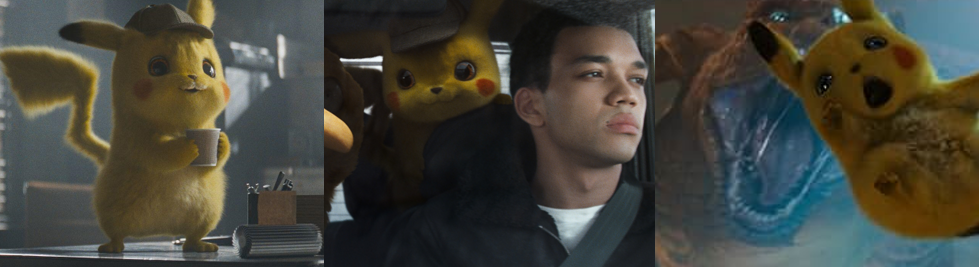
Since he isn’t a detective, Tim’s at a loss about how to investigate his father’s death and even more helpless at uncovering proof that Harry survived. Thankfully, Pikachu is more than capable of carrying the bulk of the detective work. Though he’s suffering from amnesia, he’s no less determined to root through newspaper clippings, articles, photographs, and unturn any stone to find some kind of connection. Fuelled by caffeine and an insatiable lust for solving a good mystery, Pikachu tackles the investigation with gusto, chattering a mile a minute and standing up to any challenge. This bites him in the ass when he and Tim infiltrate an illegal underground Pokémon battle run by Sebastian (Omar Chaparro) and Pikachu’s forced to battle a voracious Charizard to get information from Sebastian, a sequence that showcases Tim has retained knowledge of Pokémon battles, but the amnesia has caused Pikachu to forget how to fight! Pikachu’s stunned to see he was at the scene of the crash and heartbroken when the Pokémon Comprehensive Laboratory (RCL) footage suggests that he betrayed Harry and led to his death/disappearance by freeing Mewtwo. Tim, Pikachu, Lucy, and Psyduck’s desperate escape from RCL sees them eluding not just a contingent of Greninja but also nearly crushed to death by giant Torterra masquerading as a forest, further results of the RCL’s horrific Pokémon experiments. Pikachu is gravely injured during the escape, which deeply upsets Tim. Despite him shunning Pikachu, and all Pokémon, he comes to connect with the adorable pint-sized detective and is devastated at losing him, both because he considers him a friend and partner and also because he’s the last link to a father he never knew. Luckily for them, some local Bulbasaur guide them to Mewtwo, who heals Pikachu and adds a touch more exposition to what really happened before being ensnared by Roger’s drones. However, this brief glimpse leaves Pikachu despondent and he wanders off, believing he’s a danger to everyone, only to stumble upon the crash site and realise it was the Greninja who attacked Harry’s car, not Mewtwo, and rush to help Tim confront the true mastermind behind the film’s events.
The Nitty-Gritty:
Given the movie’s title, it should be no surprise that Pokémon: Detective Pikachu is primarily a mystery story. There’s the obvious mystery surrounding Harry’s unexpected death, which evolves into a mystery about whether he survived or not, what happened to him after the fact, and what role Mewtwo and the Cliffords played in it all. Pikachu, Tim, and Lucy are united in investigating this conundrum, which intersects with all their lives: Lucy’s been investigating the R gas, which was found in Harry’s apartment and produced at RCL, with each step piecing more of the puzzle together for them. Along the way, they’re hounded by numerous obstacles: first, the R gas turns some Aipom rabid, showcasing how dangerous the gas can be, then Tim and Pikachu have to survive a battle with a similarly enraged Charizard, and finally they face persecution from Roger and his minions as they seek to recover Mewtwo and cover up their tracks. All the while, they’re shadowed by Clifford’s mysterious and unnerving bodyguard Ms. Norman (Suki Waterhouse), who turns out to be a Ditto in disguise, and forced to flee from every confrontation since Pikachu cannot remember how to fight and Psyduck’s powers are too unpredictable to be reliable. This means Pokémon: Detective Pikachu doesn’t have many traditional Pokémon battles or mechanics, a fact only exacerbated by Ryme City outlawing battles. Indeed, Sebastian’s arena is the closest thing we get to seeing Pokémon battles; the rest of the time, the characters are fending off or running from Pokémon driven into a frenzy by R. It’s an unusual approach but it seems to serve the narrative well. This isn’t the traditional story of an aspiring Pokémon Trainer earning badges and overcoming a nefarious team of criminals. It’s a young man desperately trying to figure out what happened to his estranged father in a colourful and chaotic world where Pokémon of all shapes and sizes exist.
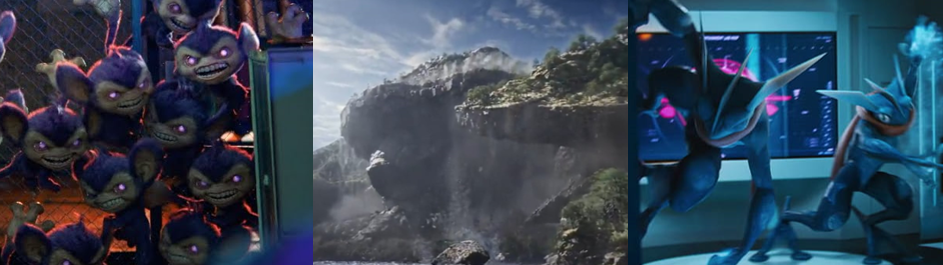
The idea of doing a live-action Pokémon movie had been doing the rounds for some time and many aspiring digital artists had tried to show how the concept would work on the likes of Deviantart, with these efforts being pretty close to the final result. Pokémon: Detective Pikachu is stuffed with all kinds of Pokémon, from Machamp and Snubble working with the police department, to firefighting Squirtles and various Flying-Type Pokémon soaring through the skies of Ryme City. Charmanders walk the streets, Jiggypuff (Rachael Lillis) sings karaoke, Greninja hunt our protagonists, and gigantic Torterra shift the very landscape and it’s all taken entirely in stride. There’s literally nothing unusual about these creatures wandering around as they like and the integration of Pokémon into human society is fun to see, though the CGI can be questionable at times. It’s obvious that most of the work went into bringing Pikachu to life; he’s the most detailed, expressive, and nuanced of all the film’s Pokémon. Everything from his little red cheeks, his glassy and vivid eyes, and the tufts of fur on his body are beautifully brought to life, and he interacts seamlessly with Tim at all times. The same isn’t true of most other Pokémon, unfortunately. While Gengar looks great rendered as a gaseous, leering spirit, Charizard, Machamp, and even Psyduck appear a bit too cartoony. This is largely because the filmmakers stick very closely to the Pokémon’s original designs, which is commendable and definitely brings them to life, but results in them sticking out against the more realistic backgrounds. It’s a bit like Who Framed Roger Rabbit (Zemeckis, 1988) but, whereas it made sense for the Toons to appear as living cartoons, it doesn’t quite work for these supposedly real creatures to appear so fake. I definitely think it works for the most part and I’m impressed that Pokémon: Detective Pikachu includes so many Pokémon and integrates them so well, but I do wonder if the effects might’ve been better served by focusing on a handful of Pokémon. Like, maybe if Ryme City were a little different and Pokémon are largely banned and Clifford was trying to change that, so you’d only see a few different types of Pokémon, freeing the animators to make them look as good as possible. It’s a minor thing, but a noticeable one, for sure.
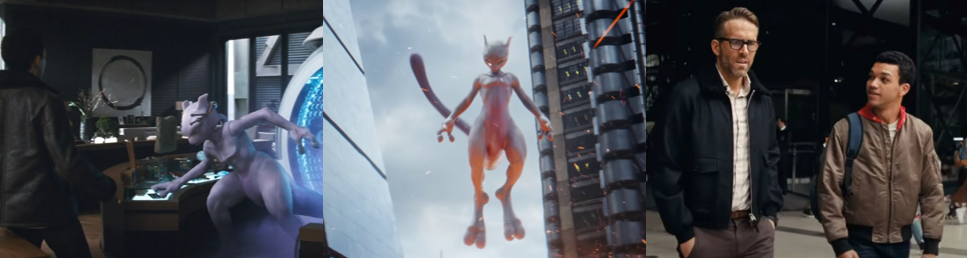
Sadly for me, the Pokémon who suffers the most from this is Mewtwo. Appearing sleek and eel-like, it lacks the armoured, menacing appearance it usually exudes, though it’s no less threatening in its actions. Once again captured and experimented on, Mewtwo flies into a rage and destroys its facility, but is unable to save Harry from the Greninja attack. However, his loyal Pikachu offered to house Harry’s consciousness until Tim could be brought to Mewtwo to reunite Harry with his recuperated body. These revelations all come after it’s revealed that Clifford’s Ditto has been posing as Roger all along (or, at least, for much of the film) and that Clifford was behind everything. Interestingly, Clifford’s goal isn’t world domination or power; it’s to transfer his consciousness out of his crippled body and into the most powerful Pokémon of all. Successfully possessing Mewtwo’s body, Clifford unleashes the R gas throughout Ryme City using a balloon parade, turning all Pokémon feral and leaving them susceptible to his Psychic powers. Again, this isn’t to control them, but rather to use Mewtwo’s hitherto-unknown ability to merge a human’s consciousness with a Pokémon to literally unite the two species in a forced harmony and allow humanity to “evolve” into a better form. While the mismatched Pikachu battles Mewtwo atop the balloons, having rediscovered his Electric-based attacks, Tim fends off Ms. Susan, who assumes various forms (including an unsettling masquerade of Lucy) and removes Clifford’s control device from his prone body, breaking his connection to Mewtwo. Sadly, Lucy isn’t much help during all this as she’s infused with her Psyduck while trying to get the panicked civilians to safety, but she’s charged by the real Roger to break the story after Mewtwo restores everyone to normal. This includes Pikachu and Harry, who returns to full health as Ryan Reynolds and is delighted when Tim decides to stick around and build bridges with his estranged father.
The Summary:
Pokémon: Detective Pikachu has a lot going for it. I really liked the design of Ryme City, how it mixed old and new technologies and East and West in its makeup and echoed the tech-noir design of Blade Runner to be both sleek and futuristic but also grimy and dangerous at the same time. I quite liked Tim’s character and his arc; it’s nothing especially ground-breaking but I think Justice Smith did a great job with the character’s emotions and charming awkwardness. I loved Kathryn Newton; she’s super cute and I liked that they didn’t have her simply be obsessed with her career and screw Tim over for her big break, though she does get a bit shafted in the finale. Ryan Reynolds was also great as the wise-cracking, coffee-obsessed Pikachu. Pikachu is as adorable as ever but given a fun edge through his snarky demeanour and obsession with cracking the case and figuring out what happened to his memories and his partner. It was a bit of a shame to not follow a more traditional Pokémon story and characters, but I think it works well for Pokémon’s first live-action outing. I feel the movie appealed to both long-term fans and newcomers by choosing this format and it help make the presence of these cartoonish creatures more acceptable by focusing on them as just an everyday part of life. Sadly, the effects can be a bit hit and miss; like I said, I think the filmmakers overreached a little by featuring a few too many Pokémon and the CGI does suffer at times as a result. Pokémon: Detective Pikachu also struggles a bit with its pacing; it seems to drag a little in the middle, making exciting sequences seem lifeless in the process, and I wonder if this could’ve been prevented by having Lucy be a Pokémon Trainer and thus injecting some traditional battles to keep the pace up. Still, it’s a fun and heart-warming film that appeals to kids and has some fun content for adults (mostly in Ryan Reynolds’ depiction of Pikachu), and it’s worth it just to see Bill Nighy go on a maniacal rant while possessing Mewtwo’s body!
My Rating:
Great Stuff
Did you enjoy Pokémon: Detective Pikachu? What did you think to the depiction of Pokémon in a live-action aesthetic? Did you like the mystery surrounding Harry and Tim’s depiction as reluctant partner to Pikachu? What did you think to Ryan Reynolds’ portrayal of Pikachu? Were you disappointed that there weren’t more traditional Pokémon battles? What did you think to the CGI and was your favourite Pokémon included here? How are you celebrating National Pokémon Day this year? Whatever your thoughts, drop them in the comments below and be sure to check out my other Pokémon content.

 Dr. K's Waiting Room