
January celebrates two notable dates in science-fiction history, “National Science Fiction Day” on January 2 and Arthur C. Clarke’s HAL 9000’s birthday on January 12. Accordingly, I’m dedicating January to celebrating sci-fi in an event I call “Sci-Fanuary”.


Released: 7 June 2024
Originally Released: 20 December 1991
Developer: Thinking Rabbit
Also Available For: Game Boy, Nintendo 3DS, Nintendo Wii, Nintendo Wii U
A Brief Background:
Capcom developed Mega Man (Capcom, 1987) to establish their name in the renewed home console market, landing themselves a popular franchise known for its excessive difficulty. By 1991, Mega Man was a staple of the Nintendo Entertainment System (NES) thanks to its many sequels and, with the developers busy with Mega Man 4 (1994), Capcom outsourced Mega Man’s first Game Boy title and earned themselves another well regarded success despite Mega Man: Dr. Wily’s Revenge (Minakuchi Engineering, 1991) recycling many elements from Mega Man’s NES titles. Capcom then doubled down and outsourced the franchise to another developer to release a second Game Boy title later that same year, a decision series artist Keiji Inafune apparently believed caused Mega Man II to differ somewhat from other games in the series. Despite a later compilation of Mega Man’s Game Boy adventures being cancelled, this lukewarm remix of a game represented another of the Blue Bomber’s lengthy outings on the Game Boy and has subsequently been ported to Nintendo’s online shops and services.
The Review:
It’s interesting learning that Keiji Inafune believed Thinking Rabbit’s inexperience with the franchise led to Mega Man II feeling “different” from the other Mega Man titles as, for me, the game plays, looks, sounds, and feels exactly like a Mega Man game and is as different from Mega Man: Dr. Wily’s Revenge as Mega Man 3 (Capcom, 1990) is to Mega Man 2 (ibid, 1988). For example, Mega Man II is still a 2D, sidescrolling action/platformer; players can still pick one of four initial stages; and you’ll face a Robot Master (recycled from Mega Man 2) to acquire their signature Special Weapon. Not only that but the game’s controls are exactly the same as those of Dr. Wily’s Revenge, with A allowing you to jump, B or X firing your currently equipped weapon, and + bringing up the pause menu where you can equip a different Special Weapon or use an E-Tank (making their Game Boy debut) to restore your health. Health is again restored by picking up or finding restorative orbs, extra lives are gained from 1-Ups, and your Special Weapons can be recharged by collecting Weapon Energy pods. In addition to Mega Man 3’s password system also returning, Mega Man can now slide through narrow tunnels, beneath enemies and projectiles, and through gaps by pressing down and A. As in Mega Man 3, this feature is useful only in certain stages and circumstances and not explored much beyond taking different forks in paths or perhaps reaching hidden goodies. The same is true of certain ladders, which lead to power-ups or hazards depending on which path you take, though your slides often have to factor in drills, spikes, and potential pitfalls. As ever, you can circumvent much of the game’s difficulty with the Nintendo Switch’s rewind and save state features, though you still have to battle the knockback and large hit boxes that dogged Dr. Wily’s Revenge.
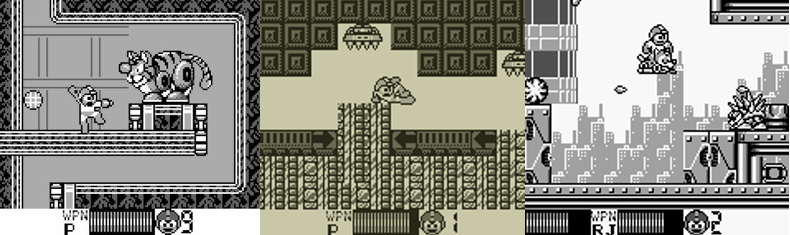
Anyone who’s played Mega Man 2 will recognise the four initial Robot Masters, their stages, their attack patterns, and their Special Weapons and battling them is no different to that game except the arena and screen is much smaller so it’s a lot harder to dodge their attacks. As always, you’re better off tackling each in a specific order to obliterate them with whichever Special Weapon is most effective against them, meaning I tackled Metal Man first to grab his Metal Blade, which cut down Wood Man despite his large Leaf Shield and leaf barrage, which in turn clogged up Air Man (despite his mini tornados filling the arena), which of course gave me the edge over “Clash Man”. This latter was probably the toughest fight as “Clash Man” doesn’t just jump around and damage you with his giant hit box like the others; he also drops a delayed explosive charge that can be tricky to dodge. Defeating Metal Man, Air Man, and “Clash Man” awards the three Rush “items” that debuted in Mega Man 2. These allow you to spring up to higher platforms, fly over bottomless spits or spike beds, or easily cut through underwater areas with Mega Man’s robotic canine, Rush. While these turn the game into a short sidescrolling shooter, you must keep an eye on your energy meter or you’re like to be sent plummeting mid-flight. After besting the first four stages, you’re transported to four more levels from Doctor Albert Wily’s space station, with these themed around stages and bosses from Mega Man 3. You’ll face Needle Man, Magnet Man, Hard Man, and Top Man, with each being exactly the same as in their NES title and bestowing the same Special Weapons (which, honestly, I only found useful for defeating their counterparts). Finally, you’ll battle Quint, an upgraded and corrupted future version of Mega Man who bounces around on Sakugarne, a pogo-stick-like item that is surprisingly useful against the final boss.
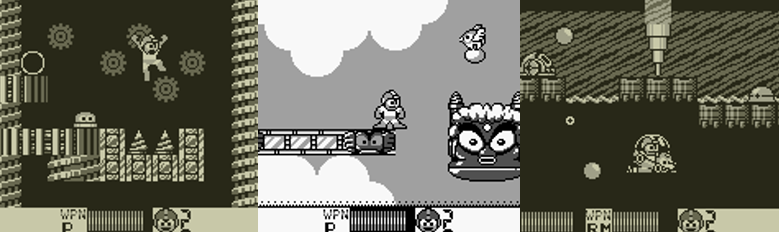
The difference between Dr. Wily’s Revenge and Mega Man II isn’t readily apparent from the title screen alone, despite the noticeably jauntier music, but does become more obvious once you get into the game. Stages are longer and far more detailed, with gears, cogs, and a mess of drill-like platforms adorning Metal Man’s stage (alongside those conveyer belt-like platforms from Mega Man 2). Wood Man’s stage features a surprisingly detailed forest and tree trunk interior, Air Man’s stage is in the clouds and features girders and Mega Man 2’s “Goblin” platforms, and “Clash Man” resides in an ugly mess of pipes. As in the last game, Mega Man flies into space to confront Dr. Wily, though there’s now an additional cutscene where he drops you into a trap and you’re teleported to four additional stages rather than battling through different levels of Dr. Wily’s base. Needle Man’s stage has a large city in the background and essentially takes place on a construction site, while Magnet Man’s is also in the sky, with clouds obscuring enemies and you crossing gaps using the Mag Fly enemies. Hard Man’s stage is much more basic, being simple steel platforms and a plain background, while Top Man’s reminded me of a botanical garden with its glass tubes containing leaves. This latter stage, and Wood Man’s, contain underwater sections where you’re better off using Rush Marine than risk the floaty jumps. Disappearing/reappearing platforms make a return, as do insta-kill spikes, and you’ll be taking out Kaminari Goros to ride their cloud platforms across gaps. Large vertical shafts, different ladder designs (now with transparency), cannons, blind drops, and those rail-based platforms from Mega Man 2 all make appearances. When you explore Dr. Wily’s base, it sports a bizarre clock aesthetic and multiple narrow shafts and tunnels, while the ending cutscene again mirrors Dr. Wily’s Revenge by being in space and featuring a roll call of the game’s bad guys. Speaking of which, Mega Man II features far more enemy variety, recycling baddies from Mega Man 2 and 3 but I’ll take that over the handful of lame enemies seen in Dr. Wily’s Revenge.
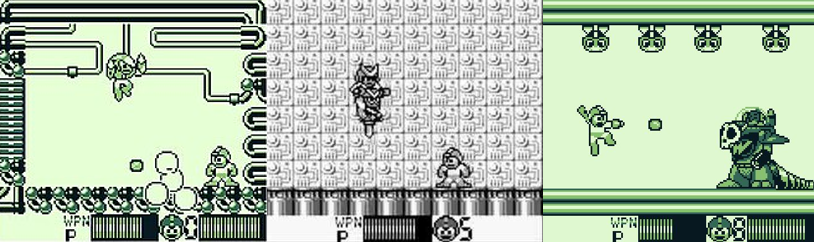
While Mega Man II performs much better than its predecessor and sports a greater number of large enemy sprites, there are still many moments where the game suffers from slowdown, screen tearing, and sprite flickering. It feels like a far bigger game thanks to you being transported to additional stages rather than straight to boss battles in Dr. Wily’s space station, though it still suffers from a lack of originality in its level design and a failure to better incorporate the various Special Weapons into each stage beyond using Rush Marine or Rush Jet to bypass certain obstacles. Drills, clamps, respawning enemies, rushing robot chickens, mechanical apes, and robots with fans in them dog your progress as much as totem poles, robotic birds, and giant mechanical cats. Bola-throwing Joes, spiked hedgehogs, and large spiked weights all make appearances alongside the usual bottomless pits, with some enemies positioned in ways that require your Special Weapons (though you’ll need all your energy for the Robot Masters). This game’s newest “Mega Man Killer” is Quint, but he’s a pretty lame penultimate boss despite his lack of a health bar. You simply slide under his pogo jump, watch for the rocks he kicks up, and blast him in the head. His Sakugarne is pretty difficult to control, but you can use it to land a lot of hits on Dr. Wily in the final confrontation, since his only weak spot is his cockpit. Dr. Wily battles you in three craft, flying between them in his little UFO vehicle, with the first being a mech walker that fires bouncy bombs and a low needle shot. Defeating that sees him switch to a tank-like vehicle and gain a cannon shot, while the third phase has him in a stationary dragon-like mech that drops missiles, rains enemy robots onto you, and tries to smash you with its extendable skull. If you’ve collected a bunch of E-Tanks, these battles are tough but mostly do-able. It helps that there’s not loads of projectiles and slowdown to deal with, though the rewind feature is obviously your saving grace.

The Summary:
Mega Man II represents a bit of a step up from Dr. Wily’s Revenge, but not much. It’s literally the same as the differences between Mega Man 2 and Mega Man 3, with Mega Man II adding only one brand new weapon to your arsenal (the Sakugarne), though it does recycle Special Weapons and the Rush abilities from those two NES titles. Sadly, they’re not utilised all that much; again, I can forgive this given the restrictions and limited hardware of the Game Boy, but it would still be nice if the game had found some way to incorporate Rush more prominently. Although the Game Boy still struggles to render all the action, Mega Man II performs far better than its predecessor, is much bigger, and features far more detailed environments. Some of them might be an eyesore but it’s still impressive given the hardware, and I always enjoy seeing it render large enemy sprites (even if they are immobile). The enemy variety was also much appreciated and a big step up from the last game, even if they are all recycled, and the music was pretty catchy, too. The hit boxes remain a frustrating obstacle, but Mega Man II seemed more forgiving in this regard, though more challenging overall with its longer stages, greater hazards, and the inclusion of four additional stages prior to the additional Robot Masters. In many ways, it’s simply a repeat of the last game but with more to look at and accomplish, which is enough to bump the score up ever-so-slightly, but there’s still a lot of room for improvement for it to match-up to its NES counterparts.
My Rating:
Pretty Good
Did you own Mega Man II back in the day? How do you feel it compares to Mega Man: Dr. Wily’s Revenge? Which order did you challenge the Robot Masters? Were you disappointed by Quint? What did you think to the inclusion of four additional stages in Dr. Wily’s space station? Which portable Mega Man game is your favourite? How are you celebrating the science-fiction genre this month? Whatever opinions on Mega Man II, leave them below and be sure to check out my other Mega Man reviews!

 Dr. K's Waiting Room
3 thoughts on “Mini Game Corner: Mega Man II (Nintendo Switch)”