
Over the years, there have been many theories about when the world will end but one of the more prevalent was the mistaken belief that doomsday would befall us on December 21st 2012 based on the Mayan calendar ending on this day. Of course, not only did this not happen but it wasn’t even based on any actual fact to begin with. Nevertheless, I figured today was a good day to celebrate this popular concept.


Released: 8 May 1998
Director: Mimi Leder
Distributor: Paramount Pictures / DreamWorks Pictures
Budget: $80 million
Stars: Elijah Wood, Téa Leoni, Robert Duvall, Morgan Freeman, Ron Eldard, Leelee Sobieski, and Vanessa Redgrave
The Plot:
When journalist Jenny Lerner (Leoni) badgers United States President Tom Beck (Freeman) about a White House scandal, the world discovers that teenager Leo Beiderman (Wood) spotted a world-ending comet heading for Earth and veteran astronaut Captain Spurgeon “Fish” Tanner’s (Duvall) leads a mission to destroy it.
The Background:
The origins of Deep Impact can apparently be traced back to the late-seventies, when producers Richard D. Zanuck and David Brown proposed remaking When Worlds Collide (Maté, 1951) to Paramount Pictures, a project which stalled for many years. Things took a turn when they tried to get Steven Spielberg involved and he combined the idea with his hopes of adapting The Hammer of God (Clarke, 1993), though he was unable to direct due to his commitments to Amistad (Spielberg, 1997). By the time Mimi Leder took over as director, the film’s production and release coincided with that of Armageddon (Bay, 1998), a similarly-themed disaster movie that was directly compared to Deep Impact by the press. Author Arthur C. Clarke was left disgruntled when he was omitted from the film’s credits after influencing the concept, CNN apparently refused to be involved, leading to MSNBC lending their name to the narrative, and Leder claimed on the DVD commentary that the budget didn’t allow for the production to show perspectives from outside the United States. Real world scientists and astronauts were reportedly brought onboard as consultants and the film’s harrowing scenes of destruction were handled by legendary effects studio Industrial Light & Magic, who used both traditional miniatures and model work alongside cutting edge CGI water rendering to depict the comet’s disastrous impact. Deep Impact proved a commercial success with its near $350 million box office and held the record for the biggest opening weekend for a female-directed film for some ten years. Reviews, however, were mixed, with some praising the brooding tone and others criticising the wooden performances. Still, Deep Impact is generally regarded as being more scientifically accurate than Armageddon and has been considered to be the more nuanced and mature of the two productions.
The Review:
If I had £1 for every time Hollywood released a world-ending asteroid movie in 1998…I’d have £2. Which isn’t a lot, but it’s weird that it happened twice, right? On paper, Deep Impact and Armageddon have the same premise (the Earth is threatened by an extinction-level event) and a group of astronauts try to save it with nuclear weapons, but their presentation couldn’t be more different. For me, I’ve always preferred Armageddon and have always seen Deep Impact as a bit of a cheap knock-off so, spoilers, I don’t rate this one too highly. Unlike Armageddon, which largely takes place on the surface of its ridiculously oversized, planet-killing asteroid and in the control centre of the National Aeronautics and Space Administration (NASA), Deep Impact follows a handful of characters from different walks of life and showcases the comet’s threat from different perspectives. The first of these we’re introduced to is aspiring young astronomer Leo Beiderman, the first to spot the comet when it’s about a year away from reaching our solar system. Although his girlfriend, Sarah Hotchner (Sobieski), teases him that he’s simply misidentified an existing star, his discovery is verified as not only true but a significant threat by professional astronomer Doctor Marcus Wolf (Charles Martin Smith), who then promptly dies racing to alert the authorities to the danger. Quite how anyone learns of the comet in the year gap that then passes isn’t explained. It’s hinted that documents were recovered from the crash, though Dr. Wolf’s car went up in a massive ball of flames so I’m not sure how the government learned of the comet or came to the erroneous conclusion that Leo also died in the same accident. Still, the United States government spends the next year covertly preparing for the comet’s arrival, secretly colluding with the Russians to construct a space craft and nuclear bombs capable of deflecting it and also digging out caves in case the worst should happen. These contingency plans don’t bring much comfort to Secretary of the Treasury Alan Rittenhouse (James Cromwell), who resigns to be with his family and make his own preparations for what could potentially be the end of all life on Earth.

Rittenhouse’s resignation raises questions over at MSNBC, where ambitious journalist Jenny Lerner investigates the story, believing it to first be a dead-end gig compared to landing the coveted anchor chair and then a convoluted cover-up for an illicit scandal in the White House. However, after questioning Rittenhouse, Jenny’s puzzled to find him stockpiling food and referring to his assumed mistress, Ellie, as “E.L.E”. Though frustrated at being lumbered with the boring story and amazed at Rittenhouse’s ego, Jenny’s terrified when she’s suddenly accosted by the Secret Service and brought to the President himself, Tom Beck, a stern man who remains tight-lipped about what, exactly, the E.L.E. is but offers to advance her career by giving her a prime spot at the press conference where he reveals the truth. Desperate to be taken seriously, Jenny jumps at the chance, ignoring minor concerns like national security and public panic, but even she is left speechless at the announcement of an Extinction-Level Event (hence “E.L.E.”) and the plan to defend the planet. From there, Jenny earns herself the anchor spot and becomes the face of the Messiah’s mission, delivering bland, robotic addresses to the public as only the dull and lifeless Téa Leoni can. Jenny’s given some edge in her dramatic relationship with her parents. Her mother, Robin (Redgrave) later takes her own life after learning she’s ineligible for the cave sanctuary and donating all her worldly goods to the preservation project. Jenny’s estranged father, Jason (Maximilian Schell), starts the film elated to have just married Chloe (Rya Kihlstedt), a woman only two years Jenny’s senior, and desperate to reconnect with his daughter, only to then be accused of being a neglectful father and finally make peace with Jenny as she does something selfless for a change and gives up her spot in the cave to be comforted by her dad. As this comes in the face of the best moment of the film (the city destroyed tsunami), it’s a very emotional moment but I just don’t care for Téa Leoni. Jenny’s an insufferable character, focused only on her career and constantly lashing out like a child, which to be fair ties into her eventual growth when she realises the end is nigh, but her delivery is so wooden and she looks so bored all the time that I have a hard time buying her as this charismatic and developed news anchor.
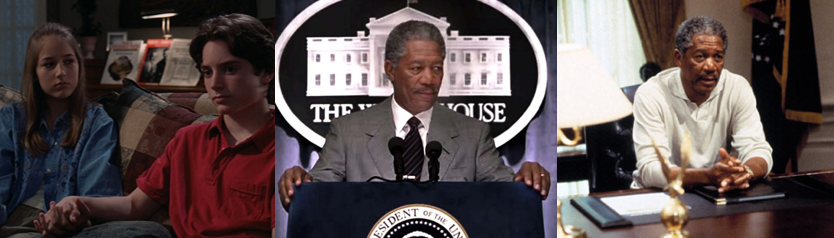
Sadly, Elijah Wood isn’t much better as Leo and seems out of his depth here. Leo is basically a blank slate, walking around in perpetual bewilderment at having a world-ending comet named after him and being celebrated as a hero at his high school. He doesn’t really do all that much until the third act, when he and his family are inexplicably selected to be taken to safety and he coerces Sarah into marrying him so her and her family can be saved, too. However, an administrative cock up sees the Hotchner’s names missing from the list, forcing Leo to journey all the way back to his hometown to rescue Sarah. As the smaller half of the comet, Beiderman, streams overhead and then crashes into the sea, Leo finds Sarah and her family and her parents, Vicky (Denise Crosby) and Chuck (Gary Werntz), force them to get their baby to higher ground. Leo provides more of a grounded perspective on the incoming comet, but the film doesn’t really follow him beyond the start and the third act, meaning he’s stuck with one-dimensional characterisation as a good kid who’s a little overwhelmed and desperate to get Sarah to safety. Instead, the Beidermans and the Hotchners are just another set of characters who spend their time anxiously watching Jenny’s news reports on the comet’s trajectory and the Messiah’s mission to intercept it. Indeed, much of Deep Impact focuses on people just staring at the television, which I guess speaks to the passive helplessness of the masses against this incredible external threat but doesn’t make for thrilling viewing. President Beck makes several addresses ensuring his citizens that “life will go on” and, thanks to Morgan Freeman’s peerless gravitas and delivery, comes across as a strong and trustworthy leader. He’s tough but fair, considers all viewpoints, and plans for both the best- and worst-case scenarios. At the same time, he has a vulnerability to him, one that becomes more evident as each mission meets failure. His attire becomes more formal, changing from a dress suit to a simple rolled up shirt, and his cadence becomes more severe as he prepares the nation for calamity. It’s a stirring performance that really belongs in a better film, and yet the cynic in me wonders what world leader would ever dare be so honest to his constituents!

Like Armageddon, Deep Impact also follows a group of astronauts in a specially built “rocket”. The mission is crewed not by hard and hardy oil drillers but by fully certified astronauts: Commander Oren Monash (Eldard) leads the mission, Andrea “Andy” Baker (Mary McCormack) is the pilot, Doctor Gus Partenza (Jon Favreau) is the chatterbox medical officer, and Mark Simo (Blair Underwood) is the navigator. They even have a token Russian cosmonaut, Colonel Mikhail “Mick” Tulchinsky (Aleksandr Baluev), who’s in charge of the explosives, and are joined by veteran astronaut Captain Spurgeon “Fish” Tanner. While the youngsters respect Fish, they see his appointment as a publicity stunt as he hasn’t been properly trained for the mission. However, Fish soon shuts them down since he’s the only one to log actual space flight time (he even walked on the Moon back in the day) as opposed to training on “videogame” flight simulators. While most of the crew are painfully one-note, they set aside their personal differences once the mission’s underway and perform their duties to a high standard. It’s just not particularly interesting and certainly nowhere near as dramatic as in Armageddon. The Messiah might appear more realistic and the space scenes are far less exaggerated, but it’s weird seeing the crew spend all their time in casual clothing rather than jump suits and their initial tactic is no less questionable than in Armageddon. Instead of one big bomb, the Messiah drills a series of nuclear warheads into Wolf- Beiderman but, as many have suggested, all this does is split the comet into two parts. They also take so long to set their explosives that they’re exposed to the Sun, blinding Oren, sending Gus flying into space courtesy of an explosive release of gas, and leaving the Messiah dangerously low on fuel. The crew are then largely forgotten until the final act, where they seek to outdo Bruce Willis and concoct a suicidal plan to vaporise the larger half of the comet which, again, is a surprisingly emotional scene but just lands flatter than Armageddon because the presentation is so tedious. Even the comet, Wolf-Beiderman, isn’t as visually impressive as Dottie. Sure, it’s more realistic (both visually and in terms of size) and looms in the background, getting closer and more dangerous as time passes, but it just looks like a big ball of ice and lacks any menacing character in its design.
The Nitty-Gritty:
Deep Impact approaches the end of the world as a story of hope and humanity. The aware of the comet, President Beck makes plans to knock it off course or destroy it as a priority and to prepare for the preservation of human life as a secondary (but equally important) objective. While Rittenhouse doubts the Messiah’s success, President Beck is confident in the mission succeeding. He’s equally confident that his strike missiles will deter the comet; and, finally, he’s even more confident that the million people he randomly selects to be brought to safety will rebuild human society. As pragmatic as President Beck is, his faith in these contingencies is flawed. The Messiah was never going to succeed by drilling so shallowly into the asteroid and his projections about how long it’ll take for the comet’s devastation to recede seem woefully optimistic. He (or rather, presumably, his advisors) estimate it’ll take just two years for the dust to settle and for the survivors to rebuild. For comparison, it took something like 300,000 years for the Earth to recover from the asteroid that wiped out the dinosaurs! He doesn’t seem to have factored in potential fallout, the shifting of landmasses, or the widespread destruction of resources. Instead, he’s literally built an underground Noah’s Ark and placed his faith in a higher power to guide them, which exposes chinks in his leadership armour. MSNBC present the mission from a purely factual approach, bringing in experts to talk with Jenny about specific aspects of the mission and what it means if it succeeds or fails. As the situation grows more dire, Jenny’s stoic mask finally slips when she reads Gus’s obituary and delivers the specifics on the lottery, which excludes older citizens like her mother. Rather than descending into abject fear and panic, everyone we see continues their lives as normal. MSNBC and the White House staff work right up into zero hour and only start evacuating just before Beiderman hits! While we see a mass exodus in the face of this danger, it’s obvious that most of these people are doomed. Jenny and Vicky react to this selflessly, giving up their safety and their child to ensure young life has a chance to survive, and President Beck’s first address after “the water’s [recede]” is one of hope and renewed appreciation for the planet.

Like any good disaster movie, the main selling point of Deep Impact is the devastation caused by Beiderman’s impact. Unfortunately, whereas Armageddon opened with a meteor shower and destroyed both Paris and Shanghai, there is no Earthly destruction until the film’s final act. Before then, it’s all character drama and staring at television screens but we do get some tension when the Messiah crew touchdown on Wolf-Beiderman. Though the comet isn’t as hostile as Dottie, the crew only have a few hours to set their explosives before the Sun rises and combusts the comet’s surface. This leads to a distressing scene where Oren is blinded, Mark is injured, and Gus is blasted into space. While Mick pleads with Fish to go after their colleague, it’s ruled out since they don’t have the fuel for a rescue operation and Gus is left to suffer one of the worst fates imaginable. To make matters worse, the bombs don’t even work and instead cause a smaller section of the comet to split off. When the President’s missile strike fails to have any impact on the approaching threat, our Earth-bound protagonists can only watch in horror as Beiderman splashes down and kicks up a tidal wave large enough to suck the water from land masses and engulf entire cities. After finally reconciling with her father, Jenny faces this destructive torrent head on, comforted by Jason’s embrace, and the waters wash over the world. We only see the destruction of New York City, unfortunately, but man is it worth it. The wave ploughs through skyscrapers and national landmarks like the Twin Towers and the Statue of Liberty, obliterating anyone unfortunate enough to still be on the streets and wiping away forests, homes, and entire towns. Leo and Sarah are left running from the incoming waters, which wash away the gridlock of traffic (that includes Sarah’s parents) and drive them, exhausted and devastated, to higher ground. In the finale, President Beck gives an overview of the impact’s devastation, which also tore through the United States Capitol, but we sadly don’t see any other countries or cities affected by the wave. Still, the visual rendition of the impact and the destruction is distressing and easily the best part of the movie.

After failing to destroy Wolf-Beiderman, the Messiah is left with two choices: risk suffocation or irradiation either coasting or rushing back to Earth. At Oren’s suggestion, they accelerate back home, only to find that they’re far from a high priority in the face of Beiderman’s arrival. Still, Fish runs some calculations and suggests detonating the remainder of their payload into the large chasm left behind when Beiderman separated from Wolf (something I feel they could’ve done a lot sooner, like when they were right by the comet!) Unfortunately, this is a one-way trip as they don’t have the time, fuel, or resources to land and deposit the bombs, and they all remorsefully agree to sacrifice themselves to give the world a chance. Luckily, they’re close to home so they successfully contact NASA flight director Otis “Mitch” Hefter (Kurtwood Smith), who’s also inexplicably still at his station, and arrange to say their goodbyes to their loved ones. Again, the similarities to Armageddon as astounding; instead of one heroic figure saying farewell to his daughter, we have a handful of them tearing up to their wives and newborns and Fish delivering a poignant goodbye to his late wife. The crew then strap in, acknowledge their appreciation for each other, and meet their end in the most anti-climatic way possible as Wolf simply shatters into tiny fragments upon impact. These then harmlessly burn up in the atmosphere and end the comet’s threat, though again I’m left disappointed by how visually unfulfilling this depiction is. Wolf also appeared a lot closer to Earth than Dottie, meaning a fair amount of nuclear fallout probably swept over the shattered remains of our world but it’s okay…the water’s receded! Lives and homes and entire nations were swept away but it’s okay…the water’s receded! The Earth suffers the greatest calamity in thousands of years and humanity is seemingly united in their efforts to rebuild, never mind how many resources were lost to the waters or how low a priority building the White House has to be. But it’s okay…the water’s receded.

The Summary:
I feel like I’m being way too harsh on Deep Impact. It’s not that I don’t enjoy the film…I just prefer Armageddon. Sure, Deep Impact is more realistic and the sets, the science, and the presentation are far more true to life than Michael Bay’s style over substance approach. However, while I’m not much of a Bay fan, at least his effort was visually engaging, and I never felt bored watching Armageddon. Deep Impact drags along at a snail’s pace, building tension and anticipation for its show stealing scenes of destruction but populating its runtime with dull, obnoxious, and forgettable characters. Téa Leoni is the worst of the bunch; I’ll give her props for making Jenny such an aggravating character, but watching Leoni is like watching grass grow. She’s so wooden and seems bored the entire time, meaning I just don’t care about anything she says or her character arc. Elijah Wood isn’t much better, unfortunately, relying on his doe-eyed charm to carry him through the film’s dramatic moments and failing to deliver a compelling character. Unsurprisingly, Morgan Freeman and Robert Duvall carry this film. President Beck may be the best example of a United States President we’ve ever gotten, being confidant and authoritative but also humane and vulnerable, while Fish brings vigour and expertise to his otherwise mediocre crewmates. Of course, the big wave is the main reason to watch Deep Impact and it really is worth it; splice this scene into Armageddon and you’d have the best of both worlds! I also enjoyed the more emotional moments and the poignant message off hope the film ends on, but Deep Impact is quite a chore for me and lacks the visual and dramatic punch of its bigger, louder, and ultimately more enjoyable counterpart.
My Rating:
Pretty Good
Are you a fan of Deep Impact? How do you feel it compares to Armageddon and other disaster films? Did you prefer the film’s more realistic approach? Which of the characters was your favourite and what did you think to Téa Leoni and Elijah Wood’s performances? Were you impressed by the massive tidal wave? How important is scientific accuracy and realism to you in disaster films like this? How are you celebrating the end of the world today? Whatever you think about Deep Impact, disaster films, and overblown predictions of the end of the world, go ahead and drop a comment down below.

 Dr. K's Waiting Room
I could never forget the day when I saw Deep Impact in the cinema way back in 1998. In terms of storytelling and characterization, it has aged well. Perhaps one of these days, I’ll buy its 4K Blu-ray.
LikeLike
You should treat yourself to some 4K Freeman 👍
LikeLike