Since his explosive debut in May 1962, Stan Lee and Jack Kirby’s gamma-irradiated Jade Giant has been one of their most recognisable and successful characters thanks, in large part, to the Incredible Hulk television show (1977 to 1982) catapulting the Hulk into a mainstream, pop culture icon. Hulk has been no slouch in the comics either, being a founding member of the Avengers, joining teams like the Defenders, and has gone through numerous changes over the years that have added extra depth to the green-skinned behemoth and made him one of their most versatile and enduring characters.
Released: 13 June 2008 Director: Louis Leterrier Distributor: Universal Pictures Budget: $137.5 to 150 million Stars: Edward Norton, Liv Tyler, Tim Roth, and William Hurt
The Plot: While trying to recreate the super-soldier serum, Doctor Bruce Banner (Norton) exposed himself to gamma radiation and, whenever provoked or enraged, transforms into a green-skinned behemoth known as the “Hulk” (Lou Ferrigno). Desperate for a cure, and to avoid General Thaddeus “Thunderbolt” Ross (Hurt), Banner reluctantly reconnects with former flame Doctor Betty Ross (Tyler) and is hounded by Emil Blonsky (Roth), a relentless soldier who exposes himself to the same process to match the Hulk’s physical abilities.
The Background: Stan Lee and Jack Kirby’s green-skinned rage monster had a troublesomeroad to the big screen; although Hulk(Lee, 2003) featured its fair share of impressive visual effects shots and was relatively profitable, its poor critical performance quashed plans for a sequel. However, when Universal Pictures failed to produce a follow-up in time, the rights reverted to Marvel, who were currently riding high after the critical and commercial success of the first film in the Marvel Cinematic Universe (MCU), Iron Man(Favreau, 2008). Opting to reboot the property, Marvel hired director Louis Leterrier and writer Zak Penn, who both drew significant inspiration from their love of The Incredible Hulk television show (1977 to 1982). Edward Norton was cast as Banner and also provided some work on the script, which caused some tension between him and Marvel when many of his additional scenes were cut and ultimately led to him leaving the role. Like Hulk, The Incredible Hulk brought the Hulk to life through visual effects specifically tweaked to portray him beyond the peak of human physical ability and the film even brought back Joe Harnell’s iconic and tragic “Lonely Man” theme from the TV show. The Incredible Hulk was not quite as profitable as Iron Man; it made a little more than its predecessor with a worldwide gross of nearly $265 million but was again met with mixedreviews. Although development of a solo sequel film stalled after disagreements with Universal Pictures, the character would be recast for subsequent appearances in the MCU, where he received something of a “mini arc” and many of the film’s loose ends were eventuallyaddressed in later MCU productions.
The Review: I came away from Hulk relatively satisfied; it was longer and far more cerebral than I was expecting but I always thought that it was a pretty impressive and enjoyable big-screen debut for the Jade Giant and I was disheartened to learn that we wouldn’t be getting a direct sequel. Still, hearing that the next film in the MCU would feature another crack at the Hulk was an encouraging sign that Marvel Studios were eager to both do the character justice and make him a prominent feature in their fledgling interconnected universe. Even better was the fact that The Incredible Hulk benefitted from a surge of fantastic casting in superhero films at the time; actors like Robert Downey Jr., Jeff Bridges, Michael Caine, and Morgan Freeman were really adding a lot of legitimacy and gravitas to the genre and I thought it was quite the coup to see Edward Norton cast in the lead role in The Incredible Hulk. Sadly, Marvel Studios seemed to lose faith in the project before the release day and spoiled Tony Stark’s (Downey Jr.) appearance the pre-credits scene in the last few trailers and, even now, The Incredible Hulk remains one of the lowest-grossing films in the MCU.
Banner is a desperate man on the run trying to cure his unique condition and avoid capture.
Like Hulk, The Incredible Hulk plays its opening titles over a montage that is both a clear homage to the 1970s TV show and a revised origin for the character as Banner exposes himself to gamma radiation in an attempt to recreate the super-soldier serum rather than as an experiment on the limits of the human body. As much as I enjoy Mark Ruffalo in the role, there’s no denying that Edward Norton is a different quality of actor; he makes for a great Banner, showcasing the same empathy, humanity, intelligence, and desperation that made Bill Bixby so great in the role, and is still probably the most accurate onscreen portrayal of the character in my mind. Actively hiding his identity and staying off the radar of both Ross and the Strategic Homeland Intervention, Enforcement, and Logistics Division (S.H.I.E.L.D.), Banner busies himself with a menial job while communicating with the mysterious “Mr. Blue” in an effort to synthesise a cure for his condition. Banner also wears a heart rate monitor to warn him when he’s getting too stressed and works with an Akido instructor (Rickson Gracie) to control his emotions and anger through breathing and meditation techniques. Having reached the limit of what he can accomplish with his mediocre resources, and after accidentally alerted Ross to his presence with a single drop of blood, Banner has no choice but to abandon his hard but largely peaceful life and return to the United States in an effort to find a cure.
Betty can’t help but be drawn to Bruce and helps him out of pure adoration and love.
This reunites him with Ross’s daughter and Banner’s former love, Betty, a renowned and capable scientist in her own right who, despite being in a relationship with psychiatrist Leonard Samson (Ty Burrell), has never forgotten her feelings for Bruce. Reunited after five years apart, she immediately insists on helping him in any way she can, which involves bringing him clothes after his Hulk-out, helping him gain access to Culver University, going with him on the run, and shielding him from her tyrannical father at every opportunity. Betty is, once again, an empathetic and supportive character who is both clearly besotted with Banner and exhibits a sympathetic protectiveness of his green-skinned counterpart; Tyler and Norton have a very real, tangible chemistry and it’s great seeing their characters interact as equals and attempting to act on their obvious attraction to each other. Crucially, Betty also holds key data that Mr. Blue (who turns out to be Doctor Samuel Sterns (Tim Blake Nelson)), needs to properly help synthesise a cure for his condition.
The Hulk is far more aggressive and wild than usual and more like a force of nature.
Though still largely a silent character, the Hulk continues to exhibit a great deal of personality to separate him from Banner. Far more aggressive and angrier than his 2003 counterpart, this is a Hulk who has had to deal with being constantly suppressed within Banner’s subconscious and finds himself relentlessly hounded by Ross, Blonsky, and the military. As he simply wants to be left alone but is quick to fly into a rage and even mumble a few words of protest when provoked, the Hulk appears to be much more feral than usual, though he does retains his child-like demeanour at times while also seeming much more akin to a wild animal. Crucially, the Hulk is fiercely protective of Betty, who’s the only person to show him any kindness, and notably shields her when Ross allows his selfish vendetta against him to threaten her safety, lending further credibility to Betty’s later belief that the Hulk has great potential as a force for good. Since the film doesn’t delve into Bruce’s childhood or emotional trauma, the Hulk is much more of a result of science gone wrong but there’s also the suggestion that he has the potential to be so much more; Banner, however, is more concerned with ridding himself of his ailment than learning to properly accept it as part of himself and his fear of the Hulk is almost as great as Ross’s hated of him.
Just as Ross is desperate to apprehend Banner, Blonsky is obsessed with fighting the Hulk.
Speaking of ol’ Thunderbolt, General Ross continues to be a stubborn and vindictive character; personally directing the missions to detain Banner, his motivations stem just as much from Banner’s first transformation landing Betty in the hospital as it does from his desire to contain the beast lest anyone discover the role Ross and the U.S. military played in his creation. Again a stern and uncompromising authority figure who prioritises his duty and career over his daughter, Ross begins the film estranged from Betty and their relationship is only further strained by the revelation that Ross is seeking to dissect the Hulk from Banner’s body in order to weaponise the creature. Ross’s ceaseless campaign against Banner sees him employ the services of Emil Blonsky, a former Royal Marines Commando who quickly develops an intense rivalry with the Hulk. Eschewing promotions that would take him away from the combat he craves so dearly, Blonsky obediently follows orders to the letter but, having witnessed the Hulk’s destructive power (and feeling the physical strain of a lifetime of combat), candidly requests more information on Banner and the Hulk and is only too eager to receive a version of the super-soldier serum in order to improve his own strength, speed, reflexes, and recuperative powers. However, when even this fails to make him a match for the Hulk, Blonsky seeks more extreme methods to battle the Green Goliath. Sterns is only too willing to further augment Blonsky’s body with mutated samples of Banner’s blood, which causes him to transform into a bestial form of his own to finally battle the Hulk on equal ground for the finale.
The Nitty-Gritty: I touched on this earlier but, for a time, it wasn’t entirely impossible to view The Incredible Hulk as a follow-up to Hulk; the film opens in Brazil, very similar to where the 2003 film ended, and it’s easy enough to believe that Banner was granted permission to return to the U.S. to help with the super-soldier serum only to be further ostracised by Ross, and you could even explain away to recasting of Talbot from Josh Lucas to Adrian Pasdar and his revival can be explained away by the questionable canonicity of Marvel’s television shows. I always felt like there was just enough connective tissue to link the two without explicitly stating it but, ultimately, The Incredible Hulk also works extremely well as a reintroduction to the character. By evoking the familiar imagery of the TV show and leaning into the accepted tropes associated with the character, the film is much faster and more action-packed since it doesn’t waste time delving into the Hulk’s origin and instead kicks things off with Banner a desperate man on the run, something immediately familiar to fans of the early comics and the aforementioned TV show.
Banner comes to consider that the Hulk could be used as a force for good.
That’s not to say that The Incredible Hulk isn’t without its poignant moments; it may not be a methodical in-depth character study like the last film but there’s a great amount of time devoted to Bruce’s increasing desperation to rid himself of the Hulk. This has left him alone and exiled from his home and love, and constantly on edge and reluctant to trust anyone with too much of his blood or research lest he be discovered or his condition weaponised. Banner is outraged to discover that Sterns has synthetised large quantities of his blood for medicinal purposes and is disheartened to find that Sterns’ efforts have been unable to produce an actual cure. When he returns to the U.S., Banner is initially reluctant to reconnect with Betty but she insists upon offering her assistance out of a genuine affection for him; Betty is also the one who suggests that the Hulk is actually a force for good, something that kept him from dying from a gamma exposure, and plants the first seed in Banner’s head of trying to “aim” the beast and influence the Hulk’s actions rather than simply eradicate the Jade Giant. There’s also an interesting addition whereby Banner’s condition means he cannot allow himself to get sexually aroused since this risks provoking the Hulk’s emergence, replacing the allegory of the Hulk as an expression of his repressed childhood trauma with a metaphor for impotence.
The Hulk is a highly adaptable and aggressive fighter.
Like his 2003 counterpart, the Hulk is a purely digital creation; similar to the last film, the Hulk is initially obscured by darkness and very much painted as a mysterious and fearsome monster. This time, he’s got more of a grey/green hue, is noticeably much more ripped than his predecessor, and there’s loads of really intricate details in his model like bulging veins and muscles that make him a far more impressive digital creation. However, despite this, it can’t be denied that the special effects have aged somewhat. Although the Hulk’s digital model is visually far more impressive than his predecessor, the effects remain somewhat inconsistent in his quality; the Hulk appears very cartoonish when he emerges on the university campus but looks far more believable and fearsome when filmed at night and in the finale. Though he doesn’t continuously increase in mass as he gets madder and stronger, this Hulk is far more aggressive and much more diverse in his attack patterns. He performs his patented thunderclap manoeuvre and his ability to use his surroundings to his advantage, coupled with his ferocious rage, make him a terrifying force of nature. Indeed, the Hulk is smart enough to rip apart military vehicles and turn them into makeshift shields and weapons, very similar to The Incredible Hulk: Ultimate Destruction (Radical Entertainment, 2005), which he uses to trash Ross’s heavy ordinance and sonic weapons. Although he wishes to be left alone, the Hulk’s threat only increases the more he is provoked and Blonsky certainly drives him to his limits with his persistence and taunts, earning him a near-fatal blow from the Green Goliath, who appears to rack up quite the body count through his many rampages.
Despite being a dark mirror of the Hulk, the Abomination makes for a thrilling final foe.
Thankfully, there are no gamma dogs this time around and the Hulk surprisingly appears in a number of populated areas, adding to the film’s level of destruction over its predecessor. While Blonsky’s enhanced abilities provide a taste of what we would later see from Steve Rogers/Captain America (Chris Evans), his obsession with besting the Hulk leads to him forcing Sterns into transforming him into a version of the Abomination. This bony, hulking monster is quite the upgrade compared to the finale of the last film but is a noticeable departure from his traditional comic book appearance and does admittedly add to the MCU’s tendency to rely on dark mirrors of their heroes. Still, the brawl between the Hulk and the Abomination makes for a far more visually impressive finale, not least because you can actually see what’s going on this time around. Potentially because of his conviction or having been exposed to a more potent version of the super-soldier serum, Blonsky retains his personality and intellect when transformed but, drunk with the power afforded to him, the Abomination goes on a rampage through Harlem, attacking civilians and Ross’s troops alike to draw the Hulk out and forcing Ross to risk sending Banner into the hot zone to take Blonsky down. I can totally understand the argument that ending the film with two similar-looking CGI characters bashing each other senseless takes away from the human element of the narrative but it’s a Hulk film so what do you expect? The scene is also framed in a way to make the Hulk appear both heroic and monstrous; though he attacks the Abomination, he causes a great deal of damage in the process but his rage is effectively directed in a more productive way. Despite boasting bony protrusions, the Abomination is ultimately bested by the Hulk’s unquenchable rage but is saved from being choked to death by Betty’s intervention; afterwards, he’s carted off to be thrown in prison in the Raft for the better part of a decade. Humbled by having to turn to the Hulk for help, Ross is far from impressed when Stark comes seeking to recruit the Hulk and the film ends with the ambiguous suggestion that Banner has learned to control his transformations.
The Summary: Honestly, it annoys me that people overlook The Incredible Hulk; it doesn’t help that legal issues between Marvel Studios and Universal Pictures kept the film somewhat suppressed for a great deal of time and meant that all of the dangling plot threads and sequel bait would sadly never be developed or take a long time to be addressed in the wider MCU. The film’s homages to 1970s show and films like An American Werewolf in London (Landis, 1981) are a nice touch and the cast is absolutely fantastic; Norton, Tyler, Hurt, and Roth all bring a real humanity and intensity to their roles in their own ways and the Hulk is realised perfectly onscreen. Despite being much brisker and more action-orientated compared to the 2003 film, The Incredible Hulk still perfectly captures the desperation of the character as seen in the source material and the popular TV show, and even an admittedly lacklustre finale doesn’t spoil what I find to be an extremely enjoyable and under-rated entry in the MCU.
My Rating:
⭐⭐⭐
Rating: 3 out of 5.
Pretty Good
Are you a fan of The Incredible Hulk? Would you agree that it’s an under-rated entry in the MCU? What did you think to the cast and would you have liked to see Edward Norton reprise the role in the MCU? Were you a fan of the Hulk’s appearance and characterisation this time around and how did you interpret the film’s final shot? Would you have liked to see all of its loose ends addressed in a dedicated Hulk sequel or were you happy with how the MCU incorporated these elements later on? What Hulk story from the comics would you liked to see adapted one day? Whatever your thoughts, feel free to leave a comment below.
In September 1961, DC Comics published “Flash of Two Worlds” (Fox, et al), a landmark story that brought together two generations of the Flash: the Golden Age Jay Garrick and the Silver Age Barry Allen thanks to the concept of the multiverse, an infinite number of parallel universes that allowed any and all stories and characters to co-exist and interact. Marvel Comics would also adopt this concept and, to celebrate the release of this very film, I’ve been both celebrating the Master of the Mystic Arts and exploring the Marvel Cinematic Universe’s (MCU) equivalent of the multiverse every Sunday of May.
Released: 6 May 2022 Director: Sam Raimi Distributor: Walt Disney Studios Motion Pictures Budget: $200 million Stars: Benedict Cumberbatch, Elizabeth Olsen, Xochitl Gomez, Rachel McAdams, Benedict Wong, and Chiwetel Ejiofor,
The Plot: Following a number of reality-altered events, Doctor Stephen Strange (Cumberbatch) is unexpectedly thrown into a fight not just for his life, but for the fate of the entire multiverse when a girl with the power to traverse alternate dimensions is threatened by a corrupted force seeking to take her power for her own.
The Background: Steve Ditko and Stan Lee’sbizarre creation, Dr. Strange, has undoubtedly become one of Marvel’s most pivotal figureheads since his unimpressive debut and has had a storied history with adaptation. After an ill-fated live-action film in the seventies, a number of animated ventures, and a long period of Development Hell, Marvel’s Master of the Mystic Arts finally made his big-screen debut as part of the MCU to both universal praise and incredible financial success. Development of a sequel began in 2016, with director Scott Derrickson eager to incorporate the villain Nightmare and really delve into Dr. Strange’s weirder aspects. MCU producer and figurehead Kevin Feige saw Dr. Strange as the linchpin on the MCU’s fourth phase, which would expand upon the multiversal aspects of their successful franchise, while Derrickson initially aimed to introduce more horror elements to the sequel. This caused some creative differences between the two parties, and led to Derrickson stepping down and Sam Raimi being brought in as the director and injecting his own blend of horror to the script after delays due to the COVID-19 pandemic. After attempting to introduce the character in previous MCU projects, Feige finally found an avenue to bring in America Chavez, and the script was rewritten to both play to Raimi’s strengths as a director and to further expand on Wanda Maximoff’s (Olsen) character growth from WandaVision (Shakman, 2021). Seeking to infuse a horror vibe to the MCU and explore the consequences of dabbling in black magic and the multiverse, the film also ended up including a number of cameo appearances from iconic actors and fan casted characters to tease towards even bigger things for the MCU. Despite the film not seeing a release in LGTBQ+-intolerant countries, Doctor Strange in the Multiverse of Madness amassed a worldwide gross of $955.8 million and was met by widely positive reviews; critics praised its harrowing tale of grief and desperation, the unique horror slant, and the visual spectacle on offer, though some found it to be a bit formulaic and bloated at times.
The Review: Right off the bat I have to say that I’m not actually the biggest fan of comic book movies delving into the multiverse concept. It’s a strange opinion to have given I regularly celebrate the trope and have enjoyed a lot of multiversal stories in comics, but I’m having a lot of difficulty reconciling that audiences aren’t more confused by it all. I’m a lifetime comic book fan and even I struggle with it a bit and, as much as I enjoyed Spider-Man: No Way Home (Webb, 2021) and Alfred Molina’s portrayal of Doctor Otto Octavius/Doctor Octopus, I can’t help but wonder if bringing that version of that villain back cost us seeing a new actor’s take on the character. I give Marvel a lot of leeway, though; after ten-plus years of building up their cinematic universe, exploring science, the cosmos, time and space, I think they’re in a far better position to start exploring beyond the confines of their singular reality. It’s not like, say, the DC Extended Universe, which jumped into alternate versions, timelines, and multiverse shenanigans just a few years after their first movie, to the point where they’re already having to rejig their timeline to try and make sense of it all. I feel Marvel’s execution so far has been very respectful and very exciting for us die-hard fans of the comics and movies, and also suspect that this phase of bringing back popular actors in their iconic superhero roles may soon pass as we head towards whatever the culmination of Phase Four really is.
With the world still reeling from the Blip, Dr. Strange is thrust into the chaotic multiverse.
Still, if you’re going to explore the multiverse, what better character than the Master of the Mystic Arts himself? When the movie begins, Dr. Strange is still guarding the Sanctum Sanctorum in New York City but, thanks to being dusted during the Blip, is also still no longer the Sorcerer Supreme, with those duties now being fulfilled by Wong (Wong). Their relationship isn’t one of master and servant, but more one of bickering peers; there’s a recurring gag that Dr. Strange refuses to bow to Wong since he’s still a bit annoyed at having lost his lofty position but, despite this, he remains a dedicated and powerful spellcaster since Wong’s duties are more focused on training sorcerers at Kamar-Taj. Dr. Strange is, however, facing a bit of a personal crisis; his dedication to his newfound lifestyle, and having been gone for five years, means that he’s missed out on the girl. Doctor Christine Palmer (McAdams) has not only met someone else, but is getting married to him, and he’s plagued by doubts concerning his decision to surrender the Time Stone to the Mad Titan, Thanos (Josh Brolin), which saved the lives of billions but also disrupted the lives of countless others, including his former colleague, Doctor Nicodemus West (Michael Stuhlbarg), who questions Dr. Strange’s actions. Strange remains justified, however, as he acted out of the greater good, having viewed millions of potential timelines, but these doubts over his character and motivation continue to surface throughout the film when he learns from America Chavez (Gomez) that his alternative selves have been so focused on the big picture that they’ve been driven to unspeakable acts, such as attempting to take America’s power for his own and even being corrupted by the forbidden magical tome, the Darkhold. Since she’s being pursued by forces far beyond her power, and is unable to control her dimension-hopping abilities, America has little choice but to trust Dr. Strange to protect her, but both her and the alternate versions of Christine have reservations about Strange’s character after seeing the lengths his other selves have gone to to keep the vast multiverse safe.
Devastated at losing her kids, Wanda covets America’s power and wages war as the Scarlet Witch.
America is quite the anomaly; in an infinite number of alternate realities, it appears as though there’s only one of her, since she hasn’t encountered a counterpart in all of her random travels throughout the multiverse and she doesn’t dream (the film posits that dreams are a window into the lives of our alternate selves, which is an intriguing concept). Desperate, afraid, and alone, America is carrying a great deal of guilt after her chaotic powers accidentally sucked her mothers to an unknown fate when she was a child. America’s ability to conjure a massive, star-shaped portal to anywhere in the multiverse is triggered by fear and panic, meaning she has little control over her abilities but they offer a wealth of possibilities to more powerful and experienced forces who could absorb her power for their own ends. Dr. Strange first meets America when she’s being pursued by an unspeakable eldritch abomination, which he and Wong recognise to be a creature of witchcraft rather than sorcery, so he seeks out console from Wanda Maximoff/Scarlet Witch, hoping to recruit the former Avenger to help protect America. However, Wanda has been so consumed with grief after losing her magically-conjured sons, Billy (Julian Hilliard) and Tommy (Jett Klyne) from the conclusion of WandaVision that she’s turned to the Darkhold to find ways of being reunited with them in an alternate reality. The Darkhold’s dark magic, coupled with the destructive potential of the Scarlet Witch, have driven Wanda into a maniacal obsession with obtaining America’s powers and, when Dr. Strange refuses to hand the girl over peacefully and condemn her to death at the Scarlet Witch’s hands, Wanda launches a brutal all-out assault against Kamar-Taj and, after they’re stranded in the multiverse, to force Wong to take her to the forbidden land of Mount Wundagore, where the Darkhold was transcribed, to both locate them and find the power to “dream walk” into the body of her alternate self to relentlessly pursue them, slaughtering anyone and everyone who gets in her way.
The alternate Mordo brings Dr. Strange before the Illuminati, but Wanda mercilessly slaughters them all.
Since America can’t control or direct her powers, Dr. Strange immediately out his alternative self for help, only to find that he heroically died saving the universe from Thanos and that his former mentor, Baron Karl Mordo (Ejiofor), has taken his place as the Sorcerer Supreme. For those who were hoping for a resolution to Mordo’s vow to hunt down and eliminate sorcerers at the end of Doctor Strange (Derrickson, 2016), you’ll be disappointed to learn that “prime” Mordo (i.e. the one from what the MCU calls “Earth-616”) isn’t actually in this film and his counterpart is a far less antagonistic character…or so it seems. Initially, Mordo is welcoming and courteous but, all too soon, Dr. Strange and America find themselves drugged, fitted with power-dampening restraints, and placed in holding cells under the observation of the alternative Christine to determine whether 6161-Strange is as much of a threat as his counterpart. This leads to Mordo bringing Dr. Strange before the judgement of the “Illuminati”, a panel of superpowered beings who stood against Thanos and executed their version of Dr. Strange after he became corrupted by the Darkhold. Comprised of Mordo, Captain Peggy Carter/Captain Carter (Hayley Atwell), Captain Maria Rambeau/Captain Marvel (Lashana Lynch), Blackagar Boltagon/Black Bolt (Anson Mount), Professor Charles Xavier (Sir Patrick Stewart), and Doctor Reed Richards/Mister Fantastic (John Krasinski), the Illuminati underestimate Wanda’s devastating power in favour of focusing on Strange’s potential threat, which ultimately results in all of them being mercilessly slaughtered by the raging Scarlet Witch when she puppets her alternative self right into their chamber. Wanda easily negates Black Bolt’s destructive voice, turning it back on himself so he blows a hole in his head, slices Captain Carter in two with her own shield, crushes Captain Marvel to death, reduces Mr. Fantastic to spaghetti, and snaps Xavier’s neck in a harrowing sequence that’s just one of many allusions to director Sam Raimi’s past as a horror director. Thought assisted by Christine and led towards the Book of Vishanti, which promises the power to oppose Wanda’s black magic, this tome is destroyed, America is captured, and Dr. Strange is forced to turn to another corrupted version of himself, and ultimately the Darkhold, to find the means to keep Wanda from killing America, regardless of the toll such dark magic threatens to extract on his soul.
The Nitty-Gritty: Loneliness, grief, and desperation are core themes in Doctor Strange in the Multiverse of Madness; Dr. Strange maintains that he’s perfectly happy being the Master of the Mystic Arts and with his newfound purpose in life, but it’s clear that he still has feelings for Christine and regrets losing his chance to be with her. All throughout the film, he’s disturbed (but not surprised) to learn that his alternate selves all fumbled their chance at happiness, though the ramifications of this were far more destructive for his counterparts; similar to Strange Supreme from What If…?(Andrews, 2021), Strange’s corrupted doppelgänger was turned towards dark magic after losing Christine and his focus on trying to scour the multiverse for a world where they could be happy directly led to his universe being torn asunder by an “incursion” event, the very thing the Illuminati feared both their Dr. Strange and 616-Strange would cause if he wasn’t put down ahead of time. America’s fear of her powers and of trusting others is directly tied to that traumatic incident in her childhood where she literally swept her parents away in an accidental outburst, and her reluctance to trust Dr. Strange is based entirely on his alternative self turning on her to keep her powers out of Wanda’s hands, so her character arc isn’t just about learning that the ability to control her powers has been within her all along but also about finding a place to belong in the infinite worlds of the multiverse. Finally, Wanda is so desperate to be reunited with her children that she not only allows the Darkhold to corrupt her vast powers but also attacks friend and foe alike, embracing her destiny as the destructive Scarlet Witch and fully prepared to sacrifice America’s life (and the life of her doppelgänger) to be with her children once more.
The multiverse and all its monstrous potential is vividly brought to life in this visual spectacle.
Doctor Strange in the Multiverse of Madness takes the rules of magic and the snippet of the multiverse we saw in Doctor Strange and Spider-Man: No Way Home and absolutely runs with it; in the years since his debut movie, Dr. Strange’s power and command over magic has vastly increased, meaning he’s able to do far more than just conjure protective shields or glowing whips. Now, he can summon magical buzz saws, demonic hands, animated musical notes and use them as projectiles, and perform all manner of miraculous and visually entertaining feats. Naturally, this makes him an incredibly over-powered character, but the film goes to great lengths to put him in jeopardy by placing even greater, often more monstrous, threats in his path; when Gargantos attacks America, it takes both Dr. Strange and Wong to put it down, which is a feat in and of itself, but even they and their magical cohorts of Kamar-Taj are no match for the full fury of the Scarlet Witch, who leaves an untold number of charred corpses and ashen remains in her wake as she pursues America. When America transports herself and Dr. Strange through the multiverse, the film really starts to come alive; they are blasted through an animated universe, the Quantum realm, the Dark Dimension, a universe where they’re turned into paint, and one where they’re literally pulled apart into tiny pieces. Eventually dumped in the M. C. Escher-esque void between universes and a desolate universe where a devastating incursion has caused reality and physics to fold in on itself, Dr. Strange’s brief and violent tour of the multiverse sees him travelling to strange worlds where society and history are slightly different, characters are noticeably changed, and even possessing the lifeless body of one of his counterparts in order to oppose Wanda. I can certainly see why Wanda’s turn to the dark side probably rattled a few people; I definitely didn’t expect that to happen (or, at least, I thought maybe the reveal that she was behind it all would happen mid-way through or near the end) and I was doubled surprised by just how many references were made to WandaVision since the MCU has notoriously ignored its TV projects in the past. WandaVision was a startling examination of the destructive power of grief, and I think the idea that someone can just get past the sort of trauma Wanda has been through without lasting repercussions is a bit unlikely, and the film definitely paints her as someone in a great deal of pain and corrupted by the Darkhold’s influence. While seeing her match Dr. Strange blow for blow was a great way to showcase her power, having her tear through the Illuminati was an even greater example of her potential threat to the multiverse.
Dr. Strange is forced to use dark magic to combat the threat Wanda poses to the multiverse.
While it’s clear that many of the Illuminati’s actors weren’t all on set at the same time, it was fun seeing Patrick Stewart back in his iconic role (and accompanied by the nineties cartoon theme, no less) one last time, and to see long-time fan casting John Krasinski portray Mr. Fantastic, but it was Anson Mount returning as Black Bolt which really surprised me as I never thought we’d see the Inhumans referenced or included after their disastrous show. Again, you could argue that these characters were “wasted” but I saw them as fun little bits of fan service for long-time fans; I said up top that I get annoyed at other actors not having a crack in these roles, though, so I am still holding out hope that we see a new actor portray Xavier if and when the X-Men are properly introduced to the MCU. Dr. Strange doesn’t come to this decision lightly; all throughout the film, his goal has been to claim the Book of Vishanti to acquire the power to stop the Scarlet Witch but, when it’s destroyed, he’s left with no choice but to turn to the Darkhold possessed by his corrupt alternate self. Transformed into a three-eyed, monstrous version of himself, this alternate Strange has become as consumed by the Darkhold as Wanda and, after his defeat, the lingering question of how the book will affect 616-Strange hangs in the air for the finale. Thankfully, the alternate Christine is on hand to act as his moral compass, encouraging him to utilise the power of the dark spirits seeking to punish him for desecrating his other self’s body, which is enough for him to save Wong from Wanda’s rock monsters and free America before her power (and life) can be consumed. Finally harnessing her incredible powers, America first lashes out at Wanda and then, when she realises she’s no match for the Scarlet Witch, grants the corrupted Avenger her wish and transports her to her boys, who are naturally terrified of this malevolent version of their loving mother. Devastated at seeing them cower in fear of her, Wanda abandons her crusade and, to atone for her heinous actions, willingly brings Mount Wundagore down around her, presumably killing herself in the process (but we never see a body, so I wouldn’t be surprised if she doesn’t pop up again in some way, shape, or form). in the aftermath, Wong beings repairing Kamar-Taj and training his students (with America among their number, the implications of which could make her one of the MCU’s most powerful characters ever) and Dr. Strange finds a peace with himself after finally admitting to the alternate Christine that he loves her. However, his jovial mood is immediately shattered when he’s crippled by whispering voices and the emergence of a third eye on his forehead like his corrupted counterpart as a result of the Darkhold’s influence, but even this is instantly swept under the rug when, in a mid-credits sequence, a mysterious woman (apparently Clea (Charlize Theron)) demand she help her repair an incursion in the Dark Dimension…
The Summary: After seeing Doctor Strange in the Multiverse of Madness, I have to commend Marvel for their marketing strategy; while the trailers hinted at Wanda’s turn to the dark side, nothing was made explicit and even the official blurb was little more than a vague statement about the film, so I was very surprised to see her transform into this malevolent, vindictive witch of incredible power. Wanda’s pain and grief are very real and believable, and I was also surprised that the film didn’t shy away from assuming the audience was familiar with WandaVision as a part of her character arc, and seeing her become this malicious force of darkness definitely raises the stakes for the MCU and means that anything can happen to these characters, no matter how heroic they may be. Dr. Strange also had an intriguing arc in the film; torn between his regrets and his duties, he fully commits to protecting America at all costs, no matter the sacrifice and the lingering question over whether he will also succumb to the darkness helps add a fascinating edge to the character as his concerns must be on a far wider scale at all times, necessitating tough choices and questionable actions. The exploration of the multiverse was great; I definitely think the film has established a short-hand for the concept and that future iterations of it will simply be taken for granted going forward, and I did enjoy seeing some new and old faces appear in cameo roles as the Illuminati, which again hints towards some exciting things in the MCU’s future. The film does suffer a little from some pacing and repetitive issues, however; obviously it can’t be all action all the time, but it does slow down to explain its concepts one time too many, and I found the framing of Dr. Strange’s meeting with the Illuminti jarring as it just highlighted that many of the actors weren’t actually there. Leaving Mordo’s vendetta unresolved was also a bit of a disappointment for me, as was the mid- and post-credits sequences, but I’m interested to see these plot threads resolved in a future film and had a blast with the film’s bizarre visuals and bat-shit-crazy moments. Bolstered by some great horror-themed shots and full of fan service and surreal imagery, the film, Doctor Strange in the Multiverse of Madness was an entertaining thrill-ride and absolutely galvanised Dr. Strange as one of the cornerstones of the MCU and, I hope, has opened the door for new versions of some of Marvel’s most popular characters to join this ever-expanding cinematic universe.
My Rating:
⭐⭐⭐⭐
Rating: 4 out of 5.
Great Stuff
What did you think to Doctor Strangein the Multiverse of Madness? Are you a fan of the muliverse concept or do you find it a bit too complex? What did you think to Dr. Strange’s character arc and the potential of him turning bad? Were you a fan of America Chavez or do you think she’s a bit too overpowered? What did you think to Wanda’s turn to the dark side and were you disappointed that Mordo was pushed to the side? Which member of the Illuminati surprised you the most and what did you think to their inclusion? Were you a fan of the film’s horror elements? Whatever your thoughts on Doctor Strangein the Multiverse of Madness, sign up to leave your thoughts below or leave a comment on my social media, and thanks for sticking around for Multiverse Madness!
To commemorate, the culmination of their long-running and successful X-Men movies, 20th Century Fox declared May 13th as “X-Men Day”, a day to celebrate all things Mutant and X-Men and celebrate Marvel’s iconic collection of superpowered beings who fight to protect a world that hates and fears them. After exhausting all of their storylines with their original cast, save for Hugh Jackman, 20th Century Fox began producing a series of loose prequels centred on younger X-characters and, to commemorate X-Men Day this year, I’ve been spending the month looking back at the first three entries in this “Beginnings Trilogy” to see if they still hold up today.
Released: May 2016 Director: Bryan Singer Distributor: 20th Century Fox Budget: $178 million Stars: James McAvoy, Michael Fassbender, Oscar Isaac, Jennifer Lawrence, Nicholas Hoult, Rose Bryne, Evan Peters, Tye Sheridan, Sophie Turner, Alexandra Shipp, and Kodi Smit-McPhee.
The Plot: In 1983, the ancient Mutant En Sabah Nur, also known as “Apocalypse” (Isaac), awakens and begins recruiting his “Four Horseman” to bring about an area of Mutant supremacy, forcing Professor Charles Xavier (McAvoy) to lead a new team of untested X-Men into battle for the sake of the entire planet.
The Background: Since debuting in 1963, Stan Lee and Jack Kirby’s X-Men have seen much success as a live-action franchise, spawning first a trilogy of movies, then two spin-offs focusing on breakout character Logan/Wolverine (Hugh Jackman), before Fox created a loose set of prequels that brought in a younger cast to portray the early days of the X-Men. Even beforeX-Men: Days of Future Past (Singer, 2014) proved a financial success, director Bryan Singer announced the production of a sequel; thanks to a post-credits sequence in that last movie, it was clear (and later confirmed) that the next film would not only focus on long-time X-Men villain Apocalypse but also bring in younger versions of beloved X-Men characters to help populate and expand upon this new, altered timeline for the X-Men franchise. Though it made considerably less at the box office than its predecessor, X-Men: Apocalypse still accumulated a total worldwide gross of over $540 million, more than double the cost of its production. However, unlike the last two movies, reviews were mixed, to say the least; once again falling into the same trap as other X-Men movies of focusing on style and a bloated cast over substance, X-Men: Apocalypse is generally regarded as one of the weaker entries in the franchise, perhaps only eclipsed by its follow-up a few years later.
The Review: As is the traditional of pretty much all X-Men movies, X-Men: Apocalypse starts off strong enough but, as interesting as its opening sequence (set centauries ago in ancient Egypt) is, I can’t help but feel like it could, maybe, have been skipped and moved to later in the film. It’s one of those things where we get a detailed and visually interesting scene that gives us a glimpse at Apocalypse’s powers and motivations but, later in the film, Moira McTaggart (Byrne) literally sits down with Xavier and Alex Summers/Havoc (Lucas Till) and explains to them what we already know so this opening scene could have been inserted there as a flashback. Still, the film proper takes place ten years after the end of X-Men: Days of Future Past; it’s now 1983 and our main cast hasn’t aged a day. It kind of bugged me how Till didn’t look a day older for his brief cameo in the last film but, here, his character has to be approaching…what? Fifty? Late-forties?…and he still looks no older than twenty-five. The decision to set each of these films in a different decade really shattered any suspension of disbelief the viewer might have had as they could have easily taking place in a ten- or fifteen-year period and it would have been much more convincing.
Despite returning characters pushing forty or fifty, they’re still as young and sexy as the newcomers.
Yet, armed with the knowledge of the future brought to him by, and from the memories of, Logan, Xavier has officially reopened his school and has taken on a few familiar faces: Jean Grey (the delectable Sophie Turner) is now a student of his, Henry “Hank” McCoy/Beast (Hoult) is now a teacher at the school (and inexplicably back to suppressing his blue, furry form despite the last two movies constantly teaching him to embrace his true nature), and Alex brings his younger brother, Scott/Cyclops (Sheridan) to the school when his optic blasts begin to manifest. Although his characterisation has been pretty well defined over the course of the last two movies, Beast still gets a bit of a raw deal in this film; apparently, he’s the one who built all the X-Men’s tech and training facilities (how is never really elaborated on) but his character arc in this film is his disappointment that Xavier has benched the training of new X-Men to defend the world and his growth into a senior member of the new team. We don’t get to learn too much about Jean except that her powers are potentially limitless, to the point where other students fear her, and she is empathetic towards others; her arc culminates in an impressive, if illogical, display of power at the film’s climax that sets her in motion towards her fate in the next movie. Cyclops, though, finally gets a fair deal of focus and development; he starts off as a bit of a bad boy, almost a rebellious, Wolverine-type loner, but quickly warms to his new teammates in the face of the film’s threat.
Xavier has devoted himself to teaching rather than training, so of course Mystique is their leader…
Xavier, finally wheelchair bound full-time, has also embraced his role as a mentor, teacher, and father-figure to his many young students. Unconcerned with training new soldiers, Xavier believes that the world has changed for the better but quickly learns that his views are blinkered somewhat as his focus is so completely on his own little perfect bubble. When his childhood friend, Raven Darkhölme/Mystique (Lawrence), returns into his life to ask him for help in reaching Erik Lehnsherr/Magneto (Fassbender), Xavier comes to realise that Mutants are still being persecuted and mistreated across the country, and the world, and that the X-Men will be needed to defend those who cannot help themselves. After publicly saving the lives of the President and other high-ranking government officials in the last film, Mystique has become a folk hero for the Mutant community; Ororo Munroe/Storm (Shipp), especially, looks up to her and wants to be just like her. Mystique, however, sees herself as more of a mercenary as she travels the world freeing oppressed Mutants and trying to keep them safe from those who would harm them. Although still closely aligned with Magneto’s cause, she has been forced to forge her own path, one of uncertainty that is filled with doubt about her identity for the first time since X-Men: First Class (Singer, 2011). In an unexpected twist, Mystique ends up coming full circle, learning once again to embrace her true self but also re-joining the X-Men and even ending up as the lead trainer for a new generation of the team. Again, I’m not a big fan of Jennifer Lawrence and the insistence on giving her, and her character, such a big role in the beginnings of the X-Men does irk me, especially as I wanted to see Xavier and Magneto working together in that role in these films.
Once again, Erik starts off having given up his crusade and only turns after suffering another tragedy.
Speaking of Magneto, Erik begins the film poised and ready to strike back against humanity, having assembled and recruited Mutants to his cause. What? Oh, no, that’s right; that’s not what happens. Instead, Erik is now inexplicably a doting husband and father, working as a factory worker in Poland, having retired from his violent life. However, when his powers are revealed to his co-workers, a bunch of townsfolk band together to out and confront him and, with tensions high, accidentally kill his wife and daughter. Angered, he once again reassumes the role of Magneto and quickly falls under Apocalypse’s sway as the ancient Mutant feeds his grief and rage just as he increases his powers tenfold. As I mentioned before, this is pretty much par for the course for Magneto, who begins each of these films in a place of innocence, turns morally grey throughout the film, briefly appears to be the Magneto we all know and love, only to wind up having walked away from his crusade in the next film. Honestly, I find it really contrived and a little insulting that the filmmakers decided to randomly throw in a wife and child for Erik; the guy has already lived through the Second World War, seen his family (and, specifically, his mother) and people slaughtered before his eyes, been tortured and abused, and seen the very worst of humanity so you’d think he had sufficient motivation already but apparently not and he needs to have suffered the loss of his wife, daughter, and idyllic, peaceful, normal life as well. I feel this was only added to the film to pad the runtime, allow new audiences to sympathise with his plight, and to add even more angst and anger to his already complex character. Ironically, Apocalypse later sparks Magneto’s fury further by taking him back to Auschwitz which, for me, would have been enough to get Magneto under Apocalypse’s sway.
Apocalypse certainly looks accurate enough but isn’t as imposing as he should be.
As for Apocalypse…well, there’s definitely a version of him in this film, that’s for sure. Oscar Isaac is a great actor and I always appreciate casting a great actor to elevate a role but I’m not sure if he was really right for this; for one thing, he’s way too short and the filmmakers don’t really make much effort to shoot him in a way that is physically imposing. I applaud them for making him visually interesting and comic accurate rather than just another guy in a suit and tie, and he is clearly the most powerful threat the world has ever seen, but that is also a bit of an issue. Apocalypse’s powers are quite vague; he’s able to transfer his consciousness into the bodies of other Mutants when near death, thus assuming and retaining a variety of abilities, can manipulate the elements, invade the minds of others (but only to a degree), and can vastly enhance the abilities of other Mutants but, while he has a superhuman healing factor, he’s also vulnerable and mortal despite his near-immortality. Thankfully, though, Isaac delivers Apocalypse’s many grandiose speeches with an alluring charisma and he’s definitely bringing a certain quality to the role but I do think an actor of larger build and stature would have been more appropriate and I question whether a character as visually “busy” as Apocalypse really works, but I applaud them for going all-in with his design even if he spends a lot of the film posturing, pandering, and just standing around like a doughnut.
The Nitty-Gritty: Thanks to Days of Future Past setting the young cast on a divergent timeline, I can now forgive the many, many continuity discrepancies that are present in this film. However, it still bugs me that Logan’s actions in the last film caused Warren Worthington III/Angel (Ben Hardy) and Kurt Wagner/Nightcrawler (Smit-McPhee) to be born earlier than they originally were. I assume this decision was made because of the role Angel/Archangel traditionally plays as one of Apocalypse’s Horsemen and the popularity of Nightcrawler (whose abilities and presence has haunted the series since the second film) but, while Nightcrawler gets a fair amount to do and is generally the same kind-hearted character we saw in X-Men 2 (Singer, 2003), Angel is dramatically different. Both characters are introduced as cage fighters, with Angel being a brutal, violent bad-boy; truthfully, he’s a poor substitute for Wolverine despite his similar introduction in the first film and he ends up having less and less of a role as the film goes on, degenerating into just another mindless henchman whose death is hardly even noticed.
What is Apocalypse without his Horsemen? Or an X-Men film without a massive cast?
Speaking of which, as is also tradition for the series, X-Men: Apocalypse features a far bigger cast than its predecessor; there’s something odd when a film about time travel and actors and characters from the original movies meeting those of these new ones juggles its plot and pacing better than a film that focuses only on one set of characters. However, when you do Apocalypse, you obviously have to include his Four Horsemen but, rather than follow their own lead by having him recruit existing characters like Magneto, who have already received a lot of character development, the filmmakers throw in Angel, as mentioned, and have Apocalypse recruit a young Storm and even Betsy Braddok/Psylocke (Olivia Munn). Similar to her appearances in other X-Men films, Storm is criminally under-used in X-Men: Apocalypse; she’s the first Mutant Apocalypse recruits so you’d think she would have a bigger role than just being an angry, lightning-spewing antagonist but she doesn’t really. Her thing is admiring Mystique, which is enough to turn her away from Apocalypse by the film’s end, but that’s still more of an arc than Psylocke who, despite looking fantastic and having some bad-ass moments, could be taken out of the film and you wouldn’t even notice. Unlike Storm, she doesn’t even end up on the new X-Men team by the end and she never appears in the series again, completely wasting an actress like Munn and a character a popular and visually interesting as Psylocke. Also returning is Peter Maximoff/Quicksilver (Peters) who, despite being in his thirties, still looks and acts like a hyperactive teenager. Now fully aware of his true parentage, he wishes to confront his father, Magneto, but rather than this being the anchor to bring Magneto out of Apocalypse’s control, it is, of course, Mystique who reaches Erik. As a result, Quicksilver is primarily here for another impressive super speed sequence, this time rescuing Xavier’s students when his mansion explodes.
While the visuals and cameos are fun, the film is littered with inconsistencies and wasted potential.
Later, we see just how game-breaking his abilities are as he effortlessly attacks Apocalypse and the writers actually bother to give a decent explanation for why he doesn’t just end the film by himself; Apocalypse breaks his leg, incapacitating him, and necessitating that the rest of the team (but mostly Jean) end Apocalypse’s threat. Jean’s final display of power, while impressive, seems to align with the original trilogy’s narrative that the Phoenix Force is more an extension and manifestation of Jean’s true potential, which means, of course, that the entire next movie completely contradicts what happens here as Jean doesn’t receive her Phoenix powers until the beginning of that film. Still, it’s an impressive moment, one that comes after Xavier finds himself no match for Apocalypse’s vast abilities and must call upon Jean for help. Her role could have been bigger and a bit more of her background explored, however, to help set up for this moment and I almost feel like Nightcrawler could have been dropped from the script to give more screen time to her, but she does get an entire movie dedicated to her in the sequel so I guess that makes up for it. Finally, of course, we see the return of recurring character Colonel William Stryker (Josh Helman); now suddenly shifted back to his original characterisation as a military scientist obsessed with the Mutant threat, Stryker literally drops in out of nowhere and derails the entire plot and pacing of the film for a completely pointless side quest for the new/young X-Men. However, this does also provide us with perhaps the greatest cameo by Wolverine ever; fully garbed in the Weapon X outfit and twisted into a mindless, animalistic killer, Wolverine slaughters Stryker’s men and is only calmed when Jean manages to remind him of a small piece of his past. Still, though, as awesome as this moment was, it really could have been cut or replaced by scenes more relevant to the actual plot.
The Summary: X-Men: Apocalypse is a decent enough effort but there’s something about its execution that is lacking compared to the last two movies. X-Men: First Class suffered from a bloated cast, similar to its predecessors, but managed to get by through its unique premise and the potential of exploring the early years of these familiar characters but X-Men: Apocalypse is just unnecessarily staked and convoluted. It’s a shame because expectations were quite high after X-Men: Days of Future Past and from the inclusion of familiar X-Men characters and the potential of a villain like Apocalypse. Yet, while Apocalypse is impressive to behold in many ways, the film squanders him, and Oscar Isaac, and bogs down its plot with too many redundant plot lines (particularly those involving Magneto) and under-developed characters. Like X-Men: First Class, the film is far more concerned with rushing through its narrative to establish a more familiar team of X-Men and a future sequel and suffers as a result, descending into mindless, bombastic action that fails to live up to the standards of other X-Men films.
My Rating:
⭐⭐
Rating: 2 out of 5.
Could Be Better
How did you find X-Men: Apocalypse? Do you agree that it was a step back for the franchise or did you enjoy the film for what it was? What did you think to Apocalypse’s characterisation and the inclusion of more familiar X-Men? Which Apocalypse-centred storyline from the comics or other media is your favourite? Would you like to see the character revisited in a different film? Whatever your thoughts on X-Men: Apocalypse, and X-Men in general, feel free to leave a comment below.
Since his explosive debut in May 1962, Stan Lee and Jack Kirby’s gamma-irradiated Jade Giant has been one of their most recognisable and successful characters thanks, in large part, to the Incredible Hulk television show (1977 to 1982) catapulting the Hulk into a mainstream, pop culture icon. Hulk has been no slouch in the comics either, being a founding member of the Avengers, joining teams like the Defenders, and has gone through numerous changes over the years that have added extra depth to the green-skinned behemoth and made him one of their most versatile and enduring characters.
Released: 20 June 2003 Director: Ang Lee Distributor: Universal Pictures Budget: $137 million Stars: Eric Bana, Jennifer Connelly, Sam Elliott, Josh Lucas, and Nick Nolte
The Plot: After being bombarded with gamma radiation in a lab accident, Doctor Bruce Krenzler (Bana) finds himself transforming into a giant green-skinned creature known as the “Hulk” (Ang Lee) whenever stressed or emotionally provoked. Relentlessly pursued by General Thaddeus “Thunderbolt” Ross (Elliot), he is forced to face his traumatic childhood when his biological father, Doctor David Banner (Nolte), reveals Krenzler’s true identity as Bruce Banner and attempts to harvest his alter ego’s gamma-induced super healing.
The Background: Created by Marvel Comics legends Stan Lee and Jack Kirby after being inspired by the story of a hysterical mother exhibiting superhuman strength and classic movie monsters, the Hulk initially struggled a bit to find an audience with Marvel readers. After a series of backup features helped him regain a solo title, the Hulk shot to fame thanks to his popular television show. Although The Incredible Hulk was followed up by three made-for-TV movies, development of an all-new Hulk feature film can be traced back to the early nineties, when producers Avi Arad and Gale Anne Herd commissioned a script from writer Michael France for production with Universal Pictures. Jonathan Hensleigh was initially attached to the project, which entered pre-production in 1997 and would see the Hulk battle man/insect hybrids. David Hayter was then brought onboard to rewrite the script and include a number of Hulk’s more recognisable enemies before director Ang Lee joined the project and chose to focus more on Banner’s psychological issues. Unlike the TV show, the Hulk was a digital creation of Industrial Light & Magic, with Lee himself providing motion capture for the creature, something that Bana felt reduced his screen time. Although Hulk’s worldwide box office gross of just over $245 million was relatively profitable, it was met with mixed reviews; the less-than-stellar critical response quashed plans for a sequel and, when the rights reverted to Marvel, Marvel Studios instead opted to produce a complete reboot.
The Review: I’ve always had a soft spot for the Hulk; I grew up watching The Incredible Hulk’s TV movies, the 1982 and 1996 cartoons and reading stories published in the seventies, and I remember being pretty excited to see his big-screen debut thanks to how heavily Universal Pictures promoted the film. Billboards, trailers, TV spots, and merchandise was everywhere for Hulk, which sold itself as this big, action-packed blockbuster in the making but was actually a far more cerebral and poignant story about nature, nurture, the sins of the father and the dangers of science.
David’s efforts to improve his limits alter his son’s DNA and get him locked up for thirty years.
Right off the bat, Hulk makes a few alterations to the Jade Giant’s origins; in this film, he owes a great deal of his existence to the research of Dr. David Banner. Much of this is recounted in the film’s opening credits, which play over a montage showing that David has spent most of his scientific career trying to improve the human body’s ability to regenerate. Although close to a breakthrough, he is denied clearance from a young Ross (Todd Tesen) and, like any good mad scientist, tests his formula on himself. Although he exhibits no noticeable effects, the same can’t be said for his son, Bruce (Michael and David Kronenberg). David’s excitement over this development soon turns to horror, however, and Ross’s continued aggression drives him to take desperate measures to try and find a way to reverse Bruce’s condition.
Having repressed his childhood trauma, Bruce is a boiling pot of conflicting emotions.
When we catch up with the now-adult Bruce, he has no idea of his true parentage or nature thanks to having witnessed his father kill his loving birth mother, Edith (Cara Buono), and spending his entire life repressing this memory. A genius scientist in his own right, Bruce finds himself unknowing working in the exact same field as his father, only Bruce favours gamma radiation in his experiments with “nanomads”. Bruce has recently broken up with his co-worker, Doctor Betty Ross (Connelly), after his tendency to be emotionally distant and closed off pushed her away (though they maintain a generally friendly relationship despite this) and, like his father, he has a tumultuous relationship with the military, especially Glenn Talbot (Lucas). Talbot sees the potential for Bruce’s work to be weaponised, which brings him into conflict with Bruce’s more pacifist motivations.
Transformed, freed, by the gamma radiation, the Hulk personifies Bruce’s repressed emotions.
Clearly a complex and tormented individual, Bruce nevertheless willingly sacrifices himself to shield their lab assistant, Harper (Kevin Rankin), from a burst of gamma radiation; initially attributing the improvements in his physical condition to the nanomads, Bruce is pushed to the edge following pressure from Ross and a visit from his birth father. When his emotions get the better of him, his rage literally explodes out of him, transforming him into a mindless, green-skinned beast of pure unbridled fury. The Hulk is characterised as being the unapologetic, mutated physical expression of Bruce’s repressed trauma and memories; although Bruce barely remembers his time as the Hulk, he is terrified by the appeal of the Hulk’s uninhibited anger and power, but the Hulk just seems grateful to be out in the world and free from the trappings of his puny human self. Despite being a largely silent character, the Hulk is given a great deal of characterisation through his facial expressions and body language; he has a child-like quality to him and is quick to fly into a rage when provoked or upon seeing Betty in danger.
Betty cannot help but be drawn to the emotionally unstable Bruce and cares deeply for his welfare.
Betty finds herself irrevocably drawn to Bruce; she feels an empathy and attraction to his intelligence, emotional instability, and his mysterious past that he adamantly refuses to discuss at every opportunity. While they both share a love for science, they also share a bond in their unresolved issues with their fathers; Ross has successfully managed to ostracise his daughter with his officious and militaristic demeanour and Betty is enraged when he pursues Bruce with a stubborn vendetta. Seeking to protect Bruce and standing by him through her father’s persecution, Betty is nevertheless both captivated and terrified by Bruce’s transformation into the Hulk; this compels her to turn to Ross for help but, when she sees how insane David is, she does everything she can to try and help Bruce piece together his fragmented memories and come to terms with his violent childhood.
David Banner makes for an absolutely reprehensible and deeply personal villain.
Initially appearing to be a devoted scientist and loving husband and father, thirty years in confinement have driven David to near insanity. The film goes to great lengths to explore the depravity of David’s motivations; the cold-hearted disdain he shows towards Bruce makes him positively reprehensible. David’s obsession with improving himself, gaining power, and avenging himself against Ross and the world makes him a hermit-like, bat-shit crazy mad scientist who cares nothing for his son and wants only to harvest his gamma cells. David’s mockery of Bruce in the finale, followed by his enraged outburst, are a perfect example of just how disgusting, twisted, and very personal he is as a villain since he purposely withholds information from Bruce regarding his birth mother. Having lived half of his life blaming his violent actions on others (specifically Ross), David is willing to manipulate, torment, and attack anyone with his gamma minions to attain his goals, to say nothing of exposing himself to Bruce’s blood and research in order to augment his physical form.
A stubborn military man, Ross launches a vindictive crusade to lock Bruce up.
General Ross is probably one of the most stubborn, pig-headed, and aggravating characters ever put to screen. A loyal patriot, Ross has spent his entire career putting his work before his family; hiding behind his uniform, Ross justifies his actions out of his genuine desire to protect Betty from Banner’s dangerous nature. To that end, he pursues Bruce without any evidence that he’s actually guilty of anything and is fully prepared to lock him up just for being his father’s son. When Ross witnesses Banner’s transformation, he sees the culmination of David’s obsession brought to startling life and throws everything he has at the Hulk to try and subdue him. Still, it’s obvious that he deeply cares for Betty but his method of protecting her is mainly to purposely and officiously keep key information from her and to rage at Bruce for doing nothing more than existing. Ultimately, Betty is able to convince Ross just enough to arrange for a face-to-face between the two Banners but, even then, Ross is fully prepared to electrocute them both to death if they show signs of being a threat.
The Nitty-Gritty: Ang Lee’s decision to incorporate split screens, dissolves, and multiple camera angles into the same scene is definitely a unique one. While many of these make for some unique and entertaining shots, and they do make the film visually interesting compared to others, it can’t be denied that they are used way too often and become quite distracting at times. One thing that Hulk definitely has going for it, though, is the quality of the actors; Sam Elliot is a notable standout and makes for quite the vindictive interpretation of General Ross by exuding authority and bringing a gravitas to the film in every scene he’s in. However, while far from the longest film I’ve ever seen. Hulk does seem to drag a bit in places; Hulk’s more methodical pace means that it’s not really the sort of film I throw on casually or can just have running in the background.
Hulk is a surprisingly cerebral film and takes a deep dive into the character’s psychology.
This is because, unlike the vast majority of superhero films, especially at the time, Hulk is a much more cerebral film; rather than make a mere monster movie or an action-packed extravaganza, Ang Lee explores Bruce’s emotional and psychological trauma, both of which are portrayed as just as important to his becoming the Hulk as his anger and gamma exposure, which is also true of the character in recent Marvel Comics storylines. A slower, methodical film than many were expecting thanks to the trailers and the general understanding of the character, Hulk in many ways seems to be the exact opposite of what makes the character appealing and yet tackles the route of Banner’s complex psychological profile head-on. To me, this makes for a very interesting character study; even I, a big Hulk fan, never really thought about how complicated Banner’s emotional stability was until this film and Lee does a wonderful job of making the Hulk’s appearances a big deal in the film. When Bruce gives in to his anger (masterfully portrayed by Bana’s intense facial expressions), it is presented as a veritable explosion of repressed emotion rather than merely being an action scene for the sake of having one and the film does a surprisingly good job of delving into the traumatic psychology behind Banner and the Hulk to make the character more than just a mindless monster.
Despite some dodgy CGI shots (…and dogs), the Hulk generally looks pretty impressive.
For the most part, the Hulk is quite an impressive digital character; it’s difficult to bring a character like the Hulk to life and not make him appear cartoonish because of his green colouration and immense size but Hulk set a pretty decent standard. Obviously, some shots and sequences are better than others; thanks to poor lighting and deliberate framing, Bruce’s initial transformation is quite impressive…until the Hulk walks into frame and we see him unimpeded. Lee has the Hulk increase in size and stature as his anger grows, just like in the comics but, at times, the Hulk’s green is a little too bright, his skin a little too smooth and unnatural as well, with the scene of him being encased in expanding foam probably being one of the worst shots of the film. Of course, even the worst shot of the Hulk can’t really compare to David’s gamma dogs; no amount of darkness can hide how terrible these slobbering, cartoonish beasts appear and I can’t help but feel it would’ve been better to save some money and give David just the one dog and focus a bit more on the Hulk’s battles against Ross and his military forces.
Sadly, the finale is a confusing mess of wonky CGI and blurry shots.
When out in the desert battling with tanks and helicopters, the Hulk looks amazing and exudes menace and character with the way he toys with the vehicles attacking him. Similarly, his rampage through San Francisco and the way he “melts” down into Banner are equally impressive, especially as this entire sequence is shot in full daylight. It’s disappointing, then, that the finale takes place under murky darkness; having gained the ability to absorb and take on the properties of things he touches, David transforms himself into a creature of pure, ever-transforming energy in a bid to absorb the Hulk’s great strength. Sadly, this robs us of the power and allure of Nolte’s performance since he transforms into a gigantic electrical beast, a rock monster, and a big…bubble…thing. Unfortunately, this final confrontation is absolutely ruined by being too dark and blurry and confusing, which makes it all but impossible to figure out what’s going on. While it probably would’ve been equally disappointing for David to transform into a grey-skinned version of the Hulk, at least that fight might have been a bit easier to follow; instead, it’s a bit of a bewildering and anti-climatic ending as Bruce manages to overload his father with his rage and is then assumed dead in the aftermath, only to wind up treating the sick in South America.
The Summary: It’s not easy to defend Hulk, to be honest. Many of the character’s best aspects are set aside in favour of a methodical, psychological thriller rather than focusing on action or excitement, and I can totally understand why the film’s slower, more cerebral approach to this of all superheroes would put some people off. However, for whatever reason, I often find myself enjoying this film. The actors all put in great performances, bringing a legitimacy to the source material in a way others might not, and the Hulk himself looks, for the most part, very impressive. Some shots don’t work, some of the CGI hasn’t aged well, and some of the stylistic decisions might be a bit questionable but there’s no denying that Hulk is a visually impressive film, and quite a unique take on the source material and the genre. More of an introspective character study rather than a bombastic action film, Hulk definitely suffered from poor marketing and I feel is well worth revisiting, especially now when superhero films are bigger and more popular than ever. As much as I enjoy Marvel Studios’ interpretation of the character, which basically erased this movie from continuity, I would have been happy to see a direct sequel to Hulk back in the day and still like to set aside a couple of hours and really get to grips with the film’s character study of the Jade Giant.
My Rating:
⭐⭐⭐
Rating: 3 out of 5.
Pretty Good
Are you a fan of Hulk? Did you enjoy the film’s slower, more cerebral take on the character or were you put off by the psychological aspects of the film? What did you think to the CGI and the film’s portrayal of the Hulk? Would you have liked to see a sequel to this film or do you prefer the Marvel Studios interpretation? What is your favourite Hulk story, character, or piece of media? How are you celebrating the Hulk’s debut today? Whatever your thoughts on the Hulk, go ahead and leave a comment below and check in next Wednesday for my Hulk content.
Gillian Church posts regular Writing Prompts on her Horror Prompts Instagram account and I like to take part with a few snippets and pieces of flash fiction. This time, I asked my followers for suggestions and put together a short piece based on what they offered.
The Prompts: Sacrifice, Carousel, Lips, Superfluous
The Submission: Time was running short. It wouldn’t be long until it caught up with them, and Johnny knew that there was nothing he could do; any attempt to resist would be superfluous, and he’d seen far too may torn limb from limb in failed attempts to negotiate of fight against it.
Still, he didn’t want to worry Sonya; the girl had already watched her mother dissolve from the inside out with a smile on her face, and the last thing he wanted was for her to see the carnage unfolding around them.
He bundled her into the back of the car, stroking her face and making soothing sounds, and drove to the park as quickly as he could. “Daddy, what’re those people doing?” she asked, glancing out the window.
“Don’t you worry about that, Peanut,” Johnny quickly admonished. “Just play your game and don’t look out there.” She didn’t need to see those winged demons carrying away her friends and neighbours, or the burning blood raining from the sky.
He hurried her over to her favourite place in the entire world; the carousel. It drifted lazily in the wind, stained from blood and scorch marks, but thankfully free from corpses or the shambling dead.
“Go on now, Peanut,” he encouraged kissing her on the lips and watching, with tears filling his eyes, as she giggled and rotated on that same chipped and ugly looking unicorn.
A dark shadow fell over them; black, broiling clouds crept over the sky and a blazing red eclipse burned in the sky. Johnny felt his skin grow deathly cold as a hand, skeletal and dripping, caressed his shoulder. He took one last look at Sonya, happily enjoying her ride, and steeled himself; perhaps if he acted swiftly enough, he could save her. His sacrifice could mean her survival, even if just for a few more precious seconds of simple joy. He whirled, fist raised, and felt all the breath blow from his body as he locked eyes with the eternity of the Black and dropped dead, ashen and crumbling, as the darkness swept across the world.
What did you think to this piece? Have you ever written any flash fiction before? I’d love to know what you think to my snippets and writing prompts, so feel free to sign up and let me know what you think below or leave a comment on my Instagram page. You can also follow Gillian Church and Horror Prompts to take part in the Weekly Writing Prompt challenge.
In September 1961, DC Comics published “Flash of Two Worlds” (Fox, et al), a landmark story that brought together two generations of the Flash: the Golden Age Jay Garrick and the Silver Age Barry Allen thanks to the concept of the multiverse, an infinite number of parallel universes that allowed any and all stories and characters to co-exist and interact. Marvel Comics would also adopt this concept and, to celebrate the release of Doctor Strange in the Multiverse of Madness(Raimi, 2022) this month, I’ve been both celebrating the Master of the Mystic Arts and exploring the Marvel Cinematic Universe’s (MCU) equivalent of the multiverse every Sunday of May.
Air Date: 11 August 2021 to 6 October 2021 Network: Disney+ Stars: Hayley Atwell, Chadwick Boseman, Samuel L. Jackson, Benedict Cumberbatch, Mark Ruffalo, Michael B. Jordan, Chris Hemsworth, Ross Marquand, and Jeffrey Wright
The Background: As a big comic book fan, it’s been absolutely amazing seeing the MCU become a multimedia juggernaut and some of Marvel Comics’ most beloved characters and concepts come to life on screen. Although Marvel Studios dabbled in television ventures with the likes of Agents of S.H.I.E.L.D. (2013 to 2020) and their Netflix shows, they really doubled down on TV productions for the MCU’s fourth phase to produce content for their parent company’s streaming service, Disney+. With MCU head honcho Kevin Feige behind them, the Disney+ shows aimed to maintain and expand the ongoing continuity of the MCU, but I don’t think anyone could have predicted that Marvel Studios would delve so deeply into the multiverse that we’d seen an adaptation of What If…?What If…? began life as a semi-consistent series of hypothetical, often light-hearted (or downright dark), stories that presented Marvel heroes and storylines with subtle (or major) changes. The Disney+ show followed this format and recontextualised the premise as an animated anthology series that would explore what the MCU would be like if characters or events had unfolded differently. The show’s animation was headed by Stephan Franck and sported a cel-shaded design that emphasised hyper-realism; as the MCU was officially exploring the concept of the multiverse, episodes could be part of the franchise’s overall canon and many recognisable faces, names, and voices returned to put a new spin on their iconic roles; however, although voice recording was able to continue remotely during the COVID-19 pandemic, this production sadly marked the final performance of the late Chadwick Boseman as T’Challa/Black Panther. What If…? was received extremely well and the series was praised as a love-letter to the fans; despite some reservations about the format and presentation, reviews were primarily positive and spin-offs were quickly announced as either being in production or on the cards. Crucially, the multiversal scope of the series would be revisited in the live-action MCU films and characters and concepts from the show even seem set to cross over into the main MCU canon going forward.
The Plot: From beyond the multiverse, the cosmic being known as Uatu the Watcher (Wright) observes as the events of the MCU unfold differently, resulting in Peggy Carter (Atwell) becoming Captain Carter, Doctor Stephen Strange (Cumberbatch) becoming a force for evil, a zombie infection running rampant, and T’Challa (Boseman) becoming Star-Lord. However, when a version of Ultron (Marquand) acquires the Infinity Stones and threatens the entire multiverse, the Watcher must break his oath of non-interference to assemble a heroic force capable of fending off this threat.
The Review: Because of the nature of the series, I think it’d be much better to look at each individual episode, what they do and how they work by themselves, and then talk about some overall themes and give my opinion on the entire concept down in the summary. The first season of What If…? is a nine-episode series of animated adventures that examine familiar characters and events in the MCU but change things about in subtle, or major, ways to create entirely new stories as part of the MCU multiverse. These alternate realities are observed by the enigmatic Watcher, a cosmic being bound only to observe and never directly interfere, and who acts as the narrator of the show. The Watcher’s opening narration explains the basics of the multiverse; as we were told in Avengers: Endgame(Russo and Russo, 2019), time and reality in the MCU is not a single, linear, fixed path. Instead, multiple timelines and alternate universes exist, with the deviations occurring from different decisions being made at key moments in time, however big or small. In this regard, time is less like a line and more like a river, with an infinite number of paths trailing off all over the place, and the Watcher acts as our impassive guide to this vast multiverse. The Watcher also serves as our narrator, quickly catching us up on the events preceding the episode and explaining when, where, and how each divergent timeline was created; however, he has taken a solemn vow to never interfere in the events he witnesses, no matter how gruesome or extreme they are.
Peggy takes Steve’s place and is forced to make the ultimate sacrifice to stop Hydra’s interdimensional beast.
The series kicks off with “What If…Captain Carter Were the First Avenger?” (Andrews, 2021), essentially a retelling of Captain America: The First Avenger (Johnston, 2011). Unlike in the original timeline, Strategic Scientific Reserve (SSR) Agent Peggy Carter chooses to stay and watch on the ground as skinny, ill-bodied Private Steve Rogers (Josh Keaton) prepares to become a super soldier. However, when the Nazi sleeper agent attacks the experiment this time around, Peggy manages to keep him from escaping with a sample of the serum but Steve is wounded, so Peggy ignores the orders of her commanding officer, John Flynn (Bradley Whitford), and voluntarily becomes enhanced to the peak of human physical conditioning before the experiment is lost forever. Promoted to head of the SSR, Flynn is outraged at the result; disgusted that the super soldier serum was wasted on a woman, he refuses to allow Peggy to actively participate in the war, much less on the front line, out of sheer prejudice, much to her chagrin and fury. As before, Hydra figurehead Johann Schmidt/The Red Skull (Marquand) seeks to usurp Adolf Hitler and claim victory for himself with the mysterious and all-powerful Tesseract. Flynn, however, is unimpressed by the threat and unwilling to risk even one man, let alone an entire platoon, on recovering the cube; luckily, inventor Howard Stark (Dominic Cooper) believes so strongly in the Tesseract’s threat that he furnishes Peggy with a striking Union Jack-style costume and a familiar Vibranium shield so that she can single-handedly recover the Tesseract from Schmidt’s Hydra colleague, Doctor Arnim Zola (Toby Jones), decimating an entire convoy of Hydra’s soldiers with efficiency and glee and earning herself an official promotion to “Captain Carter”. Although he lost his best shot at fighting alongside his friend, Sergeant James Buchanan “Bucky” Barnes (Sebastian Stan), Steve is fully supportive of Peggy’s newfound strength and abilities and only too glad to pilot Stark’s Tesseract-powered “Hydra Stomper” armour. However, following an action-packed montage, Steve is apparently lost during a familiar assault on an armoured train; though grief-stricken, Peggy forces information out of Zola and leads an all-out assault against the Red Skull’s fortress, where they find Steve alive but are too late to stop the Red Skull from opening a dimensional rift with the Tesseract. The tentacles of a gigantic, interdimensional, Lovecraftian creature breach the portal, killing Schmidt and threatening all life on Earth; Peggy and Steve fend off the beast as Stark tries to shut down the portal, but Captain Carter is forced to sacrifice herself to the unknown by physically forcing the creature through the rift. The story then skips ahead to find the Tesseract being reactivated, spitting Peggy and the remains of the beast’s tentacles out into a Strategic Homeland Intervention, Enforcement, and Logistics Division (S.H.I.E.L.D.) facility where she meets Director Nick Fury (Jackson) and Agent Clint Barton/Hawkeye (Jeremy Renner) and learns the bittersweet news that the Allied Forces won the war but she is now seventy years in the future, and thus forever cut off from her friends and loved ones.
T’Challa is a galaxy-renowned force for good who has a positive influence on even the Mad Titan!
While the first episode arguably played things a little safe, we really see the potential of a What If…? series with the second episode, “What If…T’Challa Became a Star-Lord?” (Andrews, 2021), which wildly deviates from the story of Guardians of the Galaxy(Gunn, 2014). Young T’Challa (Maddix Robinson) longed to explore beyond Wakanda but was shielded from the chaotic outside world by his beloved and overprotective father, T’Chaka (John Kani), only to be abducted due to a mistake by Yondu Udonta’s (Michael Rooker) subordinates. Surprisingly, he was excited at embarking on adventures throughout the cosmos with the Ravagers and, while T’Challa doesn’t possess the Black Panther’s near-superhuman abilities, he sports all of Peter Quill’s (Brian T. Delaney) gadgets in addition to his Wakandan fighting prowess. His greatest assets, however, are his charisma, diplomacy, and reputation as a Robin Hood-type figure. Indeed, T’Challa is far more competent, notorious, and respected than his mainstream MCU counterpart; not only does Korath the Pursuer (Djimon Hounsou) know who he is, he views sparring with Star-Lord as the greatest honour and willingly joins his crew. T’Challa’s positive influence means the Ravagers put their skills towards helping others rather than for personal reward, thus sparing Drax the Destroyer’s (Fred Tatasciore) family and even convincing Thanos (Josh Brolin) that his destructive aspirations weren’t the answer to the galaxy’s problems! Touched by T’Challa’s mission to save others after the presumed destruction of Wakanda, Nebula (Karen Gillan), now a far less violent and far more beautiful woman, proposes a heist to steal the Embers of Genesis, a cosmic dust capable of ending galactic hunger, from Taneleer Tivan/The Collector (Benicio del Toro). While sneaking around the Collector’s museum, T’Challa finds a Wakandan spacecraft and is angered to find that Yondu lied to him about Wakanda in order to help him realise his true calling as an adventurer. The two reconcile in the best way possible: by teaming up to fight with this much more formidable version of the Collector, who is enhanced by weapons, technology, and items retrieved from some of the MCU’s most powerful and prominent individuals and races. Thanks to their teamwork, the Collector is disarmed and left at the mercy of his captives, and T’Challa forgives Yondu’s deception before reuniting with T’Chaka and his people in Wakanda, bringing his two families together in celebration over their mutual friend. Across the world, however, a greater threat awaits when Ego (Kurt Russell) comes looking for his son, here a mere Dairy Queen employee.
Pym is revealed as the culprit but, after he’s apprehended, Loki usurps his threat and conquers the world!
“What If…the World Lost Its Mightiest Heroes?” (Andrews, 2021) takes us back to the middle of Iron Man 2 (Favreau, 2010) and Nick Fury and Natasha Romanoff/Black Widow’s (Lake Bell) latest effort to recruit Tony Stark/Iron Man (Mick Wingert) to the Avengers Initiative. Fury is horrified when his attempt to stave off Stark’s palladium poisoning apparently has the unexpected side effect of killing the would-be Avenger; this tragedy is quickly followed by Thor Odinson (Hemsworth) being accidentally killed by Hawkeye’s errant arrow and the archer later being found dead while locked in an impenetrable S.H.I.E.L.D. cell. Fury suspects that his recruits are being targeted by an unknown party, and charges Natasha to escape Brock Rumlow’s (Frank Grillo) custody and make contact with Doctor Betty Ross (Stephanie Panisello). Though initially distrustful of Natasha due to her association with those who’ve hounded her friend, colleague, and former lover, Doctor Bruce Banner/The Hulk (Ruffalo), Betty is convinced to take a closer look at the injector used on Stark and theorises that a microscopic projectile fired from the needle killed the superhero. Hungry for blood after learning of Hawkeye’s death, Natasha agrees with Fury’s theory that their killer is targeting Avengers recruits; unfortunately, General Thaddeus “Thunderbolt” Ross (Mike McGill) arrives looking to arrest Banner and sparks his transformation into the rampaging Hulk as in his solo film. However, the seemingly immortal Green Goliath also falls victim to the mysterious killer when he violently explodes from the inside out, and things escalate even further when Loki Laufeyson (Tom Hiddleston) arrives looking to avenge Thor’s death. Fury manages to buy himself one day to solve Thor’s murder on the promise of delivering the culprit to the God of Mischief and, when Natasha finds that a dead agent’s credentials were used to access S.H.I.E.L.D.’s database, she’s brutally beaten to death by an unseen assailant, and only able to tell Fury that all the deaths are relating to “hope”. This, however, is enough to piece together the perpetrator’s true identity: Doctor Hank Pym (Michael Douglas), who targeted Fury’s recruits in the guise of the size-altering Yellowjacket after his daughter, Hope van Dyne (Evangeline Lilly), died while working for S.H.I.E.L.D. A broken, bitter, twisted old man, Pym blames Fury and has become a deranged killer due to his grief and anger. However, Pym and his tech are outmatched when Fury is revealed to be Loki in disguise but, after Pym is defeated and taken into Asgardian custody, Loki double-crosses Fury and declares himself ruler of humanity. To combat this threat, Fury gets back to work assembling his super team, starting with calling Carol Danvers/Captain Marvel (Alexandra Daniels) back to Earth and uncovering Captain America’s frozen body.
A grief-stricken Dr. Strange finds he cannot save his love no matter how much he alters the past.
The show shifts over to the world of magic and mysticism for “What If…Doctor Strange Lost His Heart Instead of His Hands?” (Andrews, 2021), which presents a world where Dr. Strange and Doctor Christine Palmer (Rachel McAdams) are still a couple in a loving relationship. Fully supportive and enamoured by Dr. Strange, Christine encourages his ego and his skills as a surgeon, but sadly her influence doesn’t extend to his driving skills. However, in this world, Dr. Strange is relatively unharmed from the car crash that took his MCU counterpart’s hands but is left grief-stricken when Christine dies as a result of his negligence. In a bid to fill the void in his life, and his heart, Strange travels the world and, once again, ends up studying the mystic arts at Kamar-Taj under the tutelage of the Ancient One (Tilda Swinton). Like his mainstream counterpart, Strange becomes the Master of the Mystic Arts after the Ancient One’s death and successfully bargains with the Dread Dormammu (Cumberbatch), but remains preoccupied with the mistakes of his past and the promises offered by the Eye of Agamotto’s time-bending abilities. Haunted by memories of happier times with Christine, Strange ignores the warnings of the Ancient One and his manservant, Wong (Benedict Wong), and uses the Eye to place his current consciousness into the body of his past self. Unfortunately, the tragedy still occurs no matter how safely he drives, which route he takes, or even his refusal to go to the award speech as Christine dies again and again whether he’s there or what he does. Dr. Strange’s anguish at being unable to save Christine isn’t helped by the Ancient One’s explanation that her death cannot be averted as it would create a potentially universe-destroying time paradox (if Strange prevents her death, he won’t become a sorcerer and be able to go back and save her).
Strange Supreme saves Christine, but only briefly and at the cost everything that ever is or was in his reality.
Refusing to believe that Christine is fated to die, and angered at the Ancient One’s refusal to help him break this “absolute point” in time, Dr. Strange uses the Eye to flee from the confrontation and consult the ancient tomes of the Lost Library of Cagliostro. There, he meets O’Bengh (Ike Amadi) and learns that one can potentially gain the power he requires by absorbing magical beings; thus, Dr. Strange conjures a variety of demonic, Lovecraftian, and magical creatures (including gnomes, familiars, dragons, and even the octopus-like creature Captain Carter fought). When they won’t willingly share their power, he resolves to forcibly take it, and quickly becomes obsessed with gaining more and more magical power from these entities over the course of centauries to become “Strange Supreme”. As he does so, he grows increasingly monstrous and takes on more of their attributes, but is shocked to learn from O’Bengh that he’ll never be powerful enough to achieve his dreams due to the Ancient One using magic from the Dark Dimension to split him in two and create two concurrent timelines. His other half, who took Wong’s advice and moved on from Christine’s death, is charged by an echo of the Ancient One to oppose his dark doppelgänger before his ambition erases all of reality. When Strange Supreme’s attempts to coerce his other half into joining his cause are rejected, a magical battle ensues that spans multiple dimensions. Despite Wong’s protective spells and Strange’s efforts to talk down his dark half, Strange Supreme’s centauries of basking in the powers of countless magical beings makes him the superior and he’s ultimately able to absorb his missing half. Finally whole again, Strange Supreme succeeds in undoing Christine’s death but is transformed into a demonic being by the effort this requires; understandably, she is horrified by his nightmarish appearance, and he’s left helpless to stop the time paradox from devouring all of his reality. Desperate to preserve the world, he begs the Watcher for help but he refuses to get involved, despite wishing to punish Strange Supreme’s reckless arrogance, and the once Sorcerer Supreme is left alone, despondent, and remorseful in the tiniest pocket of reality with nothing but his grief and regret for company.
Banner is horrified to find the world, and many of its heroes, infected by a zombie virus.
One popular, recurring storyline in Marvel Comics in recent years has been the Marvel Zombies spin-off (Various, 2005 to present) that tells of a devastating zombie plague overwhelming the Marvel universe (and beyond). A version of this reality is explored in “What If…Zombies?!” (Andrews, 2021), which finds the Hulk crash-landing into the Sanctum Sanctorum as in Avengers: Infinity War (Russo and Russo, 2018) only to find it, and the streets of New York City, deserted. When Iron Man, Dr. Strange, and Wong arrive to take care of Ebony Maw (Tom Vaughan-Lawlor) and Cull Obsidian (Terry Notary), Banner’s elation soon turns to horror when the three are revealed to be vicious, flesh-eating zombies who tear Thanos’s children to shreds, instantly infecting them in the process, and Banner is only saved from the same fate thanks to the timely intervention of Dr. Strange’s Cloak of Levitation, a swarm of ants commanded by Hope van Dyne/The Wasp, and Peter Parker/Spider-Man (Hudson Thames). Spider-Man’s amusing orientation video shows that the MCU’s zombies largely confirm to the “rules” commonly associated with their kind; they’re decomposing corpses with a voracious hunger who turn others with a single bite and can only be killed by removing the head or destroying the brain. However, they’re not as mindless or shambling as traditional zombies; they’re intelligent enough to co-ordinate their attacks and utilise tech like the Iron Man armour and magic like the Sling Rings. In a change of pace, the Watcher reveals a definite origin for the zombie outbreak by relating how Janet van Dyne (Michelle Pfeiffer) became infected with the virus while stuck in the Quantum Realm; when she bit Hank Pym, he brought the virus back with him and the entire world was quickly overrun once the Avengers were turned.
The survivors narrowly escape Zombie Wanda, completely unaware of a greater threat waiting in Wakanda.
Banner joins up with the few uninfected survivors and learns from Okoye (Danai Gurira) of a possible cure at Camp Lehigh, New Jersey; the group travel to the Grand Central Station, where they’re attacked by zombified versions of Sam Wilson/The Falcon (Anthony Mackie), Hawkeye, and Captain America. Although they lose Harold “Happy” Hogan (Jon Favreau), the group is able to get the train working and fend off the zombies thanks to Okoye and the Wasp. However, the train is attacked by Zombie Cap, who infects Sharon Carter (Emily VanCamp) and forces Bucky to end his undead existence, retrieving his shield in the process, but Hope is also infected from a small cut she receives after disposing of Sharon. Although Peter tries to remain optimistic that she’ll be cured before she can turn, Hope sacrifices herself to atone for her part in causing the outbreak by carrying the group through a horde of zombies and dropping them off at Camp Lehigh. There, they find the zombies refuse to breach the camp thanks to the presence of the Mind Stone in the Vision’s (Paul Bettany) head; he and the severed head of Scott Lang (Paul Rudd) reveal that the Mind Stone’s properties can reverse the zombie virus, and the group is excited to spread the cure throughout the world from Wakanda. However, Banner learns that they’re not the first to respond to the Vision’s beacon, and Bucky is horrified to find that the Vision has been feeding parts of other survivors (including T’Challa) to a zombified version of Wanda Maximoff (Elizabeth Olsen) since she’s proven resistant to the Mind Stone and he’s been unable to kill her due to his love for her. When Wanda breaks free and proves uncontrollable due to her powers and hunger, the Vision rips the Mind Stone out of his head to atone for his actions and the group’s escape is covered by Bucky and the Hulk, who finally emerges from Banner’s psyche and is able to resist the zombie’s bite and hold back Wanda so the others can take off. The one-legged T’Challa, beheaded Lang, and shellshocked Peter console themselves with the knowledge that they’ll be able to save the world once they reach Wakanda, completely unaware that the nation has already succumbed to the infection and is under the rule of a zombified Thanos and his partially-completed Infinity Gauntlet!
Killmonger rescues Stark and becomes his most trusted confidante to kill his way to his birthright.
We then go back to where the MCU all started in “What If…Killmonger Rescued Tony Stark?” (Andrews, 2021), which recreates the opening moments of Iron Man(Favreau, 2008) with one key difference: right as Tony Stark is about to be injured by one of his own missiles, he’s saved by N’Jadaka/Erik Stevens/Killmonger (Jordan), who fends off the Ten Rings soldiers looking to kidnap Stark and thus means that the genius, billionaire philanthropist never learns the humility or courage that led to him becoming Iron Man. Instead, he remains a conceited, arrogant, self-serving glory hound who believes that he needs to build bigger, better weapons to protect America’s interests. To that end, he drafts in Killmonger, who wastes no time in publicly outing Obadiah Stane (Kiff VandenHeuvel) as the man who bankrolled the Ten Rings’ attack on Stark, and Stark is so grateful to his saviour that he quickly promotes Killmonger to his new Chief Operations Officer, alienating Virginia “Pepper” Potts (Beth Hoyt) in the process. Killmonger swiftly becomes Stark’s closest friend and confidante and, together, they create robot drones, the “Liberators”, based on Killmonger’s fandom for anime. Killmonger pushes Stark to use Vibranium as a power source for the Liberators, and Stark sends in Colonel James “Rhodey” Rhodes (Don Cheadle) to steal some from Ulysses Klaue (Andy Serkis). However, the Black Panther attacks the meeting to recover stolen Vibranium, only for Killmonger to reveal his true intentions and kill T’Challa with one of Stark’s weapons. He chastises Rhodey for wearing the uniform of his oppressors and kills him with the Black Panther’s claw to make it seem like they killed each other; thanks to Just A Rather Very Intelligent System (J.A.R.V.I.S.; Bettany), however, Killmonger’s actions are revealed to Stark. Stark tries to avenge his friend’s murder using a Liberator, but Killmonger easily bests the drone and kills Stark with a Dora Milaje spear, which escalates the tensions between the United States and Wakanda into all-out war. General Ross assumes control of Stark’s assets and the Liberators are pushed into mass production; Killmonger then kills Klaue in order to deceive the Wakandans, then seizes control of the Liberators to lead his people in “defeating” the invading army. His victory and battle prowess wins over his uncle, T’Chaka, and earns him the mantle of the Black Panther; however, T’Challa’s astral warnings of Killmonger’s impending defeat are left a distinct possibility not only due to Ross’s obsession with continuing the war but also when Pepper and Shuri (Ozioma Akagha) agree to work together to expose Killmonger’s deception.
This Thor just wants to party, but his good time is spoiled by Captain Marvel and Jane blabbing to Frigga.
“What If…Thor Were an Only Child?” (Andrews, 2021) lightens things up a bit by retelling the events of Thor(Branagh, 2011); in this version of the story, in the absence of a brother to grow up alongside, Thor is little more than a lackadaisical, party-loving frat-boy who, despite still being worthy of Mjölnir, is far more interested in wasting time revelling with his friends than following his mother, Frigga’s (Josette Eales), instructions to behave or becoming a bore like his father, Odin Allfather (Anthony Hopkins). To avoid the all-seeing gaze of Heimdall (Idris Elba), Thor and his drinking buddies head the Midgard, the most backwater, insignificant world in all the Nine Realms, and invite guests from all over to join them in a massive, nonstop party. Tracking the cosmic disturbance and fearful of an alien invasion, Doctor Jane Foster (Natalie Portman) investigates and is both disturbed to find that Thor’s parties are so out of control that they can kill planets and won over by the Thunder God’s otherworldly charm. Jane and her intern, Darcy Lewis (Kat Dennings), join the party, quickly being swept up in all the intergalactic chaos and merriment on display; Darcy even marries Howard the Duck (Seth Green), and Jane and Thor get matching tattoos, but soon wake up to massive hangovers and the arrival of S.H.I.E.L.D. Acting Director Maria Hill (Cobie Smulders) is deeply concerned that Thor is leaving a trail of destruction as he takes his party on the road, and calls in Captain Marvel to assist with the perceived threat. Thor’s reunion with fellow party animal Prince Loki of Jotunheim is interrupted by Captain Marvel’s arrival; Thor brushes off her demands that he leaves, and a fight ensues that sees the two battle all across the globe. Despite Thor’s petulant, childish nature, the two are seemingly equally matched in terms of power and durability, but Carol’s forced to hold back her full power to avoid damaging the world or endangering lives. Since Jane disagrees with attacking or eliminating Thor since she’s so enamoured by him, she uses her tech to contact Heimdall and literally tells on Thor to Frigga. As Hill prepares an all-out nuclear strike against Thor, he’s terrified by Frigga’s impending arrival and begs his guests to help him clean up all evidence of their shenanigans. Despite Thor’s best, most frantic efforts to put right all the anarchy he and his friends had caused, she sees through his deception; however, rather than being mad at Jane for selling him out, he thanks her for teaching him a lesson in humility and asks her out…only for he, and the Watcher, to be stunned by the sudden appearance of an alternate version of Ultron!
This alternate version of Ultron is such a threat to the multiverse that the Watcher is forced to intervene.
This cliff-hanger is explained in the following episode, “What If…Ultron Won?” (Andrews, 2021), which presents a post-apocalyptic world where Black Widow and Hawkeye are the only Avengers left to oppose the all-powerful Ultron. In this world, Hawkeye not only sports his ridiculous mohawk and a mechanical right arm, but Ultron successfully fulfilled its goal to cause an extinction-level event by claiming the Vision’s body as its own, killing Iron Man, Cap, and Thor, and launching a worldwide nuclear attack that decimated humanity. When Thanos arrived looking to retrieve the Mind Stone, Ultron split him in two with one shot and claimed the Infinity Stones for itself, becoming a God-like being capable of laying waste to entire worlds and Realms with its endless supply of drones. Asgard, Ego, Xandar, and countless others all fall before Ultron’s power and even Captain Marvel is unable to oppose it; having eradicated the vast majority of life across the universe and ascended to a higher pane of existence, Ultron not only sees but also hears the Watcher. Although the Watcher previously considered intervening in Dr. Strange’s story, he held true to his vow of non-interference since he deals in a cosmic balance beyond the lives of mere mortals, even ones as powerful as the Master of the Mystic Arts. However, Ultron’s threat is so terrifying even to this cosmic observer that the Watcher is sorely tempted to assist Natasha and Clint in their efforts to coerce Zola’s artificial intelligence into helping them. The Watcher is pleased when their perseverance pays off but, although Zola is able to possess one of Ultron’s drones, he cannot shut down Ultron’s hive mind as Ultron is outside of the known universe, meaning Clint is forced to sacrifice himself so that Natasha and Zola can escape. The Watcher is aghast when Ultron not only does the impossible and breaches his cosmic observatory but is also able to match even the Watcher’s cosmic power. Their battle sees them literally smashing the dimensional barriers into numerous alternate realities and sees Ultron devour a whole universe and force the Watcher to flee. While Ultron prepares to lay waste to the entire multiverse, the Watcher is forced to turn to Strange Supreme for help in opposing Ultron’s threat.
The Guardians of the Multiverse join forces to end Ultron’s threat.
This story, and the entire show, comes to a head in the final episode, “What If…the Watcher Broke His Oath?” (Andrews, 2021), which sees the Watcher recruiting Captain Carter, T’Challa Star-Lord, Killmonger, Party Thor, and a previously unseen version of Gamora (Cynthia McWilliams) to join Strange Supreme as the Guardians of the Multiverse. He enlists each of them right as they’re in the middle of tying up loose ends from their respective episodes and emphasises that every one of them is needed to protect something even bigger than their individual lives or concerns. Captain Carter immediately recognises the gravity of the situation, while Strange Supreme sees this as his chance at true redemption, and, despite the odds, they all tentatively agree to work together to combat Ultron, steal his Soul Stone, and destroy it using Gamora’s “Infinity Crusher” device. While Strange Supreme struggles to contain the dark magics within his body, Gamora is troubled by Killmonger’s obsession with Ultron’s technology, and Thor accidentally attracts Ultron’s attention, but the group is thankfully shielded by Strange Supreme’s protection spell. Following Captain Carter’s lead, the Guardians are able to launch a co-ordinated attack that allows T’Challa to swipe the Soul Stone; when Ultron makes short work of Zombie Wanda and follows the Guardians to its home reality, it gets summarily pummelled by the Guardians’ repeated attacks and Strange Supreme’s ability to counteract both Ultron’s Time Stone and match its enlarged form with his monstrous magic. Although they’re stunned to find the Infinity Crusher ineffectual because it and the Infinity Stones are from different realities, Ultron’s threat is ended when Captain Carter helps Natasha avenge Clint and fire an arrow containing Zola’s consciousness into Ultron’s armour, erasing its sentience once and for all. In the aftermath, Killmonger claims Ultron’s armour and proposes using the Infinity Stones to “fix” their universes; when they refuse, he attempts to destroy them and they’re saved by a Zola-controlled Vision, who tries to take the Infinity Stones for himself. Before they can properly get into a potentially devastating battle over the gems, Strange Supreme freezes them in time and seals them within a pocket dimension, ending their threat once and for all. The Watcher trusts Strange Supreme with watching over the two, and returns everyone to their proper place and time; since Natasha’s world was left lifeless by Ultron, the Watcher sends her to help Nick Fury overthrow Loki, and then alters his vow of impassive observation to a pledge to protect the multiverse when needed.
The Summary: At first, I wasn’t too sold on What If…?’s animation style; the slick, computerised cel-shaded look has never been a favourite of mine, but I was quickly won over by it due to how closely each character and episode mirrors their live-action counterparts. Everything from the recreation of certain shots, to the musical cues, to the costumes and likenesses perfectly emulates the source material each episode is based on, meaning we get the brown-hued colour scheme of World War Two for Captain Carter, the barrage of bizarre cosmic colours for Star-Lord, and the industrial, high-tech grey of Stark and S.H.I.E.L.D. facilities. Although some notable names from the MCU didn’t return to lend their voices to their iconic characters, What If…? employs the services of some incredibly gifted soundalikes and even goes the extra mile in presenting a version of Bruce Banner that resembles both Edward Norton and Mark Ruffalo, which is fitting considering we encounter this character between his solo film and his first big MCU crossover. Animation also means that What If…? is theoretically able to do absolutely anything it desires, regardless of budget, and is limited only be the imagination of the animators; thus, while things are a little on the safe side with slightly different retelling of Captain America: The First Avenger, Thor, and other MCU films, it’s not long before we’re seeing massive Lovecraftian creatures, a whole host of Marvel heroes interacting in ways we’ve not really seen before, an additional taste of the cosmic madness of the universe (and multiverse), and a wide variety of both horrifying and oddball concepts to really test the waters of what the MCU is capable of going forward.
Captain Carter and T’Challa Star-Lord are just as competent, if not more so, as their MCU counterparts.
I really liked that, despite their reversed roles, Peggy and Steve still have a mutual attraction based on mutual respect and their respective struggles; Peggy faces an uphill battle due to being a woman in a male-orientated world (and war) that constantly weighs her down even after she’s enhanced by the super soldier serum, and of course Steve has been overlooked and undervalued his entire life due to his gaunt frame and sickly nature. While everyone else is either incredulous due to her being a woman or impressed by her fighting prowess because she is a woman, and she must prove her worth through her deeds to win them over, Steve admires the person that she is and her fighting spirit; he’s the only one that doesn’t judge her for her gender and who doesn’t need convincing that she’s the right person for the job and is only too grateful to be an active combatant alongside her in the Hydra Stomper. Peggy is also quite different in the role; like Steve, she attacks it with a sense of duty and honour, but she also takes far more joy in her newfound abilities. There’s a sense that she’s finally able to let loose, that she’s been given the physical gifts to realise her full potential, and she literally dives head-first into making the most of that opportunity. T’Challa’s characterisation as a galaxy-wide force for good is a fitting tribute to the late Chadwick Boseman; unlike Peter Quill, T’Challa is a well-respected and competent space mercenary, and I loved the running gag that he’s somehow able to convince even the most maladjusted individuals to give up their villainous or tyrannical ways simply through presenting a convincing argument. Korath is only too willing to change sides simply out of his worship of Star-Lord, and his crew follow his lead into doing good deeds simply because he was such a positive influence on them. Unfortunately, he’s not able to have the same influence on the Collector, who’s not only blinded by his position in this universe, but also driven by his inherent greed and given a major power boost thanks to his artefacts. However, while threats still remain in this timeline, on the surface it seems to be a far more peaceful and united universe simply thanks to T’Challa’s positive influence on others.
What If…? isn’t afraid to get very dark and show twisted or corrupted versions of these popular characters.
Things take a turn to the dark side once the Avengers (especially Stark) start getting killed off; What If…? is a self-contained show within the larger MCU multiverse, meaning literally anything can happen to anyone, and seeing the franchise’s core six heroes be so brutally murdered really hammers that home. It also gives Hank Pym, someone introduced later into the MCU, a chance to be a more prominent player in this sandbox; seeing him active in the MCU’s first phase is a great way of fleshing out the world in a unique way, especially as he’s become a murdering psychopath. This is a Pym whose neuroses and paranoia have been pushed to breaking point, which deftly showcases just how much of a threat a guy with Pym’s intellect and technology can be to even the most superhuman individuals. Of course, the epitome of dark character turns is the tragic tale of Strange Supreme; it’s absolutely heart-breaking to see Dr. Strange left so desperate and despondent by Christine’s loss that he fell deeper and deeper to the darkness. His frustration and anguish at being unable to change the past see him become obsessed with gaining more and more power, to the point where he is fixated only on being reunited with his love. This makes him blind to all pleas, even those of his uncorrupted counterpart, and it isn’t until all of reality is about to be erased forever that he realises the error of his ways. Sadly, by then, it’s much too late for him to undo anything; Christine once again dies in his arms and everything that ever was is unravelled due to his time paradox; even the Watcher judges his heinous actions, and the once mighty Strange Supreme is left alone and repentant in the tiniest slither of reality. It’s a poignant and gut-wrenching take on the snarky, stubborn, and arrogant Sorcerer Supreme, one that shows just how dangerous a threat he could be if he lost his strong moral compass, and it’s a testament to the show that the character remained a tragic and relatable figure right up until the end rather than simply being a malevolent antagonist.
What If…? showed characters are their grimmest and worst and also at their most carefree.
Easily the darkest tale is the inclusion of zombies; never before has the MCU veered so closely towards traditional horror and I really appreciated the bleak, gory change of pace. It was fantastic seeing the MCU’s most powerful characters reduced to animalistic ghouls, forcing the few survivors to battle their lifelong friends and making painful sacrifices to ensure the safety of others against overwhelming odds. This was also a prime opportunity to show a new side to the Vision; him luring in survivors just to feed his love is a haunting glimpse at the darker side of his cold, calculating logic. We’ve seen such behaviour, this overpowering sense of denial, in zombie films before and, here, it served as a gruesome reminder of just how close to the brink this alternate reality is to total collapse. This continued in Killmonger’s welcome reappearance, with his alternate tale basically showing what could have happened if he had succeeded in his goals of reclaiming his Wakandan birthright; Killmonger was always one of the MCU’s more driven and dangerous antagonists and his episode showed just how truly vindictive and sadistic he really was. He had no qualms about deceiving or using anyone and any resource at his disposal, and even incited an all-out war just so that he could get himself into a position of trust and power, which serves as a stark reminder to just how ruthless a villain he really was. The party-loving version of Thor is the polar opposite; Party Thor cares little for battle or being a king and just wants to enjoy himself. He revels in being the centre of attention and throwing the biggest, most outrageous parties in all the Nine Realms and is lauded amongst his guests as being the wildest party animal around. Thor is a consummate free spirit and a friend to all; alien races, Gods, and recognisable beings from all across the cosmos cheer his name and share in his revelry, making for some of the most light-hearted and amusing moments in the entire series as Surtur (Clancy Brown) tries it on with Lady Liberty and Frost Giants deface Mount Rushmore. This episode also leads to one of the best fist fights in the series as Thor and Captain Marvel trade blows, but he delights in the fight as much as he does in enjoying himself with mead, and only the disapproval of his mother finally shakes Thor from his apathy and pushes him to make amends for his reckless merriment.
The Watcher is forced to take action for the first time in his long life in order to defend the multiverse.
Of course, things come to a suitably dramatic and action-packed conclusion with the final two episodes, which finally force the Watcher into action. Up until then, the watcher existed outside of the normal universe, powerful and cosmic enough to remain completely undetected, but Ultron’s sentience and force grows to such an extent that it’s able to sense the Watcher, breach his observatory, and begin a maniacal campaign to conquer and destroy the entire multiverse. Untold aeons of quietly observing the multiverse haven’t exactly dampened the Watcher’s power cosmic, but in the face to Ultron’s might, enhanced by the six Infinity Stones, the enigmatic onlooker is forced to do the one thing he has never done and ask for help, calling upon the characters he has been observing and asking them to intervene where he cannot. Seeing these wildly different versions of these characters interacting was a blast; they arguably got on the same page much faster than the regular Avengers (which is no doubt due to the short length of the episodes) and were able to launch a united attack on Ultron as a result. Indeed, Ultron kind of got a bit shafted in the last episode; it went from going toe-to-toe with a cosmic being to getting battered about by a handful of mortals and Godlings simply because the Guardians were able to keep the pressure on and keep Ultron from activating the Infinity Stones. Realistically, Ultron could’ve just “snapped” them all away, but then that wouldn’t be anywhere near as exhilarating for a final battle now, would it? Seeing Killmonger claim the gems and just the idea of what his twisted imagination would use them for was a cool moment, as was the idea that he might someday escape his trap to threaten the multiverse again, and just about the only issue I had with that last episode was the random inclusion of a Gamora when they could’ve maybe employed Zombie Wanda instead. Overall, though, I thoroughly enjoyed this series; the presentation, the humour, the fun twists on established characters, and the bizarre stories were all really fun and engaging and I can’t wait to see more from this as the MCU continues to expand into more and ore obscure concepts.
My Rating:
⭐⭐⭐⭐⭐
Rating: 5 out of 5.
Fantastic
Did you enjoy What If…?? Which episode was your favourite, and which of the alternate characters did you like the most? Did you enjoy the Watcher’s inclusion and characterisation? What did you think to all the cameos and the animation style? Did you enjoy seeing Ultron as an all-powerful force and what did you think to its battle with the Watcher? Were you also disappointed that Gamora didn’t get her own episode? Are you a fan of the What If…? comics and, if so, which was your favourite? What other hypothetical scenarios would you like to see explored in a future season? Whatever your thoughts on What If…?, sign up to drop a comment down below and check back next Sunday for the final instalment of Multiverse Madness.
To commemorate, the culmination of their long-running and successful X-Men movies, 20th Century Fox declared May 13th as “X-Men Day”, a day to celebrate all things Mutant and X-Men and celebrate Marvel’s iconic collection of superpowered beings who fight to protect a world that hates and fears them. After exhausting all of their storylines with their original cast, save for Hugh Jackman, 20th Century Fox began producing a series of loose prequels centred on younger X-characters and, to commemorate X-Men Day this year, I’m spending the next few weeks looking back at the first three entries in this “Beginnings Trilogy” to see if they still hold up today.
Released: July 2015 Originally Released: May 2014 Director: Bryan Singer Distributor: 20th Century Fox Budget: $200 to 220 million Stars: Hugh Jackman, James McAvoy, Michael Fassbender, Jennifer Lawrence, Peter Dinklage, Nicholas Hoult, Patrick Stewart, Ian McKellen, and Anna Paquin
The Plot: By 2023, Mutants and their allies have been hunted to near extinction by the mechanical Sentinels. Desperate to avert this dystopian future, Professor Charles Xavier (Stewart) has joined forces with his long-time adversary, Erik Lehnsherr/Magneto (McKellen) and opt to use Kitty Pryde/Shadowcat’s (Ellen Page) time-bending abilities to send the consciousness of Logan/Wolverine (Jackman) back to 1973 to team up with their younger selves (McAvoy and Fassbender, respectively) and keep Raven Darkhölme/Mystique (Lawrence) from causing the eradication of Mutantkind.
The Background: Having been an integral part of Marvel Comics since their 1963debut, the X-Men went on to have success in numerous videogames, cartoons, and a financially successful franchise under the banner of 20th Century Fox. After three blockbuster movies and two successful spin-offs focusing on breakout star Hugh Jackman, Fox opted to bring in a younger cast and shine a spotlight on the early days of the X-Men. With X-Men: First Class (Vaughn, 2011) planned as the start of a new trilogy, development began on a sequel that same year; however, rather than develop Vaughn’s ideas for a more grounded and fitting sequel, series producer Lauren Donner and returning director Bryan Singer set writer Simon Kinberg to work penning an adaptation of the classic “Days of Future Past” (Claremont, et al, 1981) storyline that would see the older original X-Men actors sharing the spotlight with their younger selves thanks to its time travel plot. X-Men: Days of Future Past is, for me, one of the better X-Men sequels and I actually rank it quite high despite my dislike for the dodgy timeline these prequels created, a belief shared by many as the film was met with a generally positive critical response that was matched by its box office gross as the film made over $740 million worldwide, the highest of out any X-Men movie to date (apart from the Deadpool (Various, 2016 to present) spin-offs). A year or so after the film’s release, Fox released The Rogue Cut, an extended version of the film that includes an entire excised subplot concerning Marie D’Ancanto/Rogue (Paquin); as I consider this the definitive version of the film, this will be the cut I am reviewing here.
The Review: In best Terminator (Cameron, 1984) fashion, Days of Future Past opens to show a dystopian future, a war-torn wasteland where Mutants, Mutant sympathiser, and those who may one day produce Mutants, are relentlessly hunted and killed by massive, fearsome Sentinels. Those that survive are either constantly hounded, unable to defeat this terrifying foe, or experimented on by the very worst of humanity. It’s a bleak and depressing future, one that is decidedly at odds with both Xavier’s dream for human/Mutant cohabitation and Magneto’s dream of Mutant superiority. It is into this hellscape that we are reintroduced to a whole new team of X-Men, many of whom are comprised of old and new faces alike. The purpose of many of these characters is simply to die in horrific ways as the Sentinels carve through stone and metal, incinerating them, ripping them to pieces, skewing them, and constantly adapting to their abilities.
Kitty uses her newfound abilities to help allies and former foes escape the unstoppable Mutant hunters.
Luckily, though, Kitty has…somehow, it’s never actually explained exactly how in the film…developed her powers of intangibility to the point where she can project a person’s consciousness into their younger self. This power, alongside the heightened senses of James Proudstar/Warpath (Booboo Stewart) and the portal-hopping powers of Blink (Fan Bingbing), has allowed the X-Men to stay just barely one step ahead of the Sentinels. However, when they finally reunite with Xavier, Magneto, Logan, and Ororo Munroe/Storm (Halle Berry), they learn of the true origins of the Sentinels; they were created back in the seventies by a scientist named Boliver Trask (Dinklage) and put into mass production after Mystique executed him on public television. Believing that keeping Mystique from killing Trask would erase their future from history, Logan volunteers to make the trip back into his younger body (as only he can survive such an extended trip) and bring the younger Xavier and Magneto together to steer Mystique away from her dark fate. The concept of Days of Future Past is past meets future; however, fans of the newer, First Class cast should be happy to find that the returning cast members from the original X-Men films don’t overshadow their younger counterparts. The older actors bookend the film, and are peppered throughout, but the majority of the film’s runtime is devoted to the new, younger cast and Logan’s interactions with them to prevent a nightmarish future. As a result, most of the older cast exist solely to deliver exposition or to shock us with their gruesome death scenes; once again, Peter Rasputin/Colossus (Daniel Cudmore) is dealt a shitty hand compared to returning characters like Storm and Bobby Drake/Iceman (Shawn Ashmore), who at least have a few lines and play a semi-important role in defending the X-Men from the Sentinels. The new characters follow the same blueprint we’ve seen from nearly every X-Men movie in that they look cool and have cool powers but we no nothing about them and they exist simply to be slaughtered by the Sentinels.
Though Xavier and Magneto are finally united in the future, the young Xavier is a disillusioned addict.
The focus is thus placed on Xavier, who drives the desperate dive into the past, Magneto, who has completely set aside his grudge against Xavier and is now despondent at all the years they wasted pointlessly fighting each other, and Kitty, whose powers anchor Logan in the past. They really sell the desperation and futility of their situation and seeing them all right at the end of their tether is an affecting moment that really helps to motivate Logan in ways we haven’t seen before. Awakening in the past with his bone claws, Logan inexplicably finds himself in America rather than causing waves over in Vietnam; travelling to Xavier’s mansion, he finds the young professor walking but at his wits end. Having fallen into a deep depression after the events of First Class and the outbreak of the aforementioned war, Xavier has become addicted to Henry “Hank” McCoy/Beast’s (Hoult) magic serum, which suppresses his powers and allows him to walk and sleep but has transformed him into a broken shell of his former, and future, self. This positions Wolverine in what is, for him, an uncomfortable position; with the clock ticking against him and frantic to prevent the future he has seen, Logan is forced to guide Xavier back towards his true self. Generally, this take the form of Logan’s trademark tough love but, when he begins to see just how far Xavier has fallen, he allows the younger professor to connect to his mind and converse with his future self in a fantastically poignant scene. Jackman gels really well with the First Class cast, portraying Logan as a blunt, war-weary soldier who has also matured and grown into a role of responsibility and duty. The knowledge that he is the only one who will remember the bad future is haunting as he is fully aware that he will remember seeing all the death and destruction even if their mission succeeds, basically sacrificing his own inner peace for the sake of the world.
While Xavier’s forced to confront his demons, Magneto seems ready to accept his destiny…
McAvoy continues to show new sides to Xavier; he ended First Class taking his first steps towards becoming the mentor and father-figure he is destined to be but begins this film as little ore than a disillusioned junkie. Logan’s mission forces him to overcome those demons and also to do something even more difficult: reach out to his childhood friend and true to pursued her to veer from her path and join forces with his former friend, Erik Lehnsherr. At this point, Xavier feels nothing but hatred and resentment for Erik for not only inadvertently crippling him and turning him into the man he has become but also for taking Raven away from him. This is, of course, completely irrational as Xavier told Mystique to go with Erik at the end of First Class but this is actually the point; Xavier’s emotions, anger, and despair have clouded his mind and motivations, blinding him to his own failings. Erik, however, is more than happy to remind Xavier of these failings; once again, Fassbender is a magnetic (no pun intended) presence, dominating every scene he’s in thanks to his cold, calculating countenance and his ominous charisma. In an emotional outburst, Erik chastises Xavier for hiding and cowering in his mansion when their brothers, sisters, and teammates were captured, tortured, and slaughtered by Trask’s experiments, which really sells the idea that Erik is all about protecting and defending all Mutantkind, even those who would oppose him. As I mentioned before, however, Magneto’s story arc is almost exactly as it was in First Class; he begins the film as an ally, turns on his friends, and ends the film as a fully-garbed Magneto ready to enact his will on the world…only for the very next film to find him a doting family man who has retired from his war. It’s a shame, really, and I feel like the script could have been tweaked so that Erik is the one who is destined to kill Trask that solidifies his position as an all-out villain; it’s not that I don’t like Erik’s moral ambiguity and the conflict Fassbender brings to the role, it’s just frustrating to see him end up looking so much like Magneto with such promise for the next movie only to have to go through it all over again.
The battle for Mystique’s soul is as much a part of the plot as Trask and his Sentinels.
After First Class, Jennifer Lawrence shot to superstardom and thus plays a pivotal role in this film; having been working alone to free Mutant prisoners and campaign for Mutant superiority, Mystique uncovers Trask’s experiments and plans for the Sentinels and believes the only logical course of action is to execute the man responsible for so many Mutant deaths (including those of her friends from First Class). Now much closer to her bad-ass, emotionally closed off future self, Mystique rejects both Xavier an Erik when they attempt to stop her and the crux of the movie really becomes a battle for her soul as much as the future as all parties try to keep her from taking her first life and dooming them all. I’m still not a fan of Lawrence, and quite how her power to assume the form of others leads to Sentinels that can adapt to any form of attack is beyond me (Armando Muñoz/Darwin’s (Edi Gathegi) powers would have been more fitting), but her story arc here is quite engaging and she sells the character’s conflicted nature really well. Fulfilling the resident, Mutant-hating human antagonist role is Bolivar Trask, a scientist who views Mutants as a threat to all humanity that can unite the warring nations in a way never seen before. Dinklage is great in this role, portraying Trask as a man of conviction who both admires and fears the potential of Mutants and their threat to humanity. Like every good villain, he is completely convinced that he is in the right and is motivated by a sense of duty and patriotism but there is a sadistic side to him as he has been relentlessly experimenting on and killing Mutants. He is juxtaposed by, who else, but Major William Stryker (Josh Helman); rather than being a military scientist who wants to round up and experiment on Mutants (or being played by Danny Huston as he should have been considering where the character was at this point), Stryker is more like Trask’s muscle. In many ways, it feels like Trask has usurped Stryker’s usual role, which makes Stryker’s inclusion pretty pointless save for causing Wolverine to freak out. Of course, the film’s big selling point is the inclusion of the Sentinels; these massive Mutant hunting machines were hinted at (as was this entire storyline) in X-Men: The Last Stand (Ratner, 2006) but it still blows my mind that we got to a point where an X-Men movie would not only use time travel and the “Days of Future Past” storyline but the Sentinels as well. They appear in two forms here, the sleek, super-adaptive, semi-mimetic poly-alloy, relentless killers of the future and the large, bulky, more comic-accurate machines of the past. Personally, I prefer the latter and feel like an army of those would have been just as pressing a threat and would have negated to need to focus so hard on Mystique’s unique X-Gene, but the threat of the Sentinels is a very palpable one as we see how unstoppable they become in the future. Of course, it doesn’t make a whole lot of sense that the government would either not put them into mass production for some fifty years or that they would not reactivate the program when Magneto emerged as a real threat but the comic book nerd in me finds their presence very exciting nonetheless.
The Nitty-Gritty: Well, while McAvoy, Fassbender, Lawrence, and Hoult all get a good innings and time to shine, other characters from First Class aren’t so lucky; with the exception of Alex Summers/Havok (Lucas Till), who returns in a brief cameo, all of the Mutants from the previous film have died between movies, victims of Trask’s experiments. This is quite a kick in the teeth as we could have seen these characters actually develop and progress but, instead, they are unceremoniously killed off to fuel Mystique’s lust for vengeance and Magneto’s desire for Mutant supremacy. On the other hand, though, it does mean that the film does a far better job of juggling its cast of characters, putting the focus on Xavier, Erik, and Mystique with Logan along for the ride to remind us of the stakes.
Quicksilver is a breath of fresh air for the franchise who needed a far bigger role.
Of course, it wouldn’t be an X-Men movie without the gratuitous introduction of a brand new Mutant and, in this case, we get one of the best and yet more disappointing inclusions yet: Peter Maximoff/Quicksilver (Evan Peters). A superfast kleptomaniac, Quicksilver is an energetic ball of fun in a film that is generally quite serious due to its stakes. His powers also allow for a fantastic scene in which he travels so fast that the rest of the room appears to be stationary, a sequence that, perhaps, rivals the opening of X-Men 2(Singer, 2003). Unfortunately, though, so great are Quicksilver’s powers in this film that the movie would be over too quickly if he were to play a larger role so, after helping break Erik out of his special prison, the film promptly ditches Quicksilver with the weakest of explanations. Like, I get it but he’s such a cool, fun, and interesting character that I would have much preferred the writers find a way to incorporate him rather than just taking the easy, lazy route out.
Rogue takes over after Kitty is injured, reuniting with Logan in the process.
Still, at least Quicksilver made it into the film; Rogue was reduced to a mere cameo in the theatrical cut but, here in The Rogue Cut, plays a pivotal role when Logan’s violent thrashing critically wounds Kitty, forcing Iceman and Magneto to go off on a side mission to rescue Rogue and have her take Kitty’s place. It’s nice to see the footage cut back into the film and helps to remind us of the stakes in the bad future but I can kind of see why it was cut as it is kind of unnecessary. They could have simply replaced one of the new future X-Men, like Sunspot (Adan Canto) with Rogue and had the best of both worlds but at least it leads to a tender reunion between Rogue and Logan.
Logan awakens in a good future that is, sadly, destined to also end in ruin…
Probably the biggest missed opportunity of Days of Future Past, however, is that the filmmakers don’t use the time travel plot more to their advantage to explain the discrepancies in the time line. They try to but only in relation to the future events rather than those of established canon, and Logan’s journey to the past clearly creates at least two new timelines (one for the younger cast and one for the older cast that, despite appearing idyllic, eventually turns just as bleak and dour as the Sentinel-ruled future), but they could easily have used this as an excuse to correct the existing continuity as well. Instead, we find Logan not in the middle of fighting alongside Team X or Xavier and Erik not working together at the school; in fact, the film’s ending goes out of its way to basically erase X-Men: The Last Stand and The Wolverine(Mangold, 2013) from continuity, which is actually quite lazy as The Wolverine proved there was still a lot of mileage to be made in dealing with The Last Stand’s ending, and although it refers to X-Men Origins: Wolverine(Hood, 2009), it pretty much pretends like that film didn’t happen and right when it ends with the ominous implication that seventies-Logan ends up in Stryker’s custody it’s revealed it’s actually Mystique posing as Stryker…despite the fact that Wolverine does end up Stryker’s prisoner in the next film.
The Summary: X-Men: Days of Future Past successfully brings the two X-Men casts together in one era-spanning action/adventure; the stakes have never been higher and the calibre of acting never more affecting as two generations of X-Men seek to prevent a nightmarish future. It doesn’t do much to correct the existing canon; in fact, it actually screws up way more than it fixes with the new timeline it creates and repeats quite a few of the things I disliked about X-Men: First Class as well as making a few new ones (such as killing characters off-screen and dramatically expanding on Mystique’s importance). Yet, like X-Men Origins: Wolverine, there’s just something about this film that I really enjoy. It’s bombastic and action-packed at times but there’s more a sense of ominous foreboding, that the future is an inevitable tide the characters cannot fight against, that lends a lot of weight and urgency to the plot. Jackman’s interactions with the younger X-cast are fantastic, placing his character in an uncomfortable position where he finds himself having to inspire his future mentor and fighting against an enemy that he can’t just slice to ribbons with his claws. Is it a perfect movie? No, of course not; it’s an X-Men film and those rarely manage to be perfect because of one reason or another. Do I think it was too early to do this storyline and mash these casts together? Absolutely. And yet, this is easily in my top five (maybe even top three) X-Men movies purely for the thrill of seeing the past and the future collide, the presence of the Sentinels, and the fact that it ties up one storyline while setting up an entirely new timeline of events.
My Rating:
⭐⭐⭐⭐⭐
Rating: 5 out of 5.
Fantastic
What did you think of the Rogue Cut of Days of Future Past? Do you think it is superior to the theatrical cut or do you, perhaps, not care for its additional plot points? What did you think of integrating the old and new X-Men casts together? Were you also a bit confused about Kitty’s sudden ability to time travel? What are your thoughts on the “Days of Future Past” storyline from the comics? Which X-Men storyline would you like to see adapted to film one day? Whatever your thoughts, feel free to leave a comment below, and pop back next week for one last X-Men review.
The first issue of Kevin Eastman and Peter Laird’s Teenage Mutant Ninja Turtles (TMNT) was published in May of 1984. Since then, the TMNT have gone on to achieve worldwide mainstream success thanks not only to their original comics run but also a number of influential cartoons, videogames, and wave-upon-wave of action figures. Even now, the TMNT continue to be an influential and popular commodity, proving that some fads don’t die out…they just get stronger!
Released: 22 March 1991 Director: Michael Pressman Distributor: New Line Cinema Budget: $25 million Stars: Brian Tochi/Mark Caso, Adam Carl/Leif Tilden, Laurie Faso/Kenn Troum, Robbie Rist/Mark Caso, Paige Turco, David Warner, Ernie Reyes, Jr., and David McCharen/François Chau
The Plot: Having defeated their nemesis, Oroku Saki/The Shredder (McCharen/Chau), the TMNT begin to grow restless about being hidden in the shadows. When their friend, reporter April O’Neil (Turco), does a report on Techno Global Research Industries (TGRI), she uncovers a possible link to their past through the mysterious mutagenic “ooze”. However, the TMNT are in for the fight of their lives when Shredder returns bent on revenge and uses the ooze to create mutant minions of his own!
The Background: As I’ve explained before, the TMNT were originally a violent pastiche of comic book troupes created by Kevin Eastman and Peter Laird who were catapulted to mainstream success by the unbelievably popular 1987 cartoon. Perhaps inevitably, this led to a live-action feature film; Teenage Mutant Ninja Turtles (Barron, 1990) was a technically impressive financial success that went on to become a cult favourite. Interestingly enough, though, as much as I love that film, I actually saw its sequel first. Produced on a budget nearly twice that of the original, TMNT II featured a few cast changes and Eastman and Laird using every piece of their influence and creative control to ensure that Shredder’s henchmen from the cartoon didn’t appear in the film. Although TMNT II went on to receive mixed reviews due to it being dumbed down compared its predecessor, it stillmade over $78 millionat the box office (though this was significantly less than the first film). However, despite TMNT II’s less-than-stellar reputation, I have an incredible amount of nostalgia for it and prefer to think of it as an under-rated entry in the franchise.
The Review: Teenage Mutant Ninja Turtles II: The Secret of the Ooze picks up an unspecified (but presumably short) period of time after the end of the last movie; with the Foot Clan all-but eradicated following the Shredder’s apparent death, New York City has settled down quite a bit and it appears that all of its inhabitants have taken to stuffing their faces with delicious pizza rather than causing trouble to their fellow man. Sorry, did I say all? Well, that’s not quite true as we find our new audience surrogate, Keno (Reyes, Jr.), stumbling upon a late-night robbery while out delivering (you guessed it) pizza. Though a bit of a little bastard (he body shames a couple of girls when they turn him down despite the fact that they look pretty fine to me), Keno’s a good kid just trying to make his own way so when he finds a group of low-level scumbags robbing a mall, he doesn’t hesitate to intervene using his impressive martial arts skills. While his intentions are good and he’s more than capable of holding his own, Keno is hopelessly outnumbered but, luckily for him, he’s saved when the TMNT intervene. Since their old sewer hideout was compromised in the last film, the TMNT and their mentor and father-figure, Splinter (Kevin Clash), have moved into the new apartment of their human friend, April O’Neil, and have filled their time by mostly ordering pizza.
The TMNT grow restless after the victory and befriend an awe-struck pizza delivery boy.
You may be wondering what happened to Casey Jones (Elias Koteas) between movies and, sadly, this answer is never provided; instead, Keno bonds with the TMNT after discovering them on one of his many trips to April’s apartment with their pizza and specifically forms a fast friendship with the similarly hot-headed Raphael (Faso/Troum). Essentially, the TMNT remain very much the same characters as in the last film, although their more childish characteristics have been dialled up quite a bit; all of them, even field leader Leonardo (Tochi/Caso), are far more prone to spouting quips and surfer talk during fights and are growing incredibly restless with having to hide from the outside world, especially after saving the city. As before, it is Raphael who most strongly embodies this; when Keno finds that the Foot are actively enlisting new recruits, both characters explicitly disobey Splinter’s direct order not to investigate and Raph ends up captured as a result, apparently having learned nothing about the value of teamwork from the last movie. Of all the TMNT, it is Michelangelo (Rist/Caso) who again best encompasses the TMNT’s buffoonery; he’s the first one to spout a pop culture reference, lapse into tomfoolery, or incur a punishment from Splinter for his foolishness, and yet, despite all of that, he actually ends up being instrumental in defeating the Shredder’s mutant goons.
The TMNT are disappointed to find that their creation was a simple industrial accident.
The TMNT’s immature and restless nature is of considerable aggravation to April, who is torn between enjoying the company of her strange friends and finding their laziness and untidiness irritating in her cramped apartment. Similarly, Splinter tries to emphasise that his “sons” cannot ever hope to be a part of normal society and most devote themselves to the life of ninjas, hiding in the shadows in order to protect them from reprisals. When April’s news report on TGRI promises to answer lingering questions about their past, the TMNT are excited to investigate further, especially Donatello (Carl/Tilden). However, Donnie is disheartened to learn from Professor Jordan Perry (Warner) that their creation was simply a mistake caused when one of TGRI’s canisters of mutagenic ooze was lost down a sewer some fifteen years ago.
Shredder is enraged when his mutant minions turn out to be little more than super strong babies!
With the Foot in disarray at the start of the film, Tatsu’s (Toshishiro Obata/Michael McConnohie) hopes of taking the reins are almost instantly supplanted by the returning Shredder, who pulls himself from the wreckage of his defeat, crafts himself a far more fearsome-looking armour, and specifically sends the best of his few remaining men to follow April in order to enact revenge against the TMNT. In the process, the Shredder acquires the final canister of the mutagenic ooze and arranges for Perry to be taken hostage so that he can use the substance to create mutant minions of his own. The results are not the more familiar Bebop and Rocksteady but are, instead the infantile Tokka (Frank Welker/Kurt Bryant) and Rahzar (Frank Welker/Mark Ginther) who immediately (and amusingly) imprint on Shredder as their “Mama” and pose a significant physical threat due to their sheer size and ferocity.
The Nitty-Gritty: While I can understand people lamenting that the sequel adopts more of the kid-friendly archetypes from its animated counterpart than the first film, I don’t really feel like this is a detriment to Secret of the Ooze; the presence of additional jokes and gags doesn’t diminish from the film’s darker elements (the Shredder, in particular, cuts a far more intimidating figure thanks to his new armour). Additionally, having more slapstick elements doesn’t mean the film isn’t entertaining and amusing; if the first film was a compromise between the comic and the cartoon, the sequel is a pretty close live-action approximation of the cartoon and also delivers one of my favourite exchanges in the entire franchise (Mickey’s “Yeah, a little too Raph!” line is just golden!) The film also greatly benefits from its increased budget, which not only results in the TMNT’s impressive new lair in an abandoned subway but also far more exterior scenes in and around the city and even an appearance and song by rapper Vanilla Ice.
While cartoonish action is the order of the day, the suits and fighting are still impressive.
Additionally, and crucially, the turtle suits still look fantastic and are, arguably, better than in the first film. The film also features bigger and more elaborate fight scenes and the martial arts are still incredibly impressive considering how hot and heavy and uncomfortable the suits must be, though it can’t be denied that the action has been significantly dumbed down. Unlike in the first film, the TMNT never actually use their weapons in combat, which is startlingly emphasised in the opening fight scene where they dispatch each of the robbers using slapstick shenanigans and improvised weaponry from the mall. Cartoonish sound effects punctuate a lot of the fights and actions in the film but they are used relatively sparingly and to amusing effect and one of the standout sequences sees Raph and Keno sneaking their way into, and attempting to fight their way out of, the Foot’s new recruitment centre.
After disposing of Tokka and Rahzar, the TMNT must do battle with the Super Shredder!
The addition of mutated antagonists for the TMNT to fight is a welcome one; while I would have much preferred Bebop and Rocksteady, Tokka and Rahzar are a more than suitable substitute thanks to their savage appearances. As you might expect, given how the film leans more towards the comedic than its predecessor, the two are also the source of much comedy; being “intellectually inferior” by Perry’s design to try and render them less of a threat, the two are easily manipulated by Shredder. Despite having the numbers advantage against Tokka and Rahzar, the TMNT are continuously overpowered by their greater strength and are forced to turn to a more scientific solution to defeat them and reduce them to harmless, regular animals. With his minions taken out of the picture, and driven to the edge by his numerous defeats and humiliations, the Shredder opts to drink the last vial of ooze and transforms himself into the hulking “Super Shredder” (Kevin Nash). The resulting finale is a far less technically impressive contest between the TMNT and their archenemy as, rather than making short work of the TMNT with his superior martial arts and skills like in the first film, the Super Shredder is little more than a silent, monstrous foe who goes on a self-destructive rampage on a pier. Though outmatched by Super Shredder’s incredible strength and unrequited rage, this ultimately doesn’t matter since Shredder ends up destroying himself for an ending that is a sadly anticlimactic end for their most famous enemy.
The Summary: Even now, considering my unashamed fondness for the first film, I still find Teenage Mutant Ninja Turtles II: The Secret of the Ooze a thoroughly entertaining watch in its own right. In many ways, the film is the perfect bridge between the original Mirage Comics and the popular 1980s cartoon since it has just the right blend of cartoonish buffoonery and action and dark, poignant moments. Sure, it’s disappointing that the TMNT don’t use their weapons offensively but it’s not like they were cutting their enemies up into bits and pieces in the first film and anyone who’s watched the cartoon would be more than used to this depiction of the TMNT by this point. The addition of mutated antagonists was a welcome one; while Bebop and Rocksteady would have been my first, preferred choice, it was a natural way to escalate the conflict from the first film. Featuring a bunch of genuinely amusing gags and moments, some fun action, and incredibly impressive practical suits and animatronics, The Secret of the Ooze has plenty of appealing features to it that make it a more than worthy follow-up to the last film and I will defend it until my dying day as being an entertaining experience in its own right that deserves far more attention than it gets.
My Rating:
⭐⭐⭐⭐
Rating: 4 out of 5.
Great Stuff
Are you a fan of Teenage Mutant Ninja Turtles II: The Secret of the Ooze? How do you think the film holds up against its predecessor and the other TMNT films? Which of the TMNT is your favourite and why? What did you think to Tokka and Rahzar and would you have preferred to see Bebop and Rocksteady instead? What did you think to the increased emphasis on comedic slapstick compared to the last film? Would you like to see another live-action TMNT film using modern technology to create more practical versions of the TMNT? How are you celebrating the TMNT’s debut this month? Whatever your thoughts on the TMNT, leave a comment down below.
In September 1961, DC Comics published “Flash of Two Worlds” (Fox, et al), a landmark story that brought together two generations of the Flash: the Golden Age Jay Garrick and the Silver Age Barry Allen thanks to the concept of the multiverse, an infinite number of parallel universes that allowed any and all stories and characters to co-exist and interact. Marvel Comics would also adopt this concept and, to celebrate the release of Doctor Strange in the Multiverse of Madness(Raimi, 2022) this month, I’ve been both celebrating the Master of the Mystic Arts and exploring the Marvel Cinematic Universe’s (MCU) equivalent of the multiverse every Sunday of May.
Air Date: 15 January 2021 to 5 March 2021 Network: Disney+ Stars: Elizabeth Olsen, Paul Bettany, Kathryn Hahn, Teyonah Parris, Kat Dennings, and Evan Peters
The Background: Without a doubt, the MCU has become a nigh-unstoppable multimedia juggernaut that has brought some of Marvel Comics’ most beloved, and obscure, characters to life on the silver screen. Although Marvel Studios had dabbled in television ventures as well with Agents of S.H.I.E.L.D. (2013 to 2020) and their Netflix shows, they really upped their focus on TV productions for the MCU’s fourth phase and to coincide with the release of their parent company’s streaming service, Disney+. Spearheaded by MCU head honcho Kevin Feige, the Disney+ shows focused heavily on maintaining and expanding the continuity of the MCU going forward, and the first of these announced was a spin-off that would focus on the previously underutilised characters of Wanda Maximoff (Olsen) and the Vision (Bettany). WandaVision was a curious venture that aimed to explore new areas of the MCU, and the multiverse, by placing the characters in different decades and parodying popular sitcoms throughout the years. Feige aimed for the show to shed new light on Wanda’s potentially dangerous powers and to lay the foundation for the MCU’s fourth phase by dabbling in the multiverse. Inspired by both classic sitcoms and notable comic book storylines involving both characters, the show was framed as a surreal and bizarre mystery that would weave in aspects from outside the MCU and build to a dramatic finale that fundamentally altered Wanda’s character. Released in weekly episodes that sent fan speculation into a frenzy, WandaVision received widespread critical acclaim; critics praised the show from breaking away from the usual MCU formula and its emotional and dramatic themes, though some criticised the finale and the show’s overall pacing. Still, WandaVision was highly successful and its story arcs continued in a later spin-off.
The Plot: Three weeks after the events of Avengers: Endgame(Russo and Russo, 2019), Wanda Maximoff and the Vision are living an idyllic suburban life in the town of Westview, New Jersey, where they conceal their true natures. However, things are not as they seem as their surroundings begin to move through different decades and they discover that they’re being manipulated by a malevolent supernatural force.
The Review: Thanks to the inclusion of super cringe, super appropriate jaunty theme songs and opening titles at the start of each episode, WandaVision quickly catches us up with the two Avengers and the general theme of the show; somehow, Wanda and the Vision have gotten married and settled down in Westview, a quiet little town where they hope for a fresh start amongst normal, everyday people. To achieve this, the two keep their extraordinary abilities hidden; however, when in the privacy of their own home, Wanda freely uses her magic to perform household chores, such as tidying and cleaning, and the Vison walks around in his default synthezoid form without a second thought. Outside of the house, the Vision alters his physical appearance to pass as human and works at Computational Services Inc.; while he is naturally incredibly efficient and hardworking, neither he nor his co-worker, Norm (Asif Ali), has any idea what the company actually does. Although Wanda and the Vision seem perfectly happy in their new life, with all its quirks and eccentricities, WandaVision shows hints towards a darker side of their lives right from the first episode; while entertaining his boss and his wife, Mr. and Mrs. Hart (Fred Melamed and Debra Jo Rupp), neither of the main characters can recall where they came from, when they got married, or how they even got there. Wanda is so confused by her inability to answer such simple questions that she simply sits, perplexed, while Mr. Hart chokes to death on a piece of food and Mrs. Hart is locked in an agonising loop where she can only say “Stop it!” with good humour. Eventually, Wanda sees how serious the situation is and asks the Vision to step in and the whole incident is laughed off as a gag, but it’s a disturbing moment made all the more intriguing when the episode ends with its events being watched by another within the show, providing our first hint that WandaVision is a show within a show.
Wanda’s concerns over her family are superseded by strange events and imposters in her quaint life.
Still, despite this incident, the two are determined to fit in with their quaint little suburban community; the Vision joins the neighbourhood watch, Wanda joins the planning committee for the local talent show, and Wanda is keen to take the family trick-or-treating later in the show. Essential to helping her to fit in is Agnes (Hahn), Wanda’s “neighbour to the right”, who constantly drops in on her at the most convenient of times to offer friendly advice about how to deal with the local social committee or to help her out of awkward situations. Agnes takes a special interest in Wanda and the Vision’s sex life (apparently because she is under-sexed and under-valued by her unseen husband, Ralph), and continuously probes Wanda for intimate details about her life and offers Wanda advice about how to spice up her sex life. Right from the off, Agnes is dropping hints about the two starting a family, and this is only exacerbated when Wanda feels detached from the community because she doesn’t have children like Dottie Jones (Emma Caulfield Ford), the head of the committee and a prominent figure in Westview’s social elite. After their magic show is a smash hit (despite the Vision being inebriated due to gum clogging his systems and Wanda frantically using her Chaos Magic to explain away her husband’s superhuman feats, and the fact that there are no children in attendance for show), Wanda is overjoyed when she spontaneously becomes pregnant and so angered by the strange appearance of a beekeeper’s outfit emerging from a manhole that she literally rewinds time to return to her happy moment.
Pregnancy throws Wanda’s powers out of whack but Geraldine incites her wrath by mentioning Ultron.
Wanda’s pregnancy is explored through the third episode, “Now in Color” (Shakman, 2021); while she is delighted to find that she is already four months pregnant and happy to busy herself using her magic to decorate and prepare a nursery, the Vision begins to find himself disturbed by the strange goings on in their lives and around Westview. Every time he stops to consider why his neighbours are acting so strangely or how Wanda’s pregnancy is progressing so fast, Wanda gets closer and closer to popping, replacing his concerns with the dual emotions of happiness and anxiety at the thought of becoming a father. Wanda’s pregnancy sends her powers all out of whack and causes a neighbourhood blackout; when she worries that Westview will suspect she’s the cause of it, this strikes a chord with the Vision but, again, Wanda causes an abrupt jump cut to keep him from following his thoughts through any further and he’s soon rushing off to retrieve Doctor Stan Nielsen (Randy Oglesby) to help deliver the baby. Although she tries her best to hide her condition using bowls of fruit and to wish away a stork she randomly brings to life, Wanda eventually succumbs to her pregnancy but, luckily, her new friend Geraldine (Parris) is on hand to help out. Thanks to Geraldine, Wanda successfully gives birth to Baby Tommy and then she and the Vision are shocked at the arrival of his twin, Baby Billy. While thanking Geraldine and cooing over her babies, Wanda is reminded of her own twin brother, Pietro (Aaron Taylor-Johnson); this seems to snap Geraldine out of her trance and, when she accidentally reminds Wanda of her brother’s death at Ultron’s (James Spader) hands, Wanda becomes enraged and forcible ejects Geraldine from Westview, which is revealed to be encased within a translucent energy field not unlike television static and monitored by government agents.
While Monica, Woo, and Darcy try to help Wanda, Hayward is convinced that she’s a threat.
This is the perfect way to transition to some actual context for the show as, after three episodes of intrigue and mystery, “We Interrupt This Program” (Shakman, 2021) goes a long way to explaining just what the hell is happening by following Geraldine after she is restored to life by the second snap of the Infinity Gauntlet. It turns out that she’s not a native of Westview at all and is, in fact, a grown-up Monica Rambeau, which is relayed in a harrowing sequence where Monica stumbles through a hospital thrown into disarray by people suddenly returning from being disintegrated and culminates in her receiving the heart-breaking news that her mother, Maria (Lashana Lynch), succumbed to cancer while Monica was lost to the snap. Monica is a former fighter pilot captain in the Sentient Weapon Observation and Response Division (S.W.O.R.D.), an intelligence agency founded by Maria and now run by Director Tyler Hayward (Josh Stamberg) that monitors and responds to threats posed by robotics and artificial intelligence. Monica is assigned to assist the Federal Bureau of Investigation (F.B. I.) with a missing persons case in Westview and liaises with Jimmy Woo (Randall Park), whose investigation has stalled because no one seems remember Westview or its inhabitants and the entire town is sealed within an odd temporal anomaly referred to as the “Hex”. After Monica’s drone disappears inside the Hex and Monica is sucked within shortly after, Hayward brings in Doctor Darcy Lewis (Dennings) and a number of other scientists to help. Darcy then recognises the patterns of cosmic background radiation and discovers that they are akin to old analogue broadcast signals, successfully tunes into WandaVision, and becomes invested in the show. Woo and Darcy ascertain that WandaVision’s “cast” is comprised of Westview’s missing residents, and that Monica and everything that breaches the Hex is assimilated into the show to become part of the cast a harmless toy, or a beekeeper. Their attempts to contact Wanda using radio signals only unnerve Wanda and injure Dottie, and Wanda is enraged at Monica trespassing in Westview; their confrontation is so traumatic for her that her sitcom demeanour falls away, and she’s briefly horrified by an apparition of the Vision’s mangled corpse.
While the twins adore their uncle, Wanda is confused by Pietro’s altered appearance and personality.
From then on, WandaVision routinely switches between the ongoing drama within the show and the efforts of those outside the Hex to try and figure out what’s happening. Wanda and the Vision’s struggles to calm their crying children are skipped over when the twins spontaneously age-up to five years old; Billy (Baylen Bielitz) and Tommy (Gavin Borders) adopt a stray dog, “Sparky”, and then age-up another five years to be “old enough” to keep him. Sadly though, Sparky goes missing and is found dead by Agnes; Wanda struggles to comfort her boys, hypocritically asking Billy (Julian Hilliard) and Tommy (Jett Klyne) not age-up any further so they can face the natural reality of Sparky’s death. However, having seen what their mother is capable of (she soon decides she’s “tired of hiding” and openly uses her magic in front of Agnes), they implore her to use her powers to “fix the dead”, a feat that she believes is beyond even her and yet she’s stunned when “Pietro” (Peters) shows up on her doorstep, alive and well but sporting a new face and personality. The twins quickly become close to their fun-loving, free-spirited uncle; Pietro still has his superspeed, here depicted very similarly to his MCU counterpart, and is very much the freeloading man child archetype. Pietro causes havoc on Halloween night and is generally a bad influence on the twins, which he claims is what Wanda wants from him. Wanda doesn’t fully trust or understand his appearance, however, and is confused by their differing memories of their childhood; he relates a fuzzy memory of being shot to death and then hearing her calling for him and expresses an awareness of Wanda’s influence on Westview. Rather than judging her, Pietro is impressed at how far her powers have progressed but, just as she begins to feel comfortable enough to open up about how alone she has felt, Wanda has a brief vision of Pietro’s bullet-riddled corpse dead and strikes him with her powers when he makes a glib remark about the Vision’s death, which is enough to cause her to distrust him from then on.
The Vision is angered to discover that Wanda enslaved Westview, but equally determined to help her.
Despite Wanda’s best efforts, the Vision’s concerns about Wanda and Westview continue to niggle at him; he’s aghast when Wanda brazenly uses her magic in front of Agnes and horrified when he learns the townsfolk are being manipulated by Wanda’s powers. When he confronts her, Wanda tries to walk away from the heated argument, and even rolls the credits, but the Vision persists, desperately trying to talk sense into her and infuriated that he’s being controlled, though Wanda insists that she’s not in control of what’s happening and is simply trying to make the best of it. Still, Wanda is troubled by the Vision’s behaviour towards her and his increasing tendency to go “off-script”; the Vision finds residents locked in (and pained by) endless, repeating loops or frozen in place at the edge of town and is stunned when Agnes reveals that he’s not only an Avenger…but also dead, two things he has no memory of. When he attempts to breach the Hex, he begins to disintegrate before Darcy and Hayward’s eyes, distressing Billy so much that Wanda expands the Hex to cover an even greater area and causes Darcy and several other S.W.O.R.D. agents to become assimilated into WandaVision. This only encourages Hayward’s belief that Wanda is a significant threat to Westview; already antagonistic towards superpowered individuals thanks to the struggles he lived through during the Blip, Hayward believes that Wanda is an aggressive terrorist and routinely clashes with Darcy, Woo, and Monica when they champion Wanda’s heroic actions and frame her as a victim of oppression and experimentation rather than aggressor, despite her recent actions. However, Hayward is unconvinced and even manipulates security footage to suit his agenda when, in reality, he’s reconstructed the Vision’s physical remains into a weapon under his direct control.
It turns out that Agatha Harkness was behind (almost) everything in a bid to steal Wanda’s powers.
When Monica successfully breaches the Hex using a 1980s drone, Hayward attempts to assassinate Wanda, so she leaves her idyllic fantasy land to deliver a warning against him trying to interfere in her life. This, and expanding the Hex’s influence, causes Wanda’s mental state and control over Westview to begin to deteriorate as the show jumps ahead to the late-2000s; the house and town glitch and switch between eras and Wanda jumps at the chance to take a personal day while Agnes watches the twins. However, her confusion over her unpredictable powers soon turns to dread when she discovers an ominous, gothic lair in Agnes’s basement and her magic is rendered useless by a series of runes. This is when Agnes reveals (through a jaunty musical number) that she’s actually a malevolent witch named Agatha Harkness and has been behind everything happening in Westview (including Sparky’s death!) all along. While this is a fun reveal and definitely changes the context of the show, it does fall a little flat as many watching (including myself) would have no real idea of the significance of the name “Agatha Harkness”. Still, WandaVision tries to make up for this with a flashback to 1693 Salem, Massachusetts that shows Agatha being condemned by her fellow witches for practising dark magic from the forbidden tome known as the Darkhold and revealing that she’s capable of draining the magic and lifeforce of other witches to increase her powers. Drawn to, and envious of, Wanda’s power, Agatha desires to learn the secret of Wanda’s natural affinity for magic and forces her to relive some of her most traumatic memories to understand how the Avenger could possibly be the fabled “Scarlet Witch”.
Agatha forces Wanda to relive her worst memories, while the Vision reconciles with his counterpart.
Wanda witnesses a childhood memory of how she and her family would regularly watch old US sitcoms to bond and practice their English. It was during young Wanda’s (Michaela Russell) favourite episode of The Dick Van Dyke Show (1961 to 1966) that their home was bombed, killing her parents and trapping her and young Pietro (Gabriel Gurevich) and actually the first instance of her using her Chaos Magic to affect the probability of the missile exploding. A subsequent memory of her volunteering to be a part of Hydra’s experiments with the Mind Stone shows that the Infinity Stone simply amplified Wanda’s natural magical abilities rather than causing them, as the MCU first suggested. Wanda also remembers a time when the Vision offered her comfort after Pietro’s death by suggesting “grief [is] love persevering”, and the truth behind her visit to S.W.O.R.D. headquarters after his death; contrary to Hayward’s earlier footage, Wanda was denied custody of the Vision’s expensive and potentially dangerous remains but was allowed to see for herself that he was truly gone. Grief-stricken, she visited Westview, where the Vision had intended for them to start a life together, and exploded in a burst of Chaos Magic; empowered by her pain and loss, her powers not only swept through Westview, transforming it into its original 1960s sitcom setting and enslaving its citizens, but also reconstituted an exact replica of the Vision for Wanda to settle down with and alleviate her anguish and she willingly lost herself to this fantasy world. Essentially a magic vampire, Agatha takes power from those she deems unworthy, and is far more adept at wielding dark magic than the more emotional and naïve Wanda; Agatha mocks Wanda for wasting the powers of the Scarlet Witch in such a way and goads her into a battle by threatening her children so that she can take that power for herself. Wanda is saved by the intervention of Hayward’s reconstructed Vision; cold and ruthless, White Vision attempts to kill Wanda as per Hayward’s orders, but she’s saved by the Vision. As both Visions prove to be equally matched in terms of powers and abilities, the Vision is able to subdue his counterpart by hypothesising that neither are the “true” Vision by using the philosophy of the Ship of Theseus to show that they are simultaneously both the Vision and not the Vision. The Vision then restores White Vision’s memories and personality, releasing him from Hayward’s control and ending his threat as he darts off the an uncertain future.
Wanda outsmarts Agatha, frees Westview, and isolates herself to better understand her powers.
Hayward’s efforts to bring Wanda down lead Agatha to condemn him and his S.W.O.R.D. troops as being little more than the modern-day equivalent of witch hunters, but Wanda protects them regardless and Monica reveals that repeated exposure to the Hex has granted her superhuman abilities that allow her to shield the twins from Hayward’s attempt to gun them down. Darcy then rams his jeep to keep him from getting away and, thanks to Woo’s subterfuge, Hayward’s plot to emerge a hero from the whole affair is exposed. Agatha reveals that the Darkhold foretold that Wanda’s power is destined to not only rival the Sorcerer Supreme’s, but also to destroy the world, and forces her to face the consequences of her actions by releasing Westview’s citizens from her spell. Wanda is distraught to learn that those she thought she was protecting were in such physical and emotional pain, to the point where they beg her to let them go…or die to be free from their torment. Wanda creates a gap in the Hex so that the citizens can finally leave in order to both atone for her actions and to reject Agatha’s claims, but quickly reseals the Hex to keep Billy, Tommy, and the Vision from being erased. Forced to choose between saving her family or saving the town, Wanda ultimately accepts that she is the legendary Scarlet Witch and manages to outsmart Agatha by first overloading her with her Chaos Magic and then turning Agatha’s trick against her by casting protective runes that render Agatha’s powers inert. Wanda punishes the defeated and despondent Agatha by forcing to reassume her “role” as Agnes as recompense for her actions, and finally dispels the Hex, restoring Westview and the surrounding area to normal. Wanda and the Vision head home with the twins and reassure them that they’ll always be a family, before the two share an emotional last moment together where she admits that he was a product of her love and hope as much as her sadness and promises that they’ll see each other again. While Monica knows how much Wanda sacrificed to restore Westview and understands her pain, Wanda’s faced with the judgemental eyes of those she inadvertently hurt, so she heads out to understand her power in isolation at a remote cabin, where she studies the Darkhold in her astral form.
The Summary: At its core, WandaVision is a story about grief, loss, and the extremes one goes to after having suffered through some of the worst traumas both imaginable and unimaginable. Hayward’s concerns over Wanda’s threat, while radical, are well founded as, in a moment of anguish, she effectively manipulated the minds and wills of an entire town and forced them to bend to her desires just to make herself feel better. However, it’s clear that Wanda hasn’t done this out of any animosity or aggression; she’s simply suffering and in a great deal of pain, but has caught many innocent souls in her web as a result. Even the Vision is disturbed to see what Wanda’s influence is doing to Westview’s citizens; by touching his fingers to their temples, the Vision is able to free them from Wanda’s control and is met with only hysteria and pleas for help and to get Wanda to stop. When he confronts Wanda, the Vision is enraged at her actions and yet hoping that she didn’t tear families apart and hijack people’s lives out of any malicious intent…however, even Wanda begins to question her intentions and motivations, and her tendency to lash out and the uncertainty about the true nature of the Scarlet Witch certainly raises questions about her character.
The show’s visual style and presentation change as the characters jump through different sitcom eras.
WandaVision wonderfully separated itself from other MCU productions with its production style, format , and overall presentation, which becomes very metatextual and is full of homages to both the source material (the family dress up in comic-accurate costumes for Halloween) and a wide variety of American sitcoms. The first few episodes are presented in black and white, using an older aspect ratio, and clearly drawing inspiration from the sitcoms of the 1950s and 1960s, particularly the likes of Bewitched (1964 to 1972) in not only its premise and setting but also the filming techniques used (the special effects are achieved using practical, in-camera effects and of-the-time methods to give it that authentic fifties feel). The Bewitched influences are even more explicit in opening titles of the second episode, “Don’t Touch That Dial” (Shakman, 2021), which are directly influenced from that show, and we see this again as the series progresses, particularly in “Breaking the Fourth Wall” (ibid), which emulates the opening titles of Modern Family (2009 to 2020). The series is injected with a wash of colour at the conclusion of “Don’t Touch That Dial” and jumps into the vibrant brightness of the 1970s from “Now in Color” (ibid) to evoke groovy, jaunty, sitcoms like The Brady Bunch (1969 to 1974). With each new era, the character’s wardrobes, hair styles, and the show’s furnishings are all updated accordingly, and the focus quickly becomes about depicting the growth of Wanda’s family unit. Initially, episodes feature a canned laughter track to accompany the many sight gags and double entendres; this laughter track remains even when odd or disturbing events are happening onscreen, such as when characters are in danger of going “off-script”, and is ultimately replaced in favour of characters directly breaking the fourth wall or being filmed in a mockumentary, as was the style of late-2000s sitcoms.
A bunch of weird events, moments, and character quirks sent internet speculation running wild!
WandaVision certainly got people talking when it first came out, and it’s easy to see why; every episode is peppered with gags, double meanings, and vague hints about what’s really happening in Westview (Agnes refers to Wanda as “The star of the show!”, which is another double meaning as she’s the star of the talent show and her own actual show). Many of the episodes end with false commercials for products and services that act as metaphors for Wanda’s suffering and anguish: The Stark Industries ToastMate 2000 is a metaphor for her sex life (and emits the same ominous beeping as the Stark missile that threatened Wanda’s life as a child, alongside the slogan “Forget the past, this is your future!”), Strücker watches directly reference the man who experimented on Wanda, Hydra Soak bath powder promises an experience so relaxing that it’ll make bathers forget their troubles and unlock the “Goddess within”, Lagos paper towels are tough and absorbent enough to clean up any accidental mess, the claymation Yo-Magic yoghurt is delivered to a boy stranded on a desert island who struggles to open the lid and wastes away to a skeleton over the course of several days and nights, and Nexus antidepressant pills offer a reprieve for those struggling with the weight of loneliness, guilt, and the feeling of life moving on without them and desperate for some relief. As if these odd commercials weren’t enough, the early black and white episodes are often punctuated by bursts of colour that disturb Wanda and allude to things being not quite right; Wanda is confused to find a toy helicopter that matches Tony Stark’s (Robert Downey, Jr) colour scheme and a tense discussion between Wanda and Dottie quickly turns bizarre when Woo speaks directly to Wanda through the radio, briefly causing Dottie to snap out of character and cutting herself to reveal red blood against the monochrome surroundings. Furthermore, there are numerous allusions to a greater threat looming in the background, one many assumed to be Mephisto; Dottie states that “The Devil’s in the details” and Agnes lends Wanda her rabbit, Señor Scratchy, but ultimately the threat proved to be much closer to home and hiding in plain sight.
A poignant tale of grief that gives some of the MCU’s supporting characters a chance to shine.
Overall, I can see why so many people were impressed by WandaVision; the show is practically the definition of variety, featuring a lot of humour, heart, and drama to keep you invested throughout its run time. No two episodes are the same, even those set within the same time period, and the show evolves as we learn more about what’s going on, splicing in more of those familiar MCU elements while giving returning side characters like Darcy and Woo more time in the spotlight to shine as interesting personalities in their own right. WandaVision also introduces a new superhero to the MCU in the form of the grown-up Monica Rambeau, who ends the series altered at a cellular level and with the prospect of her own space adventure ahead of her with the Skrulls. Of course, there are some things that don’t work; it’s a bit of a tease to bring in Evan Peters only to have him revealed to be an actor with a ridiculously suggestive name who was manipulated by Agatha rather than actually being the Quicksilver from the X-Men movies (Various, 2014 to 2016). Agatha’s reveal didn’t really work for me either, as mentioned, but I did enjoy her as a villain and puppet master; however, it can’t be denied that reducing WandaVision to a big light show battle did kind of go against the deeper themes explored throughout the previous episodes. I think it might have been more effective to leave the Visions to handle the heavy combat in the finale and have Agatha and Wanda engage in a battle of wills rather than tossing fireballs at each other, but it was a colourful and intense end to the series. I enjoyed the chance to explore these characters in more detail, the new introductions to the MCU, exploring the effects of the snap from a different perspective, and the introduction of Wanda’s children and the expansion of her powers. WandaVision definitely tries something new and, for the most part, manages to stand out through its unique presentation; when it’s exploring Wanda’s complex trauma or paying homage to classic sitcoms, it’s really at its strongest, but there are a few missed opportunities spliced in there that may put some viewers off.
My Rating:
⭐⭐⭐
Rating: 3 out of 5.
Pretty Good
Did you enjoy WandaVision? What did you think to the themes of grief and loss explored in the series? Did you enjoy the exploration of Wanda and the Vision and the additional spotlight given to some of the MCU’s side characters? What did you think to the use of different colours and filming techniques? Were you also caught up in the speculation, and were you suspicious of Agnes at the time? Did you find Evan Peters’ inclusion disappointing or were you excited to see him included? What do you see happening next for these characters and are you excited to see more from Monica and White Vision? Whatever you think about WandaVision, let me know below.
To commemorate, the culmination of their long-running and successful X-Men movies, 20th Century Fox declared May 13th as “X-Men Day”, a day to celebrate all things Mutant and X-Men and celebrate Marvel’s iconic collection of superpowered beings who fight to protect a world that hates and fears them. After exhausting all of their storylines with their original cast, save for Hugh Jackman, 20th Century Fox began producing a series of loose prequels centred on younger X-characters and, while X-Men Day coincided with Friday the 13th this year, I’m going to spend the next few weeks looking back at the first three entries in this “Beginnings Trilogy” and see if they still hold up today.
Released: May 2011 Director: Matthew Vaughn Distributor: 20th Century Fox Budget: $140 to 160 million Stars: James McAvoy, Michael Fassbender, Jennifer Lawrence, Rose Byrne, Nicholas Hoult, Lucas Till, Caleb Landry Jones, Zoë Kravitz, and Kevin Bacon
The Plot: In 1962, right in the middle of the Cuban missile crisis, newly-graduated Professor Charles Xavier (McAvoy) meets Erik Lehnsherr (Fassbender) for the first time. United in their search for the Mutant terrorist Sebastian Shaw (Bacon), the two join forces with the United States government in forming the first team of Mutants and working to avert World War Three.
The Background: The X-Men have been an integral part of Marvel Comics ever since they debuted back in 1963. Created by Stan Lee and Jack Kirby, the X-Men offered, through their Mutant heritage, an easy excuse to introduce multiple new superheroes with minimal effort. Since then, the X-Men, and all of Mutantkind, have existed as a metaphor for a variety of social issues and seen much success outside of the pages of Marvel Comics thanks to a number of action figures, cartoons, and videogames. After purchasing the film rights, 20th Century Fox profited greatly from the franchise; the first three X-Men movies (Various, 2000 to 2006) alone brought in over $600 million and they had seen similar financial success with a spin-off movie centred around the franchise’s breakout star, Logan/Wolverine (Hugh Jackman). It was during the production of X-Men 2(Singer, 2003) that the idea of a prequel revolving around younger versions of the X-Men was first proposed; after X-Men: The Last Stand (Ratner, 2006) effectively ended the series, with most of the main cast either dead, depowered, or having exhausted their story arcs, Fox returned to the idea of producing prequels with plans for a spin-off focusing on a young Erik Lehnsherr/Magneto (Ian McKellen). Perhaps shaken by the mediocre critical reception of X-Men Origins: Wolverine(Hood, 2009), Fox abandoned any further ideas of individual spin-offs and ordered a rewrite of the script to focus on Erik and Charles’s early years and the formation of the original X-Men. Although Bryan Singer, who had helmed the first two X-Men movies and very much set the tone and standard for Fox’s franchise, was unable to direct, he returned as a producer and Fox hired Matthew Vaughn (who had previously dropped out of directing the third film) to direct and the idea for the prequel began to take real shape. X-Men: First Class released to strong reviews, a warm critical reception, and eventually made over $350 million in worldwide gross; for many who were disappointed with X-Men Origins: Wolverine, X-Men: First Class represented a step in the right direction for the franchise but, for me, it represented the first sign that Fox were playing it fast and loose with continuity.
The Review: X-Men: First Class begins with a shot-for-shot recreation of the opening from the first X-Men movie: that is, a young Erik Lehnsherr (Bill Milner/Brett Morris) first discovering his ability to control metal in a Nazi death camp. The purpose of this scene is blatantly obvious and two-fold; the film wants you to remember Erik’s tragic and complex beginnings while also wanting to course-correct back on track to align with Singer’s original vision for the franchise. Oddly, as I’ll get into later, this desire to shift the franchise back towards that quasi-science-fiction, grounded approach is at odds with the direction First Class’s script wants to take its characters so, for me, opening with this scene was more of an insult than a welcome homage.
Lacking Erik’s troublesome childhood, Xavier works to raise awareness of Mutants.
The film could easily have just began with Erik in the office of Nazi scientist Doctor Klaus Schmidt (Bacon); this scene extends that of Singer’s original, impactful opening to show how Erik’s powers were a source of fascination for the Nazis and does just as much to setup his motivations for the remainder of the film. Schmidt, a Mutant himself, forces Erik to use his powers by first threatening and then executing his mother, which would be the driving force for Erik’s lust for revenge and hatred of humanity. At the same time, a young Charles Xavier (Laurence Belcher) meets and befriends Raven Darkhölme (Morgan Lily) and, honestly, this should have been the first clue that these new X-Men movies were not going to concern themselves with things like logic or continuity. While X-Men: First Class gives some much-needed backstory to Raven (who, when she goes up to be Jennifer Lawrence, eventually takes the name “Mystique”), it does so at the cost of the continuity of the original trilogy as Xavier never once mentions that he had this brother/sister relationship with Mystique (Rebecca Romijn) nor does the older Mystique ever use this relationship to her advantage in those films.
Michael Fassbender steals the show from the proto-X-Men with his complex, seething menace.
Still, we continue, giving the film the benefit of the doubt, when these characters grow into James McAvoy and Michael Fassbender, respectively. Rather than the wise, all-knowing father-figure of the original X-Men films, Xavier here is a young, post-grad student who downs alcohol and uses both his knowledge of Mutations and his mental powers to pick up chicks in bars. With his long, thick hair and sixties sensibilities, Xavier is a far more “hip and groovy” character but the moment he meets Moira McTaggert (Byrne) and learns of Schmidt’s (now calling himself Sebastian Shaw) plot to incite a third world war, he’s all about assembling his own team of Mutants and working alongside Moira and the CIA to build better relationships between humans and Mutants. It’s an interesting look at the character’s early years but it’s nothing compared to the far more interesting story involving the future Magneto; desperate to hunt down Shaw and make him pay, Erik has spent his entire life tracking down those responsible for his incarceration, torture, and the deaths of his family and people. Fassbender excels in the role, bringing a tortured, focused edge to the character and shines in every scene he’s in; his quiet, seething vengeance is tempered somewhat when he meets and befriends Xavier (another contradiction to the original films as Xavier is clearly not seventeen in this movie…) but their relationship is destined to fail based solely on Erik’s desire to kill Shaw, to say nothing of his own conflicting desire for Mutant prosperity. Still, once the two begin working together, they are introduced to Henry “Hank” McCoy/Beast (Hoult) and, thanks to his prototype Cerebro technology, begin recruiting a team of young Mutants to help oppose Shaw’s own club of misfits. In true X-Men fashion, this means a whole bunch of characters are suddenly thrown into the mix with little to make them stand out beyond them all being young and sexy and having cool-looking powers. Of them all, it is, thankfully, Hank who gets the most screen time and development thanks to his immediate attraction to Raven, his awkward, quirky characterisation, and his desire to develop a serum to suppress his more unattractive physical qualities. Though it seems he and Raven are united in the desire to appear “normal”, she ultimately comes to embrace her unique appearance and, when Hank’s serum actually accelerates his Mutation, he is forced to do the same.
Despite it literally being his Mutant power, Darwin is unable to adapt to survive Shaw’s attack.
The other members of this proto-X-team aren’t so lucky; Sean Cassidy/Banshee (Jones) does alright, being the amusing comic relief of the team, but Alex Summers/Havok (Till) is little more than the “moody bad boy” of the group who, with very little motivation, comes to accept the team as his friends and surrogate family. Angel Salvadore (Kravitz) randomly decides to defect to Shaw’s side when he offers them the chance, with no real explanation or reason beyond the deal apparently sounding better than being mocked by the CIA, but the real slap in the face is the ultimate fate of Armando Muñoz/Darwin (Edi Gathegi) who, despite literally being able to “adapt to survive”, is unable to keep himself from being blown to pieces by Shaw. I mean, we’ve seen that he is able to spontaneously grow gills and armour-plating but it’s apparently too much to find a way to resist Alex’s concussive blasts. Yet at least these proto-X-Men get a neat little training montage to show off snippets of their personalities and powers, however this loses quite a bit of its impact when it’s revealed that they trained and mastered their powers in one week, which honestly isn’t quite as bad as the fact that Xavier found it perfectly acceptable to use this time in this way even though the threat of war is literally hanging over their heads. It’s almost as if the film has too many characters and should have just focused on Xavier, Magneto, Beast, and Mystique as the primary protagonists but this is, of course, only exacerbated by the fact that Shaw has his own evil team of Mutants.
Shaw’s little club all look cool but are painfully under-developed as characters.
Similar to Magneto’s original Brotherhood, the sheer number of characters and the pace of the film demands that these antagonists simply look cool and not much else, with the exception of Emma Frost (January Jones), who also looks sexy and has a slightly bigger role as she is Shaw’s right-hand woman and a telepath. Azazel (Jason Flemyng) has a great look and is clearly meant to be evoking Kurt Wagner/Nightcrawler (Alan Cumming) but we learn absolutely nothing about him; no seeds are planted for a relationship between him and Mystique that might lead to Nightcrawler’s birth and he gets only one line. Still, it’s one line more than Janos Quested/Riptide (Álex González), who says nothing the entire movie and simply whips up a few mini tornados (or twisters, whatever) and causes some minor inconveniences for the team. Again, it’s almost as if Shaw’s team should have been scaled down to four characters rather than five. Luckily, though, Shaw gets plenty of screen time and Bacon is clearly relishing the role, chewing the scenery and portraying Shaw as an unhinged sociopath who lays much of the groundwork for the villain Erik is destined to become. Able to absorb and redirect energy to maintain his youth, Shaw is a near-unstoppable antagonist, even more so when he acquires a special helmet from the Russians to protect himself from psychic attacks. His motivations are simple to grasp; like Erik, he’s seen the lengths of man’s inhumanity to man and wishes to use a full-scale nuclear war to cleanse the Earth and bring about an age of prosperity for Mutantkind and, as such, he’s a despicable character through and through with an undeniable amount of charisma, making for a fitting challenge for these proto-X-Men.
The Nitty-Gritty: X-Men: First Class has an interesting premise and does a decent job, for the most part, of fleshing out the early years of Xavier and Magneto. However, despite its pacing being far better than that of X-Men(Singer, 2000) and X-Men Origins: Wolverine, it suffers from trying to cram everything into its runtime despite the fact that a sequel was clearly set up and going to be produced that would have allowed some of these storylines to play out at a much more comfortable pace.
Desperate to cram everything into its runtime, the film inexplicably ends with Xavier paralysed!
As a result, we get numerous timeline discrepancies in the film: Xavier grew up with Mystique and meets Erik when they’re much older than first stated; Hank builds Cerebro rather than Charles and Erik, Xavier’s first students are wildly different than those hinted at in the previous films and, most egregious of all, the film concludes with Xavier being paralysed by an errant bullet and Erik assuming the role and name of Magneto. No matter how you slice it, none of this aligns with the continuity of the time as we saw a young, bald, walking Xavier, still friends with Magneto, in the opening sequence of The Last Stand and a young, bald, walking Xavier at the conclusion of X-Men Origins, both of which were still canon at this point. The film seems to be in a rush to catch up to the beginning of the first X-Men movie and, honestly, should have ended with Xavier fully-functional and planning to open his house to more Mutants alongside Erik, who would be affected and changed by his final confrontation with Shaw.
Erik eventually becomes Magneto and look ready to strike back at the world…until the next film…
There is quite a big inconsistency in this film as well, though, wider canon notwithstanding. Obviously, I touched upon Darwin being offed so easily but, for me, the main issue is how vehemently Xavier opposes Erik’s desire to kill Shaw. Xavier believes that killing Shaw in cold blood will set Erik down a dark path he won’t be able to recover from and he’s right, of course, but the inconsistency is that we’ve seen (and, thanks to reading Erik’s mind, Xavier has seen) that Erik has plenty of blood on his hands already. He describes himself as a “weapon” and this appears to be true; he’s tortured and killed numerous people in his bid to track down and end Shaw so why should one more death darken his fate? It doesn’t help that Erik’s descent into villain as told in this film is repeated over and over again in the next three sequels, all of which repeat the same arc (Erik starts off good, becomes morally grey, and ends the film fully-garbed as Magneto and ready to strike back at humanity…only to start the next film good and the cycle repeats). It’s one of those things that seems to work on the surface but falls apart when you think about it and is, again, something that could have been improved upon had the script focused on just Xavier and Erik and a slightly altered greater conflict rather than throwing in a bunch of under-developed or superfluous characters.
This brief cameo did more for Logan’s character than his own spin-off movie!
Speaking of which, the also contains a bevy of cameos; Rebecca Romijn briefly appears in a fun cameo when Mystique is randomly seducing Erik (seriously, their sudden sexual relationship kind of comes out of nowhere and is purely motivated by Raven wanting to hurt Charles and feeling alienated from Hank) and veteran actors like James Remar, Ray Wise, and Michael Ironside all randomly show up in the film’s third act but the true icing on the cake was the brief cameo by Hugh Jackman as Logan. X-Men: First Class was the first real test to see if an X-Men movie could survive and be just as successful without Jackman in a leading role and, judging by its box office and reception, it clearly succeeded in this regard but it’s still fun to see Jackman randomly pop up and tell his future mentor and adversary to “Go fuck [themselves]”.
The Summary: X-Men: First Class is a fun and engaging X-Men movie; it’s got a fantastic revenge subplot involving the future Magneto and is clearly inspired not only by Singer’s original X-Men movies but also 1960s spy thrillers, all of which give it a familiar, and yet unique, flavour within the franchise. McAvoy and Fassbender steal the show from start to finish but Bacon is a deliciously devilish villain and the acting and action sequences are pretty good, overall, with the film showing new and interesting takes on established characters and shedding more light on events only previously hinted at. And, yet, for me, Fox made a massive mistake by marketing and constructing this film as a prequel. It honestly should have just been a straight-up reboot, restarting the franchise with young actors and a whole new timeline of events rather than trying to awkwardly align with the established canon. For me, continuity is everything and you simply cannot watch X-Men: First Class as part of the wider X-Men canon because it just doesn’t fit; they should have done what the James Bond franchise did and kept Jackman but recast everyone else and started completely fresh because, when you need a convoluted timeline to explain what’s going and where things fit and it still doesn’t completely line up, you’ve kind of lost me as a viewer. The irony is that the very next movie had the perfect excuse to explain these inconsistencies and chose not to, meaning that my opinion of X-Men: First Class is decidedly frosty and conflicted, at best.
My Rating:
⭐⭐⭐
Rating: 3 out of 5.
Pretty Good
What are your thoughts on X-Men: First Class? Were you as annoyed by its disregard for the existing canon as I was or do you think the film is able to hold up despite this? What did you think of the cast and characters and the bigger role given to Mystique? Which heroes and villains, or storylines, do you think would have worked better for a proto-X-Men team? How did you celebrate X-Men Day this year? Whatever you think, feel free to leave your thoughts and opinions on X-Men below and be sure to come back next week for another X-Men review.





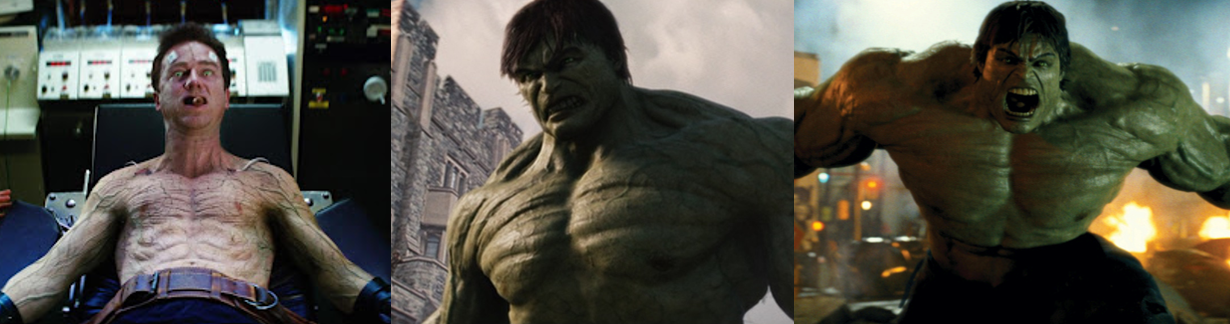

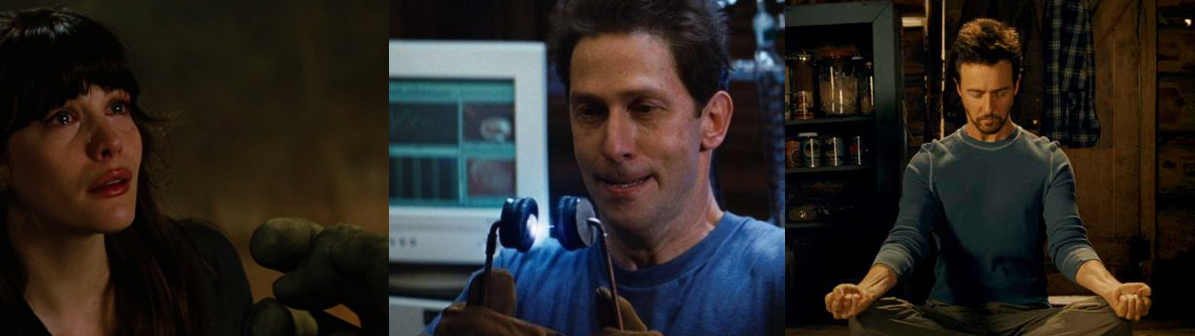
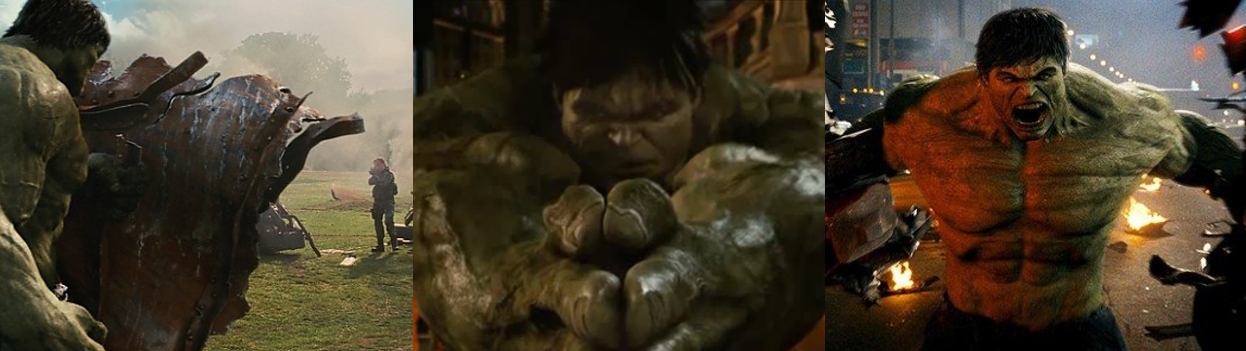
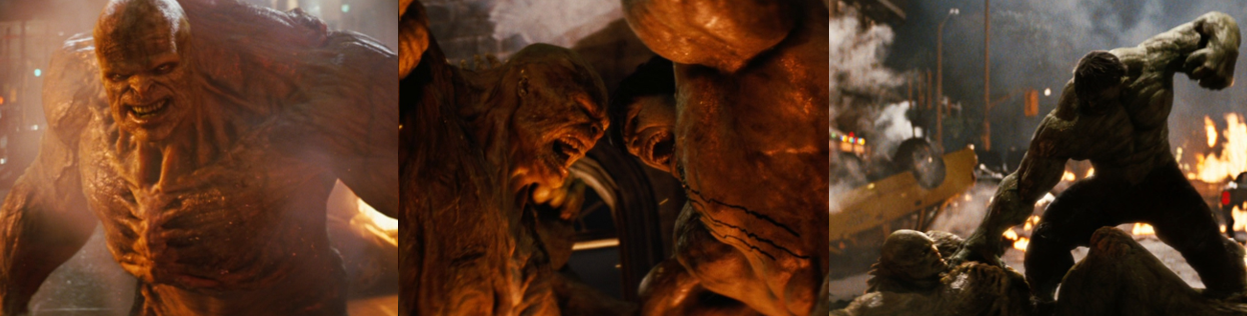



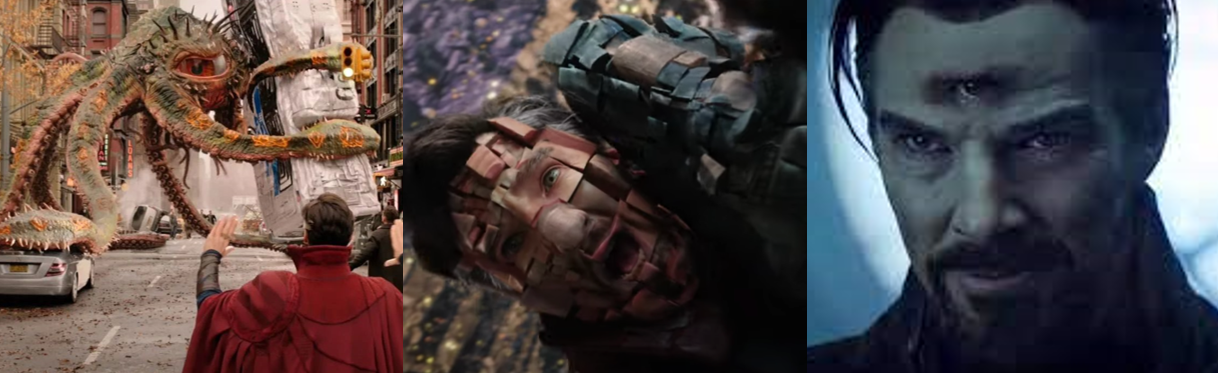


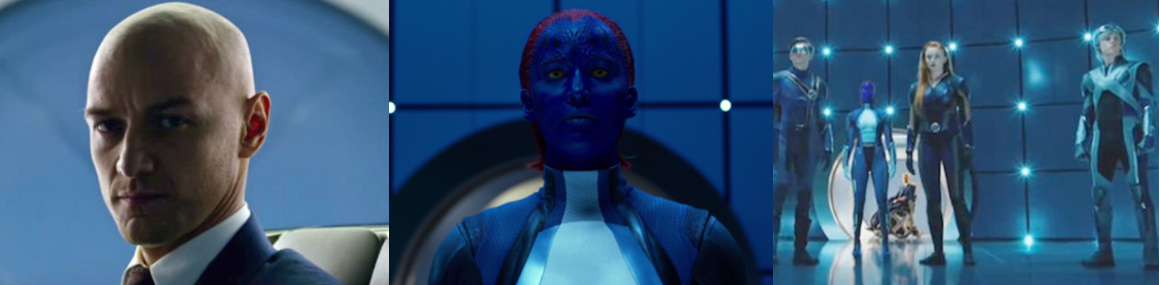
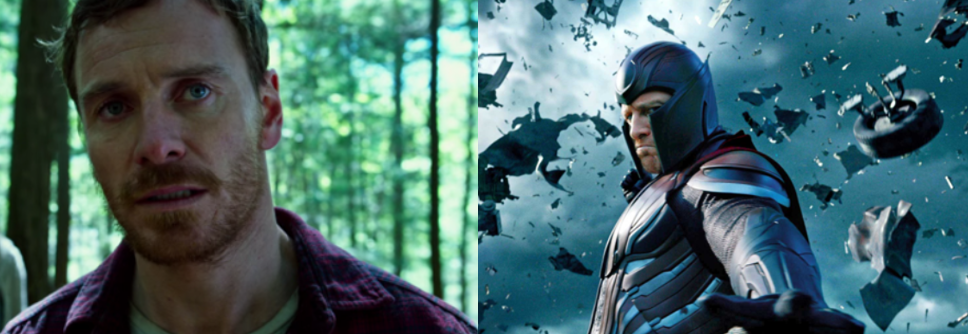

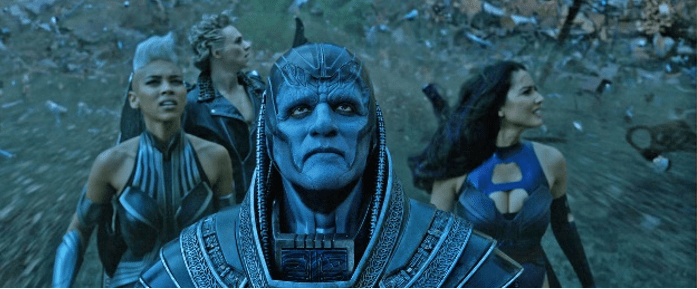




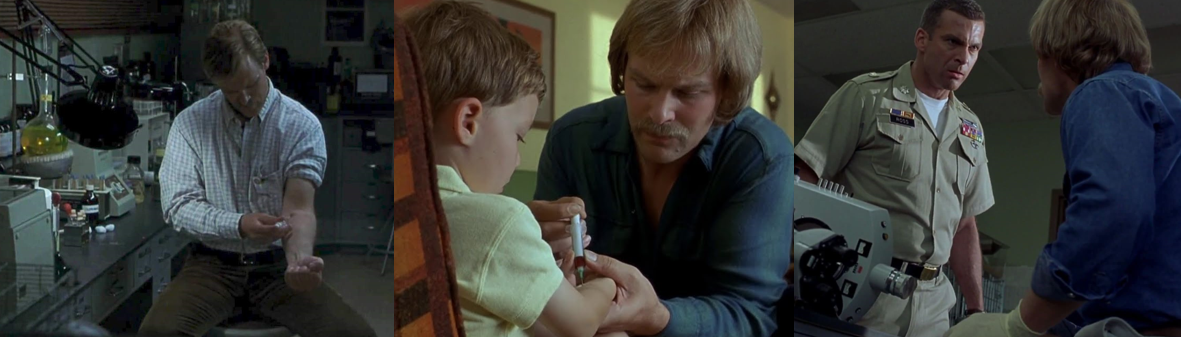

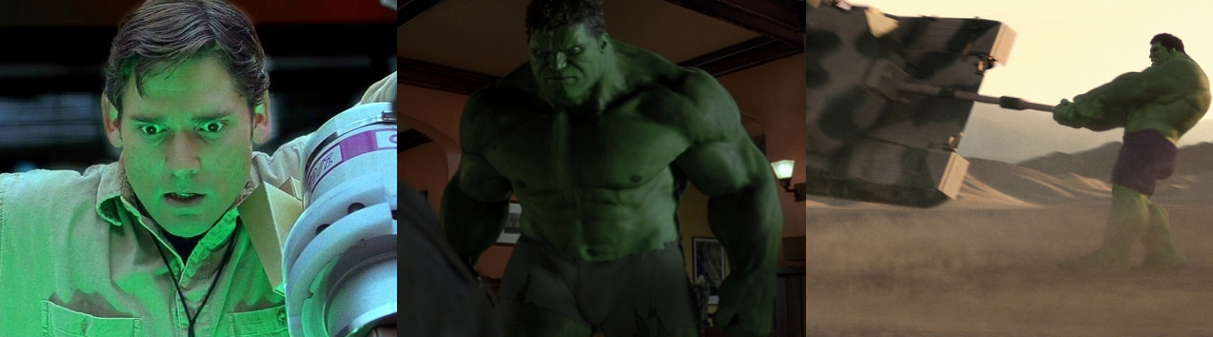
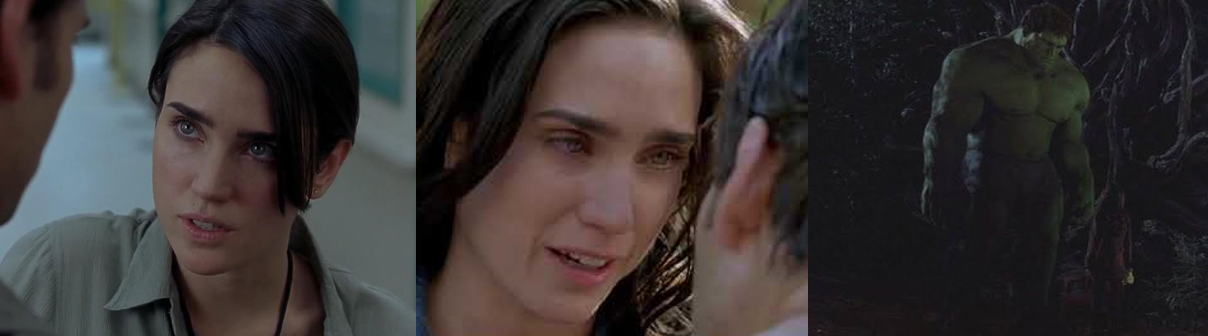
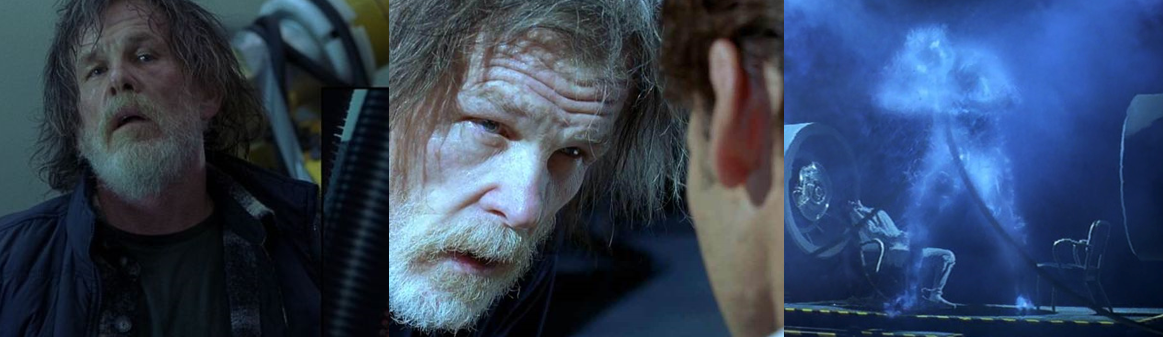
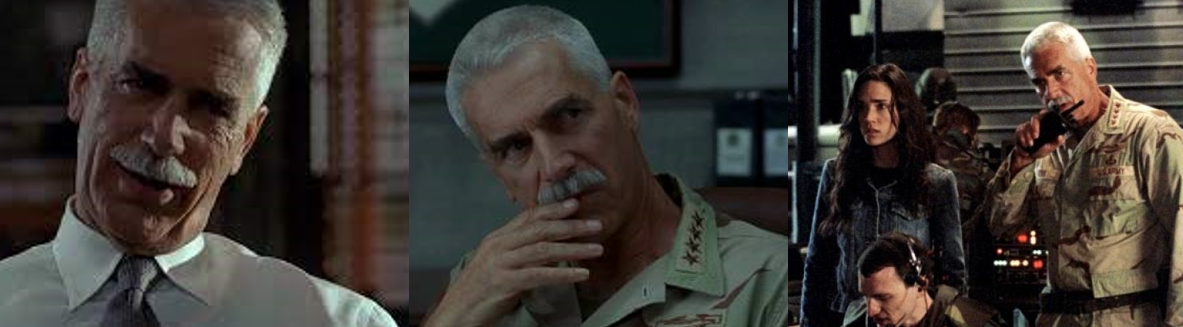
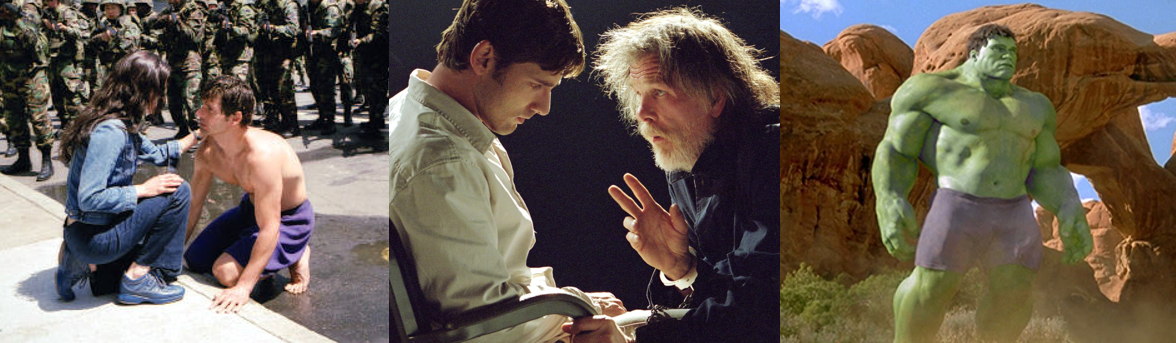
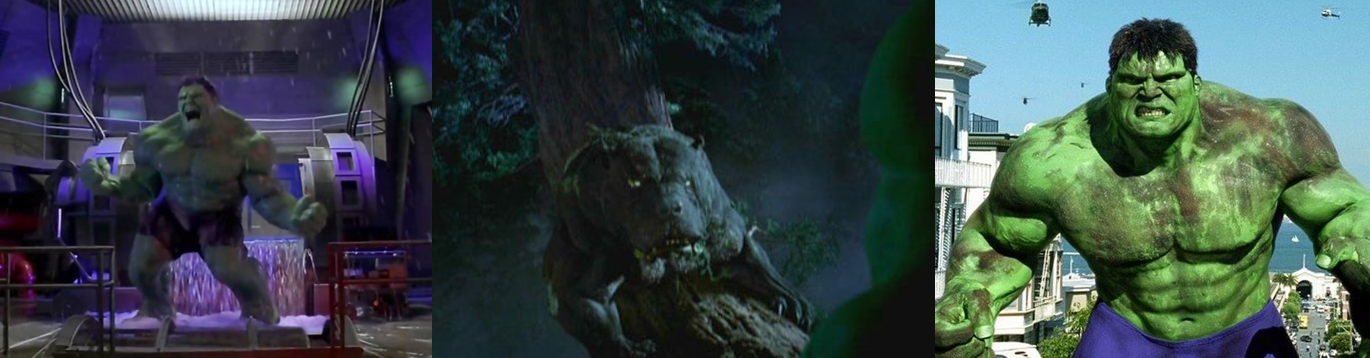
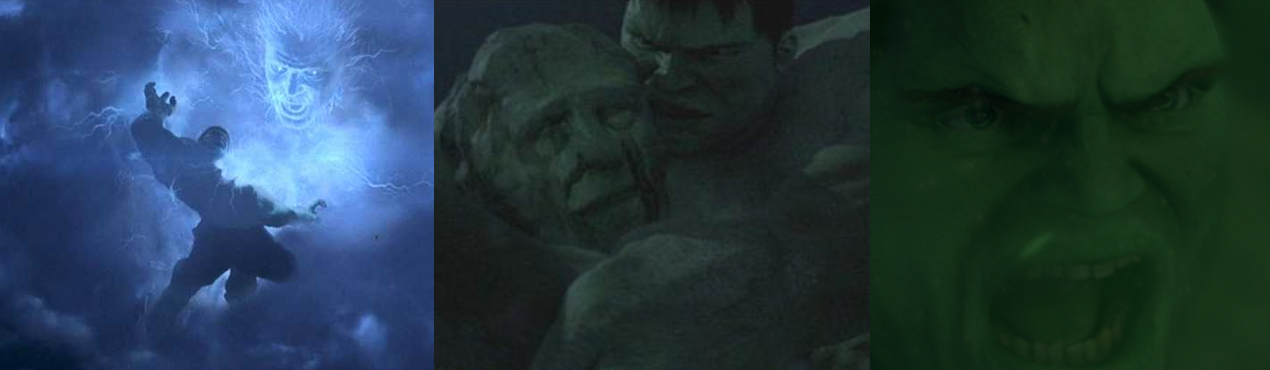




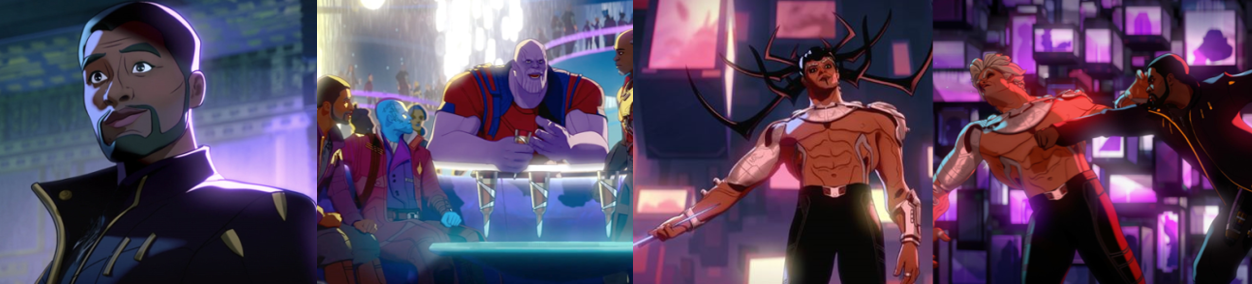
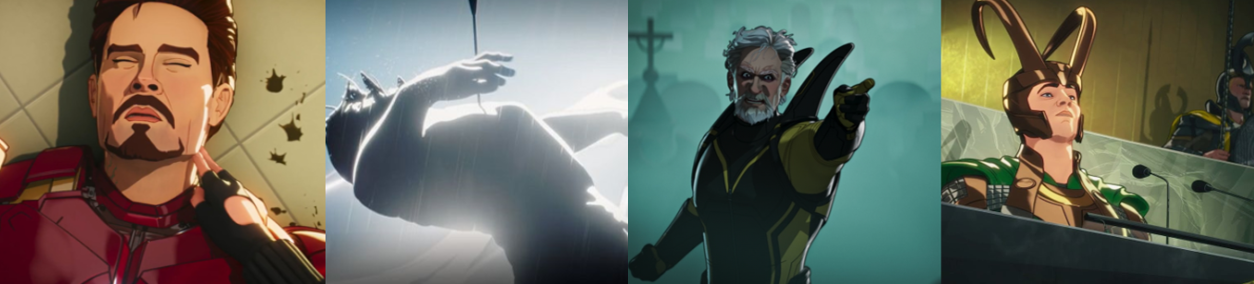


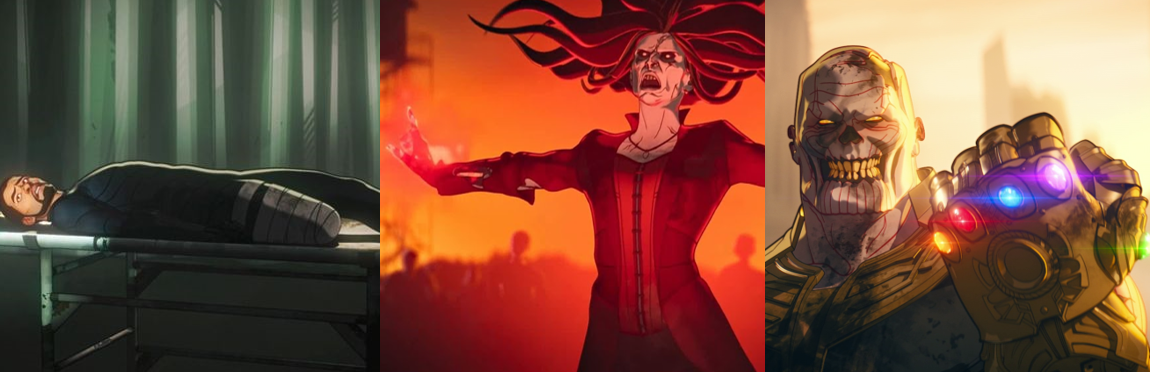



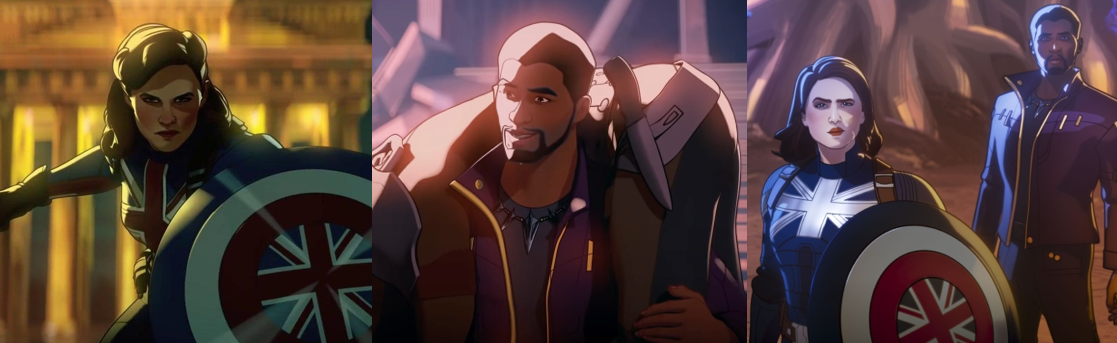
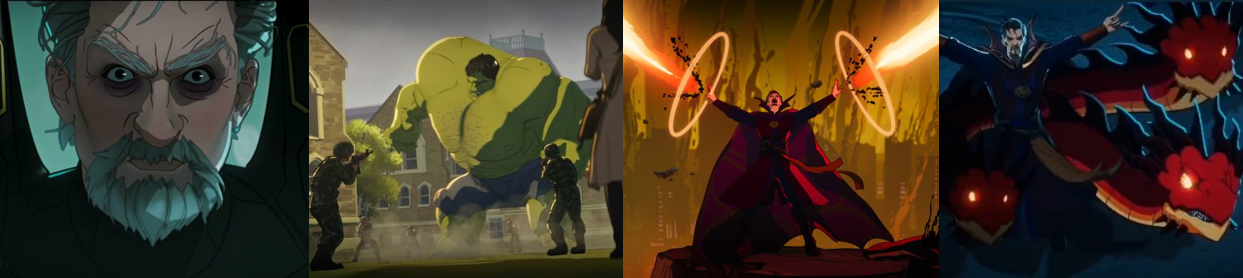
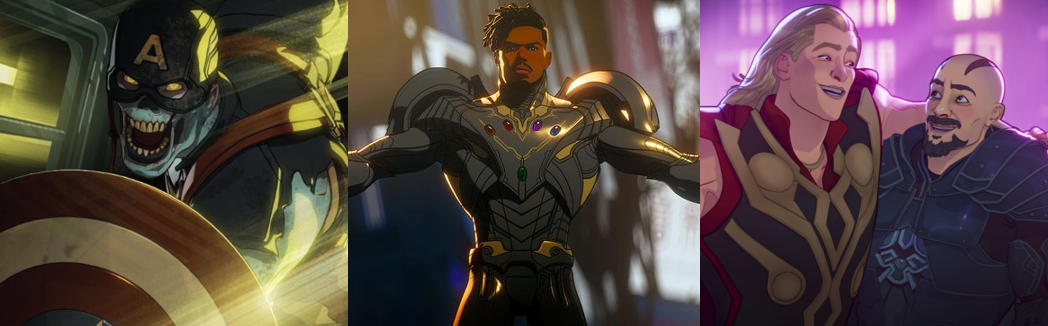
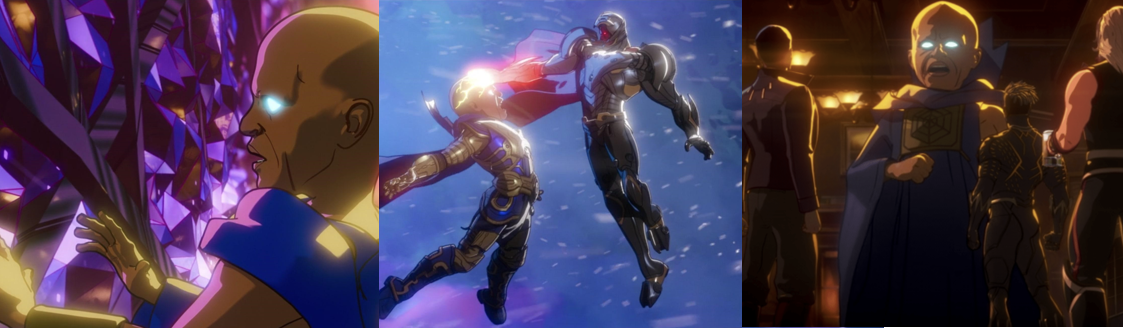



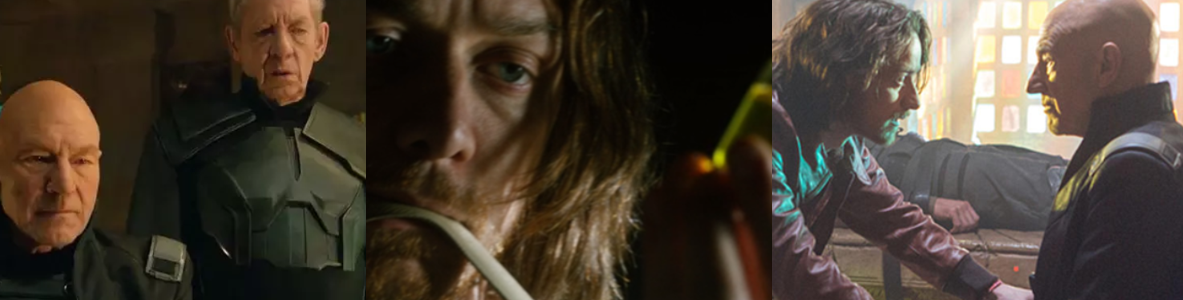

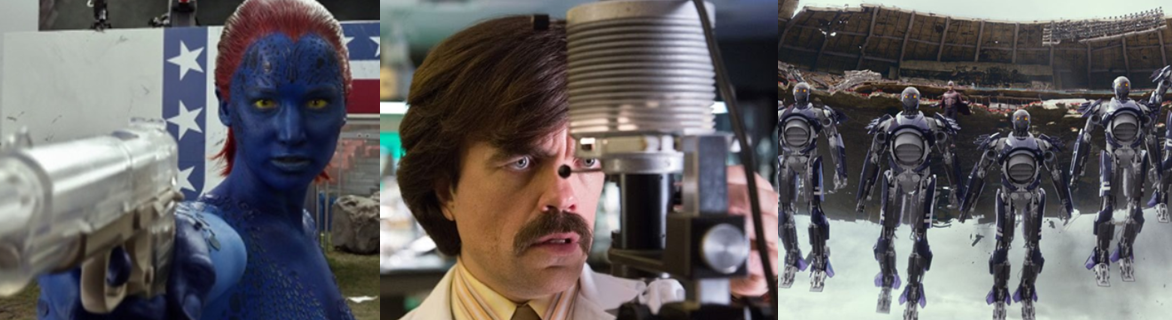
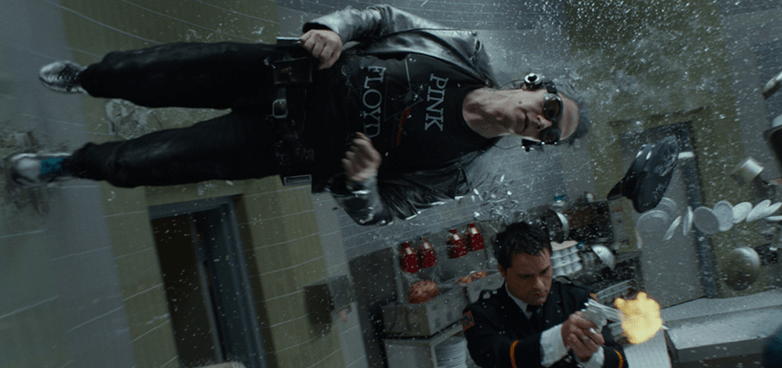
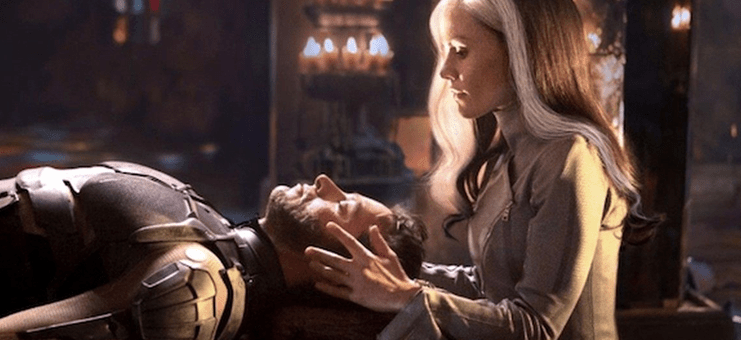
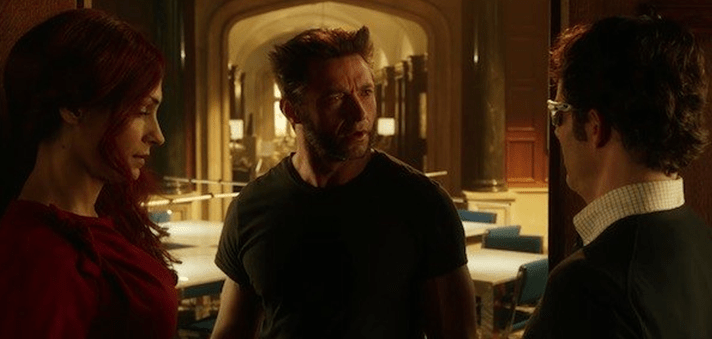







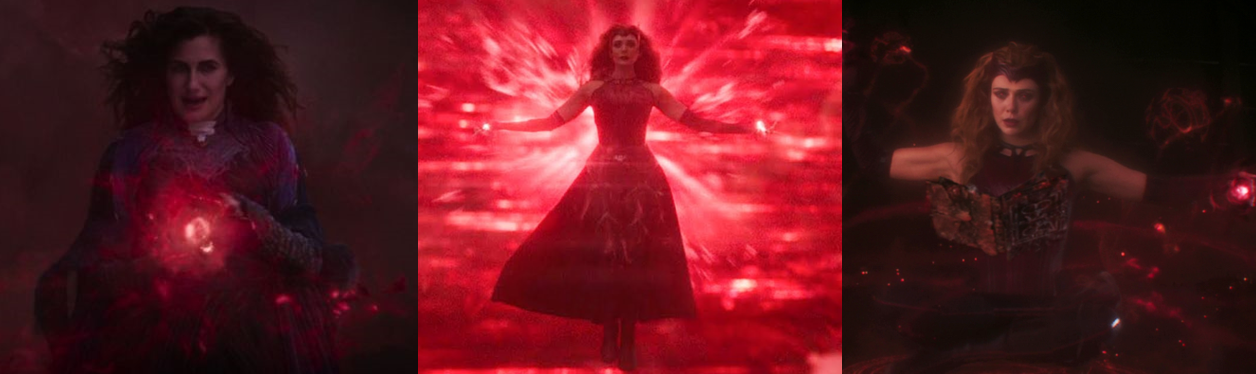



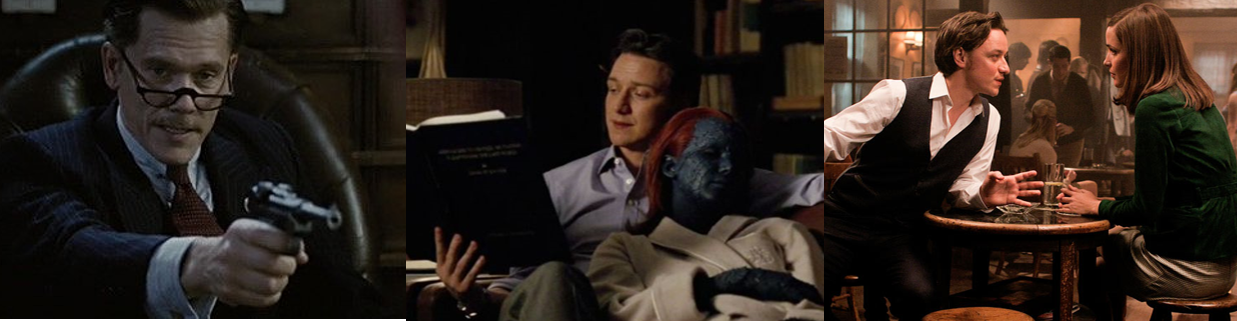
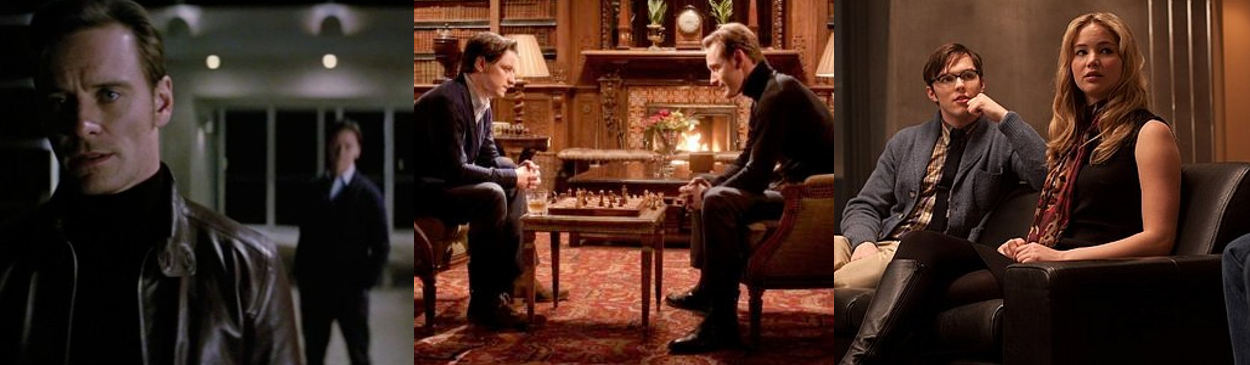
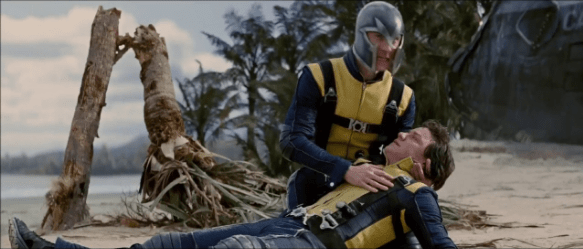
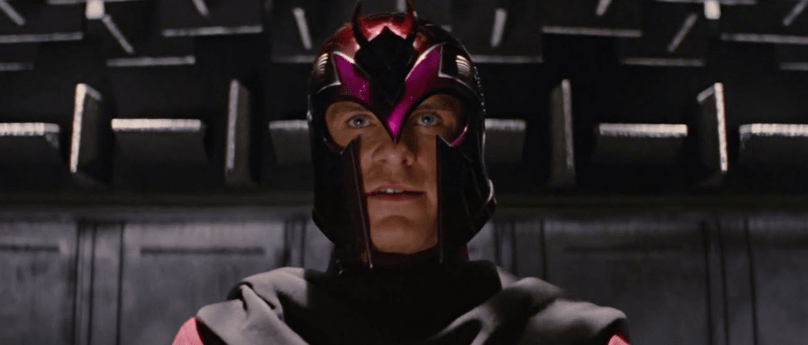
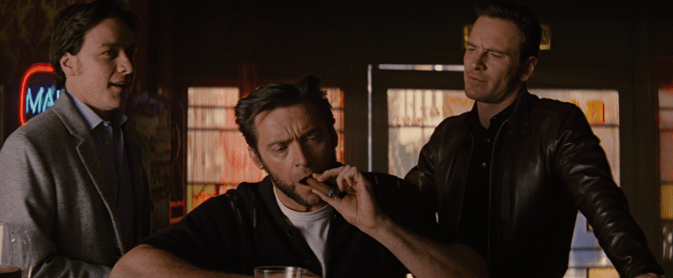

 Dr. K's Waiting Room
You must be logged in to post a comment.