For those who have been living under a rock for the last forty years, Star Wars is one of the most successful and popular science-fiction media franchises of all time and, perhaps, one of the most beloved trilogies ever crafted. In 1999, series creator George Lucas began his Prequel Trilogy which, thanks to their abundance of CGI, questionable acting, and much-maligned narrative choices, left a sour taste in the mouths of many fans. When Disney purchased Lucasfilm in 2012, they immediately set to work in reinvigorating the franchise by beginning not just a new trilogy of movies, but also an entirely new series of spin-offs and multi-media merchandise. Excitement was high for Star Wars: Episode VII: The Force Awakens(Abrams, 2015), which saw the return of fan favourite characters Han Solo (Harrison Ford), Leia Organa (Carrie Fisher), Chewbacca (Joonas Suotamo/Peter Mayhew), and Luke Skywalker (Mark Hamill). For me, The Force Awakens had just as many positives as it had flaws; it had some great characterisation and action and was way more exciting and interesting than any of Lucas’ prequel movies. However it suffered from leaning maybe a bit too hard on nostalgia by mirroring very closely the plot of Star Wars: Episode VI: A New Hope(Lucas, 1977). This might have been a thematic choice but I feel that the massive time jump over the new renaissance of the revived Galactic Republic and Jedi Order in favour of a inexplicably overpowered Empire proxy, the First Order, and the renewed destruction of the Jedi.
“I wonder if she means Old Luke Skywalker?…”
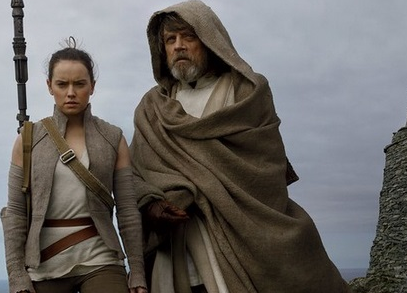
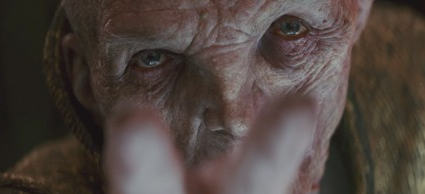
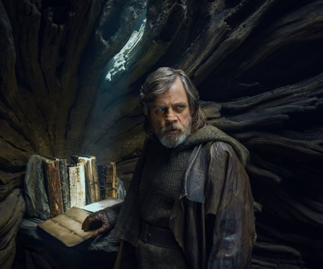
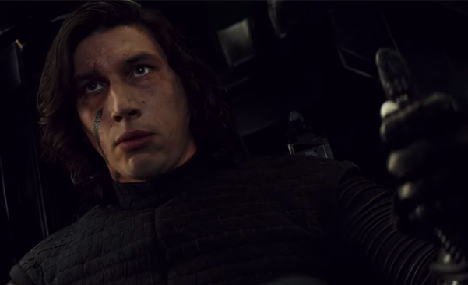
Anyway, The Last Jedi picks up immediately after the end of The Force Awakens; the traditional opening crawl is quite sparse as a result but, basically, the First Order apparently now reigns supreme and chaos has swept across the galaxy despite the destruction of their Starkiller base. Relentlessly pursued by the First Order’s fleet, the remnants of the Republic (now reverting to their original branding as Rebels), led by General Leia Organa, organises an evacuation of their base but they end up running low on fuel and being constantly bombarded by the slower First Order ships. Meanwhile, Rey (Daisy Ridley) has found former Jedi Master Luke Skywalker living in isolation on a hidden planet. Swamped by her own fears and uncertainties, she attempts to convince him to rejoin the Rebellion and to train her as a Jedi. Luke, however, is a broken shell of a man, haunted by his failure to keep Ben Solo/Kylo Ren (Adam Driver) from succumbing to the dark machinations of Supreme Leader Snoke (Andy Serkis).
The Last Jedi is all about the new blood.
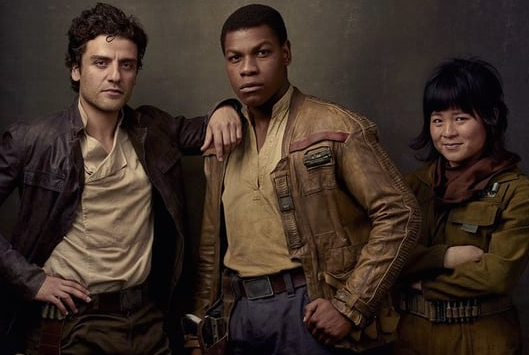
After Leia is injured from the First Order’s attack, hot-headed Poe Dameron (Oscar Isaac), former Stormtrooper turned Rebel hero Finn (John Boyega), and newcomer Rose Tico (Kelly Marie Tran) hatch a plan to locate a master hacker and sneak onto Snoke’s ship to disable their systems and allow the survivors can escape to safety. These three storylines weave in and out with the continued development of Kylo Ren, who continues to struggle with his legacy, his actions from The Force Awakens, and his attempts to tempt Rey to join his cause.
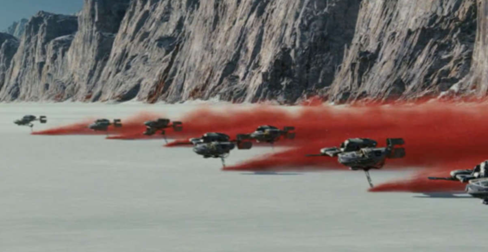
The Last Jedi is nothing if not visually stunning.
If The Force Awakens drew heavily from A New Hope, The Last Jedi is heavily influenced by Star Wars: Episode V: The Empire Strikes Back (Kershner, 1980) primarily in its juggling of multiple storylines happening concurrently and in topping the planet-destroying super weapon of their previous film with a more personal, intense storyline. Like the asteroid field chase from Empire, the Rebels end up in the slowest chase in history when they manage to stay just out of range of the First Order’s barrage, Rey’s training is as brief and vague as Luke’s, Finn and Rose are forced to turn to a rogue for assistance, and the Rebels end up in a desperate battle against Imperial walkers. There are also various obvious call backs to Star Wars: Episode VI: Return of the Jedi (Marquand, 1983); Snoke attempts to turn Rey similar to how the Emperor (Ian McDiarmid) tried to turn Luke, the Rebel forces get absolutely obliterated by the First Order similar to the one-sided Endor battle, and there’s some cute new critters used thankfully far more sparingly than the Ewoks to help boost sales of tie-in merchandise. The Last Jedi felt like a massive course correction and righted a lot of the wrongs I took away from The Force Awakens; I didn’t like that Snoke was a thing, I felt that it would be far more interesting and different to see Ren and General Hux (Domhnall Gleeson) at odds but in command of the First Order rather than repeating the tired “evil old wizard in command of the galaxy/pulling the strings” storyline we’ve seen for six previous Star Wars movies. As a result, I was happy to see Kylo kill Snoke and crown himself the new Supreme Leader of the First Order but, as a result, Snoke died before we ever learned anything about who he was or where he came from.
Want to know more about Snoke? Well, too bad!
Also, while we get to see Poe develop from a trigger-happy, impulsive pilot to a competent leader, Finn’s side plot with Rose ended up just being a convoluted and largely insignificant addition that existed just to give him something to do, and his showdown with Captain Phasma (Gwendoline Christie) was a similarly minor moment in the grand scheme of the narrative. Phasma, with her chrome-plated look (and armour that actually reflects lasers), had the potential to be a stand out character but, in this sea of new characters and overlapping plot points, is basically a nothing when she really could have been Ren and Hux’s primary enforcer. Finn’s best moment comes when he resolves to sacrifice himself to save the Rebels from being blasted by the First Order’s “Death Star cannon” but even this is stolen away from him when Rose randomly jumps in to save him and, effectively, spell the destruction of the remnants of the Republic. As we all know, Carrie Fisher tragically passed away during the production of this movie; as a result, it seemed as though her character would receive a dramatic send off, possibly in a way of adding to Ren’s impressive resume of asshole actions. Instead, she manages to use the Force to survive being blown into space and, although she spends a great deal of time injured, returns to active duty to comfort Rey by the finale. In the meantime, her duties are taken over by Vice Admiral Amilyn Holdo (Laura Dern) who, for no other reason other than manufacturing tension, keeps vital information away from what remains of the Rebellion.
It’s fair to say that Luke is not in the best place, emotionally.
Turning to Luke, I felt this was a great performance by Hamill, who really showed the depth of his acting ability here. While I am annoyed at not getting to see Luke build and lead a new Jedi Order, and I find it hard to believe that he has become a mythical figure when he hasn’t really been away from the public eye for that long, it was great to see him as a broken old man who has isolated himself to die and end the Jedi’s place in the galaxy. Rey helps to nudge Luke back into action not only through her Force proficiency (revealed to be a by-product of her lineage, another plot thread just dumped on the floor), but also reminding him that he is, for many, the personification of hope and the Rebellion in the galaxy. After a few interactions with Kylo Ren through the Force, Rey decides to leave behind her Jedi training and attempt to turn Ren back to the good side and fill the role that Luke is refusing. Although Ren dramatically kills his master and teams up with Rey to fight Snoke’s praetorian guards, they ultimately reject each other’s arguments for turning away from their chosen paths. After a conversation with the Force ghost of Yoda (Frank Oz), who is lovingly realised as a CGI-enhanced puppet, Luke comes to realise that he has to face up to the (extremely uncharacteristic) mistakes he made with Kylo. After an initial fake-out, where it seems Luke is taking a page out of Obi-Wan Kenobi’s (Alec Guiness) book by giving his life to buy his allies time and teach Kylo a lesson in true power, it actually transpires that he was smart enough to project himself into that climactic battle, a feat which takes the last of his energy as he peacefully fades to the Force.
Kylo’s “burn the past” mission statement appears to be Disney’s mantra when it comes to Star Wars.
Was The Last Jedi perfect? No, not really. It was probably about as good and bad as The Force Awakens, which basically means that, as much as I enjoyed the film, I still prefer Rogue One: A Star Wars Story(Edwards, 2016). Rogue One utilises nostalgia in a far more natural way as, being set before A New Hope, it makes sense that it’s using the traditional seventies aesthetic. This Sequel Trilogy, however, seem to be a mish-mash of nostalgia, tried-and-true Star Wars narratives, and an attempt to establish a new generation of characters. With the passing of Luke and the fate of Leia up in the air due to Carrie Fisher’s death, the central Star Wars narrative as a Skywalker tale is effectively over, with only Kylo Ren carrying that story forward. All unanswered questions from The Force Awakens are either waved away or dropped entirely; what could have been an interesting tale of a benevolent Galactic Republic being whittled away by the remnants of the Empire under the command of Kylo and Hux (or Grand Admiral Thrawn) is returned to the status quo of the rag-tag Rebellion fighting an oppressive Empire, and the promise of a rebuilding of the Jedi is side-stepped in favour of a new last of the Jedi in Rey. Having said all that, The Last Jedi is still a great film; it’s big on action, humour, and heart but there are some questionable decisions that, for me, keep it from being better than, say, The Empire Strikes Back. Obviously, nostalgia plays a lot into that and there are some parts of Empire that aren’t perfect but, in the end, I can’t get over some of the biggest plot points, such Rey’s parentage and Snoke’s origins, being given no resolution. It’ll be interesting to see where the narrative goes for Star Wars: Episode IXgiven how The Last Jedi concludes and that I get the sense that Disney are kind of making up each film as they go along.
My Rating:
⭐⭐
Rating: 2 out of 5.
Could Be Better
Recommended: Sure; Star Wars and action/sci-fi fans will love this movie, I’m sure, and general audiences should be enthralled by the special effects. Best moment: There were two for me; Kylo and Rey’s team up against the praetorian guards and Luke’s penultimate battle with Kylo. Worst moment: The film dramatically slows down after the opening action scene, the awkward and frustrating personality of Vice Admiral Amilyn Holdo stands out, but definitely the entire side plot involving Finn and Rose, which ultimately ended up adding nothing to the larger narrative.
You’ve paid your money and you’ve sat down in the cinema or in front of your television; you’ve got some snacks and a drink and you’re ready to suspend your disbelief for anywhere between ninety minutes to three hours with a good, old fashioned movie. The plot is intriguing, the characters relatable, the antagonist layered, and the film’s construction has sucked you right in. Then, out of the blue, the film ends in an ambiguous way, leaving questions swimming around in your head.
For me, a great movie with an ambiguous ending that either turns the entire events that preceded it upside down or allows me to interpret what has happened makes for an extremely enjoyable experience, not least because it means that you can re-watch the movie and interpret the ending and the plot in different ways each time. Some might disagree, obviously, but I’m not them so here are ten of the best moves with interpretative endings and some of my thoughts about them:
10Blade Runner (Scott, 1982)
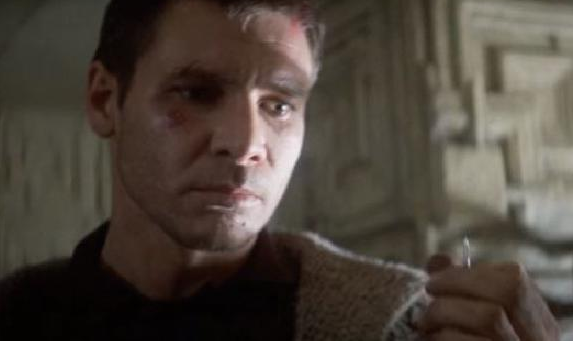
Kicking things off with one of the forefathers of the ambiguous ending, we’re really opening a can of worms with this one considering just how many different versions and endings exist for Blade Runner. Controversially, though, I’m not that big a fan of Blade Runner; as a film, it’s very slow and plodding, with long sections where seemingly nothing happens. This is married to some gorgeous sets and a realistic, lived-in feel to the future world we are presented with. Consequently, my Blade Runner experience begins and ends with Ridley Scott’s 2007 Final Cut version of the film, in which Rick Deckard (Harrison Ford) finds an origami unicorn on the floor of his apartment, strongly hinting (as Deckard had previously dreamt of a unicorn) that Deckard is a Replicant. Apparently, this is the philosophy that Scott subscribes to though I disagree as there isn’t really any real evidence in The Final Cut to support this beyond the ambiguity of the final scene. Supporting this further, the question about Deckard’s humanity was left unanswered in Blade Runner 2049 (Villeneuve, 2017), despite other versions of Blade Runner hinting more strongly that Deckard was actually a Replicant all along.
9 Shutter Island (Scorsese, 2010)
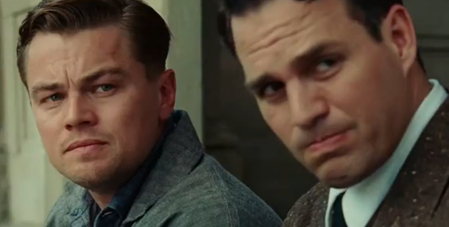
Throughout Shutter Island, Edward “Teddy” Daniels (Leonardo DiCaprio) is forced to confront some personal demons as he uncovers the mysterious disappearance of a patient of the asylum housed on the titular island. As events begin to unravel, we learn that Teddy is, in fact, a patient of the asylum and he was allowed to play out an elaborate fantasy in an attempt to force him to confront the truth that he murdered his wife. Despite scepticism from Dr. John Cawley (Ben Kingsley), this unconventional method appears to have finally worked as Teddy finally admits his guilt. However, later on, he appears to have regressed to his fantasy world once more, leaving the hospital no choice but to have him lobotomised. As the orderlies come to take him away, he questions whether it is worse to live as a monster or die as a good man, casting doubt as to whether he has truly regressed or simply wishes to end his sane life on a high note; personally, I prefer the latter interpretation, as that line seems a deliberate inclusion to make us think that Teddy is merely feigning his regression to “die” as a hero.
8 John Carpenter’s The Thing (Carpenter, 1982)
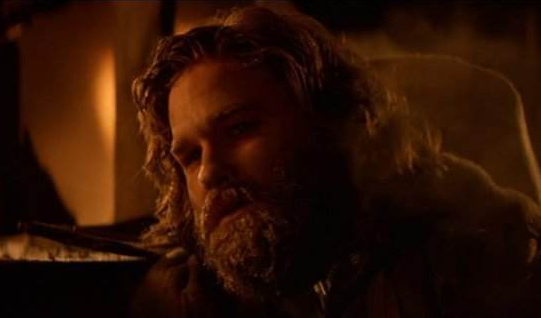
This is the second time that The Thing has made one of my top ten lists, and with good reason; not only is it a masterpiece of practical effect wizardry, it’s also an excellent tale of isolation and paranoia. After uncovering an alien spacecraft and unwittingly unthawing a gruesome, shape-changing parasitic lifeform, the residents of an Antarctic research outpost succumb to paranoia and fear as the titular Thing assimilates them one by one. In the end, with the Thing seemingly destroyed and the outpost up in flames, our hero – R.J. MacReady (Kurt Russell) – sits alone and exhausted by a dwindling fire when he is confronted by Childs (Keith David), his hot-headed rival who had mysteriously vanished right as the chaos started to really ramp up. Also exhausted, Childs sits with MacReady and they share the remnants of a bottle of scotch, both too tired to act on their suspicions that the other might be the Thing and succumbing to the knowledge that, once the fires burn out, it won’t matter soon anyway. Doubts about who is really human are raised when one observes that, unlike MacReady, Child’s breath does not show in the freezing weather but, in this case, I feel that both are actually human and the ending has a more morbid message: both men, whether human or alien, are paying the price for human nature and that, given the volatile relationship between the two characters, it’s likely they would find any excuse to try to kill each other but are simply too fatigued to continue their hostilities.
7 The Descent (Marshall, 2005)
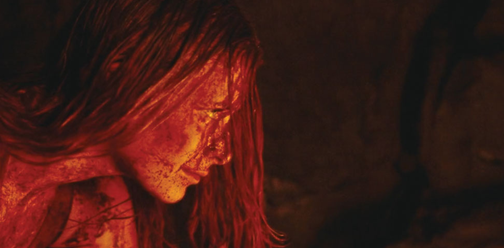
The Descent was a welcome surprise when I first saw it; despite some questionable acting from the lead females, the film quickly descends (hah!) into an atmospheric, claustrophobic nightmare when six cave-diving friends find themselves trapped in an unchartered cavern and being attacked by cannibalistic mutated humans. With fear and paranoia setting in, and beset by the vicious crawlers at every turn, the party is eventually whittled down to central protagonist Sarah Carter (Shauna Macdonald) who, after being knocked unconscious, awakens to find herself before an exit and frantically scrambles free, screaming with maniacal glee as she makes it to her car and speeds away. Overcome by the gruesome events that have taken her friends from her, she pulls over and breaks down in tears, only to find the screaming corpse of her headstrong friend Juno Kaplan (Natalie Mendoza) in the passenger seat. For American audiences, this jump-scare is where the film ends but, for us Brits, the scare causes Sarah to awaken to find herself still trapped in the cave with no exit in sight and her fire slowly burning away. With no escape, and the sounds of the ferocious crawlers echoing all around her, she finds solace in a hallucination of her dead daughter as the film fades to black. If you ignore The Descent: Part 2 (Harris, 2009), which reveals that Sarah did actually escape the cave in the end (and is inexplicably convinced to return to that nightmare), this ending is a massive downer and really reflective of the differences in American and British audiences; we Brits love us a good bleak ending laced with ambiguity, as the final haunting shot raises the possibility that all of the events that occurred were a hallucination of Sarah’s to justify her slaughtering all of her friends.
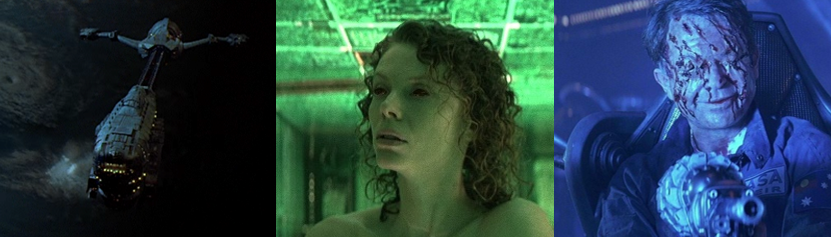
Here’s a film that doesn’t get enough love, Event Horizon is a truly horrific science-fiction horror revolving around a spaceship that, having crossed through time and space, has returned as a semi-sentient haunted vessel that desires only to kill its inhabitants in increasingly gruesome ways and return to the hell dimension that it passed through. Event Horizon actually has two ambiguous endings: the first comes when Captain Miller (Laurence Fishburne) sacrifices himself to split the Event Horizon in two, allowing the remainder of his crew to be spared while he and the demonically possessed Dr. William Weir (Sam Neill in a commendably menacing role) be transported back to “Hell”. When I first watched Event Horizon, I assumed, based on Weir’s agonised “Noooo!” and the editing of this scene, that Miller had died in the ensuing explosion but, upon repeated viewing, you can clearly see the aft section of the craft disappear into a black hole, meaning that Weir was merely expressing his frustration at only taking one victim to “Hell” instead of the entire crew, making Miller’s sacrifice even more tragic as he now has to suffer unimaginable horrors. However, it doesn’t end there as the forward section of the ship is later recovered and Miller’s crew freed from stasis; upon awakening, and suffering from shock, Lieutenant Starck (Joely Richardson) looks upon her rescuer and sees only Weir’s scarred face grinning back at her. Descending into a screaming fit, and comforted by Cooper (Richard T. Jones), it appears as though Starck is simply severely traumatised by the horrific events she has barely survived but, as the film fades to black, the doors of the Event Horizon close by themselves, suggesting that the demonic force haunting the ship is still present.
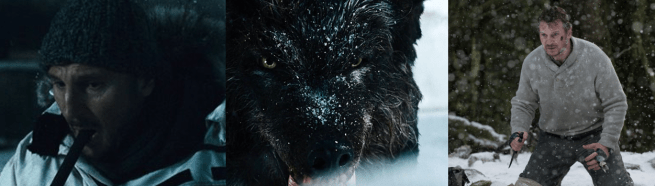
Boy, was this film a surprise. Given the odd marketing campaign, you would be forgiven for going into The Grey believing it was simply about Liam Neeson fighting wolves but it is so much more than that. Haunted by the death of his wife, John Ottway (Neeson) is struggling with suicidal tendencies when the plane he is flying on crashes in the middle of the frozen Alasakan wilderness. With limited resources, tensions running high, and a pack of ravenous wolves stalking them at every turn, Ottway is forced to rely on his survival instincts and knowledge of wolves to lead the survivors in a seemingly hopeless search for safety. Inexplicably surviving what appears to be an unsurvivable plane crash potentially gave Ottway a concussion, however, as it is eventually revealed, once all of the other survivors have tragically perished due to injuries, the elements, or the increasingly emboldened wolves, that he has been heading directly towards the wolves’ den the entire time. Left alone and forced to confront the Alpha Male, Neeson straps broken bottles and other make-shift weaponry to his fists and prepares to fight to the death as the film abruptly cuts to black. A brief after credits scenes offers little in the way of closure, affording only a glimpse of what appears to be Ottway resting atop a slowly dying wolf, leaving the character’s ultimate fate entirely up to the interpretation of the viewer. I honestly understand the negative backlash this caused as the marketing made a big deal out of the showdown between Neeson and the Alpha, man against nature, and all that but, honestly, when I first saw it and Ottway was reciting his father’s beloved poem, burying the wallets of his fallen comrades, and preparing to fight to the death with a voracious wolf…man tears, every time. I always like to think that there was only ever going to be one outcome: Ottway put up a great fight but was ultimately killed by either the Alpha or one of the other wolves. Yet the short scene after the credits presents the slim possibility that Ottway survived the battle, if with serious injuries, allowing those who prefer a more positive ending to believe that he came out victorious and is merely exhausted from the conflict.
Can we stop for a second and recognise that Total Recall is still one of the greatest science-fiction movies ever created? Honestly, this movie has aged incredibly well; it’s use of practical effects, model shots, the rising action and over-the-top fight scenes, all married with two truly memorable villains and Arnold Schwarzenegger’s undeniable charisma make for one of the best action/sci-fi experience ever conceived. That it also presents an extremely and surprisingly complex and deep narrative only adds to its stature, in my mind. Douglas Quaid (Schwarzenegger) is obsessed with Mars, dreaming of it every night and is so desperate to visit the red planet that he pays a visit to Rekall Inc. to purchase a memory implant of having vacationed for two weeks as an undercover secret agent. Immediately however, there are complications; Quaid goes psychotic during the procedure and is suddenly attacked by friends and foes alike for no discernible reason. Eventually driven to Mars, he learns that he was once Hauser, a former employee of the villainous Vilo Cohaagen (the wonderful Ronny Cox) who volunteered to have his memory wiped so that Cohaagen and his sadistic enforcer, Richter (fantastically portrayed by Michael Ironside), could wipe out the rebellion opposing his authority on Mars.
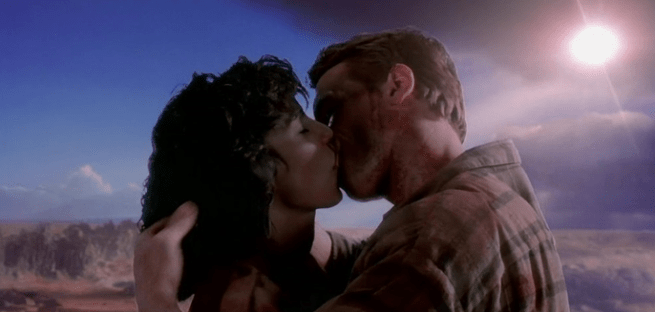
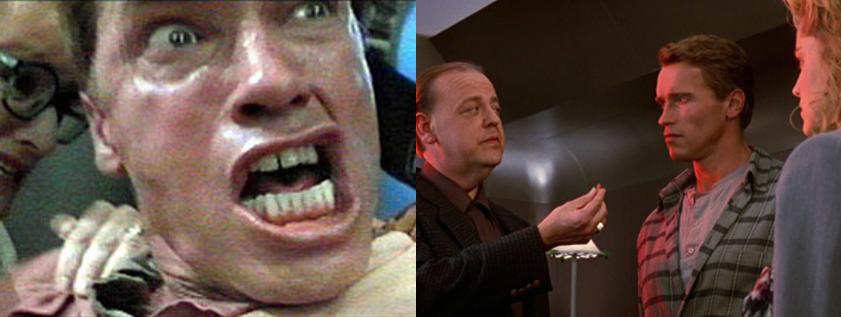
Rejecting his former life, Quaid opts instead to activate an alien device that provides Mars with a breathable atmosphere, freeing the populace from Cohaagen’s air tax and ending the film with a conspicuous white light as Quaid shares a kiss with his dream woman, Melina (Rachel Ticotin). I say conspicuous because, traditionally, films end on a fade to black and this is only one of many indications that the events we have witnessed are not entirely what they seem. At Rekall Inc., Quaid tailors the memory he will receive to the finest detail, describing Melina as his love interest, viewing pictures of places he later visits on Mars, and being told that the vacation will involve him overcoming an interplanetary conspiracy. Later, Dr. Edgemar (Roy Brocksmith) attempts to convince Quaid that everything he is witnessing is a free-form delusion that he has allowed himself to be trapped in and that, unless he chooses to wake up, he will end up lobotomised. Quaid rejects this when he notices that Edgemar is clearly sweating with fear and discomfort and, in doing so, commits himself to seeing his path towards being the saviour of Mars. Total Recall presents both possibilities simultaneously; the over-the-top action and increasingly coincidental set pieces lend a credibility to Edgemar’s claim that Quaid is trapped in a dream world but scenes where Quaid is entirely absent, such as during conversations between Cohaagen and Richter, suggest that the plot against Quiad is very real. In the end, the white out could simply be a sign of a new beginning for Mars or the brain cells in Quaid’s head dying from psychosis; sometimes I will watch the film and believe that Quaid is a former mercenary turned rebel leader and, others, I choose to believe that he has simply allowed himself to be lost to an extremely realistic dream.
3 The Wrestler (Aronofsky, 2008)
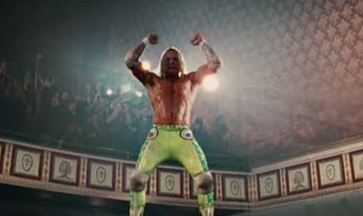
After years in obscurity, Mickey Rourke began a bit of a comeback in the mid-to-late-2000s and perhaps no other role really showed how much he had matured and was ready to be taken seriously as an actor than that of Robin Ramzinski (AKA Randy “The Ram” Robinson). Ram, his best years as an athlete behind him, has fallen on hard times and really been through the wringer; he is estranged from his daughter (the delectable Evan Rachel Wood), in constant pain, works a menial job where he is the source of constant ridicule, and is forced to take bookings in venues barely a quarter of the size he was headlining in his prime. After he suffers a heart attack and is advised that he must never wrestle again, Ram takes the advice to heart and begins reconciling with his daughter and trying to make a future with his only confidante, an ageing stripper named Cassidy (Marisa Tomei). In the end, though, after a drink and drug filled bender causes his daughter to sever all ties with him, Ram returns to the one place he has only ever felt loved and valuable, the ring, knowing full well that it could be not only his last match but the last decision he ever makes. During a rematch against his greatest opponent, the Ayatollah (Ernest Miller), Ram begins to suffer chest pains and is in considerable visible pain. Despite the Ayatollah’s concerns and pleas to end the match quickly, Ram fights through the pain and disorientation to mount the top rope and leap into the air as the film cuts to black. Did Ram make the splash, win the match, and walk away victorious or did he crash in a dying heap on his fallen adversary? Honestly, considering the poor hand Ram has been dealt in his twilight years, I actually prefer the idea of him going out in a blaze of glory than living through another heart attack and having only a resentful daughter and a guilt-filled stripper to wake up to.
2 American Psycho (Harron, 2000)
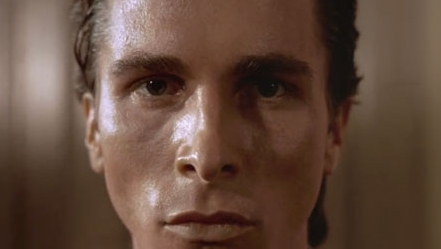
Adapted from the book of the same name by Brett Easton Ellis, American Psycho is an incredibly enjoyable dark comedy revolving around Wall Street yuppie Patrick Bateman (Christian Bale) who, by day, enjoys the frivolities of greed, sex, and consumerism but, by night, stalks the streets for victims to kill. Fully acknowledging that his urge to kill is a deep-rooted psychological disorder over which he is slowly losing control, Bateman takes out his frustrations at being mistaken for other co-workers, his fiancée’s infidelity, and his peers having better positions, clientèle, and even business cards by murdering co-workers, vagrants, and prostitutes. Eventually, his urges become too much to contain and he embarks on a killing spree throughout the city night, shooting innocent bystanders left and right before finally calling his lawyer (Stephen Bogaert) and, through maniacal tears, listing his numerous transgressions in a frantic confession. However, the next morning, his lawyer fails to recognise Bateman, believing him to be a man named Davis and that the call was an elaborate prank, reasoning that Bateman is far too spineless to engage in such activity.
Bateman calmly states that he not only committed the crimes he confessed to but enjoyed them, only for his lawyer to brush him off. Returning to his seat, Bateman reasons that, despite his confession, he has learned nothing about himself or the world and that the hollow emptiness he feels inside has only grow larger as a result of his actions. However, it is left up to the audience to decide whether the increasingly elaborate events we have witnessed actually took place or if they were simply the deluded fantasies of a bored, morbid, and repressed individual (further exemplified by his secretary, Jean (Chloë Sevigny), finding Bateman’s journal filled with doodles depicting murder and rape). Prior to visiting his lawyer, Bateman attempts to clean up the apartment of one of his victims, only to find it in pristine condition and being sold by a realtor, who reacts to Bateman’s presence with a clear discomfort, if not fear, suggesting that the gruesome murder actually took place. For me, as a big fan of the film and the book (which provides few answers and raises more questions, if anything), I like to think that some of the murders took place but maybe not all of them; given that Bateman and his co-workers are completely interchangeable and the dark satire at work in the film, I think it’s entirely possible that Bateman is so incredibly repressed and striving for attention and to stand out that he has killed vagrants and prostitutes but, in doing so, has simply allowed his dark fantasies to conjure increasingly elaborate murders and scenarios to distract him from the fact that he is nothing more than a faceless corporate snob amidst a sea of faceless corporate snobs.
1 Inception (Nolan, 2010)
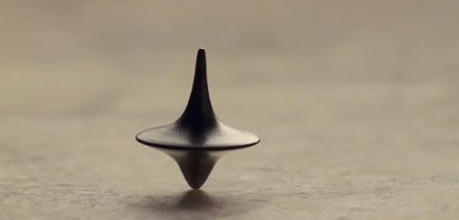
Perhaps one of cinema’s most unique and original ideas since The Matrix (The Wachowski Brothers, 1999), Inception presents a world in which thieves like Dom Cobb (Leonardo DiCaprio) can enter a person’s dreams and subconscious to extract information. Unable to return to his children due to his wife, Mal (Marion Cotillard), having framed him for her suicide, Dom is tasked with putting together a team and planting an idea in the head of the heir to a business empire in exchange for his criminal record being expunged. Inception takes full advantage of modern effects and technology to realise the infinite possibilities of the dream world, allowing reality to bend and warp in unique ways. As Dom and his crew are forced to dream within a dream, the film plays with perceptions of time as much as reality as Dom risks losing himself to the elaborate dream world he has created. Eventually, Dom confronts his demons and completes his mission, passing through customs without a hitch. All throughout the movie Dom has been haunted by not only his wife’s suicide but also the fact that he left in such a hurry that he was denied one final look at his children’s faces. Returning home, as Hans Zimmer’s powerful score builds to what appears to be a victorious crescendo, Dom, frantic to prove that his dreams have actually come true, conducts one final test, setting off a spinning top that will topple over if he is in the real world and spin indefinitely in the dream world. However, he never stays to see their result, as, finally, he sees his children and they not only turn to face him but run, overjoyed, into his arms. As he carries them out of frame and the score fades down, the shot lingers on Dom’s spinning top as it spins and spins and spins…faltering only slightly as the film cuts to black.
If The Grey brought out the man tears when I first watched it, Inception opened an absolute floodgate! I never thought that I would care so much about whether Leonardo DiCaprio got a happy ending but Nolan really sucked me into this world and had me so emotionally invested in all of his characters, especially DiCaprio’s Dom. The composition of this final shot, with the score and the sense of catharsis, never fails to be overwhelming; I was so happy to see him finally see his children’s faces and was on the edge of my seat waiting to see the top topple over and truly saddened that it didn’t because, in that first viewing, my knee-jerk reaction was that Dom had gotten lost in the deepest layers of his dream and had chosen fantasy over reality. However, the ambiguity of the ending allows one to view this film similar to Total Recall. You can watch it one time and believe that Dom emerges victorious or choose the depressing ending if you wish. Evidence can be found for both: it is said that one must had a totem unique to them but Dom carries and uses his dead wife’s spinning top as his totem.
It equally seems unlikely that Dom’s client would have the connections necessary to wipe his criminal record clean, and Dom is repeatedly told that he has to “wake up” and “face reality”, as though he has been trapped in a dream ever since he and Mal first experimented with deep dreaming. However, I felt so strongly for Dom and wanted so badly for him to see his kids and return home that it is hard to not believe that everything worked out for him…if not for that damn spinning top, endlessly spinning away, casting doubt over everything except for the fact that, in that moment, Dom does not care whether he is dreaming or awake; whatever the case, he has accepted this as reality without even a cursory look back.




 Dr. K's Waiting Room
You must be logged in to post a comment.