Wrestling Recap: Mysterio Jr. vs. Guerrero (Halloween Havoc ’97)

The Date: 26 October 1997
The Venue: MGM Grand Garden Arena; Paradise, Nevada
The Commentary: Tony Schiavone, Bobby “The Brain” Heenan, and “The American Dream” Dusty Rhodes
The Referee: Billy Silverman
The Stakes: Singles match for the WCW Crusierweight Championship with Mysterio Jr.’s mask also on the line

The Build-Up:
One of the many aspects that helped propel World Championship Wrestling (WCW) to the top of the wrestling ratings war back in the day was their exhilarating cruiserweight division. Although the company sold itself as being “where the big boys play” and featured a who’s who of heavyweight talent, both in and out of their super-popular New World Order (nWo) stable, WCW also separated itself from the competition by snapping up and showcasing smaller, more agile and physically talented cruiserweights on a weekly basis. Spearheaded by WCW figurehead Eric Bischoff, the cruiserweight division introduced lucha libre wrestling to mainstream audiences and gave stars like “Lionheart” Chris Jericho, Juventud Guerrera, Ultimo Dragon, and Psicosis a platform to shine with their fast-paced, high-risk offense. Two of WCW’s biggest cruiserweight stars were future World Champions Eddie Guerrero and Rey Mysterio Jr.; both had cut their teeth in Extreme Championship Wrestling (ECW) prior to being snapped up by WCW and both had their roots in Mexican wrestling, with Eddie coming from the prestigious Guerrero family and Rey being the nephew of the legendary luchadore Rey Misterio. After losing the WCW United States Championship, Eddie Guerrero turned heel and set his sights on the WCW Cruiserweight Championship, a belt he captured the previous month from Chris Jericho, crossing paths with Rey Mysterio Jr. for the first time on an episode of WCW Monday Nitro in the process. Since Mysterio won that match, he had a legitimate claim to challenging for the Cruiserweight Championship, something that Guerrero attempted to proactively get ahead of by taunting Mysterio and attacking him while in the guise of a masked luchador. After Mysterio pinned Guerrero again and unmasked him, Guerrero was humiliated and incensed and demanded that Rey unmask (the greatest dishonour to befall a luchador) if he failed to win the title at Halloween Havoc, going so far as to steal Rey’s mask during a match against Dean Malenko on Nitro and costing him that match. The initial plan was for Rey to lose this match as Bischoff believed that he would have a better time getting over and selling if his face were exposed; Rey, however, fought against this decision and emphasised the importance of a mask in lucha libre. Although he managed to convince Bischoff, Rey would eventually be unmasked a couple of years later, a decision Bischoff later admitted to regretting since he underestimated how important the mask’s iconography was to Mysterio, his fanbase, and his heritage.

The Match:
Since I didn’t grow up being able to watch WCW, I’m not massively familiar with much of their product, especially the peak of their cruiserweight division. I first encountered stars like Jericho, Dean Malenko, Guerrero, and Billy Kidman while watching the World Wrestling Federation (WWF) and World Wrestling Entertainment (WWE) programming, where many of these smaller performers were already mid-card talents if not flirting with the main event. When the WWE first resurrected the cruiserweight division, officially adopting the term and making their inferior light-heavyweight division defunct, in the early-2000s, I was an avid watcher of SmackDown! and delighted in the high-flying action, which greatly contributed to separating the Blue Brand from the more over-the-top Raw. This was also my first introduction to Rey Mysterio, who returned to his masked persona after stupidly being stripped of it in 1999, and I was right there for his initial feuds and his efforts as part of the fabled “SmackDown! Six”. All this is to say that it’s always a delight to go back and revisit early matches in both wrestler’s careers, especially in WCW, and it’s fascinating to see the longevity Rey Mysterio has had in the industry and the consistent popularity of the late, great Eddie Guerrero. In a precursor to his later elaborate superhero-themed attires, Mysterio wrestled this match garbed in what is clearly a homage to pulp hero Kit Walker/The Phantom, an iconic, purple-themed body suit that really helped him stand out amongst his peers. Playing the part of the arrogant, sneering heel, Guerrero sauntered to the ring, bombarded by boos and chants of “Eddie Sucks!”, and carrying the belt that was Mysterio’s goal; the commentators, however, raised the question of how important winning the belt is for Mysterio compared to retaining his mask and his honour and made no bones about hyping this contest as the most important match of Mysterio’s career.

Guerrrero focused on Mysterio’s back, forcing the challenger to desperately try and fight back.

Things got off to a fast-paced, action-packed start right after the bell rang and Guerrero spat taunts in Mysterio’s masked face; Rey bounced off the ropes into a flipping arm drag, flipped Guerrero clear across the ring with his feet, and took the champion to the outside with a running crossbody attack. Mysterio looked to follow up with a somersault manoeuvre over the ropes, but Guerrero had it scouted and tripped Rey on the apron, sending him spilling to the outside, where Guerrero quickly pressed his advantage by running Mysterio shoulder-first into the steel steps at ringside. Eddie’s trademark somersault over the top rope delivered more pain to his challenger, with the champion’s early focus squarely on Mysterio’s back and ribs, which he followed up with a hard knife-edge chop and a European uppercut to Mysterio, who was little more than a ragdoll at this point in the match. Although Mysterio tried to build some momentum with an Irish whip reversal and a dropkick, Guerrero beautifully countered a handspring attack into a back body drop, which he followed with a vertical suplex and the first pin attempt of the match. After Mysterio kicked out at two, Guerrero planted him with his trademark tilt-a-whirl backbreaker to deliver more damage to Mysterio’s back, but the champion became visibly frustrated when he failed to score a three count on the following pin attempt. So annoyed was Guerrero that he started to pull at Rey’s mask, earning him the referee’s admonishment, and then locked in an abdominal stretch to further punish Mysterio’s back while also clawing at his mask. Guerrero then delivered another big backbreaker for another two count before trying to force Mysterio’s shoulders to the mat, to no avail. To make matters worse for the hot-headed champion, Mysterio was able to hop to his feet, springboard of the ropes, and hit a gorgeously smooth DDT to buy himself some much-needed time to recuperate. Both competitors showcased their speed following this; Mysterio dropkicked Guerrero to the outside and managed to adjust his momentum in mid-air when he saw Eddie slide back into the ring as he (as in Rey) was going for another high-flying manoeuvre before Guerrero returned the favour and sent Rey to the outside with a dropkick through the ropes.

Mysterio’s high-flying offense and a last-second counter saw him capture the championship.

Guerrero then viciously whipped Mysterio sternum-first into the barricade before dumping him into the ring and locking in first a Camel Clutch and then the Gory Special. Guerrero shut down Rey’s attempts at a comeback with an elevated backbreaker (that I recognise as A-Train’s Train Wreck) and another submission designed to punish his back and ribs before putting a beating on Mysterio in the ring corner. Mysterio valiantly fought back and caused Guerrero to slide crotch-first into the ring post before taking him down with a huge top-rope crossbod, flipping out of another tilt-a-whirl attempt, and surprising the champion with a hurricanrana pin for a close near fall. Guerrero attempted to regain his momentum and ended up being flung outside with a 619-like headscissor takedown from Mysterio, which Rey followed with a somersault headscissor takedown over the ropes. Eddie again kicked out from a corkscrew attack thanks to Mysterio’s exhausted, lackadaisical cover and then absolutely planted Mysterio with a massive powerbomb. Incensed that Rey again kicked out at two, Guerrero ran him into the corner but ended up eating a flapjack and a spinning heel kick. Mysterio went for his signature springboard hurricanrana pin and ate a somewhat sloppy backbreaker for his troubles and landed in prime position for Guerrero’s patented Frog Splash. Although Mysterio rolled out of the way, Guerrero adjusted his trajectory to roll through; Guerrero then attempted to hit an avalanche Crucifix Powerbomb but Mysterio countered into his hurricanrana pin to finally score the three count, with Guerrero briefly jumping him during his celebration. Overall, an intense and fast-paced match with both men delivering some slick manoeuvres; Guerrero played the wily heel, targeting Mysterio’s back and putting him in the underdog position so the fans could rally behind him and Mysterio shined with his innovative and high-risk high-flying offense. It’s only a short match, clocking in at around fifteen minutes, but they crammed a lot into it, and the commentators did a great job of selling Eddie’s mean streak and Rey’s never-say-die attitude.

The Aftermath:
This was far from the last time Rey Mysterio Jr. and Eddie Guerrero crossed paths; in fact, they had a rematch about fifteen days later on an episode of WCW Monday Nitro that saw Guerrero regain the WCW Cruiserweight Championship. They also fought at World War 3 at the end of November 1997, with Guerrero coming out on top, though both men moved on to separate storylines by the time Starrcade came around. Rey Mysterio Jr. wouldn’t recapture the WCW Cruiserweight Championship until early 1998 in another disappointingly short reign, and he fought with Guerrero again later in 1998 when Eddie attempted to induct Rey into his stable, the Latino World Order (lWo), before they joined forces for the first time as part of the Filthy Animals. They wouldn’t interact again until Mysterio was signed by the WWE in 2002 and they were involved in a series of tag team matches as part of the aforementioned SmackDown! Six; although Rey Mysterio and Edge feuded with Eddie and his nephew, Chavo, during this time, he and Eddie would come together as a tag team in 2005, culminating in an opening match at WWE WrestleMania 21 that pitted the two against each other while they were the WWE Tag Team Champions. After losing the belts the following month, Guerrero turned on Mysterio and the two reignited their feud, which eventually grew to encompass ridiculous soap opera aspects such as battling in a ladder match for custody of Rey’s son, Dominik. Following Guerrero’s tragic and untimely passing on 13 November 2005, Rey Mysterio was given a massive push towards the main event, capturing his first World Championship; though his championship reign was soured by poor booking decisions, Mysterio continued to honour the memory and legacy of one of his best friends and greatest rivals and Guerrero’s impact on the business was not only revered in his WWE Hall of Fame induction but continued tributes and celebrations decades after his passing. Additionally, Rey Mysterio Jr. and Eddie Guerrero’s Halloween Havoc match is widely regarded as one of their finest matches, one of WCW’s greatest cruiserweight bouts, and one of the best cruiserweight matches on American soil; it was such a memorable contest between them that it was recreated in the Showcase mode of WWE 2K22 (Visual Concepts, 2022) to allow fans to play it for themselves.

My Rating:

Rating: 5 out of 5.

Fantastic

Are you a fan of Rey Mysterio Jr.’s match against Eddie Guerrero at Halloween Havoc? Do you agree that it’s one of their best matches, and the best cruiserweight matches, or do you perhaps think it’s over-rated and prefer a different bout of theirs? Were you a fan of either man during their WCW days? Which of their matches and moments was your favourite and were you a fan of the WCW cruiserweight division back in the day? What’s your favourite Halloween Havoc match or event? Whatever your thoughts on Rey Mysterio, Eddie Guerrero, the cruiserweights, and Halloween Havoc, I’d love to see them in the comments below.


Game Corner: THQ/AKI Wrestling Retrospective

GameCorner
THQAKITitle

With WWE 2K18 (Yuke’s/Visual Concepts/2K Sports, 2017) due to be released in a couple of weeks, I thought I’d take the time to revisit some classic wrestling titles on everyone’s favourite polygonal home console, the Nintendo 64. Inevitably, with every new WWE videogame released, debates reignite, resurface, and rage on about why (oh, why, just…why?) can we not get a new videogame in the style of WWF No Mercy (Asmik Ace Entertainment/AKI Corporation/THQ, 2000)? Granted, these debates usually occur on extremely adolescent and unruly forums, such as those on GameFAQs, but there is, nevertheless, a good reason for this. Well, actually, there’s two: nostalgia and the fact that AKI and THQ produced some simplistic and yet incredibly deep and addictive wrestling videogames back in the day. The partnership between Asmik Ace Entertainment and the AKI Corporation began way back in 1996, with Virtual Pro-Wrestling on Sony’s PlayStation, which was later published in North America by THQ as WCW vs. The World in 1997. Following this, AKI and THQ’s wrestling titles would be exclusive to the Nintendo 64 for the foreseeable future and the first instance of this collaboration came with the Japan-exclusive Nintendo 64 title Virtual Pro 64.

THQAKIVirtualPro
Virtual Pro-Wrestling was the precursor to greatness.

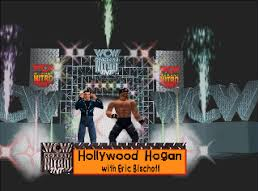
I’m not going to delve too deep into the Virtual Pro series as I never played these videogames; instead, with my young mind only grasping the simplest concepts of the pro wrestling world, my first exposure to the series came with the release of WCW vs. nWo: World Tour (Asmik Ace Entertainment/AKI Corporation/THQ, 1997). When I was a kid, this was the wrestling videogame everyone had and everyone played, to the point where I vividly remember finally getting a copy and playing it all through the night during a sleepover with some friends of mine and driving them to near boredom as I worked to unlock and complete everything as they had done weeks and months before. WCW vs. nWo: World Tour’s roster is split into various factions including the titular WCW and nWo but also some fictional wrestling promotions featuring renamed Japanese wrestlers to dance around tricky copyright issues. Each wrestler has four different attires, allowing you to play as Sting in his surfer persona and Hollywood Hogan in the good old fashioned red and yellow. An interesting twist of irony here is that, these days, people will lose their shit about 2K including five separate versions of Sting, yet players of World Tour should be more than used to this given that you can play as Sting and the imposter Sting recruited by the nWo back in the day.

THQAKIStings
TWO Stings!? Blasphemy!!

World Tour introduced many of the gameplay mechanics that would become staples of this videogame series over the coming years; up to four players can play at once in a variety of matches, though only a single player can take on the league challenge to win championship belts and unlock hidden wrestlers. The core gameplay is built around a simple and yet intricately challenging grapple, strike, and reversal system: players perform a light grapple by tapping the A button and a strong grapple by holding the same button. Pressing a direction on the D-pad in conjunction with either the A or B button will see their wrestler perform one of ten different grappling moves, while light or strong presses of the B button alone (or A and B together) will strike the opponent with a kick or a punch. Players can block incoming strikes with the R trigger and counter grapples with the L trigger. Players can also perform submission holds on a downed opponent, dash at their opponents to land running attacks or dodge around them, drag their prone opponent’s body around the ring, climb the corner turnbuckles, exit the ring and grab weapons from the crowd, or taunt by wiggling the analogue stick. Taunting, and successfully countering and landing moves, raises your wrestler’s Spirit meter; once it is full and flashes “SPECIAL!”, players can perform a strong grapple and wiggle the analogue stick to perform their wrestler’s finishing move and attempt a pin fall.

THQAKIPowerbomb
Nearly every wrestler has a Powerbomb as a Special move.

And good luck with that; World Tour has a steep difficulty curve, even on the easier settings, that can make some matches last nearly ten minutes at a time as you trade counters and moves with your opponent, constantly egged on by the rising and falling cheers and jeers of the crowd and the thumping bass of the in-game music. However, playing through each challenge and winning championships allows you to fight against, and unlock, a number of hidden characters to add to the already-substantial rosters (even Muhammad Ali shows up…as “Joe Bruiser”, whose entire moveset consists of punches!) Sporting a distinct cel-shaded appearance, WCW vs. nWo: World Tour is easily the simplest and least technically-impressive of the AKI/THQ wrestling videogames; there is no create-a-wrestler function (though you can alter the colours of the wrestlers’ attires) and very little options outside of the single and multi-player aspects. However, AKI/THQ took a significant step in the right direction with the subsequent release of WCW/nWo Revenge in 1998.

THQAKIValet
Some wrestlers came out with valets or managers.

Revenge took every aspect of its predecessor and improved upon it vastly; wrestlers now have individual entrances (sometimes including a valet or holding a weapon, though their individual theme music is unfortunately absent), there are more animations and variety for reversals, a cartoon referee appears onscreen to visualise pin falls and submission holds, an instant replay triggers whenever a wrestler hits their Special move or a signature attack, and arenas are modelled after those seen regularly on television and pay-per-view events. Players can now also steal their opponent’s taunt by rotating the analogue stick in a clockwise direction and a combo system, of sorts, allows certain wrestlers to string together strong striking attacks at the cost of some of their grapple moves. Wrestlers also enter the ring wearing their championship belt and sport more true-to-life finishers and signature manoeuvres thanks to the addition of multiple new animations and moves.

THQAKIEdit
Customisation has always been an option.

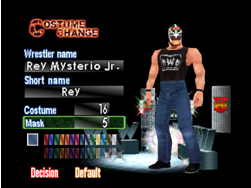
However, there were some drawbacks; losing the cel-shaded appearance, characters now appear far more polygonal than before. The difficulty curve remained relatively consistent, meaning that even a dominating performance from a player and the successful delivery of a Special move would not guarantee victory in the majority of matches. Instead, players had to earn their victory, wearing their opponent down with counters, strikes, and grapples in order to win a championship belt and, again, unlock hidden wrestlers. Create-a-wrestler was still absent but the editing options for existing wrestlers was greatly expanded, allowing players to play about with existing attires in interesting and fun ways. WCW/nWo Revenge was the last of AKI and THQ’s titles with the WCW license; from here on out, they would take their revolutionary videogame engine and ideas and apply them to the WWF brands. WWF WrestleMania 2000 (Asmik Ace Entertainment/AKI Corporation/THQ, 1999) was the first of these endeavours and, as before, AKI and THQ took everything that worked in their previous videogames and expanded and improved upon them further still.

THQAKIWrestlemaniaIntro
Just another chair shot for poor old Mick…

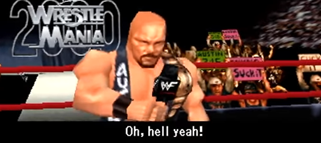
The improvements can be seen immediately; just as Revenge opened with a introduction sequence showcasing its roster and gameplay elements, WrestleMania 2000 begins by showcasing the best of the best of the WWF’s acclaimed Attitude Era. Following this, players are taken to a comprehensive menu screen where they can elect to play a single or multi-man match with the title’s exhaustive roster; while the roster is still arranged in groups, they are no longer organised into factions and the roster is comprised entirely of those seen on a weekly basis back in 1999. Whereas AKI’s WCW titles featured a rather simplistic series of one-on-one matches in the pursuit of individual championships, WrestleMania 2000 includes a lengthy career mode called the Road to WrestleMania. Players select a wrestler and a tag team partner and play a series of matches through one year, facing lower-card wrestlers, taking part in tag team matches, and winning championships in the pursuit of the WrestleMania main event.

THQAKIWrestlemaniaCutscenes
After facing Foley’s personas numerous times, you’ll welcome this fight!

Winning multiple championships may mean that the player has multiple matches on one card and the better your progress, the more hidden wrestlers you will unlock; only a 100% success rate will reap the best rewards, which is a pretty tall order considering the mode’s difficulty spikes and drops depending on your success rate and the opponent you are facing. There will even be a few cutscenes in this mode where hidden wrestlers (usually one of the three faces of Foley) will challenge you to defend you championship.

THQAKICreate
WrestleMania 2000 introduced a proper create-a-wrestler mode.

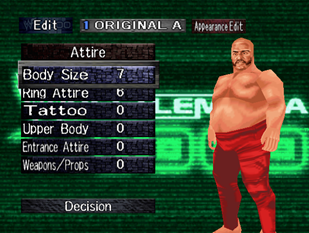
Perhaps the most significant addition was the comprehensive create-a-wrestler mode, which also allowed players to freely customise their name, music, video, and appearance. Using the create-a-wrestler mode, however, players could piece together close approximations of wrestlers not included in the videogame, such as Kurt Angle or Tazz, in addition to those who hadn’t appeared in a WWF ring at the time, such as Diamond Dallas Page and Goldberg, or entirely original characters. Players could choose from an exhaustive list of moves, many of which are carried over from the previous titles, to pretty much create anyone they could envision.

THQAKIWrestlemaniaHBK
Only a 100% win streak will reap the best rewards.

In addition, players could create a custom championship belt to defend or entire pay-per-view events; wrestlers all have their own individual entrance themes and tag teams even came to the ring with their team name displayed. The only real downsides were the increased polygonal look of the videogame and the sharp difficulty spike in Road to WrestleMania mode, which could result in players struggling to put away the Godfather but dominating Chris Jericho within two minutes. Finally, the pièce de résistance, the crown jewel in the AKI/THQ partnership, WWF No Mercy. It’s strange to me that the follow-up to WrestleMania 2000 would take its name from a strictly B-level pay-per-view event but there was nothing B-level about this videogame. WWF No Mercy was the culmination of nearly six years of development, refining, and improvement, featuring the biggest and deepest roster yet, the most striking graphics available, the most intricate story mode of all of AKI’s wrestling titles, and the deepest create-a-wrestler you could ask for. There’s a good reason this videogame has been heralded as one of, if not the, best wrestling videogames ever made; more than nostalgia, it’s depth and replayability.

THQAKINoMercyChampionship
No Mercy believed in gender equality, if nothing else.

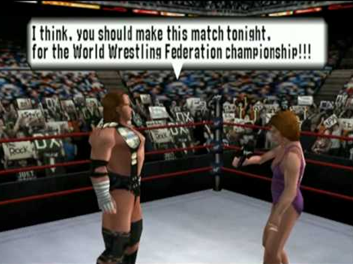
After the suitably over-the-top opening sequence, players could enter the Championship mode to compete in a series of matches and win a championship belt. Unlike WrestleMania 2000, players competed for each belt individually (or alongside a friend if they chose to go for the Tag Team Championships) and this mode featured multiple branching paths and cutscenes based on a variety of WWF storylines; for example, players could play through the entire WWF Championship storyline and fight against Triple H in exactly the same manner as Mankind did, even transforming into Cactus Jack for their street fight at Royal Rumble, or they may lose a match and branch off into a storyline mirroring Chris Jericho’s issues with Triple H from 2000. Once the player won a belt, they could play the mode again in order to defend it. With its multiple paths, no longer forcing players to win 100% of their matches, and far more manageable difficulty curve, No Mercy’s Championship mode was light years ahead of anything seen in AKI’s previous videogames and it’s a lot of fun to play differently each time to 100% each path.

THQAKINoMercyShop
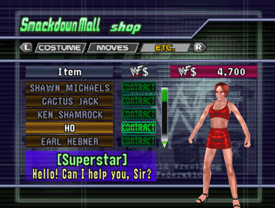
Purchase new content in the SmackDown Mall.

New additions to the gameplay in this title included not only a graphical overhaul that makes wrestlers far lass polygonal but also the inclusion of running grapples, both from the front and behind, the return of blood (though early editions of the videogame would randomly wipe themselves due to some glitch involving the blood), guest referee and ladder matches, a breakable announce table at ringside, multiple backstage areas to fight in, a new version of the cage match to better display the in-ring action, the Survival mode (where players faced an endless Royal Rumble against every single wrestler in the title and in which you could unlock hidden wrestlers), and the SmackDown Mall. In the Mall, you could use the money you earn in Championship and Survival mode to unlock loads of extra content, from new moves and gear to use in create-a-wrestler to hidden characters and weapons.

THQAKINoMercyCAWs
You could create almost anyone in No Mercy.

Speaking of create-a-wrestler, this mode returned better than ever; the moves and attire options made available were more than extensive, allowing you to not only create WCW, ECW, and Japanese wresters not included but also modern day wrestlers to keep the videogame as up-to-date as you desire. The inclusion of wrestler faces (both as avatars and to use on your created wrestler) and certain attires also allowed you to create omitted wrestlers like Gangrel and the Mean Street Posse. Each attire slot could now be assigned entirely unique attributes, meaning you could use one slot to create four separate wrestlers and all that they are forced to share is a moveset. The developers even utilised this to put TAKA Michinoku and Funaki in the same slot, something 2K are seemingly reluctant to do in this day and age (despite proving they are capable of doing so in the past). There were, however, some drawbacks; wrestlers no longer had their entire entrances and tag teams no longer entered as a duo, multi-man matches suffered from slowdown that was not present in previous titles, there were no good mask options to create luchadors like Rey Mysterio, the Big Show was entirely absent from the videogame and (hilariously) replaced in Championship mode with Steven Richards (as opposed to, say, Chris Benoit or even the Big Bossman), and, as mentioned, early copies of the videogame featured a game-breaking glitch that would cause the data to be randomly lost.

THQAKINoMercySurvival
Still the best multi-player wrestling videogame, for my money.

This was a major downside to the videogame at the time, as many players had corrupted copies, and even reissued copies of the videogame would often be prone to this glitch. Unfortunately, WWF No Mercy was the last videogame produced by AKI and THQ; despite apparently planning a third title, WWF Backlash, THQ and AKI parted ways, meaning the WWF videogames would follow the model set by the equally-enjoyable WWF SmackDown! (Yuke’s/THQ, 2000) up until the modern era. Since then, the standard set by AKI has not even attempted to be emulated much less imitated by THQ in their subsequent titles. Moving away from the simple, but in-depth grappling system developed on the Nintendo 64, WWE videogames now seek to closely emulate the televised product through simulated gameplay rather than arcade-style action. Although, graphically, AKI’s titles have not aged terribly well, nothing can take away that rush of nostalgia when starting up a new session on WWF No Mercy; instantly, I am transported back to a simpler time when me and as many as three other friends would spend all day and night playing match after match and pushing the cartridge to its very limits. No WWE videogame since has received that kind of constant love and attention from me, as online gaming and the realities of everyday life intervene with the simple pleasure of gathering around a television and throwing Spears at each other endlessly with the very best polygons money can buy.