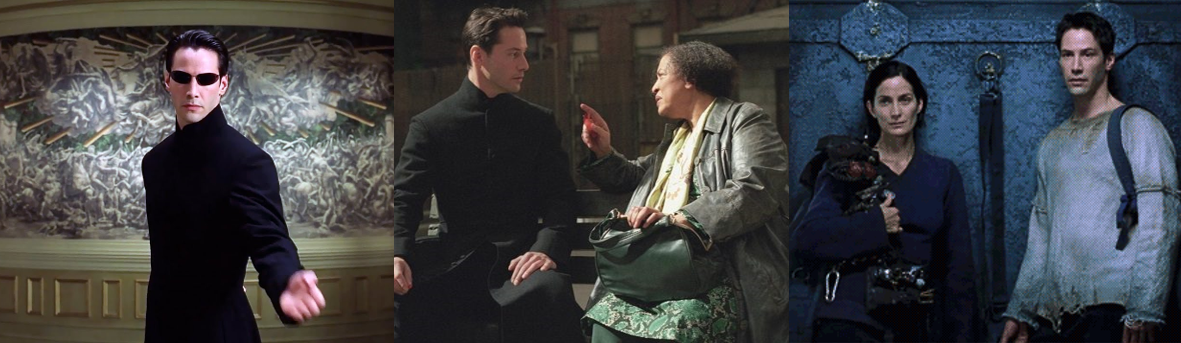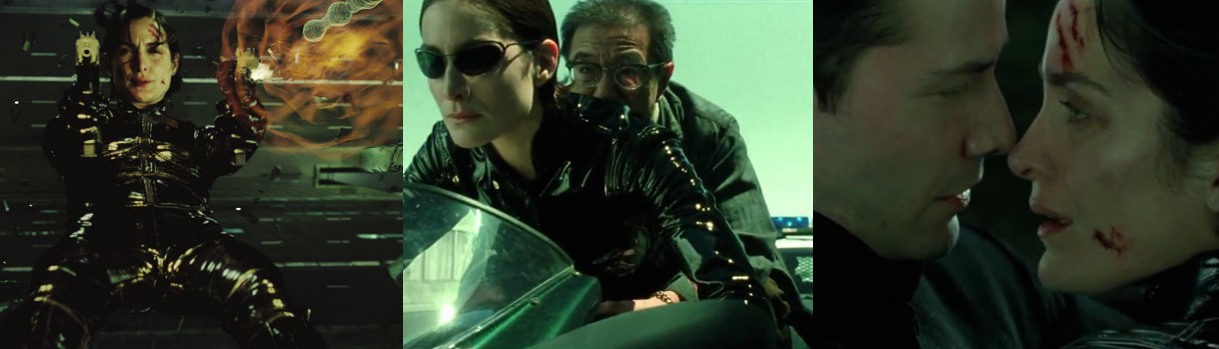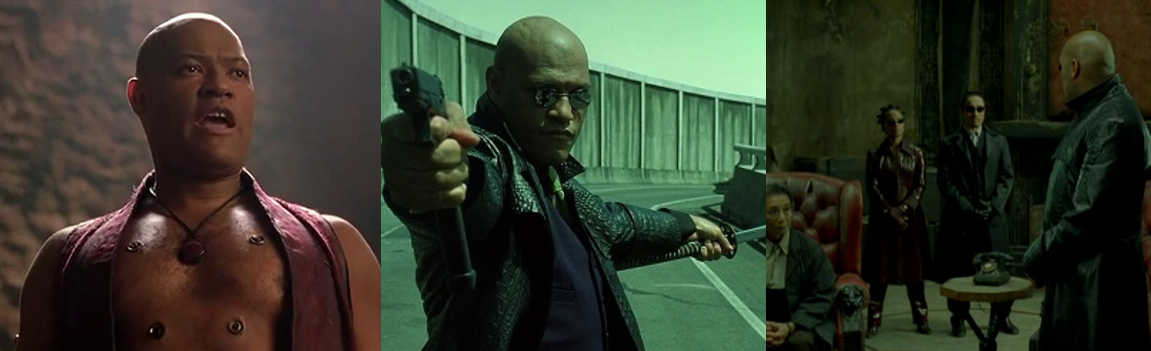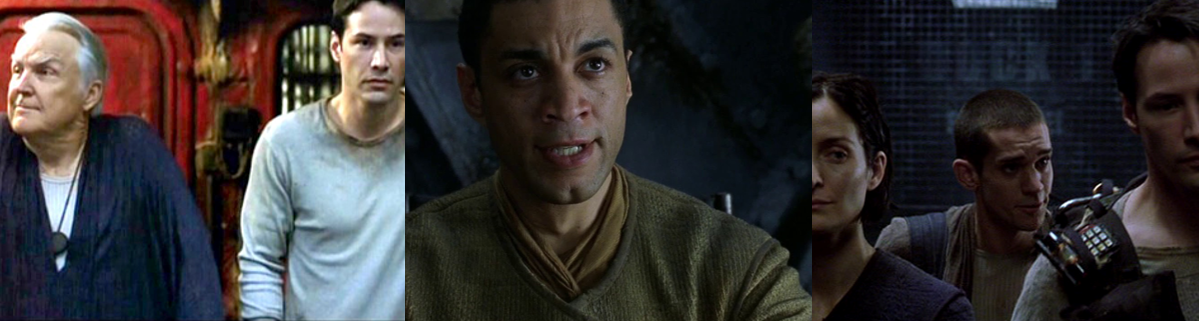
Movie Night: The Matrix Revolutions

Released: 5 November 2003
Director: The Wachowski Brothers
Distributor: Warner Brothers
Budget: $110 to 150 million
Stars: Keanu Reeves, Hugo Weaving, Carrie-Anne Moss, Laurence Fishburne, Jada Pinkett Smith, Harry Lennix, and Ian Bliss

The Plot:
Zion, the last bastion of humanity, faces imminent destruction from an all-out machine attack. While the city fortifies their defences, the fate of humanity is placed into the reluctant hands of Neo (Reeves) as he prepares for a final showdown with the rogue program Smith (Weaving) that will decide the fate of all lives, human and mechanical alike.

The Background:
In 1999, the aspiring writer/director duo of brothers Andy and Larry Wachowski (as they were then known) – inspired by manga and anime – combined a mixture of impressive martial arts, philosophy, and science-fiction to create an instant and lasting impression on action cinema, one that popularised “bullet time” and wire-assisted kung fu (or “wire-fu”) in movies. The Matrix was a massive critical and commercial hit and the Wachowskis made the brave decision to produce two sequels, back-to-back, alongside a varity of tie-in multimedia, including comics, videogames, and animated shorts. Although The Matrix Reloaded (Wachowski Brothers, 2003) made over $740 million worldwide, critics were torn: the film’s dense philosophy confused and divided many, though its intense action sequences were praised. Audiences only had to wait six months for the third, far more contentious entry, which the directors sought to resolve the emotional and spirutual journey of their characters while also delivering the same cutting-edge digital and practical effects and influential fight scenes. Perhaps it was the unrealistic expectations brought about by fan debate, the sheer influx of Matrix content, or the close release of the third film to the second, but The Matrix Revolutions was the lowest grossing of the original trilogy. Though its $427.3 million worldwide gross and persistent popularity later inspired a fourth film as much as greed, The Matrix Revolutions was largely dismissed by critics. Many felt that the film was anticlimactic, the performances wooden and strained, and that it focused too much on style over substance. Though it naturally has its fans, even star Keanu Reeves felt the movie disappointed as a finale but, since today is Keanu’s birthday, this seems like the perfect time to finish my ongoing retrospective of the franchise.

The Review:
I think it’s fair to say that The Matrix changed action cinema. It’s not really hyperbole to claim that The Matrix paved the way for not only a new wave of all-action films but also the superhero genre as we know it today, to say nothing of revitalising Keanu Reeves’ career. As celebrated as the first movie is, however, the sequels and subsequent multimedia spin-offs have had a mixed reaction, to say the least. I’m definitely in the minority of people who actually quite enjoyed The Matrix Reloaded, and even I’ll admit that it falls short of the original movie thanks to needlessly bogging down this unique cyberpunk world with dense lore and confusingly overblown dialogue. In the aftermath of The Matrix Reloaded, I remember there being a great deal of speculation about where the third movie would go, with a prevailing belief being that the post-apocalyptic real world would also turn out to be a simulation. I think this, and the expectations that the magic of the first movie would ultimately pay off, means that The Matrix Revolutions was always going to struggle as even now I’m not sure what would’ve constituted as a suitable finale for the ground-breaking franchise. The Matrix Reloaded ended on one hell of a cliff-hanger, with Neo demonstrating electromagnetic abilities in the real world and collapsing from the exertion and his rival, Smith, having downloaded a version of himself into Bane (Bliss) so he can expand his reach outside of the Matrix.
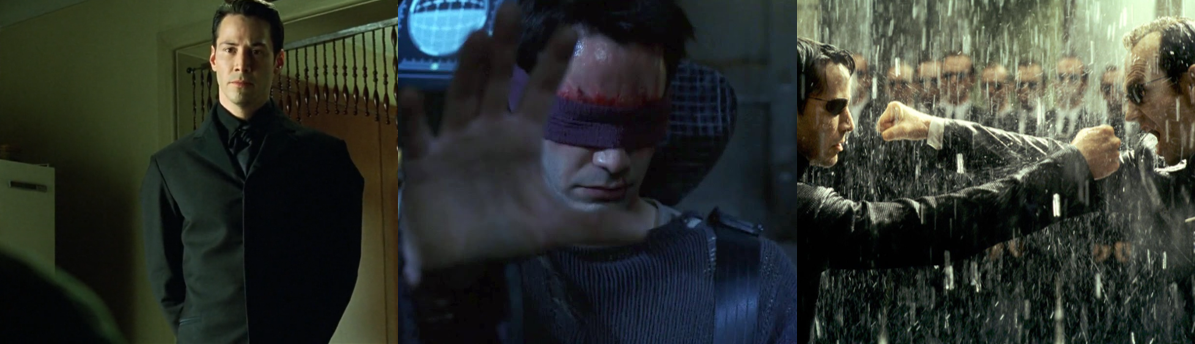
Faced with forging the world’s new destiny, Neo must overcome his grief and fight like never before.

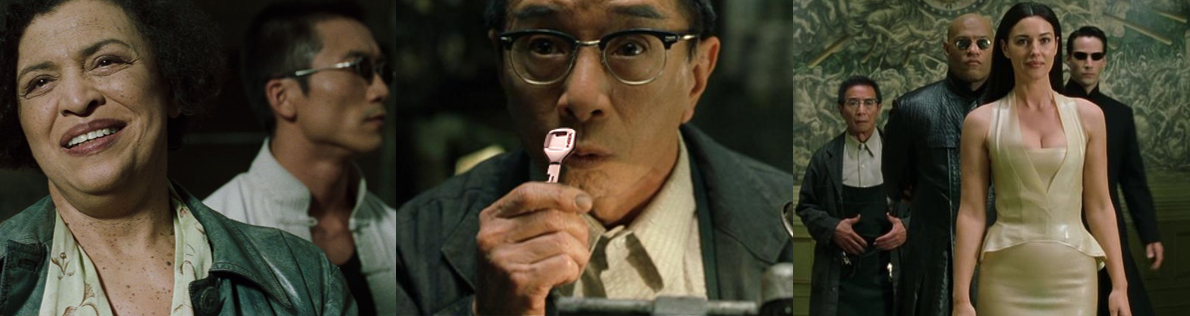
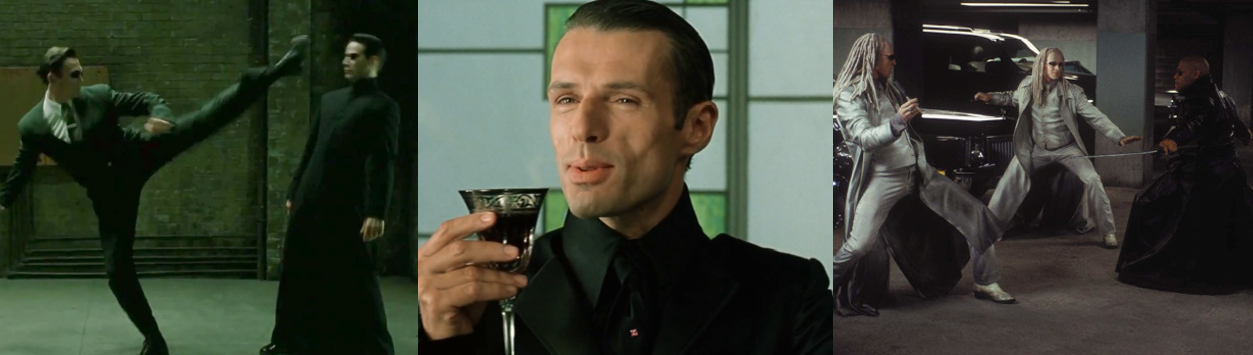
Thus, Neo begins the movie trapped in the subtly named “Mobile Ave”, a kind of backdoor environment through which the repulsive Trainman (Bruce Spence) ferries illegal programs with no purpose from the Matrix to the machine world. This in itself is a bizarre idea, that Neo could somehow “plug into” this cyberspace environment because he’s “not ready” to die, but it also directly ties into the film’s message regarding the Matrix and its programs. In Mobile Ave, Neo meets Rama Kandra (Bernard White) and Kamala (Tharini Mudaliar), two programs who have fallen in love and have made a deal with the Merovingian (Lambert Wilson) to get their daughter, Sati (Tanveer K. Atwal), to safety since she has no “purpose” within the confines of the machines’ digital realms. Neo’s interactions with Rama Kandra actually have lasting ramifications for his later decision to head to the machine city to broker a peace between humans and the machines and show that the programs are fully capable of adopting complex human behaviours such as love and faith. Although Neo is virtually unstoppable in the Matrix, he has no power in Mobile Ave and is thus reliant on his lover, Trinity (Moss), forcing the Merovingian to free him in order to return him to the fight. However, Neo returns as the barer of bad news: because of his decision to reject his predetermined destiny to continue the cycle of death and rebirth within Zion in favour of saving Trinity’s life, the last refuge of humanity is facing imminent destruction from an army of Sentinels. A final discussion with the Oracle (Mary Alice) reveals to Neo that his destiny is now to face Smith to the end, with the fate of both humans and machines in his hands, and he decides that the best way to approach this battle is to venture into the machine city to address their common enemy. Despite all his superhuman abilities and his messiah-like status within much of Zion, Neo remains as conflicted and troubled as ever. He knows that he’s betting the survival of the human race on his ability to best Smith and is reluctant to have Trinity accompany him since he knows it’s likely to be a one-way trip, and yet he fully commits to his mission even after he’s been permanently blinded in battle with Bane since he knows his sacrifice will bring an end to the conflict.
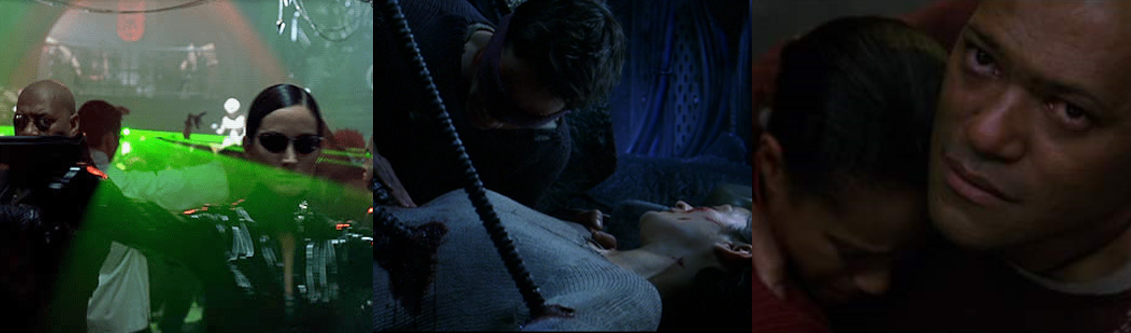
Unfortunately, Trinity and Morpheus take a backseat to the greater conflict.

Once a prominent linchpin in Neo’s awakening as “The One”, Trinity has largely devolved into a desperate, lovesick sidekick. Her first priority over all else is to rescue Neo from Mobile Ave and, when the Merovingian attempts to blackmail her and the others into doing his bidding in return for Neo, she simply initiates a Mexican standoff and demands that Neo is returned or they will all die. This recklessness pays off and she’s apparently delighted to be reunited with her lover (it’s honestly hard to tell since there’s still very little chemistry between the characters and actors) and, from there, she resolves to stay by his side even as he embarks on a suicide mission. Trinity is horrified when a psychotic Bane attempts to sabotage their trip and Neo is blinded in the fight. From there, she acts as Neo’s pilot (even though he can still inexplicably see, only now in an ethereal golden glow) and pushes herself, and the Logos, to the limit to break through the Sentinel barricade protecting the city. Although this grants her a view of the untainted sky above the broiling dark clouds that have suffocated the world, this trip ends in tragedy as the Logos crashes into the city and she is fatally wounded. With her dying breath, she expresses her gratitude to Neo for changing her life and her love for him. However, while it’s a poignant moment and Neo’s heartache is readily apparent, it’s a sudden, anticlimactic, and underwhelming death scene thanks to how long it drags on and, again, the lack of chemistry between the two. It’s a shame that Trinity doesn’t get more to do here as she was quite the ass-kicking machine in the first movie, and even The Matrix Reloaded made her a pivotal component to the plot and Neo’s greater destiny, but she’s basically just his pilot and the object of his affections her. Seraph (Collin Chou) is similarly neutered; I remember there being so much speculation about him and even the Merovingian being former Ones and Seraph has such a reputation in the film as a “wingless” fighter who has “beaten” Smith before but, despite demonstrating his fighting prowess in the second film, he’s just here to make up numbers and fail to protect Sati from Smith and his duplicates and the film makes no attempts to delve into who or what he really is.
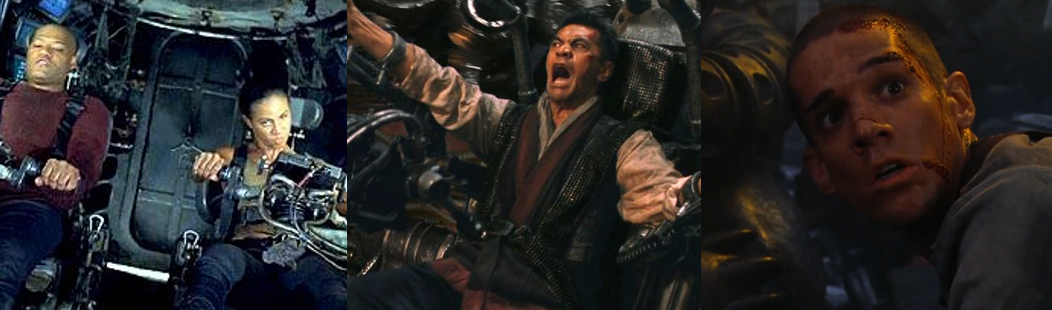
Although the stakes couldn’t be higher, I was underwhelmed by the conflict raging in Zion.

Morpheus (Fishburne) has also lost a lot of his allure; he went from this enigmatic figure who spoke in riddles and exposited information with a cool demeanour to an almost fanatical figure of controversy in the last film. Now, with the truth about the Matrix and the One revealed to him and having lost his beloved ship, Morpheus’s faith is shaken and he’s far from the charismatic leader he was once painted as. Largely a bit player, he’s forced to take a backseat to Niobe (Smith) as she expertly pilots the Hammer through “mechanical” lines towards Zion and further raises the ire of the cantankerous Commander Lock (Lennix) when he crashes through the city’s defences and sets of an electromagnetic pulse that disables a wave of Sentinels attacking the dock but also renders Zion temporarily vulnerable. Indeed, Morpheus is disappointingly ineffectual during the massive assault between the Sentinels and Zion, giving way to the strict Captain Mifune (Nathaniel Lees), who’s given the unenviable task of organising the inhabitants into a fighting force to repel the endless waves of Sentinels. Although the Zion forces are armed in durable mech suits, they’re vastly outnumbered, leading to Mifune reluctantly allowing the overly enthusiastic Kid (Clayton Watson) to join the fight despite being underage. While technically an impressive and visually elaborate battle, the clash between Zion and the Sentinel swarm is a bit of a mess. It’s more like an extended videogame cutscene than anything else and it drags on way too long, laying waste to Zion’s forces and leaving Mifune shredded to death and the Kid as their only hope of salvation. Through sheer determination and his unwavering belief in Neo, the Kid is able to lumber his mech to the gate and allow the Hammer into the dock, where it subsequently knocks out the Sentinels with its EMP blast but leaves the city on the bring of all-out destruction until the machines suddenly stand down and Morpheus realises that Neo is fighting on their behalf within the Matrix.
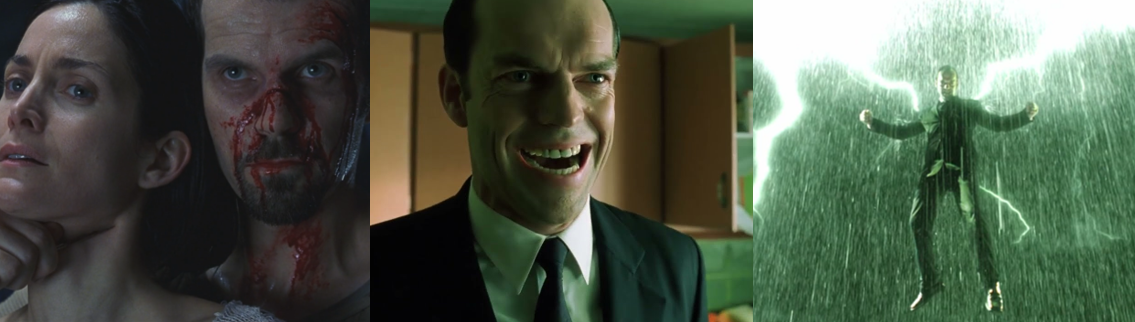
Having spread throughout the Matrix and beyond, Smith is on the brink of absolute victory.

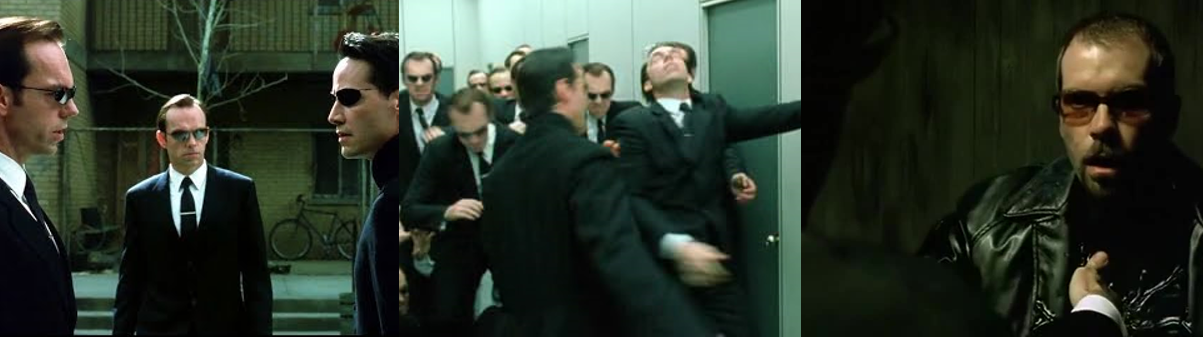
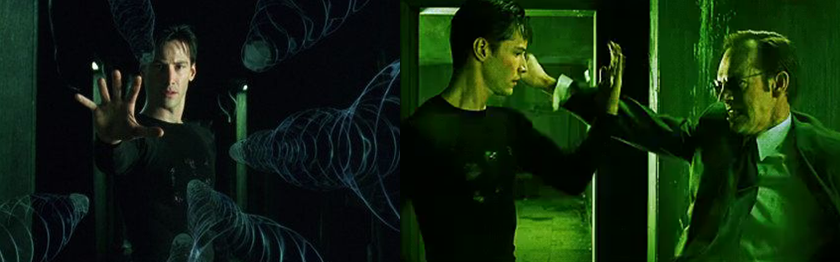
Once a loyal, if disgruntled, agent of the Matrix, Smith has since become his own man; thanks to his ability to endlessly duplicate himself by overriding other programs and inhabitants of the Matrix, his threat increases a thousandfold when he and his duplicates storm the Oracle’s apartment building and assimilate Seraph, Sati, and the Oracle herself! This gives Smith the “eyes of the Oracle” (the ability to see future events, to a certain degree) and allows him to spread like a literal virus throughout the simulation, and he’s even able to confront Neo in the real world by inhabiting Bane’s body. This initially catches Neo off-guard and ends up with him being horrifically scarred and blinded, but Smith is hampered by the fragility of his human body and ultimately defeated since a little thing like blindness is of no consequence to the One. Although we don’t really get to see Smith’s takeover of the Matrix happen since we’re too busy watching the never-ending battle in Zion, it’s effectively demonstrated when Neo confronts Smith in the finale, with the Matrix now a storm-ravaged hellscape populated only by Smith. After negotiating a peace treaty with a visual representation of the machine consciousness (subtly referred to as “Deus Ex Machina” (Henry Blasingame/Kevin Michael Richardson)), Neo is reinserted into the Matrix to fight on behalf of Zion and the machines against their common enemy and end the conflict between the two. Unlike in The Matrix Reloaded, Smith chooses to fight Neo one-on-one because he’s so confident of his victory. Indeed, his abilities have increased to the point where he can not only match Neo blow for blow but even emulate his superhuman abilities, allowing him to fly and pose a significant physical threat with just one of him. Still, it is a bit underwhelming after the madcap Burly Man Brawl of the last film, but I guess it allows for a more intense and personal battle between these two. Indeed, Smith’s power is now so great that, technically, Neo is unable to defeat him. Similar to his experiences in Mobile Ave, the Matrix is now so vastly corrupted and Smith’s power so vast that it’s all Neo can do to hold his own in the fight against the manic Smith, who desires nothing less than to assimilate all life, human and mechanical, and replace it with himself.

The Nitty-Gritty:
We’re far beyond deception, games, and subtlety in The Matrix Revolutions, and nowhere is this emphasised more than in Trinity, Morpheus, and Seraph’s infiltration of the Merovingian’s risqué club (literally descending into “Club Hel”, a place of sadomasochism, excess, and near-demonic denizens) to not bargain with the aristocratic Frenchman but to hold him to ransom. This emphasis on getting to the point continues in Neo’s discussion with the Oracle. Not only does she explicitly (and, in my view, unnecessarily) call attention to her different appearance, but she abandons all riddles and double talk and clearly spells out to Neo that he must defeat his dark opposite, Smith, to decide the fate of the world. In this respect, The Matrix Revolutions is perhaps the simplest of the films to understand: Zion is in danger and Neo must fight Smith to save them and the machines, and this simplicity is perhaps why I find the film so dramatically underwhelming. The protracted and frankly boring war in Zion doesn’t help. It really feels like the film has run out of steam and is thus extending its runtime with a lengthy and muddled war sequence, and it definitely feels like the balance between action and exposition is a little off in the two Matrix sequels. I did, however, enjoy seeing a bit of a role reversal in Niobe and Morpheus. Once a devout believer in Neo and the One, Morpheus’s faith is shaken by Neo’s revelations, but Niobe has become convinced that Neo is worth betting on after witnessing first-hand what he can do. To be fair, Morpheus’s trust in Neo does remain steadfast and is showcased both in their surprisingly emotional farewell and in his ability to intuit that Neo has chosen to fight for his friends and the world.
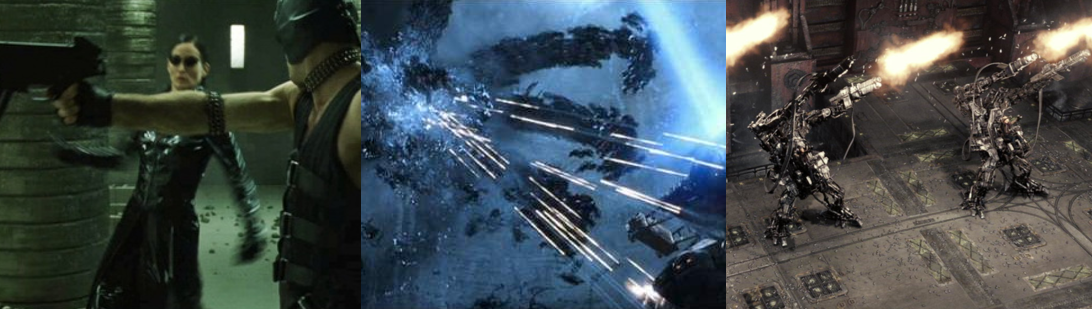
Sadly, the endless machine attack on Zion pales in comparison to the series’ iconic wire-fu.

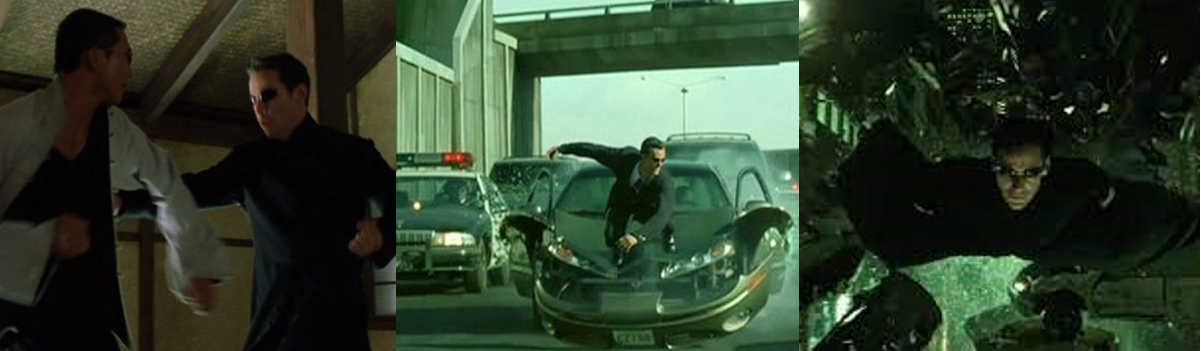
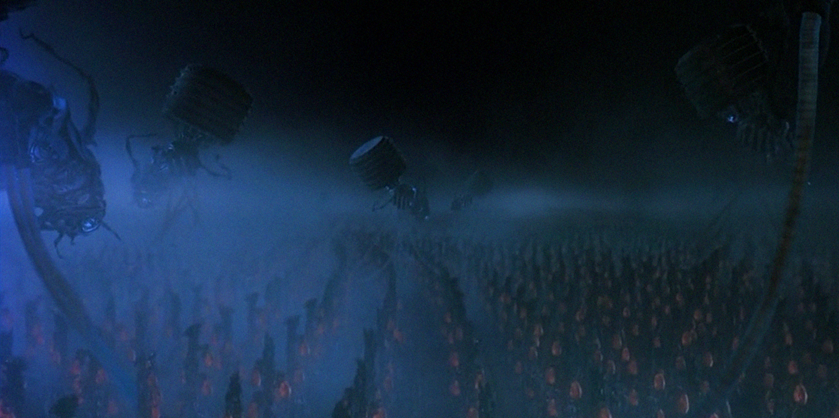
I think one thing that really brings The Matrix Revolutions down is the disappointing lack of wire-assisted, visually stunning kung-fu fight sequences. The Matrix Reloaded really impressed with some unique and fun fights, even if they were a little underdeveloped and a bit cartoony at times, but the third film meanders along for most of its runtime with only a brief ceiling-based scuffle between Trinity, Morpheus, Seraph and the Merovingian’s guards to tide us over until the action-packed finale. This, again, is another reason I find the battle for Zion so underwhelming and dull; there’s no fight choreography to marvel over, no physical skill to admire, and no fun CGI-assisted bullet time effects to spice things up. It’s just a boring mess of metal and screaming, a blur of indistinct characters jerking around in mech suits, bullets flying and shells clattering everywhere, and an uninspiring mess of Sentinels swarming the screen. Admittedly, it is impressive and imposing when they burst in as a cloud of writhing metallic limbs and tear through Zion’s forces, but there’s just way too much obvious greenscreen to really engage with it and it’s hard to really be invested since I know nothing about Captain Mifune (except that he doesn’t take any shit and never completed his training), don’t give two hoots about the Kid (who we’re never really given any reason to care about beyond him being a Neo fanboy), and couldn’t name any of their fellow soldiers who get decimated by the Sentinels. Perhaps if Morpheus had joined the fight, maybe even replacing Captain Mifune and dying in his place, this battle might have made a greater impression on me but, as is, it’s a slog that I just don’t find as interesting as the Hammer’s race to the city or Neo’s surprisingly brutal fight against Bane. Indeed, I simply find myself tuning about and pondering questions like how did Zion build all those mechs? Where is all that ammo coming from? How was Zion even built? We’re left to intuit that the machines helped build the city after the One resets the Matrix but it’s frustrating that questions like these (and how, exactly Neo’s abilities outside the Matrix work) aren’t answered. It’s almost as if the filmmakers couldn’t think of a suitable explanation and again makes it feel like it would’ve been far simpler to have the real world be another simulation, another “system of control”, to keep humans in line.
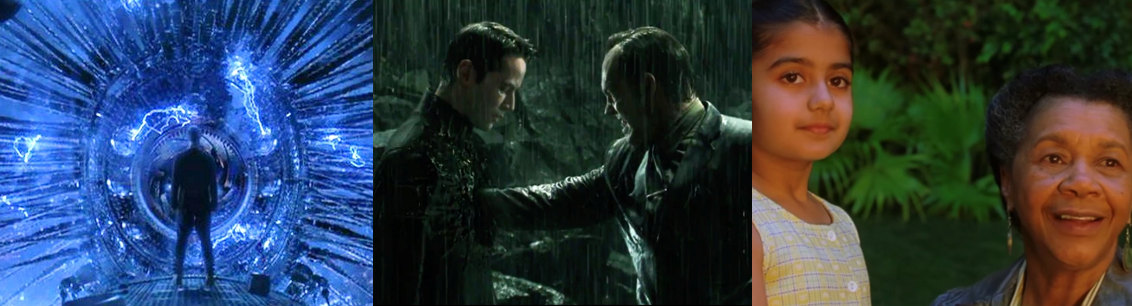
An unexpected truce and a heroic sacrifice sees Neo end the war between humans and machines.

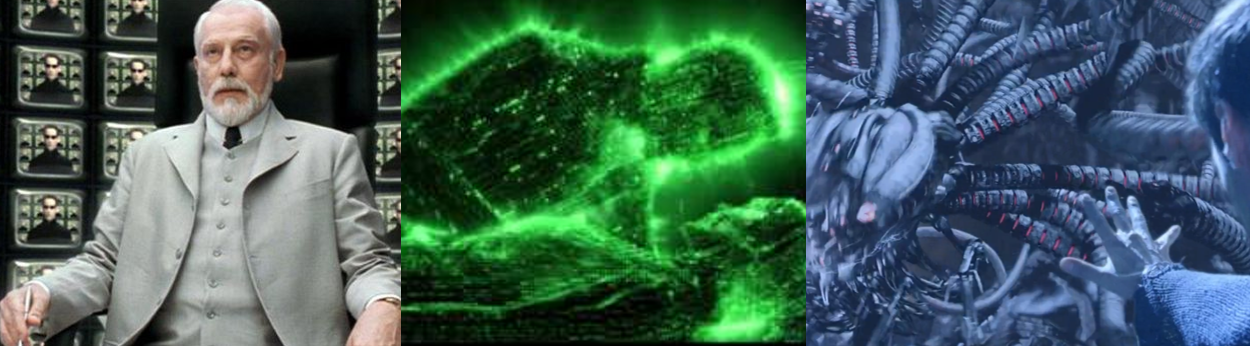
As mentioned, Neo’s fight with Bane ends with him being blinded; however, he’s still able to “see” at least the machines and their proxies, which are rendered in an ethereal gold light. This, and his ill-explained ability to explode Sentinels with his mind, allows him to direct Trinity towards the machine city, destroy much of their defences, and converse with Deus Ex Machina. This stubborn representation of the machine hivemind initially scoffs at the idea of “needing” Neo’s help but is forced to relent since Smith’s existence poses a very real threat to the machines inside and outside of the Matrix. Thus, an offscreen deal is reached: Neo will enter the Matrix to stop Smith and, if successful, there will be peace between the two races. Reluctantly, Deus Ex Machina agrees and we finally get our big, explosive final showdown between Neo and Smith. This fight is pretty much the only thing worth watching The Matrix Revolutions for; against a relentless rainstorm and a nightmarish city landscape, Neo and Smith collide both on the ground and in the air, delivering a superpowered brawl that far surpassed Superman Returns (Singer, 2006) three years later. Although Neo previously bested Smith, he’s outmatched but the goal was never for him to actually defeat his rival, but to lure him into a false sense of security so that Smith could assimilate him. Thanks to the eyes of the Oracle, Smith knows that his victory is inevitable and, despite a moment of uncharacteristic fear when Neo appears resigned to his fate, he plunges his hand into Neo’s chest and overwrites his code, breathing a sigh of relief at having finally bested his foe. However, it really was just “a trick” as Deus Ex Machina uploads a destruct sequence into Neo’s lifeless body that summarily destroys all the Smiths and allows the Matrix to be restored, now without its grainy green hue. A conversation between the restored Oracle and the Architect (Helmut Bakaitis) reveals that Neo’s sacrifice has earned a fragile peace, one where those who wish to be freed (both human and machine) are allowed to go and all hostilities have ended. The Oracle is left assuring Sati that Neo may return some day and that she always believed that he would end the war that had ravaged and oppressed the world.

The Summary:
The downward spiral of the Matrix films is probably one of the greatest disappointments in cinema history. I firmly believe there was more than enough goodwill and lore to support two or three follow-ups to the first film as it just barely touched upon the unique cyberpunk world it presented, but none of the sequels were truly able to really deliver upon this. I can just about give The Matrix Reloaded a pass as I enjoy the action and fight sequences and even the ham-fisted philosophy, which served to unnecessarily overcomplicate things rather than simply giving us straight answers or naturally developing this post-apocalyptic world. Sadly, I can’t say the same about The Matrix Revolutions, which is generally a bleak and boring limp to the finish line for these otherwise captivating characters. Trinity’s death is really an allegory for this movie: it’s long, overly dramatic, and underwhelming, and nowhere is this more evident in the battle for Zion, which is so tedious that I still feel like I’m watching it even now! The stakes couldn’t be higher in this film and yet I feel almost nothing in this fight as it doesn’t directly involve any of the characters I care about, resulting in a grim slaughter that acts more as a showcase for some lacklustre digital effects than a tense battle. The fight between Neo and Smith is the only reason to watch this film again, and even that is a little disappointing since it boils down to a one-on-one brawl that can’t help but be underwhelming no matter how hard the two fly at each other since we saw Neo fending off an army of Smiths in the last film. Also, I love Keanu Reeves but even I can’t defend him in this film. He’s stoic to the point of boredom, is severely lacking in charisma, and has absolutely zero chemistry with the equally bland Carrie-Anne Moss, robbing her otherwise poignant death of any real impact and causing the film to end with a whimper rather than a bang as it’s not massively clear what happened. It’s a shame as The Matrix was such a unique and ground-breaking film and The Matrix Reloaded tried really hard to inject some new ideas into the concept. But The Matrix Revolutions failed to live up to expectations or deliver a satisfying conclusion to the original trilogy, opting not to deliver a largely mind-numbing finale rather than play into the rabid speculations offered by the fanbase.  

My Rating:

Rating: 2 out of 5.

Could Be Better

Are you a fan of The Matrix Revolutions? Were you disappointed that it didn’t really provide a decent explanation for Neo’s expanded powers? Did you also find the battle between Zion and the Sentinels to be long and boring? What did you think to the idea of Neo battling Smith to the death to decide the fate of the world? What were you expecting from the film at the time and were you disappointed by the end? How are you celebrating Keanu Reeves’ birthday today and what are some of your favourite roles of his? Whatever you think about The Matrix Revolutions, drop a comment below or let me know your thoughts on my social media and be sure to check out my other Matrix reviews.


Movie Night: The Matrix Reloaded

Released: 15 May 2003
Director: The Wachowski Brothers
Distributor: Warner Brothers
Budget: $127 to 150 million
Stars: Keanu Reeves, Carrie-Anne Moss, Hugo Weaving, Laurence Fishburne, Lambert Wilson, and Randall Duk Kim

The Plot:
After shedding the artificial reality of his mundane life and realising his destiny as “The One”, Neo (Reeves) is conflicted between his duty and his status as a saviour to the remnants of humanity. As the machines prepare an all-out assault against Zion, Neo must unravel the mystery of his purpose and face the fight of his life when his old enemy, Smith (Weaving), inexplicably returns with the power to endlessly duplicate himself!

The Background:
Back in 1999, up-and-coming writer/director duo Andy and Larry Wachowski (as they were known then) brought together an impressive mixture of martial arts, philosophy, and science-fiction that pulled heavily from manga and anime and made an instant and lasting impression on action cinema by popularising “bullet time” and wire-assisted kung fu (or “wire-fu”) in movies. The Matrix was a smash at the box office, and with critics, and the Wachowskis made the bold decision to follow it up with not one film, but two, filmed back-to-back and accompanied by a bunch of tie-in multimedia, including comics, videogames, and a series of animated shorts. Seeking to push the boundaries of the mind-bending concepts and special effects pioneered in the first film, Warner Bros. set up ESC Entertainment to develop the technology needed to bring their vision to life once more. Virtual cameras, incredibly detailed facial capture programs, and optical flow techniques, among others, allowed the duo to better manipulate the virtual space and pit Neo against hundreds of Agent Smiths in the memorable “Burly Brawl” and the producers even constructed a 1.5-mile freeway specifically for an action-packed chase sequence. Going bigger with the action and spectacle paid off dividends at the box office as The Matrix Reloaded made over $740 million worldwide, though critics were divided on the increased focus on philosophy and its complex narrative. Unlike the first film, which was relatively straight-forward, The Matrix Reloaded spawned endless readings and discussion with its dense themes, though many praised the intense and spectacular action sequences and fight scenes. Audiences didn’t have to wait long for the third, far more contentious entry, though it would be nearly twenty years before Warner Bros. decided to revive the franchise. Still, I’ve always enjoyed this second Matrix movie and, since today is Keanu Reeves’ birthday, this seems like the perfect time to revisit it once more.

The Review:
It’s still pretty crazy to me to think back to The Matrix, which was a huge deal when it came out. When my friends and I had sleepovers, The Matrix was usually always one of a handful of films we would put on and we were all enthralled by the action, the special effects, and the concept of machines having overrun a post-apocalyptic world and subdued us all in a virtual reality environment. The hype for the sequel was pretty high, as I remember; The Matrix opened up so many philosophical and layered discussions that it was probably my first experience of really intense fan debates and speculation about where the series would go in the sequel, especially regarding the expansion of this fictional world. I don’t recall if I watched The Animatrix (Various, 2003) before seeing this film, but I know I didn’t play the videogames (and have still yet to do that), so I went into this with only my affection for the first film and the anticipation of the trailers behind me, both of which were more than enough to excite me.

For all his power within the Matrix, Neo remains a conflicted and doubt-ridden saviour.

The Matrix Reloaded takes place some six months after the events of the first film and finds Neo in a much more comfortable position than he was throughout The Matrix, where he was mostly confused, overwhelmed, and struggling to pick between panic, adrenaline, and instinct. Now garbed in an all-black ensemble that resembles an all-in-one suit and cape, Neo cuts a confident and awe-inspiring figure thanks to having unlocked incredible and unprecedented powers within the Matrix. This allows him to sense the presence of Agents of the system, view the Matrix’s code at will, perform superhuman and physics-bending actions, and, of course, to fly through the sky at the speed of sound. While many in Zion, the last human city, don’t fully understand Neo’s abilities or question his status as their saviour, there’s no doubt that he’s easily the most powerful character in the film when plugged into the Matrix. While other characters are forced to run from the Agents, Neo can engage them in hand-to-hand combat and best them without much difficulty, even when going up against “upgrades” like Agent Johnson (Daniel Bernhardt). However, as formidable as Neo’s physical abilities are within the Matrix and as celebrated a figure he is amongst a certain sect of Zion’s inhabitants, he remains a fallible man plagued by self-doubt that’s only been exacerbated since being heralded as a saviour and the growing pressure he faces at being the literal key to the survival of humanity. As before, he seeks guidance from the Oracle (Gloria Foster), who continues to bombard him with riddles regarding his true destiny and turns to his lover, Trinity (Moss), for support and solace as he struggles to meet the lofty expectations placed upon him and combat the incredible power of his old enemy, Smith, when he makes an unexpected return.

In addition to being Neo’s rock, Trinity is a bad-ass character willing to sacrifice herself for him.

While Trinity was very much a catalyst for Neo’s unplugging and guiding him towards realising his true calling as The One in the first film, here she’s reconfigured the centre of Neo’s world. While the chemistry between the two characters (and actors) is incredibly lacking, with both being quite wooden in their passion and delivery (beyond when they’re sucking face or getting raunchy during a sweaty rave), the film goes out of its way to emphasise that their connection, their true love, is central to Neo’s relationship to humanity. Still a forthright and capable figure, Trinity is far more than just Neo’s arm candy or a damsel in distress; she’s treated as one of his strongest supporters and an equal and given her fair share of action scenes thanks to her taking the lead on liberating and safeguarding the Keymaker (Duk Kim) using her motorcycle skills. There’s no question that Trinity is a formidable and bad-ass fighter and shooter; even when fighting alongside Neo, who can basically do whatever he wants in the Matrix (though, oddly, rarely ever does this), Trinity holds her own but all the physical skill in the world don’t stop her from taking offense when Persephone (Monica Bellucci) demands a passionate kiss from Neo before she agrees to betray her husband, the condescending Merovingian (Wilson), so they can get to the Keymaker. While Neo and Trinity don’t really have the greatest chemistry as a couple (which is potentially due to everyone assuming a stoic demeanour within the Matrix), their love is much envied by Persephone, who has grown weary of her husband’s cheating ways and pompous arrogance and longs for the days when he was more like Neo (a throwaway line that many took to believe that the Merovingian was once a One), but warns that their love is doomed to end in tragedy. Accordingly, Trinity plays a huge role in the film as Neo finds himself plagued by nightmares of her impending demise during a bombastic action scene; fearing that his visions may come true, and desperate not to lose her, Neo asks that she stay out of the Matrix for the finale, which sees the crew of the Nebuchadnezzar team up with other crews in a multi-staged assault to get Neo plugged into “The Source”. However, when the crew of the Vigilant is destroyed during a Sentinel attack, Trinity has no choice but to enter the Matrix to complete the mission and, in the process, Neo is faced with his greatest choice yet as he must pick between literally saving the last remnants of humanity from the machine’s reprisals or saving the life of the woman he loves.

Morpheus is now a questionable figure whose beliefs and methods are the subject on ongoing debate

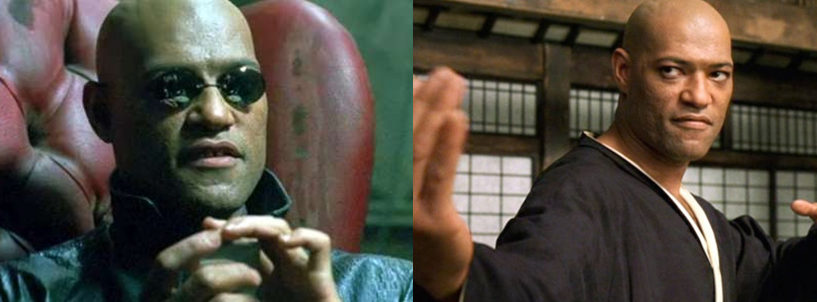
A pivotal and memorable character in the first film, Morpheus (Fishburne) undergoes a significant character shift here from wise and benevolent mentor to a figure of some controversy. As presented in The Matrix, I always saw Morpheus as a crucial figurehead in the Zion hierarchy but it turns out that he’s actually something of a religious zealot; many in Zion not only question is unwavering belief in the Oracle, Neo, and the prophecy of The One but also see him as a reckless, disobedient, and dangerous individual who often acts against the interests of the ruling council. Labelled as “crazy” by some and treated with contempt by Commander Lock (Harry Lennix), whose concerns are more realistically focused on the impending assault from the machines, Morpheus jarringly loses much of his mystique and becomes a much more layered and human character as a result. This is aided by the presence of Captain Niobe (Jada Pinkett Smith) of the Logos, a sceptical character who once had a romantic relationship with Morpheus that was forever changed after Morpheus first met the Oracle and learned that his destiny was to find The One. Clearly still harbouring feelings for each other, their relationship is frosty, to say the least, thanks to Niobe now being with Lock and her resentment towards The One and Morpheus’s devotion to his beliefs. Still, it’s not as if everyone doubts Morpheus; Neo and Trinity still hold him in high esteem for showing them the truth, Councillor Hamann (Anthony Zerbe) and others on the council treat him with reverence and respect even if they don’t fully believe the same things he does, and he’s revered as an influential figure, regardless of his beliefs, who can inspire the citizens of Zion to rise up against the fear of their impending destruction and therefore face the oncoming attack with gusto. Within the Matrix, Morpheus plays a largely supporting role but sparks up a bit of a rivalry against Agent Johnson and plays an important part in helping Neo fend off the Merovingian’s minions, though his primary role within the virtual reality environment is to be a stoic and implacable believer in Neo’s abilities and destiny to lead the human race to victory regardless of the odds, the risk, or the concerns of others. Indeed, Morpheus is completely nonplussed by his doubters; it’s only when Link (Harold Perrineau) questions his decisions that he steps in, and his faith is even rewarded as Neo arrives to save him when he “prays” for help during the chaotic highway chase. However, his unwavering devotion to the cause is shaken in the finale, when he sees his ship destroyed before his eyes and stunned to find that Neo’s insertion into the Source didn’t out-right destroy the Matrix as he was led to believe.

Neo’s abilities cause a stir within Zion, with some sceptical and others devouted to him.

Naturally, given that The Matrix Reloaded is a much bigger film than its predecessor and actually shows just how large and complex the steampunk underground city of Zion is, the film includes a large number of supporting characters. The Nebuchadnezzar has been reduced to a four-man crew, with newcomer Link acting as the ship’s operator; Link is still getting used to his role and processing not only Morpheus’s unwavering faith in Neo and the prophecy but also Neo’s incredible abilities, which he’s seen first-hand and has turned from a sceptic to a believer. The aforementioned Niobe, Hamann, and Lock are three of the principal figureheads of Zion, with each one offering another wrinkle to the film’s greater focus on philosophy and the question of choice and destiny. Lock is a pig-headed, militaristic man who wants every resource possible at his disposal to effectively barricade Zion and fend off the impending attack and is constantly frustrated at the council’s insistence of wasting manpower and ships following Morpheus’s mad beliefs but, while he might be a hard-nosed blowhard, his devotion to the safety of Zion is never in question. Niobe remains torn between her lingering feelings for Morpheus and her scepticism regarding The One; while she has little faith in this, she does believe in Neo’s character and volunteers to help the Nebuchadnezzar get Neo to The Source, much to Lock’s chagrin and jealousy. Amusingly, Neo is actually more perturbed by his believers than the sceptics; he’s visibly uncomfortable when Zion’s citizens offer him gifts and beg him to watch over their friends and family as part of the film’s explicit and unashamed Christ metaphor and aggravated by the hero worship piled onto him by The Kid (Clayton Watson), an overly enthusiastic youngster who yearns to join Morpheus’s crew to fight alongside his hero. Finally, Hamann walks the line between practicality and faith; having lost much of his life to the virtual reality of the Matrix, he seizes every waking moment and is clearly awestruck by Neo’s abilities, which he believes are a greater design even if he doesn’t fully understand what that is.

Suspicion surrounds many allies when they’re revealed to be programs of the system.

Hamann also lays the groundwork for the film’s overarching theme regarding control; the humans use machines to maintain their lives, while fighting other machines looking to kill them, and the balance between the two, their duel capacity for life and death, plays a pivotal role in Neo’s ultimate destiny when he’s faced with the choice between giving into a greater power or smashing the system that maintains so many lives, even if only in a form of slavery. This is in stark contrast to the Oracle, an enigmatic and cryptic figure who continues to pick and choose what information she gives out. Quickly revealed to actually be a program, and thus part of the system of control within the Matrix, the Oracle’s trustworthiness and true motivations are briefly called into question by Neo, despite his gratitude to her for helping guide himself towards his great destiny. Believing that the war between needs to come to an end and that both races need to find a way to co-exist, the Oracle adds to Neo’s considerable load by expositing that he must reach The Source to complete his destiny and that he’s as much a slave to his choices and fate as she is to her programming. It’s through conversations with the Oracle that we learn more about the Matrix and get a sense of just how complex The One is; it’s not merely about bullet time or humbling Agents, it’s a coding system that holds the key to humanity’s salvation, and the weight of this responsibility weighs heavily on Neo’s shoulders. This time, the Oracle is accompanied by a bodyguard, Seraph (Collin Chou), a program designed to safeguard her at all costs; he doesn’t say much but makes an immediate impression by going toe-to-toe with Neo in order to “truly know him”. When Neo and the others finally reach the Keymaker, they find a wizened old man with a collection of keys that allow one to travel vast distances through doors and even traverse backdoor corridors in the Matrix’s coding. The Keymaker represents the film’s focus on everyone having a reason and a purpose; his purpose is to make the keys and to know how to access The Source, and protecting him from the Agents becomes the protagonist’s highest priority in their desire to end the war.

While the Merovingian and the Twins are more interesting than Agents, they’re wasted potential.

This mission is, as ever opposed by the Agents; these men-in-black antagonists remain as formidable as ever, able to jump to new host bodies, dodge bullets, and proving a persistent threat even when Neo is around thanks to having been “upgraded” to give him a bit more of a fight. Their threat is eventually lessened not just by Smith and his inexhaustible army of clones but also the presence of the Merovingian, a charismatic and self-aggrandising “Exile” who has amassed an army from previous versions of the Matrix (inexplicably meaning that vampires and werewolves make a very brief cameo) to establish a vast network for programs, like himself, who wish to travel beyond the restrictions of the virtual reality world. A self-styled “trafficker of information”, the Merovingian is arrogant and patronising to the heroes, unimpressed with their grandeur and what he sees as their lack of knowledge about what they want and why. Seeing them as little more than lapdogs for the Oracle, he dismisses their demands and shows no fear of Neo’s powers, having “survived his predecessors” in the past. Oozing disgust and disdain, the Merovingian lives only for his own self-gratification; he delights in creating programs that cause physical and sexual stimulation, regularly cheats on his wife, and desires only to acquire more power and knowledge through whatever means necessary. While Hamann muses on the duality of control, the Merovingian delivers a twisted diatribe on the illusion of choice; although he’s speaking in the context that people are unable to deny their true natures, his perspective is actually not a million miles away from the truth as Neo eventually discovers that the choices everyone makes (especially those connected to the Matrix) are not of their own free will but dictated to them by the system’s methods of control and also all part of the greater cycle of death and rebirth inherent to the nature of the Matrix. His primary underlings, and one (two?) of the film’s more wasted opportunities, are the Twins (Neil and Adrian Rayment), albino, dreadlocked sadists who can assume gruesome, incorporeal forms and attack with straight razors and can even heal their wounds with a thought (something that, like almost everything about them, is unfortunately not elaborated upon). Sadly, these two have very few lines and, despite being central to some of the second act’s biggest action scenes, end up underutilised and ultimately wasted as they fail to retrieve the Keymaker, or really cause much of a problem for Morpheus and Trinity despite being more threatening than the regular Agents, and are then promptly taken out by a car explosion (despite clearing turning incorporeal), meaning both the visually impressive Twins and the eloquent menace of the Merovingian boil down to some philosophical musings and adrenaline-fuelled action sequences and little else. It’s such a shame as the Twins look and fight so cool, and really stand out against the black-suited Agents, so I would’ve loved to see them have a greater role here or in the next movie, but you could honestly remove them from the film (or replace them with Agents) and the plot wouldn’t even suffer in the slightest.

Now able to duplicate himself, Smith threatens to overrun everything and everyone in the Matrix.

On the other hand, Smith is back in full force; now literally unplugged from the system he once rebelled against, Smith is exploring his newfound freedom by indulging every sadistic desire that comes to mind and literally spreading himself across the Matrix using his newfound copy ability. With a violent thrust to the chest of an Agent or human, Smith can override their code (both digital and genetic) and create an exact duplicate of himself, with all of his powers and personality, though a “prime” version remains at the forefront. Like everything in The Matrix Reloaded, Smith’s survival and new abilities is the subject of discussion in the film, with Smith musing that Neo somehow overwrote or passed on a piece of himself when he destroyed him at the end of the last film and then promptly dismissing it as “irrelevant” compared to his new purpose in life, which is to eradicate all life within the Matrix and replace it with himself. As formidable as Smith was before, his threat is now magnified to an almost incalculable degree as more and more of his copies swarm in to overwhelm Neo; even though Neo is able to fend them off and trump Smith with his ability to fly (and can even resist Smith’s infection through sheer force of will), he can’t simply destroy or erase Smith with a thought (although…he should be able to do this, but that wouldn’t be very visually exciting now, would it?) and he’s forced to flee, giving Smith the chance to make more and more copies and continue to show up at the worst possible times to hinder their mission. Though Smith’s desire to kill Neo and the others aligns with that of the Merovingian and the Agents, he is allied with neither of these forces and actually copies himself to their minions to increase his power; so evolved is Smith that he even overtakes the body of Bane (Ian Bliss), a resistance fighter, to allow a version of himself to wander around in the real world! Although this wouldn’t be fully explored until the next movie, we do get a glimpse of how sadistic Smith is as he cuts his human form and attempts to stab Neo in the real world before being interrupted, and even plays an active role in sabotaging the humans’ mission in the third act simply because he gets a sick thrill out of causing death and destruction.

The Nitty-Gritty:
Like in the last film, music plays a huge role in The Matrix Reloaded; composer Don Davis put together a whole bunch of memorable and catchy beats to accompany the film’s biggest moments, such as the Burly Brawl and the highway chase, which were collaborations with Juno Reactor, in addition to a great tie-in song by P.O.D. Diegetically, music is pivotal to rallying the people of Zion; it’s a surreal inclusion in the film, but the big sweaty rave scene galvanises the people, with all their doubts and fears, in a celebration of life. Highly sexually charged, the scene shows how passionate these people are at embracing their lives, even though the real world is hard and dangerous and lacks the creature comforts of the Matrix. Still, Zion is doing a lot better than I ever imagined from the brief descriptions in the first film; despite the revelation that humans have been fighting the machines for 100 years, Zion is a bustling, steampunk-inspired metropolis filled with rudimentary dormitories, a huge dock, defensive cannons and blast doors, an independent virtual reality security system, and even a water recycling and processing plant and the means to heat, feed, and clothe all of its citizens. There’s never a question that Zion is lacking in these resources, only that some are extremely basic (clothes, food, and possessions) and others are unbelievably advanced (their ships and technology), and I do find myself asking how they make their clothes and built all that stuff. It’s somewhat implied that they repurposed a lot of the machines’ technology to their own ends, but actually building such a large and self-sustaining city seems beyond the capabilities of the few human liberated from the Matrix, and the actual implied truth is far more ominous.

The Burly Brawl and chateau fights show off the new technology and Neo’s incredible powers

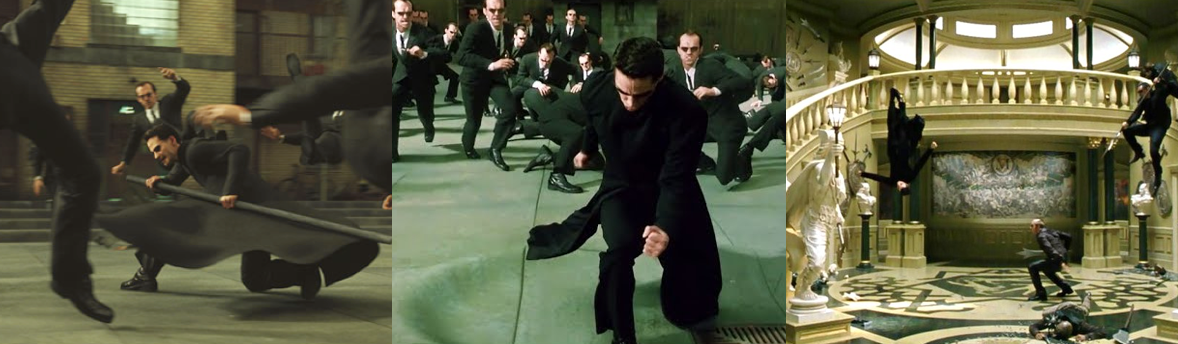
Without a doubt, The Matrix Reloaded is much, much bigger than the first film; with at least double the budget, the film is able to present far more visually interesting and technologically impressive fight and action scenes. Fights are much longer and more detailed, slicker and contain more combatants and movements at any one time, and bolstered by an abundance of wire work and CGI to bring Neo’s gravity-defying moves to life. The film’s big action scene is the Burly Brawl, wherein a seemingly inexhaustible swarm of Smiths pile onto Neo in the middle of an urban playground; while it’s true that many aspects of this sequence haven’t aged as well as others in the film (or the first movie), it remains an exciting and surprisingly long fight scene as Neo (or a rubbery representation of him) fends off Smith after Smith with blows, throws, and a strangely bendy steel pipe. While I find it an exhilarating display of Neo’s superhuman abilities, the fight goes on so long that it almost becomes a little ridiculous, but I suspect that might’ve been the point thanks to the bowling pin sound effects used when the Smiths are knocked down. Punctuated by some fun wire-fu, effective use of bullet time, and dynamic camera shots, the Burly Brawl is primarily there to show off the technology that’s been developed since the first film, to paint Neo as an absolute bad-ass as he holds his own against the Smith army, and Smith as this relentless, unstoppable force that’s desperate to tear his hated enemy apart. The chateau brawl is a similarly visually engaging fight, but very different; not only is it more claustrophobic due to taking place in a more enclosed space, it also features much more weapon combat, more diverse combatants, and more variety as Neo isn’t just swatting away hundreds of guys in suits and he actually gets a chance to show off a few fancier movies. While the Merovingian’s minions number far less than Smiths army, they’re no less formidable; made up of programs exiled from older, far more primitive versions of the Matrix, they’re assumed to be somewhat supernatural and, unlike Smith, actually cause Neo to bleed thanks to favouring bladed weapons. This means their fight is exciting in wholly separate way as Neo must flip about, balance on bannisters, and use swords and sai to fend them off.

The action comes thick and fast and showcases the awesomeness of Neo’s abilities within the Matrix.

On the flip side, we get a noticeably subdued exchange between Neo and Seraph; while it’s clear that Neo isn’t exerting anywhere near the power as he was against the Agents or Smith, it’s still a fun fight that includes an impressive one-handed cartwheel from Neo and is a great shorthand to show that Seraph is no slouch when it comes to fighting. Things ramp up again for the highway chase, another obvious standout action sequence; this is an adrenaline-fuelled sprint that features Agents desperately overtaking bodies to chase after Trinity and the Keymaker on a high-speed motorcycle, Morpheus battling Agent Johnson on top of a trailer truck with a samurai sword, and the Twins ghosting through vehicles and tangling with Trinity in close quarters from the back seat of a car. The action then suitably ramps up for the third act as Trinity is forced to storm a power plant full force, which is actually the explosive opening sequence of the film and serves to show just how capable she is even without code-bending abilities. As fun as all of these action sequences are, however, the true highlight of the film for me is Neo, now liberated from many of the shackles and doubts about himself that held him back in the last film. We saw a glimpse of what The One was capable of when he easily fought off the Agents with one arm, destroyed Smith, and then blasted off into the sky but, here, Neo practically has no equal. He can rocket into the sky at will, blast down the streets and supersonic speed, and even enter the code and physical body of others to remove bullets. However, despite what you and many of the characters think, he’s not some all-powerful God; he can bleed just as easily as anyone, is as conflicted by self-doubts as any of us, and his fight scenes aren’t just a simple case of him blinking his opponents out of existence. He still has to stop bullets in mid-air, dodge blades, and tackle his foes hand-to-hand and the film generally tries to both make him look powerful and vulnerable at the same time by throwing multiple opponents at him at once to give him something resembling a physical challenge.

Neo vehemently rejects the system’s control and discovers new aspects of his powers in the process.

Neo’s biggest challenge, however, is emotional; terrified at the idea of losing Trinity and burdened by the weight of expectation, Neo is still trying to find his way in this complex world where he has so much power but little understanding of what he’s actually supposed to do with it. Luckily for him (but not so lucky for some segments of the audience), Neo has his destiny spelled out to him, in a fashion, in the finale when he enters The Source and comes face-to-face with the Architect (Helmut Bakaitis), a conceited and haughty program who claims to have created the Matrix. In what essentially amounts to an overly complicated version of the dressing down Mr. Rhineheart (David Aston) gave Neo (then Thomas Anderson) in the last film, the Architect explains (using condescending words like “concurrently”, “apropos”, and “ergo”, which I have since added to my vocabulary) that Neo isn’t as special as he first thought. Instead, he is the fifth “One”, an unavoidable anomaly that the machines expect to crop up as a side effect of giving everyone plugged into the Matrix a choice to accept or reject the program. While only a tiny percentage of people do this, they eventually grow into Zion and a resistance effort and, with each generation, the machines cull Zion’s population and have The One reboot the Matrix, taking a bunch of its inhabitants to rebuild the city and start the cycle over again. Neo is aghast at the idea that he’s as much a part of this system of control as anything else and vehemently rejects the Architect’s demand that he fulfil this function to allow the human race to continue limping along for, if he chooses not to, Zion will be destroyed and the Matrix itself will suffer a “cataclysmic system cash” that will kill everyone plugged into it, thereby causing humanity’s extinction. However, unlike his predecessors, Neo has a far more specific human attachment, Trinity, and he chooses not to go along with this plot in favour of rescuing her even if it means the death of his species. While I admit that I’ve read more into this scene using interpretations and essays and such, I really enjoy it as a deep dive philosophical discussion regarding choice and control; it’s also really fun seeing Neo’s multiple reactions reflected in the television screens, which actually let him showcase some emotion as he vehemently rejects the “old white prick’s” overwhelmingly arrogant diatribe. Neo barely even gives the Architect’s ultimatum a second’s thought; he chooses to save Trinity, adamant that he’ll be able to fight against the resulting disaster but, while he does save her, things immediately go downhill soon after: the Nebuchadnezzar is destroyed, Bane is found comatose and accused of sabotage, and Neo passes out after exhibiting electromagnetic powers in the real-world for a dramatic cliff-hanger ending!

The Summary:
I’ve spoken to a lot of people over the years who’ve told me that they don’t understand The Matrix, and I’ve never understood this; the first film is pretty simple (humans are trapped in virtual reality by machines in a post-apocalyptic world) but The Matrix Reloaded definitely confuses things and I can totally understand how some people were left a bit baffled by the lengthy, vague discussions regarding fate, choice, and the nature of humanity. While the films have long been the subject of academic debate, these discussions really ramped up with The Matrix Reloaded, which hinted at there being so much more at work in this sci-fi world than we originally believed; Morpheus had a questionable reputation, not all programs were malevolent, and Zion was this impossibly self-sustaining city. Questions were raised about whether or not the real world was also a simulation, people wondered if the Merovingian and Seraph were former Ones, and all of a sudden The Matrix turned from a thought-provoking piece of visually stunning sci-fi cinema to this absolute mind bender of philosophy and metaphysical debate. Personally, I’ve always really enjoyed this. The Matrix Reloaded is a thinking man’s sci-fi film, one that’s maybe a little too vague and a little too clever for its own good but which always has me engaged whether characters are throwing punches or discussing the self-destructive nature of love and choice. The action and fight sequences are absolutely thrilling, and probably the best in the series thanks to how consistent they are; sure, some effects haven’t aged all that well, but I loved seeing the multiple Smiths dog-piling Neo and watching Neo fend off numerous enemies at once with a slick efficiency. It’s not a perfect film, of course, and hindsight makes me wish the filmmakers had done a few things differently (the Matrix-within-a-Matrix might’ve been good, giving the Twins a bigger role, and maybe making Morpheus a little less controversial would be just three examples), but this is still my second favourite of the entire franchise. While even I, as a big Keanu Reeves fan, have to admit that Keanu was disappointingly wooden throughout much of this, Neo’s mannerisms and stoic proficiency paint him as an effortlessly cool hero, and I love that even after finding himself he’s still conflicted and how the world is just made more complex following his awakening as The One. It’s maybe a little too heavy-handed to put on all the time, but The Matrix Reloaded remains an exciting, visually and intellectually stimulating film that never fails to impress or entertain me and I think it’s well worth a deeper consideration as there’s a lot to sink your teeth into here, even if the payoff for all its plot threads didn’t exactly deliver as many might’ve hoped.

My Rating:

Rating: 4 out of 5.

Great Stuff

Are you a fan of The Matrix Reloaded? What did you think to the progression of Neo’s character and his powers? Were you a fan of Smith’s copy ability and what do you think to the action scenes? Did you enjoy the film’s characters and concepts or do you feel like it became too bogged down in philosophy? What are some of your favourite fan theories regarding the franchise from back in the day? How are you celebrating Keanu Reeves’ birthday today and what are some of your favourite roles of his? Whatever you think about The Matrix Reloaded, drop a comment below or let me know your thoughts on my social media.

Movie Night [Sci-Fanuary]: The Matrix Resurrections


January sees the celebration of two notable dates in science-fiction history, with January 2 christened “National Science Fiction Day” to coincide with the birth date of the world renowned sci-fi writer Isaac Asimov, and HAL 9000, the sophisticated artificial intelligence of Arthur C. Clarke’s seminal 2001: A Space Odyssey (1968), being created on 12 January. Accordingly, I have decided to spend every Sunday of January celebrating sci-fi in all its forms.


Released: 22 December 2021
Director: Lana Wachowski
Distributor: Warner Bros. Pictures
Budget: $190 million
Stars: Keanu Reeves, Jessica Henwick, Yahya Abdul-Mateen II, Carrie-Anne Moss, Jonathan Groff, and Neil Patrick Harris

The Plot:
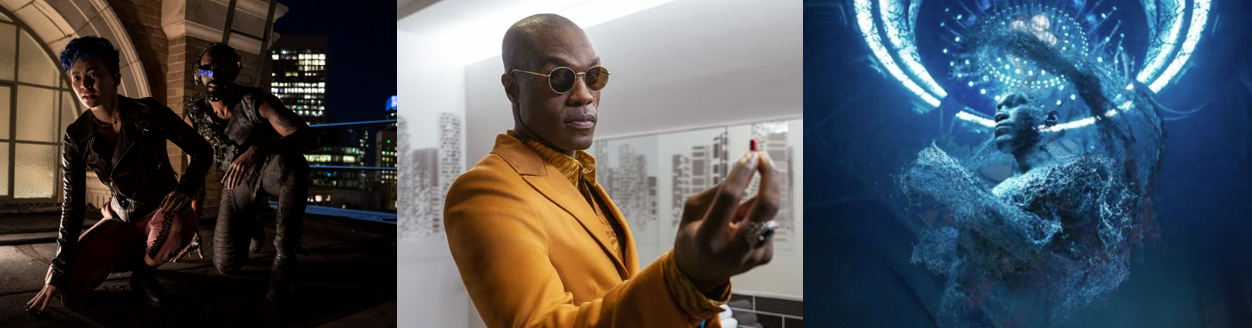
Twenty years after the events of The Matrix Revolutions (Wachowski Brothers, 2003) Neo (Reeves) lives a seemingly ordinary life as Thomas A. Anderson in San Francisco where his therapist prescribes him blue pills. However, when Morpheus (Abdul-Mateen II) offers him a red pill, Neo finds his mind reopened to the world of the Matrix.

The Background:
Andy and Larry Wachowski (as they were known then) hit upon their greatest and most notable success when they were able to sell Warner Brothers on The Matrix, a science-fiction film that was heavily influenced by manga and anime and made an instant and lasting impression on cinema by popularising “bullet time” and “wire-fu”. Produced for a paltry $63 million, The Matrix was a massive hit that is spawned not only two sequels but a whole slew of multimedia merchandise. However, neither of the sequels garnered quite the same critical reaction as the quasi-cult hit original; while the directors were content to allow the story to be continued, and ended, in The Matrix Online (Monolith Productions, 2005 to 2009), rumours continued to persist that a fourth film was being considered, with stars Reeves and Hugo Weaving both expressing interest in revisiting the franchise. Development of a continuation finally gained traction in 2017, when writer Zack Penn was confirmed to be working on a fourth instalment of some kind; although Lily Wachowski chose not to commit to such a large scale production, she gave her blessing and her sister, Lana, officially returned to direct the fourth film alongside returning stars Reeves and Cary-Anne Moss. Framed as a direct continuation of where the third film left off, fans were left confused when the first trailer dropped and Lawrence Fishburne announced that he was the only member of the original cast not asked to return. The movie also attracted undue criticism when filming damaged buildings and street lights in San Francisco, and was delayed due to the COVID-19 pandemic, but The Matrix Resurrections finally released and accrued a disappointing $15738 million at the box office. It was also met with largely mixed reviews; critics praised the film’s sentimental value and the return of its familiar characters while also criticising it as a redundant revisitation suffering from muddled execution.

The Review:
If you’ve read my review of the original film, you’ll know that The Matrix is one of my all-time favourite films and franchises; I was obsessed with the first film when it came out and watched it religiously on sleepovers with friends. The film was ground-breaking and endlessly alluring at the time and, while some elements haven’t aged too well, it remains a firm favourite of mine. I even really enjoy the blending of philosophy and high-octane action featured in the second film and, though I was disappointed by the third, I felt like the trilogy had been wrapped up decently enough and was somewhat annoyed to find that the franchise was going to be dusted off some twenty years later (twenty years! Man, do I feel old!) as I felt like the story had been told and it seemed like a cheap cash grab to me. But…it’s the Matrix, and I do love me some Keanu Reeves, so I was obligated to check it out if only to satisfy my own morbid curiosity and having been intrigued by the vague trailers and marketing.

Thing are not all they seem for Anderson, whose perception is skewed by fragmented memories.

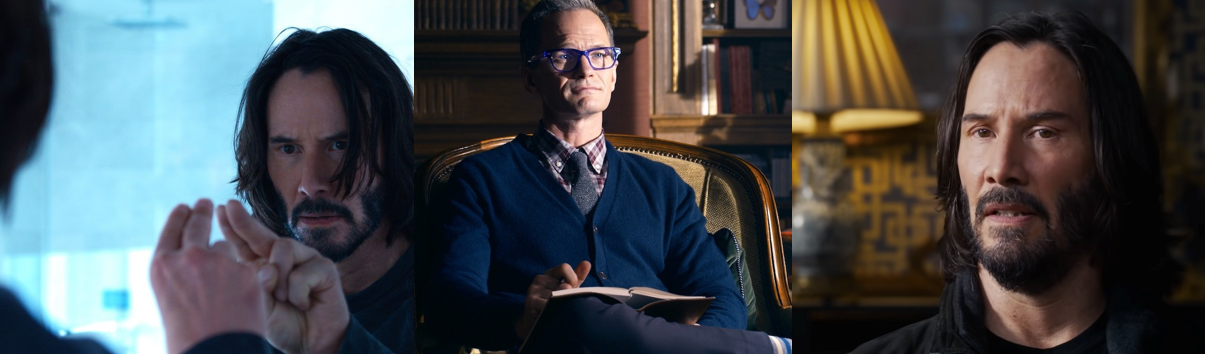
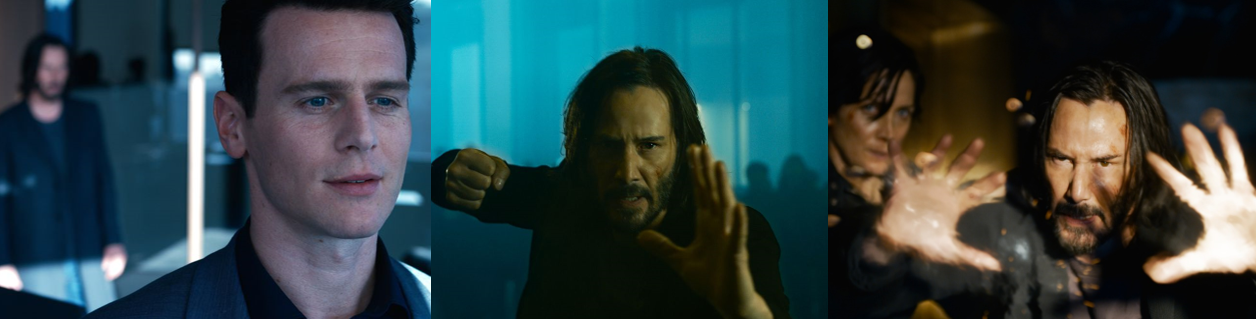
It’s a good job that I am such a fan of Keanu’s and the Matrix franchise as those elements ended up being some of the best parts of The Matrix Resurrections. Framed as a kind of re-quel, which treads over familiar ground (and even splices in footage of the original trilogy as flashbacks and dream sequences) while advanced the story twenty years after the last film. Despite apparently sacrificing his life to bring about peace between the machines and the humans of Zion, the man once known as Neo is alive and well in a new version of the Matrix, one without the green tint and grungy filter. Back in his original identity of Thomas A. Anderson, he is a successful videogame designer who found fame and fortune by creating an incredibly successful trilogy of (presumably virtual reality) videogames based on his disparate memories of the first three films. However, just as Anderson’s dreams and fragmented memories have created a virtual world for millions of players, so too have them plagued his sense of reality, and even drove him to try and leap off a rooftop in order to “fly away”. Following this apparent suicide attempt, his business partner, Smith (Groff), requests that he attend regular therapy sessions with the ominously named Analyst (Harris) and, thanks to a constant prescription of blue pills, Anderson is able to keep himself from suffering a psychotic break.

Anderson is captivated by Tiffany, whose visage stirs up memories of Trinity .

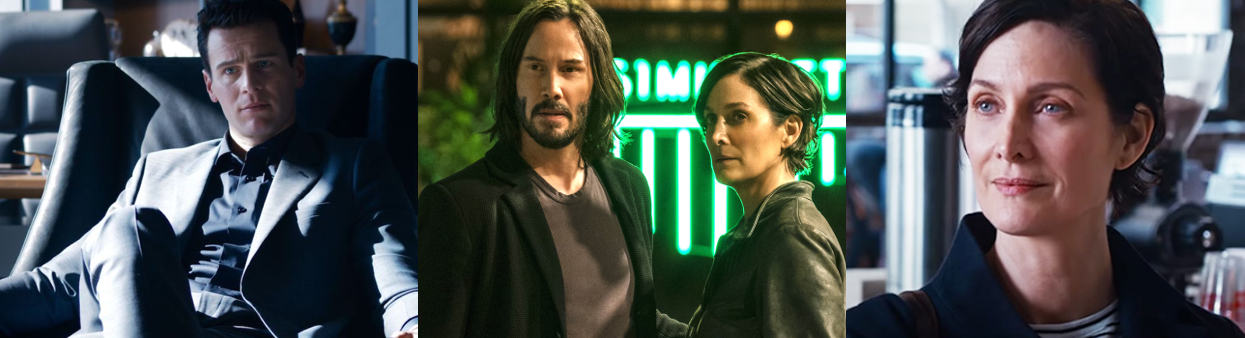
Despite being deep into the production of a new videogame, Binary, for is company, Deus Ex Machina, Anderson is disturbed by Smith’s insistence that they work on a new Matrix videogame, leading to a montage sequence wherein Smith, Anderson, and his fellow programmers and stuff wax lyrical with some metatextual, on the nose commentary about big corporations mining familiar franchises just to make more money off previous successes. Sadly, this kind of fourth-wall-breaking discussion permeates a great deal of The Matrix Resurrections, with even Anderson himself being saddened to be taking a creative step backwards rather than trying something new and innovative. His only reprieve is his infatuation with Tiffany (Moss), a beautiful woman he sees on a consistent basis in a coffee house and who reminds him of Trinity, a woman from his dreams and whom he programmed into his videogame. When not struggling to strike up a conversation with her, or debating his sanity, or working on Binary, Anderson is running a singular module of The Matrix that recreates the iconic opening of the original film, but with a few alterations to mix things up, but for the most part is fairly convinced that he’s just a videogame designer with mental issues and a skewed sense of identity.

Allies old, new, and fundamentally changed work to bring Neo back to the real world.

All of that changes when he is suddenly met by a new incarnation of Morpheus, one seemingly pulled from his videogame world, who offers him a familiar choice: stay in his reality, or return to the real world. If you were wondering whether Lawrence Fishburne makes an appearance in this film, or his perhaps adopting a new avatar, you’ll be disappointed to find that Morpheus is long dead and only appears in archival footage; instead, where get this new version of Morpheus, one apparently spliced with elements of Neo’s old nemesis, Agent Smith (Hugo Weaving), to act as an agent within that loop. A far more mischievous version of the character, this new Morpheus is actually a sentient program, of sorts, who is able to communicate with and assist the heroes in the real world thanks to an advanced kind of nanotechnology, but he’s far from the wise mentor figure of his predecessor. Instead, he ‘s more like a necessary component to help convince Anderson to leave the Matrix and reclaim his identity as Neo, something he is largely reluctant to do thanks to the Analyst’s influence on his perception of the world. Still, Neo’s curiosity and familiarity with the words and images presented to him by Morpheus override his hesitation, and he’s soon joining Captain Bugs (Henwick) and the rest of her crew aboard the Mnemosyne hovercraft, sixty years after sacrificing himself to save Zion. Neo is disorientated and melancholy to find that his sacrifice didn’t appear to change much about the world, but Bugs takes him to the new Zion, Io, and reunites him with an elderly, cynical Niobe (Jada Pinkett Smith) and learns that a peace does exist between man and machine. Shortly after the end of the war, the Matrix was purged of all former anomalies and blue-tinted machines helped the remnants of humanity to build a new haven and worked with them to grow fresh fruit and vegetables, while staving off attacks from the red-tinted, squid-like Sentinels that refused to abide by the peace treaty. The original Morpheus refused to believe that Neo’s sacrifice would fail, which led to Zion’s destruction, and a contingent of people have grown up idolising and even deifying Neo and Trinity for their actions, but Niobe’s primary concern is keeping her people safe, which leads to her reluctantly locking Neo up and pushing Bugs to defy her commander’s direct order and help spring Neo so that he can lead a desperate reinsertion into the Matrix to try and rescue Trinity.

The Nitty-Gritty:
If you’re a fan of the original film but haven’t really seen it in a while, then The Matrix Resurrections really has you covered, for the most part. It opens almost exactly like the original film, and the majority of its call-backs and references are to the ground-breaking original while repurposing some of the stronger elements of the sequels in new ways. One thing that is sadly largely absent from the film, however, is the kung-fu (or “wire-fu”, to be more accurate) fight scenes that so heavily influenced action cinema right up to present day. The first half of the film is a slow, introspective reintroduction to the world of the Matrix, one both familiar and disconcertingly different, as we follow Neo and try to figure out what’s real and what isn’t. Thanks to his fragmented memories and a skewed avatar, his sense of reality is more shot than ever, but he starts to piece his identity back together once he reawakens in the real world and is put through his paces by Morpheus. However, this isn’t really the all-powerful, full capable Neo we knew and loved; instead, he’s plagued by self-doubt and has no interest in fighting any more, especially after giving everything he had seemingly for nothing. While the world is noticeably better than the one he remembers, humanity is still somewhat divided; less and less people have been freed from the Matrix thanks to Niobe’s focus on keeping those who are free safe and the system of control he fought so hard against has simply been repurposed by a contingent of malevolent machines.

The new Smith offers little in the way of challenge for Neo, or interest to me as a viewer.

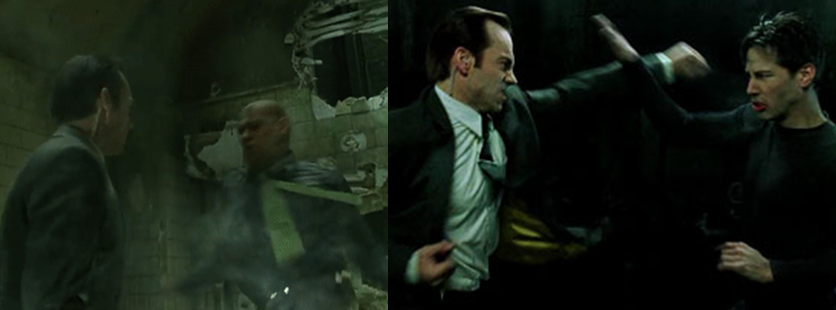
After his sacrifice, Neo’s body was taken away by the Analyst, who is revealed to basically have replaced the Architect (Helmut Bakaitis) and is behind the stability of the Matrix’s new iteration and the resurrection of Neo and Trinity. Initially looking to study them, he patched them back together using a combination of the cloning technology used to grow humans and additional mechanic parts, only to find that their incredible bond threatened the very Matrix itself. However, when kept safely apart, their very presence in the Matrix vastly improved the energy output and acceptance of those plugged in, thus largely negating the peace Neo so desperately fought for. With Neo unplugged, the machines are on the brink and a new reboot of the system, something which Smith is adamant to prevent as it would mean he would once again be absorbed into the Matrix code. However, this is not my Smith; I’m sure Jonathan Groff is a great actor, and he’s clearly doing his best to channel Hugo Weaving at points, but he’s a faint shadow of Waving/Smith’s former greatness and I actually question including him at all. Had the filmmakers brought Weaving back and had Smith, like Neo, also suffer from fragmented memories and a new life, then maybe his inclusion would have been worthwhile but, instead, Smith feels very tacked on and largely inconsequential. There’s a moment where it seems like he and Neo would join forces this time around (and that does crop up again in the finale, with very little explanation), but it quickly gives way to a bust-up between the two that is one of the few highlights of the film, recalls their subway fight from the first film, and is spoiled only by the inexplicable and completely pointless insertion of the Merovingian (Lambert Wilson) and his exiles.

Despite some good moments, it’s an unnecessary retread of things done better in the previous films.

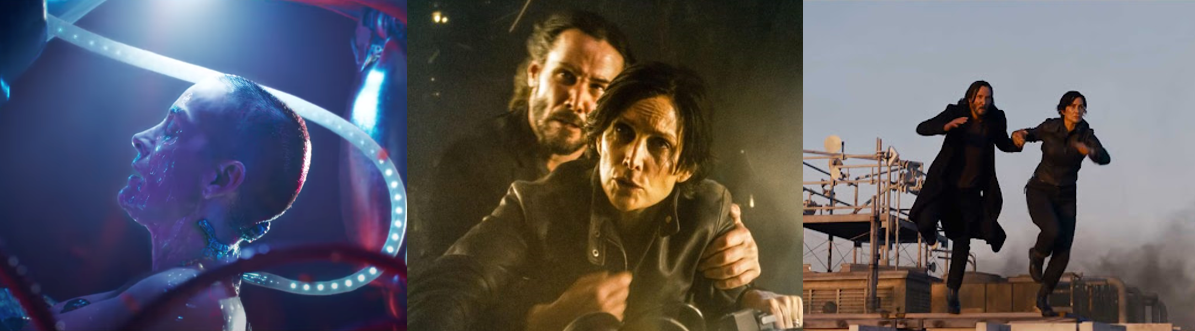
A great deal of the film’s emphasis is, instead, on reuniting Neo with Trinity; while their romance was severely lacking in chemistry in the original trilogy, save for a few choice moments, they seem much more comfortable at ease with each other here, arguably because of the Analyst’s efforts to bestow them with new lives and personalities. While still a troubled and largely stoic reluctant saviour, Neo has a few more moments of levity here than in the original films, where he rarely showed much emotion at all, but is still as blinded by his love for Trinity as ever as he risks the fragile peace between Io and the machines by leading a risk attempt to convince her to return to him and the real world. This involves Bugs and Morpheus infiltrating the machine city, where Trinity’s body is held, with the help of their machine allies and Neo bartering with the Analyst with everyone’s future on the line. This proves to be a risky proposition as Neo’s God-like powers are both neutered and noticeably different this time around; although he still knows kung-fu, he cannot yet fly and his more acrobatic feats come in bursts, but he can still stop bullets and even has much more emphasis on creating shields and blasting foes away. The Analyst, however, proves to be a formidable foe as he’s ability to manipulate the Matrix’s famed “bullet time” technique to slow even the One to a crawl, but in the end he’s undone thanks to a tricky plot that sees Neo get through to Trinity, Bugs swap out with her physical body, and Trinity randomly revealed to be a new incarnation of the One as she and Neo fend off the Analyst’s swarm of ‘bots and fly off with a promise (more like a threat) to rebuild the world free from the Analyst’s influence.

The Summary:
I was hesitant about The Matrix Resurrections; the trailers were questionably vague and trying a little too hard to be mysterious for my liking, something which has only led to disappointment where the Matrix is concerned in the past. They also made the film seem to be a retread of the original, but over twenty years later and with some cast members inexplicably returning or absent. I feel like I could have maybe understood the need for a new Matrix movie if we’d had an entirely new cast, with maybe only Keanu returning, or seen the One reborn within the Matrix but in Keanu’s body once again (confirming a long-held theory of mine that the One always looks like Neo) rather than finding a pretty weak excuse to bring both Neo and Trinity back. It was pretty great seeing Neo back onscreen and revisiting the Matrix lore after the third movie to see where things had progressed, but I think the film played things a little too safe; not much has really changed thanks to the contingent of machines still warring against humanity, and I would have preferred to see humans and machines living and working together without any major discord and maybe have some the rogue faction be a more prominent plot point. So much of the film is focused on reintroducing Neo and the Matrix to us, which would probably be interesting for anyone who hasn’t seen the original films, but I’d wager that the vast majority of the audience has so I kind of wanted to get things moving, or maybe spend more time seeing how the Analyst was screwing with Neo’s mind rather than retreading the same old ground again but with different actors. In the end, it was an interesting enough epilogue to one of cinema’s most influential trilogies, but I honestly dread to think where the story will go when Warner Bros. greenlight an inevitable follow-up.

My Rating:

Rating: 2 out of 5.

Could Be Better

Have you seen The Matrix Resurrections? If so, what did you think to it? Did you enjoy the direction the story took Neo and how it handled his and Trinity’s resurrections or would you have preferred to see the franchise stay dormant? Which of the new was your favourite and did you like seeing how the relationship between humanity and the machines had progressed? Were you disappointed by the lack of Lawrence Fishburne, Hugo Weaving, and proper fight scenes? Which of the other Matrix sequels or spin-offs was your favourite? How are you celebrating National Science-Fiction Day today? Whatever you think about The Matrix Resurrections, sign up to leave your thoughts below or drop a comment on my social media, and be sure to check in next Sunday for more sci-fi content!

Movie Night: The Matrix

MatrixLogo

Released: March 1999
Director: The Wachowski Brothers
Distributor: Warner Brothers
Budget: $63 million
Stars: Keanu Reeves, Laurence Fishburne, Carrie-Anne Moss, Hugo Weaving, and Joe Pantoliano

The Plot:
Thomas A. Anderson (Reeves) is a nobody; by day, he sits in a cubicle and works a monotonous job as a software developer but, in his spare time, he has crafted a reputation under his hacker alias “Neo”. When he is targeted by Agent Smith (Weaving), Neo is brought to the enigmatic Morpheus (Fishburne) and offered both a startling truth and a destiny he could never have suspected.

The Background:
After managing to sell their script for Assassins (Donner, 1995) and the success of Bound (The Wachowski Brothers, 1996), Andy and Larry Wachowski (as they were known then) were able to sell Warner Brothers on another of their scripts: The Matrix. Featuring an impressive mixture of martial arts, philosophy, and science-fiction not often seen in major Hollywood releases and heavily influenced by manga and anime, particularly Ghost in the Shell (Oshii, 1995), The Matrix made an instant and lasting impression not just on the science-fiction and action genres but on cinema as a whole. The film both popularised the concept of “bullet time” and wire-assisted kung fu (or “wire-fu”) in movies and cemented Keanu Reeves as an action star. Suddenly, parodies were everywhere and movie heroes were all sporting long dark coats, shades, and flipping all over the place and it was all largely thanks to The Matrix. When I was a kid, The Matrix was a big, big deal. My friends and I watched the film constantly, eating up the action sequences and the cool aesthetic and soundtrack. Produced on a paltry budget of $63 million, The Matrix was a massive commercial and critical hit, making over nearly $500 million worldwide. So great was The Matrix’s success that is spawned not only two sequels but a whole slew of multimedia merchandise, including comic books and videogames. While the sequels may not have garnered quite the same critical reaction as the quasi-cult hit original, The Matrix’s important at the time (and today) cannot be understated and the later release of a fourth film proved that The Matrix still has an enduring legacy in cinema. Considering today is “National Science Fiction Day”, this seems the perfect opportunity to look back at this classic piece of cyberpunk cinema.

The Review:
The Matrix has a pretty simple concept, one that has been done before and since in cinema, but complicates it with musings on fate, destiny, and the sense of identity and reality. At its core, the plot is incredibly simple, though: the world as we know it is merely a computer-generated construct, a form of virtual reality in which we have been enslaved by a race of machines in a post-apocalyptic world. Amidst this, though, we have themes regarding providence, choice, and some of the most impression action and fight sequences put to cinema.

MatrixNeo
Apathetic to his everyday life, Anderson has far more prominence as “Neo”.

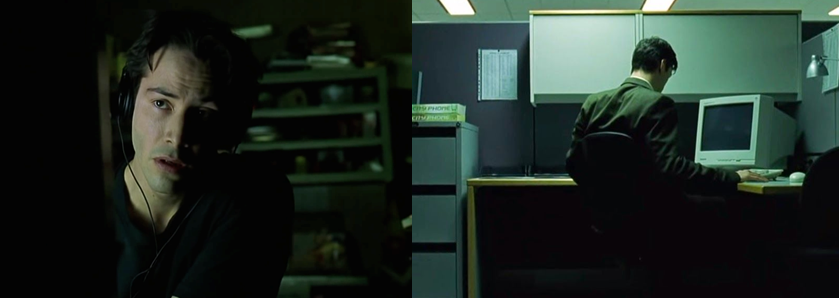
Our window into The Matrix is Thomas A. Anderson (or “Neo”, as he is known throughout the hacking community), a bored program developer who has lived most of his life with a feeling that there’s something not quite right with the world. Thanks to his illicit activities, he is acutely aware of the legendary Morpheus, a charismatic and prophet-like figure in Neo’s circles, and “the Matrix”, an undefined concept that is enough to rouse Neo’s curiosity. Keanu Reeves makes for a perfect audience surrogate; you instantly buy into the idea of him as an isolated, distracted hacker who is unfulfilled in his mundane life and eager for change but not quite confident enough to really buck the system more than showing up late for work or being generally apathetic. Once he meets Trinity (Moss), though, and is set on the path towards Morpheus and answers concerning the Matrix, Neo’s outlook begins to change; he was too afraid of plummeting to his death when trying to escape Smith and his cohorts but, once captured, is defiant enough to give them the finger and, after being reminded of the poor choices he’s made in life that have kept him stagnant, resolves to follow Trinity and her teammates towards an uncertain future.

MatrixSmith
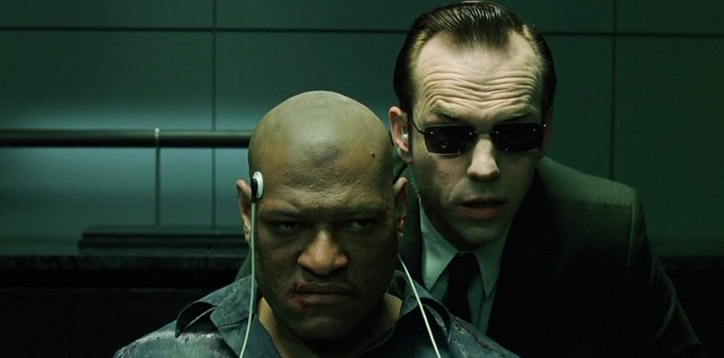
Agent Smith is a chilling, complex villain.

Opposing Neo is the aforementioned Agent Smith; in this movie, he’s just one of a number of men in black who target our heroes and are meant to be indistinguishable from each other. As the de facto leader, and the most charismatic of the three, Smith’s personality is revealed over time and in layers; he goes from a monotonous, fittingly robotic agent of the system to being wracked with personal animosity for Neo and being overcome by his own pride and hubris. Weaving is excellent in the role, exuding both menace and charm with the subtlest of movements and the merest of words and seeing him break out of his shell and reveal just how layered Smith is beneath his cold exterior is both captivating and terrifying at the same time. We also have Cypher (Pantoliano), the more outspoken and neurotic of the crew who takes an instant dislike to Neo thanks to his largely jaded attitude. Cypher is, if his name and Pantoliano’s scenery-chewing acting didn’t make it clear, the ultimate betrayer of the crew as he has grown disillusioned with Morpheus’s teachings and the reality of the real world and therefore deceives his crewmates, killing three of them and leaving Morpheus in the hands of Smith and the other agents. Cypher’s motivations are entirely believable, however, as the real world isn’t all it’s cracked up to be but it’s still extremely cathartic to see that smug smile blown off his face after his heel turn.

MatrixTrinity
Trinity is a capable, if underwhelming, character.

Luckily, Neo is not alone in his journey; Trinity is his main link to Morpheus’s world and serves as his eventual love interest. Yet, while Carrie-Anne Moss is acceptable in the role and more than capable at holding her own in her fight scenes, I never really bought into the attraction between the two characters. People like to rag on Keanu for being “wooden” but I’ve always enjoyed his work and found him very charismatic and that’s no different in The Matrix, where’s he’s able to showcase a variety of emotions and character quirks. Trinity, however, is a very guarded and reserved character through and through; some of this is due in part to the way those awakened to the truth of the Matrix tend to be more emotionless and reserved, especially inside the Matrix, but it’s also because of her reluctance to admit her feelings to Neo out of the fear that he isn’t who she thinks he is and the fear that he is what she thinks, as it means a dramatic change for the world if true.

MatrixMorpheus
Morpheus is easily my favourite character (…after Neo, of course).

Morpheus, however, fully believes in Neo from start to finish and never once does his belief falter. Morpheus is the enigmatic captain of the Nebuchadnezzar and is regarded as a legendary figure not only by Neo but his crew as well. Years ago, the Oracle (Gloria Foster) prophesised the return of “the One”, a man born inside the Matrix who would be able to manipulate it in superhuman ways and spell the end of humanity’s subjugation, and Morpheus has dedicated his entire life to finding the One. For whatever reason (it’s not really explained how or why), Morpheus believes that Neo is the One and actively seeks him out, shows him the truth, and pushes him to break beyond what he has been conditioned to know. Never once does Morpheus’s conviction falter and Fishburne makes for a very fitting mentor and father figure; he anchors the film, offering exposition, and is the heart and soul of The Matrix. Subsequent sequels may have ruined (or spoiled) Morpheus’s mystique somewhat but it’s captivating in The Matrix as he seems so infallible and believable that you can’t help but be sucked in by his words. The rest of Morpheus’s crew is largely one-note and expendable; Switch (Belinda McClory) and Apoch (Julian Arahanga) are pretty forgettable and have maybe three lines between them and Mouse (Matt Doran) is the young, naïve crew member whose death is meant to be heartbreaking because of his youth but ends up falling a little flat as his characterisation amounts to “enthusiastic/annoying kid”. Tank (Marcus Chong) and Dozer (Anthony Ray Parker) stand out a little more thanks to Tank acting as the team’s operator (when inside the Matrix, he directs them, uploads additional training material and resources, and provides them with a way to dial out) and their status as brothers born naturally in the real world.

MatrixFights
The fights are varied and grow in intensity.

Of course, as good as the majority of the cast and characters are, the film’s main draw is its extensive action and fight scenes. Thanks to a combination of computer-generated imagery (CGI), wire work, and an extensive training regime, the film’s fights are high intensity and a spectacle to see; the film begins with Trinity performing that iconic leaping kick in slow motion as the camera pans around her, includes a playfully enjoyable sparring session between Neo and Morpheus, emphasises the aggression and nigh-unstoppable nature of the agents when Morpheus is effortlessly pummelled by Smith, and ends with a long, multi-layered fistfight between Neo and Smith. Unlike the majority of action films, The Matrix presented a world where characters don’t need to appear athletically competent to perform superhuman feats as knowledge and techniques are literally downloaded into their minds, instantly turning them into a master of the arts when plugged into the Matrix. Unfortunately, the special effects falter a bit in the real world; the sets and interiors are great, with the film favouring the “lived in” look of similar movies like Event Horizon (Anderson, 1997) and made popular by the Aliens movies (Various, 1979 to 2017), but the CGI elements haven’t aged too well. The squid-like Sentinels, especially, look particularly cartoony these days and most of the sequences involving them and the Nebuchadnezzar don’t quite hold up to the more practical effects of the film. Similarly, some fight scenes, particularly those using bullet time or other camera tricks, can result in the actors taking on a rubbery appearance but, when they’re inside the Matrix, I feel this effect actually works better and serves to highlight the falseness of that reality.

The Nitty-Gritty:
The Matrix still holds up very well to this day thanks to its enduring themes and the intensity of its otherwise over-the-top fight sequences. There are, of course, a few plot holes and questions raised by the film’s concept that are either not answered in subsequent sequels or poorly addressed. First and foremost for me is the question of how, exactly, child birth happens when humans are simply grown in endless fields. The idea of the fields themselves seems to suggest that the machines are cloning humans, but this isn’t really addressed; neither is how the awakened humans built their ship and other equipment, where their food and clothes come from, or how they don’t simply freeze to death under the scorched skies that blanket the real world.

MatrixBatteries
The machines grow and harvest humans to use them as a power source.

Most of these questions are left intentionally unanswered in this film; we’re told (briefly) about Zion, the last human city, and given snippets of information regarding their war against the machines but nothing concrete. This adds to the mystery of what exactly happened to turn the world into a post apocalyptic hellhole ruled by machines and is completely believable; if all of humanity were blasted to smithereens, why would we have any specific information some one hundred years later? Truthfully, the real world is of little consequence in The Matrix; it’s there and a stark contrast to the artificial world of the Matrix but is never portrayed as being preferable. Instead, the idea is that the truth and the concept of being free from the machines’ control is preferable to being a slave, a literal biological battery, to the will of the machines. As a result, any human awakened to the truth is immediately drafted into the resistance effort but Morpheus is explicitly honest about their chances:

MORPHEUS:
They are the gatekeepers. They are guarding all the doors, they are holding all the keys, which means that, sooner or later, someone is going to have to fight them.

The agents embody this philosophy; practically nameless and faceless, the agents are able to possess (more like overwrite) any person currently plugged into the Matrix, effectively allowing them to endlessly respawn even in the rare instances that they are defeated or incapacitated. Yet, Morpheus also states that everyone who has ever tried to fight an agent has died, which isn’t that surprising considering that, as computer programs, they are faster, stronger, and far more durable than a mere human.

MatrixTheOne
As the One, Neo effortlessly stops bullets and parries Smith’s attacks with one arm.

In a reflection of Morpheus’s conviction, though, he doesn’t hesitate to take on Smith in hand-to-hand combat to allow Neo to escape; Morpheus, previously portrayed as calm, collected, and a severely disciplined fighter, is absolutely dominated in this fight. His near infallibility is then tested to the limit when the agents subject him to a concoction of drugs, torture, and questioning to try and obtain access codes to the Zion mainframe. Morpheus resists, however, and retains enough of his strength (both physical and mental) to break his bonds once Neo and Trinity affect their action-packed rescue plan and, throughout the entire movie, maintains a quiet confidence that, in time, Neo will see the truth about himself. It is therefore heartbreaking when Neo is executed by Smith, leaving Morpheus so distraught that he doesn’t even care about living any more. In the wake of Neo’s death, Trinity finds the resolve to finally admit her feelings for him and, with a kiss, restores Neo to life. As cliché as this sounds, it’s actually one of the most affecting scenes in the film; previously, the Oracle said that Neo was “waiting for something”, specifically suggesting that “something” was his next life, and Neo’s resurrection sees him assume the confident, God-like status of the One at last. His wounds healed, the speed and power of Smith is as nothing; Neo easily blocks and parries Smith’s attacks with one arm, looking hilariously and awesomely bored by the conflict, and easily dispatches the agent by blasting him to pieces. Now able to view the complex code of the Matrix itself, Neo ends the film fully able to manipulate and alert the environment as he blasts off to the sky to the sounds of Rage Against the Machine (a fitting band if there ever was one).

MatrixFlaws
The film is not without a few logistical concerns regarding its world.

This ending is as exhilarating and cathartic as you could hope for; all throughout the film, Neo has struggled with the destiny Morpheus has laid out for him and seeing him grow in confidence and ability leads to some of the film’s more impressive action and fight sequences. The gunfight between him and Trinity and a bunch of guards is worth the price of admission alone but seeing Neo effortlessly take out Smith, especially after the gruelling physical battle they went through previously, never fails to get my blood pumping. That’s not to say that the film isn’t without a few flaws, though. Chief among them, for me, is the “bug” that Smith implants into Neo; it makes sense, as he wants Neo to lead him to Morpheus, and it’s a nightmarish sequence, but it’s rendered immediately mute when Trinity pulls it out of Neo in the very next scene. Ironically, if Smith had simply just waited outside Neo’s apartment building he would have been led right to Morpheus but…no, apparently the bug is more efficient. Additionally, the scene where Neo is awakened is a bit confusing; he swallows a pill to help the crew find him in the real world, randomly gets smothered by liquid glass with no explanation, and when he does wake up the Nebuchadnezzar isn’t even there to retrieve him until he is literally flushed away. Finally, while I like that the film addresses that Neo’s eyes and muscles would have suffered atrophy, I would argue that the plugged in humans would be next to useless in the real world, especially upon being unplugged.

The Summary:
The Matrix’s philosophical musings are far less as explicit as in its sequels; here, exposition is delivered in snippets that are easy to digest and understand. There’s no double talk or complicated words here; we’re simply told as much information as these characters know and even Morpheus explicitly says that he (and even the Oracle) doesn’t have all the answers for Neo’s (or our) questions. Clearly, the film is left with many questions still to be answered but, unfortunately, it didn’t really turn out that the Wachowski’s were capable of delivering interesting answers to those questions. As a result, as much as I enjoy the sequels, neither are on the same level as the original, which is still one of the most compelling and original movies ever made that never fails to deliver despite a few flaws. The Matrix still holds up really well even after all this time; sure, some of the effects aren’t as impressive as they once were and a lot of the tricks popularised in this film have been done bigger and better since then, but it’s still a great piece of cyberpunk cinema. The sequels may have somewhat tarnished the legacy of the first film, and retroactively raise more questions than answers, but the concept and action on display in The Matrix is just as exhilarating as ever. The film is also full of some strong performances; Keanu Reeves proved with this film that he was a competent leading man in Hollywood, Laurence Fishburne set himself up for similar mentor roles in the future, and the film all but launched Carrie-Anne Moss’s career and put Hugo Weaving on the map. It’s not a flawless film, or even a perfect one, but it’s still highly enjoyable from start to finish; effectively a live-action anime, The Matrix is a perfect example of a strong, original concept bringing new life into tried and tested ideas we’ve seen executed in previous films and media. Ahead of its time in many ways, The Matrix set the scene for the slew of action and superhero movies that followed and built upon many of the techniques on display here and its legacy still holds up to this day.

My Rating:

Rating: 5 out of 5.

Fantastic

What did you think of The Matrix when it first came out? Did you enjoy the sequels or do you feel they spoilt the concept of the first movie? Which of the film’s characters or many spin-offs was your favourite? Are you excited for the upcoming fourth movie or do you feel it’s maybe best to let the franchise lie? How are you celebrating National Science-Fiction Day? Whatever you think about The Matrix, or sci-fi in general, drop a comment below.