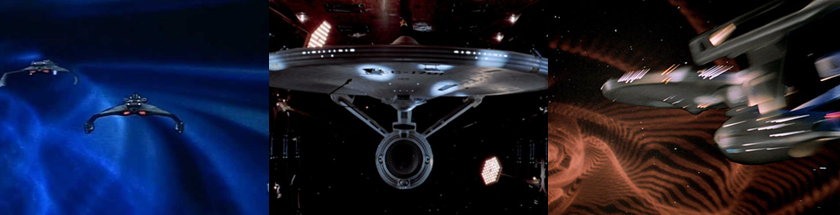
Movie Night [Captain Picard Day]: Star Trek: Nemesis


As amusing detail in the Star Trek: The Next Generation (1987 to 1994) episode “The Pegasus” (Burton, 1994) is that the crew and children of the U.S.S. Enterprise-D celebrate “Captain Picard Day” on Stardate 47457.1, which roughly translates to this day, the 16th of June. They do this by producing drawings, models, and paintings that the bewildered Captain Jean-Luc Picard (Patrick Stewart) must then judge. I, however, am using this as another good excuse to delve into some more Picard and Next Generation content.


Released: 13 December 2002
Director: Stuart Baird
Distributor: Paramount Pictures
Budget: $60 million
Stars: Patrick Stewart, Tom Hardy, Brent Spiner, Jonathan Frakes, and Marina Sirtis

The Plot:
After locating an earlier version of Lieutenant Commander Data (Spiner), B-4, in Romulan space, the crew of the U.S.S. Enterprise-E soon discovers that the Romulan Empire has been taken over by Praetor Shinzon (Hardy), a young clone of Picard, who threatens to destroy both the Romulans and Starfleet with his highly advanced and unstable battleship, the Scimitar.

The Background:
Following the conclusion of the popular Star Trek: The Next Generation, the crew, like their predecessors, moved into a series of feature-length films. Although the much anticipated meeting between Captain Picard and Captain James T. Kirk (William Shatner) failed to really deliver on the potential of its premise, it performed decently at the box office. The sequel (and one of my favourite Star Trek movies), Star Trek: First Contact (Frakes, 1996) performed much better, beating its predecessor by some $30 million, but the follow-up, Star Trek: Insurrection (ibid, 1998) failed to exceed at the box office or impress critics. For the fourth Next Generation movie, long-term cast member and director Jonathan Frakes was replaced as director by Stuart Baird, who wasn’t too familiar with the long-running franchise. Indeed, after numerous scenes depicting more character-based moments ended up being cut from the finished film to focus on action and many cast members questioned Baird’s suitability as director. For a film that was supposed to be the grand finale of the Next Generation crew, Star Trek: Nemesis was a crushing financial disappointment at the box office, with critics, and even with its main star. The film’s paltry worldwide gross of just of $67 million made Star Trek: Nemesis not just a box office bomb but also the lowest-grossing Star Trek film to date; it also saw any plans for a follow-up to be cancelled, and led to a major reboot of the franchise in 2009.

The Review:
Star Trek: Nemesis begins without the usual Star Trek fanfare and drops us immediately into the political intrigue that forms the basis for the movie’s overall plot by opening with peace between Romulus and Remus being debated within the Romulan senate. Of course, this peace would be achieved through an imperial alliance under Praetor Shinzon that would allow the Romulan Empire to openly and directly oppose the might of the United Federation of Planets and, when the proposal is resoundingly rejected, the council is summarily executed. We then re-join the crew of the Enterprise-E at the long-awaited wedding between Commander William Riker (Frakes) and Counsellor Deanna Troi (Siritis), which also finally sees Riker being promoted to a position of captaincy and Data replacing him as Picard’s first officer. Picard’s best man speech is a particular highlight, emphasising his rapport with his crew and the central theme of the film: family. Picard sees his crew as family, his ship as home, out of both pride and necessity, since he is the last of his family line.

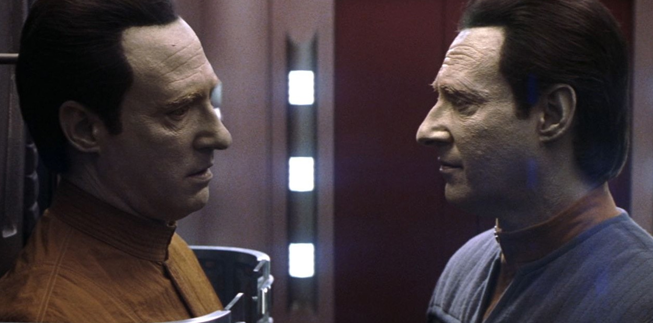
Data is shaken by B-4’s existence but attempts to help his brother realise his potential.

The wedding, of course, helpfully reunites the crew with Lieutenant Commander Worf (Michael Dorn), who picks up B-4’s positronic signal. The implications of such a signal intrigue Picard on Data’s behalf and (thanks to the ion storm of Kolarus III) gives him, Worf, and Data the perfect excuse to bust out a futuristic dune buggy. It’s not often we get so see wheeled vehicles in Star Trek so it’s a nice moment of levity for Picard, who begins the film in a far more jovial and mischievous mood than usual thanks to the wedding, and leads to a pretty decent, old-fashioned car chase and shoot out. Unlike Data and Lore, B-4 is an inquisitive, naïve, child-like being; a precursor to his big brothers, B-4 has the potential to be as advanced and evolved as Data but is limited by his less sophisticated technology and childish demeanour. His existence creates something of a crisis for Data, who begins to question his creation and life and the meaning of his own existence and raises interesting questions regarding our capacity for intelligence and how important experience and personality are to our development. The film briefly explores this by downloading Data’s memories and experiences into B-4 but it doesn’t immediately affect B-4 or allow him to evolve in the same way; for the most part, it seems to be a failure but, of course, by the end we’re left with the suggestion that B-4 could, in time come to be as advanced and experienced as his older brother.

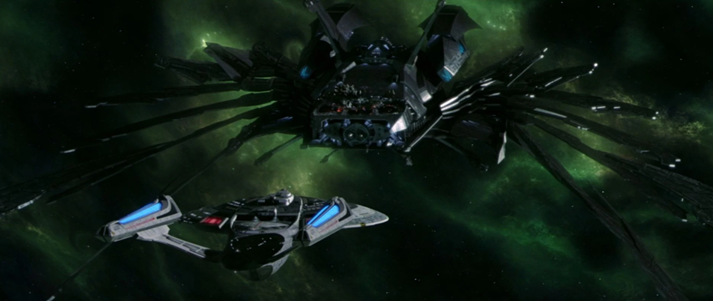
The Scimitar is a forboding and intimidating warship that dwarfs the Enterprise-E.

Normally, it’s massively convenient that the Enterprise-E just happens to be the “closest ship” to the current crisis but, in this case, it actually does make sense since the ship was heading that way, drawn to nearby Romulan space by B-4’s signal, and it’s later revealed that the ship was specifically lured there by Shinzon. Shinzon is given quite a bit of build up prior to his actual appearance; as a Remun, a race bred to simply be cannon fodder and slaves for the Romulans, it is unusual that he has reached such a vaulted position but his threat is immediately established in the dramatic reveal of his supped-up warship, the Scimitar, and the monstrous appearance of his Reman viceroy (Ron Perlman).

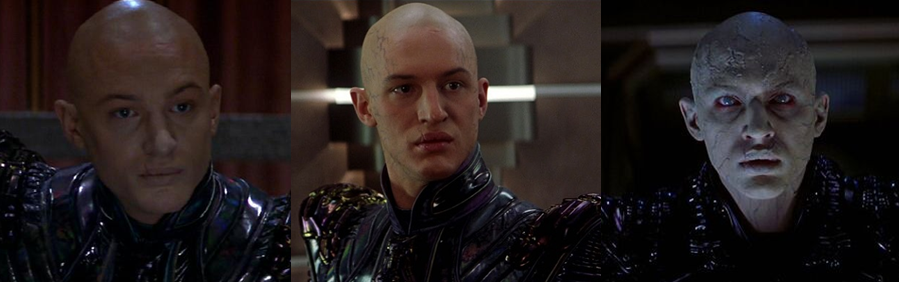
Shinzon’s physical appearance degrades as his true twisted is revealed.

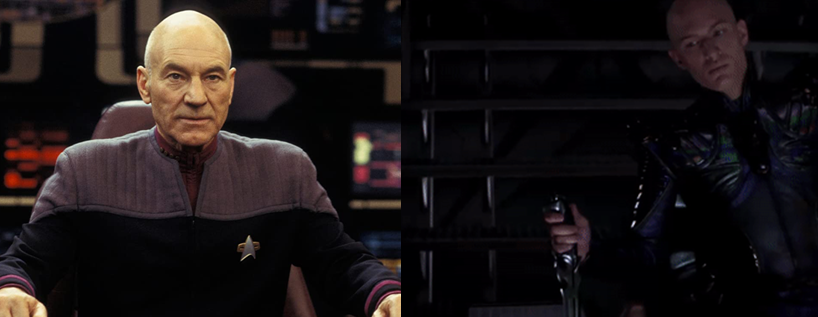
Shinzon’s reveal is a stunning blow to the crew but especially for Picard; in Shinzon, he sees himself as a younger man, the son he always yearned for and the life he could have had were he exposed to the same traumas and horrors as the Reman warrior. As if it wasn’t immediately clear, Shinzon is a clone of Picard, bred to be placed as a destructive mole within the Federation, and exists as Picard’s obvious dark opposite. The crux of the film, and Picard’s arc, is reconciling that Shinzon’s true nature has been twisted, skewed by his experiences; to begin with, he believes he has finally found the chance to nurture a son and continue his legacy but, very quickly and harshly, learns that Shinzon desires nothing but power, destruction, and vengeance upon not just his Romulan overlords but the Federation itself. Shinzon is a charismatic and alluring antagonist; eloquent and calculating, he is perfectly capable of subtle manipulation and subterfuge and aggressive, uncompromising fury. Immediately after his introduction, we see that he has no interest in peace; he is merely curious by Picard’s existence but determined to destroy his enemies, viewing the Romulans, the Federation, and especially Picard with disgust and hatred. This is an intriguing element and really throws Picard for a loop but it’s unfortunately very underdeveloped as, almost immediately, we learn that Shinzon is a destructive, aggressive force, resentful of Picard and his other enemies, so he may as well have been introduced as a villain right away rather than through half-hearted subterfuge.

The Nitty-Gritty:
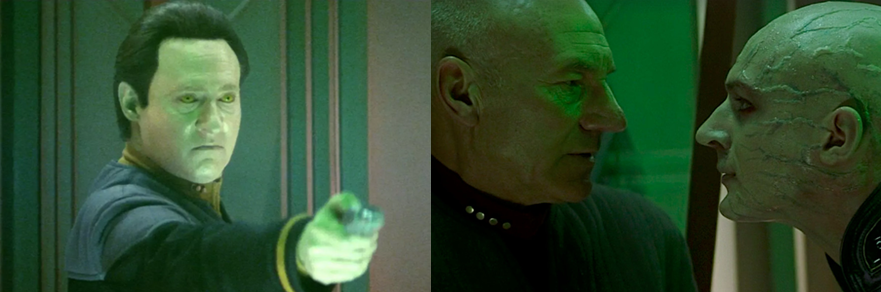
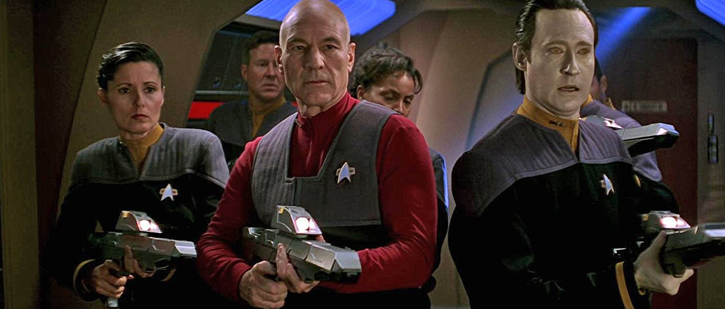
I can understand why people disliked Star Trek: Nemesis; for me, the film’s glaring flaw is the pacing. The film is very short and wastes a lot of its potential; it’s not often we get to really peel back the layers of Picard’s officious and complex personality and seeing him vulnerable, somewhat helpless against his dark doppelgänger was genuinely intrigued…for all of ten minutes or so. Similar to Star Trek Generations, the film squanders its potential but, unlike that film (which is largely a snore-fest), Star Trek: Nemesis does, at least, have a lot of action sequences packed into its run time. I mentioned in my review of Star Trek: First Contact that one of the few flaws of that film is the lack of space-based combat and, while Star Trek: Nemesis doesn’t really have a space battle until the finale, it does include an entertaining chase sequence and a shoot out between Picard, Data, and the Remuns aboard the Scimitar.

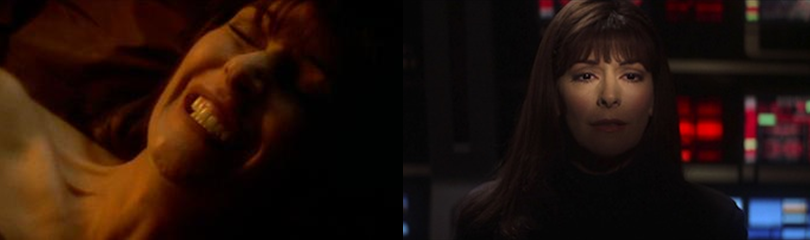
Troi’s traumatic experience isn’t as big of a focus as you might expect.

Again, though, the bulk of the film’s focus is on Picard and Data; given the plot of the film, this isn’t entirely unsurprising but it is still a bit disappointing. Riker and Troi’s long-overdue wedding is a central focus of the early part of the film but, very quickly, Riker is pushed to the background as simply a voice of concern among Picard’s crew. Troi gets an interesting sub-plot where Shinzon, enamoured by her appearance, initiates a mental invasion of her mind via his viceroy that is a very blatant allegory for rape but, again, this is only briefly touched upon. Clearly Troi is affected by this experience and she does get to extract a measure of revenge against her tormentors, but she also disappears for a lot of the film between these two events. Similarly, Doctor Beverly Crusher (Gates McFadden) is barely in the film, Lieutenant Commander Geordi La Forge (LeVar Burton) exists mainly to debate the merits of B-4’s potential, and Worf doesn’t really get much of anything to do but man (Klingon?) the phaser banks.

While Picard exorcises his dark half, Data makes the ultimate sacrifice for his surrogate family.

As I mentioned, this isn’t entirely surprising and the film’s primary narratives revolving around Picard and Shinzon and Data and B-4 do go some way to making up for this. Picard is heartbroken and enraged at how selfish and disappointing his “son” is and the final confrontation with his doppelgänger is as much a fight for his (Picard’s) survival as it is against himself and the dark side that dwells deep beneath his morals and ethics. Similarly, Data is saddened by his younger brother, his childish nature, and his position as Shinzon’s slave. I mentioned earlier that family is a central theme of the film and that’s true; the idea is that the bond between a surrogate family of close friends and colleagues is just as strong as those between blood relatives. This is even reflected in Shinzon, who literally needs Picard’s blood to survive and who only truly confides and trusts in his viceroy, treating everyone else as disposable and expendable filth. In the end, both Picard and Data choose their surrogate family over their actual family, with Picard exorcising his dark half and Data willingly sacrificing his existence to ensure the survival of his family.

Nemesis explores Picard’s more vulnerable side but, sadly, fails to really capitalise on its potential.

Of course, this ending draws immediately and blatant parallels to the classic finale of Star Trek II: The Wrath of Khan (Meyer, 1982); while Data’s sacrifice kind of comes out of nowhere, so did Spock’s (Leonard Nimoy), if we’re being really honest, and both relate to the aforementioned themes of family and sacrifice that are prevalent in both movies. It’s a sudden and heart-breaking end to a beloved character but one, perhaps, long overdue since Spiner had desired to be killed off for some time. Like Spock, Data is able to create a kind of back-up or failsafe to ensure his legacy lives on, in some way, through B-4. The similarities don’t end there either, really: Shinzon is a more blatant dark mirror of Picard but Khan Noonien Singh (Ricardo Montalbán) was also a dark reflection of Kirk, his ship a dark opposite of the Enterprise, and his motivations similarly based on horrific experiences that he largely blamed his opposite for. It’s a deeply personal story for Picard, one that ties into themes that have brewing since, at least, Star Trek Generations and demonstrates that the difference between nature and nurture is often an extremely blurred line.

The Summery:
I can understand, to a degree, why Star Trek: Nemesis wasn’t received all too well but, honestly, I find it to be the second-best of the Next Generation films. It’s not a complete bore-fest like Star Trek Generations or Star Trek: Insurrection, featuring a lot more action and thought-provoking narrative elements but it’s still not quite on the same level as Star Trek: First Contact. Sadly, however, the film does squander a lot of its potential; the pace is very brisk and the film just doesn’t focus itself in the right ways. There’s a very intriguing story here, a deeply personal one, for the normally composed Picard but the potential of that story is thrown out the window all too fast as any question about Shinzon’s motivations is immediately rendered mute shortly after we’re introduced to him. Shinzon is, in many ways, a fascinating antagonist; he has every reason to hate his enemies and his motivations are as understandable as they are abhorrent but, sadly, not enough is done with the concept of him as Picard’s dark mirror. Still, I feel Star Trek: Nemesis is an underappreciated and overlooked film in the franchise; it’s worth a view for the potential of the Picard/Shinzon story and Data’s ultimate, poignant sacrifice alone and it’s easily the most aesthetically impressive of the Next Generation movies so I’d say it’s worth a bit more consideration that it got upon release.

My Rating:

Rating: 3 out of 5.

Pretty Good

What did you think to Star Trek: Nemesis? Where does it rank against the other Next Generation and Star Trek films for you? Do you agree that the film isn’t as bad as people made it out to be or do you think it deserves its negative reputation? What did you think to Shinzon and his position as Picard’s dark mirror, and to Data’s sacrifice? Do you think these elements were warranted or do you feel they were squandered? Would you like to see another go-around for the Next Generation crew or do you prefer to see new, unique takes on the franchise? How are you celebrating Captain Picard Day today? Whatever your thoughts on Star Trek: Nemesis, or Star Trek in general, go ahead and share them below.

Movie Night: Star Trek: First Contact

Released: 22 November 1996
Director: Jonathan Frakes
Distributor: Paramount Pictures
Budget: $45 million
Stars: Patrick Stewart, Jonathan Frakes, Brent Spiner, Alfre Woodard, James Cromwell, and Alice Krige

The Plot:
After intercepting an attempted invasion of Federation space by the Borg, Captain Jean-Luc Picard (Stewart) and the crew of the U.S.S. Enterprise-E pursue their foes back in time to the mid-21st century where the Borg, represented by their alluring Queen (Krige), intend to use their nanotechnology to assimilate the Earth and change the course of not just human history, but the history of the entire known galaxy by disrupting the fated first contact between humans and extraterrestrials on this day, 5 April, in 2063.

The Background:
It’s the age old question, isn’t? Which do you prefer; Star Trek (1966 to 1969) or Star Trek: The Next Generation (1987 to 1994)? Captain James T. Kirk (William Shatner) or Captain Picard? Personally, since I grew up with the original series movies rather than the television show, I’ve always been more of a Next Generation and beyond kinda guy. Regardless, after Star Trek wrapped up, the original cast reunited for a series of movie spin-offs and executive and producers were able to coerce creator Gene Roddenberry to spearhead an all-new Star Trek television show to breathe new life into the franchise. Star Trek: The Next Generation became so popular that it too branched out into feature films, with the first being the appropriately-titled Star Trek Generations (Carson, 1994), which brought Kirk and Picard together but failed to impress critics despite performing relatively well at the box office. For the next film in the franchise, writers Brannon Braga and Ronald D. Moore decided to merge together their two most popular ideas for the franchise’s thirtieth anniversary: time travel and the Borg, with the two kicking around different ideas for the time period the movie would be set in and many different drafts of what would become the film’s final incarnation. Long-time cast member Jonathan Frakes, who had directed a number of episodes of the show, was chosen to helm the film, which delved into the Borg hierarchy, expanded upon their memorable appearance in the “Best of Both Worlds” (Bole, 1990) two-parter, and allowed the usually diplomatic and authoritarian Picard to become more of an action hero archetype. Star Trek: First Contact received widespread acclaim, particularly directed towards its gruesome special effects, and, filmed on what now seems like a paltry budget of $45 million (for comparison’s sake, Star Trek (Abrams, 2009) boasted a hefty $150 million budget), the film did very well at the box office, beating its predecessor by some $30 million.

The Review:
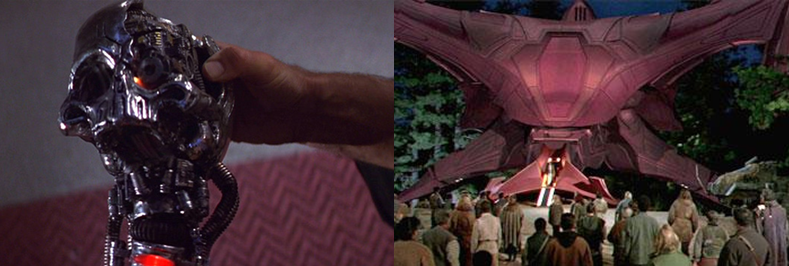
One of the things I’ve always respected about the Star Trek movies is how they don’t really waste a lot of time pandering to audiences who are unfamiliar with the concept or the television series; this generally allows the films to, largely, stand alone and work as products attached to, but also independent from, the show. Star Trek: First Contact differs from this formula in that it directly references, and is built off of, one of the most celebrated Next Generation episodes ever. Accordingly, the film opens with a brief revisitation of Picard trapped on the Borg Cube; if you didn’t know that he was transformed by the Borg, this is a quick and effective way to show that he is still haunted by memories of those experiences. Of course, if you’re not a fan of eye horror, this isn’t a scene for you but it also shows off the amazing updates to Borg technology and how their implants work going forward.

Star Trek: First Contact showcases a number of new sides of Picard’s character.

Of course, this opening sequence is just one of what is implied to be many recurring nightmares on Picard’s behalf and it is interrupted by the report of the Borg’s impending invasion. Despite the all-new, all-powerful Enterprise-E being the “most advanced ship in the fleet”, Picard is annoyed to inform his crew that they’re being kept out of the battle against the Borg; I love how the Romulan threat is so neutered by this point that even Counsellor Deanna Troi (Marina Sirtis) is incredulous as to their assignment to patrol the Neutral Zone and that the Borg are considered such a threat that all it takes is one of their ships to be classified as an “invasion of the Federation”. This all sets up Picard’s tone, character arc, and conflict as Starfleet believes (rightly so, as it turns out) that he shouldn’t face the Borg again given the trauma he faced at their hands. While Commander William Riker (Frakes) disagrees, who gives a shit what he thinks? That guy couldn’t make a decision to save his life! Still, he’s right to an extent as Picard disobeys their orders and is then able to turn the tide against the Borg Cube using his knowledge of their defences and technology; however, as the film progresses and Picard launches guerrilla tactics against the Borg, it’s clear that he is driven by his rage, vengeance, and hatred of the cyborgs rather than his usual calm, measured demeanour.

The Borg Queen brings Data closer to humanity than he ever thought possible.

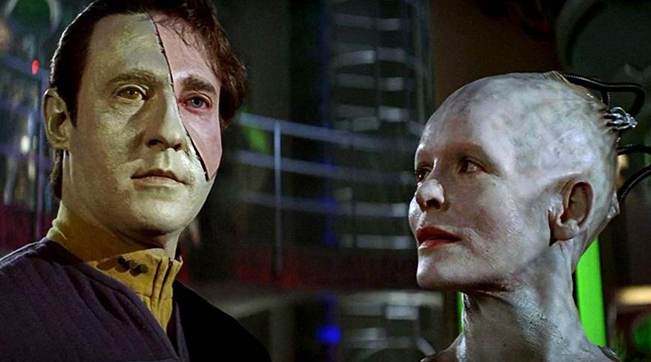
Just as the Original Series was often framed around Kirk, Commander Spock (Leonard Nimoy), and Doctor Leonard “Bones” McCoy (DeForest Kelley), the Next Generation movies primarily revolved around Picard and Lieutenant Commander Data (Spiner), who, as an android struggling to understand and become more human, was very much The Next Generation’s version of Spock. Data still has his emotion chip installed, which was his big plot point in Star Trek Generations, and is manipulated here by the Borg Queen, who plays upon Data’s wish to be more human by appealing to his emotions, stimulating his sensations, and even grafting organic skin onto his outer shell. This forms Data’s character arc as he appears to give in to the Borg Queen’s temptation and allows them to turn him into something more akin to a cyborg. It is, of course, all a ruse on Data’s part to allow him the perfect opportunity to scupper the Borg Queen’s plans but, given what we saw of him in the “Descent” (Singer, 1993) two-parter, the way the film is framed, and that this is the closest to Data’s dream of becoming human, it’s very easy to believe that he has turned against his friends and crewmates.

Cochrane is a far cry from the near-mythical figure of Starfleet teachings.

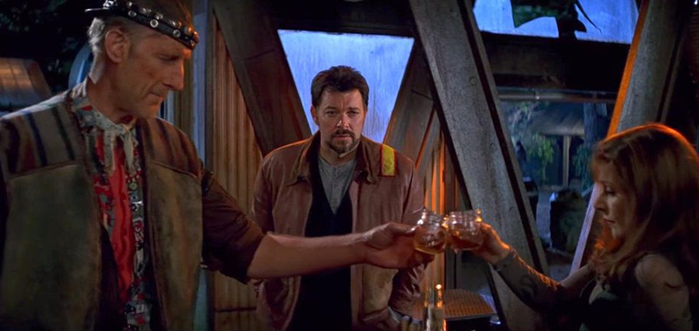
Far from the legendary, near-mythical figure of Starfleet teachings, Zefram Cochrane (Cromwell) is a disillusioned, selfish, greedy drunkard; he plays along with the crew’s predictions of the future and assists them in completing the Phoenix but is scared of the fate they readily inform him off and angered that he becomes such an influential figure when his intentions were less than noble. He tries to literally run away from this fate and is convinced to see it all through but not by lectures about how the Phoenix ushers in this new, golden age for humanity, and, instead, partially off-screen and partially through the “don’t be a man” quote from Riker. Either way, in the end, he accepts his role as the figurehead for inter-species relationships.

Lily acts as the audience surrogate and Picard’s conscience.

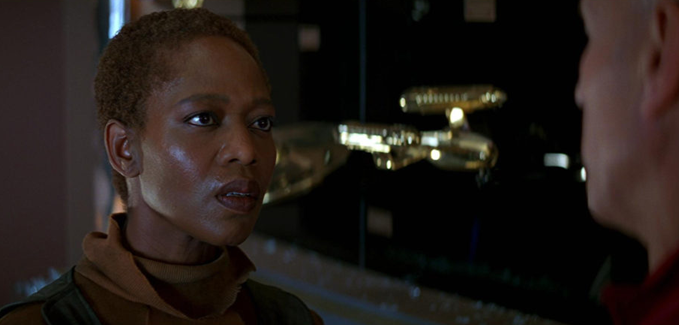
Cochrane’s assistant, Lily Sloane (Woodard), starts out as an angry, confrontational revolutionary who initially believes she has been kidnapped by opposing forces but is quickly convinced of the Borg’s threat by Picard. For me, she’s probably the weakest part of the film; it’s not enough to drag it down in my estimation but I’ve never been a fan of the actress or her portrayal of the character, who comes across as annoying and a liability at some points. Still, she acts as both an audience surrogate through which the uninitiated are taught about the Borg, the ship, and the future world Picard is from. If there’s one downside to the film, it’s that the remainder of the crew don’t really get a lot to do since so much of the plot revolves around Picard overcoming his trauma and Data’s temptation by the Borg Queen. Beyond her amusing drunk scene, there’s not a lot for Deanna to do here, unfortunately; similarly, Doctor Beverly Crusher (Gates McFadden) exhausts most of her importance after fleeing the Borg attack, though she does later personify the crew’s general blind obedience to Picard’s orders. Riker, also, is largely inconsequential to the away team mission, with Lieutenant Commander Geordi La Forge (LeVar Burton) getting most of the focus, though this is most likely because of Frakes pulling double duty behind the scenes as well. It’s therefore all the more obvious that the never-before-seen Lieutenant Hawk (Neal McDonough) is going to suffer the fate of most Star Trekredshirts” since he gets a lot of screen time and focus for a guy who isn’t a part of the main cast so you know he’s doomed even without a deep knowledge of Star Trek. Similarly, Geordi leaves Porter (Eric Steinberg) in charge of Engineering and he and his female co-worker are summarily assimilated but cameos by the Doctor (Robert Picardo) and Lieutenant Reginald Barclay (Dwight Schultz) help to add to the film’s charm and expand the Star Trek world.

The Borg are treated as a gruesome, terrifying, and formidable force.

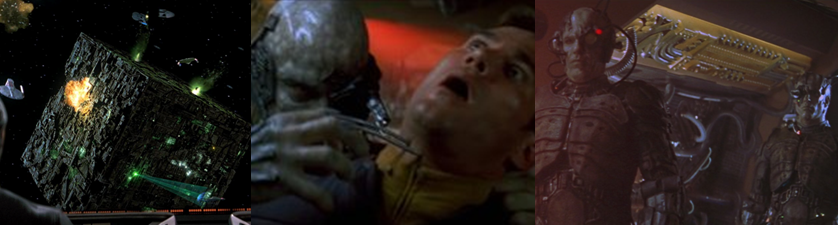
The film only has one space battle, which is disappointing, but it’s a fantastic way to showcase the slaughter that the Borg, even a single Cube, is capable of inflicting. The Borg are, apparently, now so advanced that they can just casually manifest a “temporal vortex” through unknown means to travel through time; it’s very convenient and not really explained much but it gets the plot moving quickly and is a much faster way to get everyone back to past. When the Borg are attacking and assimilating the crew, the film resembles a horror movie; the Borg are kept in shadows, attacking off-screen, and are not seen in full view until Picard leads a team to try and stop them before they can spread beyond Deck 16. It’s a very effective way to introduce some tension and horror and the stakes of the film since Picard emphatically orders his team to fire at will rather than leave any assimilated crew members alive despite the fact that de-assimilation is a thing and he knows that. The Borg are treated as a zombie-like, relentless force, one that will not attack unless provoked or they perceive a threat; once they do attack, there are slow and persistent, stoically allowing their numbers to fall until they learn to adapt and continuing their assault regardless, assimilating crew members without conscience or mercy.

The Borg Queen was an alluring, ghastly presence that altered the Borg dynamic.

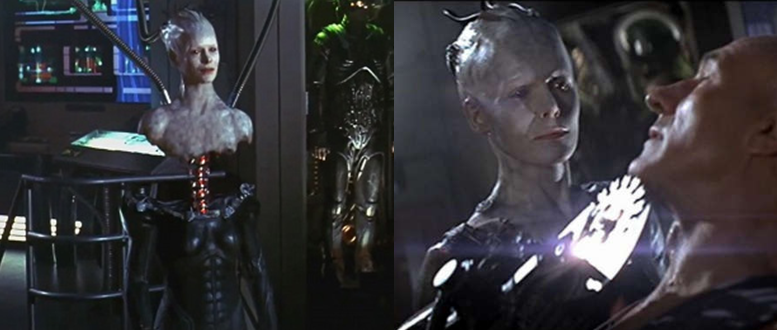
The Borg Queen introduced a dynamic to the Borg “collective”; until this moment, the Borg were a unified voice, with no hierarchy or individuals. The closest they came to having such a central voice was Locutus and when Lore (Spiner) manipulated that rogue contingent in the aforementioned “Descent” episodes. Here, though, the exact nature of the Queen’s relationship is left somewhat vague; it appears as though she is merely a physical manifestation of the collective but she also orders the drones about and they adhere to her commands (and she refers to herself as “I”, indicating that she is their “leader”, as Data suggests). It’s clearly a filmmaking technique to allow audiences to have a clear antagonistic figurehead to focus on and, while it does work since it expands the nature of the Borg society, it does somewhat diminish the horror of their collective consciousness. Regardless, the Borg Queen is a charismatic, seductive, and manipulative presence; oozing confidence, sex appeal, and a gruesome body horror, she represents Data’s desires for humanity and Picard’s fears of the Borg since it is heavily implied that the Borg Queen personally supervised his assimilation, perhaps even sexually abused him, and that the Borg Queen has assumed numerous physical forms over the years. Her introduction is also one of the most horrific and impressive special effects shots in all of Star Trek and her make-up design looks both incredibly uncomfortable for the actress and ghastly in its execution.

The Nitty-Gritty:
There are a few conveniences, instances of hand-waving, and missed opportunities in the film, if I’m being brutally honest: there’s the aforementioned ease of time travel, the massively convenient explanation for getting Lieutenant Commander Worf (Dorn) back on the Enterprise, and I would have liked to see a little more exposition about how, why, and when Geordi decided to swap out his trademark visor. Still, one of the (many) things I enjoy about Star Trek: First Contact is the vastly improved uniforms for the cast and crew, despite how hot and uncomfortable they appear regardless of their high quality. Everything about the film is so much more cinematic and of a much higher quality than all of those that came before it; the Enterprise-E bridge is massive and far more detailed and the ship itself is much more like the traditional Enterprise but meaner and more capable of combat. Like the Klingons before them, the Borg benefitted greatly from the cinematic redesign; no longer appearing like pale men in black leotards with plastic attachments and hands in clear prosthetics, they appear as disgusting zombies with their cybernetic implants crafted into, or entirely replacing, their limbs in sequences that are extremely horrific for a 12-rated film and easily the most gruesome of any Star Trek production.

Picard’s obsession threatens to destroy him, his ship, and his crew and causes much conflict.

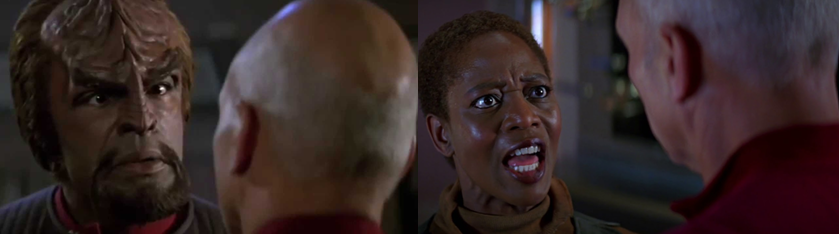
The film mainly switches between the away team, led by Riker (who must work with Cochrane and convince him to help them and where the bulk of the film’s humour and levity is seen), and the main ship where Data is tempted by the Borg Queen and Picard becomes a far more pro-active and action-orientated individual in this film. Picard adopts a sleeveless variant of his uniform, showing off his physique for the first real time, and he is portrayed as an almost John McClane (Bruce Willis) type of action hero, hiding in engineering vents and striking against overwhelming odds. One of the film’s most engaging sequences is the space walk Picard, Hawk, and Worf are forced to take to keep the Borg from calling for reinforcements; it’s a rare instance of weakness for Worf, who dislikes the disorientation caused by zero-g environments, and unique in that the whole scene technically takes place upside down on the underside of the ship. Another memorable scene is, of course, the blazing confrontations between first Picard and Worf and then Lily and Picard. While the rest of the crew may disagree with Picard’s unwavering belief that they must fight the Borg no matter the cost, Worf is the only member of the crew to object to Picard’s orders, believing (rightly so) that Picard is letting his personal feelings influence his judgement. It’s an extremely tense moment as the two close allies and comrades almost come to blows, it seems, and leads to an awkward moment of reconciliation between the two after Picard reluctantly agrees to set the Enterprise-E to self-destruct.

Picard not only ensures the future of humanity but also confronts and overcomes his demons.

Lily (who acts as Picard’s conscience throughout the film, questioning his motivations and notes, with dry criticism, how aggressive and uncompromising his actions have become) also unashamedly criticises Picard’s decision and confronts him, leading to a dramatic and heated exchange between the two in which the extent of Picard’s obsession and pain is revealed. It’s a very humanising moment for Picard, usually so authoritarian and composed, and here stripped down to a tormented victim of unspeakable abuse. In the end, Picard mounts a solo effort to rescue Data and is willing to sacrifice himself, his ship, and Data to distract the Borg Queen and end her threat. Paralysed with fear and confusion regarding the Queen’s appearance, Picard is only able to win the day thanks to Data’s deception and subsequent release of plasma coolant to liquefy the Queen’s organic components and end her threat. Picard finds some closure in snapping the Queen’s neck and the two of them actually mourn her for her force of will and uniqueness amongst the generally zombie-like Borg. It’s a cathartic end to the trauma that has haunted Picard since his assimilation and allows him the chance to step away from the brink of self destruction and take proactive, measured action against one of the franchise’s most formidable foes.

The Summary:
Star Trek: First Contacts a fantastic Star Trek film (and a great science-fiction movie in general) that showcases a completely different side to Star Trek and, especially, Picard; ever since “The Best of Both Worlds”, Picard has been haunted by his experiences with the Borg but, while some episodes of The Next Generation dabbled in how his assimilation affected him, it was never explored as deeply as it is here. Picard is literally haunted by the Borg, able to sense their presence and hear the mutterings of the collective and is driven to animalistic rage whenever he battles them head-to-head. It drives him to an obsession that blinds him to the losses he is suffering; all he cares about is opposing the Borg rather than compromising as they have on so many other occasions. He wants them dead, to make them pay, and to take his revenge upon them no matter if it costs him his ship, his crew, or his life. It’s a powerful character arc, and series of scenes and moments, that humanises Picard and makes him a far more relatable character and a stronger man for it after he realises what his fixation with the Borg has turned him in to. In many ways, it’s a very small-scale film, much more concerned with such interpersonal deconstructions; the away team are simply constructing a warp-capable ship, Data faces temptation from the Borg Queen, and Picard is engaged in guerrilla warfare with the Borg. There’s only one space battle and no real star trekking, with even less diplomacy, making the film both grounded but also outlandish thanks to its time travel plot and the use of one of the franchise’s most horrific and persistent antagonists. It remains easily my favourite of the Next Generation films and, potentially, my favourite Star Trek movie because of its themes, presentation, and intensity of the plot.

My Rating:

Rating: 5 out of 5.

Fantastic

Are you a fan of Star Trek: First Contact? Where does it rank for you compared to the other Star Trek movies? What did you think to the film’s time travel plot or the use of the Borg? What about Picard’s characterisation and Data’s character arc? Are you a fan of the Borg? If so, what are some of your favourite episodes and, if not, why is that and which enemy would you have preferred to see in the film? Where do you stand on the Kirk vs. Picard, Original Series vs. Next Generation debate? Whatever your thoughts on Star Trek: First Contact, or Star Trek in general, feel free to leave a comment below and be sure to check out my other Star Trek content.