Movie Night [Christmas Countdown]: Dr. Seuss’ The Grinch

Released: 9 November 2018
Director: Scott Mosier and Yarrow Cheney
Distributor: Universal Pictures
Budget: $75 million
Stars: Benedict Cumberbatch, Cameron Seely, Rashida Jones, Kenan Thompson, and Pharrell Williams

The Plot:
Since the ill-tempered Grinch (Carrey) despises Christmas so much, he tricks impressionable Cindy Lou Who (Seely) into kidnapping Santa Claus and then plots to literally steal Christmas from Whoville! 

The Background: 
Poet and children’s author Theodor Seuss Geisel (more widely known as “Dr. Seuss”) produced “The Hoobub and the Grinch” in 1955, the prototype for How the Grinch Stole Christmas!, which was inspired by the rampant commercialisation of Christmas. The character became an instant and surprisingly complex festive icon. Dr. Seuss once again teamed with the legendary Chuck Jones to adapt the story into a universally loved, animated feature that became a Christmas classic. Though Dr. Seuss refused to sell the film rights to his works, his widow, Audrey Geisel, negotiated a lucrative merchandising deal that eventually led to Ron Howard and Jim Carrey collaborating on a live-action project in 2000. Though a box office success, with Carrey’s performance being widely praised, Dr. Seuss’ How the Grinch Stole Christmas was met with mixed reviews. After their adaptation of The Lorax (Seuss, 1971) proved a commercial, if divisive, success, Illumination produced a new, CGI animated adaptation of How the Grinch Stole Christmas! Benedict Cumberbatch was cast in the title role and insisted on employing an American accent to vibe with his fellow actors and a 3D CGI model of Whoville was crafted using software applications like Maya. With a worldwide box office gross of $540 million, Dr. Seuss’ The Grinch was a commercial success met with mostly positive reviews. Critics praised the heart-warming story and colourful visuals, though it was also criticised for being noticeably lifeless and predictable compared to its predecessors.

The Review:
This adorable, all-CGI animated retelling of The Grinch puts its own spin on the original story, and the live-action version, by presenting a familiar but somewhat different incarnation of the titular, miserable creature. As ever, the Grinch lives atop Mount Crumpit with his loyal canine companion, Max (Unknown), who brings him coffee and goes along with his schemes with a boundless enthusiasm. This time, the Grinch is not a feared figure in nearby, Christmas-loving Whoville or a miserly bogeyman they actively avoid, or a figure of hatred and ridicule. In fact, the locals barely acknowledge him! The Grinch isolates in his cosy cave and only begrudgingly ventures into Whoville for groceries, where few bat an eyelid at his noticeably different appearance and nobody reacts with anything but kindness and friendliness. This is most embodied by the energetic Bricklebaum (Thompson), a decidedly Santa Claus-like Who whose Christmas spirit is infectious and who regards the Grinch as his best friend, much to the Grinch’s loathing. Even when he actively shuns and bullies Whos, pushing over snowmen and refusing to help them, the Grinch is simply frowned upon as being a “mean one”. Nobody wonders who he is or where he came from, or why he hates Christmas so much. Indeed, our omniscient narrator (Williams) asks us not to question these things and simply states that the Grinch’s heart is “two sizes too small”. However, while wandering through the bustling seasonal town, the Grinch suffers a small panic attack and is reminded of his childhood, where he was left alone in an orphanage while the Whos celebrated Christmas, coming to despise the season as he was ignored and forgotten.
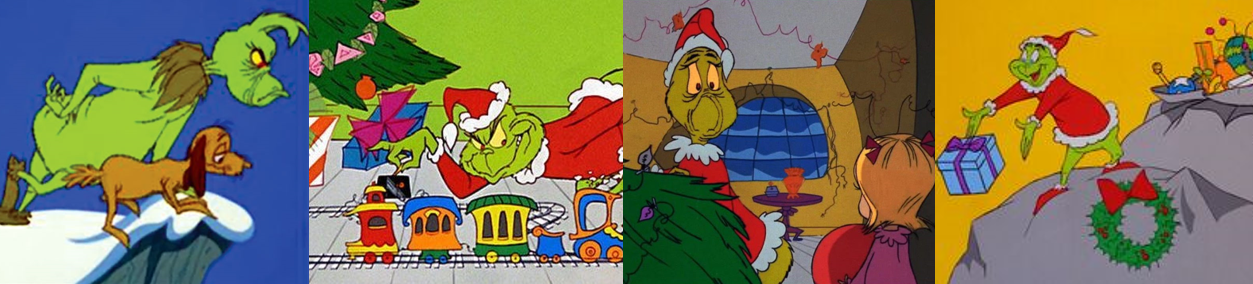
As Cindy hopes to appeal to Santa Claus, the moody Grinch plots to steal Christmas from Whoville.

While stocking up for his annual self-imposed Christmas isolation, the Grinch literally bumps into lively, kind-hearted Cindy Lou Who as she’s frantically trying to deliver her letter to Santa Claus. Disgusted by the Whos’ greedy attitude and demanding ways, the Grinch mocks Cindy Lou and sarcastically tells her to visit Santa if her wishes are so important. Inspired, but overly ambitious, Cindy Lou is only stopped by her overworked mother, Donna Who (Jones), who points out that it’d take Cindy Lou at least a month to reach the North Pole. However, as her Christmas wish is incredibly important to her, Cindy Lou resolves to think of an alternative plan with her best friend, Groopert (Tristan O’Hare), a friendly (if dozy) Who boy whom Cindy Lou shares that her wish is for her mother to have some help and happiness as she’s always working to provide for her three children. Thus, Cindy Lou drafts a plot to stay awake on Christmas Eve to trap Santa Claus and beg for his help, sure that he can work his Christmas magic. This side-plot is completely unrelated to the Grinch until the last act as the titular, furry creature is more distracted trying to scupper the town’s tree lighting ceremony. When this goes awry, the Grinch vows to end Christmas once and for all, sickened by Whoville’s insatiable Christmas spirit and wishing them to pay for being so happy and materialistic all the time. After some half-assed research, the Grinch tries to recruit some reindeer, only to attract a particularly loud mountain goat and be lumbered with “Fred”, and cute, curious, oafish reindeer who nonchalantly becomes part of the Grinch’s plot before he’s revealed to have a family. Begrudgingly, the Grinch substitutes Santa Claus’s traditional eight reindeer for Max, who eagerly pulls the sleigh they stole from Bricklebaum despite how large and heavy it is and even helps the Grinch steal Whoville’s Christmas using his gadgets.
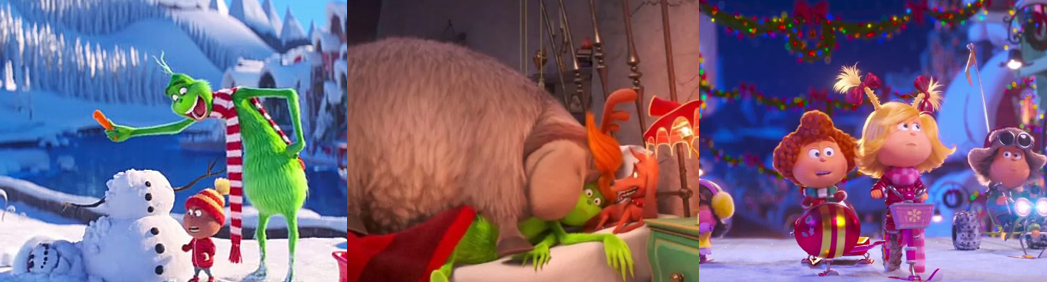
Embittered by a lifetime of loneliness, the Grinch has grown to despite the festive season.

The Grinch is as emotionally complex, and conflicted, as always. Thanks to his troubled childhood, he developed an intense dislike for Christmas and forced himself into exile with Max since loneliness is all he’s ever known. This motivates him to steal Christmas so everyone feels as bad as he does. However, it’s clear that the Grinch desires more deep down in his small heart as he sadly watches as Whoville prepares and celebrates Christmas and allows Fred to return to his family despite needing him for his plot, showing that the Grinch isn’t entirely heartless. Indeed, he enjoys spending time with Max in montages, playing/cheating at chess and going on rides, and greatly appreciates Max’s kindness and companionship, especially as he puts Max through a lot, like rigging him up to a helicopter harness to get intel on Whoville. Thankfully, this film ignores the backstory and Grinch/Who nonsense from Jim Carrey’s film, though I do think it suffers a bit from there being such a disconnect between the Grinch and Cindy Lou. As the Grinch barely interacts with Whoville, there are less scenes of him harassing the Whos or their reactions to him, and the focus is more on how they’re happily obsessed with Christmas rather than fearing the cantankerous Grinch, who has almost no impact in their daily lives. Cindy Lou isn’t mesmerised by him, instead, focusing on Santa Claus and her exhausted mother; the Mayor (Angela Lansbury) is merely a cameo rather than a rival; and the Grinch spends more time conducting tests with his sleigh than causing chaos in Whoville. Still, Benedict Cumberbatch was super enjoyable in the role, putting on a sarcastic voice that gave way to some emotional scenes as the Grinch relives his past and steps up his campaign against Christmas.

The Nitty-Gritty:
As is to be expected from Illumination, The Grinch looks fantastic. There’s an adorable aesthetic to the entire film that makes it very appealing and the animation is much more suitable to Dr. Seuss’ unique art style, which frankly looks horrific in live action. Cindy Lou was especially adorable, easily melting the Grinch’s heart with her big, expressive eyes and pure-hearted plea, but I also enjoyed how colourful and lively Whoville looked. Although the Grinch isn’t said to have superhuman strength like in the live-action version, cartoon logic and physics make him incredibly durable and allow him to perform bizarre feats like lugging around a massive, overloaded sleigh and muscle his haul to safety after his change of heart. Surprisingly, The Grinch omits the traditional “You’re a Mean One, Mr. Grinch” during his malicious scheme (which also sadly lacks him gobbling up Christmas presents). Whoville still sing their usual Christmas melody, “Welcome Christmas” around their gigantic tree, but the film’s more likely to use traditional Christmas carols than original songs, though I did like the use of “Zat You Santa Claus?” by Buster Poindexter and His Banshees of Blue. The Grinch is depicted as more of an inventor, though sadly this is mostly offscreen and comes quite late into the film. He cobbles together extending shoes and grappling hooks for himself and little mech suits for Max, which help him to steal Christmas in record time. I would’ve liked to see the Grinch tinkering away with some of these inventions throughout the film or using some tech to try and wrangle reindeer rather than a simple horn and a lasso.
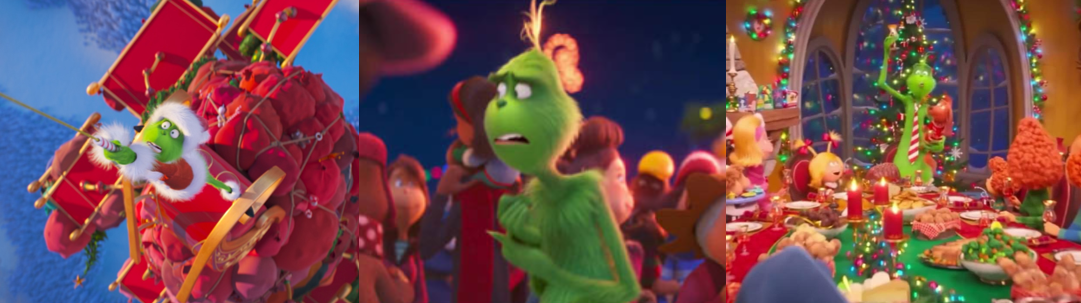
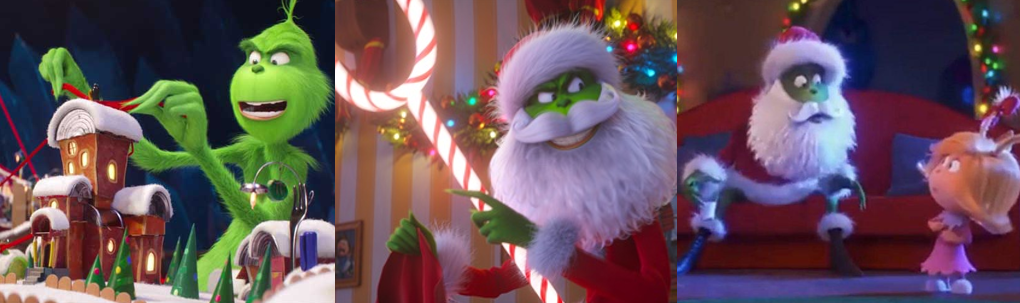
Cindy Lou melts the Grinch’s heart and shows him the true meaning of the season.

Thanks to Groopert and their other friends, Cindy Lou hatches a foolproof scheme to trap Santa Claus. Realising that she could never hope to stay awake all night, she booby-traps an enticing cookie to trap Santa with a snare. Unbeknownst to her, the Grinch and Max are methodically stripping Christmas from Whoville. While raiding Cindy Lou’s house, the Grinch falls into her trap and is stunned when the Who-girl asks not for presents, but for “Santa” to help her mother. Though he tries to forget the whole thing and dump his haul, the Grinch is haunted by Cindy Lou’s plea and outraged to find that Whoville’s Christmas spirit hasn’t been dampened in the slightest. Still, touched by Cindy Lou’s words and realising that the spirit of Christmas means more than gifts, the Grinch finds his spirits lifted and his heart triples in size, bringing him a sense of joy and happiness. Immediately remorseful, the Grinch decides to return everything he’s stolen, only for his overloaded sleigh to plummet off Mount Crumpit! Luckily, Fred and his family and Max help the Grinch save the sleigh, and the Grinch slides down the mountain the apologise to Whoville, and to Cindy Lou specifically. Even then, Whoville barely acknowledges the Grinch except for a general sense of awe and Bricklebaum’s enthusiastic shouting. They simply look on, stunned, to see their stolen Christmas return and make no comment. The Grinch slinks home, awkwardly gifting Max a squeaky toy, before Cindy Lou invites the Grinch to Christmas dinner. Though anxious and unsure, the Grinch tags along, awkwardly interacting with the guests and reluctantly enjoying the Christmas cheer. Finally part of the festivities and accepted for the first time, the Grinch realises that he didn’t really hate Christmas; just the feeling of loneliness he associated with the season. With that, the Grinch accepts the Whos’ friendship and honours them with a toast, fully embracing the spirit of the season.
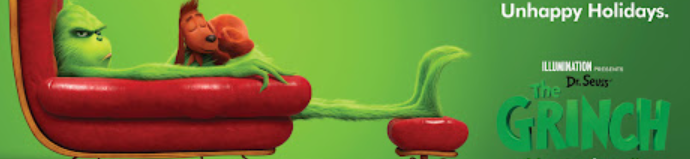
The Summary:
I was surprised by how much I liked Dr. Seuss’ The Grinch. Although the live-action version is a Christmas tradition of mine and I love Jim Carrey, I’ve always found it to be a bit of a slog and just bizarre to look at. This beautifully animated film addresses at least this latter criticism, bringing Dr. Seuss’ surreal characters and story to life with adorable grace and crafting a colourful, visually enjoyable world for them to inhabit. Dr. Seuss’ The Grinch does drag a bit in the middle, however, as filmmakers continue to dream up ways to pad the short story out, providing an alternative backstory for the Grinch and following his quest to rid Whoville of Christmas. I enjoyed some of these aspects, such as his simple but tragic childhood and the continuing emphasis on him being a sad, lonely figure, but I wasn’t a fan of how little he interacted with Whoville. Benedict Cumberbatch did a delightful job in the role so it’s disappointing not to see his Grinch interacting with the Whos, especially Cindy Lou, all that much. It ironically ties into the Grinch’s feelings of abandonment and exile to have the town basically ignore him rather than living in fear of his antics, but it created an odd disconnect for me that I struggled to reconcile. It’s also bizarre that there aren’t more musical numbers in the film (though others may disagree) and that more focus isn’t placed on the Grinch as an inventor since he comes up with some fun gadgets. Ultimately, Dr. Seuss’ The Grinch is a relatively harmless Christmas cartoon for kids that has a few gags and moments that may make adults chuckle. It carries the same heart-warming message about the true meaning of Christmas as ever and has some fun moments kiddies will probably get a kick out of, but it feels like it’s lacking an extra spark to make it a true Christmas classic.

My Rating:

Rating: 3 out of 5.

Pretty Good

Did you enjoy the all-CGI Dr. Seuss’ The Grinch? How do you think it compares to the book and other adaptations? Did you enjoy the additional lore added to the Grinch or did you also find it unnecessary? What did you think to Benedict Cumberbatch’s performance? Can you be a Grinch around Christmas? Which Christmas movies and specials are you watching this year? Whatever your thoughts on Dr. Seuss’ The Grinch, leave them in the comments and donate to my Ko-Fi to suggest other festive films for the site.


Movie Night [Christmas Countdown]: Dr. Seuss’ How the Grinch Stole Christmas

Released: 17 November 2000
Director: Ron Howard
Distributor: Universal Pictures
Budget: $123 million
Stars: Jim Carrey, Taylor Momsen, Christine Baranski, Bill Irwin, and Jeffrey Tambor

The Plot:
The monstrous Grinch (Carrey) hates Christmas with a passion. When the joyful holiday cheer of Whoville becomes too much for him, the Grinch disguises himself as Santa Claus and sets out to ruin Christmas by stealing the town’s presents! 

The Background: 
In 1955, poet and children’s author Theodor Seuss Geisel (better known by his pen name, “Dr. Seuss”) wrote and illustrated “The Hoobub and the Grinch”, the precursor to a more expansive work focusing on the mean-spirited Grinch. Inspired by his personal life and the rampant commercialisation of the season, Dr. Seuss quickly completed the story, which reportedly received critical acclaim and saw the titular character become an instant and surprisingly complex Christmas icon. Following previous collaborations, Dr. Seuss teamed with legendary cartoon director Chuck Jones to adapt the story into a television special that became a universally loved Christmas classic. Although he refused to sell the film rights to his works before his death, his widow, Audrey Geisel, successfully negotiated a lucrative merchandising deal that gave her a high percentage of any profits and creative control over any projects. Many filmmakers and names vied to produce a Grinch adaptation but Geisel rejected them all until a reluctant Ron Howard impressed with a pitch to flesh out the story and add a backstory to the Grinch. Jim Carrey signed on to portray the title character and endured a torturous experience, courtesy of renowned make-up artist Rick Baker, that saw him irritable and moody due to the uncomfortable suit and make-up before eventually learning to endure the process. With a worldwide box office gross of nearly $350 million, Dr. Seuss’ How the Grinch Stole Christmas was a commercial hit, though reviews were mixed. While Carrey’s performance was universally praised, it was seen as both the sole saving grace of an otherwise uninspired film and awkwardly gratuitous at times. The film was followed by an equally successful CGI reboot in 2018, Carrey’s appearance was evoked for bizarre slasher film in 2022, and Carry later said he’d reprise the role if he could use motion capture rather than a practical suit.

The Review:
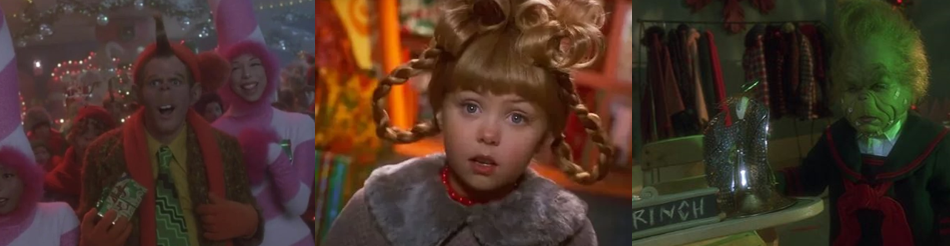
Just as in the original children’s story and the classic animated special, the film is set in Whoville, a wonderous, magical land populated by enthusiastic and joyous beings known as Whos. As related by our narrator (Anthony Hopkins), the entirety of Whoville and its surrounding lands, including the ominous Mount Crumpit, is contained within a single snowflake and, while the Whos celebrate every season and holiday with gusto, their most favourite holiday is, of course, Christmas time. The Whos really get into it, decorating the entire town and swarming the shops to buy gifts upon gifts for their nearest and dearest (and, seemingly, everyone in town). While all Whoville revels in the season and is united in jubilation, some competitiveness does exist within the town: Betty Lou Who (Molly Shannon) strips her entire house of every lightbulb she can find in a bid to outdo her neighbour, Martha May Whovier (Baranski), who always has the best lights in Whoville. The pompous mayor, Augustus May Who (Tambor), is positively giddy during the festive season, especially as he manipulates the town’s goodwill into regularly voting him as the “Holiday Cheermeister” so he can bask in their adulation and generosity. Interestingly, this is a world where everyone is eager to buy and exchange presents but also one in which Santa Claus exists, indicating that they also receive additional presents from the Big Round Guy. It’s no surprise, then, that the Grinch later lays into the Whos regarding their avarice and their hypocrisy for, while all the Whos delight in the season and pile gifts under the tree, almost all their presents get “dumped” to Mount Crumpit via a lengthy disposal tube, causing a mountain of disregarded Christmas gifts to pile up near the Grinch’s snow swept home. Indeed, Christmas is depicted as a chaotic time in Whoville, especially for postmaster Lou Lou Who (Irwin), who has the unenviable task of sorting and delivering everyone’s Christmas cards and gifts. You’d think a small town like Whoville wouldn’t need such a large and hectic mailing system but, as I said, the Whos are nothing if not enthusiastic and generous and it’s heavily implied that other, similar towns also exist on the same snowflake.

Disillusioned with Whoville’s Christmas obsession, Cindy Lou investigates the mysterious Grinch.

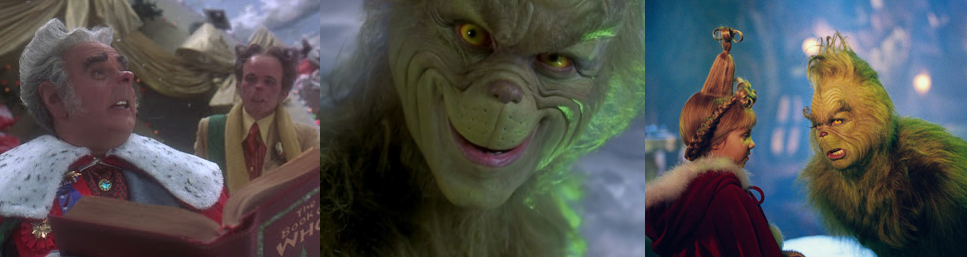
Yet, despite the chaos, Lou remains captivated by what all Whos see as the Christmas spirit. Whoville is a town committed to the idea of spending their cash on gifts and going all-in with the season and see all the excess and frivolity as being part and parcel of getting into the spirit of things. Even the youngsters are encouraged to make gifts for their friends (“Christmas of Love”) and it seems Whoville celebrates Christmas all year round in at least some capacity. Hell, the town clock even counts down to the minute as they approach the big day! However, there’s one Who who’s not feeling the Christmas spirit this year: little Cindy Lou Who (Momsen). This year, Cindy Lou is perplexed by the excess and greed, sad to learn from her father and all those around her that there isn’t more to Christmas than just presents (“Where Are You, Christmas?”) Disillusioned with the town’s obsession, Cindy Lou desperately searches for some deeper meaning to the holiday and, eager to please her father, Cindy Lou tries to help out in the mailing room only to come face-to-face with the Grinch, an ostracised figure known throughout the town as a miserly spoilsport who hates Christmas. Shocked by the monster’s appearance, Cindy Lou almost falls victim to the post office’s gigantic and ludicrous sorting machine but, annoyed by her screams for help, she’s saved by the Grinch. From that moment, Cindy Lou becomes fascinated by the creature and goes out of her way to find out everything she can about him. While this annoys Mayor May Who and causes some concern throughout the town, she learns that the Grinch came to Whoville many years ago on a strange wind and was conditioned to hate Christmas from an early age. Left out in the cold while the Whos celebrated the season and bombarded by obnoxious Christmas spirit, the young Grinch (Josh Ryan Evans) was the antithesis of his joyous Who peers: furry, mean spirited, and with a vile disgust towards all things Christmas. Despite everyone in town preferring to act like the Grinch doesn’t exist, Cindy Lou actively campaigns to both talk about and involve him in the festive season, believing that the true spirit of Christmas is offering holiday cheer to all, regardless of their appearance or demeanour. This sets her at odds with Mayor May Who, who harbours a deep-rooted jealousy and dislike towards the Grinch that stems back to their childhood, where they both vied for the attention of the young Martha May (Landry Allbright).

The Grinch’s spiteful mischief escalates into a full-on rampage against the Whos and Christmas.

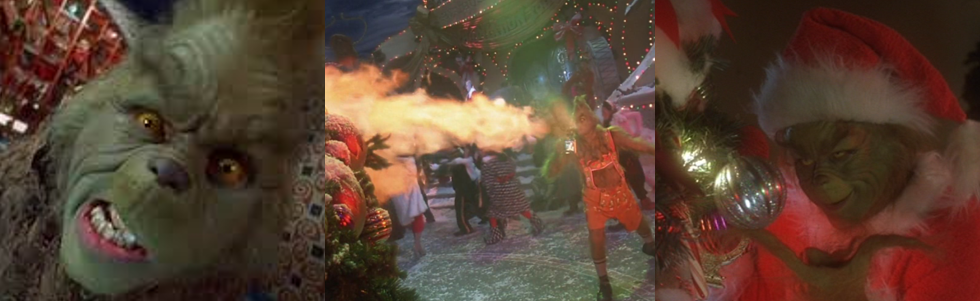
Indeed, Martha was one of the few Whos who showed any affection for the young Grinch and, even in adulthood, is still awestruck by the monster’s rugged charisma and inexplicable superhuman strength. Described as more of a “What” than a Who, the Grinch’s animosity towards Christmas was only exacerbated when the young May Who (Ben Bookbinder) mocked and bullied him, leading to an anti-Christmas outburst and the Grinch exiling himself to the frigid wastes of Mount Crumpit. There, he lives alongside his dog, Max (Kelley/Various/Frank Welker) and amuses himself by scaring away any Whos daring enough to climb his mountain. Incensed by Whoville’s Christmas cheer, the Grinch throws on a simple disguise and heads into town to cause them mischief, sabotaging bikes, encouraging kids to run with a hacksaw, making prank phone calls, and messing up Lou’s mailing system. Satisfied with his malice, the Grinch returns home and is seen to be an extremely lonely individual, one who consoles himself with feelings of animosity and spite but who secretly yearns for affection and to be accepted. Disgusted by these feelings and caught in a perpetual cycle of self-loathing, the Grinch actively pushes away any who attempt to reach him, including both Max and Cindy Lou, and wrestles with his insecurities and anxiety when Cindy Lou invites him to accept the title of Holiday Cheermeister. After debating with himself, the Grinch finally decides to accept Cindy Lou’s offer and cautiously arrives at the ceremony. Despite his mean-spirited demeanour and disgust of the Whos, the Grinch genuinely seems to enjoy participating in the holiday games and being celebrated by the town, but his brief flash of happiness turns to rage when Mayor May Who humiliates him in front of everyone with a shaving razor. Seething, all his childhood memories of being bullied overwhelming him, the Grinch launches into another tirade, berating the Whos and going on a rampage, incinerating the town tree and reaffirming the town’s wariness of him. Retreating to Mount Crumpit, sure that his actions will have crippled the town’s Christmas spirit, the Grinch is further incensed to find the town “relentless” in their celebration and quickly returning to their holiday cheer. This causes the vile Grinch to hatch a devious plot to ruin their Christmas once and for all just as he does in the source material (“You’re a Mean One, Mr. Grinch”).

The Nitty-Gritty:
It’s actually quite amazing how Dr. Seuss’ How the Grinch Stole Christmas manages to take the story, and the original animated feature, and make it so spectacularly dull. Obviously, the source material isn’t long enough to sustain a full-length feature film and I understand wanting to expand upon the concept and the Grinch’s character, but this is honestly one of the Christmas movies I dread watching every year. The pacing is really off and the film feels way too long, spending far too much time in Whoville and needlessly complicating the Grinch with a backstory that really isn’t all that interesting. It would’ve been so much easier and saved so much time to simply say that a town of Whats lived over the mountains or beyond the sea or whatever and one of them randomly landed on Mount Crumpit one Christmas and was ostracised by the Whos because of his startling and terrifying appearance, leading to him resenting them and Christmas. That would’ve spared us the time spent exploring the Grinch’s childhood (as much as I like the “You’re eight years old and you have a beard!” line) and the strange love triangle between the Grinch, Martha May, and May Who that could easily be cut from the film. Martha May’s shown to be fascinated by and attracted to the Grinch, yet does nothing to defend him and is just as horrified by his rampage; the Grinch doesn’t even spare her when he steals the Whos’ Christmas! Additionally, I love Jim Carrey as much as the next guy and he’s the best part of this film, but so much of the runtime is spent just watching him riff and mess about in the Grinch’s lair. It’s funny seeing him eat glass, argue with his echo, and thumb through his depressing diary, but it also feels like needless padding since the film knows it doesn’t have enough steam to justify being nearly two hours long and must rely on Carrey’s comedic antics. Honestly, this would’ve been perfectly fine as a 90-minute feature, or they could’ve worked in some more musical numbers to stave off the utter boredom I always feel around the second act.

While the Whos look monstrous, Carry steals the show as the theatrical Grinch.

Dr. Seuss’ How the Grinch Stole Christmas is like a feature-length stage show, in many ways. Whoville never feels like anything other than a sound stage and the film seems to be embracing its whimsical roots in its aesthetic. Everything is bright and over the top, accentuating Whoville’s obsession with Christmas and compounding the Grinch’s sour nature since he’s literally and figuratively bombarded by this holiday cheer, which only shrinks his already small heart. The Whos honestly look horrific, even more so than the Grinch! Rick Baker’s prosthetics and make-up perfectly capture Dr. Seuss’ artwork but looks extremely uncomfortable for the actors, whose facial features are distorted to make them appear comical and exaggerated. The Grinch, meanwhile, looks superb. Garbed head to toe in yak fur, with oversized fingers and a cat-like visage, Jim Carrey disappears into the role, embodying the Grinch through and through, yet retains full body and facial movement, allowing his rubber-faced antics to shine and his over-the-top performance to steal every scene. The Grinch is another of Carrey’s famous live-action cartoons; every movement is exaggerated, even subtle ones, and he’s clearly throwing everything he has into bringing the cartoon character to life. The Grinch provides many of the film’s most amusing lines and scenes: I love his interactions with the Whos, many of which feel improvised by Carrey, and his utter revulsion towards them (and, depressingly, himself). His only companion is Max, a doggy who secretly loves Christmas but goes along with the Grinch’s plans out of sheer loyalty. The Grinch is shown to be an alluring, terrifying figure, exhibiting superhuman strength and durability as well as a mischievous nature and aptitude for invention. He has many large contraptions and machines in his lair and easily cobbles together a fully functioning, flying sleigh out of the Who’s discarded gifts and trash. The Grinch is both vain, conceited, and incredibly insecure; he just wanted to be accepted for who he was and was faced with mockery at every turn. He embodies Cindy Lou’s disillusionment, representing both the lack of Christmas spirit and the true meaning of the season since he doesn’t want presents: he just wants to be accepted without judgement. Of course, he doesn’t do himself any favours: he causes havoc in town and wrecks the Who’s decorations with his outbursts, reinforcing the belief that he’s nothing more than a mean-spirited monster, much to the delight of Mayor May Who.

A remorseful Grinch returns the stolen gifts and discovers his Christmas spirit.

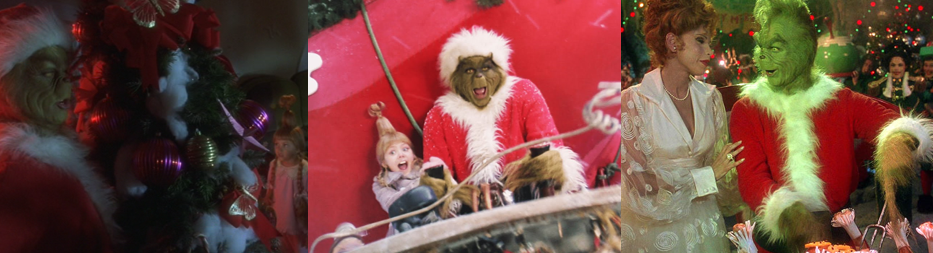
Enraged at the Who’s relentless Christmas spirit, the Grinch fashions himself a Santa suit, builds a flying sleigh, and forces Max to act as his Rudolph as he sneaks into town on Christmas Eve to steal everyone’s Christmas presents (and all their Christmas paraphernalia) in scenes that directly adapt the animated feature. Swiping every gift using a giant hose and stuffing them into a magical, oversized bag, the Grinch leaves no stone unturned: he forces Mayor May Who to kiss Max’s butt and even steals from Martha May. However, while ransacking the Lou Who’s house, the Grinch is once again met by Cindy Lou. Naturally, she doesn’t recognise him due to his “convincing” disguise and is disappointed when “Santa” reinforces the belief that Christmas is all about presents. The Grinch keeps up the charade to avoid being discovered, sending Cindy Lou to bed and swiping her tree before hefting his haul back to Mount Crumpit to toss it all over the edge. While Mayor May Who is enraged to discover what’s happened and blames Cindy Lou for inviting the Grinch into town, he’s shut down by Lou, who finally finds his backbone, sticks up for his daughter, and relates the true meaning of Christmas: family. Galvanised by his words, the Whos join hands and sing (“Welcome Christmas”) and even the Grinch is touched by their spirit, finally understanding the true meaning of Christmas and finding his heart enlarged by their cheer. Immediately remorseful, he attempts to save the town’s gifts but is only able to summon the strength when Cindy Lou appears on the sleigh and is endangered. With the gifts secure and Cindy Lou safe, the Grinch speeds down the mountain to return what he stole and admits his wrongdoings, prepared to be punished for his crimes. While Mayor May Who encourages Officer Lihan Who (Jim Meskimen) to arrest the Grinch, the cop and the town are only too happy to forgive and forget since the Grinch not only apologised but returned everything he stole. To make matters worse for the greedy mayor, Martha May rejects his engagement in favour of the Grinch and the once monstrous figure enjoys his first Christmas with the Whos, hosting the season at his cave and carving the Roast Beast alongside Cindy Lou, his heart having finally grown large enough to allow love and warmth into his life.

The Summary:
There’s no doubt that Dr. Seuss’ How the Grinch Stole Christmas is a Christmas classic. It has a lot of fans and I can understand its appeal, but I just find it to be far too long. The movie loses a lot of momentum after the first hour and it becomes painfully obvious that the movie is struggling to expand the source material into a feature-length production. I’m honestly surprised it didn’t lean more into being a colourful, Christmas musical; at least some more musical numbers would’ve kept the energy up. Instead, it relies entirely on Jim Carrey’s madcap, comedic antics to sustain it and, while these are amazing and the best parts of the film, it’s not enough to keep me from descending into boredom as the film limps along to the finale, the only part that’s even remotely like the source material. Thankfully, Jim Carrey gives a magnetic and inspired performance here; despite being completely unrecognisable under the make-up, his personality and energy shine through and it’s clear he put everything he had into bringing the miserable monster to life. Everything from his theatrical delivery, his over-the-top performance, and his exaggerated motions make the Grinch an amusing and instantly memorable character and he’s responsible for the best lines and moments in the film. I loved seeing him stewing on Mount Crumpit, him arguing with his insecurities and causing mischief in town, and his fully justified rampages when he’s humiliated by May Who. Everyone seems to be channelling that stage show energy, to be fair, leaning into the ridiculousness and embracing the quirky nature of their appearances and rhyming patterns. The whole film has a colourful, unique visual appeal that make it almost dream-like and I enjoyed those aspects, even if the environment did feel a bit cheap at times. However, because of the sheer amount of needless padding, you can easily just watch a montage of Carrey’s performance and skip to the final act, where the film finally adapts the source material and the Grinch steals Christmas. Everything else feels bogs down the runtime and really makes Dr. Seuss’ How the Grinch Stole Christmas a chore to watch, at least for me, meaning it’s not one of my favourite Christmas movies.

My Rating:

Rating: 3 out of 5.

Pretty Good

Are you mad that I’m so critical of Dr. Seuss’ How the Grinch Stole Christmas? Do you regularly watch it for the Christmas season? How do you think it compares to the book and other adaptations? Did you enjoy the additional lore added to the Grinch or did you also find it unnecessary? What did you think to Jim Carrey’s performance? Are you a bit of a Grinch around this time of year? What Christmas movies and specials are you watching this year? Whatever your thoughts on Dr. Seuss’ How the Grinch Stole Christmas, leave them in the comments and go check out my other Christmas content across the site.  

Screen Time [Christmas Countdown]: How the Grinch Stole Christmas! 

Air Date: 18 December 1966
Director: Chuck Jones and Ben Washam
Original Network: CBS
Budget: $315,000
Stars: Boris Karloff, June Foray, Dallas McKennon, Thurl Ravenscroft, and the MGM Studio Chorus 

The Background: 
In 1955, children’s author and poet Theodor Seuss Geisel (known by his pen name as “Dr. Seuss”) wrote and illustrated a 33-line poem titled “The Hoobub and the Grinch”, which was the catalyst for a more expansive piece of work focusing on the mean-spirited Grinch. Inspired by himself, his wife’s ongoing medical problems, and the rampant commercialisation of Christmas, the story was completed within weeks and reportedly received critical acclaim, with the titular character becoming an instant and surprisingly complex Christmas icon. After collaborating on animated ventures during the Second World War, Dr. Seuss and legendary cartoon director Chuck Jones reunited (despite Dr. Seuss’s initial apprehension) to adapt the story into a television special. Jones insisted on complete creative control and expanded on the original story to flesh out characters like Cindy Lou Who (Foray) and Max (McKennon) and inserting musical numbers to pad the runtime. Though released amidst a slew of other animated Christmas specials, How the Grinch Stole Christmas! impressed when first broadcast; over the years, it has become a universally loved Christmas classic, with the cartoon noted as a timeless, heart-warming festive tale. It was so successful that it inspired follow-up cartoons years later, two financially successful cinematic remakes (one a Jim Carrey showcase and the other an all-CGI throwback) and even a bizarre slasher film in 2022, to say nothing of a slew of other Dr. Seuss adaptations over the years. 

The Plot:
The monstrous Grinch (Karloff) hates Christmas with a passion. When the joyful holiday cheer of Whoville (The MGM Studio Chorus) becomes too much for him, the Grinch disguises himself as Santa Claus and sets out to ruin Christmas by stealing the town’s presents! 

The Review: 
The cartoon is set in Who-ville, on Christmas Eve, where the joyful and excited Whos are happily preparing for the big day by decorating the biggest Christmas tree they can find and displaying it proudly in the centre of their village (“Opening”). They’re also hard at work decorating their houses, and the entire village, with tinsel, wreaths, garlands, baubles, and Christmas joy galore (“Trim Up the Tree”) which, in conjunction with the heavy snowfall, quickly turns Who-ville into the most festive place around…maybe ever! However, while all of Who-ville likes Christmas a lot, the sour Grinch, who lives atop the desolate and foreboding Mount Crumpit, does not. Although the narrator (Karloff) informs us that “no one quite knows the reason” why the Grinch hates Christmas so vehemently, it’s speculated to be because his heart is “two sizes too small” and his hatred extends to the entirety of Who-ville. He glares from his cave, joined only by his faithful dog, Max, the only living creature the Grinch shows any remote affection for. The Grinch tells Max that he’s desperate to keep the Whos from making a racket with their Christmas joy and presents, even their sumptuous banquets, where they gorge themselves on a seemingly endless supply of food, and their insistence of gathering in the village to sing and ring bells (“Welcome Christmas”). After fifty-three years of Who nonsense, the Grinch has reached his limit; the Grinch is inspired by a snow-caked Max to assume the guise of jolly ol’ Saint Nic and storms into his cave (dragging Max along) to whip up a suitable outfit (“You’re a Mean One, Mr. Grinch”). Once complete, the Grinch forces Max to act as his reindeer, loads up a “ramshackle sleigh” with some black sacks, and sneaks into Who-ville in the dead of night while all the Whos are tucked up in bed, oblivious, easily clambering into their houses via the chimneys and stealing every present under each tree with glee!  

After stealing Christmas, the miserly Grinch has a change of heart regarding the festive season.

Emboldened by his wickedness, the Grinch does this for every house, wrecking their trees, pinching their Christmas stars, rolling up their gifts in rugs, and even stealing candy canes from sleeping Who children and clearing out their “ice boxes” (“You’re a Mean One, Mr. Grinch (Reprise)”). However, just as he’s stuffing a Christmas tree up a chimney, he’s discovered by sweet, innocent, Cindy Lou Who; to pacify the child, the Grinch quickly thinks up a lie, convincing Cindy Lou that he’s going to fix a fault with the tree’s lights. After placating her with milk and a cookie, the Grinch leaves the house barren and ransacked, with barely a microscopic crumb left behind. Once he’s cleared out all of Who-ville and piled his sleigh high with his stolen wares, including the village tree, he heads back up Mt. Crumpit, with poor Max desperately pulling the overloaded sleigh through the snow while being mercilessly whipped. Once at the top, the Grinch prepares to dump everything over the side (“A Quarter of Dawn”), gleefully anticipating the despair of the Whos once they realise Christmas isn’t coming this year. However, when the Grinch pauses to bask in their anguish, he’s surprised to find the Whos’ spirits remain as high as ever! They gather in the village, joining hands and ringing in the season with their bells and song (“Welcome Christmas (Reprise)”), their hearts as warm and large and full of Christmas cheer even without the presents and decorations. Considering the Grinch believes that Christmas is purely about the gifts and excess, he’s confused by this but, as he puzzles out the quandary, he realises that “Christmas” is about more than just things bought from shops. This revelation drives him to save his plunder from their plummet, empowered by the sudden increase in his heart size and the true spirit of Christmas. Now cheerful and joyous, the Grinch and Max ride into Who-ville and return everything they stole, restoring Christmas to the village and even joining them for Christmas dinner, carving the roast beast and allowing the spirit of the season to fill him from head to toe (“Finale”). 

The Summary:
It might surprise you to know that I’m not really a fan of Dr. Seuss. I didn’t grow up reading his bizarre stories, nor was How the Grinch Stole Christmas! part of my annual Christmas tradition. In fact, I don’t think I’ve ever seen it broadcast on television here in the United Kingdom, so my experience with the good doctor and his colourful characters is limited solely to their later live-action and CGI adaptations. All this is to say that it wasn’t until Christmas 2023 that I randomly decided to finally give this a quick watch and share my thoughts on it since it’s such a well-known and beloved holiday tale and children’s story. Unsurprisingly, given who directed it, How the Grinch Stole Christmas! is suitably Chuck Jones-ian in its animation style; there’s a raw fluidity to the cartoon, meaning you can tell that countless hours of work went into animating every frame, and the characters and their environments are ripped straight from Dr. Seuss’ famous work, literally bringing the static images to life in all their sketchy glory. As you’re probably aware, it’s also a musical, with its songs (particularly Ravenscroft’s rendition of “You’re a Mean One, Mr. Grinch”) becoming as synonymous with the festive season as the titular miserly creature and being revised and covered not just for future adaptations of the story, but to coincide with the season. The story is a whimsical and timeless ditty, full of enjoyable little rhymes and colourful, memorable, oddball characters; the Whos are strange, furry humanoids who embody Christmas cheer and happiness and their town, though small and buried in snow, is a place of light and love where the Whos live peacefully and with lots of food and comfy houses to keep them snug and warm. 

A whimsical fantasy tale with a timeless, heart-warming message.

Naturally, this is juxtaposed by the Grinch; a green-furred, sour-faced gremlin, the Grinch despises the Whos, and Christmas, and has glared at their village with anger, enraged by their noise and excess, every December for the last fifty-five years! Although no definitive reason is given for his dislike for Christmas, it basically comes down to him lacking in Christmas cheer, misunderstanding the meaning of Christmas, and feeling conflicting waves of jealous, disgust, and personal insult since he’s not part of any of the Whos’ celebrations. Believing that the Whos will sing a different tune if all their Christmas possessions are stolen, the Grinch slinks around like a snake, swiping everything he can get his hands on (even lightbulbs and ice cubes!), and easily fooling curious Cindy Lou with his forked tongue. However, the sight and sounds of the Whos retaining their Christmas spirit even without possessions is enough to change the Grinch’s demeanour completely; this is a fundamental lesson of many Christmas tales and it’s shown in beautifully simplistic detail here. The Grinch never considered that Christmas was as much a state of mind as it was about food, decorations, and extravagance, and the love and warmth of this revelation lightens his mood and turns him around on the season completely. It’s simple and much of the depth is buried beneath the whimsical songs and cartoonish fantasy, but it resonates nonetheless and is an important lesson for kids to learn (basically, be grateful for what you have and don’t just think about presents!) While I’m not always Dr. Seuss’ biggest fan, I enjoy the visual and thematic appeal of the Grinch and his heartwarming story, and this fun little animated short is a great addition to your Christmas viewing every December, 

My Rating:

Rating: 3 out of 5.

Pretty Good

Is How the Grinch Stole Christmas! an annual tradition for your Christmas? Have you read the original story and, if so, what do you think to its different adaptations? Are you a fan of the Grinch character and the colourful, bizarre Whos? Why do you think the Grinch hated Christmas so much? Are you a bit of a Grinch around this time of year? What Christmas movies and specials are you watching this year? Whatever your thoughts on How the Grinch Stole Christmas!, leave them in the comments or on my social media and go check out my other Christmas content across the site.