
Released: 27 April 2018
Director: Anthony Russo and Joe Russo
Distributor: Walt Disney Studios Motion Pictures
Budget: $325 to 400 million
Stars: Josh Brolin, Robert Downey Jr., Chris Evans, Chris Hemsworth, Mark Ruffalo, Chris Pratt, Scarlett Johansson, Benedict Cumberbatch, Tom Holland, Chadwick Boseman, Paul Bettany, Elizabeth Olsen, and Zoe Saldaña
The Plot:
Thanos (Brolin) carves a path of self-righteous destruction across the universe in search of six all-powerful cosmic gems that will allow him to erase half of all sentient life with a snap of his fingers. Though fractured from recent events, the Avengers scramble to oppose the Mad Titan’s plot, and join forces with the Guardians of the Galaxy to seek out and protect the remining Infinity Stones and acquire the means to combat Thanos and his vast army.
The Background:
“There was an idea […] to bring together a group of remarkable people to see if they could become something more. To see if they could work together when we needed them to, to fight the battles that we never could”. For decades, superhero films existed in self-contained bubbles; sure, there would be sly hints towards other heroes, but costumed avengers primarily fought alone on the big screen. That all changed with Iron Man (Favreau, 2008), the first tentative step towards the largest interconnected series of movies ever created, but the unprecedented success of Avengers Assemble/The Avengers (Whedon, 2012) saw the MCU make massive strides towards becoming an unstoppable multimedia juggernaut. After success with characters both known and obscure, the MCU’s flagship characters came together once more; although Avengers: Age of Ultron (ibid, 2015) saw writer/director Joss Wheden part ways with the studio and critical reception was mixed compared to the first film, Age of Ultron still grossed $1,404 billion at the box office and Marvel pushed forward with their biggest venture yet, a two-part Avengers film shot back-to-back by established MCU directors Anthony and Joe Russo. Although Whedon initially had no plans for Thanos when he included the Mad Titan in a post-credits scene at the end of Avengers Assemble, Marvel head honcho Kevin Feige quickly began planting the seeds for Thanos’s quest for the mysterious Infinity Stones throughout the MCU for this massive production, which drew significant inspiration from the memorable Infinity Gauntlet (Starlin, et al, 1991) and Infinity (Hickman, et al, 2013) stories.
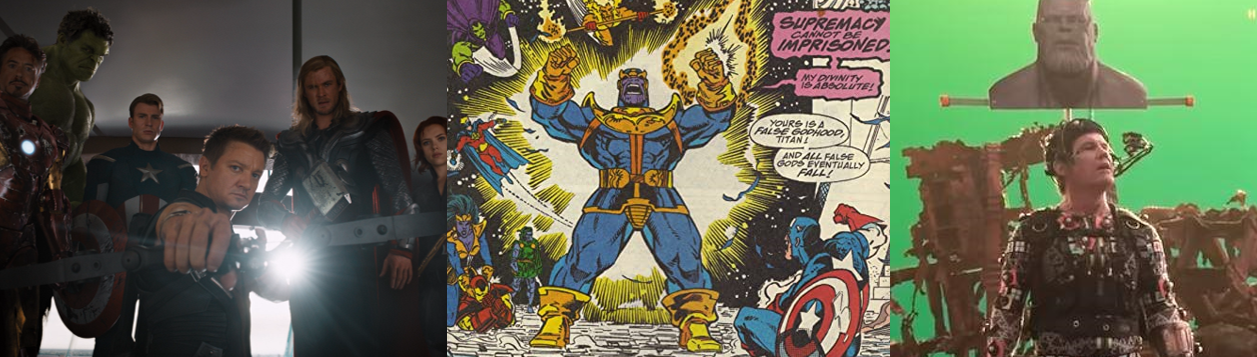
After explaining away a blink-and-miss it inconsistency regarding the all-power Infinity Gauntlet, writers Christopher Markus and Stephen McFeely set to work deciding which characters they would use, in which combinations, and gearing the first movie towards a series of unique interactions and set pieces. The Russos worked closely with other MCU directors, like James Gunn, to ensure that the tone and characterisation of the individual films could be retained, although characters from the popular Netflix shows unfortunately did not appear in the massive line-up. Central to the film was, of course, Thanos himself; though his obsession with Lady Death was removed from his motivation, Thanos was cast as the hero of the film and brought to life as a complex digital character thanks to the work of Digital Domain. Featuring nearly every character in the MCU and spanning the galaxy, Avengers: Infinity War boasted over 253 shots from animation studio Framestore alone, to say nothing of 200 digital shots of Thanos produced by Weta Digital, and over 3000 overall digital shots from a variety of studios to bring to life the Russo’s ambitious and complex plan for the unprecedented team-up. Avengers: Infinity War was the very definition of hype, with the first trailer alone becoming the most viewed trailer of the time; this, naturally, translated into astronomical financial success as the film made nearly $2.050 billion at the box office and became the fourth-highest-grossing film of all time. Reviews gushed over the film’s perfect balance between drama, action, and humour, the characterisation of Thanos, and the sudden gut-punch of its ending. After a year of agonising hype, speculation, and anticipation, the story continued in Avengers: Endgame (Russo and Russo, 2019), which was actually more critically and commercially successful and the MCU continued on into its fourth phase with more momentum than ever before.
The Review:
If you’d told me all those years ago when Tony Stark/Iron Man (Downey Jr.) graduated from a C-list Marvel hero to the face of the largest, most successful superhero franchise ever conceived, that we’d see him not only team up with some of Marvel’s most iconic superheroes but also end up rocketing into space to fight alongside obscure characters like the Guardians of the Galaxy and punching a massive purple alien in the face to safeguard half of all sentient life from the misuse of six cosmic space gems…well, I would’ve called you mad. Superhero films just didn’t do this sort of thing; they were always “grounded”, based in some kind of reality, even when they dealt with cosmic subject matter. And they never, ever interconnected. The closest we ever got were some sly references, or teams of characters who already existed together, but we never got to see an interconnected universe like in the comics. And, quite frankly, I couldn’t be happier. Go and pick up The Amazing Spider-Man Annual #1 (Lee, et al, 1964) and see how many gratuitous cameos are wedged into the Sinister Six’s first appearance alone! Marvel, DC, hell almost every comic publisher has a shared universe of heroes and, as much as I’ve enjoyed the solo superhero movie efforts of the last forty-odd years of my life, I couldn’t be happier that the MCU actually has the balls, and the skill, to pull of such a vast, interconnected series of movies that is both respectful of the source material rather than ashamed by it and offers a fresh, new take on these beloved characters.
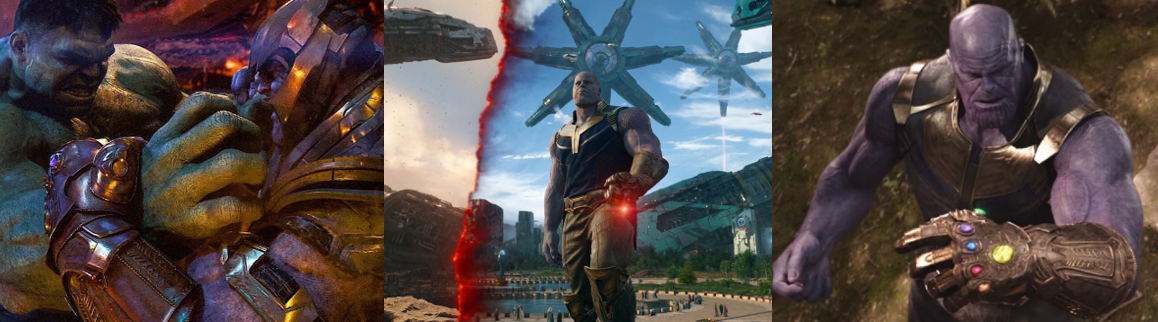
However, with all that said, Avengers: Infinity War isn’t about Iron Man; it’s not the story of the titular Avengers, or a celebration of Earth’s Mightiest Heroes coming together to oppose a maniacal despot. No, this is the story of Thanos, the hulking, conquering Mad Titan himself. Previously cameoing at the end of the last two Avengers films, and popping up in Guardians of the Galaxy (Gunn, 2014), Thanos was more of an ominous, looming force throughout the galaxy. Unless you’d read the comics, you probably had no idea why he was such a big deal but Infinity War establishes his threat immediately by having him ransack the Statesman alongside his “children”, the Black Order, in search of the Space Stone. In the build up to this film, I always assumed Thanos would be introduced by slaughtering Odin Allfather (Anthony Hopkins); after all, what better way to establish the biggest bad in the MCU than having him kill an actual God? However, since Odin is already dead, Infinity War establishes Thanos’s power by having him already be in possession of not only the Infinity Gauntlet, but also the Power Stone, having sacked Xandar off-screen. Thanos then has his henchman kill half of the remaining Asgardians, puts a sound beating on Doctor Bruce Banner/The Hulk (Ruffalo), and chokes the life out of beloved anti-hero Loki Laufeyson (Tom Hiddleston). Unlike in the comics, were Thanos was driven by a desperate desire to win the affection of Mistress Death, the MCU Thanos has a twisted take on the destructive and wasteful nature of the universe; since his warnings failed to save his home world, Thanos made it his life’s mission to purge half of all life on every world so that billions more will be saved in the long run. After realising that the six Infinity Stones can make his dreams come true with a literal snap of his fingers, Thanos sets his minions out into the cosmos to acquire them while he tracks down his adopted daughter, Gamora (Saldaña), the only person who knows the location of the Soul Stone.
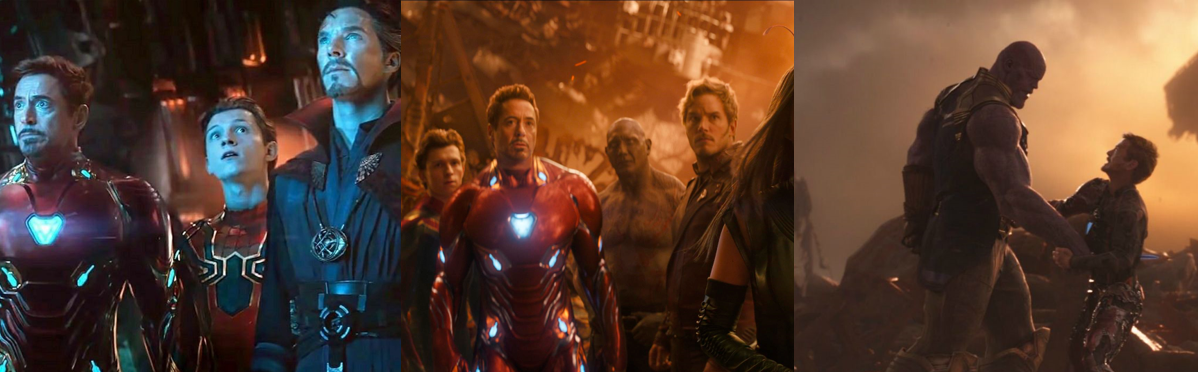
Since Thanos brings death in his wake, the arrival of his minions, Ebony Maw (Tom Vaughan-Lawlor) and Cull Obsidian (Terry Notary), on Earth naturally causes quite a stir. Forewarned of Thanos’s impending arrival by the shellshocked Banner, Doctor Steven Strange (Cumberbatch) and Wong (Benedict Wong) quickly recruit Stark to help them prepare a defence. Despite having retired (…again…) from the superhero life and ready to start a family with Virginia “Pepper” Potts (Gwyneth Paltrow) Stark doesn’t hesitate to show off his brand new nanotech armour and stand against the alien invaders, though his arrogance and recklessness causes him to quickly butt heads with Dr. Strange. Still in possession of the Time Stone, housed within the Eye of Agamotto, Dr. Strange is as focused on the big picture as Thanos, in many ways; while Stark wants to commandeer the alien spacecraft and bring the fight to Thanos in a pre-emptive strike, Dr. Strange is more concerned with keeping the Time Stone from being misused and, despite his Hippocratic Oath, is fully prepared to let Stark and even Peter Parker/Spider-Man (Holland) die if it means protecting the greater good from the Time Stone. Having sensed the Black Order’s arrival, Spider-Man jumps in to help with his usual blend of heroism, enthusiasm, and desire to impress his mentor, but soon ends up blasting through the cosmos in an alien vessel and garbed in his “Iron Spider” outfit. Although Stark is pissed that Spidey tagged along for the ride, he dubs him an Avenger (much to Peter’s immense pride) and prepares his make-shift allies for the coming battle. While Dr. Strange is right that Stark is bolstered by his overinflated ego and sense of superiority, Stark’s reasoning for wanting to confront Thanos is fully understandable considering that he’s been taking the direct (if reckless) approach ever since he escaped from that cave. Traumatised by his brief glimpse of the vast danger that awaits in the universe, Stark wishes to protect the world in a suit of armour and has constantly been working to find ways to prepare the planet for greater threats. His methods, however, have been highly questionable; not only did they lead to the creation of Ultron (James Spader), but his willingness to sign the Sokovia Accords directly led to the disassembling of the Avengers right when they’re needed the most, and yet he’s determined to power through and to prove he was right by ending Thanos’s threat before it can begin.
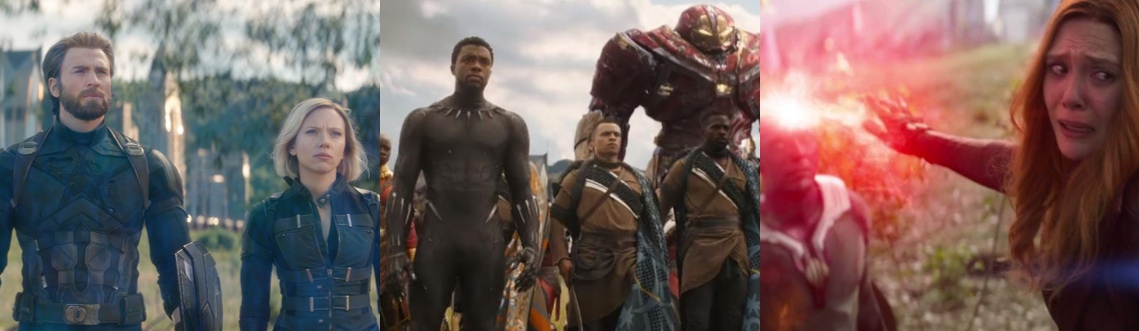
Since the Avengers are splintered, Steve Rogers/Captain America (Evans) has been on the run; having grown out a delicious beard and donning a modified version of his famous suit, one that casts him more as a nomad than a representative of the United States or Earth’s Mightiest Heroes, Steve and Natasha Romanoff/Black Widow (Johansson) have been forced off the grid to avoid being arrested by Senator Thaddeus “Thunderbolt” Ross (William Hurt) for opposing the Accords. His main concern at the start of the film is locating Wanda Maximoff (Olsen) and the Vision (Bettany), who took off for some alone time and ended up being viciously attacked by Proxima Midnight (Carrie Coon) and Corvus Glaive (Michael James Shaw) of the Black Order; since the Vision has the Mind Stone imbedded in his forehead, he receives the brunt of the attack and is left in critical condition, leaving Steve no choice but to take him to Wakanda so that Shuri (Letitia Wright) can help separate him from the stone. There, they’re reunited with T’Challa/Black Panther (Boseman) and James Buchanan “Bucky” Barnes/The Winter Soldier (Sebastian Stan), who offer them safe refuge and some much-needed allies for the coming battle. Thanks to Wakanda’s advanced technology, the heroes are effectively shielded from Thanos’s army, but his alien monstrosities are relentless and think nothing of tearing through the energy shield even as it shreds them to pieces, forcing Cap to lead a battle into war once more. Despite being on bad terms with Stark, Cap’s dedication to his friends and the safety of the world remains his top priority; he’s largely clueless to the magnitude of the greater threat at hand, and yet doesn’t hesitate to oppose Thanos when he comes to claim the remaining Infinity Stones, literally throwing himself in front of his friends to try and buy them time. Sadly, it’s Wanda who suffers the most; despite Shuri’s best efforts, the heroes run out of time and Wanda’s forced to use her unmatched powers, born from the Reality Stone, to destroy her lover to keep the Mind Stone out of Thanos’s hands…only for the Mad Titan to turn back time, wrench it from the Vision’s head, and force Wanda to see her beloved rendered inert before her eyes.
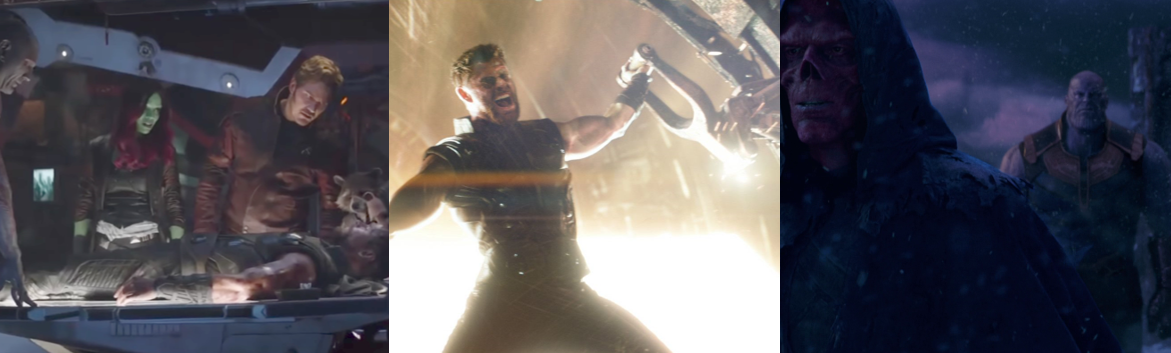
Thanos is able to accomplish this goal despite the best efforts of the MCU’s greatest heroes thanks to an ill-timed emotional outburst from Peter Quill/Star-Lord (Pratt). Touring the galaxy alongside his friends and fellow Guardians, Gamora, Drax the Destroyer (Dave Bautista), Rocket Raccoon (Bradley Cooper), Groot (Vin Diesel), and Mantis (Pom Klementieff), Quill’s masculinity is tested when the group stumble upon the beaten body of Thor Odinson (Hemsworth) out in the endless void. Already traumatised after the death of his father and the destruction of his home world, Thor buries his grief and anguish beneath a determination to re-arm himself with a Thanos-killing weapon courtesy of weaponsmith Eitri (Peter Dinklage) at Nidavellir, a titanic forge orbiting a dying star. After furnishing him with an artificial eye, Rocket tries to console Thor, whose losses have been absolutely devastating, but, though the God of Thunder brushes off any concerns for his welfare with his usual bravado and is determined to kill Thanos as recompense for his actions, it’s clear that Thor is wracked by denial and despair at the loss of his brother and people. He finds new allies with the Guardians, despite Peter feeling threatened by him, and Rocket and Groot help him to reignite Nidavellir’s forge to craft his new weapon, Stormbreaker, a mighty axe capable of summoning the Bifrost and unbound by Odin’s enchantment. Meanwhile, Gamora, shaken by how close her adopted father is to completing his life’s goal, begs Peter to kill her if it comes to it to keep the Soul Stone out of Thanos’s hands. Although he’s reluctant, he actually shows a willingness to go through with this, only to be thwarted when Thanos manipulates reality in his favour. Gamora’s repeated attempts to kill herself and defy Thanos are similarly deflected by the Mad Titan, who forces her to divulge her knowledge to spare her sister, Nebula (Karen Gillan), from a macabre torture. This sees Gamora accompany Thanos to Vormir, where the ethereal presence of “The Stonekeeper” (Johann Schmidt/The Red Skull (Ross Marquand) making a much-welcome return to the MCU) details that the stone can only be claimed if one sacrifices someone they love. While Gamora is initially amused by this, believing Thanos is too twisted to ever love anything, she (and audiences everywhere) is soon aghast to find that Thanos truly did love his adopted daughter, and thus he casts her to her death on the rocks below to get one step closer to achieving his goal. The knowledge of her lover’s death drives Peter into a rage, ruining the carefully laid out plan he and the others concocted to subdue Thanos with a multi-stage attack and Mantis’s sleep-inducing abilities. However, while many may rage at Peter for being so stupid and costing them their best chance at removing Thanos from the source of his power, his outburst is fully understandable given how deeply he cared for Gamora, and ultimately plays into his overall characterisation as a flawed human being rather than some infallible hero.
The Nitty-Gritty:
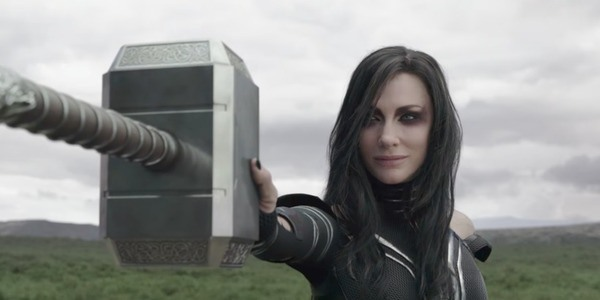
Since Avengers: Infinity War features so many characters, you might think that some are more developed than others, but that’s not really the case here. Thanks to the core cast featuring in their own movies and team ups prior to this, Infinity War easily jumps right into the central conflict without having to worry too much about establishing origins or motivations. While this is great for long-time followers of the MCU, newcomers might be a bit bewildered but if this was your first MCU film then that’s really on you more than anything else. While not every character gets a significant sub-plot or side mission, they still find some way to make an impression, even it’s something as simple as being funny or having an action scene. Despite having his own vendetta against Thanos, Drax is basically a non-factor in the entire proceedings; his one attempt to kill the murderer of his family leaves him crippled by the power of the Reality Stone, but he makes up for this with some hilarious moments such as his attempts to be “invisible” and his ridiculous “Why is Gamora?!” line. As ever with an MCU production, it’s the little things that make the most impression; things like Spider-Man not being able to remember everyone’s names, Star-Lord flipping Thanos the bird, and Eitri and Thor’s “Only if I die” exchange are great moments of levity and characterisation, especially in a film where the stakes are so high. The Russos do a fantastic job of recreating the look and feel of each separate character and franchise so it all feels seamless. While some seemed confused as to why Thor needed to create a new weapon after harnessing his lightening powers in Thor: Ragnarok (Waititi, 2017), the point is to have something tangible to focus his energies through, to craft a weapon specifically to negate the Infinity Stones and kill Thanos, and to give Thor a goal to work towards so he can feel useful and not give in to his utter despair. On the flip side, it’s true that we never really get (or got) much time to invest in the Wanda/Vision romance; their connection is undoubtable and a pivotal part of the film, but we very much pick up with them trying to figure it out rather than discovering it.
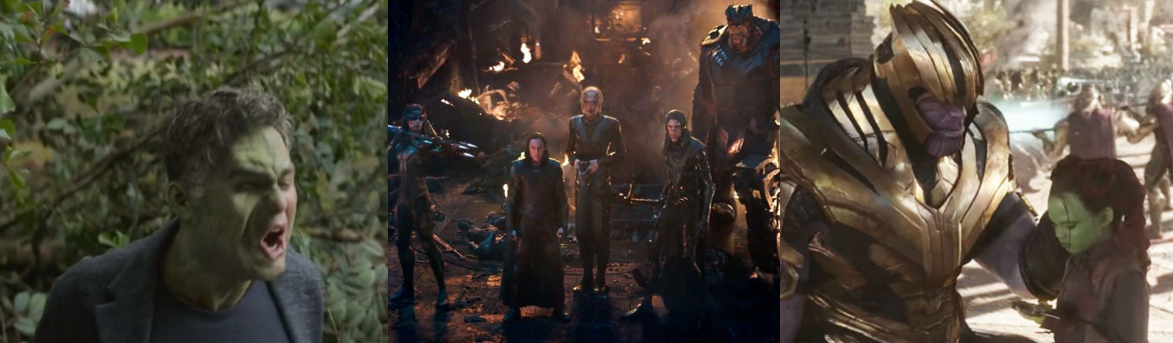
Similarly, there’s a sub-plot regarding the Hulk’s refusal to emerge after his thrashing at Thanos’s hands; while this is amusingly played as an allegory for sexual performance, it’s never actually stated why Hulk won’t come out. It’s assumed that he’s scared and humbled, but we’re told (outside of the movies, so it doesn’t really count) that the Hulk was just sick of fighting Banner’s battles. Personally, I do feel the excised scenes of the Hulk bursting from the Hulkbuster armour would’ve only added to the action-packed finale (and I would’ve loved if he’d been the Grey Hulk as well), so Hulk fans might be a little disappointed by how small a role the Jade Giant plays in the proceedings. Additionally, we really don’t learn anything about the Black Order except their absolutely loyal to Thanos and pretty sadistic villains in their own right; introduced and offed over the course of this film, the foursome is really only here to act as Thanos’s proxies, and I still think it would’ve been cool if guys like Ronan the Accuser (Lee Pace) and even Loki had filled these roles. Still, it’s honestly nothing short of a miracle that Infinity War manages to juggle all its characters and interweaving plot lines so well; I’ve seen team-based movies that have struggled with less than half the amount of content of this film, though it helps that the MCU has a competent plan, enthusiastic directors and actors, and so many films behind it to lay all the foundations. Some characters are notable in their absence, like Clint Barton/Hawkeye (Jeremy Renner) and Scott Lang/Ant-Man (Paul Rudd), but these characters got their due in the follow-up so it all works out. Infinity War had easily the highest stakes of any MCU film at the time, with the fate of literally half the universe in the balance, and the whole film is framed as a frantic chase to prepare for, and stop, Thanos from reaching his goal. Fittingly, we do learn quite a bit about Thanos; easily the most complex and layered villain in the entire MCU at that point, Thanos believes himself the hero of the story. He longs to save billions of lives and to balance the universe through the culling of millions and is more than willing to kill anyone who stands in the way of that goal, but also shows respect, compassion, and genuine affection for both his foes and his adopted family. Through Thanos, we also learn a bit more about Gamora and Nebula’s chaotic and violent upbringing, and the film definitely goes out of its way to present Thanos as both a maniacal despot bent on genocide and a reasonable, well-meaning individual who actually has some solid arguments…even if he goes about enacting his plot in the most diabolical way imaginable.
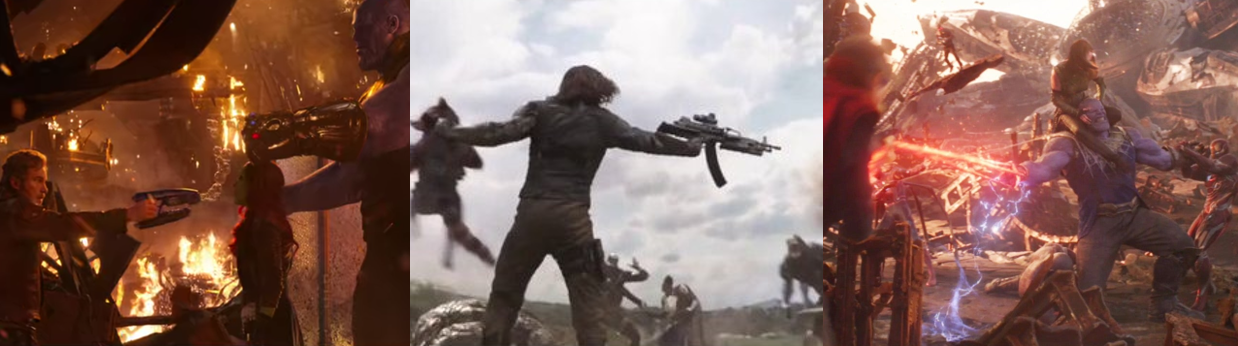
The scope of Avengers: Infinity War is simply off the charts. The narrative is constantly jumping between the outer reaches of space and here on Earth, and characters travel to several different, visually interesting worlds and locations during the course of the film. Many of these are established places in the MCU, like Wakanda and Knowhere, but even these locations are given a new perspective thanks to Thanos’s influence; the sight of his monstrosities tearing across the Wakandan plains makes for one hell of an epic shot and fight sequence with a grander scale than anything we’d seen in the MCU up to that point. Indeed, the CGI and visual effects are fantastic all throughout Infinity War, with Thanos being the obvious standout. A fully realised, flesh and blood character, his creation is so intricate that you’d barely even realise he was a computer creation so detailed are his physical quirks and emotive qualities. While the CGI on Iron Man’s nanosuit is a little spotty, and Spider-Man’s mask vanishes a little too smoothly for me, all the visual effects are undeniably top-notch on both characters, and it’s frankly astounding that everything looks and feels like it’s actually real despite how much of it is all digitally created. Thanks to the Reality Stone, Thanos is free to bend reality and physics to his will, reducing Drax and Mantis to cubes and ribbons with a thought, leaving Taneleer Tivan/The Collector’s (Benicio del Toro) museum a flaming shambles, and even projecting a lush, verdant recreation of Titan to parallel the desolate wasteland it has become since his people ignored his warnings. This sets the stage for the climatic battle between Thanos and Iron Man’s makeshift team, in which Dr. Strange puzzles the Mad Titan with his incantations and the maniacal despot implodes a moon and curls its fragments at his foes! There’s so much happening in each of these battles that you can spot new things every time you watch the film, and every character gets a little something to do, whether it’s Spidey frantically webbing up his new friends as they’re tossed about, Bucky spinning Rocket around so they can blast at Thanos’s creatures, or Colonel James “Rhodey” Rhodes/War Machine (Don Cheadle) carpet bombing the invading army around the Wakandan perimeter.
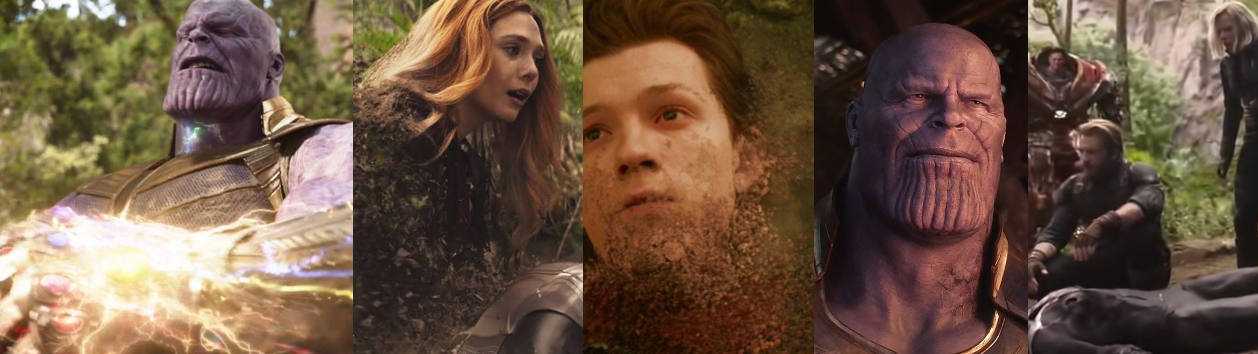
Obviously, the thing that separates Infinity War from the rest of the MCU (and most comic book movies) is the fact that the villain actually wins in the end. Stark and the others were able to keep him off balance long enough to largely avoid him using the Infinity Gauntlet, but Star-Lord’s outburst costs them the chance to get the gauntlet off him and results in the team being soundly defeated. Skewered and left gravely wounded, Iron Man is unable to keep Dr. Strange from bargaining for their lives with the Time Stone; while it seems as though this goes against his earlier declaration to sacrifice them in favour of the stone, it’s actually all part of a larger endgame as Dr. Strange had looked into the future and found only one outcome where the heroes were victorious out of billions of possible scenarios, and that outcome was predicated on Thanos being victorious. Thus, armed with the collective powers of Reality, Time, Power, Space, and Soul, Thanos is easily able to teleport to Wakanda, swat aside Cap’s fledgling opposition, and tear the final Infinity Stone from the Vision’s head. Thankfully, Thor is on hand to enact his revenge, driving Stormbreaker right into Thanos’s chest and seemingly saving the day but, sadly, he didn’t go for the head and, just like in the comics, Thanos snaps his fingers and the worst possible scenario plays out before our eyes. All noise, whether ambient or otherwise, is sucked from the film and we’re forced to watch as these iconic characters literally turn to dust before our very eyes! Bucky, Groot (hell, all of the Guardians except Rocket and Nebula!), Sam Wilson/The Falcon (Anthony Mackie), and even Black Panther disintegrate into nothingness but easily the most harrowing loss is that of the young Spider-Man. Clinging to his existence with a tenacious desperation, he fades away in the arms of his stunned mentor, and Stark is left hurt and injured with the weight of his monumental failure. Similarly, those left alive are barely able to comprehend the scope of what has happened and end the film in a dazed confusion, the realisation that they have lost (and lost badly) just sinking in. Even now, many years removed, this remains a haunting and deeply impactful ending; never before had the MCU witnessed such instant and total failure and the shock of seeing some of its most iconic characters simply sniffed out with but a thought remains a disturbing visual to end on. As for our “hero”, Thanos makes good on his promise to retire following his victory, happy in the knowledge that the universe will be better off with half its population dead, and unaware that a small glimmer of hope for those left has been signalled to assist.
The Summary:
As someone who had waited his entire life to see a group superheroes finally come together in one movie, to share an interconnected universe just like in the comics, and to interact with each other in unique and fun ways, I was super excited for Avengers Assemble. I remember watching the MCU unfold back in the day and still not quite being able to believe that this was actually happening, and then being blown away when it actually did and the MCU exploded into a massive success. Now, take all that and multiply it by a hundred and you have Avengers: Infinity War! Not once would I have ever guessed that we’d see Thanos, or an adaptation of The Infinity Gauntlet, make it to cinema screens. Hell, I was surprised the Avengers came together to fight Loki and the Chitauri rather than a gaggle of their solo villains, and the idea of this tyrannical dictator carving a path of destruction throughout the universe (not just Earth), besting the MCU’s strongest characters and even succeeding in his diabolical goal was just unprecedented. And even if I could have guessed that we’d see that, I never would have imagined that such a villain would be presented as a complex and, yes, relatable character. Even setting aside the MCU’s “villain problem”, it really wasn’t the normal thing to frame a superhero film’s bad guy as the lead character, one with lofty dreams and understandable motivations, especially one created entirely out of CGI! The idea was laughable, but damn…Marvel Studios did it; and not only did they do it, but they absolutely smashed it! Avengers: Infinity War was a near-perfect culmination of the MCU’s long ten-year journey. All those solo films, team ups, the risks taken on obscure characters all paid off in the biggest superhero crossover ever conceived at the time. An astonishing blend of action, humour, heart, and visual effects flawlessly captured the look, feel, atmosphere, and characterisations of these different franchises and they all felt perfectly at home co-existing in this vast fictional universe. I say “near-perfect” only because Angers: Infinity War isn’t one movie; it’s two. I don’t say this as a detriment, though; what I mean is, Infinity War is bumped up to perfection when viewed alongside Avengers: Endgame, which completes the story in a way that fundamentally changed the landscape of the MCU going forward. It all started here, though, with the Avengers’ greatest failure, an ending that never fails to leave an impression in its raw morbidity that just leaves you salivating to throw in the next film and see this tragedy undone through the noblest of sacrifices. And yet, Avengers: Infinity War still works incredibly well when viewed by itself; it’s packed with spectacle and more superhero action than you could ever imagine and is a fitting love letter not just to fans of these movies, but lifelong comic book fans such as myself who dreamt of the day when the sprawling, interconnected tales we grew up with would make it to the big screen.
My Rating:
Fantastic
What did you think to Avengers: Infinity War? Were you impressed by the scope and spectacle of the film or were there a few too many characters for your liking? Were you disappointed that the Hulk didn’t play a larger role in the film and which characters were missing from the film for you? What did you think to Thanos, his revised motivations, and his depiction in the film? Were you annoyed that Star-Lord cost the heroes their best chance at stopping Thanos? How did the ending affect you at the time, and how do you think it holds up today in hindsight? What did you think to it as an adaptation of The Infinity Gauntlet? How are you celebrating the debut of the Avengers today and what are some of your favourite Avengers storylines, characters, or adaptations? Feel free to share your thoughts and opinions on the Avengers in the comments below.




 Dr. K's Waiting Room
You must be logged in to post a comment.