
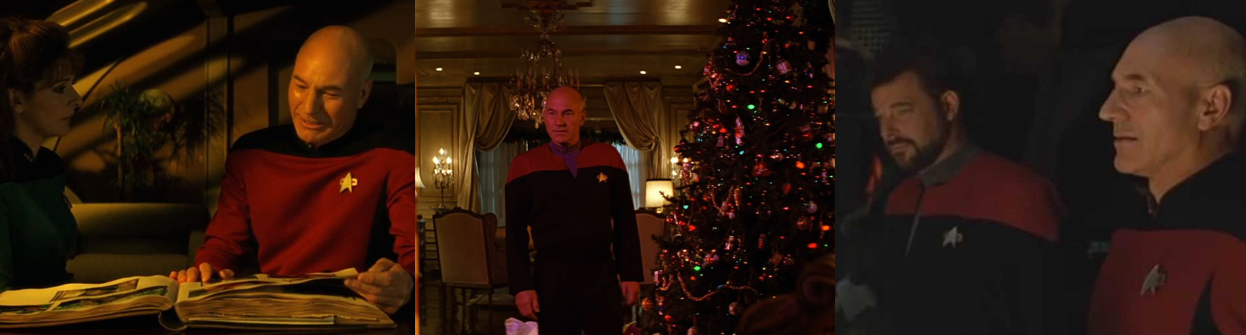
As seen in the Star Trek: The Next Generation (1987 to 1994) episode “The Pegasus” (Burton, 1994), the crew and children of the U.S.S. Enterprise-D celebrates “Captain Picard Day” on Stardate 47457.1, which roughly translates to June 16th. While they bewilder Captain Jean-Luc Picard (Patrick Stewart) with drawings, I see it as a good excuse for some more Picard and Next Generation content.


Air Date: 3 March 2022 to 5 May 2022
Network: Paramount+
Stars: Patrick Stewart, Alison Pill, Jeri Ryan, Michelle Hurd, Santiago Cabrera, Brent Spiner, and John de Lancie
The Background:
After the disappointing critical reception of Star Trek: Nemesis (Baird, 2002) cancelled plans for further films focused on the popular Next Generation cast, the Star Trek franchise (1966 to present) shifted to other shows and a lauded reboot series. After the franchise saw a resurgence, showrunner Alex Kurtzman pushed to revisit Captain Jean-Luc Picard. Alongside writer/director Akiva Goldsman, Kurtzman convinced Stewart to return to his famous role for Star Trek: Picard (Various, 2020), a highly successful venture that proved popular enough to warrant a second season, as was always intended. Afforded an unprecedented $20.4 million in tax credits by the California Film Commission, season two was developed back-to-back with season three, though filming briefly stalled due to the COVID-19 pandemic. Aiming to continue exploring Picard’s character and mortality, the writers chose not only to revisit the mysterious Q (de Lacie) but also drew inspiration from Star Trek IV: The Voyage Home (Nimoy, 1986) for its time travel plot. Once it started streaming, season two of Star Trek: Picard proved quite popular and the overall critical reception was very positive. Reviews praised the exploration of Picard’s character and the performances and the execution of the introspective narrative. Though some found season two to be derivative of previous Star Trek stories, it proved successful enough to build anticipation for the third and final season one year later.
The Plot:
After returning to inspire a new age of prosperity in the United Federation of Planets, Admiral Jean-Luc Picard and his allies are unexpectedly deposited in a dystopian timeline by the malevolent Q and must travel to the 21st century to not only restore reality, but also face their personal demons.
The Review:
As a lifelong fan of the Next Generation show and movies, I was excited when Star Trek: Picard was announced. As much as I enjoyed the rebooted movies, I’ve not really been that interested in the Star Trek shows that have come out since as they all explore a pre-Next Generation timeline, something I think has been done to death. Star Trek: Picard represented a unique opportunity to return to the main timeline and see how the universe had changed since Star Trek: Nemesis, but I was surprised to find Picard bitter and alone, familiar characters changed and somewhat jaded, the once tolerant and righteous Starfleet a stubborn and destructive xenophobic regime, and an overall unsettling bleakness to the franchise. Many characters (including Picard) dropped curses with surprising regularity and harboured a resentment towards Picard that needed to be mended over the course of the season. Season one primarily focused on Picard’s age, his failing health and sense of mortality, and his efforts to assist Soji Asha (Isa Briones), the “daughter” of his old friend, Lieutenant-Commander Data (Spiner), cobbling together a new rag-tag crew and ending up in a new synthetic body, seemingly ready for new adventures in the cosmos. Season two begins with Picard back on his family vineyard but still very much involved with Starfleet, having regained his passion now they’ve stopped ostracising synthetics like Soji. This vigour is only further reinvigorated since his crewmates Cristóbal “Chris” Rios (Cabrera), Doctor Agnes Jurati (Pill), Raffaela “Raffi” Musiker (Hurd), and surrogate son Elnor (Evan Evagora) have all joined (or rejoined, in some cases) Starfleet. Rios is now Captain of Picard’s first commission, the USS Stargazer, and Elnor celebrated as the first-ever fully Romulan Starfleet graduate.
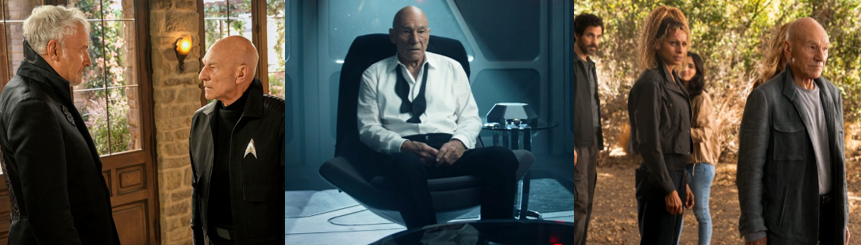
Despite being cured of his fatal illness and gaining a synthetic body, Picard enjoys all the ailments that come with his advanced age. This includes doubts and a resistance towards forming long-term romantic engagements despite the advances of his Romulan housekeeper, Laris (Orla Brady). As long-lived as Picard is, his old Enterprise confidante Guinan (Whoopi Goldberg) remains on hand to offer sage advice, and much of the show is focused on Picard learning to let go of his past and embrace his humanity and the happiness offered by love. Indeed, this is later revealed to be Q’s primary motivation. Although he initially appears as a malevolent figure, a sanctimonious, pompous, malicious demigod seeking to further “test” Picard (and the human race) by forcing him to witness a dystopian timeline where he’s a genocidal madman, Q’s newfound mortality drives him to help Picard face some haunting demons from his past in his own unique way. This season reveals that, as a boy, Picard (Dylan Von Halle) witnessed his abusive father, Maurice (James Callis), drive his loving mother, Yvette (Madeline Wise), to suicide. Q’s manipulation – and Picard’s jaunt to 2024 – force him to see his mother suffered from an unspecified mental illness that made her paranoid and unstable, ultimately driving her to suicide. This event shaped Picard’s entire life, driving him to protect others, stand against injustice, and seek out the truth. However, it weighs heavily on Picard’s conscience and his journey of self-discovery – and forgiveness – is as important as his quest to undo Q’s damage and restore the timeline.
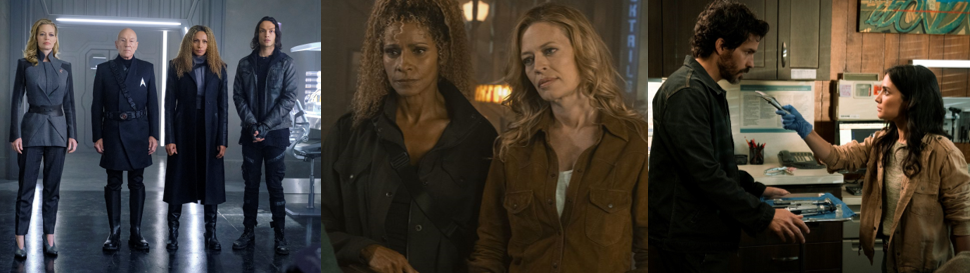
Although they scattered across the galaxy after the first series, Picard’s new crew is reunited by his long-standing nemesis, the Borg. When a gigantic and mysterious Borg craft calls for a parlay, Picard is asked to negotiate, an unusual situation which former Borg Seven of Nine (Ryan) lends her own understandably biased opinion on. Captain Rios is unable to resolve this unexpected situation, however, thanks to Q’s intervention, which sees Picard’s crew deposited in a dystopian alternate timeline where only they retain memories of the way things should be. In this dark world, non-human life is conquered, enslaved, eradicated, and publicly executed by the Confederation of Earth, with Seven (as Annika) as the President and Picard as her military commander. We don’t spend too long in this timeline but it’s enough to establish how awful it is compared to the real world and give Seven a strange euphoria as she finds herself truly human for the first time in decades. When the crew travel to 2024 to undo Q’s interference, Seven explores her newfound humanity. She’s far more cautious, especially compared to hot-headed Raffi, and showcases genuine motion for a change. Seven and Raffi’s partnership leads to some of the show’s most interesting and engaging action sequences and banter as they bicker over the best course of action and balance each other’s different methods towards saving and securing the timeline. This results in them growing so close that they share a kiss by the end, which felt a little out of left field for me. Similarly, the trip to the past has radical implications for Rios, who finds himself separated from his friends and defending Doctor Teresa Ramirez (Sol Rodríguez), her son Ricardo (Steve Gutierrez), and her clinic from overly aggressive immigration officers, falling for her in the process and finding a true home and family for himself at the same time.
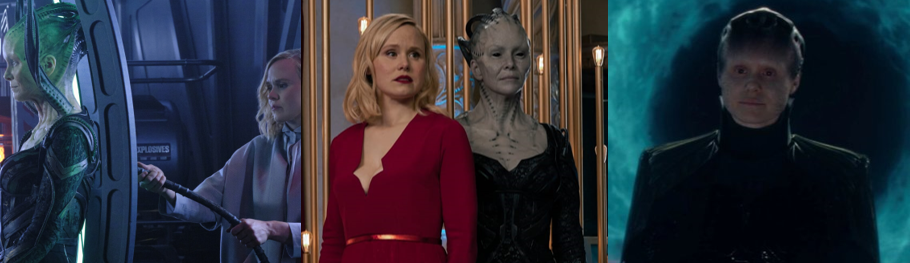
I was happy to see that Picard is treated much better in this season. Not only does Starfleet treat him with the respect he deserves, but his crew now defer to his wisdom and admire his tenacity. However, there are some wrinkles to this: since the incapacitated Borg Queen (Annie Wersching) is their only hope of saving the future, the crew risk their lives to save one of their most dangerous enemies and coerce her into helping them. This results in Elnor’s death as Picard is forced to prioritise saving the Queen over his former ward. This briefly earns him Raffi’s resentment and, though she soon focuses on the mission, much of her aggression stems from this loss and she’s as haunted by Elnor’s death as Picard is by his own past. Concurrently, Agnes is haunted by her past actions. Although she, like Rios, takes solace in her surrogate family, she can’t help but feel alone and somewhat lost, no matter how hard she tries to help. While the others search 2024 for the elusive “Watcher”, Agnes is left on their damaged craft with the weakened Borg Queen, with whom she’s forced to partially assimilate herself with to direct her team. This leads to the Borg Queen emotionally manipulating Agnes, tempting her with full assimilation to give her the sense of belonging she so desires before infiltrating her mind and her personality. This turns Agnes into a secondary antagonist for the last few episodes as the Borg Queen hijacks her body and creates an imperfect Borg army for herself in a bid to take advantage of her unique position and usher in a new age of Borg dominance. This is prevented not just by the intervention of Agnes’ friends but also Agnes asserting her personality over the Borg Queen, ultimately resulting in them merging into a new entity that heads out into the galaxy to create a new sub-species of Borg, one defined by individuality and co-operation rather than emotionless dominance.
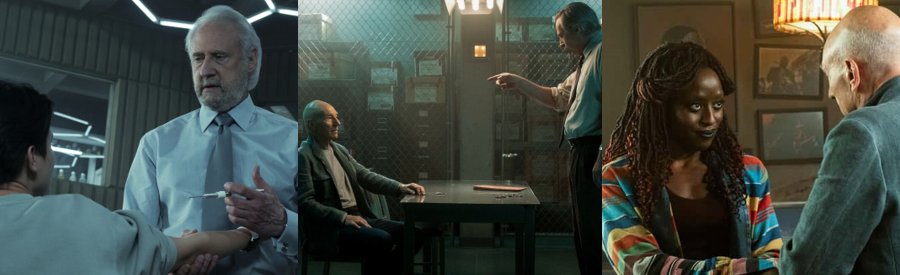
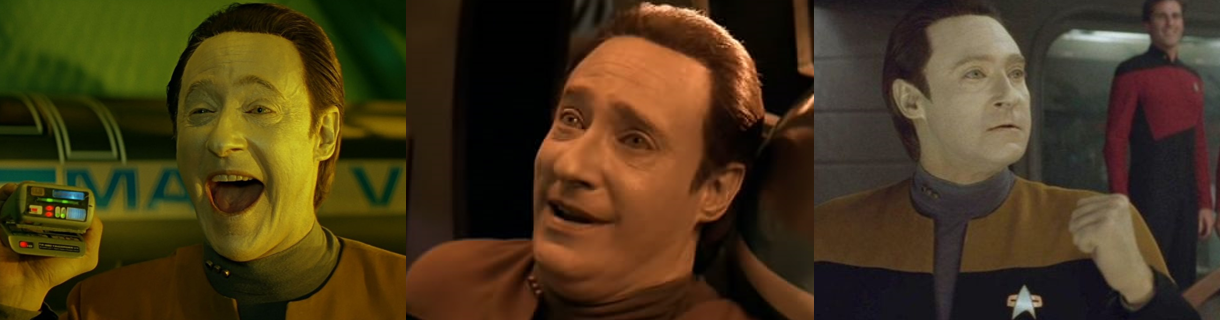
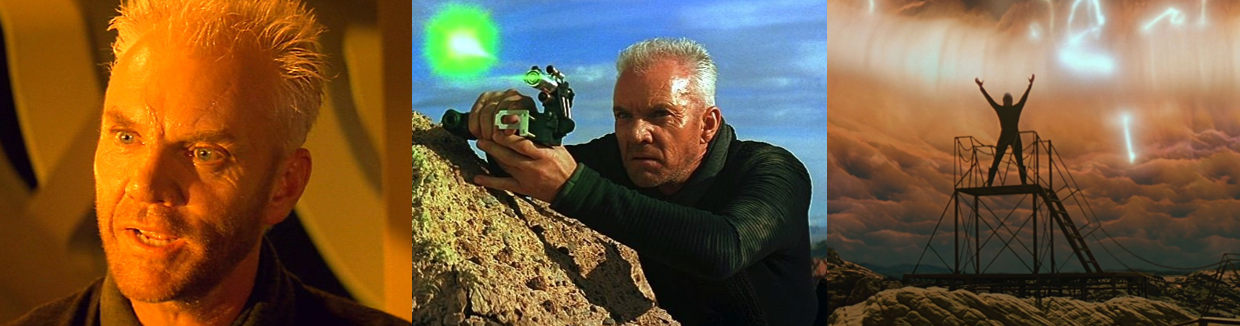
Considering how much time season one spent focused on Soji and established her importance to Star Trek lore, she’s basically a non-factor in season two, appearing only very briefly and not even joining the crew for their time travel adventure. Isa Briones appears more prominently in 2024 as Kore Soong, the human (if genetically created) daughter of Doctor Adam Soong (Spiner), the ancestor of the man who would one day create Data. Soong acts as the primary antagonist after his genetic research is lambasted, his funding revoked, and his attempts to cure Kore of her debilitating and fatal genetic illness fail. This drives him to desperation and near madness, allowing Q to offer him the chance to build a legacy in the future by preventing the Europa expedition, thereby creating the dystopian timeline briefly visited at the start of the series. When Kore rejects him after she discovers her true origins, Soong’s perfectly happy to indulge his latent psychotic urges by aligning with the Borg Queen and targeting not just Picard and his allies but also Picard’s ancestor, troubled astronaut Renée Picard (Penelope Mitchell), whose death will usher in Soong’s oppressive legacy. Although Picard galvanises Renée’s spirit and counters Q’s psychological abuse m, his mission is jeopardised by xenophobic Federal agent Martin Wells (Jay Karnes), a man convinced that the Earth is threatened by aliens. Luckily, just as Picard is guided through his own personal traumas by Talinn, Laris’ ancestor who has spent years observing and protecting Renée, so too is he assisted – and ultimately coerce Wells into assisting him – by the young Guinan (Ito Aghayere), a jaded and outspoken younger woman ready to give up on humanity before meeting Picard. This melting pot of motions is only exacerbated by Q. Disgusted by humanity and believing they need to be constantly tested, his sights are firmly set on Picard as the bastion of human determination, Q takes every opportunity to try and break Picard’s spirit and spitefully set time itself against him. This is his misguided way of teaching Picard to embrace the past and move forward stronger for everything he’s suffered through, a test that Picard comes to appreciate, even embracing the dying Q as an old friend before they’re returned to their original timeline, changed but, presumably, stronger despite their losses.

The Summary:
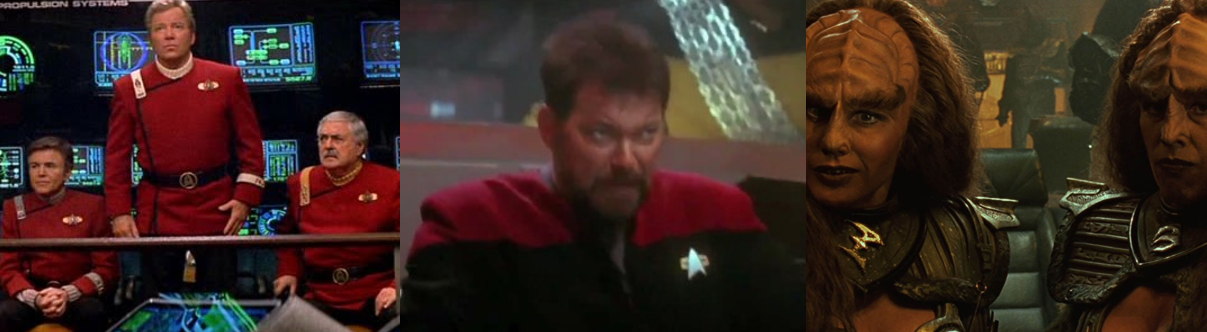
Considering the focus of season one, I was surprised that season two is largely set in 2024 and is, essentially, a remake of Star Trek IV: The Voyage Home spliced with the main plot of Star Trek: First Contact (Frakes, 1996). I didn’t expect this, and I’m not entirely sure how much I enjoyed it. I liked the callbacks to The Voyage Home: the abrasive bus punk (Kirk Thatcher) returns, some of the dialogue (especially Rios’s) is revisited, as is his relationship with Teresa, and many of the plot points are repeated, such as the cloaked ship and Picard and Guinan’s capture. However, I think it might’ve been better to spend half the season in the dystopian future, exploring that world and giving the cast more time to play dual roles (Stewart, especially, revels in masquerading as his militant counterpart). Spending so much time in 2024 makes season two feel decidedly less visually impressive, though does allow for some introspective character development for all involved, especially Picard, who’s forced to relive, confront, and ultimately come to terms with his traumatic past. Equally, as mentioned, Seven explores her humanity in ways we’ve never seen before. I also liked the twist given to Agnes, where she becomes a semi-willing vessel for the Borg Queen, but there’s ultimately not much in season two that we haven’t seen in those aforementioned movies or previous time travel and character-centric episodes of Star Trek.
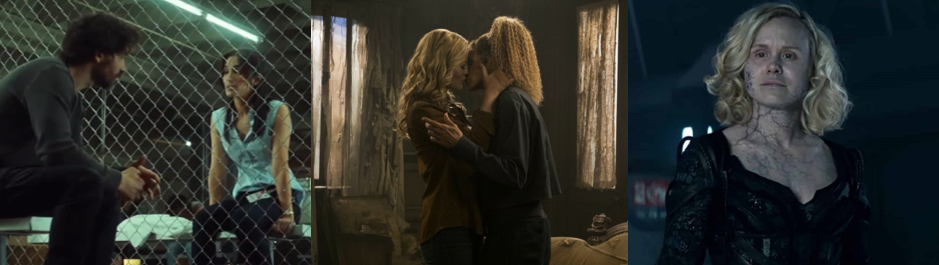
The major themes of season two are confronting the past, finding a place in the present, and embracing the potential of the future. While Rios has found himself as a Starfleet captain and sees Picard as a father figure, he only truly feels a sense of belonging once he settles in 2024 and bonds with Teresa and Ricardo. Although this is his primary (and, arguably, only) character arc in the season, it doesn’t get much of the spotlight. Rios feels a kinship to them out of gratitude, respect, and a sense of injustice after seeing how aggressively they are targeted by immigration officers, but I still felt like his decision to stay in the past was a bit rushed and that the three didn’t connect much despite their obvious chemistry. I felt the same way about the apparent romantic relationship between Seven and Raffi. I must have missed the bisexuality of these characters in the last season and I was more focused on the fun contrast of personalities they exhibited here, so their sudden kiss surprised me as I thought the point of their partnership was to see their personalities grow. Seven conveys much more emotion and her arc is focused on her hatred of the Borg and euphoria at finally being human, culminating in her accepting her renewed Borg implants when Agnes uses the Borg Queen’s technology to save her life and considering a career in Starfleet upon returning to the main timeline. Raffi’s arc is primarily one of revenge: she’s incensed and haunted by Elnor’s death, meaning Seven acts as a counterbalance to keep her emotions in check, but Raffi’s conflicted by the finale as she can’t kill the Borg Queen without losing Agnes. Although I found it surprising that Agnes fell under the Borg Queen’s sway considering all Picard’s advice and her own experiences in the Queen’s consciousness, it makes sense given her personal insecurities and the Queen’s machinations. Their relationship becomes surprisingly mutually beneficial, however, as Agnes enjoys the power and sense of belonging offered by the Borg Queen and the Queen comes to see friendship, co-operation, and emotion as a strength rather than a weakness. This ultimately sees them become a new gestalt entity that hints at a Borg partnership with Starfleet to protect the universe from an unspecified threat.
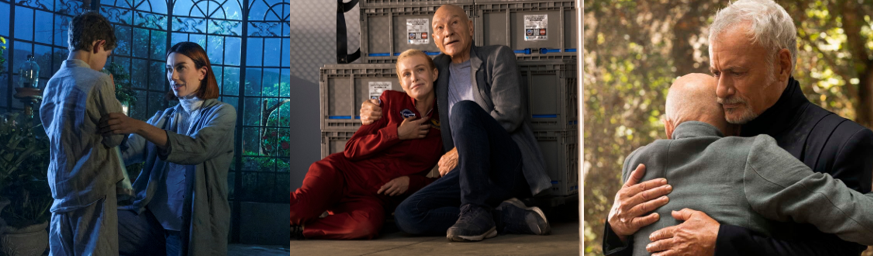
Unlike season one and season three, season two is less a Next Generation reunion and more a character study of its titular protagonist and his crewmates. Yet, there’s time for a quick cameo by former ensign Wesley Crusher (Wil Wheaton), who offers Kore a place with the Travellers, Guinan, and even a new role for Brent Spiner, who’s given another chance to showcase his range as he portrays another maniacal and dangerous Soong variant. As expected, this is Picard’s show, through and through. Freed from his bitterness, but no less burdened by guilt and past trauma, Picard is determined to restore the timeline and thwart Q’s diabolical plot but is surprised to learn new discoveries about himself through Q’s final test. Although vehemently opposed to the demigod throughout the show, Picard ultimately expresses gratitude to his old frenemy and ensures he doesn’t meet his end alone since Q’s actions, though questionable, allowed Picard to accept that his past and opens his eyes to a future with Laris and an alliance with Agnes’s Borg contingent. Ultimately, however, I can’t say that season two is any better or worse than the first. The potential of these new characters and the direction of this season is somewhat squandered by the plot, which is simply a rehash of The Voyage Home, and the season seems to have been engineered to write out many of Picard’s newfound crew rather than bring them closer together. It was a fascinating exploration of Picard, and an interesting twist on the Borg dynamic, but fundamentally lacking in terms of visuals and offering something more explicitly new for long-time Star Trek fans.
My Rating:
Pretty Good
What did you think to the second season of Star Trek: Picard? Were you disappointed that the plot rehashed The Voyage Home or did you enjoy the time travel jaunt? Did you like that Rios stayed in the past, that Agnes became the Borg Queen, and the evolution of Seven’s character? Were you happy to see Q return and by the revelations into Picard’s childhood? What threat do you think is posed by the transwarp conduit? How are you celebrating Captain Picard Day this year? Whatever your thoughts on Star Trek: Picard, let me know in the comments down below.












 Dr. K's Waiting Room
You must be logged in to post a comment.