Movie Night [Bat-Month]: The Dark Knight Rises


Following his first dramatic appearance in the pages of Detective Comics, Bruce Wayne/Batman became a mainstream pop culture icon. The brainchild of writer Bob Kane, Batman was brought to life by artist Bill Finger and has been a popular staple of DC Comics and countless movies, videogames, and cartoons over the years. “Batman Day” fell on 20 September this year so I spent every Saturday celebrating comic’s grim and broody vigilante.


Released: 20 July 2012
Director: Christopher Nolan
Distributor: Warner Bros. Pictures
Budget: $230 to 300 million
Stars: Christian Bale, Tom Hardy, Anne Hathaway, Marion Cotillard, Joseph Gordon-Levitt, and Gary Oldman

The Plot:
After taking the fall for Harvey Dent’s (Aaron Eckhart) killing spree, billionaire Bruce Wayne (Bale) has retired from vigilantism and the public spotlight. However, when nigh-superhuman mercenary Bane (Hardy) terrorises Gotham City, Bruce is forced to suit up as the Batman once more.

The Background:
Once Joel Schumacher was done killing the live-action Batman franchise with his poorly received camp throwbacks, Warner Bros.’ desperate attempts to restart the series paid off thanks to visionary writer/director Christopher Nolan, writer David S. Goyer, and star Christian Bale and their well regarded reboot Batman Begins (Nolan, 2005). The three reunited soon after to produce a follow-up, The Dark Knight (ibid, 2008), a blockbuster success that is widely regarded as the best Batman movie. The film set a new standard for the genre, though at a cost as star Heath Ledger died from an accidental overdose following his surprisingly impressive turn as the Joker. Goyer’s original pitch for The Dark Knight called for the Joker’s return, but Nolan opted not to recast the role out of respect for Ledger. Initially reluctant to return due to this, and the poor track record of third movies, Nolan soon insisted on using Bane as the main villain to present both a physical and mental challenge to Batman in a story inspired by classic Batman events like The Dark Knight Returns (Miller, et al, 1986), Knightfall (Various, 1993 to 1994), and No Man’s Land (ibid, 1999). Tom Hardy was cast, gaining 30lbs of muscle and crafting a voice that drew much scrutiny. Bale returned as the title character and felt bittersweet and calling time on his Bat-career, while Hathaway trained rigorously for the role of Selina Kyle/Catwoman. Believing IMAX to be the future of filmmaking, Nolan avoided filming in 3D in favour of IMAX and once again insisted on doing as many effects practically and in-camera, including the dramatic opening sequence and Batman’s latest vehicle. Following another viral marketing campaign, The Dark Knight Rises also cleared $1 billion at the box office and was received very positively, with critics praising Hardy’s performance, its complex narrative structure, and Nolan’s direction. Many reviews criticised the bloated plot, however, and its bizarre characterisations and saw it as a disappointing conclusion.

The Review:
Honestly, it was going to be hard for Christopher Nolan to top or even match The Dark Knight. The movie earned its flowers as one of the most engaging and gritty superhero thrillers even if you discount Heath Ledger’s tragic death, and part of me thinks it might’ve been better to wait a little longer to follow it up, especially considering how lacklustre this third entry is. Granted, things start off positively as Nolan opens with a thrilling, IMAX-enhanced mid-air plane hijack as the masked brute Bane and his suicidally loyal followers infiltrate a Central Intelligence Agency (CIA) plane to kidnap renowned nuclear scientist Doctor Leonid Pavel (Alon Aboutboul). This breath-taking, fully practical, death-defying sequence introduces Bane, an intimidating and calculating villain. Rather than simply being a mindless brute, Bane is as articulate and loquacious as he is jacked, but you’d be forgiven if you had trouble understanding his obtuse soliloquys. Yes, I’m going to address the elephant in the room right away: Bane speaks with a very strange and at times indecipherable accent that often sounds pre-recorded, kind of taking me out of any scenes he’s in. Tom Hardy is a fantastic physical performer and Nolan did a wonderful job masking the height discrepancy between him and Bale, but his accent and line delivery is so strange and distracting that it can detract from Bane’s menace. I just wish we could’ve heard him speak in a less janky mishmash of accents, or perhaps if we could more clearly see his lips moving through the mask’s mesh, because Bane frequently seems ridiculous due to this decision (though, to be fair, memes and parodies haven’t helped his portrayal).
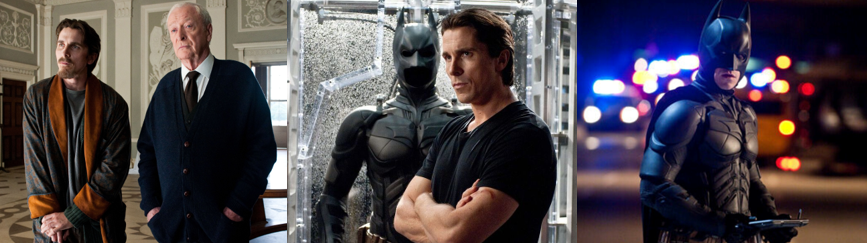
Broken and grieving, Bruce ignores his ailments and all advice to suit up as Batman once more,

In the eight years since the last film, Harvey Dent has been honoured as a hero, Batman branded a murderer, and the “Dent Act” has largely kept Gotham’s streets free from organised crime. Despite finishing the last movie fully prepared to be hounded and vilified, it seems Batman retired pretty soon after The Dark Knight. The rebuilt Batcave suggests he kept it up for a bit, but dialogue also suggests he disappeared the same night Dent died, which is confusing. Bruce has also shut himself away in Wayne Manor for many years. Still grieving the loss of his childhood friend and love interest, Rachel Dawes (Maggie Gyllenhaal), Bruce retreated after overseeing the development of a clean fusion reactor and mothballing it to keep it from being converted into a weapon. A reclusive shut-in, Bruce is riddled with physical ailments from his crimefighting antics, having lost all cartilage in his knees, and has become so morose that he’s let Wayne Enterprises fall into financial ruin. When he’s robbed by brazen cat-burglar Selina Kyle (Hathaway), Bruce uses his detective skills and resources to track her down and seems reinvigorated at the chance to don the Batsuit once more. Quickly (and magically) compensating for his injuries with a single leg brace, he eagerly returns to the streets despite the protests of his loyal butler and father figure, Alfred Pennyworth (Michael Caine), who believes (and rightfully so) that Bruce is no longer physically capable of contributing as Batman and that renewing his vigilante ways will simply lead to his senseless death. Instead, Alfred (and Lucius Fox (Morgan Freeman), executive vice president of Wayne Enterprises and Bruce’s quartermaster) encourage him to pursue more meaningful endeavours, such as sharing his clean energy reactor, funding orphanages, and pursuing “lovely” philanthropist Miranda Tate (Cotillard), who longs to collaborate with Bruce and bring glory back to his family name.
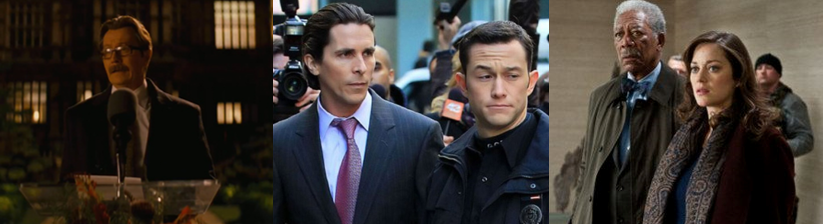
Lies have created a period of peace for Gotham, but its foundations are incredibly fragile.

As beaten down as Bruce has become, police commissioner James “Jim” Gordon (Oldman) is equally burdened by guilt. In the years since The Dark Knight, Gordon has been celebrated as a hero but at the cost of his family and is currently at risk of losing his position since he’s become superfluous. Clearly still guilt-ridden for failing to save Dent and lying about his death for eight years, Gordon’s plans to come clean are scuppered when he’s captured by Bane’s henchmen and brought to the main man himself. Though he manages to escape, Gordon’s wounded and bedridden and pleads with a concerned, partially masked Bruce to bring the Batman back to face this new threat. Later, he’s instrumental in galvanising the city police and civilians against Bane’s forces, and in tracking down Bane’s bomb. Although Gordon’s still in charge of the police department, much of the day-to-day operations are now run by Peter Foley (Matthew Modine), an uptight and annoyingly antagonistic individual who’s determined to oust Gordon by apprehending the Batman and continually ignores evidence of the greater threat, no matter how often rookie cop John Blake (Gordon-Levitt) tries to warn him. Seen as a “hothead” (despite literally being as cool as a cucumber), orphan Blake is quickly promoted to detective when his keen insight rescues Gordon, and works diligently to uncover Bane’s true plan. Blake gains additional support when, after Gordon’s kidnapping, he goes to Bruce for help, revealing that, as a fellow orphan, he recognises both Bruce’s pain and his attempts to mask it with his playboy persona, thus revealing his knowledge of Bruce’s dual identity. Blake therefore becomes something of an apprentice to both Bruce and Gordon, learning of Bruce’s motivations to wear a mask and fight crime and putting his natural deductive reasoning to good use, all to serve true justice and make life better for his fellow orphans. Naturally, Bruce is also aided by Fox, who gives him a tour of an off-the-books armoury where all his new Bat-toys are stored, including a fearsome jet-plane concept imaginatively called “The Bat”. Fox is begrudgingly forced to agree with the Board that Bruce needs to step down, advocates for Miranda to continue their work, and is forced to aid Bane when he holds the city hostage so Pavil can weaponise the fusion reactor.
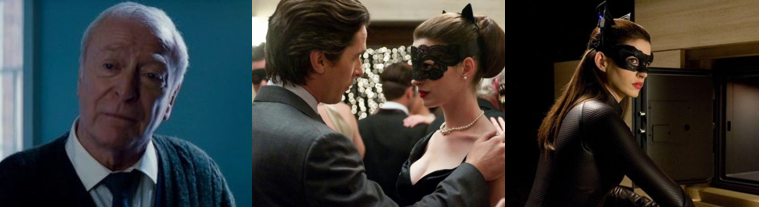
Bruce’s relationship with Alfred crumbles as his intrigue in Selina is piqued.

Of all Bruce’s supporting cast, it’s Alfred who has changed the most, however. Just as Bruce and Gordon struggle with their guilt and decisions, Alfred is agonised at having lied about Rachel choosing Bruce over Dent. When Bruce insists on reviving the Batman, Alfred pleads with him to explore other solutions to Gotham’s troubles but, when his protestations fall on deaf ears, he’s forced to come clean in a last-ditch attempt to keep Bruce from throwing his life away. Instead, Bruce reacts with anger and orders Alfred to leave, leaving his father-figure heartbroken and leading to some bittersweet amusing scenes where Bruce realises how much he relies on his faithful manservant. Much of Bruce’s investigation into the so-called “Catwoman” revolves around retrieving his mother’s pearls, but he soon realises she’s a devious, highly capable, sultry thief who’s desperate to acquire the fabled “clean slate”, a piece of technology that will erase all records of her and presumably allow her to give up her life of crime. Manipulative and a master of deception, Catwoman allies with anyone, no matter how morally skewed they are, to achieve her goal, but is captivated when she fights alongside the Batman. Her distrustful, selfish nature sees her sell Batman out to Bane, but she’s stricken with a conscience when she learns of Batman’s true identity. She thus helps him in the finale, despite having achieved her goal, though she has little interest in following Batman’s “no-kill” rule. Hathaway definitely embodies the role and makes an impression in her skin-tight catsuit. Selina sports some gadgets and martial arts skills of her own, but her greatest ally is her ability to assume different roles (on the fly or with a simply costume and demeanour change) to deceive her marks, with only Bane proving immune to her deceptions and flirtations.
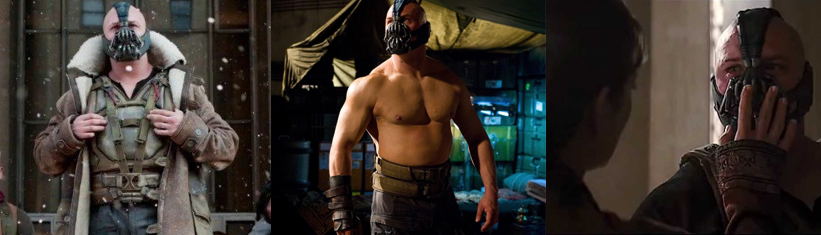
Calculating powerhouse Bane has an intimidating presence…until he’s revealed to merely be a pawn.

All throughout the film, we’re drip-fed information about Bane. Alfred (…somehow…) tells Bruce how Bane was the prodigy of his old mentor and enemy, Rā’s al Ghūl (Liam Neeson), and a man so ferocious and feared that he was excommunicated by the League of Shadows. When held captive in a prison in the Middle East – a desolate pit where inmates risk life and limb trying to climb to freedom using a precarious rope – the critically injured Bruce learns of a child who made the climb, forsaking all fear and the safety of the rope, and claw his way to freedom. Bruce assumes the child is Rā’s’ son, out for revenge, and Bane himself boasts of his goal to “fulfil Rā’s al Ghūl’s” destiny. A large, muscular man, Bane intimidates through sheer size and presence but swiftly and deftly proves his threat by snapping necks, crushing windpipes, and punching through solid concrete with his bare hands. Unlike in the comics and most iterations, this isn’t due to the superhuman drug Venom but actually thanks to his mask, which constantly feeds him aesthetic to numb the pain of the wounds he received in the Pit. Calculating and vindictive, Bane immediately targets Bruce, pulling off a very public robbery of the stock exchange that somehow leaves Bruce bankrupt and colluding with greedy businessman John Daggett (Ben Mendelsohn) to seize Wayne Enterprises. Once he’s achieved the funding and influence he needs, Bane captures Bruce’s armoury and brutalises Batman in a completely one-sided fist fight that leaves Bruce broken and humbled. Bane then outs Dent’s secret, destroys all bridges leading in and out of Gotham, traps the cops in the sewers when Foley stupidly sends their entire force to flush the mercenary out, and turns Gotham into a veritable no man’s land for five months as he threatens to detonate his nuclear bomb if anyone tries to escape. Bane’s plot is therefore essentially a combination of Rā’s’ and the Joker’s, exposing Gotham’s corruption and encouraging civilians to turn to anarchy, all with the threat of total destruction overhead. This is honestly a far cry from releasing Batman’s rogues from Arkham Asylum and watching as they mentally and physically wear him down. To be fair, it’s not like there were any recognisable inmates for Batman to fight here. Sure, Doctor Jonathan Crane/Scarecrow (Cillian Murphy) gets a quick, fun cameo but Batman is mostly fighting Bane’s goons, Foley’s cops (but not all cops since many are strangely still on his side), or Bane himself.

The Nitty-Gritty:
There’s a theme in The Dark Knight Rises and you’ll never guess what it is: it’s rising. Rising from adversity, from pain, from obscurity; rising against corruption, deceit, or malicious forces. And, naturally, one can’t rise without a fall, but my issue with this film is that Bruce falls so many times. Bruce rises from the stagnant quagmire of his reclusive life to return as the Batman, only to immediately fall at Bane’s hands due to his hubris and be forced to rise again (literally and figuratively) when imprisoned in the Pit. It’s not clear how bad Bruce’s injuries are here as he shrugs off that cartilage issue, seems just as capable as ever as Batman when not facing Bane, and easily recovers from what is potentially a broken back with a well-placed punch and some basic exercises. Personally, I was hoping for an adaptation of Knightfall first and foremost: start with Bruce being physically and mentally worn down by grief and fighting both the cops and criminals so he’s completely exhausted but too stubborn not to confront Bane. Then he can rise from his hubris and his injuries all at once and we’d get not only more Batman action in the early going, but a better payoff for The Dark Knight’s ending. Also, the film jumps all over the place, to the point where it seems the injured and bankrupt Bruce escaped the Pit and returned to the inaccessible Gotham through magic. It might’ve been better to skip the Pit altogether and have Bane imprison Bruce deep in the sewers, perhaps with Godon and the cops, who learn his true identity and the truth about Dent, and are therefore inspired to join him against Bane.
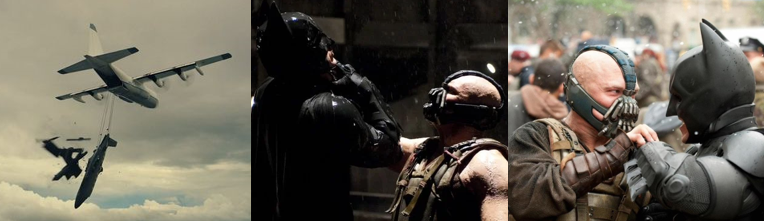
Nolan finally delivers an intense fight scene alongside his jaw-dropping practical set pieces.

Indeed, a lot of The Dark Knight Rises just feels like padding and it lacks much of the gravitas of its predecessors since it repeats many of their story beats. Nolan continues to struggle with fight scenes, though the team-up between Batman and Catwoman in the sewers is a lot of fun, the grand destruction of Gotham’s football field is suitably impressive, and the intense brawl between Batman and Bane is a memorable sequence. Devoid of music so all we hear are the combatant’s blows, Bane’s taunting, and Batman’s stubborn growling, the fight shows just how ill-prepared and overconfident Bruce is. Just as Alfred feared, Bruce underestimated Bane and “[fought] like a younger man” rather than preparing for the fight. It’s interesting that Batman, a character typically depicted as very smart, didn’t think to target Bane’s mask in this fight. He learns of this vulnerability and uses that tactic in their rematch, though Bane reacts furiously by this and is still positioned as Batman’s physical superior. Even Batman’s gadgets are useless against Bane, though Batman’s new EMP gun helps stop Bane’s goon after their heist. Batman also pilots the Bat, a jet-like vehicle that allows him to quickly and easily fly around Gotham’s skyscrapers. It’s not used much (there’s only really a need for it in the finale), so Batman continues to ride the Batpod, though prototype Tumblers are commandeered by Bane. Nolan definitely ups the scope for The Dark Knight Rises, staging an all-out war between Gotham’s police and ordinary civilians and Bane and his troops in the finale. It’s a bit of a mess with lots of smoke, bullets, and bodies crashing into each other. Background characters simply collapse and die, Foley is killed offscreen, and the entire scuffle is literally framed as a distraction so Batman can fight Bane once more, in broad daylight, to find the trigger to his bomb.
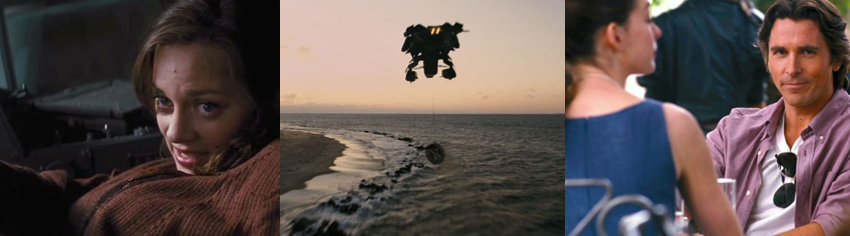
A cringey death here, a disappointing finale there, and Bruce gets to retire once again.

Bane claims to have hidden the trigger somewhere in Gotham and that anyone could accidentally set it off at any time. In the five months Gotham is on lockdown, Blake and Gordon try to rally the civilians with the hope of Batman’s return as Crane and Bane execute the city’s government in a kangaroo court. Although he takes a beating, Batman overpowers Bane by targeting his mask but is absolutely dumbfounded when Miranda literally stabs him in the back and reveals her true identity as Talia al Ghūl and that it was she who made the climb thanks to Bane’s protection. Talia’s gloating is quickly rendered moot thanks to Gordon blocking the trigger, so she races to activate the bomb herself after Bane is unceremoniously killed by Catwoman and a blast from the Batpod’s cannons. Catwoman helps Batman and Gordon to catch Talia, who ultimately crashes and gives one of the worst onscreen deaths in cinema history, followed by a strangely uncomfortable kiss between Batman and Catwoman, and Gordon looking like a complete fool as he was truly clueless about the Batman’s true identity until Bruce made it explicitly clear. With no way of stopping the bomb, Batman does the only thing he can and carries it out to sea using the Bat, seemingly perishing in the blast. In the aftermath, Dent’s legacy is tarnished, freeing all those convicted in his name, and the Batman is memorialised by the fickle Gothamites. Fox, Gordon, and especially Alfred are left heartbroken by Bruce’s death but soon realise that he survived. The Batsignal is found repaired, Fox discovers the Bat’s ejector seat malfunction was repaired, and Alfred literally sees Bruce, now retired and seemingly happy with Selina. Finally, Blake resigns and finds Bruce left him a special package under his legal name, “Robin”, that leads him to the Batcave, where he literally rises into the darkness to an unknown destiny.

The Summary:
Despite the tragedy of Heath Ledger’s passing, I was excited for The Dark Knight Rises when it came out because I’m a big fan of the Knightfall story but, honestly, this film struggled from the start. The lame and uncreative title, Hardy’s weird-ass voice, Bale’s odd demeanour as Batman, and the confusing editing, strange dialogue, and inconsistent performances really hold this one back. Honestly, it feels as though everyone was contractually obligated to do a third movie but no one really wanted to. There’s effort here, for sure, and Nolan is still putting his all into the practical effects, but the execution is lacking and there’s so many odd flaws and plot holes that I wouldn’t expect from Nolan and his team. Bale continues to be the quintessential Batman, adding new nuance through his stubborn refusal to see that he’s past his prime, his hubris, and his deteriorating relationship with Alfred, but his Batman seems strangely tired and ineffectual here and I really didn’t like that he just gave up and then magically recovered from all those injuries. Anne Hathaway, Joseph Gordon-Levitt, and Tom Hardy inject some much-needed life into the film, though. Anne was easily the best Catwoman at that point, Nolan surprised me with the Robin reveal, and Hardy made for a fantastic Bane…except for that weird accent. I just feel like there’s too much happening here, with Batman’s return, the clean slate stuff, Bane’s convoluted plan, the Pit, the no man’s land stuff…it’s a lot and it’s very messy, which is also unlike Nolan. In the end, it feels like an extended, lacklustre epilogue to a great duology. It delivers an unexpected and somewhat unfulfilling end to Bale’s Bat-career, with this Bruce being one of the few to survive long enough to retire, but ultimately fails to deliver a satisfying follow-up to perhaps the greatest Batman movie ever made. Catwoman’s sex appeal, the fight between Bane and Batman, and all the stunning IMAX-enhanced action sequences aren’t enough to make up for an otherwise dull, plodding affair that ends the trilogy on a disappointingly sour note.

My Rating:

Rating: 3 out of 5.

Pretty Good

Do you think I was too harsh on The Dark Knight Rises? What did you think to Tom Hardy’s portrayal of Bane, especially his accent? Is Anne Hathaway the best live-action Catwoman we’ve ever seen? Were you also annoyed that Bruce quit after The Dark Knight and by how easily he recovered from his injuries? What did you think to this version of Robin? Were you as disappointed with the film as I was or is it a favourite of yours? How are you celebrating Batman Day this year? Whatever your thoughts The Dark Knight Rises, or Batman in general, share them below.

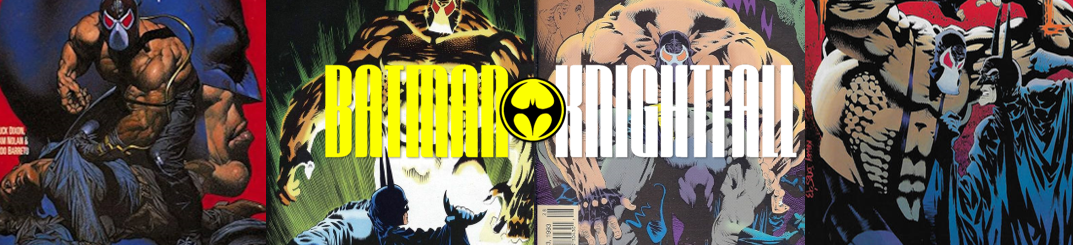
Back Issues [Bat-Month]: Knightfall


Following his first dramatic appearance in the pages of Detective Comics, Bruce Wayne/Batman became a mainstream pop culture icon. The brainchild of writer Bob Kane, Batman was brought to life by artist Bill Finger and has been a popular staple of DC Comics and countless movies, videogames, and cartoons over the years. “Batman Day” fell on 20 September this year so I spent every Saturday celebrating comic’s grim and broody vigilante.


Story Title: “Vengeance of Bane” and “Knightfall Part I: Broken Bat” (includes various subtitles)
Published: January 1993 to July 1993
Writers: Chuck Dixon and Doug Moench
Artists: Graham Nolan, Jim Aparo, Jim Balent, and Norm Breyfogle

The Background:
After the overnight success of Clark Kent/Superman, National Comics Publications commissioned Bob Kane to add another masked crimefighter to their repertoire. Thanks to considerable input from artist Bill Finger, the “Bat-Man” immediately became one of DC Comics’ most popular characters and a mainstream cultural icon. This was bolstered, in no small part, by the many costumed supervillains the Batman has contended with over the years, with perhaps the superhuman mastermind “Bane” being the Batman’s most dangerous and physically imposing foe. Created by Chuck Dixon, Doug Moench, and Graham Nolan based on input from legendary Batman editor Dennis O’Neil, Bane was specifically conceptualised for this sprawling story arc, with the seeds of his first appearance and actions during “Knightfall” being planted throughout 1992. Following plans to introduce the warped vigilante Jean-Paul Valley/Azrael, O’Neil, Dixon and other DC creatives planned to significantly shake up the Dark Knight similar to how Superman was set to be dramatically killed. In keeping with DC’s plans to comment upon the readers’ desire for darker, grittier characters, Bane drove Batman to exhaustion before breaking his spine, leading Valley to assume the Batman mantle and become a more violent and unhinged version before Bruce reclaimed the role. The initial eleven issues were seen as one of the most important moments in Batman’s storied career and, while Bane struggled to remain relevant in the eventual aftermath, the visual of him bending Batman over his knee has influenced videogames and cartoons for years. Though always appearing significantly altered from the source material, Bane has appeared numerous times in cartoons and live-action, where he was reduced to a mindless lackey and something worse than cosplay before Tom Hardy largely divided audiences with his enigmatic portrayal in The Dark Knight Rises (Nolan, 2012). Still, as one of Batman’s most enduring villains, Bane joined the Secret Six, murdered Bruce’s mentor and father figure Alfred Pennyworth while conquering Gotham City, was once rumoured to be Bruce’s brother, and almost became the head of the League of Assassins!

The Review:
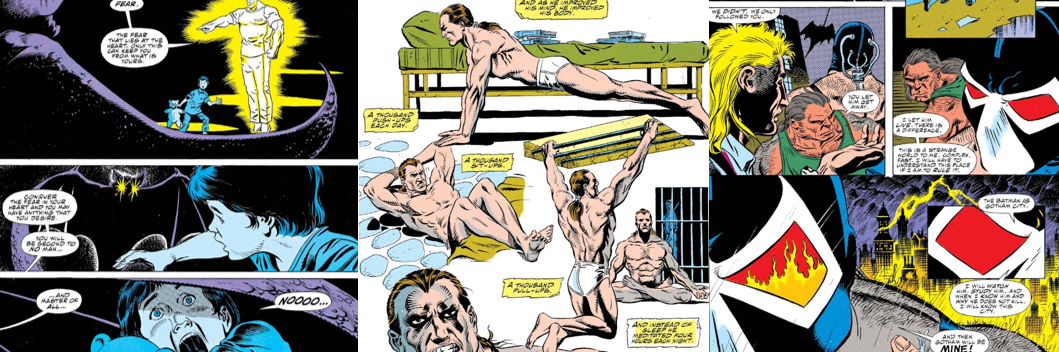
The story of Bane, easily Batman’s most physically imposing foe, begins years ago in the chaotic nation of Santa Prisca. After the totalitarian dictatorship quashed a doomed coup d’état, the insurgents were either slaughtered or arrested. One such insurgent, a heavily pregnant woman, was taken to island gulag Pena Duro and her unborn son was tried and convicted for his father’s crimes, as per Santa Prisca custom. Thus, the infant Bane was born in captivity, cared for only by his mother and fellow prisoner “Zombie”. They watched as the child grew and the mother’s health failed, with the boy showing an aptitude for exploration and subjected to daily horrific brutality. When the boy was six, his mother finally passed, yet by then he was too hardened to shed a tear. Without his mother’s protection, the boy was released into the cutthroat general population, far from Zombie’s gaze, where he was protected by the brutish Trogg. However, while Trogg fought off a malicious inmate with sadistic designs on the boy, the youngster fell and suffered a near-death experience, a vision of his future self who spoke of his destiny to rule. The vision also warned that the boy must overcome fear (represented by a giant, fearsome bat) to be a true conqueror and, when he awoke from a thirty-odd-day coma, the boy took his first steps towards becoming a man by savagely murdering his would-be abuser. The boy’s feral nature earned him the moniker “Bane” and a lengthy stint in solitary confinement, where every day and night was a fight for survival against crabs, rats, and a nightly flood of water. Each time, Bane overcame the odds, killing what he could to survive and growing stronger, harder, and more disciplined with each passing day. To stave off further madness, Bane entered a meditative trance, dreaming of slaughtering a bat-like creature and overcoming fear itself.

After a lifetime of hardship and training, Bane vows to crush Batman and conquer his city!

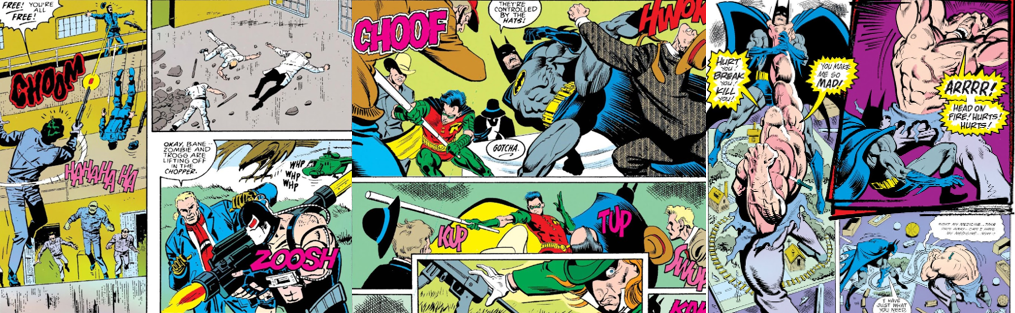
After ten years in the hole, Bane was released by the warden in the hopes that the inmates would kill him, only to be praised as a legend and to gain an additional follower, Bird, who taught Bane to read. Bane consumed knowledge and literature, learning six languages and training himself to the peak of human physical perfection. Bane’s coveted position was challenged many times, and each time he established himself as the alpha male in brutal combat. Still, Bane remained curious about Gotham City and demanded Bird tell him everything about the city, learning of its vigilante protector and vowing to destroy the Batman, whom he soon became obsessed with. Frustrated by this obsession, Bane incited a riot, slaughtering over thirty prisoners before he was subdued and returned the isolation. This was when the cruel warden forced Bane to be the next “volunteer” for Doctor Ruger’s inhumane experiments with a particularly deadly nerve toxin. Although others died from the serum, Bane persevered and was further altered, with “Venom” fed directly into his brain and turning him superhuman. As Dr. Ruger and the others busied themselves with Bane, Zombie stole a Venom sample, replicated it, and helped Bane fake his death so he could finally escape the island. His first act was to take the warden hostage and free his three lieutenants, tossing the warden to the sharks as they helicoptered to safety. Establishing themselves in Gotham City, Bane’s lieutenants devised a portable delivery system for his drug and quickly made a name for himself by brutalising a mob gang. Bane watched and followed the Dark Knight as he investigated, even saving Batman’s life so he could claim it for himself later. Eventually, Bane confronted the Batman and mocked his code against killing, though the Batman was unimpressed by Bane’s threats.

When Bane frees Arkham’s inmates, an exhausted Batman’s forced to hunt them all down.

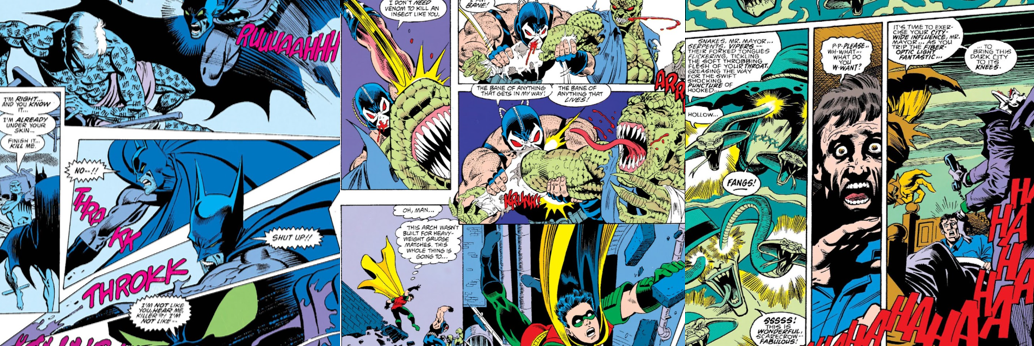
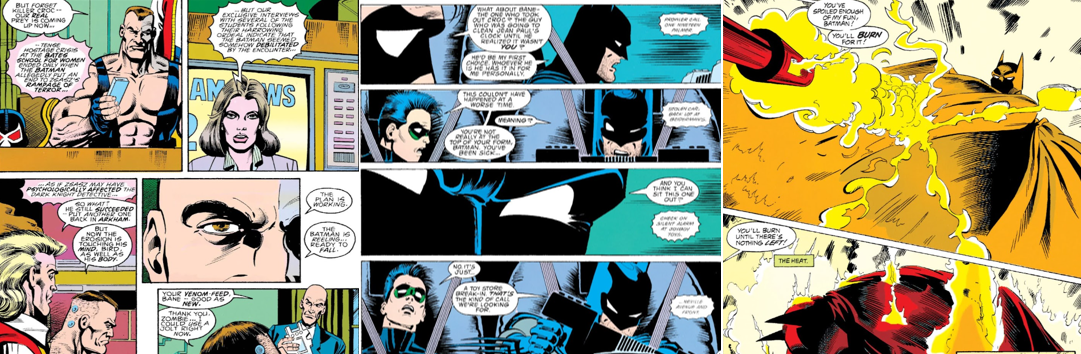
After spending more time observing and studying his quarry (during which Bane fought Waylon Jones/Killer Croc and broke his arms), Bane finally struck about six months later, ransacking a military armoury and launching a premeditated assault on Arkham Asylum. At Bird’s suggestion, Bane blew open the Joker’s cell first before dropping some ordinance to fuel the ensuring riot. While the other prisoners attacked the guards, the Joker gleefully took Doctor Jeremiah Arkham hostage. Though still recovering from mental and physical fatigue, the Batman arrived to help, rescuing who he could but unable to keep many inmates from blasting their way to freedom. While Batman freed Dr. Arkham from the Joker’s death trap, his hated enemy escaped and Batman was left mortified at the prospect of hunting down the escapees, much to Bane’s delight. After reviewing the situation and, alongside Tim Drake/Robin, surmising that Bane sparked the outbreak, Batman’s first test came when Jervis Tetch /The Mad Hatter invited him to a “tea party”. There, the Mad Hatter forced some goons to wear his brainwashing hats, sending Z-tier villain Burt Weston/Film Freak to investigate the bird following him and leading to him being beaten to death by Bane. Though Batman and Robin broke up the tea party, they were nowhere closer to locating Bane and, though physically struggling, Batman was adamant about proactively stopping the more dangerous inmates from organising themselves. His stubborn nature saw him chastising Robin’s concern and being more abrasive than usual, almost costing him when he investigated a toy store break in and was attacked by Arnold Wesker/The Ventriloquist’s brutish companion, Aaron Helzinger/Amygdala, while searching for Wesker’s mobster puppet, Scarface. With Robin busy tussling with the agile and arrogant Bird, Batman took a beating before finally knocking his simple-minded foe unconscious, forcing him to slink away to the Batmobile rather than apprehend the Ventriloquist.

While Batman’s pushed to his limit and Robin barely escapes Bane, the mayor is kidnapped.

Though hurting and fatigued, the Batman raced to a school where sadistic serial killer Victor Zsasz/Mister Zsasz had taken schoolgirls hostage, relishing the thought of scarring his body after slitting their throats. Though Bane’s lieutenants were eager for their boss to act, Bane was content to observe and delight in exhausting Batman and the Dark Knight refused to allow the Gotham police to interfere in the situation, which left one cop dead a feisty pupil held at knife point. After sending Robin after Bird (expressly forbidding him from confronting Bane), Batman brutalised Mr. Zsasz with a beating so vicious that Detective Renee Montoya had to intervene at gunpoint. The ordeal left the Batman so drained that he blacked out on a rooftop, meaning he couldn’t answer Robin’s calls for backup as he tracked Bird to Bane’s location. When Bane leapt to a passing train, Robin followed and was easily captured, blindfolded, and taken to the sewers. There, Bane expressed admiration for the boy and queried him regarding Batman, only to be meet with quips and Robin’s desperate attempts to fight back. Luckily for the Teen Wonder, the vengeful Killer Croc stepped in for a rematch, damaging Bane’s Venom device and ending up with his arm broken again. Their smackdown saw all three being swept through the sewers, with Robin barely getting to safety, though both he and Alfred despaired when Batman refused to back down from Bane’s challenge. As Trogg repaired Bane’s device, Batman was horrified to learn that cannibal psychopath Cornelius Stirk planned to murder Commissioner James “Jim” Gordon. Utilising his unique ability to cloud his prey’s mind with fear, Stirk masqueraded as Batman and almost knifed Gordon, much to the anger of his accomplice, the Joker, who wanted Gordon alive. Although the Batman saved Gordon, the incident led to the Joker teaming up with the true master of fear, Doctor Jonathan Crane/The Scarecrow, who suggested they terrorise the city’s anti-Batman mayor, Armand Krol.

Though Batman leaves Firefly to Robin and defeats Poison Ivy, he flies into a rage against the Joker.

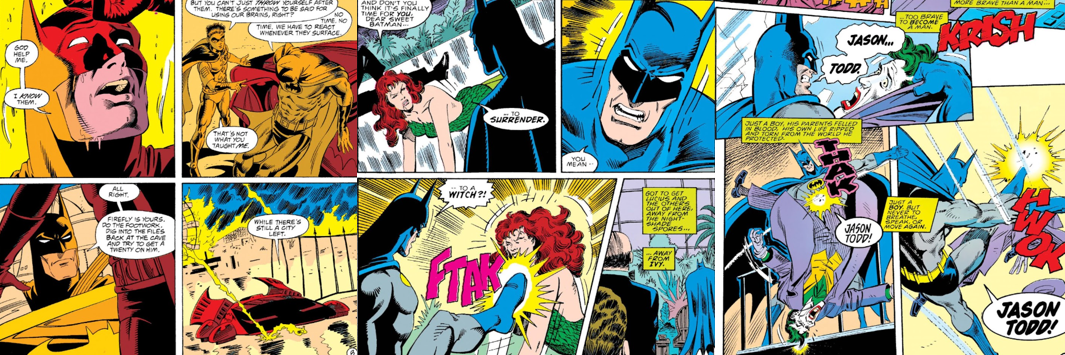
After kidnapping Mayor Krol and driving him to near madness with the Scarecrow’s patented fear gas, the two coerced the mayor into causing a firefighter strike, which allowed crazed pyromaniac Garfield Lynns/Firefly to set the city pier alight. Though he stubbornly refused Robin’s aid, the Batman was too exhausted to apprehend Firefly and begrudgingly let his partner investigate Firefly’s possible targets. While this led Batman to Firefly’s location, he was still too out of it to stop him, leading to him literally collapsing upon returning to Wayne Manor. While the Ventriloquist searched for Scarface and Jean-Paul Valley tested himself, Mayor Krol was forced to send the cops into a trap. Despite his failing health, Batman forced himself to attend a charity function as Bruce Wayne alongside physiotherapist Doctor Shondra Kinsolving, only for Doctor Pamela Isley/Poison Ivy to gatecrash the function and use special spores to kidnap wealthy gentlemen. Bruce played along to reach Poison Ivy’s lair and then switched to Batman to stop her, expending the last of his energy fighting her terminally infected minions. After the disgruntled Tim’s legwork leads Batman to the zoo and finally results in Firefly’s capture, Robin’s forced to intervene when Edward Nygma/The Riddler takes a talk show hostage, though his reckless actions earn him a dressing down from cantankerous detective Harvey Bullock. Upon learning of the mayor’s kidnapping, the Batman races to locate him, rescuing Bullock from an explosion and eventually tracking the Joker and the Scarecrow to the Gotham river tunnel. Unfortunately, the Scarecrow’s fear toxin bombards Batman with images of the Joker beating former Robin Jason Todd with a crowbar. Enraged, the Batman makes short work of the Scarecrow and savagely beats the Joker while screaming Jason’s name. The Batman’s only kept from killing his hated foe by the Scarecrow’s timely intervention, which sees him save and finally earn the trust of Mayor Krol.

Bane beats the near-helpless Batman close to death and then shockingly breaks his back!

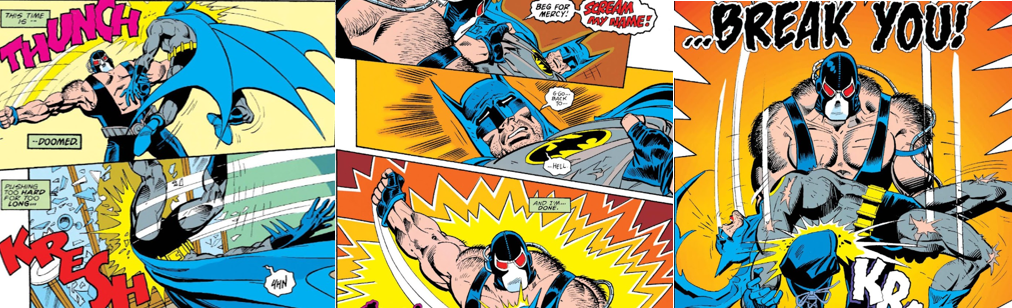
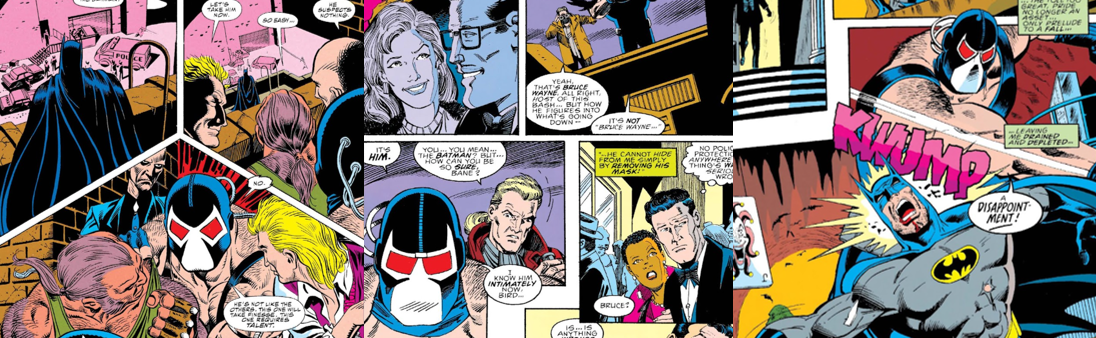
As the Ventriloquist finally reunites with Scarface, the Batman’s gauntlet ends when he’s attacked by Trogg. Though the brute snaps one of Batman’s rubs with a bearhug, the Dark Knight’s gadgets and tenacity see him victorious. He then quickly outsmarts Zombie but, after being driven to the edge by Bird, again comes close to snapping. Drained and at his wit’s end, the Batman reluctantly heads home, eager to rest, only to be horrified to find Alfred unconscious and Bane in his family home! Bane reveals he easily figured out the Batman’s identity, has mastered and perfected the Venom serum that once almost drove Bruce insane, and states his desire to take Gotham City by ending its creator. Though startled by Bane’s cold-hearted demeanor, Bruce dons his cowl and leaps into the fight…only to be immediately swatted aside. After launching Batman through some nearby furniture, Bane tackles him down to the Batcave and shrugs off his foe’s pitiful counterattack, disgusted by Batman’s broken resolve. The vicious beating causes Batman to remember every fight, injury, and villain to have mentally and physically scarred him, leaves him trapped under the Batcave’s giant penny, and driven head-first into the Batmobile, all while Bane rages. Though the Batman tries to fight back, it’s a miserable attempt and he’s sent crashing through Jason’s memorial, mercilessly battered, and partially impaled on parts of the Batcave. While Alfred rushes to Tim for aid, the half-dead Batman is manhandled by his monstrous foe. Victorious, Bane decides it would be too easy to simply kill the Batman and that he’d rather his foe continued to suffer so, in dramatic and horrifying fashion, Bane lifts the brutalised Batman over his head and drives him, spine-first, onto one meaty knee, snapping Bruce’s back in an awesome show of power. Bane then simply drops his foe to the floor, dismissive in victory, and prepares to claim his reward…

The Summary:
It’s easy, at first glance, to compare this first dramatic chapter in the “Knightfall” saga to the “Death of Superman” (Jurgens, et al, 1992 to 1993) arc that happened just before it (indeed, Batman and Robin both wear black arm bands in mourning for the Man of Steel). However, while that was a prolonged slugfest over a few issues with little meat on its bones beyond the shocking death of the world’s greatest hero, “Knightfall” is an agonising gauntlet for the Dark Knight that pushes him to his mental and physical limit. This was all perfectly set up in previous issues, which pushed Batman to breaking point and saw him shun Robin and drive himself to exhaustion, causing Tim to resent his stubborn and dismissive attitude and Bruce to alienate his allies. Perhaps he would’ve snapped out of this of it wasn’t for Bane, a calculating supervillain who spend a lifetime in near-literal hell honing his mental and physical self to conquer Gotham City and destroy her protector. I’ve mentioned it before, but this is peak Batman for me, in terms of art, with the likes of the immortal Jim Aparo showcasing Batman’s exhaustion, anger, and degenerating mental state throughout each issue. While this first chapter suffers from the absence of Batman’s biggest foes, Bane’s test is more than enough to exhaust Batman as he insists on going alone to avoid others getting hurt and out of a pig-headed refusal to accept help. Notably, however, the Batman commends Tim when his investigation locates Firefly and shows concern when Tim survives his encounter with Bane and Killer Croc, but Bruce ultimately shoulders the burden alone, which leads to his inevitable downfall.

The calculating Bane tests Batman’s mettle by running him ragged across Gotham.

I’ve always found it interesting that Bane chose to put Batman to the test this way. It’s a fantastic way to showcase Bane’s cunning and strategy; he’s no mere mindless brute, something many subsequent stories and adaptations tend to forget. Bane is a man of deep focus and determination, with a sprinkle of obsessive insanity thrown in, and is depicted as a dark mirror of Batman in many ways (though he’s ironically more courteous to his lieutenants than Batman is!) Still, for a man who expresses such admiration for the Batman and who wants to make a point of physically dominating him, it’s ironic and a little hypocritical that Bane chooses to strike when Batman is ready to keel over. All through the one-sided beatdown, Bane scoffs at the Batman and rages in disappointment, but he specifically chose to fight a Batman who was far from his peak, cleverly ensuring his victory but also meaning his win, while dominant, was undeniably tainted. Bane even maims and kills others to keep his target alive so that he can have the final glory, though showcases enough respect to leave Alfred and Robin alive since the Batman is his sole target. Nevertheless, Bane takes perverse pleasure in watching new reports and observing Batman’s progress and decline, studying his quarry to learn all his strengths and weaknesses to aid his eventual attack. The gauntlet is an exhausting test for the Batman, who’s obsessed with locating Bane, to the point where he brutalises some of his villains and comes dangerously close to breaking his “one rule”. This was particularly notable in Batman’s confrontation with the Joker, which sees the enraged Dark Knight beat his foe half to death for killing Jason Todd. It’s enough to terrify even the Scarecrow, and similar outbursts against the Mad Hatter and Mr. Zsasz sees Batman’s allies question his mental stability. This is reflected in Mayor Krol’s anti-Batman campaign, though the city’s cops are left largely useless thanks to a departmental shake-up and the mayor being forced to mess them about.

Bane showcases cunning, strength, and a psychotic determination in his memorable debut.

This first chapter of “Knightfall” does a fantastic job of painting Bane as an intelligent and nigh-unstoppable foe. While it’s a shame that it took a new villain to overwhelm and decisively defeat the Dark Knight, Bane makes a far greater impression here than Doomsday, who was a mindless brute bent on destruction. While Bane’s design is perhaps too simplistic, I really enjoyed how calculating and quietly psychotic he was: he has a plan and he sticks to it, confident of his victory. Naturally, this is aided by his Venom serum, which makes him almost superhuman, but a lifetime of hardship and training made Bane the perfect villain, a puppet master largely being content to let the escapees do as they please. This chapter also depicts some of Jean-Paul’s redemption, as he trains with Robin to put his skills to good use, shows Robin’s frustration and adaptability, and even leaves the door open for future threats from the Joker, the Scarecrow, and the Ventriloquist. Far from being as one-note as “The Death of Superman”, this first chapter of “Knightfall” deconstructs Batman and leaves him a man weary from a lifetime of fighting, effectively shattering the status quo as surely as Bane breaks Batman’s back. This startling conclusion leaves the reader wondering what’s next for Batman, Bane, and Gotham City and shows that even the Batman has a breaking point. While it’s a shame that Bane struggled to remained relevant after such a memorable debut, his intriguing and imposing character certainly made an impact on me as a teenager and continue to make “Knightfall” one of the quintessential Batman stories.

My Rating:

Rating: 3 out of 5.

Pretty Good

Were you a fan of Bane’s dramatic debut? What did you think to his violent past and his depiction as a dark mirror of the Batman? Do you agree that it was unfair of him to run the Batman to exhaustion? Which of Batman’s battles were you most invested in? Were you shocked when Bane broke the Batman’s spine? What are some of your favourite bane stories and moments? How are you celebrating Batman Day this year? Whatever your thoughts on this first chapter of the “Knightfall” saga, and Batman in general, share them below. If you’d like to see me tackle the next chapter in the “Knightfall” saga, support me on Ko-Fi and let me know.