Story Title: “The Tomorrow Soldier” (Part 1 to Conclusion) Published: 2 July 2014 (cover-dated: September 2014) to 1 October 2014 (cover-dated: December 2014) Writer: Rick Remender Artists: Carlos Pacheco and Stuart Immonen
The Background: By 1941, Nazi Germany had decimated Denmark and Norway and World War Two was fully underway and, after some initial resistance, the United States joined the War against the “Axis powers” of Germany, Japan, and Italy. Patriotism and national pride was high, especially in America, during those dark days, making it the perfect time for Joe Simon and the legendary Jack Kirby to debut Captain Steve Rogers/Captain America and his kid sidekick, James Buchanan Barnes/Bucky, to encourage support of the war effort. Once the War was over, superheroes saw a decline and Captain America’s solo publication was cancelled in 1954. However, Cap got a second chance when he joined the Avengers as a “man out of time”, battling iconic villains like Johann Shmidt/The Red Skull and even opposing his fellow superheroes during a “Civil War”. After surrendering to the authorities, Cap was seemingly killed and his troubled sidekick, better known as the Winter Soldier, took up the mantle until Steve’s inevitable resurrection. However, in 2014, cybernetic supervillain Arnim Zola’s machinations saw Cap drained of the super soldier serum and rapidly aged into an old man! Thus the battle was on the see who would become the new Star-Spangled Avenger, a battle eventually won by Cap’s long-time ally, Sam Wilson/The Falcon, to much undue controversy, Created by Stan Lee and Gene Colon in 1969, the Falcon was the first Black American superhero in mainstream comic books and was specifically created to challenge social perceptions. After a lengthy career as a bit-player in Marvel Comics, Sam made headlines with his promotion, a story arc that achieved mainstream recognition due to Anthony Mackie’s celebrated portrayal of the character in the Marvel Cinematic Universe.
The Review: Sam Wilson’s assumption of the Captain America mantle didn’t come easy, nor without drama. In the leadup to this story, Cap was kidnapped by Arnim Zola and spirited away to Dimension Z, where the mad scientist plotted to drain his super soldier serum to create a race of genetic super-beings! Cap broke free but was trapped in Dimension Z for ten years, during which time he raised Zola’s son, Ian, as his own. Though Cap eventually escaped with Jet Zola/Jet Black, Zola’s daughter, both Ian and Cap’s lover, Agent 13/Sharon Carter, were lost. Cap then spent some time working with Sam to mould Jet Black into a hero but, in a battle with former Strategic Homeland Intervention, Enforcement, and Logistics Division (S.H.I.E.L.D.) agent-turned-madman, Ran Shen/Iron Nail, Cap’s super soldier serum was neutralised and he quickly aged into frail, infirm old man! Our story picks up with Steve sequestered at Avengers Mansion, stewing over sensationalist news reports demanding accountability for Captain America and S.H.I.E.L.D.’s dangerous and destructive antics. Steve’s offered council by S.H.I.E.L.D. director maria Hill and the decidedly Samuel L. Jackson-esque Nick Fury Jr., who assure him that he saved countless lives taking down Iron Nail. Unfortunately, his shield has been left too radioactive to be returned to him and Steve’s aghast when he’s told S.H.I.E.L.D. won’t be destroying Gungnir, the weaponised, Transformer-like Helicarrier Iron Nail hijacked and threatened the United States with. Steve is so angered that he starts to wonder if the reports of corruption within the government and S.H.I.E.L.D. aren’t valid, though Fury simply explains that contingencies such as Gungnir are vital to protect innocent civilians and keep the public from being overly reliant on costumed heroes, especial as the Avengers’ roster has dwindled lately.
When Armin Zola’s mutates invade, the Avengers gain an unlikely ally in Steve’s adopted son!
Over on the upper west side, Sam Wilson wakes up to a hell of a hangover and to find he spent the night with Jet Black! Though he’s not exactly thrilled at having crossed that line, he seems won over by her affections, but their tender moment (and the awkwardness) is interrupted when Jet spots a commotion outside. It turns out that her father, Armin Zola, is so eager for revenge that he rips open a hole in the fabric of reality and his monstrous, “hyperevolved mutates” come pouring into Central Park, followed closely by a mysterious man garbed in a spiked battle suit. Zola quickly contacts the Red Skull to co-ordinate their newest efforts in overthrowing the decadent West, asserting himself as a menacing force in his own right and seemingly earning the Red Skull’s respect with his army of mutates. While Anthony “Tony” Stark/Iron Man and Doctor Robert Bruce Banner/The Incredible Hulk work to find some way of restoring Steve’s superhuman condition, they (along with Thor Odinson and Steve himself) are alerted to the crisis via the mansion’s monitors. Steve immediately recognises the threat as Zola; Stark is incredulous but quickly convinced of the danger when the armoured mutate comes crashing through the wall. Luckily, the Hulk is around to face the stranger (with Banner having more control over the Hulk at this point). Naturally, Iron Man adopts a snarky “shoot first, ask questions later” philosophy, leading to an explosive confrontation as he and Thor try to keep the masked intruder from reaching Steve. However, the masked man easily avoids their attacks and even gets the better of Thor, running rings around them, only to be astonished by Steve’s frail condition. This distraction allows the Hulk needs to strike; ironically, though the stranger deftly evades the Green Goliath, Steve easily subdues the masked man. However, Steve is stunned when the intruder unmasks to reveal himself as Ian Ziola, now Ian Rogers, Steve’s adopted son, who was regenerated from death by one of Zola’s “bio-mass [tanks]”.
Zola manipulates events to coerce his daughter, whom the Falcon rushes to defend.
Overjoyed to see Ian alive and that he’s come to help, Steve proudly introduces him to his fellow Avengers but distraught to learn that Ian’s been fighting Zola alone for the last ten years. Steve then gets a call from the Falcon, who relays the extent of Zola’s attack: thanks to the city’s birds, Sam has seen the monsters rapidly spread throughout New York City. Jet Black then reveals she knows a way into her father’s fortified tower that may help them to stop the invasion and calls upon the Avengers to go along with her father’s plan, which is to face him head-on, to provide a suitable distraction. The Avengers readily accept, taking the fight to the ravenous, near-mindless hoards alongside their new ally, and are initially unimpressed by Zola’s forces. However, they’re soon confronted by Zola’s “hyper-mutates”, warped, monstrous copies of the Avengers that call themselves the “Unvengers”! Meanwhile, Jet Black and the Falcon easily infiltrate Zola’s tower, affirming that her allegiances lie anywhere but with her crazed father and insisting on using her position as the madman’s daughter to throw off his mutate guards. The plan works and they advance through the tower, only to find Sharon held hostage in a pitiful cell! After learning about Sharon’s predicament from Sam, Steve immediately asks Ian to leave the fight to the Avengers and go rescue her; though Sharon warns that such an act was all foreseen by Zola. When Jet confronts her father in his control room, he all-but guarantees the Red Skull that he can win her over to their side, claiming everything she’s done – even her betrayal – was also all part of his manipulative will. The Falcon breaks up the tense family reunion, tackling Zola out the window and sending him crashing to the streets below. Zola recovers near-instantly, however, his patience with his “perfect child” wearing thin, but the Falcon immediately intercepts him in mid-air.
Though the Avengers turn on Jet, Sam survives to take up the Captain America mantle.
Raging at Zola for his ill treatment of Jet, the Falcon fights valiantly even as Zola smashes a bus onto the mis-matched hero. When Jet rushes to his aid and Zola sees how much she cares for the Falcon, Zola vows to murder him to rid her of such weaknesses all while hypocritically declaring his undying love for her! Thanks to Sharon, Steve warns the Falcon that Zola plans to blow up Avengers Tower, though Sam inadvertently kickstarts the detonation when he has Redwing remove Zola’s “telepathic broadcast doohickey”! When the Unvengers keep Iron Man from helping and Ian and Sharon are unable to disarm it, the Falcon bravely and selflessly grabs the bomb and flies high into the sky, bidding an emotional farewell to Steve and urging him and Sharon to enjoy their retirement with Ian before the bomb explodes in his arms. A horrified Steve thinks back to when he and Sam first met, the adversity he fought through, and how hard he worked to be a hero without any superpowers, fancy gadgets, or special serum as Iron Man sombrely retrieves the Falcon’s surprisingly intact body. Though Zola pleads with Jet Black to return to Dimension Z where she can be safe from the Red Skull’s looming threat, she angrily rebukes him. Sharon, Steve, and the Avengers gather in quiet mourning, only to be astonished when he comes to and reveals that Stark made him some Adamantium wings, which absorbed most of the blast! Though everyone’s overjoyed by this, Sharon blames Jet for Zola’s attack and accuses her of being a double agent. To Jet’s dismay, even Sam has his doubts and, when the Avengers try to restrain her to investigate, she angrily rushes to Zola’s tower, believing her father was right that her new allies couldn’t be trusted. One week later, seemingly every superhero around gathers at Avengers Mansion, where Steve announces his retirement from superheroics due to his condition (though he and Sharon plan to aid the Avengers with tactical support). He also reveals that Sam is the new Captain America and proudly hands him his shield, entrusting one of his oldest friends with his legacy, which Sam humbly accepts with a cry of “Avengers Assemble!”
The Summary: This was a difficult story to just jump into without context. A lot of modern comics are like that, with one series of mini arcs leading to the next, all of it part of a bigger picture. I get it and I accept it and I know there’s some onus on the reader to maybe get some background before diving in feet-first. However, since I’m mostly going on some background reading and what the “Previously…” recap is telling me, there were a few characters and events that I wasn’t very familiar with. Jet Black and Ian Rogers were two main examples; I knew Steve aged into an old man around this time, but I didn’t realise he took a son and a protégé as well. Consequently, Ian’s big reveal didn’t impact me as much as other, more invested readers but I think Rick Remender did a great job of conveying Steve’s shock and joy at seeing his son alive and well. I loved that Steve proudly introduced him to his surrogate family, the Avengers, and that Ian wasn’t some bitter, twisted soul looking to kill his adopted father. Instead, we got a young man who’s actually happy to see and fight alongside his father for a change, something very rare in comics. Ian meshes well with the Avengers, sporting a smart mouth and a capable agility despite his years of fighting against his maniacal father and living in a nightmarish alternate dimension. Similarly, I didn’t have much of a connection with Jet Black but I think the story did a good job of showing her as a character just trying to find her way. I liked her blossoming relationship with Sam (even if his reaction at waking up with her was a little odd) and that she willingly and selflessly opposes her father once he arrives. She does nothing except lash out against Zola, rebuking his offers and voicing her hatred of him even as he tries to win her over with his silver tongue. And, for all her efforts and hard work and personal turmoil, Jet is met with suspicion and accusations from even her own brother. Thus, she’s driven from her newfound allies and retreats back to Zola, devastated to learn that he was right and that she would never be accepted as one of them all because Sharon blew her lid and Sam barely even vouched for Jet’s trustworthiness.
For a story meant to be Sam’s crowning moment, he was strangely portrayed throughout.
Indeed, I hope subsequent issues delved into Sam’s feelings regarding this. He barely says anything when Sharon accuses Jet and gets only one panel where he seems conflicted or upset by what he sees as a betrayal. It’s a weird way to end the conflict, especially considering everyone was just mourning Sam’s loss and celebrating his survival. Sam’s selfless actions and his commitment to justice despite lacking any superpowers are the qualities that make him suitable to take up the Captain America mantle, yet this feels somewhat tarnished since he didn’t showcase any loyalty to Jet or any conviction in defending her. He stood there, stunned, and let everyone run their mouths, which doesn’t scream “Captain America” to me. In fact, this is a bit of an odd story to introduce Sam as Cap in general, really. For most of the issues, he’s not really doing anything except flying around and reporting intel to the Avengers. Sure, this is useful from a tactical standpoint but the mutates were swarming everywhere; I’m pretty sure the Avengers would’ve spotted them without him. The Falcon does take the fight directly to Zola, infiltrating his tower with Jet Black, and he does valiantly fight the cybernetic madman despite clearly being outmatched. During this fight, the Falcon also sticks up for Jet in a way he fails to do once the conflict is resolved and his fighting spirit is certainly commendable, but I feel like any hero would’ve fought just as hard in his stead. The Falcon making the sacrifice play is a great shorthand for the mentality needed to be Captain America but, again, it feels a touch hollow. Like, Iron Man was just about to take care of the bomb before he got interrupted and Sam probably wouldn’t have had to make that call if he hadn’t yanked out Zola’s broadcast device. It just felt a bit rushed and out of nowhere to me and I can’t help but wonder if maybe it would’ve been better to play things a little closer to the ground. Like, have Zola threaten to kill a group of civilians and have Sam shield them with his wings and seemingly be beaten to death, or something like that. Just something a little less random and a bit more in-line with his status as a more grounded, “human” superhero.
I liked that Steve passed on the mantle but the story felt oddly rushed at times.
On the plus side, Carlos Pacheco and Stuart Immonen do good artwork. I liked Iron Man’s darker armour and Ian’s totally nineties emo armour (I mistook him for Robbie Baldwin/Penance at first), though Jet Black felt a bit overdesigned. Similarly, while Sam’s Falcon outfit is a vast improvement over his debut costume, I can’t say I’m a big fan of his Falcon/Captain America hybrid suit. He reckons it’s “sexy” but it looks a bit of a mess to me, with miss-matching colours and a far too “busy” design. Maybe if his chest emblem was just the star, which was an extension of his weird-looking cowl, I’d like it more. I dunno, it just looks uncomfortable to wear and a pain in the ass to draw. I quite enjoyed the passing of the torch, though, in concept. I like seeing Steve rendering incapable of continuing as Captain America and retiring to a more sedentary life, though I do think Bucky is a better choice to take up the mantle. I get the idea that Captain America is a symbol of what a normal man can strive to be, but Steve was at least partially superhuman thanks to the super soldier serum. Then again, considering the Falcon survived having a bus dropped on his head, it’s safe to assume he’s more durably than Joe Public. I really like seeing all the other heroes immediately accept and endorse Sam; there was no question or objection, and he slipped into the role effortlessly. However, I feel he didn’t play a big enough role in this conflict. He fought Zola, sure, but to a standstill and didn’t defeat him; he just stopped his plan, and he lost his girl in the process. It’s a weirdly, tonally confused story for me and a strange way to usher in a new Captain America, though I was left curious to explore how Sam adapted to the role and the fallout from this adventure.
My Rating:
⭐⭐⭐
Rating: 3 out of 5.
Pretty Good
What did you think to Sam’s promotion to Captain America? Do you agree that this was a strange story to make that change or did you like the way it went down? What did you think to Sam’s suit, and do you like seeing him in the role? Were you disappointed that the Unvengers didn’t do more, and that Sam didn’t try harder to defend Jet Black? What are some of your favourite moments from Sam’s time as Captain America? Use the comment section below to share your thoughts and go read my other Marvel and Captain America content on the site.
Released: 4 April 2014 Director: Anthony and Joe Russo Distributor: Walt Disney Studios Motion Pictures Budget: $170 to 177 million Stars: Chris Evans, Sebastian Stan, Scarlett Johansson, Anthony Mackie, Cobie Smulders, Frank Grillo, Emily VanCamp, Samuel L. Jackson, and Robert Redford
The Plot: Having helping to save the world from an alien invasion, Steve Rogers/Captain America (Evans) works alongside Nick Fury (Jackson), director of Strategic Homeland Intervention, Enforcement and Logistics Division (S.H.I.E.L.D.), and Natasha Romanoff/Black Widow (Johansson). Steve’s efforts to acclimatise to the modern world are fraught with doubt concerning a potential conspiracy within S.H.I.E.L.D. and only further exacerbated when he continually runs afoul of a mysterious assassin codenamed the “Winter Soldier”.
The Background: Honestly, of all of the Phase One films in theMarvel Cinematic Universe (MCU), I was the least excited for Captain America: The First Avenger (Johnston, 2011). However, while a little run of the mill in some ways, the film proved to be a massive box office success; like manycritics, I was impressed with the film, especially in hindsight without the anticipation of Marvel’s first team-up movie clouding my judgement, and Marvel entered Phase Two with the intention of not only refining everything that worked so well in Phase One but also shaking things up considerably for the MCU and laying the groundwork for bigger stories going forward. In many ways, Captain America: The Winter Soldier was central to this edict; ostensibly inspired by Ed Brubaker’s seminal comic book story, the filmmakers chose to ground the story in the then-present day and craft a spy thriller very much in the style of a 1970s political thriller that would have wide-reaching ramifications across the MCU. Captain America: The Winter Soldier was a massive hit; it made nearly $715 million at the box office and was the fifth-highest-grossing film of 2014. Reviews were unanimously positive, with critics praising the character development and suspense and geo-political relevance, and the film is held in high regard as one of the best (if not the best) films of the entire MCU.
The Review: Two years have passed since Avengers Assemble (Whedon, 2012) and, despite being thrown in the deep end at the end of The First Avenger and during the chaotic events of that film, Steve has largely adjusted to modern life. This is primarily because he has been focusing on S.H.I.E.L.D. missions alongside their counter-terrorism team, Special Tactical Reserve for International Key Emergencies (S.T.R.I.K.E.), led by Brock Rumlow (Grillo), a fact Romanoff chastises him about. Although Steve has been researching the events he missed out on while under ice and has compiled a handy-dandy list of pop culture to catch up on, he maintains that he is “too busy” to think about dating or anything other than the next mission, and yet is growing increasingly perturbed by Fury’s secrecy and the questionable nature of many of his missions.
Steve’s black and white view of things clashes with the morally grey way of the modern world.
Carrying a great deal of loss, survivor’s guilt, and sorrow for the years, friends, and loved ones he has lost, Steve strives to maintain his composure; he is compelled to continue following orders and serving his country out of a sense of duty and to trust S.H.I.E.L.D. since his former flame, Peggy Carter (Hayley Atwell), helped found the organisation. Steve struggles a bit to form new friendships and relationships, though he does take the advice of his colleagues to heart and tries, somewhat awkwardly, to ask out his neighbour, Sharon Carter (VanCamp). His difficulties in this aspect are only exacerbated by Fury’s cagey demeanour and when Sharon turns out to be S.H.I.E.L.D. Agent 13; struck by a series of devastating revelations that turn friend into foe and unable who to trust, The Winter Soldier is as much a film about Steve coming to terms with the grimy and chaotic nature of the modern world as it is about shaking the world of the MCU to its very core.
Thanks to his increased screen time, Fury’s character is fleshed out considerably.
Steve’s more old-school sensibilities and dislike for secrecy causes some friction between him and Fury; Fury, however, remains the consummate spy’s spy and is fully prepared to compartmentalise information from even super soldiers like Steve. Thanks to Fury’s extended screen time, we learn much more about his character, backstory, and motivation than in his previous bit-parts and cameos; Fury’s plan to launch a series of Helicarriers to monitor and eliminate potential threats as part of “Project: Insight” insults and angers Cap, who sees it as oppression rather than freedom. Cap’s discomfort with secrecy, Fury’s motives, and recent events are shown to have some basis when, unable to decrypt the data S.T.R.I.K.E. retrieved from Batroc, Fury requests that Secretary of Internal Security Alexander Pierce (Redford) delays the project until a proper investigation can be undertaken. The data is suddenly and violently stolen by a mysterious and aggressive assassin known as the Winter Soldier, who attacks Fury while in transit and then appears to kill the S.H.I.E.L.D. director. When Cap refuses to share the encrypted file with Pierce, he is branded a fugitive and hounded by the very people he once fought alongside and considered allies. With Romanoff’s help, Steve decrypts the data and is led to a S.H.I.E.L.D. bunker where the electronically preserved consciousness of his old foe Arnim Zola (Toby Jones) reveals, to Steve’s horror, that Hydra are not only alive and well but have infiltrated S.H.I.E.L.D. and much of the world’s government, including members of the World Security Council and Senator Stern (Garry Shandling), and that Pierce is planning to use Project: Insight to eliminate potential threats to their power before they can become a problem.
Pierce’s instrument is Bucky, who’s been brainwashed into a ruthless assassin.
Much like previous casting in the MCU, Robert Redford was quite the coup for Marvel Studios and his enigmatic presence lends an authority and credibility to the film that is in stark contrast to the idea that superhero films are just big, dumb action flicks. Pierce’s primary agent is the titular Winter Soldier, a menacing and almost robotic assassin who attacks with precision, efficiency, and has a cybernetic left arm. Superhumanly fast and incredibly strong, the Winter Soldier is easily able to catch and fling back Steve’s shield and unbelievably adept with guns and, especially, knives. Romanoff is familiar with the assassin, having heard of him as something of a bogeyman during her time as a Russian agent, but Steve is absolutely stunned to discover that the assassin is his old friend, James Buchanan “Bucky” Barnes (Stan), who survived his seemingly fatal plunge in The First Avenger. Recovered by Hydra agents and subjected to a version of the same super soldier serum that augmented Cap, Bucky was routinely brainwashed into becoming a ruthless assassin; kept in cryogenic stasis and unleashed whenever Hydra required a target to be eliminated, Bucky’s sense of identity is all but lost thanks to decades of mindwipes and manipulation. For the first time since he became the Winter Soldier, Bucky begins to question himself and his mission; intrigued by Steve’s knowledge of him, he is curious to find out more but no less dangerous as his conditioning dictates that the mission must always come first at the expense of all other distractions.
Though surrounded by betrayal, Steve is supported by allies both old and new.
While Steve’s oldest friend may have been turned into a merciless enemy, Cap gains a new ally in United States Air Force pararescueman Sam Wilson (Mackie); though fully trained in advanced aerial combat and utilising a specialised rocket-and-wing pack as the Falcon, Sam is primarily focused on helping veterans to reacclimatise to society after serving overseas. As a result, he forms an immediate friendship with Steve based on their mutual military experience and losses; with few friends and confidantes to talk to, Steve finds a kindred spirit in Sam and he helps Cap to focus on moving on with his life as best as he possibly can. When Pierce brands Cap a traitor and orders all agents (both those loyal to S.H.IE.LD. and those oblivious to Hydra’s infiltration) to hunt him down, Sam is one of the few who stands by Steve and suits up as the Falcon to join him in his desperate assault against the Helicarriers in the film’s finale. Black Widow also gets a great deal more time to shine here than in her previous appearances; ostensibly placed as Cap’s partner in S.T.R.I.K.E. missions, she is a pragmatic, straightforward, and very modern character in contrast to Cap’s more dated sensibilities. Indeed, while he struggles to adjust to the morally grey nature of the modern world, Romanoff has lived in a morally grey area for her entire life and sees (and approaches) situations very differently to Steve. Her secretive nature conflicts with Steve’s more honest ways just as much as Fury’s but, when push comes to shove, she prioritises her friendship and partnership with Steve over all other concerns. Still a kick-ass, impossibly alluring character, Romanoff actively tries to encourage Steve to socialise more and explore his potential in the modern world, seems legitimately heartbroken when Fury is killed, and works alongside Cap to uncover the mystery of the Winter Soldier and the depth to Hydra’s infiltration of S.H.I.E.L.D. personnel.
The Nitty-Gritty: Captain America: The Winter Soldier is an impressively intriguing and complex political thriller masquerading as an action-packed superhero film; for those who say all the MCU films look and feel the same, I would recommend taking another look at The Winter Soldier, which is far more gritty and serious than the average superhero film, to say nothing of its MCU cousins. Filled with as much intrigue as it is action, the film challenges our perception of the MCU by turning friends into foes and making us question the motives of everyone we’ve grown accustomed to by this point. Accordingly, the primary goal of The Winter Soldier is to take everything that has been established about he MCU and tear it down; S.H.I.E.L.D., especially, once this seemingly benevolent governmental arm that provided the Avengers with every resource they could ask for, is shattered into fragments by the reveal that Hydra has infiltrated it since the end of the Second World War. At the time (and, if I’m being honest, even now), I somewhat disagreed with stripping S.H.I.E.L.D. away from the Avengers as it felt like we hadn’t really had a chance to really explore what it was all about or see them operate at the peak of their power but it definitely put the MCU on the path towards the fracturing of its premier super-team and the extremely effective unification of every costumed hero against a cosmic threat. Zola reveals that, over the years, Hydra has been destroying individuals and governments (primarily using the Winter Solder) to weaken society and the will of humankind.
The Winter Soldiers considerably ups Cap’s fighting scenes and skills.
The culmination of this is an algorithm, developed by Zola, which is capable of identifying those who could become threats to Hydra’s power and eliminating them; this list includes names such as Howard Stark (Dominic Cooper), Doctor Bruce Banner (Mark Ruffalo), and the yet-to-be-introduced Doctor Stephen Strange (Benedict Cumberbatch). As much as I enjoyed The First Avenger, its action scenes weren’t really too much to shout about; the film gave a general overview of Cap’s superhuman abilities but he didn’t have too many chances to really show what he was capable of. The Winter Soldier changes all of that; Cap freely dives out of aircraft without a parachute, is fully capable of taking on entire groups or armed (and unarmed) men in both large and confined spaces, and he uses his indestructible Vibranium shield to fantastically brutal effect as an offensive weapon. Cap’s almost single-handed takedown of Georges Batroc (Georges St-Pierre) and his terrorists is only the top of the iceberg when it comes to how hard-hitting and impressive the film’s action and fight scenes are, with Cap’s extraordinary scuffle with Rumlow and other undercover Hydra agents in the lift and his multiple fist-fights with the titular Winter Soldier being a notable highlight.
The film ends with S.H.I.E.L.D. destroyed and the MCU heading for major changes.
The Winter Soldier culminates in a two-pronged attack against Hydra, which is positioning S.H.I.E.L.D.’s own technology to rain fire upon major American cities. When Fury reveals that he faked his death, he is able to get Black Widow close enough to Pierce to take him out of play and broadcast all of Hydra (and S.HI.E.L.D.’s) secrets to the world to effectively neuter whatever secrets and leverage the organisation may have. At the same time, the Falcon and Cap attack the Helicarriers; while Falcon fights with Rumlow, Cap switches the control chips so that the Helicarriers attack each other rather than their intended targets and, in the process, is forced into a final, brutal fist-fight with the Winter Soldier. As the Helicarrier collapses around them Steve refuses to fight his former best friend and tries to reach him; although he takes a savage beating, his words apparently strike enough of a chord in Bucky for him to rescue Steve from drowning and he disappears, alone and free for the first time in over seventy years. While Easter Eggs and references to the larger and ever-growing MCU are actually far less prominent in The Winter Soldier than in its Phase One counterparts, the film ends with Steve and Sam starting a new mission to track Bucky down, Fury adopting a pretty half-assed new look in a new-S.H.I.E.L.D.-less world, and a tantalising tease for the next big Avengers crossover.
The Summary: For me, and for many, Captain America: The Winter Soldier is kind of where the MCU “got serious”; the films before it had always dealt with some pretty serious issues but generally approached them or balanced them out with some spectacular action or moments of entertaining levity. Here, though, the focus is definitively on being more of a political spy thriller full of intrigue, mystery, and suspense as much as action. That’s not to say that it’s dull, boring, or too serious for its own good; in fact, The Winter Soldier perfectly balances its action with its gritter aspects in a way that other superhero films can only dream of. The result is easily one of the best MCU, and superhero, films ever made and a vast improvement over the first film…and that’s keeping in mind that I am a big fan of The First Avenger! But The Winter Soldier fully sold me on Cap as a character, fleshing out his morals and motivations and challenging his perception of the world and his allies by turning them all upside down. Better yet, the film introduces one of my favourite MCU characters, the Winter Soldier, who is played to perfection by Sebastian Stan and is a wonderfully realised tortured reflection of the morally just Captain America. The decision to tear S.H.I.E.L.D. down and reveal that Hydra had secretly been operating behind the scenes for decades was a bold one and one that was definitely part of a well-crafted long game for the MCU and it all stated here with this exceptionally well-crafted thriller of a film.
My Rating:
⭐⭐⭐⭐⭐
Rating: 5 out of 5.
Fantastic
What are your thoughts on Captain America: The Winter Soldier? What did you think about the way the film, and the MCU, handled Cap’s return to the world after being frozen in time? Did you truly believe that Fury had died in the film? What did you think to Bucky’s reintroduction as the Winter Soldier and the debut of the Falcon? Were you a fan of the changes the film made to the MCU and the destruction of S.H.I.E.L.D.? Where does this film rank against the other Captain America movies and the larger MCU? How are you celebrating Captain America this month? Whatever your thoughts, drop a comment below and be sure to pop back for more Captain America content throughout July.
Released: 22 July 2011 Director: Joe Johnston Distributor: Paramount Pictures Budget: $140 to 216.7 million Stars: Chris Evans, Hugo Weaving, Hayley Atwell, Sebastian Stan, Dominic Cooper, Tommy Lee Jones, and Stanley Tucci
The Plot: Steve Rogers (Evans) is desperate to enlist in the United States Army and combat the Axis Forces but is repeatedly rejected because of his frail body. Intrigued, Doctor Abraham Erskine (Tucci) transforms Steve into a veritable superhuman. With World War Two in full swing, Johann Schmidt/The Red Skull (Weaving), acquires the mysterious Tesseract and Steve engages in a crusade to bring down his Hydra forces as Captain America.
The Background: Captain America: The First Avenger was the fifth film in the Marvel Cinematic Universe (MCU) but a big-screen adaptation of Marvel Comic’s patriotic super soldier was actually in development as far back as the year 2000. After settling an ugly lawsuit regarding the character, and bolstered by the early success of the MCU, producer Kevin Feige soldiered on (no pun intended) with his plan to introduce some of Marvel’s classic characters in solo films before bringing them together for a big team up and chose to focus on setting the stage for Cap’s “man out of time” story arc in the wider MCU. After signing director Joe Johnston, production began in earnest in 2010; after some hesitation, Chris Evans (who had previously starred as Johnny Storm/The Human Torch in separate, unconnected Marvel adaptations) joined the film in the title role and cutting edge digital effects were used to portray him as a weak and frail man prior to showcasing his impressive physique. Perhaps because audience anticipation for the upcoming Avengers movie was reaching its peak, Captain America: The First Avenger was a resounding box office success; the film made over $370 million in worldwide gross and was met with widespread critical acclaim, though some noted that it was maybe playing things a little too safe, which I agreed with at the time. Nevertheless, the film’s success led directly into the aforementioned Avengers movie and galvanised Captain America as an icon for an entirely new audience, one who would go on to become a major part of the MCU as it continued to unfold in subsequent years.
The Review: Captain America: The First Avenger is bookended by scenes set in the then-modern day; the opening sequence depicts a team of scientists (and a few representatives from the Strategic Homeland Intervention, Enforcement and Logistics Division (S.H.I.E.L.D.)) discovering a futuristic aircraft buried in the Arctic that houses the frozen body of Steve Rogers. From there, the film jumps back to 1942, at the tail-end (and height) of the Second World War; Nazi Germany is aggressively spreading death and destruction across most of Europe and the Allied Powers (mainly the United Kingdom and the United States of America, especially in Hollywood) are frantically trying to push them back. As a result, the U.S. continues to ask for volunteers to join her ranks to fight for the ideals of freedom and equality. None embody these beliefs more than young Steve Rogers, a frightfully malnourished man whose family were killed as a result of the War and who has been repeatedly denied his time in service of his country due to his many physical ailments.
Steve is a frail, sickly young man whose heart and determination are unmatched.
Frustrated at his inability to “do his part”, Steve upholds his ideals on the home front; even when he is clearly physically mismatched against bullies and braggarts, Steve continues to get up and fight back in an effort to prove himself (and to vent his frustrations). While his friend, Sergeant James Buchanan “Bucky” Barnes (Stan) is often on hand to help him out, both physically and with the ladies, Steve desperately wishes to contribute to the war effort despite him being basically infirm and more than a little unlucky in love. His latest effort to lie his way into active service catches the attention of Dr. Erskine, who is inspired by Steve’s moxie and his lofty idealism. Dr. Erskine sees Steve as the perfect candidate to undergo the super soldier procedure not because he is a good soldier, but because he is a good man and Steve, who has no desire to kill anyone and simply wishes to stand up to bullies, jumps at the chance to be a part of “Project: Rebirth” and the Strategic Scientific Reserve (S.S.R.). While Colonel Chester Phillips (Jones) is less than impressed with Dr. Erskine’s selection above the other far more physically capable recruits in his regiment, Dr. Erskine remains resolute in his choice and Steve’s adaptability and never-say-die mentality catches the admiration of British agent Peggy Carter (Atwell). As part of their unit, Steve is put through the paces of basic training and demonstrates his bravery on numerous occasions but the one that stands out the most is when he willingly throws himself upon what is believed to be a live grenade to shield his fellow soldiers.
Cap soon finds himself leading the charge in co-ordinated strikes against Hydra facilities.
The super soldier serum is more than just a simple shot in the arm or a light show; in conjunction with technology provided by Howard Stark (Cooper), Erskine subjects Steve to a series of deep injections and a bombardment of “Vita Rays” that augment his physical stature and abilities far beyond those of a normal man. Now tall, muscular, and sporting a rapid metabolism, Steve is made a veritable superhuman but at the cost of Dr. Erskine’s life as Hydra agents strike following the procedure and cause the super soldier serum to be lost. Angered at being denied an army of super soldiers, Philips decides not to utilise Steve’s amplified abilities and he is, instead, reduced to touring the nation as the colourful “Captain America” to promote war bonds rather than fighting alongside the other troops. When Bucky and his unit are declared missing in action in Berlin, Steve disobeys Philips’ direct orders and goes in alone to rescue them; in the process, he meets his Nazi counterpart and learns of Hydra’s plan to attack major American cities with his Tesseract-powered weapons. Alongside Bucky and his unit, the “Howling Commandos”, Steve is officially drafted into the US army as Captain America and given an amazing suit of red, white, and blue and a circular shield made of the supposedly-indestructible “Vibranium” and sets out to put a stop to the Red Skull’s goals of world conquest. In the process, Steve earns not only the respect of his peers and fellow soldiers but also (after some awkward miscommunication) the love of Carter; however, his crusade against Hydra soon becomes as much of a personal vendetta as a mission to safeguard the world and Steve is soon forced not only into a desperate battle against the Red Skull but also into making the ultimate sacrifice for the greater good.
The Red Skull, and Weaving in general, is one of the film’s biggest highlights.
While the super soldier procedure is a success with Steve, Dr. Erskine’s earlier efforts were just as successful but on the opposite end of the spectrum. Johann Schmidt is an extremely charismatic and learned man; with a fascination and deep knowledge of legends and mythology, he seeks the ultimate tangible power in the form of the Tesseract. To acquire this magical object, he ransacks the small town of Tønsberg using both the imposing force of Hydra and his enigmatic personality. As charming as he is ruthless, Schmidt doesn’t hesitate to kill innocents in his pursuit of power and, having obtained the Tesseract, his goal expands considerably; thanks to the near-limitless power of the cosmic cube, Schmidt and his right-hand man, Doctor Arnim Zola (Toby Jones), is able to develop incredibly advanced weaponry almost overnight and, very quickly, he sets his sights on conquering the world not in the name of his Fuhrer but in the name of Hydra and the Red Skull! Subjected to an incomplete version of the super soldier process, Schmidt has gained incredible superhuman abilities and found his intellect and brutality augmented a thousand-fold but at the cost of his physical appearance. Now sporting a blood red visage beneath a life-like human mask, the Red Skull is a horrific and formidable adversary even without the Tesseract but, once he begins experimenting with its powers, he comes almost unstoppable. Thanks to Weaving’s unparalleled screen charisma and some absolutely top-notch practical effects, the Red Skull is brought to gruesome life; as great as many of the film’s effects, period-appropriate technology and attention to detail, and even Cap’s costume are, the Red Skull’s appearance and portrayal are a constant highlight for me every time I watch Captain America: The First Avenger and I never fail to feel like we were robbed of subsequent appearances by the villain.
The Nitty-Gritty: When I first saw Captain America: The First Avenger, I was extremely eager to get the film out of the way as it was the final step towards the long-awaited Avengers film; as a result, while I enjoyed it at the time, I wasn’t exactly blown away by it. However, in the years since, I have come to appreciate what an impressive piece of superhero cinema it is. Setting the vast majority of its run-time in the 1940s was a brilliant way to separate it from other MCU movies and to devote the proper time to establishing the ideals and morals of Captain America, a character who could easily be seen as hokey and cheesy in modern times. Additionally, like I mentioned in my review of Iron Man (Favreau, 2008), one of the things that really helped the MCU (and other superhero movies of this time) out was the quality of its casting. Although the film doesn’t ask much of Tommy Lee Jones other than to be every gruff and jaded military commander you’ve ever seen, he steals every scene he’s in; Hayley Atwell is both gorgeous and impressive as Agent Carter (a woman living in a man’s world who is striving to prove herself as much as Steve is); and even the smallest roles are bolstered by some well-placed humour and appealing character actors.
The film’s action and aesthetic are bolstered by Chris Evans’ appealing performance.
Considering how grounded and gritty the film is compared to the other MCU films from that era, Captain America: The First Avenger is no slouch in the action and effects department; while some of the special effects are a little iffy compared to other MCU films as the film came out around the time when it was in-vogue to cater to the 3D market, the costume and set design is incredibly impressive. All of the Hydra forces and weaponry are ripped right out of the comic books, the quaint 1940s technology is given a suitably futuristic flair thanks to the efforts of both Stark and Hydra, and once Cap launches his campaign against the Red Skull the film really ramps up. Thanks to his superhuman metabolism, Cap is virtually inexhaustible and a formidable opponent despite his lack of training and experience compared to his fellow soldiers; crucially, he’s also still a man and capable of being injured, which helps as much as his uncompromising commitment to justice and fairness to make him extremely easy to root for. Much of this is down to Evans’ likeable charisma; he portrays Steve as a shy, quirky man just trying to do the right thing even after he balloons out into a muscular physique and it’s impossible to not be won over by his idealism and rugged good looks.
After losing Bucky, Cap defeats the Red Skull and makes the ultimate sacrifice.
This goes a long way to empathising with Steve after he is left devastated when Bucky falls to his apparent death during his team’s successful mission to capture Zola; although anyone who is familiar with the characters and comics knew that Bucky was destined to return later in life, this is still a powerful scene and motivation for Cap’s renewed efforts to strike back against Hydra using information given to the S.S.R. by the seemingly remorseful Zola. This leads to a physical confrontation between Cap and the Red Skull on a Hydra aircraft carrying devastating weapons of mass destruction. Though physically even, the fight remains a brutal slugfest between the two that sees the Tesseract damaged; when he touches the cube, Schmidt is seemingly vaporised by an intense blast of rainbow energy and Steve is left with no choice but to pilot the craft to a suicide dive into the frozen wasteland. Of course, the film ends with Steve awakening in then-modern times and finding the world has moved on over the last seventy years; though despondent at having missed his chance with Peggy, Steve is immediately approached by Nick Fury (Samuel L. Jackson), director of S.H.I.E.L.D., with a new mission to defend the world from an approaching danger. One aspect that I’ve always enjoyed about the film is the incredible attention to detail to its setting and the wider MCU; not only do we get the prerequisite cameo from Stan Lee but Cap dons a fabric version of his costume that is a direct one-to-one interpretation of his comic book counterpart (and still somehow looks better than the suit in the 1990 movie). The film also includes a brief cameo from Jim Hammond/The Human Torch and iconic Howling Commandos such Timothy “Dum Dum” Dugan (Neal McDonough). Additionally, when we’re first introduced to Zola, he’s framed in a magnifying glass to resemble the android body of his comic book counterpart, Hydra’s Tesseract weapons emit the same distinctive whine as Tony Stark/Iron Man’s (Robert Downey Jr.) Repulsor Rays, and Schmidt makes frequent references to Norse mythology.
The Summary: Honestly, of all the colourful superheroes in Marvel Comics, I’ve never had much of an affinity for Captain America. This may have something to do with the fact that I am British and not really much of a patriot but, in my experience, he generally falls into the unenviable role of the staunch, righteous leader rather than being an especially interesting or engaging character. My indifference towards the character was changed by this film, and Cap’s portrayal in the MCU in general, though. As I mentioned, on first viewing, I didn’t think much to it; it was just another by-the-numbers superhero origin story that was a necessary step on the road to the Avengers movie and, while I enjoyed it, it didn’t exactly blow me away beyond some impressive special (and practical) effects and performances. Very quickly into the MCU’s second phase of movies, though, I came to appreciate just how entertaining this film is; all too often, many people complain about the MCU being too derivative and indistinguishable but I generally believe to be nonsense as the first phase of films alone dabbles in science-fiction, fantasy, and this period piece that all mesh as part of a greater whole thanks to the film’s having a focused goal in mind. Captain America: The First Avenger is, perhaps, one of the under-rated gems of the MCU that quickly became eclipsed by its bigger, better sequel but make no mistake about it, this is one hell of an entertaining watch that is full of action, heart, and some fantastic performances from the likes of Chris Evans and, especially, Hugo Weaving.
My Rating:
⭐⭐⭐⭐
Rating: 4 out of 5.
Great Stuff
What did you think to Captain America: The First Avenger? Were you a fan upon first viewing or, like me, did you come to appreciate it more over time? What did you think to the film’s presentation and special effects, especially the Red Skull and Captain America’s suit? Were you also disappointed that we never got a rematch between Cap and Schmidt? Where does this film rank against the other Captain America movies and the larger MCU? How are you celebrating Captain America this month? Whatever your thoughts, drop a comment below and be sure to pop back for more Captain America content throughout July.
In September 1961, DC Comics published “Flash of Two Worlds” (Fox, et al), a landmark story that brought together two generations of the Flash: the Golden Age Jay Garrick and the Silver Age Barry Allen thanks to the concept of the multiverse, an infinite number of parallel universes that allowed any and all stories and characters to co-exist and interact. Marvel Comics would also adopt this concept and, to celebrate the release of Doctor Strange in the Multiverse of Madness(Raimi, 2022) this month, I’ve been both celebrating the Master of the Mystic Arts and exploring the Marvel Cinematic Universe’s (MCU) equivalent of the multiverse every Sunday of May.
Air Date: 11 August 2021 to 6 October 2021 Network: Disney+ Stars: Hayley Atwell, Chadwick Boseman, Samuel L. Jackson, Benedict Cumberbatch, Mark Ruffalo, Michael B. Jordan, Chris Hemsworth, Ross Marquand, and Jeffrey Wright
The Background: As a big comic book fan, it’s been absolutely amazing seeing the MCU become a multimedia juggernaut and some of Marvel Comics’ most beloved characters and concepts come to life on screen. Although Marvel Studios dabbled in television ventures with the likes of Agents of S.H.I.E.L.D. (2013 to 2020) and their Netflix shows, they really doubled down on TV productions for the MCU’s fourth phase to produce content for their parent company’s streaming service, Disney+. With MCU head honcho Kevin Feige behind them, the Disney+ shows aimed to maintain and expand the ongoing continuity of the MCU, but I don’t think anyone could have predicted that Marvel Studios would delve so deeply into the multiverse that we’d seen an adaptation of What If…?What If…? began life as a semi-consistent series of hypothetical, often light-hearted (or downright dark), stories that presented Marvel heroes and storylines with subtle (or major) changes. The Disney+ show followed this format and recontextualised the premise as an animated anthology series that would explore what the MCU would be like if characters or events had unfolded differently. The show’s animation was headed by Stephan Franck and sported a cel-shaded design that emphasised hyper-realism; as the MCU was officially exploring the concept of the multiverse, episodes could be part of the franchise’s overall canon and many recognisable faces, names, and voices returned to put a new spin on their iconic roles; however, although voice recording was able to continue remotely during the COVID-19 pandemic, this production sadly marked the final performance of the late Chadwick Boseman as T’Challa/Black Panther. What If…? was received extremely well and the series was praised as a love-letter to the fans; despite some reservations about the format and presentation, reviews were primarily positive and spin-offs were quickly announced as either being in production or on the cards. Crucially, the multiversal scope of the series would be revisited in the live-action MCU films and characters and concepts from the show even seem set to cross over into the main MCU canon going forward.
The Plot: From beyond the multiverse, the cosmic being known as Uatu the Watcher (Wright) observes as the events of the MCU unfold differently, resulting in Peggy Carter (Atwell) becoming Captain Carter, Doctor Stephen Strange (Cumberbatch) becoming a force for evil, a zombie infection running rampant, and T’Challa (Boseman) becoming Star-Lord. However, when a version of Ultron (Marquand) acquires the Infinity Stones and threatens the entire multiverse, the Watcher must break his oath of non-interference to assemble a heroic force capable of fending off this threat.
The Review: Because of the nature of the series, I think it’d be much better to look at each individual episode, what they do and how they work by themselves, and then talk about some overall themes and give my opinion on the entire concept down in the summary. The first season of What If…? is a nine-episode series of animated adventures that examine familiar characters and events in the MCU but change things about in subtle, or major, ways to create entirely new stories as part of the MCU multiverse. These alternate realities are observed by the enigmatic Watcher, a cosmic being bound only to observe and never directly interfere, and who acts as the narrator of the show. The Watcher’s opening narration explains the basics of the multiverse; as we were told in Avengers: Endgame(Russo and Russo, 2019), time and reality in the MCU is not a single, linear, fixed path. Instead, multiple timelines and alternate universes exist, with the deviations occurring from different decisions being made at key moments in time, however big or small. In this regard, time is less like a line and more like a river, with an infinite number of paths trailing off all over the place, and the Watcher acts as our impassive guide to this vast multiverse. The Watcher also serves as our narrator, quickly catching us up on the events preceding the episode and explaining when, where, and how each divergent timeline was created; however, he has taken a solemn vow to never interfere in the events he witnesses, no matter how gruesome or extreme they are.
Peggy takes Steve’s place and is forced to make the ultimate sacrifice to stop Hydra’s interdimensional beast.
The series kicks off with “What If…Captain Carter Were the First Avenger?” (Andrews, 2021), essentially a retelling of Captain America: The First Avenger (Johnston, 2011). Unlike in the original timeline, Strategic Scientific Reserve (SSR) Agent Peggy Carter chooses to stay and watch on the ground as skinny, ill-bodied Private Steve Rogers (Josh Keaton) prepares to become a super soldier. However, when the Nazi sleeper agent attacks the experiment this time around, Peggy manages to keep him from escaping with a sample of the serum but Steve is wounded, so Peggy ignores the orders of her commanding officer, John Flynn (Bradley Whitford), and voluntarily becomes enhanced to the peak of human physical conditioning before the experiment is lost forever. Promoted to head of the SSR, Flynn is outraged at the result; disgusted that the super soldier serum was wasted on a woman, he refuses to allow Peggy to actively participate in the war, much less on the front line, out of sheer prejudice, much to her chagrin and fury. As before, Hydra figurehead Johann Schmidt/The Red Skull (Marquand) seeks to usurp Adolf Hitler and claim victory for himself with the mysterious and all-powerful Tesseract. Flynn, however, is unimpressed by the threat and unwilling to risk even one man, let alone an entire platoon, on recovering the cube; luckily, inventor Howard Stark (Dominic Cooper) believes so strongly in the Tesseract’s threat that he furnishes Peggy with a striking Union Jack-style costume and a familiar Vibranium shield so that she can single-handedly recover the Tesseract from Schmidt’s Hydra colleague, Doctor Arnim Zola (Toby Jones), decimating an entire convoy of Hydra’s soldiers with efficiency and glee and earning herself an official promotion to “Captain Carter”. Although he lost his best shot at fighting alongside his friend, Sergeant James Buchanan “Bucky” Barnes (Sebastian Stan), Steve is fully supportive of Peggy’s newfound strength and abilities and only too glad to pilot Stark’s Tesseract-powered “Hydra Stomper” armour. However, following an action-packed montage, Steve is apparently lost during a familiar assault on an armoured train; though grief-stricken, Peggy forces information out of Zola and leads an all-out assault against the Red Skull’s fortress, where they find Steve alive but are too late to stop the Red Skull from opening a dimensional rift with the Tesseract. The tentacles of a gigantic, interdimensional, Lovecraftian creature breach the portal, killing Schmidt and threatening all life on Earth; Peggy and Steve fend off the beast as Stark tries to shut down the portal, but Captain Carter is forced to sacrifice herself to the unknown by physically forcing the creature through the rift. The story then skips ahead to find the Tesseract being reactivated, spitting Peggy and the remains of the beast’s tentacles out into a Strategic Homeland Intervention, Enforcement, and Logistics Division (S.H.I.E.L.D.) facility where she meets Director Nick Fury (Jackson) and Agent Clint Barton/Hawkeye (Jeremy Renner) and learns the bittersweet news that the Allied Forces won the war but she is now seventy years in the future, and thus forever cut off from her friends and loved ones.
T’Challa is a galaxy-renowned force for good who has a positive influence on even the Mad Titan!
While the first episode arguably played things a little safe, we really see the potential of a What If…? series with the second episode, “What If…T’Challa Became a Star-Lord?” (Andrews, 2021), which wildly deviates from the story of Guardians of the Galaxy(Gunn, 2014). Young T’Challa (Maddix Robinson) longed to explore beyond Wakanda but was shielded from the chaotic outside world by his beloved and overprotective father, T’Chaka (John Kani), only to be abducted due to a mistake by Yondu Udonta’s (Michael Rooker) subordinates. Surprisingly, he was excited at embarking on adventures throughout the cosmos with the Ravagers and, while T’Challa doesn’t possess the Black Panther’s near-superhuman abilities, he sports all of Peter Quill’s (Brian T. Delaney) gadgets in addition to his Wakandan fighting prowess. His greatest assets, however, are his charisma, diplomacy, and reputation as a Robin Hood-type figure. Indeed, T’Challa is far more competent, notorious, and respected than his mainstream MCU counterpart; not only does Korath the Pursuer (Djimon Hounsou) know who he is, he views sparring with Star-Lord as the greatest honour and willingly joins his crew. T’Challa’s positive influence means the Ravagers put their skills towards helping others rather than for personal reward, thus sparing Drax the Destroyer’s (Fred Tatasciore) family and even convincing Thanos (Josh Brolin) that his destructive aspirations weren’t the answer to the galaxy’s problems! Touched by T’Challa’s mission to save others after the presumed destruction of Wakanda, Nebula (Karen Gillan), now a far less violent and far more beautiful woman, proposes a heist to steal the Embers of Genesis, a cosmic dust capable of ending galactic hunger, from Taneleer Tivan/The Collector (Benicio del Toro). While sneaking around the Collector’s museum, T’Challa finds a Wakandan spacecraft and is angered to find that Yondu lied to him about Wakanda in order to help him realise his true calling as an adventurer. The two reconcile in the best way possible: by teaming up to fight with this much more formidable version of the Collector, who is enhanced by weapons, technology, and items retrieved from some of the MCU’s most powerful and prominent individuals and races. Thanks to their teamwork, the Collector is disarmed and left at the mercy of his captives, and T’Challa forgives Yondu’s deception before reuniting with T’Chaka and his people in Wakanda, bringing his two families together in celebration over their mutual friend. Across the world, however, a greater threat awaits when Ego (Kurt Russell) comes looking for his son, here a mere Dairy Queen employee.
Pym is revealed as the culprit but, after he’s apprehended, Loki usurps his threat and conquers the world!
“What If…the World Lost Its Mightiest Heroes?” (Andrews, 2021) takes us back to the middle of Iron Man 2 (Favreau, 2010) and Nick Fury and Natasha Romanoff/Black Widow’s (Lake Bell) latest effort to recruit Tony Stark/Iron Man (Mick Wingert) to the Avengers Initiative. Fury is horrified when his attempt to stave off Stark’s palladium poisoning apparently has the unexpected side effect of killing the would-be Avenger; this tragedy is quickly followed by Thor Odinson (Hemsworth) being accidentally killed by Hawkeye’s errant arrow and the archer later being found dead while locked in an impenetrable S.H.I.E.L.D. cell. Fury suspects that his recruits are being targeted by an unknown party, and charges Natasha to escape Brock Rumlow’s (Frank Grillo) custody and make contact with Doctor Betty Ross (Stephanie Panisello). Though initially distrustful of Natasha due to her association with those who’ve hounded her friend, colleague, and former lover, Doctor Bruce Banner/The Hulk (Ruffalo), Betty is convinced to take a closer look at the injector used on Stark and theorises that a microscopic projectile fired from the needle killed the superhero. Hungry for blood after learning of Hawkeye’s death, Natasha agrees with Fury’s theory that their killer is targeting Avengers recruits; unfortunately, General Thaddeus “Thunderbolt” Ross (Mike McGill) arrives looking to arrest Banner and sparks his transformation into the rampaging Hulk as in his solo film. However, the seemingly immortal Green Goliath also falls victim to the mysterious killer when he violently explodes from the inside out, and things escalate even further when Loki Laufeyson (Tom Hiddleston) arrives looking to avenge Thor’s death. Fury manages to buy himself one day to solve Thor’s murder on the promise of delivering the culprit to the God of Mischief and, when Natasha finds that a dead agent’s credentials were used to access S.H.I.E.L.D.’s database, she’s brutally beaten to death by an unseen assailant, and only able to tell Fury that all the deaths are relating to “hope”. This, however, is enough to piece together the perpetrator’s true identity: Doctor Hank Pym (Michael Douglas), who targeted Fury’s recruits in the guise of the size-altering Yellowjacket after his daughter, Hope van Dyne (Evangeline Lilly), died while working for S.H.I.E.L.D. A broken, bitter, twisted old man, Pym blames Fury and has become a deranged killer due to his grief and anger. However, Pym and his tech are outmatched when Fury is revealed to be Loki in disguise but, after Pym is defeated and taken into Asgardian custody, Loki double-crosses Fury and declares himself ruler of humanity. To combat this threat, Fury gets back to work assembling his super team, starting with calling Carol Danvers/Captain Marvel (Alexandra Daniels) back to Earth and uncovering Captain America’s frozen body.
A grief-stricken Dr. Strange finds he cannot save his love no matter how much he alters the past.
The show shifts over to the world of magic and mysticism for “What If…Doctor Strange Lost His Heart Instead of His Hands?” (Andrews, 2021), which presents a world where Dr. Strange and Doctor Christine Palmer (Rachel McAdams) are still a couple in a loving relationship. Fully supportive and enamoured by Dr. Strange, Christine encourages his ego and his skills as a surgeon, but sadly her influence doesn’t extend to his driving skills. However, in this world, Dr. Strange is relatively unharmed from the car crash that took his MCU counterpart’s hands but is left grief-stricken when Christine dies as a result of his negligence. In a bid to fill the void in his life, and his heart, Strange travels the world and, once again, ends up studying the mystic arts at Kamar-Taj under the tutelage of the Ancient One (Tilda Swinton). Like his mainstream counterpart, Strange becomes the Master of the Mystic Arts after the Ancient One’s death and successfully bargains with the Dread Dormammu (Cumberbatch), but remains preoccupied with the mistakes of his past and the promises offered by the Eye of Agamotto’s time-bending abilities. Haunted by memories of happier times with Christine, Strange ignores the warnings of the Ancient One and his manservant, Wong (Benedict Wong), and uses the Eye to place his current consciousness into the body of his past self. Unfortunately, the tragedy still occurs no matter how safely he drives, which route he takes, or even his refusal to go to the award speech as Christine dies again and again whether he’s there or what he does. Dr. Strange’s anguish at being unable to save Christine isn’t helped by the Ancient One’s explanation that her death cannot be averted as it would create a potentially universe-destroying time paradox (if Strange prevents her death, he won’t become a sorcerer and be able to go back and save her).
Strange Supreme saves Christine, but only briefly and at the cost everything that ever is or was in his reality.
Refusing to believe that Christine is fated to die, and angered at the Ancient One’s refusal to help him break this “absolute point” in time, Dr. Strange uses the Eye to flee from the confrontation and consult the ancient tomes of the Lost Library of Cagliostro. There, he meets O’Bengh (Ike Amadi) and learns that one can potentially gain the power he requires by absorbing magical beings; thus, Dr. Strange conjures a variety of demonic, Lovecraftian, and magical creatures (including gnomes, familiars, dragons, and even the octopus-like creature Captain Carter fought). When they won’t willingly share their power, he resolves to forcibly take it, and quickly becomes obsessed with gaining more and more magical power from these entities over the course of centauries to become “Strange Supreme”. As he does so, he grows increasingly monstrous and takes on more of their attributes, but is shocked to learn from O’Bengh that he’ll never be powerful enough to achieve his dreams due to the Ancient One using magic from the Dark Dimension to split him in two and create two concurrent timelines. His other half, who took Wong’s advice and moved on from Christine’s death, is charged by an echo of the Ancient One to oppose his dark doppelgänger before his ambition erases all of reality. When Strange Supreme’s attempts to coerce his other half into joining his cause are rejected, a magical battle ensues that spans multiple dimensions. Despite Wong’s protective spells and Strange’s efforts to talk down his dark half, Strange Supreme’s centauries of basking in the powers of countless magical beings makes him the superior and he’s ultimately able to absorb his missing half. Finally whole again, Strange Supreme succeeds in undoing Christine’s death but is transformed into a demonic being by the effort this requires; understandably, she is horrified by his nightmarish appearance, and he’s left helpless to stop the time paradox from devouring all of his reality. Desperate to preserve the world, he begs the Watcher for help but he refuses to get involved, despite wishing to punish Strange Supreme’s reckless arrogance, and the once Sorcerer Supreme is left alone, despondent, and remorseful in the tiniest pocket of reality with nothing but his grief and regret for company.
Banner is horrified to find the world, and many of its heroes, infected by a zombie virus.
One popular, recurring storyline in Marvel Comics in recent years has been the Marvel Zombies spin-off (Various, 2005 to present) that tells of a devastating zombie plague overwhelming the Marvel universe (and beyond). A version of this reality is explored in “What If…Zombies?!” (Andrews, 2021), which finds the Hulk crash-landing into the Sanctum Sanctorum as in Avengers: Infinity War (Russo and Russo, 2018) only to find it, and the streets of New York City, deserted. When Iron Man, Dr. Strange, and Wong arrive to take care of Ebony Maw (Tom Vaughan-Lawlor) and Cull Obsidian (Terry Notary), Banner’s elation soon turns to horror when the three are revealed to be vicious, flesh-eating zombies who tear Thanos’s children to shreds, instantly infecting them in the process, and Banner is only saved from the same fate thanks to the timely intervention of Dr. Strange’s Cloak of Levitation, a swarm of ants commanded by Hope van Dyne/The Wasp, and Peter Parker/Spider-Man (Hudson Thames). Spider-Man’s amusing orientation video shows that the MCU’s zombies largely confirm to the “rules” commonly associated with their kind; they’re decomposing corpses with a voracious hunger who turn others with a single bite and can only be killed by removing the head or destroying the brain. However, they’re not as mindless or shambling as traditional zombies; they’re intelligent enough to co-ordinate their attacks and utilise tech like the Iron Man armour and magic like the Sling Rings. In a change of pace, the Watcher reveals a definite origin for the zombie outbreak by relating how Janet van Dyne (Michelle Pfeiffer) became infected with the virus while stuck in the Quantum Realm; when she bit Hank Pym, he brought the virus back with him and the entire world was quickly overrun once the Avengers were turned.
The survivors narrowly escape Zombie Wanda, completely unaware of a greater threat waiting in Wakanda.
Banner joins up with the few uninfected survivors and learns from Okoye (Danai Gurira) of a possible cure at Camp Lehigh, New Jersey; the group travel to the Grand Central Station, where they’re attacked by zombified versions of Sam Wilson/The Falcon (Anthony Mackie), Hawkeye, and Captain America. Although they lose Harold “Happy” Hogan (Jon Favreau), the group is able to get the train working and fend off the zombies thanks to Okoye and the Wasp. However, the train is attacked by Zombie Cap, who infects Sharon Carter (Emily VanCamp) and forces Bucky to end his undead existence, retrieving his shield in the process, but Hope is also infected from a small cut she receives after disposing of Sharon. Although Peter tries to remain optimistic that she’ll be cured before she can turn, Hope sacrifices herself to atone for her part in causing the outbreak by carrying the group through a horde of zombies and dropping them off at Camp Lehigh. There, they find the zombies refuse to breach the camp thanks to the presence of the Mind Stone in the Vision’s (Paul Bettany) head; he and the severed head of Scott Lang (Paul Rudd) reveal that the Mind Stone’s properties can reverse the zombie virus, and the group is excited to spread the cure throughout the world from Wakanda. However, Banner learns that they’re not the first to respond to the Vision’s beacon, and Bucky is horrified to find that the Vision has been feeding parts of other survivors (including T’Challa) to a zombified version of Wanda Maximoff (Elizabeth Olsen) since she’s proven resistant to the Mind Stone and he’s been unable to kill her due to his love for her. When Wanda breaks free and proves uncontrollable due to her powers and hunger, the Vision rips the Mind Stone out of his head to atone for his actions and the group’s escape is covered by Bucky and the Hulk, who finally emerges from Banner’s psyche and is able to resist the zombie’s bite and hold back Wanda so the others can take off. The one-legged T’Challa, beheaded Lang, and shellshocked Peter console themselves with the knowledge that they’ll be able to save the world once they reach Wakanda, completely unaware that the nation has already succumbed to the infection and is under the rule of a zombified Thanos and his partially-completed Infinity Gauntlet!
Killmonger rescues Stark and becomes his most trusted confidante to kill his way to his birthright.
We then go back to where the MCU all started in “What If…Killmonger Rescued Tony Stark?” (Andrews, 2021), which recreates the opening moments of Iron Man(Favreau, 2008) with one key difference: right as Tony Stark is about to be injured by one of his own missiles, he’s saved by N’Jadaka/Erik Stevens/Killmonger (Jordan), who fends off the Ten Rings soldiers looking to kidnap Stark and thus means that the genius, billionaire philanthropist never learns the humility or courage that led to him becoming Iron Man. Instead, he remains a conceited, arrogant, self-serving glory hound who believes that he needs to build bigger, better weapons to protect America’s interests. To that end, he drafts in Killmonger, who wastes no time in publicly outing Obadiah Stane (Kiff VandenHeuvel) as the man who bankrolled the Ten Rings’ attack on Stark, and Stark is so grateful to his saviour that he quickly promotes Killmonger to his new Chief Operations Officer, alienating Virginia “Pepper” Potts (Beth Hoyt) in the process. Killmonger swiftly becomes Stark’s closest friend and confidante and, together, they create robot drones, the “Liberators”, based on Killmonger’s fandom for anime. Killmonger pushes Stark to use Vibranium as a power source for the Liberators, and Stark sends in Colonel James “Rhodey” Rhodes (Don Cheadle) to steal some from Ulysses Klaue (Andy Serkis). However, the Black Panther attacks the meeting to recover stolen Vibranium, only for Killmonger to reveal his true intentions and kill T’Challa with one of Stark’s weapons. He chastises Rhodey for wearing the uniform of his oppressors and kills him with the Black Panther’s claw to make it seem like they killed each other; thanks to Just A Rather Very Intelligent System (J.A.R.V.I.S.; Bettany), however, Killmonger’s actions are revealed to Stark. Stark tries to avenge his friend’s murder using a Liberator, but Killmonger easily bests the drone and kills Stark with a Dora Milaje spear, which escalates the tensions between the United States and Wakanda into all-out war. General Ross assumes control of Stark’s assets and the Liberators are pushed into mass production; Killmonger then kills Klaue in order to deceive the Wakandans, then seizes control of the Liberators to lead his people in “defeating” the invading army. His victory and battle prowess wins over his uncle, T’Chaka, and earns him the mantle of the Black Panther; however, T’Challa’s astral warnings of Killmonger’s impending defeat are left a distinct possibility not only due to Ross’s obsession with continuing the war but also when Pepper and Shuri (Ozioma Akagha) agree to work together to expose Killmonger’s deception.
This Thor just wants to party, but his good time is spoiled by Captain Marvel and Jane blabbing to Frigga.
“What If…Thor Were an Only Child?” (Andrews, 2021) lightens things up a bit by retelling the events of Thor(Branagh, 2011); in this version of the story, in the absence of a brother to grow up alongside, Thor is little more than a lackadaisical, party-loving frat-boy who, despite still being worthy of Mjölnir, is far more interested in wasting time revelling with his friends than following his mother, Frigga’s (Josette Eales), instructions to behave or becoming a bore like his father, Odin Allfather (Anthony Hopkins). To avoid the all-seeing gaze of Heimdall (Idris Elba), Thor and his drinking buddies head the Midgard, the most backwater, insignificant world in all the Nine Realms, and invite guests from all over to join them in a massive, nonstop party. Tracking the cosmic disturbance and fearful of an alien invasion, Doctor Jane Foster (Natalie Portman) investigates and is both disturbed to find that Thor’s parties are so out of control that they can kill planets and won over by the Thunder God’s otherworldly charm. Jane and her intern, Darcy Lewis (Kat Dennings), join the party, quickly being swept up in all the intergalactic chaos and merriment on display; Darcy even marries Howard the Duck (Seth Green), and Jane and Thor get matching tattoos, but soon wake up to massive hangovers and the arrival of S.H.I.E.L.D. Acting Director Maria Hill (Cobie Smulders) is deeply concerned that Thor is leaving a trail of destruction as he takes his party on the road, and calls in Captain Marvel to assist with the perceived threat. Thor’s reunion with fellow party animal Prince Loki of Jotunheim is interrupted by Captain Marvel’s arrival; Thor brushes off her demands that he leaves, and a fight ensues that sees the two battle all across the globe. Despite Thor’s petulant, childish nature, the two are seemingly equally matched in terms of power and durability, but Carol’s forced to hold back her full power to avoid damaging the world or endangering lives. Since Jane disagrees with attacking or eliminating Thor since she’s so enamoured by him, she uses her tech to contact Heimdall and literally tells on Thor to Frigga. As Hill prepares an all-out nuclear strike against Thor, he’s terrified by Frigga’s impending arrival and begs his guests to help him clean up all evidence of their shenanigans. Despite Thor’s best, most frantic efforts to put right all the anarchy he and his friends had caused, she sees through his deception; however, rather than being mad at Jane for selling him out, he thanks her for teaching him a lesson in humility and asks her out…only for he, and the Watcher, to be stunned by the sudden appearance of an alternate version of Ultron!
This alternate version of Ultron is such a threat to the multiverse that the Watcher is forced to intervene.
This cliff-hanger is explained in the following episode, “What If…Ultron Won?” (Andrews, 2021), which presents a post-apocalyptic world where Black Widow and Hawkeye are the only Avengers left to oppose the all-powerful Ultron. In this world, Hawkeye not only sports his ridiculous mohawk and a mechanical right arm, but Ultron successfully fulfilled its goal to cause an extinction-level event by claiming the Vision’s body as its own, killing Iron Man, Cap, and Thor, and launching a worldwide nuclear attack that decimated humanity. When Thanos arrived looking to retrieve the Mind Stone, Ultron split him in two with one shot and claimed the Infinity Stones for itself, becoming a God-like being capable of laying waste to entire worlds and Realms with its endless supply of drones. Asgard, Ego, Xandar, and countless others all fall before Ultron’s power and even Captain Marvel is unable to oppose it; having eradicated the vast majority of life across the universe and ascended to a higher pane of existence, Ultron not only sees but also hears the Watcher. Although the Watcher previously considered intervening in Dr. Strange’s story, he held true to his vow of non-interference since he deals in a cosmic balance beyond the lives of mere mortals, even ones as powerful as the Master of the Mystic Arts. However, Ultron’s threat is so terrifying even to this cosmic observer that the Watcher is sorely tempted to assist Natasha and Clint in their efforts to coerce Zola’s artificial intelligence into helping them. The Watcher is pleased when their perseverance pays off but, although Zola is able to possess one of Ultron’s drones, he cannot shut down Ultron’s hive mind as Ultron is outside of the known universe, meaning Clint is forced to sacrifice himself so that Natasha and Zola can escape. The Watcher is aghast when Ultron not only does the impossible and breaches his cosmic observatory but is also able to match even the Watcher’s cosmic power. Their battle sees them literally smashing the dimensional barriers into numerous alternate realities and sees Ultron devour a whole universe and force the Watcher to flee. While Ultron prepares to lay waste to the entire multiverse, the Watcher is forced to turn to Strange Supreme for help in opposing Ultron’s threat.
The Guardians of the Multiverse join forces to end Ultron’s threat.
This story, and the entire show, comes to a head in the final episode, “What If…the Watcher Broke His Oath?” (Andrews, 2021), which sees the Watcher recruiting Captain Carter, T’Challa Star-Lord, Killmonger, Party Thor, and a previously unseen version of Gamora (Cynthia McWilliams) to join Strange Supreme as the Guardians of the Multiverse. He enlists each of them right as they’re in the middle of tying up loose ends from their respective episodes and emphasises that every one of them is needed to protect something even bigger than their individual lives or concerns. Captain Carter immediately recognises the gravity of the situation, while Strange Supreme sees this as his chance at true redemption, and, despite the odds, they all tentatively agree to work together to combat Ultron, steal his Soul Stone, and destroy it using Gamora’s “Infinity Crusher” device. While Strange Supreme struggles to contain the dark magics within his body, Gamora is troubled by Killmonger’s obsession with Ultron’s technology, and Thor accidentally attracts Ultron’s attention, but the group is thankfully shielded by Strange Supreme’s protection spell. Following Captain Carter’s lead, the Guardians are able to launch a co-ordinated attack that allows T’Challa to swipe the Soul Stone; when Ultron makes short work of Zombie Wanda and follows the Guardians to its home reality, it gets summarily pummelled by the Guardians’ repeated attacks and Strange Supreme’s ability to counteract both Ultron’s Time Stone and match its enlarged form with his monstrous magic. Although they’re stunned to find the Infinity Crusher ineffectual because it and the Infinity Stones are from different realities, Ultron’s threat is ended when Captain Carter helps Natasha avenge Clint and fire an arrow containing Zola’s consciousness into Ultron’s armour, erasing its sentience once and for all. In the aftermath, Killmonger claims Ultron’s armour and proposes using the Infinity Stones to “fix” their universes; when they refuse, he attempts to destroy them and they’re saved by a Zola-controlled Vision, who tries to take the Infinity Stones for himself. Before they can properly get into a potentially devastating battle over the gems, Strange Supreme freezes them in time and seals them within a pocket dimension, ending their threat once and for all. The Watcher trusts Strange Supreme with watching over the two, and returns everyone to their proper place and time; since Natasha’s world was left lifeless by Ultron, the Watcher sends her to help Nick Fury overthrow Loki, and then alters his vow of impassive observation to a pledge to protect the multiverse when needed.
The Summary: At first, I wasn’t too sold on What If…?’s animation style; the slick, computerised cel-shaded look has never been a favourite of mine, but I was quickly won over by it due to how closely each character and episode mirrors their live-action counterparts. Everything from the recreation of certain shots, to the musical cues, to the costumes and likenesses perfectly emulates the source material each episode is based on, meaning we get the brown-hued colour scheme of World War Two for Captain Carter, the barrage of bizarre cosmic colours for Star-Lord, and the industrial, high-tech grey of Stark and S.H.I.E.L.D. facilities. Although some notable names from the MCU didn’t return to lend their voices to their iconic characters, What If…? employs the services of some incredibly gifted soundalikes and even goes the extra mile in presenting a version of Bruce Banner that resembles both Edward Norton and Mark Ruffalo, which is fitting considering we encounter this character between his solo film and his first big MCU crossover. Animation also means that What If…? is theoretically able to do absolutely anything it desires, regardless of budget, and is limited only be the imagination of the animators; thus, while things are a little on the safe side with slightly different retelling of Captain America: The First Avenger, Thor, and other MCU films, it’s not long before we’re seeing massive Lovecraftian creatures, a whole host of Marvel heroes interacting in ways we’ve not really seen before, an additional taste of the cosmic madness of the universe (and multiverse), and a wide variety of both horrifying and oddball concepts to really test the waters of what the MCU is capable of going forward.
Captain Carter and T’Challa Star-Lord are just as competent, if not more so, as their MCU counterparts.
I really liked that, despite their reversed roles, Peggy and Steve still have a mutual attraction based on mutual respect and their respective struggles; Peggy faces an uphill battle due to being a woman in a male-orientated world (and war) that constantly weighs her down even after she’s enhanced by the super soldier serum, and of course Steve has been overlooked and undervalued his entire life due to his gaunt frame and sickly nature. While everyone else is either incredulous due to her being a woman or impressed by her fighting prowess because she is a woman, and she must prove her worth through her deeds to win them over, Steve admires the person that she is and her fighting spirit; he’s the only one that doesn’t judge her for her gender and who doesn’t need convincing that she’s the right person for the job and is only too grateful to be an active combatant alongside her in the Hydra Stomper. Peggy is also quite different in the role; like Steve, she attacks it with a sense of duty and honour, but she also takes far more joy in her newfound abilities. There’s a sense that she’s finally able to let loose, that she’s been given the physical gifts to realise her full potential, and she literally dives head-first into making the most of that opportunity. T’Challa’s characterisation as a galaxy-wide force for good is a fitting tribute to the late Chadwick Boseman; unlike Peter Quill, T’Challa is a well-respected and competent space mercenary, and I loved the running gag that he’s somehow able to convince even the most maladjusted individuals to give up their villainous or tyrannical ways simply through presenting a convincing argument. Korath is only too willing to change sides simply out of his worship of Star-Lord, and his crew follow his lead into doing good deeds simply because he was such a positive influence on them. Unfortunately, he’s not able to have the same influence on the Collector, who’s not only blinded by his position in this universe, but also driven by his inherent greed and given a major power boost thanks to his artefacts. However, while threats still remain in this timeline, on the surface it seems to be a far more peaceful and united universe simply thanks to T’Challa’s positive influence on others.
What If…? isn’t afraid to get very dark and show twisted or corrupted versions of these popular characters.
Things take a turn to the dark side once the Avengers (especially Stark) start getting killed off; What If…? is a self-contained show within the larger MCU multiverse, meaning literally anything can happen to anyone, and seeing the franchise’s core six heroes be so brutally murdered really hammers that home. It also gives Hank Pym, someone introduced later into the MCU, a chance to be a more prominent player in this sandbox; seeing him active in the MCU’s first phase is a great way of fleshing out the world in a unique way, especially as he’s become a murdering psychopath. This is a Pym whose neuroses and paranoia have been pushed to breaking point, which deftly showcases just how much of a threat a guy with Pym’s intellect and technology can be to even the most superhuman individuals. Of course, the epitome of dark character turns is the tragic tale of Strange Supreme; it’s absolutely heart-breaking to see Dr. Strange left so desperate and despondent by Christine’s loss that he fell deeper and deeper to the darkness. His frustration and anguish at being unable to change the past see him become obsessed with gaining more and more power, to the point where he is fixated only on being reunited with his love. This makes him blind to all pleas, even those of his uncorrupted counterpart, and it isn’t until all of reality is about to be erased forever that he realises the error of his ways. Sadly, by then, it’s much too late for him to undo anything; Christine once again dies in his arms and everything that ever was is unravelled due to his time paradox; even the Watcher judges his heinous actions, and the once mighty Strange Supreme is left alone and repentant in the tiniest slither of reality. It’s a poignant and gut-wrenching take on the snarky, stubborn, and arrogant Sorcerer Supreme, one that shows just how dangerous a threat he could be if he lost his strong moral compass, and it’s a testament to the show that the character remained a tragic and relatable figure right up until the end rather than simply being a malevolent antagonist.
What If…? showed characters are their grimmest and worst and also at their most carefree.
Easily the darkest tale is the inclusion of zombies; never before has the MCU veered so closely towards traditional horror and I really appreciated the bleak, gory change of pace. It was fantastic seeing the MCU’s most powerful characters reduced to animalistic ghouls, forcing the few survivors to battle their lifelong friends and making painful sacrifices to ensure the safety of others against overwhelming odds. This was also a prime opportunity to show a new side to the Vision; him luring in survivors just to feed his love is a haunting glimpse at the darker side of his cold, calculating logic. We’ve seen such behaviour, this overpowering sense of denial, in zombie films before and, here, it served as a gruesome reminder of just how close to the brink this alternate reality is to total collapse. This continued in Killmonger’s welcome reappearance, with his alternate tale basically showing what could have happened if he had succeeded in his goals of reclaiming his Wakandan birthright; Killmonger was always one of the MCU’s more driven and dangerous antagonists and his episode showed just how truly vindictive and sadistic he really was. He had no qualms about deceiving or using anyone and any resource at his disposal, and even incited an all-out war just so that he could get himself into a position of trust and power, which serves as a stark reminder to just how ruthless a villain he really was. The party-loving version of Thor is the polar opposite; Party Thor cares little for battle or being a king and just wants to enjoy himself. He revels in being the centre of attention and throwing the biggest, most outrageous parties in all the Nine Realms and is lauded amongst his guests as being the wildest party animal around. Thor is a consummate free spirit and a friend to all; alien races, Gods, and recognisable beings from all across the cosmos cheer his name and share in his revelry, making for some of the most light-hearted and amusing moments in the entire series as Surtur (Clancy Brown) tries it on with Lady Liberty and Frost Giants deface Mount Rushmore. This episode also leads to one of the best fist fights in the series as Thor and Captain Marvel trade blows, but he delights in the fight as much as he does in enjoying himself with mead, and only the disapproval of his mother finally shakes Thor from his apathy and pushes him to make amends for his reckless merriment.
The Watcher is forced to take action for the first time in his long life in order to defend the multiverse.
Of course, things come to a suitably dramatic and action-packed conclusion with the final two episodes, which finally force the Watcher into action. Up until then, the watcher existed outside of the normal universe, powerful and cosmic enough to remain completely undetected, but Ultron’s sentience and force grows to such an extent that it’s able to sense the Watcher, breach his observatory, and begin a maniacal campaign to conquer and destroy the entire multiverse. Untold aeons of quietly observing the multiverse haven’t exactly dampened the Watcher’s power cosmic, but in the face to Ultron’s might, enhanced by the six Infinity Stones, the enigmatic onlooker is forced to do the one thing he has never done and ask for help, calling upon the characters he has been observing and asking them to intervene where he cannot. Seeing these wildly different versions of these characters interacting was a blast; they arguably got on the same page much faster than the regular Avengers (which is no doubt due to the short length of the episodes) and were able to launch a united attack on Ultron as a result. Indeed, Ultron kind of got a bit shafted in the last episode; it went from going toe-to-toe with a cosmic being to getting battered about by a handful of mortals and Godlings simply because the Guardians were able to keep the pressure on and keep Ultron from activating the Infinity Stones. Realistically, Ultron could’ve just “snapped” them all away, but then that wouldn’t be anywhere near as exhilarating for a final battle now, would it? Seeing Killmonger claim the gems and just the idea of what his twisted imagination would use them for was a cool moment, as was the idea that he might someday escape his trap to threaten the multiverse again, and just about the only issue I had with that last episode was the random inclusion of a Gamora when they could’ve maybe employed Zombie Wanda instead. Overall, though, I thoroughly enjoyed this series; the presentation, the humour, the fun twists on established characters, and the bizarre stories were all really fun and engaging and I can’t wait to see more from this as the MCU continues to expand into more and ore obscure concepts.
My Rating:
⭐⭐⭐⭐⭐
Rating: 5 out of 5.
Fantastic
Did you enjoy What If…?? Which episode was your favourite, and which of the alternate characters did you like the most? Did you enjoy the Watcher’s inclusion and characterisation? What did you think to all the cameos and the animation style? Did you enjoy seeing Ultron as an all-powerful force and what did you think to its battle with the Watcher? Were you also disappointed that Gamora didn’t get her own episode? Are you a fan of the What If…? comics and, if so, which was your favourite? What other hypothetical scenarios would you like to see explored in a future season? Whatever your thoughts on What If…?, sign up to drop a comment down below and check back next Sunday for the final instalment of Multiverse Madness.

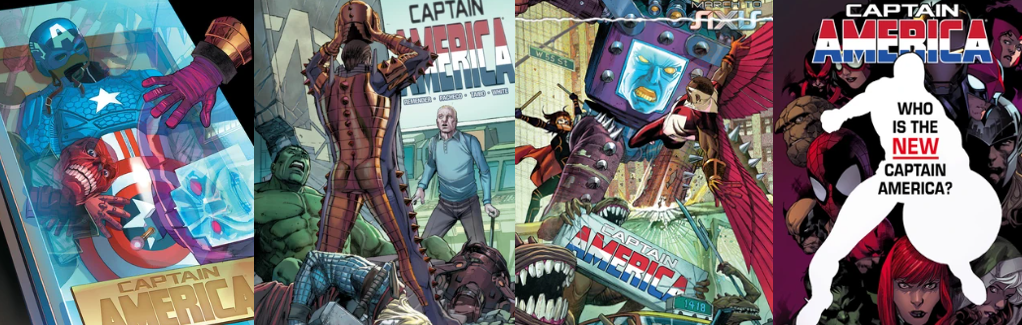
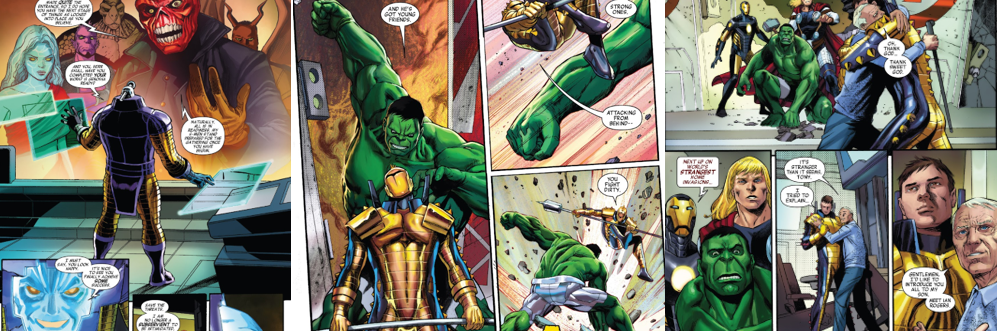
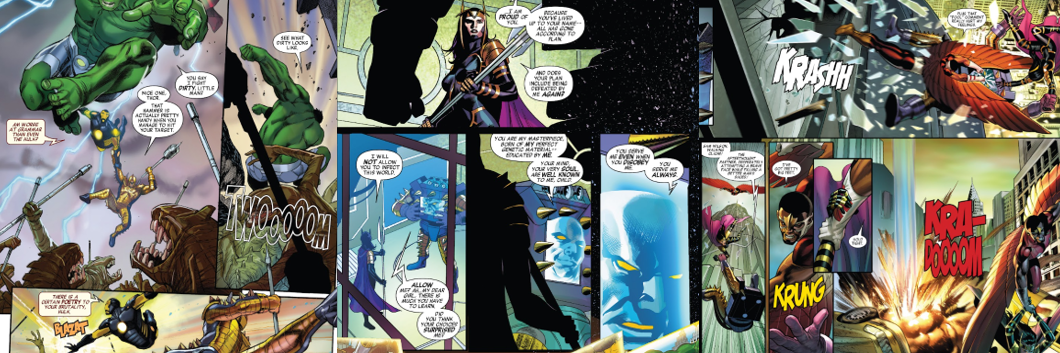
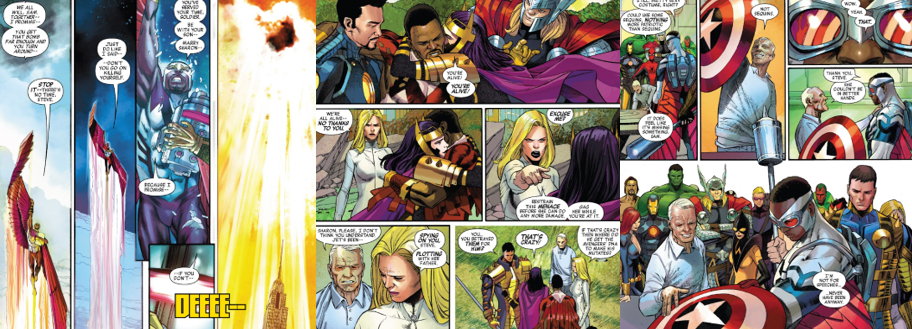
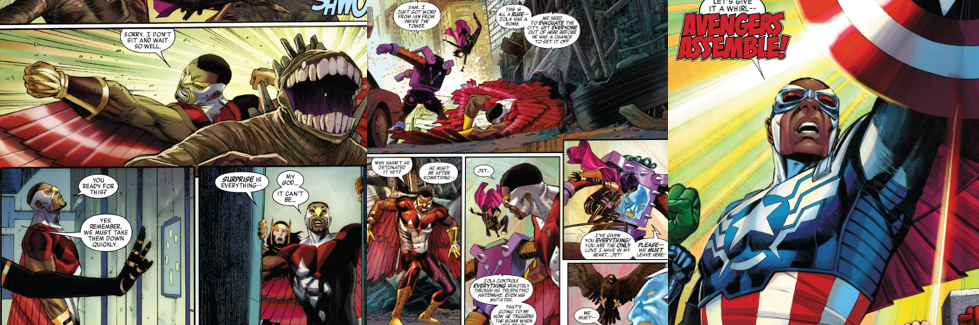
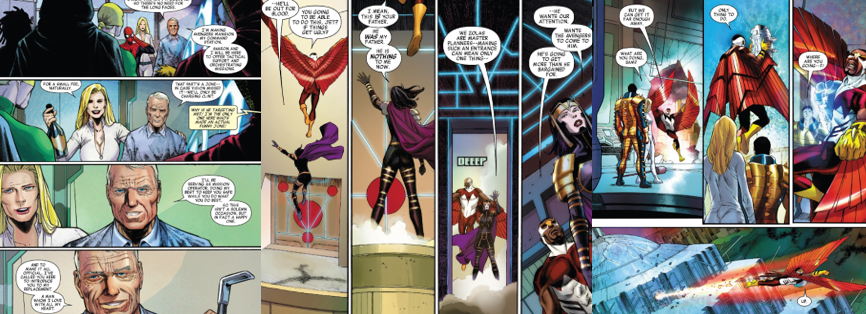


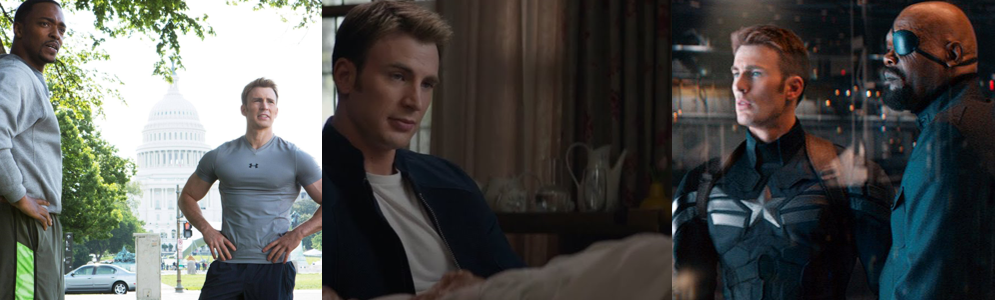
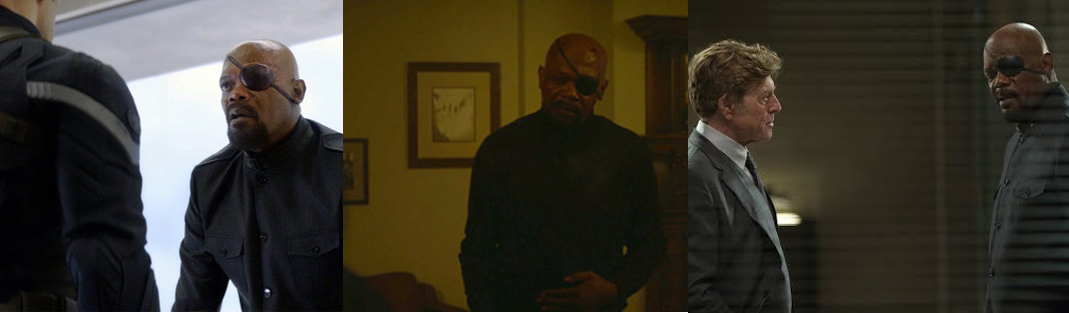


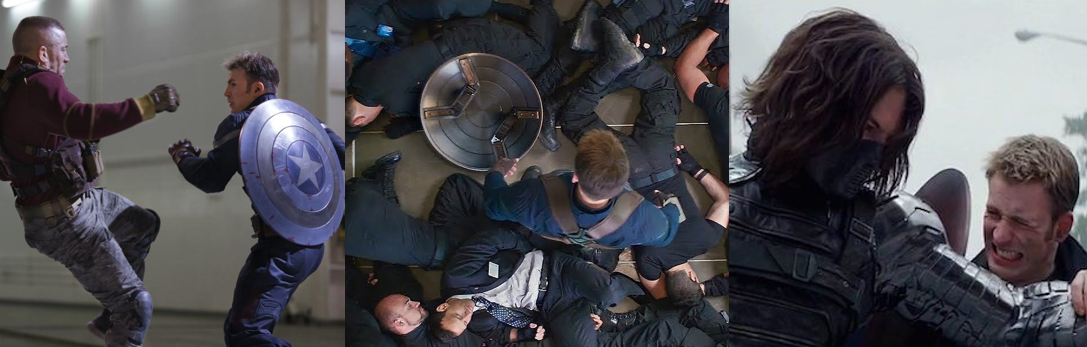
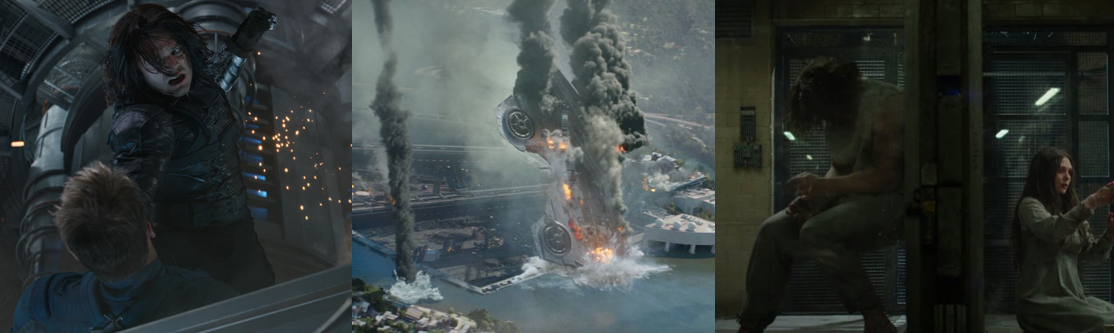




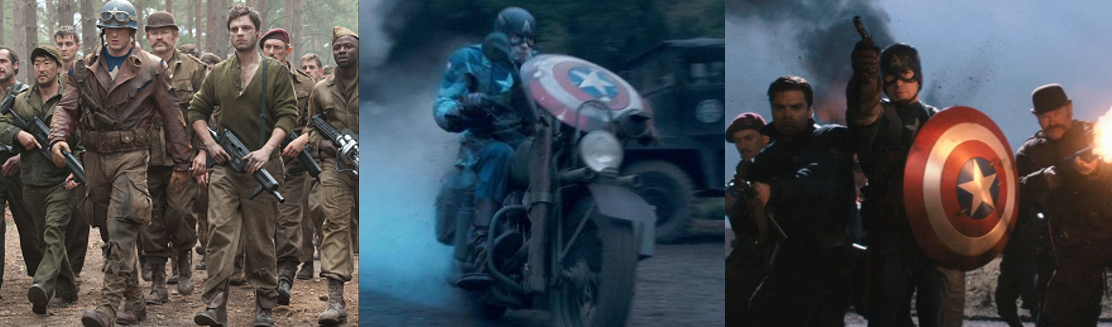
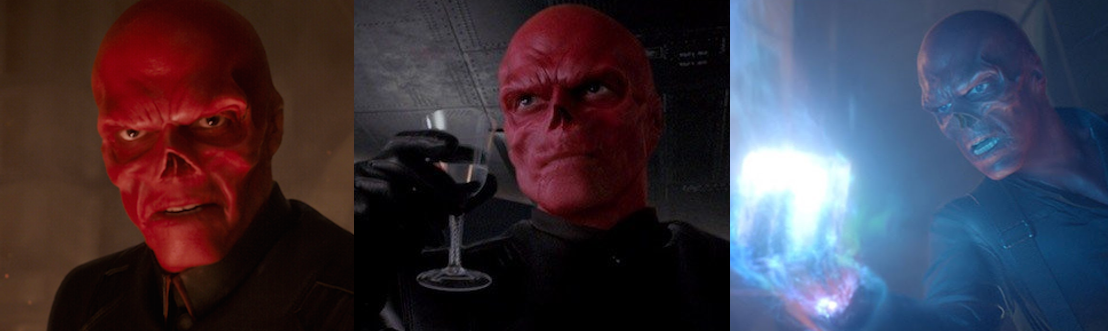

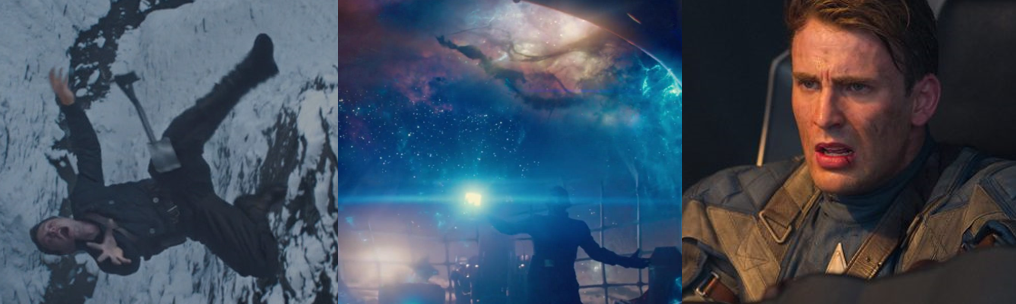


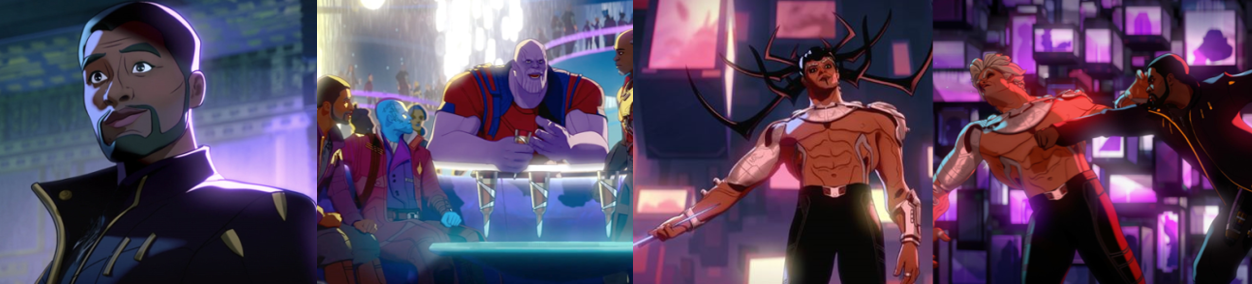
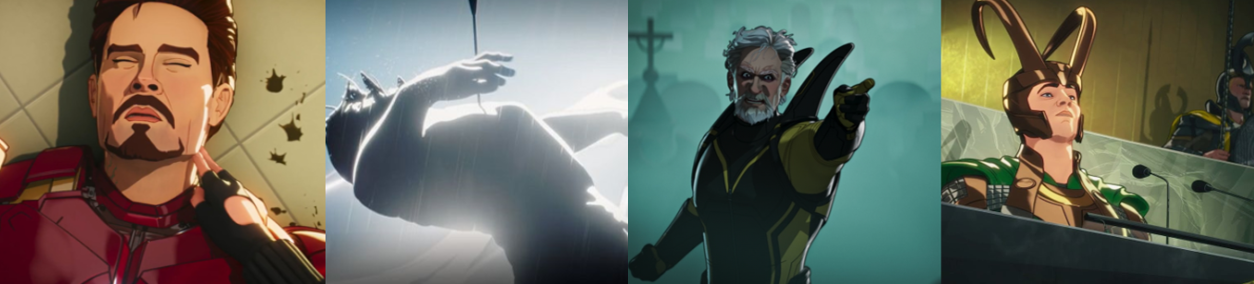


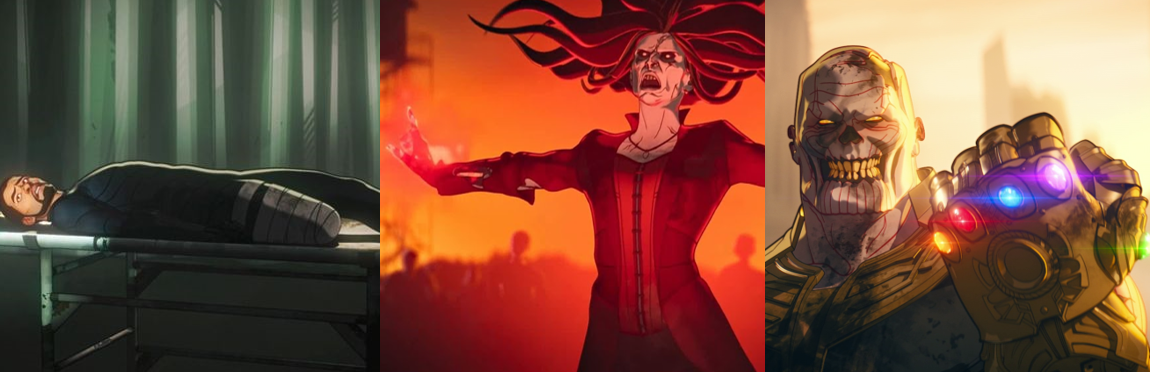

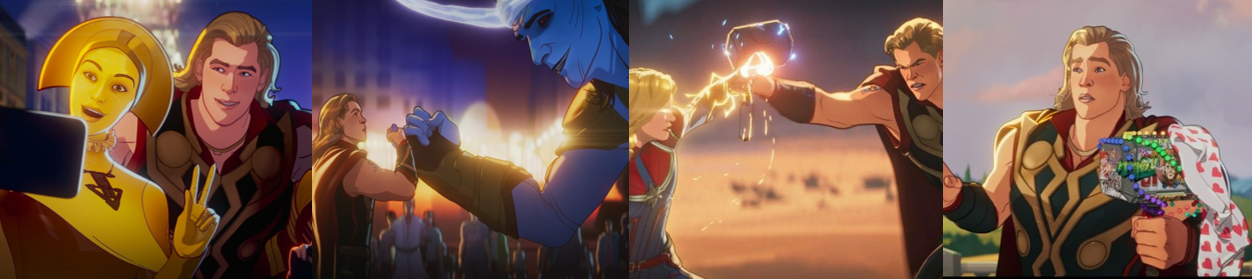
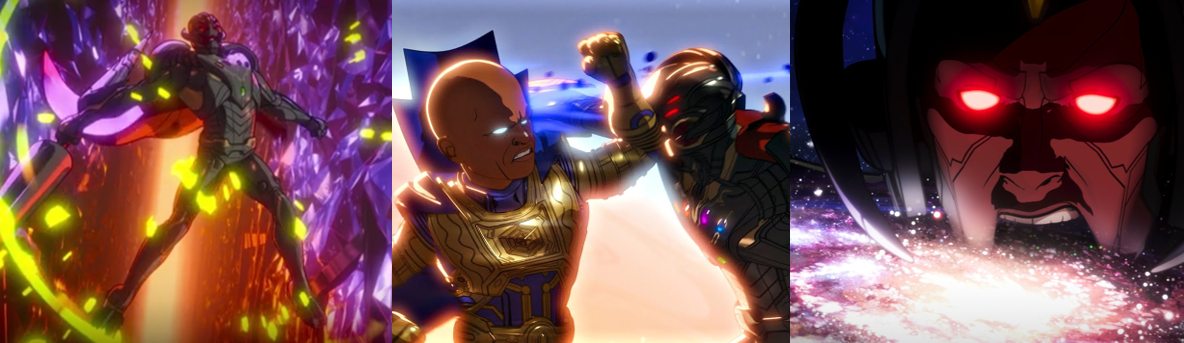


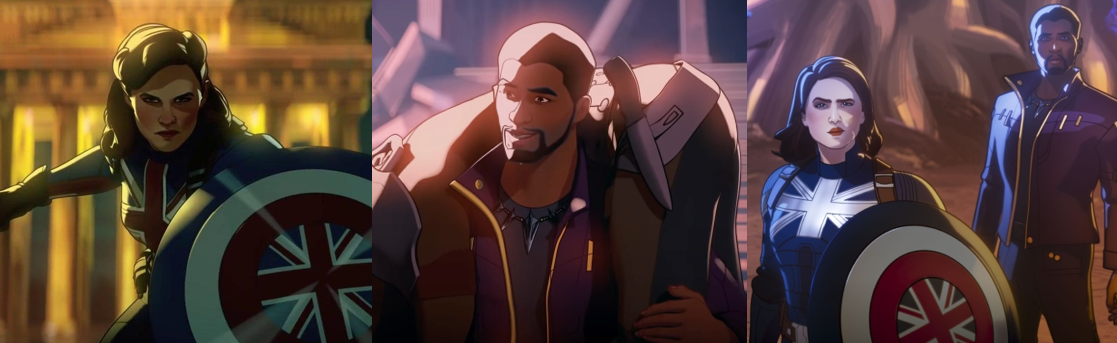
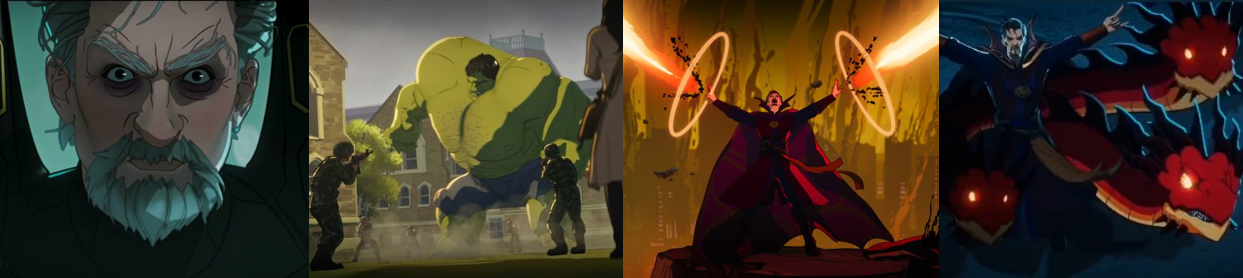
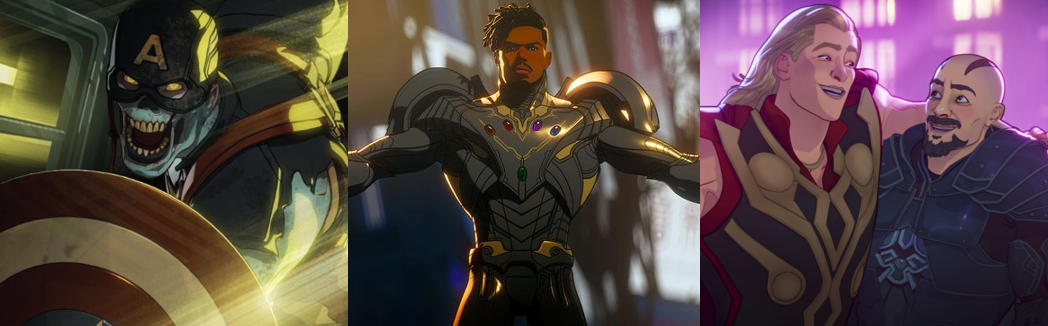
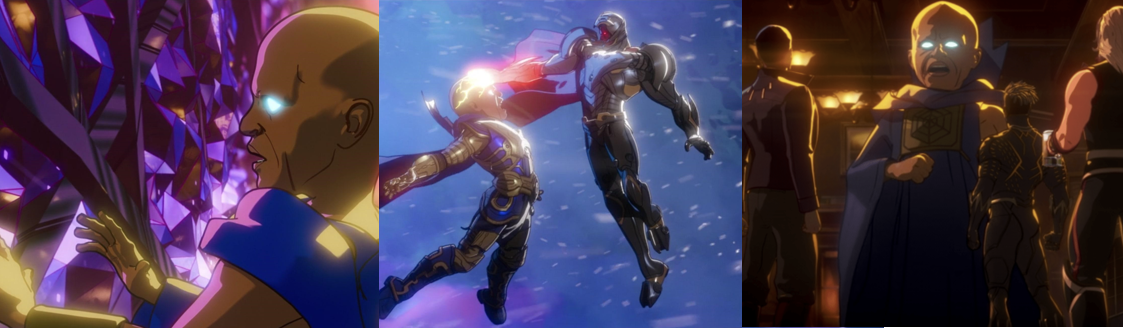

 Dr. K's Waiting Room
You must be logged in to post a comment.