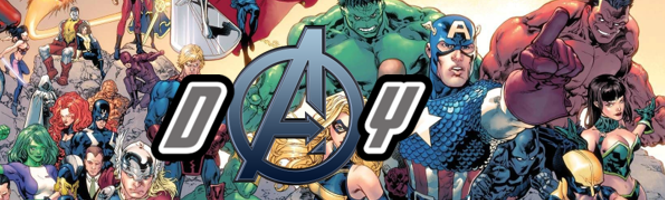
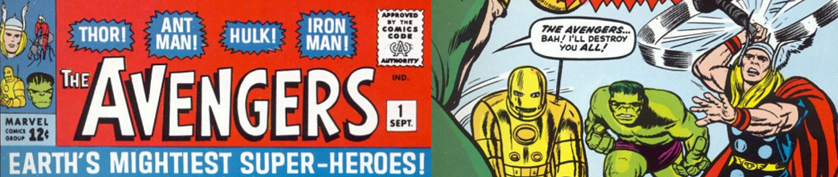
Having introduced comic readers to a whole host of colourful characters, in September of 1963 the legendary duo of Stan Lee and Jack Kirby brought together six of Earth’s mightiest heroes to form the Avengers. A super team like no other, with a constantly rotating roster, the Avengers has become the premier team of Marvel Comics and, thanks to the team and its individual members forming the backbone of the Marvel Cinematic Universe, have become an unbelievably popular and successful franchise in their own right.
Story Title: The Coming of the Avengers! Published: September 1963 Writer: Stan Lee Artist: Jack Kirby
The Background: In 1960, DC Comics brought together their most popular and powerful characters to form the Justice League of America. Never ones to let the competition get a leg up on them, and having seen successful with the Fantastic Four and the debut of the X-Men in that very same month, Marvel Comics head honcho Martin Goodman asked Stan Lee to create a similar team of superheroes. Helpfully, Lee and a number of his most famous collaborators had already established a number of colourful characters to bring together: Tony Stark/Iron Man, Doctor Bruce Banner/The Hulk, Doctor Donald Blake/Thor Odinson, and Doctor Hank Pym/Ant-Man and Janet van Dyne/The Wasp. Since the debut issue, the Avengers have been a consistent and influential presence in Marvel Comics; the roster constantly shifted and changed, with the Hulk leaving the team in the second issue and Lee memorably dusting off the long-retired character of Steve Rogers/Captain America in issue four. Since then, the team has expanded and changed many times, seen spin-offs and splinter groups, been disassembled and reassembled, and taken part in all manner of massivecosmic events in the decades since their introduction.
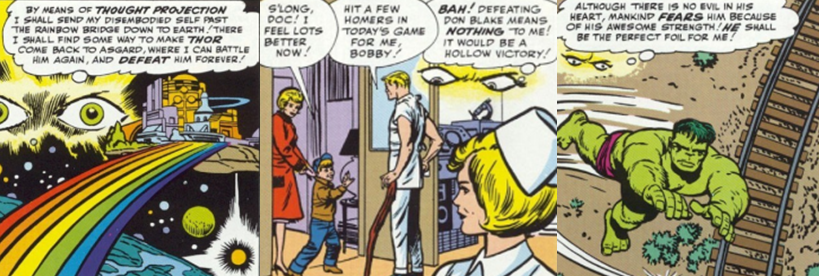
The Review: “The Coming of the Avengers” begins with Thor’s brother, Loki Laufeyson, the God of Mischief, imprisoned on the “dreaded Isle of Silence” in the mythical realm of Asgard. This is, of course, back when Loki was a despicable, irredemable villain whose previous mad schemes for power and conquest were thwarted by his brother; consequently, Loki is incensed at being exiled to the barren wasteland by Odin Allfather and plots a devious scheme for revenge.
Loki burns with a desire to destroy Thor, not Blake, and sees the Hulk as his chance to do so!
Though his physical self is trapped, Loki is able to use his vast magical abilities to project his disembodied self across the length of he dimension-spanning Bifrost and down to Earth, the planet Thor loves so dearly. He spies in on Donald Blake but dismisses him as a lame and insignificant mortal; he is acutely aware that Blake and Thor are one and the same but desires victory over Thor, not his crippled mortal shell. After many long hours, Loki comes upon the Incredible Hulk and is instantly intrigued by the creature’s brute strength and disdain for humanity. Thanks to Loki’s manipulations, the Hulk is blamed by the media when a train almost derails (despite the fact that the Hulk went out of his way to keep the train on track after Loki’s tricked him into damaging the tracks). Concerned for the well-being of his friend, Rick Jones desperately attempts to contact the Fantastic Four for help but Loki intercepts the broadcast and successfully coerces Blake to transform into Thor.
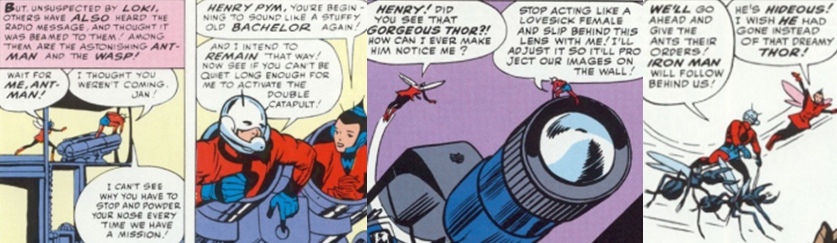
Words almost can’t express how much I despise Janet’s characterisation in these early comics!
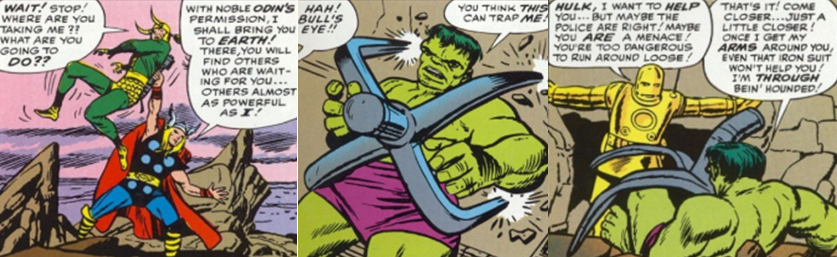
However, Rick’s broadcast is also intercepted by Ant-Man and the Wasp and Tony Stark, who eagerly leap into action to stop what they perceive to be one of the Hulk’s trademark rampages. Though he’s now decked out in his slightly more streamlined gold plated armour (which can also charge through solar power), Stark is still entirely reliant upon his iron plated chest device to keep him alive but, nevertheless, he’s eager to test the strength of his armour against the Hulk’s much-vaulted power. The Fantastic Four eventually pick up the transmission regardless of Loki’s interference but are unable to assist since they’re already busy on another case but Rick and his fellow “Teen Bridge” are star-struck when Thor, Iron Man, Ant-Man, and the Wasp all show up to answer their summons. This is probably as good a time as any to talk about how much I loathe Janet van Dyne, especially in her earlier appearances in the sixties and seventies! She’s such a ditzy, scatterbrained little tart; all she ever does is think about her hair, make-up, and appearance and constantly fawn over other men right in front of her partner/husband, Hank. Sure, Hank is generally much more focused on his work, the mission, or being professional and is largely neglectful and ignorant of Janet but that doesn’t excuse her God-awful characterisation. Similar to Susan Storm/Invisible Girl, Jean Grey/Marvel Girl, and many of Marvel’s supporting female characters at the time, Janet is constantly patronised and spoken down to by men but, unlike many of them, she actually deserves such harsh treatment since she’s more of a glorified model or brainless celebrity than a capable superheroine, much less an individual worthy of their respect since all she wants to do is drool over Thor’s muscles!
Loki is apprehended but the battle between Iron Man and the Hulk continues to rage!
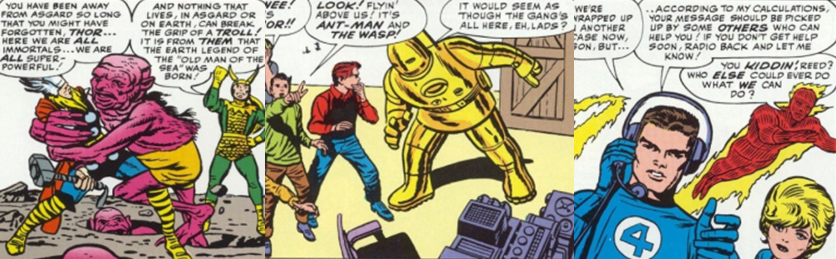
Anyway, having inadvertently brought together some of Earth’s mightiest heroes, Loki changes tactics and uses his powers to trick Thor into thinking the Hulk is right outside their door! Acting without thought or logic, Thor immediately heads out to battle the Green Goliath and immediately heads to Asgard when he realises that the “Hulk” is merely one of Loki’s visions…just as Loki planned all along! Meanwhile, the Hulk, now free from Loki’s control, has…disguised himself as Mechano the Mechanical Man and hidden himself away at a circus? Thanks to Ant-Man’s uncanny helmet, which allows him to control and communicate with ants, Pym is able to first locate the Hulk and then use countless numbers of ants to cause a cave-in beneath the beast’s feet. Unimpressed and irritated, the Hulk easily bursts free of the trap and reacts with anger when Ant-Man attempts first to calm him and then to trap him. As in his debut appearance, the Hulk is far more than the mindless, rampaging beast he is generally known as; he’s eloquent and intelligent, using words like “masquerade” and being smart enough to disguise himself as a circus performer and use weapons to blow the Wasp out of the air and render her helpless. The Hulk is kept from crushed the Wasp into a fine paste by the timely arrival of Iron Man; after Iron Man’s attempts to lure the Hulk into a trap fail, he gives chase but the Hulk is wily enough to allow Iron Man to pass harmless overheard so that he (as in the Hulk) can deliver a crippling blow to Stark’s “propulsion battery”. Over in Asgard, Odin grants Thor permission to travel to the Isle of Silence to confront Loki and he has to overcome numerous traps and hazards conjured by Loki’s black magic along the way. Thor perseveres and shatters Loki’s magical barrier using his enchanted hammer, Mjölnir, in his mission to “avenge” Loki’s foul deed. However, Thor is kept from attacking Loki first by the sudden arrival of a monstrous troll, a nature of the isle, and then by Loki’s deceitful illusions.
Loki is defeated with ridiculous ease and a new super team is born!
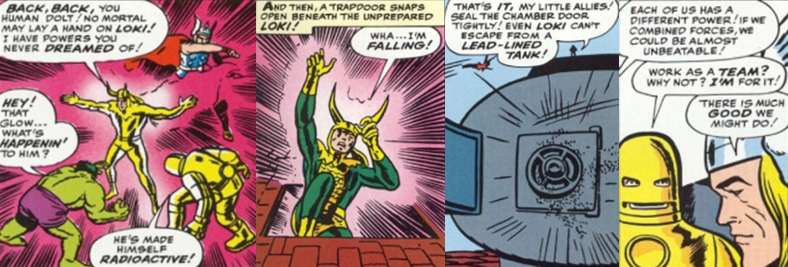
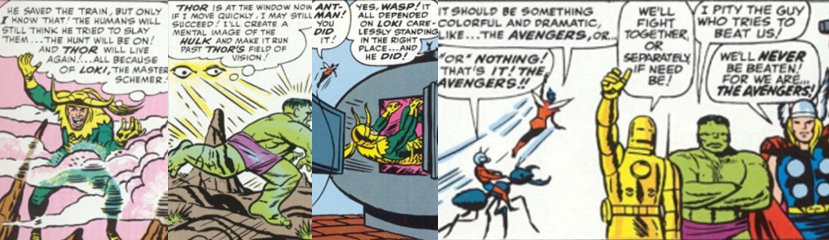
Regardless, Thor triumphs again by summoning lightning to drive the creature away and then dispels Loki’s duplicates with an implausible twirling of his hammer. Though Thor has Loki in his grasp and intends to bring him to Earth to answer for his deception, there’s still the little problem of the Hulk to contend with; Iron Man, having repaired his battery, continues his pursuit of the Hulk to an automobile factory, where the Hulk is able to endure and outwit Iron Man’s attempts to subdue him. Thor interrupts the battle and reveals that Loki was behind everything; Hulk’s desire to make Loki pay for framing him is momentarily avoided when Loki breaks free of Thor’s grasp and prepares to resume his battle with his hated brother…only for a hoard of ants to open a trapdoor beneath his feet and cause him to fall into an lead-lined chamber. With the threat ended, Ant-Man suggests that the six of them join forces as a team, which the others (including the Hulk, despite everything he went through during the issue) readily agree to and it is the Wasp who suggests the team’s name: The Avengers!
The Summary: “The Coming of the Avengers!” is a breath of fresh air after the year I’ve had looking back at early origin stories and comic books; even compared to standalone stories of the time, it’s refreshing to not have the plot be endlessly bogged down with recaps of the characters’ origins and to not have every other piece of dialogue by a description of that character’s ability. Characters do still have an annoying tendency to monologue and describe what they’re doing as they’re doing it but it’s a far more action-packed issue than some other comics I’ve read this year, that’s for sure.
The brisk pace means some characters get more focus than others but there’s still time for cameos…
If you’re a newcomer to Marvel, this is obviously a bit of a disadvantage since you’d have no idea who any of these characters are; the only characters who really get any extended backstory and focus are Thor and Loki, which is only natural considering it is Loki who drives the main plot of the issue. However, we never see an appearance from the Hulk’ alter ego (Banner isn’t even mentioned in the issue), Ant-Man and the Wasp are never seen outside of their costumed identities, and the comic even has time to waste panels on a cameo by the Fantastic Four. The intention, however, is pretty clear: Rick’s first thought is to call the Fantastic Four since there are only a couple of superhero teams in existence at that time and the implication is that Loki is a threat worthy of the Fantastic Four’s involvement, which thus makes the Avengers appear just as capable and formidable by proxy. Not that the Avengers really need any help in that regard; each character has already had numerous chances to shine and show how capable they are in their solo issues but what better way to showcase that to its fullest than by pitting them against the Hulk, the most powerful mortal in Marvel Comics at the time?
For all his power and scheming, Loki is incredibly ineffectual and his plan massively backfires!
Iron Man, especially, is eager to pit his skills and augmented strength against the Hulk’s (who sadly never gets to tussle with Thor to see which of the two truly is mightier) and it’s certainly unique seeing Ant-Man and the Wasp futilely try to subdue the beast with traps and trickery. It’s not a perfect story by any means; I could talk for days about Janet’s characterisation and she basically does nothing except buzz around, pine after Thor, and name the team and Loki never thinks to use his powers to send the Hulk into a mindless rampage to help tip the balance in his favour. Indeed, though Loki’s powers are vast and have the potential to be extremely dangerous, he’s pretty ineffectual as Thor easily fights off his illusions, he’s anti-climatically defeated by Ant-Man and the Wasp (of all people), and all he succeeds in doing is uniting Earth’s Mightiest Heroes as a team. He might have had more success if he’d tried to manipulate them into fighting each other or used his powers to better effect but, as an excuse to bring together six of Marvel’s most formidable superheroes into a super team, “The Coming of the Avengers!” succeeds far more than it fails…it just needed to be a bit longer and have a bit more interaction between the characters.
My Rating:
⭐⭐⭐
Rating: 3 out of 5.
Pretty Good
How do you feel about “The Coming of the Avengers!”? Do you feel it was an effective introduction to Marvel’s newest and greatest team or do you, perhaps, find it a little weak and light on content? Which of the original line-up is your favourite? What did you think to the Wasp’s characterisation and the treatment of females during this time? Which version of the team is your favourite or who would you like to see on an Avengers roster one day? Do you think the singular threat of Loki was suitable enough justification for bringing together these heroes or would you have preferred a bigger threat? How are you celebrating the debut of the Avengers today and what are some of your favourite Avengers storylines, characters, or adaptations? Feel free to share your thoughts and opinions on the Avengers in the comments below.
Released: April 2019 Director: Anthony Russo and Joe Russo Distributor: Walt Disney Studios Motion Pictures Budget: $356 million Stars: Robert Downey Jr., Chris Evans, Mark Ruffalo, Chris Hemsworth, Scarlett Johansson, Jeremy Renner, Don Cheadle, Paul Rudd, Karen Gillan, Bradley Cooper, and Josh Brolin
The Plot: Three weeks after the Mad Titan, Thanos (Brolin), acquired the six Infinity Stones and snapped his fingers, the Avengers are desperate to set the world right after watching their friends (and half the universe’s population) disintegrate from reality. When Tony Stark/Iron Man (Downey Jr.) and Nebula (Gillan) return to Earth and Scott Lang/Ant-Man (Rudd) returns from the Quantum Realm, the Avengers pull together every resource available to bring Thanos to justice.
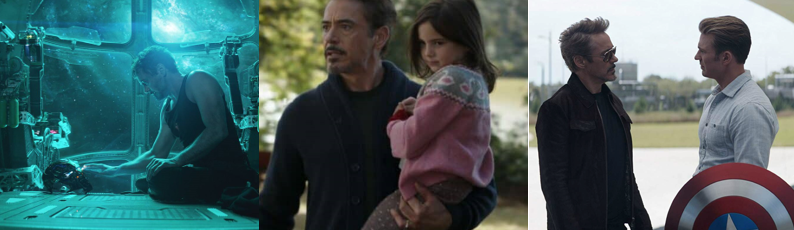
The Review: Avengers: Infinity War was certainly a hell of an experience. Even I wasn’t sure if it would actually go through with Thanos snapping his fingers, and the emotional fallout from that bleak, dramatic ending had everyone reeling and speculation running rampant about how this would be resolved. I was under the impression that this would come through an exploration of Doctor Stephen Strange’s (Benedict Cumberbatch) willingness to give up the Time Stone. I was expecting we’d see him lead a team of heroes trapped within the Soul Dimension (an aspect that isn’t explored or even raised here) in tandem with the heroes spared by the Snap (or “Blip” as it would later be termed). When the first rumours of time travel appeared, speculation only increased as fans scrambled to explain why this would be necessary, but Endgame establishes early on that Thanos’s second act after achieving his goal was to destroy the Infinity Stones to ensure his victory. Ultimately, I was quite satisfied with the narrative Endgame provided. I always thought that it was fitting that the original six Avengers were spared erasure to help bring things full circle, but I’m still surprised that the film not only jumped ahead five years to show a world devastated by change and loss but that the MCU chose not to undo this. It probably would’ve cleared up a lot of issues and constant explanations and references to the Blip if Endgame had seen Doctor Bruce Banner/The Hulk (Ruffalo) use the Infinity Gauntlet to wind time back, restored the lives lost but also keeping the lives gained in the process. Or if Tony had perhaps willingly sacrificed his young daughter, Morgan (Lexi Rabe), for the sake of the entire universe. But I think it definitely indicated a massive change in the status quo of the MCU…even if things got back to normally pretty quickly, all things considered.
Haunted by defeat, Tony’s priorities shift towards safeguarding his daughter by any means necessary.
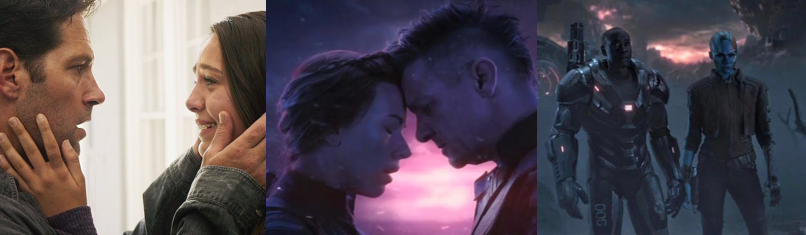
Endgame immediately explores the devastating fallout of the Avengers’ defeat and foreshadows its dramatic and emotional finale by finding Tony drift in space alongside Nebula. Although she’s still stoic and aggressive, it’s clear Nebula is deeply affected by the loss of her sister, Gamora (Zoe Saldaña), and her reluctant adopted family, the Guardians of the Galaxy. While Nebula naturally bottles these feelings up, Tony sees his end coming. Realistic and ready to die after being worn down by his survivor’s guilt and desperate need to defend the Earth at all costs, he records a farewell message to Virginia “Pepper” Potts (Gwyneth Paltrow) and prepares to meet his end….only for them to be rescued and returned to Earth by Captain Carol Danvers/Captain Marvel (Brie Larson). However, returning to Earth brings little solace for Tony; deeply traumatised at witnessing his protégé, Peter Parker/Spider-Man (Tom Holland), disintegrate before his eyes (to say nothing of his other teammates and the crushing weight of defeat), Tony lashes out at former ally Captain Steve Rogers/Captain America (Evans) and refuses to join the expedition to confront Thanos, having lost the will to fight. Not that it would’ve made much difference given that Thanos guarantees his actions cannot be undone, but Tony instead chooses to focus on his family. In the five year gap, he has a daughter and settles down with Pepper, his priorities shifting from the lives of everyone else to the lives of his family. Thus, when Cap, Scott, and Natasha Romanoff/Black Widow (Johansson) come calling looking for Tony’s scientific input on their bonkers “time heist” idea, Tony initially scoffs at the suggestion, though he has let go of his animosity towards Steve in the interim. Still, ever the scientist, Tony can’t help but be intrigued and, upon running a few simulations based on Scott’s Quantum Realm data, quickly devises a means to navigate the dimensional vortex and effectively allow travel through time and space. Realising that they now have a very real shot at regaining the Infinity Stones and undoing Thanos’s devastating actions, Tony agrees to re-form the Avengers and don his iconic armour once more but on the very specific proviso that Morgan’s safety and existence is ensured. It’s a dramatic culmination of Tony’s character arc; he went from a selfish, womanising arms manufacturer to a snarky, egotistical superhero, to risking losing everything to safeguard the Earth from otherworldly threats, to literally sacrificing himself to not only bring back those lost, but ensure his daughter grows up in a world that hasn’t been crippled by loss.
Cap’s fighting spirit galvanises the team and sees him standing against incredible odds.
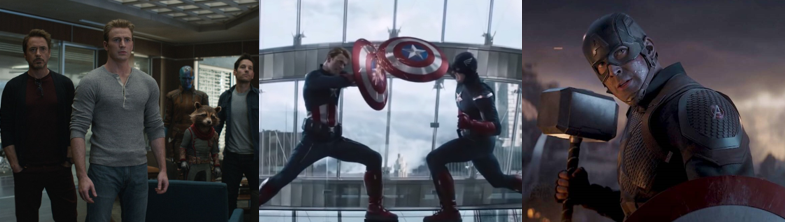
While Tony falls into despair and then devotes himself to his family to cope with the tragedy, Cap is initially adamant to make Thanos pay for his actions. When Carol and Rocket Racoon (Cooper) pinpoint Thanos’s location, Cap’s first thought is, appropriately, to avenge their losses. Unfortunately, Cap’s forced to face a heavy reality: there’s no way to undo what’s happened so, instead, he devotes himself to offering counselling and trying to help everyday folk pick up the pieces of their lives. With most of the world’s governments apparently gone, Natasha and the remnants of the Avengers apparently still fight to maintain order across the world, but there’s a clear sense that they’re just desperately holding on to what little they have left. However, Scott offers them hope through a clunky form of time travel. Despite outlandish science being outside his wheelhouse, Cap eagerly reassembles the Avengers and galvanises them to travel back to key moments in their past to reacquire the Infinity Stones and set things right. Steve teams with Tony, Scott, and Banner and revisits the battle for New York. Although Banner convinces the Ancient One (Tilda Swinton) to lend them the Time Stone, they’re unable to secure the Space Stone when Loki Laufeyson (Tom Hiddleston) steals it, forcing Cap and Tony to pay a further visit to 1970 to restock on Pym Particles and reacquire the Space Stone. Here, not only does Tony finally reconcile with his father, Howard Stark (John Slattery), in an amusing and poignant way, but Cap finally lays eyes on his old flame, Peggy Carter (Hayley Atwell) for the first time in a hundred years. Cap is devastated when the team returns to find Natasha was lost in the pursuit of the Soul Stone, but continues to soldier on with the plan, focusing solely on the restoration of the world. Despite this being far from a traditional fight, Cap stands against nature – and time – itself, betting everything on the slim chance that they can succeed. Although clearly burdened by defeat, he continues fighting and encourages everyone around him to do the same no matter how bleak the odds. This is, of course, explicitly demonstrated in the climactic finale. When the younger Thanos violently attacks the Avengers and lays waste to his allies, Cap grits his teeth and stands tall in in the face of what appears to be an inevitable end and his faith is rewarded not only in the dramatic arrival of his much-needed backup and proving himself worthy to wield Mjölnir, but in finally walking away from the fight and have a life of his own.
Hulk is smart now, while Thor has succumbed to self-despair and desperately seeks redemption.
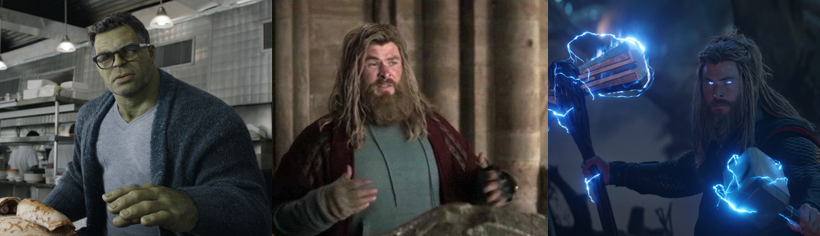
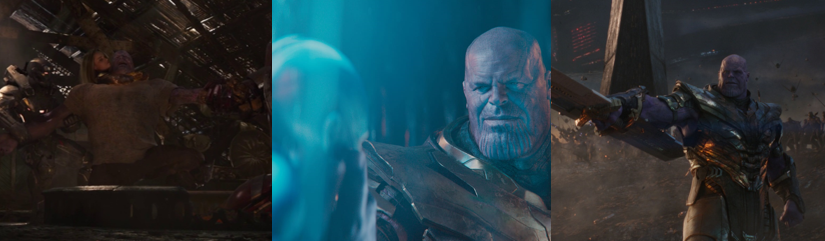
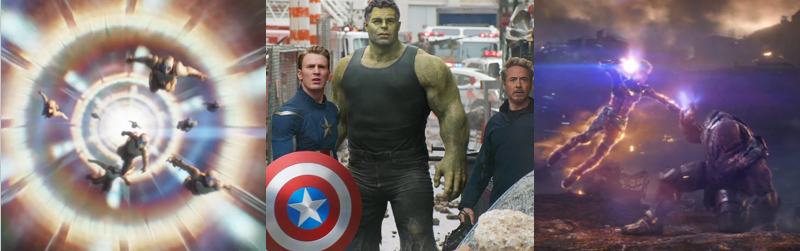
Two characters fundamentally altered between Infinity War and Endgame are the Hulk and Thor Odinson (Hemsworth). While I do agree that it’s a shame we never get to see Banner and the Hulk finally reconcile their differences and come together as one united entity (a “Smart Hulk”, if you will) and I definitely would’ve preferred to see this in the finale of Infinity War as originally intended (though tweaked with the united Banner/Hulk being portrayed as grey), I’m satisfied with the explanation we got and both film are already so stuffed with characters and plots that it could have bogged things down. Now a far calmer and intelligent being, the Hulk sees his brutish ways as “gratuitous” and instead puts his mind to work trying to figure out time travel in Tony’s absence. He’s primarily here as exposition and a bit of comedy relief but I liked how everyone just accepted his new normal, that he proved pivotal in reversing the Blip by being the only one strong and capable enough to handle the destructive power of the Infinity Stones (retroactively suggesting that the Hulk was fated to exist for that very reason), and he’s a key factor in convincing Thor to rejoin the Avengers. No one shoulders the burden of failure more than Thor; this once proud and arrogant warrior is reduced to a depressed, out of shape, drunken king of New Asgard all because he failed to land a killing blow on Thanos. Even decapitating Thanos brings him little catharsis as it changes nothing, and Thor clearly struggles with both survivor’s guilt and costing the lives of untold billions. He sees the time heist at a shot at redemption, a personal mission to prove that he’s still worthy of being the Mighty Thor, but is largely seen as a hinderance since he’s so wracked by grief and guilt that he struggles to keep his emotions in check. It’s only after a pep talk from his beloved mother, Frigga (Rene Russo), and the knowledge that he can still wield Mjölnir, that bolsters his self-worth, though Thor is so desperate to undo his mistake that he practically begs to bring everyone back with Tony’s gauntlet, despite the fact that the effort would probably kill him. Ultimately, Thor’s redemption comes in the most fitting way: on the battlefield. I liked how Thor doesn’t snap back to being a super-buff warrior in the finale; I think it was important to show that he was still carrying the burden of his failures even as he cut down foes with both Mjölnir and Stormbreaker, and there’s a definite sense that he rediscovers himself in battle with Thanos and through the loyal support of his friends and allies.
Each of the Avengers has an emotional and personal stake in the desperate time heist.
Although they either didn’t get too much to do or missed out entirely on the events of Infinity War, Endgame allows fellow Avengers Natasha, Ant-Man, Clint Barton/Hawkeye (Renner), and Colonel James “Rhodey” Rhodes/War Machine (Cheadle) play key roles in the time heist. Indeed, without Scott (and that one-in-a-billion rat), the Avengers would never have reacquired the Infinity Stones since it was only his knowledge and insight into the Quantum Realm that allowed Tony to crack time travel. Scott continues to be in awe of working alongside his idols, but even his chirpy demeanour is tested by the Blip. He arrives in a world where millions have perished and his daughter, Cassie (Emma Fuhrmann), is now a teenager but he remains as optimistic as ever about their chances of success, even if you can tell that he’s clinging to hope as desperately as the others. The same can’t be said of Hawkeye; after witnessing his wife and children disintegrate before his eyes, Barton spends the next five years going on a killing spree, murdering crime bosses and those he deems unworthy of being spared with a cold-blooded precision as “Ronin”. Although he’s clearly scarred by his losses, his loyalty to Natasha sees him join the time heist in a last-ditch effort to restore the world, but his character has been given an obvious edge. Now sporting a frankly ridiculous mohawk and an array of tattoos, Hawkeye is more than willing to sacrifice his life for the Soul Stone when directed by the enigmatic Johann Schmidt/The Red Skull/The Stonekeeper (Ross Marquand). What follows is a test of the two’s loyalty and friendship and a desperate and emotional battle to save the other while restoring countless lives. The two literally fight to give up their lives for the Soul Stone, willing to die for their friends and family, but ultimately Barton is left carrying the burden of Natasha’s selfless sacrifice and finding a way to live with his dark deeds. Rhodey finds himself teamed up with Nebula; as reliant upon his armour as she is on her cybernetics, the two find some surprising common ground and working with the Avengers definitely helps to soften both her and Rocket and make them more open to co-operation. Their jaunt to retrieve the Power Stone from Peter Quill/Star-Lord (Chris Pratt) has dire consequences, however, when a past version of Thanos is alerted to their presence. This not only sees Nebula face off against her less morally inclined past self and brings a past version of Gamora into the main timeline, but sees Thanos renew his campaign for the Infinity Stones using knowledge of the future!
Despite being killed, Thanos comes across time to plague the heroes once again.
Indeed, Endgame is largely unique among MCU films in that the battle is already lost at the start and the heroes are mostly fighting against intangible foes: grief, loss, guilt, and time being chief among them. While Carol leads them in confronting Thanos at the start, he’s no longer a threat and doesn’t even try to fight them. Injured from his actions and content with his victory, he simply mocks their attempts at revenge and meets his end victorious. While in New York, Cap, Scott, Banner, and Tony are mainly tasked with avoiding their past selves in true Back to the Future Part II(Zemeckis, 1989) fashion, though Cap does have a brief scuffle with his past self that sees even him exasperated by his can-do attitude. The Stonekeeper could be classified as a threat but he’s simply a messenger for the Soul Stone; the real threat comes from having to sacrifice a loved one to acquire the Stone, similar to the Ancient One’s warnings that the Avengers must return the Infinity Stones or risk the destruction and collapse of other, alternate timelines. However, when that past version of Thanos learns of his fate and orders the evil version of Nebula to travel to the future, the Avengers’ compound decimated by Thanos’s ship, Sanctuary II, the return of his monstrous army and his “children”, the Black Order, and Thanos himself back on Earth with victory within his grasp. I’ve seen it suggested that there’s less emotional catharsis in seeing the Avengers battle this version of Thanos since he technically isn’t the one who wronged them, but I don’t think this really matters all that much. There’s little difference between the two Titans except one died knowing he had achieved his goal and the other was determined to expedite his goal after learning of his victory. Perhaps because of this foresight, Thanos is far more aggressive and less honourable than his counterpart. Rather than offering to spare those he respects or aiming to wipe out half of life so that people can learn to appreciate what they have, Thanos now aims to completely rewrite history in his image. To that end, this Thanos takes to the battlefield in a way his counterpart avoided. Garbed in gleaming armour and wielding a massive double-bladed sword, Thanos is positioned as the ultimate threat, regardless of which timeline he’s from, since the Avengers know full well how destructive he is. Indeed, Thanos’ threat truly shines in the finale, where he not only goes toe-to-toe with Cap, Iron Man, and Thor but also shows his wiles and raw strength by matching blows with Captain Marvel, fuelled the entire time by his obsession for victory and unrivalled power.
The Nitty-Gritty: As mentioned, grief, loss, and time are key themes in Avengers: Endgame. While the film doesn’t linger or go into massive amounts of depth exploring how the Blip has affected the world, it effectively conveys the desolation and loss through some eerily silent aerial shots, Cassie’s overgrown and dishevelled neighbourhood, the monument erected to those lost, and through the way each character deals with their failure. At the time, it definitely shook things up to jump ahead to a world left in ruins by Thanos, and even though even I will admit that the potential of this was largely undone and sadly played for laughs in subsequent films, it really works in the context of this movie to hammer home just how devastated everyone is, which in turn drives their mission to defy the laws of physics and set things right. Endgame makes sure to lay the rules for time travel out as plainly as possible. Thanks to Scott and Tony, characters can navigate the Quantum Realm and travel to the past using Pym Particles, but anything they do in the past will not change the present because time isn’t a straight line, but a multiverse of different pathways. Yet, removing the Infinity Stones will cause the collapse of those branches, meaning the Avengers have a moral obligation to return them when they’re done. Like most time travel stories, it’s not perfect and has some holes in it but I think it works to sell the idea that you can’t just go back in time and kill Thanos to set things right. Banner very emphatically explains that time just doesn’t work that way and it’s a great way to place importance of the “main” timeline and add some additional tension to the heist since they risk other timelines while saving theirs.
Endgame explores new levels of these characters and then goes all-out with an action-packed finale.
In many ways, Endgame is a far more grounded, subdued character study compared to Infinity War. Thus, bombastic, action-packed scenes give way to exploring the emotional fallout from the Blip and how each character has been changed by their defeat. That isn’t to say that action and big CGI sequences aren’t here, though; it’s just more a fight for redemption and against those intangibles I mentioned than against a singular foe, for the most part. You would never know it but the Avengers’ time suits are all entirely CGI; their stark white and uniformity unites the team in a way we haven’t seen before and allows them to safely navigate the chaotic Quantum Realm and avoid being physically altered by the timestream like Scott is during Banner’s test run. While in the past, the team revisit the Battle of New York, now expanded to show that the Ancient One and the Sanctum Santorum were also fending off the Chitari and what happened after the Avengers defeated Loki, where Cap uses his knowledge of Hydra’s infiltration of the Strategic Homeland Intervention, Enforcement and Logistics Division (S.H.I.E.L.D.) to his advantage. This, and their later trip to 1970, allows for some fun cameos from Alexander Pierce (Robert Redford), Brock Rumlow (Frank Grillo), and even a de-aged Doctor Henry “Hank” Pym/Ant-Man (Michael Douglas), complete with retro helmet. The rest of the time heist is spent revisiting key moments from previous MCU films, recreating and reframing certain events from a new perspective, before the massive climactic battle at the end. One thing I enjoyed about the time heists, and the film in general, was seeing characters like Rocket and Nebula interact with the Avengers and become part of the team. In the spirit of pooling all available resources, Natasha directs a joint effort of every remaining superhero to try and maintain order, but her focus is squarely on the Earth. The rest of the universe is dealt with by Captain Marvel, who sadly misses out on joining the time heist but more than makes up for it with her dramatic entrance during the finale. Since she’s the most powerful hero in MCU, she easily wipes out Sanctuary II and ploughs through the aliens before going one-on-one with the Mad Titan himself. Although a bit arrogant in her abilities, Carol more than backs this up with her incredible power. Indeed, it’s shown that she probably could’ve wrestled the Infinity Gauntlet from Thanos had he not had the wherewithal to use the Stone’s individual powers to fend her off, meaning that even Captain Marvel’s might required the support of her teammates to wrestle the gauntlet from the Mad Titan.
Cap’s resolve is bolstered by the emotional and dramatic return of his restored allies.
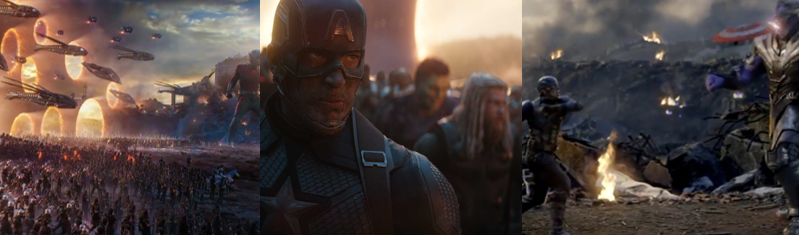
The remnants of the Avengers come together with a simple goal: to retrieve the Infinity Stones from the past, insert them into a nanotech gauntlet, and undo the Snap with a snap of their fingers. Although Thor pleads to perform this, the Hulk is the only one capable of surviving the act, and the film really sells the reveal of his success as a strange anti-climatic event…at first. Cap, Iron Man, and Thor are too busy fighting for their lives against Thanos and his army to focus on much else. Each one has a personal and emotional stake in the battle and each one falls to Thanos’s power, regardless of how hard they fight. Thor, especially, leaps head-first into the bout and ends up at the mercy of Thanos, desperately calling to Mjölnir…only for the hammer to fly into Cap’s waiting hand! Seeing Cap wield Mjölnir and attack Thanos with renewed vigour drew a rare cheer from the audience when I saw Endgame and is easily one of the most memorable moments in the entire MCU, but it’s quickly followed by one of the most emotional. Left as the last man standing and ready to go down fighting, Cap is suddenly stopped when he hears his friend, Sam Wilson/The Falcon (Anthony Mackie) in his ear. Relief and emotion sweep through Cap as he beholds a series of magic portals. Through them step his allies, friends, and teammates old and new, restored and ready to fight. It’s a sweeping, cinematic, incredibly powerful sequence jam-packed with cameos, from the Ravagers to Howard the Duck (Seth Green), and little moments, like Scott reuniting with Hope van Dyne/The Wasp (Evangeline Lilly), Wanda Maximoff (Elizabeth Olsen) angrily confronting and nearly killing Thanos, Star-Lord’s ill-fated reunion with Gamora, Tony unashamedly embracing Spider-Man, and a fun scene where the various female heroes of the MCU come together to clear a path for Captain Marvel. This climatic battle is an absolute wet dream for any Marvel fan. It’s the literal culmination of a ten-year journey for the MCU and I always spot different things each time I watch it, but the entire battle is made even sweeter by Cap finally uttering that rallying war cry: “Avengers Assemble!” While I would argue that we definitely should’ve heard this before this moment, this doesn’t take away from how powerful that moment was or just how amazing it was (and still is) to hear it and see all the MCU’s heroes battling alongside each other.
Tony’s sacrifice defeats Thanos and clears the path for a new generation of heroes.
Despite all these heroes, and Captain Marvel’s last second save, Thanos proves true to his word; no matter what’s thrown at him, he seizes the gauntlet and appears to be truly “inevitable”. However, just as he’s about to snap his fingers again, Iron Man leaps in for one last attack and steals the Stones away from Thanos! His body wracked with cosmic energy, struggling to contain the immense power, Stark utters his famous line once more – “I am Iron Man!” – and obliterates Thanos’s army with a snap of his fingers. Thanos, startled to see his army disintegrate around him, can only watch on and slump down with quiet defeat, accepting his end as nobly as possible. Sadly, this victory is bittersweet as the effort fries Tony’s body and mind and leaves him a babbling, near-lifeless wreck. Peter, Rhodey, and Pepper gather around him to say their goodbyes and Pepper tearfully gives him permission to finally rest, and death finally catches up to Tony amidst his friends and family. While I would’ve loved to see the scene where his comrades all take a knee kept in the film, the emotional weight of Tony’s sombre funeral delivers as strong a message. Everyone that was close to him gathers in quiet gratitude and respect to honour his sacrifice and take comfort in each other, and it’s a hell of a way to close the book on the character that kickstarted the emotional rollercoaster that is the MCU. Of course, it doesn’t end there; as the heroes go their separate ways and prepare for their next steps, Cap steps back into the Quantum Realm to make good on Banner’s promise to return the Infinity Stones. After sharing a heartfelt farewell to his old friend, James Buchanan “Bucky” Barnes/The Winter Soldier (Sebastian Stan), it initially seems like Steve has gotten lost in the timestream. However, Bucky and Sam spot a old man (Evans/ Patrick Gorman) sitting nearby who’s revealed to be Cap, age finally having caught up with him, who chose to take a leaf out of Tony’s book and settle down with Peggy. He gifts his shield and Captain America identity to Sam and reflects happily on his life, finally at peace with the world. While there’s a lot of debate and disagreement about the specifics of this, I really don’t care. Whether Cap lived in an alternate time or the main timeline, it makes no difference and the entire point was to finally give him some peace and happiness, which I think is conveyed beautifully, and to pass the torch to a new generation of heroes.
The Summary: It’s amazing to think how massive Avengers Assemble was and how incredibly the MCU built upon it with Avengers: Infinity War. It’s so rare to see a film franchise have such longevity and build such intrigue for its next entry, but the buzz surrounding Avengers: Endgame was so real that I was practically frothing at the mouth to see how the story would be wrapped up. Rather than going bigger and more explosive, Avengers: Endgame focuses on the original six Avengers and the remnants of their group and explores new depths to their characters. Each is affected by their defeat in different ways and embodies that failure in ways that make them so much more vulnerable and relatable. I loved how they all came together, united in grief and in their determination to put things right, “whatever it takes”, and how the time heist gave us fresh new interactions between them. Sure, time travel is a bit of a cliché solution and some of its aspects are a bit wonky under close supervision, but I’m okay with that as the purpose was to celebrate what came before and sow the seeds for the MCU’s future, which was set to be very different based on the new status quo established here. Honestly, Avengers: Endgame is worth a watch for the emotional and action-packed finale alone. Even now, it never fails to give me goosebumps and bring a tear to my eye since it’s such a fantastic culmination of everything that came before and a satisfying, if bittersweet, end to these beloved characters. Avengers: Endgame could have easily collapsed under its own narrative, the weight of expectation, and the high standards set by its predecessor and the MCU in general. Instead, with a poignant heart at its core, riveting action, and some genuinely moving moments amidst its big action set pieces, Avengers: Endgame is a fantastic endnote for the first ten/eleven years of Marvel movies.
My Rating:
⭐⭐⭐⭐⭐
Rating: 5 out of 5.
Fantastic
What did you think to Avengers: Endgame? Were you satisfied with how it wrapped up the ending of Infinity War or would you have liked to see it take a different direction? What did you think to the five-year time jump and the way this was handled in subsequent films? Did you like the depiction of time travel here? What was your reaction when those portals opened, when Cap picked up Mjölnir, and to Tony’s dramatic death? Have you been happy with the MCU film we’ve seen since Endgame or do you think it peaked here? What are some of your favourite Avengers stories, characters, and villains? Whatever your thoughts about Avengers: Endgame, and the Avengers in general, leave a comment below or on my social media and be sure to check out my other Marvel content across the site.
Marvel Studios took one of their biggest gambles in producing Ant-Man(Reed, 2015), given that the character is far more obscure than his other Marvel counterparts in the Marvel Cinematic Universe. Yet, seemingly against the odds, Ant-Man surprised by momentarily shifting the tone of the MCU away from world- or galaxy-ending threats and back down to Earth for an amusing heist adventure. Now, in the wake of the cataclysmic events of Avengers: Infinity War (The Russo Brothers, 2018), Marvel is at it again. However, while Ant-Man and the Wasp (Reed, 2018) does scale back to stakes and focus of the MCU, it also expands upon the nature and potential of the Quantum Realm, perhaps in service of future films in the franchise.
Scott has been under house arrest since Civil War.
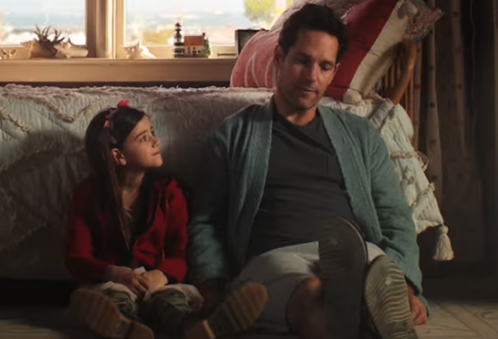
Ant-Man and the Wasp takes place about two years after the events of Captain America: Civil War(The Russo Brothers, 2016) and sees Scott Lang (Paul Rudd) three days away from being released from house arrest after violating the Sokovia Accords. While Scott has used the time to set up a security and surveillance company with his friend Luis (Michael Peña) and bond with his daughter Cassie (Abby Ryder Fortson), he has last all contact with Hank Pym (Michael Douglas) and Hope van Dyne (Evangeline Lilly) as they were less-than-impressed with Scott’s actions and have been on the run ever since. However, when Scott has a dream/vision of his time in the Quantum Realm, he reaches out to Hank and is promptly abducted by Hope. Taken to Hank’s laboratory (which he can shrink to the size of a carry-case), Scott learns that he may hold the key to finding and rescuing Hank’s wife, Janet (Michelle Pfeiffer).
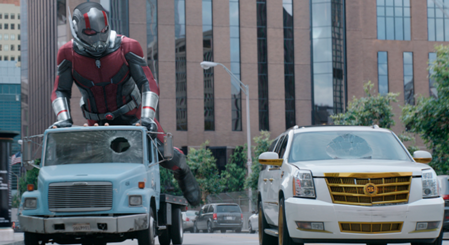
It’s all about the car chases this time.
Hank is reluctantly forced to coerce Scott into helping Hope acquire a vital component to their Quantum Tunnel from Sonny Burch (Walton Goggins), an act that draws the attention of the mysterious assassin Ghost (Hannah John-Kamen). Very quickly, Hank, Hope, and Scott are in a race against time to evade Burch, the FBI (led by Jimmy Woo (Randall Park)), and Ghost and complete the machine before Janet is forever lost to the Quantum Realm. I went into this thinking we would be getting a much faster paced, more action-packed story now that the origin and exploration of Ant-Man’s powers had been sufficiently delivered in Ant-Man but, surprisingly, Ant-Man and the Wasp is as much about the notion of family as it is its action. While nothing quite tops the small-scale battles on Thomas the Tank Engine railroad tracks or inside purses, there is a decent level of car-based action as Scott and Hope shrink and grow Hot Wheels cars to evade their pursuers and the fight sequences involving Ghost are pretty exciting.
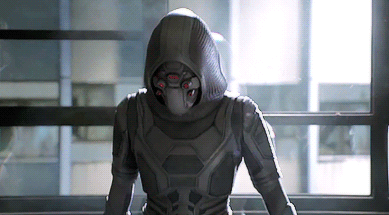
Ghost continues Marvel’s attempts to have more layered villains.
Speaking of, rather than being a simple dark counterpart to Scott or Hank like Darren Cross (Corey Stoll) was, Ghost is a pretty unique and sympathetic character. Constantly fading in and out of reality thanks to exposure from the Quantum Realm, she blames Hank for her affliction and the death of her parents. It also helps that she’s pretty bad-ass, which helps showcase Hope’s ability to kick ass as the Wasp.
Anything Scott can do, Hope can do better.
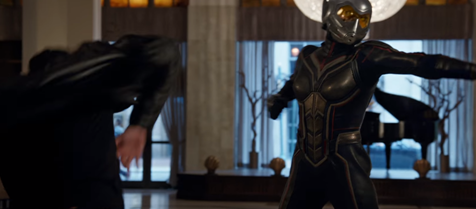
In many ways, actually, Ant-Man and the Wasp is more about Hope than any other character; she finally receives her suit, which comes with all sorts of nifty gadgets and tech not included in Scott’s, and is clearly a far better and more effective superhero than Scott. Her passion and desire to be reunited with her mother are evident throughout but she also retains a compassion for others (mainly Scott and her father) that keeps her grounded.
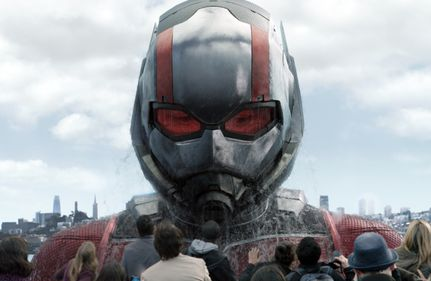
Happy to see Giant-Man make a comeback.
As for Scott, he’s everything he was before, and that’s not a bad thing. Paul Rudd perfectly portrays the everyman who is swept up into things largely beyond him and his ignorance to the technobabble and subpar fighting ability are offset by his charm, wit, and ability to think on his feet. Scott is also all about making up for letting down Hank and Hope by not involving them in the airport skirmish from Civil War and, refreshingly, his daughter and family are all perfectly happy for him to continue to be Ant-Man, rather than giving him shit for his actions.
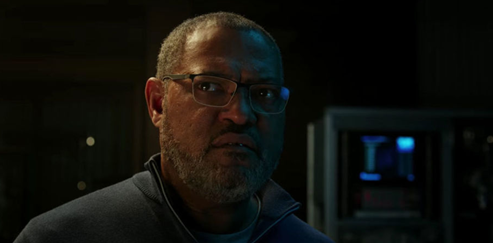
Laurence Fishburne jumps to the MCU but is Bill Foster all that he seems?
Rounding out the cast are Michael Douglas and, in a new addition, Laurence Fishburne as Bill Foster. Foster and Pym have a strained relationship after a falling out and Pym’s efforts to discredit Foster’s work, which all helps cast Hank as a man who has some demons in his past. Driven to rescue Janet, Hank will seemingly go to any lengths to atone for what he sees as his greatest failing. Once again, Marvel Studios employ some impressive de-aging effects to Douglas (and Pfeiffer) to shed more light on the Pym’s troubled past as a married couple and part-time spies. In the end, Ant-Man and the Wasp is probably about on-par with its predecessor; it isn’t necessarily worlds better but it’s by no means a step back. As before, it’s a great way to catch your breath after the exhaustive events of Infinity War and, if the mid-credits scene is anything to go by, a vital entry for future films in the MCU.
My Rating:
⭐⭐⭐
Rating: 3 out of 5.
Pretty Good
Recommended: Of course, and not just for MCU fans. Rudd’s charisma and the general premise make this a great recommendation for everyone. Best moment: The triumphant return of Giant-Man and the fight sequences involving Ghost. Worst moment: The side-plot of Scott’s damaged belt, which causes him to by stuck at different sizes, grew thin very quickly for me. It just seemed weird for Hank to create a new, presumably better suit but have the most vital component be janky.








 Dr. K's Waiting Room
You must be logged in to post a comment.