
In the episode “Me2” (Bye, 1988) of the classic British science-fiction comedy show Red Dwarf (1988 to 2020), it is revealed the Arnold Rimmer’s (Chris Barrie) last words were “Gazpacho soup!” and that he celebrated November 25th as “Gazpacho Soup Day” after a traumatising visit to the Captain’s Table.


Director: Ed Bye
Air Date: 14 February 1991 to 21 March 1991
Original Network: BBC2
Stars: Chris Barrie, Craig Charles, Danny John-Jules, Robert Llewellyn, and Hattie Hayridge
The Background:
Back in the eighties, Rob Grant and Doug Naylor, influenced by Dark Star (John Carpenter, 1974) and The Hitchhiker’s Guide to the Galaxy (Adams, 1978; Bell, 1981), created the sci-fi comedy Dave Hollins: Space Cadet for BBC Radio 4. This was the prototype for Red Dwarf, though the duo initially struggled to sell their vision despite prioritising character and comedy over genre. Once the show was picked up, impressionist Chris Barrie and Liverpudlian “punk poet” Craig Charles took the lead roles, and singer and dancer Danny John-Jules and sardonic stand-up comedian Norman Lovett rounded out the cast. Red Dwarf finally aired in 1988 and, despite viewing figures dropping in the first series, strong audience feedback saw the BBC approve a second series. Afforded a greater budget, Grant and Naylor expanded their premise and, now that Red Dwarf had established its audience, series two was more successful. Now firmly considered a cult hit, a greater budget saw a complete redesign of the sets for the third series, where Robert Llewellyn and Hattie Hayridge joined the cast. With series three widely regarded as one of the best of the show’s entire run, production shifted to Shepperton Studios, giving the cast time to rehearse and tweaking the series lore to better align with the books. Though never revamped with the same controversial digital overhaul as its predecessors, series four was also widely acclaimed, with “Dimension Jump” proving one of the best episodes, and Red Dwarf continued to be consistently popular even after Grant and Naylor parted ways.
The Plot:
Last human Third Technician Dave Lister (Charles), his hologrammatic supervisor, Second Technician Arnold Rimmer (Barrie), a humanoid cat (John-Jules), service mechanoid Kryten (Llewellyn), and neurotic computer Holly (Hayridge) are lost three million years into space. Their journey home sees them encounter a shape-shifting lifeform, endure trial by an automated space station, encounter Rimmer’s charismatic double, and visit a world populated by waxwork androids.
The Review:
While the first series was a shaky start for this classic sci-fi sitcom, Red Dwarf hit its stride with the second and third series, with the latter especially paving the way for this fourth series. Series four thus features the same introduction and sets, with Lister and Rimmer still bunking in the officers’ quarters and the crew still utilising the iconic ship-to-surface vehicle Starbug for most jaunts away from the ship. While Red Dwarf largely avoids aliens, man-made Genetically Engineered Lifeforms (GELFs) and killer mechanoids known as “simulants” are much more prominent here. Series four also dabbles in alternate timelines and time anomalies (which were equally important later on), space stations, and teleportation, expanding the lore while still focusing on character dynamics. While they still can’t stand each other, Lister and Rimmer are far more amicable now, with their antagonism shifting to Rimmer being unnecessarily boring, piteous, or down-right maniacal. While Rimmer bores Lister with stories of his Risk campaigns and either micromanages every situation or proves useless due to both cowardice and being an intangible hologram, Lister still tries to spare his feelings when Rimmer discovers them sneaking out to go fishing in “Dimension Jump”. Rimmer also objects to using the DNA modifier to turn Lister superhuman potentially as much out of concern for his safety as doubts about Holly’s capability to work the strange machine. Still, Rimmer jokes about leaving Lister as a chicken, mocks him about his petty criminal past in “Justice”, and criticises Lister’s mad plan to get drunk and play pool with planets in “White Hole” as a foolhardy disregard for Holly’s super genius calculations.
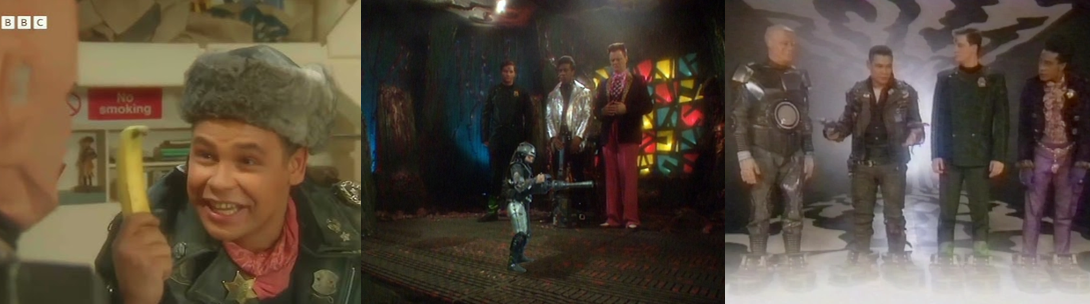
“Justice” tells us a bit more about Lister’s unruly childhood where he was coerced to steal cars and beds from hotels. Lister also relates how he went condom fishing in the canal and drastically alters established continuity as he now dated First Console Officer Kristine Kochanski (Clare Grogan) rather than lusting after her, with him being so cut up by their breakup that he envied a squirrel. When Lister meets Camille, he sees a mirror of him (Suzanne Rhatigan) that somewhat resembles Kochanski, according to the credits, but this isn’t mentioned in the episode. Still, Lister’s immediately eager to bed her and is frustrated to learn she’s a pleasure GELF who induces instant love. Lister later considers options to hide his “space mumps” to be more attractive for Barbra Bellini, only to again be robbed of any female companionship when a psychotic simulant (Nicholas Ball) emerges from her cryogenic pod. Eager to help Kryten to be independent, Lister continues to encourage him to break his programming, tutoring the mechanoid in how to lie and insult others. Similarly, Lister helps Kryten adjust to being a human when his DNA is transmogrified but, after being horrified by pictures of Kryten’s penis and his struggles with human anatomy, Lister eventually encourages his friend to embrace his true self. Lister’s very adamant about this, which is why he’s reluctant to become a vaguely familiar superhuman to battle the horrific vindaloo monster (Paul McGuinness). However, his belief that everyone should be true to themselves doesn’t extend to Talkie Toaster (David Ross), whose chirpy demeanour and obsession with toast drive Lister mad, and he’s disgusted when Rimmer leads the free-thinking wax-droids in “Meltdown”. Believing the wax-droids have developed a self-awareness that makes them “practically people”, Lister opposes Rimmer’s mad plot to live out real-life wargames but is ultimately helplessly as Rimmer causes all the wax-droids to be destroyed.
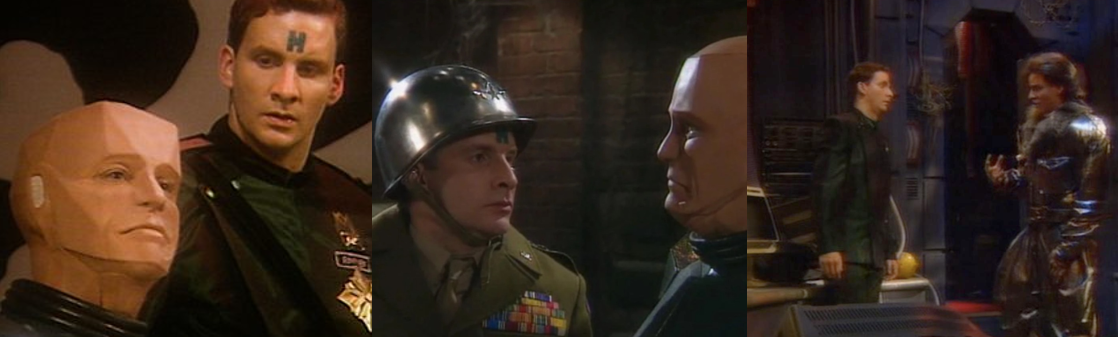
Rimmer gets a few spotlights this series, though his personality flip-lops quite unpredictably. In “Camille”, he’s the first to encourage Kryten to date the titular GELF (Judy Pascoe) despite her monstrous appearance, he successfully works with and directs the crew in docking with the presumably alien vessel in “D.N.A.”, and often showcases a take-charge attitude, even if he is overbearing. Yet, simultaneously, Rimmer mocks Lister’s criticisms of being human, refuses to be switched off to give Lister and the Cat a few more months to live, and goes insane when visiting Wax-World since it gives him the chance to live out his Risk days. When visiting the Justice World penal colony, Rimmer is stunned when he’s incarcerated for accidentally killing the Red Dwarf crew and equally insulted when Kryten’s defence plea paints him as a buffoon with delusions of grandeur who naturally shouldered the guilt since he took his lowly job so seriously. Series four also introduces Rimmer’s charismatic and awe-inspiring counterpart, “Ace” Rimmer, a hot-shot test pilot who’s everything Rimmer wishes he was. Consumed by petty jealousy, Rimmer makes a fool of himself accusing Ace of being gay and trying to pull pranks on him, bitter that Ace got the breaks he missed out on, only for it to be revealed that Ace was held back as a child and forced to toughen up. Ace and Rimmer couldn’t be more different as one is confident, complementary, and capable and the other is next to useless and so despised by his crew that they try to sneak off without him. Indeed, Ace is so disgusted by his counterpart that he alters his dimension hopping mission to try and find another version of himself that’s more pathetic, only for the ending crawl to reveal he failed in this endeavour.
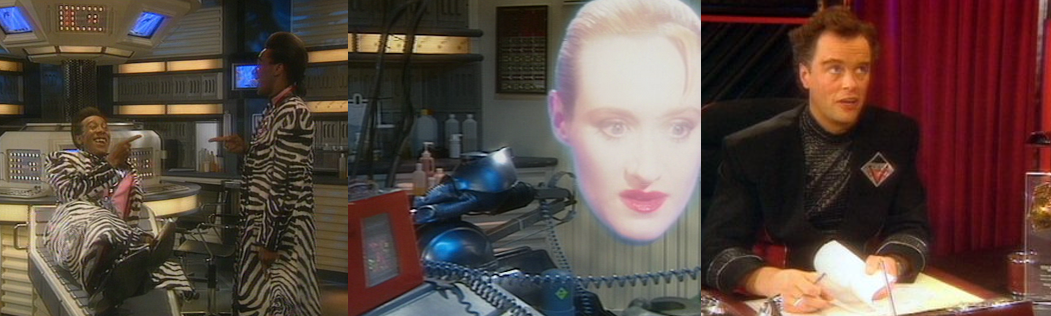
While the Cat doesn’t get a spotlight episode and is again more of a third wheel, he often chips in insults towards Rimmer and gags regarding his grooming habits. The crew are frustrated when he keeps unplugging the console in “D.N.A.”, Lister is terrified when the Cat’s curiosity transmogrifies him into a chicken, and the Cat amuses when his broken leg sees him worry more about his colour co-ordination than his health. The Cat’s awareness of pop culture is far greater this series and he feels more integrated into the crew despite not having a dedicated plot. I loved that his perfect mate was himself and him encouraging Lister to power electrical appliances with a bicycle in “White Hole”, and his utter despair when faced with the gallows in “Meltdown”. While there’s less for Holly to do than ever thanks to Kryten largely acting as technobabble exposition, she still gets her time in the sun by swooning at the sight of Ace and questioning whether she has any desires as she didn’t see anything special when meeting Camille. “White Hole” is built around Kryten’s efforts to cure Holly’s computer senility, a bizarre computer virus that’s made Holly quirky, forgetful, and unreliable. Thanks to experiments with Talkie Toaster Kryten boosts Holly’s intelligence but a miscalculation dramatically reduces her lifespan to under four minutes. Holly’s brief delight at being a genius again is shattered by the aggravating toaster and this revelation, which sees her shut herself and all non-essential systems down, leading to curse exchanges between her and Rimmer as the crew try to figure out what’s happening and solve the problem of the white hole. The actors also get a chance to showcase different personalities in “Dimension Jump”, with Lister being a competent mechanic, the Cat a caring priest, Holly a horny receptionist, and Kryten recast as Ace’s equally horny commander, all of them as besotted by Ace as the regular crew are fed up with Rimmer.
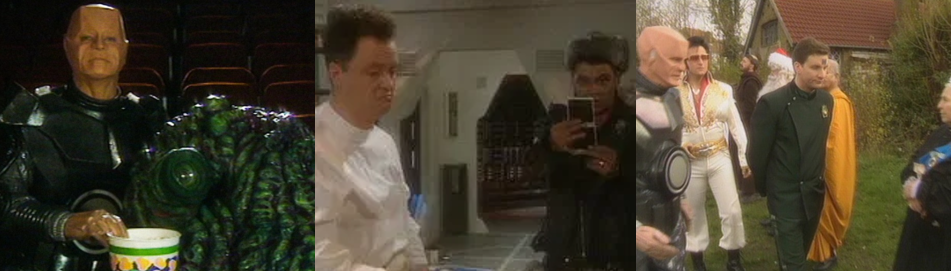
Kryten gets the most spotlight here. We saw in series two that Lister hated the idea of the mechanoid being subservient and constantly pushed Kryten to follow his own dreams. Series four revisits this, with Lister encouraging him to lie and be insulting so he can be more human. While Kryten eventually succeeds, he stutters when insulting Rimmer but, by the end of “Camille”, has been so through the wringer of emotion that he can lie and offend at will. While he delights in unleashing a barrage of insults at Rimmer as time unravels in “White Hole”, this doesn’t represent much of a status quo change for Kryten as he’s still a courteous and respectful servant. Indeed, he’s largely powerless to stop Rimmer in “Meltdown” and even obeys his orders due to his programming. However, Kryten does showcase more independence, piloting Starbug and explaining the white hole when Holly’s offline. Kryten also takes the spotlight in “D.N.A.” as he unexpectedly becomes human. At first, he’s elated to be living his dream but quickly finds he doesn’t understand his limited senses. Desperate to remain optimistic, he insults his “second class” origins and spare body parts, experiencing wild mood swings as he struggles to adapt, ultimately realising he was happier as a mechanoid. While Camille fakes being in love with others, she seems to genuinely fall for Kryten, to the point where she wants to abandon her “husband”, Hector (Rupert Bates), to be with him and only agrees to leave when she sees that Kryten is doing what’s best for her, even if it causes him pain. Kryten proves indispensable in “Justice”, compiling a case that, while insulting to Rimmer, exonerates the hologram of any true guilt, and showcases some medical proficiency (though he still needs Ace’s help with the Cat’s broken leg). Equally, Kryten cobbles together the matter transporter after discovering it in the ship’s research laboratories, quickly figuring it out and encouraging its use. Moments like these largely explain Holly’s diminished role as Kryten is much better suited to delivering exposition while also being physically integrated into the crew, and I really enjoying his struggles to apply Lister’s teachings here.
The Summary:
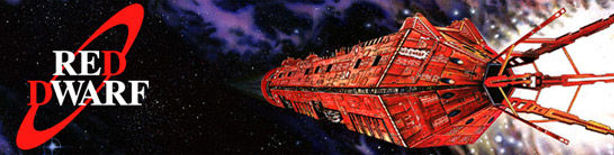
On paper, series four has a lot going for it. It matches series three’s visuals (even recycling Starbug footage as much as Red Dwarf model shots) and continues many themes of previous episodes, mainly involving Kryten and his independence. The crew venture to new or redesigned areas of the ship, such as the science lab, medical bay, and space dock, with each giving off a dark, industrial aesthetic. While the crew only visit alien worlds once (twice, if you count the crashlanding in “Dimension Jump”), Wax-World is painfully restricted. As if recycling grainy footage from Gappa: The Triphibian Monster (Noguchi, 1967) wasn’t bad enough (though it is referenced as a joke in the episode), many events happen offscreen (sure, it’s funny hearing Winnie-the-Pooh get executed but it might’ve been nice to see it) and it always looks like they’re shooting in someone’s back garden and on quiet country lanes. Many episodes also have disappointing endings. “Camille” sets a high standard with its emotional parody of Casablanca (Curtiz, 1942), though things quickly go downhill from there. “D.N.A.” isn’t bad, I guess, with the miniature RoboLister enjoying the remains of the vindaloo monster, but “Justice” ends with a bizarre rant from Lister about free will and the nature of justice and “Dimension Jump” has a weird coda where Rimmer plays Hammon organ music. This really wasn’t necessary as the ending text explaining how pathetic Rimmer is in the wider multiverse was enough and it feels like the writers just couldn’t decide how these episodes should end. I did like seeing the time anomaly fade out behind the crew in “White Hole” and Kryten taking advantage of the opportunity to roast Rimmer, but it does make me wonder why the crew didn’t continue their intelligence experiment upon the timeline being reset.
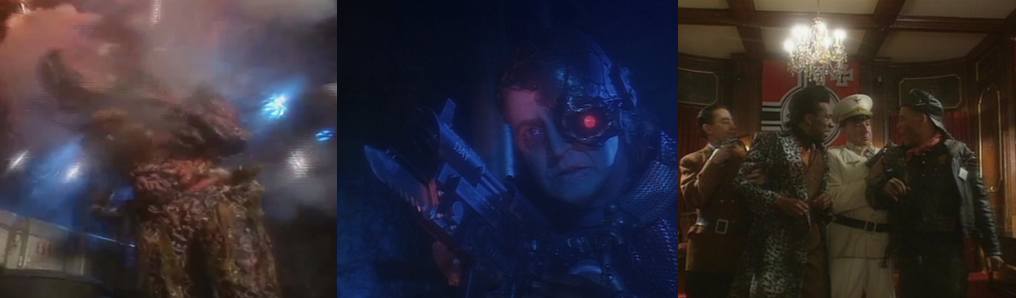
Series four leans more into “monster-of-the-week” territory than ever. The show’s still not using aliens (though the DNA ship is initially thought to be alien and certainly looks it, with its bio-organic interior and multilingual DNA modifier) but happily evoke them through the hideous, blob-like GELF Camille. Although she looks grotesque and causes some emotional turmoil, Camille can’t help that she becomes the object of a person’s desire. She seems to genuinely connect with Kryten but sees that he’s right that she belongs with Hector, who could potentially cure their condition. “D.N.A.” leans into horror with a ghastly three-headed corpse and the rampaging vindaloo monster, which shrugs off bazookoid fire and is only stopped by a vindaloo’s natural enemy: larger! The crew’s guilt is turned against them in “Justice” as the Justice Computer (James Smillie) scans them for any criminal acts and judges them accordingly. Justice World is a fascinating environment that uses robotic boots to ferry visitors around and includes a nigh-magical “Justice Zone”, where criminal acts are inflicted upon perpetrators. Lister learns this the hard way when he tries to commit arson but later uses it to his advantage to fight the simulant, who’s shot, stabbed, and eventually choked to death when he tries to kill Lister and the strange karma field inflicts the damage on him. The simulant makes for a memorable villain, taking the potential shown by the psychotic Hudzen-10 (Gordon Kennedy) and ramping it up to eleven with his devious nature and sadistic demeanour. Artificial lifeforms also pose a significant threat in “Meltdown”, with history’s most feared and ruthless evildoers waging war against celebrities, pacifists, and intellectuals to utilise their wax. Adolf Hitler (Kenneth Hadley) and Emperor Gaius Caesar Augustus Germanicus/Caligula (Tony Hawks) lead the charge in this campaign, mercilessly melting the resistance’s best fighters and punishing Lister when the Cat’s insolence denies them knowledge of the matter transponder.
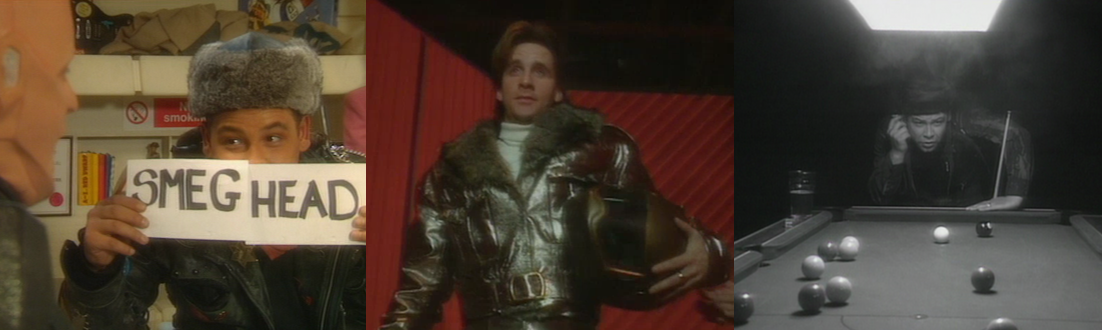
Despite its awful ending, “Dimension Jump” is my favourite episode of this series. It showcases some new model work and environments and introduces the alluring Ace Rimmer, a charming and awe-inspiring version of Rimmer who’s so attractive, brave, and kind-hearted that everyone swoons at his feet. Despite this, he remains humble and affable, reading to sick children and giving props to the engineers who give him the means to be the best. Even with a broken arm, Ace doesn’t hesitate to help the scuttled crew, braving a raging storm to fix Starbug’s engine alongside “Skipper”, though even he cannot stomach how disappointing and pathetic his counterpart is. I also really enjoyed “White Hole”, which starts with some fun antics with Talkie Toaster, shifts gears to a survival situation after Holly’s forced offline, and then explores temporal anomalies and has Lister launching a thermo-nuclear device for a one-in-a-million shot! “Camille” and “D.N.A.” were great showcases for Kryten, establishing some changes to his programming and allowing him to explore new emotions, though this is largely distilled into a “lie mode” going forward. It’s a shame there wasn’t more for the Cat to do and that Holly’s role is further lessened, but I enjoyed a lot of the extra depth given to the characters and their relationships. They’ve clearly become a dysfunctional surrogate family, enduring each other most of the time, genuinely connecting on rare occasions, but often winding each other up. When the chips are down, though, the crew come together to help each other, even if reluctantly, defending Rimmer despite his aggravating nature and Lister even betraying his morals if it means killing a vindaloo monster. However, I still feel something’s lacking here even if there are still a lot of laughs. Maybe it was the lack of visual variety in the locations, maybe the abrupt endings or bizarre narrative choices (the space mumps thing really doesn’t add much), but series four always feels like a small step back from series three and that’s a shame as there are a lot of good moments to be found.
My Rating:
Pretty Good
Do you think I’m being too harsh on series four of Red Dwarf? Did you enjoy seeing Kryten take the spotlight and the exploration of his emotions? Which of the threats featured in this series was your favourite? Were you a fan of Ace Rimmer? Which episode of this series was your favourite? How are you celebrated Gazpacho Soup Day today? Drop your thoughts on this series of Red Dwarf in the comments, go check out my other Red Dwarf content, and donate to my Ko-Fi to support more reviews like this.

 Dr. K's Waiting Room
I need to watch this again. It’s been years.
LikeLiked by 1 person
I’d recommend it
LikeLike