
While May 4th is known the world over as Star Wars Day, many also choose to extend the celebrations of the course of three days, with one of them being the “Evil Star Wars Day” of May 6th (as in “Sith”).


Air Date: 27 May 2022 to 22 June 2022
Network: Disney+
Director: Deborah Chow
Stars: Ewan McGregor, Vivien Lyra Blair, Moses Ingram, Rupert Friend, Jimmy Smits, and Hayden Christensen/James Earl Jones
The Background:
In 1977, George Lucas introduced audiences to his pulp sci-fi “space opera” with Star Wars (or Episode IV: A New Hope), which became a near-immediate phenomenon not just at the time, bit for generations. Star Wars achieved this not just through toys, videogames, comics, and novels, but Lucas returning the franchise to the big screen with a prequel trilogy. Though largely seen as inferior to the Original Trilogy thanks to an overreliance on CGI and some questionable performances and dialogue, the Prequel Trilogy was financially successful and has since earned a generation of apologists, with Ewan McGregor’s portrayal of Obi-Wan Kenobi attracting much praise. Accordingly, after Disney acquired the franchise and began producing a new trilogy and spin-off films, talk of an Obi-Wan venture circulated after McGregor expressed interest in reprising the role. Though initially planned as a feature film, the project was re-tooled into a six-episode miniseries after the financial failure of Solo: A Star Wars Story (Howard, 2018) and the critical acclaim of the Disney+-exclusive series, The Mandalorian (2019 to 2023). Eager to explore a more downtrodden version of the titular character, McGregor was ecstatic to be working with Hayden Christensen once more. Christensen leapt at the chance to don the iconic helmet once more and the two were digitally de-aged for a flashback sequence. Pitched as a story about Obi-Wan confronting his past, Obi-Wan Kenobi also explored Princess Leia’s childhood and straddled a fine line between telling its own story and staying true to established canon. Premiering as the most-watched Disney+ original series (at the time) and also one of the most pirated shows, Obi-Wan Kenobi received critical acclaim that praised McGregor’s performance and the emotional reunion between Obi-Wan and Darth Vader. While the action and old-school atmosphere were also praised, some plot elements were ridiculed and the show was criticised for relying too heavily on nostalgia. Still, despite some horrendous racist reactions, the award-winning show was accompanied by a tie-in comic series and McGregor was optimistic about reprising the role again in the near future.
The Plot:
Ten years after the destruction of the Jedi and the rise of the Galactic Empire, former Jedi Master Obi-Wan Kenobi (McGregor) hides on Tatooine. When called to rescue Princess Leia Organa (Blair), Obi-Wan is drawn into a confrontation with his former Padawan, Anakin Skywalker, now the ruthless Sith Lord: Darth Vader (Christensen/Jones).
The Review:
Obi-Wan Kenobi is a six-part miniseries set some ten years after Revenge of the Sith. Accordingly, the malevolent Galactic Empire dominates the galaxy, enforcing martial law across numerous worlds, stationing their nameless, faceless Stormtroopers to harass and intimidate the populace, and ravaging the natural resources of every world they control. Life is tough for many ordinary civilians as they’re either persecuted, deprived of basic needs such as food and credits, or brainwashed into believing that the Empire is a benevolent organisation bringing order to the galaxy. Thus, we see a few different ends of the spectrum in Obi-Wan Kenobi, with friendly, ordinary civilians like Freck (Zach Braff) praising the influence of the Empire, downtrodden, forgotten Clone Troopers (Temuera Morrison) left begging in the streets, senators like Bail Organa (Smits) trying to politically influence opinion away from the Empire, and Imperial offers like Tala Durith (Indira Varma) being disgusted by the Empire’s tyrannical ways. To make matters worse, Emperor Sheev Palpatine’s (Ian McDiarmid) oppression of the Jedi Order saw not only Jedi and their Younglings mercilessly slaughtered by Clone Troopers as part of “Order 66”, but the continued hunting and eradication of any surviving Jedi or Force-sensitive individuals by Darth Vader and his determined, ruthless Inquisitors. While Darth Vader and his cohorts, who were once Jedi before turning to the Dark Side, successfully identify their prey, either by intimidating, threatening, or out-right killing the locals, their true quarry, the elusive and titular Obi-Wan Kenobi, has eluded them for ten years. Like many Jedi, Obi-Wan has accomplished this not only by hiding away on a backwater planet (in this case, Tatooine) but by suppressing his Force abilities. When confronted by desperate Jedi survivor Nari (Benny Safdie) in “Part I”, Obi-Wan strongly advises him to follow his example, literally burying his former life in the desert and refraining from helping others with the Force, advice that Nari doesn’t heed and results in his public execution.
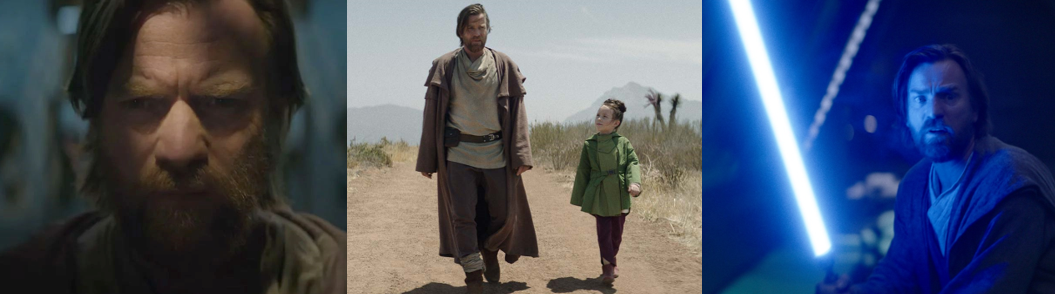
Traumatised by the horrific events that saw his former Padawan, Anakin Skywalker, be seduced by the Dark Side and slaughter his fellow Jedi, Obi-Wan has hidden away on Tatooine, taking the “clever” alias “Ben” and eking out a menial living, with only Owen and Beru Lars (Joel Edgerton and Bonnie Piesse) aware of his true identity. Although Obi-Wan regularly attempts to commune with the spirit of his old master, Qui-Gon Jinn (Liam Neeson), he receives no answer, largely because he’s lost his connection to the Force after a decade of suppressing his abilities and after seeing first-hand the downfall of the Jedi Order. Haunted (literally and figuratively) by the screams and suffering of his former Padawan, Obi-Wan is a shell of his former self who uses his promise to watch over Anakin’s son, young Luke Skywalker (Grant Feely), as an excuse to stay hidden, despite Owen warning him to stay away lest he fail the boy as he failed his father. However, when Reva Sevander (Ingram), an ambitious Inquisitor known as the Third Sister obsessed with gaining Darth Vader’s favour, hires bounty hunters to kidnap young Princess Leia, Obi-Wan is forced back into the fight at the desperate request of Bail, Leia’s adopted father and Obi-Wan’s old Republic ally. While he’s hesitant to answer the call, feeling old and useless and afraid of drawing undue attention, Obi-Wan ultimately agrees since Leia, as Luke’s sister, is just as important to any future hope of opposing the Empire. Thus, Obi-Wan leaves Tatooine with only his wiles and some rusty Jedi tricks to guide him. Obi-Wan finds himself in a galaxy that’s largely lost its way, full of disreputables like fake Jedi Haja Estree (Kumail Nanjiani), bounty hunters like Vect Nokru (Flea), and meek civilians afraid of Darth Vader’s wrath. While Obi-Wan carries his lightsaber, he mostly favours a blaster and avoids using the Force lest he compromise his position. However, he is ultimately forced to take up both to safeguard Leia and defend the innocent, finding that the spark of hope is still alive, if faded, in the unruly galaxy.
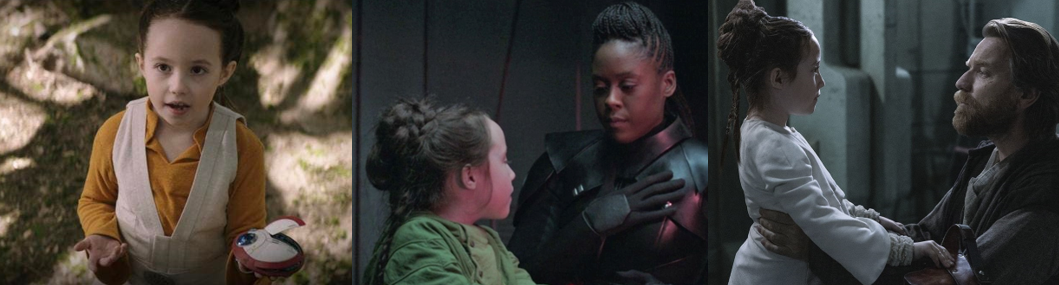
Because of Obi-Wan’s reluctance to use the Force, the stubborn, adventurous, headstrong Leia is initially very wary of him. Already something of a spoiled and reckless child, Leia finds politics boring and desires to find her own path, but is incredibly defiant and brave even when faced with the likes of the Third Sister. Leia never stops to fight back, resisting her captors at any opportunity, and is incredibly insightful. She has a unique way of reading people, even after only just meeting them, and isn’t afraid to speak her mind. Having lived a sheltered life on Alderaan, Leia is naïve to the dangers of the galaxy and walks head-first into situations thinking the best of everyone, confident that she can charm or talk her way out of most situations. Her surprisingly intuitive demeanour impresses Obi-Wan, as she’s wise beyond her years in many ways, but he’s also quick to shield her from growing up too fast and being exposed to violence before she’s ready to put her feisty spirit to good use as a natural leader. Leia and Obi-Wan’s relationship is a true highlight of Obi-Wan Kenobi; I loved her inquisitive nature and how she criticised him at times. It’s also heartbreaking to see Obi-Wan’s reaction to her, as she reminds him of Padmé Amidala (Natalie Portman) in mind, body, and spirit, bringing further pain to the wizened Jedi Master since he was unable to keep Padmé from Anakin’s destructive downfall. Adorable and enthusiastic, Leia relishes the chance to be on an adventure, though recognises that she’s in over her head and caused trouble by disobeying her parents. She eventually bonds with Obi-Wan, querying his sullen demeanour and learning of the tragedies he’s witnessed, and also connects with Tala, who inspires her rebellious attitude. Leia’s stubbornness sees her defy even the Third Sister’s cruel interrogation; resisting the Inquisitor’s attempts to probe her mind with the Force, Leia refuses to sell out her allies even when faced with torture. Similarly, Leia comes to care for Obi-Wan so deeply that she begs Tala to help him when he chooses to face Darth Vader to cover her escape, and eventually sets herself on the path to forging her own identity as a diplomat and a fighter thanks to Tala’s sacrifice and Obi-Wan’s influence, especially as he passes on knowledge of her true parents.
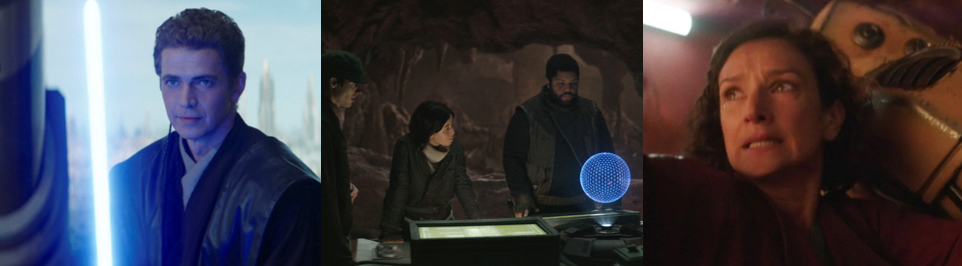
While Obi-Wan is faced with danger at every turn, he gains some notable allies in his quest. Naturally distrustful following his traumatic past, Obi-Wan initially tries to keep a low profile and sway suspicion with flimsy cover stories. However, after the Third Sister puts a bounty on his head, Obi-Wan’s forced out of the shadows and to slowly reconnect with the Force and his lightsaber, which means making new allies to escaping Darth Vader and the Inquisitors. His first port of call is Haja, a con man who fakes being a Jedi for credits but who’s inspired by meeting a real Jedi to aid Obi-Wan, eventually watching out for Leia as the Jedi Master confronts Darth Vader. Despite seemingly leading him on a wild goose chase, Haja also puts Obi-Wan in contact with Tala, a disillusioned Imperial officer trying to atone for the blood on her hands by secretly smuggling Jedi and other Imperial targets to safety through an underground resistance network known as “The Path”. Tala’s Imperial authority guides Obi-Wan through the Fortress Inquisitorius to rescue Leia, where he discovers, to his horror, the preserved corpses of slain Jedi in the temple. It’s through Tala that Obi-Wan meets Kawlan Roken (O’Shea Jackson Jr.) and reaffirms his status as a defender of the innocent since Obi-Wan willingly surrenders to cover their escape, though Tala is unfortunately killed during the Imperial assault in “Part V”. Obi-Wan’s reluctance to trust others stems not just from his need to stay hidden, but also from being burned by Anakin’s betrayal. The wonders of modern de-aging technology provide a flashback to Obi-Wan’s younger days, when he duelled with the upstart Anakin and tried to emphasise the need to temper his aggression and desire to prove himself in favour of defending others. Thanks to competent writing and direction, Hayden Christensen gets a chance to shine as the conflicted Anakin, who’s torn between showing his superiority and obeying his master. Despite Anakin’s exuberance in the duel, the two are painted as close brothers, making the pain of Anakin’s turn only sting more. This feeds into Obi-Wan’s guilt and the fear he feels whenever Darth Vader is present since Obi-Wan doesn’t want to see the monster his former protégé has become, much less be forced to kill him.
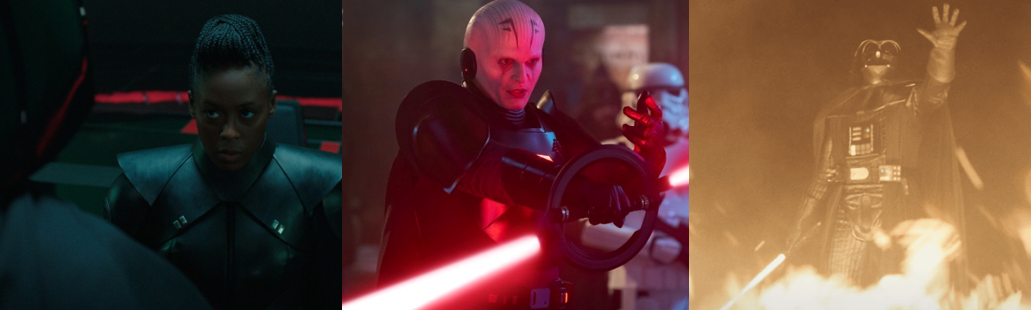
While all Jedi are relentlessly hunted by the Inquisitors, Obi-Wan is specifically targeted by the Third Sister against the orders of the Grand Inquisitor (Friend) and her rival, the Fifth Brother (Sung Kang). While the Grand Inquisitor enjoys a good monologue, intimidating locals into giving up any Jedi amongst them, the Third Sister prefers a more direct approach, publicly executing and maiming people to force the Jedi out. Constantly reprimanded for her reckless ways, the Third Sister’s ambition to impress Darth Vader by delivering his former master sees her seemingly kill the Grand Inquisitor and take his place, gaining Darth Vader’s favour and leading the operation to hunt Obi-Wan down. Reva’s ambition is seeped in hatred of both the Jedi and her dark master since, as a Youngling (Ayaamii Sledge), she witnessed Anakin’s massacre and has pledged to destroy him. Obi-Wan initially sways her into allying with him, providing her with the distraction to attempt an execution, only for Darth Vader to grievously wound her thanks to the surviving Grand Inquisitor. Desperate, the Third Sister heads to Tatooine to slaughter Luke and his family but ultimately spares the boy when she realises she’s in danger of becoming the same monster as Anakin. Strong in the Force and wielding red lightsabers, the Inquisitors inspire fear through their mere presence. This is, surprisingly, echoed in the Stormtroopers, who are far more competent and menacing than usual, especially due to their sheer numbers and Obi-Wan’s rusty Jedi skills. These skills are tested when Obi-Wan inevitably crosses paths with Darth Vader, with the Dark Lord slaughtering and torturing innocents to bait his old master and humbling Obi-Wan during their first, brutal encounter. Here, Darth Vader toys with his prey, dragging Obi-Wan through fire to inflict a measure of the same pain he caused him. In their second encounter, Obi-Wan is far more confident and capable, though Darth Vader’s fury, raw power, and tempered skill still overwhelmed him. After being buried beneath a cave-in, Obi-Wan fully regains his connection to the Force and bombards Darth Vader with debris, damaging his mask and breathing apparatus and leading to a dramatic confrontation between the two. Here, Obi-Wan is distraught to see his scarred former pupil is beyond salvation and, after Vader takes credit for killing Anakin, Obi-Wan leaves him to his suffering, now fully convinced that Anakin Skywalker is dead and that only Darth Vader remains.

The Summary:
As a big fan of Ewan McGregor’s performance s Obi-Wan Kenobi, I’m ashamed at how long it took me to get to his long-awaited self-title series. McGregor shines as the haunted, wary former Jedi Master, easily slipping right back into the role and further echoing Alec Guinness’s original portrayal of the character as an older, wiser, and far less physically capable character. In Obi-Wan Kenobi, Obi-Wan is tormented by guilt and PTSD, haunted by nightmares of Anakin’s downfall and weighed down by his failure to save his apprentice, which he believes cost the lives of countless innocents and Jedi. When Bail calls, Obi-Wan insists that he’s not the right man for the job and, to be fair, he’s not completely wrong. Constantly called out for his age and initially struggling so much to call upon the Force that it exhausts and even pains him, Obi-Wan is a far cry from the confident, commanding General he once was. However, this old dog still has a few tricks up his sleeve. He’s handy with a blaster and some of his Jedi training still remains in a fist fight, allowing him to survive most scuffles, even if he lacks the finesse he once had. He’s somewhat overconfident when he first faces Darth Vader, though it’s more that he’s forced into a lightsaber duel to protect Leia and other innocents. His form is sloppy and weak, as criticised by Darth Vader, and Obi-Wan surely would’ve died if not for Tala’s timely intervention. Though he’s still a step behind his twisted opponent in his second encounter, Obi-Wan is much more formidable and regains much of his former strength through both their duel and the closure given to him by Darth Vader’s assertion that Anakin is dead. This, as much as rediscovering his compassion for others and seeing the flame of hope still flickering in the galaxy, brings Obi-Wan enough inner peace to finally strengthen his connection to the Force. This allows him to commune with his long-dead master, Qui-Gon, effectively laying the foundation for Obi-Wan’s later adventure with the Rebellion.
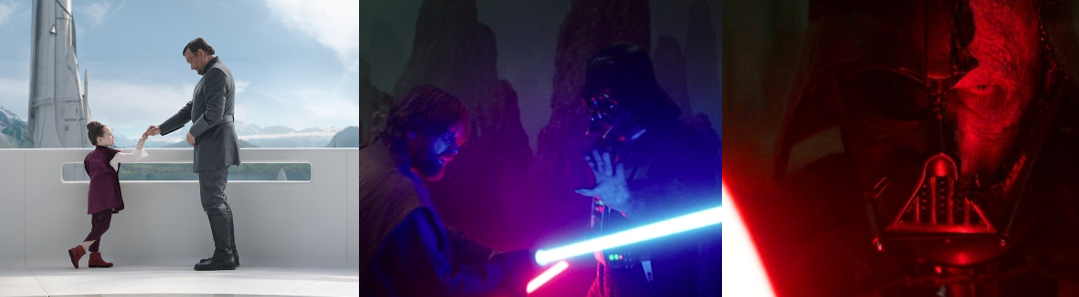
As great as Obi-Wan was here, Obi-Wan Kenobi goes a long way to making up for some of the Prequel Trilogy’s many shortcomings. Jimmy Smits gives a magnetic performance as the concerned and desperate Bail, who has a lovely relationship with Leia where he encourages her mischievous ways as well as a brotherly bond with Obi-Wan that sees him turn to the burned-out Jedi in his time of need. We get more of an idea of how devastating Order 66 was, not just through Obi-Wan’s nightmares but Reva’s descriptions and flashbacks, which depict Anakin as a monster who turned on his own people and mercilessly slaughtered children. This memory is as traumatic for Reva as it is Obi-Wan, fuelling her hatred of the Jedi for allowing it to happen and of the Dark Lord for committing the act. Obi-Wan Kenobi brings Hayden Christensen back not just as a digitally de-aged Anakin but as Darth Vader, bolstered by an AI-rendition of the late, great James Earl Jones’s booming voice. Depicted as a scarred, maimed tyrant, Darth Vader relentlessly pursues Obi-Wan even against other, more pressing concerns. He fuels the Third Sister’s lust for power by promoting her under pain of death if she fails and doesn’t hesitate to strike her down when she tries to assassinate him. When confronting Obi-Wan, Darth Vader is disgusted by the state of his master and easily overpowers him, relishing the chance to inflict pain upon the one he blames for his condition. Although I don’t mind Hayden, he was always a weak-link in the Prequel Trilogy; however, Obi-Wan Kenobi proves this was largely because of the awful direction and script he was saddled with. Here, Anakin is a twisted and embittered man consumed by anger and vengeance. Seeing his helmet damaged, his voice box malfunctioning, and the pure animosity in his eyes as he denounces both Obi-Wan and his former life is a truly stirring (if familiar) moment that goes a long way to make up for George Lucas’s clunky dialogue.
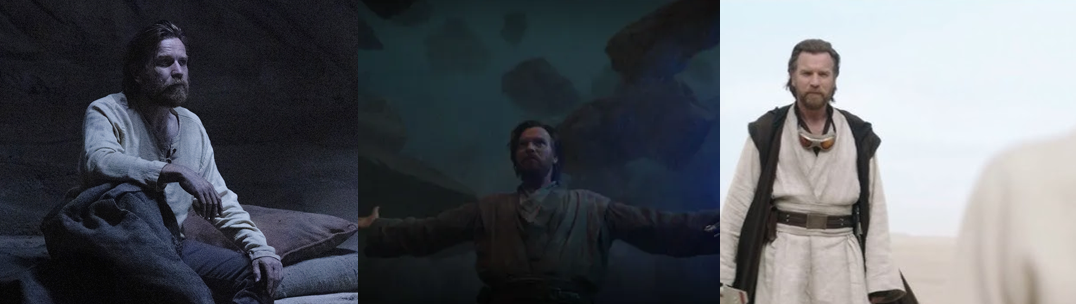
Though Obi-Wan relies more on his blaster and his wits, Obi-Wan Kenobi features some decent chases, action scenes, and space battles. The show primarily goes out of its way to depict Stormtroopers as a true threat, which I really enjoyed, and to hammer home how desperate the situation is for the few remaining Jedi and those who would oppose the Empire. The lightsaber action is as thrilling as we saw in the Prequel Trilogy, now given an extra edge through the Inquisitors’ lust to eliminate all Jedi and Darth Vader’s desire to make his former master suffer. Not only that, but I really enjoyed Leia’s portrayal here. She echoes both her mother and her older self in her stubborn, outspoken nature and I enjoyed the dichotomy of her as a naïve but rebellious child who wanted an adventure but was strong enough to resist torture. Her relationship with Obi-Wan was equally adorable and emotional as Leia only causes Obi-Wan further pain because of his failures. These see him become obsessed with watching over Luke, whom Owen aggressively shields to keep him from taking even a single step down the same path his father took. Obi-Wan’s reluctance to leave the boy and embark on some damn, fool adventure turns out to be just what the downtrodden former Jedi needed since Leia shows him that there’s hope for the future. This is only further emboldened through Obi-Wan’s interactions with Tala and Roken, rebellious spirits who place themselves in mortal danger to save who they can and are principal figureheads in the fledgling Rebellion. Forced to literally confront his past, his demons, and his greatest failure, Obi-Wan rediscovers himself and accepts that Anakin is truly lost, ending the miniseries in a stronger position to prepare for the future since he’s no longer haunted by the past. Overall, I really enjoyed Obi-Wan Kenobi. It’s a bit wonky in some ways since I never suspected that Obi-Wan left his exile on Tatooine much less had an encounter with Leia or a rematch with Darth Vader, but the miniseries is clearly positioned as a love letter to the Prequel Trilogy and, in that respect, it succeeds. With fantastic performances from the new and returning cast, there’s a lot to like here and it does a great job of further bridging the gap between the two trilogies and sowing the seeds for future appearances of the likes of the Skywalkers, the Inquisitors, and the Dark Lord himself.
My Rating:
Great Stuff
Did you enjoy Obi-Wan Kenobi? Were you excited to see Ewan McGregor and Hayden Christensen return to their iconic roles? What did you think to Obi-Wan’s character arc and his depiction as a traumatised former Jedi? Did you enjoy the brutal rematch between him and Darth Vader or did it irk you to see them interact prior to the Original Trilogy? What did you think to Leia, her gusto and bravado, and the allies they made in their journey? Are you a fan of the Inquisitors? Would you like to see other character-specific Star Wars spin-offs? I’d love to see your thoughts on Obi-Wan Kenobi in the comments below, so drop them there, support me on Ko-Fi, and go check out my other Star Wars content.

 Dr. K's Waiting Room