
“Three billion human lives ended on August 29th, 1997. The survivors of the nuclear fire called the war Judgment Day. They lived only to face a new nightmare: the war against the machines”.


Released: 21 May 2009
Director: McG
Distributor: Warner Bros. Pictures / Sony Pictures Releasing
Budget: $200 million
Stars: Christian Bale, Sam Worthington, Anton Yelchin, Moon Bloodgood, Bryce Dallas Howard, and Helena Bonham Carter
The Plot:
Years after humanity was decimated by Skynet’s nuclear attack, John Connor (Bale) is seen as a prophet by many in the human Resistance due to his future knowledge. However, when Skynet begins targeting Connor’s future father, Kyle Reese (Yelchin), he’s forced to put his faith in Marcus Wright (Worthington), an amnesiac murderer resurrected by the same technology destined to birth Skynet’s Terminators.
The Background:
The Terminator (Cameron, 1984) might have been an unexpected financial success, but Terminator 2: Judgment Day (ibid, 1991) was a blockbuster release that is often touted as one of the greatest movie sequels of all time. Despite T2 being the definitive end of the story, star Arnold Schwarzenegger returned to the franchise for Terminator 3: Rise of the Machines (Mostow 2003), which proved to be a near-universal critical failure. However, Terminator 3 did surprisingly well at the box office and was supposed to be the first of two films revolving around the early days of the Future War before a series of lawsuits saw the rights change hands and McG wind up in the director’s chair. A fan of the first two films, McG initially wanted Robert Patrick to return and even discussed the project with James Cameron. Terminator 3 stars Nick Stahl and Claire Danes were initially set to return but rising star Christian Bale won the lead role, which was expanded following his input to explore his destiny as a leader, though Bale came under media fire following an on-set outburst that he later apologised for. Although Schwarzenegger’s involvement was in doubt since he was serving as the Governor of California at the time, he eventually allowed his likeness to be digitally applied to bodybuilder Roland Kickinger for the finale. The lead cyborg role was assumed (on Cameron’s suggestion) by rugged Australian Sam Worthington, who insisted on performing his own stunts despite a serious on-set injury. McG insisted on there being as many in-camera effects as possible; the film would be one of the legendary Stan Winston’s last projects and boasted large-scale models, repurposed Ducati motorcycles, and complex animatronics alongside digital effects. Initially, the film was to have a far darker and less sensible ending in which Marcus assumes John’’s visage and murders the protagonists, though this (and the entire third act) was changed after an online leak. As it barely cleared $370 million, Terminator Salvation failed to surpass its predecessor at the box office and was (in my view) unfairly shunned by critics. Reviews targeted the mindlessness of the plot, Schwarzenegger’s absence, and the performances, with even the likes of Schwarzenegger, Cameron, and Linda Hamilton criticising the film’s shortcomings. However, others praised the film and, in time, it has developed a bit of a cult following. Although it was accompanied by a videogame and animated tie-in, bankruptcy and legal issues saw the Terminator rights once again shopped around and the new rights holders opt to retread the original films for their reboots.
The Review:
Let’s face it, trying to follow-up Terminator 2 was probably never going to end well, especially when all you’re offering is a toothless rehash of what’s come before. However, as poorly handled as Terminator 3 was, I definitely think there was a perfect opportunity to continue the franchise with some fresh faces by either having new Terminators (or the same T-800) sent to different points in the past to target other members of the future Resistance or by simply producing a prequel set during the Future War. Even now, as I’ve noted, one of the biggest missed opportunities in the entire franchise is not giving us a sweeping, cinematic shot of an army of Arnolds marching across a field of human skulls blasting at the resistance without mercy. So, I was intrigued and cautiously optimistic when the trailers for Terminator Salvation hit, and even more so because it had Christian Bale in the lead role. Bale was riding a wave of mainstream success following his unrivalled turn as Bruce Wayne/Batman and was a far, far better choice than Nick Stahl, so much so that it’s honestly a little difficult believing that Stahl’s version of John became the hardened, driven, semi-prophetic icon that is the John of this movie. However, this is before subsequent movies started needlessly screwing about with the timeline so everything that’s happened before is still canon. The most obvious indication of this is the presence of Katherine “Kate” Connor (Howard), now upgraded from veterinary nurse to actual nurse. Unfortunately, while she’s clearly seen to be pregnant and is depicted as John’s loyal right-hand (to say nothing of also being played by a stronger actor), there isn’t really all that much for Kate to do here since the film is more focused on its new cast of characters.
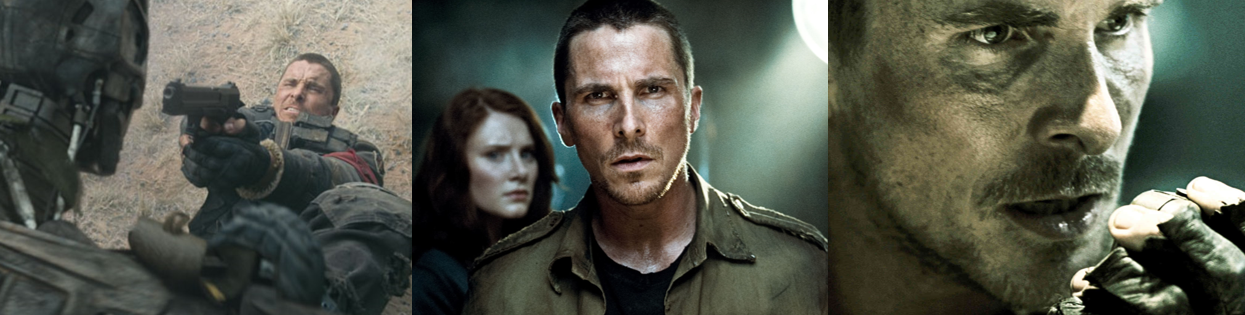
Terminator Salvation takes place quite early on in the war against the machines; though crippled and decimated by nuclear war, the world hasn’t yet become a nightmarish landscape of human bones and the battlefield isn’t yet filled with laser blasts and, most notably, John hasn’t become the iconic leader of the human Resistance. Instead, he’s a well-respected member of “TechCom” and a fully capable soldier in the seemingly unwinnable war against Skynet. Thanks to the teachings of his mother, Sarah (Linda Hamilton), and the tapes she left behind, John has enough information on Skynet to accurately predict their tactics, target their bases, and fend off attacks from their proto-Terminators, the T-600 model. Although he’s still subject to the will of his superiors, particularly the cantankerous General Ashdown (Michael Ironside), John is regarded by many as a messiah-like figure thanks to his uncanny knowledge and his regular rallying calls to the rag-tag survivors trying to avoid detection in the wastelands. However, even John is stunned to not only learn that Skynet’s construction of the far deadlier T-800 infiltrator model has been fast-tracked but also that the machines possess a “kill list” that names not only him and the Resistance leaders but also his father-to-be, Kyle Reese. With Skynet due to launch a massive offensive against its targets in just four days, John volunteers to test out an experimental signal that can disable the machines and is encouraged to prepare his squad, alongside trusted lieutenant Barnes (Common), in using the weapon to storm Skynet’s main headquarters in San Francisco and rescue Kyle and the other prisoners before the timeline is irrevocably altered for the worst. Brave, driven, and hardened from fully accepting his destiny as the leader of the human Resistance, John has developed an intense hatred of the machines and battles them without hesitation, though he doesn’t do this recklessly. Instead, he uses his mother’s teachings to set traps and target the machine’s weak spots to either disable or reprogram them efficiently, all of which contributes to his celebrated status amongst many within the Resistance and those struggling out in the wilds.
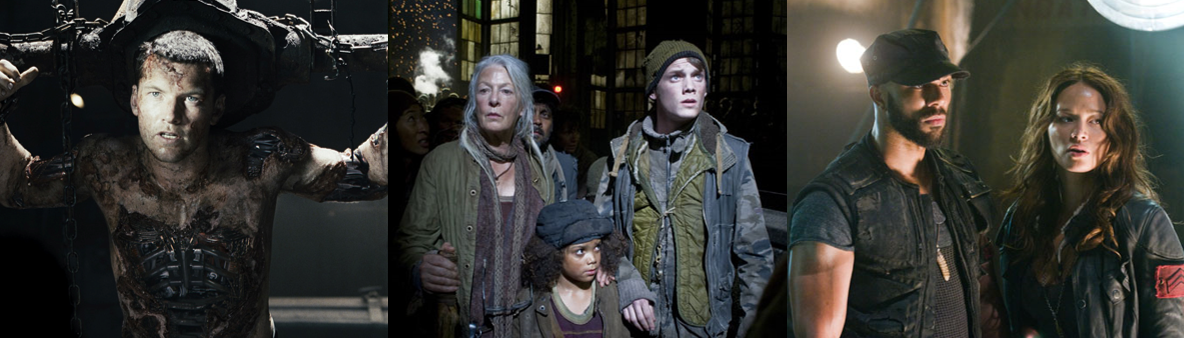
Of course, John’s story is only one part of Terminator Salvation’s narrative as it was around this time that Hollywood was trying to make Sam Worthington a thing. To be fair, I actually don’t mind him but he’s not exactly the most impressive or charismatic actor out there, especially when placed opposite the intense and captivating Christian Bale. Marcus is first introduced prior to Skynet’s attack as a death row inmate convinced by Doctor Serena Kogan (Bonham Carter) of Cyberdyne Systems to donate his body to her research. The result is his transformation into Skynet’s first cybernetic operative, which is treated as a big surprise when Marcus is injured by a magnetic landmine and taken to John’s base but was both telegraphed by the trailers and blindingly obvious by the fact that Marcus stumbles out of a destroyed Skynet laboratory in the midst of the Future War. Suffering from amnesia and confused by the state of the world, Marcus instinctively heads towards nearby civilisation and finds only the ruins of the old world, deadly (if clunky) robotic soldiers patrolling the wasteland, and young Kyle and mute Star (Jadagrace Berry) struggling to survive. Although he angers Kyle by wearing the colours of the Resistance without earning them and humbles the youngster’s moxie by easily disarming him, Marcus develops a reluctant kinship with the two due to his inherently good heart and he’s so determined to rescue them after they’re scooped up alongside a bunch of other survivors that he fails to heed the warnings of Resistance pilot Blair Williams (Bloodgood) regarding the machines. Injured and shot down while trying to intercept the prisoner transport, Blair grows close to Marcus while stranded in the wasteland and is the only one to defend him when the truth about him is dramatically revealed. Trusting her instincts, Blair decides to set Marcus free rather than leave him in John’s custody since Connor and the Resistance immediately peg Marcus as an advanced Skynet infiltration unit. Though he lacks the imposing nature of the T-800 and is far more vulnerable than the average Terminator thanks to his exposed heart, Marcus proves invaluable to John’s efforts in infiltrating the machine base since he’s essentially one of them, but it’s only when he’s inside the belly of the beast that Marcus learns just how deep Skynet’s influence runs within his body and circuitry.
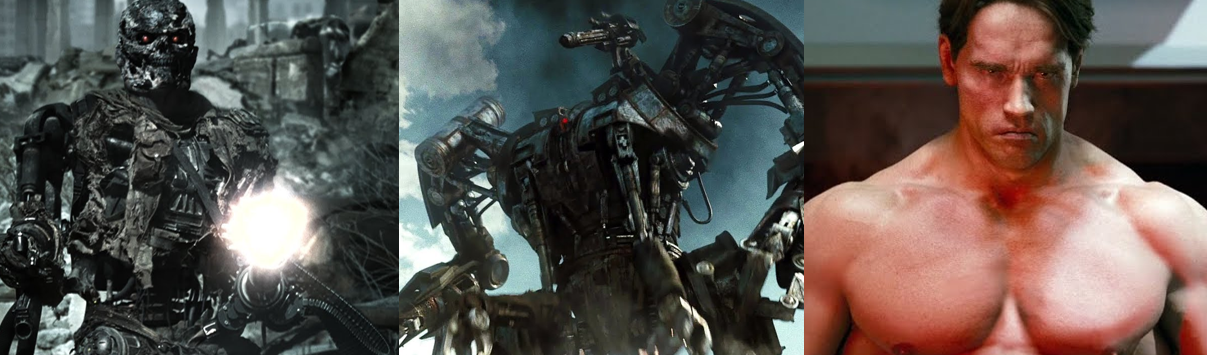
Since we’re at the early stages of the war against the machines, Terminator Salvation offers the greatest variety in mechanical adversaries than any previous Terminator film, though at the cost of having a central antagonist machine for the Resistance to fight against. Primarily, the rag-tag humans must contend with clunky T-600s, bulky endoskeletons that make a scarecrow’s attempt to pass as human and open fire on their targets with miniguns. At one point, John sets a trap for a couple of Moto-Terminators, motorcycle-like robots that race along at high speeds but are easily reprogrammed by the Resistance. Similarly, tentacle-like Hydrobots attack the humans from the water and Hunter Killers (HKs) patrol the air, though all these machines are easily bested by regular weapons such as machine guns and rocket launchers. The gigantic Harvester proves a far more formidable and persistent threat; this hulking machine packs pulse cannons and a flamethrower and easily shrugs off an exploding petrol station, scoops up its targets, and spirits them away to Skynet Central on the back of a massive prisoner transport. When he awakens inside the facility, Marcus confronts the Skynet mainframe, which primarily assumes Dr. Kogan’s form to reveal that he was created to lure John into a trap and that Skynet has led the Resistance into a false sense of security with the fake kill signal, allowing them to easily wipe out the Resistance high command and threatening the survival of the human race by having all their primary targets in one place. The primary threat in Terminator Salvation is the impending development of the T-800 models, which has assumedly been accelerated since this is a slightly altered timeline to the one the elder Kyle Reese (Michael Biehn) came from. While desperately searching Skynet Central for Kyle, John comes face-to-face with the machine that has haunted his family for so long, setting the stage for a brutal and intense showdown with a T-800 (Roland Kickinger/Arnold Schwarzenegger) that echoes the relentless murder machine that targeted Sarah back in the first movie.
The Nitty-Gritty:
As ever, a primary theme in Terminator Salvation is that of fate. John includes the message “There is no fate but what we make” in his nightly addresses and his entire existence and ability to intercept Skynet is based on the idea that his fate has been largely predetermined. I say “largely” because, as mentioned, this isn’t the Future War Sarah learned of from Kyle, which crops up a couple of times as an obstacle for the usually well-informed John to overcome. He’s stunned by Marcus’s existence, which wasn’t expected, and his experiences in the past mean that he naturally believes Marcus is a sophisticated infiltration unit specifically programmed to feign humanity to kill him. This bias briefly makes Kyle forget his own humanity, but he refuses to admonish Blair for following her heart and releasing Marcus since he recognises that she’s simply being human. John also reluctantly decides to trust Marcus in infiltrating Skynet Central since it’s the only chance he has of rescuing Kyle and ensuring his fate. Although he’s now far more capable and experienced as a soldier and a man, John’s greatest strength is in his conviction. While General Ashdown and others in the Resistance high command question John’s prophetic abilities, others (especially those stuck in the wilderness, like Kyle and Star) see John as an inspirational hero who motivates them to fight back against the machines. It’s through John’s nightly addresses that the survivors learn of the machines’ weaknesses and habits and find the strength to dig in and hold on since “They are the Resistance”, something Kyle takes very seriously even though he hasn’t earned this stripes, so to speak, as a fully-fledged member of the Resistance.
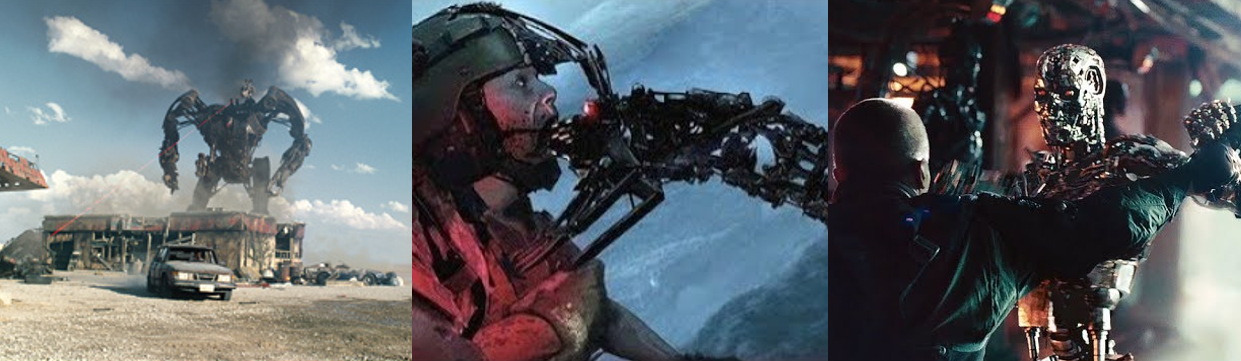
Terminator Salvation is often unfairly overlooked in the grand scheme of things. While it’s not as dark or visually evocative as the nightmarish Future War sequences from the previous films and it’s a shame that neither side favours laser rifles as their go-to weapon, it’s an effectively bleak sci-fi war film that shows the devastation caused by the nuclear war (even though there’s realistically no way anyone would have survived such an onslaught, including the natural environment). A great selling point of the film is the gritty way it’s shot and the focus on practical effects. The T-600s might be a poor predecessor to the more versatile T-800s but they look great since they’re actually there and recall the animatronics and puppet work of the first movie. The Harvester, especially, impresses as a combination of practical and CGI effects, making for one of the most exhilarating sequences in the film as the gigantic mech smashes into a human hideout in search of its targets and easily shrugs off any attempts to disable or destroy it. Rather than making a massive tank with laser cannons like in the first two films, the Harvester is a lumbering giant built to contain and destroy as part of Skynet’s plot to lure John into the midst. Skynet Central, and the finale in general, is where Terminator Salvation most directly resembles the Future War seen in the previous films. A futuristic prison camp where prisoners are herded like cattle, branded, and summarily executed or put to work building new machines, the machine headquarters is an oppressive mechanical hellhole that’s juxtaposed with the more clinical high-tech Skynet high command and laboratory and the dank industrial factory where the machine’s inexhaustible armies and weapons are produced in bulk. Previously, we could only imagine what the inner workings of Skynet were like (outside of a few toy sets and spin-off media), but Terminator Salvation provides the most in-depth look at their factories and facilities. Again, this is very grounded and clearly meant as a taster for bigger things to come in future films since there’s no mention or concern about the time displacement chamber and the primary threat of the T-800 is more than enough cause for concern for the already-outgunned Resistance fighters.
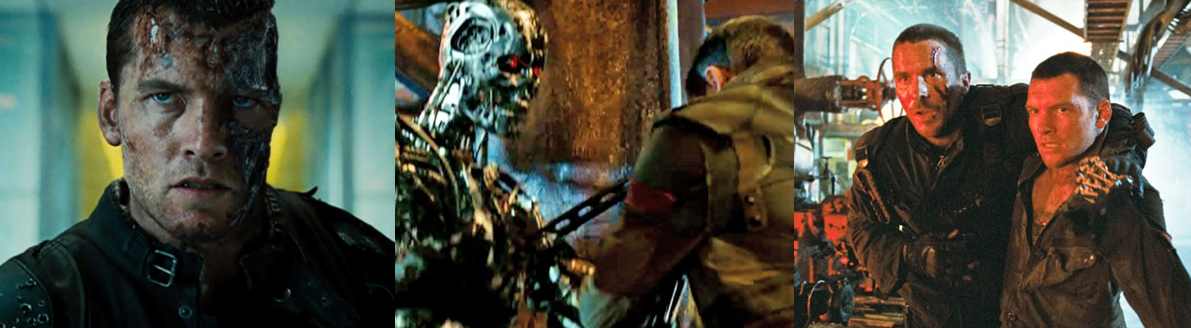
With Kyle and Star prisoners of the machines alongside countless other human survivors, John has no choice but the trust Marcus to infiltrate Skynet Central on his behalf and clear the defences so he can follow and rescue those trapped there. Time is not on John’s side in this endeavour as General Ashdown plans to launch an all-out assault on Skynet Central and, even though John uses his influence to override Ashdown’s direct command, the machines are also planning their own counterattack and threaten the fragile time paradox that birthed John in the first place. Rejecting his programming and mechanical nature, Marcus disrupts Skynet, disables their defences, and releases all the prisoners but, in the chaos, Kyle gets distracting trying to keep Star safe and, when John finally tracks them down, they are ambushed by the T-800. Returned to the relentless assassin from the first film, the T-800 silently and ruthlessly pursues its targets, shrugging off John’s attempts to slow it down or destroy it, even those that would have downed the previous T-800s. It endures a blast to the face, a grenade shot, and even being drowned in molten metal to keep attacking John, who it easily manhandles and bludgeons with its superior strength, and even manages to dupe by mimicking Kyle’s voice. After receiving his trademark facial scars, John frantically scrambles to fend off the Terminator, desperately rigging some of the machine’s nuclear power cells to blow the facility but finds an unlikely saviour in Marcus. Marcus battles the Terminator in an all-out brawl but ends up on the losing end thanks to a fatal blown to his exposed heart. Although John revives his cybernetic ally, he’s stabbed right through the chest from behind and left in critical condition. After dispatching the Terminator with surprising ease and escaping Skynet Central with his allies, Marcus heroically offers his own super-powered heart to save John’s life, thus sacrificing himself for the greater good. Sadly, this is a bit of a flat ending for me; John’s injury was obviously too severe for him to ever survive and it’s pretty clear that the finale underwent a frantic reshoot. I think it would’ve worked better if John had been impaled through the shoulder rather than right through the chest. Still, the film ends with a weakened John resolving to continue the fight and turn the tide against the machines, just as he is destined to do, though we’d unfortunately never get any further films set in this particular timeline.

The Summary:
While I admit that Terminator Salvation is far from a perfect film, it’s definitely nowhere near the worst film in the franchise. In fact, for me, it’s easily in the top three after the first two and is well worth a critical re-evaluation as it actually tries something new, something that respects what came before it, and actually works in the context of the continuity established so far, rather than needlessly retreading everything that came before it. While Sam Worthington and Moon Bloodgood are serviceable enough, the film is bolstered by Christian Bale’s gravelly, intense, admirable performance, but the late Anton Yelchin also impresses as a young Kyle Reese and the inclusion of notable character actors like Michael Ironside and even Common add some spice to the production. Where the film really shines, though, is in its bleak, war-themed aesthetic and impressive emphasis on practical effects. Sure, things are noticeably toned down (Marcus’s torn-up appearance is nowhere near as gory as in the first two movies) and we’re denied laser rifles and the nightmarish version of the Future War from the previous films, but the desolate, desperate nature of the Resistance’s fight against the machines is front and centre. I loved Bale’s intensity here; he stands head and shoulders above all other interpretations of the adult John Connor and gives a stellar, complex performance as a man hardened by war and determined to rally the survivors into a coherent unit. Honestly, I wouldn’t have minded if the T-800 hadn’t made an appearance at all but, while the Terminator only briefly wears Arnold’s visage, it’s absolutely the icing on the cake thanks to being at the centre of the brutal finale that captures the same desperate spirit as the elder Kyle’s fight for survival against the T-800 endoskeleton. Yes, the ending does let the film down a bit as I don’t believe for a second that John would ever survive his injuries and find it far too convenient that Marcus’s heart just happened to be compatible, but I can let that go as Terminator Salvation delivers an under-rated and highly entertaining Future War film that is absolutely where I wanted the franchise to go and it remains an absolute shame that we didn’t get at least one more movie set during this period.
My Rating:
Great Stuff
Are you also a fan of Terminator Salvation? How do you think it compares to the other Terminator films? Were you a fan of Christian Bale’s performance and how would you rate Sam Worthington’s portrayal of Marcus Wright? What did you think to the practical effects used to bring Skynet’s forces to life? Did you enjoy seeing the T-800 show up for the finale or was it a little too tacked on for you? Would you have liked to see more films set during the Future War with this cast? How are you celebrating Judgement Day today? No matter what you think about Terminator Salvation, and the Terminator franchise, feel free to leave a reply down below and check out my other Terminator reviews.

 Dr. K's Waiting Room
5 thoughts on “Movie Night [Judgment Day]: Terminator Salvation”