

Released: 30 May 2012
Originally Released: 2 August 1991
Developer: M2
Original Developer: SEGA
Also Available For: Arcade, GameCube, Game Gear, Master System, Mega Drive, Mobile, Nintendo 3DS, Nintendo Wii, PC, PlayStation 2, PlayStation 3, PlayStation 4, PlayStation 5, Sega CD, Xbox One, Xbox Series S/X
The Background:
Back in the mid-nineties, sidescrolling beat-‘em-ups were a popular fixture in arcades, and demanded little more than players hold right and mash buttons to take down waves of generic enemies and continually part with their hard-earned pocket money. Beat-‘em-ups were also prominent on home consoles thanks to the ports of Final Fight (Capcom, 1989) and Teenage Mutant Ninja Turtles IV: Turtles in Time (Konami, 1992), so it made sense for SEGA to develop the beat-‘em-up series, Bare Knuckle Streets of Rage (SEGA, 1991 to 1994). Essentially a rip-off of the Final Fight series, Streets of Rage was the brainchild of Noriyoshi Ohba and Hiroshi Momota and stood out from others in its genre by foregoing the arcades entirely. Having previously helmed The Revenge of Shinobi (SEGA, 1989), Ohba drew from Double Dragon (Technōs Japan, 1987) and Starsky & Hutch (1975 to 1979) to compete with the likes of Final Fight and he and his nine other developers managed to pull the first title in the series together in just six months. Streets of Rage was incredibly popular upon release; critics praised the colourful graphics, two-player gameplay, and range of attacks offered to players and Yozo Koshiro’s soundtrack was equally lauded. Having been re-released in various compilations over the years, Streets of Rage and its sequels made it to the Xbox 360 as part of the SEGA Vintage Collection, with this version including additional modern quality of life elements such as save files, a replay feature, and bonus content.
The Plot:
The once a peaceful and prosperous Wood Oak City has fallen into the hands of a crime syndicate led by the mysterious Mr. X. The Syndicate has absorbed the city’s government and even has the police department in their pocket, causing crime and violence to run rampant. Police officers Adam Hunter, Axel Stone, and Blaze Fielding decide to take matters into their own hands and take to the streets as vigilantes to put a stop to the Syndicate.
Gameplay:
Streets of Rage is a 2D, sidescrolling beat-‘em-up in which players pick from one of three playable characters and battle swarms of thugs on the mean streets of Wood Oak City across eight stages (referred to as “Rounds”). You can do this either alone or alongside a second player, and the game has four difficulty settings ranging from “Easy” to “Hardest” which dictates the amount of lives and continues you have and the aggressiveness of the game’s enemies. Each Round carries a time limit that can only be extended by clearing the current wave of enemies from the screen; if you fail to do this, you’ll get a time over and lose a life, but will respawn on the same screen with the time replenished. While the game has a slow, almost plodding pace and movement can be equally sluggish, you’re given a surprising range of attack options considering you only really need to press one button to attack. By default, A throws a punch, B lets you jump, and X calls in police backup to fire a screen-clearing missile from their squad car. You can switch up these buttons to your heart’s desire in the main menu, and even activate a rapid fire option so you simply hold down your chosen attack button to make mincemeat of enemies, but the only way you can move and attack at the same time is to pull off a flying kick. There are no dash or dash attack options here but, open getting close to enemies, you can stun them with a nifty combo, grab and pummel them, hop around behind them to pull off a slam or German Suplex, and toss them across the screen and into other enemies, down holes, or send them crashing through destructible objects. Enemies can also grab and throw you, however you can fend off their buddies when they’re holding you still and eventually throw them off if you hit the buttons fast enough.
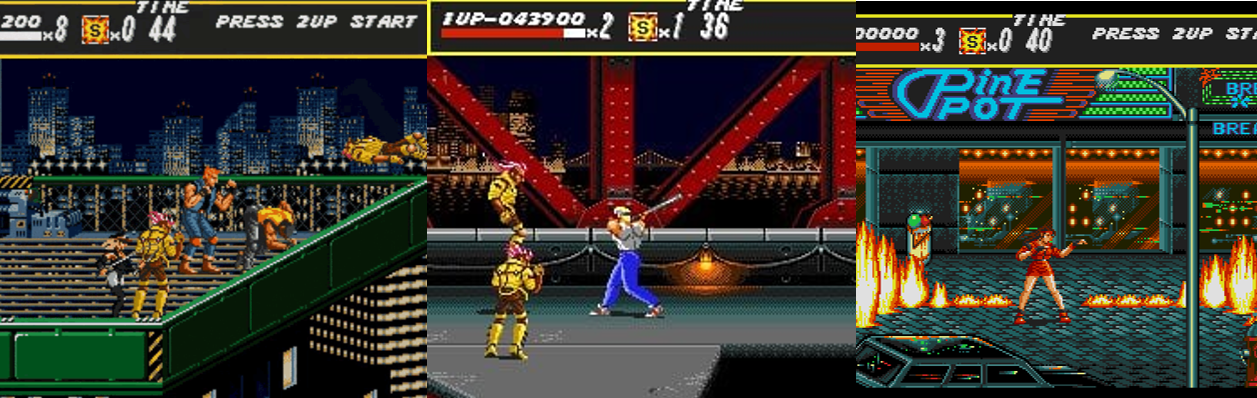
While Adam, Axel, and Blaze all essentially play the same, each has different attributes that changes the way they play; Adam is slower, for example, while Axel has a shorter jump and Blaze has a weaker attack but is much faster and dramatically speeds up the pace of the game, so it definitely changes the way you play depending on which character you pick. With the exception of two Rounds, your only goal is to travel from the left side of the screen and to the right, taking out larger and more varied groups of enemies as you progress. Defeating enemies and snagging pick-ups will award you points; you’ll also earn bonus points at the end of each Round depending on how much time and life you have left, and you’ll gain an extra life once you reach a certain increment in your score. While you’re quite durable, it’s easy to get overwhelmed and lose a life; if you do, you’ll respawn right where you died with your specials and time replenished and even send all onscreen foes flying as a bonus, but you can’t afford to get too cocky as it’s pretty easy to burn through lives, especially on later Rounds and bosses, and then have to rely on your small stock of continues. Streets of Rage’s challenge definitely increases the further you progress; enemies become more aggressive and numerous but are also quite shy and linger just offscreen to really run down the timer. You’ll also have to deal with instant-death holes, conveyor belts, and crashing hazards, though these can all be used against your enemies as well. As is the tradition in any sidescrolling beat-’em-up worth its salt, you’ll also have to contend with a vertical elevator stage in which a small platform will rise up the outside of a skyscraper and wave upon wave of enemies will shuffle in from different floors or drop from above, though you can easily make short work of them by tossing them over the side.
Graphics and Sound:
Streets of Rage features a very catchy, thumping beat of a soundtrack that really helps to make the monotony of its beat-‘em-up gameplay more appealing. Boss battles at accompanied by an ominous theme song and a congratulatory little melody plays upon completion of a Round. Characters will scream, grunt, and groan as they attack, are hurt, or die and you always know when you’ve picked up an item or earned an extra life or special thanks to an audible jingle. If you’ve played The Revenge of Shinobi before, however, you may recognise that the game’s font, heads-up display, and many of the sound effects are ripped from that game, which I always felt cheapened Streets of Rage a bit since no other Mega Drive game I’d played at the time did this unless it was a sequel or part of a franchise.
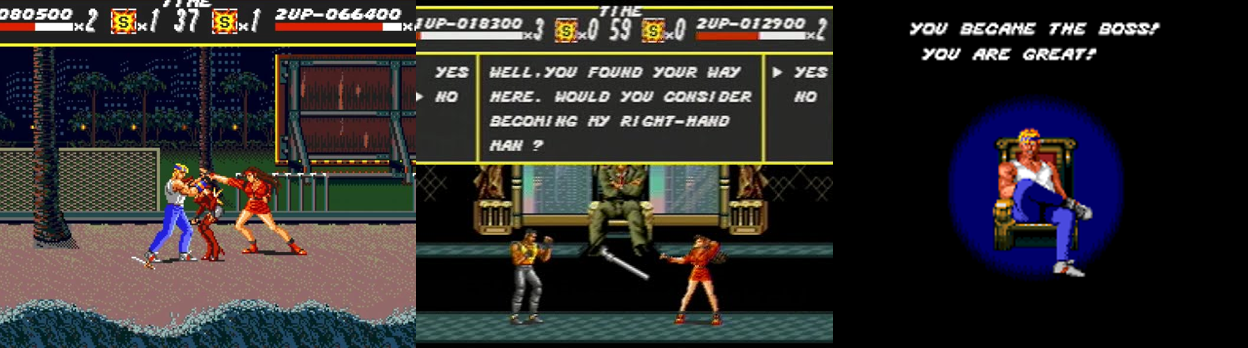
Sprite work is pretty impressive here; the three protagonists and their enemies are a little small, but you can adjust the screen size in the options to make them a bit bigger (though this does pixelate them) and, when left alone, they have very minor idle animations to give them some personality. While the main story narrative is told only through text, the ending features some nice detailed sprite panels showing the trio emerging victorious, and you’re even presented with a dialogue box in the final Round of the game. Where the game really shines, though, are its locations; from the streets to the beach, a factory, and Mr. X’s penthouse suite, the environments are all very detailed and full of little things to see and graphical effects, such as enemies emerging behind shutter doors, rain, windswept rubbish, statues, and the looming lights of the city at various distances in the background. Foreground elements such as lampposts, cars, and the raging sea pop out at you, and you even end up on a boat at one point that rocks up and down from the current.
Enemies and Bosses:
Unlike other beat-‘em-ups of the time, enemies don’t display their names or individual life bars when attacked; life bars are reserved only for the game’s bosses, but it won’t take more than a few hits to take out the low-level scum you encounter in the first few stages. These are made up of denim-clad thugs who sometimes wield knives, yellow-jacketed punks who grab and throw you, and karate-kick throwing martial artists who hop about the place. Very quickly, you’ll encounter more aggressive, palette-swapped versions of these enemies who carry other melee weapons, can deal more damage, and seem to recover faster after being knocked down. You’ll also come across whip-cracking dominatrixes, jugglers who dance around the screen using fire-bombs and axes as makeshift shields and projectiles (that you can, thankfully, hit with your attacks) and even buffet carts that come hurtling at you from off-screen.
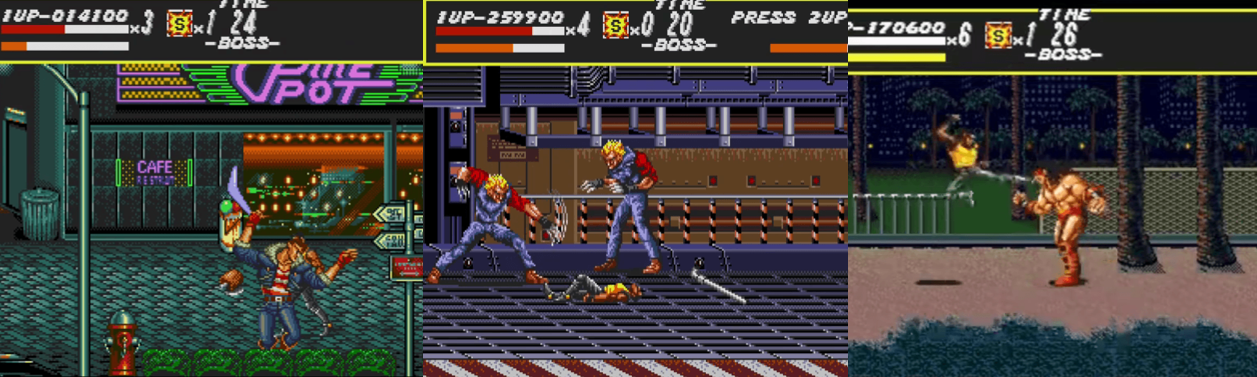
Seven Rounds means seven bosses to contend with but you won’t be facing any of them just once as all of them will reappear as regular enemies in later Rounds, though without life bars. The first you’ll encounter is Antonio, a large man wearing denim and carrying a razor-sharp boomerang; Antonio will linger just off-screen, circle around the area, and either toss his boomerang your way or deliver a hefty kick when up close but is undeniably the easiest of the bosses despite being the first formidable enemy of the game. The second boss, Souther, is much more difficult and starts a trend of the bosses being accompanied by a gaggle of thugs to distract and annoy you. Souther sports two sets of metal claws for hands and drifts around the screen swiping at you or unleashing a fast-paced barrage of slashes that can easily tear through your life bar, so it’s best to try and stay on the move and anticipate where he’ll be so you can pummel him with your grapple attacks. The hulking Abadede awaits you at the end of Round 3; this Ultimate Warrior rip-off lumbers in from off screen with a charge or devastating uppercut but, despite his size and strength, can easily be taken down by quickly hitting jumping kicks rather than trying to match fists with him.
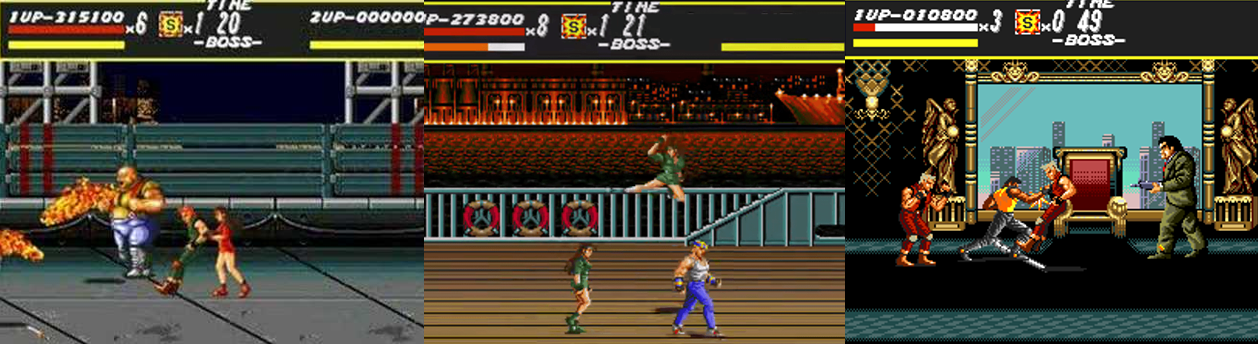
At the end of Round 4’s bridge, you’ll have your first encounter with Bongo, a rotund fire-breathing man who homes in on you to try and set you ablaze. While it can be difficult to avoid his flaming breath, you also need to avoid trying to throw or suplex this guy as, in a fantastic piece of attention to detail, you’ll end up taking damage and being crushed from his hefty weight. After battling through the boat and fending off recoloured versions of Abadede, you’ll have to fight two bosses at once: Mona and Lisa, easily the laziest bosses in the game as they appear to simply be palette swaps of Blaze. These gals are also extremely slippery devils as they’ll flip all over the place, try and throw kicks at your head, and send you flying with judo throws, so it can be really tricky just trying to land a hit on them in the first place. Two Southers await you at the end of Round 6 and, while you won’t face any bosses in Round 7, you do have to endure a gauntlet of enemies on the elevator and all of the previous bosses hounding you throughout Round 8. Round 8 concludes with a showdown with Mr. X; beforehand, he’ll offer you the chance to join his cause. If you answer “Yes” in two-player mode but your friend answers “No”, you’ll have to battle each other to determine who gets to take him on. The battle against Mr. X is fraught with a never-ending slew of thugs; the big boss himself wanders back and forth, spraying bullets across the screen and trying to brain you with the butt of his rifle, but actually isn’t too tricky to take out (on “Normal” mode, at least) despite Round 8 not allowing you to use specials.
Power-Ups and Bonuses:
Be sure to smash everything you see in each Round, from phone booths to tyre stacks and wooden crates, as these will yield apples or roast dinners that will restore some or all of your health. Very occasionally, you’ll find a 1-up or an extra special hidden in these too, or a bag of cash and gold bars to add to your high score and edge you closer to an extra life. These destructible elements, and enemies, can also hold a variety of melee weapons, from knives to pipes and baseball bats, to stun grenades, all of which can help turn the tide in your favour by adding extra range to your attacks and hitting multiple enemies at once. You can throw knives and the grenades, limiting their usefulness, but weapons won’t break upon use; if you get hit and drop them enough times, however, they will eventually disappear from the screen and, if you miss anything, you can’t go back and get it so just grab it when you see it or it’s safe to do so (which can be easier said than done, especially if a couple of weapons or pick-ups are staked next to each other). Finally, although there are three characters to select, each with their own attacks and gameplay variants, there’s only one special move which, while useful, is a little disappointing.
Additional Features:
There are four Achievements to earn in Streets of Rage, and two additional Achievements as part of playing all three games in the SEGA Vintage Collection. While two of these require separate playthroughs as Adam and Blaze alone, there are unfortunately no Achievements for playing as each character or alongside a friend, and the other two amount to simply tossing an enemy and recovering from a throw, which is a bit disappointing consider the game as multiple endings and opportunities for fun Achievements, such as crushing an enemy with a stage hazard or tossing a certain number to their deaths. This version of the game also comes with a variety of display options that allow you to set wallpapers, scan lines, and smoothing in addition to customising the controls to your liking. There’s also a jukebox that lets you listen to the game’s rockin’ beats, the ability to switch between the Japanese, European, and North American versions of the game (which seem to amount to cosmetic differences and little else, certainly no extra Achievements), and adds save states and replays to the game to make it dramatically easier. Probably the most significant additional feature is the “Trial” mode, which tasks you with achieving a high score on four different difficulty stages against a time limit or lasting out against enemies on the elevator Round (though, again, there are no Achievements to be gained from this). Finally, you can play with a friend locally and online, and the game includes at least two endings, one where you defeat Mr. X without question and a bad ending where you usurp him and become the new crime boss.

The Summary:
I do enjoy me a good sidescrolling beat-‘em-up and there’s a lot to like in Streets of Rage. Without a doubt the game, and the series, is one of the Mega Drive’s most prominent titles, and yet the series is often forgotten about these days and SEGA have been uncharacteristically reserved about churning out sequels and spin-offs or even featuring Streets of Rage characters in their other titles. If I had to pick between Streets of Rage and Final Fight, however, I’d pick the latter; for a console-exclusive beat-‘em-up the game does really well, but the sprites aren’t as big and detailed and the gameplay isn’t as fluid as an arcade title. The lack of a dash function and unique specials for each character are issues as well, as is the troublesome difficulty curve, though many of the game’s more tedious aspects were obviously refined in the sequels. As a first entry, it’s pretty basic and recycling music and sound effects from The Revenge of Shinobi doesn’t really help the game stand out too much but it’s certainly not an unplayable piece of trash. This version of the game greatly improves the original experience with save states and other bonus options, though it’s disappointing that more Achievements weren’t incorporated into it to add to the replay value. Overall, this is a pretty fun little beat-‘em-up with a surprising amount of attacks, some funky music, and some decent sprite work on offer though it can’t be denied that Streets of Rage was effortlessly eclipsed by its sequel/s.
My Rating:
Pretty Good
Are you a fan of the original Streets of Rage? How do you think it compares to the sequels and other beat-‘em-ups? Which of the three characters was your go-to and which of the sequels was your favourite? Did you enjoy the additional features added to this version of the game and would you like to see more from the series in the future? Which beat-‘em-up game or franchise is your favourite and why and what is it you enjoy about the genre? To share your thoughts on Streets of Rage, sign up to leave a reply below or comment on my social media and be sure to check out my other retrogame reviews!

 Dr. K's Waiting Room
3 thoughts on “Game Corner: Streets of Rage (Xbox 360)”