
As amusing detail in the Star Trek: The Next Generation (1987 to 1994) episode “The Pegasus” (Burton, 1994) is that the crew and children of the U.S.S. Enterprise-D celebrate “Captain Picard Day” on Stardate 47457.1, which roughly translates to this day, the 16th of June. They do this by producing drawings, models, and paintings that the bewildered Captain Jean-Luc Picard (Patrick Stewart) must then judge. I, however, am using this as another good excuse to delve into some more Picard and Next Generation content.
This review has been supported by Chiara Cooper.
If you’d like to support the site, you can do so at my Ko-Fi page.


Released: 18 November 1994
Director: David Carson
Distributor: Paramount Pictures
Budget: $60 million
Stars: Patrick Stewart, Malcolm McDowell, Brent Spiner, Jonathan Frakes, Levar Burton, and William Shatner
The Plot:
When Captain Jean-Luc Picard (Stewart) and his crew investigate a Romulan attack and rescue Doctor Tolian Soran (McDowell). Soran forces the Enterprise-D into a conflict with the Klingons so that he can return to an extra-dimensional realm known as the “Nexus”, a plot that threatens to destroy entire worlds and sees Picard entering the Nexus to recruit the help of the legendary Captain James T. Kirk (Shatner).
The Background:
Once the popular Star Trek: The Next Generation wrapped up, the crew, like their predecessors, featured in a series of feature-length films. Writers Ronald D. Moore and Brannon Braga were recruited mid-way through The Next Generation’s sixth season to pen the script for the crew’s first big-screen outing, which was always framed around the idea of the Original Series (1966 to 1969) crew passing the torch, or outright doing battle with, their Next Generation successors, though the writers struggled to find a way to have the multi-generational crews meet face-to-face. Determined to aim high, the writers and producer Rick Berman hit upon the idea of killing the iconic Captain Kirk, a decision which both the studio and Shatner had some concerns about. For the transition to the silver screen, production designer Herman Zimmerman improved many of the Next Generation sets, giving them a new coat of polish and designing an elaborate new area, stellar cartography, for a key scene in the narrative, while Bill George gave the Enterprise-D a touch up for cinema screens. Star Trek Generations also marked the first use of extensive CGI for many of the model, space, and battle scenes, which very quickly became the norm for future Star Trek projects. Star Trek Generations grossed $118 million at the box office, making it a financial success, but was met with mixed reviews; critics complained that it felt more like a longer episode of the TV series and relied too much on audience familiarity, and many criticised the film for killing Kirk in such an underwhelming fashion. What should have been an iconic meeting of two prominent Star Trek characters was seen as a disappointing waste of potential, with Patrick Stewart generally regarded as the superior actor of the two, and many of the film’s other plot points were seen as equally disappointing. These days, Star Trek Generations remains divisive, but it did result in a series of bonkers novels written by Shatner that returned his famous character to life for further adventures.
The Review:
I’ve talked a bit about this before, but I was firmly a Next Generation fan as a kid; my only real experience to the Original Series came from the films, as the show just wasn’t on terrestrial television when I was growing up, so it was Next Generation and onwards for me. Still, I was fascinated by the concept of the Original Series and had been won over by the cast and characters from the majority of their feature-film adventures, so the idea of seeing interactions between them both was very exciting for me as a Star Trek fan. I believe I’d seen the two-part Next Generation episode “Unification” (Landau; Bole, 1991) prior to this, or not long after, which offered a rare cross-generational moment when Picard encountered Ambassador Spock (Leonard Nimoy), but it seemed like it would be all-but-impossible to get the Enterprise-A and Enterprise-D in the same place at the same time due to the massive time gap between the generations, so Star Trek Generations had a hell of a lot of potential and promise in its premise alone.
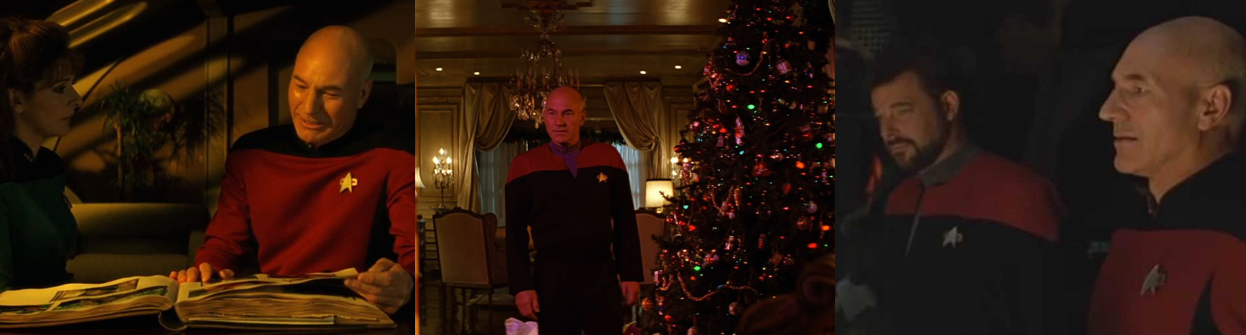
Following a dramatic opening sequence in which he learn that Kirk was presumably lost when the ridiculously unprepared Enterprise-B was damaged by a destructive energy ribbon later identified as the “Nexus”, Star Trek Generations jumps ahead to the then-present day some eighty years later to find the crew of the Enterprise-D celebrating the promotion of Lieutenant Worf (Michael Dorn) to Lieutenant-Commander on a holodeck simulator. Unfortunately, Picard’s jovial mood soon takes an unexpected and crushing blow when he receives word that his brother and nephew, Robert (Jeremy Kemp/Ian Abercrombie) and René (David Tristan Birkin/Christopher James Miller), have perished in a fire at Château Picard. This leaves Picard in an extremely vulnerable place for the majority of the film; struggling to process his grief, he becomes irritable and snaps at his crew, most notably Commander William Riker (Frakes) and Lieutenant-Commander Data (Spiner). Sympathy from Counsellor Deanna Troi (Marina Sirtis) allows him to open up (in actual fact, he breaks down in an uncomfortably awkward sequence) about the fire, but he remains somewhat shell-shocked by the realisation that his family line has effectively ended with the death of his young nephew. Consequently, he has a contentious relationship, to say the least, with the concept of time; feeling his age and the weight of what could have been baring down on top of him, he’s fascinated by the allure of the Nexus, which promises its occupants their ideal life at the cost of denying the reality of the outside world. Despite his pain and doubts, Picard remains a stern, but fair, commanding officer and throws himself whole-heartedly into trying to predict and ultimately stop the ribbon’s destructive path. He’s also the only one of the three Nexus occupants to actively reject the paradise dimension through the sheer force of his conviction to making a difference in the galaxy and living a life worth remembering while he has the time, regardless of what he does or doesn’t leave behind.
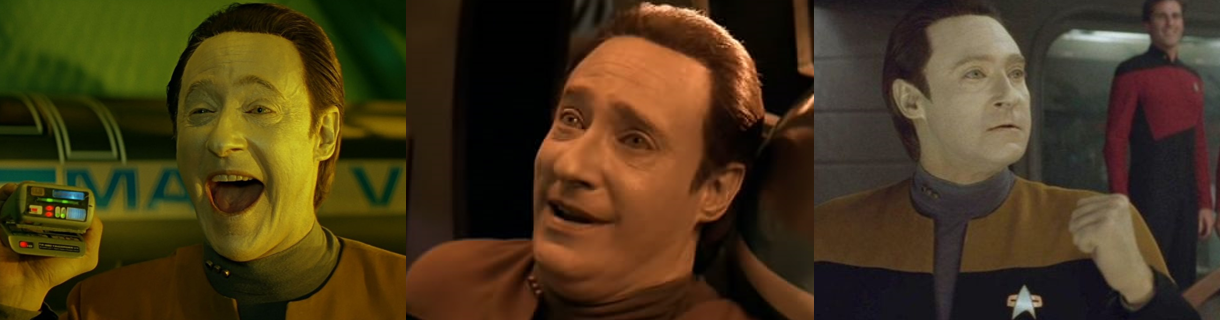
As is generally the case with the Next Generation feature-films, it’s Data who receives the biggest sub-plot out of the rest of the Enterprise-D crew; just as Picard struggles with his emotions, Data finds himself perplexed at his continued inability to grasp basic human concepts such as “humour” and is so disturbed at having misunderstood the concept and upsetting Doctor Beverly Crusher (Gates McFadden) that he resolves to install the “Emotion Chip” (retrieved from his twin “brother”, Lore (also Spiner), in the episode “Descent, Part II” (Singer, 1993)). Data’s struggles to process and adapt to the sudden influx of emotions is a recurring element of the film, and a significant character arc for him; at first, he’s excited at exploring positive emotions and his increased range of comprehension and emotion, and this gives Spiner a chance to be much more whimsical with the normally logical android and leads to some of the film’s more amusing moments as Data is hit with a case of the giggles and does a little sing-song when asked to scan for lifeforms. However, he soon becomes overwhelmed by them, and the accompanying negative emotions, when the chip overloads his positronic relay. After being crippled by fear, Data is left guilt-ridden when his friend, Commander Geordi LaForge (Burton), is captured by the Klingons and begs to be deactivated until the chip can be removed so he can be spared his pain. This, however, acts as a thematic parallel to Picard’s own pain and the Captain encourages Data to work through his emotions since learning to process the good and the bad is all part of being human, which includes making mistakes and learning how to overcome fear and doubt. Ultimately, Data resolves to continue on and make amends for his mistake, though Geordi shows no ill-will towards his friend, which results in him ending the film as a far more emotionally expressive character than the one we followed in The Next Generation, which would continue to be seen in subsequent Next Generation movies.
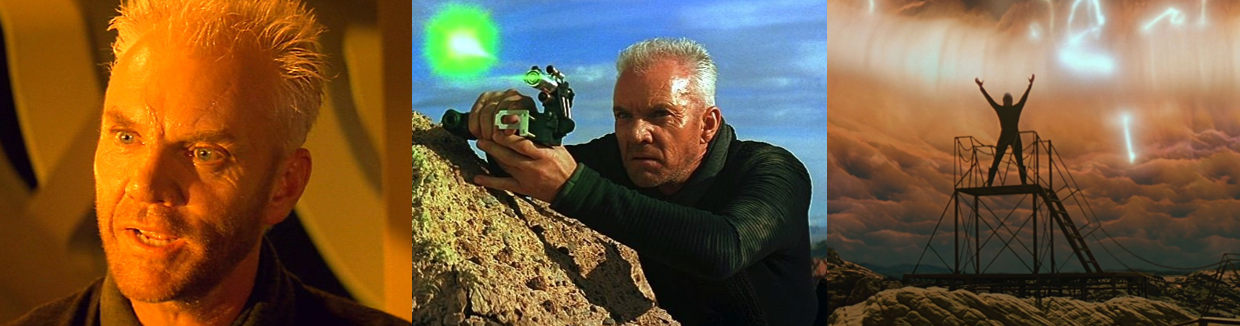
The film’s primary, tangible antagonist is Dr. Soren, played with scenery chewing (if sadly underutilised) malice by the fantastic Malcolm McDowell. McDowell certainly has the menace and acting chops to match wits with Stewart/Picard, but Dr. Soren doesn’t really make for an especially intimidating villain, despite the fact that his obsession with the Nexus has led to the destruction of numerous starships and even entire planets. Like Guinan (Whoopi Goldberg), Dr. Soren is a long-lived El-Aurian whose race were decimated by the Borg and scattered throughout the galaxy; prior to this, he was a gentle and kind-hearted man, but the Borg attack and the loss of his beloved wife and children changed him, scarred him, for life. Dr. Soren came to regard death as in inevitability and time as a predatory animal hunting every lifeform in existence, and actively sought to defy both by losing himself to the Nexus. Having experienced a taste of paradise about eighty years previously before being torn away by the Enterprise-B, Dr. Soren has explored every possibility to re-enter the Nexus and concluded that the only way to guarantee that he survives the cross-dimensional trip is to forcibly direct the energy ribbon towards Veridian III, an action that will cause (and has caused) the cataclysmic destruction of entire worlds. Dr. Soren, however, cares little about this; he even allies with the Klingon sisters Lursa (Barbara March) and B’Etor Duras (Gwynyth Walsh) to stave off the Enterprise-D (using Geordi as an unwilling spy) long enough for him to destroy the Veridan star and enact his plan and refuses to listen to Picard’s pleas for sanity. Dr. Soren is a driven, single-minded villain who is absolutely fixated on returning to the Nexus whatever the cost; he cares nothing for the death and destruction his actions will cause, or how reprehensible his wife would find his actions, and is simply consumed by not only his selfish and maniacal desires but also his fear regarding the inevitability of death.

As is only fitting, Kirk – and his Original Series cohorts Commander Montgomery “Scotty” Scott (James Doohan) and Commander Pavel Chekov (Walter Koenig) – is treated with reverence and respect by John Harriman (Alan Ruck), Captain of the Enterprise-B, and are mobbed by adoring reporters, all of whom regard the trio as “living legends”. In keeping with much of his characterisation throughout the Original Series movies, Kirk is a man at a crossroads; very much retired, he is literally itching to get back into action and only stops himself from interfering in Harriman’s actions out of a begrudging respect for the fact that he (as in Kirk) is no longer in command. While his experience and knowledge clearly outweigh those of Harriman, Kirk only gets involved when all other options are exhausted; once he does, he immediately comes up with a variety of possible solutions using the Enterprise-B’s limited capabilities to try and rescue the ships threatened by the Nexus, and even appears to die when successfully helping the ship escape the ribbon’s destructive path. However, it’s revealed that Kirk’s actually been transported to the Nexus; although Kirk’s been presumed dead for almost eighty years, from his perspective he only just arrived in the paradise dimension and, once there, his priorities immediately shift. Kirk sees the otherworldly nirvana as a second chance to make good on all the things he ignored in favour of galivanting across the galaxy and vehemently resents Picard’s suggestion that he’s turning his back on his duties as a Starfleet officer. Kirk feels he has more than paid his dues and that “the galaxy owes [him] one” but sees a lot of himself in Picard; straight-laced and obsessed with “duty and obligation” at the expense of his personal life and wants, but the pull of adventure ultimately lures Kirk into one last hurrah. The interactions between Kirk and Picard are easily the best part of the film, and the verbal jousting and banter they share for the entirety of the final act is incredibly surreal and enjoyable; Kirk represents what Picard could become if he doesn’t realise that he needs to appreciate life outside of Starfleet, and Picard offers Kirk one last chance to “make a difference” like he used to on a near-daily basis and to experience the excitement and danger he felt as Captain of the Enterprise rather than languish in a dream-like dimension.
The Nitty-Gritty:
It’s hard to argue with those who were disappointed that Star Trek Generations just feels like a longer, mediocre episode of The Next Generation; the film drags unnecessarily with many of its plot points and, especially, in its pacing. Not only are the film’s uniforms wildly inconsistent, constantly shifting between the Next Generation and Star Trek: Deep Space Nine (1993 to 1999) outfits, but it doesn’t even feature the iconic Star Trek theme until the closing credits and begins with a long, drawn out, sombre title sequence in which nothing of any great interest happens and we’re not even treated to a rousing score to get us excited. Obviously, it would be a bit misleading to act as though the film was going to be this action-packed spectacle, but the point is that Star Trek Generations could’ve, and should’ve, been so much more and it fumbles the ball right off the bat. The clue’s in the title: “Generations”, and yet we barely get much interaction between Kirk and Picard and they’re pushed together in one of the most contrived ways imaginable. Maybe it’s just me, but I would have much preferred seeing all of the Original Series crew back in action, in the Enterprise-A, and going head-to-head and battling alongside their Next Generation counterparts.
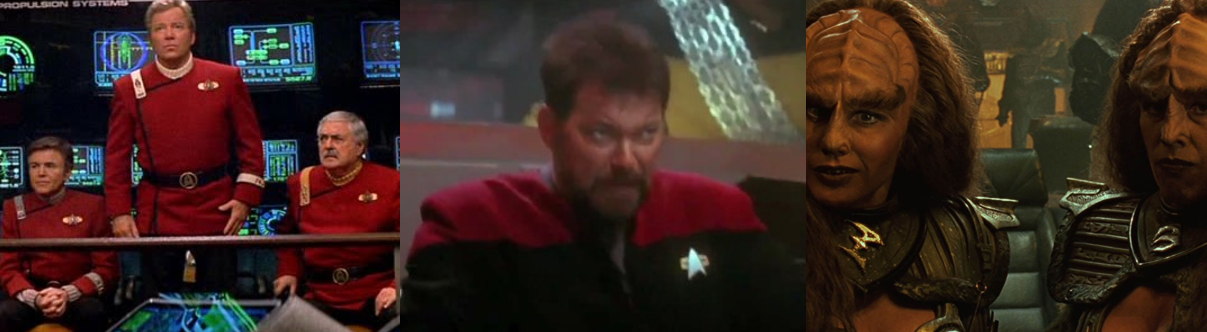
Unfortunately, many of the Original Series cast declined to join the production, primarily because they were reduced to glorified cameos in the opening. Consequently, while it’s fun seeing Scotty and Chekov again, it’s nothing compared to what could have been had the entire crew been a part of the film. Sadly, as is often the case, many of the supporting characters are pushed aside so the film can focus on Picard, Data, and the main antagonist. I’m no fan of Riker but Picard’s enigmatic First Officer really doesn’t get all that much to do here; he’s concerned for Picard’s welfare after the Captain is uncharacteristically snappy with him and leads the away teams that investigate the Amargosa observatory, but Generations isn’t a great character moment for Riker as the Enterprise-D is crippled, and ultimately unsalvageably downed, by a twenty-year-old Bird of Prey when he’s left in command! Still, at least he’s at the forefront of that; Deanna tries to console Picard after learning of his loss but has little else to do, Dr. Crusher is primarily there to facilitate Data’s decision to install the Emotion Chip, and Worf may as well not even be in the film since he’s mainly there for a bit of comic relief at the start and offering a tiny piece of advice regarding the aforementioned Bird of Prey (this does result in the Enterprise-D destroying their foe, but I imagine the crew would have figured out how to do that without Worf). Geordi gets a minor sub-plot after he’s captured by the Klingons and Dr. Soren installs a hidden monitoring device in his visor so the Klingons can penetrate the Enterprise-D’s shields (something I really don’t think their obsolete ship should’ve been able to do), and a surprising amount of screen time is given to Guinan, who proves to be much more than a simple bartender when she’s able to give Picard information about the Nexus since she also experienced a taste of it during the opening scene. Finally, there’s the Duras sisters, two Klingon villainesses previously encountered by Picard in the two-part episode “Redemption” (Bole; Carson, 1991) and seemingly included in a desperate attempt to inject some much-needed action and suspense into the otherwise dull main plot and because it’s tradition to have antagonistic Klingons in Star Trek.
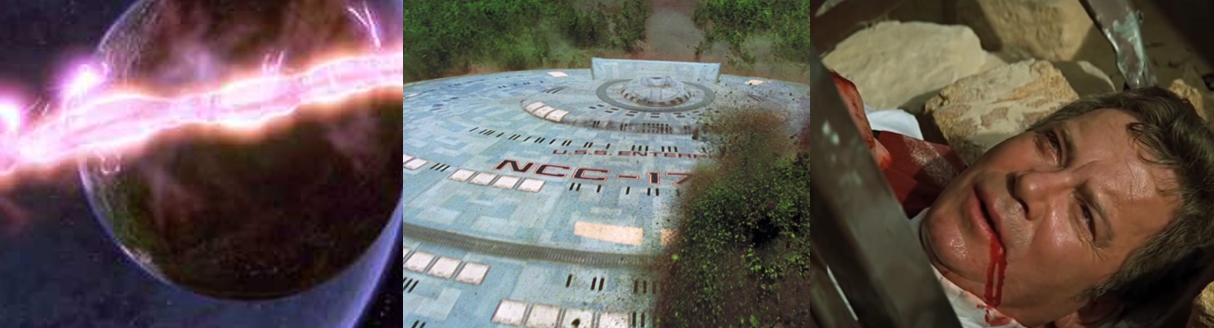
Star Trek Generations is rife with many themes that fans of the Original Series will be more than familiar with; Kirk, more than anyone, embodies a sense of regret over putting his space adventures ahead of more grounded needs, such as having a family and a life of his own. He’s astounded to find that his former helmsman, Captain Hikaru Sulu (George Takei), found the time to start a family and raise a child, Ensign Demora Sulu (Jacqueline Kim), and continues to be torn between wishing he’d done things differently and the allure of being in a position of command on a starship. Family is another important theme in Generations; Dr. Soren’s entire mission and descent into villainy was precipitated by the loss of his family and Picard’s sullen demeanour is brought about by the realisation that his family line will end with him. When he’s in the Nexus, Picard is literally bombarded by the idyllic family life he has long been denied and is momentarily overwhelmed by the illusion, but ultimately rallies against it because not only is it not “real” but there are countless lives at stake should he choose to remain there. This, more than anything, is what convinces Kirk to also leave the Nexus and help Picard oppose Dr. Soren in the finale; originally, Picard was unable to deactivate Dr. Soren’s solar missile and subdue the El-Aurian since he was but one man, but Kirk’s presence is enough to change events in their favour and allow Picard the chance to rig the missile to explode on its launching pad, taking Dr. Soren with it and allowing the Nexus ribbon to harmlessly pass by. Unfortunately, not only is the Enterprise-D left irreparably damaged but Kirk is killed during the fracas when he’s literally crushed under a bridge. While it’s an admittedly anti-climatic death for Star Trek’s most iconic character, it’s still a poignant scene when Kirk dies knowing that he made a difference one last time and it’s pretty heart-breaking to see him realise that death has finally caught up with him. Oddly, Picard chooses to honour Kirk by burying him on Veridian III, but he returns to the Enterprise-D wreckage with a newfound respect for life and determined to make his mark while he still has the time rather than being consumed by his regrets and losses.

The Summary:
I’m a little torn when it comes to Star Trek Generations; it was the first Next Generation movie I saw and, having grown up watching that series more than any other Star Trek show, it was exciting to see a feature-length adventure for “my crew”, especially one that promised to include a meeting between them and their Original Series predecessors. I don’t think the plot should’ve been like “Trials and Tribble-ations” (West, 1996) but I think more effort could’ve gone into making equal roles for each generation of crewmen and bringing them together. Like, maybe the Nexus caused havoc in the past and present, and both crews were encountering and investigating it simultaneously, causing a rift in space/time that allows a brief battle and some fun interactions to take place before both ships join forces against Dr. Soren. This also would have potentially allowed the producers to avoid killing off Kirk and served as an actual passing of the torch between the two generations rather than the more private and subdued team-up between the two Captains, which arguably comes at the cost of interesting sub-plots and actions for most of the Enterprise-D crew. Instead of this, or something actually exciting and engaging, we get a largely mediocre and forgettable Star Trek film that completely fumbles the potential of its premise and doesn’t really give us any interesting space action to compensate. While its ruminations of family, loss, and obsession are interesting, and it offers significant character development for Picard and Data, there’s ultimately very little here to really make much of an impact. Thankfully, the follow-up would make up for this with some intense action sequences and equally poignant moments, but this only serves to highlight how disappointing the Next Generation’s debut feature was not just for those characters but also as a swansong for Captain Kirk.
My Rating:
Could Be Better
What did you think to Star Trek Generations? Where do you rank it against the other Next Generation and Star Trek films? Were you also disappointed by Kirk’s anti-climatic death and the mediocre meeting of him and Picard? What did you think to Dr. Soren and his obsessive mania? Were you a fan of Data’s struggle with his newofund emotions, and what did you think to the destruction of the Enterprise-D? Would you like to see another go-around for the Next Generation crew or do you prefer to see new, unique takes on the franchise? How are you celebrating Captain Picard Day today? Whatever your thoughts on Star Trek Generations, or Star Trek in general, share them below or drop a comment on my social media.

 Dr. K's Waiting Room
2 thoughts on “Movie Night [Captain Picard Day]: Star Trek Generations”