

Released: 20 July 2018
Director: Antoine Fuqua
Distributor: Sony Pictures Releasing
Budget: $62 to 79 million
Stars: Denzel Washington, Pedro Pascal, Ashton Sanders, Melissa Leo, Jonathan Scarfe, and Bill Pullman
The Plot:
Robert McCall (Washington) has been operating as “The Equalizer” for some time, righting wrongs and offering his unique services to those in need while still living a relatively quiet, unassuming life. However, when his friend and former colleague is killed, McCall soon finds himself putting his methodical abilities to use against former teammates of his turned rogue mercenaries.
The Background:
Having begun life as a late-eighties American crime drama starring starred British actor Edward Woodward, the idea for a live-action reinterpretation of The Equalizer was first kicked around in 2010 but didn’t really come to fruition until star Denzel Washington and director Antoine Fuqua came onboard in 2011. Though not quite as intense or exciting as films of a similar nature, like Taken (Morel, 2008) and John Wick (Stahelski, 2014), The Equalizer was a decent enough box office success, making over $190 million worldwide against its $73 million budget, and production of a sequel began some seven months after the first film’s release. Notably, The Equalizer 2 was the first time Washington had ever starred in a sequel to one of his movies, however the film earned around about the same as its predecessor at the box office and received somewhat mixed reviews for essentially only offering more of the same content as the first film rather than anything new or substantial.
The Review:
While the original TV show was a bit before my time, I actually quite enjoyed the first Equalizer movie; it wasn’t quite as intense or engaging as Taken or John Wick but it was a pretty decent, more cerebral and methodical tale of an aged, former government operative reluctantly putting his long-retired skills to good use and taken on a bunch of Russian mobsters. However, while that film ended with McCall advertising his services as “The Equalizer”, the second film takes a bit of a left turn in that, rather than following McCall as he rights wrongs and fights injustice for those who contact him, we’re back to a slower, systematic film that is more a character study than anything else.
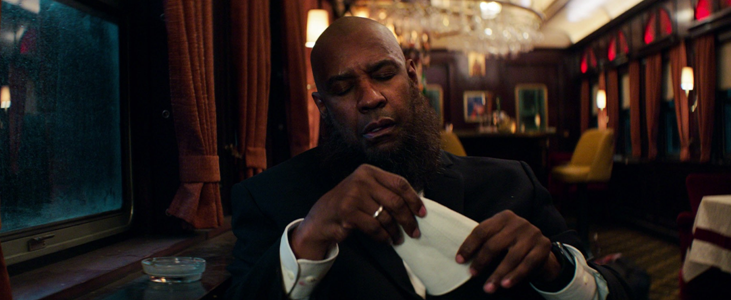
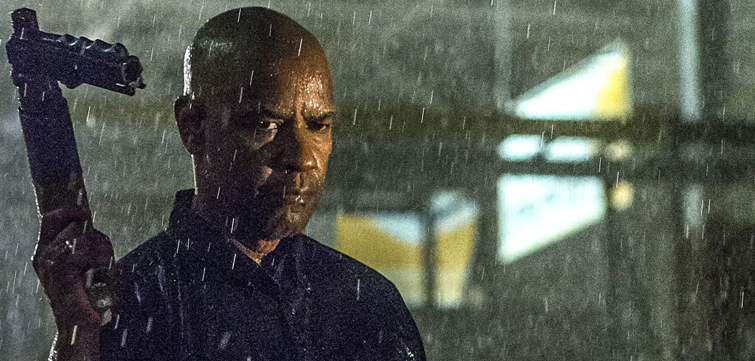
As before, the star of the show is, obviously Denzel Washington; though Denzel now has hair for 95% of the film (which actually makes him look younger and less distinct as McCall), he still retains that same quiet, sombre, haunting feeling about him while exuding a general good-naturedness to all around him. Now supplementing his income as a Lyft driver, which allows him to meet and learn about a wide variety of people, McCall is just as disciplined as before and all of his little quirks and OCD-like routines return (he still carries his own tea bag, utensils, and tackles both cleaning apples and repainting a wall of graffiti with the same meticulous focus).
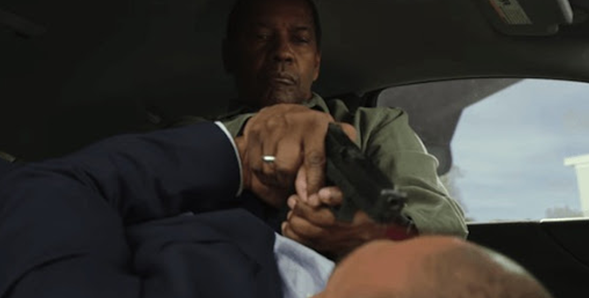
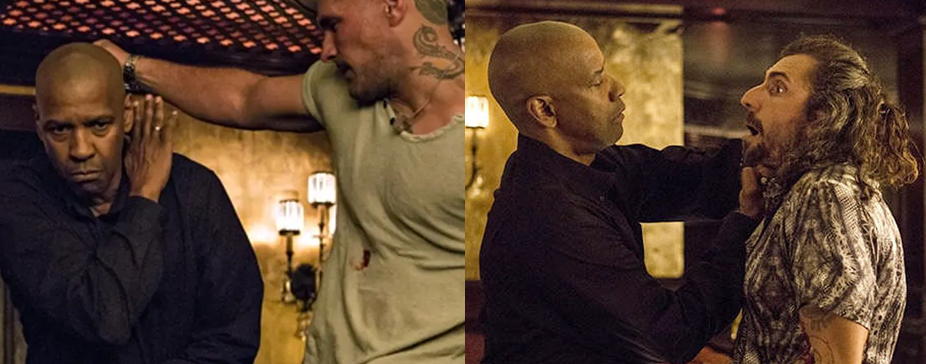
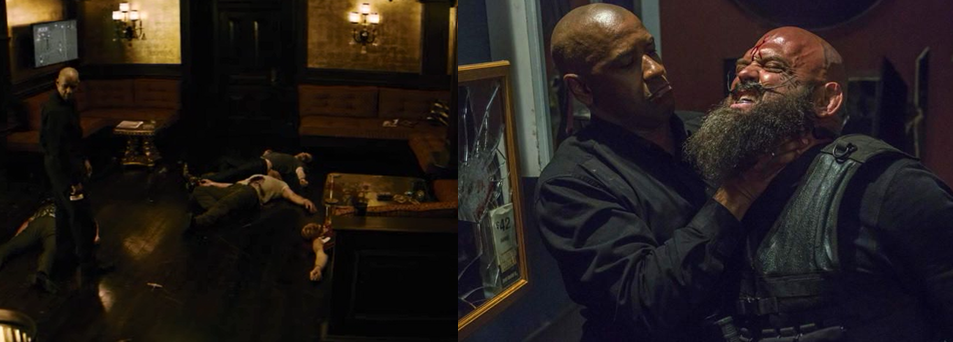
Denzel has a natural, likeable charisma about him; he doesn’t just resort to violence for the sake of it and always offers his target the chance to walk away and/or do the right thing. However, his uncanny ability to “read” people, to notice things others wouldn’t, and to absorb information about those around him and his environment allows him to not only take out rooms full of armed men in seconds with quick, precise strikes, but also to know what people are thinking/feeling or have gone through with a minimum of input and to predict how each situation will go, allowing him to still be a nearly robotic, efficient combatant that can easily overwhelm gis opponents, breaking arms and dislocating limbs without breaking a sweat and not even being short of breath afterwards.
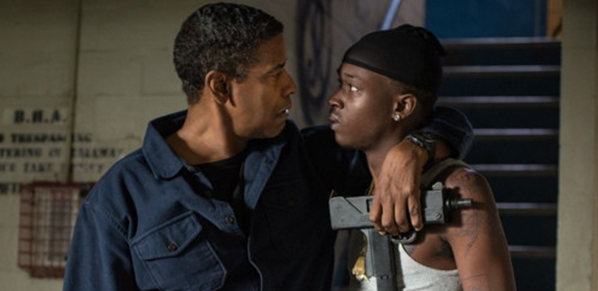
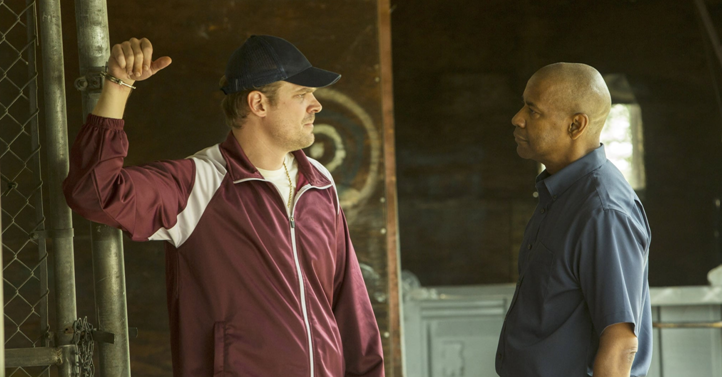
Given that McCall is in a new location with a new life, we have to not only become reacquainted with him but are also introduced to a handful of new characters; chief amongst them is Miles Whittaker (Sanders), an aspiring artist who is tempted into a life of easy money, crime, and violence. McCall acts as a positive influence on Miles, encouraging him to stick with his studies and follow his passion for art but is eventually forced to violently confront a bunch of gangsters on their home turf to convince Miles not to get caught up in that life. McCall strikes with a precise fury, busting in on the gang with two guns, and goes to extreme lengths (forcing a gun into Miles’s hand and daring him to shoot him and then holding him at gunpoint and getting uncharacteristically emotional about the gang life, guns, and violence that Miles seems to find so attractive) to deter Miles from that life.
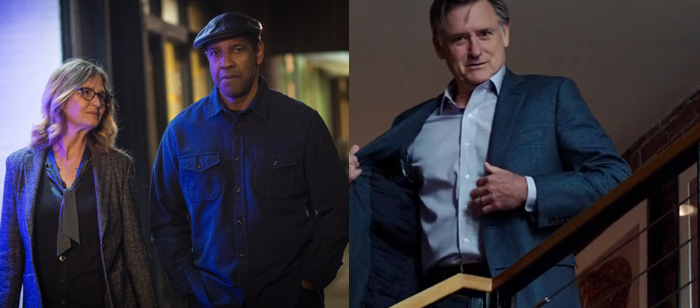
However, there are some returning characters to the film, namely McCall’s former colleagues Susan (Leo) and Brian Plummer (Pullman); these two, particularly Susan, are the only ones that are aware of his double life and with whom he can open up to about his dead wife and former life. His interactions with both allows us to see, more explicitly, McCall’s more human and vulnerable side and learn a little bit more about who he used to be. Susan regularly feeds him information and resources to help keep him busy but encourages him to return home, the suggestion being that he is hiding from confronting his loss in this new city and new vigilante-style life, and her sudden and violent death clearly affects McCall’s characteristically stoic and disciplined demeanour.
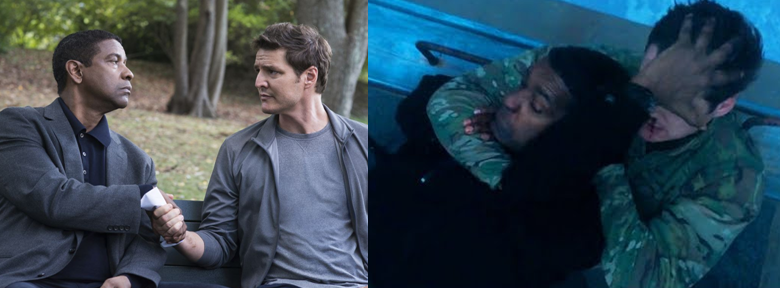
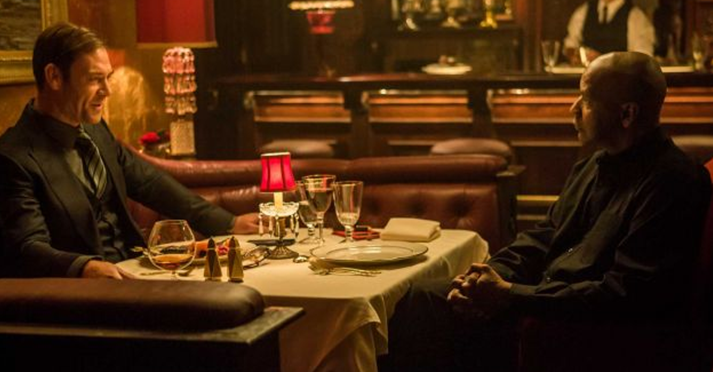
Putting his unique set of skills to use to quickly identify the two responsible for Susan’s murder, McCall reaches out to another of his former colleagues, Dave York (Pascal). York initially appears to be a close friend and former partner of McCall’s but it doesn’t take long for McCall to piece together that York has betrayed everything he stood for and, alongside their entire former team, has become little more than a mercenary. This sets York up as the film’s primary antagonist quite late into the film as, before this revelation, it appears as though Resnik (Scarfe) is to be the main antagonist. While you might think that York would be a formidable opponent for McCall, given that they (and their team) are cut from the same cloth, he fails to properly match up to enforcer Teddy Rensen (Marton Csokas) from the last film, being less of a physical or formidable threat despite escalating the personal nature of the film’s final act.
The Nitty-Gritty:
Rather than go for a “bigger, better” approach for the sequel, The Equalizer 2 is more of the same meticulously paced, cerebral character study as the first film rather than being a much more action-packed and fast-paced affair. Indeed, I expected to see McCall taking on various cases, especially in the film’s early going, but his alias of “The Equalizer” is never used or referred to, even in passing, and, instead, McCall simply acts when he observes injustice in the lives of those around him; he wrecks a bunch of wealthy shit-heads for abusing a young intern out of the kindness of his heart and for her sake rather than any kind of payment or recognition and rescues the young daughter of his preferred bookstore owner’s just because he can and it is the right thing to do.
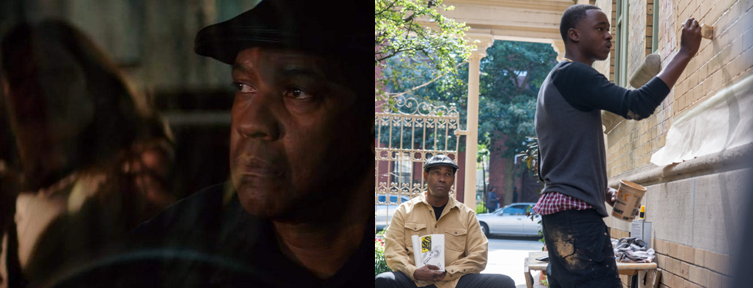
Of course, more time spent with McCall means we learn a little bit more about who he is and why he does what he does. Once again, this is delivered in snippets, hinting at his former life and what motivates him to help others: whilst cleaning up the gang graffiti on his building, McCall intimates that it is because no one else will and plenty of people are happy to complain or let someone else take care of problems but no one ever does, so he does it. Similarly, as if the personal stakes McCall has in this film aren’t enough, during his tense confrontation with York, McCall admits that he deserves to die “many times over” for the sins he has committed in the past, showing that he is equally motivated by atonement as much as anything else.
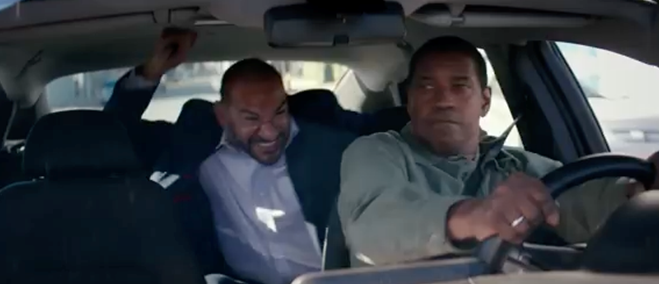
We also get to see a bit more of McCall’s wide array of skills; his unique observational abilities and insight also allow him to correctly recreate the murders Resnik perpetrated to get a sense of how he thinks and operates, all of which not only help McCall piece together more details on the murders. Additionally, his combat proficiency is at such a level that he’s even able to emerge the victor (relatively unscathed) in a fight with an armed man while he (McCall) is driving a car!
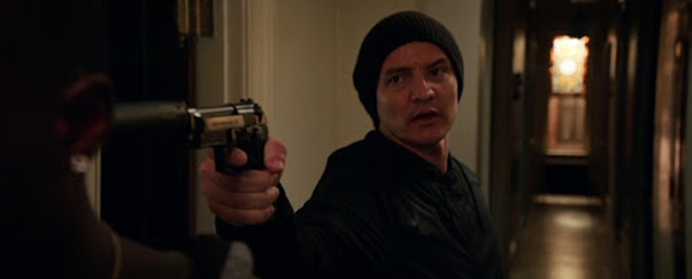
As an antagonist, York (sadly always referred to as “Dave” throughout the film, which isn’t that intimidating of a name for your main bad guy) falls a little short; his motivations are essentially the same as Alec Trevelyan’s (Sean Bean) in that he killed for his country and blindly followed orders only to be screwed over by the system and his superiors and cast aside, and that the entirety of their unit has gone rogue in the same way as a result. McCall, however, is less than impressed or intimidated and simply vows to kill each of them to avenge Susan and for betraying her/him/everything they once stood for and is easily able to get Brian to safety, guide Miles to a hidden panic room in his (McCall’s) apartment, and to evade York’s attempts to take him out.
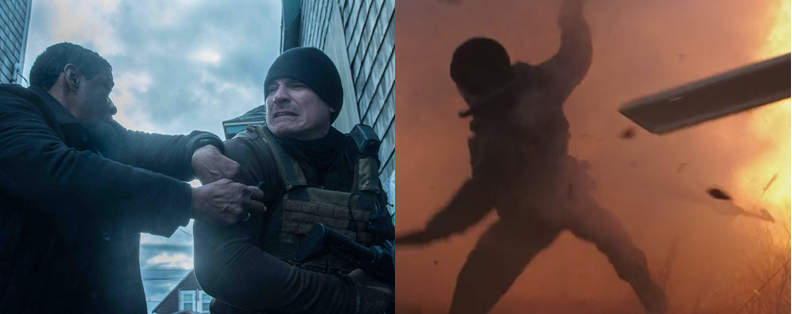
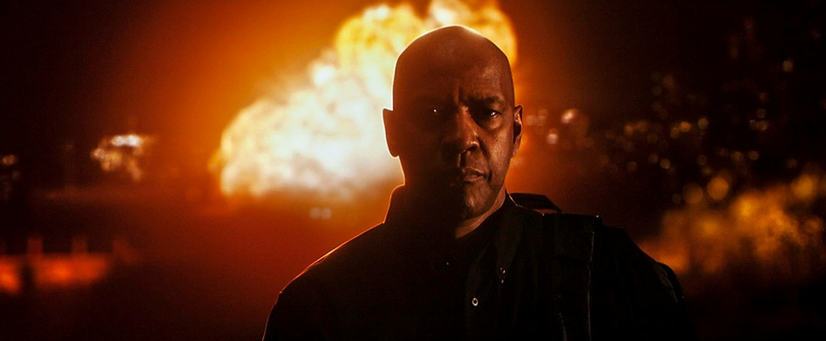
Even when York takes Miles as a hostage and baits him into a final confrontation at his seaside hometown (which Susan eludes McCall has been actively avoiding returning to due to the lingering history he has there and which is also under siege from a hurricane, with the tumultuous storm both representing the animal within McCall and contrasting with his stoic implacability), McCall uses his superior knowledge of the town and stealth tactics to pick them off one by one through a series of deadly traps and efficiently brutal kills, similar to how he picked off Rensen’s men at the conclusion of the first film but on a decidedly larger, more dramatically elaborate scale thanks to the raging storm that covers the town.
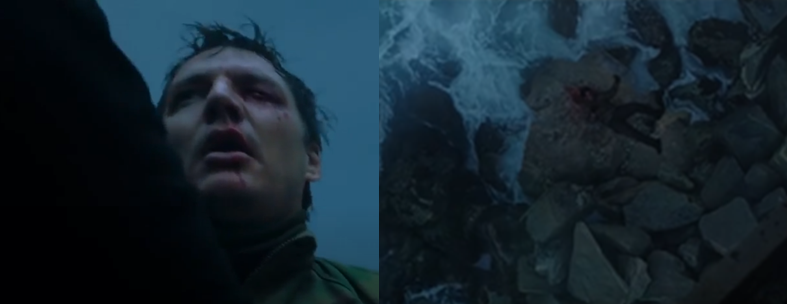
Despite York’s superior numbers and weaponry (McCall heads to the town unarmed and only utilises the weapons he acquires or liberates from his surroundings/targets), and him and his goons taking up defensive positions and assuming a tactical advantage through their numbers and placement (with York himself taking the high ground and a sniper position to cover the entire downtown area), McCall easily picks them all off with methodical precision. Accordingly, the film culminates in a showdown between McCall and York; York has Miles bound and gagged in the boot of his car and threatens him to draw McCall out of hiding. McCall, however, is too smart for that and, despite York having the high ground, engages him in a fist fight. Thanks to a lucky cut from a knife, and being the main antagonist, York puts up the only fight McCall has to deal with throughout the film, landing a few hits on McCall, but it’s over almost as soon as it starts and ends with McCall the victor thanks to his brutal efficiency, McCall again assuming that stoic blank slate of cold, unemotional precision
The Summary:
Rather than going in all guns blazing, bigger and better than before, or even following McCall as he solves various problems for a number of different people and gets tangled up in a bigger issue as a result, the film emulates the pace of the original as we follow McCall’s generally quiet life and the people he interacts with, absorbing ourselves in his world, and the action comes in short, sharp waves, escalating over time to the finale similar to the first film. Since McCall is in a whole new place with a new life, we need to become reacquainted with him rather than just picking up where we left off. However, the action/pacing doesn’t exactly kick up a notch after Susan’s death, like you might expect; instead, a methodical pace is retained and things gestate and build, which is great for becoming absorbed in McCall’s world/mindset and does keep the film from just becoming another big, loud action movie, but it is a tad surprising as you would expect things to speed up a bit once McCall is directly affected. Things do, however, pick up a bit once McCall makes things equally personal and targets his former team mates; we’ve seen what he’ll do for complete strangers so this gives us a chance to see just how far he will go, how focused he can be, when someone close to him is caught in the crossfire. The result is the same dogged determination and meticulous approach but with a tinge more aggression, a shade more brutality, and a touch of the raw, animalistic emotion that clearly boils beneath McCall’s surface and that he channels to be such an efficient operative. It can’t be denied, though, that it’s largely more of the same as we saw in the first film, if not somewhat more subdued, making it no better or worse than the original but just as appealing in its execution thanks to Washington’s stoic performance and the fast, brutal, calculated fight scenes.
My Rating:
Pretty Good
What did you think of The Equalizer 2? How do you feel it compares to the first film and the original television series? Would you like to see more films in the series? How do you feel this film holds up to others of its kind? Which film did the “retired hitman called into action” concept better? No matter what you think about The Equalizer 2, and similar films in this sub-genre, go ahead and leave a comment below.



 Dr. K's Waiting Room
You must be logged in to post a comment.