Talking Movies: Bloodshot

Talking Movies

Released: 13 March 2020
Director: David S. F. Wilson
Distributor: Sony Pictures
Budget: $45 million
Stars: Vin Diesel, Eiza González, Sam Heughan, Alex Hernandez, Lamorne Morris, and Guy Pearce

The Plot:
United States Marine Ray Garrison (Diesel) is shot and killed whilst saving hostages in Monbasa and right after watching his wife murdered before his eyes. Resurrected by nanite technology developed by Rising Spirit Tech’s (R.S.T.) Dr. Emil Harting (Pearce) and finds himself an amnesiac superhuman soldier, instantly recovering from injury, and with a burning desire for revenge.

The Background:
Unless you’ve been living under a rock for the last ten years, you may have noticed that superhero films and movies based on comic books have become pretty big business; Marvel Studios were pretty much dominating the marketed with a steady stream of releases each year while properties based on DC Comics continue to be produced and be tentpole releases. Perhaps coming in slightly late to the game, in 2015 Columbia Pictures secured the rights to produce films based on the characters featured in Valiant Comics. Founded in 1989 by former editor-in-chief of Marvel Comics Jim Shooter, Steven Massarsky, and a group of investors after a failed attempt to purchase Marvel Comics, Valiant produces such titles as Magnus, Robot Fighter, Harbinger, Turok: Dinosaur Hunter, Shadow Man, and Bloodshot. I, however, primarily know them for the Super Mario Bros. comic books they published in 1990 and for the videogames based on their characters. Nevertheless, Columbia strove to get a piece of the superhero market and forged ahead with Bloodshot, the first in a planned series of interconnected movies in an attempt to launch their own superhero cinematic universe. In a year where going to the cinema has quickly become either a thing of the past or an extremely questionable practice, 2020 didn’t exactly have the strongest year of cinema releases; it was shaping up to be pretty good but pretty much all of the year’s most-anticipated releases either got pushed back and back, delayed, or went straight to on demand services. Because of this, Bloodshot became one of the last films to be released during the lockdown, though this didn’t really amount to much in terms of profit as the film made just over $37 million worldwide and was largely met with little more than average reviews.

The Review:
Bloodshot is a pretty simple, mindless action film; if you’ve seen any action film from the eighties or nineties, you’ve seen pretty much everything Bloodshot has to offer; the core concept of an unstoppable, superhuman solider isn’t exactly new and Garrison’s ability to immediately regenerate from any injury or the inclusion of nano-technology has all been seen before. That, and the relative obscurity of the title character, may understandably give you pause for thought before tackling Bloodshot but, for me, just because it revisits and recycles a lot of familiar ideas doesn’t make the film redundant.

Vin Diesel is playing to his strengths and there’s nothing wrong with that.

For one thing, Vin Diesel remains a surprisingly charismatic and likeable protagonist; his soft, gravelly voice conveys a lot of nuance and emotion (ranging from confusion to anger to heartbreak and a witty charm) and there’s just something about him, beyond him being immediately believable as a super soldier, that I find very likeable. He’s not flexing any muscles we haven’t seen from him before but he’s also not exactly phoning it in, either, delivering a serviceably entertaining performance as an amnesiac soldier suddenly gifted with superhuman powers who wants only one thing: revenge. (Well…three things, I guess: his wife/old life back, revenge, and the truth).

Guy Pearce puts in another decent performance as a menacing puppet master.

Opposing him is the peerless Guy Pearce; sure, Harting is just another “guy in a suit” puppet master/master manipulator kind of antagonist but I’ve always said that for these big, mindless action films with a bit of a brute as the main protagonist, you need an exceptional or accomplished actor in the role of the antagonist to give them film credibility and depth. Much of Harting’s dialogue, especially in the film’s early stages, is exposition but Pearce delivers it so convincingly and with such conviction that I never found it to be contrite or boring. When the “big reveal” (I believe the trailers gave the film’s twist away but Pearce is such a natural bad guy that you can easily see his turn coming a mile away) happens, Pearce instantly flips from a caring, compassionate mentor-like figure to a cold, ruthless sadist who is willing to sacrifice anything and anyone to protect his investment, take care of any loose ends, and create an army of unstoppable super soldiers under his direct command.
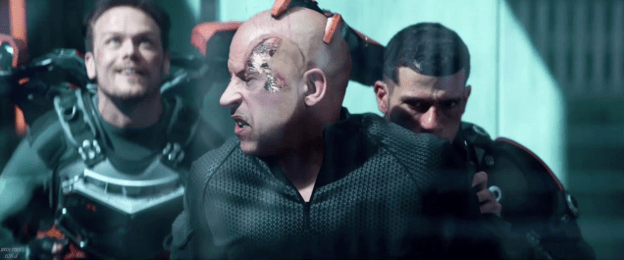
Dalton and Tibbs are constant thorns in Garrison’s side.

Of course, Harting isn’t nearly enough of a physical threat for Garrison to go up against; luckily, R.S.T. has used Harting’s technology to augment a couple of other soldiers for the good doctor to toss in Garrison’s path. Jimmy Dalton (Heughan) is Garrison’s primary rival; he takes an immediate dislike to Garrison and delights in utilising his cybernetic legs and, later, a pretty impressive prosthetic rig to vent his feelings out on Garrison’s largely indestructible form. Dalton is partnered with Marcus Tibbs (Hernandez) who uses a series of cameras and ocular implants to help track and pinpoint Garrison once he goes rogue and, together, they are just about able to equal something of a challenge for Garrison (though it does make you wonder why Harting didn’t inject his nanites into Dalton and Tibbs as well to give them more of an edge).

Gina is just a fantasy to motivate Garrison while KT is the resident bad-ass female who’s sick of Harting’s manipulation.

Of course, Bloodshot isn’t all action and testosterone; the crux of Garrison’s quest for revenge hinges on him wanting to avenge the brutal murder of his wife, Gina (Talulah Riley). Simply reliving this traumatic memory is enough to send Garrison out in a relentless quest to track down the man responsible again and again and is a pure enough motivation to allow Harting to reprogram Garrison to assassinate a series of targets, Garrison’s memory of Gina is skewed and unreliable, to say the least, as it turns out she’s not even dead and they’ve been separated for five years. As a result, there’s not much for Gina or Riley to do except be the object of Garrison’s affection and primary motivation, leaving her as little more than an attractive object rather than a well-rounded person. Luckily, KT (González) is on hand to fill some of that role. Unable to breath naturally, she has been affixed with a cybernetic respirator that makes her immune to toxins; she’s also an extremely bad-ass fighter, making short work of much larger, masculine opponents and sympathising with Garrison’s plight. Mainly due to Garrison being fixated on avenging a wife he believes to be dead and him struggling to come to terms with the truth, any romantic or sexual tension between KT and Garrison is, thankfully, downplayed and they are portrayed as much more than colleagues, equals, and partners rather than succumbing to clichés. Still, the film seems to be leaving the door open for this, and an expansion on KT’s backstory and personality, in a future film as there isn’t much time spent on fleshing her out as being more than an exception fighter who’s tired of being manipulated.

The Nitty-Gritty:
Bloodshot also balances it’s slower, more contemplative moments and its high-octane action with a strange, quirky sense of humour. There’s a really weird moment in the beginning where Martin Axe (Toby Kebbell) suddenly brings into a whole dance routine (though this is later explained away as a flourish imbedded into Garrison’s memory by Harting’s coder) and Garrison is later saved from Harting’s continued manipulation by Wilfred Wigans (Morris), an eccentric rival coder who provides the bulk of the film’s comic relief through his fast-paced witticisms and peculiarities.

Bloodshot sold itself on this shot but similar effects are neutered by the film’s rating.

Still, let’s be honest with ourselves here: if you’re watching Bloodshot, you’re watching it to see Vin Diesel smash random dudes in the face and tank shots to his person. Bloodshot’s unique premise is that Garrison is loaded up with nanites that automatically repair damage and injuries to his body; we’ve seen similar effects before with the likes of Logan/Wolverine (Hugh Jackman) and the T-1000 (Robert Patrick) but Bloodshot takes it up a notch by being a little more graphic in its depiction (or, at least, as graphic as it can be with its 12 rating). As a result, you’ll get to see Garrison take a shotgun blast to his face and see his skin, bones, sinew, and blood all reform pretty much instantaneously, bullet holes close up, and him hammering opponents with his increased strength.
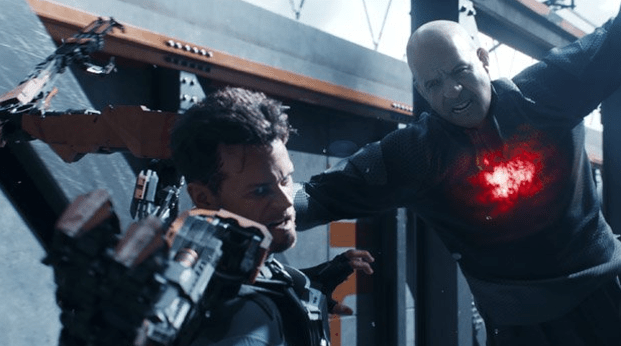
It’s worth sticking around for Bloodshot‘s fun and exciting action and fight scenes.

Still, as impressive as Diesel’s fight and action scenes are, they do wear thin pretty quickly thanks to the aforementioned rating. I feel Bloodshot would have benefitted greatly from being a 15 so we could see some really gory and gruesome effects and more brutal action sequences but it does pretty well with what it has. There’s plenty of scenes of Vin beating people to death, a pretty good chase sequence where he out-runs his pursuers with relative ease, and a unique final battle pitting him against Dalton and Tibbs on a collapsing external elevator.

The Summary:
Bloodshot may be big, loud, and somewhat derivative but it’s far from a complete clusterfuck or an unenjoyable experience. The film’s facing is good, its narrative is playing mostly straight and the action is tight and easy to follow. Vin Diesel and Guy Pearce excel in their roles (primarily because they’re playing to their strengths but what’s so wrong with that?) and the film’s premise is pretty good; Garrison isn’t completely unstoppable or invulnerable, meaning the film is just as much about him overcoming his limitations as it is him breaking free of Harting’s programming and manipulation, and he’s still in a position where he is in danger even with his nanites. Could more have been done with this? Yes, possibly, but I feel the film does a decent enough job of establishing this work and these characters and I would be interested to see where Garrison goes from here and a deeper exploration of this universe. Whether we’ll actually get that or not, however, remains to be seen.

My Rating:

Rating: 3 out of 5.

Pretty Good

Did you go and see Bloodshot earlier this year? If so, what did you think of it? Have you ever read the Bloodshot comic books? If so, do you feel the film did the character justice or was it lacking as an adaptation? Would you like to see more of this character and this world or do you feel this one deserves its mediocre reception and is best left forgotten? What is your favourite Vin Diesel movie/role? Whatever you think about Bloodshot, drop a comment below.


Talking Movies: The Invisible Man (2020)

Talking Movies
InvisibleManLogo

Released: March 2020
Director: Leigh Whannell
Distributor: Universal Pictures
Budget: $7 million
Stars: Elisabeth Moss, Aldis Hodge, Storm Reid, Harriet Dyer, Michael Dorman, and Oliver Jackson-Cohen.

The Plot:
After finally leaving her long-term abusive boyfriend, Adrian Griffin (Jackson-Cohen), Cecilia Kass (Moss) finds herself unable to shake his oppressive presence when, following his apparent suicide, she suspects that he is still stalking her.

The Background:
Remember The Mummy (Kurtzman, 2017)? Well, that was supposed to be the latest attempt by Universal Pictures to launch the “Dark Universe”, a series of interconnected horror/action/science-fiction movies that would bring together the classic Universal Monsters for the first time in decades. However, The Mummy tanked and Universal were forced to change their tactics and focus, instead, on standalone stories that reimagined their horror classics. Personally, I didn’t find it to be that and a movie and the cast that Universal had assembled for their dark Universe was very impressive and promising. Veering away from the Johnny Depp-starring vehicle, Universal instead turned to Leigh Whannell to create a modern take on The Invisible Man (Wells, 1897) that bypassed the classic Universal horror of the same name (Whale, 1933) and, instead, concerned itself more with being an intense thriller with elements of sci-fi and horror mixed in.

The Review:
One day, after years of being trapped under the thumb of her sociopathic, controlling boyfriend Adrian, Cecilia decides to creep out in the dead of night after drugging him; as she’s being picked up by her sister, Emily (Dyer), Adrian tries to attack her but his threat seems to be over when, two weeks later, it is revealed that he killed himself.

InvisibleManCast
Despite its flaws, you can’t fault (most of) the cast.

Cecilia has hidden herself away from Adrian and the world by moving in with her friend, James (Hodge) and his teenage daughter, Sydney (Reid). After Adrian’s lawyer brother, Tom (Dorman), reveals that Adrian left Cecelia $5 million, she finally begins to turn her life around. However, she soon begins to feel Adrian’s presence looming over her everyday life; after years of abusive and mistreatment, her fears are dismissed as paranoia and shock but, before long, things start to happen that can’t be explained away and Cee begins to suspect that her former lover, a world leader in optics, has faked his death, discovered a way to make himself invisible, and is stalking her, destroying her relationships and life bit by bit to force her to return to him.

InvisibleManTramua
Strange events start haunting Cecelia.

What separates The Invisible Man from other adaptations is its singular focus on the victim, rather than the titular antagonist; normally, Invisible Man stories and their contemporaries revolve entirely around a man who turns himself invisible and is slowly consumed by its intoxicating effects. Here, though, we follow Cee as she succumbs to fear and hysteria, not only from the threat of an actual invisible man, but also the lingering effects of her toxic relationship with Adrian. There aren’t enough words to describe how great Elisabeth Moss is at portraying a woman who is struggling to return to normal, everyday life and is clearly traumatised by her abusive boyfriend and also seemingly haunted by his continuing presence.

InvisibleManTom
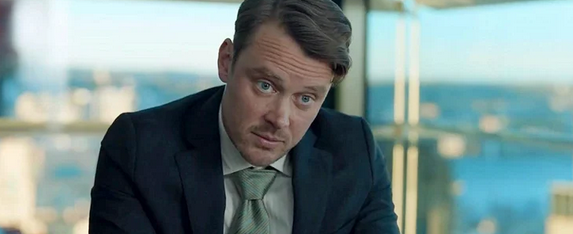
This guy’s definitely…in the movie…

Surrounding her is a similarly decent cast; Hodge and Reid have great rapport with Moss and you definitely believe in their platonic, yet loving, relationship. There’s some friction between Cee and Emily that goes back to their childhood, but it’s not really expanded upon and takes a backseat to the more pressing concerns about Cee’s mental health, and there isn’t much for Tom to really do except exist as another victim of Adrian’s destructive behaviour.

InvisibleManTension
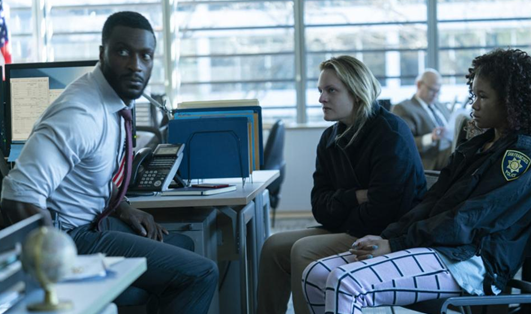
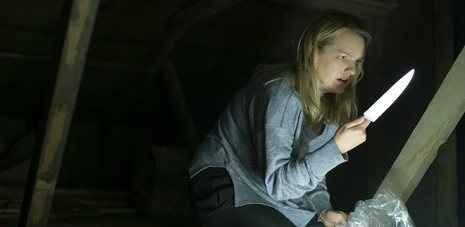
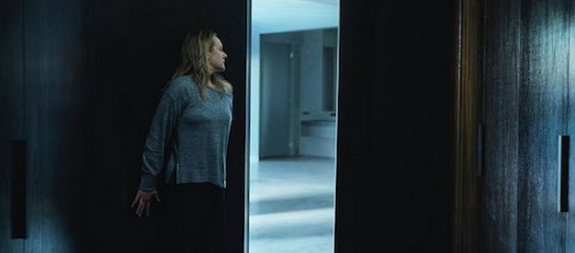
The Invisible Man really excels at building tension.

Ostensibly, The Invisible Man is a tense thriller; there’s some really unique framing choices and camera work at use here to make you feel on edge and uncomfortable at all times, as though there really is another, unseen man present in most scenes. Whannell favours building tension over a high body count and this keeps the film on a razor’s edge; once the pace picks up, things get even more intense as we follow the deterioration of Cee’s mental health…but it’s far from perfect. As a big fan of The Invisible Man, I wasn’t really expecting this to be a character study of the trauma victims of abusive relationships can suffer through. To be fair, judging from the trailers, I was expecting little more than a jump-scare thriller, so it was surprising to find the film had so much meat on its bones but I have some issues with its execution and pacing that spoiled the experience for me.

The Nitty-Gritty:
First of all, there is and invisible man in this movie; the trailers made this pretty explicit but the film does a really good job of making you question whether it’s a ghost, an invisible man, or just all in Cee’s head. However, I feel this is a bit disingenuous; I went into it expecting an invisible man and wanting to “see” an invisible man, so to constantly beat around the bush was a bit frustrating.

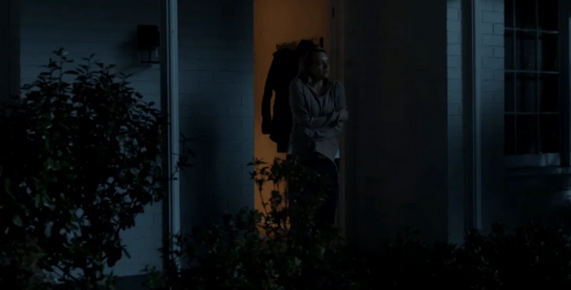
InvisibleManMadness
Here it’s the victim who struggles with her sanity…

We don’t ever really get much of a sense of who Adrian really is; he’s talked about at length but there’s not much time spent on why he was so abusive to Cee or what drove him to form such destructive relationships with people. It saps him of some of his menace and makes him, instead, he’s just a silent stalker who dispatches those in his way with little effort. It turns out that Adrian developed a special suit comprised of loads of little cameras that allows him to appear invisible; this is a change of pace as, usually, invisible men take a serum that renders them invisible but, while the suit may be more “realistic”, it carries exactly the same issues as a serum does…and even a few more. For example, the suit completely covers Adrian, so how does he see out of it? Its skin-tight surface is covered with plastic and cameras so, surely, he would make quite a bit of noise when he moved and, if he somehow didn’t, his muffled breathing would be hard to disguise.

InvisibleManPacing
I had some issues with the film’s pacing…

Also, somehow, Adrian appears to be superhumanly strong; he can lift Cee with one hand, toss her across rooms, and beat men to death, or close to it, without much problem. I don’t really see how his fancy suit helps him do that, even though it does make for some impressive action and kill scenes in the film’s final act. The big twist turns out to be that Tom is in on it all too; Cee remains steadfast that Adrian put Tom up to it, however, and takes it upon herself to kill Adrian herself (cloaked in his same suit) to finally gain some catharsis but it’s left ambiguous as to whether Adrian did actually stalk Cee while invisible or if it was always Tom…or the both of them. And yet I find it hard to really care as neither man is Claude Rains (hell, they’re not even Kevin Bacon!) and reducing the invisible man to a silent killer sucks a lot of the charm and menace out of the normally talkative antagonist.

InvisibleManConclusion

The Summary:
The Invisible Man is one hell of a tense, nail-biting thriller; the film does a masterful job of building tension and suspense and Elisabeth Moss puts in a great performance as an emotionally-scarred victim but, in the end, I just couldn’t really get into it. Despite the film’s interesting take on the classic Invisible Man formula, we’re left with a poorly-defined villain and some forgettable supporting characters; the all the tension and build in the world can’t overcome the fact that The Invisible Man overstays its welcome for way too long (the film doesn’t seem to know how, or when, to end and drags on and on) and sacrifices too much of the original source material and concept to tell an otherwise moving story of a victim of abuse.

My Rating:

Rating: 2 out of 5.

Could Be Better

Talking Movies: Bad Boys For Life

Talking Movies

BadBoys3Logo

Released: January 2020
Director: Adil El Arbi and Bilall Fallah
Distributor: Sony Pictures
Budget: $90 million
Stars: Will Smith, Martin Lawrence, Jacob Scipio, Kate del Castillo, Paola Núñez, and Joe Pantoliano

The Plot:
Seventeen years after their last adventure, top detectives Mike Lowrey (Smith) and Marcus Burnett (Lawrence) are just coming to terms with the realities of aging out of their usefulness when a series of murders with links to Mike past besiege Miami.

The Background:
Bad Boys (Bay, 1995) and its sequel (ibid, 2003) took a simple concept (the “buddy cop” movie perhaps made most famous by the Lethal Weapon (Donner, 1987 to 1998) franchise and other over-the-top eighties action films) and put a unique twist one it. Actually, two twists: one was the typical, over-the-top cinematography of Michael Bay (which ensured that the films were full of explosions, gun fights, scantily clad women for us to ogle over, and dramatic, sweeping camera pans) and the charisma of the two leads. Given the massive gap between Bad Boys II and Bad Boys For Life, you would be forgiven for thinking that the franchise was over and done with, however, while Bay took a step back from the project, this third entry shows that some things only get better with age.

The Review:
Bad Boys For Life kicks off with an exhilarating car chase bit, rather than see our two bickering heroes running down some coked up perp, they are simply racing to witness the birth of Marcus’s granddaughter. This event is enough to convince Marcus that, perhaps, his bad boy days are over and he and Mike should quit while they’re ahead, which sets an ongoing tone for the film (that of age, maturity, and family).

BadBoys3Banter
Come for the action, stay for the banter!

Mike, however, isn’t quite ready to give up life on the streets for domestication, even though his ex-girlfriend Rita (Núñez) is right there, massively attractive, and clearly still has a thing for him. His exuberance turns to aggression and a thirst for vengeance, however, when he is targeted by the mysterious assassin Armando Armas (Scipio) and his revenge-fuelled mother, Isabel (del Castillo). Denied the opportunity to involve himself in the case by the wonderfully energetic Police Captain Conrad Howard (Pantoliano), Mike is forced to work alongside Rita and her young, tech-savvy team while trying to convince Marcus that they still have enough gas left in the tank for one last ride.

BadBoys3Action
Smith and Lawrence can still bring the over-the-top action.

Bad Boys For Life is a loud, fast-paced movie with a surprising amount of pathos amidst its car cashes, gun fights, and near-constant bickering between the two leads. While there aren’t as many ludicrous explosions (thanks largely in part to Bay not being behind the camera), the film contains just enough Bay-isms to keep fans of the series happy while using the formally hot-headed and seemingly invincible main characters to explore the affects of age.

BadBoys3Antagonist
Armando has the moves but not quite the personality.

The charisma of Smith and Lawrence is unparalleled, matched only by Pantoliano’s scenery-chewing return as their tormented Captain, and it’s a good job that these guys are so compelling as Scipio isn’t that captivating as a villain. His main draw comes from his physicality and scary-smooth skill as a killer and a fighter and, while he does eventually reveal some surprising layers, it’s clear that this film is about Smith and Lawrence and the rest of the plot and action is superfluous. Not that this is a bad thing; the banter and bickering between the stars really makes their friendship believable and I could honestly just watch them cruising around, chatting shit, and roughing up bad guys for two hours. Luckily, there’s a bit of sauce on top of Bad Boys For Life that make it, perhaps, the strongest entry in the series so far.

The Nitty-Gritty:
The main twist in Bad Boys For Life comes from the revelation that Armando is actually Mike’s son from a fling he had with Isabel some twenty-five years ago; this was a twist that honestly came out of nowhere and led to a surprisingly heartfelt moment where Mike’s usual mask of confidence slipped and we learned a bit more of his past. This worked hand-in-hand with the prevailing themes of family and assuming the responsibilities that come from maturity; Marcus is happy to hang it up and be a doting father and grandfather and is almost desperate to convince Mike that he needs to hang up his gun as well and find someone to settle down with. While Mike fights against this, the moment he learns of Armando’s parentage, he instantly switches from wanting Armando dead for trying to kill him and gunning down Captain Howard to trying to reach and redeem his son. This doesn’t come across as a sudden shift, either, and serves only to humanise Mike in a way I wasn’t expecting, which is great because the film definitely leaves the door open at the end for one more last ride for the bad boys as they agree to continue policing the streets. The revelation that Mike is his father also subdues Armando and the ending shows that he is safely behind bars and remorseful enough to want to accept assignments from his father, potentially setting us up for another movie where the duo becomes a trio.

BadBoys3Conclusion

The Summary:
Bad Boys For Life is a loud, over-the-top buddy cop action film with plenty of gunplay, witty banter, and some thrilling action sequences. Surprisingly, you don’t need to check your brain or your heart at the door, either, as the film explores themes of family and aging and has some genuinely poignant moments alongside all the witty banter between the two leads, resulting in an engaging, thrill-ride that is, perhaps, the bets of the three movies.

My Rating:

Rating: 3 out of 5.

Pretty Good

Talking Movies: It: Chapter Two

Talking Movies

It2Title.PNG

Released: September 2019
Director: Andy Muschietti
Distributor: Warner Brothers Pictures
Budget: $60 to 79 million
Stars: James McAvoy, Isaiah Mustafa, James Ransone, Jessica Chastain, Bill Hader, Jay Ryan, Andy Bean, and Bill Skarsgård

The Plot:
Twenty-seven years after facing and defeating Pennywise the Dancing Clown (Skarsgård), the Losers’ Club are called back to Derry to face the terror of It once again but, in order to overcome their greatest fears, they must first remember their past and rekindle their friendship.

The Background:
It: Chapter Two is, obviously the sequel (or second part) to the hugely-successful It (Muschietti, 2017), which retroactively retitled itself It: Chapter One just before the credits rolled. Given the length and structure of Stephen King’s original 1986 novel, it only made sense to split the story into two parts (which was all-but-inevitable when Chapter One raked in over $700 million against a $35 million budget), and everyone involved has clearly gone to great lengths to secure some big and talented names to help bolster Chapter Two even further.

The Review:
Chapter Two picks up twenty-seven years after the conclusion of Chapter One; a grown-up Mike Hanlon (Mustafa), who has stayed in Derry the entire time and become somewhat obsessed with watching for signs of Pennywise and haunted by his memories of the first movie, is forced to call his old friends up when It awakens and begins not only abducting, dismembering, and eating children but also calls out to the Losers to settle their score.

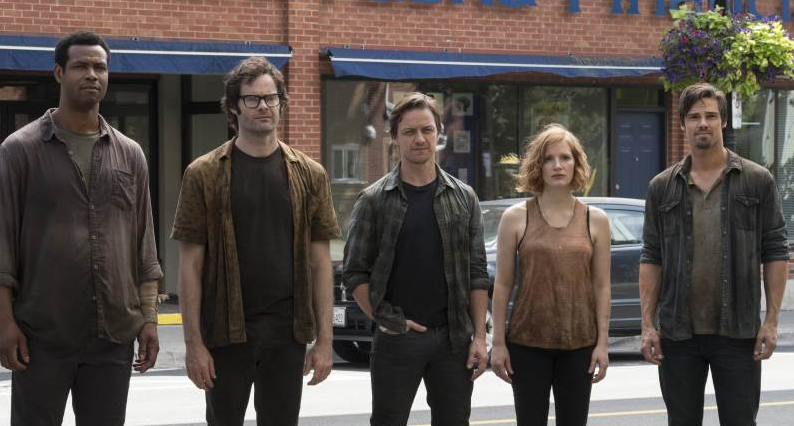
It2Losers
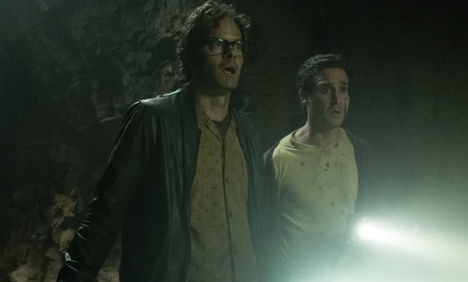
It: Chapter Two certainly excels with its casting.

Unfortunately for Mike, the Losers are all grown-up, successful adults with no memories of Derry, Pennywise, or their friendship; Bill (McAvoy) is a successful writer who overcame his stutter in favour of struggling with writing good endings to his books, Beverley (Chastain) has become a successful fashion designer who is trapped in an abusive marriage, Ben (Ryan) is now a fit and healthy architect, Eddie (Ransone) works as a risk assessor, has traded a fat mother for a fat wife, and fell back into his dependence on medicines and his inhaler, Richie (Hader) has become a stand-up comedian, and Stan (Bean)…well, it’s not said in the film what he does, but he’s grown up too. However, Mike’s phone call is enough to reignite the Loser’s memories (for better and worse) and compel them to return to Derry in record time to get caught up and piece together their memories, and their friendship, to perform an ancient ritual that Mike believes will destroy Pennywise once and for all.

It2Horror
It: Chapter Two definitely ups the gore and horror.

As I may have mentioned in my review of Chapter One, It is, unquestionably, my favourite novel of all time; King builds his characters so well that I can’t help but feel for each of them and, as I have grown older, my connection to the themes of It (friendship, childhood, adulthood) has only grown stronger. While I enjoyed Stephen King’s It (Wallace, 199) and Tim Curry’s rampant portrayal of Pennywise, I always felt like It needed another shake of the stick, one free form the restrictions of a made-for-television miniseries. While Chapter One altered some elements of King’s novel (changing the time period, adding new scares, altering some of the motivations and so forth), I didn’t really mind this and the movie didn’t disappoint in showcasing how malevolent and psychotic Pennywise can be.

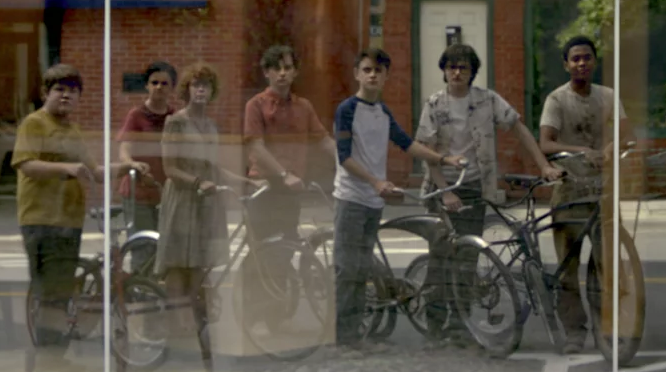
It2Kids
The kids make a much welcome return thanks to flashbacks.

Chapter Two, however, faces the same problem as the 1990 miniseries (and one also present in the book) in that it must now live and die on the strength of the adult version of the Loser’s Club. Given that Chapter One pulled a lot of its presentation and inspiration from Stranger Things (Various, 2016 to present) and the fact that the kids were so good in their roles, this is a tall order but the cast of Chapter Two largely fulfils this by bringing in some great talent for the adult roles.

It2RichieEddie.PNG
Richie and Eddie’s banter keeps the film lively and energetic.

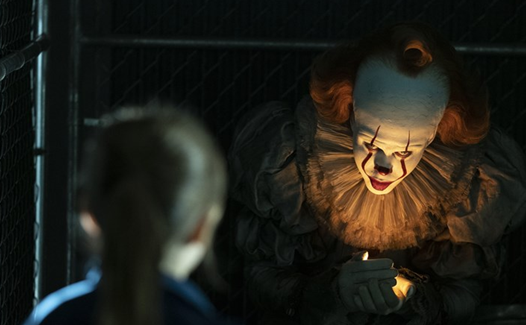
Hader and Ransone especially stand out; their foul-mouthed banter and close friendship adds a lot of heart and levity to the film, while McAvoy and Chastain bring the emotional weight and acting nuance. Mustafa portrays Mike far from the wise mentor figure he assumed in the 1990 miniseries and instead pulls more from the fatigued, terrified obsession that Mike struggles with in the book. Unfortunately, there once again isn’t too much for Ben or Stan to do this time around; Ryan is serviceable in the role but, where child-Ben (Jeremy Ray Taylor) assumed Mike’s role of historian and exposition in Chapter One, adult-Ben is mainly there as a mediator and to rediscover his love for Beverley. Once again, Skarsgård steals the show as Pennywise; unlike Curry’s madcap performance, Skarsgård is a creepy, legitimately terrifying force who loves to mess with Its prey before It feeds. Chapter Two feeds (pun intended) Pennywise a far greater body count as he chomps down on adults and children alike, literally biting the heads of Its prey in a shockingly gruesome display. Skarsgård also gets a one-up on Curry in that the finale thankfully does not lose his visage or presence, allowing the final confrontation between Pennywise and the Losers to be far more entertaining while still staying true to the source material.

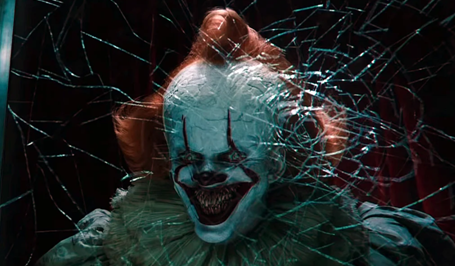
It2Pennywise
Skarsgård remains a truly creepy Pennywise. 

Despite upping the gore and creepy visuals, the bulk of Chapter Two’s scares again rely on jump scares, which is fine as they’re generally well done and Pennywise is a very charismatic presence, but the film does struggle with its pacing at bit. For example, Mike rings the Losers and they all arrive literally moments later with little issue. This does happen in the book and the miniseries but it stuck out to me as a little rushed as the film then slows down a bit so we can get truncated snippets of their lives. A couple of examples of this are Bev making very short work of her husband when he attacks her, with little to none of the catharsis given in the book to this moment, and Ben summing up his weight loss in one line, which is very disappointing considering how hard John Ritter fought to include an abridged version of Ben’s weight-loss story in the miniseries. However, I think some of these pacing issues will be absolved if you watch both parts back-to-back as one big movie (or, even better, they release a supercut version), that way you won’t lose any momentum as you’ll be familiar with all the characters. Also, when the film includes the original child actors, it makes the wise decision to include new scenes, storylines, and scares that pull more material from the book so it never really feels like its treading over the same ground or telling us things we already know.
The Nitty-Gritty:
Fundamentally, Chapter Two follows many of the same beats as the book and the miniseries but there are some interesting wrinkles; one of the biggest is the idea that Richie is actually in love with Eddie and has been harbouring an unspoken homosexual love for him this entire time, which I never even thought of or picked up on when I read the book. Another is Mike managing to escape the attack by the aged Henry Bowers (Teach Grant) with only a flesh wound, allowing him to not only participate in the final battle but finish up his character arc when his desperate belief in the Ritual of Chüd faisl to destroy Pennywise and Mike is revealed to be severely traumatised by his childhood nightmare. A big spoiler for anyone who hasn’t read the book is that Stan never makes it back to Derry, opting to slit his wrists instead. In the book and miniseries, he leaves a chilling message scrawled on his bathroom tiles (simply the word “It”), which is a genuinely spine-tingling moment; here, it’s a brief blink-and-you’ll-miss-it inclusion and, rather than killing himself because he was unable to face his fears and knew that pennywise was due to reproduce, Stan instead kills himself so that his fear won’t hold back the Losers and will galvanise them. This is given a heroic air in the film, which helps keep Stan a part of the group, but it’s never really presented as a motivation for the Losers sticking around to face Pennywise again.
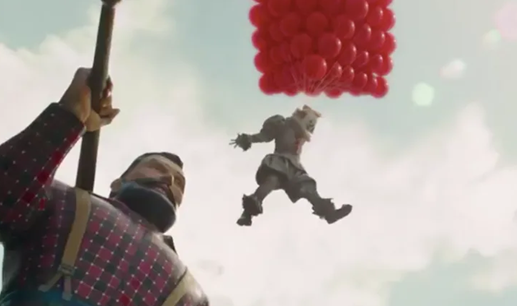
Eddie also ends up dead in the finale; honestly, I thought that Mike was going to die (either in his place or as well), given his presence in the end, but Mike survives and Eddie gets impaled by one of It’s Spider-legs. This comes after Eddie has overcome Bowers and found the strength to strike what appears to be a fatal blow to the Spider and, before he dies, Eddie allows the Losers to realise that they can defeat It by disowning their fear of It and reducing It to a weak form, allowing Eddie to die a hero. This is a small issue, however; the new It movies seem to favour an oversimplification of It’s desire to inspire fear in Its prey. In the book, It likes Its prey to be scared because it improves the taste of the flesh and It delights in tormenting Its victims but, in these films, the Losers are able to defeat It by standing up to It and rejecting their fear of It, reducing It to little more than a blubbing baby. This was a factor in the book, miniseries, and Chapter One but, generally, Pennywise is enraged at the Losers hurting It and making It experience fear, rather than being powered by fear. It’s not a massive issue, as it’s a perfectly acceptable adaptation of Pennywise, but, as I say, it is a bit simplified. Similarly, Chapter Two seems to prefer the idea that It is actually an extraterrestrial lifeform that crashed to ancient Derry on a meteor, rather than an unspeakable eldritch horror; It’s true from is still living light but, rather than a Lovecraftian mass of orange lights that defy life, Chapter Two realises this form as three spinning orbs. Again, a fine way to show it and to hint at there being more to It, but a bit of an oversimplification.

Finally, one thing I feel would have helped with the film’s pacing is just omitting Henry Bowers completely. Henry (Nicholas Hamilton) took an unquestionably fatal tumble in Chapter One and his inclusion, while true enough to the book, is diluted so much that it would have been probably a lot better and easier to say Henry died and have It take the form of a zombified Bowers to attack Eddie. The time spent with Henry, brief though it may be, could then have been put into showing the adult Losers’ lives a bit more prior to returning to Derry. A big plot point for Bill is that everyone loves his books but hates the endings he writes; this is not-so-subtly based on real-life criticisms of a lot of King’s work, especially It. I, however, was always happy with the idea that It is best translated as a giant Spider; it worked as a metaphor and the ending always hit me hard as the Losers sacrifice so much to end Pennywsie’s threat and it’s a real poignant reflection of what it’s like to grow up and forget (or grow apart from) the friends that were once so important to you. Chapter Two, however, actually improved on the ending in a way that I found heart-warming in that, unlike in the book and miniseries, the Losers don’t lose their memories of each other after defeating Pennywise. Them losing Stan and Eddie and their memories after working so hard to remember everything always broke my heart so this really made me happy. Stephen King’s gratuitous cameo could have been shorter, though…like, he has a lot of lines and a lot of time was spent on indulging him.

It2Bunyan

The Summary:
While not as good as It: Chapter One, It: Chapter Two is still a solid horror movie; there’s plenty of creepy moments, gore, and a surprising amount of humour here that’s sure to appeal to fans of the first movie. Allowances have to be made for the characters we became attached to now being grown up and the cast does a great job stepping into the shoes of their younger counterparts; the cast is scarily fitting, which really helps to adjust to this narrative shift. While some of the plot points are a bit weaker and the ending may be disappointing to some, as a massive fan of the book I was very satisfied and just as touched by the ending, especially some of the tweaks they made that, in my opinion, actually improved it.

My Rating:

Rating: 4 out of 5.

Great Stuff

Talking Movies: Fast & Furious: Hobbs & Shaw

Talking Movies
Hobbs&ShawLogo

Released: August 2019
Director: David Leitch
Distributor: Universal Pictures
Budget: $200 million
Stars: Dwayne Johnson, Jason Statham, Idris Elba, and Vanessa Kirby

Plot:
Spinning out of the Fast and the Furious (Various, 2001 to present) franchise, DSS agent Luke Hobbs (Johnson) is forced to team up with mercenary Deckard Shaw (Statham) when rogue MI6 agent-turned-cyborg Brixton Lore (Elba) leads a terrorist organisation in trying to acquire a potentially world-ending virus.

Background:
The Fast and the Furious franchise is a funny beast; what started as a vague remake of Point Break (Bigelow, 1991), but with cars rather than surfboards, became an over-the-top heist franchise and, finally, a pseudo-superhero series where its invincible characters can pretty much solve any problem with a bunch of cool cars, the concept of family, and being big, unapologetic alpha males. Seriously, this franchise taught me that the best way to solve any issue is to change gear or hit the nitrous and I am constantly amused at how the franchise has turned the traditional action genre on its head. Like, normally in action moves, you’ll get quick cuts or shots of guys reloaded or throwing punches but, in the Fast and the Furious movies, these are replaced with sudden and dramatic gear changes. Anyway, ever since the franchise returned to prominence with Fast & Furious (Lin, 2009), the films have done nothing but make money…shit-loads of money! With Dwayne Johnson joining the franchise in Fast & Furious 5 (ibid, 2011), the producers have finally decided to capitalise on his charisma, box office appeal, popularity, and money-making ability by throwing him together with Jason Statham as two guys who can’t stand each other and are forced to work together in a big, over-the-top, car-centric, superpowered version of Tango & Cash (Konchalovsky, 1989).

The Review:
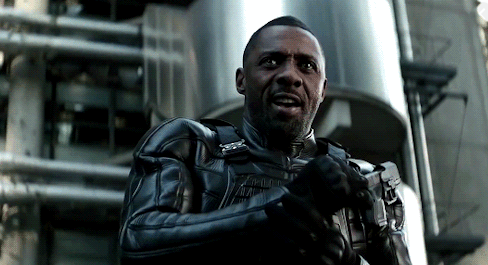
Right off the bat, Hobbs & Shaw introduces us to Brixton, a man who unapologetically describes himself as the “bad guy”; Brixton is decked out in a bulletproof uniform, has cybernetic implants, and is, for all intents and purposes, “Black Superman”. His goal is to acquire a “programmable virus” that will wipe out the weakest of the human race so that only the strongest and the fittest can survive but, when MI6 agent Hattie Shaw (Kirby) injects herself with the virus and evades him, Brixton uses the vast resources of his shady organisation, Eteon, to frame Hattie, forcing the CIA to draft in Hobbs and Shaw to track her down, acquire the virus, and stop Brixton.

Hobbs&ShawTeam.PNG
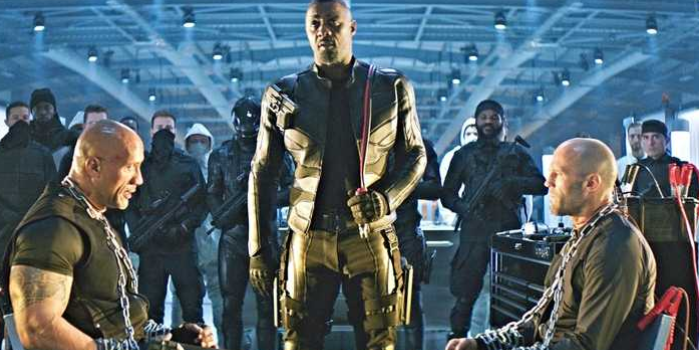
Hobbs and Shaw must put aside their egos to battle Brixton.

Hobbs and Shaw are presented as being polar opposites; Hobbs is a massive mountain of a man who uses his brute strength to get results while Shaw is more about finesse and subtlety. Not only that, their personalities clash in the wildest of ways; despite working together and seemingly burying the hatchet in Fast & Furious 8 (Gray, 2017), Hobbs and Shaw still cannot stand one another and are always a razor’s edge from getting into a fist fight, making for some truly amusing verbal exchanges and insults shared between the two. Hobbs & Shaw is a non-stop thrill ride of a movie; when there aren’t big fight sequences, there’s an over-the-top car chase; when those two things aren’t on screen, there might be a fire fight or, when all else fails, the movie falls back on the chemistry and the banter between Hobbs and Shaw, which could honestly carry the entire movie without the action sequences. I went into this fully expecting a comically over-the-top action movie and I wasn’t disappointed; I swear one day this franchise will end up in space, so “Black Superman” isn’t too much of a stretch and it’s best to just sit back and enjoy the ride once Hobbs and Shaw get behind the wheels of their cars and start pulling off crazy stunts, jumps, and actions that would obviously never work in the “real world” but the real world sucks and is boring so why would you want to see that anyway?

The Nitty-Gritty:
Not much to spoil here, really; there’s fights, cars, and guns. Hattie, as you may have guessed from her name, is Shaw’s estranged sister and a big part of the movie is dedicated to revealing that Shaw was setup by Brixton back when they worked together in MI6, which helps to give his previously malevolent character some humanity. It’s never really revealed exactly what Eteon did to improve Brixton; he ahs a mechanical spine and some cybernetic implants in his eyes but there’s no real specifics behind his superhuman status. Eteon is headed up by an unseen, disembodied, digitally-altered voice, however, who hints to a past with Hobbs and is clearly being setup for future movies, which may detail more about what Eteon is about.

Hobbs&ShawBrixton.PNG
Idris Elba clearly relishes being “Black Superman”.

Hobbs also gets a character arc where he is forced to return to his home in Samoa and his estranged family when Hobbs and Shaw are framed by Eteon, leading to the deepest exploration of Johnson’s family heritage than we’ve ever seen on film before. His real-life cousin, Roman Reigns, even pops up as Hobbs’ brother; however, despite this role being promoted as Reigns’ big break into Hollywood, he doesn’t have a single line, doesn’t really do anything except hit a Spear and fight alongside Hobbs and his brothers, and the role is little more than a cameo as Hobbs is primarily focused on repairing his relationship with his brother, Jonah (Cliff Curtis). Speaking of cameos, Helen Mirren, Ryan Reynolds, and Kevin Hart all pop up, to varying degrees of success. Mirren, as Shaw’s mother, is classically understated and never wears out here welcome but Reynolds appears to have been drafted in as Kurt Russell wasn’t available to reprise his role as Mr. Nobody and Hart is clearly there as he’s the Rock’s buddy. Both guys are onscreen, seemingly ad-libbing, for a long time, with Hart’s cameo especially being a glaring addition that left me itching for the scene to move on and get back to the action.

Hobbs&ShawHobbsShaw.PNG

The Summary:
Fast & Furious: Hobbs & Shaw is a great time; sometimes, it’s good to just go to the movies, switch your brain off, and enjoy an alpha male odd-couple begrudgingly learning to tolerate each other and work together towards a greater good. The film has some fantastic dialogue between the two, some big action sequences, and walks the line between the ridiculous and the fantastic with such unapologetic glee that it can’t help but be a really enjoyable experience.

My Rating:

Rating: 3 out of 5.

Pretty Good

Talking Movies: Marvel Studios’ Fantastic Four

Talking Movies
F4Logo

Those who actually read my articles may recall that, some time ago, I wrote a piece discussing some ideas for the inevitable integration of the X-Men into the Marvel Cinematic Universe since Disney reacquired the rights after their big purchase of 20th Century Fox. In all honesty, bringing in the X-Men is probably one of the hardest tasks faced by Marvel Studios given the popularity and mainstream awareness of the existing movie franchise. As detailed in my piece about films that desperately need a remake, I believe that it would be comparatively easier to bring in a new version of Marvel’s first family of superheroes, the Fantastic Four, and that this should be the main goal following the conclusion of Avengers: Endgame (Russo Brothers, 2019). The Fantastic Four are, obviously, no strangers to live-action adaptation; Roger Corman infamously co-produced, but never released, the extremely low-budget The Fantastic Four (Sassone, 1994) back in the nineties, Tim Story’s Fantastic 4 (2005) and Fantastic 4: Rise of the Silver Surfer (ibid, 2007) actually saw the light of day but came under a lot of criticism for some of the effects, tone, casting, and the handling of Galactus, while Josh Trank’s 2015 grim and gritty reboot, Fant4stic, was beset by studio interference, an oddly serious tone, and a dramatically altered interpretation of Doctor Doom (Toby Kebbell). Having seen each of these adaptations, I can say that each does have its fair share of problems but there are some positives to be found as well.

F4Movies
The Fantastic Four have certainly had their fair share of movies.

The Fantastic Four is probably the closest to the 1960s version of the characters; the Four are bathed in cosmic rays and obtain their superpowers, wear very comic-accurate costumes (to a fault, as they literally just look like Halloween costumes), and Doctor Doom’s (Joseph Culp) origin, abilities, and appearance are probably the closest to the comics out of all three adaptations. Also, while every other effect in the film was cringey to the point of embarrassment, Ben Grimm/The Thing (Michael Bailey Smith/Carl Ciarfalio) was phenomenally realised in a practical, semi-animatronic costume similar to those seen in Teenage Mutant Ninja Turtles (Barron, 1990). Fantastic 4, while suffering from the tired depiction of Victor von Doom (Julian McMahon) as a suit-wearing businessman and some questionable casting (Ioan Gruffudd isn’t bad as Reed Richards/Mr. Fantastic but also isn’t that great and Jessica Alba was woefully miscast as Susan Storm/Invisible Girl, a fact made all the more prevalent by the gratuitous shots of her in her underwear rather than emphasising her intelligence), was basically saved by Michael Chiklis and Chris Evans, whose chemistry as the Thing and the Johnny Storm/Human Torch, respectively, are well worth the price of admission. Rise of the Silver Surfer improved on the lacklustre finale of its predecessor and, while Galactus was little more than a formless space-cloud, at least the movie tried to do Galactus when it could have just as easily gone down a safer, more boring route. The Silver Surfer (Doug Jones/Laurence Fishburne) was also realised extremely effectively, looking great and being a powerful yet empathetic character; while tying his powers directly to his board did weaken him somewhat compared to his comic counterpart, it simplified matters considerably. Oh, also, the Fantasicar is in this and looks amazing!

F4Family

When the first trailers for Fant4stic hit, I was actually quite excited as it looked like it was going to be a more grounded, scientific, realistic interpretation and its trailers, look, and marketing reminded me a lot of Interstellar (Nolan, 2014). I also heard a lot of negative reviews surrounding the movie and went into it expecting this dull, boring, disjointed mess of a film but found myself surprisingly enjoying it. For one thing, the cast is much better; Kate Mara is a far better fit for Susan Storm (though the fact that she doesn’t actually go on the mission with the others is a problem), Miles Teller is also far more suitable, portraying Reed as a somewhat awkward but determined and enthusiastic young genius, and Michael B. Jordan was absolutely brilliant as Johnny Storm because of his natural charisma and totally proved that race shouldn’t always be a factor when casting these characters. On the flip side, Toby Kebbell is quite underwhelming as Doom and Jamie Bell really didn’t have the physical stature to properly fit the role of Ben Grimm, though I did like the CGI used to create the Thing. One of the things that separate the Fantastic Four from other superheroes is that they are a family; their strengths lie completely in their unity and, while each are powerful and talented separately, the idea has always been that the four of them together are a formidable unit. Tim Story’s movies emphasised the “dysfunctional family” dynamic of the team quite well; though miscast, as I said, Sue acts as the “mother” to the team, being the voice of reason and logic and intervening in arguments; Johnny and Ben are the bickering children who are just as likely to fight each other as other threats; and Reed is the level-headed, hyper-intelligent “father” of the group, though Gruffudd rarely exuded the charisma, confidence, or intelligence you might expect from such a character. This ended up being a theme in Fant4stic, with the team officially forming at the film’s climax and staying together out of a true sense of friendship that developed over months of working together after being introduced as strangers. Reed and Ben were close as kids but, once Reed becomes part of Franklin Storm’s (Reg E. Cathey) interdimensional project, he leaves Ben behind and forms a fast friendship with Johnny, which is an interesting twist as Johnny is generally treated as a kid brother by Reed.

F4Doom
Doom’s always been a bit…obsessed, to say the least…

Also at the heart of the team’s story is their complicated relationship with Doom; all three interpretations portray Doom as a former colleague and rival to Reed but only The Fantastic Four and Fant4stic delve into their friendship. Reed and Doom are supposed to be equally matched in their intelligence and separated only by Doom’s megalomaniacal ego and lust for power, which is generally realised in his live-action adaptations; The Fantastic Four’s Doom descends into one-note revenge and a desire to conquer the world while Fant4stic-Doom, similar to Fantastic 4­-Doom, revels in his newfound power and desire to use it to subjugate others and prove he is the better man than Reed. In the films, Doom’s motivations are generally further bolstered (or diluted, you might argue) by his attraction to Sue; Fantastic 4-Doom proposes to her and actively pursues her simply because she is unobtainable, making his motivations much less threatening. Even in Rise of the Silver Surfer there is a suggestion that he seeks to obtain the Surfer’s powers simply to displace Reed in Sue’s life. Personally, I don’t like this addition to Doom’s motivations; I think it’s enough to have Doom be this selfish, egotistical madman who desires power and more power and to prove that he is superior to Reed and, by extension, his extended family. With their acquisition of 20th Century Fox, Marvel Studios now has the opportunity to bring the Fantastic Four into the Marvel Cinematic Universe; with the Four come some of Marvel’s greatest characters and villains, including Doom, Silver Surfer, Namor, Annihilus, and Galactus and their significance in the greater Marvel universe cannot be understated, with Reed being an integral member of the Illuminati and the team being the force that drives away Galactus’ threat.

F4NegativeZone.PNG
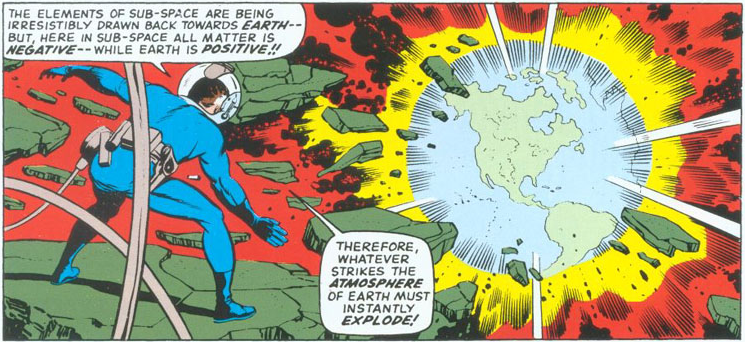
Perhaps the Fantastic Four have been trapped in the Negative Zone for a while?

Unlike the X-Men, bringing in the Fantastic Four can be a relatively simple affair; one of the things I liked about Fant4stic was that the team travelled across dimensions, rather than into space, to acquire their powers. Either approach is fine to me because the main thing here is that the Four are explorers and scientists first and adventurers and superheroes second, so you could very easily have the Fantastic Four return from an excursion into the Negative Zone, either by design or having been trapped there by Doom. That way you can establish that the characters and the Baxter Building have existed in the MCU for some time but they have either been away or lost for some time, similar to how Carol Danvers/Captain Marvel (Brie Larson) was introduced to the MCU. There are, however, a few ways you could portray the team; Marvel Studios could take inspiration from Fant4stic and Ultimate Fantastic Four (Various, 2004 to 2009) and have the Four be in their mid-teens. Perhaps Reed is a genius savant and Doom is his former teacher, embittered by Reed’s intellect and youth, or maybe they were peers driven by a friendly rivalry that turned sour. It’s definitely a route to go down if you want longevity from the actors and characters and to maintain some of the youthful vigour Tom Holland brings to the MCU as Spider-Man.

F4Reed
Reed gives an opportunity to bring in another seasoned actor to the MCU.

However, I would actually go the alternate route, especially as I’m hoping for the majority of the X-Men to be teens at Xavier’s School for the Gifted as in X-Men: Evolution (2000 to 2003), and use this as an opportunity to bring some older actors into the roles and have a few more seasoned voices of authority to be peers with Doctor Strange (Benedict Cumberbatch) and Black Panther (Chadwick Boseman). This puts me in a bit of a bind, as I already had Pierce Brosnan eyed for Magneto, but he’d be equally great as Reed; in another time, I would have also said Bruce Campbell, but he maybe doesn’t have the acting gravitas I envision for Mr. Fantastic, though maybe Bradley Cooper would be a good fit (and it’d give him a chance to be seen onscreen in a Marvel movie) or even Nathan Fillion, if he isn’t going to appear as Simon Williams/Wonder Man any time soon.

F4StormGrimm
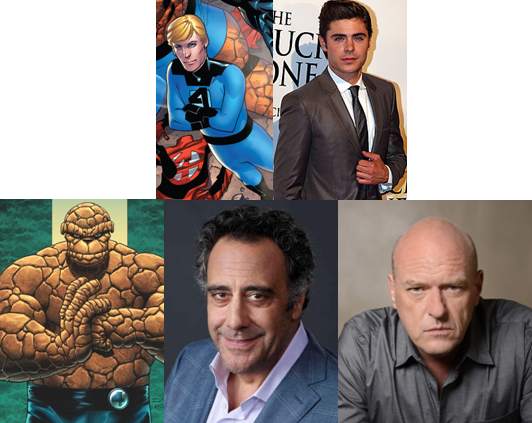
Definately need someone young and sexy for Torch and gruff but loveable for the Thing.

I previously suggested Zac Efron for Johnny Storm, which I think I’ll stick with; a young, cut, utterly handsome hot-head is just the sort of thing the Human Torch needs. He also needs to have good chemistry with the Thing, who I would hope to either be some Hulk-level top-quality CGI or a combination of a practical suit and CGI; I would also keep Ben as the Thing the entire time, meaning Marvel only need to bring in a quality actor to voice the role, like they did with Rocket Raccoon. I previously, somewhat jokingly, suggested Danny DeVito, mainly because of his accent, but maybe Brad Garrett or Dean Norris would be equally good fits.

F4DoomActors
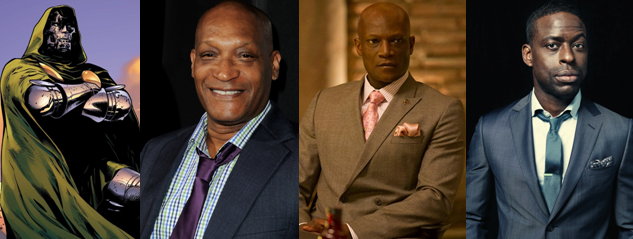
Doom needs a deep, booming, theatrical voice and presence.

As for Sue, I’m at a bit of a loss; perhaps a Jessica Chastain, Amy Adams (if she’s really done with DC movies), or Emily Blunt, if Marvel could get her. I’m not too good at casting females, to be honest, but I definitely think Marvel would be better off looking for a Kate Mara than a Jessica Alba (someone like Felicity Jones, maybe) as Sue doesn’t need to be some drop-dead gorgeous bombshell; she should be smart and sophisticated and have good chemistry with Reed. Similarly, for Doom, you want an actor who won’t be a one-and-done as, unfortunately, Hugo Weaving was; Red Skull should be a much bigger presence in the MCU but Weaving’s comments and attitude seem to have prevented that, and Doom should definitely be a massive threat to the MCU, hopefully similar to Marvel’s version of Magneto. I would push to only see Doom unmasked in a flashback to his time as Reed’s peer, meaning you either need an actor willing to be behind the armour for the entire movie or cast a decent stunt man (bring in Doug Jones, maybe) and an ominous voice actor; off the top of my head, though, I would love to see Tony Todd play the role due to his menacing stature and haunting, raspy voice, though Peter Mensah or Sterling K. Brown would be just as fitting.

Pretty sure the Skrulls will be a big deal going forward.

I would also take quite a bit of inspiration from Captain Marvel (Boden, 2019), especially as that film is bringing the Skrulls to the MCU. At this point, I am hoping that the Skrulls play a significant role in the next phase of Marvel movies, with mid- and after-credit sequences and subsequent movies revealing that certain characters are actually Skrulls in disguise and that the shape-shifters have been secretly invading the Earth in the Four’s absence. Marvel’s Fantastic Four movie could initially take place some time after Captain Marvel, in the late-nineties, with the Four discovering the Skrull invasion or their home planet on an excursion and being left stranded there when their gateway/module explodes. Upon their return, the Four (who would perhaps assume Doom died in the explosion) would use their resources to prepare for the invasion, or fight back against it, only to find that Doom is alive and well and lording it up in Latveria, where his dimensional gateway (a combination of technology and magic) has been allowing the Skrulls to come to Earth over the intervening years. Doom would reveal that he discovered the Skrulls first and struck a bargain with them and that he sabotaged the Four’s gateway; when the Four confront him, they could battle the Super-Skrull (a nice thematic parallel as they essentially have to battle themselves and their own powers) and, upon defeating Doom, find that it was simply a sophisticated robotic decoy and that not only is Doom still out there, but countless Skrulls have infiltrated the human race. Admittedly, this is very thin and doesn’t really delve into how the Four get their powers; maybe they obtain them during their time in the Negative Zone or on the Skrull planet, perhaps even through Skrull experimentation? Either way, I definitely feel Marvel’s Fantastic Four should show that the Skrulls are still at large if only to set up towards a Secret Invasion (Bendis, et al, 2008 to 2009) style conclusion to the whole Skrull storyline in a New Avengers movie.

F4Namor
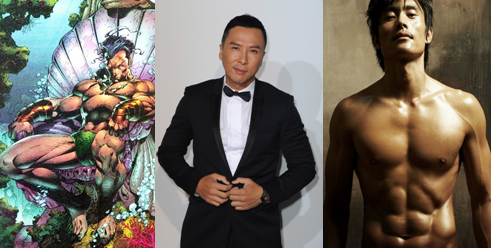
Namor could be a great role for an Asian actor.

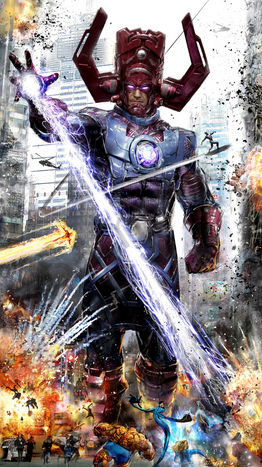
Following this, and with the Four playing key roles in a New Avengers movie, a Fantastic Four sequel could juggle a few famous Fantastic Four plots; aside from the obvious return/revelation that Doom is still alive, perhaps Sue is pregnant and ultimately gives birth to Franklin Richards to actually get that Power Pack movie off the ground? Also, it would be a great opportunity to bring in Namor; given how successful Aquaman (Wan, 2018) was, though, I wouldn’t be averse to seeing Namor in the first of Marvel’s Fantastic Four films and end with the revelation of Doom’s existence/survival. Namor is quite the complex and layered anti-hero and would introduce a whole new world to the MCU while still tying in with the introduction of Mutants; I’d also use Namor as a chance to bring in an Asian actor for the role, like Donnie Yen or Lee Byung-hun. Anyway, the second Fantastic Four movie would also have a sub-plot whereby Reed is constantly monitoring or noticing a strange energy spike crossing the globe and the post-credits scene would show that this is, of course, the Silver Surfer. I’d then have the Silver Surfer appear in this fashion across every subsequent Marvel movie; perhaps, during the films, there would be news reports, headlines, clear spoken dialogue referring to craters appearing, ecological changes, power shortages, and sightings of a strange silvery alien. Definitely, though, I would take a page out of previous Marvel movies and have a few post-credits stingers showing the Surfer preparing various sites and, finally, summoning Galactus to Earth. This would culminate in what I’m going to title Avengers: Doomsday (perhaps New Avengers: Doomsday), a movie that would feature the Silver Surfer as the main antagonist for the first third, Doom for the second (after he drains the Surfer’s powers and uses them for his own ends, possibly in league with other villains), and Galactus for the last two thirds. If anyone can pull off a decent Galactus it’s going to be Marvel Studios, who made Thanos (Josh Brolin) one of their greatest threats and are generally really good at bringing their comic characters to life in a way that is believable and also faithful to the source material.

F4Galactus

Part of me feels like it would be a disservice to Galactus to resolve his threat in one movie, even one that involves most the MCU’s greatest heroes, especially as one of Marvel Studios’ more questionable decisions was to limit Ultron (James Spader) to one appearance. At the same time, though, I don’t really want to see a two part Avengers movie again as it would be too much of a repeat of what Marvel Studios did with Thanos so, instead, building Galactus (through the Silver Surfer) through multiple movies and the two Fantastic Four movies would allow for a much greater payoff in Avengers: Doomsday. Plus, Galactus doesn’t really have any minions for the heroes to fight so it’d be much more about how they are supposed to defeat this giant, God-like being that is sucking the Earth dry. All-in-all, the Fantastic Four would be a great addition to the Marvel Cinematic Universe and offer a lot of opportunities for new characters, new heroes and villains, new worlds and new technology, and to include some more seasoned, mature actors to bring a sense of maturity and authority to the MCU. Having Reed Richards (and Professor X if Marvel also bring in the X-Men) also allows for a potential, movie-spanning arc involving the Illuminati and opens even more doors for new stories to tell. The Fantastic Four also really deserve a good crack of the whip as all of their live-action adaptations have been lacking and I know that Marvel Studios would be able to present them in the proper way; plus, if it gives us a really good, menacing, sinister, and complex villain in Doctor Doom then all the better!

Talking Movies: Glass

Talking Movies

glasslogo

Released: January 2019
Director: M. Night Shyamalan
Distributor: Universal Pictures
Budget: $20 million
Stars: James McAvoy, Bruce Willis, Samuel L. Jackson, and Sarah Paulson

Plot:
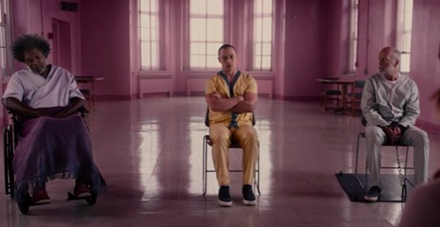
Nineteen years after finding out he is a real-life superhero, David Dunn (Willis) finds himself locked up in a mental institute after apprehending Kevin Wendell Crumb/the Horde (McAvoy). While Dr. Ellie Staple tries to reason with them that they are nothing more than average men with delusions of grandeur, the titular Elijah Price/Mr. Glass (Jackson) plots to prove to the world that extraordinary individuals are an everyday reality.

Background:
It seems like a life-time (mainly because, for many people, it actually is) since Shyamalan’s Unbreakable (ibid, 2000). After a turbulent career as a director, he finally snuck a continuation right under our noses with Split (ibid, 2016) and, before you know it, we finally get to see where David Dunn’s life has taken him since realising he has extraordinary gifts. A sombre, brooding character piece, Unbreakable presented a very real world almost identical to ours with the sole exception being the superheroes exist, albeit in a dramatically realistic form; since the, the superhero genre has expanded and exploded into a cultural phenomenon so the question is whether Shyamalan’s more introspective approach still works in the age of the superhero blockbuster.

The Review:
Strangely, considering how long we’ve waited for an Unbreakable sequel, Glass is more of a sequel to Split that happens to co-star Bruce Willis than a true second chapter. Right off the bat, Dunn (now dubbed “the Overseer”) is working alongside his son, Joseph (Spencer Treat Clark), to actively pursue Crumb, whose emergence as “the Beast” has driven him to take further hostages. Captured and taken to a specialised hospital, Dunn, Crumb, and the largely comatose Mr. Glass where Dr. Staple spends the majority of the movie trying to prove that their extraordinary gifts are simply delusions of grandeur.

GlassSupers.png
Glass delves a bit more into the superhero psyche.

This, while the heart of the movie, is a less-than-stellar premise; after all this time wanting to see Glass and Dunn truly butt heads and being promised a battle of wits versus brawn, we instead get a lot of introspective analysis into the psychoses of these individuals which would be fine except we know from Unbreakable and Split that these three are all capable of incredible things so it seems like a bit of a waste of time to dwell on these aspects rather than seeing them do what they do.

GlassVillains.png
A team up that promises so much and delivers so little.

This is especially true considering that I’m pretty sure that everyone saw Split so I can’t imagine there were too many people in the audience who don’t know about the three central characters. This all works to the film’s detriment; for a movie titled after him, Mr. Glass isn’t really in the movie that much (Jackson even receives a “and…” in the opening credits, as though he is a bit-player rather than a main character). Sure, he is the master plotter and manipulating events, but he spends most of the film drugged up and out of it, leaving the majority of the movie to showcase more of McAvoy’s incredible talent bouncing back and forth between the Horde’s different personalities. Again, though, we know this and saw it to great effect in Split; equally, we saw a regret-filled, morose Willis in Unbreakable and, despite doing good work and being a more seasoned guardian, he’s still largely the same character here, to the point where even he starts to doubt his abilities despite being fully aware of what he can do. While it’s good to show Bruce’s range, it hardly makes for groundbreaking cinema and is far from what I expected to see in the cumulative chapter to Shyamalan’s trilogy.

The Nitty-Gritty:
Shyamalan pulls three major twist on us in Glass; the first is that Elijah has been faking his condition the entire time and has secretly been manipulating events to team up with the Horde. However, the trailers already spoiled this so it’s not much of a twist; I think it was also quite predictable that it was Glass’s actions in Unbreakable that set in motion the events that created the Horde so, again, this was all par for the course for me.
The second twist is that Dr. Staple is actually part of a secret society that seeks to suppress all superpowered individuals. Her primary approach is to convince them, through the meticulous charade of posing as a psychiatrist, that they are suffering from delusions of grandeur; the second is a laser-based lobotomy of sorts that removes their abilities; and the third is simply to kill the individuals. It seems that Shyamalan is potentially setting up for another movie where this Cult of Shamrock (they’re not named but they all have little cloverleaf’s tattooed on their wrists…) strikes back against numerous awakened powered individuals but I highly doubt that we’ll get that movie after the ending of this movie…

Which sees Dunn, Glass, and Kevin all dead.

Yep.

When he finds out Glass caused the death of Kevin’s father, the Beast kills him with a simple strike. This is fair enough, I could cope with Glass dying after setting the Beast loose and revealing superhumans to the world. But then Split’s Casey (Anya Taylor-Joy), now seemingly somewhat attracted or at least empathetic towards the Horde, manages to suppress the Beast long enough for the Shamrock’s to plug him with a sniper bullet and kill him. That was something I definitely did not see coming; Glass spent most of his timing convincing the Beast to fight Dunn at the opening of some skyscraper so I expected him to plummet to his death in that battle; instead, he never make sit across the bloody car park before bleeding to death from a single sniper bullet!

glassbeast
At least McAvoy puts in a good performance.

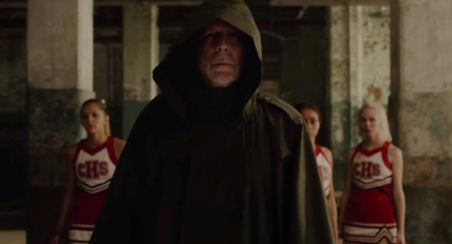
But the absolute worst twist is that David, who was attacked by the Beast and weakened due to being partially drowned, is randomly drowned to death in a sodding puddle by some unknown grunt. He spends the majority of the movie doubting himself when he has no reason to, finally takes up the mantle of the Overseer once more, fights the Beast very briefly, and then is just choked to death by some randomer. Hardly the outcome I expected from this long-awaited sequel and, considering that the film ends with Joseph, Casey, and Elijah’s mother (Charlayne Woodard) posting all the footage online so the world is made aware of superhumans, it really makes you wonder what harm it would have Dunn to have had Dunn be the sole survivor and be faced with the prospect of a lot more superpowered people coming to light. Instead, it sees like Shyamalan wasted the last of his goodwill getting Willis and Jackson (but especially Willis) back for this movie and decided to scrub them all off and bring in some more reliable (or unknown) names for the next movie.

glassoverseer

In Summary:
Glass is a mixed bag; it’s literally like three or four different movies all smashed together and it jumps across itself more often than Kevin cycles through his personalities! It starts off decent, wastes a lot of time in the middle, and then totally falls apart in the finale. Truly, this was a massive disappointment after such a long wait, and I don’t think anyone who was a fan of Unbreakable or Split will be satisfied with the way this film ends. It seems like Shyamalan was too concerned with subverting the superhero genre but we’ve seen that done numerous times, and he already did that in Unbreakable, and it causes Glass to get too bogged down with its own self-indulgence rather than expanding and exploring this universe in a natural, organic, and exciting (or, at least, interesting) way.

My Rating:

Rating: 1 out of 5.

Terrible

Talking Movies: The Meg

Talking Movies
TheMegLogo

Over forty years ago, Steven Spielberg made cinemagoers everywhere afraid to enter the ocean and changed the face of cinema with Jaws (ibid, 1975), to this day the quintessential tale of a giant shark terrorising water-dwellers. Since then, many films have attempted to recapture that magic, including Jaws’ lacklustre sequels, but, somewhere along the way, the concept of the giant shark movie fell into the dredges of direct-to-DVD and made-for-television releases. Relegated to B-movie status, the argument can be made that cinema has not seen a shark movie with a significant budget since the underrated Deep Blue Sea (Harlin, 1999). Director Jon Turteltaub seeks to correct that with The Meg; like Jaws, The Meg is also a loose adaptation of a book, in this case Meg: A Novel of Deep Terror (Alten, 1997), though it brings one crucial difference to the table: The Meg concerns a gigantic prehistoric shark hidden from the outside world for centuries rather than a giant great white.

TheMegJonas.png
Next to the shark, the biggest star of this movie.

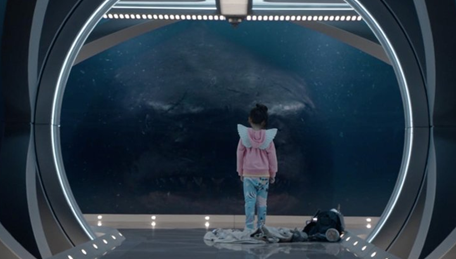
The Meg stars Jason Statham as Jonas Taylor (these two things, the casting of Statham and his character’s name (“Jonas”), combined with the concept of a seventy-five-foot shark should tell you everything you need to know about this movie), who encountered the titular megalodon during a deep-sea rescue mission. Discredited by his peers, despite seven eleven people, he has divorced from his wife, Lori (Jessica McNamee), and descended into a drunken stupor. All that changes, however, after a group of deep-sea divers, led by Lori, breach the Mariana Trench and discover a previously hidden world of new species. Working from billionaire Jack Morris’ (Rainn Wilson) underwater research facility, Mana One, Lori and her fellow scientists are immediately attacked by a megalodon and trapped deeper than anyone has ever gone before. Against the objections of Doctor Heller (Robert Taylor), who previously judged Jonas to be suffering from pressure-induced psychosis, James “Mac” Mackreides (Cliff Curtis) knows that Jonas is the only man qualified to lead a rescue mission and, alongside Doctor Minway Zhang (Winston Chao), manages to recruit Jonas.

TheMegEscape.png
The megalodon quickly becomes the queen of the sea.

Despite the objections of many of the Mana One staff, Jones manages to rescue Lori and her associate, the Wall (Ólafur Darri Ólafsson), when Toshi (Masi Oka) sacrifices himself to distract the megalodon. Back on Mana One, Jonas forges connections with Suyin Zhang (Li Bingbing) and her daughter, Meiying (Shuya Sophia Cai), but, when Morris’ claims to have drafted in the army to destroy the megalodon, finds himself having to contend with the reality of a giant prehistoric shark loose in the waters. First of all, what a great time this is for giant monster movies; Rampage (Peyton, 2018) and Pacific Rim Uprising (DeKNight, 2018) were both serviceable efforts this year alone and we still have Godzilla: King of the Monsters (Dougherty, 2019) to come next year! The important thing to remember about movies like The Meg is that they are designed to be mindless fun and, in that regard, The Meg succeeds.

TheMegAttack
This isn’t your father’s giant shark movie!

Put aside any allusions that this is anything like Jaws; such comparisons are meaningless and unfair. In fact, the only real similarity between the two is that the reveal of the megalodon is a slow build (there are some perhaps unavoidable other parallels, though, such as the hunt out to sea to kill the shark and its attack upon swimmers). Once the megalodon rises from the Trench, though, all bets are off and we get to see the monstrous creature in all its glory.

TheMegCast
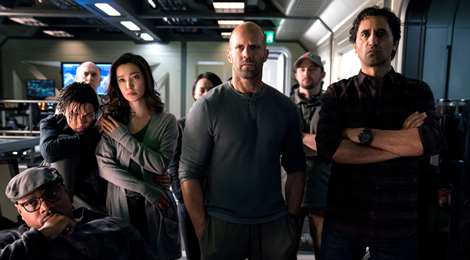
No complaints about casting here.

A B-movie with a budget, this film is bolstered by Statham’s natural charisma; he is always so cool and composed and relatable that it is impossible to not like him and he is at his quasi-superhuman best, leaping head-first into what appear to be impossible situations and emerging unscathed by the skin of his teeth. The rest of the cast is pretty decent, too. All of the characters may be a bit one-note (there’s the billionaire, the moody Goth chick, the loudmouth comic relief, etc) but they’re fun and play their roles well even when they’re just there to be eaten. The best parts involving the megalodon might be featured in the trailer, but that doesn’t detract from the rest of the film. In the end, The Meg is definitely a film for you to switch your brain off to and just enjoy. The one thing I always hate about shark movies is how they’re constantly compared to Jaws (and, yes, I am aware that I did that as well) but you’ve got to let that go because no film is going to live up to that hype and times have changed. Not being Jaws doesn’t stop The Meg being a decent giant monster film or a fun time at the cinema, so get any other ideas out of your head and just have fun with the idea of Jason Statham kicking a giant monster shark in the nose.

My Rating:

Rating: 3 out of 5.

Pretty Good

Recommended: Fans of giant monster movies and Jason Statham should be well satisfied but I’d also say anyone up for a good time would enjoy this, too.
Best moment: Obviously the megalodon’s attack on the swimmers from the trailer is a great scene that I hope gets extended and uncut on DVD, but there’s a great moment involving a shark cage too.
Worst moment: There are times when the movie is unnecessarily slow, as though it was playing things a bit too safe or straight, especially in the first quarter or so before things really pick up.

Talking Movies: Ant-Man and the Wasp

Talking Movies
Antman&WaspLogo

Marvel Studios took one of their biggest gambles in producing Ant-Man (Reed, 2015), given that the character is far more obscure than his other Marvel counterparts in the Marvel Cinematic Universe. Yet, seemingly against the odds, Ant-Man surprised by momentarily shifting the tone of the MCU away from world- or galaxy-ending threats and back down to Earth for an amusing heist adventure. Now, in the wake of the cataclysmic events of Avengers: Infinity War (The Russo Brothers, 2018), Marvel is at it again. However, while Ant-Man and the Wasp (Reed, 2018) does scale back to stakes and focus of the MCU, it also expands upon the nature and potential of the Quantum Realm, perhaps in service of future films in the franchise.

Antman&WaspCassie
Scott has been under house arrest since Civil War.

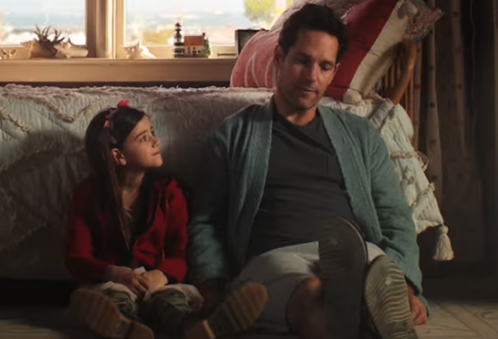
Ant-Man and the Wasp takes place about two years after the events of Captain America: Civil War (The Russo Brothers, 2016) and sees Scott Lang (Paul Rudd) three days away from being released from house arrest after violating the Sokovia Accords. While Scott has used the time to set up a security and surveillance company with his friend Luis (Michael Peña) and bond with his daughter Cassie (Abby Ryder Fortson), he has last all contact with Hank Pym (Michael Douglas) and Hope van Dyne (Evangeline Lilly) as they were less-than-impressed with Scott’s actions and have been on the run ever since. However, when Scott has a dream/vision of his time in the Quantum Realm, he reaches out to Hank and is promptly abducted by Hope. Taken to Hank’s laboratory (which he can shrink to the size of a carry-case), Scott learns that he may hold the key to finding and rescuing Hank’s wife, Janet (Michelle Pfeiffer).

Antman&WaspCarChase.png
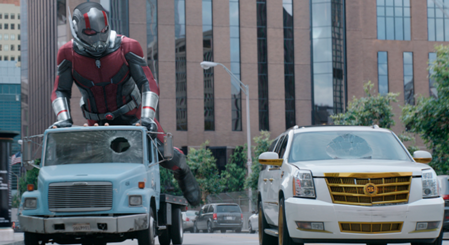
It’s all about the car chases this time.

Hank is reluctantly forced to coerce Scott into helping Hope acquire a vital component to their Quantum Tunnel from Sonny Burch (Walton Goggins), an act that draws the attention of the mysterious assassin Ghost (Hannah John-Kamen). Very quickly, Hank, Hope, and Scott are in a race against time to evade Burch, the FBI (led by Jimmy Woo (Randall Park)), and Ghost and complete the machine before Janet is forever lost to the Quantum Realm. I went into this thinking we would be getting a much faster paced, more action-packed story now that the origin and exploration of Ant-Man’s powers had been sufficiently delivered in Ant-Man but, surprisingly, Ant-Man and the Wasp is as much about the notion of family as it is its action. While nothing quite tops the small-scale battles on Thomas the Tank Engine railroad tracks or inside purses, there is a decent level of car-based action as Scott and Hope shrink and grow Hot Wheels cars to evade their pursuers and the fight sequences involving Ghost are pretty exciting.

Antman&WaspGhost.png
Ghost continues Marvel’s attempts to have more layered villains.

Speaking of, rather than being a simple dark counterpart to Scott or Hank like Darren Cross (Corey Stoll) was, Ghost is a pretty unique and sympathetic character. Constantly fading in and out of reality thanks to exposure from the Quantum Realm, she blames Hank for her affliction and the death of her parents. It also helps that she’s pretty bad-ass, which helps showcase Hope’s ability to kick ass as the Wasp.

Antman&WaspHope.png
Anything Scott can do, Hope can do better.

In many ways, actually, Ant-Man and the Wasp is more about Hope than any other character; she finally receives her suit, which comes with all sorts of nifty gadgets and tech not included in Scott’s, and is clearly a far better and more effective superhero than Scott. Her passion and desire to be reunited with her mother are evident throughout but she also retains a compassion for others (mainly Scott and her father) that keeps her grounded.

Antman&WaspGiantMan.png
Happy to see Giant-Man make a comeback.

As for Scott, he’s everything he was before, and that’s not a bad thing. Paul Rudd perfectly portrays the everyman who is swept up into things largely beyond him and his ignorance to the technobabble and subpar fighting ability are offset by his charm, wit, and ability to think on his feet. Scott is also all about making up for letting down Hank and Hope by not involving them in the airport skirmish from Civil War and, refreshingly, his daughter and family are all perfectly happy for him to continue to be Ant-Man, rather than giving him shit for his actions.

Antman&WaspFoster.png
Laurence Fishburne jumps to the MCU but is Bill Foster all that he seems?

Rounding out the cast are Michael Douglas and, in a new addition, Laurence Fishburne as Bill Foster. Foster and Pym have a strained relationship after a falling out and Pym’s efforts to discredit Foster’s work, which all helps cast Hank as a man who has some demons in his past. Driven to rescue Janet, Hank will seemingly go to any lengths to atone for what he sees as his greatest failing. Once again, Marvel Studios employ some impressive de-aging effects to Douglas (and Pfeiffer) to shed more light on the Pym’s troubled past as a married couple and part-time spies. In the end, Ant-Man and the Wasp is probably about on-par with its predecessor; it isn’t necessarily worlds better but it’s by no means a step back. As before, it’s a great way to catch your breath after the exhaustive events of Infinity War and, if the mid-credits scene is anything to go by, a vital entry for future films in the MCU.

My Rating:

Rating: 3 out of 5.

Pretty Good

Recommended: Of course, and not just for MCU fans. Rudd’s charisma and the general premise make this a great recommendation for everyone.
Best moment: The triumphant return of Giant-Man and the fight sequences involving Ghost.
Worst moment: The side-plot of Scott’s damaged belt, which causes him to by stuck at different sizes, grew thin very quickly for me. It just seemed weird for Hank to create a new, presumably better suit but have the most vital component be janky.

Talking Movies: Skyscraper

Talking Movies
SkyscraperLogo

Believe it or not, it’s been thirty years since Die Hard (McTiernan, 1988) pitted one lone man against a skyscraper full of charismatic terrorists. Since then, Die Hard has gone on to inspire not only a slew of sequels but also knock-offs and copycats; we’ve seen Die Hard in a hockey arena, Die Hard on a boat, Die Hard on a train, Die Hard in the White House, Die Hard on a plane and, to be honest, some of these have been pretty good in and of themselves.

SkyscraperSecurity
Who better to assess your safety than the Rock?

Now, director Rawson Marshall Thurber brings it all full circle by giving us Die Hard in a skyscraper…that’s on fire! Which, yeah, is very Towering Inferno (Guillermin, 1974) but with one crucial difference: this burning symbol of capitalist expansion has the Rock in it! Skyscraper tells the story of former FBI agent turned security assessor Will Sawyer (Dwayne Johnson), who lost a foot in a hostage situation that turned sour, who has been roped into signing off on the largest, tallest, most advanced building ever constructed. The brainchild of Zhao Long Ji (Chin Han), the Pearl promises to be a city in the sky in Hong Kong.

SkyscraperProtector
The Rock will do anything to rescue his family.

Unfortunately, to build the Pearl, Zhao was forced to do business with terrorist and extortionist Kores Botha (Roland Møller), who infiltrates the Pearl with a gang of gun-toting thugs and proceeds to set the building ablaze in order to retrieve a USB drive that implicates his illegal activities. With his wife and children trapped inside, Sawyer becomes a man on a mission to not only enter the Pearl but also brave the odds and rescue his family.

SkyscraperPhysicality
Watch the Rock spit in the face of physics!

It doesn’t take long to see the clear differences between Die Hard and Skyscraper; Johnson, a physical specimen, is far more the muscleman than the snarky cockroach embodied by Bruce Willis. Sawyer is far more about the physical stunts and acts than John McClane, who was beat up to shit and still kept coming; the role of Sawyer showcases the Rock’s more vulnerable side, it’s true, and he spends much of the film nursing injuries and overcoming his emotion to find unique ways around problems, but he’s far more likely to leap from a construction crane, climb a rope, and stabilise a collapsing bridge than enter into a fist fight with a gun-wielding terrorist. Møller, though relatively well-rounded and reasonably charismatic, is no Alan Rickman but, to be fair, very few actors are. Far from Rickman’s chilling, magnetic Hans Gruber, Botha is a driven and focused individual who is more than capable of backing up his ice-cold threats with physical violence. His willingness to take the Rock’s daughter hostage shows how he will do anything to retrieve his USB drive and he makes for a serviceable villain.

SkyscraperHeart
Skyscraper has a lot of heart beneath its action.

Rounding out the cast are Neve Campbell as Sawyer’s wife, Sarah, who is far from a damsel in distress; she holds her own in a fight, uses logical and intelligent solutions to help keep her children safe, and convinces the Hong Kong authorities that Sawyer is trying to save lives rather than being responsible for the blazing skyscraper. Make no mistake, this film is an over-the-top action set piece through and through and going into it expecting anything deeper or more meaningful is a fool’s errand. The Rock defies physics, logic, and gravity on more than one occasion but it’s the freakin’ Rock! Would you really want anything else? If you’re looking for a movie to shut your brain off (not completely, I should add; it’s not a brainless action movie) and just enjoy with some friends, a few drinks, and a pizza than Skyscraper more than meets that criteria.

My Rating:

Rating: 3 out of 5.

Pretty Good

Recommended: Sure, yeah, the world always needs more Die Hard-like films.
Best moment: Anything involving the Rock using his physicality to absolutely absurd limits, like leaping to the Pearl or climbing down it using a precariously-secured rope.
Worst moment: The side plot that sees the Hong Kong authorities brand Sawyer a criminal was a bit annoying, and didn’t really play into the overall plot in the end.