
Following his first dramatic appearance in the pages of Detective Comics, Bruce Wayne/Batman became a mainstream pop culture icon. The brainchild of writer Bob Kane, Batman was brought to life by artist Bill Finger and has been a popular staple of DC Comics and countless movies, videogames, and cartoons over the years. “Batman Day” fell on 20 September this year so I spent every Saturday celebrating comic’s grim and broody vigilante.

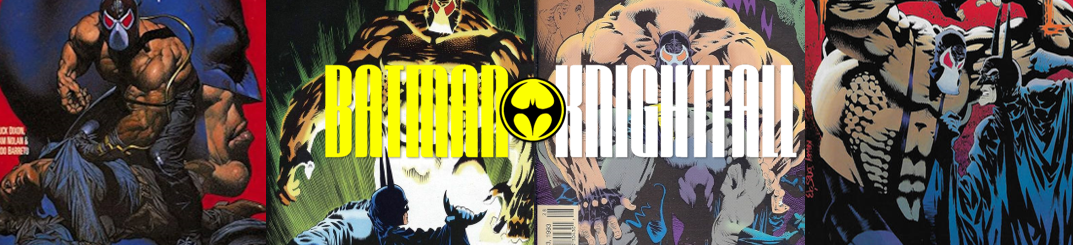
Story Title: “Vengeance of Bane” and “Knightfall Part I: Broken Bat” (includes various subtitles)
Published: January 1993 to July 1993
Writers: Chuck Dixon and Doug Moench
Artists: Graham Nolan, Jim Aparo, Jim Balent, and Norm Breyfogle
The Background:
After the overnight success of Clark Kent/Superman, National Comics Publications commissioned Bob Kane to add another masked crimefighter to their repertoire. Thanks to considerable input from artist Bill Finger, the “Bat-Man” immediately became one of DC Comics’ most popular characters and a mainstream cultural icon. This was bolstered, in no small part, by the many costumed supervillains the Batman has contended with over the years, with perhaps the superhuman mastermind “Bane” being the Batman’s most dangerous and physically imposing foe. Created by Chuck Dixon, Doug Moench, and Graham Nolan based on input from legendary Batman editor Dennis O’Neil, Bane was specifically conceptualised for this sprawling story arc, with the seeds of his first appearance and actions during “Knightfall” being planted throughout 1992. Following plans to introduce the warped vigilante Jean-Paul Valley/Azrael, O’Neil, Dixon and other DC creatives planned to significantly shake up the Dark Knight similar to how Superman was set to be dramatically killed. In keeping with DC’s plans to comment upon the readers’ desire for darker, grittier characters, Bane drove Batman to exhaustion before breaking his spine, leading Valley to assume the Batman mantle and become a more violent and unhinged version before Bruce reclaimed the role. The initial eleven issues were seen as one of the most important moments in Batman’s storied career and, while Bane struggled to remain relevant in the eventual aftermath, the visual of him bending Batman over his knee has influenced videogames and cartoons for years. Though always appearing significantly altered from the source material, Bane has appeared numerous times in cartoons and live-action, where he was reduced to a mindless lackey and something worse than cosplay before Tom Hardy largely divided audiences with his enigmatic portrayal in The Dark Knight Rises (Nolan, 2012). Still, as one of Batman’s most enduring villains, Bane joined the Secret Six, murdered Bruce’s mentor and father figure Alfred Pennyworth while conquering Gotham City, was once rumoured to be Bruce’s brother, and almost became the head of the League of Assassins!
The Review:
The story of Bane, easily Batman’s most physically imposing foe, begins years ago in the chaotic nation of Santa Prisca. After the totalitarian dictatorship quashed a doomed coup d’état, the insurgents were either slaughtered or arrested. One such insurgent, a heavily pregnant woman, was taken to island gulag Pena Duro and her unborn son was tried and convicted for his father’s crimes, as per Santa Prisca custom. Thus, the infant Bane was born in captivity, cared for only by his mother and fellow prisoner “Zombie”. They watched as the child grew and the mother’s health failed, with the boy showing an aptitude for exploration and subjected to daily horrific brutality. When the boy was six, his mother finally passed, yet by then he was too hardened to shed a tear. Without his mother’s protection, the boy was released into the cutthroat general population, far from Zombie’s gaze, where he was protected by the brutish Trogg. However, while Trogg fought off a malicious inmate with sadistic designs on the boy, the youngster fell and suffered a near-death experience, a vision of his future self who spoke of his destiny to rule. The vision also warned that the boy must overcome fear (represented by a giant, fearsome bat) to be a true conqueror and, when he awoke from a thirty-odd-day coma, the boy took his first steps towards becoming a man by savagely murdering his would-be abuser. The boy’s feral nature earned him the moniker “Bane” and a lengthy stint in solitary confinement, where every day and night was a fight for survival against crabs, rats, and a nightly flood of water. Each time, Bane overcame the odds, killing what he could to survive and growing stronger, harder, and more disciplined with each passing day. To stave off further madness, Bane entered a meditative trance, dreaming of slaughtering a bat-like creature and overcoming fear itself.
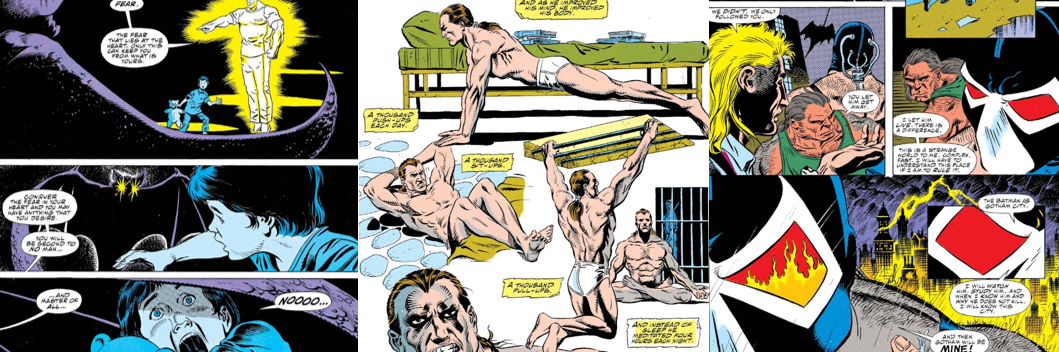
After ten years in the hole, Bane was released by the warden in the hopes that the inmates would kill him, only to be praised as a legend and to gain an additional follower, Bird, who taught Bane to read. Bane consumed knowledge and literature, learning six languages and training himself to the peak of human physical perfection. Bane’s coveted position was challenged many times, and each time he established himself as the alpha male in brutal combat. Still, Bane remained curious about Gotham City and demanded Bird tell him everything about the city, learning of its vigilante protector and vowing to destroy the Batman, whom he soon became obsessed with. Frustrated by this obsession, Bane incited a riot, slaughtering over thirty prisoners before he was subdued and returned the isolation. This was when the cruel warden forced Bane to be the next “volunteer” for Doctor Ruger’s inhumane experiments with a particularly deadly nerve toxin. Although others died from the serum, Bane persevered and was further altered, with “Venom” fed directly into his brain and turning him superhuman. As Dr. Ruger and the others busied themselves with Bane, Zombie stole a Venom sample, replicated it, and helped Bane fake his death so he could finally escape the island. His first act was to take the warden hostage and free his three lieutenants, tossing the warden to the sharks as they helicoptered to safety. Establishing themselves in Gotham City, Bane’s lieutenants devised a portable delivery system for his drug and quickly made a name for himself by brutalising a mob gang. Bane watched and followed the Dark Knight as he investigated, even saving Batman’s life so he could claim it for himself later. Eventually, Bane confronted the Batman and mocked his code against killing, though the Batman was unimpressed by Bane’s threats.
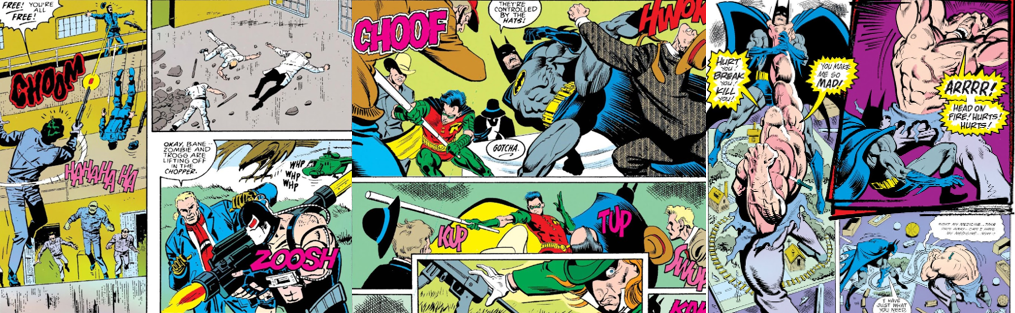
After spending more time observing and studying his quarry (during which Bane fought Waylon Jones/Killer Croc and broke his arms), Bane finally struck about six months later, ransacking a military armoury and launching a premeditated assault on Arkham Asylum. At Bird’s suggestion, Bane blew open the Joker’s cell first before dropping some ordinance to fuel the ensuring riot. While the other prisoners attacked the guards, the Joker gleefully took Doctor Jeremiah Arkham hostage. Though still recovering from mental and physical fatigue, the Batman arrived to help, rescuing who he could but unable to keep many inmates from blasting their way to freedom. While Batman freed Dr. Arkham from the Joker’s death trap, his hated enemy escaped and Batman was left mortified at the prospect of hunting down the escapees, much to Bane’s delight. After reviewing the situation and, alongside Tim Drake/Robin, surmising that Bane sparked the outbreak, Batman’s first test came when Jervis Tetch /The Mad Hatter invited him to a “tea party”. There, the Mad Hatter forced some goons to wear his brainwashing hats, sending Z-tier villain Burt Weston/Film Freak to investigate the bird following him and leading to him being beaten to death by Bane. Though Batman and Robin broke up the tea party, they were nowhere closer to locating Bane and, though physically struggling, Batman was adamant about proactively stopping the more dangerous inmates from organising themselves. His stubborn nature saw him chastising Robin’s concern and being more abrasive than usual, almost costing him when he investigated a toy store break in and was attacked by Arnold Wesker/The Ventriloquist’s brutish companion, Aaron Helzinger/Amygdala, while searching for Wesker’s mobster puppet, Scarface. With Robin busy tussling with the agile and arrogant Bird, Batman took a beating before finally knocking his simple-minded foe unconscious, forcing him to slink away to the Batmobile rather than apprehend the Ventriloquist.
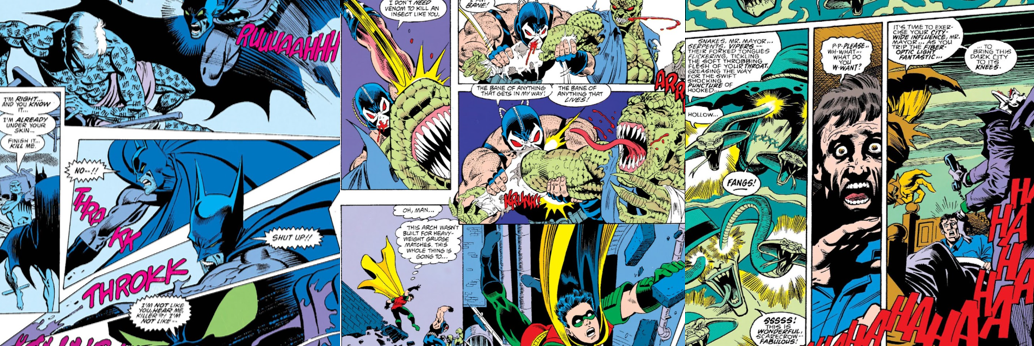
Though hurting and fatigued, the Batman raced to a school where sadistic serial killer Victor Zsasz/Mister Zsasz had taken schoolgirls hostage, relishing the thought of scarring his body after slitting their throats. Though Bane’s lieutenants were eager for their boss to act, Bane was content to observe and delight in exhausting Batman and the Dark Knight refused to allow the Gotham police to interfere in the situation, which left one cop dead a feisty pupil held at knife point. After sending Robin after Bird (expressly forbidding him from confronting Bane), Batman brutalised Mr. Zsasz with a beating so vicious that Detective Renee Montoya had to intervene at gunpoint. The ordeal left the Batman so drained that he blacked out on a rooftop, meaning he couldn’t answer Robin’s calls for backup as he tracked Bird to Bane’s location. When Bane leapt to a passing train, Robin followed and was easily captured, blindfolded, and taken to the sewers. There, Bane expressed admiration for the boy and queried him regarding Batman, only to be meet with quips and Robin’s desperate attempts to fight back. Luckily for the Teen Wonder, the vengeful Killer Croc stepped in for a rematch, damaging Bane’s Venom device and ending up with his arm broken again. Their smackdown saw all three being swept through the sewers, with Robin barely getting to safety, though both he and Alfred despaired when Batman refused to back down from Bane’s challenge. As Trogg repaired Bane’s device, Batman was horrified to learn that cannibal psychopath Cornelius Stirk planned to murder Commissioner James “Jim” Gordon. Utilising his unique ability to cloud his prey’s mind with fear, Stirk masqueraded as Batman and almost knifed Gordon, much to the anger of his accomplice, the Joker, who wanted Gordon alive. Although the Batman saved Gordon, the incident led to the Joker teaming up with the true master of fear, Doctor Jonathan Crane/The Scarecrow, who suggested they terrorise the city’s anti-Batman mayor, Armand Krol.
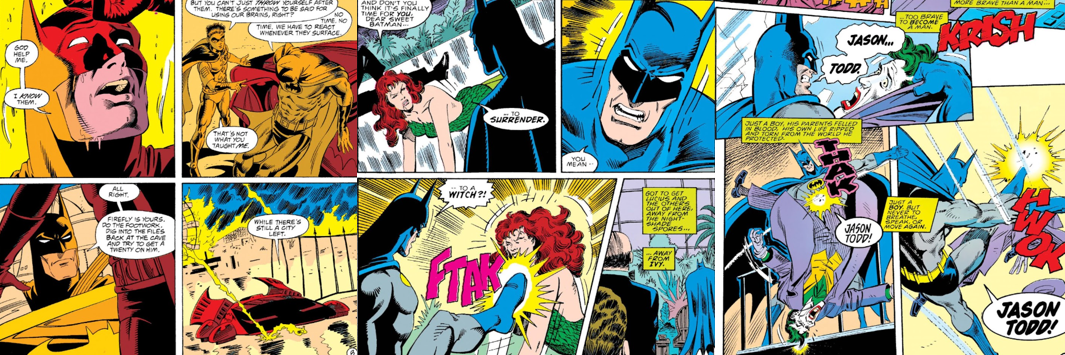
After kidnapping Mayor Krol and driving him to near madness with the Scarecrow’s patented fear gas, the two coerced the mayor into causing a firefighter strike, which allowed crazed pyromaniac Garfield Lynns/Firefly to set the city pier alight. Though he stubbornly refused Robin’s aid, the Batman was too exhausted to apprehend Firefly and begrudgingly let his partner investigate Firefly’s possible targets. While this led Batman to Firefly’s location, he was still too out of it to stop him, leading to him literally collapsing upon returning to Wayne Manor. While the Ventriloquist searched for Scarface and Jean-Paul Valley tested himself, Mayor Krol was forced to send the cops into a trap. Despite his failing health, Batman forced himself to attend a charity function as Bruce Wayne alongside physiotherapist Doctor Shondra Kinsolving, only for Doctor Pamela Isley/Poison Ivy to gatecrash the function and use special spores to kidnap wealthy gentlemen. Bruce played along to reach Poison Ivy’s lair and then switched to Batman to stop her, expending the last of his energy fighting her terminally infected minions. After the disgruntled Tim’s legwork leads Batman to the zoo and finally results in Firefly’s capture, Robin’s forced to intervene when Edward Nygma/The Riddler takes a talk show hostage, though his reckless actions earn him a dressing down from cantankerous detective Harvey Bullock. Upon learning of the mayor’s kidnapping, the Batman races to locate him, rescuing Bullock from an explosion and eventually tracking the Joker and the Scarecrow to the Gotham river tunnel. Unfortunately, the Scarecrow’s fear toxin bombards Batman with images of the Joker beating former Robin Jason Todd with a crowbar. Enraged, the Batman makes short work of the Scarecrow and savagely beats the Joker while screaming Jason’s name. The Batman’s only kept from killing his hated foe by the Scarecrow’s timely intervention, which sees him save and finally earn the trust of Mayor Krol.
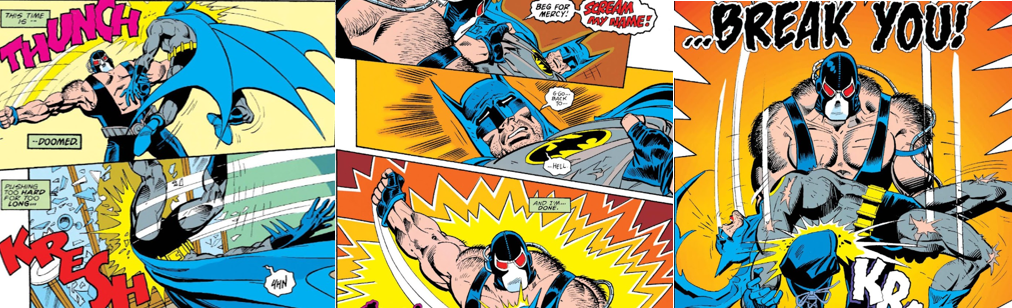
As the Ventriloquist finally reunites with Scarface, the Batman’s gauntlet ends when he’s attacked by Trogg. Though the brute snaps one of Batman’s rubs with a bearhug, the Dark Knight’s gadgets and tenacity see him victorious. He then quickly outsmarts Zombie but, after being driven to the edge by Bird, again comes close to snapping. Drained and at his wit’s end, the Batman reluctantly heads home, eager to rest, only to be horrified to find Alfred unconscious and Bane in his family home! Bane reveals he easily figured out the Batman’s identity, has mastered and perfected the Venom serum that once almost drove Bruce insane, and states his desire to take Gotham City by ending its creator. Though startled by Bane’s cold-hearted demeanor, Bruce dons his cowl and leaps into the fight…only to be immediately swatted aside. After launching Batman through some nearby furniture, Bane tackles him down to the Batcave and shrugs off his foe’s pitiful counterattack, disgusted by Batman’s broken resolve. The vicious beating causes Batman to remember every fight, injury, and villain to have mentally and physically scarred him, leaves him trapped under the Batcave’s giant penny, and driven head-first into the Batmobile, all while Bane rages. Though the Batman tries to fight back, it’s a miserable attempt and he’s sent crashing through Jason’s memorial, mercilessly battered, and partially impaled on parts of the Batcave. While Alfred rushes to Tim for aid, the half-dead Batman is manhandled by his monstrous foe. Victorious, Bane decides it would be too easy to simply kill the Batman and that he’d rather his foe continued to suffer so, in dramatic and horrifying fashion, Bane lifts the brutalised Batman over his head and drives him, spine-first, onto one meaty knee, snapping Bruce’s back in an awesome show of power. Bane then simply drops his foe to the floor, dismissive in victory, and prepares to claim his reward…
The Summary:
It’s easy, at first glance, to compare this first dramatic chapter in the “Knightfall” saga to the “Death of Superman” (Jurgens, et al, 1992 to 1993) arc that happened just before it (indeed, Batman and Robin both wear black arm bands in mourning for the Man of Steel). However, while that was a prolonged slugfest over a few issues with little meat on its bones beyond the shocking death of the world’s greatest hero, “Knightfall” is an agonising gauntlet for the Dark Knight that pushes him to his mental and physical limit. This was all perfectly set up in previous issues, which pushed Batman to breaking point and saw him shun Robin and drive himself to exhaustion, causing Tim to resent his stubborn and dismissive attitude and Bruce to alienate his allies. Perhaps he would’ve snapped out of this of it wasn’t for Bane, a calculating supervillain who spend a lifetime in near-literal hell honing his mental and physical self to conquer Gotham City and destroy her protector. I’ve mentioned it before, but this is peak Batman for me, in terms of art, with the likes of the immortal Jim Aparo showcasing Batman’s exhaustion, anger, and degenerating mental state throughout each issue. While this first chapter suffers from the absence of Batman’s biggest foes, Bane’s test is more than enough to exhaust Batman as he insists on going alone to avoid others getting hurt and out of a pig-headed refusal to accept help. Notably, however, the Batman commends Tim when his investigation locates Firefly and shows concern when Tim survives his encounter with Bane and Killer Croc, but Bruce ultimately shoulders the burden alone, which leads to his inevitable downfall.
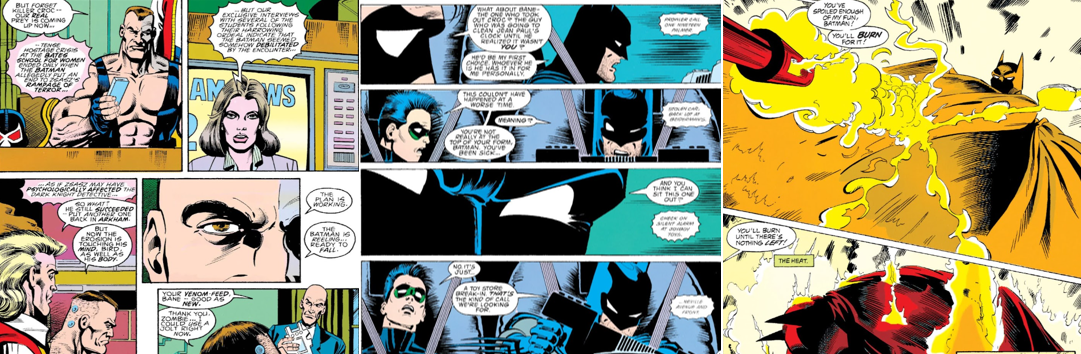
I’ve always found it interesting that Bane chose to put Batman to the test this way. It’s a fantastic way to showcase Bane’s cunning and strategy; he’s no mere mindless brute, something many subsequent stories and adaptations tend to forget. Bane is a man of deep focus and determination, with a sprinkle of obsessive insanity thrown in, and is depicted as a dark mirror of Batman in many ways (though he’s ironically more courteous to his lieutenants than Batman is!) Still, for a man who expresses such admiration for the Batman and who wants to make a point of physically dominating him, it’s ironic and a little hypocritical that Bane chooses to strike when Batman is ready to keel over. All through the one-sided beatdown, Bane scoffs at the Batman and rages in disappointment, but he specifically chose to fight a Batman who was far from his peak, cleverly ensuring his victory but also meaning his win, while dominant, was undeniably tainted. Bane even maims and kills others to keep his target alive so that he can have the final glory, though showcases enough respect to leave Alfred and Robin alive since the Batman is his sole target. Nevertheless, Bane takes perverse pleasure in watching new reports and observing Batman’s progress and decline, studying his quarry to learn all his strengths and weaknesses to aid his eventual attack. The gauntlet is an exhausting test for the Batman, who’s obsessed with locating Bane, to the point where he brutalises some of his villains and comes dangerously close to breaking his “one rule”. This was particularly notable in Batman’s confrontation with the Joker, which sees the enraged Dark Knight beat his foe half to death for killing Jason Todd. It’s enough to terrify even the Scarecrow, and similar outbursts against the Mad Hatter and Mr. Zsasz sees Batman’s allies question his mental stability. This is reflected in Mayor Krol’s anti-Batman campaign, though the city’s cops are left largely useless thanks to a departmental shake-up and the mayor being forced to mess them about.
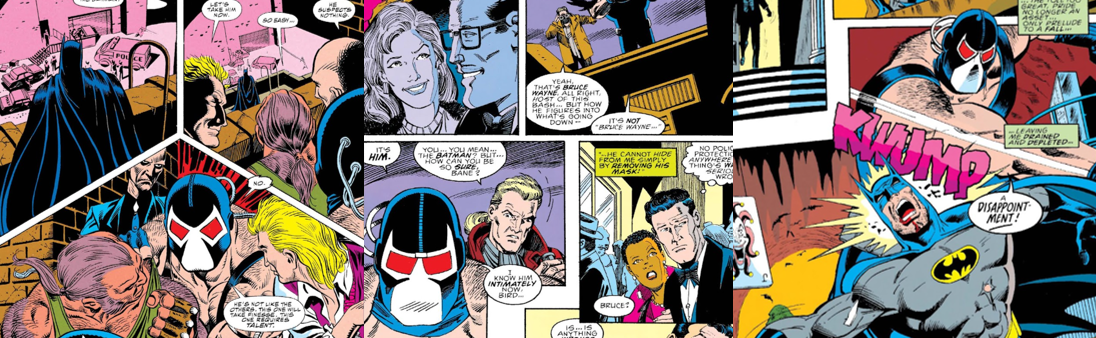
This first chapter of “Knightfall” does a fantastic job of painting Bane as an intelligent and nigh-unstoppable foe. While it’s a shame that it took a new villain to overwhelm and decisively defeat the Dark Knight, Bane makes a far greater impression here than Doomsday, who was a mindless brute bent on destruction. While Bane’s design is perhaps too simplistic, I really enjoyed how calculating and quietly psychotic he was: he has a plan and he sticks to it, confident of his victory. Naturally, this is aided by his Venom serum, which makes him almost superhuman, but a lifetime of hardship and training made Bane the perfect villain, a puppet master largely being content to let the escapees do as they please. This chapter also depicts some of Jean-Paul’s redemption, as he trains with Robin to put his skills to good use, shows Robin’s frustration and adaptability, and even leaves the door open for future threats from the Joker, the Scarecrow, and the Ventriloquist. Far from being as one-note as “The Death of Superman”, this first chapter of “Knightfall” deconstructs Batman and leaves him a man weary from a lifetime of fighting, effectively shattering the status quo as surely as Bane breaks Batman’s back. This startling conclusion leaves the reader wondering what’s next for Batman, Bane, and Gotham City and shows that even the Batman has a breaking point. While it’s a shame that Bane struggled to remained relevant after such a memorable debut, his intriguing and imposing character certainly made an impact on me as a teenager and continue to make “Knightfall” one of the quintessential Batman stories.
My Rating:
Pretty Good
Were you a fan of Bane’s dramatic debut? What did you think to his violent past and his depiction as a dark mirror of the Batman? Do you agree that it was unfair of him to run the Batman to exhaustion? Which of Batman’s battles were you most invested in? Were you shocked when Bane broke the Batman’s spine? What are some of your favourite bane stories and moments? How are you celebrating Batman Day this year? Whatever your thoughts on this first chapter of the “Knightfall” saga, and Batman in general, share them below. If you’d like to see me tackle the next chapter in the “Knightfall” saga, support me on Ko-Fi and let me know.



 Dr. K's Waiting Room
You must be logged in to post a comment.